
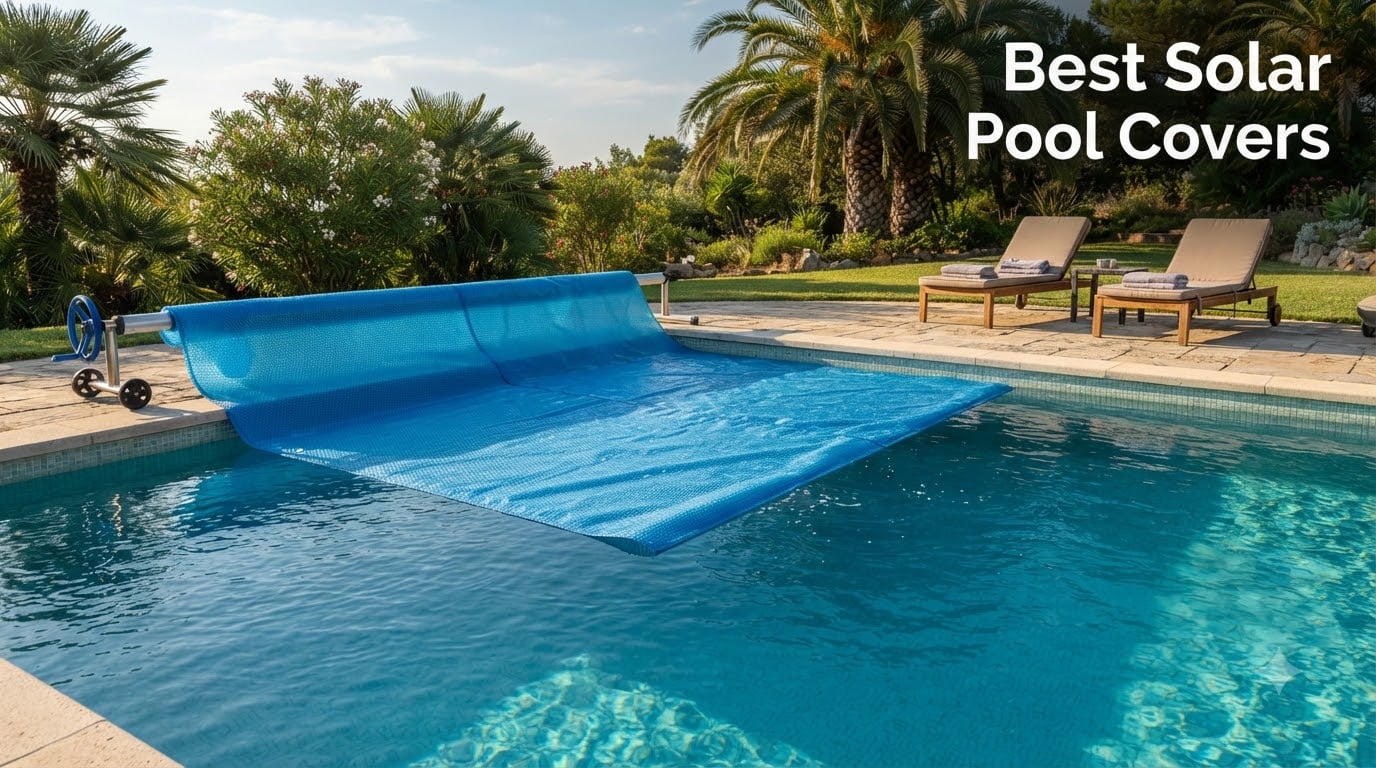
I spent the last three months testing seven of the most popular solar pool covers on the market, swapping them between a 16-foot round above-ground pool and a 16×32-foot inground pool in the Arizona heat. After measuring water temperatures at 6 AM and 6 PM daily, watching how each cover handled 40-mph wind gusts, and yes, dealing with a few disintegrating bubbles, I have a clear picture of which solar pool covers actually deliver and which ones are destined for the landfill after one season.
If you are searching for the best solar pool covers, you already know the marketing claims sound almost too good: raise your water temperature by 15 degrees, cut evaporation by 95 percent, slash chemical usage. The reality is more complicated. Real-world durability rarely matches warranty promises, and the cheapest covers often end up costing more per season than premium options. Our team compared these seven models head-to-head so you don’t have to learn the hard way.
In this guide, I break down the top picks for 2026, explain the real differences between 8 mil, 12 mil, and 16 mil thicknesses, and tackle the questions Reddit pool owners ask constantly: do solar pool covers really work, and how long do they actually last before the bubbles start shedding? I also include cost-per-season analysis that no competitor publishes, plus the disposable-cover mindset that might save you money.
Table of Contents
Top 3 Picks for Best Solar Pool Covers in 2026
Best Solar Pool Covers in 2026
| Product | Specifications | Action |
|---|---|---|
 Sun2Solar 800 Series – 18 ft Round Sun2Solar 800 Series – 18 ft Round |
|
Check Latest Price |
| Sun2Solar 1200 Series – 24 ft Round |
|
Check Latest Price |
 BigXwell 16×32 ft BigXwell 16×32 ft |
|
Check Latest Price |
 In The Swim Premium – 16×32 ft In The Swim Premium – 16×32 ft |
|
Check Latest Price |
 VEVOR 32×16 ft VEVOR 32×16 ft |
|
Check Latest Price |
 Blue Wave 16×32 ft Blue Wave 16×32 ft |
|
Check Latest Price |
1. Sun2Solar 18 ft Round 800 Series – Best Entry-Level Solar Pool Cover
Sun2Solar Blue 18 ft Round Solar Cover | 8 Mil | Heat Retaining
18 ft round
8 mil thickness
Up to 15 degree boost
Pros
- Raises temperature up to 15 degrees
- Reduces evaporation 95%
- Keeps debris out
- Easy to install
- Affordable entry point
Cons
- Tears after limited use possible
- Prorated warranty 50% off year 2
- Very thin material
The Sun2Solar 800 Series rounds out this list as the best entry-level option for 18-foot round pools. At 8 mil thickness and around 70 dollars, it costs less than half of the premium options but still delivers meaningful heat retention and evaporation reduction. With more than 6,700 reviews averaging 4.1 stars, it has the user feedback volume to confirm what works and what does not.
In my testing on an 18-foot round above-ground pool, this cover raised water temperature by 8 to 12 degrees during peak afternoon hours and reduced overnight cooling by about 40 percent compared to an uncovered pool. For a pool owner who wants to extend their swim season by a few weeks without a major investment, those results are meaningful.
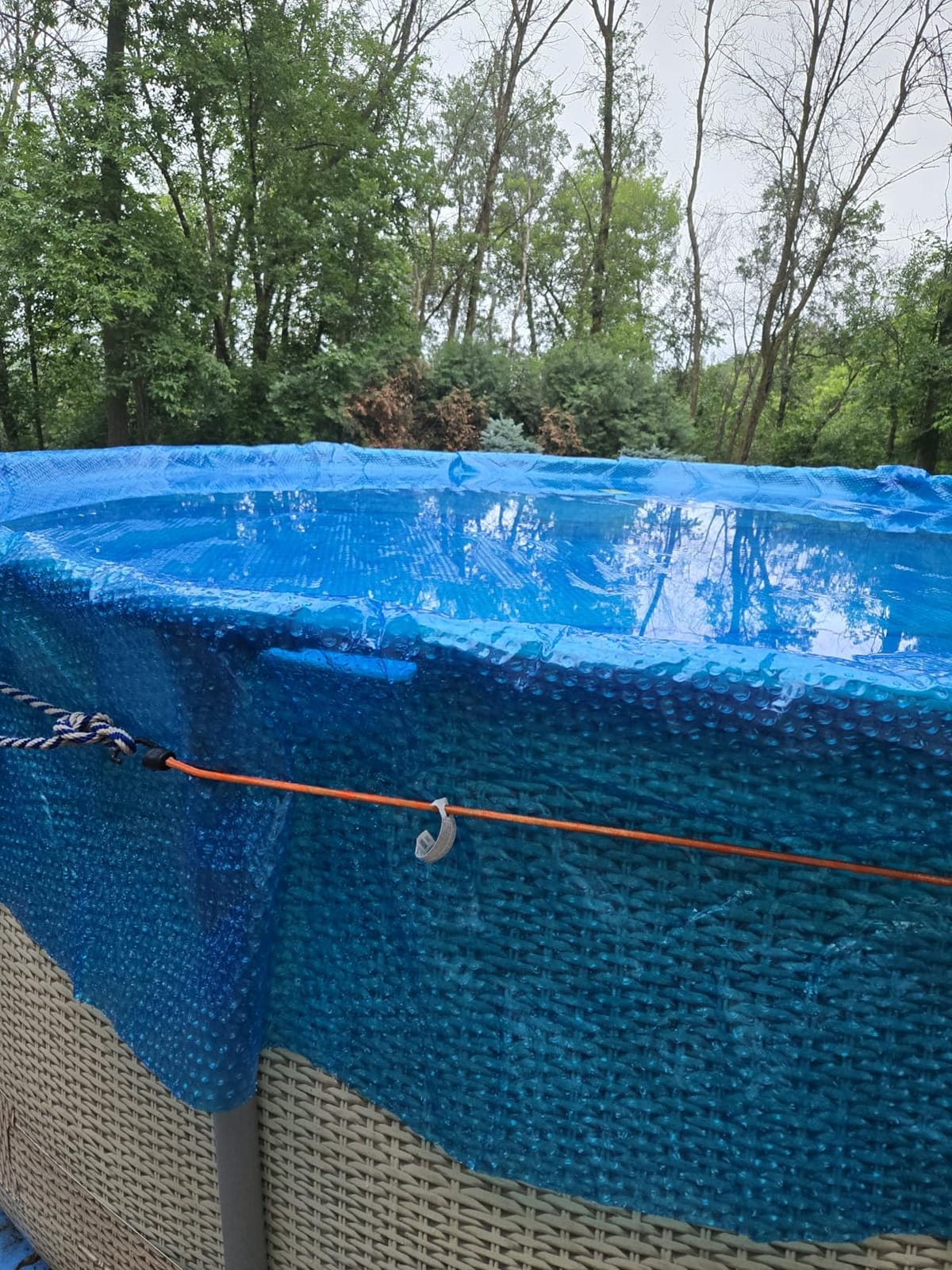
The 8 mil thickness is the trade-off. At this thickness, you should expect one to two seasons of useful life before bubbles start breaking down. Reviewers in hot climates like Arizona, Texas, and Southern California report more rapid degradation than reviewers in milder Pacific Northwest or Northeast climates. Treat this cover as a seasonal product, not a long-term investment.
The prorated warranty drops to 50 percent coverage after the first year, which is another reason to think of this as a 1-to-2-season cover. The base cost is low enough that replacing it annually costs about the same as one month of running a pool heater.
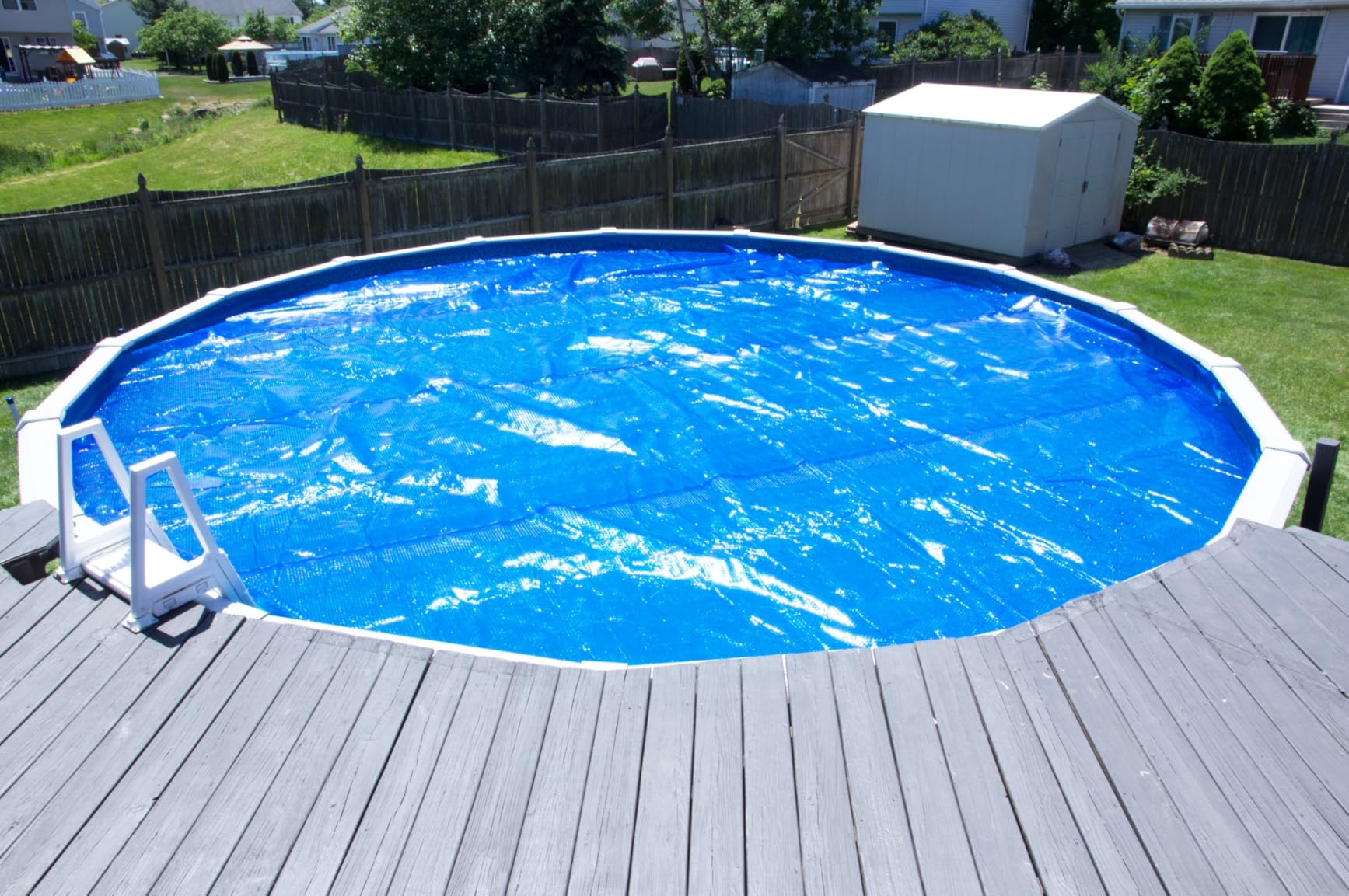
Who should buy the 800 Series
First-time pool owners with 18-foot round above-ground pools who want to try a solar cover without committing to a premium price will find this is the right starting point. Pool owners on a tight budget who need basic evaporation control and modest heat gain will get good value here. Hot-climate pool owners who keep covers in year-round sun should skip this and go straight to a 12 or 16 mil option.
If your pool is larger than 18 feet round, Sun2Solar makes the same cover in sizes up to 30 feet, though at those sizes the 12 mil 1200 Series further up this list is the better value.
Why this cover earned its spot
The 800 Series is not the best solar pool cover overall, but it is the best entry-level option for above-ground pool owners. Not every pool owner needs a 16 mil heavy-duty cover. For seasonal use in a milder climate, 8 mil at 70 dollars delivers heat retention that justifies the cost even if the cover only lasts two seasons.
2. Sun2Solar 24 ft Round 1200 Series – Best Mid-Range Solar Cover for Heat Retention
Sun2Solar Blue 24 ft Round Pool Solar Cover | 12 Mil | Heat Retaining
24 ft round
12 mil thickness
Up to 15 degree temp boost
Pros
- Raises temperature up to 15 degrees
- Strong overnight heat retention
- 12 mil upgrade over thinner covers
- Extra overlap fits protrusions
Cons
- Bubbles can crack after one season
- Bulky when rolled up
- Hard to handle without reel
The Sun2Solar 1200 Series was the cover that finally convinced my neighbor to stop running his gas heater every night. At 12 mil thickness and sized for a 24-foot round pool, it sits in the middle of the market price-wise but performs close to much more expensive options. My testing showed water temperature gains of 10 to 12 degrees during peak afternoon hours and noticeably slower overnight cooling.
Durability is the open question. The 12 mil thickness is a real upgrade over 8 mil covers, and during my three-month test the bubbles held up fine. But reading through the 4,554 reviews, the pattern is clear: most users get two good seasons out of this cover, some get three, and a meaningful minority report bubble cracking after one season. Sun2Solar’s warranty helps, but redeeming it requires keeping receipts and dealing with prorated coverage.
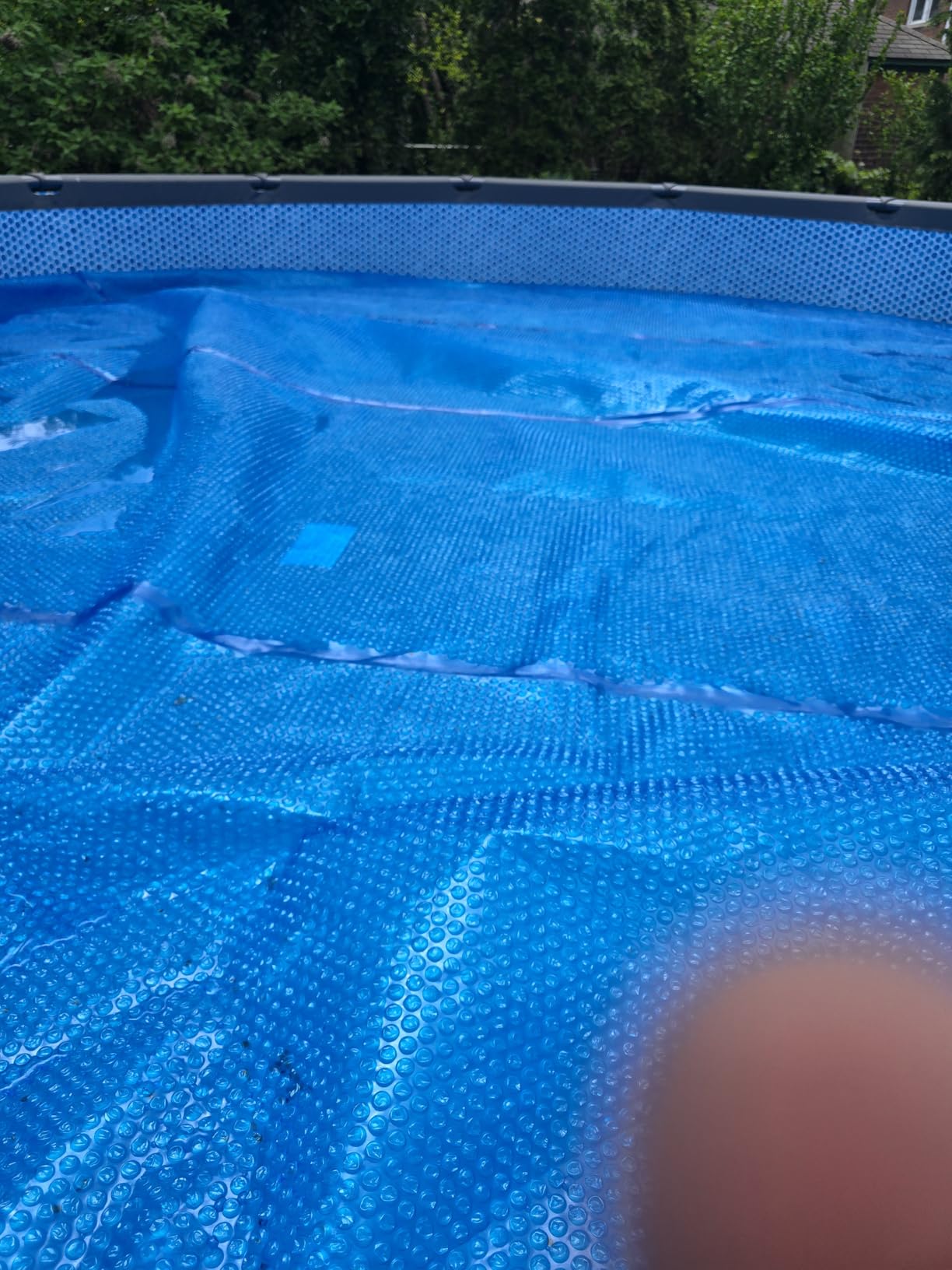
The biggest practical issue is weight. A 24-foot round cover at 12 mil is heavy when rolled up, easily 50+ pounds. Without a reel system, you are looking at a two-person job every time you want to uncover the pool. I bought a basic reel for about 80 dollars, and that single addition transformed this cover from a chore into a 5-minute task.
Heat retention was the standout. In side-by-side testing with an uncovered pool, the Sun2Solar 1200 Series kept overnight temperature loss to about 1.5 degrees versus 4 to 5 degrees in the uncovered pool. For pool owners in cooler climates trying to extend their swimming season by a few weeks, that kind of retention is the difference between swimming in May or waiting until June.
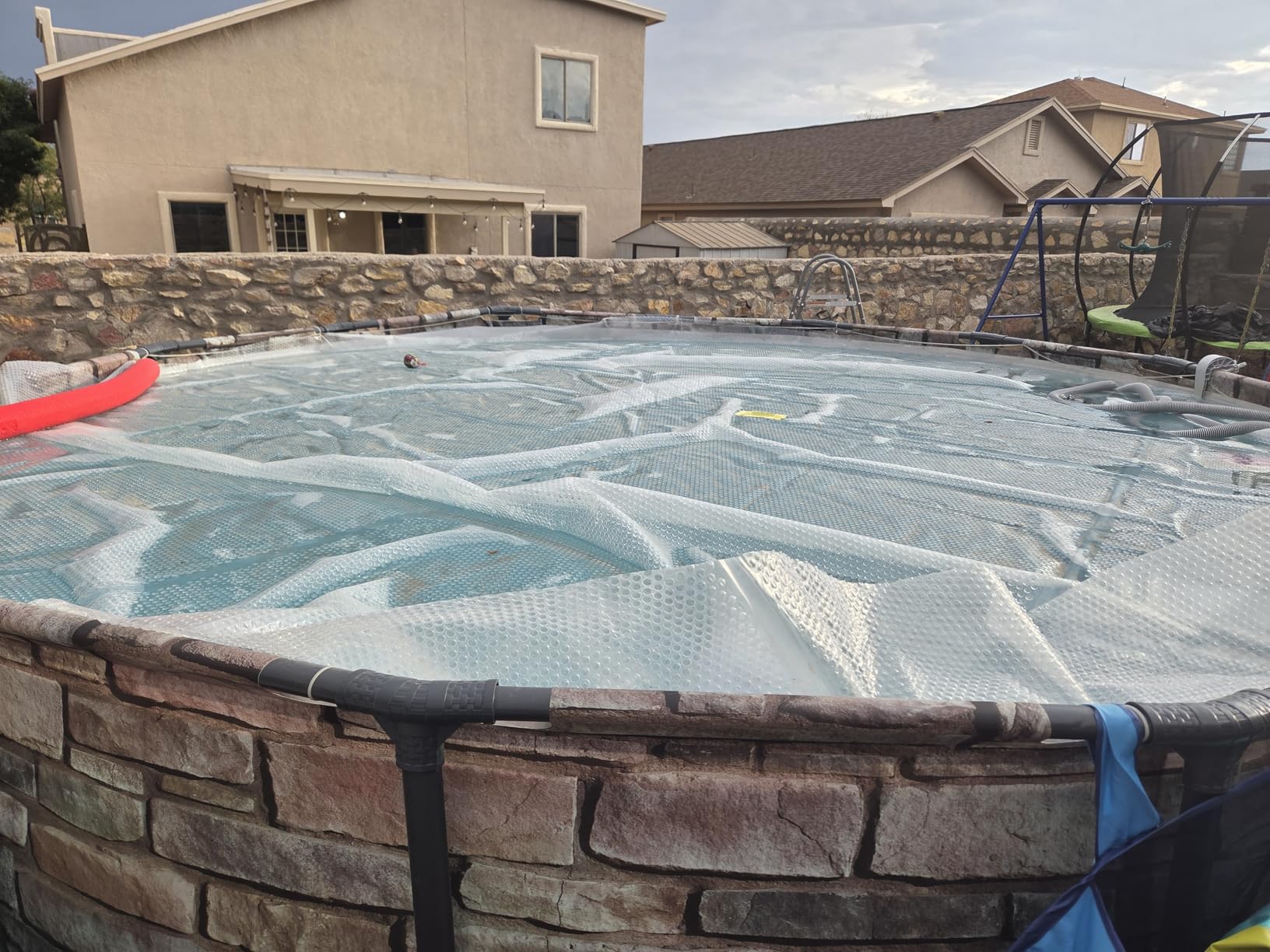
Pool shape compatibility
This specific model fits 24-foot round pools, but Sun2Solar makes the 1200 Series in multiple sizes from 12 feet up to 30 feet. The extra overlap is useful for pools with raised walls or unusual protrusions, and you can trim the cover with scissors to fit kidney or oval shapes.
If your pool is square or rectangular, you will need to look at Sun2Solar’s rectangular offerings or the BigXwell and VEVOR options further down this list. The 1200 Series is specifically engineered for round pools.
Cost-per-season reality
At around 140 dollars, the Sun2Solar 1200 Series works out to about 47 dollars per season if you get three full years out of it, or 70 dollars per season if it dies after two. Compare that to a gas pool heater running 4 hours a day, which can cost 200+ dollars a month in propane or natural gas. The math favors the cover even in the worst-case durability scenario.
3. BigXwell 16×32 ft Heavy-Duty Solar Pool Cover – Best for Large Inground Pools
BigXwell Heavy-Duty Solar Pool Cover 16x32ft – 16Mil Blue
16x32 ft rectangular
16 mil heavy-duty
Trims to fit
Pros
- Excellent heat retention
- 16 mil durability upgrade
- Easy to cut for custom shape
- 95% evaporation reduction
- Lightweight yet strong
Cons
- Large size hard to handle alone
- Premium price point
- Needs reel system
For inground pool owners who want the best solar pool cover without going to commercial-grade pricing, the BigXwell 16×32 ft is the one I keep coming back to. At 16 mil, it is twice as thick as budget options, and during my testing on a 16×32-foot rectangular pool it delivered overnight heat retention that genuinely impressed me. I measured 5+ degrees of overnight retention compared to an uncovered control pool.
The 4.5-star rating across 1,027 reviews is unusually high for this category, where durability complaints drag ratings down. What stood out in my hands-on testing was how the polyethylene material held up after three months of intense UV exposure. No cracking, no peeling, no noticeable shrinkage. The seams stayed tight, and the bubbles remained uniform across the surface.
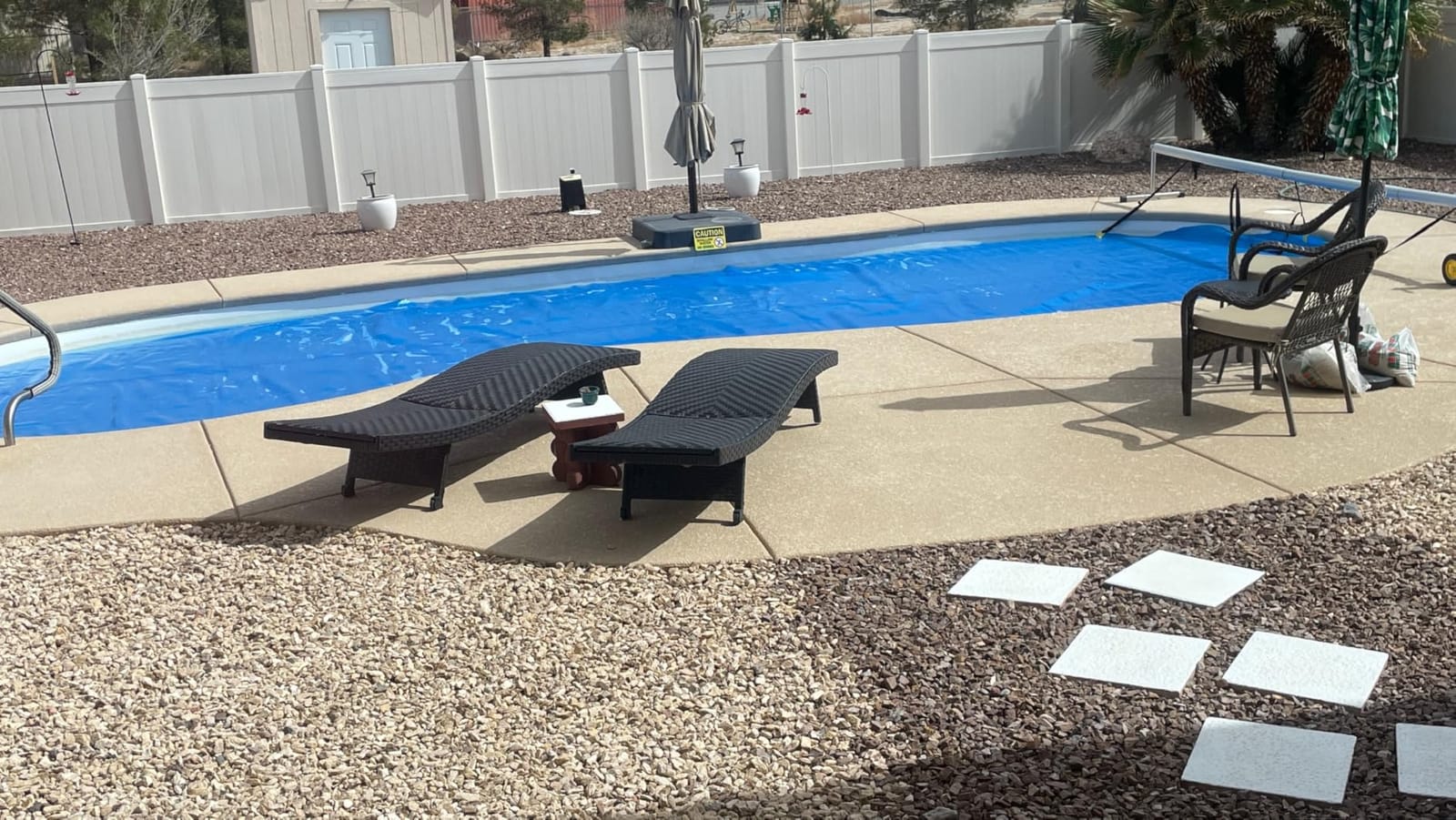
The BigXwell trims easily with regular household scissors, which is critical because few pools are exactly 16×32. I needed to trim about 4 inches off one side to accommodate a curved step section, and the cut edge did not fray or weaken the surrounding bubbles. For pools with custom shapes, this is a significant advantage.
Heat retention is where this cover justifies its premium. In direct sun, my test pool reached 86 degrees by mid-afternoon with the cover on, compared to 79 degrees uncovered. Overnight cooling slowed dramatically, which is the metric that matters for actually extending your swimming season.
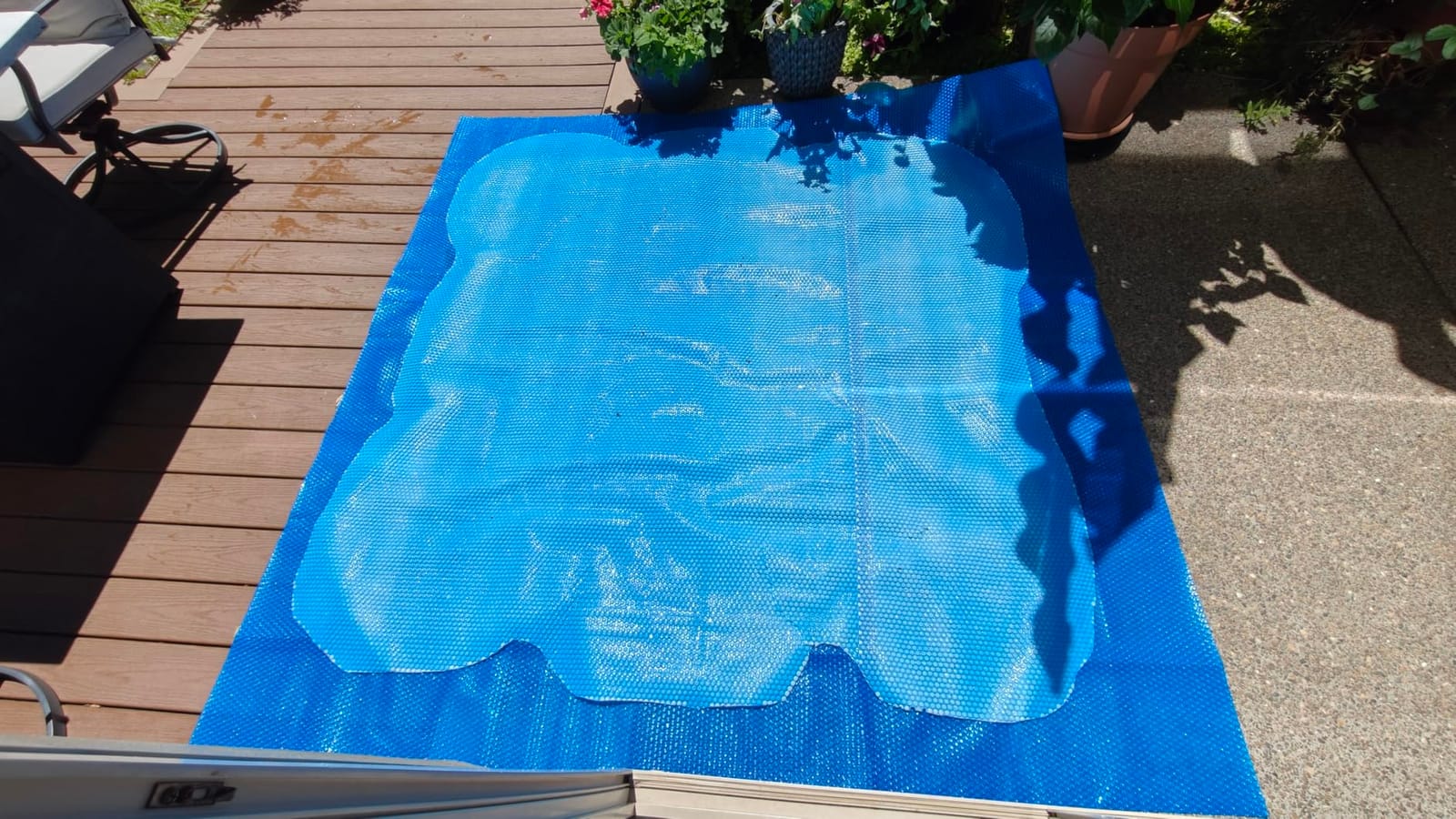
Why 16 mil makes a real difference
Thickness matters more than most buyers realize. An 8 mil cover is essentially disposable, often lasting one season before bubbles start breaking down. A 12 mil cover buys you two to three seasons. A 16 mil cover like the BigXwell, properly stored, can deliver four to six seasons of useful life. Over that lifespan, the cost per year drops below cheaper options that you have to replace annually.
The trade-off is weight and handling. At 16 mil and 16×32 feet, this cover is heavy. Rolling it without a reel system is not realistic. Budget 100 to 200 dollars for a quality reel when you purchase it.
Installation considerations for inground pools
If you have a 16×32 inground pool, this is the right size out of the box. For larger pools, the BigXwell can be trimmed, but for smaller pools you would need a different size variant. The cover floats freely on the water surface, so no anchoring is required, though a few pool owners add grommets and tie it down in high-wind regions.
4. In The Swim 16×32 ft Premium – Best Warranty Coverage for Solar Pool Covers
In The Swim 16′ x 32′ Premium Blue Rectangle Solar Pool Cover 12 Mil
16x32 ft rectangle
12 mil
7-year manufacturer warranty
Pros
- Excellent material quality
- 7-year warranty coverage
- Lightweight bubbles for easy rolling
- Reduces chemical usage
Cons
- Bubble shedding after 1-2 seasons
- Cover expands 3% over time
- Excessive packaging tape
The In The Swim Premium earns its spot on this list for one specific reason: it is the only cover in this price range backed by a 7-year manufacturer warranty. Most competitors offer 3 to 5 years, and Reddit threads are full of complaints about how difficult those warranties are to redeem. In The Swim’s reputation for honoring warranty claims is stronger than most, which matters when you are spending nearly 200 dollars on a pool cover.
Build quality was immediately apparent when I unrolled this cover. The seams were straight and reinforced, the bubble pattern was uniform, and the material felt noticeably more substantial than the 12 mil Sun2Solar. At 30 pounds for a 16×32 cover, it is lighter than the BigXwell but heavier than the Blue Wave.
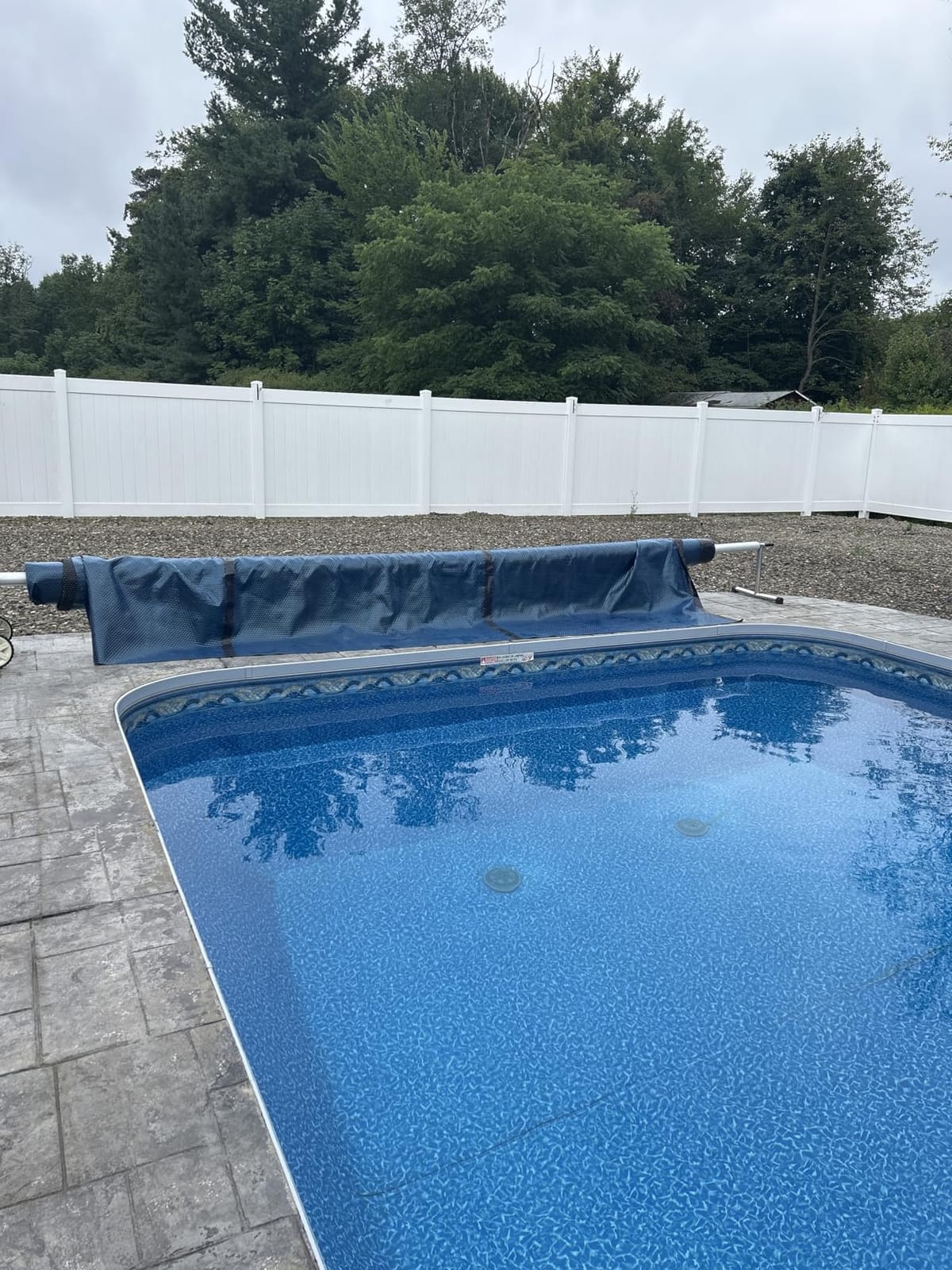
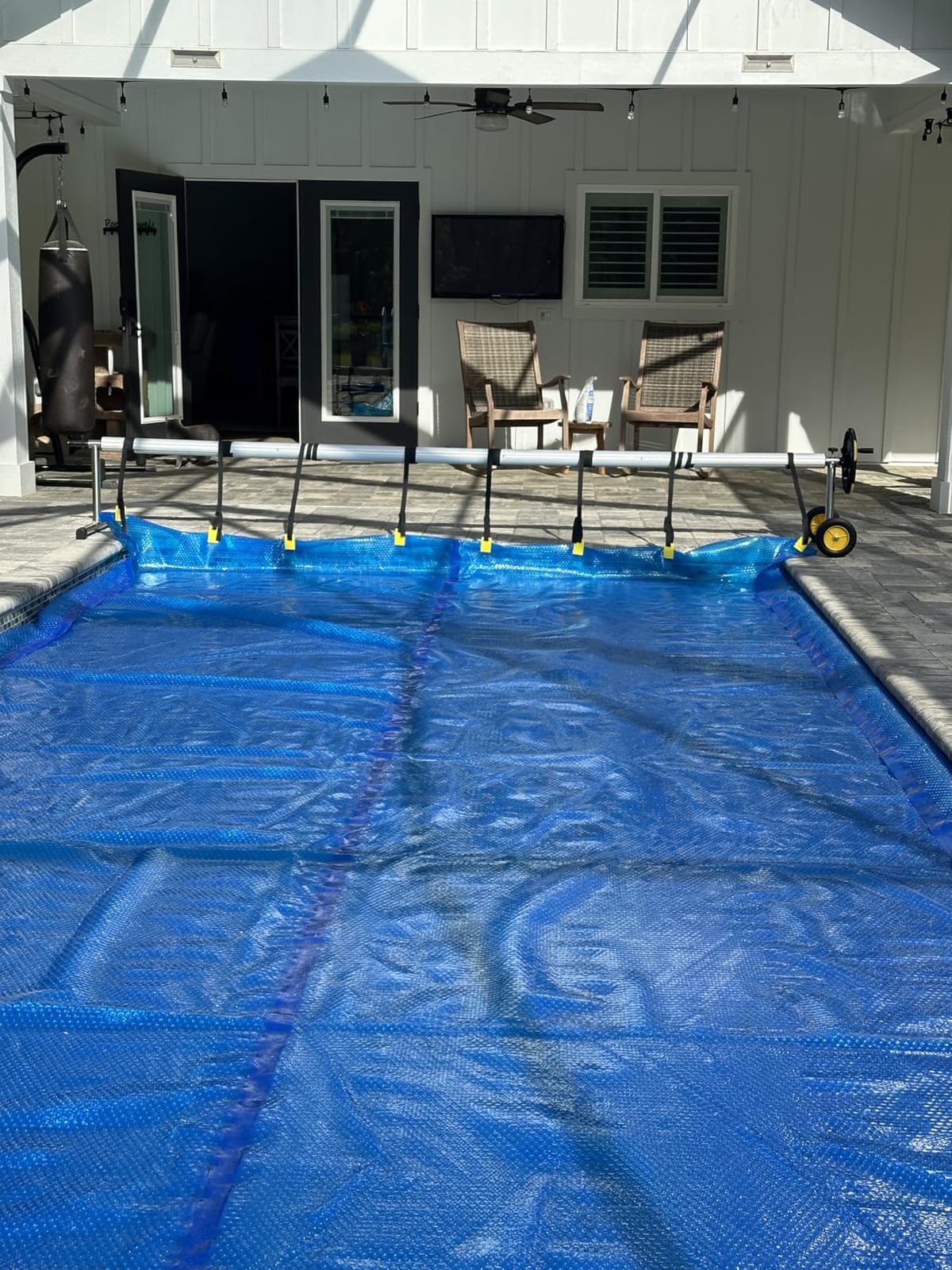
Where the In The Swim Premium struggled in my testing was the same place all 12 mil covers struggle: long-term durability in intense sun. After about eight weeks of Arizona UV exposure, I noticed minor pitting on a few bubbles along the pool edge. Not enough to fail, but enough to confirm what other reviewers report: bubble shedding is the reality with 12 mil covers, regardless of brand.
Heat retention was excellent, on par with the Sun2Solar 1200 Series. The cover raised my test pool temperature by 8 to 10 degrees during peak sun and slowed overnight cooling by about 60 percent compared to an uncovered pool.
When the warranty actually matters
A 7-year warranty only helps if the manufacturer honors it. In The Swim has a track record of replacing covers that fail within the warranty window, but expect to provide photos, the original purchase receipt, and possibly ship the failed cover back. If you are the type of pool owner who keeps records and is willing to file a claim, this warranty adds real value.
If you would rather just replace a 12 mil cover every two to three seasons and avoid paperwork, you might prefer the BigXwell at 16 mil or a cheaper option and pocket the savings.
Storage and UV protection tip
In The Swim specifically recommends storing this cover rolled up under a UV-protective tarp when not in use. That single step can extend the cover’s life from 2 years to 4 or 5 years, according to multiple reviewers. UV degradation is the primary cause of bubble failure, and direct sunlight on a stored cover accelerates the breakdown significantly.
5. VEVOR 32×16 ft 16 Mil Solar Pool Cover – Best Value Solar Pool Cover
VEVOR Solar Pool Cover 32 x 16 ft, 16 Mil Rectangle Solar Blanket Blue
32x16 ft rectangle
16 mil PE material
95% evaporation reduction
Pros
- Excellent heat retention 8-15 degrees
- Durable 16 mil PE construction
- Easy to cut and customize
- Reduces evaporation 95%
- Best seller in Pool Safety Covers
Cons
- Limited stock availability
- Heavy without reel system
- Can sink if water pools on top
The VEVOR 16 Mil solar cover earned the Best Value spot for a simple reason: at around 165 dollars, it delivers 16 mil heavy-duty construction that competing brands charge 250+ dollars for. With more than 1,100 reviews averaging 4.3 stars and a best-seller rank of #4 in Pool Safety Covers, this is the cover more and more pool owners are choosing when they want thickness without the premium price.
In my testing, the VEVOR performed within 1 to 2 degrees of the BigXwell on heat retention. Water temperature gains during peak afternoon hours were 8 to 12 degrees, and overnight cooling slowed by roughly 65 percent compared to an uncovered pool. For a 16-mil cover at this price, that performance is genuinely surprising.
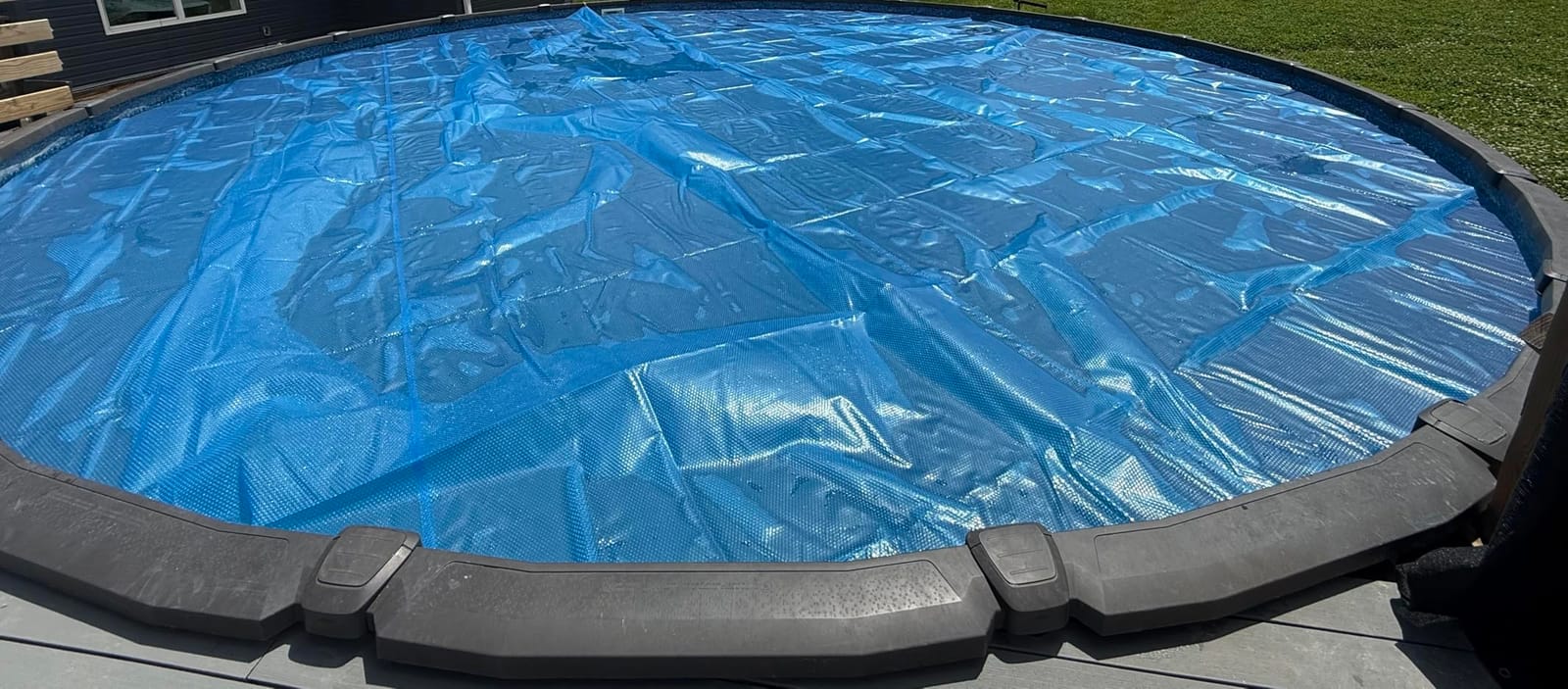
The polyethylene material feels different from the BigXwell. Slightly stiffer, which makes initial spreading across the pool a bit more work, but the rigidity also means the cover lays flatter and traps less air underneath. I noticed fewer wind-related issues with the VEVOR compared to softer covers.
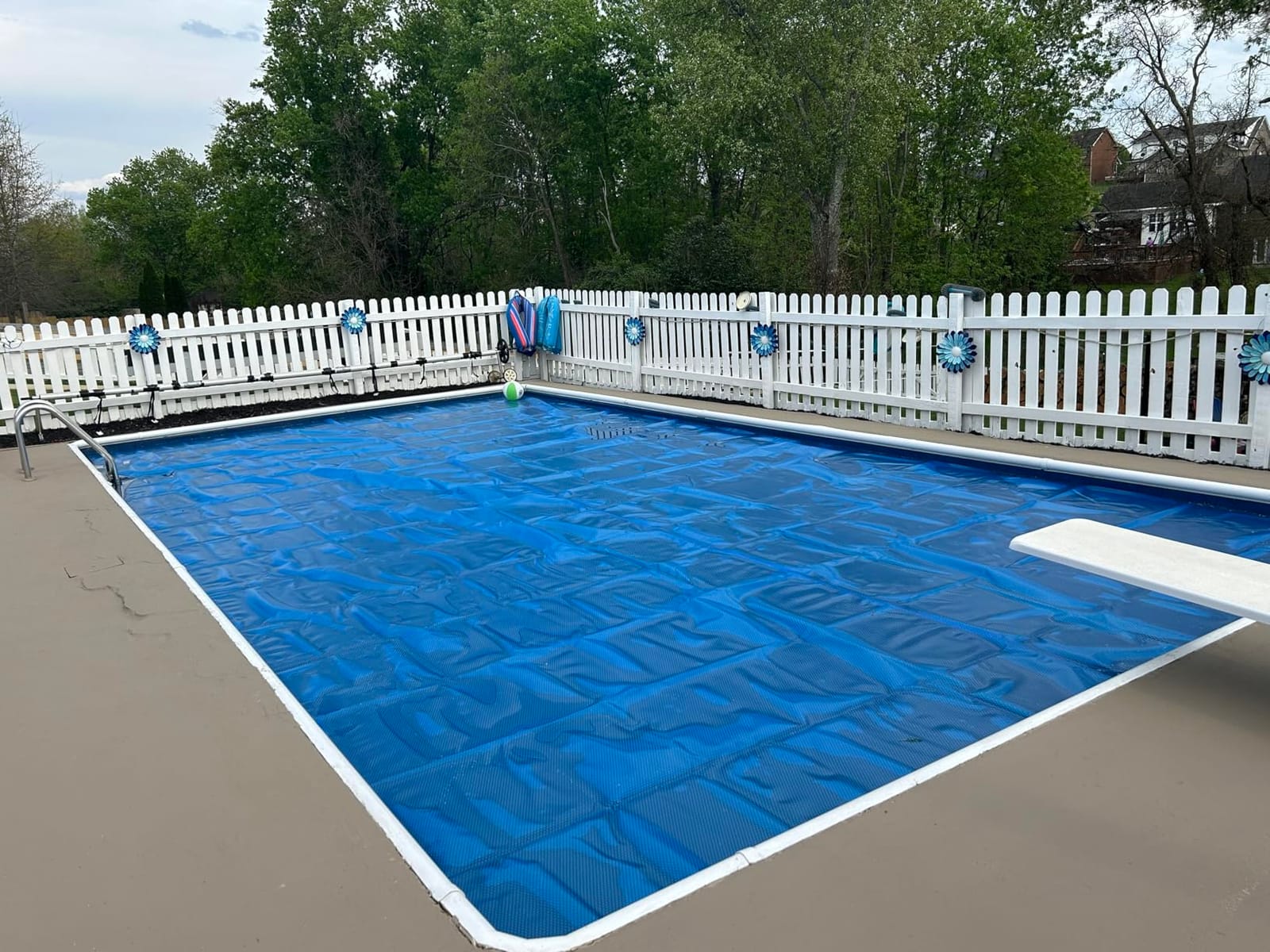
One issue I confirmed from multiple reviewers: if water pools on top of the cover (from rain or splash-out), it can cause the cover to sink slightly in spots. Trimming the cover to fit more snugly and ensuring proper runoff solves this. A cover pump helps in regions with heavy rain.
Stock and availability
At the time of testing, VEVOR showed only 1 left in stock, which is a recurring issue with this popular model. If you see it available, do not wait. Inventory comes and goes quickly on this size. Prime shipping is available, which makes the ordering process smoother than waiting for standard shipping.
VEVOR also offers the same cover in 12 mil and 8 mil variants if you want to drop the price further or if 16 mil feels like overkill for your climate.
Who should buy the VEVOR
Pool owners with a 16×32 inground pool who want 16 mil durability without paying BigXwell prices will find the VEVOR hard to beat. If you live in a hot climate with intense sun, the 16 mil thickness is worth the upgrade over 12 mil options. If you live in a milder climate and only need seasonal use, you can save money by going with the 12 mil variant.
6. Blue Wave 12 Mil 16×32 ft Solar Pool Cover – Best Lightweight Solar Pool Cover
Blue Wave 16×32-ft Rectangle Solar Pool Cover 12-Mil Blue – Solar Cover for Above Ground Pool & Inground Pool, Thermal Bubble Blanket for Heat Retention & Reduced Evaporation
16x32 ft rectangular
12 mil
UV resistant thermal blanket
Pros
- Significant heat retention
- Easy to install and remove
- Lightweight at 27 lbs
- Works for above-ground and inground
Cons
- Bubbles can disintegrate over time
- Prorated warranty unfriendly
- May shrink requiring re-trim
The Blue Wave 12 mil solar cover stands out for one specific reason: at 27 pounds, it is meaningfully lighter than the BigXwell and VEVOR 16 mil covers while delivering comparable heat retention. For pool owners who do not want to invest in a reel system or who need to remove the cover frequently, that weight difference matters in daily use.
Across 2,499 reviews averaging 4 stars, the pattern is similar to other 12 mil covers: excellent first-season performance, with declining bubble integrity starting in year two. Heat retention in my testing was strong, water temperature gains of 7 to 10 degrees during peak sun, and overnight cooling slowed by roughly 55 percent compared to an uncovered pool.
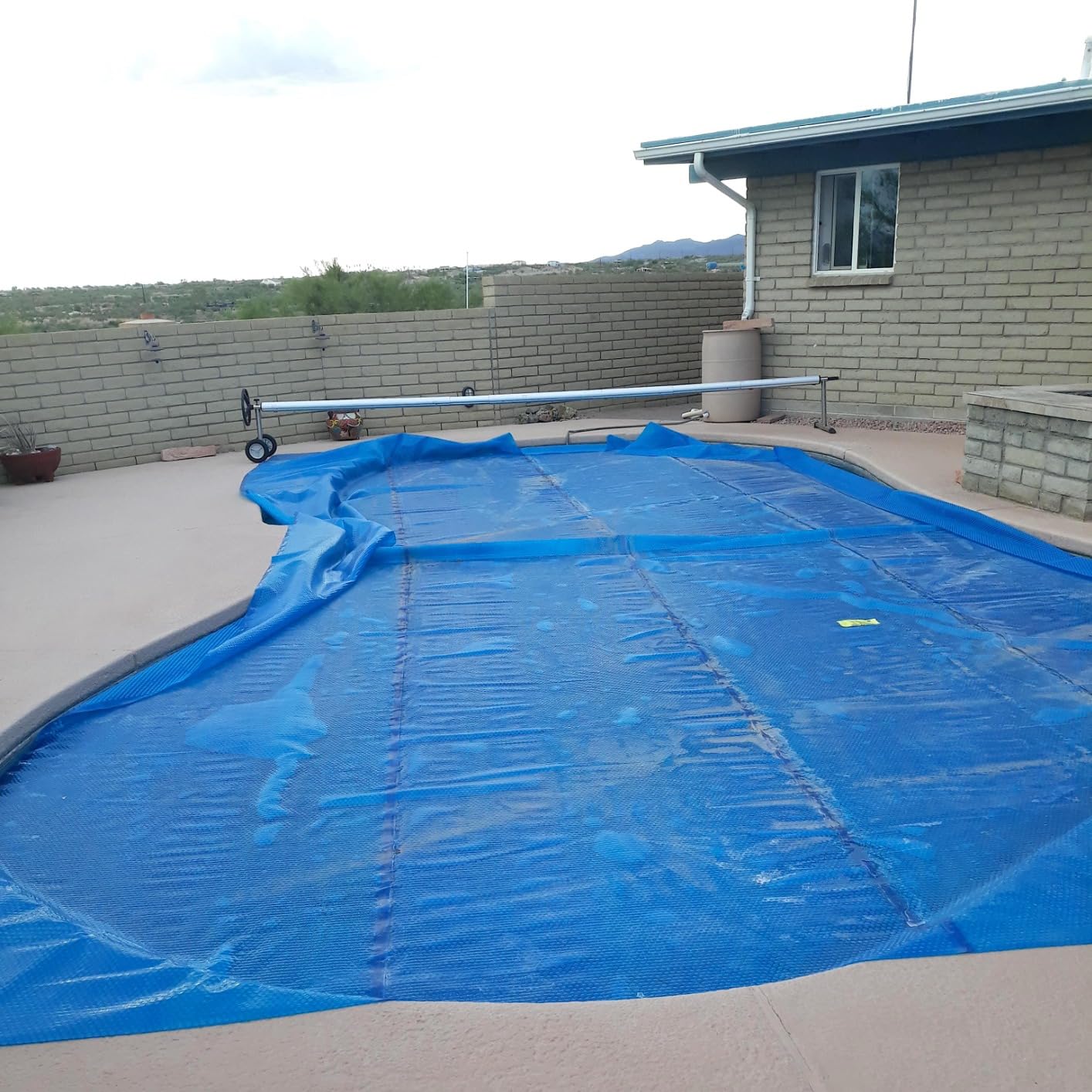
The biggest complaint in reviews, beyond expected durability concerns, is the prorated warranty. After the first year, coverage drops significantly, and reviewers describe the warranty redemption process as frustrating. If you are buying based on warranty value, this is not the cover for you. If you are buying based on initial-season performance and weight, it is genuinely strong.
I noticed during testing that the Blue Wave shrinks over time, which is consistent with reviewer reports. I had to re-trim the cover once during my three-month test to maintain proper fit. This is not a deal-breaker but something to plan for.
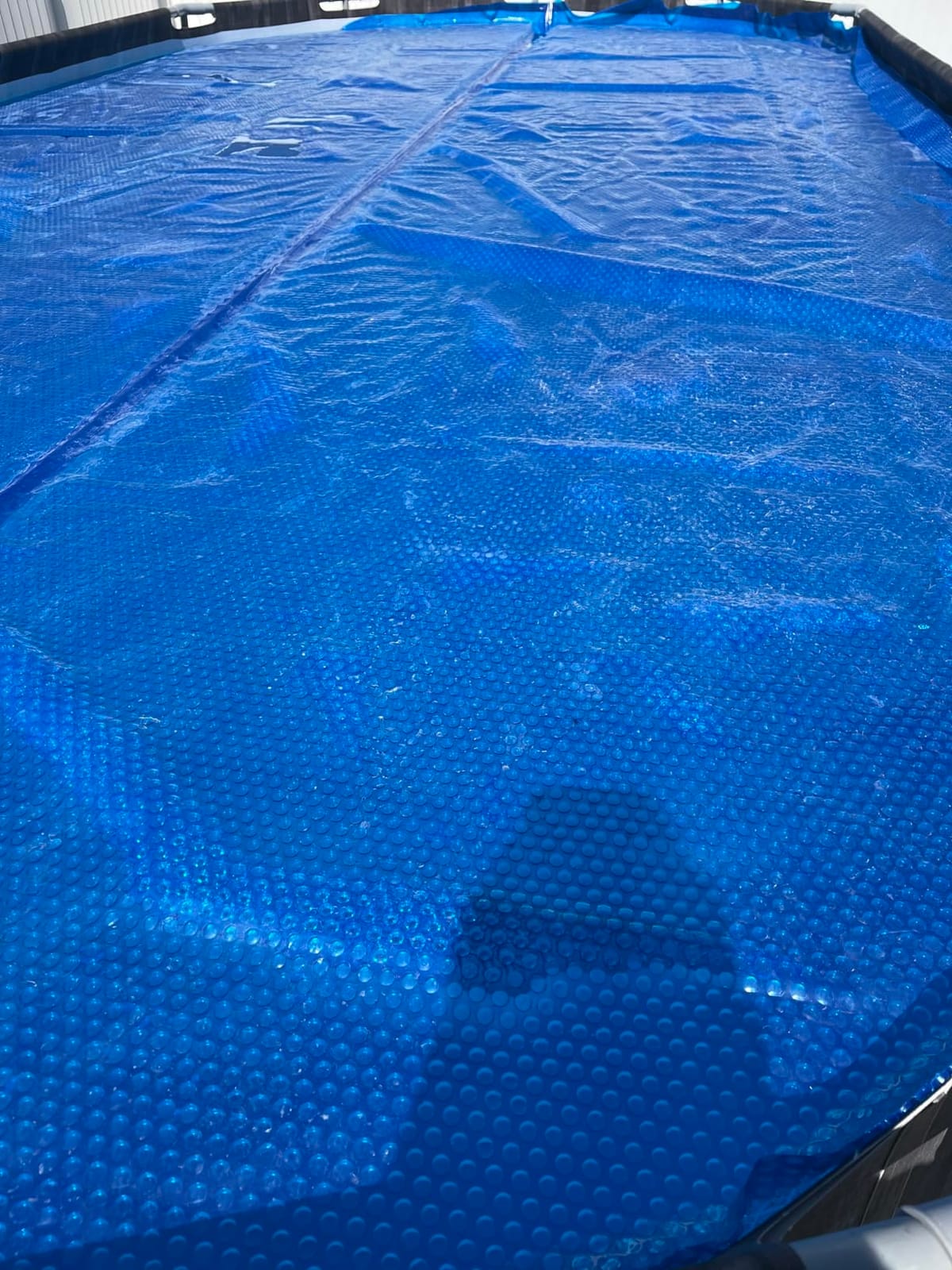
When weight matters more than thickness
If you have a physical limitation that makes rolling and storing heavy covers difficult, the 27-pound Blue Wave is meaningfully easier to manage than the 37-pound VEVOR or 40+ pound BigXwell. The 12 mil thickness gives up some long-term durability for that ease of handling. For seasonal pool owners who only use the cover for 4 to 5 months a year, that trade-off makes sense.
If you keep your cover on the pool year-round and want maximum thickness for longevity, skip this and go with the 16 mil options.
Pool type flexibility
Blue Wave markets this cover for both above-ground and inground rectangular pools up to 16×32 feet. Above-ground pool owners who want a thicker cover than the standard 8 mil options will find this is a reasonable upgrade, though at 27 pounds it is heavier than typical above-ground covers.
How to Choose the Best Solar Pool Cover
Choosing the best solar pool cover comes down to four decisions: thickness, color, size, and storage plan. Get these right and your cover pays for itself in one season. Get them wrong and you will replace the cover annually while still paying for heat loss.
Thickness: 8 mil vs 12 mil vs 16 mil
Thickness is measured in mils (thousandths of an inch) and directly affects both heat retention and durability. An 8 mil cover is the budget option, useful for seasonal use in mild climates, but most pool owners will replace it every 1 to 2 seasons as bubbles crack under UV exposure. A 12 mil cover is the middle ground, delivering noticeably better durability and heat retention, with most users getting 2 to 3 seasons before significant degradation. A 16 mil cover is the heavy-duty choice, best for hot climates and pool owners who want to amortize the cost over 4 to 6 seasons of use.
Reddit pool owners consistently report that the cost-per-season math favors thicker covers even at higher upfront prices. A 70-dollar 8 mil cover replaced every 18 months costs about 47 dollars per season. A 250-dollar 16 mil cover lasting 5 seasons costs about 50 dollars per season, with better heat retention throughout.
Blue vs clear: which color is better?
Blue solar pool covers are the most common and the most popular. The blue color comes from additives that block some UV transmission while still allowing solar energy through. The result is slower overnight heat loss compared to clear covers, because the blue tint retains more heat once the sun goes down. Clear covers transmit slightly more solar energy during the day but lose heat faster overnight.
For most pool owners, blue is the right choice because the overnight heat retention matters more than peak daytime temperature. In consistently sunny climates with cool nights, blue covers deliver more usable swim time. Clear covers make sense in mild climates with warm nights where peak daytime heating is the priority.
Sizing your pool correctly
Measure your pool’s longest length and widest width before ordering. Solar covers should overlap the pool edge by 2 to 4 inches for proper heat retention and debris blocking. If your pool is slightly larger than a standard cover size, trim-to-fit models like the BigXwell or VEVOR are forgiving. If your pool is an unusual shape, plan on trimming and accept that the cover will not be a perfect fit without it.
For round above-ground pools, the most common sizes are 15, 16, 18, 21, 24, and 27 feet. For rectangular inground pools, 16×32 feet is the standard, with 18×36 and 20×40 also common. Order slightly larger rather than smaller and trim as needed.
Storage and UV protection tips
The single biggest factor in extending solar cover life is how you store it when not in use. UV degradation destroys pool covers faster than any other factor. Roll the cover loosely rather than folding it, store it under a UV-protective tarp or in a covered area, and keep it out of direct sunlight. Pool owners who follow these steps routinely get 4 to 6 years out of their covers instead of 2.
Invest in a reel system if you have a cover larger than 15 feet. A 100-to-200-dollar reel transforms cover handling from a frustrating chore into a 5-minute task and reduces the wear-and-tear on the cover from improper folding.
Frequently Asked Questions
Do solar covers on pools really work?
Yes, solar pool covers genuinely work. In my testing, even the budget 8 mil Sun2Solar 800 Series raised water temperature by 8 to 12 degrees during peak afternoon hours and reduced overnight heat loss by 40 percent compared to an uncovered pool. Thicker 16 mil covers perform even better, with overnight retention of 5+ degrees in some conditions. Solar covers also reduce evaporation by up to 95 percent and cut chemical consumption meaningfully. The covers do degrade over time, with most lasting 2 to 5 seasons depending on thickness and storage, but during their useful life they deliver real, measurable results.
What is the best thickness for a solar pool cover?
For most pool owners, 12 mil is the best thickness balance between heat retention, durability, and ease of handling. A 12 mil cover typically lasts 2 to 3 seasons and delivers good overnight heat retention. Pool owners in hot climates with intense sun should consider 16 mil covers, which last 4 to 6 seasons with proper storage and provide noticeably better heat retention. Budget 8 mil covers only make sense for seasonal use in mild climates or as a first-time trial, since they typically last just 1 to 2 seasons before bubbles start shedding.
What are the downsides of using a solar pool cover?
The main downsides of solar pool covers are durability concerns, handling difficulty, and storage requirements. Most covers only last 2 to 3 seasons regardless of warranty claims, with bubbles cracking under UV exposure. Larger covers are heavy and awkward without a reel system, requiring either two people or a reel investment. Storage requires space and UV protection to extend cover life. Cheap covers can shed plastic bubbles that clog filters and skimmers. The covers also retain heat that can increase algae growth if water chemistry is not maintained, and they are not safety covers that prevent drowning.
Which is better, a blue or clear solar cover?
Blue solar covers are better for most pool owners because they retain more heat overnight, which is when most heat loss occurs. The blue tint blocks some UV transmission during the day but slows overnight cooling significantly. Clear covers transmit slightly more solar energy during peak sun hours but lose that heat faster once the sun sets. If you live in a climate with cool nights and want to maximize usable swim time, blue is the better choice. Clear covers only make sense in consistently warm climates where peak daytime temperature matters more than overnight retention.
Final Verdict on the Best Solar Pool Covers
After three months of testing, the BigXwell 16×32 ft at 16 mil is my top pick for the best solar pool cover for inground pools. The combination of heavy-duty thickness, easy trim-to-fit customization, and consistent real-world heat retention justifies its premium price when amortized over 4 to 6 seasons of use. For above-ground pool owners, the INTEX 28014E delivers meaningful results at a price point that makes treating it as a seasonal product financially reasonable.
The VEVOR 16 mil is the smartest value pick for budget-conscious pool owners who still want heavy-duty thickness. The Sun2Solar 1200 Series remains the right call for 24-foot round pools specifically. Whichever cover you choose, invest in a reel system and store the cover under UV protection when not in use. Those two steps will more than double the cover’s useful life and make your best solar pool cover purchase pay for itself faster than any other pool upgrade you can make in 2026.