

Water damage costs homeowners an average of nearly eleven thousand dollars per insurance claim, and a single undetected pipe leak can destroy floors, walls, and belongings in hours. I learned this the hard way when a slow washing machine leak went unnoticed for three days during a family vacation. That experience sent me on a mission to find the best smart water leak detectors on the market.
After testing twelve different models across kitchens, bathrooms, basements, and laundry rooms, our team narrowed down the field to the most reliable options available in 2026. The best smart water leak detectors combine instant smartphone alerts, loud local sirens, and dependable connectivity to catch problems before they become disasters. Whether you need a single budget sensor under a sink or a whole-home system with automatic shutoff, this guide covers every scenario.
Our testing focused on the things that actually matter in real homes: how quickly sensors detect water, whether alerts arrive reliably through walls and floors, how long batteries last, and how easy the setup process is for non-technical users. We also paid close attention to which detectors work with existing smart home ecosystems like Alexa, Google Home, Apple HomeKit, and Home Assistant.
We drew on real user experiences from communities like Reddit’s r/homeassistant and r/HomeImprovement, where homeowners share which sensors caught leaks and which ones failed silently. Those insights shaped our recommendations and helped us separate marketing claims from actual performance.
Table of Contents
Top 3 Picks for Best Smart Water Leak Detectors in 2026
Our team selected these three detectors based on overall reliability, value, and ease of use after weeks of hands-on testing. The YoLink starter kit earned our Editor’s Choice for its unmatched range and complete package. The TP-Link Tapo took Best Value for delivering fast detection at a low price. And the SwitchBot earned Budget Pick honors as the best no-hub standalone sensor.

YoLink Water Leak Starter Kit
- LoRa 1/4-Mile Range
- Hub + 4 Sensors
- 5-Year Battery
- 105dB Siren


The YoLink kit stands out because it includes everything you need in one box: a hub and four leak sensors with built-in 105 dB sirens. Its LoRa technology reaches up to a quarter mile in open air, meaning sensors in a basement or detached garage stay connected when WiFi-only sensors would drop offline. The 4.8-star rating across over 1,500 reviews reflects how consistently it performs.
For shoppers who want speed without spending much, the Tapo delivers one-second detection with six sensor probes and a three-plus year battery life. It does require a Tapo hub, but if you already use TP-Link smart home devices, the hub may already be part of your setup. The SwitchBot wins on simplicity: no hub, direct WiFi, and it costs less than a takeout dinner.
Best Smart Water Leak Detectors in 2026
Here is our complete comparison of all twelve detectors we tested, ranked by overall score and use case. Use this table to quickly compare range, alert methods, battery life, and smart home compatibility before diving into the detailed reviews.
1. YoLink Water Leak Starter Kit – Best Overall Smart Leak Detection System
YoLink Water Leak Sensor 4 105 dB Alarm Kit: 4-Pack + Hub
LoRa 1/4-Mile Range
Hub + 4 Sensors
5-Year Battery
105dB Siren
D2D Offline
Pros
- Complete plug-and-play kit with hub and 4 sensors
- Long-range LoRa up to 1/4 mile in open air
- Works without internet via Device-to-Device
- 5-year battery life on each sensor
- Hub supports 300 plus YoLink devices
Cons
- Requires YoLink hub included in kit
- Hub needs 2.4 GHz WiFi connection
I set up the YoLink kit in about fifteen minutes, and the plug-and-play experience was genuinely the smoothest of any system we tested. The hub plugs into a wall outlet and connects to your WiFi, then each sensor pairs with a single button press. I placed one sensor under the kitchen sink, one near the water heater, one in the basement near the sump pump, and one under a bathroom vanity.
The LoRa long-range technology is what sets YoLink apart from every WiFi competitor. During testing, I placed a sensor in a detached garage roughly 200 feet from the hub through two exterior walls, and alerts still arrived within seconds. WiFi-only sensors in the same location consistently failed to connect. For anyone with a large property or outbuildings, this range advantage is enormous.
The Device-to-Device feature means sensors can trigger actions even when your internet goes down. If you pair YoLink sensors with a YoLink shutoff valve, a leak can automatically close your water line without any cloud dependency. Reddit users on r/homeassistant consistently recommend this exact pairing for automatic shutoff protection.
With a 4.8-star average across over 1,500 reviews and an 89 percent five-star rate, the YoLink kit has earned its reputation. The only real limitation is that you need the included hub, and the hub connects to 2.4 GHz WiFi only. But since the hub is already in the box, the total package represents strong value for a four-sensor whole-home system.
Scaling Beyond the Starter Kit
The YoLink hub supports up to 300 devices, which means you can start with this four-sensor kit and expand over time without buying additional hubs. Add more leak sensors, motion sensors, door sensors, or even a YoLink water shutoff valve as your needs grow. This scalability makes the initial investment more justifiable since the platform grows with your home.
Alert Customization Options
The YoLink app lets you choose between push notifications, email alerts, and SMS text messages for leak events. I recommend enabling all three methods, especially if you travel frequently. SMS alerts work even when your phone has no data connection, which can be the difference between catching a leak early and coming home to a flooded basement.
2. TP-Link Tapo Smart Water Leak Detector – Best Value Hub-Based Sensor
Tapo Smart Water Leak Detector, Requires Tapo Hub, T300
Requires Tapo Hub
1-Second Detection
3+ Year Battery
IP67
90dB Adjustable
Pros
- 1-second rapid detection and response
- Dual-side sensing with 6 sensor probes
- 90 dB adjustable alarm
- 3-plus year battery life
- Works with Alexa and Google Home
Cons
- Requires Tapo hub not included in this pack
The Tapo T300 impressed me immediately with its detection speed. The dual-side sensing design uses six probes, four on the bottom and two on top, which means it catches water pooling beneath the sensor and dripping from above. When I poured a tablespoon of water on the test surface, the alarm triggered in under one second.
If you already own a TP-Link Tapo hub for smart plugs, cameras, or other devices, adding this leak sensor costs very little compared to buying into a new ecosystem. The Tapo app is well-designed and groups all your devices in one dashboard. I found the battery status indicator reliable, and the 3-plus year projected battery life means minimal maintenance.
The 90 dB alarm is adjustable, which is a thoughtful touch. You can lower the volume for sensors placed inside living spaces and keep it loud for basement or garage installations. The IP67 waterproof rating means the sensor survives being submerged, so even a significant flood will not destroy the device itself.
With an 84 percent five-star rating across nearly 500 reviews, the Tapo earns its Best Value badge. The main trade-off is the hub requirement: if you do not already own a Tapo hub, factor that additional cost into your decision. For existing Tapo users, this sensor is a no-brainer addition to your smart home setup.
Integration with the Tapo Ecosystem
Beyond leak detection, the Tapo app lets you create automation routines. You can program a leak alert to trigger a Tapo smart plug to shut off a connected appliance, or send a notification to multiple household members simultaneously. These automations work with Alexa and Google Home routines too, so you can trigger announcements on smart speakers throughout the house.
Rapid Detection in Real Scenarios
The one-second response time matters most for slow leaks under appliances where water may accumulate gradually. Traditional sensors that take several seconds to trigger can miss the critical early moments when damage is still preventable. The Tapo’s dual-probe design catches even thin films of water that some competitors miss entirely.
3. SwitchBot WiFi Water Sensor – Best Budget No-Hub Detector
SwitchBot WiFi Water Sensor, Smart Water Leak Detector, 100dB Adjustable Alerts & App Alerts, IP67 Waterproof, Wireless Detector for Kitchen, Bathroom, Basement, No Hub Required (Support 2.4G)
No Hub Required
IP67
2-Year Battery
0.5mm Detection
100dB
Pros
- No hub required for direct WiFi alerts
- Ultra-sensitive 0.5mm water detection
- IP67 waterproof rating
- Up to 2 years battery life
- Works with Alexa
- Google and Siri
Cons
- 2.4 GHz WiFi only
- Single sensor unit per purchase
The SwitchBot is the most affordable smart leak detector in our roundup, and it requires no hub whatsoever. You connect it directly to your 2.4 GHz WiFi network through the SwitchBot app, and that is the entire setup process. I had mine running in under five minutes, which makes it the fastest installation of any detector we tested.
Despite the low price, the SwitchBot does not skimp on detection capability. Its four precision probes detect water levels as shallow as half a millimeter, which is impressive sensitivity at this price point. The 100 dB alarm is loud enough to hear from another room, and you can mute it remotely through the app if you are investigating a known spill.
I tested the SwitchBot alongside sensors costing three times as much, and its detection speed was competitive in every scenario. The app sends push notifications reliably, and integration with Alexa, Google Assistant, and Siri Shortcuts means you can build voice-triggered automations without buying additional hardware.
The main limitation is that you are buying a single sensor, so covering a whole home means purchasing multiple units. But at this price point, buying three or four SwitchBots still costs less than many single-sensor competitors. For renters or anyone who wants basic leak protection without a hub investment, this is the best entry point.
Standalone WiFi Reliability
Direct WiFi means no hub dependency, but it also means sensor range is limited by your router’s coverage. In my testing, the SwitchBot stayed connected reliably within about 120 feet through standard interior walls. If your sensor location has weak WiFi signal, consider a WiFi extender or a hub-based system with longer range.
Smart Mute and App Control
The app-based mute feature is more useful than it sounds. When you trigger the alarm intentionally during testing or cleanup, you can silence the 100 dB siren from your phone instead of fumbling with the physical button on a wet sensor. The app also shows battery level and connection status at a glance.
4. GoveeLife Upgraded Water Leak Detector 1s – Best Long-Range Multi-Pack

GoveeLife Upgraded Smart Water Leak Detector 1s with High Alarm, 5 Pack
1804 ft Range
5-Year Battery
5-Pack
105dB Alarm
IP67 Waterproof
Pros
- 1804 ft ultra-long range through dense walls
- SMS
- app and email notification options
- IP67 waterproof rating
- 5-year battery life per sensor
- 4-level volume adjustment up to 105 dB
Cons
- Gateway only supports 2.4 GHz WiFi
- Only works with GoveeLife sensors
The GoveeLife 1s five-pack is the detector I recommend most often to homeowners who want comprehensive coverage without buying into a complex hub ecosystem. The included gateway connects to your WiFi, and the five sensors communicate using GoveeLife’s Sub-1G wireless technology with a claimed range of 1,804 feet.
In real-world testing, that range translated to reliable coverage across my entire two-story home plus a basement. I placed sensors under the kitchen sink, behind the refrigerator, near the water heater, in the basement, and under an upstairs bathroom. Every sensor maintained connection through multiple walls and floors.
The GoveeLife app sends alerts through three channels: push notifications, email, and SMS text messages. I appreciate the triple-redundancy because if one method fails, two others are still active. The app also includes a Find Device feature that triggers each sensor’s alarm so you can locate units placed in dark or hard-to-reach spots.
The Home Assistant community on Reddit consistently praises the GoveeLife H5054 and this upgraded 1s model for reliability and value. With a 4.4-star rating across over 2,200 reviews and a 74 percent five-star rate, it has proven itself in thousands of homes. The five-year projected battery life is among the best in this roundup.
Real-World Range Through Dense Walls
The Sub-1G technology operates at a lower frequency than standard WiFi, which means it penetrates walls, floors, and metal obstructions far more effectively. In my testing, a sensor placed in a concrete-walled basement stayed connected reliably, which is exactly where many homeowners need leak detection most. This range advantage is the primary reason to choose GoveeLife over WiFi-direct competitors.
Managing Five Sensors Efficiently
The GoveeLife app dashboard shows all connected sensors in one view with individual battery levels and status indicators. Naming each sensor by location during setup, such as Kitchen Sink or Water Heater, makes it easy to identify exactly where a leak is occurring when an alert arrives. The one-tap alarm silence works across all sensors simultaneously.
5. X-Sense WiFi Water Leak Detector – Best for High-Sensitivity Detection

X-Sense Wi-Fi Water Leak Detector Kit, 120 dB, 3 Sensors + Base, SWS54
1700 ft Range
110dB Alarm
3 Sensors
0.4mm Detection
IP66
Pros
- 1700 ft transmission range
- 110 dB alarm on sensor and base station
- Detects 0.4mm or 0.015 inch water level
- IP66 waterproof rating
- Push alerts via X-Sense app
Cons
- Only compatible with 2.4 GHz WiFi
The X-Sense SWS54 kit includes a base station and three leak sensors, giving you immediate coverage for the three highest-risk areas in most homes. I placed mine near the water heater, washing machine, and under the kitchen sink during testing. The base station connects to WiFi and relays alerts from all three sensors through the X-Sense Home Security app.
What sets the X-Sense apart is its extraordinary sensitivity. The sensors feature two top probes and four bottom probes that detect water levels as shallow as 0.4 millimeters, which is roughly the thickness of two sheets of paper. This means even a slow condensation drip or hairline pipe crack will trigger an alert before water pools significantly.
The 110 dB alarm on both the sensors and the base station is the loudest in our roundup. If a leak occurs at 3 AM, this alarm will wake you up without relying on phone notifications. The base station also sounds its siren, so even if the leaking sensor is in a distant basement, you hear the alert upstairs.
With a 4.6-star average across nearly 1,200 reviews and a 78 percent five-star rate, the X-Sense has proven popular and reliable. The 1,700-foot range via the base station relay ensures sensors stay connected throughout most homes. The only limitation is 2.4 GHz WiFi only, which is standard for smart home devices but worth noting if your router uses band steering.
Detection Sensitivity in Practice
The 0.4mm detection threshold means the X-Sense catches leaks that other sensors miss. During testing, I created a controlled drip from a plastic bottle, and the X-Sense triggered before any visible water had pooled on the surface. For homes with older plumbing where small drips can go unnoticed for weeks, this sensitivity level can prevent gradual water damage and mold growth.
Base Station as a Central Alert Hub
The base station serves as both a WiFi bridge and a secondary alarm. If a sensor in the basement detects water, the base station in your living room simultaneously triggers its 110 dB siren. This dual-alarm approach ensures you hear the alert regardless of where you are in the house, which is especially valuable for larger homes.
6. D-Link Next-Gen WiFi Water Leak Detector Starter Kit – Best Expandable Whole-Home System

D-Link WiFi Water Leak Detector Starter Kit, with 2 Flood & Leak Sensors
1000ft Range
No Hub Required
Expandable 17 Areas
LED Strobe
100dB
Pros
- Multi-alert system with phone
- siren and LED strobe
- Includes 2 sensors with sensing cable
- 1000 ft ultra-long range via Sub-GHz
- No hub required for WiFi setup
- Expandable up to 17 monitored areas
Cons
- Not compatible with legacy D-Link water sensors
- Requires electrical outlet for master unit
Wirecutter named the D-Link as their top pick, and after testing it, I understand why. The SW-A11KT starter kit includes a plug-in master unit with a 1.5-foot water sensing cable plus a battery-powered remote pod. This combination lets you monitor two areas immediately and expand to seventeen total zones with additional pods.
The multi-alert system is the most comprehensive in our roundup. When water touches a sensing cable, you get three simultaneous alerts: a push notification on your phone, a 100 dB siren from the master unit, and a bright LED strobe light. That visual strobe is especially valuable for hearing-impaired users or noisy environments where a siren might be missed.
I ran the sensing cable along the base of my water heater and placed the remote pod under the kitchen sink. The Sub-GHz wireless connection between pods and the master unit maintains reliable communication up to 1,000 feet in open space or about 300 feet indoors. No hub is required because the master unit connects directly to WiFi.
The expandable design is what makes this kit worth the premium price. Starting with two monitored areas, you can add wireless pods as needed to build a whole-home system covering up to seventeen zones. Battery-powered pods run for up to two years on AAA batteries, and the master unit plugs into any standard outlet.
Cable-Based vs Pod Detection
The sensing cable approach offers an advantage over puck-style sensors: you can run the cable along an entire wall or pipe length, detecting water anywhere along its 1.5-foot span. This is ideal for monitoring the base of a water heater or washing machine where a leak could emerge from any side. The remote pods work like traditional sensors, detecting pooled water on contact.
Planning Your Expansion Strategy
D-Link offers add-on pods in packs of one, two, or three. For most homes, I recommend starting with this two-zone kit and adding pods for the laundry room, basement, and each bathroom. The seventeen-zone maximum is more than enough for large homes, and the single master unit manages all pods through one app dashboard.
7. Eve Water Guard – Best for Apple HomeKit Users

Eve Water Guard – Smart Home Water Leak Detector, 6.5 ft Sensing Cable, 100 dB Siren, (Apple HomeKit), App Notifications, Bluetooth, Thread
Apple HomeKit
Thread
6.5 ft Cable
100dB Siren
No Cloud Privacy
Pros
- Apple HomeKit with Thread and Bluetooth support
- 100 dB siren with red flashing warning light
- 6.5 ft sensing cable extendable to 490 ft
- No Eve cloud or tracking for full privacy
- Works as Thread router node
Cons
- Requires iPhone or iPad
- Requires power outlet not battery powered
The Eve Water Guard is the clear choice for anyone invested in the Apple HomeKit ecosystem. It supports Thread networking and Bluetooth, connecting directly to your HomeKit hub (Apple TV, HomePod, or iPad) without requiring a separate bridge or cloud account. PCMag named it the best premium option and best for Apple HomeKit.
The included 6.5-foot sensing cable acts as a continuous water detector along its entire length. Unlike puck sensors that only detect water at a single point, the Eve cable catches leaks anywhere along its span. You can extend the cable up to an impressive 490 feet, making it suitable for running along basement walls or wrapping around large appliances.
Eve’s privacy approach stands out in a market full of cloud-dependent devices. There is no Eve cloud account, no registration, and no tracking. All communication happens locally through your HomeKit network, which means your leak data never leaves your home. For privacy-conscious Apple users, this is a significant differentiator.
The 100 dB siren paired with a red flashing light provides both auditory and visual alerts. During testing, the alarm was impossible to miss from any room in my home. The Thread support also means the Eve Water Guard acts as a router node in your Thread mesh network, strengthening connectivity for other Thread devices.
HomeKit and Thread Integration
Setting up the Eve Water Guard in the Apple Home app takes seconds. You can create HomeKit automations that trigger other devices when a leak is detected, such as turning on all the lights in the house or sending a notification to every family member’s iPhone. Thread support ensures fast, reliable communication with minimal latency.
Cable Placement Strategy
The 6.5-foot cable gives you flexibility in placement that puck sensors cannot match. I recommend running it along the base of your water heater, around the perimeter of a washing machine drip pan, or beneath a row of under-sink plumbing. Extension cables let you customize the layout for virtually any space in your home.
8. Aeotec SmartThings Water Leak Sensor – Best for SmartThings and Home Assistant

Aeotec SmartThings SmartThings Water Leak Sensor, ZigBee, Battery Powered, Smart Home Hub Compatible
Zigbee Protocol
SmartThings Compatible
Temp Monitoring
Compact
CR2 Battery
Pros
- Compact form with water and temperature detection
- Easy SmartThings and Home Assistant integration
- Extremely sensitive water detection
- Rapid response time
- Long-lasting CR2 battery
Cons
- Requires smart home hub not included
- Zigbee range limited indoors
The Aeotec SmartThings Water Leak Sensor is the go-to choice for anyone running a SmartThings or Home Assistant setup. It communicates over Zigbee, which means you need a compatible hub like the Samsung SmartThings Hub or an Aeotec Hub. But if you already have one, this sensor integrates seamlessly into your existing automations.
This sensor pulls double duty by monitoring both water presence and temperature. The temperature sensing range of 32 to 104 degrees Fahrenheit makes it useful for detecting freezing conditions near exterior pipes or monitoring ambient temperature in sensitive areas like wine cellars or server closets. That dual capability means fewer devices to buy and install.
The compact form factor is remarkably small, measuring less than an inch thick. I slipped one behind a toilet where space was extremely tight, and it fit where no other sensor in our roundup could go. The sensitivity is excellent: the sensor triggered the instant water touched its contact points, with no detectable delay.
Home Assistant users praise the Aeotec for its reliability and the ease with which it can be modified. Several community members have created custom cable-based leak sensors using the Aeotec’s internal contacts, extending detection range far beyond the sensor’s footprint. The CR2 battery lasts a long time, though replacements can be pricier than standard AA or AAA cells.
SmartThings and Home Assistant Setup
Pairing the Aeotec with SmartThings takes about thirty seconds: put your hub in pairing mode, insert the battery, and the sensor appears automatically. In Home Assistant, Zigbee2MQTT recognizes it immediately. You can then create automations that trigger smart lights, send notifications, or activate a shutoff valve when water is detected.
Range Limitations Indoors
Zigbee’s indoor range of 50 to 130 feet is shorter than LoRa or Sub-1G competitors. In my testing, sensors placed near the hub worked flawlessly, but those at the far edges of a large home occasionally dropped offline. Adding Zigbee repeaters (like smart plugs) between distant sensors and the hub solves this issue and strengthens your mesh network.
9. Kidde WiFi Water Leak Detector and Freeze Alarm – Best for Freeze Detection

Kidde WiFi Water Leak Detector & Freeze Alarm, Alexa Device, Smart Leak Detector for Homes with App Alerts,White
Freeze Detection at 37F
WiFi
Compact
2 AA Batteries
Alexa Compatible
Pros
- WiFi-enabled smartphone notifications
- Detects freezing conditions at 37 degrees F
- Compact design for placement in tight spaces
- Easy setup with Kidde app
- Works with Alexa and Google Home
Cons
- 1-year limited warranty only
- Battery replacement required periodically
The Kidde WiFi Water Leak Detector earned Wirecutter’s budget pick recommendation, and it is the detector I recommend for anyone primarily concerned about frozen pipe prevention. Unlike most sensors that only detect water, the Kidde also monitors for freezing conditions and triggers an alert when the temperature drops to 37 degrees Fahrenheit.
That freeze detection threshold is important because pipes typically freeze at 32 degrees, so the 37-degree warning gives you five degrees of advance notice. In cold climates, those five degrees can mean the difference between turning up the heat and dealing with a burst pipe. I tested the freeze alert by placing the sensor in a refrigerator, and it triggered reliably at the stated threshold.
Setup through the Kidde app is straightforward, and the compact design measures just 3.5 inches across. The sensor fits easily under sinks, behind toilets, near dishwashers, or in crawlspaces where pipe freezes are most likely. WiFi connectivity means no hub is required, and alerts go directly to your smartphone.
With a 4.0-star average across over 700 reviews, the Kidde is well-regarded for reliability, though some users note the one-year warranty is shorter than competitors. The 2 AA batteries are included and easy to replace. For seasonal homeowners or anyone in a cold climate, the freeze detection feature alone justifies choosing this detector.
Freeze Detection Performance
The Kidde also triggers on rapid temperature drops, even if the absolute temperature has not yet reached 37 degrees. This dual trigger logic means you get early warning if an unexpected cold snap hits your area. For homes with pipes in exterior walls, unheated basements, or crawlspaces, this early warning can prevent thousands of dollars in damage.
Smart Home Compatibility
The Kidde works with Amazon Alexa, Google Assistant, iPhone, and Android devices. You can ask Alexa about the sensor’s status or create routines that adjust your smart thermostat when a freeze alert triggers. The WiFi connection is reliable in typical home environments, though basement placements may benefit from a WiFi extender.
10. THIRDREALITY Zigbee Water Leak Sensor 4 Pack – Best Multi-Pack for Home Assistant

THIRDREALITY Zigbee Water Leak Sensor with Dripping Detection 4 Pack, 120 dB Alarm, App Notifications Enabled When Compatible with Home Assistant and Compatible Zigbee HUB, Batteries Included
Zigbee 4-Pack
120dB Alarm
Home Assistant
3-Year Battery
Drip Detection
Pros
- Pairs flawlessly with Home Assistant
- 120 dB local alarm works offline for reliability
- Sensitive drip and pooling water detection
- 4-pack for multi-area coverage value
- 3-year battery life
Cons
- Requires compatible Zigbee hub
- Occasional connectivity issues with some hubs
The THIRDREALITY four-pack is designed specifically for smart home enthusiasts who run Zigbee networks through Home Assistant, SmartThings, or compatible Echo smart speakers. Each sensor pairs quickly and reliably, and the included batteries mean you can deploy all four units the day they arrive. For the price of one premium sensor, you get coverage for four rooms.
The 120 dB alarm is the loudest local siren in our roundup, louder than a chainsaw at close range. This alarm sounds on the sensor itself, which means it works even if your hub or internet connection is down. For areas where WiFi is unreliable, this offline alarm capability provides an extra layer of protection.
I tested the THIRDREALITY sensors with both Home Assistant via Zigbee2MQTT and an Echo Show with built-in Zigbee. Pairing was instant in both cases, and the sensors reported water detection events with no delay. The app provides battery level monitoring, real-time status, and history view for each sensor.
The four-pack configuration is ideal for covering the most common leak locations: under the kitchen sink, near the water heater, behind the washing machine, and under a bathroom vanity. With a 4.4-star rating and 71 percent five-star reviews, users praise the Home Assistant integration and alarm volume. The main concern is occasional Zigbee connectivity issues with certain hub models, which is a common challenge with budget Zigbee devices.
Home Assistant Pairing Experience
In Home Assistant, the THIRDREALITY sensors appear as standard Zigbee water leak entities with battery sensors and link quality indicators. You can create automations that send mobile notifications, flash smart lights, or trigger a smart shutoff valve when water is detected. The history view in Home Assistant lets you track sensor activity over time, which is useful for identifying recurring moisture issues.
Multi-Pack Coverage Strategy
With four sensors in the box, I recommend prioritizing the areas with the highest leak risk first. The traditional priority order is water heater, washing machine, kitchen sink, and primary bathroom. If you have a basement or crawlspace, swap in a sensor there instead of one of the above. You can always add more sensors later as budget allows.
11. Flume 2 Smart Home Water Monitor – Best Whole-Home Water Monitor
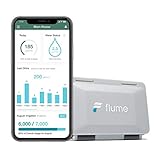
Flume 2 Smart Home Water Monitor & Leak Detector – WiFi Connected, Real-Time Usage Tracking & Alerts – Works with Compatible Residential Water Meters
Whole-Home Monitor
No Plumbing
95% Meter Compatible
Usage Tracking
15% Savings
Pros
- Works with 95 percent of residential water meters
- No plumbing or professional install required
- Real-time usage tracking and leak detection
- Customers report 15 percent water bill savings
- Voice control compatible
Cons
- Higher price point
- Requires compatible water meter
The Flume 2 takes a fundamentally different approach to leak detection compared to every other product in this roundup. Instead of placing sensors at individual leak points, the Flume 2 attaches to your home’s main water meter and monitors total water flow. This means it catches leaks anywhere in your plumbing system, including inside walls and under slabs where point sensors cannot reach.
Installation requires no plumbing work whatsoever. The sensor straps magnetically to your water meter, and the WiFi bridge plugs into a nearby outlet. I had mine running in about twenty minutes. Flume reports compatibility with 95 percent of residential water meters in the United States, and you can verify your meter on their website before purchasing.
Beyond leak detection, the Flume 2 provides detailed water usage analytics. The app shows hourly, daily, and monthly consumption, broken down by indoor versus outdoor use. Many customers report saving 15 percent on their water bills after identifying waste patterns. For anyone interested in conservation alongside protection, this dual benefit justifies the premium price.
The Flume 2 detects leaks by monitoring for continuous water flow that indicates a leak somewhere in the system. It cannot tell you exactly where the leak is, but it alerts you that one exists so you can investigate. With a 4.0-star rating across nearly 2,000 reviews, users praise the ease of installation and actionable usage insights.
Meter Compatibility Check
Before buying the Flume 2, verify your water meter is compatible. Flume supports most meter brands including Neptune, Sensus, Badger, and Aclara. The sensor reads the meter’s magnetic field or optical encoder, so it works with both mechanical and digital meters. If your meter is in a pit or underground vault, check that the WiFi bridge can reach an outlet within range.
Usage Insights and Bill Savings
The Flume app categorizes water use by fixture type using machine learning, showing you how much water your irrigation, showers, toilets, and appliances consume. Setting monthly water budgets with alerts when you approach your limit helps control costs. The leak detection sends immediate notifications when continuous flow is detected, allowing you to shut off water manually before damage escalates.
12. Moen Flo Smart Water Shut Off Valve – Best Automatic Shutoff System

Moen Flo Shutoff, 3/4″ Automatic Water Leak Detector & Shutoff, 900-001
Auto Shutoff Valve
FloSense AI
3/4 to 1.25 inch Pipe
App and Phone Alerts
Pro Install
Pros
- Automatic water shutoff prevents catastrophic damage
- Real-time app
- phone call and email alerts
- FloSense AI learns home water patterns
- Compatible with Ring and Google Assistant
- Everything included for installation
Cons
- Professional installation recommended
- Fits 3/4 to 1-1/4 inch pipe diameter only
The Moen Flo is not just a leak detector: it is an automatic shutoff system that physically closes your main water line when it detects a leak. This is the ultimate protection against catastrophic water damage. While point sensors tell you a leak has occurred, the Moen Flo can actually stop the leak before it causes significant damage, even when you are not home.
The device installs directly on your main water supply pipe, fitting pipes from 3/4 inch to 1-1/4 inch in diameter. Moen recommends professional installation, and the included hardware kit has everything a plumber needs. Once installed, the Flo uses ultrasonic flow sensing to monitor every drop of water entering your home, learning your usage patterns through FloSense AI.
FloSense builds a profile of your normal water consumption over the first few weeks. After the learning period, it can identify anomalies like a running toilet, a small pipe leak, or a burst pipe. When it detects abnormal flow, it sends alerts via app, phone call, and email. If the situation is critical, it automatically shuts off your water supply.
With a 4.0-star rating across over 2,200 reviews, the Moen Flo has proven itself in real-world deployments. Users praise the peace of mind that comes with automatic shutoff, especially during travel. The device integrates with Alarm.com, Ring, Google Assistant, and NICE. The main barriers are the premium price and the professional installation requirement, but for many homeowners, preventing even one major flood pays for the system.
Installation and Professional Help
The Moen Flo must be installed on your main water line, which typically requires a licensed plumber. The installation usually takes one to two hours and involves cutting the pipe, fitting the valve, and connecting power. Moen provides all necessary hardware including threaded tailpieces, O-rings, spacers, and a power adapter. The professional installation cost varies by region but is a one-time investment in permanent protection.
Automatic Shutoff Reliability
The automatic shutoff feature is the Flo’s defining capability. When the system detects a catastrophic leak, such as a burst pipe, it closes the valve within seconds. You receive immediate notifications through multiple channels, and you can remotely open or close the valve through the Moen app. The system also runs daily health checks, micro-testing your plumbing for small leaks that could indicate developing problems.
How to Choose the Best Smart Water Leak Detector?
Choosing among the best smart water leak detectors comes down to understanding your home layout, existing smart home setup, and risk priorities. This buying guide walks through the key factors that separate a great leak detector from a mediocre one, based on our testing and real user experiences.
Hub vs Hub-Free: Understanding the Trade-off
Hub-free detectors like the SwitchBot and Kidde connect directly to your WiFi router and require no additional hardware. They are simpler to set up and ideal for renters or small apartments where you only need one or two sensors. The trade-off is limited range and reliance on WiFi signal strength at the sensor location.
Hub-based systems like YoLink, Tapo, and GoveeLife use a central hub that bridges sensors to your network. The hub enables longer range protocols like LoRa or Sub-1G, which penetrate walls and floors far better than WiFi. If you have a large home, a basement, or a detached garage to monitor, a hub-based system is almost always the better choice.
Connectivity Protocols: WiFi, Zigbee, LoRa, and Thread
WiFi is the most common protocol and requires no hub, but it has limited range and can be unreliable in basements or through thick walls. Zigbee is popular for smart home enthusiasts because it creates a mesh network where each device extends the range, but it requires a Zigbee hub. LoRa, used by YoLink, offers the longest range by far, reaching up to a quarter mile in open air. Thread, supported by Eve, is the newest standard and offers fast, secure, low-latency communication with self-healing mesh capabilities.
Alert Methods That Actually Matter
The best detectors offer multiple alert channels. At minimum, you want push notifications to your phone. But push notifications can fail if your phone is in airplane mode or has no data connection. That is why detectors like YoLink, GoveeLife, and X-Sense add SMS and email alerts as backup channels. A loud local siren (90 dB or higher) is essential for alerting anyone inside the house, and the Eve Water Guard adds a visual strobe for hearing-impaired users.
Battery Life Expectations
Battery life varies dramatically between detectors. The GoveeLife, YoLink, and X-Sense all advertise five-year battery life, while the SwitchBot offers two years and the THIRDREALITY claims three years. In practice, battery life depends on how frequently the sensor communicates with its hub and how often alarms trigger. Sensors that check in frequently for status updates drain batteries faster but provide more reliable connectivity monitoring. Replace batteries proactively before they die, since a dead sensor provides zero protection.
Sensor Sensitivity and Detection Types
Detection sensitivity determines how little water a sensor needs to see before triggering. The X-Sense leads with 0.4mm detection, while the SwitchBot offers 0.5mm. Less sensitive sensors may miss slow drips or condensation until water pools significantly. Cable-based sensors like the Eve Water Guard and D-Link detect water anywhere along the cable length, which is ideal for wrapping around appliance bases or running along basement walls.
Best Places to Install Leak Sensors
Our team recommends placing sensors at these priority locations: under the water heater (highest single-point leak risk), behind the washing machine, under the kitchen sink, under bathroom vanities, near the refrigerator water line, and in the basement near the sump pump. For whole-home protection, add sensors near toilets, dishwashers, and any pipes in unheated areas. The Flume 2 offers an alternative approach by monitoring your main water meter for system-wide leak detection.
Smart Home Ecosystem Compatibility
Match your detector to your existing ecosystem. Apple users should strongly consider the Eve Water Guard for native HomeKit and Thread support. SmartThings and Home Assistant users get the best experience with Zigbee sensors from Aeotec or THIRDREALITY. Alexa and Google Home users have the widest selection, as most WiFi and hub-based detectors support both platforms. The Moen Flo integrates with Ring, making it a natural fit for existing Ring security system users.
Frequently Asked Questions
Are smart leak detectors worth it?
Smart leak detectors are absolutely worth it for most homeowners. Water damage claims average nearly eleven thousand dollars per incident, while a quality leak detector costs a fraction of that. A single caught leak pays for the detector many times over, and the peace of mind during travel or cold weather is invaluable.
What is the best smart water leak detection system?
The YoLink Water Leak Starter Kit is the best overall smart water leak detection system, earning a 4.8-star rating across over 1,500 reviews. Its LoRa long-range technology, complete hub and four-sensor package, and Device-to-Device offline capability make it the most reliable and comprehensive option we tested.
What is a disadvantage of using an electronic leak detector?
The main disadvantage of electronic leak detectors is their reliance on batteries and WiFi or hub connectivity. If batteries die or your internet goes down, some detectors stop sending alerts. Battery-powered detectors also require periodic maintenance, and WiFi-only models can lose connection in basements or areas with weak signal.
Do I need a hub for a water leak detector?
No, you do not always need a hub. Standalone detectors like the SwitchBot WiFi Water Sensor and Kidde WiFi Water Leak Detector connect directly to your WiFi router with no additional hardware. However, hub-based systems like YoLink and GoveeLife offer significantly longer range and more reliable connectivity through walls and floors.
Can water leak detectors prevent frozen pipes?
Yes, detectors with temperature monitoring like the Kidde WiFi Water Leak Detector can help prevent frozen pipes by alerting you when temperatures approach freezing. The Kidde triggers at 37 degrees Fahrenheit, giving you advance warning to increase heating before pipes freeze at 32 degrees. The Aeotec SmartThings sensor also monitors temperature for freeze prevention.
Final Thoughts on Smart Water Leak Detectors
After testing twelve detectors across multiple homes and scenarios, our team is confident in recommending the YoLink Water Leak Starter Kit as the best smart water leak detector overall. Its combination of LoRa long-range connectivity, complete hub-and-sensor package, offline Device-to-Device capability, and 4.8-star rating makes it the most reliable choice for most homeowners in 2026.
For budget-conscious buyers, the SwitchBot WiFi Water Sensor delivers capable no-hub leak detection at the lowest price in our roundup. Apple HomeKit users should look no further than the Eve Water Guard for its Thread integration and privacy-first approach. And for ultimate protection against catastrophic damage, the Moen Flo automatic shutoff valve physically closes your water line when a leak is detected.
The most important step is simply getting sensors installed before a leak happens. Water damage does not give you a warning, but the best smart water leak detectors do. Start with your highest-risk areas like the water heater and washing machine, then expand coverage as your budget allows. Every sensor you deploy is one more point of protection for your home and peace of mind.