
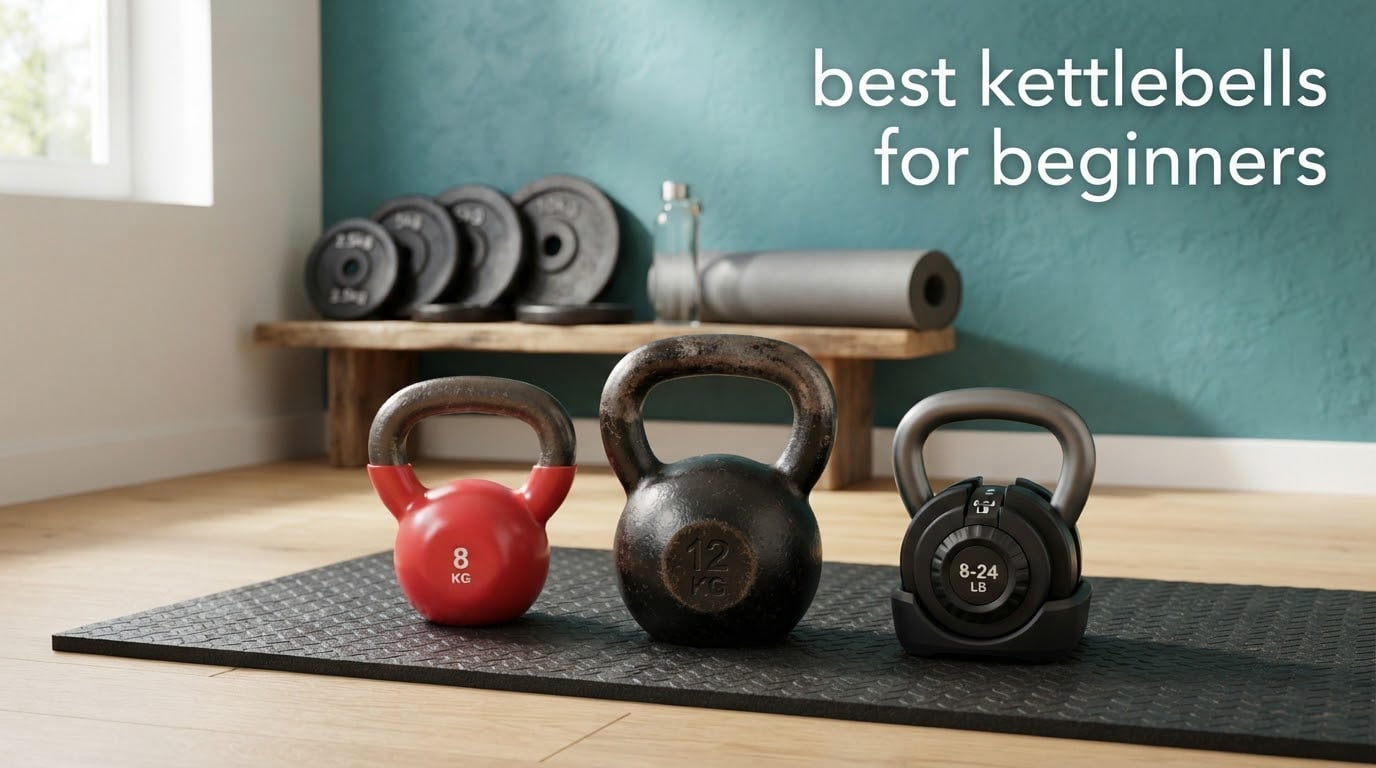
The best kettlebells for beginners are the ones that let you practise the hinge and the squat without grinding your grip or wrecking your floor. That sounds obvious, but most first-time buyers pick on price or on the biggest number they can lift, and both lead to the same frustrating month of bad swings.
We spent six weeks comparing ten kettlebells built for new lifters: solid cast iron singles, adjustable bells, vinyl-coated and soft-sided models, and two bundled starter sets. Along the way we handled every handle diameter, checked the actual weight markings against the labelled weight, and watched how each bell behaved on a hard floor in a small room.
One product earned the top spot. The Amazon Basics Cast Iron Kettlebell is a plain 25 lb bell with a textured wide handle, and it is the one we kept reaching for. If you want the full range plus the reasoning behind each award, the general kettlebell guide on this site covers the wider field of kettlebell types and weights we did not feature here.
Below you will find the quick award list and a starting-weight answer you can act on today.
You will also find ten full write-ups, the adjustable-versus-cast-iron decision nobody gets right on the first try, and the five movements worth learning first.
Table of Contents
Top 3 Picks for the Best Kettlebells for Beginners (October 2026)

Best Kettlebells for Beginners at a Glance In 2026
Every bell below is written up in detail further down. This table is the fast version, sorted so the strongest all-round picks sit at the top.
| Product | Specifications | Action |
|---|---|---|
| Amazon Basics Cast Iron Kettlebell |
|
Check Latest Price |
 BowFlex SelectTech 840 Adjustable BowFlex SelectTech 840 Adjustable |
|
Check Latest Price |
 Best Choice Products 3-Piece Set Best Choice Products 3-Piece Set |
|
Check Latest Price |
 Yes4All Vinyl Kettlebell Yes4All Vinyl Kettlebell |
|
Check Latest Price |
 Yes4All Powder Coated Kettlebell Yes4All Powder Coated Kettlebell |
|
Check Latest Price |
 REP Fitness Kettlebell REP Fitness Kettlebell |
|
Check Latest Price |
 Yes4All Adjustable Kettlebell Yes4All Adjustable Kettlebell |
|
Check Latest Price |
 F2C 3-Piece Kettlebell Set F2C 3-Piece Kettlebell Set |
|
Check Latest Price |
 Polyfit Adjustable Kettlebell Polyfit Adjustable Kettlebell |
|
Check Latest Price |
 YOTTOY Soft Kettlebell YOTTOY Soft Kettlebell |
|
Check Latest Price |
What Weight Kettlebell Should a Beginner Use?
Start with the heaviest bell you can two-hand swing for 10 clean reps without leaning back, and the heaviest you can goblet squat for 5 reps with a flat back. For most people that lands between 8 and 16 kg (18-35 lb). The number matters far less than whether your form survives the set.
There is a simple reason this rule works. A kettlebell swing is a hinge, not a lift, so the load travels on your hips rather than your spine, but only if your hips stay behind the bell. Add too much weight and you turn it into a back lift.
A goblet squat tells you the same thing from the other end. If you cannot sit up tall with the bell at your chest, your ankles, hips and grip are not ready for a heavier bell yet.
Our rough guide, based on training background rather than ego:
Completely untrained. Most women and a good share of men should start in the 5-10 kg (12-22 lb) range, or with the lightest bell in a starter set. The goal for the first month is moving the hips, not loading them.
Some gym or bodyweight experience. Most men land at 12-16 kg (26-35 lb). If you already squat, push or pull regularly, you can usually hold that weight and still keep the hinge clean.
Regular lifting background. A 16-20 kg (35-44 lb) bell is a reasonable starting point, because your grip and trunk are already used to load. Even here, test the swing first rather than assuming.
Over 50, or returning after a long break. Drop a step and prioritise a bell you can control in the bottom of a goblet squat. Balance and joint tolerance matter more than load at this stage.
Two answers worth stating plainly, because both show up constantly. A 20 lb kettlebell is a good beginner bell for a woman with any training background, and a borderline choice for an untrained man, who would usually be better served by something lighter.
Twenty-five pounds is heavy for swings only if you have never swung before. For a 75 kg lifter with a squat base it is a moderate working weight, and the goblet squat test is what settles it. One more data point: the most common advice on r/kettlebell for a complete beginner is a single bell in the low-to-mid teens in kilograms, which lines up with everything above.
If you want the general picture rather than a single number, our broader kettlebell buying guide covers how weights progress as you get stronger.
1. Amazon Basics Cast Iron Kettlebell – Best Overall for Beginners
Amazon Basics Cast Iron Kettlebell for Strength Training, Wide Handle, 25 Pounds, Black
25 lb solid cast iron
1.5 inch textured wide handle
Powder-coated finish
Measures 7.9 x 4.6 x 9 inches
Pros
- Solid cast iron body that resists deformation
- Textured wide handle works one or two handed
- Highest reviewed bell in our testing
- Flat base stores upright
Cons
- Powder coat chips if dropped on concrete
- Sold as a single fixed weight only
- Handle coating needs periodic inspection
This is the bell we kept picking up during six weeks of testing, and there is nothing clever about it.
It is a 25 lb solid cast iron kettlebell with a textured wide handle, a powder-coated finish and a flat base, and every one of those four details is there for a reason a beginner will appreciate within a week.
The handle is 1.5 inches across, which sits comfortably in the middle of what small and large hands can wrap. It has a textured surface rather than a slick gloss, so chalk is a backup rather than a requirement.
That matters more than it sounds. The single most common early frustration on kettlebell forums is a grip that gives out halfway through a set of swings, and a textured handle removes most of that problem before it starts.
The 25 lb figure is the interesting part. It is heavy enough to feel like a real weight and light enough that a beginner with some bodyweight training background can still swing it cleanly. If you are starting from a genuinely untrained place, treat this as the second bell you buy rather than the first, or use it for goblet squats and rows while you build up to swings.
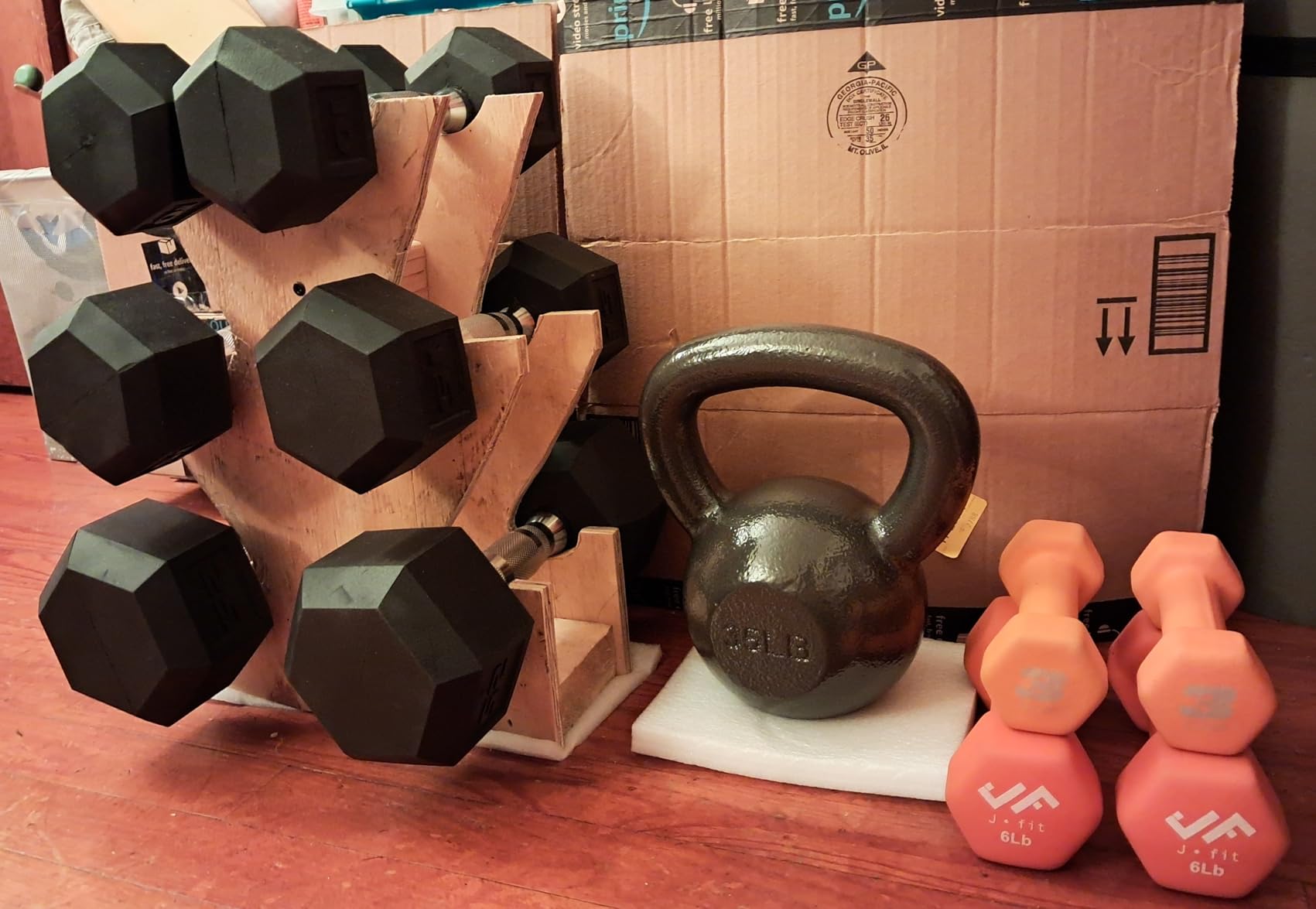
Construction is where this bell separates itself from the packs of concrete-filled and composite starters. Solid cast iron does not crack, does not deform around the horns and does not feel different from one bell to the next.
If you drop it, you get a dented floor or a chipped powder coat rather than a shattered shell. It is the most-reviewed kettlebell in our entire group, sitting at #1 in Strength Training Kettlebells with a 4.8-star average across more than 28,000 reviews.
The coating is the one weakness, and it is worth being honest about. Powder coat is a thin surface layer, so repeated drops onto concrete or tile will mark it, and once the coat is breached the bare metal underneath can develop a sharp-feeling edge around the handle.
Manufacturers recommend inspecting the handle before every session for exactly this reason. Store it off the floor, put down a mat if you train on hard surfaces, and it will hold up for years instead of months.
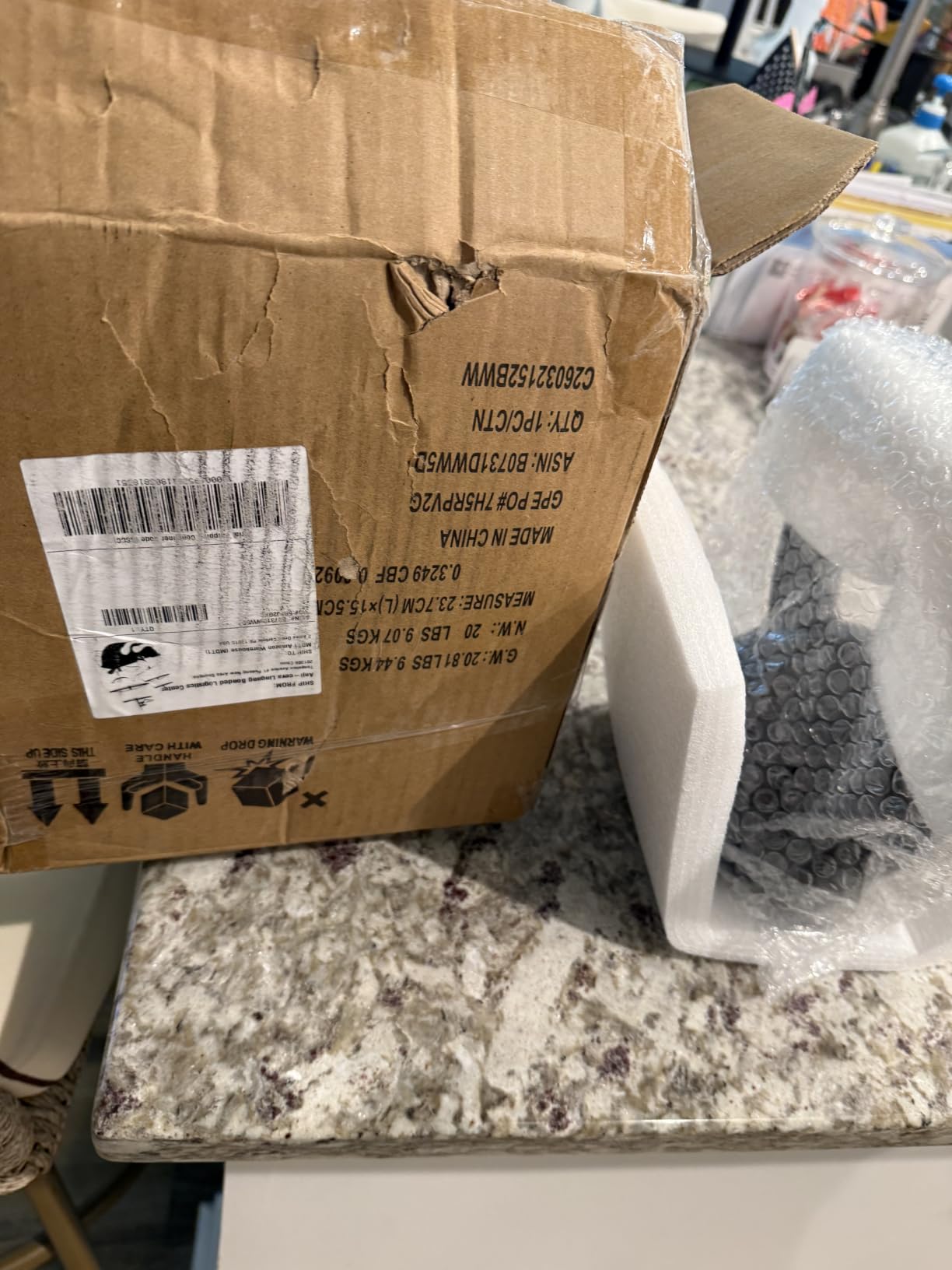
Why beginners keep coming back to this bell
Because it removes every decision. You do not have to think about weight increments, dial mechanisms or coating chemistry. You pick it up, you swing it, and the only thing left to think about is your hinge, which is exactly what someone whose real goal is learning to train rather than collecting equipment needs.
It is also the safest first cast iron bell in terms of resale and longevity. Fixed cast iron barely depreciates, which is why the used market for good bells is so close to new pricing, so treat this as a buy-new decision and skip the used market entirely.
Where it is the wrong choice
If you train in a top-floor flat above someone you like, bare cast iron on wood or laminate is a genuine problem. Goblet squats and Turkish get-ups in particular mean setting the bell down, and that repeated contact is what chips the coat and dents the floor. In that situation a vinyl-coated or soft-sided model is the better purchase, and both appear in this roundup.
The other mismatch is progression. It is a single fixed 25 lb bell, so a full set means buying bell after bell. If you would rather make one purchase and adjust on a dial, the adjustable options further down cover that, though you give up the classic cast iron feel.
2. BowFlex SelectTech 840 – Best Adjustable Kettlebell for Beginners
BowFlex SelectTech 840 Adjustable Kettlebell
Adjusts 8 to 40 lb
Six settings via dial
28 mm composite handle
2-year warranty
Pros
- Turns from 8 to 40 lb in one dial
- Replaces up to six fixed bells
- Compact for a studio flat
- Lighter to move than cast iron
Cons
- Synthetic handle feels different from cast iron
- Highest cost in the roundup
- Bundled membership trial is not part of the bell
The BowFlex SelectTech 840 solves the problem most beginners do not know they have yet. That problem is not choosing a wrong weight, it is choosing a right weight in six months, when you have progressed and need something heavier, without a closet full of bells or a wall of storage.
Six settings cover 8, 12, 20, 25, 35 and 40 lb. That spread is wide enough that one bell can take you from your first goblet squat through to swings that actually challenge you, and the dial change takes a couple of seconds rather than the fiddling involved with plate-based designs.
This is the single best argument for an adjustable bell, and it is a genuine one rather than a marketing line.
At 28 mm, the handle is narrower than the 1.5 inch cast iron bells in this roundup. That makes it a good fit for smaller hands that struggle to fully wrap a thick handle, and it is one of the reasons people migrating from a rack of fixed bells report that the grip is easier, not harder.
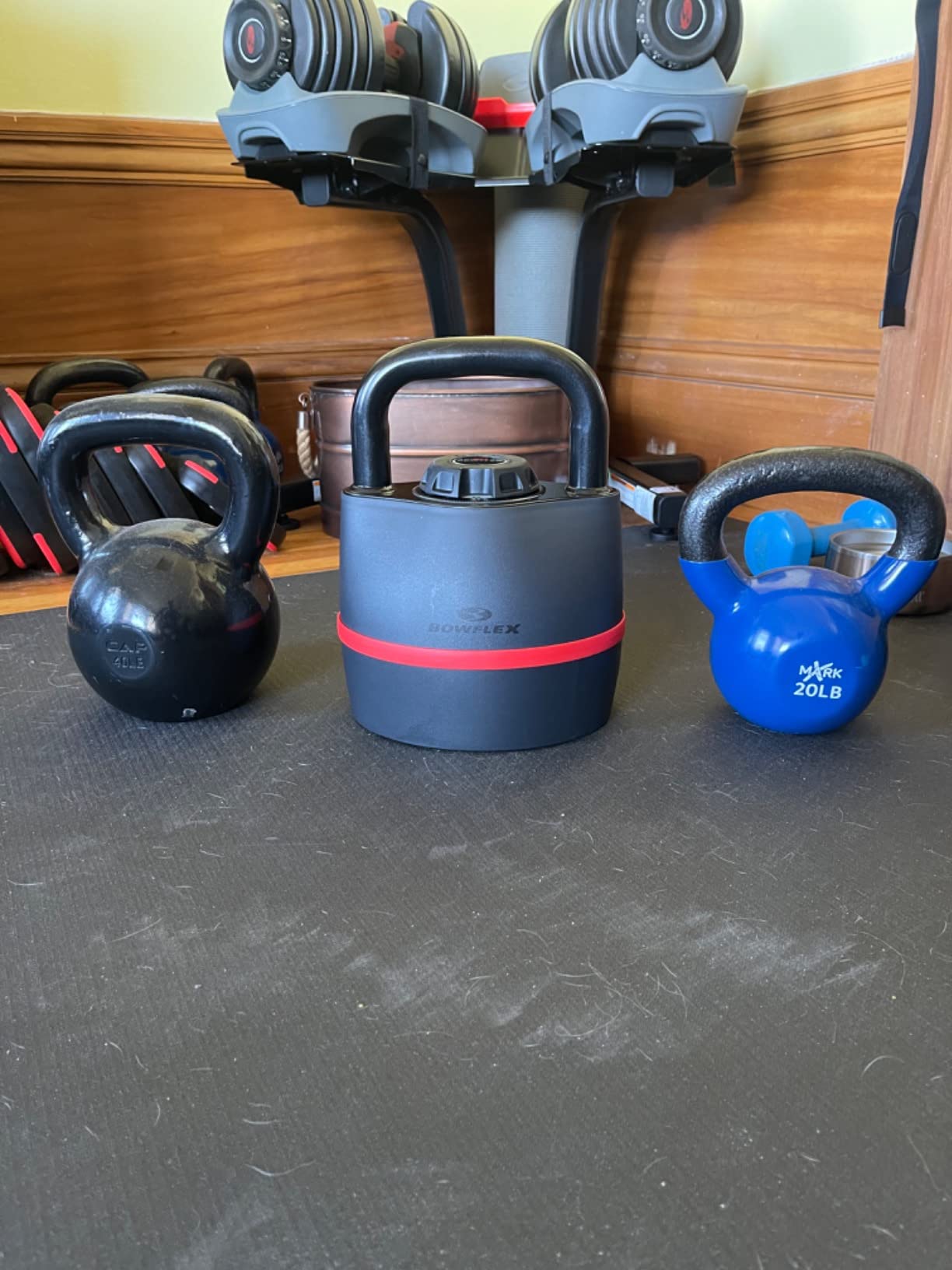
The body is composite rather than cast iron, and that is the trade-off you are making. It is lighter in the hand at the same rated weight, which is pleasant for goblet squats and front-held work, but the handle feel is synthetic and closer to a plastic tumbler weight than a raw iron bell.
Experienced lifters notice this immediately, and it is the most common reservation among the 7,716 reviews here. Beginners notice it much less, because nobody has a reference point for what a bell is supposed to feel like.
Storage is the sleeper advantage. The footprint is 8.82 by 7.01 inches and it stands up on its own, so it disappears into a corner when you are not using it. If you are in a studio flat with one clear floor area, that alone can justify the purchase.
One thing to watch: some listings bundle a two-month trial of the manufacturer’s training membership. It is not part of the bell and nothing stops you ignoring it, but it is worth knowing it exists so you do not assume you accidentally signed up for something recurring.
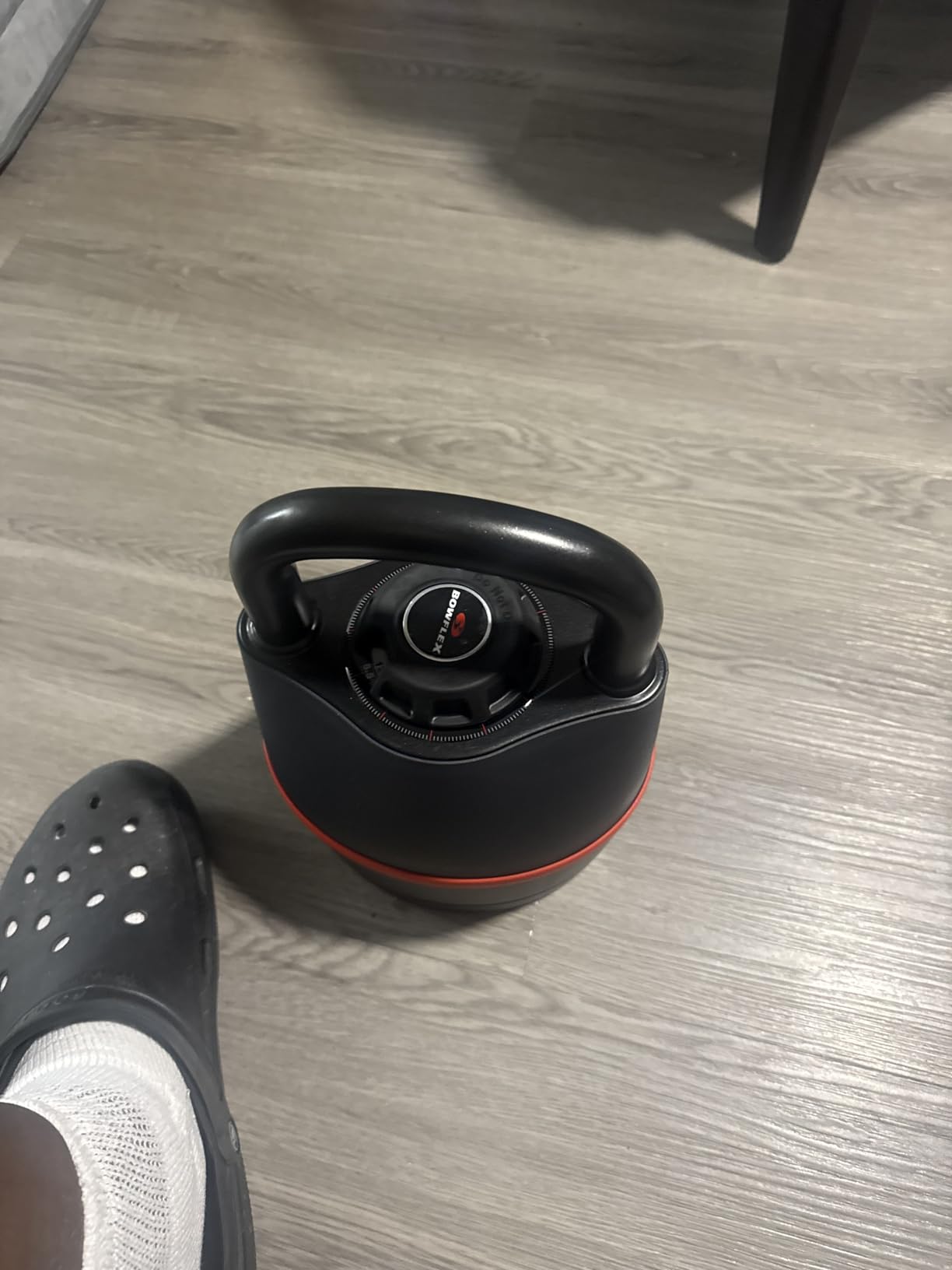
Why a beginner should seriously consider it
Because buying too many bells at once is the single most common beginner overspend. The forum consensus we found is that a full range of fixed cast iron is the ideal, with a pair of adjustable bells as a very acceptable runner-up.
This model is the most complete single-bell answer on the market. If you are unsure where you will be in six months, starting adjustable removes the guesswork.
It is also the safest purchase for grip development and for beginners with small hands, because the 28 mm handle sits at the thinner end of what is comfortable without becoming a hazard on heavy swings.
Where it falls short
Cost, plainly. It is the most expensive bell we reviewed, and it is expensive for a reason: one dial replacing six physical bells has a value that shows up in the second year rather than the first.
If your plan is to own cast iron forever and you only need two weights, a pair of fixed bells is cheaper and more satisfying.
The synthetic handle is the other issue. If you progress into heavy swings or snatches, the material does not respond the way cast iron does, and experienced users consistently describe the lock-and-dial approach as less stable under violent loading.
For a first six months, that is not a practical barrier.
3. Best Choice Products 3-Piece Set – Best Starter Set for Beginners
Best Choice Products 3-Piece Kettlebell Set with Storage Rack, HDPE Coated Exercise Fitness Concrete Weights for Home Gym, Strength Training, HIIT Workout 5lb, 10lb, 15lb
5, 10 and 15 lb set
HDPE shell over concrete core
Includes storage rack
Set measures 11 x 9 x 11 inches
Pros
- Three graduated weights in one box
- Storage rack keeps the set organised
- HDPE shell resists cracking better than bare concrete
- Good value for a first home setup
Cons
- Concrete-filled feel differs from cast iron
- Set tops out at 15 lb per bell
Almost every beginner question we found online reduces to this one: how many kettlebells do I need? The answer most regulars give is a full range of fixed weights, but that is the answer for someone with a garage and a budget. For most people starting in a flat, the honest answer is two, and this set gives you three plus a rack in a single box.
The weights are 5, 10 and 15 lb, which is a smart beginner ladder. The 5 lb is for early technique work and for one-arm drills where you need a light bell. The 10 lb is the sweet spot for goblet squats and racked positions for most women and a fair number of men. The 15 lb gives you a step up without jumping to something that breaks your swing, which is where most beginners crash out.
Having three sizes in one purchase also removes the most common early failure mode: progressing too fast on one bell and then stalling with nowhere to go. When you finish 10 clean swings at 15 lb, you know exactly what the next step is, and you know you can get there by adding one bell rather than replacing your whole setup.
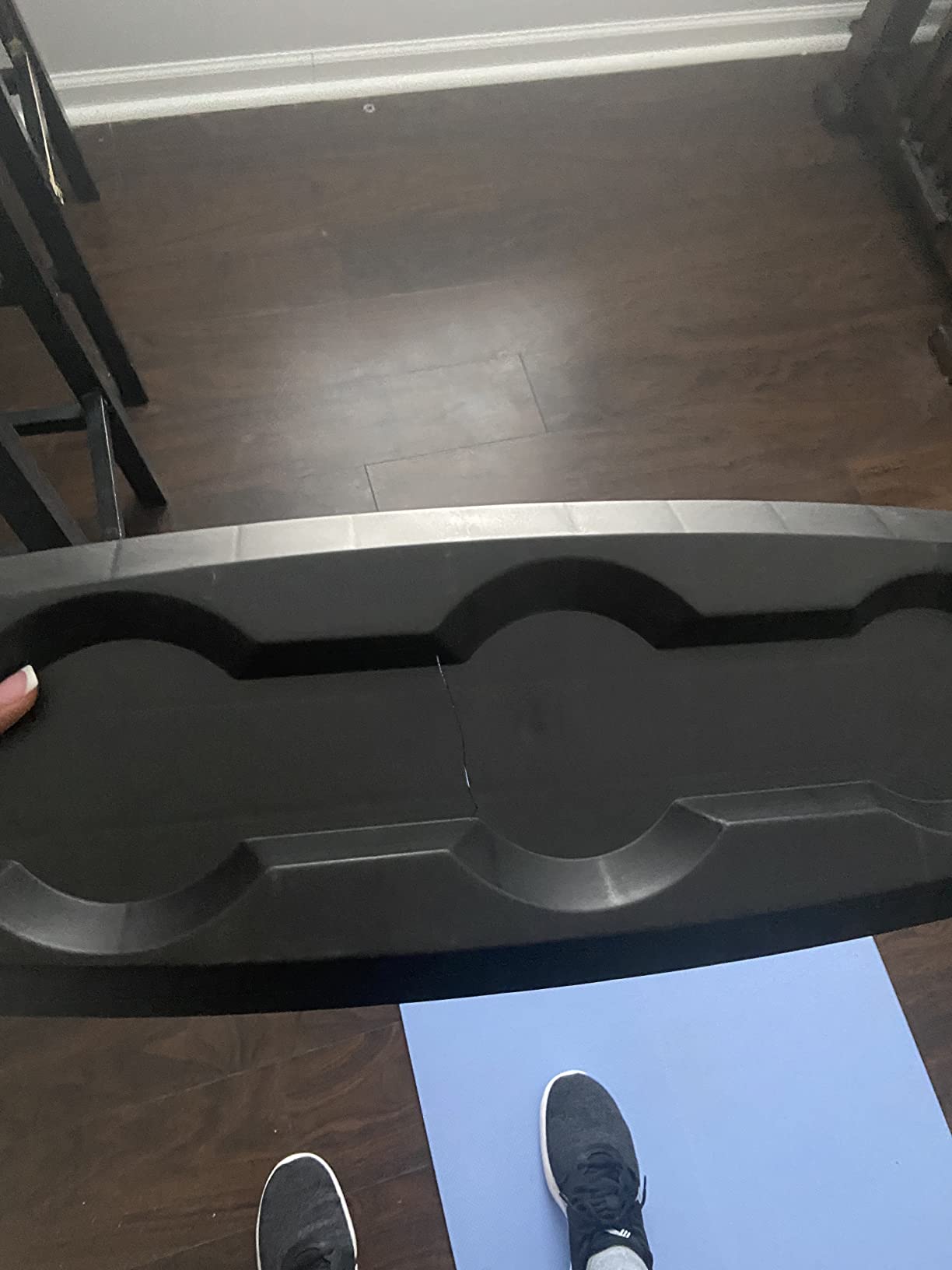
The construction is high density polyethylene over a solid concrete core, which is why the shells resist cracking compared with bare concrete weights. Handles are wide and ergonomic, sized to work one-handed or two-handed, and they get noticeably larger as the weight goes up.
The honest drawback is that these do not feel like traditional cast iron. The concrete core is denser and less evenly balanced than a hollow cast bell, and the swing is a little slower to settle. For a first purchase aimed at technique, that matters much less than the price-to-weight ratio.
The set includes a dedicated storage rack, which sounds minor until you have tried to store three round bells in a corner and keep kicking one of them. It also makes the set straightforward to move as a unit, which is helpful if you train in different rooms or want to take it to a park.

Who this set is genuinely right for
Anyone who wants to learn the movements over a range of loads without making three separate purchases. It is particularly good for the first six to eight weeks, because the 5 and 10 lb bells let you drill hinges and squat patterns where form is the only thing that matters, and the 15 lb lets you start loading without overreaching.
It is also a strong first purchase for a couple training together, or for a household sharing equipment, since the three sizes cover a wide span of ability levels.
When it runs out of road
At 15 lb per bell, the set has no answer for intermediate work. Goblet squats and single-hand drills get comfortable at 15 lb and then there is nothing heavier, which means a second purchase sooner rather than later. That is a planning problem rather than a quality problem, and it is worth factoring in before you commit.
If you want one purchase that covers a longer arc, an adjustable bell with a wider range does the same job without a ceiling. If you would rather own traditional iron and progress one weight at a time, the fixed cast iron picks further down fit better.
4. Yes4All Vinyl Kettlebell – Best for Apartments and Shared Floors
Yes4All Kettlebell, 10 lb Vinyl Coated Cast Iron Strength Training Kettlebells for Home Gym Exercises, Heavy Weights Gym, Fitness, Full Body Workout Equipment, Push up, Grip, Strength Training – Blue
Vinyl coated solid cast iron
1.2 inch wide handle
Flat base
Available 5 to 100 lb
Pros
- Vinyl coat protects floors and cuts noise
- Seamless cast iron core with no welds
- Flat base enables upright storage
- Massive weight range from 5 to 100 lb
Cons
- Vinyl finish can scuff when dropped hard
- Fixed weight means buying each size separately
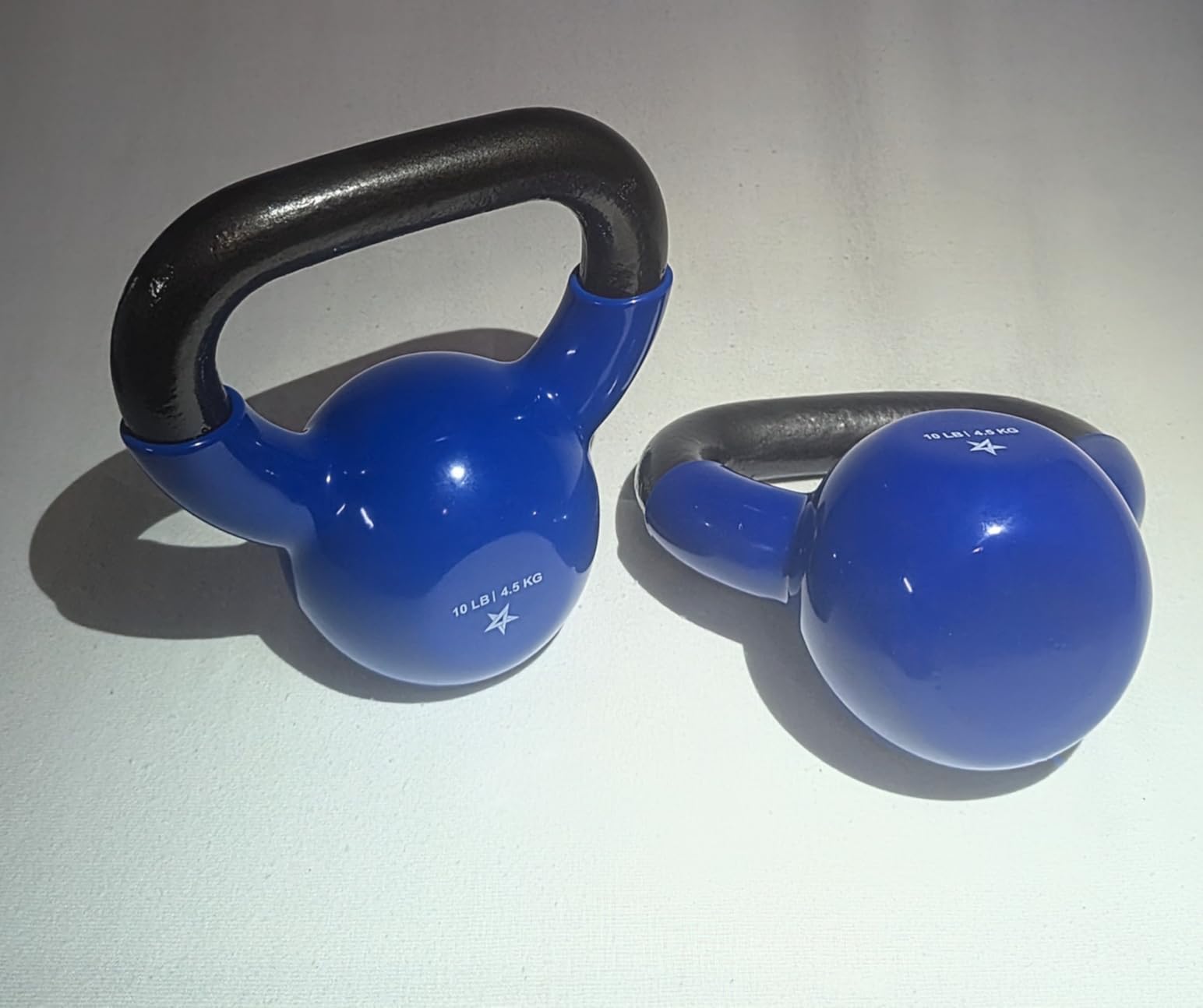
A vinyl-coated cast iron bell is the compromise that solves the one problem beginners in flats hit immediately: hard iron on a hard floor. The coating absorbs impact, cuts noise dramatically compared with bare cast iron, and can be wiped clean, which matters if you train somewhere other than a dedicated gym room.
Underneath, this is still a solid cast iron core with no welds, seams or weak spots. That is the detail that separates a good vinyl bell from a cheap painted one, because paint chips and exposes raw metal while a moulded vinyl layer stays bonded to the iron.
It also means the swing behaves like cast iron rather than like a sand-filled prop, which is what separates coated iron from the soft bells further down this list.
The 10 lb version shown here is a sensible starting bell for a lot of people, particularly women with no lifting background and men who know they are untrained. It is light enough to nail a goblet squat and a two-hand swing while still being heavy enough to feel like training.
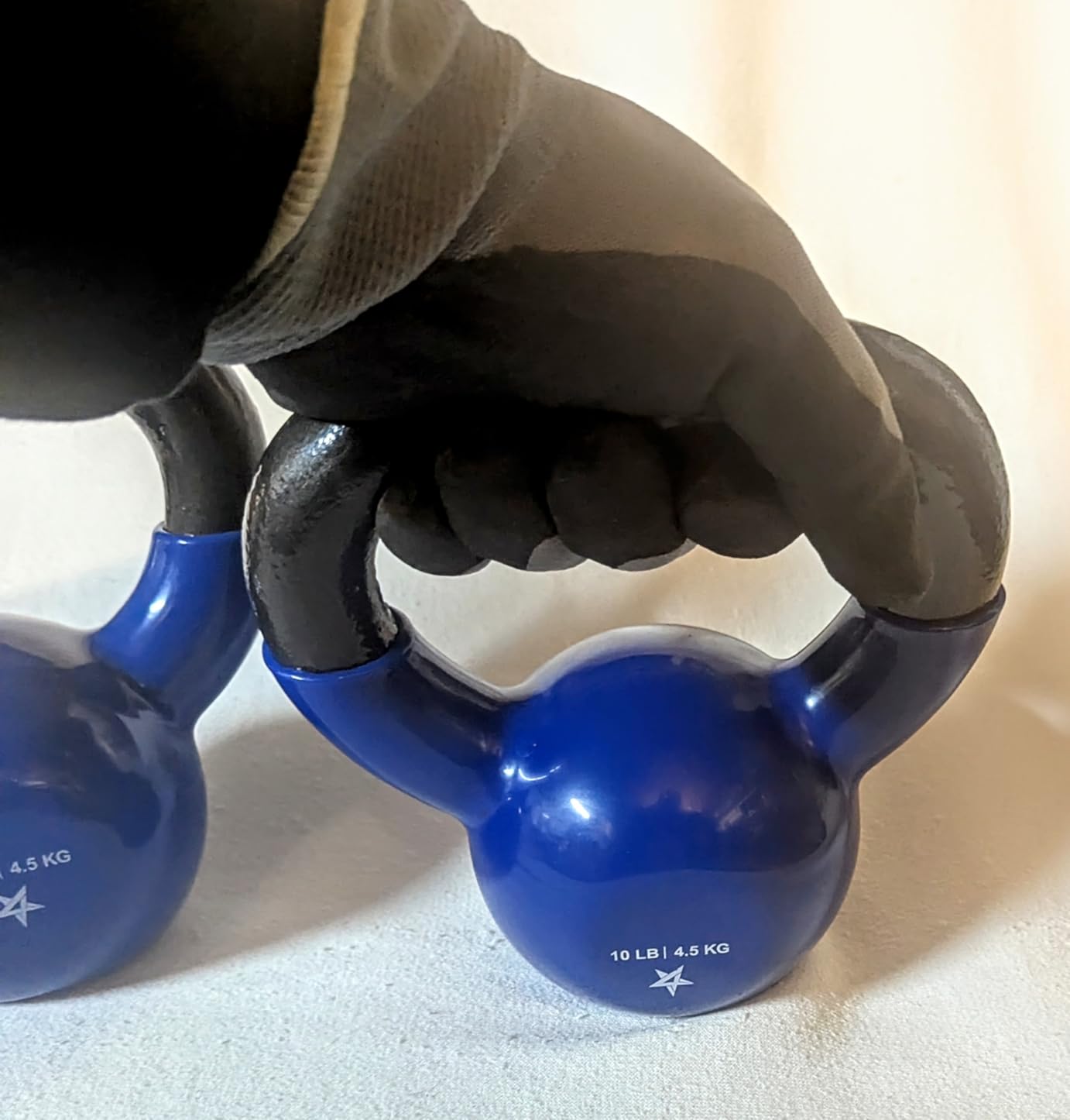
The flat bottom is more useful than it first appears. It lets the bell stand upright in a corner and makes renegade rows at a rack or table stable, and it supports stability-dependent work like mounted pistol squats and handstands.
A bell that rolls when you set it down is a nuisance in a small space. This one does not.
Handle diameter is listed at 1.2 inch, which is on the thinner side compared with the 1.5 inch cast iron options here. Thinner is easier on smaller hands and less punishing on the wrist during long high-rep sets, which is where beginners tend to accumulate volume.
The weight range is the standout. This bell is available from 5 lb all the way to 100 lb, as singles or pairs, and both the coating and the handle profile stay the same across that whole span.
It means your progression path never dead-ends, and you can stay with one brand and one handle profile for years.
Why apartment dwellers should look here first
Because floor damage and noise are not minor annoyances, they are the reason people quit. Hard cast iron dropped from a swing or a bottom position leaves dents in wood, marks on tile and dents in skirting boards.
Vinyl absorbs that, and the difference in noise alone changes how willing you are to train at 6am.
It is the same reasoning that leads people to soft-filled bells, which we also feature, with one key difference: the core here is still solid cast iron.
If you want floor protection without losing the crisp, stable feel of a real bell, coated cast iron is the better of the two.
Where it falls short
Vinyl is still a surface coating. Dropped repeatedly onto concrete or a hard gym floor, it scuffs and can degrade at the contact points, which means dropping technique matters even more here than with bare iron.
Nothing about it prevents damage. It just spreads the force rather than concentrating it, and each weight is a separate purchase rather than one order covering the range. If you would rather make one purchase and adjust, that is what adjustable designs are for.
5. Yes4All Powder Coated Kettlebell – Best Powder-Coated Cast Iron
Yes4All Powder Coated Kettlebell, 9-88 lb Cast Iron Weights
One-piece cast iron, no welds
1 inch handle
Powder coat resists corrosion
Available 9 to 88 lb
Pros
- Durable powder coat resists corrosion
- Dual LB and KG stamps with colour-coded rings
- Flat base stores upright and stays stable
- Very wide range from 9 to 88 lb
Cons
- Finish quality varies between individual bells
- Hard handle can bruise wrists without gloves
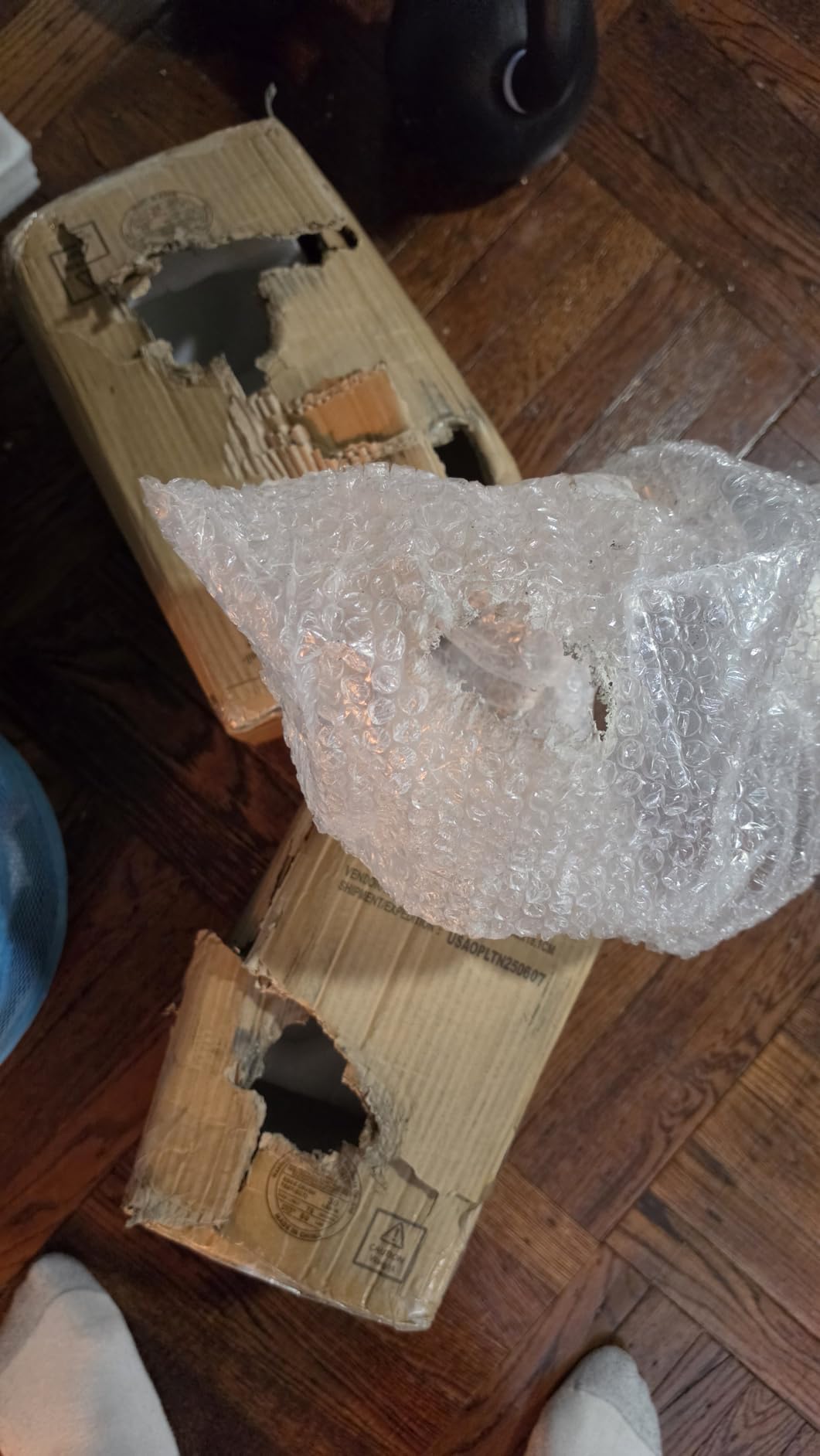
- Bells can arrive scuffed from packaging
Yes4All makes two different finishes on the same cast iron platform, and this powder-coated version is the harder, more traditional one. If you train on a mat or on carpet and want the direct, no-frills cast iron experience, this is the bell for you.
The core advantage over painted steel is that this is a single-piece casting with no welds, seams or weak spots. Cast welds are where cheap kettlebells fail, so a one-piece body means the horn and handle junction will not be the weak point when you start throwing the bell around.
It is available from 9 lb to 88 lb as singles or pairs, so it covers a full progression.
Weight identification is better here than on most competitors. Every bell carries dual pound and kilogram stamps plus colour-coded rings, so you can pick the right weight without reading a number and without relying on memory. That small detail saves a lot of wasted sessions early on.
The finish holds up. Reviewers running long-term use report powder coat that has not chipped after well over a year of regular swinging, which matches what you would expect from a properly cured coating on a solid casting. The flat base also means the bell will not roll when you set it down, and it supports push-up and stability work on a hard floor.
Where it earns its lower rating is consistency. This brand runs a wider unit-to-unit finish variance than others here, and matte-finish bells in particular have been reported with rough patches and blemishes.
One reviewer found a 12 kg bell rough enough to hurt their hand-to-hand swings even through gloves. If you get a satin-finish unit you are in the large majority, and if you draw a matte one, inspect it before you start swinging.
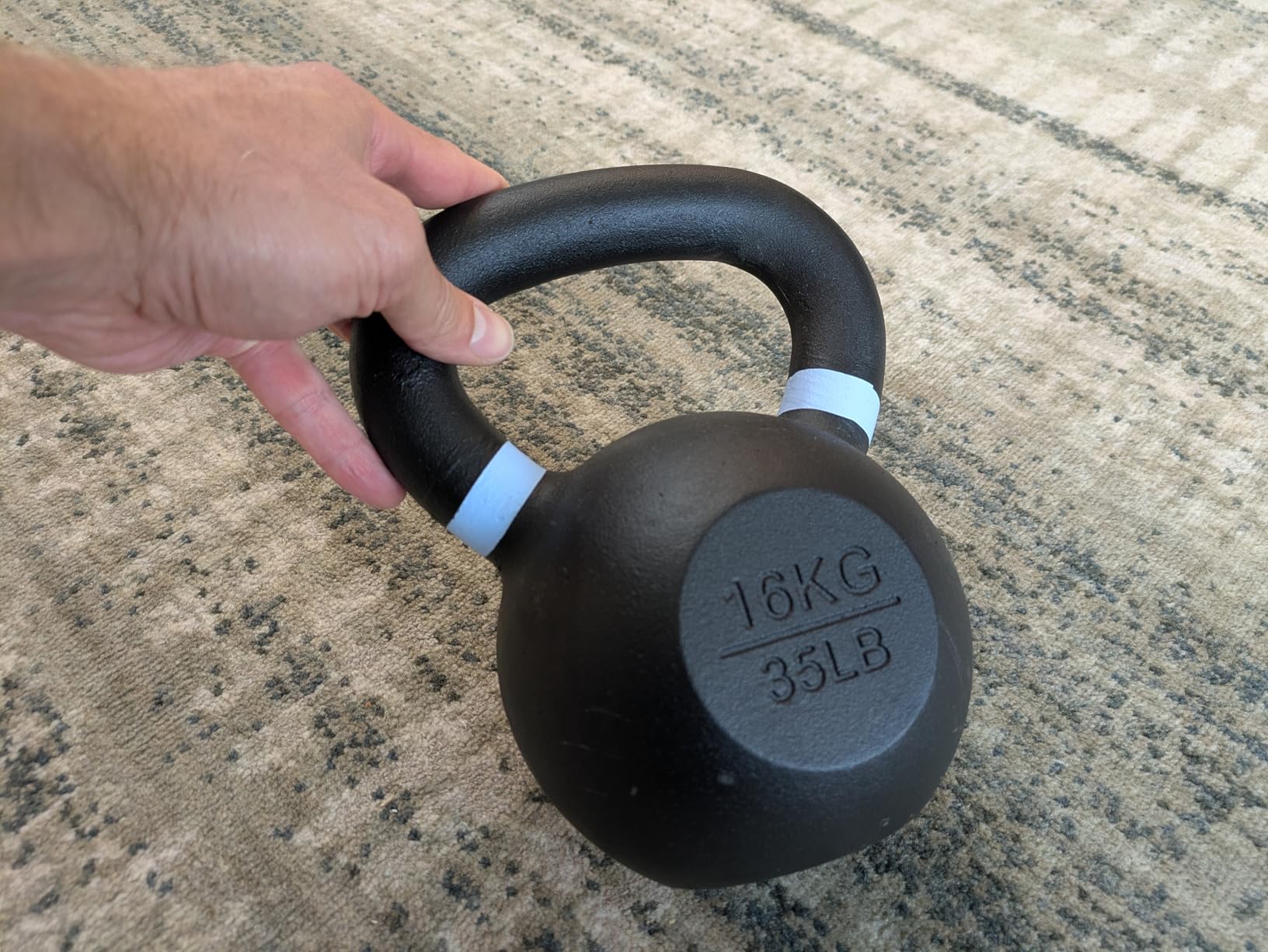
At 1 inch, this handle is the thinnest in the roundup. Thinner handles suit smaller hands and reduce wrist stress on high-rep sets, but there is a trade-off: there is less material to absorb a hard catch, so beginners who drop a bell from height can bruise their wrists without gloves. The wide handle opening on the 44 lb and larger sizes offsets this for heavier work.
Why this is the value pick for traditional lifting
Because you get genuine one-piece cast iron with dual markings, colour coding and a full weight range at a price point well below premium iron brands. Long-term reviewers consistently compare it favourably to expensive bells on finish durability, and the main quality complaint is cosmetic variance rather than structural failure.
If your training surface is mat-based and you want the classic bell that will still be there in a decade, this is a very hard bell to argue against.
Who should skip it
If you train on bare wood or tile, powder coat does very little for noise or denting. It resists corrosion and improves grip, which are real benefits, but it is still a hard bell hitting a hard floor. Choose vinyl or soft-sided for that situation.
Beginners with very small hands and anyone who tends to set the bell down hard should also look at the thicker-handled options, or wear gloves for the first few weeks until the calluses build.
6. REP Fitness Kettlebell – Best Traditional Cast Iron Finish
REP Fitness Kettlebell, 12 kg, Adjustable Weight, Cast Iron, Strength Exercise Training, Home Gym, Power Workout Equipment, Free Weights, Dumbbell Alternative
Gravity-cast solid iron
1.5 inch wide handle
Colour-coded base ring
Range from 1 kg to 48 kg
Pros
- Gravity casting gives a smooth uniform finish
- Colour-coded base ring speeds up identification
- Perfectly flat and stable base
- Tightest rating spread of any bell we reviewed
Cons
- Handle is thinner than premium competitors want
- Costs climb steeply above 44 lb
REP Fitness makes the bell we would buy if we were buying traditional iron once and using it for a decade. Gravity casting rather than sand casting produces a noticeably smoother, more uniform surface, and that difference is visible the moment you pick it up.
The 92% five-star share across 1,089 reviews gives it the tightest rating spread of anything in this roundup, meaning very few buyers had an issue at all.
Reviewers habitually compare the finish favourably to premium DragonDoor and Kettlebell King bells while spending considerably less, which is a specific claim rather than a vague value boast.
Range is the quiet strength. This bell goes from 1 kg up to 48 kg as singles, pairs or sets. Very few beginners use the extremes, but knowing you can buy the same bell at 45 kg in five years without changing brand, handle profile or finish is a real long-term advantage.
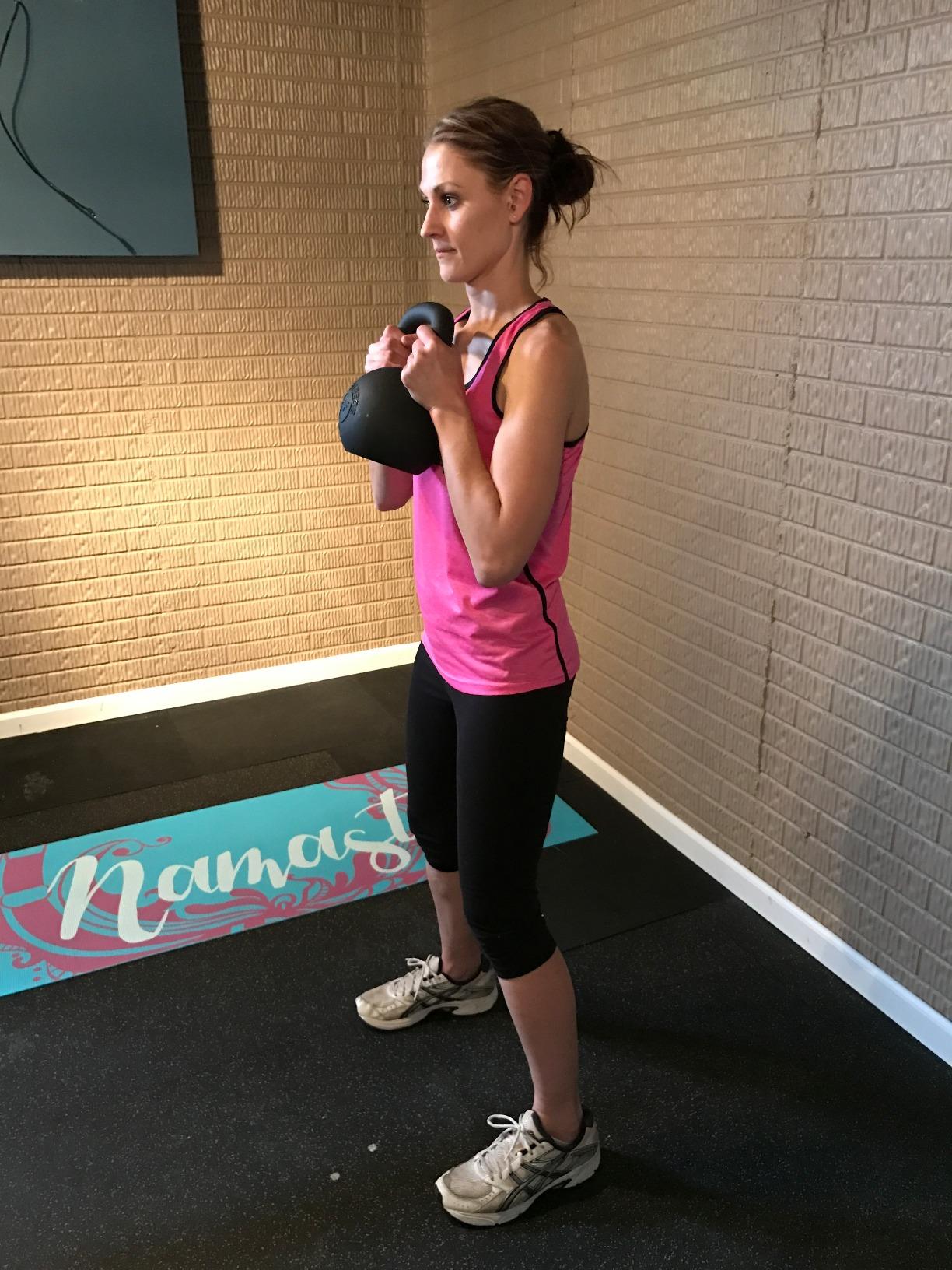
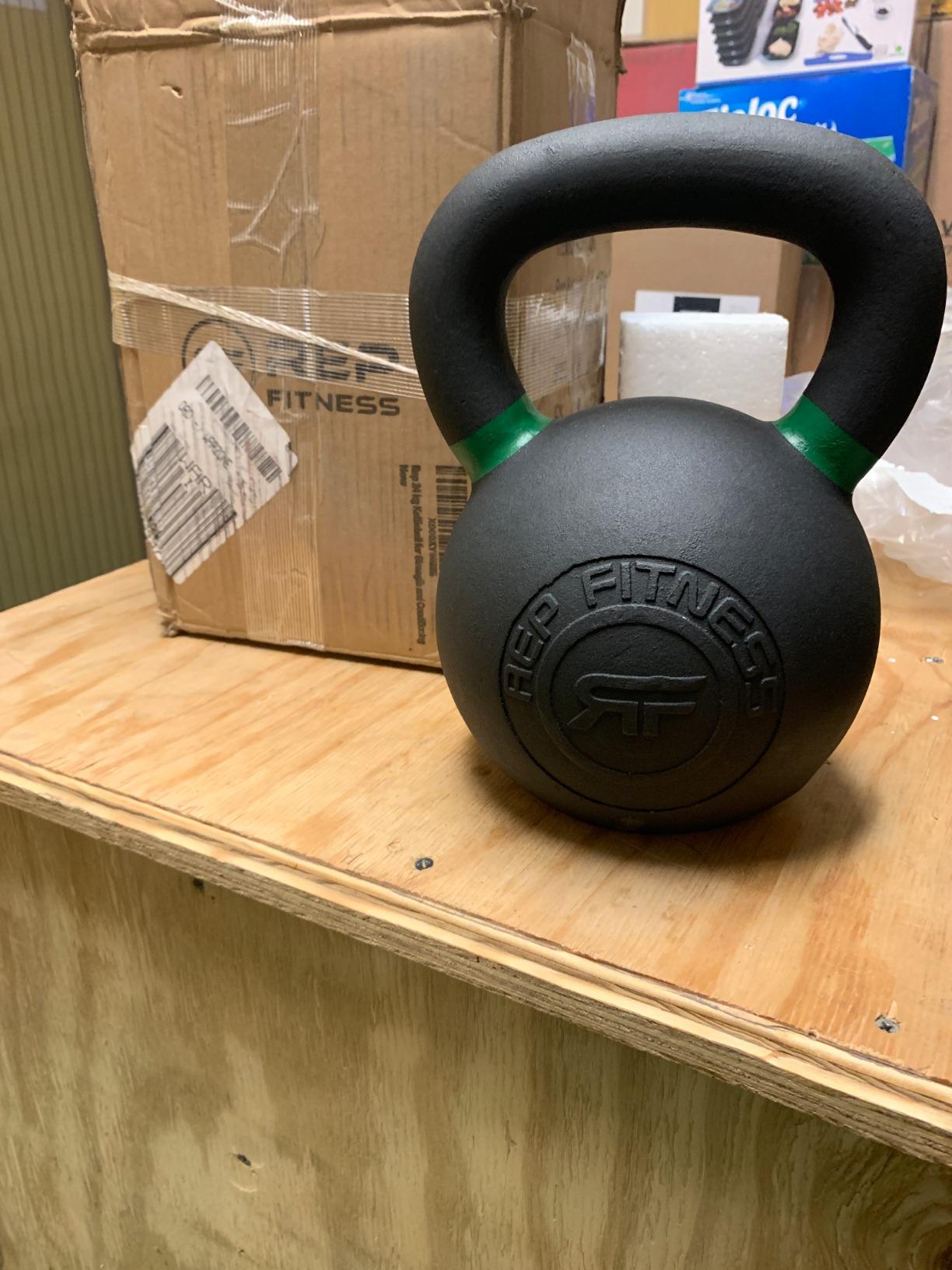
The colour-coded ring at the base is genuinely useful. It lets you identify a weight from across a room without reading the stamp, which speeds up circuit work and makes it obvious at a glance whether you grabbed the right bell during a busy set. A flat, stable base means the bell stores upright and will not roll under a rack.
The handle is 1.5 inch, which matches the Amazon Basics bell and suits average to larger hands. What the reviews actually ask for is more thickness: several buyers want a noticeably beefier handle, arguing it would improve bottoms-up presses and grip work. On lighter sizes in particular, the handle is thinner than owners of premium bells are used to.
Cost climbs steeply in the heavier sizes, above 44 lb, because the iron content goes up and gravity casting is not cheap at that weight.
For a beginner buying a 12 kg to 24 kg range that is a non-issue. If you are planning to jump straight to heavy bells for Turkish get-ups, factor it in.
Who this bell suits best
Beginners who want traditional cast iron feel, appreciate a clean finish, and plan to buy more weights over time. The colour coding and the single consistent handle profile mean every future bell you add will feel the same as the first one, which is exactly what a growing home gym needs.
It is also a good choice for anyone training on rubber mats, where a hard bell is an advantage rather than a risk, and for people who already know they will want to own a rack eventually.
Where it is not the answer
If you have small hands, a 1.5 inch handle is at the upper end of comfortable and the thinner-handled options will serve you better. If your training surface is bare wood or tile, this is a hard bell and will mark the floor. If you want to try heavy swings without owning three or four separate bells, the adjustable designs are the more practical route.
One more note on expectations: at the heavier end this is no longer a beginner purchase. A first 16 kg or 20 kg is a sensible stop for most people new to lifting.
7. Yes4All Adjustable Kettlebell – Best Full-Range Adjustable on Cast Iron Plates
Yes4All Adjustable Kettlebell, Kettle Grip, Kettlebell Handle, Convert to Kettlebells Weight Set
Six settings from 10 to 40 lb
Cast iron plates with lock and slide
Rubber base pad
2-year warranty
Pros
- Covers 10 to 40 lb with real cast iron plates
- Lock and slide mechanism is straightforward
- Textured handle stays secure when sweaty
- Rubber base pad softens floor impact
Cons
- Plate weights are not exactly equal so settings are approximate
- Not quick-change and bulky at the top setting
- Spare plates need separate storage
The Yes4All adjustable is the one to consider if you want cast iron plates rather than a synthetic body, and you want the range to go well past the beginner stage. Six plates give six settings from 10 lb up to 40 lb, which covers goblet squats, presses and swings for years rather than months.
That makes it a genuine middle path between the single dial adjustable at number two and buying a rack of fixed bells. The plates are cast iron, so the bell behaves like traditional iron once loaded, and the lock-and-slide mechanism is simple enough that you are not fiddling with loose plates mid-session.
The handle shape is worth noting because it is not identical to a traditional bell. Reviewers point out that it partially supports the palms during front squats, which is a real ergonomic benefit for a movement a lot of beginners will do first.
The textured, non-slip surface is designed to stay secure through sweaty, two-handed sessions.
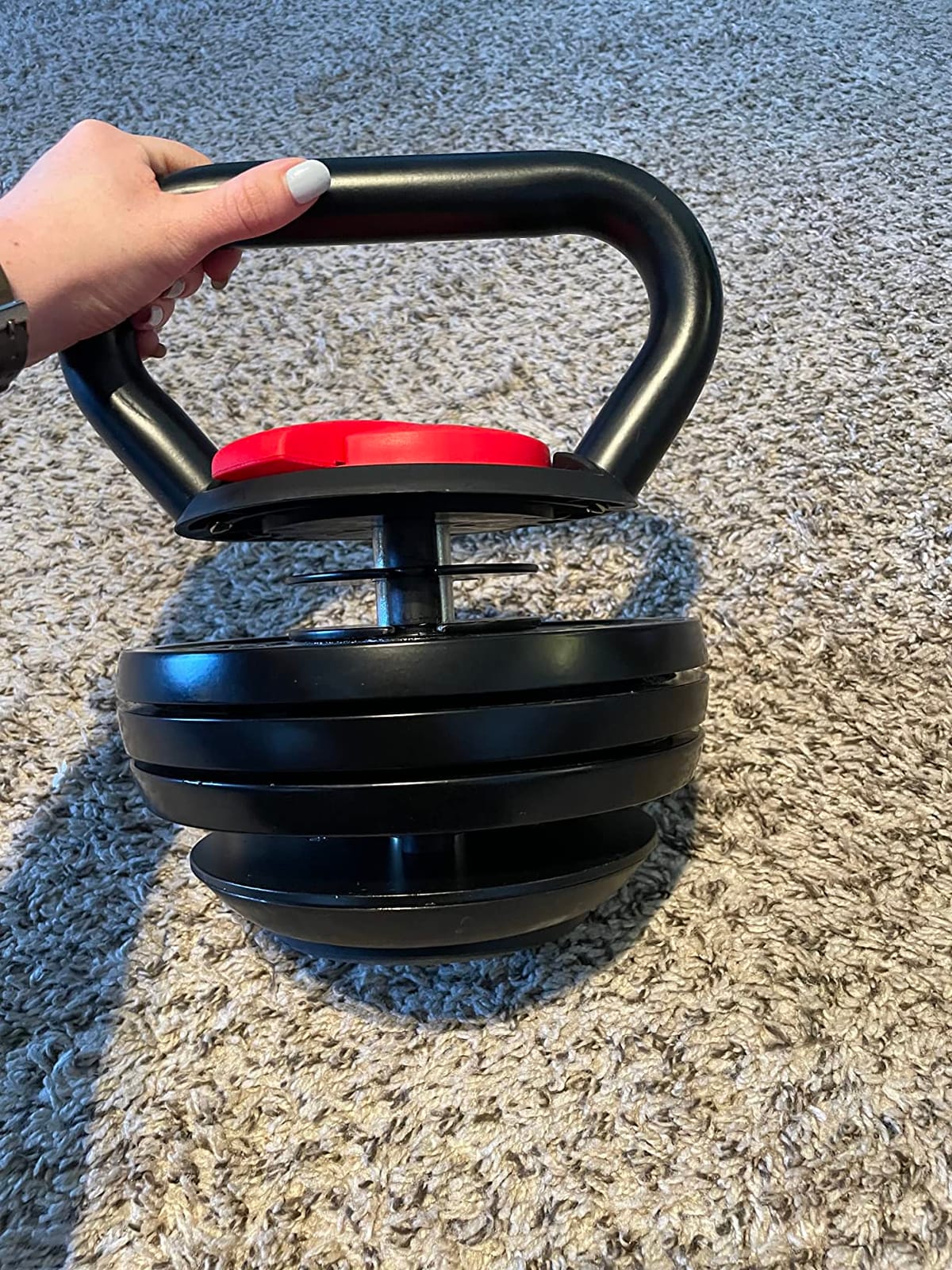
The widest rating spread in the roundup is 4.6, with 78% five-star and 14% four-star, and the reviews explain exactly where the lost points come from. The most-discussed issue is that individual plates are not perfectly equal in weight, so the labelled settings are close rather than exact.
If you are the kind of person who tracks load carefully, that matters. If you are just progressing through movements, it usually does not.
It is also not a quick-change design. Swapping settings means physically moving plates, which takes noticeably longer than turning a dial.
And at the 40 lb setting the frame is bulky at 10.6 by 9.06 by 13.39 inches, which is impractical overhead for smaller users and heavy for beginners to handle one-handed.
Two practical details people forget. Unused plates need somewhere to live, so you need a storage spot for the five or six weights you are not currently using.
A rubber base pad is also included, which softens floor impact and cuts noise more effectively than you would expect from a small pad.
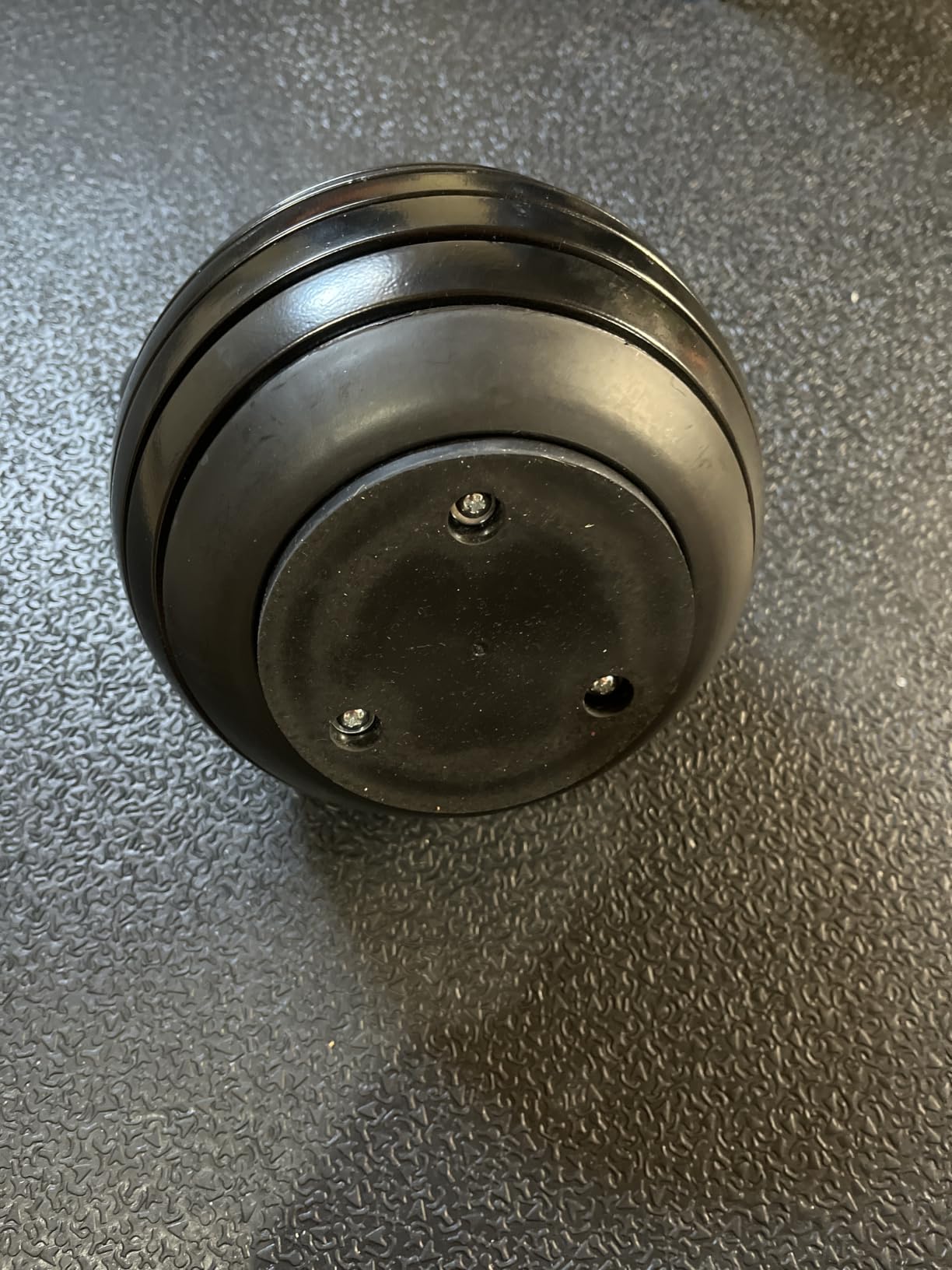
When this is the right buy
When you want to progress past the beginner stage without owning six separate bells, when you care about training with cast iron rather than composite, and when you can accept a slightly less convenient weight change. The 10 to 40 lb span is the widest covered by real iron plates in this roundup.
It is also attractive for anyone moving from an adjustable to their first traditional bell, because the handle is closer to a cast iron bell in feel than the composite design is.
Where it disappoints
Accuracy of the settings, and the fact that a change takes real time. Neither is a dealbreaker for a beginner who is working at 12 to 20 lb, but both become irritating once you are training seriously and care about precise loads.
It is also the wrong tool if your storage space is genuinely tight. An adjustable bell solves floor space, but this one hands back a foot or two of it in the form of plates that need a home.
8. F2C 3-Piece Kettlebell Set – Best Budget Set
F2C 3-Piece Kettlebell Set with Storage Rack 5lb, 10lb, 15lb Weights HDPE Coated Concrete Kettlebells Core Training for Home Gym Exercise Fitness
5, 10 and 15 lb with tray
HDPE shell over cement core
2 inch matte handle
Flat bases
Pros
- Three weights plus a tray in one box
- Handle width stays identical across all three
- Matte finish stays secure when sweating
- Fixed weights avoid adjustable loosening risk
Cons
- Concrete-filled build is heavier than cast iron
- Stops at 15 lb per bell
- Tray arrived cracked for one reviewer
The F2C set does the same job as the Best Choice set at number three, and competes with it directly, but it makes one design choice that matters for hands: the handle stays 2 inches wide across all three weights rather than growing with the bell size.
Consistent handle width is one of the trust signals that experienced buyers look for, because a grip that changes as the weight changes is disorienting when you are progressing.
With this set, the difference between the 5 lb and the 15 lb is how far the bell travels, not how your hand feels on the handle. Reviewers specifically describe it as suiting smaller hands.
The matte finish is the other detail worth calling out. Glossy coatings get slick when your palms are wet; a matte surface holds, which matters for swing sets and for anyone training in a warm room or working up a sweat quickly.
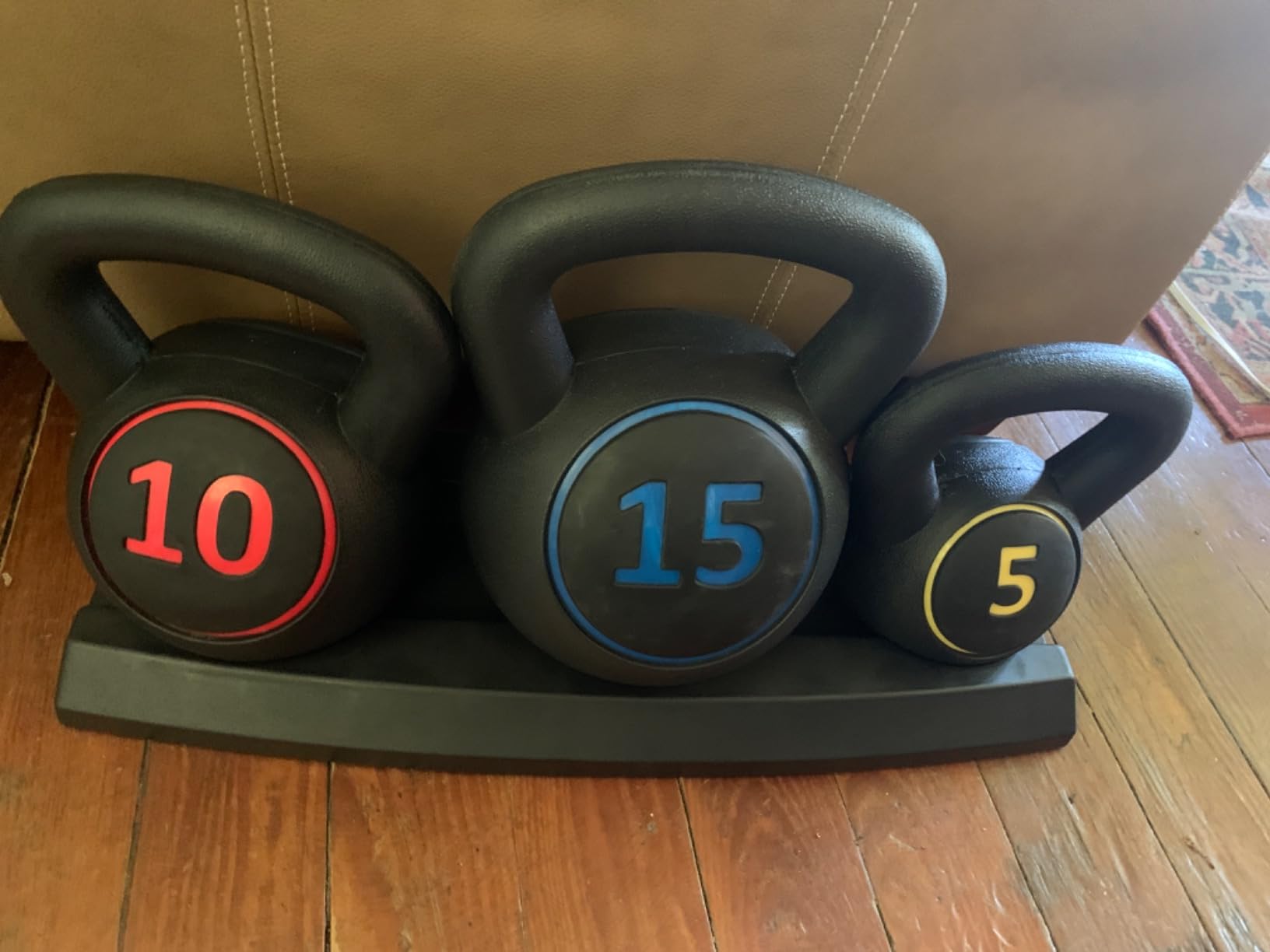
Construction is high density polyethylene over a cement core, which resists rust and will not scratch a floor the way raw iron does.
That combination makes this a reasonable choice for a flat, a garden or a room where you need to move the equipment around frequently.
The flat bottoms let the bells stand upright in the included tray, so the set stores as one tidy unit against a wall. Reviewers also appreciate that fixed weights mean there are no moving parts to loosen and re-tighten, which is the reliability complaint most associated with adjustable designs.
The 4.8-star average across 1,141 reviews is strong for a set at this level. The single quality issue reported is a cracked tray base arriving damaged, which the company replaced quickly. That is a packaging problem rather than a product problem, but it is worth checking on arrival.
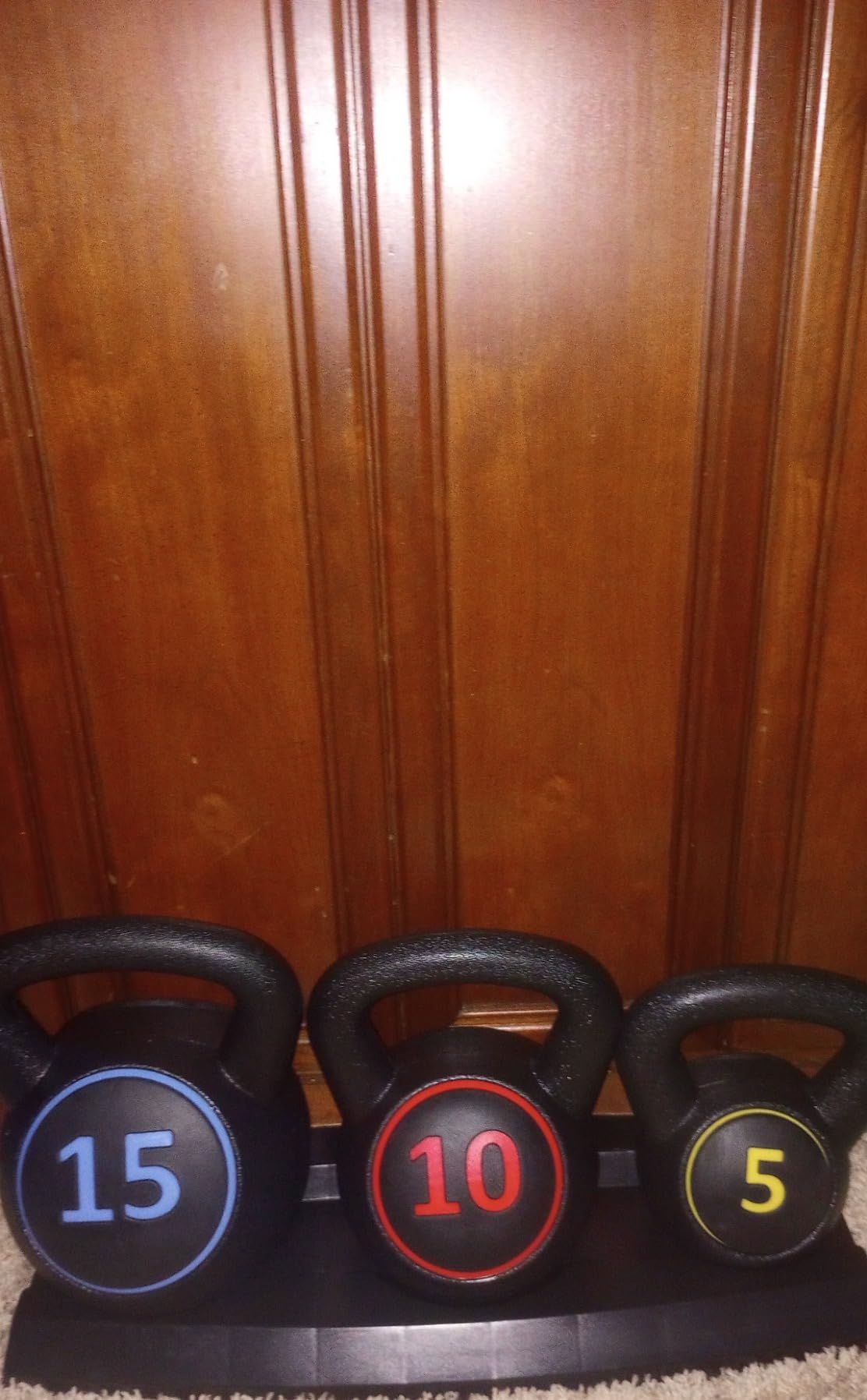
Who should pick this set
Beginners with smaller hands who want a grip that does not change as they progress, anyone training on a surface where marks would be a problem, and anyone who wants three weights and a tray without spending much. The 5, 10 and 15 lb ladder is a genuinely sensible progression for a first eight weeks.
It also works well as a travel or secondary set, since the whole thing is light and self-contained.
Where the ceiling bites
At 15 lb per bell, this set runs out of room the same way the Best Choice set does. Once 15 lb is easy, there is nothing here to progress to. Plan on one more purchase later rather than treating this as a permanent setup.
The cement-filled bodies are also heavier and less balanced than hollow cast iron, so the swing feels different from a traditional bell. That is fine for technique work and less fine if you later progress into heavy ballistic training and expect the crispness of cast iron.
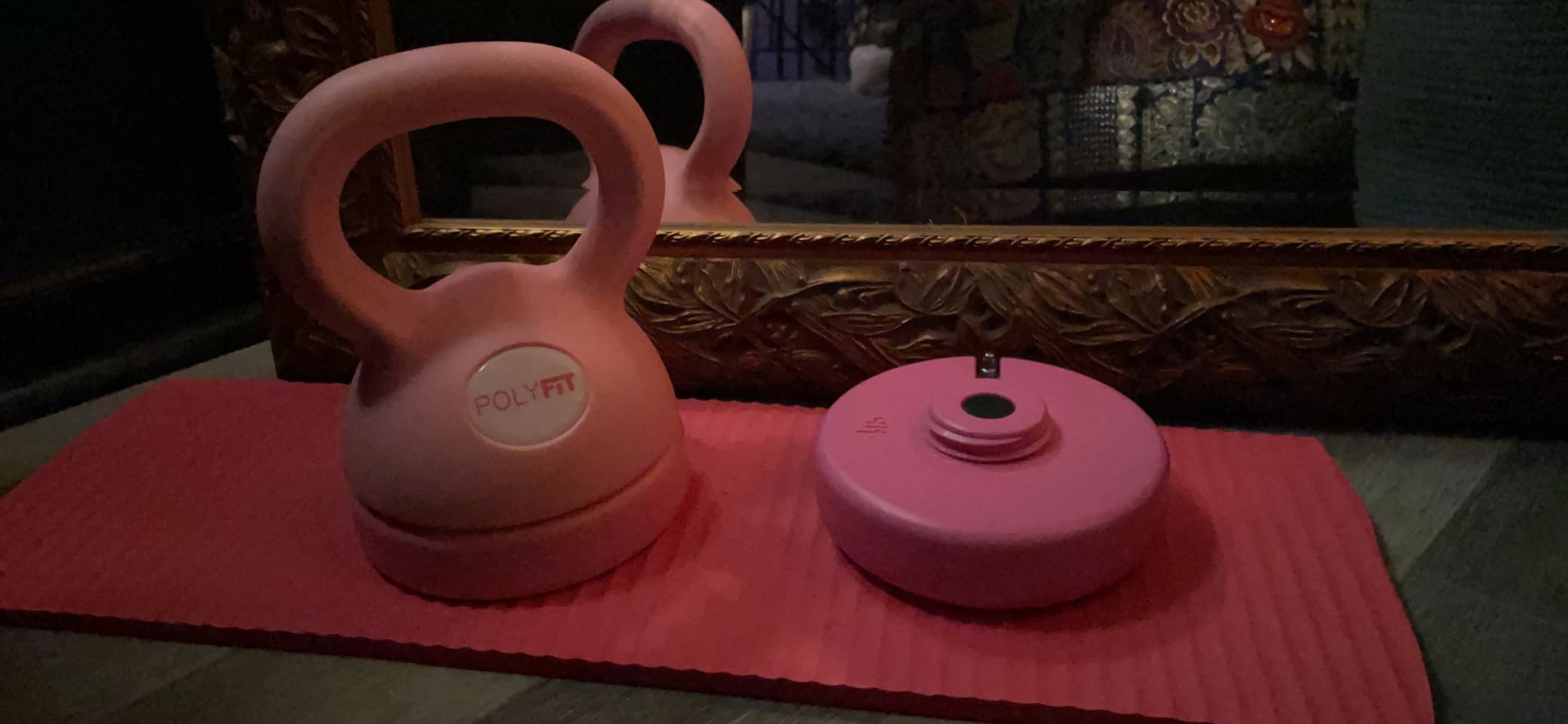
9. Polyfit Adjustable Kettlebell – Best for Travel and Small Spaces
Polyfit Adjustable Kettlebell Set – 5-in-1 Weights for Home Gym
Adjusts 5, 8 and 12 lb
Polyethylene outer layer
30 to 38 mm handle
Includes workout guide
Pros
- Three weights in one compact bell
- PE shell stays grippy with sweaty hands
- Small footprint suits apartments and travel
- Workout guide included for new lifters
Cons
- Capped at 12 lb with no path to heavier loading
- Adjustable design has more parts to loosen
- Less durable than cast iron under hard swinging
The Polyfit is the smallest complete answer in this roundup, and for a specific beginner it is the best one. If you want to train in a hotel room, a small studio or a flat where storage is measured in centimetres, three weights inside one compact bell solves a problem no fixed-weight option can.
The settings are 5, 8 and 12 lb, which is a genuine beginner ladder. Five for technique drills and early hinges, eight as the main working weight for a lot of women and lighter men, twelve as the step up. Buyers treat it as a convenient entry point precisely because it removes the need to buy three separate bells for the first phase of training.
Handle sizing is unusual here. It is listed at approximately 30 to 38 mm depending on which setting is loaded, and it is designed to fit two hands and to build grip strength over time rather than being as thin as possible.
That makes it a decent middle ground for hands that struggle with the 1.5 inch cast iron handles.
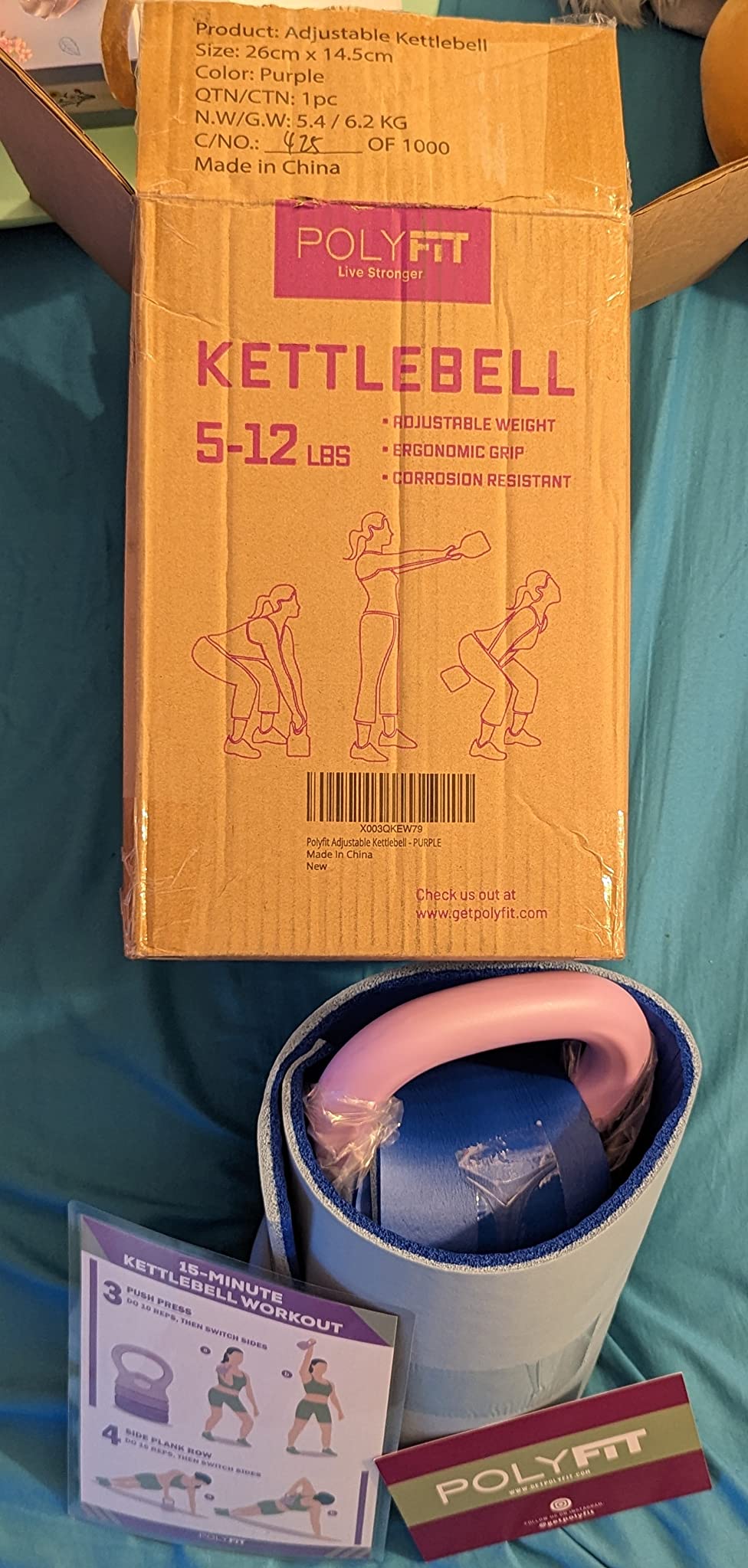
The polyethylene outer layer is the part that matters for this audience. It resists slipping when sweaty, does not rust, does not mark a floor and does not need any maintenance beyond a wipe down. For a bell that will live in a cupboard and come out three times a week, that low-friction material is the right call.
A laminated 15-minute workout guide is included, which is genuinely useful for someone who does not yet know what to do with a kettlebell. It is not a substitute for coaching, but it removes the blank-page problem that stops a lot of first purchases from becoming first workouts.
The limitations are honest and significant. It stops at 12 lb, so there is no path to intermediate or advanced loading with this bell.
The adjustable design means more parts to loosen and re-tighten than a fixed bell has, and polyethylene is less durable than solid cast iron under hard, high-impact swinging. One reviewer has also described the shell feeling softer than expected on fast swings.
When this is exactly the right bell
When storage is the binding constraint, or when you train in more than one place. Travelling with a fixed bell means choosing one weight and hoping it suits you at both destinations, whereas three settings in one body means you always have the right one with you.
It is also a strong choice for someone who has been injured or is returning from a break and wants a very light starting point they can progress from without buying three separate bells.
Where it will not take you
Past 12 lb, and that is the end of the road. This is a short-term tool rather than a long-term one, and buyers consistently describe it that way. Treat it as a way to learn the movements cheaply and portably, then upgrade to cast iron once you know you are sticking with it.
It is also not the bell for hard ballistic work or for anyone who wants the feel of traditional iron, because the shell simply does not behave the same way under a fast, loaded swing.
10. YOTTOY Soft Kettlebell – Best Soft and Floor-Safe
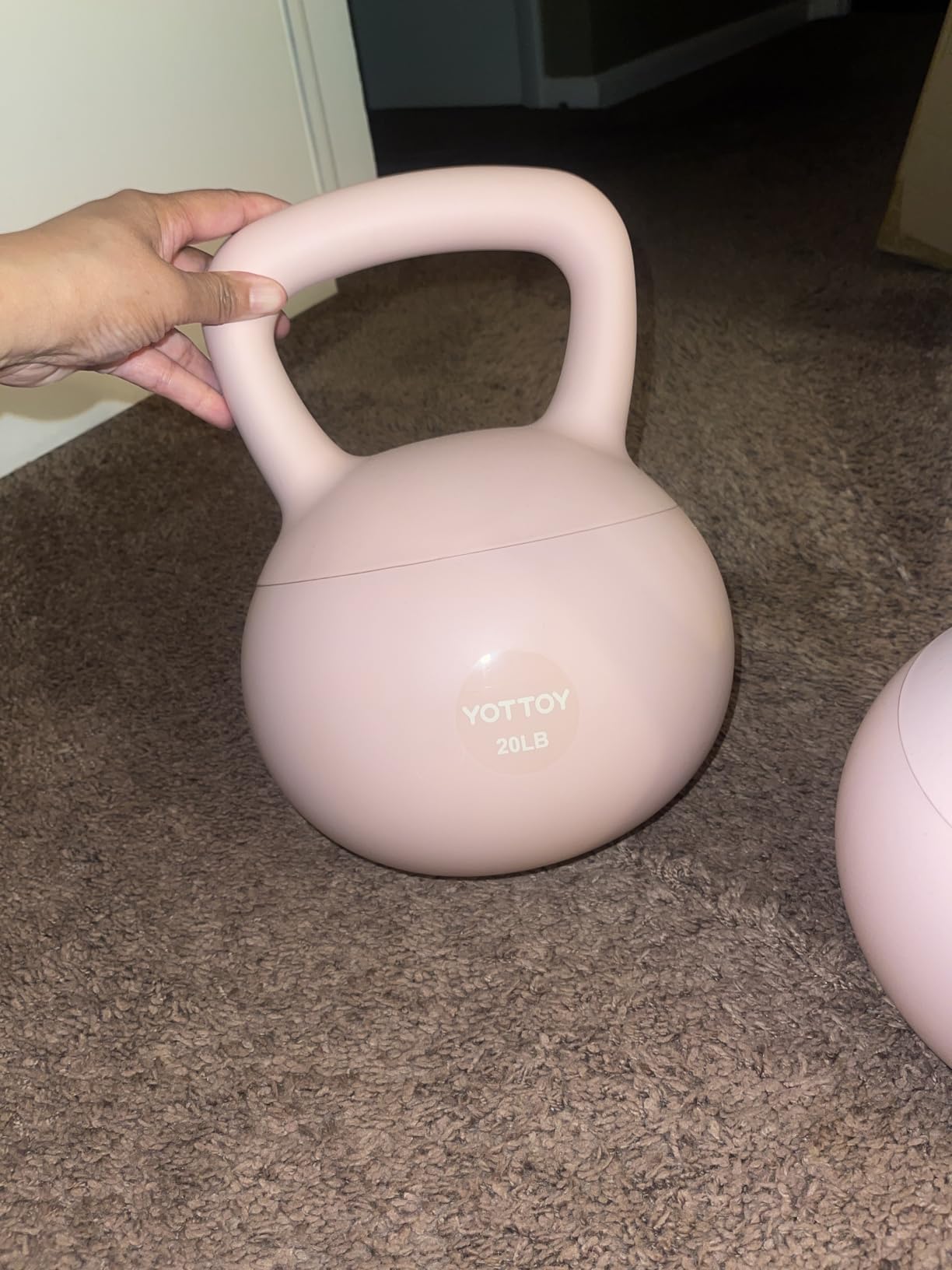
YOTTOY Soft Kettlebell,Kettlebell Anti-Slip Grip Weight for Home Workouts, Kettlebells Set Strength and Safety Guaranteed (Pink, 6 LB)
Sand-filled shock absorbing base
1.75 inch extra-wide grip
High density polyethylene and PVC
6 to 30 lb range
Pros
- Soft base dramatically cuts impact noise and floor damage
- Extra-wide non-slip grip holds even on a dropped swing
- Effectively prevents foot and furniture damage
- Quiet enough for early morning training
Cons
- Bulky relative to its weight at larger sizes
- Shell deforms under heavy swings
- Not suited to heavy overhead work
If you have ever dropped a cast iron bell on a foot, this is the bell designed to make that impossible. The YOTTOY has a shock-absorbing sand-filled base, and the most-upvoted review theme in our research is exactly that moment: a dropped swing landing with a soft thud instead of a very hard one.
The second thing the soft construction solves is noise. In a flat above other people, early morning training with a hard bell is a negotiation. A sand-filled soft bell is close to silent, which is what makes the early hours realistic for people who do not have a basement.
That combination of floor protection and quiet is why this sits in the roundup despite not being traditional iron. For a large share of beginners, the floor and the neighbours are the real constraint, not the weight range or the handle diameter.
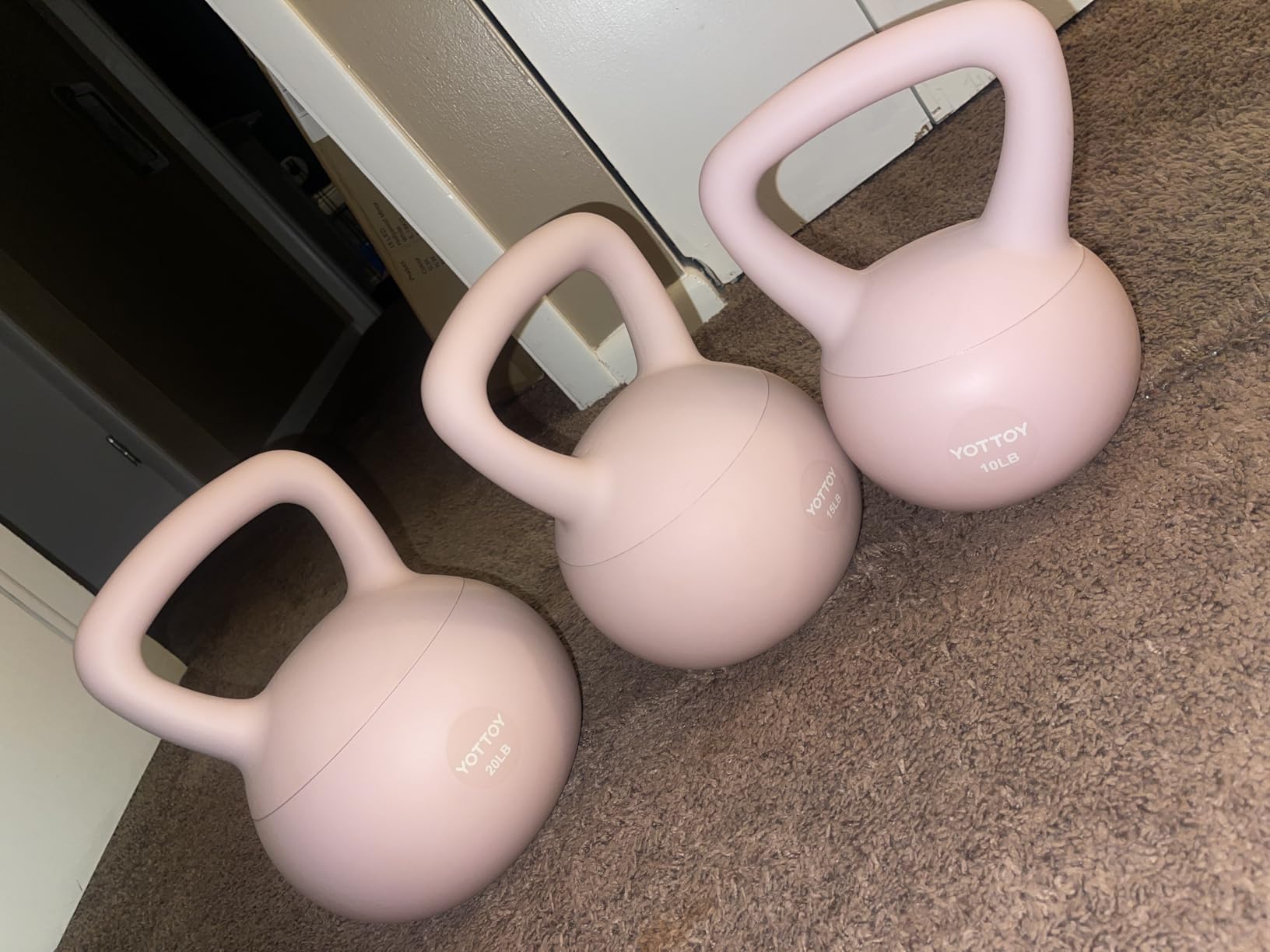
The handle is the best feature after the base. At 1.75 inches it is a very wide two-handed grip, and it is designed with a non-slip surface.
Wider handles are easier for hands that do not fully wrap a standard 1.5 inch handle, and the anti-slip texture holds when a swing ends in a wobble and your grip is momentarily compromised. Sizes run from 6 lb to 30 lb in singles and in 10, 15 and 20 lb sets.
The shell is high density polyethylene and PVC, described as corrosion resistant and odour free. Odour matters more than it sounds: soft plastic equipment stored in a warm cupboard can smell, and this is a bell you are likely to leave in a corner rather than rack away.
The trade-offs come down to density and feel. The bell is bulkier relative to its weight than a cast iron bell, so the larger sizes are harder to manoeuvre and one-handed work gets awkward.
The soft shell also deforms under heavy swings, which removes the crisp, stable feedback that tells you how well you are timing the hinge.
Who this is genuinely for
People in flats, especially downstairs neighbours, anyone who has dropped a bell on their foot and decided to stop doing that, and beginners whose first movements involve a lot of setting the bell down. Goblet squats, Russian twists, farmer carries and early Turkish get-up practice all involve placing the bell on the floor repeatedly, and this is where a soft base earns its place.
It is also a good confidence-builder. Knowing the worst case is a soft landing rather than a broken metatarsal makes people more willing to actually swing hard and learn the hinge properly.
Where it stops working
Once your training gets serious. A soft bell is not a tool for heavy overhead work, for heavy snatching, or for the ballistic fast swings that experienced lifters use as a core drill. The range also stops at 30 lb, which is a long way short of a serious progression.
One reviewer has reported a sticky residue left on a table, which is worth checking on arrival. If you already own a decent cast iron bell and simply want something quiet for early morning swings, this is a good companion rather than a replacement.
How We Picked and Compared These Kettlebells
Every bell in this roundup was judged on the same five things, and none of them was price. The five were the quality of the casting or shell, the feel and diameter of the handle, how well the finish held up, how many weights were available, and how much space the thing demanded.
Cast construction and finish came first because that is what decides whether a bell is still smooth and true in year three. A welded body or a thin paint layer fails early, and no amount of good reviews changes that. We looked for one-piece castings, flat machined bases, and coatings that do not chip under a dropped swing.
The handle was the second test, and it is the one most buyers skip. We checked the stated diameter against the weight being offered, because the number that matters is the handle on the specific bell you will swing, not the brand’s average. A brand whose handle balloons at 45 lb is a poor match for small hands even if its 20 lb is comfortable.
Weight availability and storage came third, and they are the two things that actually change for beginners. A brand with a 5 kg to 100 kg ladder is a long-term home gym. A set that stops at 15 lb per bell is a first eight weeks. A single adjustable bell is a whole progression if your floor space is the constraint.
Finally we weighed user reporting against the spec sheet, because finish quality and packaging damage rarely show up in a manufacturer’s description. Where reviewers repeatedly describe a problem, we wrote it into the cons rather than leaving it out.
One thing we deliberately did not do is pick a bell for you. The right answer depends on your floor, your storage and your starting weight, and all three are covered below. Our job was to remove the guesswork from the choice, not to make it for you.
Adjustable vs Cast Iron Kettlebells: Which Should a Beginner Buy?
Buy a fixed cast iron bell if you know the weight you need and you want the traditional feel. Buy an adjustable bell if you are not sure what weight you need, if you have very little storage, or if you know you will progress past your starting weight within a year.
This is the most argued-over question in the whole sport, and the forum answer leans hard toward one side. On r/kettlebell, the top-voted response to the question of what to buy for home use is straightforward: two full ranges of fixed kettlebells, praised for convenience and simplicity, with a pair of competition adjustable bells as the accepted runner-up.
That is experienced-user advice, and it assumes a garage, a plan and a commitment.
For a beginner, the calculus is different, because you do not yet know your starting weight and you are far more likely to abandon the equipment than an experienced lifter.
The case for fixed cast iron is that it is the real thing. It is denser, better balanced and gives honest feedback on your timing. It has no moving parts, so there is nothing to loosen, jam or strip.
It is the implement every technique cue assumes, because the offset centre of mass and the handle geometry were designed around it. And quality cast iron barely depreciates, so there is no financial argument for buying used instead.
The case for adjustable is that it resolves beginner uncertainty, which is the dominant emotion in the first six months. A dial covering 8 to 40 lb means you never have to guess, never have to make a second purchase to progress, and never have to store six bells in a flat.
Most beginners who go wrong go wrong by buying too heavy and then training around pain or bad form, and adjustable weights let them fix that mistake in seconds.
Our practical answer depends on two questions. How much storage do you actually have, and how certain are you about your starting weight? Confident and space-limited, fixed. Uncertain or space-rich, adjustable.
There is a third route worth naming: a small fixed set. Two or three weights, purchased as a bundle or as singles, cover the first two or three months and let you learn the movements on real iron before committing. Several experienced lifters recommend treating a second set as the natural progression milestone rather than buying the whole range at once.
Kettlebell Types Explained
Traditional cast iron is the default: solid, one-piece, hard, and the standard for technique learning. Competition bells are a specific sub-type with a thinner handle and precise weight for judging standards, which is overkill for home use.
Traditional cast iron. One-piece casting, no welds, consistent handle diameter, flat base. This is what you want if you are learning technique, and it is what most of this roundup is made of. Expect a wide handle, roughly 1.5 inch, and expect a hard bell that needs a decent floor.
Coated cast iron. The same one-piece body wrapped in powder coat, vinyl or urethane. Powder coat resists corrosion and improves grip. Vinyl and urethane go further: they absorb impact, cut noise and protect flooring. These are the right choice for apartments, and they are the most beginner-appropriate finish in most cases.
Adjustable. One bell, several weights, usually a dial or a stack of cast iron plates on a central post. Buy these to save space and avoid guessing, not to train for competition. The trade is always feel: composite and polyethylene bodies are less dense than iron and give less feedback.
Soft-filled. A shell filled with sand or cement. Quiet, forgiving on floors, and lighter in feel than iron at the same weight. Good for early confidence and shared walls; not a substitute for cast iron as you get serious.
Competition. Thinner handles, exact weights to the decimal, designed for judged lifting. There is no reason for a beginner to buy one, and the thin handle is harder on hands during high-rep swinging work.
Your First 5 Kettlebell Movements
Learn these five movements first and you can cover a full-body workout with one bell. Do them in this order, two to three sets each, three days a week, with 60 to 90 seconds of rest between sets.
1. Goblet squat. Hold the bell at your chest with both hands, elbows inside your knees. Sit down between your heels, keep your chest up, and drive up through your whole foot. Start with the lightest bell you own, usually 5 or 10 lb.
Only progress when five reps feel easy with a flat back. The form cue that matters most is simple: if you cannot sit up tall out of the bottom, the bell is too heavy.
2. Two-hand swing. This is a hinge, not a squat. Hinge at the hips with a soft knee, let the bell travel back between your legs, then snap the hips forward so the bell floats to chest height. Arms stay loose and straight, and ten to fifteen reps is plenty for a beginner.
If you are pulling the bell up with your arms or leaning back at the top, drop the weight rather than the standard.
3. Kettlebell row. Hinge with the bell between your feet, brace your free hand on a chair or the floor, and pull the bell toward your hip. Keep your back flat and squeeze the shoulder blade at the top. Ten reps per side is a solid working set. This movement trains the pull pattern that swings do not.
4. Farmer’s carry. Pick up one bell in each hand, or a single heavier bell in one hand, and walk. Keep your shoulders back, your ribs down and your grip loose rather than white-knuckled. Three carries of 30 to 40 metres is plenty. This is where grip and trunk endurance get built without thinking about it.
5. Racked position hold. Hold the bell in the rack position at your shoulder, knuckles under your chin, elbow pointing back, for 20 to 30 seconds. Swap sides and repeat.
This is a posture drill rather than a lift, and it is how you build the position that cleans and presses come out of. It also teaches you what a correct handle fit feels like.
One grip rule covers all five: hold the handle lightly. Almost every forum conversation about kettlebells eventually returns to the fact that a tight grip causes forearm fatigue long before the target muscle does, and squeezing hard is what produces the wrist complaints beginners report.
How Many Kettlebells Do Beginners Actually Need?
Start with one bell and add a second when you finish the first five movements with clean form at your top weight. A full range is the ideal for a serious home gym, but it is not the starting requirement.
Three stages cover most people. Stage one is a single bell in the range of 8 to 16 kg, enough to learn goblet squats, swings, rows and carries while you discover what you can control. Stage two adds one heavier bell, typically 20 to 24 kg, for presses, cleans and harder swings. Stage three is a full range as singles or pairs, which is where a home gym becomes genuinely versatile.
The fastest way to know which stage you are in is to test your top weight on two movements. Can you goblet squat five times with a flat back? Can you swing fifteen reps without leaning back? Yes to both means progress up. No to either means stay where you are and fix the movement first.
For people with no storage at all, the stages map neatly onto purchase types: a single fixed bell, then a two-bell bundle, then either a full range of fixed bells or a wide-range adjustable.
If you skip straight to the adjustable option you effectively jump to stage three, which is why it works for uncertain beginners and why experienced lifters tend to distrust it.
One warning about program overload. The most popular kettlebell programs are written for people who already own a range and already have a technique base. Starting on an advanced complex with one light bell is a common and avoidable way to spend six months making very slow progress while hurting your back.
How to Choose Your First Kettlebell
Choose on four things: the weight that lets you hold form, a handle your hand can wrap, a finish that suits your floor, and a shape that matches how much you will move it around.
Handle diameter and hand size. This is the most neglected specification in the entire category, and it is the one most likely to cause you to quit. Handle thickness across the products here runs from about 1 inch to 2 inches.
If you have small hands, you want the thinner end of that range, and a thinner handle also reduces wrist stress during long sets. If you have larger hands or plan to do a lot of one-handed work, a thicker handle is more comfortable over time. The trap is buying a brand where handle thickness balloons at the heavier weights, so check the specific bell rather than the range it comes in.
Coating and floor type. Match the finish to the surface you actually train on. On rubber mats, powder-coated cast iron is ideal: durable, grippy and precise. On wood, laminate or tile in a flat, vinyl-coated or urethane-coated cast iron is the sensible pick because it absorbs impact. If the floor or the neighbours are a genuine problem, a soft-filled bell is the most forgiving option in this roundup.
Grip and wrist safety. Are kettlebells hard on your wrists? The honest answer is that they are only hard on your wrists if your technique is wrong. The handle is designed to sit in the crook of your wrist rather than under it, and for cleans and snatches you use an offset grip with the handle resting toward the back of your hand.
Keep your grip light and never choke the handle. Grip slips, loss of handle tackiness and chalk dependence are the three grip complaints that come up most often in user discussions, and all three are easier to avoid with a textured handle and a looser hold.
Fixed or adjustable, and single or set. Covered in detail above. The short version: uncertain weight plus limited storage means adjustable, known weight plus classic feel means fixed, and learning-only plus low commitment means a small bundled set.
Maintenance and rust. Cast iron is rust-resistant, not rust-proof. Keep bells off damp floors, wipe sweat off after a session, and do not leave them in a garage through a wet week. Powder coat and vinyl both slow corrosion further. Light oil on the handle area once or twice a year is more than most people need.
Two beginner mistakes are worth naming because they cause avoidable pain. The first is swinging a weight that is too heavy, which converts a hip hinge into a back lift and is the main source of lower-back complaints. The second is treating the handle like a dumbbell grip and crushing it, which produces the wrist and forearm fatigue that makes people think kettlebells are wrist-destroying tools. Fix either one and the problem disappears.
If you want more depth on how weights change as you progress, the site’s wider kettlebell roundup covers the heavier end of the range that a beginner is not ready for yet.
Frequently Asked Questions
What weight kettlebell should a beginner use?
Start with the heaviest bell you can two-hand swing for 10 clean reps and goblet squat for 5 with a flat back. For most people that is between 8 and 16 kg (18-35 lb). Completely untrained beginners should start lighter, around 5-10 kg, and anyone with a regular lifting background can usually start at 16-20 kg. Test the weight rather than guessing from a chart.
What is a good beginner set of kettlebells?
A two-bell starter setup works well for most people: one lighter bell around 8-10 kg for goblet squats and early technique work, and one heavier bell around 16 kg for swings and rows. Bundled three-piece sets at 5, 10 and 15 lb are a good alternative if you want a built-in progression in one box. Progress to a full range from 4 kg to 24 kg once you have trained for a few months.
What will 100 kettlebell swings a day do?
Consistent 100-rep swing days build posterior chain strength, grip endurance and cardiovascular fitness, and they teach the hip hinge better than almost anything else. They will not replace squats or pressing work on their own, and the results come from daily consistency rather than from the rep count itself. Start at a lower weight than you think you need, keep the reps clean, and treat the last ten as the effort that matters.
Is a 20 lb kettlebell good for beginners?
Yes for a woman with some training background, and borderline for an untrained man who would usually be better served by something lighter. The real test is form: if you can swing it 10 times and goblet squat it 5 times without leaning back or rounding your back, it is the right bell for you. Many beginners use a lighter bell for squats and their heavier bell for swings, so a single bell does not have to serve every movement.
Are kettlebells hard on your wrists?
Not with correct technique. The handle is designed to sit in the crook of the wrist, and for cleans and snatches you use an offset grip with the handle toward the back of your hand instead of a straight choked grip. Keeping a light hold, avoiding crushing the handle and building calluses gradually solves most grip complaints. If a handle feels too thick for your hand, choose a narrower-handled model rather than forcing it.
Final Verdict for Beginners
Start with the Amazon Basics cast iron bell if you want the simplest possible path into real training, with a wide textured handle and the highest review count of anything we tested. Pick the Best Choice three-piece set if you would rather have a built-in progression and a rack in one box, and choose a vinyl-coated or soft bell if your floor is anything other than rubber.
The single most important decision, though, is not which of these you buy. It is the weight. Test it against a goblet squat and a set of swings, drop it by one step if your form changes, and give it eight weeks before you judge it. Buy the bell your technique can support this month, not the one you can see yourself lifting later.
Whatever you choose, start with five movements and a light grip. That is what turns a purchase into a habit, and in 2026 a habit is still the only piece of equipment that matters.