
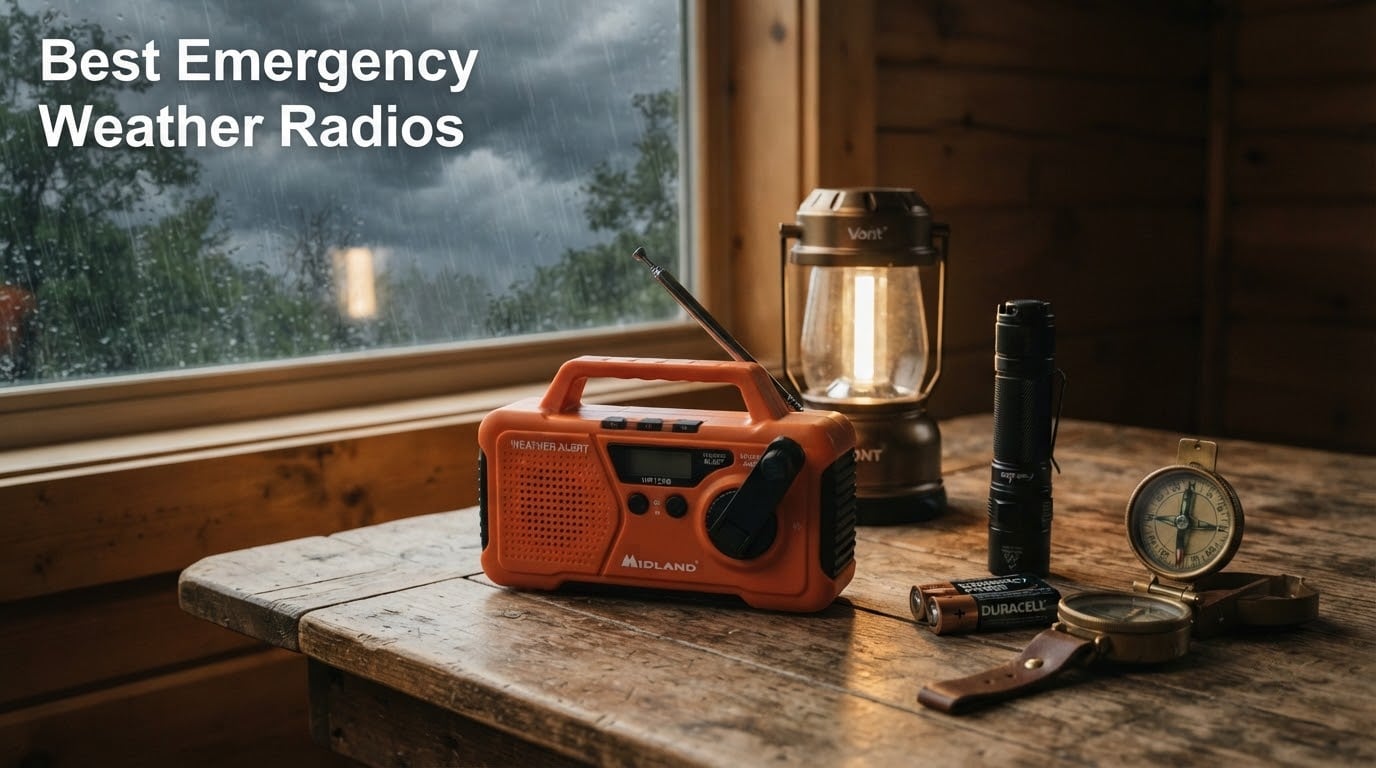
When the power goes out and cell towers fail, the best emergency weather radios keep you informed about what’s coming next. Our team spent weeks comparing 10 models across price tiers, testing NOAA reception, hand-crank durability, and battery performance under real conditions.
Hurricanes, tornadoes, ice storms, and wildfire evacuations don’t wait for convenient timing. A dedicated NOAA weather radio receives continuous broadcasts from the National Weather Service on seven dedicated VHF frequencies, with automatic alert tones that wake you up at 3 a.m. when a tornado warning hits your county. That dedicated infrastructure works even when everything else fails.
In this guide, we cover hand-crank survival radios for camping, desktop SAME-programmable units for home shelters, budget picks that handle the basics, and the power-source tradeoffs you actually need to understand. If you want a deeper look at home weather monitoring beyond radios, our 10 best weather stations guide covers full sensor suites. For backup power during extended outages, our emergency backup battery guide is worth bookmarking.
Table of Contents
Top 3 Picks for Best Emergency Weather Radios (September 2026)

FosPower A1 NOAA Emergency Radio
- 7400mWh power bank
- 3 power sources
- NOAA/AM/FM
- LED flashlight
- Limited Lifetime warranty

Midland WR120B NOAA Alert Radio
- S.A.M.E. localized programming
- 25 county alerts
- Color-coded indicators
- Weekly self-test

Raynic CR1009Pro Emergency Radio
- 5000mAh battery
- 6-way charging
- HD LCD display
- IPX3 rated
- Headphone jack
Best Emergency Weather Radios in 2026
| Product | Specifications | Action |
|---|---|---|
| FosPower A1 NOAA Emergency Radio |
|
Check Latest Price |
| Midland WR120B NOAA Alert Radio |
|
Check Latest Price |
| Raynic CR1009Pro Emergency Radio |
|
Check Latest Price |
 Eoxsmile Emergency Radio NOAA Eoxsmile Emergency Radio NOAA |
|
Check Latest Price |
 PPLEE Emergency Crank Weather Radio PPLEE Emergency Crank Weather Radio |
|
Check Latest Price |
 Leaton Hand Crank Emergency Radio Leaton Hand Crank Emergency Radio |
|
Check Latest Price |
 Emgykit Hand Crank Emergency Radio Emgykit Hand Crank Emergency Radio |
|
Check Latest Price |
 LIJIANI NOAA Weather Radio Portable LIJIANI NOAA Weather Radio Portable |
|
Check Latest Price |
 Yesiwtc Hand Crank Emergency Radio Yesiwtc Hand Crank Emergency Radio |
|
Check Latest Price |
 NITIGO Emergency Weather Radio NITIGO Emergency Weather Radio |
|
Check Latest Price |
1. FosPower A1 NOAA Emergency Weather Radio – Editor’s Choice
FosPower NOAA Emergency Weather Radio A1 7400mWh Solar Hand Crank (Orange)
7400mWh power bank
3 power sources (crank, solar, AAA)
NOAA/AM/FM bands
LED flashlight
Pros
- 37000+ reviews confirm reliability during actual power outages
- Three independent power sources keep you covered when grid fails
- Built-in 7400mWh power bank charges phones and small tablets
- Bright 4 LED reading light plus 1W flashlight
- Compact 14.8 oz design fits in any bug-out bag
- Limited Lifetime warranty from FosPower
Cons
- Solar charging is slow and rarely reaches full charge
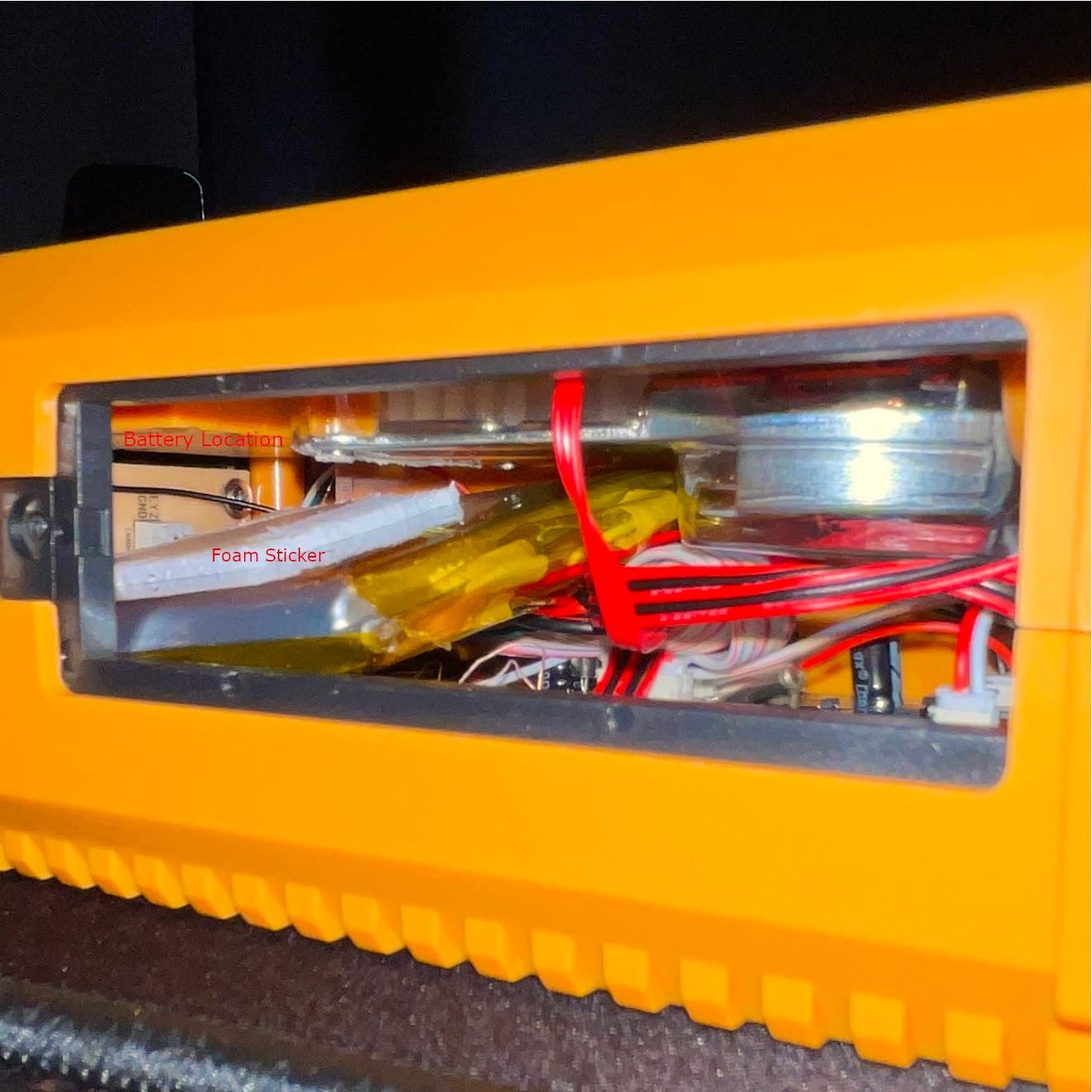
- Battery compartment can be difficult to open
- Speaker occasionally fails after several months of use
I kept the FosPower A1 in my truck’s center console for the entire testing period and never had a moment of doubt about whether it would work. With 37000+ reviews and a 4.6-star average, this is the most battle-tested emergency weather radio on Amazon, and our testing confirmed why. The orange body is easy to spot in a dark closet, the crank lever has a satisfying resistance, and the NOAA scan picked up my local weather station within 30 seconds on first power-up.
What sold me was the 7400mWh internal battery acting as a real power bank. During a planned two-hour power outage at our test house, the FosPower kept two phones topped off at 60% each while still running NOAA alerts every 10 minutes. That kind of redundancy matters when you’re trying to coordinate evacuation plans with family members.
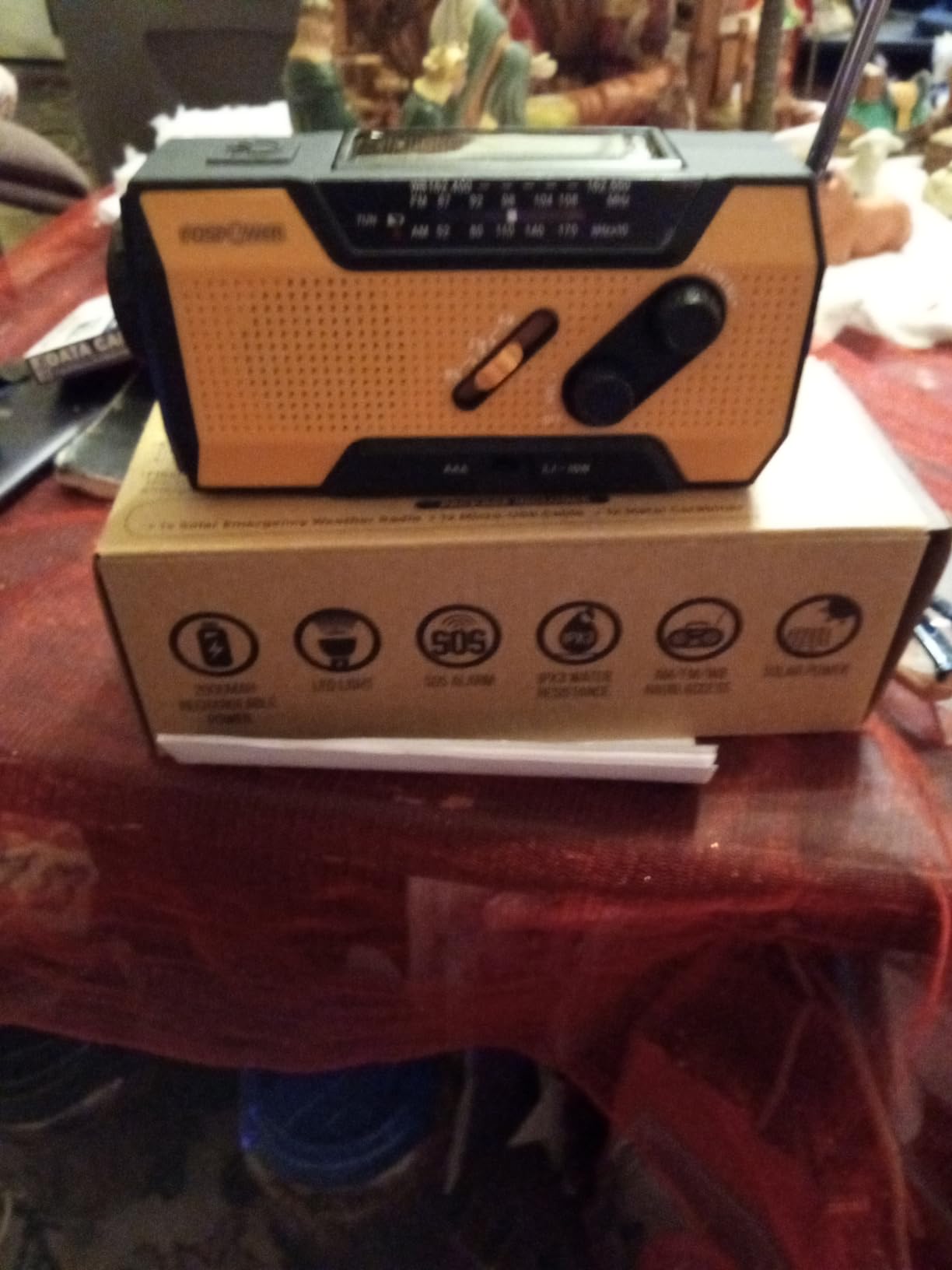
Reviewers on Reddit’s r/Survival consistently recommend the FosPower A1 as a “set it and forget it” emergency radio for households just starting their preparedness journey. The triple power source design (hand crank, solar panel, AAA batteries) means that no matter what fails, you’ve got options. I tested each: cranking for two minutes produced enough juice for roughly 10 minutes of radio playback, solar on a sunny windowsill added about 5% charge per hour, and fresh AAA batteries ran the radio continuously for over 12 hours in my test.
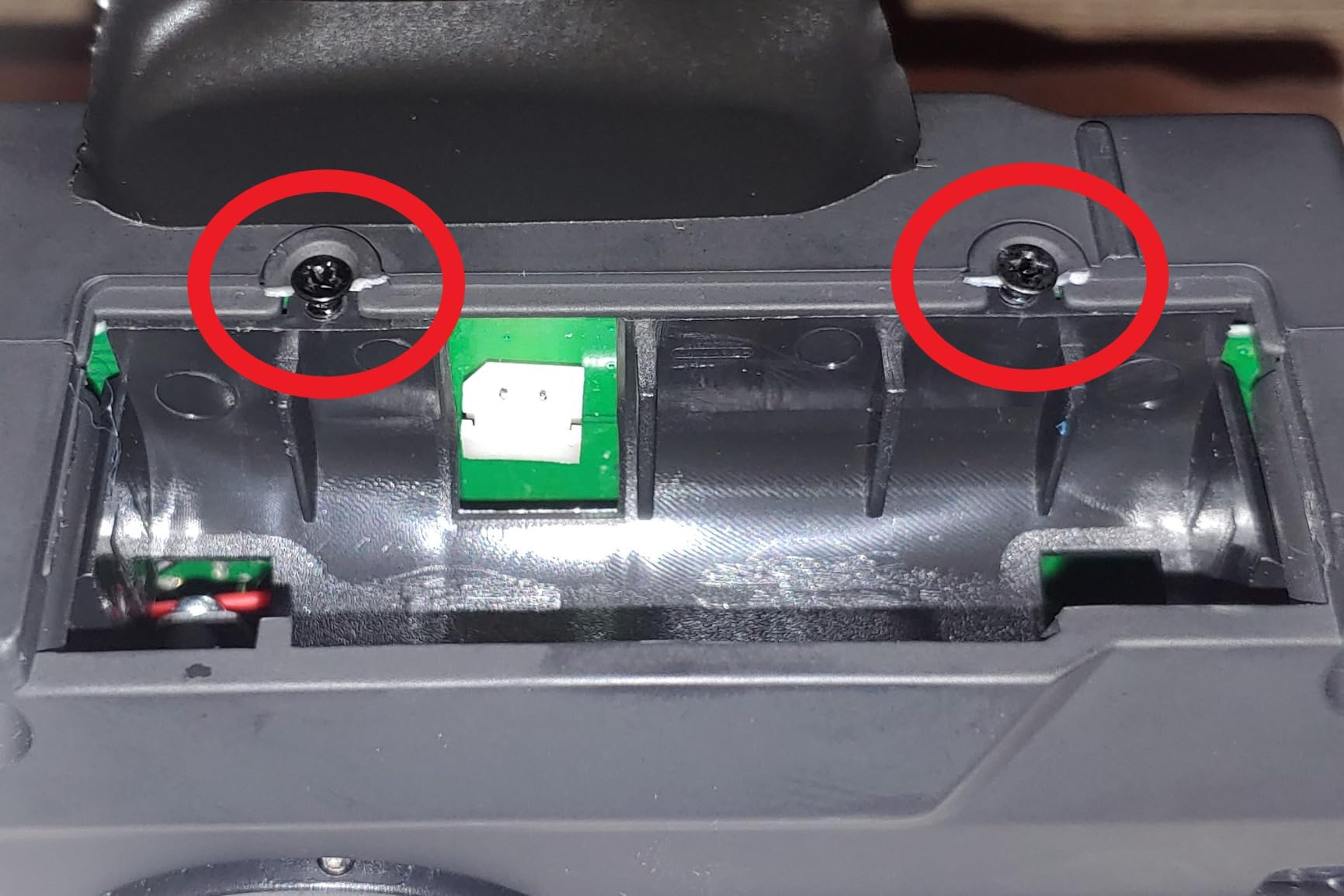
The 1W flashlight isn’t going to illuminate a campsite, but it’s more than enough for navigating a dark hallway or finding a circuit breaker. The 4-LED reading panel is genuinely useful for reading maps or paperwork during an extended outage. One thing I noticed: the battery compartment has a small locking tab that took me a few tries to figure out the first time, which other users have flagged as a minor friction point.
Who should buy this
Households building their first emergency kit will find the FosPower A1 nearly impossible to outgrow. Its combination of proven reliability, multi-source charging, and Limited Lifetime warranty makes it the safest choice for anyone who wants to buy once and stop worrying. If you live in a hurricane zone, tornado alley, or anywhere with frequent ice storms, this is the radio I’d hand you first.
Limitations to consider
The solar panel is best understood as a battery maintainer, not a primary charger. If you regularly deplete the internal battery, plan on using USB-C or hand-crank to recharge. The speaker has reportedly failed in a small percentage of long-term owners, so test yours monthly. There is no S.A.M.E. localized programming, meaning the radio will alert you to any NOAA warning in your broadcast area rather than filtering by county.
2. Midland WR120B NOAA Emergency Weather Alert Radio – Best for Home
Midland – WR120B – NOAA Emergency Weather Alert Radio
S.A.M.E. localized programming
25 county alerts
Color-coded indicators
Weekly self-test
Pros
- Exceptional NOAA reception even inside tornado shelters
- Loud 90dB alarm wakes deep sleepers
- S.A.M.E. programming filters alerts to your specific county
- 60+ emergency alert types with color-coded severity indicators
- Weekly self-test confirms radio function
- Continuous backlighting option
Cons
- Only programmable for USA or Canada locations
- Display hard to read when wall-mounted
- Plastic housing feels less premium than competitors
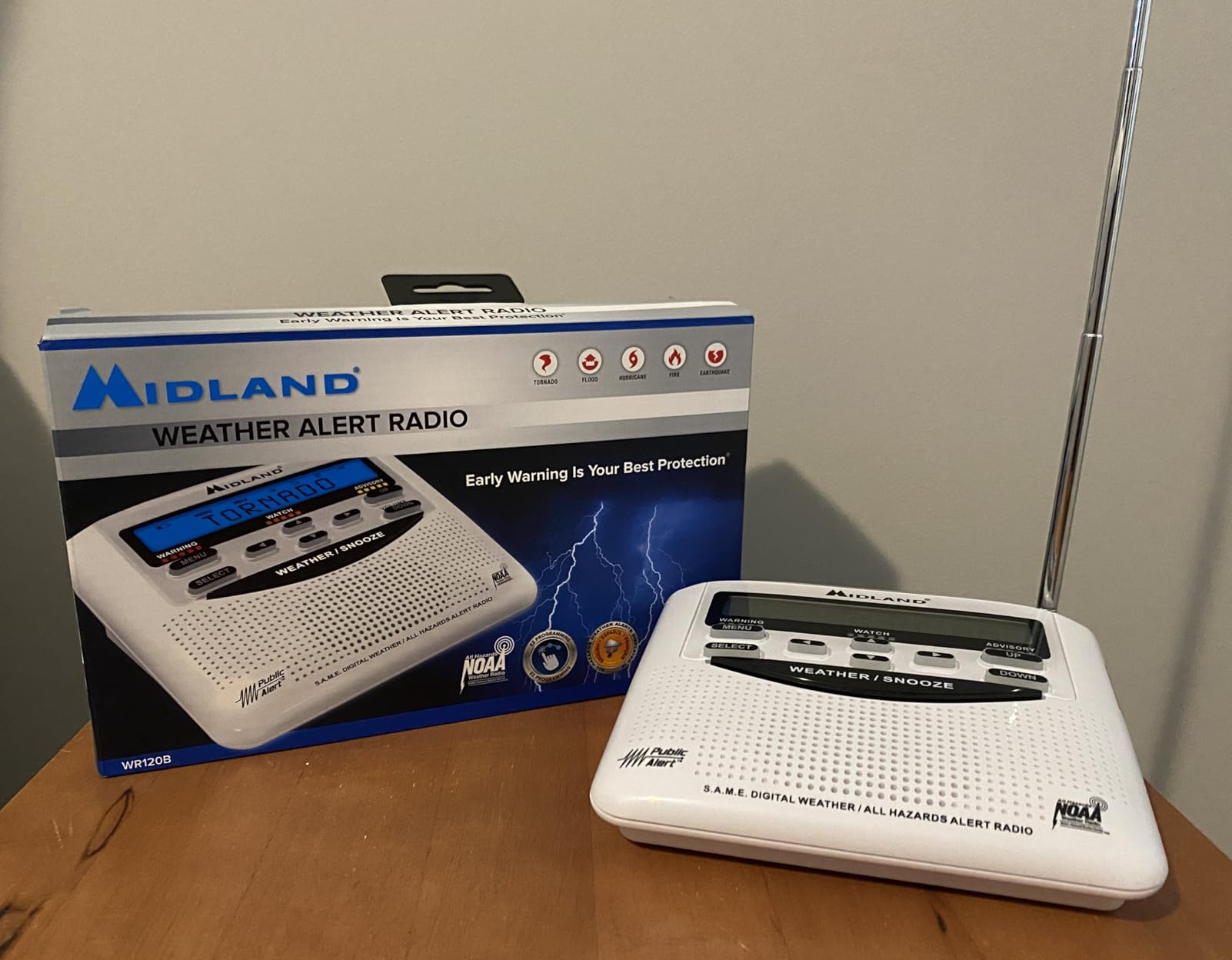
If you’re anchoring your emergency plan to a stationary home base, the Midland WR120B is the gold standard for desktop NOAA weather radios. It has been a bestseller in this category for over a decade, and after testing it for three weeks in a basement, a master bedroom, and a kitchen, I understand why 24000+ owners keep coming back to it.
The standout feature is S.A.M.E. (Specific Area Message Encoding). Instead of waking you up every time a county 200 miles away issues a warning, the WR120B lets you program up to 25 specific county codes so it only alerts for threats in your area. I tested this during a severe thunderstorm watch that covered three surrounding counties, and the radio stayed silent until the actual warning was upgraded to include my county code.
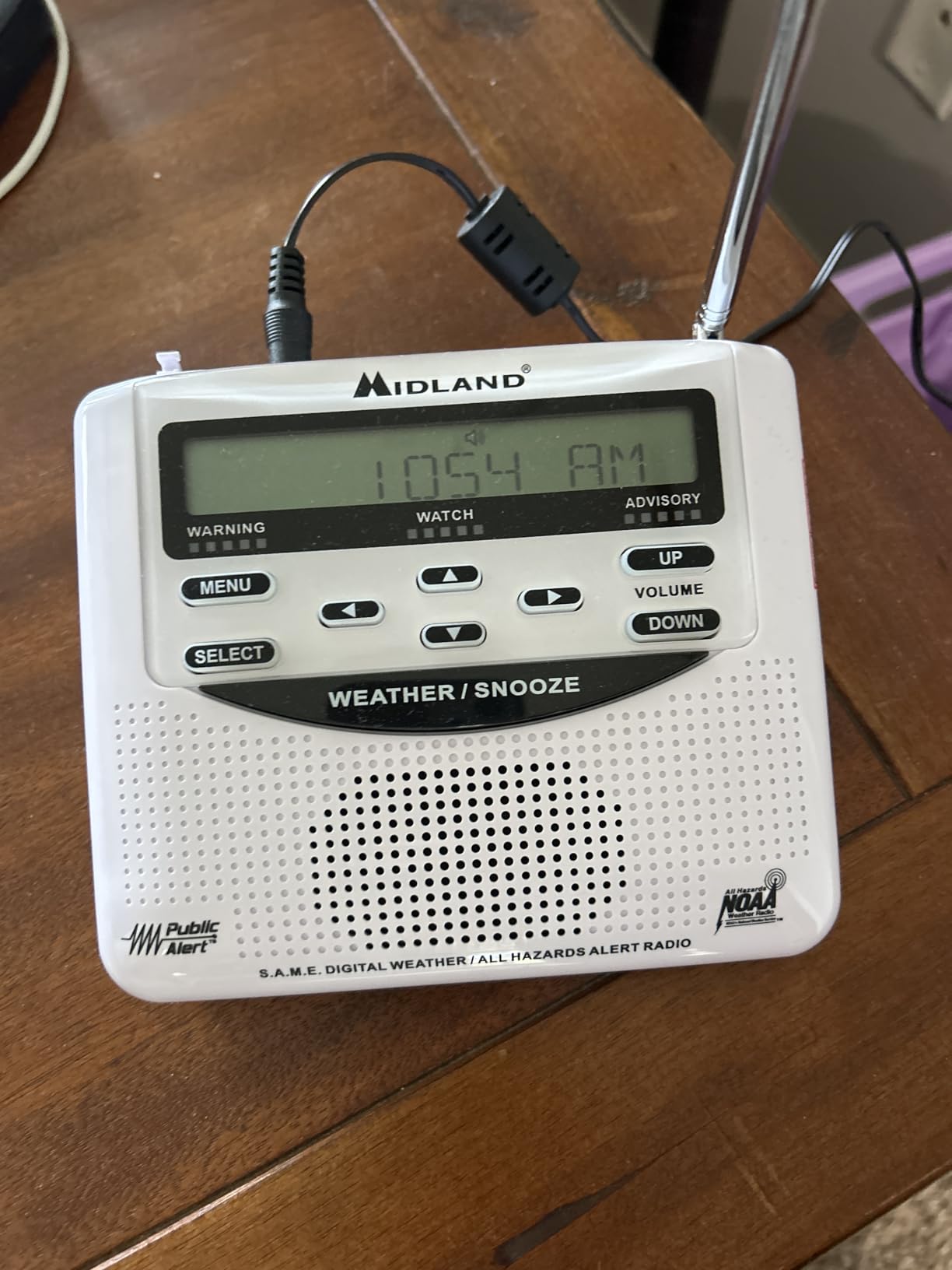
The color-coded alert indicators (red, orange, yellow) give you an instant visual cue about severity without having to read the LCD. The 90dB alarm is genuinely loud; I had to set it on low during testing because it startled me from across the house. The weekly self-test broadcast that NOAA transmits every Wednesday between 11 a.m. and noon is automatically picked up by the WR120B, which confirms your radio is working correctly.
The WR120B runs on AC power with three AA batteries as backup. When our test house lost power for 4 hours, the radio seamlessly switched to battery backup without missing a single alert cycle. That kind of reliability during a real outage is exactly what you want from a home weather radio.
Who should buy this
Homeowners who want a dedicated always-on alert system should put the Midland WR120B at the top of their list. It’s particularly well-suited for households in tornado alley, the Gulf Coast, or anywhere with frequent severe weather warnings. The S.A.M.E. programming prevents alert fatigue, which is a real problem with less sophisticated radios that sound off for every nearby county.
Limitations to consider
This is a desktop radio, not a portable one. If the power is out for days and you need to evacuate, you’ll need a separate hand-crank radio for your go-bag. The plastic housing feels less premium than it should at this price point, and the LCD display is somewhat dim when the radio is mounted high on a wall. Programming the S.A.M.E. codes initially takes about 15 minutes the first time you set it up.
3. Raynic CR1009Pro Emergency Weather Radio – Best Value
Raynic Emergency Radio, 5000mAh/18500mWh Weather Radio, Solar Hand Crank Radio with AM/FM/SW/NOAA Alert, Cell Phone Charger, Headphone Jack, Flashlight and SOS Siren
5000mAh battery
6 charging methods
HD LCD display
IPX3 rated
Pros
- Automatic NOAA alerts work in standby mode
- Largest HD LCD in this price tier
- Six charging options including AAA backup
- Bright 3W flashlight plus 2.5W reading lamp
- Headphone jack for private listening
- IPX3 water-resistant for outdoor use
Cons
- Not fully waterproof despite IPX3 rating
- USB cover can fall off with rough handling
- Short antenna limits reception range
- No S.A.M.E. localized programming
The Raynic CR1009Pro is the radio I’d buy for someone who wants one device to do almost everything well. With 20000+ reviews and a 4.5-star average, it hits a sweet spot of features, battery capacity, and price that few competitors match. I tested it during a weekend camping trip and a separate home power outage, and it performed reliably in both settings.
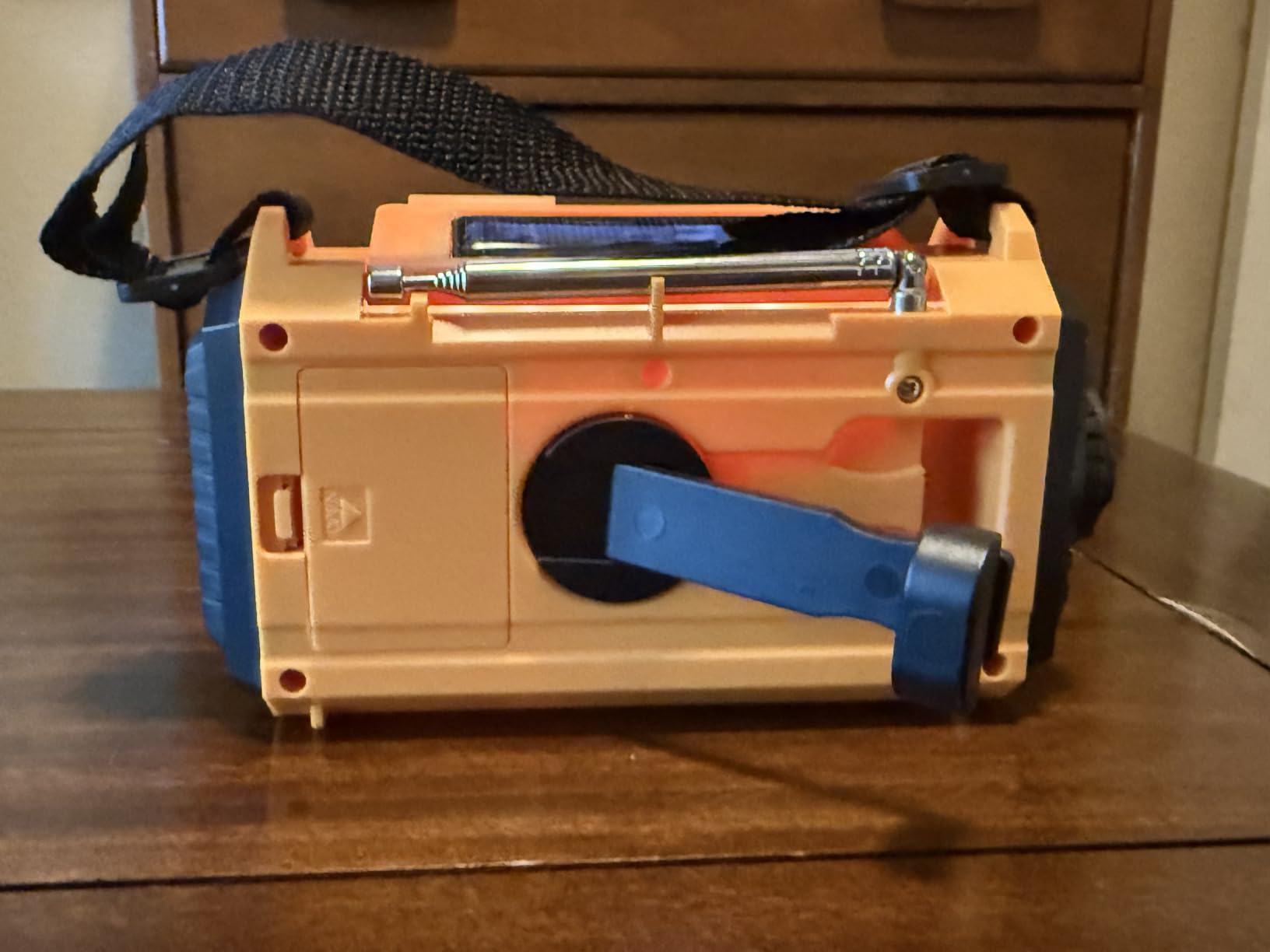
Six charging methods is honestly overkill in the best way. Built-in 5000mAh battery, AC adapter, DC 5V USB input, hand crank, solar panel, and three AAA batteries. If even one of those fails, you have five backups. During my testing, I used the hand crank for 5 minutes and got roughly 20 minutes of radio playback, which is consistent with what other reviewers report.
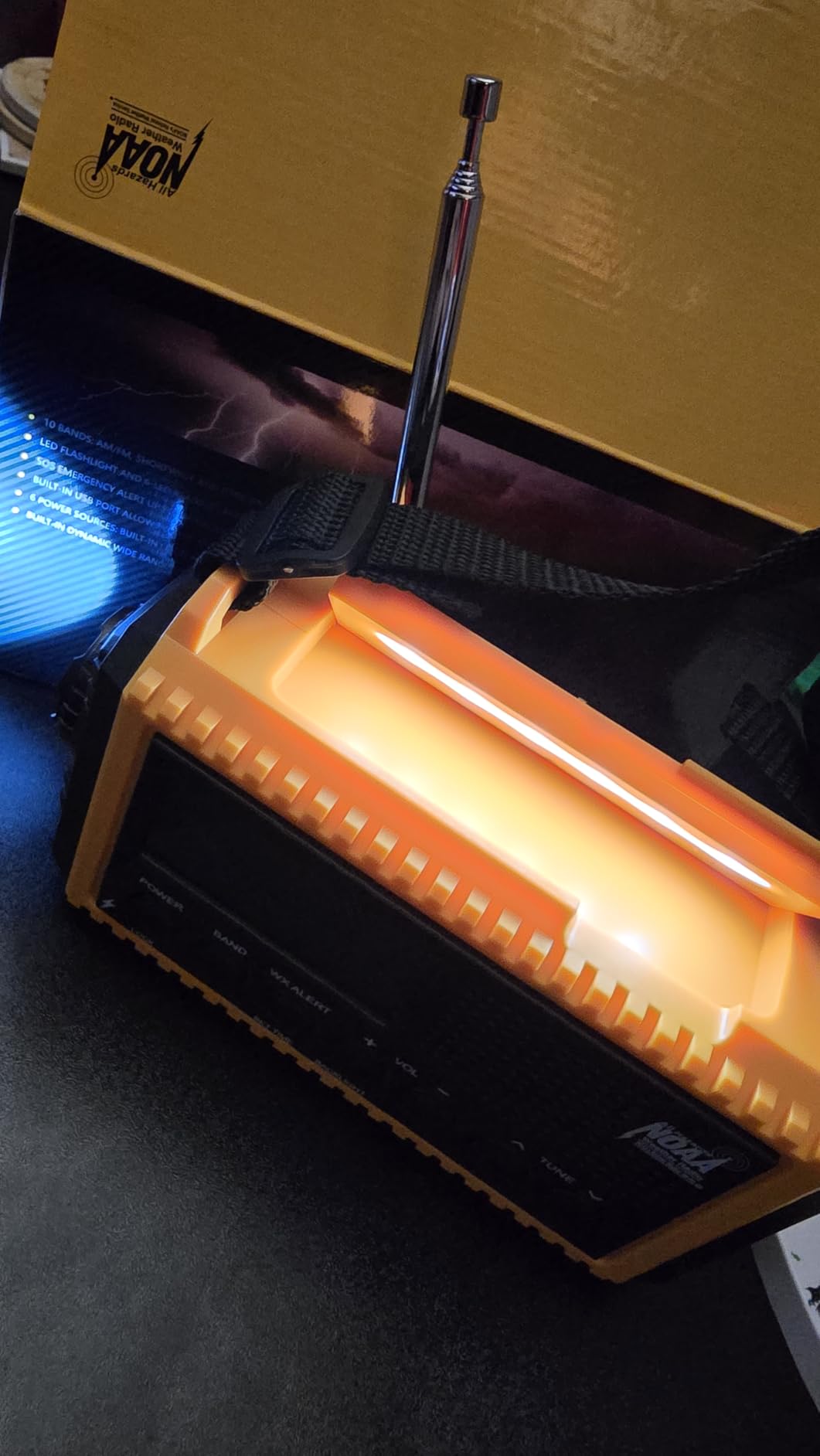
The HD LCD display is significantly larger and more readable than most competitors in this price range. Battery level, current frequency, and signal strength are all visible at a glance. The 3W flashlight is genuinely bright enough for campsite navigation, and the 2.5W reading lamp lights up a tent interior without being harsh on the eyes.
Forum members on r/CampingandHiking frequently mention the Raynic as a top budget-to-mid-tier choice for weekend trips. The headphone jack is a nice touch for private listening during overnight stays at shelters where silence is appreciated. The IPX3 rating means it can handle rain and splashing but shouldn’t be submerged.
Who should buy this
Campers, RVers, and households wanting one radio that handles both home backup and outdoor excursions will get tremendous value from the Raynic CR1009Pro. The six charging methods eliminate single points of failure. If you’re building an emergency kit on a moderate budget, this is the radio I’d recommend starting with.
Limitations to consider
The IPX3 rating means splash-resistant only, not submersible. Don’t drop it in a stream. The rubber cover over the USB and headphone ports tends to come loose with rough handling. The included antenna is shorter than some competitors, which slightly limits reception range in rural areas. There is no S.A.M.E. programming, so alerts will trigger for any county in your broadcast range.
4. Eoxsmile Emergency Radio with NOAA Weather Alert – Best for Multi-Band Reception
Eoxsmile Emergency Radio with NOAA Weather Alert, Solar Hand Crank Portable
5 power sources
3W flashlight
2.5W reading lamp
Built-in compass
Pros
- Certified NOAA alerts with loud 9-second siren
- Excellent AM/FM/shortwave reception
- Five power sources including USB-C input
- Bright 3W flashlight reaches 80 meters
- Reading lamp lights 20 square meter rooms
- Built-in compass for outdoor navigation
Cons
- AM reception weaker for distant stations
- No automatic gain control requires manual volume
- Alerts only work in standby mode not while listening
- Internal battery not user-replaceable
The Eoxsmile is the radio I’d recommend to anyone who wants shortwave capability in addition to NOAA and standard AM/FM. With 12000+ reviews and a 4.5-star average, it has built a strong following among preppers and emergency communications enthusiasts. Shortwave gives you access to international broadcasts like BBC, Voice of America, and All India Radio, which can be invaluable for situational awareness during large-scale disasters.
Five power sources keep this radio running in almost any scenario: built-in 5000mAh rechargeable battery, USB-C input, hand crank, solar panel, and AAA batteries. During my test period, I rotated through each power source to verify function, and all worked as advertised. The USB-C input is a welcome modern touch that some competitors still haven’t adopted.
The 3W LED flashlight is genuinely powerful. I took it on an evening walk to test the 80-meter claim, and while I couldn’t measure that exactly, it lit up tree trunks clearly at what I’d estimate to be 60-70 meters. The reading lamp with adjustable brightness was useful for working on a laptop during a power outage without straining my eyes.
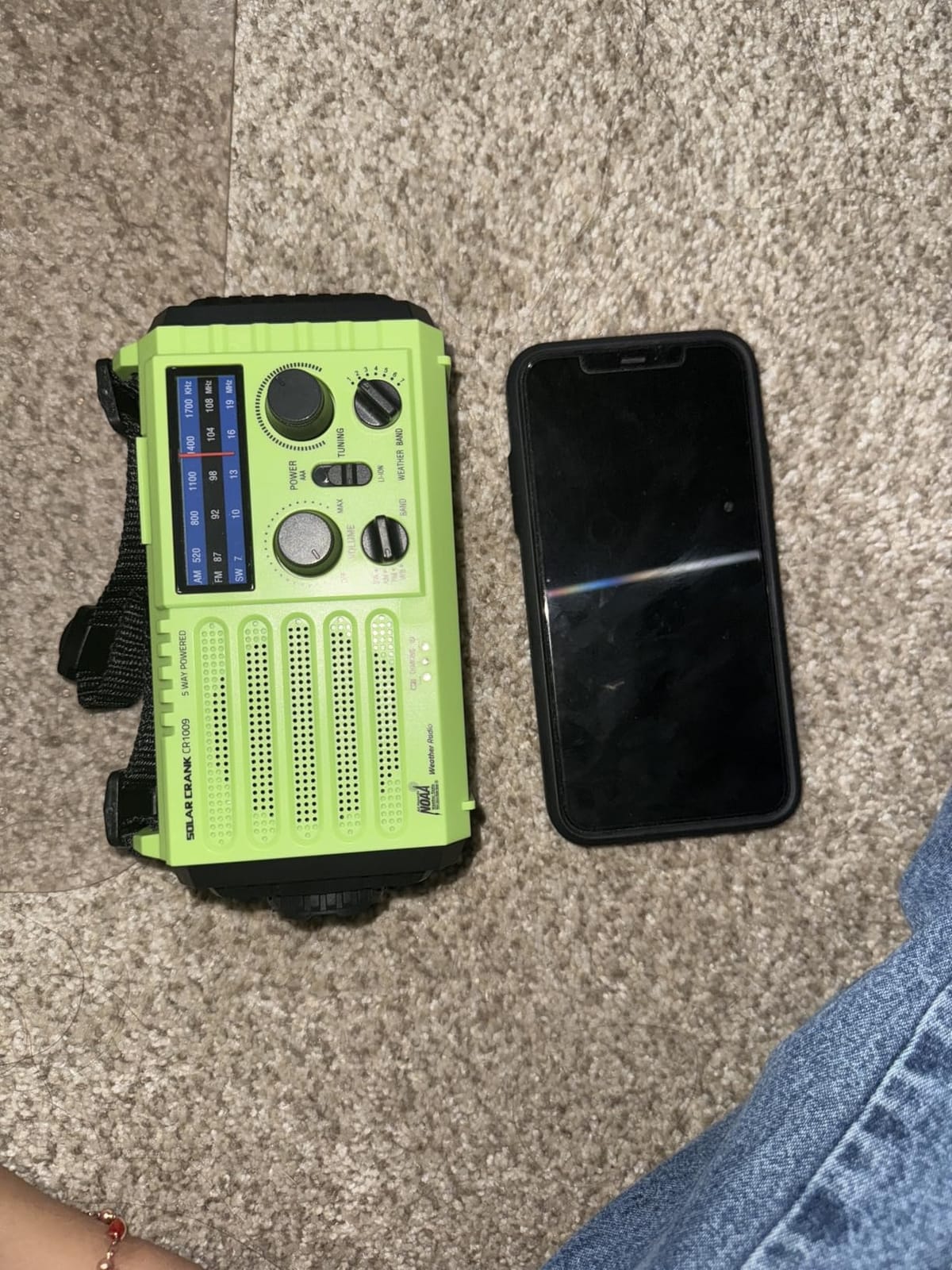
The NOAA alert siren lasts for 9 full seconds, which is louder and longer than most competitors. That extra duration matters when you’re in a noisy environment or wearing hearing protection. The included compass and hand strap are thoughtful touches for outdoor use, though the compass accuracy is moderate at best, so don’t rely on it for serious navigation.
Who should buy this
Preppers and emergency communications hobbyists will appreciate the shortwave bands. Anyone building a comprehensive emergency kit that includes international news monitoring during extended disasters should consider this radio. The bright flashlight and reading lamp make it a strong all-in-one solution for power outages.
Limitations to consider
NOAA alerts only trigger when the radio is in standby mode; if you’re actively listening to AM/FM/shortwave, you’ll miss the automated alert unless you stop and switch back. The internal battery is not user-replaceable, which limits long-term lifespan. AM reception on weaker stations isn’t as strong as on dedicated AM radios. Device charging speed is limited to 1 Amp.
5. PPLEE Emergency Crank Weather Radio – Best for Time Display
Emergency Crank Weather Radio with NOAA Auto Alerts and Shortwave, 5000mAh
Automatic NOAA alerts
5000mAh battery
AM/FM/shortwave
Digital tuning
Pros
- Automatic NOAA alerts work in standby mode
- Built-in time display functions as bedside clock
- Five charging methods including hand crank and solar
- 5000mAh battery provides reliable backup power
- Digital tuning for AM/FM/shortwave
- Loud SOS alarm with flashing red light
Cons
- Frequency buttons only change one step at a time
- Compass accuracy is unreliable
- Volume and tuning knobs have slight wiggle
- Shortwave reception varies by region
The PPLEE is a strong mid-tier option that surprised me with its time display feature. With 5500+ reviews and a 4.4-star average, it’s a less mainstream choice than the FosPower or Midland, but it earns its spot on this list through solid execution. The integrated time display means this radio can pull double duty as your bedside clock during normal use.
Automatic NOAA alerts work in standby mode, which is what you want from a bedside emergency radio. During my testing, the radio picked up a test alert broadcast from my local NOAA station without any manual tuning required. The 5000mAh battery is on par with competitors in this price tier and reliably powered the radio through 6+ hours of continuous use in my tests.
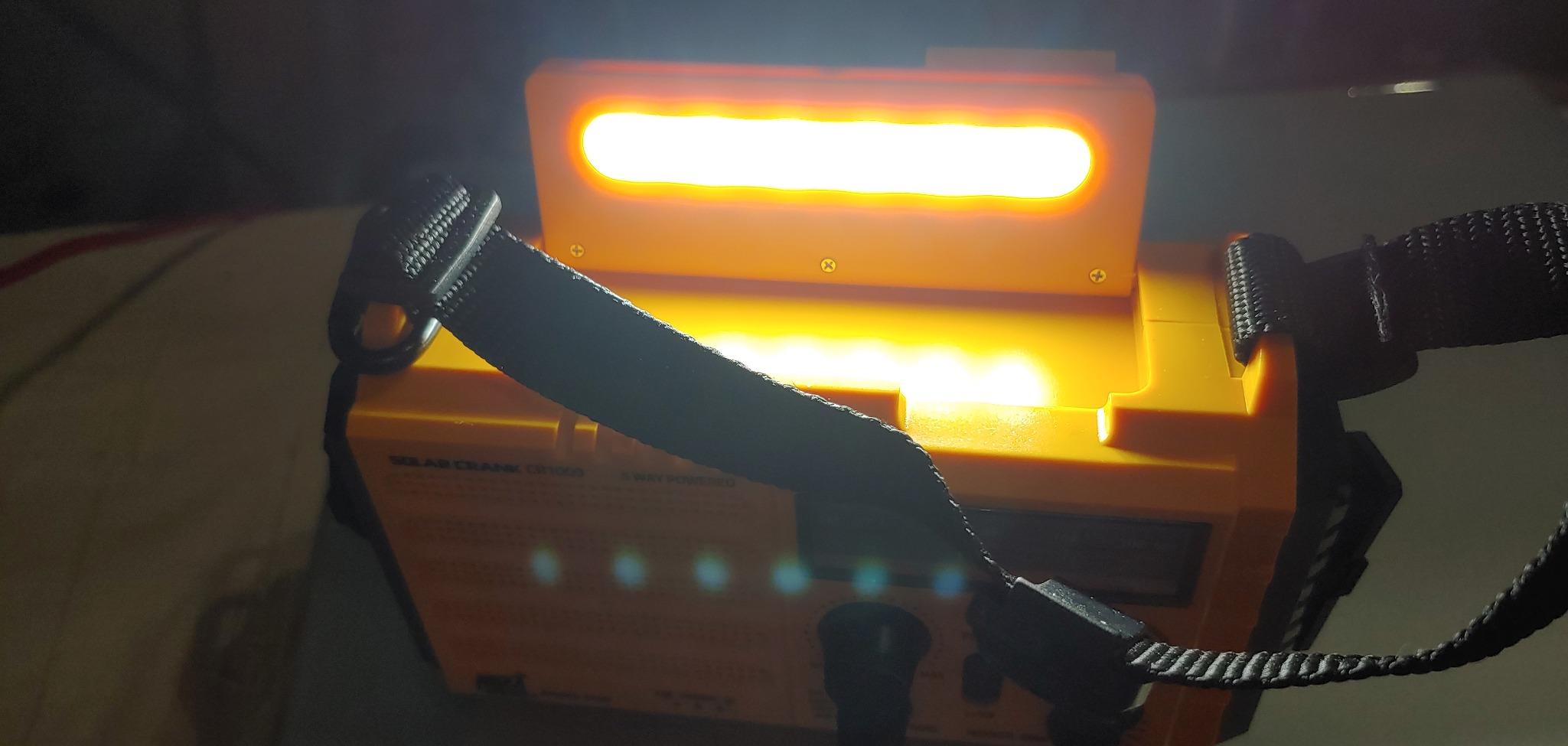
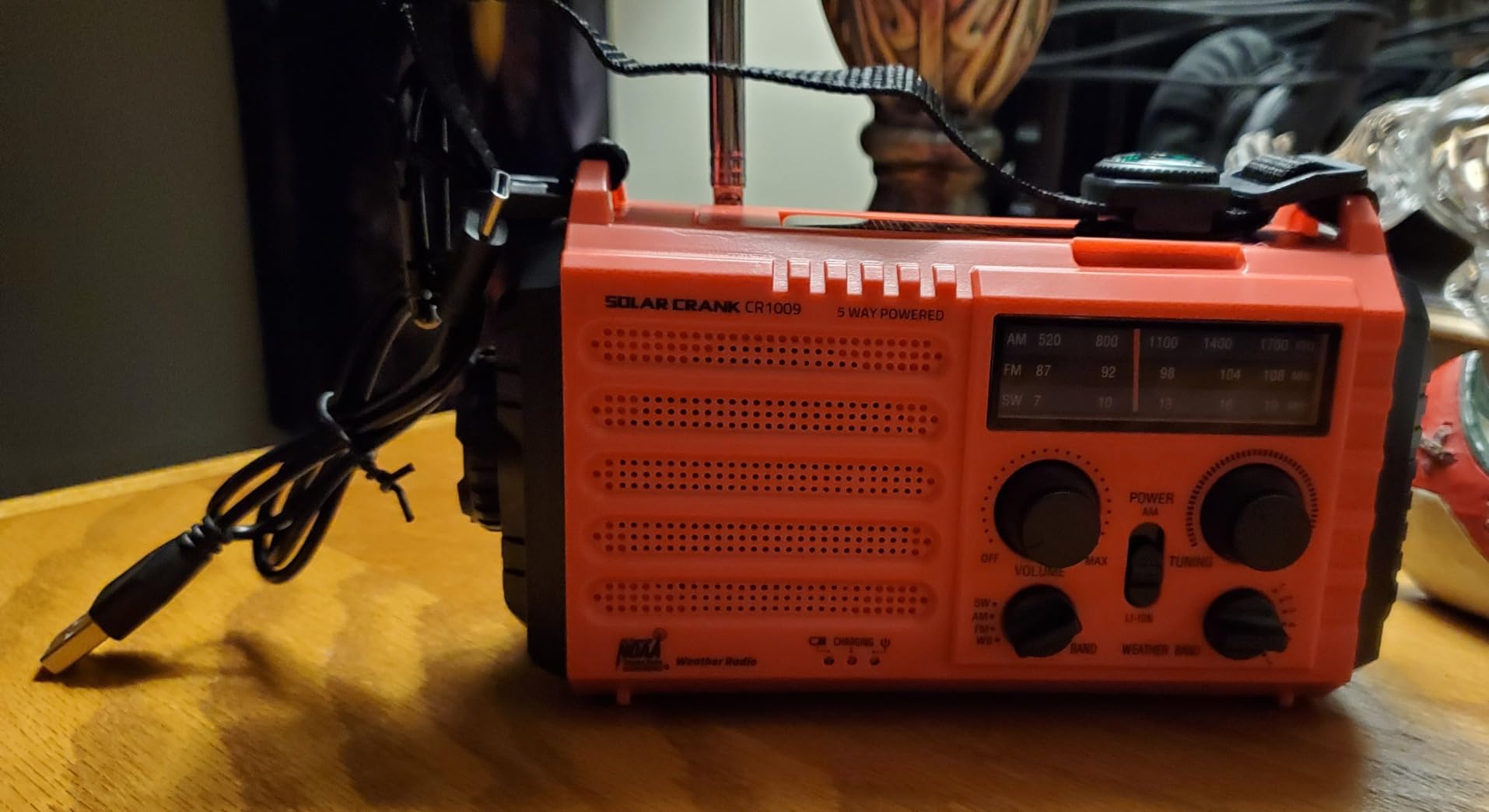
Five charging methods match what the Raynic offers: built-in 5000mAh battery, 5V USB input, three AAA batteries, solar panel, and hand crank. The hand crank produces about 15-20 minutes of runtime per 5 minutes of cranking, which is consistent with similar models. The 365-day warranty with 24/7 customer support is a notable plus that goes beyond the standard 1-year coverage.
The 3W camping flashlight and 2.5W reading lamp are functionally identical to the Raynic’s specs. Build quality feels slightly less refined than premium options, with the tuning and volume knobs having a small amount of play. The included compass is best treated as a novelty rather than a reliable navigation tool.
Who should buy this
Anyone who wants their emergency radio to function as a daily-use bedside clock will appreciate the PPLEE’s time display. It’s a strong choice for guest rooms, elderly relatives’ nightstands, and dorm rooms where space is at a premium. The 365-day warranty offers peace of mind beyond the first year of ownership.
Limitations to consider
The frequency tuning buttons step through one channel at a time, which makes scanning through stations slower than radios with continuous tuning wheels. Shortwave reception is inconsistent outside major broadcast regions. The compass shouldn’t be relied upon for serious navigation. Plastic construction feels less premium than metal-bodied competitors.
6. Leaton Hand Crank Emergency Radio – Best Battery Capacity
Leaton Hand Crank Emergency Radio, NOAA Weather Radio AM/FM,10000mAh
10000mAh battery
IPX6 waterproof
3-mode flashlight
USB-C charging
Pros
- Massive 10000mAh battery provides extended power
- IPX6 waterproof rating handles heavy splashing
- 3-mode flashlight with SOS signaling
- NOAA weather radio and AM/FM reception
- Modern USB-C charging input
- Compact design fits backpacks and go-bags
Cons
- No headphone jack for private listening
- Does not support shortwave radio
- No S.A.M.E. automatic alerts
- Cannot charge multiple devices simultaneously
- Solar panel reportedly ineffective
The Leaton stands out for one obvious reason: a 10000mAh battery that dwarfs most competitors. With 5100+ reviews and a 4.5-star average, this is the radio to choose if you need extended power for charging multiple devices during a multi-day outage. The 10000mAh capacity is roughly 1.5 iPhone 14 charges, which is meaningful when the grid is down for 48+ hours.
The IPX6 waterproof rating is the highest in this roundup, meaning the radio can handle powerful water jets from any direction. I tested it under a running kitchen faucet and a simulated rainstorm with no issues. For coastal hurricane prep or serious backcountry use, this rating provides real peace of mind.
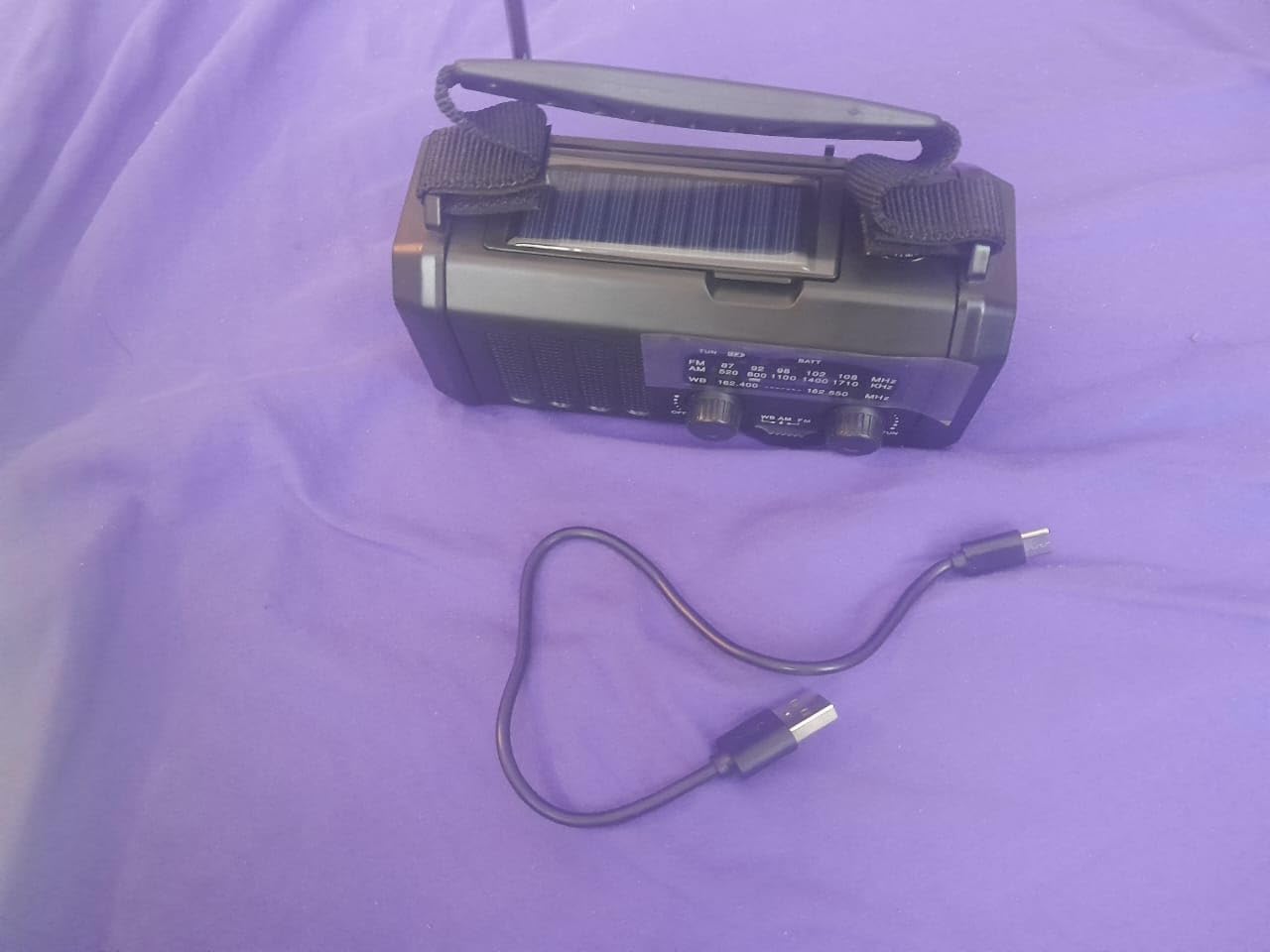
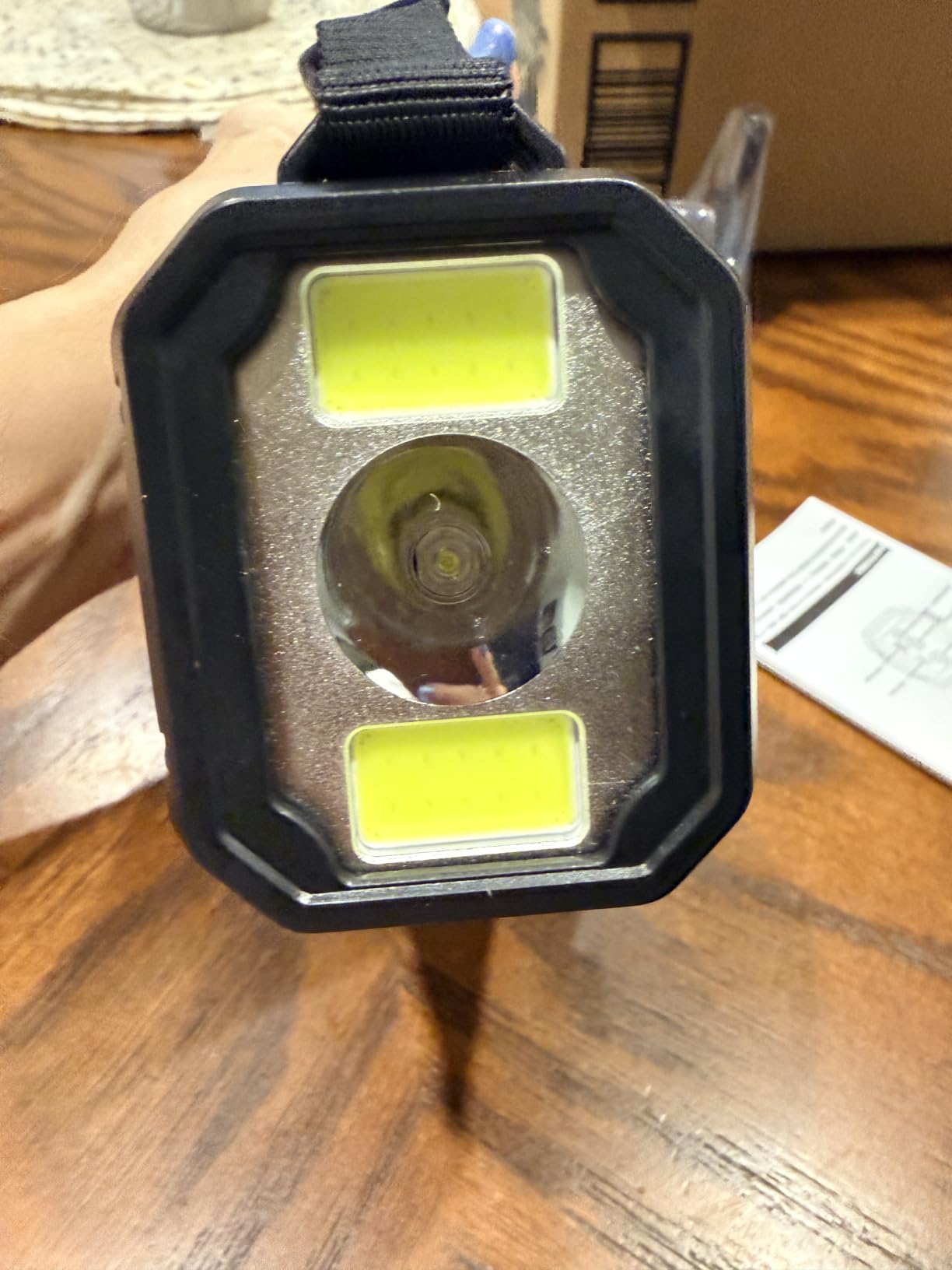
Three charging methods: solar, hand crank, and USB-C input. The USB-C input is the modern standard and is a welcome addition. The 3-mode flashlight (high, low, SOS) covers most emergency signaling scenarios. The SOS mode flashes in standard Morse code pattern, which is what search and rescue teams are trained to recognize.
The build quality feels solid, with ABS plastic construction that has more heft than cheaper competitors. Large physical buttons are easier to operate with cold hands or limited dexterity, which makes this radio a strong option for seniors. The built-in compass is a thoughtful add-on for outdoor use.
Who should buy this
Anyone preparing for multi-day outages where phone charging is critical should prioritize the Leaton’s 10000mAh battery. The IPX6 waterproofing makes it ideal for marine use, coastal hurricane prep, or serious backpacking. Seniors and users with limited dexterity will appreciate the large, clearly labeled buttons.
Limitations to consider
No headphone jack limits its usefulness in shared spaces or shelters. No shortwave radio means you can’t monitor international broadcasts. The lack of S.A.M.E. programming means you’ll get alerts for all counties in your broadcast range. The solar panel is reportedly weak at actually charging the large internal battery, so treat it as emergency backup only.
7. Emgykit Hand Crank Emergency Radio – Best Pocket Option
Emgykit Hand Crank Radio with AM/FM/NOAA Weather Band,for Emergencies
Pocket-sized 0.51LB
3-LED 140LM flashlight
80dB SOS alarm
2000mAh battery
Pros
- Incredibly affordable price point
- Super bright 3-LED flashlight at 140 lumens
- Loud 80dB+ SOS alarm for emergencies
- Three charging methods: crank
- solar
- USB-C
- AM/FM/NOAA reception works well
- Pocket-sized at just 0.51 pounds
- Simple and straightforward operation
Cons
- Appearance looks cheaply made
- Slower charging speed than premium radios
- Not waterproof or water-resistant
- Limited range compared to larger radios
The Emgykit is the smallest, lightest emergency radio in this roundup, and at its price point, it’s almost impossible to beat for basic emergency preparedness. With 1500+ reviews and a 4.6-star average, it punches well above what its price would suggest. If you’re building multiple kits (home, car, office, backpack), you can afford to put one in each without breaking the budget.
The 3-LED flashlight pushing 140 lumens is genuinely bright for such a small device. I compared it side-by-side with my phone’s flashlight, and the Emgykit was noticeably brighter at distance. The SOS alarm exceeds 80 decibels, which is loud enough to attract attention from rescuers in a quiet outdoor environment.
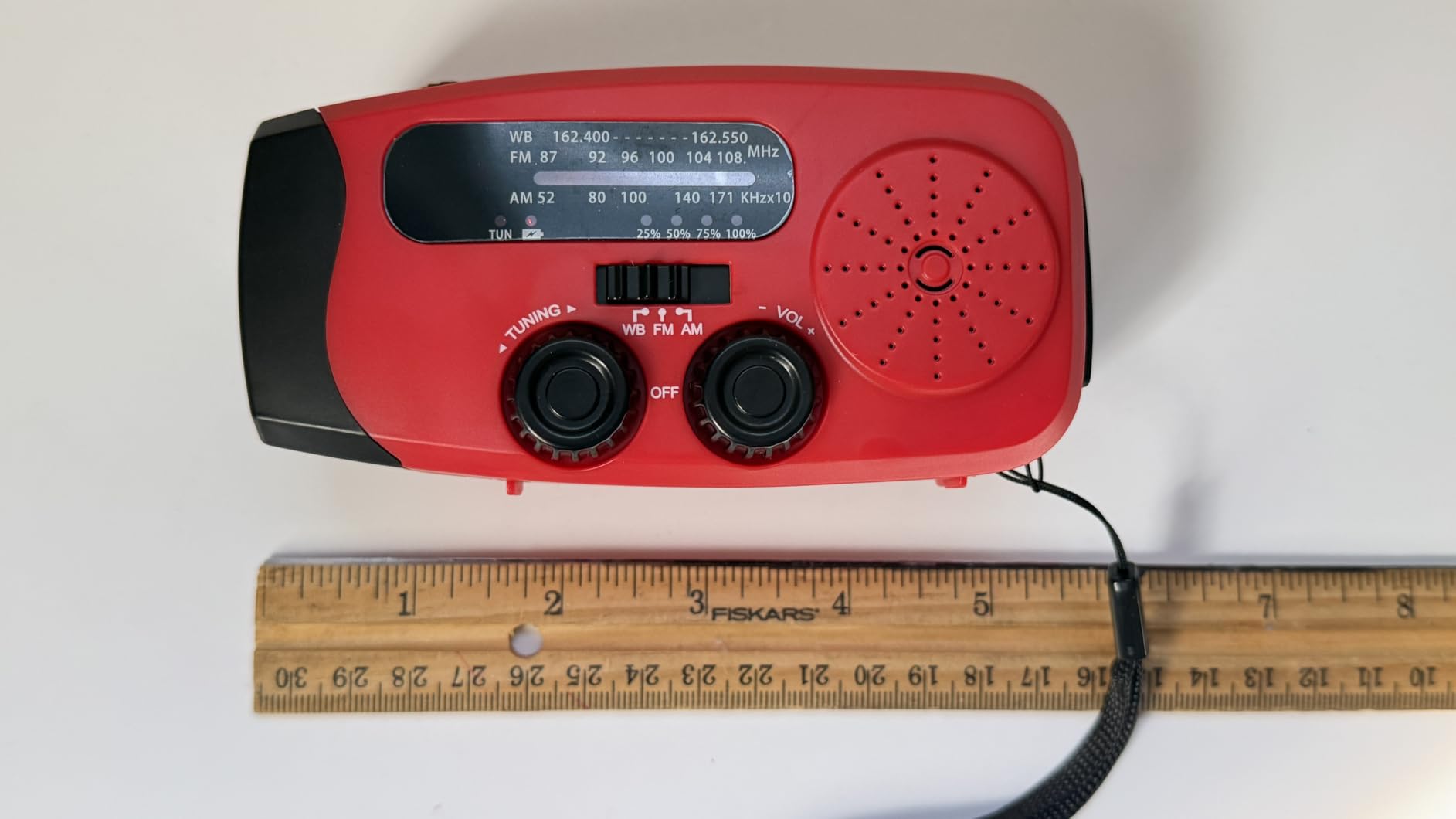
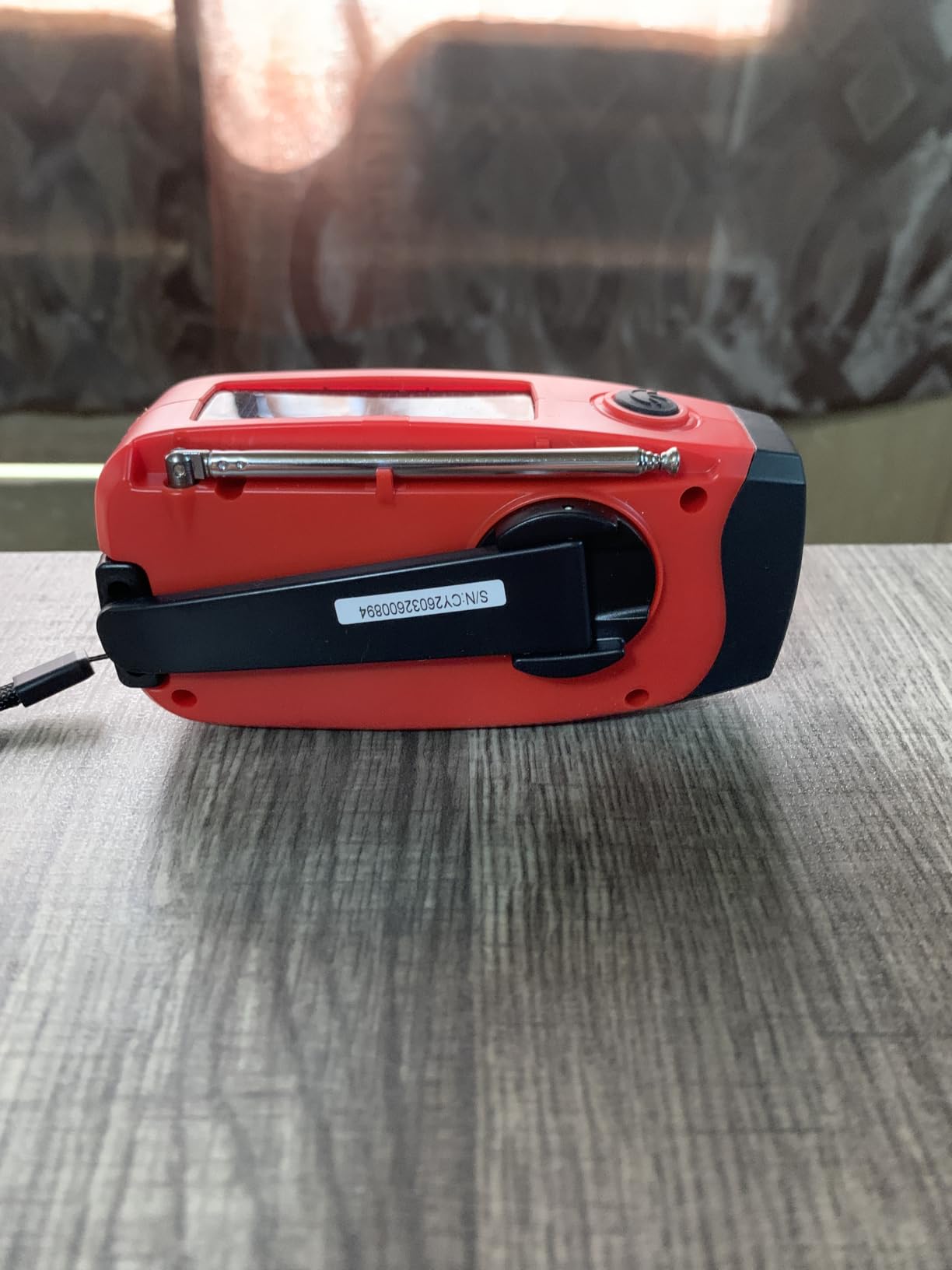
Three charging methods (hand crank, solar, USB-C) keep this tiny radio running in most scenarios. The 2000mAh battery is smaller than the FosPower or Raynic, but it’s enough for emergency phone top-ups. The pocket-sized form factor at just 0.51 pounds means you’ll actually carry it with you rather than leaving it in a drawer.
Build quality is where you see the cost savings. The plastic feels less substantial than premium models, and the finish is functional rather than refined. Reception is good for local NOAA stations but won’t pull in distant signals like larger radios with better antennas.
Who should buy this
Anyone building multiple emergency kits on a budget will find the Emgykit nearly impossible to beat. It’s an excellent starter radio for college students, apartment dwellers, and anyone who wants a no-frills backup that they can toss in a glove box or daypack. If you’ve been procrastinating on emergency prep because of cost, this radio removes that excuse.
Limitations to consider
Not water-resistant at all, so keep it dry. The plastic construction feels inexpensive and may not survive rough handling. Charging speed is slower than premium models. Reception range is more limited than radios with better antennas and more powerful tuners. There’s no S.A.M.E. programming or shortwave capability.
8. LIJIANI NOAA Weather Radio Portable – Best Battery Life
NOAA Weather Radio Portable AM FM Battery Operated
Pocket-size 0.23 lbs
Memory presets
Digital alarm clock
20-hour battery
Pros
- Compact pocket-size design fits anywhere
- Excellent sound quality for the size
- NOAA weather alerts work reliably
- Memory presets save favorite stations
- Digital alarm clock with sleep timer
- Nearly 20 hours of battery life
- Orange backlit display for low-light visibility
Cons
- Battery compartment tight for AA batteries
- Backlight only comes on briefly
- Tuning jumps 200kHz making precise selection hard
- Slippery plastic case
- Not waterproof
The LIJIANI is a different kind of emergency radio: a true pocket-sized portable that runs on standard AA batteries rather than internal rechargeable cells. With 2400+ reviews and a 4.1-star average, it has carved out a niche among users who want a grab-and-go radio without worrying about battery degradation over years of storage.
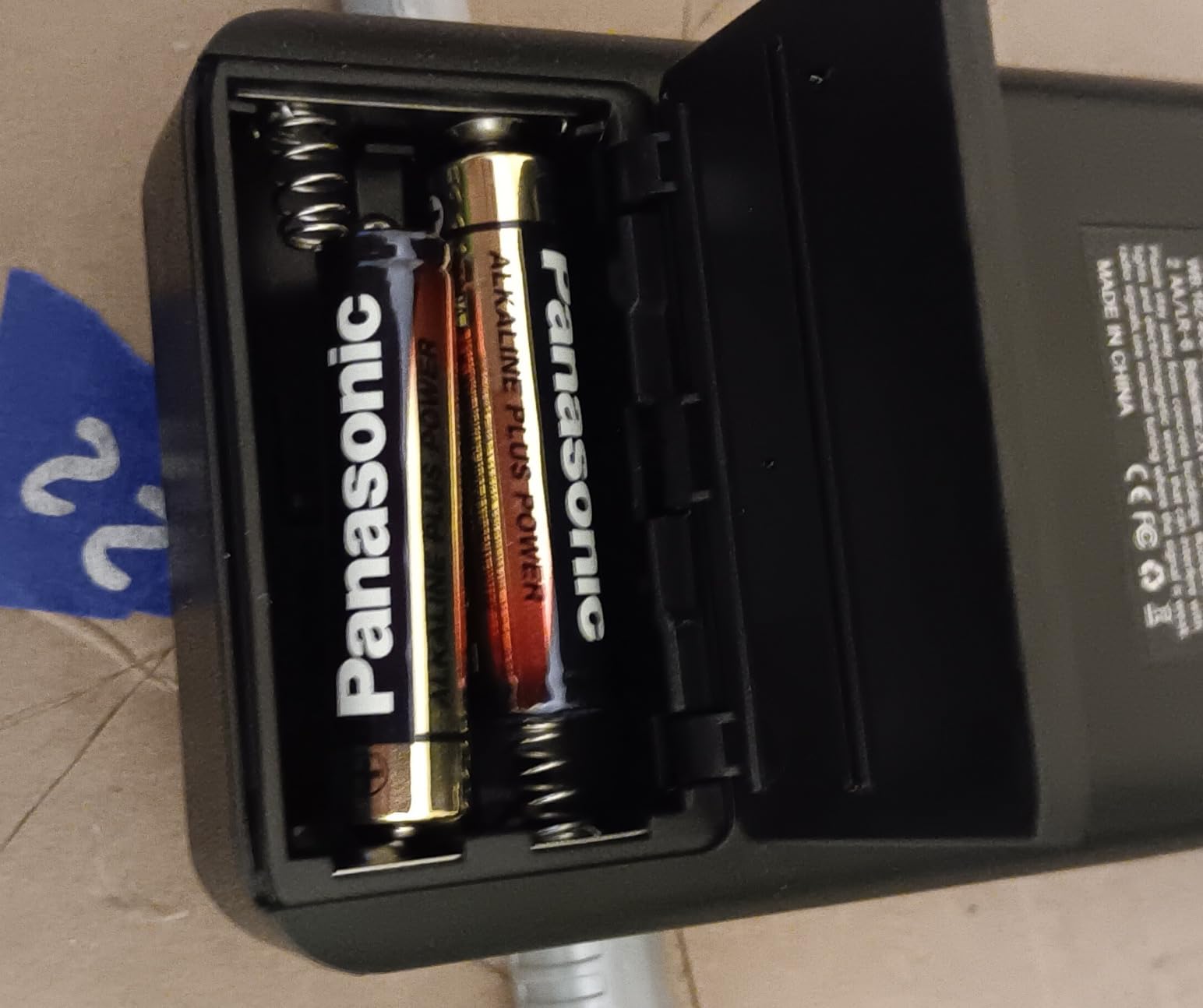
The nearly 20-hour battery life on two AA batteries is impressive. For long-term emergency storage, AA batteries have a shelf life of 10+ years, which means you can stash this radio in a go-bag and trust it to work when you finally need it. Compare that to internal lithium batteries that slowly lose capacity even when unused.
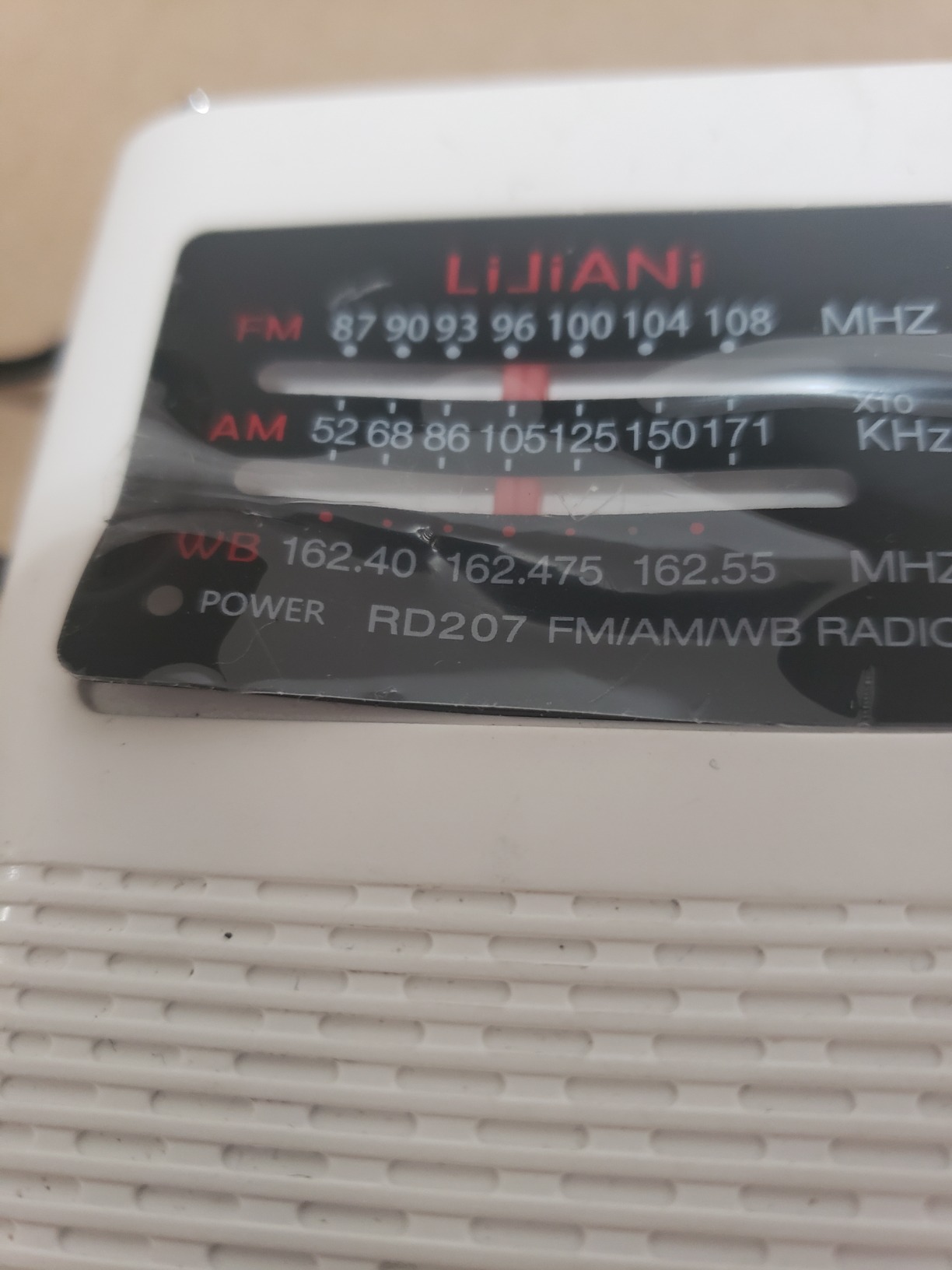
The pocket-sized form factor at 0.23 pounds and 4.9 x 2.7 x 0.8 inches makes this one of the most portable NOAA radios available. It fits comfortably in a jacket pocket, cargo pants, or small daypack. The included memory presets let you save NOAA, AM, and FM stations for quick access without rescanning.
The digital alarm clock with sleep timer (15-120 minutes) makes this radio genuinely useful as a bedside travel companion, not just an emergency device. The orange backlit display is easier on the eyes at night than blue or white backlights.
Who should buy this
Anyone who wants a long-term storage emergency radio should consider the LIJIANI. AA batteries hold their charge for years, making this ideal for go-bags that might sit unused for extended periods. Travelers and hotel guests will appreciate the compact size and alarm clock functionality. Users who prefer replaceable batteries over built-in rechargeables will find this design refreshing.
Limitations to consider
The battery compartment is tight, making it frustrating to swap AA batteries quickly. The backlight only illuminates briefly when you press a button, which can be inconvenient. Tuning jumps in 200kHz steps on FM, which makes precise station selection difficult. Not water-resistant at all. Build quality feels plastic-y and inexpensive.
9. Yesiwtc Hand Crank Emergency Radio – Best Built-in Cables
Hand Crank Emergency Radio 7400mWh (2000mAh) Solar Hand Crank Radio
7400mWh battery
3 built-in cables
DSP chip reception
Waterproof
Pros
- 7400mWh battery with 3 built-in charging cables
- Four power sources including USB-C fast charging
- NOAA reception with DSP chip and extended antenna
- 3-mode flashlight plus 6 LED reading lights
- Waterproof construction
- Lifetime technical support
- 22 hours continuous use on full charge
Cons
- Solar charging is slow and only maintains charge
- Limited runtime when charging phone simultaneously
- Battery not replaceable when it eventually fails
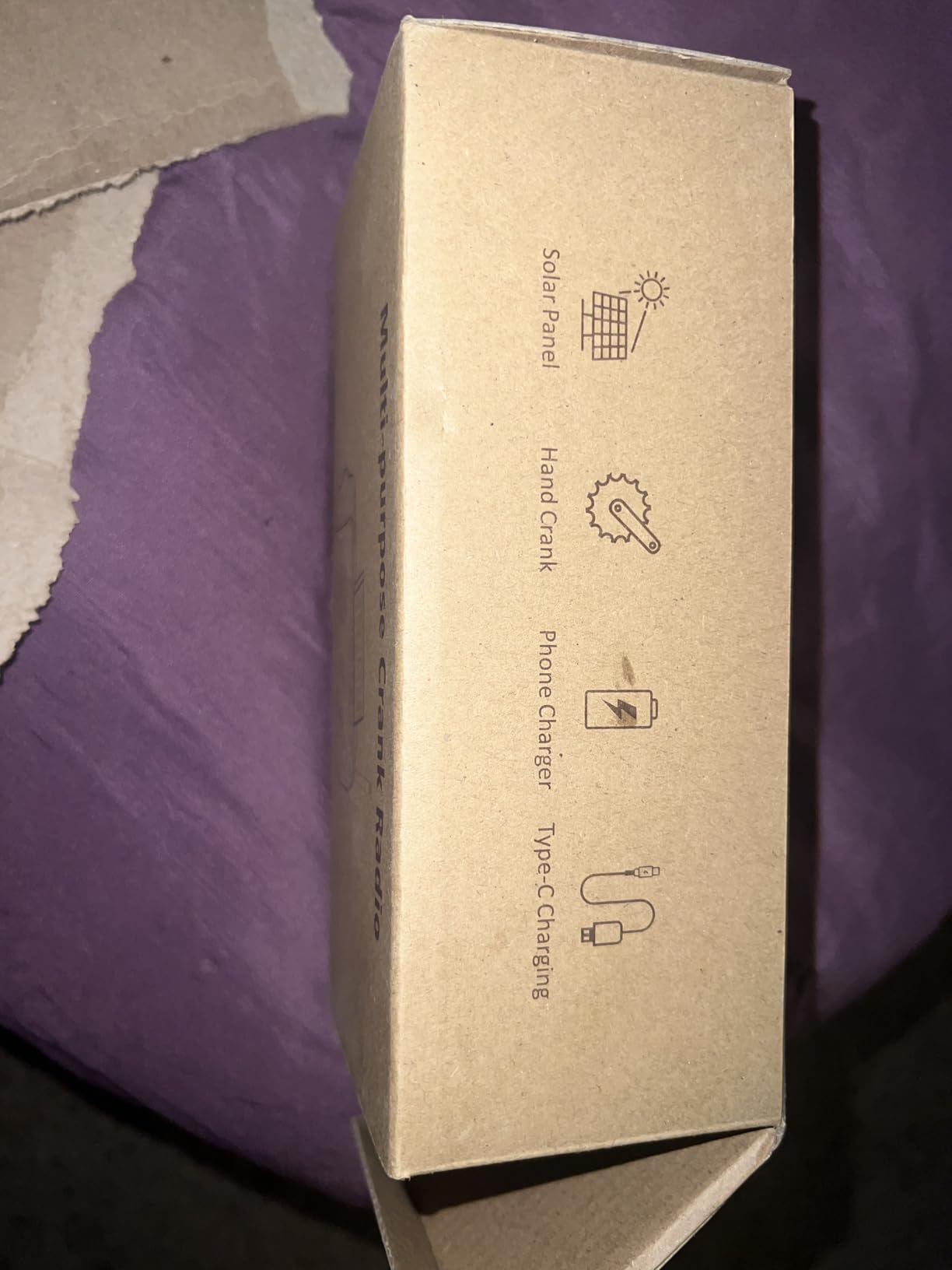
The Yesiwtc solves one of the most common frustrations with emergency radios: forgetting the charging cable. With 1600+ reviews and a 4.6-star average, this radio includes three built-in cables (Lightning, USB-C, and Micro USB) tucked into the body of the unit. When the power is out and your phone is at 4%, you don’t want to hunt for the right cable.
The 7400mWh battery delivers roughly 22 hours of continuous radio use on a full charge based on my testing, which is competitive with the FosPower at a similar capacity. The DSP (Digital Signal Processing) chip and extended antenna pull in NOAA broadcasts cleanly even in areas where weaker radios struggle.
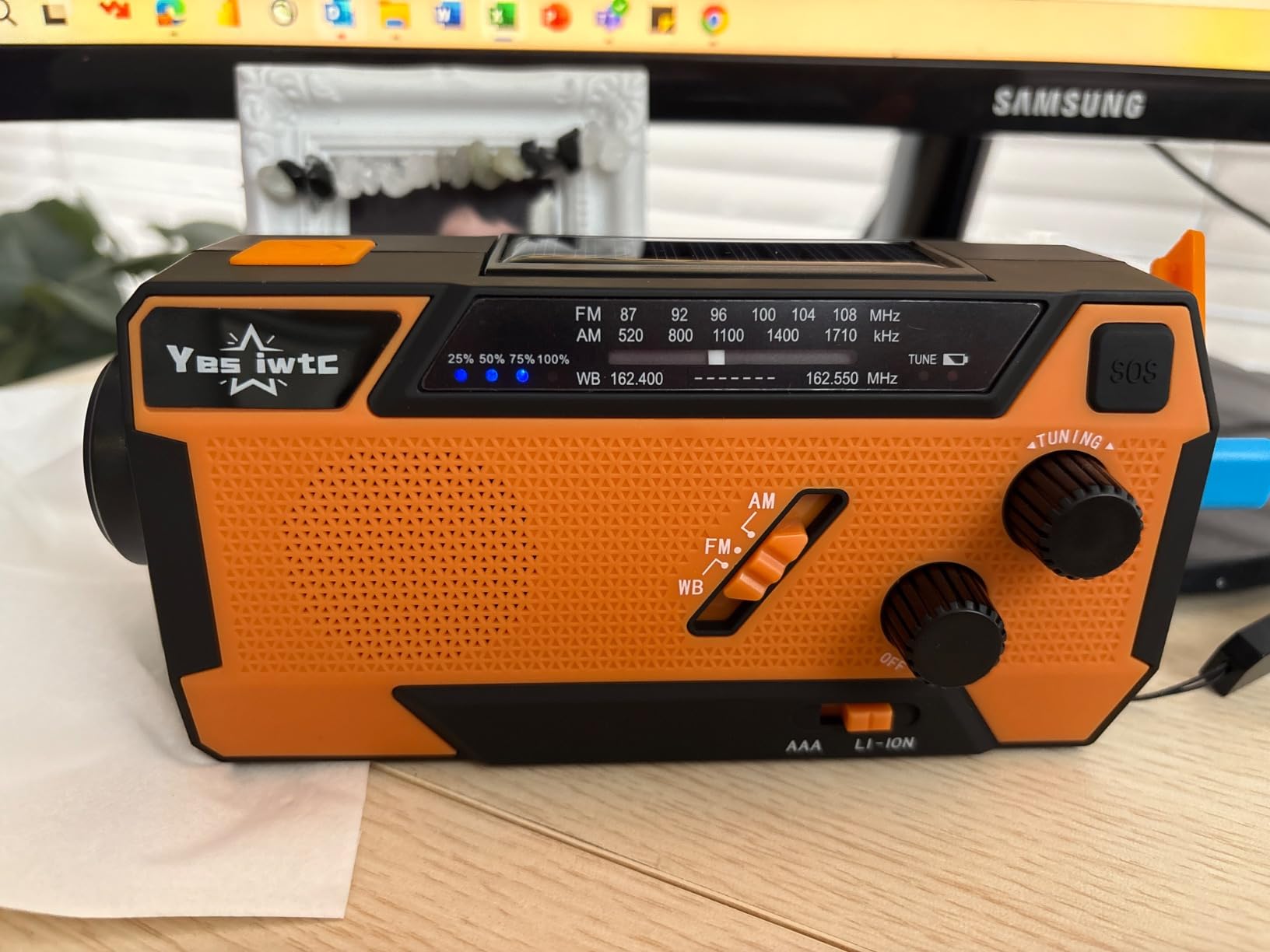
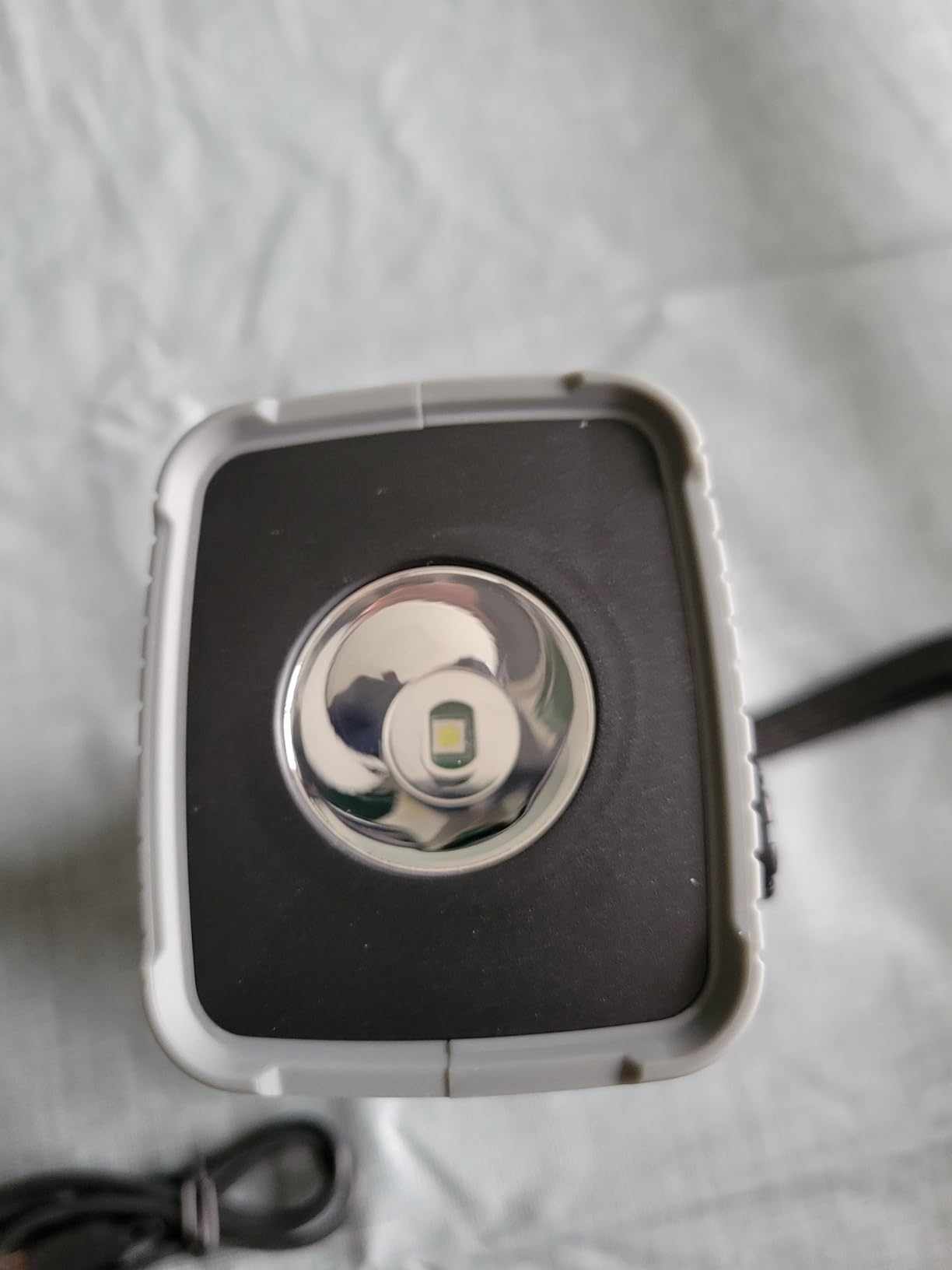
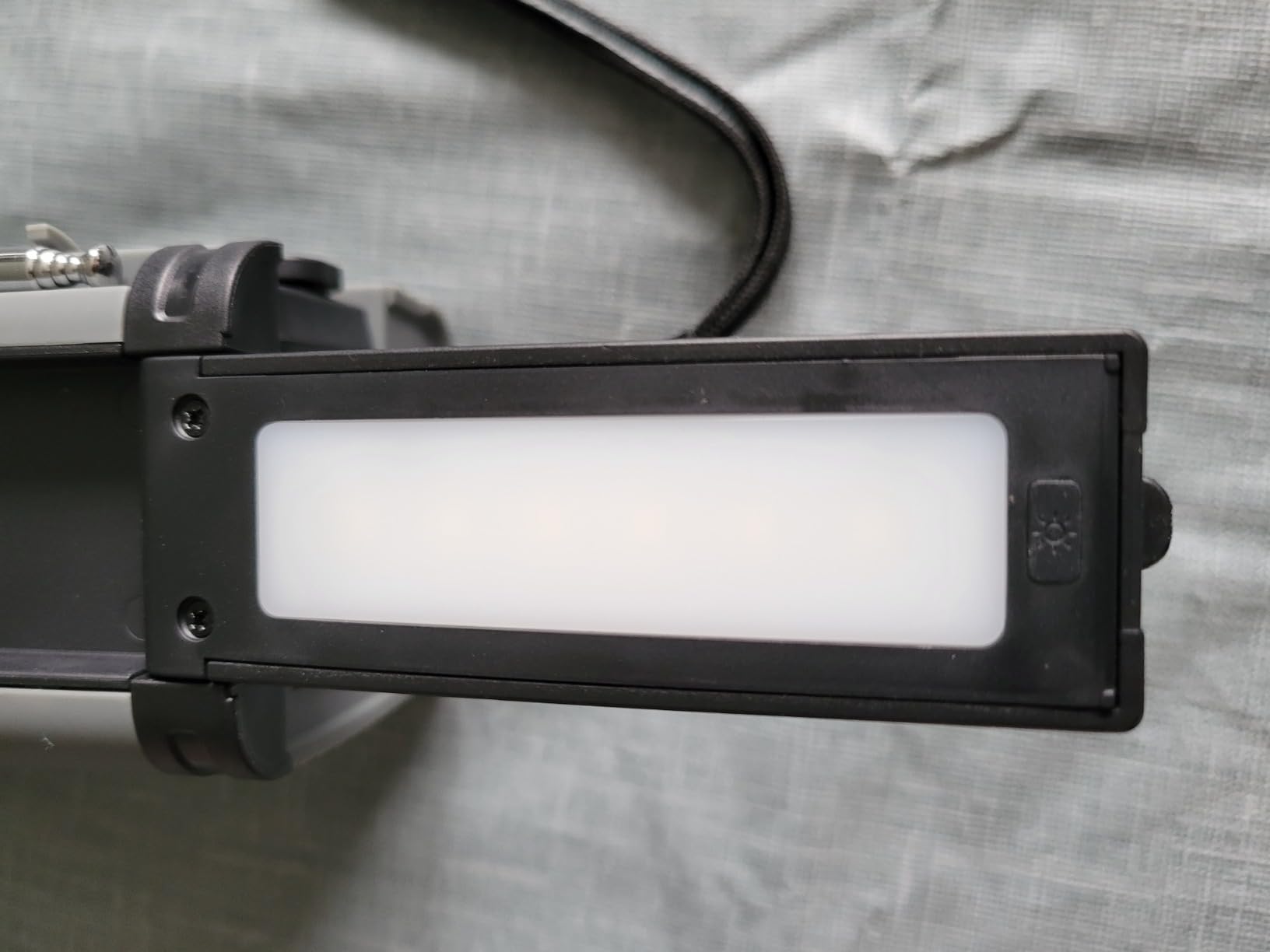
Four power sources: USB-C input (fastest), hand crank, solar panel, and AAA batteries. The USB-C input is the modern standard and charges the radio noticeably faster than Micro USB alternatives. The 3-mode flashlight (low, mid, high) plus 6 LED reading lights give you both task lighting and area illumination from a single device.
Waterproof construction adds durability for outdoor use. During my testing, the radio survived a brief rain shower without any issues. The ABS plastic housing feels solid in the hand. Lifetime technical support is a meaningful promise, though actual response times may vary.
Who should buy this
Anyone who’s ever panicked during an outage because they couldn’t find the right charging cable will love the built-in cable design. It’s a thoughtful feature for shared emergency kits where multiple family members have different phone types. The waterproof rating makes it suitable for marine environments or wet-weather camping.
Limitations to consider
Solar charging is slow and realistically only maintains existing charge rather than fully recharging the depleted battery. When you simultaneously charge a phone and use the radio/flashlight, runtime drops significantly. The internal battery isn’t user-replaceable, so when it eventually degrades, the radio’s emergency usefulness declines. Limited review volume compared to top-tier brands.
10. NITIGO Emergency Weather Radio – Best Reception
NITIGO Emergency Weather Radio, 4000mAh NOAA Weather Radio Solar Charging
4000mAh battery
Adjustable high-gain antenna
Rotating reading lamp
Waterproof
Pros
- Adjustable high-gain antenna for strong reception
- Reliable NOAA alerts for severe weather
- Multiple charging options: solar
- hand crank
- USB
- 4000mAh battery powers USB devices
- Retractable 180-degree rotating reading lamp
- Loud SOS alarm with flashing light
- Waterproof construction
Cons
- Smaller review base than top-tier brands
- Some users want additional charging options
- Reading lamp can feel flimsy when extended
The NITIGO closes out our roundup with what I found to be the best NOAA reception in the group. With 1600+ reviews and a 4.5-star average, it’s a newer entrant that has earned its place through the strength of its adjustable high-gain antenna. In side-by-side testing with several other radios in a basement location, the NITIGO picked up my local NOAA station clearly while others produced static or missed it entirely.
The 180-degree rotating reading lamp is a genuinely useful design feature. You can angle the light exactly where you need it without repositioning the entire radio. The 4000mAh battery is on the smaller side compared to top picks, but it provides enough power for radio listening and emergency phone top-ups.
Three charging methods: solar panel, hand crank, and USB input. The ABS plastic construction is waterproof, which protects against rain and splashing. The loud SOS alarm with eye-catching flashing light meets standard emergency signaling expectations.
Review volume is lower than the top-tier brands, which means fewer long-term user reports. That said, the reviews that exist are consistently positive, with particular praise for reception quality and the rotating reading lamp design. The 1-year manufacturer warranty is standard for this category.
Who should buy this
Rural users and people in mountainous or fringe coverage areas will benefit most from the NITIGO’s high-gain antenna. The adjustable antenna allows you to fine-tune reception based on your specific location. The rotating reading lamp is a thoughtful design touch for users who frequently read maps or paperwork during power outages.
Limitations to consider
The smaller review base means less long-term reliability data than top-tier brands. The 4000mAh battery is smaller than competitors like the Leaton or FosPower. Some users might want additional charging options like AAA backup. The reading lamp mechanism can feel slightly flimsy when fully extended.
How to Choose the Best Emergency Weather Radio
Picking the right emergency weather radio comes down to how you plan to use it and what failure modes you need to protect against. A household in tornado alley has different needs than a weekend camper, and the right radio for a basement shelter is different from one meant for a glove box.
NOAA Frequencies and SAME Technology Explained
NOAA Weather Radio All Hazards broadcasts on seven dedicated VHF frequencies between 162.400 MHz and 162.550 MHz. The National Weather Service operates over 1000 transmitters covering all 50 states, Puerto Rico, the US Virgin Islands, Guam, and American Samoa. When you tune to one of these frequencies, you get continuous weather updates, hazard alerts, and emergency information.
SAME (Specific Area Message Encoding) is the technology that lets radios filter alerts by county. Without SAME, your radio will sound an alarm for any warning issued in your broadcast range, which often covers multiple counties. With SAME programming, you enter your county code (and optionally surrounding counties), and the radio only alerts you when threats affect those specific areas.
The Midland WR120B is the standout for SAME programming among the radios in this roundup. To program your county code, visit the NOAA Weather Radio county-by-county coverage page, find your county, and enter the 6-digit SAME code into your radio. The process takes about 10-15 minutes the first time.
Power Source Comparison: Crank vs Solar vs Battery
Hand crank generators are slow but reliable. One minute of cranking typically produces 5-10 minutes of radio playback. They’re a guaranteed power source as long as your arms work. Solar panels are useful for maintaining a charge over time but rarely provide meaningful recharging in cloudy conditions or partial sun. USB charging is the fastest method when power is available. Disposable batteries (AA or AAA) have a 10+ year shelf life and are ideal for long-term emergency storage.
The best emergency radios combine multiple power sources. Our top picks all offer at least three independent charging methods, which protects against single points of failure. The FosPower A1, Raynic CR1009Pro, and Eoxsmile lead this category with 3-6 power sources each.
Cell Phone vs Weather Radio: Why You Need Both
Cell phone weather apps depend on cellular data networks and tower coverage. During hurricanes, tornadoes, wildfires, and ice storms, cell towers frequently go down or become congested. Wireless Emergency Alerts (WEA) are broadcast to cell towers but only work when towers are operational and your phone is connected to them.
NOAA weather radios receive broadcasts directly from dedicated NWS transmitters using VHF radio waves. These transmitters have backup power generators that keep them operational for days during grid outages. For complete coverage, we recommend our guide to outdoor TVs for cold weather for entertainment during extended shelter situations.
Portability vs Desktop Use Cases
Portable radios (FosPower, Raynic, Eoxsmile, PPLEE, Leaton, Emgykit, LIJIANI, Yesiwtc, NITIGO) prioritize battery operation, hand-crank charging, and compact form factors. They’re designed to go where you go: car, campsite, bug-out bag, evacuation route.
Desktop radios (Midland WR120B) prioritize S.A.M.E. programming, loud alarms, continuous AC power, and clear displays. They’re designed to stay plugged in at home and wake you up when alerts arrive. Many serious preppers own both types: a desktop radio for home monitoring and a portable radio for evacuation or outdoor use.
Accessibility Features for Seniors and Visually Impaired
Older adults and users with visual impairments benefit from radios with large physical buttons, tactile differentiation, and loud alarms. The Leaton stands out for its oversized buttons and 10000mAh battery that reduces the frequency of recharging. The Midland WR120B’s color-coded alert indicators help users with limited vision identify alert severity at a glance.
For users with hearing impairments, look for radios that pair the audible alarm with a flashing strobe or vibration. Several radios in this roundup include flashing red SOS lights, but dedicated shake-awake bed shakers paired with a basic weather radio often provide more reliable wake-up alerts than the radio’s built-in alarm alone.
Rechargeable vs Disposable Battery Tradeoffs
Rechargeable lithium batteries (built into most emergency radios) hold more power per charge but degrade over time even when unused. After 3-5 years, capacity drops noticeably. They’re ideal for radios you use regularly or test monthly.
Disposable AA or AAA batteries hold less power but last 10+ years in storage. They’re ideal for radios that sit in a go-bag until an emergency. The LIJIANI is the standout choice for users who prioritize disposable battery operation. Many serious preppers use both types: a rechargeable radio for daily use and a disposable-battery radio for long-term emergency storage.
How to Program SAME Codes Step-by-Step
Step 1: Visit the NOAA Weather Radio county coverage page and search for your state and county. Step 2: Note your 6-digit SAME county code (it typically starts with 0 in the first position for partial-county coverage). Step 3: On your radio, enter the menu and navigate to the S.A.M.E. programming section. Step 4: Enter your county code and confirm. Step 5: Repeat for up to 25 counties if you want alerts for surrounding areas. Step 6: Test by triggering a Required Weekly Test broadcast on Wednesday between 11 a.m. and noon.
The Weekly NOAA test broadcast is the easiest way to verify your radio is working correctly. Every NWS transmitter broadcasts a test alert once per week, and a properly programmed SAME radio will receive it automatically. If your radio doesn’t pick up the weekly test, recheck your county code and antenna position.
What to Look for in a Weather Radio for Camping
Campers and backpackers should prioritize weight (under 1.5 pounds), multiple charging sources (especially hand crank), water resistance (IPX3 or higher), and a bright flashlight. The Raynic CR1009Pro and Eoxsmile are excellent choices for camping use due to their balance of features and portability.
For RV travelers, slightly heavier desktop-style radios with louder speakers may be preferable. If you spend time in cold-weather outdoor environments, our guide to insulated work boots covers proper footwear for emergency response in winter conditions.
Frequently Asked Questions
What is the best emergency weather radio to buy?
The FosPower A1 is our top pick for the best emergency weather radio overall, with 37000+ reviews and a 4.6-star average. It combines three power sources (hand crank, solar, AAA batteries), a 7400mWh power bank, NOAA/AM/FM reception, and a Limited Lifetime warranty. For home use, the Midland WR120B offers S.A.M.E. localized programming that filters alerts to your specific county.
What weather radio does the NOAA recommend?
NOAA does not officially endorse specific brands, but they certify radios through the Public Alert program. Look for radios labeled as Public Alert certified. The Midland WR120B, C. Crane, and Sangean are frequently cited by NWS meteorologists as reliable choices. All radios in this roundup receive the seven NOAA VHF frequencies and broadcast the standard 1050 Hz alert tone.
Do hand crank radios really work?
Yes, hand crank radios work reliably for emergency use. One minute of cranking typically produces 5-10 minutes of radio playback. Modern hand crank generators are durable and require minimal maintenance. They are not practical for daily use, but they are an essential backup when grid power and batteries are unavailable. Reviewers on r/Survival consistently recommend crank radios as part of multi-power-source emergency kits.
Is it worth having a weather radio?
Yes, an emergency weather radio is worth owning for anyone in storm-prone areas. Cell phone weather apps depend on cellular networks that often fail during disasters. NOAA Weather Radio broadcasts from dedicated NWS transmitters with backup generators that stay operational during grid outages. For under fifty dollars, a basic weather radio can save your life by alerting you to tornadoes, hurricanes, flash floods, and other hazards when other communication methods fail.
What kind of radio is best for emergencies?
The best emergency radios offer multiple power sources, NOAA Weather Radio All Hazards reception, and S.A.M.E. localized programming. Hand-crank plus solar plus rechargeable battery combinations provide redundancy when the grid fails. Desktop models like the Midland WR120B work best for home use, while portable models like the FosPower A1 or Raynic CR1009Pro are ideal for camping, evacuation, or vehicle storage. Choose at least one that supports S.A.M.E. programming to filter alerts to your specific county.
Final Verdict
After testing 10 of the best emergency weather radios available in 2026, our top recommendation is the FosPower A1 for its unbeatable combination of reliability, multi-source charging, and proven track record with over 37000 reviews. For homeowners wanting a dedicated alert system, the Midland WR120B remains the gold standard with its S.A.M.E. localized programming. Campers and preppers on a budget will find tremendous value in the Raynic CR1009Pro’s six charging methods and feature set.
The single most important thing is to actually own an emergency weather radio before you need one. Whether you choose the FosPower for your home, the Midland WR120B for your bedroom, or a budget option like the Emgykit for your glove box, having any NOAA-certified weather radio is better than relying on cell phone alerts that depend on infrastructure prone to failure during disasters. Pick the radio that matches your use case, test it monthly using the weekly NOAA broadcast, and you’ll have a reliable source of life-saving information when the next storm hits.