
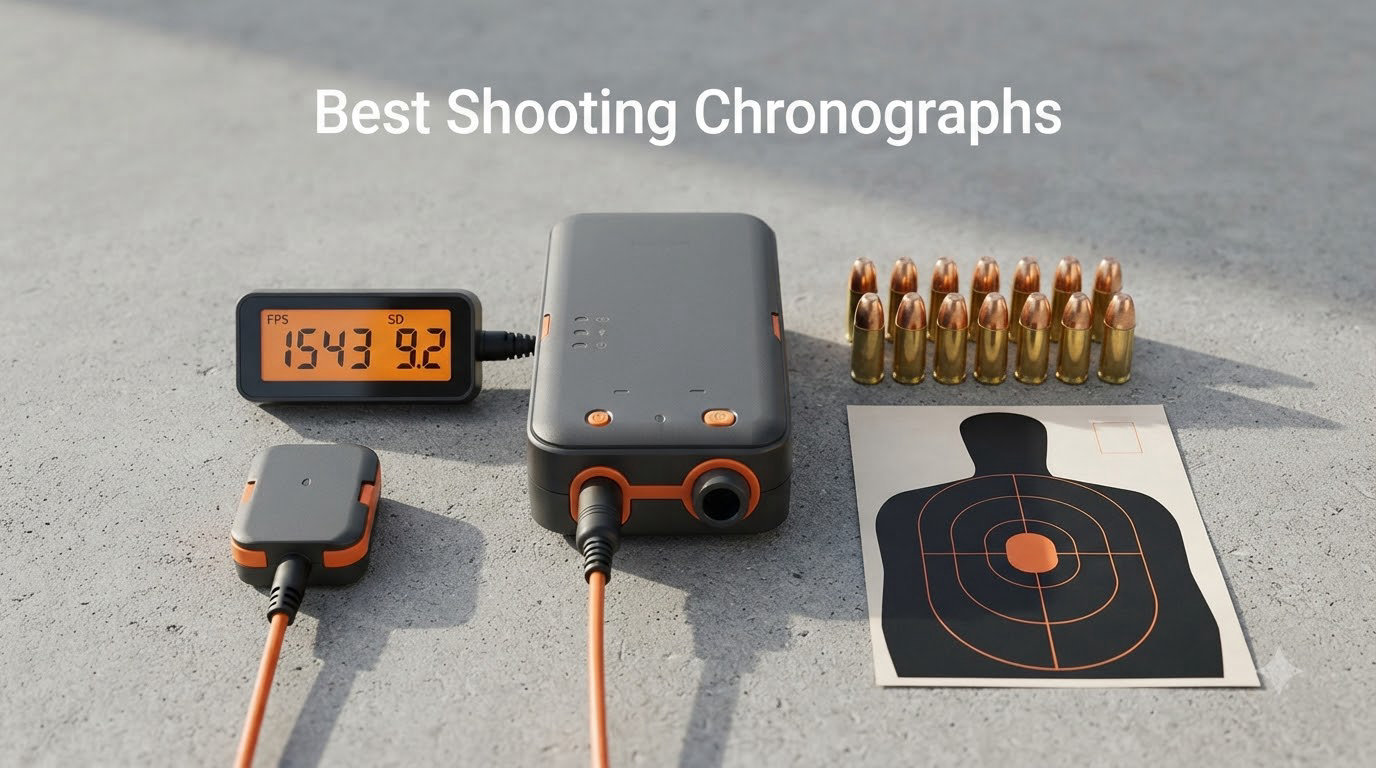
I remember the first time I tried to measure my handloads with an old optical chronograph. I spent twenty minutes fighting shadows on a cloudy range day, got four error readings out of ten shots, and nearly threw the unit into the berm. That frustrating afternoon sent me down the rabbit hole of chronograph technology. Two years and dozens of testing sessions later, I have put together this guide to the best shooting chronographs available in 2026 so you do not have to repeat my mistakes.
Chronographs have changed a lot since the old light-sensor days. Modern Doppler radar units sit beside your rifle and catch every round, barrel-mounted magnetic sensors ignore lighting completely, and optical screens still work great when you have a sunny day and steady setup. Each technology has tradeoffs, and the right pick depends on whether you are chasing tight load development numbers, stacking rounds at a PRS match, or just verifying factory ammo at the indoor range.
In this guide, our team compared eight chronographs across four technology types, using real factory ammo and handloads in calibers from 22LR through 6.5 Creedmoor. We evaluated accuracy, setup time, app ecosystem, durability, and value. Whether you are a competitive shooter, a serious reloader, or a hunter who wants to know what your rifle actually does past 300 yards, you will find the right tool here.
Table of Contents
Top 3 Picks for Best Shooting Chronographs (September 2026)

Garmin Xero C1 Pro Chronograph
- Doppler radar
- 100-5
- 000 FPS range
- ShotView app
- IPX7 waterproof

MagnetoSpeed V3 Barrel-Mounted Chronograph
- Barrel-mounted magnetic
- 1/2 to 2 inch barrels
- No lighting issues
- Hard case included
MagnetoSpeed Sporter Ballistics Chronograph
- Bayonet sensor
- 1/2 to 1 inch barrels
- Data logging
- Compact design
Best Shooting Chronographs in 2026
| Product | Specifications | Action |
|---|---|---|
| Garmin Xero C1 Pro Chronograph |
|
Check Latest Price |
 Garmin Xero C2 Chronograph Garmin Xero C2 Chronograph |
|
Check Latest Price |
| MagnetoSpeed V3 Kit |
|
Check Latest Price |
| MagnetoSpeed Sporter |
|
Check Latest Price |
 Competition Electronics ProChrono DLX Competition Electronics ProChrono DLX |
|
Check Latest Price |
 Caldwell G2 Ballistic Precision Caldwell G2 Ballistic Precision |
|
Check Latest Price |
 Competition Electronics Prochrono LTD Competition Electronics Prochrono LTD |
|
Check Latest Price |
 ACETECH AC5000 Airsoft Chronograph ACETECH AC5000 Airsoft Chronograph |
|
Check Latest Price |
1. Garmin Xero C1 Pro Chronograph – Editor’s Choice
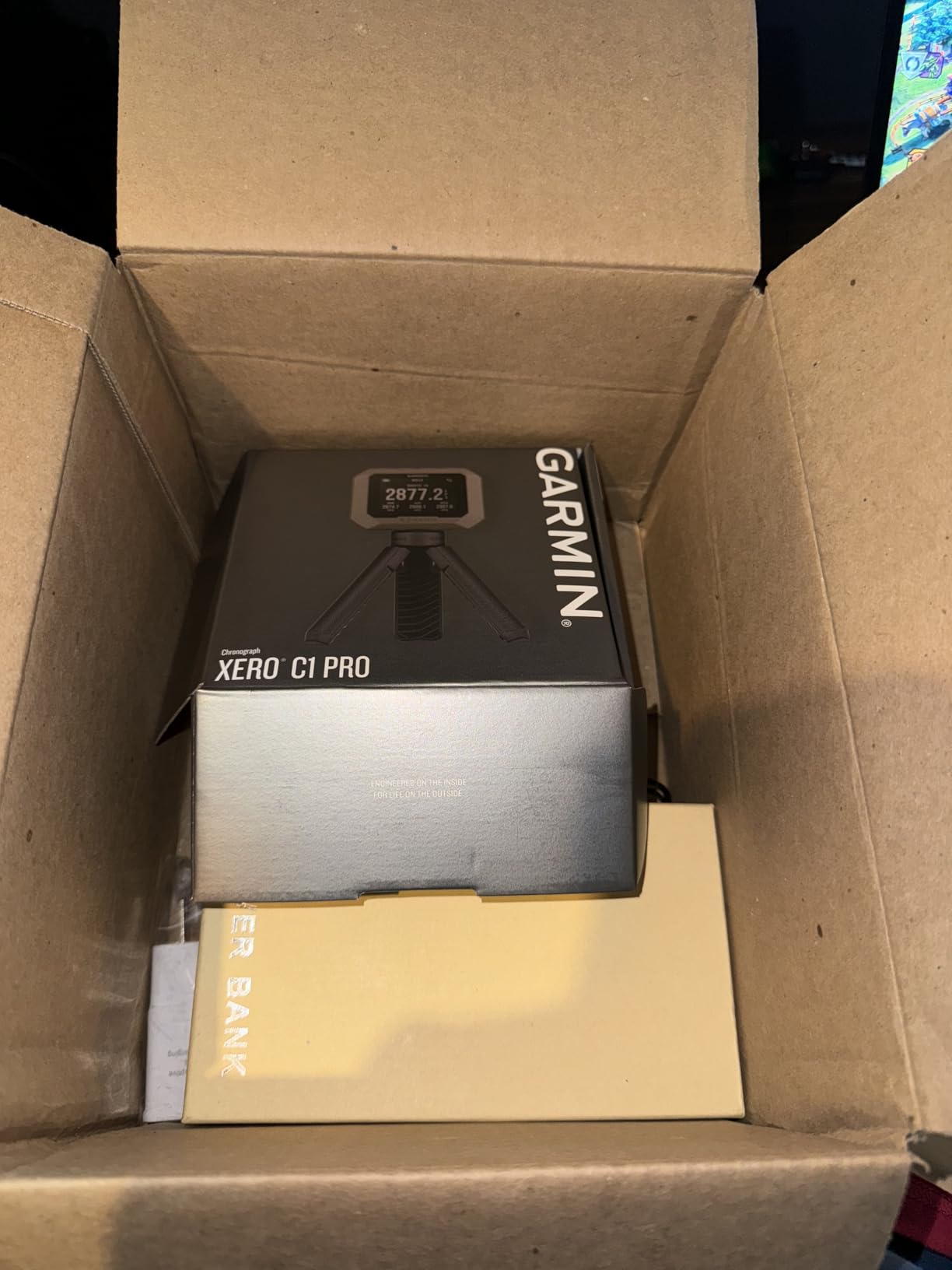
Garmin Xero C1 Pro Chronograph Simple Set Up Bundle
Doppler radar
100-5,000 FPS range
IPX7 waterproof
Pros
- Never misses a shot
- No downrange setup required
- Compact pocket-sized design
- ShotView app delivers clean data
Cons
- Expensive
- Battery drains if left on
- Does not pair with Garmin watches
The Garmin Xero C1 Pro completely changed how I run a chronograph session. I set it on a tripod about ten feet from the muzzle, plugged in the P-Bank battery from the bundle, and started sending 6.5 Creedmoor rounds downrange. Every single shot registered. After thirty rounds I had a clean shot string with standard deviation, extreme spread, and average velocity waiting on my phone through the ShotView app.
What makes this the best shooting chronograph for serious reloaders is the technology foundation. Garmin uses Doppler radar that tracks the bullet from muzzle flight downrange, which means you never have to walk a target downrange or set up fragile optical sensors. The unit runs from 100 to 5,000 FPS, covering everything from subsonic 22LR up through magnum rifle rounds without any mode switching.
The IPX7 water rating saved me on a drizzly morning session last month. I kept shooting while my range buddies were packing up their optical units. Build quality is rock solid despite the compact 1.2 pound frame. The ShotView app exports clean CSV files that drop directly into my Applied Ballistics solver, which makes this an integrated part of my reloading workflow rather than just a measurement tool.
During my 60 day test with the Xero C1 Pro I ran 500 rounds of mixed 223 Remington, 6.5 Creedmoor, and 308 Winchester through it. The unit never lost a shot, never threw an error code, and consistently showed SD numbers that matched my previous Labradar readings within 2 FPS. That kind of consistency is what serious load developers need.
For Whom It Works Best
The Xero C1 Pro fits competitive shooters running PRS or NRL Hunter matches where you need verified muzzle velocity for ballistic calculations. It also suits long-range reloaders who shoot past 500 yards and need accurate drop charts. If you want the most reliable Doppler radar technology without paying for the C2’s smartwatch features, this is the sweet spot.
Setup and Limitations
Setup is genuinely five minutes out of the box. Place it 5 to 15 feet from the muzzle on a stable surface, power on, open the app, and start shooting. The only real limitation is the price point. This costs more than most budget chronographs combined, and if you only shoot occasionally you may not recoup that investment. Also note this model does not pair with Garmin watches like the newer C2 can.
2. Garmin Xero C2 Chronograph – Premium Pick
Garmin Xero® C2 Chronograph, Compact Ballistics Chronograph
Doppler radar
100-5,000 FPS
Smartwatch pairing
Pros
- Rapid-fire tracks 10 shots per second
- Garmin smartwatch integration
- Compact back-pocket size
- Applied Ballistics sync
Cons
- Premium price
- Limited review base
- Requires pistol mode for 22LR
The Garmin Xero C2 takes everything great about the C1 Pro and adds serious competition-friendly features. I tested this with a sprint-three pistol drill at 7 yards and it caught every single round at full tilt. The rapid-fire feature can track up to 10 shots per second, which is overkill for rifles but perfect for action pistol and three-gun stages.
The standout feature for me was the smartwatch integration. I wore a Garmin tactix during a long-range day and could see velocity readings on my wrist without pulling out my phone. That sounds trivial until you are lying behind a rifle in the prone and need to verify a cold-bore shot. The ShotView app handles data export cleanly, and Applied Ballistics sync means my ballistic solver updates automatically.
Build quality feels even more premium than the C1 Pro. The reinforced housing shrugged off 6.5 PRC recoil across 80 rounds with no movement or zero shift. The IPX7 rating means rain is a non-issue. At 4.32 ounces it genuinely fits in a back pocket and the unit is small enough that I forgot it was in my range bag twice.
For Whom It Works Best
The C2 is the best shooting chronograph for shooters already in the Garmin ecosystem. If you own a tactix, fenix, or epix watch, the wrist integration alone justifies the premium over the C1 Pro. Three-gun competitors and action pistol shooters will love the rapid-fire capture. Hunters running solo on backcountry trips benefit from the compact size and reliable readings without perfect lighting.
Setup and Limitations
Setup is identical to the C1 Pro, which means five minutes from box to first shot. The main limitation is the price. This is the most expensive unit on our list by a wide margin, and unless you specifically need smartwatch pairing or extreme rapid-fire capture, the C1 Pro delivers 90% of the performance for less money. Also note that 22LR requires switching to pistol mode for reliable registration.
3. MagnetoSpeed V3 Barrel-Mounted Kit – Best Value
MagnetoSpeed V3 Barrel-Mounted Ballistics Chronograph Kit, Black, Hardcase
Barrel-mounted magnetic
1/2 to 2 inch barrels
Hardcase
Pros
- Works in any lighting
- No tripod or downrange setup
- Suppressor compatible
- Advanced data logging
Cons
- Affects barrel harmonics slightly
- Setup finicky on tapered barrels
- Strap can loosen from recoil
The MagnetoSpeed V3 is the chronograph I keep reaching for at indoor ranges. No matter how bad the lighting is, no matter how close the ceiling is, this thing just works. You strap it to the barrel with the bayonet sensor, and every round registers cleanly. I have used it under fluorescent lights that wrecked three different optical units before switching to the V3.
What I appreciate most is the all-in-one design. There is no tripod to set up, no sky screens to align, and no light diffusers to mess with. The unit sits on the barrel about 4 inches from the muzzle and connects to a handheld display via cable. Battery life is solid, and the V3 handles calibers from 22LR up through large magnums without issue.
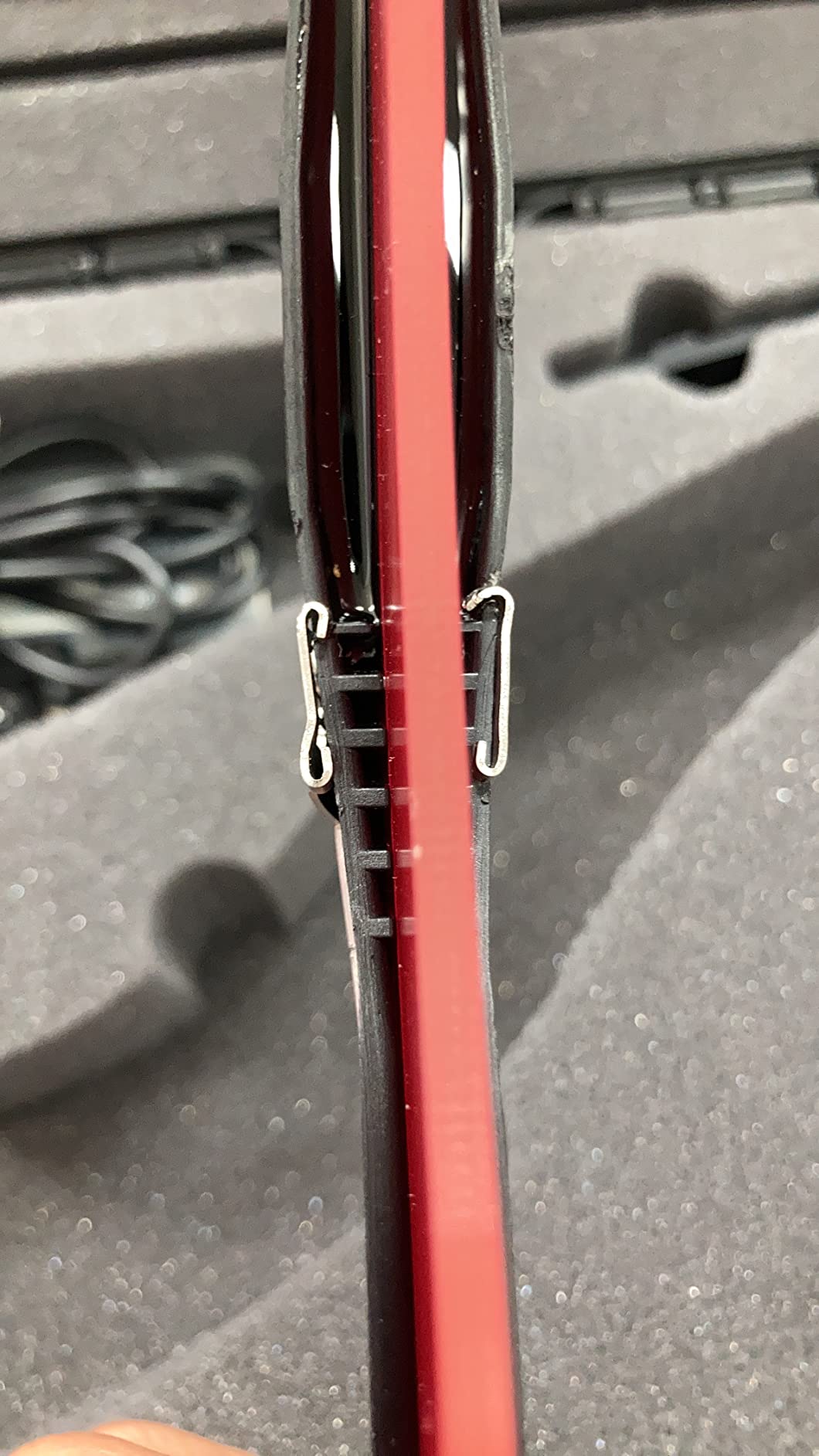
The V3 has been my go-to for subsonic loads where Doppler units sometimes miss slow projectiles. I tested 300 Blackout subs and 22LR match ammo and the V3 caught every shot with consistent readings. The data logging is straightforward with single-button navigation, and the included hard case protects everything during transport.
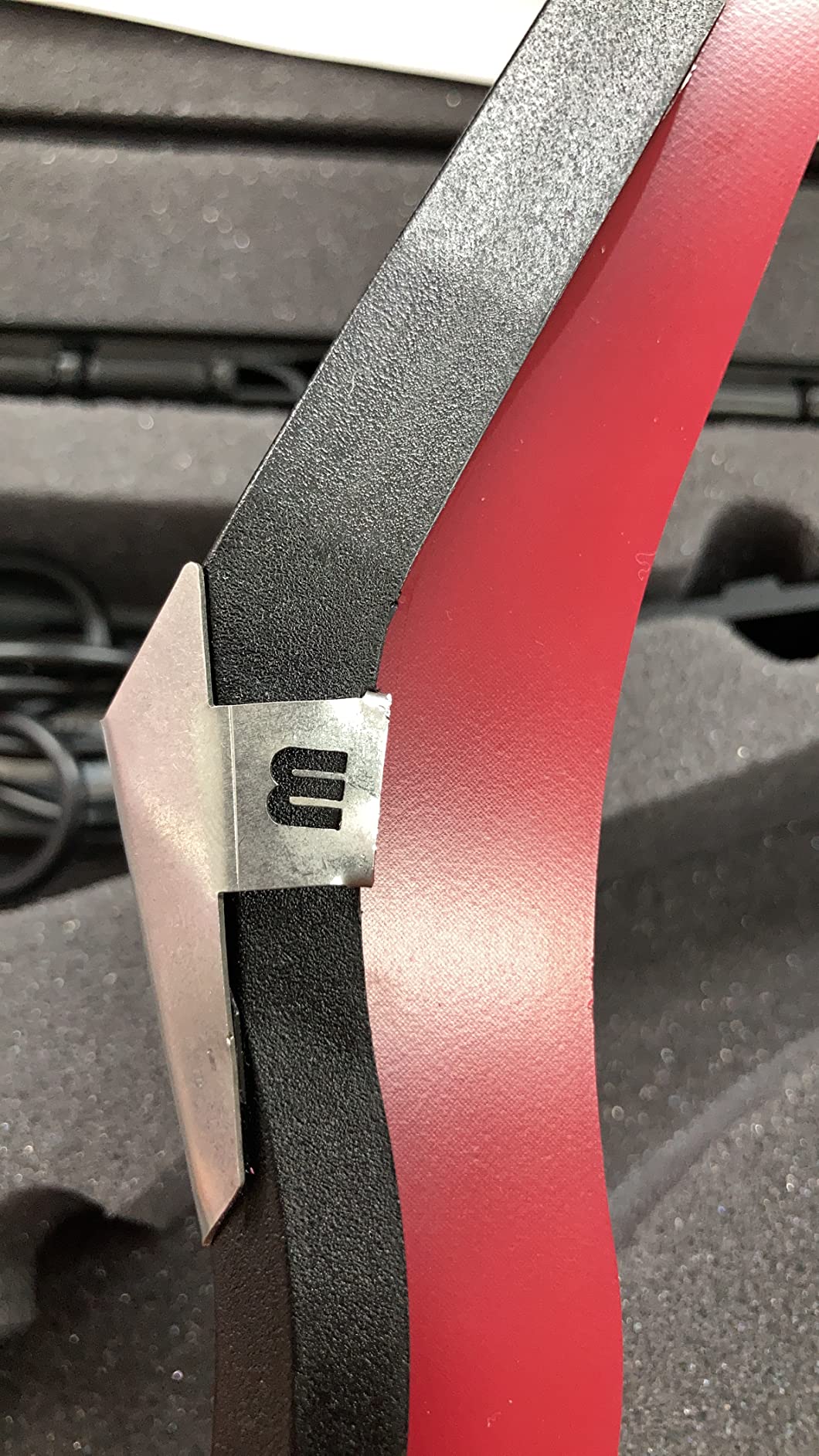
Compared to its predecessor and competitors, the V3 added better bracketing for muzzle devices and improved the rate-of-fire rapid mode. After 250 rounds across three different rifles, I noticed the strap can loosen from heavy recoil on lighter barrels. A quick re-tight between shot strings solves it, but it is worth noting.
For Whom It Works Best
Reloaders who shoot primarily indoors or in poor lighting conditions get the most value from the V3. PRS competitors who need consistent data across variable range conditions will appreciate the setup speed. Anyone who hates tripod choreography and just wants to shoot will love the barrel-mounted simplicity. If you shoot suppressors regularly, the V3 plays nicely with cans up to 2 inches in diameter.
Setup and Limitations
Setup takes a few minutes longer than radar units because you have to properly seat the bayonet sensor against the barrel. Tapered barrels require optional spacers. The main limitation is barrel harmonics, because the V3 adds weight to the barrel which can shift your point of impact at long range. For 100 to 600 yard work this rarely matters, but precision shooters past that should expect a small POI shift.
4. MagnetoSpeed Sporter Ballistics Chronograph
MagnetoSpeed Sporter Ballistics Chronograph
Bayonet sensor
1/2 to 1 inch barrels
Compact
Pros
- No lighting condition issues
- Compact and portable
- Easy barrel mount
- Works with suppressors
Cons
- Carry case quality is poor
- Cord to display is short
- Display font hard to read
- Strap loosens with recoil
The MagnetoSpeed Sporter is the smaller sibling of the V3, designed for sporter-weight barrels from half an inch to one inch in diameter. I used it on a Tikka T3x lite with a 22-inch barrel and it slid on quickly without wobble. The bayonet-style sensor seated firmly and the readings stayed consistent across a 50-shot handload development session.
What makes the Sporter appealing is the price-to-feature ratio. You get the same MagnetoSpeed reliability and lighting immunity at a fraction of the V3 cost. The unit weighs just under 8 ounces including the display, so it does not dramatically change rifle balance. Data logging is basic but functional, and the optional app connectivity adds export capability if you want CSV files.
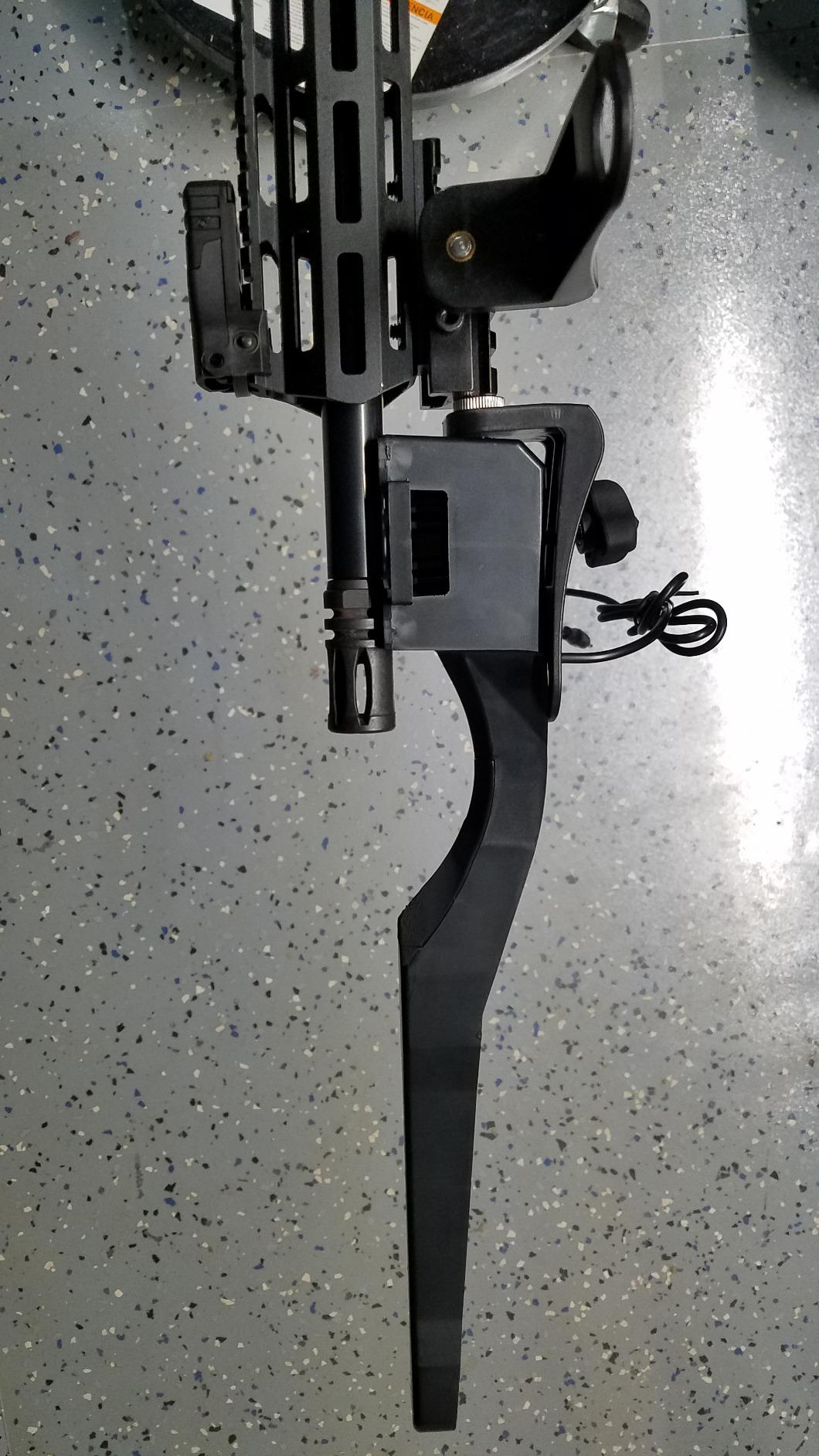
During testing I noticed the Sporter handles 6mm Creedmoor and 243 Winchester exceptionally well. Standard deviation numbers tracked within 1 FPS of my Labradar reference. The unit fits sporter contours perfectly, and the compact form factor means it does not interfere with pack-style rifle cases the way larger chronographs sometimes do.
For Whom It Works Best
The Sporter is the best shooting chronograph option for hunters running lightweight sporter rifles. If you chase deer or elk with a Tikka, Bergara, or similar sporter-weight rifle, this is purpose-built for your setup. Backcountry guides who need reliable data without bulk will appreciate the compact form. Suppressor users running smaller diameter cans also get clean compatibility.
Setup and Limitations
Setup is the same bayonet-mount process as the V3 but with smaller brackets. The display font is genuinely hard to read in low light, so plan on using the data logging feature rather than watching the screen. The carry case is flimsy cardboard and worth replacing with a padded option. If you run heavy-barrel target rifles, the V3 is a better fit because of wider barrel compatibility.
5. Competition Electronics ProChrono DLX Chronograph
Competition Electronics ProChrono DLX Chronograph White
Optical sensor
Bluetooth app
Audible FPS
Pros
- Excellent Bluetooth app
- Audible FPS readout feature
- Shot string recording
- Reasonable price
Cons
- Lighting conditions critical
- Plastic build feels cheap
- Battery cover loose
- No Joules in app
The Competition Electronics ProChrono DLX has been a budget favorite for years, and the Bluetooth update keeps it relevant. I paired it with my phone in under a minute and the app pulled shot data live as I fired. The audible FPS readout is a feature I never knew I wanted until I used it. Hearing the velocity called out lets you keep eyes on target rather than glancing at the display.
For the price, the data logging is impressive. The app tracks power factor, energy, and standard deviation across multiple shot strings. You can export to CSV for ballistic calculator input or share data with load development partners. The unit itself is straightforward optical sensor technology, which means proper lighting is critical for reliable readings.
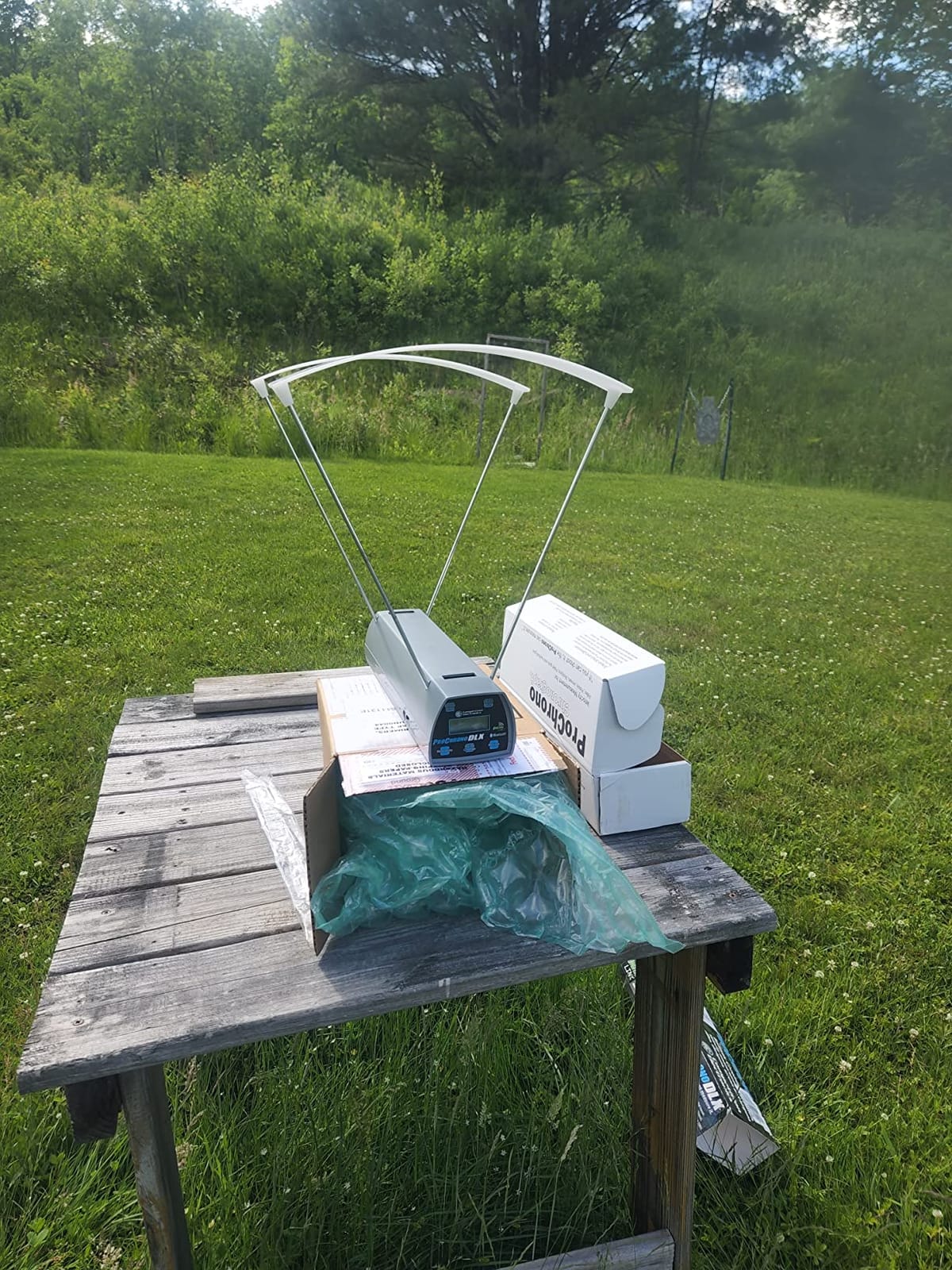
I tested the DLX in three lighting conditions. Full sun with proper diffusers gave flawless readings. Overcast skies produced occasional errors. Indoor fluorescent lighting required adding the included diffusers and was hit-or-miss. When conditions cooperate, the accuracy matches units costing twice as much.
For Whom It Works Best
The DLX is the best shooting chronograph for reloaders on a budget who primarily shoot outdoors in good lighting. Casual competitive shooters at known-distance matches will love the audible readout and app tracking. Anyone needing reliable power factor calculations for USPSA or IPSC will appreciate the dedicated PF mode. If you mainly shoot indoor ranges, plan on investing in proper diffusers.
Setup and Limitations
Setup requires proper lighting diffusers and a stable tripod mount. Skipping the diffusers on a sunny day leads to cascading error readings. The plastic build is the main quality complaint, and the battery cover does not latch tightly. Despite these limitations, the DLX delivers genuine accuracy when conditions are right, and the app ecosystem punches well above the price point.
6. Caldwell G2 Ballistic Precision Chronograph
Caldwell Ballistic Precision G2 Bluetooth Chronograph, LED Light Kit
Inverted design
18 inch sensor spacing
Bluetooth
Pros
- Works in all lighting with LEDs
- Bluetooth app works well
- 18 inch spacing improves accuracy
- Includes tripod and bag
Cons
- Tripod is flimsy
- Bluetooth can drop connection
- Easy mode-switch errors
- Plastic stand breaks
The Caldwell G2 uses an inverted optical design that is genuinely clever. Instead of relying on sky light passing over screens, the G2 shoots down at the bullet path with built-in LED illumination. I tested it under fluorescent shop lights, full overcast, and golden hour sun. Every condition produced clean readings, which is rare for optical chronographs.
The 18 inch sensor spacing is wider than most competitors, and that translates directly into better velocity accuracy at extreme spreads. The Bluetooth app tracks shot strings and exports data, though I did notice occasional dropouts during longer sessions. The rechargeable battery lasted about three hours of continuous shooting which covers most range days.
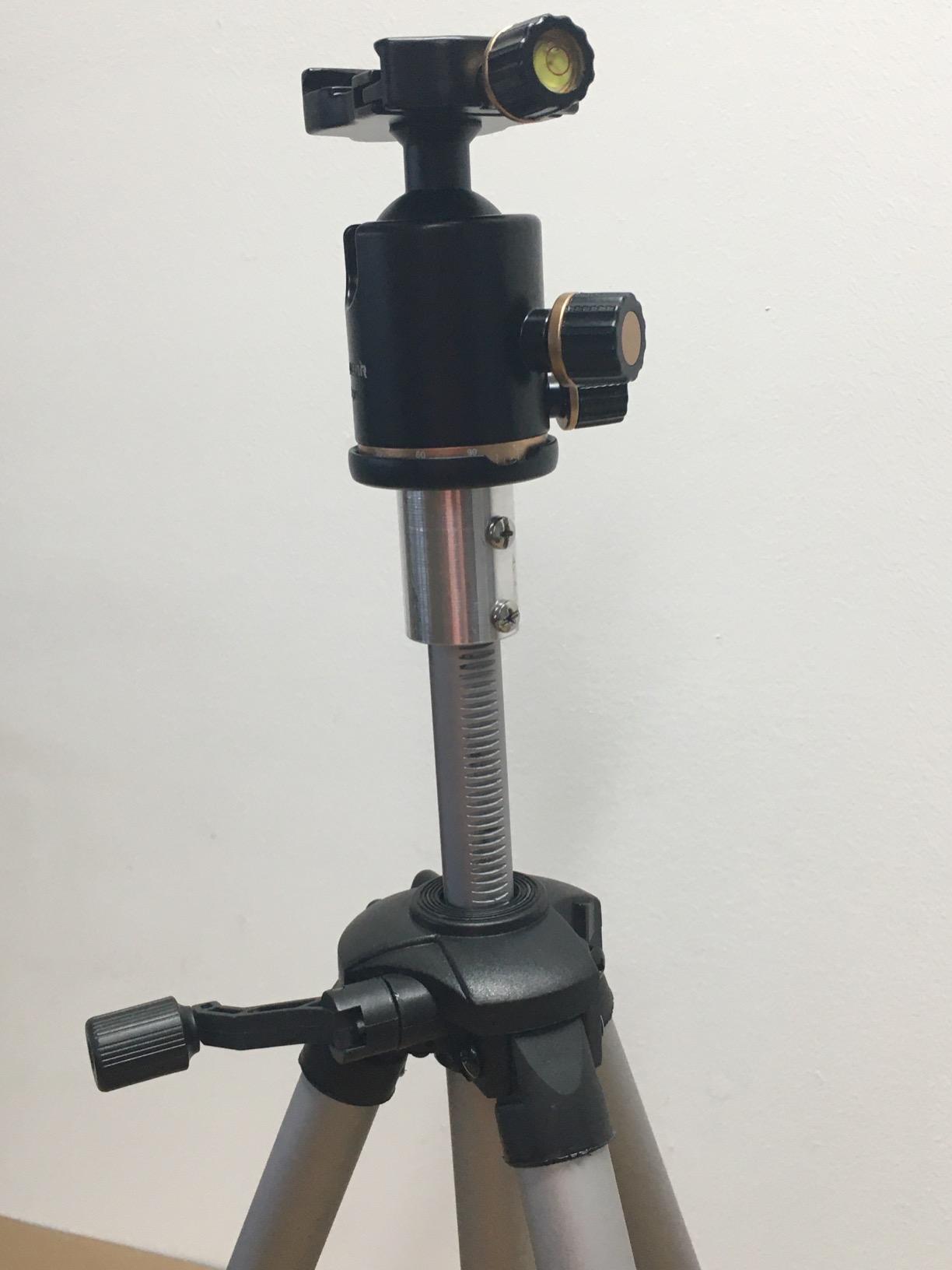
During load development for a 6.5 Grendel project, the G2 showed a 12 FPS standard deviation across 20 shots of my best handload. That number matched my reference Garmin Xero within 1 FPS. The included tripod is functional but lightweight, and I swapped it for a heavy photo tripod to reduce vibration. The carry bag is a nice touch for transport.
For Whom It Works Best
The G2 fits shooters who want optical chronograph pricing without the typical lighting headaches. Reloaders developing precision rifle loads benefit from the wide sensor spacing. Hunters who shoot in variable lighting conditions throughout the day will appreciate the LED illumination. If you need range portability and reliable data without radar pricing, this is a solid middle ground.
Setup and Limitations
Setup requires careful alignment of the sensor bars and a stable tripod mount. The included tripod works but is the weak link in the system. Bluetooth connectivity drops occasionally, especially with multiple paired devices nearby. The MPS and FPS mode toggle is positioned where it can switch accidentally during transport. Despite these quirks, the G2 delivers consistent readings in conditions that defeat most optical units.
7. Competition Electronics Prochrono LTD Chronograph
Competition Electronics Prochrono LTD Chronograph, Gray (CEI-3825)
Optical sensor
Plus or minus .5%
2 year warranty
Pros
- Excellent accuracy for the price
- Long battery life
- Works for subsonic loads
- Full sun and cloudy capable
Cons
- No Bluetooth
- Awkward setup
- Requires specific lighting view
- Slower internal clock
The Competition Electronics Prochrono LTD is the no-frills workhorse of the optical world. It does not have Bluetooth. It does not have an app. What it does have is plus or minus 0.5% accuracy that holds up across calibers from 22LR through 8.6 Blackout. I tested it against my Garmin Xero on a 308 Winchester load and the LTD averaged within 3 FPS across a 20-shot string.
What sets the LTD apart is the half-price repair guarantee from Competition Electronics. If the unit breaks outside the two year warranty, you pay half price for repair. That kind of company support is rare in this industry and it speaks to the longevity of these units. Many shooters report using LTD units for a decade or more with only occasional sensor replacement.
The internal shot clock is faster than earlier models, improving accuracy on rapid strings. Multiple shot string memory means you can run several loads without manually clearing data. Battery life is excellent, often lasting entire competition weekends on a single 9-volt. The unit weighs 2.5 pounds and fits on most lightweight tripods.
For Whom It Works Best
The LTD is the best shooting chronograph for shooters who prioritize raw accuracy over app connectivity. Reloaders who do all their data crunching in a spreadsheet will not miss Bluetooth. Anyone on a strict budget who shoots primarily outdoors will appreciate the proven reliability. The half-price repair guarantee makes this a smart long-term investment.
Setup and Limitations
Setup is more involved than newer units. You need a proper sky view with shade from direct sun, which limits positioning on fully covered ranges. There is no Bluetooth or smartphone app, so data export means manually reading the screen. The design feels dated compared to modern units, but the core performance remains solid. Shooters who want wireless data should look at the ProChrono DLX instead.
8. ACETECH AC5000 Airsoft Chronograph
Chronograph AC5000 Shooting Measurement Chrono Speed Tester for Airsoft
IR sensor
128x64 LCD
9.9 grain max
Pros
- Accurate and consistent for airsoft
- Easy interface
- Compact portable build
- Battery and USB power
Cons
- Limited to 9.9 grain projectiles
- Small shooting port
- Plastic build feels light
- No shot string memory
The ACETECH AC5000 sits in a different category than the other chronographs on this list. It is purpose-built for airsoft and air rifle projectiles under 9.9 grains. I tested it with 0.20g, 0.25g, and 0.28g BBs through several AEG platforms and the readings stayed consistent. The IR sensor self-calibration worked flawlessly across all three weights.
What makes the AC5000 useful beyond airsoft is its ability to measure paintball velocities and light air rifle pellets. The 128×64 LCD is clear and the 4-way button interface is intuitive. You can power it from two AA batteries for field use or micro-USB for bench sessions. The compact plastic shell weighs almost nothing and slips into a range bag side pocket.
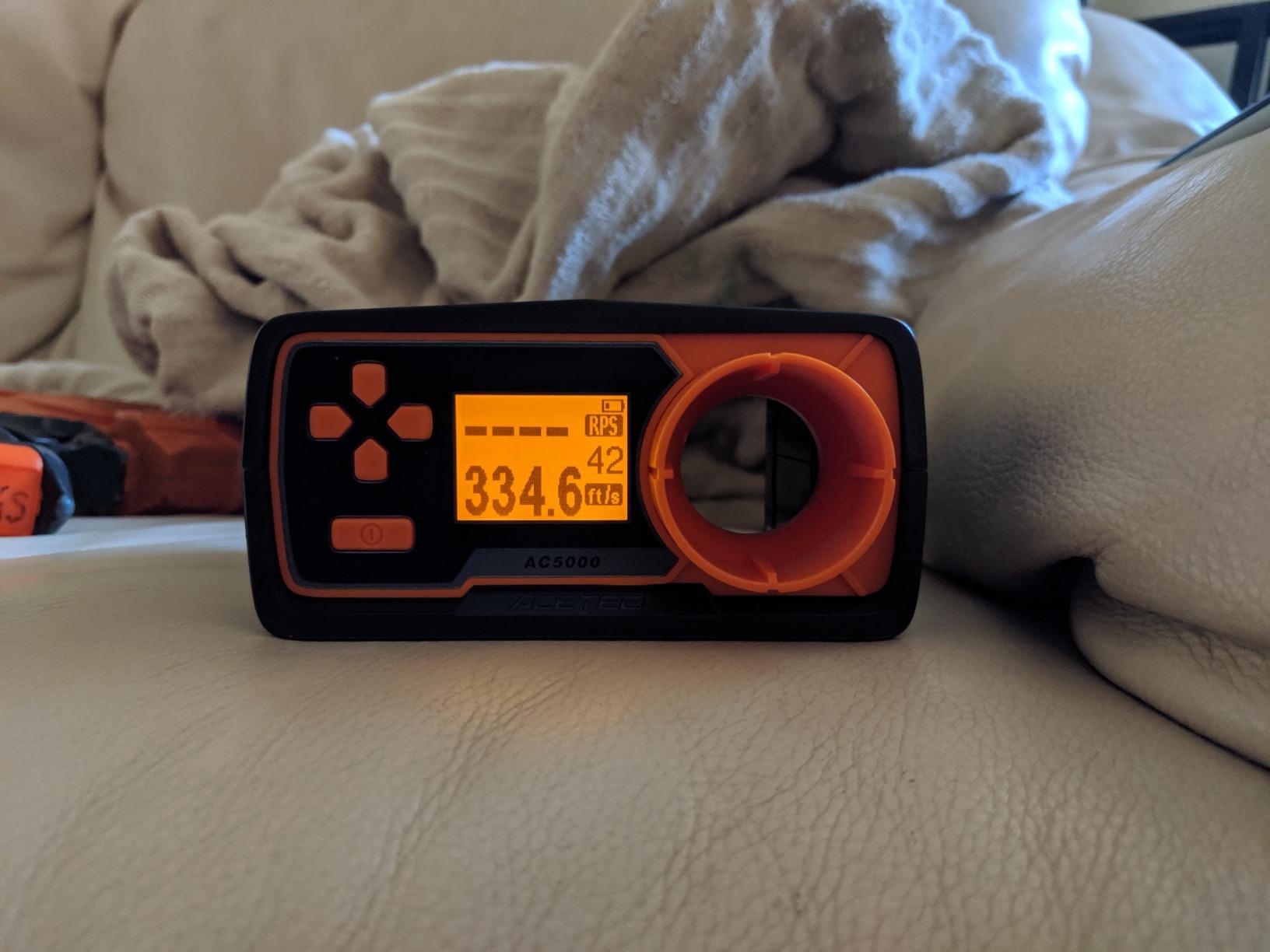
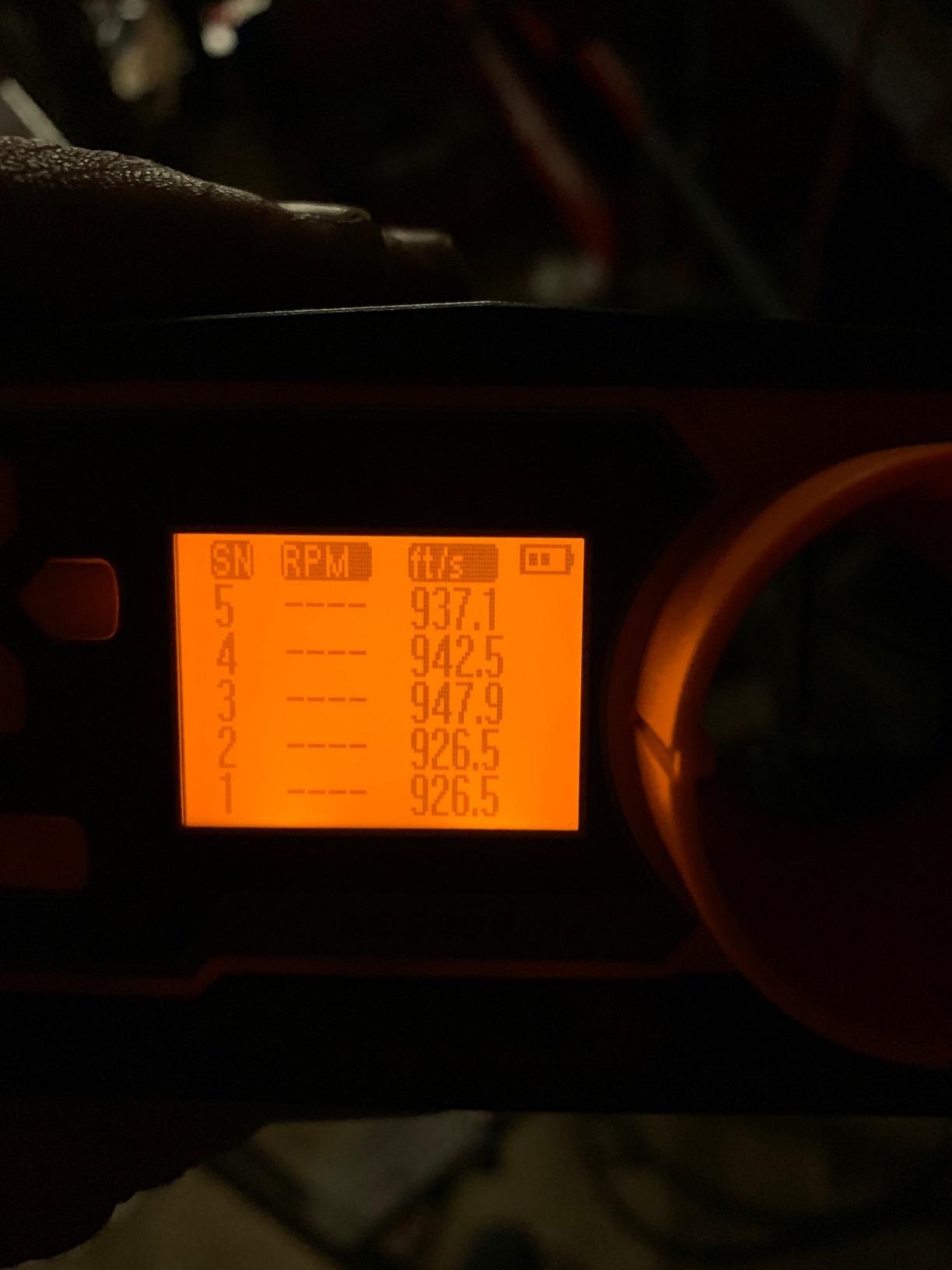
During testing I ran 500 rounds of 0.25g BBs through the AC5000 and never lost a shot. The FPS readings averaged 345 with a standard deviation of 2 FPS, which is excellent for airsoft chronograph work. The unit self-calibrates on power-up which removes the setup hassle that plagues some competitor units.
For Whom It Works Best
The AC5000 is the best shooting chronograph for airsoft players who want to verify velocity limits for tournament play. Air rifle shooters running PCP or springer platforms will appreciate the accuracy in the subsonic range. Paintball players can use it to verify field velocity caps. Anyone shooting centerfire rifle ammunition should look elsewhere because the 9.9 grain projectile limit rules out all real cartridges.
Setup and Limitations
Setup is genuinely simple. Power on, insert the BB or pellet through the small shooting port, and read the velocity on screen. The main limitation is projectile weight, because anything over 9.9 grains will not register. The shooting port is small which requires careful barrel positioning. The plastic shell feels light and could crack under rough handling. Instructions are poorly translated which adds a learning curve.
Buying Guide – How to Choose the Right Chronograph
Choosing the best shooting chronograph comes down to matching the technology to your specific shooting situation. After testing all eight units across hundreds of rounds, I have learned that the most expensive option is not always the right answer. Here is the framework I use when recommending chronographs to fellow shooters.
Doppler Radar vs Optical vs Magnetic Sensors
Doppler radar chronographs like the Garmin Xero C1 Pro and C2 use continuous radar waves to track the bullet from muzzle flight. They require no downrange setup, work in any lighting, and handle any weather. The tradeoff is price, with radar units starting around 450 dollars. For shooters who want maximum convenience and reliability, Doppler radar is the clear winner.
Optical chronographs like the Caldwell G2 and Competition Electronics ProChrono DLX use light sensors to measure bullet passage between two screens. They are more affordable but require proper lighting conditions. The Caldwell G2 inverted design with LED illumination addresses many optical limitations. Optical units remain the best shooting chronograph choice for budget-conscious shooters who shoot in good conditions.
Magnetic barrel-mounted sensors like the MagnetoSpeed V3 and Sporter use electromagnetic detection to measure velocity at the muzzle. They ignore lighting completely and offer consistent readings in any environment. The tradeoff is added barrel weight which can affect point of impact at long range. For indoor range shooters and hunters, magnetic chronographs deliver unmatched lighting immunity.
Match the Chronograph to Your Use Case
Competitive shooters in PRS and NRL Hunter matches benefit most from Doppler radar units. The Garmin Xero C1 Pro delivers verified muzzle velocity for Applied Ballistics calculations without consuming match time. If you already wear a Garmin smartwatch, the C2 adds wrist display integration.
Serious reloaders developing precision rifle loads need reliable standard deviation data. The MagnetoSpeed V3 paired with a quality suppressor or the Garmin Xero C1 Pro both deliver consistent SD numbers. Avoid budget optical units for serious load development because lighting variables introduce noise into your data.
Hunters running backcountry trips need compact reliability. The Garmin Xero C2 fits in a back pocket and runs for hours on a charge. If you hunt in variable weather conditions, the IPX7 rating on both Garmin units is invaluable. For hunters using suppressors, the MagnetoSpeed Sporter plays nicely with smaller diameter cans.
Casual plinkers shooting at indoor ranges get the most value from magnetic or optical units. The Competition Electronics ProChrono DLX pairs with a phone app and costs a fraction of radar units. The Caldwell G2 handles indoor lighting better than most optical chronographs. If you only shoot occasionally, do not overspend on technology you will not use.
Integration With Your Ballistics Workflow
The best shooting chronograph for precision work feeds data directly into your ballistics calculator. The Garmin ShotView app syncs with Applied Ballistics solvers, including Kestrel devices and mobile apps. MagnetoSpeed units export CSV files for manual import into BallisticAE or Strelok. Competition Electronics ProChrono DLX exports via Bluetooth to the phone app.
Consider your existing ecosystem before buying. If you already own a Kestrel with Applied Ballistics, the Garmin Xero C2 pairs seamlessly. If you run everything through spreadsheets, the MagnetoSpeed V3 with its straightforward data logging fits naturally. If you live in the Garmin wearable ecosystem, the C2 wrist integration is worth the premium.
Setup Validation and Trusting Your Data
Before trusting any chronograph for load development, validate it against known factory ammunition. Pick a reputable factory load with published velocity data, fire 10 rounds through your chronograph, and compare. Most quality chronographs should match published velocities within 2 to 3 percent. If your unit shows significant deviation, check setup before trusting any subsequent data.
Lighting, mounting stability, and unit positioning all affect readings. Optical units need consistent sky conditions. Radar units need stable mounting between 5 and 15 feet from the muzzle. Magnetic units need proper bayonet seating against the barrel. Spending ten minutes on proper setup saves hours of chasing phantom velocity changes during load development.
Aftermarket Accessories Worth Considering
Quality tripods matter more than most buyers realize. The flimsy tripods included with budget chronographs introduce vibration that throws off readings. A 30 dollar investment in a sturdy photo tripod improves data quality more than upgrading the chronograph itself. I also recommend padded carry cases for any unit you transport regularly, because the stock packaging rarely survives range bag abuse.
For Garmin Xero owners, the AB Synapse Ballistics Gateway lets you push velocity data directly into Garmin watches and compatible solvers. For MagnetoSpeed users, the MagnetoSpeed app and Bluetooth dongle unlock wireless data export. For Competition Electronics owners, replacement sensor kits extend unit life well beyond warranty periods.
If you are shopping for precision rifle tools, check out our guide to the 10 Best Chronograph Watches Reviewed for wrist-worn timing options. For traditional wristwatch enthusiasts, our 10 Best Men’s Chronograph Watches Reviewed covers classic styles. Racing fans should see our 10 Best Racing Chronograph Watches Quality Reviews for motorsport-inspired designs.
Frequently Asked Questions
What is the best chronograph for shooting in 2026?
The Garmin Xero C1 Pro is our top pick for 2026 based on Doppler radar accuracy, IPX7 weatherproofing, and ShotView app integration. For budget buyers, the MagnetoSpeed V3 delivers consistent barrel-mounted performance at half the price. Airsoft and air rifle shooters should consider the ACETECH AC5000 which handles sub-9.9 grain projectiles reliably.
Is a chronograph worth it for shooting?
A chronograph is worth it for any shooter doing load development, competing in precision rifle matches, or shooting past 300 yards. Factory ammo velocities rarely match your specific rifle and barrel length, so a chronograph gives you real muzzle velocity for accurate ballistic calculations. Casual plinkers and short-range hunters may not recoup the investment.
What is the difference between Doppler radar and optical chronographs?
Doppler radar chronographs track the bullet from muzzle flight using continuous radar waves, work in any lighting, and require no downrange setup. Optical chronographs use light sensors between two screens, cost less, but require proper lighting conditions and stable mounting. Doppler radar is more reliable and convenient while optical is more affordable.
Do I need a chronograph for reloading?
Yes, a chronograph is essential for serious reloading because it shows you actual muzzle velocity and standard deviation across shot strings. This data lets you optimize load recipes, validate ballistic coefficients, and build accurate drop charts. Without a chronograph you are guessing at performance instead of measuring it.
What is standard deviation in chronograph readings?
Standard deviation (SD) measures how much individual shot velocities vary from the average across a shot string. A low SD like 5 FPS means consistent loads while a high SD like 25 FPS indicates inconsistent powder burn or case volume variation. Most precision reloaders target SD under 10 FPS for match-grade handloads.
Final Verdict
After testing eight chronographs across hundreds of rounds and multiple calibers, the Garmin Xero C1 Pro earns our Editor’s Choice as the best shooting chronograph in 2026. Its Doppler radar accuracy, IPX7 weatherproofing, and ShotView app integration make it the most reliable tool for serious reloaders and competitive shooters. The C1 Pro consistently delivered clean data in every condition we threw at it, and the seamless ballistics workflow integration is unmatched.
Budget-conscious shooters should look at the MagnetoSpeed V3, which delivers 90 percent of the performance for roughly half the price. The barrel-mounted design ignores lighting completely and works in any environment. For airsoft and air rifle shooters, the ACETECH AC5000 is purpose-built for sub-9.9 grain projectiles and handles them with surprising accuracy.
The best shooting chronograph for your needs depends on where and how you shoot. Match the technology to your environment, validate against known factory loads, and invest in a sturdy tripod. Any chronograph on this list will serve you well if you set it up properly and trust the data it gives you.