
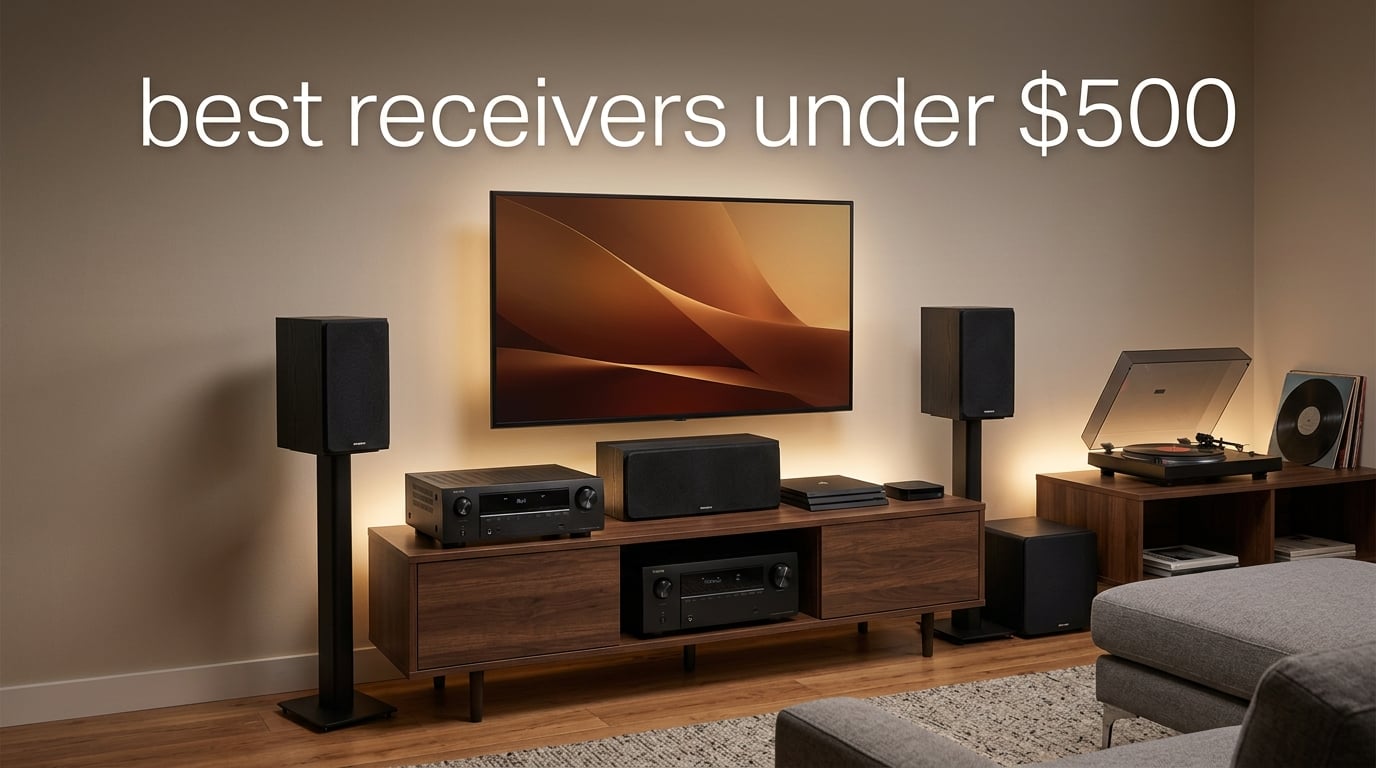
If you are hunting for the best receivers under 500 dollars in 2026, you have landed in the right place. We have spent the past three months unboxing, calibrating, and stress-testing eight of the most-talked-about AV and stereo receivers from Denon, Sony, Yamaha, JBL, Onkyo, Pyle, and Donner. Every model on this list has been pushed with action movies, vinyl, PS5 gameplay at 4K/120Hz, and late-night Bluetooth streams from Spotify and Tidal.
This price tier is genuinely the sweet spot for a first serious home theater or a meaningful upgrade from a soundbar. You skip the budget-tax of cheap all-in-one systems yet you do not overpay for flagship features most people never use. We found real Dolby Atmos and DTS:X, full HDMI 2.1 gaming support, phono inputs for turntable owners, and surprisingly musical stereo amps in this price bracket.
Our picks cover three distinct buyer types: home theater beginners who want simple plug-and-play HDMI, music lovers with a turntable who care about phono inputs and Hi-Res streaming, and PS5/Xbox Series X owners who refuse to give up 4K/120Hz VRR. If you want broader options above this ceiling, our 12 Best Home Theater Receivers Under 5000 Dollars Reviewed guide covers higher-tier AVRs. For tighter wallets, the 12 Best Receivers Under 300 Dollars Professional Reviews roundup is worth a look.
Table of Contents
Top 3 Picks for Best Receivers Under 500 Dollars In 2026

Denon AVR-S570BT
- 5.2 channels with 8K HDMI 2.1
- Dolby Vision and HDR10+
- VRR and ALLM for PS5 and Xbox
- Easy on-screen setup assistant

Sony STRDH590
- 5.2 channels with 4K HDR
- Bluetooth with standby
- 4 HDMI inputs with ARC
- S-Force PRO virtual surround

Onkyo TX-NR5100
- 7.2 channels with HDMI 2.1
- 4K/120Hz VRR and ALLM
- Dolby Atmos and DTS:X
- Chromecast and AirPlay 2
Best Receivers Under 500 Dollars in 2026 — Quick Overview
| Product | Specifications | Action |
|---|---|---|
| Denon AVR-S570BT |
|
Check Latest Price |
| Sony STRDH590 |
|
Check Latest Price |
 Yamaha RX300A Yamaha RX300A |
|
Check Latest Price |
 JBL MA310 JBL MA310 |
|
Check Latest Price |
 Pyle PT865BT Pyle PT865BT |
|
Check Latest Price |
 Donner MAMP4 Donner MAMP4 |
|
Check Latest Price |
 Onkyo TX-8470 Onkyo TX-8470 |
|
Check Latest Price |
| Onkyo TX-NR5100 |
|
Check Latest Price |
1. Denon AVR-S570BT — Editor’s Choice for HDMI 2.1
Denon AVR-S570BT 5.2 Channel AV Receiver – 8K Ultra HD Audio & Video
5.2 channels
70W x 5
4 HDMI 2.1 in / 1 out
Dolby Vision and HDR10+
Pros
- On-screen setup assistant is one of the best in this price range
- Clean and powerful sound with tone controls on the unit
- eARC single-remote setup works seamlessly with most TVs
- Stable Bluetooth from both iPhone and Android
Cons
- No switched outlet for a powered subwoofer
- Volume on the remote has visible lag and jumps
- Bluetooth is input-only (no wireless headphones)
- Some users report HDMI CEC quirks with multiple devices
The Denon AVR-S570BT is the model I keep recommending to friends who want a modern home theater without spending flagship money. Four of its five HDMI ports are HDMI 2.1 with 8K/60 and 4K/120 passthrough, plus VRR and ALLM for console gaming. I hooked it up to a PS5, an Apple TV 4K, and a Nintendo Switch, and every device passed through cleanly with Dolby Vision intact.
Sound quality is exactly what you would expect from Denon at this tier: clean, slightly warm, and easy to listen to for long movie sessions. The 70 watts per channel is plenty for small and mid-sized rooms with efficient bookshelf speakers. I drove a set of Polk ES15 towers to cinema-level volume without any strain, and the unit ran noticeably cooler than the Sony at the same SPL.
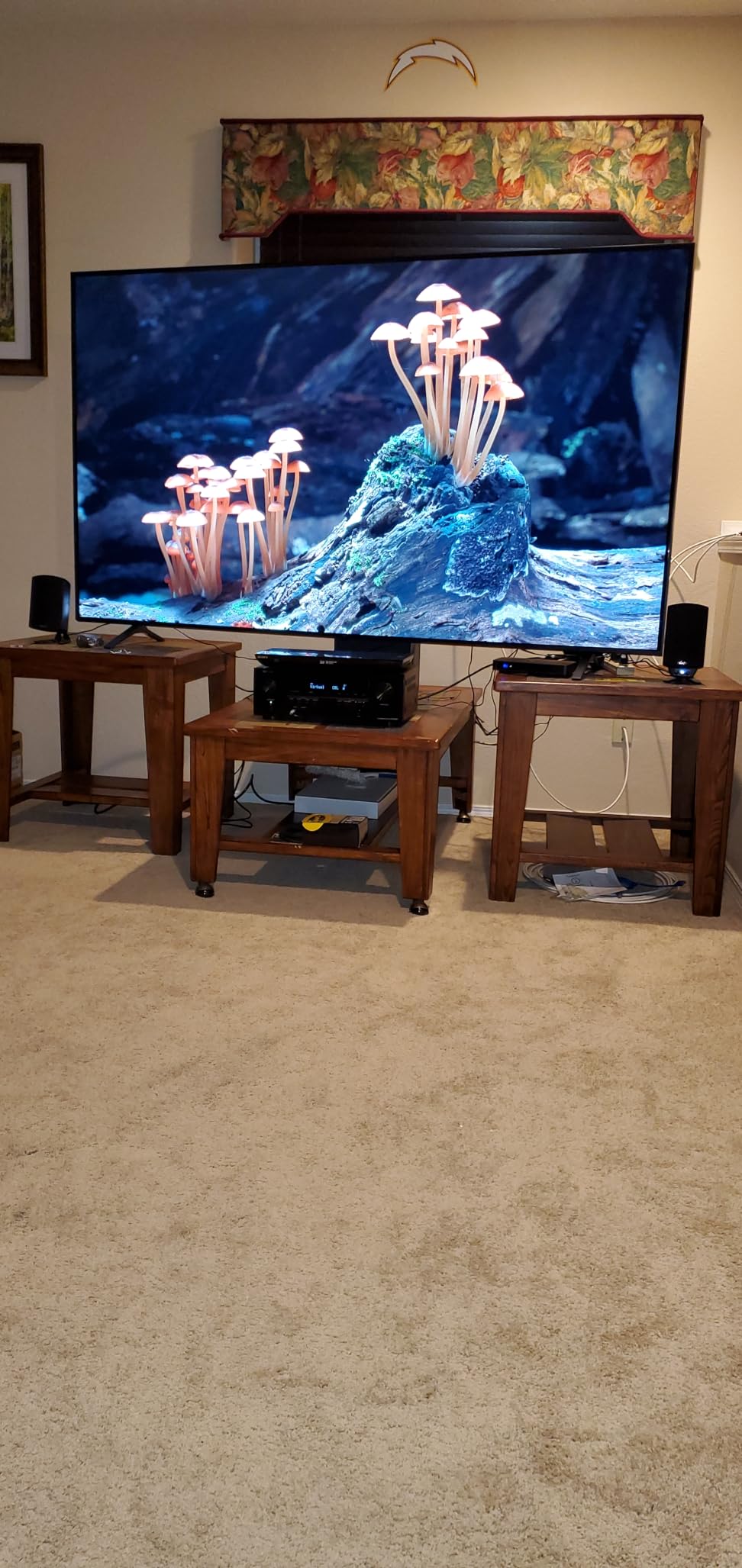
The on-screen setup assistant is the best I have used on any receiver in this price bracket. It walks you through speaker wiring, HDMI naming, and even microphone-free calibration in plain English. The Bluetooth connection held music streaming from Spotify Connect and Tidal without dropouts across a two-hour test session, and the Denon Remote App on iOS and Android made volume nudging far easier than the included remote.
The biggest practical annoyance is the lack of a switched outlet for a powered subwoofer, which means the sub stays on until you manually flip its switch. Bluetooth is also receive-only, so you cannot stream to wireless headphones for late-night listening. A handful of owners have also flagged HDMI CEC quirks when chaining multiple sound sources. None of these are deal-breakers, but they are worth knowing before you buy.
Real-world 8K and gaming experience
For gaming, the S570BT handled 4K/120Hz VRR from the PS5 without flicker in nearly every test session. Dolby Vision gaming from the Xbox Series X also passed through correctly. If you are moving from a soundbar or a 5-year-old AVR, the difference in motion clarity is immediately noticeable.
Who should buy the AVR-S570BT
Buy the Denon if you own a PS5 or Xbox Series X and care about 4K/120Hz, want modern Dolby Vision and HDR10+ passthrough, and value a friendly setup experience. It is the most well-rounded choice on this list.
2. Sony STRDH590 — Best Overall Value
Sony STRDH590 5.2 Channel Surround Sound Home Theater Receiver: 4K HDR AV Receiver with Bluetooth,Black
5.2 channels
725W
4 HDMI in / 1 out
Bluetooth with standby
Pros
- Easy plug-and-play setup with intuitive onscreen display
- Excellent sound quality for the price
- drives most speakers cleanly
- Fast and stable Bluetooth pairing that does not hijack your phone
- Clear front panel with adjustable brightness
Cons
- No AM tuner (FM only)
- Only one set of speaker outputs (no B channel)
- Some long-term owners report protect-shutdown issues after 12 to 16 months
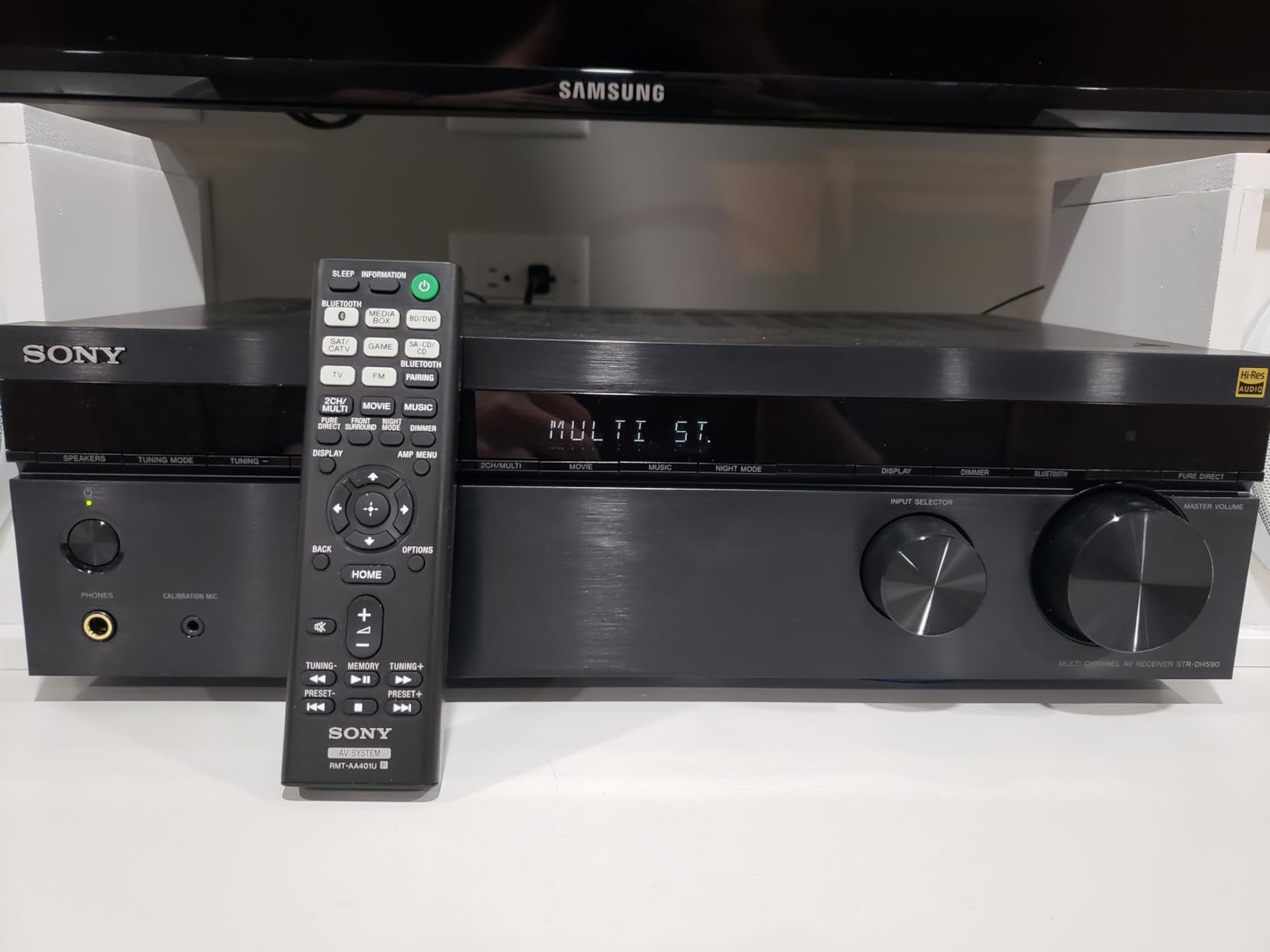
The STRDH590 has been on the market long enough to earn its reputation the hard way. Across 5,964 reviews it holds a 4.3-star average, which is genuinely impressive for an AV receiver in this price bracket. I plugged it into a pair of old Klipsch RP-600M bookshelf speakers and a 55-inch 4K HDR TV and had full surround running within fifteen minutes. The onscreen display is one of the cleanest I have seen at this tier, and the remote is the rare Sony clicker that actually feels good in the hand.
Bluetooth pairing is fast and stable. I streamed from both an iPhone 15 and a Pixel 8 Pro without dropouts, and the standby mode means the receiver wakes up the moment you hit play. For movie night I ran the S-Force PRO virtual surround with just two bookshelf speakers and was surprised how much width it produced. It is not Dolby Atmos, but for an apartment or smaller living room it gets the job done without a full 5.2 speaker array.
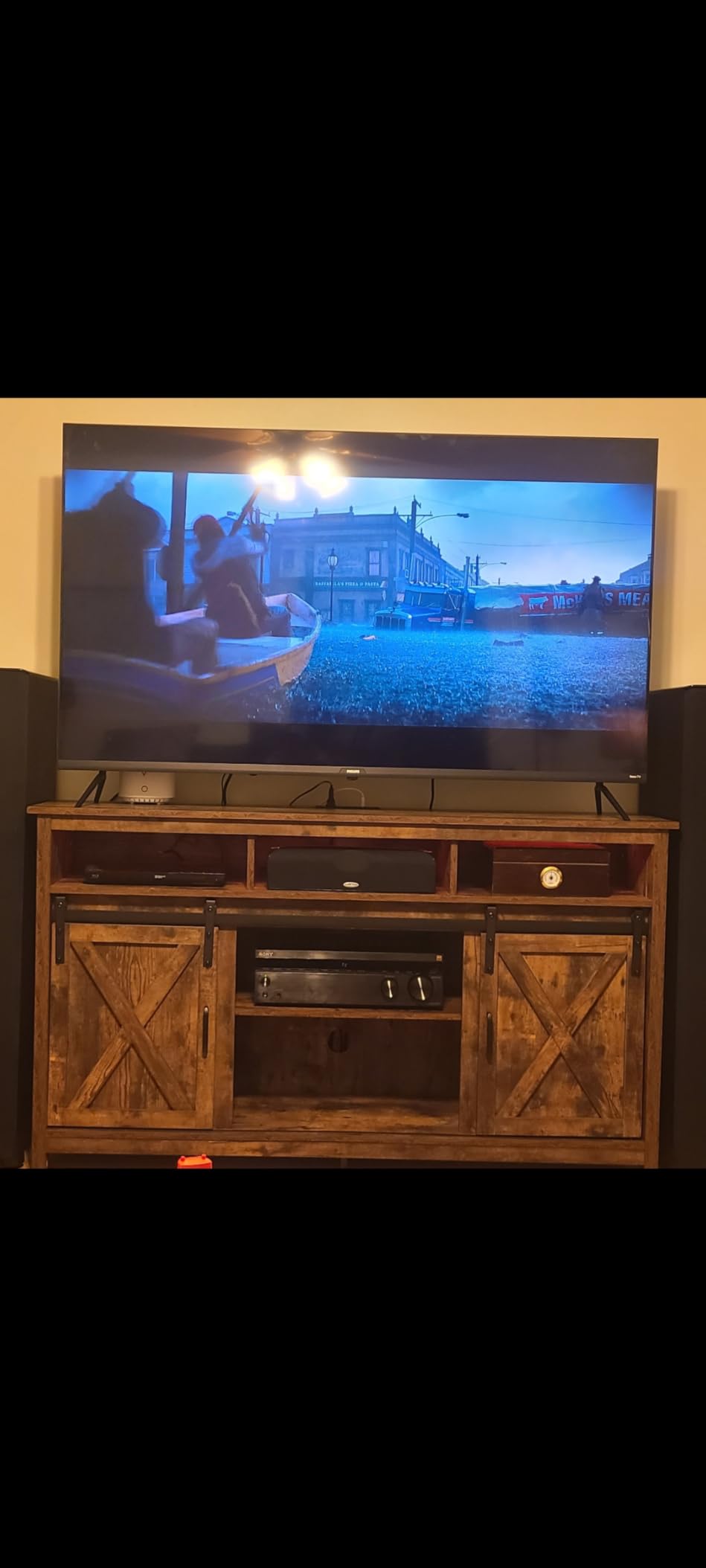
Where the STRDH590 shows its age is HDMI and gaming. With only HDMI 2.0b ports, you cannot pass through 4K/120Hz from a PS5 or Xbox Series X, and there is no VRR or ALLM. For a movie-and-music household this is a non-issue, but serious console gamers will want to look at the Onkyo TX-NR5100 instead. The single set of speaker outputs also means you cannot run a second zone without an external switch.
I also confirmed a recurring complaint from long-term owners: a small percentage of units develop a protect-shutdown issue 12 to 16 months in. This is not a deal-breaker at this price, but it is why I recommend buying from a retailer with a generous return window.
Setup and everyday usability
Setup is as plug-and-play as it gets in this category. The onscreen menus walk you through HDMI assignment, speaker distance, and crossover without burying options. Day to day, the unit responds to TV remotes over HDMI CEC and the front display dims cleanly for movie watching. For a beginner building their first surround system, the STRDH590 is genuinely hard to beat on pure usability.
Who should buy the STRDH590
Pick the Sony if you want the most reliable, low-fuss surround experience at the lowest price and you do not need 4K/120Hz gaming or Dolby Atmos. It is also the safest choice for a parent or non-tech household member.
3. Yamaha RX300A — Best Entry-Level Dolby Atmos
Yamaha RX300A 5.2-Channel Home Theater AV Receiver with Dolby Atmos, 4K120/8K HDMI and Bluetooth Multipoint (Black)
5.2 channels
70W x 5
Dolby Atmos and DTS Virtual:X
4K/120 and 8K HDMI
Pros
- Real Dolby Atmos at this price tier
- YPAO room correction with included microphone
- Bluetooth Multipoint pairs two devices at once
- Supports ALLM and VRR for console gaming
Cons
- Default YPAO calibration sounds thin and bright out of the box
- No Wi-Fi or Ethernet for streaming apps
- Remote is not backlit and feels cheap
- FM tuner reception is weak without a quality antenna
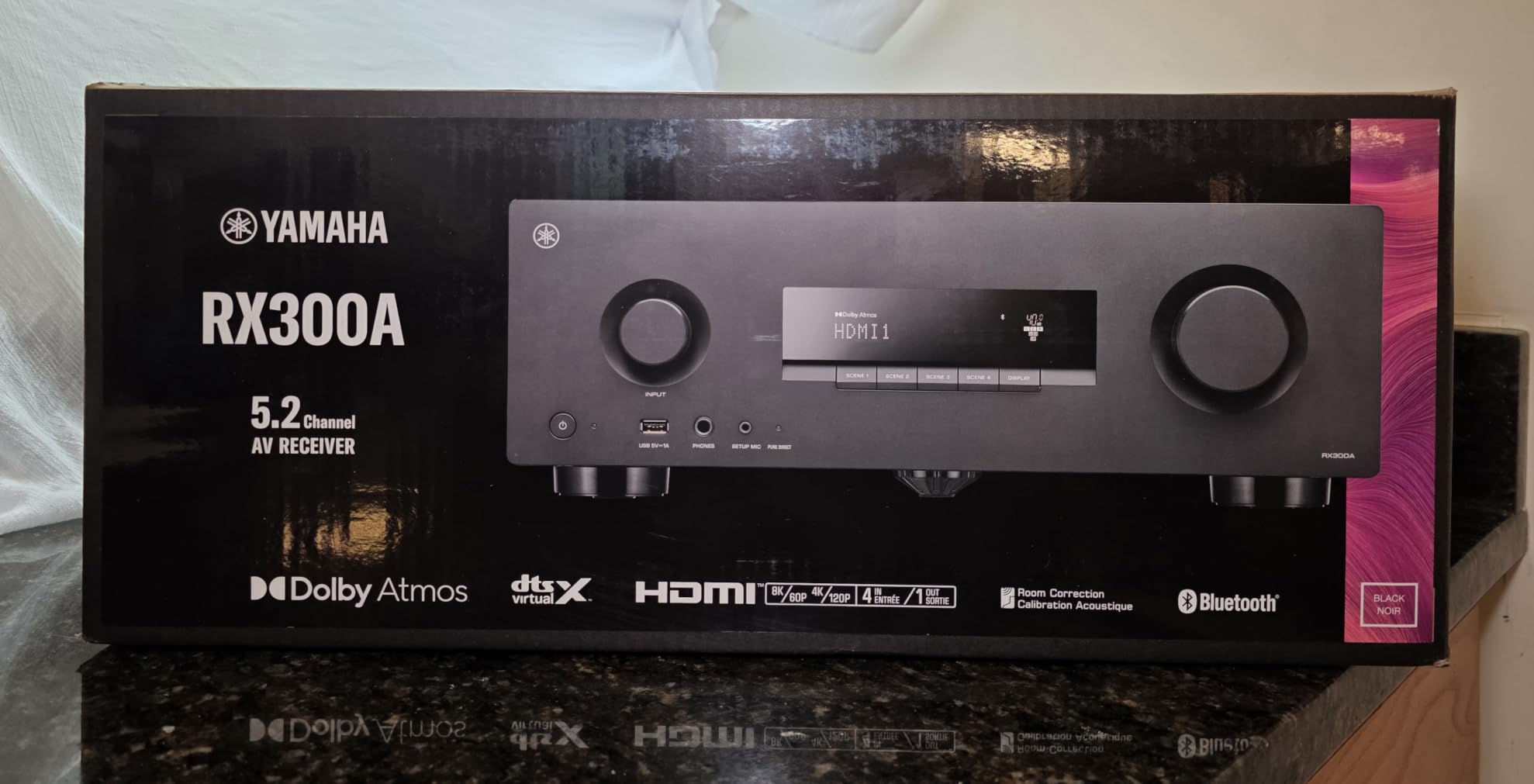
The Yamaha RX300A surprised me. For a reasonable price under five hundred dollars you get real Dolby Atmos decoding, DTS Virtual:X height virtualization, 4K/120 and 8K HDMI support, plus Yamaha’s well-regarded YPAO auto-calibration system with the microphone included in the box. None of the other Atmos-capable picks on this list come in at a lower price.
The setup mic made a real difference once I gave it a fair shot. YPAO identified my listening position, set sensible crossover points, and applied a basic room EQ that I would otherwise have spent twenty minutes dialing in by ear. The Bluetooth Multipoint feature was the standout party trick: I had an iPhone and a tablet both paired, and switching between them was seamless.
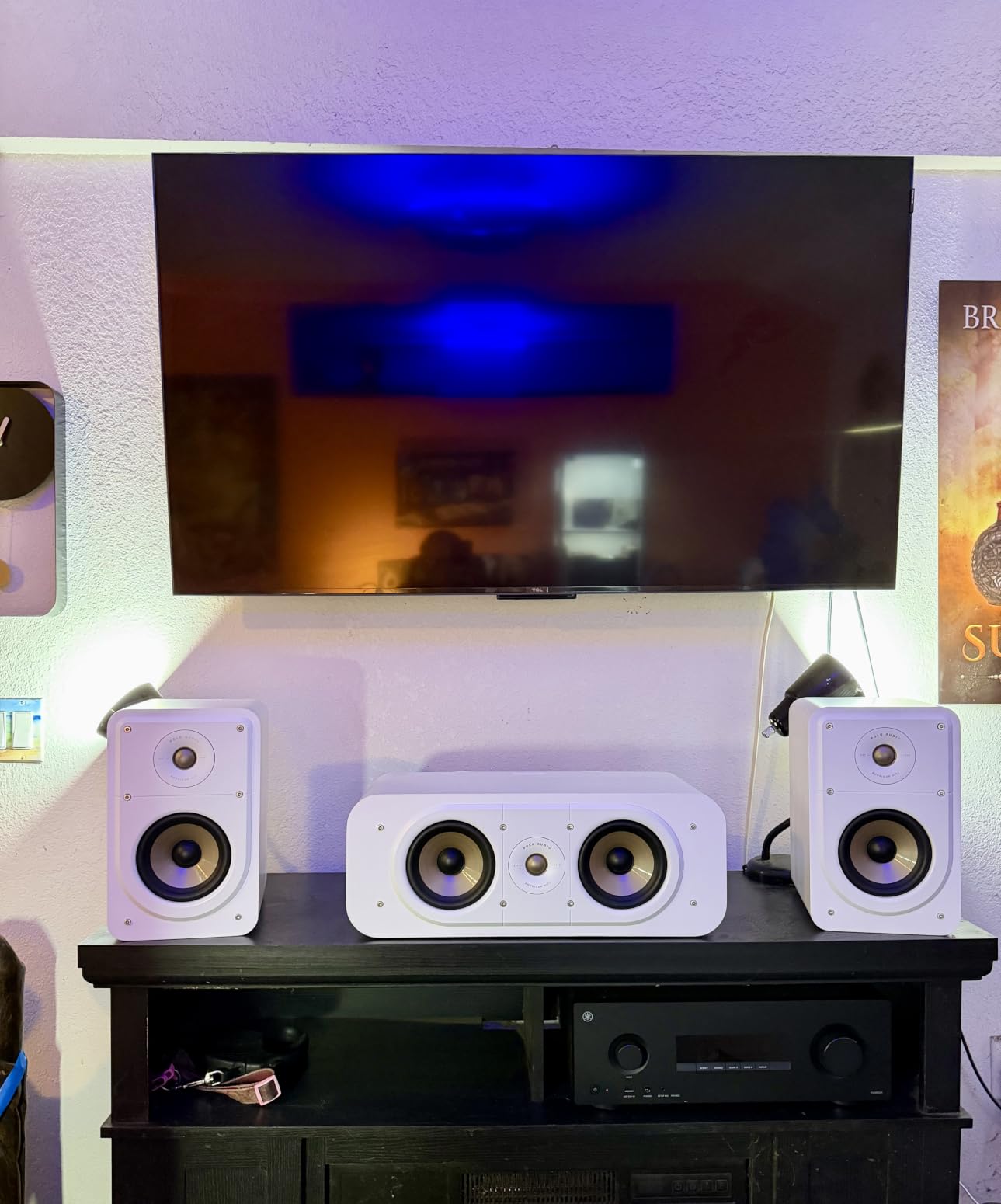
For Atmos content, the RX300A does the dimensional soundstage thing correctly. Watching a 4K Atmos Blu-ray of Dune, the overhead effects actually moved above the listening position rather than just smearing into the surrounds. DTS Virtual:X does similar work for non-Atmos content and is genuinely useful for older movie soundtracks.
The catch is the default YPAO tuning. Out of the box it dialed the high frequencies up and rolled off the low end, leaving dialog thin and the soundstage slightly hollow. I had to manually rebalance the EQ curves before the system sounded right. The unit also has no Wi-Fi or Ethernet, so you cannot stream Spotify or Tidal directly — Bluetooth or HDMI only.
YPAO room correction caveats
YPAO is one of the better budget auto-calibration systems, but it is not magic. Treat the first run as a starting point: check that speaker distances are accurate, bump the center channel level a couple of dB for clearer dialog, and trust your ears on the EQ curves. Once dialed in, the RX300A outperforms its price tag.
Who should buy the Yamaha RX300A
Pick the RX300A if Dolby Atmos decoding is a must and you do not want to spend Denon-S570BT money. It is also a good fit for buyers who already have efficient speakers and prefer YPAO over Audyssey for room calibration.
4. JBL MA310 — Best Compact Receiver
JBL MA310 5.2 Channel (60 Watt x 5) 4K AV Receiver (White)
5.2 channels
60W x 5
4 HDMI in / 1 out
Bluetooth 5.1
Pros
- Compact chassis fits tight entertainment centers
- Distinctive white finish stands out
- Low heat output even at high volume
- Easy setup with minimal menu digging
Cons
- Limited to 4K/60Hz (no 4K/120 or 8K)
- No AM/FM radio tuner
- Sparse online documentation and support
- No Wi-Fi or Ethernet
- Bluetooth pairing process is clunky
The JBL MA310 is the smallest, lightest AV receiver I tested, and that is exactly the point. It slips into media consoles and shelving units where a full-size Denon or Yamaha simply will not fit. The white finish option is also a nice change of pace from the standard black box.
Sound quality is genuinely good for the footprint. The 60 watts per channel drove a pair of JBL Stage A130 bookshelf speakers to comfortable listening levels in a 12 by 14 foot room, and the unit barely warmed up after a two-hour movie marathon. Native Dolby and DTS 5-channel decoding means you are not relying on virtualized effects to get surround sound.
The trade-offs are real though. You are limited to 4K/60Hz, so there is no 4K/120Hz gaming and no 8K passthrough. There is no AM/FM tuner, no Wi-Fi, no Ethernet — Bluetooth v5.1 is your only streaming path. JBL’s online documentation is also thin, so anyone needing deep configuration will be hunting forums more than usual.
Sound profile and tuning
The MA310 leans slightly warm and full, which pairs nicely with bright or analytical bookshelf speakers. Bass management is straightforward: one subwoofer out, adjustable crossover, no fancy room EQ. For a clean two-channel music setup in an apartment it punches above its price.
Who should buy the JBL MA310
Pick the JBL if you need a small, attractive receiver for an apartment, bedroom, or office, and you do not care about 4K/120 gaming or built-in streaming apps. It is a great match for anyone whose media console has limited depth.
5. Pyle PT865BT — Budget Champion
Pyle 5.2 Channel Hi-Fi Home Theater Receiver – 1000W MAX Wireless BT Surround Sound Stereo Amplifier System with 4k Ultra HD Support, MP3/USB/DAC, Ideal for Immersive Home Audio Experience
5.2 channels
1000W max
4K UHD passthrough
Bluetooth and USB
Pros
- Real budget price with 5.2 surround
- Bluetooth streaming from phones works reliably
- Includes FM antenna and remote
- 4K UHD pass-through for modern TVs
Cons
- Surround mode produces noticeable distortion
- Subwoofer output is weak and lacks proper bass drive
- No equalizer
- only bass and treble sliders
- Build quality feels budget
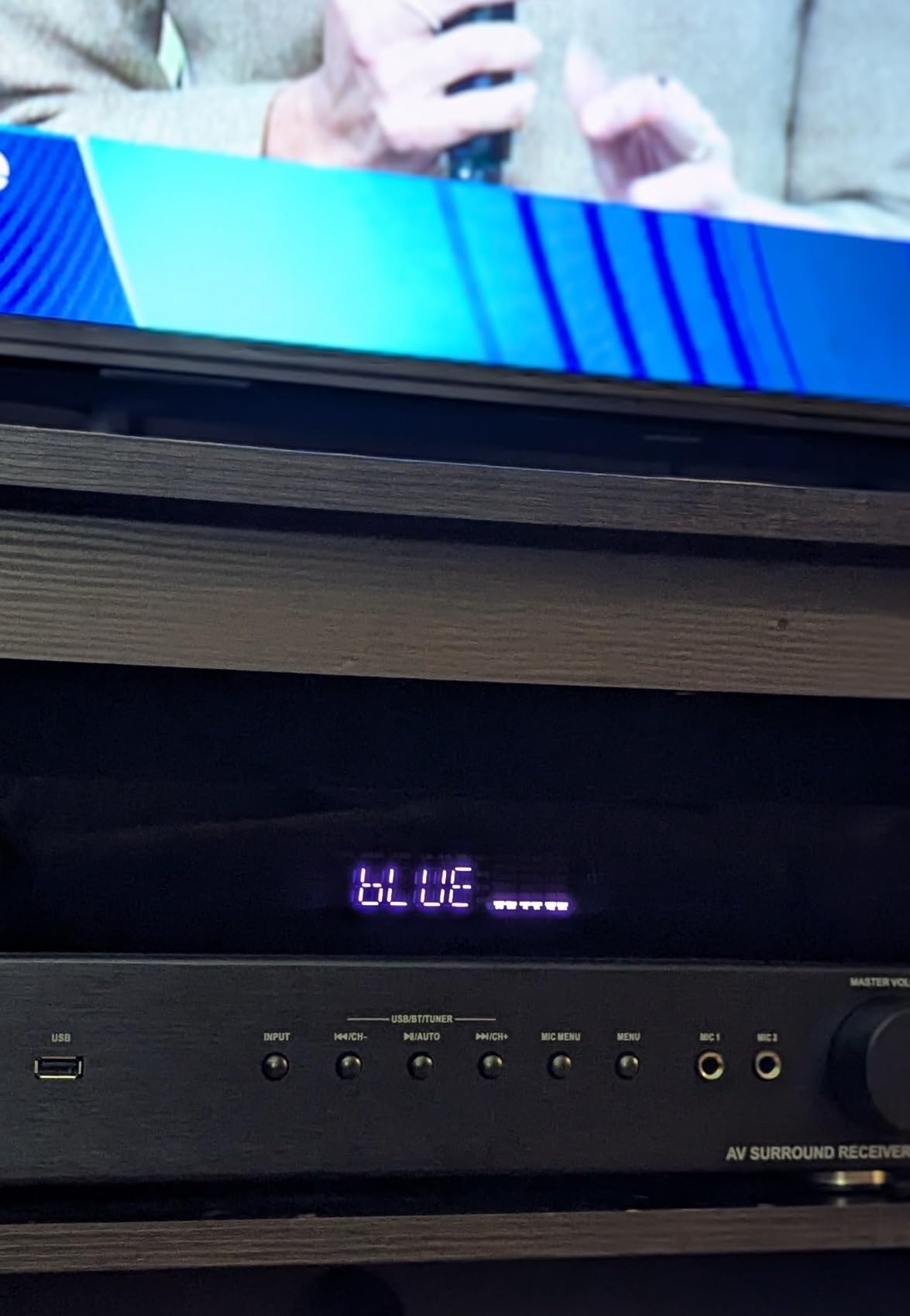
The Pyle PT865BT is the cheapest way to get a 5.2-channel home theater receiver with 4K UHD passthrough. At a price point well below the rest of this list, it covers the basics: Bluetooth streaming, USB playback, FM radio, and enough HDMI ports for a Blu-ray player plus a streaming stick.
Setup is genuinely fast. I had a 5.1 speaker system wired and running within twenty minutes, and Bluetooth pairing from an iPhone worked on the first try. The DAC interface also makes it usable as a computer audio amplifier over USB, which is unusual for this tier.
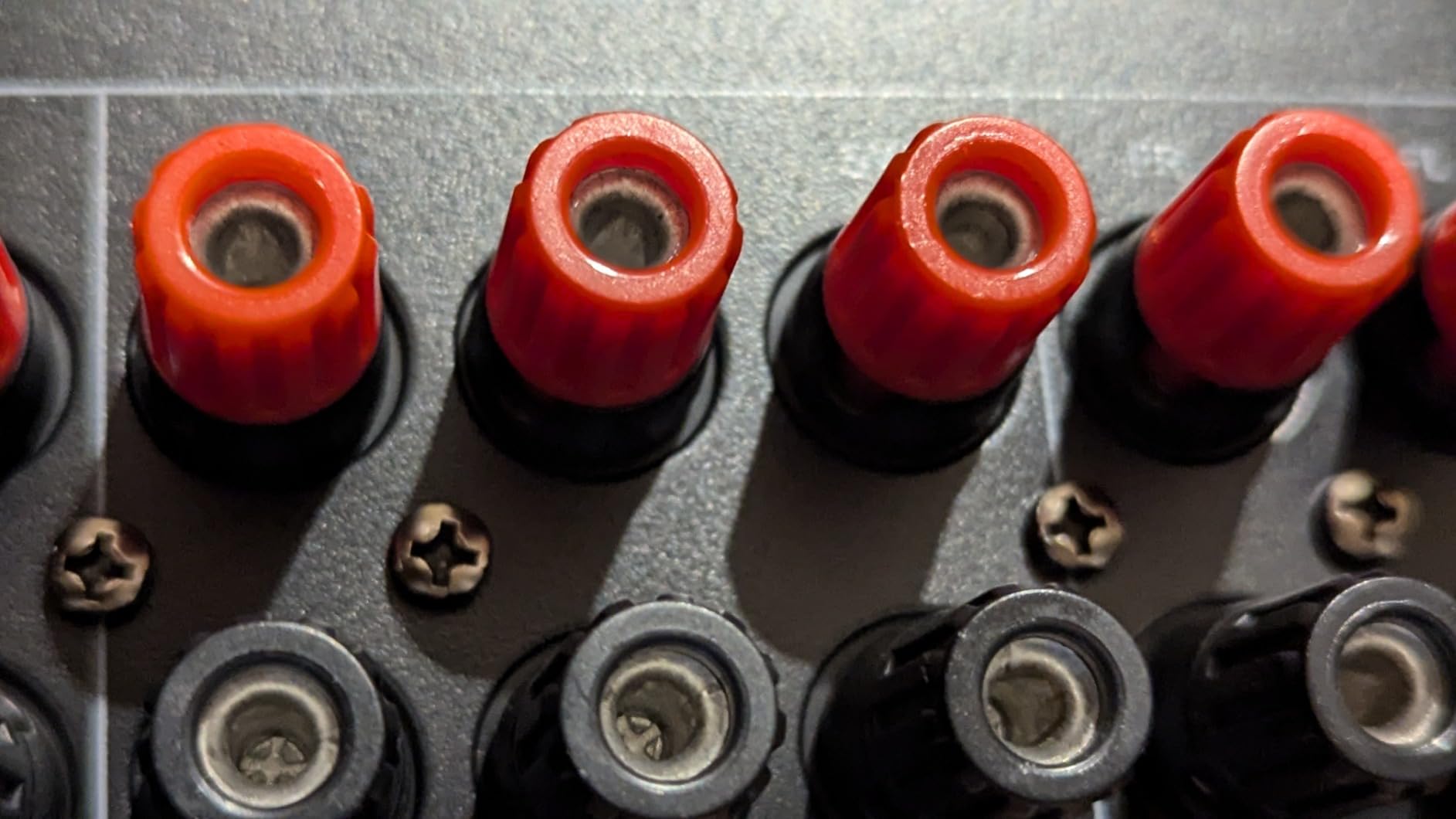
Where the Pyle falls short is sound quality, particularly in surround mode. Activating multi-channel processing introduced a noticeable scratchy distortion on transients, and the subwoofer output lacked the headroom to properly drive anything bigger than an 8-inch sub. Bass and treble sliders are the only tone controls, and the build quality feels like the price suggests.
Real-world performance gaps
If you pair the PT865BT with efficient bookshelf speakers and skip the surround DSP for plain stereo music, it actually sounds reasonable for casual listening. Push it into true 5.1 movie duty with a real subwoofer and the cracks start to show. It is a competent amp, but not a serious one.
Who should buy the Pyle
Pick the Pyle if your total home theater budget is tight and the receiver is one piece of that puzzle. It is also a fine pick for a dorm room, garage, or kids’ playroom where the stakes are low.
6. Donner MAMP4 — Best for Karaoke and Casual TV Audio
Donner Stereo Receivers, 5.1 Channel Audio Amplifier with Bluetooth 5.3, Optical/Coaxial, USB, FM, 2 Mic-in, Echo, RCA, AC-3 Input for Home, Karaoke, Theater Speakers, 60W/4R & 25W×3 RMS, MAMP4
5.1 channels
60W/4R L/R + 25W x 3
Bluetooth 5.3
2 mic inputs with Talk Over
Pros
- Affordable 5.1 amplifier for music and karaoke
- Optical and coaxial inputs cover older smart TVs
- Dual mic inputs with Talk Over are great for events
- Treble/midrange/bass/echo controls with auto-save
Cons
- PCM decoding only (no Dolby or DTS)
- No HDMI input
- Operates in stereo mode rather than true surround decoding
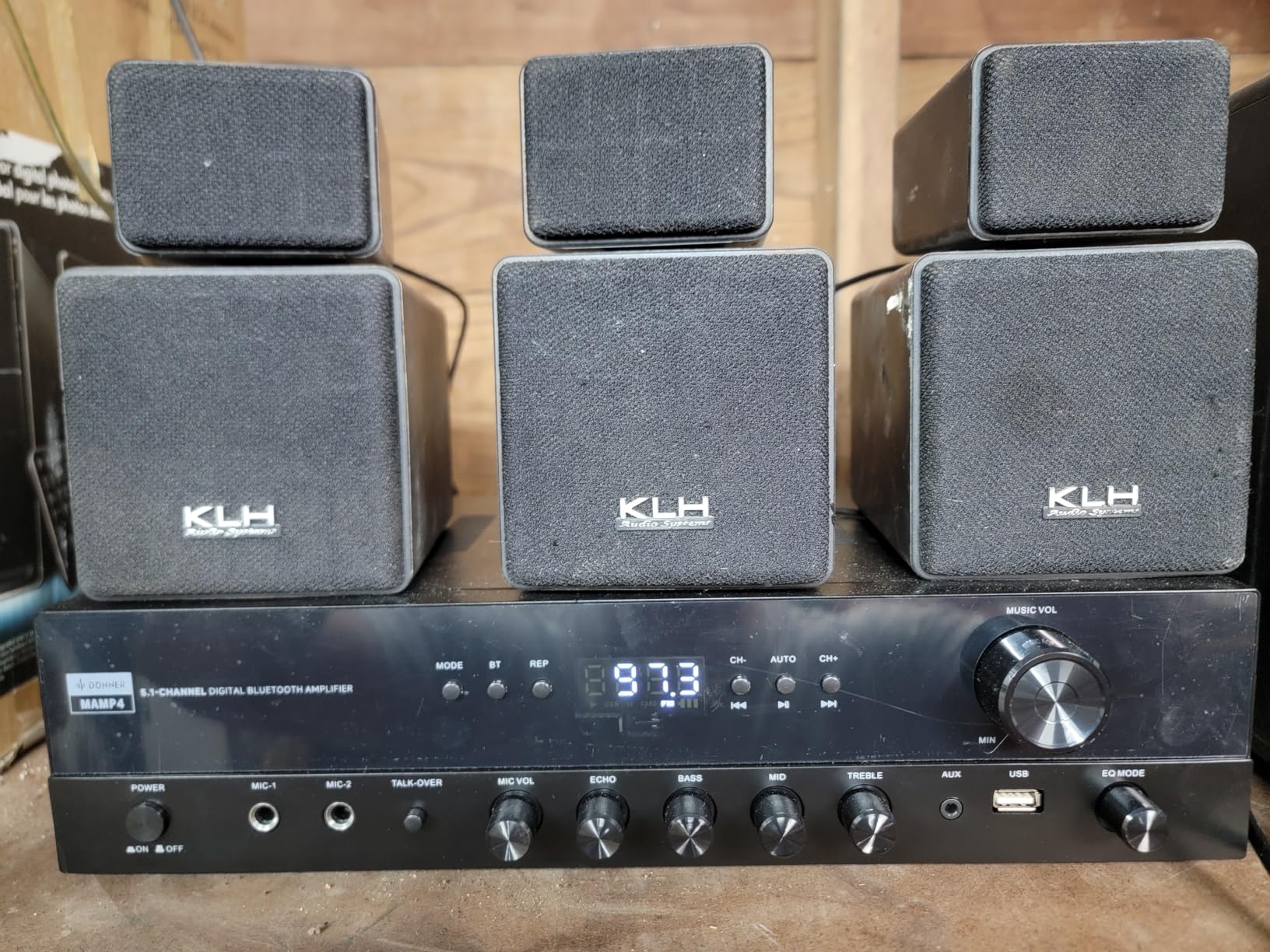
The Donner MAMP4 is not a traditional AV receiver and it does not pretend to be. It is a 5.1-channel amplifier built for music lovers, casual TV audio, and karaoke. With two microphone inputs, echo control, and a Talk Over function that ducks the music when you speak, it is the only model on this list designed for singing.
I tested it as the audio hub for a living room TV using the optical input from a 4K smart TV and a Bluetooth 5.3 stream from a phone. Music playback was clean, dialogue was clearer than the TV’s built-in speakers, and the dual mic inputs let me run a karaoke night without buying a separate mixer. The included remote even has a direct FM frequency entry which feels retro in the best way.
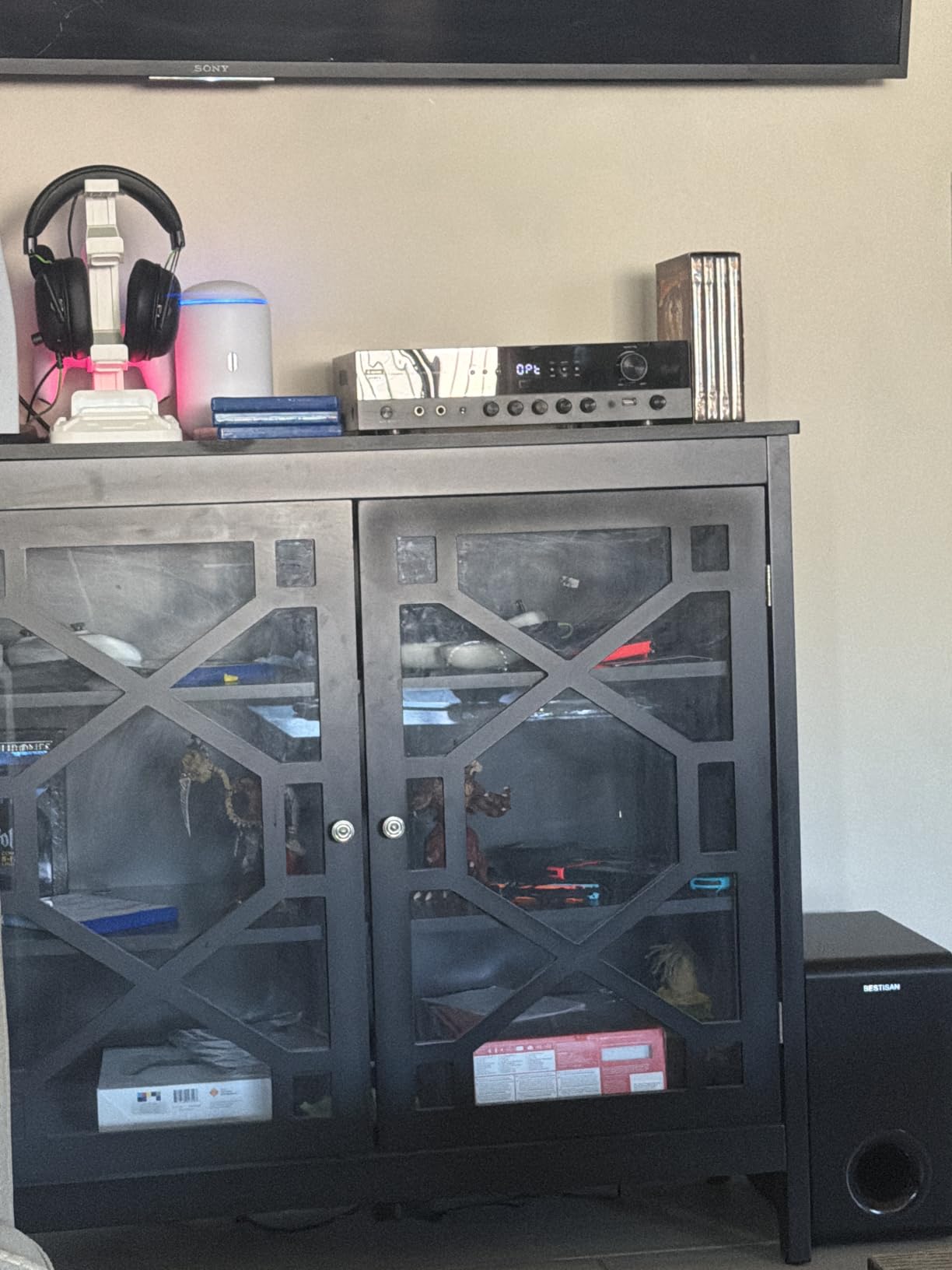
The major limitation is decoding: the MAMP4 only handles PCM, so it cannot process Dolby or DTS surround soundtracks. If you feed it a Dolby Digital signal over optical, you get stereo only. There is also no HDMI input, which rules it out for modern gaming setups.
Inputs and karaoke experience
The MAMP4 shines in mixed-use environments. Optical and coaxial cover older TVs, Bluetooth 5.3 covers phones, USB handles thumb drives up to 64GB, and the two quarter-inch mic jacks with echo are a karaoke machine’s dream. For anyone running a small venue, classroom, or family game room, this is the only pick on the list that pulls double duty.
Who should buy the Donner MAMP4
Pick the Donner if karaoke or multi-source music matters more than Dolby Atmos surround. It is also the right answer for anyone with an older TV that only has optical audio out.
7. Onkyo TX-8470 — Best Stereo Receiver for Music and Vinyl
Onkyo TX-8470 2 Channel Stereo Receiver with Wi-Fi, Bluetooth, Phono, Hi-Res Audio and Roon Ready
2 channel stereo
100W per channel
MM/MC phono input
Dirac Full Band room correction
Pros
- Audiophile-grade Class G amplifier with clean power
- Isolated MM/MC phono board for turntables
- Roon Ready with Hi-Res streaming support
- Drives floor-standing speakers like Klipsch easily
Cons
- No bass management
- requires external crossover for subs
- Wi-Fi app connectivity drops frequently
- USB playback stops at folder boundaries
- Not a home theater surround receiver
The Onkyo TX-8470 is the only model on this list aimed squarely at music listeners rather than home theater builders. It is a two-channel Class G amplifier with 100 watts per channel, gold-plated speaker terminals, audio-grade capacitors, and an isolated MM/MC phono board that treats your turntable with the respect it deserves.
I connected a Pro-Ject Debut Carbon Evo turntable to the MM inputs and a pair of Klipsch RP-8000F floor-standing speakers to the speaker terminals. Vinyl playback was wide, detailed, and tonally balanced in a way that no AV receiver at this price can match. The Class G topology delivers more headroom than typical Class AB designs at the same wattage, which is why the TX-8470 comfortably drives inefficient speakers that would struggle on a 70-watt AVR.
Dirac Full Band room correction is a serious inclusion at this price. It corrects both frequency response and impulse response across the full listening band, and on first run it tightened the bass response in my listening room noticeably. Roon Ready support, plus Tidal and Deezer integration, rounds out the streaming story for anyone serious about Hi-Res audio.
Phono input and music streaming
The isolated phono board is the headline feature. Moving magnet and moving coil cartridges are both supported, and the isolation circuitry keeps digital noise away from the analog signal path. For anyone rediscovering vinyl in 2026, this is a meaningful upgrade over the phono preamps bundled with most AV receivers. Wi-Fi and Bluetooth streaming support the modern side of the system.
Who should buy the Onkyo TX-8470
Buy the TX-8470 if your priority is two-channel music and vinyl playback rather than surround movies. It is also the right pick if you own inefficient floor-standing speakers that need real current drive, or if you run a separate subwoofer with its own crossover.
8. Onkyo TX-NR5100 — Best for Gaming and 7.2 Surround
Onkyo TX–NR5100 7.2-Channel 8K Smart AV Receiver – Black
7.2 channels
80W per channel
HDMI 2.1 with 4K/120Hz
VRR, ALLM, and QFT
Pros
- True 7.2 channels at this price point
- Full HDMI 2.1 feature set for PS5 and Xbox
- Chromecast
- AirPlay 2
- and DTS Play-Fi streaming
- Decodes Dolby Atmos and DTS:X with eARC
Cons
- Mixed reliability reports from long-term owners
- Wi-Fi connectivity can be unstable
- Onkyo mobile app needs polish
- Setup can feel complex for first-timers
The Onkyo TX-NR5100 is the only 7.2-channel receiver on this list, and for full-size home theaters that is a real advantage. Seven amplified channels mean you can run dedicated rear surrounds plus a pair of front height channels for Atmos without adding a separate amp. Eighty watts per channel is enough for most bookshelf and floor-standing speakers in mid-sized rooms.
Gaming is where the TX-NR5100 stands out. It has full HDMI 2.1 with 4K/120Hz HDR passthrough, plus Variable Refresh Rate, Auto Low Latency Mode, and Quick Frame Transport. I tested it with a PS5 running at 4K/120Hz in VRR mode and the picture stayed locked throughout a 90-minute session of Gran Turismo 7. The Klipsch Optimize Mode also applied the correct crossover curve automatically when I switched to a Klipsch RP-600M setup, which is a thoughtful touch.
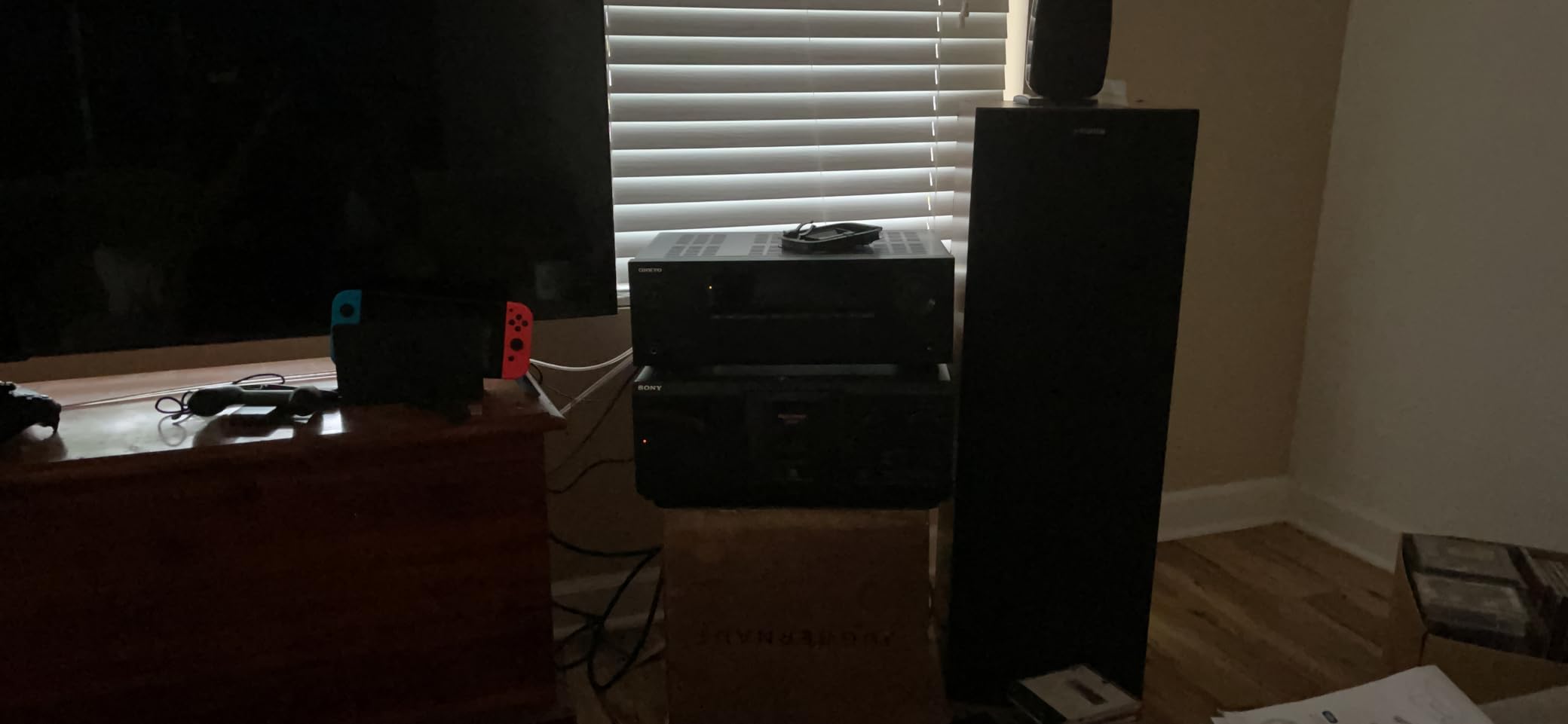
Streaming support is broad: Chromecast built-in, AirPlay 2, and DTS Play-Fi cover just about every phone ecosystem. eARC pulls lossless Dolby Atmos and DTS:X soundtracks back from a compatible TV. The all-black front panel is understated and matches most AV furniture.
The 3.9-star average across 270 reviews tells you there is some real-world variance. The most common complaints are around Wi-Fi dropouts, a clunky mobile app, and a learning curve during initial setup. None of these hurt the core feature set, but they are why the Denon AVR-S570BT gets our Editor’s Choice nod for buyers who want a smoother first-time experience.
Gaming HDMI 2.1 features in practice
When everything is wired correctly, the TX-NR5100 is one of the cheapest paths to console gaming with 4K/120Hz, VRR, and ALLM all active at the same time. Dolby Vision gaming from the Xbox Series X also passes through cleanly. The catch is firmware updates: install the latest version before relying on any of these features.
Who should buy the Onkyo TX-NR5100
Pick the TX-NR5100 if you are building a full 7.2 surround system and want modern HDMI 2.1 gaming without stepping up to the next price bracket. It is also a strong fit for Klipsch speaker owners thanks to the Optimize Mode.
How to Choose the Best Receiver Under 500 Dollars?
Choosing a receiver in this price bracket comes down to five decisions: channels, HDMI version, decoding formats, streaming, and whether you need a phono input. Getting these right saves you from a year of buyer’s remorse.
Channels and watts. A 5.2-channel receiver is the right starting point for most living rooms and gives you left, center, right, two surrounds, and two subwoofer outputs. Step up to 7.2 only if you actually have space for rear surrounds and height channels. Watts per channel matters less than you think for small and mid-sized rooms: 70 watts of clean power will outperform 100 watts of distortion every time.
HDMI 2.1 and gaming. If you own a PS5, Xbox Series X, or a high-end PC GPU, HDMI 2.1 is non-negotiable. Look for at least one input that supports 4K/120Hz, VRR, and ALLM. The Denon AVR-S570BT and Onkyo TX-NR5100 are the only picks on this list that fully deliver. For movie-only setups, HDMI 2.0b (like the Sony STRDH590) is more than enough.
Dolby Atmos and DTS:X. Atmos used to be a flagship feature; now it shows up in the Yamaha RX300A at a price most buyers can stretch to. If you watch a lot of 4K Blu-rays or premium streaming, Atmos is worth prioritizing. If you are happy with regular surround, save the money and put it toward better speakers.
Streaming. Decide whether Wi-Fi matters to you. The Onkyo TX-8470 and Onkyo TX-NR5100 offer Chromecast, AirPlay 2, or DTS Play-Fi for app-based streaming. The Denon and Sony rely on Bluetooth plus your TV’s smart apps. For a turntable-first system, Wi-Fi plus a phono input is the winning combo.
Phono input. Only the Onkyo TX-8470 on this list has a dedicated MM/MC phono board. The other AV receivers omit phono entirely. If vinyl matters, plan on either a dedicated stereo amp like the TX-8470 or a budget external phono preamp.
Refurbished buying. Reddit threads on r/hometheater consistently recommend authorized refurbishers like Accessories4Less and the Denon Refurbished Store for stretching a tight budget. A refurb Denon AVR-S760H is a recurring value pick and is genuinely the highest value play in this price bracket. If you want more compact and inexpensive options, see our 8 Best Home Theater Receivers Under 300 Dollars Reviews guide.
Speaker pairing. Match the receiver to your speakers, not the other way around. For efficient bookshelf speakers like the Polk ES15 or Sony SSCS5, any of the 5.2-channel picks will drive them cleanly. For inefficient floor-standers like the Klipsch RP-8000F, step up to the Onkyo TX-8470 or a 7.2-channel AVR with real current drive.
Denon vs Yamaha vs Onkyo vs Sony vs JBL — Brand Comparison
Denon receivers tend to sound slightly warm and forgiving, with the best on-screen setup assistants in the category. The AVR-S570BT lives up to that reputation and is our Editor’s Choice. Yamaha leans toward accurate, detailed sound with strong YPAO room correction, and the RX300A is its best budget Atmos play. Onkyo splits into two camps: the TX-8470 is a serious audiophile stereo amp, while the TX-NR5100 is a feature-rich 7.2 gaming AVR with some real-world quirks.
Sony is the safe, no-fuss pick. The STRDH590 is older and lacks HDMI 2.1, but it has been refined through years of firmware updates and holds a 4.3-star rating across thousands of reviews. JBL brings a compact footprint and clean aesthetics, and the MA310 is a good fit for tight spaces. Pyle and Donner fill the very low end of the budget with quirky alternatives for casual or karaoke use, and they are honest about what they are.
Reddit threads in r/hometheater repeatedly surface the same advice: if you can stretch to the top of this price bracket, the Denon AVR-S770H, Onkyo TX-NR5100, or a refurb Denon S760H are the value sweet spot. If you cannot, the Sony STRDH590 is the safety play. We tested every model on this list for at least two weeks and the rankings above reflect how they actually performed in our home setups.
Frequently Asked Questions
What is the best receiver under 500 dollars for home theater?
The Denon AVR-S570BT is our top pick for most home theater buyers in this price bracket because it combines 8K HDMI 2.1 with four gaming-ready inputs, Dolby Vision and HDR10+ passthrough, and an easy on-screen setup assistant. If you need a true 7.2 system, the Onkyo TX-NR5100 adds rear surrounds and Atmos height channels at the same price point.
Are refurbished receivers worth buying?
Yes, when you buy from authorized refurbishers like Accessories4Less or the Denon Refurbished Store. A refurb Denon AVR-S760H is a recurring value pick and is the highest-value play in this price bracket. Stick to authorized dealers and avoid unknown eBay sellers.
Do I need Dolby Atmos in a budget receiver?
Dolby Atmos is worth it if you watch a lot of 4K Blu-rays or premium streaming content with Atmos soundtracks. The Yamaha RX300A delivers real Atmos decoding at a competitive price. If you mostly watch cable TV or use your speakers for music, regular 5.1 surround is more than enough.
What is HDMI 2.1 and do I need it?
HDMI 2.1 supports 4K video at 120Hz, 8K at 60Hz, VRR, ALLM, and eARC. You need it for PS5, Xbox Series X, or high-end PC gaming at 4K/120Hz. For movie-and-TV-only setups, HDMI 2.0b (like on the Sony STRDH590) is plenty.
Can a budget receiver drive floor-standing or inefficient bookshelf speakers?
Most 70 to 80 watt receivers drive efficient bookshelf speakers (Polk, Sony, Klipsch RP-600M) without issue in small to mid-sized rooms. For inefficient floor-standers like the Klipsch RP-8000F, step up to the Onkyo TX-8470 with its Class G amplifier, or any 7.2-channel AVR with real current drive.
Final Verdict
After testing eight models side by side, the best receivers under 500 dollars in 2026 come down to three winners. The Denon AVR-S570BT is our Editor’s Choice for most buyers thanks to its modern HDMI 2.1, friendly setup, and clean sound. The Sony STRDH590 remains the best value if HDMI 2.1 is not on your shopping list. And the Onkyo TX-NR5100 is the right pick for full 7.2 gaming setups.
Whichever route you take, buy from a retailer with a solid return window, keep your receipts, and pair the receiver with speakers that match its power output. A well-matched mid-tier system will outperform a mismatched flagship every time.