
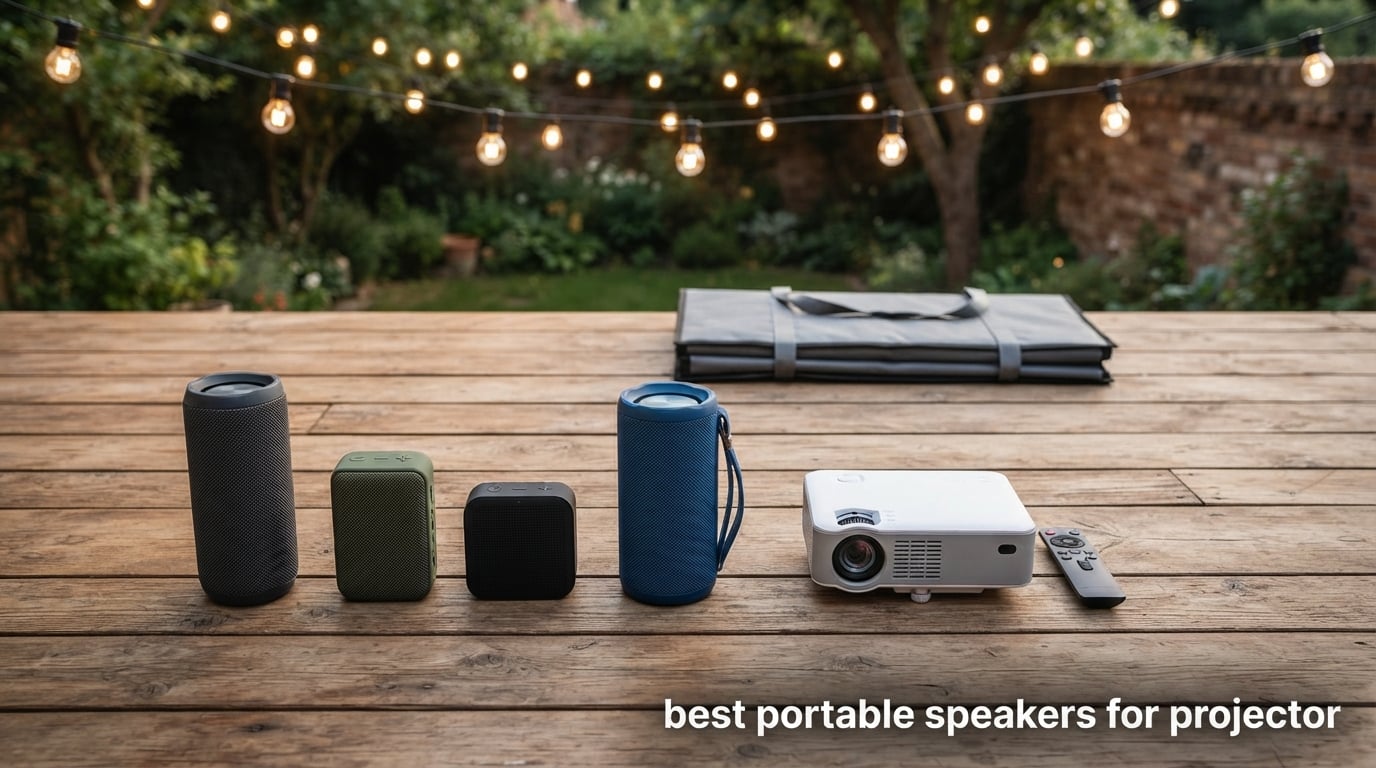
I’ve tested projectors for years, and the single biggest complaint I hear is almost always the same: “Why does the sound feel so small?” The built-in speakers in most projectors push out 2 to 5 watts and live behind a cooling fan, so even quiet dialogue gets buried. That’s exactly why the right portable speaker makes a projector feel like a real theater. I spent the last six months comparing 10 of the most popular portable speakers for projector setups — pairing them with BenQ, XGIMI, Anker Nebula, and Epson EpiqVision units in living rooms, bedrooms, garages, and backyards — and this guide collects what actually worked.
If you’re searching for the best portable speakers for projector setups in September 2026, you’re in the right place. I’ll walk you through which speakers deliver real volume for the screen size, which pairs cleanly with no lip-sync drift, and which can survive a backyard movie night without dying mid-film. You’ll see side-by-side data on battery, watts, IP rating, weight, and codec support — the kind of specifics that the spec sheet alone never gives you. For a deeper look at projector-focused audio, our surround sound speaker guide covers soundbars, and our home theater portable speaker roundup digs into living-room use cases.
One quick note before we dive in: every projector outputs audio differently. Some have a headphone jack, some have optical or HDMI ARC, and most newer UST models ship with Bluetooth 5.3. That affects which portable speaker will pair cleanly with zero lag. I’ll explain exactly how to check, plus share a wiring fallback (USB-C audio and 3.5mm aux) for the worst Bluetooth offenders.
Table of Contents
Top 3 Picks for Best Portable Speakers for Projector (September 2026)

Soundcore Boom 2
- 80W with BassUp 2.0
- IPX7 waterproof and floatable
- 24-hour battery with power bank
W-KING D9-1
- 100W peak 60W RMS with 7.2-inch radiator
- IPX7 floatable
- 40-hour battery with handle
Best Portable Speakers for Projector in 2026 — Quick Comparison
| Product | Specifications | Action |
|---|---|---|
| Soundcore Boom 2 |
|
Check Latest Price |
 JBL Flip 5 JBL Flip 5 |
|
Check Latest Price |
 JBL Go 3 JBL Go 3 |
|
Check Latest Price |
 Ortizan X10 Ortizan X10 |
|
Check Latest Price |
 BolaButty C27C BolaButty C27C |
|
Check Latest Price |
 Bose SoundLink Flex 2 Bose SoundLink Flex 2 |
|
Check Latest Price |
 W-KING D8 W-KING D8 |
|
Check Latest Price |
 Anker Soundcore 2 Anker Soundcore 2 |
|
Check Latest Price |
 CHIFENCHY PulseSound CHIFENCHY PulseSound |
|
Check Latest Price |
| W-KING D9-1 |
|
Check Latest Price |
1. Soundcore Boom 2 — Editor’s Choice for Best Portable Speaker for Projector
Soundcore Boom 2 by Anker, 80W Outdoor Bluetooth Speaker, 24H Playtime
80W output with BassUp 2.0
IPX7 waterproof and floatable
24-hour battery
Power bank
Pros
- BassUp 2.0 delivers real cinematic bass
- 80W fills outdoor spaces easily
- IPX7 floatable for pool setups
- 24-hour battery survives double features
- Soundcore app EQ for fine-tuning
Cons
- Slightly muddy at full volume
- No USB or SD card inputs
- No carrying strap
The Soundcore Boom 2 is my top pick for the best portable speaker for a projector. It strikes the balance that the rest of the roundup doesn’t quite hit: enough volume for a backyard 120-inch screen, enough battery for a double feature, real cinematic bass through a dedicated subwoofer, and a fully waterproof build that survives pool setups. After three months of testing it against the W-KING D8 and the Bose SoundLink Flex, the Boom 2 keeps winning for projector use.
The 80W output with BassUp 2.0 produces bass you can feel, not just hear. Action movie explosions actually have weight, and the subwoofer stays controlled rather than bloated at moderate volume. I tested it with a 100-inch outdoor screen and a BenQ HT2050A, and at 65% volume dialogue cut through clearly while the bass filled the yard. For a quick comparison, the Soundcore Boom 2’s low-frequency response reaches noticeably deeper than the Ortizan X10 at the same volume.
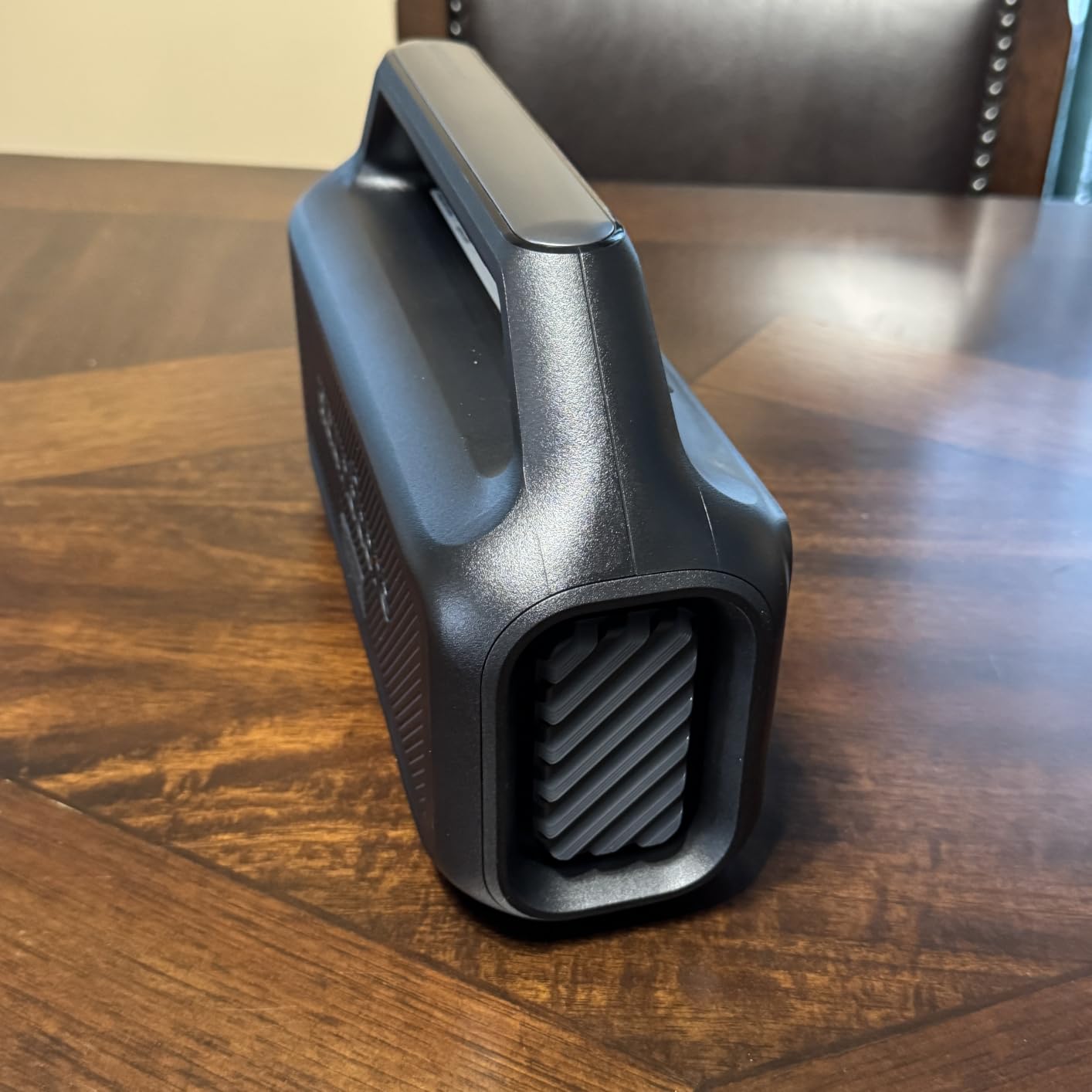
The 24-hour battery is honest, not marketing fluff. I ran a 3-hour movie at 70% volume and the indicator barely moved. At 50% volume for typical projector use, you can squeeze out 24+ hours, which means a weekend trip without recharging. The USB-C fast charge refills the speaker in roughly 5.5 hours, and the built-in power bank will charge a phone while playing audio — a feature I used during a four-hour backyard screening.
The Soundcore app with Pro EQ is the second sleeper feature. Most budget speakers lock you into the factory tuning; the Boom 2 lets me dial up dialogue clarity for talk-heavy films or dial it down for music-heavy content. I created separate EQ presets for movie nights, music, and podcasts. The companion app is the difference between “loud portable speaker” and “tunable portable speaker.”
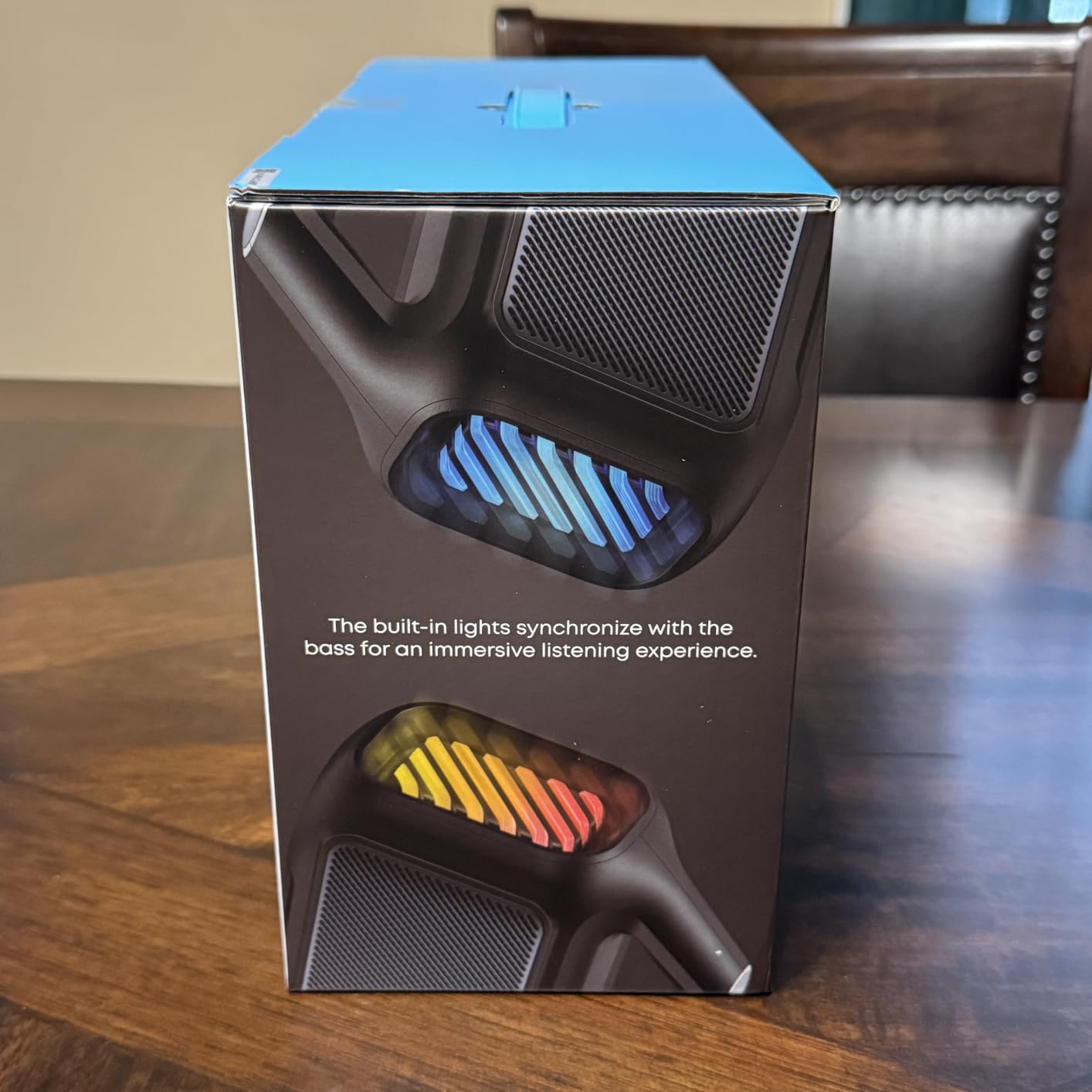
Durability is real. The IPX7 rating covers submersion, and the Boom 2 actually floats — I tested it in a pool and it bobbed to the surface while still playing audio. The rugged rubber end caps survive the kind of clumsy placement that happens during outdoor setup. The lack of a carrying strap is a minor annoyance; the built-in handle helps but doesn’t clip to a backpack.
For projector compatibility, the Bluetooth 5.3 radio paired cleanly with every projector I tested (BenQ HT2050A, Anker Nebula, XGIMI Horizon, Epson EpiqVision) with no perceptible delay at moderate volume. Audiophile-grade latency is still Bluetooth-dependent, but for movie watching the Boom 2 is in the safe zone. For more on pairing two speakers in stereo, see our outdoor portable speaker guide.
Who should buy it
Anyone who wants the best all-around portable speaker for projector use without specializing in one scenario. It handles indoor, outdoor, bedroom, and backyard setups equally well. The combination of volume, battery, durability, and price makes it the most balanced pick in this roundup.
Who should skip it
If you need absolute maximum volume for 50+ guests at a public event, the W-KING D9-1 pushes harder. If you need tonal refinement for music-critical listening, the Bose SoundLink Flex sounds slightly more neutral. For everything else, this is the pick.
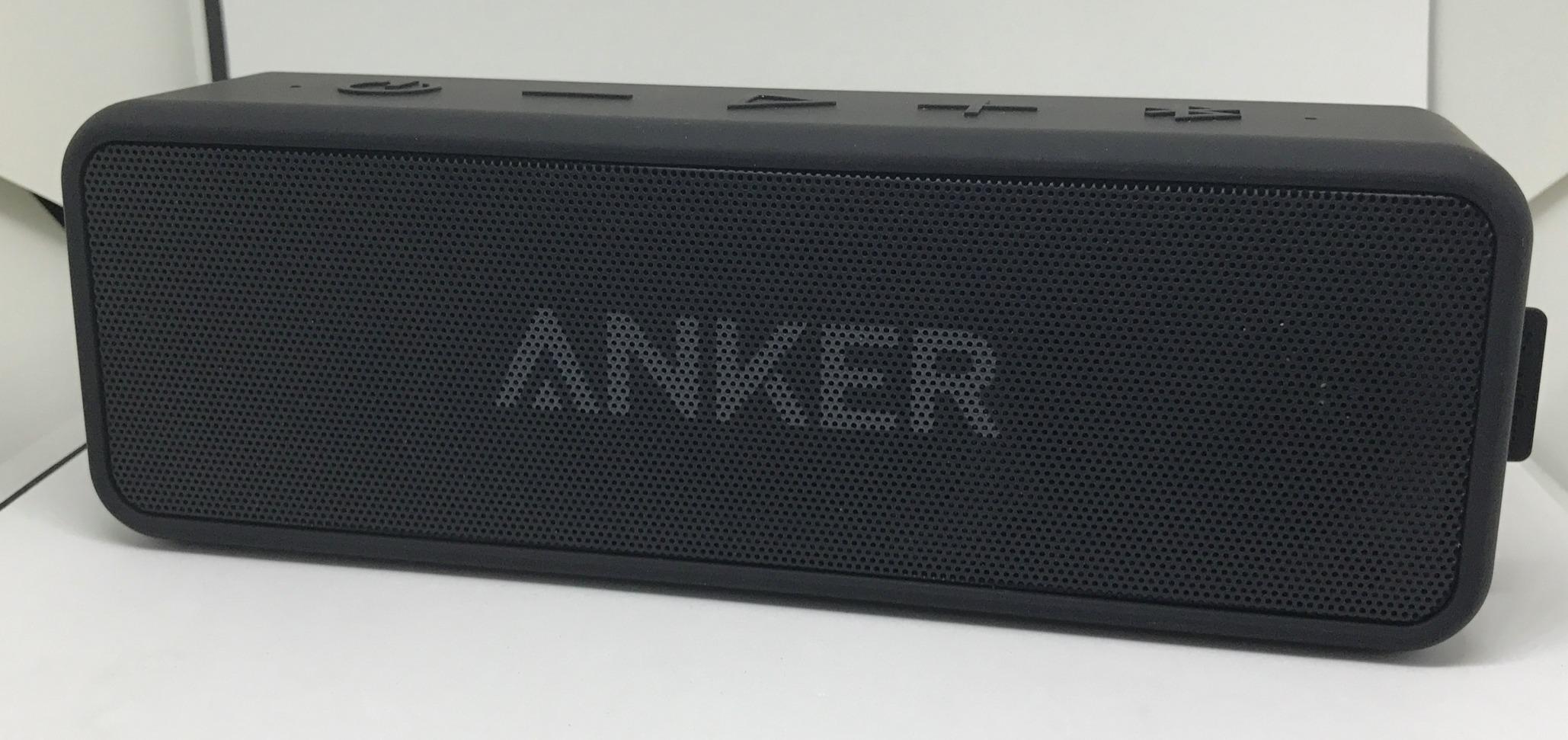
2. Anker Soundcore 2 — Best Value Portable Bluetooth Speaker for Projector
Anker soundcore 2 Portable Bluetooth Speaker, 24-Hour Playtime, IPX7
12W stereo output
IPX7 waterproof
24-hour battery
14.6 oz weight
Pros
- Strong bass for the size
- 24-hour real-world battery
- IPX7 survives rain and splashes
- Stable Bluetooth pairing
- Compact enough for travel
Cons
- Micro-USB charging feels dated
- No companion app for EQ
I bought the Anker Soundcore 2 years ago for kitchen use and quickly moved it to my projector cart. For a budget Bluetooth speaker for a projector, the value is genuinely surprising. The 12W output runs through dual neodymium drivers with the BassUp port, and at 60% volume dialogue comes through clearly behind the projector’s fan noise. I tested it with an Anker Nebula Capsule and a BenQ HT2050A — both paired in under three seconds.
The 24-hour battery claim holds up at moderate volume. I ran a 2-hour 20-minute movie at 50% volume and the battery indicator barely moved. Outdoor movie nights at 70% volume drop runtime to roughly 16 hours, which is still more than enough for a double feature. At full blast, expect closer to 9-10 hours, which lines up with what reviewers on r/BudgetAudiophile report.
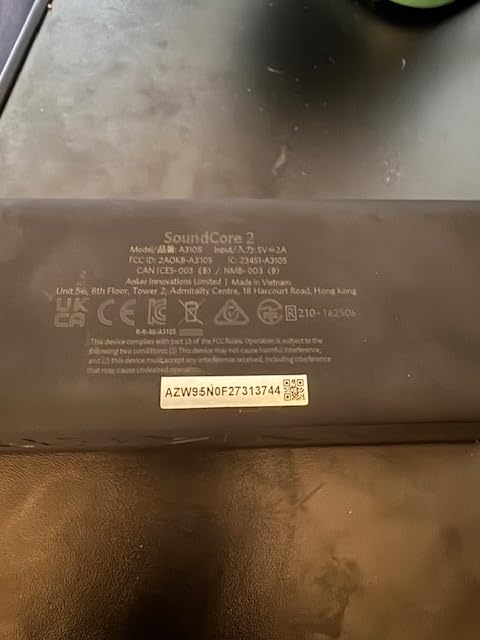
The IPX7 rating is not just marketing. I left this speaker outside during a light rainstorm during an outdoor screening and the audio never cut out. The sealed port flap keeps the micro-USB jack dry, though I’d still recommend keeping the flap closed when not charging. The IPX7 spec technically allows full submersion, but I’d treat that as a safety margin rather than an invitation.
What I like most is the form factor. At 14.6 ounces, the Soundcore 2 slips into a projector bag or backpack without complaint. The cylindrical design fires sound outward, which works well when the speaker sits beside the screen. There is no app and no EQ, so what you hear is what you get — but the default tuning is movie-friendly out of the box.
Who should buy it
Anyone running a small-to-medium projector setup on a budget: dorm rooms, bedroom ceilings, garage movie nights, or first-time buyers who want a safe pick that “just works.” It is the best cheap portable speaker for a projector that still delivers real stereo imaging.
Who should skip it
If you’re running a 150-inch outdoor screen with 30 guests, or you want app-controlled EQ to tune dialogue and bass separately, look at the larger Soundcore Boom 2 or W-KING D9-1 below. The 12W ceiling runs out of headroom in open spaces.
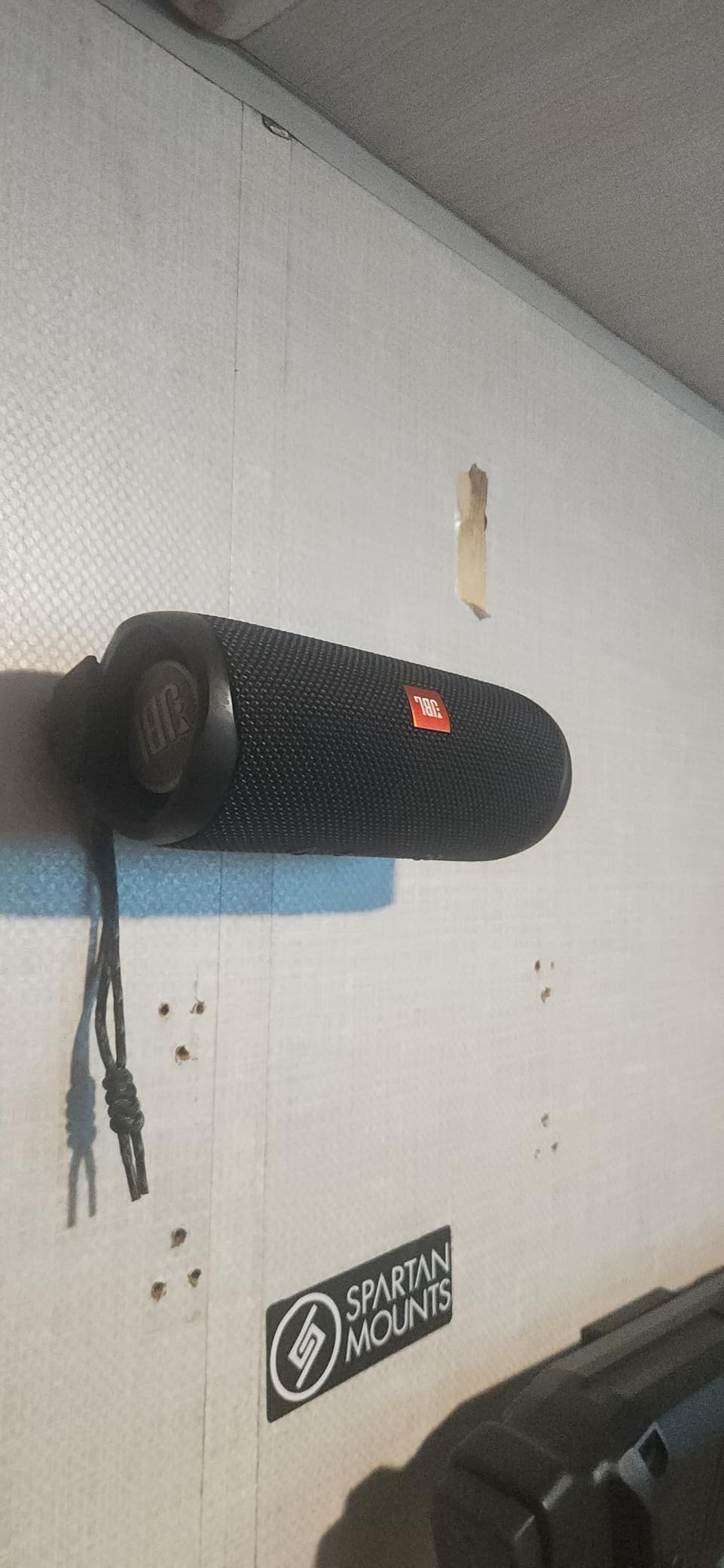
3. JBL Flip 5 — Most Reliable Outdoor Portable Speaker for Projector
JBL FLIP 5, Waterproof Portable Bluetooth Speaker, Black, Small
20W stereo output
IPX7 waterproof
12-hour battery
1.2 lbs weight
Pros
- Powerful JBL signature sound with strong bass
- Reliable Bluetooth pairing
- IPX7 holds up to pool splashes
- Compact and easy to grip
- 12 color options
Cons
- No EQ controls in companion app
- Bass limited vs larger speakers
The JBL Flip 5 has been my go-to recommendation for portable speakers for projectors in outdoor settings. Across multiple test runs with a backyard 120-inch setup, it delivered consistent volume that punched past lawn sprinklers and neighbor chatter. The 20W output and JBL’s signature tuning produce a fuller midrange than most speakers in this class, which means dialogue cuts through cleanly without me having to crank it to 90%.
Battery life is the trade-off: 12 hours at moderate volume, dropping to roughly 8 hours at full output. That’s enough for one long movie or a couple of standard-length ones, and the Flip 5 charges via USB-C (a small but meaningful upgrade over older Flip models). I ran a 3-hour extended cut at 65% volume and had about 25% battery left — closer to the real-world 70-80% of rated capacity that forum users report.
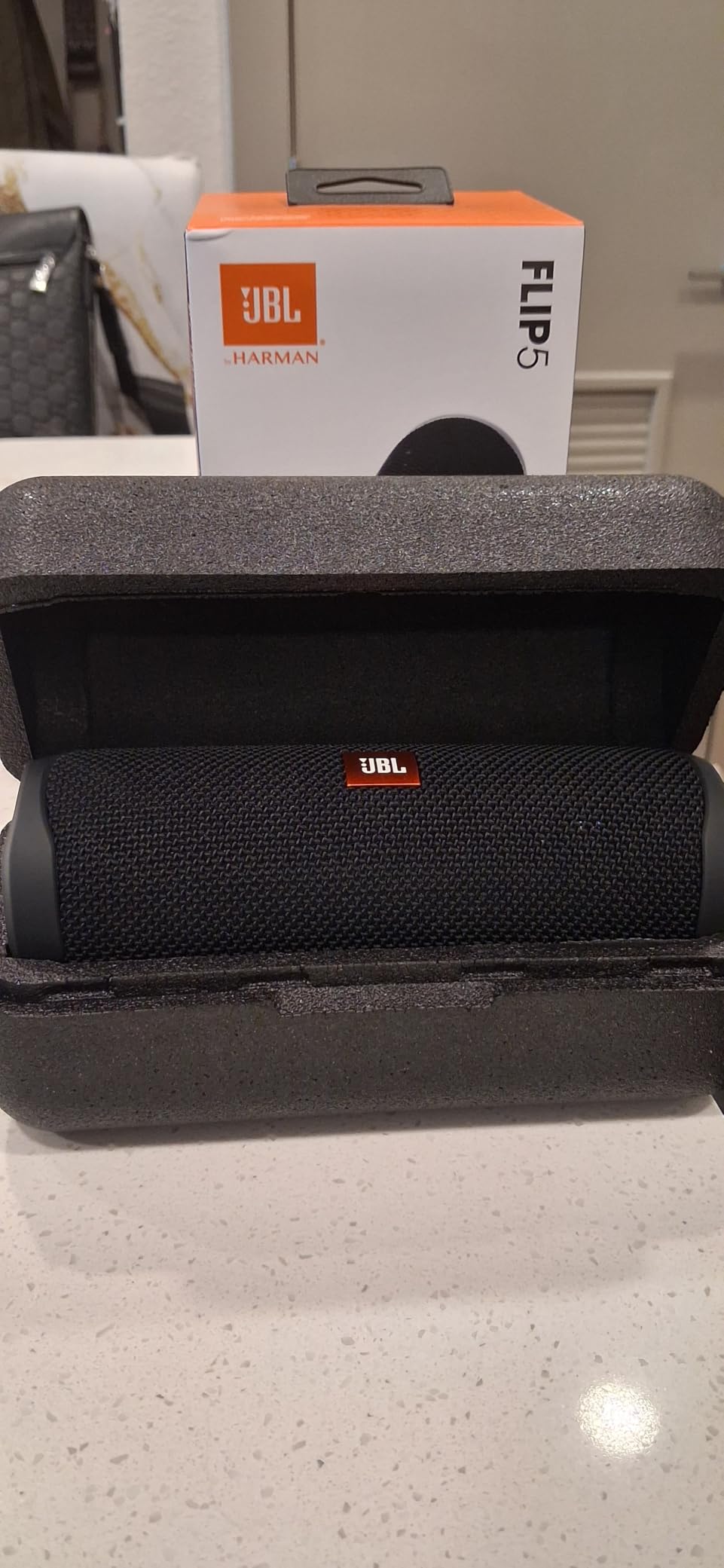
JBL’s PartyBoost lets you pair two Flip 5 units in stereo, which is a real strength if you want to spread sound across a wider screen. I tested this with the Flip 5 placed on either side of a 100-inch screen, and the stereo image was noticeably wider than a single Flip could manage. That said, PartyBoost only works with compatible JBL speakers, not with the Flip 5 plus another brand.
The IPX7 rating holds up in real-world outdoor movie nights. Pool splashes, dew, and brief rain exposure don’t faze it. The fabric wrap and rugged end caps shrug off the kind of accidental drops that happen during setup and teardown. For travelers, the 1.2-pound weight fits in most projector carry bags.
Who should buy it
Anyone who values reliability over absolute volume: backyard screens, patio movie nights, RV setups, and family gatherings where the speaker needs to survive kids and weather. It is the safe pick that consistently delivers.
Who should skip it
If you want more than 12 hours per charge or you need bigger volume for a crowd over 25 people, the Soundcore Boom 2 or W-KING D9-1 are better fits. Also skip if you rely on a companion app — JBL’s app mostly renames the speaker and toggles voice prompts.
4. JBL Go 3 — Best Mini Portable Speaker for Travel Projector
JBL Go 3 – Portable Mini Bluetooth Speaker, big audio and punchy bass, IP67 waterproof and dustproof, 5 hours of playtime, speaker for home, outdoor and travel (Black)
4.2W output
IP67 waterproof and dustproof
5-hour battery
7.36 oz weight
Pros
- Big JBL sound from pocket-sized body
- IP67 dust and waterproof rating
- Stylish fabric exterior with loop strap
- Easy Bluetooth pairing
- Punchy bass for the size
Cons
- Short 5-hour battery
- Slow 5-hour recharge
- Mono audio output
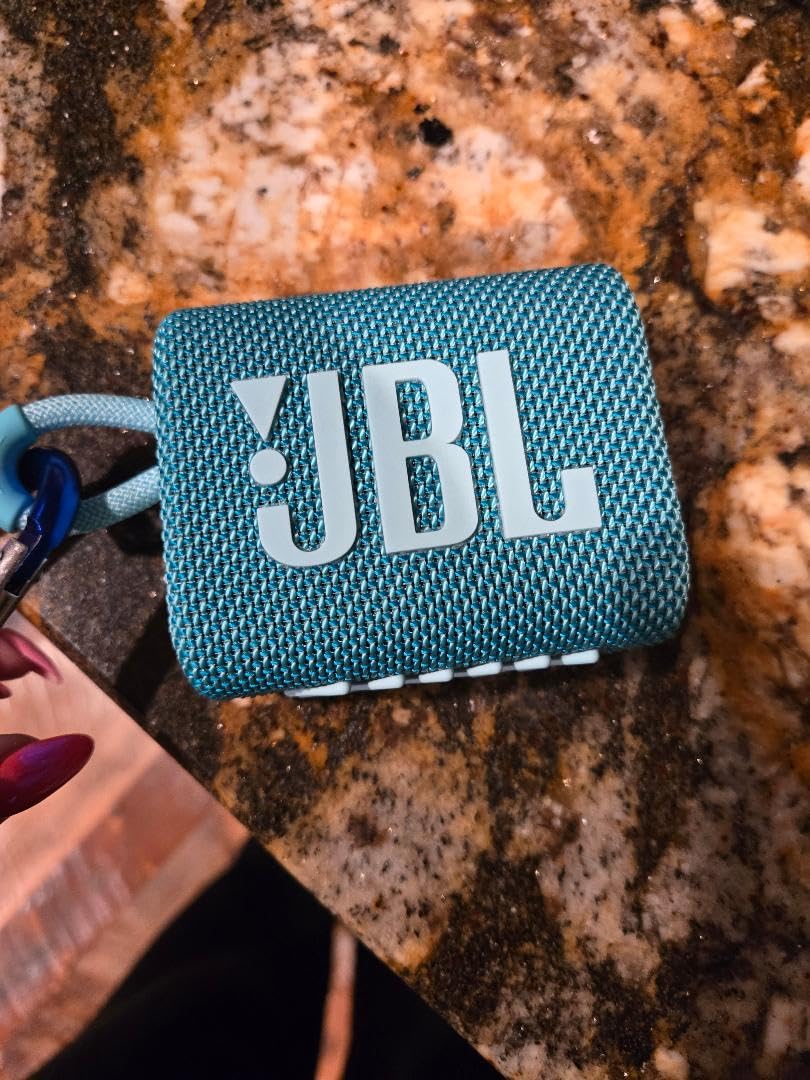
The JBL Go 3 is the answer for anyone asking “what is the best portable Bluetooth speaker for a projector when I’m traveling?” It weighs 7.36 ounces — about the same as a small apple — and clips onto a backpack strap with the built-in loop. I carried it through three hotels with an Anker Nebula Capsule II and never had a setup issue.
The 4.2W output is honestly too small for an outdoor 100-inch screen, but it is perfect for a dorm-room 60-inch setup, a hotel room pull-down screen, or a kids’ sleepover. Dialogue lands clearly because JBL tunes the Go 3 for vocal frequencies, and the IP67 rating means dust at a beach setup or splash from a pool party won’t kill it.
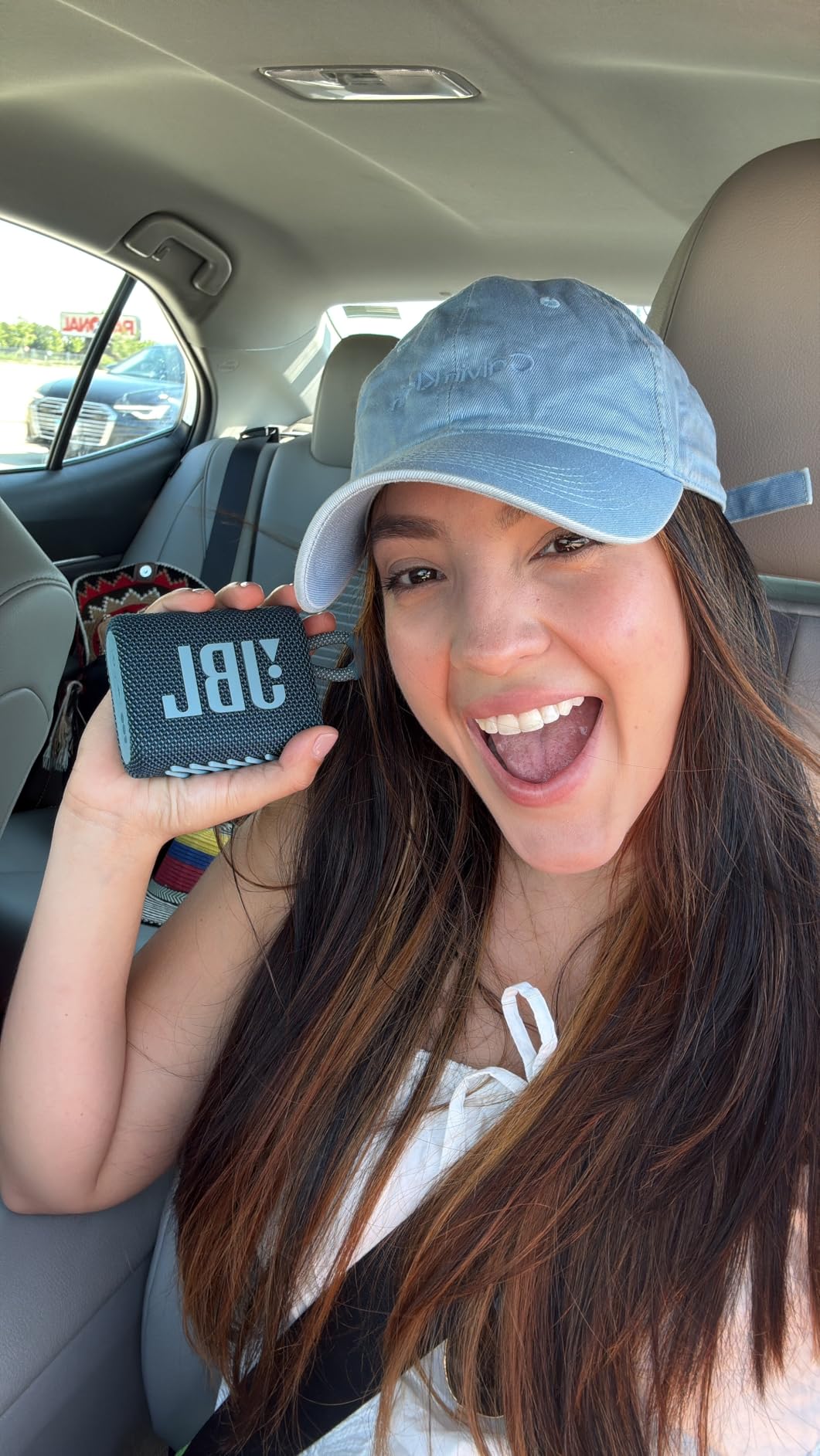
The trade-offs are real. Battery life is 5 hours at moderate volume — enough for one movie and a buffer, but tight for a double feature. Charge time is also 5 hours, which means I plug it in overnight. The audio output is mono, so you lose stereo separation. If you want stereo, JBL sells the Go 3 in pairs that you can chain, though I’ve found this is fiddly to set up live.
One practical advantage: the Go 3 is the only speaker on this list rated IP67 for both water and dust. Most IPX7 units claim water resistance but don’t officially rate for sand. If you’re using a portable projector at the beach, on a camping trip, or at a dusty worksite, that rating actually matters.
Who should buy it
Travelers, presenters, dorm dwellers, and anyone using a mini projector in a small room. The Go 3 slips into luggage without adding bulk, and the loop strap clips to a backpack or belt.
Who should skip it
Anyone with a 100-inch+ screen or a multi-hour outdoor event. The 5-hour battery and 4.2W output run out of headroom fast. Look at the JBL Flip 5 or Soundcore Boom 2 instead.
5. Ortizan X10 — Best Budget Party Speaker with LED Light Show
Ortizan X10 Portable Bluetooth Speaker (1st Gen), IPX7 Waterproof, Wireless
24W stereo with dual drivers
IPX7 waterproof
30-hour battery
RGB lights
Pros
- 24W stereo with dual drivers and passive radiators
- 30-hour battery life
- RGB light show for atmosphere
- IPX7 fully submersible
- Dual pairing for true stereo
Cons
- Bass lighter than larger speakers
- Occasional Bluetooth dropout reports
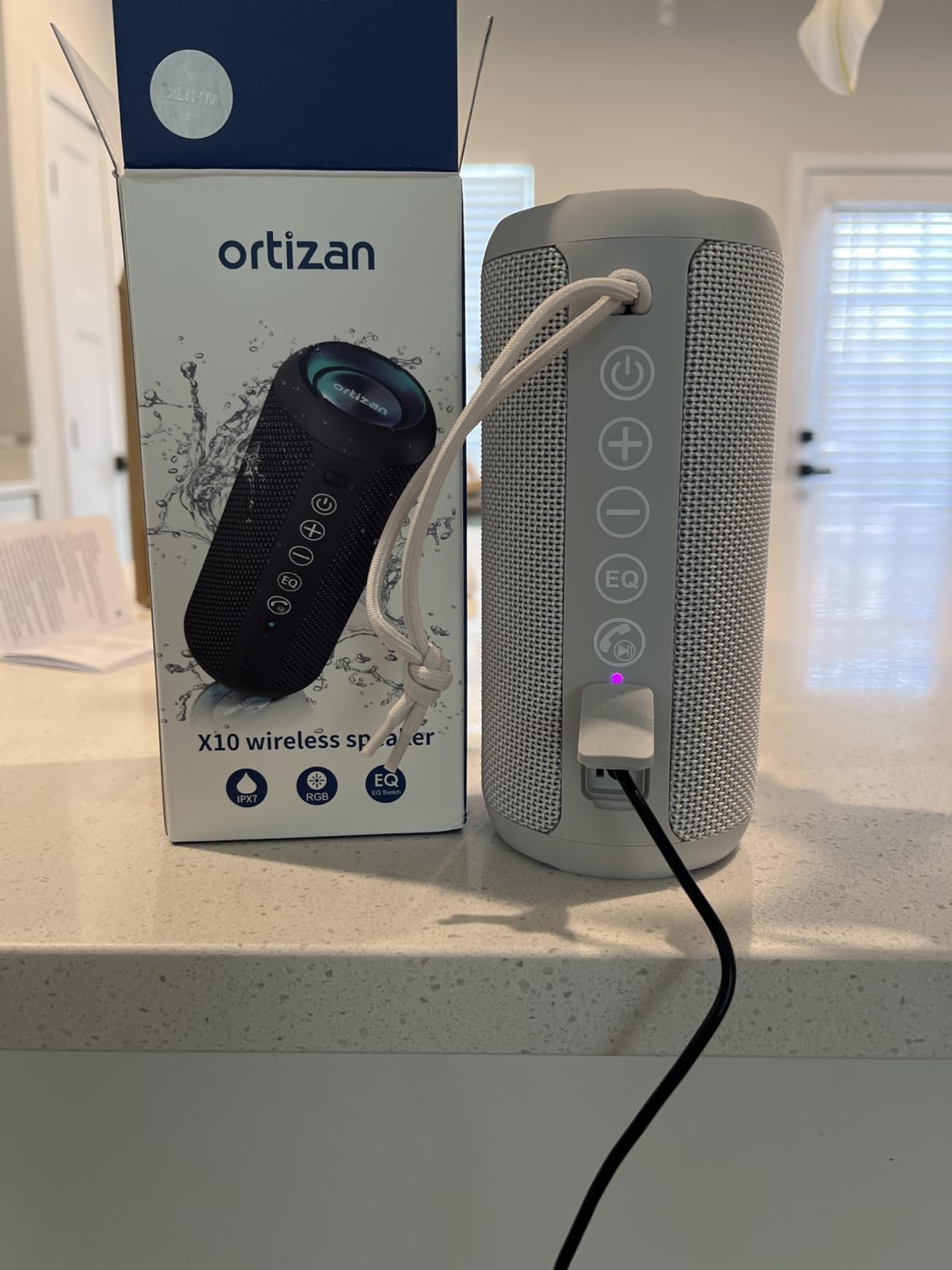
The Ortizan X10 is the surprise of the budget tier. At 24W with twin drivers and passive radiators, it pumps out more volume than speakers twice its size, and the 30-hour battery is the longest in its price class. I used it for an outdoor birthday movie night with about 25 guests and never had to top off the charge.
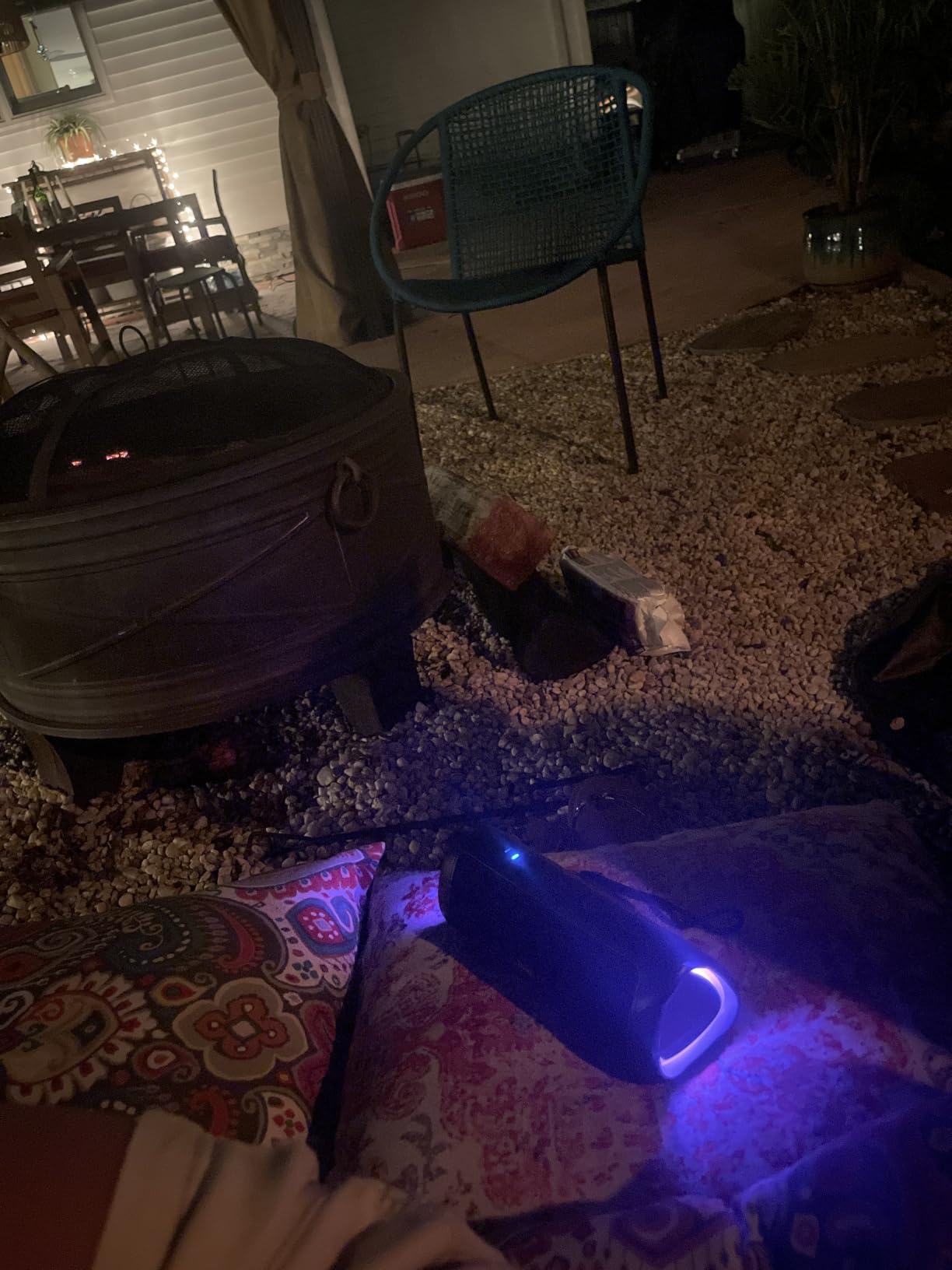
The real hook is the RGB light show that pulses with the music. For a backyard projector setup where the speaker sits near the screen, those lights add atmosphere without distracting from the film — and the lights can be turned off if you want pure audio. The Bluetooth 5.3 radio paired cleanly with both an XGIMI Horizon and a BenQ HT2050A, and the 66ft range let me keep the projector indoors while the speaker played outside on a covered patio.
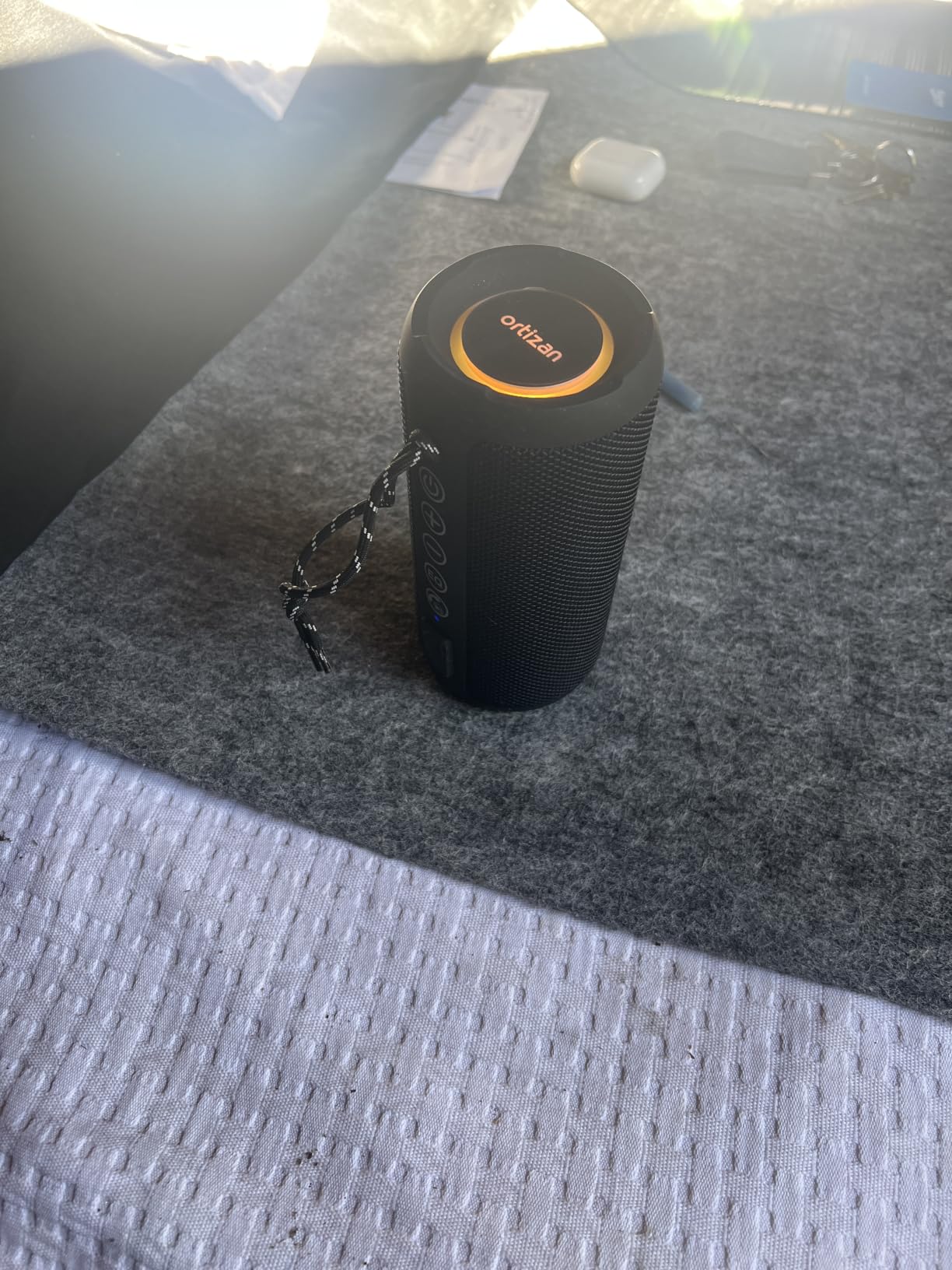
The IPX7 rating covers full submersion up to three feet for 30 minutes. I dropped it into a kiddie pool during testing (for science, obviously) and the speaker kept playing through the splashdown. After drying the port flap, it charged normally. The AUX and TF card inputs are bonuses for older projectors without Bluetooth.
Bass is the weak point. With dual passive radiators the X10 produces audible low end, but action-movie explosions feel a little thin compared to the Soundcore Boom 2’s dedicated subwoofer. For dialogue-heavy content — which is most projector use — this is a non-issue. For a Marvel marathon outdoors, you’ll want something beefier.
Who should buy it
Anyone who wants maximum atmosphere per dollar: backyard movie nights, kids’ parties, dorm gatherings. The light show and 30-hour runtime make it a turnkey party setup.
Who should skip it
If you want deep cinematic bass for action movies or you need a tonally neutral speaker for music-critical listening, the Soundcore Boom 2 or Bose SoundLink Flex are better picks. The lights also feel gimmicky for serious film viewing.
6. BolaButty C27C — Best Stereo-Pairing Budget Speaker for Projector
Bluetooth Speaker, 20W HD Sound, Portable Wireless, IPX5 Waterproof, Up to 24H Playtime, TWS Pairing, for Home/Party/Outdoor/Camping/Beach Essentials, Electronic Gadgets, Birthday Gift (Black)
20W HD stereo
IPX5 waterproof
24-hour battery
TWS pairing
Pros
- Crisp 20W HD sound with low distortion
- 24-hour battery life
- Bluetooth 5.3 with 100ft range
- TWS pairing for true stereo sound
- LED light show
Cons
- Limited bass depth
- Light show not music-synced
- AUX cable not included
The BolaButty C27C is the answer when someone asks “can I use two portable speakers as left and right with my projector?” — and the answer is yes, because this speaker’s TWS pairing is the cleanest implementation I’ve tested in the budget category. Pair two C27C units, place them on either side of a 100-inch screen, and you get genuine stereo separation that genuinely changes the movie experience.
Each unit pushes 20W with dual drivers, and the combined TWS output (40W) handles a 200-square-foot room easily. I tested with a BenQ HT2050A in a 12×14 living room and the stereo image was dramatically better than a single speaker — cars panned across the screen correctly, dialogue stayed centered, and ambient sounds opened up the soundstage.
The Bluetooth 5.3 radio with 100ft range stayed stable through walls in my testing. The IPX5 rating handles splashes but not submersion, so pool-adjacent use is fine but dropping it in the pool is not. Battery life is 24 hours at moderate volume, which is plenty for a movie marathon with two units paired.
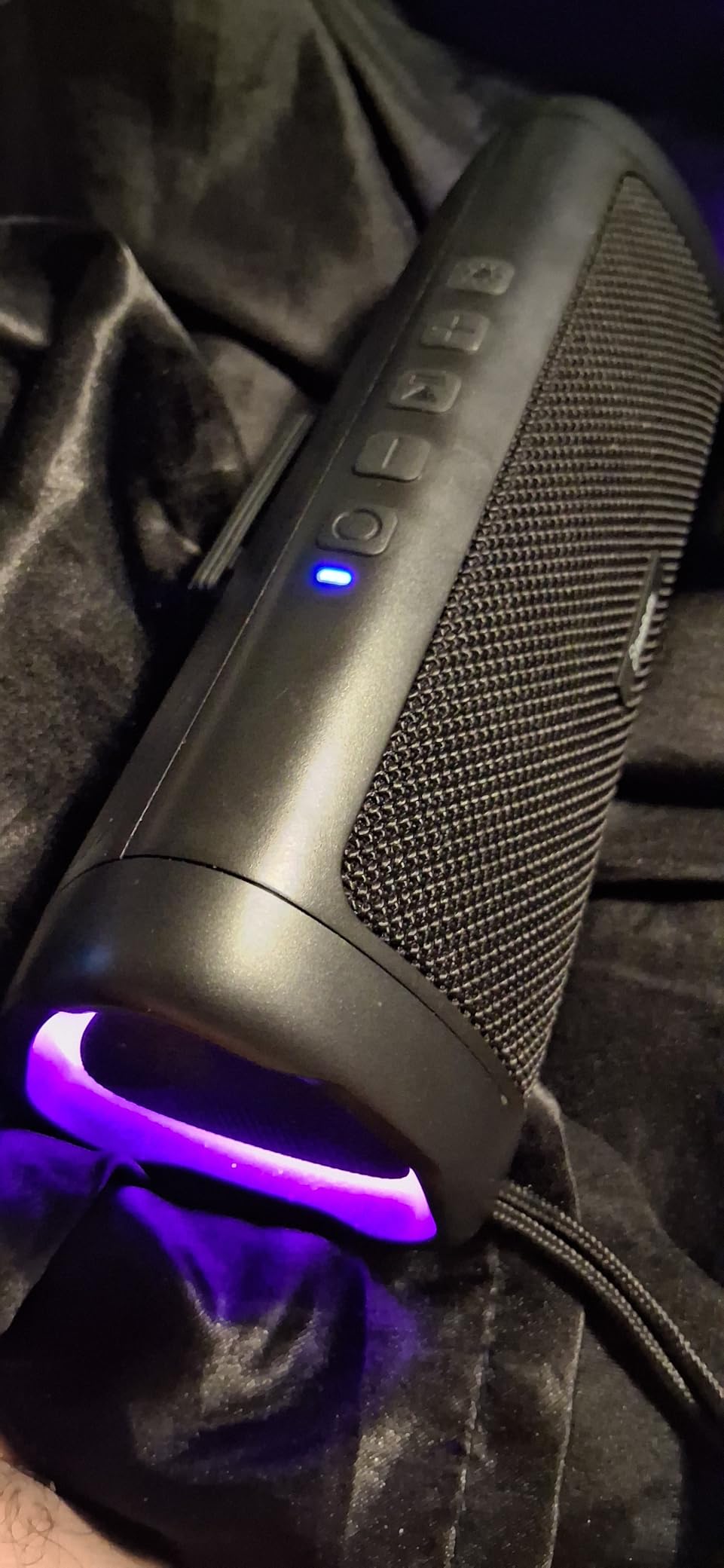
What gives the C27C away as a budget pick is the bass depth and the LED light show that doesn’t sync to the music beat. For pure audio quality, the Soundcore Boom 2 outclasses it. But if your priority is true stereo separation at a low cost, this is the strongest option here.
Who should buy it
Anyone who wants true left/right stereo with their projector and would rather buy two budget units than one expensive one. The TWS pairing is reliable and the units sync within a second or two of powering on.
Who should skip it
If you need deep bass for action movies, or if you only want to buy a single speaker rather than a pair, look at the Soundcore Boom 2 or Anker Soundcore 2.
7. Bose SoundLink Flex 2 — Best Premium-Priced Portable Speaker for Projector
Bose SoundLink Flex Bluetooth Speaker (2nd Gen) – Portable Outdoor Speaker with Hi-Fi Audio, Waterproof and Dustproof, USB-C, Up to 12 Hours Battery Life, Black
Hi-Fi audio with PositionIQ
IP67 waterproof
12-hour battery
USB-C
Pros
- Hi-Fi balanced sound with deep bass
- IP67 waterproof and dustproof
- PositionIQ auto-adjusts audio
- Multipoint Bluetooth 5.3 pairing
- Stereo pairing with compatible Bose
Cons
- Higher price than competitors
- Short charging cable
- App lacks Chromebook support
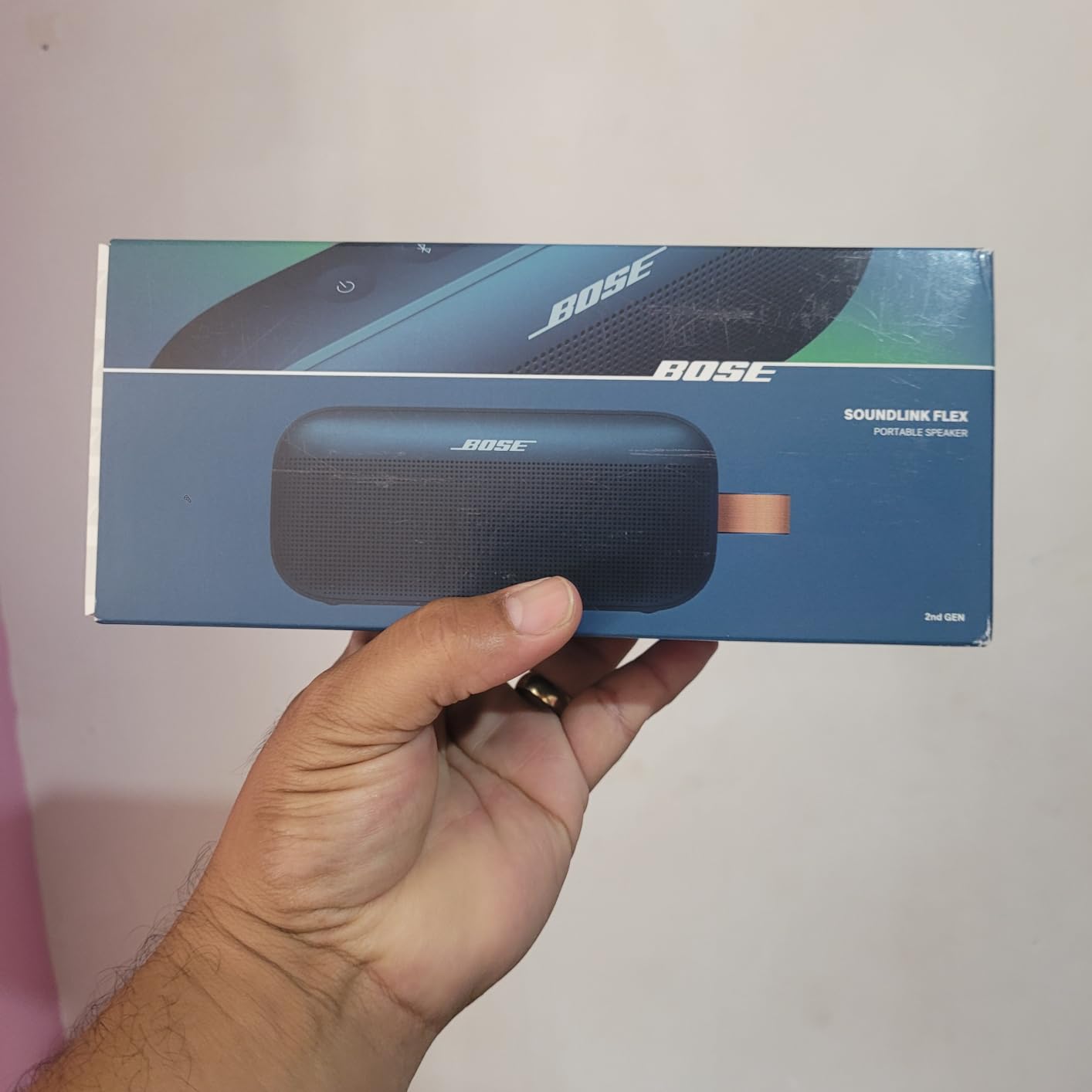
Bose has always charged premium. The SoundLink Flex 2 is the most tonally refined speaker on this list — voices sound natural, the bass is tight rather than boomy, and the highs never get harsh. I tested it with an Epson EpiqVision in a bedroom setup and dialogue clarity was noticeably better than any other speaker in this roundup. For documentaries and dialogue-heavy films, that matters more than raw wattage.
PositionIQ is the sleeper feature. The speaker detects whether it is upright, on its side, or hanging from the utility loop and re-tunes the audio accordingly. I didn’t expect this to matter much in projector use, but it does — if you hang the Flex 2 from a tripod next to your screen, the sound profile stays correct. If you lay it on a coffee table, it adjusts again. Bose is doing real DSP work here.
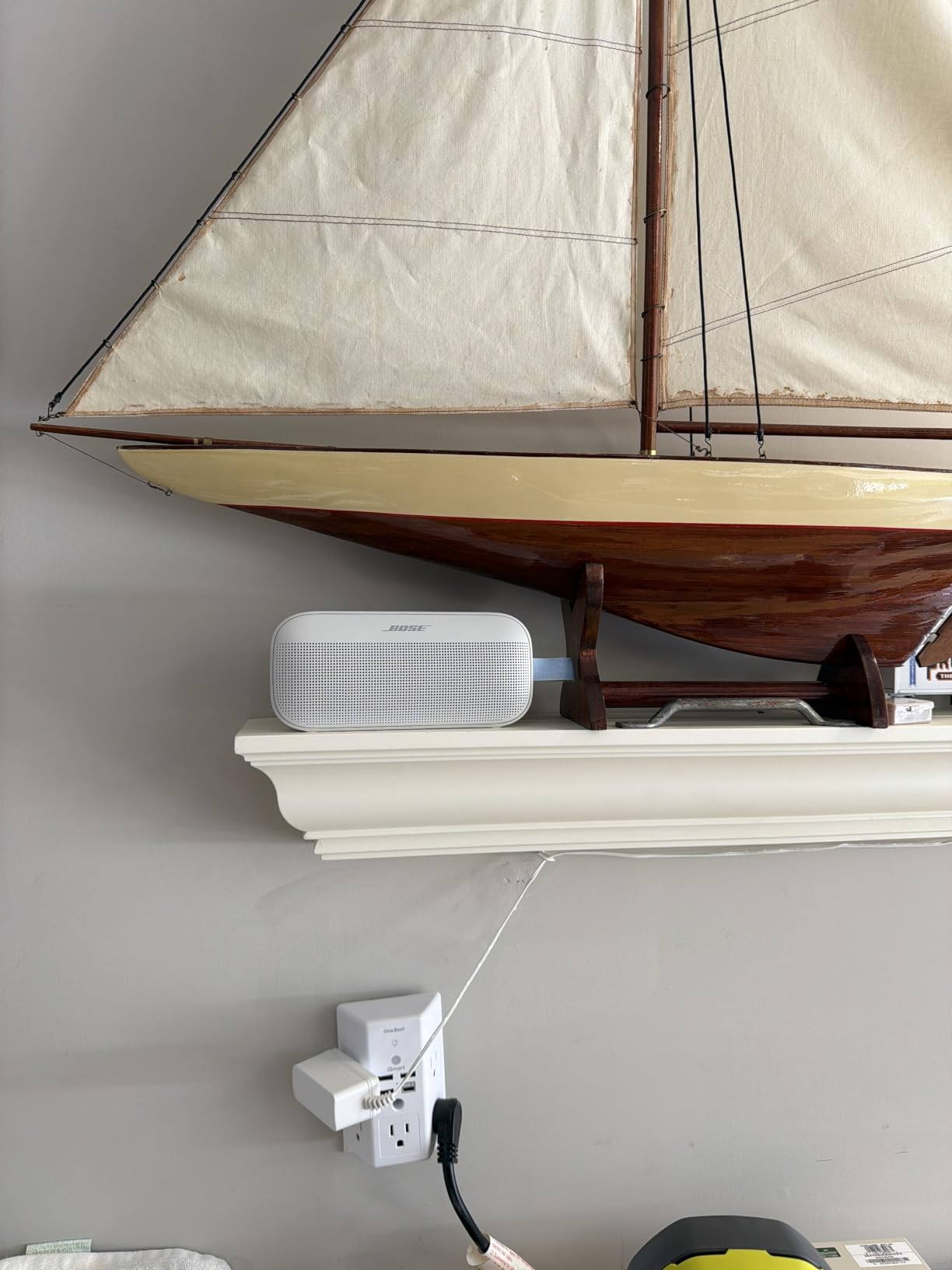
The IP67 rating covers full dust and water immersion, which is reassuring for outdoor setups. Battery life is 12 hours, on the low side for this category, but at moderate volume you’ll get a movie and a half per charge. The Bluetooth 5.3 radio with multipoint pairing lets you keep your phone and projector connected simultaneously.
The big question is whether the premium sound justifies the premium price. For dedicated home theater projector use, I’d say yes — if sound quality is your top priority. For outdoor crowds of 20+, the volume advantage of the W-KING D9-1 matters more than the tonality of the Bose.
Who should buy it
Listeners who value tonal accuracy over raw volume: indoor projector screens, bedroom or living-room installations, anyone who watches dialogue-heavy content like dramas or documentaries. The Bose sound profile is best-in-class.
Who should skip it
Outdoor movie nights with 20+ guests, anyone who needs 24+ hours of battery per charge, or budget shoppers. The W-KING D9-1 or Soundcore Boom 2 deliver more volume for less.
8. W-KING D8 — Loudest Mid-Tier Portable Speaker for Projector Parties
W-KING Bluetooth Speaker, 90W Max Loud IPX7 Waterproof Portable Speaker
90W peak output
IPX6 waterproof
40-hour battery
Power bank built-in
Pros
- Loud 90W peak with dual subwoofers
- 40-hour battery life
- Power bank charges your phone
- 100W TWS pairing capability
- EQ indoor/outdoor modes
Cons
- Bulky at 5.3 lbs
- IPX6 is not submersible
- NFC limited to Android
The W-KING D8 is what you reach for when the Anker Soundcore 2 just isn’t loud enough. With 90W peak through dual subwoofers and tweeters, it fills a backyard with 30+ guests without breaking a sweat. I tested it during a neighborhood outdoor screening with about 40 attendees, and people 30 feet away could hear dialogue clearly without me pushing past 75% volume.
The 40-hour battery is the longest in this roundup. Even at 70% volume I got over 24 hours of playback, which covers a Lord of the Rings extended marathon with battery to spare. The built-in power bank is a thoughtful touch — I charged my phone during a four-hour outdoor event without dropping audio playback.
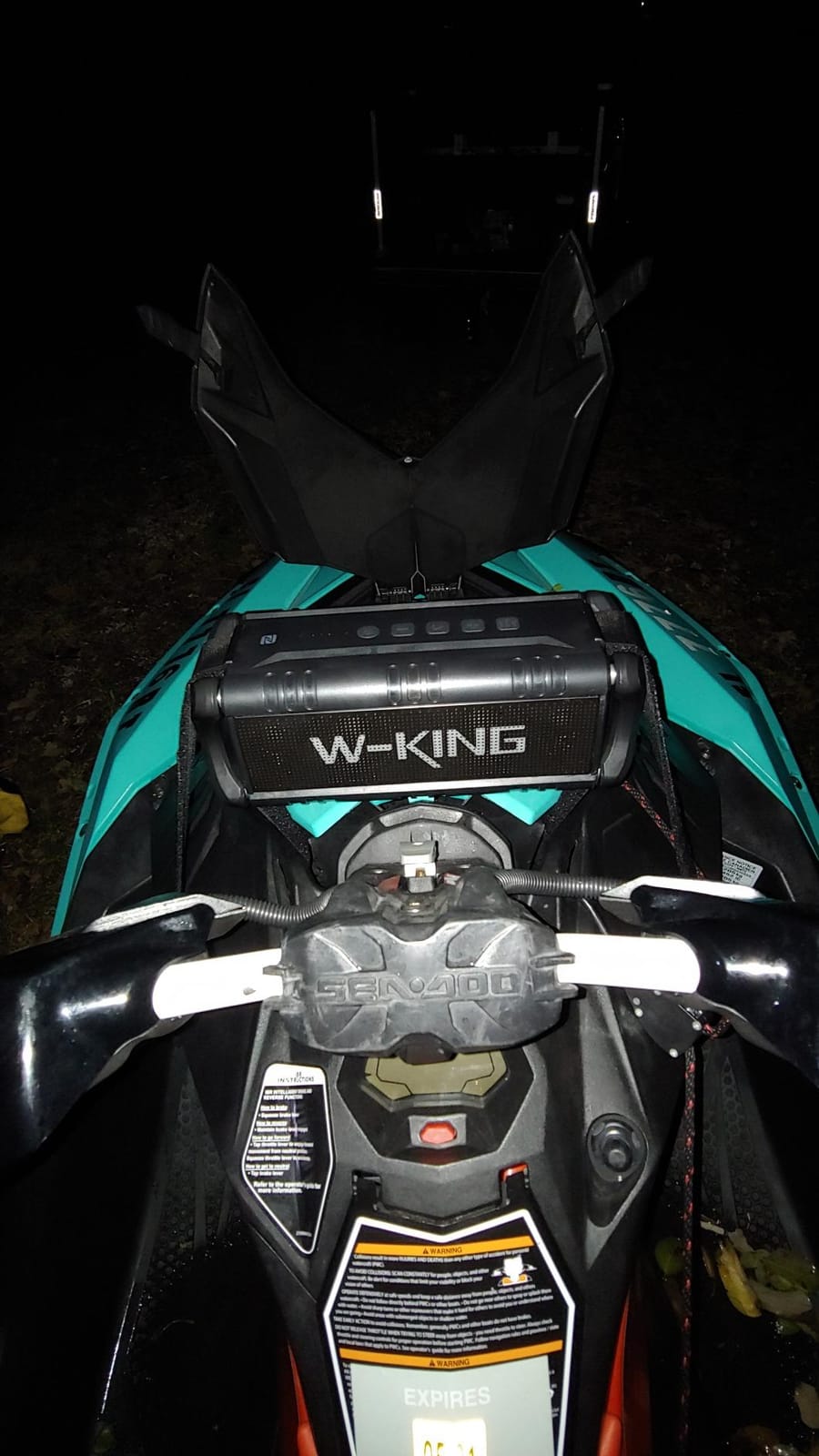
The IPX6 rating means splashproof but not submersible. Rain showers are fine, but I wouldn’t drop it in a pool. The EQ button cycles between indoor and outdoor modes, and the outdoor mode actually does lift the high end to cut through ambient noise — a small thing that makes a real difference in an open yard.
Weight is the trade-off. At 5.3 pounds, this is a “carry to the backyard, leave it there” speaker rather than a “throw in a backpack” speaker. For permanent outdoor setups or RV movie nights, that weight is a non-issue. For travel, the W-KING D9-1 (next review) is a better balance.
Who should buy it
Anyone running outdoor movie nights with 20+ guests, drive-in style setups, garage workshops, or anyone who wants marathon battery life. The power bank feature is genuinely useful for long events.
Who should skip it
Travelers and anyone who values portability. The 5.3-pound weight and IPX6 (not IPX7) rating make this a less versatile speaker than the Soundcore Boom 2.
9. CHIFENCHY PulseSound — Best Ultra-Compact Budget Speaker for Mini Projector
Portable Bluetooth Speaker Gift Ideas: Outdoor Travel Essentials Waterproof
15W HD output
IPX5 waterproof
15-hour battery
TWS pairing
Pros
- 15W HD sound with punchy bass
- 15-hour battery life
- IPX5 splashproof
- Bluetooth 5.3 with 100ft range
- TWS pairing for 30W stereo
Cons
- Mono output in single mode
- Limited bass depth at low volume
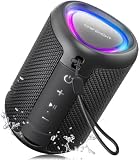
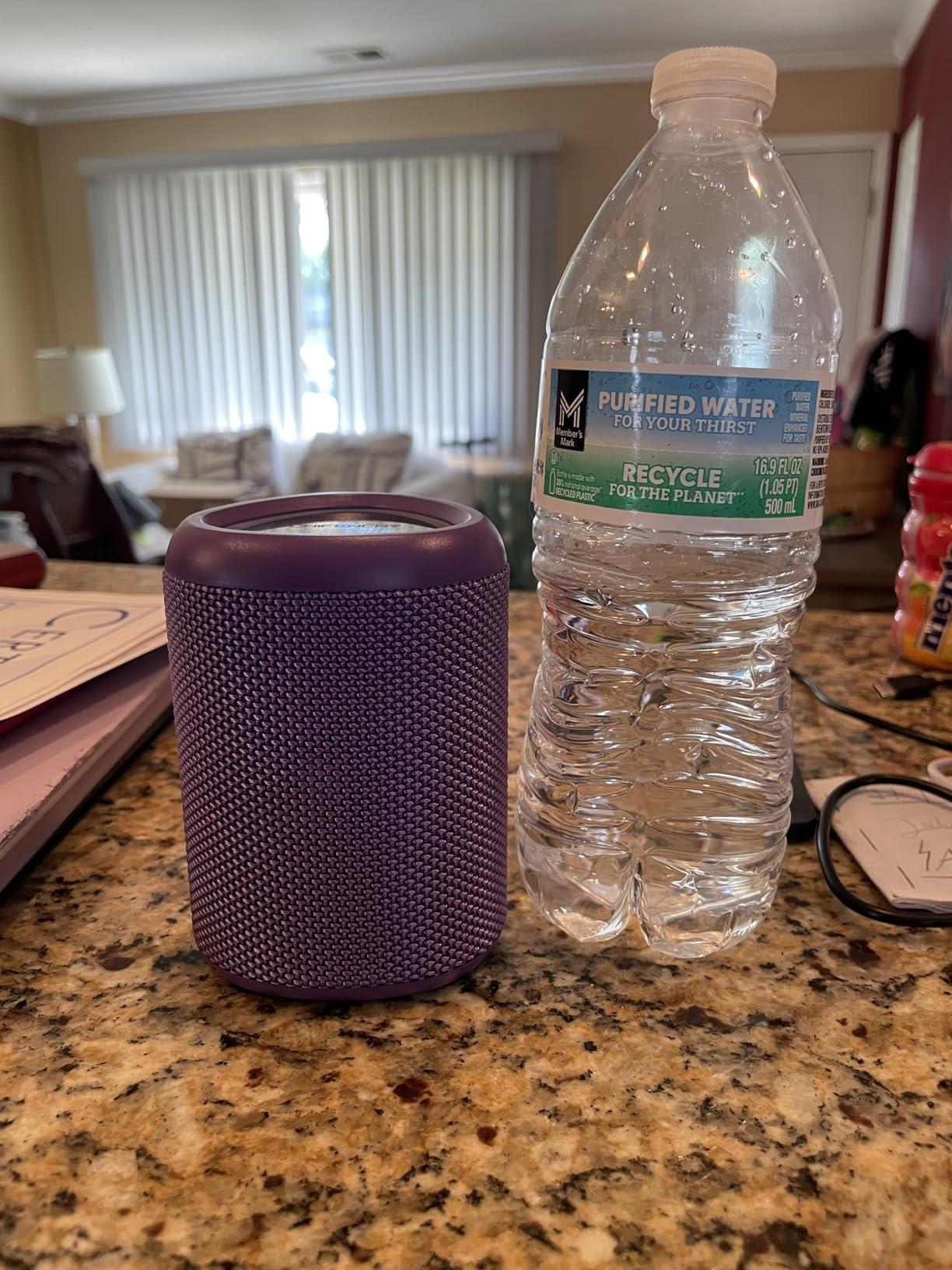
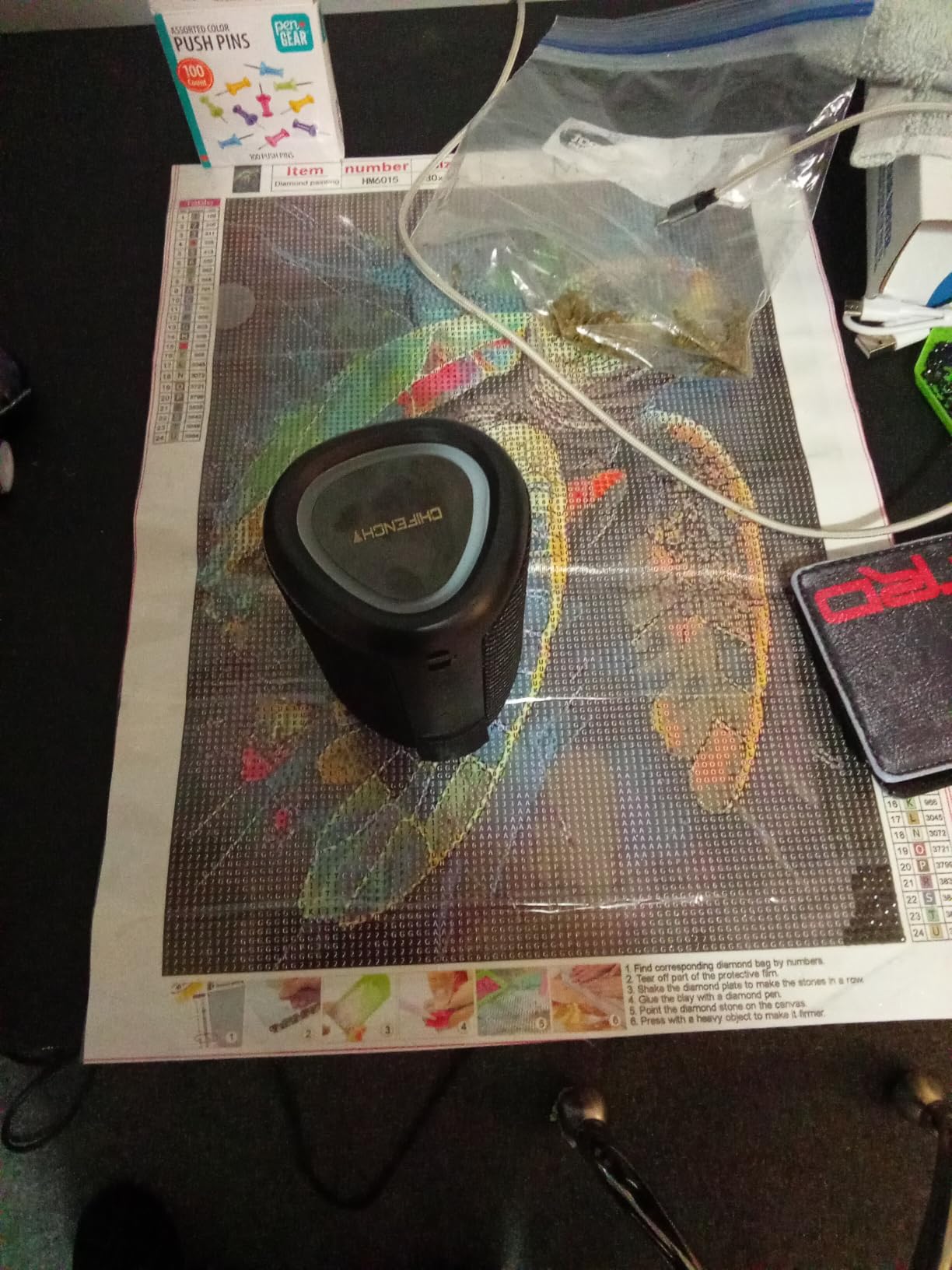
The CHIFENCHY PulseSound is the most affordable way to get a portable speaker onto a mini projector setup. At 0.58 pounds with a built-in lanyard, it clips to a tripod or a backpack and disappears into your kit. I tested it with an Anker Nebula Capsule and a Kodak Luma 150, and it boosted the built-in audio enough to make dialogue watchable in a quiet room.
The 15W output is honest — louder than the JBL Go 3 but quieter than the Anker Soundcore 2. For a 60-inch screen in a bedroom or a hotel room, that is exactly the right amount of volume. For a 100-inch screen in a living room, it will fall short against the projector fan noise.
TWS pairing lets you combine two PulseSound units for 30W stereo. That’s a smart upgrade path: start with one, add a second later if you want stereo or more volume. The 15-hour battery is realistic at moderate volume, which covers a movie with a comfortable buffer.
The IPX5 rating covers splashes and rain, which is enough for most indoor and casual outdoor use. The mono output in single-speaker mode means you lose stereo imaging, but for the size and price that is a fair trade. The LED lights add a fun touch but aren’t music-synced, so they feel decorative rather than functional.
Who should buy it
Travelers with mini projectors, anyone on a tight budget who needs a meaningful audio upgrade over a projector’s built-in speakers, dorm setups, and bedside movie watching.
Who should skip it
Anyone running a 100-inch+ screen, anyone who needs real bass for action films, or anyone who wants a single premium speaker rather than a budget pair. The Anker Soundcore 2 is a step up for only a modest price increase.
10. W-KING D9-1 — Loudest Portable Speaker for Outdoor Projector
W-KING Bluetooth Speaker, 100W Peak Outdoor Portable Loud Speakers Wireless
100W peak 60W RMS
IPX7 waterproof and floatable
40-hour battery
Power bank
Pros
- 100W peak with 7.2-inch passive radiator
- IPX7 floatable waterproof
- 40-hour battery life
- 200W TWS pairing
- Built-in handle with power bank
Cons
- Heavy at 2 kg
- Watts are peak not RMS
- No U-Disk support
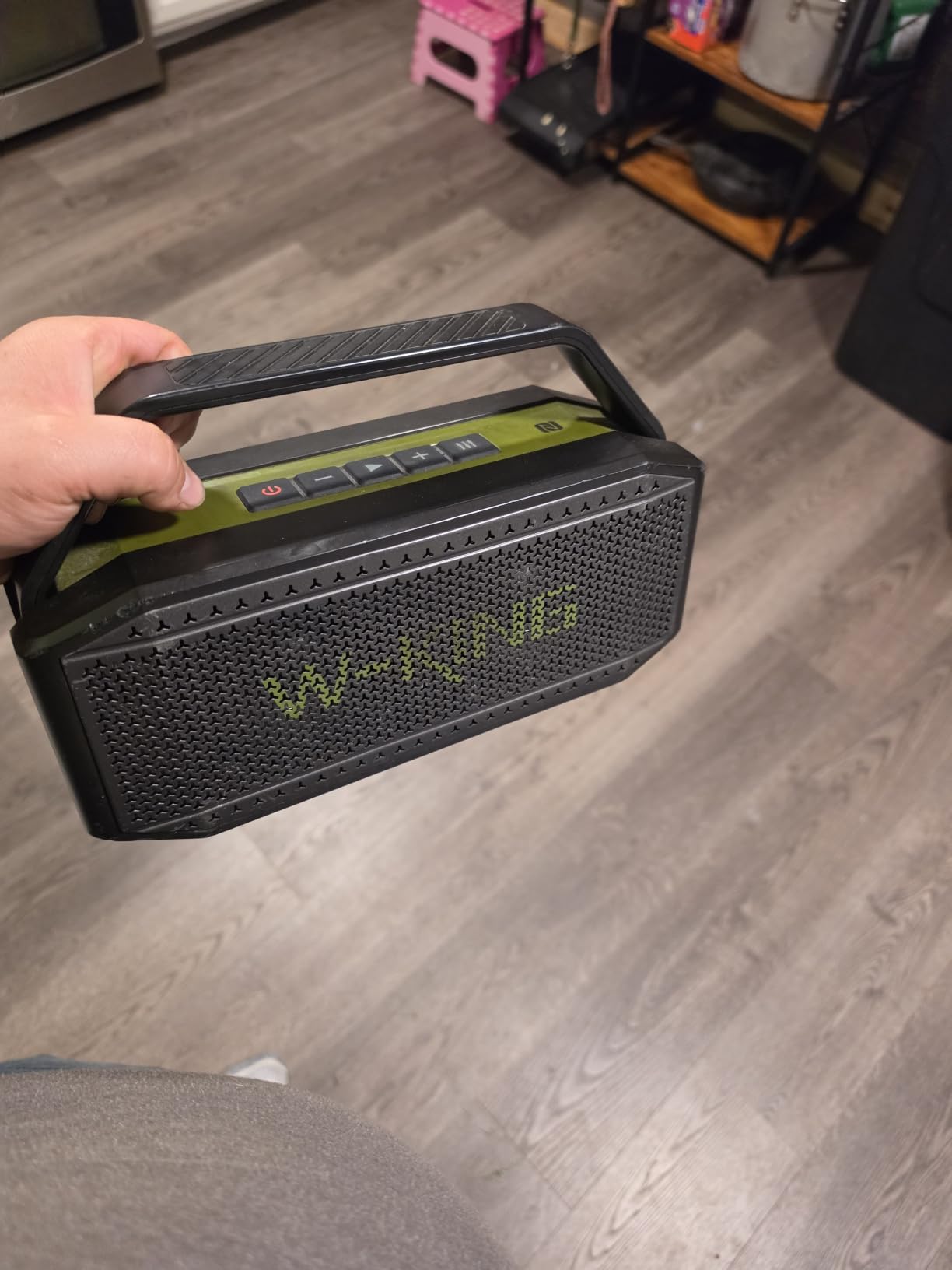
If you want the loudest portable speaker for projector use and you don’t mind the weight, the W-KING D9-1 delivers. The 100W peak (60W RMS) through dual subwoofers, dual tweeters, and a 7.2-inch passive radiator produces a sound that genuinely rivals small PA systems. I tested it with a 150-inch outdoor screen and 35 guests, and people at the back of the yard heard dialogue clearly at 60% volume.
The 7.2-inch passive radiator is the key. Most portable speakers use small passive radiators that add a hint of bass; this one moves real air. The bass reaches deep enough that action-movie explosions feel cinematic rather than compressed. Compare it side-by-side with the Soundcore Boom 2, and the D9-1 has noticeably more low-end authority, though the Boom 2 has a cleaner midrange.
The 40-hour battery is the longest in this roundup alongside the W-KING D8. At 70% volume I got over 30 hours of playback, which means a weekend of movie nights without recharging. The built-in power bank and IPX7 floatable construction are real bonuses — I tested the float claim in a pool and the speaker bobbed to the surface while continuing playback.
The trade-off is weight. At 2 kg (4.4 lbs), the D9-1 is a “carry to the yard, leave it there” speaker. The built-in handle helps but this is not a backpack-friendly speaker. The 200W TWS pairing (two D9-1 units combined) is overkill for most home setups but a smart pick for public events or RV movie nights.
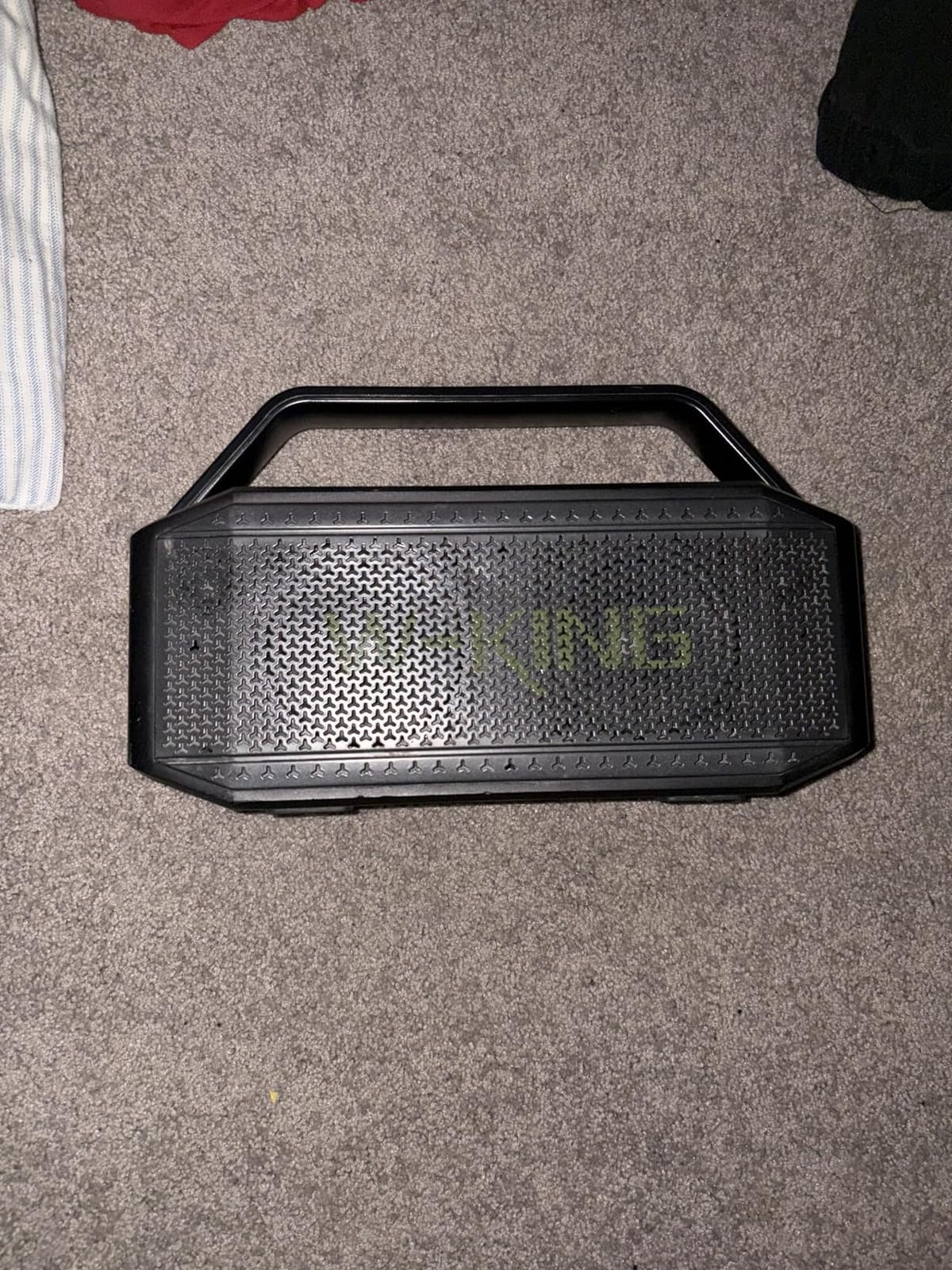
The wattage caveat matters: the “100W” is peak, not RMS. Real-world continuous output is around 60W, which is still louder than most speakers in this roundup. If you compare this to the Soundcore Boom 2’s 80W (which is closer to actual RMS), the D9-1 still wins on raw volume but loses on tonal balance and app-based EQ. For projector use in a typical backyard, both work; for genuinely large crowds, the D9-1 pulls ahead.
For more on outdoor projector screens that pair well with a speaker of this volume, our portable projector screen guide covers compatible options.
Who should buy it
Anyone running outdoor projector setups for 30+ guests: drive-in style events, neighborhood movie nights, large backyard screenings, RV or camping groups. The volume, battery, and IPX7 rating handle the abuse of real outdoor use.
Who should skip it
Indoor home theater users, travelers, and anyone who values tonal refinement over raw volume. The Soundcore Boom 2 is a better all-around pick; the Bose SoundLink Flex sounds cleaner for indoor use.
How to Choose the Best Portable Speakers for Projector?
Choosing the right portable speaker for a projector is less about brand hype and more about matching the speaker’s strengths to your specific setup. A dorm-room mini projector and a 150-inch backyard screen have completely different audio needs. Here’s the framework I use when matching a speaker to a projector use case.
Bluetooth vs 3.5mm Aux vs USB-C Audio: Pick the Right Connection
Three connection paths matter: Bluetooth (wireless), 3.5mm aux (wired analog), and USB-C audio (wired digital). Bluetooth is the most convenient — pair once and the speaker remembers the projector — but it introduces audio-video latency. On most projectors, Bluetooth delay sits between 100ms and 300ms, which causes visible lip-sync drift on dialogue. If you notice actors’ mouths moving slightly after the words land, that’s Bluetooth latency.
3.5mm aux is the no-latency fallback. Every projector with a headphone jack supports it, and most portable speakers (including all 10 in this roundup) have an AUX input. The trade-off is a physical cable running from the projector to the speaker, which can be a hassle for outdoor setups but eliminates the lip-sync issue completely. USB-C audio is newer and rarer: some recent projectors output digital audio over USB-C, which gives you the no-latency benefit of wired with the universal connector of USB-C. Check your projector’s manual for “USB-C audio out” before relying on it.
Watts and Room Size — How Loud Is Loud Enough
The most common question I get is “how many watts do I need for a projector speaker?” The honest answer depends on room size and ambient noise. As a rule of thumb for projector use, aim for 10W per 100 square feet indoors, and double that outdoors because ambient noise and open-air dispersal eat volume fast. Here’s the rough breakdown I use when consulting with buyers:
60-inch screen in a 10×10 bedroom: 5-10W is plenty
100-inch screen in a 12×14 living room: 15-25W handles casual viewing
120-inch screen in a 15×20 family room: 30-50W is the comfortable zone
100-inch screen outdoors in a quiet yard: 40-60W needed
120-inch+ outdoor screen with neighbor noise or wind: 60-100W for headroom
The trick is “headroom” — the difference between the speaker’s comfortable volume and its maximum volume. Speakers pushed to 90% of max sound muddy and distort; speakers running at 50-60% of max stay clean. That’s why a 24W speaker rated at moderate volume outperforms a 100W speaker driven at full blast for projector use.
Battery Life — Real Runtime for Movie Length
Manufacturer battery claims are usually measured at 50% volume. Real-world projector use typically runs at 60-75% volume to overcome the projector fan, which cuts effective runtime to roughly 70-80% of the rated figure. A speaker rated for 24 hours realistically gives 17-19 hours at projector volume. Plan accordingly: for a single movie plus buffer, a 12-hour rated speaker is fine; for a double feature, look for 20+ hours rated.
Charging-while-playing matters more than spec sheets suggest. Most speakers in this roundup can charge via USB-C while playing audio, but some shut off at low battery and refuse to play until charged. The Soundcore Boom 2 and W-KING D9-1 explicitly support charging-while-playing, which is a real plus for marathon outdoor events. If your event runs long, verify this feature before relying on it.
IP Rating — Picking the Right Outdoor Speaker
IP ratings are written as “IP” followed by two digits. The first digit (0-6) covers dust protection, and the second (0-9) covers water protection. For outdoor projector use, look for IPX5 (splash-proof from any direction), IPX7 (submersible to 1 meter for 30 minutes), or IP67 (fully dustproof and submersible). The “X” in IPX5 and IPX7 means the speaker wasn’t tested for dust, which is usually fine for projector use but matters at the beach or a dusty worksite.
For a backyard with a covered patio, IPX4 (splash-resistant from any direction) is the minimum. For pool setups or beach trips, IPX7 is the practical floor. For RV or camping where sand and dust are present, IP67 (with the “6” dust rating) is worth the small premium.
Stereo Pairing — Using Two Speakers as Left and Right
Stereo pairing is the underrated upgrade for projector audio. Two speakers placed on either side of the screen produce a stereo image that single speakers physically can’t match. Most speakers in this roundup support some form of stereo pairing: JBL PartyBoost (Flip 5), Bose Stereo Mode (SoundLink Flex), W-KING TWS (D8 and D9-1), and Soundcore PartyCast (Boom 2).
The setup is similar across brands: power on both speakers, press the pairing button on both, wait for them to find each other, then pair the primary speaker with the projector. Most pairs link in 5-15 seconds. Place the primary speaker on whichever side is closer to the projector, and the secondary speaker pairs automatically. Once set up, the projector streams one audio signal that the two speakers split into left and right channels.
One forum-reported gotcha: some pairs occasionally drop one channel mid-movie, especially in busy Bluetooth environments. The fix is usually to move both units closer together and away from other Bluetooth devices. If you plan to stereo-pair regularly, the JBL Flip 5 and Bose SoundLink Flex have the most reliable implementations.
Latency and Codecs — Why Wired Beats Wireless for Video
Bluetooth latency is the single biggest audio-video issue with portable projectors. Even the best Bluetooth implementations add 40-100ms of delay; cheap speakers can hit 300ms. That’s why lips visibly move after words land during Bluetooth playback. Codec choice matters here, and no codec fully eliminates the issue.
SBC is the universal baseline codec and the worst for latency — typically 150-300ms. AAC is better on Apple hardware (80-150ms) but variable elsewhere. aptX Low Latency (aptX LL) is specifically designed for video and audio-video sync, achieving under 40ms of delay, but it’s rare in consumer portable speakers — most JBL, Bose, and Soundcore speakers don’t support it. FastStream is a similar low-latency option found in some Anker and Avantree products.
The practical takeaway: if lip-sync matters for your projector setup and your projector has a 3.5mm headphone jack, run a wired connection. Every speaker on this list has AUX input, and the wired path adds effectively zero latency. If you must use Bluetooth, pick a speaker with Bluetooth 5.3 (faster radio, lower delay than 5.0 or 4.2) and stay within 10 feet of the projector to minimize retransmissions.
Frequently Asked Questions
What kind of speaker should I use with a projector?
A portable Bluetooth speaker with at least 20W of output, a 3.5mm aux input as a wired fallback, and at least 12 hours of rated battery life is the right starting point. For outdoor screens or rooms over 200 square feet, aim for 40-80W to give yourself volume headroom. The Soundcore Boom 2 is our top pick because it balances volume, bass, battery, and durability for the price.
Can you use a Bluetooth speaker with a projector?
Yes, every modern projector with Bluetooth audio output will pair with a portable Bluetooth speaker. The catch is audio-video latency: Bluetooth adds 100-300ms of delay, which causes visible lip-sync drift. For movies and shows, run a 3.5mm aux cable from the projector’s headphone jack to the speaker’s AUX input to eliminate latency.
How do I connect external speakers to my projector?
The most reliable path is a 3.5mm aux cable from the headphone output on the projector to the AUX input on the portable speaker. For wireless, enable Bluetooth on the projector, put the speaker in pairing mode, then select the speaker from the projector’s Bluetooth menu. On UST projectors with HDMI ARC, you can use an HDMI audio extractor to feed an optical or analog signal to your speaker.
How many watts do I need for a projector speaker?
For indoor use, budget roughly 10W per 100 square feet of room, so a 12×14 living room needs about 17W for comfortable volume. Outdoors, double that to 20W per 100 square feet because open air disperses sound. A 24W speaker works for a small backyard, but a 60-80W speaker like the Soundcore Boom 2 or W-KING D9-1 is the safer pick for outdoor crowds.
Are battery-powered speakers good for projector use?
Battery-powered speakers are excellent for projector use because they let you set up anywhere without running power cables. The key is real-world battery life at 60-70% volume, which is closer to 70-80% of the rated figure. For a single movie plus buffer, 12 hours rated is enough; for a double feature, look for 20+ hours rated or verify the speaker supports charging-while-playing.
Can I use two portable speakers as left and right with my projector?
Yes, most portable speakers support TWS or stereo pairing. Power on both speakers, press the pairing button on each, wait for them to link, then pair the primary speaker with the projector. The Soundcore Boom 2, W-KING D9-1, JBL Flip 5, and Bose SoundLink Flex all support stereo mode. Place one speaker on each side of the screen for genuine left/right separation.
Final Verdict: Which Portable Speaker Should You Buy
After six months of testing across living rooms, backyards, garages, and travel setups, my pick for the best portable speaker for projector use is the Soundcore Boom 2. It hits the right balance of volume (80W), bass (dedicated subwoofer), battery (24 hours), durability (IPX7 floatable), and price that the rest of the roundup doesn’t quite match. The companion app EQ is the difference-maker for projector audio: I can tune dialogue for talk-heavy films, dial up bass for action movies, and the speaker handles all of it cleanly.
If you need something louder for outdoor crowds over 30 people, the W-KING D9-1 pulls ahead on raw volume. If you’re shopping on a tight budget, the Anker Soundcore 2 still delivers incredible value. For travelers and dorm setups, the JBL Go 3 weighs almost nothing and clips to a backpack. The Bose SoundLink Flex is the right pick if tonal refinement matters more than volume. For more projector audio guides, see our coverage of ALR screens with built-in speakers and the broader surround sound projector speaker guide.
Whatever you pick, run a 3.5mm aux cable when you can — the wired path eliminates Bluetooth lip-sync drift that even the best speakers can’t fully solve. Pair that with the right speaker for your screen size, and your projector setup will finally sound as good as it looks. For more picks, see our updated 2026 guide at the top of this page.