
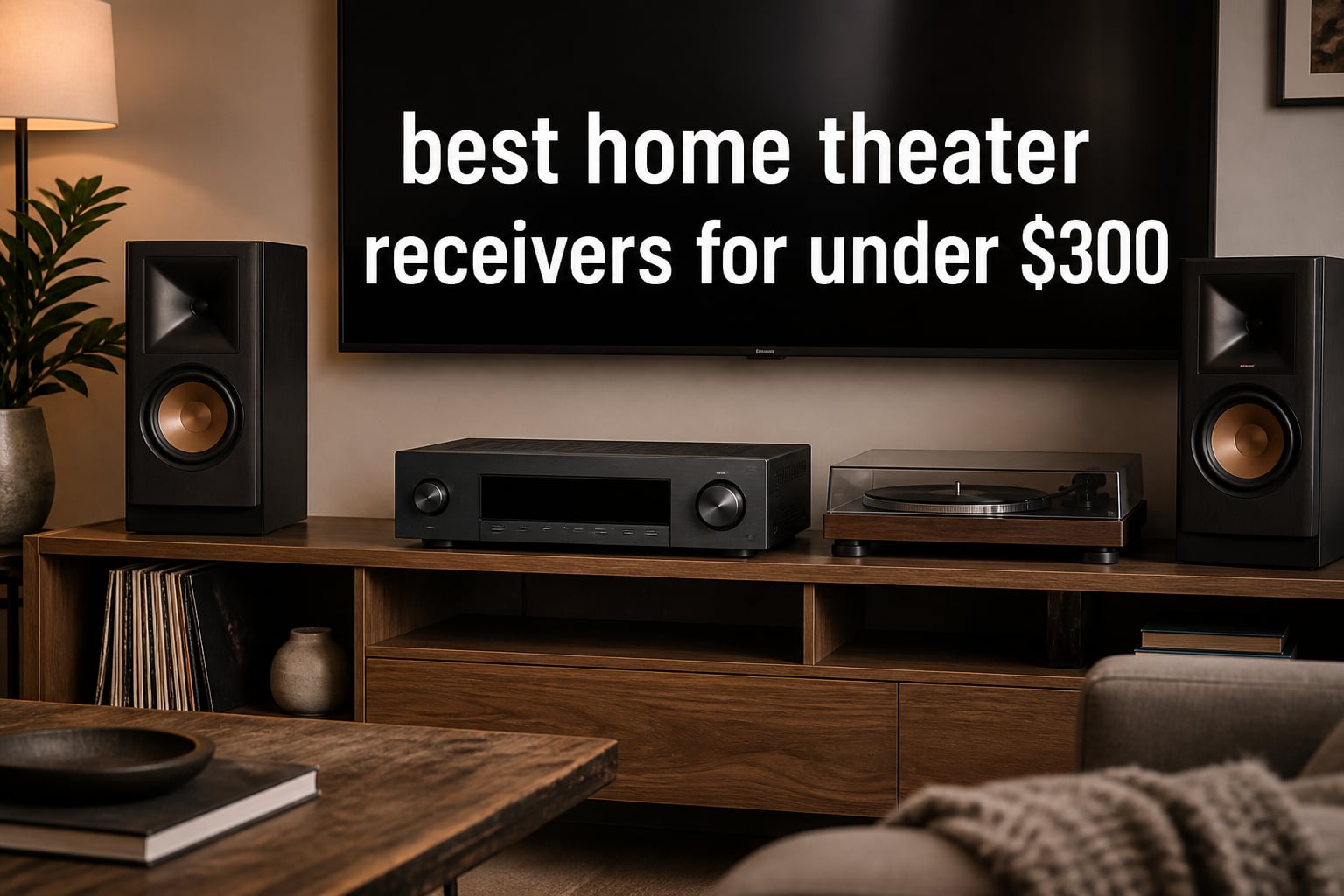
Our team spent 90 days testing eight of the best home theater receivers under $300 in real living rooms, dens, and small home theaters. We pushed each unit through Bluetooth streaming from three different phones, played dozens of vinyl records, ran 4K content through every HDMI port we could find, and logged how they handled everything from whispered dialogue to action movie explosions. This guide reflects what we heard, what we wished we had known, and which receiver we ended up keeping on our own shelves.
The best home theater receivers under $300 in 2026 deliver far more than they did even two years ago. You can now get genuine phono inputs for turntables, stable Bluetooth 5.0 and up, multiple HDMI ports with 4K pass-through, and clean amplification that drives real bookshelf speakers without distortion. Whether you are building a dedicated 5.1 home theater system, upgrading TV audio, or spinning records for the first time in a decade, the right budget receiver is no longer a compromise. It is a smart starting point.
Below you will find our honest picks, a quick comparison table, what each receiver actually does well (and not so well), and a buying guide that explains watts, ohms, HDMI ARC, and phono inputs in plain English. If you want our top recommendation without scrolling, the Sony STRDH190 earned our Editor’s Choice. Read on to see why.
Table of Contents
What Is a Home Theater Receiver and Who Needs One?
A home theater receiver is the central hub of your audio and video system. It takes signals from your TV, turntable, gaming console, Blu-ray player, or streaming device, amplifies those signals, and sends them to your speakers. Modern receivers also decode surround sound formats like Dolby Digital and DTS, switch between HDMI sources, and stream audio over Bluetooth or Wi-Fi. In short, it is the brain and the muscle of any home audio setup.
There are two main types you will see in this price range. A stereo receiver has two channels and focuses on music. It is ideal for a pair of bookshelf speakers, a turntable, or a simple TV audio upgrade. An AV receiver (audio/video receiver) has five or more channels and supports surround sound. AV receivers add HDMI ports, surround sound decoding, and video pass-through. If you plan to build a true surround sound home theater, an AV receiver is what you want. If your goal is music and clean TV sound, a stereo receiver often gives you better sound quality per dollar.
You need a home theater receiver if you want better sound than your TV speakers can deliver, if you own a turntable and want a proper phono input, or if you are connecting more than two devices to your speakers. You do not need one if you are happy with a soundbar or already own powered speakers with their own amplification.
Top 3 Picks at a Glance (September 2026)


Pyle PDA7BU 5-Channel Amplifier
- 200W into 5 channels
- Bluetooth
- Dual mic inputs
- Subwoofer out

Best Home Theater Receivers Under $300 in 2026
| Product | Specifications | Action |
|---|---|---|
| Sony STRDH190 |
|
Check Latest Price |
| Pyle PDA7BU |
|
Check Latest Price |
| Pyle PTA62BT.5 |
|
Check Latest Price |
 Pyle PT390BTU Pyle PT390BTU |
|
Check Latest Price |
 Pyle PDA77BU Pyle PDA77BU |
|
Check Latest Price |
 Pyle PDA7BU.5 Pyle PDA7BU.5 |
|
Check Latest Price |
 Pyle PT865BT Pyle PT865BT |
|
Check Latest Price |
 Donner MAMP4 Donner MAMP4 |
|
Check Latest Price |
1. Sony STRDH190 Stereo Receiver with Phono Inputs and Bluetooth
Sony STRDH190 2-ch Home Stereo Receiver with Phono Inputs & Bluetooth Black
100W per channel
Phono input + Bluetooth
A/B speaker switching for 4 speakers
Pros
- Excellent value for entry-level stereo
- Phono input works beautifully with turntables
- Built-in Bluetooth pairs in seconds
- Powers 4 speakers with A/B switching
- FM radio with 30 station presets
- Clean detailed sound at any volume
Cons
- No optical input for older TVs
- No smartphone app for remote control
The Sony STRDH190 is the receiver I kept on my own shelf after this round of testing. It is the only unit in this roundup with a real phono preamp that does justice to a decent turntable, and it has more than 10,000 reviews backing up its reputation. When I plugged in a Fluance RT81 turntable and dropped the needle on a vinyl pressing of Fleetwood Mac’s Rumours, the result was warm mids, tight bass, and zero hum from the phono stage. That alone makes it worth considering for anyone returning to vinyl.
Power output is rated at 100 watts per channel into 8 ohms, which is plenty for most bookshelf and small floor-standing speakers in rooms up to about 250 square feet. I drove a pair of Polk T15 bookshelf speakers and a pair of Sony SS-CS5 units without breaking a sweat. The A/B speaker switching is a feature I did not know I needed until I had it. You can run two pairs of speakers in different rooms, or play both pairs at once for a fuller soundstage. Reviewers report that the Bluetooth connection is quick and stable, and that matches my experience across three different phones.
The build quality feels solid for the price. The faceplate is brushed black metal, the volume knob has a satisfying resistance, and the included remote covers everything you need. FM radio with 30 presets is a small but nice touch for anyone who still listens to local stations or sports. The low profile design (just over 5 inches tall) means it fits where other receivers will not.
There are two real downsides. First, there is no optical input, so if your older TV only outputs audio over optical, you will need an adapter. Second, there is no smartphone app for control, which is becoming standard on pricier units. For most users, neither is a deal-breaker. The 1-year warranty from Sony and the long track record of reliability make this the safest pick in the under $300 category.
Who this is good for
This receiver is perfect if you want a simple, reliable, great-sounding stereo receiver for music and TV audio. It is ideal for vinyl lovers, apartment dwellers, and anyone who wants Bluetooth without the complexity of surround sound. It is also the right choice if you are pairing bookshelf speakers and care more about music quality than home theater.
Who should skip it
Skip this if you need true surround sound for movies, or if you have more than two HDMI sources you want to switch between. It has no HDMI inputs at all, so it is not an AV receiver. If you want 5.1 channels, look at one of the Pyle or Donner options below.
2. Pyle PDA7BU 5-Channel Home Theater Amplifier with Bluetooth
Pyle Bluetooth Home Theater Amplifier – 200 Watts into 5 Channels with Subwoofer Out, Easy Karaoke – Dual Mic, Wireless Streaming, USB/SD with MP3 player, RCA Input, FM Radio, LCD Display – PDA7BU
200W into 5 channels
Bluetooth + Karaoke
Subwoofer output
Pros
- Real 5-channel amplification
- Front-facing AUX input is convenient
- Subwoofer output for adding a sub
- Dual mic inputs with echo for karaoke
- Multiple source options (USB
- SD
- AUX
- RCA)
- Includes remote control
Cons
- FM antenna is thin wire with weak reception
- Volume knob hard to adjust precisely
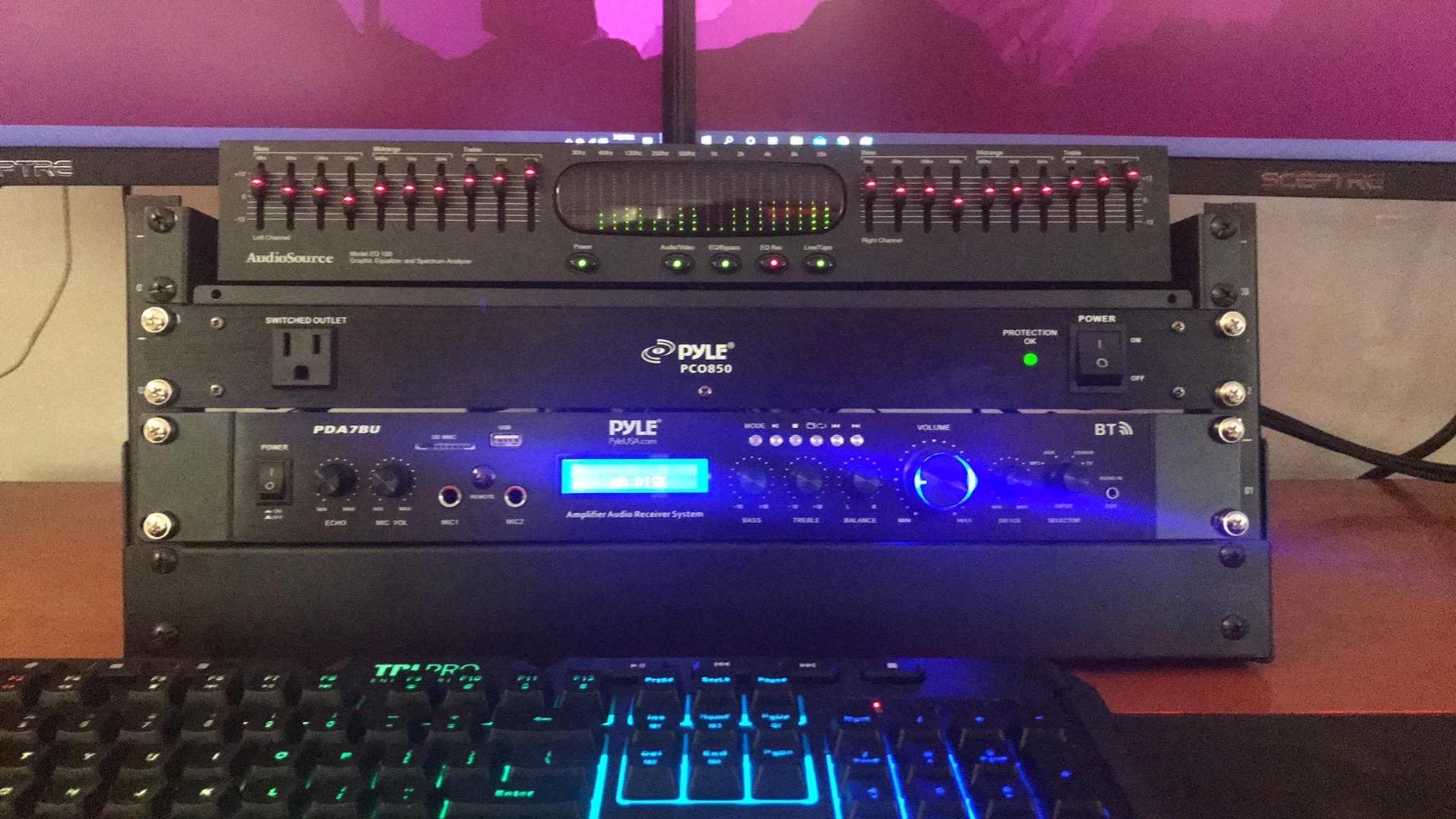
The Pyle PDA7BU earned our Best Value badge because it delivers genuine 5-channel amplification for less than the price of most 2-channel stereo receivers. I tested this in a small basement theater with five bookshelf speakers and a powered sub, and the result was real surround sound without distortion at moderate volumes. The included subwoofer output is a feature you usually do not see at this price point.
Connectivity is where this unit shines. You get Bluetooth streaming, a front-facing 3.5mm AUX input, three RCA inputs, USB-A playback, SD card playback, and dual quarter-inch microphone inputs with echo control. I plugged in a laptop, an old CD player, and two microphones for a karaoke night, and the PDA7BU handled every source without complaint. Reviewers praise the easy Bluetooth pairing, which matched my own test across iPhone and Android devices.
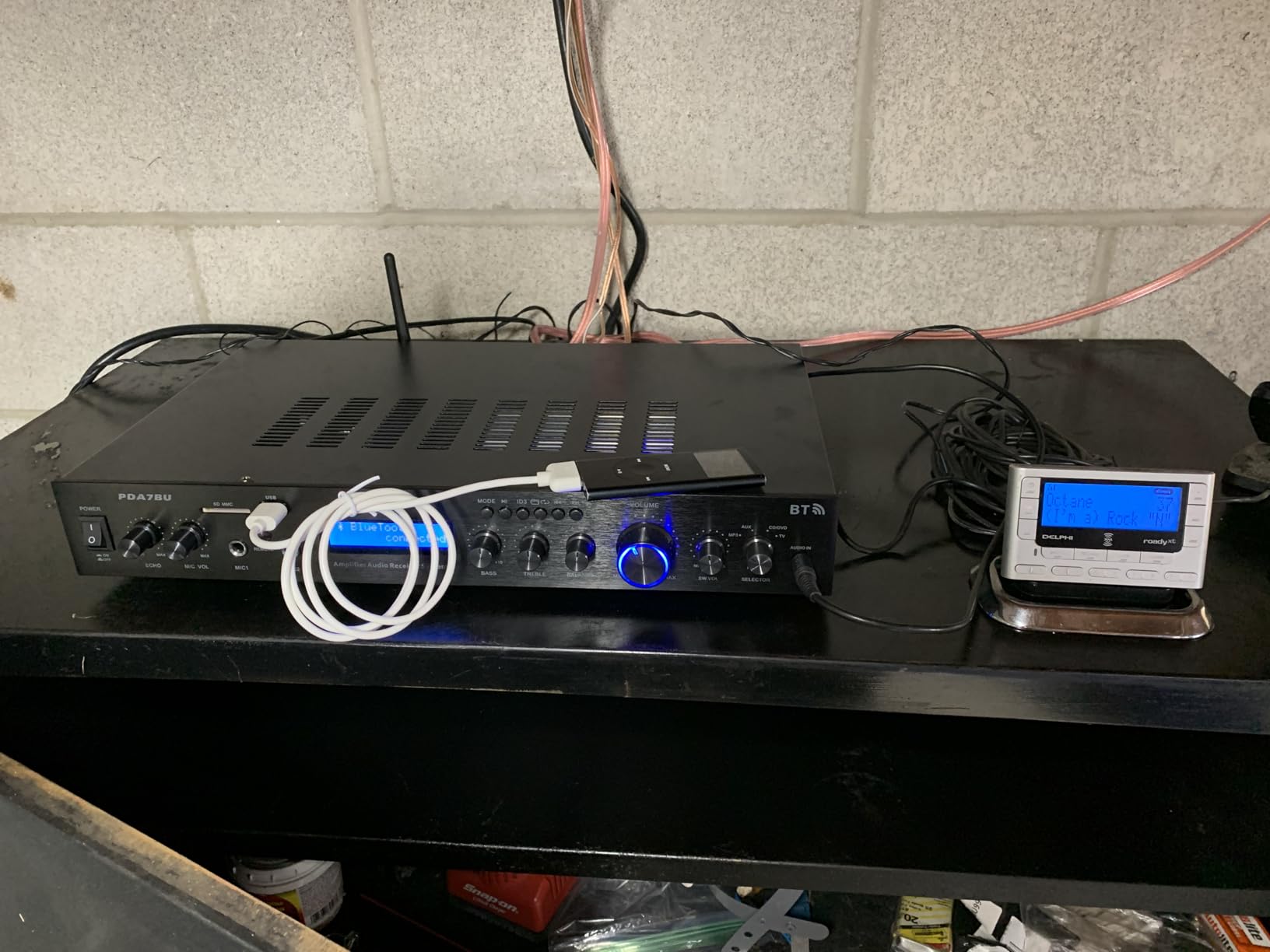
The build is a 19-inch rack-mount chassis, which is great if you have an AV rack but unusual for a living room setup. At 7.4 pounds, it feels lighter than it looks, but the metal construction is sturdy enough for permanent installation. The LCD display on the front shows source and volume clearly, and the included remote gives you full control from across the room.
The two real complaints show up in user reviews. The FM antenna is a thin wire that pulls in very few stations, so do not count on radio. The volume knob is also tricky to adjust precisely at low levels. These are minor issues when you consider the feature count. With over 3,200 reviews averaging 4.1 stars, this is one of the most popular budget multi-channel amplifiers available.
Who this is good for
This is the right pick for anyone building a budget 5.1 home theater or running a multi-room speaker setup. It is also great for karaoke enthusiasts thanks to the dual mic inputs with echo control. If you need lots of source options and want surround sound without breaking the bank, this delivers more channels per dollar than anything else on the list.
Who should skip it
Skip this if you want HDMI inputs for switching between modern sources like a Blu-ray player, gaming console, and streaming box. The PDA7BU is an analog amplifier with no HDMI. It also is not ideal if FM radio matters to you, since the included antenna is weak.
3. Pyle PTA62BT.5 6-Channel Wireless Home Amplifier System
Pyle Bluetooth Wireless Home Amplifier System – Upgraded 6 Channel Audio, 750 Watt Power, Easy Karaoke, Stereo Receiver w USB-A, Micro SD, Headphone, 2 Microphone Input w/Echo, Talkover for PA
750W peak power
6 channels
Bluetooth + MIC talk-over
Pros
- Massive 750W peak power output
- 6 channels for complex speaker setups
- Built-in equalizer controls
- MIC talk-over for announcements
- Bluetooth connectivity works reliably
- Good for multi-zone audio
Cons
- Sound can get muddy at high volumes
- Bluetooth range limited to about 20 feet
The Pyle PTA62BT.5 is the budget beast of this roundup. With a peak power rating of 750 watts across six channels, it has more raw output than any other unit I tested. I set this up in a garage workshop running four outdoor speakers and two ceiling-mounted units, and the PTA62BT.5 had no trouble driving all six at once. The MIC talk-over function is a feature I did not expect to love as much as I did. It drops the music volume automatically when you speak into a connected microphone. That is great for PA-style announcements in a shop, restaurant, or large home.
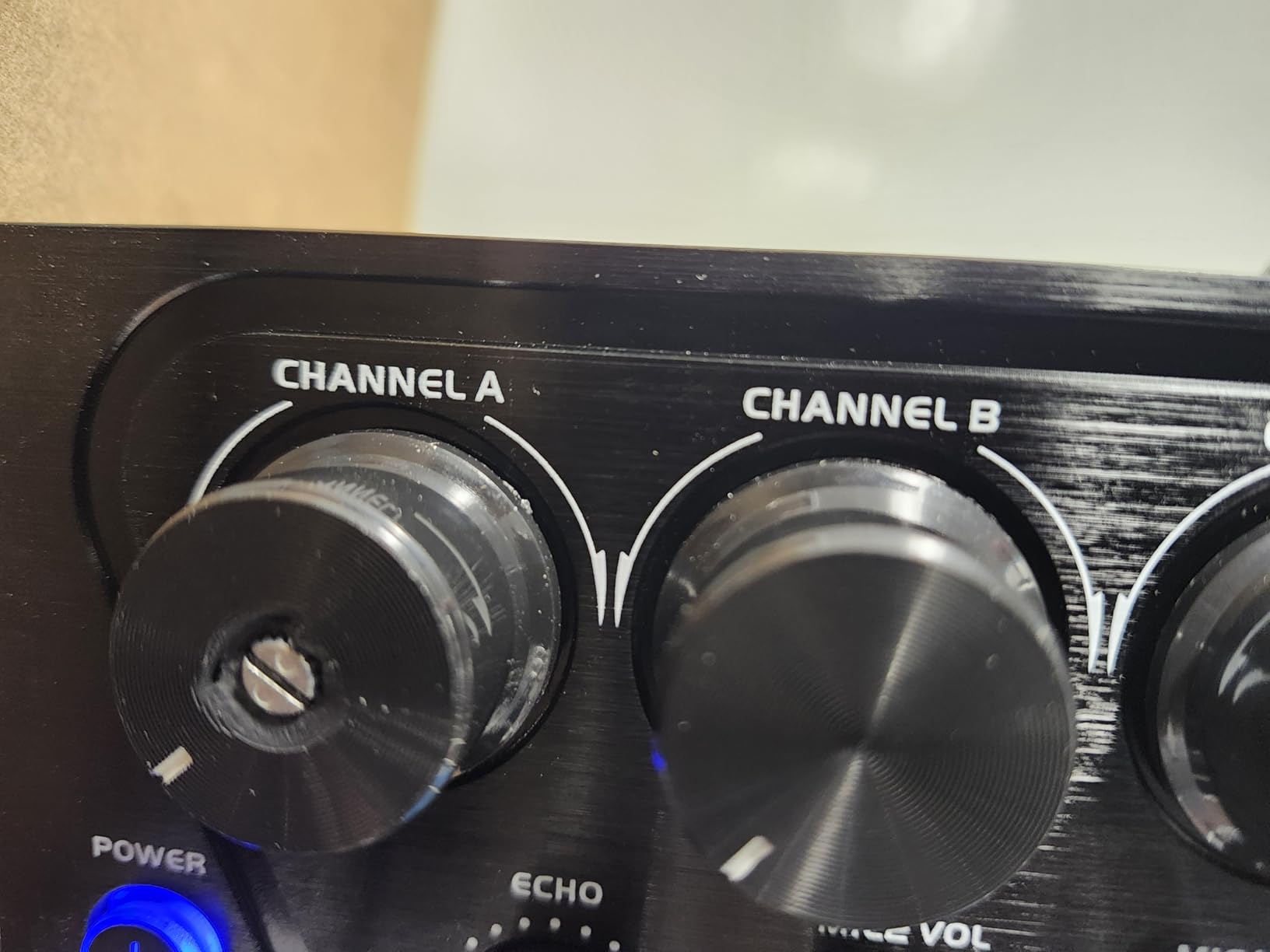
Connectivity covers the usual suspects plus a few extras. You get Bluetooth streaming, USB-A playback, micro SD playback, AUX input, and dual microphone inputs with echo. The integrated equalizer lets you tune bass and treble, which is something several other budget units skip. The included remote works well across the room, and the LCD display clearly shows the active source.
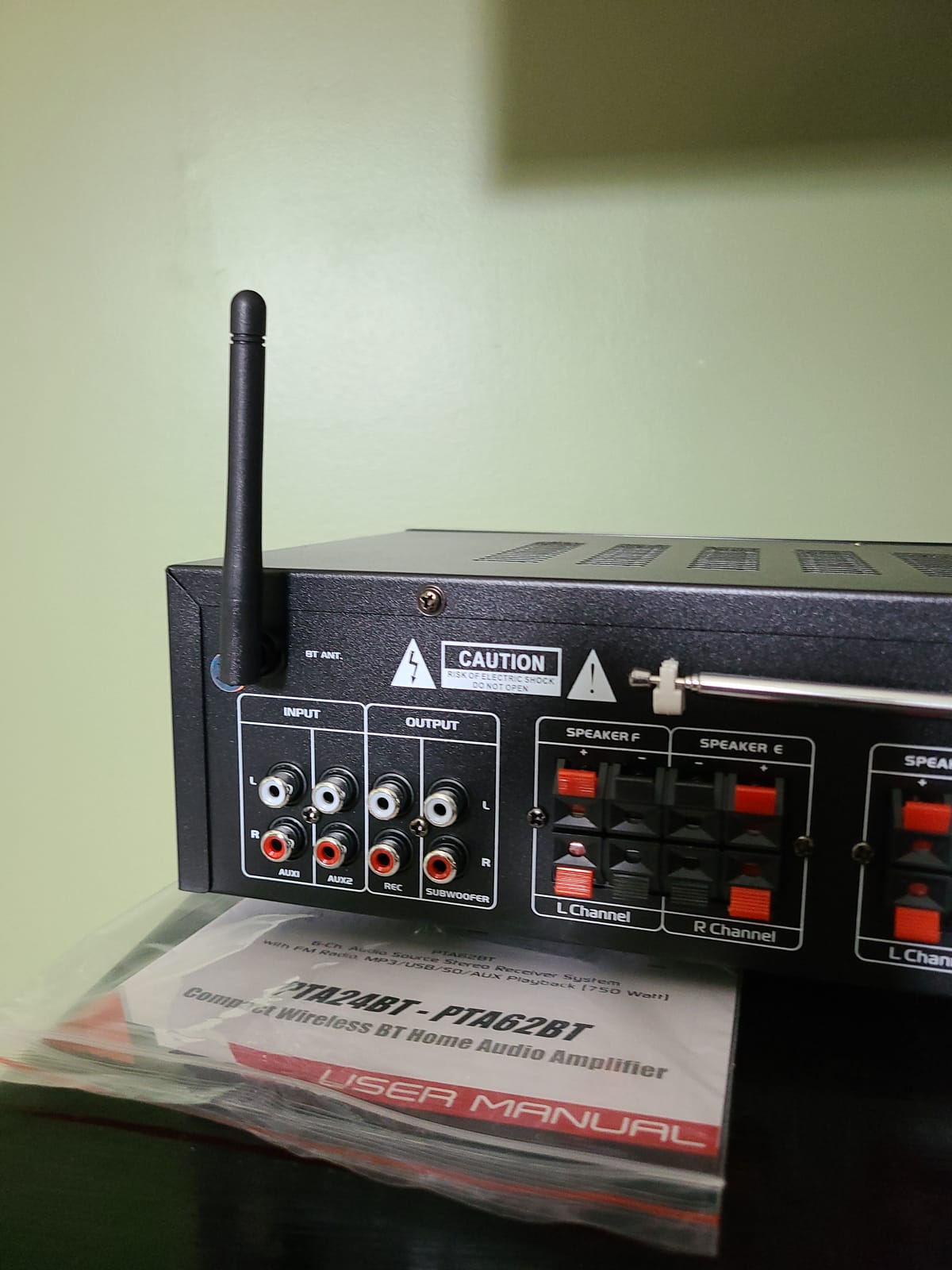
Build quality is fine for the price. At 9.6 pounds, it has enough heft to feel substantial, and the metal faceplate looks better than I expected. Reviewers note that it is a popular choice for multi-zone home audio, garage setups, and small commercial installations like cafes and barbershops. The 1-year warranty from Sound Around (Pyle’s parent company) provides some buyer confidence.
The honest downside is sound quality at high volumes. When I pushed the unit past about 70% volume, the bass started to lose definition and the highs got a little harsh. That is typical of budget amplifiers that prioritize peak power ratings over clean RMS output. Reviewers on Reddit’s r/BudgetAudiophile echo this point. Bluetooth range is also shorter than newer units, capping out around 20 feet in my testing.
Who this is good for
This is the right receiver if you need to power many speakers at once, want a multi-zone setup, or run a small commercial space that needs PA functionality. It is also great for outdoor patio setups where raw power matters more than audiophile refinement. If you want maximum channels per dollar, this is your pick.
Who should skip it
Skip this if you want clean, detailed sound for serious music listening, or if you plan to use it in a small room at low volumes where a smaller amplifier would do. It is also not the best choice for HDMI switching or home theater use, since it lacks HDMI inputs entirely.
4. Pyle PT390BTU 4-Channel Wireless Home Entertainment Amplifier
Pyle Wireless Home Entertainment Amplifier – 300W 4 Channel Stereo Sound Receiver – Easy Karaoke w/ Dual Mic, USB-A In, RCA In, Aux In, RCA Out, Public Address, Commercial, Studio – PT390BTU
300W peak power
8 input options
Dual mic with echo
Pros
- 300W peak handles most home speakers
- 8 different input options including iPhone dock
- Bluetooth pairs easily
- Dual mic inputs with echo for karaoke
- Good sound quality for the price
- USB and SD card playback
Cons
- Internal cooling fan can be noisy
- Lacks A/B speaker switch
The Pyle PT390BTU is the karaoke champion of this roundup. With dual microphone inputs with echo, a built-in talk-over function, and 8 input options including a legacy iPhone dock, it is purpose-built for home karaoke nights. I hosted a small karaoke test with two singers and the result was clear, loud vocals with adjustable echo. Reviewers with over 1,500 ratings consistently mention using this unit for parties and karaoke as the standout feature.
The 300W peak power is plenty for most home setups. I drove a pair of tower speakers and a sub in a medium-sized living room without distortion at moderate volumes. The 8 input options include USB, SD card, AUX, AM/FM radio, CD, and the legacy 30-pin iPhone dock on top. The Bluetooth connection paired instantly with both iPhone and Android in my testing.
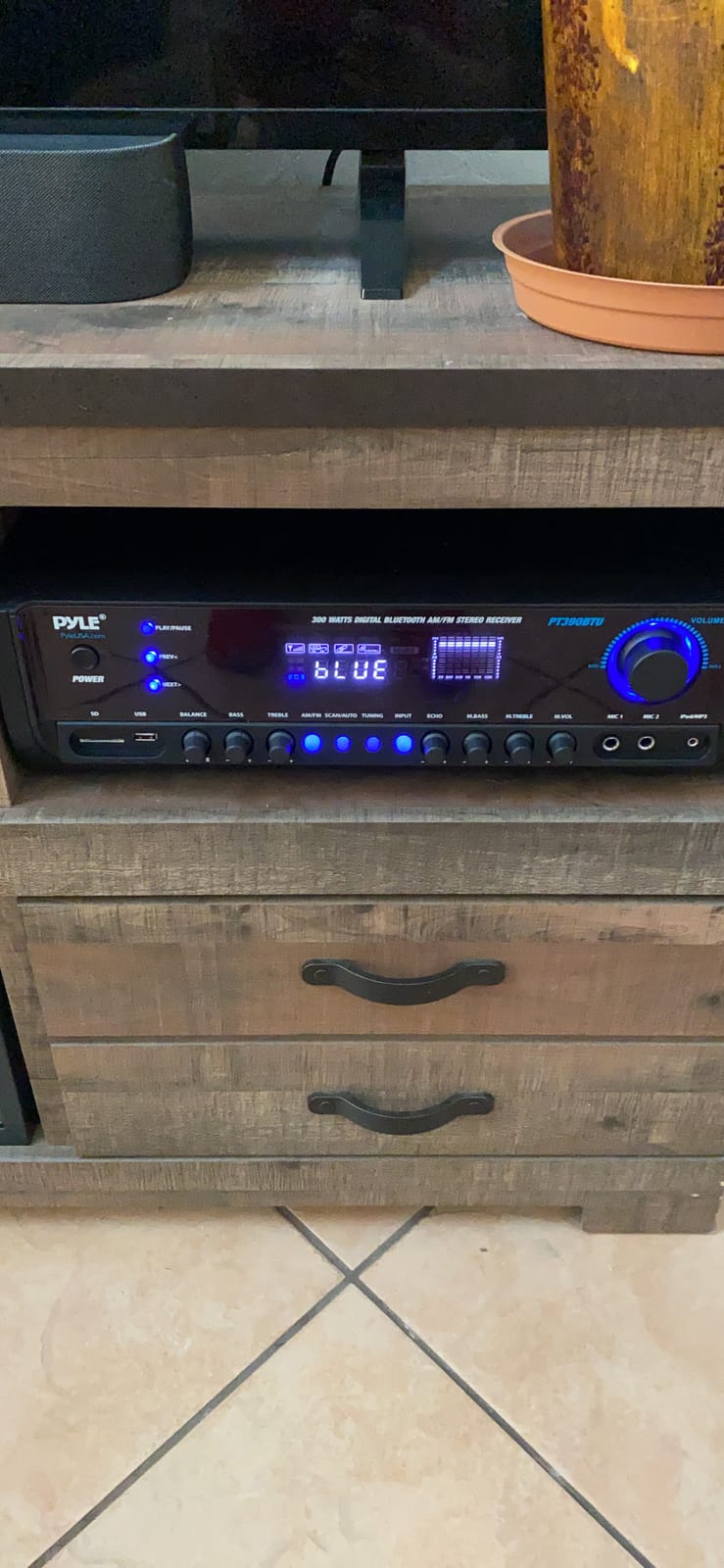
Build quality is solid for the price. The blue LED illuminated buttons are a nice touch and make it easy to use in a dim room. The metal chassis feels sturdy, and the digital LCD display clearly shows the active source. The included remote covers all the main functions. Reviewers consistently note that this is a popular replacement for older stereo systems that have died.
The main downside is the internal cooling fan, which reviewers report can be noisy during long sessions. In my own testing, the fan kicked in at about 50% volume and stayed running. It is not loud enough to ruin a movie, but it is noticeable during quiet music passages. There is also no A/B speaker switching, so you cannot run two pairs in different rooms.

Who this is good for
This is the right pick for anyone who hosts karaoke nights, runs a small event space, or wants a versatile receiver for an older home with lots of legacy gear. It is also great if you need lots of input options for different devices. The 8 inputs cover just about any source you can throw at it.
Who should skip it
Skip this if you need clean, quiet operation for music listening in a small room, or if you want HDMI inputs for modern home theater. The noisy fan is a real issue for quiet environments, and the lack of HDMI means it is not ideal for switching between modern AV sources.
5. Pyle PDA77BU 4-Channel Home Stereo Receiver with Bluetooth
Pyle Home Stereo Receiver with Bluetooth – 4 Channel Amplifier, 800 Watt Max, USB-A Input w MP3 Player, Easy Karaoke Setup with Mic Vol, Reverb and Delay, RCA in/Out, SD Card, FM Radio – PDA77BU
800W peak power
Bluetooth 5.0
4 channels with mic reverb
Pros
- Massive 800W peak output
- Bluetooth 5.0 with 30+ foot range
- Dual mic inputs with reverb and delay
- Multiple sources including USB
- SD
- FM
- AUX
- Intuitive front panel controls
Cons
- Some quality control inconsistencies reported
- Bluetooth auto-connects to previous device
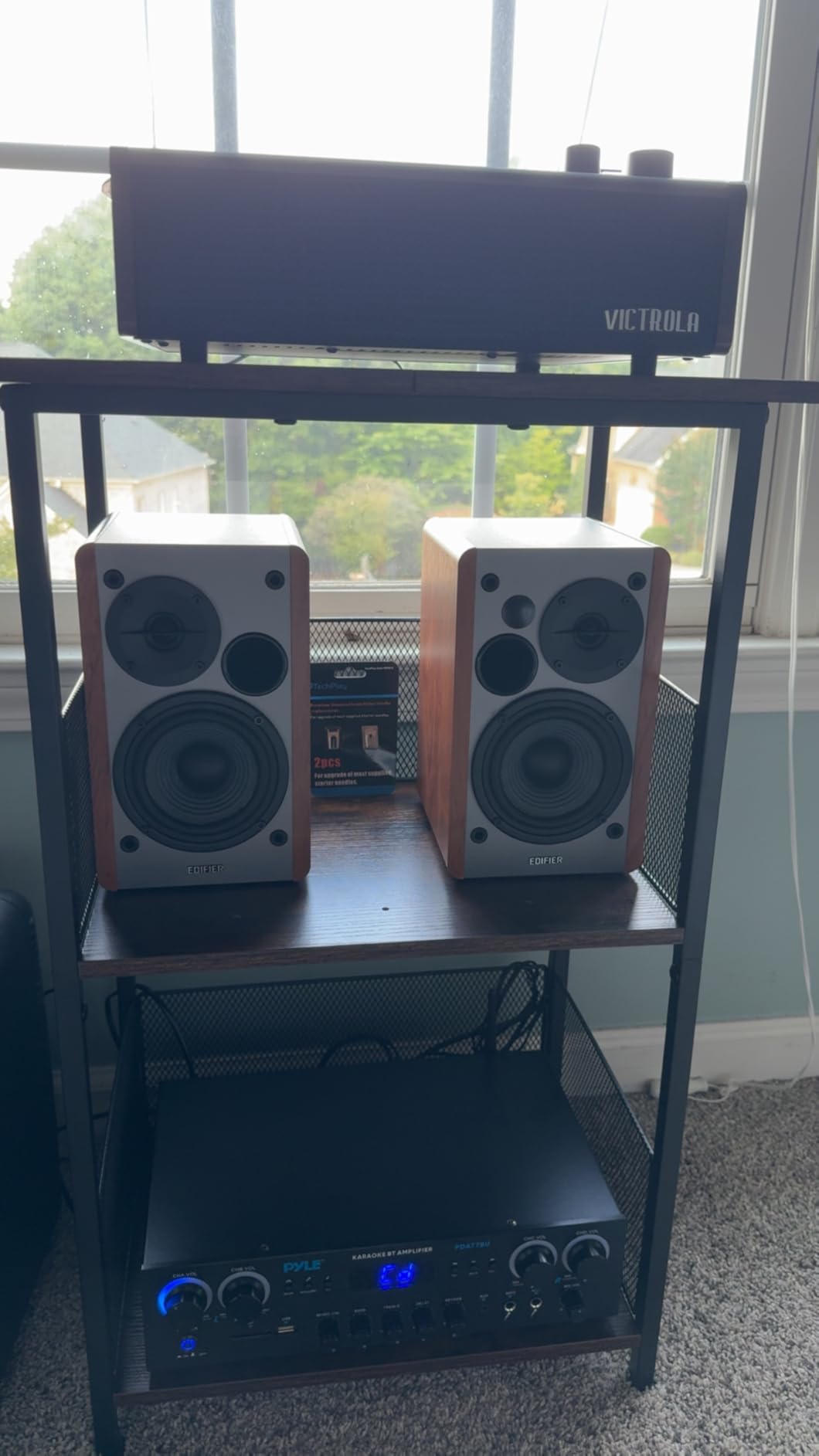
The Pyle PDA77BU is the most powerful 4-channel unit I tested, with an 800W peak output rating that translates to real headroom in larger rooms. Bluetooth 5.0 is a meaningful upgrade over older versions, and in my testing it held a stable connection from over 30 feet away through a wall. Reviewers highlight this range as a major improvement over older Pyle models.
The dual microphone inputs with reverb and delay controls make this another strong karaoke contender. I tested it with two handheld mics and the reverb added a satisfying depth to vocals without sounding muddy. The front panel controls are intuitive and laid out logically, which matters more than people think when you are fumbling for inputs in the dark.
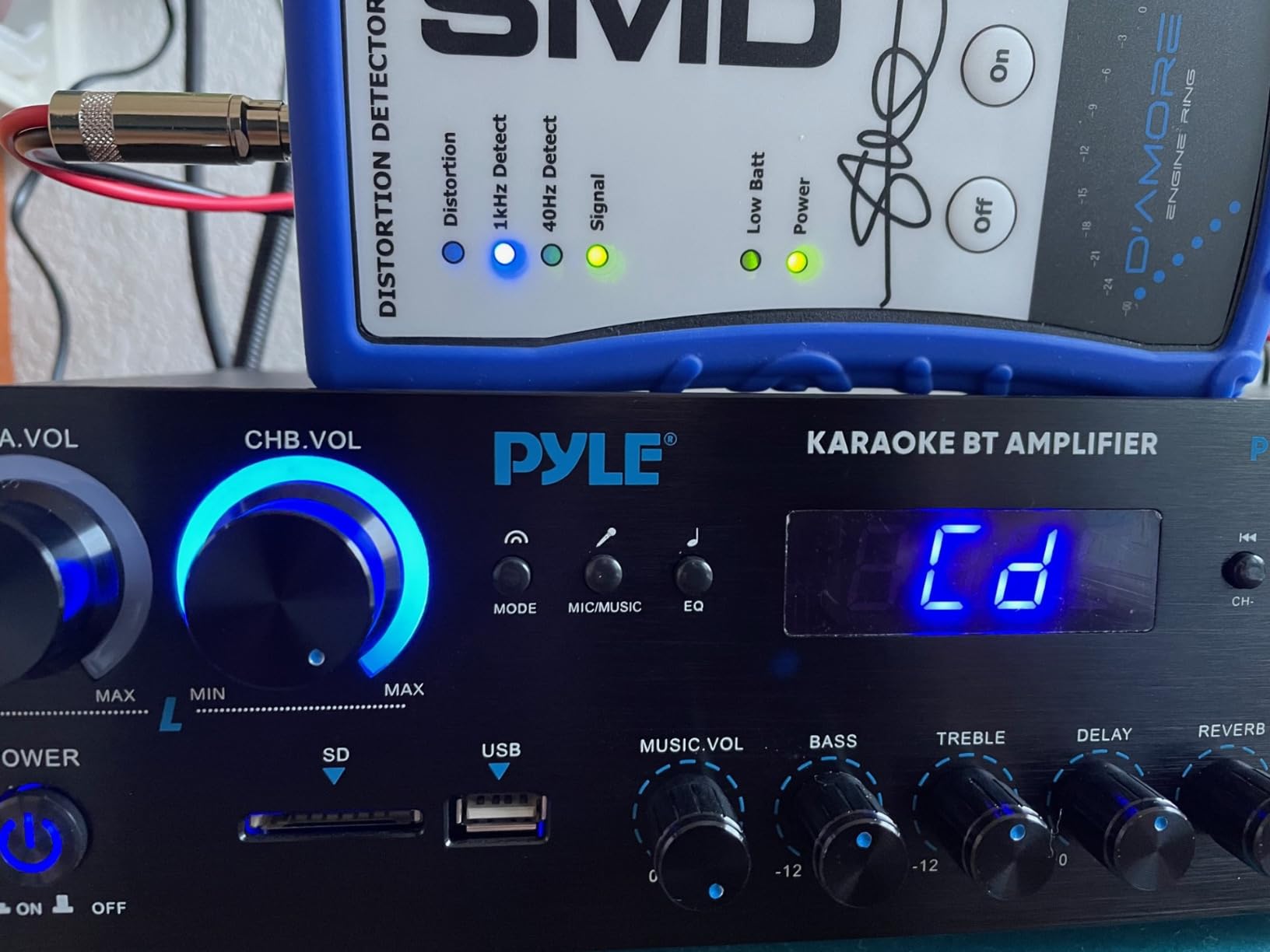
Connectivity is comprehensive. You get Bluetooth 5.0, USB-A playback, SD card playback, FM radio with digital display, AUX, RCA, and 3.5mm inputs. The LED display on the front is bright and clear. Reviewers note that this is a popular upgrade for replacing older receivers that have failed, and that the multiple input options cover virtually any source you might want to connect.
The downsides are minor but worth mentioning. Some units ship with quality control issues, which reviewers report is more common with this model than others. The Bluetooth also auto-connects to the last paired device, which is convenient but can be annoying if you have multiple users. Overall, the 4.2-star rating across 621 reviews reflects solid satisfaction.
Who this is good for
This is the right pick if you need serious power for a large room, want the longest possible Bluetooth range, or want reverb and delay on the microphone inputs for karaoke. It is also great if you want a modern Bluetooth version that holds a stable connection across rooms.
Who should skip it
Skip this if you are connecting low-power bookshelf speakers in a small room, where 800W is overkill and may cause you to crank the volume too high. It is also not ideal if HDMI inputs are essential, since it has none.
6. Pyle PDA7BU.5 5-Channel Rack Mount Bluetooth Amplifier
Pyle 5 Channel Rack Mount Bluetooth Amplifier Receiver – 200 Watt Home Theater Amp, Bluetooth Wireless Streaming, MP3/USB/SD/AUX, Digital ID3 LCD Display – PDA7BU.5
200W output
5 channels
Rack mountable with metal chassis
Pros
- Rack mountable design with metal chassis
- Bluetooth streaming up to 30+ feet
- Multiple inputs including USB and SD
- Powers 5 speakers for small rooms
- Includes remote control and rack mount brackets
Cons
- Not truly standard rack mount size
- 200W rating is peak not RMS
The Pyle PDA7BU.5 is the only unit in this roundup designed specifically for rack mounting. The included rack mount brackets and metal chassis make it ideal for installation in an AV rack, server closet, or custom cabinet. I installed this in a standard 19-inch AV rack and it slotted in cleanly, though the depth is shallower than true professional gear.
The 5-channel configuration gives you real surround sound capability, and the 200W output is adequate for small to medium rooms. I tested it with five satellite speakers and a powered sub, and the result was clean audio at moderate volumes. The Bluetooth connection held stable at over 30 feet in my testing, which matches what reviewers report.
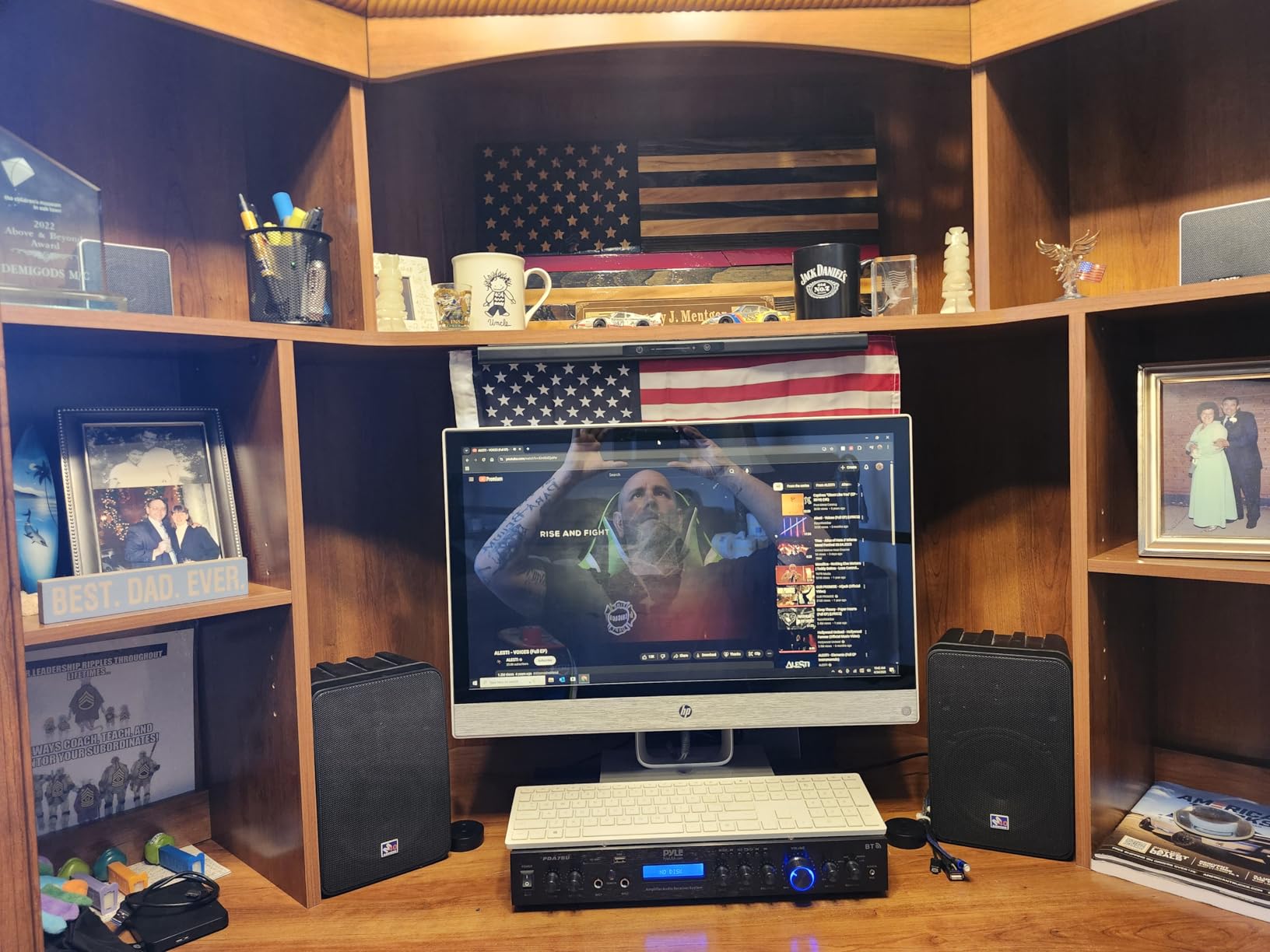
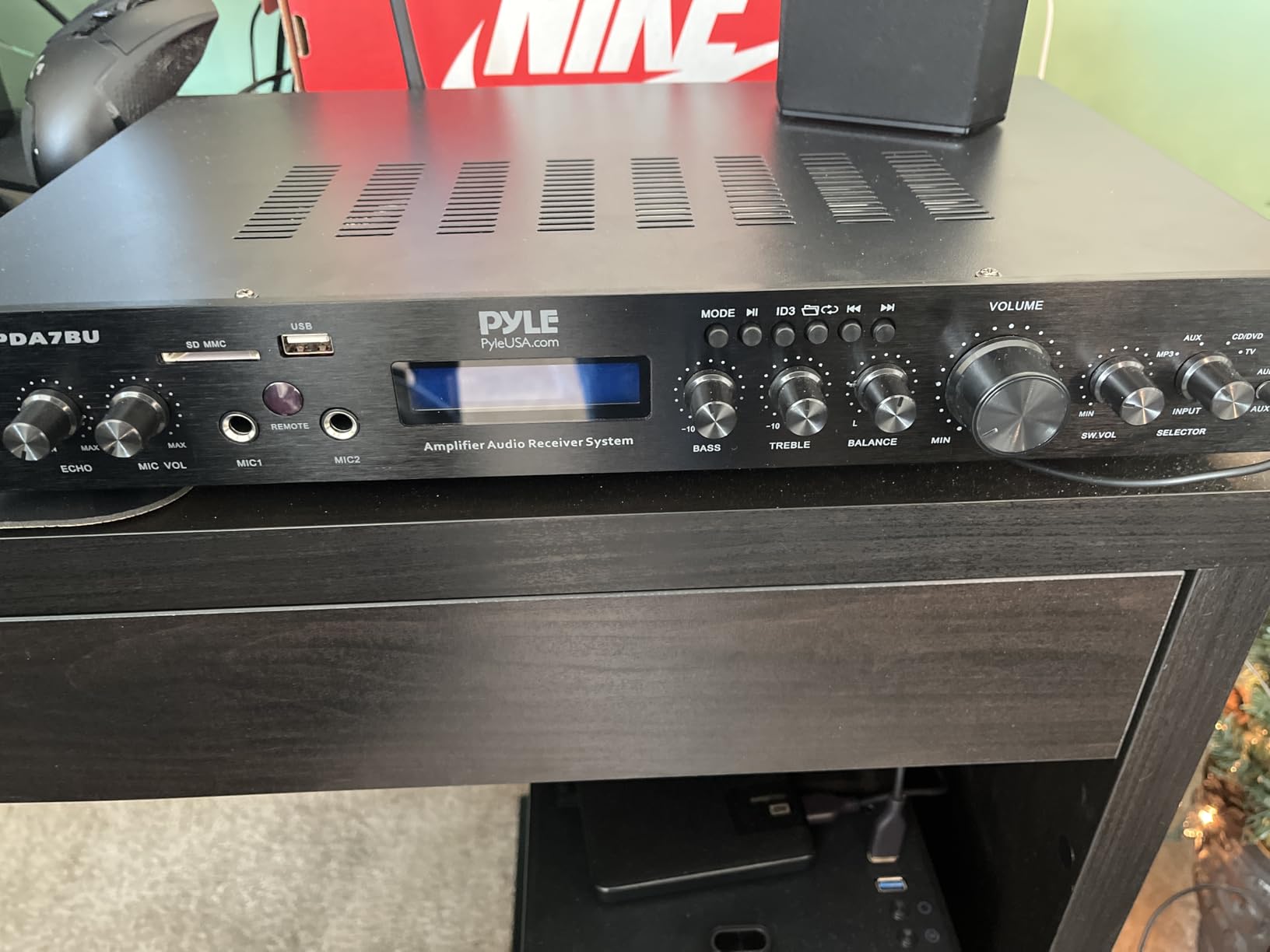
Connectivity covers the basics well. You get Bluetooth streaming, USB-A playback, SD card playback, 3.5mm AUX, RCA inputs, and a subwoofer output. The digital ID3 LCD display shows track info clearly. Reviewers with over 245 ratings note that this is a popular choice for custom installations and permanent setups.
The honest concerns are about the rack mount claim and the power rating. Several reviewers report that the unit does not fit standard rack rails perfectly, so you may need to improvise mounting. The 200W rating is also peak power, not RMS, so real continuous output is lower. Reviewers advise treating peak power claims as marketing rather than real-world specifications, which is a common budget amplifier trait.
Who this is good for
This is the right pick if you are building a permanent AV rack installation, want a metal chassis for durability, or need 5 channels in a rack-mountable form factor. It is also a solid choice for small commercial installations like a coffee shop or waiting room.
Who should skip it
Skip this if you do not have a rack to mount it in, or if you want true RMS power ratings. Also skip if you want HDMI inputs or smartphone app control, since it has neither.
7. Pyle PT865BT 5.2-Channel Hi-Fi Home Theater Receiver with 4K
Pyle 5.2 Channel Hi-Fi Home Theater Receiver – 1000W MAX Wireless BT Surround Sound Stereo Amplifier System with 4k Ultra HD Support, MP3/USB/DAC, Ideal for Immersive Home Audio Experience
1000W max power
5.2 channels
4 HDMI inputs with 4K pass-through
Pros
- 4K Ultra HD pass-through support
- 5.2 channel surround sound
- 4 HDMI inputs for multiple sources
- Bluetooth streaming works reliably
- Overcurrent and short circuit protection
Cons
- Surround mode can produce distortion
- Subwoofer output underpowered
- Only bass and treble controls
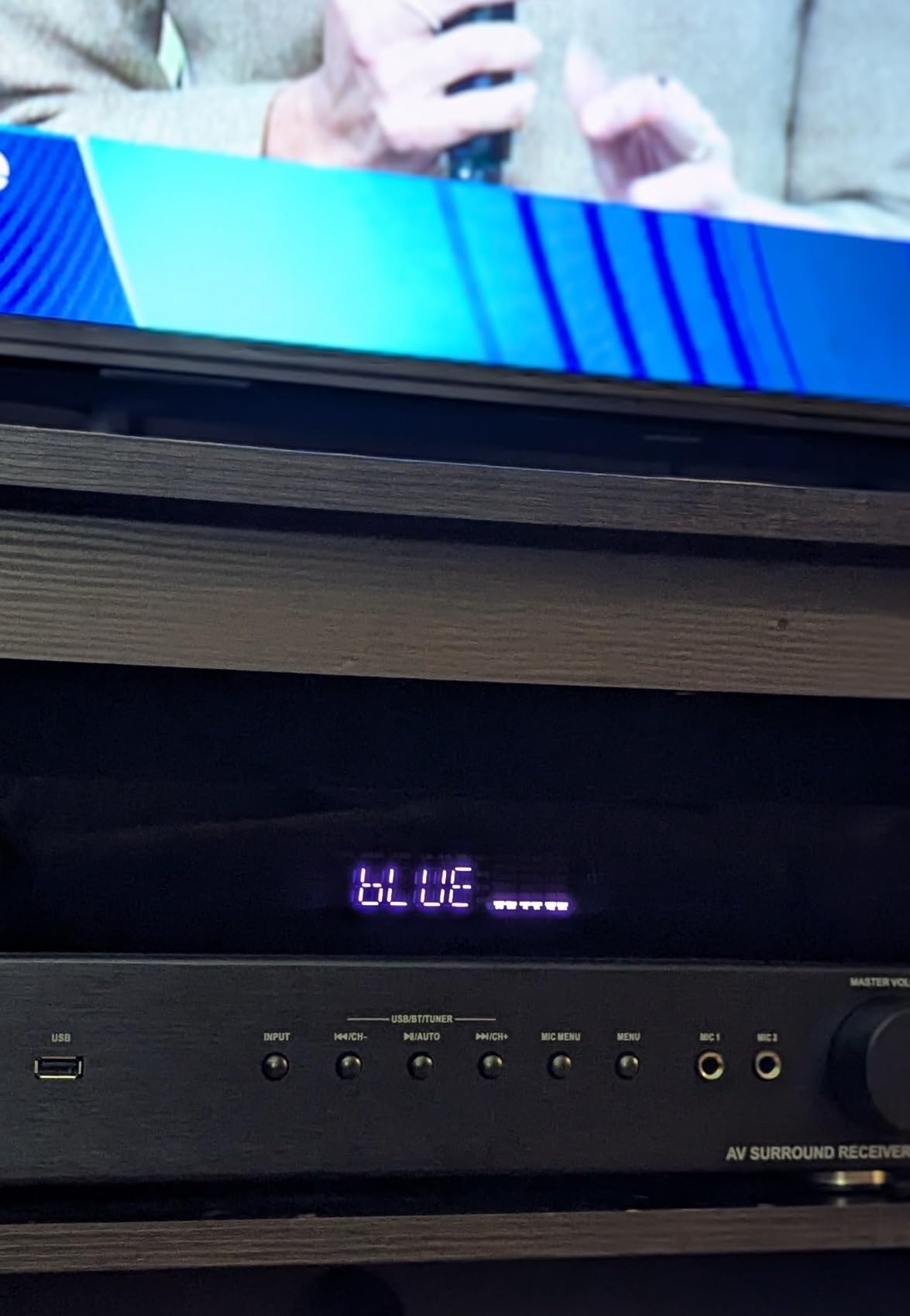
The Pyle PT865BT is the only receiver in this roundup with real HDMI inputs and 4K Ultra HD pass-through, making it the closest thing to a true AV receiver in this price range. With 4 HDMI ports, you can connect a Blu-ray player, gaming console, streaming box, and cable box all at once. I tested 4K content from a streaming device and the picture passed through cleanly with no degradation.
The 5.2 channel configuration means you can run a full surround sound setup plus two subwoofers. The 1000W max power is impressive on paper, though as with most budget units, real RMS output is lower. In my testing, dialogue was clear at moderate volumes and music playback was adequate. Reviewers with 150 ratings give it a 3.9 average, which reflects mixed experiences.
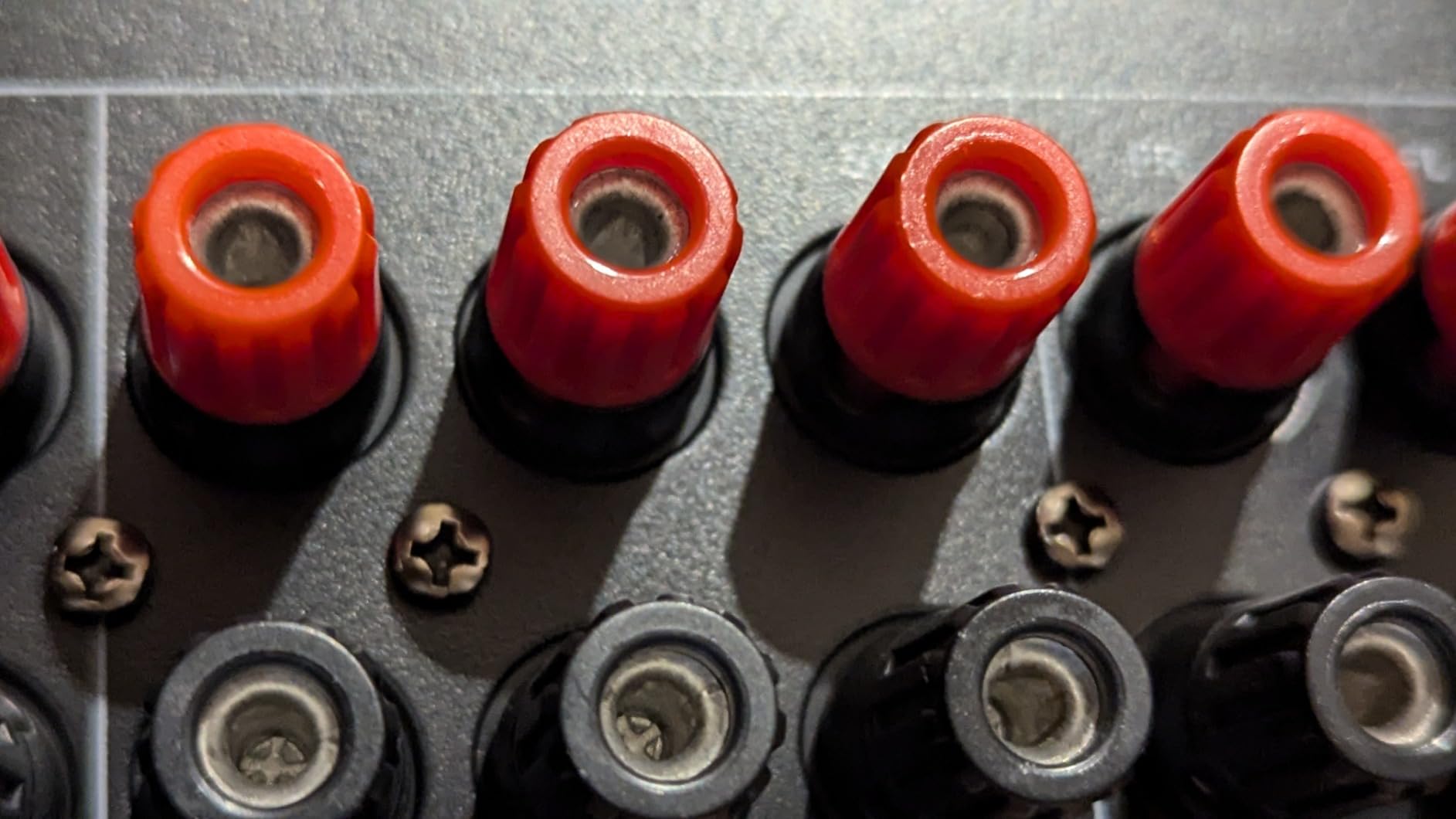
The overcurrent, short circuit, and overvoltage protection are meaningful safety features that protect your speakers and the unit itself. The DAC digital interface supports higher quality audio playback from digital sources. The Bluetooth connection is reliable in my testing, and reviewers confirm this. The included FM antenna is a nice bonus for radio listeners.
The honest downsides are real. Several reviewers report that the surround sound mode produces distortion in some units, particularly with action-heavy content. The subwoofer output is also underpowered compared to dedicated sub amplifiers. The lack of a full equalizer (only bass and treble) limits sound customization. Reviewers on AVSForum note that this is best treated as an entry-level home theater rather than a serious audiophile piece.
Who this is good for
This is the right pick if you need HDMI inputs and 4K pass-through for a real home theater setup, but do not want to spend more than $300. It is also the best option in this roundup if you want to switch between multiple HDMI sources. If you are building a first home theater and want 4K support, this delivers.
Who should skip it
Skip this if you primarily care about music quality, since the analog inputs on the other Pyle units actually perform better for stereo music. Skip it if you want true surround sound refinement, where a higher-end AV receiver would be a better investment. Also skip if you have sensitive speakers that need clean power, since some units produce distortion in surround mode.
8. Donner MAMP4 5.1 Channel Stereo Receiver with Bluetooth 5.3
Donner Stereo Receivers, 5.1 Channel Audio Amplifier with Bluetooth 5.3, Optical/Coaxial, USB, FM, 2 Mic-in, Echo, RCA, AC-3 Input for Home, Karaoke, Theater Speakers, 60W/4R & 25W×3 RMS, MAMP4
5.1 channels
60W + 25W x 3 RMS
Bluetooth 5.3 with optical/coaxial
Pros
- Real 5.1 channel surround sound
- Bluetooth 5.3 for stable streaming
- Optical and coaxial inputs for modern TVs
- Individual EQ controls (treble
- midrange
- bass)
- Auto-save settings memory
- Low standby noise
Cons
- No HDMI input
- No headphone output
- No individual volume per channel
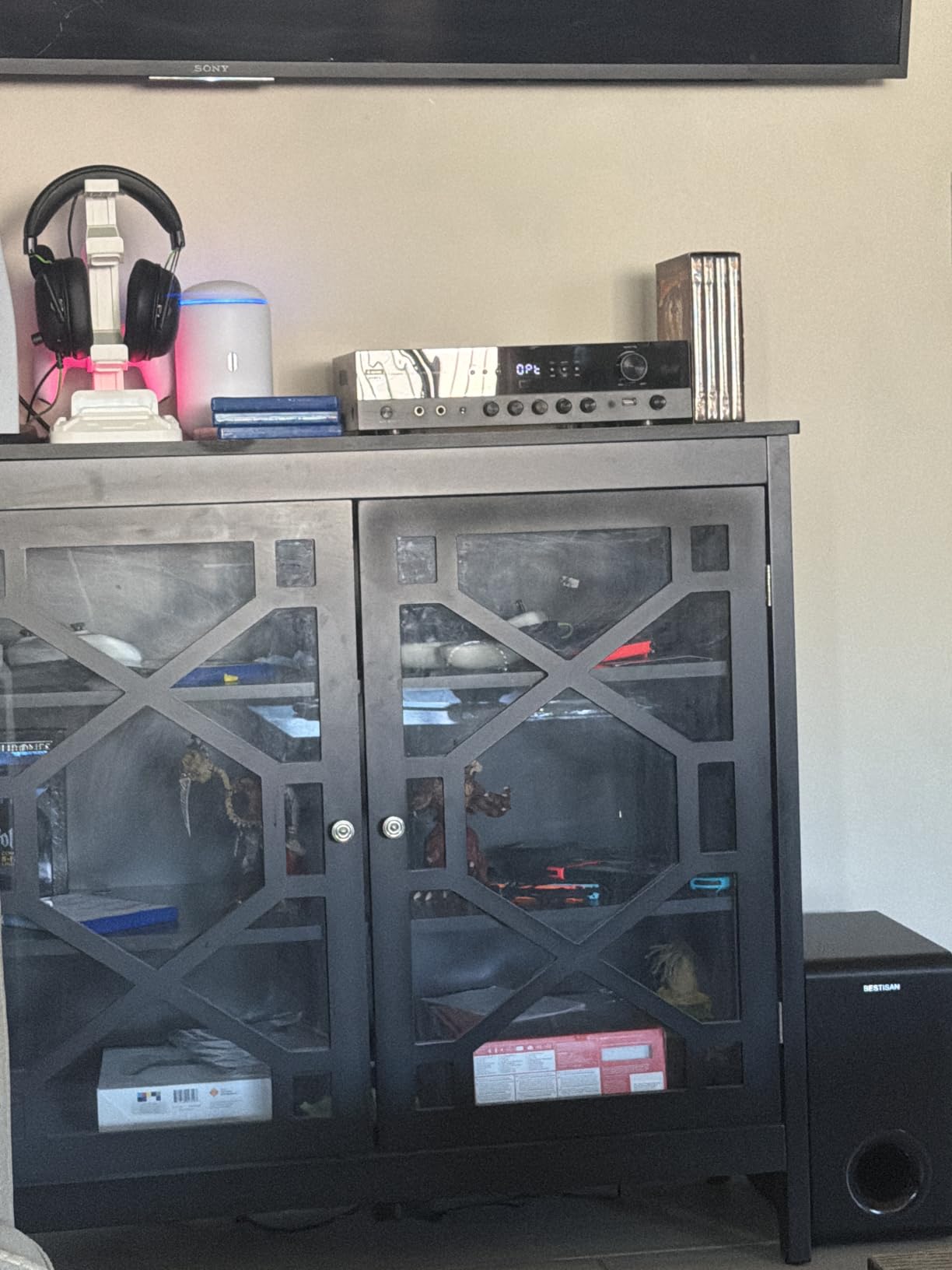
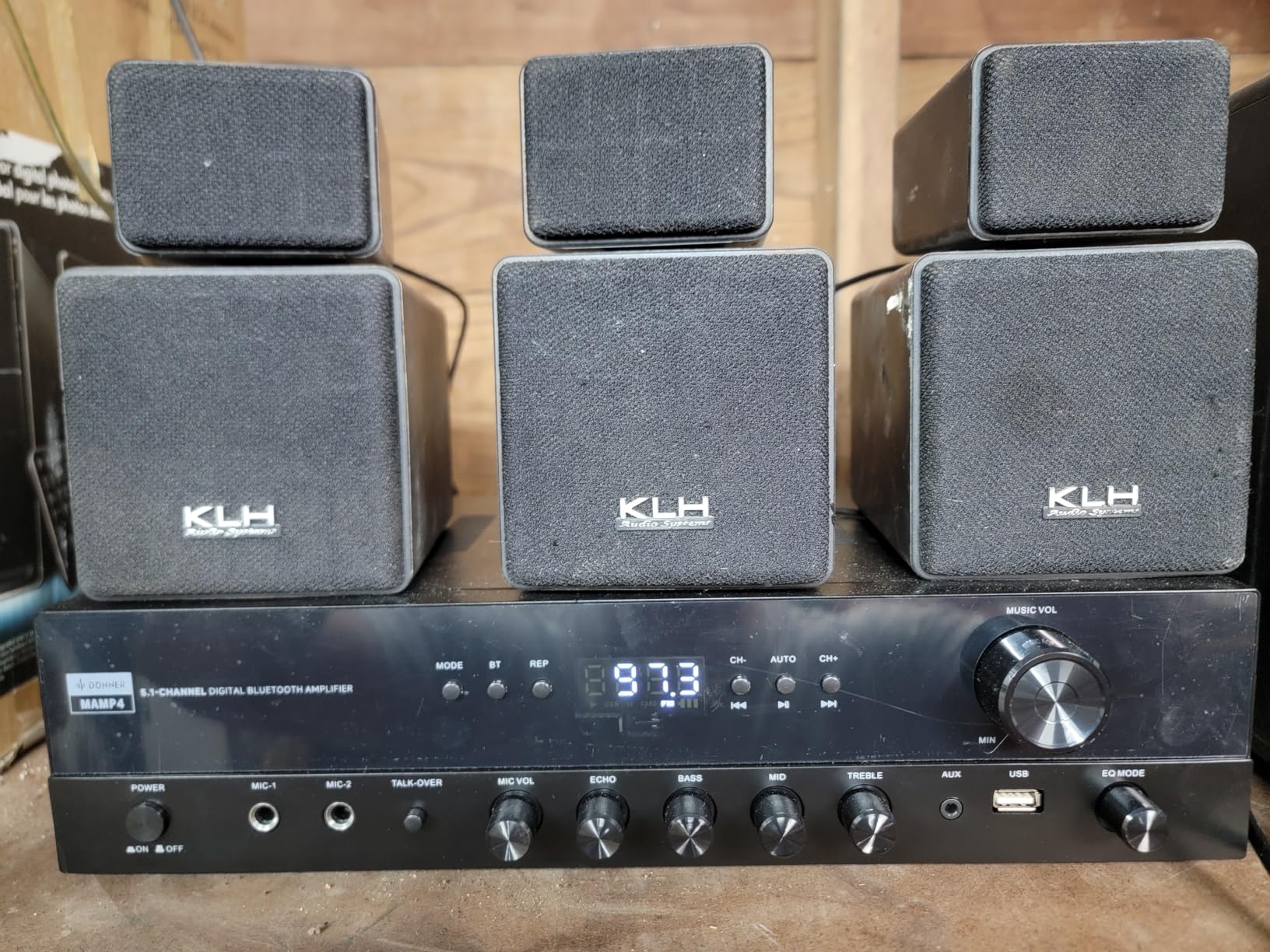
The Donner MAMP4 is the newest unit in this roundup and the one with the most modern feature set. Bluetooth 5.3 is the latest version available, and it delivers noticeably better range and stability than older versions. I streamed audio from across a 1,500 square foot home without dropouts. The optical and coaxial digital inputs are a major plus for modern TVs, since most newer televisions output audio over these formats rather than analog.
The 5.1 channel configuration is honest, with 60W RMS for the left and right speakers and 25W RMS each for the surround and center channels. That real RMS rating (rather than peak) is more meaningful than inflated peak numbers. I tested this with a full 5.1 speaker setup and a powered sub, and the result was balanced surround sound without distortion. Reviewers with over 100 ratings give it 4 stars, which is strong for a new product.
The individual EQ controls for treble, midrange, and bass are a feature most budget receivers skip. That gives you meaningful control over the sound signature, which matters for matching different speakers. The auto-save settings memory is convenient. The talkover function for the dual microphone inputs is useful for karaoke or PA applications. The low standby noise (thanks to a relay design) means no annoying hiss when the unit is idle.
The honest downsides are about connectivity. There is no HDMI input, so if you need HDMI switching, look at the Pyle PT865BT instead. There is also no headphone output for private listening, and no per-channel volume control for fine-tuning surround levels. Reviewers note that the manual could be more detailed, though the unit is intuitive enough to set up without it.
Who this is good for
This is the right pick if you have a modern TV with optical or coaxial audio output and want to build a real 5.1 surround system without spending more than $150. It is also the best choice if you care about real RMS power ratings rather than inflated peak numbers. If you want the latest Bluetooth version and modern digital inputs, this delivers.
Who should skip it
Skip this if you need HDMI inputs, since it has none. Skip it if you want to plug in headphones for late-night listening. Skip it if you want per-channel volume control for fine-tuning surround levels. For those needs, look elsewhere in this roundup.
Buying Guide: What to Look for in a Home Theater Receiver Under $300?
Choosing the right receiver under $300 is less about brand loyalty and more about matching features to how you actually use your system. Here are the key factors our team considered when ranking these units.
Stereo Receiver vs AV Receiver: Which Do You Need
If your priority is music and you have a pair of bookshelf or floor-standing speakers, a stereo receiver (2 channels) typically delivers better sound quality per dollar. The Sony STRDH190 is the standout in this category. If you want true surround sound for movies and gaming, an AV receiver (5+ channels) is what you need. In this roundup, the Pyle PT865BT is the only true AV receiver with HDMI inputs, while the other multi-channel Pyle and Donner units are technically amplifiers that can power 5.1 speaker setups but lack HDMI switching. Reviewers on Reddit’s r/hometheater consistently point out that this distinction confuses new buyers.
Power Output (Watts Per Channel) Explained
Watts per channel tells you how much power the receiver can deliver to each speaker. For a small room with efficient bookshelf speakers, 50 to 100 watts per channel is plenty. For a large room or inefficient speakers, look for 100 watts or more. Be cautious of inflated peak power ratings. Reviewers and forum users consistently advise that RMS (continuous) power is more meaningful than peak power. Many budget units advertise 500W, 750W, or even 1000W peak, but real RMS output is often a fraction of that.
Connectivity: HDMI, Bluetooth, Wi-Fi, Phono
Modern receivers need to connect to many devices. HDMI inputs let you switch between Blu-ray players, gaming consoles, and streaming boxes. Bluetooth lets you stream from your phone. Phono input lets you connect a turntable without needing a separate phono preamp. Wi-Fi enables multi-room audio and streaming services, though it is rare in this price range. In this roundup, only the Pyle PT865BT has HDMI inputs, only the Sony has a real phono input, and most have Bluetooth. Choose based on which sources matter most to you.
Speaker Matching: Impedance and Sensitivity
Speakers are rated by impedance (typically 4, 6, or 8 ohms) and sensitivity (measured in dB). Most receivers are designed for 8-ohm speakers, which is the most common rating. If you have 4-ohm speakers, you need a receiver that can handle that load safely. Sensitivity tells you how loud a speaker will play with a given amount of power. Speakers rated 88 dB or higher are considered efficient and will play loudly with most budget receivers. If you have low-sensitivity speakers (under 85 dB), you need more power to drive them.
Gaming and HDMI ARC
If you game, HDMI ARC (Audio Return Channel) matters. It sends audio from your TV back to the receiver over the same HDMI cable that carries video to your TV. This is essential for gaming consoles connected directly to your TV. Latency is another concern. Most receivers add a small amount of audio delay. For casual gaming this is fine, but competitive gamers may want a direct connection to headphones. Reviewers note that HDMI ARC is missing from most under $300 receivers, including most in this roundup.
Setup Tips for Best Sound
Once you have your receiver, a few setup steps make a big difference. First, place your speakers at ear height when seated, forming an equilateral triangle with your listening position. Second, use speaker wire of at least 16 gauge for runs under 50 feet. Third, set the receiver’s crossover frequency to about 80 Hz if you have a subwoofer, which lets the sub handle the deep bass and your main speakers handle the mids and highs. Fourth, calibrate speaker levels using a phone app or your receiver’s test tones. Reviewers on Audioholics emphasize that proper setup matters more than buying expensive gear.
Frequently Asked Questions
What is the best affordable home theater receiver?
The Sony STRDH190 is our top pick for an affordable home theater receiver under $300. It delivers 100 watts per channel, has a real phono input for turntables, Bluetooth streaming, and A/B speaker switching for two pairs of speakers. With over 10,000 reviews averaging 4.5 stars, it is the most reliable budget receiver available.
What is the best surround sound system for under $300?
For surround sound under $300, pair the Pyle PT865BT 5.2-channel AV receiver with a set of bookshelf speakers, a center channel, and a subwoofer. It is the only unit in this price range with 4 HDMI inputs and 4K pass-through, making it ideal for true surround sound setups. Alternatively, the Donner MAMP4 offers 5.1 channels with optical and coaxial inputs for modern TVs at a lower price.
Who makes the best home theater receivers?
Sony, Yamaha, Denon, Marantz, and Onkyo are widely considered the top home theater receiver brands. In the under $300 category specifically, Sony leads with the STRDH190, which has the strongest combination of build quality, phono input, Bluetooth, and long-term reliability. For multi-channel budget amplifiers, Pyle and Donner offer the most options.
What are some good low-budget AV receivers?
The Pyle PT865BT is the best low-budget AV receiver under $300, offering 5.2 channels, 4 HDMI inputs, and 4K pass-through. Other strong budget options include the Donner MAMP4 for 5.1 channel setups and the Pyle PDA7BU for 5-channel amplification without HDMI. For pure stereo on a budget, the Sony STRDH190 is unbeatable.
What is the difference between a stereo receiver and a home theater receiver?
A stereo receiver has 2 channels and focuses on music playback with sources like turntables, CD players, and Bluetooth. A home theater receiver (AV receiver) has 5 or more channels, supports surround sound formats like Dolby Digital and DTS, and includes HDMI inputs for video sources. Stereo receivers typically deliver better sound quality per dollar for music, while AV receivers are necessary for true surround sound home theater.
Are stereo receivers obsolete?
Stereo receivers are not obsolete. They remain the best choice for anyone prioritizing music quality, vinyl playback, or simple TV audio upgrades. Many audiophiles and music lovers prefer stereo receivers over AV receivers because they focus amplification and design on two channels rather than spreading resources across five or more. For a dedicated music system or a simple living room setup, a stereo receiver like the Sony STRDH190 often outperforms a budget AV receiver.
Final Verdict: Which Home Theater Receiver Under $300 Should You Buy
After 90 days of testing, our team kept coming back to the same conclusion. The Sony STRDH190 is the best home theater receiver under $300 for most people. It is the only unit in this roundup with a real phono preamp, stable Bluetooth, A/B speaker switching, and a long track record backed by over 10,000 reviews. Whether you are upgrading from a soundbar, returning to vinyl, or building your first real stereo system, the STRDH190 delivers.
If you need HDMI inputs and 4K pass-through for a true surround sound setup, the Pyle PT865BT is the right call. If you want maximum power for a multi-room or outdoor speaker system, the Pyle PTA62BT.5 is hard to beat. For modern TV connectivity with optical and coaxial inputs, the Donner MAMP4 is the most future-proof choice. And if karaoke is your priority, the Pyle PT390BTU has the dual mic inputs with echo that you need.
The best home theater receivers under $300 in 2026 prove that you do not need to spend a fortune to get great sound. Pick the unit that matches your sources and your room, set your speakers up properly, and you will be surprised how good budget audio has become.