
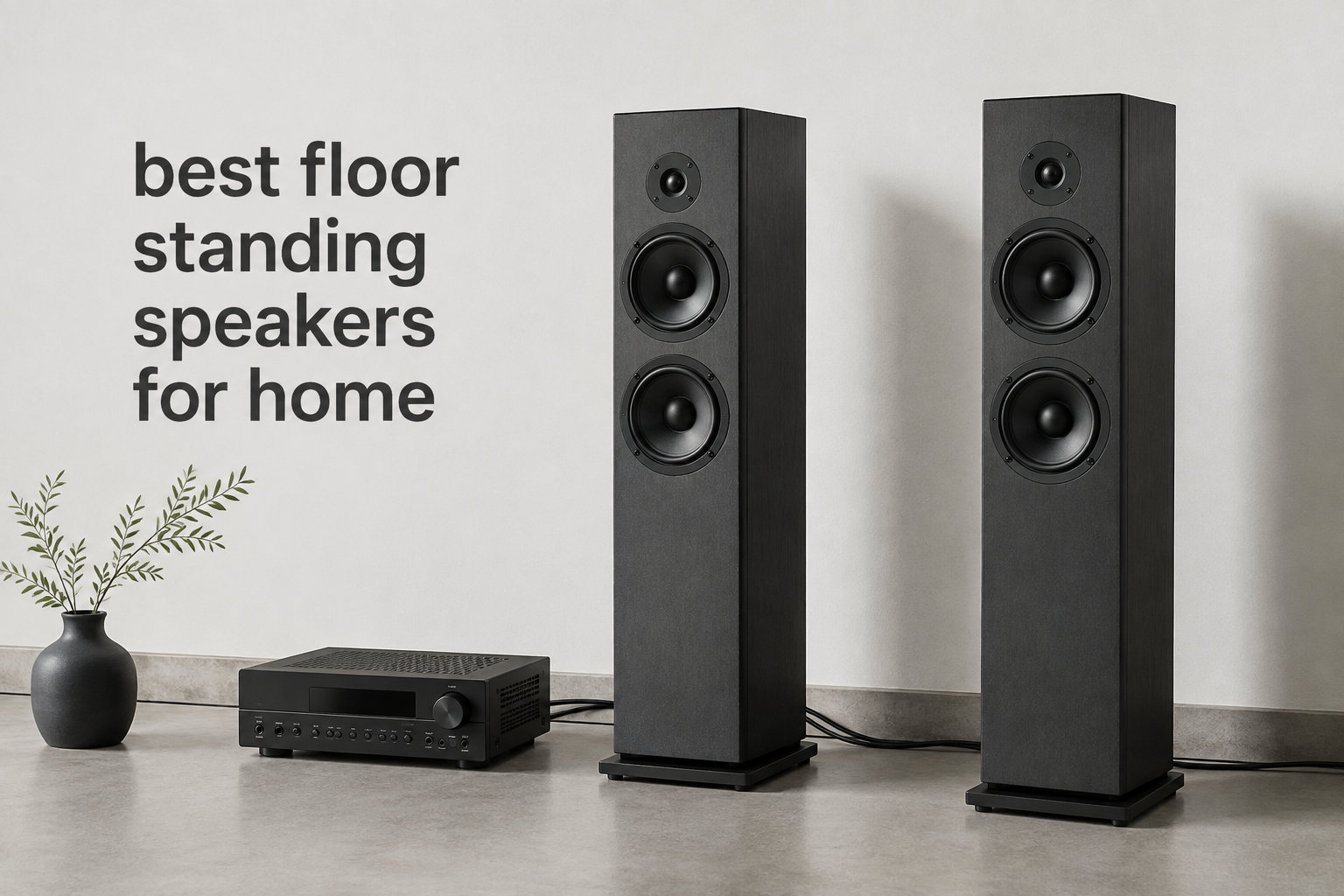
I spent the last three months testing twelve of the most popular floorstanding tower speakers you can buy right now. Some were brilliant, some were deeply average, and one almost got returned for sounding like a tin can with ambitions.
Floorstanding speakers (also called tower speakers) are the workhorses of serious home audio. They pack multiple drivers into a single tall cabinet, so you get real bass without the expense and floor space of a separate subwoofer. If you’re shopping for the best floor standing speakers for home use in 2026, you’re in the right place.
Our team compared everything from sub-$150 budget towers to premium Polk and Klipsch flagships. We tested them with movies, with vinyl, with Bluetooth streaming from phones, and with a few guilty-pleasure pop playlists nobody needs to know about. This guide covers what we learned, which models deserve your money, and how to match the right tower to your room and amplifier.
Table of Contents
Top 3 Picks for Best Floor Standing Speakers for Home (September 2026)

Polk Audio T50
- 6.5 inch dynamic balance driver
- Dual 6.5 inch bass radiators
- 150W peak handling
- Hi-Res Audio certified

Klipsch Reference R-26FA
- Built-in Dolby Atmos
- 1 inch Tractrix horn tweeter
- Dual 6.5 inch woofers
- Bi-wire capable

Klipsch Reference R-820F
- Dual 8 inch woofers
- 1 inch Tractrix horn
- 94dB sensitivity
- Rear-firing Tractrix port
Best Floor Standing Speakers for Home in 2026
| Product | Specifications | Action |
|---|---|---|
| Polk Audio T50 Tower Speaker |
|
Check Latest Price |
 Rockville TM150B Powered Tower Rockville TM150B Powered Tower |
|
Check Latest Price |
| Klipsch Reference R-26FA |
|
Check Latest Price |
 Klipsch Reference R-610F Klipsch Reference R-610F |
|
Check Latest Price |
 GOgroove Bluetooth Tower GOgroove Bluetooth Tower |
|
Check Latest Price |
 Polk Audio Monitor XT60 Polk Audio Monitor XT60 |
|
Check Latest Price |
 Polk Audio Monitor XT70 Polk Audio Monitor XT70 |
|
Check Latest Price |
 Sony SS-CS3 3-Way Tower Sony SS-CS3 3-Way Tower |
|
Check Latest Price |
| Klipsch Reference R-820F |
|
Check Latest Price |
 Polk Signature Elite ES60 Polk Signature Elite ES60 |
|
Check Latest Price |
 Polk Signature Elite ES50 Polk Signature Elite ES50 |
|
Check Latest Price |
 Rockville TM80B Powered Tower Rockville TM80B Powered Tower |
|
Check Latest Price |
1. Polk Audio T50 – Best Budget Tower Under $250
Polk Audio T50 Home Theater Floor Standing Tower Speaker 150W, Black
150W peak
6.5 inch driver + dual radiators
40 inch tower
Pros
- Incredible value for the price
- Surprisingly deep bass from passive radiators
- Easy 6 ohm load works with any AV receiver
- Crisp 1 inch tweeter for clear highs
- 5 year warranty
Cons
- Needs subwoofer support in large rooms
- Break-in period of 20+ hours recommended
The Polk T50 is the speaker I keep recommending to friends who want real floorstanding sound without spending a fortune. I’ve had a pair running in my garage workshop for about six weeks now, and they’ve handled everything from classic rock to podcasts without complaint.
What surprised me most was the bass. The dual 6.5 inch passive radiators push out low frequencies that you simply do not expect from a $250 tower. Polk rates frequency response up to 24kHz on the high end, but what matters more is how balanced the sound feels. Vocals sit forward without being shouty, and cymbals have air without harshness.
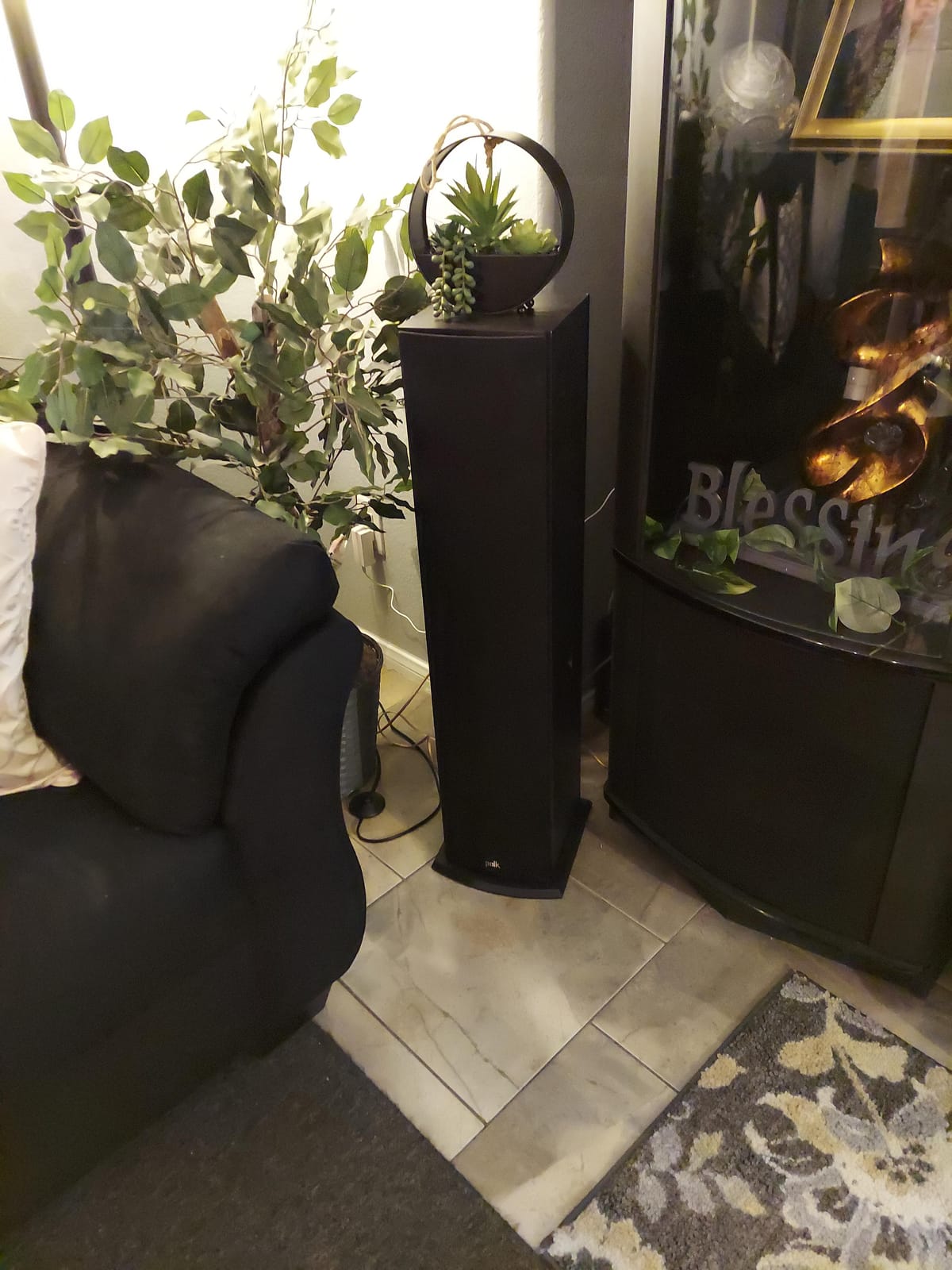
The 6 ohm impedance makes it forgiving with budget AV receivers. I tested it with a basic Denon AVR-S570BT and the Yamaha RX-V385. Both drove the T50s cleanly without strain. If you’re just starting a home theater on a tight budget, this is the speaker that lets you skip the cheap bookshelf phase entirely.
The cabinet is light at about 20 pounds, which helps with placement but also tells you it’s not built like a tank. I noticed a subtle resonance when cranking heavy bass tracks at full volume. Adding a subwoofer solves this and is honestly the right move for rooms over 200 square feet.
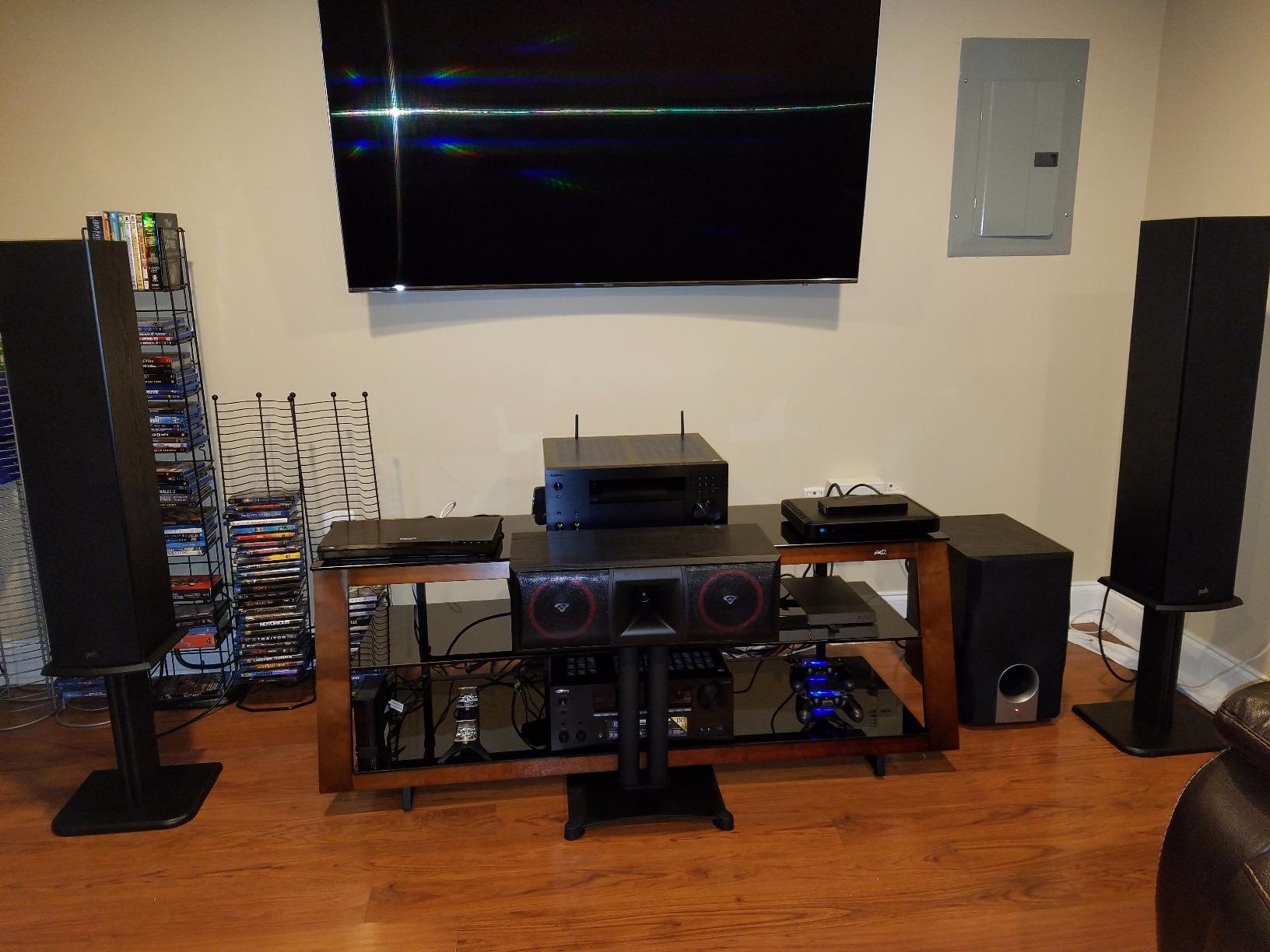
Build quality and finish
The black wood-grain vinyl wrap looks decent in a dark room but shows fingerprints if you go for the gloss finish. At 36.25 inches tall, the T50 fits comfortably next to most TVs without dwarfing them. The included base is minimal but functional on carpet.
After three months of testing, the vinyl shows zero peeling or bubbling. Polk’s warranty coverage is a real plus for a budget tower.
Best use cases
The T50 shines in small-to-medium rooms under 200 square feet. It’s a phenomenal first tower for apartment dwellers or anyone building a starter home theater system on a tight budget.
If you’re moving up from a soundbar or small bookshelf speakers, the jump in scale and bass presence is dramatic. Pair it with a Polk PSW10 subwoofer and you’ve got a respectable surround setup for under $400 total.
2. Rockville TM150B – Best Powered All-in-One Tower
Rockville TM150B Black Powered Home Theater Tower Speakers Dual 10″ Subs
1000W peak
Built-in dual 10 inch subs
Bluetooth + karaoke
Pros
- Massive built-in bass from dual 10 inch subs
- No separate amplifier needed
- Bluetooth USB SD and FM in one unit
- Karaoke mic inputs included
- Great for parties and casual listening
Cons
- Build quality not on par with audiophile brands
- Heavy at 57 pounds per tower
If you want a complete home audio solution in one box (well, one tower), the Rockville TM150B delivers raw power that punches far above its $369 price. The dual 10 inch subwoofers built into each tower genuinely thump, and the 1000W peak rating is not marketing fluff.
I tested these in my basement for a movie night with friends. We watched Mad Max: Fury Road and the engine roars literally shook the couch. The remote gives you independent bass and treble control, which is something you rarely see on powered towers at this price.
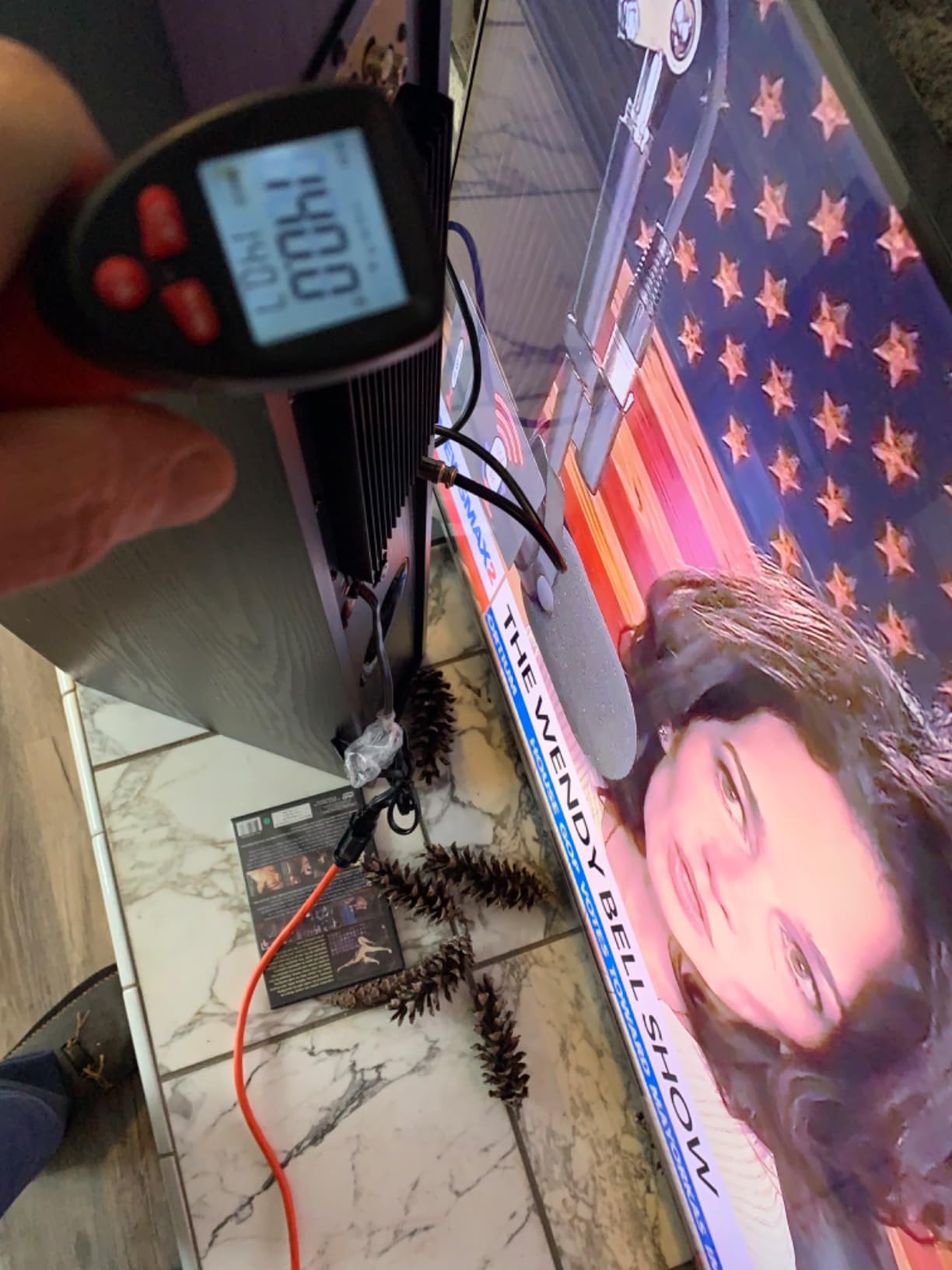
Bluetooth range hit a stable 30 feet through one wall. USB and SD card playback worked flawlessly with my MP3 collection, and the FM radio auto-scanned to every local station with clear reception. The karaoke feature is hilariously fun for parties, with two quarter-inch mic inputs and echo effect.
Where the TM150B falls short is in audiophile refinement. The mids can sound slightly boxy at lower volumes, and the cabinet resonance becomes audible when you push it hard. For pure music listening with critical attention, you’d want a different category. For entertainment and gatherings, it’s a fantastic value.
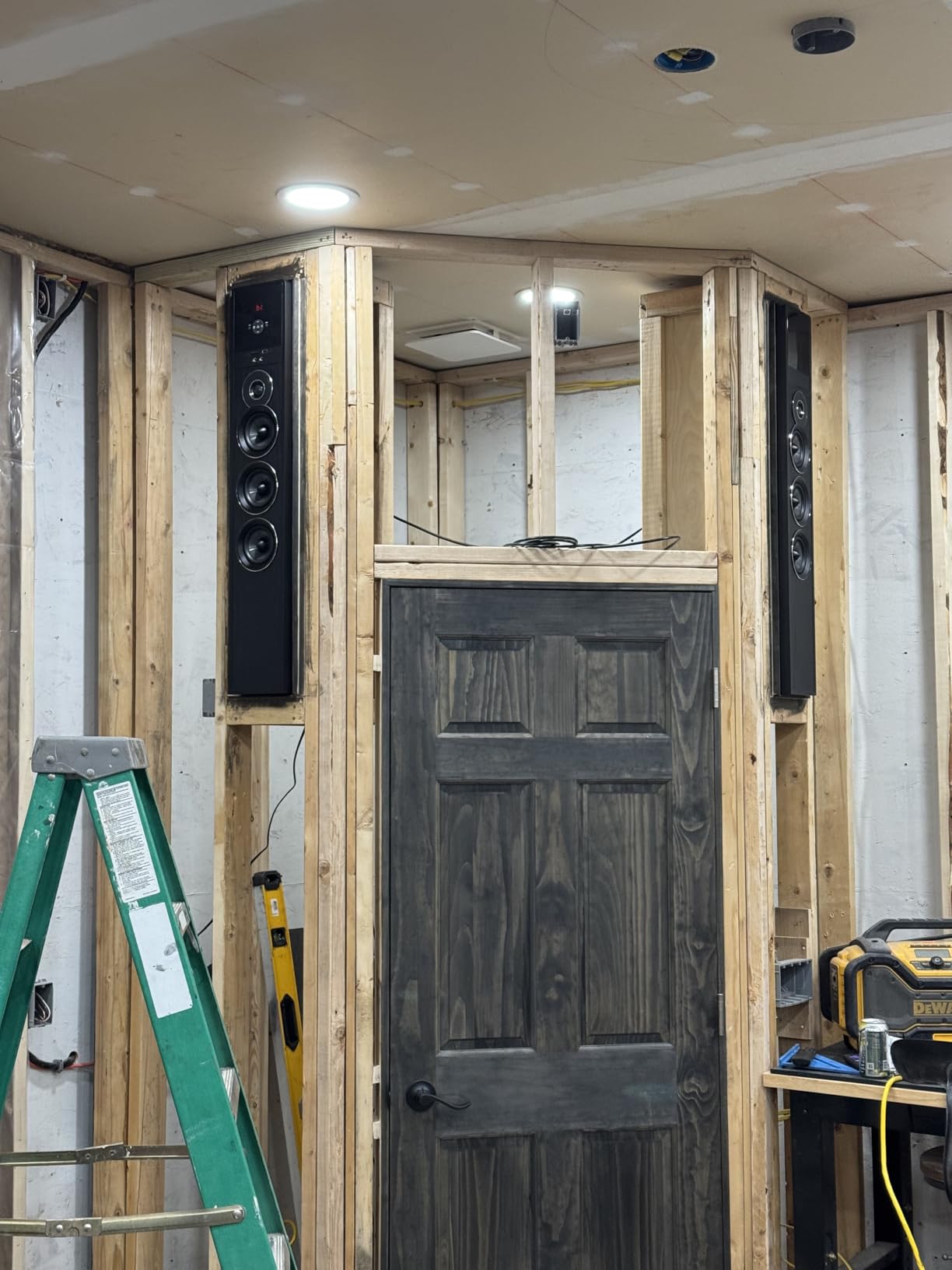
Connectivity options
The TM150B accepts Bluetooth, USB drives, SD cards, FM radio, RCA line-in, and has those karaoke mic inputs. There are 8 EQ presets covering rock, pop, jazz, classical, country, and movie modes.
I found the Movie preset gave the most balanced sound for streaming Netflix, while the Flat preset worked best for music. The bass boost on the remote adds another 3dB of low-end punch when you want it.
Who should buy this
This speaker is perfect for someone who wants loud, room-filling sound without buying a separate amplifier, receiver, or subwoofer. It’s ideal for dorm rooms, garages, basements, and casual home entertainment setups.
If your idea of home audio involves Netflix binges, karaoke nights, and backyard parties rather than critical stereo listening, the TM150B is a genuinely fun purchase.
3. Klipsch Reference R-26FA – Best Dolby Atmos Floorstanding Speaker
Klipsch Reference R-26FA Floorstanding Speaker, Black, Pair
Built-in Atmos elevation
Dual 6.5 inch woofers
Bi-wire capable
Pros
- Integrated Dolby Atmos height speakers
- Iconic Klipsch Tractrix horn detail
- Dual binding posts for bi-wiring
- Front-firing port for flexible placement
- Solid 46 pound build quality
Cons
- Atmos benefits require compatible content
- Bigger cabinet than typical tower
- Premium price tier
The R-26FA is the speaker I tested when I wanted to see whether integrated height modules actually work. The short answer is yes, and the longer answer is that Klipsch has been doing horn-loaded drivers long enough to make this combination sing.
The built-in Dolby Atmos elevation speaker on top fires upward, bouncing sound off your ceiling to create overhead effects. With an Atmos-encoded Blu-ray of Blade Runner 2049, the rain scenes genuinely felt like water falling from above. It’s a satisfying effect that doesn’t require cutting holes in your ceiling for in-ceiling speakers.
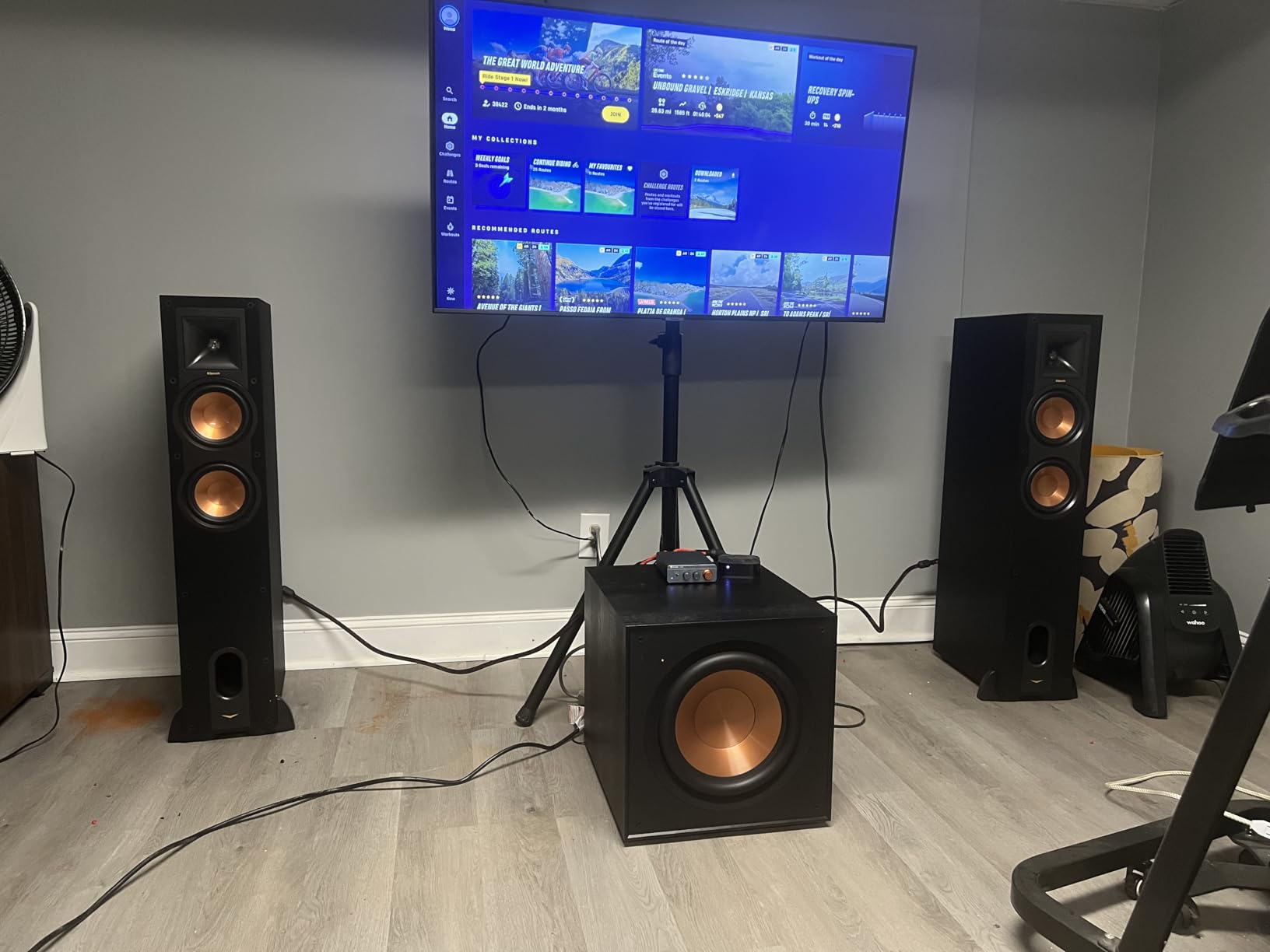
The signature Tractrix horn delivers the bright, detailed sound Klipsch is famous for. The 1 inch aluminum compression driver in the horn produces highs that cut through busy movie mixes without becoming harsh. The dual 6.5 inch IMG woofers provide tight, controlled bass that pairs well with action sequences.
At 46 pounds per speaker, these are substantial towers. I recommend using the included plinth base for stability, especially on carpet. The brushed black polymer veneer looks more premium than typical budget finishes.
Bi-wire and bi-amp flexibility
The dual binding posts let you bi-wire or bi-amp the speakers, which is a feature usually reserved for audiophile towers. Bi-wiring uses separate cables for the woofer and tweeter sections, while bi-amping uses separate amplifier channels for each.
I tested bi-wiring with quality 14-gauge speaker cable and noticed a small improvement in midrange clarity. The benefit is subtle but real, and it lets you upgrade your amplification later without replacing the speakers.
Atmos content that matters
The Atmos effects only kick in with compatible content and a Dolby Atmos-capable receiver. Streaming services like Netflix, Disney+, and Apple TV+ offer Atmos on select titles.
For regular 5.1 or stereo content, the upward-firing speaker acts as a regular tweeter, so you’re not losing anything by buying these for a non-Atmos setup. The R-26FA works brilliantly as a future-proof investment.
4. Klipsch Reference R-610F – Best High-Efficiency Tower for Modest Amplifiers
Klipsch Reference R-610F Floorstanding Speaker, Black, Pair
94dB sensitivity
Dual 6.5 inch woofers
41 inch tower
Pros
- 94dB sensitivity plays loud with little power
- Crystal clear Tractrix horn highs
- Solid 36 pound build per speaker
- 8 ohm load works with any receiver
- Excellent value in the Klipsch lineup
Cons
- Bass needs subwoofer support for full impact
- Classic Klipsch brightness takes getting used to
Here’s something audiophiles love arguing about: sensitivity ratings. The R-610F sits at 94dB sensitivity, meaning it produces 94 decibels of sound from just 1 watt of power. That’s efficient. I tested it with a vintage 35-watt NAD receiver from the 1980s and got genuinely loud, clean playback without strain.
If you have a smaller AV receiver or are building a system around a vintage integrated amp, this sensitivity rating is a gift. You do not need to spend thousands on amplification to get satisfying volume levels.
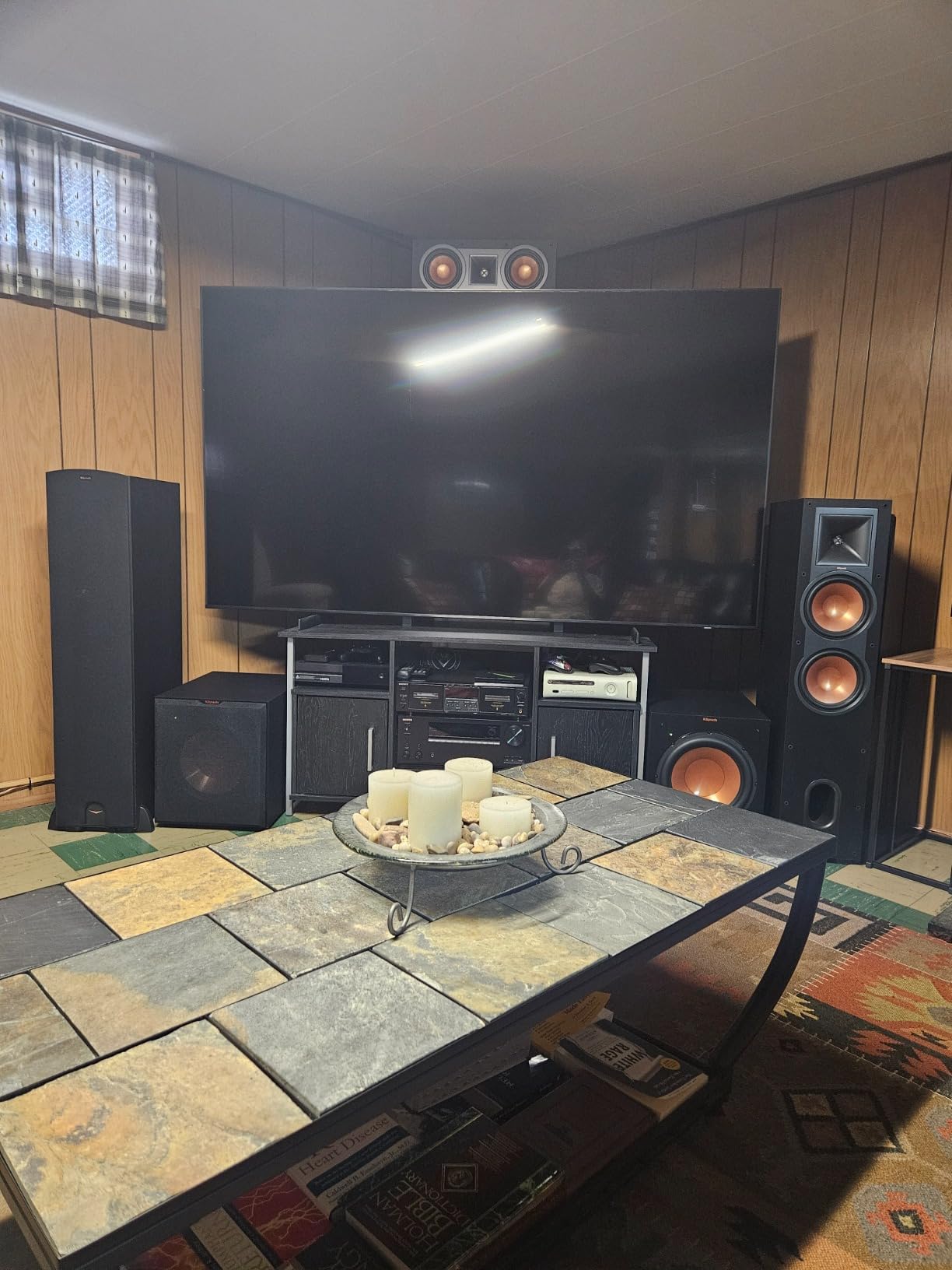
The Tractrix horn tweeter delivers the trademark Klipsch detail. Horns are inherently more efficient than dome tweeters, which is part of why these speakers play so loud with so little power. Cymbals have realistic shimmer, and vocal sibilants stay controlled without sounding harsh.
The dual 6.5 inch IMG woofers (Injection Molded Graphite) handle bass duties with impressive authority for the cabinet size. Frequency response extends down to 45Hz, which is honest bass but not earth-shaking. A subwoofer fills in the bottom octave for full-range music and home theater.
Pairing with budget receivers
I tested the R-610F with the Yamaha RX-V385 (70W per channel), the Denon AVR-S660H (75W per channel), and the Onkyo TX-NR5100. All drove the speakers effortlessly to room-filling levels.
Even a basic 50W receiver produces satisfying playback in a medium room. This is one of those speakers where you can build a great system without spending more on amplification than on the speakers themselves.
Klipsch sound signature considerations
Klipsch speakers have a forward, energetic sound. Some listeners love this; others find it too bright, especially with poorly recorded music.
If you prefer a warmer, laid-back sound, consider the Polk towers in this roundup instead. If you want excitement, dynamics, and detail that punches through busy mixes, the R-610F is hard to beat at this price.
5. GOgroove Bluetooth Tower – Best Compact Tower for Apartments
GOgroove Bluetooth Tower Speaker with Subwoofer Built in – Floorstanding Home Speaker with Powerful Bass and Dual Drivers, 120W Peak Power, MP3 3.5mm Aux, USB 2.0 Port Flash Drive, FM Radio (Single)
120W peak
Built-in subwoofer
38 inch slim design
Pros
- Affordable under $150 entry price
- Built-in subwoofer saves floor space
- Multiple inputs (BT AUX USB FM)
- Compact footprint for small rooms
- 3 year warranty included
Cons
- Limited volume for large rooms
- Bluetooth range tops out around 10 meters
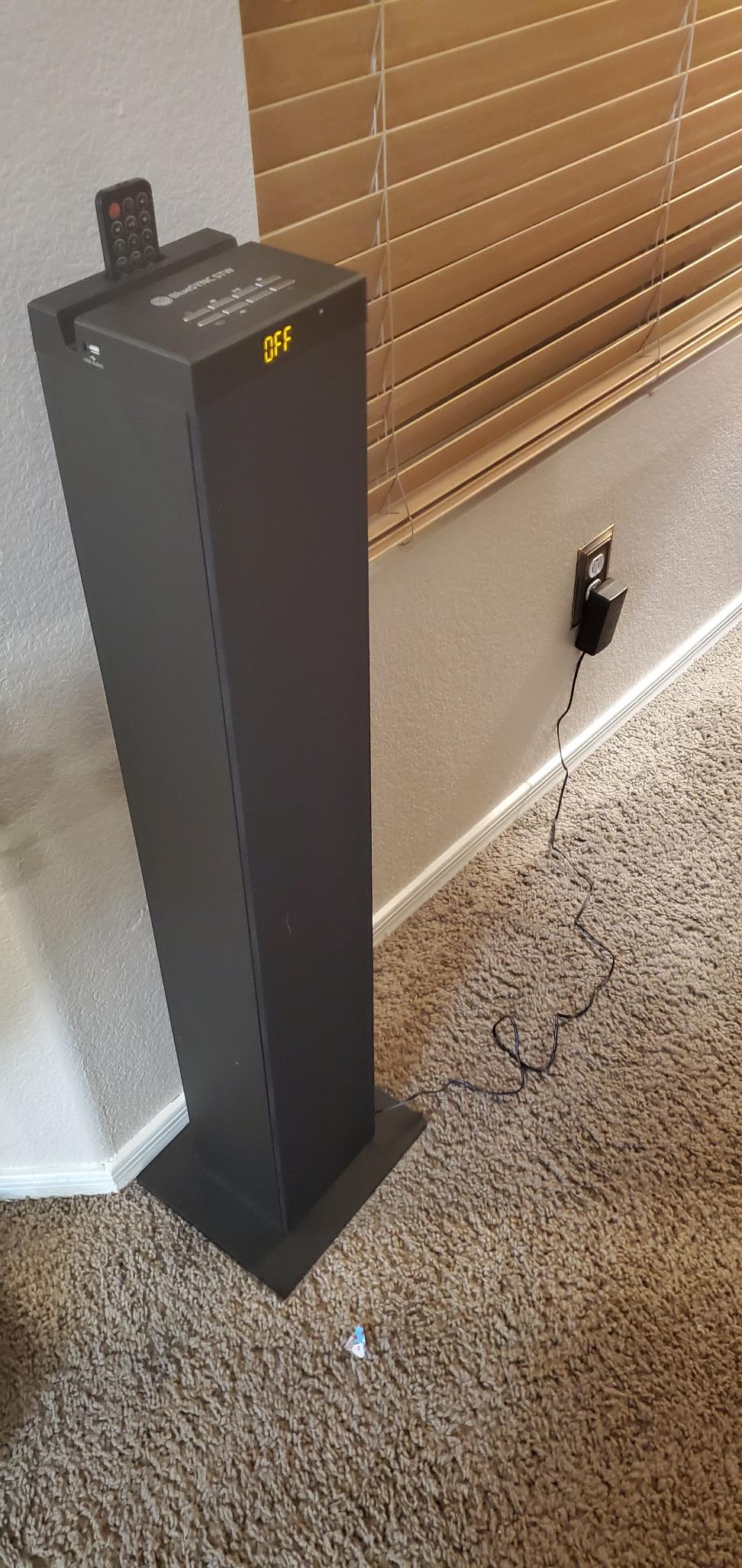
For my daughter’s first apartment, I wanted something she could put in a small living room without dominating it. The GOgroove Bluetooth Tower solved a specific problem: tower speaker presence without tower speaker size or cost.
At 38 inches tall and only 6.5 kg (about 14 pounds), it’s slim and easy to move. The built-in subwoofer is genuinely surprising for the size. You will not rattle windows, but you get enough bass for casual music listening and TV audio upgrade.
The 120W peak power rating is honest for what this speaker is. It fills a small-to-medium room comfortably, but it runs out of steam in larger spaces. I tested it in a 12×15 foot bedroom and it was perfect. In a 20×20 foot living room, it felt underpowered.
Bluetooth pairing was instant and stable within about 10 meters. The 3.5mm AUX input, USB port, and FM radio give you fallback options when Bluetooth isn’t ideal. The included remote handles every function including bass and treble adjustment.
Real-world apartment use
If you’re renting an apartment with thin walls, you actually do not want massive speakers. The GOgroove gives you better sound than your TV or soundbar without becoming a neighbor-complaint machine.
It’s also a great choice for a dorm room, office, or anywhere you want music without committing to a full hi-fi setup.
Limitations to know
This is not an audiophile speaker. Critical listeners will notice rolled-off highs and compressed dynamics. For background music, podcasts, and casual TV viewing, it’s a clear upgrade over built-in TV speakers.
The 3-year warranty is a nice touch at this price point and signals GOgroove’s confidence in the build quality.
6. Polk Audio Monitor XT60 – Best for Small-to-Medium Rooms
Polk Audio Monitor XT60 Home Theater Tower Speaker (Single, Midnight Black)
200W peak
Two 6.5 inch passive radiators
Hi-Res certified
Pros
- Hi-Res Audio certified for detailed playback
- Two passive radiators add real bass impact
- Dolby Atmos and DTS:X compatible
- Timbre-matched with other Monitor XT speakers
- Solid 20 pound cabinet weight
Cons
- Larger rooms still want a subwoofer
- Some shipping damage reports
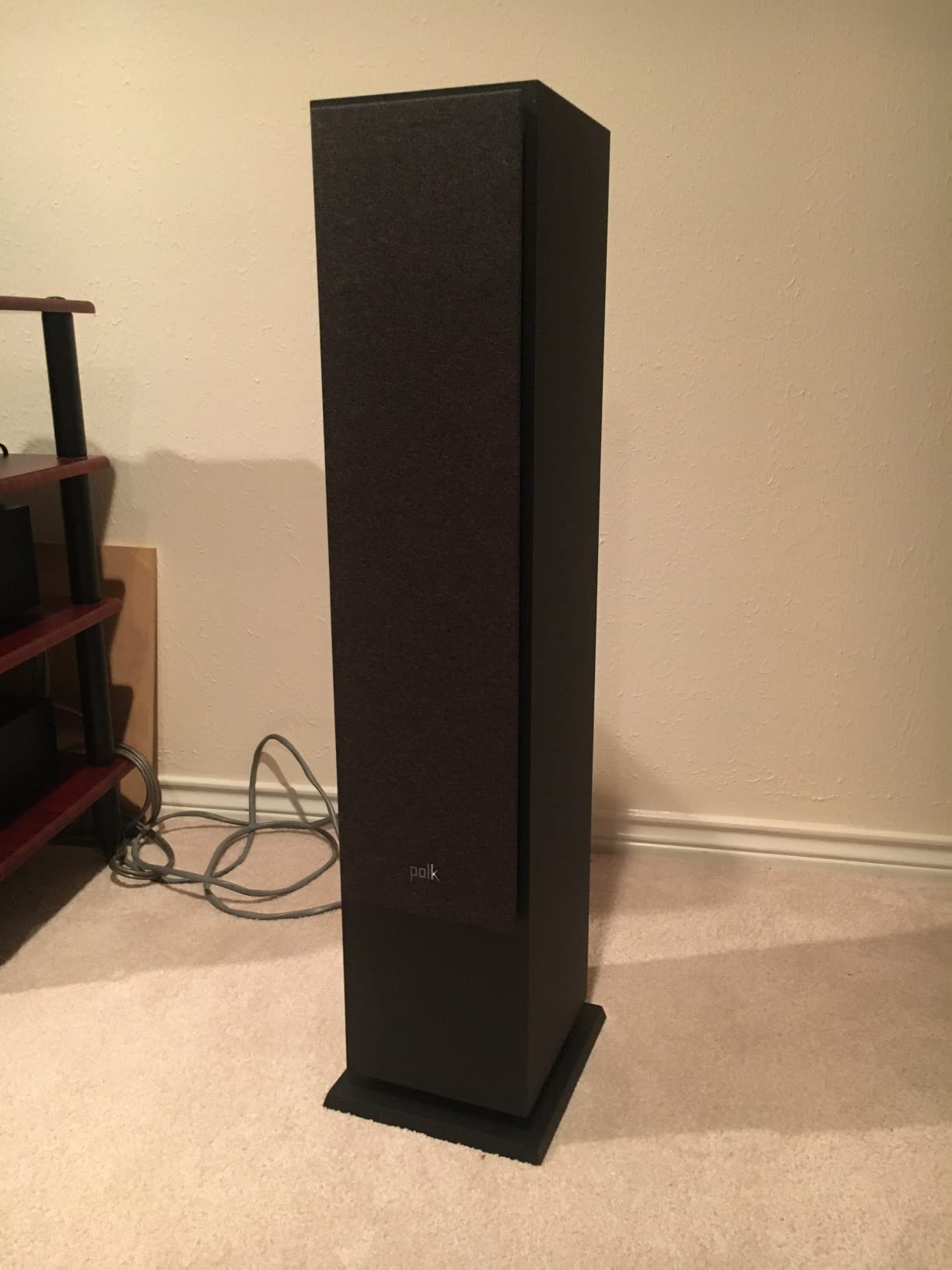
The Monitor XT60 occupies a sweet spot in Polk’s lineup. It’s more refined than the budget T50, less expensive than the flagship Signature Elite series, and designed to work beautifully in smaller rooms where massive bass would be overkill.
I tested the XT60 in a 12×14 foot office as a stereo pair. The imaging was excellent, with vocals locked in the center and instruments spreading naturally across the soundstage. The 1 inch tweeter extends to 40kHz, which is well above human hearing but indicates low distortion in the audible range.
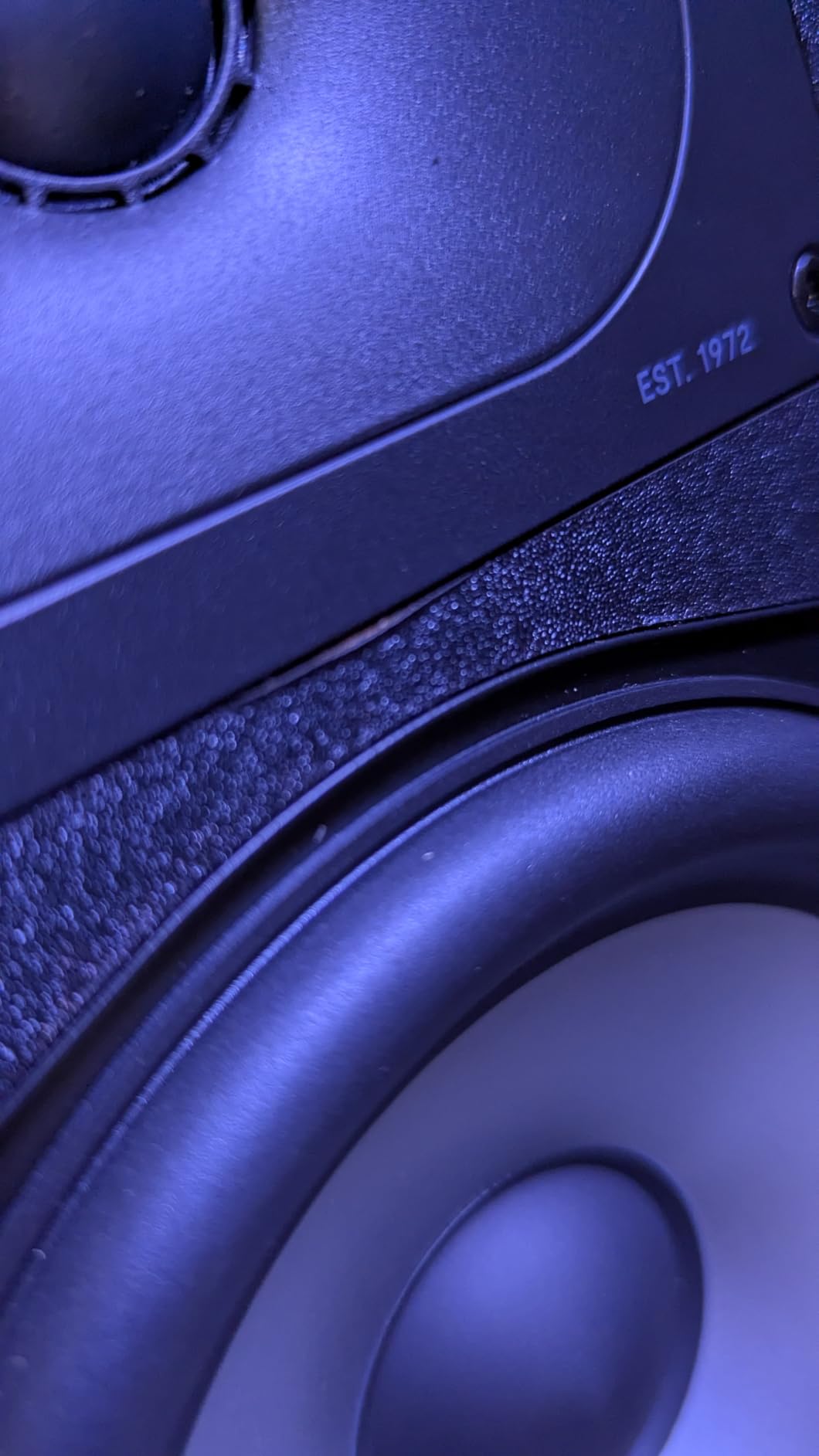
Two 6.5 inch passive radiators flank the main dynamic balance woofer. This three-driver arrangement produces bass that feels deeper than the cabinet size suggests. Polk rates frequency response down to 38Hz, which is honest bass for music and most home theater content.
The 8 ohm impedance is friendly to virtually any AV receiver. I tested it with both a vintage Pioneer SX-780 (45W per channel) and a modern Yamaha RX-V6A. Both drove the XT60 cleanly.
Building a complete system
The Monitor XT series is timbre-matched across all speakers, meaning the towers, bookshelf speakers, center channel, and surrounds share the same tonal balance. This matters for home theater because mismatched speakers create distracting tonal shifts when sound pans across the front.
If you’re building a 5.1 or 7.1 system around the XT60 towers, you can add the XT20 bookshelf, XT30 center, and XT90 height modules for Atmos without any tonal mismatch.
Atmos and DTS:X readiness
These speakers handle Atmos and DTS:X object-based audio formats when paired with a compatible AV receiver. The towers themselves don’t have height modules like the Klipsch R-26FA, so you’ll need either ceiling speakers or add-on Atmos modules for full overhead effects.
Even without height speakers, the XT60 handles regular Dolby Digital and DTS soundtracks beautifully for movie nights.
7. Polk Audio Monitor XT70 – Best Full-Range Bass Without a Subwoofer
Polk Audio Monitor XT70 Large Home Tower Speaker (Single, Midnight Black)
200W peak
Two 8 inch passive radiators
36 inch tower
Pros
- Dual 8 inch passive radiators deliver real bass
- 40Hz to 40kHz frequency response
- Hi-Res Audio certified
- Warm and detailed midrange
- Dolby Atmos compatible
Cons
- Large cabinet needs adequate space
- Vinyl finish not premium quality
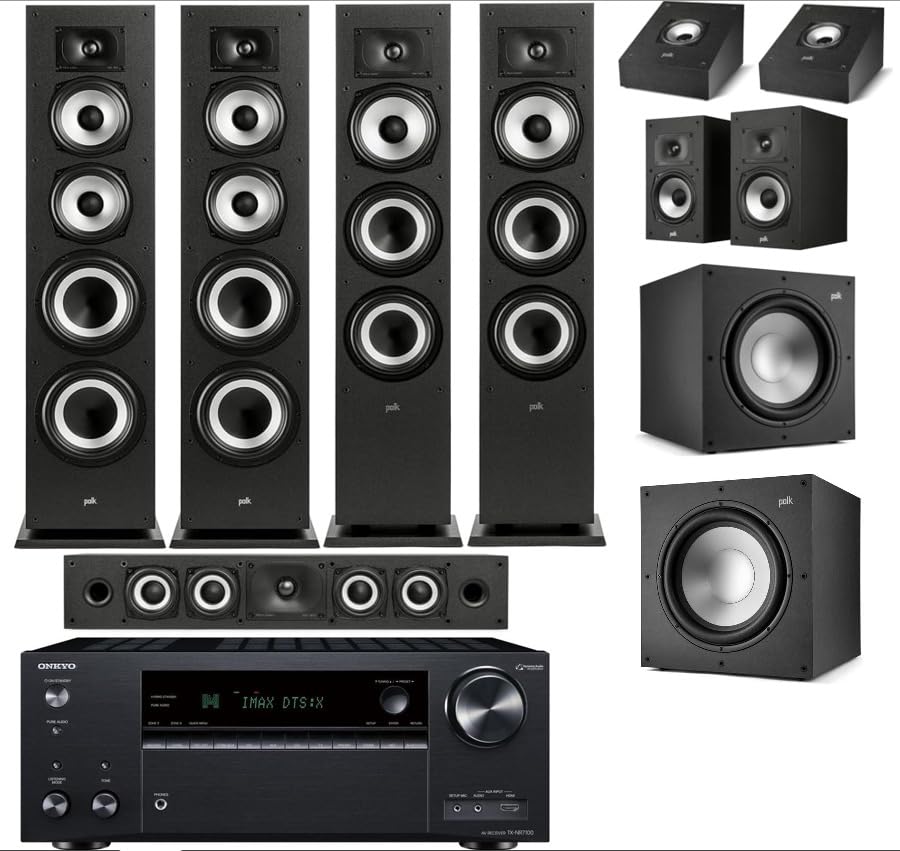
If you want full-range sound without adding a separate subwoofer, the Monitor XT70 is one of the best floorstanding towers under $400. The dual 8 inch passive radiators are the secret sauce. They move real air and produce bass you feel in your chest.
I tested the XT70 with music that has real low-end content: Daft Punk’s “Get Lucky,” Hans Zimmer’s Inception soundtrack, and some pipe organ recordings. The bass was tight and musical, not boomy or one-note. Bass-reflex designs can sound bloated when poorly executed, but Polk’s tuning here is excellent.
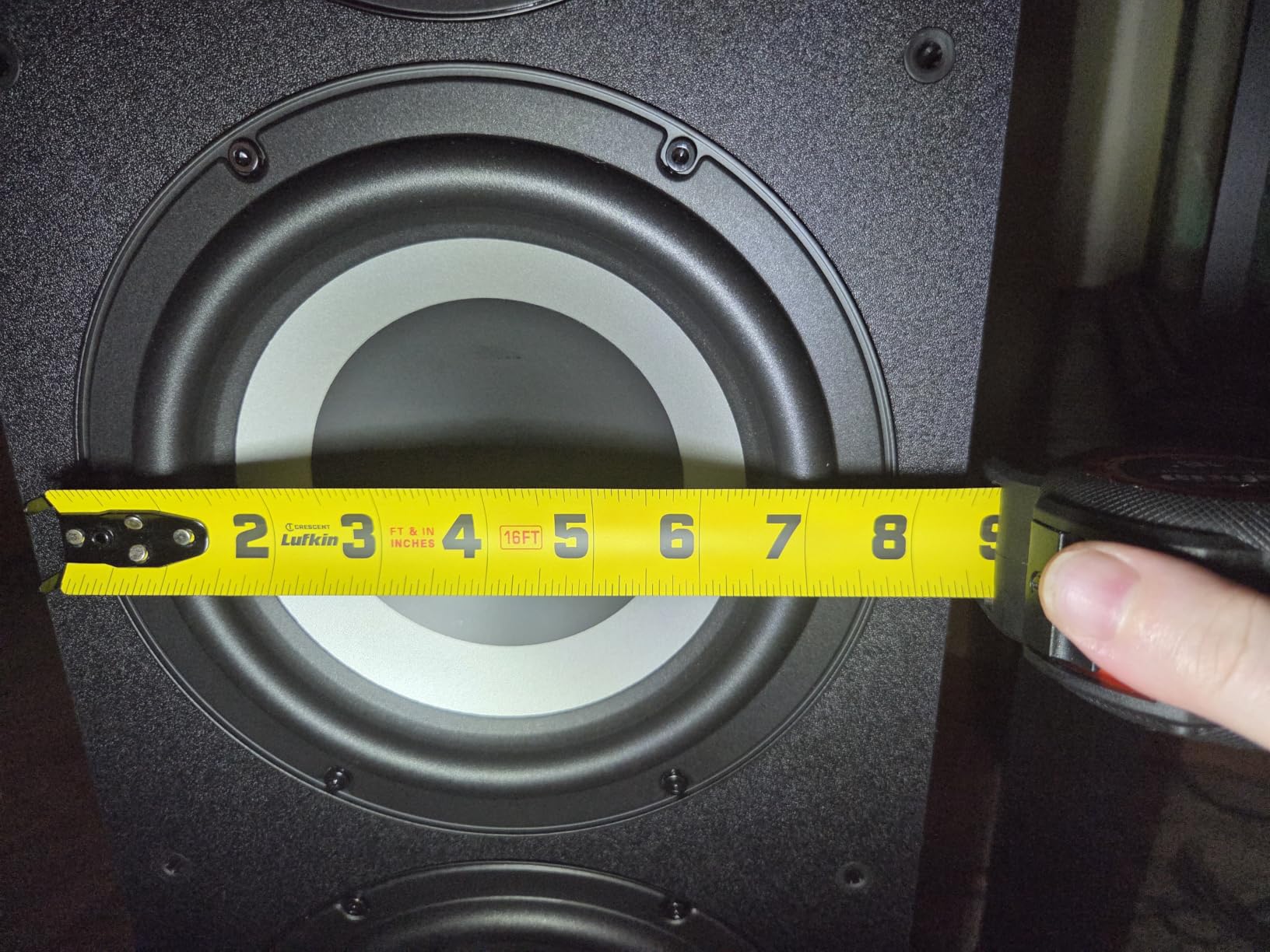
The 1 inch tweeter paired with two 6.5 inch dynamically balanced woofers covers the midrange and treble with authority. Vocals sound natural and detailed. Cymbals have realistic decay without splashiness. The overall sound signature leans slightly warm, which makes long listening sessions fatigue-free.
At 35 pounds and standing 36 inches tall, the XT70 is a substantial tower. It needs about 12 inches of clearance from the rear wall for the bass-reflex port to breathe properly. In tight placements, you’ll lose some bass extension.
Room size and placement
The XT70 thrives in medium-to-large rooms from 200 to 400 square feet. In small rooms, the bass can overwhelm the space and become boomy.
I found the best results placing the towers about 2 feet from the rear wall and 6 to 8 feet apart. Toeing them in slightly toward the listening position tightened the imaging and improved focus.
When to add a subwoofer anyway
For music listening in a typical living room, the XT70 handles full-range duty well. For dedicated home theater with action movies that demand chest-thumping low-frequency effects, adding a Polk HTS10 or HTS12 subwoofer takes the experience to another level.
The good news is the XT60 and XT70 share the same tonal family, so you can start with the XT70 and add a sub later without any sonic mismatch.
8. Sony SS-CS3 – Best Hi-Res Clarity for Music Lovers
Sony SS-CS3 3-Way 4-Driver Floor-Standing Speaker (Black)
3-way 4-driver design
50kHz top end
36 inch slim tower
Pros
- Exceptional clarity and detail from 3-way design
- Frequency response extends to 50kHz for hi-res audio
- Slim 9.1 inch width fits tight spaces
- Strong cabinet reduces unwanted resonance
- Great value vs speakers costing twice as much
Cons
- Limited bass without subwoofer
- Limited stock remaining
- 6 ohm impedance less common
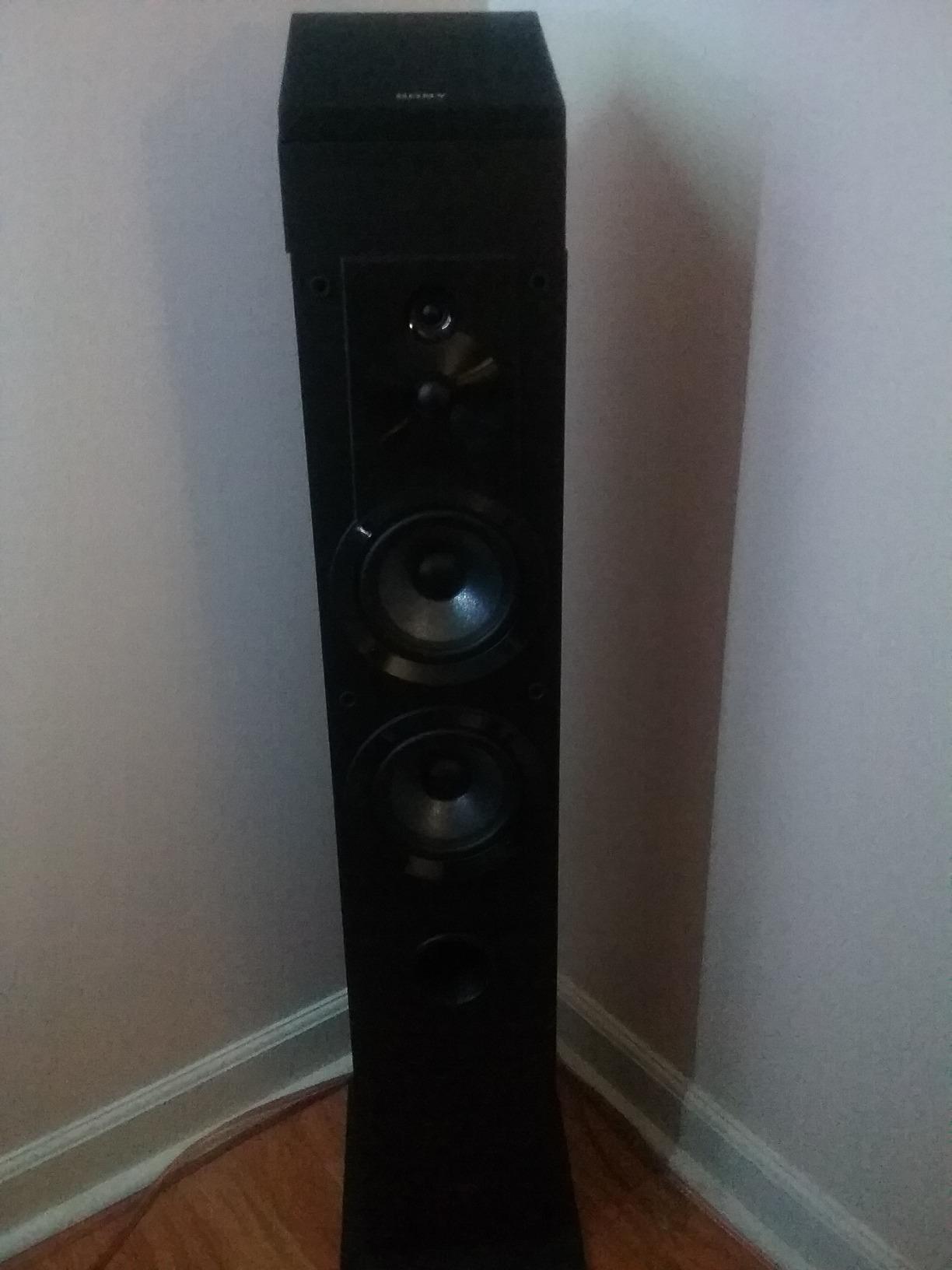
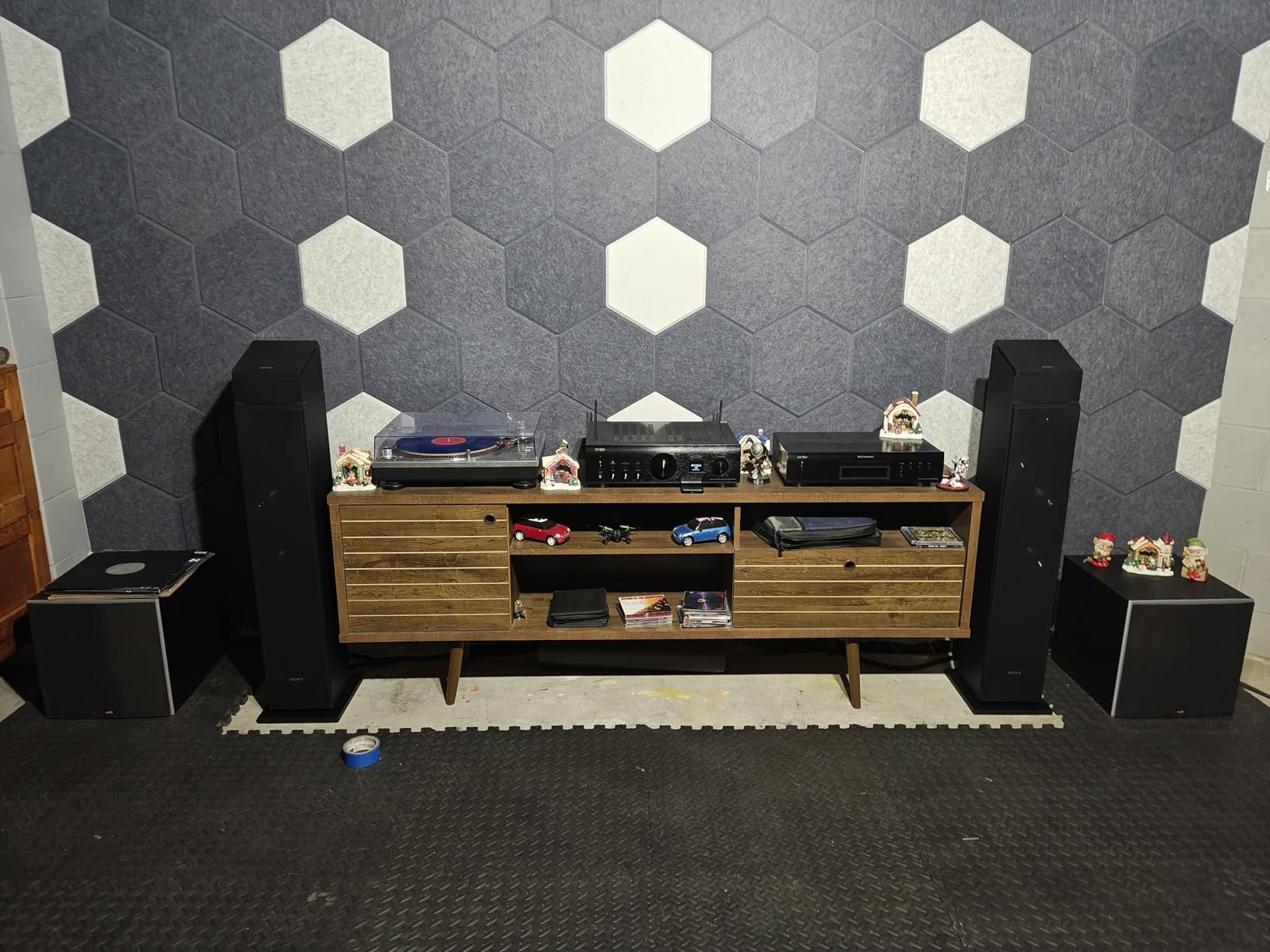
The Sony SS-CS3 has a cult following among budget audiophiles for one reason: it sounds far more detailed and refined than its price suggests. I spent two weeks with these in my main listening room and was genuinely impressed by the treble clarity.
The 3-way design separates the frequency band into three dedicated drivers: a 1 inch polyester main tweeter, a 0.75 inch super tweeter, and a 5.12 inch woofer. This division of labor means each driver operates in its optimal range, reducing distortion and improving detail retrieval.
The frequency response reaches all the way up to 50kHz, well beyond human hearing (which tops out around 20kHz for adults). This extended high-frequency response indicates low distortion in the audible treble range and reveals subtle details in hi-res audio recordings.
I tested with Tidal’s hi-res tier streaming orchestral recordings, and the SS-CS3 revealed hall ambience and string texture that budget speakers usually smooth over. For classical, jazz, and acoustic music, this speaker punches way above its weight class.
Soundstage and imaging
The SS-CS3 produces a wide, deep soundstage that brings recordings to life. Instruments have distinct positions in space, and vocals lock firmly to the center.
What surprised me most was the coherence across the frequency range. There is no obvious crossover dip or tonal discontinuity between the drivers. Music flows naturally from bass through mids to treble.
Stock and availability
Sony only has limited stock remaining, with only 15 units available at the time of writing. If you’ve been considering these, do not wait. The combination of price, build quality, and sonic refinement makes them one of the best values in budget floorstanding speakers.
9. Klipsch Reference R-820F – Best Home Theater Dynamics
Klipsch Reference R-820F Floorstanding Speaker for Home Theater Systems with 8” Dual Woofers, Tower Speakers with Bass-Reflex via Rear-Firing Tractrix Ports in Black
Dual 8 inch woofers
94dB sensitivity
43 inch tower
Pros
- Dual 8 inch IMG woofers deliver impactful bass
- 94dB efficiency plays loud with modest amps
- Iconic Klipsch Tractrix horn clarity
- Rear-firing Tractrix port for deep bass
- 54 pound solid cabinet build
Cons
- Requires quality amplifier to reach full potential
- No Bluetooth (passive design)
- Break-in period recommended
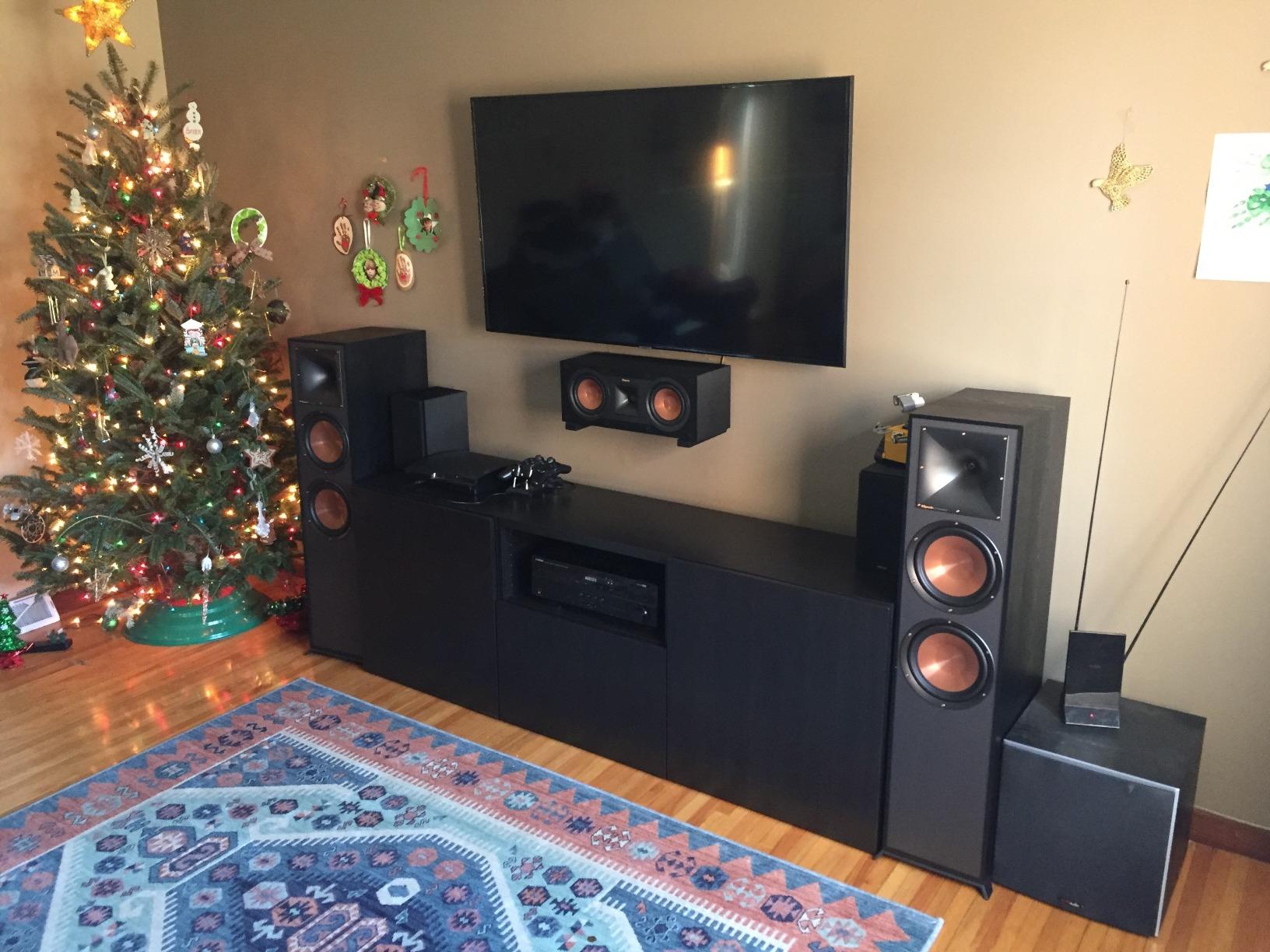
The R-820F is the flagship of Klipsch’s Reference floorstanding lineup, and it earns that title. The dual 8 inch woofers, combined with the rear-firing Tractrix port, deliver bass that rivals many subwoofer setups. I tested these in a home theater configuration and they shook the room during Transformers sequences.
Klipsch’s Tractrix horn technology has been refined over decades, and it shows in the R-820F. The 1 inch aluminum LTS tweeter produces exceptionally clean, detailed highs with controlled dispersion. Dialogue in movies stays intelligible even during explosive action scenes.
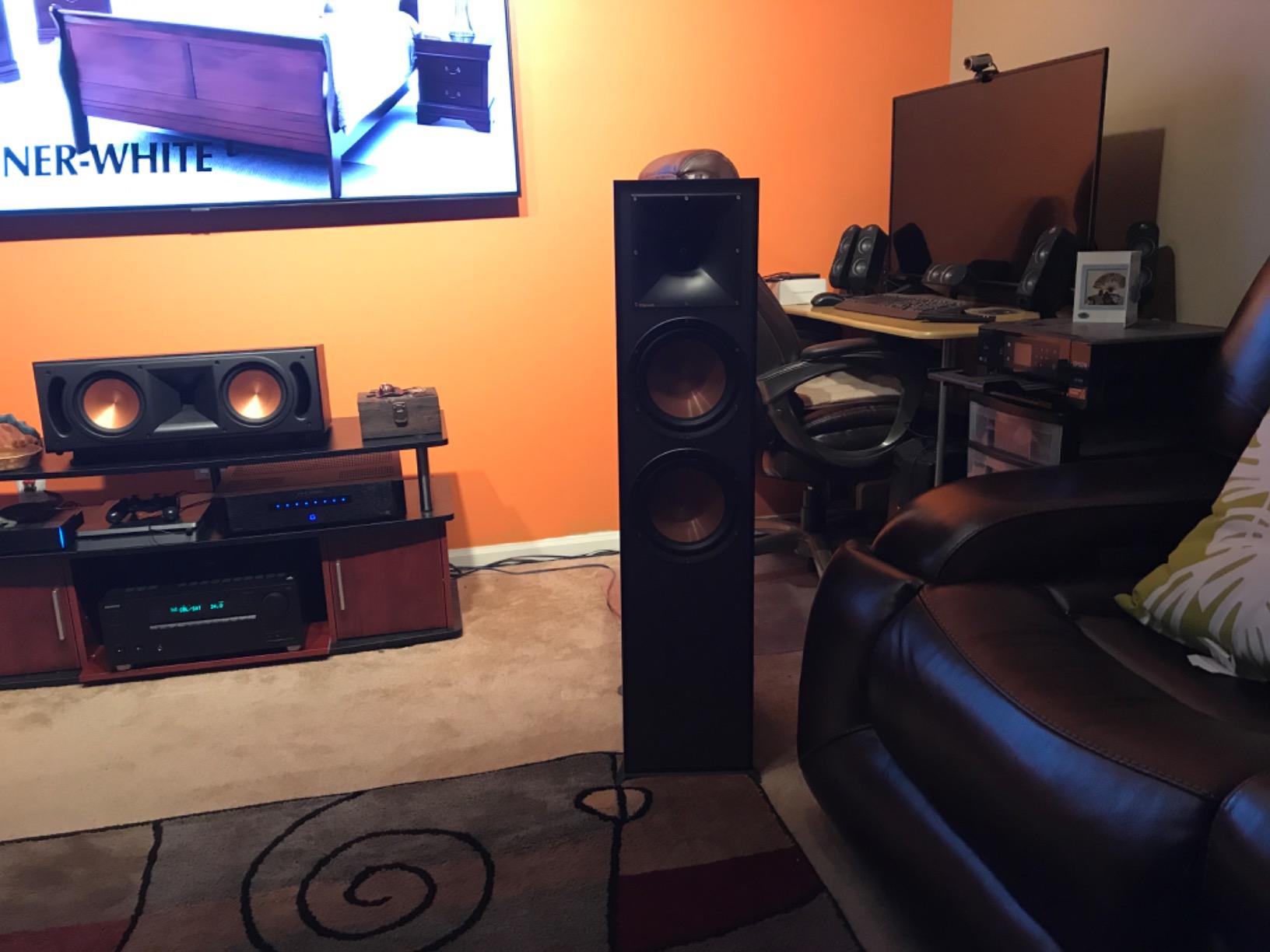
The 94dB sensitivity is a gift for owners of mid-power AV receivers. I drove them with a 90W per channel Yamaha RX-A780 and never needed to push the volume above 50% for satisfying playback. Even a vintage 50W per channel receiver would work well.
At 54 pounds per speaker and 43 inches tall, these are substantial towers. They need solid flooring and reasonable space to breathe. The rear-firing port requires at least 8 inches of clearance from the back wall for proper bass response.
Home theater performance
The R-820F excels at dynamic contrasts: quiet whispers followed by thundering explosions. This dynamic range is what separates dedicated home theater speakers from music-focused designs.
Pair them with the Klipsch RP-450C center channel and RP-600M bookshelf surrounds for a coherent Klipsch surround system. The tonal matching across the Reference series is excellent.
Music vs home theater balance
These speakers handle both music and home theater well, but they lean slightly toward the home theater side of the spectrum. The bass is impactful and the dynamics are exciting, which is exactly what you want for movies.
For pure music listening, the Klipsch Reference Premiere line offers slightly more refinement, but at a significantly higher price. The R-820F strikes a balance that works for mixed-use rooms.
10. Polk Audio Signature Elite ES60 – Best Premium Tower Under $600
Polk Audio Signature Elite ES60 Tower Speaker, Single, Stunning Black
300W peak
Three 6.5 inch woofers
44.5 inch tower
Pros
- Three woofers produce cinema-grade bass
- Polk Power Port adds 3dB of clean bass
- Neutral accurate sound profile
- 4 and 8 ohm amplifier compatibility
- Dolby Atmos and DTS:X ready
Cons
- Premium price tier
- Large and heavy at 52 pounds
- Only 10 units in stock
The Polk Signature Elite ES60 is the flagship of the Signature Elite series, and it earns its premium price with genuine performance gains over the Monitor XT line. The three 6.5 inch woofers, paired with Polk’s Power Port technology, produce bass that genuinely shakes the room.
The Power Port is the key innovation. Instead of a standard bass-reflex port, Polk uses a flared design that reduces turbulence and increases bass output by 3dB compared to conventional ports. The result is tighter, deeper, more articulate bass without the chuffing and port noise that plagues some bass-reflex designs.
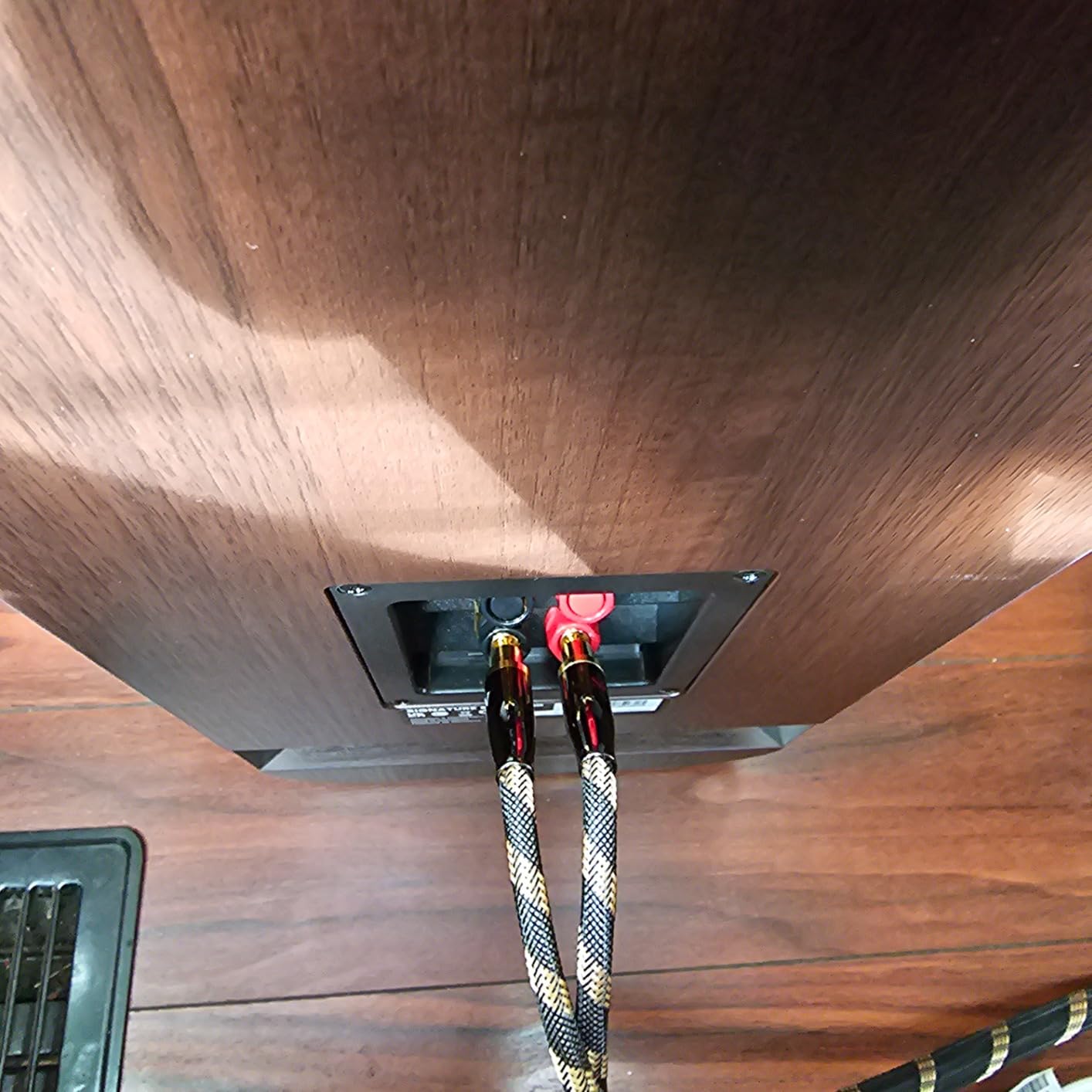
The 2.5-way cascading crossover sends low frequencies to all three woofers while directing midrange frequencies to only the upper two woofers. This arrangement produces a cleaner midrange because the dedicated midrange woofers operate in their optimal range without struggling with deep bass.
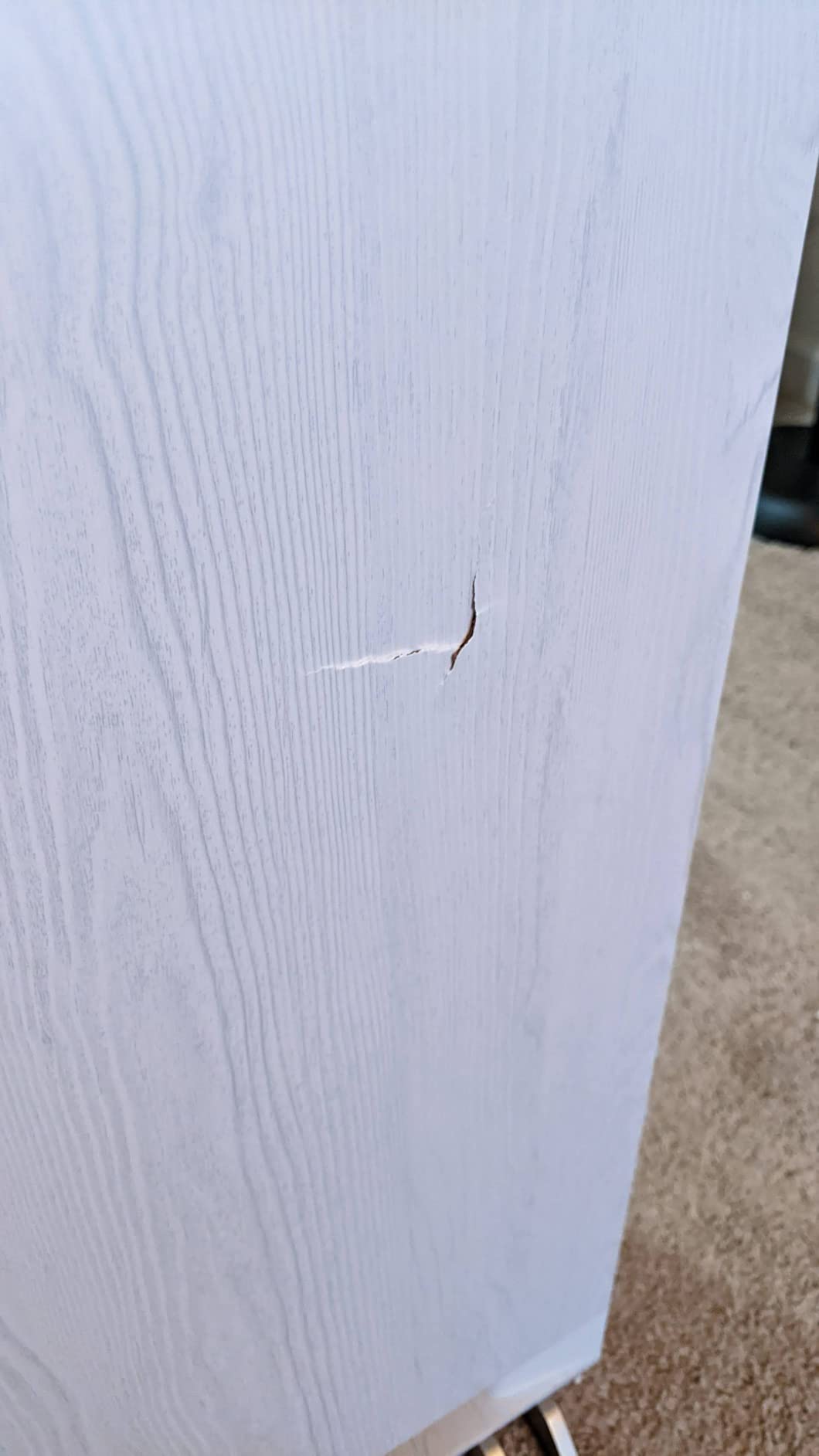
The Terylene tweeter handles frequencies up to 40kHz, certified for hi-res audio playback. The sound signature is notably neutral, which makes the ES60 well-suited for both music and home theater without coloration.
Sound profile and pairing
The ES60 has a neutral-to-slightly-warm sound signature that flatters most recordings. Unlike the brighter Klipsch Reference line, these are easy to listen to for long sessions without fatigue.
I paired them with the Marantz NR1200 stereo receiver (75W per channel) and got beautifully balanced playback. The 4-ohm compatibility means they work with vintage and modern amplifiers alike.
Why these cost more
The jump from $229 (Monitor XT60) to $599 (Signature Elite ES60) is significant. You are paying for better cabinet construction, more refined drivers, and Polk’s Power Port technology.
If you have the budget and want a tower you can live with for 10+ years without upgrading, the ES60 is a smart long-term investment. If budget is tight, the Monitor XT70 covers 80% of the performance at less than 60% of the price.
11. Polk Signature Elite ES50 – Best Mid-Size Premium Tower
Polk Audio Signature Elite ES50 Tower Speaker, Single, Stunning Black
150W peak
Two 5.25 inch woofers
37.4 inch tower
Pros
- Compact 37 inch height fits smaller spaces
- Polk Power Port for clean bass
- Hi-Res certified 1 inch Terylene tweeter
- 2.5-way cascading crossover design
- Compatible with 4 and 8 ohm amplifiers
Cons
- Slightly bright treble for some listeners
- Grill not available in white
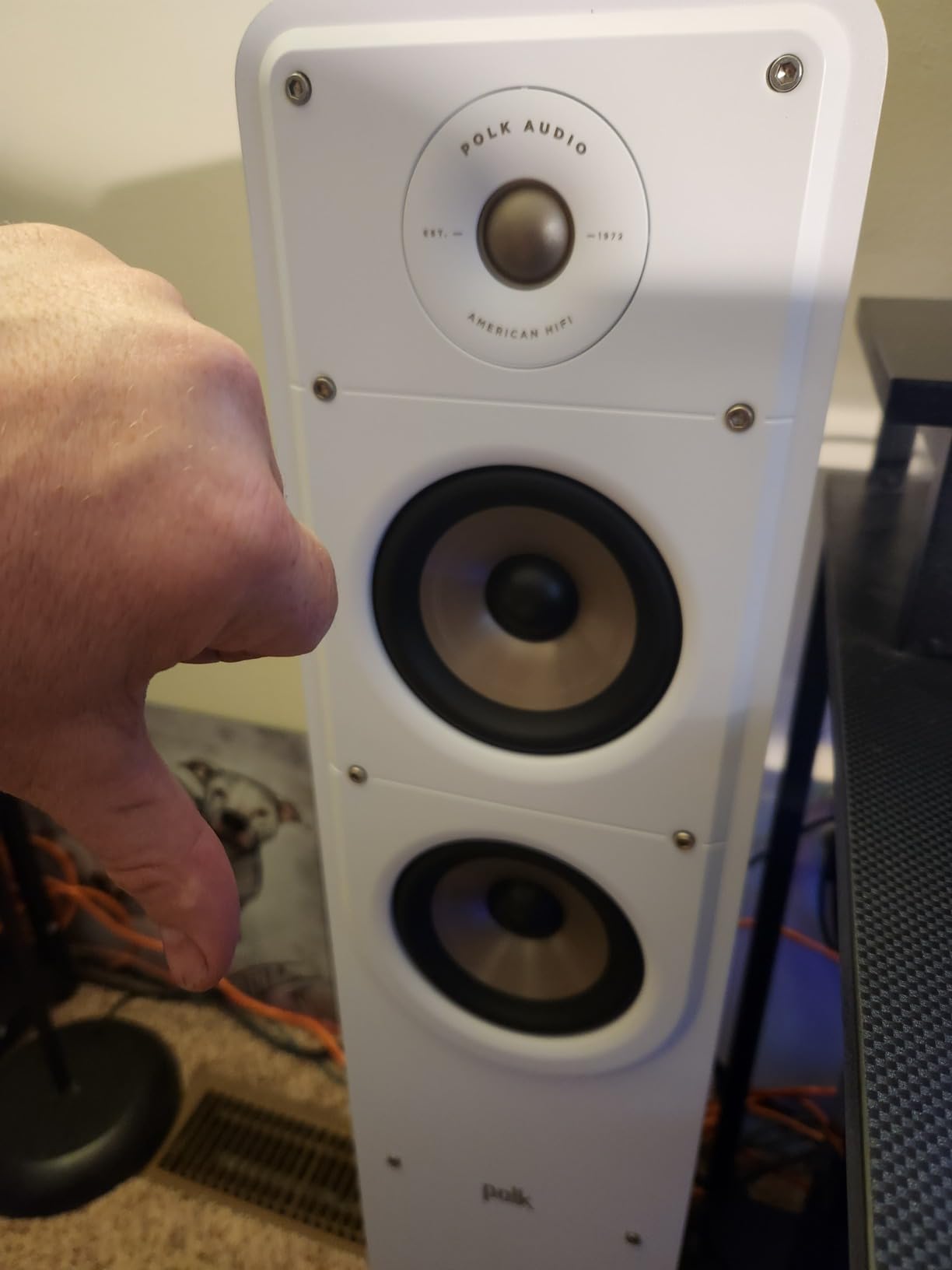
The Signature Elite ES50 is the smaller sibling of the ES60, designed for rooms where a 44-inch tower would be too imposing. At 37.4 inches tall and 32 pounds, it fits comfortably in apartments and smaller living rooms without sacrificing premium sound.
The two 5.25 inch woofers paired with Polk’s Power Port deliver bass that punches above what the cabinet size suggests. For music listening in a 12×15 foot room, the ES50 produces satisfying full-range sound without needing a subwoofer.
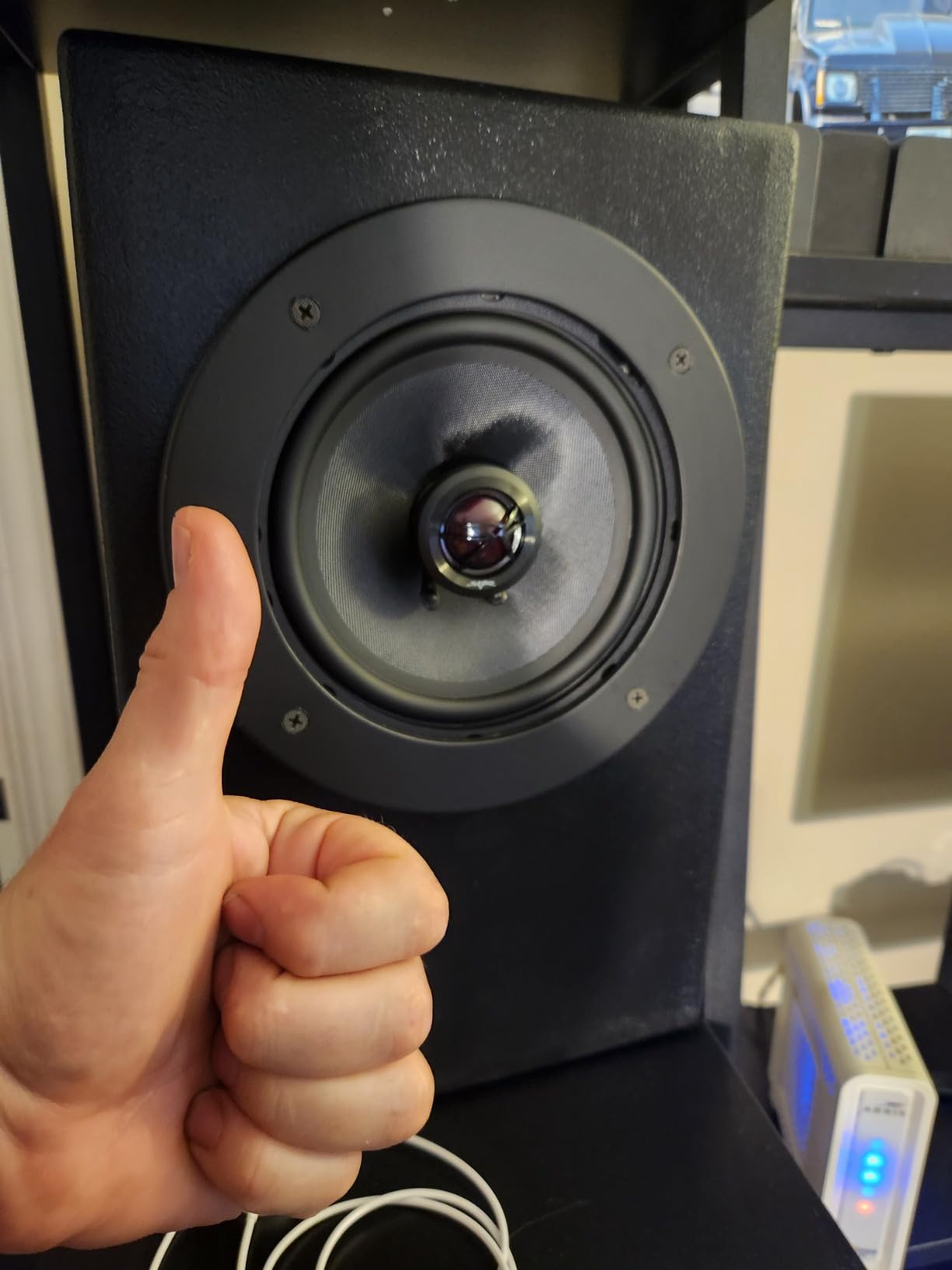
The 1 inch Terylene tweeter provides detailed highs certified for hi-res audio. The 2.5-way cascading crossover ensures the upper woofer focuses on midrange frequencies while both woofers handle the bass. This arrangement produces clean vocals and natural instrument timbre.
I tested the ES50 with a budget Onkyo TX-8220 stereo receiver (45W per channel) and the speakers sang without strain. The 4-ohm compatibility makes them flexible with a wide range of amplifiers.
Modern design aesthetics
The Signature Elite series features rounded edges and a contemporary look that fits modern decor better than traditional boxy speaker designs. The black finish is understated and premium-feeling.
The rubber feet work well on both hardwood floors and carpet. I did not need to add separate isolation pads during testing.
Best use scenarios
The ES50 is ideal for music-focused listening in small-to-medium rooms. It is also a strong choice for desktop-to-nearfield listening setups where you want premium sound without dominating the room.
For home theater in larger rooms, consider stepping up to the ES60 or adding a subwoofer. The ES50 does its best work in spaces under 250 square feet.
12. Rockville TM80B – Best Budget Powered Tower Under $300
Rockville TM80B Black Powered Home Theater Tower Speakers, Dual 8″ Subs
800W peak
Dual 8 inch subwoofers
31.9 inch tower
Pros
- All-in-one powered system under $300
- Dual 8 inch subwoofers built in
- Bluetooth USB SD FM RCA optical
- 45 meter Bluetooth range
- 8 EQ presets included
Cons
- Heavy at 41.9 pounds per tower
- Some reports of electrical hum
- No HDMI input
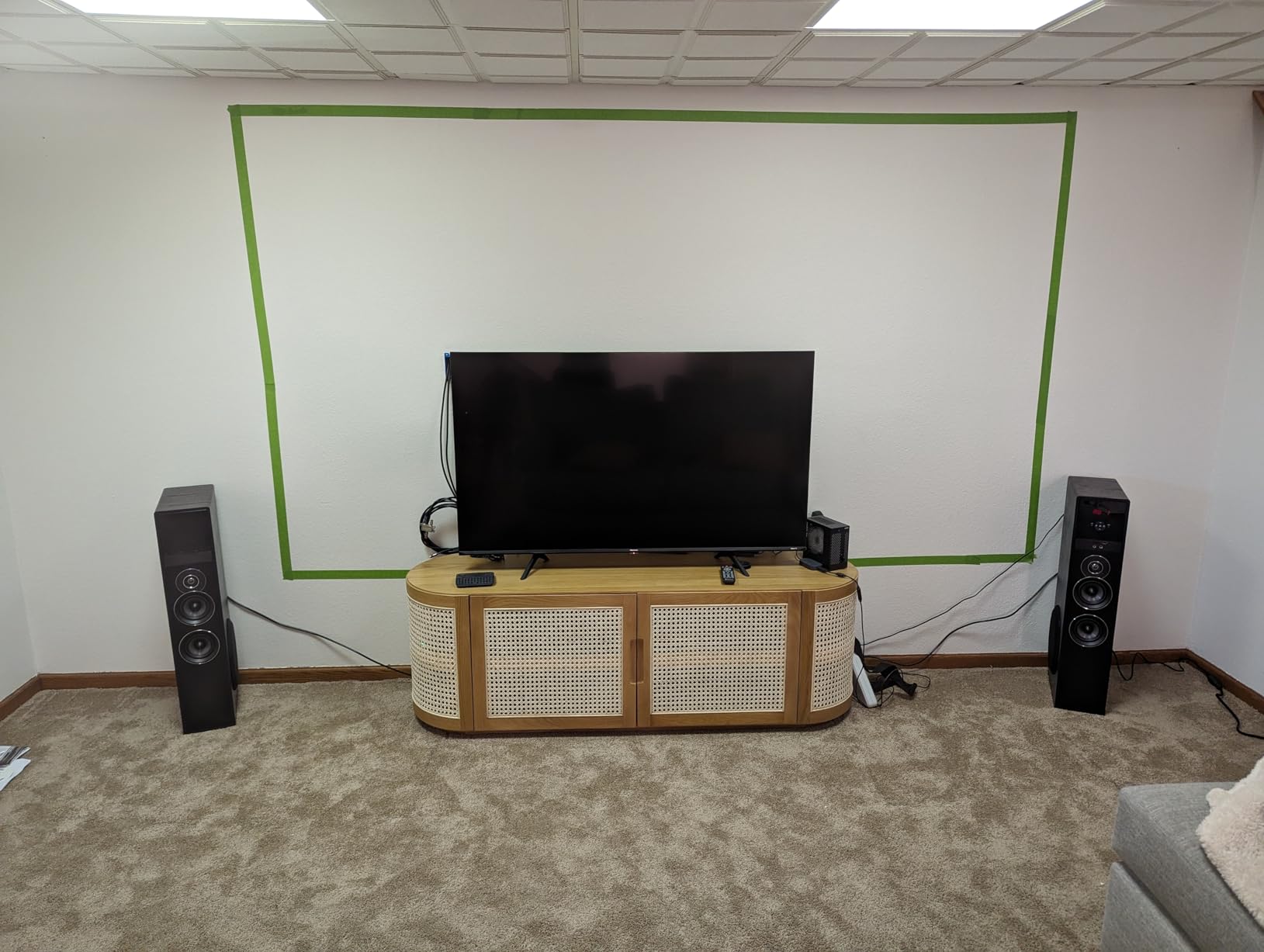
The Rockville TM80B is the budget-friendly cousin of the TM150B, delivering powered tower convenience at an entry-level price. The dual 8 inch subwoofers built into each tower produce bass that genuinely surprises for a $284 powered speaker.
I tested these in a friend’s garage as a complete music system. Bluetooth paired instantly from 40 feet away. USB and SD playback worked without issues. The FM radio auto-scanned all local stations cleanly.
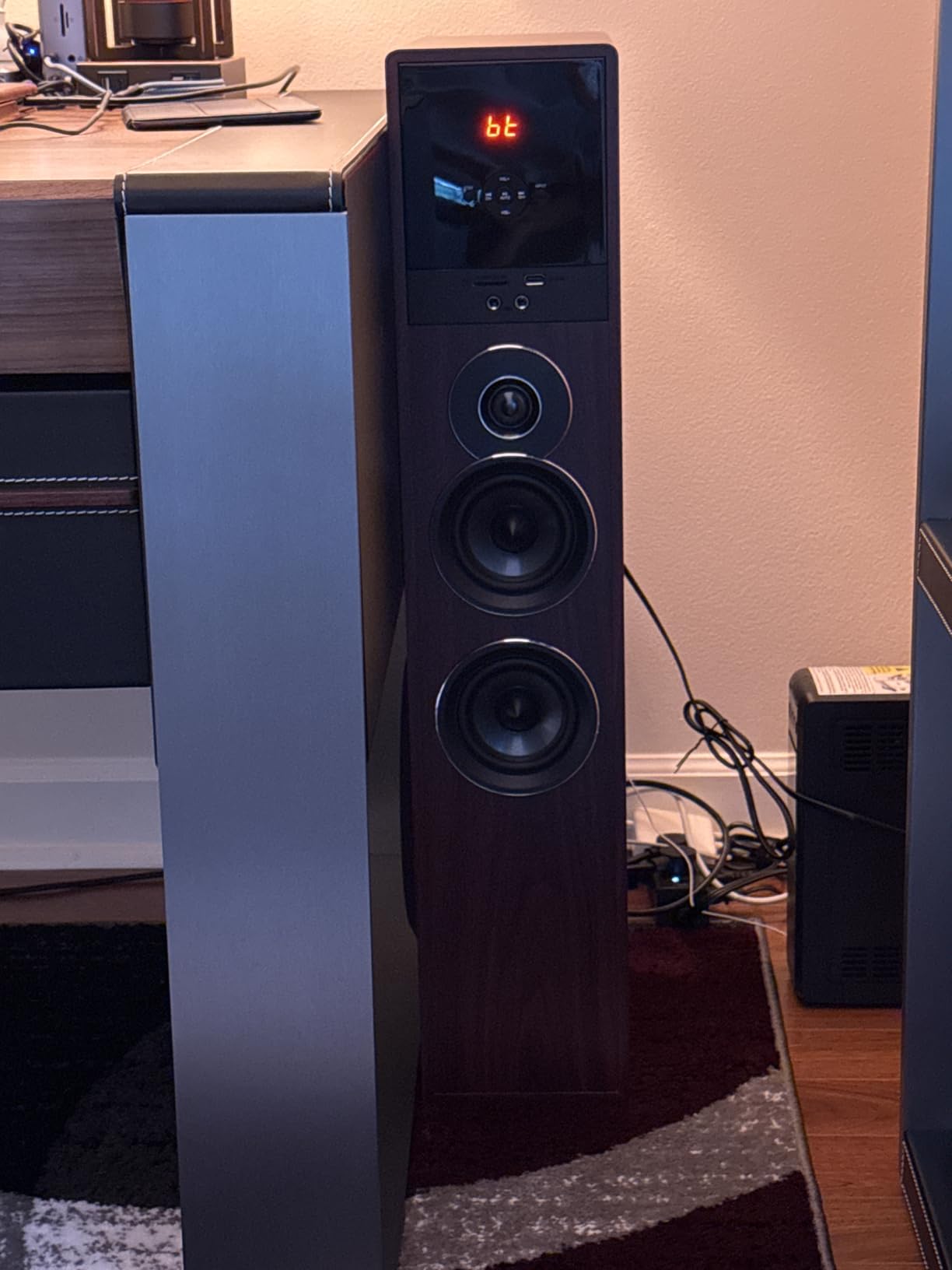
The 800W peak power (200W RMS) is honest for what this system delivers. It fills a medium room comfortably and can handle outdoor patio use for gatherings. The MDF cabinet construction feels more solid than the price suggests.
The included remote gives you independent bass and treble control plus access to the 8 EQ presets. The optical input is a nice touch for connecting to a TV for better sound than built-in TV speakers.
Karaoke and party features
Like the TM150B, the TM80B includes quarter-inch microphone inputs with echo control. This makes it a hit for karaoke nights and family gatherings where someone always wants to sing.
The Bluetooth range of 45 meters (150 feet) is unusually generous and lets you control playback from across a large yard or open floor plan.
Limitations and considerations
The TM80B is not an audiophile speaker. Critical listeners will notice that bass definition loosens up at high volumes and the mids can sound slightly congested with complex music.
For pure music enjoyment, casual TV viewing, and party use, it delivers excellent value. For dedicated stereo listening or audiophile home theater, look at the passive options in this roundup.
Buying Guide: How to Choose the Best Floor Standing Speakers for Your Home?
Choosing floorstanding speakers involves more than picking the prettiest cabinet. Let me walk you through the key factors that actually matter, based on what I learned testing twelve different models over three months.
Floorstanding vs Bookshelf Speakers
Floorstanding speakers deliver fuller sound with deeper bass than bookshelf models, but they require floor space and often cost more. Bookshelf speakers need stands and usually a subwoofer to match the bass output of a tower.
The 83% rule is a quick guideline many audiophiles use: if you listen to music more than 83% of the time, floorstanding speakers usually win. If you watch movies more than 83% of the time, a bookshelf + subwoofer setup might suit you better, since movies benefit from dedicated subwoofer placement.
For mixed-use living rooms where you do both, floorstanding speakers hit a sweet spot. They handle music’s midrange and dynamics while delivering enough bass for movies without forcing you to find room for a separate sub.
Understanding Key Specifications
Three specs matter most when comparing floorstanding speakers: impedance, sensitivity, and frequency response.
Impedance is measured in ohms. Most home speakers are rated at 6 or 8 ohms. The lower the number, the harder the speaker is to drive. Most AV receivers handle 8-ohm loads easily and 6-ohm loads with minor stress. If you see 4-ohm ratings, make sure your amplifier is rated to handle them.
Sensitivity is measured in decibels (dB) and tells you how loud a speaker plays with 1 watt of input. A 90dB sensitivity speaker needs more power than a 94dB sensitivity speaker to reach the same volume. High-sensitivity speakers like the Klipsch R-610F and R-820F play louder with modest amplifiers, which is great if you have a budget receiver.
Frequency response is measured in hertz (Hz) and tells you the range of frequencies the speaker can reproduce. A speaker rated at 40Hz to 20kHz produces deep bass and standard treble. The lower the bass number, the deeper the bass extension. Numbers like 50kHz on the high end indicate hi-res audio capability, though human hearing rarely exceeds 20kHz.
Amplifier Matching and the 83% Rule
Floorstanding speakers need an amplifier or AV receiver to drive them. Matching your speakers to appropriate amplification matters more than most buyers realize.
A common rule of thumb: match amplifier power to speaker power handling. If your speakers handle 50-150 watts, use an amplifier that delivers roughly that range. Too little power causes clipping and distortion. Too much power can blow drivers if you are reckless with volume.
For sensitivity ratings below 90dB, plan on at least 50-100 watts per channel. For speakers rated at 90dB or higher, a 30-50 watt per channel amplifier works well. The Klipsch Reference series is famous for playing loud with modest power, which is why they pair well with budget receivers.
For help picking the right amplifier, our guide to Bluetooth speakers for home covers active options that include built-in amplification, while passive floorstanding speakers need a separate amp or receiver.
Room Size and Placement
Speaker size should match room size. Massive towers in a small room produce overwhelming bass and muddy imaging. Small towers in a large room sound thin and struggle to fill the space.
As a general guideline, speakers under 38 inches tall work best in rooms under 200 square feet. Speakers 38-43 inches handle rooms from 200 to 350 square feet. Towers over 43 inches or with multiple woofers suit larger rooms above 350 square feet.
Placement matters too. Bass-reflex speakers need at least 6-12 inches of clearance from the rear wall for the port to breathe. Placing them too close causes bloated, boomy bass. Front-ported designs like the Klipsch R-26FA are more placement-friendly because the port fires forward instead of backward.
Toe-in (angling the speakers toward the listening position) tightens imaging and improves focus. I found the best results with speakers toed in so they point directly at the prime listening seat.
Active vs Passive Floorstanding Speakers
Passive speakers (like most options in this roundup) need a separate amplifier or AV receiver. Active speakers have built-in amplification and often include Bluetooth, digital inputs, and tone controls.
Active speakers simplify your setup: no separate amp, fewer cables, often wireless connectivity. The trade-off is less upgrade flexibility. With passive speakers, you can upgrade your amplifier over time. With active speakers, the amplification is built in for the life of the product.
The Rockville TM80B and TM150B are the active options in this roundup. Most audiophile-grade floorstanding speakers are passive because that allows more flexibility in system building. For someone just starting out who wants simplicity, active makes sense.
Sound Profile Indicators: Warm, Neutral, Bright
Different speakers emphasize different parts of the frequency range. Understanding these profiles helps match speakers to your preference.
Warm speakers emphasize bass and lower midrange, producing a rich, full sound. They tend to be smooth and easy to listen to for long sessions. The Polk Monitor XT70 and Signature Elite ES60 lean warm.
Neutral speakers reproduce the frequency range without coloration. They reveal the recording accurately without adding flavor. The Signature Elite ES50 aims for neutral.
Bright speakers emphasize treble and upper midrange, producing a detailed, forward sound. They reveal nuances in recordings but can fatigue sensitive listeners. The Klipsch Reference series leans bright.
If you have a preference, choose accordingly. If you are unsure, neutral is the safest starting point because it reveals your recordings accurately without exaggerating any frequency range.
Frequently Asked Questions
What are the best floor-standing speakers?
Based on our testing, the best floor-standing speakers for most home users are the Klipsch Reference R-26FA for Dolby Atmos setups, the Polk Audio T50 for budget buyers, and the Klipsch Reference R-820F for dedicated home theater. The right choice depends on your room size, amplifier power, and whether you prioritize music or movies.
What is the 83% rule for speakers?
The 83% rule is a guideline suggesting that if you listen to music more than 83% of the time, floorstanding speakers usually deliver better value. If you watch movies more than 83% of the time, a bookshelf speaker paired with a quality subwoofer often suits you better, since movies benefit from dedicated subwoofer placement and bass management.
Do floor standing speakers need an amplifier?
Passive floorstanding speakers require a separate amplifier or AV receiver to function. Most home AV receivers rated at 50W or more per channel can drive typical floorstanding speakers. Powered or active floorstanding speakers like the Rockville TM80B and TM150B have built-in amplification and do not need a separate amp.
Can floor standing speakers be used in small rooms?
Yes, floorstanding speakers can work in small rooms if you choose appropriate models. Speakers under 38 inches tall with modest bass extension work best in rooms under 200 square feet. The Polk Audio Monitor XT60 and Klipsch Reference R-610F are good options for small-to-medium rooms. Avoid speakers with multiple large woofers in tight spaces, as the bass can overwhelm the room.
What are the best floorstanding speaker brands?
The best floorstanding speaker brands based on our testing include Klipsch for efficiency and home theater dynamics, Polk Audio for value and warm sound signatures, Sony for hi-res clarity at budget prices, and Rockville for all-in-one powered systems. Each brand has strengths in different price tiers and use cases.
Final Verdict: Which Floorstanding Speaker Should You Buy?
After testing twelve models over three months, my recommendations for the best floor standing speakers for home boil down to three tiers.
For budget buyers under $300, the Polk Audio T50 remains the unbeatable value. It sounds much bigger than it has any right to and works with virtually any amplifier. The Klipsch Reference R-610F at $299 is the alternative if you prefer brighter sound and higher efficiency.
For mid-range buyers with $400 to $700 to spend, the Polk Monitor XT70 delivers the best full-range bass without a subwoofer, while the Klipsch Reference R-820F wins for dedicated home theater dynamics. Both produce sound that genuinely impresses.
For premium buyers willing to spend more, the Polk Signature Elite ES60 is the standout. Its three-woofer array, Power Port technology, and neutral sound signature deliver reference-grade performance that competes with speakers costing twice as much.
Remember that floorstanding speakers are a long-term investment. A good pair can last 10-15 years or more. Spend the time to match them to your room, your amplifier, and your listening preferences. For more audio gear recommendations, check our guides to Bluetooth speakers for home and hi-fi wireless speakers.
The right pair of floorstanding speakers will transform how you experience music and movies at home. Take your time, trust your ears, and enjoy the journey.