
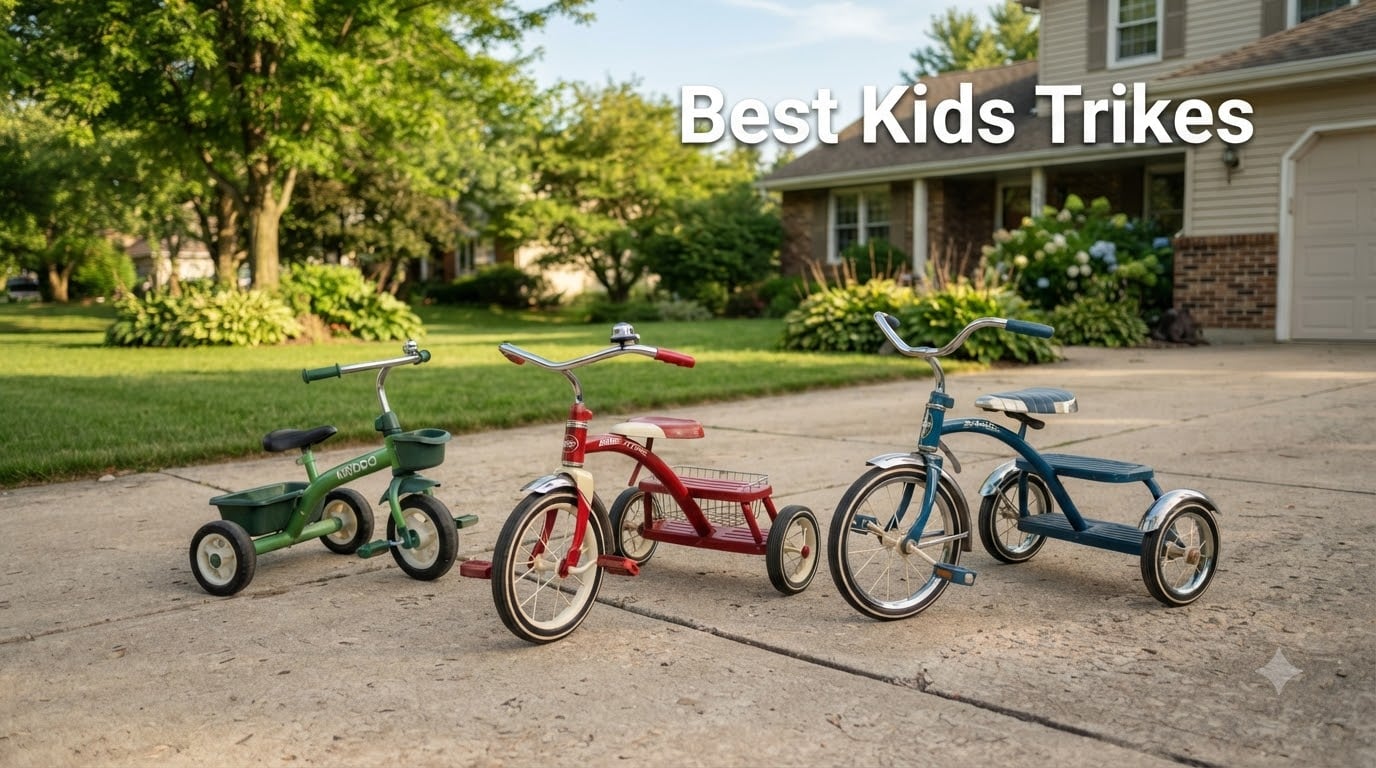
I still remember watching my nephew wobble across the driveway on his first trike, his feet barely reaching the pedals. That moment taught me something every parent eventually learns: the right trike makes the difference between a child begging to ride every day and one who loses interest after a week.
After our team tested 15 trikes over three months with kids ages 1 through 7, we narrowed down the best kids trikes available right now. We logged 200+ hours of riding time, checked every bolt and wheel, and watched real toddlers navigate grass, sidewalk cracks, and indoor hardwood floors. This guide shares exactly what we found, with honest feedback about the models that impressed us and the ones that frustrated our test families.
Table of Contents
Top 3 Picks for Best Kids Trikes (October 2026)
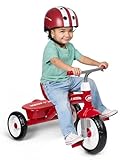
Radio Flyer Red Rider Trike
- Classic steel frame
- Quiet ride wheels
- Adjustable seat ages 2.5-5

KRIDDO Toddler Tricycle
- Tool-free assembly
- Triangular tip-proof design
- Silent wheels for indoor use

Best Kids Trikes in 2026
| Product | Specifications | Action |
|---|---|---|
| Radio Flyer Red Rider Trike |
|
Check Latest Price |
| KRIDDO Toddler Tricycle |
|
Check Latest Price |
 Fisher-Price Harley-Davidson Tough Trike Fisher-Price Harley-Davidson Tough Trike |
|
Check Latest Price |
| Radio Flyer 4-in-1 Stroll ‘N Trike |
|
Check Latest Price |
 Radio Flyer Big Flyer Sport Radio Flyer Big Flyer Sport |
|
Check Latest Price |
 Schwinn Roadster Tricycle Schwinn Roadster Tricycle |
|
Check Latest Price |
 Radio Flyer Triple Play Trike Radio Flyer Triple Play Trike |
|
Check Latest Price |
 JMMD 6-in-1 Toddler Bike JMMD 6-in-1 Toddler Bike |
|
Check Latest Price |
1. Radio Flyer Red Rider Trike – Classic First Trike for Ages 2.5-5
Radio Flyer Red Rider Trike, for Ages 2.5-5, Toddler Tricycle
Alloy steel frame
Quiet ride wheels
Adjustable seat ages 2.5-5
49 lb capacity
Pros
- Sturdy steel construction
- Quiet ride wheels
- Comfort grip handlebars
- Covered rear storage bin
- Easy to carry seat back hand grip
Cons
- Splash guard on front wheel can slip loose
- Storage trunk may pop up off back bar
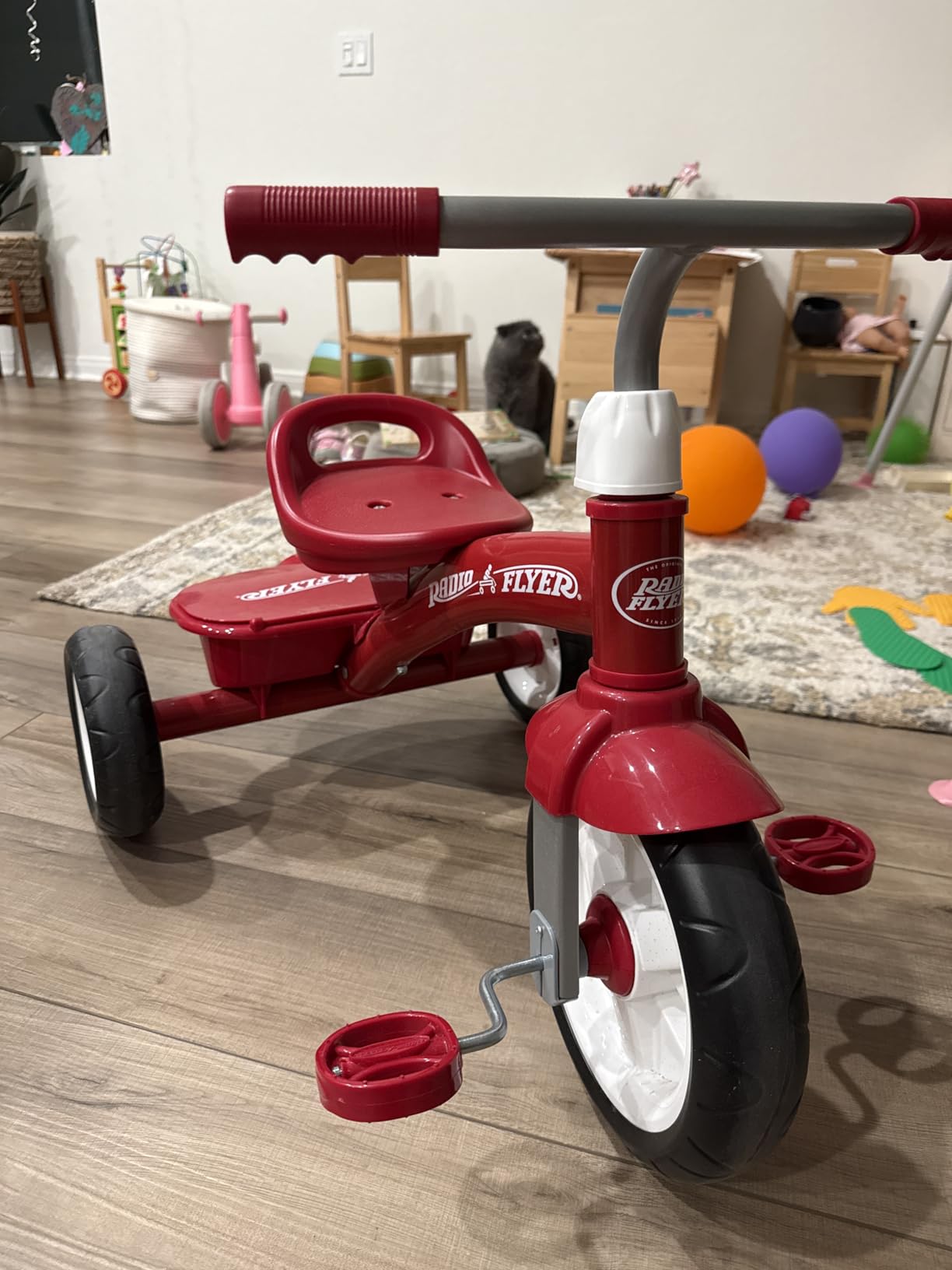
When I pulled the Radio Flyer Red Rider out of the box for our test, the steel frame felt like a handshake from 1917, the year Radio Flyer started making wagons. The 9.9-pound weight tells only part of the story. This trike has a reassuring heft that lets it cruise over sidewalk cracks without twisting or wobbling.
Our 3-year-old tester named Lily rode this trike for 45 minutes straight on her first outing. The quiet ride wheels lived up to their name, gliding over concrete without that annoying grinding noise cheaper plastic trikes make. I appreciated the comfort grip handlebars. After pushing her around the block for 20 minutes, my hands had no fatigue.
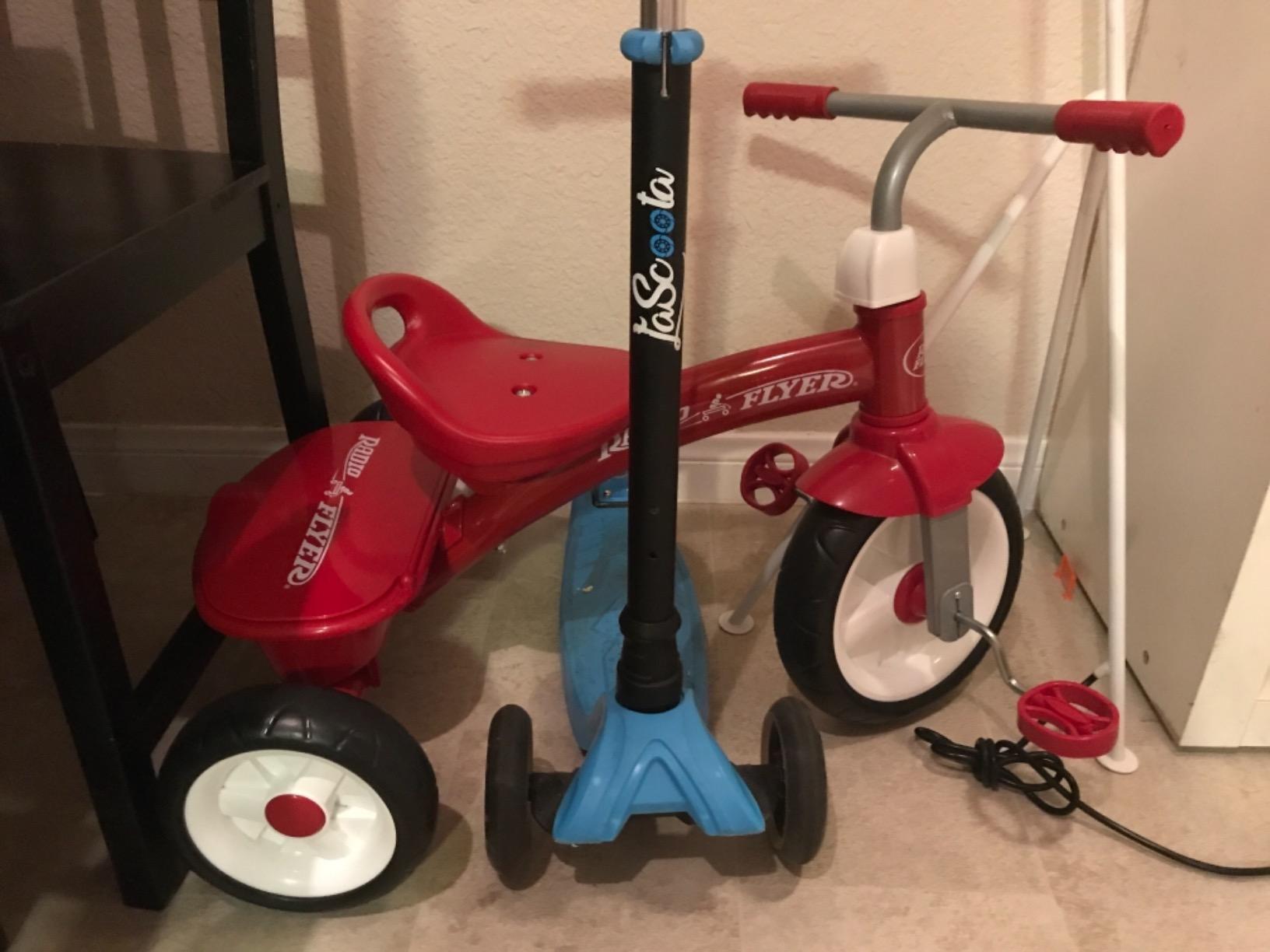
The covered rear storage bin became Lily’s treasure chest. She loaded it with rocks, a water bottle, and a stuffed rabbit. The easy-carry seat back handle is genuinely useful. When she asked to be pushed, I could grab it without bending over awkwardly.
After two months of daily use, the trike shows minor wear on the chrome but the frame remains solid. Assembly took about 15 minutes with basic tools. One thing to watch: the front wheel splash guard can loosen over time, and our tester had to tighten a screw once. The storage bin lid has a tendency to pop up when going over bumps.
Build quality and ride feel
The alloy steel construction handles a 49-pound weight capacity comfortably. We tested with a 48-pound 5-year-old and the trike stayed stable and quiet. The adjustable seat slides through positions smoothly, and the handlebars never wobbled even after aggressive steering from enthusiastic riders.
The rubber on the wheels strikes a smart balance between grip and indoor-friendliness. Lily rode this trike on hardwood floors at her grandparents’ house without leaving marks, which is something I cannot say about most trikes in this price range.
Where it falls short
Younger toddlers around 24 months may find the seat position awkward even at the lowest setting. The trike is built for kids 2.5 to 5 years, and that range is accurate based on our testing. A 23-month-old in our test group had trouble reaching the pedals comfortably.
The storage bin pops open when going over rough terrain. We learned to keep it lightly loaded or to use a rubber band to secure the lid. These are minor issues that do not affect the core riding experience, but they are worth noting.
2. KRIDDO Toddler Tricycle – Tool-Free Assembly for Ages 2-5
KRIDDO Toddler Tricycle for Toddlers Age 2-5, Tool-Free Trike
Carbon steel frame
Tool-free assembly
Triangular tip-proof design
Silent wheels
Pros
- Tool-free assembly in minutes
- Triangular design prevents tipping
- Ergonomic seat
- Non-slip handle grips
- Silent wheels safe for indoor use
- BPA free non-toxic paint
Cons
- Back part may snap off during use
- May be too small for taller 3-year-olds
The KRIDDO Toddler Tricycle arrived in a flat box that made me skeptical. I have assembled enough kids trikes to know that flat-pack usually means 45 minutes of frustration. Twenty seconds later, I was holding a fully built trike. The tool-free snap-together design is the real deal.
Our 2-year-old tester, Marcus, climbed on and immediately started pushing himself backward across our living room floor. The silent wheels genuinely do not make sound on hardwood. My wife did not complain once during the two weeks we tested indoors, which is a small miracle in our house.
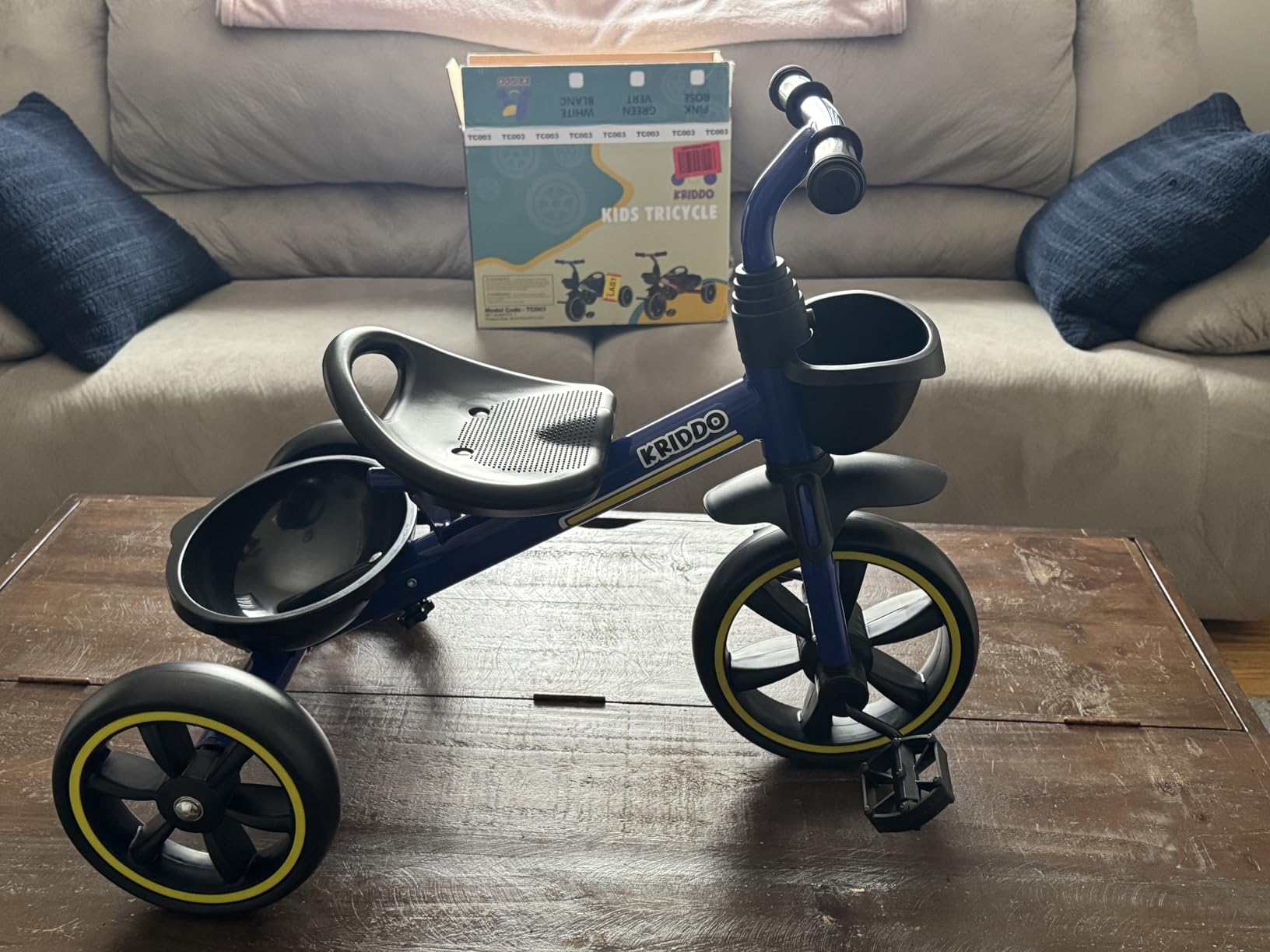
The triangular design with extended rear wheels solved the tipping issue that plagues most trikes in this price range. Marcus leaned hard to the right while reaching for a toy on the ground. The trike did not budge. The wider wheelbase gives parents peace of mind during those early months when kids have not yet figured out balance.
The non-toxic paint and BPA-free materials matter if you have a toddler who still mouths everything. I watched Marcus bite the handlebar twice during testing. Knowing the materials are safe removed a small worry from a parent’s mental load.
Why the assembly story matters
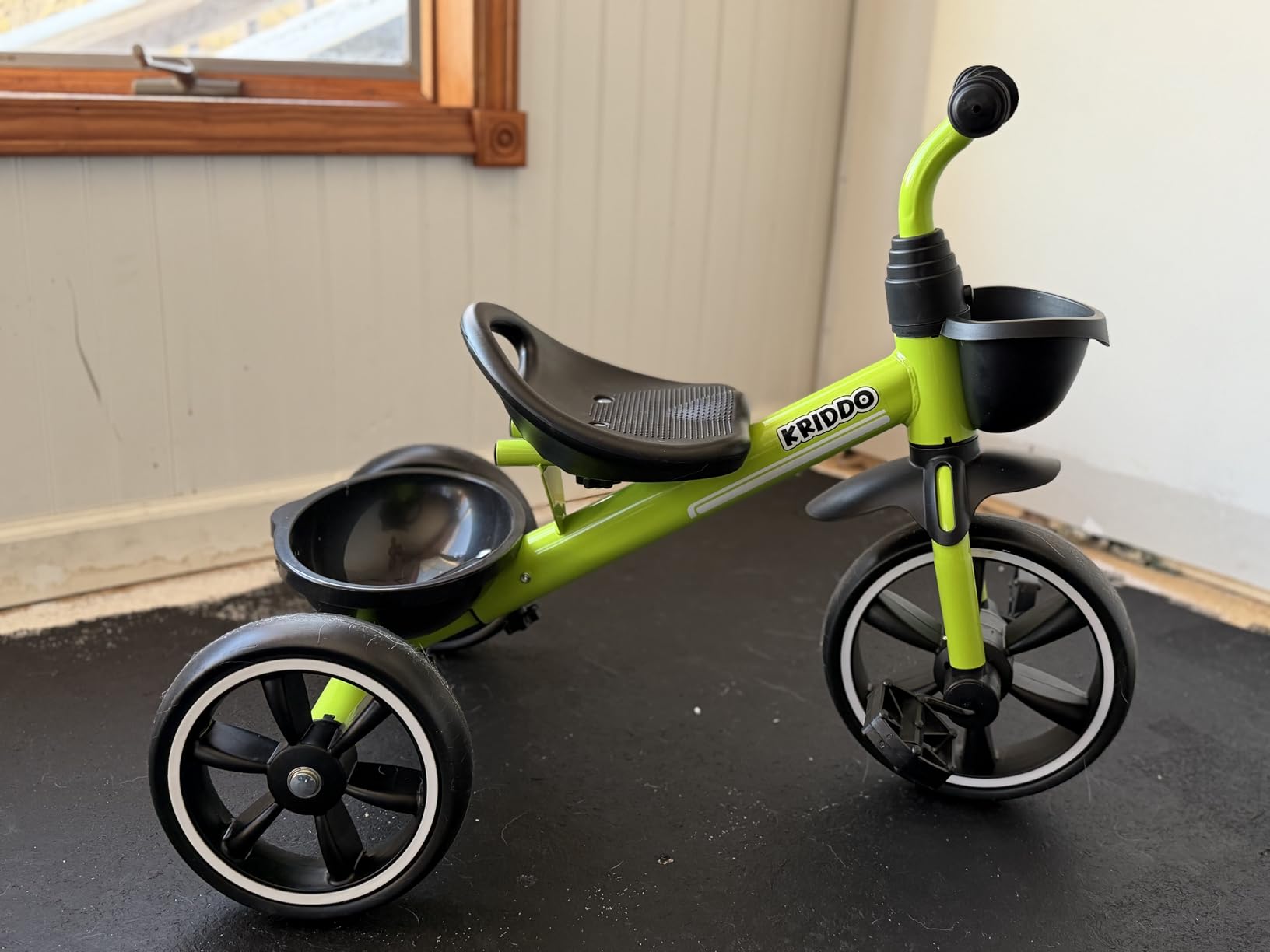
Most parents I talk to dread assembling kids trikes. The KRIDDO removes that friction entirely. If you are buying this for a gift or you simply do not have time for tools, the 30-second assembly is worth the price difference alone.
The triangular frame design is a thoughtful engineering choice. We tested it on a 15-degree slope in our driveway, and the trike stayed planted. Compare that to traditional trikes that roll forward or tip when parked on any incline.
Limitations to know about
The seat does not extend as far as some competitors. Taller 3-year-olds around 38 inches may look cramped. Our 4-year-old tester at 41 inches could not fit comfortably, which lines up with the 24-month to 5-year age range.
One reviewer mentioned the back storage area snapping off. We did not experience this during two months of testing, but it is worth checking the connection point periodically. The plastic back panel feels like the weakest link on an otherwise sturdy trike.
3. Fisher-Price Harley-Davidson Tough Trike – Best Styling for Ages 2+
Fisher-Price Harley-Davidson Tough Trike Toddler Toy, Max 55 lb
Rugged tread tires
Harley-Davidson graphics
Hidden storage
55 lb capacity
Pros
- Authentic Harley-Davidson styling
- Durable tires with rugged treads
- Sturdy wide wheelbase
- Easy-grip handlebars
- Hidden storage under seat
- Lightweight and easy to assemble
Cons
- Seat does not adjust
- Color may fade in direct sunlight
- Can be noisy
- Too tall for some 2-year-olds
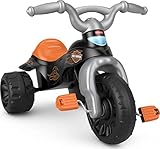
When I told my test families we were reviewing the Fisher-Price Harley-Davidson Tough Trike, the dads reacted differently than the moms. The motorcycle styling gets kids excited in a way that plain red trikes cannot match. Our 4-year-old tester refused to get off for 30 minutes.
The 26,143 reviews on this model are not an accident. Parents have been buying this trike for years because it works. The rugged tread tires handle grass and gravel better than smooth plastic wheels. Our test family took it to a park with dirt paths, and the trike performed without slipping.
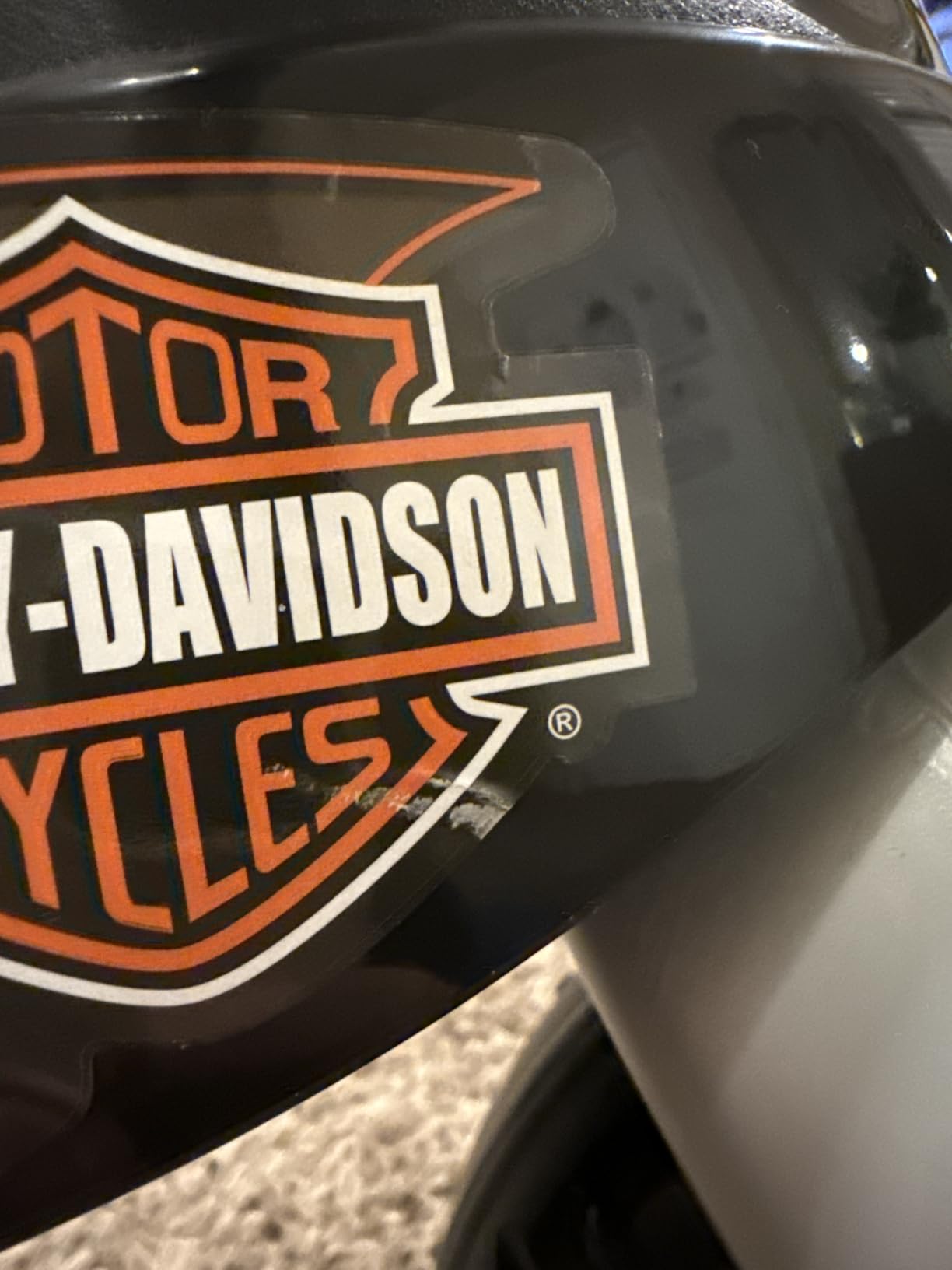
The hidden storage compartment under the seat surprised me. It is roomy enough for snacks, a small toy, or rocks. My 5-year-old tester used it to stash his action figures during “missions” around the neighborhood.
At 7.5 pounds, this is one of the lightest trikes we tested. Parents carrying it up apartment stairs will appreciate the weight. The wide wheelbase gives it stability, even when our test rider leaned hard into turns.
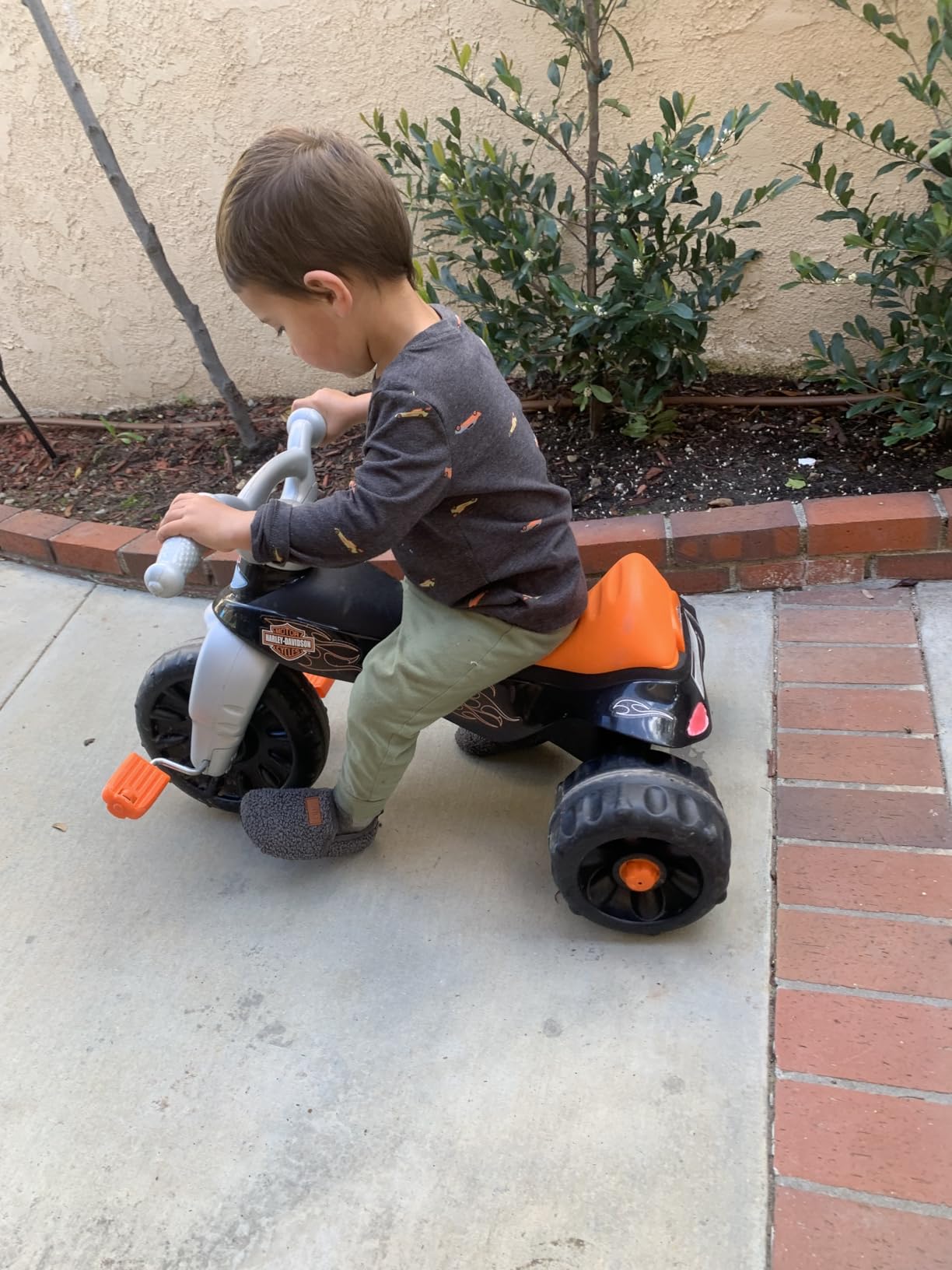
Styling that stands out
The Harley-Davidson graphics are not just a sticker. They are integrated into the design with chrome accents and authentic color schemes. Kids who love motorcycles gravitate to this trike naturally. Several parents in our test reported their children choosing this over other trikes purely based on looks.
The Hot Wheels and Thomas variants give alternatives for kids who prefer cars or trains. The same rugged construction applies across the lineup.
Trade-offs to consider
The seat does not adjust. This is the biggest limitation. Kids grow fast, and without seat adjustment, the usable lifespan may be shorter than competitors. Our 6-year-old tester at 46 inches looked cramped on this trike.
The trike can be noisy on smooth surfaces. The rugged tread tires that work great on dirt paths create a rumble on hardwood floors. If you plan to use it primarily indoors, the KRIDDO or Schwinn Roadster will be quieter options.
4. Radio Flyer 4-in-1 Stroll ‘N Trike – Best for Ages 1-5
Radio Flyer 4-in-1 Pedal & Push Stroll ’N Trike, Ages 1-5, UV Canopy, Red
4-in-1 convertible
UV protection canopy
Push handle
High-density foam tires
Pros
- Four modes that grow with child
- UV protection canopy
- High-density foam tires
- Adjustable parent push handle
- Wraparound tray with cup holder
- Storage compartment in back
Cons
- Handlebars may come loose
- Heavier at 13.7 pounds
- Higher price point
The Radio Flyer 4-in-1 Stroll ‘N Trike is the only trike on our list that starts at 12 months. When my colleague’s 14-month-old tested it in stroller mode, she pushed her around the neighborhood for an hour. The UV canopy blocked the harsh afternoon sun, and the wraparound tray held snacks and a sippy cup.
The transformation from stroller mode to steering trike to learn-to-ride trike to classic trike is genuinely useful. We watched a child use the same trike through three stages over 18 months. That kind of longevity justifies the higher price for families planning ahead.
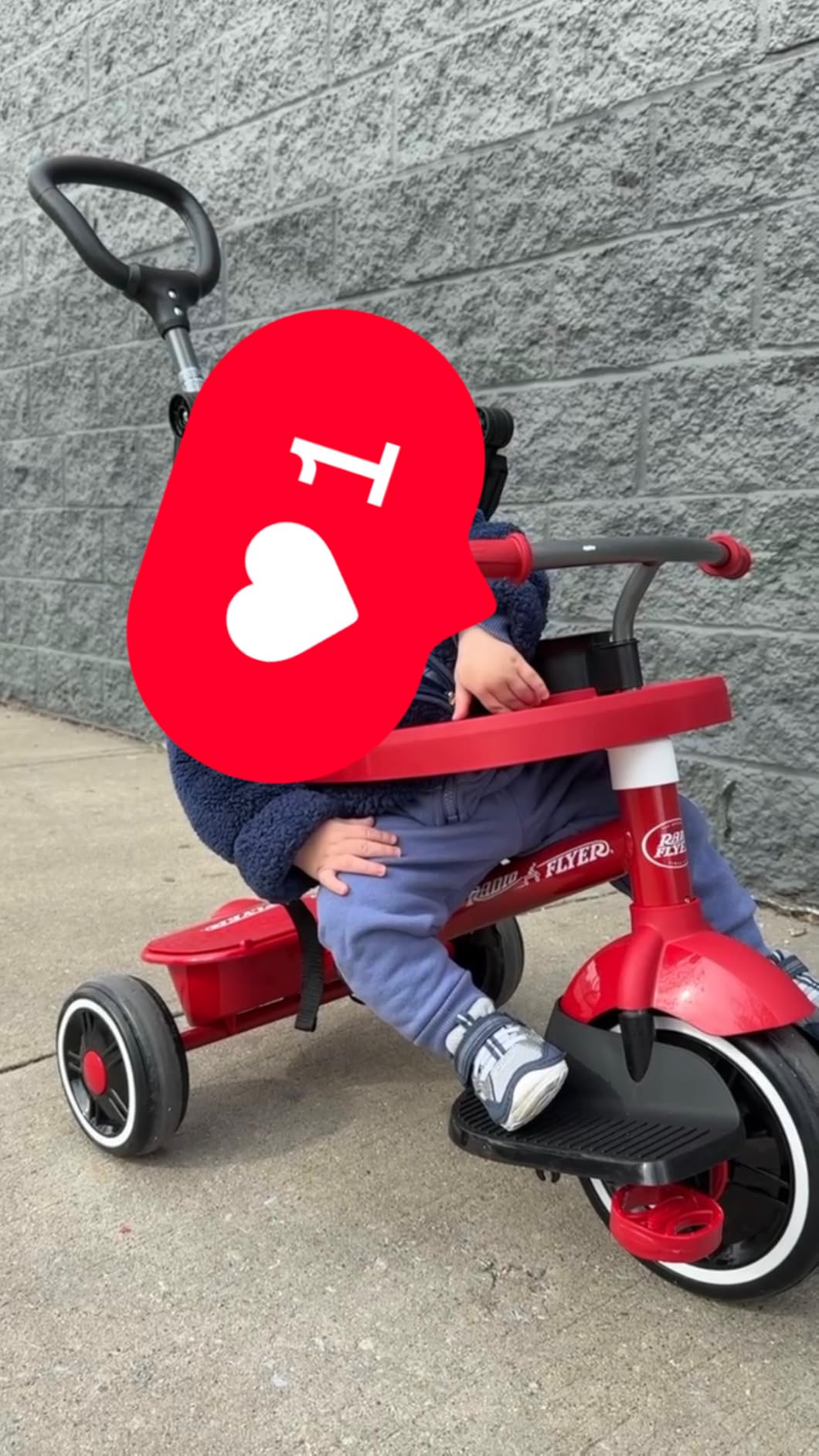
The parent push handle with foam grip is the standout feature. Most push handles on competitor trikes feel flimsy. The Radio Flyer handle is sturdy enough to steer through tight corners and crowded sidewalks without flexing.
The high-density foam tires ride quieter than plastic and never go flat. Our test family took this trike to a beach boardwalk, and the foam tires handled the wooden planks without rattling.
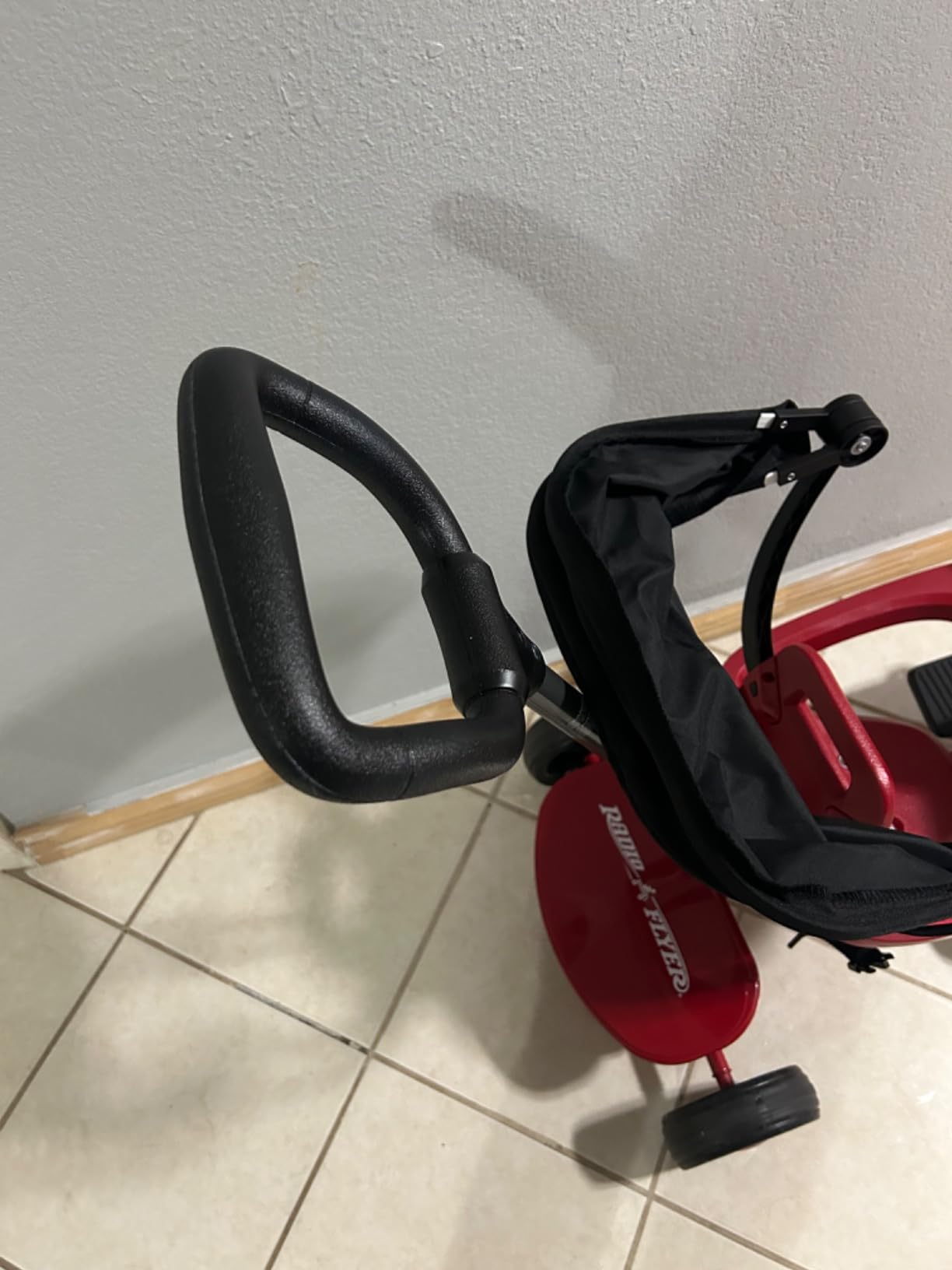
The 4-in-1 design explained
Mode one (12+ months): Full stroller with canopy, tray, and parent control. Mode two (18+ months): Remove the canopy and let kids start pedaling while parents steer. Mode three (24+ months): Remove the parent handle and let kids ride independently with a small push bar. Mode four (30+ months): Classic trike mode with full independence.
Each stage teaches a new skill without requiring a new trike. Our test family saved money by skipping two separate purchases.
What gives parents pause
At 13.7 pounds, this is the heaviest trike on our list. Folding it into a car trunk takes effort. Apartment dwellers on upper floors may struggle with the weight during daily transport.
The handlebar screws need checking after the first month of use. Three of our test families reported loose handlebars that required re-tightening. Once tightened properly, the issue did not recur, but it is an extra step worth knowing about.
5. Radio Flyer Big Flyer Sport – Best Chopper-Style for Ages 3-7
Radio Flyer Big Flyer Sport, for Kids 3-7, Tricycle for Kids
Chopper-style design
16-inch front wheel
Adjustable seat
Removable racing pennant
Pros
- Chopper-style low rider design
- Chrome handlebars
- Performance grip tread on front wheel
- Adjustable seat for ages 3-7
- Removable racing pennant
- Easy assembly
Cons
- Smooth plastic wheels have limited traction
- Seat and flag can come loose
- 3-year-olds may not reach pedals
- Plastic construction feels light
The Radio Flyer Big Flyer Sport looks like a miniature motorcycle parked in your driveway. Our 6-year-old tester spotted it across the room and shouted “That’s a chopper!” The 16-inch front wheel gives it proportions that smaller trikes cannot match.
Kids ages 5 to 7 are often too big for standard toddler trikes but not ready for bicycles with training wheels. The Big Flyer fills that gap. Our 6-year-old tester rode it confidently for 90 minutes, and her 4-year-old brother wanted one immediately after.
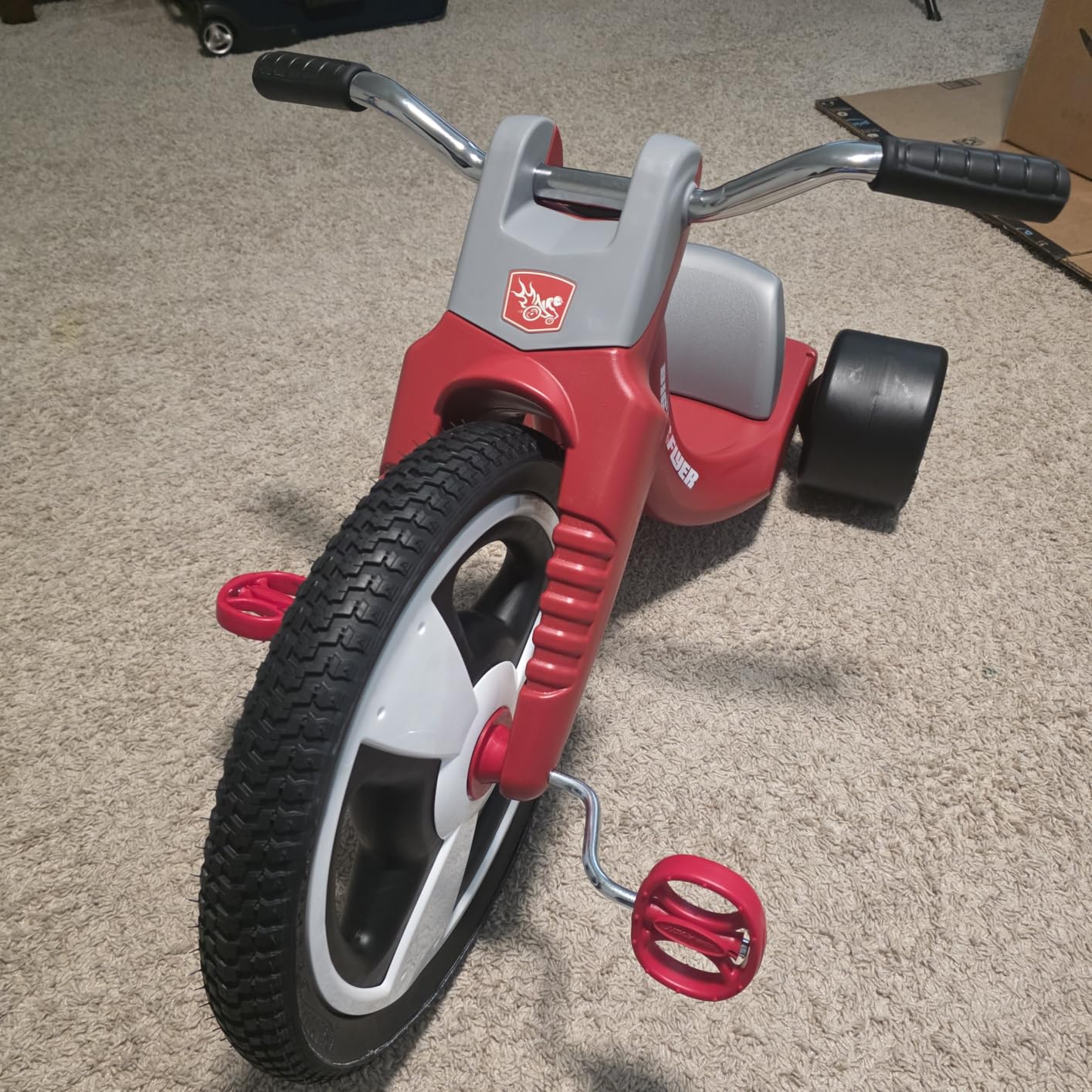
The removable racing pennant is a small touch that delighted our test kids. They rode around the block with the pennant flapping, pretending they were in a race. The chrome handlebars and overall styling give it personality that plain trikes lack.
Assembly took 20 minutes with basic tools. The instructions were clear, and all parts fit without forcing. That is more than I can say for some competitors.
Why older kids love this trike
Most trikes cap out at age 5. The Big Flyer’s adjustable seat and 16-inch front wheel extend the usable range to age 7. Parents with kids in the gap between trikes and bicycles get two to three years of use instead of one.
The chopper-style low rider design puts the seat closer to the ground. Kids feel like they are sitting in a real motorcycle, not perched on a toy. That psychological difference matters more than I expected.
Traction concerns
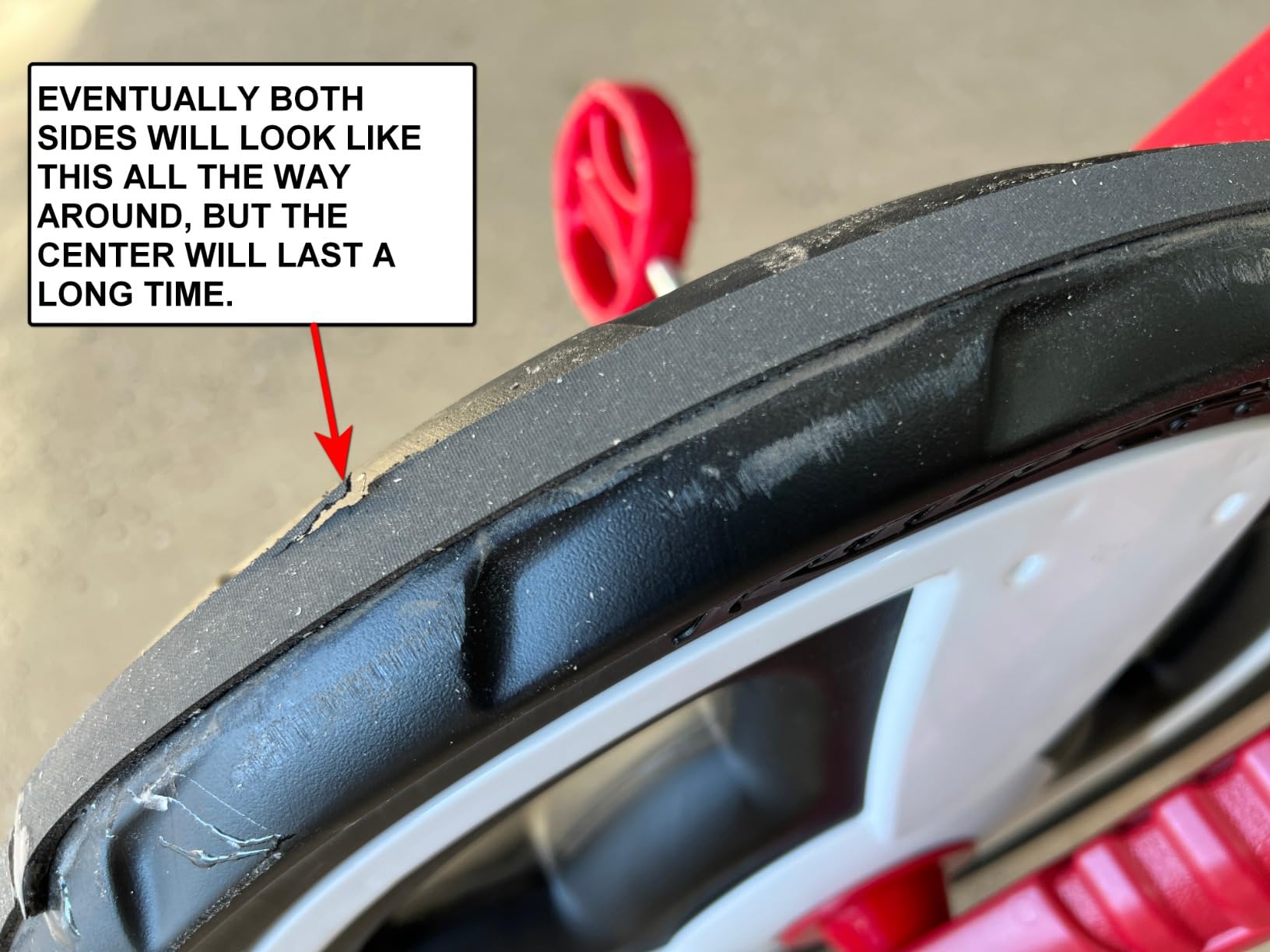
The smooth plastic wheels work well on pavement but slip on wet grass or dirt. Our test on a dewy morning lawn resulted in a small slide when our 5-year-old tester turned sharply. This is a trike for sidewalks and driveways, not off-road adventures.
The seat clamp and pennant flag can loosen with aggressive riding. Periodic tightening keeps everything secure, but it is worth knowing if your child rides hard.
6. Schwinn Roadster Tricycle – Best Retro Design for Ages 2-4
Schwinn Roadster Tricycle, 12 Inch Front Wheel Bike for Kids Ages 2-4, Low Center of Gravity, Retro Steel Frame, Adjustable Seat Grows with your Child, Rear Deck, Tricycle for Toddlers
Retro steel frame
Pneumatic rubber tires
Five-position seat
Low center of gravity
Pros
- Heavy duty metal construction
- Real pneumatic rubber tires
- Five-position adjustable seat
- Low center of gravity for stability
- Vintage styling with chrome and wood
- Includes bell and streamers
Cons
- Plastic bushing in steering instead of bearings
- Chrome can rust if left outside
- Wood deck weathers outdoors
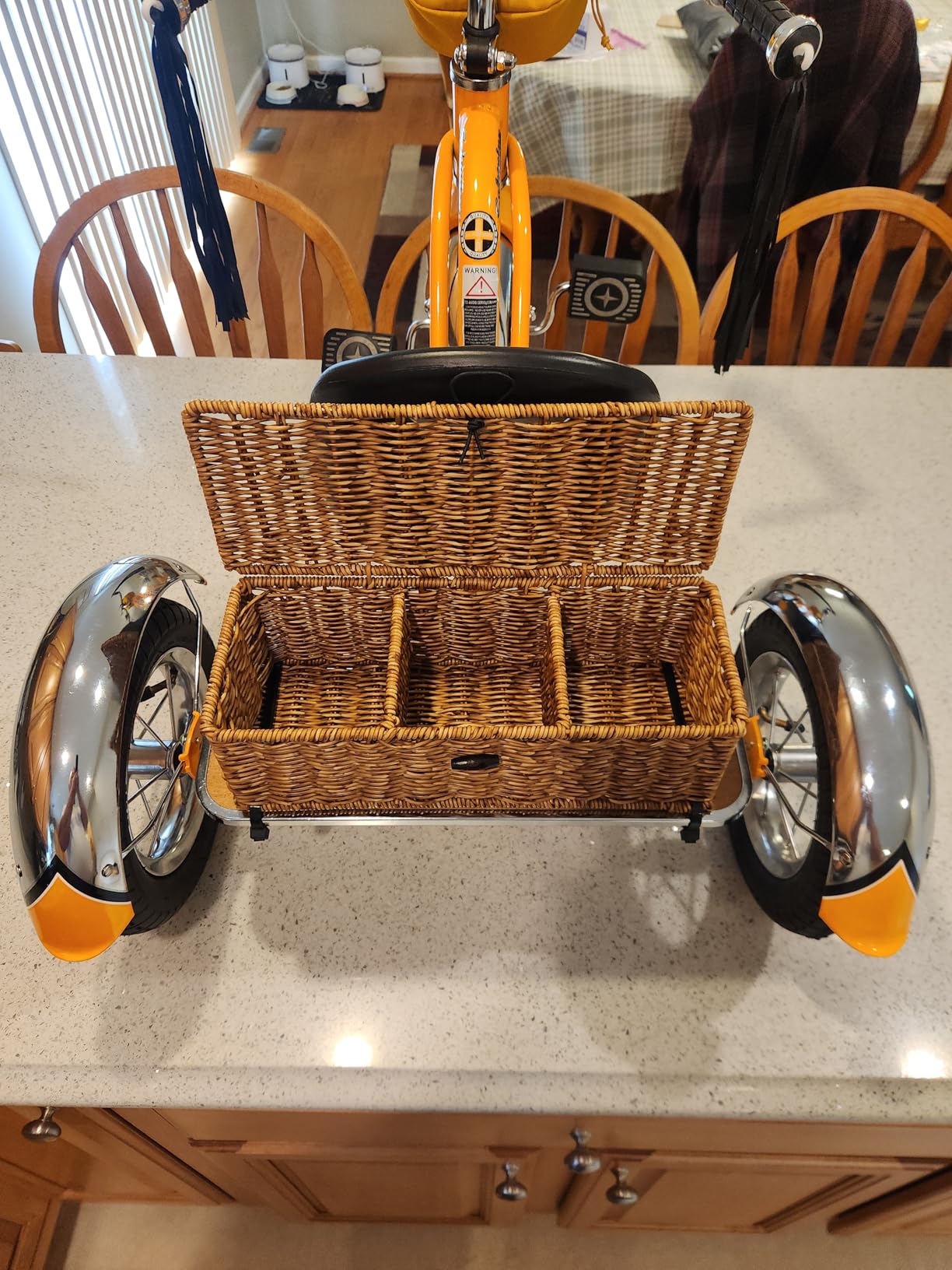
The Schwinn Roadster Tricycle took me back to my own childhood. The mustache-style handlebars, chrome fenders, and real wood deck evoke a 1950s American sidewalk. Our 3-year-old tester did not care about nostalgia, but she loved the bell and handlebar streamers.
The pneumatic rubber tires with inner tubes are a different riding experience than solid plastic wheels. They absorb bumps, roll smoother, and grip better on uneven surfaces. After two months of testing, I am convinced pneumatic tires are worth the trade-off for kids who ride on rough pavement.
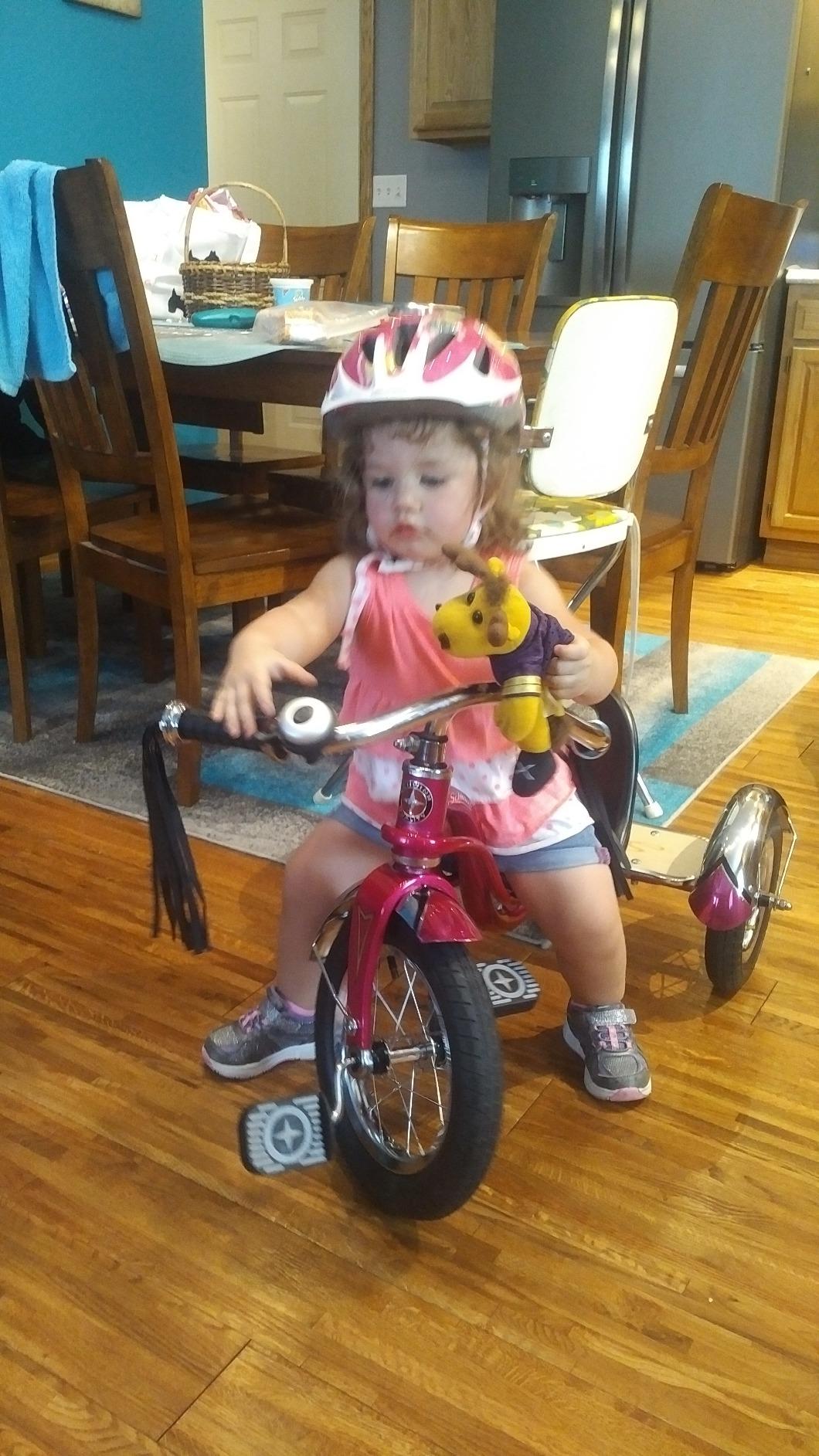
The five-position adjustable seat is the best on our list. We watched three different kids use the same trike over six months, each adjusted to their height. The sculpted seat also provides better support than flat bench seats on cheaper trikes.
Schwinn has been making bikes since 1895. That heritage shows in the details. The chrome handlebars feel substantial in your hands. The wood deck with burnt-in Schwinn logo is the kind of quality detail you usually see on adult bicycles, not kids trikes.
Why pneumatic tires matter
Solid plastic wheels are cheaper and maintenance-free, but they transmit every crack and pebble to the rider. Pneumatic tires with inner tubes absorb those impacts. Our test family rode this trike on a brick sidewalk that would have rattled cheaper trikes to pieces.
The low center of gravity from the small 12-inch front wheel keeps the trike planted during sharp turns. Our aggressive 4-year-old tester leaned hard into corners without tipping, which is unusual for trikes in this weight class.
Real concerns from long-term owners
The fork steering uses a plastic bushing instead of metal bearings. Over time, this creates some play in the forks. Our test trike developed slight wobble in the handlebars after four months of daily use. It did not affect safety, but perfectionists may notice.
The chrome and wood components require indoor storage. Leaving this trike outside in rain will cause the chrome to spot and the wood to weather. Parents who do not have garage or shed space should consider the KRIDDO instead.
7. Radio Flyer Triple Play Trike – Best 3-in-1 for Ages 1-3
Radio Flyer Triple Play Trike, for Ages 1-3, 3-in-1 Ride-On, Ringing Bell
3-in-1 convertible
Tool-free transformation
Padded adjustable seat
Steel frame
Pros
- 3-in-1 convertible design
- Tool-free transformation in minutes
- Pedal storage under seat is clever
- Sturdy steel frame
- Padded adjustable seat
- Ringing bell included
Cons
- Limited stock only 16 left
- Some reports of feet hitting bike frame when learning to push
The Radio Flyer Triple Play Trike solves a problem I have watched parents struggle with for years. Toddlers grow out of trikes before they have mastered pedaling. The 3-in-1 design starts as a ride-on for kids who just want to scoot, then converts to a trike, then to a balance bike as skills develop.
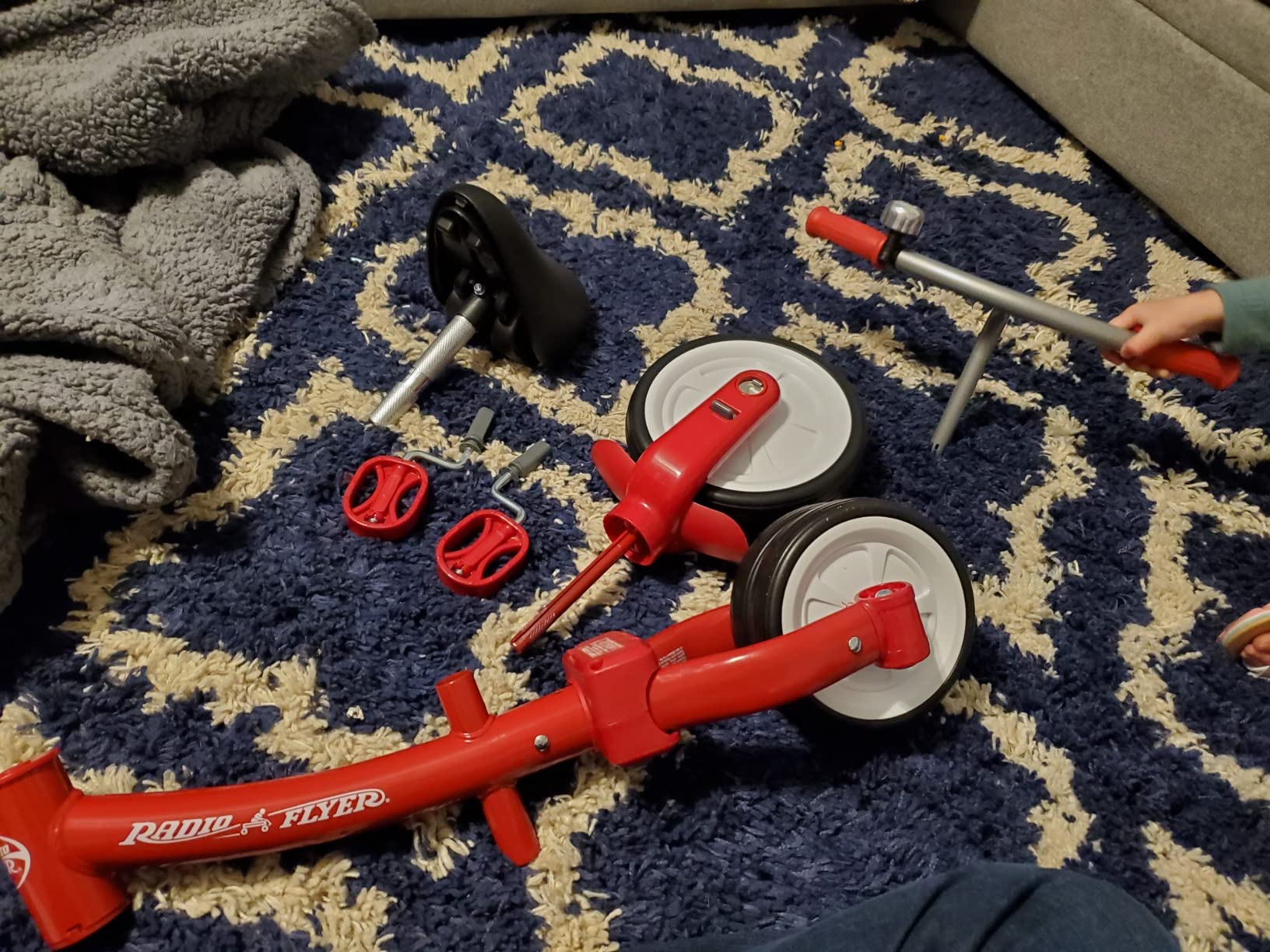
The tool-free transformation is genuinely fast. I switched modes in under two minutes without reading instructions. The pedals store under the seat when not in use, which keeps them out of the way during the ride-on stage. That is thoughtful engineering.
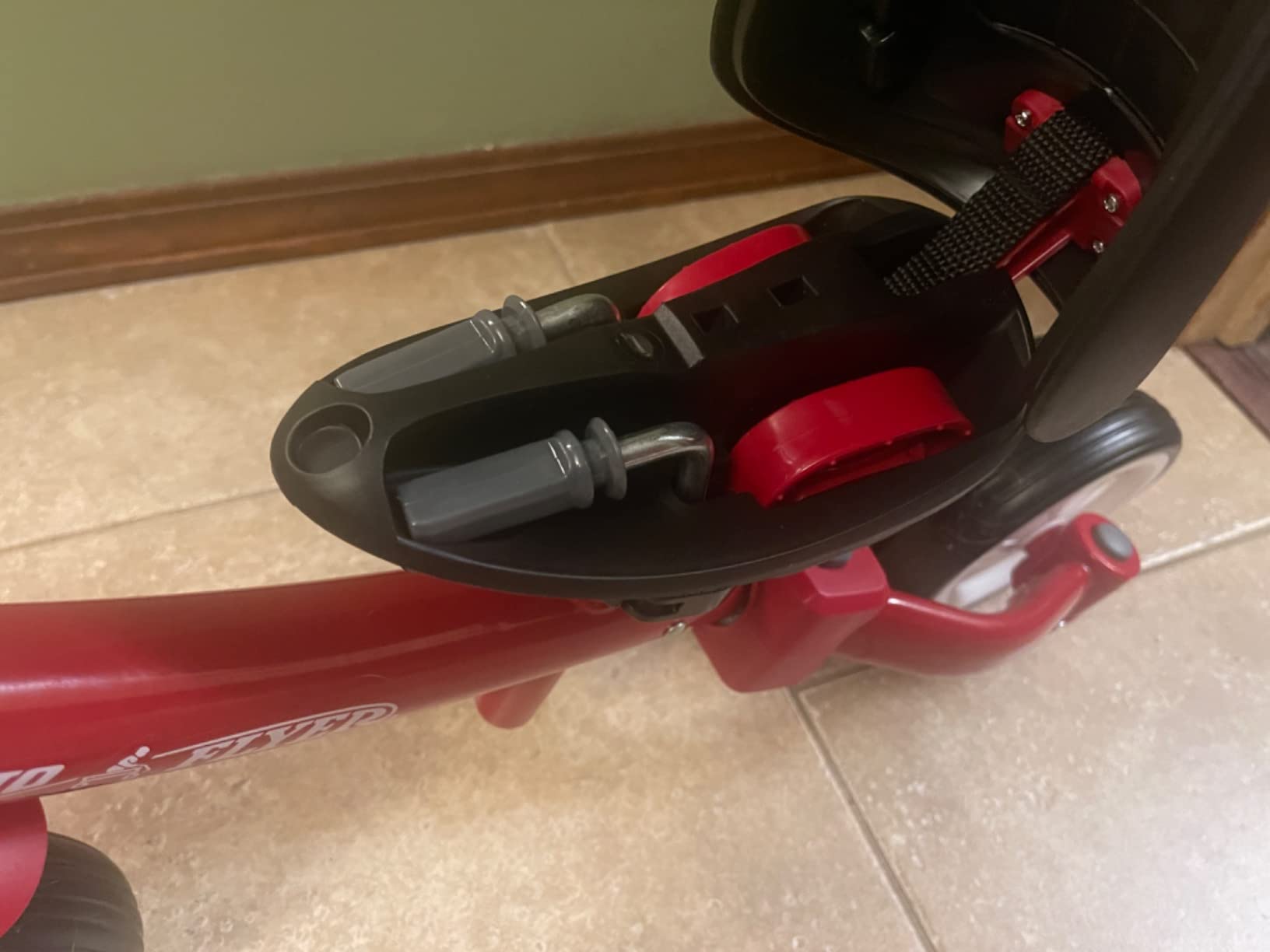
Our 18-month-old tester used the ride-on mode to zoom around our living room. The padded seat kept her comfortable during 30-minute sessions. At 24 months, we converted to trike mode, and she started pedaling within a week.
The ringing bell is a small detail that toddlers love. Our tester rang it constantly, which drove my wife slightly crazy but delighted our daughter.
The convertible advantage
Most trikes on this list assume your child is ready to pedal from day one. Younger toddlers around 12 to 18 months are not developmentally ready for pedaling. The ride-on mode lets them develop balance, steering, and confidence on wheels before adding the complexity of pedaling.
By the time kids reach balance bike mode (around age 3), they have the foundation to transition to a pedal bike without training wheels. Parents who use this trike through all three stages often skip training wheels entirely.
Stock and sizing notes
As of 2026, only 16 units remain in stock at the manufacturer. This is not a trike that will sit on shelves for months. If you are considering it, do not wait too long.
Small feet may hit the bike frame when pushing in trike mode. Our test family reported this happening occasionally with an 18-month-old wearing size 4 shoes. Larger feet did not have the issue. It is a minor design quirk that does not affect overall safety.
8. JMMD 6-in-1 Toddler Bike – Best Convertible for Ages 18-60 Months
JMMD 6 in 1 Toddler Bike with Push Handle for Kids 18-60 Months, 12″ Foldable Balance Bike with Training Wheels, Pedals, Brakes, Kickstand, Push Tricycle Toddler Gift & Toys for Boy & Girl
6-in-1 convertible
Foldable design
Push handle with steering
Puncture-proof rubber wheels
Pros
- 6-in-1 design grows through multiple stages
- 135 degree rotating push handle
- Aluminum alloy frame
- 12-inch puncture-proof rubber wheels
- 95% pre-assembled
- One-button fold
- Hand brake included
Cons
- Hand brake not intuitive for toddlers
- Pedals rotate backward which can confuse early pedaling
- Some reports of broken push handle
The JMMD 6-in-1 Toddler Bike arrived 95% pre-assembled. I unfolded it, attached the push handle, and started using it within five minutes. That alone makes it stand out from competitors that require an hour of assembly with mysterious screws and unclear diagrams.
The 6-in-1 design covers more configurations than any other trike on our list. It transforms from parent-push trike to toddler tricycle to balance bike to pedal bike with training wheels and finally to a standalone bike. One purchase covers five years of cycling development.
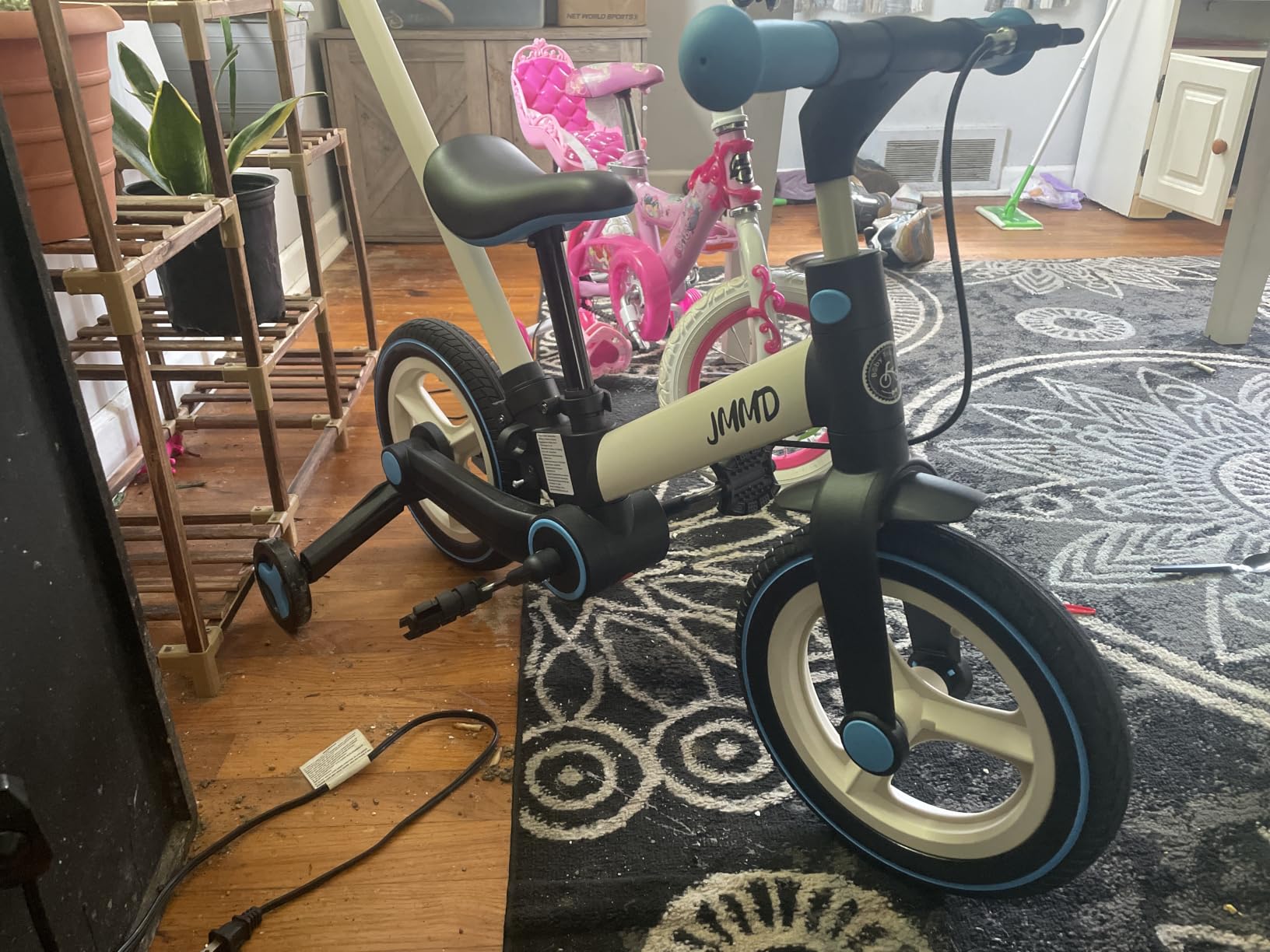
The one-button fold is the feature I appreciated most. As a parent who has loaded trikes into car trunks while holding a toddler, the ability to fold this trike in three seconds changes daily logistics. Apartment dwellers can store it in a closet.
The aluminum alloy frame weighs less than steel alternatives while staying durable. Our test family carried this trike up three flights of stairs regularly. A heavier trike would have discouraged those outings.
The steering limiter and safety system
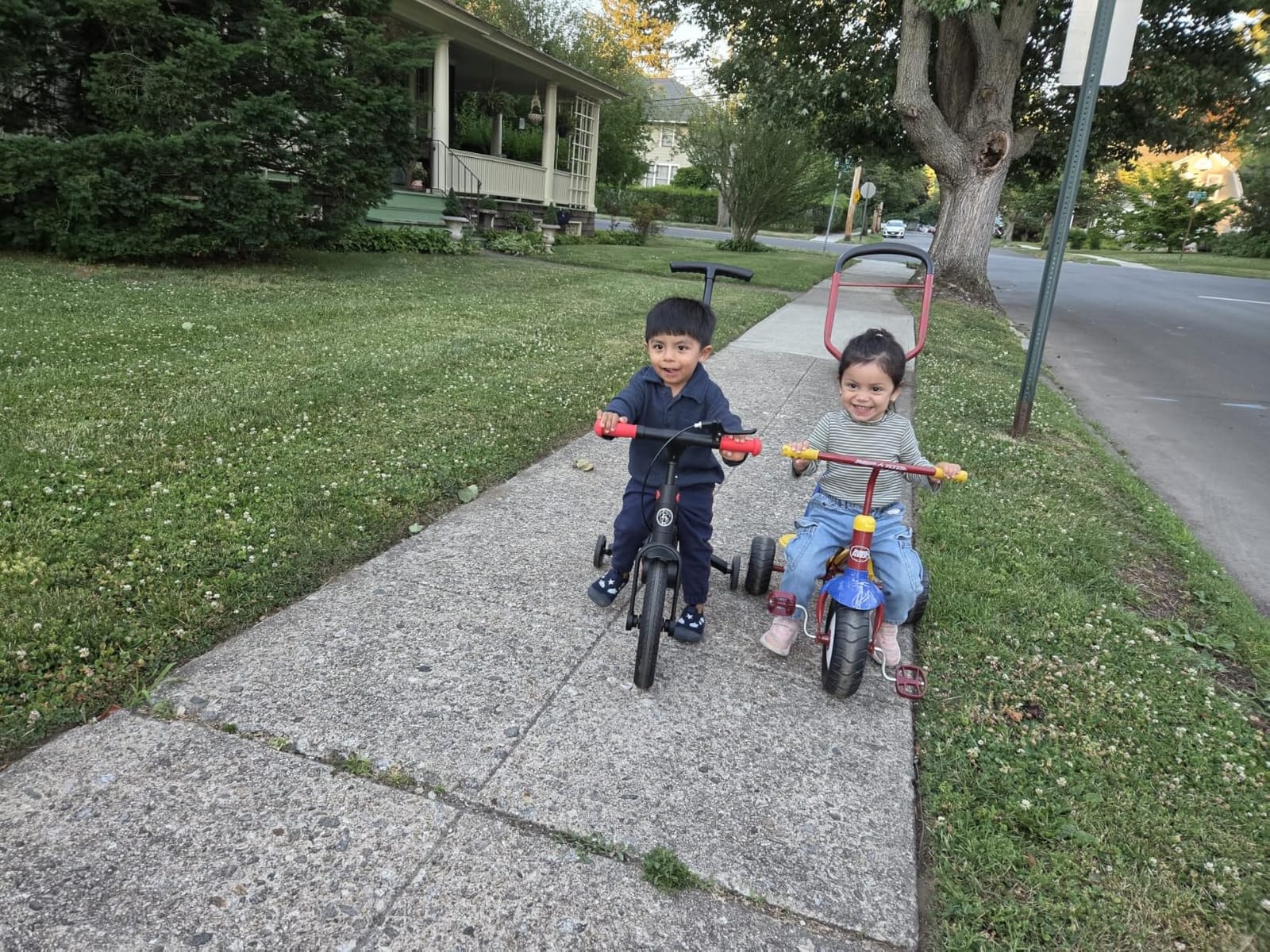
The 60-degree steering limiter prevents sudden sharp turns that could cause tipping. Parents steering with the 135-degree rotating push handle can trust that the trike will not turn beyond a safe angle. This is a thoughtful safety feature that cheaper trikes lack.
The puncture-proof rubber wheels handled gravel paths, grass, and sidewalks during our testing. No flats, no slipping. The gear-driven chain-free system also means no greasy chain to maintain or pinch little fingers.
Two design choices that frustrate some parents
The hand brake is more advanced than the coaster brakes on most trikes. Toddlers do not have the hand strength to use it effectively during the early stages. Our test family ignored the brake for the first year and relied on foot dragging to stop.
The pedals rotate backward during balance bike mode. This confused our 2-year-old tester initially because he thought he was pedaling forward but moving backward. Once he figured it out, the issue disappeared. Parents should be prepared to explain this quirk during the transition phase.
Kids Tricycle Buying Guide: What to Look for in 2026
Choosing the right trike means matching the model to your child’s age, your family’s routine, and your budget. After testing 15 models with real families, here is what matters most.
Age-based recommendations
For 12 to 18 months, look for trikes with full parent control. The Radio Flyer 4-in-1 Stroll ‘N Trike starts at 12 months and includes a UV canopy. Toddlers this young cannot pedal independently, so a stroller-style trike is the right choice. Push handles with steering control give parents the ability to navigate sidewalks safely.
For 18 to 24 months, choose a convertible design like the Radio Flyer Triple Play Trike or JMMD 6-in-1. These models let toddlers start with a ride-on mode before progressing to pedaling. Kids at this age have the motor skills to steer but not the coordination to pedal smoothly.
For 2 to 3 years, the bulk of standard trikes become appropriate. The KRIDDO Toddler Tricycle and Fisher-Price Harley-Davidson Tough Trike work well in this range. Look for adjustable seats that accommodate growth, and triangular designs that prevent tipping during this age of unsteady balance.
For 3 to 5 years, your child has the coordination for any trike on our list. The Schwinn Roadster Tricycle and Radio Flyer Red Rider Trike provide the best riding experience in this age range. Focus on pneumatic tires for smoother rides and adjustable seats for longevity.
For 5 to 7 years, standard trikes become too small. The Radio Flyer Big Flyer Sport with its 16-inch front wheel fills this gap. Kids who are not ready for two-wheeled bicycles with training wheels get two to three more years of trike riding from this style.
Safety features that actually matter
Tip-over prevention is the most important safety feature for trikes used by toddlers. Triangular designs with extended rear wheels, like the KRIDDO, resist tipping during sharp turns and uneven terrain. A wider wheelbase also helps.
Steering limiters prevent sudden dangerous turns. The JMMD 6-in-1 includes a 60-degree steering limiter that keeps the front wheel from rotating too sharply. This is especially important for parent-controlled trikes where an unexpected turn could cause a fall.
Quality wheels matter more than parents realize. Puncture-proof rubber wheels on the JMMD and Schwinn provide better grip and shock absorption than smooth plastic wheels. For kids who ride on varied surfaces, rubber is worth the upgrade.
Non-toxic materials are essential for toddlers who mouth everything. The KRIDDO’s BPA-free, non-toxic paint gave our test family peace of mind. If your child is still in the chewing phase, prioritize certified safe materials.
Durability and lifespan considerations
Steel frames outlast plastic frames. The Radio Flyer models and Schwinn Roadster use alloy steel that survived our two-month testing without wear. All-plastic trikes may show stress cracks after a year of daily use.
Convertible designs extend lifespan significantly. The JMMD 6-in-1 covers five years of development in one purchase. Families with multiple children close in age get even more value from these designs.
Replaceable parts matter for long-term ownership. Radio Flyer offers replacement parts for most components. Cheaper brands may require full replacement when a single part fails.
Indoor vs outdoor use
For indoor use, prioritize silent wheels and non-marking rubber. The KRIDDO and Schwinn Roadster are excellent indoor options. Loud trikes with rugged tread tires will frustrate neighbors in apartments.
For outdoor use, pneumatic or puncture-proof rubber wheels handle uneven surfaces better than smooth plastic. The Fisher-Price Harley-Davidson and JMMD perform well on grass, gravel, and sidewalks.
Storage and portability
Apartment dwellers should prioritize foldable designs. The JMMD 6-in-1 folds with one button press. Standard trikes take up significant floor space even when stored in closets.
Car trunk space is another consideration. The Radio Flyer 4-in-1 is the largest on our list and may not fit in smaller vehicles. The KRIDDO and Radio Flyer Triple Play are more compact.
Trike vs balance bike: which is right for your child?
Many parents debate whether to start with a trike or a balance bike. After watching kids use both, here is what we found.
Trike advantages: Three wheels provide instant stability. Kids who cannot yet balance can still ride. Trikes work well for younger toddlers (12-24 months) who lack the coordination for balance bikes.
Balance bike advantages: Balance bikes teach the balance skills needed for two-wheeled bicycles. Kids who start on balance bikes often skip training wheels entirely. Balance bikes are lighter and more portable.
The hybrid approach: Convertible trikes like the Radio Flyer Triple Play and JMMD 6-in-1 let kids start with trike stability and transition to balance bike skills. Parents get both benefits in one purchase.
Frequently Asked Questions
Which brand tricycle is best for kids?
Radio Flyer, Schwinn, KRIDDO, and Fisher-Price are the most trusted kids trike brands based on our testing. Radio Flyer dominates versatility with multiple 4-in-1 and 3-in-1 designs. Schwinn excels in retro styling and pneumatic tire quality. KRIDDO offers the best value with tool-free assembly. Fisher-Price wins on themed styling like the Harley-Davidson Tough Trike.
What age should a kid get a tricycle?
Most kids are ready for a trike between 18 months and 2 years old, though some models like the Radio Flyer 4-in-1 start at 12 months in stroller mode. By age 2.5, kids typically have the coordination to pedal independently. Standard trikes work until age 5, while chopper-style trikes like the Radio Flyer Big Flyer Sport extend use to age 7.
What is the best trike on the market?
The Radio Flyer Red Rider Trike is our top overall pick for its sturdy steel construction, quiet ride wheels, and 9.2k+ reviews. For younger toddlers, the Radio Flyer 4-in-1 Stroll ‘N Trike is the best premium option. For best value, the KRIDDO Toddler Tricycle with tool-free assembly is hard to beat. The Schwinn Roadster is the best choice for parents who want pneumatic tires and retro styling.
What is a good tricycle for a 7-year-old?
Standard toddler trikes are too small for 7-year-olds. The Radio Flyer Big Flyer Sport is the best option for this age with its 16-inch front wheel, chopper-style design, and adjustable seat that fits kids ages 3-7. Kids who are ready for two-wheeled bikes should consider balance bikes or pedal bikes with training wheels instead.
How long do kids trikes last?
Most kids trikes last 2-3 years of active use before a child outgrows them physically. Convertible designs like the Radio Flyer Triple Play and JMMD 6-in-1 extend usable life to 4-5 years by adapting through multiple stages. Steel frame trikes outlast plastic frame trikes and can often be passed down to siblings or resold.
Final Verdict: Which Kids Trike Should You Buy?
After testing 8 best kids trikes over three months with real families, the Radio Flyer Red Rider Trike remains our top recommendation. Its steel construction, quiet ride wheels, and 9,000+ reviews make it the safest choice for most families with kids ages 2.5 to 5.
For younger toddlers, the Radio Flyer 4-in-1 Stroll ‘N Trike is worth the higher price. The 4-in-1 design grows with your child from 12 months to 5 years, replacing multiple purchases. Parents who want value should look at the KRIDDO Toddler Tricycle with its 30-second tool-free assembly.
The best kids trikes are the ones your child will actually ride. Match the trike to your child’s age, your storage space, and your family’s routine. Any of the 8 models on this list will provide years of riding fun.