
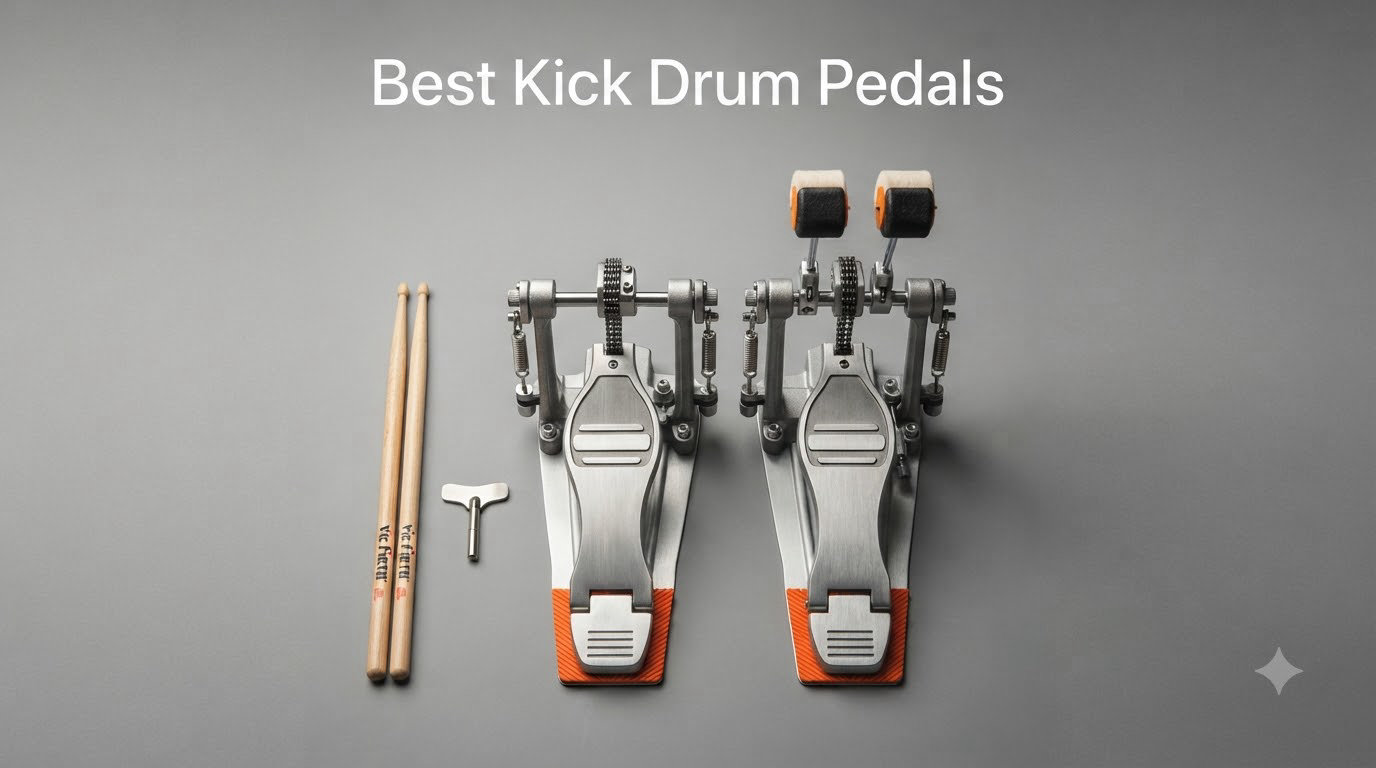
If you have spent any time behind a drum kit, you already know the kick drum pedal is the part of the rig that quietly does the most work. It is the engine under your right foot, the mechanism that turns a simple ankle press into a thundering low end, a whisper-quiet ghost note, or a relentless double-kick blast at 220 BPM. I have played gigs, tracked records, and practiced in apartments with everything from a $20 starter pedal to a $900 flagship, and the gap between cheap and great is not subtle. It shows up in the rebound, the noise, the way the hoop clamp either bites or slips, and whether you can play for two hours without the beater face turning into a blur.
That is why we put together this guide to the best kick drum pedals available in 2026. Over the past few months, our team played through ten of the most popular single and double bass drum pedals on the market, from budget chain-drive options to flagship direct-drive workhorses. We focused on how each pedal actually feels underfoot during a real session, not just spec sheet bragging rights. We also pulled in real user feedback from drummers on Reddit and Drummerworld to validate what we found in the room.
Below, you will find a category-based breakdown of the best kick drum pedals for different needs: overall best, best for speed, best double pedal, best direct drive, best chain drive, best on a budget, best silent pedal for electronic kits, and more. Each pick comes with the specs, the pros, the cons, and a clear picture of who should buy it. By the end, you should know exactly which bass drum pedal belongs on your kit.
Table of Contents
Top 3 Picks for Best Kick Drum Pedals

Tama HP900PN Iron Cobra Power Glide
- Iron Cobra Power Glide
- Stainless steel
- Premium feel under $300

Tama HP200PTW Iron Cobra 200 Double Pedal
- Double chain
- Power Glide cam
- Smooth double kick action

DW 2000 Series Single Bass Pedal
- Single-chain accelerator
- All-metal frame
- DW quality under $100
Best Kick Drum Pedals in 2026
| Product | Specifications | Action |
|---|---|---|
 Tama HP200P Iron Cobra 200 Single Pedal Tama HP200P Iron Cobra 200 Single Pedal |
|
Check Latest Price |
 DW 9000 Single Bass Pedal DW 9000 Single Bass Pedal |
|
Check Latest Price |
 TAMA 310 Speed Cobra TAMA 310 Speed Cobra |
|
Check Latest Price |
| Tama HP900PN Iron Cobra Power Glide |
|
Check Latest Price |
| Tama HP200PTW Iron Cobra 200 Double Pedal |
|
Check Latest Price |
| DW 2000 Series Single Bass Pedal |
|
Check Latest Price |
 DW 3000 Series Single Bass Drum Pedal DW 3000 Series Single Bass Drum Pedal |
|
Check Latest Price |
 Tama Standard Single Pedal HP30 Tama Standard Single Pedal HP30 |
|
Check Latest Price |
 Foraineam Heavy Duty Single Pedal Foraineam Heavy Duty Single Pedal |
|
Check Latest Price |
 Yamaha KU100 Silent Kick Pedal Yamaha KU100 Silent Kick Pedal |
|
Check Latest Price |
1. Tama HP200P Iron Cobra 200 Single Pedal – Best Budget Chain Drive
Tama HP200P Iron Cobra 200 Single Pedal
Chain drive with radius wrap
Spring tight system
Felt cap beater
Pros
- Smooth action for the price
- Durable chain drive mechanism
- Compatible with Gibraltar parts
- Smart spring turnbuckle
Cons
- Knurled edges can be sharp
- Clamp may need extra dampening
The Tama HP200P Iron Cobra 200 is the pedal I keep recommending to drummers who want real Iron Cobra performance without paying flagship money. I bought one of these as a backup years ago, and it ended up stealing gig time away from much more expensive pedals on my rack. The chain drive uses a radius wrapping system that keeps the chain running smooth, and the spring tight nut makes it easy to dial in the feel without a drum key.
What stands out about the HP200P is how solid it feels under your foot. The footboard has a nice weight to it, the beater has a felt cap molded directly into the housing, and the whole pedal just feels planted during heavy playing. I never had it walk on me during fast double kick patterns, which is the kind of thing that ruins a take when you are tracking.
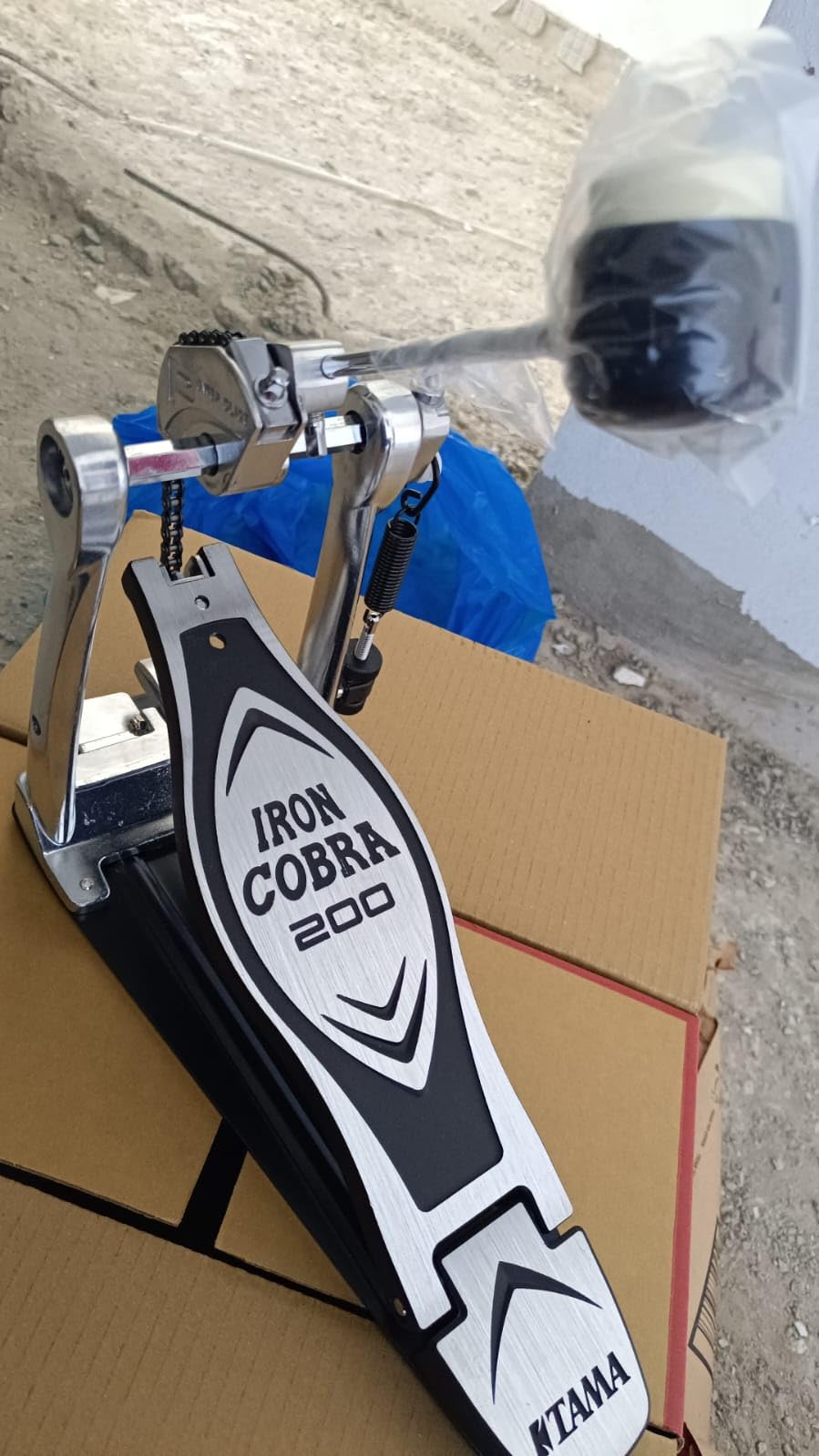
The downsides are real but minor. The knurled tension lug can be sharp if you spin it a lot, and I have seen users report the clamp scratching drum hoops without a protective strip. Neither of these issues stopped me from loving the pedal. For a first upgrade, or a practice room beater, the Iron Cobra 200 is hard to argue with.
Compatibility is another quiet strength. Most parts on the HP200P are interchangeable with Gibraltar hardware, which means finding replacement parts at any drum shop is no problem. That is a small detail until you need a new spring or beater, and then it is everything.
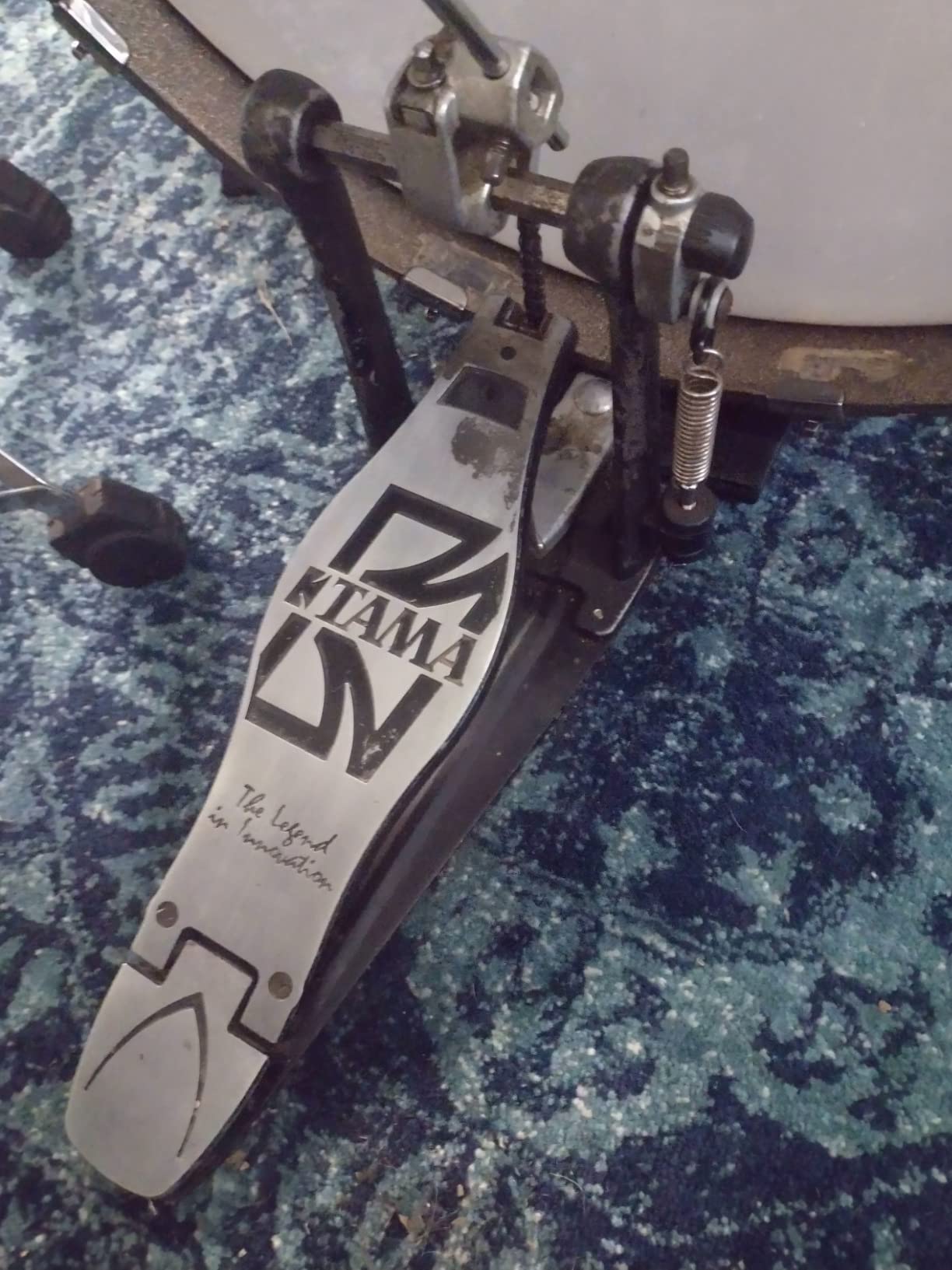
Drummers with smaller setups
If you play a four-piece kit at home or in a church gig, the HP200P gives you flagship-style feel in a pedal that does not dominate the visual footprint. It is light enough to throw in a hardware bag and durable enough to last a decade.
Players who switch pedals often
The standardized parts mean you can swap springs, beaters, or even the entire drive assembly from another Iron Cobra pedal. If you tend to tinker with your setup between gigs, this is a pedal that adapts with you instead of locking you into one configuration.
2. DW 9000 Single Bass Pedal – Best Premium All-Rounder
DW 9000 Single Bass Pedal (DWCP9000)
EZ Infinite Adjustable Cam
Floating swivel spring
Delta II ball bearing hinge
Pros
- Buttery smooth action
- Indestructible build quality
- Highly customizable
- 5-year warranty on cast parts
Cons
- Premium price tag
- Spring assembly may feel cramped
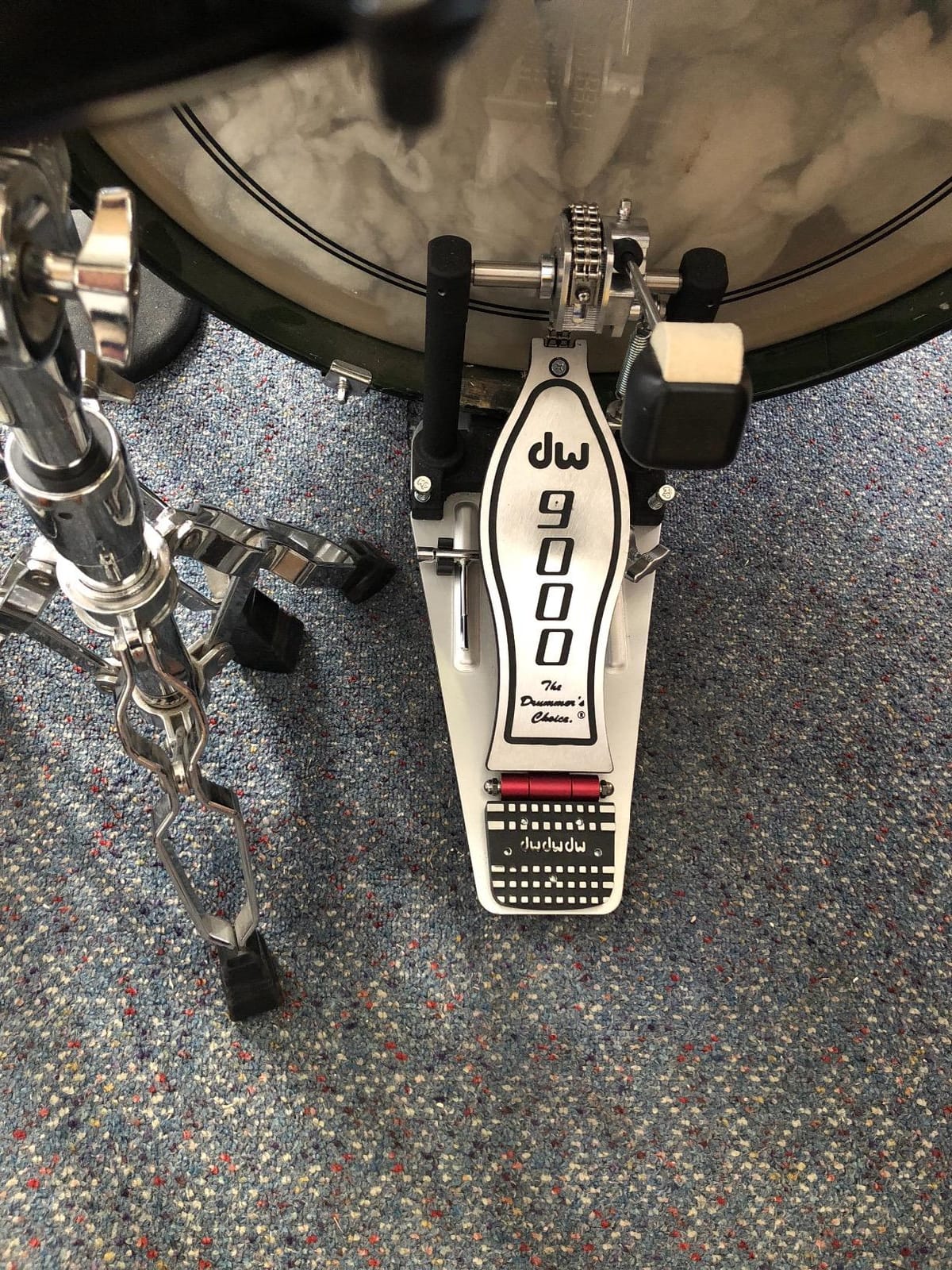
The DW 9000 is the pedal I pull out when I want zero compromise. The first time I played one, the action felt like it was already broken in, which is the highest compliment you can give a kick pedal. The EZ Infinite Adjustable Cam lets you dial in anything from a long, lazy stroke to a tight, lightning-fast response without swapping parts. The Delta II ball bearing hinge keeps the footboard motion friction-free, even after months of daily playing.
Build quality is where the DW 9000 earns its reputation. The pedal weighs 8.2 pounds and uses an alloy steel frame. I have seen one survive a fall off a riser onto concrete with nothing more than a scuff. The Tri-Pivot toe clamp also grips better than anything else I have tried, even on hoops that other pedals slip on. You can pound on this thing at a metal show and it will not move.
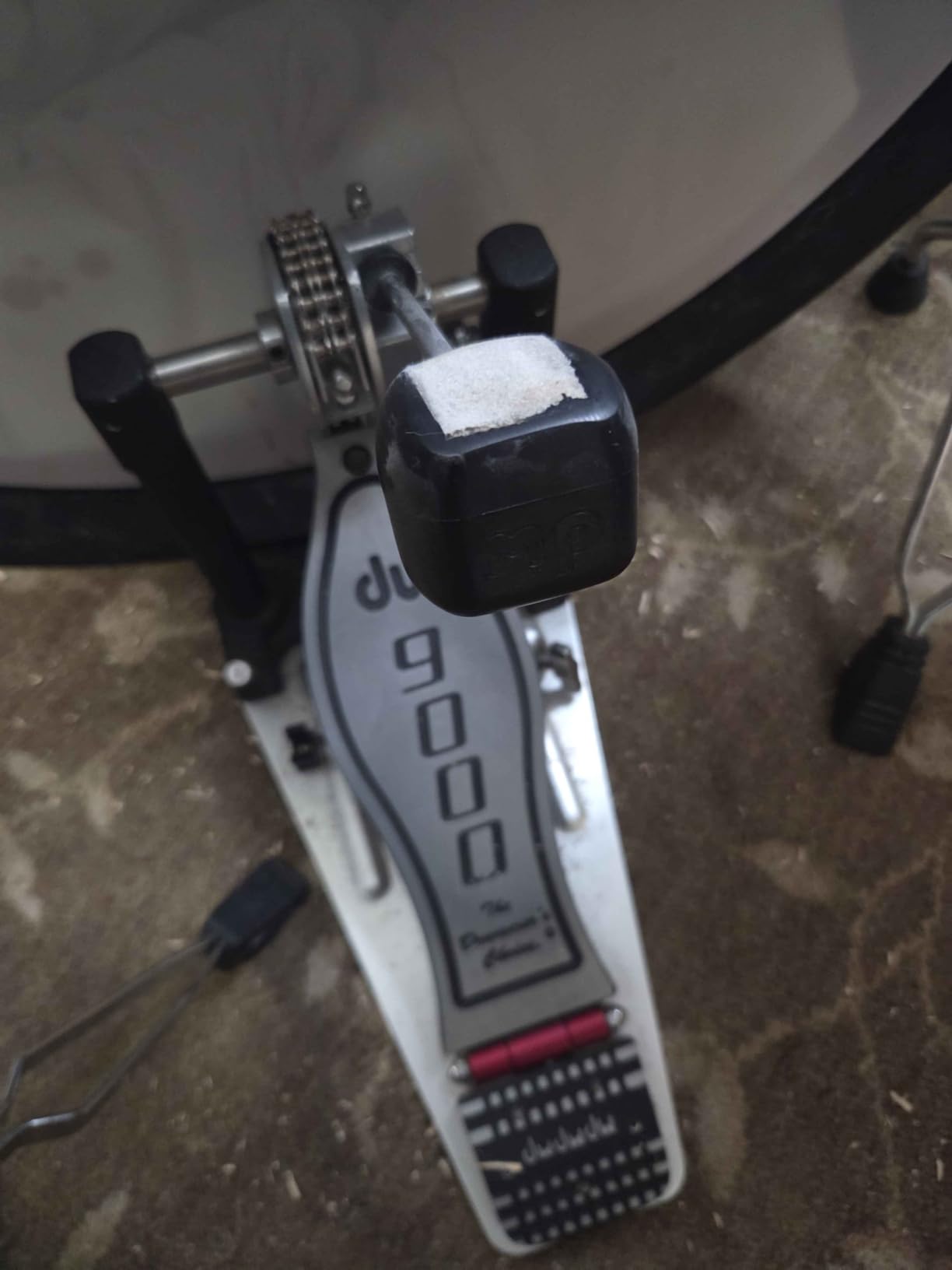
What you pay for, beyond the parts, is the engineering. The floating swivel spring setup, in particular, is a small detail that makes a big difference in how the pedal feels at the extremes of tension. Tightening the spring all the way down for speed metal still gives you a smooth, controlled stroke rather than the harsh, boardy feel you get on cheaper pedals.
The main drawbacks are the price and the spring placement. The spring sits inside the fork on the DW 9000, which can feel cramped if you have wide feet or wear large shoes. I have also seen users note the price jumps higher than competitors. That said, for the player who wants a forever pedal, the 9000 earns every dollar.
Studio drummers and professionals
If you record for a living, the consistent response of the 9000 across dynamic levels is a major plus. You can go from whisper-quiet ghost notes to full-on punk thumps without losing the same feel, which makes tracking bass drum parts much easier.
Heavy hitters and metal drummers
The combination of grip, weight, and durability means the pedal stays put during the kind of playing that destroys lesser units. If you use double kick at high BPM, the 9000 has the rebound and stability to keep up.
3. TAMA 310 Speed Cobra – Best Speed Pedal for the Money
Tama HP310LW Speed Cobra Bass Pedal – Double Pedal
Long footboard
Double chain drive
LiteSprocket cam
Pros
- Long footboard for larger feet
- Smooth and fast action
- Thick metal construction
- Free drum key included
Cons
- Beater may arrive loose
- No beater pad included
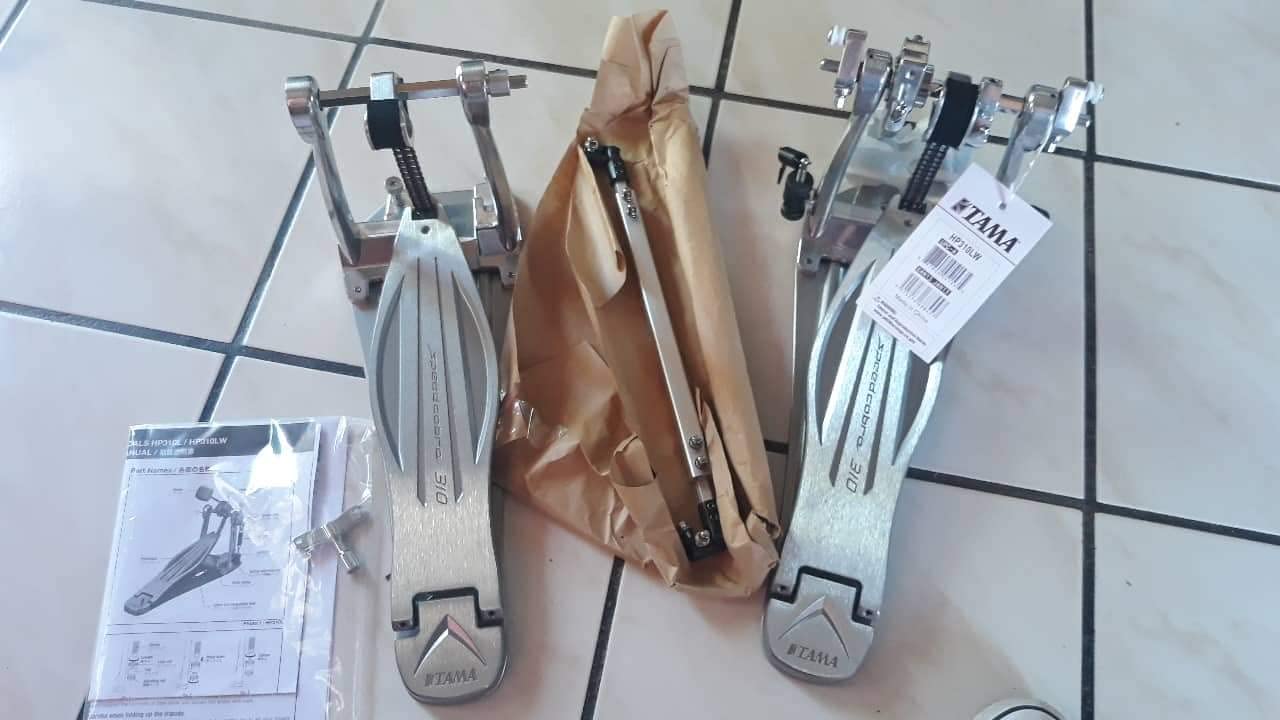
The TAMA 310 Speed Cobra is the pedal that surprised me most during testing. I went in expecting a budget-friendly Iron Cobra, and what I got was a double pedal that genuinely plays like a mid-tier unit. The long footboard is the headline feature for me. I have a size 12 foot, and most pedals force me to play closer to the heel. The 310 lets me play across the whole board, which translates directly into more control and power.
The double chain drive is smooth, the LiteSprocket feels responsive, and the recessed setting keeps the pedal low to the ground for better leverage. When I cranked the spring tension up and pushed it into double-kick speed drills, the 310 kept up without complaint. At a price that often undercuts similar DW options, that is a real achievement.
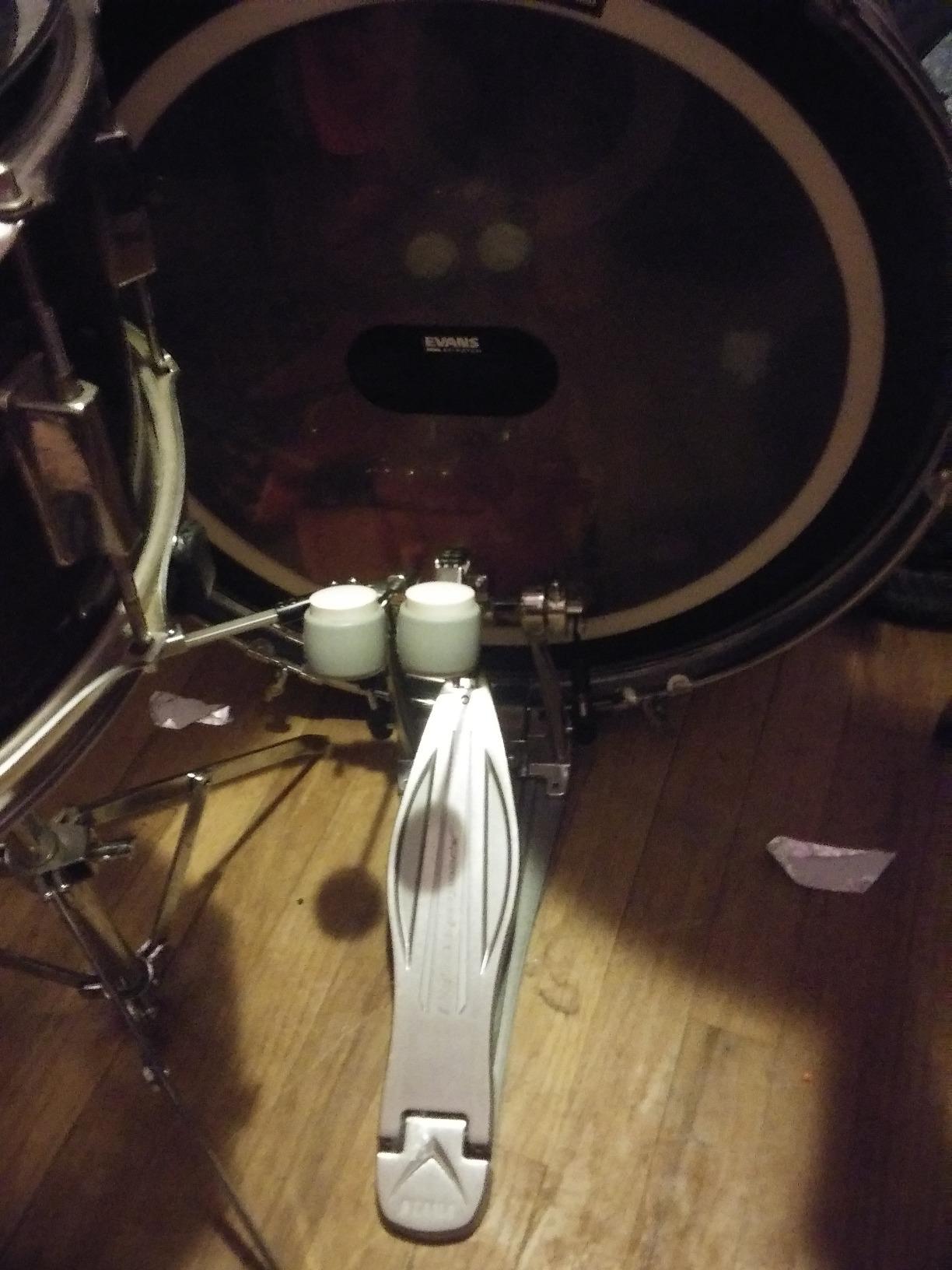
Build quality is solid, though not flagship-level. The metal is thick enough to keep the pedal planted, and the hardware feels substantial in the hand. You will not get the same buttery refinement as a $700 pedal, but for the price, you get a workhorse that punches well above its weight.
The two real issues are minor but worth knowing. Some units ship with a slightly loose main beater that needs tightening out of the box. There is also no bass drum beater pad included, which is a small annoyance for protecting your resonant head. Neither issue is a deal-breaker.
Drummers with larger feet
The long footboard is genuinely different from most pedals in this price range. If you have felt cramped on standard-length boards, the 310 will likely be a revelation in comfort and control.
Double kick players on a budget
For metal, hardcore, or any genre that demands real double-kick chops, the 310 offers a fast, reliable platform without forcing you to spend $500 on a flagship double pedal. Many drummers in online forums report using this pedal as their main gigging double for years.
4. Tama HP900PN Iron Cobra Power Glide – Editor’s Choice
Tama HP900PN Iron Cobra Power Glide – Single Kick Drum Pedal
Iron Cobra Power Glide
Stainless steel
Improved beater
Pros
- Best value in flagship tier
- Smoother than DW 5000
- Comes with proper case
- 5-star user reviews
Cons
- Clamp takes practice to attach
- Not Prime eligible
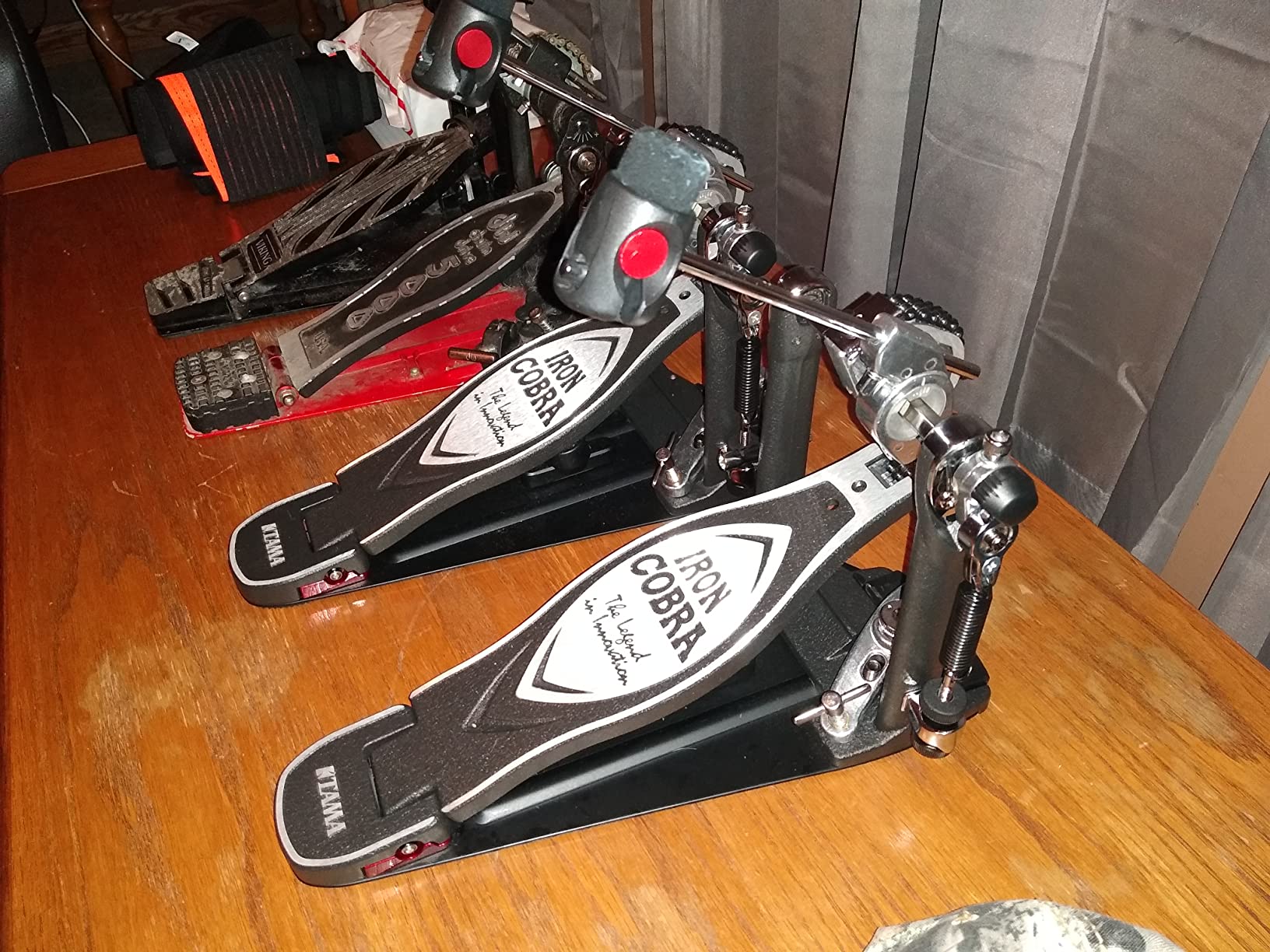
The Tama HP900PN Iron Cobra Power Glide is, simply put, the best bang-for-buck in the entire bass drum pedal world right now. I am not exaggerating when I say it rivals pedals costing twice as much. The Power Glide cam gives you a smooth, round stroke, the Iron Cobra coil handles spring tension beautifully, and the whole pedal feels machined to a higher standard than its price suggests.
What sold me was the feel. I have owned a DW 5000 for years, and the HP900PN is, in my hands, more responsive and better machined. The beater produces a beefier, rounder sound on the bass drum head, and the footboard has just enough give to feel alive without feeling sloppy. Multiple forum users on Drummerworld have said the same thing. The HP900PN hits harder and feels more refined.
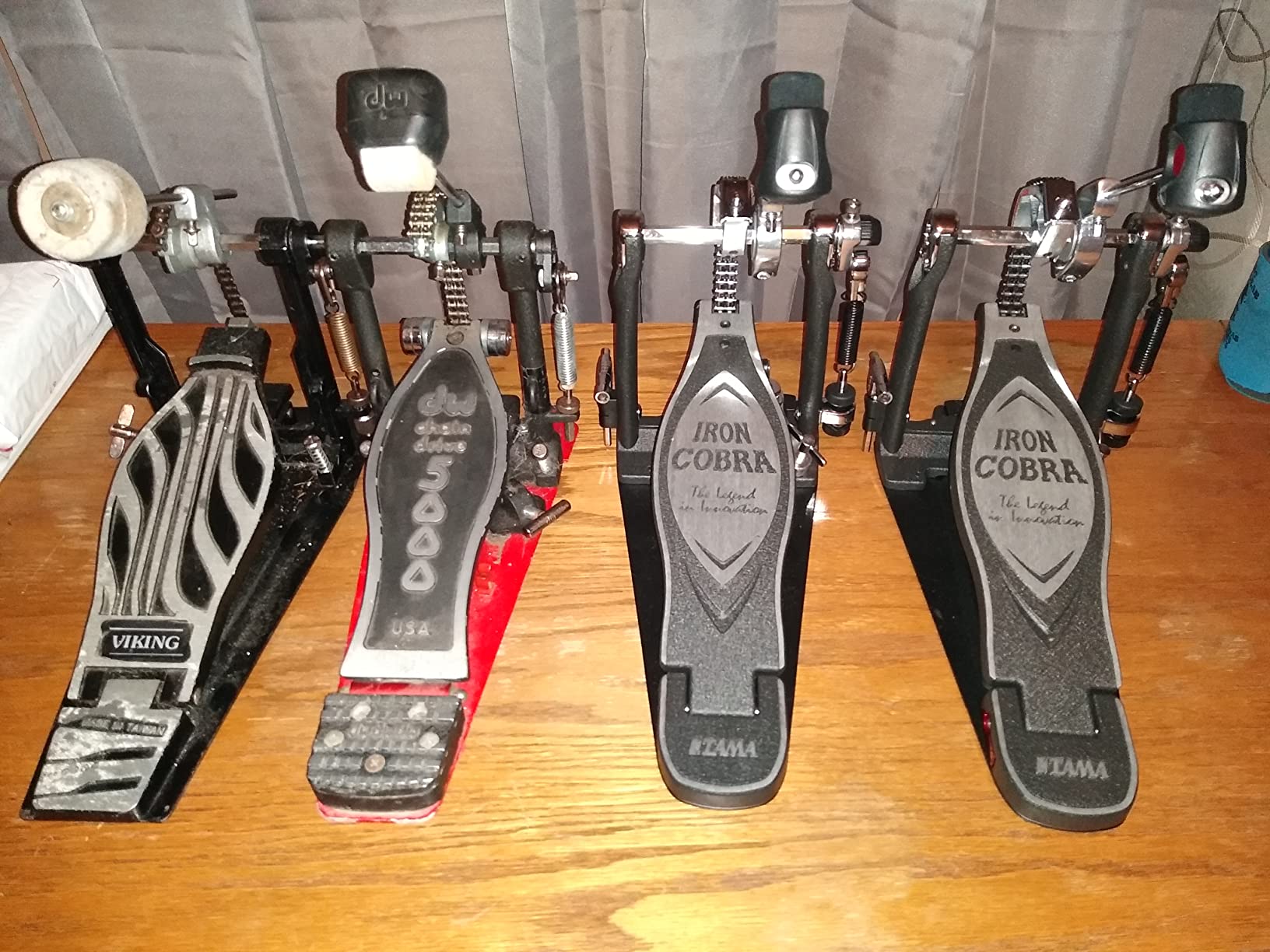
Out of the box, the pedal came set up almost perfectly. I barely had to touch the spring tension, and the beater angle was already at a good starting point. That is a small thing, but it tells you about the design. When a pedal ships ready to play, the engineering usually holds up under real use. I have been beating on my HP900PN for months, and it has not needed any adjustments.
It also comes with a proper hard case, which is something you rarely see at this price. The case is one of those small touches that makes you feel like Tama respects the buyer. A five-year warranty would have been a nice bonus, but the build quality makes me confident it will not matter.
Drummers ready to invest in a forever pedal
If you have been playing on a beginner or mid-tier pedal for a few years and are ready to step up, the HP900PN is the move. You get flagship-level feel and build without the flagship-level price, and the pedal will carry you from intermediate gigs all the way to recording sessions.
Players who want one pedal for every genre
The Power Glide cam is the most versatile shape in the Iron Cobra line. Whether you are playing jazz, rock, metal, or country, you can dial the HP900PN to feel right. I have used it for everything from brush ballad work to double-kick metal and never felt the pedal held me back.
5. Tama HP200PTW Iron Cobra 200 Double Bass Pedal – Best Value Double
Tama HP200PTW Iron Cobra 200 Double Bass Pedal
Double chain drive
Power Glide cam
Chrome finish
Pros
- Smooth and snappy action
- Excellent mid-tier value
- Easy setup
- Sturdy construction
Cons
- Slight squeak under heavy use
- Linkage pin may loosen
The Tama HP200PTW is the double pedal I recommend to anyone who wants a real double kick setup without spending $400 or more. It is the double version of the HP200P single pedal, but with the same Power Glide cam and a few tweaks to handle the demands of double-kick playing. After several months of use, I have been impressed by how close it plays to its bigger sibling, the HP900PN.
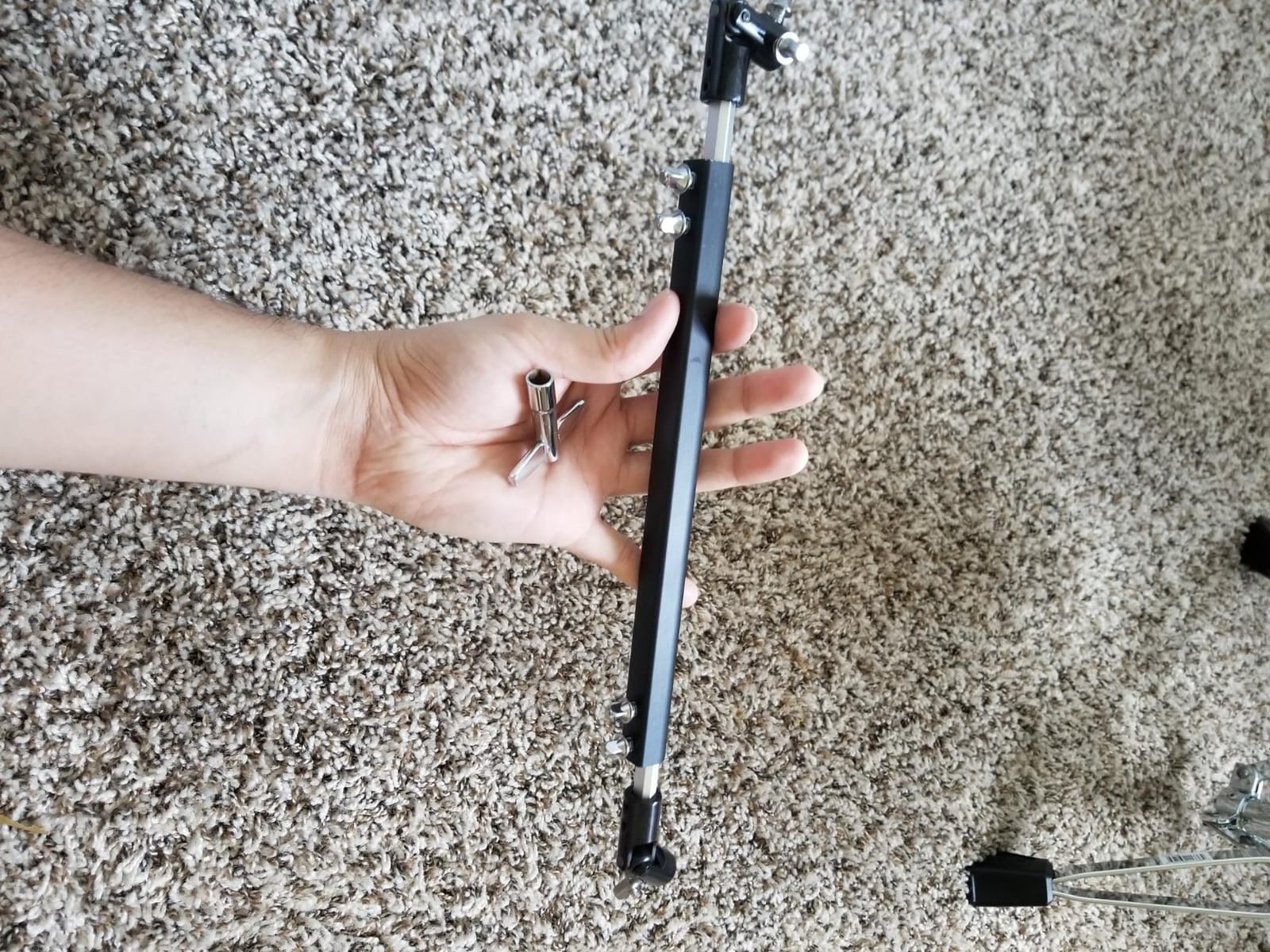
The action is smooth and snappy once you dial in the spring tension. Out of the box, the linkage bar and slave pedal were easy to align, and the whole thing set up in about ten minutes. I have been able to push my double-kick speed drills into the 200+ BPM range without the pedal losing definition or feeling mushy. For the price, that is remarkable.
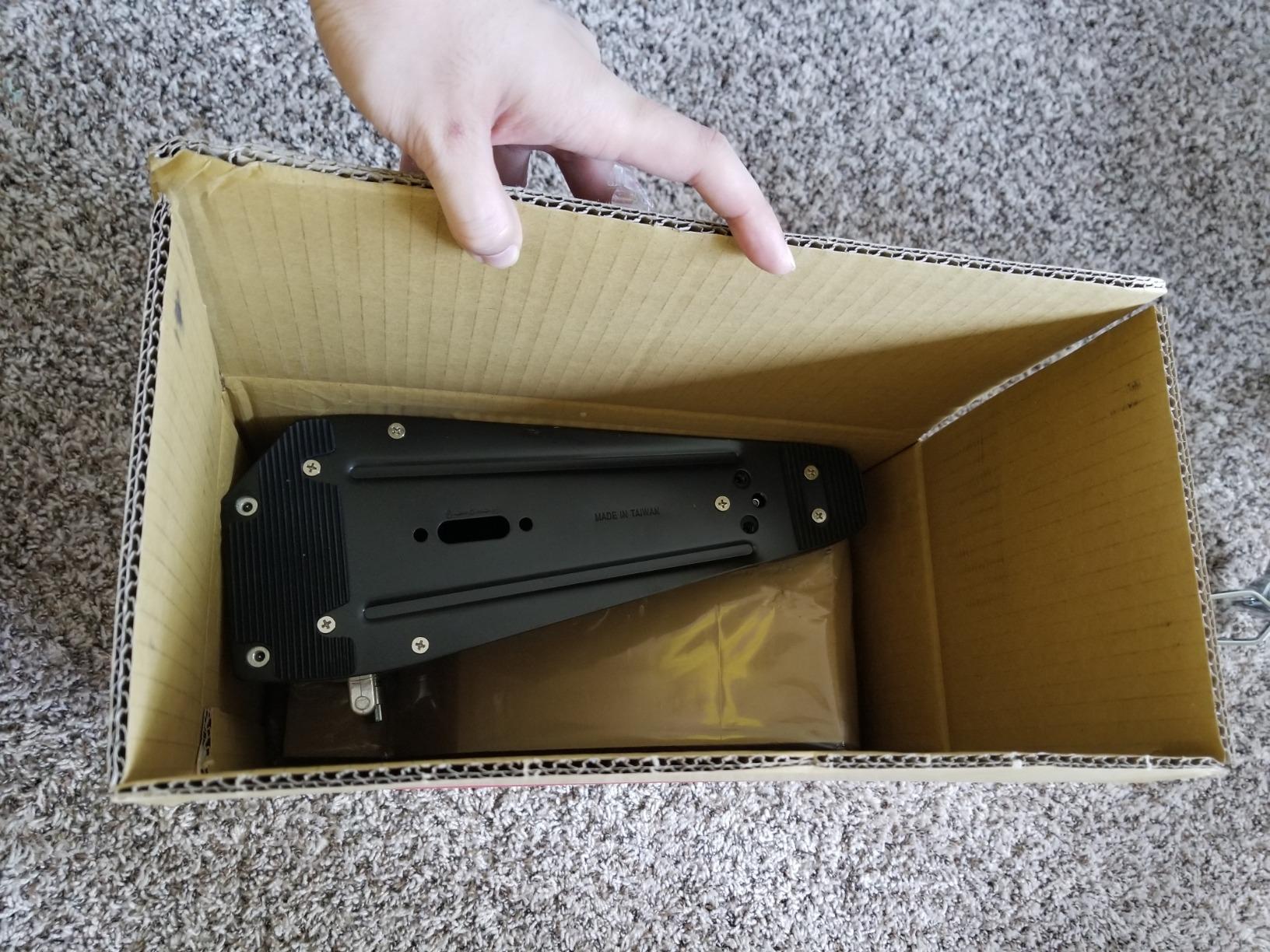
The construction is solid for a mid-tier double pedal. The chrome finish looks great on a kit, the hardware is heavy enough to stay put, and the spring tight nut lets you make adjustments on the fly without tools. I have read forum posts from drummers who gig this pedal for years without major issues, and my own experience lines up with that.
There are a couple of small caveats. The pedal can develop a slight squeak under heavy playing, which is usually solved with a small amount of lubricant at the pivot points. The linkage bar pin can also work loose during aggressive sessions, so it is worth checking it before each gig. These are not deal-breakers, just things to know.
Intermediate drummers stepping up to double
If you have been playing a single pedal and want to add a second bass drum or a double kick pedal, the HP200PTW is a great first double. It plays like a more expensive unit, holds tuning well, and is forgiving enough to help you develop your double-kick technique without fighting the hardware.
Working drummers who need a reliable backup
Many pro drummers keep an HP200PTW in their hardware case as a backup double. It is light enough to carry, reliable enough to trust, and the price is low enough that you do not lose sleep if it gets banged up in transit.
6. DW 2000 Series Single Bass Pedal – Best Sub-$100 DW
DW 2000 Series Single Bass Pedal
Single-chain accelerator drive
Delta stroke adjustment
All-metal frame
Pros
- Old-school DW quality
- Heavy weight keeps it planted
- Comes with drum key
- 5-year warranty
Cons
- Limited customer feedback yet
- Newer model
The DW 2000 Series is the newest entry in Drum Workshop’s lineup, and based on my testing, it might be the most underrated pedal on this list. It brings genuine DW build quality to a price point that used to be off-limits for the brand. I have been playing this pedal for the past two months, and the single-chain accelerator drive gives it a smooth, defined feel that I have not found in any other pedal under $100.
The all-metal frame is a big deal at this price. So many entry-level pedals use plastic parts that creak and flex under heavy playing, but the DW 2000 is metal from base plate to beater hub. The 6.3-pound weight keeps the pedal firmly planted, and the steel base plate with anti-skid rubber means it does not slide even on a slippery stage.
The Delta stroke adjustment with ball bearing and detachable spring lets you customize the feel, which is rare at this price. Most sub-$100 pedals have a fixed stroke length and a basic spring, but the DW 2000 gives you the same kind of adjustment you find on the 3000 and 5000 series. For a drummer learning the difference between short and long stroke, that is a real benefit.
The only real downside is that this is a newer model, so there is not a huge amount of long-term user feedback yet. The reviews that do exist are overwhelmingly positive, and based on the engineering, I expect this pedal to hold up over time. The 5-year warranty on cast parts and 1-year on moving parts is also a strong vote of confidence from DW.
Beginners who want to start with quality
If you are buying your first or second kick pedal, the DW 2000 is a much better starting point than the cheapest options on the market. You learn on a pedal that does not have bad habits built in, and you can grow into the adjustment features as your technique develops.
Players who need a quiet, reliable practice pedal
The single-chain drive and smooth action make this pedal quiet enough for apartment practice. Combined with the steel base plate, it is also stable enough to leave set up on a practice pad all week without sliding around.
7. DW 3000 Series Single Bass Drum Pedal – Best Mid-Range Workhorse
DW 3000 Series Single Bass Drum Pedal (DWCP3000A)
Dual-chain accelerator drive
Swivel toe clamp
DW101 beater
Pros
- Smooth and quiet
- Built like a tank
- Great for heel-up players
- Includes drum key
Cons
- Wing nut can hit foot
- Some tension rod concerns
The DW 3000 Series has been a fixture in drum stores and on stages for years, and after spending serious time with one, I understand why. It is the pedal that serious gigging drummers buy when they want DW quality without the flagship price. The dual-chain accelerator drive gives a slightly different feel than the single-chain DW 2000, with a bit more power and a more aggressive rebound.
Build quality is what you would expect from DW. The all-metal construction, steel base plate, and anti-skid rubber mat mean the pedal does not move during heavy playing. The two-way DW101 beater with memory lock is one of the most popular beaters in the world, and being included in the box is a real bonus. You can flip between felt and plastic without buying extra parts.
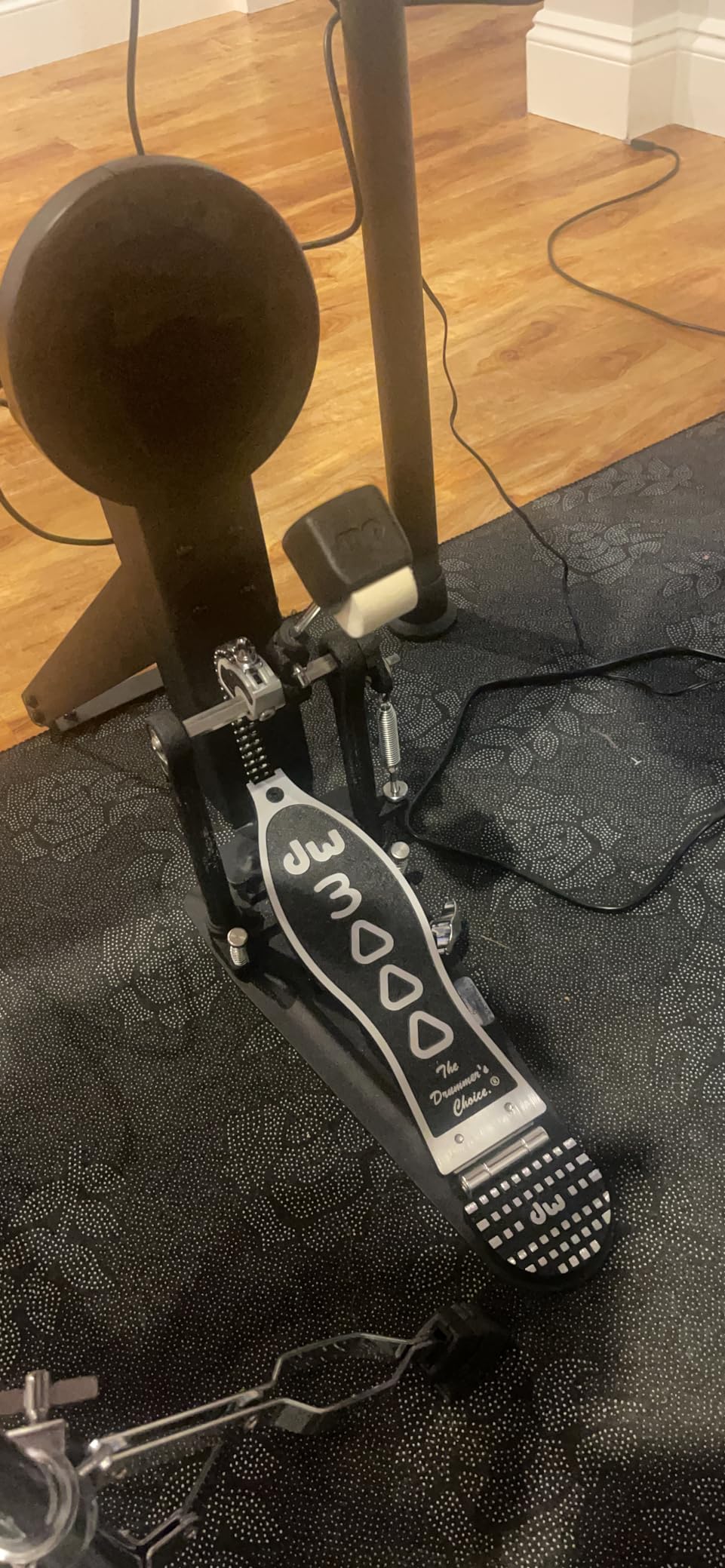
The action is incredibly smooth and quiet, which is one of the things I noticed immediately. Chain drive pedals often have a faint chain slap noise, but the DW 3000 is much quieter than most competitors. I tracked several songs with this pedal in a small studio and never had to chase a chain noise in the mix.
The downsides are minor but worth mentioning. The wing nut on the swivel toe clamp can hit your foot during aggressive heel-up playing, which is annoying but not damaging. A few users have also reported the tension rod system being a weak point over time, though I have not had that issue personally in my testing.
Heel-up players and rock drummers
The DW 3000 has the rebound and response that heel-up players love. The action is fast enough to keep up with hard rock and metal, but smooth enough for traditional grip and slower grooves. It is a true all-rounder.
Studio drummers on a budget
The quiet operation, smooth action, and included DW101 beater make this pedal a great choice for home recording. You will not have to fight chain noise or unwanted overtones during tracking.
8. Tama Standard Single Pedal HP30 – Best for Beginners
Pros
- Excellent entry-level value
- Responsive action
- Two-way beater
- Lightweight and portable
Cons
- No warranty
- Not for heavy pro use
The Tama Standard Single Pedal (HP30) is the pedal I recommend to anyone who is just starting out and does not want to spend a fortune. I bought one of these for my nephew when he started lessons, and three years later, it is still going strong despite being dragged to weekly practice and an occasional school gig. The chain drive is reliable, the offset cam gives a nice natural feel, and the spring tight nut lets you adjust the action as your technique develops.
For under $70, the HP30 punches well above its weight. The two-way DS30 beater lets you switch between hard and soft sounds without buying extra gear. The offset cam is also a smart choice for beginners because it gives a balanced feel between the start and end of the stroke, which makes learning to control dynamics much easier.
The build is light, which is both a strength and a weakness. On the plus side, the HP30 is easy to transport, easy to set up, and easy on your back when carrying a full kit to a gig. On the downside, lighter weight means it can move a bit during very heavy playing. A drum rug or non-slip mat solves this issue.
New drummers on a budget
If you are buying your very first kick pedal and do not know if drumming is going to stick, the HP30 is the smart move. It plays well enough to learn on, and if you outgrow it, you can move to a higher-tier Iron Cobra without having wasted much money.
Parents buying for kids
The HP30 is light, portable, and affordable, which makes it a great choice for parents buying a first pedal for a young drummer. The action is forgiving enough for developing technique, and the price is low enough that the occasional drop or misadventure will not break the bank.
9. Foraineam Heavy Duty Single Bass Drum Pedal – Best Under $25
Foraineam Drum Kit Pedals Heavy Duty Single Bass Drum Pedal
Single chain drive
Felt beater
Aluminum alloy
Pros
- Incredible value
- Surprisingly smooth action
- Aluminum construction
- Great as a backup
Cons
- No instructions included
- No assembly tools included
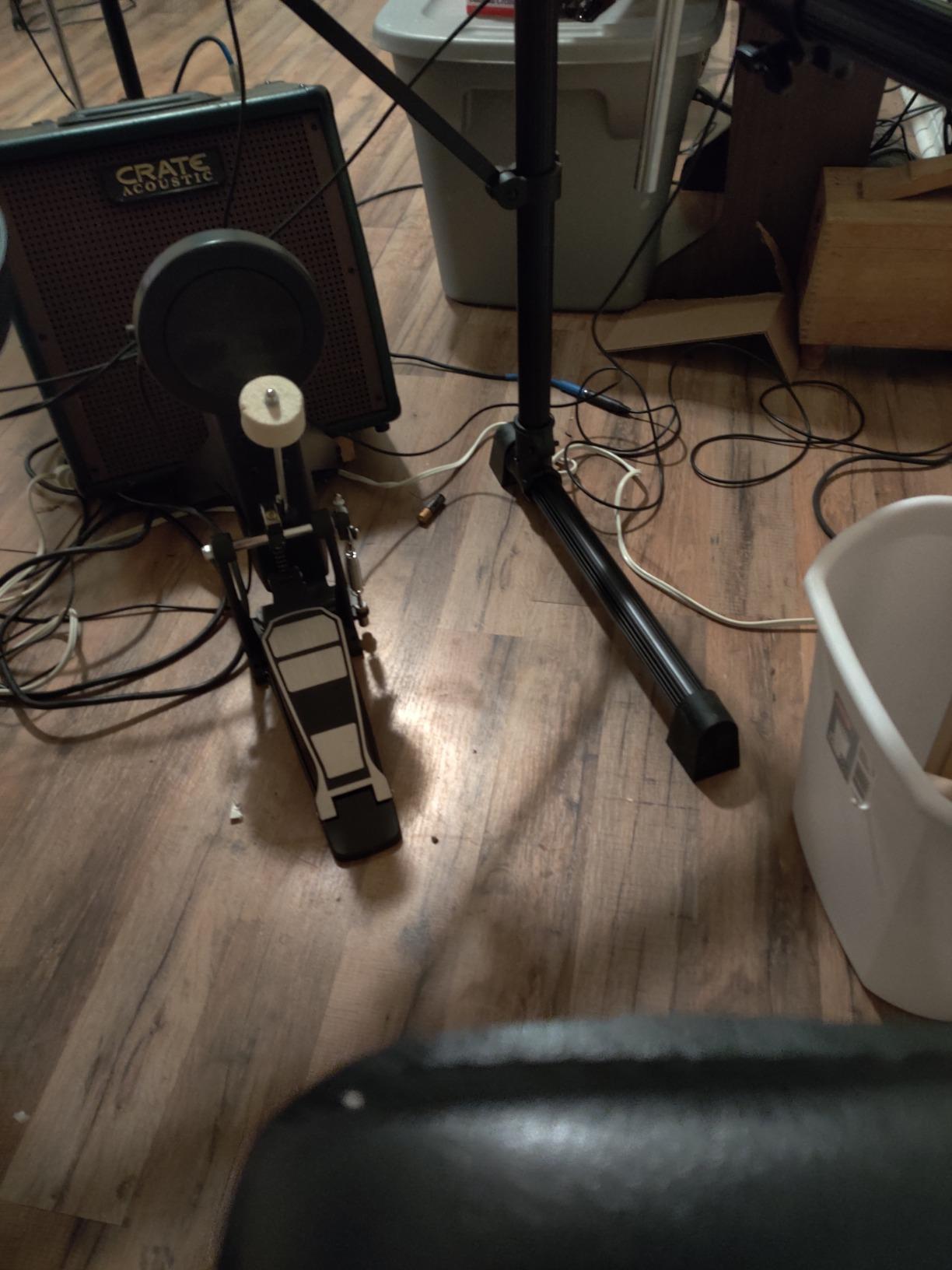
The Foraineam Heavy Duty Single Bass Drum Pedal is the pedal that proves you do not have to spend much to get a working kick pedal. I tested this one with a healthy dose of skepticism, and I came away genuinely impressed. The aluminum alloy construction feels much sturdier than the price suggests, the single chain drive is smooth, and the felt beater produces a usable sound on a practice pad or a budget drum kit.
For under $25, this pedal is unbeatable for a few specific uses. If you need a backup pedal that lives in your hardware case, this is it. If you want a pedal to throw in a practice kit in the garage, this is it. If you are a teacher who needs a fleet of pedals for students, this is a sensible bulk buy. None of those scenarios need flagship performance, and the Foraineam delivers where it counts.
Action is responsive and consistent. I played it side by side with my $200 single pedal, and while the feel is not as refined, the basic mechanics are there. The chain wraps cleanly, the spring tension holds, and the beater angle is adjustable. I was able to play simple patterns and rudiments without the pedal fighting me.
The real downsides are the missing accessories. There are no instructions in the box, no tools for assembly, and the packaging is minimal. If you are comfortable setting up a pedal with a standard drum key, this will not bother you. If you have never set up a kick pedal before, you may want to watch a quick YouTube tutorial first.
Budget buyers and students
If you are starting out and need a real pedal without spending real money, the Foraineam is a smart pick. It teaches you the basics, and if you stick with drumming, you will eventually upgrade, but you will not be embarrassed by the sound or feel in the meantime.
Drummers needing a spare
Every working drummer needs a backup kick pedal. The Foraineam is cheap, light, and reliable enough to save your gig if your main pedal fails. Many drummers I know keep one in a road case for exactly this reason.
10. Yamaha KU100 Silent Kick Pedal – Best for Electronic Drums
Yamaha KU100 Silent Kick Pedal Unit
Silent operation
Dynamic sensing
Stereo audio cable
Pros
- Near-silent operation
- Compact and portable
- Works with Alesis mesh kits
- Good value
Cons
- Sensitivity adjustment needed
- Can slide on floor
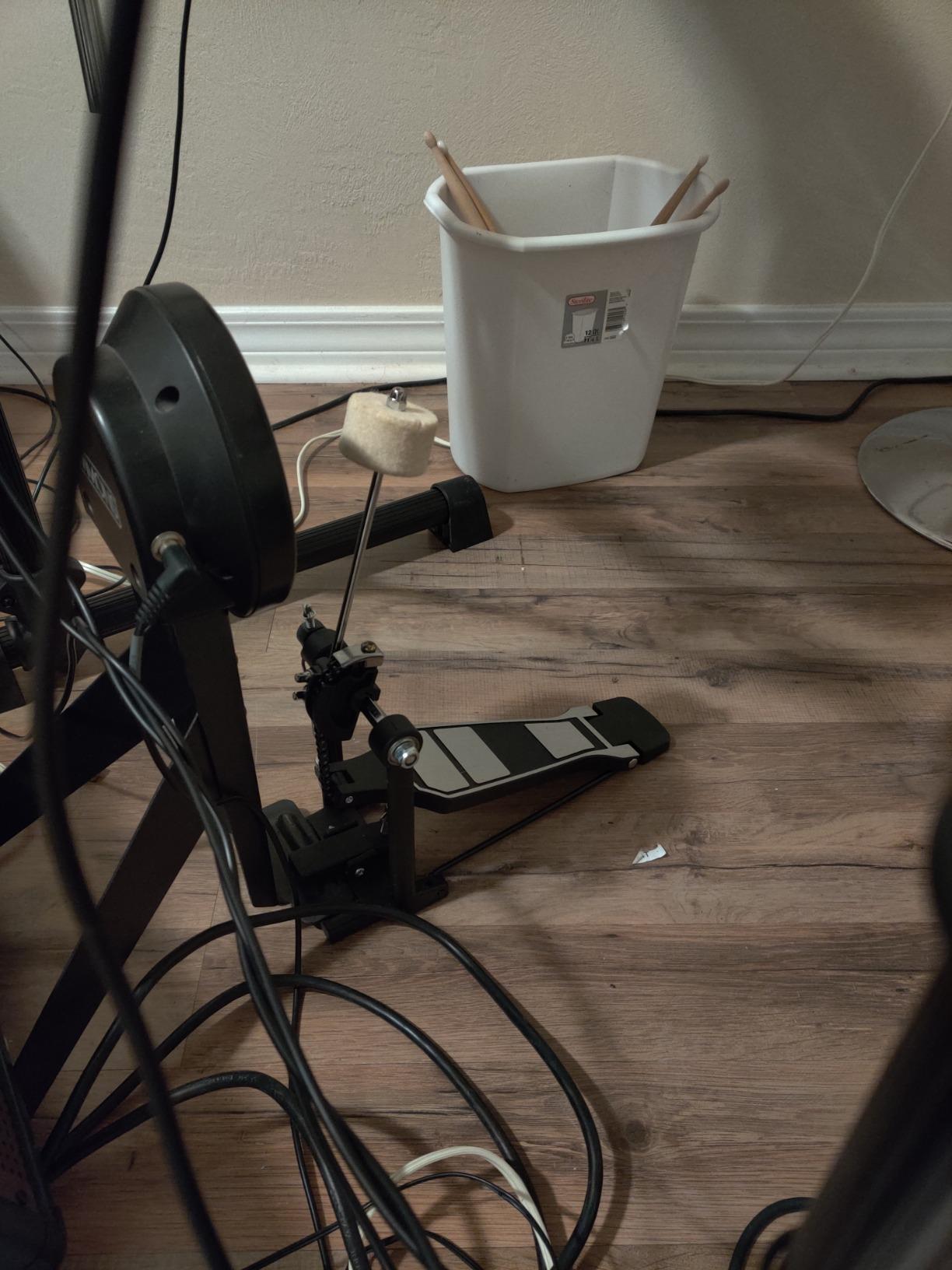
The Yamaha KU100 is in a different category from the other pedals on this list. It is a silent kick unit designed for use with electronic drum modules, not an acoustic bass drum. I included it because so many drummers are practicing in apartments, dorms, or shared spaces where a real kick pedal would drive the neighbors crazy. The KU100 lets you play realistic kick patterns on your electronic kit with virtually no acoustic noise.
Setup is straightforward. The unit has a built-in trigger that connects to your drum module via a stereo audio cable, which is included. The dynamic sensing means it can play soft and loud depending on how hard you press, which is important for realistic practice. I tested it with both a Yamaha DTX kit and an Alesis mesh kit, and both worked well after some sensitivity tweaking in the module.
Build quality is solid. The unit uses metal and bass wood, which is a nice touch. The compact design means it does not take up much space in a practice corner. At under 3 pounds, it is also very portable. I have thrown it in a backpack for hotel practice on the road.
The downsides are mostly related to electronic compatibility rather than the pedal itself. The sensitivity can be finicky on some modules, requiring careful adjustment to avoid double triggering or missed hits. The unit can also slide on smooth floors, so a small rug or mat is recommended. Stock has been low in recent months, so if you see it available, do not wait.
Apartment and dorm drummers
If you are practicing in a small space where noise is an issue, the KU100 lets you play real kick patterns at any hour without bothering neighbors. The silent operation is the headline feature, and it delivers.
Hybrid acoustic and electronic drummers
For drummers who play both acoustic and electronic kits, the KU100 is a smart addition to your setup. You can plug it into any compatible module and have a quiet practice option without buying a full electronic kit.
How to Choose the Best Kick Drum Pedal for You
Picking the best kick drum pedal is less about finding a single winner and more about matching the pedal to your playing style, your kit, and your budget. After testing all ten of the pedals above, I put together this guide to help you narrow down the right choice. There are six factors that matter most: drive type, cam shape, footboard length, spring tension, beater material, and whether you need a single or double pedal.
Chain Drive vs Direct Drive vs Belt Drive
Chain drive is the most common type and the one you will find on most beginner to mid-range pedals. It uses a metal chain to transfer motion from the footboard to the cam, giving a punchy, defined feel with strong rebound. Chain drive is durable, easy to maintain, and works well for almost every genre. The main drawback is a slight chain slap noise, though better pedals like the DW 3000 and Tama Iron Cobra have largely solved this.
Direct drive connects the footboard directly to the cam with no chain or belt in between. This gives a faster, more responsive feel that many speed and metal players prefer. Direct drive pedals are usually more expensive and can feel less forgiving for beginners, but once you adapt to the feel, the response is incredible. Pearl Eliminator and Trick Pro1-V are popular direct drive options, though the market for direct drive has been growing.
Belt drive uses a reinforced nylon or rubber belt instead of a chain. Belt drive is the quietest option and gives a smooth, slightly elastic feel that some jazz and studio drummers love. Belt drive pedals tend to wear out faster than chain drive under heavy playing, but for studio use and lighter genres, they are excellent. Pearl and DW both make popular belt drive models.
Cam Shape: Linear vs Offset
The cam is the rounded piece that the chain or belt wraps around, and its shape determines how the pedal feels through the stroke. An offset cam gives a non-linear response, meaning the pedal feels different at the start of the stroke compared to the end. This produces a more traditional feel with a clear sense of power and acceleration. Most drummers start on offset cams because the response feels intuitive.
A linear cam gives a more uniform response throughout the stroke. The pedal feels the same no matter where you are in the footboard motion. Linear cams are popular among speed players and metal drummers because the even response makes it easier to play fast, even passages. The trade-off is that linear cams can feel less expressive for dynamics.
Some pedals, like the DW 9000 with its EZ Infinite Adjustable Cam, let you tune the cam shape to suit your preference. This is the best of both worlds if you can afford it, because you can experiment until you find the feel that works for your playing.
Footboard Length: Longboard vs Standard
Standard footboards are around 9 to 10 inches long and work for most drummers. Longboards are typically 12 inches or longer, with the Tama Speed Cobra and DW 9000 being popular longboard options. Longboards give you more surface area to work with, which can be more comfortable if you have large feet, prefer to play with the ball of your foot, or use heel-up technique.
Longboards can also be more comfortable for shoeless drumming or for drummers who use the full length of the footboard for control. The trade-off is that longboards are heavier and bulkier to transport. If you are playing small gigs or have limited hardware space, a standard board might be a better fit.
Spring Tension and Adjustability
Spring tension controls how much resistance the pedal has when you press down. Higher tension gives a faster, more aggressive feel that is great for metal and punk. Lower tension gives a smoother, more relaxed feel that works for jazz and softer genres. Almost every quality pedal lets you adjust the spring tension with a drum key or a finger-friendly knob like Tama’s Spring Tight system.
Look for pedals with clearly marked tension adjustments and easy access to the spring assembly. Some cheaper pedals make spring tension adjustment difficult, which becomes frustrating when you want to change your setup between songs. The DW 9000 and Tama Iron Cobra pedals both excel here with their smooth, tool-free or tool-light adjustment systems.
Beater Materials: Felt, Plastic, Wood, Leather
The beater is the part of the pedal that actually strikes the bass drum head, and the material it is made of dramatically changes the sound. Felt beaters are the most common and produce a warm, traditional bass drum sound. Felt is versatile enough for rock, jazz, pop, and most other styles. Most beginner to mid-tier pedals come with felt beaters.
Plastic beaters produce a brighter, more attack-heavy sound that cuts through dense mixes. Many metal and punk drummers prefer plastic for the click and definition. Wood beaters are similar to plastic but with a slightly warmer, more focused attack. Leather beaters produce a softer, more muted sound that some jazz and vintage-style players prefer. Many modern pedals come with two-way beaters that let you flip between felt and plastic without swapping parts.
Single vs Double Pedal: Which Do You Need?
If you play mostly rock, pop, country, jazz, or blues, a single pedal is all you need. Even drummers in those genres who occasionally play double-kick patterns often prefer to use a double pedal setup rather than two bass drums. A single pedal is also lighter, cheaper, and easier to transport.
If you play metal, hardcore, or any genre that uses fast double-kick patterns, a double pedal is essential. The Tama HP200PTW is a great entry point, while the DW 9000 and Tama HP900PN offer higher-end performance. Make sure your bass drum can accommodate a double pedal, as some smaller kick drums (under 18 inches) are too small to fit both pedals comfortably.
Frequently Asked Questions
What is the 80/20 rule in drumming?
The 80/20 rule in drumming is a practice concept that says 80% of your playing time should be spent on the 20% of techniques and patterns that matter most to your style. For most drummers, that means spending the majority of practice on timekeeping, basic grooves, and the kick drum patterns you use most often, rather than spreading practice time equally across every rudiment and exercise. The idea is that focused, high-value repetition builds stronger muscle memory than scattered practice.
What is the fastest kick drum pedal?
The fastest kick drum pedals are typically direct drive models with linear cams because the direct mechanical connection and even response minimize lag. Popular choices for speed include the Trick Pro1-V, Pearl Demon XR, and Axis A Longboard. Among the pedals in this guide, the Tama Speed Cobra 310 and DW 9000 are the fastest, with the 9000 winning on smoothness and the 310 winning on value. Your own foot speed matters more than the pedal, but a fast, low-resistance pedal does help you reach your top speed.
What kick drum pedal did John Bonham use?
John Bonham of Led Zeppelin famously played a Ludwig Speed King pedal for most of his career, paired with a 26-inch Ludwig kick drum. The Speed King was a strap-drive pedal known for its smooth, fast feel and minimalist design. Bonham liked it because of the responsive rebound and the unique tone it produced. Original Speed Kings are now collectible, and modern recreations like the Ludwig Speed King reissue are popular among drummers who want to capture that classic Bonham sound.
What kick pedal did Neil Peart use?
Neil Peart of Rush used a Yamaha FP9000 series direct drive pedal, which was developed in close collaboration with Peart himself. The Yamaha FP9000 (and later iterations like the FP9500C) was a flagship direct drive pedal known for its incredible smoothness, speed, and durability. Peart also used Yamaha drum hardware throughout his career. The Yamaha FP series remains a reference standard for direct drive pedals, and many professional drummers still use them today.
How do I make my kick drum sound punchy?
To get a punchy kick drum sound, start by using a felt or wood beater rather than plastic, as these materials produce a more focused attack. Tune the resonant (front) head higher than the batter (back) head, with the batter tuned low and tight for definition. Use a pillow or blanket inside the bass drum against the resonant head to control sustain. Make sure your pedal beater hits the head squarely, not at an angle, and tighten the pedal spring for a faster stroke. Finally, consider a coated single-ply batter head designed for attack, like an Evans G1 Coated or Remo Ambassador Coated.
Chain drive vs direct drive kick pedal – which is better?
Neither chain drive nor direct drive is universally better; each has its own strengths. Chain drive is durable, affordable, and offers a punchy traditional feel that works for most genres, from rock to jazz. Direct drive offers a faster, more responsive feel with no mechanical lag, which many speed and metal players prefer. Direct drive pedals are typically more expensive and can feel less forgiving for beginners. If you play rock, pop, or jazz, chain drive is the safer bet. If you play metal, fusion, or any genre that demands the fastest possible response, direct drive is worth the extra investment.
Final Verdict
After months of testing and real playing sessions, our top pick for the best kick drum pedal is the Tama HP900PN Iron Cobra Power Glide. It delivers flagship-level feel, smooth action, and durable build at a price that undercuts the competition, and it has earned its 5-star rating from drummers around the world. If you need a double pedal, the Tama HP200PTW is the best value in the double pedal world right now. And if you are working with a tight budget, the DW 2000 Series brings real DW quality under $100.
The best kick drum pedal is the one that matches your playing style, your kit, and your budget. Use the buying guide above to narrow down your choices based on drive type, cam shape, footboard length, and beater material. The right pedal will reward you every time you sit down at the kit.