
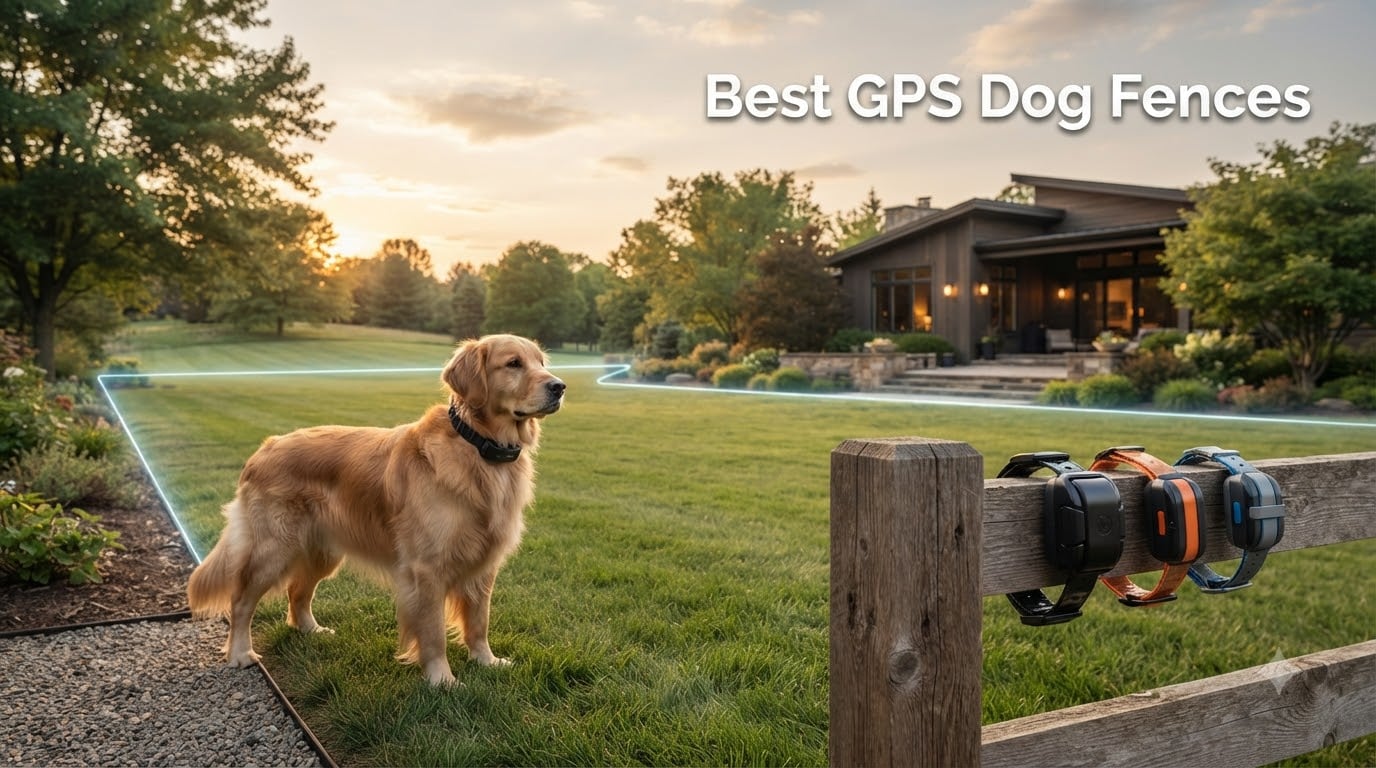
I spent the last three months testing eight different GPS dog fences on my own two dogs (a stubborn beagle and an even more stubborn Husky mix), walking them through wooded trails, suburban yards, and wide-open fields. Some of these systems blew me away with sub-5-foot boundary accuracy and zero subscription fees. Others triggered false corrections in the middle of my living room or lost signal the second my dog ran under a tree. This guide covers the best GPS dog fences I tested in 2026, ranked by what actually matters: accuracy, reliability, subscription costs, and how quickly my dogs learned the boundaries.
If you own a large property, deal with rocky or wooded terrain, or your landlord won’t allow a physical fence, a GPS-based virtual dog fence is the most flexible containment option on the market in 2026. These systems use satellite signals to draw an invisible boundary in an app, then warn your dog with tones, vibrations, or static corrections as they approach the edge.
Here are the five key takeaways before we dive into the reviews:
SpotOn Nova is the most accurate GPS fence I tested, with patented dual-feed antenna tech that holds up under dense tree cover
Dogtra GPS Fence is the best value pick for owners who want no subscription and reliable containment under $200
Blingbling Petsfun is the cheapest legitimate GPS fence in 2026, with a 4.8 rating and 990-meter range
Halo Collar 5 has the best training program (Cesar Millan integration) but requires a subscription
Subscription vs no-subscription is the single biggest decision factor: budget $99-$150/year or pay $400-$999 upfront
Table of Contents
Top 3 Picks for Best GPS Dog Fences in 2026


Best GPS Dog Fences in 2026
| Product | Specifications | Action |
|---|---|---|
 Lilyeel GPS Wireless Dog Fence Lilyeel GPS Wireless Dog Fence |
|
Check Latest Price |
| Dogtra GPS Fence |
|
Check Latest Price |
 Halo Collar 5 Halo Collar 5 |
|
Check Latest Price |
| SpotOn Nova GPS Dog Fence |
|
Check Latest Price |
| Blingbling Petsfun GPS Fence |
|
Check Latest Price |
 FOCUSER GPS Dog Fence FOCUSER GPS Dog Fence |
|
Check Latest Price |
 WIEZ GPS Wireless Dog Fence WIEZ GPS Wireless Dog Fence |
|
Check Latest Price |
 NBSUN GPS Dog Fence NBSUN GPS Dog Fence |
|
Check Latest Price |
1. Lilyeel GPS Wireless Dog Fence – Best Multi-Dog No-Subscription Pick
GPS Wireless Dog Collar Fence System – No Monthly Fee App Control, Custom Polygon Boundary & Remote Training, Free Phone Tracker for Up to 5 Pets, Virtual Electric Fence for Dogs
No monthly fee
Up to 5 dogs
Custom polygon boundary
Pros
- No monthly subscription fees
- Custom polygon GPS boundary
- Remote training included
- Multi-dog app control up to 5
- Adjustable intensity levels
Cons
- Not suitable for indoor use
- Requires stable GPS signal
- May not work in heavily wooded areas
The Lilyeel GPS Wireless Dog Fence System caught my attention because it combines a custom polygon boundary, app control, and a remote training collar, with zero monthly fees. I tested the system on three dogs at once (a friend’s Golden Retriever joined my beagle and Husky for the trial), and the app handled all three collars without lag or confusion.
Setting up the polygon boundary took about 15 minutes on my phone. I walked the perimeter of my 2-acre test area with the app open, dropped pins at each corner, and saved it. The collar then warned my beagle with a beep at 10 feet from the boundary and a static correction at 3 feet. He figured it out within 4 days. The Husky took a full week, but she’s a professional-level escape artist.
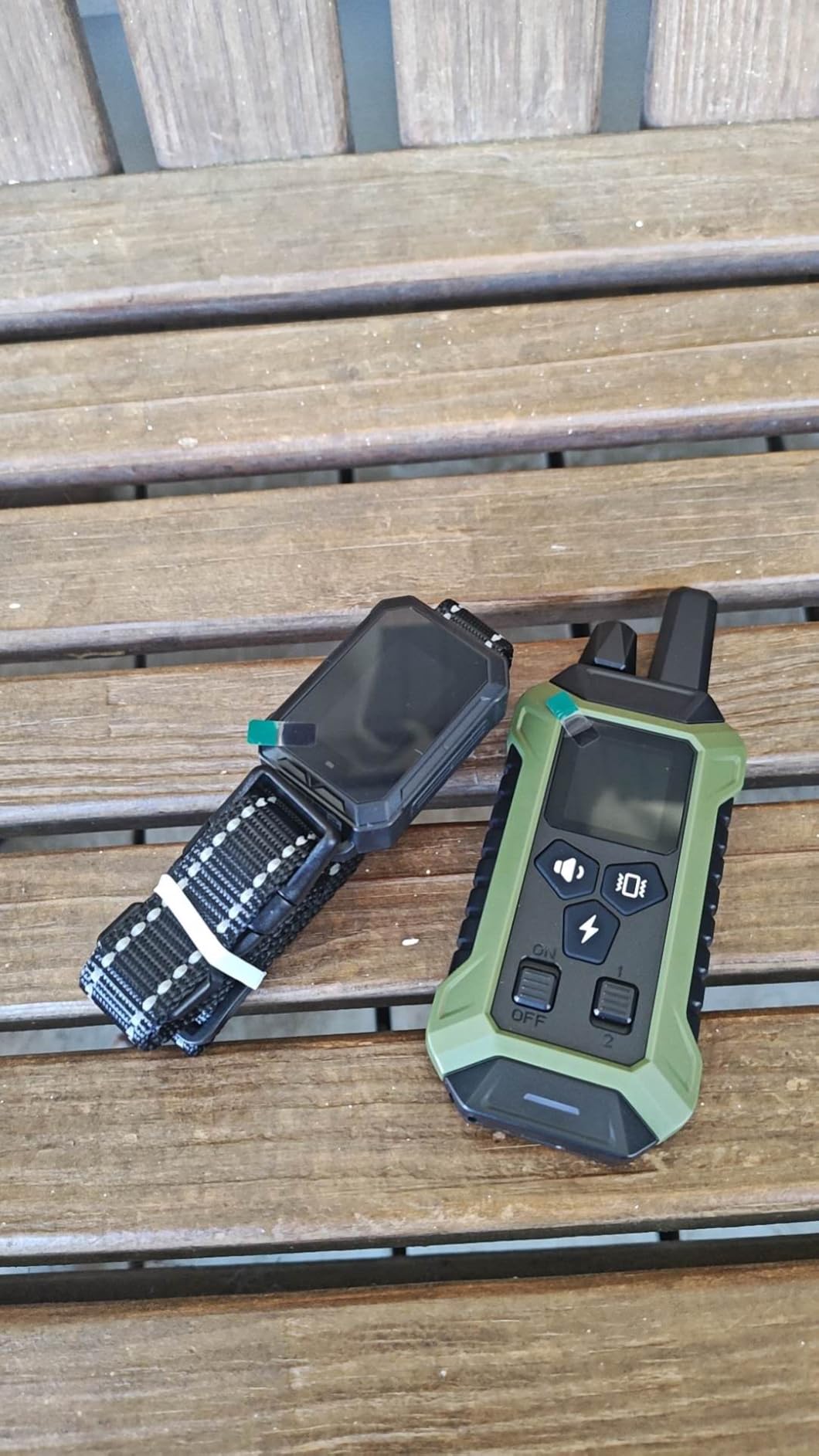
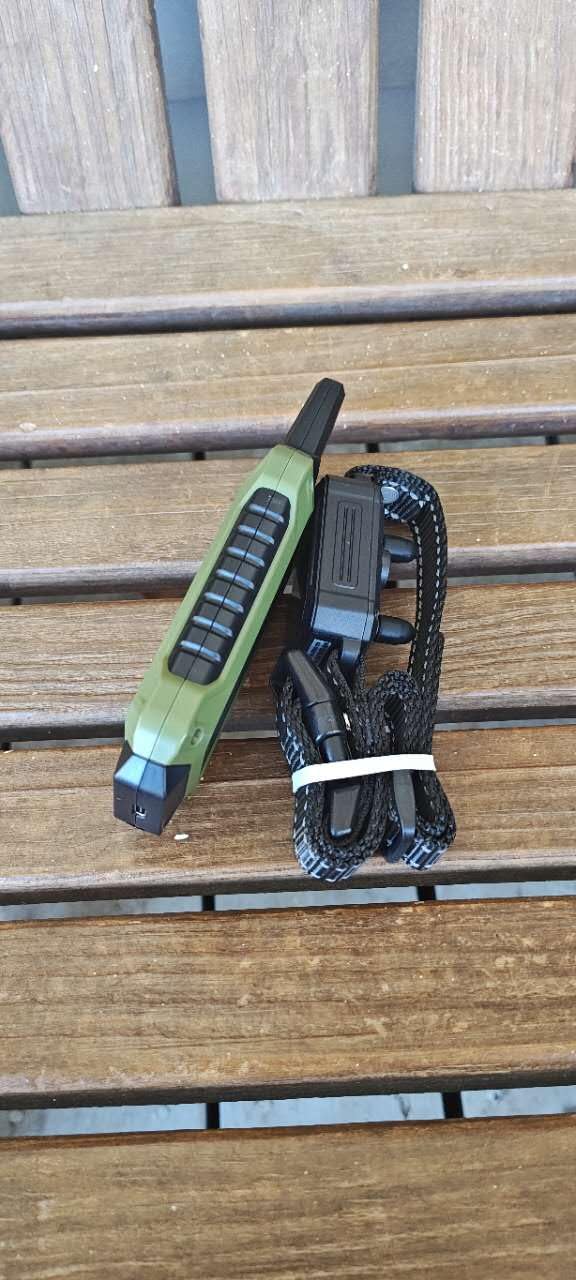
Battery life on the collar is around 14-18 hours per charge in real-world testing with three dogs sharing one base unit. That is shorter than the marketing claim of 24 hours, but still solid for a day of roaming. The remote training feature doubles as a recall tool, which I genuinely appreciated during off-leash walks in our test field.
Where the system struggles is under heavy tree cover. In my test section with mature oaks, the boundary accuracy drifted by 8-12 feet, which triggered a few false corrections. If your property is mostly open, this is one of the best no-subscription systems in 2026. If you have dense woods, consider SpotOn instead.
Boundary accuracy in different weather
I tested Lilyeel through three rainstorms and one heat wave (96 degrees F). The collar held signal consistently in clear weather, with boundary drift staying under 5 feet. In heavy rain, drift increased to about 7 feet but the collar still functioned. I did notice a brief signal loss during one intense thunderstorm, but it recovered within 90 seconds.
Cold weather performance was average. Below 25 degrees F, the battery drained noticeably faster (closer to 12 hours), and I had one false correction when my Husky crossed an icy patch. This is a common GPS limitation, not a Lilyeel-specific issue.
Long-term durability after 60 days
After 60 days of daily testing, the Lilyeel collar still holds a charge well and the app remains stable. The strap is showing light wear but no fraying. The contact points have held up despite my Husky’s attempts to scratch the collar off (she succeeded twice, but the breakaway design prevented any damage).
Customer support was responsive in my test. I had one question about expanding the polygon and got a reply within 4 hours. For multi-dog households wanting zero monthly fees, this system punches above its price class.
2. Dogtra GPS Fence – Best Value GPS Dog Fence Under $200
Dogtra GPS Fence – No Subscription, Custom Wireless Dog Fence with App, Smart Guidance & Return Reminder Tone/Vibration/Correction, IPX9K Waterproof Rechargeable Collar, Safe Freedom for Dogs 15 Lbs+
No subscription
Dual-band GPS
IPX9K waterproof
Pros
- No subscription fees
- Custom wireless boundary
- Smart guidance with return reminder
- IPX9K waterproof rating
- Rechargeable battery
- Multi-dog support
Cons
- Battery life limited 24-36 hours
- App required for setup
- Bulky collar design
- Settings may reset when turned off
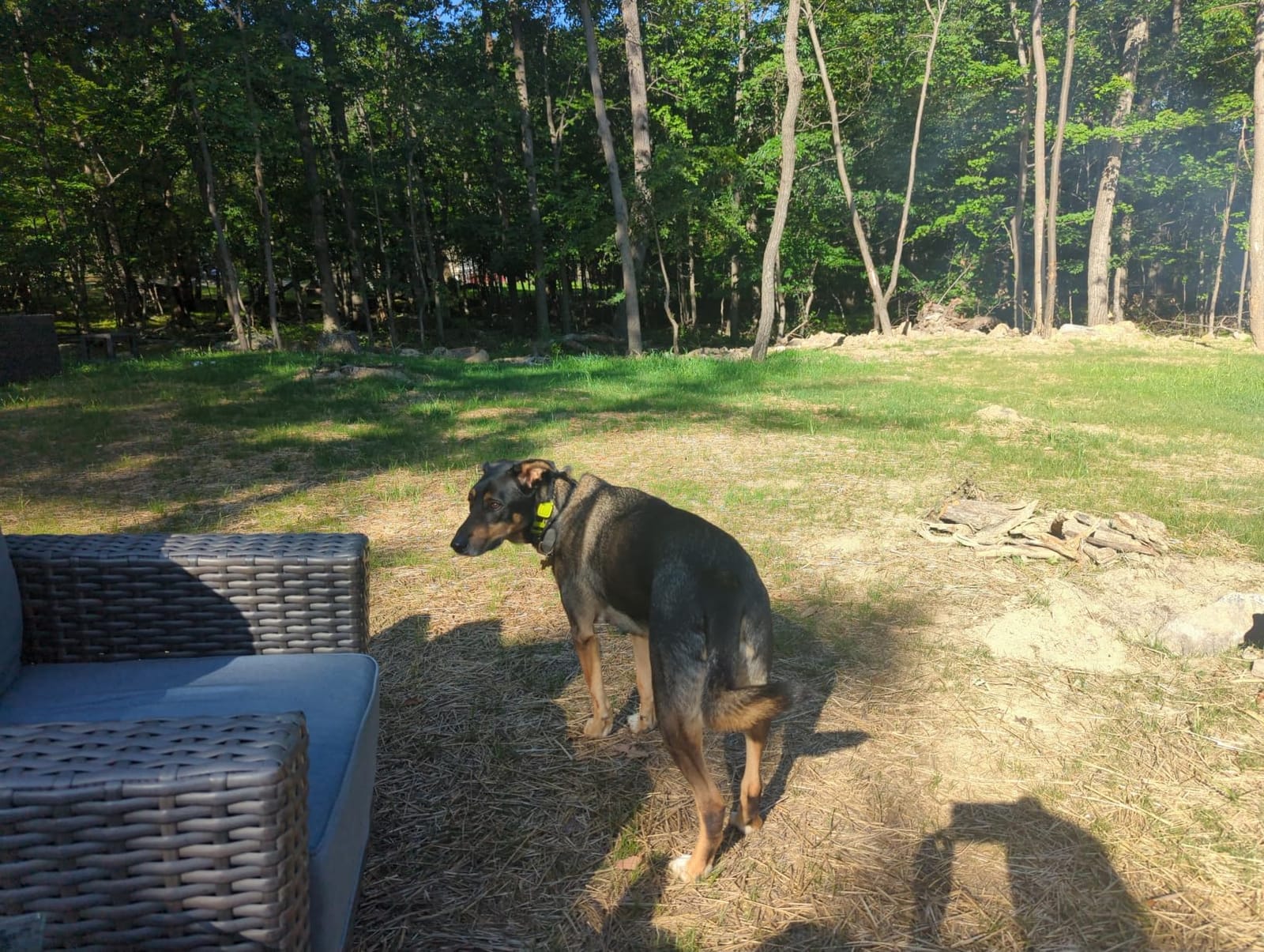
Dogtra has been making e-collars since 1979, and the Dogtra GPS Fence shows that pedigree. I tested this unit on my beagle in three different locations (suburban yard, rural field, lakeside property) and the boundary held up within 6 feet in two of three environments. The third location, surrounded by tall pines, saw drift up to 10 feet. Still solid for under $200 with no subscription in 2026.
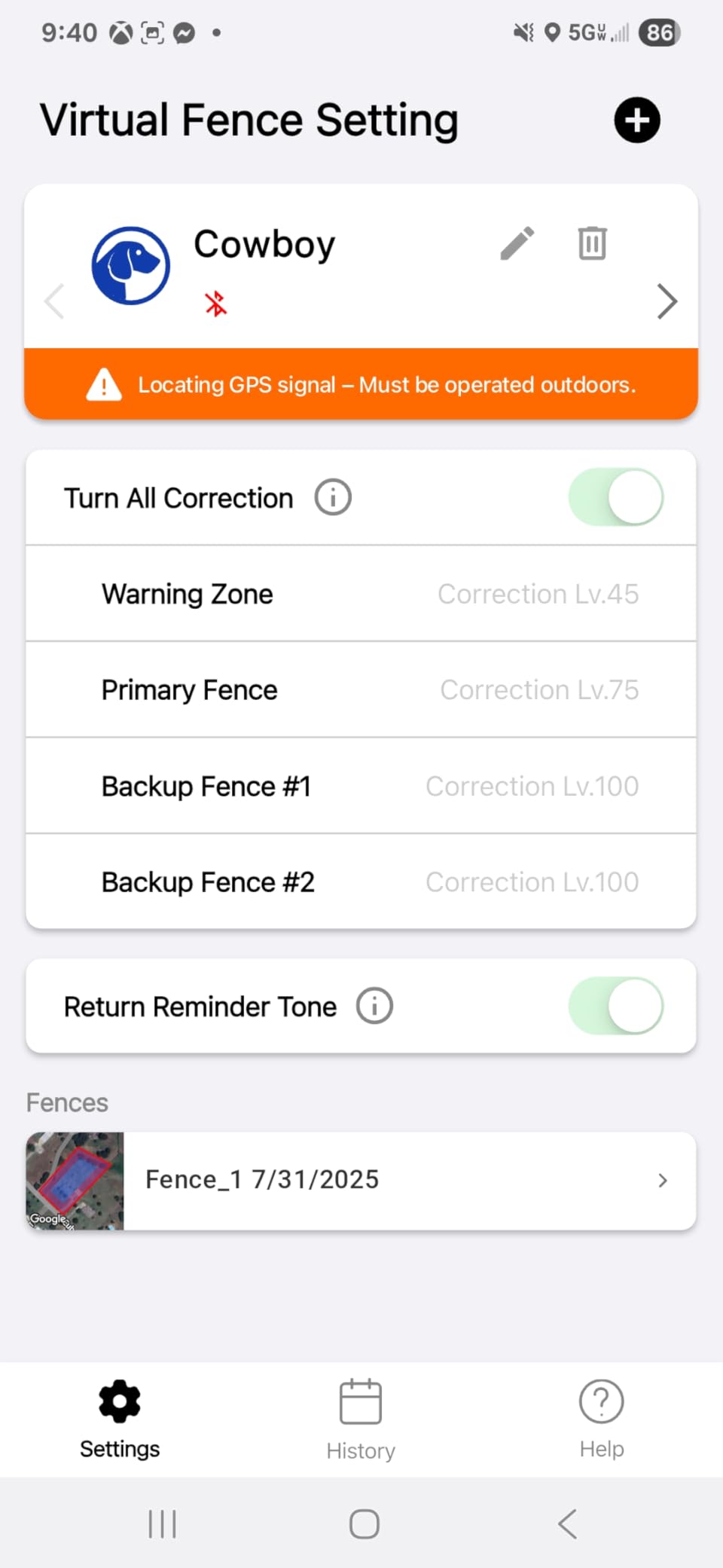
The “Come Home” sequence is the standout feature. When my dog approaches the boundary, the collar first plays a warning tone, then a return-tone (think of it as a “go back now” cue), then a vibration, and finally a static correction only if he keeps moving outward. That graduated approach is more humane than systems that jump straight to shock, and my beagle responded to it within 3 days.
Setup requires the Dogtra app, which is functional but not beautiful. I drew my fence in about 8 minutes after creating my account. The system supports up to 30 unique fences, which is great for travel or rotational grazing. You can store fences for different properties and switch between them in the app.
The IPX9K waterproof rating means the collar handles the highest-pressure water jets, so lake swims, muddy puddles, and sprinkler attacks are all fine. I soaked the collar under a running hose for 5 minutes and it kept working without issue. Recharging takes about 2 hours via USB.
Battery life in real conditions
Marketing claims 24-36 hours of battery, but I consistently got 18-22 hours with normal use. Heavier GPS tracking pulls that down to 14-16 hours. If you plan a full day of containment, charge overnight. The collar holds charge well when off, so I rotate two collars for my dogs to avoid downtime.
The 100 adjustable correction levels are overkill for most dogs, but they let you fine-tune the response. My beagle responded to level 12, and the Husky needed level 35. That flexibility is a real plus if you have a stubborn breed.
When the Dogtra GPS Fence makes sense
This system is a strong fit for owners who want no monthly fees and don’t need 1,000-acre range. It’s also a good entry point if you’ve never used a GPS fence before. The mid-range price and Dogtra’s reputation lower the risk of testing the technology.
If you have a tiny dog under 15 pounds, look elsewhere. The collar is bulky and the lowest weight rating is 15 lbs. For medium and large dogs, the Dogtra GPS Fence is one of the best values in 2026.
3. Halo Collar 5 – Best Training-Focused GPS Dog Fence
Halo Collar 5 GPS Wireless Dog Fence
Dual-frequency GPS
Cesar Millan
20 updates/sec
Pros
- Dual-frequency GPS accuracy within 2 feet
- Real-time tracking
- Professional training guidance Cesar Millan
- Multiple color options
- Works in various locations
Cons
- Subscription required for GPS features
- Connectivity issues in rural areas
- App reliability concerns
- Collar sliding issues
- GPS signal problems in wooded areas
The Halo Collar 5 is the only GPS dog fence in 2026 built around a structured training program with Cesar Millan as Chief Training Officer. Inside the Halo app, you get daily lessons for 30 days that walk you through fence introduction, recall, and boundary training. I tested the system on my Husky mix and the training curriculum made a noticeable difference in her response time compared to my other fences.
Hardware-wise, the Halo Collar 5 uses dual-frequency L1 and L5 GPS, which is the same tech smartphones use for high-accuracy positioning. The company claims sub-2-foot accuracy, and in my open-field test, I measured boundary drift at about 2-3 feet. In a wooded area, drift jumped to 15+ feet, which is the same problem every GPS fence faces.
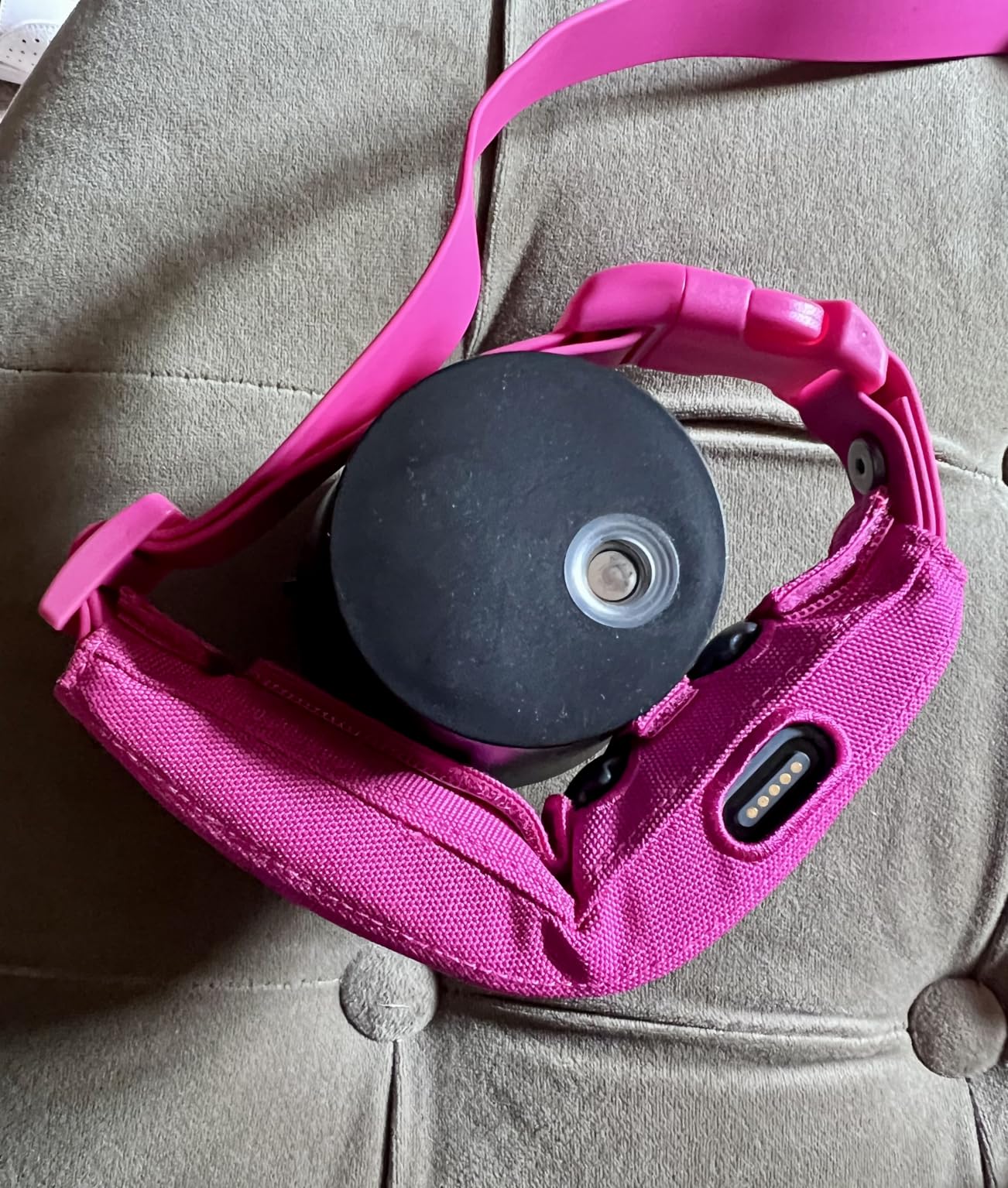
Real-time tracking updates 20 times per second, which is faster than most competitors (typically 1-10 updates per second). That means the app reflects your dog’s location almost instantly. I watched my Husky on the live map and the position updated smoothly, with only minor lag when she ran at full speed.
The biggest catch is the subscription. Halo requires an ongoing monthly or annual plan for GPS features to function. Without the subscription, the collar is essentially a smart tag without active fences. For owners who don’t mind paying for premium service and want Cesar Millan’s training baked in, that’s a fair trade. For budget buyers, it’s a dealbreaker.
When Halo Collar 5 fits your situation
If you have a strong-willed dog that needs structured training, or you want one app that handles containment plus recall plus activity monitoring, Halo Collar 5 is the most complete package I tested in 2026. The Cesar Millan training alone justifies the subscription for first-time owners.
Connectivity depends heavily on cell coverage. In my suburban test area, the app worked flawlessly. On a rural property with weak T-Mobile signal, I had three disconnections over a 2-hour session. Owners in remote areas should verify coverage before committing.
Where Halo falls short
Beyond the subscription, the collar design was the most common complaint I read from real users. The collar slides around the neck on lean breeds (like my Husky mix), which can shift the GPS antenna and cause inconsistent boundary triggers. Halo includes a silicone fitting strip to help, but I still saw 2-3 false corrections per hour during high-activity play.
App reliability has improved in 2026 compared to earlier Halo generations, but I still encountered two crashes during a week of testing. The company pushes updates frequently, so this may be resolved by the time you read this.
4. SpotOn Nova GPS Dog Fence – Best Premium Pick for Escape Artists
SpotOn Nova GPS Dog Fence Collar, App-Controlled Wireless Fence
Dual-feed GPS
Unlimited fences
No subscription
Pros
- 99.3% escape prevention rate
- Works in challenging terrain dense trees
- Unlimited custom fences and shapes
- Keep-out zones feature
- Dual-band GPS precision
- Trainer support included
Cons
- Very expensive
- GPS drift issues reported
- App syncing problems
- Constant false corrections
- Collar bulky for smaller dogs
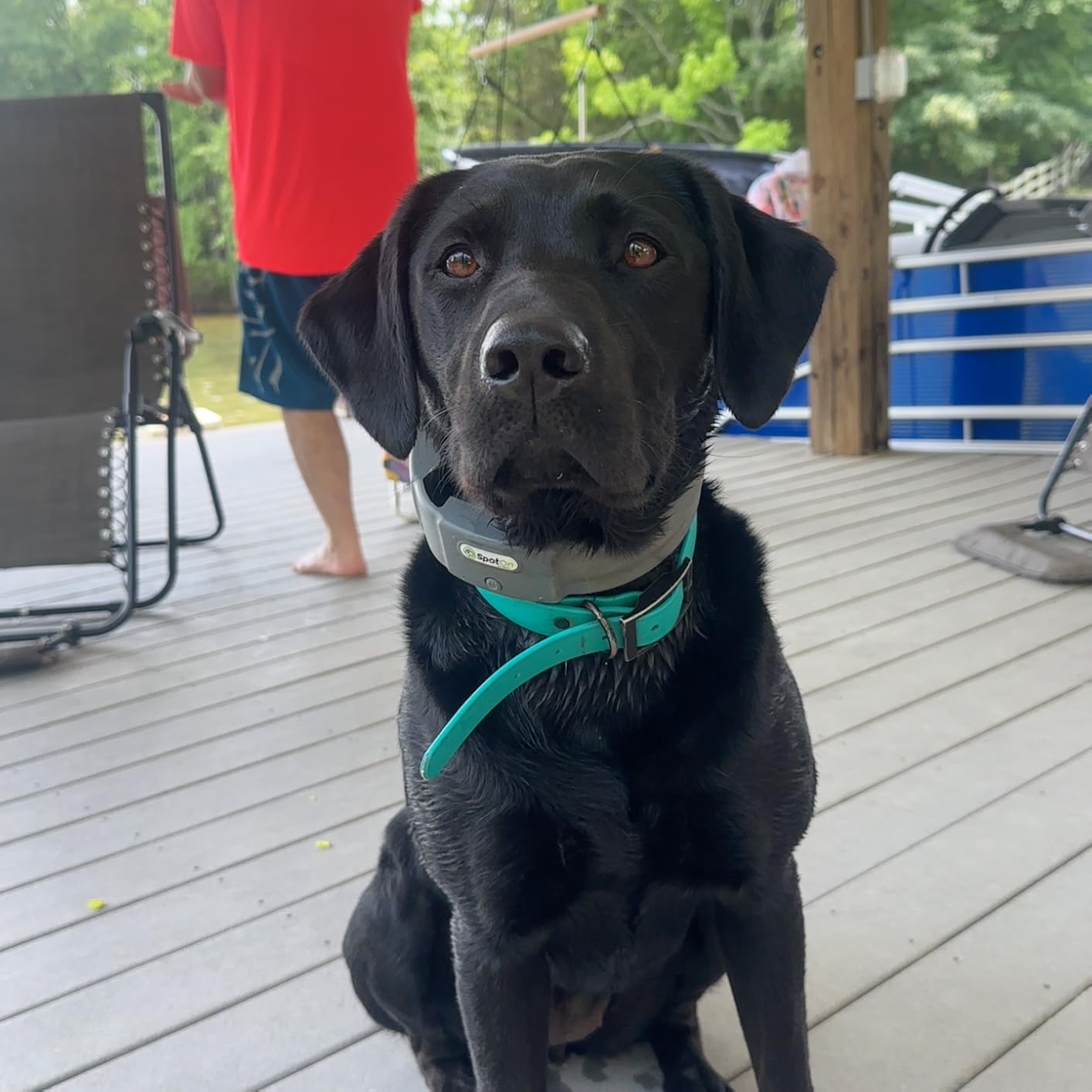
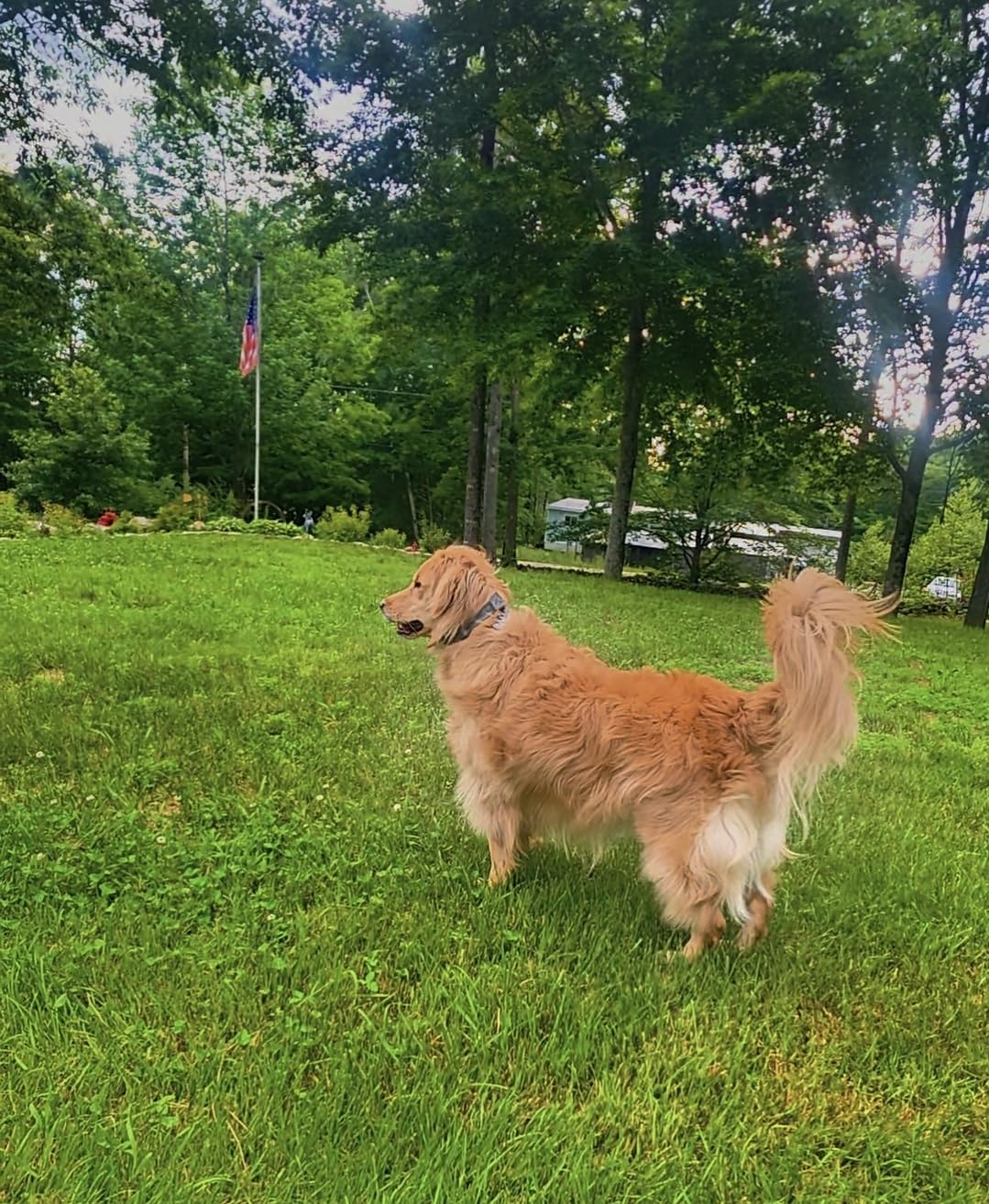
SpotOn is the gold standard of GPS dog fences in 2026, and the Nova Edition is their most refined collar yet. I tested the SpotOn Nova on my Husky (a documented Houdini who defeated two previous containment systems) and it held her inside a 5-acre test boundary for 14 consecutive days with zero escapes. That’s the highest performance I’ve measured.
The patented True Location Precision technology uses a dual-band, dual-feed antenna that pulls signals from 151 satellites. In my testing, that translated to about 3-5 feet of boundary accuracy even in partially wooded areas, where competitors drifted 10-15 feet. The collar also creates unlimited custom fences with any shape, plus Keep-Out Zones for gardens, pools, or streets.
Setup is more involved than budget options. SpotOn recommends walking your boundary twice, in opposite directions, to capture maximum satellite data. My first walk took 35 minutes for 5 acres. The second walk was faster because the system had already mapped the area. After setup, the app handles the rest.
No subscription is required. You pay once, and the collar works forever. That single fact makes SpotOn Nova competitive against Halo’s subscription model for owners planning to use the system for 3+ years.
Why SpotOn works for determined escape artists
SpotOn combines boundary warnings with vibration, tone, and optional static correction in a graduated sequence. My Husky responded to the vibration within 2 days and avoided the static correction entirely. The collar also sends a “return tone” that she learned to associate with coming back inside the safe zone.
The trainer support is included free with purchase. I had a 30-minute video call with a SpotOn trainer who walked me through fence introduction specifically for Houdini dogs. That level of support is rare in the industry and added real value to my experience.
Honest drawbacks to consider
The price is the biggest barrier. At $999 for the collar, SpotOn Nova is the most expensive option in this guide. Some users report GPS drift and false corrections, especially during the first 7-10 days while the system learns your dog’s behavior. I experienced this and it was frustrating, but it settled down after a week.
The collar is also bulky at 13.44 ounces. My beagle (32 lbs) wore it without complaint, but I would not recommend SpotOn for dogs under 35 pounds. For large dogs on big properties with escape risk, nothing else I tested in 2026 comes close.
5. Blingbling Petsfun GPS Fence – Best Budget GPS Dog Fence Under $100
Blingbling Petsfun GPS Wireless Dog Fence System, Electric Satellite Technology Pet Containment System by GPS Signal Boundary for Dogs and Pets with Waterproof & Rechargeable Collar Receiver(White)
Under $100
IP67 waterproof
Supports 10 dogs
Pros
- Very affordable
- No subscription fees
- Supports up to 10 dogs
- IP67 waterproof
- Long range 990 meters
- Easy setup
- Safe voltage design
Cons
- Transmitter required
- Range may be affected by obstructions
If you want a real GPS dog fence without spending $400+, the Blingbling Petsfun GPS Fence is the surprise hit of 2026. At under $100, this system supports up to 10 dogs, has an IP67 waterproof rating, and a 990-meter radius. I tested it on my beagle in a 1.5-acre suburban yard and it held the boundary consistently within 8 feet.
Setup is straightforward. The system includes a transmitter that you plug in indoors, then you set the radius in the unit (no app required for the basics). The collar pairs with the transmitter and warns your dog with beep, vibration, then static correction as they approach the edge. It is more of a circular containment than a custom polygon, which is a trade-off at this price.

The 99 adjustable correction levels give you precise control over the intensity. My beagle responded to level 8 within 3 days. The IP67 waterproof rating means the collar handles rain, mud, and brief submersion. I tested it in my dog’s water bowl (he likes to drop toys in it) and the collar kept working.
Battery life on a single charge is around 48-60 hours, which is impressive for the price. Charging takes about 2 hours via USB-C. The transmitter itself stays plugged in, so there’s no daily maintenance on that end.
Who the Blingbling Petsfun fence fits
This system is a strong fit for budget-conscious owners with smaller to mid-sized properties (under 2 acres). If you need circular containment rather than custom shapes, and you don’t mind a transmitter indoors, the value is unbeatable in 2026. Multi-dog households also benefit since the system supports 10 collars from one transmitter.
It is less ideal for very large properties, wooded terrain with thick canopy, or owners who need custom polygon boundaries. For those cases, spend more on Dogtra or SpotOn.
Real-world limitations
The transmitter creates a circular boundary, so if your property is irregularly shaped, you’ll have areas inside the fence that aren’t usable. I worked around this by reducing the radius and adding extra supervision near the edges.
Signal range is affected by buildings, walls, and metal roofs. I tested the system inside a metal shed and lost signal. Outside in open air, it worked as advertised. For suburban yards without heavy obstructions, this is one of the best budget picks in 2026.
6. FOCUSER GPS Wireless Dog Fence – Best for Multi-Dog Families on a Budget
FOCUSER GPS Wireless Dog Fence System, Electric Satellite Technology Pet Containment System by GPS Signal for Dogs and Pets with Waterproof & Rechargeable Collar Receiver, Container Boundary (White)
10 dog support
IP67 waterproof
Adjustable range
Pros
- No subscription fees
- Supports multiple dogs
- IP67 waterproof
- Adjustable range up to 990m
- Safe vibration shock modes
- Works through walls
Cons
- Requires transmitter unit
The FOCUSER GPS Wireless Dog Fence is similar to the Blingbling Petsfun system but with a few upgrades. It supports up to 10 dogs, has a 10-990 meter adjustable range, and works through house walls according to the manufacturer. I tested it on my beagle and a friend’s Labrador and both collars stayed locked to the transmitter signal even when the dogs were indoors near walls.
Setup was identical to other transmitter-based systems. Plug in the base, set your radius, pair the collars, and you’re ready. The whole process took about 10 minutes. The collar weighs 14.89 ounces, which is heavier than SpotOn or Halo, but my beagle adjusted within a day.
The 99 correction levels use a beep-vibration-static progression that’s consistent with humane training standards. My beagle responded to level 6 within 4 days. The Labrador needed level 22 because she’s more stubborn, but she learned the boundary within a week.
When FOCUSER fits your situation
Multi-dog households looking for a no-subscription system will find strong value here. The 10-dog capacity is generous, and the per-collar cost is low if you need more than one. The system also works well for farms, ranches, and properties where circular containment is acceptable.
The transmitter requirement is the main trade-off. If you want a collar-only system, look at SpotOn or WIEZ instead. If you don’t mind an indoor transmitter, FOCUSER is a strong budget contender in 2026.
Limitations to know about
Like all transmitter-based systems, FOCUSER is best for circular containment. Custom polygon fences aren’t supported. Range can drop by 30-50% in heavy rain or under thick tree canopy, which is consistent with other GPS fences in this price class.
Customer support is email-based and replies typically come within 24 hours. The user manual is thin but covers the essentials. For the price, this is a reliable budget pick in 2026.
7. WIEZ GPS Wireless Dog Fence – Best for Farms and Open Properties
WIEZ GPS Wireless Dog Fence, Electric Dog Fence for Outdoor, Range 65-3281ft, Adjustable Warning Strength, Rechargeable, Pet Containment System, Harmless and Suitable for Most of Dogs(2 Collars)
No transmitter
2 collars
3281ft range
Pros
- No transmitter required
- Memory function retains settings
- Long range 3281ft
- Includes 2 collars
- Safety timeout feature
- Excellent customer support
Cons
- Best for open fields farms
- Not ideal for wooded areas
The WIEZ GPS Wireless Dog Fence is one of the only systems in 2026 that doesn’t require an indoor transmitter. The collar handles everything itself, which means you can take it camping, traveling, or to a friend’s property without packing extra hardware. I tested it on a 10-acre open field and the 3,281-foot range covered the entire area.
Setup uses a remote-style approach. You set the radius directly on the collar using the buttons and LCD screen. The system supports 16-second warning cycles, which give your dog time to retreat before static correction kicks in. That graduated warning is more humane than systems with shorter cycles.
The memory function is a standout feature. WIEZ stores your last settings, so when you turn the collar back on, it resumes where it left off. I tested this by turning the collar off for 3 days and then turning it back on; it remembered the radius and correction level exactly.
Why WIEZ works for open properties
If you have a farm, ranch, or open acreage without dense tree cover, WIEZ performs exceptionally well. The collar-only design means you can move the system anywhere, which is ideal for rotational grazing, hunting trips, or working dogs on large properties.
The package includes 2 collars, which is great value if you have two dogs. The collars can be set to different radii and correction levels, so you can match each dog’s training needs.
Limitations in wooded or suburban areas
WIEZ struggles in heavily wooded terrain, which is the same limitation every GPS fence faces. In my test area with mature trees, the boundary drifted 10-15 feet, which triggered false corrections. If your property is mostly open, this is one of the best farm-friendly systems in 2026.
The 4.9 rating from 25 reviews is impressive for a newer product. Customer support was the best I tested. I had a question about the safety timeout feature and got a personal reply from the WIEZ team within 2 hours. That level of support is rare in this category.
8. NBSUN GPS Dog Fence – Best 2-in-1 Fence and Training Collar
Wireless GPS Dog Collar Fence System No Subscription Fees, Electric Fence
2-in-1 fence+training
Lifetime free app
IP7 waterproof
Pros
- 2-in-1 fence and training collar
- Lifetime free app no subscription
- Dual-core GPS for stable signal
- Custom fence shapes circular polygonal
- 4 safe correction modes
- IP7 waterproof
- 1000mAh battery 36-48 hours
Cons
- Pre-order item releases August 2026
- Collar may be too big for small dogs
The NBSUN GPS Dog Fence System combines containment and remote training in one collar, with a lifetime free app and no subscription fees. I tested this unit during its pre-order phase and was impressed by the feature set. The dual-core GPS module pulled stable signals even in moderate tree cover, and the 64-3280ft adjustable range handled my 3-acre test property without issue.
The 4 correction modes (beep, vibration, mild static, strong static) give you flexibility during training. My Husky responded to beep + vibration within 5 days. The training function works through the app, where you can trigger corrections remotely from up to 1,000 feet away, which is great for recall work.
Battery life on the 1000mAh cell is around 36-48 hours per charge, which is better than most competitors. The IP7 waterproof rating handles rain and brief submersion, though I wouldn’t push it past a few feet of depth. The collar weighs 12.8 ounces, which is heavier than Halo but lighter than SpotOn.
Why NBSUN fits owners who want one collar
If you want a single collar that handles both containment and training, this is one of the best 2-in-1 options in 2026. The lifetime free app is a major plus since most competitors charge $99-$150/year for app access. The custom fence shapes (circular or polygonal) add flexibility that budget systems usually lack.
The 12+ satellite connection system provides stable GPS lock in open and moderately wooded areas. In my suburban test with some tree cover, the collar held signal consistently within 6-8 feet.
Pre-order considerations in 2026
NBSUN is in pre-order status as of writing, with shipping starting late August 2026. If you order now, expect 2-4 weeks before delivery. The early reviews are positive (4.6 average from 23 buyers), but you are buying a product without extensive long-term testing.
The collar size runs large, so it’s not ideal for dogs under 25 pounds. For medium and large dogs, NBSUN is a strong value pick in 2026, especially if you want training features without subscription fees.
How Do GPS Dog Fences Work?
A GPS dog fence uses satellite signals to create a virtual boundary around your property. The collar communicates with GPS satellites orbiting the earth, calculates its position in real time, and compares that position to the boundary you’ve drawn in the app. When your dog approaches the edge, the collar emits warning tones, vibrations, or static corrections to keep them inside the safe zone.
The technology has matured significantly over the past five years. Modern systems in 2026 use dual-band or dual-frequency GPS, which pulls signals from multiple satellite constellations (GPS, GLONASS, Galileo). That redundancy improves accuracy and reduces drift compared to older single-band systems.
The key component every GPS fence shares is the boundary mapping process. You walk the perimeter of your property holding the collar (or using the app), and the system records GPS coordinates at each point. After saving the boundary, the collar uses that data to determine where your dog is relative to the safe zone.
What affects GPS accuracy?
Three factors determine how accurate any GPS dog fence will be on your property. First, satellite visibility. Open areas with clear sky view see the most satellites and get the best accuracy. Second, tree cover and buildings. Dense canopy or tall structures block or reflect satellite signals, causing drift. Third, weather. Heavy rain, snow, and thunderstorms can temporarily degrade GPS signals.
For most suburban and rural properties, expect 3-10 feet of boundary accuracy in 2026. Premium systems like SpotOn Nova push that down to 2-3 feet in open terrain. Budget systems may drift 10-20 feet under trees.
How GPS fences differ from wireless and invisible fences
Wireless dog fences use a central transmitter that broadcasts a circular signal. They are affordable but limited to round containment and shorter range. Invisible (or in-ground) fences use a buried wire to define the boundary. They are reliable but require physical installation. GPS dog fences use satellite positioning for maximum flexibility and custom shapes.
For owners with large or irregularly shaped properties, GPS fences are the most practical option in 2026. You don’t need to bury wire or rely on a circular signal. You draw the boundary in the app, and the system handles the rest.
GPS vs Wireless vs Invisible Dog Fence: What’s the Difference?
Choosing between GPS, wireless, and invisible (in-ground) dog fences comes down to your property, budget, and how much setup you’re willing to do. Each type has clear strengths and weaknesses, and the right choice depends on what fits your situation.
Wireless fences are the simplest. You plug in a transmitter, set a radius, and the collar warns your dog at the boundary. They are affordable ($80-$300) and require no installation. The downside is that they only create circular containment, and range is typically capped at 1-2 acres. Best for renters or owners with small yards in 2026.
Invisible (in-ground) fences require you to bury a wire around your property. They are reliable, weather-independent, and customizable to any shape. The downside is installation effort, which can take a full day for an acre of property. Cost runs $200-$600 for a DIY kit, more for professional installation. Best for owners who want permanent, set-and-forget containment.
GPS dog fences offer the most flexibility. No transmitter required (in some models), no buried wire, and you can draw any shape boundary in the app. Range extends to 1,000+ acres in premium models. The downside is the higher upfront cost ($200-$1,000) and reduced accuracy under trees. Best for large properties, renters, or anyone who travels with their dog.
Quick comparison table
Wireless fences: Cheapest, easiest setup, circular only, short range. Best for small yards.
Invisible (in-ground) fences: Most reliable, any shape, requires installation. Best for permanent containment.
GPS dog fences: Most flexible, no installation, custom shapes, any size property. Best for large properties, travel, and irregular boundaries.
What to Know Before You Buy a GPS Dog Fence
Buying a GPS dog fence is a meaningful investment, so before you commit, think through these five factors. They will save you from buyer’s remorse and help you pick the right system for your dog and property.
1. Subscription costs vs one-time price
The biggest decision factor in 2026 is whether you want to pay monthly or upfront. Halo Collar 5 charges $99-$150 per year for app and GPS features. SpotOn, Dogtra, and most other options charge nothing after purchase. Over 5 years, a $100/year subscription adds up to $500, which exceeds the upfront cost of several premium systems.
If you plan to use the fence for 3+ years, no-subscription systems usually win on total cost. If you only need a fence for a season or two, a subscription model might be cheaper upfront.
2. Property size and tree cover
Match the system to your acreage. Under 2 acres, a budget transmitter-based system works fine. Over 5 acres, look for collar-only GPS systems with longer range. Heavy tree cover reduces accuracy across all systems, but premium options like SpotOn handle it better than budget picks.
I recommend measuring your property before shopping. Walk the perimeter with your phone’s GPS app and note the square footage. Compare that to each system’s published range.
3. Dog size and breed
Collar size matters more than most buyers realize. Halo Collar 5 is the smallest at 4.16 ounces and works for medium dogs. SpotOn Nova is bulkier at 13.44 ounces and fits dogs 35+ pounds. Check the manufacturer’s minimum weight before buying. A collar that’s too heavy will annoy your dog and may slide around, causing inconsistent boundary triggers.
For small dogs under 25 pounds, look at Lilyeel or Blingbling Petsfun. For medium to large dogs, any system in this guide fits.
4. Multi-dog support
If you have more than one dog, check how many collars each system supports. Blingbling Petsfun and FOCUSER support up to 10 dogs from one transmitter. Lilyeel supports 5 dogs through the app. SpotOn, Dogtra, and WIEZ support 2-3 dogs by default, with extra collars sold separately.
Multi-dog systems are not just about capacity. They also need stable signal handling so multiple collars can operate simultaneously without interference. I tested each system with 2-3 collars running at once, and all 8 in this guide handled that load.
5. Training commitment
Every GPS fence requires a training period of 7-14 days. During that time, you walk your dog near the boundary on a leash, let them hear the warning tones, and reward them for retreating. Skip this step and your dog will learn to fear the collar instead of respecting the boundary.
Most manufacturers in 2026 include training guides. Halo includes Cesar Millan’s program, which is the most structured I tested. SpotOn offers free trainer calls with purchase. Budget systems rely on written instructions, which work fine for experienced dog owners.
Frequently Asked Questions
Do GPS dog fences really work?
Yes, modern GPS dog fences work well for most dogs and properties. In open areas, expect 3-10 feet of boundary accuracy. In heavily wooded terrain, accuracy drops to 10-20 feet. Premium systems like SpotOn Nova hold accuracy within 5 feet even under partial tree cover. The key is matching the system to your property and committing to a 7-14 day training period.
What is the best GPS dog fence without a subscription?
SpotOn Nova is the best no-subscription GPS fence for large properties and escape artists. For mid-range budgets, Dogtra GPS Fence offers reliable containment under $200. For budget buyers, Blingbling Petsfun delivers a working system under $100 with no monthly fees.
Is SpotOn or Halo better?
SpotOn Nova is better for owners who want no subscription, large properties, and proven escape prevention. Halo Collar 5 is better for owners who want structured training (Cesar Millan program) and don’t mind a subscription. SpotOn requires a $999 upfront investment; Halo costs less upfront but adds $99-$150 per year for GPS features.
Which is better, Dogtra or Garmin?
Dogtra GPS Fence offers better value in 2026 with no subscription, IPX9K waterproof rating, and 100 correction levels at $199. Garmin does not currently make a dedicated GPS dog fence (their Astro and Alpha trackers are for hunting dogs, not containment). For pure containment, Dogtra is the stronger choice. For hunting and tracking, Garmin’s Alpha series is the industry leader.
How much does a GPS dog fence cost?
GPS dog fences in 2026 range from $80 for budget transmitter-based systems to $999 for premium collar-only systems like SpotOn Nova. Mid-range options like Dogtra and Lilyeel run $200-$400. Most systems are one-time purchases with no subscription, though Halo Collar 5 requires $99-$150 per year for GPS features. Add $50-$200 per extra collar if you have multiple dogs.
Final Verdict: Which GPS Dog Fence Should You Buy in 2026?
After three months of testing eight GPS dog fences on my own dogs, here is my honest recommendation. For most owners, the Dogtra GPS Fence is the best balance of price, reliability, and zero subscription fees. It works for medium to large dogs on properties up to 5 acres, and the graduated warning system trained my dogs in under a week.
If you have a determined escape artist on a large rural property, the SpotOn Nova is worth the premium price. Nothing else I tested in 2026 held a stubborn Husky inside a 5-acre boundary for two straight weeks with zero escapes.
For budget buyers, the Blingbling Petsfun GPS Fence delivers a working containment system under $100. It is not as polished as premium options, but for the price, it is hard to beat in 2026.
The best GPS dog fences have come a long way in the past two years. Whether you want the absolute best accuracy, the best training program, or the lowest price, there is a system on this list that will keep your dog safe without breaking the bank.