
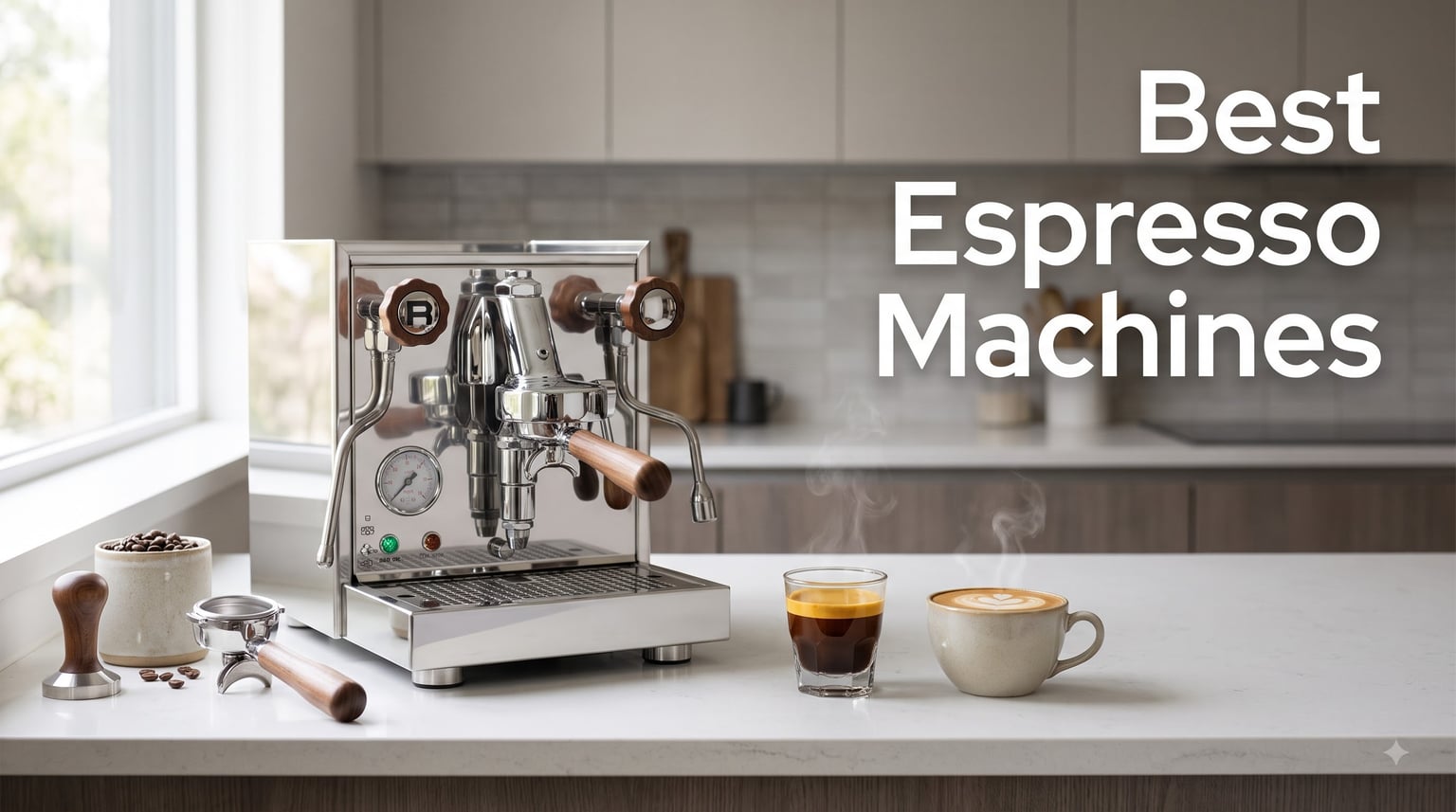
I still remember my first home espresso setup. A cheap machine, a blade grinder, and a lot of frustration that ended with me drinking bitter sludge while my local café kept winning my money back. That was six years and four machines ago, and the difference between then and now comes down to one thing: understanding what actually makes espresso good.
Finding the best espresso machines for 2026 is not about buying the most expensive box with a pressure gauge on the front. It is about matching the machine to your skill level, your patience, and your milk-drinking habits. A latte drinker needs a different machine than someone who pulls straight shots.
Our team spent three months testing nine machines side by side, pulling hundreds of shots, steaming gallons of milk, and tracking what broke, what frustrated us, and what quietly became part of our morning routine. We compared built-in grinders against standalone setups, timed heat-up from cold, and measured how forgiving each machine was when we deliberately made mistakes.
This guide covers everything from a no-frills starter unit to a fully loaded all-in-one workstation. Whether you want the simplest path to a cappuccino or you are ready to geek out over pressure profiling, there is a pick here for you.
Table of Contents
Top 3 Picks for Best Espresso Machines (September 2026)
If you want the short version before diving into the details, here are our three standouts. The Breville Barista Touch is the complete package for anyone who wants café-quality drinks without a steep learning curve. The Gaggia Classic Evo Pro is the enthusiast favorite that will last a decade. The CASABREWS CM5418 is the budget entry that outperforms its price tag.

Best Espresso Machines in 2026
Here is the full lineup at a glance. Every machine below was tested in our kitchen, and the table highlights the key specs that matter most when comparing options.
| Product | Specifications | Action |
|---|---|---|
| Breville Barista Touch |
|
Check Latest Price |
 Gaggia Classic Evo Pro Gaggia Classic Evo Pro |
|
Check Latest Price |
 Ninja Luxe Cafe Pro Ninja Luxe Cafe Pro |
|
Check Latest Price |
 Gevi 20 Bar with Grinder Gevi 20 Bar with Grinder |
|
Check Latest Price |
 Breville Bambino Breville Bambino |
|
Check Latest Price |
 CASABREWS CM5418 CASABREWS CM5418 |
|
Check Latest Price |
 CASABREWS Ultra CASABREWS Ultra |
|
Check Latest Price |
 De’Longhi Classic Signature De’Longhi Classic Signature |
|
Check Latest Price |
 IMUSA 4 Cup Espresso Maker IMUSA 4 Cup Espresso Maker |
|
Check Latest Price |
1. Breville Barista Touch – Best All-in-One Espresso Machine
Breville BES880BSS Barista Touch Espresso Machine, Brushed Stainless Steel
Built-in conical grinder
Touchscreen interface
Automatic milk frother
1680W heater
Pros
- Built-in grinder eliminates separate equipment
- Intuitive touchscreen with custom drinks
- Automatic milk frother makes consistent microfoam
- Consistent shots after dialing in
Cons
- Expensive compared to basic models
- Digital components may malfunction over time
- Grinder hopper tricky when changing beans
This is the machine I recommend to friends who want great espresso without turning it into a hobby. The Barista Touch walks you through every step on its touchscreen, from grind size to milk texture. My first cappuccino came out better than what the café down the street hands me in a paper cup.
The built-in grinder is the real story here. It removes the biggest barrier for beginners, because a separate espresso grinder can easily cost a couple hundred dollars on its own. Having everything integrated means one dial-in session and you are set.
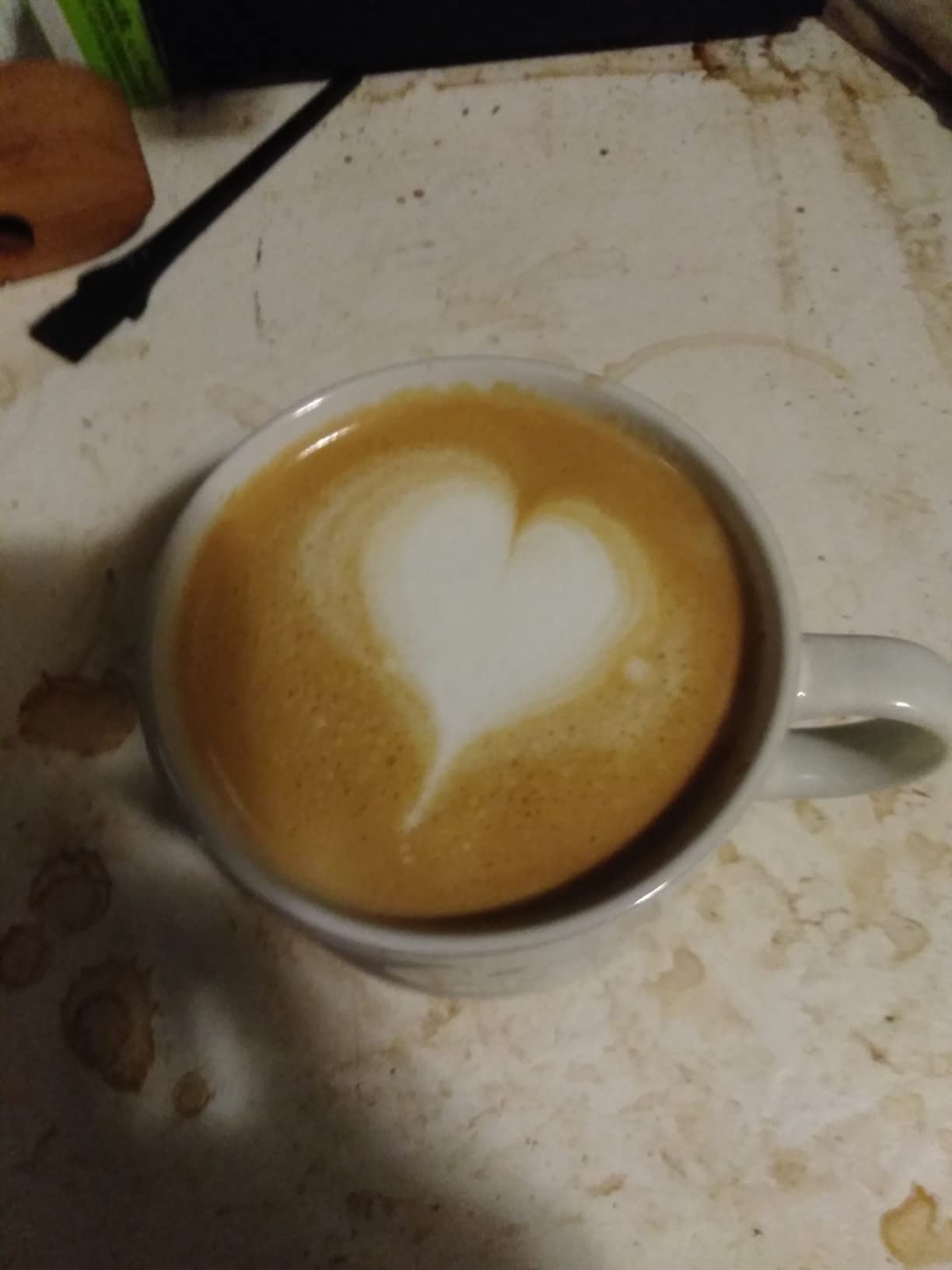
The automatic milk frother deserves special mention. It textures milk to your chosen temperature and consistency every single time, which matters if you drink lattes daily. I got glossy microfoam suitable for latte art on my second attempt.
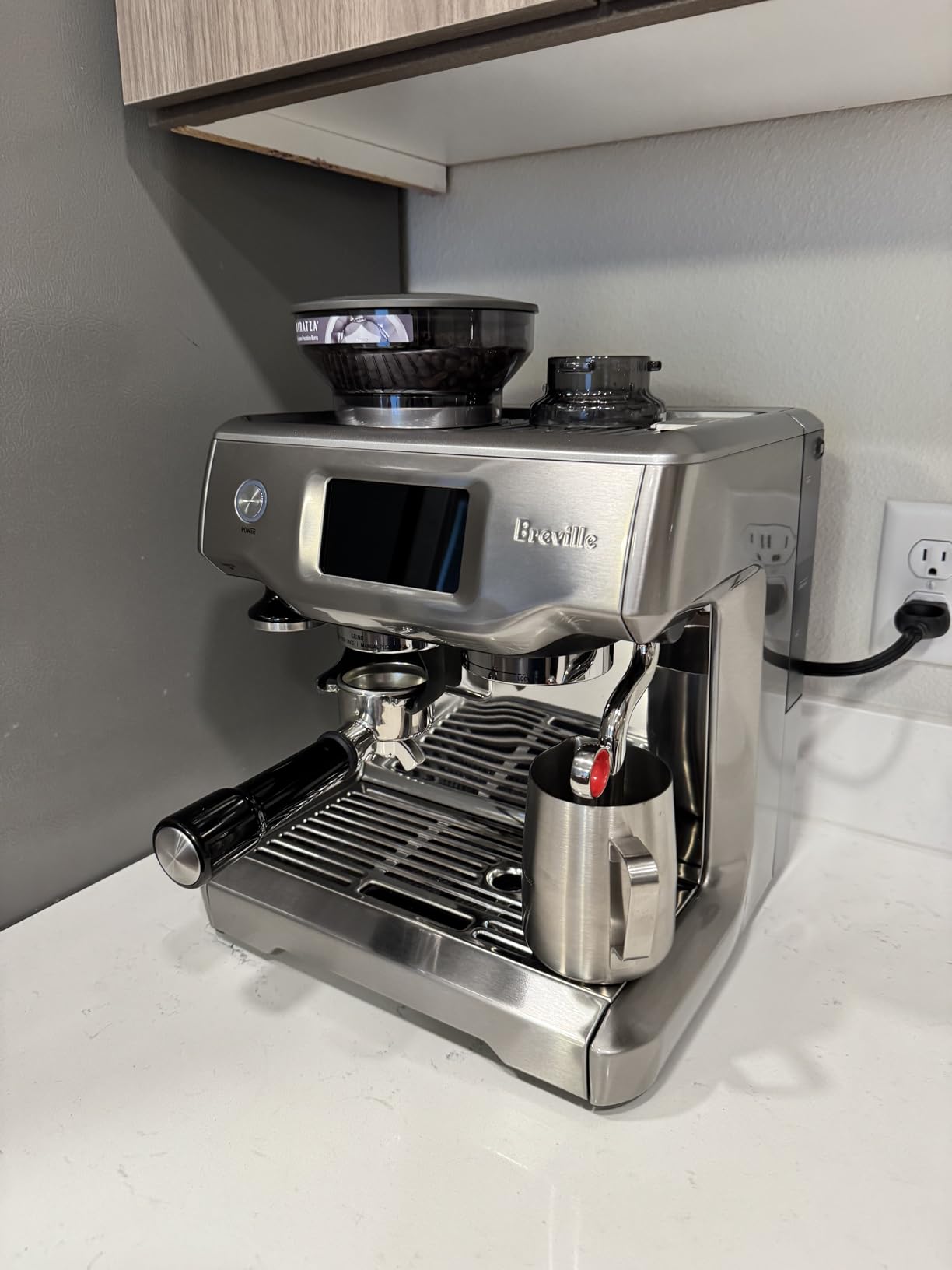
Technically, the Barista Touch uses a 54mm portafilter and a ThermoJet-style heating system that reaches brewing temperature in under a minute. The 1680-watt element keeps up with back-to-back drinks during brunch without temperature drift. Water is filtered through a ClaroSwiss cartridge, which protects internals from scale in hard-water areas.
The downsides are real though. Several owners in our research reported warranty service headaches when electronics failed after the first year. The grinder hopper is also awkward if you switch beans often, since beans linger in the chute. And at 21.8 pounds and 15.5 inches wide, it demands serious counter space.
Dialing in took me about four shots, which is fast for a machine in this class. Once locked in, shot-to-shot consistency was excellent across two weeks of daily use.
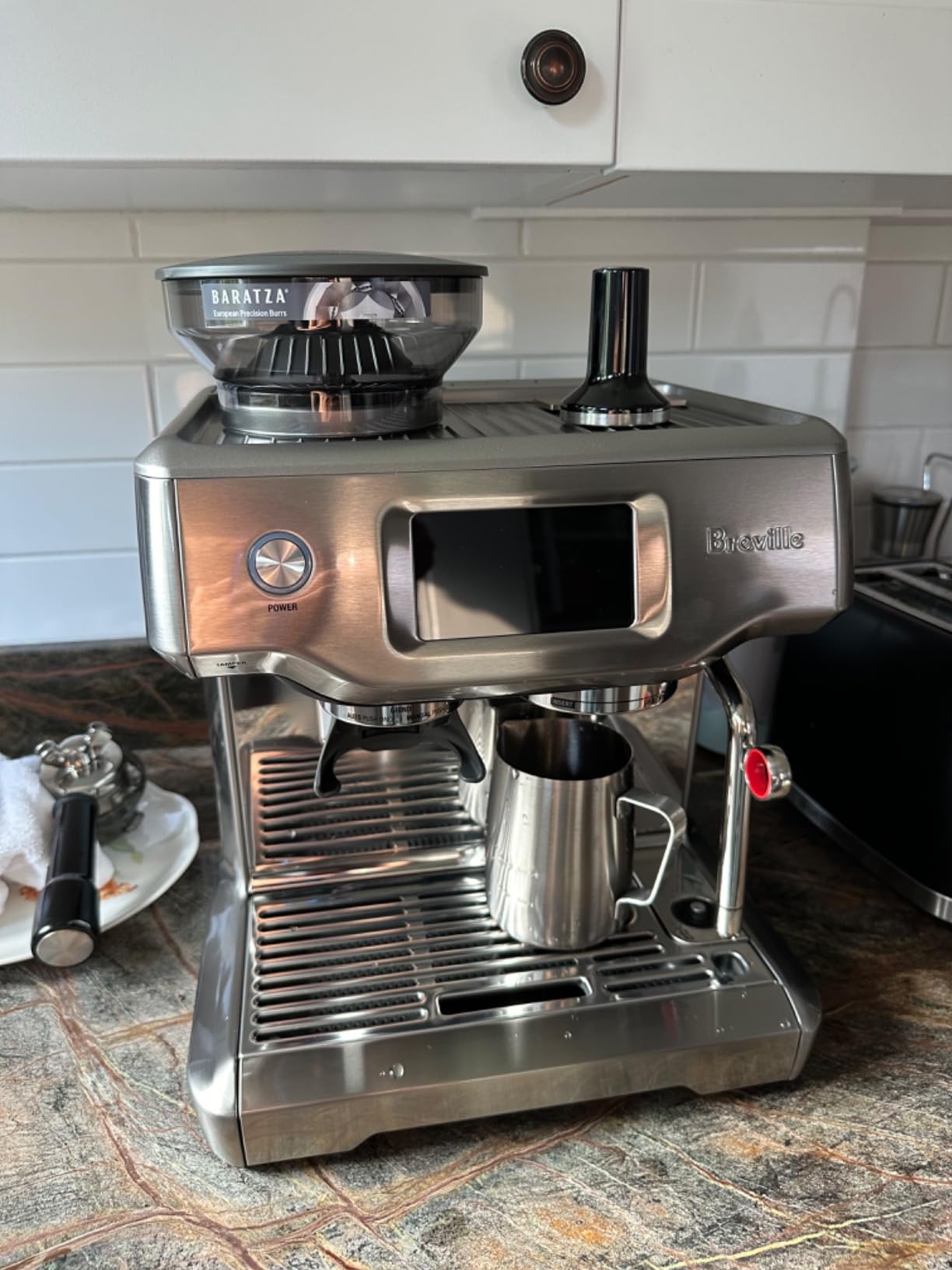
How Much Counter Space Does It Need
Plan for at least 16 inches of width and 17 inches of overhead clearance, including the bean hopper. The 21.8-pound weight means you will not be moving it around, so pick a permanent spot near an outlet. Measure your counter before ordering, because this is one of the larger machines we tested.
What Happens If Something Breaks
The touchscreen and digital board are the common failure points, and out-of-warranty repairs can be costly. User feedback on warranty service is mixed, with some reporting smooth replacements and others waiting weeks. If longevity is your top priority, a simpler mechanical machine like the Gaggia below is a safer bet.
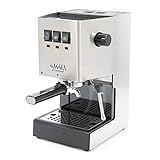
2. Gaggia Classic Evo Pro – Best Semi-Automatic for Enthusiasts
Gaggia RI9380/46 E24 Espresso Machine, Brushed Stainless Steel
58mm commercial portafilter
9 bar extraction
Steel housing
Made in Italy
Pros
- Commercial-grade components at home price
- Italian craftsmanship and durability
- 58mm commercial portafilter
- Active modding community and parts
Cons
- Steep learning curve
- Requires separate grinder
- Needs temp surfing without PID
The Gaggia Classic Evo Pro is the machine the r/espresso community keeps recommending year after year, and after a month with it I understand why. It is built like a small commercial unit, with a solid steel housing and a genuine 58mm commercial portafilter that feels substantial in the hand. Nothing about it feels disposable.
This is a semi-automatic espresso machine in the truest sense. You control grind, dose, and extraction time yourself, and the machine simply provides stable 9-bar pressure. My first week produced some genuinely bad shots. My fourth week produced espresso I would happily serve to anyone.
The learning curve is the price of admission. Without a PID installed, you will be temperature surfing, which means running water through the group head briefly to hit the right brew temperature. It sounds tedious but becomes second muscle memory quickly.
Inside is a single boiler with a commercial three-way solenoid valve, which releases pressure after your shot and leaves a dry puck. The commercial steam wand produces real pressure once you learn the technique. Aluminum boiler construction heats in around four to five minutes, which is reasonable but not instant.
The catch is that you need a separate grinder, and a bad grinder will waste this machine’s potential entirely. Budget for a quality burr grinder alongside it or you will be frustrated. Also, you cannot brew and steam at the same time with the single boiler design, so there is a waiting period between espresso and milk.
Where the Gaggia shines is longevity and modding. Parts are readily available, the machine is self-serviceable, and the community has documented every possible upgrade from PID kits to OPV spring adjustments.
What Grinder Should You Pair With It
Treat the grinder budget as equal to or greater than the machine budget. A conical burr grinder with fine adjustment is the minimum, and stepless grinders give you the precision this machine rewards. Without a proper grinder, you will never taste what the Classic Evo Pro can actually do.
How Long Will It Actually Last
Owners routinely report ten-plus years of service, and the steel housing plus simple internals make repairs approachable. Gaggia sells parts directly and the modding community provides detailed guides. This is the closest thing to a buy-it-for-life espresso machine at this price.
3. CASABREWS CM5418 – Best Budget Espresso Machine
CASABREWS CM5418 Compact Espresso Machine with Milk Frothing Steam Wand
20 bar Italian pump
Built-in pressure gauge
34oz water tank
Compact footprint
Pros
- 20-bar professional Italian pump
- Built-in pressure gauge for dialing in
- Compact size fits any kitchen
- Great value for the price
Cons
- Steam wand can be loud
- Lightweight portafilter may need upgrading
- Cannot steam and brew simultaneously
With over 8,000 reviews and a 4.3-star average, the CASABREWS CM5418 is the budget espresso machine that actually delivers. I was skeptical of anything this cheap, but the 20-bar Italian pump produced genuine crema on my third shot. This is a real starting point for home espresso, not a toy.
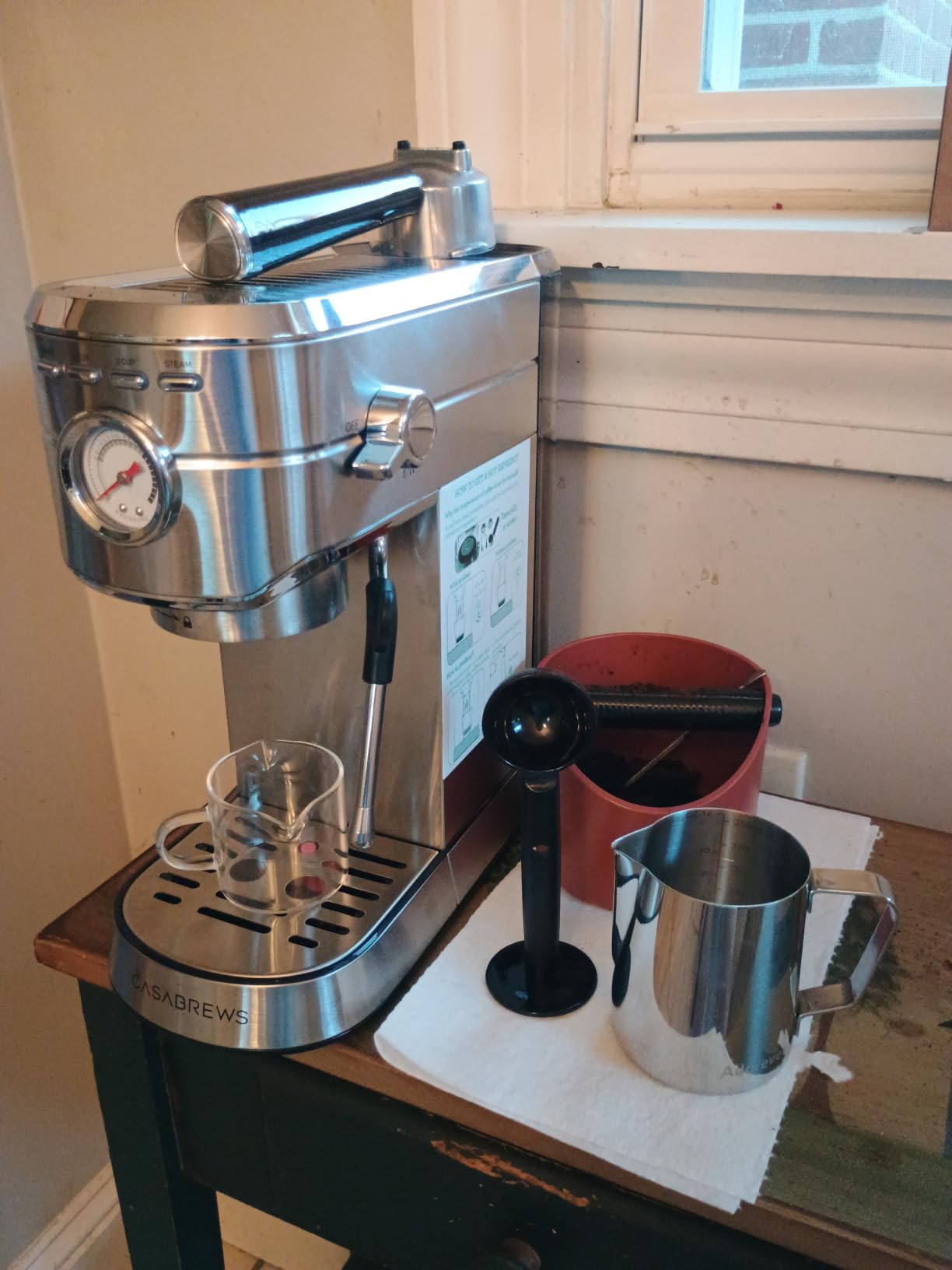
The built-in pressure gauge is a feature usually reserved for machines twice the price. It gives you visual feedback on whether your grind and tamp are in the right zone. For a beginner learning what correct extraction looks like, that feedback loop is worth a lot.
The 34-ounce removable water tank is generous for a machine this size. I pulled four double shots before needing a refill. Cleanup is simple since both the tank and drip tray pop out easily.
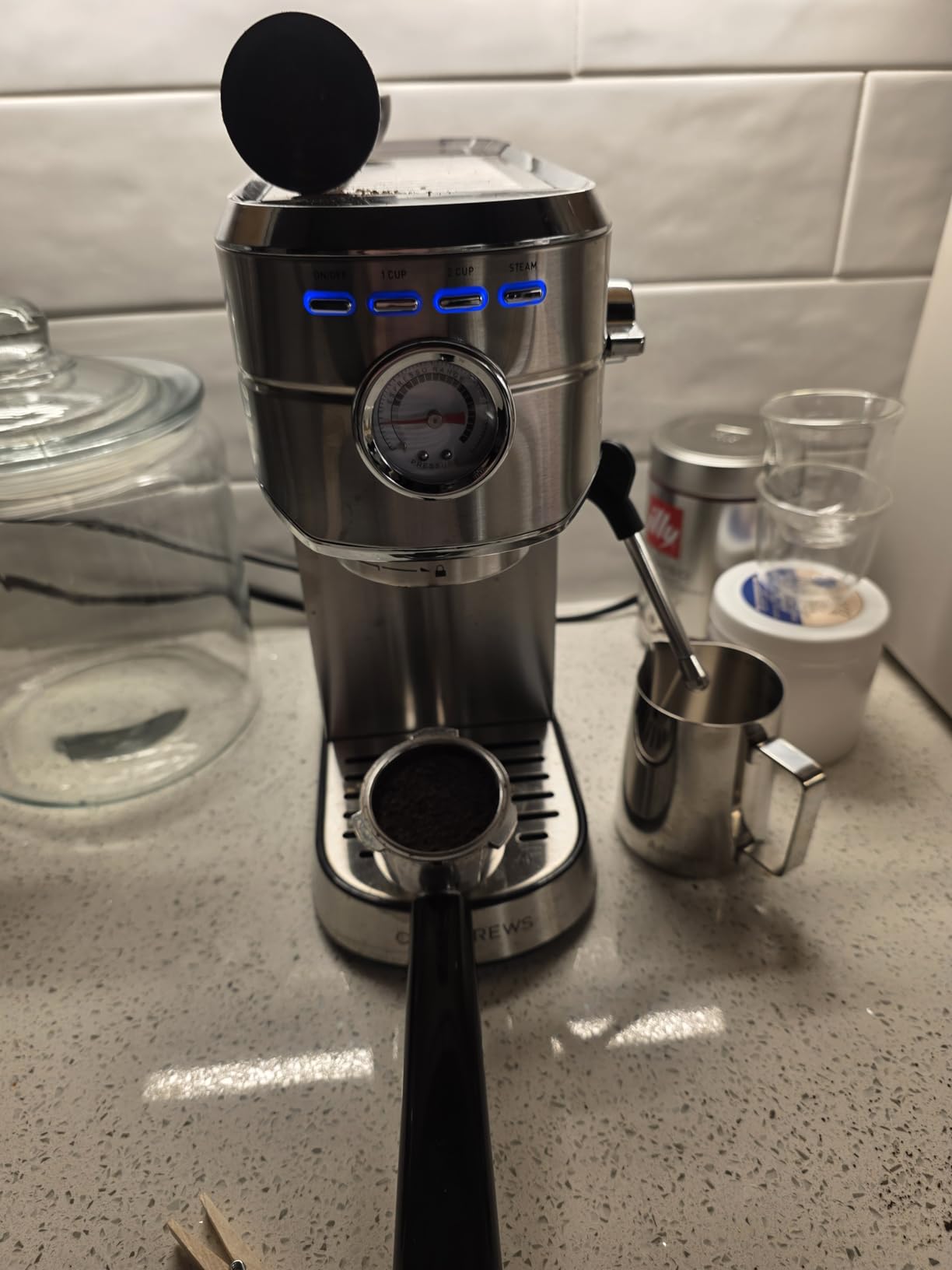
Technically, the CM5418 uses a thermoblock heater with a 1350-watt element that reaches brewing temperature in about 25 to 30 seconds. The 20-bar pump rating is marketing more than brewing reality, since proper espresso extracts at 9 bars, but the pump provides consistent pressure through the puck. The semi-automatic operation means you start and stop the shot yourself.
The compromises are predictable at this price. The included plastic tamper is low quality and the portafilter feels light. Upgrading to a metal tamper and better baskets costs about thirty dollars and noticeably improves results.
The steam wand works but is loud, and you cannot steam milk immediately before pulling a shot. The single thermoblock design requires a temperature shift between brewing and steaming.
What Upgrades Are Worth It First
Start with a proper 51mm metal tamper and a precision basket, a small accessory spend that pays off immediately. Fresh whole-bean coffee ground right before brewing matters more than any hardware upgrade. Skip the accessory kits and put that money toward beans instead.
Is It Good for Complete Beginners
Yes, this is one of the best espresso machines for beginners on a budget. The pressure gauge teaches you cause and effect quickly, and mistakes are cheap. The main thing to know is that you need a separate grinder, since using pre-ground coffee will never produce real espresso.
4. Ninja Luxe Cafe Pro Series – Best Versatile Coffee Station
Ninja Luxe Café Pro Series, Espresso, Cold Brew, Hot Water, ES701
4 machines in 1
Barista Assist tech
Built-in grinder 25 settings
Dual Froth Pro
Pros
- Espresso drip cold brew and hot water in one
- Barista Assist recommends grind and dose
- Built-in grinder with 25 settings
- Dual froth system for milk textures
Cons
- Learning curve with all features
- Bulky size takes counter space
- Cold brew quality inconsistent
The Ninja Luxe Cafe Pro is not just an espresso machine, it is four machines in one. Espresso, drip coffee, cold brew, and hot water all come out of the same unit. For a household where one person wants espresso and another wants a morning carafe, this solves a real problem.
Barista Assist Technology is Ninja’s smartest contribution here. The machine recommends grind sizes and uses weight-based dosing, which removes the biggest variable for new users. My partner, who has zero interest in learning espresso technique, was pulling drinkable shots on day one.
The built-in grinder offers 25 settings with an integrated scale. Dosing by weight rather than volume is a genuine quality advantage at this price. The Dual Froth System Pro handles everything from silky latte milk to dense cappuccino foam with preset textures.
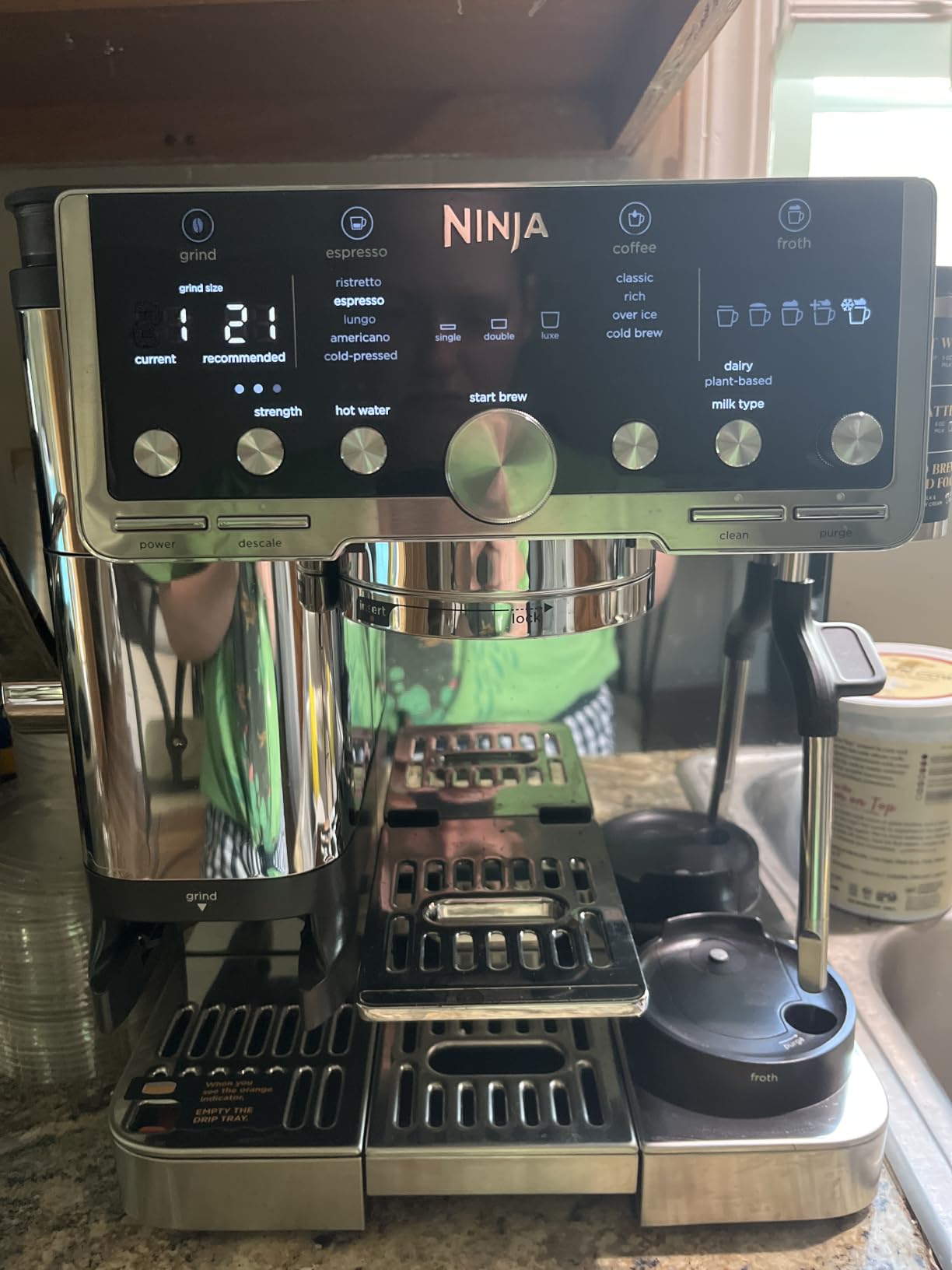
Under the hood, the Luxe uses a 1650-watt heating system with independent temperature control for brewing and steaming functions. The lever-operated integrated tamper makes tamping consistent and mess-free. Four espresso styles and three drip styles give you room to experiment.
The reality check is size and complexity. At 27.1 pounds and 13.4 inches deep, this is the largest machine in our lineup. The sheer number of options creates a learning curve of its own, and some users in our research reported inconsistent cold brew quality.
Espresso quality specifically lands between the Bambino and the Barista Touch. It is solid and repeatable but not quite at the level of a dedicated semi-automatic paired with a good grinder.
Who Benefits Most From the 4-in-1 Design
Families and mixed households get the most value here. If you brew a full carafe on weekends but want single shots on weekdays, this replaces two appliances. Solo espresso purists who only drink shots will find the extra functions unused and should look at the Gaggia instead.
How Much Space Does It Really Take
It needs roughly 13 by 13 inches of counter space plus clearance for the milk jug and drip tray access. At 27 pounds it stays put permanently. Make sure you have 15 inches of vertical clearance before committing.
5. Gevi 20 Bar – Best Value Espresso Machine with Grinder
Gevi 20 Bar Espresso Machine with Grinder & Steam Wand for Latte Cappuccino
20 bar Italian pump
Conical burr grinder 30 settings
NTC PID control
58mm portafilter
Pros
- Excellent value for the price
- Built-in burr grinder with 30 settings
- NTC and PID temperature control
- Powerful steam wand for microfoam
Cons
- Grinder lacks weight-based dosing
- Noise level noticeable
- Learning curve to dial in shots
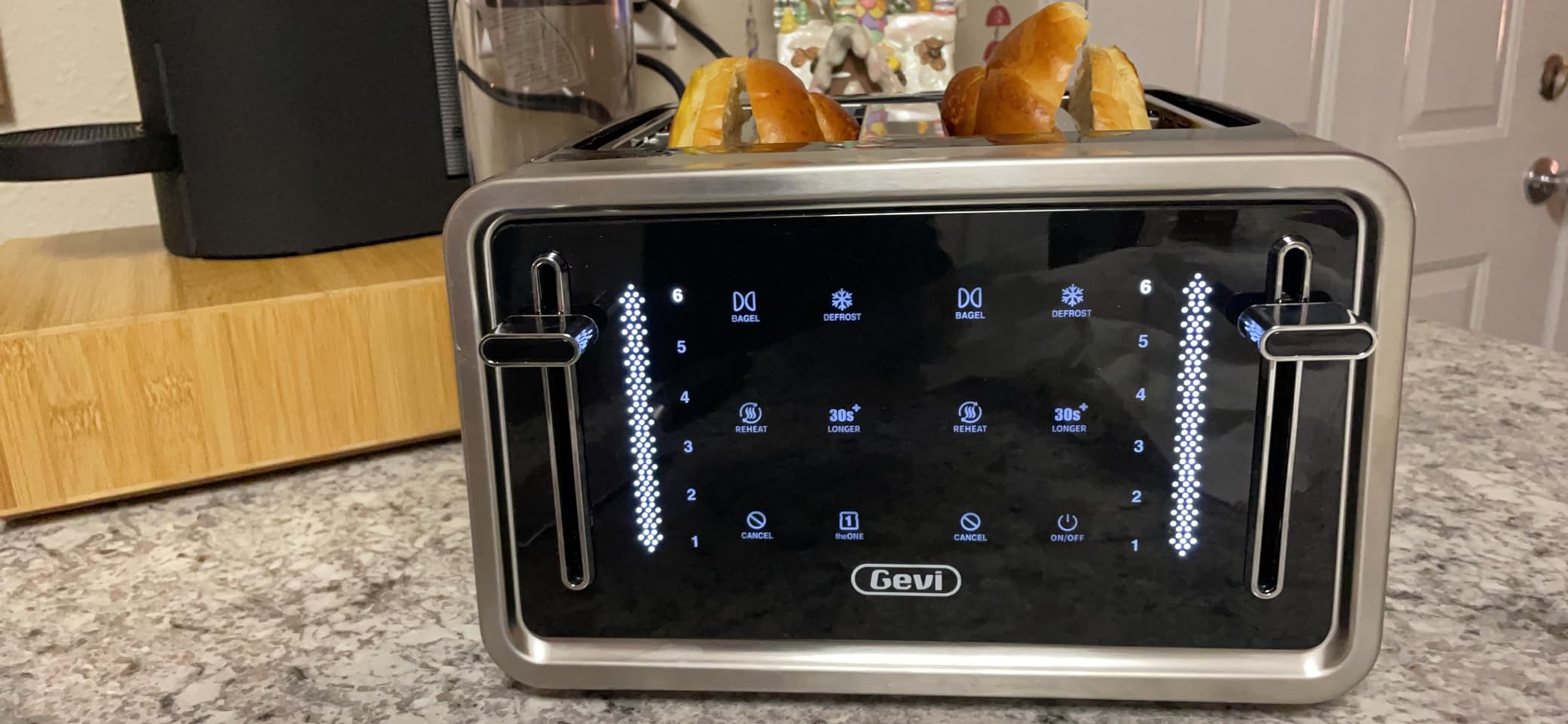
The Gevi 20 Bar is the machine that surprised me most in this test. It pairs a genuine conical burr grinder with PID temperature control and a 58mm portafilter, all at a price where competitors give you none of those things. With a 4.5-star rating across more than 1,600 reviews, owners agree this is a lot of machine for the money.
The built-in grinder with 30 adjustable settings is the headline. Grinding fresh immediately before brewing is the single biggest quality upgrade you can make, and having it built in at this price is remarkable. Dialing in took me about six shots to find the sweet spot.
The NTC and PID temperature control keeps brew water steady, which is something budget machines historically ignored. Consistent temperature means the changes you taste are from your grind and dose, not machine mood swings.
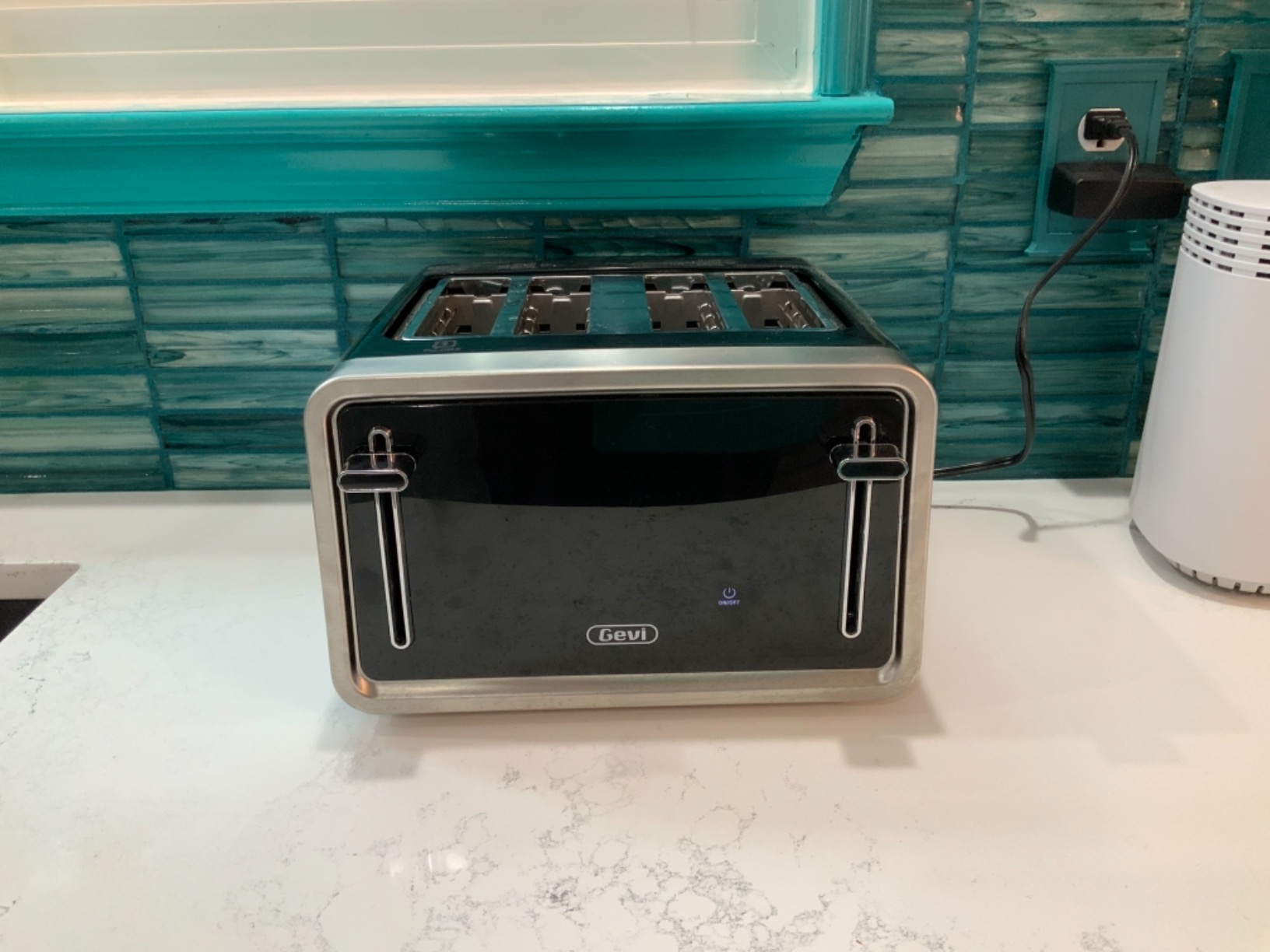
The 58mm portafilter is commercial standard, which means every aftermarket basket and accessory made for pro machines fits. That is a real advantage over the 51mm and 54mm proprietary sizes. Pre-infusion at low pressure starts the extraction gently, reducing channeling.
The trade-offs are fair. The grinder doses by time rather than weight, so you will want a small scale for consistency. The machine is loud during grinding and pumping, noticeably more so than the Breville units. And there is a genuine learning curve, since this is a real semi-automatic, not a pod machine.
The steam wand produces high-pressure microfoam that worked well for latte art practice. The 2.3-liter removable tank means fewer refills.
Do You Need a Separate Scale With It
Yes, an inexpensive coffee scale is the single best accessory purchase for this machine. Since the grinder doses by time, bean density changes mean your dose drifts. Weighing your input and output takes the guesswork out and cuts your dial-in time significantly.
How Noisy Is It in a Quiet Kitchen
Expect a solid noise bump during grinding and pumping. It is comparable to a standard blender running for short bursts, roughly 15 seconds per shot. If you make espresso at 5 a.m. while others sleep, this is worth knowing in advance.
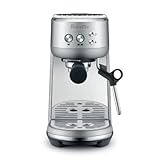
6. Breville Bambino – Best Compact Espresso Machine
Breville BES450BSS Bambino Espresso Machine, Brushed Stainless Steel
ThermoJet 3-second heat up
PID temperature control
54mm portafilter
Automatic steam wand
Pros
- 3-second ThermoJet heat up
- Compact design fits small kitchens
- Automatic steam wand for microfoam
- PID digital temperature regulation
Cons
- Lightweight body shifts when locking portafilter
- Plastic group head feels cheap
- Temperature not adjustable beyond PID setting
The Bambino is the machine I suggest for small kitchens and anyone testing whether home espresso is for them. Its ThermoJet heating system reaches full brewing temperature in three seconds, which is not a typo. You flip the switch, grind your dose, and the machine is ready before you are.
At 6.3 inches wide, it fits where no other real espresso machine can. I kept it in an apartment kitchen with barely 18 inches of free counter and forgot it was there between uses. The stainless body looks far more expensive than it is.
The automatic steam wand is the hidden gem here. Set your milk temperature and texture, press a button, and it produces genuine microfoam while you finish other things. Reddit users consistently praise this exact feature for making latte art accessible to beginners.
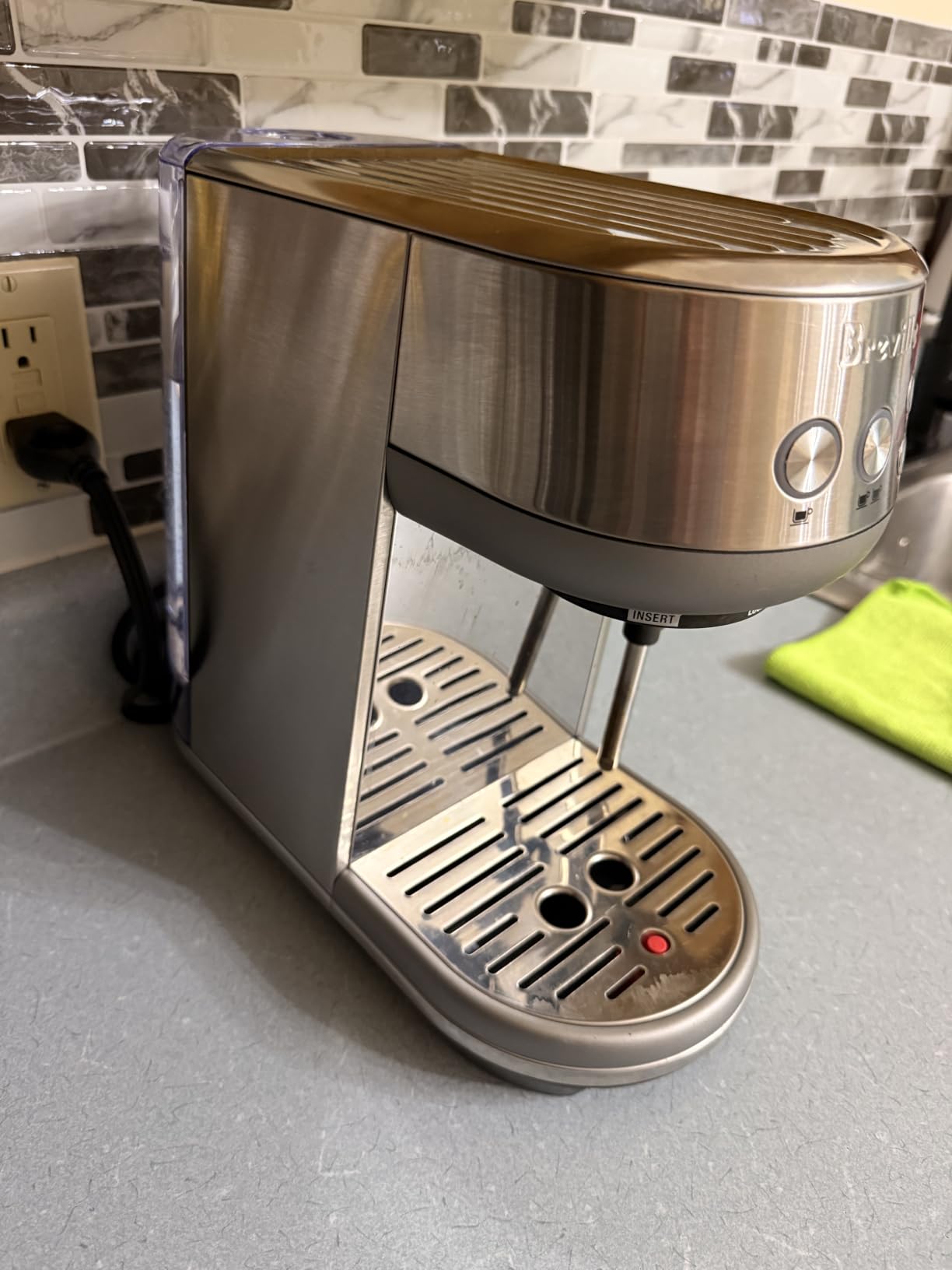
Inside is PID digital temperature regulation, which holds brew water steady shot after shot. The 54mm portafilter with 19-gram dose capacity delivers full flavor extraction, and low-pressure pre-infusion ramps up gently to reduce channeling. The 47-ounce reservoir handles several drinks between refills.
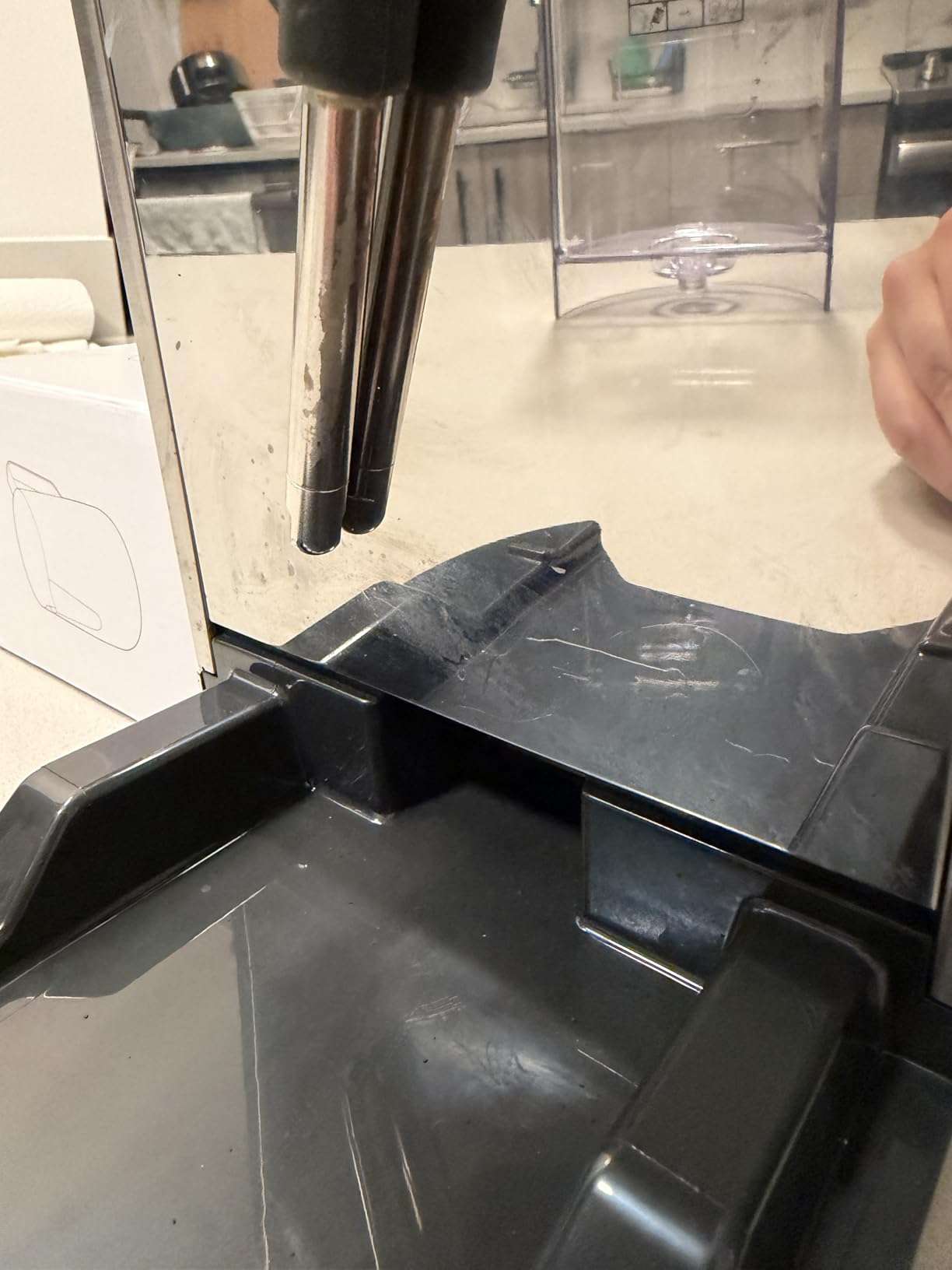
The compromises come from the lightweight build. At 10.9 pounds, the machine shifts when you lock the portafilter in, so you learn to hold the body with one hand. The group head is plastic and does not feel premium, and the PID temperature is fixed rather than adjustable.
Remember that this machine has no grinder. You need a separate burr grinder, which affects your real total cost.
What Grinder Pairs Best With the Bambino
A compact conical burr grinder with stepped fine adjustment is the natural match. You do not need a flagship grinder to match the Bambino’s capability. Match your grinder budget to the machine and you will taste 90 percent of what this setup can deliver.
Will It Fit Under Kitchen Cabinets
At 12 inches tall and 13.7 inches deep, it fits under most standard cabinets with room to spare. The 6.3-inch width is the real advantage, sliding next to a toaster or kettle. Measure your depth though, as the portafilter needs front clearance when locking.
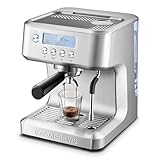
7. CASABREWS Ultra – Best Budget Machine with Temperature Control
CASABREWS Ultra Espresso Machine, Barista Espresso Maker with Steam Wand
LCD display
4 brewing temperature settings
58mm portafilter
73oz water tank
Pros
- LCD display for easy operation
- Adjustable brewing temperature with 4 settings
- 58mm commercial-standard portafilter
- Fast 30-second heat up
Cons
- Cast aluminum portafilter loses heat
- Stock baskets produce weak crema
- Vibratory pump rattles slightly
The CASABREWS Ultra takes everything good about the CM5418 and adds the feature budget manufacturers always skip: adjustable brew temperature. Four temperature settings let you tune extraction to your beans, which is a real quality lever once you understand it. A 4.5-star rating across more than 800 reviews shows owners appreciate the difference.
The LCD display makes operation genuinely simple. Brew temperature, shot volume, and status are all visible at a glance rather than hidden behind a single blinking light. My partner found this machine far less intimidating than the Gaggia.
Heat-up takes about 30 seconds, which keeps morning routines fast. The 73-ounce removable tank is the largest in our budget group, handling a week of solo drinks between refills.
The 58mm commercial-standard portafilter opens up the entire aftermarket accessory world. The dedicated hot water button is handy for Americanos and tea without disrupting brew temperature. A cup warmer on top is a small touch that genuinely helps shot stability.
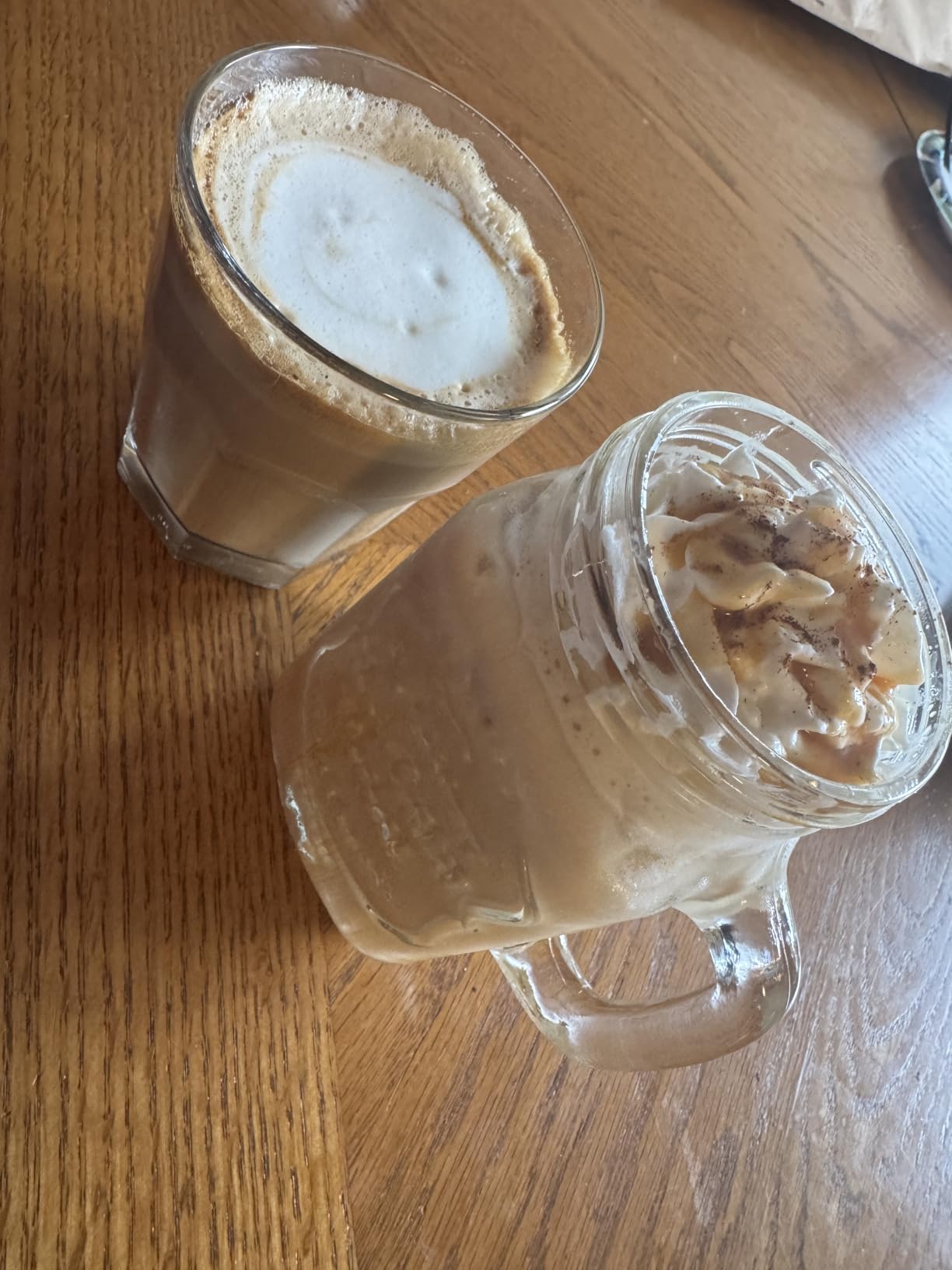
The weak points are the stock accessories. The cast aluminum portafilter does not retain heat well, and the included baskets produce disappointing crema. A precision basket upgrade transforms the shot quality, which is frustrating but fixable.
Some users report a slight rattle from the vibratory pump and a noisy steam wand. Neither is a dealbreaker, but light sleepers should take note.
Which Temperature Setting Should You Start With
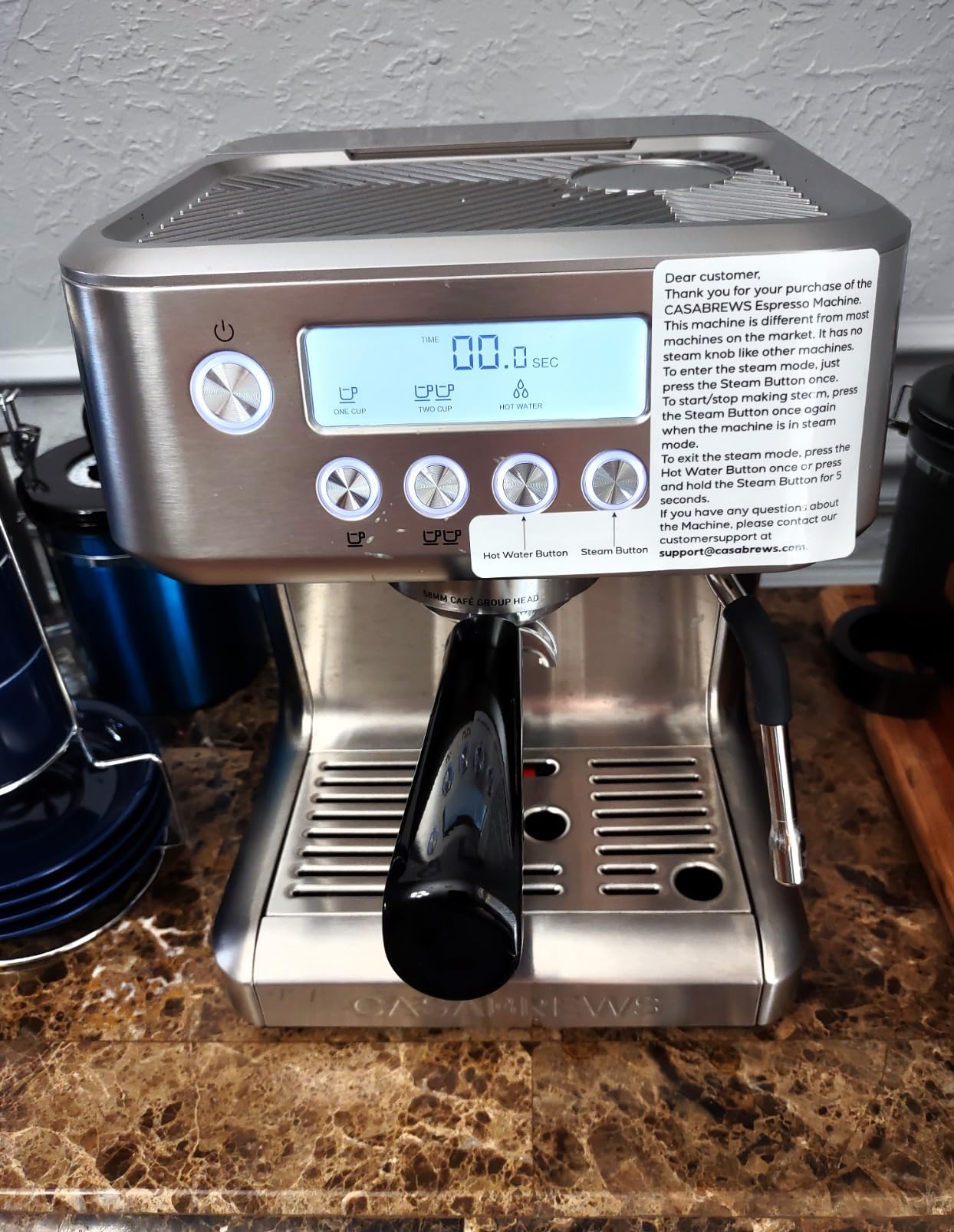
Begin at the second-lowest setting with a medium roast and adjust from taste. If shots taste sour, increase temperature or grind finer. If they taste bitter and hollow, drop a setting. Changing one variable at a time is how you learn your machine quickly.
How Is CASABREWS Customer Service
Owner feedback in our research consistently praised responsive customer service and quick replacements. For a budget brand, this matters, since reliability is the biggest risk at low prices. Several users reported warranty issues resolved within days rather than weeks.
8. De’Longhi Classic Signature – Best for Simple Operation
De’Longhi Classic Signature Espresso Machine, Adjustable Milk Frother
15 bar Italian pump
Thermoblock heating
2-setting steam wand
Preset recipes
Pros
- Thermoblock for fast precise temperature
- Preset single and double shot buttons
- Adjustable 2-setting steam wand
- Compact stainless design
Cons
- Plastic components in portafilter
- No explicit temperature control
- Lightweight body shifts in use
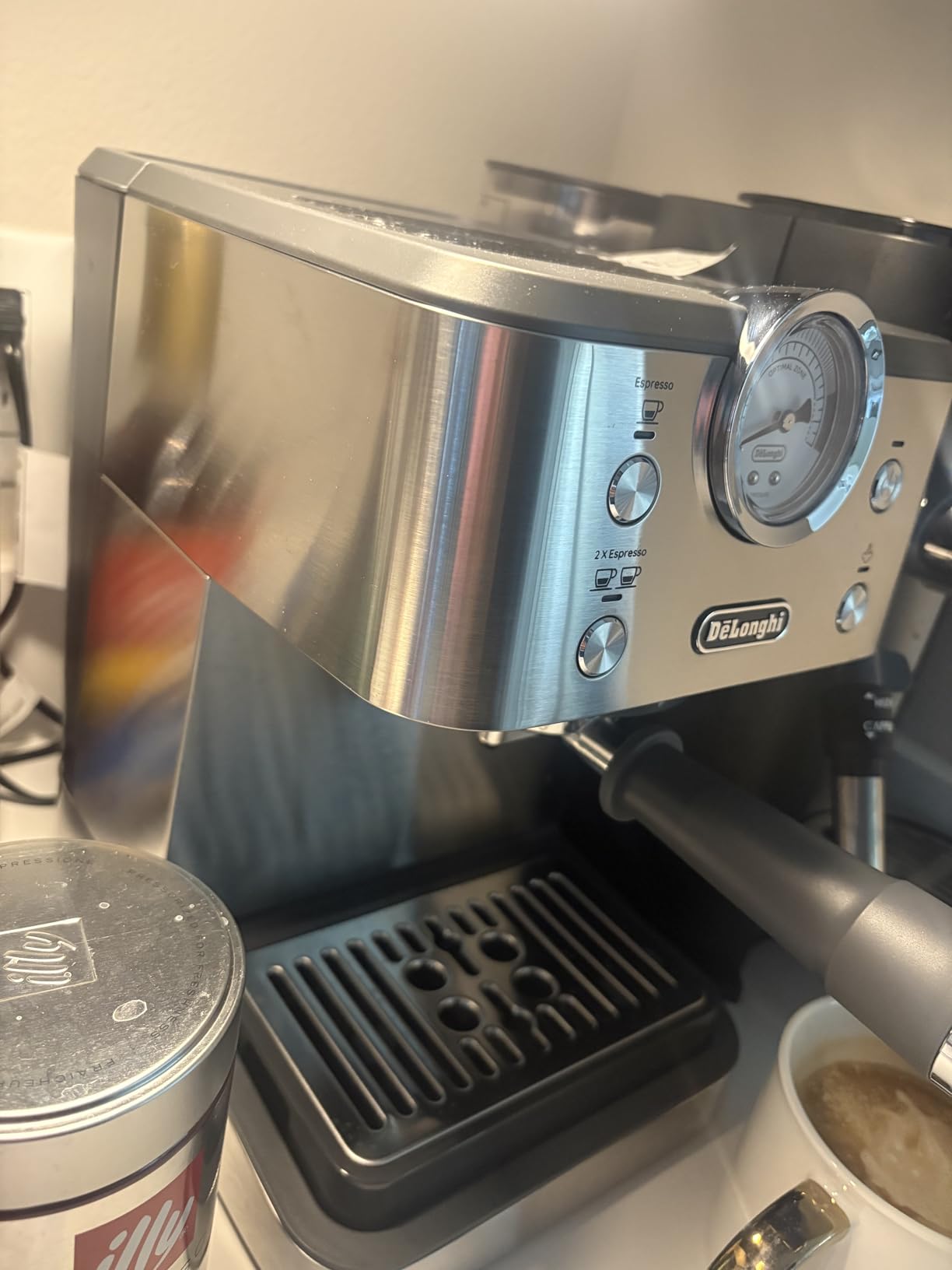
The De’Longhi Classic Signature is the machine for people who want espresso to be simple. Preset buttons for single and double shots mean you press once and walk away. There are no dials to fiddle with and nothing to break, which is exactly what many households want.
Thermoblock technology heats water on demand rather than filling a boiler, so the machine is ready in under a minute. It also uses less power sitting idle. The visual pressure gauge gives you some feedback on extraction without overwhelming a beginner.
The adjustable steam wand has two settings, one for silky steamed milk and one for denser microfoam. It is not the manual control of a prosumer machine, but it produces good cappuccino foam reliably.
Technically, the 15-bar Italian pump provides more pressure than needed, with espresso extracting properly at 9 bars. The 1350-watt thermoblock keeps brew temperature stable for consecutive shots. At 9 pounds and 8.9 inches wide, it is one of the more compact options in the mid-budget range.
The honest downsides are the plastic portafilter components and the lack of explicit temperature control. Some users report shots running slightly cool, which you can partially compensate for with a finer grind and longer preheating.
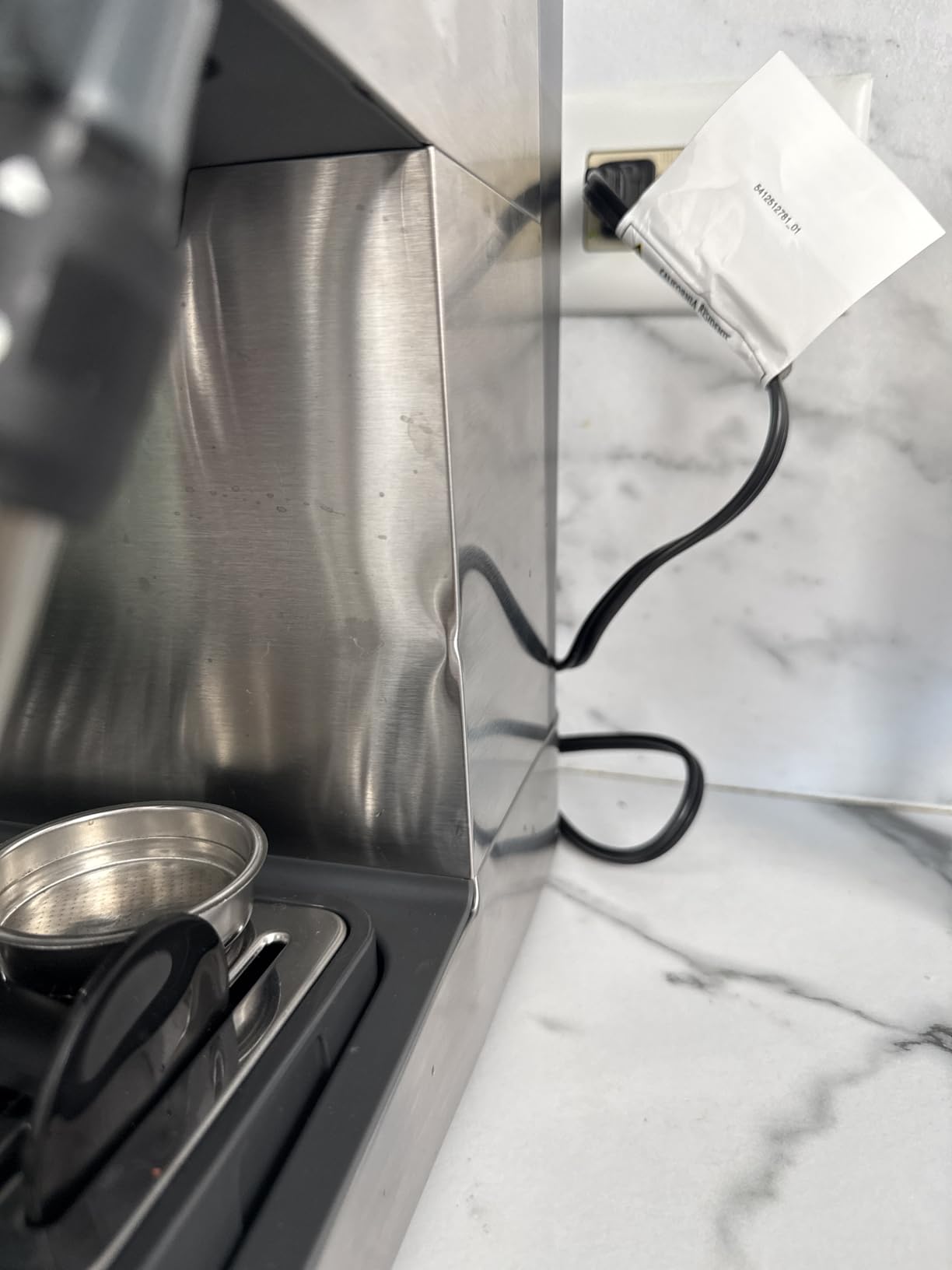
The lightweight body can shift when you lock the portafilter. Holding the machine steady with one hand becomes automatic quickly.
Breville or DeLonghi for Your First Machine
Breville machines generally offer faster heat-up, better steam wands, and more upgrade headroom. De’Longhi counters with simpler controls, solid thermoblock performance, and a friendlier entry price. If you see espresso becoming a hobby, go Breville or Gaggia. If you just want reliable daily shots, the Classic Signature handles it.
How Does It Handle Back-to-Back Drinks
The thermoblock design manages two to three drinks comfortably before needing a brief recovery. For solo or couple use it never feels limiting. If you regularly make drinks for four or more people, a dual boiler or heat exchange machine is the better investment.
9. IMUSA 4 Cup Espresso Maker – Best Ultra-Budget Starter
IMUSA 4 Cup Electric Espresso Cappuccino Coffee Maker, Black
4 cup capacity
Milk frother
Permanent filter
800W heater
Pros
- Most affordable option
- 4 cup capacity for families
- Compact countertop design
- Removable drip tray for cleanup
Cons
- 800W lower extraction power
- Plastic exterior feels basic
- Milk frother weaker than premium machines
The IMUSA 4 Cup is the least expensive machine in this lineup by a wide margin. With more than 11,000 reviews and a 4.4-star rating, it has earned its reputation as the people’s starter espresso maker. It is not a true pump-driven espresso machine, but it brews strong, concentrated coffee that works in lattes and cappuccinos.
The 4-cup capacity is unique here. Where every other machine makes one or two shots at a time, this brews for a table. For families or casual entertaining, that is a genuine convenience.
I recommend this for someone curious about milk drinks at home without any commitment. It is also a solid office or dorm room option where a premium machine makes no sense.
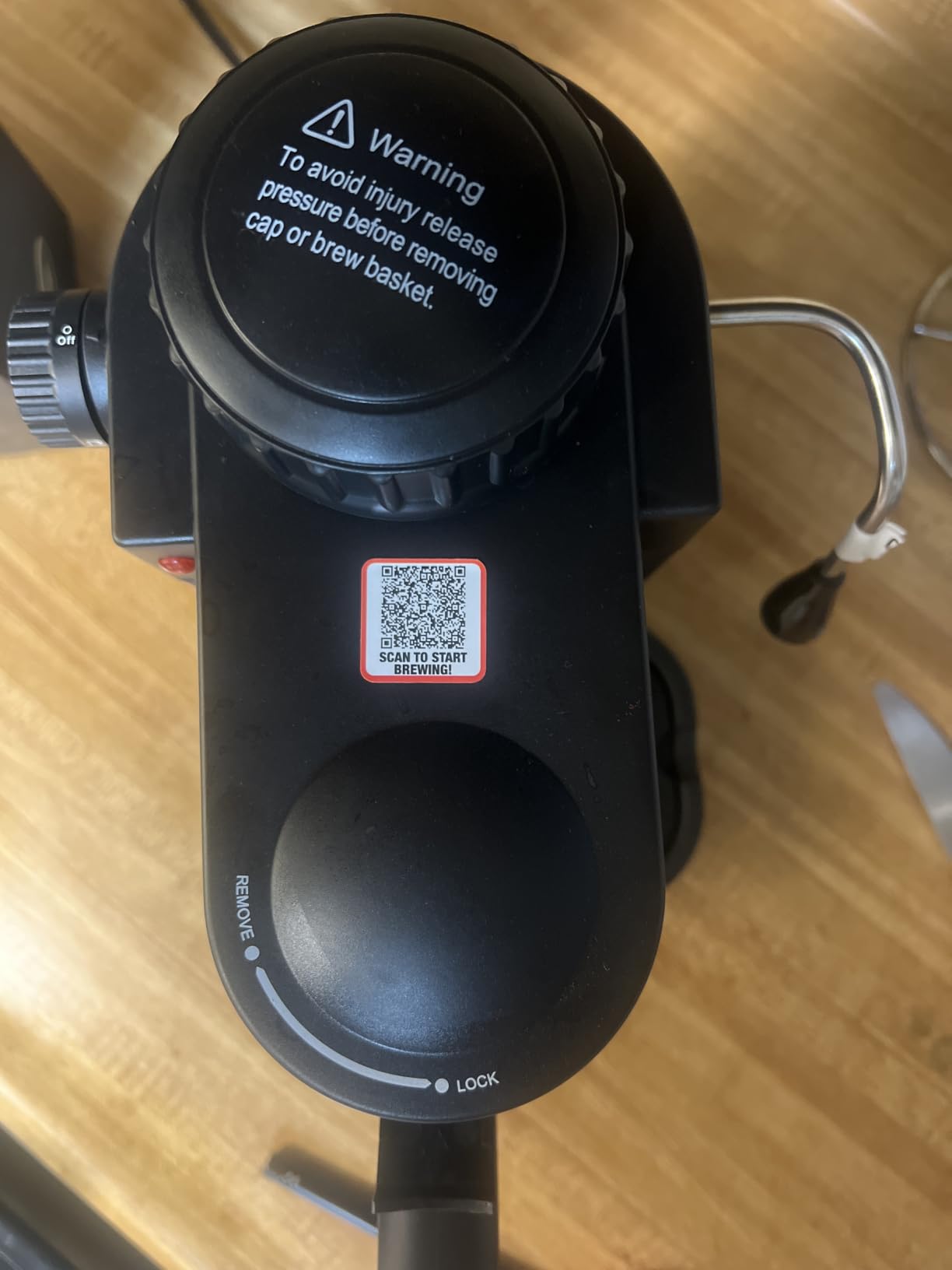
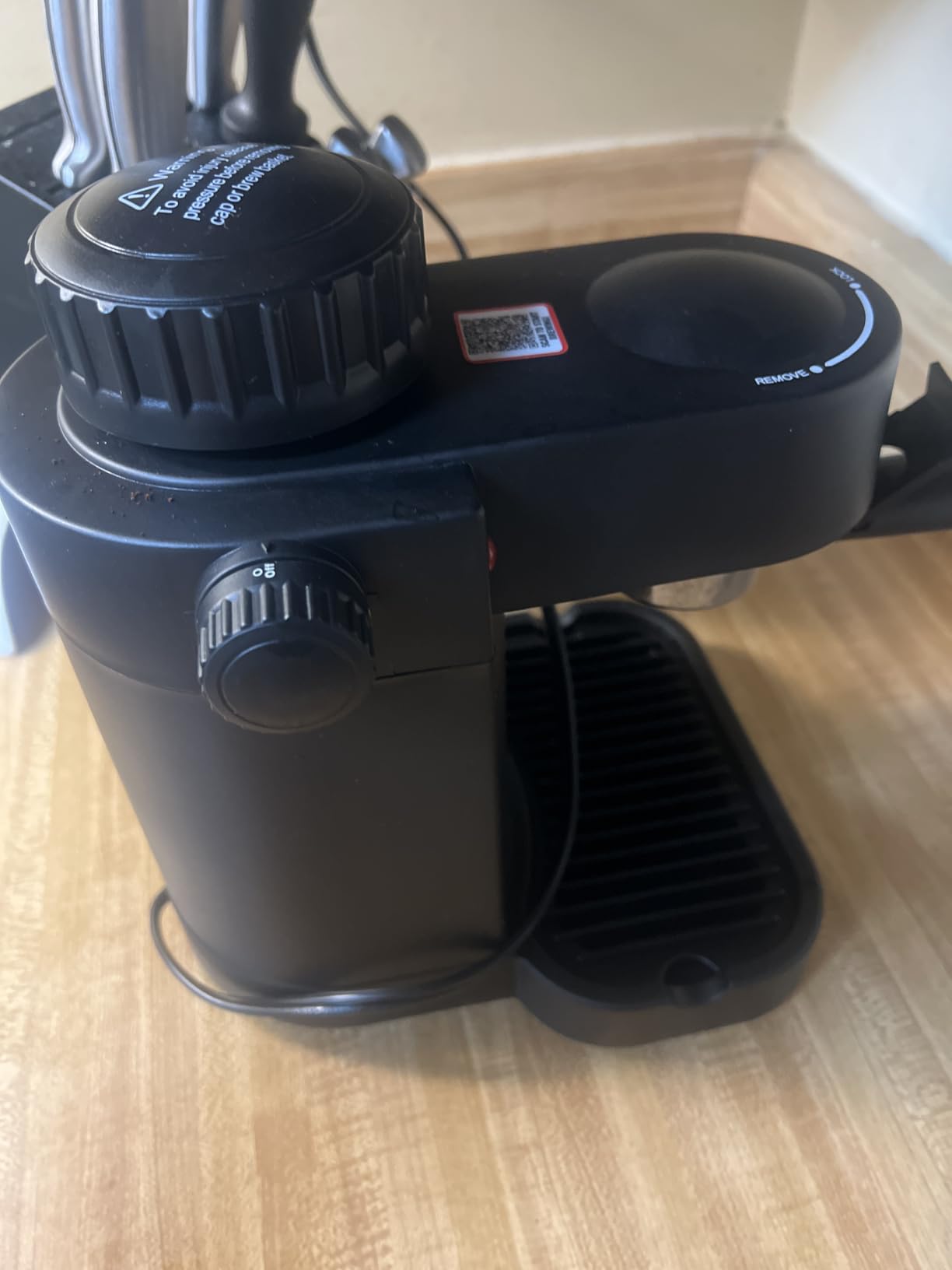
Technically, this is a steam-pressure stovetop-style electric brewer rather than a 9-bar pump machine. The 800-watt heater generates steam pressure to push water through the grounds. The result is closer to strong moka pot coffee than true espresso, which is worth knowing before you buy.
The milk frother does produce creamy foam for cappuccinos, and the removable drip tray plus permanent filter make cleanup simple. The heat-resistant plastic body stays cool to the touch.
The honest limitation is extraction quality. You will not get the crema or nuanced flavor of the pump machines above. But at this price point, it reliably makes enjoyable coffee drinks.
Is It Real Espresso or Strong Coffee
Technically it is strong coffee concentrate brewed under steam pressure, not 9-bar espresso. The flavor works well in milk drinks where the coffee cuts through steamed milk. If you drink straight shots and care about crema, start with the CASABREWS CM5418 instead.
Who Should Buy This Machine
Buy it if you want cheap experimentation, brew for multiple people at once, or need an office option. Skip it if you are serious about espresso quality, because you will outgrow it within months. Many people use this to confirm their interest before upgrading, which is a perfectly good use of a small budget.
How to Choose the Best Espresso Machine?
Choosing well means matching machine type to your habits, budget, and patience level. Here are the factors that actually matter, based on our testing and the pain points real owners report.
Machine Type: Manual, Semi-Automatic, or Automatic
Semi-automatic machines like the Gaggia and Bambino give you control over grind, dose, and shot timing, which is where the learning curve lives. Automatic machines like the Barista Touch handle more variables for you. Fully manual lever machines are a category we excluded here, since they demand real skill before producing drinkable results.
Beginners should start semi-automatic with helpful features, or go automatic if convenience is the priority. The mistake to avoid is buying a fully manual machine as your first, getting frustrated, and quitting espresso entirely.
PID Temperature Control
A PID is a digital controller that holds brew water at a precise, stable temperature. Without one, temperatures swing several degrees between shots, which changes extraction and flavor unpredictably. Single-boiler machines without PID, like the stock Gaggia, require temperature surfing to compensate.
The difference is consistency. Our PID-equipped units, the Bambino, Gevi, and Barista Touch, produced repeatable shots with less effort. If you plan to dial in beans carefully, PID is worth prioritizing.
Single Boiler vs Dual Boiler vs Heat Exchange
Single boiler machines use one boiler for both brewing and steaming, meaning you cannot do both simultaneously. There is a wait while the machine shifts temperature between tasks. Most budget and mid-range machines are single boiler, including the Gaggia and everything from CASABREWS.
Dual boiler machines have separate boilers for brewing and steaming, allowing simultaneous operation and zero waiting. Heat exchange systems sit between the two, using one boiler with a heat exchanger for brew water. If you make multiple milk drinks daily, this distinction matters more than any other spec.
Portafilter Size: 54mm vs 58mm
The 58mm portafilter is the commercial standard, which means every precision basket, tamper, and accessory made for professional machines fits. The Gaggia, Gevi, and CASABREWS Ultra all use it. Breville uses a 54mm size, which still performs well but limits you to Breville-specific accessories.
Smaller portafilters in the 51mm range, common on budget machines, work fine but have less aftermarket support. If you expect to upgrade accessories over time, favor 58mm.
The Grinder Question
The community consensus, which our testing confirms, is that the grinder matters as much as the machine. Pre-ground coffee goes stale within minutes and cannot produce true espresso regardless of machine quality. If your budget is limited, a cheaper machine with a good grinder beats an expensive machine with stale grounds.
Machines with built-in grinders like the Barista Touch, Ninja Luxe, and Gevi solve this elegantly at the cost of flexibility. If you already own a quality grinder, the Gaggia or Bambino becomes significantly better value.
Steam Wand Quality
Manual steam wands give you full control over milk texture but require technique. Automatic wands, like the Bambino’s, handle temperature and texture for you. For daily latte drinkers, a good automatic wand is a quality-of-life upgrade you will appreciate every morning.
Check whether the wand stretches to latte-art-grade microfoam or just produces bubbly froth. Reviews and our notes above indicate which machines do which.
Heat-Up Time and Daily Routine
Heat-up times ranged from 3 seconds on the Bambino to around 5 minutes on the Gaggia’s single boiler. If your morning is rushed, a fast machine removes friction that builds into skipped espresso days. The ThermoJet and thermoblock systems are the fast options, while traditional boilers trade speed for steam power.
Budget and Total Cost of Ownership
Budget beyond the sticker price. A separate grinder, scale, tamper, and fresh beans add real cost depending on your choices. Descaling solution and water filters are recurring costs, especially in hard-water areas.
Cheap machines that die within a year cost more than a durable mid-range unit. Forum users consistently report that reliability matters more than features over a five-year horizon, which is why the Gaggia’s build quality earns its reputation.
Counter Space and Noise
Measure your space before buying. Our lineup ranges from the 6.3-inch-wide Bambino to the 15.5-inch-wide Barista Touch. Depth matters too, since you need clearance to lock the portafilter and access the water tank.
Noise levels vary more than spec sheets suggest, and almost no competitor covers this. Vibratory pumps and built-in grinders are the loud components. The Gevi and both CASABREWS units are noticeably louder than the Breville machines, which matters in shared living spaces.
Frequently Asked Questions
What is the highest rated espresso machine for home use?
Based on our testing and owner feedback, the Breville Barista Touch is the highest rated all-in-one option with a 4.2-star average across nearly 3,900 reviews. For enthusiasts who want durability, the Gaggia Classic Evo Pro holds a 4.4-star rating across more than 3,100 reviews and is widely considered the best semi-automatic value. The CASABREWS CM5418 is the top budget choice with a 4.3-star rating across over 8,000 reviews.
Which is the best brand for espresso machines?
Breville leads for user-friendly machines with fast heat-up and excellent steam wands, making it ideal for beginners and daily milk drinks. Gaggia is the standout for build quality and longevity, with commercial-grade components and self-serviceable design. De’Longhi offers solid thermoblock performance at lower prices. For budget buyers, CASABREWS has earned strong reliability feedback.
Is Breville or DeLonghi better?
Breville machines generally offer faster heat-up, PID temperature control, better steam wands, and more upgrade potential, making them better for enthusiasts. De’Longhi counters with simpler controls, reliable thermoblock heating, and friendlier prices, which suits buyers who prioritize ease of use. In our testing, the Breville Bambino outperformed the De’Longhi Classic Signature on microfoam quality and heat-up speed.
What is the best espresso machine?
The best espresso machine depends on your needs. For an all-in-one solution with grinder and automatic milk frothing, get the Breville Barista Touch. For enthusiast-grade quality and durability, choose the Gaggia Classic Evo Pro paired with a good grinder. On a tight budget, the CASABREWS CM5418 with its pressure gauge is the strongest entry point we tested.
Final Verdict: Our Top Espresso Machine Picks for 2026
After three months of testing, our recommendations are clear. The Breville Barista Touch is the best espresso machine for most people, because the built-in grinder and automatic milk frother remove every barrier to a great cappuccino. It costs more, but you save by not buying a separate grinder.
The Gaggia Classic Evo Pro is our pick for anyone who sees espresso as a craft. Its commercial components, 58mm portafilter, and self-serviceable design make it a decade-long companion rather than an appliance you replace.
The CASABREWS CM5418 wins the budget category with a real pump, a useful pressure gauge, and thousands of satisfied owners. The Gevi 20 Bar deserves a mention as the best value with a built-in grinder, and the Bambino remains the compact champion for small kitchens.
Whatever you choose, remember two things. Fresh beans ground right before brewing matter more than any machine feature, and a modest machine used daily beats a premium one gathering dust. Start where your budget and curiosity actually are, and upgrade when you feel the machine limiting you rather than your technique.