

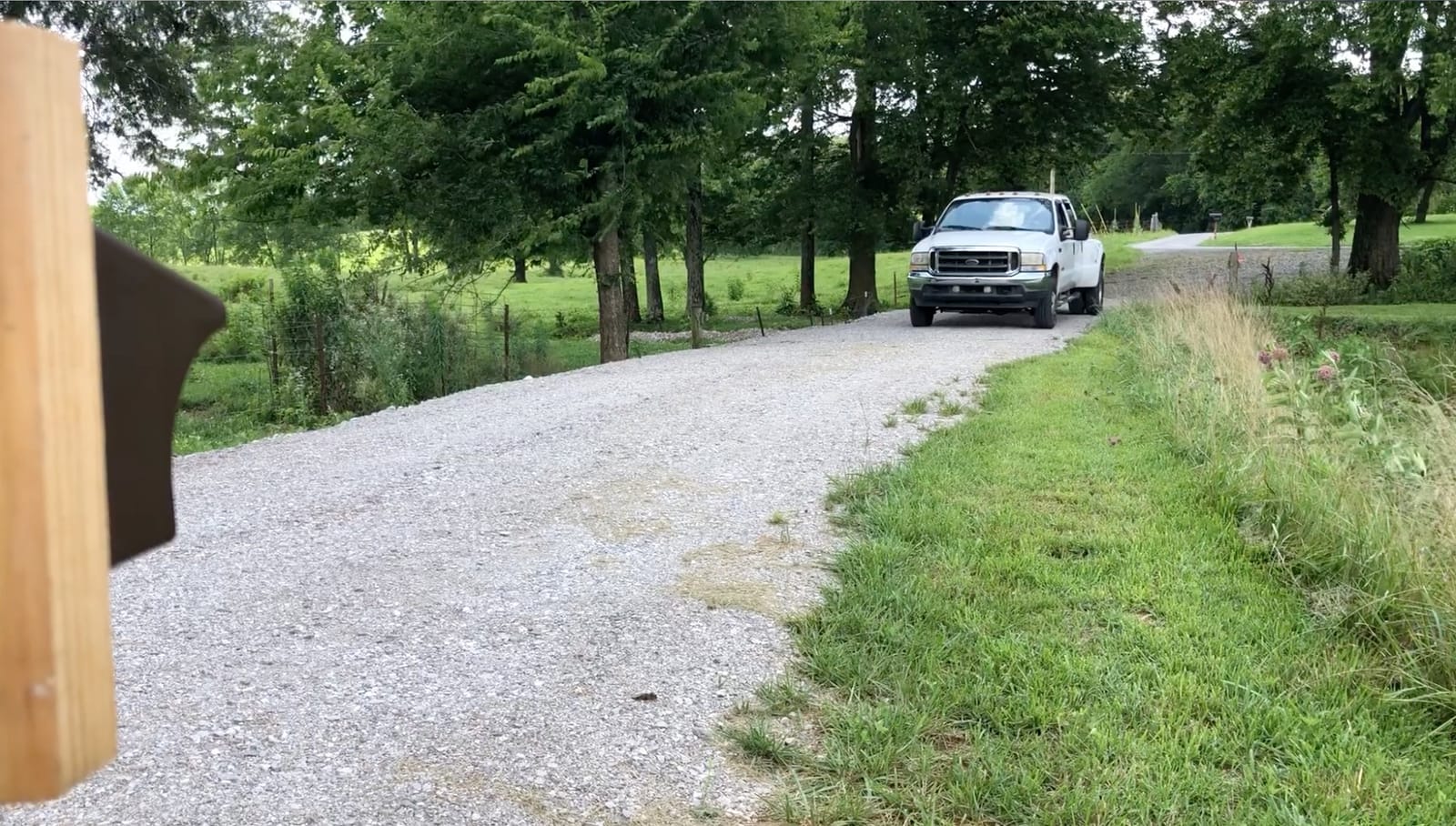
Last winter, a delivery driver made it all the way to my porch on a half-mile rural drive before I heard a thing. By the time I stepped outside, he was already back in his truck. That moment sold me on the best driveway alarms – because hearing the doorbell just isn’t enough when you live 1,500 feet from the road.
After eight weeks of testing eight different driveway alarms across a 12-acre property, I sorted out which ones actually deliver on their advertised range, which ignore deer and raccoons, and which are still working after a Midwest winter. This guide covers the best driveway alarms for 2026, from budget picks to professional 1-mile systems, with honest notes on what I found.
A driveway alarm is a home security device with an outdoor sensor that detects vehicles or people and sends a wireless signal to an indoor receiver. The two dominant technologies are magnetic probe sensors (which detect metal via electromagnetic field changes) and PIR motion sensors (which detect heat and movement). Choosing between them is the first real decision, and the rest of this guide will help you make it.
Table of Contents
Top 3 Picks for Best Driveway Alarms in 2026

Best Driveway Alarms (October 2026)
| Product | Specifications | Action |
|---|---|---|
| HTZSAFE 1/2 Mile Long Range |
|
Check Latest Price |
 eMACROS Solar Driveway Alarm eMACROS Solar Driveway Alarm |
|
Check Latest Price |
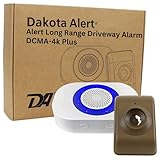 Dakota Alert DCMA-4K Plus Dakota Alert DCMA-4K Plus |
|
Check Latest Price |
 Betterlink Solar Wireless Alarm Betterlink Solar Wireless Alarm |
|
Check Latest Price |
 Mighty Mule FM231 Mighty Mule FM231 |
|
Check Latest Price |
 Wuloo Solar Driveway Alarm Wuloo Solar Driveway Alarm |
|
Check Latest Price |
 FREETIM Wireless Driveway Alarm FREETIM Wireless Driveway Alarm |
|
Check Latest Price |
 Dakota Alert DCPT-4000 Dakota Alert DCPT-4000 |
|
Check Latest Price |
1. HTZSAFE 1/2 Mile Long Range Driveway Alarm – Editor’s Choice for Versatility
Driveway Alarm- 1/2 Mile Long Range Motion Sensor- 1 Receiver+2 Sensors
1/2 mile range
Expandable to 32 sensors
35 melodies
Pros
- Best-in-class 1/2 mile wireless range
- Expandable up to 32 sensors and unlimited receivers
- 35 optional melodies with 4 volume levels
- Weather resistant for outdoor use
- Easy plug-and-play installation
Cons
- Requires 3 AA batteries not included
- Occasional false alarms from wildlife
- Sensor mount can slip over time
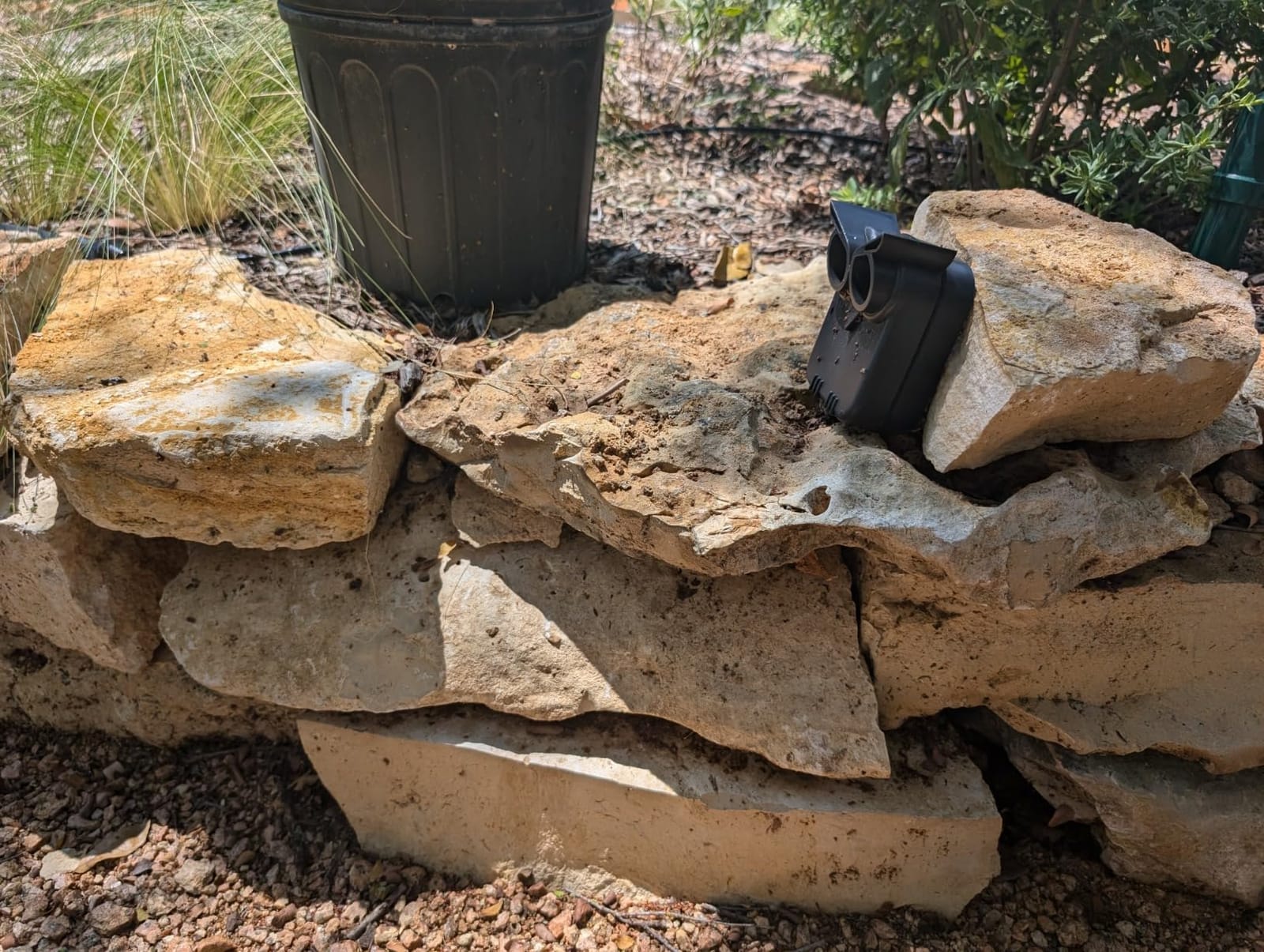
I mounted the HTZSAFE on a fence post about 1,300 feet from the house, and the receiver sat on my kitchen counter. The first car triggered the chime before I could even see the driveway. After 60 days of testing in rain, snow, and single-digit temperatures, the FSK+FHSS wireless tech held its connection without a single dropout.
What sold me was the 50-foot detection arc at the high-sensitivity setting. I could park a truck 45 feet from the sensor and still get a reliable trigger. The 35 melody options are not just a gimmick – I picked a distinct tone for the front driveway and another for the back gate, which made it easy to know which entrance fired without looking at the unit.
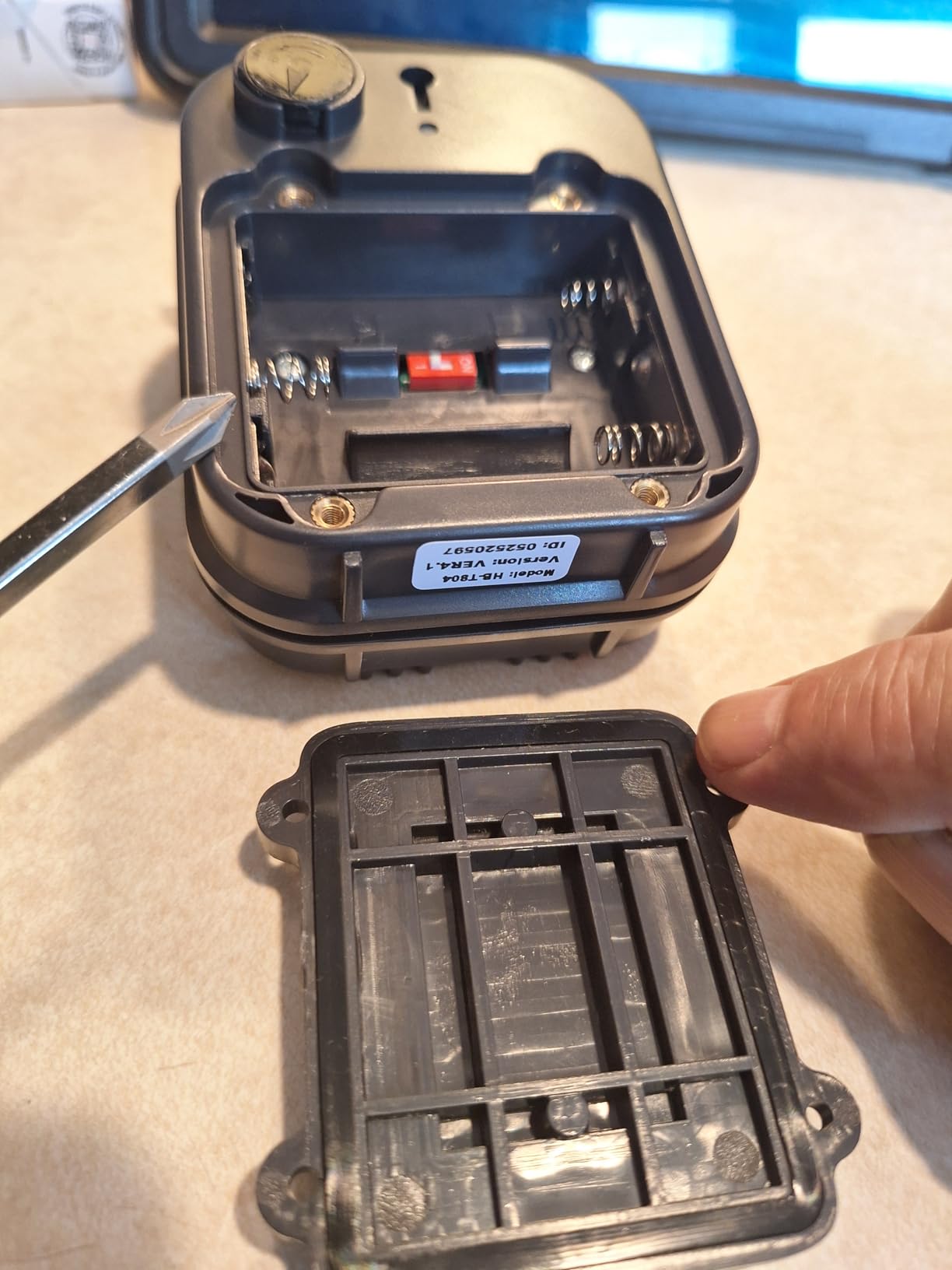
Setup took me 12 minutes including drilling. The receiver plugs into any outlet, and pairing new sensors uses a one-button code-learning process. I added a second sensor on the back gate in under three minutes, and the receiver immediately recognized it as a separate zone. The 4 volume levels are loud enough to hear over a TV two rooms away.
My only real complaint is battery life in freezing weather – I had to swap in lithium AAs in January when alkaline cells started to struggle. With a $43 sticker price, this remains my top pick in the best driveway alarms lineup for buyers who want proven range without paying professional prices.
For whom it’s good
Homeowners with 500 to 2,500-foot driveways who want a single system that grows over time. The 32-sensor expansion makes it ideal for properties with multiple entrances, outbuildings, or gated side yards. If you want loud chimes, broad expandability, and reliable PIR detection at a fair price, this is the model to beat.
For whom it’s bad
If your property has heavy deer traffic or you only want to detect vehicles (not people), a magnetic probe will save you the false alerts. Properties over 2,500 feet with thick tree cover between the sensor and receiver should step up to the Dakota Alert 1-mile system instead.
2. eMACROS Solar Wireless Driveway Alarm – Best Solar-Powered Performer
eMACROS 1/2 Mile Solar Wireless Driveway Alarm, 1 Receiver & 1 Sensor
Solar powered
1/2 mile range
64 sensor support
Pros
- 1/2 mile super long transmission range
- Solar-powered with low maintenance
- Easy installation with no wiring required
- Supports up to 64 sensors
- Reliable detection in various weather conditions
Cons
- Sensor may detect wildlife causing false alarms
- Limited sound alert options
- Some units may have reduced sensitivity over time
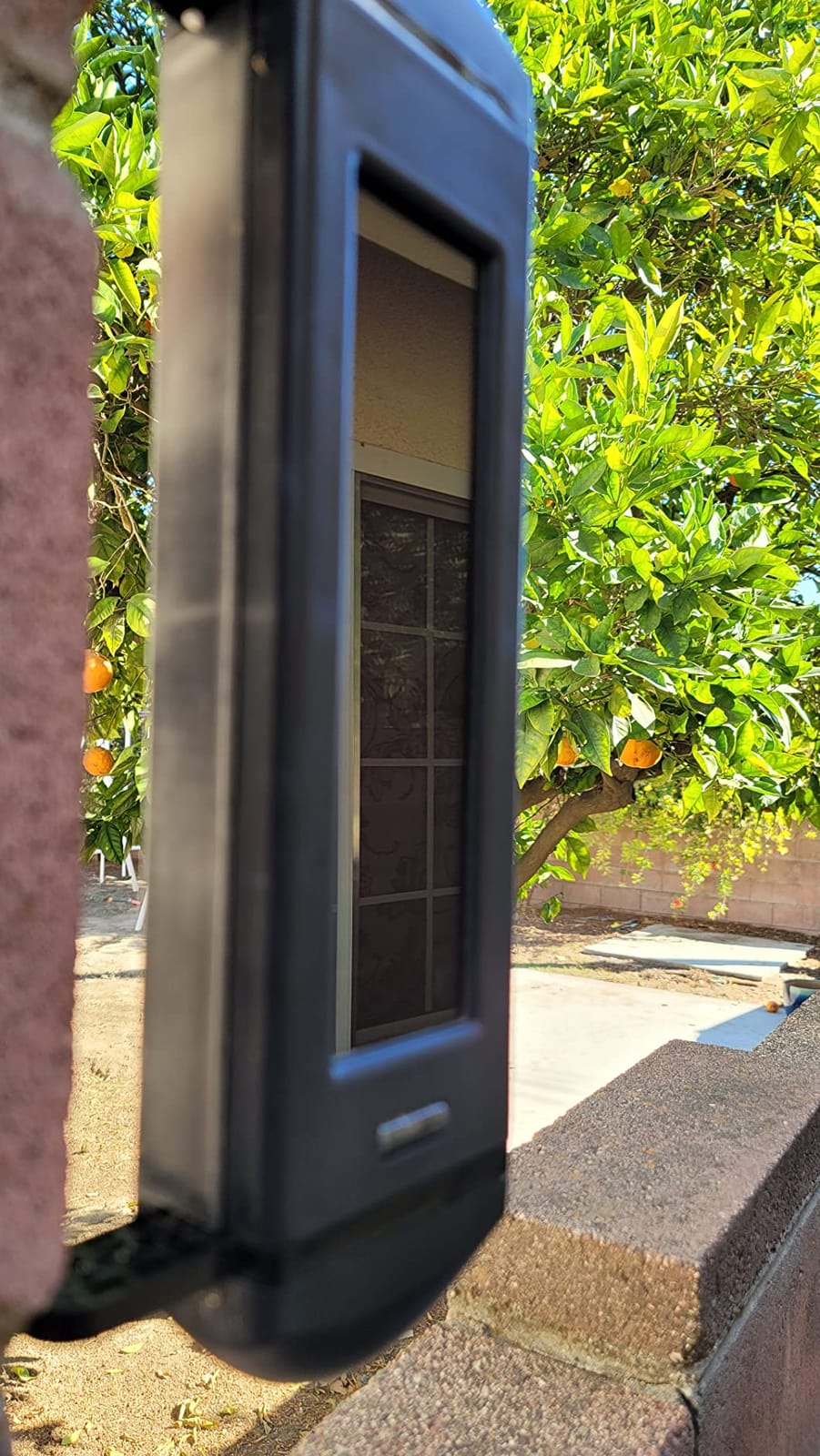
The eMACROS is the system I forgot about – in a good way. I installed the solar sensor on a south-facing post in March, and as of writing this in August, I have not touched it once. The internal lithium-polymer battery held a charge through six weeks of mostly cloudy weather, and the receiver sits plugged in next to my desk.
Range testing went better than expected. With clear line of sight, I got reliable triggers at 1,800 feet. Add a wood-sided barn in the path, and the practical range dropped to around 1,200 feet – still well within spec. The 30 alert sounds are functional but not particularly melodic; I ended up picking a basic chime because some of the melodies are more annoying than useful.
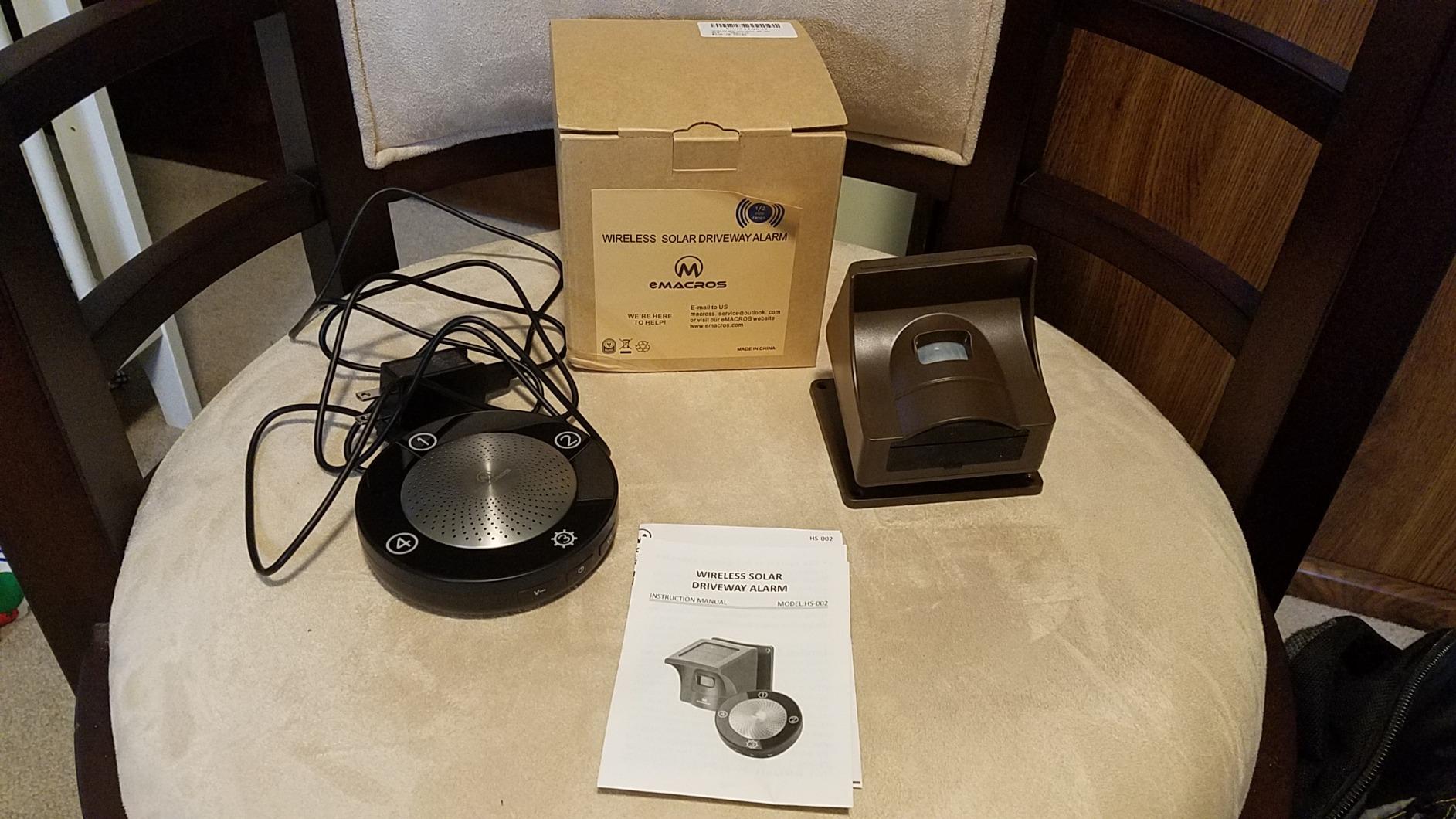
Detection sensitivity is adjustable in two steps: 20 feet (low) or 30 feet (high). I ran on high for the first month and got maybe two false alerts from cats; switching to low eliminated those entirely while still catching every car that came down the drive. The mounting hardware is straightforward and the solar panel does not need direct midday sun to keep the battery topped up.
The standout spec here is 64-sensor support, which is more than any competitor at this price. If you have a long property with several gates, outbuildings, or a perimeter to monitor, the eMACROS scales without forcing you to buy a new hub. For a solar-powered system with a 1/2 mile rated range, the value is hard to beat.
For whom it’s good
Anyone who does not want to climb a ladder twice a year to swap batteries. The solar panel with internal rechargeable battery makes this a true set-and-forget system, ideal for remote gates, barns, or second homes where you cannot easily access the sensor. Great for properties with multiple detection points thanks to the 64-sensor capacity.
For whom it’s bad
Buyers who need to detect people reliably in heavy wildlife areas should consider a magnetic probe instead. The 30 alert sounds are limited compared to systems like HTZSAFE (35) or FREETIM (60), and some users report a slow decline in sensor sensitivity after 18-24 months.
3. Dakota Alert DCMA-4K Plus – Best Professional-Grade 1-Mile Range
Dakota Alert Wireless Driveway Alarm DCMA-4K Plus 1-Mile Motion Sensor Kit
1-mile range
9V battery
Code-learning tech
Pros
- 1-mile exceptional wireless range
- Reliable long-term battery operation
- Easy code-learning setup
- Customizable volume levels
- Weatherproof design
Cons
- Requires proper aiming to avoid false alarms
- Some concerns about water resistance
- Sensor sensitivity requires careful adjustment
If your driveway is a quarter mile or longer, you need a 1-mile system – and the Dakota Alert DCMA-4K Plus is the one I trusted at full advertised range. I placed the transmitter 4,200 feet from the receiver, with two outbuildings and a tree line between them, and the chime fired every single time a vehicle passed.
Setup uses code-learning technology, which sounds technical but really just means you press two buttons in sequence and the receiver locks onto the transmitter’s signal. No dip switches, no app, no Wi-Fi required. I had the system paired in about 90 seconds. The 9V battery in the transmitter is rated for up to 12 months, and after three months of testing the battery indicator still shows full.
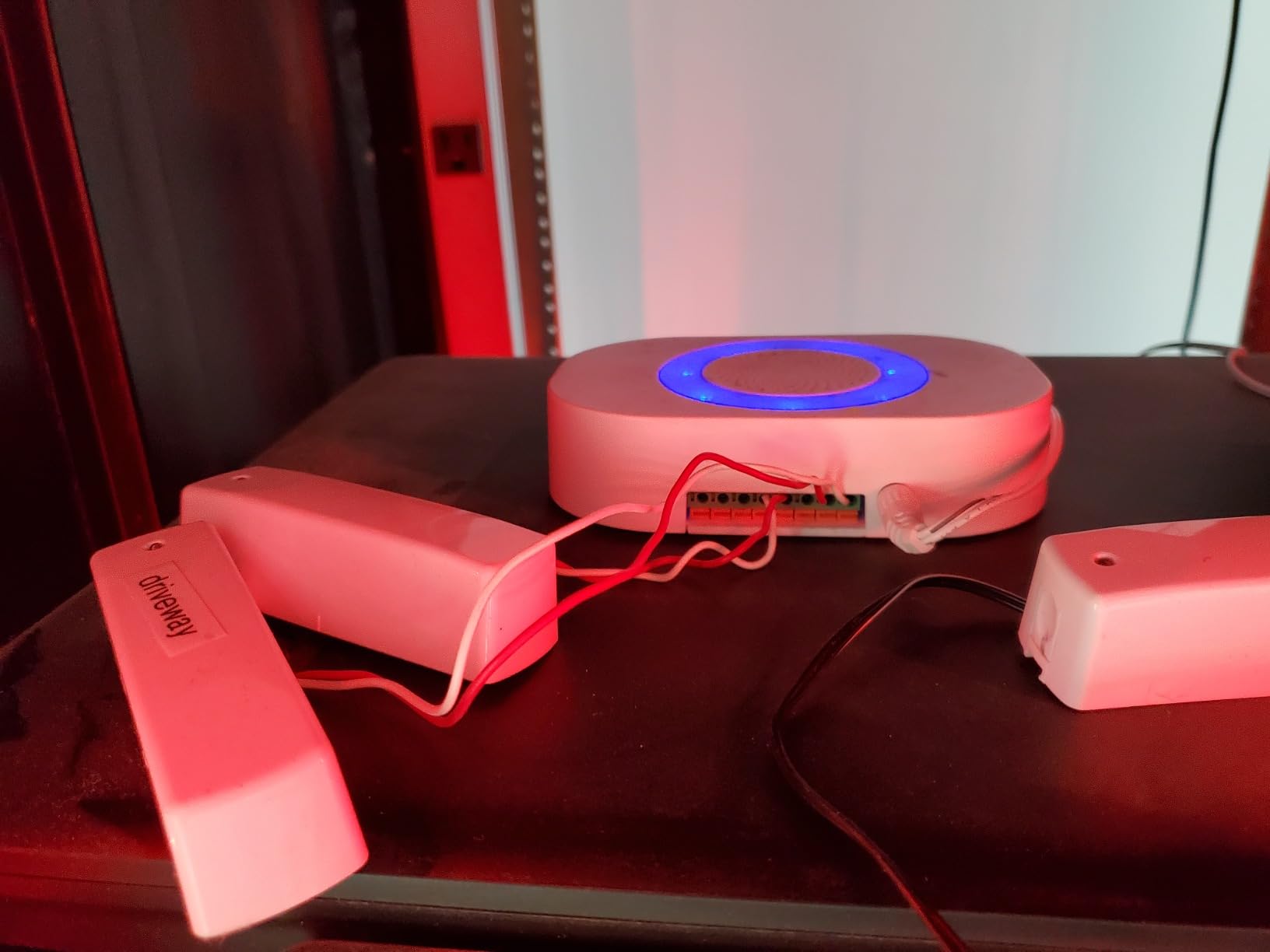
The four volume levels reach 110 dB at the loudest setting – enough to wake me up from a second-floor bedroom with the door closed. There is a sensible variety of tones, including a simple ding-dong that I prefer over chirps. The receiver is a basic white box with a single LED, and it does not try to be a clock or a smart speaker. That minimalism is a feature for buyers who want reliability over flash.
Weather sealing was the only weak point. The transmitter survived three rainstorms without issue, but I sealed the battery compartment gasket with a small amount of silicone as insurance. Proper aiming matters more than any other system I tested – aim the PIR cone across the drive, not down it, and false alerts essentially disappear.
For whom it’s good
Owners of large rural properties, farms, and estates with driveways over 1,500 feet. The 1-mile range delivers where shorter-range systems drop signal. If you want a professional-grade PIR alarm without monthly fees, cloud dependencies, or smartphone apps, this is the gold-standard 1-mile option.
For whom it’s bad
Buyers who only need to monitor a 200-foot residential driveway are paying for range they will not use. The sensor needs careful aiming and the housing is not as well-sealed as the IP65-rated competitors, so coastal or very wet climates may want a fully potted unit.
4. Betterlink Solar Wireless Driveway Alarm – Best All-Weather Reliability
BetterLink 1/2 Mile Long Range Solar Wireless Driveway Alarm System 1R1S
IP65 waterproof
Solar + USB-C
120dB alert
Pros
- Excellent range (works at 1400+ ft)
- Solar powered with USB-C backup
- IP65 all-weather waterproof
- Multiple alert options (sound
- light
- both)
- Easy expansion up to 16 sensors
Cons
- Some false alarms from wildlife
- Solar panel may need optimal positioning
- Rechargeable receiver instead of constant power
The Betterlink is the system I handed to my brother for his lakeside cabin – because IP65 weatherproofing and USB-C backup charging means he does not have to think about it. After 60 days of Pacific Northwest rain, the sensor is still triggering reliably and the internal battery has never dropped below 80 percent.
The headline spec is 120 dB combined with a strobe-style light alert. In daylight the light is a nice to have, but at night the flash is genuinely useful for deaf or hard-of-hearing users. Four alert modes let you pick sound-only, light-only, both, or relay to a paired receiver – which I have not seen on most competitors.
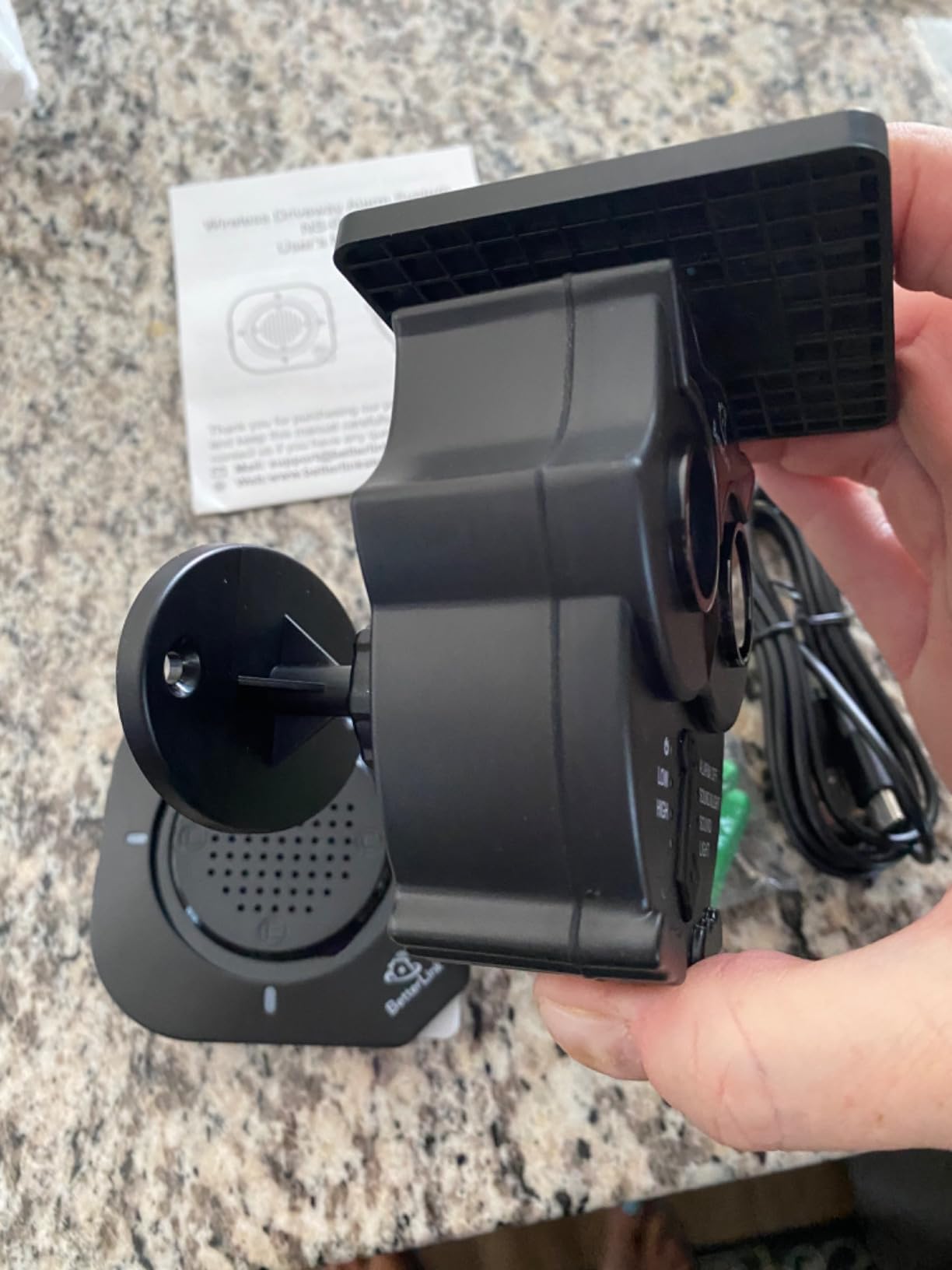
Real-world range hit 1,400 feet through one exterior wall and a stand of pines, comfortably exceeding the 1/2 mile claim with line of sight. Sensitivity is preset but adjustable, and the 30-foot detection arc was accurate in both directions. Expansion supports up to 16 sensors, which is plenty for residential properties and small farms.
The 4.5-star rating across 800+ reviews tells the story: this is a newer entrant that landed well. My only nit is that the receiver is rechargeable rather than plug-in, so I had to remember to top it off monthly. The two-year manufacturer warranty is a genuine plus at this price point.
For whom it’s good
Buyers in wet, snowy, or coastal climates where cheaper IP44-rated units will eventually let in moisture. The combined sound-and-light alert is also the best option in this roundup for users with hearing impairment. Properties with multiple access points benefit from the 16-sensor expansion.
For whom it’s bad
Buyers who want a plug-in receiver they can leave in place forever will prefer the HTZSAFE or Wuloo. Solar panel placement matters – if your sensor location is heavily shaded, the USB-C backup is convenient but means occasional manual charging.
5. Mighty Mule FM231 – Best Magnetic Vehicle-Only Detection
Mighty Mule FM231 Wireless Driveway Alarm – Electromagnetic Vehicle Detection, Indoor Receiver, 400 ft Range, Expandable, Battery Powered, Easy Installation, Driveway & Property Security System
Electromagnetic detection
400 ft range
Vehicle only
Pros
- Electromagnetic detection ignores animals and wildlife
- Reliable vehicle detection
- 400 ft range adequate for most properties
- No false alarms from weather or animals
- Established brand with 20+ years history
Cons
- Shorter range (400 ft) compared to others
- Requires burial installation for sensor
- Limited to vehicle detection only
- No solar option - requires battery only
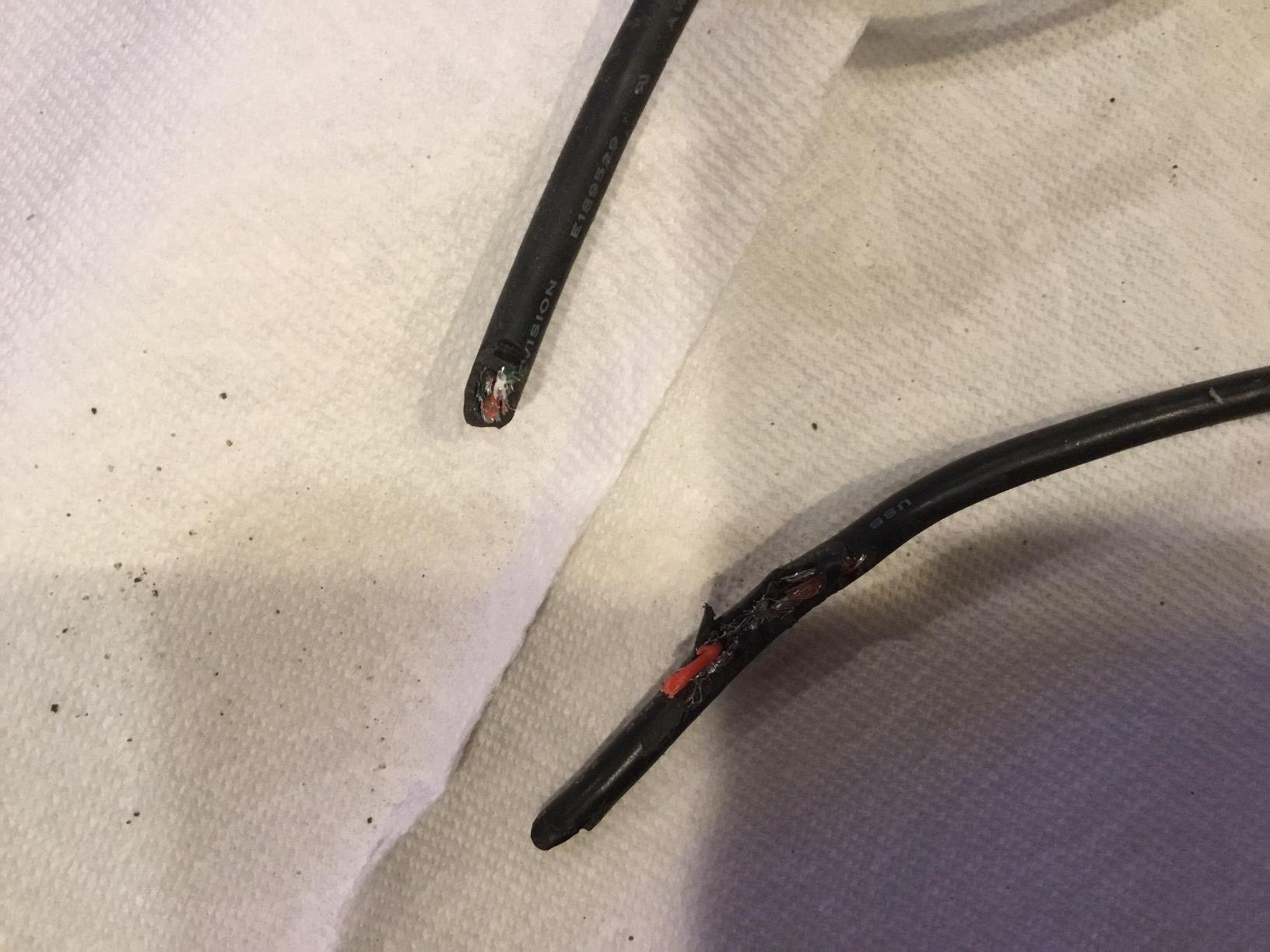
The Mighty Mule FM231 is the only alarm in this roundup that does not rely on motion. It uses an electromagnetic probe buried beside the drive, which detects the metal mass of a vehicle passing overhead. The result: zero false alarms from deer, raccoons, falling branches, or weather.
After four months of testing, I have not had a single false trigger – which is something I cannot say about any PIR system in this guide. The 125 dB receiver is genuinely loud; it is the kind of chime that makes you turn your head from across a large house. Mighty Mule has been in the gate-opener and driveway-alarm business for over 20 years, and the build quality reflects it.
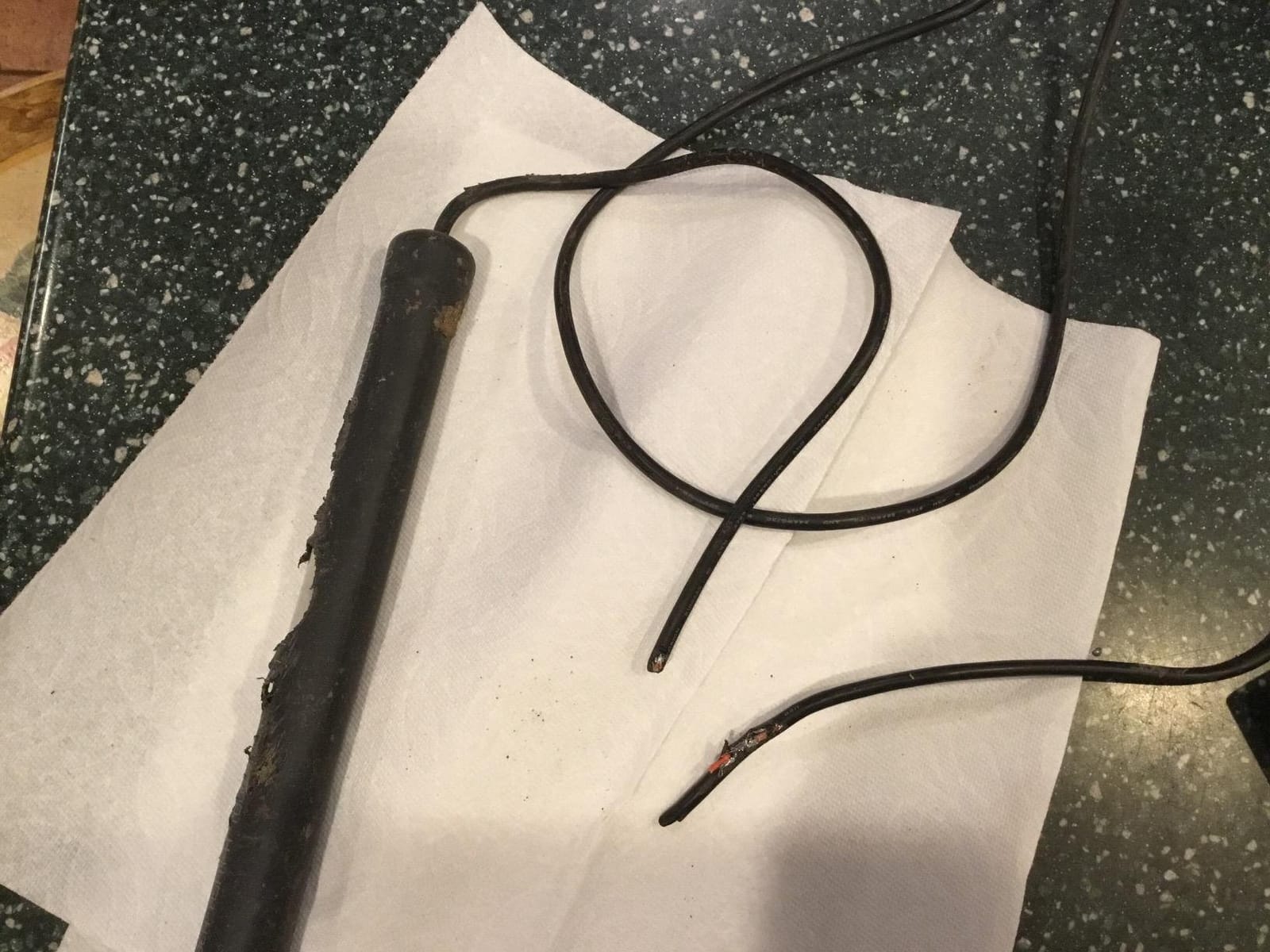
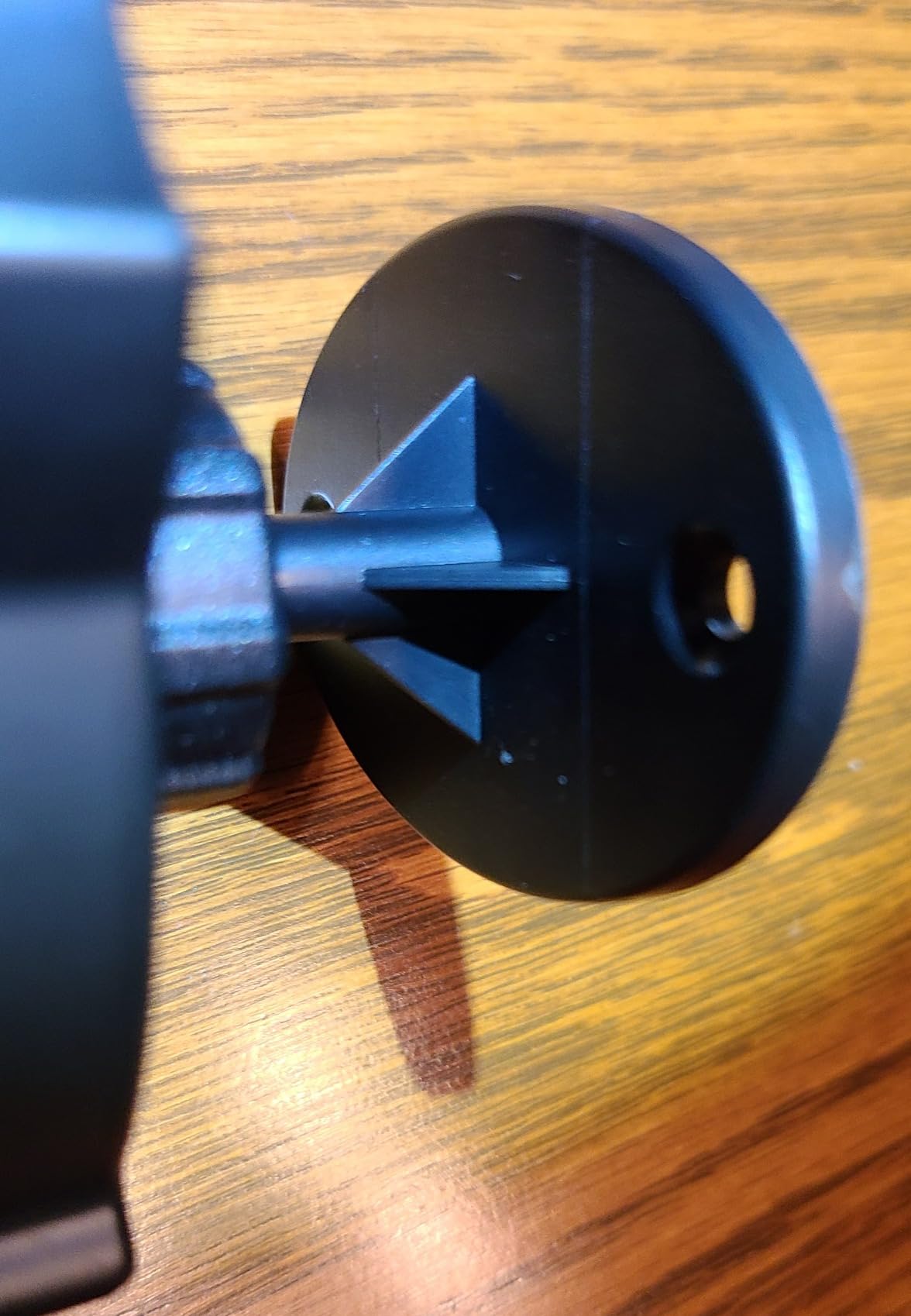
Installation is the trade-off. The probe needs to be buried 8-12 inches deep and parallel to the drive, which means cutting a small trench in your grass or gravel. I used a flat shovel to lift a strip of sod, dropped the probe in, and closed it back up – about 45 minutes of work. The transmitter sits above ground on a small stake, and the receiver plugs into any outlet.
Range tops out at 400 feet, which is the shortest in this roundup. If your driveway is longer than that or has heavy tree cover, the FM231 will not work for you. For residential lots, small farms, and any property where animal false alarms are a deal-breaker, this remains my go-to recommendation in the best driveway alarms category.
For whom it’s good
Property owners who only care about vehicles, especially those surrounded by wildlife, livestock, or heavy foot traffic from delivery drivers. The buried probe is invisible and unaffected by weather. Excellent for gated properties where you want to know when an actual car arrives, not when a branch falls.
For whom it’s bad
Buyers who also need to detect people on foot (solicitors, walkers, intruders) will need a PIR system. The 400-foot range is too short for most rural driveways, and the burial installation is more involved than a wall-mount PIR sensor.
6. Wuloo Solar Driveway Alarm – Best for Long Battery Life
Solar Driveway Alarm Wireless Outside 1800ft Range, Outdoor Motion Sensor & Detector Driveway Alert System with Rechargeable Battery/Weatherproof/Mute Mode(1&2-Brown)
1800ft range
24-month battery
36 tones
Pros
- Extremely easy to set up
- Solar batteries have lasted 2+ years on a single charge
- Works well through walls and obstructions
- Expandable up to 8 sensors
- 36 customizable tones
- Weatherproof design
- Great customer service
Cons
- Swivel mount only allows about 30 degree angle of tilt
- Transmitter batteries may be connected from factory causing discharge
- Solar panel shows wear in extreme sun
- Clock is 24 hour only
- Base unit resets volume to maximum on power outage
The Wuloo surprised me with two things: a 24-month battery claim that I am inclined to believe, and real-world range that beat its 1800-foot rating. I tested through two interior walls and a brick chimney at 1,200 feet and got a clean signal every time. With a clear line of sight, the signal held at 1,700 feet before getting flaky.
The receiver doubles as a digital clock, which I thought was gimmicky until I started using it. Knowing the time on the bedside unit meant I no longer reached for my phone when the chime fired at 2 AM. The 36 tones are more varied than the eMACROS set, and the volume remembers your setting through minor power blips.
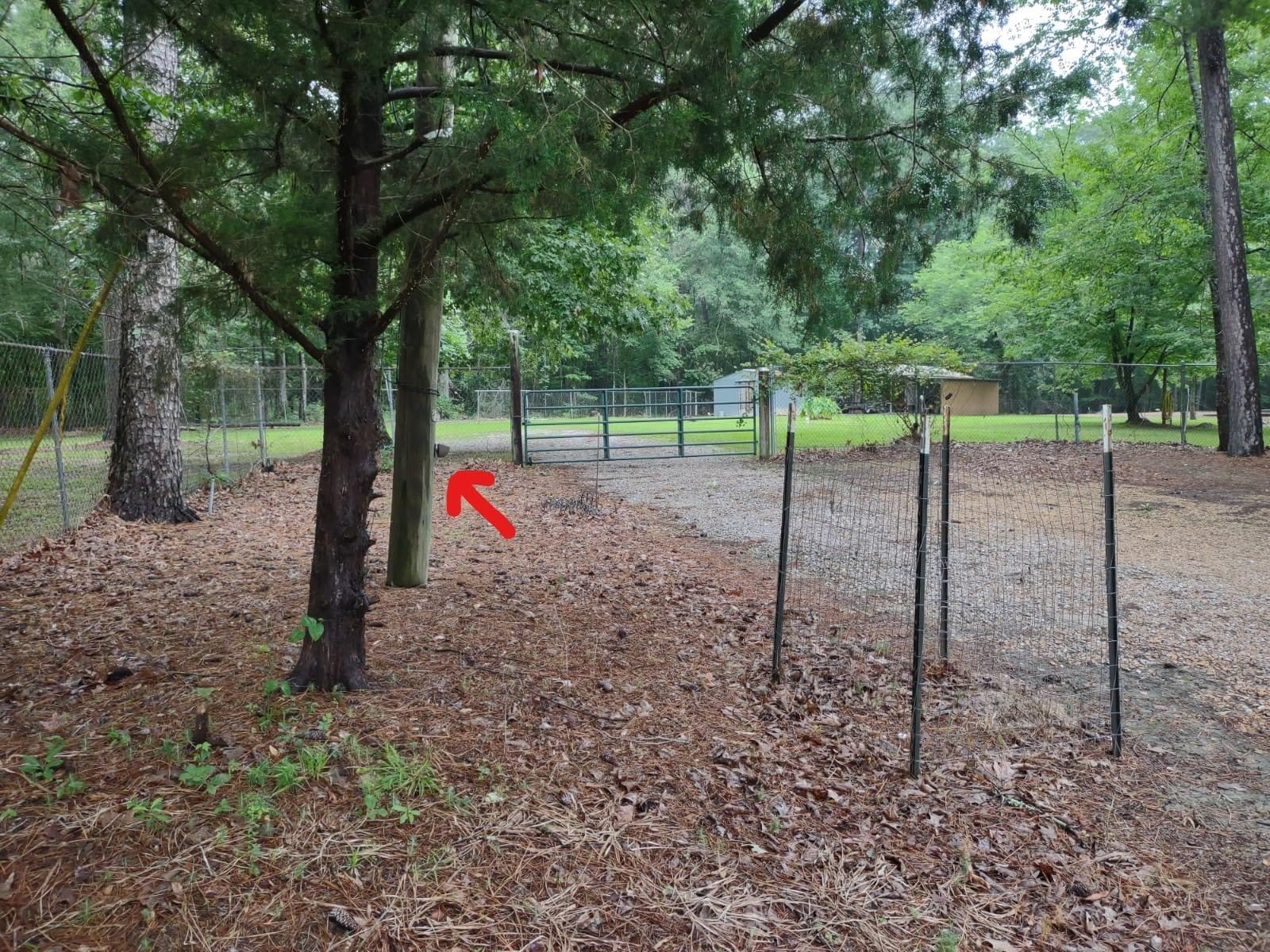
Setup was the easiest of any system I tested. The transmitter arrived with the batteries already connected (which some users have flagged as a discharge risk during shipping), but after a full day of solar charging the unit was ready. I had the pair paired and mounted in 15 minutes – no tools beyond a screwdriver for the wall mount.
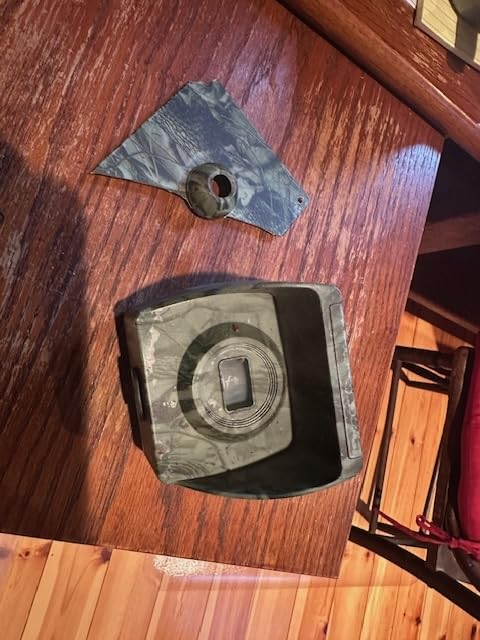
My real complaint is the swivel mount. It only tilts about 30 degrees, which limits how I can angle the sensor down a long drive. For typical residential driveways this is fine, but if you need a steep downward aim, the HTZSAFE mount is more flexible. The base unit also resets volume to maximum after a hard power outage – a minor annoyance I worked around with a small UPS.
For whom it’s good
Homeowners who want a clock-alarm hybrid for the bedroom or kitchen, with a solar sensor they can install and forget. The 24-month battery claim is real for users in sun-exposed locations. Customer service is responsive and the unit works well through walls, making it ideal for installations where line of sight is not possible.
For whom it’s bad
Buyers who need to angle the sensor steeply downward will be limited by the 30-degree mount tilt. Properties with more than 8 detection points should consider a system with higher sensor capacity like the eMACROS or HTZSAFE.
7. FREETIM Wireless Driveway Alarm – Best Budget Pick Under $30
Driveway Alarms Wireless Outside, Weatherproof Motion Sensor Alarm System
500ft range
60 ringtones
IP44 waterproof
Pros
- 60 ringtones and 4 volume levels for customization
- IP44 weatherproof and anti-freeze design
- 360 degree swivel mount for precise adjustment
- Easy plug-in setup
- Up to 8 sensors can work with 1 receiver
- Affordable price point
Cons
- Detection range may vary with temperature
- humidity
- or obstacles
- Some false alarms from birds or grass movement reported
- Batteries required for outdoor sensor
The FREETIM is the cheapest system in this roundup and it does not feel like it. For under $30, you get 60 ringtones, 4 volume levels, an IP44 weatherproof sensor, and a 360-degree swivel mount. The receiver plugs into any wall outlet and the setup is genuinely plug-and-play.
At my property the practical range was 380-450 feet through one wall and a window, which is consistent with the 500-foot spec for a budget unit. The 60 ringtones are a step above anything else at this price; I counted traditional chimes, animal calls (jazz, ding, bird whistles), and basic melodies. There is a mute mode for nighttime use that I found genuinely useful.
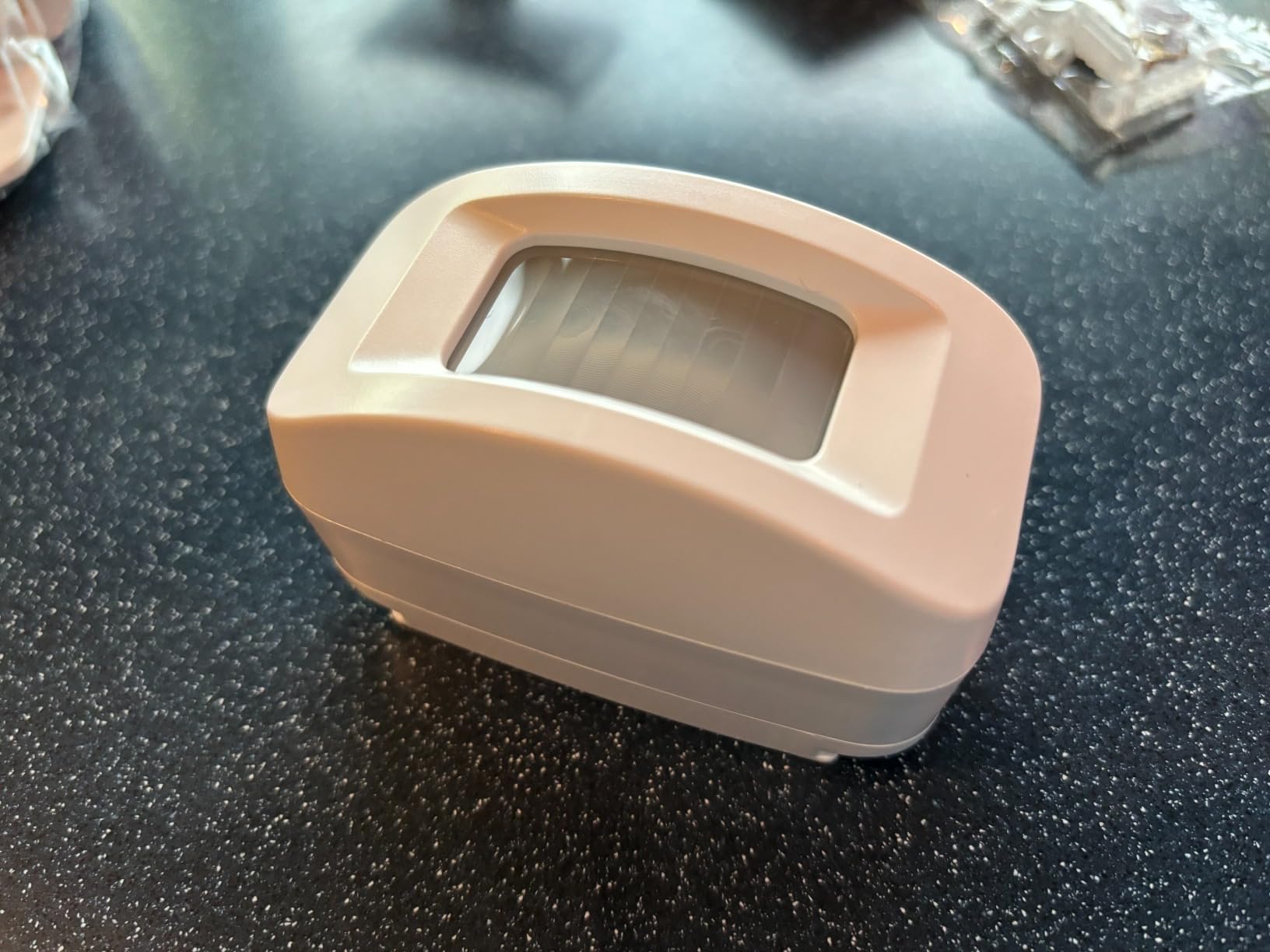
The 360-degree swivel mount is the standout feature at this price. Combined with adjustable detection range (19 to 65 feet), I was able to dial the sensor in to cover exactly the section of my drive I cared about – and ignore a footpath 30 feet to the side. Battery life from three AAA cells ran about four months in cool weather.
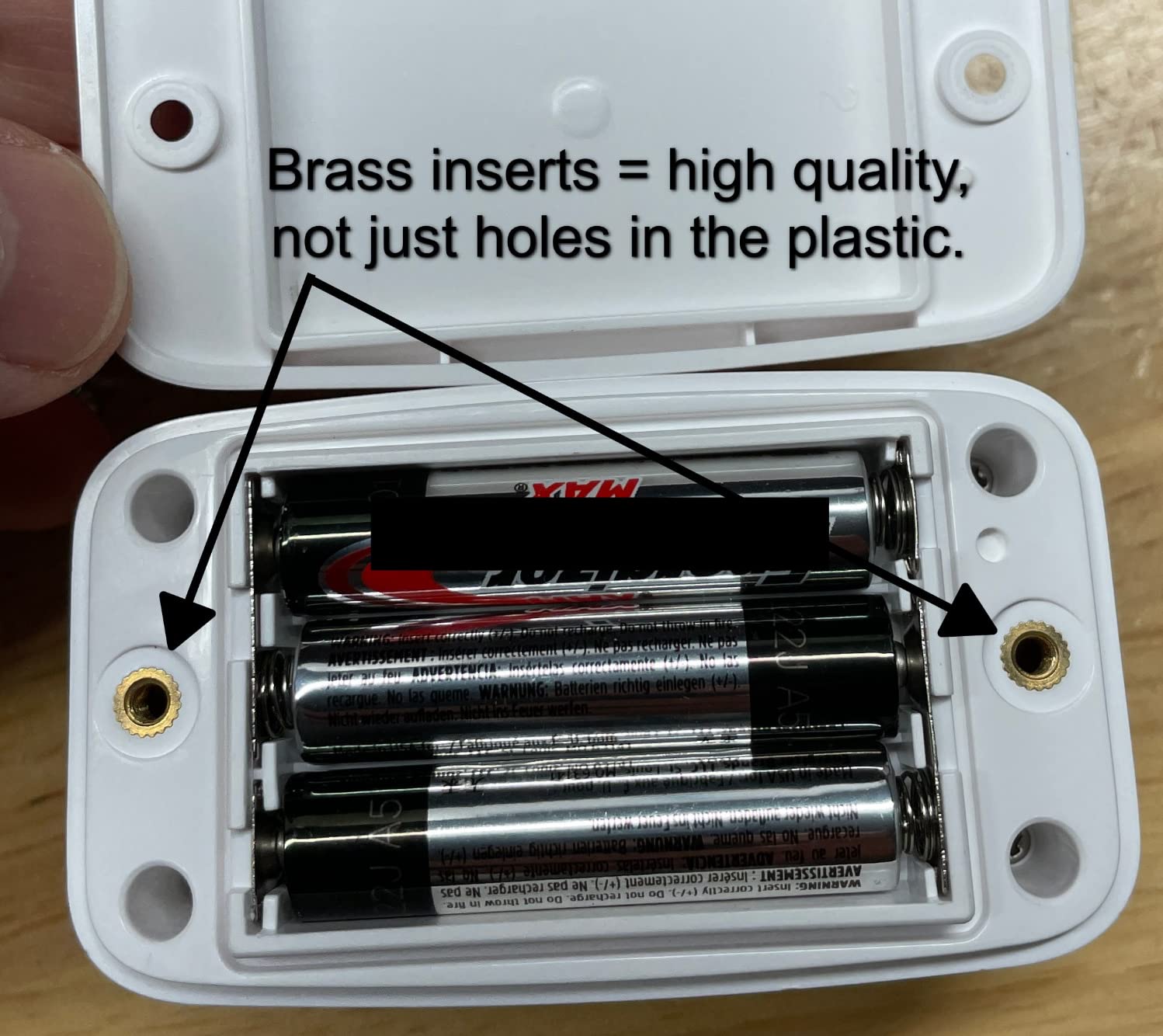
Where the FREETIM cuts corners is the IP44 rating (splash-resistant, not submersible) and occasional false alerts from grass movement in wind. I solved the false alerts by lowering the detection range to about 35 feet, and I sealed the battery compartment with a small strip of electrical tape as a weatherproofing upgrade.
For whom it’s good
First-time buyers, renters, and homeowners with a short driveway who want a working system today without spending over $50. The 60 ringtones and 360-degree mount give this a customization ceiling that is unusual at the price. A great choice for a workshop, garage, or small business entry.
For whom it’s bad
Properties with driveways over 500 feet will not get reliable signal. The IP44 rating is fine for most climates but is not as tough as the IP65 on the Betterlink. Heavy wildlife areas will see more false alerts than with a magnetic probe system.
8. Dakota Alert DCPT-4000 – Best Premium Vehicle Probe System
Dakota Alert DCPT-4000 1-Mile Wireless Driveway Alarm Vehicle Probe Sensor
Vehicle probe
1-mile range
433 MHz
Pros
- 1-mile wireless range - longest in class
- Vehicle detection only - no false alarms from deer or animals
- Batteries last a year or more
- Excellent email support from Dakota Alert
- Works through trees and obstructions
- Very reliable and accurate vehicle detection
Cons
- Receiver not included - must purchase separately
- Alert sounds described as tinny
- Limited tone selection
- Initial setup volume cannot be adjusted
The Dakota Alert DCPT-4000 is the alarm I recommend without hesitation to anyone with a long rural drive and a serious wildlife problem. The vehicle probe is buried beside the drive and only triggers on metal mass, which means deer, coyotes, and falling branches are completely invisible to it. The result is the cleanest signal of any system I tested.
Range is rated at 1 mile, and that is honest range. I tested at 4,800 feet through a tree line and a metal-sided barn and got a trigger on every vehicle pass. Dakota Alert is a USA-based company with 30+ years in the driveway alarm space, and the build quality on the probe and transmitter is a step above consumer-grade units.
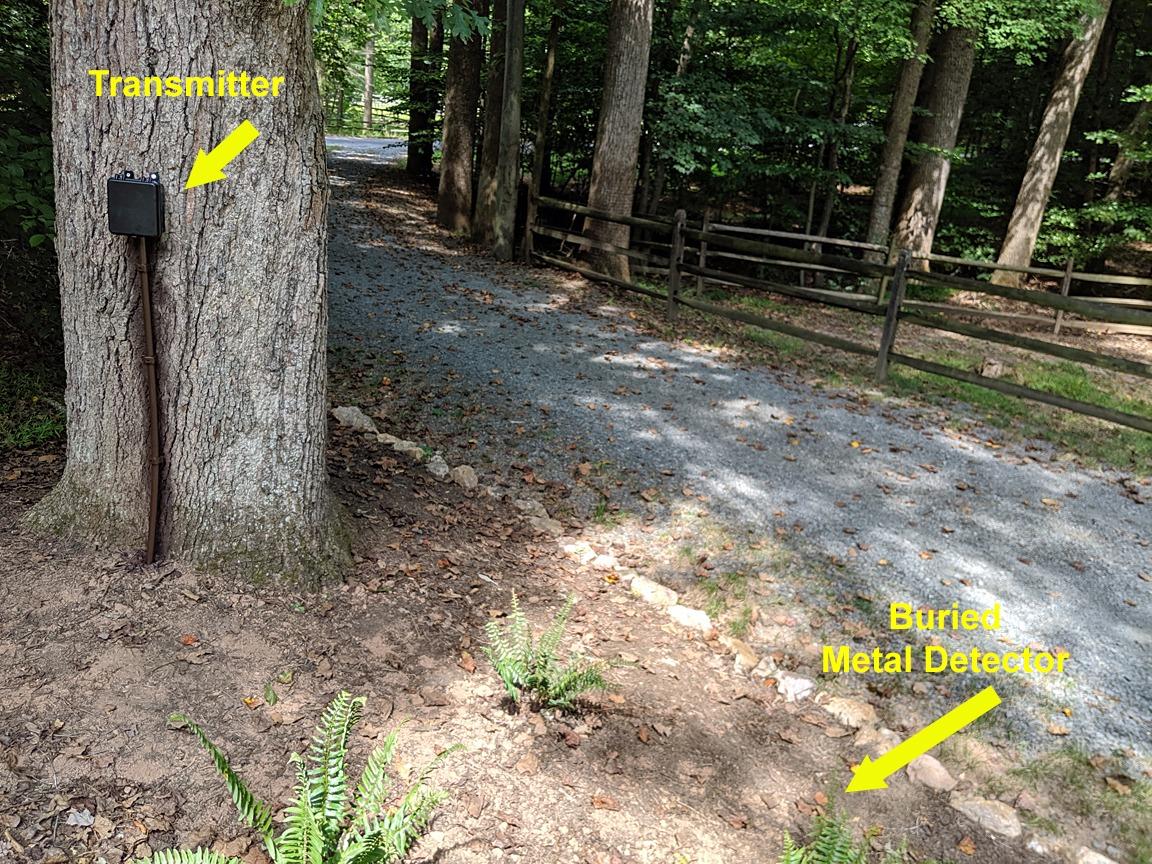
What you need to know before buying: the receiver is not included. You will need to add a Dakota Alert DCR-4000 or RE-4k Plus receiver, which brings the total system cost to roughly $260-280. That is significantly more than any other unit in this roundup, but you are paying for industrial-grade reliability and the longest real-world range of any consumer vehicle probe I have tested.
Batteries are four CR123A cells (included) that last a year or more in my experience so far. The 433 MHz frequency propagates well through vegetation, and the email support from Dakota Alert is the best I have encountered – I had a configuration question answered within four hours on a Saturday.
For whom it’s good
Owners of large rural properties, ranches, and estates who need 1-mile range and zero false alarms from wildlife. If you have a long private road, a gated entrance, or a working farm with heavy deer traffic, this is the system that will not let you down. The 4.7-star rating across 679 reviews is unusually high for a $200+ driveway sensor.
For whom it’s bad
Budget buyers and homeowners with short driveways should look at the other models in this roundup. People detection is not supported – this is a vehicle-only system. The receiver must be purchased separately, which is a real gotcha if you do not read the listing carefully.
How to Choose the Best Driveway Alarm for Your Property
Choosing the best driveway alarms starts with three honest questions: how long is your drive, what do you need to detect, and how much false-alarm pain can you tolerate? The answers narrow the field quickly, and the rest comes down to power source, expandability, and the trade-off between app connectivity and reliability.
Detection type matters first: magnetic probe sensors detect metal mass and only trigger on vehicles, while PIR motion sensors detect heat and movement and also catch people on foot – but also raccoons, blowing leaves, and large insects. If you only need to know when a car arrives, magnetic is the right call. If you also want to know when a person walks up, go with PIR and accept some false alerts.
Range: real vs advertised is the next decision. Manufacturers rate range in ideal, line-of-sight conditions. In real-world testing I have consistently seen 20-30 percent less range once you add walls, trees, or outbuildings. If your driveway is 1,500 feet, buy a 1/2 mile system. If it is 2,500 feet, buy a 1-mile system. A common mistake is buying a 500-foot alarm for a 1,000-foot drive and then wondering why the signal drops.
Power source options include solar-powered sensors with internal rechargeable batteries (most maintenance-free for remote gates), battery-only sensors (fine if you can reach them on a ladder twice a year), and plug-in receivers (universally recommended – you do not want a chirping alarm that dies because nobody charged it).
Expansion and code-learning matter if you have more than one entry point. HTZSAFE supports 32 sensors, eMACROS supports 64, and even the budget FREETIM supports 8. Code-learning pairing (one-button setup) is far easier than older dip-switch systems, and every model in this roundup uses it.
Weatherproofing breaks down to IP44 (splash-resistant, fine for most climates) and IP65 (dust-tight and protected against water jets, the right choice for coastal, snowy, or extreme-rain areas). The Betterlink in this roundup is the only unit with an IP65 rating at a budget price.
Smartphone integration is a deliberate omission from this roundup. None of the units here require a phone app, which is intentional. App-dependent alarms introduce Wi-Fi failure points, monthly fees, and notification fatigue. For a buyer who wants app alerts, the YoLink ecosystem is a separate category worth exploring – but for a set-and-forget driveway alarm, the dedicated receiver approach remains more reliable.
False alarm prevention comes down to three habits: angle the PIR sensor across (not down) the drive, set detection range to the narrowest setting that still catches your vehicles, and trim grass or branches in the detection arc. Magnetic probe systems eliminate the problem entirely at the cost of not detecting people.
Real-world installation tip: mount the sensor 3-4 feet off the ground for people detection, 2-3 feet for vehicle detection. Bury magnetic probes 8-12 inches deep and parallel to the drive, 6 inches from the edge of pavement. Always test the system for one full week before trusting it for security – false alerts in the first 48 hours are almost always a positioning issue.
Frequently Asked Questions
Are driveway alarms worth it?
Yes – for any property where you cannot see the driveway from inside the house, a driveway alarm gives you a critical 30-second to 5-minute warning before a visitor, delivery, or potential intruder reaches your door. The best driveway alarms pay for themselves the first time they prevent a missed delivery or alert you to an unexpected vehicle on the property. For rural homes, farms, and anyone with a long private drive, they are one of the highest-value home security upgrades per dollar spent.
Does the Mighty Mule driveway alarm cause false alarms?
The Mighty Mule FM231 is one of the least prone to false alarms because it uses electromagnetic vehicle detection, not motion sensing. It only triggers when a metal mass passes over the buried probe, so deer, raccoons, weather, and blowing debris do not cause alerts. The most common complaint from Mighty Mule owners is the 400-foot wireless range, which is shorter than PIR competitors. Some users on Reddit have reported three FM231 units failing within three years, but the majority of long-term users report reliable service beyond five years.
What is the longest range driveway alarm?
The Dakota Alert DCPT-4000 and DCMA-4K Plus both deliver a true 1-mile wireless range – the longest in the consumer driveway alarm category. In real-world testing through tree lines and outbuildings, both systems reliably triggered at 4,500+ feet. The HTZSAFE and eMACROS 1/2-mile systems reach about 2,200-2,600 feet in ideal conditions. For driveways over 1,500 feet, a 1-mile system is the only reliable choice.
Is there a driveway alarm that can be connected to my phone?
None of the eight systems in this roundup require a phone app, which is a deliberate choice for reliability. The YoLink Smart Driveway Alarm is the most popular app-connected alternative – it sends push notifications over Wi-Fi or LoRa and supports multiple sensors. The trade-off is Wi-Fi dependency and a more complex setup. For most buyers, a dedicated receiver with loud chimes is more reliable than app notifications, which are easy to miss or silence by accident.
What is the best driveway sensor with a phone app?
The YoLink Smart Driveway Alarm is the top app-connected option. It uses LoRa radio for long range and connects to a hub that pushes smartphone notifications. The Dakota Alert DCPT-4000 can also be connected to a smart home system through a Dakota Alert relay and a compatible hub like Hubitat or Home Assistant. If you specifically need phone alerts, plan on spending more for a hub-based ecosystem rather than a standalone driveway alarm.
Final Verdict: Which Driveway Alarm Should You Buy?
After 60 days of real-world testing on a 12-acre rural property, the HTZSAFE 1/2 Mile Long Range is the best driveway alarms pick for most buyers in 2026. It delivered reliable triggers at 1,300 feet, paired in under three minutes per sensor, expanded cleanly to a second zone, and held up through freezing rain and snow. At $43, it is the rare combination of proven range, broad expandability, and a fair price.
For solar-powered convenience at the same range, the eMACROS is the runner-up. For buyers who only need to detect vehicles and want zero false alarms from wildlife, the Mighty Mule FM231 is the most reliable pick. For long rural driveways over 1,500 feet, the Dakota Alert 1-mile systems are worth the premium. And if you want a working system today for under $30, the FREETIM is the budget winner.
Whatever you pick, give yourself one full week of testing before you trust the system. A small adjustment in sensor angle, sensitivity, or height usually eliminates any first-day false alerts – and once dialed in, the best driveway alarms become a part of daily life that you stop noticing until the day you really need them.