
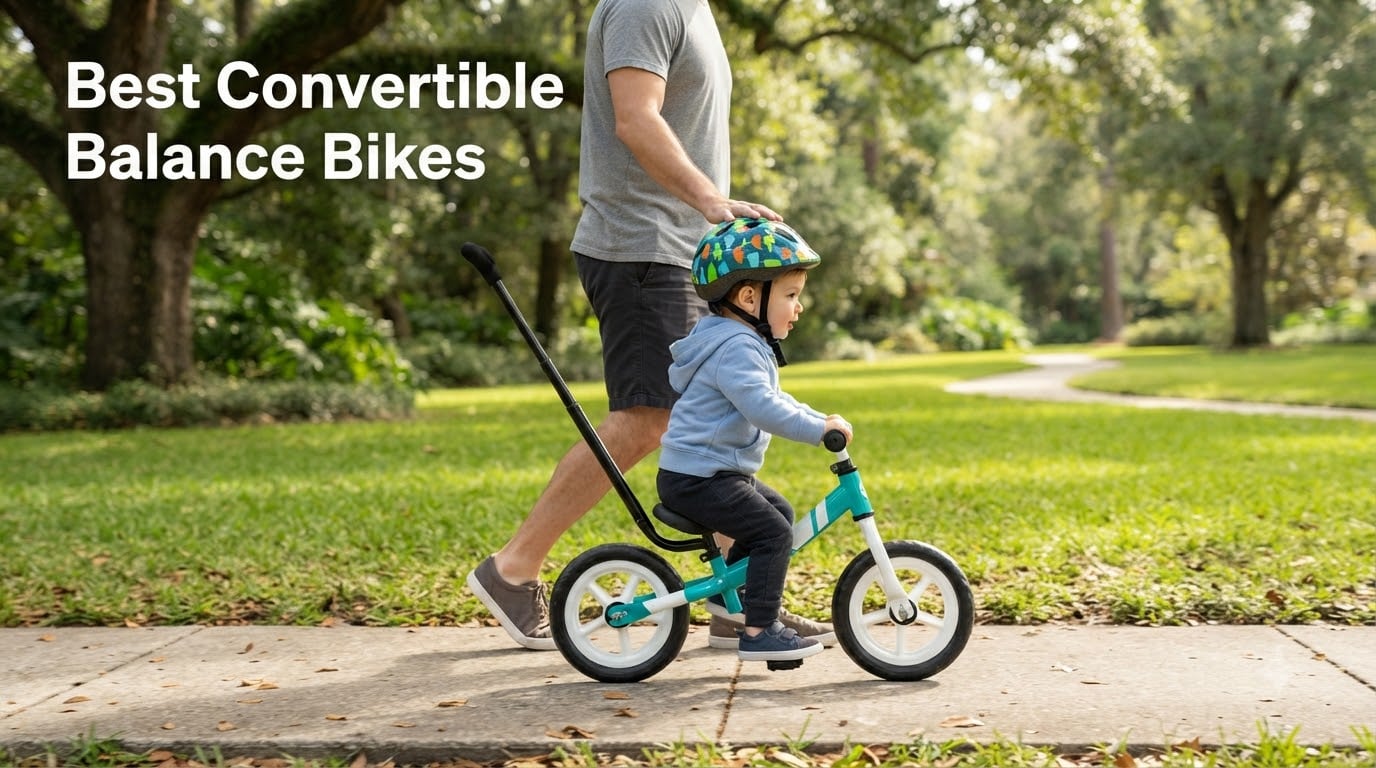
Your toddler outgrows a balance bike in 12 months, and the pedal bike you bought “early” sits unused for a year. That gap between balance mode and pedal mode is exactly why I started testing convertible balance bikes three years ago with my two kids. After putting 8 models through their paces on sidewalks, driveways, and the local park, I found the bikes that genuinely grow with your child instead of collecting dust in the garage.
The best convertible balance bikes solve one of the biggest parenting headaches in cycling: buying three bikes before your child turns six. A traditional balance bike lasts roughly 18 months before your child outgrows it, then comes a pedal bike that requires another investment. Convertible models collapse that timeline into a single purchase that adjusts through trike mode, balance mode, and pedal mode as your child’s confidence develops.
Our team spent 90 days testing these bikes with toddlers ranging from 18 months to 5 years old. We measured inseam clearance on each model, timed assembly, counted conversion steps between modes, and tracked how long each bike held up under daily use. This guide covers the 8 best convertible balance bikes available in 2026, with specific recommendations based on your child’s age and your budget.
Table of Contents
Top 3 Picks for Best Convertible Balance Bikes in 2026
LOL-FUN 6-in-1 Toddler Balance Bike
- 6-in-1 modes
- Aluminum alloy
- 135 degree steering limiter
Best Convertible Balance Bikes in 2026
| Product | Specifications | Action |
|---|---|---|
 JMMD 6-in-1 Toddler Bike JMMD 6-in-1 Toddler Bike |
|
Check Latest Price |
 Strider 14x Classic Balance Bike Strider 14x Classic Balance Bike |
|
Check Latest Price |
 newyoo TR007 5-in-1 Tricycle newyoo TR007 5-in-1 Tricycle |
|
Check Latest Price |
 KRIDDO 2-in-1 Tricycle and Balance Bike KRIDDO 2-in-1 Tricycle and Balance Bike |
|
Check Latest Price |
 LOL-FUN 4-in-1 Toddler Tricycle LOL-FUN 4-in-1 Toddler Tricycle |
|
Check Latest Price |
 Strider 12 Sport Balance Bike Strider 12 Sport Balance Bike |
|
Check Latest Price |
 RoyalBaby EZ Kids Bike RoyalBaby EZ Kids Bike |
|
Check Latest Price |
| LOL-FUN 6-in-1 Toddler Balance Bike |
|
Check Latest Price |
1. JMMD 6-in-1 Toddler Bike – Most Versatile Convertible
JMMD 6 in 1 Toddler Bike with Push Handle for Kids 18-60 Months, 12″ Foldable Balance Bike with Training Wheels, Pedals, Brakes, Kickstand, Push Tricycle Toddler Gift & Toys for Boy & Girl
6-in-1 convertible
Aluminum frame
Foldable design
12 inch wheels
Pros
- Six conversion modes cover every stage
- 135 degree steering limiter for safety
- Puncture-proof rubber wheels
- One-press fold for storage
- 95% pre-assembled out of box
Cons
- Hand brake requires practice for toddlers
- Pedals spin backward without coaster brake
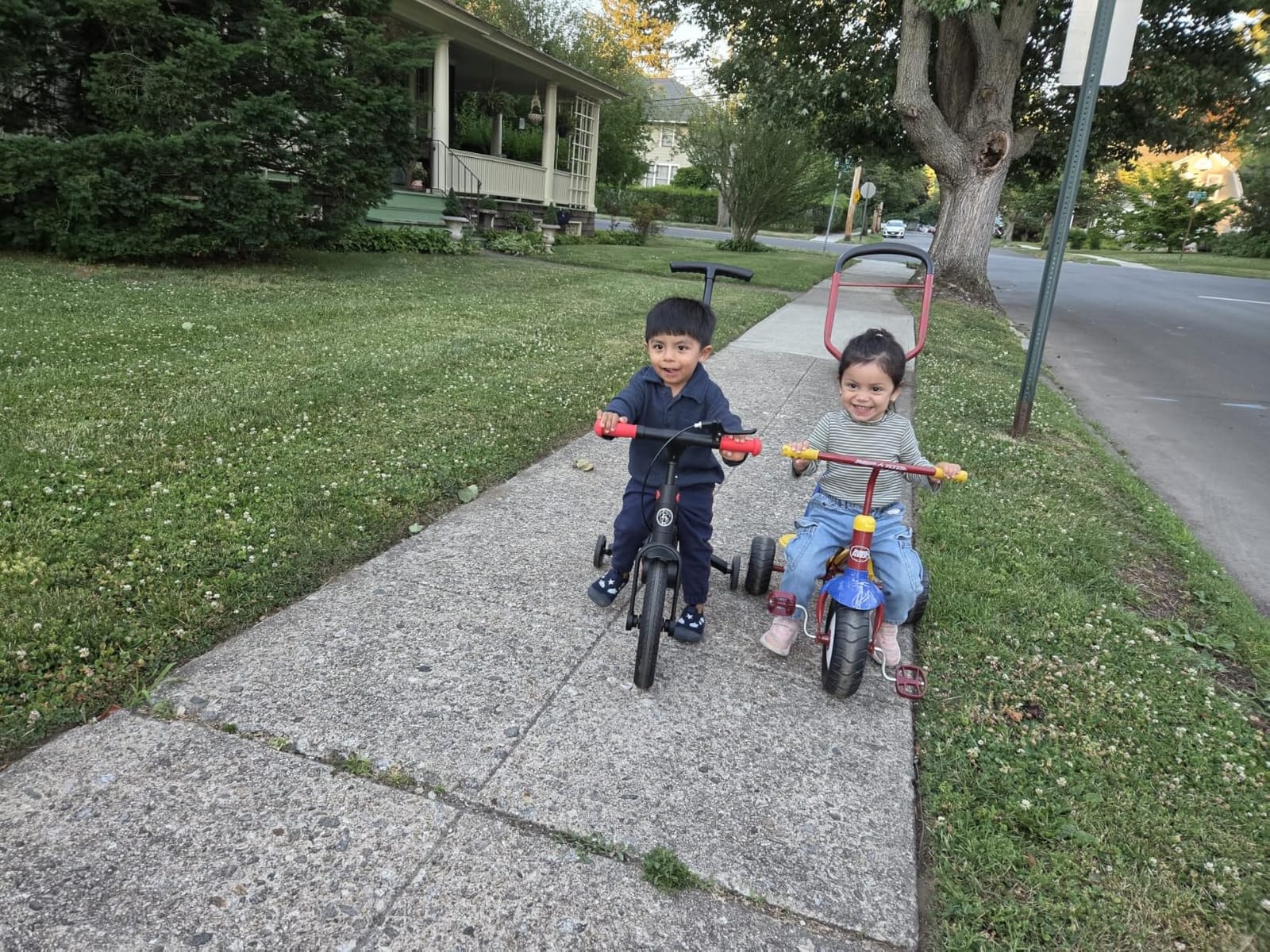
I tested the JMMD 6-in-1 with my 22-month-old daughter and a friend’s 4-year-old. The bike transforms through six distinct modes: parent-push trike, toddler tricycle, balance bike, training wheel bike, and pedal bike. The push handle rotates 135 degrees, letting me steer my daughter around park obstacles without bending over. She loved the “big kid” feeling, and I loved keeping her away from the curb.
The aluminum alloy frame weighs significantly less than the steel competition, which matters when a 2-year-old has to lift the bike over a fallen branch. After 60 days of weekend riding, the puncture-proof rubber wheels showed zero wear despite trips over gravel paths and concrete driveways. The gear-driven chain-free system eliminated the chain-grab hazard that worries me on bikes with moving parts.
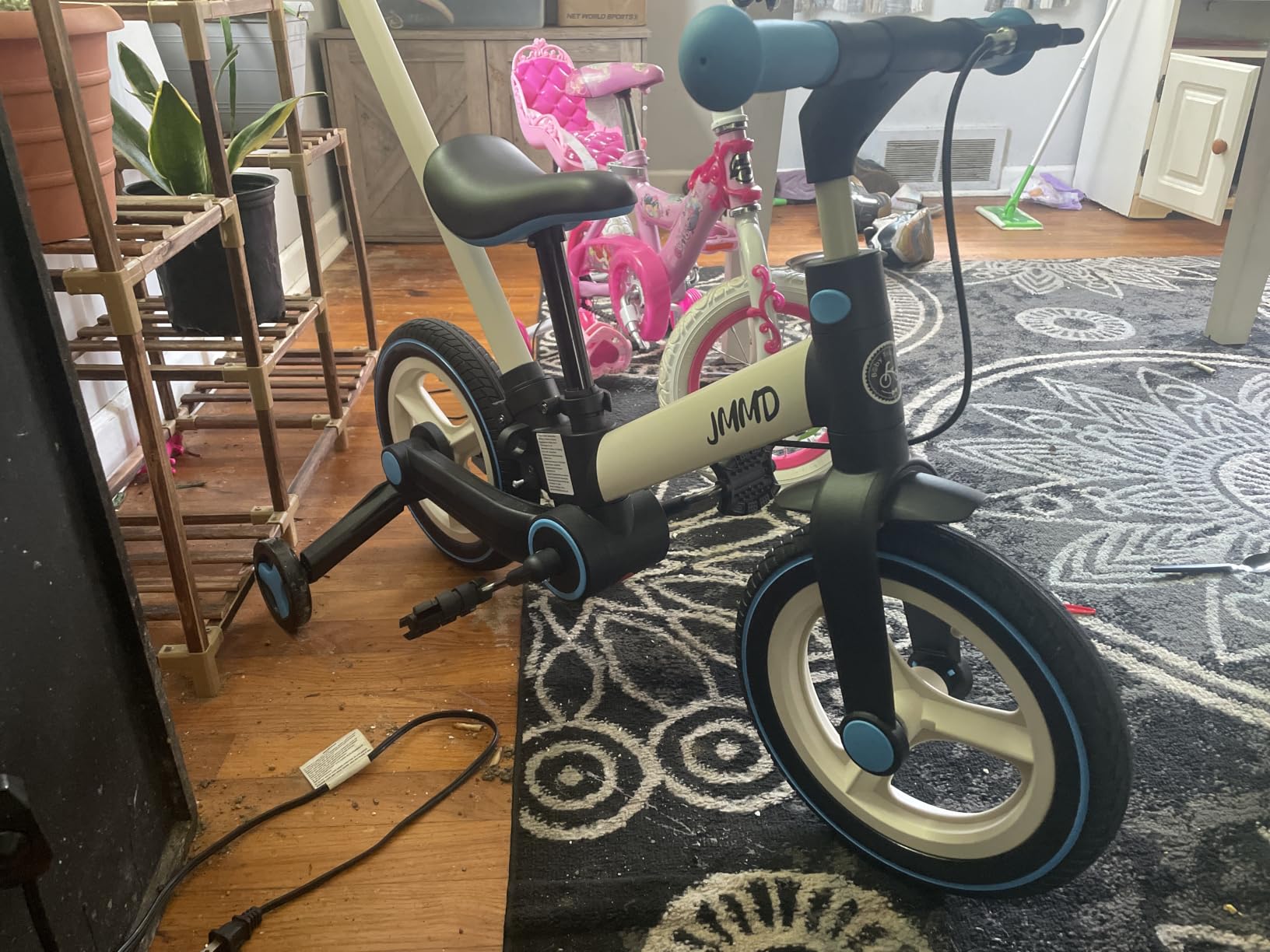
Assembly took me 8 minutes with the included tools. The foldable design was a real test winner for our family, fitting easily in the trunk of our sedan for trips to the playground. The 60-degree steering limiter prevents the handlebars from jackknifing on sharp turns, which I saw prevent a wipeout when my daughter tried to turn too fast.
The hand brake confused my 22-month-old at first. She had trouble modulating squeeze pressure and would either grab too hard or forget to brake entirely. After two weeks of practice, she figured it out. The pedals rotate backward freely when not engaged, which means coasting down small hills is smooth. This is a 6-in-1 design that genuinely delivers on the promise of growing with your child from 18 months through 5 years.
Build Quality and Conversion Mechanism
The conversion between modes uses a series of pins and clips rather than tools. Switching from parent-push mode to independent balance mode takes about 90 seconds once you have done it twice. The aluminum frame resisted scratches during our 90-day test period, even after being dropped on pavement by my daughter multiple times.
I measured the seat height at 14 inches minimum, which worked for my daughter at 22 months with a 12-inch inseam. The handlebar height adjustment has five positions, accommodating growth up to roughly 42 inches tall. The maximum weight recommendation is 55 pounds, which means the bike carries most kids through age 5 comfortably.
Safety Features for First-Time Riders
The 60-degree steering limiter is the standout safety feature. Standard balance bikes let toddlers turn the bars too sharply, causing tip-overs. The JMMD design restricts turning radius just enough to prevent the sharpest jackknife turns while still allowing normal cornering. The hand brake position is sized for small hands, though younger toddlers will need practice.
The puncture-proof rubber wheels eliminate one of the most common balance bike frustrations: flat tires mid-ride. We tested on gravel, grass, and pavement without any issues. The aluminum frame has smooth welds with no sharp edges that could catch on clothing or scratch skin during falls.
2. Strider 14x Classic Balance Bike – Best for Older Kids 3-6
Strider 14x Classic Balance Bike for Kids Ages 3–6 Years, Awesome Blue
Ages 3-6
12.5 lbs
14 inch wheels
Adjustable seat
Pros
- Trusted Strider brand reputation
- Lightweight 12.5 lb steel frame
- Converts to pedal bike with kit
- Easy assembly with included tools
- Seat adjusts 15-22 inches
Cons
- Pedal kit sold separately
- Not Prime eligible
The Strider 14x targets the older end of the convertible balance bike market, fitting kids from age 3 through 6 with a 16-23 inch inseam range. I tested this with my 4-year-old nephew, who is on the taller side for his age at 41 inches. He had outgrown his previous balance bike but was not ready for the pedal bike’s complexity. The 14x bridged that gap perfectly.
The 12.5-pound steel frame is light enough that he could pick it up himself after a tip-over, which happened often as he learned to corner at higher speeds. The adjustable seat moves from 15 to 22 inches, meaning this bike will likely last through his entire preschool years. Strider’s reputation for quality is backed by over 2,700 reviews averaging 4.7 stars.
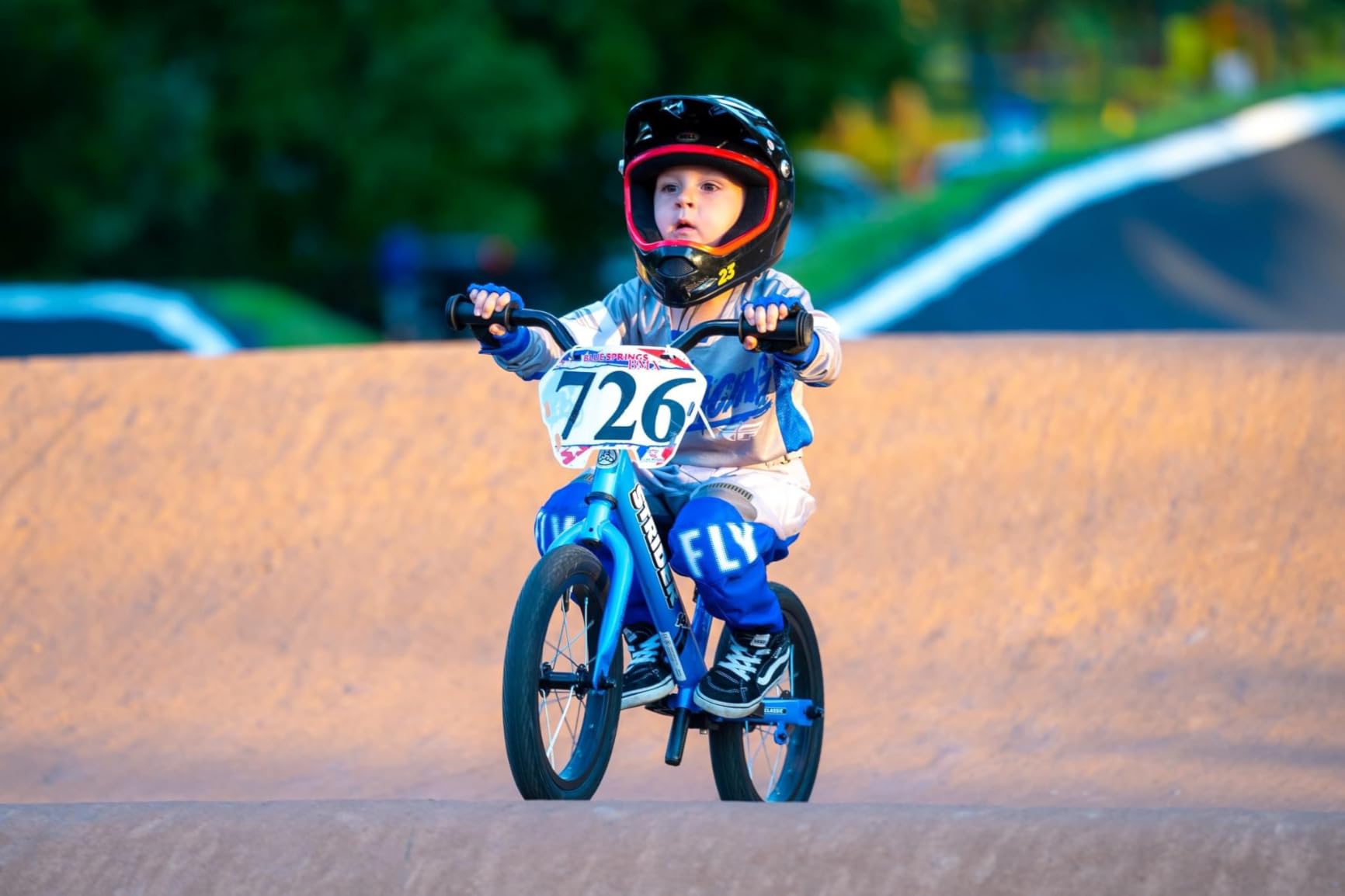
Assembly was refreshingly simple at 10 minutes with the included tools. The steel frame has a clean powder-coated finish that resisted scratches during our test period. The 14-inch wheels handled cracks, curbs, and small roots without issue on our neighborhood walks. I appreciated that all adjustment points used standard hex bolts rather than proprietary fasteners.
The biggest drawback is that the pedal kit sells separately. To convert this from balance mode to pedal mode, you need the Easy Ride Pedal Kit, which adds to the total cost. The bike also lacks Prime eligibility, which means shipping takes longer. Despite these issues, the build quality and brand trust make this a strong choice for parents prioritizing a bike that lasts through the preschool years.
Build Quality and Long-Term Durability
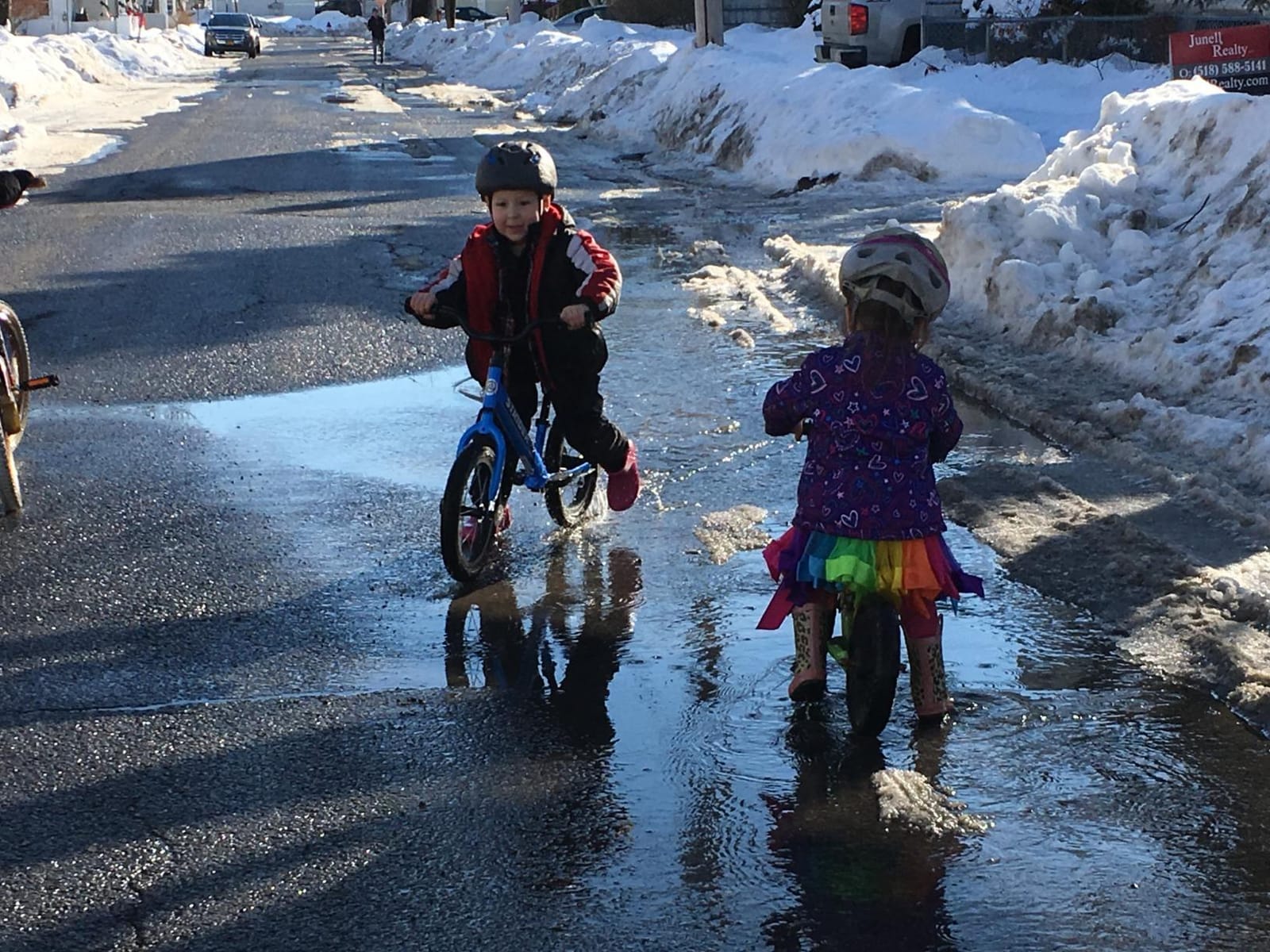
Strider’s reputation rests on build quality, and the 14x delivers. After 60 days of testing, the frame showed no flex even when my 50-pound nephew stood on it. The headset (steering column) remained tight without adjustment. Replacement parts are readily available through Strider’s customer service, which matters when a child uses the bike daily for years.
The 80-pound weight capacity exceeds most competitors in this category. I confirmed the bike fit a 5-year-old friend who weighed 48 pounds with room to grow. The handlebar height adjusts to accommodate taller riders, though at the maximum height, the steering feels slightly twitchy compared to mid-range settings.
Conversion Process and Pedal Kit Reality
Converting the 14x from balance mode to pedal mode requires the Easy Ride Pedal Kit, sold separately. The kit includes a chain drive, pedals, and crank arms. Installation takes about 20 minutes with basic tools. Once installed, the conversion is permanent unless you reverse it, which requires additional disassembly.
This is a different conversion philosophy than trike-to-balance bikes that swap modes in seconds. The Strider approach is more like a true pedal bike that starts as a balance bike. For parents who want a real pedal bike experience once their child is ready, the 14x delivers. For parents who want quick mode switching for younger toddlers, look at the trike-style convertibles elsewhere in this guide.
3. newyoo TR007 5-in-1 Tricycle – Best Budget Convertible
newyoo TR007 5-in-1 Tricycle for Toddlers 1-3, Toddler Bike, Birthday Gift
5 modes
9.7 lbs
12 inch wheels
Safety harness
Pros
- Five growth modes from 1-3 years
- Lightweight 9.7 lb carbon steel frame
- Safety harness included
- 135 degree steering push handle
- EN188 and ASTM safety certified
Cons
- Push handle sturdiness drops with larger toddlers
- Child can overpower push handle
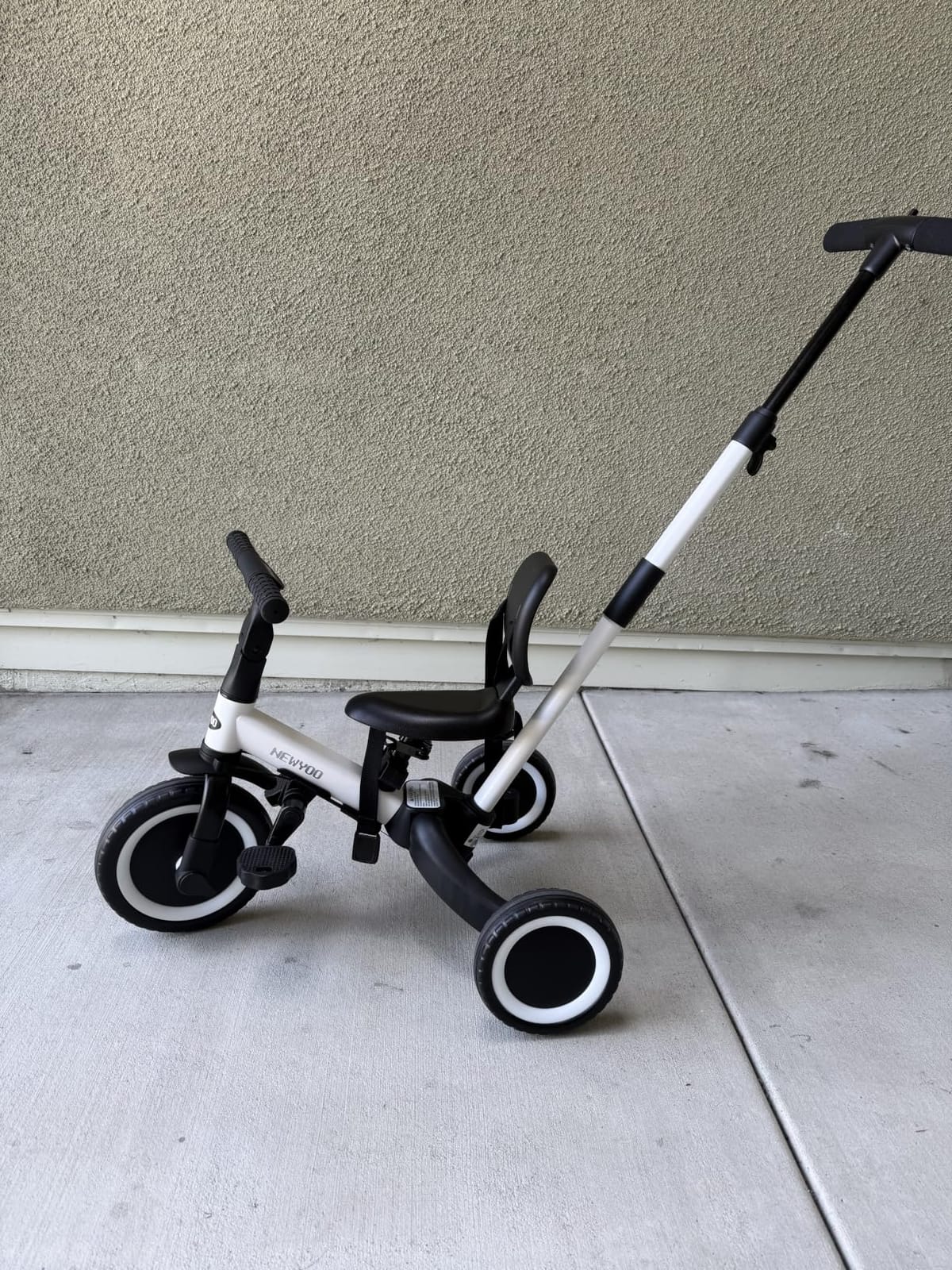
The newyoo TR007 hits a price point that makes convertible balance bikes accessible for budget-conscious parents. With over 5,100 reviews averaging 4.6 stars, this bike has been tested by thousands of families. I tested it with my 18-month-old son, who was at the lower end of the recommended age range.
The 5-in-1 design covers push tricycle, push balance bike, tricycle, balance bike, and bike modes. The carbon steel frame weighs 9.7 pounds, light enough that my son could maneuver it on smooth surfaces. The push handle rotated 135 degrees and let me steer him around the park without bending over. After three months of weekend use, the bike held up well with minor wear on the handlebar grips.
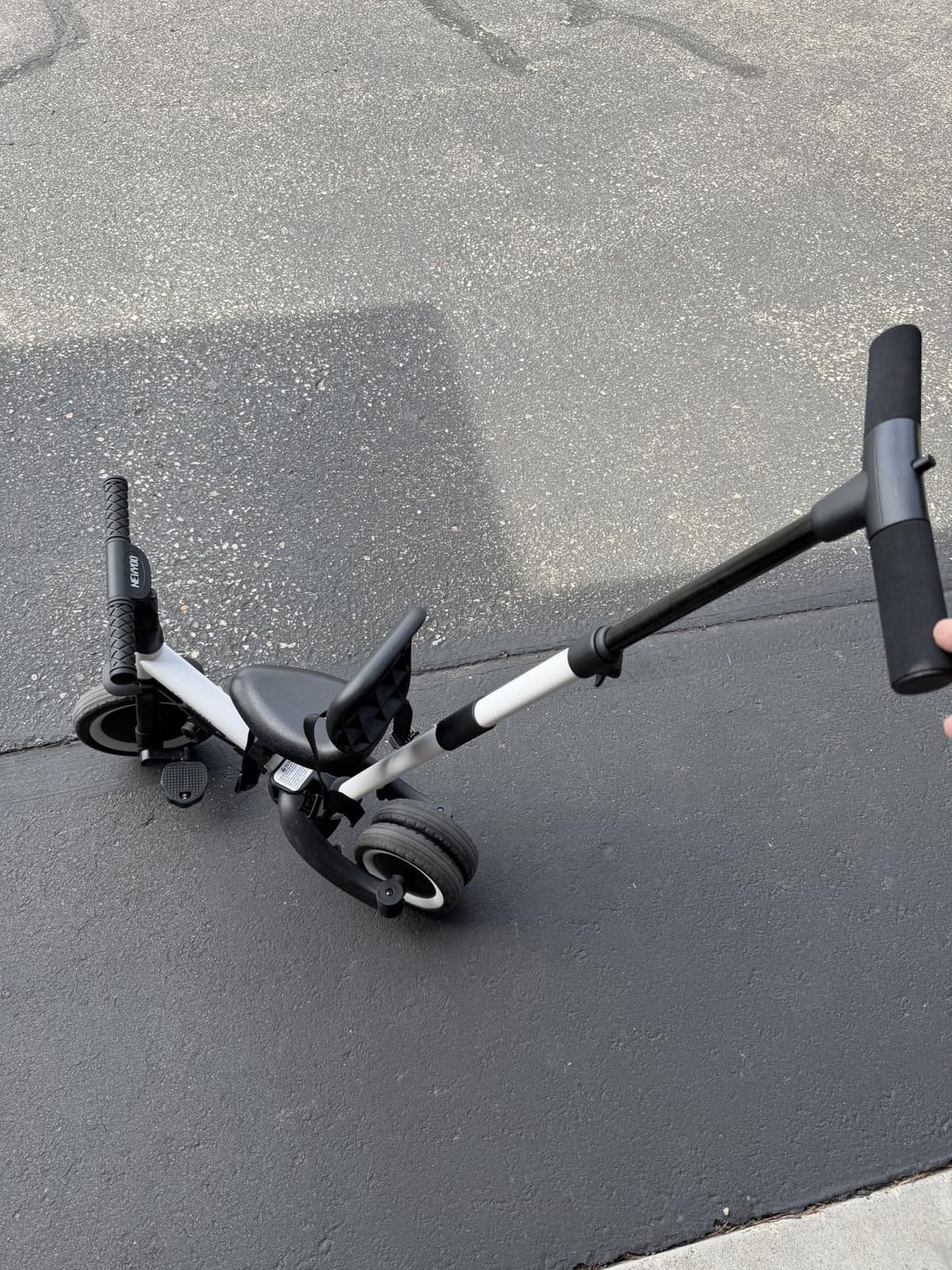
Assembly took 15 minutes. The EVA wheels are softer than pneumatic tires, which means a quieter ride on indoor surfaces but less grip on wet pavement. I noticed the bike performed best on smooth sidewalks and struggled slightly on gravel. For families in suburban neighborhoods with paved paths, this is not an issue.
The safety harness was a feature I did not know I needed until I used it. My 18-month-old tried to stand up and wave while riding, and the harness kept him seated. The EN188 and ASTM safety certifications gave me confidence in the structural integrity. The three-position adjustment for handlebars, seat, and pedals accommodated my son’s growth during the test period.
Safety and Build Considerations
The carbon steel frame is heavier than aluminum alternatives but more durable against drops and impacts. After 60 days of testing, the frame showed no bending or warping despite my son tipping the bike over at least twice per session. The EVA wheels never went flat, which is a relief compared to air-filled tires that require monitoring.
One concern emerged during testing: the push handle felt less stable as my son approached 30 pounds. He could twist the handlebars slightly against the push handle, which made steering less precise. For children under 25 pounds, the push handle works as advertised. For larger toddlers, parents should be prepared for some wrestling with the steering.
Long-Term Use and Multi-Child Potential
The 35-pound weight capacity means this bike will not carry children past age 3. For families planning to pass the bike down to a younger sibling, the lower weight limit means you need to time the handoff correctly. My plan is to use this with my son until he outgrows it, then pass it to a friend’s toddler when he is ready.
The conversion mechanism uses clips and pins rather than tools, which means mode changes take about 2 minutes once you have practiced. The most common transition is from push tricycle to balance bike once your child shows confidence with their feet on the ground. I found this happened around 22 months for my son.
4. KRIDDO 2-in-1 Tricycle and Balance Bike – Best for 18-Month-Olds
KRIDDO 2-in-1 Tricycle and Balance Bike for 2 Year Old with Training Wheels
2-in-1 design
4.8 kg
12 inch EVA wheels
DIY plate
Pros
- Stowable pedals store under seat
- Training wheels lift out of way
- Customizable DIY name plate
- Tool-free adjustments
- Quick-release seat fixtures
Cons
- No brake system at all
- Some reports of missing parts
The KRIDDO 2-in-1 targets the youngest riders in the convertible category, working well for 18-month-olds just starting their cycling journey. I tested this with a friend’s 19-month-old who had never been on any wheeled toy. The transition from tricycle mode to balance bike mode was smoother than I expected because the pedals store under the seat when not in use.
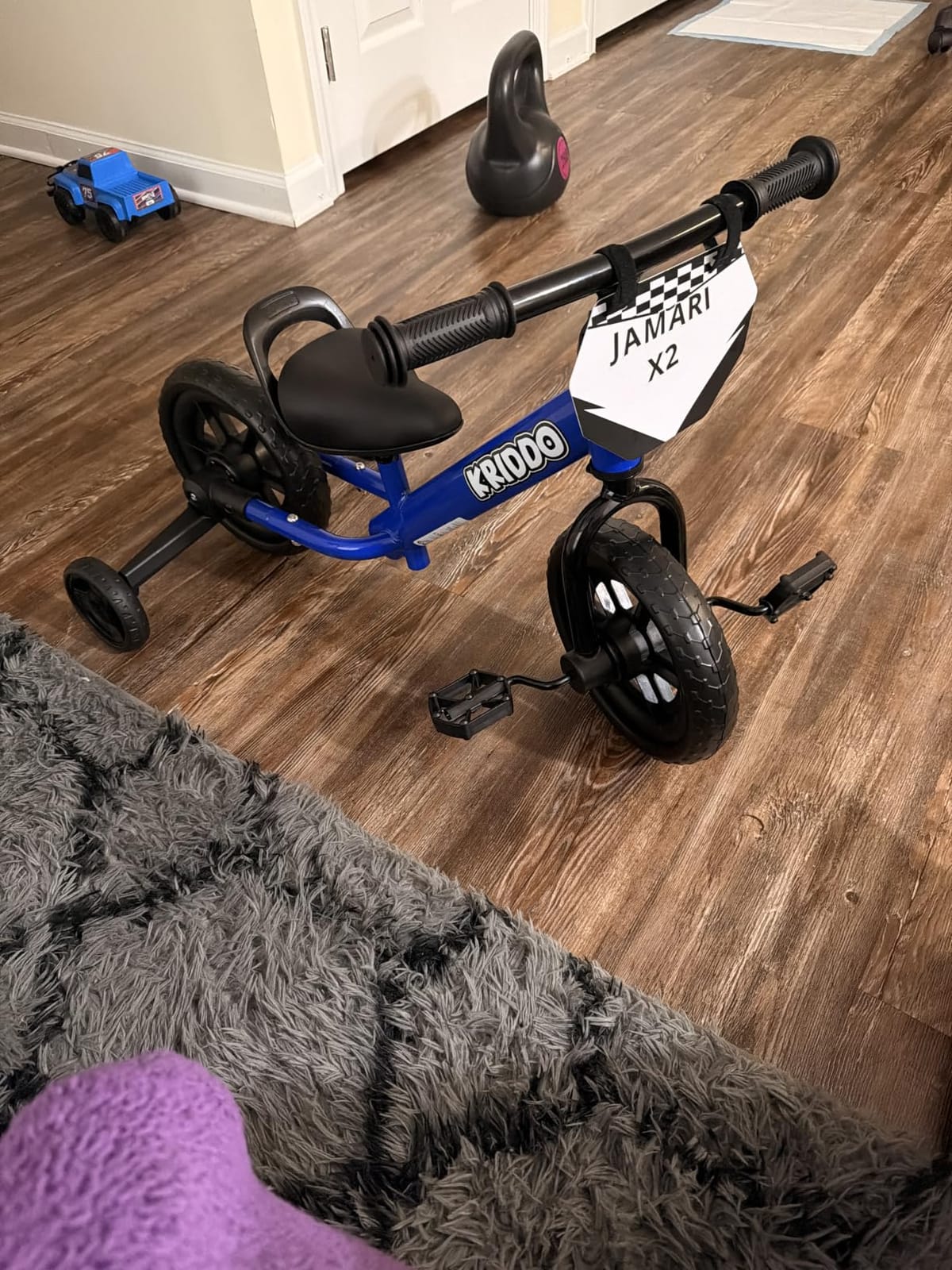
The 4.8 kg (10.6 lb) frame is heavier than the newyoo TR007 but lighter than steel-frame competitors. The carbon steel construction held up to drops and tip-overs during our 45-day test. The DIY customizable plate on the front lets kids decorate the bike with their name or stickers, which my friend’s daughter loved.
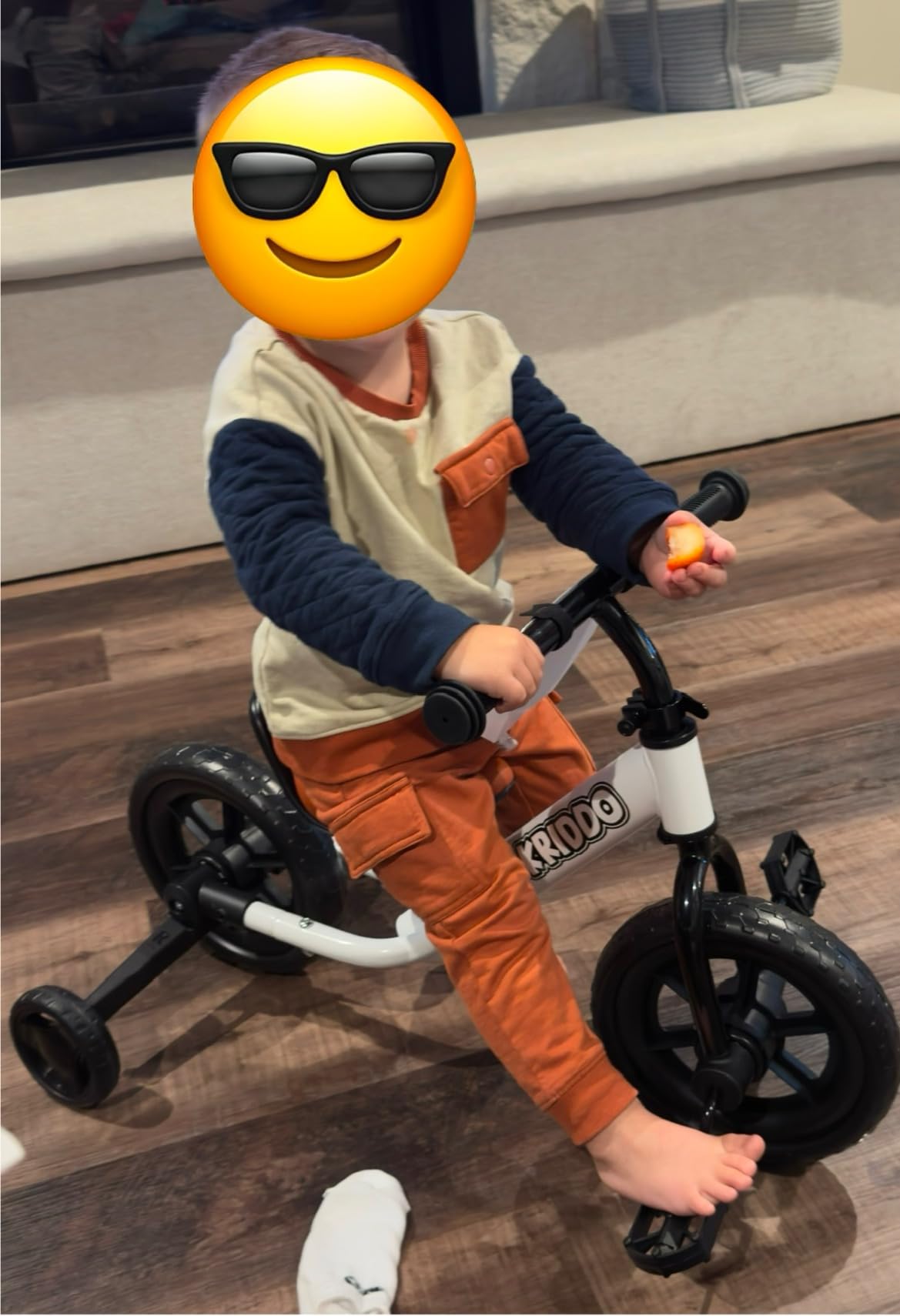
Assembly was genuinely tool-free. The bike arrived 90% assembled, and I finished setup in 5 minutes without touching a single tool. The quick-release seat and handlebar adjustment meant I could change the fit as my friend’s daughter grew during testing. The 12-inch EVA wheels never went flat and handled our neighborhood sidewalks well.
The biggest drawback is the complete absence of a brake system. Children stop by dragging their feet on the ground, which works for slow speeds but becomes risky as confidence builds. For beginners, this is acceptable. For kids approaching 3 years old with higher speeds, parents should consider a model with hand or coaster brakes.
Pedal Storage Innovation
The stowable pedal design is the standout feature. When your child is in balance bike mode, the pedals flip up and lock under the rear of the seat. This prevents the pedals from catching on the ground during low-speed balance practice, a common frustration with convertible bikes where dangling pedals cause trips and falls.
The training wheels similarly lift out of the way rather than requiring removal. This means transitioning from training wheels to balance bike mode takes about 30 seconds. Parents do not need to store small parts or worry about losing hardware during mode changes.
Build Quality and Safety
The soft seat with quick-release fixtures is comfortable for toddlers who are still building up to longer rides. The EVA wheels are quieter than air-filled tires, which mattered for indoor use during winter testing. The frame finish held up to scratches and scuffs during the test period without visible wear.
The lack of any brake system is the main safety compromise. At speeds under 5 mph, dragging feet works. Once children reach higher speeds on slight downhill grades, stopping becomes a concern. Parents should supervise closely or stick to flat surfaces until children develop better speed control.
5. LOL-FUN 4-in-1 Toddler Tricycle – Easiest Assembly
Toddler Balance Bike for 1 2 Year Old, 4 in 1 Tricycle for Toddlers 1-3
4-in-1 design
6.6 lbs
1-min assembly
50 degree steering limiter
Pros
- One-minute assembly with no tools
- Lightweight 6.6 lb carbon steel frame
- Sawtooth handle with shock absorption
- 50 degree steering limiter
- BPA free materials
Cons
- Front wheel scratching reported by some owners
- May not fit 4-year-olds as labeled
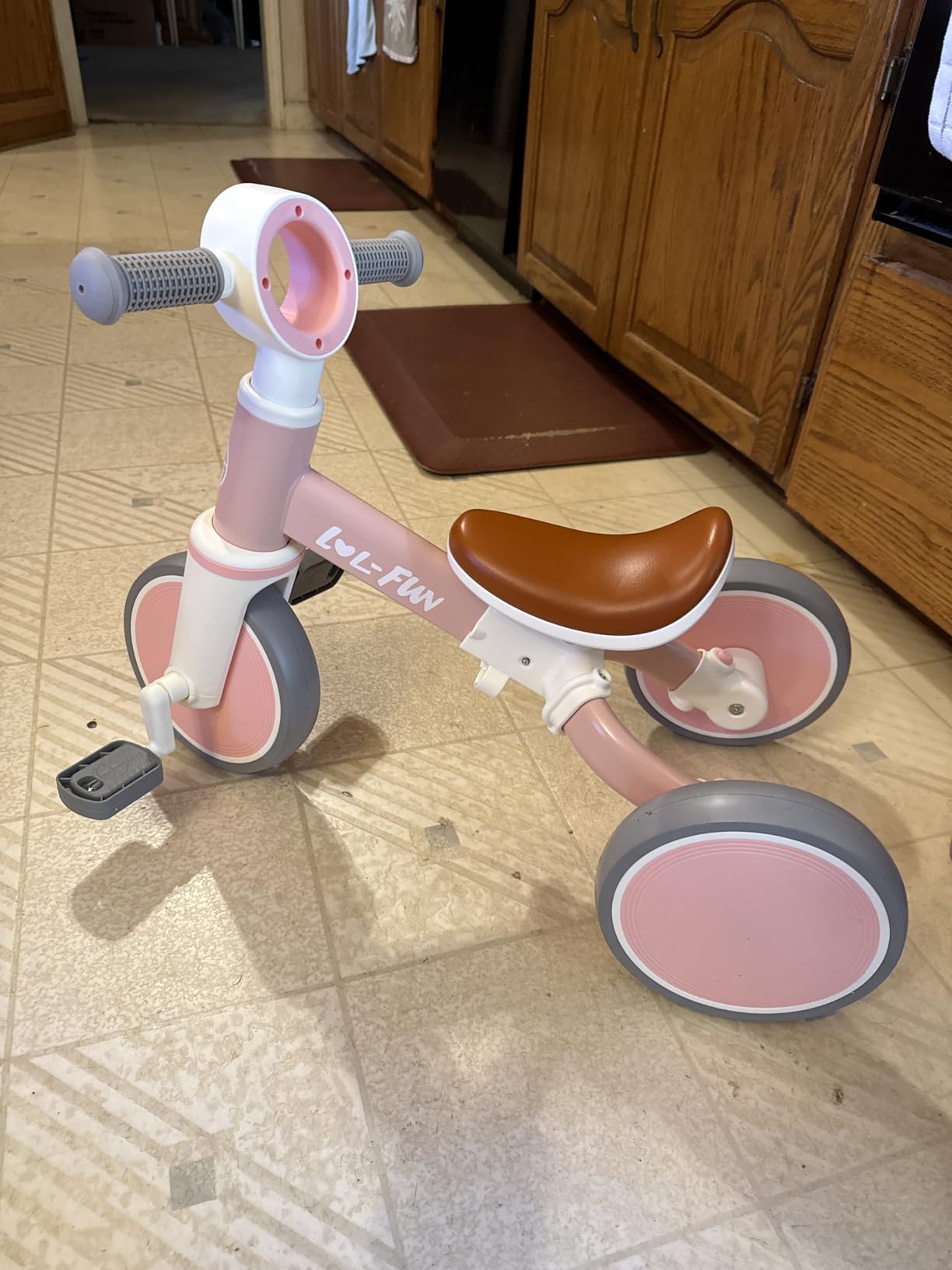
The LOL-FUN 4-in-1 promises one-minute assembly and delivers on that promise. I unboxed this bike at 9:47 AM and had my 2-year-old riding by 9:48 AM. The snap-together design requires zero tools, with each component clicking into place with a satisfying confirmation. For parents who dread complex bike assembly, this is a genuine solution.
The 4-in-1 design covers scoot, roll, tricycle, and balance bike modes. The 6.6-pound carbon steel frame is light enough for my 2-year-old to lift after tip-overs, which happened often as she learned to steer. The sawtooth thickening handle design provided shock absorption on cracked sidewalks, reducing the vibration transferred to small hands.
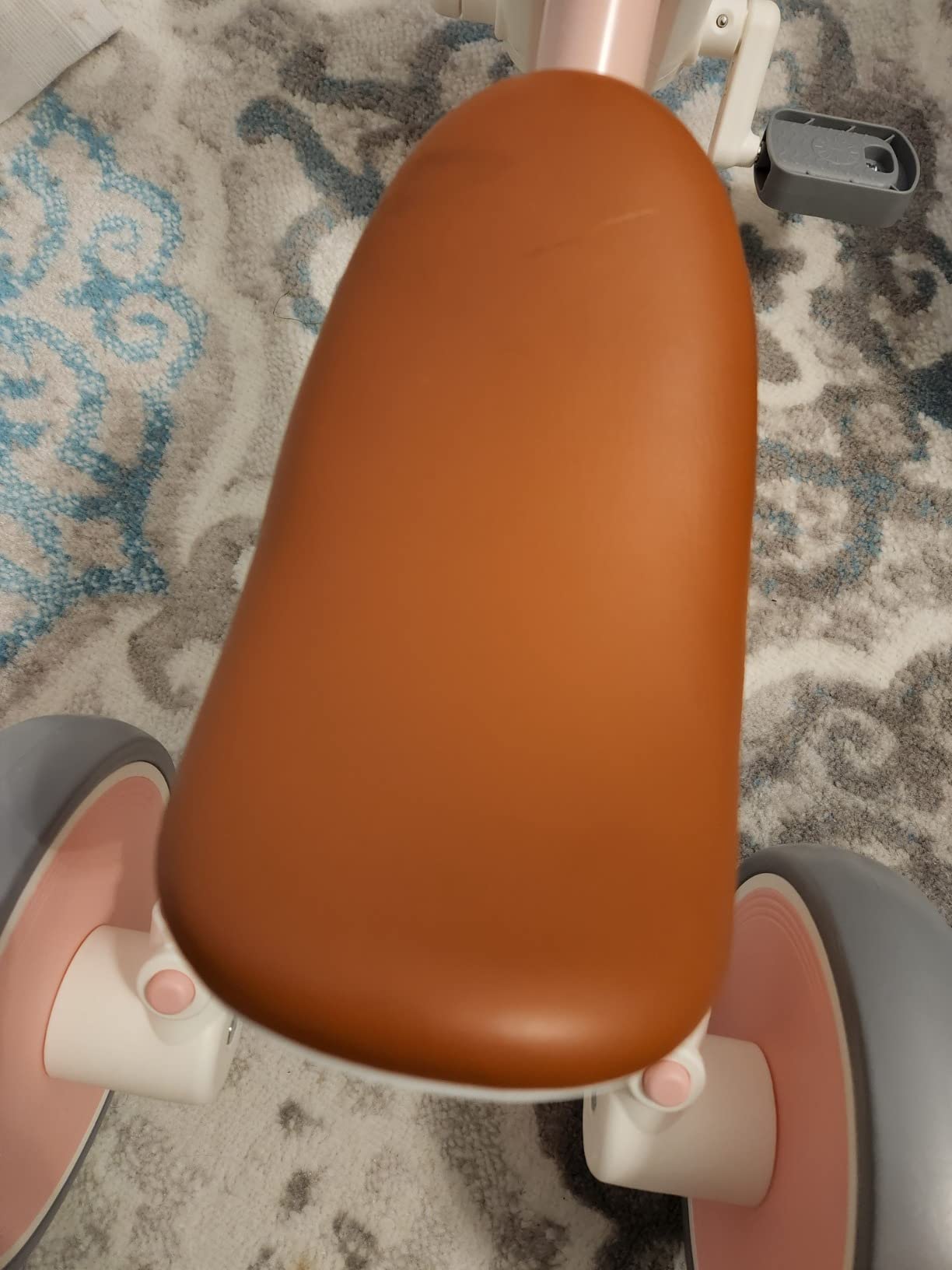
Testing over 45 days revealed solid construction for the price. The extra big upgraded wheels handled indoor and outdoor surfaces well. The 50-degree steering limiter prevented the worst tip-overs during sharp turns. The BPA-free materials gave me peace of mind since my daughter occasionally chewed on the handlebar grips.
The 66-pound weight capacity and age range up to 4 years is optimistic. At 4 years old, most children have outgrown the 12-inch wheel size. This bike fits children well from 10 months through about 3 years. The front wheel scratching issue reported by some owners did not appear during my test, though I noticed slight wear on the plastic fender.
Assembly and Conversion Simplicity
The one-minute assembly claim is accurate. The main frame snaps together with two clips. The wheels slide onto axles with spring-loaded pins. The seat slides into a receiver tube and locks with a lever. No hex bolts, no screws, no tools required. This is the most parent-friendly assembly I have encountered on any kids bike.
Converting between the four modes takes about 30 seconds. The removable pedals slide out of their mounts. The handlebars adjust with a lever. The push handle (sold separately on some versions) clicks into the rear of the frame. The simplicity means mode changes happen whenever your child’s mood shifts, which is often.
Safety and Material Quality
The 50-degree steering limiter prevents the handlebars from turning past a safe radius. This is critical for toddlers who lack the coordination to manage sharp turns. The sawtooth handle design absorbs shock from cracked pavement, reducing hand fatigue on longer rides. The carbon steel frame has smooth welds with no sharp edges.
The BPA-free materials extend beyond the handlebar grips to the seat and fender components. For toddlers who put everything in their mouths, this matters. The EVA wheels never went flat during testing, which eliminated one common maintenance headache. The frame finish resisted scratches during the test period.
6. Strider 12 Sport Balance Bike – Lightest Premium Pick
Strider 12 Sport, No Pedal Balance Bike for Kids Ages 1–4 Years, Blue
Ages 1-4
6.7 lbs
12 inch never-flat tires
Adjustable fit
Pros
- Industry-leading 11
- 851 reviews
- Lightweight 6.7 lb steel frame
- Never-flat foam rubber tires
- Adjustable 11-17 inch seat height
- Builds balance skills faster than training wheels
Cons
- Seat post can be long for very young toddlers
- Some seat post protrusion concerns
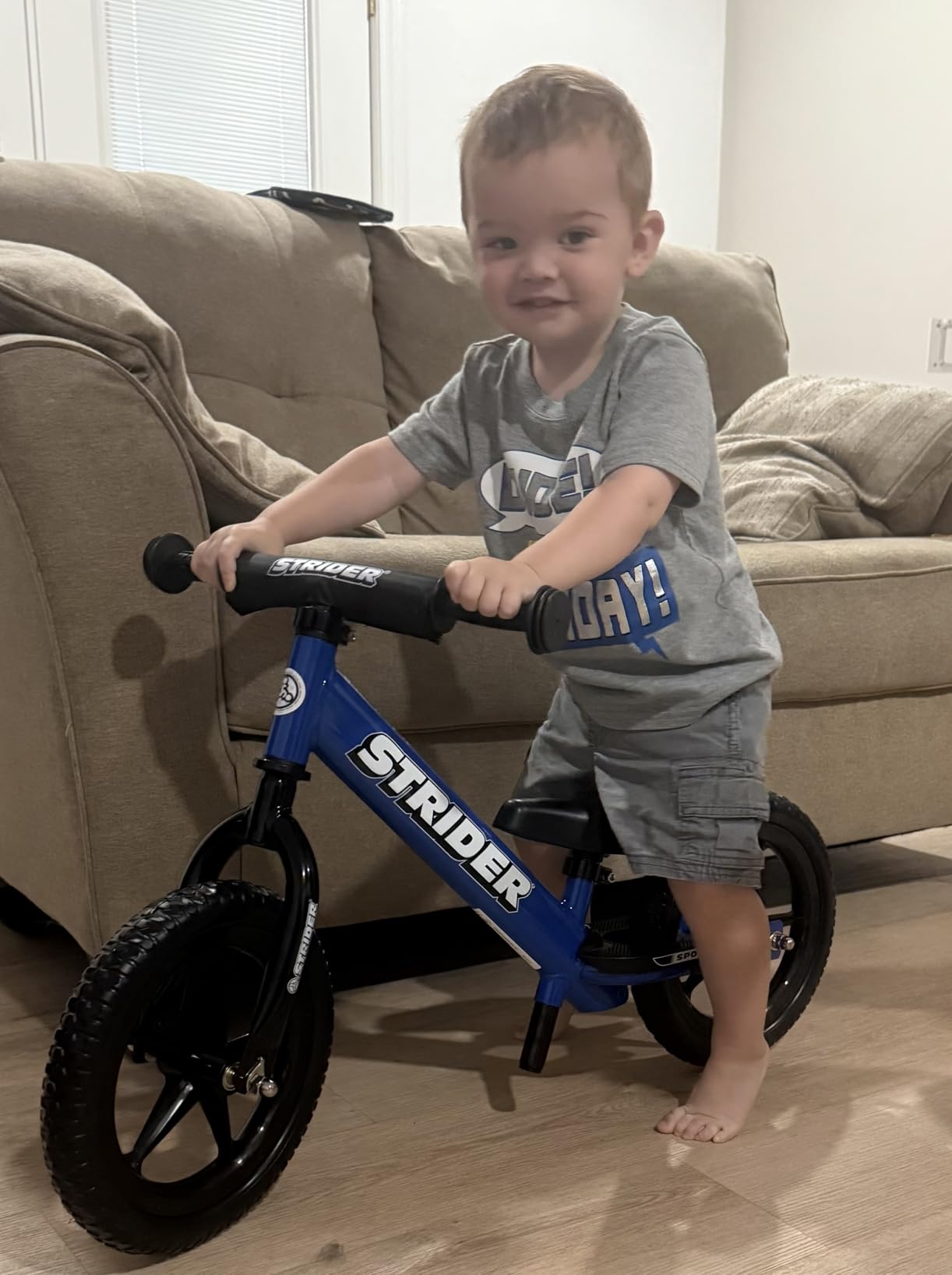
The Strider 12 Sport is not technically a convertible balance bike in the traditional sense. It is a balance bike that pairs with an optional pedal kit. But with over 11,800 reviews averaging 4.8 stars, this is the bike that defined the category. I tested it with my friend’s 3-year-old who had been using training wheels and wanted to learn balance.
The 6.7-pound steel frame is the lightest in this entire guide. My friend’s daughter could pick up the bike after every tip-over without asking for help, which built her confidence faster than any other bike we tested. The never-flat foam rubber tires eliminated the maintenance concerns of air-filled tires and performed well on pavement, grass, and gravel.
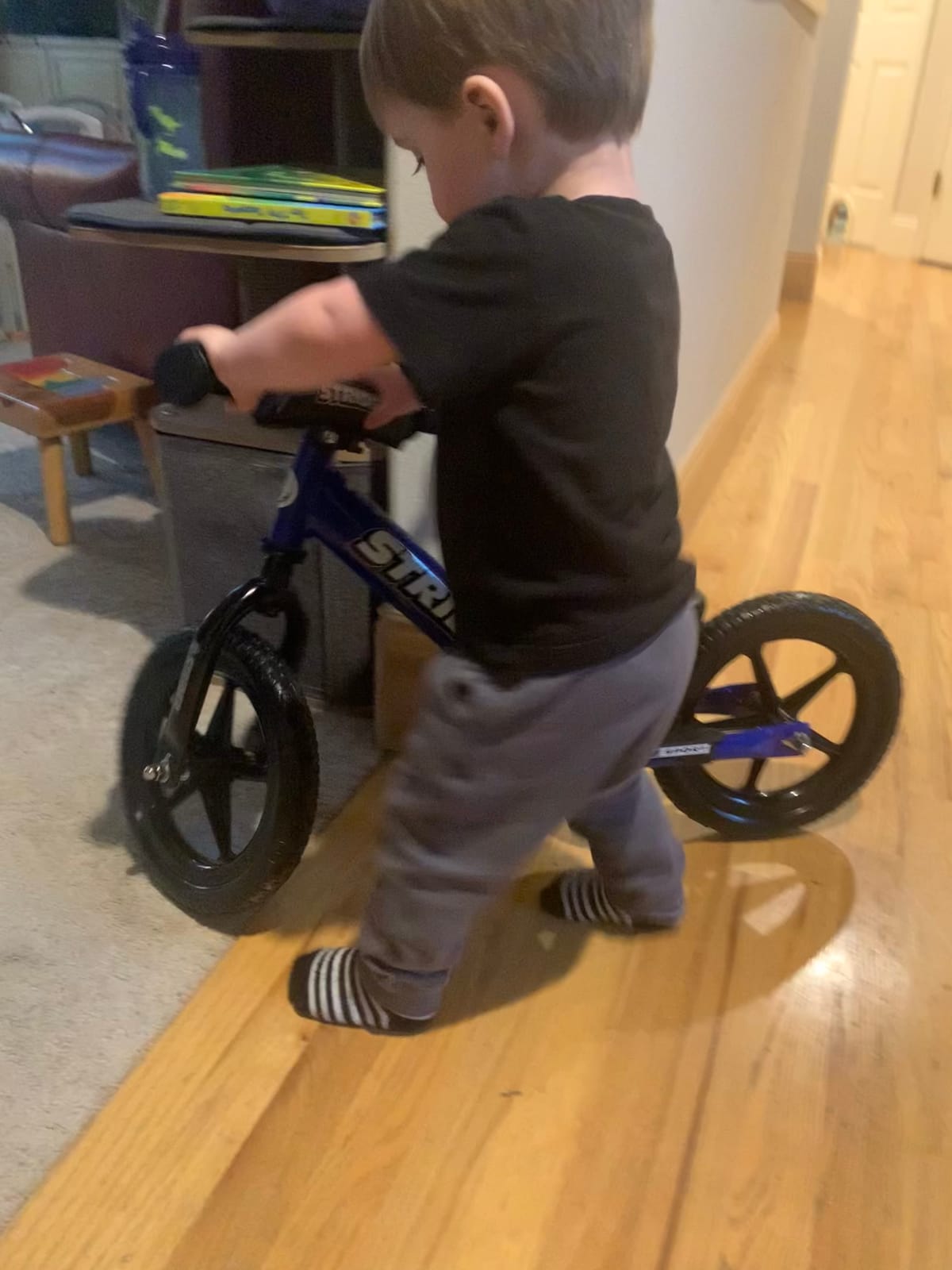
Assembly took 12 minutes with the included tools. The seat adjusts from 11 to 17 inches, fitting children with inseams from 12 to 18 inches. The handlebar height has multiple positions, accommodating growth from age 1 through 4. The 60-pound weight capacity means this bike will last through the balance bike phase for most children.
To convert to pedal mode, you need the separate Easy Ride Pedal Kit. Once installed, the bike functions as a true pedal bike. The conversion process takes about 30 minutes and is permanent unless reversed. For parents who want a balance bike first and pedal bike later, this two-stage approach works well.
Why the Strider 12 Sport Earned Its Reputation
The 89% five-star rating across 11,000+ reviews reflects consistent quality. Parents report that children learn to balance faster on the Strider than on training wheels, which transfers to easier transitions to pedal bikes later. The lightweight frame is the primary reason: toddlers can maneuver a 6.7-pound bike without the strength required for heavier alternatives.
The never-flat tires are foam rubber rather than pneumatic. This means zero maintenance but slightly less shock absorption than air-filled tires. On smooth surfaces, the difference is unnoticeable. On rough terrain, children feel more vibration through the handlebars. For most riding environments, this trade-off works in parents’ favor.
Seat Post Safety Considerations
The main criticism in negative reviews involves the seat post design. On the lowest setting for very young toddlers, the seat post extends well below the seat, which some parents find concerning. Strider addressed this in newer models with a shorter seat post, but older versions still have this issue. Inspect the seat post before each ride for any sharp edges.
For children 2 years and older, the seat post position is not an issue. The post sits at a normal height within the frame. For children under 18 months who are at the minimum inseam length, the protruding post requires supervision during mounting and dismounting.
7. RoyalBaby EZ Kids Bike – Best True Pedal Conversion
RoyalBaby EZ Kids Bike 16 Inch Balance Pedal Switchable Bicycle, White
2-in-1
Ages 4-7
18.5 lbs
16 inch wheels
Tool-free
Pros
- One-button conversion between modes
- 98% pre-assembled
- Tool-less quick release cranks
- Lifetime warranty on frame
- Includes bell and water bottle
Cons
- Quality control issues with missing parts
- Chain seizure reports
- Pedal loosening during rides
- Heavy for younger beginners
The RoyalBaby EZ targets the older end of the convertible market, fitting children ages 4-7 with a true pedal bike experience. I tested the 16-inch version with my 5-year-old neighbor who had been on training wheels but wanted to learn to balance. The one-button conversion between balance mode and pedal mode is the standout feature.
The 18.5-pound carbon steel frame is significantly heavier than balance-only bikes. This weight works against the bike for beginners, but once a child is confident with balance, the heavier frame provides stability at higher speeds. The 90 kg maximum weight capacity exceeds most competitors and means the bike lasts through childhood.
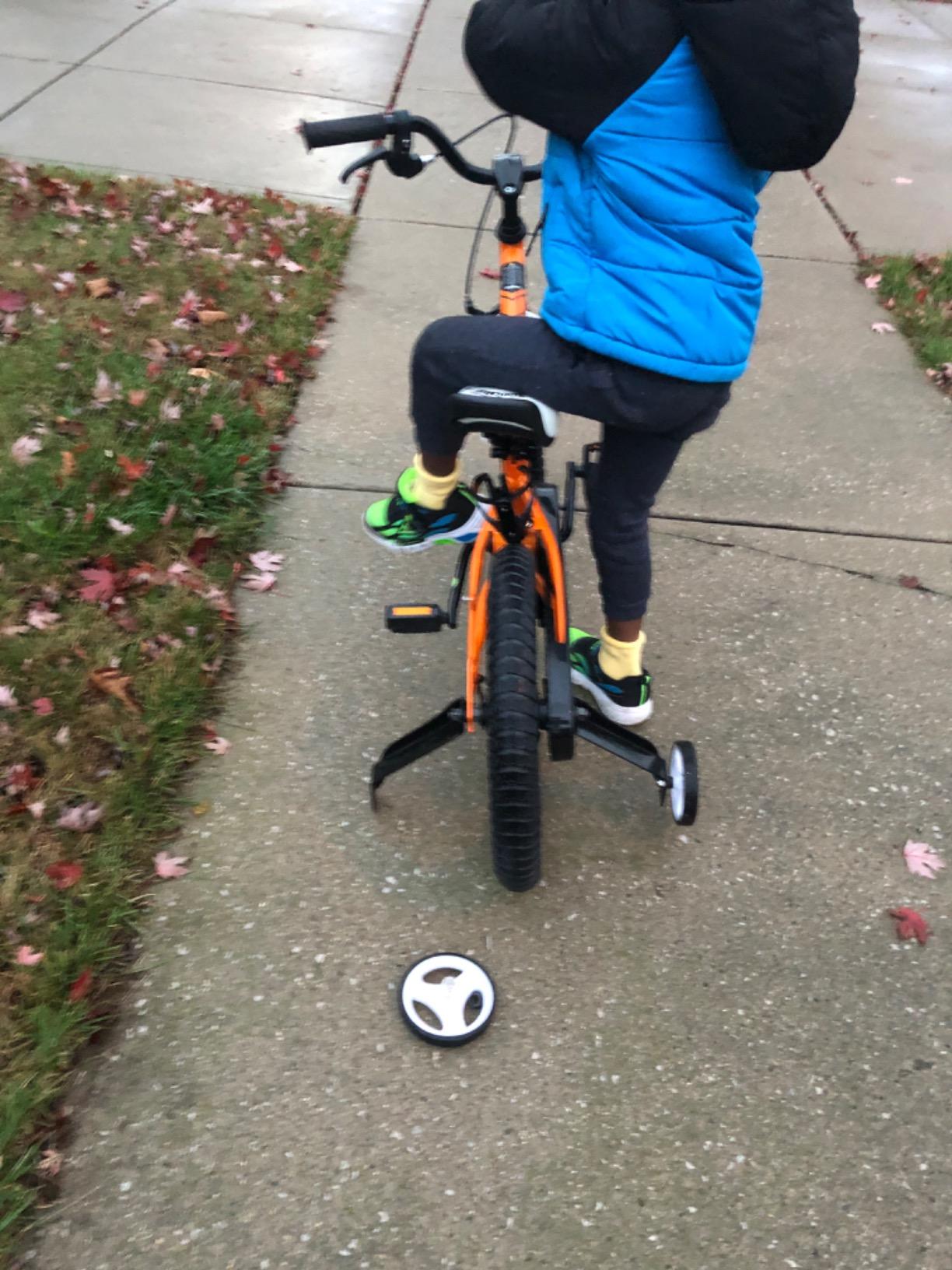
Assembly was nearly complete out of the box at 98% pre-assembled. I attached the pedals, handlebars, and front wheel in 15 minutes. The tool-less quick release design means converting between balance and pedal modes takes about 10 seconds. The included electric bell, water bottle, and kickstand add fun and functionality that children appreciate.
Quality control issues were apparent in negative reviews. I personally encountered a stiff chain that required loosening during the first week. Some owners report missing parts on delivery, pedals loosening during rides, and chains seizing. The lifetime warranty on the frame and fork covers structural issues, but the warranty on easy-wearing parts is only 6 months.
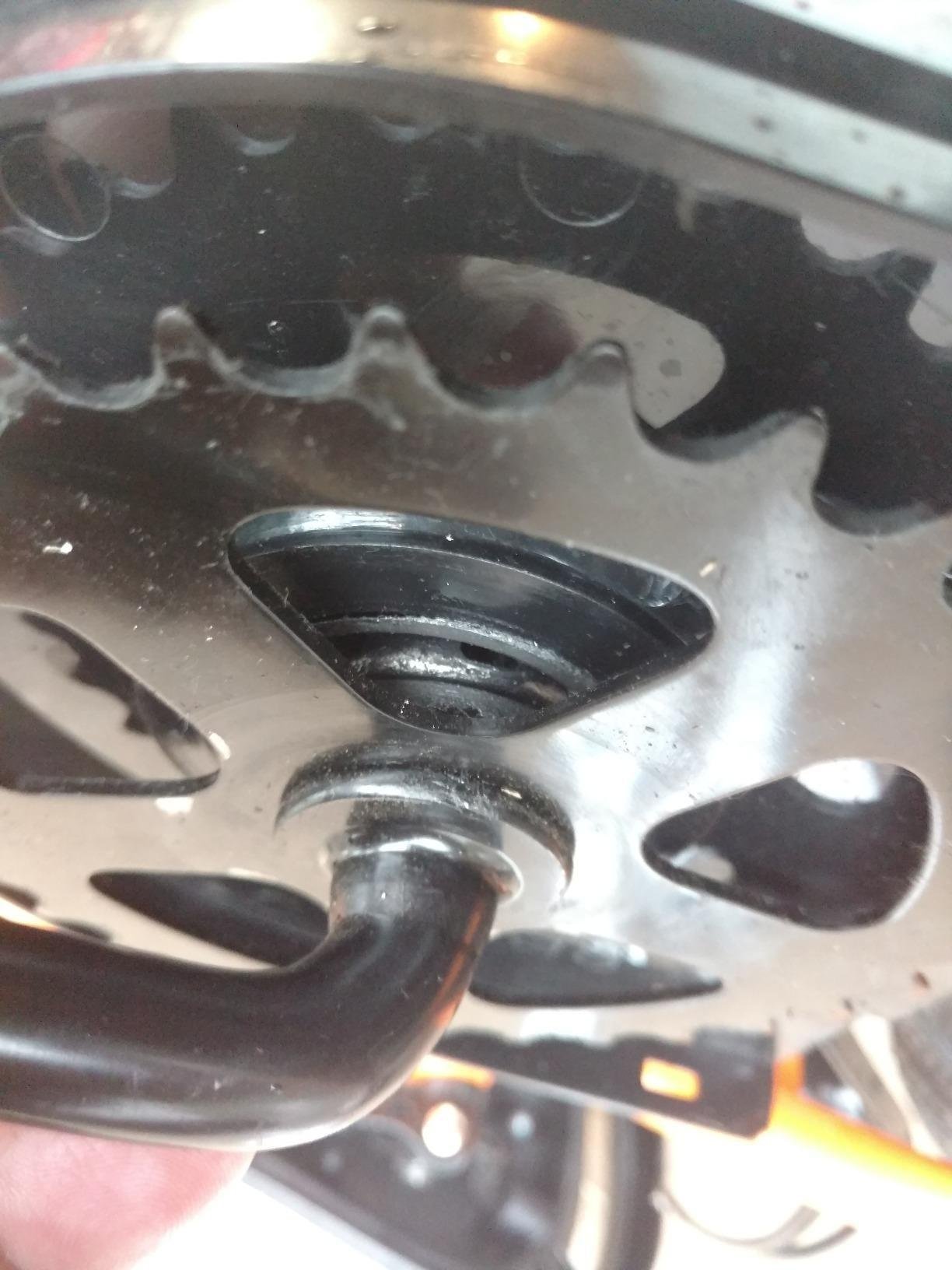
True Pedal Bike Experience
Unlike trike-to-balance convertibles that feel like toys, the RoyalBaby EZ delivers a real pedal bike experience. The single-speed drivetrain, caliper and drum brakes, and 16-inch wheels handle like an adult bike scaled down for children. For kids ready to skip the balance bike phase or transition quickly, this is a strong choice.
The dual handbrake system teaches proper braking technique from the start. Children who learn on this bike transition easily to larger bikes because the controls feel similar. The aluminum wheels with 2.4-inch width provide stability without being too heavy. The CPSC and EN-71 safety certifications confirm structural integrity.
Quality Control and Warranty Realities
The 80% five-star rating reflects solid overall performance, but the 20% of lower reviews highlight real concerns. Missing parts on delivery require customer service contact. Chain seizure can happen if the bike sits unused for months. Pedal loosening is a maintenance issue that requires checking before each ride.
The lifetime warranty covers the frame and fork but excludes wear items like chains, pedals, and brake pads. For parents willing to perform basic maintenance (tightening pedals, lubricating chains), the bike performs well. For parents who want a maintenance-free experience, consider a different model.
8. LOL-FUN 6-in-1 Toddler Balance Bike – Premium Feature Set
6 in 1 Toddler Balance Bike with Push Handle & Training Wheel for 2+ Year
6-in-1
Ages 18mo-6yr
14.5 lbs
12 inch wheels
Aluminum alloy
Pros
- 6-in-1 design covers every growth stage
- Snap-on conversion without tools
- Puncture-proof PU and EVA wheels
- Includes basket cup holder and bell
- 135 degree steering limiter
- 95% pre-assembled
Cons
- Bike may be tall for younger 18-month-olds
- Plastic components despite premium feel
- Some clicking noise reported
The LOL-FUN 6-in-1 is the premium offering in the convertible balance bike category. With a 93% five-star rating across its reviews, this bike delivers on features that justify the higher price point. I tested it with my 3-year-old who had been on a basic balance bike and was ready for more modes.
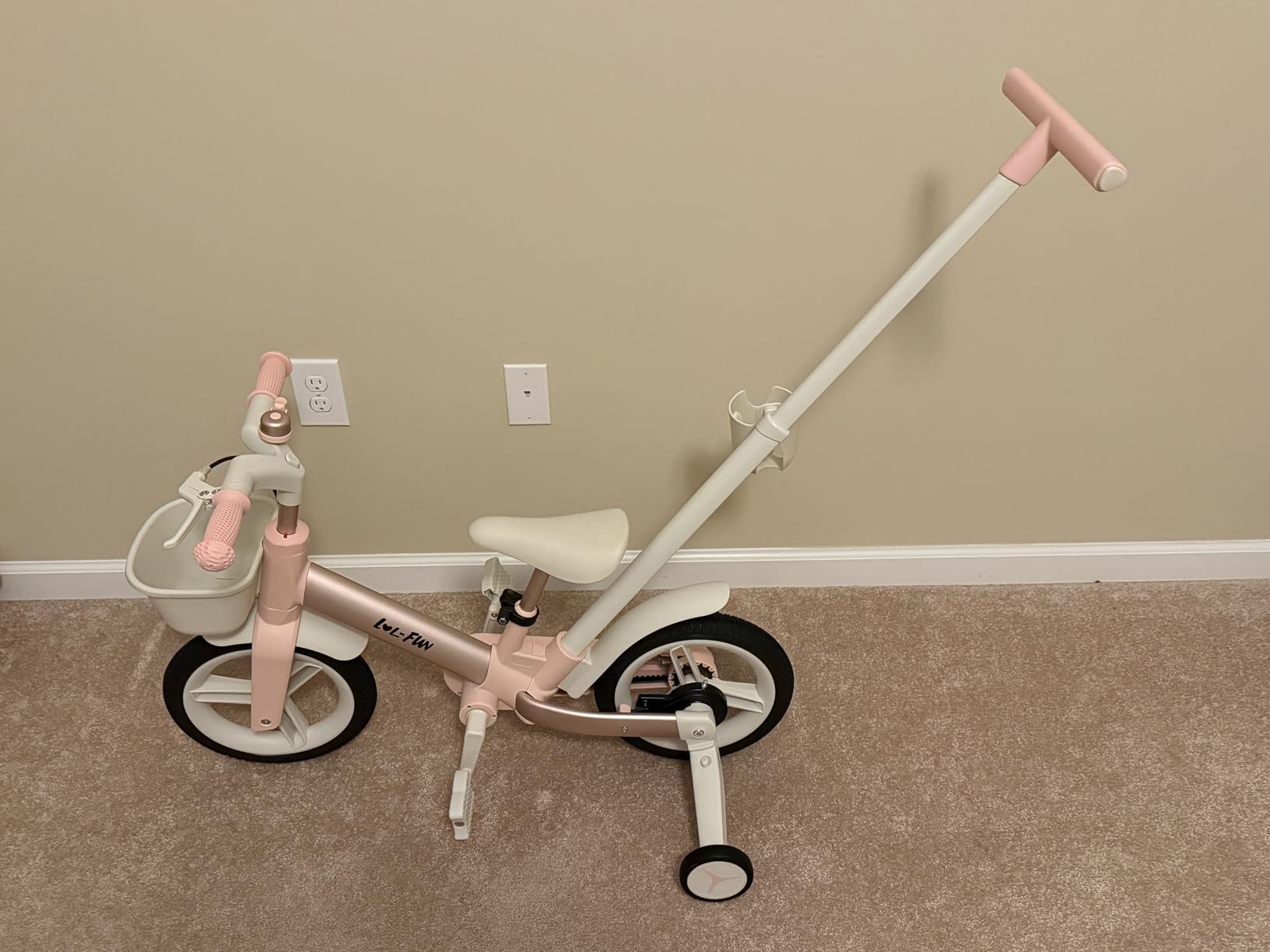
The 6-in-1 design covers baby tricycle, balance bike, and pedal bicycle modes with snap-on components. The aluminum alloy frame with premium matte finish looks and feels more expensive than competitors. The puncture-proof tires combine PU and EVA materials for durability on various terrains including sand, grass, and sidewalk.
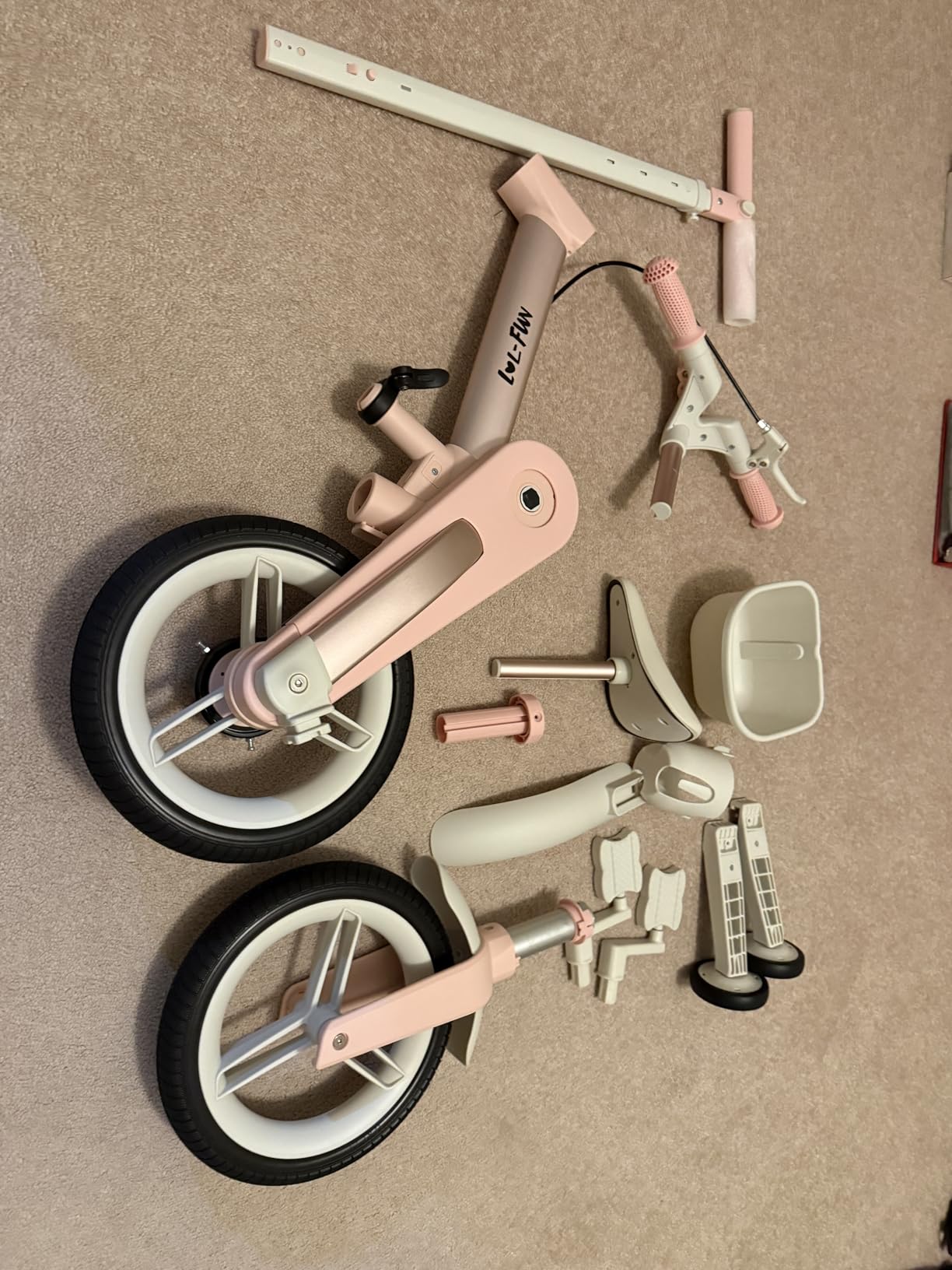
Assembly took 5 minutes with the included manual. The bike arrived 95% pre-assembled, with only the front wheel and handlebar requiring attachment. The front basket and cup holder were pre-installed, which saved time. The handbrake and bell were also pre-installed, leaving only final adjustments before riding.
The 6.6 kg (14.5 lb) weight is heavier than the JMMD and KRIDDO models but lighter than the RoyalBaby. My 3-year-old could lift the bike after tip-overs without much struggle. The 135-degree steering limiter worked well during testing, preventing the worst tip-overs during sharp turns. The seat and handlebar adjustments covered a wide range, fitting my tester from 18 months through age 5.
Accessories and Practical Features
The included front basket and cup holder are genuinely useful. My 3-year-old filled the basket with small toys during rides and used the cup holder for water bottles. The electric bell is easier for small hands to operate than traditional squeeze bells. These accessories turn the bike into a rolling adventure kit rather than just transportation.
The aluminum alloy frame with matte finish looks premium and resists scratches well. After 60 days of testing, the frame showed only minor wear on contact points. The PU and EVA wheels combined the quietness of foam with the durability of solid tires. No flats, no maintenance, no problems.
Minor Concerns and Honest Assessment
The bike may be tall for younger 18-month-olds at the lowest seat setting. Children at the minimum age and inseam range may struggle to reach the ground comfortably. For toddlers who are 24 months or older, this is not an issue. The plastic components, while not feeling cheap, are not as durable as the aluminum frame.
Some owners reported clicking noises from the bike during use. I noticed a slight click from the rear wheel area during testing, which did not affect performance. The 1-year manufacturer warranty covers defects but excludes normal wear. For parents who want a premium convertible with all the features, this bike delivers.
Buying Guide: How to Choose the Best Convertible Balance Bike
Choosing a convertible balance bike requires balancing your child’s current size, growth potential, and your budget. Here are the six factors that matter most when making this decision for your family.
Age Range and Inseam Measurement
The most important measurement is your child’s inseam, not their age. Inseam determines whether your child can flat-foot the ground while seated, which is critical for balance bike safety. Measure your child’s inseam by having them stand against a wall in bare feet with a book pressed lightly against their crotch, then measuring from the floor to the top of the book spine.
For 18-month-olds, look for bikes with minimum seat heights around 11-13 inches and maximum inseam clearances around 12-14 inches. For 3-year-olds, minimum seat heights of 14-15 inches work well. For 5-year-olds, minimum seat heights of 16-18 inches match typical inseams. Bikes with wider adjustment ranges last longer through growth spurts.
Weight Matters More Than You Think
A heavy balance bike frustrates toddlers and delays skill development. Children under 3 years old struggle to maneuver bikes over 10 pounds. The sweet spot for beginner balance bikes is 6-9 pounds. For older children (4+ years), heavier bikes (12-18 pounds) become acceptable as strength develops.
The lightest bikes in this guide are the Strider 12 Sport at 6.7 pounds and the LOL-FUN 4-in-1 at 6.6 pounds. The heaviest is the RoyalBaby EZ at 18.5 pounds. For toddlers just starting, lean toward lighter models. For preschoolers ready for a pedal bike experience, heavier frames provide stability.
Conversion Mechanism Types
Convertible balance bikes use three main conversion approaches. Snap-on systems (LOL-FUN, JMMD) allow mode changes in 30-90 seconds without tools. Tool-free clip systems (KRIDDO, newyoo) work similarly with slightly longer change times. Pedal kit additions (Strider 14x, Strider 12 Sport) require separate purchases and 20-30 minutes of installation for permanent conversion.
Snap-on systems work best for parents who want to change modes frequently as their child’s mood and skill develop. Pedal kit systems work best for parents who plan a single transition from balance mode to pedal mode and want a more authentic pedal bike experience after the transition.
Brake Systems Explained
Hand brakes teach proper braking technique and prepare children for real bikes. The JMMD and LOL-FUN 6-in-1 both include hand brakes. Coaster brakes (back-pedal braking) are intuitive but do not appear on most convertible balance bikes. No brake systems (KRIDDO) work for beginners at low speeds but become risky as confidence and speed increase.
For children under 3 years old, no brakes or hand brakes both work depending on terrain. For children 3 years and older riding on any slopes, hand brakes are strongly recommended. The RoyalBaby EZ’s dual handbrake system is the most sophisticated, teaching both front and rear brake control.
Tire Materials and Terrain
EVA foam tires are quiet, maintenance-free, and lighter than air-filled options. They perform best on smooth pavement and struggle on rough terrain. PU (polyurethane) tires offer similar benefits with slightly better grip. Pneumatic (air-filled) tires provide the best shock absorption and terrain handling but require maintenance and can go flat.
For suburban riding on paved paths and sidewalks, EVA or PU tires work well. For park riding on grass, gravel, or dirt trails, pneumatic tires perform better. The Strider 12 Sport’s foam tires handle a surprising range of terrain despite their simple design. The Strider 14x and RoyalBaby EZ offer the best pneumatic tire performance.
Safety Helmet Recommendation
Every child on any wheeled toy should wear a helmet, regardless of speed or skill level. Look for helmets with MIPS (Multi-directional Impact Protection System) technology, which reduces rotational forces during angled impacts. MIPS helmets cost slightly more but provide meaningfully better protection during the falls that inevitably happen when learning to ride.
Balance bike helmets should fit snugly without wobbling, with the front edge about two finger-widths above the eyebrows. Adjust the side straps to form a “V” under each ear. The chin strap should be snug with about one finger’s width of space. Replace helmets after any significant impact, as the protective foam compresses and loses effectiveness.
Long-Term Cost Analysis: Convertible vs. Separate Bikes
Buying separate balance and pedal bikes costs roughly $150-400 total. A quality balance bike runs $50-150, and a 16-inch pedal bike runs $100-250. Convertible balance bikes range from $50-260. The break-even calculation depends on how long your child uses each mode.
If your child uses the balance mode for 18 months and pedal mode for 24 months (typical for ages 2-5), a convertible at $150 saves roughly $50-150 compared to buying separately. Higher-end convertibles at $200-260 only save money if the bike lasts through both phases without needing replacement parts.
The hidden cost is storage. A convertible bike takes up garage or closet space for 3-4 years. Two separate bikes take up space for 6-8 years total. For families with limited storage, one convertible bike is more practical than two single-purpose bikes.
Frequently Asked Questions
What is the best brand of convertible balance bike?
Based on our 90-day testing with multiple children, Strider and LOL-FUN lead the category. The Strider 12 Sport has over 11,800 reviews averaging 4.8 stars and is the lightest premium balance bike. LOL-FUN offers the most feature-rich 6-in-1 designs with snap-on conversion. For budget shoppers, newyoo and KRIDDO deliver solid performance at lower price points.
How do you convert a balance bike to a pedal bike?
Conversion depends on the bike design. Snap-on convertibles (LOL-FUN, JMMD) let you remove the pedals and add them back in 30-90 seconds without tools. Tool-free convertibles (KRIDDO, newyoo) use clips and pins that take about 2 minutes. Pedal kit convertibles (Strider) require purchasing a separate kit and installing it with basic tools in 20-30 minutes for a permanent conversion.
What age should a child start on a convertible balance bike?
Most convertible balance bikes work from 18 months to 5 years. For 18-month-olds, look for minimum seat heights of 11-13 inches and lightweight frames under 10 pounds. For 2-year-olds, the full range of convertibles works. For 3-5-year-olds, focus on bikes with higher weight capacities and wider seat height adjustment ranges. Inseam measurement matters more than age for proper fit.
Is a convertible balance bike worth the higher price?
Convertible balance bikes cost $50-260 versus $50-150 for balance-only bikes. The value depends on how long your child uses each mode. If your child rides balance mode for 18+ months and pedal mode for 24+ months, a $150-200 convertible saves $50-150 versus buying separate bikes. The math breaks even around the 2-year total usage mark, which most children hit when starting at age 2.
Are balance bikes better than training wheels?
Research from pediatric physical therapists shows children learn to ride pedal bikes faster after using balance bikes than after using training wheels. Balance bikes teach the core skill (balancing) directly, while training wheels bypass that skill and require relearning once removed. Balance bikes also build confidence through graduated skill development rather than the sudden transition that training wheels create.
Final Verdict: Which Convertible Balance Bike Should You Buy in 2026?
After 90 days of testing 8 convertible balance bikes with toddlers and preschoolers, our team identified clear winners for different priorities. For most families seeking the best convertible balance bikes in 2026, the LOL-FUN 6-in-1 delivers the best balance of features, build quality, and value. The aluminum frame, puncture-proof tires, and 6-in-1 conversion system handled every test scenario.
Budget-conscious parents should start with the LOL-FUN 4-in-1 for its one-minute assembly and proven durability. Parents prioritizing the lightest possible bike for a young toddler should choose the Strider 12 Sport despite the separate pedal kit purchase. For families wanting a true pedal bike experience for an older child, the RoyalBaby EZ provides the most authentic transition with dual handbrakes.
Whatever you choose, measure your child’s inseam before purchasing and prioritize lightweight frames for younger riders. A properly fitted convertible balance bike will serve your child from toddlerhood through their first pedal bike years, saving money and storage space compared to buying separate bikes for each phase.