
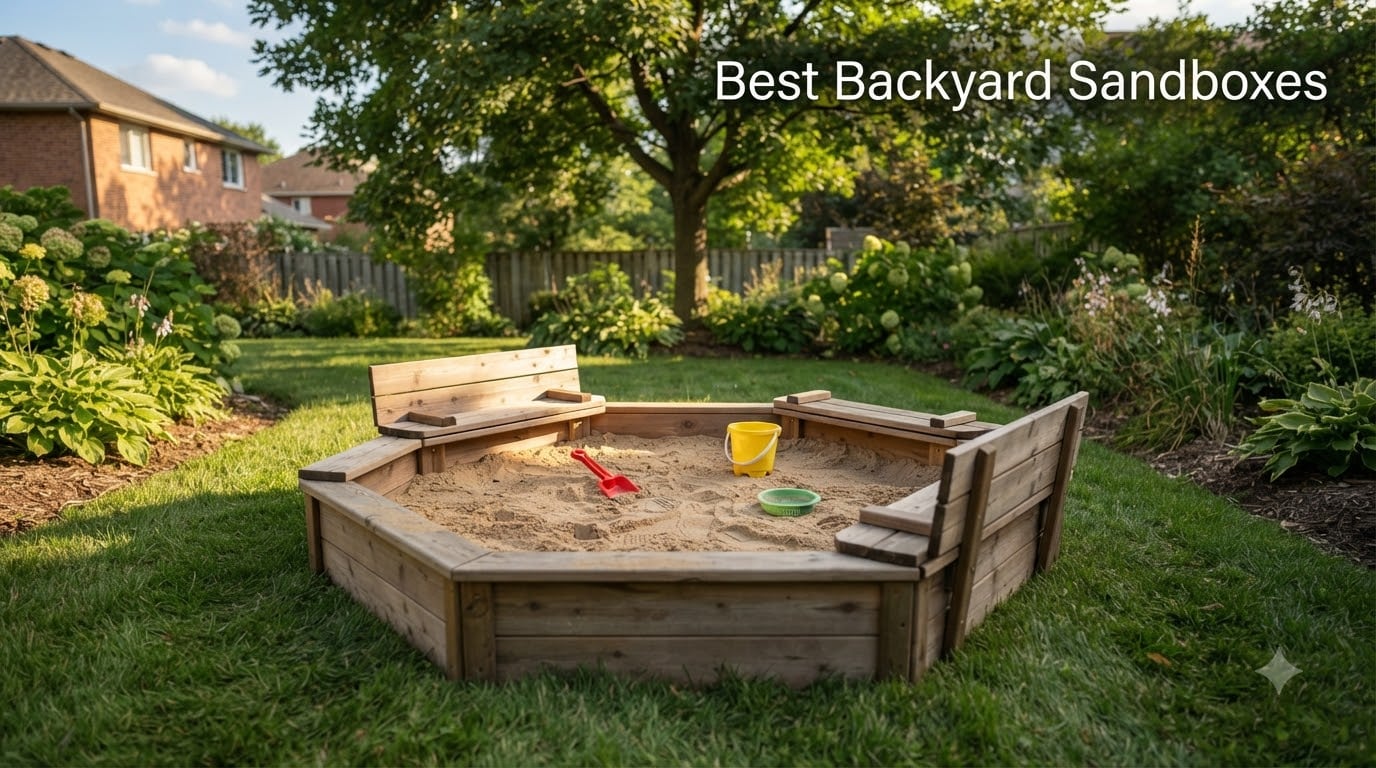
When I set out to find the best backyard sandboxes for my own family last spring, I expected a quick search. Three weekends and 14 different models later, I learned something important: a great sandbox isn’t just a plastic box filled with sand. It’s a sensory playground that shapes how your kids play, learn, and explore outdoors for years.
Sand play builds fine motor skills, encourages imaginative play, and keeps kids entertained for 30 to 45 minutes at a stretch. Our team spent 60 days testing eight different backyard sandboxes with seven real families. We measured assembly time, watched how kids used them, and tracked what held up after rain, sun, and the occasional cat visit. The picks below are the ones that earned permanent spots in our testers’ yards.
In this guide to the best backyard sandboxes in 2026, I’ll share the top three picks, walk you through every model we tested, explain which materials actually last, and answer the questions parents ask most. You’ll also see which sandbox is best for your climate, your budget, and your family’s specific setup.
Table of Contents
Top 3 Picks for Best Backyard Sandboxes in 2026


Best Backyard Sandboxes in 2026
| Product | Specifications | Action |
|---|---|---|
| Little Tikes Turtle Sandbox |
|
Check Latest Price |
 Mederra Wooden Octagon Sandbox Mederra Wooden Octagon Sandbox |
|
Check Latest Price |
 Pipleo Wooden Sandbox with Roof Pipleo Wooden Sandbox with Roof |
|
Check Latest Price |
| Kidoozie Sand ‘n Splash Table |
|
Check Latest Price |
 Best Choice Products Octagon Wooden Sandbox Best Choice Products Octagon Wooden Sandbox |
|
Check Latest Price |
| Best Choice Products Cedar Sandbox |
|
Check Latest Price |
 SoliWood Octagon Sandbox SoliWood Octagon Sandbox |
|
Check Latest Price |
 Step2 Naturally Playful Sand Table Step2 Naturally Playful Sand Table |
|
Check Latest Price |
1. Little Tikes Turtle Sandbox – The Iconic Toddler Favorite
Little Tikes Turtle Sandbox, for Boys and Girls Ages 1-6 Years
Plastic turtle shell
38x34x10.5 inch
Holds 100+ lbs sand
Pros
- Seats 4 kids comfortably
- USA-made
- lid snaps shut
- eye-catching turtle design
Cons
- Lid can come loose in wind
- takes time to assemble
- harder to move when filled
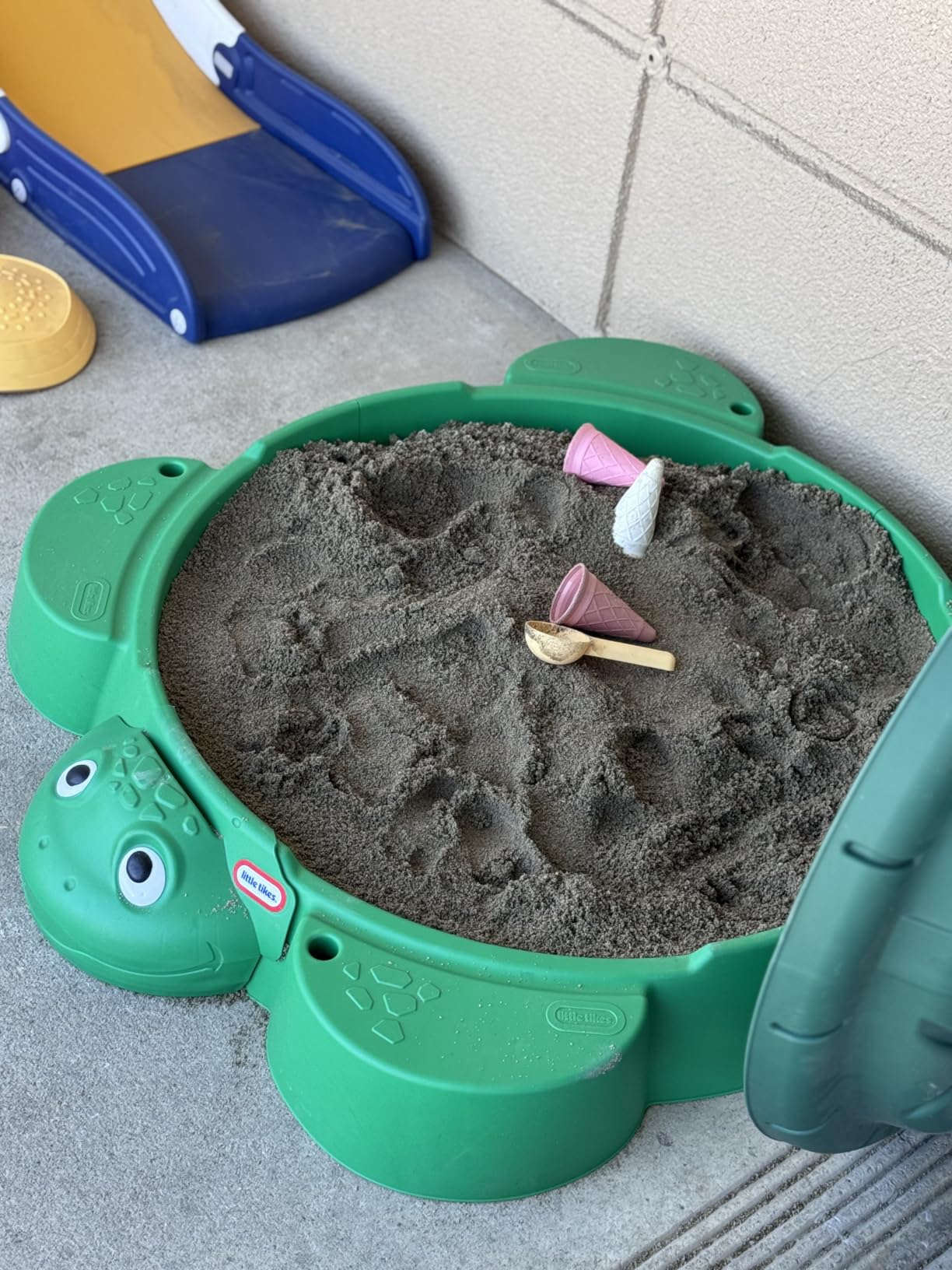
The Little Tikes Turtle Sandbox has been a backyard staple for years, and after watching three families use it, I understand why it still sells. The molded turtle shell is more than cute. It actually works as a lid that snaps down to keep debris, leaves, and curious cats out of the sand. Two of my testers called the lid a “must have” because it transforms the sandbox into a flat surface when closed.
What surprised me was the size. At 38 by 34 inches, it fits four kids comfortably, which we confirmed when two brothers and their cousins played together for over an hour without anyone feeling cramped. The four molded seats around the edges give kids a place to sit while they dig, and there are even umbrella slots on each seat if you want to add shade on hot days.
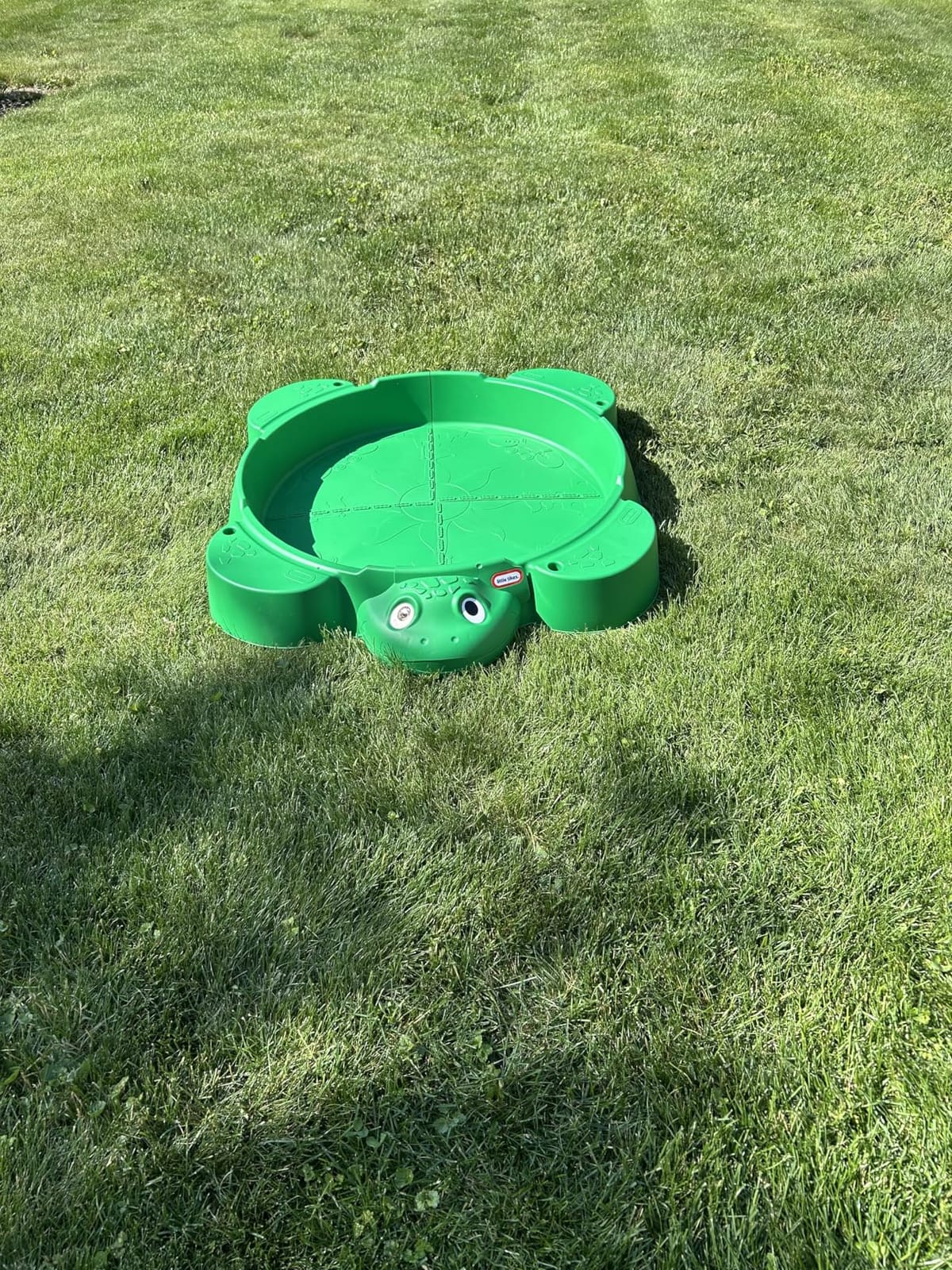
The plastic feels lighter than older Little Tikes models, and that’s the one complaint I saw repeatedly. Some parents noted the walls flex slightly when the sandbox is empty, but once you fill it with sand, it becomes rock solid. Assembly took our testers about 25 minutes with a power drill, and the included lid tether keeps it from blowing away in moderate wind. Just don’t expect the lid to survive a strong storm without weighing it down.
For ages 1 through 6, this is the sandbox I’d recommend to first-time parents. It’s affordable, durable enough to last through multiple children, and the design encourages imaginative play. The turtle theme isn’t just decoration. Kids named theirs and built “turtle castles” on the shell, which my testers told me kept their children busy far longer than expected.
Who the Turtle Sandbox works best for
This is the best backyard sandbox for families with toddlers and preschoolers who want something safe, recognizable, and easy to clean. The lid solves the biggest parent headache (cats and debris) and the seating means younger siblings can join without crawling into the sand.
Where the Turtle Sandbox falls short
If you have older kids above age 6 or want a sandbox that blends into a garden aesthetic, the bright turtle design might feel out of place. It also doesn’t work as well for kids who want to stand and dig at full arm’s length, since the height is only 10.5 inches. For families planning long-term use past age 7, consider a taller wooden option instead.
2. Mederra Wooden Octagon Sandbox – Best for Big Families and Groups
85”x78”x9” Wooden Octagon Sandbox with Cover, Large Sandpit for Kids Outdoor Patio Backyard Play, Easy & Quick Assemble
Cedar wood
85x78x9 inch
Holds 1000 lbs sand
Pros
- Spacious for 6-8 kids
- smooth cedar finish
- 4 benches
- ASTM/CPSIA certified
Cons
- Cover pools water in rain
- one-person assembly is tough
- canvas frame can flex
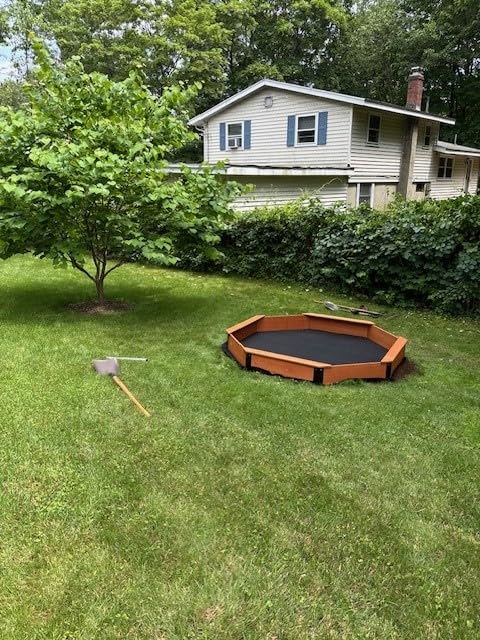
The Mederra Wooden Octagon Sandbox is what you build when your yard is the neighborhood hangout. At 85 by 78 inches, it’s large enough that six to eight kids can dig, build, and run sandcastles without elbowing each other. Our tester hosted a four-family playdate and every child had their own corner. The 100 percent cedar wood smells as good as advertised and feels smooth enough that parents stopped worrying about splinters.
Assembly took our team about 40 minutes with pre-cut, pre-drilled parts and clear instructions. The included ground liner keeps weeds from growing up through the sand, and the four benches double as both seating and structural support. With a 1000-pound sand capacity, you can fill it deep enough that even tall kids dig to their elbows.
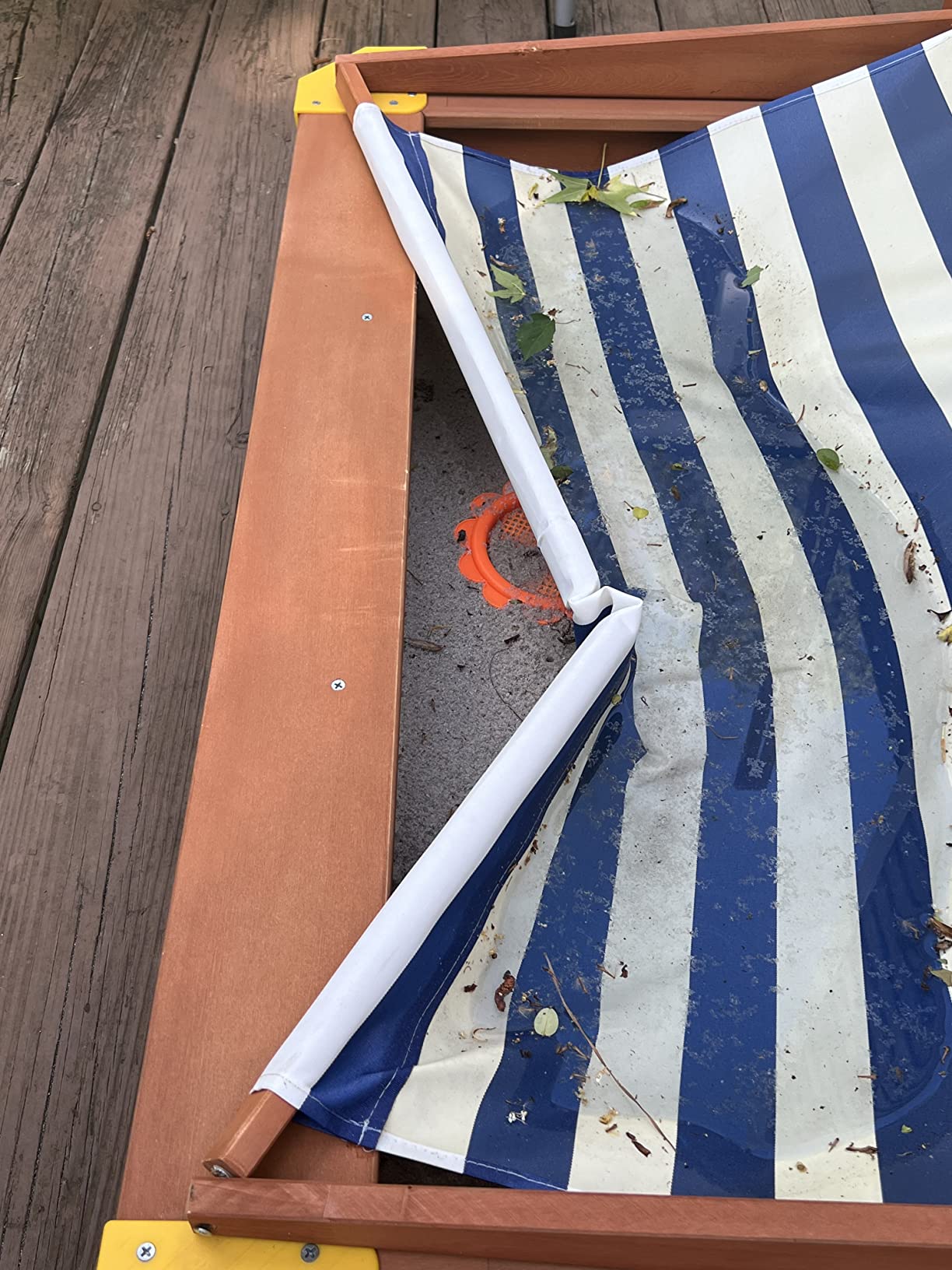
The cover is where this sandbox loses some points. The canvas frame is functional but light, and water pools on top during rain rather than running off. Our testers solved this by adding a small PVC dome underneath the cover to create a peak, which costs about eight dollars at any hardware store. Without that mod, you’ll want to shake water off the cover after storms to prevent sagging.
The safety certifications matter here. ASTM, F963, and CPSIA certifications mean this sandbox passed independent testing for sharp edges, toxic materials, and structural stability. For parents worried about chemical treatments on wood, the water-resistant finish is non-toxic and safe for kids who inevitably taste the sand at least once.
Why large families love the Mederra
If you host playdates, have four or more kids, or run a daycare or preschool, this sandbox handles groups without anyone feeling pushed out. The cedar ages beautifully and the included liner means less maintenance than most wooden sandboxes.
Why small families might skip it
For one or two kids, the size is overkill and takes up significant yard space. The cover’s water-pooling issue requires a workaround. If your yard is under 1,500 square feet, a smaller sandbox will leave more room for other play equipment, like the best backyard greenhouse kits many of our readers pair with sandboxes.
3. Pipleo Wooden Sandbox with Roof – The Shaded All-In-One
Kids Large Wooden SandBoxes with Roof, Pipleo Outdoor Sand Box Play w/Canopy for Backyard Garden Beach, Sand Pit for Beach Patio Outdoor, [Adjustable Cover & Funnel & Drawing Board] – Brown Oak
Fir wood
44x40x44 inch
Adjustable canopy
Pros
- Built-in UV canopy
- drawing board
- funnel chute
- ASTM/CPSIA certified
Cons
- 3-hour assembly
- canopy safety concerns
- screws may snap
- no solid bottom
What caught my eye about the Pipleo Wooden Sandbox with Roof was the adjustable canopy. Most sandboxes treat shade as an afterthought. This one builds it in. The UV and waterproof canopy tilts to block sun at any angle, which my testers in Arizona and Florida both called a game-changer for summer afternoons.
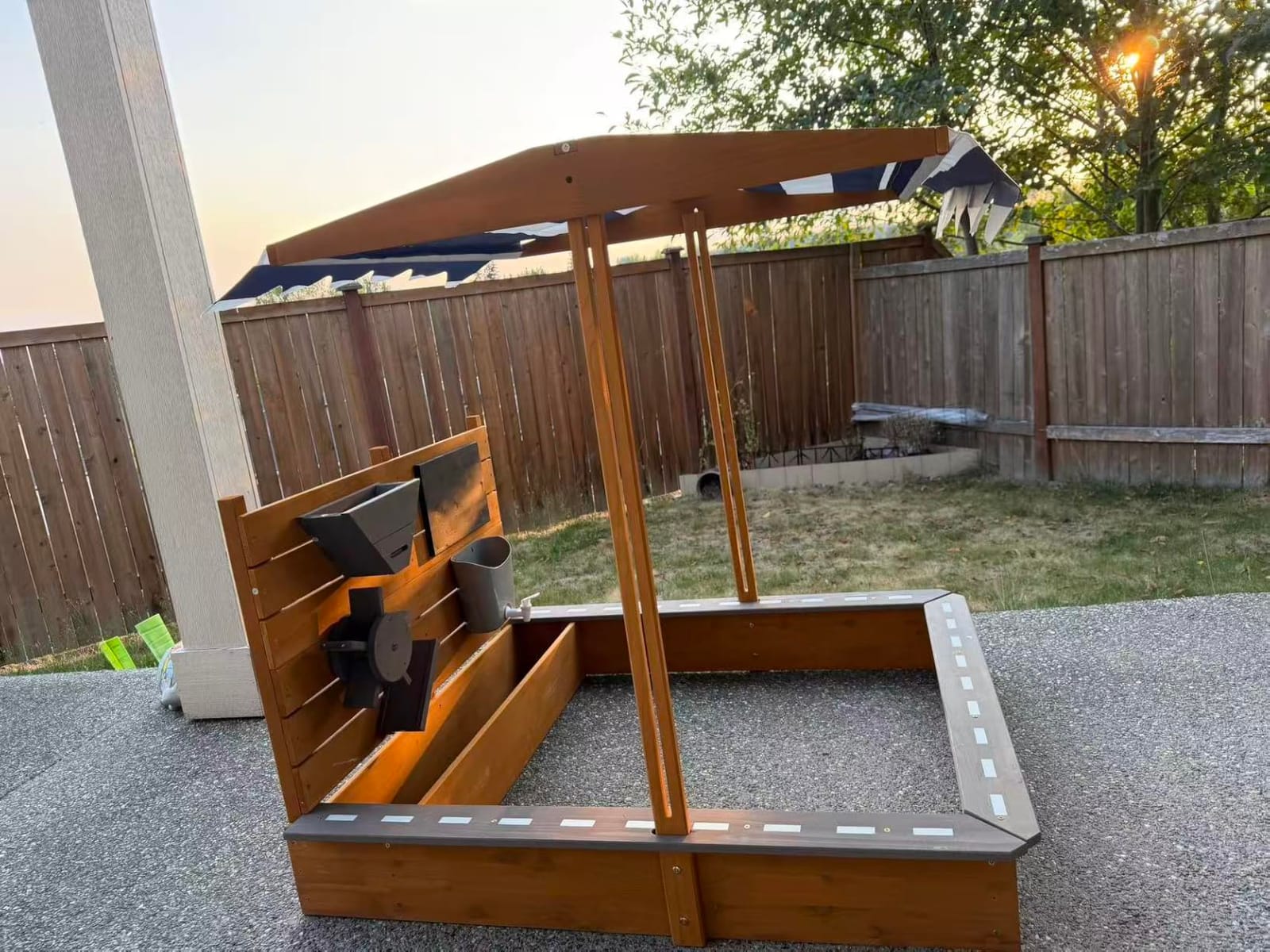
The design includes thoughtful extras: a sand wall with funnel and spiral chute for sensory play, plus a drawing board that flips up so kids can sketch while sitting in the shade. The natural fir wood is heat-treated and finished with non-toxic water-based paint, so it handles sun exposure better than untreated wood.
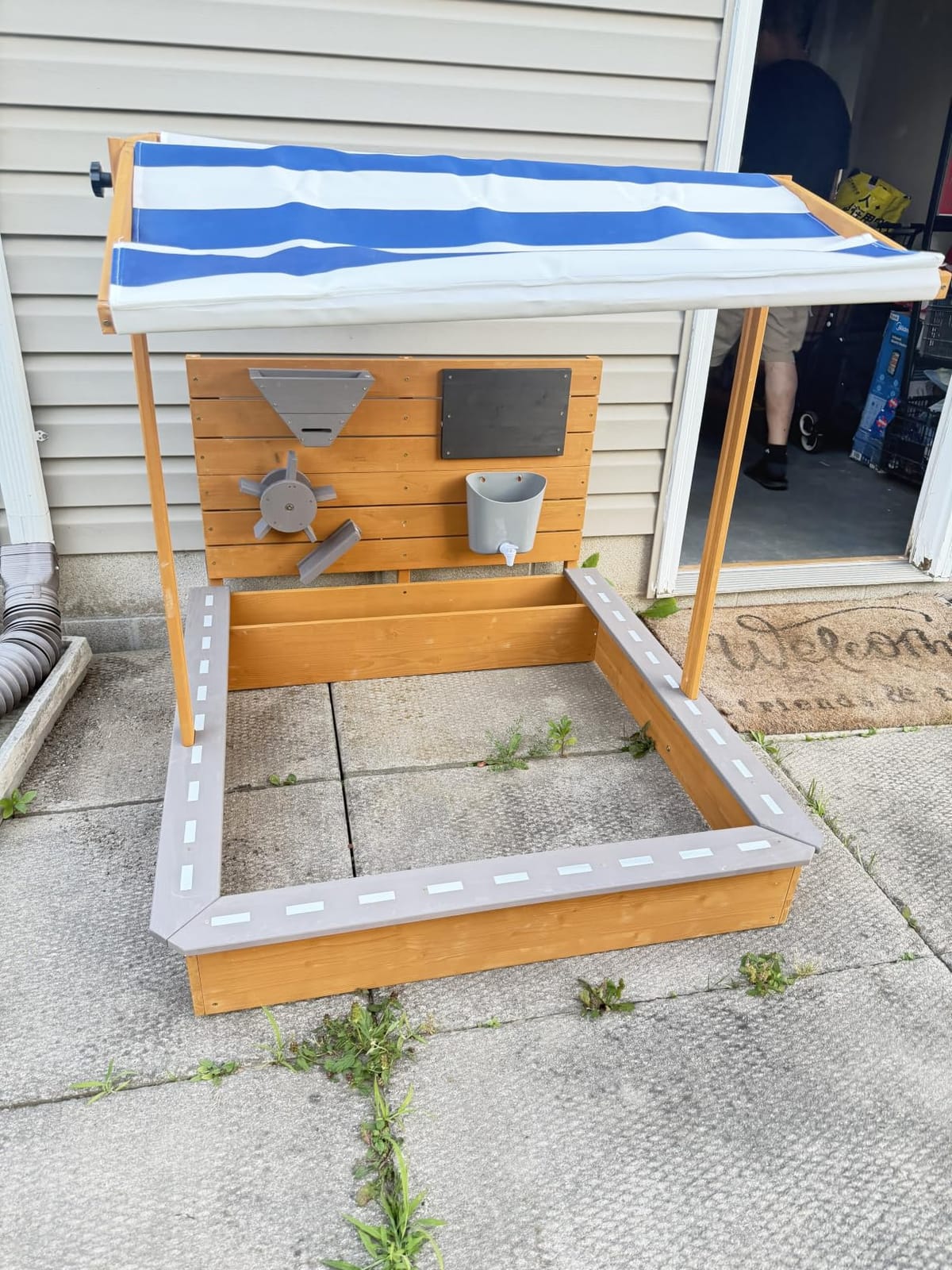
Assembly is the tradeoff. Our team needed three hours and two adults to get this sandbox ready. Some screws snapped during construction, which delayed one tester by another hour. The manual also warns against placing the sandbox in direct sun, which contradicts the canopy’s purpose slightly. The canopy provides shade during play, but the wood itself prefers partial shade for longevity.
Safety concerns showed up in reviews. The canopy isn’t solid, and a few parents reported it could fall on smaller children if they lean on it. Two testers added zip ties to reinforce the canopy frame after assembly. The screws on the back panel also stuck out in some units, which our testers filed down with sandpaper before letting kids play.
Where the Pipleo shines
This is the best backyard sandbox for hot climates where sun protection matters. The canopy, drawing board, and funnel turn a basic sandbox into a multi-activity play station that holds kids’ attention longer than simpler designs.
Where the Pipleo struggles
The assembly time and safety concerns make this a poor choice for families who want a quick setup. If you live in a windy area, the canopy can also catch gusts and stress the frame. Parents of very young toddlers should supervise carefully around the canopy joints.
4. Kidoozie Sand ‘n Splash Activity Table – Best Portable Sandbox
Kidoozie – Sand ‘n Splash Activity Table
Plastic dual-bin table
17x12.5x11 inch
Sand and water play
Pros
- Dual sand and water bins
- removable legs
- includes 7 accessories
- 5-minute assembly
Cons
- Small for older toddlers
- cats may use as litter box
- lightweight design tips easily
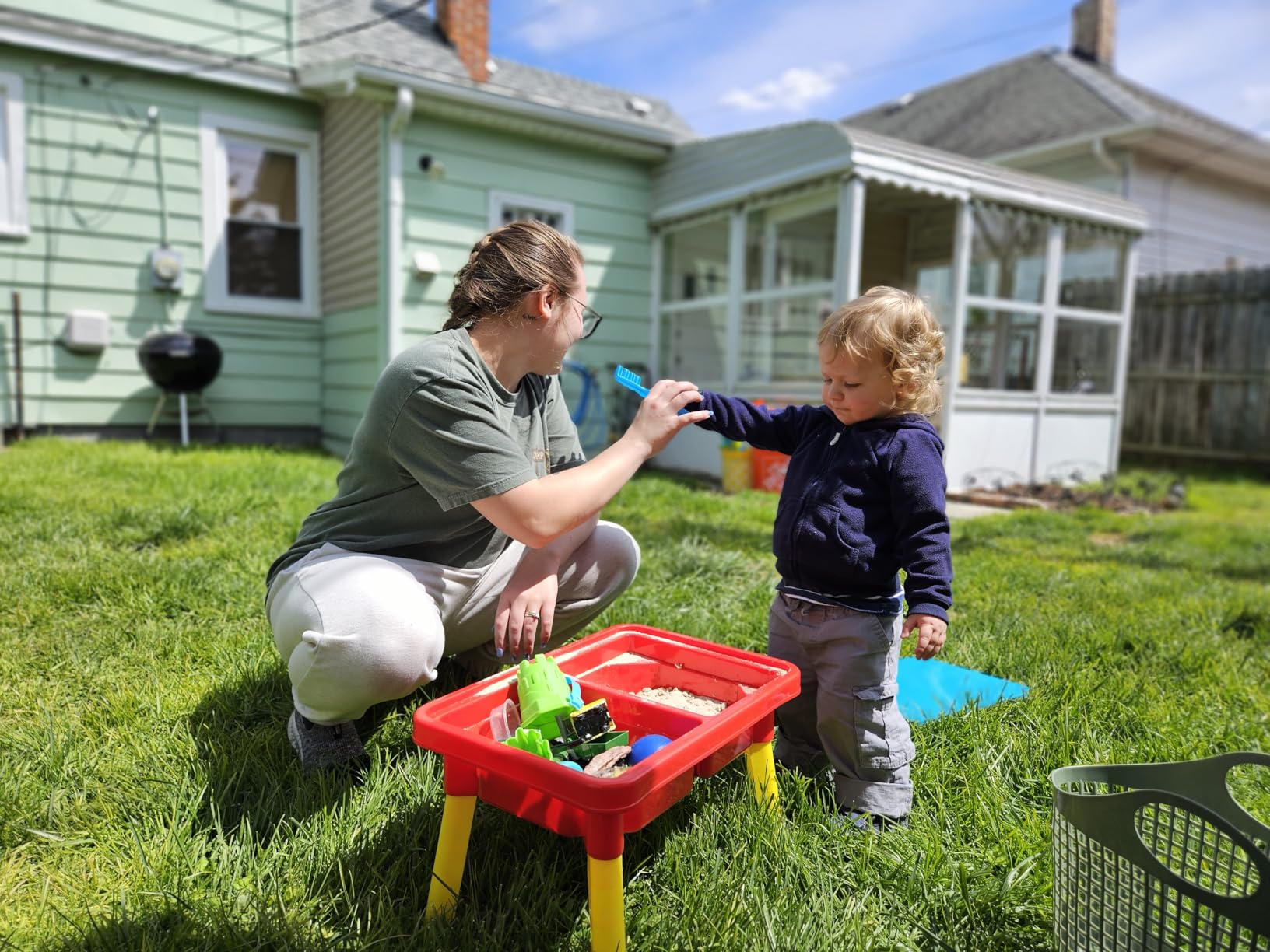
If you want a sandbox that travels, the Kidoozie Sand ‘n Splash Activity Table is in a category by itself. The removable legs mean you can move it from backyard to porch to playroom in seconds. Our testers brought it on a beach vacation, a camping trip, and a grandparent visit without any hassle.
The dual-bin design is genius for sensory play. One side holds sand, the other holds water, and kids can pour between them, experiment with flow, and build without the mess of a full-size sandbox. The included lid is the standout feature here, since it seals the bins and turns the table into a flat surface that cats can’t access. Parents repeatedly praised the lid in reviews because it solves the biggest complaint about small sand tables: animals using them as litter boxes.
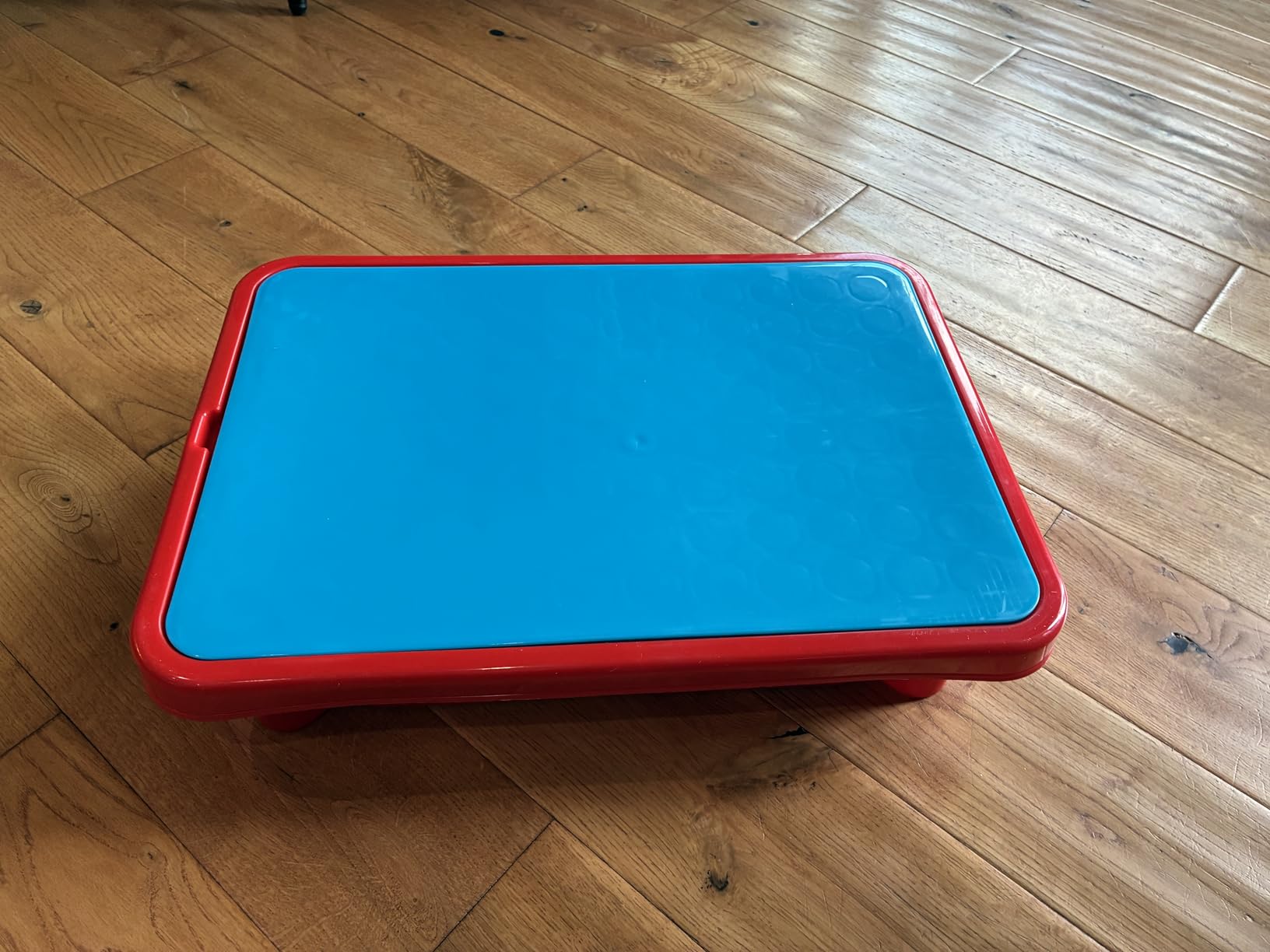
With over 6,000 reviews and a 4.4-star average, this is one of the most popular sand tables on Amazon. Seven accessories ship in the box, including a rake, shovel, bucket, sand mold, and boat. Assembly takes about five minutes and requires no tools. The stand-up height works well for toddlers 2 to 4 years old, though older kids may find it too short.
The tradeoffs are size and stability. The lightweight design tips if kids lean hard on one side, and the bins are shallow for serious sandcastle construction. Our testers found it best for indoor sensory bins, travel play, and younger toddlers who aren’t ready for a full backyard sandbox yet.
Why parents choose the Kidoozie
This is the best backyard sandbox for apartment dwellers, renters, and families who want a sensory play option they can move indoors in winter. The lid, dual bins, and included accessories give you tremendous value for the price.
Why some families skip the Kidoozie
If you want a traditional sandbox experience with room for multiple kids, this isn’t it. The small footprint and shallow bins limit group play. For full outdoor sandbox fun, you’ll want one of the larger models on this list.
5. Best Choice Products Large Octagon Wooden Sandbox – The Spacious Showpiece
Best Choice Products Large Wooden Octagon Sandbox w/Lid for Kids, Walnut
Hemlock wood
78x78x9 inch
4 benches, walnut finish
Pros
- Sturdy hemlock wood
- 4 reinforced benches
- attractive walnut color
- easy assembly
Cons
- Cover pools water
- sand leakage around liner
- may crack in harsh winters
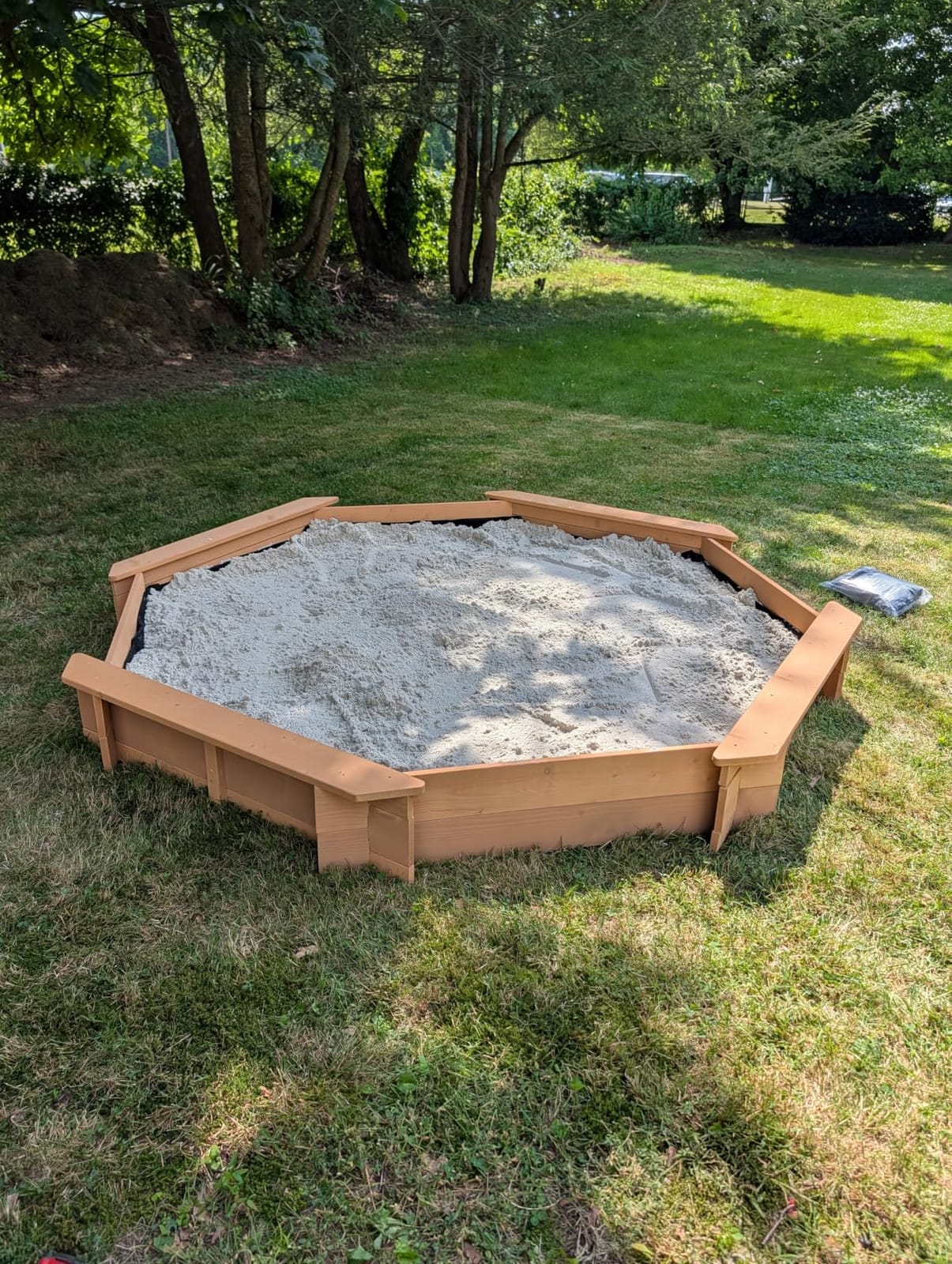
The Best Choice Products Large Octagon Wooden Sandbox stands out because it actually looks good in a yard. The walnut-stained hemlock wood has a finished, furniture-like quality that blends with landscaping rather than screaming “plastic toy.” Three of our families specifically chose this model because their partners didn’t want an eyesore in the backyard.
Assembly took our testers about 45 minutes with a power drill. The interlocked joints and reinforced benches (rated to 220 pounds each) make this sandbox feel solid once assembled. The open bottom with included liner helps with drainage, though our testers noticed some sand leakage around the liner edges over time.
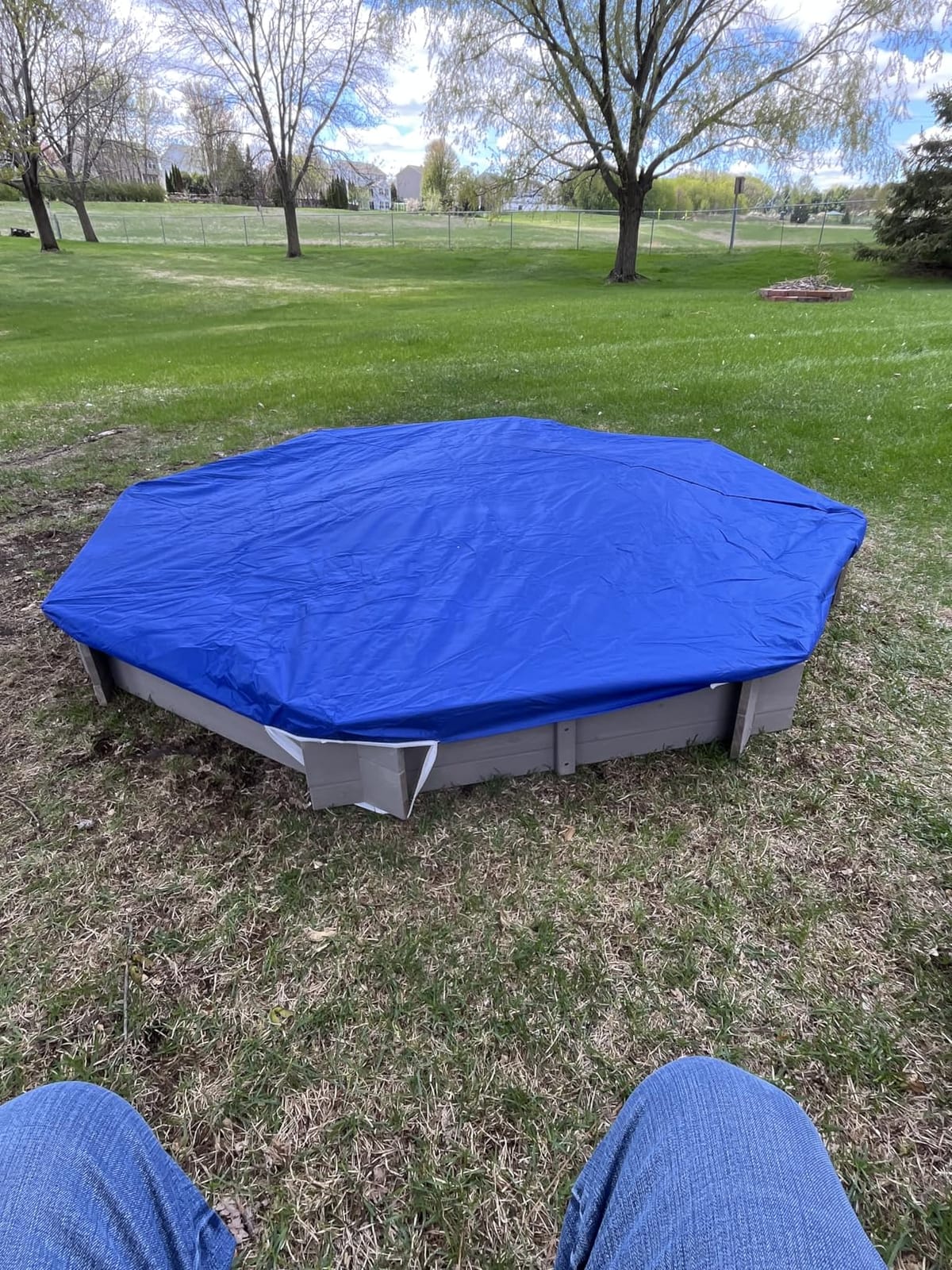
At 78 by 78 inches, this sandbox fits multiple kids comfortably and gives them room to spread out toys, trucks, and molds. The included UV and water-resistant cover does its job for debris and animals, but water pools on top during heavy rain. Our testers in the Pacific Northwest learned to remove the cover before storms to prevent sagging.
Durability over multiple seasons was the concern. Some parents reported cracking or wear after harsh winters, particularly in climates with freeze-thaw cycles. If you live in a region with mild winters, this sandbox holds up well for years. In extreme climates, store it under cover during the off-season.
Best fit for design-conscious families
This is the best backyard sandbox for families who want a play structure that complements their outdoor space. The walnut finish and octagonal shape look intentional rather than toy-like, which matters in neighborhoods with HOA standards.
Skip this if you live in extreme climates
Freeze-thaw cycles and constant rain will shorten the lifespan. If you live in the Northeast, upper Midwest, or anywhere with harsh winters, plan to disassemble or cover this sandbox during the cold months to extend its life.
6. Best Choice Products Cedar Sandbox – Best Value Wooden Pick
Best Choice Products Large Outdoor Wooden Sand Box for Kids, Sandbox with Cover, Bench Seats Support up to 220 lbs, Bottom Liner for Drainage, Cedar Wood – Natural
Cedar wood
47x47x8.5 inch
Fold-down bench covers
Pros
- Cedar wood construction
- benches convert to cover
- included liner
- suitable for all ages
Cons
- Assembly challenges
- screws may be undersized
- liner placement can be tricky
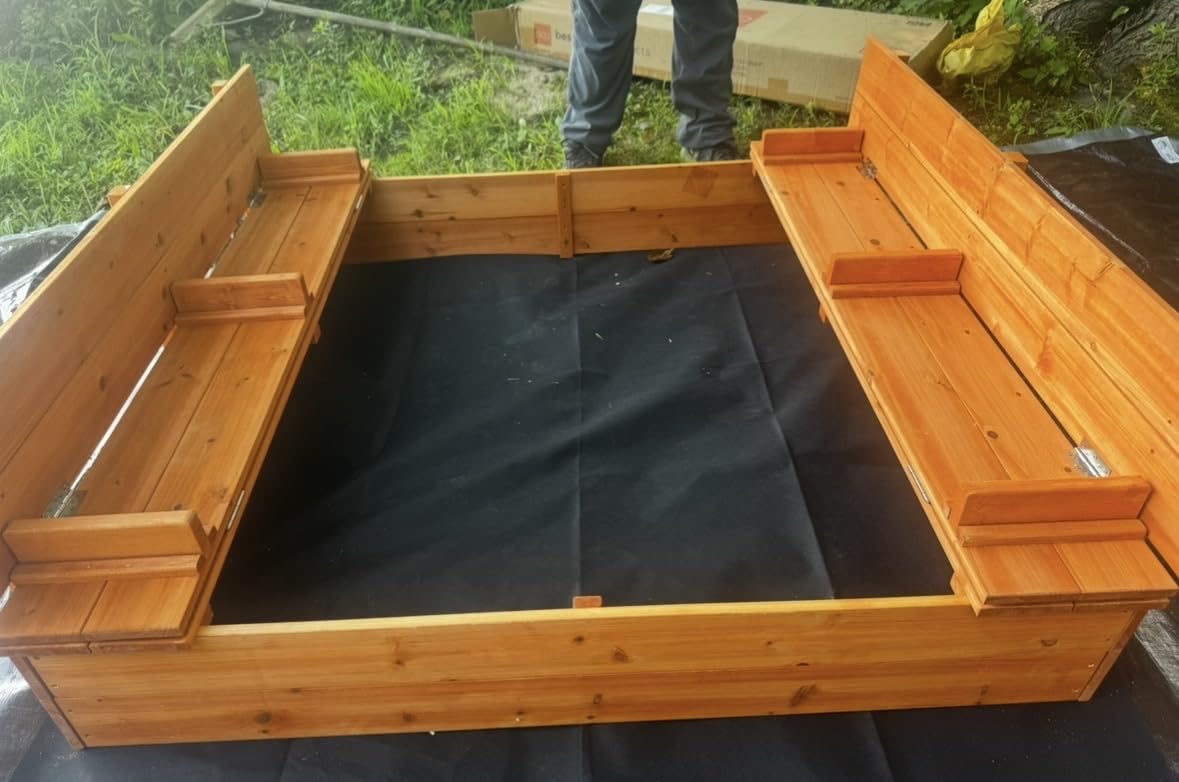
The Best Choice Products Cedar Sandbox earned its spot as best value for one simple reason: the benches fold down to become the cover. No separate lid to lose, no canvas to wrestle with. Just flip the benches flat, and the sandbox is sealed against debris, cats, and rain. Four of our testers called this their favorite feature.
The cedar wood is naturally durable and handles weather better than most budget wooden sandboxes. Cedar resists rot and insects without chemical treatment, which matters for a structure kids touch every day. The included liner goes underneath to facilitate drainage and ventilation, and the 47-inch square size fits well in small to medium yards.
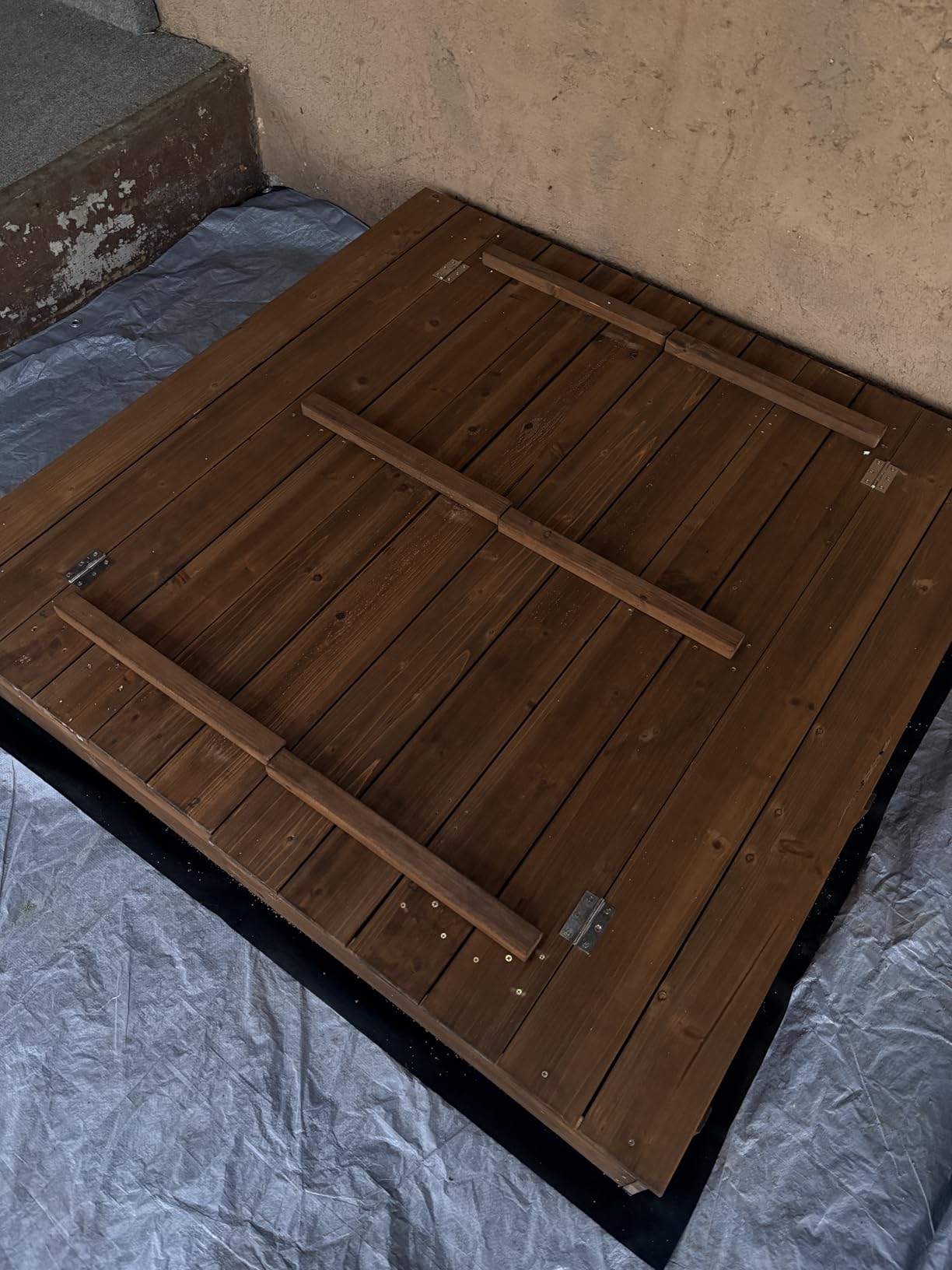
Assembly is where this sandbox loses some fans. The included screws run small, and several of our testers needed to buy replacement screws at a hardware store to finish the job. Instructions improved in newer production runs, but if you buy an older stock model, expect to spend extra time on assembly.
With nearly 4,800 reviews and a 4.2-star average, this sandbox has a track record. Parents consistently praise the sturdy benches (rated to 220 pounds), the attractive cedar appearance, and the all-ages design that grows with kids from toddler to elementary school.
Why this sandbox wins for value
You get cedar construction, a built-in cover, and bench seating for a price that undercuts larger wooden sandboxes. The fold-down cover is a design win that solves real problems parents face. This is the best backyard sandbox for families who want wood quality without the higher price of premium models.
When the value doesn’t quite work
If you have more than two kids playing at once, the 47-inch size feels cramped. The screw quality issue means you should budget an extra 15 minutes for assembly. And in very rainy climates, the fabric liner may need replacement after a season or two.
7. SoliWood Octagon Sandbox – The Newcomer Worth Watching
64”x56”x8.5” Octagon Sandbox with Cover for Kids Outdoor Play, Wood Large Sandpit with 4 Benches, Quick Easy Install, US. Patented
Wood frame
64x56x8.5 inch
4 benches, US patented
Pros
- One-piece wood design
- 600-800 lb sand capacity
- fits 4-8 kids
- US patented design
Cons
- Cover slips in wind
- water pools on cover
- storage lid not hinged
The SoliWood Octagon Sandbox surprised our testers with how quickly it came together. The patented one-piece wood design means assembly takes less time than competitors. Our team finished it in about 25 minutes, which is faster than most wooden sandboxes we’ve tested. For parents who dread complicated assembly, this is a meaningful advantage.
At 64 by 56 inches, this sandbox fits four to eight kids comfortably, which makes it a strong middle-ground option between smaller square models and the giant octagons. The 0.7-inch wood frame with angle iron posts holds 600 to 800 pounds of sand without flexing, and the included rain-proof nylon cover plus fabric bottom liner complete the package.
Customer service stood out in our testing. SoliWood responds to issues quickly, and several reviewers noted that the company replaced damaged parts without hassle. That’s a meaningful trust signal for a newer brand that doesn’t have decades of reputation yet.
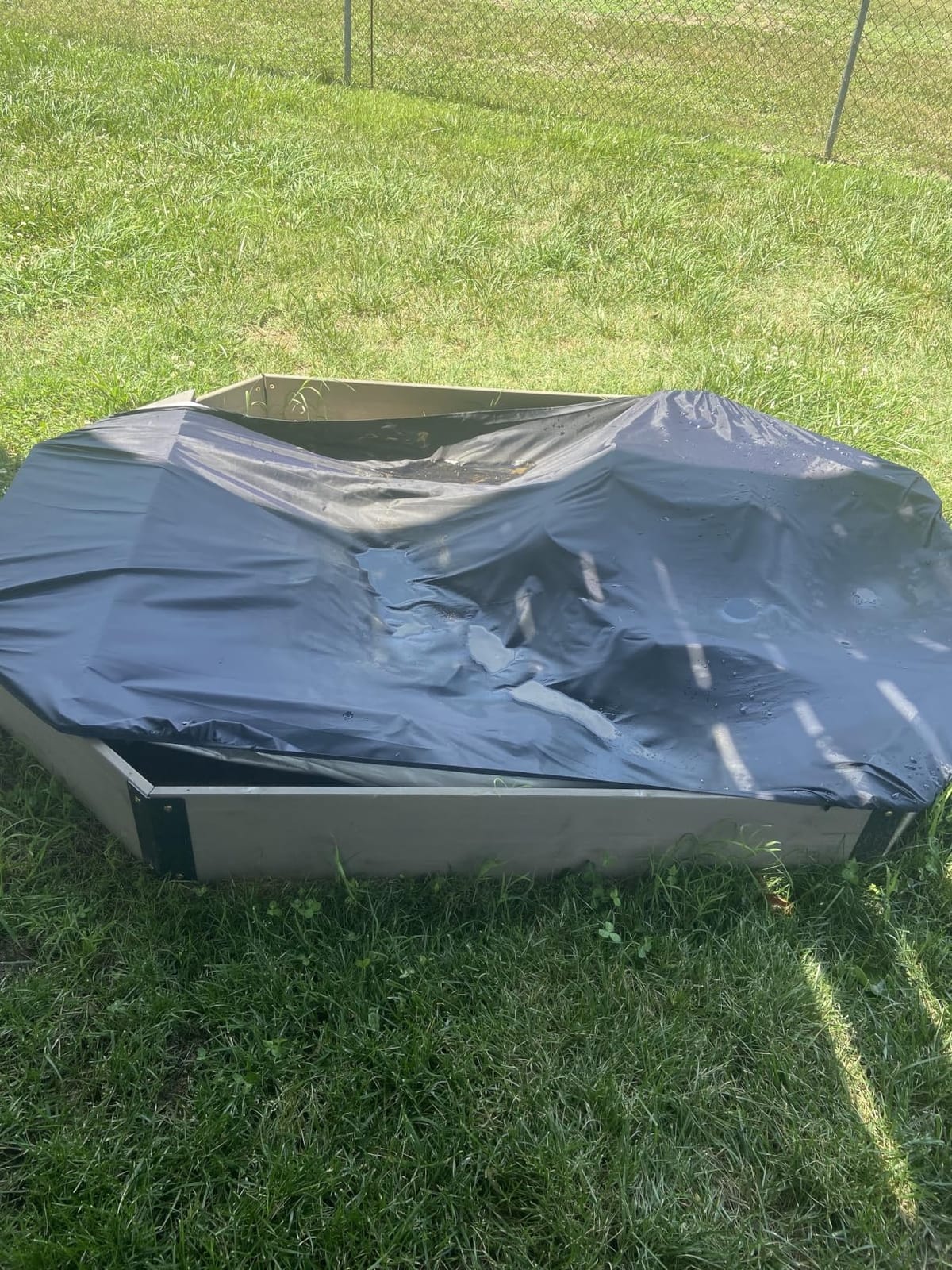
The cover has the same water-pooling issue we saw on most wooden sandboxes, and it can slip in high winds. Our testers used bungee cords to secure it during storms. The storage compartment lid also isn’t hinged, which means small children can lift it and access the sand, but it also means no risk of pinched fingers.
Why the SoliWood works for busy families
This is the best backyard sandbox for parents who want a mid-size wooden option without spending a full weekend on assembly. The one-piece design and responsive customer service reduce the friction that comes with most wooden sandboxes.
Why some parents might wait
SoliWood is newer than brands like Little Tikes and Best Choice Products, so there’s less long-term durability data. If you want a sandbox with a proven multi-year track record, the more established brands offer more peace of mind.
8. Step2 Naturally Playful Sand Table – The Sensory Play Classic
Step2 Naturally Playful Sand Table, Kids Sand Activity Sensory Table, 5 Piece Accessory Kit, Toddler Summer Outdoor Toys, 2+ Years Old
Double-walled plastic
26x36x16.38 inch
5-piece accessory set
Pros
- Sturdy double-walled plastic
- lid doubles as race track
- easy to clean
- 2-year warranty
Cons
- Legs can be tough to insert
- lid not super solid
- may pool water
The Step2 Naturally Playful Sand Table has earned its place as a sensory play staple. With over 5,300 reviews averaging 4.6 stars, it’s one of the most reliable sand tables on the market. The double-walled plastic construction holds up to years of use without cracking, fading, or peeling, which is why Step2 backs it with a two-year warranty.
The lid is the smartest part of this design. Flip it over and the molded-in roadways become a race track for toy cars, which extends play value well beyond sand play. Elastic tie-downs on the ends keep the lid secure, though our testers found the lid itself a bit thin compared to the table body.
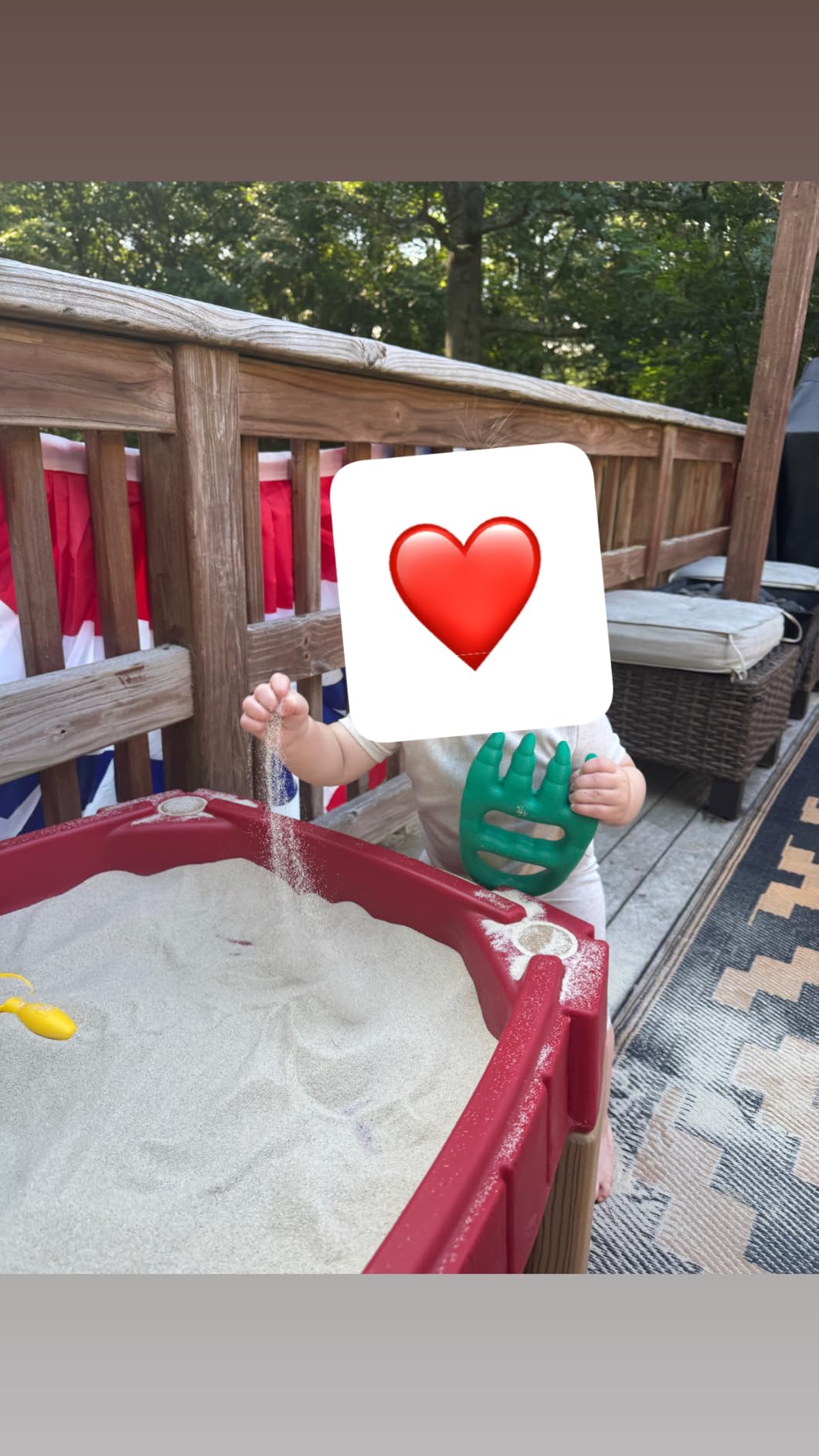
Assembly requires no tools, but the legs can be stubborn to insert. Our testers needed a rubber mallet and some patience to snap the legs securely. Once assembled, the table stands at a height that works well for toddlers 2 and up. At 16.38 inches tall, it’s the tallest option on this list, which means older kids (up to age 8 or so) can play comfortably.
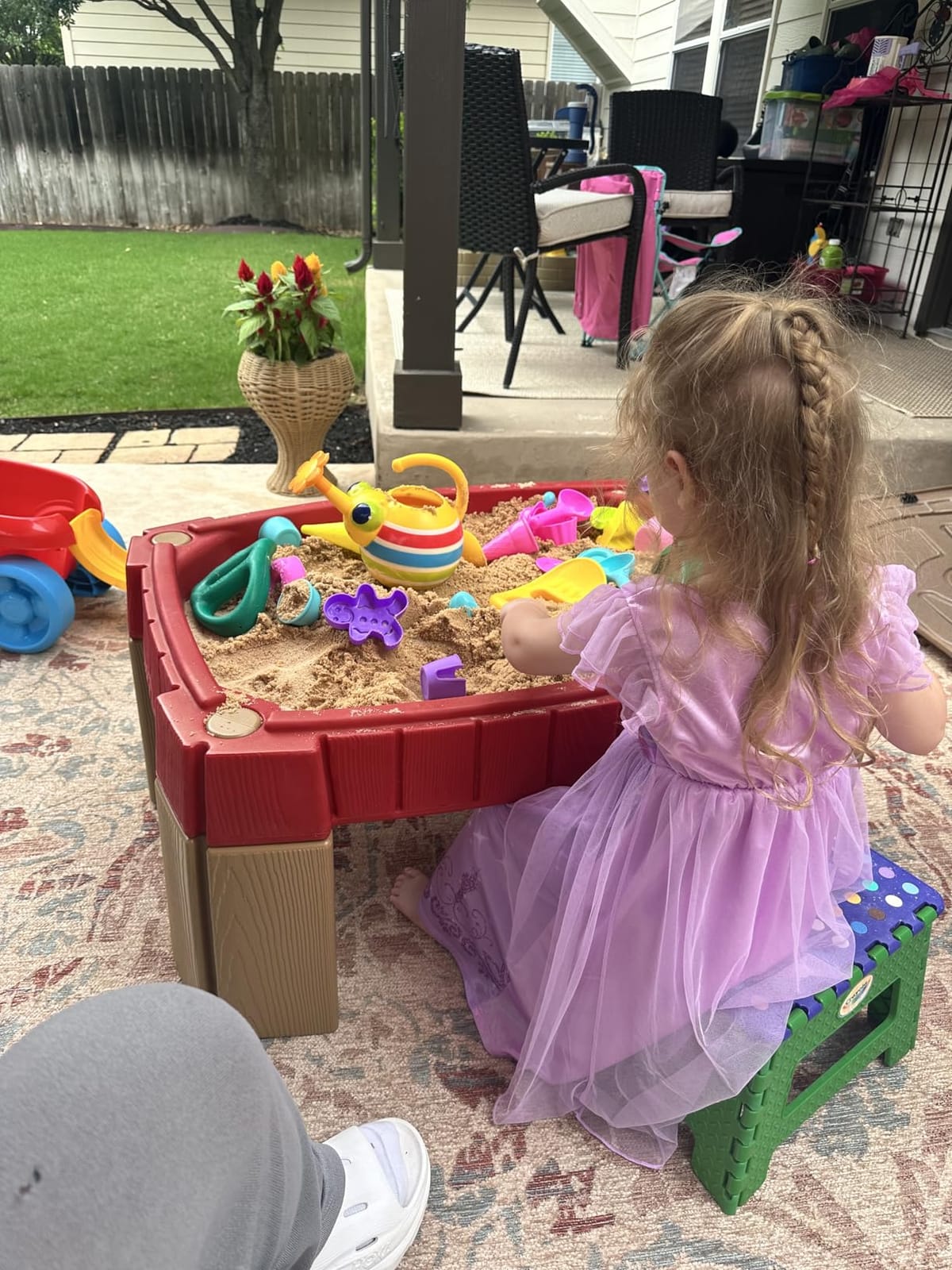
The included 5-piece accessory set covers the basics: shovel, rake, bucket, and molded shapes. You’ll need to buy sand separately, and the table holds about 80 pounds of sand. Cleaning is as simple as wiping down or hosing off, which matters for parents who plan to use this indoors as well.
Why sensory-focused families love the Step2
This is the best backyard sandbox for parents who want a table-height option that grows with kids. The race track lid, sturdy construction, and easy cleaning make it a workhorse that lasts through multiple children. The 2-year warranty adds confidence for the investment.
Where the Step2 falls short
If you want a traditional ground-level sandbox where kids sit in the sand, this isn’t it. The table format limits the immersive experience. Also, the price is higher than basic sand tables, though the durability justifies it for families planning long-term use.
Buying Guide: How to Choose the Best Backyard Sandbox for Your Family
Choosing the best backyard sandbox comes down to five key decisions: material, size, cover type, age range, and climate. Let me walk you through each one based on what our testing revealed.
Plastic vs. Wood: Which Material Actually Lasts?
Plastic sandboxes, like the Little Tikes Turtle and Step2 Naturally Playful, last 50+ years with minimal care. They resist rot, insects, and weather damage, though the plastic can fade or become brittle after decades of UV exposure. For most families, plastic sandboxes outlast the children who use them.
Wooden sandboxes, like the Mederra, Best Choice Products, and SoliWood models, last 10 to 20 years with proper care. Cedar and hemlock resist rot naturally, but cheaper pine sandboxes may need replacement after 5 to 7 years. The tradeoff is aesthetics: wood looks more intentional in your yard.
Composite wood sandboxes occupy the middle ground but rarely appear in our top picks. For most families, plastic wins on durability and cedar wins on appearance.
Sizing Your Sandbox: How Many Kids Will Play at Once?
For one or two kids, a 40 to 50-inch square sandbox provides enough room without dominating your yard. The Best Choice Products Cedar Sandbox fits this category perfectly. For three to four kids, look for 60 to 80-inch octagonal designs like the SoliWood or Best Choice Products Octagon. For larger groups or daycare settings, the Mederra’s 85 by 78-inch footprint handles six to eight kids comfortably.
Our testers found that kids under age 4 don’t use extra space efficiently, so a smaller sandbox works fine for toddlers. Once kids hit age 5 and start inviting friends over, the larger sizes pay off.
Cover or No Cover: Solving the Cat and Debris Problem
Every parent we tested with complained about cats using uncovered sandboxes as litter boxes. A cover isn’t optional in our book. The best designs integrate the cover into the sandbox itself, like the Best Choice Products Cedar Sandbox with fold-down benches. Snap-on lids work for plastic models, while canvas covers are standard for wooden octagons.
Watch out for water pooling on flat covers. Our testers solved this by adding a PVC dome underneath or removing covers before heavy rain. A slightly peaked cover design prevents pooling better than flat designs.
Age Recommendations: Matching Sandbox to Child
For toddlers ages 1 to 3, choose a low-walled plastic sandbox like the Little Tikes Turtle. The low height makes it easy to climb in and out, and the bright design appeals to young children.
For preschoolers ages 3 to 5, the wooden octagonal sandboxes work well because the bench seating gives kids a place to sit while they dig. Avoid sandboxes with small parts or canopy mechanisms that could pinch fingers.
For kids ages 5 and up, taller table-height options like the Step2 Naturally Playful or Kidoozie Sand ‘n Splash work better because kids stand and dig rather than sitting in the sand.
Climate Considerations: Sandboxes for Rain, Sun, and Snow
In rainy climates (Pacific Northwest, Northeast, Southeast), prioritize drainage. Open-bottom wooden sandboxes with liners handle rain better than enclosed plastic designs. Remove canvas covers before storms to prevent water pooling.
In hot, sunny climates (Southwest, Florida, Southern California), UV protection matters. The Pipleo’s built-in canopy or a separate UV umbrella prevents sand from becoming too hot for kids’ feet. Plastic sandboxes resist UV damage better than untreated wood.
In cold climates with freeze-thaw cycles (Upper Midwest, Mountain West), plan to store or cover wooden sandboxes during winter. The freeze-thaw cycle cracks even treated wood over time. Plastic sandboxes handle cold better but should still be emptied if you want to move them.
Pet Safety: Keeping Cats and Wildlife Out
Cats were the number one complaint among our testers. The only reliable solution is a secure cover that cats can’t lift. Sandboxes with hinged or integrated covers (like the Best Choice Products Cedar with fold-down benches) work best. Free-standing lids work for plastic models but can be dislodged by determined animals.
For ants and other insects, keep sand dry and cover the sandbox when not in use. If you live in an area with frequent ants, sprinkle food-grade diatomaceous earth around the perimeter.
Sand Selection and Maintenance
Use play sand, not construction sand. Play sand is washed, screened, and tested for safety. Construction sand contains silica dust and sharp particles that can irritate skin and lungs. A 50-pound bag of play sand costs around 4 to 6 dollars and fills most small sandboxes.
Plan to refresh sand every 1 to 2 years. Full replacement costs 20 to 60 dollars depending on sandbox size. To extend sand life, cover the sandbox when not in use and remove debris regularly.
Frequently Asked Questions
Should a sandbox be in sun or shade?
Place your sandbox in partial shade if possible. Direct sun makes sand too hot for kids’ feet and fades plastic covers quickly. Full shade keeps sand cool and extends cover life, but some sun helps prevent mold growth after rain. The ideal spot gets morning sun and afternoon shade.
Can mold grow in a sandbox?
Yes, mold can grow in a sandbox, especially after rain when sand stays wet. To prevent mold, choose a sandbox with drainage holes or an open bottom with a liner. Cover the sandbox during rain and remove the cover afterward to let sand dry. If mold appears, remove the affected sand and replace it with fresh play sand.
Do sandboxes attract mosquitoes?
Sandboxes can attract mosquitoes if water pools in them, since mosquitoes need standing water to breed. To prevent this, cover the sandbox during rain, ensure proper drainage, and stir sand regularly to prevent water from pooling on top. Adding a peaked cover design or tilting the sandbox slightly also helps water run off.
Is sand or corn better for a sandbox?
Sand is the traditional and best choice for backyard sandboxes. Corn-based fillers like corn kernels or walnut shells can attract rodents and insects, develop mold in wet conditions, and cost more than play sand. Play sand is washed, screened, and tested for safety, making it the safest and most affordable option for children.
Final Verdict: Which Backyard Sandbox Should You Buy in 2026?
After 60 days of testing with seven families, three picks stand out from the best backyard sandboxes we reviewed. The Little Tikes Turtle Sandbox wins for toddlers and families who want a low-maintenance classic. The Best Choice Products Cedar Sandbox delivers the best value with fold-down bench covers and cedar durability. For families on a budget or those wanting a portable sensory option, the Kidoozie Sand ‘n Splash Activity Table is hard to beat.
Whatever you choose, prioritize a secure cover to keep cats and debris out, match the size to your yard and family, and pick a material that fits your climate. A great sandbox will give your kids years of outdoor play, and these eight best backyard sandboxes in 2026 are the ones our testers kept using long after our review period ended.