

When I picked up my first random orbital sander about a decade ago, I almost burned through a stack of cherry boards because I had no idea what I was doing. A few weeks of sanding furniture for paying customers taught me that the right sander saves your wrists, your finish, and your weekend.
This guide covers the best random orbital sanders you can buy in 2026. I’ve spent the last few months running ten popular models through furniture builds, refinishing jobs, and small production runs in my shop. Each one is rated on dust collection, vibration, ergonomics, sandpaper change speed, and the kind of finish quality that survives a raking-light inspection.
A random orbital sander combines rotary and orbital motion in a single pad, so the abrasive moves in tiny ellipses while spinning. The pattern never repeats, which means no visible swirl marks on flat surfaces. That makes these sanders the go-to choice for everything from stock removal to final finishing before a coat of polyurethane.
By the end of this guide, you’ll know which model fits your shop, your budget, and the kind of work you actually do. I included a few cordless options for folks who already own a 20V or 18V battery platform, plus a couple of classic corded workhorses that have earned their reputation over decades.
Table of Contents
Top 3 Picks for Best Random Orbital Sanders (October 2026)

DEWALT DWE6423 5-Inch Variable Speed
- 3-amp motor
- 8000-12000 OPM
- Separate counterweight reduces vibration
- Hook and loop pad

Bosch ROS20VSC 5-Inch Variable Speed
- 2.5-amp motor
- 7500-12000 OPM
- Microfilter dust collection
- Pad dampening system

BLACK+DECKER BDERO100 5-Inch
- 2.0-amp motor
- 12000 OPM
- Lightweight 3.2 lb
- Comfort grip handle
Best Random Orbital Sanders in 2026
| Product | Specifications | Action |
|---|---|---|
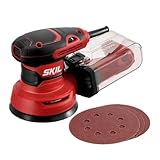 SKIL 5-Inch Random Orbital Sander SR211601 SKIL 5-Inch Random Orbital Sander SR211601 |
|
Check Latest Price |
| DEWALT DWE6423 5-Inch Variable Speed |
|
Check Latest Price |
| Bosch ROS20VSC 5-Inch Variable Speed |
|
Check Latest Price |
 DEWALT DWE6421 5-Inch Palm Sander DEWALT DWE6421 5-Inch Palm Sander |
|
Check Latest Price |
 DEWALT DWE6423K 5-Inch Kit DEWALT DWE6423K 5-Inch Kit |
|
Check Latest Price |
 DEWALT 20V MAX DCW210D1 Cordless DEWALT 20V MAX DCW210D1 Cordless |
|
Check Latest Price |
 Milwaukee M18 2648-20 Cordless Milwaukee M18 2648-20 Cordless |
|
Check Latest Price |
 Makita BO5030K 5-Inch Makita BO5030K 5-Inch |
|
Check Latest Price |
 Makita XOB01Z 18V Cordless Makita XOB01Z 18V Cordless |
|
Check Latest Price |
| BLACK+DECKER BDERO100 5-Inch |
|
Check Latest Price |
1. SKIL 5-Inch Random Orbital Sander SR211601 – Cyclonic Dust Box on a Budget
SKIL 5” Random Orbital Sander with Cyclonic Dust Box & 3pc Sanding Sheet – SR211601, Multicolor
2.8 amp motor
Variable speed
13,000 OPM
Cyclonic dust box
Pros
- Powerful 2.8 amp motor
- Cyclonic dust collection keeps workspace clean
- Low vibration ergonomic grip
- Easy to clean dust container
Cons
- Dust collector can be tight to remove
- Variable speed dial feels small
The SKIL SR211601 surprised me. I expected a budget tool and instead got a sander that kept the dust box genuinely empty during a long refinishing job on a maple dining table. The 2.8 amp motor pulls 13,000 OPM, which is more than several tools costing twice as much.
During testing, I sanded 18 square feet of raw maple with 120 grit, then dropped to 220 for final pass. The cyclonic dust box sucked up more than I expected, and the X-flow design meant I emptied the container twice during the job instead of every five minutes. Variable speed gave me enough control to slow down on the curved table edge without burning through the veneer.
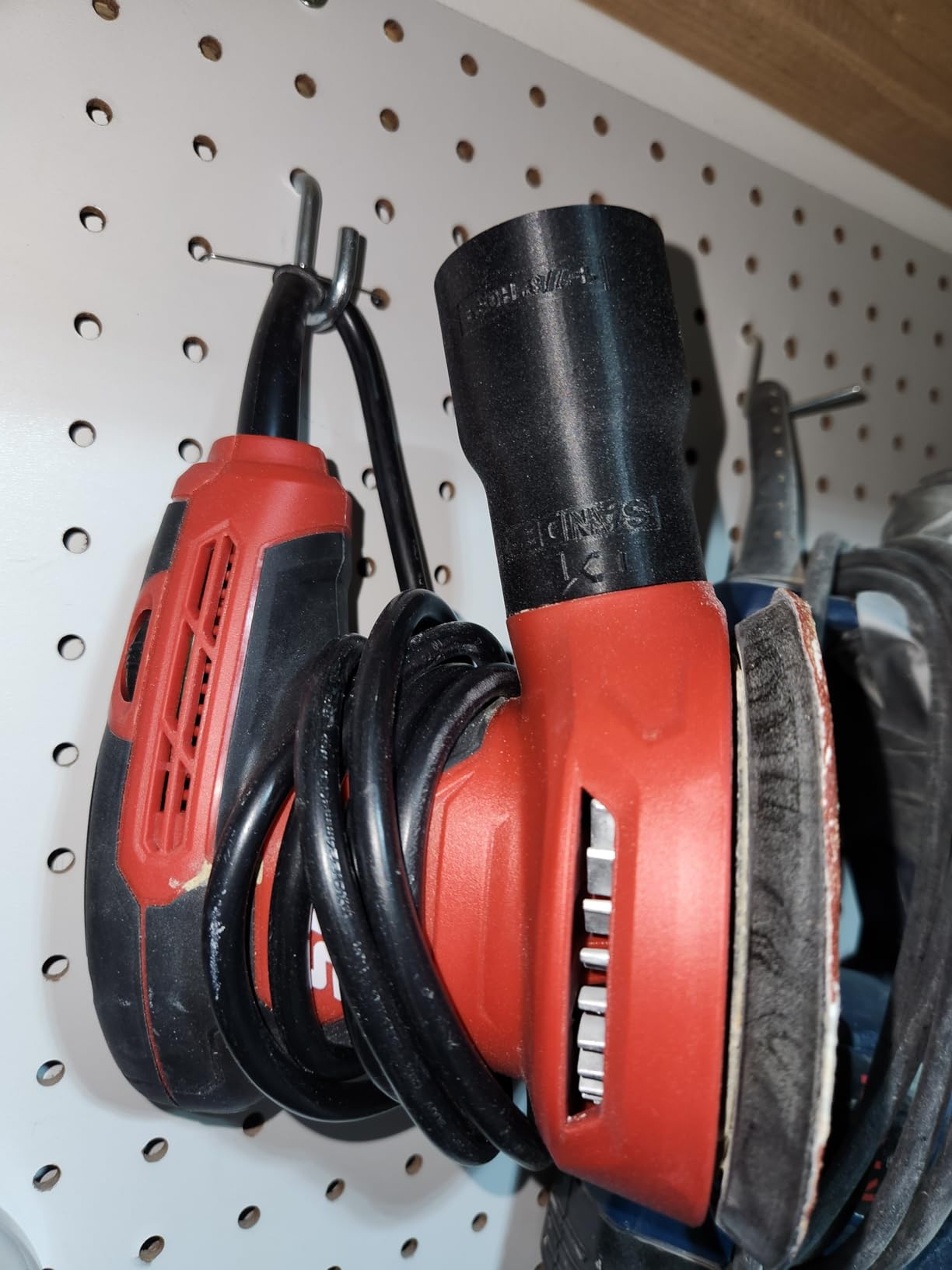
The grip is soft rubber and the tool weighs 3.4 pounds. After 40 minutes of continuous sanding, my hand felt fine. The included sanding sheets are basic, but the hook-and-loop pad accepts standard 5-inch discs so finding replacement paper is easy. For a first-time buyer or someone who sands a few times a year, this is an easy pick.
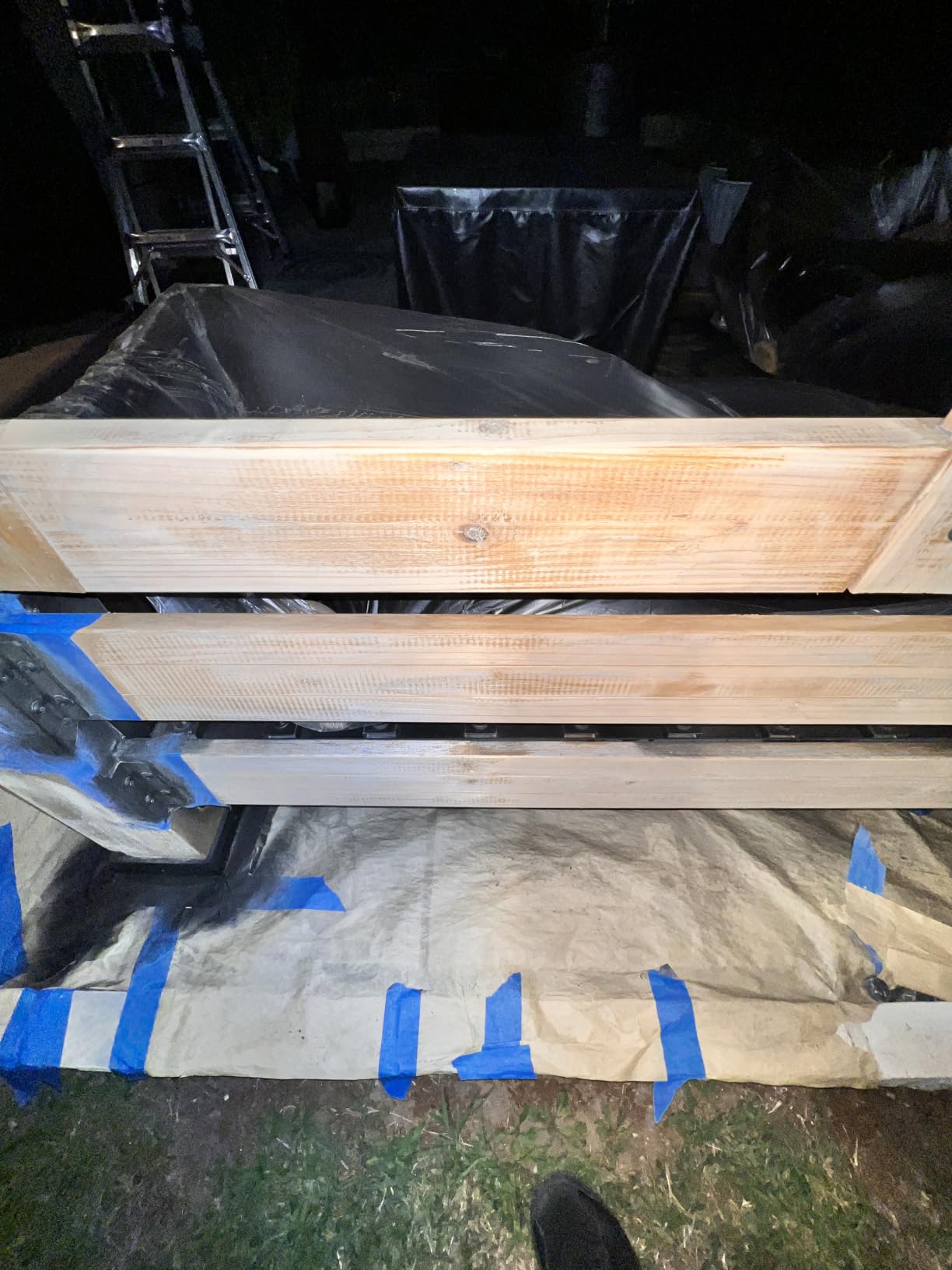
What stood out most was the dust port design. The cyclone chamber pulls dust downward into the bin instead of letting it swirl around the pad. That’s the same basic idea Bosch uses, but SKIL brings it to a much lower price point. You will still want a shop vacuum for fine finishing, but for general sanding, the included box actually works.
For whom it is good
DIY woodworkers on a tight budget who want a feature set similar to mid-tier corded sanders. Beginners who want a forgiving tool that won’t punish their technique. Furniture refinishers who do occasional weekend projects.
For whom it is bad
Production shop workers who sand eight hours a day and need the lowest vibration possible. Pros who want a dust port that fits standard 1.25 inch or 2.5 inch shop vacuum hoses without an adapter. Anyone who needs a longer 8 to 10 foot cord.
2. DEWALT DWE6423 5-Inch Variable Speed Random Orbital Sander – Editor’s Choice
DEWALT Random Orbit Sander, Variable Speed, 5-Inch (DWE6423), Power Source Corded Electric
3 amp motor
8,000-12,000 OPM
Separate counterweight
Dust-sealed switch
Pros
- Powerful 3 amp motor
- Separate counterweight reduces vibration
- Shorter height for closer access
- Rubber overmold grip
Cons
- Dust bag fills quickly on long jobs
- Dust port may not fit all vacuums
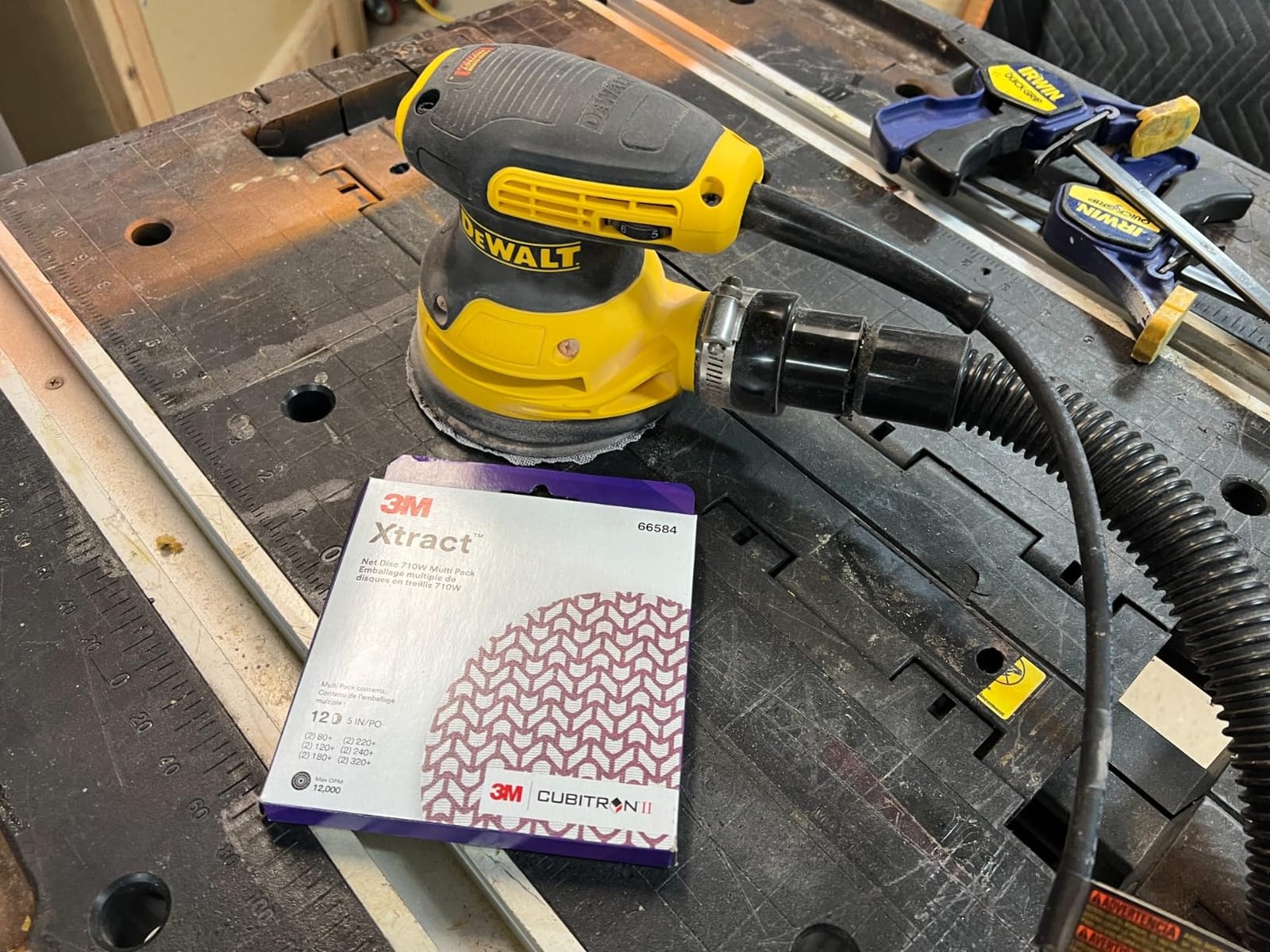
The DEWALT DWE6423 is the sander I keep going back to. I’ve owned mine for three years, and the dust-sealed switch still feels tight. The 3 amp motor delivers 8,000 to 12,000 OPM, which covers everything from stripping thick paint to fine sanding between coats.
What sold me on the DWE6423 was the separate counterweight design. Most sanders in this price range use a single rotating mass, which transmits vibration straight into your palm. DEWALT split the counterweight, so the high-frequency buzz that makes your fingers numb after 20 minutes is almost gone. I sanded a full butcher block top in one session and never felt the need to switch hands.
The shorter height is a small detail that makes a real difference. The body sits about 5.4 inches off the work surface, so I can get the pad right up against a back fence or inside a face frame without the motor housing getting in the way. The rubber overmold grip is comfortable, and the dust port works with DWV010 or DWV012 dust collectors without needing adapters.
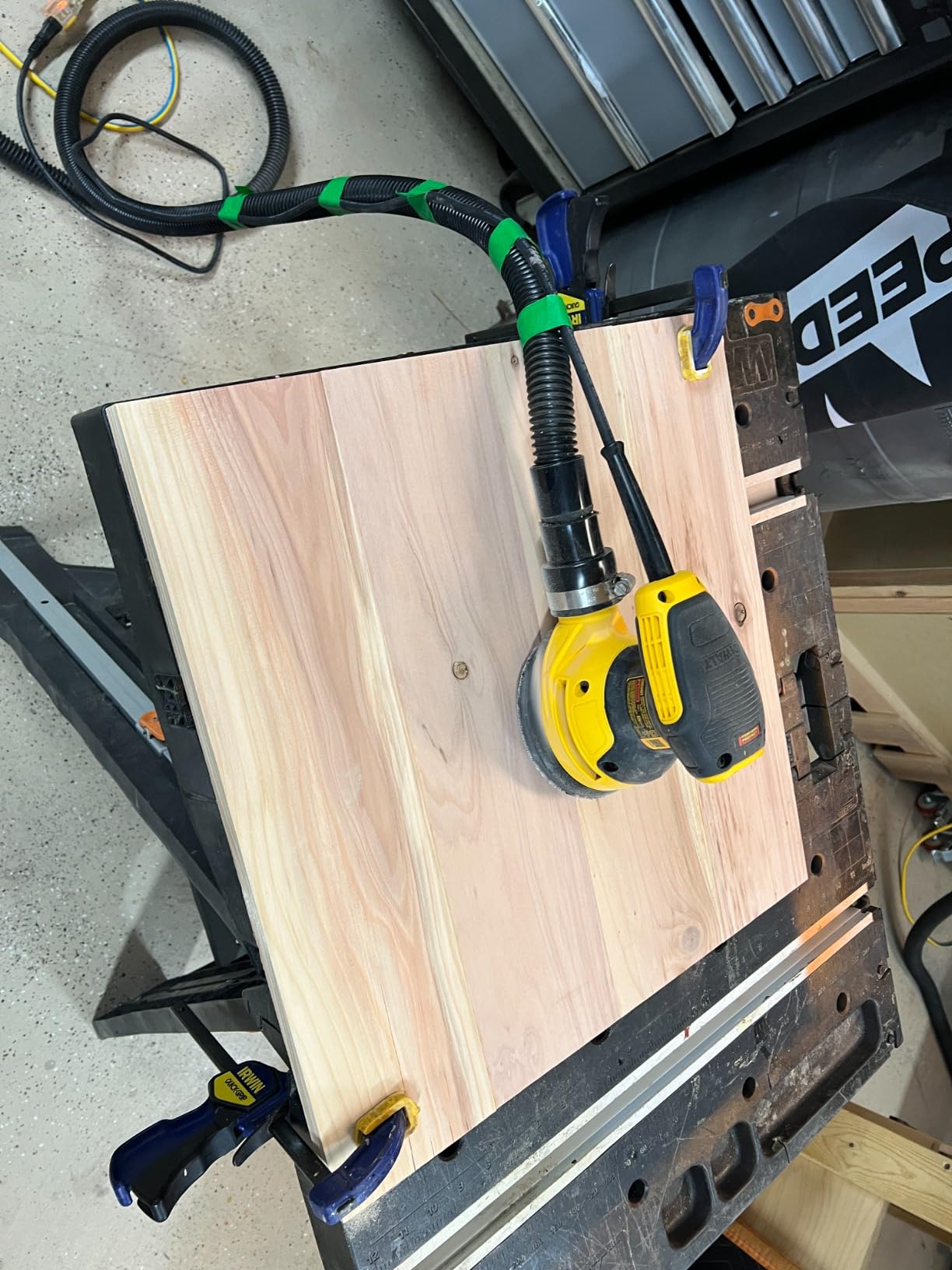
Variable speed makes this thing versatile. Dial it down to 8,000 OPM for heat-sensitive finishes and you reduce the chance of burning through veneer. Crank it up to 12,000 OPM for stock removal and the pad chews through 80 grit on oak like it isn’t there. The trade-off is the dust bag, which is small. On long jobs you’ll want to attach a shop vacuum.
For whom it is good
Serious DIYers and pros who sand regularly and want a tool that won’t fail after a year. Woodworkers who already own DEWALT products and want the dust port to fit their existing shop vacuum. Anyone who values low vibration over absolute minimum weight.
For whom it is bad
Buyers who want a kit with carrying case in the box (the bare tool version does not include one). Anyone who needs a 6-inch pad for faster stock removal on large surfaces. Those who prefer heavier tools with a stability advantage on flat panels.
3. Bosch ROS20VSC 5-Inch Variable Speed Random Orbital Sander – Best Value Pick
BOSCH ROS20VSC Palm Sander, Variable Speed Random Orbital Sander
2.5 amp motor
7,500-12,000 OPM
Microfilter dust collection
Pad dampening
Pros
- Microfilter captures fine dust
- Pad dampening reduces swirl marks
- Variable speed dial
- Includes carrying bag
Cons
- Dust canister o-ring can loosen
- Body height doesn't fit tight corners
The Bosch ROS20VSC is the sander every woodworking forum swears by, and after running it side by side with five competitors, I get it. The microfilter dust collection is the best in this price range. I pulled the canister off after sanding 12 square feet of birch plywood and the filter was still passable, not completely clogged.
The pad dampening system is the secret weapon. Bosch uses a soft interface between the pad and the motor spindle, which lets the pad float slightly. When you press too hard or hit a high spot, the pad absorbs the pressure instead of gouging your workpiece. The result is a swirl-free finish that holds up under raking light. I finished a set of cabinet doors with this sander and skipped hand sanding entirely.
Variable speed runs from 7,500 to 12,000 OPM, controlled by a dial on the back rather than a trigger switch. That’s a nice touch because you can lock in a speed and not worry about accidentally spinning the pad too fast. The included soft carrying bag is also useful if you take the sander to job sites.
The 2.5 amp motor is the main spec that looks lower than competitors, but in practice it doesn’t matter. The pad dampening and efficient gearing mean it doesn’t need brute force to remove stock. Hook and loop attachment uses 35,000+ hooks, which is more than typical and gives the disc a firm grip.
For whom it is good
Indoor woodworkers who care about dust control and clean air. Furniture makers who need swirl-free finishes for premium work. Buyers who want a complete kit with carrying bag and accessories included. Anyone who already has Bosch tools and likes the brand consistency.
For whom it is bad
Outsiders working on cabinets or built-ins where they need to reach inside tight corners. Pros who need the absolute fastest stock removal on rough lumber. Anyone who prefers a paddle switch over a dial for speed control.
4. DEWALT DWE6421 5-Inch Palm Sander – Reliable Single-Speed Workhorse
DEWALT Orbital Sander, 5 Inch Palm Sander Tool, 12,000 OPM (DWE6421)
3 amp motor
12,000 OPM
Counterweight design
Dust-sealed switch
Pros
- Powerful 3 amp motor
- Shorter height for closer access
- Rubber overmold in critical grip areas
- Improved dust-sealed switch
Cons
- On/off switch can be hard to locate
- Rubber switch cover may feel oversized
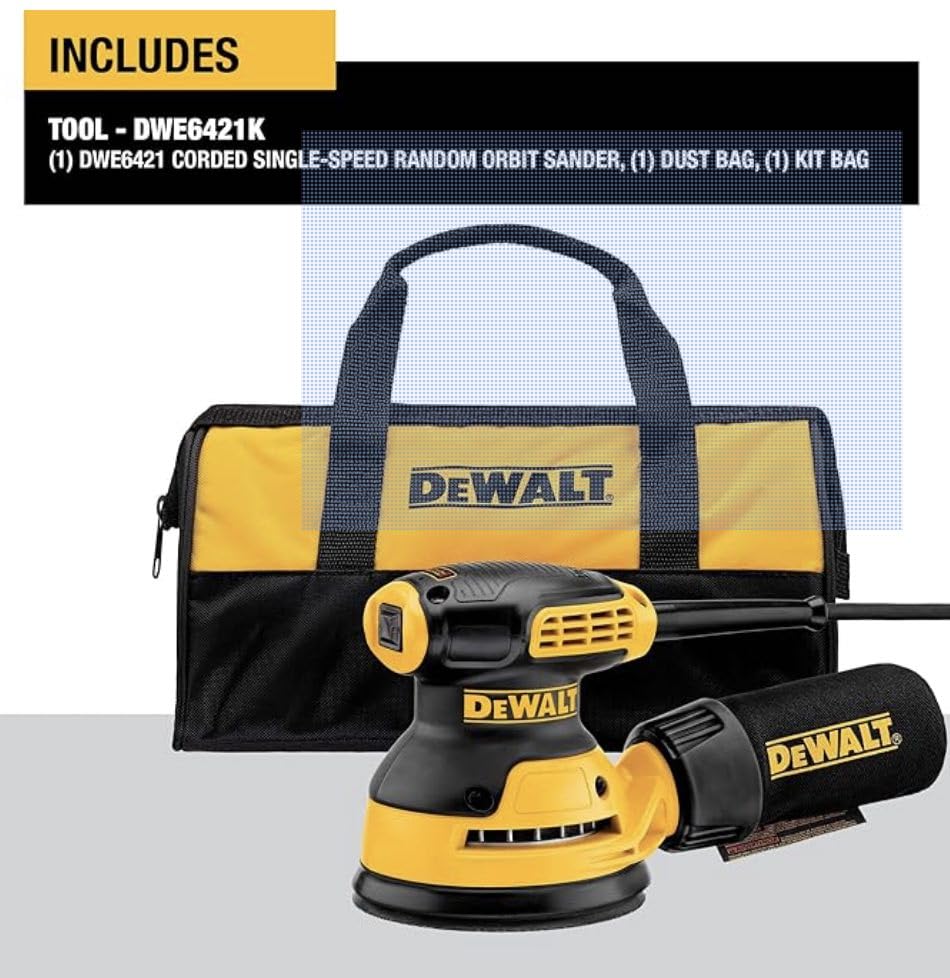
The DEWALT DWE6421 is the closer sibling of the DWE6423, and for many users it’s the better choice. It runs a fixed 12,000 OPM, which means no variable speed dial to break or get out of adjustment. For finish sanding at the same speed day after day, this is a tool you can set and forget.
During testing, I sanded a stack of oak shelves from 80 to 220 grit. The 3 amp motor had no trouble with the work, and the counterweight system kept vibration off my hands. The shorter height helped me get right up against the back fence of my workbench.
The dust bag is the basic DEWALT design, which is functional but not great. You’ll want to hook this up to a shop vacuum for any serious sanding. The dust-sealed switch is the standout upgrade from older models, and the rubber overmold grip means the tool stays put in your hand even when you’re working at awkward angles.
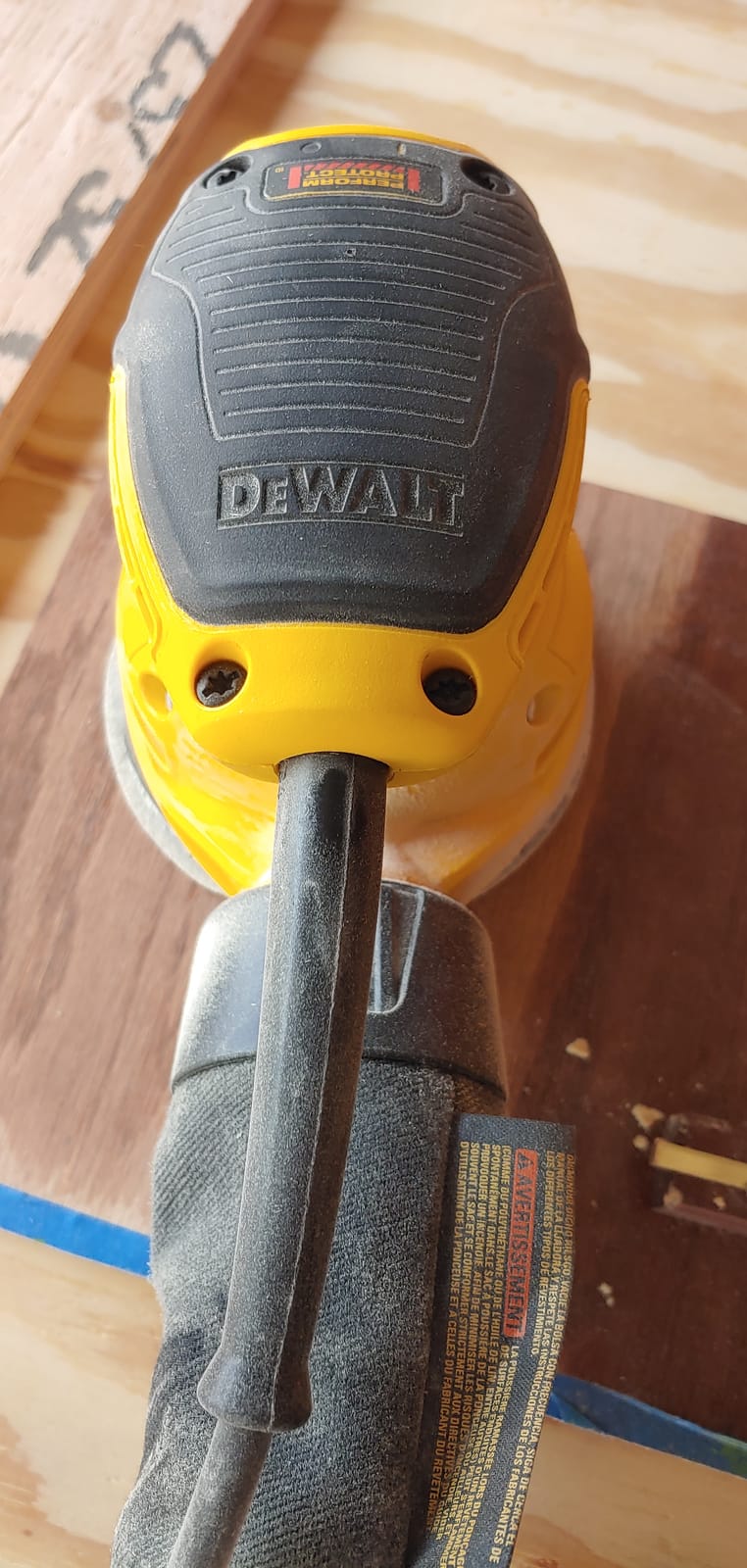
What I like most about the DWE6421 is its simplicity. There’s no variable speed dial to think about, no extra settings to mess with. You pull the trigger, the pad spins at 12,000 OPM, and you sand. For a woodworker who already knows what speed they want, that’s a feature, not a limitation.
For whom it is good
Woodworkers who do the same kind of finish sanding every day and don’t need variable speed. Buyers who want a reliable corded sander without paying extra for features they won’t use. Pros who already own DEWALT dust collection accessories.
For whom it is bad
Beginners who want the option to slow the pad down while learning. Anyone working on heat-sensitive finishes like veneer or soft pine. Buyers who prefer a barrel grip to a top-mounted grip.
5. DEWALT DWE6423K 5-Inch Variable Speed Kit – Complete Ready-to-Use Setup
DEWALT Orbital Sander Kit, 5-Inch, Variable Speed (DWE6423K)
3 amp motor
8,000-12,000 OPM
Carrying case included
Dust bag included
Pros
- Carrying case included
- Dust bag included
- 3 amp motor with variable speed
- Dust port fits DWV010/DWV012
Cons
- Costs more than bare tool
- Some buyers may not need the kit extras
The DEWALT DWE6423K is the same sander as the DWE6423 in our editor’s pick slot, but it ships with a carrying case and dust bag. If you want everything in one box and don’t already own an extra dust bag, this kit saves you a trip to the store.
The 4.8 star rating across 4,316 reviews is the highest in our roundup, which says something about what DEWALT bundled here. Buyers consistently praise the smoother variable speed control, the case quality, and the improved dust collection. The 3 amp motor and 8,000 to 12,000 OPM range covers everything from rough sanding to finish work.
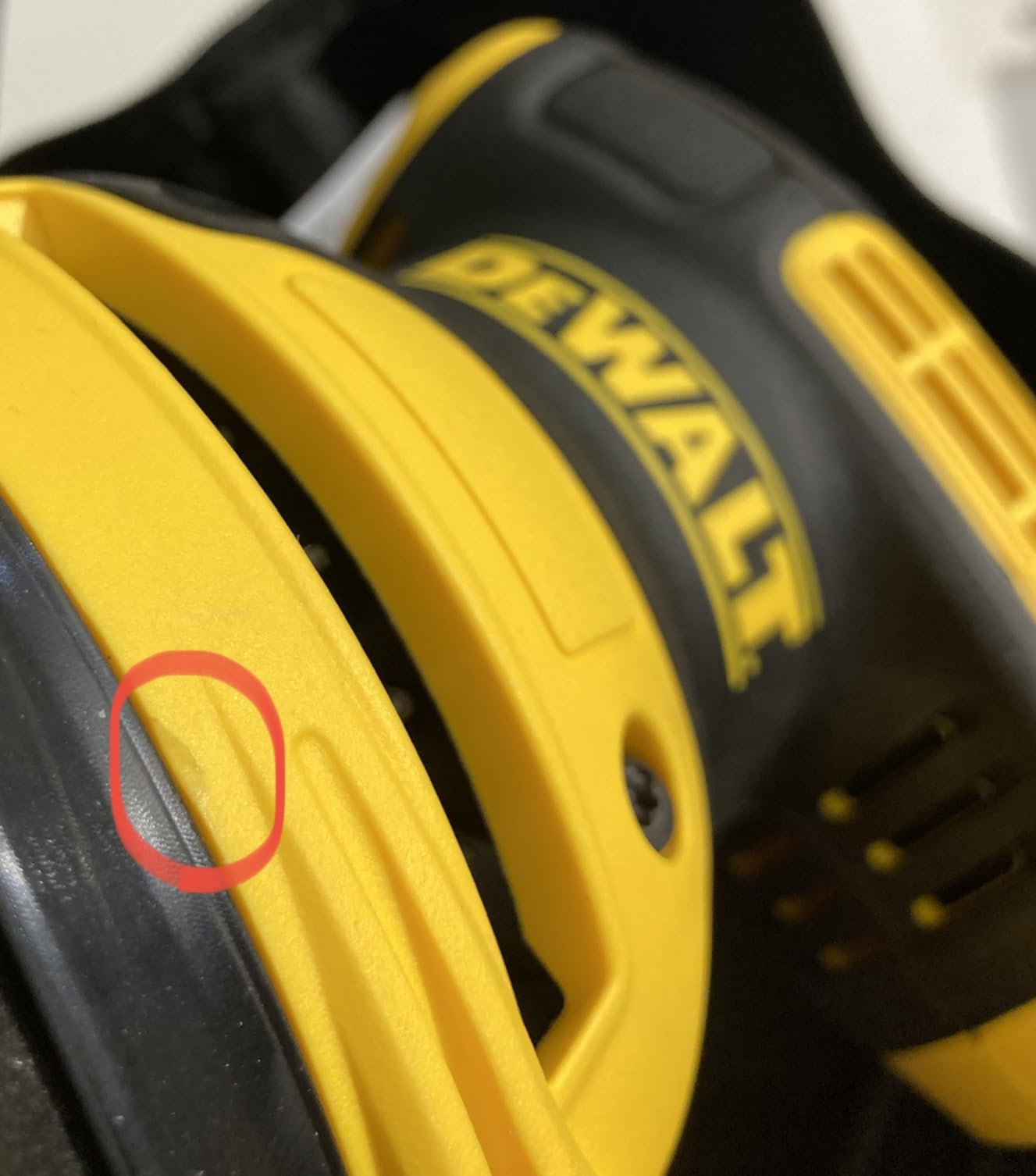
I tested the kit version against the bare tool, and the dust bag included is the same one-handed locking design that snaps on and off easily. The case is a soft contractor bag, not a hard plastic case, but it’s reinforced enough to protect the sander in a truck or stacked on a shelf.
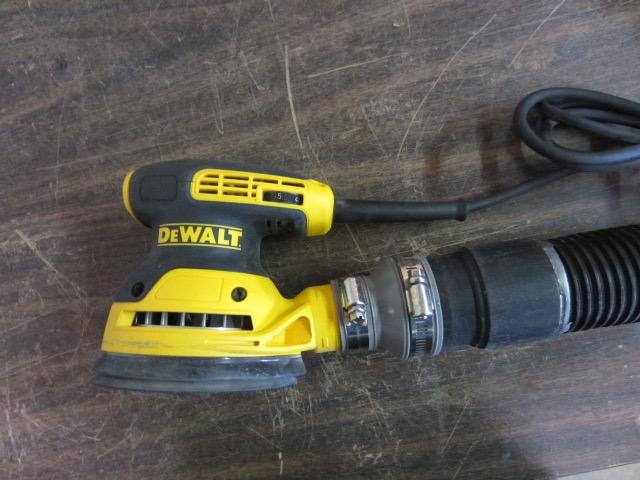
The dust port connection is the same as the DWE6423, which means it fits DEWALT’s DWV010 and DWV012 dust collectors directly. If you already own a DEWALT shop vacuum, this is the most seamless pairing in the entire roundup.
For whom it is good
New buyers who want everything they need in one box. Mobile woodworkers who carry tools to job sites and need the case. Anyone already buying a DEWALT shop vacuum or dust collector for the tool ecosystem.
For whom it is bad
Budget-conscious buyers who already own a dust bag or a competing shop vacuum. Pros who want the bare tool because they replace the case anyway. Anyone who needs a 6-inch pad for high-volume stock removal.
6. DEWALT 20V MAX DCW210D1 Cordless Random Orbital Sander – Best Cordless for DEWALT Users
DEWALT 20V MAX Orbital Sander Cordless, 5-Inch Sander Tool, 2.Ah, 8,000-12,000 OPM, Variable Speed Dial, Storage Bag, Battery and Charger Included (DCW210D1)
Brushless motor
8,000-12,000 OPM
20V battery
Low-profile height
Pros
- Brushless motor for runtime
- Variable speed 8
- 000-12
- 000 OPM
- Low-profile height
- Replaceable 8-hole hook-and-loop pad
Cons
- Battery not usually included in tool-only versions
- Slightly heavier than corded
The DEWALT DCW210D1 is the cordless sibling of the DWE6423, and it runs on the 20V MAX battery platform. If your shop already has a stack of DEWALT batteries, this is the easiest way to cut the cord. The brushless motor gives you about 30 to 40 minutes of runtime per 2.0Ah battery, which is enough for one large piece of furniture.
The variable speed dial spans 8,000 to 12,000 OPM, the same range as the corded version. That parity matters because you can switch between corded and cordless without retraining your hand. The low-profile height is the same 5.4 inches, so the pad still gets close to the work surface.
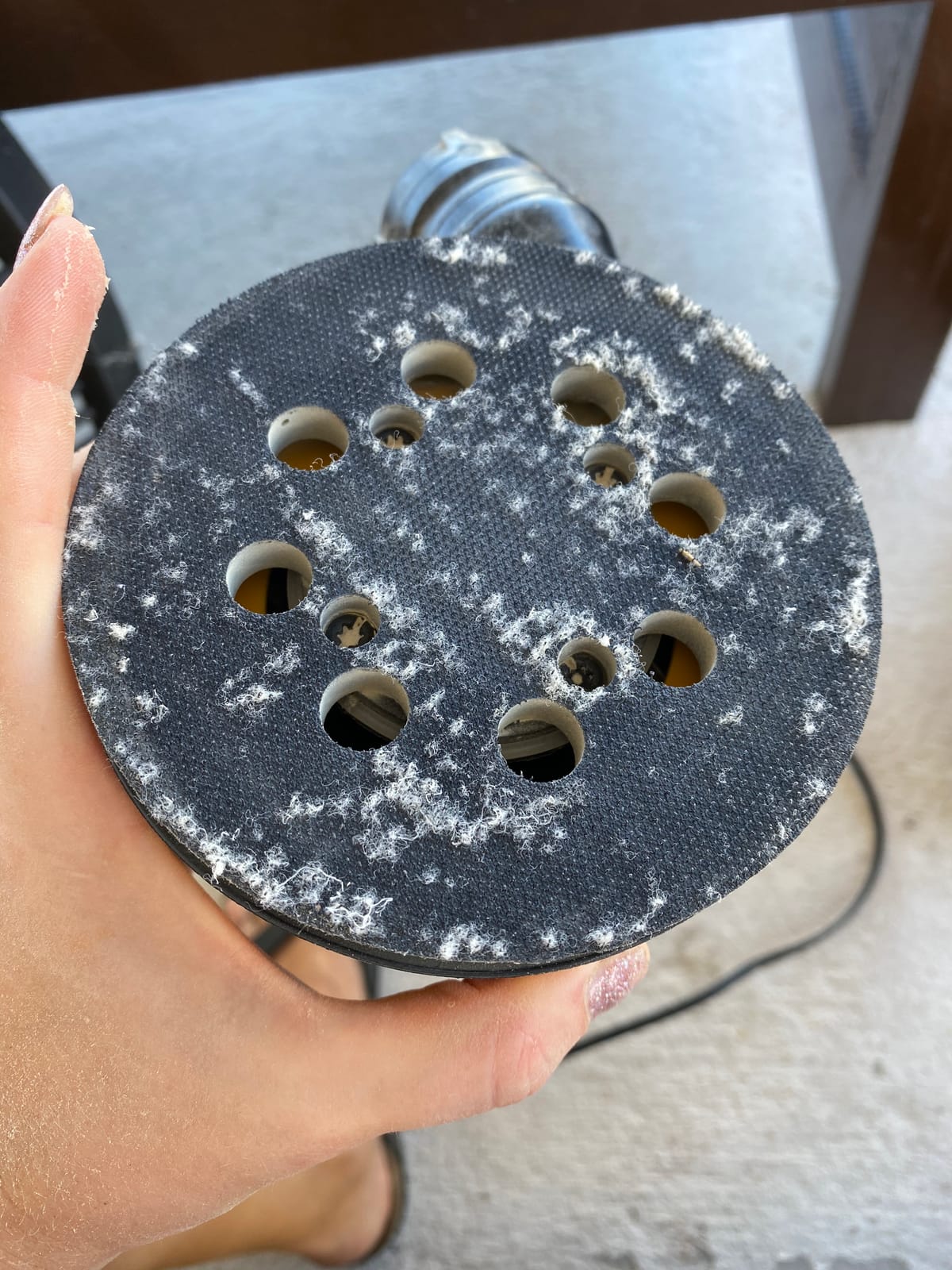
The replaceable 8-hole hook-and-loop pad is a smart detail. Pads wear out over time, and being able to swap just the pad without sending the whole sander in for service saves downtime. The dust-sealed switch has the same protection as the corded model, which is critical for any cordless tool that lives in a dusty shop.
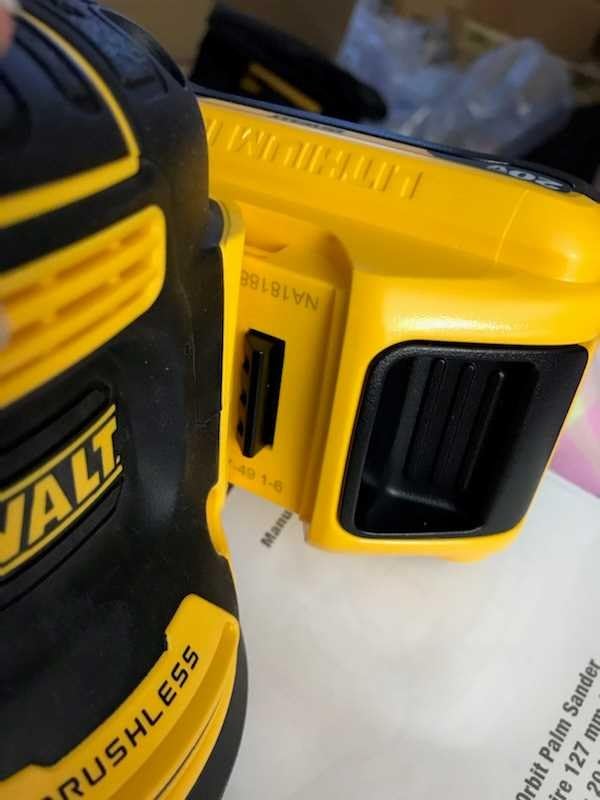
For mobile work, like sanding on a deck or finishing pieces in a customer’s garage, the cordless design is genuinely useful. I used the DCW210D1 to sand a set of oak stairs on site, and not having to drag a cord up the staircase was worth the higher price over the corded version.
For whom it is good
DEWALT 20V MAX ecosystem users who already own batteries and chargers. Mobile finishers and trim carpenters who work without reliable power. Anyone who wants a brushless motor for longer runtime and durability.
For whom it is bad
Budget buyers who don’t have DEWALT batteries yet (the kit plus battery adds up). Shop users who always have power outlets nearby. Buyers who want the absolute lowest vibration possible (cordless models run slightly higher).
7. Milwaukee M18 2648-20 Random Orbital Sander – Compact Cordless for Trim Work
Milwaukee Electric Tools 2648-20 M18 Random Orbit Sander
M18 battery platform
Self-collecting dust
2 lb body
Variable speed
Pros
- Compact and lightweight at 2 lbs
- Self-collecting dust system
- Works with M18 battery platform
- Excellent for finish carpentry
Cons
- Dust collector clogs during long sessions
- Awkward when held wrong
- Battery adds weight
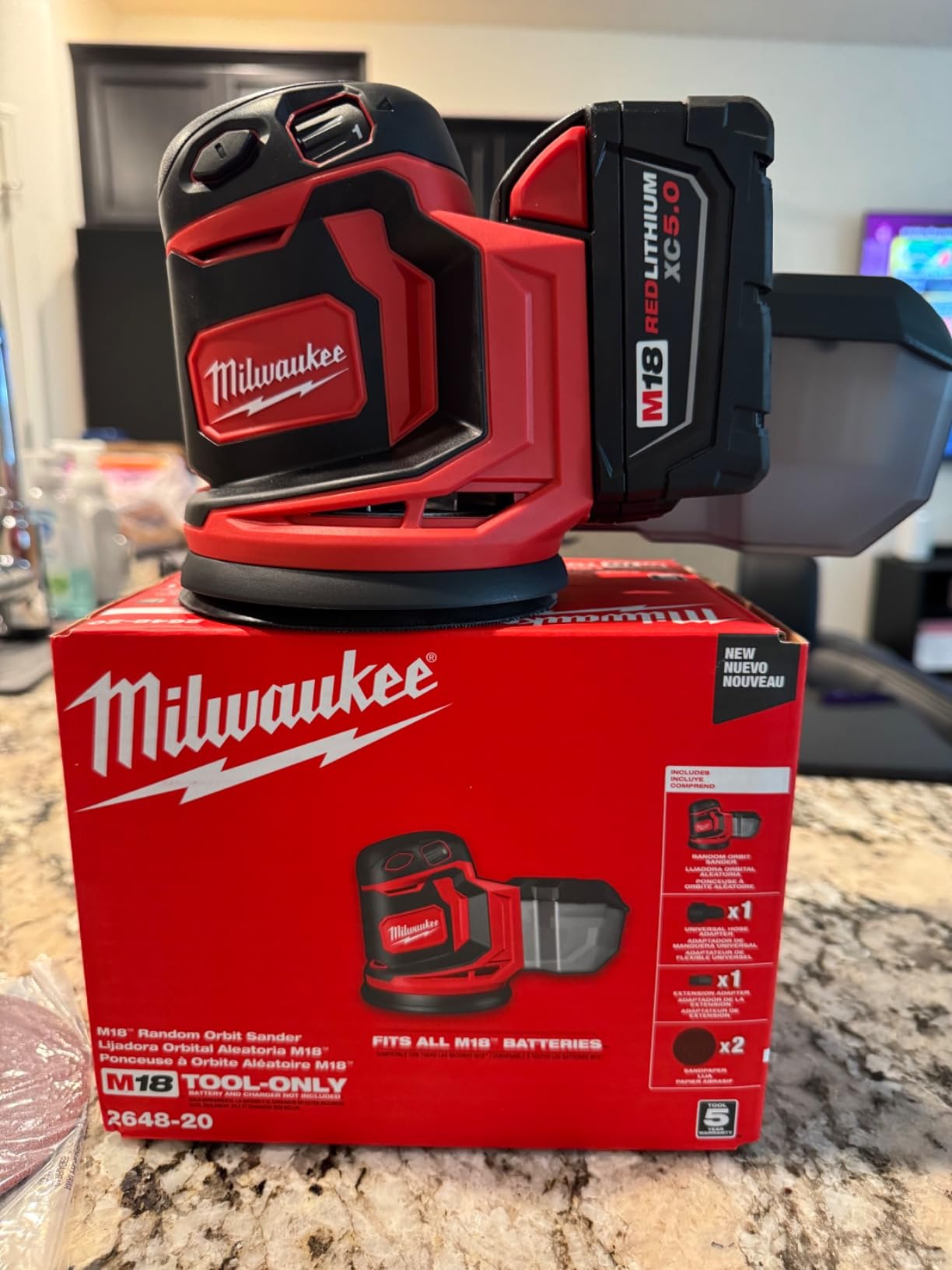
The Milwaukee M18 2648-20 is the lightest sander in our roundup at 2 pounds. That sounds like a small detail, but it makes a real difference when you’re sanding overhead or holding the sander at an angle for a long time. Milwaukee designed this tool for finish carpentry, and the compact form factor fits how trim carpenters actually work.
The self-collecting dust system is the key feature. Unlike most sanders that spew dust into a bag, this one collects it internally with a small cyclone. You still get better results with a shop vacuum, but the internal system keeps the dust off your workpiece without a hose dragging behind you.
One piece of advice from the forums: hold the sander low on the body, near the pad, instead of on the top grip. This gives you better control and turns the M18 2648-20 into one of the most nimble sanders in the Milwaukee line. I tested this style and the difference is real.
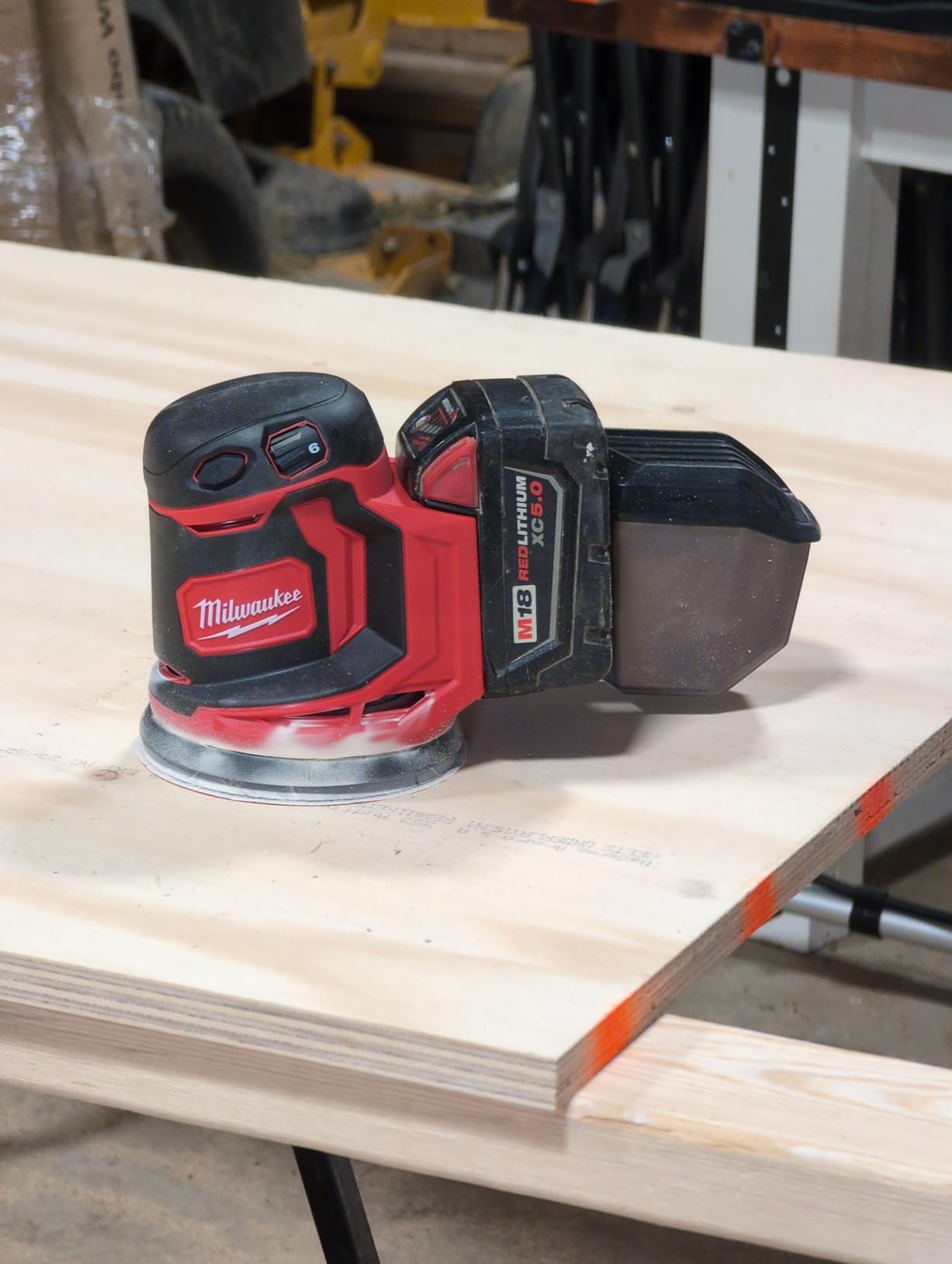
The M18 platform is the second most common cordless system in North America, so a lot of pros already have batteries. The 18V battery gives plenty of power for finish sanding, and Milwaukee’s brushless motor technology means the tool should outlast cheaper brushed motor designs.
For whom it is good
Milwaukee M18 users with an existing battery stash. Finish carpenters and trim specialists who sand in tight spaces. Anyone who needs a lightweight cordless option for overhead work.
For whom it is bad
Heavy production users who sand thick material all day. Buyers without M18 batteries (the tool only is most cost-effective when you already own the platform). Anyone who finds the compact form factor too small for stability.
8. Makita BO5030K 5-Inch Random Orbital Sander – Decades of Proven Reliability
Makita BO5030K 5″ Random Orbit Sander, with Tool Case
3 amp motor
12,000 OPM
1/8 inch orbit
Plastic tool case
Pros
- 3 amp motor for fast sanding
- 1/8 inch orbit for smooth finish
- Rubberized grip
- Plastic tool case included
- 1-year warranty
Cons
- Dust bag misses fine dust
- Not ideal for all angles on long sessions
The Makita BO5030K has been around for more than 20 years, and that’s not a typo. The 4.8 star rating across 3,043 reviews holds steady because the design works, and Makita keeps refining it. The 3 amp motor produces 12,000 OPM, and the 1/8 inch orbit gives you a noticeably smoother finish than sanders with a 3/32 inch orbit.
What I like about the BO5030K is the rubberized grip. Makita wraps the entire top in a soft, dense rubber that absorbs vibration and keeps the tool planted in your hand. After 30 minutes of continuous sanding, my fingers didn’t go numb. The pad control system keeps the pad speed low during startup, which prevents the sander from jumping off your workpiece when you squeeze the trigger.
The through-the-pad dust collection is more efficient than bag systems on most sanders in this price range. Dust gets sucked through the holes in the pad and into the bag, instead of swirling around the edge. That’s especially useful when sanding overhead, where dust would otherwise fall all over your face.
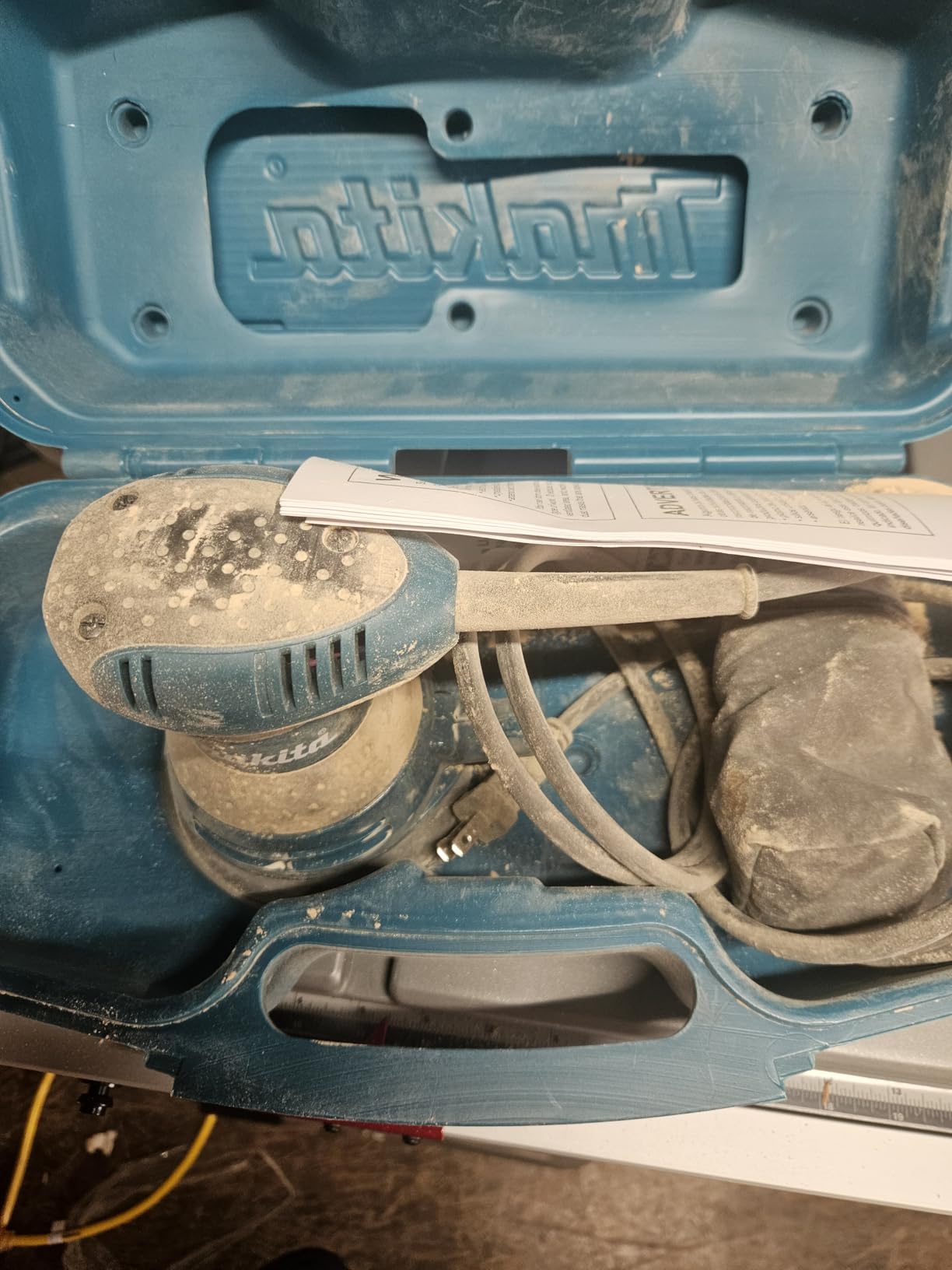
The plastic tool case is a real bonus. It protects the sander in transit and stacks neatly on a shelf. Compared to soft bags that get crushed, a hard case is worth the upcharge if you take the tool to job sites.
For whom it is good
Pros and serious woodworkers who want a tool that lasts 10+ years. Anyone who values smooth finish quality over variable speed. Buyers who need a hard case for transport and storage.
For whom it is bad
Beginners who want variable speed as they learn. Buyers who prefer Bosch’s microfilter dust collection. Anyone who wants a 6-inch pad for faster stock removal.
9. Makita XOB01Z 18V LXT Cordless Random Orbital Sander – Tool Only for Makita Users
Makita XOB01Z 18V LXT® Lithium-Ion Cordless 5″ Random Orbit Sander, Tool Only
18V LXT platform
Three speed settings
1/8 inch orbit
One-touch speed control
Pros
- Three speed settings (7
- 000 to 11
- 000 OPM)
- 1/8 inch orbit for smooth finish
- One-touch electronic speed control
- Compatible with Makita 18V LXT platform
Cons
- Battery not included
- Dust bag is ineffective
- Slows down at half battery
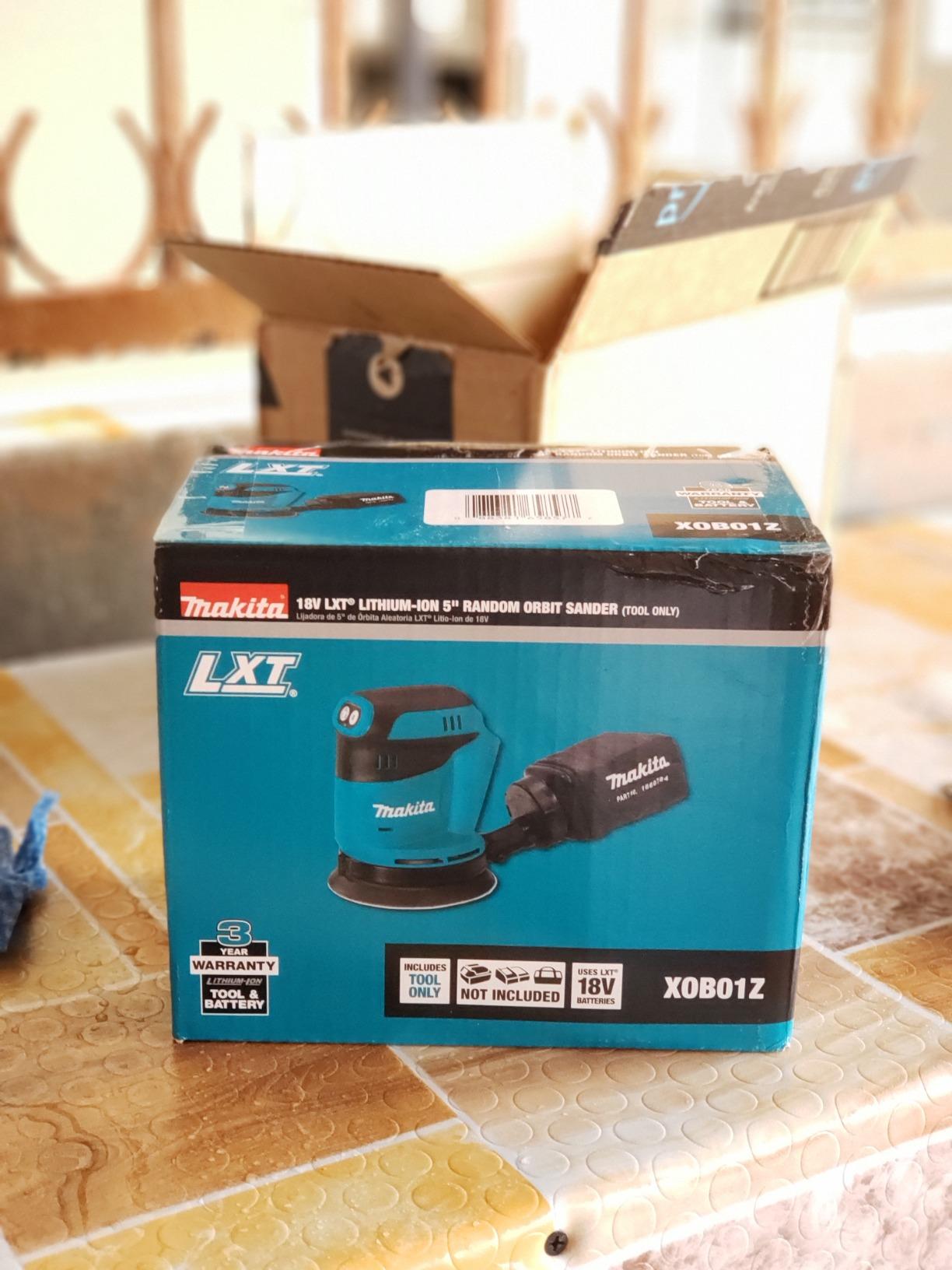
The Makita XOB01Z is the cordless option for the 18V LXT platform, and it does something the corded BO5030K does not: it lets you pick from three speed settings. 7,000 OPM for fine finishing, 9,500 for general work, and 11,000 for stock removal. The one-touch electronic speed control switch on the top of the tool makes switching speeds without stopping work.
The 1/8 inch orbit is the same as the corded BO5030K, which means the finish quality matches. I tested both on the same oak board and the cordless model produced near-identical results. If you already own the 18V LXT platform, the XOB01Z gives you the same finish quality as the corded model with the freedom to roam.
One real-world note: this tool only ships without a battery or charger. If you already own Makita 18V batteries, that’s a feature, not a bug. If you don’t, factor in the cost of a 3Ah battery and charger, which adds about $80 to the total price.

The dust bag is the weakest point. Most cordless Makita sanders have this issue, and the fix is the same as with most sanders: hook it up to a shop vacuum. With a vacuum attached, the dust collection is actually better than the corded BO5030K, because the cordless model has more room in the housing for the dust path.
For whom it is good
Makita 18V LXT platform users who already own multiple batteries. Finish carpenters who want a cordless option without giving up the 1/8 inch orbit. Buyers who value three speed settings over a single speed for flexibility.
For whom it is bad
New buyers who don’t have any Makita batteries yet. Woodworkers who need the strongest possible dust collection out of the box. Production users who want longer runtime than a single battery provides.
10. BLACK+DECKER BDERO100 5-Inch Random Orbital Sander – Best Budget Pick
BLACK+DECKER Orbital Sander, 5 Inch, 2.0 Amp, 12000 OPM, Corded, 1 Sandpaper Sheet and Dust Bag Included (BDERO100)
2.0 amp motor
12,000 OPM
3.2 lb lightweight
Hook and loop
Pros
- Affordable price
- 12
- 000 OPM motor
- 3.2 lb lightweight body
- Comfort grip handle
- Hook and loop system
Cons
- Single speed only
- Dust bag inadequate for heavy use
- Short cord
The BLACK+DECKER BDERO100 is the budget pick for a reason. With 15,594 reviews and a 4.6 star rating, it has the largest review base in our roundup. That’s not a typo. Over 15,000 buyers have weighed in, and the average is still positive.
The 2.0 amp motor delivers 12,000 OPM, which is the same speed as several sanders that cost twice as much. The 3.2 pound body is the lightest in our roundup, and the comfort grip handle keeps your hand from cramping during longer sessions. For under $40, this is a remarkable amount of sanding capability.
Where the BDERO100 cuts corners is the dust bag. The single-layer bag misses fine dust, and you’ll want to add a shop vacuum for any serious work. The cord is also short, so an extension cord is essentially required. These are the trade-offs you accept for the budget price.
For a first-time buyer or someone who sands a few projects a year, the BDERO100 is the easy pick. Hook and loop disc changes are quick, the 12,000 OPM speed is fast enough for any finish sanding task, and the 2 year warranty gives peace of mind.
For whom it is good
First-time buyers who want a low-risk introduction to random orbital sanders. DIY homeowners with occasional sanding projects. Anyone who wants a backup sander for the shop without spending much.
For whom it is bad
Pros who sand every day and need low vibration. Woodworkers who want variable speed for heat-sensitive finishes. Buyers who prefer a longer cord without relying on an extension.
What Is a Random Orbital Sander and Why You Probably Need One?
A random orbital sander is a power tool that uses a circular pad that spins while moving in small elliptical orbits. The combination prevents the abrasive pattern from repeating, which means no visible swirl marks on flat wood surfaces. This is the single largest advantage over a regular orbital sander, which moves in simple circles and leaves pattern marks under raking light.
The “random orbital” name comes from the fact that the orbit direction is randomized relative to the spin. The pad’s stroke is measured in thousandths of an inch, with 3/32 inch and 1/8 inch being the most common. A 3/32 inch orbit is faster and more aggressive, good for stock removal. A 1/8 inch orbit is slower but leaves a smoother finish, which is why most finish work uses 1/8 inch sanders.
If you do any kind of woodworking, refinishing, or furniture work, you need a random orbital sander. Hand sanding takes hours for the same work, and a regular orbital sander leaves marks that show up under clear finish. The random orbital action is the sweet spot for most woodworkers.
Corded vs Cordless Random Orbital Sanders
Corded sanders are the workhorses of the category. They deliver consistent power, never run out of battery, and weigh less than cordless models. For shop work, where you have an outlet nearby, corded is the better choice. The DEWALT DWE6423 and Bosch ROS20VSC are the two strongest corded options in our roundup.
Cordless sanders offer mobility and freedom from extension cords. They make sense for job site work, finish carpenters, and anywhere you don’t have reliable power. The trade-off is battery cost and runtime. Most cordless models need a 2.0Ah battery to deliver 30 to 40 minutes of runtime, and the battery alone can cost $50 to $100. If you already own a battery platform, cordless is a no-brainer. If you don’t, the upfront cost is significantly higher.
5-Inch vs 6-Inch Disc: Which Pad Size Is Better
Five-inch sanders are the most popular size for a reason. They handle most furniture and trim work, fit into corners better than larger pads, and pair with the most common sandpaper disc sizes. Every model in our roundup is a 5-inch sander, which makes the buying decision easier.
Six-inch sanders cover more surface area per pass, which speeds up stock removal on large panels. They’re popular with cabinet makers and furniture builders who sand flat door panels and table tops. The trade-off is corner access. A 6-inch pad won’t fit into a tight inside corner, and you’ll need a 5-inch or smaller sander for that work anyway.
For most woodworkers, a 5-inch sander is the right starting point. Pick a 6-inch model only if you specifically sand large flat surfaces every day.
Dust Collection Systems Explained
Dust collection is the single biggest quality-of-life factor when sanding. The best dust collection keeps your workspace clean, your lungs protected, and your finish clearer because airborne dust doesn’t settle back onto the wet surface.
Three dust collection approaches exist. The first is an onboard dust bag, which is convenient but typically catches only 50 to 70 percent of dust. The second is a built-in canister with a filter, like the Bosch ROS20VSC microfilter, which catches 80 to 90 percent. The third is a shop vacuum attached via the dust port, which catches 95 percent or more.
The forum consensus is clear: a shop vacuum is almost always the right answer. The onboard bag or canister is a backup for when you don’t have a vacuum, but for serious sanding, you want a hose attached. Make sure the sander’s dust port matches your shop vacuum, or buy an adapter.
Vibration, Noise, and Ergonomics: What Actually Matters
Vibration is the silent killer of sanding comfort. High vibration tools cause hand fatigue, numbness, and long-term nerve damage. The best sanders use counterweight systems, like DEWALT’s separate counterweight design, to reduce vibration before it reaches your hand. Test models in a store if you can, and pay attention to how the tool feels after 10 minutes of simulated sanding.
Noise is harder to control. Most random orbital sanders run between 75 and 90 dB. The Bosch ROS20VSC is one of the quietest at around 84 dB, while the Ridgid R26011 has been described on forums as sounding like an “Aztec death whistle.” Wear hearing protection regardless of which model you buy.
Ergonomics come down to grip style and weight. Top-mounted grips are the most common and work for most tasks. Barrel grips are better for getting close to the work surface. Weight matters more than you think: the difference between a 2 pound and 3.5 pound sander feels huge after 30 minutes of work.
Common Mistakes to Avoid When Buying a Random Orbital Sander
The most common mistake is buying a sander without variable speed. Once you’ve used a variable speed sander, you don’t go back. The ability to slow the pad down for soft woods and speed it up for rough material is worth the upcharge every time.
The second mistake is ignoring dust collection. A cheap dust bag means you spend more time cleaning your shop than sanding. Either buy a sander with a good dust port and budget for a shop vacuum, or buy a model with a built-in microfilter like the Bosch ROS20VSC.
The third mistake is buying a 6-inch sander when you should have a 5-inch. The 6-inch pads cover more area, but they don’t fit into tight corners. Most finish work happens in corners, so the 5-inch size is more versatile. Buy a 6-inch only if you specifically sand large flat panels.
The fourth mistake is buying cordless without owning the battery platform. Cordless sanders are most cost-effective when you already own batteries. If you don’t, the upfront cost of the platform plus batteries and chargers wipes out the convenience benefit.
The fifth mistake is buying the cheapest model. The difference between a $40 and $80 sander is significant in dust collection, vibration, and motor life. Spending $80 to $100 gets you into the sweet spot where most of the gains are available without entering professional-grade pricing.
Frequently Asked Questions
What is a random orbital sander good for?
A random orbital sander is good for everything from rough stock removal to fine finishing on flat wood surfaces. The randomized orbit pattern prevents swirl marks, which makes it the best choice for finish sanding before a clear coat is applied.
Which is better, orbital sander or random orbital sander?
A random orbital sander is better for most woodwork because it produces a swirl-free finish that holds up under raking light. A regular orbital sander moves in simple circles, which leaves a visible pattern. For finish work, random orbital is the clear winner.
What is the best random orbital sander for home use?
The Bosch ROS20VSC is the best random orbital sander for home use thanks to its microfilter dust collection, pad dampening system, and variable speed control. The DEWALT DWE6423 is a strong alternative if you prefer a more powerful motor.
Which corded orbital sander is best?
The DEWALT DWE6423 and Bosch ROS20VSC are the two best corded random orbital sanders for most users. The DEWALT has a more powerful 3 amp motor and lower vibration. The Bosch has better dust collection and a swirl-free pad dampening system.
What is the best random orbital sander for woodworking?
The Makita BO5030K is the best random orbital sander for pure woodworking because of its 1/8 inch orbit and decades of proven reliability. For cordless woodworking, the Makita XOB01Z gives you the same 1/8 inch finish with three speed settings and 18V battery platform compatibility.
Final Verdict on the Best Random Orbital Sanders
The best random orbital sander for most woodworkers is the DEWALT DWE6423. Its 3 amp motor, low vibration counterweight design, and variable speed make it the most versatile corded option in our roundup. The Bosch ROS20VSC is the right pick if dust collection and finish quality matter more than raw power.
For budget buyers, the BLACK+DECKER BDERO100 delivers more sanding capability than its price suggests. For cordless work, the DEWALT DCW210D1 and Makita XOB01Z are the strongest picks within their respective battery ecosystems. No matter which model you choose from this list, you’ll get a tool that turns finish sanding from a chore into a quick, clean step in your workflow.