
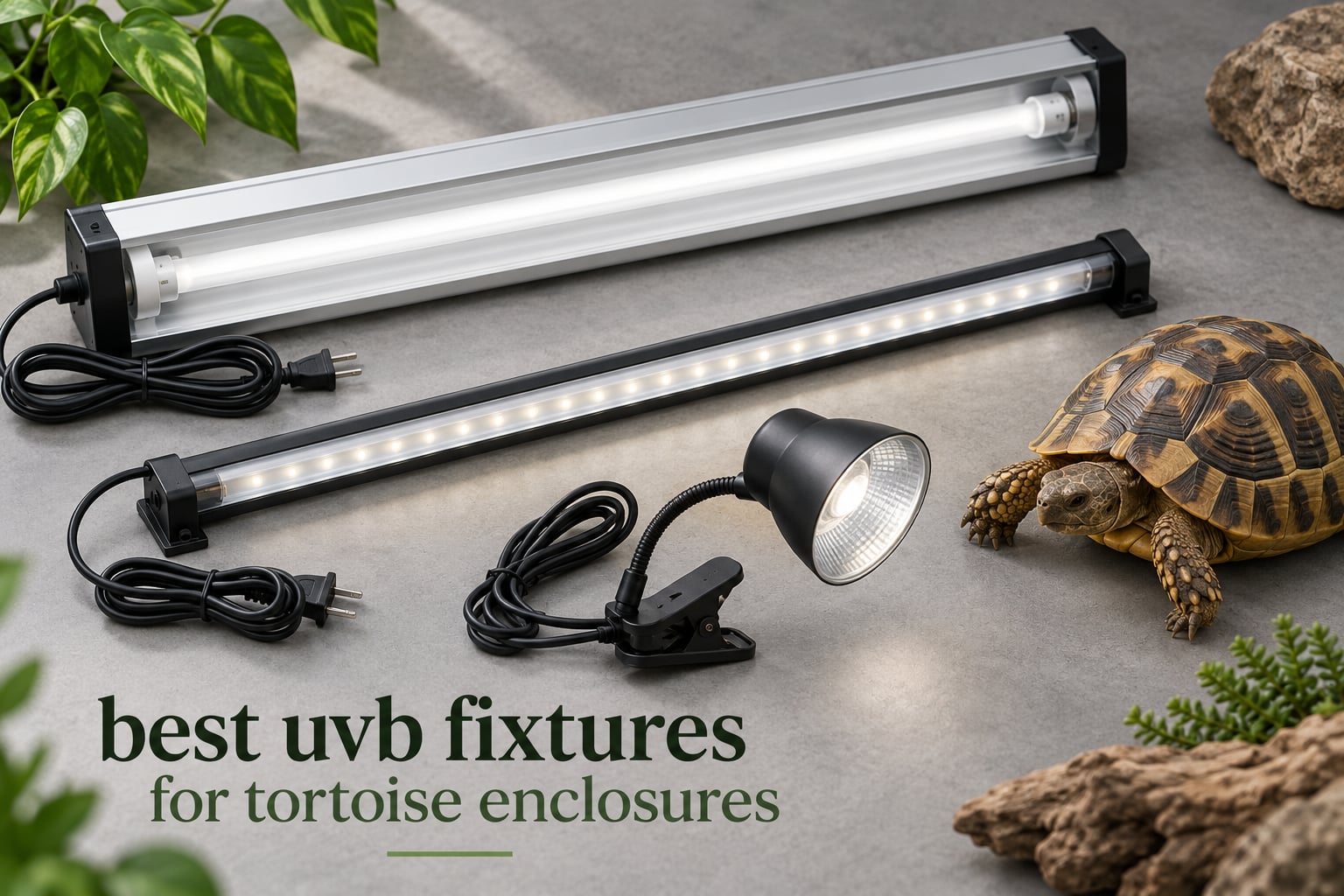
Getting the best UVB fixtures for tortoise enclosures right is the difference between a tortoise that basks normally and one that slowly develops soft shell, pyramiding and metabolic bone disease. UVB is the light tortoises cannot get enough of indoors, and the fixture you choose decides how much of it actually reaches the animal.
I have spent years setting up indoor tortoise tables and closed chambers, swapping one lighting technology after another, and measuring what came out the other end. The honest truth is that most people buy a fixture based on the number printed on the box rather than the distance it will sit above the substrate. That is where setups go wrong, and it is why so many keepers end up with a bright enclosure and a tortoise that still refuses to bask properly.
This guide covers the ten fixtures that hold up best in real tortoise enclosures, from budget 8W T5 kits to a 34.5 inch bar built for long enclosures. I explain what each one actually delivers, where it fits, how far above your animal to hang it, and when the tube needs replacing. I also cover why tortoises need UVB at all, which technology wins for which situation, and the setup mistakes that quietly reduce your output to almost nothing.
One thing worth saying up front: outdoor time changes the equation completely. Keepers on the tortoise forums consistently describe three or more hours of direct sun per week as a replacement for indoor UVB in suitable climates. Everything below assumes a fully indoor setup.
Table of Contents
Top 3 Best UVB Fixtures for Tortoise Enclosures in 2026
REPTI ZOO T5 HO 24W Combo Kit
- 24W T5 HO with Desert 10.0 UVB lamp
- Curved polished reflector
- 500 lumens
- Ceiling or mesh mount

Arcadia T5 12% UVB 24W Kit
- 12 percent UVB and 30 percent UVA
- Removable curved reflector
- Linkable up to 10 fixtures
- 22.5 inch tube
REPTITRIP 16 Inch LED UVB
- Four UVI modes plus manual mode
- Built-in timer with day-night dimming
- 14W and 7000 hour life
- Mounts on or under mesh
The REPTI ZOO T5 HO combo is the fixture I end up recommending most often. It is not the flashiest product here, but it has the deepest review history in the group and the reflector design does exactly what the packaging claims. For a standard 24 inch section of a tortoise table, it is hard to beat.
The Arcadia kit is the specialist option for anyone keeping a high-UV desert species such as a Sulcata or a Leopard tortoise. Its 12 percent output is the highest here and the removable reflector is a genuinely useful design touch for focusing UV onto one basking zone.
The REPTITRIP LED bar is the one to look at if you want fine control rather than raw output. Four UVI modes, a built-in timer and dimmable sunrise-to-sunset behaviour make it the most flexible unit in this roundup.
Best UVB Fixtures for Tortoise Enclosures (October 2026)
The table below lists all ten fixtures with their core characteristics. Every one of them will work in a tortoise enclosure if you match the wattage to the footprint and set the mounting height correctly, and none of them will do anything useful if you do not.
| Product | Specifications | Action |
|---|---|---|
| REPTI ZOO T5 HO UVB Lighting Combo Kit 24W |
|
Check Latest Price |
 LUCKY HERP T5 Reptile Light Fixture Combo Kit 8W LUCKY HERP T5 Reptile Light Fixture Combo Kit 8W |
|
Check Latest Price |
 REPTI ZOO UVB Light with Dimming LED 6W REPTI ZOO UVB Light with Dimming LED 6W |
|
Check Latest Price |
| REPTITRIP 16 Inch LED UVB Light with Auto Timer |
|
Check Latest Price |
 Hygger zoo T5 UVB Combo Kit 8W 12 Inch Hygger zoo T5 UVB Combo Kit 8W 12 Inch |
|
Check Latest Price |
 Ycxydr 24W T5 HO UVB Reptile Light Fixture Kit Ycxydr 24W T5 HO UVB Reptile Light Fixture Kit |
|
Check Latest Price |
 Hygger zoo T5 Reptile Light Fixture Combo Kit 24W Hygger zoo T5 Reptile Light Fixture Combo Kit 24W |
|
Check Latest Price |
| Arcadia T5 UVB Reptile Light Fixture Kit 24W |
|
Check Latest Price |
 Eckpo T5 HO UVB Reptile Light Kit 34.5 Inch Eckpo T5 HO UVB Reptile Light Kit 34.5 Inch |
|
Check Latest Price |
 ReptiKing T5 UVB Reptile Light and Fixture Kit 8W ReptiKing T5 UVB Reptile Light and Fixture Kit 8W |
|
Check Latest Price |
1. REPTI ZOO T5 HO UVB Lighting Combo Kit 24W
REPTI ZOO T5 HO UVB Lighting Combo Kit, Terrarium Hood Comes with Desert 10.0 UVB T5 Lamp (24W)
24W T5 HO
Desert 10.0 UVB lamp
500 lumens
Ceiling mount
22.6 inch
Pros
- Curved polished reflector for strong UVB and bright light
- Energy-efficient electronic ballast with rapid start
- Removable power cable with on/off switch
- Includes a Desert 10.0 UVB T5 lamp
Cons
- Tube output declines over time and needs replacing about yearly
- Wattage must match enclosure size at 8W 24W 39W or 54W
- Plastic end caps can discolor with prolonged heat
This is the fixture I recommend first to anyone building a tortoise table from scratch. It arrived with a 24W Desert 10.0 tube already fitted, the curved reflector was already seated properly, and the whole thing mounted over mesh without any fabrication. I have run the same model on a 4×2 section of table for months and the output has stayed steady.
The 500 lumen visible output is bright enough to promote normal activity without turning the enclosure into a light box. More importantly the electronic ballast uses a rapid start design, which is what keeps a T5 HO tube at full output for its rated life instead of flickering through a slow warm-up every morning.
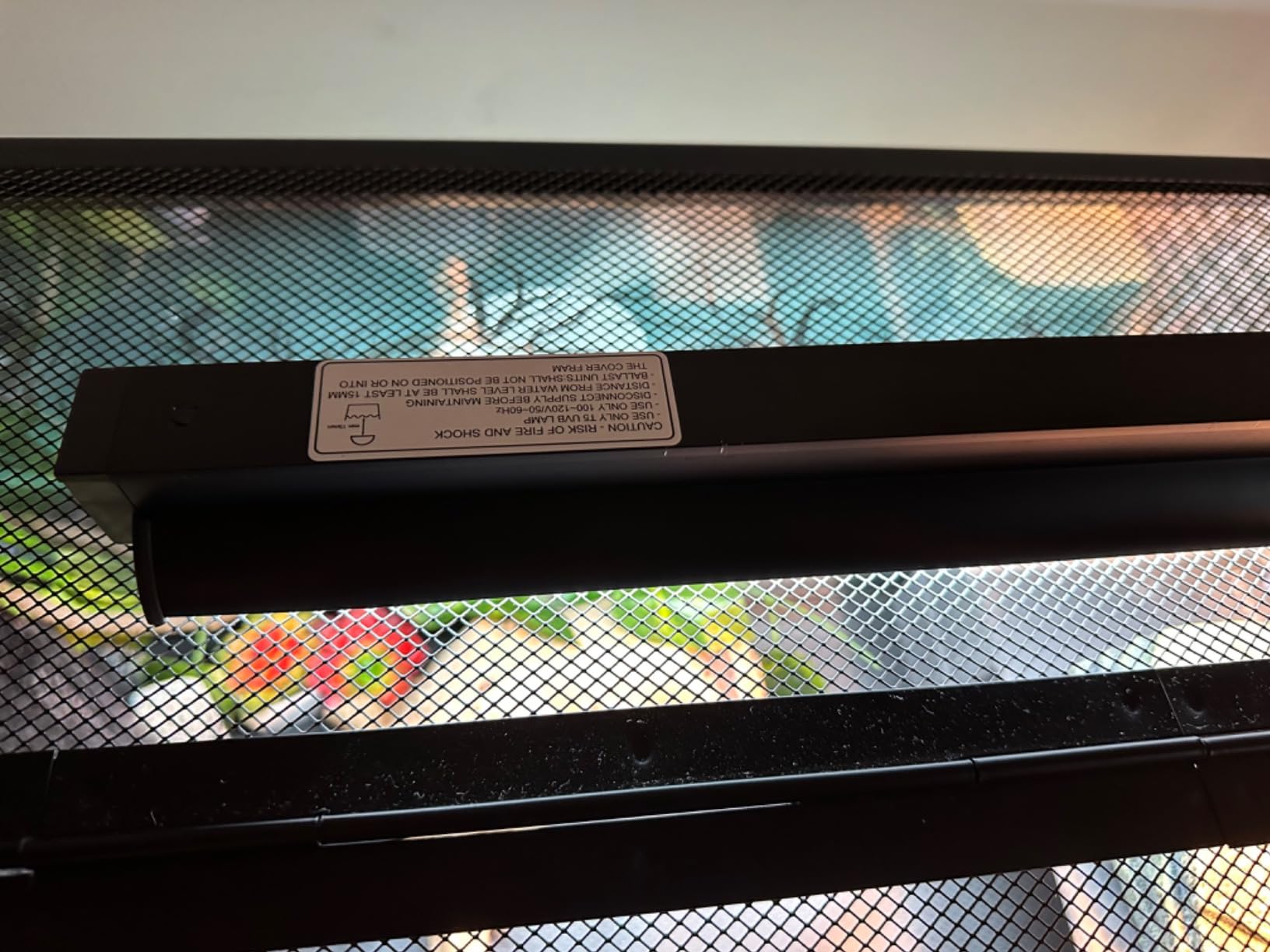
What convinces me most is the review volume. With more than 1700 ratings averaging 4.2, this is the fixture with the longest public track record in the category, and the pattern across those reviews is consistent: people like the UVB strength and they like that it fits a mesh top without modification.
The honest limitation is that the tube is consumable. A fluorescent does not fail dramatically, it just quietly loses UVB while still looking lit, so annual replacement is not optional if you want accurate output. I set a calendar reminder rather than judging by eye.
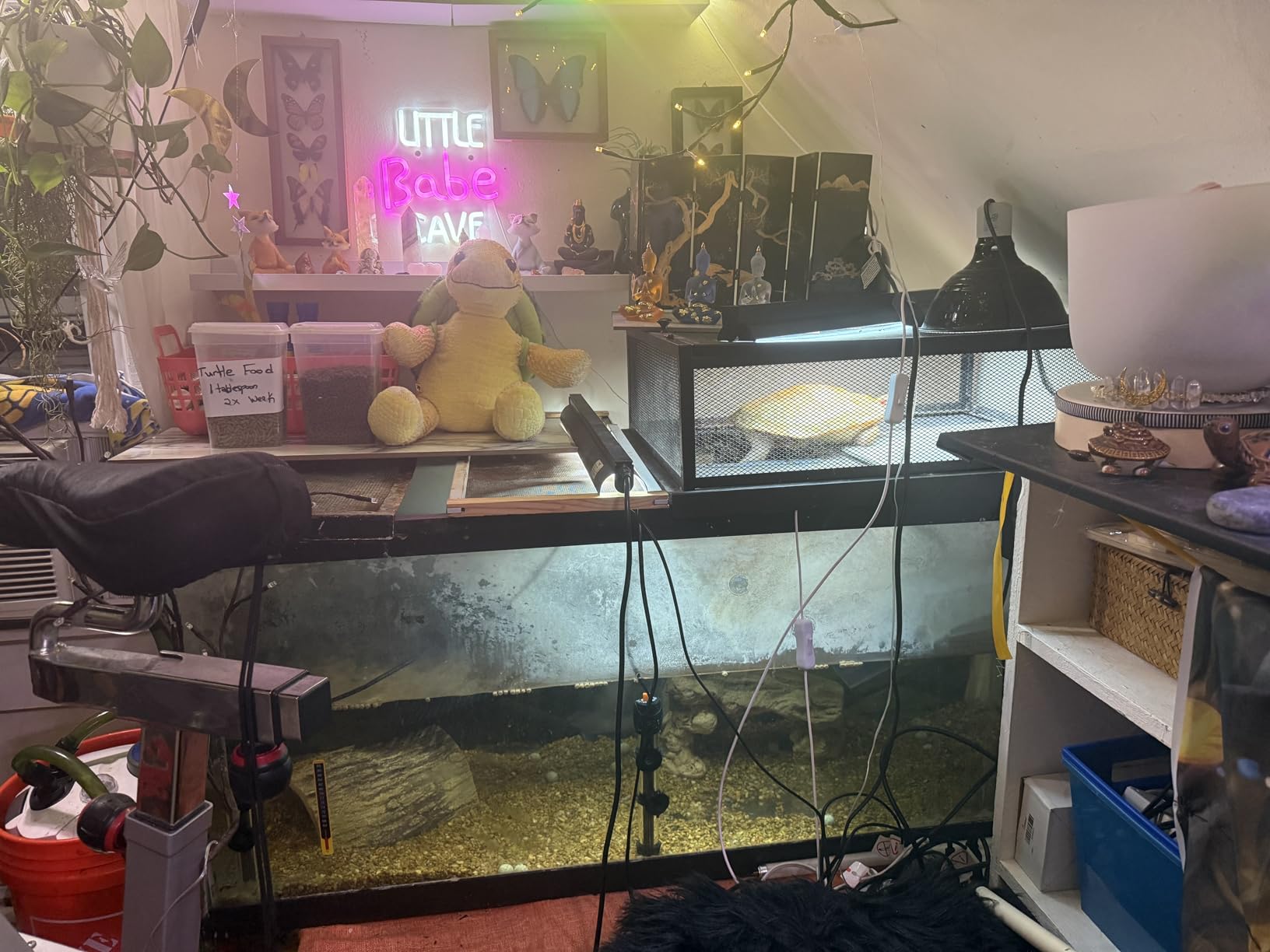
How this fixture handles distance and mounting
At the manufacturer guidance for a 24W tube over a 24 inch footprint, the useful range sits roughly 8 to 12 inches above the substrate. Closer than that and you are risking thermal stress for an animal that will happily sit in the hottest part of its range anyway.
The removable power cable with on/off switch means you can plug it into an external timer and control the photoperiod precisely. For a tortoise that means a consistent 10 to 12 hours of light with a real basking cycle, which matters more than most keepers expect.
Where it falls short
Wattage has to match enclosure size. An 8W version over a 4 foot table gives partial coverage, and the plastic reflector ends can discolor over time with repeated heat cycles, neither of which affects output but both of which look untidy eventually.
If you keep a species that needs the highest UVB levels available indoors, this 10 percent tube will be adequate but not exceptional. That is where the Arcadia kit below earns its place.
2. LUCKY HERP T5 Reptile Light Fixture Combo Kit 8W
LUCKY HERP T5 Reptile Light Fixture Combo Kit 8W (New Upgrade), 10.0 UVB Light for Reptiles and Amphibians, UVA UVB Basking Light Desert Lamp for Lizard, Bearded Dragon, Tortoise 12inch
8W T5
10.0 UVB lamp
G13 base
12 inch
Aluminium alloy body
Pros
- Alloy reflective layer raises UVA and UVB spectral energy
- Bulb seats firmly without flickering
- Aluminium alloy housing resists UV degradation
- Mounts on mesh or wooden vivariums
Cons
- Some reports of intermittent contact needing a tube twist
- Replacement bulbs hard to source in larger sizes
- 8W output covers only small enclosures up to about 18 inch
This is the budget entry point that still uses real T5 technology rather than a novelty LED. For a hatchling Russian tortoise or a Hermann’s juvenile in a modest enclosure, it does the job properly and it does not cost much. The 8W tube is a genuine 10.0 desert tube, not a repackaged 5.0.
The claimed benefit of the alloy reflective layer is a boost in UVA and UVB spectral energy of up to 200 percent over a plain white reflector. I would treat that figure as marketing rather than measurement, but the practical effect is a noticeably brighter and more even spread than you would expect from a fixture at this level.
Durability is a genuine strength here. The aluminium alloy housing resists ultraviolet degradation better than plastic bodies, which matters in an enclosure that gets warm every day for years. It runs cool and the reflector does not yellow.
Reviewers consistently single out bulb seating as the thing that surprised them, since a loose socket is the most common complaint in this category. The recurring negative thread is contact failure where the tube stops lighting until it is twisted slightly in place.
Where this kit makes sense
This is the fixture for enclosures around 12 to 18 inches long, which covers a juvenile tortoise setup, a quarantine tank or a hospital container. Mount it inside a wooden vivarium or on mesh and give it 8 to 10 inches of clearance.
It is also the kit I suggest when someone wants to try T5 lighting before committing to a larger system. The learning curve is identical to the bigger fixtures.
What to watch out for
The 8W output simply does not cover a large table. If you move up to a 4×8 enclosure you should step up to a 24W or 39W fixture rather than stretching this one across it. Replacement bulbs are also harder to source in the larger sizes, so plan on replacing the whole fixture if the tube goes.
3. REPTI ZOO UVB Light with Dimming LED 6W
REPTI ZOO UVB Reptile Light with Dimming, LED UVB Light Bulb Fixture for Bearded Dragon Gecko Lizard Turtle Snake, Adjustable Brightness UVA UVB Lamp for Tropical & Desert Reptile
6W LED
Up to 303 uW/cm2 at 4 inches
5.0 and 10.0 modes
Dimmable
Pros
- Compact LED delivers measurable UVB in a small unit
- Switchable Tropical 5.0 and Desert 10.0 modes
- Dimmable for day night and sunset simulation
- Hanging options above or below mesh
Cons
- Single point source covers less area than a linear T5 tube
- No integrated reflector for overhead mounting
- Small size limits coverage in larger enclosures
This compact LED is interesting because it does something most budget UVB products do not: it tells you a measured output figure. Up to 303 uW/cm2 of UVB at 4 inches is a real number rather than a percentage printed on a box, and it makes this unit far easier to evaluate against anything else you might own.
The two illumination modes are the practical selling point. Tropical 5.0 for a Redfoot or a Hingeback, Desert 10.0 for a Russian or Hermann’s, switched from the same fitting. If you keep more than one tortoise with different requirements, or if you plan to, that flexibility is worth more than raw coverage.
Dimming gives you day, night and sunset transitions from one unit at 6W, which is the sort of thing enthusiasts ask for and rarely get at this power draw. Mounting is straightforward too, with hooks for above or below a mesh cover.
The catch is geometry. A single LED emitter throws a pool of light rather than a line of it, so coverage falls off quickly toward the edges of an enclosure. That is fine for a 12 inch setup and poor for a 4 foot table.
Is it bright enough indoors?
Because UV output is specified in absolute terms rather than as a percentage, this is the fixture on the list where guessing is least necessary. Mount it 6 to 10 inches from the basking surface and check the reading if you own a Solarmeter 6.5.
Keep in mind that it produces no meaningful heat. A tortoise still needs a separate basking lamp, and this handles the ultraviolet part of the job only.
When to choose something else
If your enclosure is wider than about 16 inches, or if you want uniform light across the whole basking surface, a linear T5 tube will serve you better. For compact and switchable setups this is a solid pick, for larger ones it is not.
4. REPTITRIP 16 Inch LED UVB Light with Auto Timer
REPTITRIP 16-Inch LED UVB Reptile Light with Auto On/Off & Preset Day-Night Cycle Dimming, 4 UVI Modes Fixture Controller, 14W Aluminum UVA UVB Lamp for Bearded Dragons, Turtles & Snakes, 6500K
14W LED
4 UVI modes plus M0
Built-in timer
6500K
7000 hour life
Pros
- Four UVI modes cover Ferguson zones 1 to 4
- Built-in clock timer with day-night dimming
- Slim aluminum housing runs cool and cheap to run
- Instructions list per-species mounting distances
Cons
- Not water resistant so humidity can corrode the board and LEDs
- Some reports of partial LED failure after about a year
- Timer and mode programming takes some study
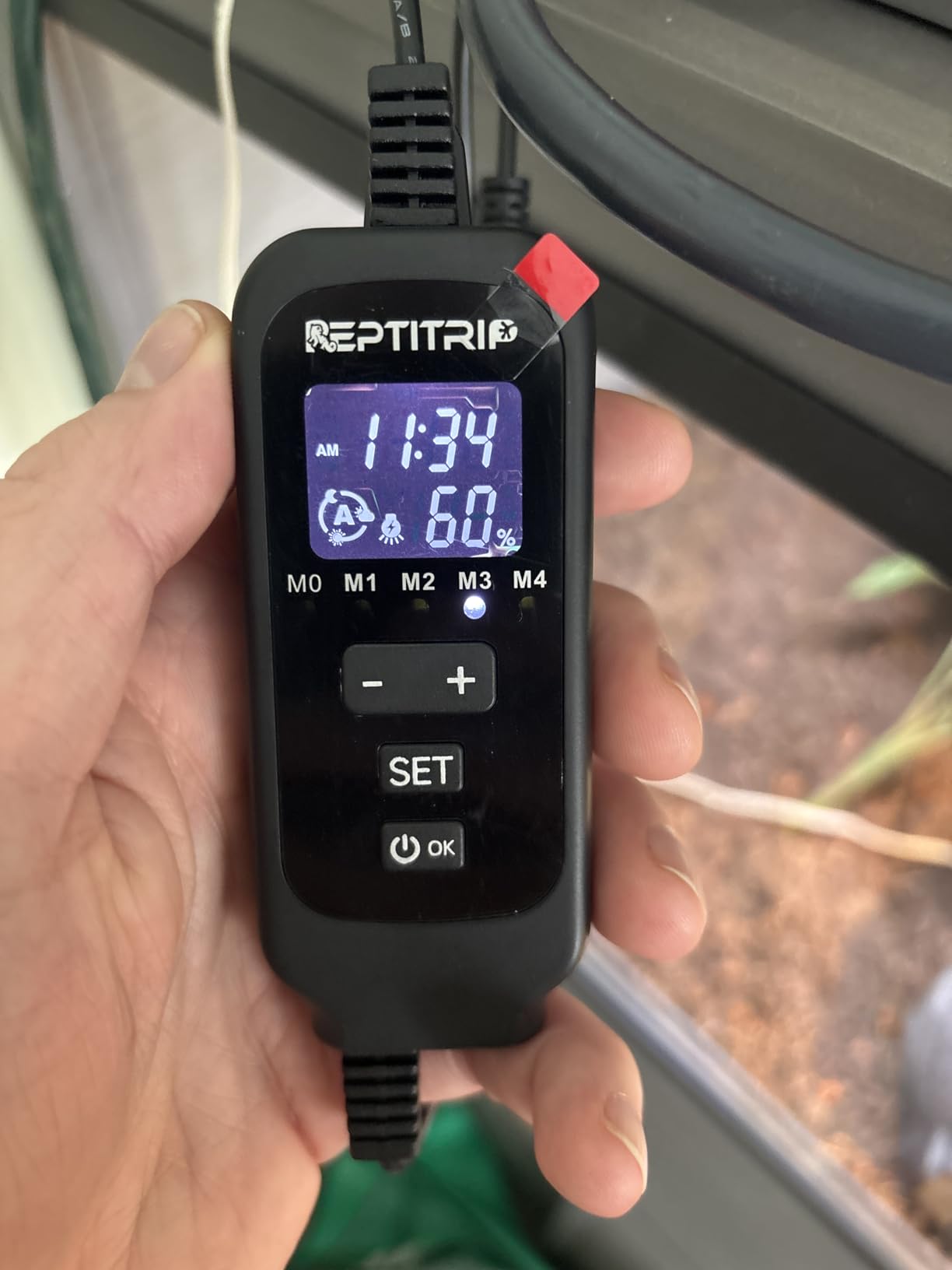
This is my favourite fixture in the set for control. Instead of a vague percentage on the tube, it offers four UVI modes corresponding to Ferguson zones 1 through 4 plus a manual M0 mode. You are selecting the ultraviolet index your tortoise actually needs rather than trusting a number that describes the tube.
The built-in clock timer with preset day-night dimming removes one whole piece of hardware from the setup. I also like that the instructions include per-species mounting distance recommendations, which answers the single most common question on the forums without any guesswork.
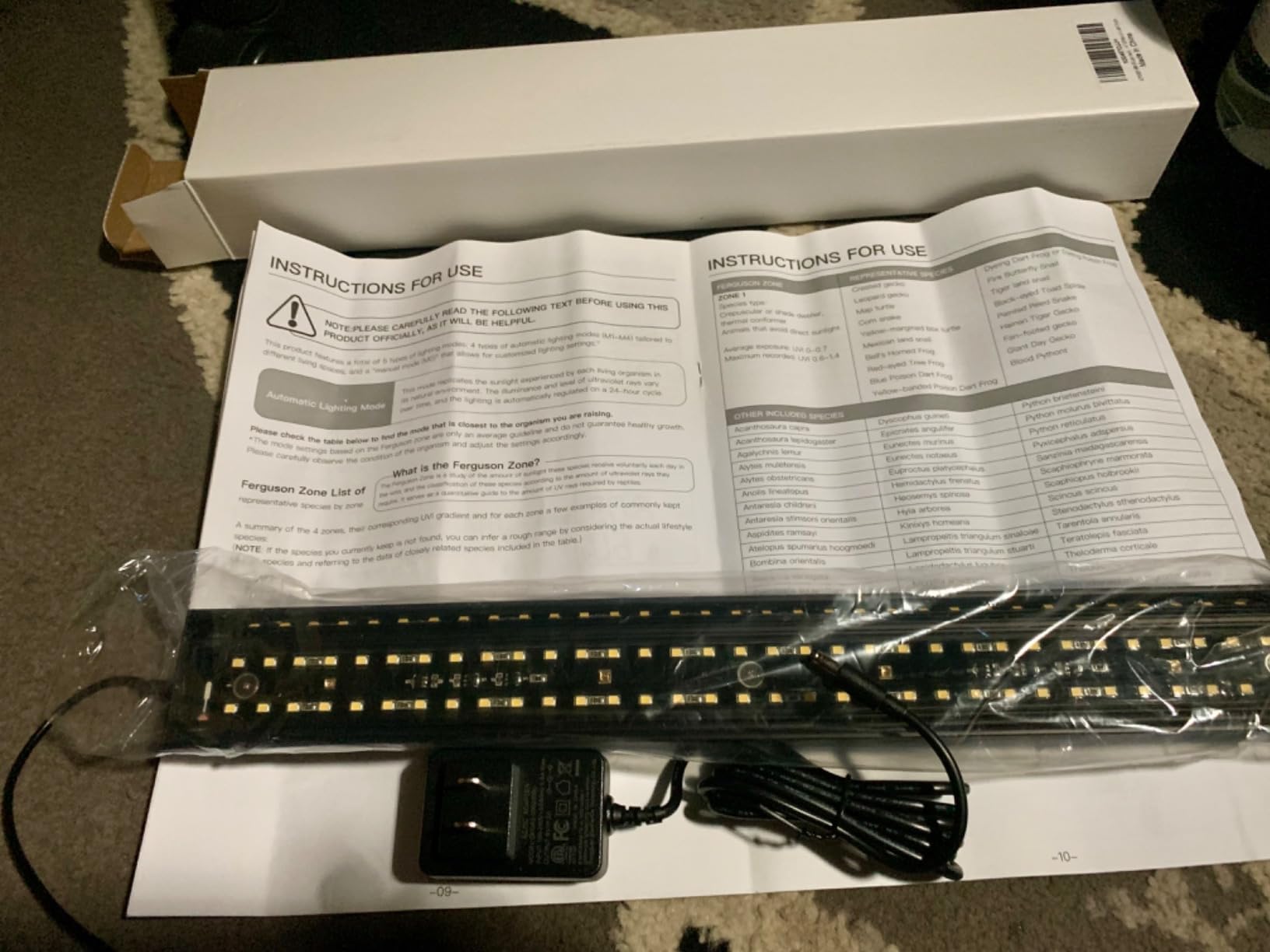
Output is 14W at 6500K with 1200 lumens of visible light and a rated light source life of 7000 hours. The slim aluminium housing dissipates heat well and there is no physical heat generated at the emitter itself, so it can sit close to a mesh top without cooking the animal below.
This is the highest rated product in the roundup at 4.6 across 514 reviews, with 83 percent five-star ratings. Owners mention the Ferguson zone modes and the integrated timer most often, and that matches what the specification sheet promises.
How the UVI modes actually work
Zone 1 suits low-UV needs such as a heavily shaded tropical setup, zone 4 is for high-UV desert species in a large open enclosure. Start one step lower than you think you need and only move up after observing basking behaviour and, ideally, measuring at the animal level.
Mounting is flexible: on mesh, inside the enclosure with brackets, or suspended from a wooden board. Running it above mesh cuts output, so the below-mesh option exists for a reason.
The humidity problem
This unit is not water resistant. The single most consistent complaint across reviews is corrosion of the board and the LEDs in humid rooms, including one turtle-keeping review that reported partial failure after roughly a year.
In a Redfoot enclosure with high humidity, or any setup where water splashes, keep it outside the enclosure or above mesh. For a dry desert table the aluminium housing has no such problem.
5. Hygger zoo T5 UVB Combo Kit 8W 12 Inch
T5 UVB Reptile Light Fixture HO UVB Bulb Lighting Combo Kit, 10.0 UVB Light for Reptiles Terrarium Hood with 8W Reptile Light Bar UVA UVB Desert Lamp for Bearded Dragon Turtle Tank, 12 Inch
8W T5
10.0 desert tube
12 inch fixture
Aluminum housing
Curved reflector
Pros
- Curved polished reflector at a low entry cost
- Aluminum housing dissipates heat well
- Mounts on mesh inside the tank or in wood
- Suitable for Russian tortoises and other desert species
Cons
- Some units fail to power on and disturb timer programming
- Blue shipping film must be removed or the tube will not light
- Fixture slides on mesh tops without a secure mount
- Not water or rust proof in humid setups
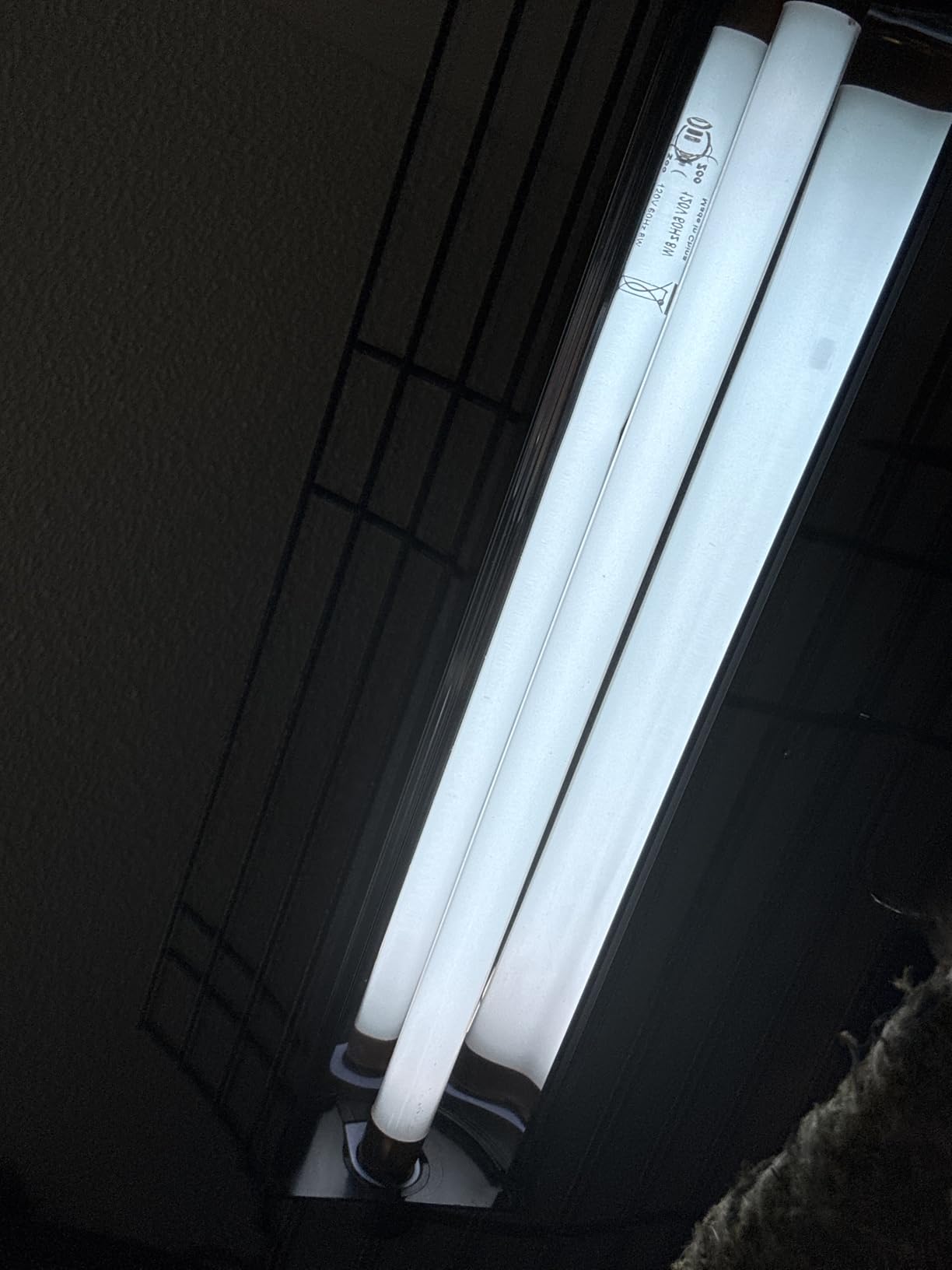
This is the most common 8W kit on the market and it does the fundamentals correctly. A 10.0 desert tube sits in an aluminium housing with a curved polished reflector, and the whole unit mounts on a mesh cover, inside the tank, or fixed into a wooden vivarium.
Owners report close to a year of reliable operation, which is about the honest expectation for a fluorescent UVB tube. Several Russian tortoise keepers mention this specific kit in their setups alongside a separate basking lamp, and the UVB complaint that would matter is thermal rather than ultraviolet.
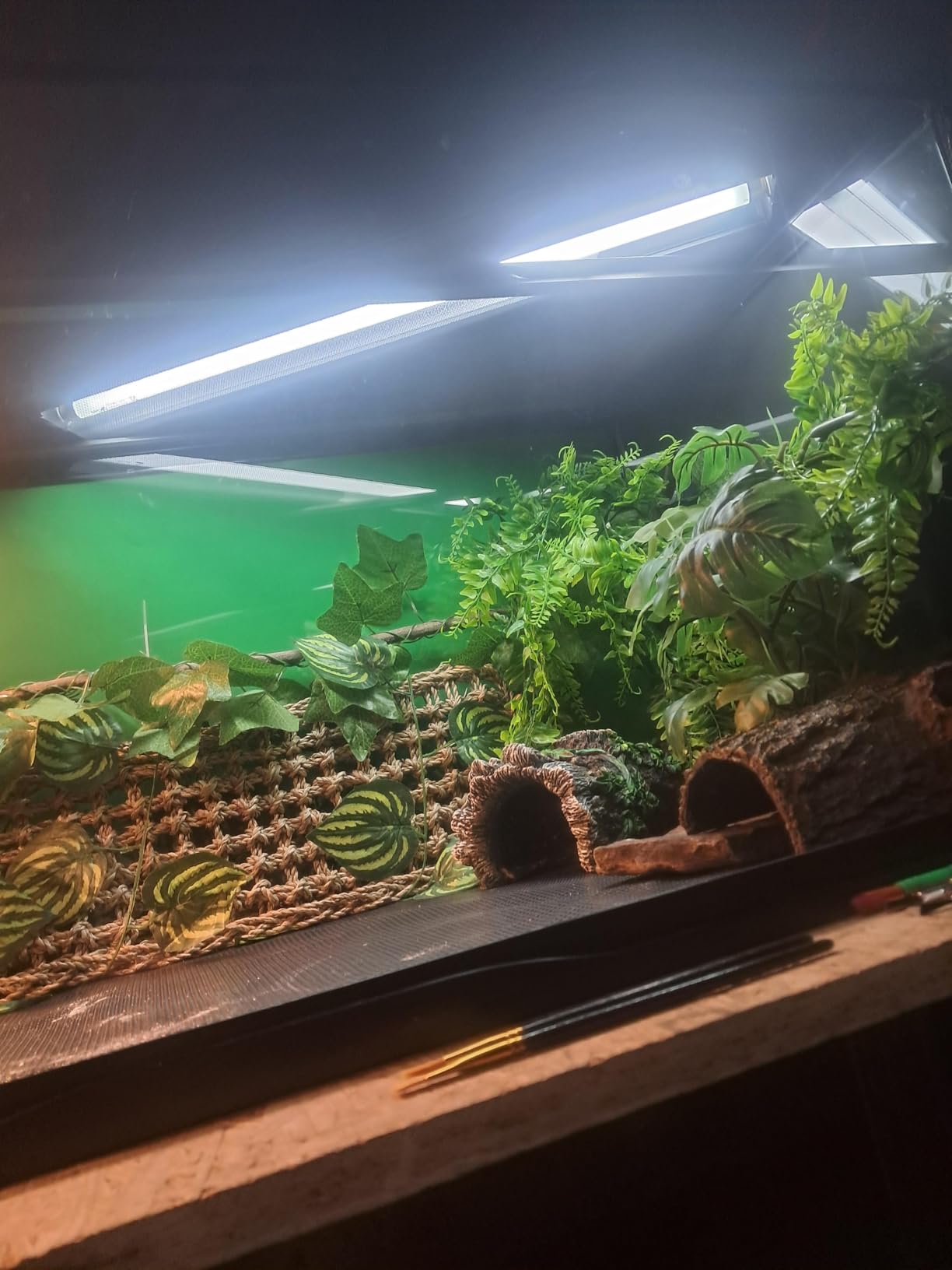
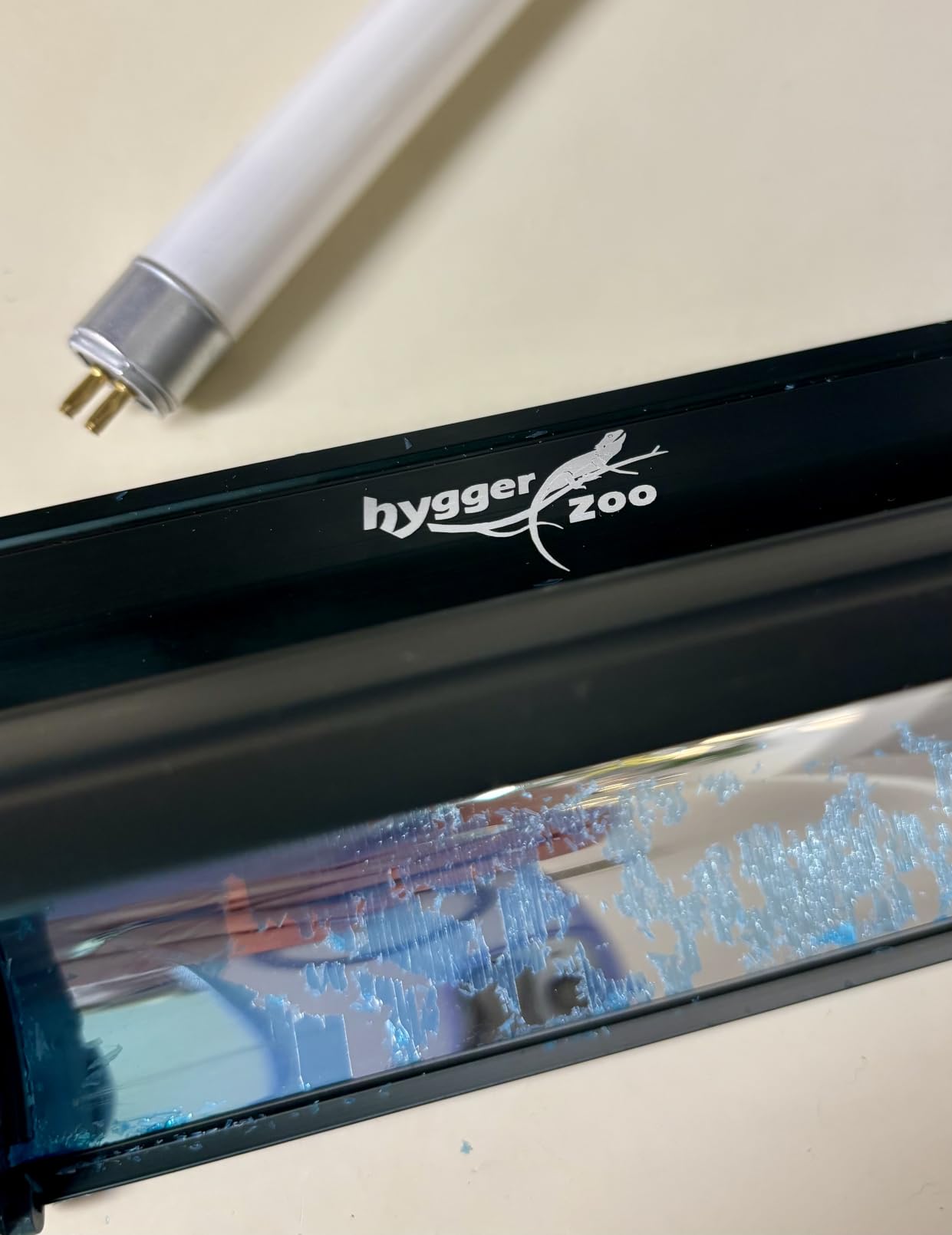
One detail deserves attention before you switch it on. There is a blue protective film on the tube that must be removed. Reviewers who thought the lamp had arrived cracked found the film still in place, and several one-star complaints disappear once it is peeled off.
The other recurring issue is mounting stability on mesh tops, where the fixture can slide out of position and leave one end of the enclosure without useful UV.
Getting the most from a small tube
An 8W tube earns its keep in an enclosure roughly 18 inches long. Mount it 8 to 10 inches above the basking surface, centred over the warm end, and angle it so the reflector throws light across the shell area rather than into empty air.
Do not stretch it across a 4 foot table expecting even coverage. Two smaller tubes placed side by side beat one small tube trying to do the work of a large one.
Failure modes to expect
Early unit failure and loose mounting are the two things that come up most. If you run it off an external timer, a fixture that powers on intermittently can also knock the timer programming out, so test it for a few days before trusting the schedule.
And check the film. It is the cheapest fix in this entire article.
6. Ycxydr 24W T5 HO UVB Reptile Light Fixture Kit
Ycxydr 24W T5 HO UVB Reptile Light Fixture Kit, Terrarium Hood Light with Desert UVB 10.0 Fluorescent Tube, Ideal for Tropical and Desert Habitats
24W T5 HO
1600 lumens
5.0 or 10.0 tube
Multiple wattages
Aluminum body
Pros
- Bright even output with 1600 lumens
- 5.0 and 10.0 options for rainforest or desert species
- All mounting hardware included
- 13000 hour rated light source life
Cons
- Some units arrive dented or damaged in transit
- A minority report the ballast housing burning the plastic
- Tube still needs replacing about once a year
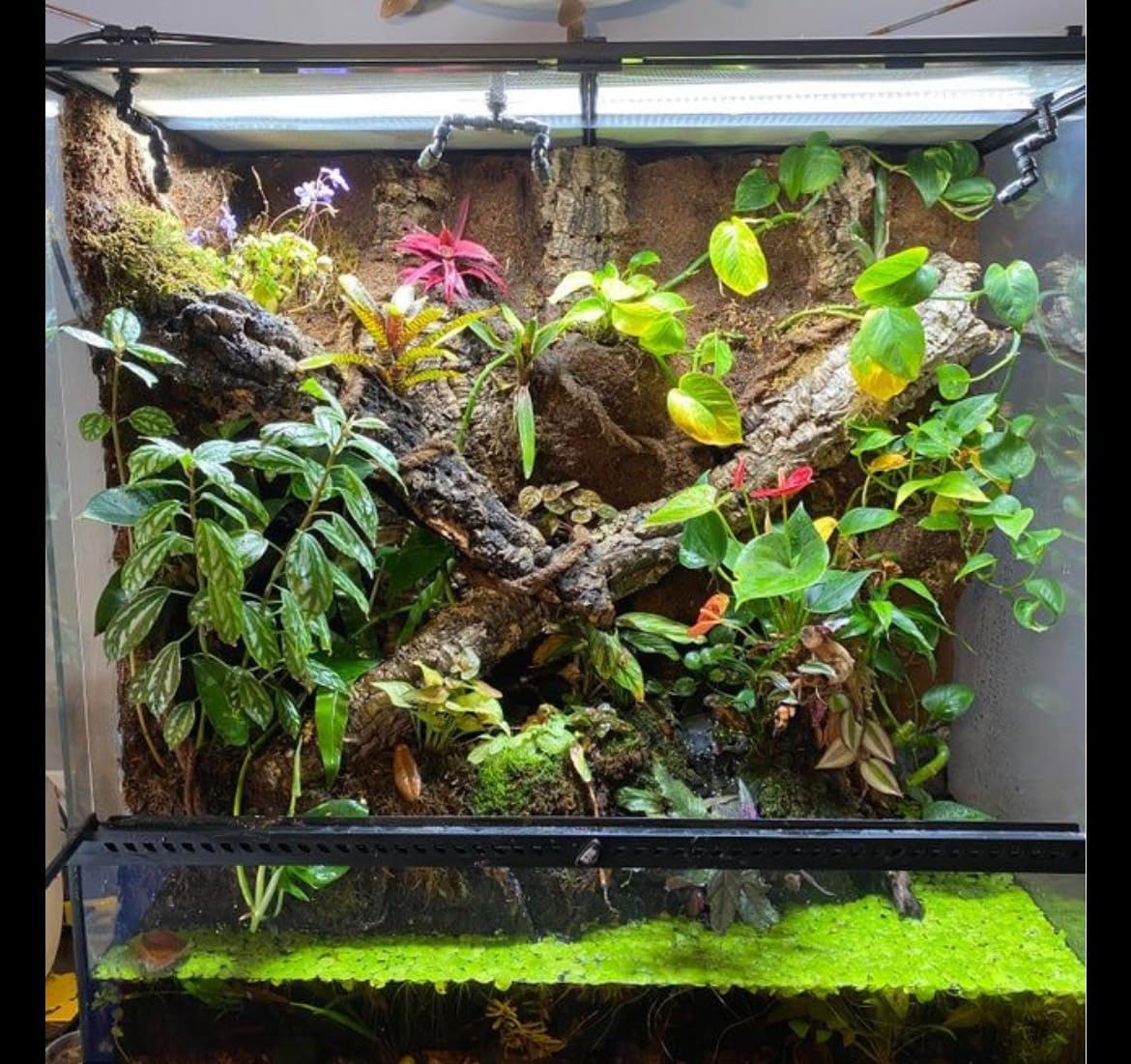
This 24W kit stands out for its 1600 lumens, roughly three times the visible output of the entry-level 24W units, and for the choice of 5.0 and 10.0 tubes for the same housing. That combination means you can switch a Redfoot to a Hermann’s without replacing the fixture.
The polished curved reflector and aluminium heat dissipation do the same job they do on every good T5 housing here: concentrate the light downward, keep the ballast cool, and extend tube service life. The removable power cable with an on/off switch makes external timer control straightforward.
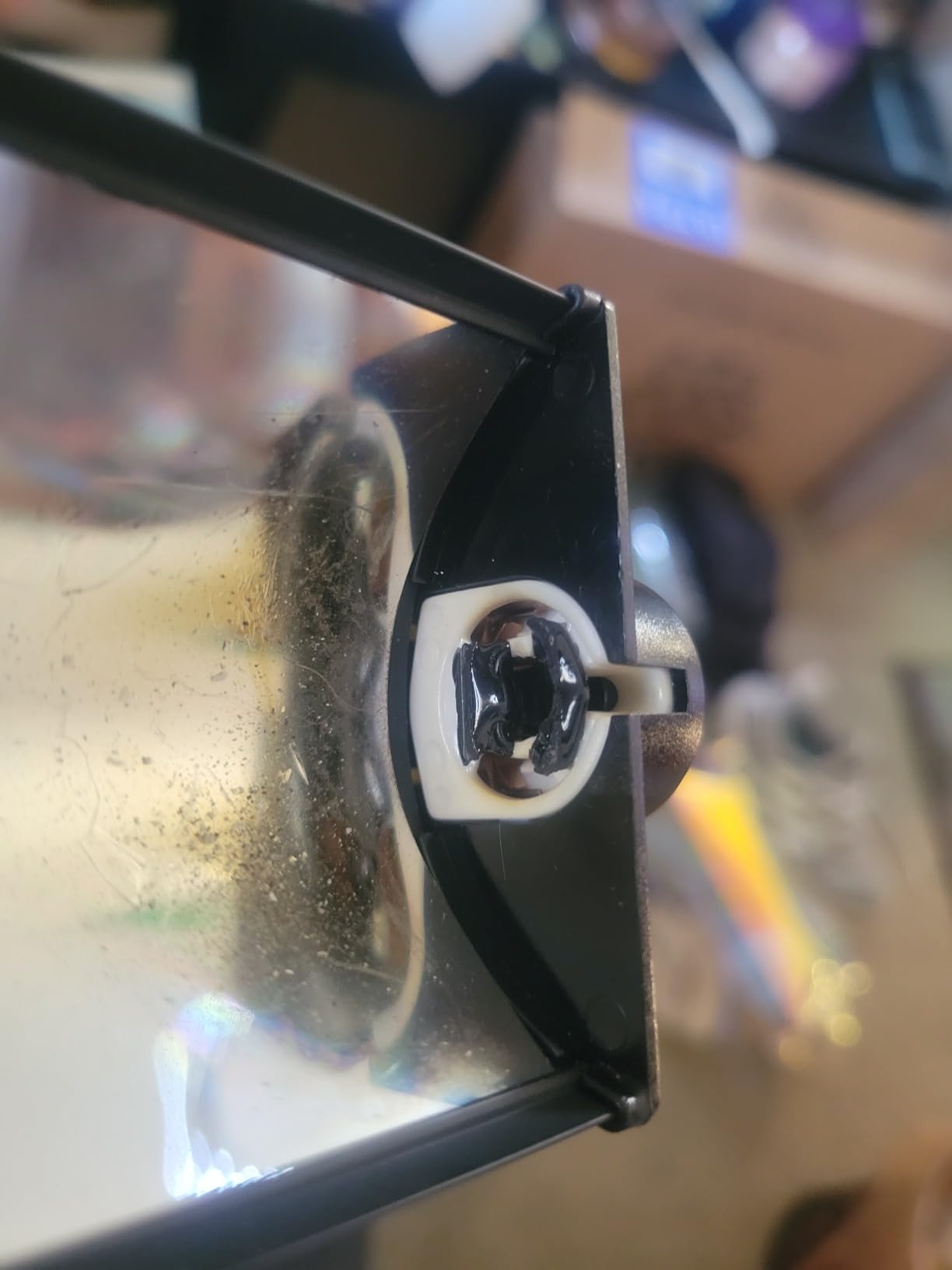
Reviewers who have had these running for several months report visible improvement in the appearance and vitality of their reptiles, which is the outcome that matters rather than any lab figure. The 4.4 rating across 224 reviews reflects a product that simply does what it says.
Negative feedback clusters around transit damage and a small number of electrical failures where the ballast housing burns the plastic. That minority pattern is worth knowing about before you commit.
Why the tube choice matters more than the fixture
Use 5.0 for rainforest species and 10.0 for desert and tropical tortoises. The fixture is the same either way, so buying a housing that supports both is a small insurance policy against a future species change.
The wattage options run 8W, 24W, 39W and 54W. Match the tube to the width of the basking area rather than to the total footprint, since that is where your tortoise will actually sit.
Long-term reliability
Rated source life is listed at 13000 hours, but as with every fluorescent here, treat UVB output as a consumable with a roughly annual replacement cycle regardless of whether the tube still lights.
Inspect the housing on arrival for transit dents and run it for an hour while you are present the first time. A faint electrical smell from a new ballast is worth a return rather than a troubleshooting session.
7. Hygger zoo T5 Reptile Light Fixture Combo Kit 24W
Hygger zoo T5 Reptile Light Fixture Combo Kit 24W Light Fixture Reptile Terrarium Hood 10.0 UVB Light Bulb Fluorescent Tube Ideal for Tropical and Deserts Such as Bearded Dragon Lizards and Tortoises
24W T5
21.6 inch fixture
10 percent UVB
30 percent UVA
5.9 ft cord
Pros
- Curved reflector delivers 10 percent UVB and 30 percent UVA
- Alloy reflective layer boosts spectral energy
- Screws and manual included for mesh or wooden tanks
- 21.6 inch fixture with a 5.9 ft power cord
Cons
- Fixture-specific socket limits third-party bulb substitution
- Slides on mesh tops and needs repositioning
- Tube output declines and needs annual replacement
This 24W Hygger zoo kit sits at the top of the reptile and amphibian habitat lighting category charts with 700 reviews, which makes it one of the most widely used fixtures in the hobby. It is the default recommendation for a standard desert tortoise setup for good reason.
The specification is clear: 10 percent UVB and 30 percent UVA through a highly polished curved reflector, with a specially developed alloy reflective layer to raise the spectral energy leaving the tube. That is a genuine desert spectrum for a Russian, Hermann’s or Leopard tortoise.
The included hardware matters more than it sounds. Screws, mounting accessories and a detailed manual let you fit it to a wooden vivarium or over a mesh top without buying anything else, and the 5.9 ft power cord reaches most wall positions without an extension lead.
Reviews focus on brightness and suitability for desert species rather than on UVB performance complaints. The negatives that do appear are about the fixture shifting on a mesh top and about not being able to substitute a generic tube, both of which are manageable.
Sizing and placement
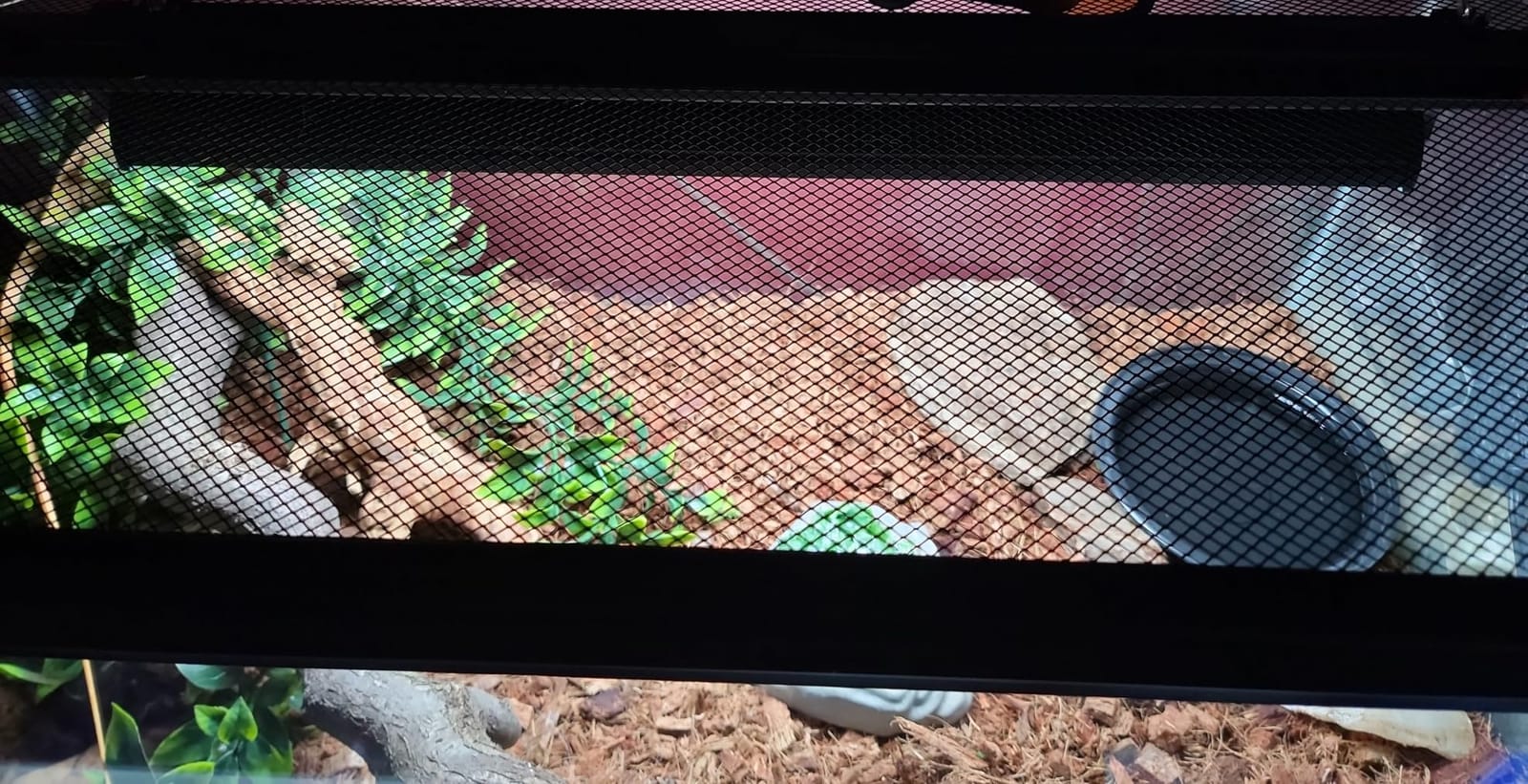
The 21.6 inch fixture suits a 24 inch section of table, and the bracket mount keeps it above mesh or under a wooden hood. Run it 8 to 12 inches above the substrate across the basking zone, with the basking lamp offset to one end.
For a longer table you can run a second fixture rather than one oversized unit. Two 24W tubes spread across a 4 foot surface give more even coverage than one tube stretched over it.
The bulb compatibility limitation
The bulb and fixture use a fixture-specific socket, so third-party tubes are not a drop-in replacement. That cuts both ways: it removes the temptation to fit an unsupported tube, and it makes the annual replacement slightly less flexible.
Budget for a new tube every year regardless. Visible brightness will not tell you that UVB output has fallen, which is why a Solarmeter 6.5 reading once or twice a year is worth the cost of the meter.
8. Arcadia T5 UVB Reptile Light Fixture Kit 24W
Arcadia T5 UVB Reptile Light Fixture Kit 22.5″ Long 24 Watts 12% UVB Desert – Complete UVB Light for Reptiles, Turtles, Snake, Bearded Dragon Lamp, Long Lasting Easy to Use Professional Lighting
22.5 inch T5
12 percent UVB
30 percent UVA
Removable reflector
24W
Pros
- Highest 12 percent UVB and 30 percent UVA desert output
- Removable curved reflector focuses UV on the basking zone
- Linkable system runs several fixtures from one supply
- Mounts in wooden vivariums or above mesh
Cons
- Highest cost in this roundup for a single fixture
- Matched system so parts are not interchangeable
- Reflector must be reseated correctly for optimum output
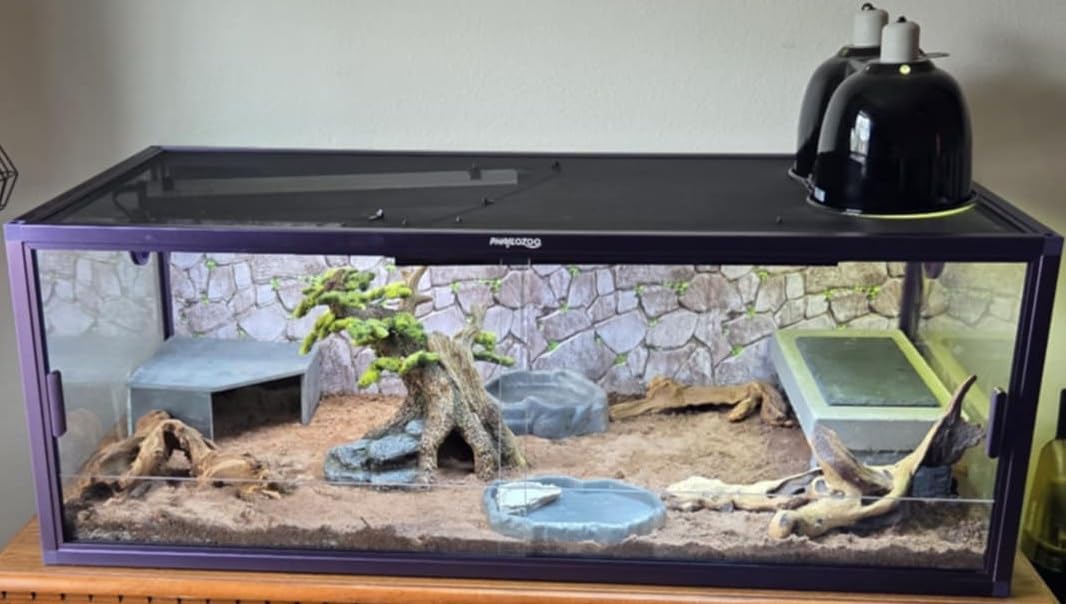
The Arcadia is the specialist choice and the strongest UVB output in this group at 12 percent, paired with 30 percent UVA. For a Sulcata, a Leopard tortoise or an Egyptian tortoise kept in a large open enclosure, that extra headroom matters because those species are hardwired for very high UV exposure.
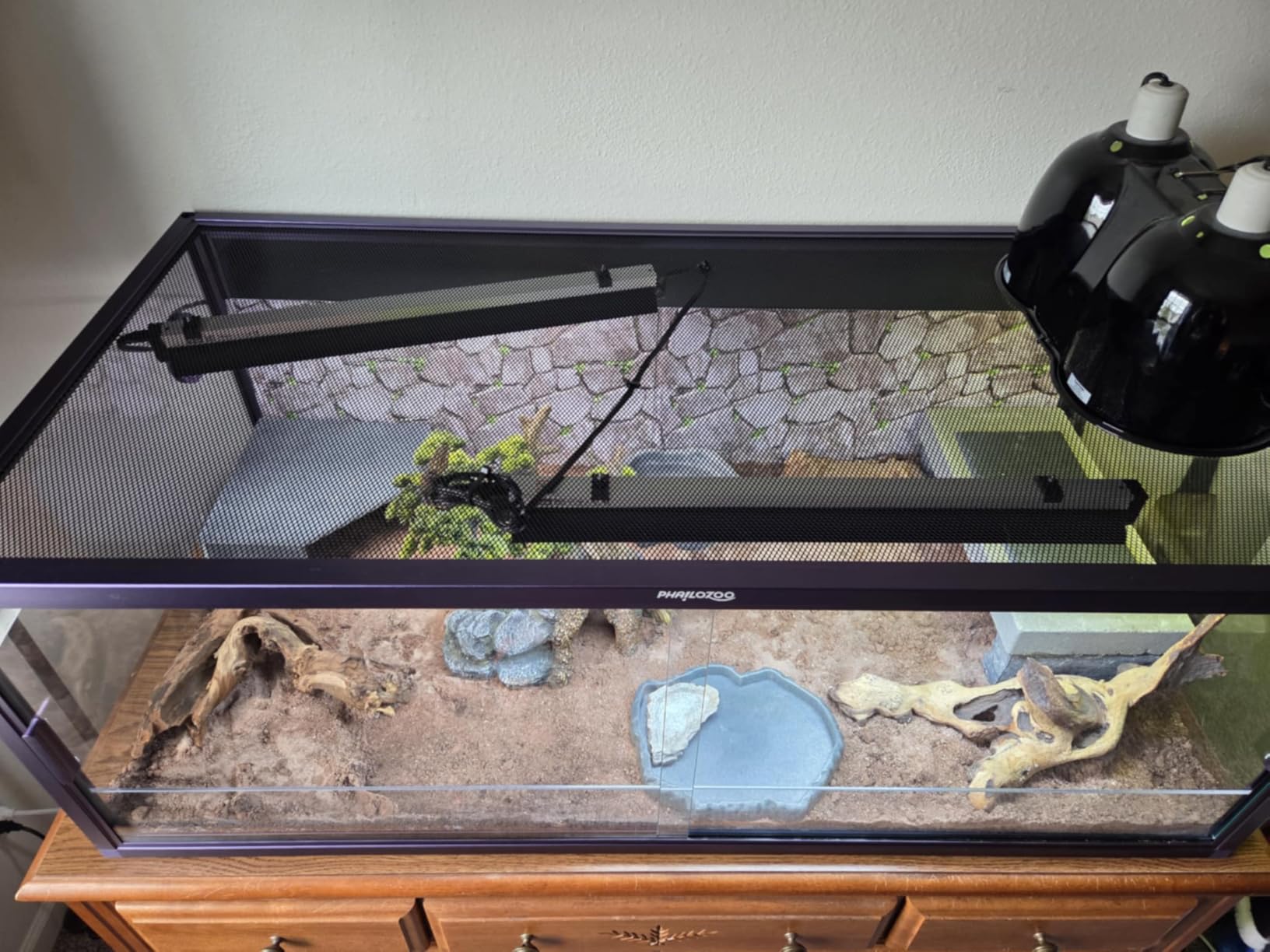
The removable curved reflector is the detail I appreciate most. Instead of spreading light in all directions it can be angled to concentrate UV onto the basking zone, which means more of what the tube produces actually reaches the animal where it is useful.
The 4.6 rating comes with 86 percent five-star reviews, which is the highest proportion of top marks here. The smaller review base reflects an enthusiast-oriented product rather than any reliability problem, and reviewers report no recurring failure theme at all.
The linkable design is practical for anyone running more than one enclosure: up to ten fixtures can run from a single power source, which simplifies wiring a row of tables or a rack of tub enclosures.
Who actually needs 12 percent
Desert species kept indoors benefit most: Russian, Hermann’s, Sulcata, Leopard and Egyptian tortoises. If you keep a Redfoot or a Yellowfoot, a 10 percent tube gives more light than those species encounter in forest understory, so 12 percent is optional there.
Give it 10 to 16 inches of clearance depending on enclosure height, and check with a Solarmeter at animal level rather than at tube level, since readings at the fitting are meaningless.
The trade-offs of buying specialist
This is the most expensive fixture in the roundup by a wide margin, and that outlay buys output rather than features. If your enclosure is a small table and your species is a Hermann’s, a 10 percent kit will deliver adequate ultraviolet for far less.
Because it is a matched system, bulbs and reflectors are not interchangeable with generic T5 parts. Order replacements from the same range and treat the reflector as a consumable you re-seat carefully whenever you change a tube.
9. Eckpo T5 HO UVB Reptile Light Kit 34.5 Inch
Eckpo T5 HO UVB Reptile Light Kit, 34.5″ Fixture with 21W 10.0 UVB Tube, Suitable for Desert Reptiles Including Juvenile Sulcata Tortoises
34.5 inch fixture
21W 10.0 desert tube
Polished aluminum reflector
Daisy-chain ready
Pros
- 34.5 inch fixture gives wide coverage for long enclosures
- Polished aluminum reflector amplifies UVB output
- All-metal housing resists warping under heat
- Daisy-chains for multi-enclosure setups
Cons
- Build quality described as budget rather than premium
- Several units arrived with a dead or damaged tube
- Plug and voltage mismatch problems on international orders
- Smaller variants only give partial coverage
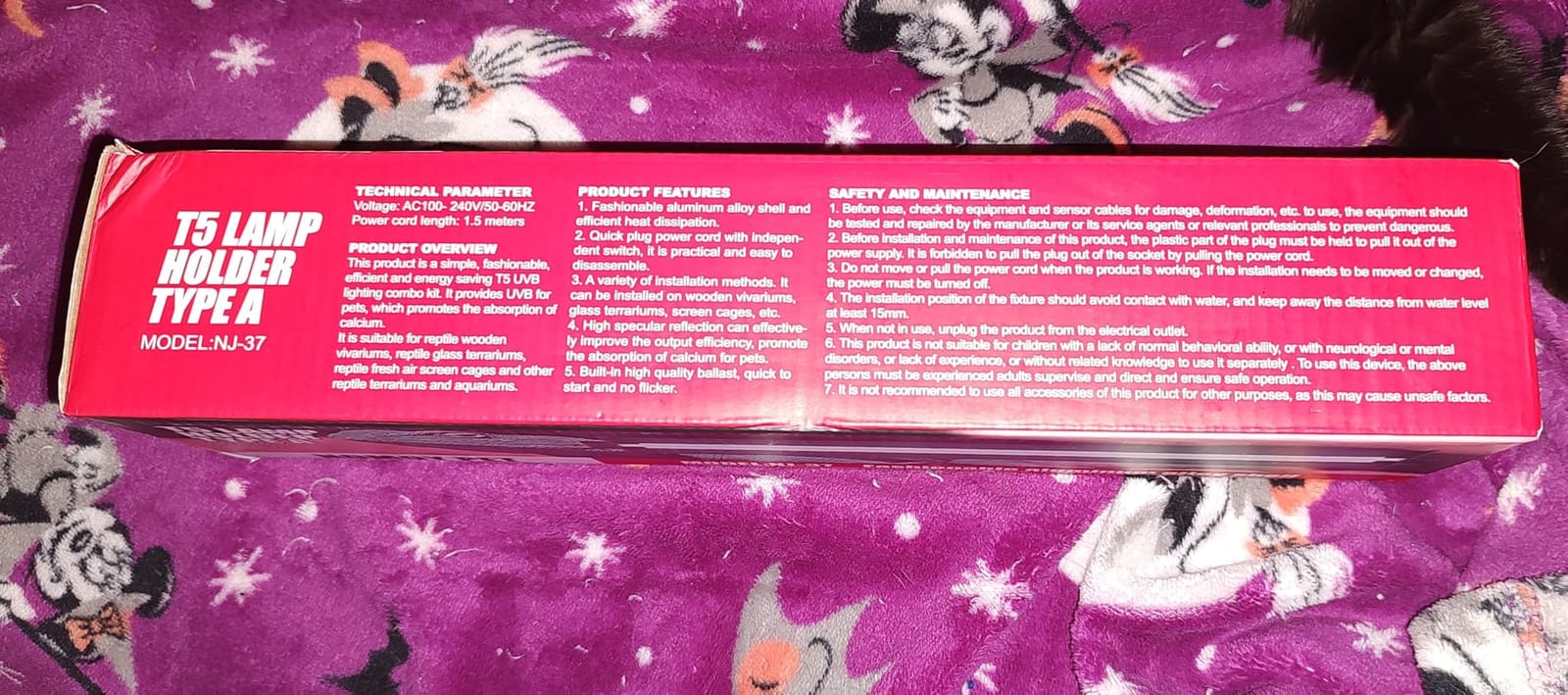
Length is the selling point. At 34.5 inches this is the longest single fixture in the roundup, and it solves a problem most owners do not think about until they are halfway across a 4 foot table with one 24 inch tube and a bare patch at the far end.
The all-metal housing is another real advantage over plastic-bodied units. It dissipates heat without warping or cracking, and the polished aluminium reflector amplifies ultraviolet and visible output. Mounting works on top of screen, underneath screen, or on wood, with daisy-chaining available for multi-enclosure rooms.
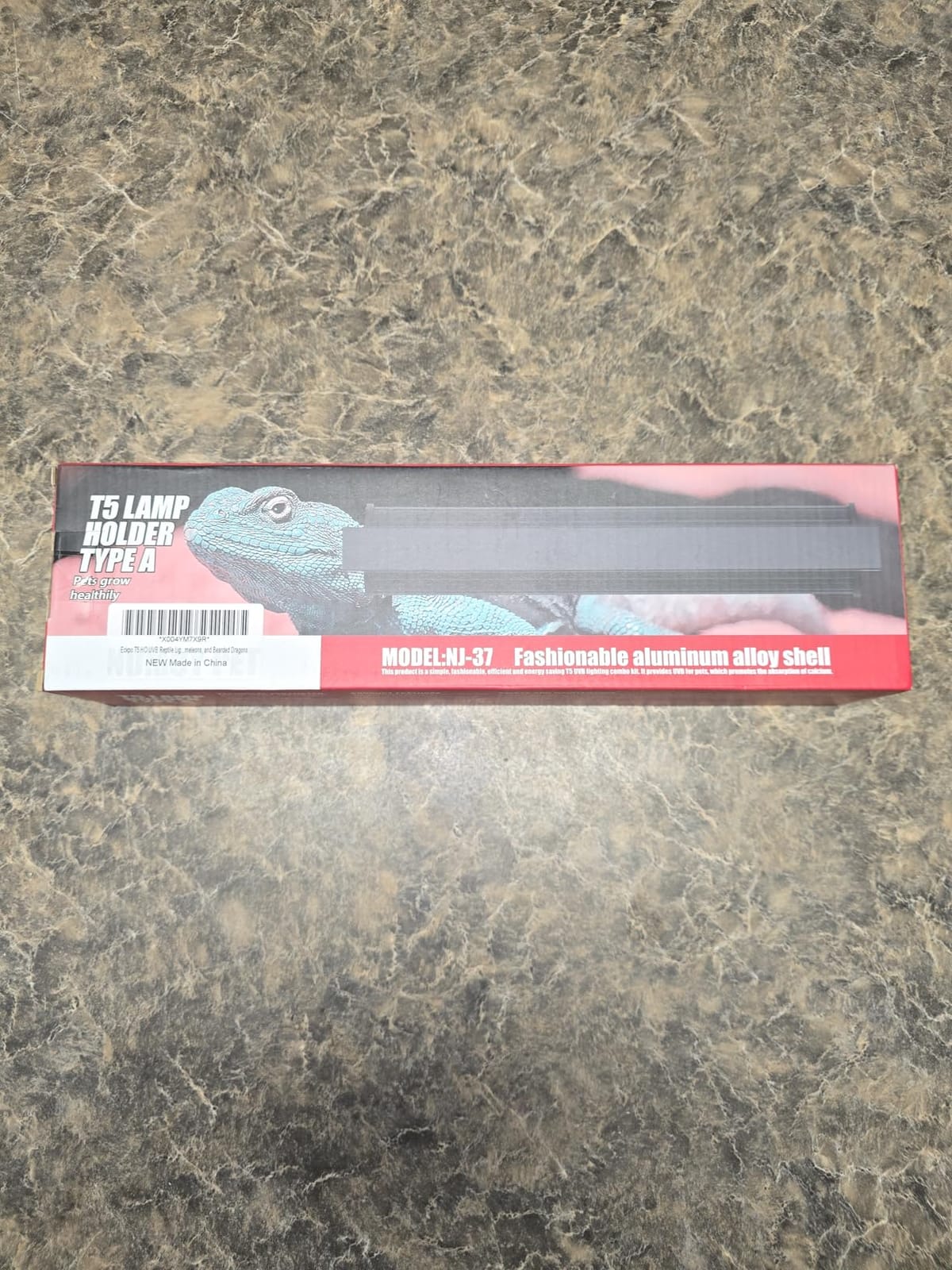
This is also the lowest rated product here at 4.0 across 96 reviews, and the reason is mostly packaging and shipping rather than the light itself. Several reviewers report a dead or damaged tube arriving in the box, and a few international orders hit plug and voltage labelling mismatches.
The practical advice from owners is to test the tube immediately on arrival. It takes a minute and catches the failure mode before you have built the mounting frame around it.
When a long bar beats two tubes
One 34.5 inch fixture gives even coverage across a long basking zone with a single unit and a single mounting point, which is simpler than aligning two smaller tubes. It suits a 4×2 or 4×3 table where the basking surface runs most of the width.
Keep in mind the shorter variants in this range, from 4W to 21W, do not scale up proportionally. Only the long versions give full coverage on a big enclosure.
Build quality expectations
Reviewers describe this as budget rather than premium hardware, so set expectations accordingly. The reflector and housing do their job and the output is usable, but the finish and tolerances are a step below the specialist fittings.
Check the plug style and voltage labelling before ordering if you are outside the United States, and test the tube on arrival. Those two steps cover most of what went wrong in the negative reviews.
10. ReptiKing Upgraded T5 UVB Reptile Light 8W
ReptiKing Upgraded T5 UVB Reptile Light, 10.0 UVB 8W German Made Fluorescent Lamp and Fixture Kit, for Desert-Dwelling Reptiles, Bearded Dragon,Tortoise, Snake, Strip Linear UVB Lamp Bulb,12 Inch
8W T5
G13 base
German made tube
12.5 inch fixture
10.0 UVB
Pros
- German made tube with a stated life of up to one year
- High output UVB designed for desert species
- Fits screen cages wooden and glass vivariums
- Entry level choice for small tortoise setups
Cons
- 8W tube suits enclosures around 18 inches only
- Small footprint gives partial coverage on wider tanks
- 120V 60Hz indoor use only
This is the pick for a hatchling or a very young tortoise in a small enclosure, and the differentiator is the tube. It is described as German made with a stated lifespan of up to one year, which is a longer claim than most economy fluorescent tubes carry.
At 8W with 550 lumens and a G13 base in a 12.5 inch fixture, the manufacturer guidance is enclosures around 18 inches long, and the advice for anything above 24 inches is to use two 8W lamps or move to a single 24W lamp. That guidance is unusually clear and worth following.
Installation is straightforward in screen cages, wooden vivariums or a glass vivarium you built yourself, which makes it a sensible first fixture for a keeper who is assembling an enclosure from scratch rather than modifying an existing one.
The 4.4 rating across 71 reviews comes with 72 percent five-star marks, and satisfaction centres on output being adequate for the small enclosures it is aimed at. Nobody in the reviews is expecting it to light a roomy table.
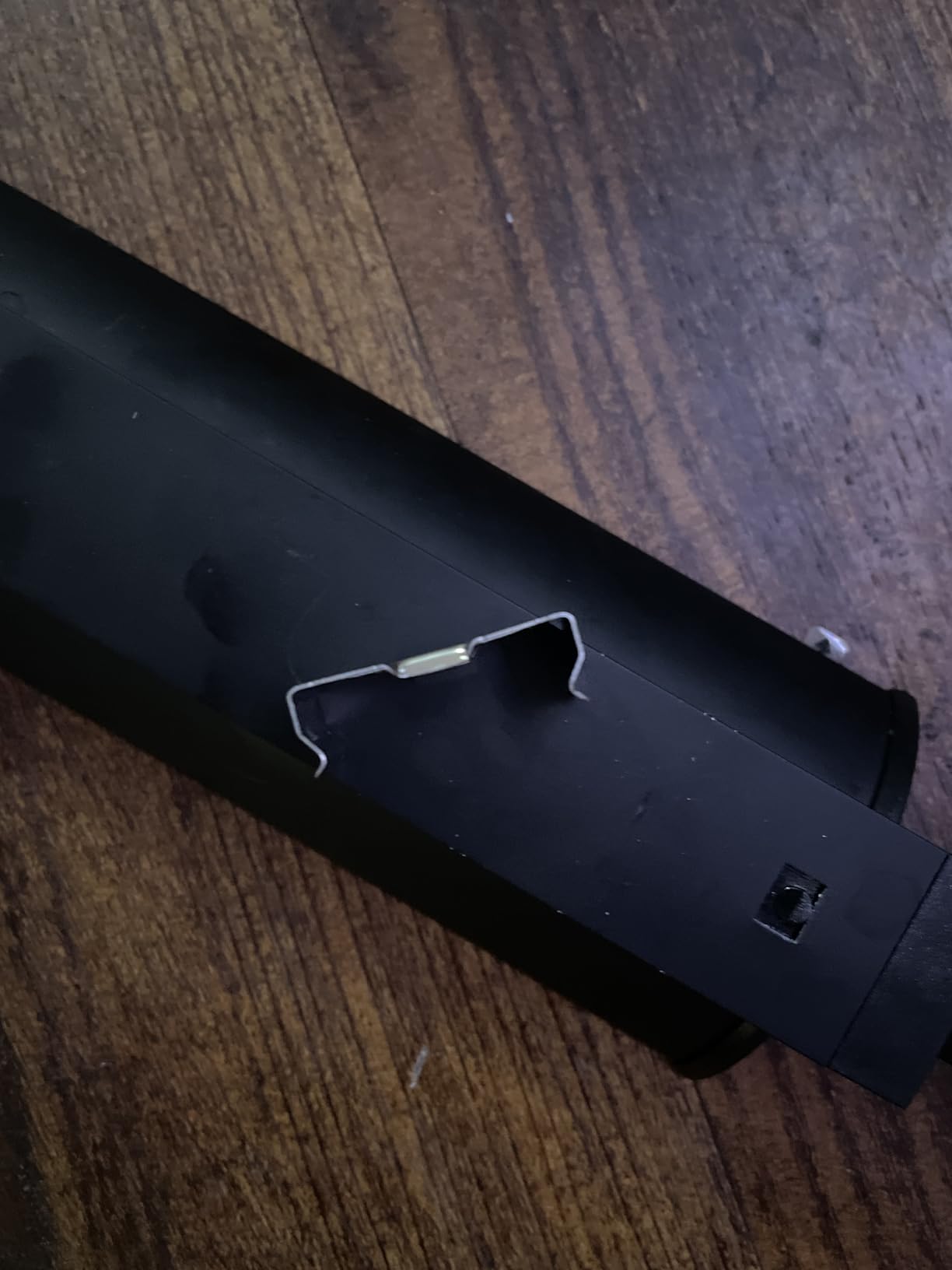
Small enclosures and young animals
For a 12 to 18 inch setup this gives you a proper desert 10.0 spectrum with no compromises worth worrying about. Mount it 8 to 10 inches above the basking surface and pair it with a heat lamp, since fluorescent tubes add very little warmth.
Plan the upgrade path. A tortoise outgrows an 18 inch enclosure faster than most keepers expect, and moving to a 24W unit later is easier than stretching this tube across a larger space.
Limits to note
Coverage is the obvious limitation, since the small footprint leaves wider tanks partially lit. And this is a 120V 60Hz indoor unit, which rules it out for outdoor use or for installations in other voltage regions.
Within those limits it is a well-made small fixture with a tube that should hold output well past the six-month mark where many budget fluorescents start to fade.
Why Tortoises Need UVB Light
Tortoises need UVB light because they cannot make vitamin D3 without it, and without vitamin D3 they cannot absorb calcium from the food they eat. UVB photons in the 290 to 315 nanometre range convert 7-dehydrocholesterol in the skin to previtamin D3, which heat then converts into usable vitamin D3. It is a genuinely biological requirement, not a comfort feature.
When that chain breaks, calcium stays in the gut and the animal pulls what little it needs from its own skeleton. The visible results are a soft or rubbery shell, pyramiding where the scutes rise unevenly, poor growth, lethargy and a weakened immune system. Metabolic bone disease is the clinical name for the result and it is frequently fatal once it advances.
The second reason is behavioural. Tortoises that receive appropriate UVB bask more, move more and eat more. A tortoise that sits motionless in a corner of a bright enclosure is often one that is not receiving the ultraviolet it expects, and keepers chasing feeding problems sometimes overlook lighting first.
A common question is whether tortoises need UVB or just visible light and a basking lamp. The answer is that they need both, and the two do different jobs. Heat drives digestion and thermoregulation, UVB drives calcium metabolism, and one cannot compensate for a lack of the other.
There is one common exception. Keepers on tortoise forums broadly agree that three or more hours of direct outdoor sun per week can replace indoor UVB in a suitable climate. That is not the same as sitting behind a window, because glass blocks almost all UVB. Direct sun, unobstructed, is what makes the difference.
T5 HO vs T8 vs Mercury Vapor vs LED: Which Technology Wins?
T5 HO fluorescent is the current default for indoor tortoise enclosures and it wins for a simple reason: output and coverage. A linear tube spreads usable ultraviolet along its whole length, which matches the shape of a tortoise table far better than a single point source or a compact bulb.
T8 fluorescent tubes are weaker in practice and fewer keepers use them now. They mount similarly to T5 but deliver noticeably less ultraviolet for the same enclosure footprint, which means closer mounting or a higher-output bulb, and both add risk. Experienced keepers on the forums tend to treat T8 as something to move away from rather than toward.
Mercury vapor bulbs deliver the highest intensity of any of these from a single fitting and suit very large enclosures. The trade-offs are significant: they run hot enough to need a ceramic socket, the distance has to be managed carefully, and the concentrated beam means poor coverage unless placed high. None appear in this roundup, and for most indoor table setups a T5 HO kit is the simpler answer.
Compact fluorescents are inexpensive and fine for very small enclosures and hatchlings, where coverage area is not a concern. They are not appropriate once a tortoise has access to a larger space.
LED UVB is the newest category here. The advantages are real: switchable UVI levels, dimming, built-in timers, long rated life measured in hours rather than months, and very low power draw. The limitations are equally real, and coverage is the big one, because a point source does not fill a 4 foot table. Two LEDs water the coverage advantage down considerably.
For most people the practical answer is a T5 HO fixture matched to enclosure width. LED makes more sense when you want species-level control or an integrated timer, and mercury vapor when you have a very large open enclosure and the distance management to go with it.
UVB Percentage by Species: Desert and Tropical Tortoises
Matching the tube to the species is the second half of a correct setup, and getting it wrong is more common than getting the fixture wrong. A tube labelled 10.0 is not a universal setting, it is a desert spectrum that suits high-exposure species and over-exposes others.
Desert species, which includes Russian, Hermann’s, Sulcata, Leopard, Egyptian and Marginated tortoises, should be kept on a 10 to 12 percent UVB tube indoors. Those animals live under open sky for most of their lives and their skin is built for strong ultraviolet exposure.
Tropical and forest species, which includes Redfoot, Yellowfoot and Hingeback tortoises, should be kept on a 5 to 6 percent tube. For those animals a 10.0 tube delivers more ultraviolet than they would normally encounter under a forest canopy, and while the risk is far lower than under-lighting, matching them properly costs nothing extra.
The switchable units in this roundup, including the dimmable REPTI ZOO LED with its Tropical and Desert modes, solve this without guessing. If you keep one species and never plan to change, buy the tube that matches it and stop thinking about it.
A useful cross-check is the basking behaviour itself. A tortoise that flattens itself out under the lamp and stays there for hours is a tortoise receiving what it expects. One that stays permanently in the shade, or that moves away from the light, is a signal to look at ultraviolet output and distance before anything else.
Mounting Distance and Placement Guide
Mounting height is the number one source of wasted UVB in indoor setups, and the confusion on forums is completely justified because there is no single right distance. It depends on the tube technology, the wattage, the reflector and where the animal actually sits.
As a working rule for T5 HO tubes, mount at roughly 8 to 12 inches above the substrate for a 24W unit, and closer, around 6 to 10 inches, for an 8W unit in a small enclosure. Higher wattage spreads further, so a 39W or 54W fixture can sit 12 to 18 inches up. LED bars follow their own guidance, and the REPTITRIP instructions give per-species distances that are worth reading rather than guessing at.
Placement is just as important as height. Centre the fixture over the basking zone rather than the middle of the enclosure, angle the reflector so light lands on the shell surface, and keep the basking lamp offset to one end so the two heat sources do not compete.
Screen tops and mesh covers reduce output, which is why most of these fixtures can be mounted below mesh as well as above it. Mounting inside a wooden vivarium removes that loss entirely and is why that option exists. If you cannot mount below mesh, compensate by accepting a slightly closer mounting height.
For long tables, two fixtures spaced evenly along the width will always outperform one fixture stretched across the middle. If you want a similar approach for building a framed structure rather than a lighting frame, our guide to hard-sided outdoor enclosures covers the same engineering problem of getting a rigid frame to hold a fixed geometry.
How to Choose the Right UVB Fixture for Your Enclosure
Start with the width of the basking surface, not the total footprint of the enclosure. That is the distance your UVB source has to cover. A 4×8 table might have a 36 inch warm end, and covering that with one 24 inch tube leaves a cold shoulder.
Next, match wattage to that width. An 8W tube suits roughly 18 inches of enclosure, a 24W tube suits about 24 inches, and anything wider needs 39W or 54W, or two smaller fixtures placed side by side. Getting this wrong is the reason people complain that their UVB lamp is not working.
Then pick the spectrum for the species, using 10 to 12 percent for desert tortoises and 5 to 6 percent for tropical ones. Only after that do you need to think about features like dimming, timers and UVI modes, which are improvements to a correct setup rather than substitutes for one.
Verify rather than assume. A Solarmeter 6.5 reading at the height of the animal, taken shortly after installation and again six months later, tells you what the tube is actually delivering. Measurements at the fitting tell you nothing about what reaches the tortoise. This single step separates keepers who trust their setup from those who are guessing.
Think about the annual running cost as well. Every fluorescent tube here needs replacing roughly once a year, so factor in that before you commit. If you prefer to avoid consumables entirely, an LED rated in hours removes the annual replacement, though it brings its own coverage limits. Buyers weighing the same enclosure-building trade-offs on the hardware side often find our enclosure buying guide useful for the same structured comparison approach.
Finally, budget for a separate basking lamp and a thermostat unless the fixture explicitly provides heat. No UVB-only fixture in this roundup produces meaningful warmth, and tortoises need a controlled warm end as much as they need ultraviolet.
Common UVB Setup Mistakes to Avoid
The most damaging mistake is mounting the fixture too high. It looks tidy, the tortoise is visible, and the UV reaching the substrate is a fraction of what the tube produces. Measure from the tube to the basking surface, not from the tube to the lid.
The second is trusting visible light as evidence of UVB. A tired tube keeps glowing brightly while delivering a fraction of its original ultraviolet, which is why six to twelve months is the sensible replacement interval even when the lamp still works.
The third is leaving the blue protective film on. It happens more often than it should and it stops the tube lighting properly or causes it to crack when it warms. Peel it off before you mount anything.
The fourth is running UVB through mesh. Metal screen tops remove a meaningful share of ultraviolet. Mount below mesh or inside a wooden vivarium where the design allows it.
The fifth is leaving the basking lamp directly above the UV source. Stacked heat and UV in the same spot drives the animal to avoid the area entirely, which is the opposite of what you are trying to achieve. Offset the two.
The last is expecting sunlight through a window to count. Glass blocks the ultraviolet you are trying to replace. Only direct, unobstructed outdoor sun has any measurable effect, and even then keepers on the forums suggest three hours a week as a realistic target.
Frequently Asked Questions
Do tortoises need UVB light?
Yes. Tortoises need UVB to synthesise vitamin D3, which allows them to absorb calcium from food. Without it they develop soft shells, pyramiding and metabolic bone disease. Indoor tortoises need a UVB fixture every day, and heat from a basking lamp does not replace it.
Does a box turtle need a UV light?
Yes. Box turtles are semi-aquatic but still basking reptiles that need UVB for calcium metabolism, so they need a UV lamp like any other species. Provide a basking area above water so they can dry out and absorb ultraviolet while regulating temperature.
What UVB percentage does a Russian tortoise need?
A Russian tortoise is a desert species and should receive a 10 to 12 percent UVB tube indoors. Mount the fixture 8 to 12 inches above the substrate, depending on wattage, and centre it over the basking zone so the ultraviolet reaches the shell.
How long should a tortoise heat lamp be on?
Run the lighting for 10 to 12 hours a day, controlled by a timer, with a clear temperature drop at night. UVB and basking heat should follow the same photoperiod, and overnight darkness helps normal resting behaviour and a healthy night-time temperature drop.
How often should a UVB bulb be replaced?
Replace fluorescent UVB tubes roughly every 12 months even if they still light visibly, because ultraviolet output falls well before the light does. Mercury vapor bulbs generally last longer, and LED units are rated in hours rather than needing annual replacement. A Solarmeter 6.5 reading confirms when output has dropped.
Final Verdict: Which UVB Fixture Should You Buy?
For most indoor tortoise enclosures, the best UVB fixtures for tortoise enclosures are still T5 HO kits with a curved reflector, matched to the width of the basking surface and mounted at the correct height. Our pick for the majority of keepers is the REPTI ZOO 24W combo, because the reflector design does its job and the review history shows it keeps working.
Buy the Arcadia 12 percent kit if you keep a Sulcata, Leopard or Egyptian tortoise and want the highest output available indoors. Buy the REPTITRIP LED bar if you want species-level UVI control and a built-in timer rather than maximum raw output. Buy an 8W kit such as the Hygger zoo or LUCKY HERP model for a hatchling or a small enclosure under about 18 inches.
Whichever you choose, measure the mounting distance from the tube to the substrate, mount above the basking zone rather than the enclosure centre, remove any protective film, and replace the tube every year. Those four steps matter more to your tortoise than the difference between any two products on this list.