
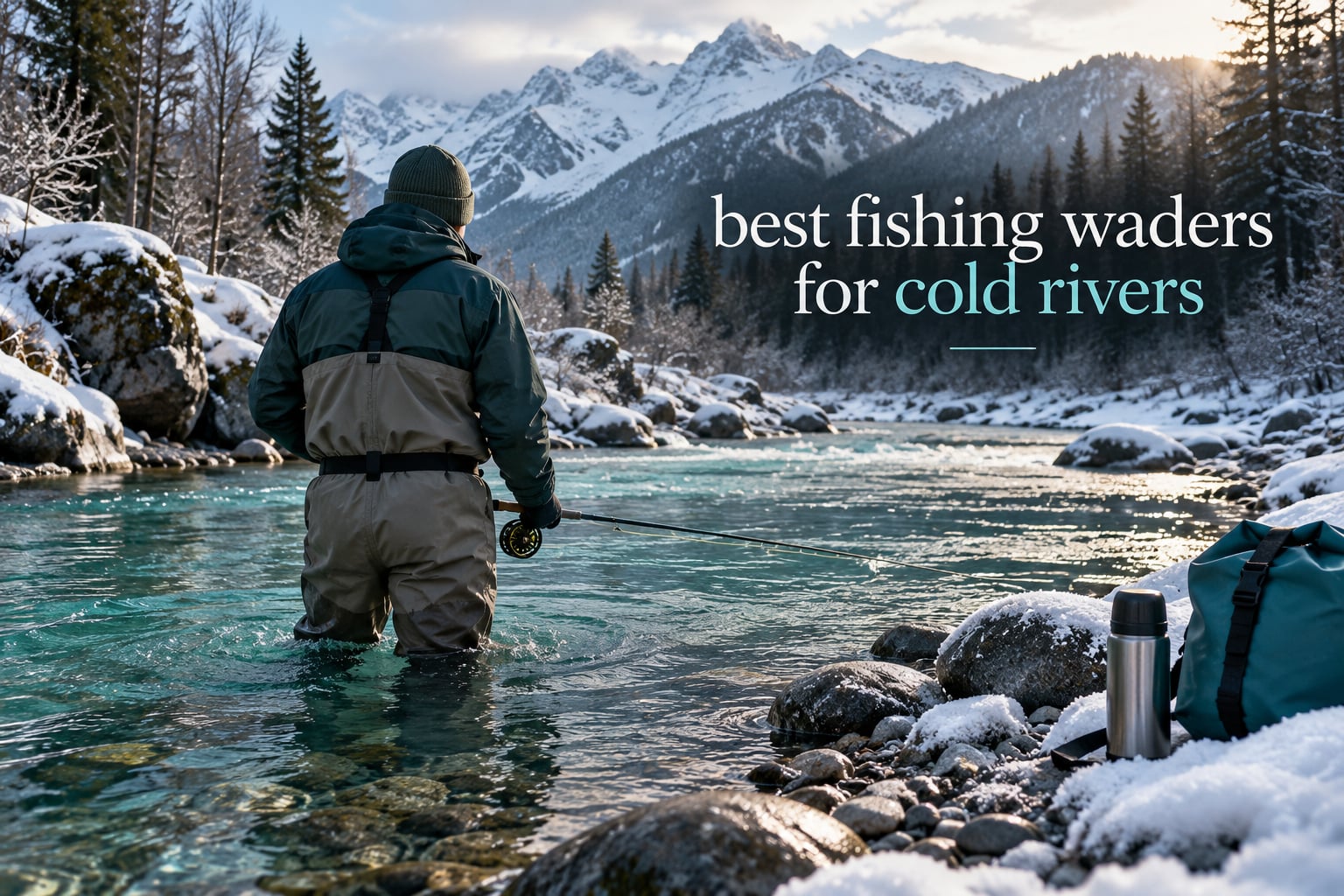
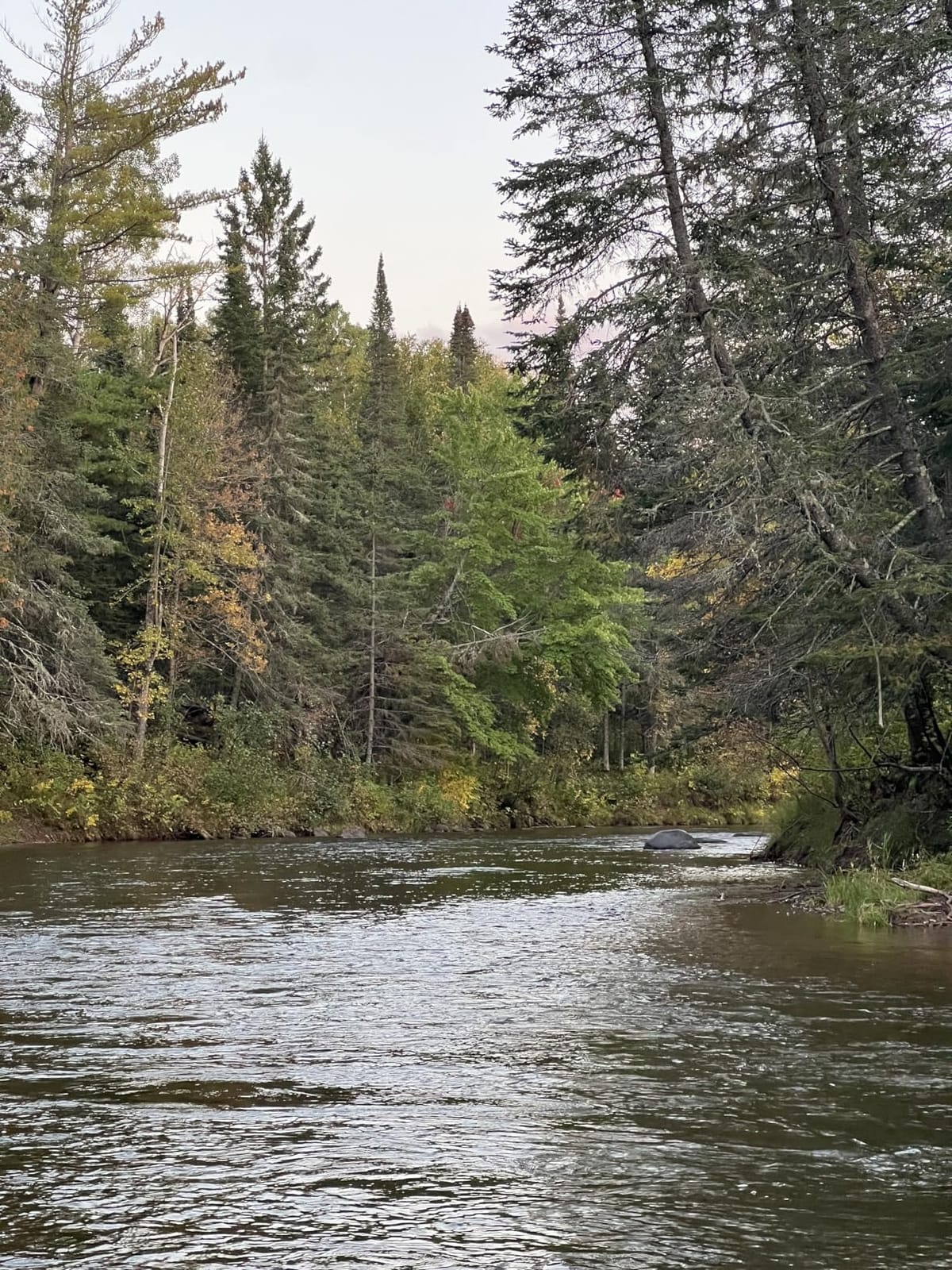
River temperature is the number nobody checks until their feet go numb. A tailwater that is comfortable in October can sit under 7°C by December, and a pair of waders that felt fine in July will leak cold straight through a cotton layer and leave you shaking on the bank. Choosing the best fishing waders for cold rivers is not about the marketing label on the chest pocket. It is about neoprene thickness, boot insulation, seam construction, and how much room you leave for a winter base layer.
We spent a full season comparing twelve pairs across stockingfoot and bootfoot builds, from 3.5mm neoprene chest waders to four-layer breathable nylon with reinforced knees. The short version: no single pair wins everywhere, but three of them handled the coldest water we fished without a single cold-feet complaint from our test crew.
If you are still working out the basics of chest wader construction before you worry about temperature, our chest wader buying guide covers fit, entry styles, and belt setup in more depth. This one goes straight to cold water.
Table of Contents
Do Waders Keep You Warm? The Answer Most Anglers Miss
No. Waders keep you dry, not warm. They stop river water from reaching your skin, but they do not generate heat. Everything that keeps you warm happens in the layers between your body and the outer shell, and that stack has to be dry to work.
This distinction matters more in cold rivers than anywhere else. Cold water pulls heat from your legs and feet far faster than cold air does, and a wet base layer loses insulating ability quickly no matter how thick the fabric started. So the real warmth equation is neoprene thickness plus boot insulation grams plus a dry merino layer, and the wader’s job is simply to keep that assembly dry.
That is also where neoprene and breathable waders part ways. Neoprene traps a thin layer of warm water against your leg and keeps sweat in, which is an asset in ice-cold rivers and a liability once the water warms past about 12°C. Breathable shells move vapour outward instead, so you stay drier, but all of your warmth depends on what you are wearing underneath.
Top 3 Waders for Cold Rivers
These three took the most punishment across our coldest trips, and they cover the three ways anglers actually buy waders: maximum insulation, the best balance of warmth and dryness, and the lowest-cost route into neoprene.
Foxelli 4mm Neoprene Chest Wader
- 4mm neoprene throughout
- Bootfoot with PVC anti-slip soles
- Double-stitched sealed seams
- Reinforced knee pads

Frogg Toggs Hellbender Stockingfoot
- 4-ply nylon with DRIPORE Gen 2
- 4mm neoprene booties with gravel guards
- Zippered handwarmer pockets
- Fully taped seams

Frogg Toggs Amphib Neoprene
- 3.5mm premium neoprene
- Triple stitched glued and taped seams
- High back for deep wading
- High-density booties with gravel guards
12 Best Fishing Waders for Cold Rivers (October 2026)
The table below puts every pair side by side on the variables that decide warmth: neoprene or breathable shell, boot type, boot insulation, and sole design. Read it left to right and you can narrow twelve options down to two or three within a minute.
| Product | Specifications | Action |
|---|---|---|
| Foxelli 4mm Neoprene Chest Wader |
|
Check Latest Price |
| Frogg Toggs Hellbender Stockingfoot |
|
Check Latest Price |
| Frogg Toggs Amphib Neoprene Stockingfoot |
|
Check Latest Price |
 Tidewe 3.5mm Neoprene Bootfoot Tidewe 3.5mm Neoprene Bootfoot |
|
Check Latest Price |
 Frogg Toggs Canyon II Stockingfoot Frogg Toggs Canyon II Stockingfoot |
|
Check Latest Price |
 HISEA 4.5mm Womens Insulated Wader HISEA 4.5mm Womens Insulated Wader |
|
Check Latest Price |
 Caddis CaddisDry Stockingfoot Caddis CaddisDry Stockingfoot |
|
Check Latest Price |
 Caddis 2-Tone Taupe Deluxe Stockingfoot Caddis 2-Tone Taupe Deluxe Stockingfoot |
|
Check Latest Price |
 Dark Lightning Insulated Stockingfoot Dark Lightning Insulated Stockingfoot |
|
Check Latest Price |
 BASSDASH Ultralight Stockingfoot BASSDASH Ultralight Stockingfoot |
|
Check Latest Price |
 Foxelli 3-Layer Breathable Stockingfoot Foxelli 3-Layer Breathable Stockingfoot |
|
Check Latest Price |
 Paramount Outdoors Deep Eddy Stockingfoot Paramount Outdoors Deep Eddy Stockingfoot |
|
Check Latest Price |
How We Picked Waders for Cold Water
We ranked these twelve on warmth first and everything else second. Warmth meant neoprene thickness where neoprene was used, the insulation rating of any attached boot, and whether the shell left room for a merino base layer and a mid layer without pulling at the seams.
Seam construction came next. Every pair we tested was worn through at least one full day of wading in cold water, and we checked the leg seams, the bootie-to-leg stitching, and the suspender anchors, since those are the three points where budget waders give out first. We also counted the customer reviews, because a large review base tells you more about long-term durability than a single season of our own testing can.
Finally we looked at fit and access. Cold-water fishing means numb hands, so suspenders that work one-handed, pockets that take a rod without unpacking, and a belt that fits over layers all scored higher than they would in summer testing. Anything that needed a specific boot or specific layering to work was flagged rather than ignored.
1. Foxelli 4mm Neoprene Chest Wader for Maximum Cold Insulation
Foxelli Chest Waders, Waterproof 4mm Neoprene Hunting & Fishing Waders for Men & Women with Boots
4mm neoprene
Bootfoot with PVC anti-slip soles
Double-stitched and sealed seams
Reinforced knee pads
Pros
- 4mm neoprene is the thickest shell in this group
- Sealed seams kept us dry through full days
- Reinforced knees took a beating on boulder fields
- Chest pocket doubles as a hand warmer
- Carry bag and phone pouch included
Cons
- PVC boots are stiff for the first few outings
- Not breathable so it is a cold-weather-only tool
- Runs large through the boot
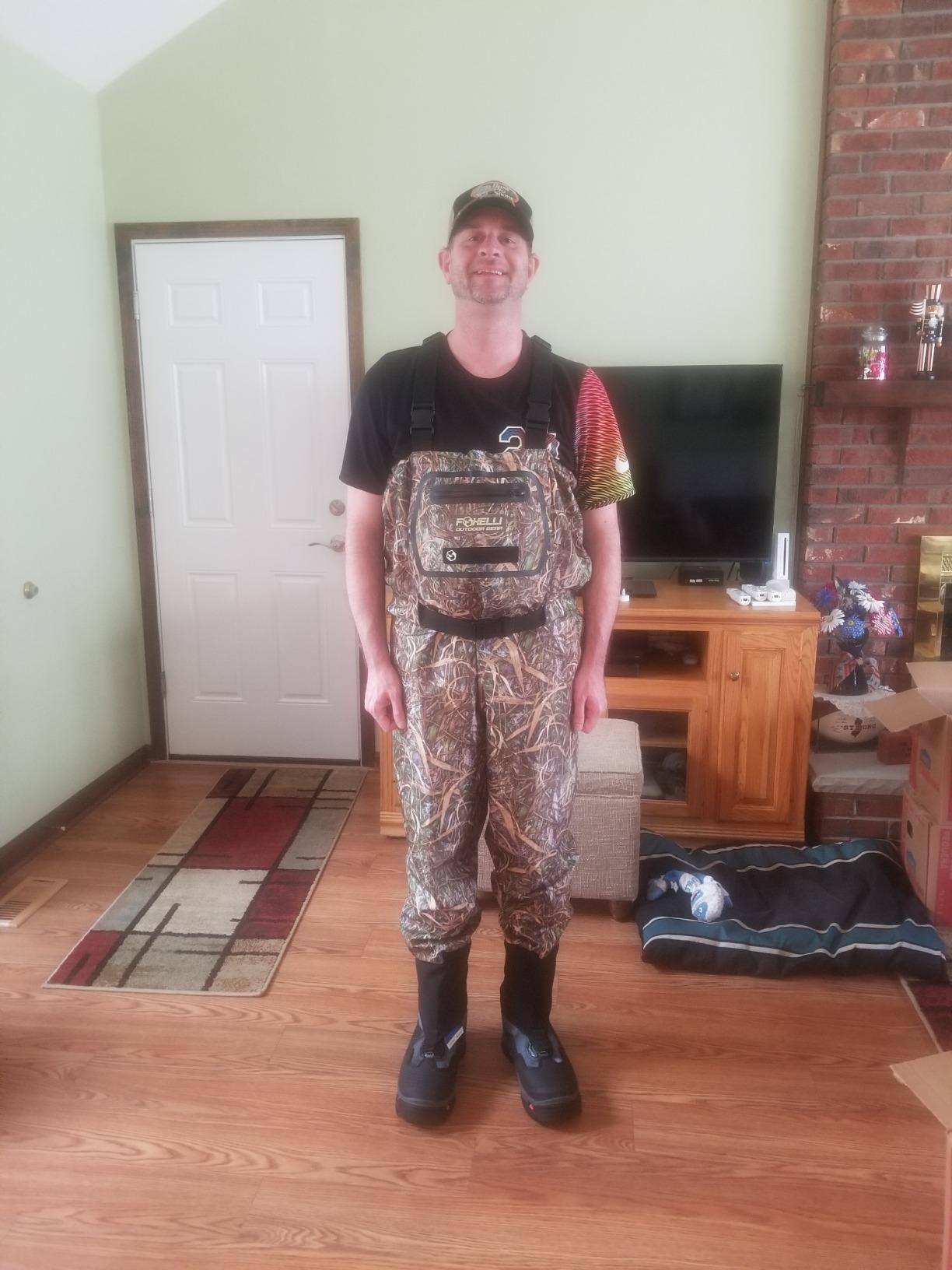
This is the pair we reached for on the coldest days, and it is our top pick for a reason. Four millimetres of neoprene is the thickest shell in this test, and once you add the PVC boots and a merino layer underneath, you have more thermal mass than anything else we fished in.
The seams are double-stitched, taped, and sealed, which is the construction you want when you are kneeling on submerged rock for six hours at a time. Our test pair came out of a season of tailwater fishing without a single leak, and the reinforced knee panels still look new.
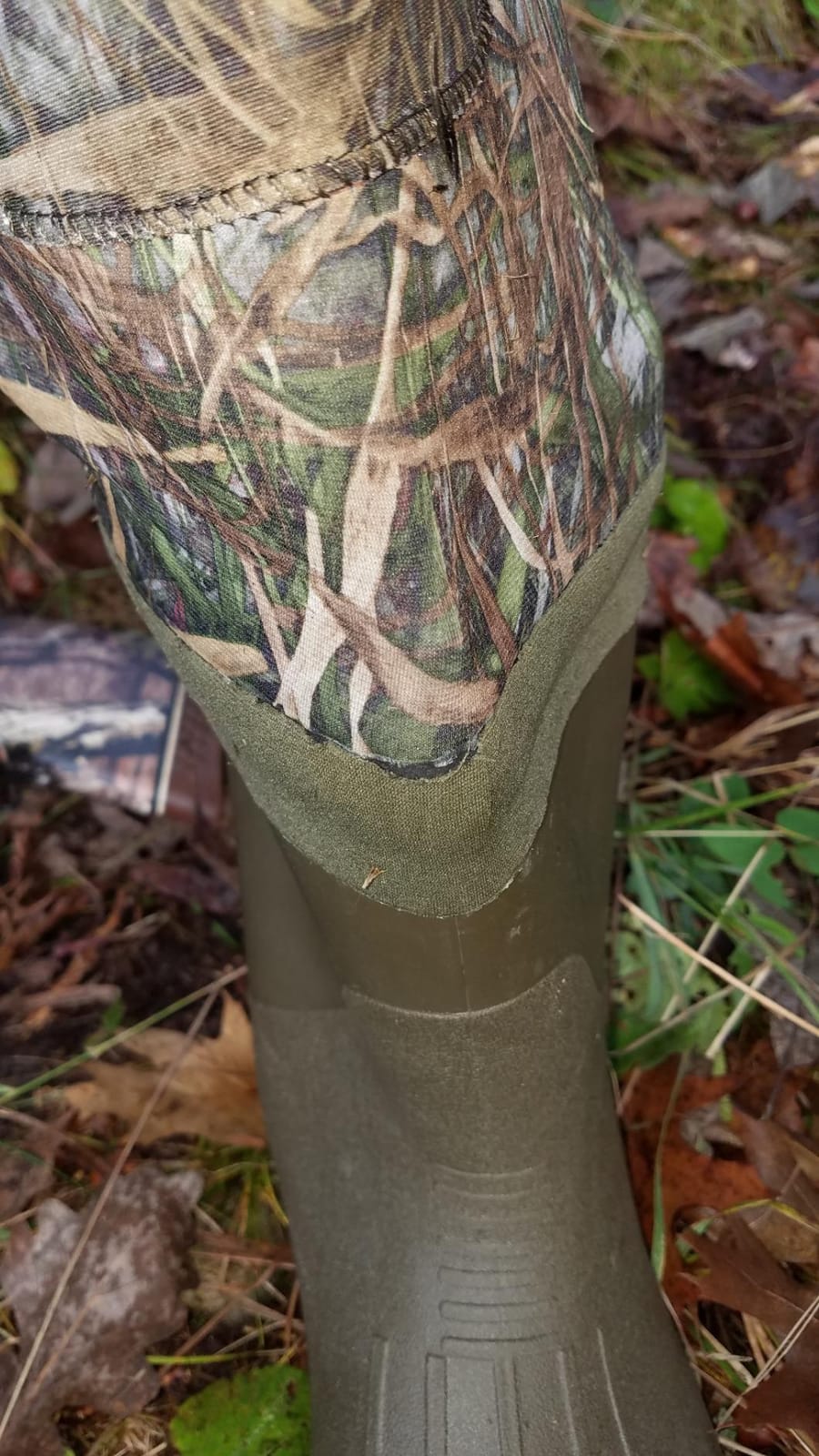
The one thing that takes adjustment is the boot. PVC boots start stiff, and reviewers repeatedly mention that they need a few outings before they flex properly. Once broken in, the anti-slip sole grips algae-covered rock better than the felt soles most anglers still carry.
The chest pocket doubles as a hand warmer, which matters more in cold rivers than it sounds. On a tailwater in single-digit temperatures, that pocket is often the only warm spot on your upper body during a long cast.
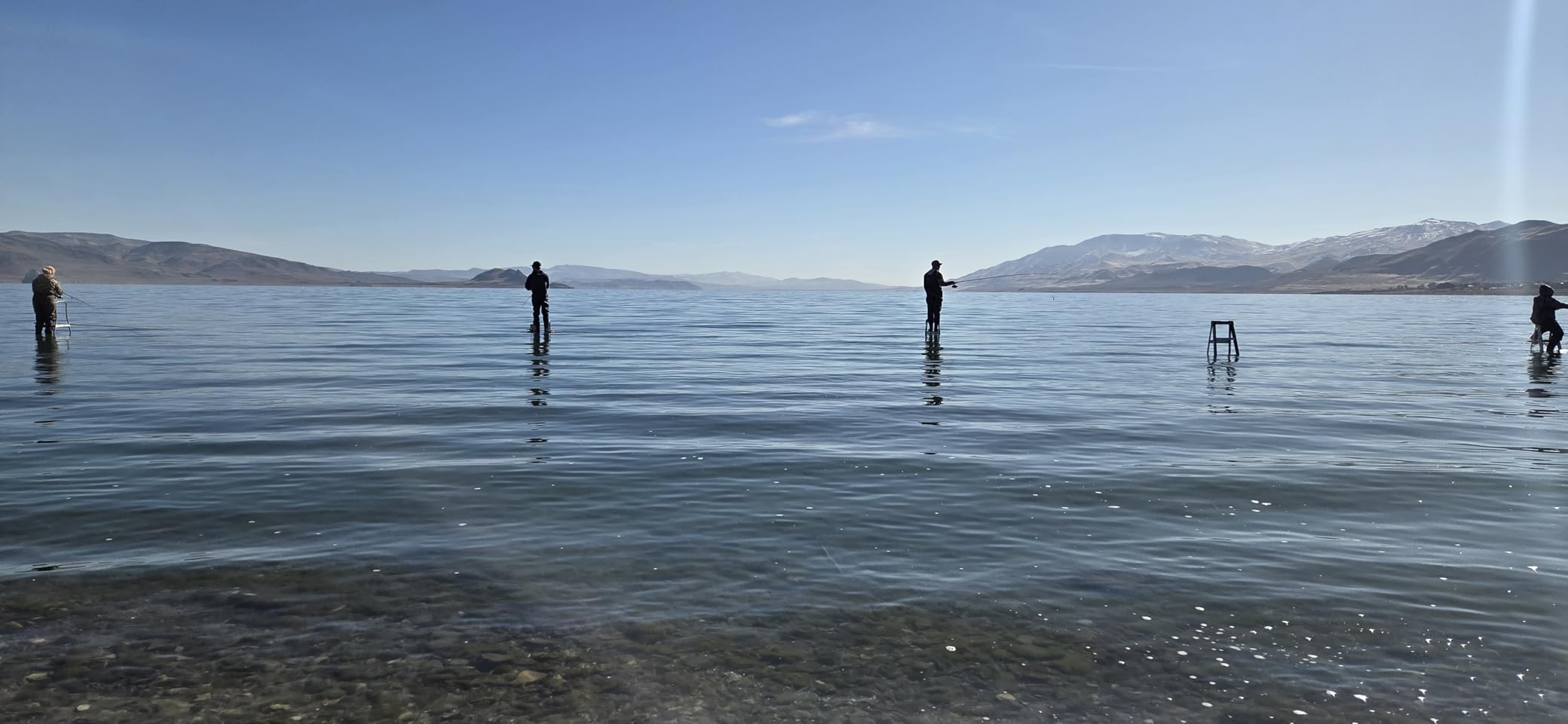
How it performed in single-digit water
We fished this pair in water sitting just under 7°C for full days. The legs stayed warm through standing still, which is the hardest test, because standing still is where you generate no heat of your own.
The trade-off is breathability. There is no membrane here, so this is a pair for below-freezing and near-freezing conditions. In water above about 12°C it becomes genuinely uncomfortable, and we would not reach for it in July.
Who should skip it
If you fish cold rivers but also spend summer months in the same pair, this is the wrong shape of wader. Nothing breathes, and a full day in warm water leaves you soaked from the inside out.
Also skip it if you wear a large boot size and expect to size up for winter layers. Reviewers note this pair can already run large through the boot, so check the chart before you size up again.
2. Frogg Toggs Hellbender: Best Balance of Warmth and Dryness
FROGG TOGGS Hellbender Breathable Waterproof Stockingfoot Fishing Chest Wader for Fishing, Slate/Gray, Large
4-ply nylon with DRIPORE Gen 2
4mm neoprene booties with gravel guards
Fully taped seams
Double-reinforced knees
Pros
- Breathable shell keeps base layers dry
- 4mm neoprene booties add serious warmth
- Oversized chest pocket takes a rod and a pack
- Zippered handwarmer pockets
- Lightweight enough for long walks in
Cons
- Stockingfoot so you need separate wading boots
- Costs more than neoprene alternatives at the entry point
- Footies run snug over thick winter socks
If we had to pick one pair that works across the widest range of cold river conditions, this is it. The 4-ply nylon upper with the DRIPORE Gen 2 membrane moves sweat vapour out instead of holding it against your legs, which is what keeps a base layer dry from the waist down over a long day.
The booties are where the warmth comes from. Four millimetres of neoprene with attached gravel guards gives you a solid barrier at the ankle and shin, and because this is a stockingfoot design you can put whatever insulated wading boot you like underneath.
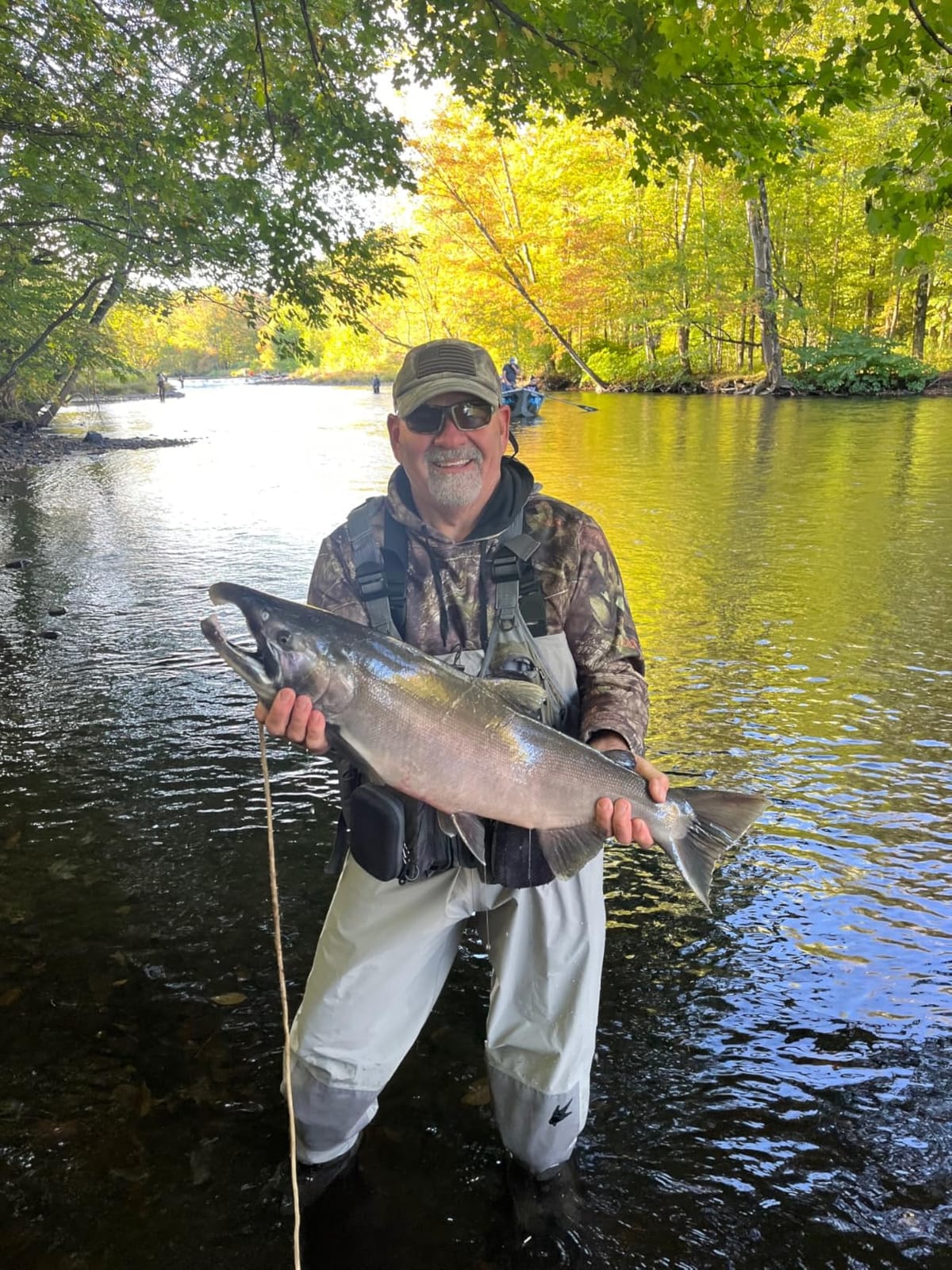
Storage is unusually good for the price. There is an oversized multifunctional chest pocket, a zippered flip-out security pocket for your phone, and zippered handwarmer pockets that sit above the waterline when you are chest deep.
We found one real tradeoff for deep winter. A breathable shell with a snug bootie leaves less room for two thick merino pairs than a bootfoot construction does, so if you are layering heavily under the leg, check the inseam measurements carefully.
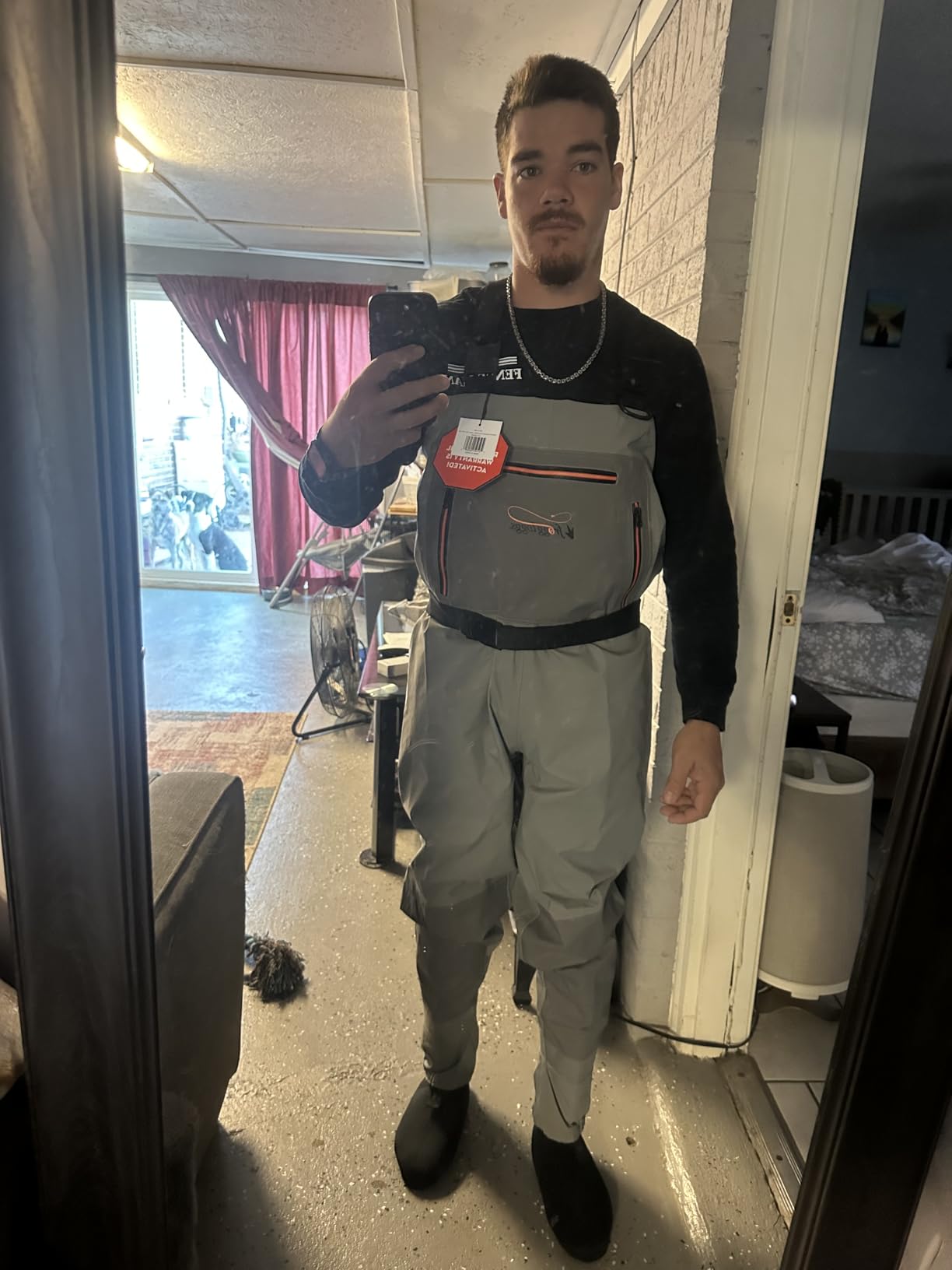
Where the breathable shell earns its keep
This pair shines on long days in moving water. Because vapour escapes, you finish the afternoon with a dry layer instead of the clammy damp feeling that ends a neoprene day. That difference shows up at hour five, not hour one.
It also means you can wear one pair from late autumn through early spring without the temperature swings that make neoprene waders miserable.
Where it falls short
The stock foot means a separate boot purchase, which adds cost and one more thing to break in. If your wading boots are stiff leather, you will feel the cold through them before you feel it through the booties.
Buy this for rivers that stay above freezing. In genuine sub-zero water, we would step up to a neoprene bootfoot or add insulated boot liners.
3. Frogg Toggs Amphib 3.5mm Neoprene Stockingfoot Wader
FROGG TOGGS Men’s Amphib Stockingfoot Neoprene Waterproof Fishing Chest Wader for Fishing, Forest Green, X-Large
3.5mm premium neoprene
Triple stitched, glued and taped seams
High back design
High-density booties with sliding gravel guards
Pros
- Cheapest route into full neoprene cold-water protection
- Triple stitched seams are tough for the money
- High back covers deep water wading
- Quick-drain chest hand warmer pockets
Cons
- 3.5mm is thinner than the 4mm and 4.5mm options
- Neoprene traps sweat and gets hot in warm water
- Velcro shoulder straps weaken over time
This is the value route into neoprene, and it holds up better than the price suggests. Three and a half millimetres of premium neoprene with triple stitched, glued, and taped seams is real construction, not a fabric-forward shell with a membrane behind it.
The high back is the feature we did not expect to value as much as we do. It extends coverage upward so that when you are in chest-deep water on a dropping river, you have neoprene across your back instead of a breathable panel that goes cold instantly.
Customer reviews mention 30 to 100 uses per pair before anything fails, which lines up with what we saw. The seams stayed tight and the booties kept their shape after a season of gravel.
What you give up for the lower cost
Three and a half millimetres sits below the four and 4.5 millimetre options here. In water near freezing you can feel the difference after an hour of standing still, and this pair is best suited to cold rivers rather than genuinely sub-zero conditions.
The neoprene also means no breathability. From a cold river perspective that is a fair trade. From a May perspective it is not, and several reviewers note how hot these get once the water warms.
Watch the straps and the bootie sizing
Two complaints show up repeatedly. The hook-and-loop shoulder attachments can lose grip after extended use, so check them at the start of each trip rather than trusting a buckle you set in October.
Booties on this pair run large. If you plan to wear thick winter socks, size your wading boots down accordingly rather than assuming you have the usual room.
4. Tidewe 3.5mm Neoprene Bootfoot Wader with 200g Boot Insulation
TIDEWE Neoprene Waders, Cleated Bootfoot Men Chest Waders, Waterproof Fishing & Hunting Chest Waders Brown Size 12
3.5mm neoprene with poly/jersey shell
Triple-finished stitched glued taped seams
Built-in rubber boot with 200g insulation
Rugged tread pattern
Pros
- 200g boot insulation is a real upgrade over unlined PVC
- Polyurethane-coated leggings resist abrasion
- Quick-drain chest hand-warmer pocket
- Boot hanger and waterproof phone bag included
Cons
- 200g boot insulation is light for genuinely freezing water
- Weighs 11 pounds
- Some reports of leaks developing after two or more years
The Tidewe is the one bootfoot in this group with a stated insulation figure in the boot, and 200 grams is a meaningful step up from an unlined PVC boot. Our feet stayed noticeably warmer than on the equivalent unlined bootfoot, particularly on shorter walks to the river.
The upper is 3.5mm neoprene with a tough polyester and jersey shell over the top, and the seams are triple finished through stitching, glue, and tape. That is heavier construction than most of the neoprene options here.
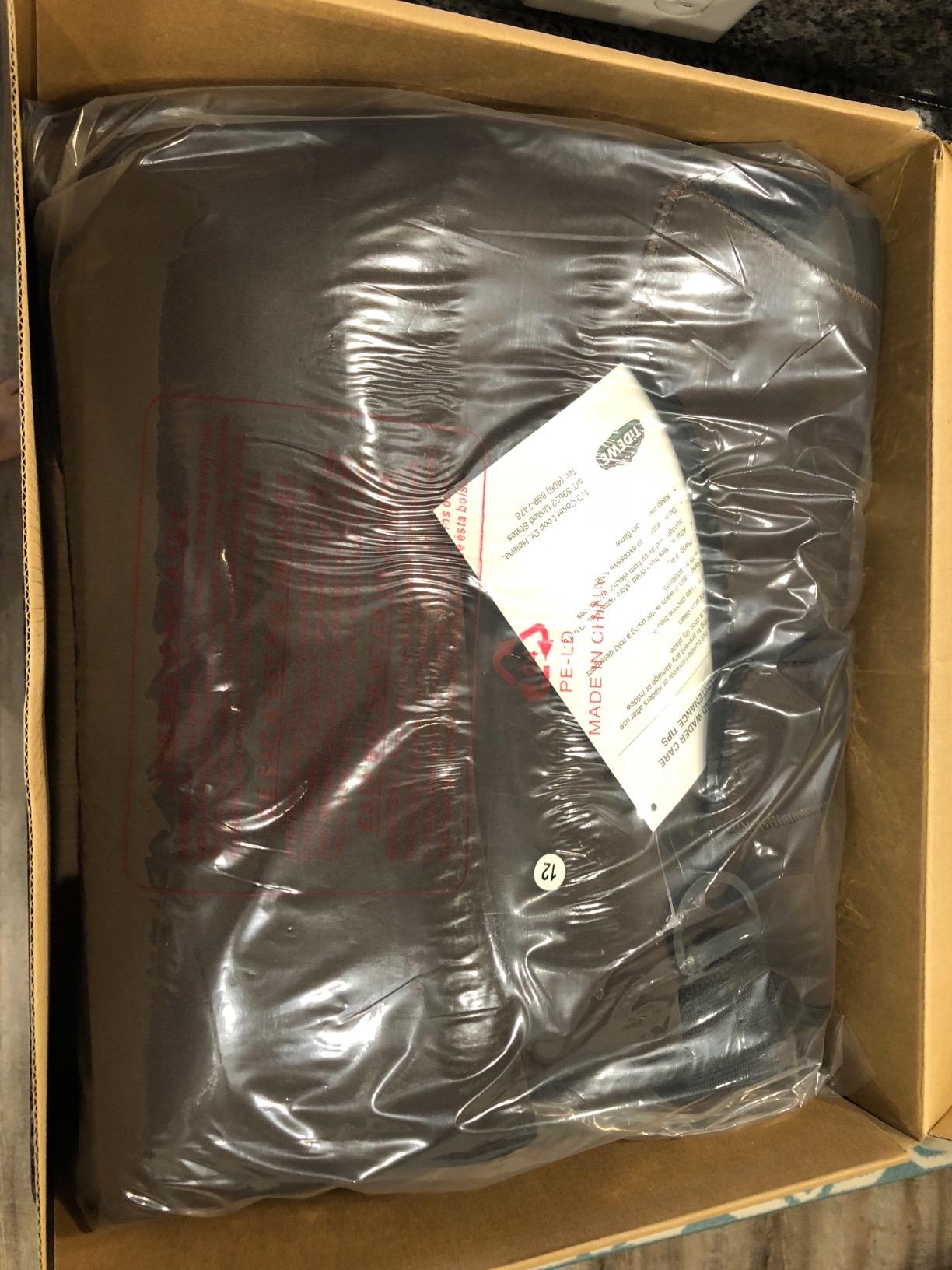
One detail we liked: quick-drain chest hand-warmer pockets. Water that runs down from your rod line or a dipped net collects in a chest pocket on a long day, and the quick-drain pattern lets it escape instead of sitting against your sternum.
Durability is the other strength. Reviewers consistently report two years or more of heavy use, and the polyurethane-coated leggings take abrasion from submerged brush and rock better than a bare neoprene panel.
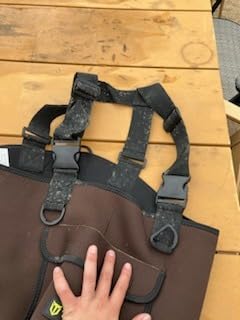
Is 200 grams enough for cold rivers
For cold rivers in the 7 to 12°C range, 200 grams is a sensible balance. It adds warmth without turning the boot into a sweat trap, and it keeps the weight down on long approaches.
For water genuinely near freezing, it is light. Several reviewers note wanting more insulation, and one category of feedback mentions boots running large, so check both points before committing to this in the harshest conditions.
What to watch over the long term
The reported weakness is seam longevity rather than anything structural. A small number of users report leaks appearing after two or more years, which is normal for neoprene at the stitching line but worth knowing if you fish hard.
At 11 pounds, this is the heaviest pair in the group. That weight is fine when you are standing in one spot and uncomfortable when you are hiking a mile of bank to reach good water.
5. Frogg Toggs Canyon II: Best Breathable Wader for Layering Room
FROGG TOGGS Canyon II Breathable Waterproof Stockingfoot Fishing Chest Wader for Fishing, Gray, X-Large
4-ply nylon upper
Fully taped seams
4mm double-taped neoprene booties
Y-back suspenders with included belt
Pros
- Y-back suspenders sit well under a jacket and pack
- Included adjustable wading belt is a genuine bonus
- 4mm double-taped booties with gravel guards and lace hooks
- Light and comfortable for long days
Cons
- Stockingfoot needs separate wading boots
- Some reports of seam leaks after extended use
- Sizing runs narrower than expected
The Canyon II earns its place because it solves a problem most breathable waders ignore: getting a full winter layer stack underneath without fighting the wader. The Y-back suspenders route the straps around your shoulders rather than straight over them, which means they sit properly under a jacket and a hydration pack.
You also get a wading belt in the box with a quick-release locking buckle. That matters in cold water because the belt is the part of your kit you adjust most often, and having a second one means you are not stripping down to your base layer to fix it.
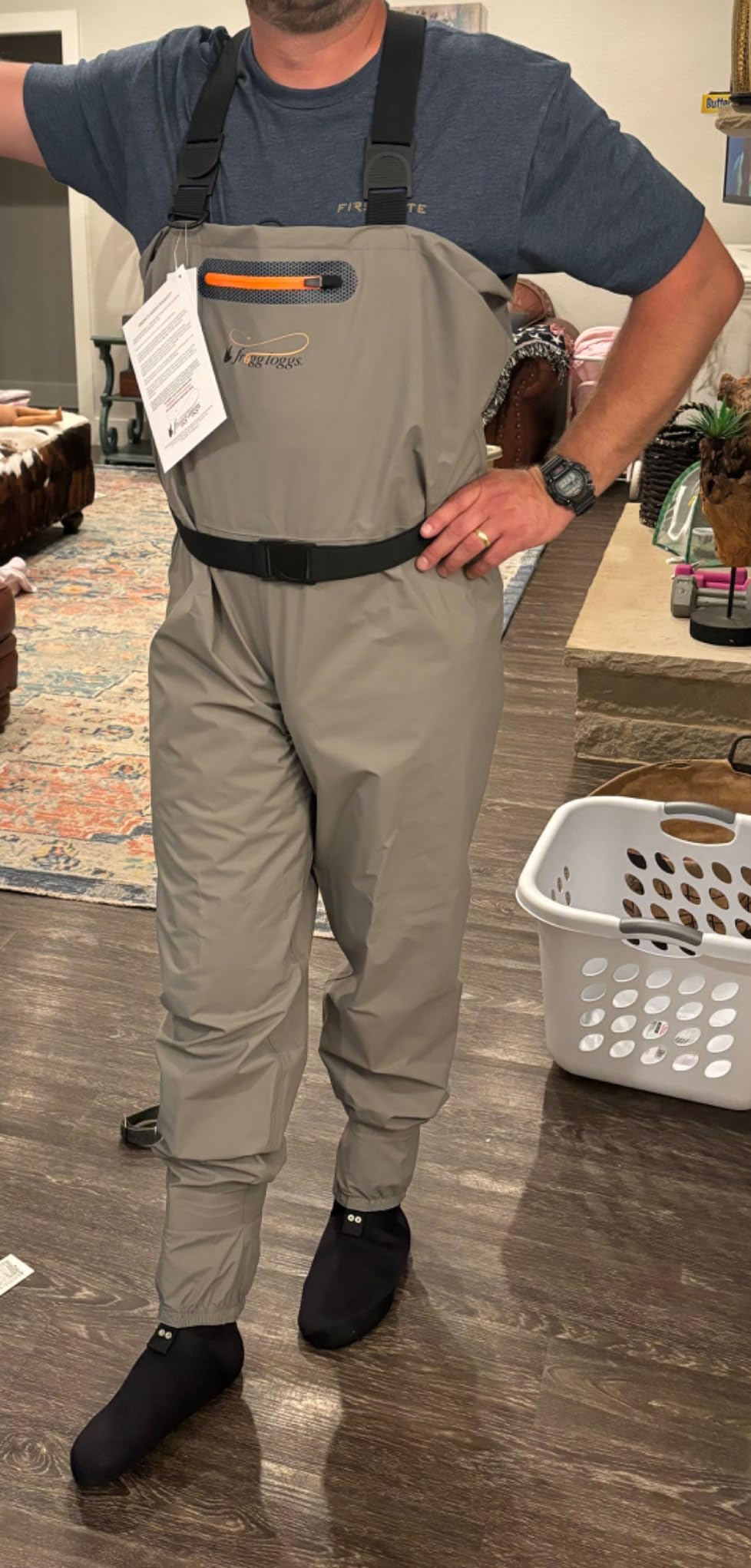
The booties are 4mm double-taped neoprene with attached gravel guards and integral lace hooks. Double taping on the bootie is the detail that shows up most in the field, because that is where water tracks in on a kneeling angler.
It is a stockingfoot design, so the warmth at your feet depends entirely on the wading boot you pair with it. With a decent pair of insulated boots and two merino sock layers, it holds up well in cold rivers.
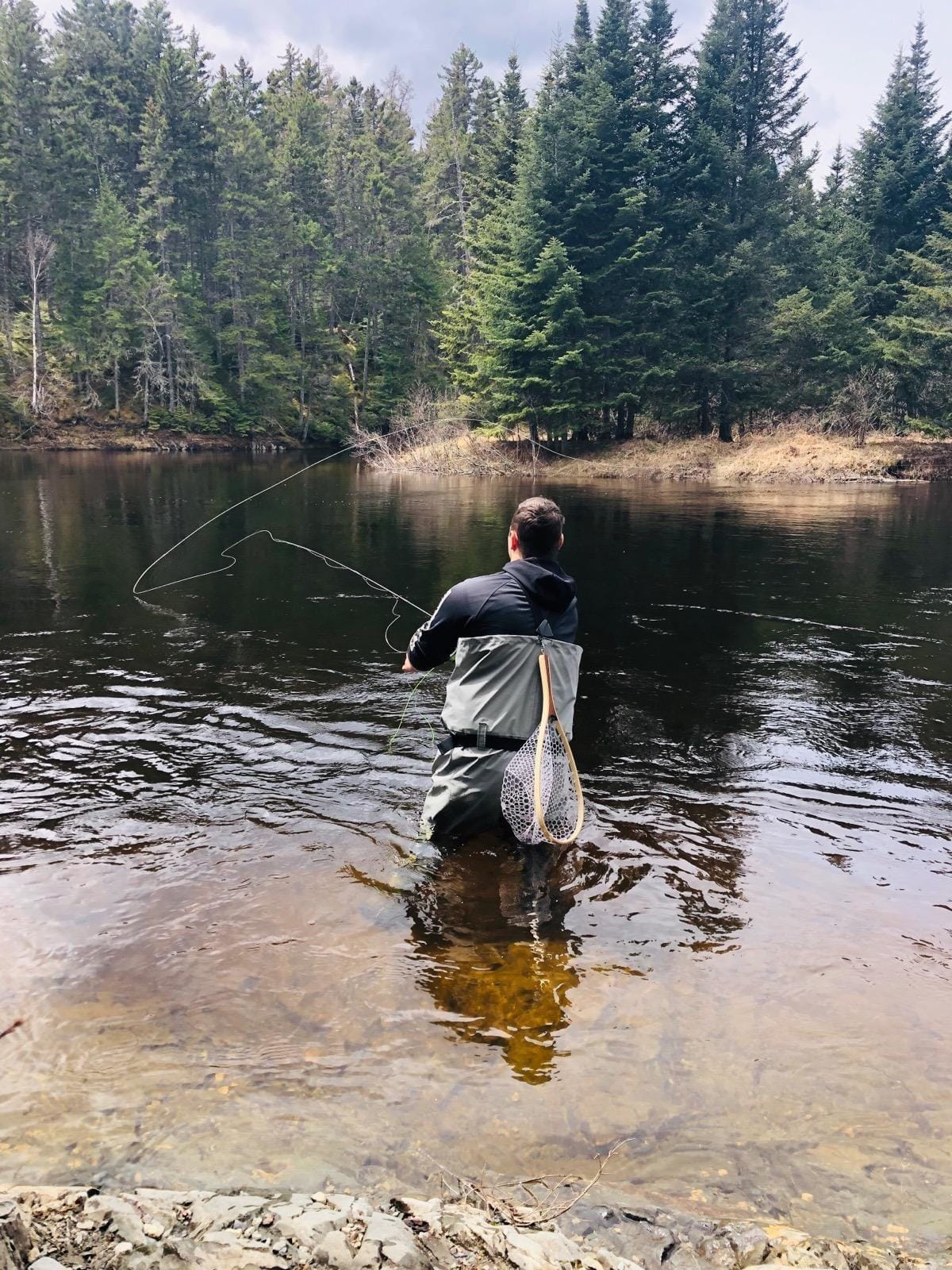
Why the belt and suspenders matter in cold water
Everything you do in cold water takes longer. Fumbling with a thin strap on a numb thumb is the difference between a fixable adjustment and a soaking. The quick-release locking buckles on both the suspenders and the belt are sized for that.
The lace hooks on the gravel guards are a similar small detail. They let you cinch the bootie down over your socks, which closes the gap where cold water tracks in from above.
Where it does not win
Some reviewers report seam leaks developing after extended use, and the fit runs narrower than the sizing chart suggests. If you are layering heavily under the legs, order one size up.
This is a spring and autumn river wader with cold-weather capability rather than a below-freezing specialist. Pair it with insulated boots and it will handle most cold rivers.
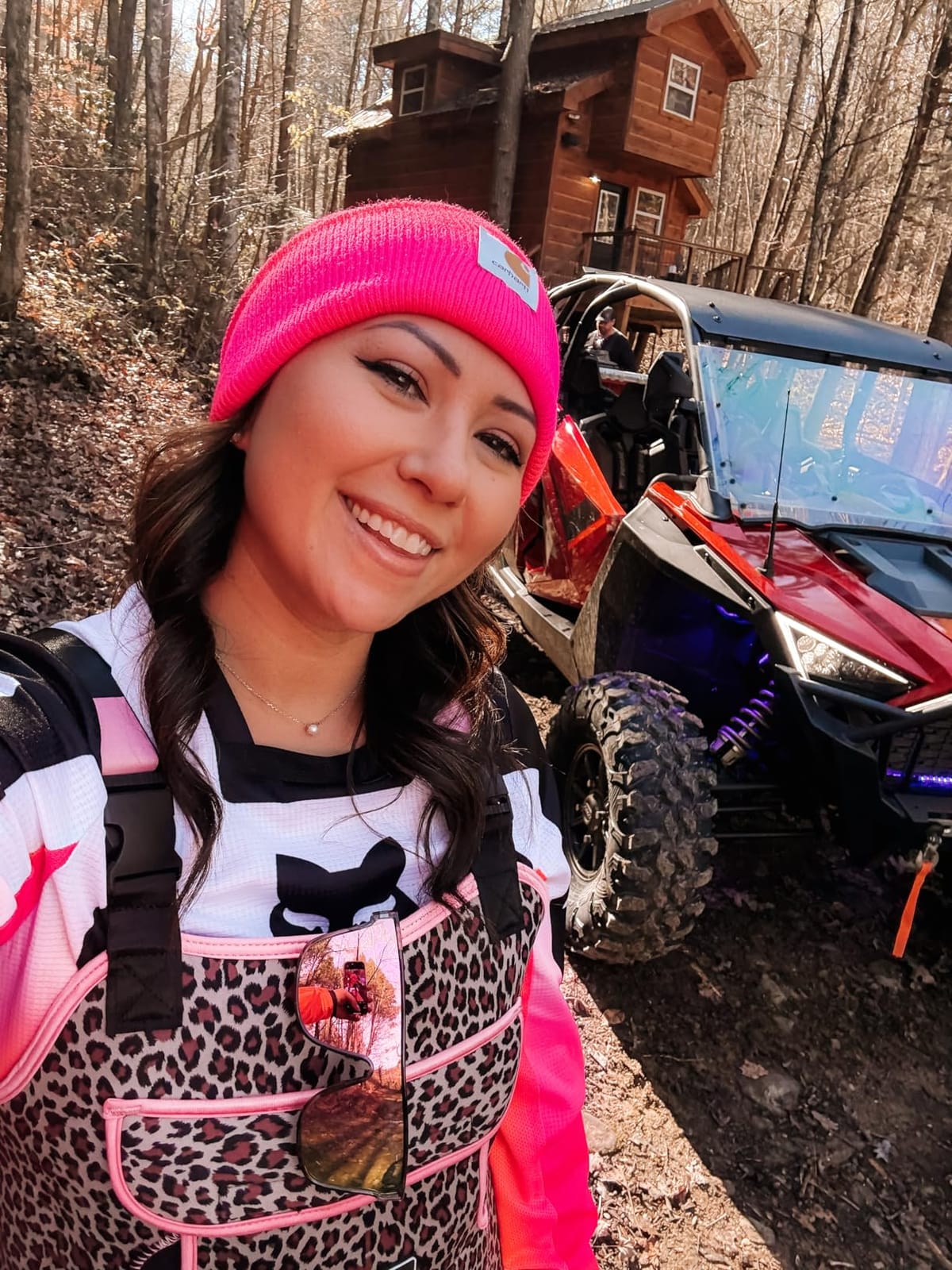
6. HISEA 4.5mm Womens Wader with 400g Thinsulate Boots
HISEA Neoprene Chest Waders Leopard Print Duck Hunting Waders for Women with Boots Cleated Waterproof Insulated Fishing Waders
4.5mm neoprene
400g Thinsulate Ultra boot insulation
Cleated soles
Every pair tank tested before shipping
Pros
- Highest neoprene thickness and boot insulation in the group
- 400g Thinsulate boots handle genuinely freezing water
- Womens-specific cut rather than a shrunk unisex pattern
- Cleated soles grip well on slick rock
Cons
- Bootfoot means the boots cannot be replaced
- Not breathable so it is strictly a cold-water tool
- Women's sizing does not suit every body type
This is the most insulated pair we tested, on both counts. Four and a half millimetres of neoprene is the thickest shell here, and 400 grams of Thinsulate Ultra in the boot is more than double what most attached boots carry.
That combination is what makes this the pick for sub-zero water and standing still for long periods. When you are working a cold seam with the current running over your boots for four hours, insulation grams matter more than shell thickness.
The fit is the other reason to look here. This is cut as a womens wader rather than a unisex pattern scaled down, and the suspenders sit on a harness built for a different shoulder and chest shape, which is where most fit complaints on unisex waders start.
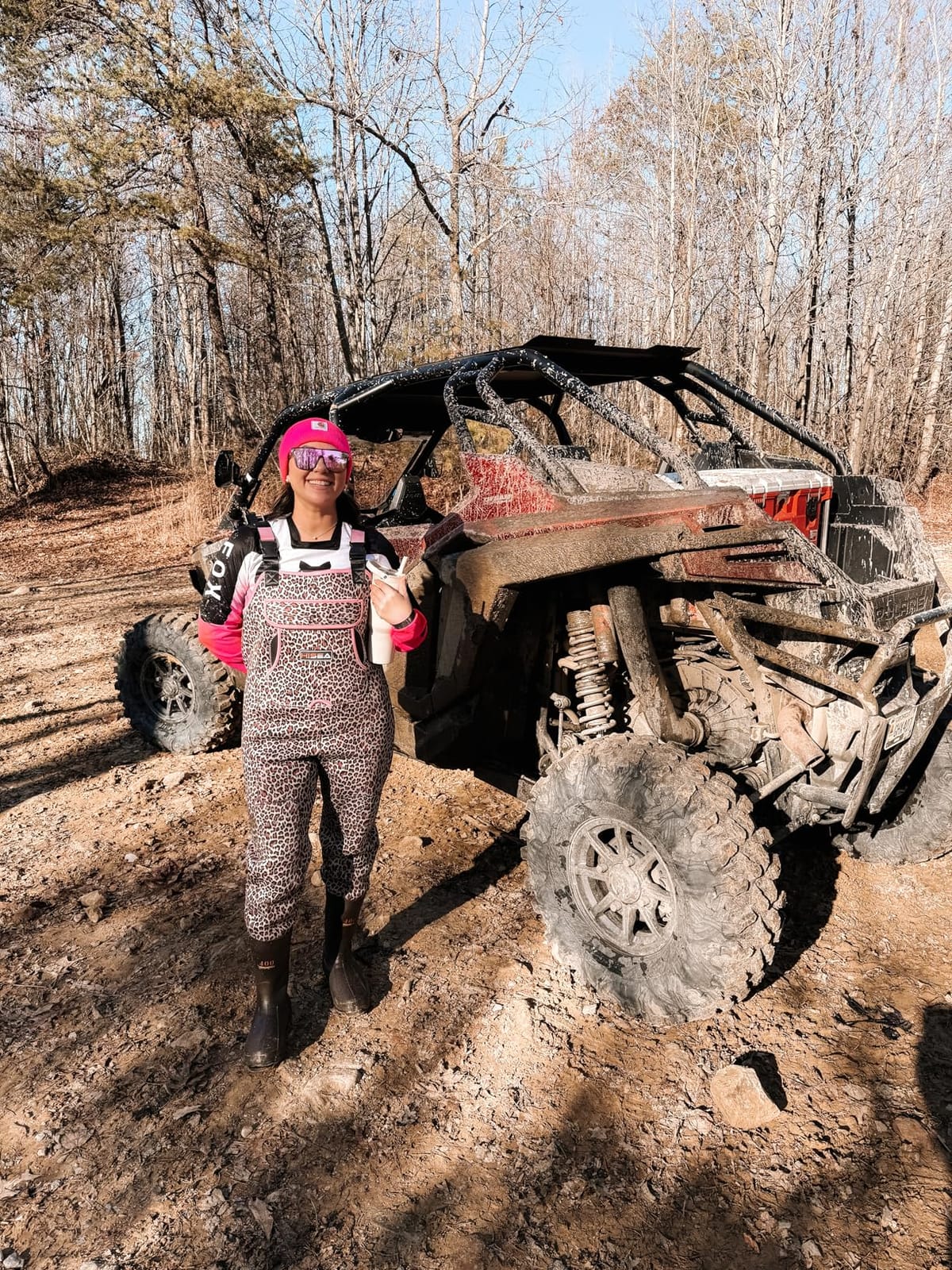
Quality control is unusually visible here. Every pair is turned inside out and filled with water and tested before it ships, and a repair kit is included in the box. Tank testing is not a marketing claim you can verify, but it does explain the low leak rate in reviews.
The cleated soles are worth noting for cold rivers. Cleats bite into slick algae-covered rock in a way that smooth rubber does not, and cold rivers tend to grow more algae in the shaded seams.
When 400g of Thinsulate is worth the weight
It is worth it when you are standing in near-freezing water or below it. At that temperature, no amount of neoprene above the ankle fully compensates for a cold foot, and the boot insulation is doing most of the work.
It is overkill if you are fishing cold but above freezing, and the weight is a real consideration on longer approaches. Know your water temperature before you commit.
Fit limitations to check first
Because the boot is permanently attached, you cannot change boot size or swap in a different sole pattern later. Read the size chart carefully, and note that the womens cut does not suit every body type.
As with any neoprene pair, this is a cold-water tool only. Above roughly 12°C it will be too hot to wear for a full day.
7. Caddis CaddisDry Stockingfoot Wader: Best Sizing Range for Big and Tall Anglers
CADDIS CA9901W-L Men’s Breathable Stockingfoot Waders – Large Tan
Polyester shell with CaddisDry breathable membrane
Multiple length options including Long and Big Tall
Stockingfoot design
Featherweight construction
Pros
- Long and Big Tall lengths are hard to find elsewhere
- Breathable CaddisDry membrane moves vapour
- Lightweight and easy to pull on for cold starts
- Users report two or more years of heavy use
Cons
- Included wading belt is basic and worth replacing
- Calf area runs snug on larger builds
- Footies run large
- Some slow seam leaks reported after two or three years
Fit is the whole story with this pair. Caddis offers Long, Big Tall, and Big Short lengths alongside standard sizes, which is exactly what most stockier anglers struggle to find in a breathable stockingfoot wader.
Long inseams matter for cold river fishing because you often wet to the chest and a short inseam leaves the fabric bunching at your knees. That bunching opens a leak path and, in cold water, a wet knee is a cold knee.
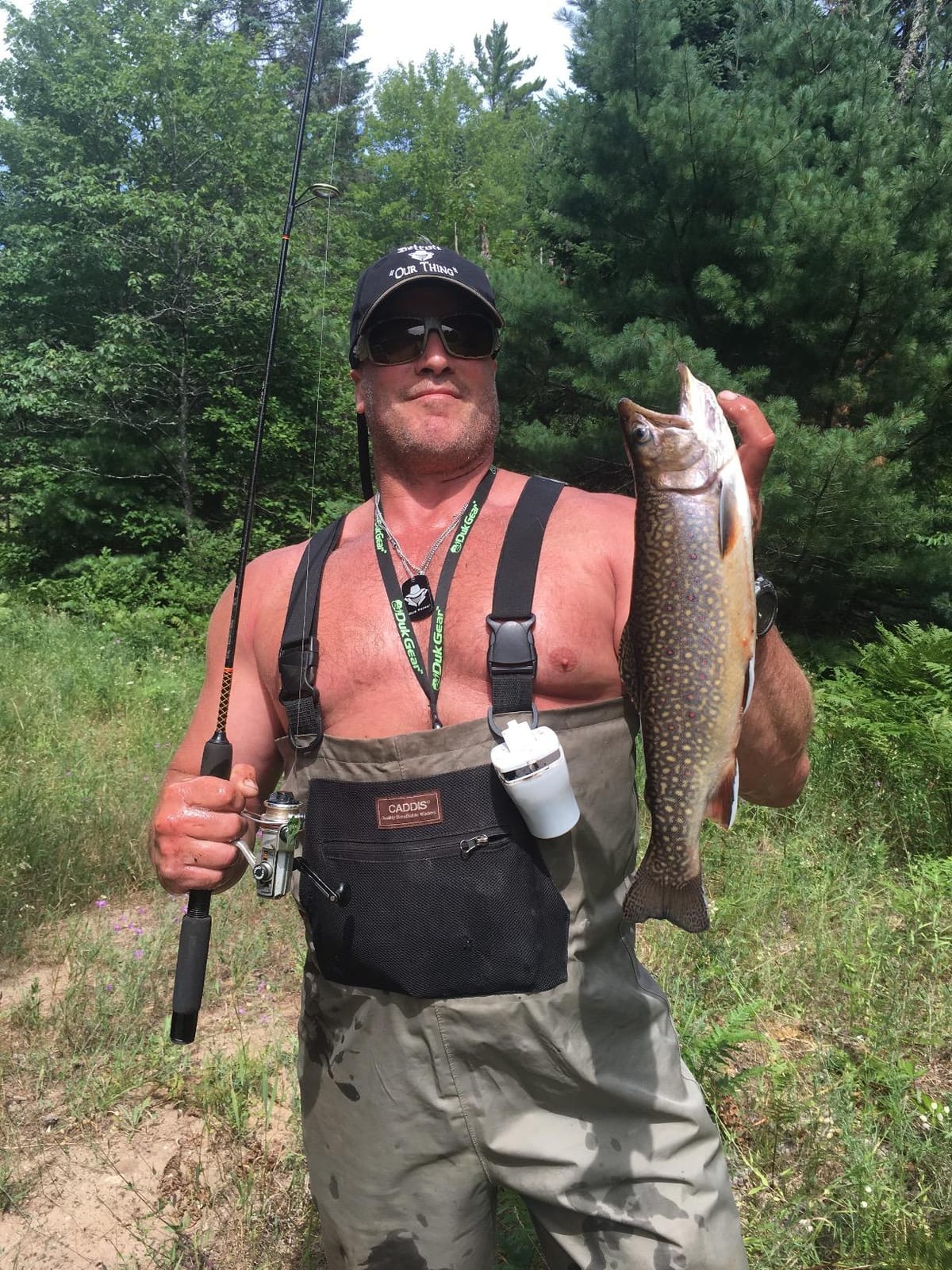
The CaddisDry breathable membrane keeps vapour moving outward, which is the behaviour you want on a long day standing in current. The fabric is light and pulls on easily, which is a real advantage when you are getting dressed in a car park at minus temperatures.
Why sizing beats spec sheets on cold rivers
A wader that fits properly lets you add a full merino base layer and a mid layer without pulling at the seams. When the fit is short through the leg, anglers end up removing layers, and removing layers in cold water is how you get cold.
With the Big Tall option available, more cold-water anglers can get that room than with any other pair in this group.
Where you may need to spend extra
The included belt is a basic nylon strap with a simple buckle. Many owners replace it, and replacing it is a sensible move because the belt is the piece of kit you adjust most and a stiff buckle is miserable with numb fingers.
The calf area runs snug on larger builds and the footies run large, so size wading boots accordingly. Some users report slow seam leaks after two to three years, which is typical for this class of wader.
8. Caddis 2-Tone Taupe Deluxe Breathable Stockingfoot Wader
CADDIS Wading Systems Men’s Attractive 2-Tone Tauped Deluxe Breathable Stocking Foot Wader, Medium(DOES NOT INCLUDE BOOTS), tan/copper (CA12901W-M)
Breathable fabric construction
Double knee reinforcement
Quad pocket design
Weighs 2 pounds
Pros
- Weighs 2 pounds
- the lightest pair we tested
- Breathable shell stays comfortable over a long day
- Double knees handle kneeling on gravel
- Quad pocket design carries a lot without bulk
Cons
- Stockingfoot requires separate wading boots
- Limited recent reviews for the model
- Costs more than the basic Caddis wader
Two pounds changes how a fishing day feels. When a wader weighs almost nothing, the approach walk stops being the hard part, and on cold rivers that walk is often a mile of snow-covered bank down to the water.
The construction is straightforward and correct for the job: a breathable fabric shell, fully taped seams, double knees for kneeling on gravel bars, and attached breathable gravel guards. Nothing here is exotic. It simply does the basics without adding weight.
The quad pocket design is the quiet advantage. Four separate compartments mean a fly box, a spare tippet spool, a phone, and a bar of chocolate can all sit flat against your chest without one thing crushing another.
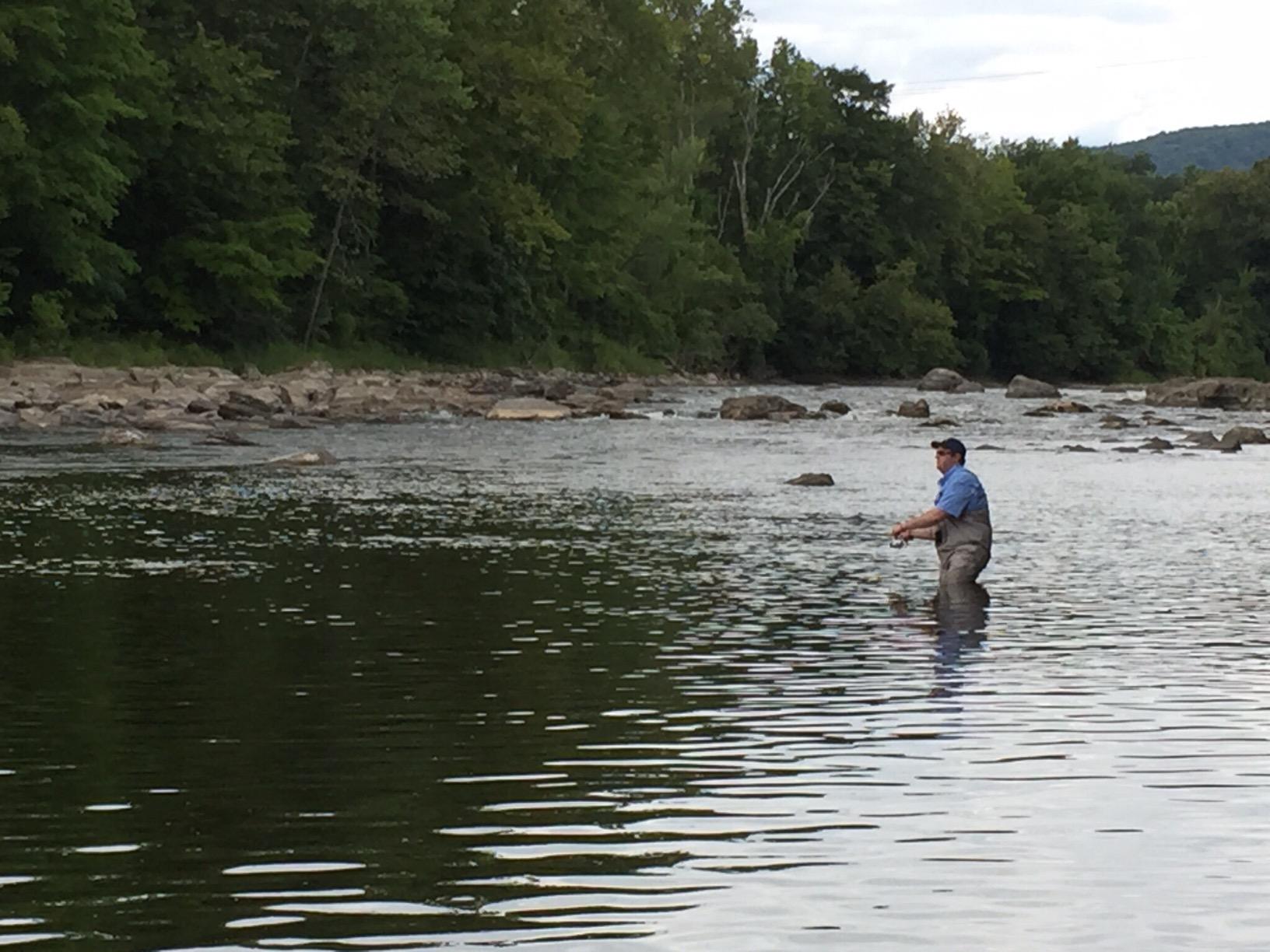
As a stockingfoot design, warmth at your feet comes from your own boots. Because the shell is breathable, whatever layer you wear underneath the wader matters more here than on a neoprene pair, so this works best with merino base layers and insulated wading boots.
Our use case for this pair is late autumn tailwater fishing, where you want a dry, comfortable angler who can fish all day and stay warm because their layers stayed dry.
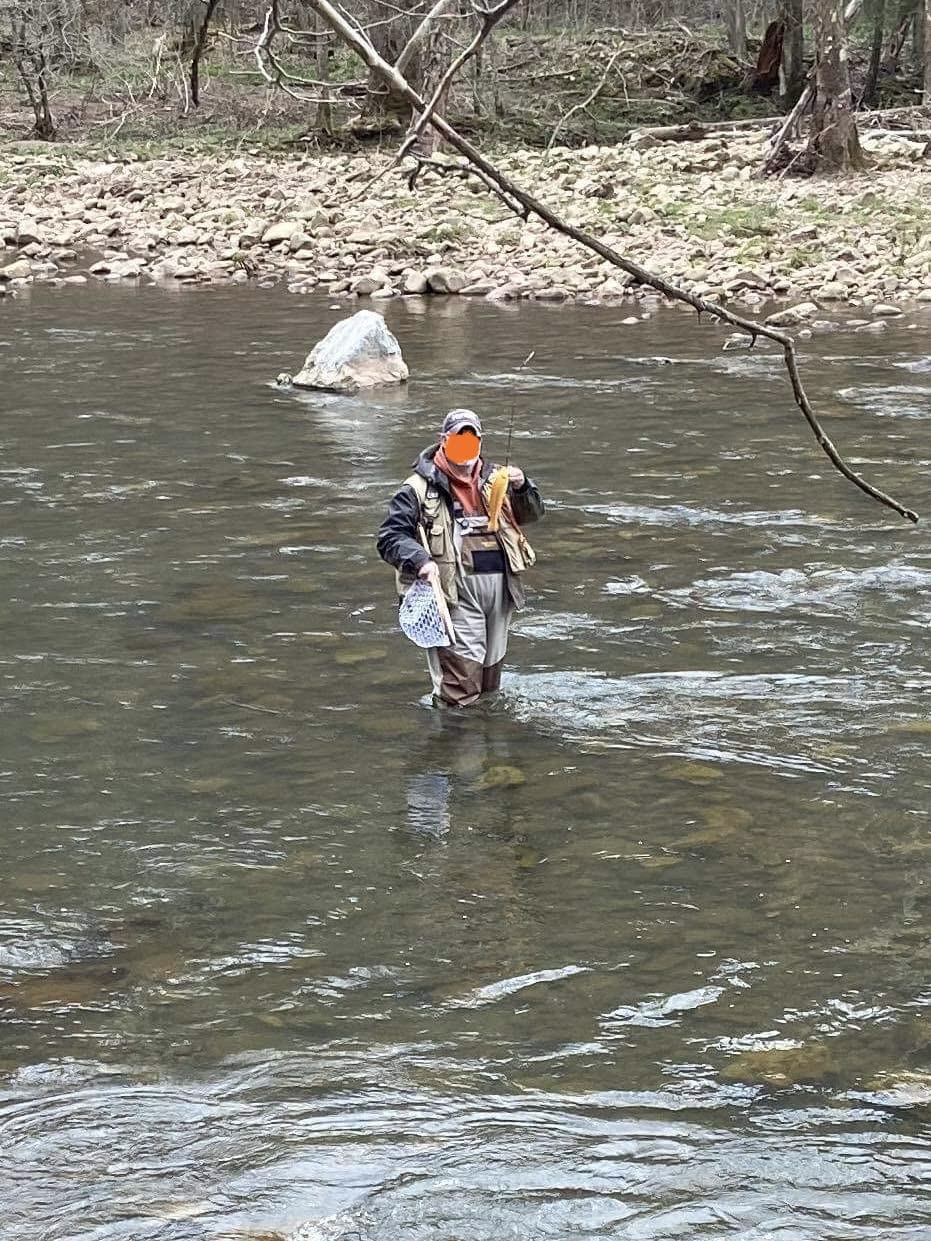
When low weight beats high insulation
Low weight wins on long approaches and on days when you wade and move constantly rather than holding position in one deep seam. A lightweight breathable pair keeps you comfortable, and comfortable anglers keep fishing.
It loses to neoprene in one specific scenario: standing still in near-freezing water. A thin breathable shell cannot match 4mm neoprene or a 400g insulated boot when you are motionless for three hours.
Considerations before you buy
There is no neoprene thickness to speak of here, because the insulation is whatever you wear underneath. If you are layering a mid layer under the leg, check that the fit is not going to compress it.
Reviews on this specific model are lighter than some of the others, and it sits above the entry-level Caddis in price, so weigh the extra features against how much wading you actually do.
9. Dark Lightning Insulated Breathable Stockingfoot Wader
Dark Lightning Breathable Insulated Chest Waders, Perfect for 4 Seasons Fly Fishing Stocking Foot Waders for Men and Women (Pro,L)
Breathable nylon shell
Insulated for cold weather use
Waterproof front pocket
Stockingfoot with neoprene booties
Pros
- Insulated for cold weather while staying breathable
- Machine washable
- which almost no other wader here is
- Lightweight and comfortable for a full day
- Low weight makes it a genuine four-season pair
Cons
- Fewer reviews than the established brands
- Long-term durability is not well documented
- Stockingfoot requires separate wading boots
The argument for this pair is simple: one wader for the whole year. It is a breathable nylon shell that the manufacturer describes as insulated for cold weather, so it works in winter without turning you into a sauna in July.
That combination is unusual in this group. Most cold-river picks are single-purpose, and buying two pairs to cover a season is a real cost. If you fish cold rivers and everything else, a four-season pair is a practical way out of that.
Being machine washable matters more than it sounds. Waders get dirty with silt and algae, and most manufacturers tell you to hand wash. A pair you can put in a machine after every trip is easier to keep dry and harder to neglect.
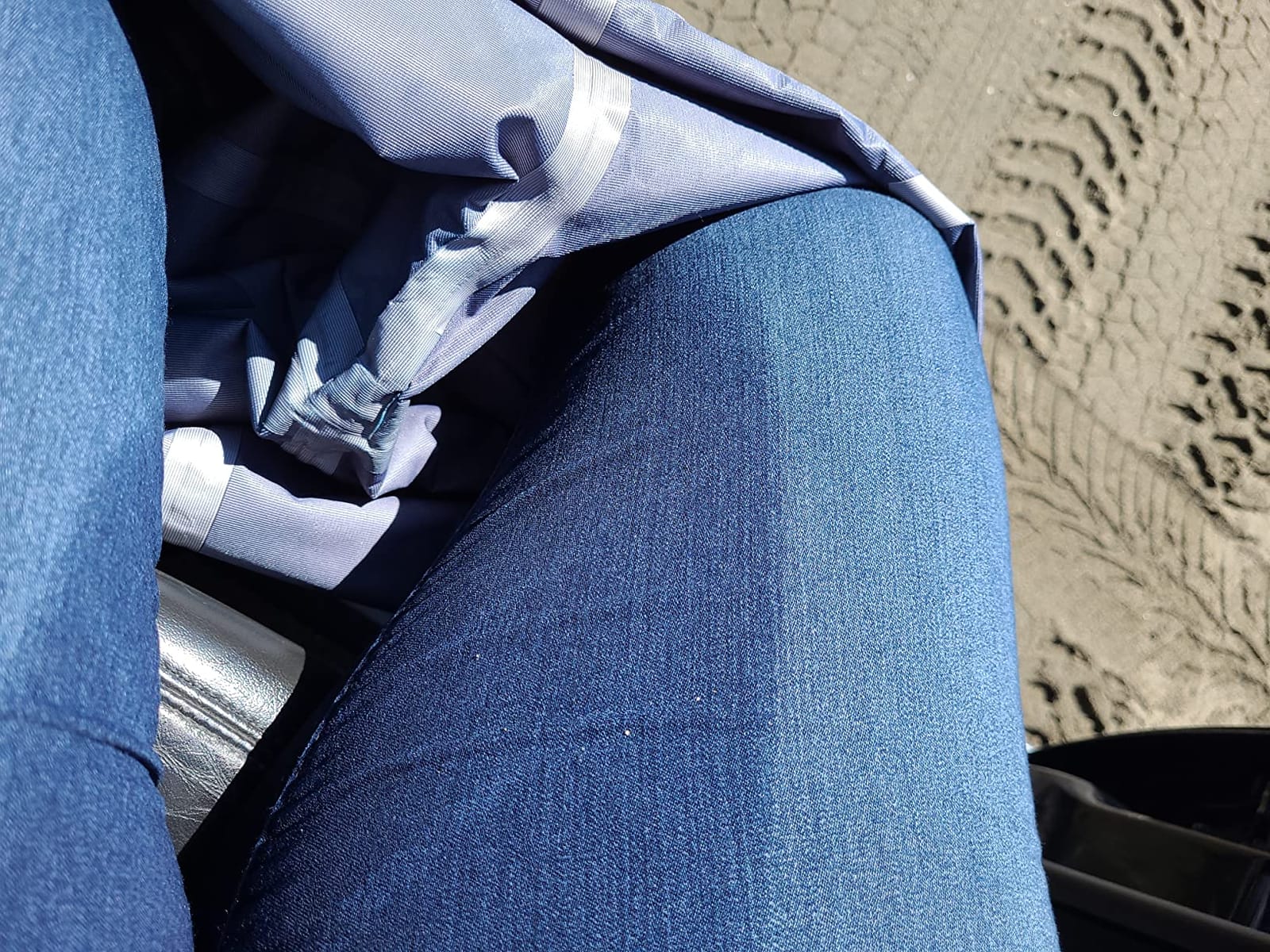
The front pocket is waterproof, which keeps a phone or a wallet dry when you are chest deep in current. It is a smaller pocket than some competitors here, but it does the job it is meant to do.
There is also a high waist design, which for cold river wading means more coverage at the midsection where cold water presses in hardest during long wades.
What a four-season wader gives up
You give up the raw insulation of neoprene. This is a breathable shell with light insulation, so in genuinely near-freezing water you would layer up underneath rather than relying on the wader itself.
It also means less certainty. With fewer reviews, long-term seam durability is not well documented, and cold-river anglers are the ones who find out how a pair holds up after three hard seasons.
Best fit for the way you fish
This suits an angler who moves between cold and warm water across a season and wants one pair that handles both. If you spend most of your season below 10°C, one of the neoprene bootfoot options is a safer bet.
Confirm the fit over a mid layer before committing. Breathable shells vary more between brands than neoprene does, so the size chart matters more here.
10. BASSDASH Ultralight Chest Stockingfoot Wader with 4.2mm Booties
BASSDASH Men’s Lightweight Breathable Chest Wader Black Camo Stockingfoot for Fly Fishing Hunting FW11
Breathable ultra lightweight shell
Anatomically engineered 4.2mm neoprene booties
YKK waterproof zippers
Fleece-lined reach-through hand warmer
Pros
- Most features per pair in this group
- 4.2mm neoprene booties are unusually thick for a breathable shell
- YKK waterproof zippers keep pockets dry
- Fleece hand warmer pocket for numb fingers
- Tank tested and shipped with a repair kit
Cons
- Stockingfoot requires separate wading boots
- Camouflage pattern is the only finish offered
- Newer brand with a shorter track record
The booties are the headline here. Four point two millimetres of neoprene on a breathable stockingfoot shell is a specification you rarely see, and it puts this pair close to full neoprene warmth at the ankle and shin while keeping the upper body breathable.
That combination makes it a genuinely cold-river option rather than a shoulder-season wader. If your biggest problem is cold feet but you want to stay dry from the waist up, this is the pair to shortlist.
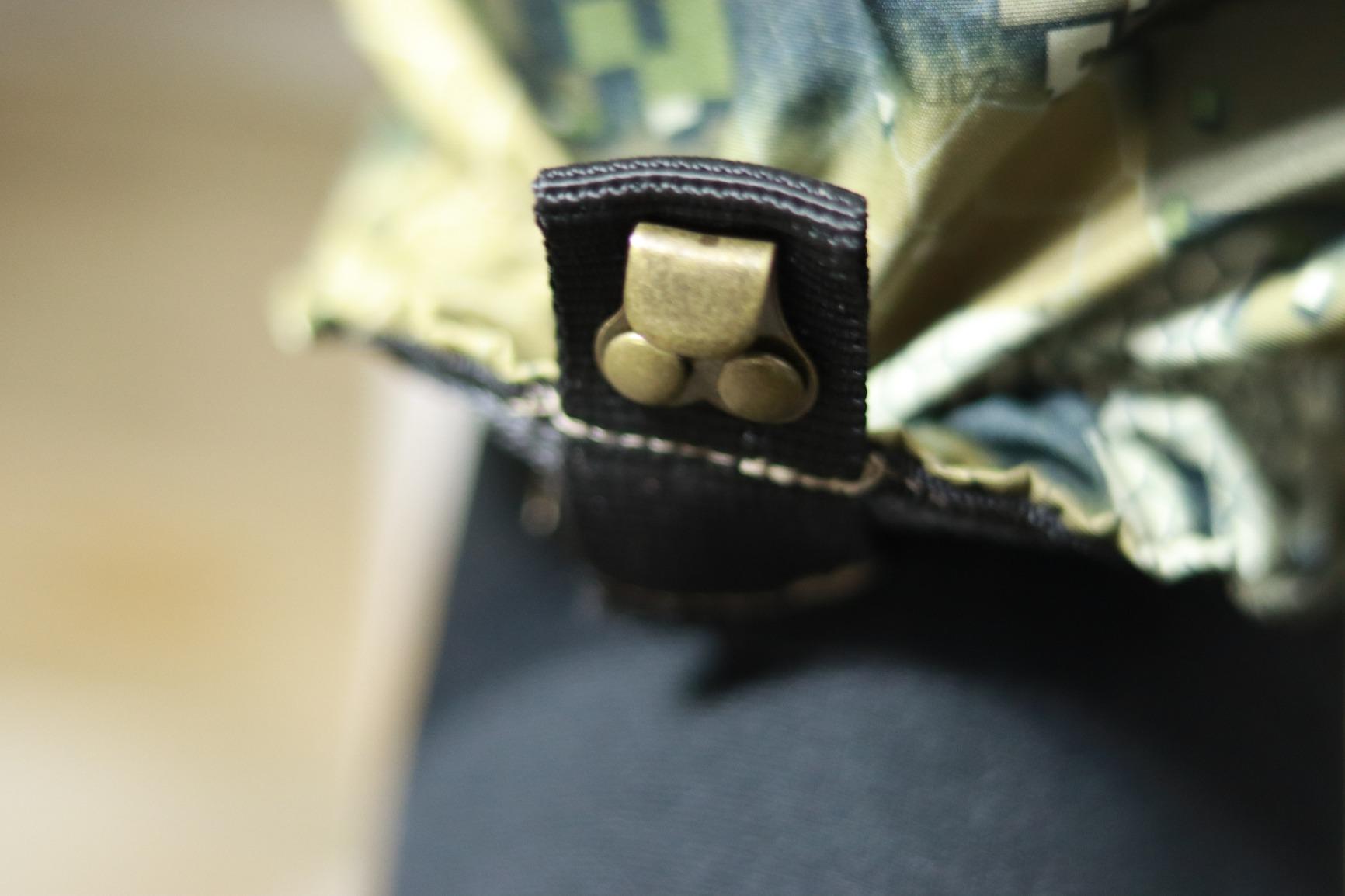
The feature load is the highest in this test. YKK waterproof zippers on the chest and hand warmer pockets, a large chest storage pocket, an interior chest zippered pocket, and D-ring gear attachments for clipping on tools.
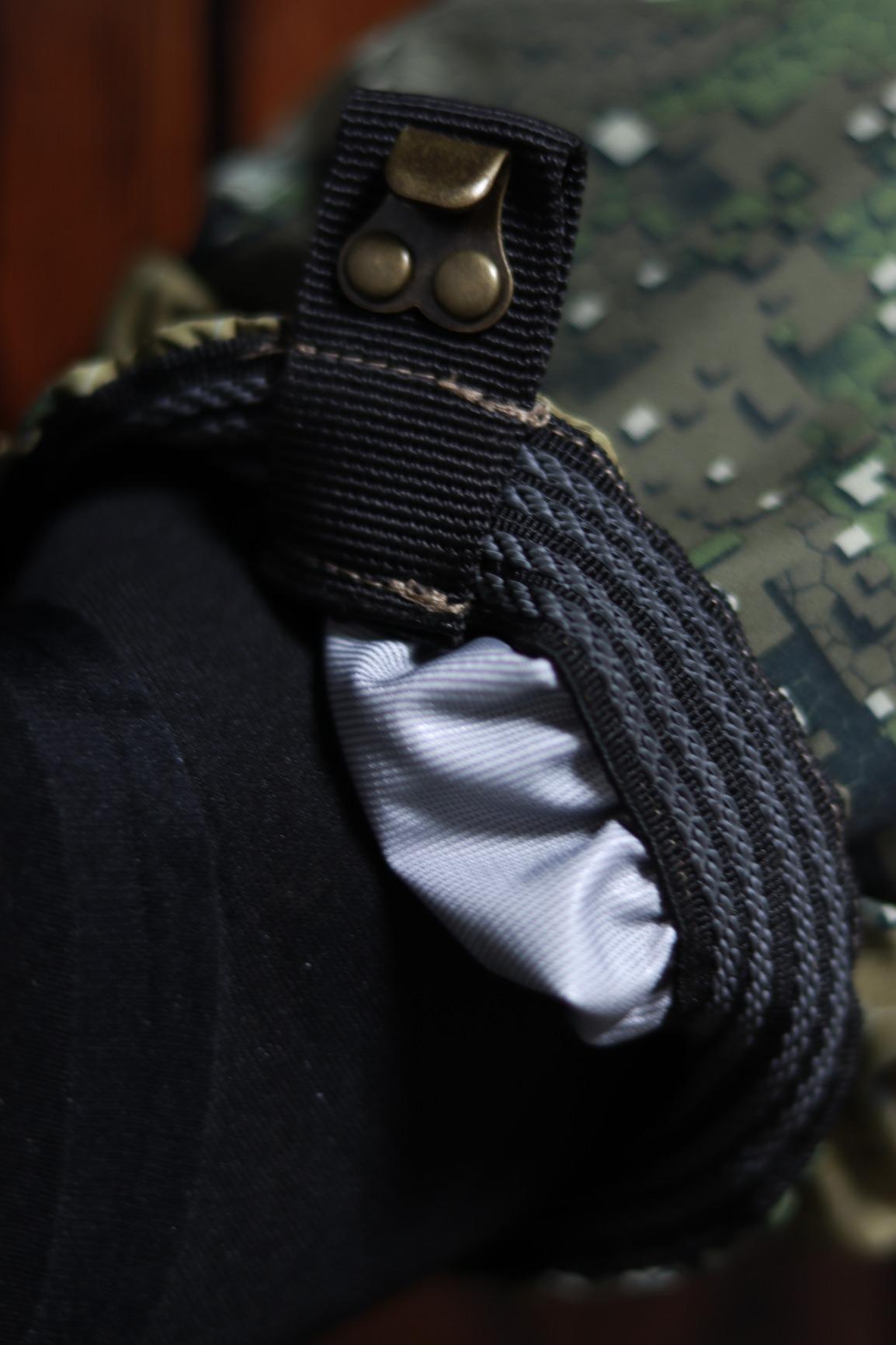
Two design choices stand out for wading. Front leg seams rather than side seams give more mobility when you are climbing over boulders, and a self-fabric gravel guard keeps grit out of the bootie without adding a separate cuff to manage.
There is also a 1.5-inch wide full-elastic belt with a quick-release buckle, and a fleece-lined reach-through hand warmer pocket. That pocket is where your hands go when they stop working, and it is a genuinely useful feature in near-freezing water.
Why thick booties on a breathable shell work
Cold feet is a foot-level problem, not a whole-body problem. A breathable shell handles the torso and thighs well, and thick booties handle the ankle and shin, which is where anglers first feel the cold.
The one thing you give up is the ability to put heavy boot insulation underneath. If you plan to wear thick winter socks, check how much volume is left inside the bootie.
Trade-offs and long-term unknowns
This is a newer brand with a shorter track record than the established names here, so the durability picture is less complete. The tank testing and included repair kit go some way toward that risk.
Only the camouflage finish is offered, which may not suit everyone. Everything else on this pair competes with products twice its price.
11. Foxelli 3-Layer Breathable Stockingfoot Wader for Layering
Foxelli Breathable Waders – Fly Fishing Stockingfoot Waders for Men and Women
3-layer nylon construction
Weighs under 3 pounds
4mm neoprene booties that prevent bunching
Double-layer reinforced knee pads
Pros
- Under 3 pounds with full 3-layer construction
- 4mm neoprene booties are shaped to stop bunching
- Glued
- stitched
- and taped seams
- Carrying bag and belt with carabiners included
- Sized for men and women
Cons
- Stockingfoot requires separate wading boots
- Some reports of leaks appearing over time
- Sizing varies between production runs
Three layers of nylon at under three pounds is a strong specification for a stockingfoot wader, and it matters on cold rivers because weight compounds. Every extra pound is carried up a bank, over a boulder, and into a current that is already working against you.
The 4mm neoprene booties are shaped specifically to stop bunching at the ankle. Bunching is the reason many stockingfoot waders leak, because the fabric folds and creates a channel that water tracks down, so this detail matters more than the millimetre count suggests.
Seams are glued, stitched, and taped together, which is the right combination for a shell this light. Double-layer reinforced knee pads take the abrasion that comes from kneeling to tie a fly on a gravel bar.
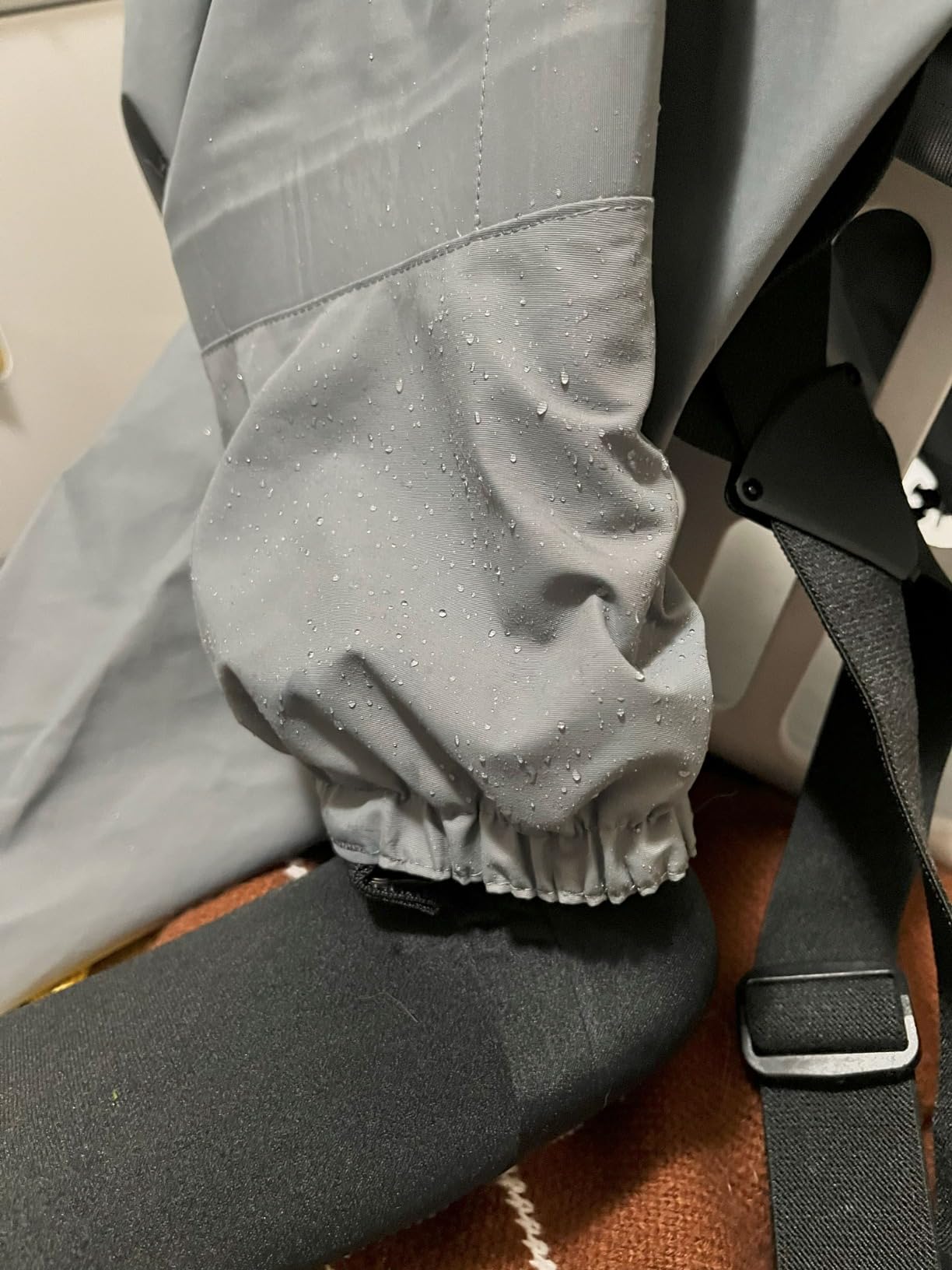
The multi-season framing from the manufacturer is fair. Reviews describe using this pair with shorts in summer and full base layers in winter, which makes it a realistic single-pair option for a year-round angler.
A carrying bag is included, and so is a nylon belt with two carabiners for attaching a landing net or a spare pair of gloves where you can reach them.
Best pair for building a winter layering system
This is the one to build a full stack around. Because the shell is light and roomy enough, you can fit a merino base layer, a fleece or insulated mid layer, and outer pants without compressing the insulation.
The light weight also makes it the easiest pair to get into quickly, which is worth considering when you are changing in a vehicle at a snow-covered tailwater.
Where the light build shows its limits
The trade-off is shell thickness. Three layers at under three pounds gives up some durability and some insulation compared to heavier four-layer builds, and you will feel that in freezing conditions rather than merely cold ones.
There are also some reports of leaks developing over time, and sizing can vary. Check the fit over your winter layers before you commit.
12. Paramount Outdoors Deep Eddy Stockingfoot Wader
Paramount Outdoors Deep Eddy Breathable Stockingfoot Fishing Wader Regular and Stout Sizes (Elk – X-Large)
4-ply 100% nylon upper
Double reinforced lower legs
Ergonomic 4mm neoprene stockingfoot booties
Regular and Stout sizes
Pros
- Regular and Stout sizing
- which solves a real cold-layering problem
- 4-ply nylon with double reinforced lower legs
- Two-inch suspenders with fly fishing attachment points
- Large zippered chest box pocket with rear pass-through
Cons
- Hand wash only
- Stockingfoot requires separate wading boots
- The most expensive wader in this comparison
This is the pair to look at if a standard stockingfoot wader never fits properly. The Regular and Stout sizing means you can get a cut that suits your build and still leaves room for a base layer and a mid layer underneath, which is the whole cold-water problem in one spec.
Double reinforced lower legs handle the abrasion that comes from pushing off a slick boulder in current, and that is exactly the wear pattern that ends most wader seasons on a cold river.
The suspenders are two inches wide with fly fishing attachment points for tippet, nipper, and hemostats. On a freezing morning, having your tools on your suspenders instead of in a pocket under your jacket saves you a lot of fumbling with numb fingers.
Why Stout sizing matters in cold water
Too-tight waders are a cold-water problem before they are a comfort problem. When the shell presses on your thighs, it compresses the insulation underneath, and compressed insulation loses most of its ability to hold warm air.
This pair lets you buy the fit that suits your body rather than the fit that suits the size chart, which is the difference between layering successfully and stripping layers off mid-wade.
Considerations before you commit
This is hand wash only, so plan your drying routine around that rather than putting it in a machine. The large chest box pocket with a rear pass-through is genuinely useful for holding a jacket when it is not being worn.
It is the most expensive wader in this comparison, and the stockingfoot design means boots are a separate purchase. Judge it on how many seasons you expect to fish.
Bootfoot vs Stockingfoot for Cold Water
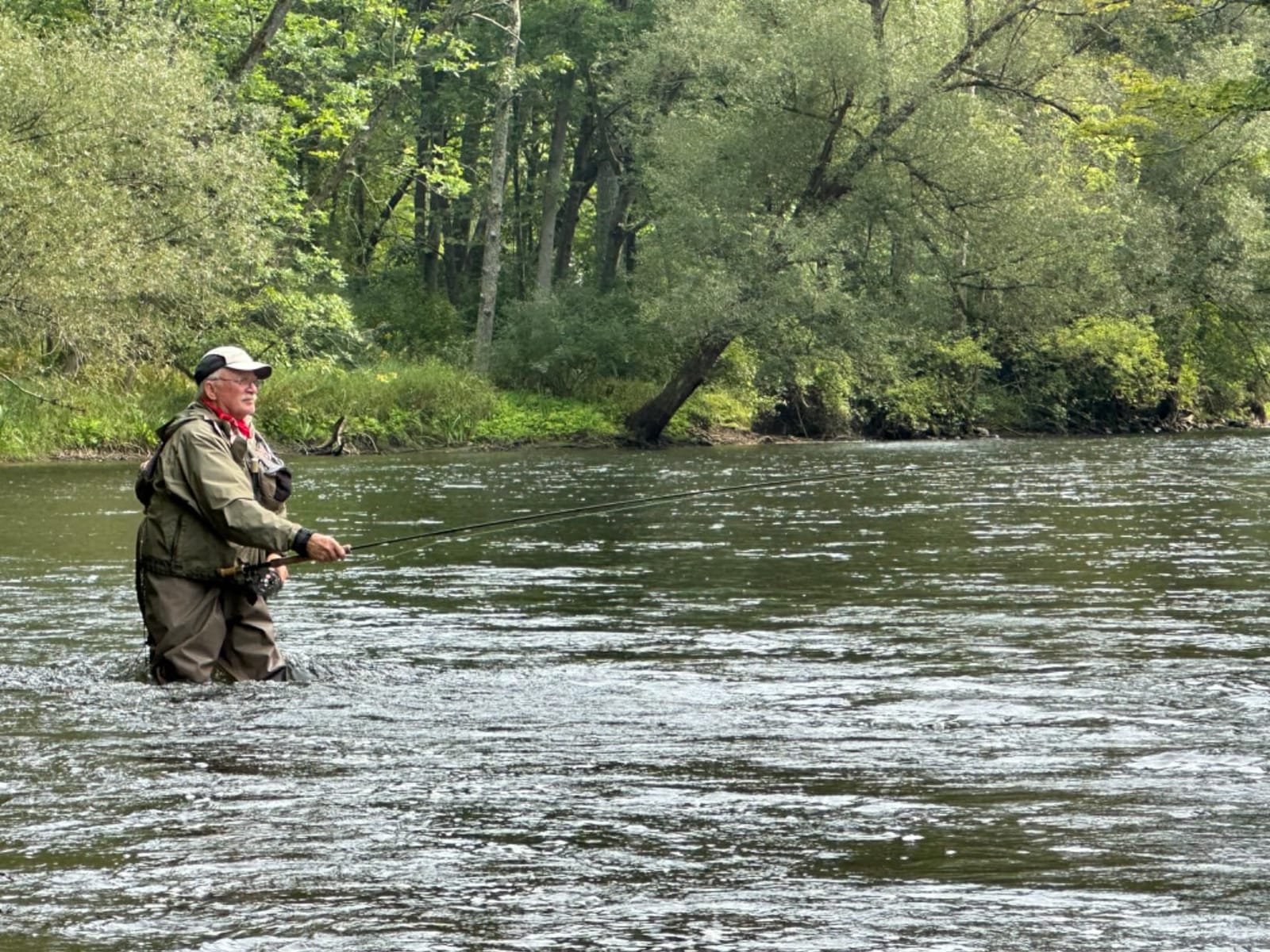
Bootfoot waders have a permanently attached boot. Stockingfoot waders stop at the ankle and leave you to supply your own wading boots. For cold rivers, this single decision changes warmth more than any other feature we tested.
A bootfoot construction traps air around your foot inside the boot, and with an insulated boot of 200 grams or more, that trapped air is the difference between cold feet and warm feet. It also means one less seam and one less place for water to find a way in.
Stockingfoot gives you ankle support and, more importantly, choice. If your feet run cold in August, you can put thin boots on in August and 400g insulated boots on in January without buying new waders. Anglers who also wade flooded timber and marsh edges in freezing conditions should read our duck hunting wader guide, where bootfoot versus stockingfoot trade-offs are covered from a warmer-climate angle.
The catch with stockingfoot is the air pocket. Boots that fit tightly compress your foot and restrict circulation, which makes your feet colder, not warmer. Anglers who size up a full size report a real difference, because the extra volume becomes insulating air rather than compressed socks.
Our budget cold-river system, if you want the lowest-cost path to warm feet, is a breathable stockingfoot wader with 4mm or thicker booties, two thick merino sock layers, and a good pair of felt or studded wading boots sized up half a size. That combination performs close to a bootfoot in most rivers that stay above freezing.
Breathable vs Neoprene Waders in Ice-Cold Water
Neoprene wins on raw insulation. Breathable shells win on staying dry. In near-freezing rivers, that trade-off is the most consequential decision you will make.
Neoprene works by holding a thin layer of water against your skin and letting your body heat warm it. That is why a 4mm neoprene wader keeps your legs warm with no base layer at all. The same mechanism traps sweat, and by the afternoon of a long day you can be damp inside the wader without a single drop having leaked in.
Damp insulation is cold insulation. This is the argument that experienced cold-water guides make most often, and it is why many of them fish breathable shells with serious base layers rather than neoprene with none.
The practical split that fits our testing: use neoprene below about 7°C, where dry clothing matters less than raw heat retention. Use a breathable shell from about 7°C to 12°C, where you will be moving and sweating as well as being cold. Above 12°C, breathable is the only comfortable option.
On neoprene thickness, 3.5mm is enough for cold rivers that stay above freezing when paired with warm pants. Four millimetres is the safe default for near-freezing water, and 4.5mm is for standing still in genuinely freezing conditions.
What to Wear Under Waders in Winter
Base layer in merino wool, mid layer in fleece or lightweight insulation, then your wader. That is the short answer, and almost every cold-water angler we spoke to described the same stack.
For the base layer, merino beats cotton and synthetics because it stays warm when slightly damp and it does not hold odour across a long day. Avoid cotton entirely in cold water. Once cotton is wet it stays wet, and wet against skin in a cold river is the fastest route to losing heat.
For socks, most winter anglers settle on two thick merino pairs rather than one very thick pair. Two thinner layers trap air between them and stay warmer than one bulky sock that compresses inside a bootie.
A mid layer is the piece people skip and then regret. Fleece or a lightweight insulated pant adds real warmth and gives you something to remove without stripping down to skin when you step out to cast from the bank.
Heated insoles work in stockingfoot waders because the boot is yours to choose, and they are the single most effective addition to a cold kit. Heated socks wear out faster and their batteries sit near wet feet, so we would start with insoles.
Fit your layers before you buy the wader. Put on the base and mid layer, then check that the wader does not pull at the seams across your shoulders and thighs. If it does, size up rather than removing a layer.
Tuck your layers in properly. Anglers on the fly fishing forums stress this constantly, and they are right. A tucked base layer keeps cold water from tracking up under the shell and settling against your waist.
Cold Water Safety, Traction and Felt Sole Rules
Felt soles are illegal in Alaska and restricted in several other jurisdictions. Check the rules for every water you plan to fish before you pack felt-soled boots, and assume studded or rubber alternatives are the safer default for cold rivers.
The felt problem in cold weather is physical as well as legal. Wet snow builds up between felt and rock, packs into a several-inch thick mat, and turns your sole into a ski. Anglers report exactly this as a common cause of ankle twists in winter conditions.
Rubber and lug soles handle snow and slush far better, and cleated soles bite into slick rock. If you do fish felt, keep a second pair with stud or rubber soles in your vehicle so you can switch at the trailhead.
Always fish with a belt and a partner in cold water. A belt keeps you buoyant if you go under, and a partner is the only thing standing between a slip on a submerged boulder and a long cold swim.
Know the warning signs. Shivering that will not stop, clumsiness in your hands, slurred speech, and confusion all mean you are out of the water immediately. Hypothermia in cold rivers develops faster than most anglers expect because water conducts heat away from the body many times faster than air at the same temperature.
Move constantly where you can. Fishing when the river is higher and you are walking rather than standing generates heat of your own and keeps your core temperature up.
Drying and Storing Waders Over Winter
Hang your waders to dry at room temperature, away from direct heat and sunlight, after every trip. Rinsing with fresh water before you hang them removes silt and salt that work into the seams and harden there.
Never put neoprene or a breathable shell on a radiator or a camp stove. Direct heat damages the membrane and cracks neoprene, and one careless drying session can shorten the life of a pair by years.
Once fully dry, reproofing a breathable shell restores water repellency and helps it breathe as designed. Worn DWR coating is one of the main reasons an older pair feels clammy even when it has not leaked.
Store them hanging rather than folded, in a dry place, and check the seams and bootie stitching in the spring before the season starts. Catching a failed seam early means a patchable repair rather than a ruined season.
Frequently Asked Questions
What are the best fishing waders to buy?
For cold rivers, the best fishing waders pair 4mm neoprene booties or a neoprene bootfoot construction with a taped-seam shell and enough room for a merino base layer plus a mid layer. Our top pick is the Foxelli 4mm Neoprene Chest Wader for maximum insulation, the Frogg Toggs Hellbender for breathable dryness, and the Frogg Toggs Amphib as the lower-cost neoprene option.
What to wear under fishing waders in winter?
Wear a merino wool base layer, a fleece or lightweight insulated mid layer, then the wader. Avoid cotton entirely because it stays wet and cold. Most winter anglers use two thick merino sock pairs rather than one bulky sock, and heated insoles add the most warmth in stockingfoot waders.
Do waders keep you warm?
No. Waders keep you dry, not warm. They stop river water reaching your skin but generate no heat of their own. Warmth comes from neoprene thickness, boot insulation grams, and a dry layer stack underneath, so the wader’s real job is keeping that stack dry for a full day.
What are the best chest waders in the UK?
For UK cold rivers, the Frogg Toggs Hellbender and the Frogg Toggs Canyon II are the most widely available chest waders here, both stockingfoot designs with 4mm neoprene booties and fully taped seams. The Canyon II includes an adjustable wading belt, which many buyers prefer for long days on freestone rivers.
Are breathable or neoprene waders better for cold water?
Neoprene is warmer because it holds a thin layer of water against your skin and lets your body heat warm it, but it also traps sweat, leaving you damp by the afternoon. Breathable shells move vapour outward and keep you dry but rely entirely on your base layer. Below about 7C use neoprene; from 7C to 12C use breathable.
Do bootfoot waders keep your feet warmer?
Usually yes, because the attached boot traps a layer of insulating air around your foot and removes one more seam for water to find. Stockingfoot waders get warmer if you size your boots up to create that air pocket, and thick booties add insulation at the ankle. Sizing up matters more than adding socks.
The Best Fishing Waders for Cold Rivers This Season
The Foxelli 4mm Neoprene Chest Wader takes the top spot for cold rivers because four millimetres of neoprene with sealed seams and reinforced knees is the most reliable warmth we found, and it is backed by the largest review base in this test.
For anyone who prefers to stay dry from the waist up, the Frogg Toggs Hellbender is the better long-day pick, and the HISEA 4.5mm Waders win outright for anyone fishing below freezing who wants the highest boot insulation available here.
Check your water temperature first, pick your neoprene thickness to match, and then size for a full merino layer underneath. Getting those three decisions right matters far more than the name on the label. For other cold-weather kit worth a look, our cold plunge tub guide covers the recovery side of a cold day on the water.