
If you only buy one Breville, buy the Barista Express. It is the machine I keep coming back to after testing this whole lineup, because it puts every variable in front of you: a real grind dial, a pressure gauge, a PID that holds temperature, and a steam wand you control by hand. Nothing is hidden, so nothing gets blamed when a shot comes out wrong.
That said, the best Breville espresso machines are not ranked by price alone. The Cafe Roma makes credible espresso for the least money. The Bambino is the smallest machine that still gives you a 54mm portafilter. The Barista Pro trades the analog dial for 30 grind settings and a three-second heat-up. Up top, the Barista Touch Impress walks you through every step on a screen. We reviewed ten machines against the same set of axes so you can pick on function rather than badge.
Two notes before we start. First, five of the ten machines here have no grinder built in, so a burr grinder is a separate purchase. We flag it in every relevant card because it is the most common budget surprise in this category. Second, UK and EU readers: the same product line sells under the Sage name with different model codes, so search Sage when you find nothing under Breville locally. We also link our broader guides to the best espresso machines overall and the best espresso grinders further down.
We spend several weeks per machine: dialing in, pulling shots, texturing milk, and reading long-term owner reports to see what breaks after the honeymoon period. We earn a commission on qualifying purchases, which does not change what we say about any machine on this page.
Table of Contents
Top 3 Best Breville Espresso Machines (October 2026)

Breville Barista Express
- Integrated conical burr grinder
- PID temperature control
- 54mm portafilter
- manual steam wand
Breville Barista Pro
- 30 grind settings
- ThermoJet 3-second heat-up
- PID within 2 degrees C
- manual steam wand
Breville Cafe Roma
- 15-bar thermo block pump
- dual-wall baskets
- cup warming plate
- accepts pods
The Barista Express wins overall on the combination that matters most: the highest review volume in the lineup at 27882 reviews, a 4.4 rating, and a workflow that teaches you something. The Barista Pro takes the same core machine and adds grinder range and heat-up speed. The Cafe Roma is the cheapest way to find out whether you like espresso at all.
All 10 Machines Compared in 2026
| Product | Specifications | Action |
|---|---|---|
| Breville Barista Express |
|
Check Latest Price |
| Breville Cafe Roma |
|
Check Latest Price |
 Breville Barista Touch Breville Barista Touch |
|
Check Latest Price |
| Breville Barista Pro |
|
Check Latest Price |
 Breville Infuser Breville Infuser |
|
Check Latest Price |
 Breville Bambino Breville Bambino |
|
Check Latest Price |
 Ninja Luxe Cafe Premier Ninja Luxe Cafe Premier |
|
Check Latest Price |
 Breville Bambino Plus Breville Bambino Plus |
|
Check Latest Price |
 Breville Barista Express Impress Breville Barista Express Impress |
|
Check Latest Price |
 Breville Barista Touch Impress Breville Barista Touch Impress |
|
Check Latest Price |
Which Breville Is Right for You?
Start by deciding how much of the work you want the machine to do. That single question collapses the lineup into four groups, and it is the question buyers most often ask in the wrong order.
You want to learn the whole craft. Buy the Barista Express. Every stage is manual and visible, which means you learn dose, distribution, tamp pressure and extraction time instead of hiding from them. If you specifically want a pressure gauge to watch, the Infuser gives you one, at the cost of a separate grinder and a slow warm-up.
You want hands-off milk drinks and nothing to think about. Buy the Barista Touch. The automatic steam wand handles temperature and texture for you, and the touchscreen stores your drinks. The Barista Touch Impress adds the Impress puck system on top if you also want help with tamping and dose correction.
You drink black coffee and want speed. Buy the Barista Pro. Thirty grind settings and a three-second heat-up mean you can move from bean to shot without waiting, and the 1600-watt element steams quickly when you do want a drink with milk.
You are unsure whether espresso is for you, or your counter is tiny. Start with the Bambino or the Cafe Roma. Both are compact, both are cheap relative to the rest, and both teach you the same fundamentals the bigger machines are built on. Just budget for a burr grinder, and read our grinder guide first.
If your real requirement is that the machine do everything with no technique at all, Breville is the wrong brand. A super-automatic will serve you better, and we cover the best of those in our super-automatic roundup.
1. Breville Barista Express (BES870XL) – Best Overall
Breville BES870XL Barista Express Espresso Machine, Brushed Stainless Steel
1600 watts
PID temperature regulation
22.1 pounds
54mm portafilter
67 oz water tank
Pros
- Built-in burr grinder makes bean-to-cup work easy
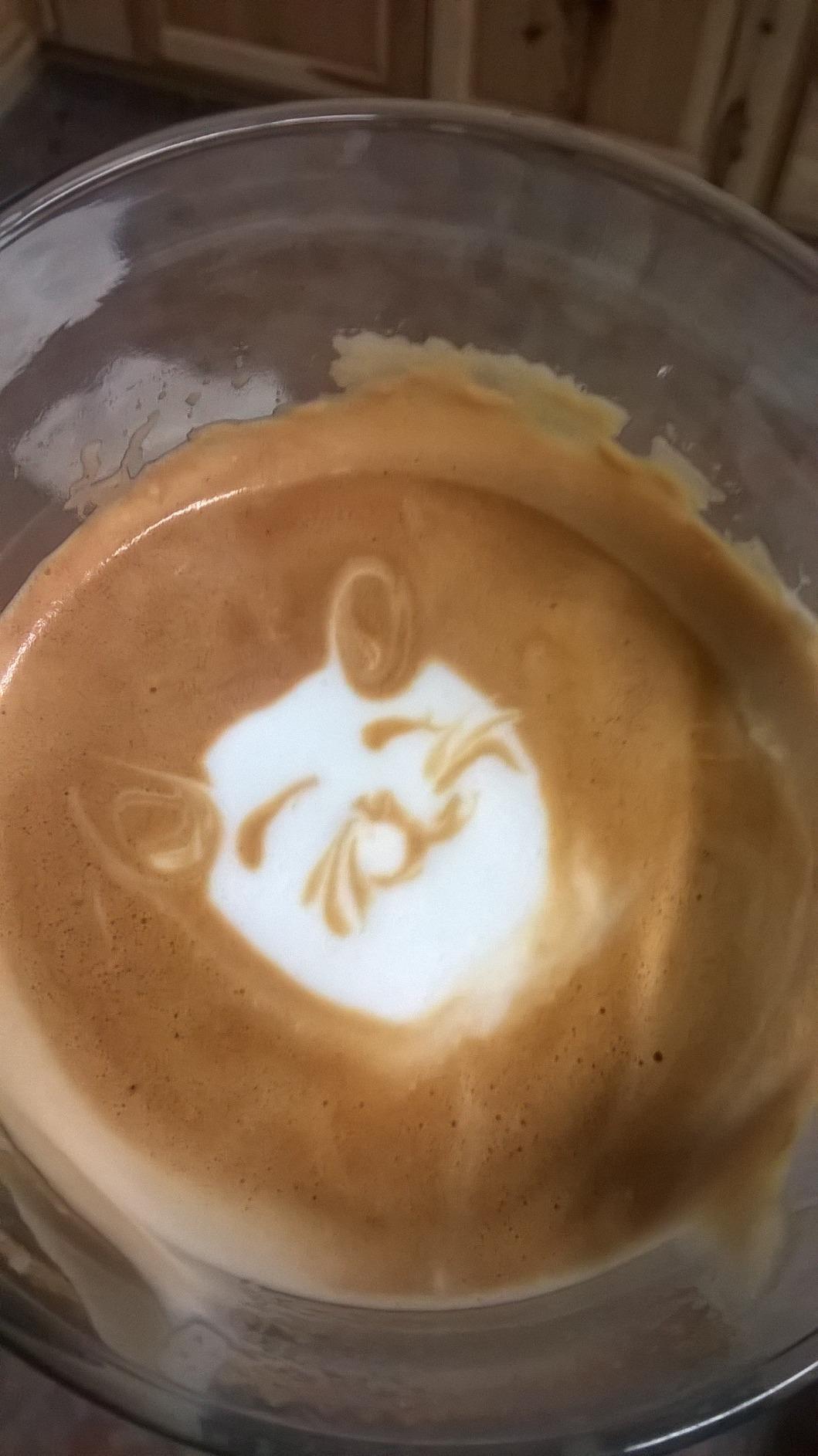
- Manual steam wand produces good microfoam for latte art
- Fast heat-up with consistent shot quality
- Clear cleaning prompts ease maintenance
Cons
- Small water tank needs frequent refilling
- Plastic panels on the top and lower body
- Coarsest grind setting is too coarse for a double shot
- Grinder can be fussy with certain beans
I have gone back to the BES870XL more than any other machine in this roundup, and it keeps earning the slot. The integrated conical burr grinder sits right above the portafilter, so you dose, distribute and tamp without moving across the counter. It is the least glamorous part of the design and the part that makes the whole thing work.
The PID controller is the quiet hero. Temperature does not wander shot to shot, which means when you change one variable you can actually attribute the change to that variable. That is a bigger deal for a beginner than it sounds, because inconsistent temperature is what makes people conclude they simply cannot make espresso.
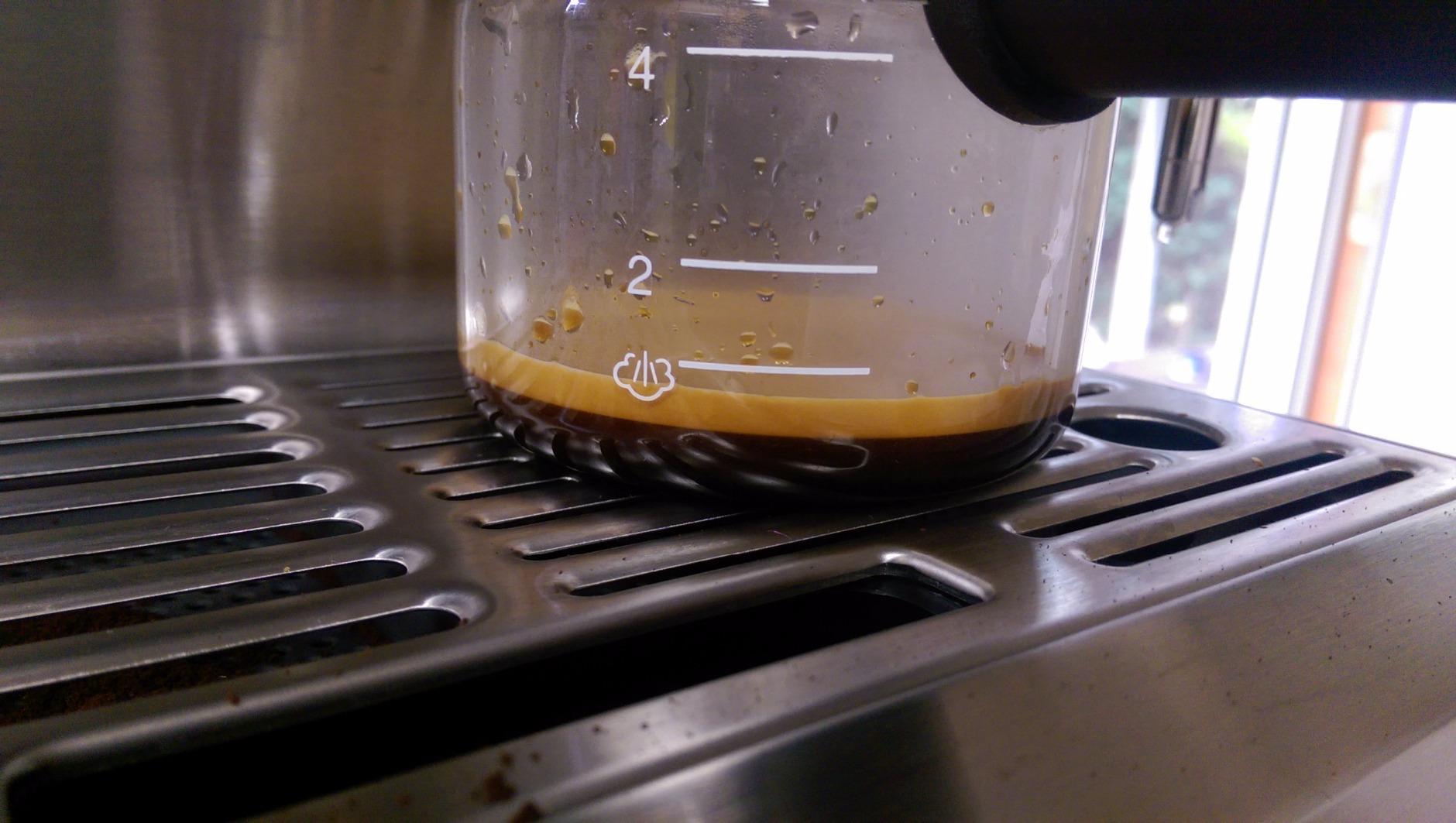
The 54mm portafilter is smaller than the 58mm commercial standard, which matters if you ever move to a prosumer machine later, but it is a proven basket size and preinfusion works properly here. Low pressure pre-infusion wets the puck evenly before full pressure hits, and the grounds settle instead of channelling.
Two real weaknesses. The water tank is small enough that you refill it more often than feels elegant on a morning with multiple drinks, and several owners note plastic panels on the top and lower body that scratch. Neither affects the cup.
Who the Barista Express suits
It suits anyone who wants to control extraction directly, and it suits beginners better than its price suggests. Long-term owners report many years of service with nothing more than routine descaling and group gasket changes, which tells you the machine ages well when maintained.
It also suits people making several drinks in a row, because you can pull a shot and steam milk back to back without a long wait. If you drink mostly milk drinks, read on: the manual wand here is excellent but it is work, and the Barista Touch will save you that work.
Where the Barista Express falls short
It will not correct a sloppy dose for you. Grind, tamp and distribution are all on you, so a first-week shot often tastes sharp until you learn to feel the grind. That is a feature for someone who wants the skill and a wall for someone who does not.
The coarsest grinder setting is genuinely too coarse for a double shot, so if your beans are oily or your dose is on the larger side you can run out of adjustment range. And there is no temperature control for the milk beyond your own technique.
2. Breville Cafe Roma (ESP8XL) – Budget Pick
Breville ESP8XL Cafe Roma Stainless Espresso Maker, 9x9x12, Silver
15-bar thermo block pump
13 pounds
9 inch footprint
15 bar output
40.6 oz tank
Pros
- Compact footprint at an entry-level price
- Produces thick rich crema
- Fast heat-up with simple button operation
- Easy to disassemble and clean
- Many owners report 4 to 8+ years of service
Cons
- No integrated grinder so a burr grinder is a separate purchase
- Weak steam wand that heats milk slowly
- Small plastic milk jug
- Manual flow control with no auto shut-off and wet spent pucks
The Cafe Roma is the odd one out in this lineup and that is why I like it. It is not a modern prosumer machine. It is a straightforward 15-bar thermo block machine with a froth enhancer, a cup warming plate, and dual-wall baskets that forgive an imperfect grind. It also accepts pods, which no other Breville in this list does.
At 13 pounds and a 9 by 9 by 12 inch footprint, it disappears on a counter in a way nothing else here does. Many owners report four to eight years or more of reliable service, so the low price does not correlate with a short life.
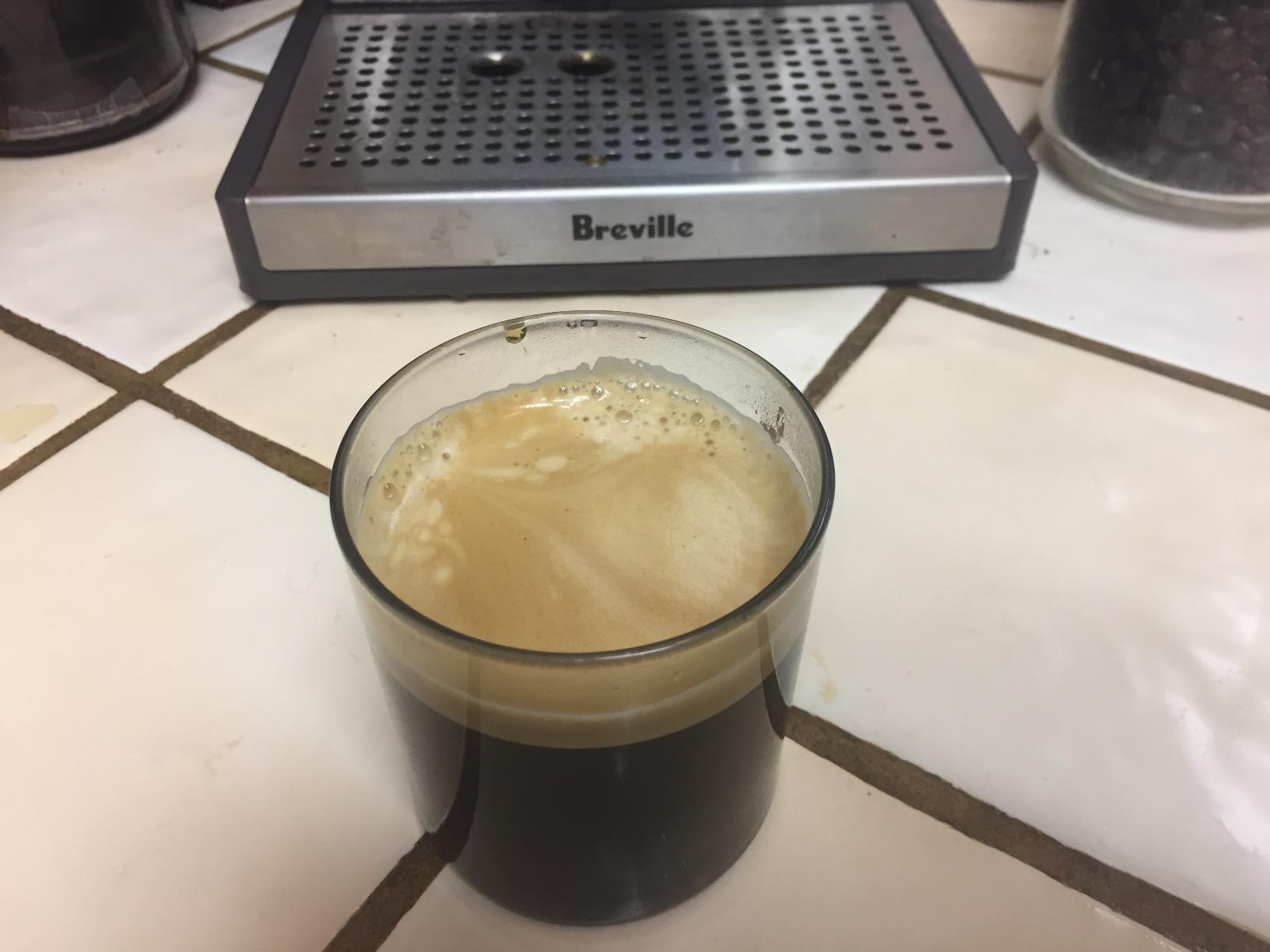
What you give up is everything modern. There is no PID, no pressure gauge, and no integrated grinder. The 15-bar figure is a pump rating rather than a meaningful brewing pressure, and the dual-wall baskets do the heavy lifting on extraction, which is why the crema looks good with a supermarket bag of beans.
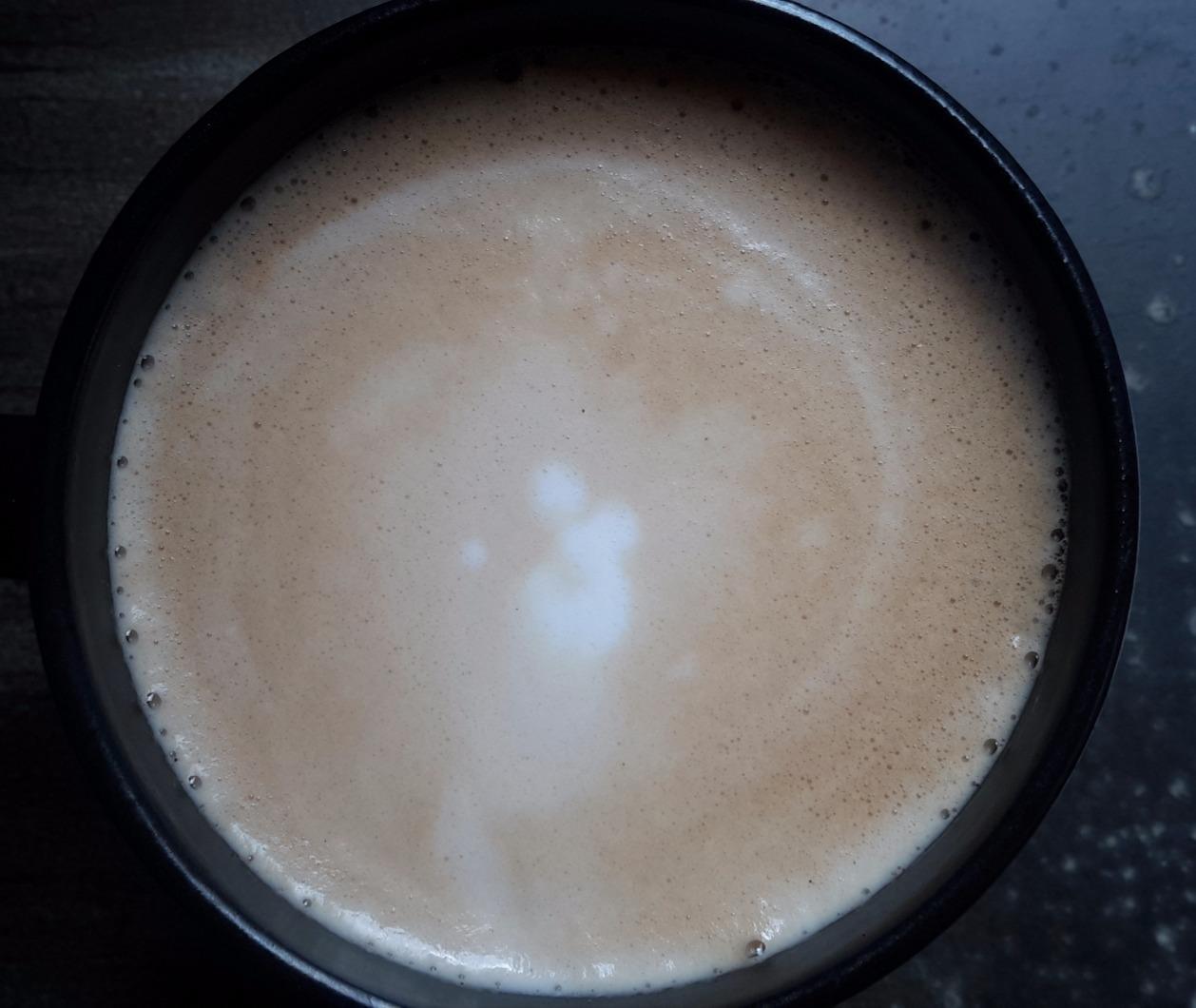
The manual flow control is the detail people notice first. There is no volumetric button, so you stop the shot yourself and the portafilter keeps dripping afterward. The froth enhancer heats milk but will not give you real microfoam.
Who the Cafe Roma suits
It suits anyone testing whether they want espresso in their life, and anyone who wants a second machine for a spare room or a holiday rental. Pod compatibility makes it useful for guests who will never learn a grinder.
It also suits buyers who already own a good burr grinder. In that case the missing grinder is not a cost, and the Roma becomes the cheapest way to get a Breville-bodied machine onto your counter.
Where the Cafe Roma falls short
If espresso quality is the goal, a single-wall basket and a froth enhancer will not get you there. The whole machine is built around forgiving the user, so the ceiling on the cup is low even when everything goes right.
The wet spent puck is a daily annoyance, and the weak steam wand means a flat white takes real patience. Learn more about how these machines compare in our general espresso machine roundup.
3. Breville Barista Touch (BES880BSS) – Best for Milk Drinks
Breville BES880BSS Barista Touch Espresso Machine, Brushed Stainless Steel
ThermoJet 3-second heat-up
1680 watts
21.8 pounds
Touchscreen
67 oz tank
Pros
- Touchscreen simplifies drink selection and customization
- Very fast three second heat-up
- Automatic milk texturing removes guesswork
- Integrated grinder and hot water function in one body
Cons
- Costs more than the non-touch Barista models
- Programming strength and extraction settings takes real effort to learn
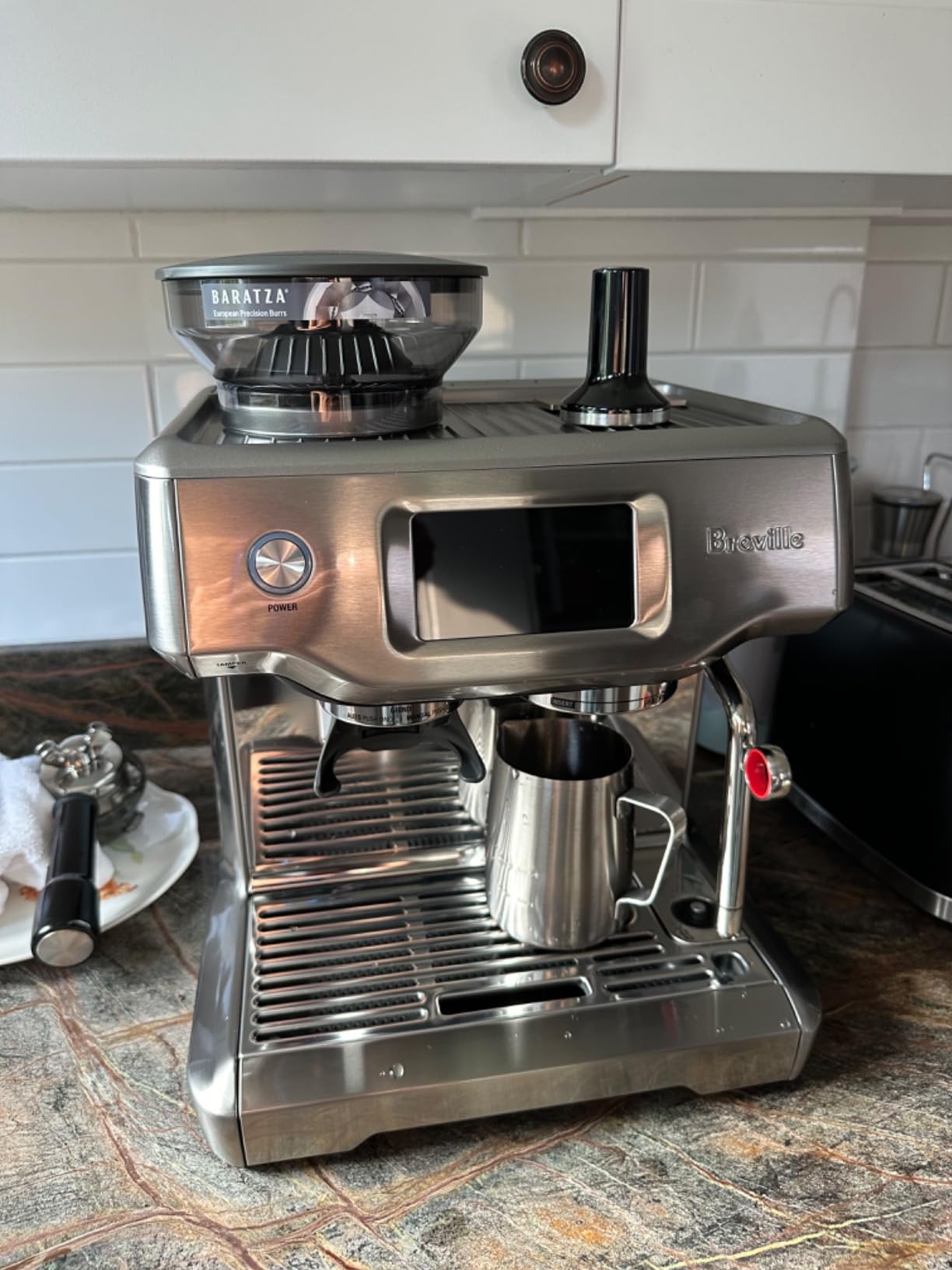
The Barista Touch is the machine I recommend to people whose order is a cappuccino, not an espresso. The automatic steam wand handles milk temperature and texture for you, and the touchscreen stores five café favorites plus eight custom drinks. You tap an icon and the machine does the same thing it did yesterday.
Underneath it is a familiar machine. The integrated conical burr grinder, low pressure pre-infusion and PID regulation are all in the same family as the Barista Express, so the espresso quality lands close to the manual machines once you dial in.
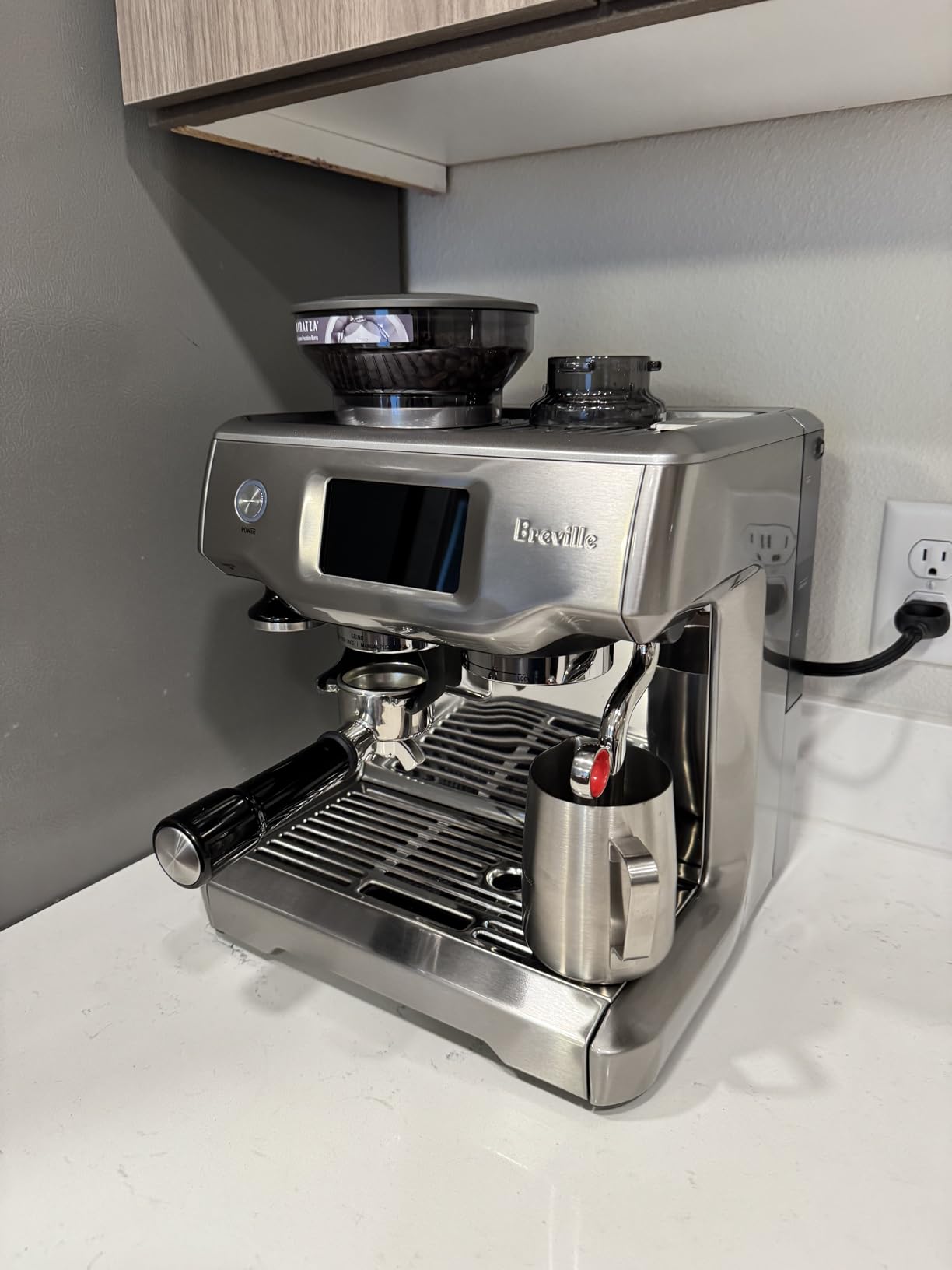
ThermoJet heat-up in three seconds is the feature that changes the morning routine. There is no warm-up wait, which means a second drink is as fast as the first. That matters more than any spec sheet suggests if you are the only person making coffee for the household.
The honest criticism is the learning curve for the programmable settings. Owners describe the touchscreen as simplifying the routine while also giving them more dials to understand. Expect an afternoon of experimentation before you lock in your recipes.
Who the Barista Touch suits
It suits households where milk drinks outnumber straight espresso, and anyone who has abandoned manual texturing after too many failed attempts. If your partner will not touch a steam wand, this solves that permanently.
It also suits anyone who wants an all-in-one body. Grinder, machine and hot water spout are in one chassis, so there is one appliance on the counter instead of three, and one set of cleaning jobs.
Where the Barista Touch falls short
It is a step up in cost over the manual Barista models for a workflow improvement, not a cup-quality improvement. If you enjoy the craft, that trade may not interest you, and the Barista Express gives you better control for less.
Because you are handing over technique, you also lose the feedback loop. A manual wand tells you instantly when your milk is overheating; an automatic one just stops at a preset. If you ever want to build that skill, you will have to learn it elsewhere.
4. Breville Barista Pro (BES878BSS) – Best Value
Breville BES878BSS Barista Pro Espresso Machine, Brushed Stainless Steel
ThermoJet 3-second heat-up
1680 watts
19.5 pounds
30 grind settings
2 liter capacity
Pros
- Powerful steam wand textures milk quickly
- Three second heat-up supports back to back shots
- Consistent shots once dialed in
- Integrated burr grinder grinds straight into the portafilter
Cons
- Automatic mode extracts worse than manual mode
- Grinder durability is limited at around a year of regular use
- 54mm portafilter is smaller than the 58mm commercial standard
- Real learning curve before shots come out consistently
The Barista Pro takes the Barista Express formula and adds the two things people ask for most: a finer grinder with 30 settings, and ThermoJet three-second heat-up. Together they make it the most capable machine per unit of spend in this entire lineup.
Thirty grind settings sounds modest next to dedicated grinders, but it is real resolution in espresso terms. Combined with PID holding temperature within plus or minus 2 degrees C, it hits a repeatable shot faster than the Express once you learn the dial.
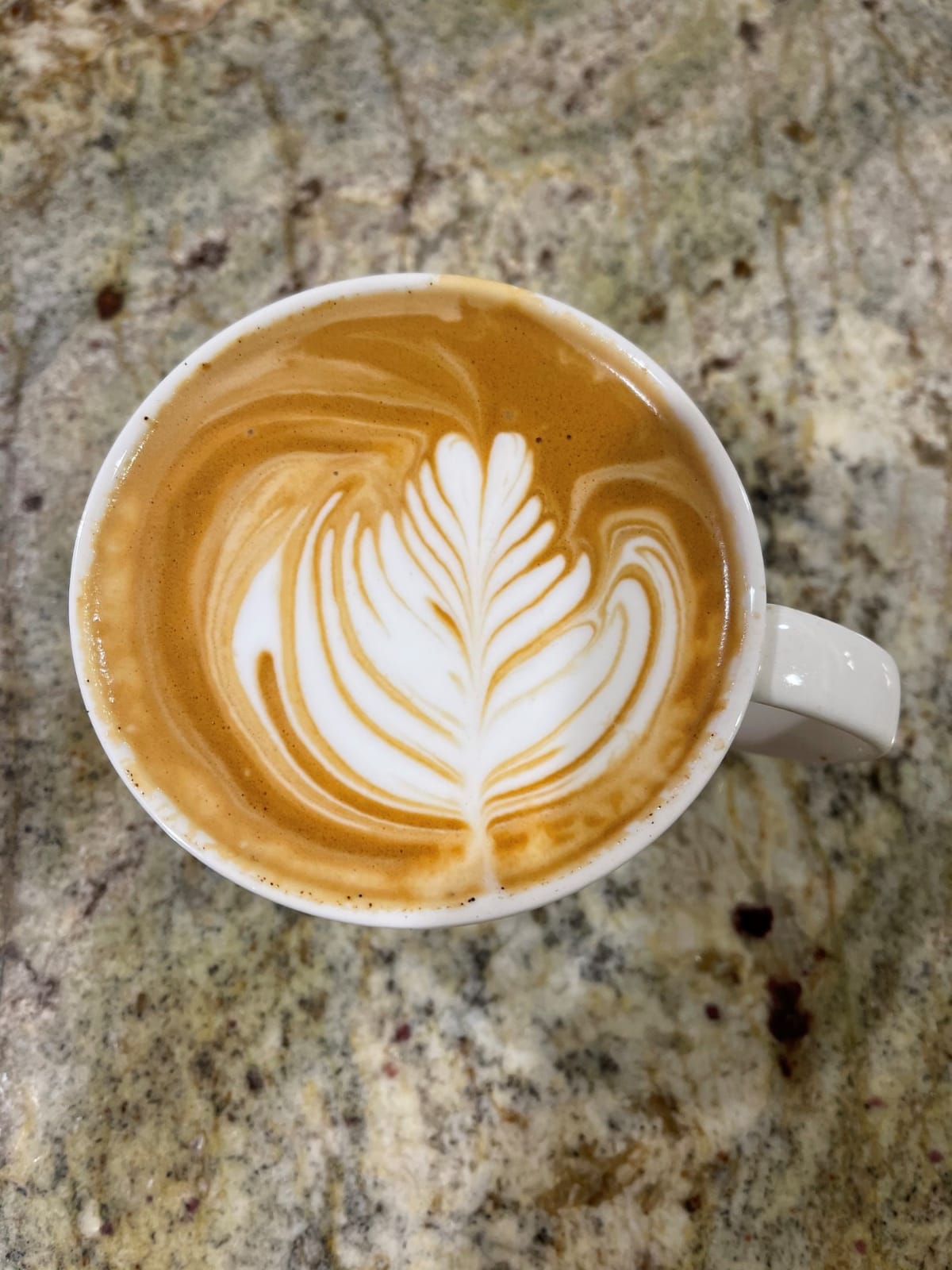
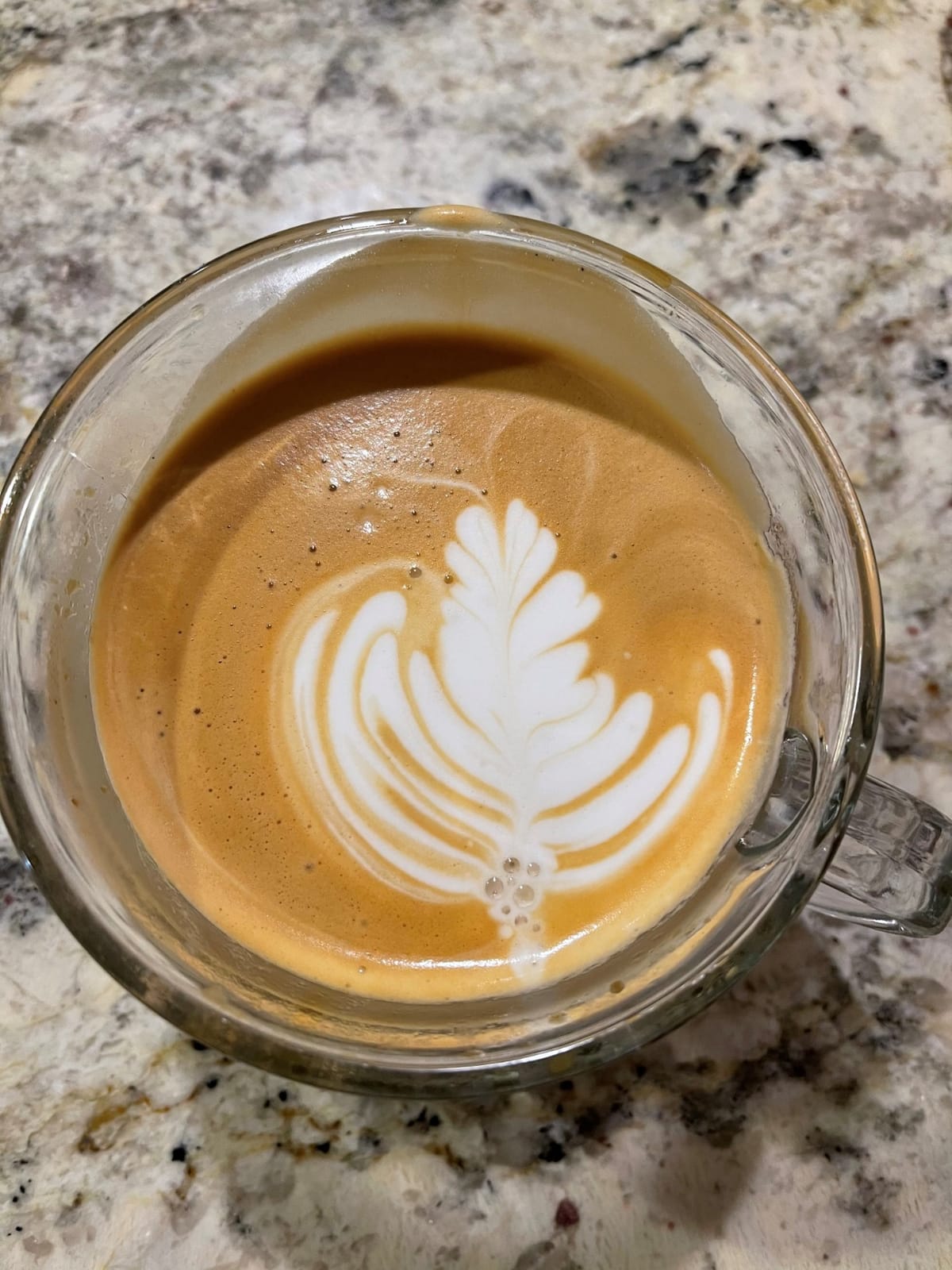
The steam wand is genuinely strong. It textures milk quickly and gives you enough authority to push microfoam for latte art, which is more than the entry machines can do. The LCD display with grinding and extraction animations is helpful the first week and ignorable after that.
Two things temper the recommendation. Owners report limited grinder durability at roughly a year of regular use, which is a real consideration for a machine meant to last. And the automatic mode extracts worse than manual, so leave the presets alone if the cup matters.
Who the Barista Pro suits
It suits someone moving up from a pod machine who wants a manual workflow and better coffee, but does not want to spend four figures. The grinder and machine are one object, so the transition is simple.
It also suits a second-machine household where the primary brewer handles filter coffee and this one handles espresso and lattes. The hot water function covers tea and Americanos on the same body.
Where the Barista Pro falls short
The grinder lifespan is the weak point. If you grind daily for beans in the dark roast range, expect to service or replace burrs sooner than the rest of the machine needs it, and factor that into ownership plans.
Its 54mm portafilter is smaller than the 58mm commercial standard. That is fine within Breville, but it limits basket availability if you later want to experiment with non-standard baskets.
5. Breville Infuser (BES840XL) – Best for Learning with a Gauge
Breville BES840XL Infuser Espresso Machine, Brushed Stainless Steel
1650W steam element
17.4 pounds
PID in 2 degree F steps
Pressure gauge
61 oz tank
Pros
- Pressure gauge helps beginners dial in extraction
- Strong 1650W steam wand for microfoam
- Volumetric and manual shot control
- Auto purge returns the machine to brew temperature
Cons
- No integrated grinder so a separate grinder is required
- Older design without a rapid heat system
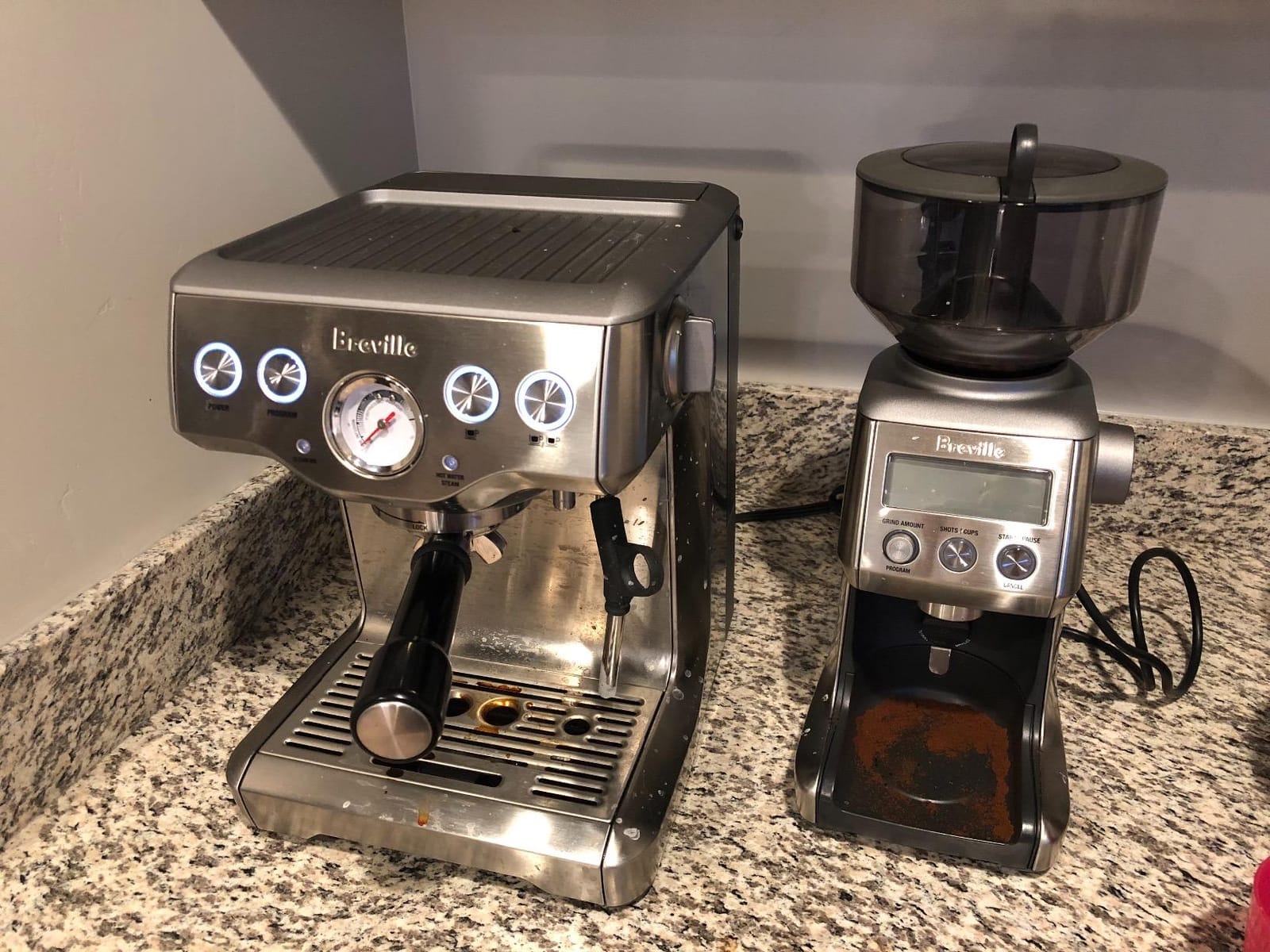
The Infuser is the machine for people who want to see what is happening inside the shot. The pressure gauge gives real-time feedback that no screen can replicate, and long-term owners consistently credit it with teaching them to read extraction before tasting it.
PID temperature control adjustable in 2 degree F increments gives you genuine manual control over the profile, which is more than most machines at twice the size. Volumetric shot control handles one cup, two cups or a manual pour.
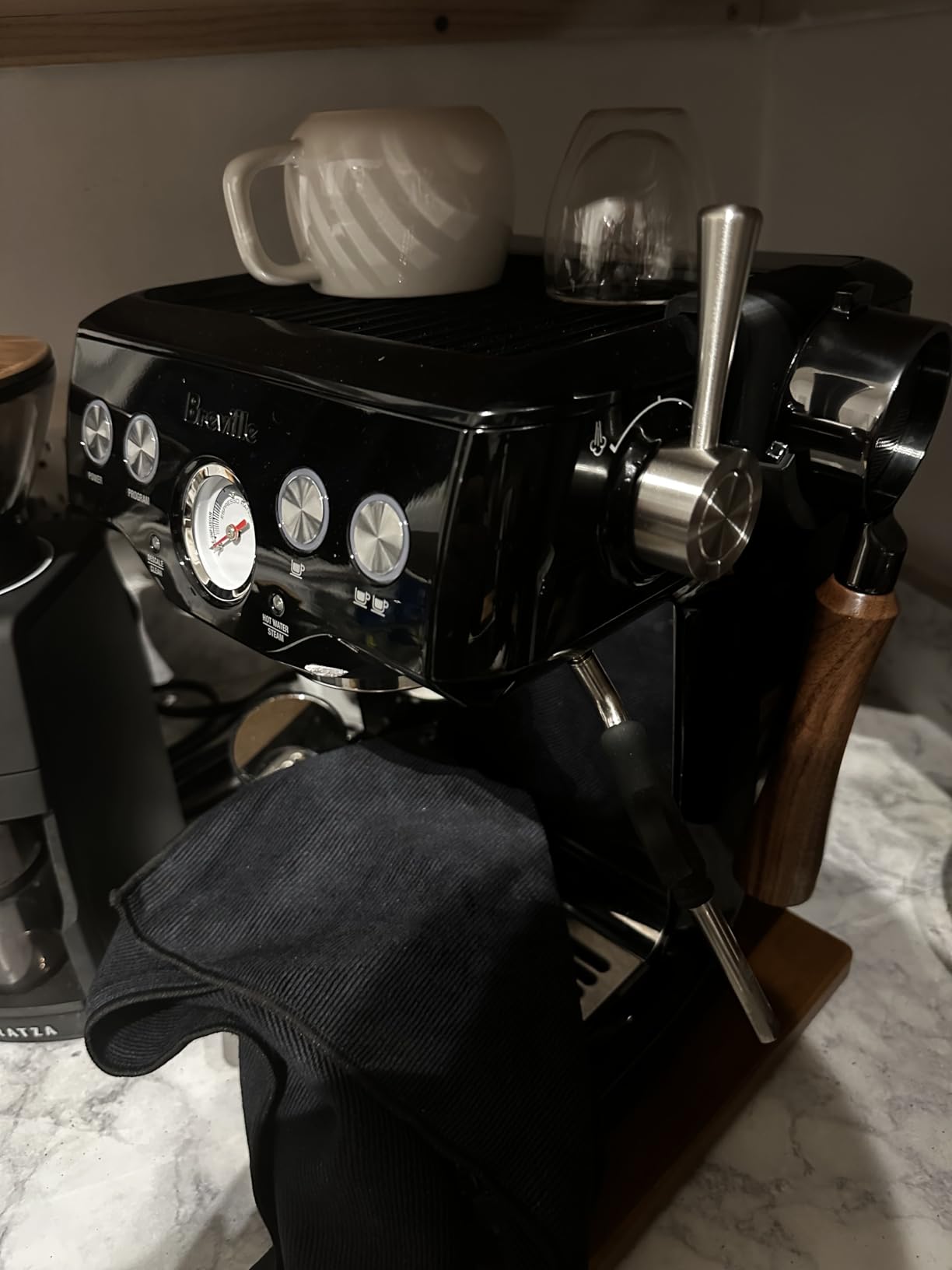
The 1650-watt steam element is the sleeper feature. It gives you a wand that reaches temperature fast and holds it, and the auto purge returns the machine to brew temperature after you steam, which removes one of the classic single-boiler frustrations.
What it lacks is speed. This design predates the rapid heat systems on the Barista models, so you wait while the machine comes to temperature. There is also no grinder, and you will need a burr grinder before the gauge is any use at all.
Who the Infuser suits
It suits a learner who already owns a grinder and wants to understand pressure, temperature and flow rather than press a preset. It also suits anyone who prefers analog dials and gauges to a touchscreen.
It suits people who make one drink at a time and do not care about seconds of speed. The auto purge means you can alternate between brewing and steaming without losing your place.
Where the Infuser falls short
It is a mature design rather than a current one. Slower heat-up and no assisted tamping mean more of the work sits with you, and the countertop footprint of 10 by 12 by 13 inches is not especially small.
If you want to learn latte art, the wand is capable but manual. If you want the machine to texturize automatically, this is not the one.
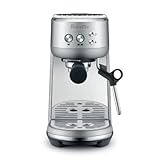
6. Breville Bambino (BES450BSS) – Best for Learning Espresso
Breville BES450BSS Bambino Espresso Machine, Brushed Stainless Steel
1560 watts
10.9 pounds
ThermoJet 3-second heat-up
54mm portafilter
47 oz capacity
Pros
- Very fast three second heat-up
- Automatic milk texturing is simple and consistent
- Small footprint suits compact kitchens
- Lowest cost entry into a 54mm portafilter setup
Cons
- No built-in grinder so beans must be ground separately
- Light weight makes the portafilter hard to seat at first
- Steam wand self-clean cycle splatters
- Manual cleaning cycles take more effort than the manual implies
The Bambino is the machine I hand to people learning espresso from scratch. It is small, fast and simple, and it uses the same 54mm portafilter sized for a 19 gram dose as the bigger Breville machines, so nothing you learn transfers to a locked portafilter situation.
ThermoJet heat-up in three seconds plus automatic steam texturing means a new owner can produce a repeatable cappuccino within a week without understanding pre-infusion. For a first machine, that is a genuine advantage.
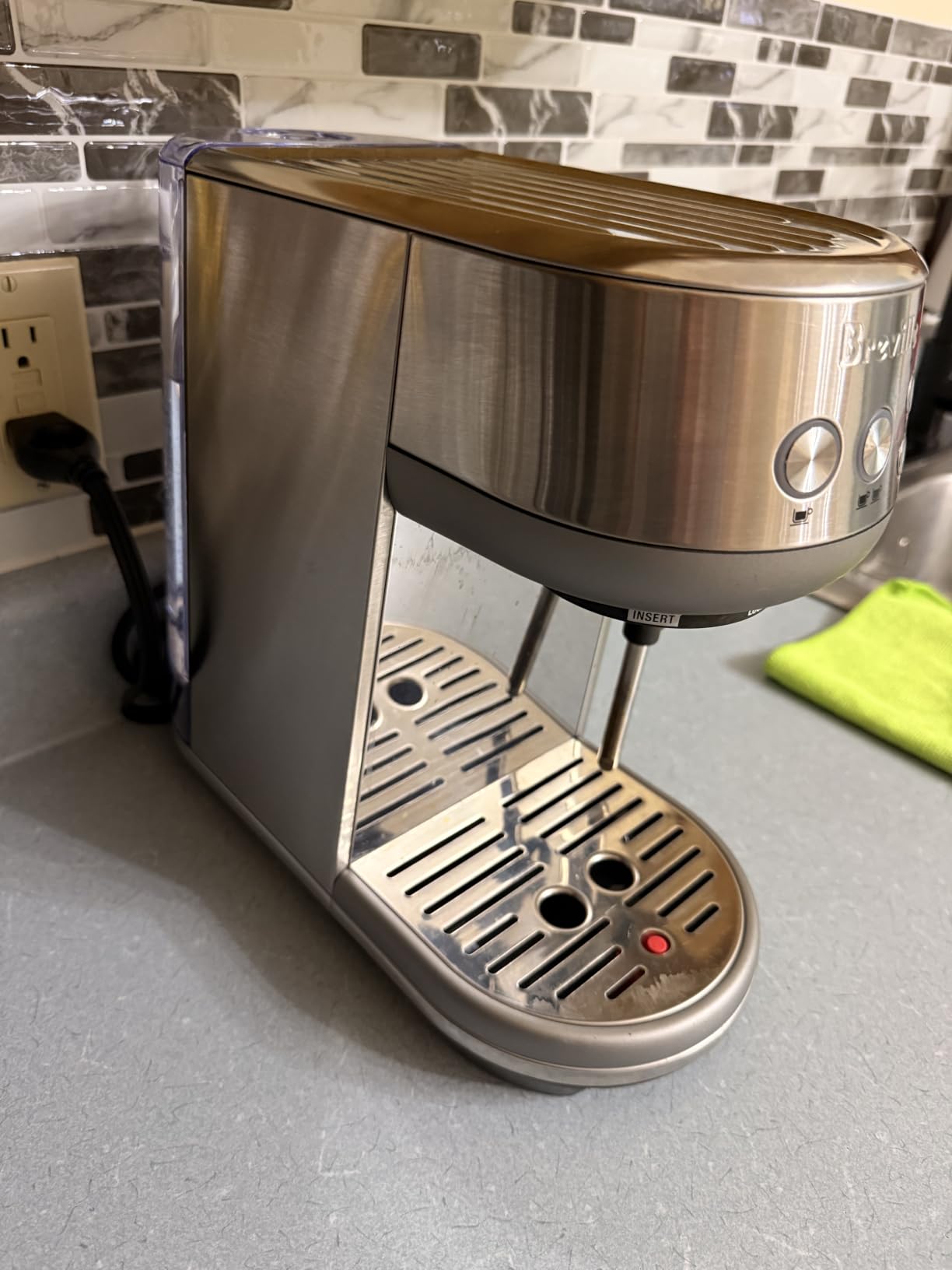
At 6.3 inches wide it is by far the narrowest machine here, which matters in a small kitchen. Owners consistently call it strong value for that reason, and many report years of reliable daily use.
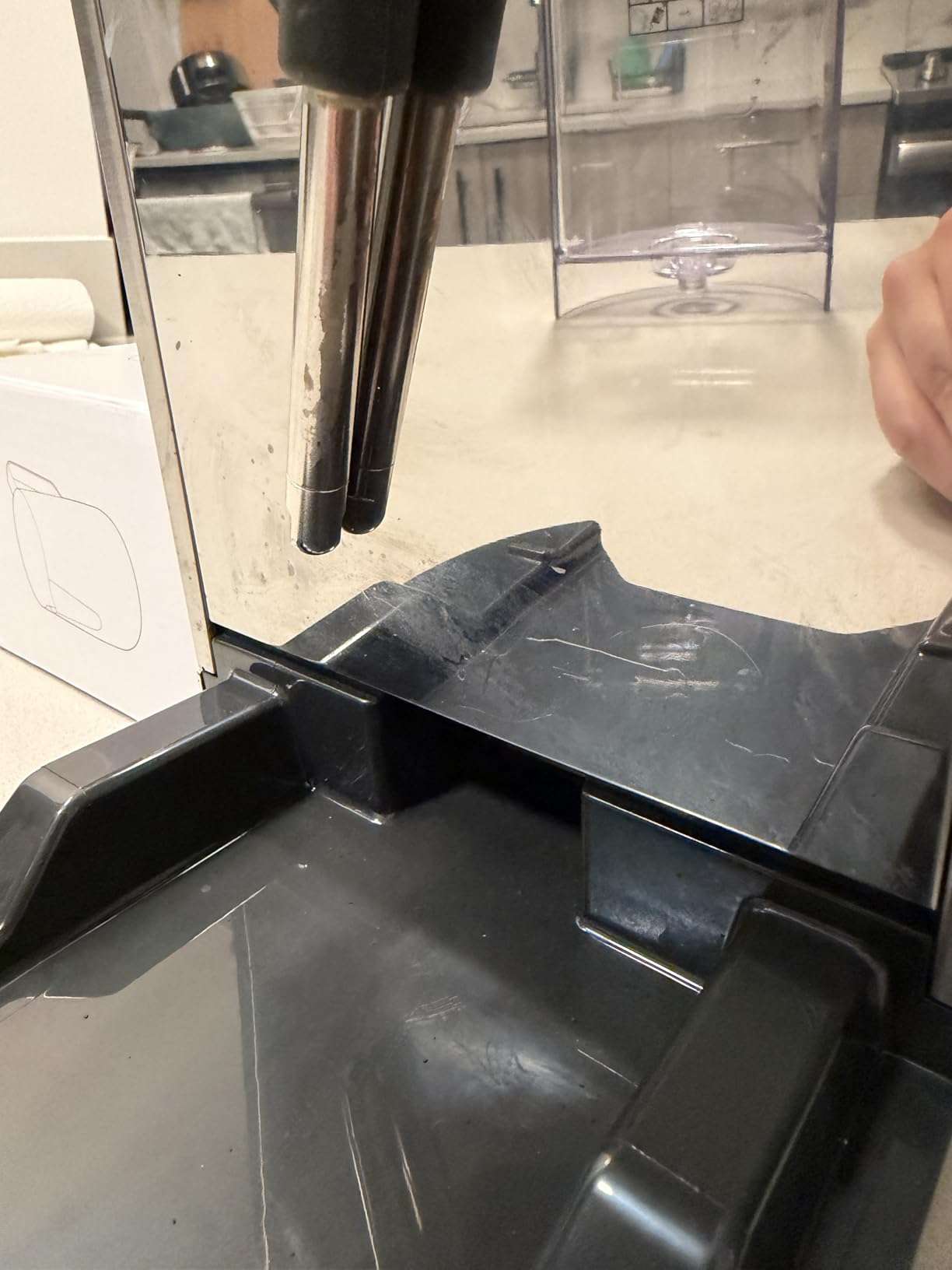
The automatic steam wand is more capable than the price implies, though it can stop mid-cycle and need a clearing run. The wand self-clean cycle also splatters, which sounds trivial until you have wiped it off your counter every morning.
Who the Bambino suits
It suits first-time buyers who want to practise a real manual workflow but need automatic milk to keep them motivated. Dose, tamp and extraction time are still yours to learn.
It suits small kitchens and anyone who wants a second machine for weekends. The footprint is the reason it stays out on the counter rather than in a cupboard.
Where the Bambino falls short
The machine weighs 10.9 pounds, and the light body makes the portafilter awkward to seat until you get used to locking it in. That is a learning annoyance, not a defect, but it does put people off in week one.
The required burr grinder is the real cost. Adding a grinder to this machine roughly doubles what you spent on the machine itself, which is why we read the grinder roundup before recommending any grinderless model.
7. Ninja Luxe Cafe Premier (ES601GM) – Best Non-Breville Alternative
Ninja Luxe Café Premier Espresso & Rapid Cold Brew, Gunmetal, ES601GM
1650 watts
25.7 pounds
25 grind settings
Built-in scale
70 oz capacity
Pros
- Espresso drip and cold brew in one machine
- Built-in scale and guided grind suggestions cut guesswork
- Hands-free frothing with multiple texture programs
- Fast simple workflow suited to beginners
Cons
- Grinder burrs need vacuuming out during cleaning
- Regular drip coffee output is the weakest drink style
- No dedicated hot water spout for tea
- Small wastewater tray fills quickly
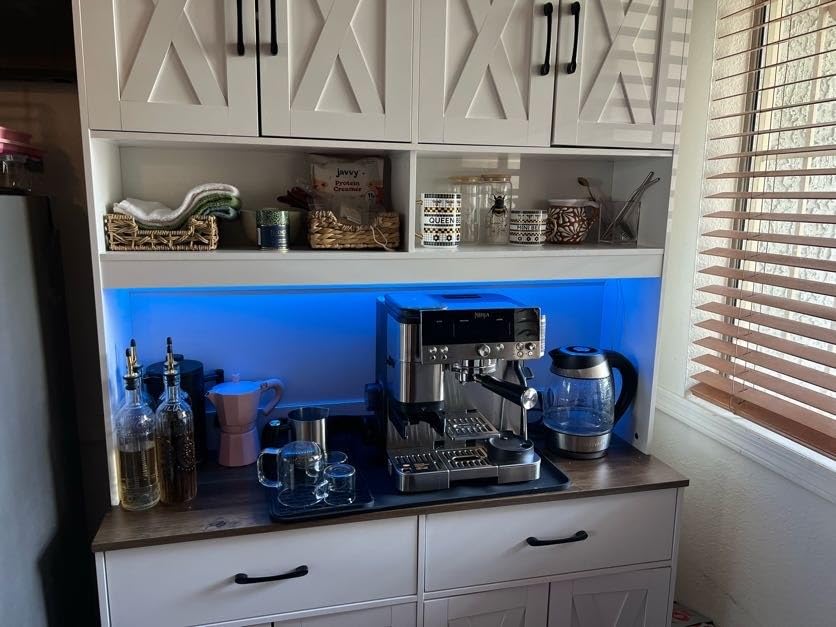
We include this machine because we would rather tell you when Breville is the wrong answer. The Ninja Luxe Cafe Premier does three jobs in one body: espresso, drip coffee and rapid cold brew, with a built-in scale for weight-based dosing and 25 grind settings on the conical burr grinder.
Barista Assist Technology recommends a grind size for you. That is the opposite philosophy from a Breville Barista Express, where you learn every variable yourself, and it will suit a different person entirely.
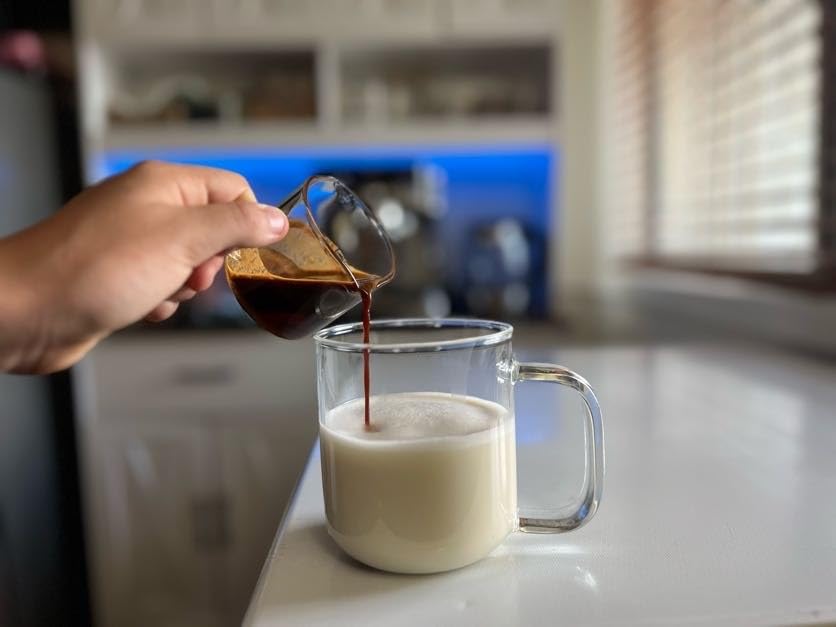
The Dual Froth System offers four preset programs for hot and cold microfoam, and an assisted tamper helps produce an evenly compacted puck. If you want cold brew on a weekday morning without a second appliance, nothing else in this list does it.
Owners rate the espresso highly and the drip coffee as the weakest of the three drink styles, which is a fair summary of the trade. There is no dedicated hot water spout for tea, and the wastewater tray is small enough to need emptying often.
Who the Ninja Luxe Cafe Premier suits
It suits households that want one machine for three drink types, and beginners who prefer guided settings to a dial they have to learn. The built-in scale removes the weighing step entirely.
It suits anyone who drinks cold brew on a schedule. That capability is the reason to choose it over a Breville that only makes hot drinks.
Where the Ninja Luxe Cafe Premier falls short
It is not built for tinkering. Reviewers consistently note it is not aimed at users who want to adjust and experiment, so if you enjoy the craft, a Breville Barista model is a better fit.
Cleaning the burr grinder means vacuuming it out, which is a recurring chore the Breville grinders do not demand. At 25.7 pounds it is also the heaviest machine in this roundup.
8. Breville Bambino Plus (BES500BSS) – Best Compact
Breville BES500BSS Bambino Plus Espresso Machine, Brushed Stainless Steel
7.7 inch width
11 pounds
1560 watts
ThermoJet 3-second heat-up
54mm portafilter
Pros
- Automatic milk frothing with three texture and temperature settings
- Very fast heat-up in both espresso and steam modes
- Compact 7.7 inch width saves counter space
- Consistent espresso quality for the price
Cons
- No integrated grinder
- Auto steam can stop mid-cycle and need a clearing run
- Cleaning cycle cadence is frequent and water-wasteful
- Wand self-clean splatters and only works with the supplied jug
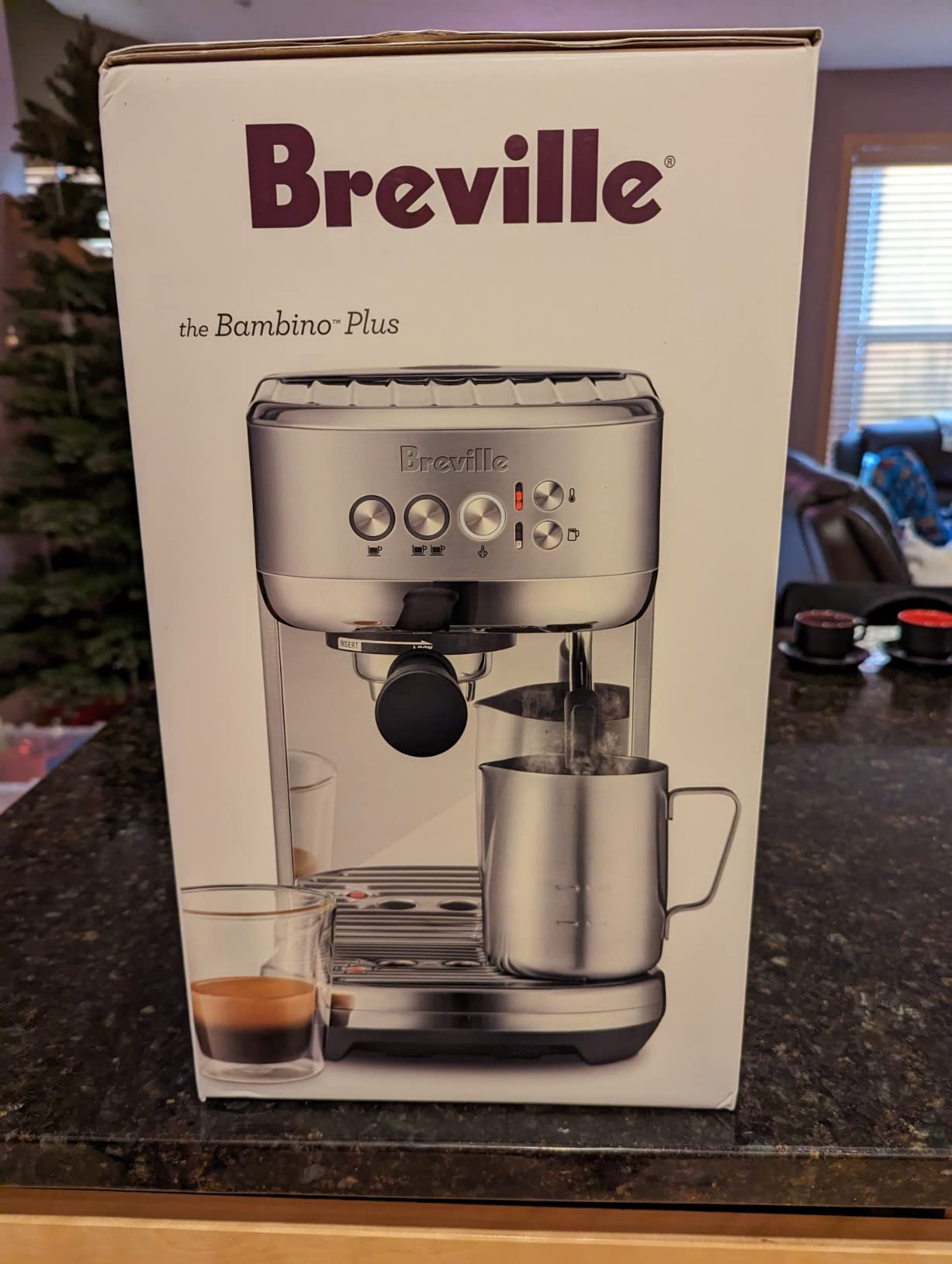
The Bambino Plus is the Bambino with a genuinely better milk system, and for most buyers that is the deciding factor. The automatic steam wand offers three texture and temperature settings rather than the single cycle on the base model, which means cappuccino and latte are dial-in choices instead of a guess.
Everything else you liked about the Bambino stays. ThermoJet three-second heat-up, PID regulation, low pressure pre-infusion and the same 54mm portafilter sized for a 19 gram dose, in a body 7.7 inches wide.
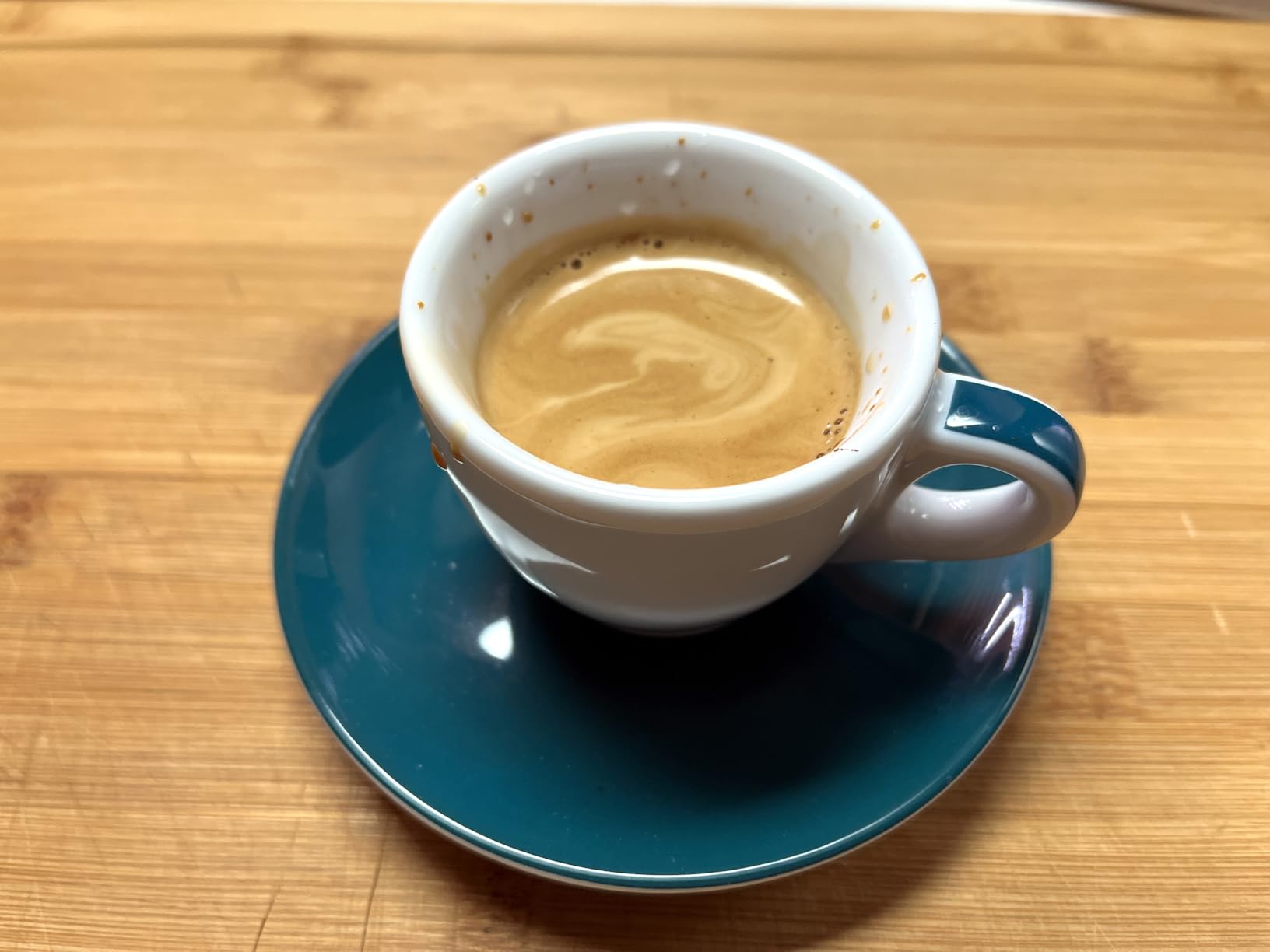
The compact width is the quiet advantage. At 7.6 inches deep by 12.5 inches wide by 12.2 inches high, it clears cabinets and corners that a full-size Barista machine will not, and the added milk capability costs almost no extra space.
The recurring complaints are cleaning related. Owners report that auto steam can stall mid-cycle and need a clearing run, that the cleaning prompts come frequently and waste water, and that the wand self-clean splatters unless you use the supplied jug.
Who the Bambino Plus suits
It suits small kitchens where counter width is the binding constraint, and anyone who wants automatic milk from day one without stepping up to a full-size machine with a grinder attached.
It suits buyers moving from the base Bambino who found the single steam cycle too limited. Many owners report years of reliable daily use on this model.
Where the Bambino Plus falls short
The frequency of the cleaning cycle is the real friction point. It is a machine that asks for attention several times a week, and that daily commitment is why some buyers skip straight to a semi-automatic they can shut down after one shot.
There is still no grinder. Pair it with a dedicated burr grinder from our grinder guide or the entry experience suffers immediately.
9. Breville Barista Express Impress (BES876BSS) – Best for Consistency
Breville BES876BSS Barista Express Impress, Brushed Stainless Steel
23.7 pounds
25 grind settings
250g bean hopper
2L water tank
Assisted tamping at 10kg
Pros
- Assisted tamping makes puck preparation consistent and beginner friendly
- Smart dosing removes manual gram weighing
- Integrated grinder with 25 settings
- Once dialed in produces excellent espresso and lattes
Cons
- Bean hopper can bridge and stall the grinder
- No low water sensor so the pump can run dry
- Dose corrections can take several cups to settle
- Learning curve for grind dose and timing
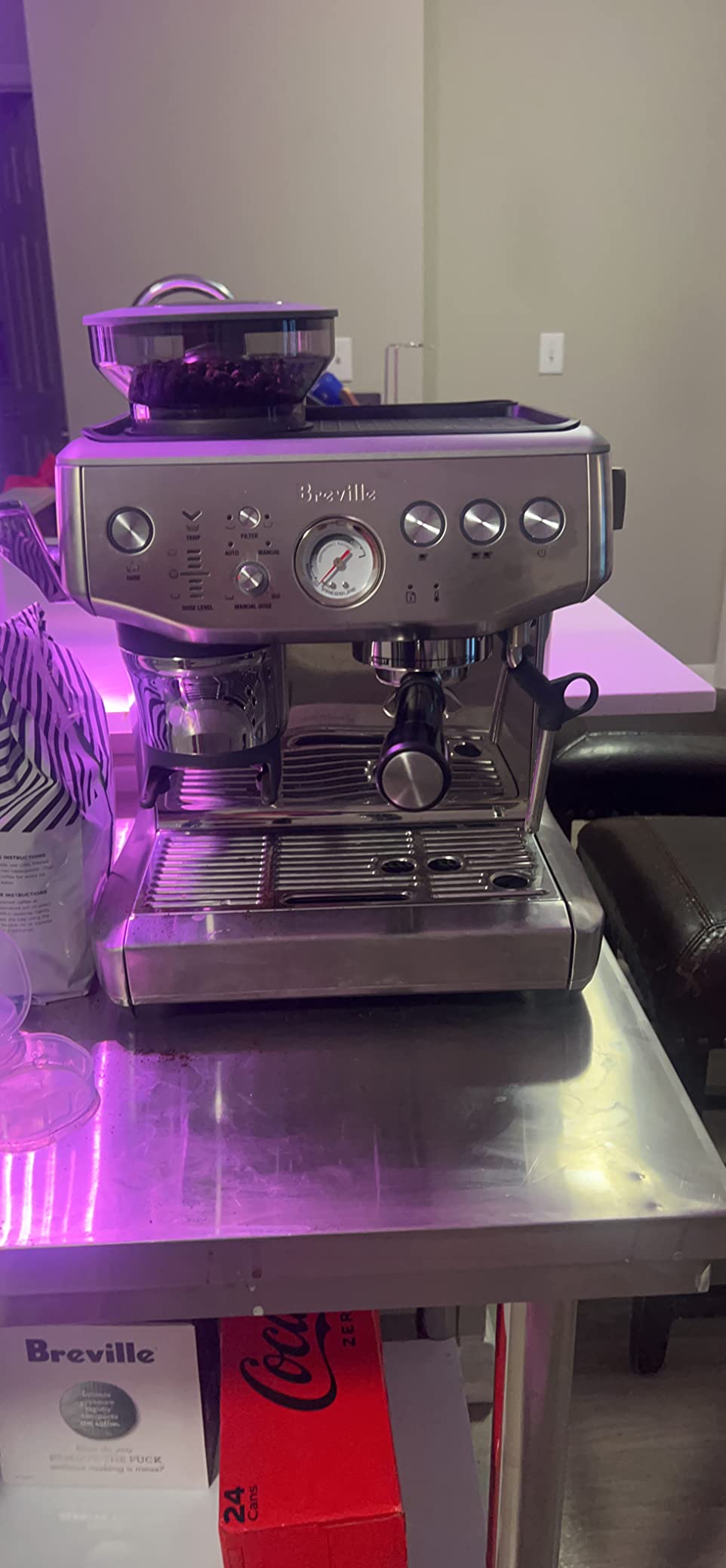
The Impress puck system is the most useful idea Breville has added to this range in years. It applies assisted tamping at 10kg with a 7 degree barista twist, and it corrects the dose on the next shot if the last one was off. You still choose the grind; you stop guessing the tamp.
Intelligent dosing means you no longer weigh by eye. The grinder has 25 settings, the hopper holds 250g of beans, and the 2 litre tank is twice the capacity of most machines in this list, so you refill far less.
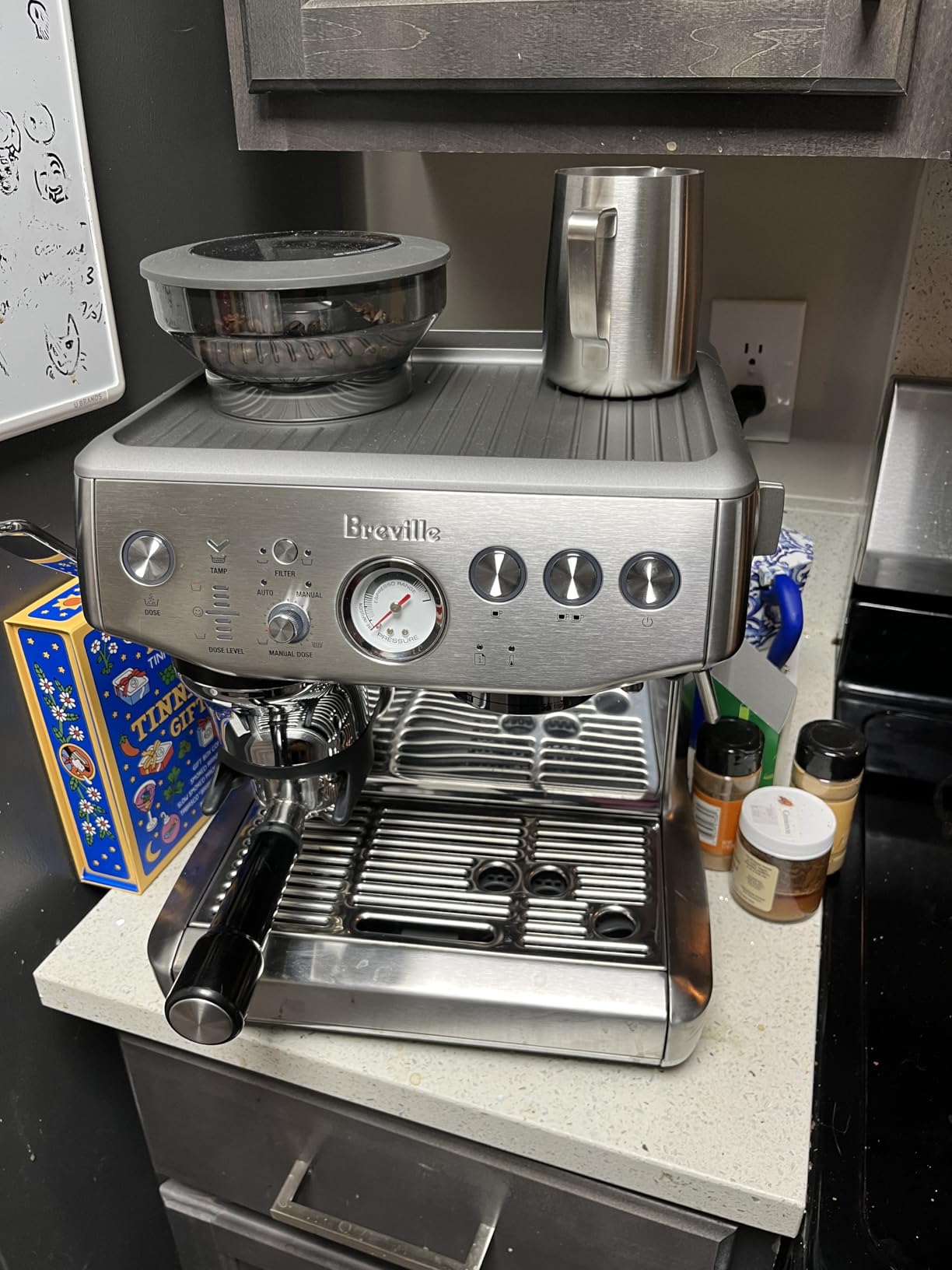
Thermocoil heating with PID control is the trade for the Impress upgrade. The Express heats faster, but this one ramps more gradually and settles into brew temperature reliably, which helps the dose correction system work from shot to shot.
Reviewers find the puck system a genuine improvement in repeatability once it is dialed in. The recurring problems are mechanical: the bean hopper can bridge and stall the grinder, and there is no low water sensor, so an empty tank means a pump running dry.
Who the Barista Express Impress suits
It suits someone who has hit a wall with manual tamping consistency. If your shots look identical but taste different, puck density is usually the culprit and this machine addresses it directly.
It suits households that go through a lot of beans, since the larger hopper and 2 litre tank cut refill frequency. It also suits anyone moving up from a Bambino who wants a grinder in the same body.
Where the Barista Express Impress falls short
Dose correction is not instant. It can take several cups to settle into a stable dose, which means the first week is still a period of adjustment rather than a set-and-forget machine.
At 23.7 pounds it is one of the heavier bodies here, and the hopper bridging issue is worth knowing about if you buy light or oily beans that stall rather than feed.
10. Breville Barista Touch Impress (BES881BSS) – Best Guided Workflow
Breville BES881BSS Barista Touch Impress, Brushed Stainless Steel
24.2 pounds
1750 watts
30 grind settings
13 touchscreen presets
Assisted tamping at 22 lb
Pros
- Step by step barista guidance on the touchscreen
- Auto MilQ wand handles dairy and plant based milks
- Cold brew function adds versatility
- 30 grind settings with dose regulation
Cons
- Highest price in the Barista lineup
- Heavy 24.2 pound body takes up counter space
- Small screen and menus can slow the workflow
- Touch interface and feature set take time to learn
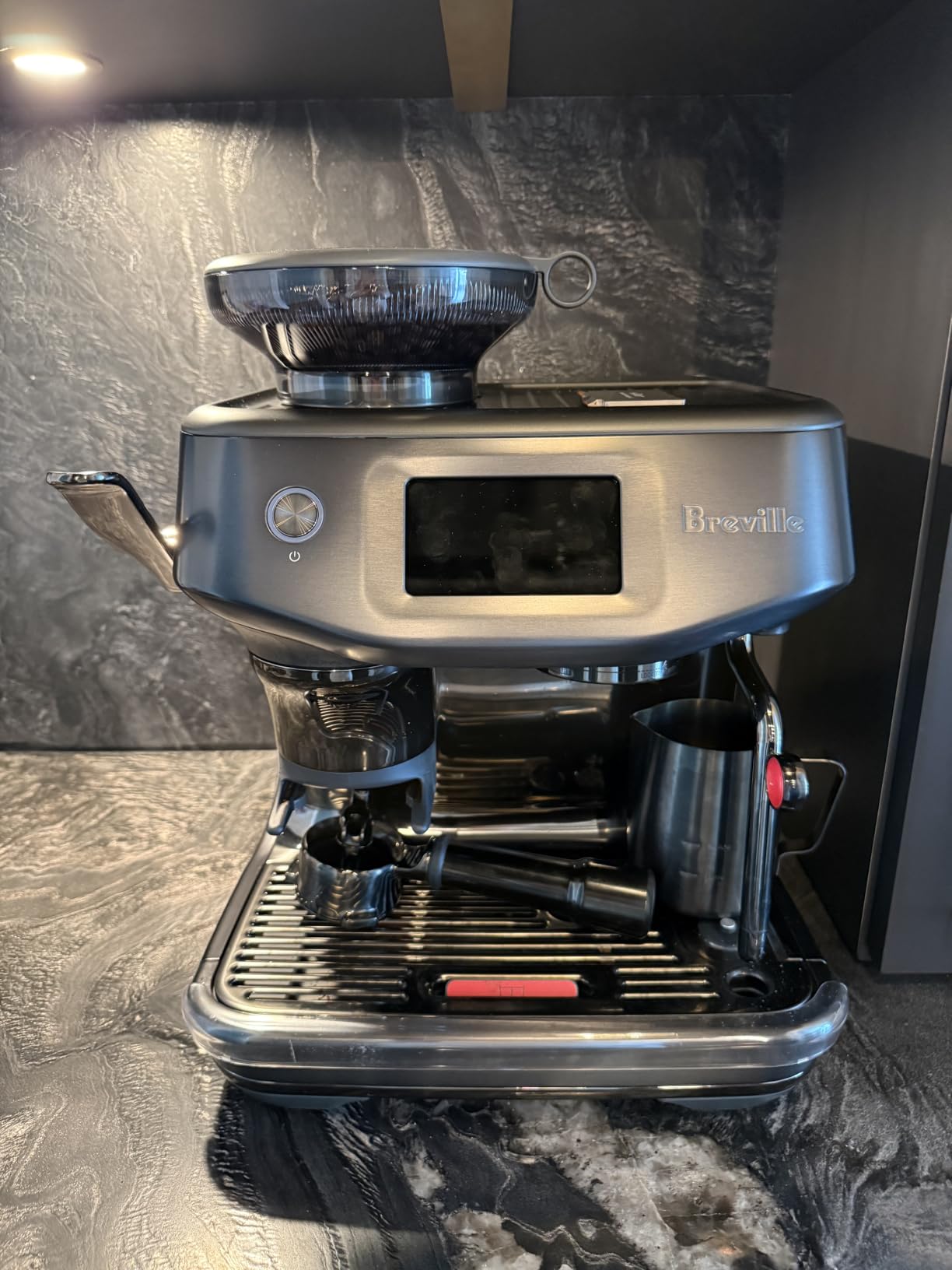
The Barista Touch Impress is the most capable machine in this roundup on paper. It combines the Impress puck system with 22 pounds of assisted tamping and a 7 degree twist, Baratza European precision burrs with 30 grind settings, ThermoJet three-second heat-up and a touchscreen with 13 café presets plus up to 6 custom drinks.
It is also the only machine here with a cold brew function, and the Auto MilQ steam wand has three alternative milk settings for oat and other plant milks. On capability, nothing in the Breville range matches it.
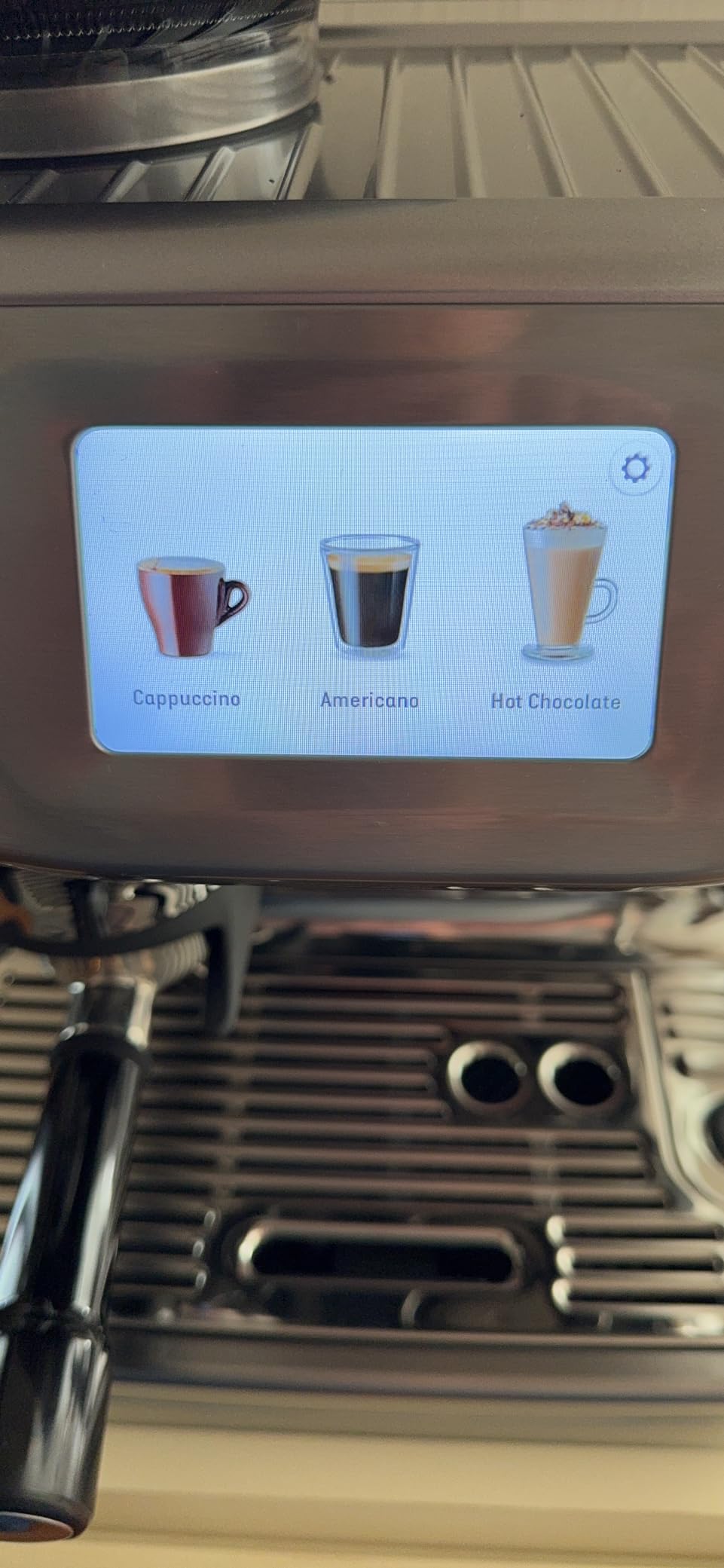
The reality is a mixed score. Reviewers clearly appreciate the guided puck system and the plant milk support, but the 3.7 rating reflects real dissatisfaction with the cost, the bulk and a learning curve the touchscreen does not fully remove. Small screens and nested menus can slow down a morning that should be quick.
At 24.2 pounds it is a serious object on a counter, and it carries the highest price in the Barista range. You are paying for guidance and versatility, and if you would rather learn the technique yourself, that is money spent against your interest.
Who the Barista Touch Impress suits
It suits someone who wants the most automation available in a semi-automatic body and does not want to give up control of grind and dose. The presets mean good coffee on day one without a long learning period.
It suits plant milk drinkers and households that want cold brew alongside espresso. Very few machines combine those two without moving to a super-automatic.
Where the Barista Touch Impress falls short
Its rating is the lowest of the ten, and the complaints cluster around value rather than capability. If the guided workflow is not something you will use, a Barista Express Impress does most of the same job with less machine.
The counter footprint and weight are the practical issues. Check that you have the depth and overhead clearance before committing, because a machine this tall that is rarely used is the worst outcome.
How Breville Heating Systems Change Your Coffee
Heating system explains more of the price gap between these machines than any other single feature. Breville uses three approaches across this lineup, and they behave differently in ways you feel every morning.
ThermoCoil is a thermoblock system. Water is heated as it passes through a coil rather than in a stored boiler, so temperature responds quickly and the machine stays compact. It takes noticeably longer than the fastest systems to come to temperature, but once there it is steady. The Barista Express Impress uses it.
ThermoJet heats in about three seconds. That is the headline number, and it is real for the water. The catch that catches out nearly everyone is that fast water heating does not mean the group head is hot. Pull a shot immediately after switching on and the result is often sour or thin.
That is the blank shot problem owners discuss most. Flush the group with water and wait a few seconds, and the same machine pulls a good shot. The Barista Pro, Barista Touch, Barista Touch Impress and both Bambinos all heat this way, so treat the first shot of the day as a rinse.
Dual boiler systems keep separate brew and steam boilers, so you can pull a shot and steam milk at the same time without waiting for the machine to switch temperature. That is the reason enthusiasts buy them, and it is why we cover them separately in our dual boiler roundup. None of the ten machines in this roundup uses one.
None of the ten machines here has a dual boiler. That is the single most common surprise in the comments on these machines, and the clearest argument for saving up rather than stretching within the range.
Breville Durability, Maintenance and Common Problems
Nobody in this category publishes reliability data, so the honest source is long-term owner reports. Across these machines the recurring items are consistent enough to plan around.
Group gasket wear. The rubber seal around the group head is a consumable part and it hardens over time. When it goes, you get a persistent dribble from the portafilter during the shot. It is a straightforward replacement, but it is the first real repair most owners meet.
Steam wand o-ring and scale. The little seal at the wand tip traps water and goes brittle. Hard water makes this worse, which is why water hardness is worth knowing before you buy. If your shots get gummy or flow slows, a descale is usually the fix.
Grinder wear and motor noise. The conical burr grinders need cleaning more than most manuals suggest, and some owners report the grind drifting to a noticeably uneven particle size over a few years of daily use. Keep beans reasonably fresh and backflush more often than feels necessary.
The solenoid. When a machine stops pumping or runs dry, the solenoid is usually the culprit. It also fires on some Breville units when a water filter expires. Filter changes are not optional maintenance.
Leakage. Long-term owners of the Barista Express in particular report that heavily used units can eventually leak around the group or drip tray and, in a few cases, trip household electrics. Treat any electrical symptom as a service call rather than a DIY fix.
The realistic lifespan expectation for a well-maintained machine in this range is many years, with the first significant repair often landing in year three or four. A grinderless machine lasts longer on average simply because the grinder is the part that wears fastest, and a grinder can be replaced on its own schedule.
Frequently Asked Questions
Which model of Breville espresso machine is best?
The Breville Barista Express is the best all-round choice, with the highest owner rating volume in the lineup and a fully manual workflow you can actually learn. Choose the Barista Pro instead if you want more grinder range and a three-second heat-up, or the Barista Touch if you want the machine to texturize milk for you.
Is the Breville Barista Express Impress worth it?
It is worth it if your shots are inconsistent even when your grind is right, because assisted tamping at 10kg removes the biggest remaining variable. It is not worth it if you have not yet learned to dose and tamp by hand, since you would be automating a skill you never built. In that case the standard Barista Express teaches you more for less.
Which is better, the Breville Barista Express or the Express Impress?
The Barista Express is better for learning because you control the dose and the tamp. The Express Impress is better for consistency because it applies assisted tamping at 10kg with a 7 degree twist and corrects the next dose for you. Pick the Express first and consider Impress once your tamping is the weak link.
Which is better, the Breville Barista Touch or the Oracle Touch?
The Barista Touch is the better machine for most people because you still choose the grind and dose, which means the skill keeps improving. The Oracle Touch is better if you want zero technique, doing everything from beans to milk automatically. Choose the Touch while you are still learning and the Oracle Touch when you have decided you do not want to.
What are the common problems with the Breville Barista Express?
The most common issues are a small water tank that needs frequent refilling, a grinder that can be fussy with certain beans, and plastic panels that scratch. Over the long term the recurring repairs are group gasket wear and steam wand o-ring replacement, both of which are routine consumable parts rather than failures. Descaling and water filter changes prevent most of the rest.
Do you need a separate grinder for a Breville Bambino?
Yes. The Bambino, the Bambino Plus, the Cafe Roma and the Infuser have no built-in grinder, so you need a separate conical burr grinder to make espresso properly. This is the most common budget surprise in the category, because adding a burr grinder roughly doubles what you spent on the machine itself.
What is the lifespan of a Breville espresso machine?
A well-maintained machine in this range commonly runs for many years, with the first significant repair often landing in year three or four, usually a group gasket or a steam wand o-ring. Descaling on schedule and changing the water filter on time is the biggest factor you control. Grinderless models tend to last longer because the grinder is the fastest wearing part.
Is Breville considered high end?
Breville is prosumer rather than commercial. These are premium home machines aimed at people who want café technique and control at home, not café equipment. If you need durability and parts availability that come with a commercial brand, a prosumer Breville is not the same purchase.
The Best Breville Espresso Machine to Buy in 2026
If you only buy one of the best Breville espresso machines in 2026, make it the Barista Express. It has the widest owner base in the range, an integrated burr grinder, PID temperature control and a manual steam wand that produces real microfoam, and nothing in the price band below it teaches you as much.
Go one step up to the Barista Pro if faster heat-up and 30 grind settings matter to your routine, or to the Barista Touch if you would rather the machine handled the milk. Start at the Cafe Roma or the Bambino if you are still deciding whether espresso belongs in your kitchen, and remember to budget for a burr grinder with either.