
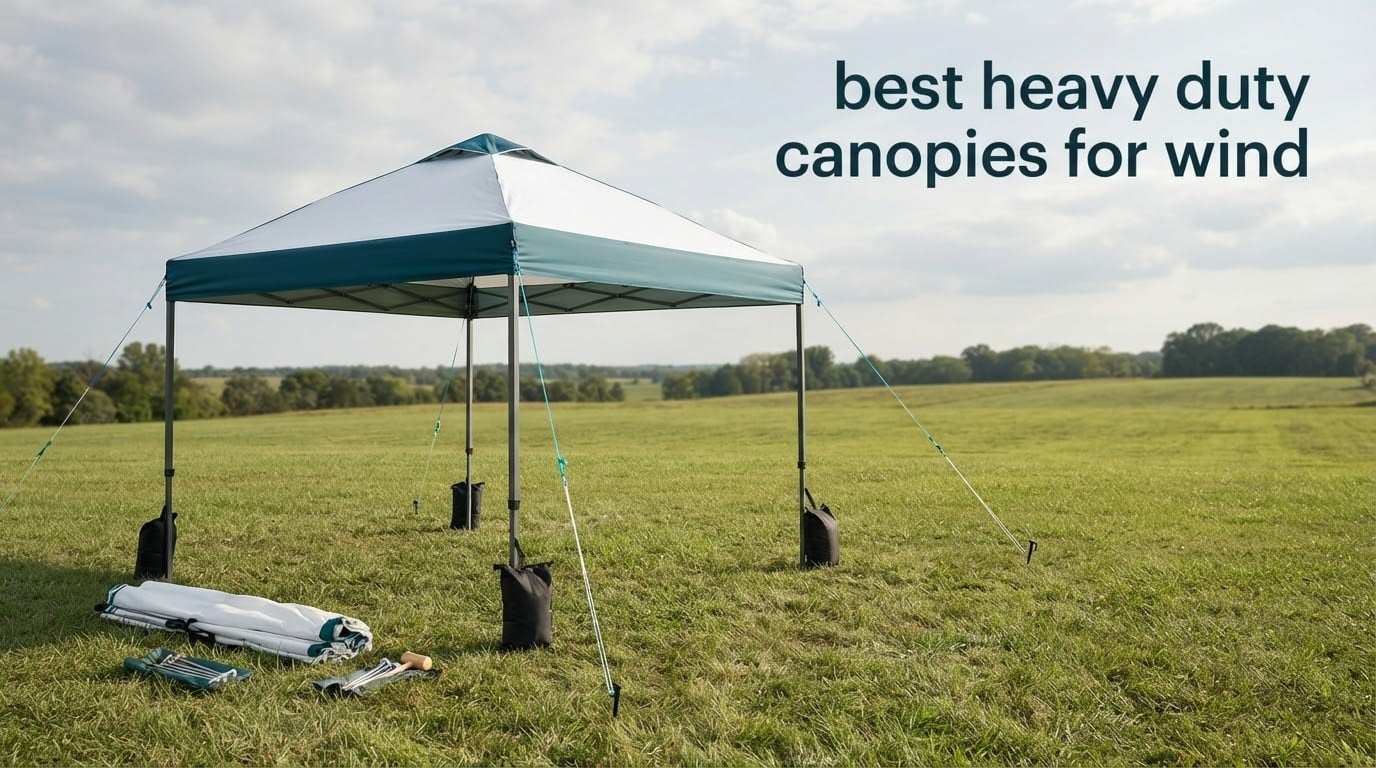
Most pop-up canopies fail in wind long before their tubing snaps. The frame buckles, the plastic scissor joints let go, and the whole thing lifts and lands on whatever was underneath it. If you are comparing the best heavy duty canopies for wind, the deciding number is not the marketing copy, it is frame weight, tubing gauge, and whether the design bleeds pressure through a vented roof.
We compared ten heavy duty canopy tents across frame material, leg profile, published wind figures, included anchoring hardware, and the failure reports buyers actually post. Three of the ten publish an actual wind speed. The rest leave you guessing, which is exactly the gap this roundup closes.
Below you will find every pick, its real specs, and a plain-English answer to the question buyers ask most: what wind speed is too high for a canopy? The short version is in the next section.
Table of Contents
Wind Ratings Explained: What Wind Speed Is Too High for a Canopy?
For a pop-up canopy, treat 20 mph as the practical ceiling for sustained wind, and 25 mph as the point where you lower it and start planning takedown. Above 30 mph, no portable canopy is safe, and the only correct move is to collapse it and get clear of the frame.
That threshold assumes the canopy is staked or ballasted at all four legs. The same unit left loose on grass will behave very differently, which is why anchored and unanchored figures are never the same number.
The four wind bands that matter
Below 15 mph is a breeze. A correctly anchored canopy from this list will sit through it without drama, and this is the band where a standard pop-up and a heavy duty unit are hard to tell apart.
Between 15 and 25 mph the difference shows. This is where thin square steel tubing starts to flex, where plastic sliders crack, and where a two-corner-anchored canopy begins pivoting. Heavy duty frames with hexagonal or thick-gauge tubing stay square through this band.
Between 25 and 35 mph you want the widest footprint you can carry, every leg weighted, and the frame lowered if you cannot take it down. Only one canopy in this group carries a published figure in this range, and it is a large 10×20 unit rather than a 10×10.
Above 35 mph, portable canopies are finished. Inflatable tube shelters are the only shade structure category users repeatedly report surviving gusts in that range, because a tube bends instead of snapping, and even those need serious ground anchors. A pop-up canopy at that speed is a projectile.
Anchored versus unanchored is the whole ballgame
Almost every canopy failure story we found involves a tent anchored at two corners instead of four. Wind pressure on a roof acts like a sail, and a canopy held at only two points becomes a lever that rotates into the breeze until the frame folds and the structure lands sideways.
Reviewers on outdoor gear forums described the same sequence: legs anchoring at only two points, a gust arriving, and the unit inverting. Weighting all four legs and tying guy lines to the peak is what converts that sail force into downward pressure instead of rotation.
Top 3 Best Heavy Duty Canopies for Wind (October 2026)
CROWN SHADES 10×10
- 36 lb alloy steel truss frame
- One push center lock
- Integrated air vents against wind lift

ABCCANOPY 10×10 Commercial
- 48 lb alloy steel frame
- 11.2 ft ceiling clearance
- Waterproof UPF 50+ fabric

Eurmax USA 10×10
- 61 lb full truss frame
- 4 zippered removable walls
- US replacement parts channel
Best Heavy Duty Canopies for Wind in 2026: Quick Comparison
| Product | Specifications | Action |
|---|---|---|
| CROWN SHADES 10×10 Pop Up Canopy Tent |
|
Check Latest Price |
| ABCCANOPY 10×10 Commercial-Series Canopy |
|
Check Latest Price |
| Eurmax USA 10×10 Commercial Pop Up Canopy |
|
Check Latest Price |
 COOSHADE 12×12 Durable Pop Up Canopy COOSHADE 12×12 Durable Pop Up Canopy |
|
Check Latest Price |
 Quictent 20×20 Reinforced Heavy Duty Party Tent Quictent 20×20 Reinforced Heavy Duty Party Tent |
|
Check Latest Price |
 COBIZI 10×10 Heavy Duty Pop Up Canopy COBIZI 10×10 Heavy Duty Pop Up Canopy |
|
Check Latest Price |
 HOTEEL 10×20 Pop Up Canopy Tent HOTEEL 10×20 Pop Up Canopy Tent |
|
Check Latest Price |
 Hoteel 10×10 Heavy Duty Pop Up Canopy Hoteel 10×10 Heavy Duty Pop Up Canopy |
|
Check Latest Price |
 WEIZE 10×10 Pop Up Canopy Tent WEIZE 10×10 Pop Up Canopy Tent |
|
Check Latest Price |
 Quictent 10×20 Heavy Duty Pop Up Canopy Quictent 10×20 Heavy Duty Pop Up Canopy |
|
Check Latest Price |
Frame weight is the first column to check because mass is the only thing resisting lift. The lightest unit here is the CROWN SHADES at 36 lb, the heaviest is the Quictent 20×20 at 217 lb, and the two largest footprints naturally carry the most mass at the base.
Footprint matters as much as weight here. A 20×20 or 10×20 frame spreads the same wind load across far more anchored points than a 10×10, which is why the largest units in this list carry the strongest published wind guidance.
What Actually Breaks in Wind
Brands describe survival. Users describe failure. Across forum threads and review data, the same four things break first, and none of them is the tubing you paid for.
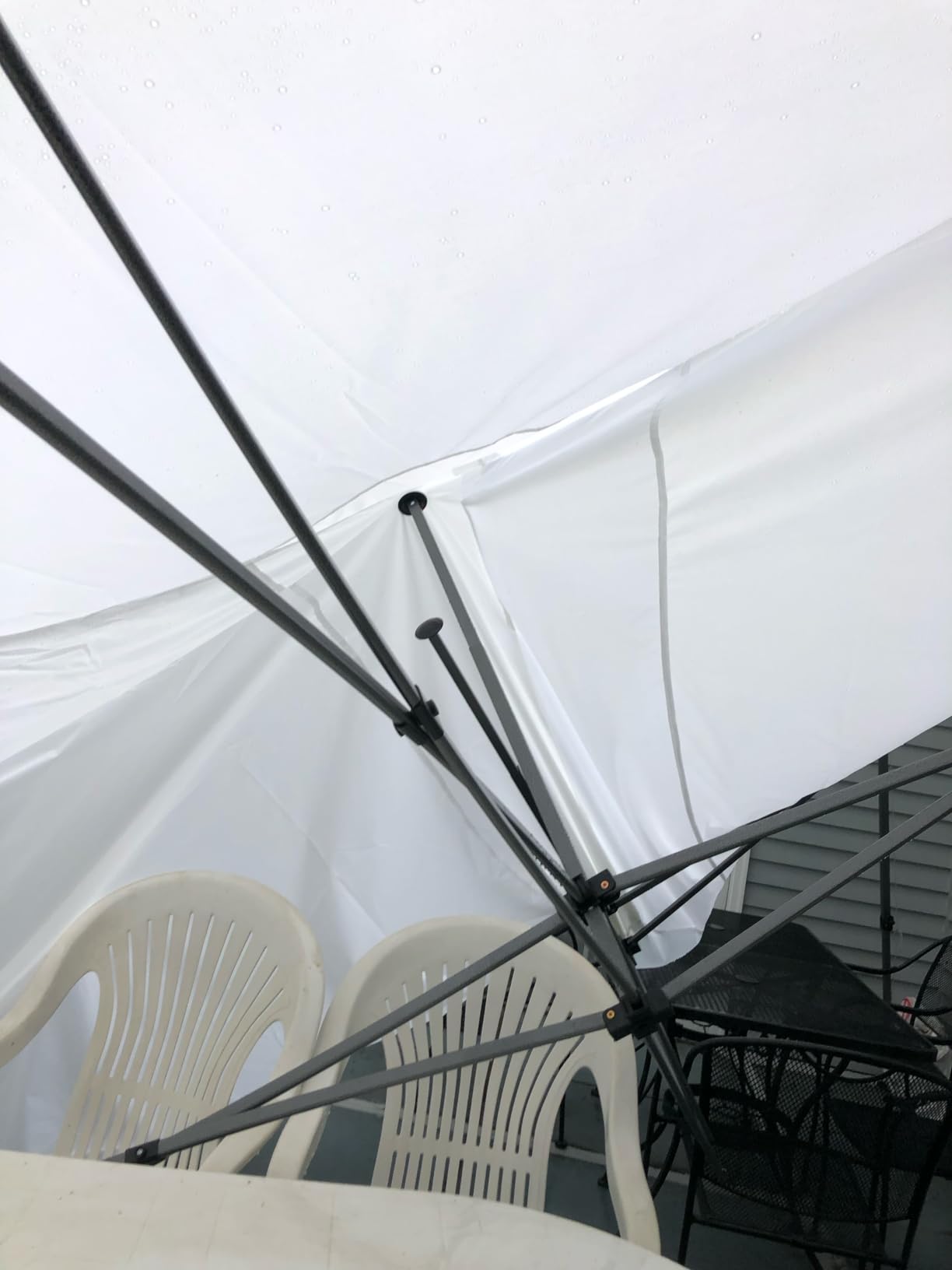
Plastic scissor joints and sliders. The connectors snap long before the frame tubing deforms. Buyers repeatedly blame a canopy for failing while the structural legs were still straight, because the cheap molded joint at the height control took the load instead.
Bent crossbars. Once a crossbar bows, the frame is no longer square and the next setup is unstable no matter how much you weight it. This is why a bent crossbar usually ends a unit’s service life, and why manufacturers who supply replacement crossbars separately earn repeat customers.
Inversion. The failure everyone fears is the canopy turning inside out and landing on people, tables, or inventory. It happens when the roof catches as a sail and the base is not fully restrained, which is why anchoring every single leg matters more than any frame spec.
Seam blowouts and leaks. Cheap fabric fails at the seams, so a canopy in driving rain and wind fails twice. Canopies with sealed or taped seams and higher denier fabric hold together where lesser covers split along the stitch line.
Users across outdoor forum threads described the prevention-first rule that beats any product choice: take the canopy down, or lower and stake it, rather than trying to outlast a gust. That advice is repeated often enough that it is the single most useful thing in this entire guide.
1. CROWN SHADES 10×10 Pop Up Canopy Tent: Best Overall for Wind
CROWN SHADES 10×10 Pop Up Canopy Tent with One Push Setup, Navy Blue
36 lb alloy steel truss
150D CPAI-84 top
Peak over 9 ft
Roof air vents
2-year warranty
Pros
- One-person setup in under five minutes
- Vented roof reduces wind lift
- One owner reported surviving 65+ mph with no broken bars
- Wheels in the feet plus roller bag
Cons
- Heavy at 36 lb for one person to lift
- Head height forces taller users to duck
- One report of bent bars on arrival
The patented one push center lock is the reason this canopy goes up faster than anything else here. One person pushes the hub, the poles lock in place, and the frame is standing without tools, which matters when the weather is turning and you are not setting up on a calm morning.
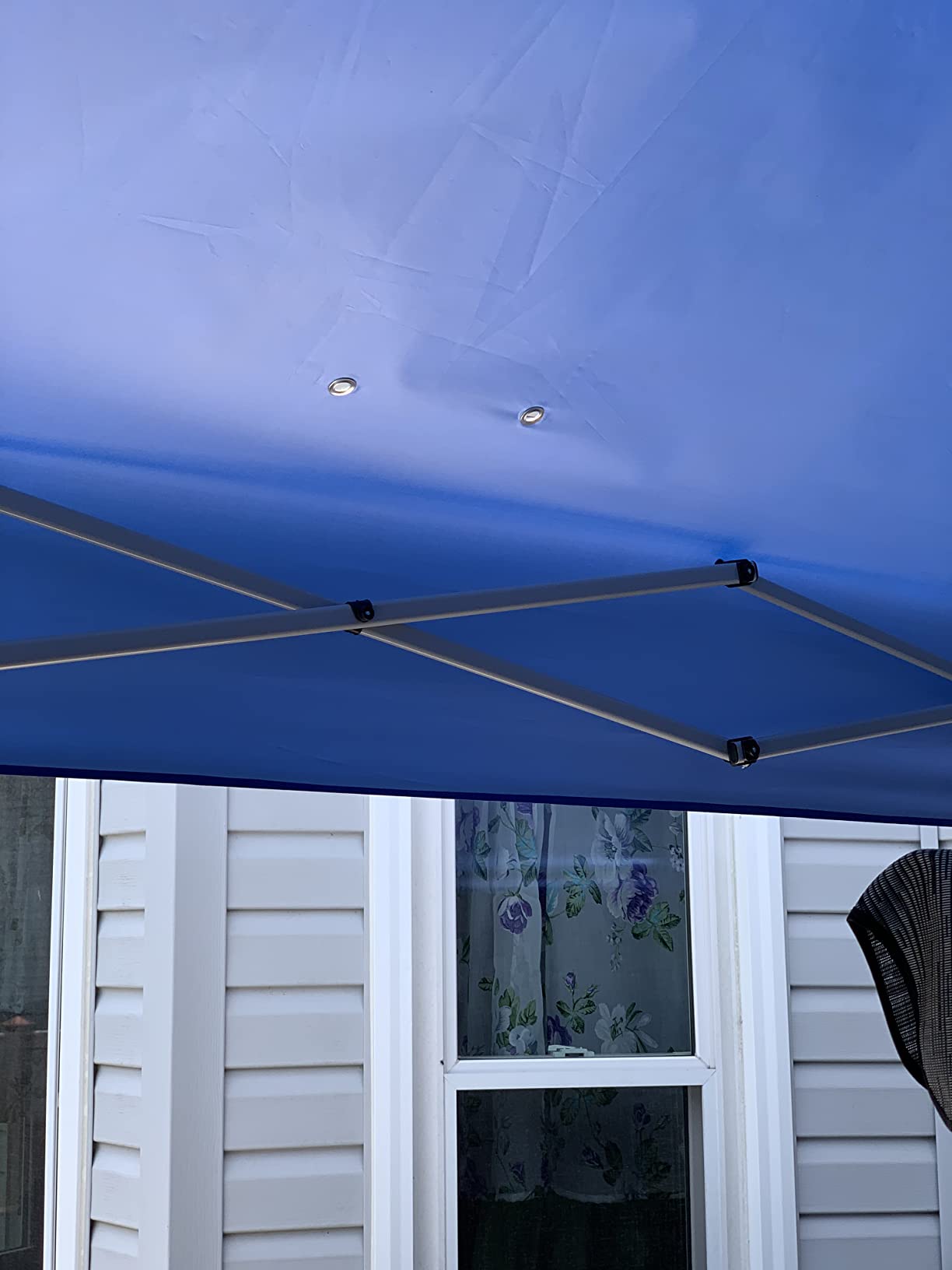
It also does something the other budget units skip. The Fast Clip attachment system has integrated air vents built into the canopy attachment points, so pressure under the roof has somewhere to bleed out instead of lifting the whole structure. That venting is one of the most economical wind features available, and only two canopies in this group have it.
Wind survivability is where the review record is unusually strong. One owner reported the canopy held through 65+ mph winds with no broken bars and no rips, and the aggregate of 11394 reviews at 4.6 stars is the largest sample in this group. Treat the 65 mph report as an anecdote rather than a rating, but it does show the frame does not fold at the first serious gust.
The 36 lb frame is genuinely on the light side for a heavy duty unit, and that is the honest trade-off here. At 36 lb it is the easiest canopy in this roundup for one person to lift into a car, but it is also the least mass fighting the wind. Owners who need more resistance should step up to a truss frame in the 48 to 62 lb range.
The real drawbacks are physical rather than structural. The valance clearance leaves people over 6 ft ducking slightly when they walk underneath, and the steel truss frame is specified to support 120 lbs of distributed load, which is shade and tables, not hanging heavy inventory from the trusses.
Warranty is two years with full canopy replacement in year one and parts through year two, which is a longer commitment than most competitors in this price band offer.
When this canopy earns its place
It is the right call for one person who needs a tent up in minutes, in a spot where the gusts are moderate rather than serious, and who will actually use the included stakes, ropes, and sand bags. The Sto’n Go system also has a dedicated pocket for exactly those items, so the anchoring kit does not end up lost in a car boot.
When you should pick something else
If you are setting up on a beach, a dock, or an exposed field where sustained gusts regularly pass 20 mph, 36 lb of steel is not enough. Move up to the 61 lb truss frames or the 100 lb hexagonal 10×20, both of which put far more mass at the base.
It is also the wrong tent for anyone who cannot lift 36 lb overhead. The wheels in the feet help once it is erected, but the lift is still manual.
2. ABCCANOPY Patio Pop Up Canopy Tent 10×10: Best Value for Wind
ABCCANOPY Patio Pop Up Canopy Tent 10×10 Commercial-Series (Black)
48 lb alloy steel frame
Waterproof UPF 50+ top
11.2 ft ceiling
Sand bags, stakes, ropes
Pros
- Waterproof fabric works in sun and rain
- Anchoring kit included in the box
- 11.2 ft peak clearance
- Two-person setup with wheels
Cons
- Heavy at 48 lb for solo loading
- Packed size is bulky for car trunks
- Accessories carry a shorter warranty
This is the value pick because it does the two things that matter for wind at a mid weight. At 48 lb it carries meaningfully more mass than the 36 lb unit above, and the box includes four sand bags, four stakes, and ropes, so you can anchor all four legs on the first setup without a separate shopping trip.
The fabric is fully waterproof rather than water resistant, with UPF 50+ UV blocking. That is the difference between shade that keeps working in a rainstorm and a roof that starts dripping at the seams exactly when the wind is worst.
Ceiling clearance of 11.2 feet is the tallest in this group and it is not just a comfort number. A taller peak gives the roof a steeper pitch, which sheds water faster and presents a smaller flat face to a gust, and it also stops you ducking at the edges of the 10×10 footprint.
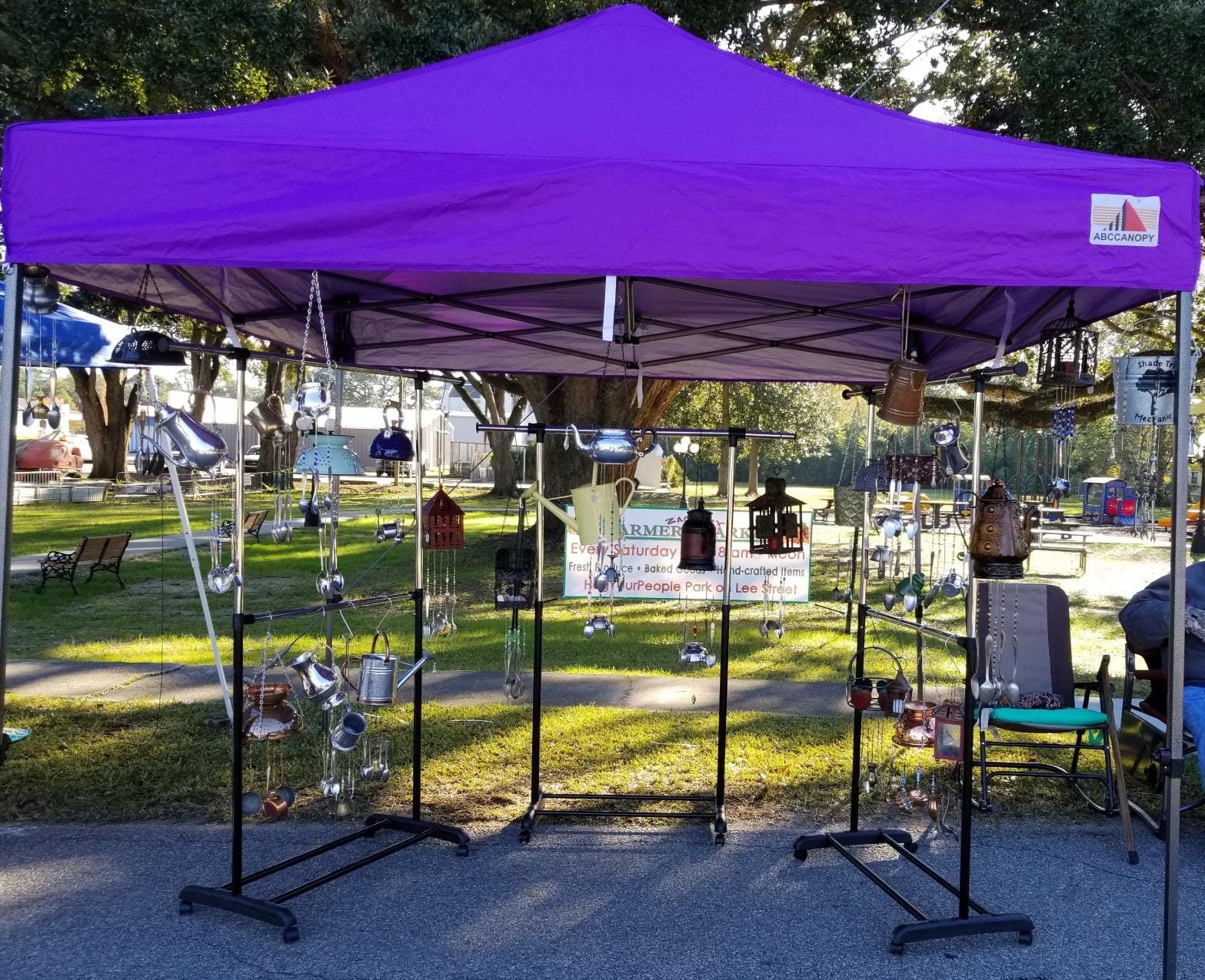
At 48 lb with 7910 reviews averaging 4.4, the track record here is long and well established. Buyers consistently single out the waterproof fabric and the high ceiling, and the complaints cluster around weight and packed bulk rather than any structural problem.
The warranty is where this unit loses ground. Frame coverage runs one year and fabric and accessories are covered for six months, so a seam failure a year and a half in is out of pocket. On a canopy meant to be used season after season that is a real limitation.
Packed dimensions are bulky enough that you should measure your trunk before buying. A 48 lb frame plus a folded canopy is a genuinely large object, and this is the single most common complaint from buyers who assumed it would fit like a lighter pop-up.
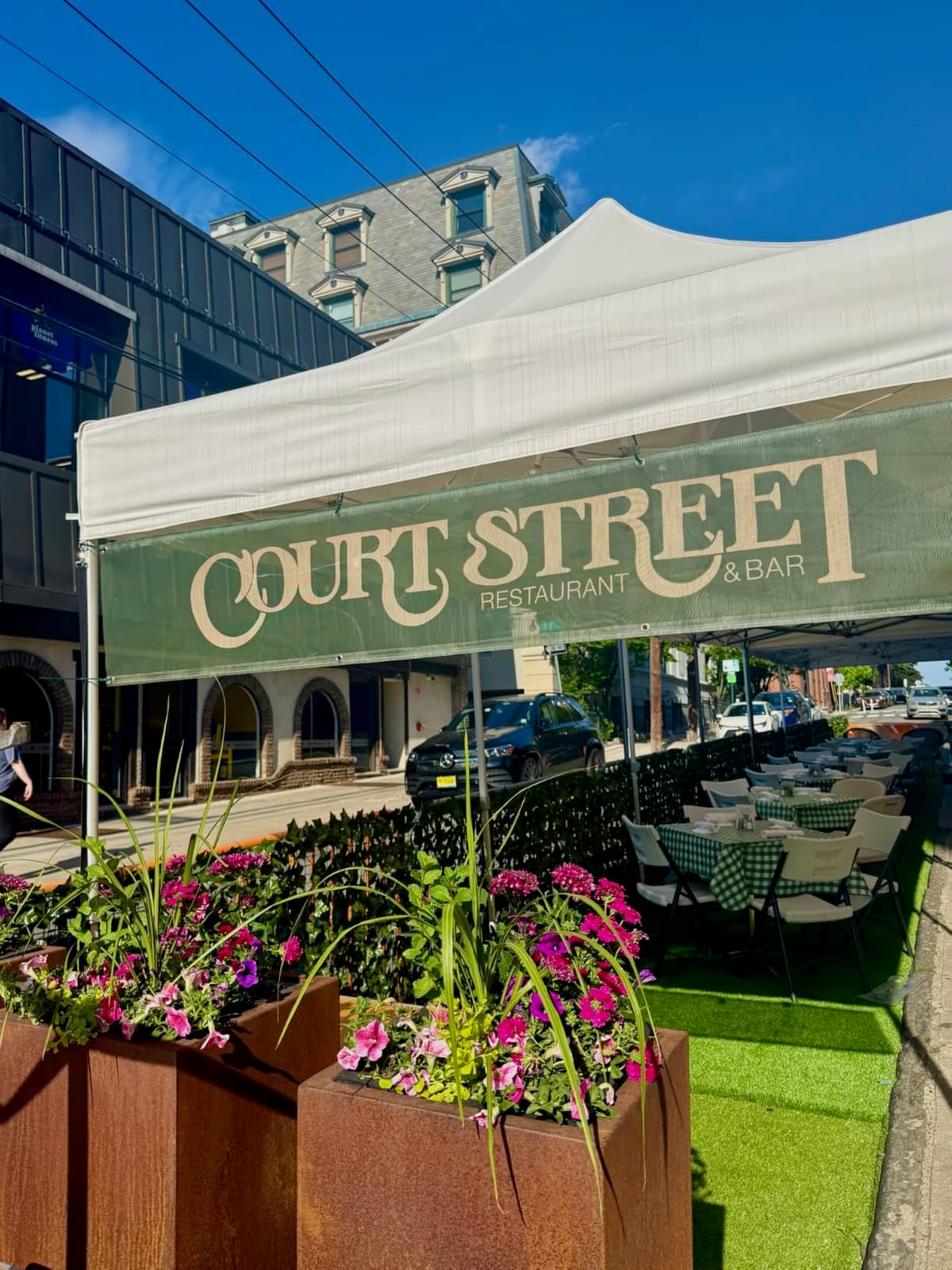
When this canopy earns its place
It suits market vendors, craft fair exhibitors, and backyard setups where the weather is changeable and rain is as likely as wind. Having the anchoring hardware in the box removes the most common reason canopies lose their battle with a gust, which is anchoring only two corners because nothing else was on hand.
When you should pick something else
Choose the Eurmax instead if you need a real truss frame, removable walls for enclosure, or replacement parts you can reorder years later. Choose the CROWN SHADES if you need a solo setup, because 48 lb in a full car park is a two-person job.
3. Eurmax USA 10×10 Commercial Pop Up Canopy Tent: Best for Repeated Commercial Use
Eurmax USA 10×10 Pop Up Canopy Tent,Commercial Tent with Patented No-Tip Rolling Bag,4 Zippered Removable Walls,UV & Water Resistant Canopy Top,Heavy Duty Outdoor Gazebo,Instant Shelter(White)
61 lb full truss steel
4 zippered sidewalls
US spare parts depot
Wheels and 4 sandbags
Pros
- Full truss frame is noticeably more stable
- Four removable walls with door and window
- US-based replacement parts
- Patented no-tip rolling bag
Cons
- Heaviest 10x10 in the group at 61 lb
- Priced above entry-level 10x10 canopies
- Top is water resistant not fully waterproof
Full truss construction is the structural story here. A truss adds cross-bracing across the roof span, so the load path runs through triangulated members instead of a single bar trying to resist bending, and buyers consistently report the frame feels markedly more solid than a standard scissor pop-up of the same footprint.
The four removable zippered sidewalls change what this tent is. Three enclosure walls plus one wall with a door and window means you can dress it as a booth, close it against driving rain, and still get in and out through a proper door rather than a gap in a skirt.
For anyone running a canopy as equipment rather than occasional furniture, the US-based replacement parts channel is the detail that matters most. A bent crossbar on a brand with no parts channel means buying a new tent, which quietly turns a one-off failure into a repeat cost.
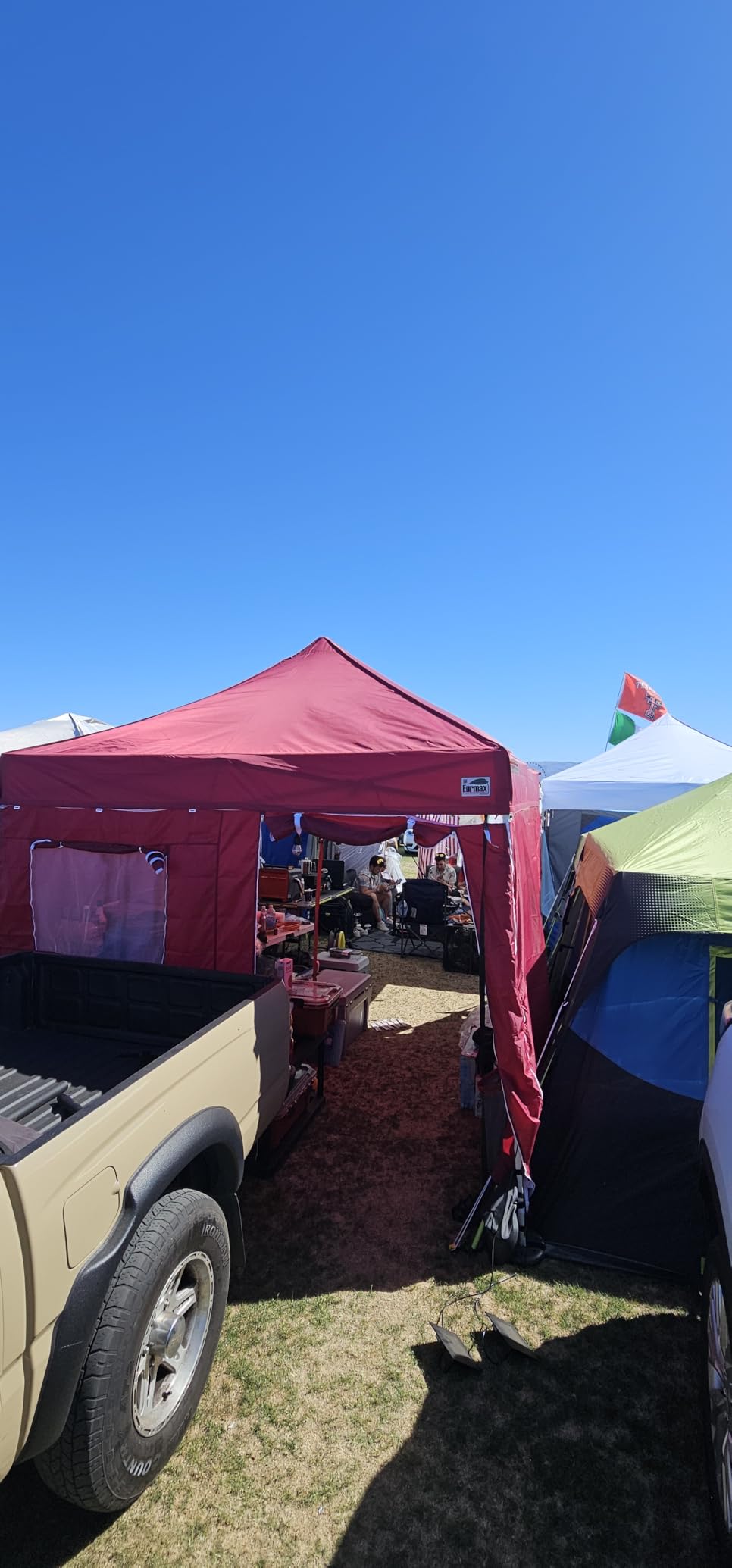
The 61 lb frame is the heaviest in the 10×10 class here and that mass is the point. It is also the reason this is a two-person lift, and buyers who load a solo car report it is the hardest part of owning this tent.
Two things work against it. The top is water resistant rather than fully waterproof, so it handles shade and light drizzle but is not the tent for a downpour. And at 61 lb it costs you the portability that made pop-ups popular in the first place.
Sidewalls are a genuine liability in a storm if they are left on, and the right move is to strip them before wind builds rather than after.
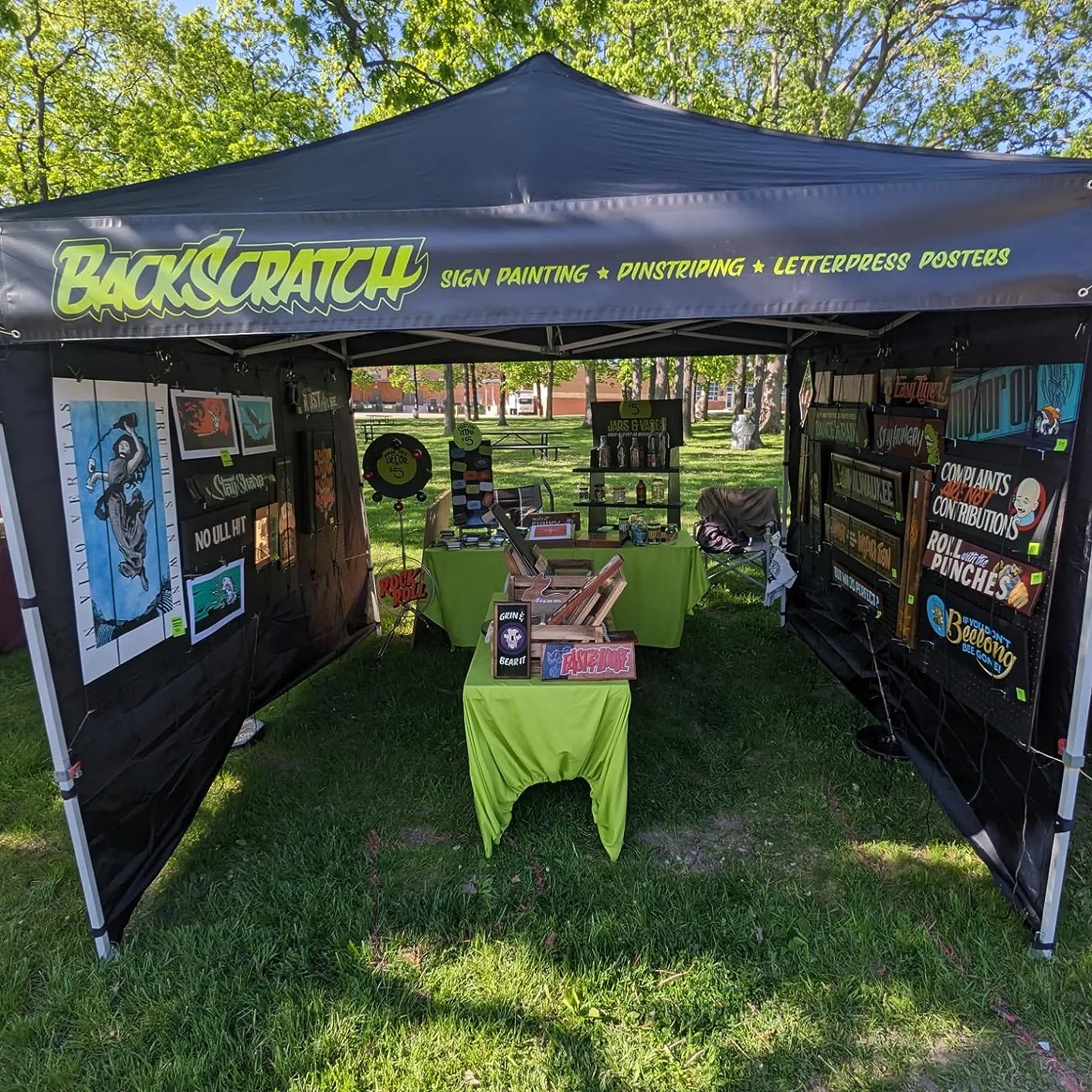
When this canopy earns its place
It is built for operators. Market vendors, trade show exhibitors, and sports parents who set up and tear down every weekend will recover the extra weight and bulk within a season, because the frame stays square and the replacement parts keep the tent in service for years.
When you should pick something else
Pass if you need the tent up by yourself, if you need genuine waterproofing, or if the venue is a park where you must carry it from a car unaided. The ABCCANOPY gives up the truss and the parts channel for 13 lb less and a full waterproof top.
4. COOSHADE 12×12 Durable Pop Up Canopy Tent: Best for Headroom and Standing Room
COOSHADE Durable Easy Pop Up Canopy Tent with Roller Bag,12×12, Black
144 sq ft footprint
50.2 lb steel frame
Near 9 ft headroom
CPAI-84 top, 4 bags
Pros
- Largest straight-legged footprint in the group
- No-top-crossbars design keeps headroom high
- Complete anchoring kit in the box
- Waterproof flame-retardant top
Cons
- Lowest average rating here at 4.0 with 14% one-star
- 50.2 lb makes solo handling difficult
- 59 inch packed length misses many trunks
The 12×12 footprint at 144 square feet covers 12 to 14 people, which makes this the pick when you need shade for a group rather than a couple of tables. The square, straight-legged layout is easier to furnish than the narrow 10×10 units because there are no awkward corner intrusions.
The no-top-crossbars design is genuinely clever for headroom. By routing the frame without a bar across the middle of the roof, interior height stays close to 9 feet, so an adult can stand at the centre of the tent rather than crouching under a truss.
Triangle and diamond frame geometry is used to spread load across the structure rather than concentrating it at the leg joints, and the top is a CPAI-84 flame-retardant silver-coated fabric that is waterproof rather than merely water resistant.
The box is unusually complete: a powder-coated steel frame, the top, a 600D roller bag, four sand bags, eight stakes, and four ropes. Nothing has to be bought separately to anchor it properly.
When this canopy earns its place
It fits buyers who need a large shaded area with real standing headroom, such as a family gathering, a small market pitch, or a group seated around the edges of a large square. Eight stakes and four ropes are more than enough to restrain all four legs and guy the peak.
When you should pick something else
The 4.0 average with 14% one-star reviews is the weakest sentiment profile in this roundup, and the 50.2 lb weight plus 59 inch packed length make it the hardest to transport of the 10×10 and 12×12 group. If your priority is wind performance and low risk, the 10×10 units above have a much better track record.
5. Quictent 20×20 Reinforced Heavy Duty Party Tent: Best for Large Gatherings
Quictent Premium 20×20 Heavy Duty Party Tent with 3 Storage Bags
400 sq ft coverage
217 lb galvanized steel
38 mm tubes, 42 mm connectors
6 sidewalls, 2 doors
Pros
- 38 mm galvanized tubing held through 15 mph when pegged and ballasted
- One owner reported surviving 37 mph
- Waterproof 180GSM PE top
- Replacement parts at minimal or no cost
Cons
- 217 lb and needs three or four adults to erect
- Weak hook-and-loop sidewall fixings can let go
- Not fireproof
This is the only shelter here that behaves like permanent infrastructure. At 400 square feet with a 217 lb galvanized steel frame, it is not a pop-up in any practical sense. It is a marquee that happens to fold, and the wind behaviour follows from that mass and spread.
The tubing is the thickest in the group: 38 mm galvanized steel tubes joined by 42 mm metal connectors, with a reinforced triangle roof structure and extra corner support beams. The manufacturer guidance is explicit that at 25 mph or higher you should be using pegs and weight bags on grass, or expansion screws on concrete.
Real-world reports match that guidance. The reinforced frame and heavy tubing held through 15 mph with extra stakes and weighted bags, and one owner reported surviving 37 mph winds. That is the highest owner-reported figure anywhere in this roundup, and it comes with a footprint four times the size of a 10×10.
The service record is unusually good for a tent at this level. Lifetime coverage on connectors, pegs, ropes, and elastic ropes, two years on covers and poles, and a customer service team that responded within 24 hours and sent replacement parts at minimal or no cost.
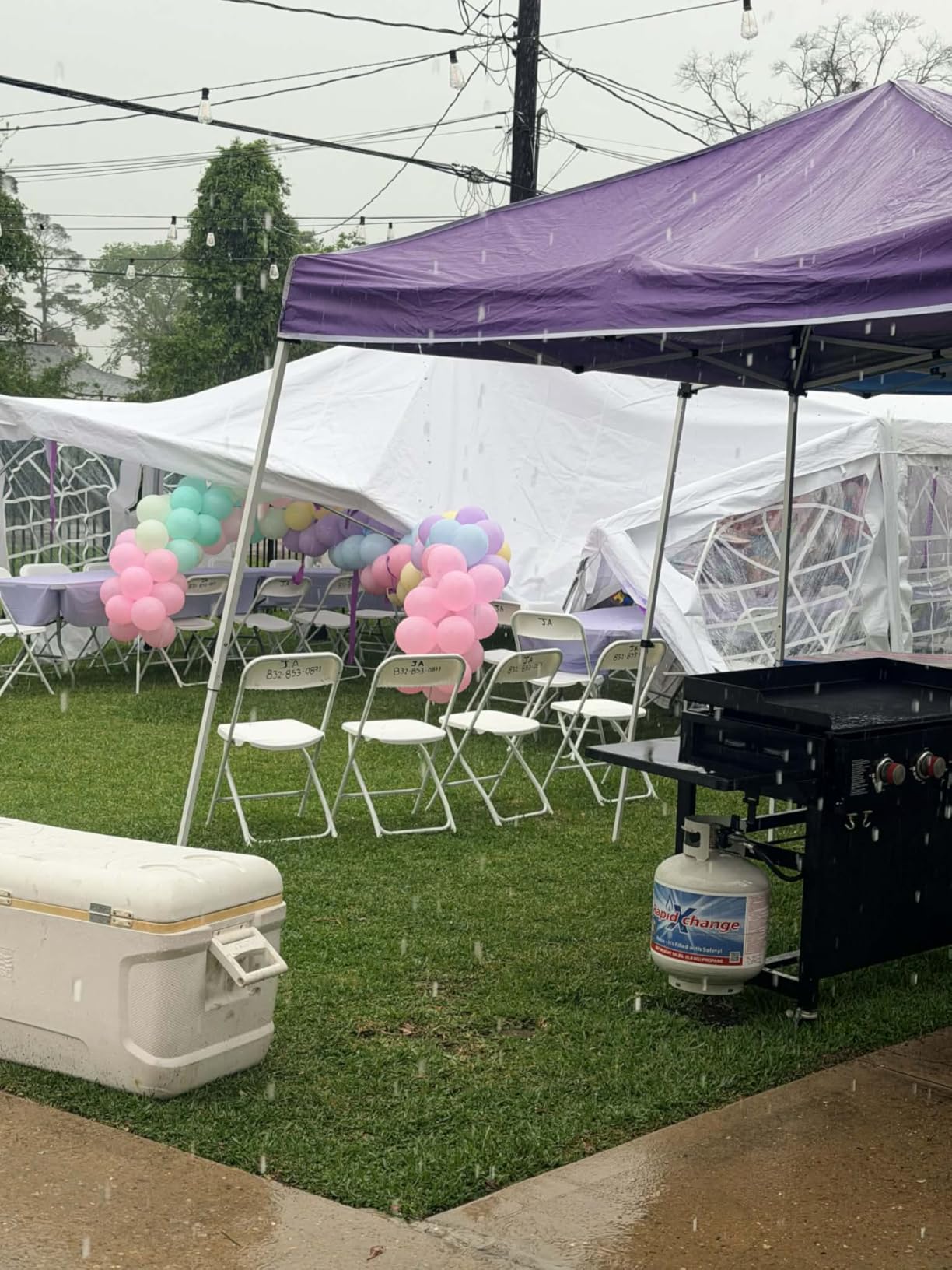
Now the hard parts, because they are real. It takes three to four strong adults to erect and disassemble, and one owner reported about 1.5 hours for the first build. It is delivered in multiple boxes, and the hardware is tedious.
Weak hook-and-loop sidewall fixings are the most repeated complaint. Walls have been criticized for coming undone and letting rain in, which matters on a tent you are relying on for weather protection over a large area.
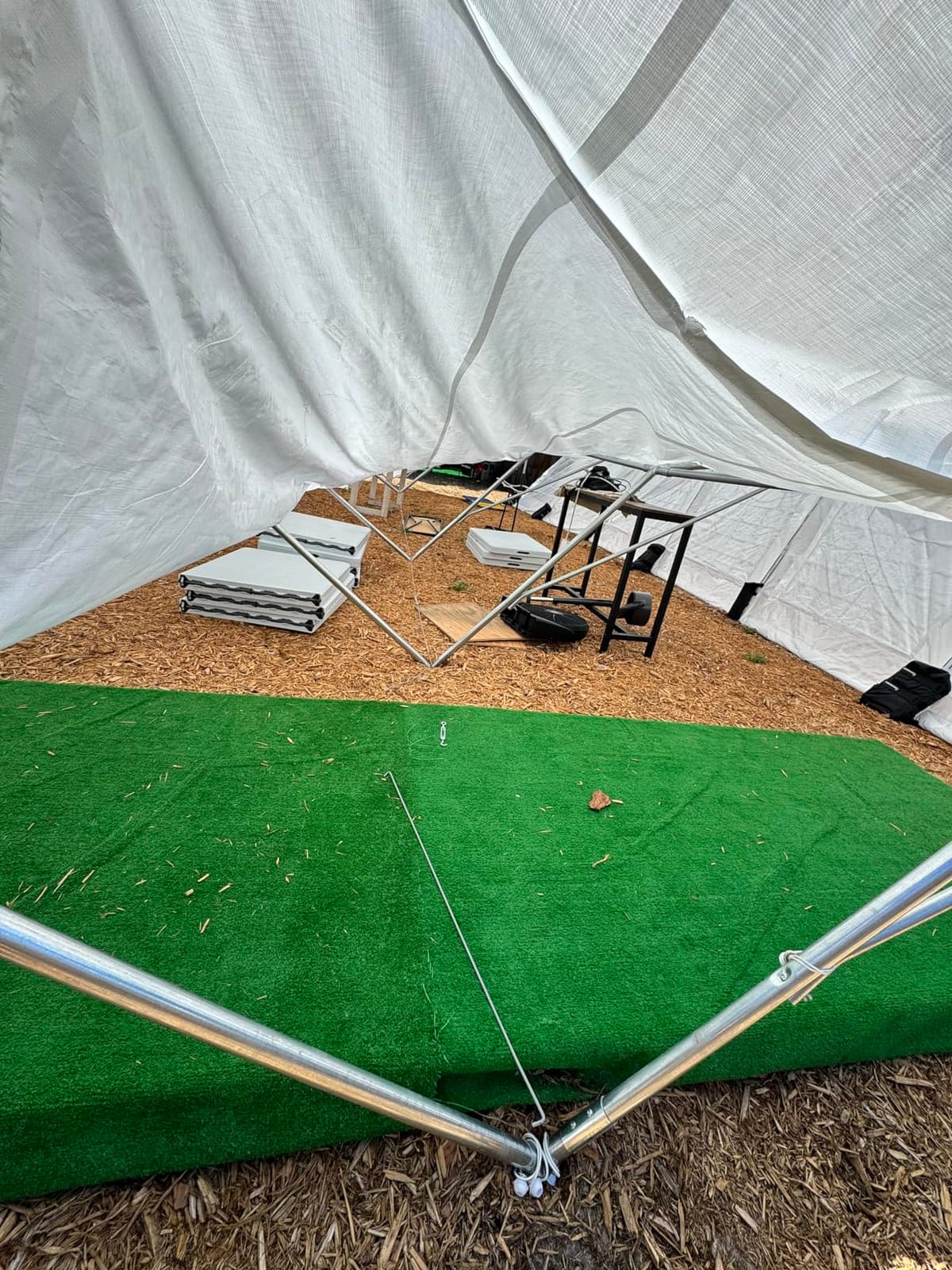
There is also a report of catastrophic frame buckling in a strong wind storm with a disputed refund, so the frame is not unbreakable. And it is explicitly not fireproof, which rules it out for grilling or any open flame beneath.
Given 217 lb of mass, ground anchoring is not optional here. Skipping the expansion screws on concrete is the difference between a marquee standing and a 400 square foot sheet of polythene travelling down a street.
When this canopy earns its place
It suits weddings, community events, market traders running a pitch every week, and anyone who has a crew and a proper surface to bolt down to. Anyone who has upgraded from a consumer pop-up reports the difference becomes obvious within a season, and the parts coverage means it stays in service.
When you should pick something else
Choose almost anything else if you need this alone, on grass, at a weekend market, or where fire is involved. It is also a bad fit for a quick setup and takedown, because the build and strike are the dominant cost.
6. COBIZI 10×10 Heavy Duty Pop Up Canopy Tent: Best for Wet Weather
COBIZI 10×10 Heavy Duty Pop Up Canopy Tent with 4 Sidewalls, Black
1.26 inch pipe at 0.03 inch wall
Sealed 420D Oxford top
Rated level 4 wind, 18 mph
4 sidewalls
Pros
- Thickest tube gauge in the group with 220 lb per pole
- Sealed seams hold 2.1 psi versus 1.1 psi typical
- Four removable sidewalls with windows and zipper
- Three adjustable heights
Cons
- Heavy at 61.7 lb for a 10x10
- Wind rating of 18 mph is modest for the weight
- Not Prime-eligible
This is the most transparent canopy in the roundup, and that transparency is worth something. It is the only 10×10 here that publishes a wind rating: level 4 wind, 18 mph, along with a per-pole load capacity of 220 lb. Most competitors would rather you assumed than knew.
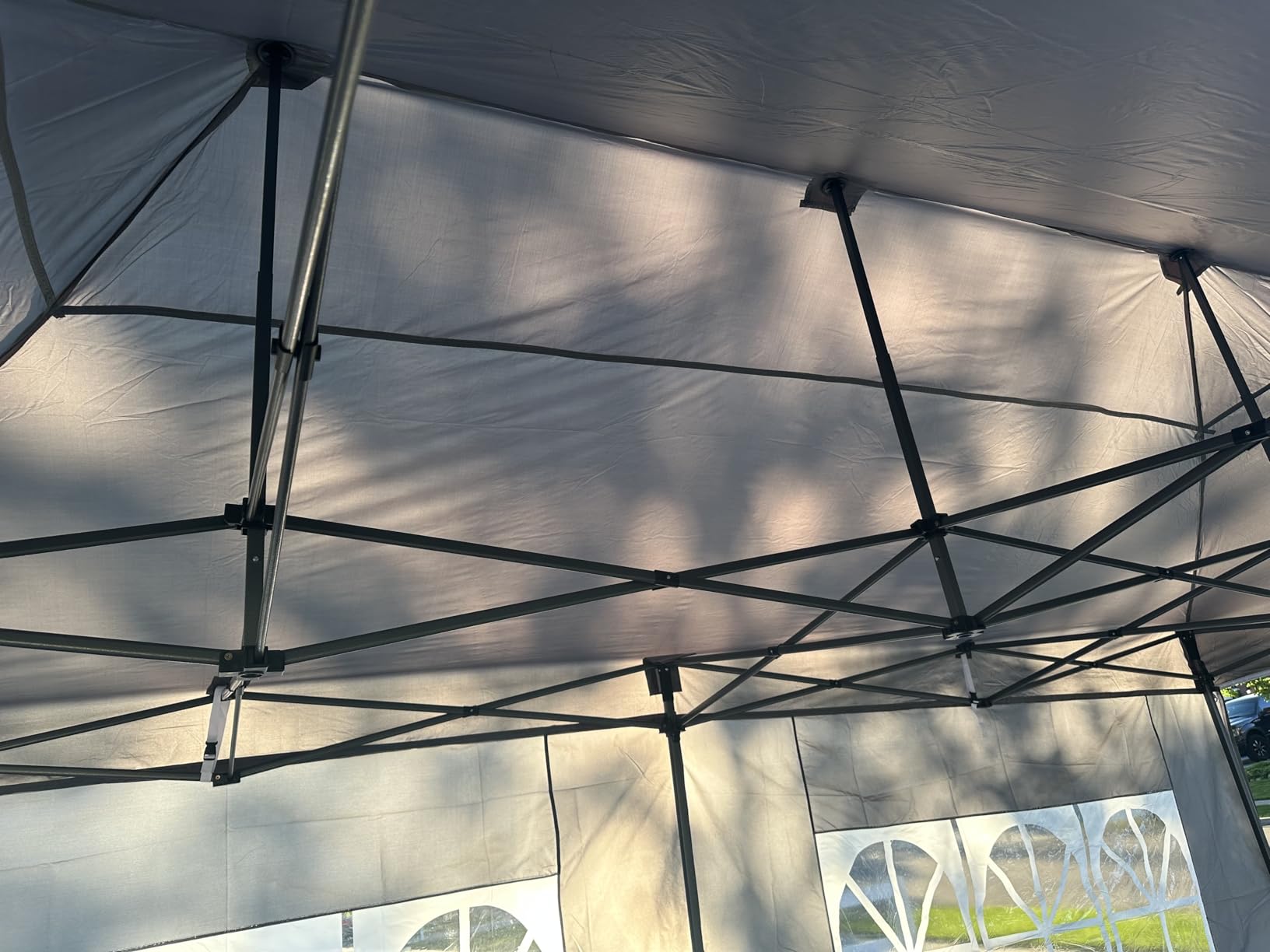
The frame is the thickest in the group. It uses 1.26 inch pipe with 0.03 inch wall thickness in a full truss design, which is 50% more wall thickness than the 0.02 inch tubing typical on common party tents, and that wall thickness is what stops a leg from folding under a side load.
Rain performance is where it genuinely separates. The double PU-coated 420D Oxford has all seams fully sealed, holding water to 2.1 psi against 1.1 psi for general tents. In practice that is the difference between a roof that stays dry through a storm and one that weeps at the stitch lines.
Four removable PU-coated sidewalls attach with full-length hook-and-loop strips, three with windows and one with a zipper, giving genuine enclosure rather than decorative skirts.
The honest tension in this pick is weight against rating. At 61.7 lb for a 10×10 it is among the heaviest units here, yet its published wind figure of 18 mph is lower than what the heavier 10x20s claim. That tells you mass alone does not decide wind survival, which is exactly why we rank on tubing gauge, leg profile, and footprint as well.
Tool-free assembly takes one to two people and there are three height settings at 122, 126, and 130 inches using thumb buttons designed to prevent pinched fingers. The 600D Oxford PVC-coated roller bag has three four-inch wheels and a hardware pocket.
Warranty is one year, which is the shortest credible commitment among the heavy duty frames here and a fair criticism for anyone planning multi-year service.
When this canopy earns its place
It is the right choice for rainy climates, for anyone selling goods that must stay dry, and for buyers who want a published wind number rather than a vibe. The sealed seams and the 0.03 inch wall thickness are the two most wind-relevant specs in the whole roundup.
When you should pick something else
If your priority is purely wind survival, the 100 lb hexagonal 10×20 spreads that load across a much wider footprint. If you are on a tight budget or need a solo build, the weight is working against you.
7. HOTEEL 10×20 Pop Up Canopy Tent: Best for Maximum Shade
HOTEEL 10×20 Pop Up Canopy with Sidewalls, Thickened Hexagonal Legs, White
200 sq ft footprint
100 lb frame
1.77 inch hex tubing at 0.03 inch wall
6 sidewalls
Pros
- Largest pipe diameter here at 1.77 inch hexagonal
- Commercial-grade full truss structure
- Double-PVC 260g top is fully waterproof
- Six sidewalls with windows and zippered doors
Cons
- 100 lb needs two or three people
- Bulky packed size
- Modest review base at 419 ratings
The 1.77 inch hexagonal tubing at 0.03 inch wall thickness is the largest frame profile in this roundup, and the shape matters as much as the diameter. A hexagonal section resists bending in every direction rather than folding preferentially along a flat, which is why it holds its geometry under side load better than square tube of the same gauge.
For scale, the manufacturer contrasts this against the 0.98 inch pipe at 0.02 inch wall used on most common party tents. That is a substantial step up in both diameter and wall thickness, and it is the clearest specification-led wind argument in the group.
At 200 square feet the footprint covers 15 to 20 people, and a wide base like this is the single most effective wind measure you can buy without changing tents. More anchored perimeter means the same gust produces less force per leg.
The fabric is 260g Oxford with two layers of PVC and waterproof strip sealing, and it is described as genuinely waterproof rather than water resistant. Six 210D PA-coated sidewalls attach with full hook-and-loop strips, four with windows and two doors with zippers.
Three height settings at 118, 122, and 126 inches use an upgraded thumb button to avoid pinched fingers, and an upgraded spring-design top bracket pulls the roof fabric tight to reduce water pooling, which is a small detail that decides whether rain sits on the roof or runs off it.
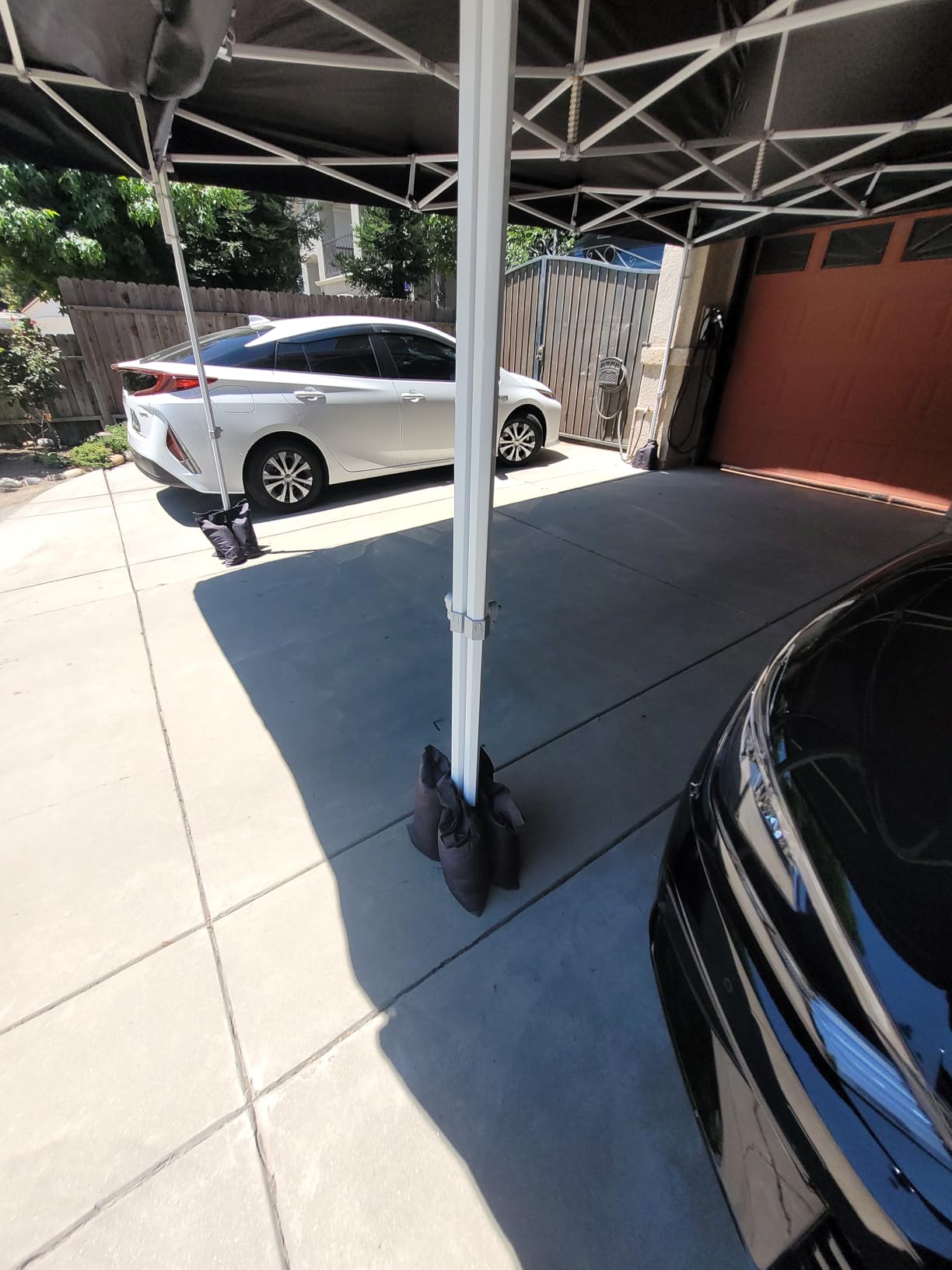
Nine guylines are specified, more than any other unit here, and the packing list includes four sand bags, eight ground nails, and four wind ropes. The 600D wheeled bag with three large wheels is genuinely necessary at 100 lb.
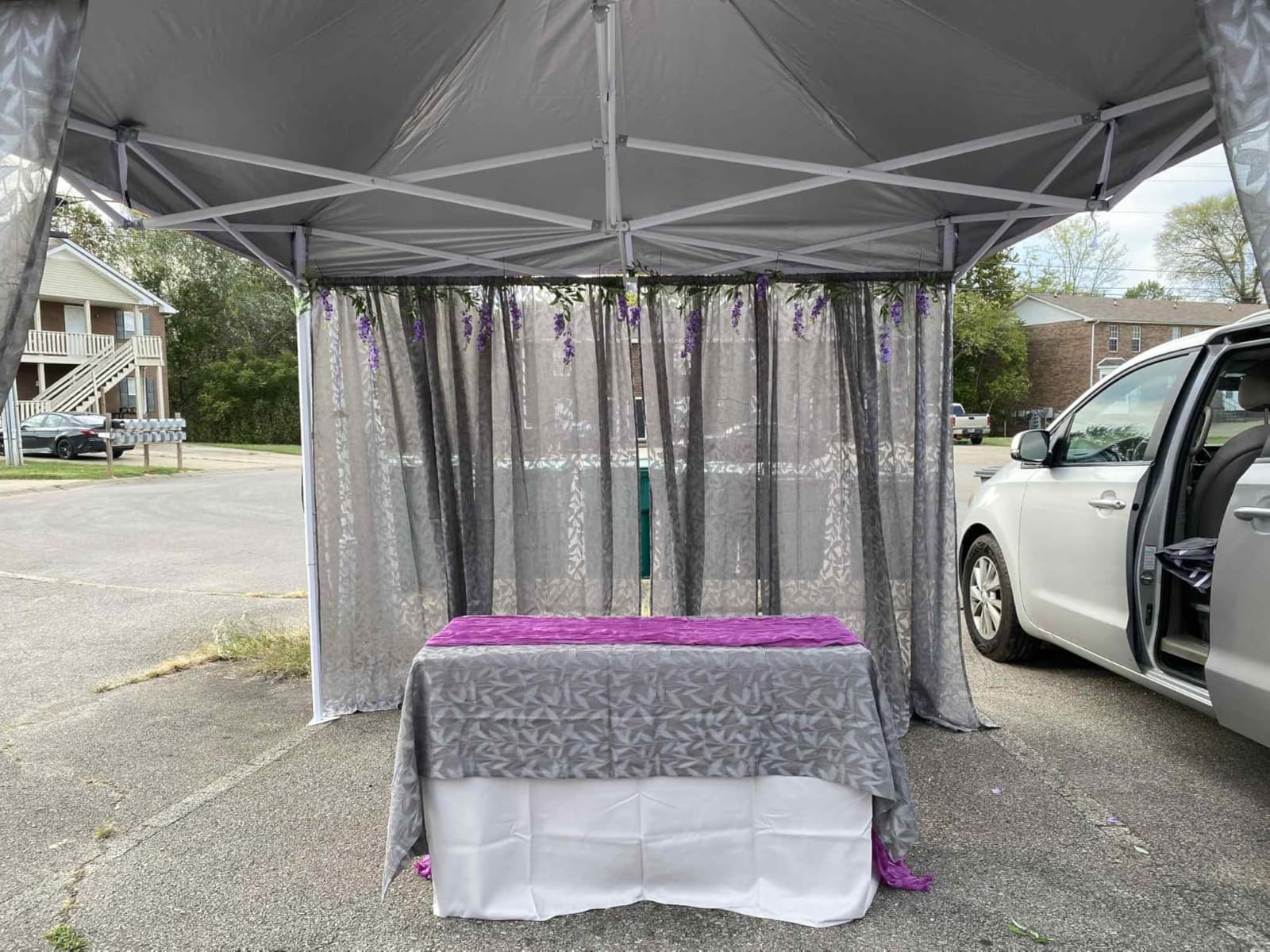
When this canopy earns its place
It is the pick for anyone shading a large group, running a long market row, or needing a straight rectangular pitch rather than a square. If you are moving from a 10×10 to a 10×20, the doubled footprint and the thicker hex frame are the two upgrades that actually change wind behaviour.
When you should pick something else
It is not a solo-load tent. At 100 lb with a bulky packed size, this needs two to three people and a real vehicle, and the 419-review base means the long-term track record is less established than the 4.6 and 4.4 units with five-figure review counts.
8. Hoteel 10×10 Heavy Duty Pop Up Canopy Tent: Best Hex Frame Value
Hoteel 10×10 Heavy Duty Pop Up Canopy Tent with 4 Sidewalls, Black
51 lb hexagonal alloy steel
420D Oxford top with UPF 50+
3 adjustable heights
8 nails, 4 ropes
Pros
- Hexagonal geometry resists deformation better than square
- 420D fabric outlasts 210D standard
- Lowest one-star share in the group at 2 percent
- Complete anchoring package included
Cons
- Heavy at 51 lb
- Sidewalls are thinner 210D-class than the top
- Backpack instead of a wheeled roller bag
This is the pick if you want a hex frame in a 10×10 footprint without stepping up to a 100 lb marquee. The manufacturer is direct about why: hexagonal pipes are structurally stronger than square pipes, less prone to deformation on impact, and offer higher stability and wind resistance.
Fabric is 420D Oxford, a step up from the 210D found on most canopies in this size class, with a silver-coated interior for UPF 50+ UV protection. Thicker fabric resists tearing when wind loads the panel and keeps working after repeated use and UV exposure.
Review sentiment is the strongest relative signal in the group after the top pick, with only 2% one-star reviews. That matters for wind because the complaints owners report are weight and portability, not structural failure.
Setup is tool-free by one or two people with three height positions and an anti-pinch thumb button. The kit includes four silver-coated sidewalls, eight ground nails, four wind ropes, and a portable backpack.
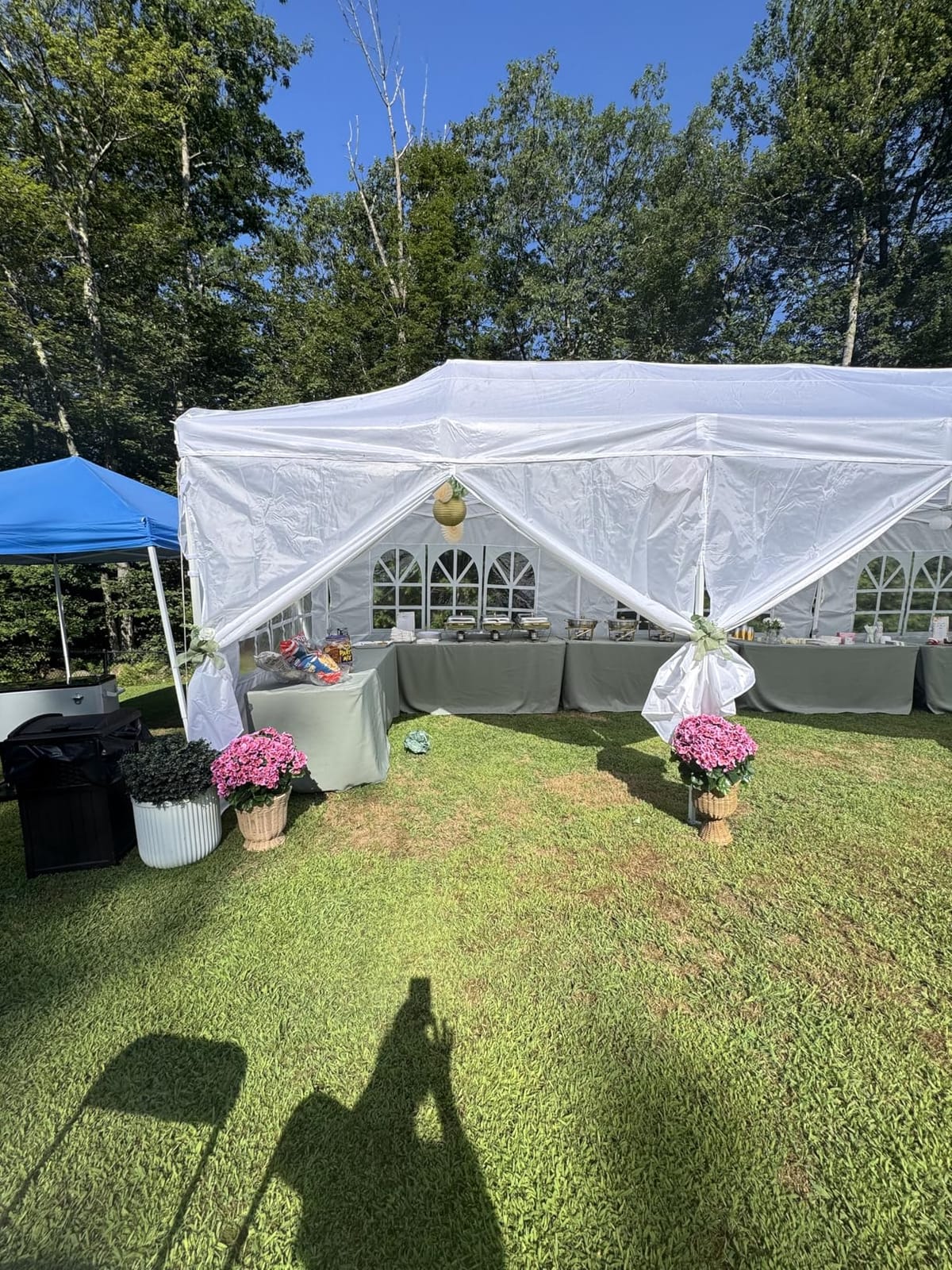
Two gaps to note. The sidewalls are 210D-class while the top is 420D, so the enclosure panels are the first thing to degrade even though the roof holds. And there are no wheels, which at 51 lb turns every move into a two-person lift.
Coverage is one year, which is standard for this tier but short next to the two-year commitment on the CROWN SHADES and the lifetime connector coverage on the Quictent 20×20.
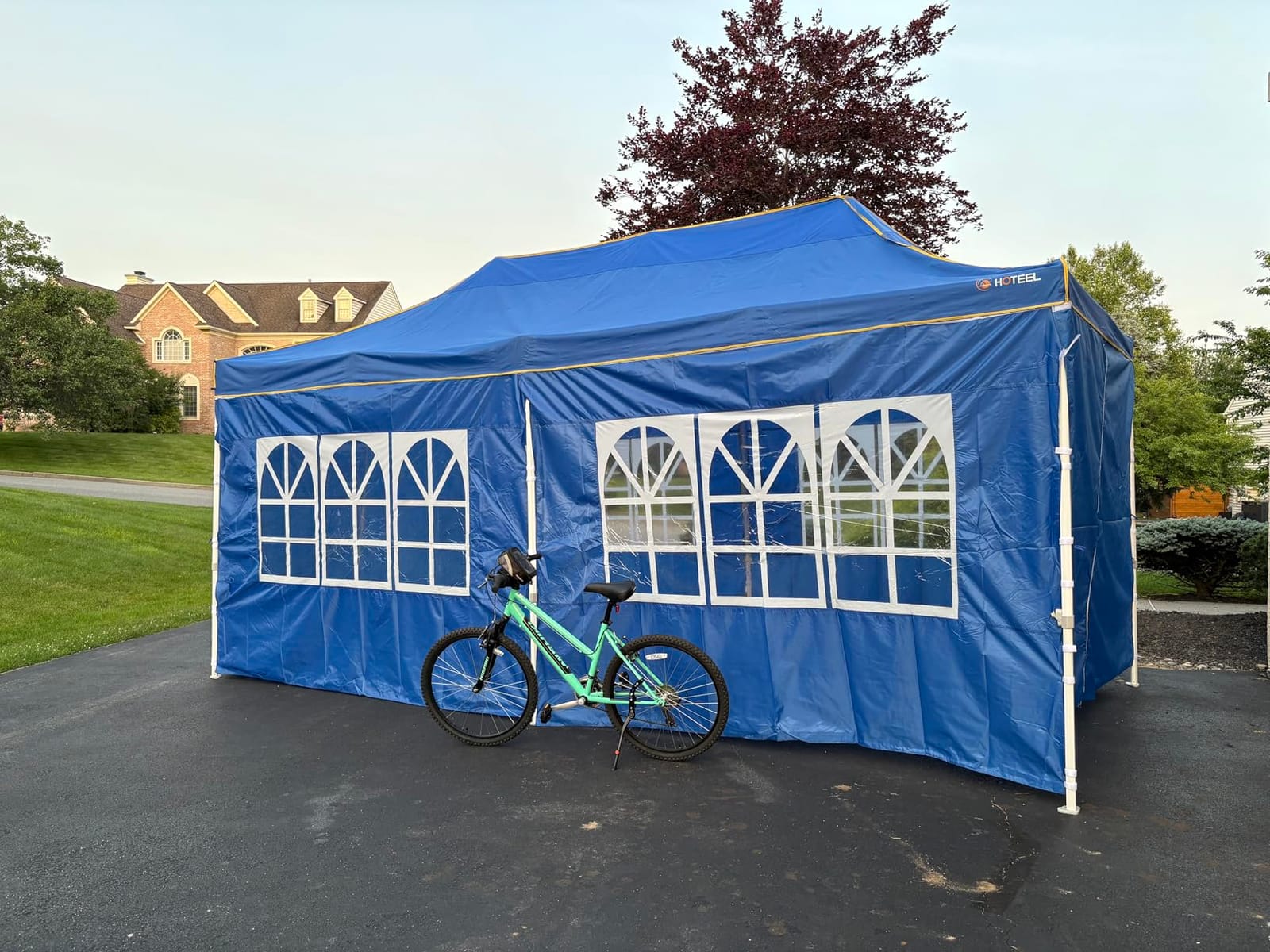
When this canopy earns its place
It fits buyers who have read that square tubing deforms and want a hex frame at 10×10 scale, who will use the sidewalls as much as the roof, and who want a complete anchoring kit without a second order. At 51 lb it is heavy but manageable for two people at a market or a sideline.
When you should pick something else
Choose the COOSHADE 12×12 if headroom and a larger floor matter more than the fabric grade, and the ABCCANOPY if you want a fully waterproof top with a lighter frame and a taller peak. This is not a wheeled tent, so plan for two people on every move.
9. WEIZE 10×10 Pop Up Canopy Tent: Best Budget Pick
WEIZE 10×10 Pop Up Canopy Tent, 1-Button Push Setup Canopy Tent with 1 Sidewall, Adjustable Height Instant Portable Shelter,Portable Roller Bag, Easy Outdoor Sun Shade for Events,4 Weight Bags,Blue
One-touch central locking hub
Roof ventilation vents
Three height settings
150D silver-coated top
Pros
- Fastest solo setup in the group at under a minute
- Vents reduce wind resistance and heat
- UPF 50+ with 87 percent shade
- 4.6 rating with 81 percent five-star
Cons
- Lightest-duty frame with the thinnest 150D fabric
- Only one sidewall included
- Water enters through the roof vent in heavy rain
The integrated ventilation vents are the feature that makes this interesting for wind. The manufacturer specifies that the vents reduce wind resistance, and unlike decorative grommets, a vent that bleeds pressure from under the roof genuinely lowers the lift that tries to invert the frame.
Setup speed is the other headline. The one-touch central locking system assembles in under a minute without tools by one or two people, and one owner had it fully erected in about 10 minutes including unpacking.
Geometry helps too. The top height is raised to 2.9 meters with the edge extended to 2 meters, which gives a steeper pitch for rain runoff and a smaller face to the wind, and all four sides slide smoothly with red locking clips at three heights of 8.9, 9.3, and 9.6 feet.
The frame uses thickened steel pipe reinforced with pre-installed heavy-duty bolts, and the 150D silver-coated top gives UPF 50+ protection with 87% shade. A single sidewall with six large pockets blocks low sun.
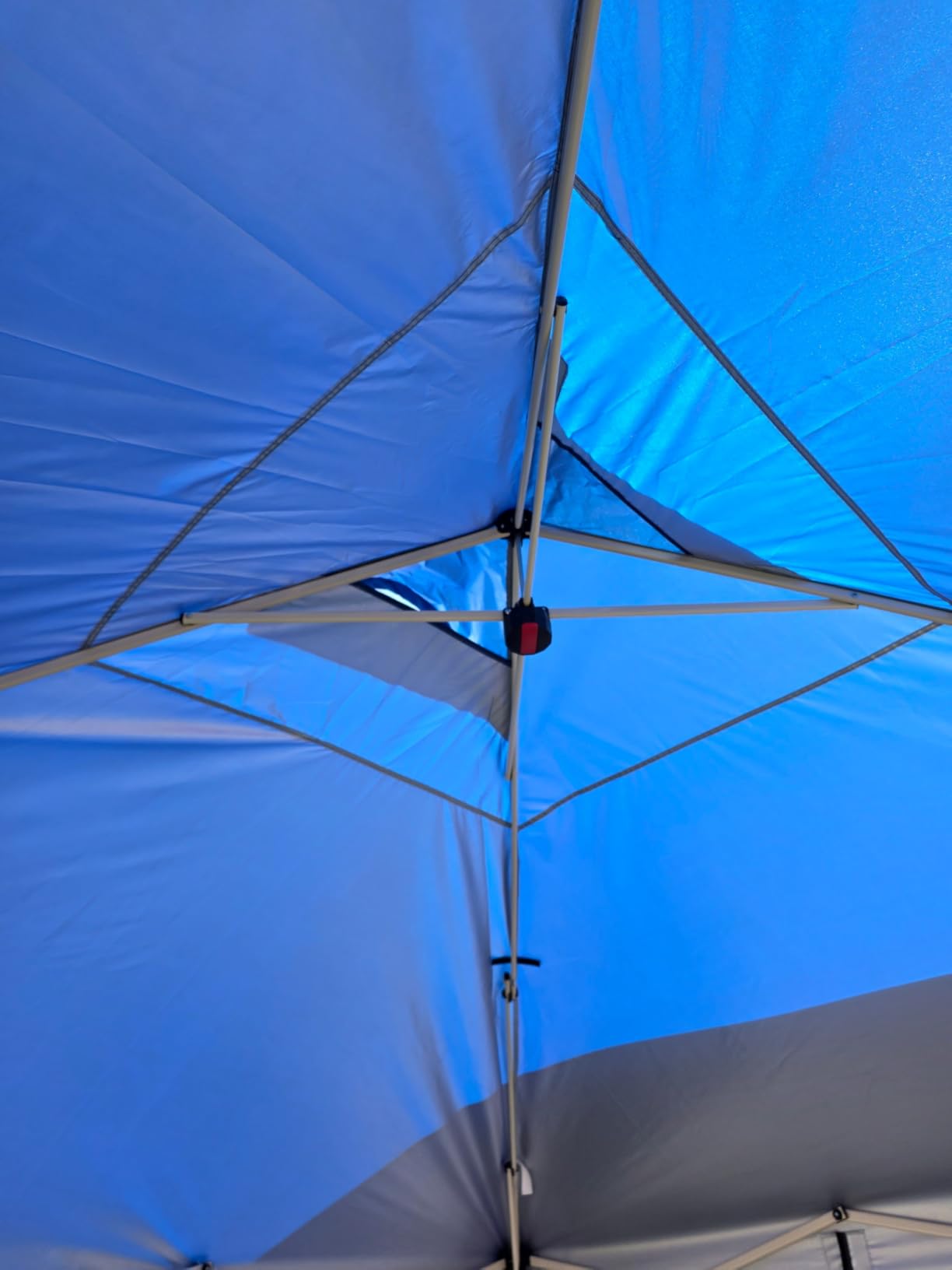
Now the limitation that decides your purchase. The manufacturer explicitly warns against installing this canopy in storms, strong wind, or snowfall, and instructs owners to pack it up to protect nearby people. That is the most honest instruction in the roundup, but it confirms this is a fair-weather and light-breeze tent rather than a wind shelter.
Rain can enter through the top ventilation opening during heavy rain, which is the direct trade-off for the venting that helps in wind. The 150D fabric is the thinnest here, and royal blue showed sun bleaching toward near-white after roughly two weeks of exposure.
At a 4.6 rating across 171 reviews with 81% five-star, the sentiment is strong, just on a small sample.
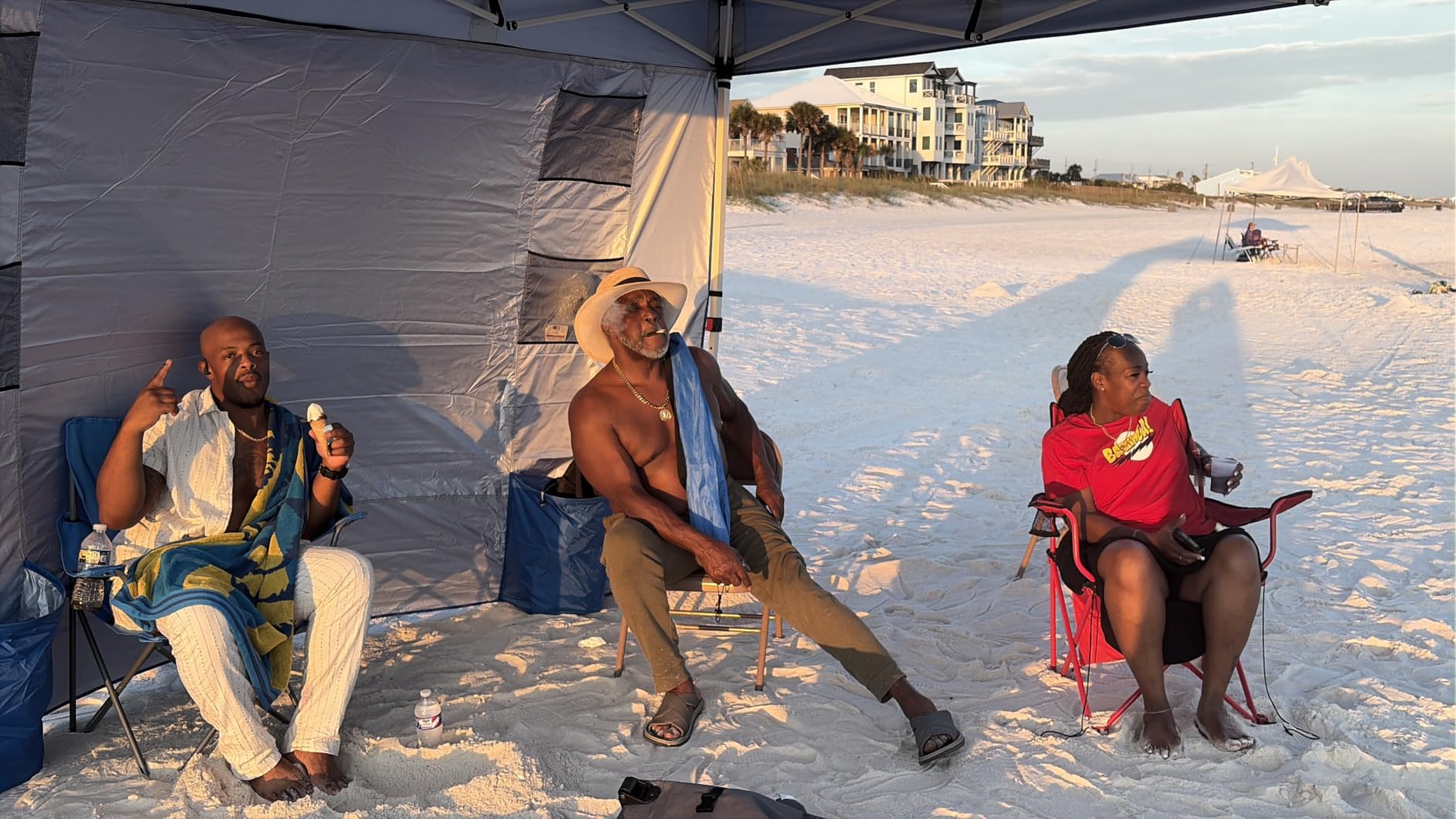
When this canopy earns its place
It is for the buyer who wants a tent up in a couple of minutes at a fair, a yard sale, or a school event, on a calm day, without spending heavily. The vents help in heat as much as in breeze, and the single sidewall is useful against low afternoon sun.
When you should pick something else
Do not put this up when wind is forecast. Move up to the ABCCANOPY for an anchored unit with more mass and a waterproof top, or to the Hoteel 10×10 if you want a hex frame and thicker fabric. The manufacturer warning is not boilerplate.
10. Quictent 10×20 Heavy Duty Pop Up Canopy Tent: Most Documented Wind Rating
Quictent 10’x20′ Heavy Duty Pop up Canopy Tent with 3 Removable Sidewalls
Rated 35 mph and 8 in/hour rain
600D CPAI-84 fabric
250 sq ft shade
4 bags, 10 stakes
Pros
- Only unit here with a published wind and rain test
- 600D fabric is the heaviest spec in the group
- Most complete anchoring kit with 10 stakes
- Removable awning with roll-up mesh windows
Cons
- Lowest review count here at 98
- Only three sidewalls so one side stays open
- Not Prime-eligible
This is the one to read if you want a wind number instead of an opinion. The manufacturer states the canopy withstands 8 inches of rain per hour and 35 mph winds, tested over 2.5 hours, and rates it 2.5 times tougher than a standard canopy.
No other unit in this roundup publishes a figure in that range for a portable structure, and it comes with the heaviest fabric spec here: industrial-grade 600D fire-retardant fabric with CPAI-84 certification.
At 250 square feet of shade with three removable walls plus a removable awning with roll-up mesh windows, the awning is a feature none of the other 10×10 and 10×20 units have. It extends covered space without adding a whole second frame.
The anchoring kit is the most generous in the group at four sand bags, ten stakes, and four guy lines, which is more than enough to restrain every leg and guy the peak on a 10×20.
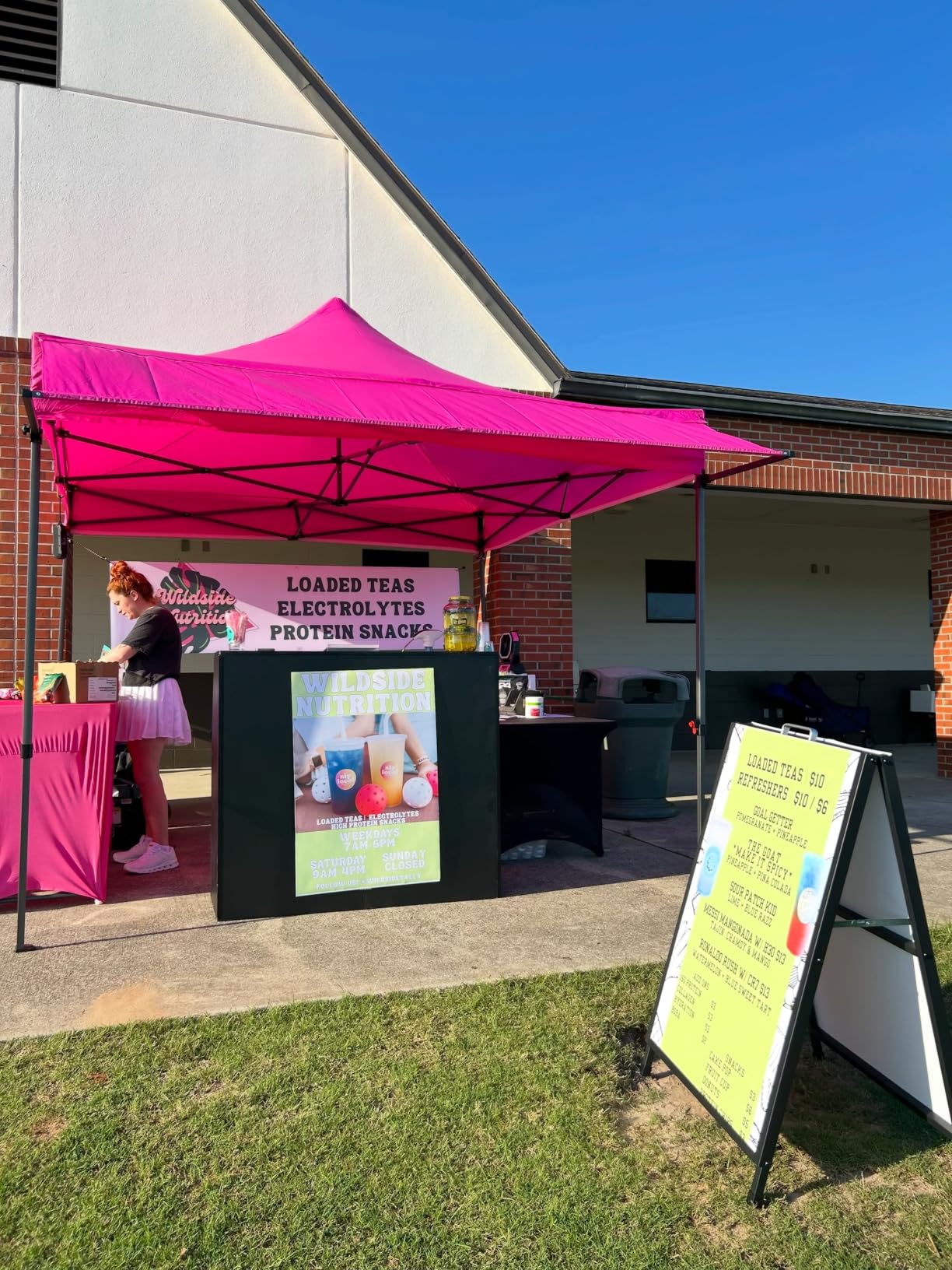
Set the manufacturer figure in context. A published 35 mph test is a controlled, tethered test, not a guarantee in a squall, and it assumes the anchoring kit is deployed. Unanchored, the same number means much less.
At 98 reviews this is the smallest sample in the roundup, and the 4.3 average with 12% three-star reviews suggests some mixed experiences. The real-world track record is simply not as well established as the 11394-review unit at the top of this list.
With only three sidewalls, one long side stays open unless you deploy the awning across it. Setup is tool-free in about three minutes with three-level height adjustment, and the 800D wheeled bag and 1-year frame warranty are both respectable.
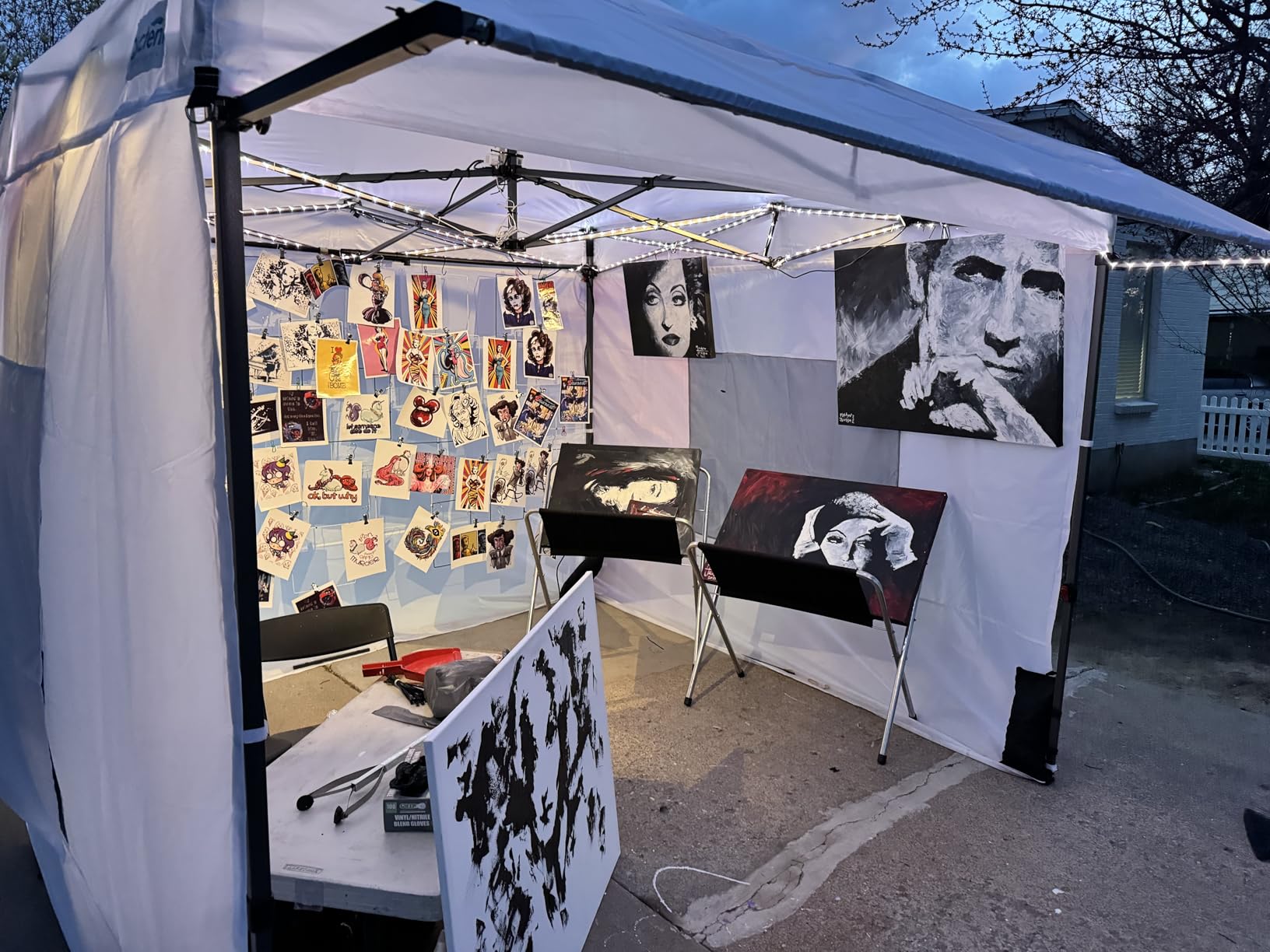
When this canopy earns its place
It suits buyers who want documented performance, a fire-retardant fabric for public or event use, and the largest amount of shade in this group at 250 square feet. The roll-up mesh awning makes it good for a long market pitch where you want the front covered.
When you should pick something else
Choose the CROWN SHADES or the ABCCANOPY if a proven review history matters more to you than a published test. At 98 reviews this is a less-proven purchase, and it is not a tent for exposed coastal sites where sustained wind routinely passes 30 mph.
How to Anchor a Canopy in Wind
No canopy in this roundup performs to its specification unless all four legs are restrained. This is the part of wind performance that costs the least and is skipped most often, and it is where most reported failures originate.
Step 1: weight every leg, not two corners
Anchor all four legs. This is the single rule that separates canopies that survive from canopies that become a sail. Weighting two corners leaves the frame free to pivot into a gust, and pivoting is what inverts a tent rather than merely tipping it.
Distribute ballast across the legs, including the mid-legs on 10×10 frames, rather than piling it on the two corners nearest your tent. The pick above comes with a dedicated pocket for exactly this kit.
Step 2: pick the right stake for the surface
Grass and soft soil take long auger or spiral stakes driven at an angle away from the leg. Hard surfaces such as concrete and asphalt need expansion screws or a weighted base rather than a spike that cannot bite. Beach sand needs the widest fluke you can find, because sand loses holding power fast.
For a tethered beach shelter, inflatable tube structures are the category users report surviving gusts around 35 mph, precisely because the tubes bend rather than snap. They still need serious anchors, so a tube shelter on a sand dune with a small stake is a bad combination.
Step 3: guy the peak as well as the legs
Guy lines from the roof peak to a ground anchor directly downwind reduce the lift that tries to lift the roof plane. This matters most on the larger 10×20 and 20×20 units, where a big roof area produces a lot of force even when the legs hold.
Step 4: orient the tent with the prevailing wind
Positioning matters more than brand, and users report the effect is measurable. Present the narrow end to the prevailing wind rather than the broad side, and leave the open face on the lee side so gusts pass through instead of loading a solid panel.
Step 5: lower it, then take it down
Lowering the canopy fully shortens the lever arm and reduces the height the wind can push on. That is the correct storm response and it is cited far more often than taking the tent down, though taking it down is always the safer answer of the two.
Set a threshold before you need one. If forecast gusts exceed the published rating for your unit, collapse it and leave. A canopy is a shade structure, and the cost of being wrong is measured in what lands on top of you.
How to Choose a Canopy That Survives Wind
Most buying guides sell you on the word heavy duty. Here is what actually predicts whether a canopy holds up, in the order we would weight it.
Frame weight and tubing wall thickness
Frame weight in pounds tells you how much mass resists lift, and it is the spec users ask for most. The range here runs from 36 lb to 217 lb, and anything marketed as heavy duty under roughly 40 lb is doing some marketing work of its own.
Wall thickness matters more than most buyers look at. The 0.03 inch tubing used by the COBIZI, the HOTEEL 10×20, and the Quictent 20×20 is 50% thicker than the 0.02 inch tubing typical on common party tents, and wall thickness is what stops a leg folding under a side load.
Hexagonal versus square legs
A hexagonal section resists bending evenly in every direction. A square tube has flat faces that buckle preferentially along a fold line, which is why hex frames are the standard advice among users who have watched square tubing deform.
Two picks here use hexagonal tubing, and both manufacturers state the reason plainly. If you are choosing between two similar-weight frames, the hex one is the better wind bet.
Footprint over everything
A 20×20 has four times the anchored perimeter of a 10×10, so the same gust produces a fraction of the force per leg. If you need wind resistance more than portability, buying a larger canopy is a stronger move than buying a heavier 10×10.
If you also need a way to move heavy gear around a site reliably, our heavy duty mobility scooter reviews cover the same load-versus-portability trade-off for a different category.
Vented versus solid roofs
A vent that bleeds pressure from under the roof reduces lift without adding mass. The CROWN SHADES and the WEIZE both have integrated venting, and the CROWN SHADES additionally specifies the vents as preventing wind lift. Check whether a vent is a real opening in the roof or a sealed grommet.
Fabric that survives being a sail
Wind loads the fabric, so denier and seam construction decide whether the roof holds. Sealed seams are the upgrade that matters, as on the COBIZI at 2.1 psi against the 1.1 psi typical of general tents, and a heavier denier resists tearing when a panel loads up.
Warranty and spare parts as a confidence signal
Warranty length tells you how confident a manufacturer is in wind performance, because a tent that fails in weather is a warranty claim. A one-year frame warranty is the floor; the CROWN SHADES offers two years, and the Quictent 20×20 offers lifetime coverage on connectors, pegs, and ropes.
Also check whether replacement crossbars and legs are sold separately. A bent crossbar on a brand with no parts channel is functionally the same as losing the whole tent. The same rule of thumb applies to workshop gear: our heavy duty paper cutter reviews rank replacement part availability just as heavily.
Frequently Asked Questions
What wind speed is too high for a canopy?
For a pop-up canopy, treat 20 mph as the practical ceiling for sustained wind and 25 mph as the point where you lower the tent and plan takedown. Above 30 mph no portable canopy is safe and the correct move is to collapse it and move clear. These figures assume all four legs are anchored.
Can a canopy withstand 50 mph winds?
No portable pop-up canopy should be left up in 50 mph winds. The only shade structure category users report surviving gusts at that level is inflatable tube shelters, because the tubes bend rather than snap, and even those need serious ground anchors. A pop-up canopy at 50 mph is a projectile.
Who makes the strongest canopies for wind?
Strength comes from frame mass, tubing wall thickness, leg profile, and footprint rather than brand name alone. In this roundup the CROWN SHADES 10×10 pairs a 36 lb steel truss with vented attachment points, the COBIZI uses 0.03 inch wall thickness in a full truss, and the HOTEEL 10×20 uses the thickest tubing at 1.77 inch hexagonal. The Quictent 10×20 is the only unit publishing a 35 mph tested figure.
How do I keep a pop-up canopy from blowing away?
Anchor all four legs rather than two corners, match the stake type to the surface, add guy lines from the roof peak downwind, and orient the tent so the narrow end faces the prevailing wind. If forecast gusts exceed your unit’s rating, lower it and then take it down rather than trying to outlast the gust.
What are the best stakes for a pop-up canopy?
Long auger or spiral stakes work best in grass and soft soil, driven at an angle away from the leg. Concrete and asphalt need expansion screws or a weighted base, and beach sand needs the widest fluke you can find because sand loses holding power quickly. Whichever surface you are on, restrain every leg rather than only the corners.
Is 20 mph wind strong for a tent?
20 mph is the practical limit for a pop-up canopy, so yes, it is a serious wind. Consumer-grade frames with thin square tubing and plastic joints typically fail in that band, often by inverting. A heavy duty frame with thick tubing and all four legs anchored can usually hold through it.
Final Verdict
The CROWN SHADES 10×10 is our pick as the best heavy duty canopy for wind overall, because it combines the fastest solo setup, a 36 lb steel truss frame, integrated roof venting that bleeds wind lift, and the largest review base in the group at 11394 ratings averaging 4.6. Use the stakes, ropes, and sand bags in the box on every leg.
If you need more mass and true waterproofing, the ABCCANOPY 10×10 is the value step up. For repeated commercial use and a frame that stays in service for years, the Eurmax USA truss unit with US-stocked replacement parts is the one to buy once.
Whichever you choose, anchor all four legs, guy the peak, and take the tent down when the forecast passes its rating. No frame specification substitutes for good judgement about when a gust is bigger than your shelter.
Readers who want a similar breakdown on other heavy duty gear can start with our heavy duty dog kennels reviews, our heavy duty dog crate reviews, and our heavy duty sewing machine reviews.