
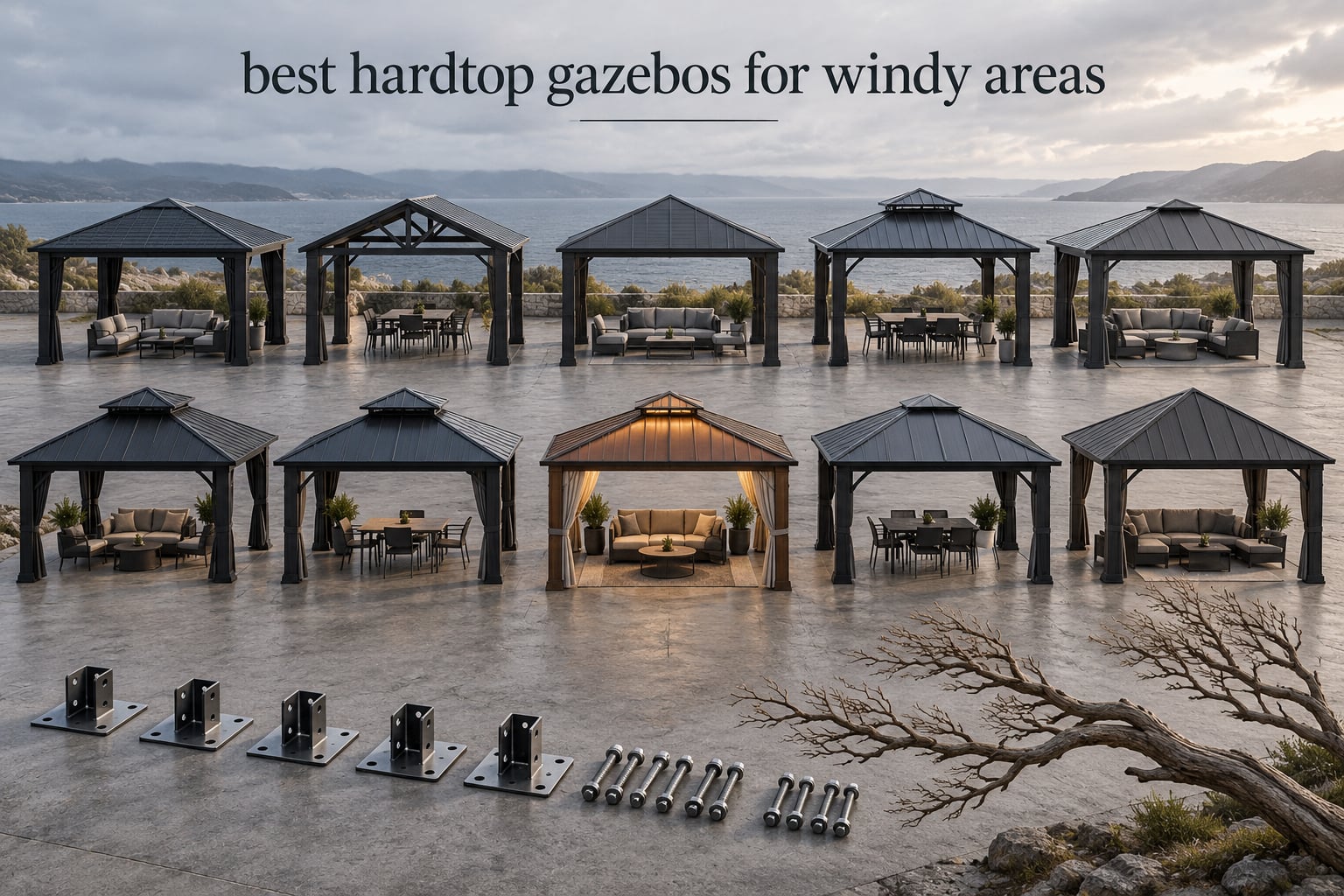
Wind rating decides which hardtop gazebo survives your yard, and most listings never print it. We compared ten hardtop gazebos for windy areas and sorted them by the only three numbers that matter: stated wind speed, frame gauge and shape, and how the structure transfers load into the ground. The spread runs from a 31-38 mph ceiling on the budget end to a Pro-Tect tested 100 mph on the certified end, and that gap decides where you are standing when a front moves through. Specs below were verified in 2026.
Most buyers start with color and fabric, then discover in October that their gazebo was never rated for their exposure. A hardtop shell by itself does not make a structure wind-resistant; frame thickness, roof geometry and a real anchor plan do. Our team spent weeks reading spec sheets, warranty terms and owner reviews across all ten models to build the table below, which lines every model up on the same attributes. If you want a broader look first, our [hands-on gazebo reviews](https://zamd.net/best-gazebos/) cover soft-top and hardtop setups side by side.
Table of Contents
Top 3 Picks for Windy Yards in 2026
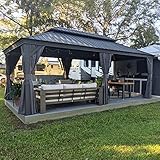
PURPLE LEAF 12×20 Hardtop
- 240 sq ft covered space
- 4.7 inch powder-coated aluminum posts
- Double vented galvanized steel roof

PURPLE LEAF 14×20 with Lights
- 280 sq ft covered space
- Integrated LED lighting package
- Double roof vents for airflow

Kozyard Alexander 10×12
- Rated 60 mph when anchored
- 2
- 500 lb snow load
- 29-gauge galvanized steel double roof
All Ten Best Hardtop Gazebos for Windy Areas (October 2026)
| Product | Specifications | Action |
|---|---|---|
| PURPLE LEAF 12×20 Hardtop Gazebo |
|
Check Latest Price |
| PURPLE LEAF 14×20 Hardtop with Lights |
|
Check Latest Price |
| Kozyard Alexander 10×12 Hardtop |
|
Check Latest Price |
 Backyard Discovery Arcadia 14×12 Cedar Backyard Discovery Arcadia 14×12 Cedar |
|
Check Latest Price |
 Domi 12×12 Cedar Hardtop Gazebo Domi 12×12 Cedar Hardtop Gazebo |
|
Check Latest Price |
 EROMMY 10×12 Aluminum Hardtop EROMMY 10×12 Aluminum Hardtop |
|
Check Latest Price |
 YOLENY 10×12 Hardtop Gazebo YOLENY 10×12 Hardtop Gazebo |
|
Check Latest Price |
 ABCCANOPY 8×8 Hardtop Gazebo ABCCANOPY 8×8 Hardtop Gazebo |
|
Check Latest Price |
 GARTOO 8.5×8.5 Hardtop Gazebo GARTOO 8.5×8.5 Hardtop Gazebo |
|
Check Latest Price |
 Aoxun 10×12 Hardtop Gazebo Aoxun 10×12 Hardtop Gazebo |
|
Check Latest Price |
What Actually Makes a Gazebo Wind-Resistant
Wind resistance comes from three levers: frame gauge and post shape, roof geometry and layering, and the anchor hardware that moves load out of the structure. An mph figure only means something when all three are present.
A 4.7 inch triangular aluminum post resists lateral load far better than a slim square tube because the triangular section cannot rack. Thicker roof panels matter for the same reason: 29-gauge steel carries more snow than lighter gauges. Cedar is strong in compression but moves with humidity, which is why the cedar models here carry lower wind ceilings.
Roof shape is second. A vented double-top roof lets pressure equalize above and below instead of building suction lift over a single sealed panel, which is why every steel model in this roundup uses one.
The mph bands you will see across listings are 30-38 mph for a budget-grade structure, 60 mph for a properly anchored permanent installation, and 100 mph for the independently tested tier. Certified and claimed are not the same. A Pro-Tect or engineering test means a rated figure was verified under a published protocol, while a manufacturer claim is a spec-sheet number nobody outside the company has checked.
Anchoring is the point people skip. A 60 mph rating assumes the frame is bolted through the base plates into a deck frame or concrete. One owner of the PURPLE LEAF 12 x 20 reported structural damage after an 80 mph storm with the unit not anchored to concrete, matching installer guidance that ground pins and patio fasteners alone are not sufficient.
1. PURPLE LEAF 12 x 20 Hardtop Gazebo – Best Overall for Windy Yards
PURPLE LEAF Patio Gazebo 12′ X 20′ Built-in Drainage System, Gray
240 sq ft covered
4.7 inch aluminum posts
Double vented galvanized roof
Built-in drainage
Pros
- Powder-coated aluminum frame with 4.7 inch thick posts
- Double vented roof moves air and takes wind better
- Powder-coated roof resists fade rust and snow
- 260 GSM netting and curtains included
- Pre-drilled base holes accept structural anchors
Cons
- Assembly realistically needs two people
- Picture-only instructions confuse part orientation
- Roof panels can dent in severe hail
This is the model we kept coming back to after reading every spec sheet in the group. The frame is a powder-coated aluminum structure on 4.7 inch thick posts with pre-drilled bases, and at 240 sq ft it covers a real seating area without becoming the largest sail on the property. The double vented roof is the part that matters for wind, because pressure equalizes through the gap instead of lifting a single sealed panel.
Owners consistently describe it as solid once built. Our comparison of the ten models put it ahead on owner feedback volume and a post size that no other aluminum unit in this group matches.
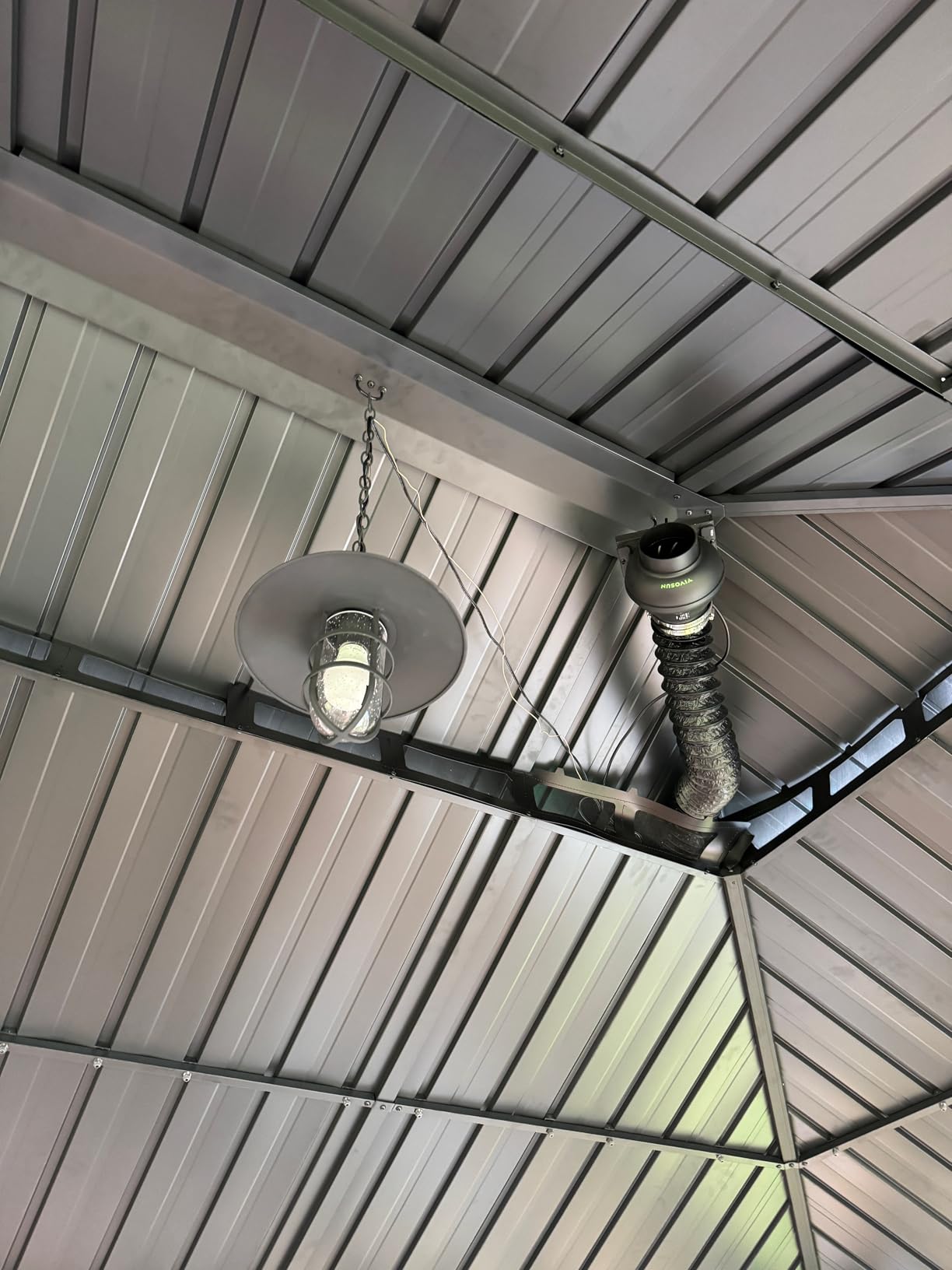
Two weaknesses are worth planning around. The build is a two-person job with picture-only documentation, so budget a full weekend rather than an afternoon. Interior heat can also build on still days with no cross-breeze, which matters more for comfort than for wind performance.
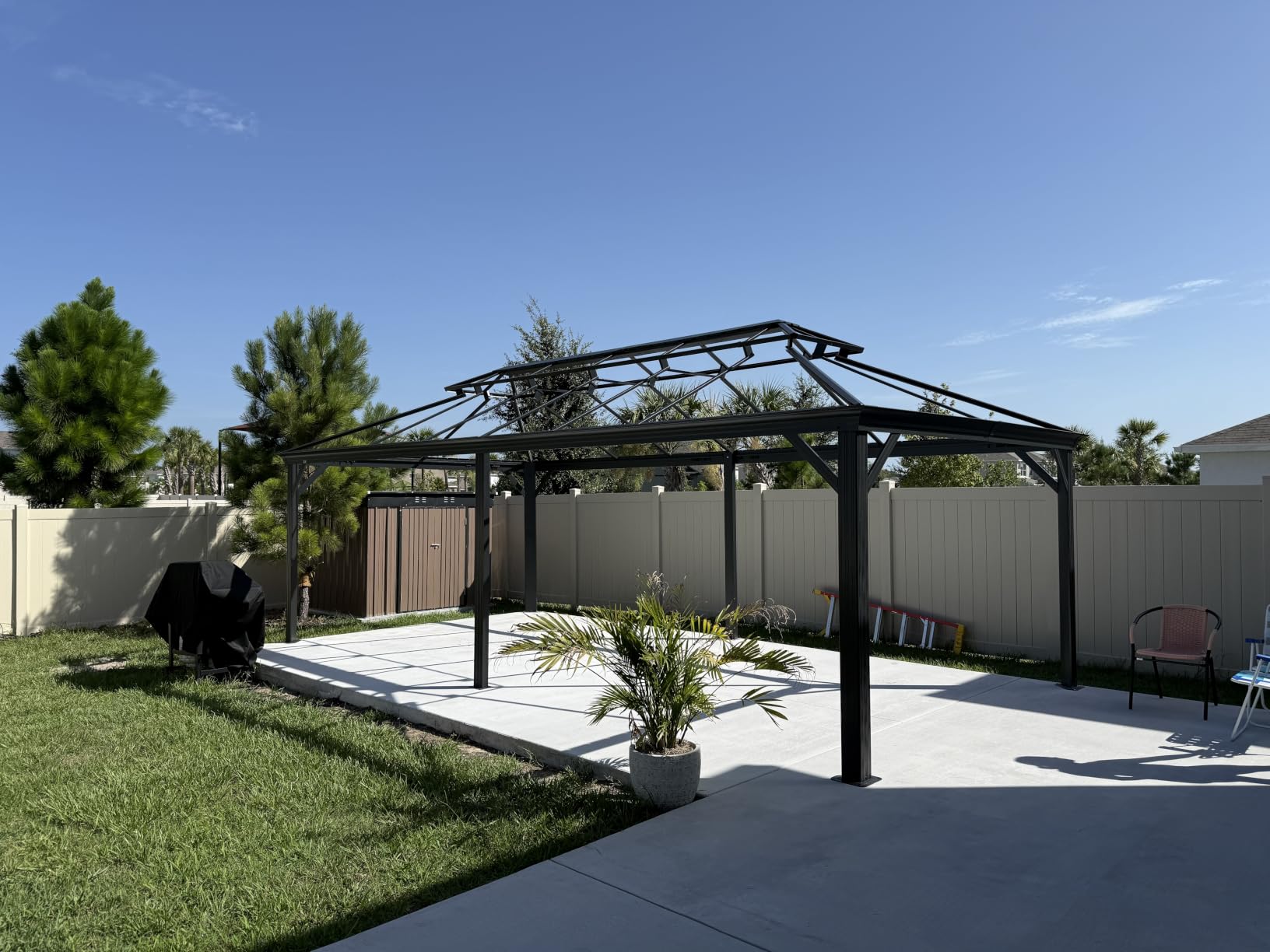
For anchoring, use the pre-drilled bases and bolt into deck framing or a poured slab rather than relying on the included ground hardware. That single decision is the difference between the frame behaving as designed and the frame fighting the wind.
Is the footprint a problem in wind?
At 240 sq ft it presents more area to the wind than an 8 x 8, so anchor count matters more. Four structural attachments into a deck frame or concrete handle it, and the vented roof keeps the pressure differential low.
Who should pass on it?
If you need a genuinely certified 100 mph rating rather than a strong aluminum frame with a vented roof, look at the Arcadia further down. If heat buildup on still summer days ruins your plans, this is not the unit.
2. PURPLE LEAF 14 x 20 Hardtop Gazebo with Lights – Best for Large Footprints
PURPLE LEAF Hardtop Gazebo 14′ x 20′ w/Lights & 4.7″ Thick Post for Patio
280 sq ft covered
494 pound build
UPF50+ roof
Integrated LED lights
Pros
- Largest covered footprint here at 280 sq ft
- Double roof vents keep the interior air moving
- 5-year fade-resistant roof coating
- Integrated LED lighting package
- Edge drainage holes move water off the frame
Cons
- 494 pounds needs multiple people to build
- Installation and permitting are extra
- Furniture not included
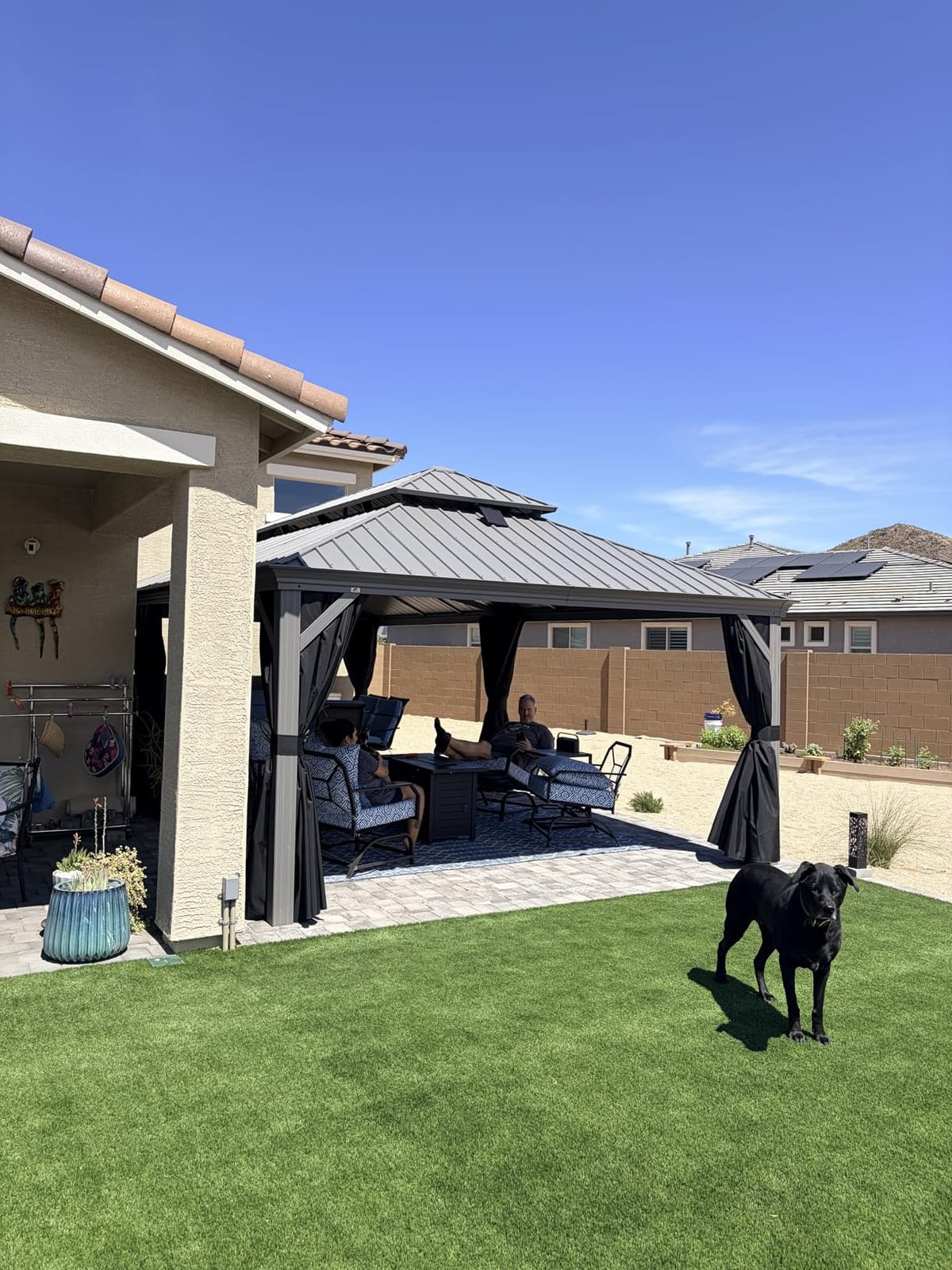
Same engineering philosophy as our top pick, scaled up. The 280 sq ft footprint is the largest in this roundup, built on an aluminum frame with 4.7 inch posts and a galvanized steel roof carrying a 5-year fade-resistant coating. Double roof vents and a slanted drainage pattern handle airflow and water management together.
What is genuinely different here is the integrated LED lighting package, which owners mention more than anything else, and the UPF50+ rating on the roof. For a large patio that needs evening use, that lighting turns a big structure into a usable outdoor room rather than a shaded footprint.
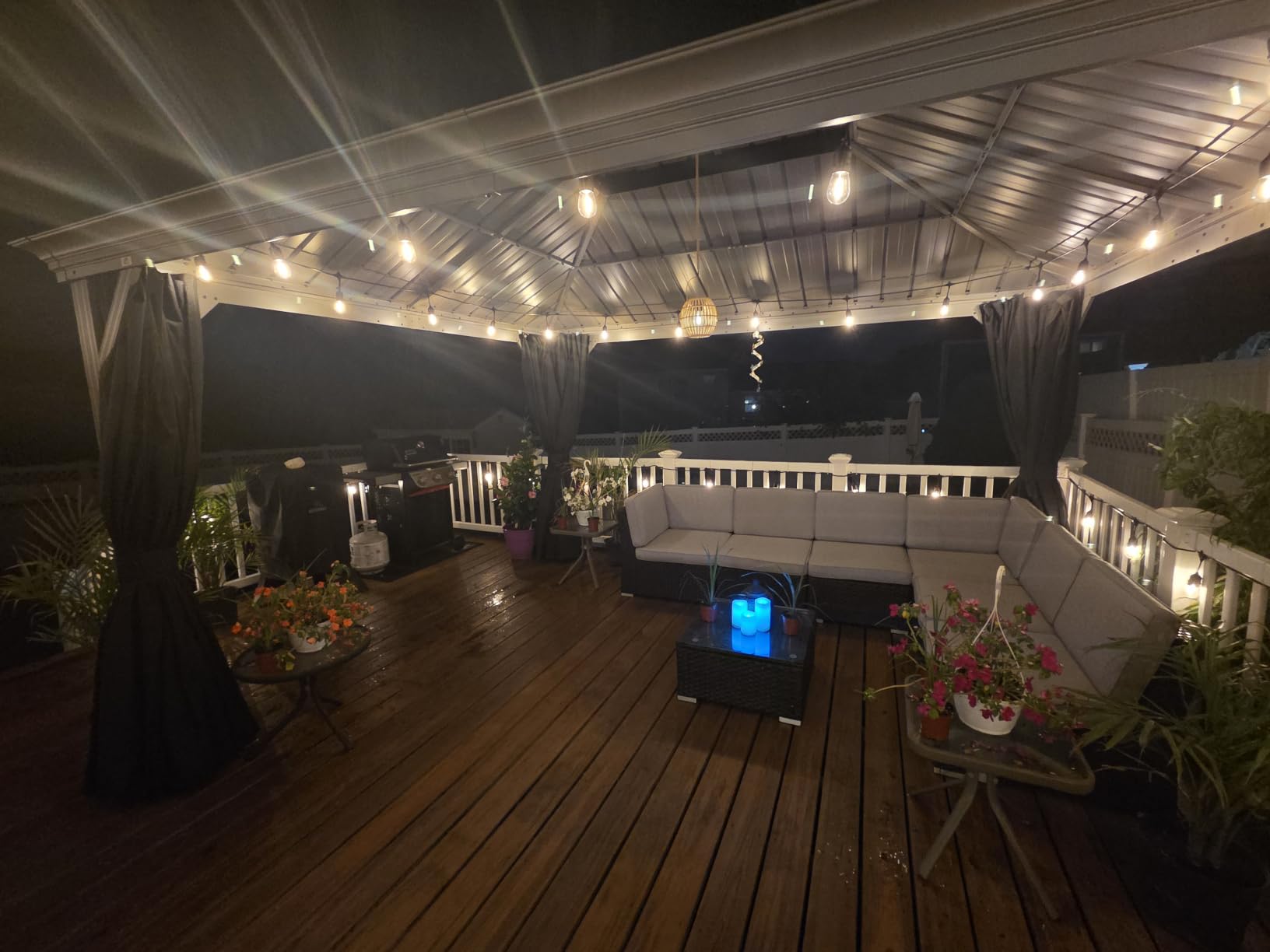
The scale is the trade-off. At 494 pounds this is a multi-day build for most households, and installation and permitting run as third-party costs on top.
Larger footprint also means larger wind load. Anchor at every base into framing or concrete, and check local permit rules before the build starts.
Is it worth the extra footprint in a windy yard?
If you have the space and the anchoring capacity, yes. If your site is exposed with limited anchor points, a smaller unit with a published rating is the safer buy.
How does the lighting hold up?
The LED package is wired into the frame at build time, so it needs no later wiring work. Owners rate it as a bonus rather than a headline feature, but it removes the extension cord habit.
3. Kozyard Alexander 10 x 12 Hardtop Gazebo – Best Value with a Documented 60 mph Rating
Kozyard Alexander 10′ x 12′ Hardtop Gazebo, Aluminum Frame
60 mph when anchored
2,500 lb snow load
4.7 inch triangular aluminum posts
320 pounds
Pros
- Documented 60 mph wind rating and 2500 lb snow load when anchored
- 4.7 inch triangular posts with 5 by 4 inch beams
- 29-gauge galvanized roof is thicker than most rivals
- Coated panel edges reduce cuts during assembly
- Extra hardware and screws included in the kit
Cons
- Hundreds of screws and a multi-day build
- Picture-only instructions with steps out of order
- Some pre-drilled holes do not align
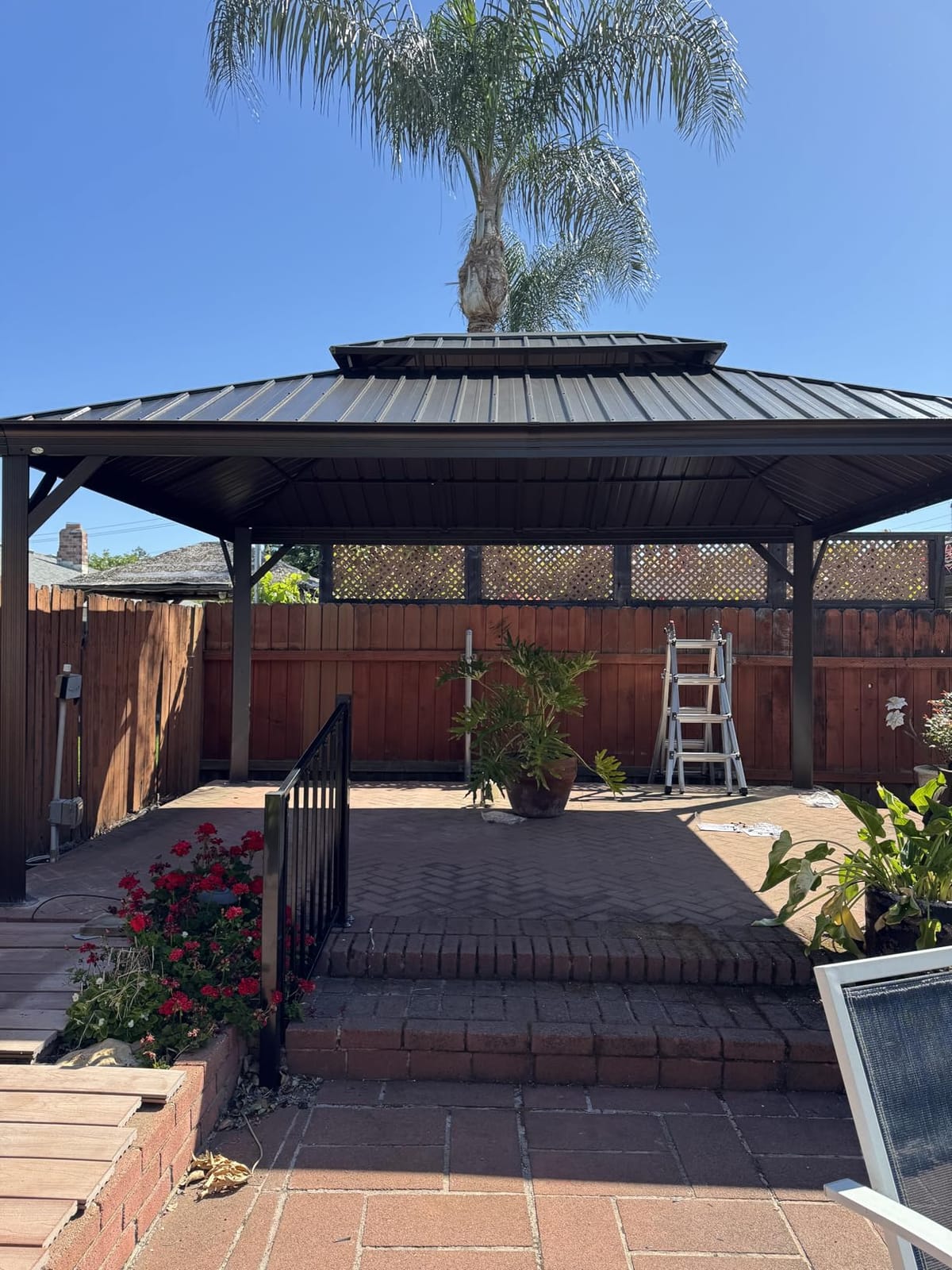
This is the clearest case in the roundup where the manufacturer publishes numbers instead of adjectives. Kozyard states 60 mph wind tolerance and a 2,500 lb snow load when properly anchored, and the frame backs that up with 4.7 inch triangular aluminum poles and reinforced 5 by 4 inch beams. The 29-gauge galvanized double roof with an integrated gutter is thicker than most competing panels at the same class.
Owners report it does not wobble or creak once anchored, which is exactly the behavior you want in a gust. Dual-track zippered curtains and double-layer netting keep it usable in shoulder seasons, and the reinforced ceiling hook takes a fan or lights. US-based support in New Jersey and California and guaranteed parts availability reduce the missing-parts anxiety buyers report elsewhere.
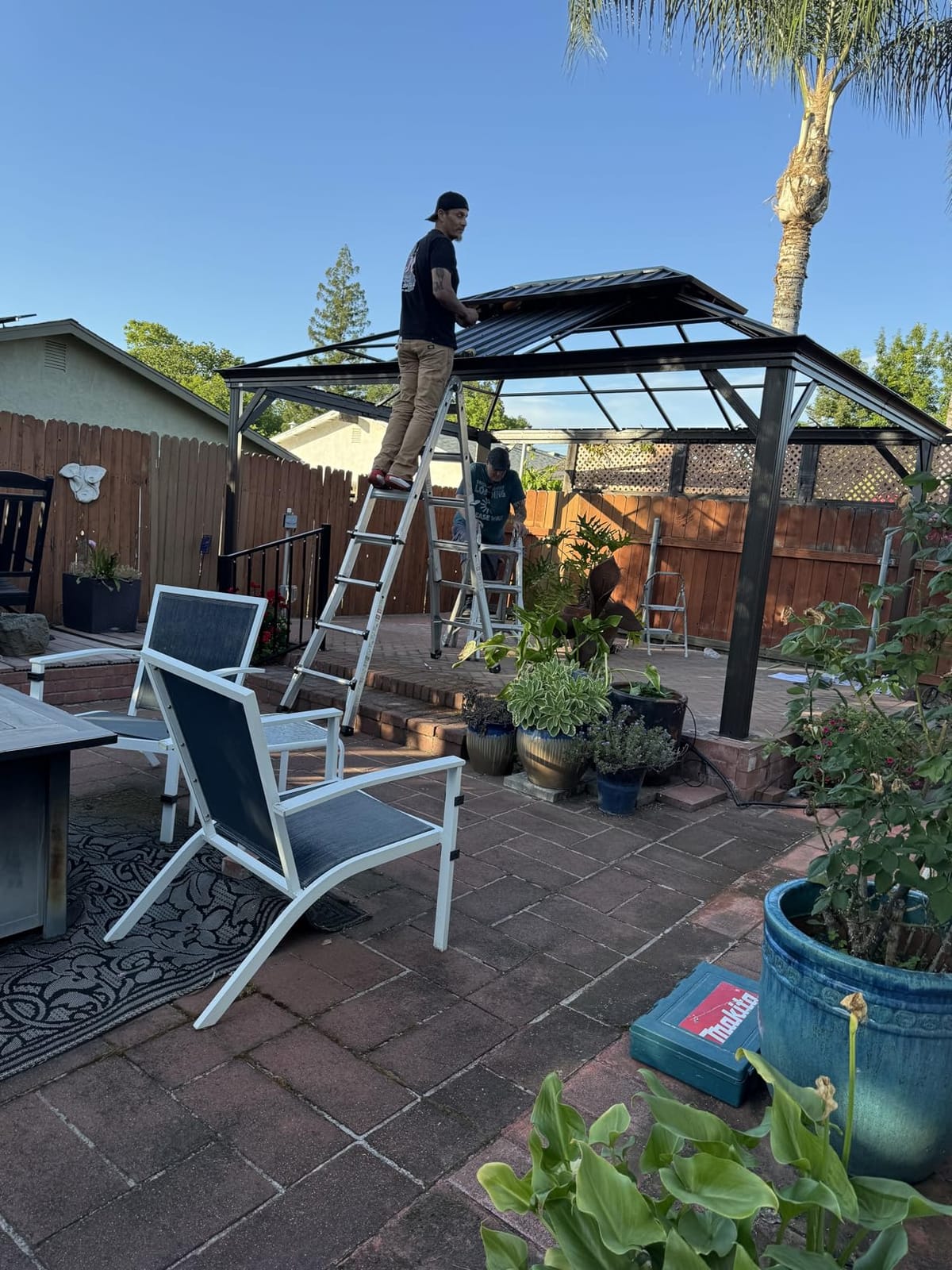
The friction is assembly. Hundreds of screws, two to four people, an impact driver and multiple days. Instructions are picture-only and some steps run out of sequence, and a few roof pre-drilled holes need re-drilling before panels will sit flat. Anchor hardware for non-concrete surfaces is not covered in the manual.
That last point matters in wind. Ask the seller what the approved anchoring method is for your surface, or plan to bolt the base plates into deck framing yourself with hardware bought separately.
Does 60 mph cover a storm-prone yard?
It covers most temperate and inland exposures once anchored properly. For coastal, hurricane-zone or open-lot properties we would step up to a certified higher figure.
What about snow regions?
The 2,500 lb rating is the strongest published snow figure among the aluminum models here, and the roof pitch sheds load to the gutter rather than holding it on the panels.
4. Backyard Discovery Arcadia 14 x 12 Cedar Pavilion – Best for Certified 100 mph Wind
Backyard Discovery Arcadia 14′ x 12′ Cedar Wood Outdoor Gazebo Pavilion with Hardtop Galvanized Steel Slope Roof, Snow Support, Wind Resistance, PowerPort, Shade for Garden, Patio, Deck, Entertaining
100 mph when anchored
8,700 lb snow test
6 by 6 inch cedar posts
782.6 pounds
Pros
- Only gazebo here with a manufacturer-stated 100 mph wind rating
- Pro-Tect tested to 8700 lb or 30 inches of snow
- 6 by 6 inch cedar posts stay solid in wind
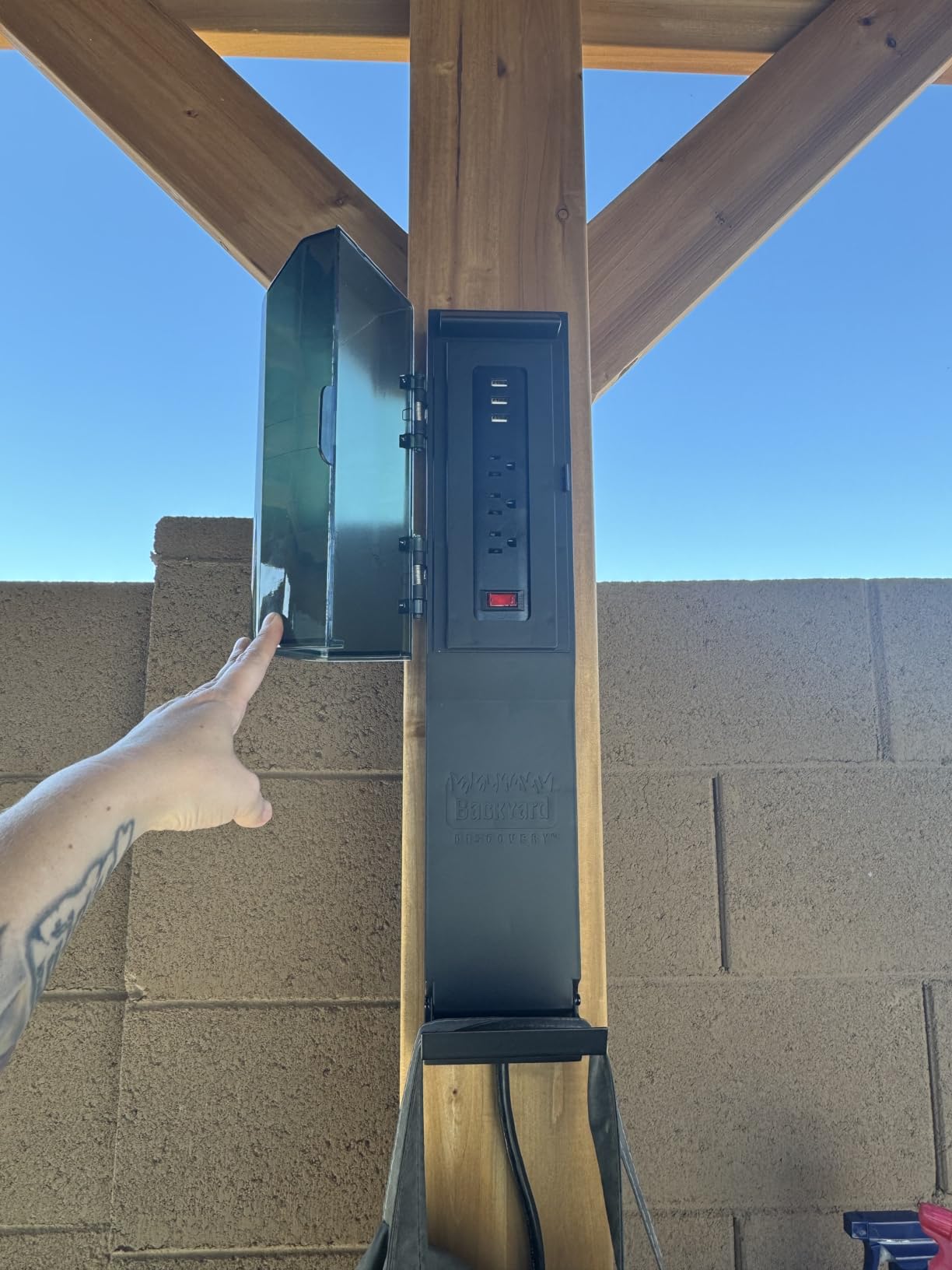
- Patented PowerPort adds three outlets and three USB ports
- Pre-cut pre-drilled pre-stained cedar with app instructions
Cons
- 782.6 pounds makes this a multi-day build
- Powder-coated steel roof pieces can scratch and later rust
- Lag screws for a wood deck are not included
This is the certified end of the scale. The manufacturer states wind resistance up to 100 mph when anchored as specified, and Pro-Tect testing covers 8,700 lb or 30 inches of snow load. The structure behind that is 6 by 6 inch cedar support posts, a 29-gauge black steel slope roof with a 5-degree pitch to prevent water accumulation, and powder-coated brackets.
Owners on exposed decks call out its stability in high wind specifically, and the pre-cut, pre-drilled, pre-stained cedar means the frame aligns instead of fighting you. The patented PowerPort gives three outlets and three USB ports, and the BILT app makes a build this size tractable for first-time assemblers. Warranty runs five years.
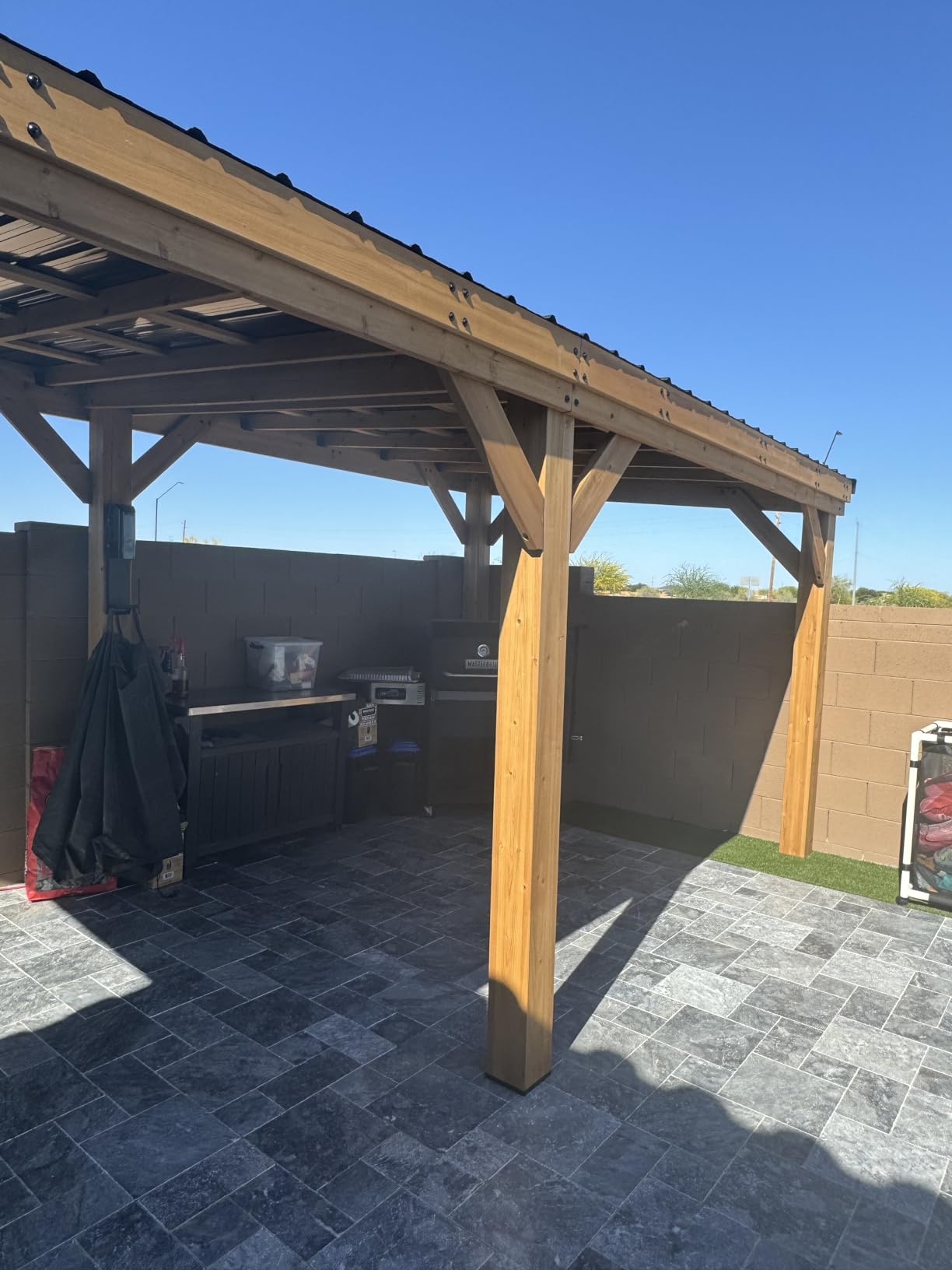
At 782.6 pounds, plan for a two-to-four day build. Post cores are laminated rather than solid, the roof steel and brackets are powder-coated rather than aluminum so they can scratch and eventually corrode near salt air, and one owner reported a small leak in one roof area after a year. You also need to source your own lag screws for a wood deck.
That leak is worth noting because water pushed under an upper roof seam during wind-driven rain gets read as a roofing failure when the panel itself is intact.
Why buy this over a 60 mph aluminum unit?
If your county or coast requires a certified figure, or your lot sits fully exposed, this is the only model here with a tested 100 mph number. An aluminum model gives you more covered area for less effort.
Is cedar a good choice near salt water?
Cedar needs regular sealing and the steel roof components need watching for coating wear. If salt air is constant, a powder-coated aluminum frame needs less upkeep than this one.
5. Domi 12 x 12 Cedar Hardtop Gazebo – Best Cedar Frame
Domi 12’X12′ Gazebo with Double Roof Steel, Heavy Duty Outdoor Patio Gazebo
40 mph stated rating
2,500 lb snow rated
5.5 inch triangular cedar posts
144 sq ft
Pros
- Real cedar frame with thick triangular posts
- Galvanized steel double roof rated to 2500 lb of snow
- Waterproof double-layer roof with leaf netting
- Double-track sidewalls with double-sided zippers
- Ceiling hooks for fans lights and heaters
Cons
- Stated 40 mph wind rating trails the aluminum models
- Cedar frame needs ongoing staining and sealing
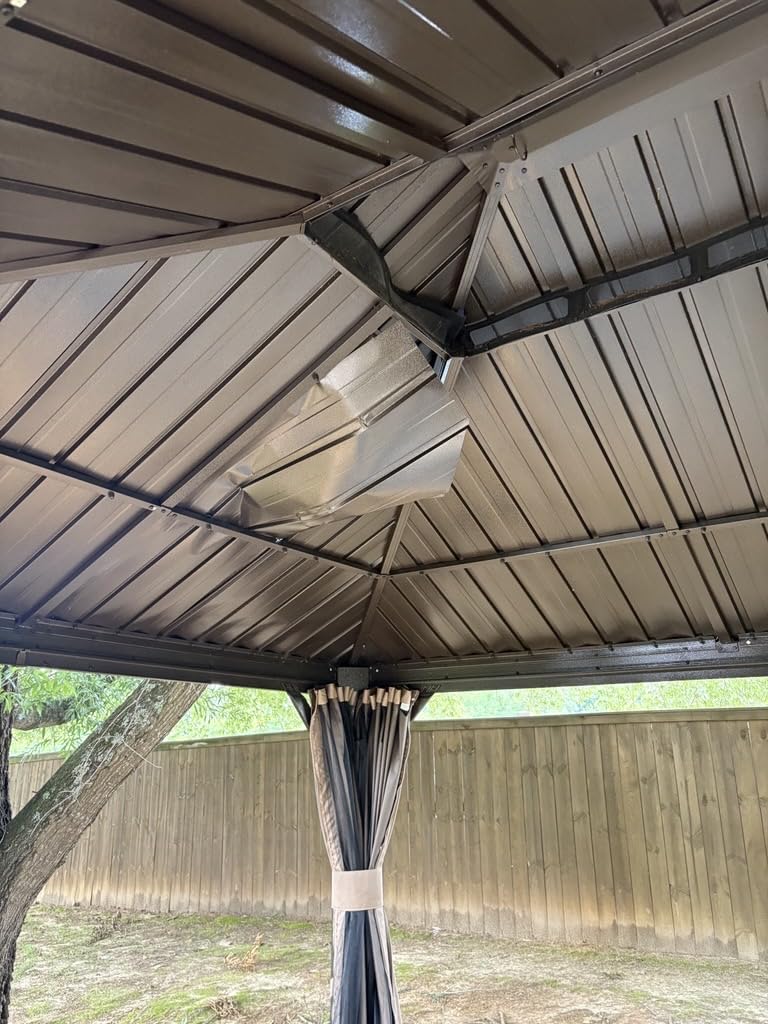
The Domi 12 x 12 is the natural-looking option in this group, built on 5.5 inch extra-strong triangular cedar posts with pre-drilled bases. The galvanized steel double roof carries a 2,500 lb snow rating and a double-layer design with built-in netting that blocks leaves while still circulating air. At 144 sq ft it sits between the compact units and the very large ones.
Owners favor the look and the feel of real cedar and report it is sturdy once built, with curtains and netting running on a double-track system with double-sided zippers. Ceiling hooks accept fans, lights and heaters for seasonal use.
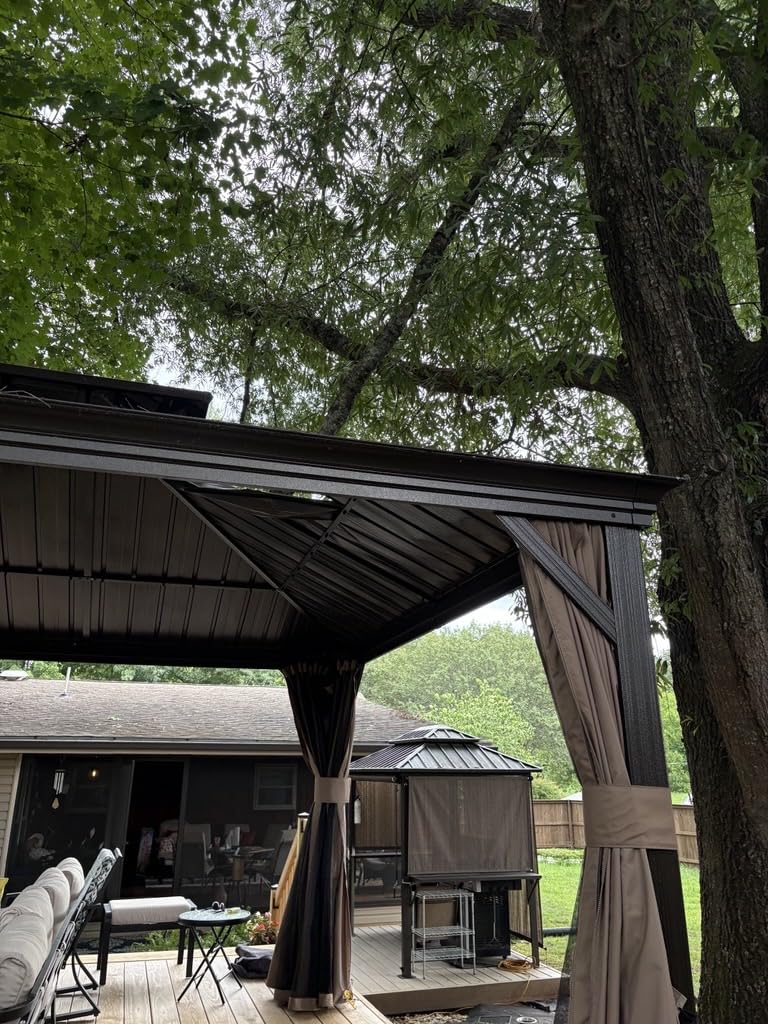
The honest limitation is the 40 mph wind rating, which trails every aluminum model in this roundup. That is fine on a sheltered patio but is the wrong number for a coastal or storm-prone property. Cedar also needs annual staining and sealing to stay in condition.
Weight of 266 pounds is manageable for a small crew, but the wind figure is the deciding factor. Pick it for appearance and snow performance, not for exposure.
Is 40 mph enough for a normal backyard?
For a sheltered suburban lot with trees or a house to the windward side, properly anchored, yes. For open ground or storm country, no.
What maintenance does cedar need?
Annual sealing and staining, plus a check on the steel roof coating each spring. Owners who skip it see the frame darken and check within a few seasons.
6. EROMMY 10 x 12 Aluminum Hardtop Gazebo – Most Versatile for Moderate Exposure
EROMMY 10′ x 12′ Hardtop Gazebo, Aluminum Frame Gazebos with Galvanized Steel Double Roof, Permanent Outdoor Metal Pavilion with Curtain and Netting for Patio, Lawn, Deck
120 sq ft covered
Powder-coated triangular aluminum frame
Vented double steel roof
209 pounds
Pros
- Galvanized steel roof is far stronger than a soft top in wind
- Vented double top lets wind pass through and cuts heat
- Powder-coated triangular aluminum frame resists corrosion
- Dual-track curtains and netting for privacy and airflow
- Light at 209 pounds so panels are easy to carry
Cons
- No published wind or snow load rating
- Thinner-gauge aluminum than the premium models
- 11 percent 1-star share tied to parts and support
The EROMMY 10 x 12 uses a galvanized steel hard roof with a ventilated double top designed to let wind pass through rather than build pressure underneath. The frame is powder-coated triangular aluminum with pre-drilled bases, and the roof hooks take lights and fans. Fully zippered double-layer sidewalls on a dual-track system handle privacy and ventilation together.
It shows up repeatedly in homeowner shortlists for a reason: on an r/HomeXpert thread listing gazebos for high wind, it was singled out for its triangular 4.7 inch aluminum poles and included weight bags and wind ropes. Treat that as a design note, not a rating, because the listing publishes no mph figure.
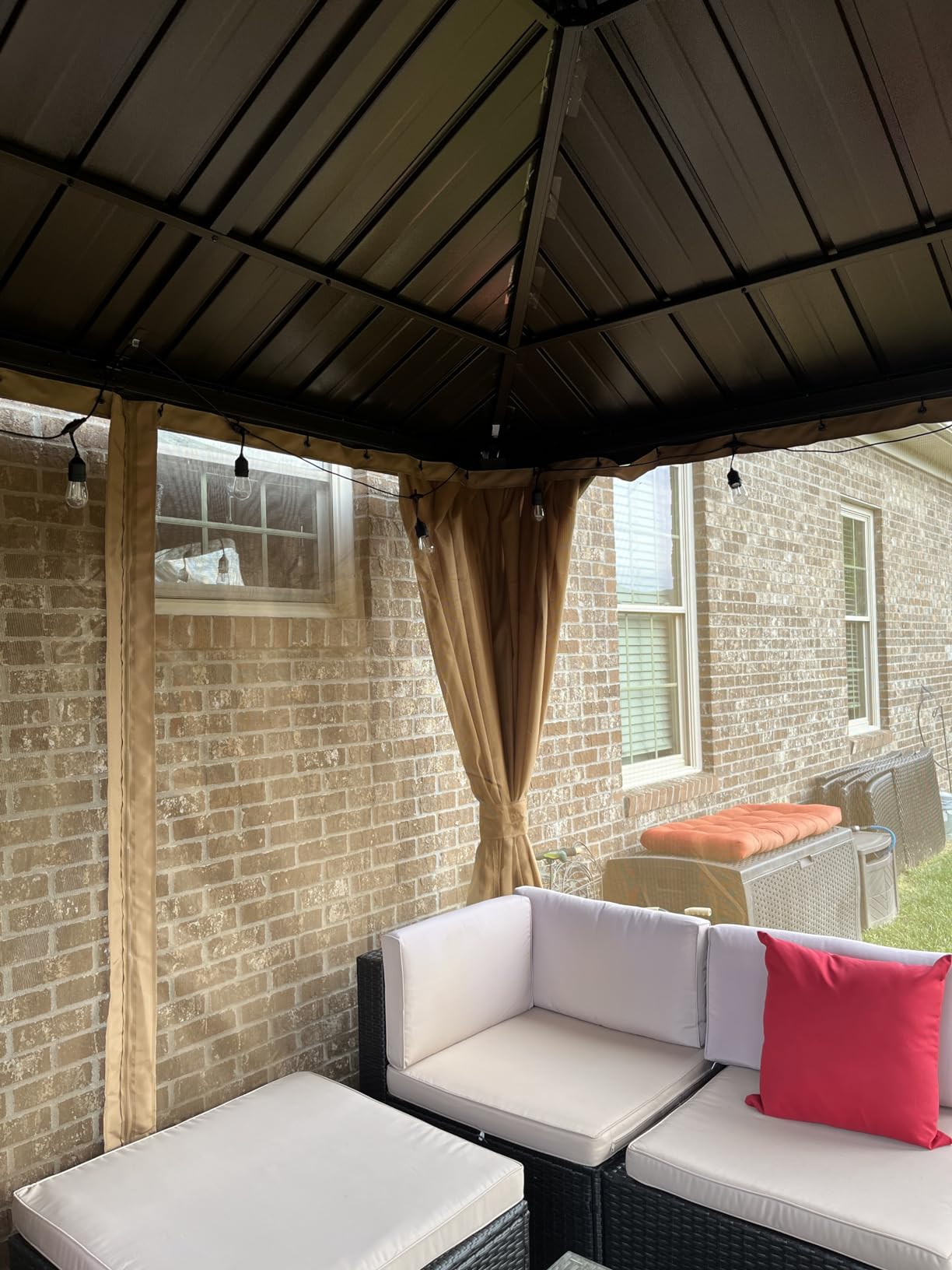
The gap between its 4.2 average and the strong feature list comes from durability and support complaints rather than the structure. Hardware quality, missing or defective parts and slow support response drive an 11 percent 1-star share. No written warranty terms appear in the listing.
Pre-drilled bases let it install on uneven ground, which is convenient, but on an exposed site you are assembling the anchoring plan yourself. Ask about parts replacement before building anything you want to keep through winter.
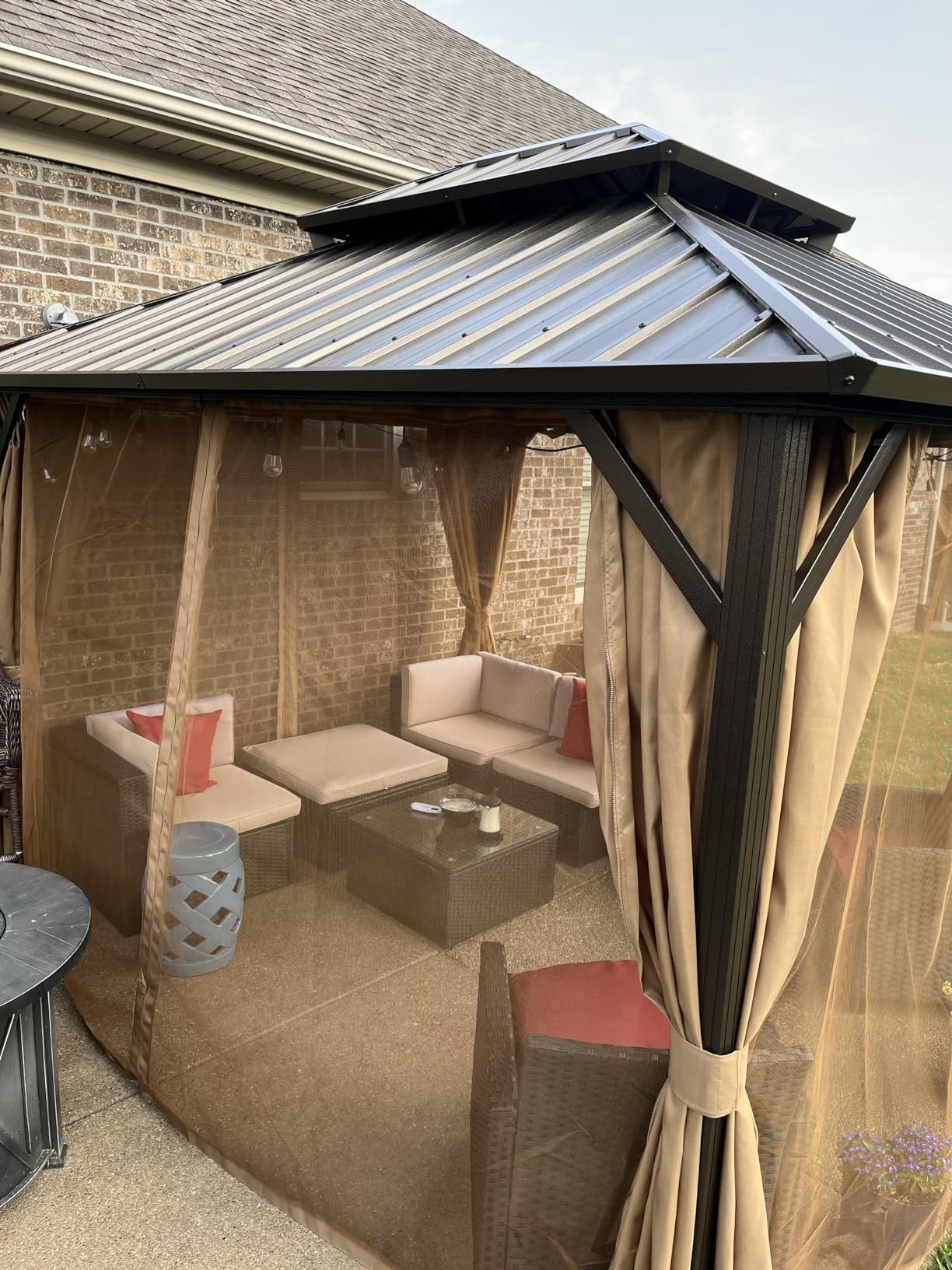
Can weight bags and wind ropes substitute for anchors?
No. They are a supplement that reduces panel flutter, not a replacement for bolting base plates into framing or concrete. Installers treat them as secondary.
Is it safe for a coastal lot?
With no published rating you cannot verify it, so we would not put it on an exposed waterfront site. On a sheltered patio or a mid-range suburban yard it performs acceptably once anchored.
7. YOLENY 10 x 12 Hardtop Gazebo – Best Light Build with a Double Steel Roof
YOLENY 10′ x 12′ Hardtop Gazebo, Metal Gazebo with Aluminum Frame, Double Galvanized Steel Roof, Curtains and Netting Included, Pergolas for Patios, Garden, Parties, Lawns
120 sq ft covered
Double galvanized steel roof
209 pounds
99.99 percent UV blocking
Pros
- Double galvanized roof adds insulation and cuts rain noise
- Sloped roof with leakage holes drains rain and snow
- Pre-drilled panels attach to any floor type
- Curtains and netting both included on a dual rail
- Light enough for one person to do most of the assembly
Cons
- 13 percent 1-star share from incomplete kits
- Instructions are picture-only with no customer service contact
- No published wind or snow load rating
At 209 pounds with pre-drilled panels, this is the model most likely to get finished on a weekend by a single owner with help for the roof panels. The double galvanized steel roof provides insulation, waterproofing and noticeably less rain noise than a single layer, and the sloped design with leakage holes moves rain and snow toward the ground instead of letting it pool. Three ceiling hooks are included.
Owners who complete the build often describe it as the most solid gazebo they have owned at this level. Curtains and netting both run on a dual rail system, and the listed UV blocking reaches 99.99 percent.
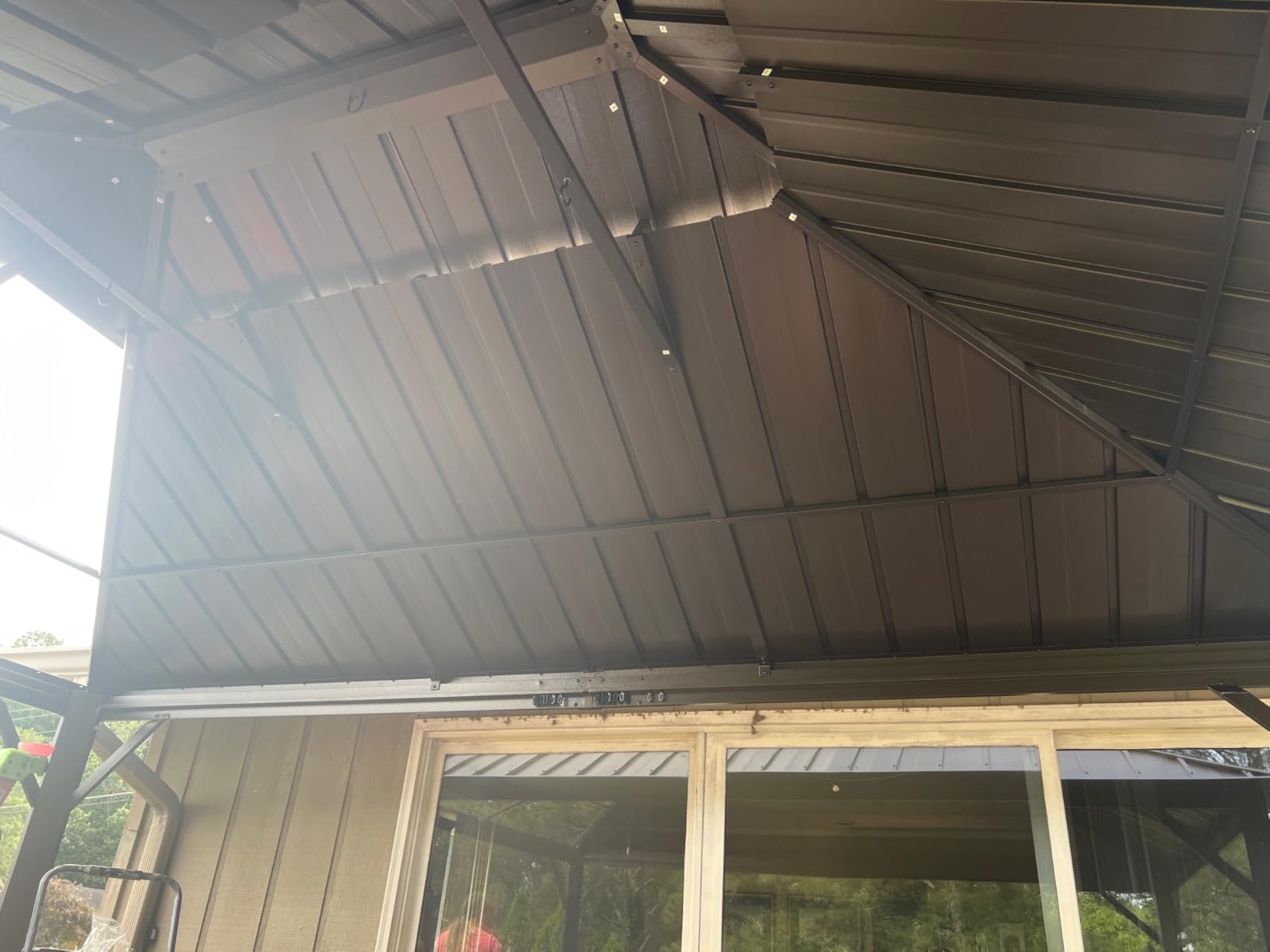
The 13 percent 1-star share traces to incomplete kits and a lower drip edge that owners in snowy climates reinforce themselves. Instructions are picture-only with no support contact listed, and parts fulfillment is slow.
No wind or snow load rating is published. Users should treat anchoring as their own responsibility rather than assuming the spec covers it.
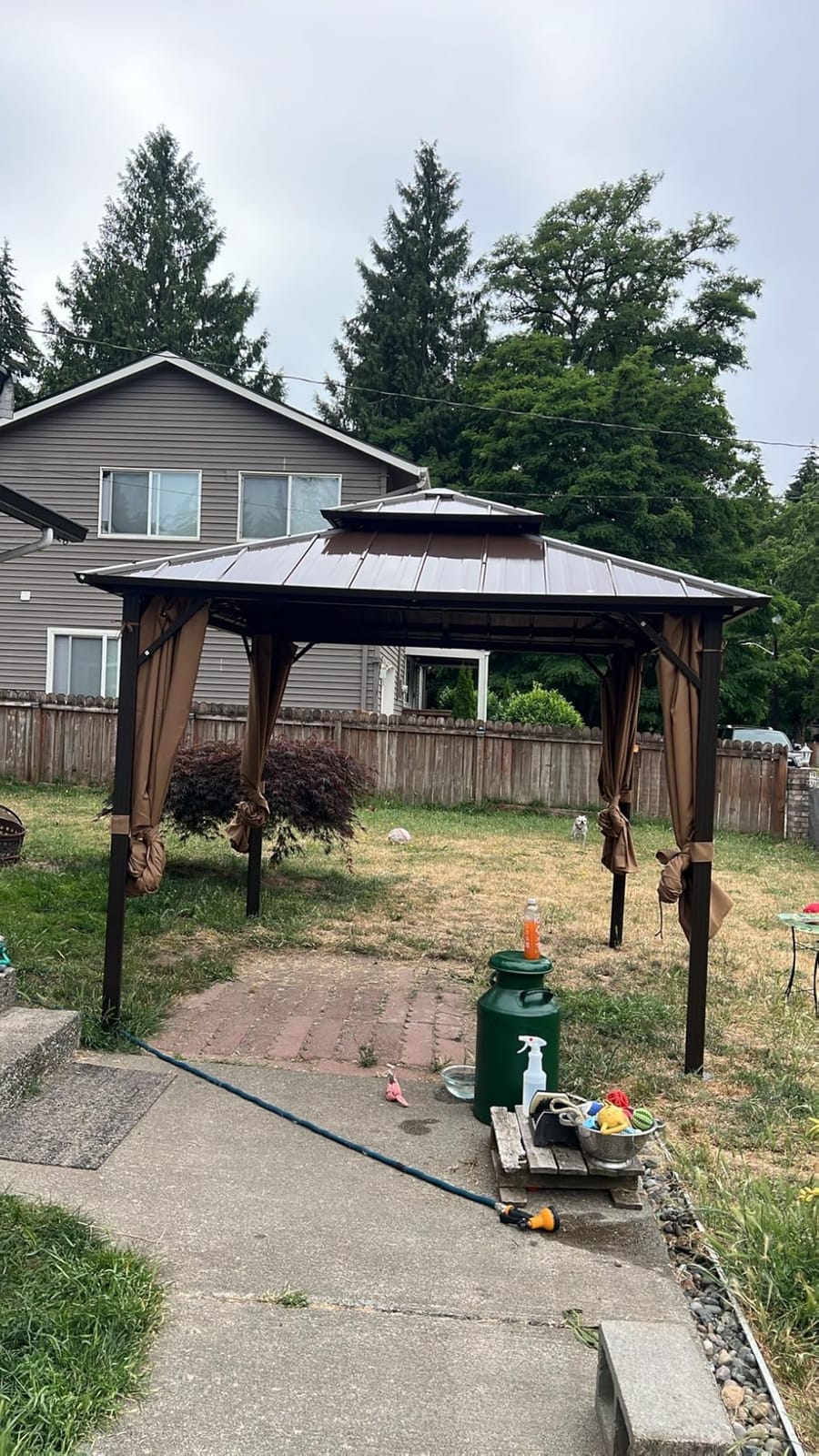
Can one person really build it?
Most of it, yes. The manufacturer suggests two to three people over two to four hours, and a second pair of hands for lifting roof panels makes a large difference.
Will it hold up where it snows?
Owners reinforce the thin lower drip edge before winter and report it holds afterward. Without a published snow rating, plan on that reinforcement from day one.
8. ABCCANOPY 8 x 8 Hardtop Gazebo – Best for Small Patios
ABCCANOPY Hardtop Gazebo 8×8 – Outdoor Metal Hard Top Gazebo, Permanent Galvanized Steel Aluminum Framed Pavilion with Netting and Curtain for Patio Backyard Lawn Garden (Double Roof, Gray)
64 sq ft covered
3 by 3 inch triangular aluminum posts
Vented double roof
167.6 pounds
Pros
- 3 by 3 inch triangular posts are larger than typical gazebo posts
- Ventilated double roof intended to reduce wind stress
- Powder-coated aluminum frame resists rust and corrosion
- Compact 64 sq ft footprint suits small patios
- Customer service quickly ships replacement parts
Cons
- Many pre-drilled holes do not align so re-drilling is needed
- Roof rail clips fall off while sliding panels in
- Black roof runs hot and some metal edges are sharp
The 8 x 8 has the smallest covered area in the group at 64 sq ft, and for a tight patio that is the right trade. The frame uses 3 by 3 inch triangular aluminum posts, which are larger than the posts on most gazebos at this size, with a powder-coated finish against rust and corrosion. The ventilated double galvanized steel roof is designed specifically to reduce wind stress.
At 167.6 pounds it is a manageable two-person build, and the dual-track curtain and netting system plus ceiling hook give it full-season usability. The smaller roof also means less sail area, which is a genuine advantage on a windy site.
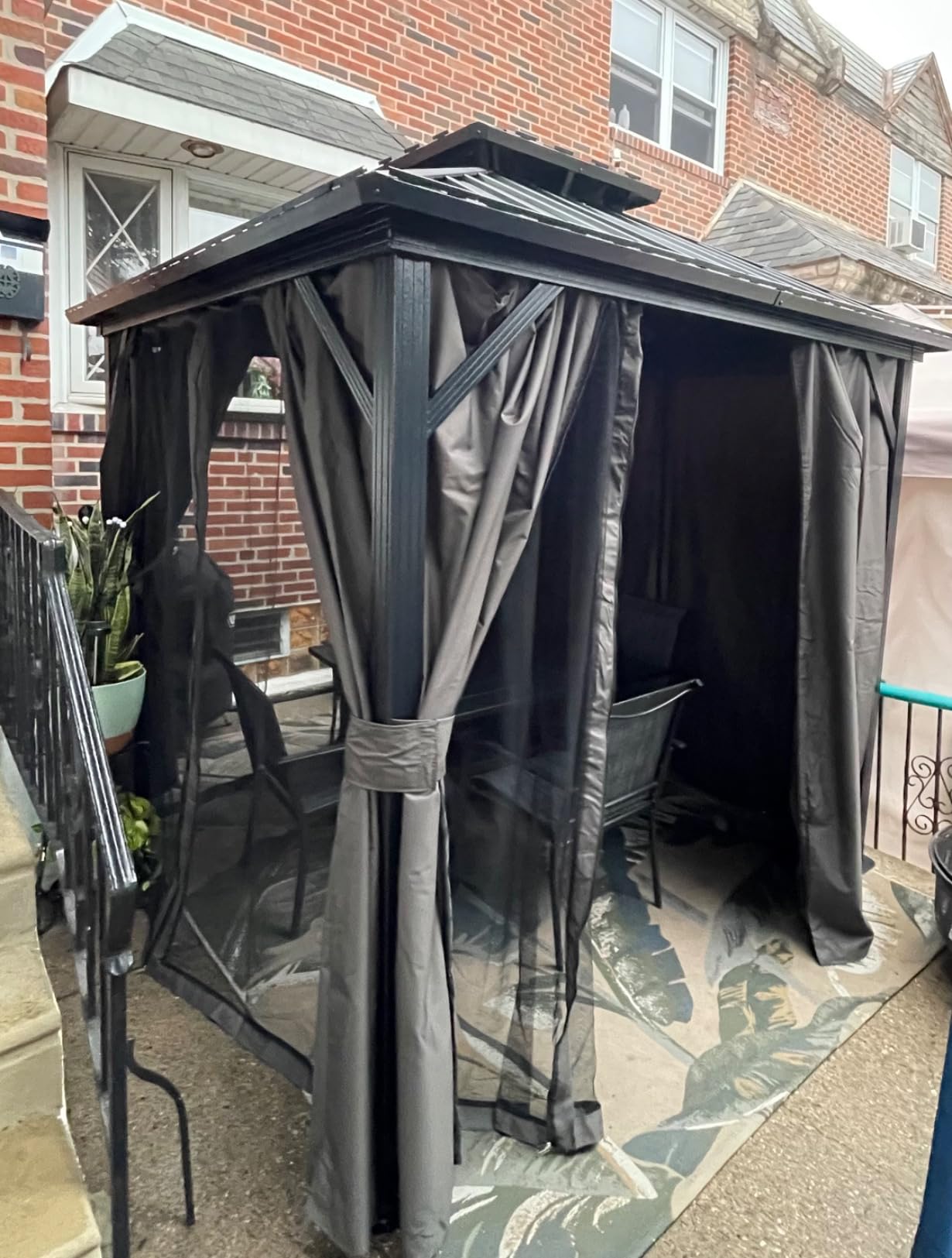
The complaints are about fit and finish rather than structure. Pre-drilled holes frequently miss the frame, roof rail clips drop off during install, instruction pages arrive out of order, and the black roof runs hot inside.
Warranty terms run one year on metal and six months on curtains and netting, the shortest fabric coverage in this group. Check the netting on arrival; a tear is not uncommon.
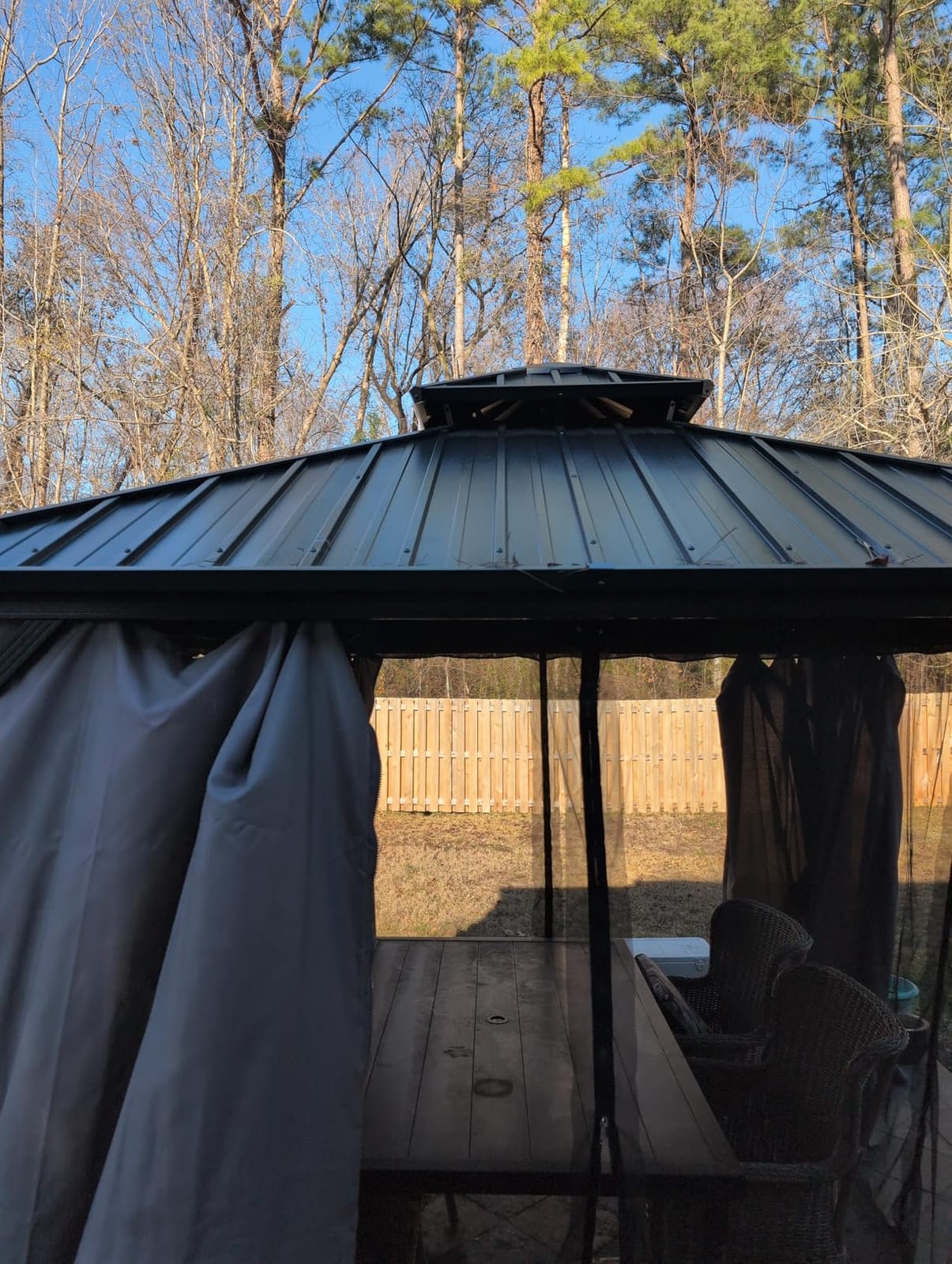
Is a smaller footprint better in wind?
Generally yes. Less area to the wind means lower load on the frame and fewer anchor points to worry about, which is why compact models make sense on exposed decks.
Is 64 sq ft big enough to be useful?
It covers a table and chairs comfortably and works well as a grill or seating station. It is not a hot tub or full dining cover.
9. GARTOO 8.5 x 8.5 Hardtop Gazebo – Best for a Quick Two-Person Build
GARTOO 8.5×8.5FT Outdoor Hardtop Gazebo with Double Roof
72.25 sq ft covered
138.1 pounds
Vented galvanized double roof
Stake-ready feet
Pros
- Vented double roof lets wind pass through to aid stability
- Reinforced triangular pole frames and four reinforced corners
- Lightest build weight at 138.1 pounds so panels are easy to move
- Owners report it stayed stable through severe storms
- Removable mesh and zipped privacy curtain included
Cons
- Roof panels ship in plastic that can take hours to peel
- Instructions are picture-only with some inaccurate diagrams
- Included drop-in anchors are an odd size and better replaced
At 138.1 pounds this is the lightest build in the roundup, and that weight is the point. Panels can be carried by one person, the manufacturer suggests two to five people over roughly two to four hours, and the roof hooks, removable mesh and zipped privacy curtain are all included.
Durability after the build is the strongest theme in owner feedback. Several owners describe it staying stable and firm through severe storms, snow and ice, and one reports a full year of service in winter conditions without issue. The double vented galvanized iron top lets wind pass through instead of loading the frame.
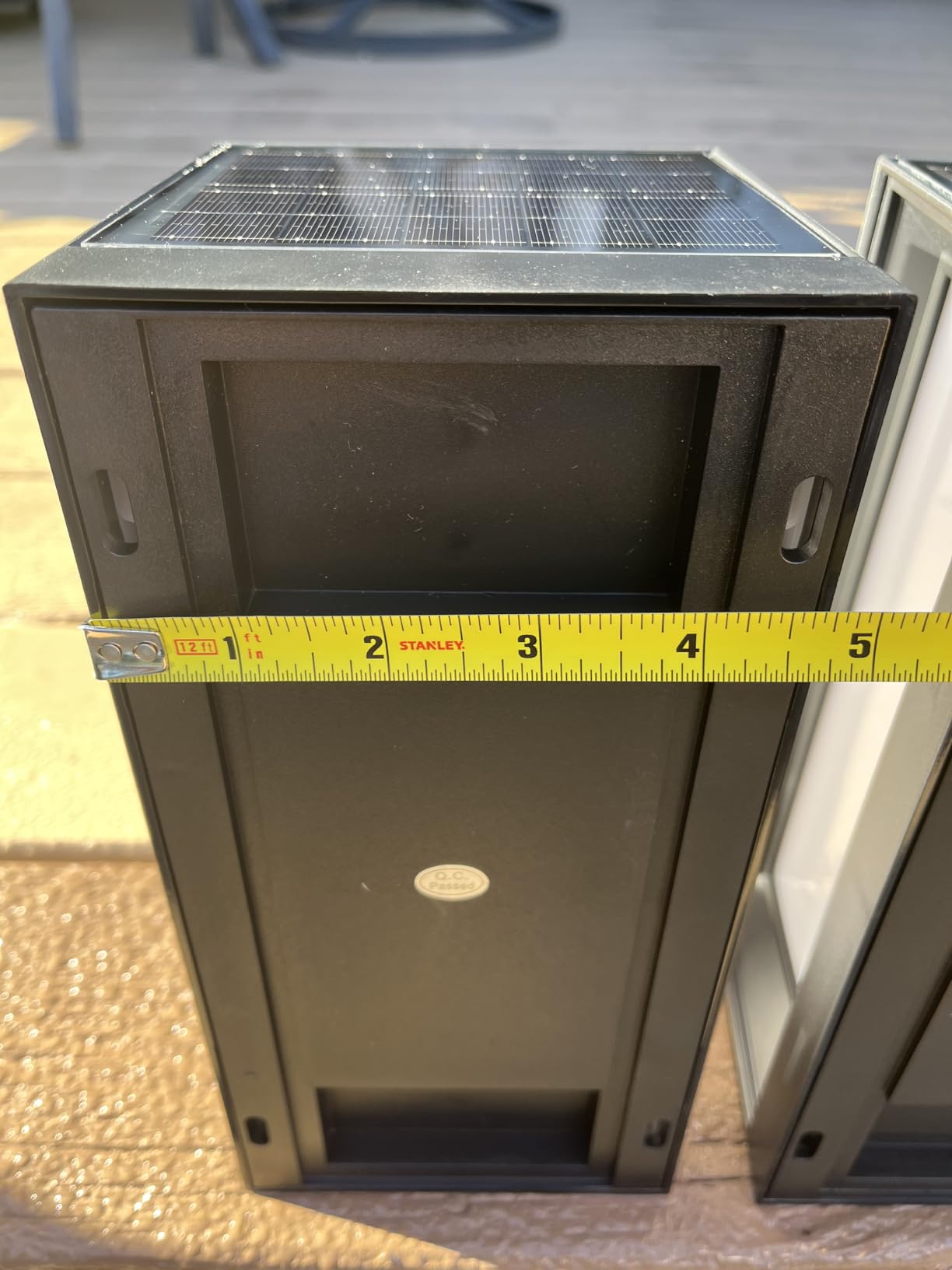
The build has two known snags. Roof panels arrive wrapped in tightly bonded plastic that can take hours to peel, and the instructions are picture-only with some inaccurate diagrams. A minority of owners also needed panels sawed to fit, and the included drop-in anchors are an odd size that most replace. The roof membrane has to come off before assembly begins.
No mph figure appears in the listing. The manufacturer recommends anchoring onto concrete or wood with expansion screws, and the four feet have holes for ground stakes, but neither instruction comes with a rated wind capacity.
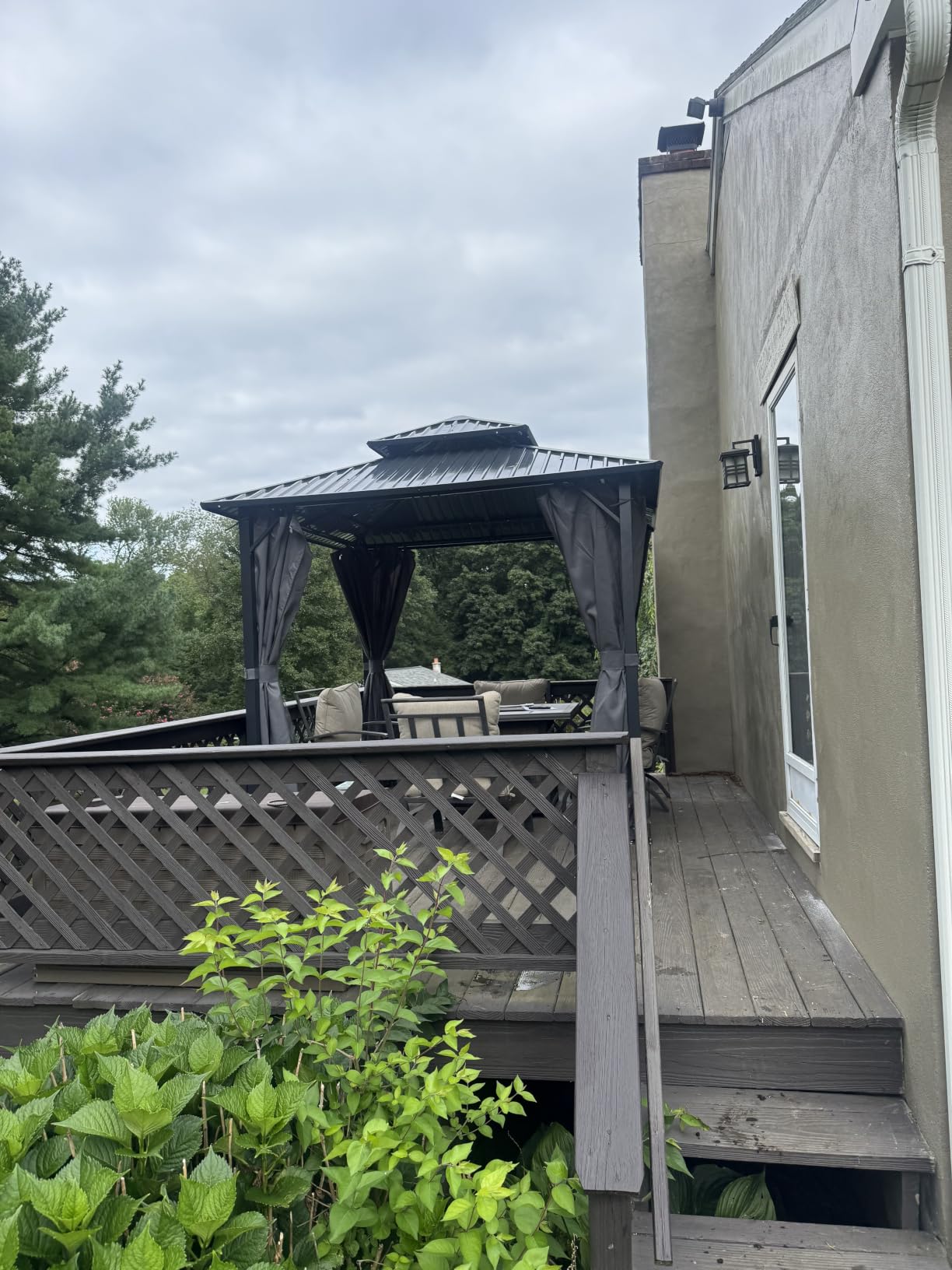
Is the light weight a wind advantage or a disadvantage?
It cuts assembly effort and handling, but low mass means less resistance to overturning. Anchoring is what makes the difference here, not the frame weight.
How does it handle snow?
Owners report one year through snow and ice without problems. That is real-world feedback, not a published snow load figure, so treat it as encouraging rather than certified.
10. Aoxun 10 x 12 Hardtop Gazebo – Reasonable for Sheltered Patios Only
Aoxun Gazebo 10×12 Hardtop Gazebo with Double Galvanized Steel Roof, Gray
Grade 7 wind rating at 31-38 mph
Double galvanized steel roof
199.5 pounds
120 sq ft
Pros
- Double galvanized roof is rust-resistant and fade-resistant
- Frame weight of 199.5 pounds keeps panels manageable
- Four ground piles and expansion screws included for anchoring
- Netting curtains and ceiling hooks all included
- Sits in the top five of the Gazebos sales category
Cons
- Stated wind ceiling of grade 7 at 31-38 mph
- Manufacturer advises removing canopy curtains and screens in extreme weather
- Only 1-year warranty and UPF50 UV blocking
This model sits in the top five of the Gazebos sales category, and the double galvanized steel roof resists rust and fading. At 199.5 pounds the frame is easy to handle, and the kit includes four ground piles and expansion screws along with zippered netting, privacy curtains and ceiling hooks.
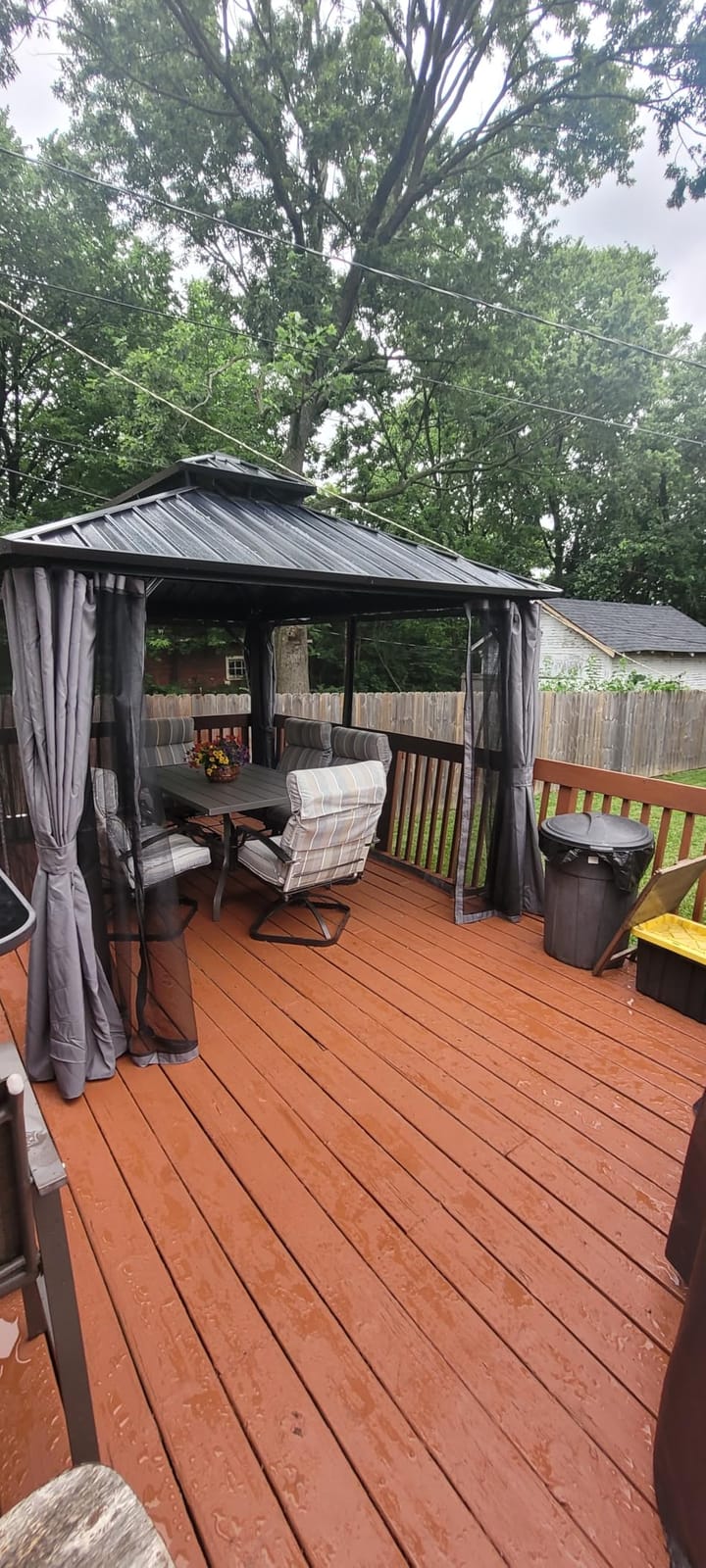
The problem is the one number that matters for this article. The manufacturer states a maximum wind resistance of grade 7, which is 31-38 mph, the lowest ceiling in the roundup, and advises removing the canopy, curtains and screens in extreme weather. At 120 sq ft the double roof adds insulation and ventilation for a usable summer patio.
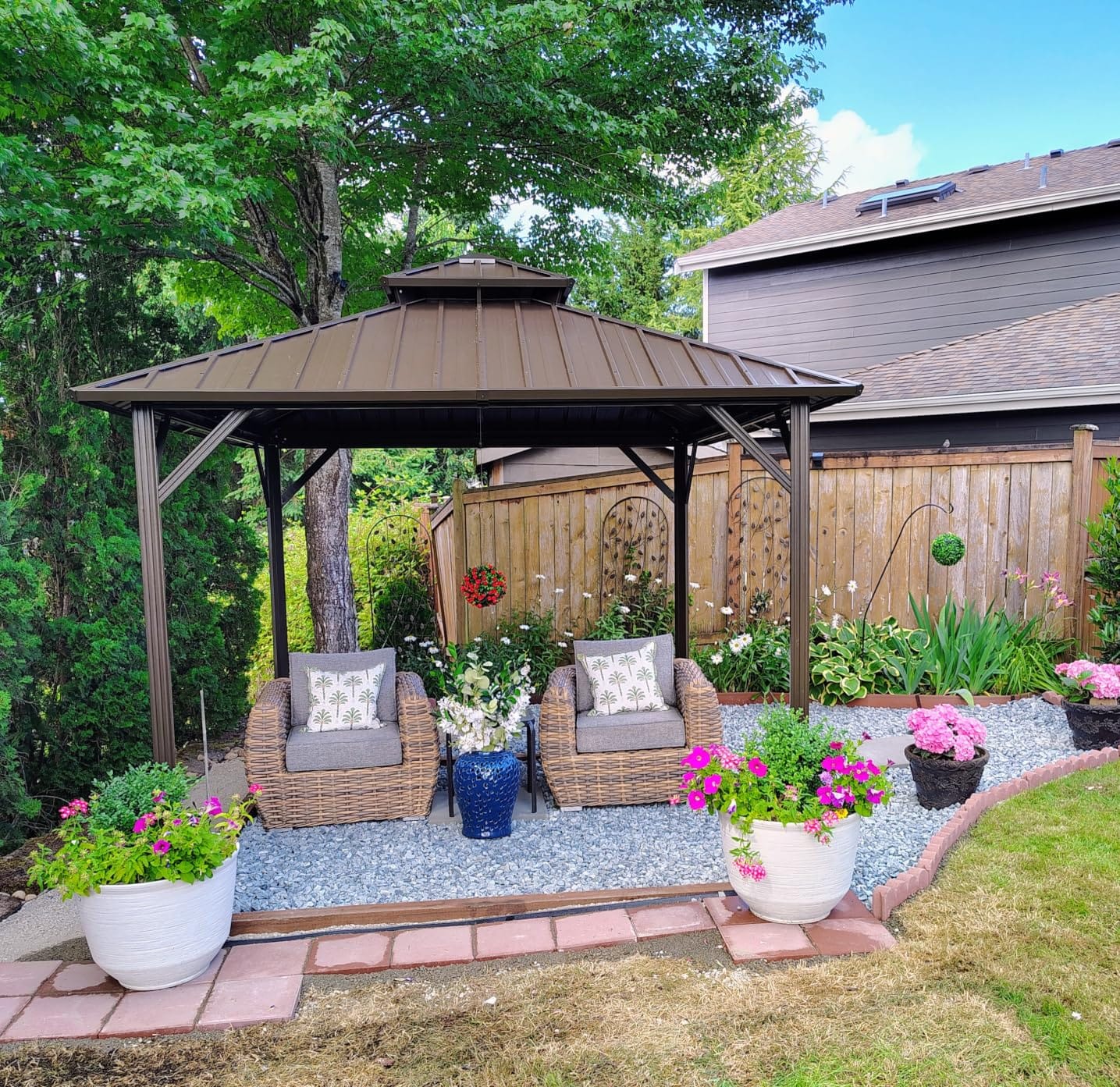
Owners consistently frame this as a budget structure that looks and works like a costlier unit once anchored. The 4.0 average is pulled down by a 12 percent 1-star share, and the warranty runs one year with only UPF50 UV protection on the roof.
Be direct about where it belongs: a sheltered patio with a house or fence to the windward side. On an exposed lot or in a storm-prone region it is the wrong tool, and the removal instruction in extreme weather is the manufacturer saying so.
Is 31-38 mph safe for a windy area?
No, not for an open or coastal site. That figure corresponds to a sheltered patio where wind is broken up by structures and trees.
Why does it remain so popular?
Light weight, a simple kit and steady demand for an entry-level hardtop that still looks substantial once assembled and anchored. Just match it to the exposure.
How to Anchor a Hardtop Gazebo So It Stays Put
Anchor into a deck frame or a concrete foundation. Ground pins into soil and light patio fasteners are not adequate for a structure that presents a roof to the wind, and that guidance is consistent across installer and owner sources.
Bolt into deck framing. Drill through the pre-drilled base holes into the joists beneath the deck, using structural lag screws sized for your framing. One reviewer of the Arcadia noted the manufacturer does not include lag screws for wood decks.
Pour a concrete foundation for ground installations. Set the base plates into a poured pad or pier blocks so the load path runs from post to footing to soil. This is the configuration the 60 mph and 100 mph ratings assume.
Treat auger stakes and ground piles as a fallback. The Aoxun and GARTOO kits include ground piles or stake-ready feet, and they work on firm level soil, but they hold far less than a bolted base in saturated or frozen ground.
Anchor every post. On a 12 x 12 or larger frame, four or more attachment points reduce the chance of the frame rotating under lateral load. Fewer attachments mean more leverage on each bolt.
Use wind ropes and weight bags as a supplement. They reduce panel flutter and take some edge load, but they do not replace structural anchors.
Re-check bolts each spring. Wind cycling loosens fasteners, and a base plate that has shifted a fraction of an inch is the first sign the frame is working against the anchors.
Buying Guide: Size, Material and Snow Load
Size cuts both ways. A larger footprint gives you more usable shade but more sail area and more anchor points. Most owners do well with 10 x 12 or 12 x 12 on an exposed lot, and move to 14 x 12 or larger only where there are four or more solid anchor locations.
Material decides longevity near water. Powder-coated aluminum needs the least maintenance in salt air, galvanized or powder-coated steel is heavier and holds more snow load but needs its coating watched, and cedar looks best and demands annual sealing.
Double roof versus single matters more than most copy suggests. A vented double top lets air move above and below the panel, reducing uplift and cutting interior heat. Snow load is the second number to check: the Kozyard and Domi are published at 2,500 lb and the Arcadia is Pro-Tect tested to 8,700 lb or 30 inches.
Finally, verify the seller and the parts policy before you build. Missing hardware and incomplete manuals are among the most common complaints across these listings, and a one-year warranty with a reliable replacement-parts process is worth more than a small specification gain. Our [hands-on gazebo reviews](https://zamd.net/best-gazebos/) cover that side of the decision in more detail.
And be honest about who should not buy a hardtop gazebo at all: an open lot with no way to reach a deck frame or pour concrete, or a coastal site where only a certified rating will satisfy your local code.
Frequently Asked Questions
What type of gazebo is best for windy conditions?
A hardtop gazebo with a rigid metal roof, a heavy-gauge frame such as 4.7 inch triangular aluminum posts or 6 by 6 inch cedar, and a published wind rating of 60 mph or higher, anchored to a deck frame or concrete foundation. Pop-up fabric models cannot remain installed in sustained wind.
Which gazebos have a wind rating of 100 mph?
In this roundup the Backyard Discovery Arcadia 14 x 12 cedar pavilion is the only model with a manufacturer-stated 100 mph rating, and it is Pro-Tect tested to 8,700 lb or 30 inches of snow. Most aluminum models publish 60 mph when anchored, and budget steel models claim 31-38 mph.
What are some heavy-duty gazebos that can withstand wind?
The PURPLE LEAF 12 x 20 and 14 x 20, the Kozyard Alexander 10 x 12 rated to 60 mph, the Backyard Discovery Arcadia at 100 mph, and the Domi 12 x 12 cedar at 40 mph. Each pairs a rigid roof with a thick post section and structural anchoring.
How do you secure a gazebo in windy weather?
Bolt the pre-drilled base plates into deck framing or a concrete foundation, anchoring every post. Auger stakes and ground piles work only on firm soil as a fallback, and included wind ropes and weight bags reduce panel flutter but never replace structural anchors.
Is an aluminum gazebo better than steel or cedar for wind?
Aluminum offers the best balance: triangular 4.7 inch posts resist lateral load without rusting, and it needs almost no maintenance in salt air. Steel adds mass and snow capacity but its coating eventually wears, and cedar is strong but moves with humidity and carries lower stated wind ceilings.
Can a hardtop gazebo stay up year-round in wind and snow?
Yes, if it is rated for your exposure and structurally anchored. Models with vented double roofs and published snow loads of 2,500 lb or more are built for year-round use, while budget units rated at 31-38 mph are designed to be stripped down or taken down before severe weather.
The Verdict: Which Hardtop Gazebo to Buy for Wind
The PURPLE LEAF 12 x 20 is our pick for the best hardtop gazebos for windy areas in 2026. It pairs 4.7 inch powder-coated aluminum posts with a vented double galvanized roof, carries 240 sq ft of covered space, and has the deepest owner feedback base in the group. Backyard Discovery’s Arcadia is the certified choice where 100 mph or a coastal exposure demands a tested number, and the Kozyard Alexander is the pick when you want a documented 60 mph rating at 120 sq ft.
Skip anything rated at or below 40 mph if your lot is open, coastal or storm-prone, and bolt whatever you buy into framing or concrete. Wind rating and anchoring are the two decisions that determine whether your gazebo is still standing next spring.