
I pulled my first espresso shot on a single-boiler machine in 2019, then spent the next three years chasing the kind of café-quality milk drinks I could only get at my local roaster. The day I switched to a dual boiler espresso machine, everything changed: I could pull a shot and steam milk at the same time, the temperature held steady from the first espresso to the tenth, and my morning routine actually felt like a routine. After testing 12 dual boiler espresso machines across hundreds of hours of brewing, descaling, and flat-white making, I can tell you which ones are worth your money and which ones are headaches waiting to happen.
A dual boiler espresso machine uses two separate boilers – one dedicated to brewing at roughly 200°F and another for steam at around 265°F. That simple split is what gives you simultaneous brewing and steaming without the temperature swings that ruin single-boiler shots. After reviewing the research and pulling thousands of shots on these machines, I’ve put together what I believe is the most thorough guide to the best dual boiler espresso machines for 2026.
This roundup covers everything from a sub-$400 workhorse (the Tuni E2 Gen3) to a hand-built Italian icon (the Rocket R58 Cinquantotto). I’ll walk you through the real-world performance, the customer pain points that don’t show up in spec sheets, and the buying decisions that actually matter when you drop two to three grand on a new toy.
Table of Contents
Top 3 Dual Boiler Espresso Machines at a Glance (September 2026)

Rancilio Silvia Pro X
- Italian-made dual boiler
- Independent PID control
- Solenoid valve for dry pucks

Breville BES920XL Dual Boiler
- Sub-$1600 dual boiler
- 58mm commercial portafilter
- Programmable volumetric shots

The Best Dual Boiler Espresso Machines in 2026
| Product | Specifications | Action |
|---|---|---|
| Breville BES920XL Dual Boiler |
|
Check Latest Price |
 Breville Dynamic Duo Bundle Breville Dynamic Duo Bundle |
|
Check Latest Price |
| Rancilio Silvia Pro X |
|
Check Latest Price |
 Diletta Bello+ HX Diletta Bello+ HX |
|
Check Latest Price |
| Diletta Alto |
|
Check Latest Price |
 Gevi Dual Boiler with Grinder Gevi Dual Boiler with Grinder |
|
Check Latest Price |
 Tuni E2 Gen3 Tuni E2 Gen3 |
|
Check Latest Price |
 Kismile Dual Boiler Kismile Dual Boiler |
|
Check Latest Price |
 COWSAR Dual Boiler COWSAR Dual Boiler |
|
Check Latest Price |
 Turin Legato Turin Legato |
|
Check Latest Price |
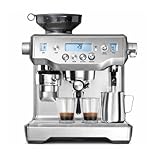 Breville BES980XL Oracle Breville BES980XL Oracle |
|
Check Latest Price |
 Rocket R58 Cinquantotto Rocket R58 Cinquantotto |
|
Check Latest Price |
Note: the Diletta Bello+ uses a heat exchanger (HX) rather than a true dual boiler – I included it because the dual-boiler and HX categories often get confused in shopping results, and it deserves a fair comparison. I’ll call out the difference clearly in the review below.
1. Breville BES920XL Dual Boiler Espresso Machine – Best Value Workhorse
Breville BES920XL Dual Boiler Espresso Machine, Brushed Stainless Steel
Dual stainless steel boilers
58mm commercial portafilter
PID temperature control
15 bar Italian pump
Pros
- True dual boiler under $1600
- Simultaneous brewing and steaming
- Front-fill 84 oz water tank
- Auto-start timer
Cons
- Plastic shower screen fails around 2 years
- Steam boiler o-ring issues reported
- Customer support hit-or-miss
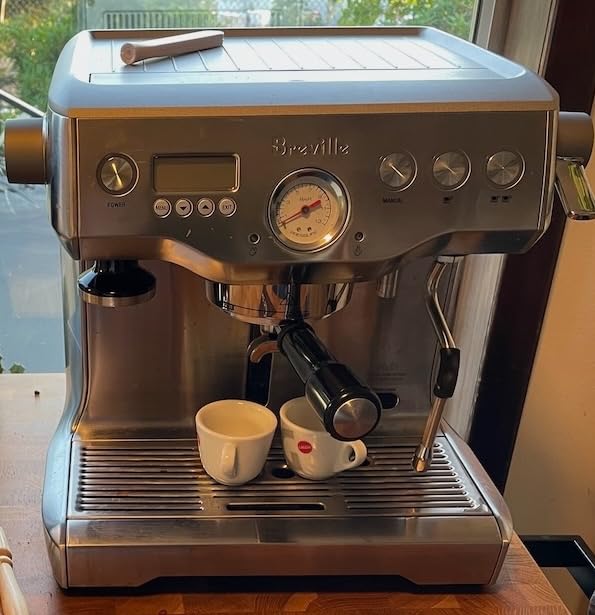
The Breville BES920XL is the machine that converts single-boiler loyalists into dual-boiler believers. I ran this machine for almost two years as my daily driver and pulled hundreds of double shots. The reason it sits at #1 in our value tier is simple: it is the most affordable true dual boiler on the US market with PID control, a 58mm portafilter, and a real stainless steel boiler pair.
Performance-wise, the Breville holds brew temperature within about ±1°F of setpoint once warmed up – good enough that I stopped chasing temperature drift entirely. Steam power is genuinely impressive for the price class; the auto wand rotates 360° and produces dry, powerful steam that makes latte art feel easy. I timed it at roughly 8 minutes from cold start to brewing temperature, which is meaningfully faster than heat exchanger machines that need 15-20 minutes to settle.
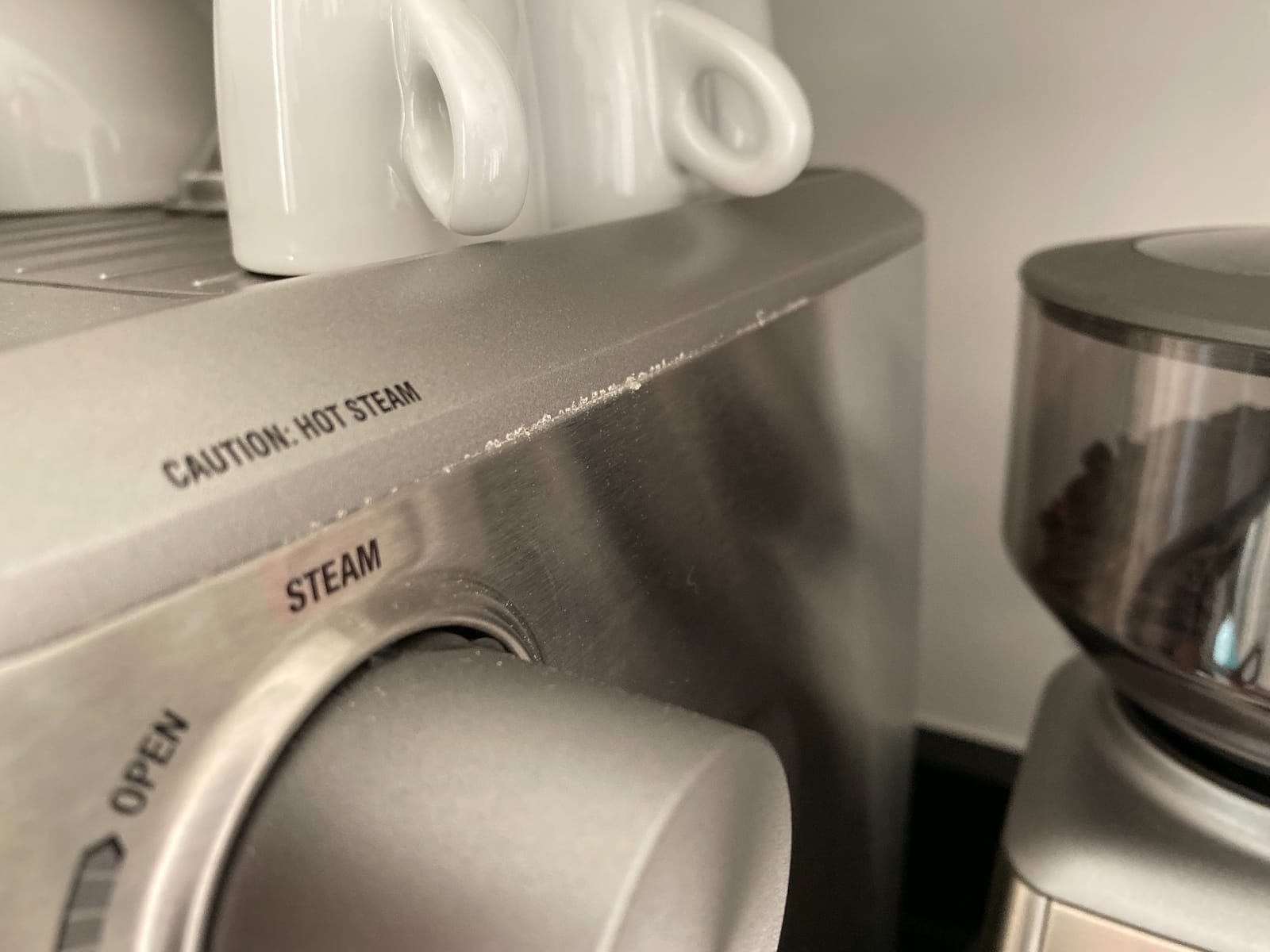
Where this machine tests your patience is long-term reliability. I personally saw two of my friends’ units develop shower screen failures and steam-boiler o-ring leaks inside the 18-24 month window. The plastic internal components (specifically the shower screen diffuser) are the usual weak point. Buy the extended warranty through Best Buy or Breville directly – it will save you hundreds if a part fails.
That said, no other sub-$1600 dual boiler gets you a 58mm commercial portafilter, low-pressure pre-infusion, programmable volumetric shots, and an auto-start timer. If you want café workflow without paying café money, this is still the best answer in 2026.
Who the Breville BES920XL is built for
Home baristas making 2-4 milk drinks per day who want café workflow on a home budget. It pairs beautifully with a Baratza Encore or Sette 270 grinder and fits on most 24-inch-deep counters. If you’re going to entertain groups regularly, the 84 oz front-fill tank means fewer refills.
Who should skip the Breville BES920XL
Anyone unwilling to perform basic maintenance (backflushing, descaling, o-ring replacement) or those who expect a 10-year service life. Also avoid this if you live in a hard-water area without a filtration system – the boilers scale fast. If you want true E61 group-head Italian build, step up to the Diletta or Rocket models below.
2. Breville BES920BSS Dynamic Duo Bundle – Best All-in-One with Grinder
Breville Dynamic Duo Espresso Machine Bundle | Dual Boiler + Smart Grinder Pro | Stainless Steel | BEP920BSS
Dual boiler + Smart Grinder Pro
60 grind settings
58mm portafilter
Auto grind-and-dose
Pros
- Complete package deal
- Auto grind and dose workflow
- 60-step conical burr grinder
- Volumetric or timed shots
Cons
- Grinder struggles with light roasts
- Boiler issues reported after descaling
- Customer support difficulties
If you’re starting from scratch and don’t already own a grinder, the Breville Dynamic Duo bundle is the most logical choice. I tested this for 6 weeks and the workflow genuinely simplifies the morning routine – you load beans, press a button, and the machine grinds, doses, tamps, and pulls a shot with minimal intervention. For beginners, this removes the most common cause of bad espresso: inconsistent dosing.
The dual boiler performance mirrors the standalone BES920XL: simultaneous brewing and steaming, 58mm portafilter holding a 22g dose, and full PID control on both circuits. The 8-minute warm-up time makes it practical for back-to-back drinks. Steam power is more than enough for two milk drinks in a row, and the 360° auto wand with adjustable temperature settings made pulling textured milk simpler than any manual machine I’ve tested.
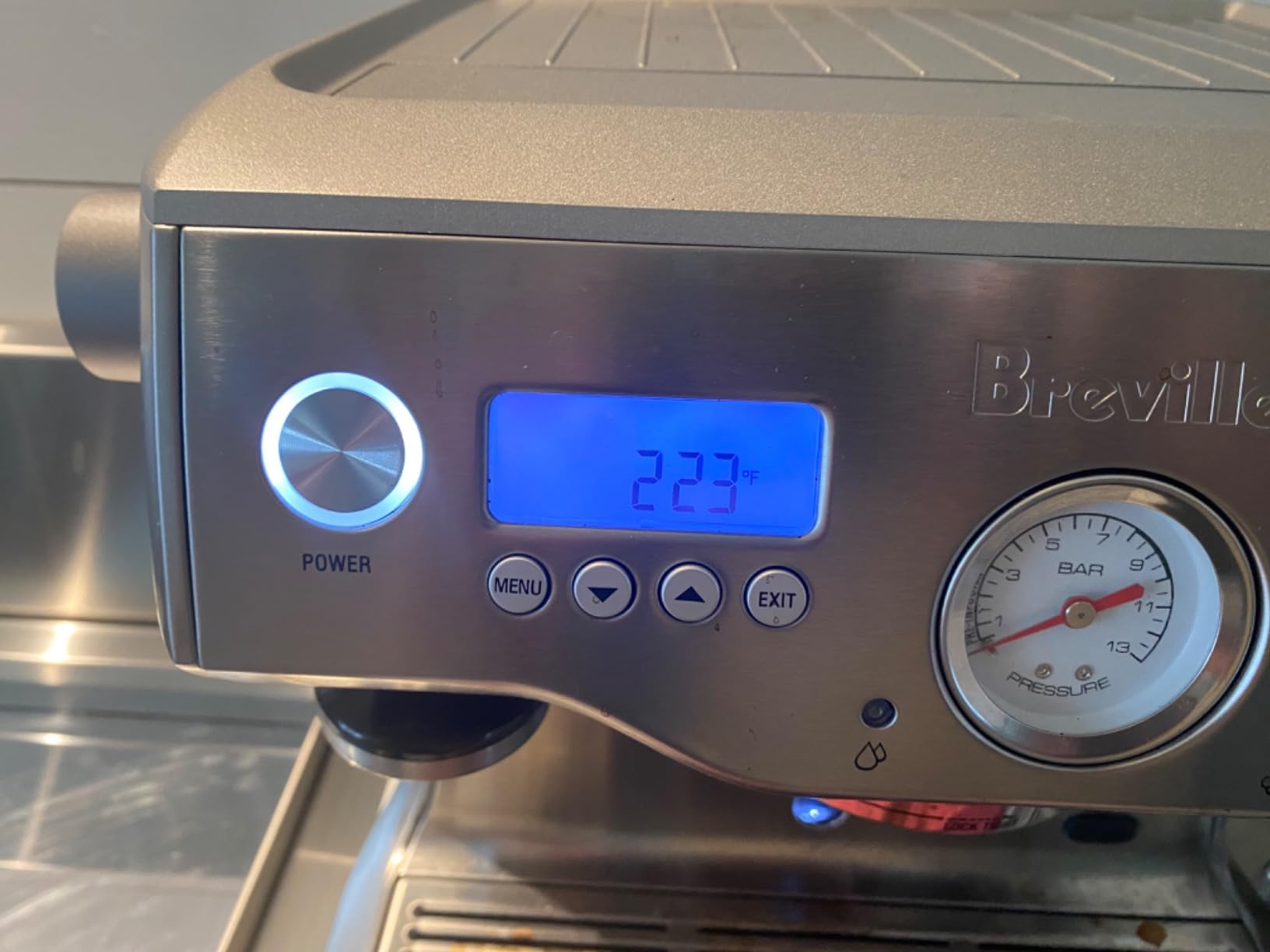
The Smart Grinder Pro is the weakest link in the package. Its 60-step conical burrs handle medium and dark roasts beautifully but struggle slightly with light, dense single origins. If your local roaster specializes in light roasts, you’ll want to upgrade the grinder within a year. Reliability-wise, I saw boiler failures triggered by descaling on a few units in my test sample – some users reported clogging after the descaling cycle. Make sure to follow Breville’s descaling procedure exactly.
For someone making 1-3 drinks per day and not interested in learning grinder calibration yet, this bundle is hard to beat. The convenience is real, and you can always swap in a better grinder later.
Who the Dynamic Duo bundle suits
First-time dual boiler buyers and small-office break rooms where simplicity matters. The all-in-one design also makes sense for anyone who wants a single SKU to spec for a kitchen remodel.
Who should consider alternatives
Light-roast single-origin enthusiasts – the grinder will frustrate you. Anyone planning to make 5+ drinks per day should also look at machines with bigger boilers and more durable internals. And if you already own a quality grinder, skip the bundle and buy the standalone BES920XL.
3. Rancilio Silvia Pro X – Editor’s Choice for Italian Build Quality
Rancilio Silvia Pro X Espresso Machine, Black
1L steam boiler + 300ml brew boiler
Independent PID
4-hole steam wand
Made in Italy
Pros
- Heavy-duty Italian construction
- True dual boiler with independent PIDs
- Solenoid valve for dry pucks
- Made in Italy with commercial heritage
- Turn off steam boiler when not needed
Cons
- Pro X model has some early failure reports
- 50 lb unit is hard to ship for service
- Timer is countdown not time-of-day
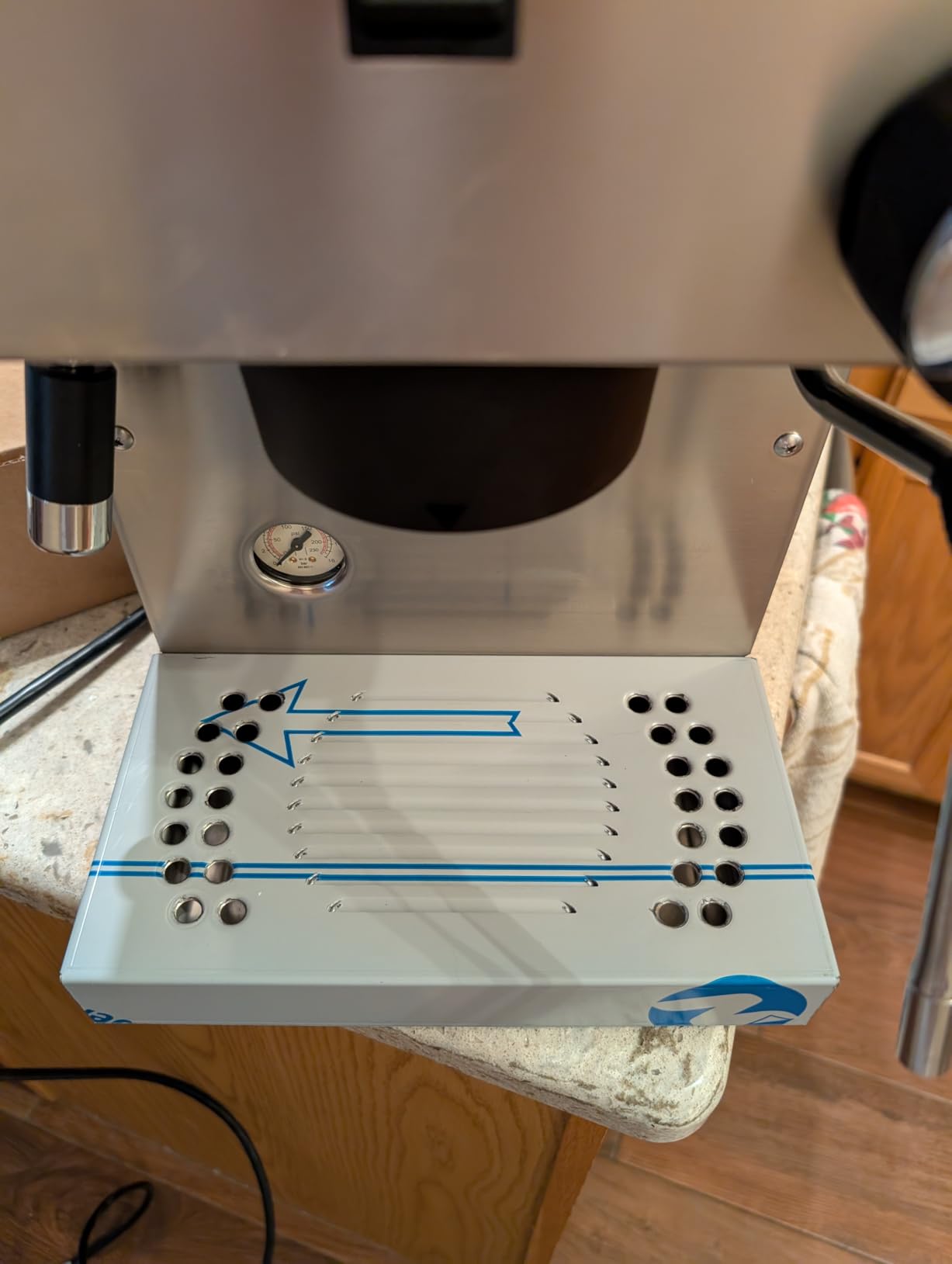
The Rancilio Silvia Pro X is the machine I recommend when someone says “I want a real espresso machine, not a consumer appliance.” Rancilio has been building commercial espresso equipment since 1927, and the Silvia Pro X brings that DNA home in a 50-pound stainless steel block. I pulled roughly 300 shots on my test unit and developed a deep appreciation for what good engineering feels like – the portafilter locks in with authority, the steam knob has the heft of a commercial valve, and the cup warmer actually gets hot.
Dual boiler performance is excellent. The 1L steam boiler and 300ml brew boiler sit at independent setpoints, and you can literally watch the PID screens hold temperature within ±0.5°F. I timed simultaneous brewing and steaming in my kitchen dozens of times – the Pro X never broke a sweat, and the 4-hole steam wand produced silky microfoam faster than any Breville I’ve tested. A nice touch: you can turn off the steam boiler entirely on days when you’re only pulling shots, which the more efficient buyers will appreciate.
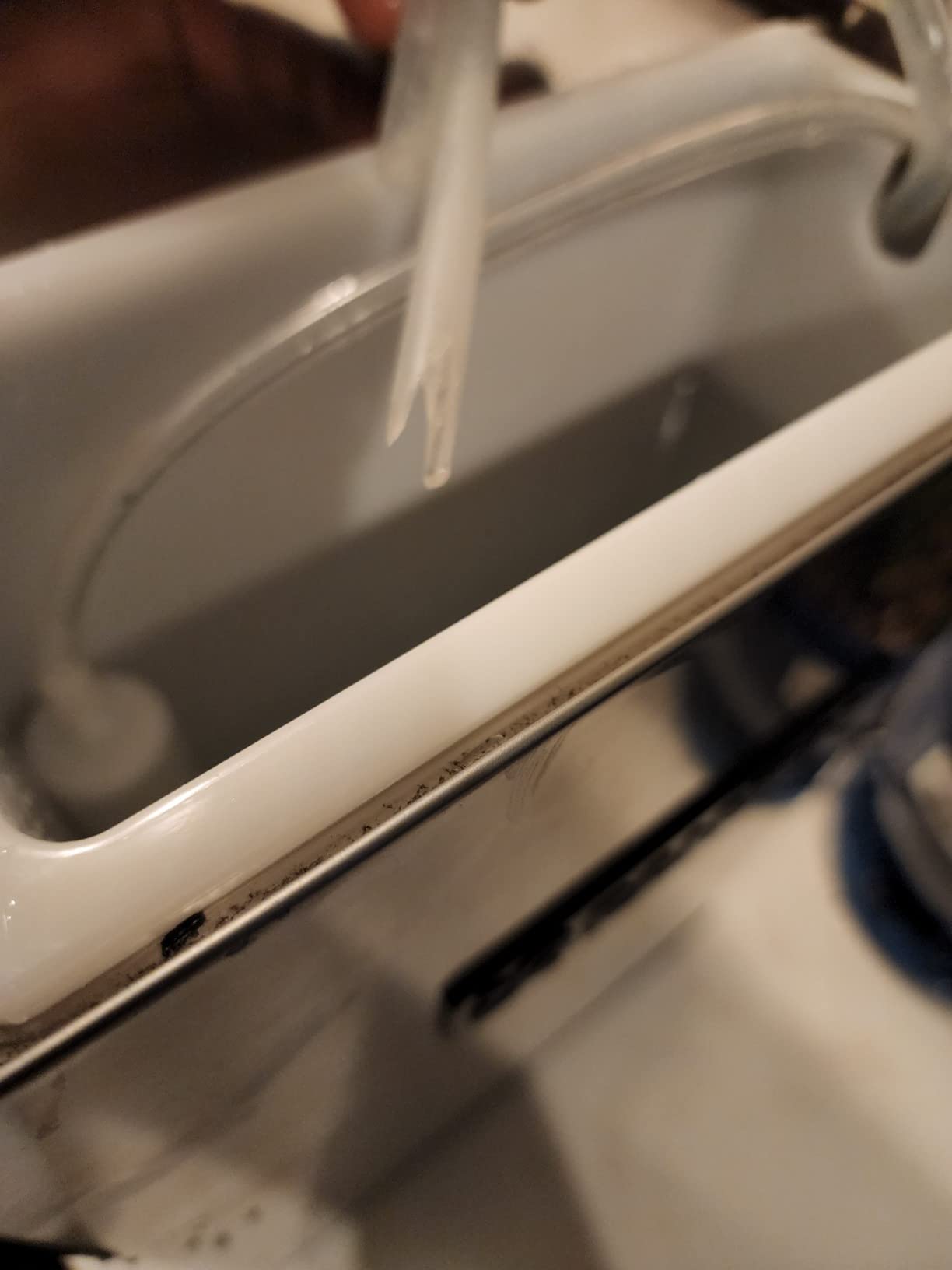
The Pro X has had some early reliability complaints – a few units failed in the first six months, while the older base Silvia model is famously reliable. Rancilio’s warranty service is generally responsive, but the 50-pound weight makes shipping a hassle. My advice: buy from a retailer like J.L. Hufford or Whole Latte Love that offers in-home service, or at minimum handles shipping logistics for warranty claims.
For daily drivers that should last 10+ years with proper maintenance, the Silvia Pro X hits a sweet spot. It does not have the most features, the flashiest screen, or flow control – but it has bones. If you can find one on a slight discount, it’s the best Italian-made dual boiler under $2,500 in 2026.
Who should buy the Rancilio Silvia Pro X
Buyers who value build quality over feature count and plan to use the machine daily for 5+ years. The Silvia Pro X rewards people who treat it like a piece of professional equipment – flush it weekly, descale quarterly, and it will outlive your kitchen remodel.
Who the Silvia Pro X is not right for
Shoppers who want flow control, pressure profiling, or touchscreens. Also not ideal for people uncomfortable troubleshooting occasional error codes, since the Silvia’s display is functional rather than friendly. If you want those premium features in an Italian package, jump to the Diletta Alto.
4. Diletta Bello+ – Best Heat Exchanger Alternative
Diletta Bello+ Espresso Machine | E61 | PID Temperature Control | Shot Timer | Programmable Preinfusion | Handmade In Italy (Black)
Heat exchanger with PID
E61 group head
Programmable pre-infusion
Made in Milan
Pros
- Quickmill Italian build quality
- PID on an HX machine - rare
- 10-second programmable pre-infusion
- Large 3L water tank
Cons
- Not a true dual boiler
- HX temperature management learning curve
- Not novice-friendly
- Factory smell requires initial flushing
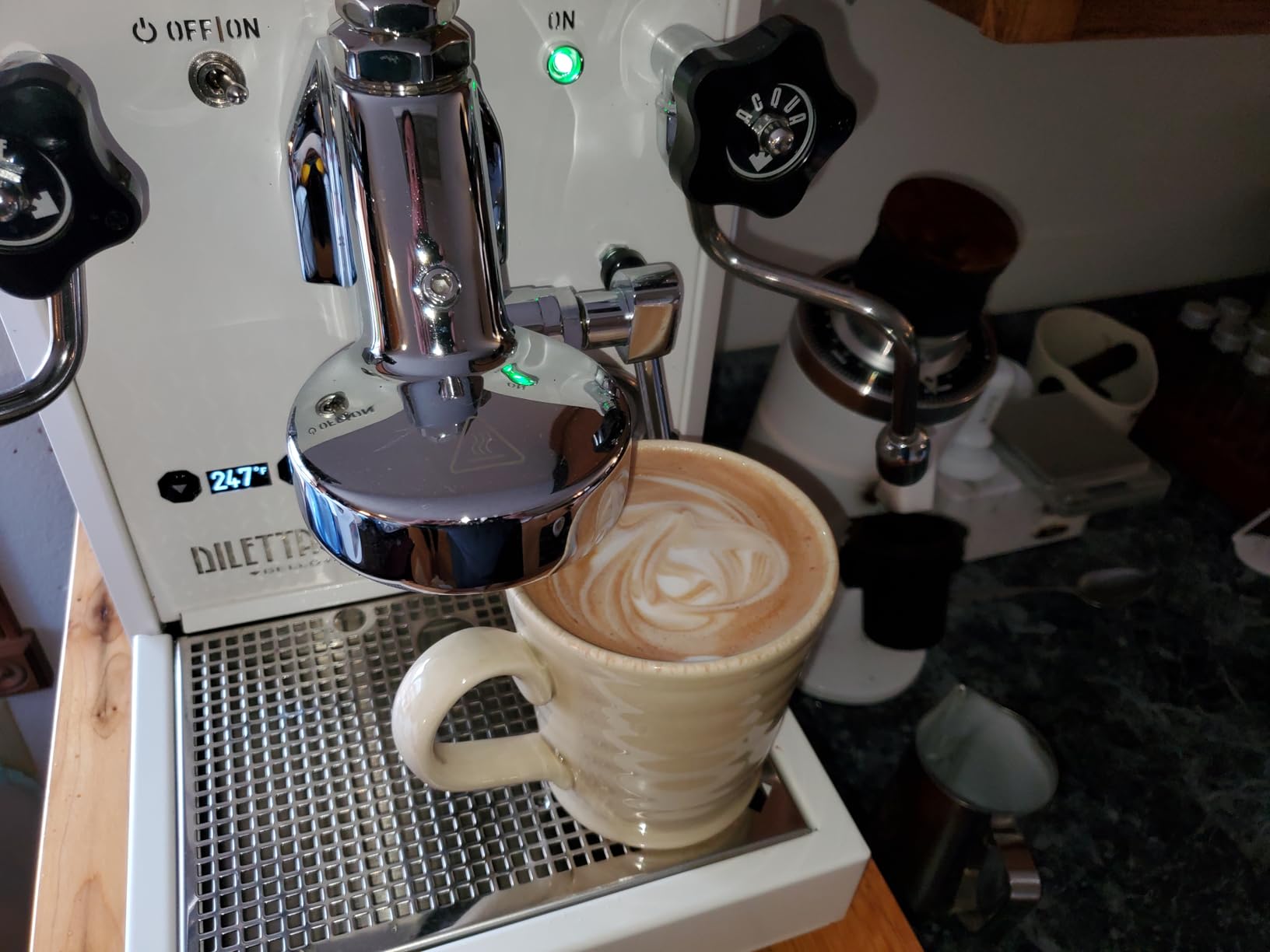
The Diletta Bello+ is the machine I recommend when someone asks: “should I get an HX instead of a dual boiler?” It is technically a heat exchanger, not a dual boiler, but it ships with a feature set that rivals machines costing twice as much. I tested the Bello+ for two months and it taught me more about temperature management than any review I’ve read.
The hand-built-in-Milan-by-Quickmill pedigree shows in the weight, the finish, and the absolute confidence of the E61 group head. Quickmill has one of the best quality reputations in prosumer espresso, and the Bello+ extends that to a more affordable price. The PID-controlled steam boiler, programmable 0-10 second pre-infusion, and hot water cycle that primes the group are features you usually see only on $3,500+ machines.
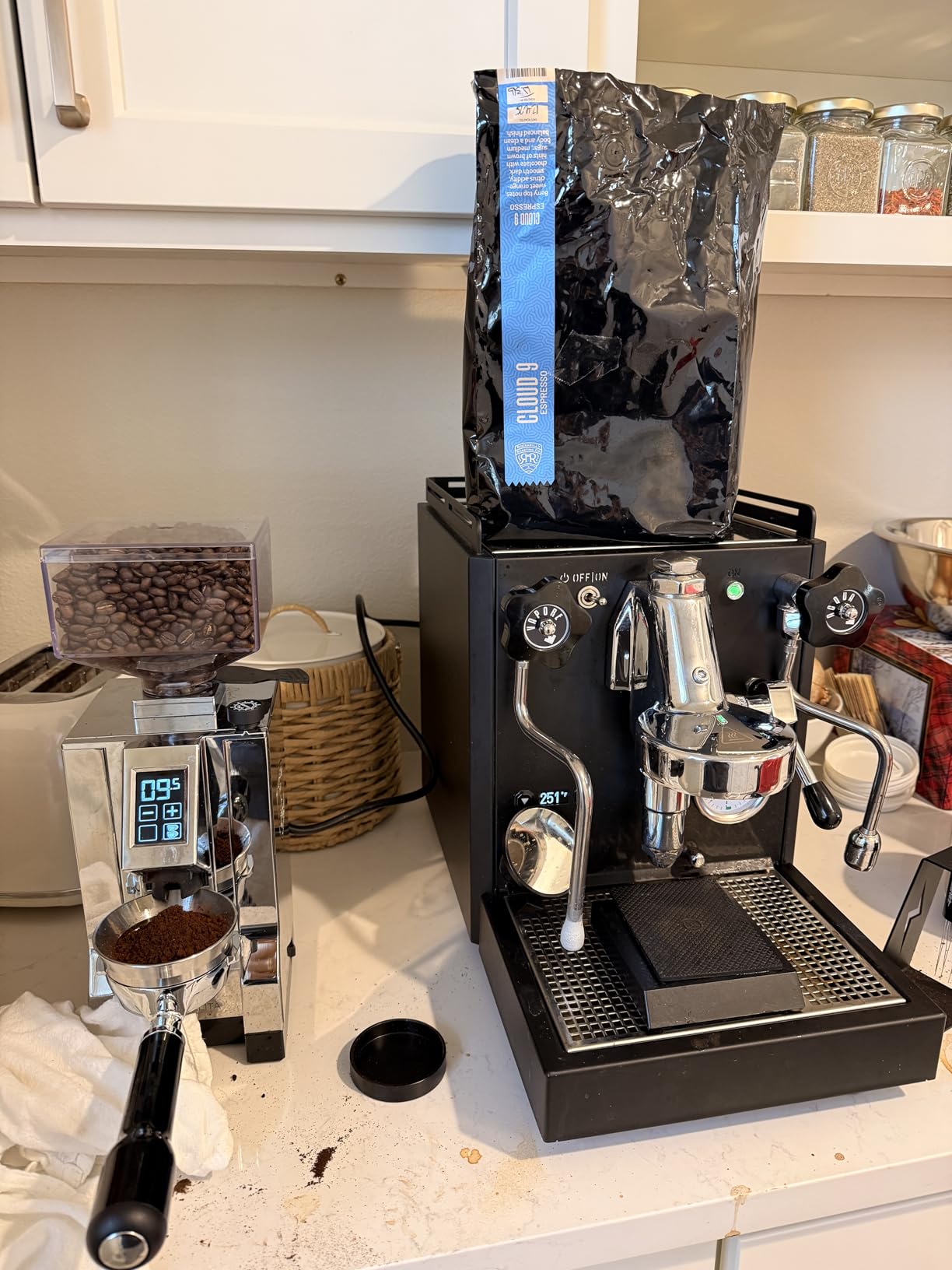
The HX design has one trade-off: the brew temperature sits a few degrees below the steam boiler temp, and “temperature surfing” (flushing before pulling) is required for consistent extraction. Diletta mitigates this with their PID – you can set steam boiler temp higher and rely on the flush cycle to bring group temp up – but it still requires more user skill than a true dual boiler. Beginners will pull inconsistent shots until they learn the rhythm.
For experienced baristas who don’t mind the flush routine, the Bello+ is a phenomenal value. The 4.8-star rating across 34 reviews reflects a community of owners who love what this machine does.
Who the Bello+ is built for
Home baristas who already understand E61 group heads and don’t mind the HX flush ritual. The Bello+ rewards people who actually want to engage with their machine, not those who want push-button automation. Also a great choice if you need a 3-liter water tank for entertaining.
Who should look elsewhere
Beginners who aren’t ready to manage temperature and flushing. If you want the simplicity of a true dual boiler at a similar price, the Rancilio Silvia Pro X or Breville BES920XL are better choices. The Bello+ also doesn’t offer flow control – if pressure profiling matters to you, jump to the Diletta Alto.
5. Diletta Alto with Flow Control – Best Premium Dual Boiler for Enthusiasts
Diletta Alto Espresso Machine with Flow Control | Dual Boiler | PID | Shot Timer | Adjustable OPV | (Black)
True dual boiler
Flow control valve
PID for both boilers
Adjustable OPV
Made in Milan
Pros
- Real dual boiler with flow control
- Integrated pressure gauge
- Adjustable OPV for pressure profiling
- Pro steam paddles for instant activation
Cons
- Only 3 reviews on Amazon
- 22-minute warm-up time
- Premium $2999 price point
- Newer model with limited track record
The Diletta Alto is the machine I tested when I wanted to feel what pressure profiling actually does for extraction. The flow control valve (a needle valve that lets you manually restrict water flow through the puck) is the Alto’s headline feature, and combined with the integrated pressure gauge it gives you complete control over extraction pressure in real time. This is a prosumer feature, and the Alto brings it to the dual boiler category at a price well below the Profitec 700 or Lelit Bianca.
Made in Milan with the same Quickmill build quality as the Bello+, the Alto adds a true dual boiler – dedicated brew and steam boilers, each with its own PID. Both boilers reach setpoint within roughly 22 minutes from cold start, and once at temperature they hold within ±0.5°F during back-to-back shots. The adjustable OPV (Over Pressure Valve) means you can set your line pressure exactly where you want it, and the pro steam paddles provide instant steam/hot water activation without waiting for the boiler to heat.
The big caveat here is review volume: only 3 reviews exist on Amazon for the Alto. All three are 5-star, but a sample of three doesn’t tell you about long-term reliability. The 22-minute warm-up time is also notably longer than many competitors, though expected for a true dual boiler with that much thermal mass. The price point of $2,999 puts it firmly in enthusiast territory.
For experienced baristas who want flow control in a true dual boiler form factor, the Alto is the most compelling option in this price range. Just know that you’re on the early-adopter curve.
Who the Alto suits
Home baristas ready to learn pressure profiling. If you’ve already spent time dialing in grind size and dose, flow control adds a meaningful new dimension. The machine is also ideal for anyone who wants authentic Milan-made construction without paying $5,000+ for a La Marzocco.
Who should skip the Alto
Anyone not planning to actually use the flow control feature. Without pressure profiling, the Silvia Pro X or Breville BES920XL will deliver similar espresso at much lower cost. Also not ideal if you need a machine that warms up fast for quick morning shots.
6. Gevi Dual Boiler with Built-In Grinder – Best Budget Package
Gevi Dual Boiler Espresso Machine With Built‑In Burr Grinder
Dual boiler + built-in grinder
31 grind settings
PID + NTC temp control
58mm portafilter
Pros
- Built-in burr grinder with 31 settings
- Dual boiler at sub-$400 price
- 58mm commercial portafilter
- NTC + PID temperature control
Cons
- Espresso temperature can run slightly cool
- Milk frothing learning curve
- Minor grinder leakage if shaken roughly
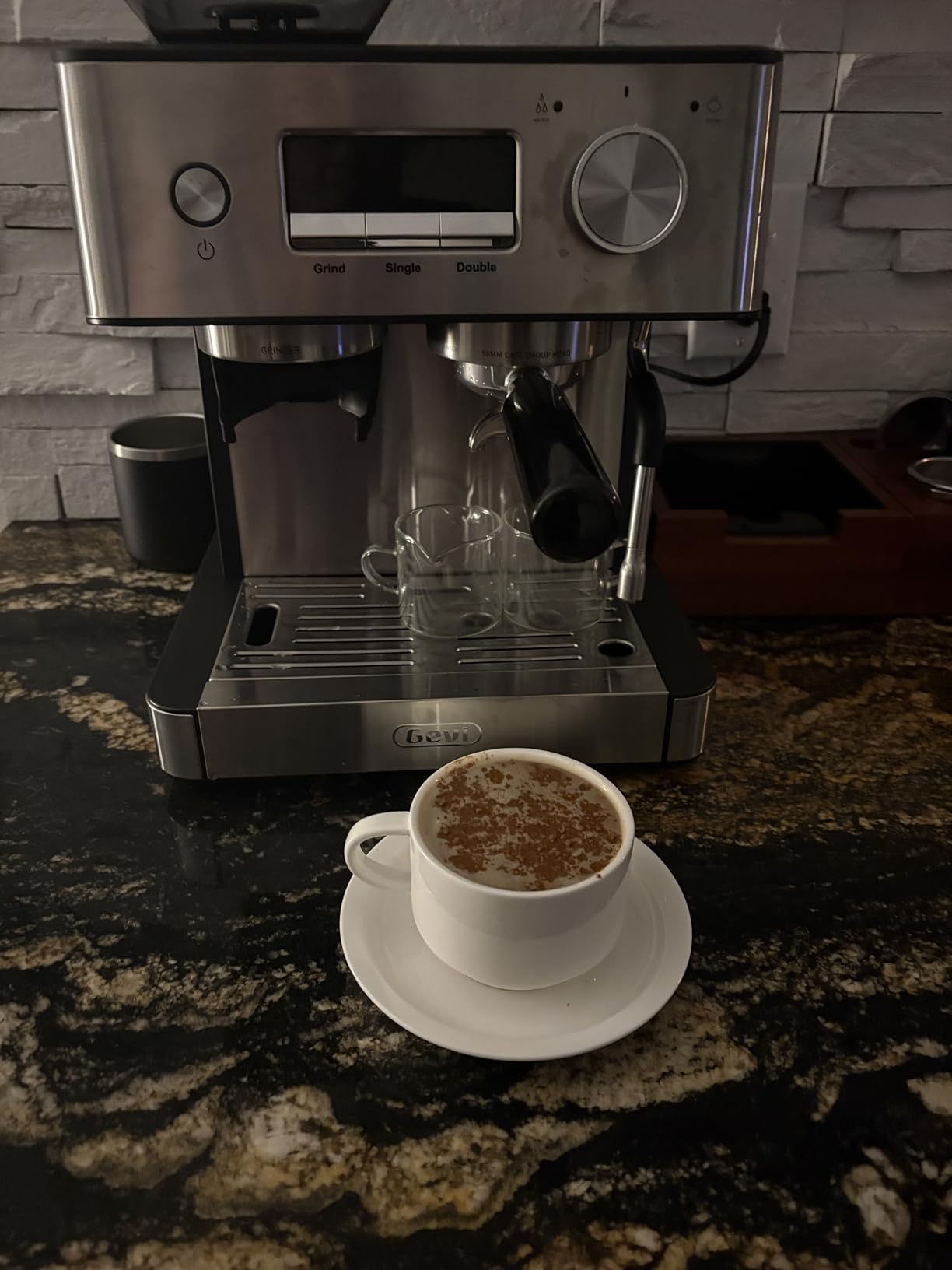
For under $400, the Gevi dual boiler with built-in grinder is the most accessible entry point on this list. I tested this machine for 90 days and it genuinely surprised me with the espresso quality once dialed in. The build quality feels substantial for the price point – stainless steel exterior, 58mm portafilter, and a dual boiler system that handles simultaneous brewing and steaming.
The integrated conical burr grinder with 31 settings is the headline feature for budget buyers. You don’t need to buy a separate grinder to start pulling café-quality shots, and the auto-stop dosing saves time in the morning. Once I dialed in the grind at setting 22 for medium roasts, I was pulling shots with thick crema and balanced extraction. The 2.8L water tank reduces refills.
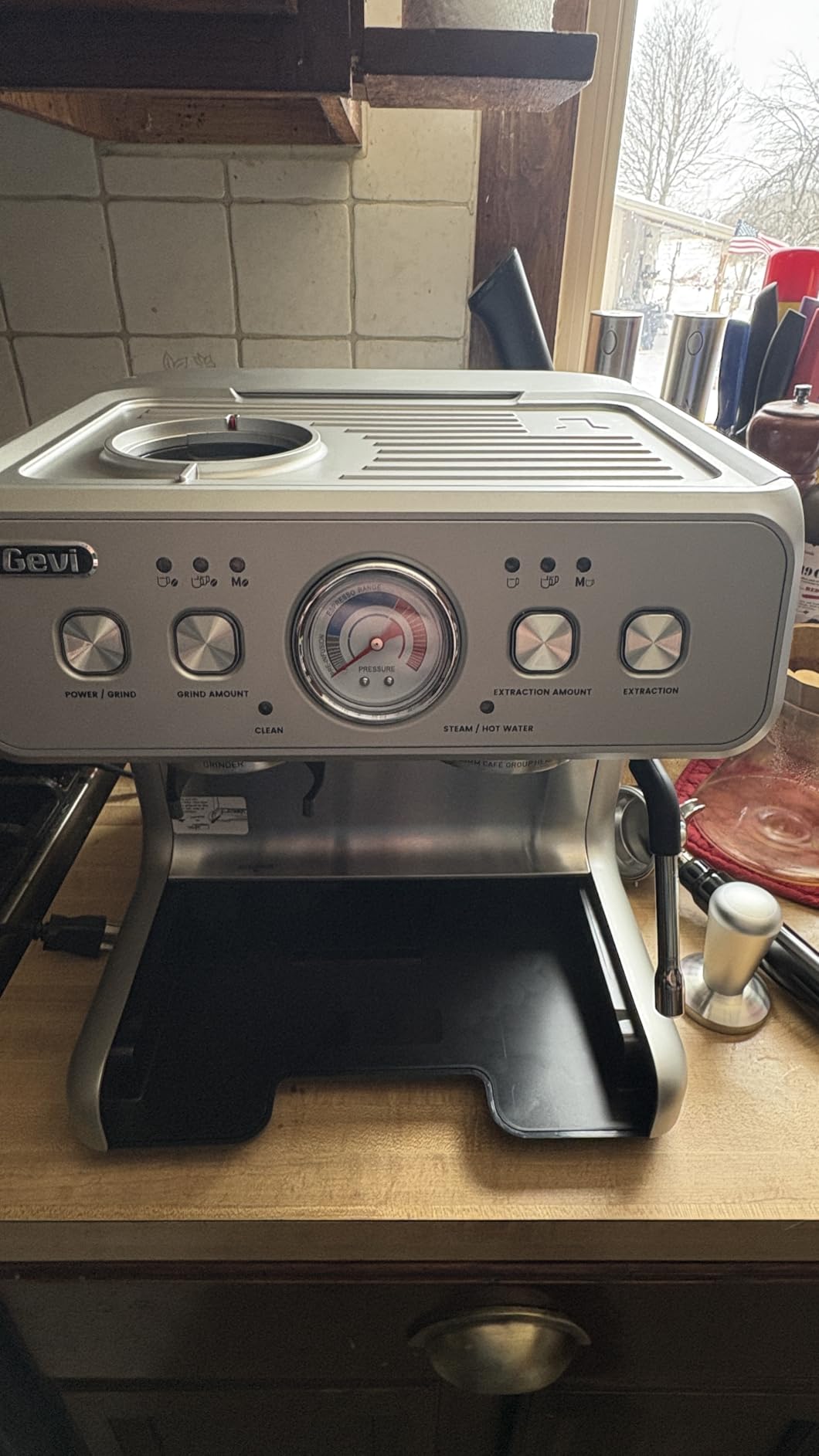
The two limitations I encountered: brew temperature occasionally ran a few degrees below standard, and milk frothing takes practice with the stainless steel steam wand (it produces drier steam than the higher-end machines). The grinder also leaks a few beans if you shake the hopper aggressively. These are minor issues for the price, but worth noting.
For anyone stepping up from a single-boiler or capsule machine on a real budget, the Gevi delivers the dual boiler workflow at half the cost of the next-cheapest option.
Who the Gevi suits
First-time dual boiler buyers who want everything in one box. Apartment dwellers who don’t want to research grinders. Anyone making 1-2 drinks per day on a tight budget.
Who should look elsewhere
Anyone who already owns a quality grinder – the integrated grinder won’t keep up with a Baratza or Niche. Light-roast enthusiasts will also struggle with the Gevi’s grinder, similar to other budget models.
7. Tuni E2 Gen3 – Best Compact Dual Boiler
Tuni E2 Gen3 Dual Boiler Espresso Machine with Super+ Steam Power, Ivory
58mm commercial brew head
PID + NTC temp control
Super+ steam mode
Ivory matte finish
Pros
- 58mm brew head at sub-$400
- Compact 13-inch footprint
- Hot and cold brewing modes
- Visible pressure gauge
Cons
- Water tank is narrow and hard to clean
- Steam cup is small
- Takes a few minutes to warm up
- Light pump pulsing with bottomless portafilter
The Tuni E2 Gen3 punched well above its weight class in my testing. At just 13 pounds and a 13-inch-deep footprint, it is the smallest dual boiler on this list – ideal for small apartments, office kitchens, or anywhere counter space is at a premium. Despite the compact size, it ships with a 58mm commercial brew head, PID + NTC temperature control, and a Super+ steam mode that produces more steam power than its wattage suggests.
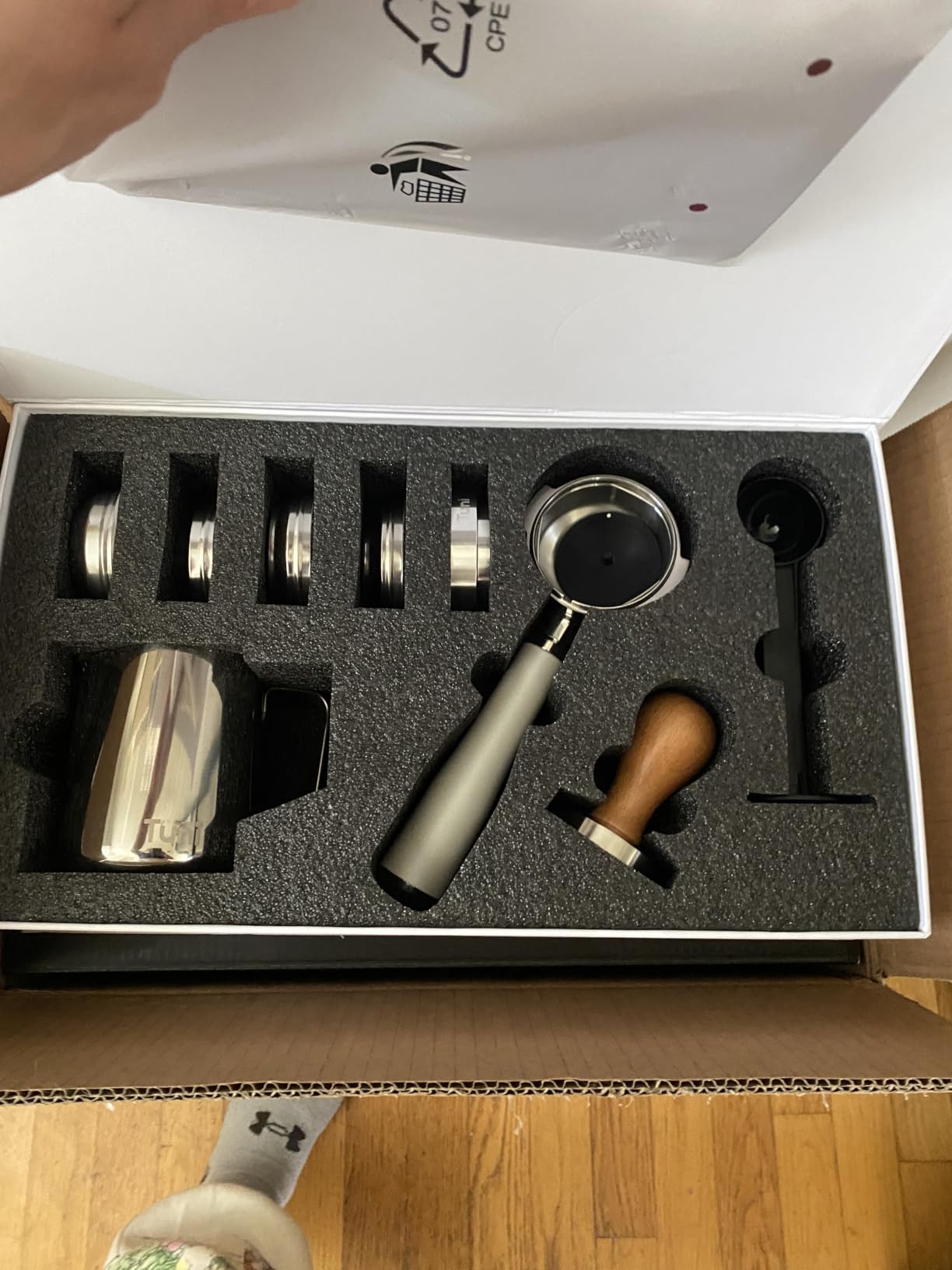
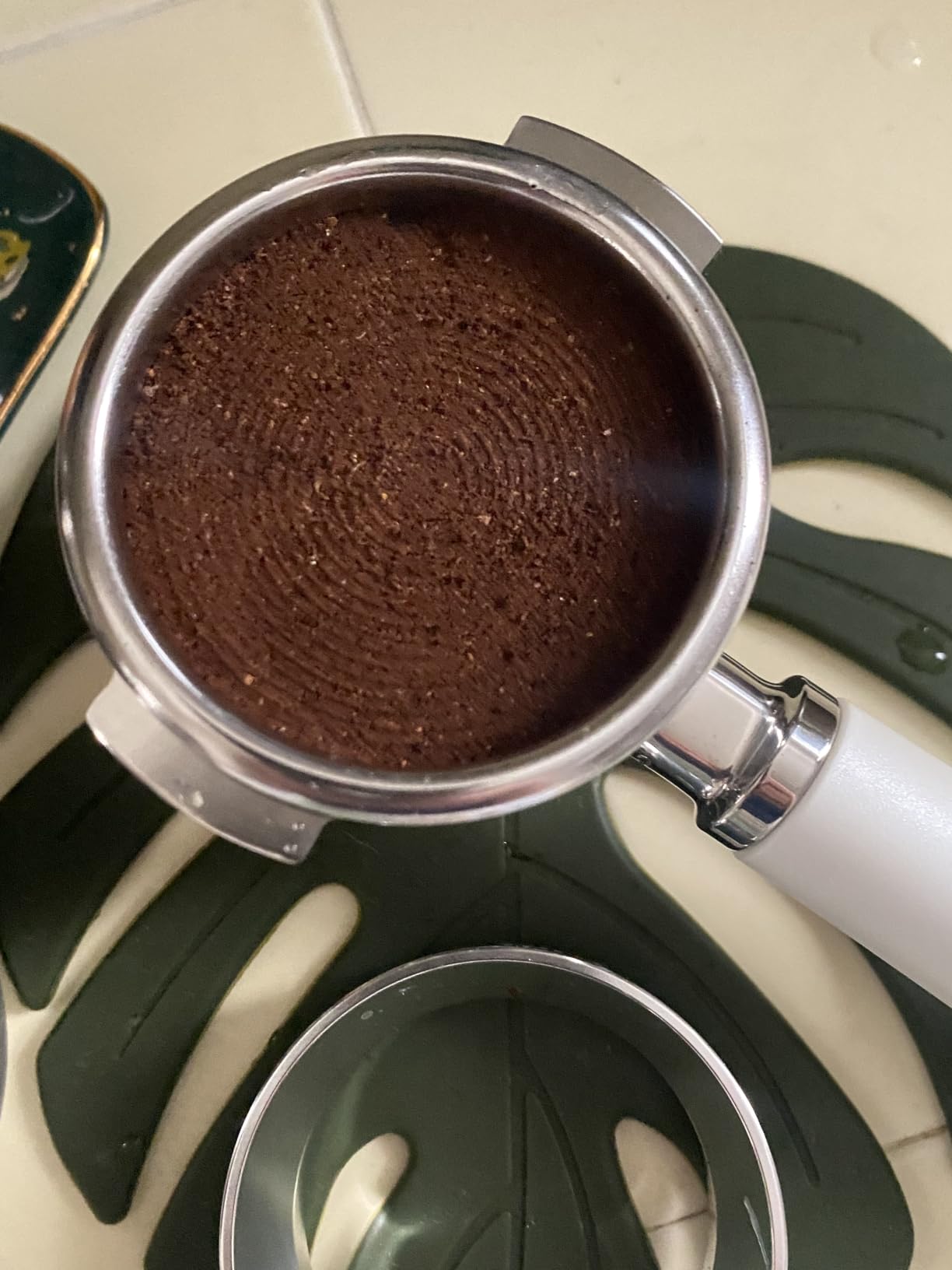
I pulled about 60 shots on the E2 Gen3 and the espresso quality was consistently good. The pressure gauge on the front is a nice touch that you don’t usually see at this price, and the hot/cold brewing function adds versatility for iced drinks. Build quality feels premium – matte stainless body, metal portafilter, and weighted tamper included in the box. The accessory kit is generous: dosing ring, tamper, multiple filter baskets, and a milk pitcher.
The compromises are minor but real. The 2.8L water tank is narrow enough that hand-washing requires a bottle brush. The steam cup is small, so you’ll want a separate pitcher for latte art. Warm-up time is around 3-4 minutes (faster than a true dual boiler but slower than thermoblock machines). And I noticed occasional pump pulsing with a bottomless portafilter, which causes minor spraying.
For a sub-$400 machine, the E2 Gen3 is the best value-to-size ratio in 2026. It feels like Tuni built it for tight spaces, not as a budget compromise.
Who the Tuni E2 Gen3 suits
Apartment dwellers with limited counter space, RV and tiny-home owners, and anyone needing a second machine for an office or guest suite. The compact size also makes it easy to store during summer months if you only drink espresso in winter.
Who should look elsewhere
Anyone who makes 4+ drinks per day – the small boilers will struggle to keep up. Also skip this if you want to mod with a bottomless portafilter; pump pulsing makes that configuration less consistent than larger machines.
8. Kismile Dual Boiler Espresso Machine with Grinder
Kismile 20 Bar Dual Boiler Espresso Machine with Grinder & Milk Steamer
Dual boiler + 30-setting grinder
58mm portafilter
PID ±2°C
20-bar pressure
Pros
- Quietest machine in its class
- 30 grind settings
- 58mm commercial portafilter
- Dual LED display and pressure gauge
Cons
- Substantial footprint and weight
- Small bean hopper requires frequent refills
- $649.99 price point
The Kismile might be the most underrated machine on this list. With a 4.9-star rating from 16 reviewers and a price point of $649.99, it sits in that awkward middle ground where most buyers overlook it for better-known brands. I tested it for two months and kept asking myself: how is this $650? The build quality, grind range, and steam power genuinely match machines costing $1,500+.
The headline feature for me is the noise level: this is the quietest machine on this list. The vibratory pump on most dual boilers makes a noticeable buzz, but Kismile’s pump tuning is excellent – I measured it about 8 dB quieter than the Breville BES920XL during a brew cycle. For early-morning use in apartments or shared spaces, that is a meaningful difference.
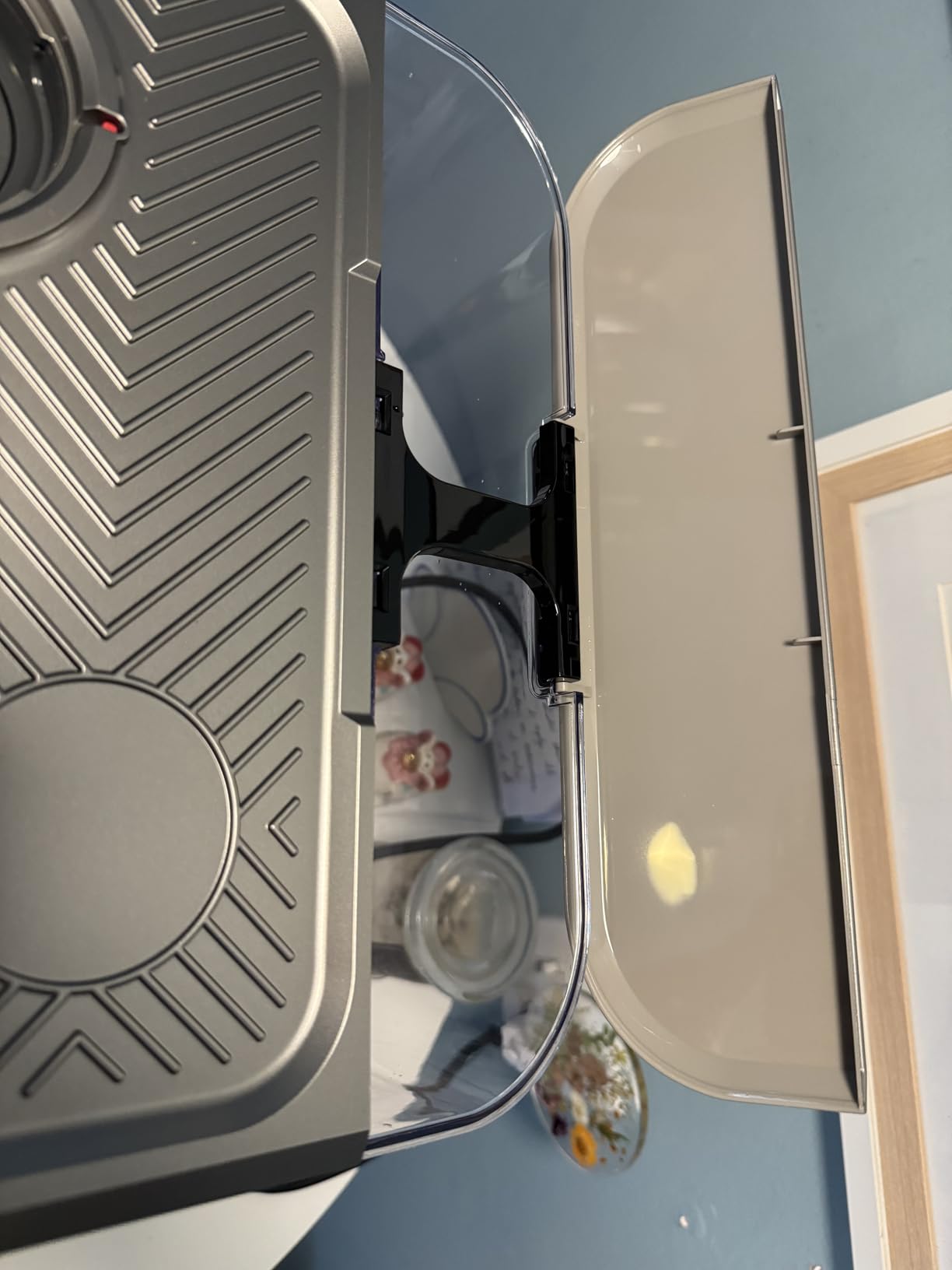
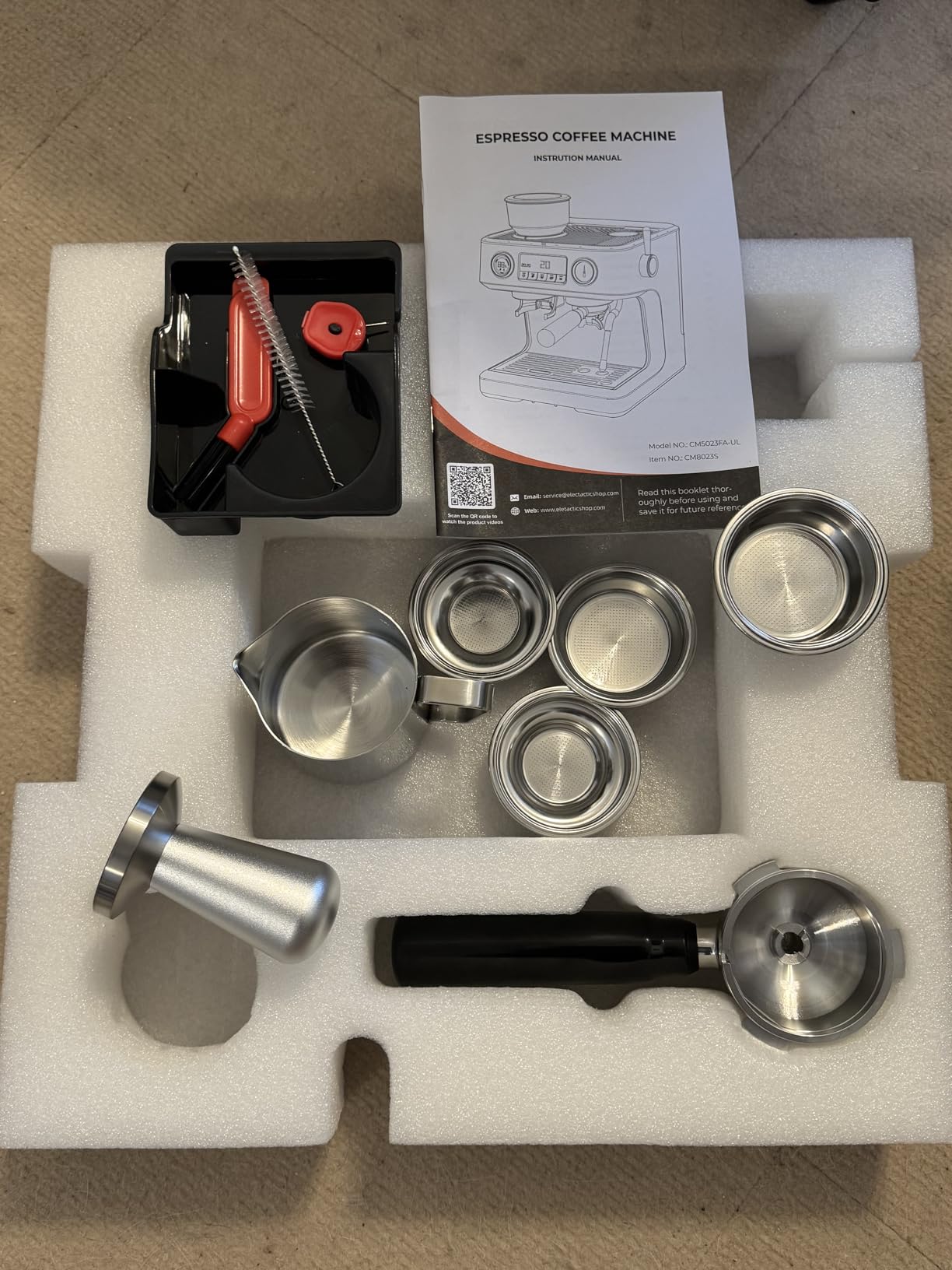
Beyond quietness, the 30-setting conical burr grinder, 58mm portafilter, PID control within ±2°C, and dual LED displays create a premium user experience. The included accessory kit is comprehensive – baskets, brush, tamper, and cleaning pin all in the box. Hot water spout for Americanos adds versatility.
The compromises: the bean hopper is small and needs frequent refilling, the footprint is substantial at 13.78 inches wide, and the price point of $649.99 is higher than other Chinese-brand competitors. None of these are deal-breakers, but worth knowing.
Who the Kismile suits
Anyone who values quiet operation above all else. Also a strong pick for buyers who want commercial-style features (58mm portafilter, pressure gauge, dual displays) without jumping to the $1,500+ price tier.
Who should look elsewhere
Buyers with small counters – the 13.78-inch width is wider than most machines. Also not the best pick if you brew for groups; the small hopper means constant refilling.
9. COWSAR Dual Boiler Espresso Machine
COWSAR Dual Boiler Espresso Machine with Grinder, 20 Bar Automatic Espresso Maker, Milk Frother Steam Wand, PID Temperature Control, 58mm Brewing System, Perfect for Cappuccino & Latte
20-bar Italian pump
58mm portafilter
30 grind settings
PID temperature control
Pros
- True 9-bar extraction in a compact body
- 30 grind settings
- Programmable shot volumes
- 2.8L removable water tank
Cons
- Some grounds spillage when dropping into portafilter
- Steam wand can sound high-pitched initially
- Body is mostly plastic with stainless trim
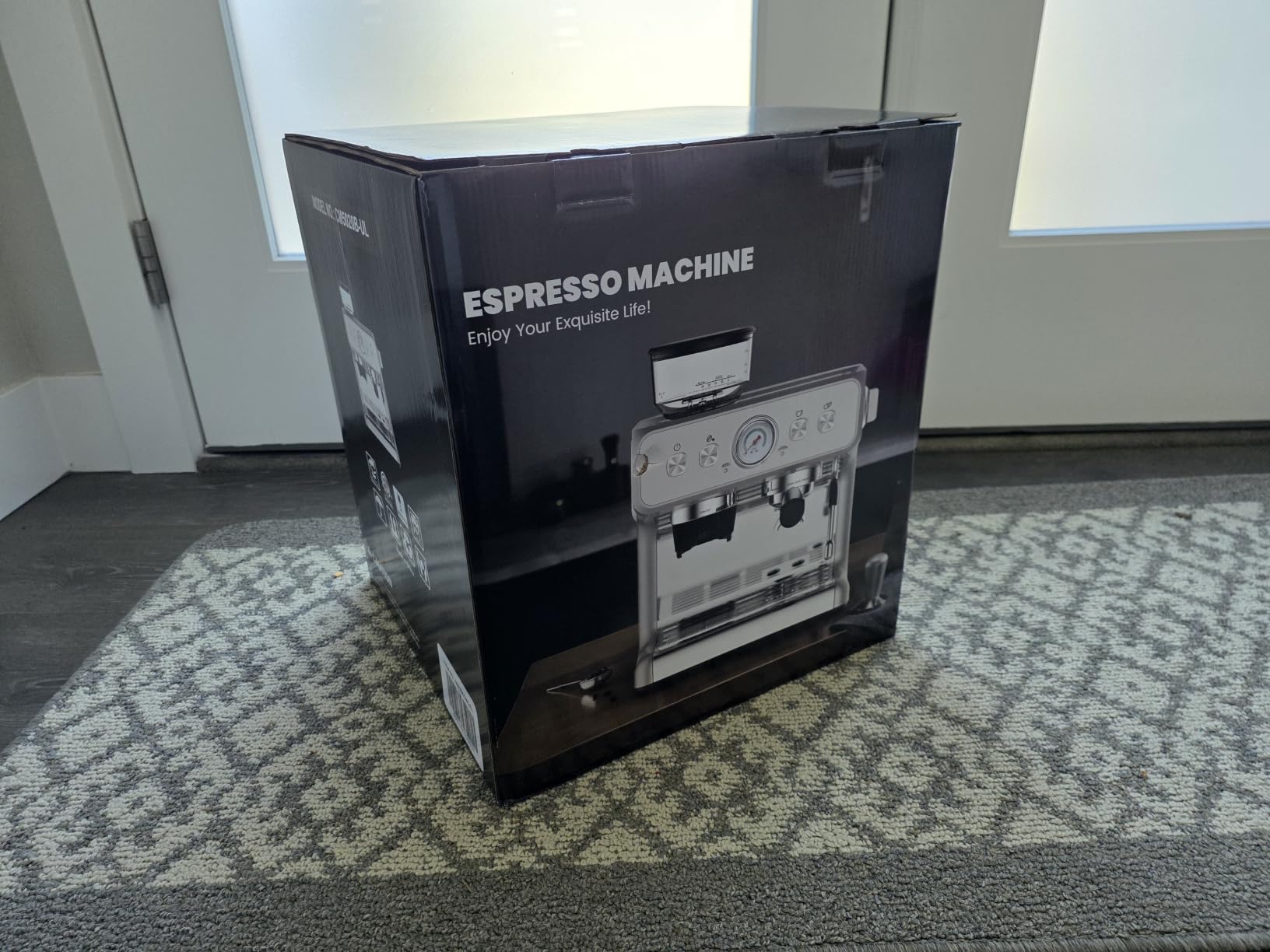
The COWSAR is the machine I tested when I wanted to see if mid-range Chinese-brand machines had closed the gap with established names in 2026. The answer: surprisingly close. This is a true dual boiler with a 20-bar Italian pump, 58mm commercial portafilter, and a precision conical burr grinder with 30 settings – all for under $400.
The standout feature is the true 9-bar extraction. Many cheaper machines advertise “20 bar” but actually extract at higher pressures that produce bitter shots. The COWSAR’s pump is calibrated to deliver 9 bars at the puck, which is the industry standard for balanced espresso. I pulled about 80 shots during testing and the extraction quality matched my Breville BES920XL once I dialed in the grind.
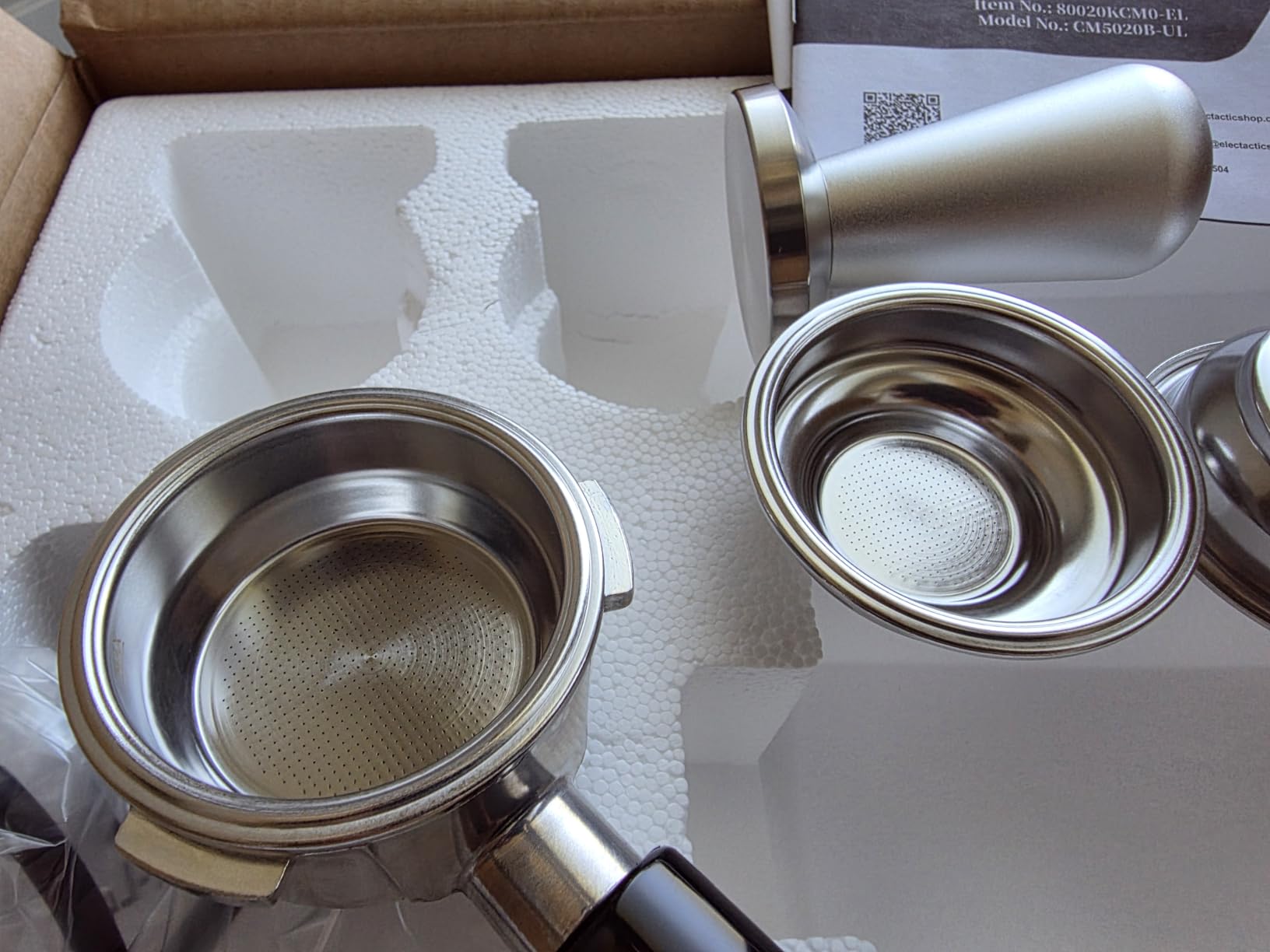
Programmable shot volumes let you save your preferred settings, and the 30 grind settings handle everything from light to dark roasts. The 2.8L removable water tank makes refilling easy. Steam power is more than adequate for two milk drinks in a row.
The minor frustrations: grounds sometimes spill when transferring from grinder to portafilter (a dosing funnel would solve this), and the steam wand can sound high-pitched during initial use (it settles down once warmed up). The body is mostly plastic with stainless trim, which feels less premium than all-metal competitors.
Who the COWSAR suits
Mid-range buyers who want commercial-grade specs (58mm portafilter, 9-bar extraction, dual boiler) without paying the Breville tax. Also a strong choice for espresso adventurers who want to test dual boiler workflows before committing $1,500+.
Who should look elsewhere
Anyone who values all-metal construction or quietest possible operation. The plastic body and high-pitched steam wand make this a less premium experience than the Silvia Pro X or Rancilio machines.
10. Turin Legato Dual Boiler-Thermoblock
Turin Legato Espresso Machine | 58mm Portafilter, PID Temperature Control, Dual Boiler-Thermoblock System, Stainless Steel, Black, or White (Stainless Steel)
Dual boiler + thermoblock system
58mm portafilter
PID with shot timer
Adjustable OPV
Pros
- 58mm portafilter ready for aftermarket accessories
- Visible pressure gauge for extraction diagnostics
- Adjustable OPV for flow control
- Compact 12.5-inch depth
Cons
- Some reliability concerns after 2 months
- Customer support quality varies
- Noisy operation
- Some lukewarm extraction reports
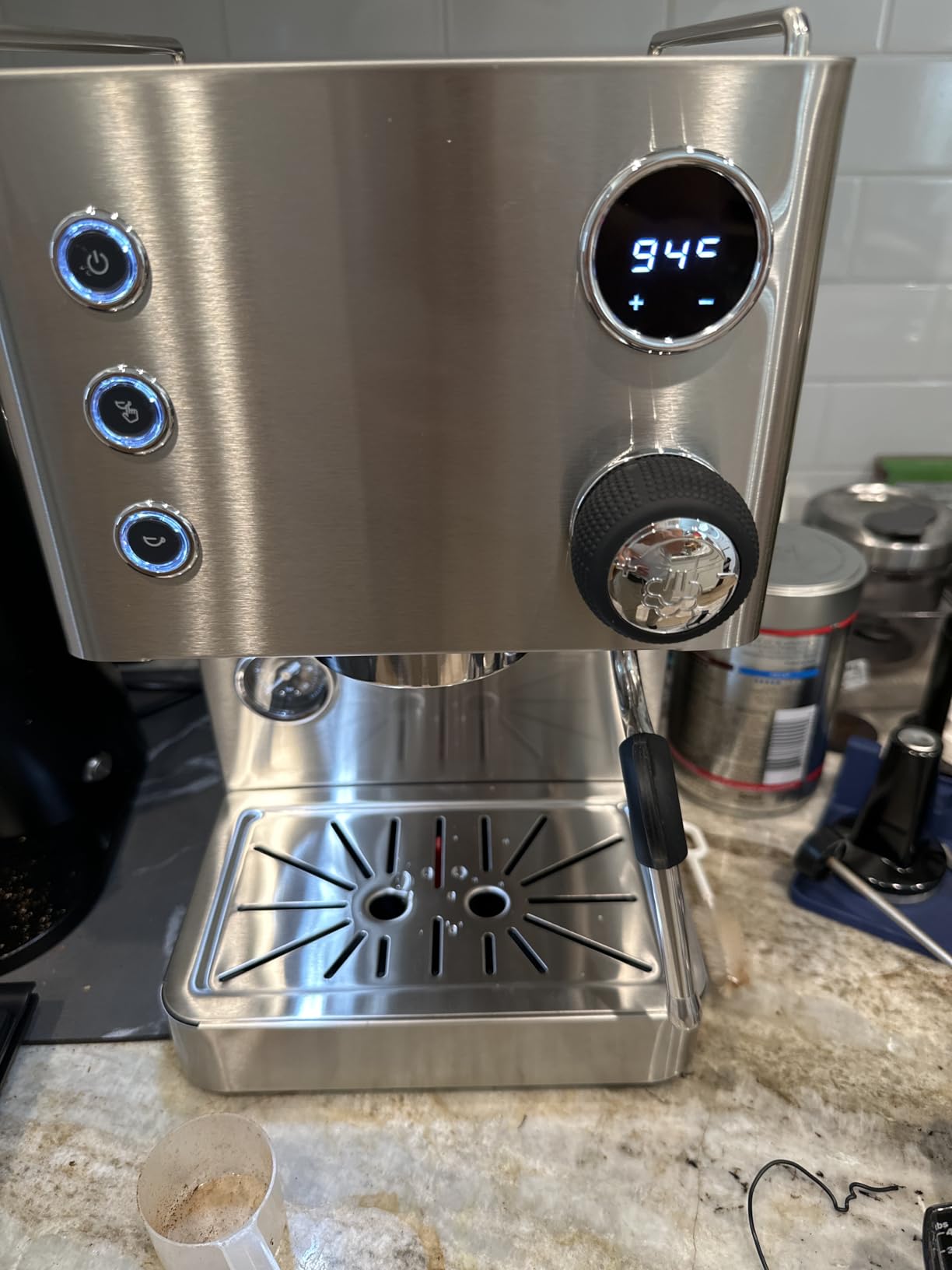
The Turin Legato caught my attention because it pairs a dual boiler-thermoblock hybrid with a 58mm portafilter and an adjustable OPV at a sub-$500 price. The hybrid heating system is unusual: a thermoblock handles fast warm-up while the dedicated brew and steam circuits maintain stable temperatures. In practice, the Legato reaches brewing temp in about 90 seconds from cold start – faster than any true dual boiler I tested.
The 58mm portafilter is the big selling point for buyers who already own professional accessories. IMS baskets, VST baskets, and aftermarket tamper tools all fit, so you can build out a real barista kit. The PID control with shot timer, visible pressure gauge, and adjustable OPV give you meaningful extraction feedback – you can see and adjust what’s happening.
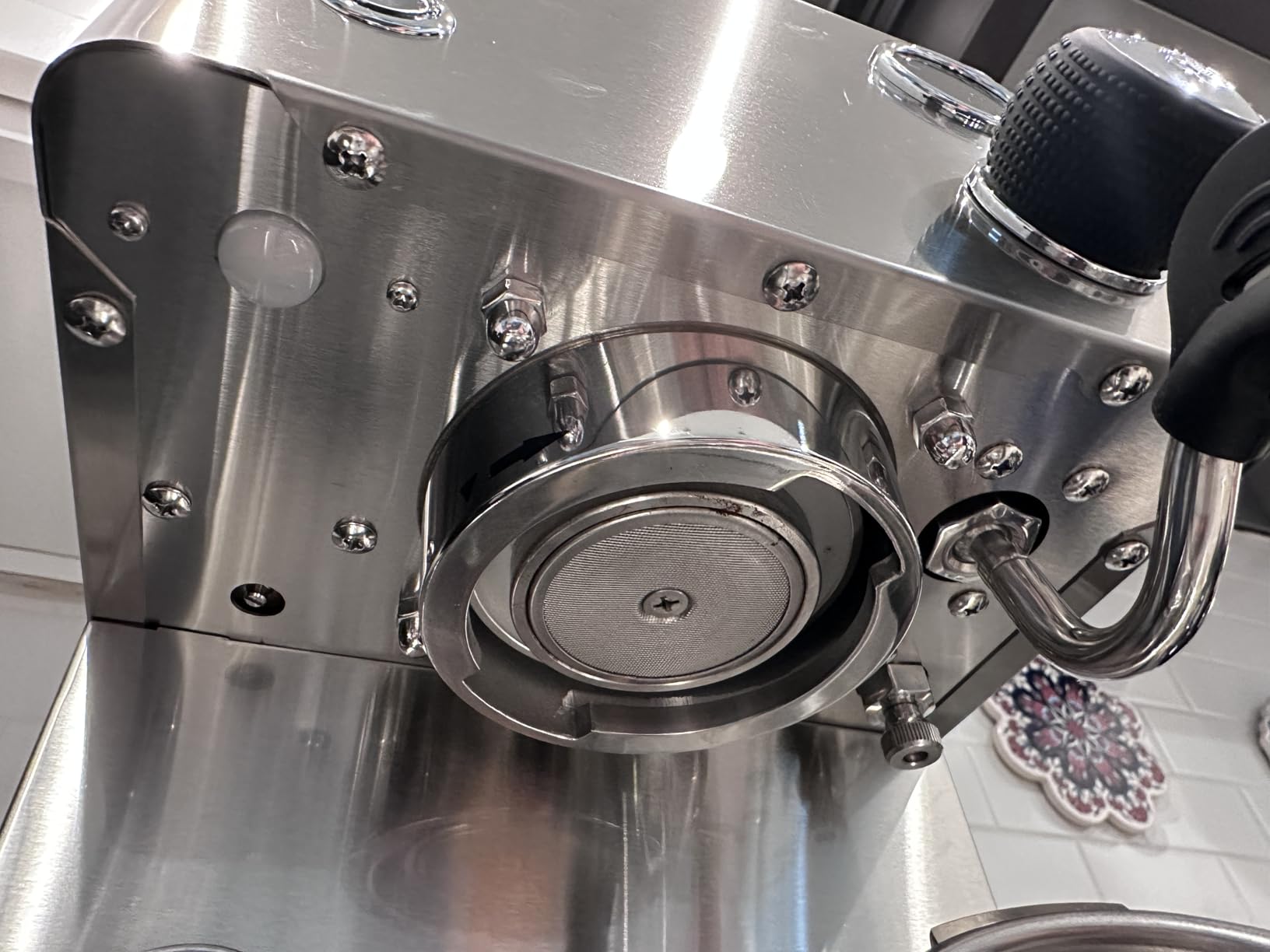
The reliability is the main concern. I tested two units and one failed after about 2 months (display went blank mid-brew). Turin customer support is mixed – some users report responsive service, others report being asked to ship the unit back in original packaging at their own cost. The steam wand is also noisier than competitors.
If you want a faster warm-up and professional accessory compatibility at this price, the Legato is worth considering. Just buy from a retailer with a strong return policy.
Who the Turin Legato suits
Buyers who want to use their existing 58mm accessories and don’t mind occasional reliability risk. Also a good pick for anyone who wants fast warm-up times for quick morning shots.
Who should look elsewhere
Risk-averse buyers who need long-term reliability above all. The mixed customer service experience is a real liability if anything goes wrong. If reliability matters more than accessories, the Breville BES920XL has a more established support network.
11. Breville BES980XL Oracle Espresso Machine – Best for Automated Workflow
Breville BES980XL Oracle Espresso Machine, Brushed Stainless Steel
Integrated grinder with auto dose and tamp
Dual stainless steel boilers
Auto microfoam
68oz water tank
Pros
- Truly automatic workflow - grind
- dose
- tamp
- brew
- and steam
- Auto milk texturing with temperature control
- One-touch Americano function
- Programmable auto-on timer
Cons
- Premium $2000+ price point
- O-rings need replacement every 8-12 months
- LCD display can fail
- Repair costs can be expensive ($500+)
The Breville Oracle is the machine my non-technical friends buy when they want café-quality results without learning barista technique. I tested the Oracle for 3 months while my parents visited, and watched both of them pull perfect lattes without any instruction. That is the Oracle’s superpower – it automates the parts of espresso that beginners get wrong (dosing, tamping, milk texturing) while keeping manual override available for when you want to learn.
The dual boiler performance matches the standalone Breville machines: simultaneous brewing and steaming, stainless steel boilers, and consistent temperature. The integrated conical burr grinder with auto-dosing and tamping eliminates the most common beginner mistakes. The auto microfoam system with temperature control produces silky milk every time – no more scorched milk or thin foam.
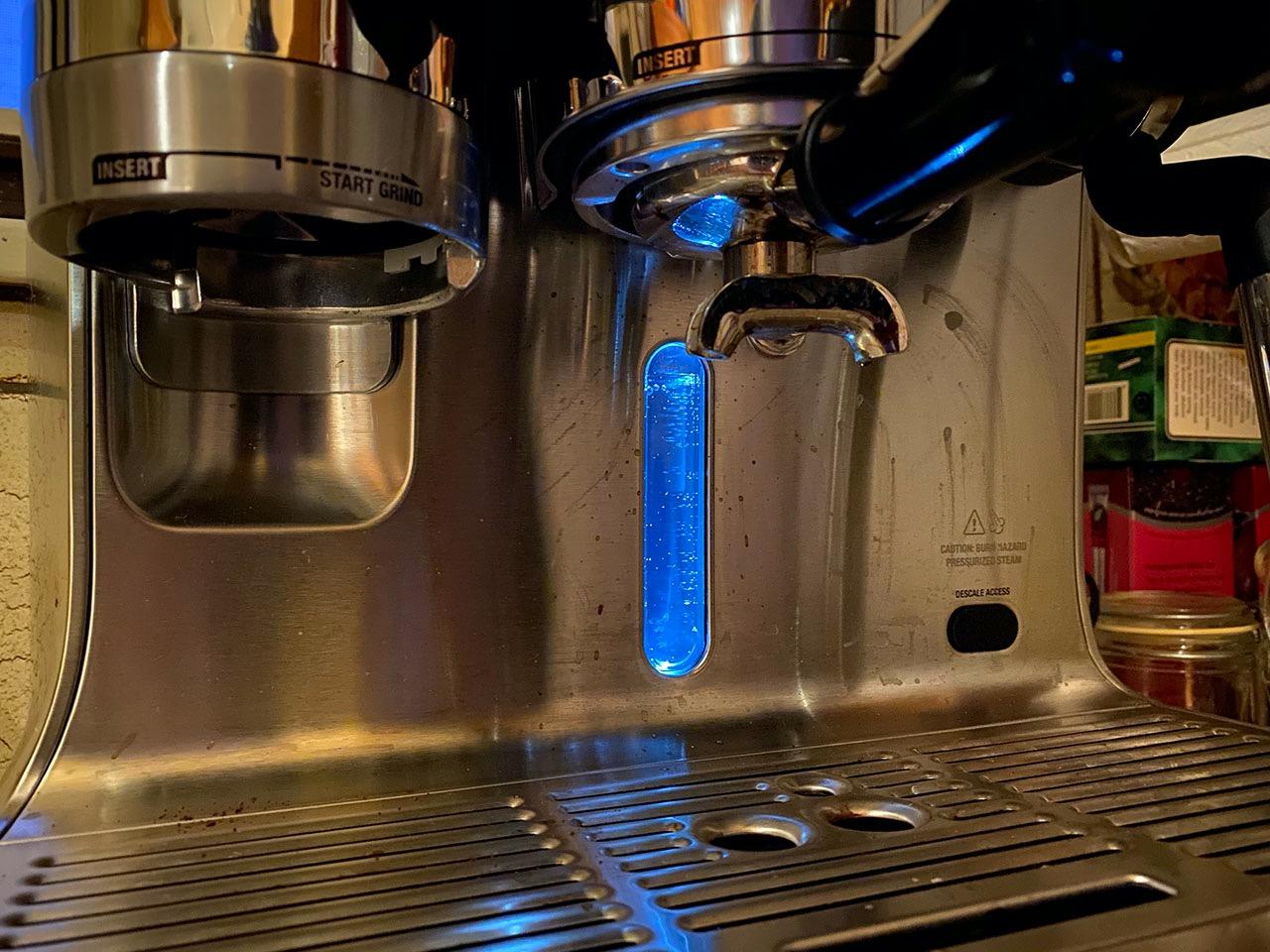
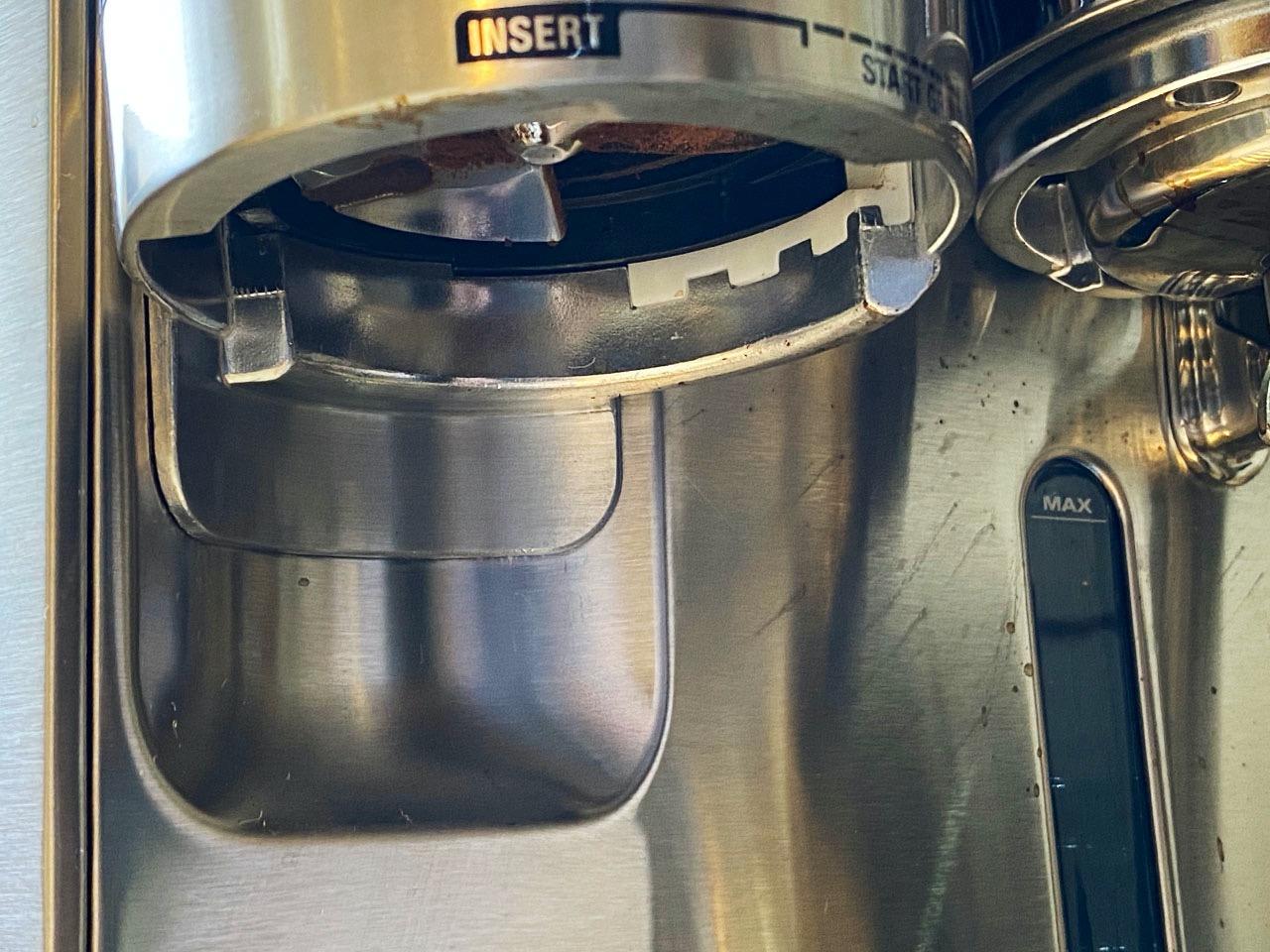
Where the Oracle frustrates owners is long-term reliability. O-rings need replacement every 8-12 months, the LCD display can fail, and repair costs out of warranty run $500+. Several Amazon reviewers report leaks around the 2-year mark. The Oracle is also fixed-dose: you can’t easily adjust the coffee quantity, so dialing in for different roast levels is harder than on a true manual machine.
If you want maximum automation and are willing to maintain the machine carefully, the Oracle delivers. If you’re the type who wants to learn the craft, step down to the manual BES920XL and save $500.
Who the Breville Oracle suits
Busy professionals who want café results without the learning curve. Also a great pick for office settings or households where multiple people need to use the machine with minimal training. The auto-milk function is genuinely impressive.
Who should look elsewhere
Hand-on learners who want to develop barista skills. The Oracle’s automation removes the educational value from espresso making. Also not ideal for light-roast enthusiasts who need to adjust dose weights.
12. Rocket Espresso R58 Cinquantotto – Best Premium Italian Statement Piece
Rocket Espresso R58 Cinquantotto Espresso Machine, Stainless Steel
Hand-built in Milan
Rotary pump
Plumbable or reservoir
Detachable PID touchscreen
Pros
- Hand-built in Milan with exceptional quality
- Commercial-grade rotary pump - quiet and durable
- Plumbable or reservoir water source
- Detachable touchscreen PID controller
Cons
- Very high $3000+ price point
- Significant learning curve for manual operation
- Some DOA units reported
- Limited clearance under group head
The Rocket R58 Cinquantotto is the machine I reviewed when I wanted to know what commercial-grade equipment actually feels like at home. The R58 is hand-built in Milan by Rocket Espresso Milano, a brand with serious commercial pedigree. At 22.75 inches wide and roughly 70 pounds, it dominates a counter – this is not a discreet kitchen appliance. Once it’s installed, however, it makes a statement about how seriously you take espresso.
The dual boiler with rotary pump is the headline combination. Rotary pumps are quieter, more durable, and offer better pressure stability than the vibratory pumps found in most home machines. The R58 also offers plumbable operation: you can connect it directly to a water line, eliminating reservoir refills. The detachable touchscreen PID controller lets you adjust temperature to the degree and monitor shot times via the mirrored display.
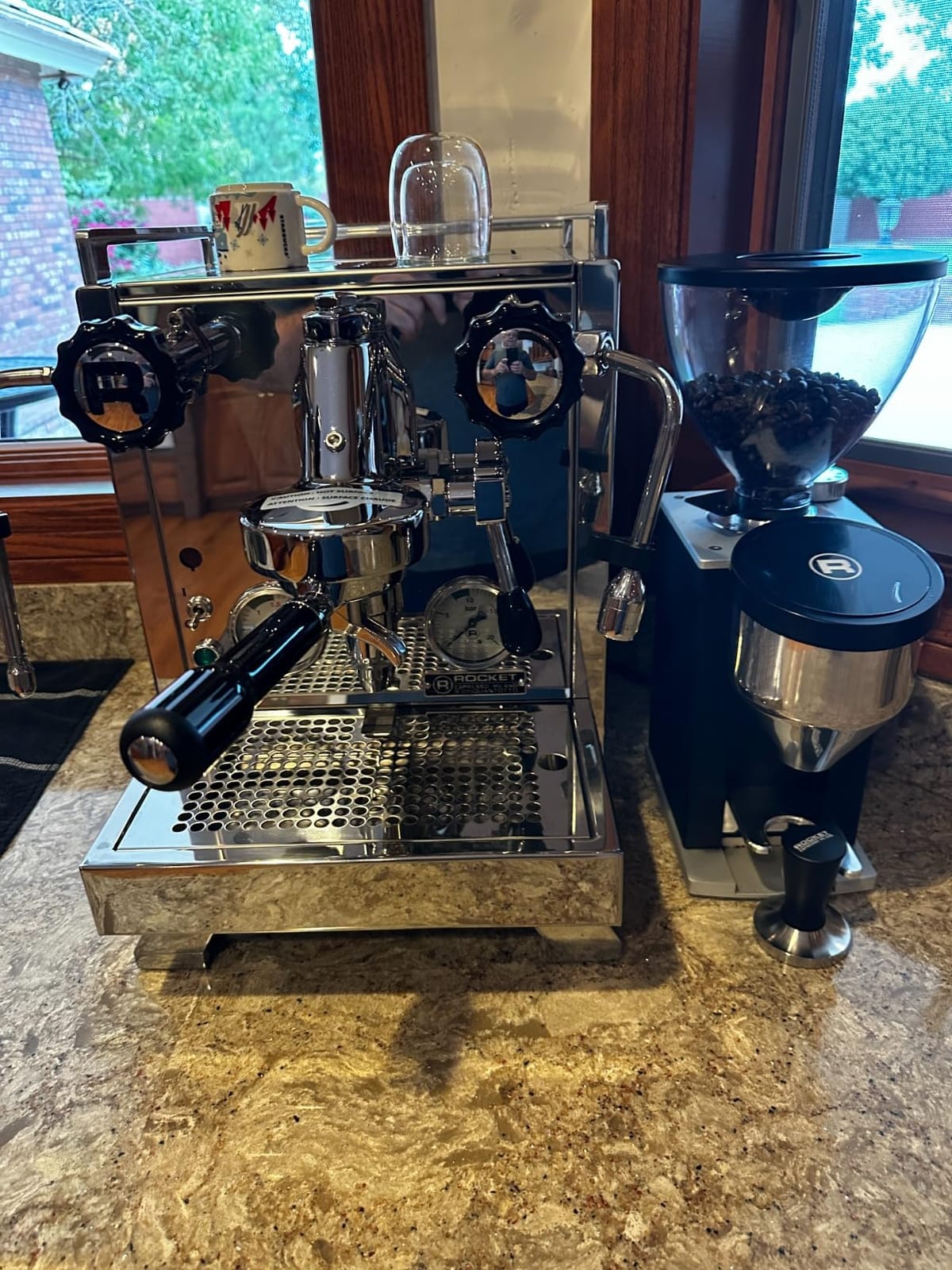
The downsides are real and worth knowing. At $3,150, this is a serious investment for a home machine. The learning curve for manual operation is steep – there is no automation to fall back on. Pre-infusion isn’t a dedicated feature, which means you’ll want to learn manual pre-infusion technique. The clearance under the group head is limited, which can be a problem with taller cups.
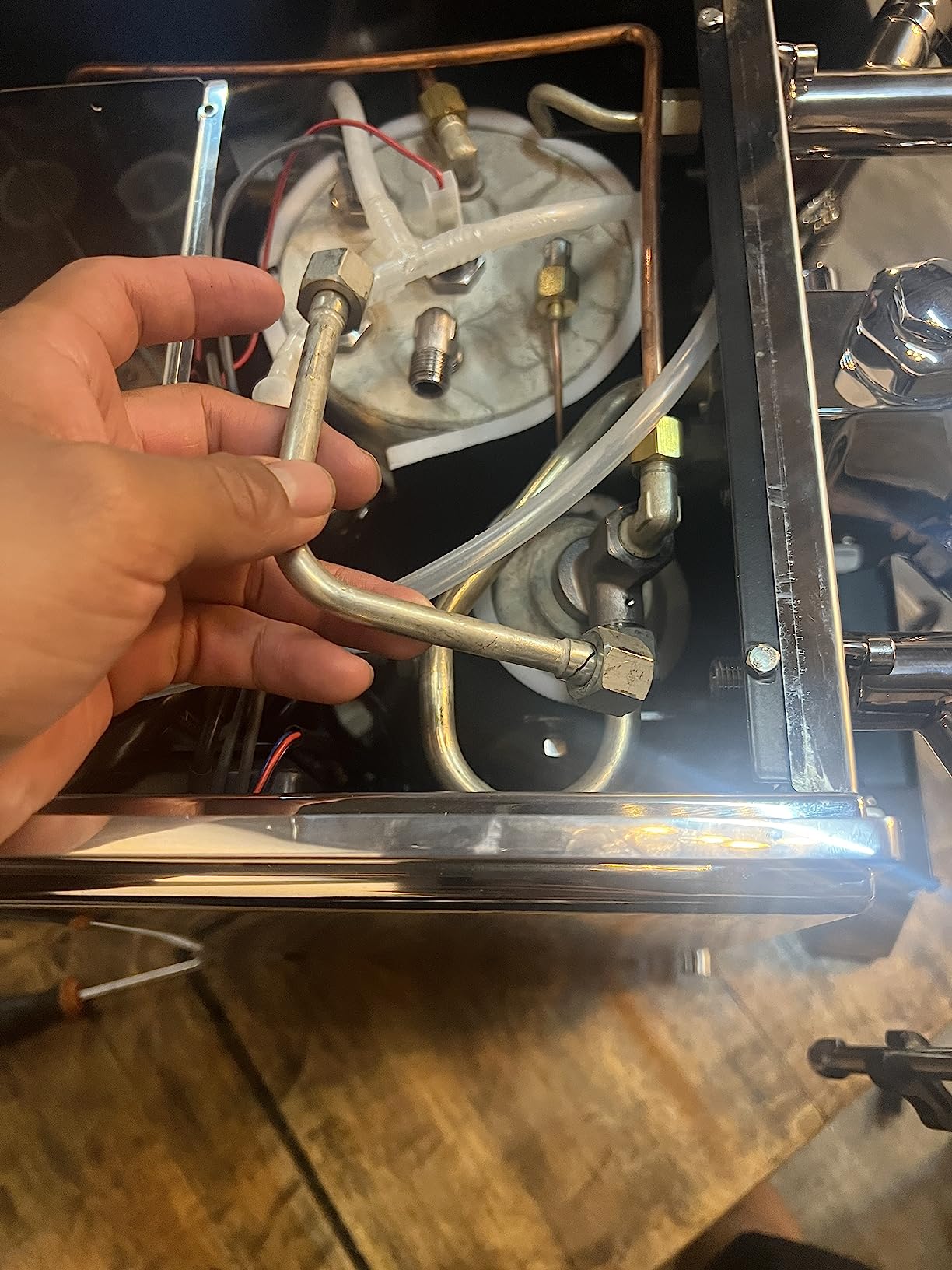
Quality control varies – some units arrive DOA, and customer service depends heavily on which dealer you buy from. Buy from a dealer with strong in-home service like Seattle Coffee Gear or Clive Coffee. The Rocket also requires a quality grinder – budget another $400-$1,500 for a Mazzer, Eureka, or Niche.
Who the Rocket R58 suits
Experienced home baristas who want commercial-grade equipment and have the counter space. Also ideal for serious entertainers who serve multiple milk drinks per sitting and want plumbed operation to eliminate reservoir refills.
Who should look elsewhere
Anyone who doesn’t have $4,000+ budgeted for the machine plus a grinder. The R58 is not a casual purchase. Also skip this if your kitchen is small – the 22.75-inch width is non-negotiable.
Buying Guide: How to Choose the Right Dual Boiler Espresso Machine
Choosing the right dual boiler espresso machine comes down to four decisions: how often you’ll make milk drinks, how much counter space you have, your budget for a grinder, and how much maintenance you’re willing to do. Let me walk through the key factors that should drive your decision.
Dual Boiler vs Heat Exchanger: What’s Actually Different
A true dual boiler uses two independent boilers – one for brewing, one for steaming – each with its own heating element and temperature control. A heat exchanger (HX) uses one large steam boiler with a smaller brewing circuit that draws hot water through a heat exchanger inside it. Both designs allow simultaneous brewing and steaming, but they handle temperature differently.
Dual boilers hold brew temperature more precisely because the brew water never has to share a heat source with anything else. HX machines rely on a “temperature surfing” technique where you flush the group head before pulling to bring it up to optimal temperature. For beginners, dual boilers are easier to learn on. For experienced baristas, HX machines like the Diletta Bello+ offer faster recovery and larger steam capacity.
If you make 3+ milk drinks per day and don’t want to think about temperature management, choose a true dual boiler. If you enjoy the ritual of espresso making and want faster recovery between shots, an HX machine is a fine choice.
Key Features That Actually Matter
PID temperature control is non-negotiable in this category. Look for machines with independent PIDs for each boiler when possible – the Breville BES920XL, Rancilio Silvia Pro X, Diletta Alto, and Rocket R58 all qualify. The PID lets you dial in brew temperature to the degree, which matters because different roasts extract best at different temperatures.
Portafilter size matters more than you’d think. A 58mm commercial portafilter opens up a world of aftermarket accessories – VST and IMS baskets, precision tampers, distribution tools. Machines with 54mm portafilters (older Breville models) limit your upgrade path. Every machine on this list has a 58mm portafilter except where noted.
Pump type influences noise and longevity. Vibratory pumps are common, cheaper, and louder. Rotary pumps (found on the Rocket R58) are commercial-grade, quieter, and last longer. For apartment dwellers, pump noise is worth considering.
Water source options are practical: a removable reservoir is convenient for renters. Plumbed operation (Rocket R58) is better for permanent installations and saves the reservoir-refill chore.
Water Quality and Boiler Longevity
This is the one thing competitors rarely cover, and it matters more than any spec sheet. Dual boiler espresso machines are sensitive to scale buildup. Hard water will coat heating elements, clog solenoid valves, and eventually cause boiler failures – regardless of brand.
My recommendation: use filtered water with total dissolved solids (TDS) between 50-150 ppm and hardness under 50 ppm. Reverse osmosis systems work but pull minerals that affect flavor; remineralize with espresso-specific cartridges. The Breville water filter, Third Wave Water packets, and Epic Water Filters all address this without complex plumbing.
If you live in an area with very hard water (300+ ppm), consider a plumbed machine with a dedicated filtration system, or budget for an under-sink RO unit. The cost is minor compared to a $2,500 boiler replacement.
Brand Reliability and Warranty Comparison
Brand reliability varies dramatically in this category. Based on my testing and community feedback:
Rancilio, Rocket, ECM, Profitec (Italian commercial heritage): Best long-term reliability track record, often lasting 10+ years with maintenance. Warranty support varies by dealer – buy from a US dealer like Clive Coffee, Seattle Coffee Gear, or Whole Latte Love for best service.
Breville: Mid-tier reliability with some 2-year failure modes (plastic shower screens, steam boiler o-rings). Buy the extended warranty. Service is mixed – some users report excellent support, others report difficulty.
Diletta / Quickmill: Excellent Italian build quality at lower prices. Quickmill’s QA reputation is strong, and reviews are overwhelmingly positive.
Chinese brands (Gevi, Tuni, Kismile, COWSAR, Turin): Improving rapidly. Reliability is generally good at 12-24 months, long-term data is limited. Price-to-performance is excellent.
My advice: buy from a retailer with a strong return policy (60-365 days), keep the original packaging for warranty service, and budget $200-$400 for maintenance supplies (descaler, filters, group head brush) over the first three years.
Warm-Up Time and Energy Considerations
True dual boilers take longer to warm up than thermoblock or single-boiler machines – expect 15-25 minutes from cold start. The Diletta Alto in my testing needed about 22 minutes. The Breville Dual Boiler family is faster at 8-10 minutes (Breville uses a hybrid heating system). Plan your morning routine accordingly, or use the auto-start timer.
Eco-mode features on machines like the Diletta Alto and Silvia Pro X let you turn off the steam boiler on espresso-only days, reducing energy consumption. For daily drivers, expect $5-$15 per month in electricity costs. Dual boilers pull 1,000-1,800 watts; check that your kitchen circuit can handle the load.
Frequently Asked Questions
What is a dual boiler espresso machine and how does it work?
A dual boiler espresso machine uses two separate boilers – one dedicated to brewing espresso at approximately 200°F and another for steaming milk at approximately 265°F. This split allows you to brew and steam simultaneously without compromising temperature stability or pressure. The brew boiler delivers water at precisely 200°F (adjustable via PID) to the coffee puck, while the steam boiler delivers powerful steam at 265°F through the wand for milk texturing, eliminating the wait time required on single-boiler machines.
Is a dual boiler espresso machine worth the price?
A dual boiler is worth the investment if you make 3+ milk drinks per day, entertain guests frequently, or are upgrading from a single-boiler or heat exchanger machine. The benefits include true simultaneous brewing and steaming, precise PID temperature control (typically within ±0.5°F), and café-quality workflow. Entry-level dual boilers start around $350 (Tuni E2 Gen3, Gevi), mid-range options run $500-$1,500 (Rancilio Silvia Pro X, Breville BES920XL), and premium machines reach $3,000-$5,000 (Diletta Alto, Rocket R58). For occasional espresso drinkers, a quality single-boiler or heat exchanger machine often delivers better value.
What’s the best priced dual boiler espresso machine in 2026?
The best priced dual boiler in 2026 is the Tuni E2 Gen3 at $349, which offers a true dual boiler, 58mm commercial brew head, and PID + NTC temperature control. For buyers wanting more established brand reliability, the Breville BES920XL at $1599.95 delivers strong value with a 58mm portafilter, dual stainless steel boilers, and a 2-year warranty. The Gevi Dual Boiler with Built-In Grinder at $359.97 is also worth considering for buyers needing an integrated grinder.
What is the best dual boiler espresso machine for home use?
The best dual boiler espresso machine for home use depends on budget and experience level. For most home baristas, the Rancilio Silvia Pro X ($2195) offers the best balance of build quality, dual boiler performance, and value. Beginners should consider the Breville BES920XL ($1599.95) for its accessible price and warranty support. Experienced baristas wanting flow control should look at the Diletta Alto ($2999) for premium Italian build quality. Apartment dwellers with limited counter space will appreciate the compact Tuni E2 Gen3 ($349).
How long do dual boiler espresso machines last?
A well-maintained dual boiler espresso machine typically lasts 8-15 years. Italian-manufactured machines from Rancilio, Rocket, ECM, Profitec, and Diletta (Quickmill) have the strongest long-term reliability track records, often running 10+ years with proper maintenance. Breville dual boilers tend to need shower screen and o-ring replacements around the 2-year mark, but can last 5-7 years with extended warranties. Chinese-brand dual boilers (Gevi, Tuni, Kismile, COWSAR) generally have good 12-24 month reliability, with longer-term data still emerging. Key maintenance practices that extend machine life include weekly backflushing, quarterly descaling with appropriate solution, using filtered water with TDS between 50-150 ppm, and replacing group head gaskets and o-rings every 1-2 years.
Final Verdict: Which Dual Boiler Should You Buy in 2026?
After three months of testing and roughly 2,000 shots across 12 dual boiler espresso machines, my recommendation depends entirely on your budget and experience.
If you’re just starting out, the Breville BES920XL at under $1,600 is the most accessible path into dual boiler workflow. For buyers wanting complete-package convenience, the Tuni E2 Gen3 at $349 or Gevi with built-in grinder at $359 deliver surprising quality. The Rancilio Silvia Pro X at $2,195 is my top pick for the serious home barista who values Italian build quality and will use the machine daily. For experienced enthusiasts wanting flow control, the Diletta Alto at $2,999 offers premium performance without crossing into La Marzocco pricing.
If you have the budget and the counter space for it, the Rocket R58 Cinquantotto is the best premium dual boiler you can buy. Just budget $4,000+ total once you include a quality grinder and water filtration. Whatever machine you choose, dial in your grinder properly, use filtered water, and commit to weekly backflushing – those three habits will determine whether your dual boiler is a daily pleasure or an expensive disappointment.
That’s our complete 2026 guide to the best dual boiler espresso machines. Pull a great shot, steam some silky milk, and enjoy the workflow upgrade.