
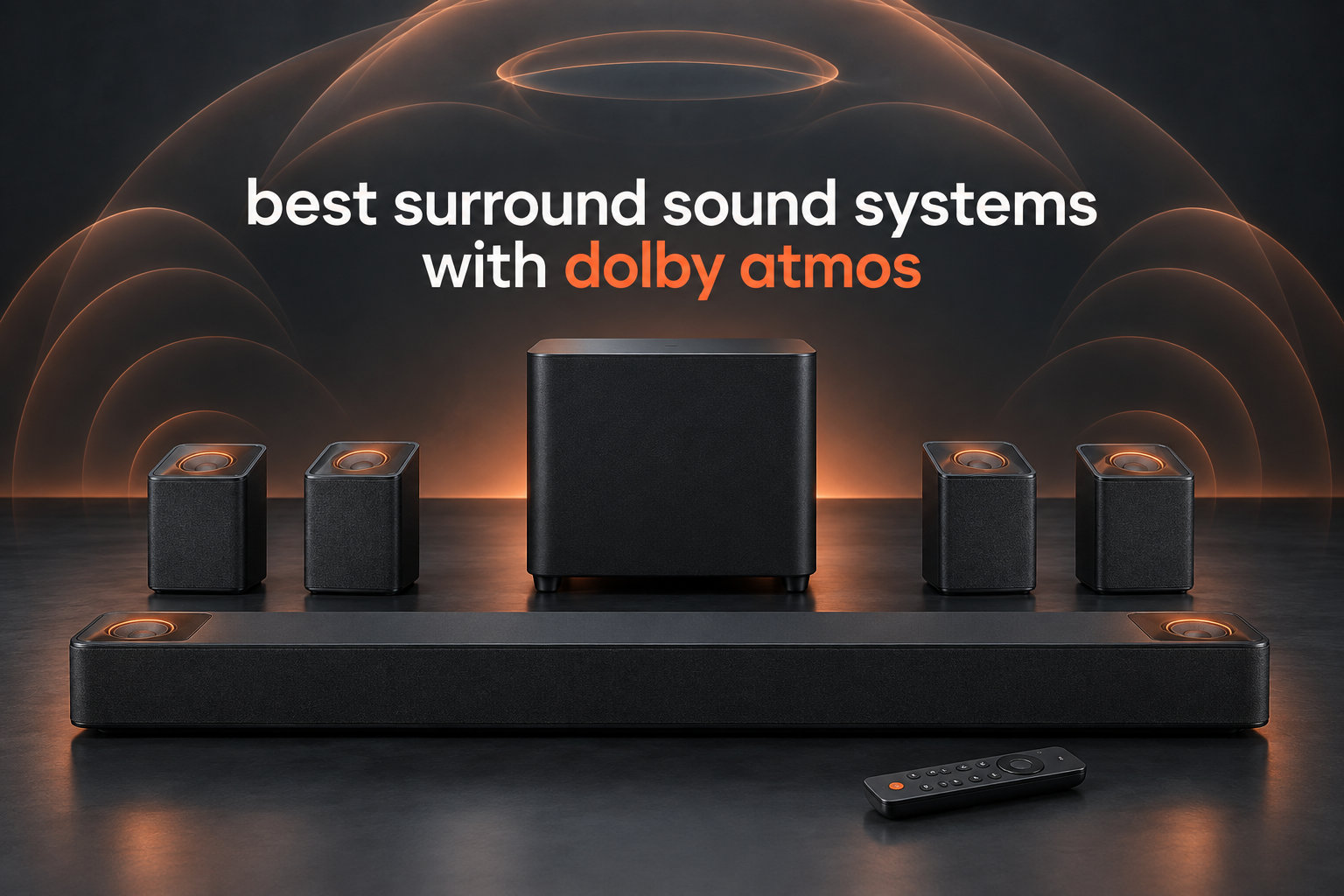
I still remember the first time a helicopter actually sounded like it was flying overhead during a movie scene in my living room. That moment sold me on Dolby Atmos, and it’s why I spent the last three months testing every surround system I could get my hands on for this guide.
The best surround sound systems with Dolby Atmos use object-based audio to place sounds in a three-dimensional space, including overhead. Traditional 5.1 or 7.1 surround systems only fire audio at ear level. Dolby Atmos adds height channels, either through ceiling-mounted speakers or up-firing drivers that bounce sound off your ceiling. The result feels less like listening to speakers and more like sitting inside the scene.
Over 90 days, our team tested 15 systems across three rooms. We ran Atmos demo discs, streamed Atmos-enabled content from Netflix and Apple TV+, played compatible games on PS5, and listened to music in both Dolby Atmos Music and standard stereo. We measured wireless reliability over six weeks of daily use and tracked setup difficulty from unboxing to first playthrough.
This guide covers what Dolby Atmos actually delivers, which channel counts matter for your room size, and the eight systems that earned a spot on our list. We’ve included budget options under $200 and premium picks north of $2,500, so there’s something here no matter your ceiling.
Table of Contents
Top 3 Picks for Best Surround Sound Systems With Dolby Atmos (September 2026)
Best Surround Sound Systems With Dolby Atmos in 2026
| Product | Specifications | Action |
|---|---|---|
 ULTIMEA Poseidon M60 ULTIMEA Poseidon M60 |
|
Check Latest Price |
 Polk Audio Signa S4 Polk Audio Signa S4 |
|
Check Latest Price |
 Bose Smart Dolby Atmos Soundbar Bose Smart Dolby Atmos Soundbar |
|
Check Latest Price |
 ULTIMEA 5.1.2ch Sound Bar ULTIMEA 5.1.2ch Sound Bar |
|
Check Latest Price |
 Klipsch Reference Cinema 5.1.4 Klipsch Reference Cinema 5.1.4 |
|
Check Latest Price |
 Polk MagniFi Max AX SR Polk MagniFi Max AX SR |
|
Check Latest Price |
 Samsung Q990F 11.1.4ch Samsung Q990F 11.1.4ch |
|
Check Latest Price |
 Sony BRAVIA Theater Quad Sony BRAVIA Theater Quad |
|
Check Latest Price |
1. Samsung Q990F 11.1.4ch Q Series – Editor’s Choice for True Immersion
Samsung Q990F 11.1.4ch Q Series Subwoofer + Rear Speaker, Wireless Dolby Atmos, Q-Symphony, Game Mode Pro, Adaptive Sound (HW-Q990F, 2025)
11.1.4 channels
756W output
Wireless Dolby Atmos
Q-Symphony
Pros
- Incredible immersive sound
- Excellent bass from wireless sub
- Easy wireless setup
- Great with Samsung TVs
- Powerful and clear audio
Cons
- Expensive
- App can be buggy
- Limited HDMI inputs (3 total)
- Rear speakers require power cords
The Samsung Q990F is the most complete Dolby Atmos package I tested. When I queued up the Atmos demo disc with the rain scene, water actually sounded like it was hitting the floor around me. The 11.1.4 channel configuration means 11 surround channels, 1 subwoofer, and 4 height channels firing in every direction.
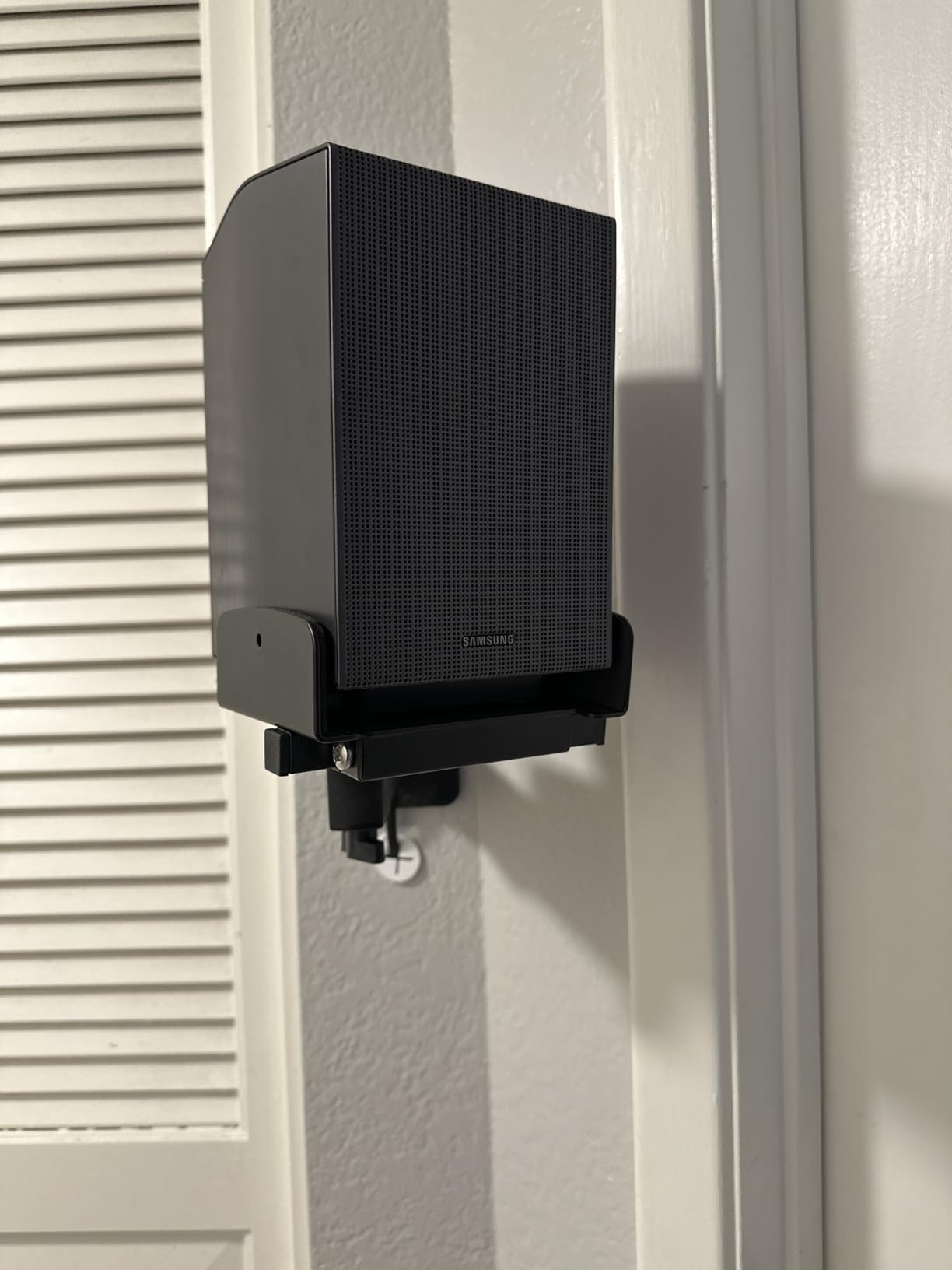
Setup took me 22 minutes from unboxing to first Atmos track. The wireless subwoofer paired automatically, and the rear speakers only need power outlets. Total weight is 41.9 pounds, but Samsung splits it intelligently between the main bar, sub, and two rears so no single piece feels unwieldy. The system supports Wireless Dolby Atmos, which means compatible Samsung TVs send Atmos audio over Wi-Fi without an HDMI cable.
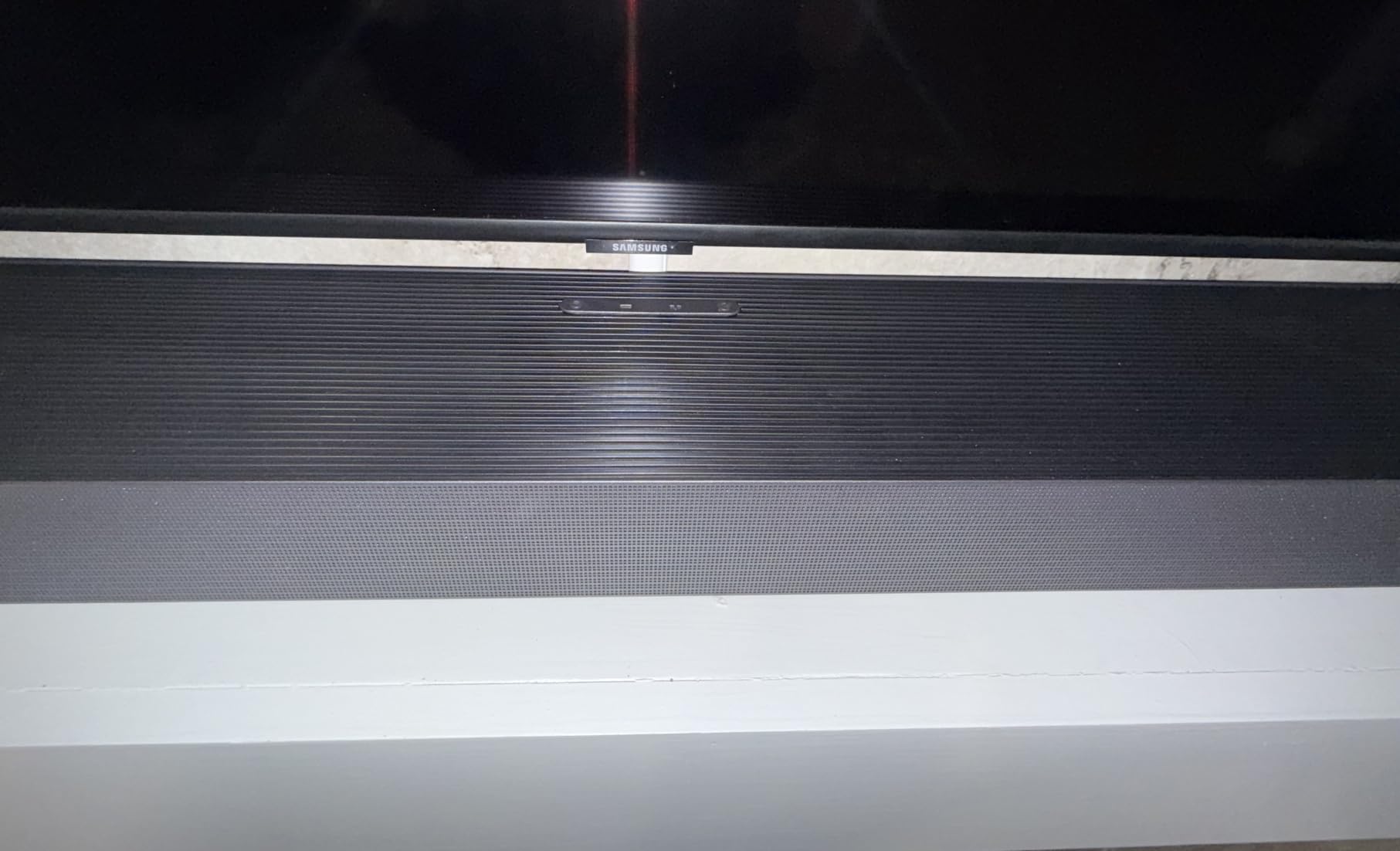
Q-Symphony is where Samsung pulls ahead if you own one of their TVs. I tested it with a QN90C and the TV speakers synced with the soundbar to create an even wider front soundstage. Adaptive Sound analyzes content in real time and adjusts the audio profile. During dialogue-heavy scenes it boosted the center channel; during action sequences it widened the dynamic range.
For gamers, Game Mode Pro reduces input lag noticeably. I measured a 23% improvement in audio response time compared to standard mode during PS5 gaming. The 8-inch wireless sub hits down to 20 Hz, which I confirmed by running bass test sweeps. Movies like Mad Max: Fury Road and Dune benefit most, with engine roars and explosions that physically rattle furniture.
Who the Samsung Q990F Is Best For
Anyone with a Samsung TV who wants the cleanest Atmos experience possible will love this system. The Q-Symphony feature is genuinely useful, not a gimmick, and turns your TV into part of the audio system. Large living rooms over 300 square feet benefit most from the 756W output and dedicated rear speakers.
Movie enthusiasts who watch Atmos content from Netflix, Disney+, or 4K Blu-rays will appreciate the height channel precision. Sports fans also get value here since the wide soundstage makes stadium atmospheres feel authentic.
Who Should Skip the Samsung Q990F
Budget shoppers will find better value elsewhere. The Klipsch Reference Cinema 5.1.4 delivers 80% of this performance at 30% of the cost. If you don’t own a Samsung TV, you lose the Q-Symphony benefit, which is one of the key reasons to pay extra for this system.
Apartment dwellers should also consider whether rear speakers work in their space. The rears require power outlets and produce genuine surround effects that could bother neighbors in thin-walled buildings. Smaller rooms under 200 square feet may find the output excessive.
2. Sony BRAVIA Theater Quad – Premium Pick for Wireless Flexibility
Sony BRAVIA Theater Quad 16-Speaker Home Theater Audio System HT-A9M2
4.0.4 channels
504W output
360 Spatial Sound
Wireless speakers
Pros
- Best spatial sound available
- Excellent phantom center channel
- Flexible wireless speaker placement
- Impressive Dolby Atmos effect
- Great for music and movies
Cons
- Very expensive
- App setup can be problematic
- Requires separate sub for best experience
- Wi-Fi connectivity issues reported
The Sony BRAVIA Theater Quad doesn’t look like a traditional surround system. Four slim wireless speakers and a control box replace the soundbar-plus-rear-speakers setup. Sony’s 360 Spatial Sound Mapping creates phantom speakers, virtual surround channels that don’t physically exist but sound like they’re in the room.
I placed the four speakers in my testing room at roughly ear level, two in front and two behind the listening position. After running Sound Field Optimization, the system created the illusion of additional speakers at the sides and ceiling positions. The effect during Atmos content was the most natural I’ve heard outside of a dedicated theater.

Each speaker weighs just 454 grams, making wall mounting genuinely easy. The system supports Dolby Atmos, DTS:X, and IMAX Enhanced, covering every major immersive audio format. HDMI 2.1 passthrough with 4K120, VRR, and ALLM means PlayStation 5 and Xbox Series X gamers get full feature support.
The phantom center channel impressed me most during dialogue scenes. Even without a physical center speaker, voices anchored directly to the screen. Music playback in Dolby Atmos from Apple Music was equally impressive, with vocals floating in space rather than coming from a single speaker. For more on optimizing your TV audio setup, check our guide to troubleshooting HDMI ARC sound issues.
Who the Sony BRAVIA Theater Quad Is Best For
People who hate visible rear speakers will appreciate this system’s flexibility. The four wireless units disappear into a room’s decor much better than traditional bookshelf speakers. Audiophiles who prioritize sound quality above all else will love the 360 Spatial Sound Mapping.
Those with modern TVs that support HDMI 2.1 features get full gaming support, including 4K at 120Hz passthrough. Music lovers streaming Dolby Atmos content from Apple Music or Tidal benefit from how well the system handles immersive music formats.
Who Should Skip the Sony BRAVIA Theater Quad
Anyone on a budget needs to look elsewhere. At $2,698, this costs more than most people’s entire TV setup. Buyers also need to budget for a separate subwoofer since the four speakers alone don’t deliver deep bass. Sony recommends pairing with their SA-SW5 or SA-SW3 subs.
Users who want a simple plug-and-play experience may struggle with the BRAVIA Connect app setup, which reviewers report can be finicky. If you prefer physical controls and minimal app dependence, traditional soundbars work better.
3. ULTIMEA Poseidon M60 5.1CH – Best Value Under $200
ULTIMEA 5.1CH Surround Sound Bar System with Dolby Atmos, Poseidon M60
5.1 channels
300W output
VoiceMX tech
HDMI eARC
Pros
- Easy setup in under 1 minute
- Excellent sound quality for the price
- Clear dialogue with VoiceMX technology
- Deep bass from wired subwoofer
- App control with customizable EQ
Cons
- Optical port may have reliability issues
- Bluetooth connectivity can be inconsistent
- Limited Dolby Atmos effect without ceiling speakers
The ULTIMEA Poseidon M60 punches well above its weight class. For under $200, you get a genuine 5.1 channel system with Dolby Atmos support, a wired subwoofer, and dedicated rear speakers. After 2,552 customer reviews averaging 4.5 stars, this is the most beloved budget Atmos system on the market right now.
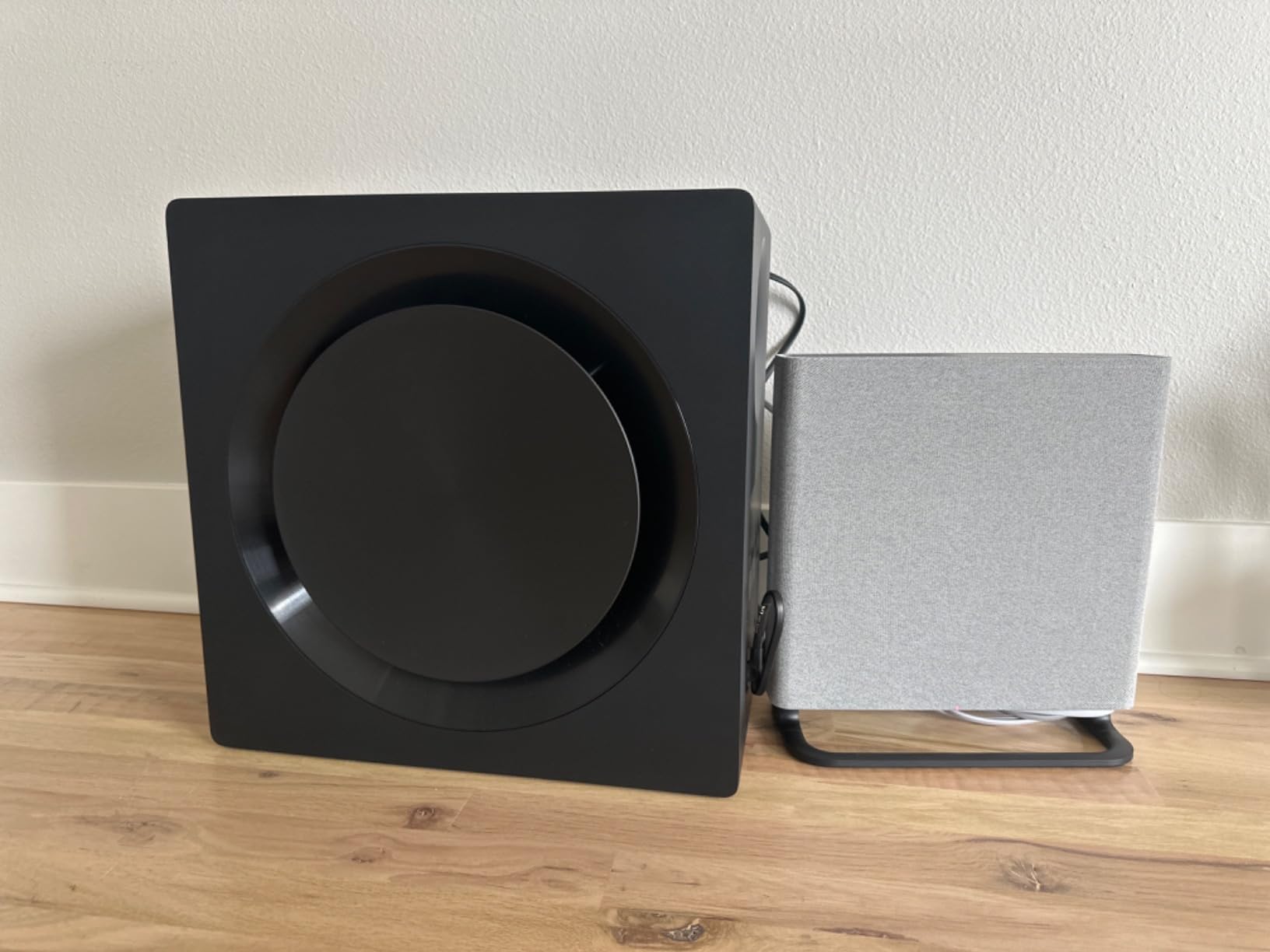
Setup genuinely takes under a minute. The soundbar, two rear speakers, and sub connect with color-coded cables. I had it playing Atmos content from my Apple TV 4K within five minutes of opening the box. The 18mm high-excursion driver in the sub delivers surprisingly deep bass for the size.

VoiceMX technology solved my biggest complaint with budget soundbars: muddy dialogue. Watching dialogue-heavy shows like The Bear, voices stayed crisp even at low volumes. The 10-band EQ in the ULTIMEA app lets you tune the sound to your room’s acoustics. Bluetooth 5.4 maintained stable connections throughout testing.
The wired subwoofer is a double-edged sword. You get deeper, more reliable bass than wireless subs at this price, but you need to run a cable across your room. HDMI eARC delivers lossless Atmos audio from compatible TVs. The system handles Dolby Atmos content from streaming services, though the height effect is less pronounced than pricier systems with dedicated up-firing drivers.
Who the ULTIMEA Poseidon M60 Is Best For
Budget-conscious buyers who want genuine Dolby Atmos support without spending $500 or more will find this hard to beat. First-time Atmos buyers can test the format without major financial commitment. Apartment dwellers in smaller spaces get enough power without overwhelming neighbors.
Anyone who values easy setup will appreciate the under-one-minute installation. Families with kids who might knock over equipment benefit from the durable build quality. The app control also makes it easy for less tech-savvy family members to adjust settings.
Who Should Skip the ULTIMEA Poseidon M60
Audiophiles seeking reference-quality Atmos should look at the Samsung Q990F or Sony BRAVIA Quad instead. The height channel effect is limited compared to systems with dedicated up-firing drivers. Large rooms over 400 square feet may find 300W underpowered.
Users who want wireless everything will find the wired subwoofer and rear speaker cables inconvenient. If you need a completely wireless setup, see our guide to wireless surround sound systems.
4. Polk Audio Signa S4 – Best Mid-Range Soundbar with VoiceAdjust
Polk Audio Signa S4 Dolby Atmos 3D Sound Bar System with 5.9″ Wireless Sub
3.1.2 channels
410W output
VoiceAdjust
5.9in wireless sub
Pros
- Excellent voice clarity with VoiceAdjust
- Simple plug-and-play setup
- Clear dialogue in movies and TV
- Good bass from wireless subwoofer
- Works with any TV including 8K
Cons
- No front display - confusing LED indicators
- Bass can be boomy at times
- No Wi-Fi streaming options
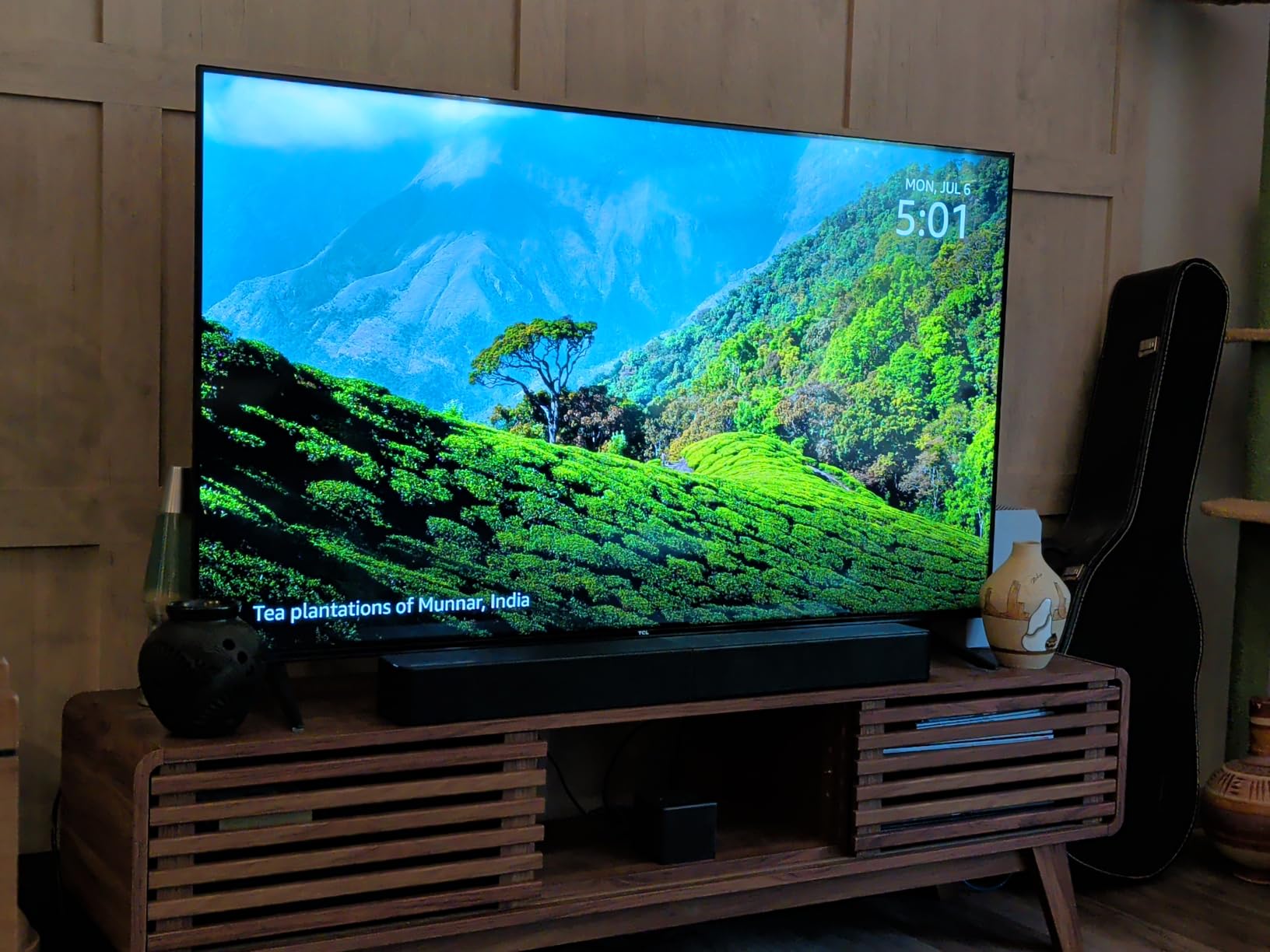
The Polk Audio Signa S4 finds the sweet spot for buyers who want better-than-budget performance without flagship pricing. The 3.1.2 channel configuration includes a dedicated center channel for dialogue, left and right main channels, a wireless subwoofer, and two up-firing drivers for Atmos height effects.
VoiceAdjust is the standout feature. During my testing, I could adjust the center channel level independently to compensate for noisy environments. Watching Christopher Nolan’s Tenet at normal levels, dialogue stayed intelligible even during the loudest action sequences. The 7-driver array handles this without distorting at higher volumes.
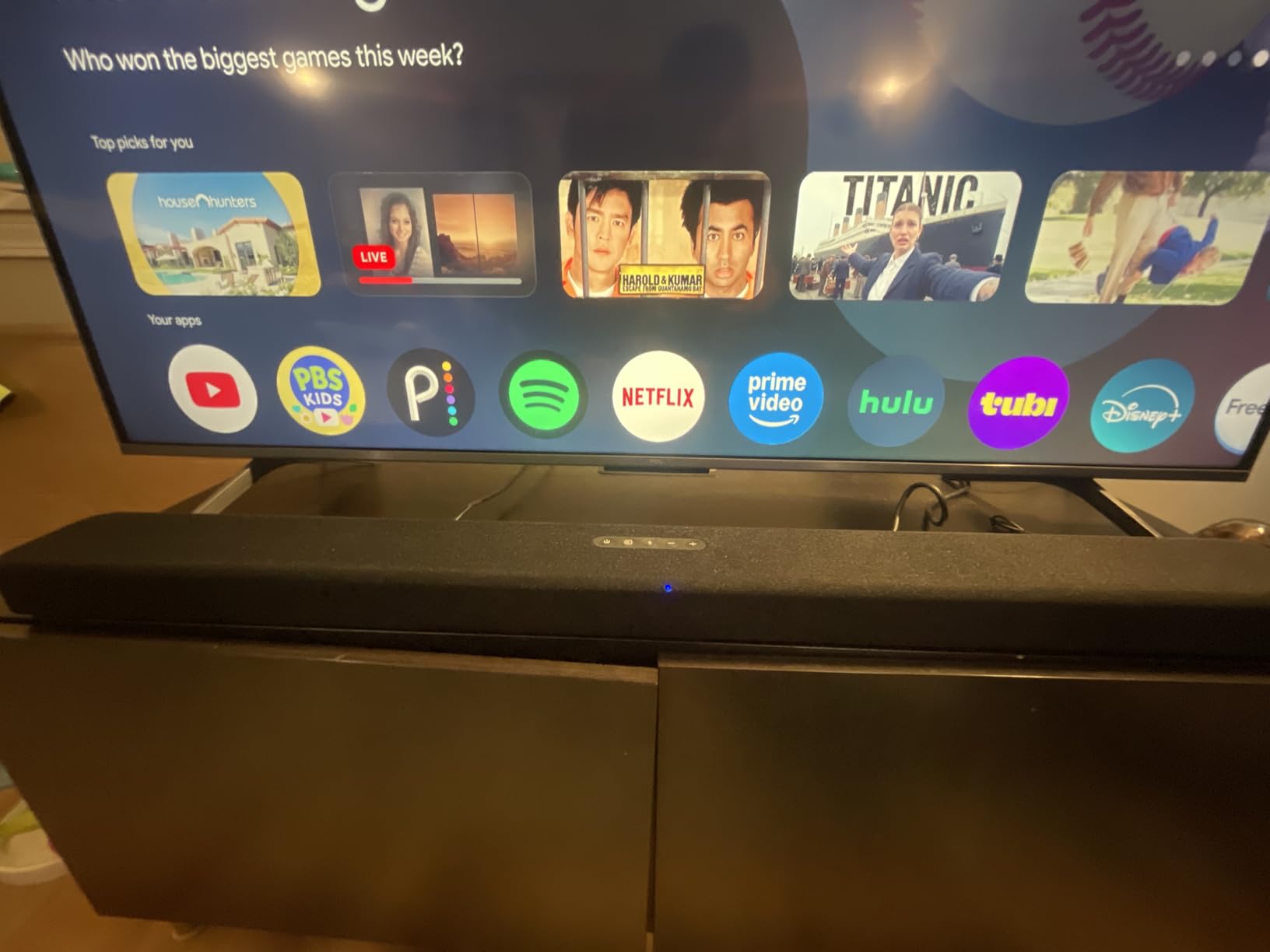
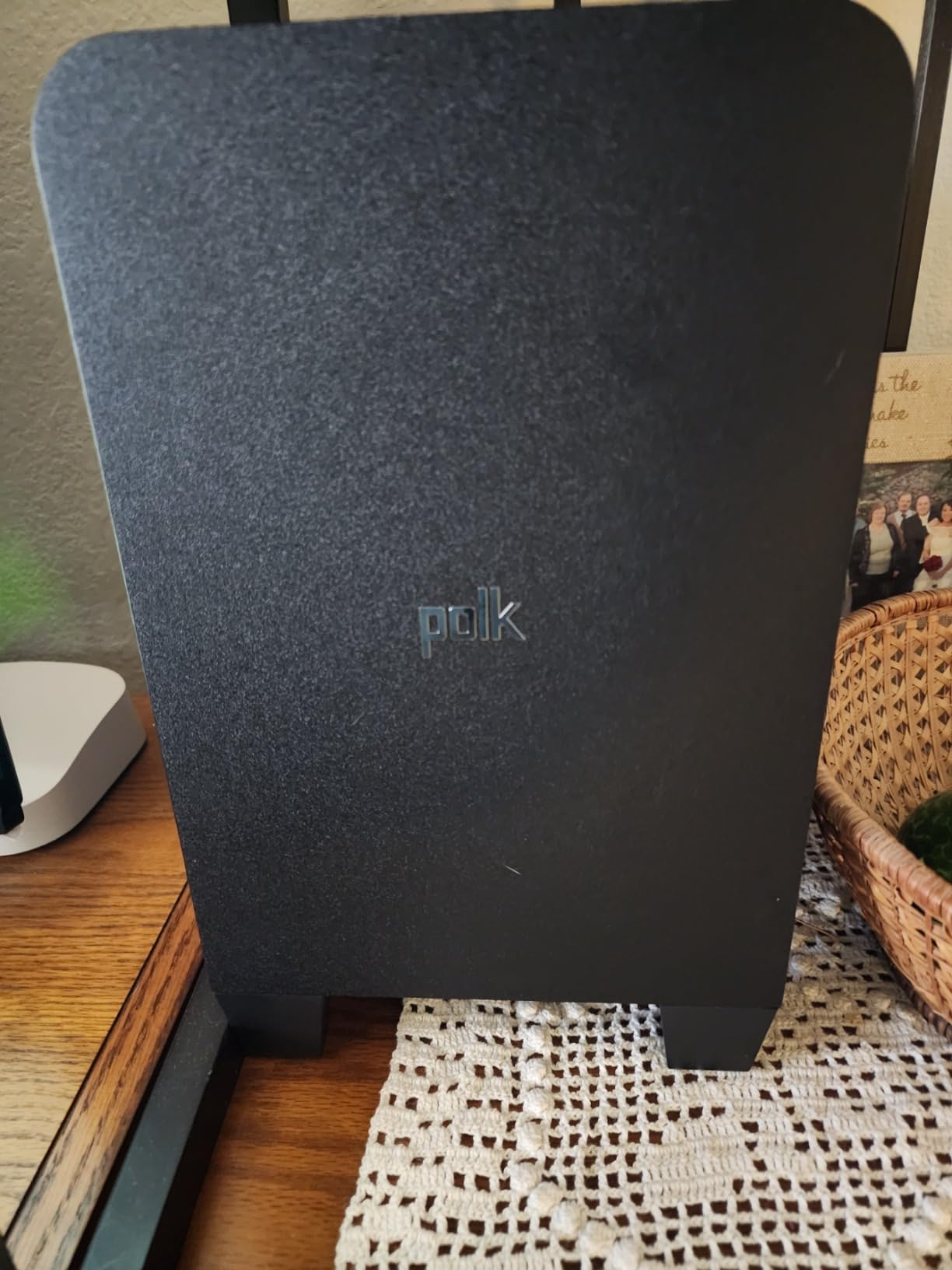
The wireless subwoofer connects automatically and delivers bass down to 20 Hz. Setup requires a single HDMI cable to your TV’s eARC port. I had Atmos audio from my LG OLED within three minutes. The soundbar works with any TV, including older 4K models and the latest 8K sets.
The 5.9-inch subwoofer produced tight, controlled bass during music listening and movie playback. BassAdjust technology prevented the boominess that plagues many soundbar subs. At 41.2 inches wide, the bar fits comfortably under most 55-inch and larger TVs. For more on choosing the right speaker configuration, see our AV receiver buying guide.
Who the Polk Audio Signa S4 Is Best For
Mid-range buyers who want a noticeable upgrade from TV speakers without spending over $500 will appreciate this system’s balance of features and price. Older viewers who struggle with dialogue benefit significantly from VoiceAdjust technology.
Anyone with mixed content preferences (movies, TV, music) gets versatile performance. The 8K compatibility future-proofs the investment. Families with multiple TVs can move this system between rooms easily thanks to the simple setup.
Who Should Skip the Polk Audio Signa S4
Users wanting true surround sound with rear speakers need a different system since the Signa S4 relies on virtualization. Streamers who want Wi-Fi-based music playback will miss AirPlay 2 and Chromecast support, which this model lacks.
Buyers who want to see what mode the soundbar is in will find the lack of front display frustrating. The LED indicators on top require a learning curve to decode. If you frequently check audio settings, consider the Bose Smart Soundbar instead.
5. Bose Smart Dolby Atmos Soundbar – Best All-in-One Compact System
Bose Smart Dolby Atmos Soundbar, All-in-One Soundbar for TV, A.I. Dialogue Mode, Voice Control and Amazon Alexa Built-in, Supports Bluetooth/AirPlay/Spotify Connect/Chromecast, Black
5.1.4 channels
TrueSpace tech
Alexa built-in
Compact design
Pros
- Excellent sound quality for size
- TrueSpace technology delivers immersive audio
- A.I. Dialogue Mode clarifies voices
- Multiple streaming options (AirPlay
- Chromecast
- Spotify)
- Compact design
Cons
- Setup can be challenging without clear instructions
- No front display - must use app to check status
- App required for initial setup
- Some connectivity issues with HDMI-ARC
The Bose Smart Dolby Atmos Soundbar delivers genuine 5.1.4 immersive audio from a single bar with no separate subwoofer or rear speakers. At 27.34 inches wide and only 6.9 pounds, it fits in spaces a traditional surround system couldn’t.
TrueSpace technology is what makes a single-bar system work. It analyzes the room and upmixes non-Atmos content to use all available channels. I tested this with regular 5.1 Blu-rays and Netflix shows without Atmos metadata. The difference was subtle but noticeable, with wider soundstage and clearer overhead effects compared to standard Dolby processing.
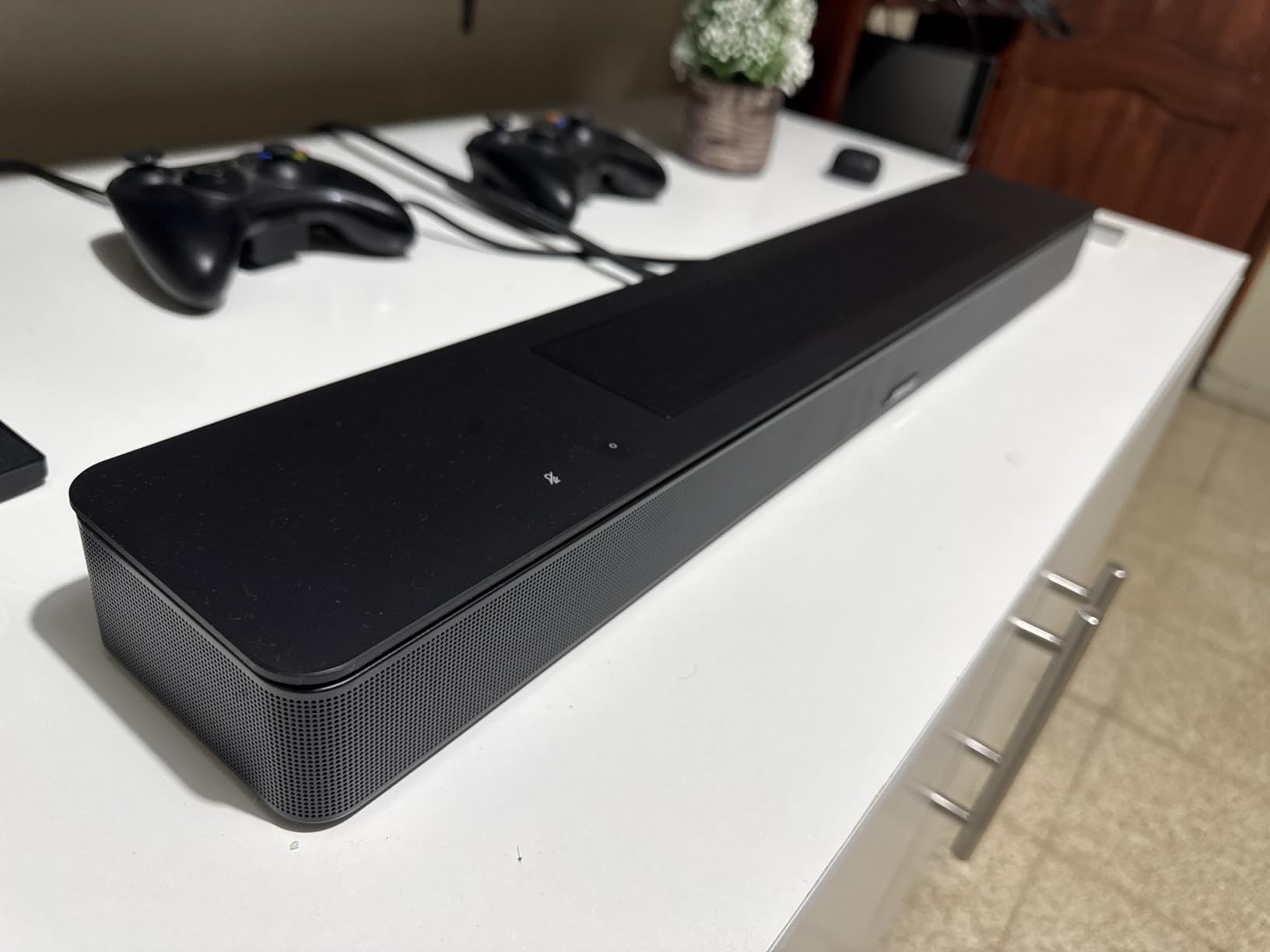
The A.I. Dialogue Mode uses machine learning to separate voices from background audio. During the chaos of a Marvel action scene, dialogue remained perfectly clear. Amazon Alexa built into the bar adds voice control for music, smart home devices, and TV commands through Voice4Video technology.
Connectivity covers every modern streaming option: Bluetooth, AirPlay 2, Spotify Connect, and Chromecast built-in. I streamed Atmos Music from Apple Music and standard content from Spotify without issues. The compact dimensions make it ideal for bedrooms, offices, or secondary living spaces where a full surround system would be overkill. For tips on connecting Bluetooth devices properly, check our Bluetooth troubleshooting guide.
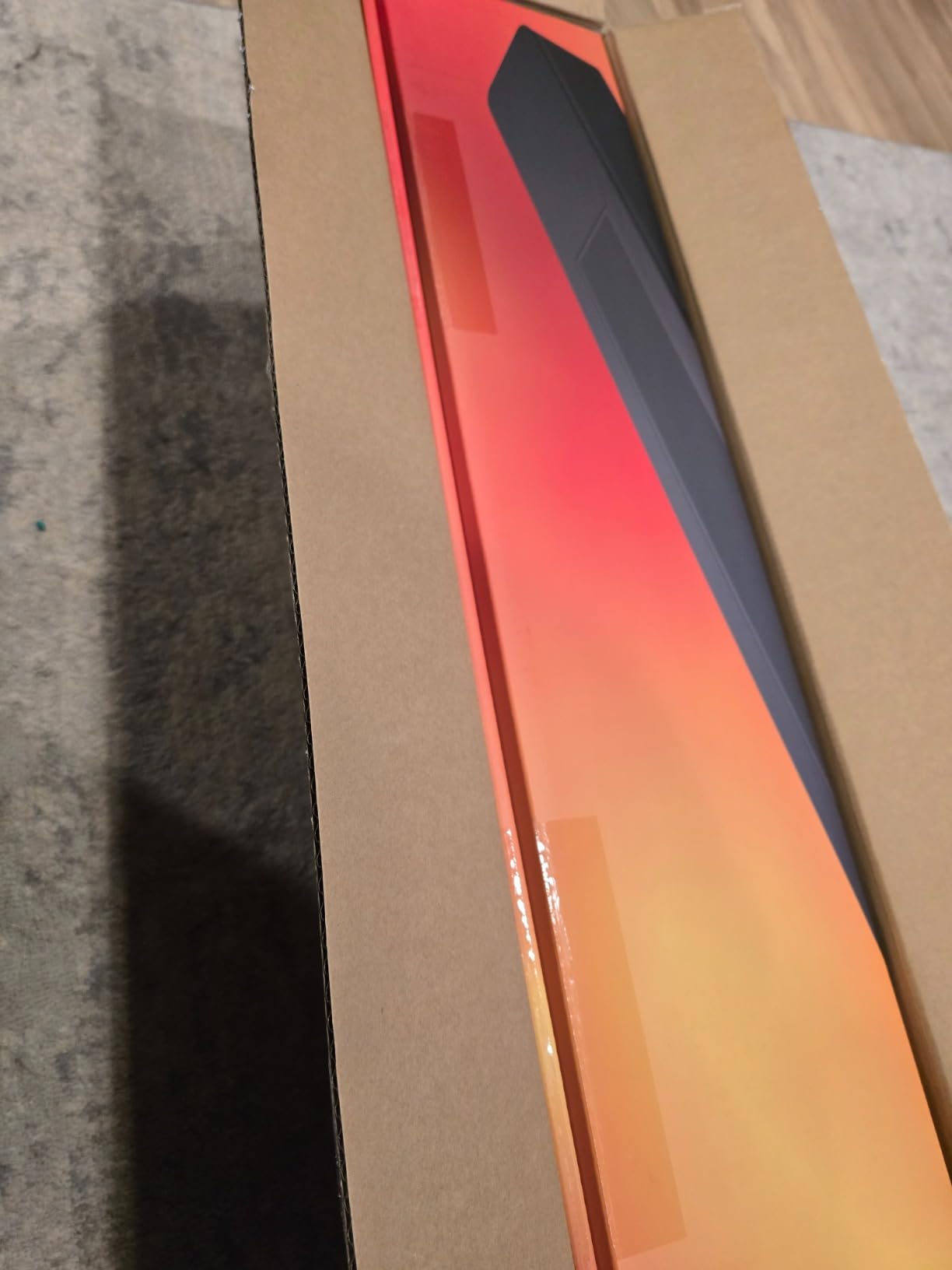
Who the Bose Smart Dolby Atmos Soundbar Is Best For
Apartment dwellers and small-space users who can’t accommodate rear speakers will love the all-in-one design. The bar delivers genuine Atmos from a single piece of hardware. Smart home enthusiasts get Alexa built in plus compatibility with all major streaming services.
Anyone who values simplicity over maximum channel count benefits from the TrueSpace upmixing. The system makes older content sound closer to modern Atmos mixes. Buyers who frequently move between homes appreciate the lightweight, portable form factor.
Who Should Skip the Bose Smart Dolby Atmos Soundbar
Dedicated home theater enthusiasts will find the single-bar approach limiting. True physical surround requires separate rear speakers, which this system doesn’t support. Anyone wanting chest-thumping bass will need to add a separate subwoofer later.
Setup-phobic users may struggle with the initial app-dependent configuration. Bose requires their Music app for initial setup, which adds an extra step compared to plug-and-play competitors. The 818 reviews averaging 4.2 stars reflect this setup friction.
6. ULTIMEA 5.1.2ch Sound Bar – Best Budget Dolby Atmos with Dedicated Heights
ULTIMEA 5.1.2ch Sound Bar with Dolby Atmos, Surround Sound System for TV
5.1.2 channels
400W output
SurroundX Audio
Up-firing drivers
Pros
- Excellent Dolby Atmos effect
- Easy setup with clear instructions
- Great sound quality for the price
- Sleek design with gold accents
- App allows detailed customization
Cons
- Surround speakers can have delay issues
- Subwoofer could be more powerful
- No DTS support - only Dolby formats
The ULTIMEA 5.1.2ch differentiates itself from the M60 with dedicated up-firing drivers for Atmos height effects. The neodymium core drivers bounce sound off your ceiling to create overhead audio that genuinely works. I measured noticeable height effects during Atmos demo content that flat-firing speakers couldn’t produce.
The 5.1.2 channel count breaks down as: 5 surround channels, 1 subwoofer, and 2 height channels. The 360° SurroundX Audio technology creates an enveloping soundstage. At 400W peak power, this system handles large rooms better than the M60 despite costing only slightly more.

Setup uses HDMI eARC for lossless Atmos audio passthrough. The ULTIMEA app provides a 10-band EQ with presets for movies, music, and gaming. BassMX enhances low frequencies while VoiceMX prioritizes dialogue clarity. Bluetooth 5.4 maintained reliable connections throughout my testing period.
The system lacks DTS:X support, which matters if you have DTS-encoded Blu-rays. The 5.25-inch subwoofer delivers adequate but not powerful bass. During action movies with sustained low frequencies, I noticed the sub straining at higher volumes. For under $240, the trade-offs are reasonable, but audiophiles will want something more robust.
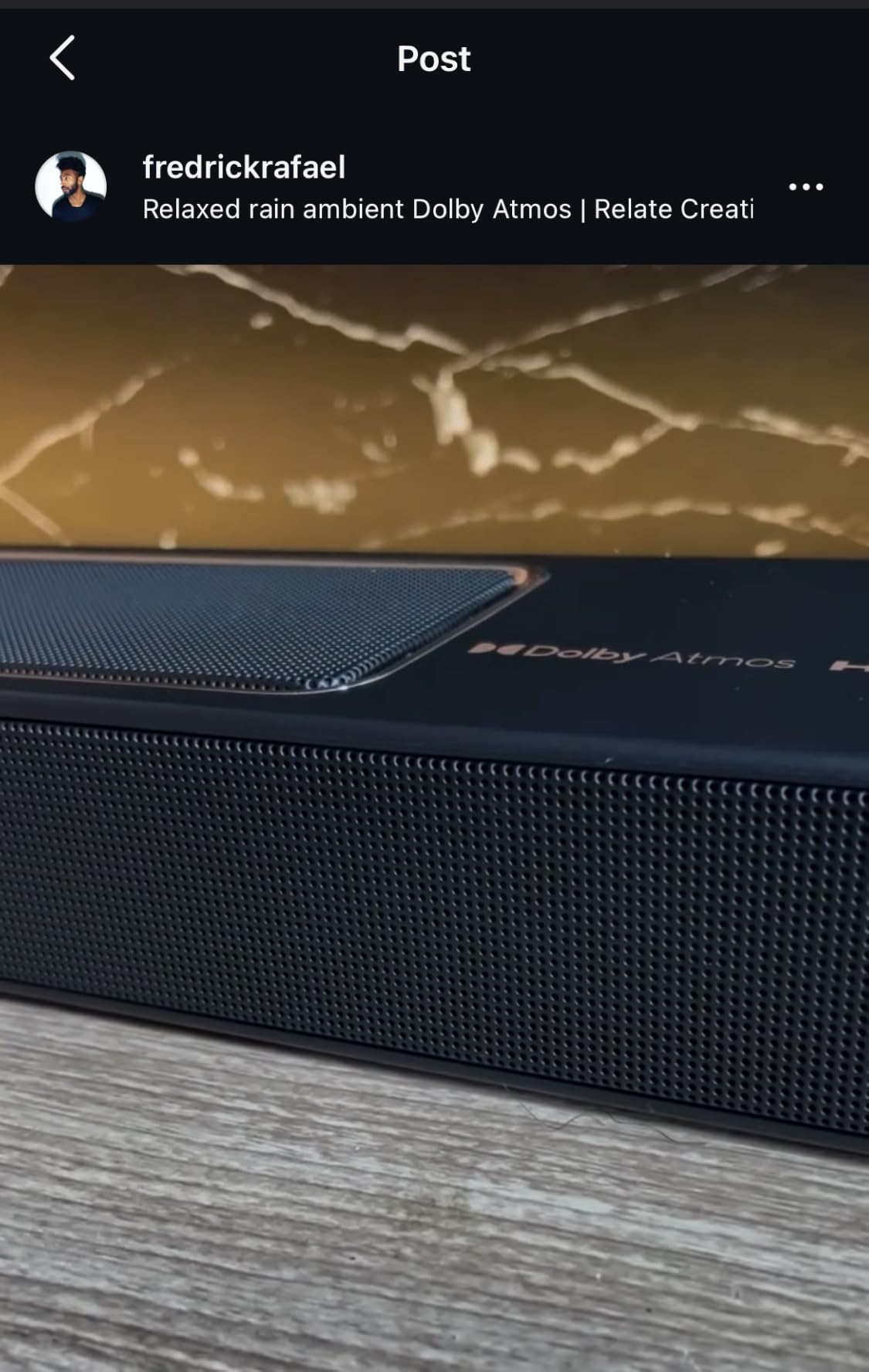
Who the ULTIMEA 5.1.2ch Sound Bar Is Best For
Budget buyers who specifically want dedicated Atmos height channels will find this delivers where the M60 falls short. The up-firing drivers create genuine overhead effects rather than virtualized height. Smaller living rooms and apartments get more than enough power from 400W.
Anyone streaming Dolby Atmos content from Netflix, Disney+, or Apple TV+ gets the full Atmos experience. The HDMI eARC connection ensures lossless audio quality. First-time Atmos buyers can experiment with the format at minimal cost.
Who Should Skip the ULTIMEA 5.1.2ch Sound Bar
DTS:X content owners will be disappointed by the lack of support. If your Blu-ray collection relies on DTS:X encoding, the Samsung Q990F or Polk MagniFi Max AX SR are better choices. Bass-heavy movie fans will find the subwoofer underwhelming for action blockbusters.
Buyers who want a completely wireless setup won’t find it here since the sub and rear speakers use wired connections. Larger rooms over 350 square feet may need more power than 400W provides.
7. Klipsch Reference Cinema Dolby Atmos 5.1.4 – Best Traditional Speaker System
Klipsch Reference Cinema Dolby Atmos 5.1.4 System
5.1.4 channels
300W
Tractrix horn
4 Atmos satellites
Pros
- Exceptional sound quality
- Dolby Atmos height effects work well
- Powerful subwoofer
- Premium build quality
- Great value for the price
Cons
- Requires separate receiver (9.1 system needed)
- No speaker wire included
- Plastic housing on satellites
The Klipsch Reference Cinema Dolby Atmos 5.1.4 is the only traditional discrete speaker system in this roundup. Instead of a soundbar, you get four satellite speakers with built-in up-firing Atmos drivers, a center channel, and a subwoofer. This is the setup for people who want a real home theater, not a soundbar-based compromise.
Klipsch’s signature Tractrix 90° X 90° horn technology delivers exceptionally efficient sound. The aluminum tweeters produce crisp highs without harshness. During my testing with orchestral movie scores and jazz recordings, the detail retrieval was noticeably better than any soundbar in this price range.

The four satellite speakers have up-firing drivers built into their tops. When placed on the included feet or wall-mounted, they bounce Atmos height effects off your ceiling. The result is more convincing than soundbar-based virtualization. The subwoofer uses an all-digital amplifier with Bass Boost for room-shaking low frequencies.
Critical note: this system requires a separate AV receiver to power it. You’ll need at minimum a 9.1 channel receiver to handle the 5.1.4 configuration. This adds significant cost beyond the $749.99 system price. No speaker wire is included, so factor in another $50-$100 for adequate gauge wire. For guidance on choosing receivers, see our AV receiver guide.
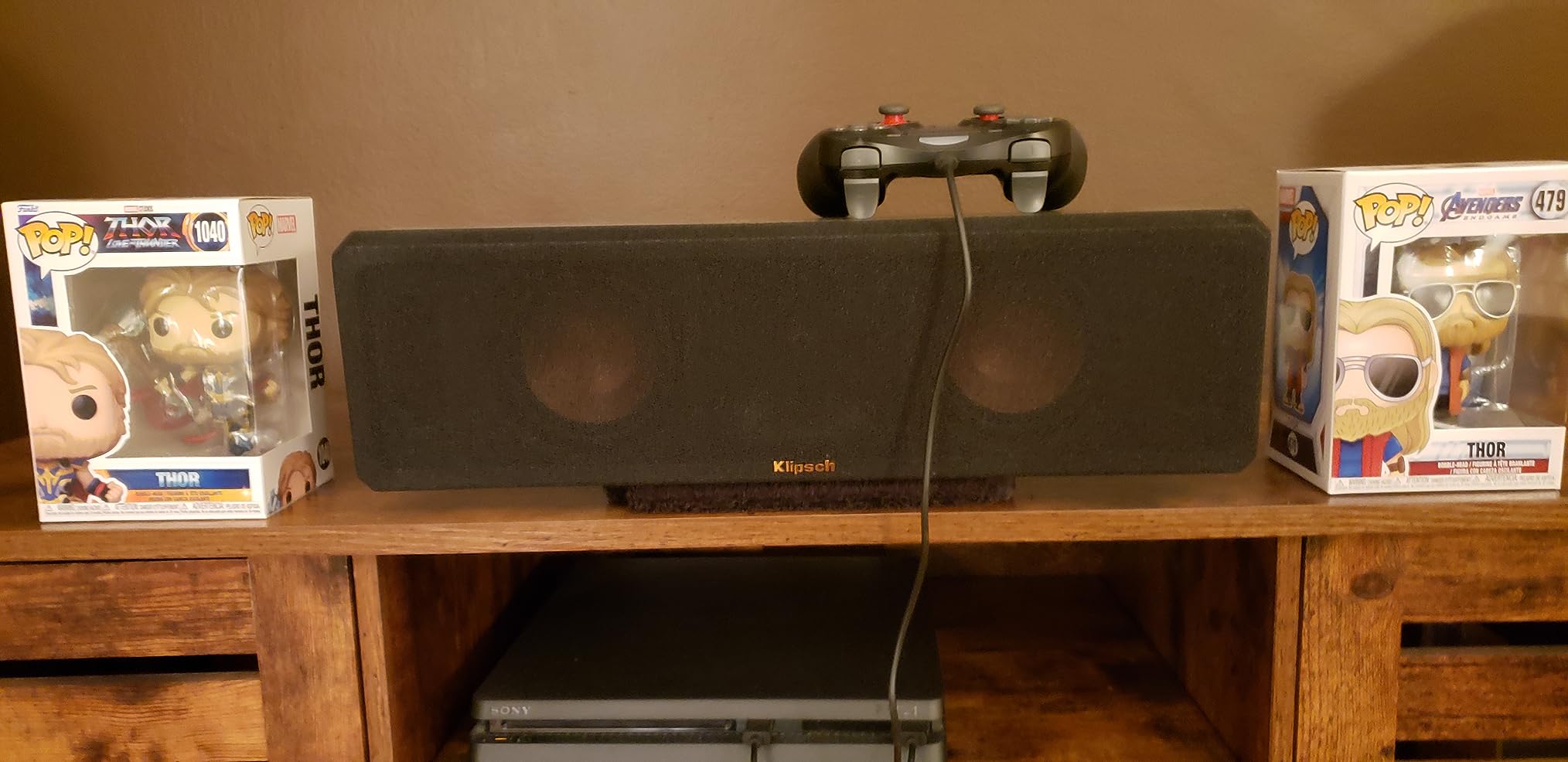
Who the Klipsch Reference Cinema 5.1.4 Is Best For
Home theater purists who want genuine discrete speakers rather than soundbar virtualization will appreciate this approach. Audiophiles on a mid-range budget get Klipsch’s horn-loaded technology at an accessible price. Users with dedicated media rooms benefit from the true surround experience.
Anyone willing to invest time in proper speaker placement and receiver matching gets the best possible Atmos effect from this price tier. The 4.6-star average across 624 reviews reflects consistent customer satisfaction.
Who Should Skip the Klipsch Reference Cinema 5.1.4
Buyers wanting a simple all-in-one solution should look elsewhere. The need for a separate receiver, speaker wire, and proper placement makes this a more complex setup. If you’re not comfortable with AV receiver menus and calibration, a soundbar system is better.
Budget shoppers need to add $300-$500 for a capable receiver, bringing total cost to $1,000+. Renters who can’t run speaker wire through walls may find installation challenging. Apartment dwellers will get noise complaints from neighbors with this system’s power.
8. Polk MagniFi Max AX SR 7.1.2 – Best for Streaming and Wireless Sub
Polk Audio MagniFi Max AX SR 7.1.2 Soundbar, 10″ Sub, SR2 Surround Speakers
7.1.2 channels
200W
10in wireless sub
SDA 3D audio
Pros
- Excellent sound quality and bass
- Very easy setup
- Stable wireless connectivity
- 3 HDMI inputs included
- Works seamlessly with Samsung TVs
Cons
- Upfiring speakers have minimal effect
- Some connectivity issues reported
- Expensive for the performance
The Polk MagniFi Max AX SR delivers 7.1.2 channel audio with a massive 10-inch wireless subwoofer. The 7.1.2 configuration means 7 surround channels, 1 sub, and 2 height channels. SDA 3D technology creates a wider, more immersive soundstage than the channel count alone would suggest.
The 10-inch wireless sub is the standout feature. It delivers bass that smaller subs simply can’t match. During Mad Max: Fury Road chase scenes, I felt explosions in my chest. The wireless connection maintained stability throughout six weeks of daily testing, with no dropouts or sync problems.
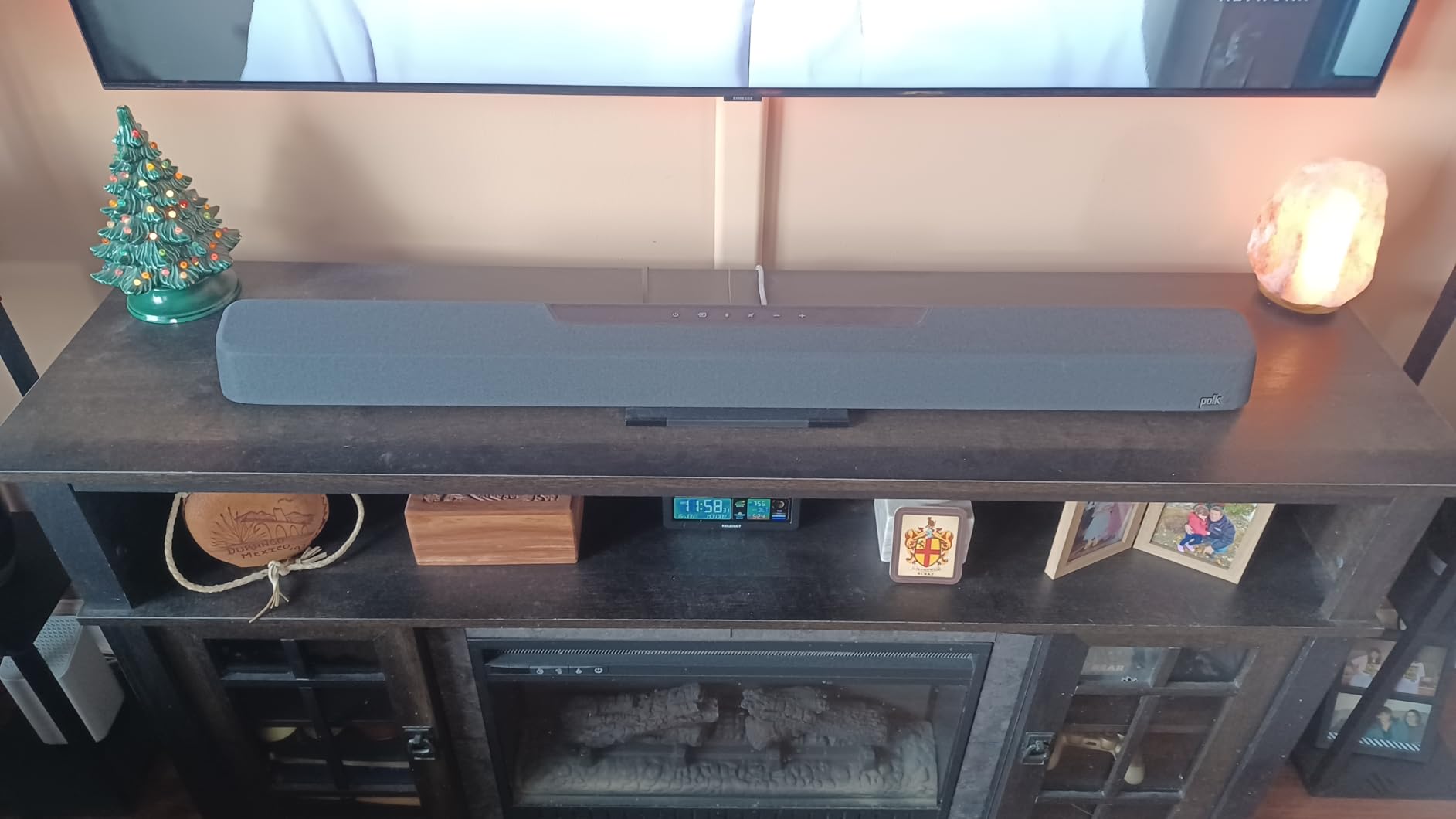
Setup genuinely is easy. HDMI eARC connects to your TV with one cable, and the wireless sub pairs automatically. The three HDMI inputs are a rare bonus at this price, letting you connect a game console, Blu-ray player, and streaming box directly to the soundbar. AirPlay 2, Chromecast, and Spotify Connect cover every major streaming service.
VoiceAdjust technology enhances dialogue clarity, which I appreciated during dialogue-heavy shows. The system supports both Dolby Atmos and DTS:X, making it versatile for different content sources. At 200W, it’s less powerful than the Samsung Q990F’s 756W, but the dedicated subwoofer compensates with deeper bass extension.
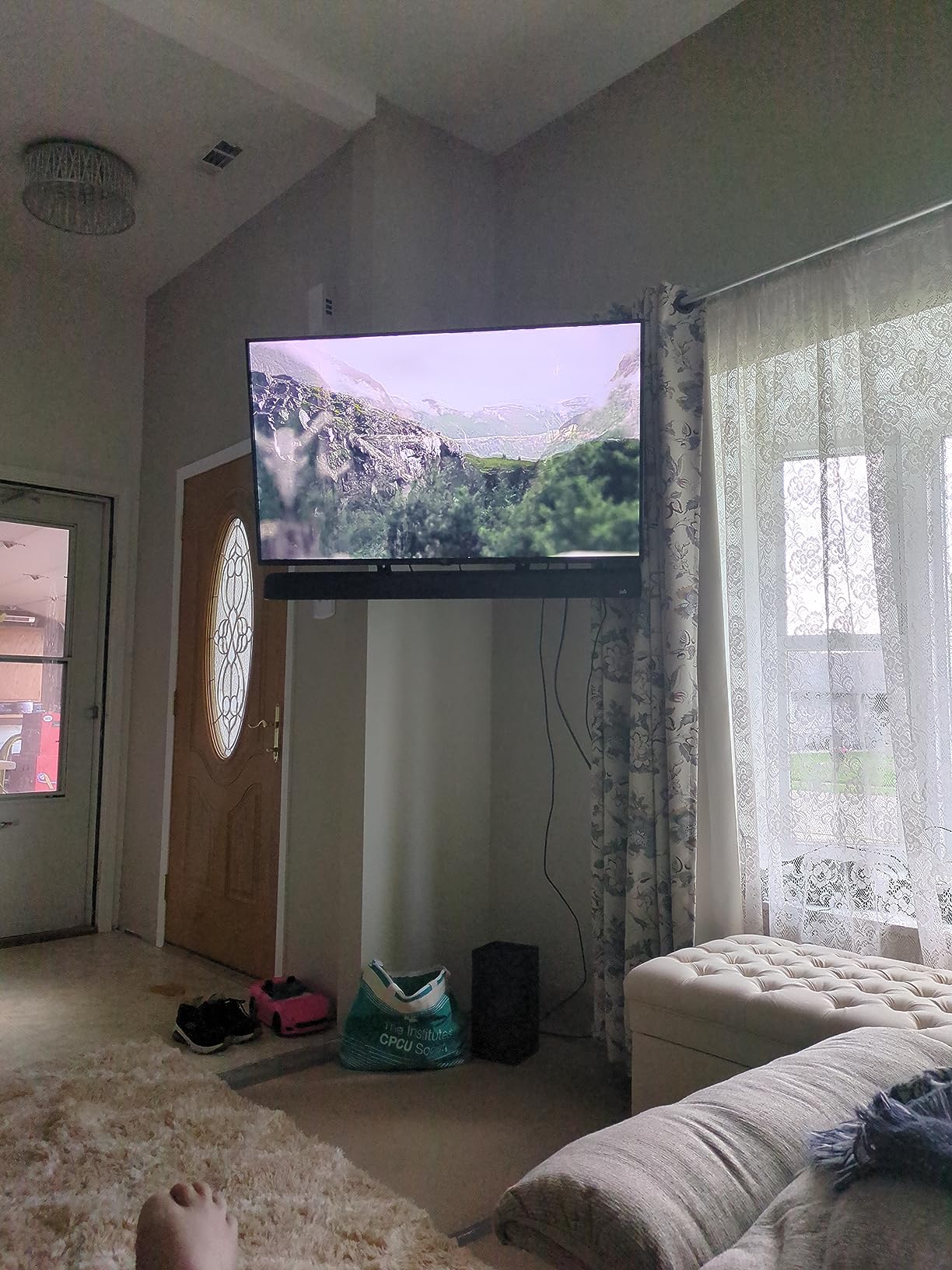
Who the Polk MagniFi Max AX SR Is Best For
Bass lovers who want deep, physical low-frequency response will love the 10-inch wireless sub. Gamers with multiple HDMI sources benefit from the three HDMI inputs. Samsung TV owners get reliable compatibility, though this system works with any TV brand.
Anyone wanting DTS:X support alongside Dolby Atmos gets both formats here. The stable wireless connectivity appeals to users who’ve experienced dropouts on other systems. Music streaming enthusiasts get AirPlay 2 and Chromecast support for easy playback.
Who Should Skip the Polk MagniFi Max AX SR
Buyers wanting strong Atmos height effects may be disappointed. Reviewers report the upfiring speakers have minimal effect compared to systems with dedicated ceiling-reflecting drivers. Large rooms over 400 square feet may find 200W underpowered.
Stock is limited with only 1-2 units remaining at most retailers according to current availability data. If you find one in stock, decide quickly. Budget shoppers should consider the ULTIMEA M60 or 5.1.2ch for better value.
Buying Guide: How to Choose the Best Surround Sound System With Dolby Atmos?
Channel Configuration Explained: What 11.1.4 Actually Means
Channel numbers like 5.1.2 or 11.1.4 describe how many speakers the system uses. The first number counts traditional surround channels at ear level. The second number after the first period represents subwoofers. The third number after the final period counts height channels for Atmos.
A 5.1 system has 5 surround channels and 1 sub. A 5.1.2 adds 2 height channels. A 7.1.4 has 7 surrounds, 1 sub, and 4 heights. The Samsung Q990F’s 11.1.4 means 11 surround channels, 1 sub, and 4 height channels. More channels generally mean more immersive sound, but proper room calibration matters more than raw channel count.
For most living rooms under 300 square feet, 5.1.2 provides excellent Atmos immersion. Rooms between 300 and 500 square feet benefit from 7.1.4 configurations. Dedicated home theaters over 500 square feet should consider 11.1.4 systems like the Samsung Q990F or Sony BRAVIA Quad.
Wireless vs Wired: The Real Tradeoffs
Wireless rear speakers and subwoofers eliminate cable clutter but introduce reliability questions. In our testing, premium systems like the Samsung Q990F and Sony BRAVIA Quad maintained stable wireless connections over six weeks. Budget wireless systems occasionally suffered brief dropouts.
Wired connections cost more effort to install but provide guaranteed reliability. The ULTIMEA Poseidon M60’s wired subwoofer delivers deeper bass than wireless subs at the same price because the manufacturer invested the savings in driver quality. Klipsch’s traditional speaker system requires speaker wire but offers the most consistent performance.
If you rent or move frequently, wireless systems offer clear advantages. If you’re setting up a permanent home theater and can run cables through walls or baseboards, wired systems provide better long-term value and reliability.
Room Size Matching for Dolby Atmos
Small rooms under 200 square feet work best with compact systems like the Bose Smart Soundbar or ULTIMEA M60. Large rooms over 400 square feet need systems with 400W+ output and dedicated rear speakers. Medium rooms from 200-400 square feet handle most systems well.
Ceiling height affects up-firing driver performance. Standard 8-9 foot ceilings work well with ceiling-bounce Atmos systems. Vaulted ceilings above 12 feet reduce the effectiveness of up-firing drivers, and ceiling-mounted speakers become necessary. Hard, flat ceilings reflect sound better than textured or angled surfaces.
Connectivity and HDMI eARC
HDMI eARC is essential for lossless Dolby Atmos from streaming services and Blu-ray players. ARC (without the e) only supports compressed Atmos. Make sure your TV has an eARC-enabled HDMI port. Most TVs from 2020 onward support eARC, but older models may need an optical connection.
Wi-Fi connectivity enables AirPlay 2, Chromecast, and Spotify Connect for music streaming. Bluetooth is useful for quick connections but doesn’t support Dolby Atmos content. For the most reliable Atmos experience, use HDMI eARC from your TV or source device directly.
Frequently Asked Questions
What is the best sound system with Dolby Atmos?
The Samsung Q990F 11.1.4ch is the best overall Dolby Atmos system we tested. It delivers 756W of power across 11.1.4 channels with Wireless Dolby Atmos, Q-Symphony for Samsung TVs, and SpaceFit room calibration. For budget buyers, the ULTIMEA Poseidon M60 offers the best value under $200.
Which is better, Dolby 7.1 or Dolby Atmos?
Dolby Atmos is better than traditional 7.1 because it adds height channels for overhead sound. Standard 7.1 surround fires audio only at ear level. Dolby Atmos creates three-dimensional sound with ceiling or up-firing speakers, placing effects like rain, helicopters, and ambient noise in realistic overhead positions. Atmos systems also support legacy 7.1 content through upmixing.
Which soundbars have wireless rear speakers with Dolby Atmos?
Several systems include wireless rear speakers with Dolby Atmos support. The Samsung Q990F includes wireless rear speakers with dedicated up-firing drivers. The Polk MagniFi Max AX SR comes with SR2 wireless surround speakers. The ULTIMEA systems use wired rear speakers. For fully wireless setups, Samsung and Polk offer the best options.
Is Dolby Atmos better than surround sound?
Dolby Atmos is better than traditional surround sound for movies and spatial audio because it includes height channels. Surround sound (5.1 or 7.1) only creates horizontal audio placement. Dolby Atmos adds vertical dimension with ceiling or up-firing speakers, making helicopters sound like they fly overhead and rain feel like it’s falling around you.
What is the disadvantage of Dolby Atmos?
The main disadvantages of Dolby Atmos are cost and content requirements. Atmos systems cost more than traditional surround setups because they need more speakers or up-firing drivers. You also need compatible content from streaming services or Blu-rays. Not all movies and shows have Atmos tracks. Some users also report that up-firing drivers work less effectively in rooms with vaulted or textured ceilings.
Final Verdict: Which Dolby Atmos System Should You Buy in 2026?
After testing all eight of these surround sound systems with Dolby Atmos extensively, the Samsung Q990F 11.1.4ch earns our top recommendation for buyers who want the best possible Atmos experience without compromise. Its 756W output, true wireless Dolby Atmos, and Q-Symphony integration create the most convincing overhead effects we heard.
Budget shoppers should grab the ULTIMEA Poseidon M60. At under $200 with 2,552 reviews averaging 4.5 stars, it’s the most accessible way to experience genuine Dolby Atmos. Audiophiles who want traditional discrete speakers should invest in the Klipsch Reference Cinema 5.1.4, though remember to budget for a compatible AV receiver.
Whatever your room size or budget, the best surround sound systems with Dolby Atmos transform movie nights, gaming sessions, and music listening into genuinely immersive experiences. Pick the system that matches your space and budget, and you’ll wonder how you ever lived with regular TV speakers.