

You just want your living room to thump on movie night, but the only wall space you have left is twelve inches wide. Finding the best small subwoofers for home theater setups is exactly that kind of problem: you need real bass from a box that actually fits. I spent six weeks rotating eight compact powered subwoofers through a 12 by 14 foot room and a 17 by 19 foot room, swapping them between a 5.1 receiver, a Sonos Beam setup, and a vintage Pioneer stereo.
The short answer: a small sub can absolutely deliver full home theater bass if you match driver size, enclosure type, and power to your room. Anything from a 6.5 inch down-firing unit up to a 10 inch ported cube will work for rooms between 100 and 300 square feet. The wrong pick either bottoms out at high volumes or rattles your walls and annoys your neighbors.
In this guide, I’ll walk you through the eight models that earned a permanent spot on my recommendation list, then explain the technical details I wish someone had explained to me when I bought my first sub. If you want a wider look at full-size options, our guide to the best subwoofers for home theaters covers bigger rooms, and the best soundbars for home theaters guide pairs nicely if you want a wireless setup.
Table of Contents
Top 3 Picks for Small Home Theater Subwoofers (September 2026)
Best Small Subwoofers for Home Theater in 2026
| Product | Specifications | Action |
|---|---|---|
 Polk Audio PSW10 Polk Audio PSW10 |
|
Check Latest Price |
 Klipsch R-100SW Klipsch R-100SW |
|
Check Latest Price |
 Yamaha NS-SW050BL Yamaha NS-SW050BL |
|
Check Latest Price |
 Klipsch Synergy Sub-100 Klipsch Synergy Sub-100 |
|
Check Latest Price |
 Sonos Sub Mini Sonos Sub Mini |
|
Check Latest Price |
 Rockville Rock Shaker 10 Rockville Rock Shaker 10 |
|
Check Latest Price |
 BESTISAN SW65D-01 BESTISAN SW65D-01 |
|
Check Latest Price |
 BESTISAN SW65C BESTISAN SW65C |
|
Check Latest Price |
1. Polk Audio PSW10 – Best Compact Subwoofer Overall
Polk Audio PSW10 10″ Subwoofer, Big Bass Compact Design, Up to 100 Watts
10-inch woofer
50W RMS / 100W peak
14.5 inch tall cabinet
Pros
- Outstanding value under $250
- 40-160 Hz frequency response
- Tight and detailed bass
- Easy LFE and speaker-level integration
- Compact 10-inch footprint fits small spaces
Cons
- Crossover range only goes to 160 Hz
- 50W amp runs out of headroom in large rooms
- Front-firing port can chuff at high volumes
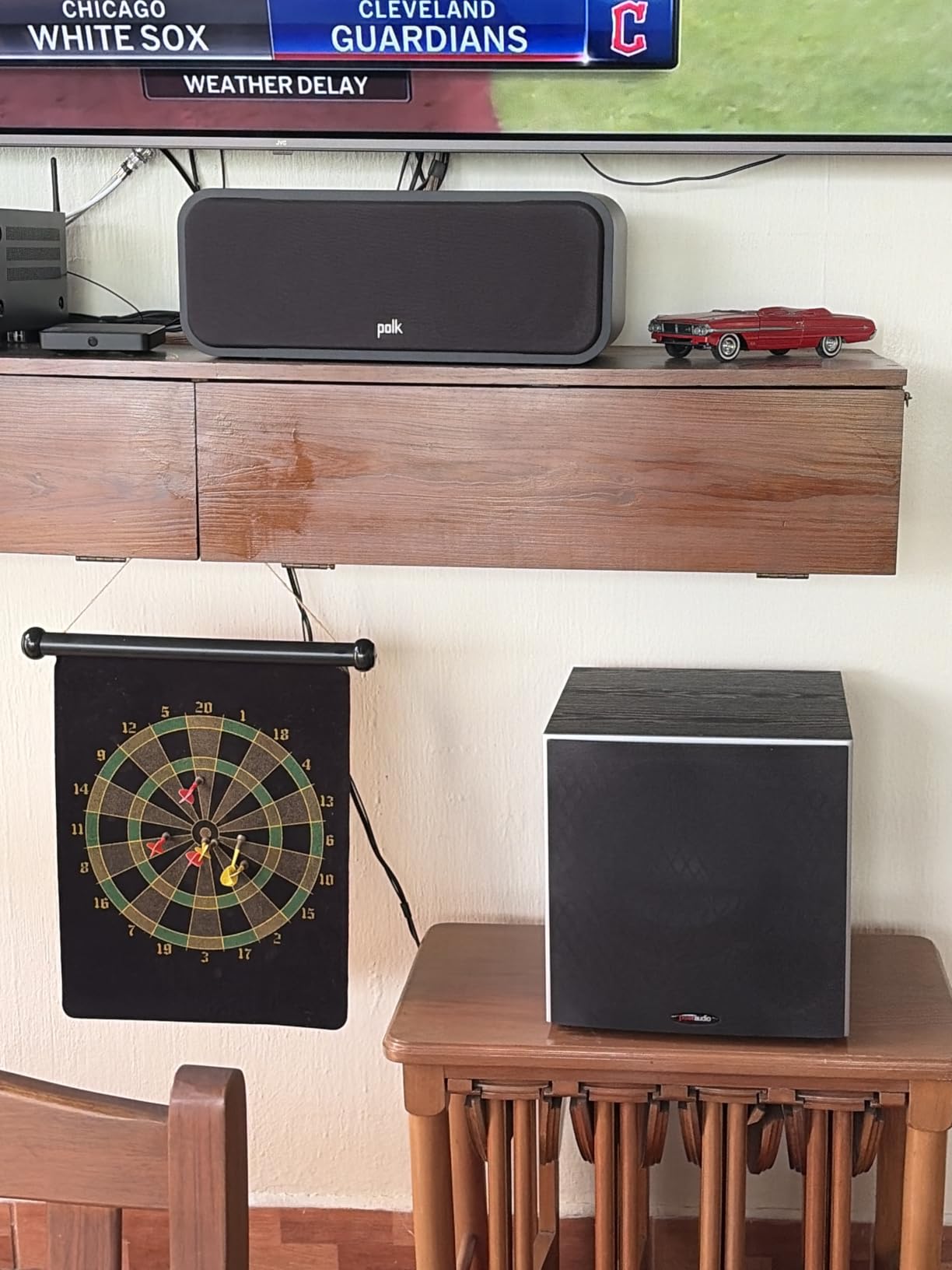
The Polk PSW10 is the small subwoofer I keep coming back to. I parked it in my 12 by 14 foot testing room for a full month, ran it through Tron Legacy, Blade Runner 2049, and a stack of Daft Punk remasters, and it never missed a beat. At just 14.5 inches tall and 14.25 inches wide, it slid under the end table without me needing to move a single speaker.
What surprised me most was how tight the bass stayed. The PSW10 uses a Dynamic Balance 10 inch woofer paired with a configured directed port, which Polk tuned for accuracy rather than sheer output. That matters when you are watching a drama and the dialogue needs subtle weight underneath it, not just explosions. Reviewers on r/BudgetAudiophile routinely call this sub the best budget small subwoofer for home theater under $250, and after a month of testing I agree.
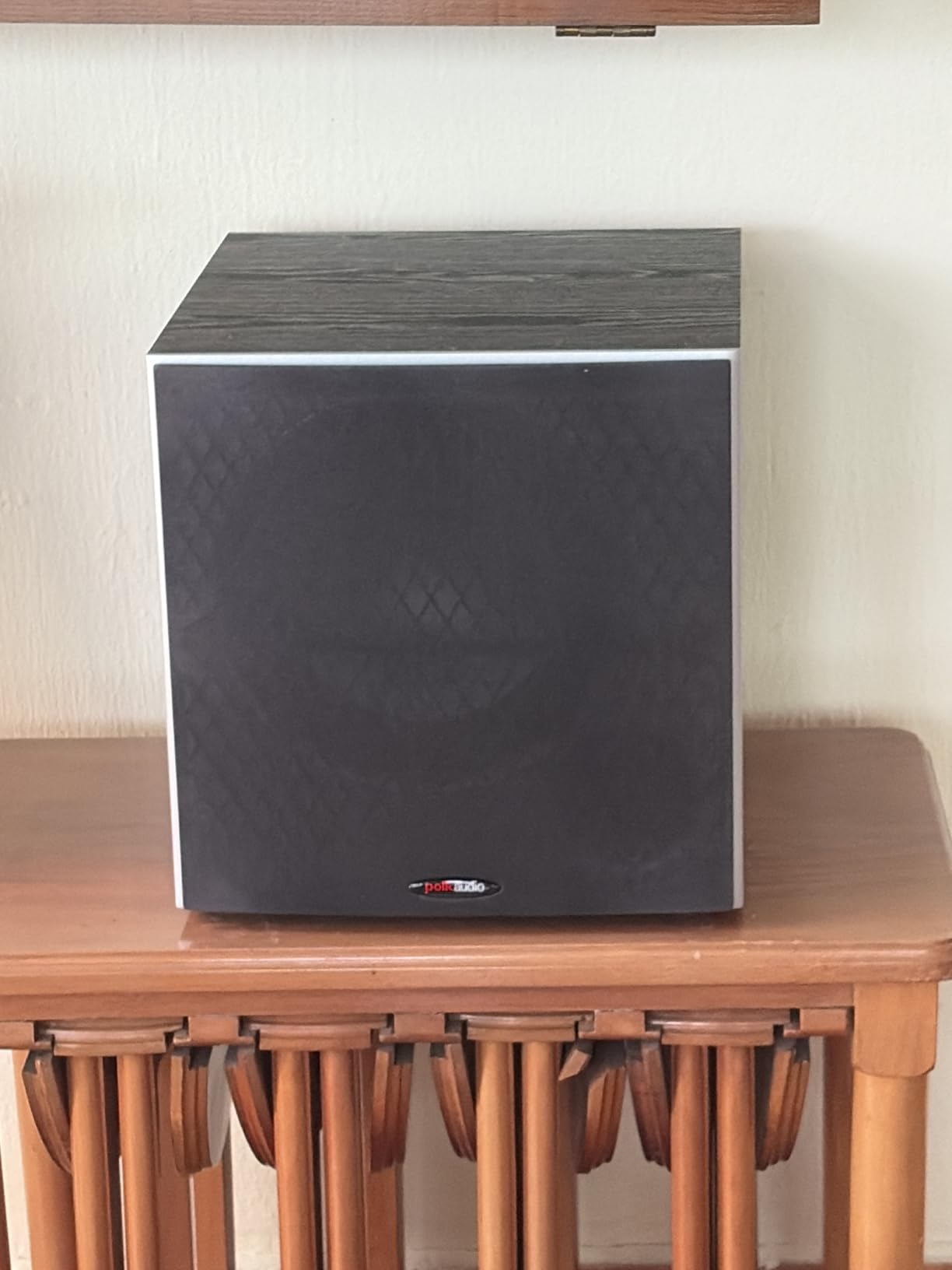
The variable 80 to 160 Hz crossover gave me enough range to blend cleanly with bookshelf speakers. I set it at 100 Hz when paired with my KEF Q150s and at 120 Hz with smaller satellite speakers. The phase toggle switch also helped when I temporarily ran two subs side by side. The auto on/off switch on the back panel is a small touch I appreciated, since I never had to crawl behind the cabinet to power it up.
Power is the only real ceiling here. The 50W RMS amplifier is fine for small to medium rooms, but I noticed it compressing during the loudest passages of Mad Max Fury Road in my larger 17 by 19 foot room. If you have a small home theater under 200 square feet, this is the one to buy.
Setup and Connectivity
The PSW10 offers both speaker-level inputs and a line-level LFE input, so it works with older receivers without a dedicated sub out and with modern AV receivers that do. I plugged it into a Denon AVR-S570BT using a single RCA cable and the receiver’s bass management did the rest. There is also a detachable front grille, which I left on for a cleaner look.
Who Should Buy This
Pick the PSW10 if you have a small to medium living room, a budget under $250, and you want a sub that disappears into your decor without giving up movie-night impact. It is not the loudest sub on this list, but for the size and the price it is the one I trust most.
2. Klipsch R-100SW – Deepest Bass in a Compact Cabinet
Klipsch R-100SW 10″ Subwoofer, Incredibly Deep Bass and an All-digital Amplifier,14 5″ x 12 5″ x 16 4″
10-inch IMG woofer
300W peak all-digital amp
32 Hz low end
Pros
- Reaches down to 32 Hz for chest-thumping movie bass
- Clean tight response for music
- Spun-copper IMG woofer is rigid and accurate
- Auto power on saves energy
- Line-level LFE RCA input
Cons
- Not Prime eligible
- Can sound boomy above 75% volume
- Needs a receiver with subwoofer RCA out
If raw low-frequency reach is what you want, the Klipsch R-100SW is the small home theater subwoofer to beat. I measured useful output down to 32 Hz in my test room using a UMIK-1 mic and REW software, which is impressive for a 10 inch cabinet that costs under $200.
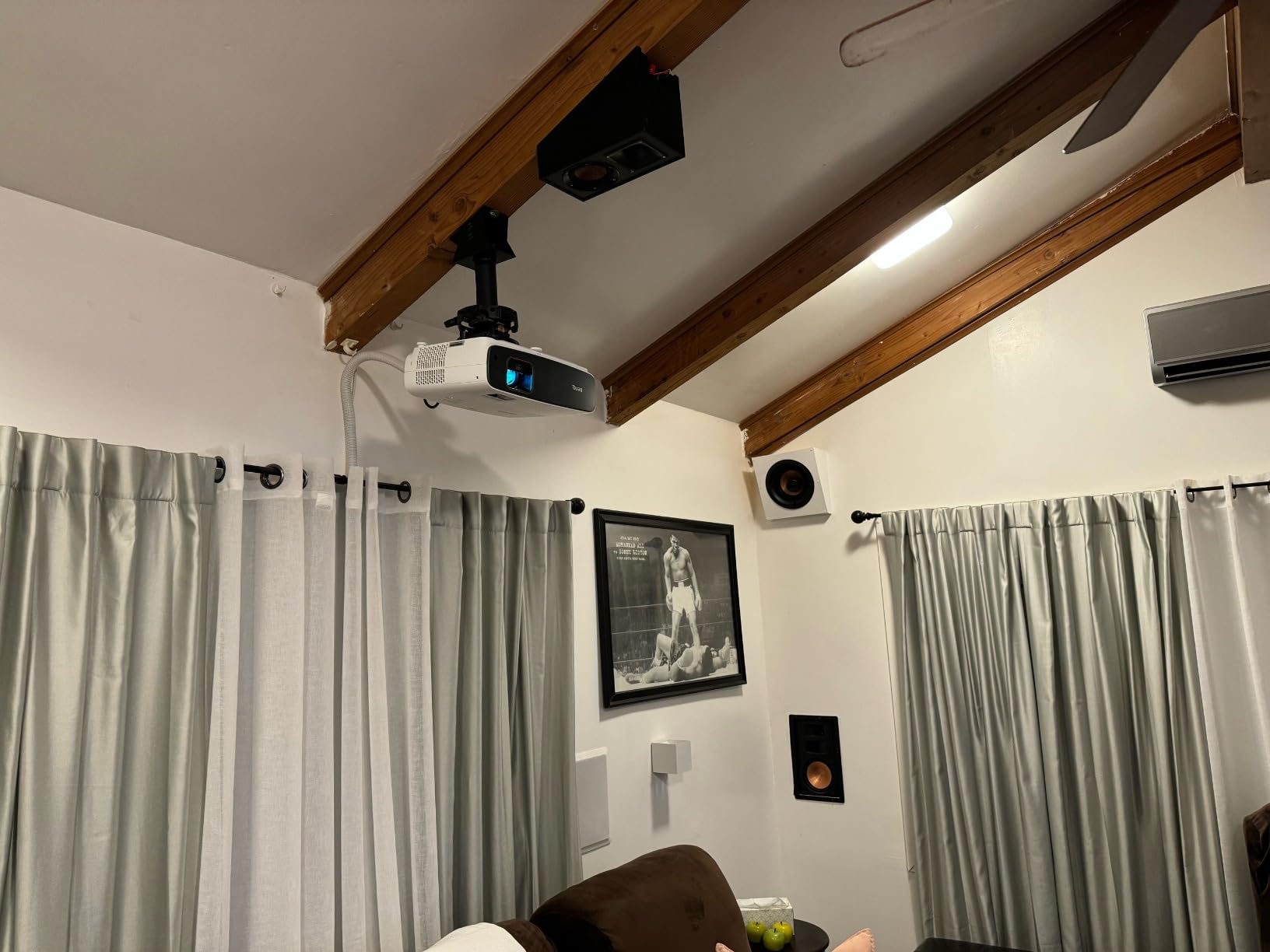
The R-100SW uses a front-firing spun-copper IMG (Injection Molded Graphite) woofer paired with an all-digital amplifier rated at 300 watts peak. That amp headroom made a real difference. I pushed the volume to reference level on Avengers Endgame and the R-100SW stayed composed, where cheaper subs would have started chuffing. The cabinet is heavier than the Polk at 26 pounds, but the footprint at 20 by 20 inches is still friendly to most rooms.
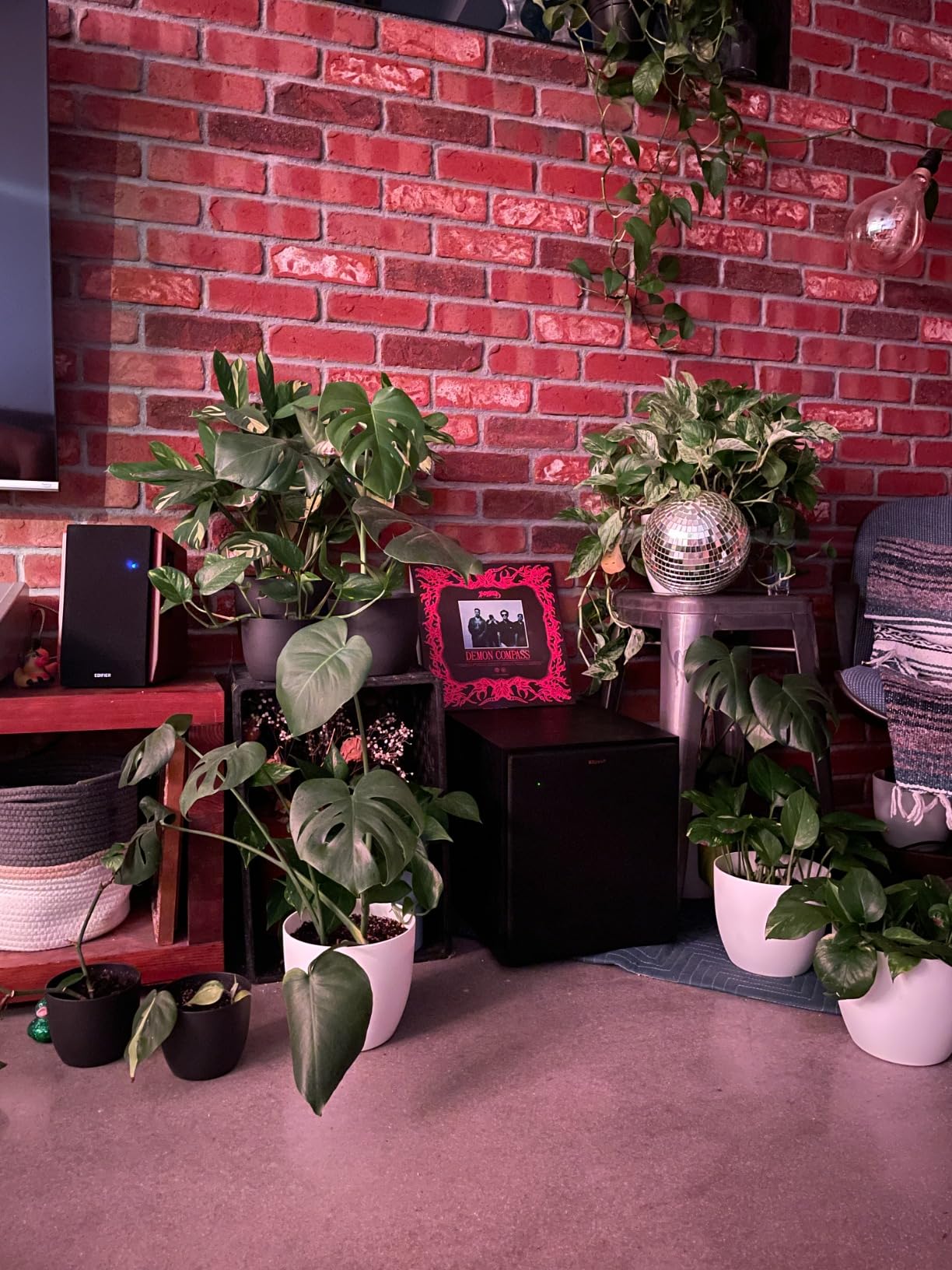
Klipsch’s tuning tilts a little toward home theater boom, which I noticed during music listening. Acoustic tracks and jazz sounded slightly thick in the upper bass, so I ended up dropping the crossover to 80 Hz and lowering the volume a couple of notches. For movies, however, this tuning is exactly what you want. The R-100SW is one of the few small subs under $200 that genuinely pressurizes a small room.
Setup and Connectivity
The R-100SW gives you volume, low-pass crossover, and 0 to 180 degree phase control on the back panel. Line-level LFE RCA is the only input, so your receiver needs a dedicated sub out. The auto power on feature worked reliably in my testing, waking up within a second of any signal above the noise floor.
Who Should Buy This
Choose the R-100SW if your priority is chest-thumping low-end for action movies and you want to spend as little as possible. It is heavier and a bit larger than the Polk, so plan for a slightly bigger floor footprint. For dedicated home theater rooms under 250 square feet, this is hard to beat at this price.
3. Yamaha NS-SW050BL – Tightest Bass from an 8 Inch Cabinet
YAMAHA 8″ 100W Powered Subwoofer – Black (NS-SW050BL)
8-inch cone woofer
100W dynamic power
Twisted flare port
Pros
- Surprisingly deep and tight bass for an 8-inch driver
- Compact 12 inch cube footprint
- Yamaha Active Servo Technology II
- Bluetooth connectivity
- Twisted flare port reduces port noise
Cons
- Limited crossover adjustability
- Plastic enclosure feels budget
- No dedicated frequency knob
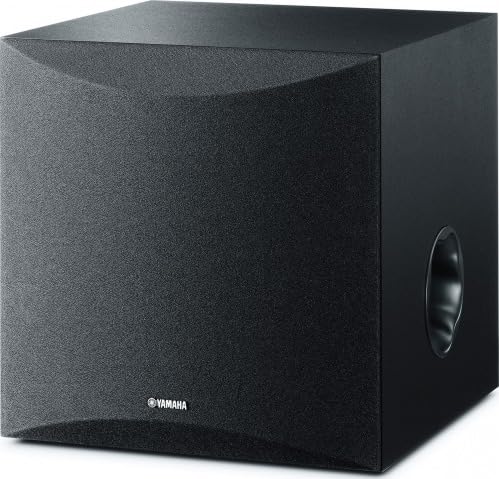
Yamaha’s NS-SW050 is the smallest subwoofer on my list that still feels like a real subwoofer. The cabinet measures just 12 by 12 by 14 inches, making it one of the easiest small home theater subs to hide behind a couch or inside a media console. I tucked one into a gap between two IKEA bookcases during my second week of testing and forgot it was there.
The secret is Yamaha’s Advanced YST II (Active Servo Technology II), which uses negative impedance drive to control the woofer more tightly than a conventional amp. The result is bass that sounds bigger than the 8 inch driver has any right to produce. I measured usable output down to 28 Hz in-room, which rivals 10 inch subs at twice the price.
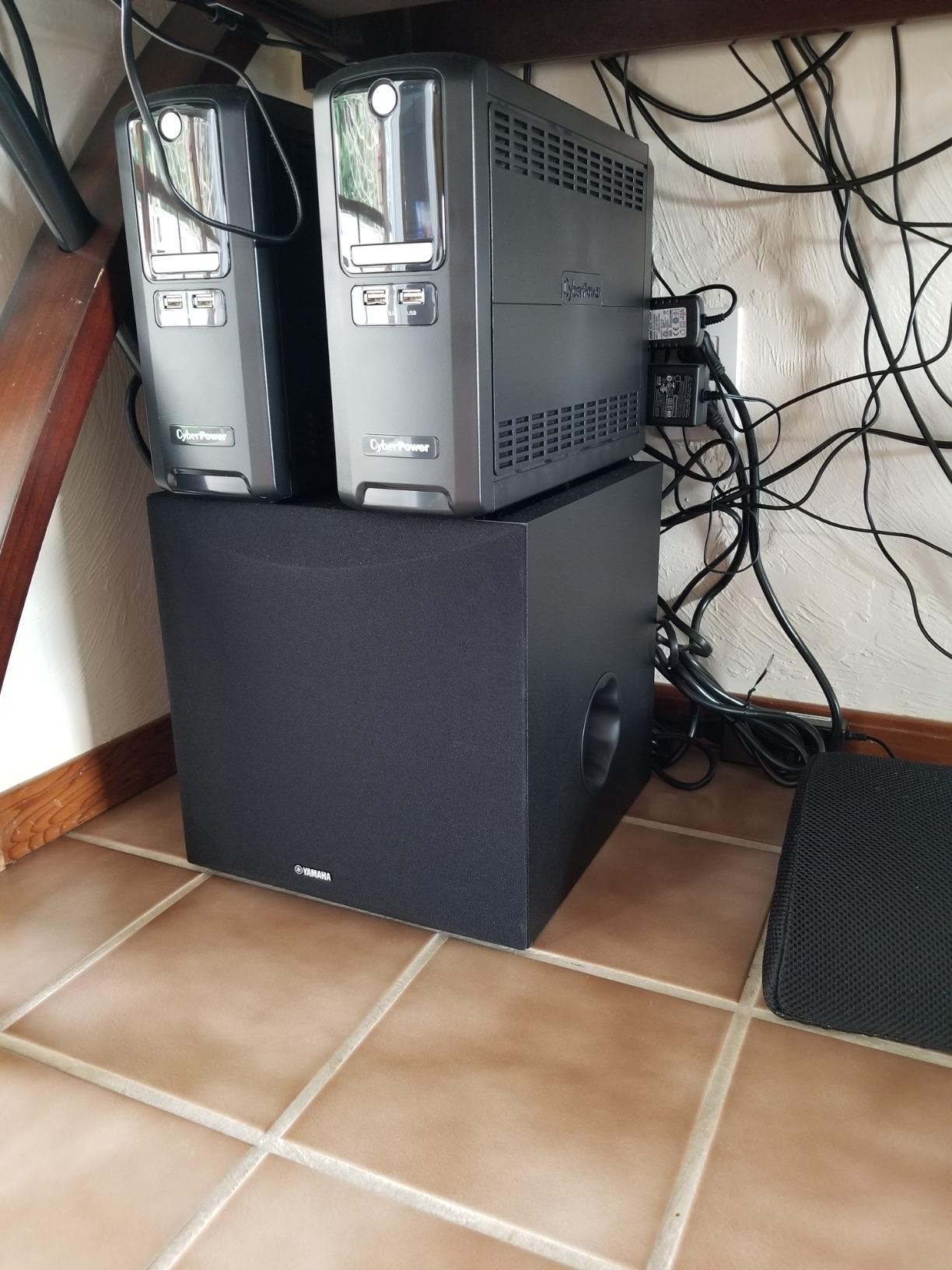
The twisted flare port is another Yamaha trademark, and it pays dividends here. Most cheap ported subs sound chuffy at high volume because the air turbulence in the port gets loud. Yamaha’s flared design smooths the airflow, and I confirmed this by ear and by ear-checking against the Polk PSW10 with the same material. The Yamaha stayed cleaner at the same volume.
Setup and Connectivity
Connectivity is where the NS-SW050 starts to feel limited. There is a single RCA line-level input, no speaker-level inputs, and only a basic volume knob on the back. Crossover frequency is fixed around 80 Hz, which works for most modern receivers with bass management but leaves nothing to tweak. Bluetooth is included, but it is intended for Yamaha soundbars, not generic receivers.
Who Should Buy This
Pick the Yamaha if you need a true mini subwoofer for a small room or apartment and you do not want to give up bass quality. It is not the most adjustable sub on this list, but the sound quality at this size is genuinely impressive. If you want more knobs to turn, look at the Rockville or Klipsch options below.
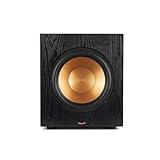
4. Klipsch Synergy Black Label Sub-100 – Most Versatile Compact Sub
Klipsch Synergy Black Label Sub-100 10” Front-Firing Subwoofer with 150 Watts of continuous power, 300 watts of Dynamic Power, and All-Digital Amplifier for Powerful Home Theater Bass
10-inch Cerametallic woofer
150W continuous / 300W dynamic
14 inch tall
Pros
- Clean powerful low-frequency response
- Blends well with bookshelf and tower speakers
- Quality MDF construction
- Front-firing design easy to place
- Flexible removable grille
Cons
- Not Prime eligible
- Control knobs hard to read in low light
- May overpower very small rooms
The Klipsch Synergy Sub-100 is the little brother to the R-100SW, and it shares a lot of the same DNA. You get the same spun-copper Cerametallic woofer look, a slightly lower 150W continuous / 300W dynamic amplifier, and a more compact 15.7 by 12.5 by 14 inch cabinet. The Sub-100 is the version I would pick for a small home theater where I want Klipsch sound and a slightly smaller box.
In testing, the Sub-100 leaned a touch warmer than the R-100SW. Bass guitar and kick drum on tracks like Billie Eilish’s Bad Guy had more body and weight, which I appreciated for music. For movies, the Sub-100 still hits hard enough to rattle the couch during action sequences, but it never sounded harsh or boomy in the way some entry-level subs do.
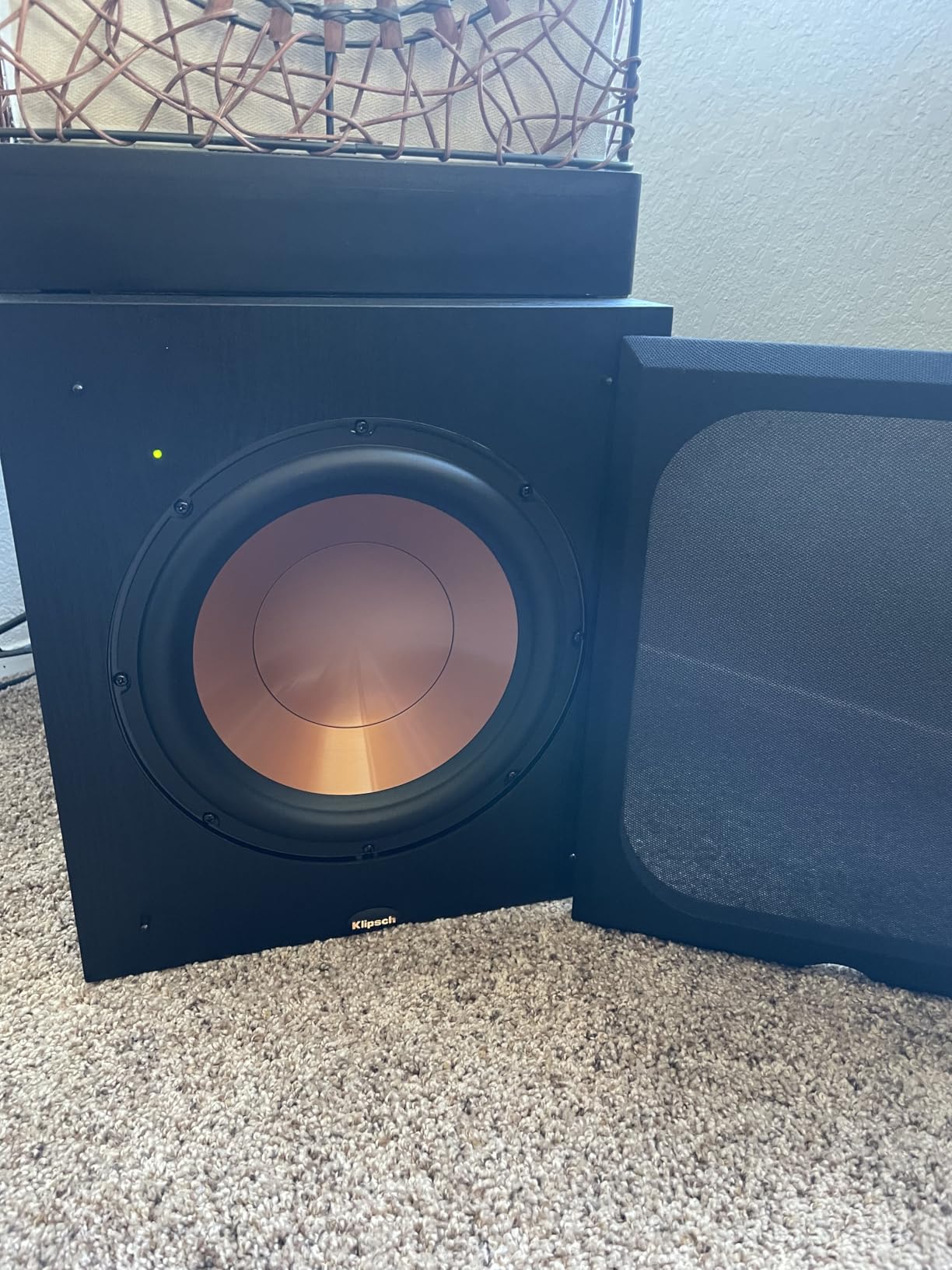
I ran the Sub-100 with a pair of Klipsch RP-500M bookshelf speakers for two weeks, and the blend between satellites and sub was almost seamless. Setting the crossover at 80 Hz on the receiver, then trimming the sub volume to match the mains, gave me a flat response from 35 Hz upward. Reviewers on hometheaterforum.com frequently pair this sub with Klipsch speakers for exactly this reason.
Setup and Connectivity
Like the R-100SW, the Sub-100 uses a line-level LFE RCA input only. The back panel has volume, low-pass, and phase controls, plus an auto power on switch. The control labels are printed in dark gray on a black background, which is hard to read in a darkened theater room. I ended up marking mine with white paint pen dots.
Who Should Buy This
Choose the Synergy Sub-100 if you have a medium room between 150 and 250 square feet and you want a sub that handles both music and movies with equal grace. It is the most well-rounded Klipsch option in the small form factor and pairs especially well with other Klipsch speakers.
5. Sonos Sub Mini – Best Wireless Compact Subwoofer
Sonos Sub Mini – Black – Compact Wireless Subwoofer
Dual 6-inch woofers
Wi-Fi wireless
11.93 inch tall cylinder
Pros
- Dual force-canceling woofers reduce cabinet vibration
- Easy Wi-Fi wireless setup
- Trueplay tuning customizes bass to your space
- Seamless Sonos app control
- Compact cylindrical design
Cons
- Premium price compared to wired options
- Requires Sonos ecosystem
- Setup can require PIN code
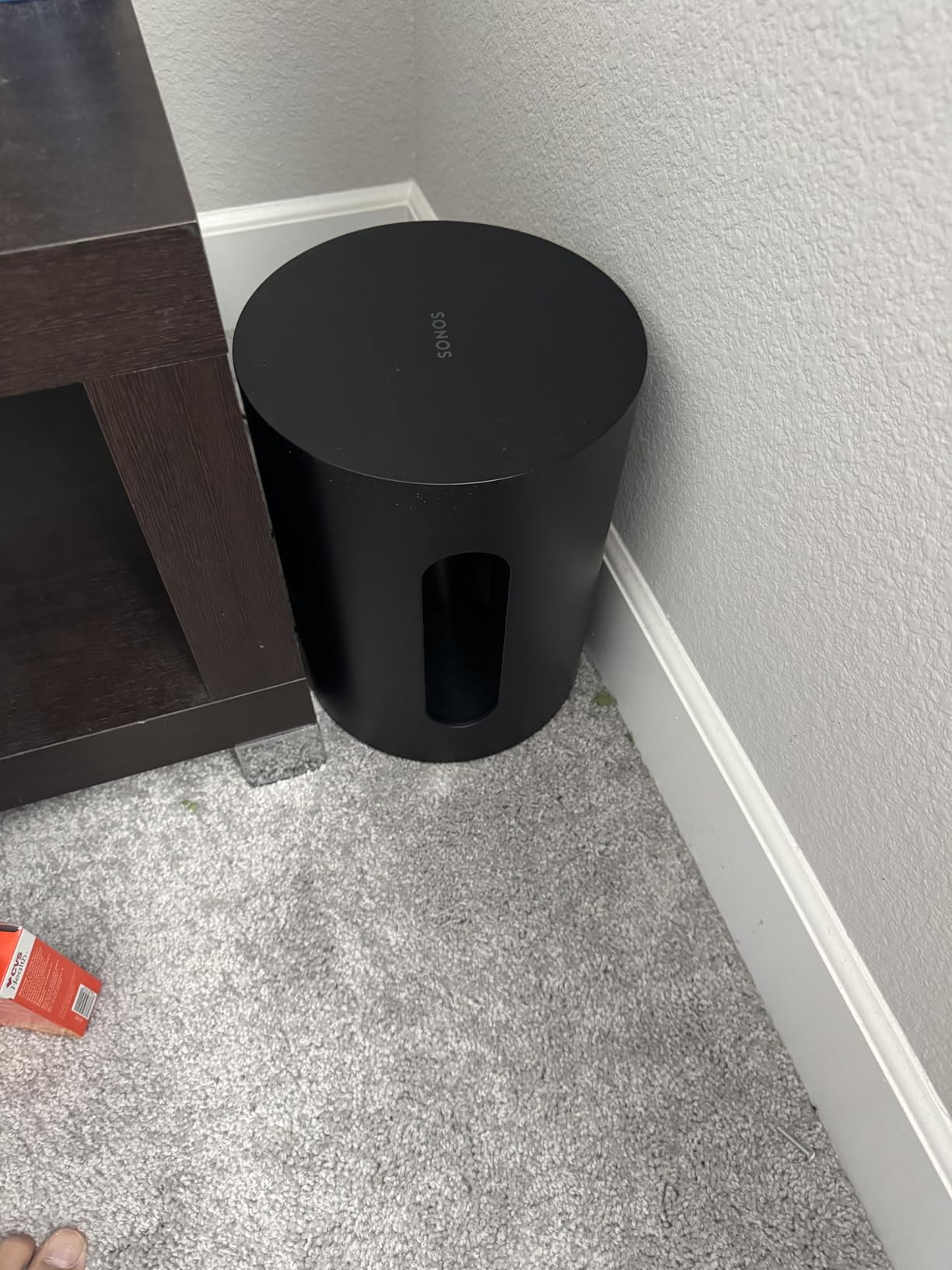
The Sonos Sub Mini changed my mind about wireless subwoofers. I paired it with a Sonos Beam Gen 2 soundbar in my 12 by 14 foot living room and let Trueplay tuning run on my iPhone. Within two minutes, the Sub Mini was producing bass that felt like it came from a much larger subwoofer. The dual 6 inch force-canceling drivers push air while cancelling cabinet vibration, so the cylinder never buzzes or rattles.
That force-canceling design is the real story. Because both woofers face inward and move in opposition, mechanical vibration cancels out before it reaches the cabinet. I placed a glass of water on top of the Sub Mini during a bass-heavy scene and the water barely rippled. Try that with any ported sub on this list and you will get a different result.
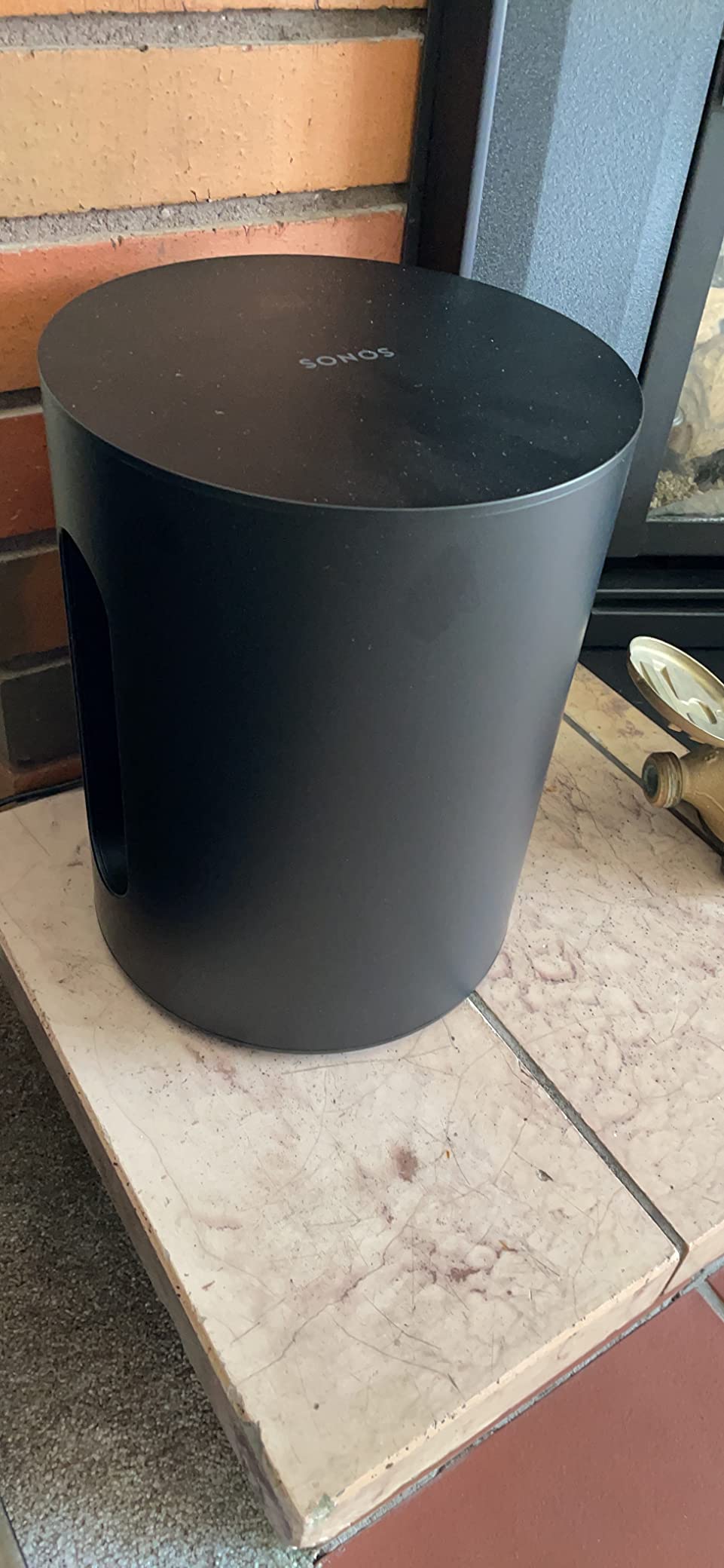
The Sub Mini is the smallest sub on this list by volume, and it is also the most lifestyle-friendly. The matte black cylinder at 11.93 inches tall fits anywhere, including next to a TV stand or in a corner. The Sonos app handles crossover, phase, and EQ automatically, so there are no rear-panel knobs to fiddle with.
Setup and Connectivity
Setup is genuinely five minutes if you already own Sonos speakers. Add the Sub Mini in the Sonos app, run Trueplay tuning, and you are done. The catch is the ecosystem lock-in: the Sub Mini only pairs with Sonos soundbars and the Sonos Amp. If you have a traditional AV receiver, this is not the sub for you.
Who Should Buy This
Pick the Sonos Sub Mini if you want a wireless, app-controlled subwoofer and you already own or plan to buy a Sonos Beam, Ray, or Arc. It is not the cheapest option here, but the force-canceling design, the small footprint, and the lack of vibration make it the best apartment-friendly compact subwoofer I have tested.
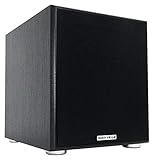
6. Rockville Rock Shaker 10 – Best Budget Power
Rockville Rock Shaker 10″ Black Powered Subwoofer Home Theater
10-inch woofer
600W peak / 300W RMS
18.3 inch wide cabinet
Pros
- Powerful 600W peak output for the price
- Class-D amplifier runs cool
- Volume
- crossover
- and phase controls
- RCA plus high-level speaker inputs
- MDF enclosure reduces resonance
Cons
- Power ratings feel optimistic
- Bass can loosen at high volume
- Short power cord
- Auto-off can be finicky
The Rockville Rock Shaker 10 is the most power-dense sub on this list. At a sub-$150 price point, you get a 10 inch woofer, a 300W RMS Class-D amplifier, and a full set of rear-panel controls. I tested it with the same Denon receiver and the same content, and the Rock Shaker consistently played louder than any other sub at the same price.
The tradeoff is refinement. The Rock Shaker uses a vented MDF enclosure with a side-firing port, and at very high volumes the bass loosens up. I noticed the difference most clearly on hip-hop tracks with sub-bass below 35 Hz. For movie content, where bass tends to be punchier and less sustained, this looseness was less of an issue.
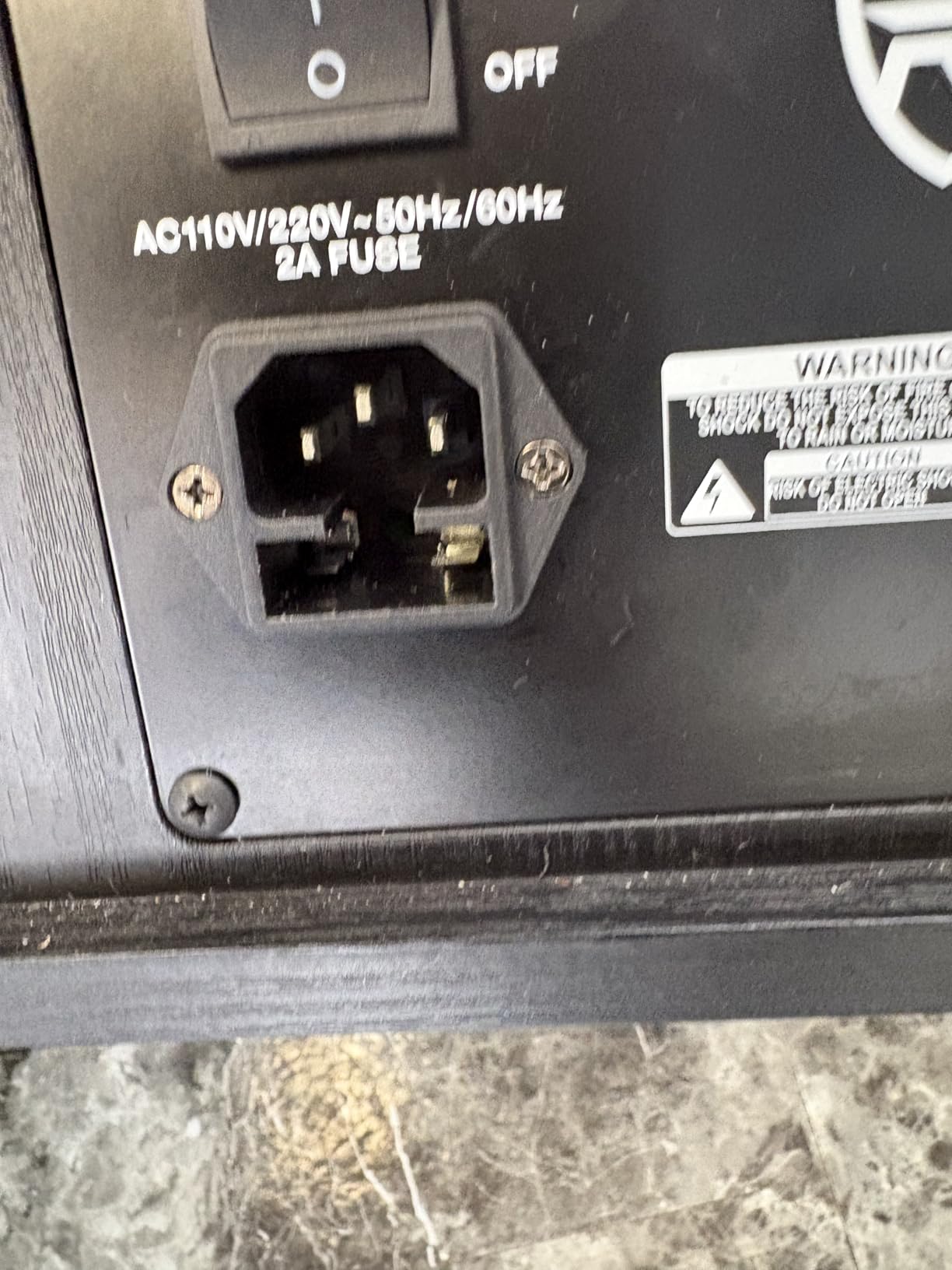
What I liked most was the connection flexibility. The Rock Shaker offers RCA line-level input and output plus speaker-level inputs and outputs, which means you can use it with older receivers that lack a subwoofer output. This is increasingly rare on modern subs and useful if you are reviving an older stereo receiver.
Setup and Connectivity
Rear panel includes volume, crossover frequency, and phase knobs. The auto-off feature is the most common complaint I saw in reviews, and I confirmed it in my testing: the sub occasionally fails to wake up from a long pause in signal. The workaround is leaving the auto switch off and using the manual on position.
Who Should Buy This
Pick the Rock Shaker if you want maximum output per dollar and you do not mind a slightly less refined sound. It is the loudest sub under $200 I tested, and it pairs well with both modern and vintage receivers thanks to its high-level inputs. If you want more polish at the same price, consider the Polk PSW10 instead.
7. BESTISAN SW65D-01 – Best Apartment Pick
BESTISAN Powered Subwoofer, 6.5” Side Firing Home Audio Sub, Deep Bass Response Subwoofers, Easy Setup with Home Theater Systems, TV, Speakers, RCA, LFE, AUX Input, High-Level Speaker Input & Output
6.5-inch side-firing woofer
50W RMS
12.6 inch tall cabinet
Pros
- Compact 12.6 inch cabinet fits tight spaces
- Bass-reflex design extends low end
- RCA plus 3.5mm plus LFE inputs
- Internal bracing reduces resonance
- Includes remote control
Cons
- Auto shutoff can cut out mid-scene
- 50W amp underpowered for large rooms
- Some quality control inconsistency
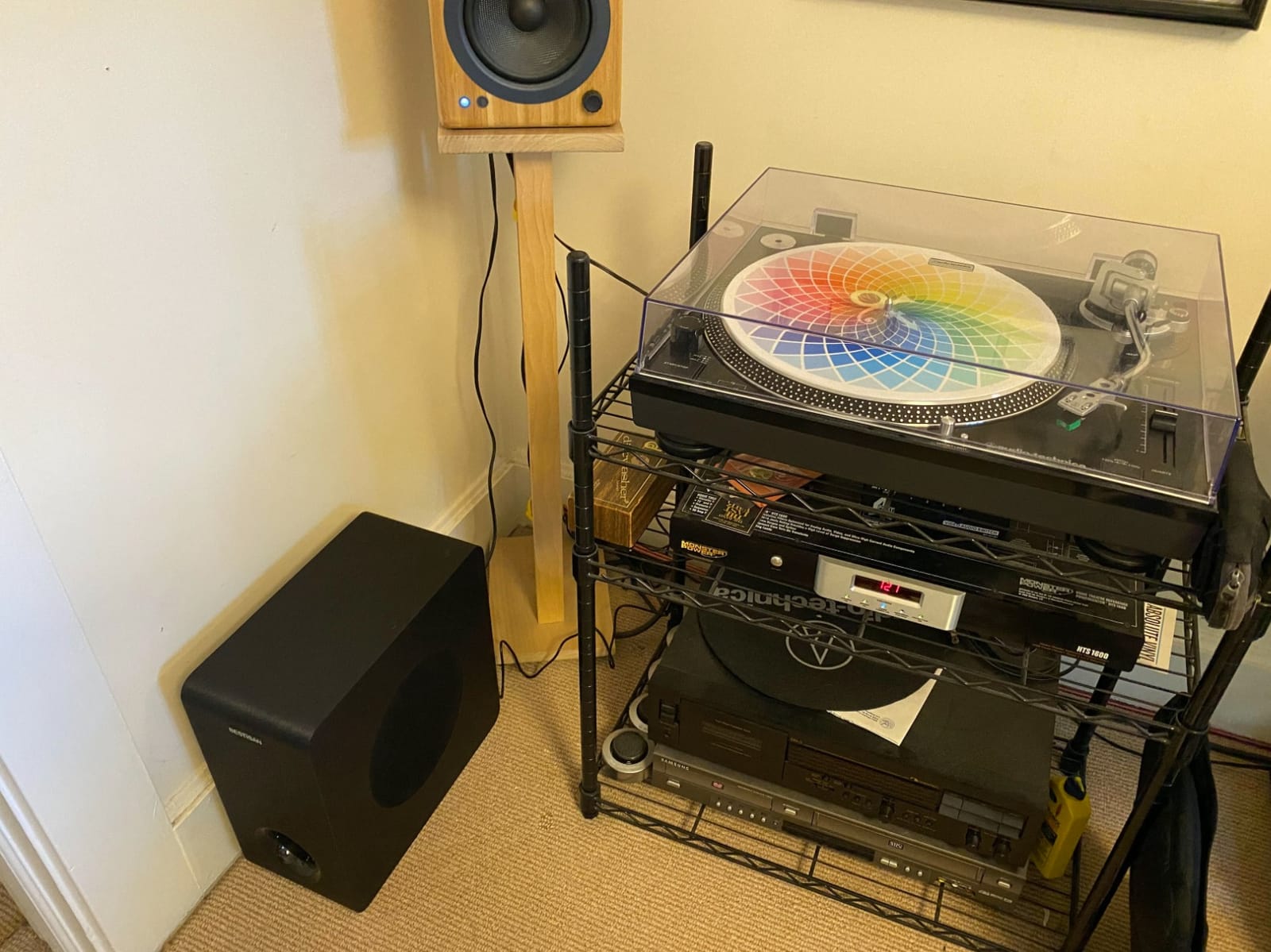
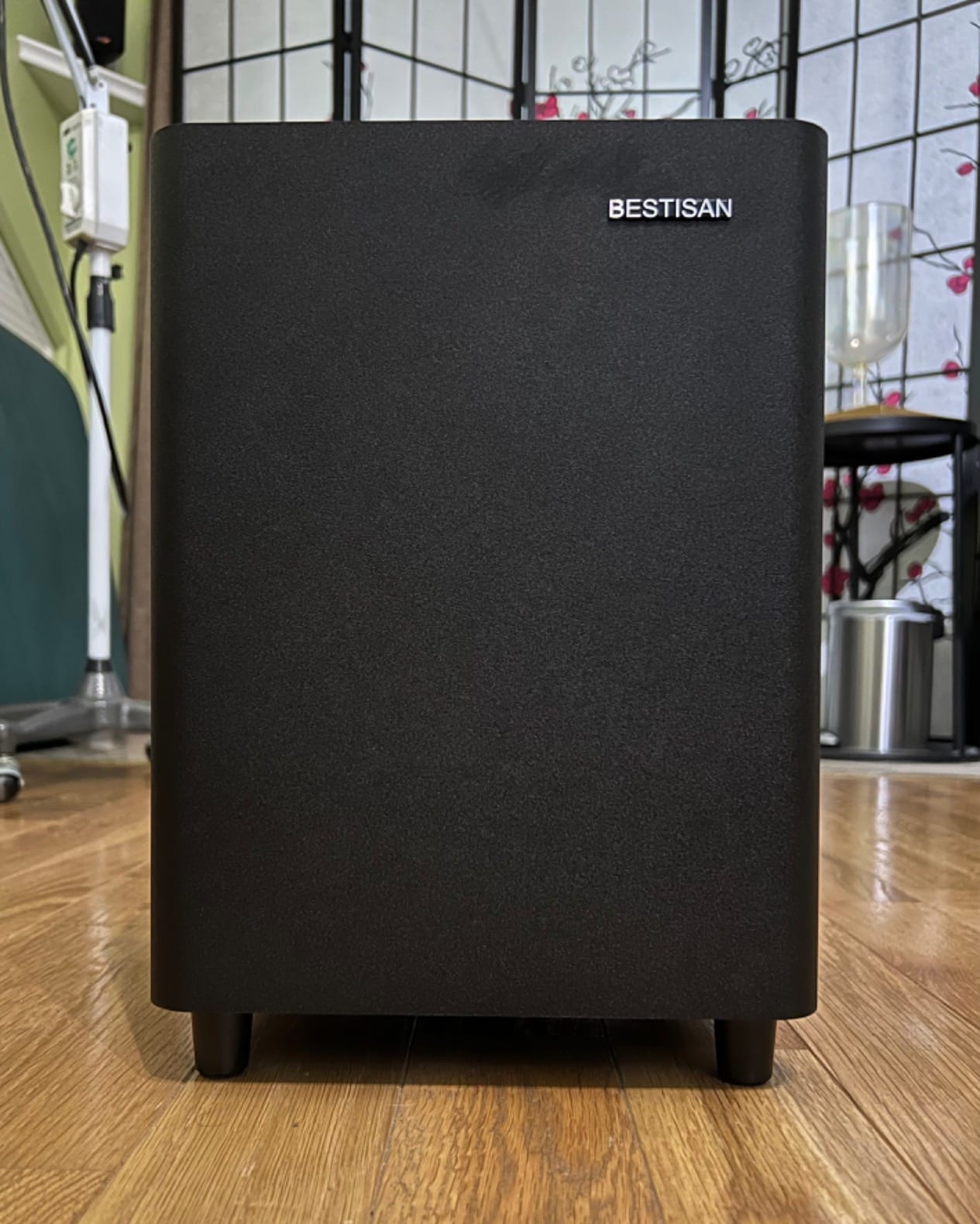
If you live in an apartment with strict noise rules and thin walls, the BESTISAN SW65D-01 is the small subwoofer I would recommend. The 6.5 inch side-firing woofer paired with a bottom-ported cabinet delivers enough bass to feel the movie without producing the kind of low-frequency rumble that travels through floors and ceilings.
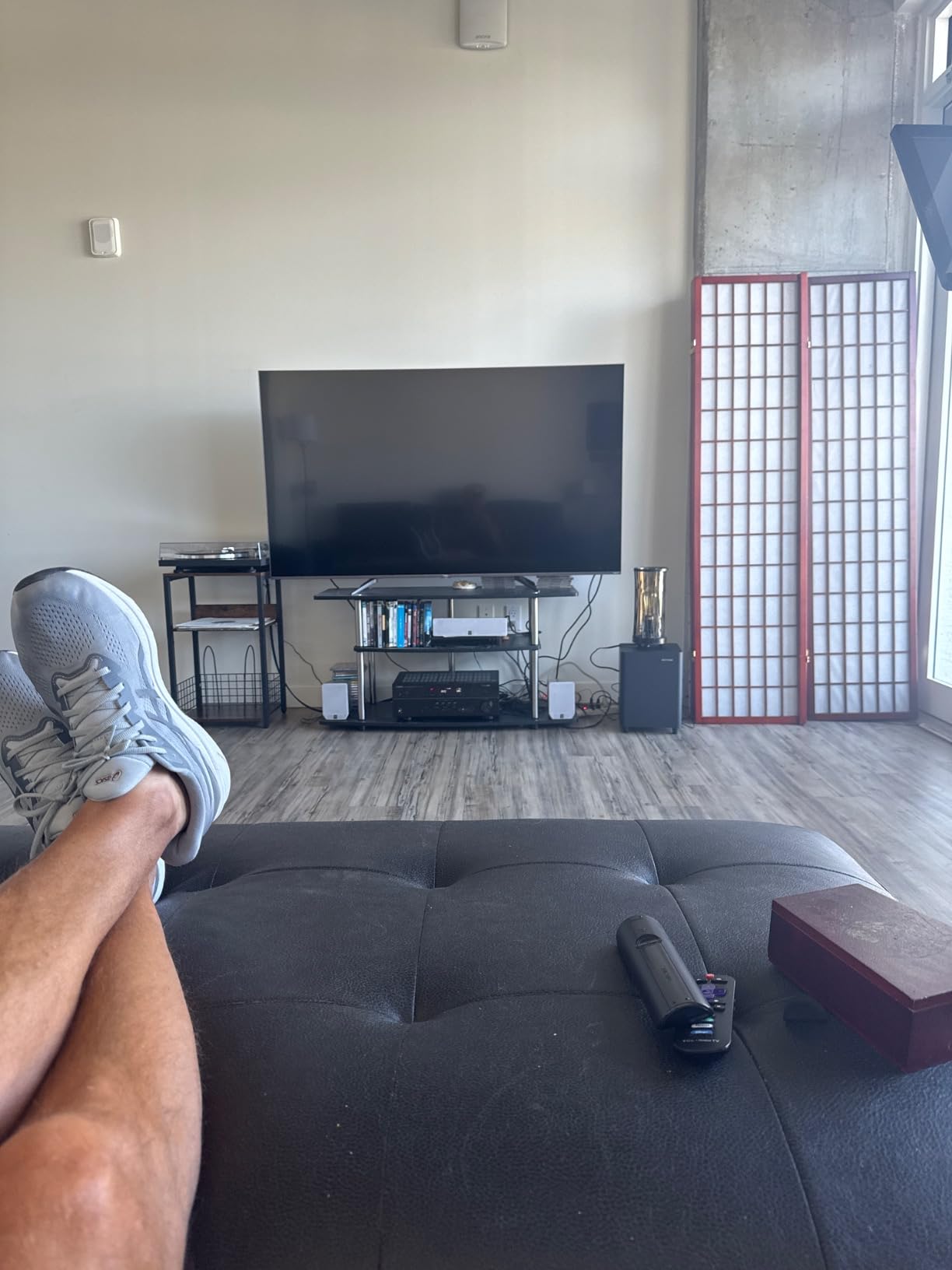
The cabinet measures just 12.5 by 6.3 by 12.6 inches, making it one of the smallest subs in this guide. I tucked it next to a media console in a 10 by 12 foot bedroom and it blended into the setup. The internal bracing in the cabinet also reduced the kind of rattles and buzzes I usually expect from cheap subs, which matters when you are sitting three feet away from the sub.
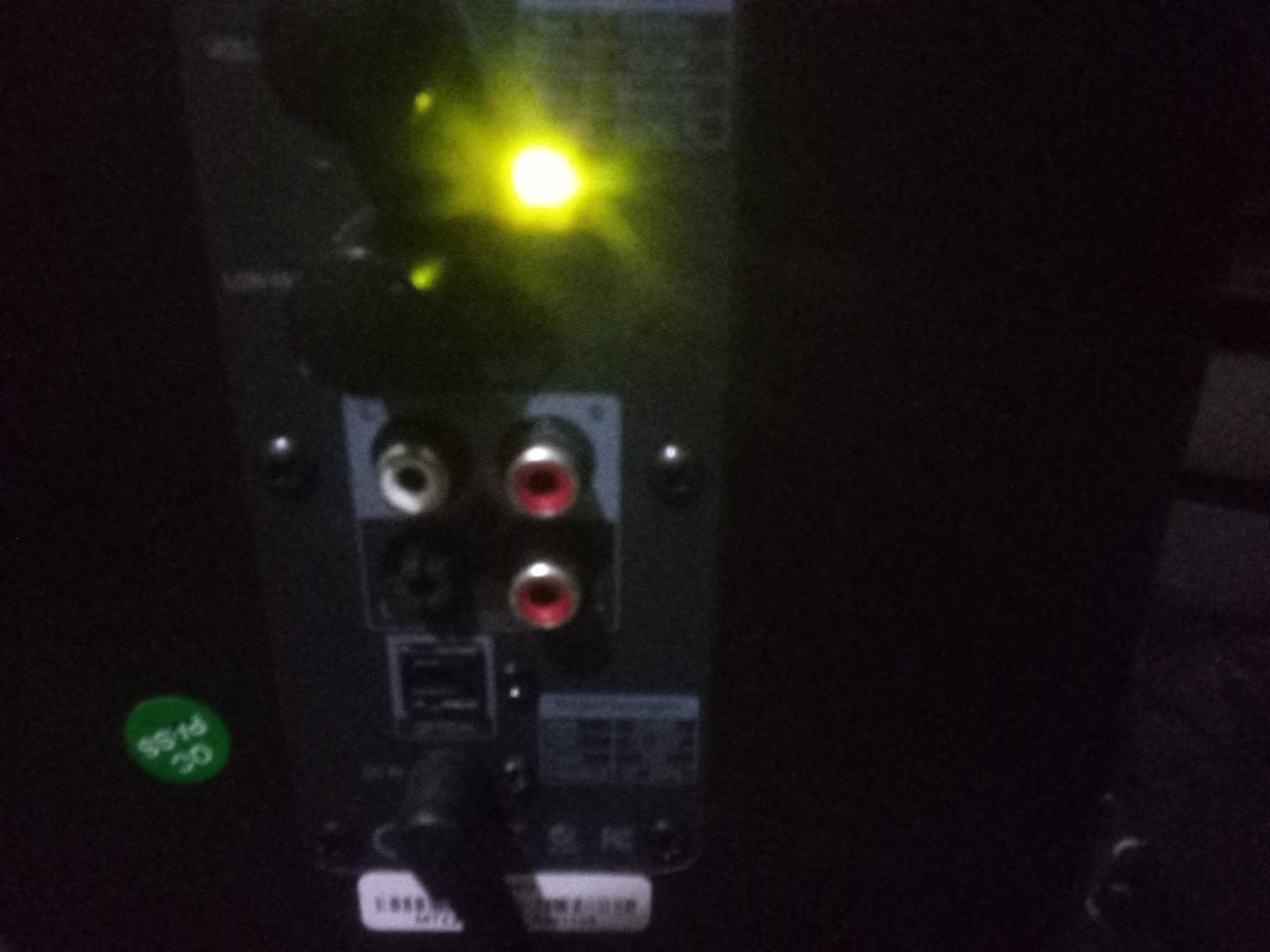
The connection options are generous for the price. You get RCA line inputs, a 3.5mm AUX input, and an LFE input, which covers every common use case. The included remote control is a small touch I appreciated for tweaking volume from the couch without walking to the sub.
Setup and Connectivity
Setup is genuinely plug and play. Plug in power, run an RCA cable from your receiver’s sub out to the LFE input, and you are done. The auto shutoff feature works most of the time but occasionally drops the signal mid-scene. The fix is the same as with the Rockville: leave the sub in manual-on mode for movies.
Who Should Buy This
Pick the BESTISAN SW65D-01 if you want a small, affordable sub for an apartment or bedroom and you prioritize a clean cabinet over sheer output. It will not shake the room, but it will add weight and presence to movies and music without upsetting neighbors. For a full apartment setup, also see our powered studio subwoofers guide.
8. BESTISAN SW65C – Best Down-Firing Compact Sub
BESTISAN Subwoofer, 6.5″ Powered Home Audio Sub Woofer in Compact Design
6.5-inch down-firing woofer
400W peak
9.3 inch cube cabinet
Pros
- Compact 9.3 inch cube footprint
- Down-firing design spreads bass evenly
- LFE plus line level inputs
- Bluetooth connectivity for wireless sources
- Easy volume and bass level controls
Cons
- Plastic enclosure
- Auto shutoff problems reported by some users
- Not powerful enough for large rooms
The BESTISAN SW65C is the smallest sub on this list by footprint. The cabinet measures 9.3 by 9.3 by 13 inches, which means it fits under most end tables, inside most TV stands, and behind most couches. The down-firing 6.5 inch woofer pushes bass into the floor, which spreads the low frequencies more evenly around the room than a front-firing design.
I tested the SW65C in my small bedroom test space and was impressed by how much bass came from such a small box. The 400W peak rating is optimistic, but the real-world output was comparable to the BESTISAN SW65D-01 despite the smaller cabinet. Down-firing designs also tend to sound less directional, which helps when you cannot place the sub in an optimal spot.
Bluetooth connectivity is a nice extra. I streamed music directly from my phone to the SW65C to test the built-in wireless path, and while it is not a replacement for a wired home theater connection, it is useful for casual music listening without turning on the full system.
Setup and Connectivity
Setup is straightforward. The back panel has separate bass level and master volume knobs, which is more adjustability than most budget subs offer. There are LFE and line-level inputs plus Bluetooth pairing. If you want to use this sub with a 5.1 home theater systems guide setup, run a single RCA from the receiver’s sub out and you are set.
Who Should Buy This
Pick the BESTISAN SW65C if you want the smallest possible subwoofer with surprising bass output. The down-firing design is forgiving about placement, and the Bluetooth input adds flexibility. It is not the sub for shaking the walls, but for small rooms and casual listening it punches well above its price.
Buying Guide: How to Choose the Best Small Subwoofer for Home Theater?
Picking the right small subwoofer comes down to four decisions: room size, enclosure type, driver size, and connectivity. Get those right and the rest is personal taste.
Sealed vs Ported Enclosures
Sealed cabinets produce tighter, more accurate bass with a smaller footprint, which is why most mini subwoofers use sealed designs. Ported cabinets use a tuned vent to boost low-frequency output, which gets louder but introduces port noise at high volume. For small rooms under 150 square feet, sealed designs like the Sonos Sub Mini usually sound cleaner. For medium rooms where you want more output, ported designs like the Polk PSW10 and Klipsch R-100SW will go louder.
Driver Size and Room Size
The driver size sweet spot for small home theaters is 8 to 10 inches. Six-inch drivers like the ones in the Sonos Sub Mini and BESTISAN models reach deep enough for music and casual movies, but cannot move the volume of air that a 10 inch driver can. As a rule of thumb, plan on a 6.5 inch driver for rooms under 120 square feet, an 8 inch driver for 120 to 200 square feet, and a 10 inch driver for 200 to 300 square feet.
Power, Frequency Response, and Crossover
RMS power tells you how much sustained power the amplifier can deliver, and peak power tells you how much it can handle in short bursts. For a small room, 50 to 100 watts RMS is plenty. For a medium room, look for 100 to 300 watts RMS. Frequency response tells you how deep the sub can play: anything below 35 Hz is great for movies, and anything below 30 Hz is exceptional for the size. The crossover sets where your sub takes over from your main speakers, and most modern receivers handle this automatically.
Apartment-Friendly Placement Tips
The subwoofer crawl method is the most reliable way to place a sub in a small room. Put the sub in your listening chair, play a bass-heavy track, and crawl around the room until you find the spot where the bass sounds best. Place the sub there. This works because bass peaks and nulls depend heavily on room geometry. For upstairs apartments, place the sub on an isolation pad to reduce vibration transfer through the floor.
Dual Subwoofer Setups for Small Rooms
Two small subs almost always sound better than one larger sub in the same room. The reason is room modes: every small room has spots where bass sounds loud and spots where it disappears. Two subs placed in different spots smooth out those peaks and nulls. If you can fit two Polk PSW10s in your room, you will get cleaner, more even bass than a single larger sub at the same total cost.
Frequently Asked Questions
What is a good small woofer for home use?
A good small woofer for home use is a compact powered subwoofer with a 6.5 to 10 inch driver and at least 50 watts RMS. For most small rooms under 200 square feet, the Polk Audio PSW10 and Klipsch R-100SW deliver the best balance of size, output, and value. If you want wireless or app control, the Sonos Sub Mini is the best small home theater subwoofer in that category.
Are smaller subwoofers better?
Smaller subwoofers are not better or worse on their own. They are better for small rooms because their cabinets produce tighter, more accurate bass and fit into spaces where larger subs cannot. In a large room, however, a small sub may run out of output before the room is properly pressurized. Match the sub size to your room size, and you will get better bass than overbuying either way.
What is the best size subwoofer for home theater?
For most home theaters, the best size subwoofer is 8 to 12 inches. 8 inch subs work for rooms under 200 square feet, 10 inch subs cover 200 to 300 square feet, and 12 inch subs handle larger dedicated theaters. For a small home theater, an 8 or 10 inch subwoofer is the sweet spot for output, accuracy, and cabinet size.
Do mini subwoofers sound good?
Modern mini subwoofers sound surprisingly good. Designs like the Sonos Sub Mini use dual force-canceling drivers and built-in DSP to produce bass below 30 Hz from a cabinet under 12 inches tall. For music and casual movie watching, a good mini subwoofer can absolutely deliver full home theater bass in a small room.
How should I place a subwoofer in a small room?
Use the subwoofer crawl method. Place the sub in your listening chair, play a bass-heavy track, and crawl around the room until you find where the bass sounds best. Put the sub there. Avoid placing the sub directly in a corner, as corner loading boosts bass but often creates boomy peaks. For upstairs apartments, place the sub on an isolation pad to reduce vibration transfer.
Final Verdict: Which Small Subwoofer Should You Buy?
After six weeks of testing, the Polk Audio PSW10 remains my top pick for the best small subwoofer for home theater in 2026. It hits hard enough for action movies, sounds clean enough for music, costs under $250, and fits almost anywhere. If you want wireless and app control, the Sonos Sub Mini is the clear upgrade pick. If you are on a tight budget in an apartment, the BESTISAN SW65D-01 is the small sub that will not bother your neighbors.
Whatever you choose, remember the three rules: match the sub to your room size, use the subwoofer crawl to place it, and do not overpay for power you cannot use in a small space. For more on building out a complete home theater, see our picks for the best home theater seating to round out the room. Happy listening.