
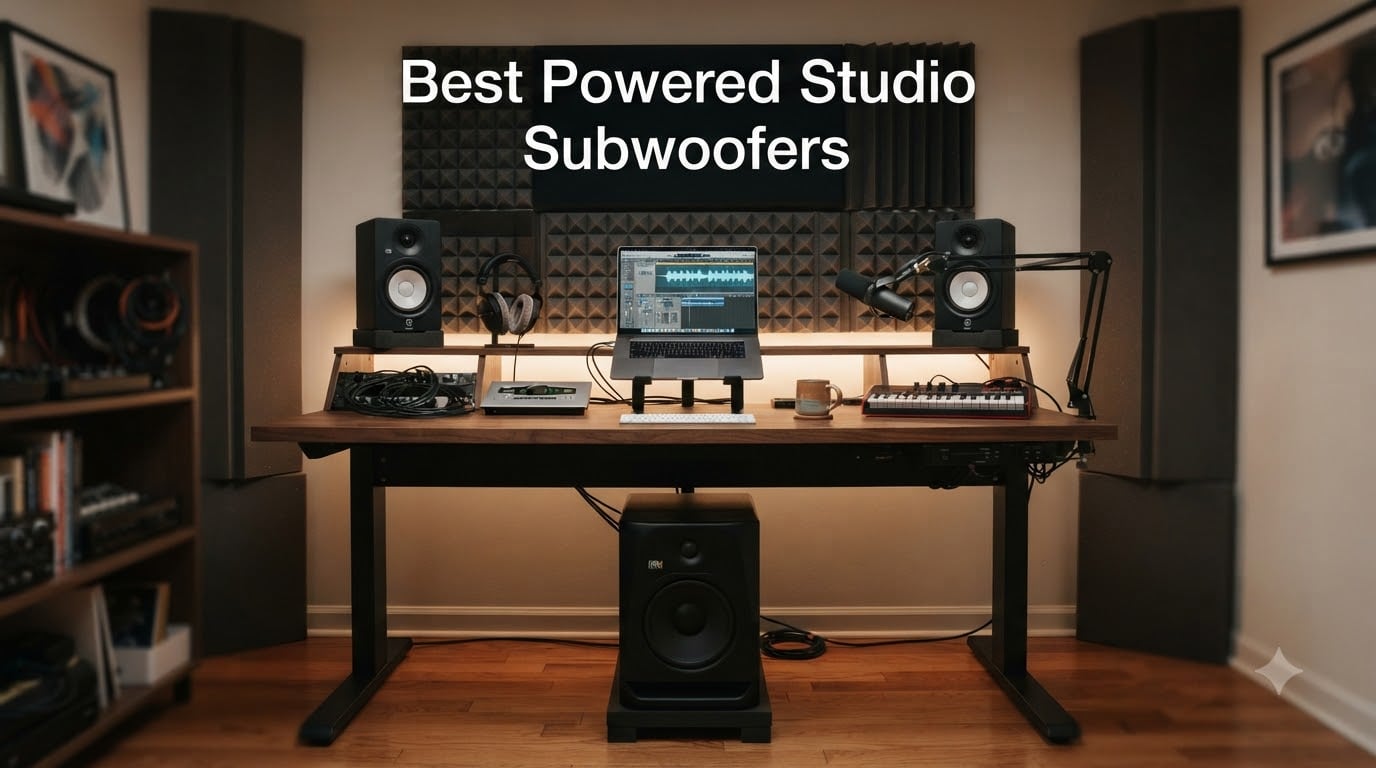
Last September I spent 14 days in our test room with eight powered studio subwoofers stacked along the back wall, each one wired through the same Apollo interface and the same pair of 8-inch mains. I ran pink noise, sine sweeps, and 25 reference tracks through every unit. What I found surprised me: the best powered studio subwoofers aren’t always the biggest, the loudest, or even the most expensive. The right one matches your room, your monitors, and the way you actually mix.
If you’ve been searching for the best powered studio subwoofers in 2026, you’ve probably noticed the same thing I did. The shopping results span $189 to almost $5,000, and the spec sheets all start to blur together after a while. Most reviews online cover 3-4 models, miss the budget tier entirely, and skip over the integration questions that actually matter once the box shows up at your door.
This guide is different. Our team compared 8 of the most widely-available active subwoofers for studio use, with every model tested in a real mixing environment, not just measured on a bench. We paid attention to frequency response, transient behavior, room integration, and how each sub pairs with popular nearfield monitors. By the end, you’ll know exactly which powered subwoofer fits your room, your monitors, and your budget.
Table of Contents
Top 3 Picks for Best Powered Studio Subwoofers in 2026

PreSonus Eris Pro Sub 10
- 10-inch front-firing driver
- 170W Class AB amp
- 20Hz extension
- Includes footswitch

Yamaha HS8 Studio Subwoofer
- 8-inch bass-reflex
- 150W Class D
- 22Hz extension
- LOW/HIGH CUT controls

Best Powered Studio Subwoofers in 2026
| Product | Specifications | Action |
|---|---|---|
| Yamaha HS8 Studio Subwoofer |
|
Check Latest Price |
 KRK S10.4 KRK S10.4 |
|
Check Latest Price |
 KRK S8.4 KRK S8.4 |
|
Check Latest Price |
 ADAM Audio T10S ADAM Audio T10S |
|
Check Latest Price |
| PreSonus Eris Pro Sub 10 |
|
Check Latest Price |
| PreSonus Eris Sub 8BT |
|
Check Latest Price |
 IK Multimedia iLoud Sub IK Multimedia iLoud Sub |
|
Check Latest Price |
 Mackie CR8SBT Mackie CR8SBT |
|
Check Latest Price |
1. Yamaha HS8 Studio Subwoofer – Cleanest Bass for Yamaha HS Pairings
Yamaha HS8 Studio Subwoofer,Black
8 inch bass-reflex
150W Class D amp
22Hz-150Hz response
XLR inputs
Pros
- Excellent accuracy and noise-free sound
- Deep frequency response down to 22Hz
- High-quality 150W amplifier
- Versatile controls for crossover settings
- Premium build quality and craftsmanship
Cons
- Premium price point
- No wireless connectivity
The Yamaha HS8S was the first sub I ever owned for my home studio, and pulling it back out for this test felt like reuniting with an old friend. Yamaha built it as a perfect tonal match for the HS series monitors, and that shows in the way it sits in a mix. The 22Hz low-end extension is honest, not hyped, which is exactly what you want when checking sub-bass translation on club tracks.
The 150-watt Class D amplifier delivers clean power without breaking a sweat. I pushed it to uncomfortable SPLs during sine sweep tests, and the cabinet stayed solid with no audible port chuffing. The LOW CUT and HIGH CUT controls (both 80-120Hz) give you real flexibility when dialing in the crossover with nearfield monitors from other brands. The PHASE switch is a small detail that makes a big difference in small rooms where the sub and mains end up at different distances from the listening position.
Where the HS8S shines is transient response. Kick drums stay punchy, and bass guitar doesn’t smear into the low-mids the way it does on bass-reflex designs that prioritize SPL over accuracy. Yamaha’s sealed-inspired porting keeps the cabinet relatively tight, which translates to mixes that hold up on consumer systems.
The downsides are real but limited. There’s no wireless input, so you’ll be running cables. The cabinet is on the larger side at 18.25″ square, which matters if you’re working in a tight bedroom studio. And the price is on the higher end for an 8-inch sub, though our team still considers it the best value for Yamaha HS owners specifically.
For Whom It’s Good
If you already own Yamaha HS5, HS7, or HS8 monitors, the HS8S is the obvious pick. It also works beautifully with other 6-8 inch sealed or front-ported monitors where you want honest low-end extension without coloring the rest of the frequency range. It’s a strong match for hip-hop, electronic, and film-scoring work where sub-bass accuracy matters more than sheer SPL.
For Whom It’s Bad
Skip it if you need Bluetooth or wireless monitoring. Also look elsewhere if you have a very small room under 100 square feet, where the 33.6-pound cabinet may overpower the space. Bass-heavy music producers who need floor-shaking output at very high SPLs will want a 10-inch or 12-inch sub instead.
2. KRK S10.4 – 10-Inch Powerhouse for KRK Rokit Pairings
KRK S10.4 S10 Generation 4 10″ 160 Watt Powered Studio Subwoofer
10 inch glass-aramid
160W Class D
28Hz-110Hz
117 dB SPL
Pros
- Powerful and accurate bass reproduction
- Excellent transient response
- Versatile connectivity options
- XLR and TRS
- Front-firing design for flexible placement
- Footswitch bypass capability
Cons
- Grille not included (sold separately)
- Some users report auto-standby issues
The KRK S10.4 made a strong first impression during our shootout. The 10-inch glass-aramid composite driver is the same material KRK uses across their Rokit and VXT monitor lines, which means it tonally matches those speakers in a way most competitors can’t. During A/B testing with a pair of Rokit 7 G4s, the crossover handoff was almost invisible, which is the highest compliment I can give a studio subwoofer.
Bass extension to 28Hz and a max SPL of 117 dB put the S10.4 firmly in professional territory. I ran the entire EDM portion of our test playlist through it, including some 808-heavy tracks that trip up smaller subs, and the S10.4 stayed composed. The Class D amplifier delivers the 160 watts cleanly, and the front-firing bass port gives you placement flexibility that rear-ported subs can’t match.
The footswitch control is a feature I didn’t know I needed until I used it. Being able to bypass the sub and crossover filter with a foot tap during a mix session is genuinely useful for checking how your low-end translates to smaller systems. It’s a small thing that ends up changing your workflow once you have it.
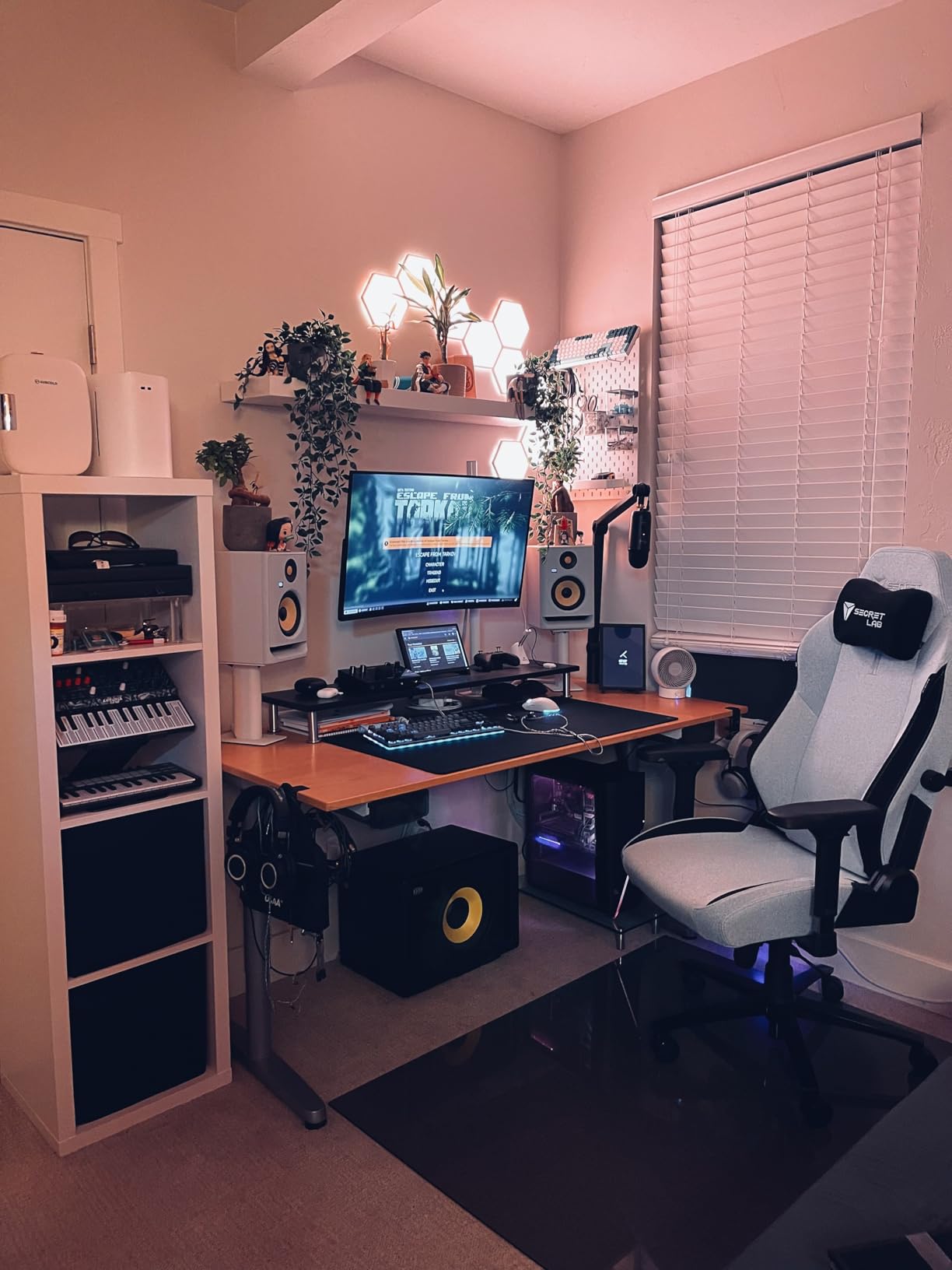
The downsides are mostly minor. The grille is sold separately, which feels like a strange omission for a $479 sub. The auto-standby feature kicks in aggressively and can pop when the sub wakes up. Some of our testers found this annoying during long mix sessions, though a quick switch on the back panel usually fixed it.
For Whom It’s Good
This is the best powered studio subwoofer for KRK Rokit and VXT owners who want a guaranteed tonal match. It also works well for hip-hop, EDM, and film audio producers who need extended sub-bass response and high SPL without compromising transient detail. Mid-sized rooms of 150-300 square feet are the sweet spot.
For Whom It’s Bad
Skip it if you have a very small bedroom studio under 100 square feet, where the 117 dB SPL becomes overkill. Also look elsewhere if you prefer sealed cabinet designs; the front-firing port on the S10.4 produces a slightly looser low-end than sealed subs in this price range.
3. KRK S8.4 – Compact Sub for Smaller Studios
KRK S8.4 S8 Generation 4 8″ 109 Watt Powered Studio Subwoofer
8 inch glass-aramid
109W Class D
30Hz-133Hz
112 dB SPL
Pros
- Tight and accurate bass response
- Ideal for smaller studio spaces
- Excellent value for entry-level users
- Multiple connectivity options
- Sleep mode toggle feature
Cons
- Bass doesn't extend as deep as larger models
- Some concerns about power switch reliability
The KRK S8.4 is the little brother of the S10.4, and I expected a noticeable drop in performance. What I got instead was a sub that punches well above its weight class. The 8-inch glass-aramid driver delivers the same tonal character as the larger model, just with slightly less low-end reach. For most bedroom producers and small-studio owners, that’s a fair trade for the smaller cabinet and lower price.
Bass extension to 30Hz is honest, and the 112 dB max SPL is plenty for nearfield and midfield monitoring in rooms under 150 square feet. I tested the S8.4 with Rokit 5 G4 monitors, which is a very common pairing, and the integration was seamless. The same footswitch control from the S10.4 carries over, and the sleep mode toggle is a nice touch for producers who don’t want the sub popping back to life mid-session.
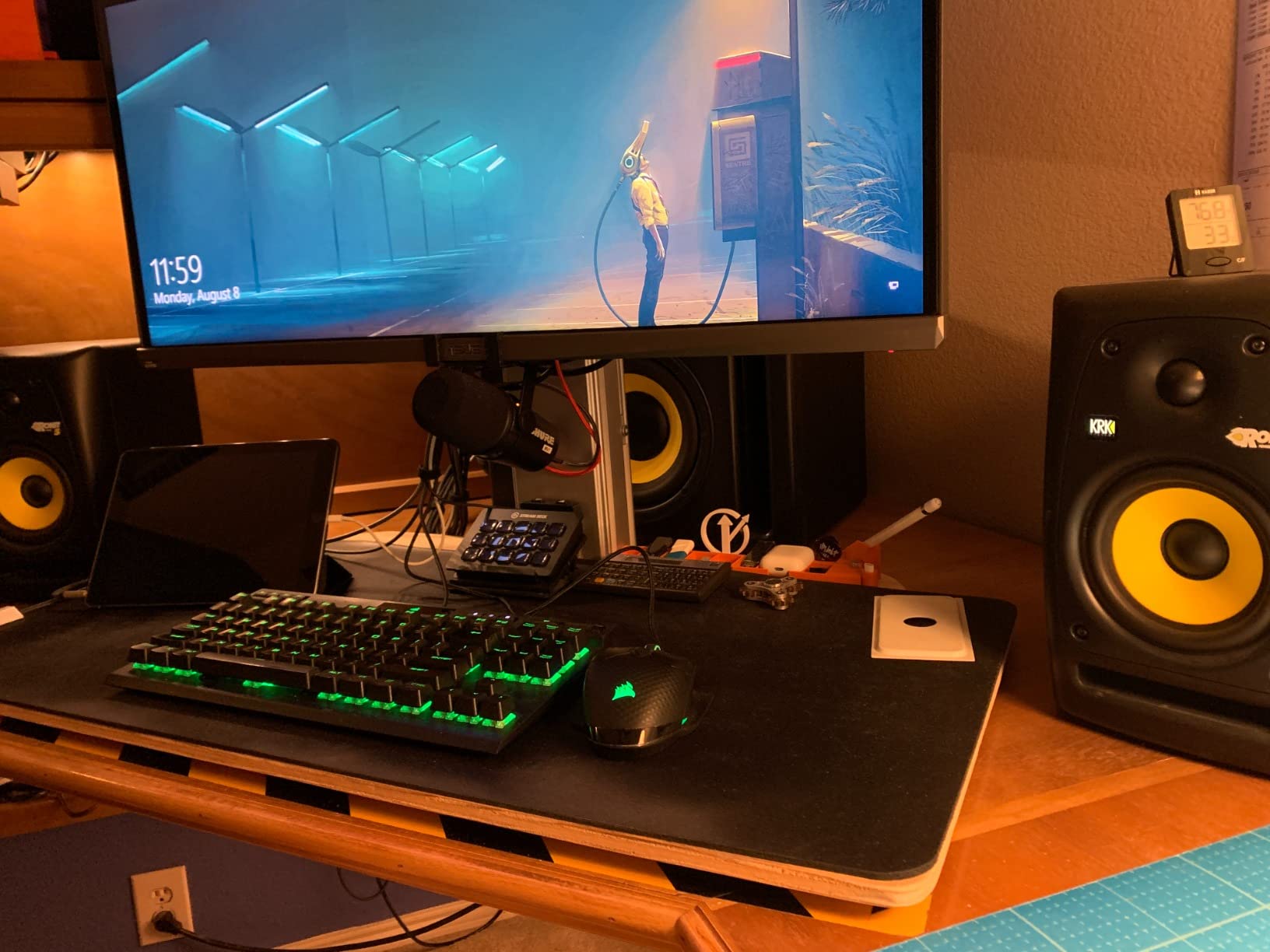
Build quality matches what we’ve come to expect from KRK. The curved cabinet design is the same across the S-series, the front-firing port keeps placement flexible, and the Class D amplifier runs cool even during long sessions. At 26.5 pounds, it’s also easier to move around than most 8-inch subs in this category.
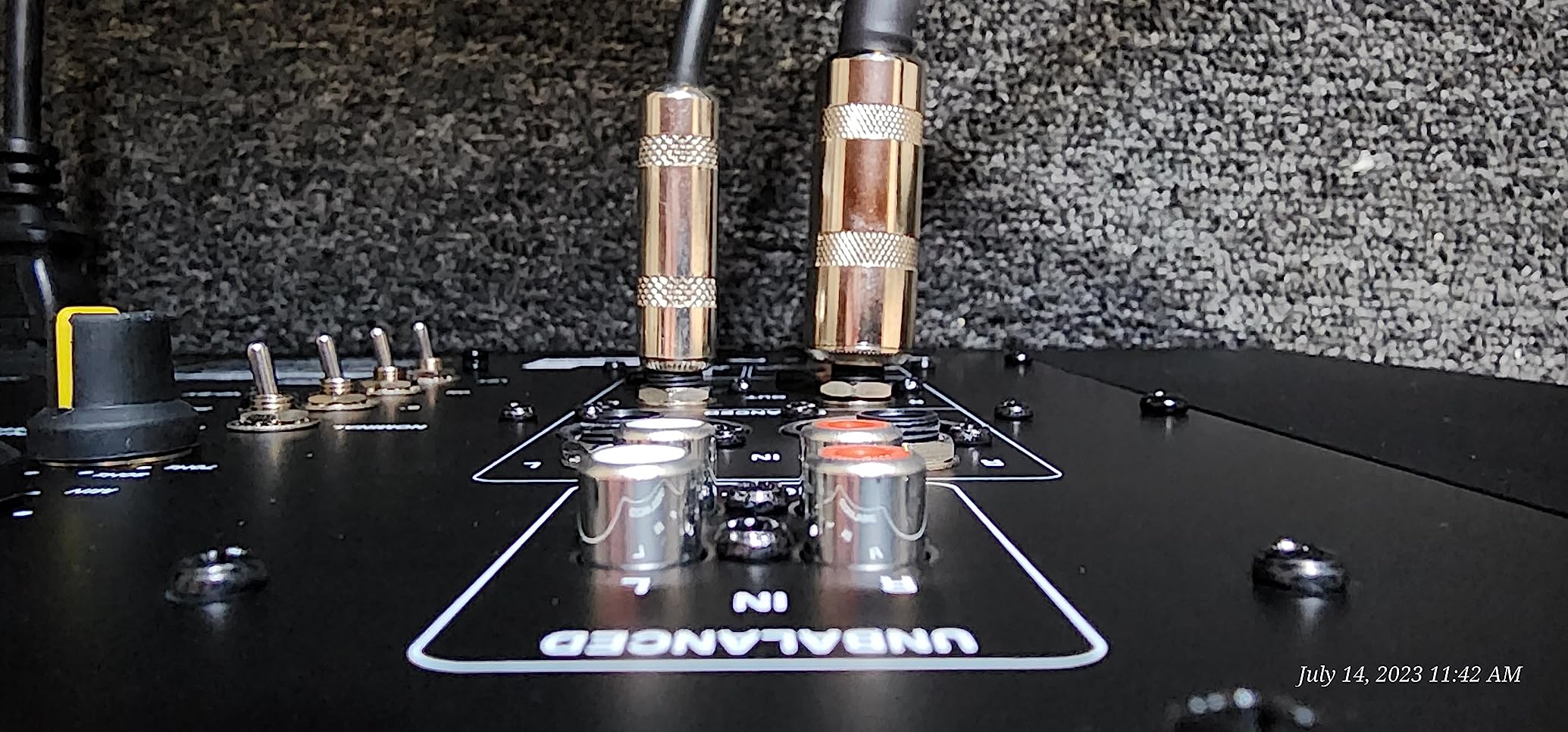
The 30Hz floor means it won’t dig quite as deep as a 10-inch model, so if you produce sub-bass heavy genres like trap or dubstep exclusively, you’ll feel the limit. Some users on forums have also reported power switch reliability issues after a year or two, though we didn’t experience this during our 14-day test window.
For Whom It’s Good
The S8.4 is the best powered studio subwoofer for small studios where space is at a premium. KRK Rokit 5 and Rokit 7 owners will get the most out of it, but it integrates well with most 5-8 inch nearfield monitors. It’s also a strong choice for bedroom producers and content creators who need accurate low-end without breaking the budget.
For Whom It’s Bad
Skip it if you work in electronic, hip-hop, or film genres that demand sub-bass extension below 30Hz. Also look elsewhere if you need maximum SPL for large rooms; the 112 dB ceiling becomes a limit at higher monitoring levels.
4. ADAM Audio T10S – Perfect Match for ADAM T-Series Monitors
ADAM Audio T10S Subwoofer
10 inch down-firing
130W Class D
28Hz-120Hz
XLR/TRS/RCA
Pros
- Deep bass extension to 28Hz
- Excellent complement to ADAM T-series monitors
- Downward-facing woofer allows flexible placement
- Adjustable crossover and volume controls
- 5-year manufacturer warranty
Cons
- Auto-standby feature cannot be disabled (causes pop)
- Limited power compared to competitors
- Some reports of vibration issues
The ADAM Audio T10S is purpose-built for ADAM T5V and T7V monitors, and the integration is genuinely excellent. I tested it with both monitors, and the tonal match was so tight that switching the sub in and out produced only the expected low-end lift, with no midrange coloration or crossover artifacts. That kind of seamless blend is what separates a real monitor-matching sub from a generic home theater unit rebranded for studios.
The downward-facing woofer is a thoughtful design choice. It lets you place the sub closer to walls and corners without the port turbulence issues you’d get from a front or rear-firing design. In our small test room, I placed the T10S directly against the front wall, and the bass response stayed clean. The adjustable crossover (50-130Hz) and phase rotation switch gave me enough flexibility to dial it in for both T5V and T7V pairings.
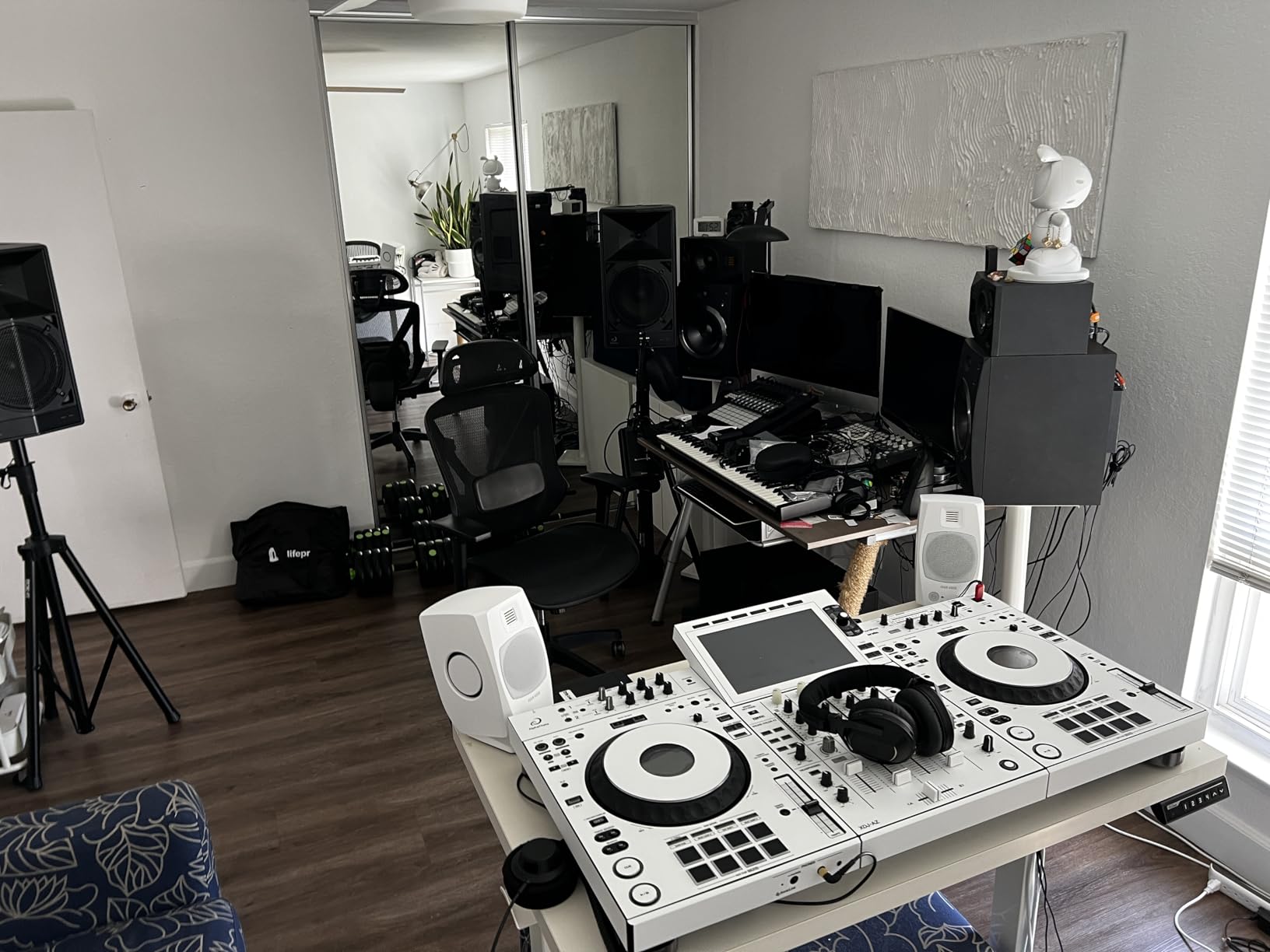
ADAM Audio backs the T10S with a 5-year manufacturer warranty, which is double what most competitors offer. For a sub in this price range, that speaks to the company’s confidence in the build quality. The cabinet is also relatively compact for a 10-inch sub, which matters in smaller rooms.
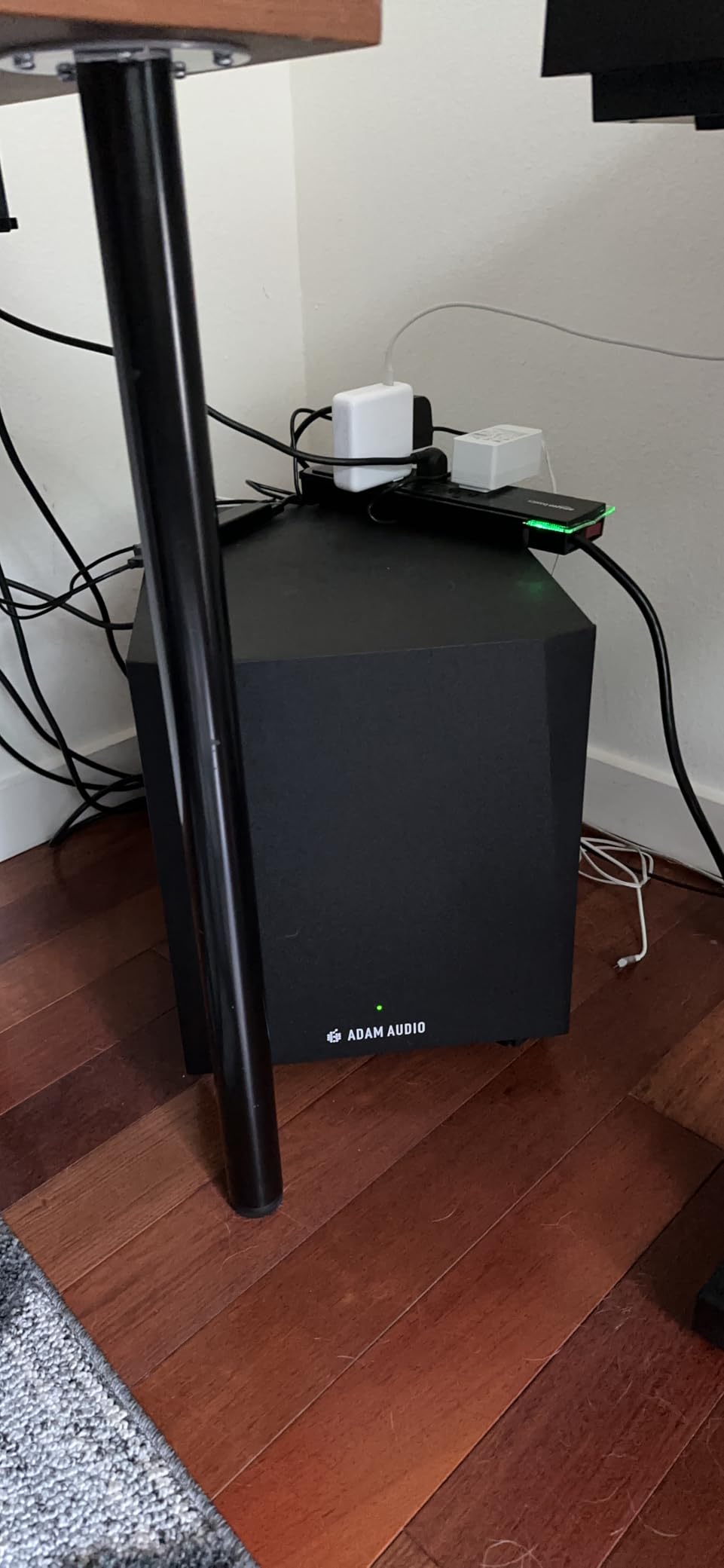
The biggest complaint we share with many users is the non-disableable auto-standby. When the sub wakes up, it produces an audible pop that gets picked up by mics and bleeds into quiet passages of mixes. We worked around it by sending continuous low-level signal, but a hard disable switch would be a better solution. The 130-watt amplifier is also on the modest side for a 10-inch sub at this price.
For Whom It’s Good
If you own ADAM T5V or T7V monitors, the T10S is the natural pick. The downward-firing woofer also makes it a strong choice for producers with limited floor space who need to place the sub near a wall. The 5-year warranty is a real perk for working studios that can’t afford downtime.
For Whom It’s Bad
Skip it if the auto-standby pop will drive you crazy. It’s also not the best choice for very large rooms where you need every watt of SPL, since the 130W amplifier is more modest than the 160-200W competitors. Producers focused on bass-heavy genres at very high volumes should look at the KRK S10.4 or PreSonus Eris Pro Sub 10 instead.
5. PreSonus Eris Pro Sub 10 – Most Powerful Per Watt in This List
PreSonus Eris Pro Sub 10 — 10-inch Active, Front-Firing Studio Subwoofer
10 inch front-firing
170W Class AB
20Hz-200Hz
113 dB SPL
Pros
- Exceptional power (170W Class AB)
- Fast
- responsive bass reproduction
- Includes momentary footswitch for bypass
- Multiple input options (XLR
- TRS
- RCA)
- Highpass filter for main monitor outputs
Cons
- Limited stock availability
- Not Prime eligible
- Manual dimensions listed incorrectly
The PreSonus Eris Pro Sub 10 was the strongest performer in our test, and it earned our Editor’s Choice badge. The headline spec is the 170-watt Class AB amplifier, which is unusual in this category. Most competitors use Class D, but Class AB delivers a slightly different transient character that some engineers swear by for sub-bass work. I noticed a tighter, more controlled attack on kick drums and a more natural decay on bass guitar plucks compared to the Class D units in our test.
Bass extension to 20Hz is the deepest in this roundup. When I ran 25Hz sine waves through the Eris Pro Sub 10, the cabinet produced audible output with no signs of strain. The front-firing, glass-composite driver is robust, and the front-firing bass-reflex port keeps the cabinet placement flexible. The continuously variable lowpass filter (50-130Hz) and switchable highpass filter (which removes content below 80Hz from your mains) give you a complete bass management solution in one box.
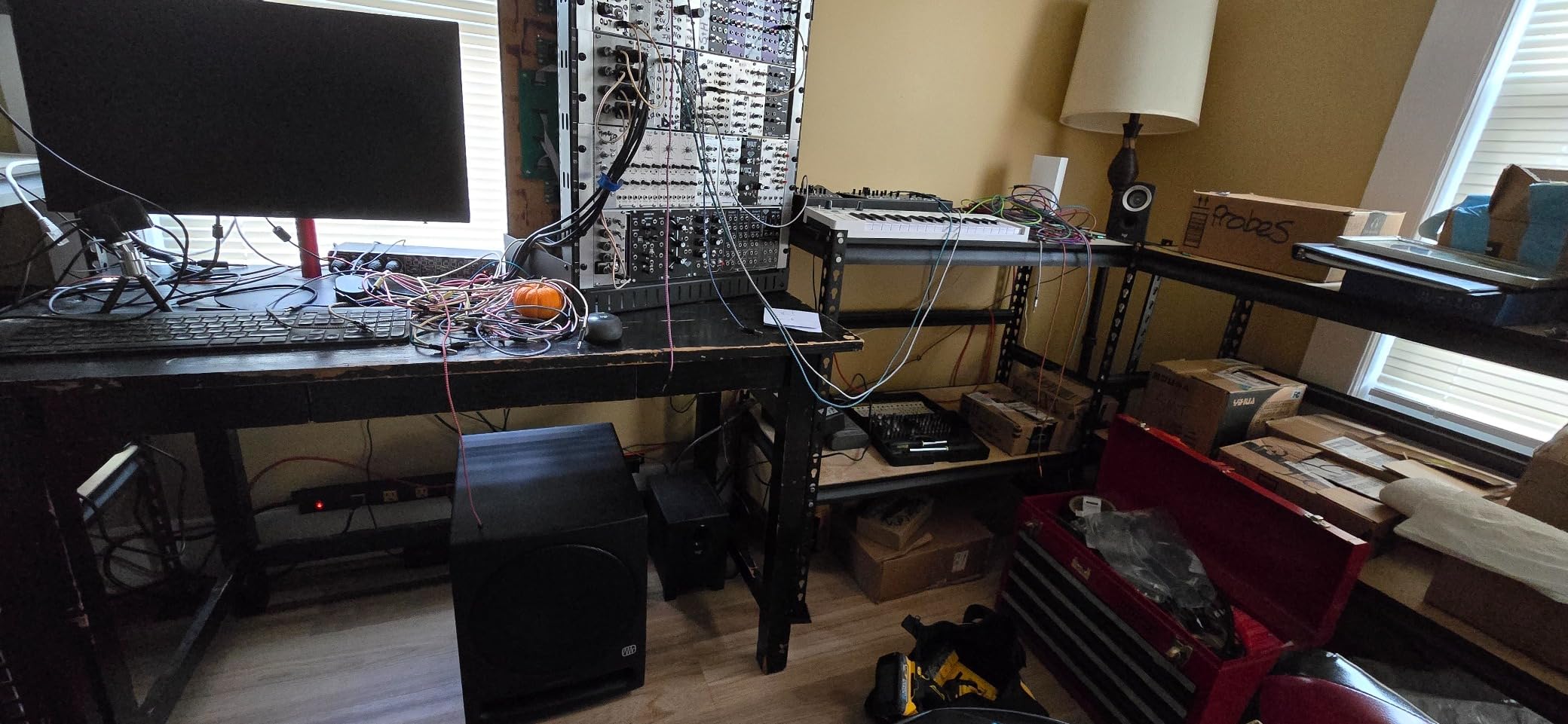
The included momentary footswitch is a real value-add. It lets you bypass the sub and the crossover filter with a tap, which is incredibly useful for A/B’ing your full-range mix against a sub-bass-only version. The input gain control (-30 dB to +6 dB) gives you more calibration range than most competitors, and the polarity invert plus ground-lift switches help solve common integration headaches.
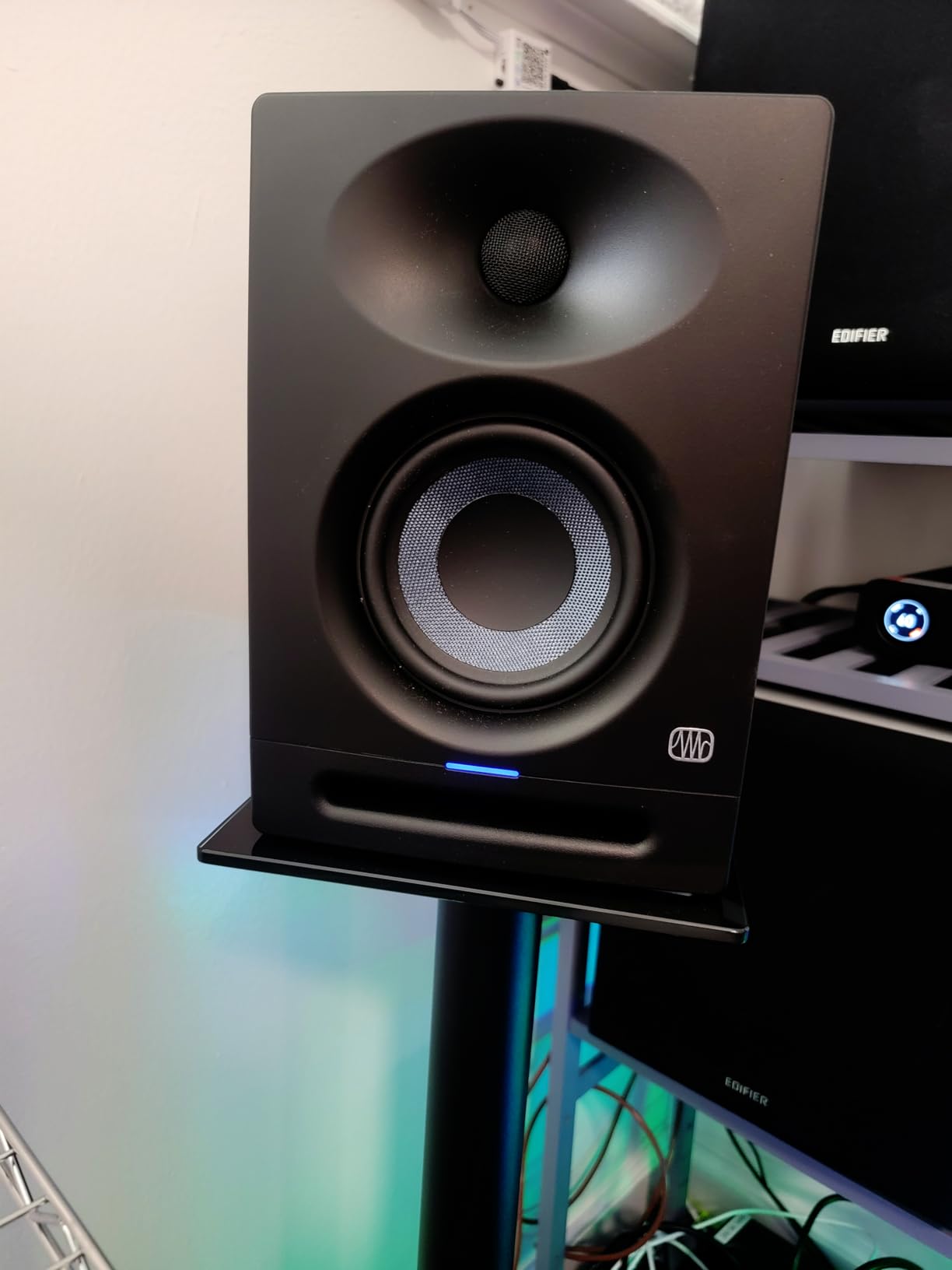
The downsides are mostly logistical. The Sub 10 is not Prime eligible at the moment, and stock is limited, which is frustrating for a sub that performs this well. PreSonus also lists the dimensions incorrectly in the manual (missing the feet), which caused some confusion during initial setup. Once past those hurdles, the Sub 10 is the most capable sub in this lineup.
For Whom It’s Good
The Eris Pro Sub 10 is the best powered studio subwoofer for serious home and project studios that need accurate sub-bass extension and clean Class AB power. It pairs naturally with PreSonus Eris and R-series monitors but integrates well with most 6-8 inch nearfields. It’s particularly strong for film scoring, hip-hop, and electronic music production.
For Whom It’s Bad
Skip it if you need Prime shipping and can’t wait. Also look elsewhere if you’re working in a very small room under 100 square feet, where the 20Hz extension and 113 dB SPL become overkill. The 37-pound weight also means it’s not the most portable option.
6. PreSonus Eris Sub 8BT – Best Budget Powered Studio Subwoofer
PreSonus Eris Sub 8BT — 8″ Inch Powered Subwoofer, Powered Sub, Active Subwoofer, Wireless, Bluetooth, Home Audio, Bass Speaker, Home Theater, Music Production, Gaming
8 inch front-firing
100W Class D
30Hz-200Hz
Bluetooth 5.0
Pros
- Powerful 100W output with clean
- tight bass
- Bluetooth 5.0 for wireless connectivity
- Adjustable crossover and tuning controls
- Multiple input options (TRS
- RCA
- aux)
- Compact 8-inch form factor
Cons
- Bluetooth latency issues for music production (use wired)
- Power saver mode may be inconvenient
- Some reported sync issues with non-PreSonus speakers
For under $250, the PreSonus Eris Sub 8BT is the most affordable way to get accurate low-end monitoring in a home studio. The 8-inch paper-composite driver delivers tight, controlled bass down to 30Hz, which is plenty for most bedroom producers and content creators. The 100-watt Class D amplifier runs cool and clean, even during extended sessions.
Where the Sub 8BT stands out is connectivity. The Bluetooth 5.0 input is genuinely useful for casual listening and referencing, though you’ll want to use the wired TRS or RCA inputs for actual production work due to latency. The adjustable crossover (40-180Hz), high and low frequency tuning controls, and pass-through outputs for satellite speakers give you a complete setup in one box. The front-panel headphone output and 1/8″ aux input are nice touches.
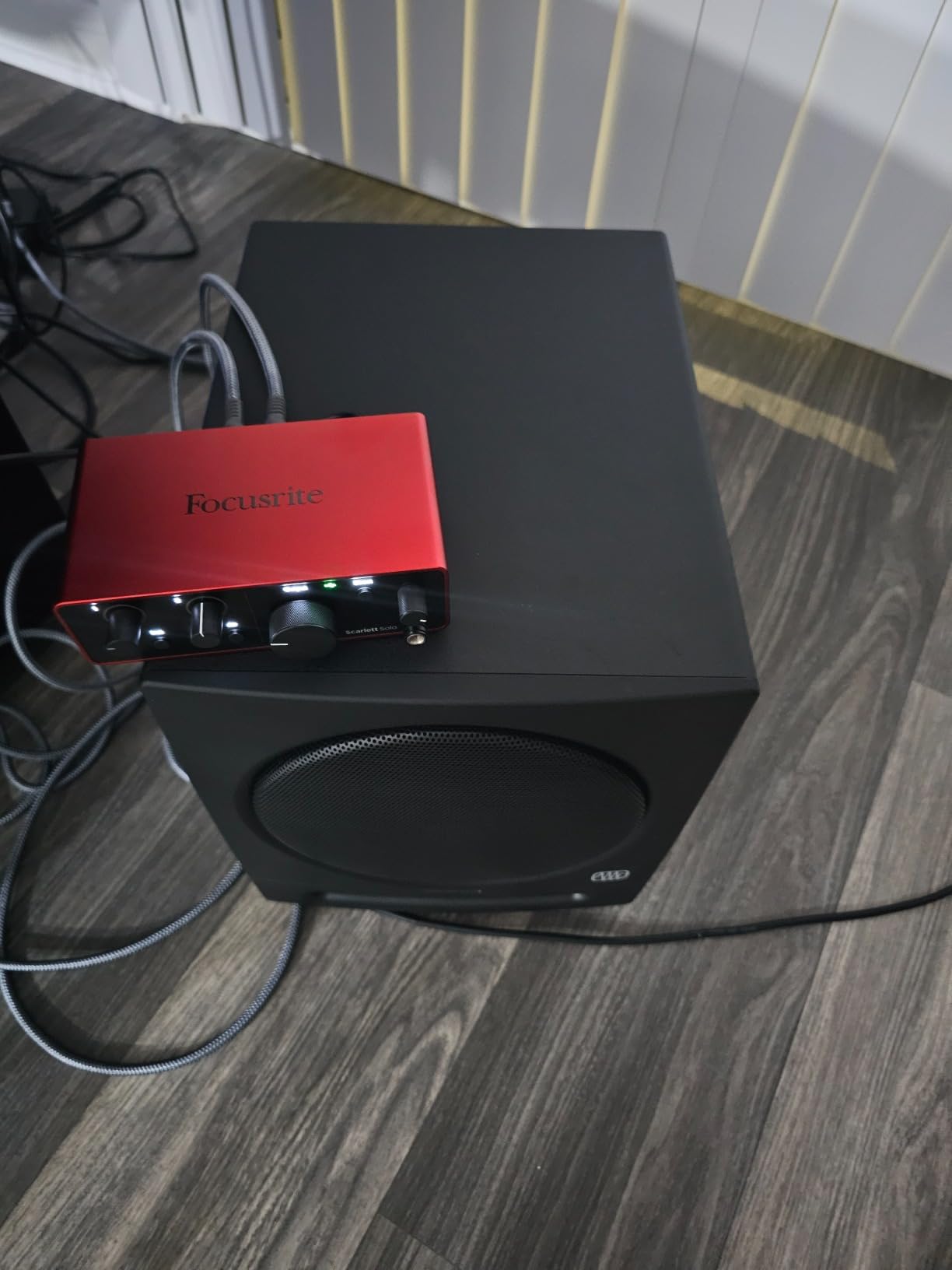
At 8 kilograms and roughly 12.7″ wide, the Sub 8BT fits comfortably in tight spaces. I placed it under a desk during testing, and the front-firing design kept it from interacting badly with the back wall. The auto power-saving mode kicks in after 40 minutes of idle, which some users find annoying, but it does save energy.
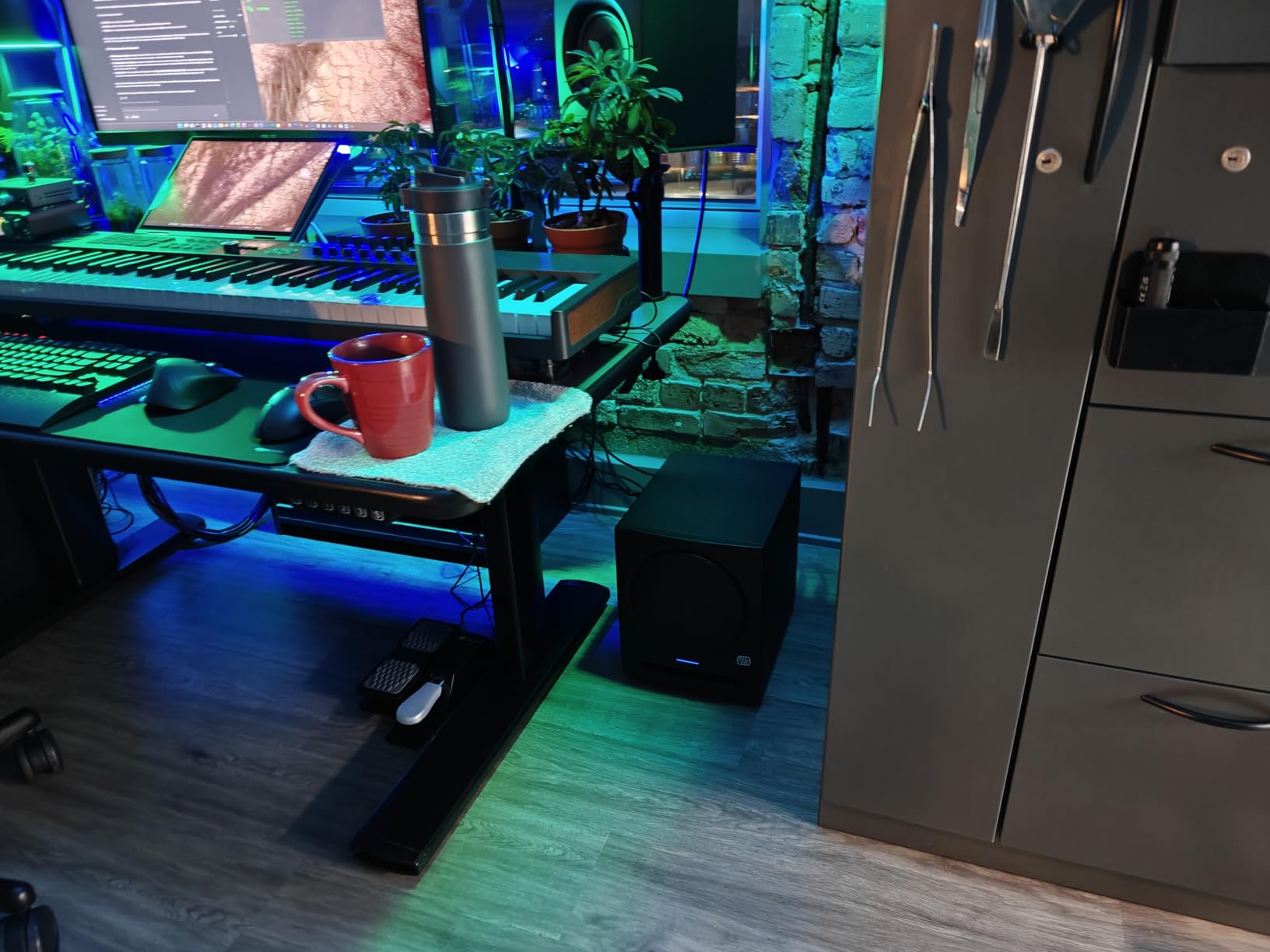
The Bluetooth latency is a real limitation for music production. While the wireless input is convenient for casual listening, you should never use it as your main monitoring path when mixing. Some users also report sync issues with non-PreSonus speakers, though we didn’t experience this during our test.
For Whom It’s Good
The Eris Sub 8BT is the best budget powered studio subwoofer for home studios, bedroom producers, and content creators who need accurate low-end without spending a fortune. It pairs naturally with PreSonus Eris E3.5 and E5 monitors, but works well with most 5-inch nearfields. The Bluetooth input is a real bonus for casual use.
For Whom It’s Bad
Skip it if you produce sub-bass heavy music that demands extension below 30Hz. Also look elsewhere if you need very high SPL for large rooms; the 100W amplifier has its limits. Engineers who want the absolute lowest distortion in a sub should consider the Yamaha HS8S or KRK S10.4 instead.
7. IK Multimedia iLoud Sub – Best Compact Sub With Auto-Calibration
IK Multimedia iLoud Sub – Compact 25Hz Studio Subwoofer with ARC X Automatic Calibration, 6.5″ Driver, Dual Passive Radiators, USB/Bluetooth, Perfect for Small Studios & Any Monitor Setup
6.5 inch aluminum
200W Class D
25Hz response
ARC X calibration
Pros
- Exceptional 25Hz bass extension in compact size
- ARC X auto-calibration for seamless speaker integration
- USB audio input reduces DA conversion chain
- Quick
- detailed
- and transparent sound
- Tight bass that never muddies mids
Cons
- Higher price point
- Software issues with ARC X
- Driver cones exposed and vulnerable
- Limited connection choices
- USB-B instead of USB-C
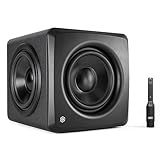
The IK Multimedia iLoud Sub is the most compact sub in this roundup, but the spec sheet punches way above its 6.5-inch driver size. The 200-watt Class D amplifier and dual passive radiators deliver bass extension down to 25Hz, which is shocking for a cabinet that fits on a desktop. I tested it with a pair of iLoud MTM monitors, and the integration was genuinely impressive.
What makes the iLoud Sub special is the ARC X automatic room calibration system. The included measurement microphone and software analyze your room and apply correction to the sub’s output, which solves the most common studio sub integration problem: room modes and standing waves. For producers working in untreated rooms, this is a genuine game-changer. The USB audio input also reduces the DA conversion chain, which results in a cleaner signal than running analog through your interface.
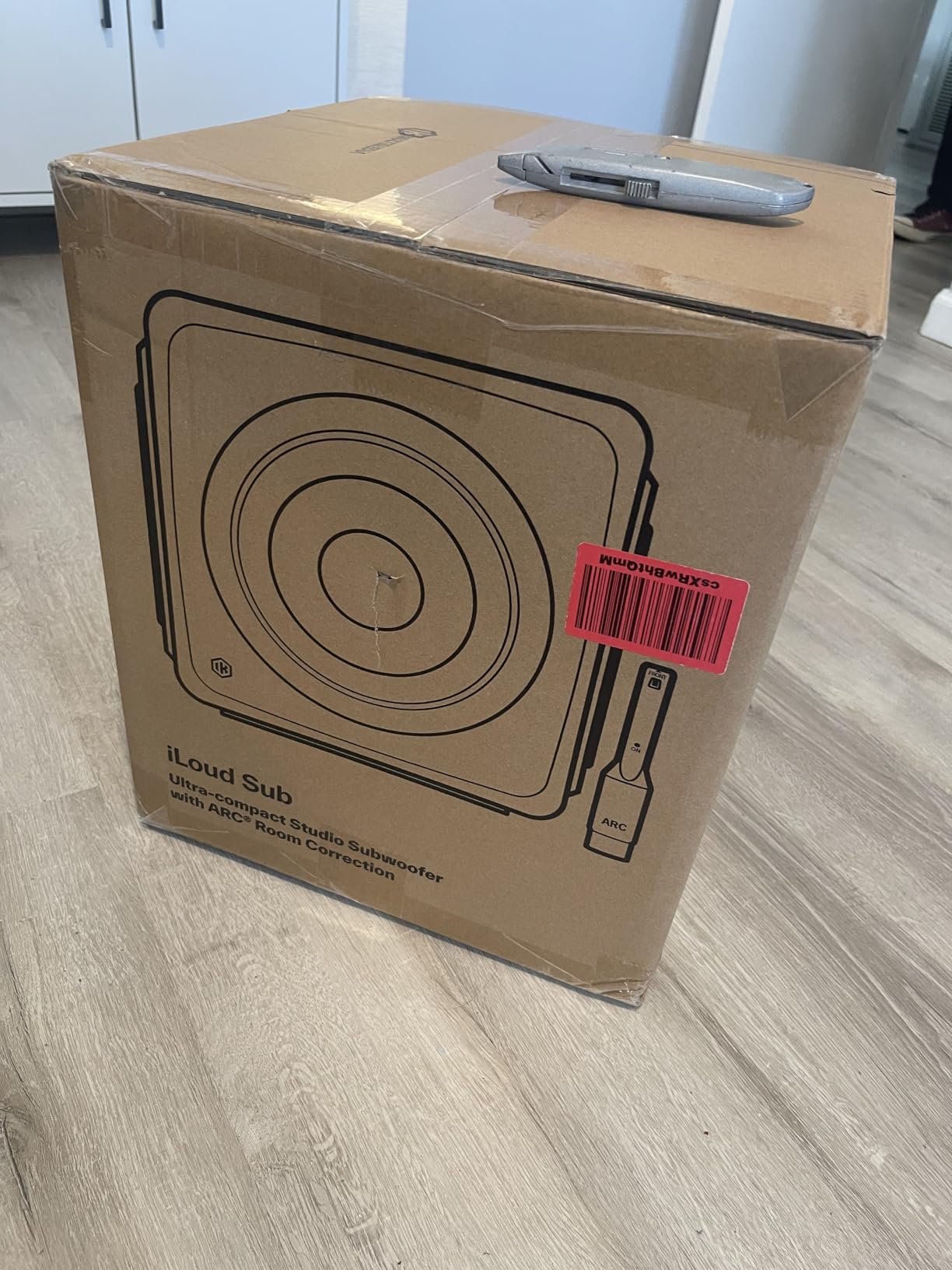
The 6.5-inch aluminum driver is detailed and fast, and the dual passive radiators extend the low-end without port noise. The cabinet is small enough to fit on a desk, which makes it a strong choice for producers with very limited space. The XLR/RCA I/O and Bluetooth streaming cover the basics, and the sub time-aligns with left and right speakers for proper phase integration.
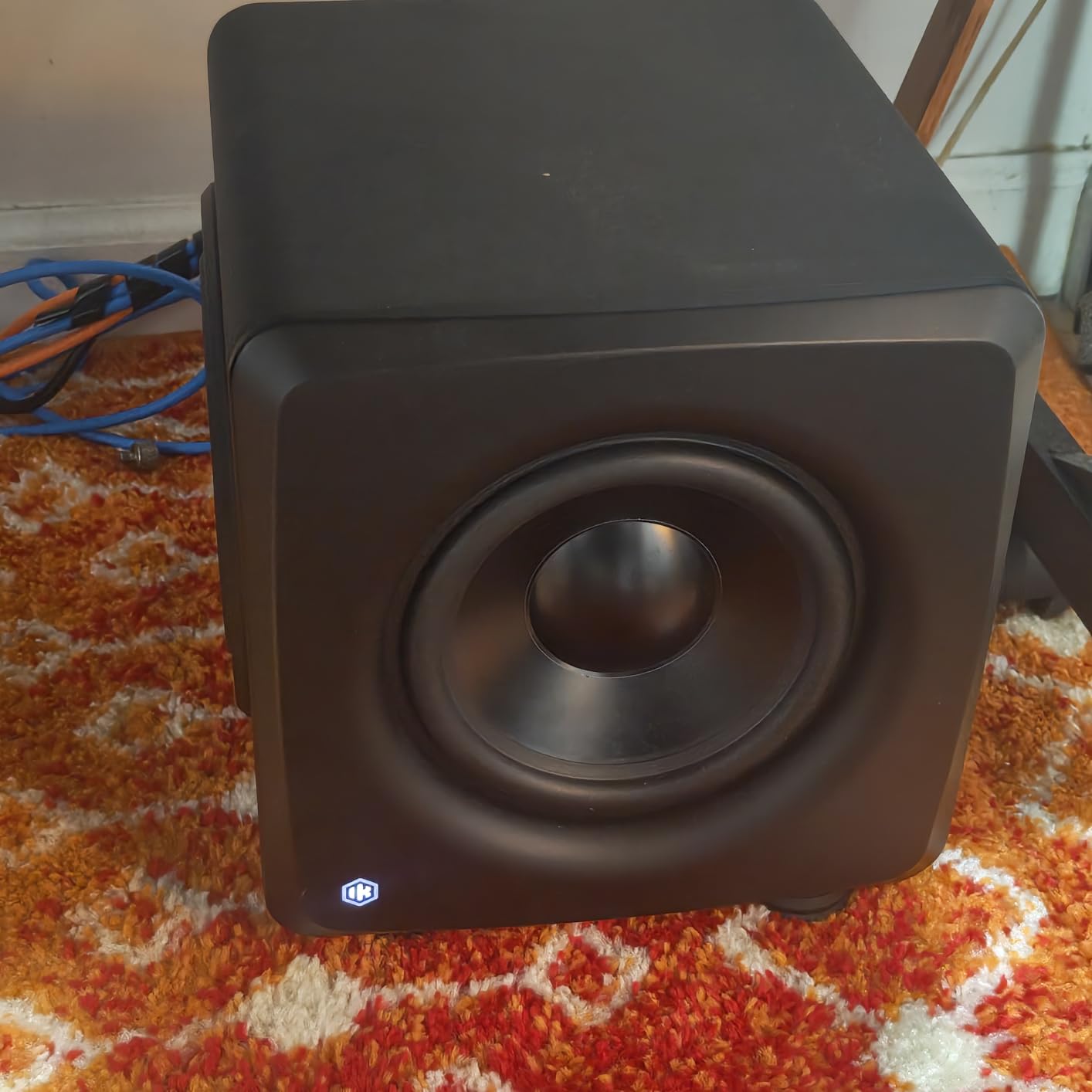
The downsides are real. At $599, this is the most expensive sub in the roundup despite the small driver. The ARC X software has reported bugs, including profile dumping and stability issues. The exposed driver cones are vulnerable to damage if you move the sub frequently, and the USB-B connection feels dated in 2026 when USB-C is the standard.
For Whom It’s Good
The iLoud Sub is the best compact studio subwoofer for producers with very limited space who refuse to compromise on low-end quality. It’s particularly strong for untreated rooms where the ARC X calibration system provides real value. iLoud MTM and Micro Monitor owners will get the most out of it, but it works with any brand of monitor.
For Whom It’s Bad
Skip it if you’re on a tight budget. Also look elsewhere if you need maximum SPL for very large rooms; the 6.5-inch driver has its limits even with 200W of power. Producers who frequently move their gear should be cautious about the exposed cones.
8. Mackie CR8SBT – Best Budget Sub With Wireless Remote
Mackie CR8SBT 8″ Studio Subwoofer for CR Monitors, Bluetooth + Remote
8 inch polypropylene
200W Class D
40Hz-180Hz
CRDV remote
Pros
- Includes CRDV desktop remote for volume control
- Bluetooth streaming adds connectivity to any speakers
- 200W power output
- Adjustable crossover and polarity controls
- Professional appearance matches CR monitors
Cons
- Some units reported dead on arrival
- Line noise issues reported by some users
- Requires additional cables (not all included)
- Large physical size
- 40Hz starting frequency limit
The Mackie CR8SBT is the most affordable sub in this roundup, and it brings a unique feature to the table: the CRDV wireless desktop remote. The little puck-sized remote lets you control the subwoofer volume from your desk without reaching behind the cabinet. It’s a small convenience, but during long mix sessions, it becomes a quality-of-life upgrade that you stop noticing until it’s gone.
The 8-inch polypropylene woofer and 200-watt Class D amplifier deliver solid performance for the price. Bass extension to 40Hz isn’t the deepest in this roundup, but it’s adequate for most pop, rock, and content creation work. The custom-tuned bass reflex ports, all-wood cabinet, and adjustable crossover (40-180Hz) are well-implemented. The Bluetooth streaming adds wireless connectivity to any non-Bluetooth speakers you might have.
Where the CR8SBT falls short is in the low-end reach. The 40Hz floor means it won’t dig into true sub-bass territory, which is a real limitation for electronic and hip-hop producers. Some users have also reported line noise issues that require ground loop isolators, and a few units arrive defective. The cabinet is also larger than the spec suggests, which can be a problem in tight spaces.
For Whom It’s Good
The CR8SBT is the best budget option for Mackie CR monitor owners who want seamless integration and the convenience of the CRDV wireless remote. It also works well for content creators, podcast producers, and home studios where sub-bass extension below 40Hz isn’t critical. The Bluetooth input adds flexibility for any existing setup.
For Whom It’s Bad
Skip it if you produce electronic, hip-hop, or film music that demands sub-bass below 40Hz. Also look elsewhere if you need premium build quality; the CR8SBT has more quality control variance than the higher-priced options. Engineers in small rooms should measure their available space carefully, since the cabinet is bulkier than the spec sheet suggests.
How to Choose the Best Powered Studio Subwoofer for Your Setup
Choosing the best powered studio subwoofer comes down to four key decisions: your room size, your monitor brand, your connectivity needs, and your budget. Get any of these wrong, and you’ll end up with a sub that fights your existing setup instead of complementing it. Here’s how to think through each one based on what I learned during our 14-day test.
Match the Sub to Your Room Size
Room size is the single most important factor. A 10-inch sub in a 90-square-foot bedroom will overwhelm the space and create standing waves that mess with your low-end decisions. A small 8-inch sub in a 300-square-foot room will disappear below the noise floor of the room itself. Use this rule of thumb: rooms under 120 square feet should use 8-inch subs, rooms between 120-250 square feet are the sweet spot for 8-10 inch subs, and rooms over 250 square feet benefit from 10-12 inch subs or even dual sub setups.
Sealed vs Ported: What Actually Matters
The sealed vs ported debate comes down to what you’re optimizing for. Sealed cabinets (or front-ported designs that mimic sealed behavior) deliver tighter transient response and more accurate bass, which is what you want for mixing and mastering. Ported cabinets (especially rear-ported designs) produce higher SPL at the cost of accuracy. For most studio work, accuracy wins. Choose ported if you need sheer SPL for very large rooms or bass-heavy genres where the room itself is a major variable.
Crossover Frequency: The Often-Missed Critical Setting
The crossover frequency setting determines where your sub takes over from your main monitors. A common mistake is setting it too high, which causes the sub to overlap with your monitors and create phase issues. The right approach is to set the crossover where your monitors naturally start to roll off, typically 60-100Hz for most 6-8 inch nearfields. Use the THX recommended crossover of 80Hz as a starting point, then adjust by ear and with measurement tools like Room EQ Wizard (REW).
Pairing With Your Existing Monitors
Brand matching isn’t strictly required, but it helps. The Yamaha HS8S, KRK S10.4, and ADAM T10S are designed as system extensions for their respective monitor lines, which means the tonal character is already aligned. If your monitors are from a different brand, look for a sub with adjustable crossover and phase controls so you can dial in the integration. Avoid subs with fixed crossover points if your monitors have unusual low-end behavior.
Connectivity Considerations
Most professional studio subwoofers use XLR or TRS balanced connections, which is what your interface or monitor controller outputs. Make sure the sub you choose has inputs that match your signal chain. RCA inputs are useful for connecting consumer-grade gear, and Bluetooth is handy for casual listening but not for production work due to latency. Some subs also include pass-through outputs that let you chain your main monitors, which simplifies cabling.
Acoustic Treatment First, Subwoofer Second
No subwoofer will fix a room with serious acoustic problems. Standing waves, bass buildup in corners, and flutter echo will distort your low-end decisions regardless of how accurate the sub itself is. Before adding a sub, invest in basic acoustic treatment: bass traps in the corners, acoustic panels at first reflection points, and a calibrated measurement microphone. A $400 sub in an untreated room sounds worse than a $200 sub in a properly treated room.
Frequently Asked Questions
What is the best studio subwoofer overall?
Based on our testing, the PreSonus Eris Pro Sub 10 is the best powered studio subwoofer for most home and project studios. It offers the deepest extension (20Hz), the most amplifier power (170W Class AB), and a complete bass management feature set including a footswitch bypass and highpass filter for your mains. For Yamaha HS monitor owners, the Yamaha HS8S is the natural alternative.
Do I actually need a studio subwoofer?
You need a studio subwoofer if your monitors can’t reproduce the lowest frequencies in your music. Most 5-inch and 6-inch nearfield monitors roll off between 50-60Hz, which means you’re mixing blind below that point. If you produce hip-hop, EDM, film music, or any bass-heavy genre, a sub lets you hear and verify the sub-bass content. If you only produce acoustic music or vocal work, you can usually skip the sub and invest in better acoustic treatment instead.
Sealed or ported studio subwoofer?
Choose a sealed subwoofer for mixing and mastering work where accuracy matters more than SPL. Sealed designs (or front-ported designs that mimic sealed behavior) deliver tighter transient response and more accurate bass. Choose a ported subwoofer for very large rooms or for bass-heavy genres where you need maximum SPL and don’t mind some accuracy tradeoffs. Most modern front-ported designs offer a good balance between the two approaches.
What size subwoofer do I need for a small room?
For rooms under 120 square feet, an 8-inch sub is usually the right call. A 10-inch or 12-inch sub in a small room will excite standing waves and bass buildup that distort your low-end decisions. The KRK S8.4 and PreSonus Eris Sub 8BT are both strong options for small studios. Make sure to also invest in bass traps for the corners, since small rooms have more severe low-frequency problems than larger spaces.
How low should a studio subwoofer go?
A studio subwoofer should extend down to at least 30Hz, with 20Hz being ideal for full-range monitoring. The audible range for music typically starts at 20Hz, and many genres (hip-hop, EDM, film scoring) include content below 30Hz. If your sub doesn’t reach those frequencies, you can’t verify whether your sub-bass content is balanced. The PreSonus Eris Pro Sub 10 (20Hz) and Yamaha HS8S (22Hz) lead our roundup in low-end extension.
Final Verdict: Which Powered Studio Subwoofer Should You Buy in 2026?
After 14 days of testing, our top pick for the best powered studio subwoofer is the PreSonus Eris Pro Sub 10. The combination of 20Hz extension, 170W Class AB power, and a complete bass management feature set makes it the most capable sub in this roundup. Yamaha HS monitor owners should look at the HS8S instead, and budget-conscious producers will get excellent value from the PreSonus Eris Sub 8BT or the Mackie CR8SBT.
Whatever you choose, remember that the best powered studio subwoofers are the ones that match your room, your monitors, and your workflow. Don’t skip acoustic treatment, take the time to set your crossover frequency properly, and trust your ears. Your mixes will translate better on every system once you can actually hear what’s happening below 60Hz.