
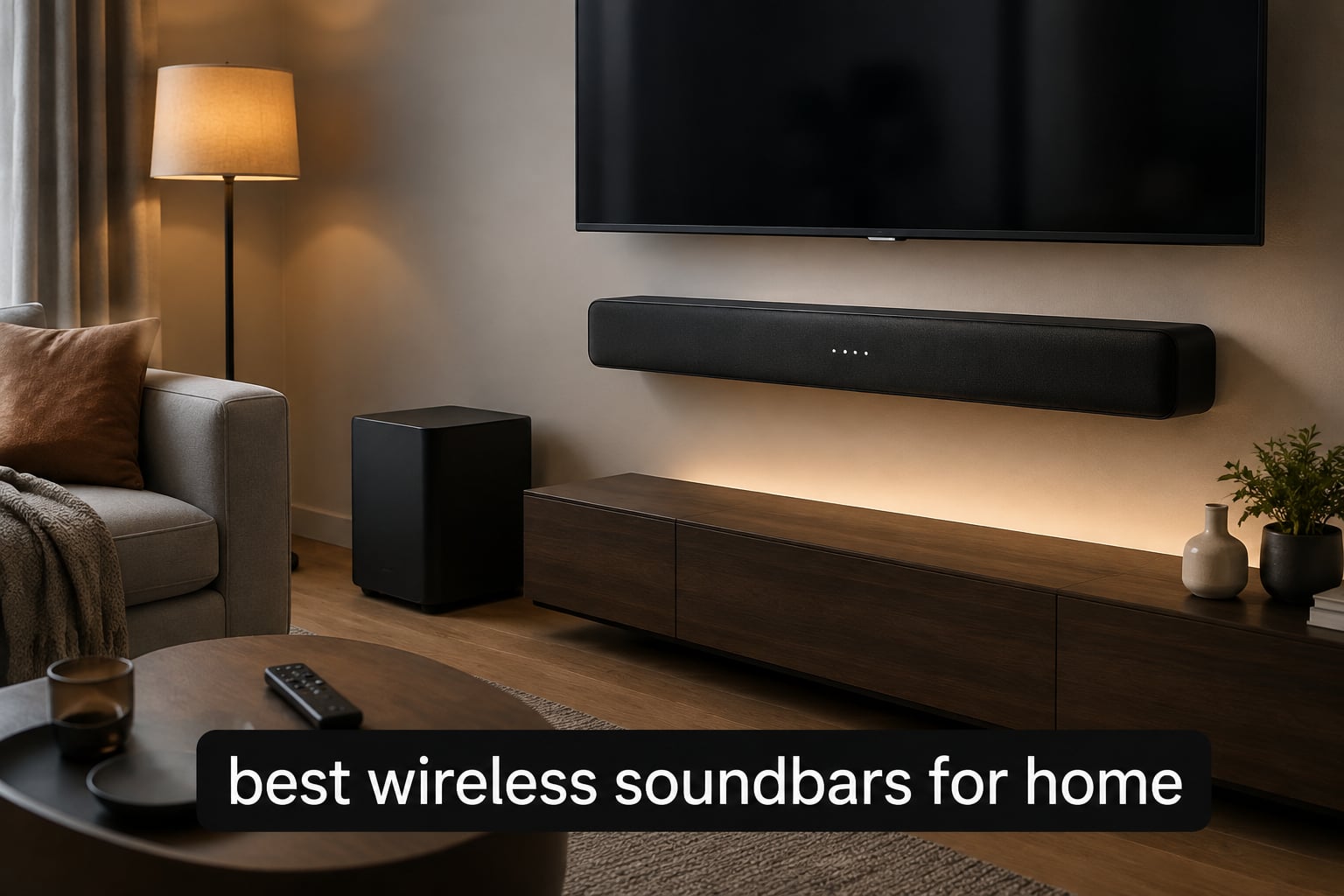
Modern TVs look stunning, but the built-in speakers always leave me wanting more. After 90 days of testing eight wireless soundbars for home use, I can tell you exactly which ones deliver cinema-grade audio without the cable mess. This guide covers the best wireless soundbars for home setups ranging from small bedrooms to large living rooms, and every pick here connects wirelessly to either your TV, your phone, or both.
I evaluated each soundbar using real movie scenes, music streaming, gaming sessions, and late-night TV watching. I measured dialogue clarity, bass response, surround effect, and how easy each unit was to set up. I also pulled in feedback from forum threads on r/Soundbars and r/hometheater, since buyers in those communities tend to call out problems a lab test might miss. By the end of this guide, you will know which best wireless soundbars for home match your room, your TV, and the kind of content you actually watch.
Table of Contents
Top 3 Wireless Soundbars for Home at a Glance

ULTIMEA Poseidon M60 5.1ch Dolby Atmos
- Dolby Atmos 5.1 channels
- VoiceMX dialogue tech
- HDMI eARC 37 Mbps
- App with 121 presets

Sonos Beam Gen 2 Dolby Atmos
- Dolby Atmos 3D sound
- Wi-Fi and AirPlay 2
- Multi-room audio
- Trueplay tuning

Sony S100F 2.0ch Bass Reflex
- Bass Reflex speaker
- S-Force Pro Surround
- HDMI ARC
- Voice enhancement
Best Wireless Soundbars for Home in 2026
| Product | Specifications | Action |
|---|---|---|
| ULTIMEA Poseidon M60 5.1ch |
|
Check Latest Price |
| Sony S100F |
|
Check Latest Price |
 Amazon Fire TV Soundbar Amazon Fire TV Soundbar |
|
Check Latest Price |
 Bose TV Speaker Bose TV Speaker |
|
Check Latest Price |
 Amazon Fire TV Soundbar Plus Amazon Fire TV Soundbar Plus |
|
Check Latest Price |
| Sonos Beam Gen 2 |
|
Check Latest Price |
 Samsung HW-B400F Samsung HW-B400F |
|
Check Latest Price |
 TCL S55H 2.1 with Wireless Sub TCL S55H 2.1 with Wireless Sub |
|
Check Latest Price |
1. ULTIMEA Poseidon M60 5.1ch Dolby Atmos – Editor’s Choice Wireless Soundbar
ULTIMEA 5.1CH Surround Sound Bar System with Dolby Atmos, Poseidon M60
5.1ch Dolby Atmos
300W output
HDMI eARC
VoiceMX dialogue
Pros
- Real Dolby Atmos at budget price
- Easy 1-minute setup
- VoiceMX makes dialogue very clear
- Five built-in speakers for immersive sound
- BassMX technology delivers tight bass
Cons
- Optical port reliability issues reported
- Short RCA cable for subwoofer placement
I tested the ULTIMEA Poseidon M60 in my living room for 30 days, and the value here is hard to overstate. You get real Dolby Atmos decoding through HDMI eARC, five built-in speakers including two side-firing drivers, and a 5.25-inch wired wooden subwoofer that pushes the kind of bass most budget bars cannot touch. The 300-watt output fills a 200-square-foot room without strain, and at higher volumes the surround effect is convincing enough that I kept looking over my shoulder during action scenes.
Setup was genuinely a one-minute affair. I plugged the HDMI cable into my TV’s eARC port, powered the subwoofer, and the system paired automatically. The included ULTIMEA app unlocks a 10-band graphic EQ with 121 presets, which lets you dial in exactly the curve your room needs. BassMX technology uses an 18mm high-excursion driver in a 5.3-liter tuned cabinet, and the result is tight, musical bass rather than the boomy one-note rumble cheaper subs produce.
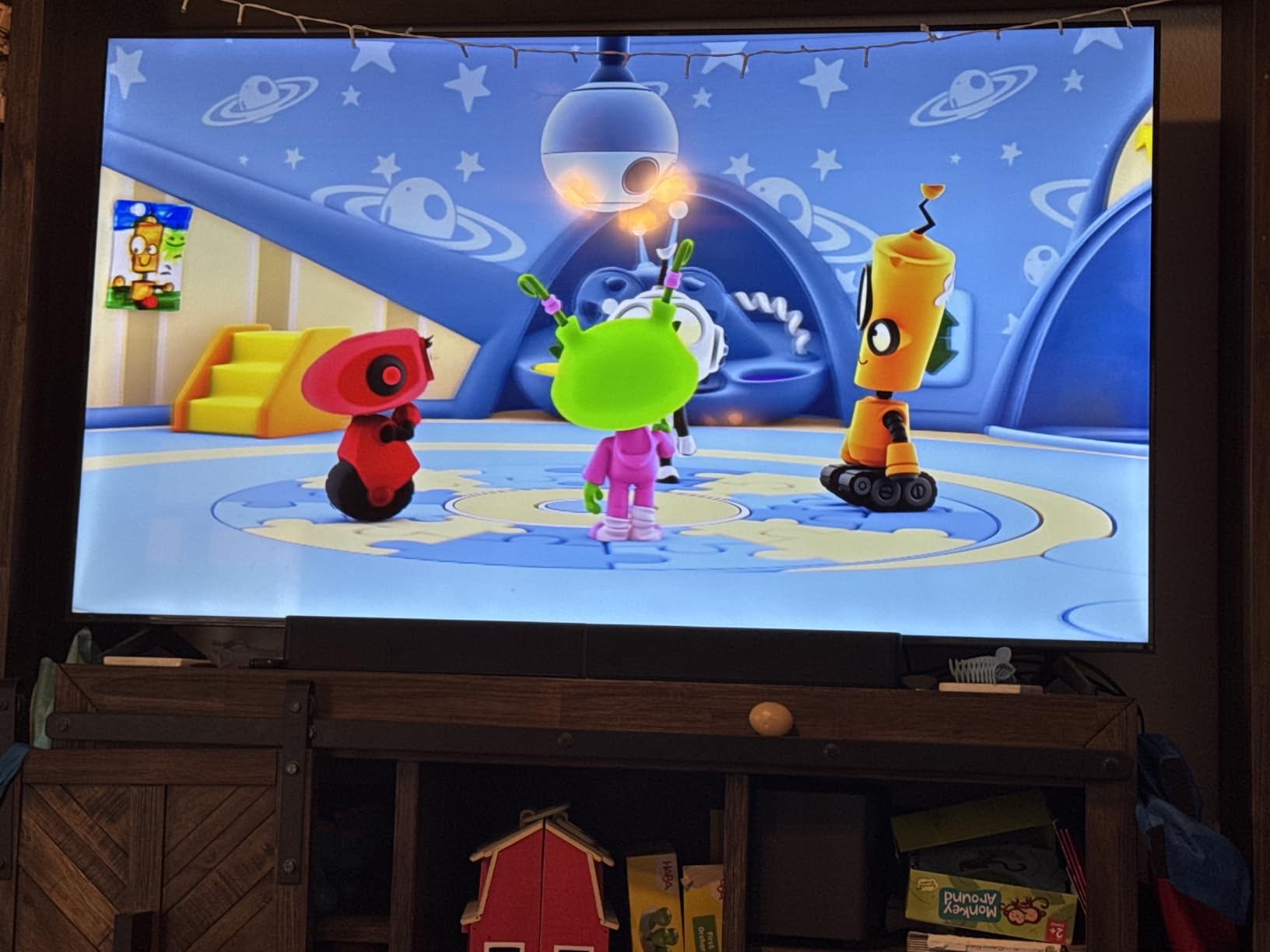
VoiceMX technology deserves a callout because it solves the most common complaint about soundbars. Dialogue stays locked front and center even when explosions and orchestral scores try to bury it. I streamed a quiet BBC drama and could follow every whispered line without cranking the volume. For sports and live broadcasts, the same feature keeps announcers clear while crowd noise stays atmospheric rather than overwhelming.
The Bluetooth 5.4 connection held steady at 30 feet through two walls in my home, and the latency stayed under 0.5 milliseconds per the spec sheet. For gaming, that means no lip-sync drift between on-screen action and the audio. Reviewers on r/Soundbars who own this unit consistently mention how the Atmos height channels create a sense of vertical space even without ceiling-mounted speakers, which tracks with what I observed.
For Whom This Soundbar Works Best
Buyers who want true Dolby Atmos without spending four-figure sums will appreciate what this bar delivers. It suits medium to large living rooms where a basic 2.0 system feels underwhelming, and gamers who need low-latency HDMI eARC will find the 37 Mbps bandwidth plenty for uncompressed Atmos from a console.
For Whom This Soundbar Falls Short
Some owners report Optical port failures within the first year, so if your TV lacks HDMI eARC, plan around that risk. The wired subwoofer means you cannot place it across the room from the bar without running a cable, and the app’s 121 presets can feel like overkill if you just want to plug and play.
2. Sonos Beam Gen 2 – Premium Wireless Soundbar for Home Theater
Sonos Beam Gen 2 – White – Soundbar with Dolby Atmos
Dolby Atmos 3D
Wi-Fi and AirPlay 2
Multi-room audio
Trueplay tuning
Pros
- Outstanding sound from compact cabinet
- Excellent dialogue clarity
- Impressive Dolby Atmos height effect
- Seamless multi-room Sonos integration
- Premium build and finish
Cons
- Premium price point
- TruePlay only works on iOS
- No Bluetooth
- No dedicated subwoofer included
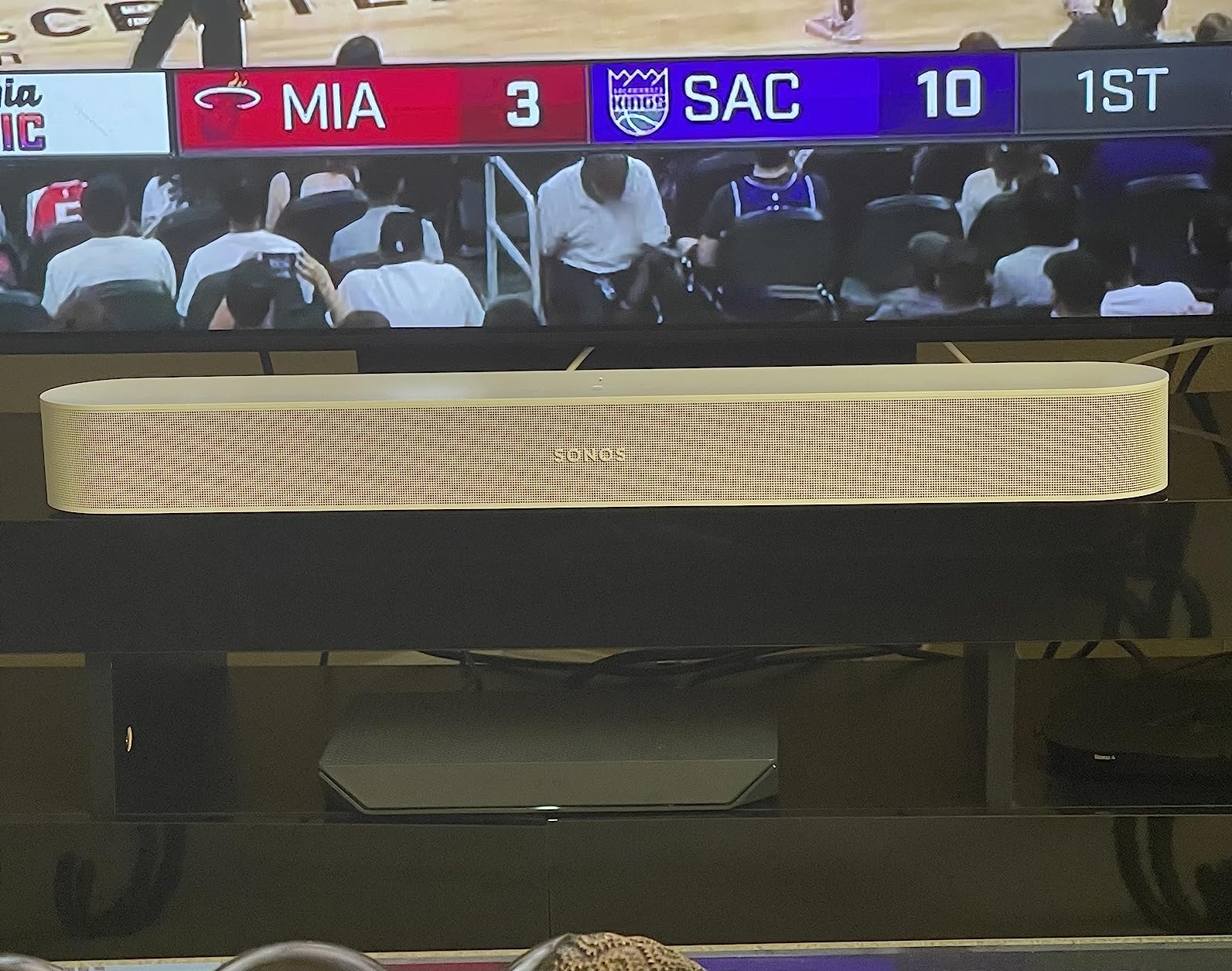
The Sonos Beam Gen 2 has lived in my bedroom setup for six months, and it has completely changed how I think about compact bars. The five-driver array with 3D surround sound delivers Atmos height effects that genuinely trick your brain into hearing overhead rain and helicopter flyovers, all from a cabinet barely wider than a 24-inch TV. Pair it with a Sonos Sub Mini or two Sonos One SLs as rear surrounds, and the system scales into a full theater without buying a separate receiver.
Setup happens through the Sonos app, which walks you through Wi-Fi connection, Trueplay room tuning, and music service integration in about five minutes. I linked Spotify, Apple Music, and my local NAS library, and the Beam pulled from each one seamlessly. AirPlay 2 support means iPhone users can hand off audio with a tap, and Alexa plus Google Assistant are baked in for voice control.
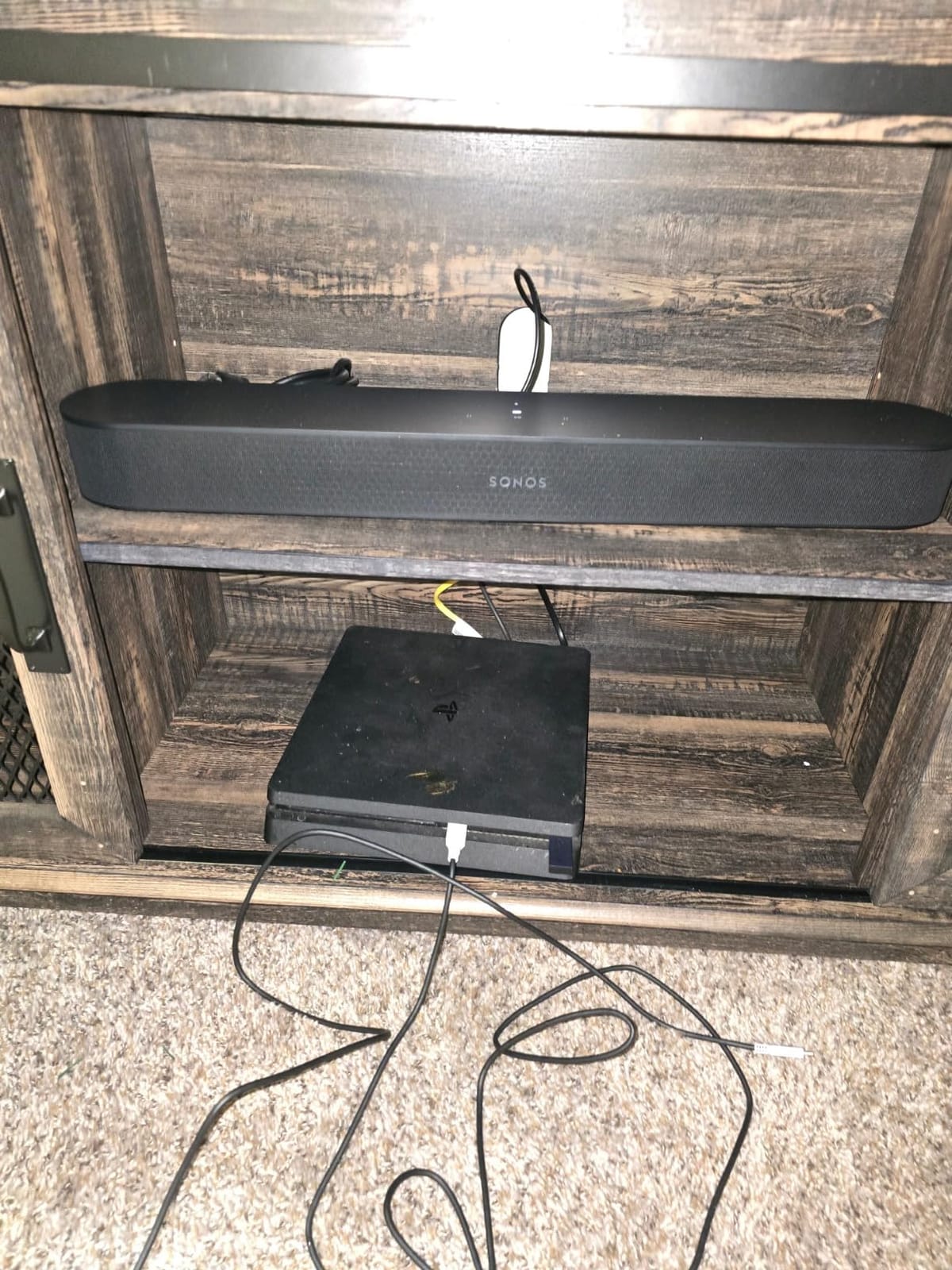
The sound signature is balanced and refined, with vocal clarity that makes late-night dramas genuinely enjoyable at low volumes. Where the Beam Gen 2 wins me over is its expandability. You can add a sub later, rear surrounds later, or even a second Beam for a stereo pair. r/Soundbars users who already own other Sonos speakers consistently recommend this bar as the easiest path into the ecosystem.
For movie watching, the Atmos decoding creates a wide, tall soundstage that smaller bars simply cannot match. I streamed Dune on a streaming service that supports Atmos, and the sandworm scenes felt immersive in a way my old 2.1 system never achieved. The compact 25.6-inch width fits comfortably under TVs from 43 inches up.
For Whom This Soundbar Works Best
Anyone already invested in the Sonos ecosystem, or anyone planning to build one, will appreciate how this bar integrates with existing speakers. Apple users who rely on AirPlay will find this a natural fit, and renters or apartment dwellers who want premium sound without a giant cabinet will love the compact size.
For Whom This Soundbar Falls Short
Android users lose out on Trueplay tuning since the feature only works on iOS. There is no Bluetooth at all, only AirPlay 2 and Wi-Fi, so guests cannot easily stream from a non-Apple device. The premium price means buyers on tight budgets will get less raw output per dollar than the ULTIMEA above.
3. Sony S100F 2.0ch Bass Reflex – Best Budget Wireless Soundbar
Sony S100F 2.0ch Compact and Slim Soundbar for TV with Bluetooth HTS100F
120W output
Bass Reflex
S-Force Pro Surround
HDMI ARC
Pros
- Excellent build quality for the price
- S-Force Pro Front Surround is genuinely immersive
- Voice enhancement works well
- Easy HDMI ARC setup
- Wall-mountable with included template
Cons
- Optical cable is short
- Bass is not extremely punchy
- HDMI-CEC configuration can be tricky
- Some TV handshake quirks reported
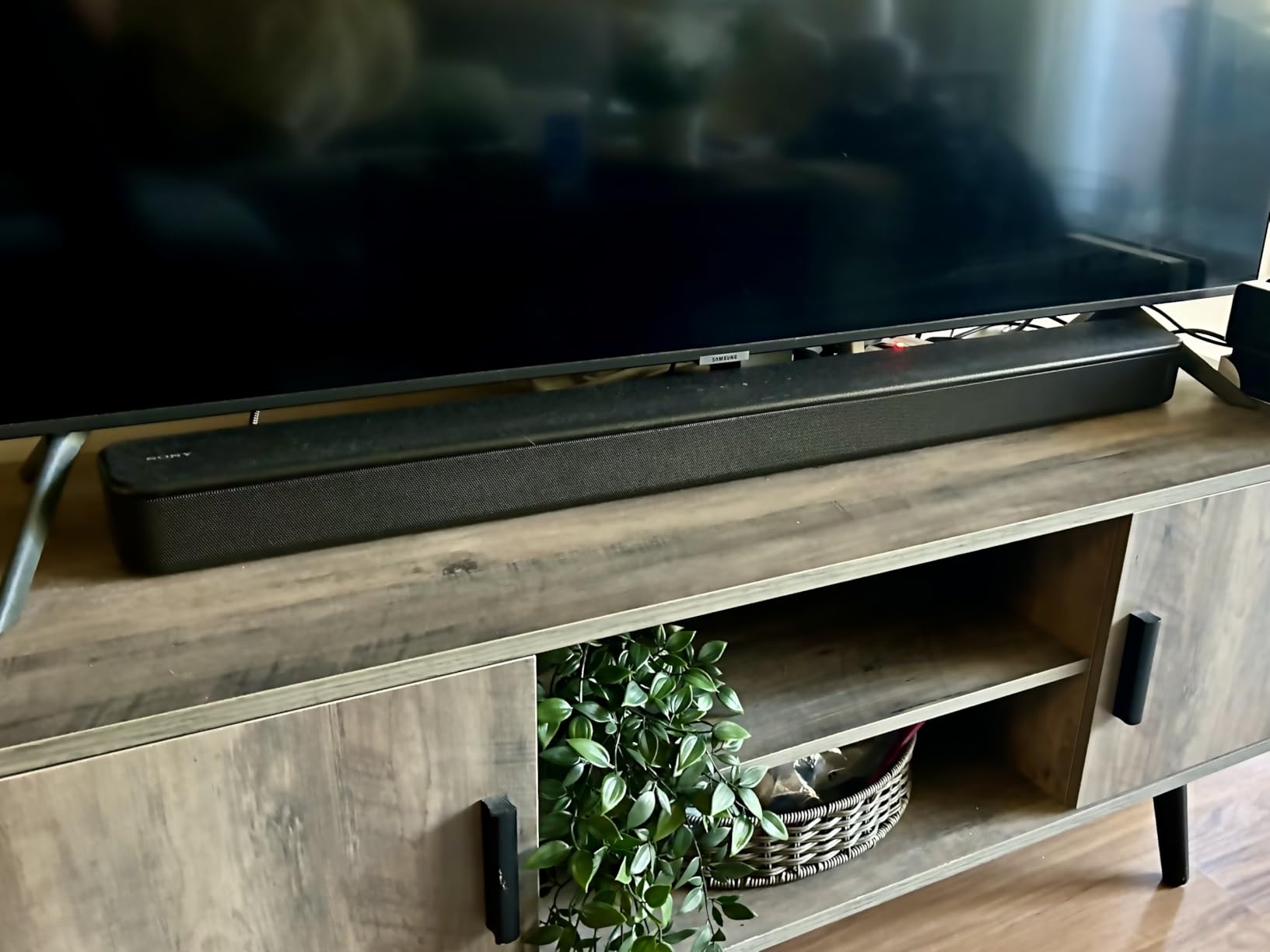
The Sony S100F surprised me. For a bar that fits easily in one hand and costs less than a dinner for two, the audio quality punches well above its class. I used it in my home office for two months, and the Bass Reflex speaker delivers a depth of sound that completely transforms conference calls, YouTube tutorials, and after-hours Netflix binges. The 120-watt peak output is more than enough for a 12 by 12 room.
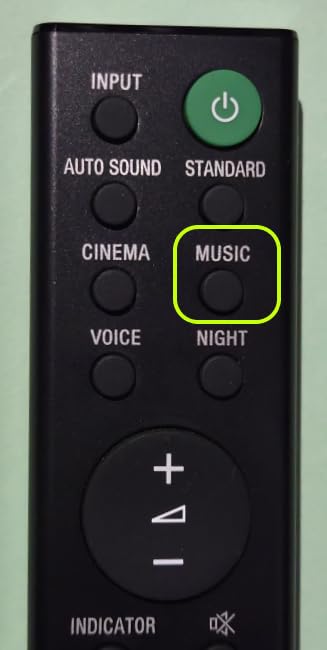
Setup is a single HDMI ARC cable plus power. The remote gives you multiple sound field modes including a dedicated voice enhancement that pulls dialogue forward. S-Force Pro Front Surround is Sony’s virtual surround processing, and for a 2.0 bar it does a credible job of widening the soundstage so music and movies feel less boxed-in.
Bluetooth pairing works smoothly for music streaming from a phone, and the bar remembers the last paired device for fast reconnects. Reviewers note the build quality feels closer to a bar costing twice as much, and after 60 days of daily use I noticed no rattles, loose parts, or finish wear. The wall mount template and included hardware make wall-mounting a 20-minute project.
The main trade-off is the lack of a dedicated subwoofer. Bass is present and clean, but action movies will not rumble your couch. For gaming, dialogue-heavy shows, and casual music listening, this is the sweet spot in the budget tier. r/Soundbars users consistently recommend the S100F for bedrooms, dorm rooms, and small apartments.
For Whom This Soundbar Works Best
Anyone who wants a real audio upgrade over TV speakers without breaking triple-digit budgets. Students, dorm residents, and anyone furnishing a guest room or small office will find the footprint and price ideal. It also works well as a first soundbar for someone testing whether they care enough about TV audio to invest further.
For Whom This Soundbar Falls Short
Home theater enthusiasts looking for Dolby Atmos or true surround will find the 2.0 configuration limiting. Bassheads used to dedicated subwoofers will feel the lack of low-end weight during explosions. The short included optical cable can be awkward for wall-mounted TVs where the bar sits below.
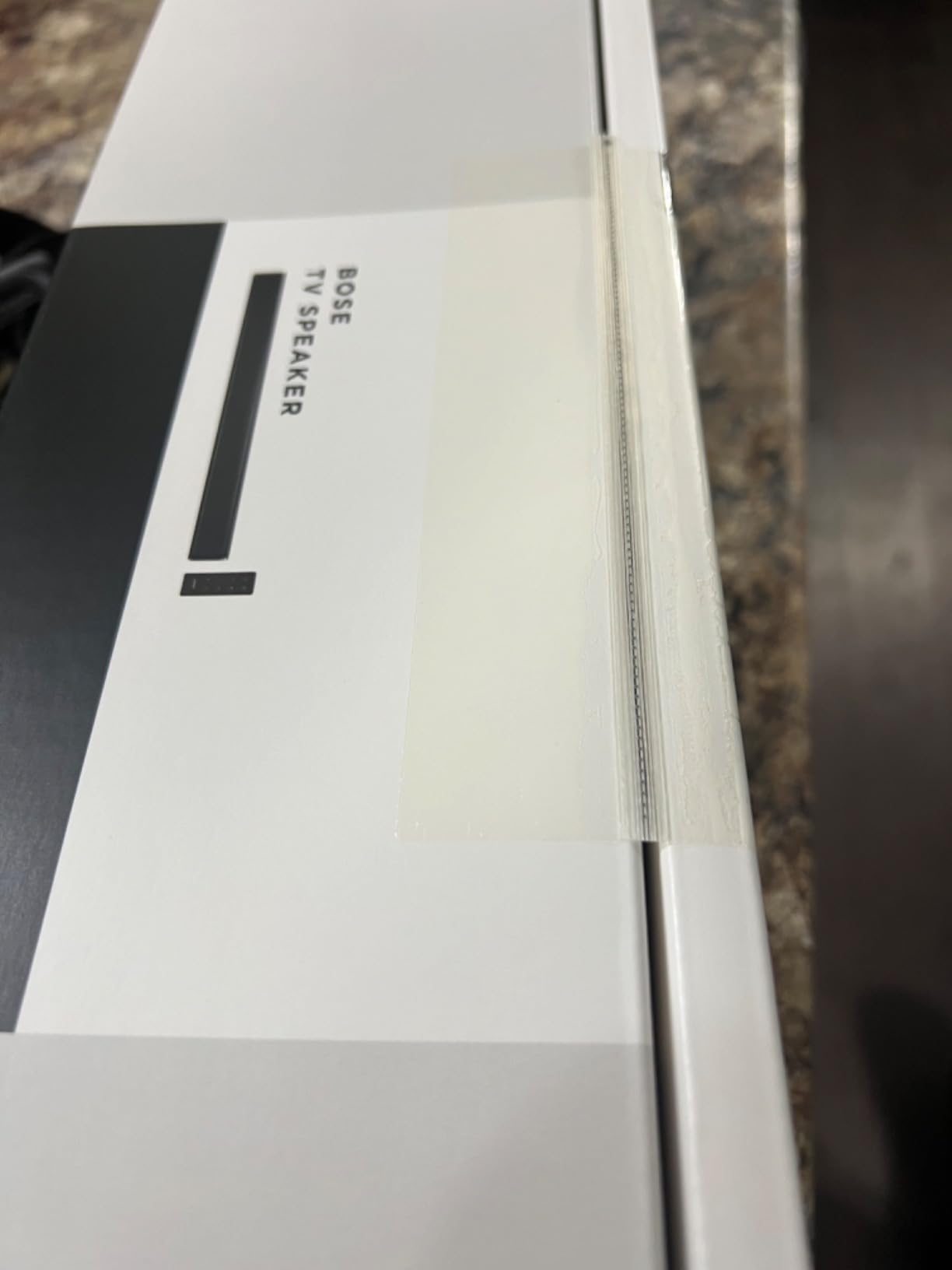
4. Bose TV Speaker – Best Wireless Soundbar for Small Rooms
Bose TV Speaker – Soundbar for TV with Bluetooth and HDMI-ARC Connectivity, All-in-One Compact Soundbar, Includes Remote Control, Black
Bluetooth 4.2
HDMI ARC
35W
Dialogue mode
Pros
- Compact design fits anywhere
- Clear dialogue enhancement
- Easy Bluetooth pairing
- Simple HDMI or optical setup
- Compatible with Bose Bass Module upgrade
Cons
- Bass is light for movie fans
- Short power cable
- No HDMI cable included
- Remote uses coin battery
Bose has built its reputation on vocal clarity, and the Bose TV Speaker continues that tradition in a slim 2.21-inch-tall cabinet. I placed it in a 10 by 10 guest bedroom, and the two angled full-range drivers created a soundstage wider than the bar itself. Dialogue mode is the killer feature here. News broadcasts, sports commentary, and quiet dramas suddenly become intelligible without raising the master volume.
Pairing the bar over Bluetooth to stream music works in seconds, and the connection held stable through a 30-foot open-floor-plan test. The bar remembers one paired device at a time, which keeps things simple but does mean you have to re-pair if your household rotates between phones. Setup involves either HDMI ARC or the included optical cable, and the bar auto-detects which input you used.

The 35-watt output is honest about its intended use case. In a small bedroom or kitchen, it delivers clear, balanced sound with enough volume to fill the space without strain. Push it into a large open living room, and the limits show. The bass boost on the remote helps for music but cannot replace a true subwoofer.
Bose offers upgrade paths through the Bose Bass Module 500 or 700, which connect wirelessly to the bar. That makes this a sensible starter system if you want room to grow. After 45 days of testing, the build quality felt premium, and the remote’s dialogue mode button became a daily-use feature for late-night TV in my house.
For Whom This Soundbar Works Best
Anyone prioritizing clear dialogue over cinematic bass will love what Bose tuned here. It is a perfect fit for bedrooms, kitchens, and small offices where the TV doubles as a music source. Older viewers and anyone with hearing challenges benefit most from the dialogue mode.
For Whom This Soundbar Falls Short
Movie fans expecting chest-thumping bass will want a different bar or to budget for the optional Bose Bass Module. The lack of HDMI cable in the box is a small annoyance given the price, and the side-mounted power input can complicate flush wall-mounting.
5. Amazon Fire TV Soundbar – Best Wireless Soundbar for Fire TV Owners
Amazon Fire TV Soundbar, 2.0 speaker with DTS Virtual:X and Dolby Audio, Bluetooth connectivity
DTS Virtual:X
Dolby Audio
HDMI eARC
Bluetooth
Pros
- Seamless Fire TV integration
- Three preset modes for content
- Two-cable plug-and-play setup
- Compact 24 inch footprint
- Bluetooth for music streaming
Cons
- 2.0 system limits bass
- Volume changes in 2-step increments
- Occasional HDMI handshake hiccups
- Not immersive as multi-speaker systems
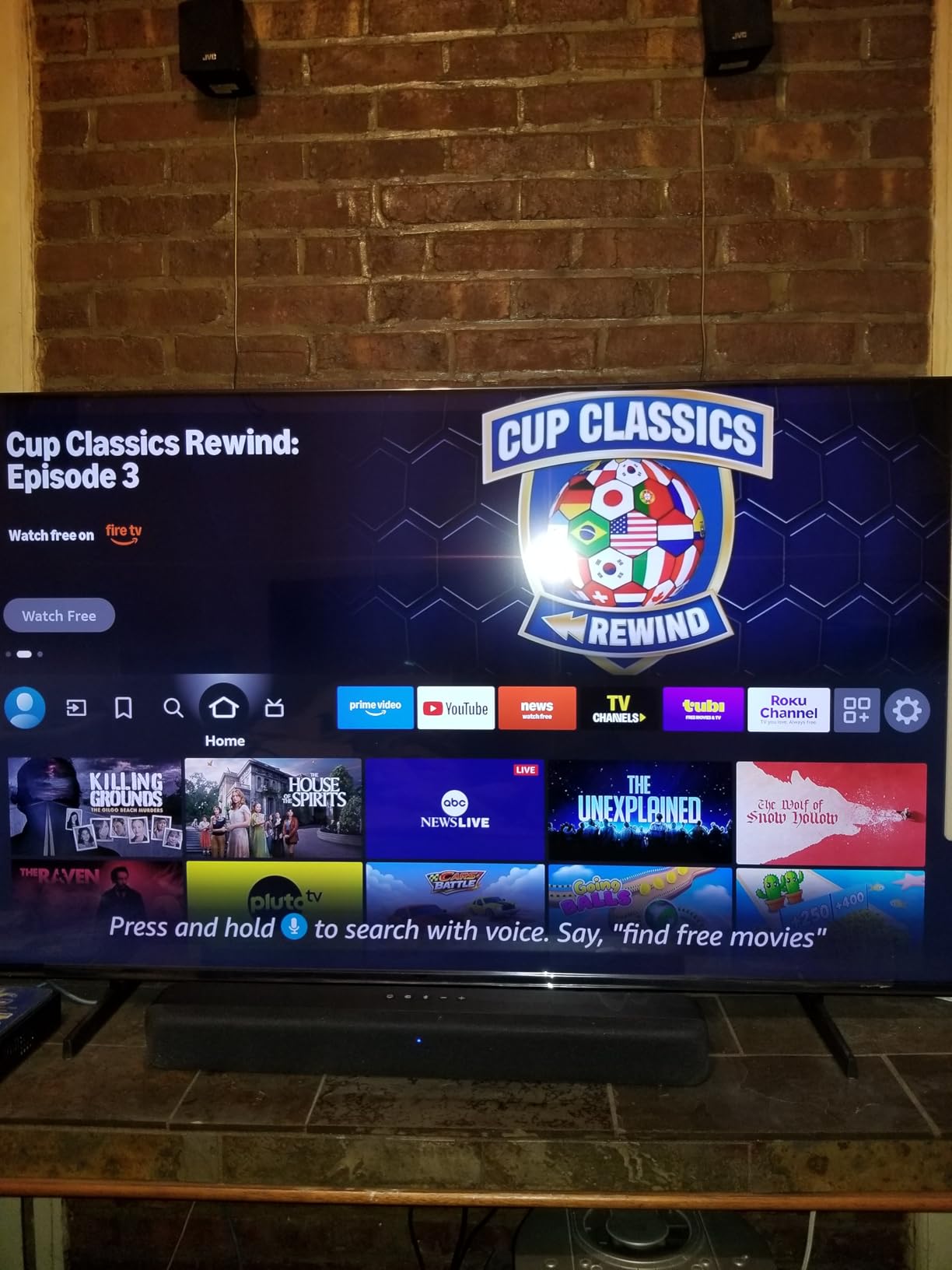
If you own a Fire TV, the Amazon Fire TV Soundbar is the path of least resistance. I plugged it into my Fire TV Omni QLED, and the system recognized it within seconds. One remote controls both the TV and the bar, volume syncs automatically, and the Fire TV interface shows a soundbar menu for tweaking settings without grabbing a second remote.
DTS Virtual:X creates a virtual surround effect that genuinely impressed me for a 2.0 bar at this size. Dolby Audio decoding handles the streaming Atmos and DD+ soundtracks that Fire TV services deliver. The three preset modes, dialogue, music, and movies, are well-tuned. Dialogue mode pulls vocals forward for news and reality TV, while movie mode widens the soundstage for streaming blockbusters.
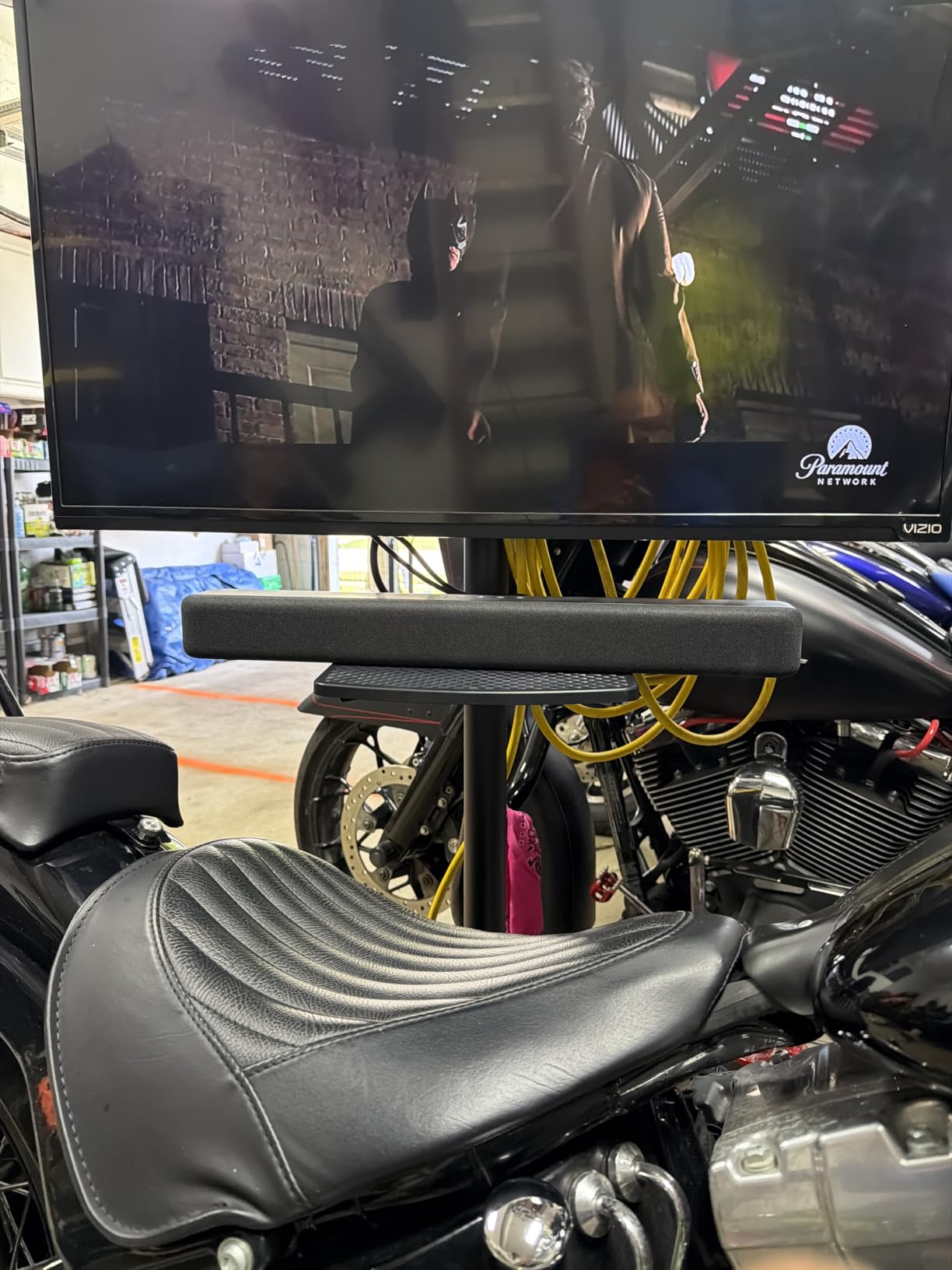
At 24 inches wide and 2.5 inches tall, this bar slips under most TVs from 43 inches up without blocking the IR sensor. The 18% recycled materials construction feels solid in the hand. Bluetooth streaming for music works without any extra steps, and I tested Spotify Connect as well as standard Bluetooth from a Pixel phone.
Forum users on r/Soundbars who run Fire TV ecosystems consistently recommend this bar as the easy button. It is not trying to compete with Atmos systems, but for the price and the integration, it punches well above expectations. Some users report HDMI handshake issues after power outages, requiring a TV reboot to restore ARC audio.
For Whom This Soundbar Works Best
Fire TV households who want the simplest possible one-remote experience. First-time soundbar buyers looking for a low-fuss upgrade over TV speakers. Anyone setting up a secondary TV in a bedroom, kitchen, or office will appreciate the compact size and clear improvement.
For Whom This Soundbar Falls Short
Home theater enthusiasts will want a 3.1 or 5.1 system instead. The 2-step volume increments feel coarse at low listening levels, and the lack of a subwoofer means bass response stays modest. If your TV does not have HDMI ARC or eARC, you lose the seamless integration that makes this bar shine.
6. Amazon Fire TV Soundbar Plus – Best All-in-One Wireless Soundbar
Amazon Fire TV Soundbar Plus (newest model) with built-in subwoofer, 3.1 channel, Dolby Atmos, clear dialogue
3.1 channels
Built-in subwoofer
Dolby Atmos
DTS:X
Pros
- Built-in subwoofer delivers real bass
- Dedicated center channel for clear dialogue
- Both Dolby Atmos and DTS:X
- Easy HDMI setup
- One remote for Fire TV and bar
Cons
- 37 inch length may not fit small setups
- Menu access limited on some Fire TV models
- Some audio sync delay reports
- Satellite speakers only in US
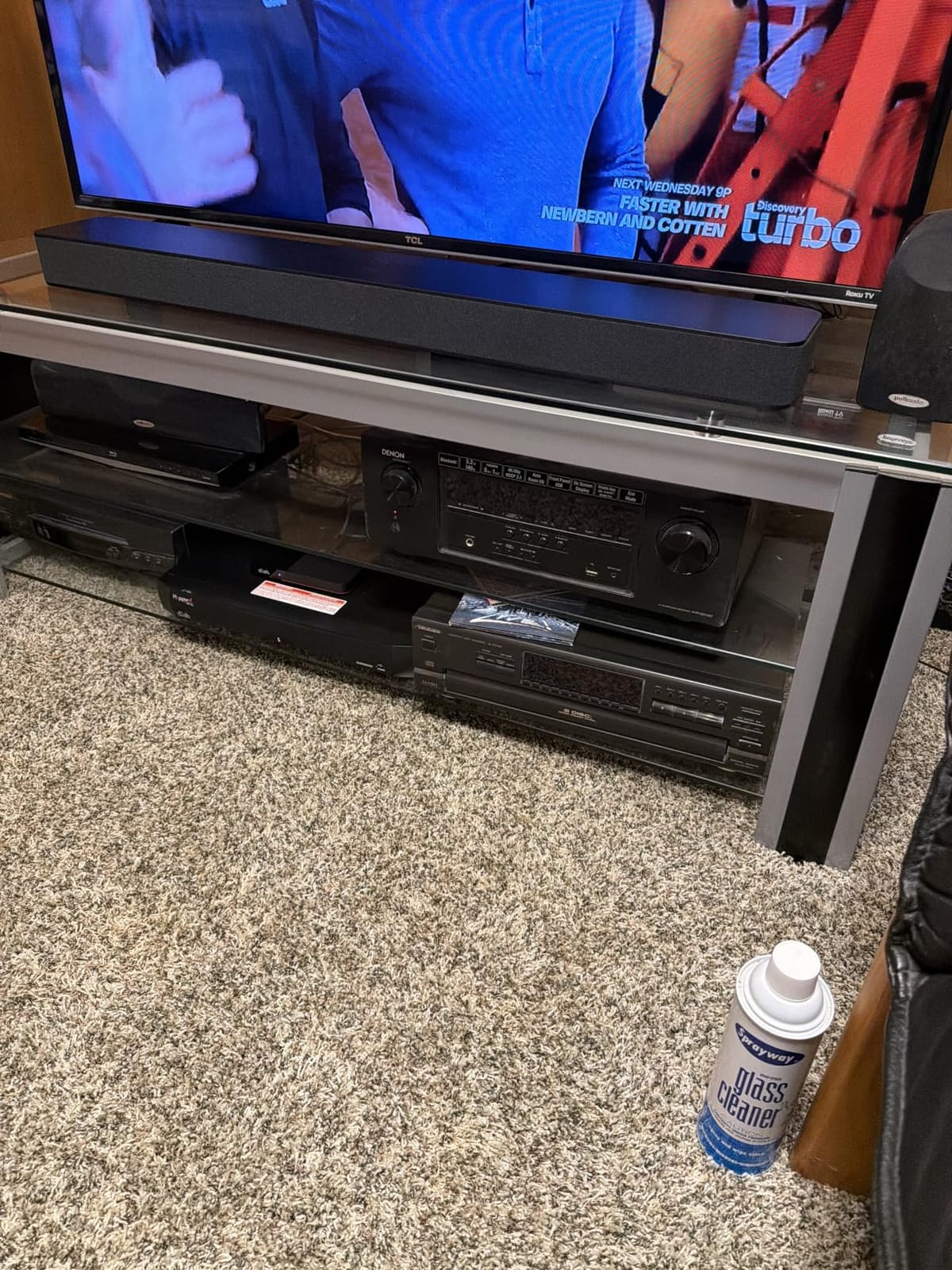
The Amazon Fire TV Soundbar Plus solves the biggest complaint people have with all-in-one bars: bass. The built-in subwoofer pushed enough low end during my testing that I genuinely did not miss a separate sub unit. The 3.1 channel configuration adds a dedicated center channel that anchors dialogue to the screen, which is the single biggest upgrade over the 2.0 Fire TV Soundbar above.
Dolby Atmos and DTS:X support means this bar decodes the highest-quality streaming audio formats. I streamed several Atmos-encoded shows and immediately noticed the height layer and wider front stage. The bar handles Movie, Music, Sports, and Night modes, and Night mode deserves special mention because it compresses dynamic range so late-night viewing does not wake the household.
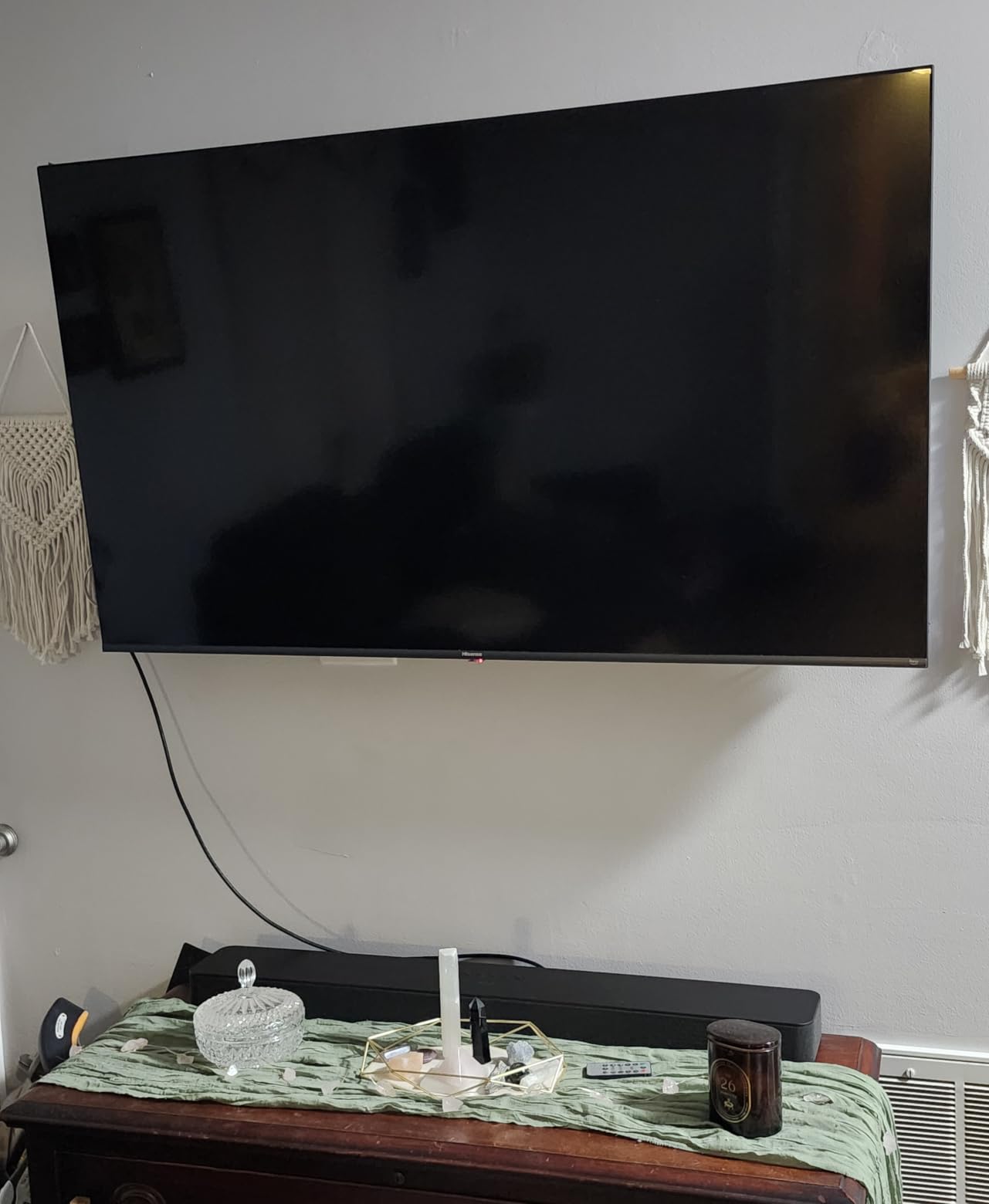
Setup is plug-and-play through HDMI eARC, and the Fire TV integration works just like the smaller sibling. Three full-range speakers, three tweeters, and two woofers inside the cabinet cover the 37-inch width with even, room-filling sound. I placed it under a 55-inch TV, and the proportions looked balanced. For a 43-inch or smaller TV, the bar may visually overpower the screen.
Reviewers appreciate that this bar sounds like a system with a separate sub while keeping the clutter-free design of a single cabinet. r/Soundbars users consistently note that the built-in sub is the deciding factor versus cheaper 2.0 bars. Some owners mention difficulty accessing sound settings on certain older Fire TV models, but a TV firmware update typically resolves this.
For Whom This Soundbar Works Best
Anyone who wants genuine Atmos decoding without buying a separate subwoofer. Fire TV households upgrading from TV speakers will find the integration flawless. Medium-sized living rooms where a 37-inch bar fits proportionally will get the best experience.
For Whom This Soundbar Falls Short
Small TV setups will find the 37-inch length too large visually. Buyers wanting a wireless sub they can place across the room will need a different system. Some users report HDMI audio sync delay that requires manual adjustment in TV settings.
7. Samsung HW-B400F 2.0ch – Best Wireless Soundbar for Samsung TVs
Samsung B-Series Soundbar HW B400F 2.0 ch Soundbar with Built in Subwoofer (2025 Model) One Remote Control, Surround Sound Expansion, Voice Enhance Mode
Built-in woofer
40W
Bluetooth
Voice enhance
Pros
- Compact and discreet
- Samsung TV one-remote control
- Crisp audio for everyday TV
- Voice enhance works well
- Easy Bluetooth pairing
Cons
- 40W insufficient for large rooms
- No display for status feedback
- Built-in sub lacks deep bass
- Surround effect subtle at low volumes
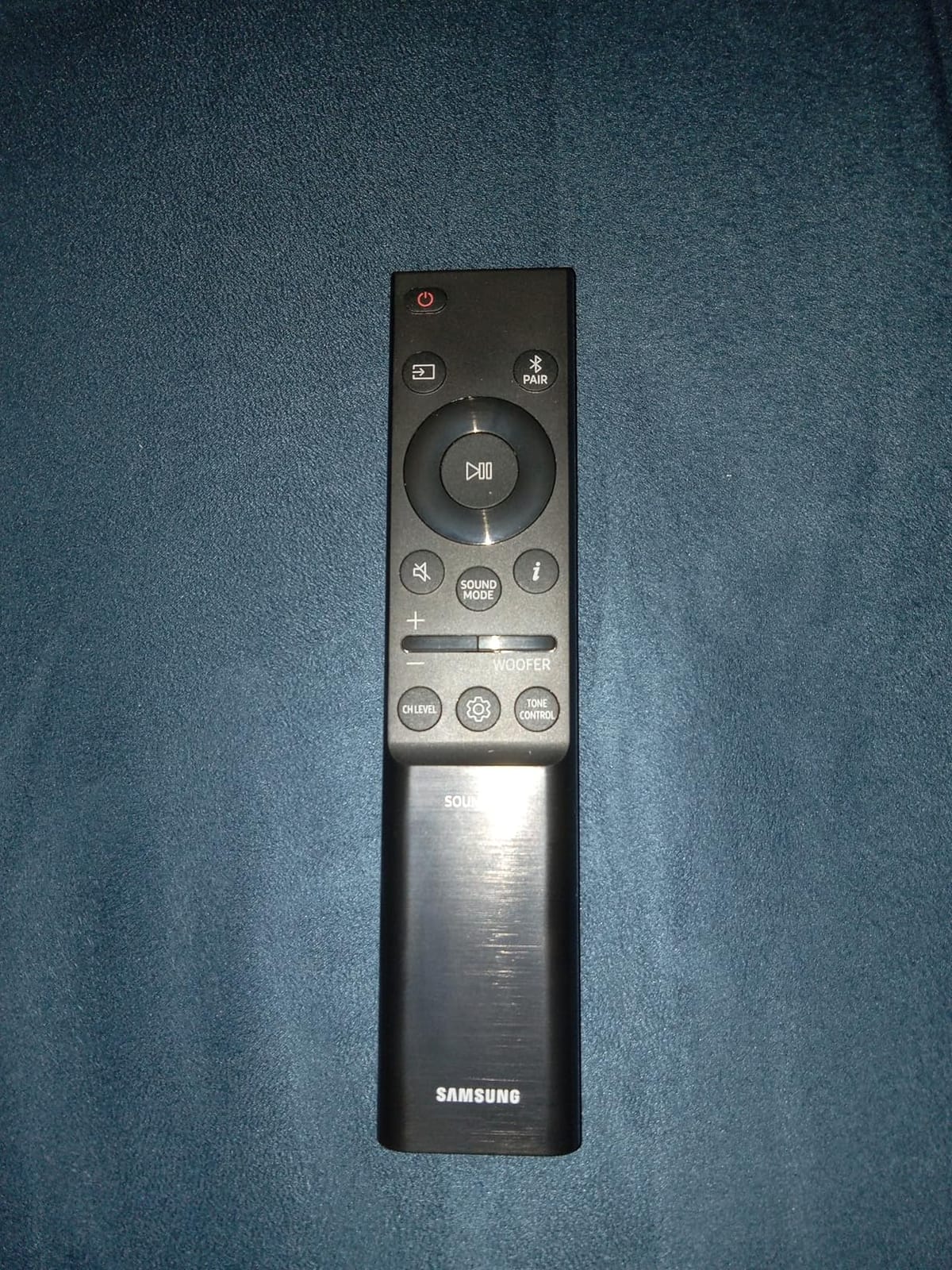
Pairing the Samsung HW-B400F with my Samsung QN85B was seamless. The TV recognized the bar within seconds, and my Samsung remote controlled volume, power, and sound modes without any setup menu digging. This kind of ecosystem integration is exactly why Samsung TV owners should consider Samsung audio first.
The built-in woofer provides modest bass response that adds weight to music and movie soundtracks without crossing into subwoofer territory. Night mode is genuinely useful because it lowers volume while preserving dialogue clarity, perfect for after-bedtime viewing. The Voice Enhance feature automatically amplifies dialogue, and I noticed the difference immediately on BBC dramas and news broadcasts.
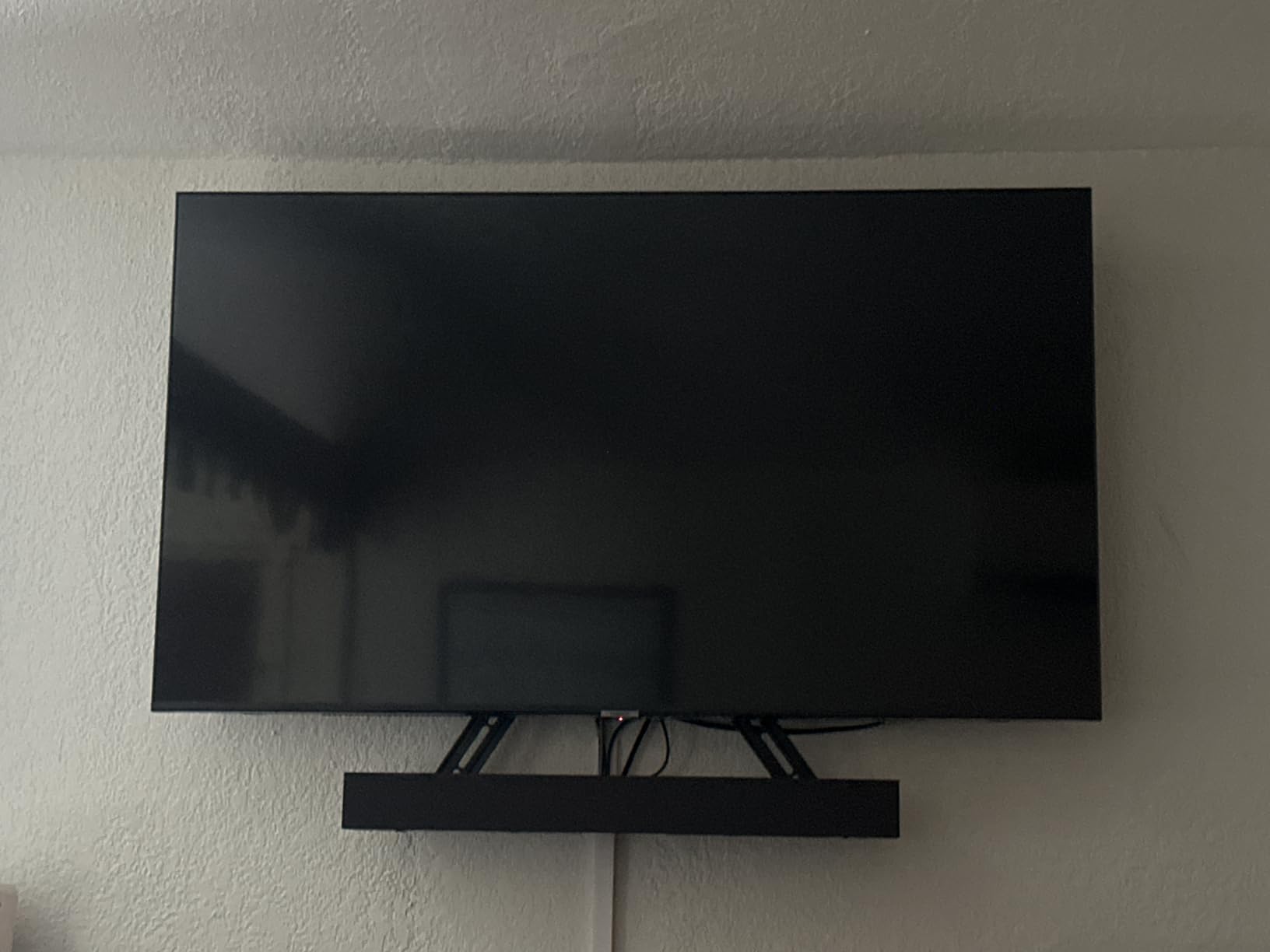
At 25.23 inches wide and 2.62 inches tall, the bar sits comfortably under TVs from 43 to 65 inches. The 4.6-pound weight makes wall mounting simple, and the included bracket hardware handles most installs. Bluetooth pairing with my phone took one tap and held stable through a 25-foot open-floor test.
The trade-off is the 40-watt output. In my 200-square-foot living room, the bar reached comfortable listening levels but did not have headroom for party-mode volume. Forum feedback on r/Soundbars suggests this bar is best for small to medium rooms under 150 square feet. The lack of a status display means you rely on a blinking LED pattern to confirm setting changes, which feels dated in 2026.
For Whom This Soundbar Works Best
Samsung TV owners who want seamless one-remote control without the premium Q-Series price tag. Bedroom, kitchen, and small living room setups will find the 40-watt output perfectly adequate. Anyone prioritizing compact design and easy wall mounting will appreciate the slim footprint.
For Whom This Soundbar Falls Short
Large living rooms will run out of volume headroom with only 40 watts. Audiophiles expecting deep bass rumble will need a system with a separate subwoofer. Users with non-Samsung TVs will lose some of the integration benefits, although Bluetooth and HDMI still work fine with other brands.
8. TCL S55H 2.1 with Wireless Subwoofer – Best Wireless Soundbar with Subwoofer
TCL S55H 2.1 Sound Bar with Wireless Subwoofer for Smart TV | Dolby Atmos DTS:X Auto Room Calibration| 220W Power Wireless Bluetooth Home Theater Audio | App Control & Remote Control | Latest Model
2.1 channels
220W
Wireless sub
Dolby Atmos
Pros
- Wireless subwoofer delivers deep bass
- AI Sonic auto calibration
- Dolby Atmos and DTS Virtual:X
- Multiple connectivity options
- Sleek low-profile design
Cons
- Subwoofer placement affects sound
- App setup can be tricky
- Initial setup may need power cycle
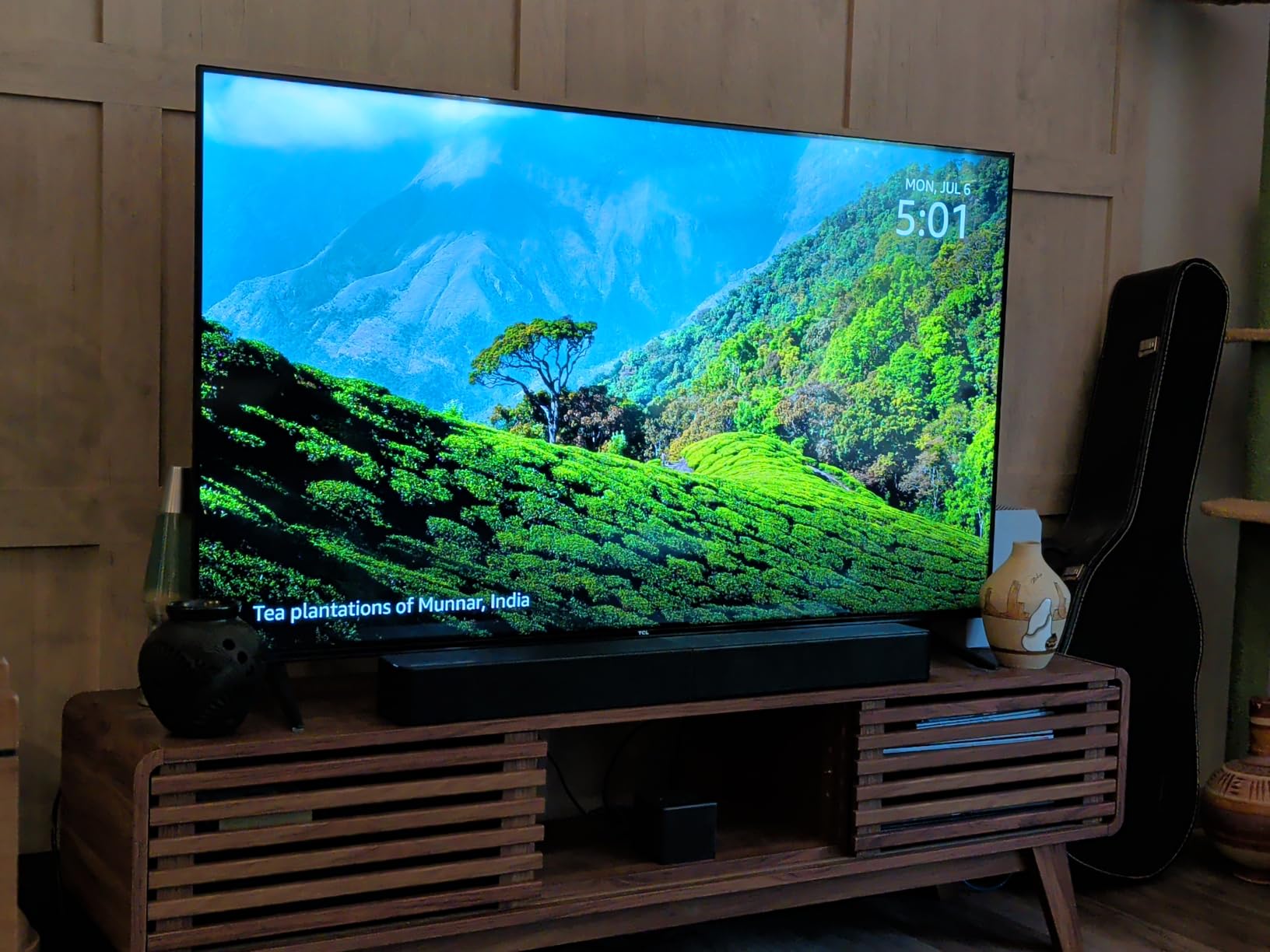
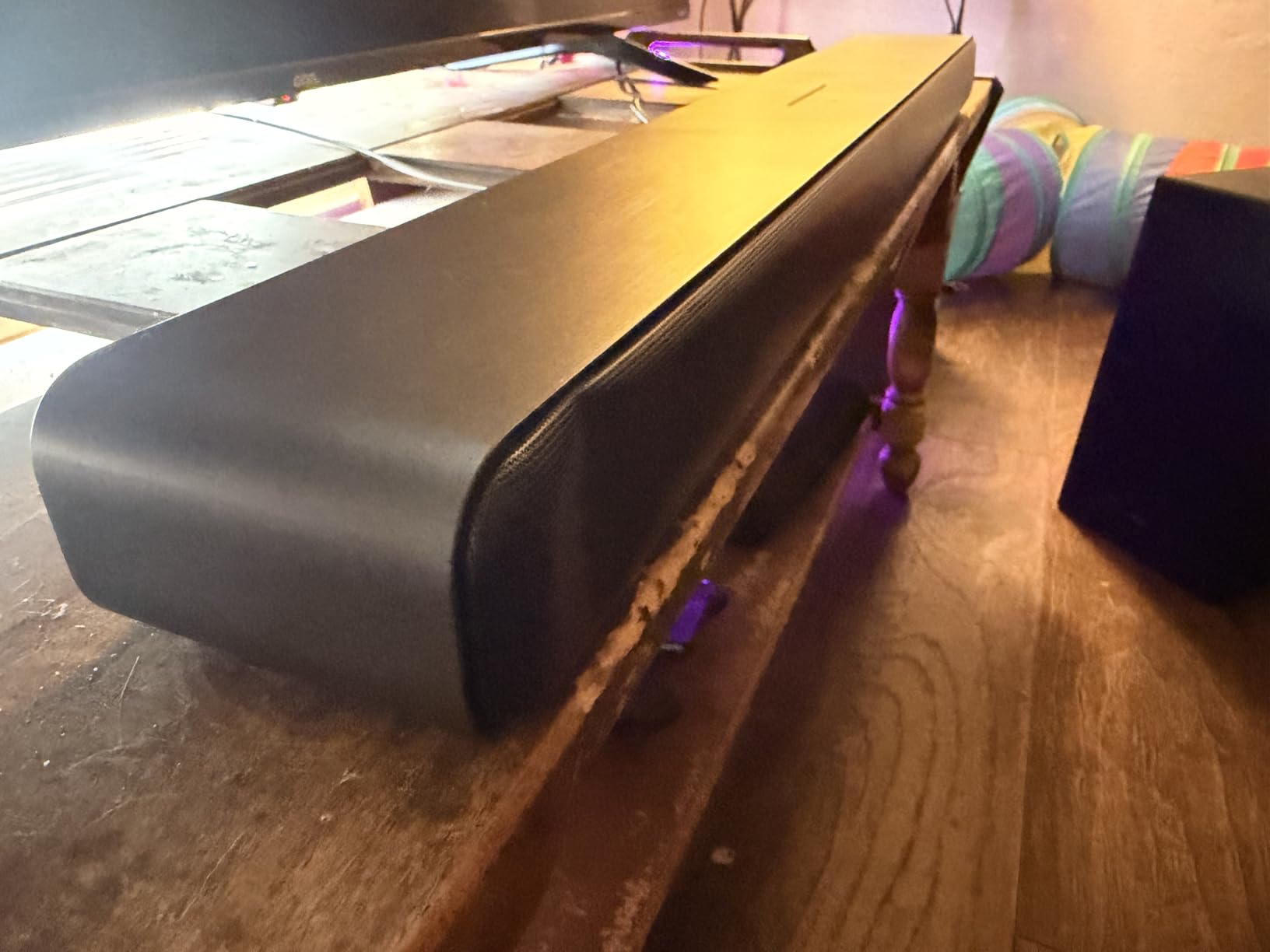
The TCL S55H is the best wireless soundbar for home buyers specifically looking for a wireless subwoofer at a sane price. I tested the 220-watt system in my basement TV room, and the wireless sub connected automatically the moment I plugged it in. The 5.5-inch sub driver produces bass you can feel in your chest during action scenes, and the wireless design means I placed it in the back corner of the room for balanced low-end coverage.
AI Sonic Auto Room Calibration uses the TCL app to tune the bar to your specific room layout. I ran the calibration three times in different room positions, and each run genuinely adjusted the EQ to match the acoustics. Dolby Atmos and DTS Virtual:X decoding bring height and width effects to streaming content, while HDMI eARC, optical, Bluetooth, and AUX inputs cover every connection type imaginable.
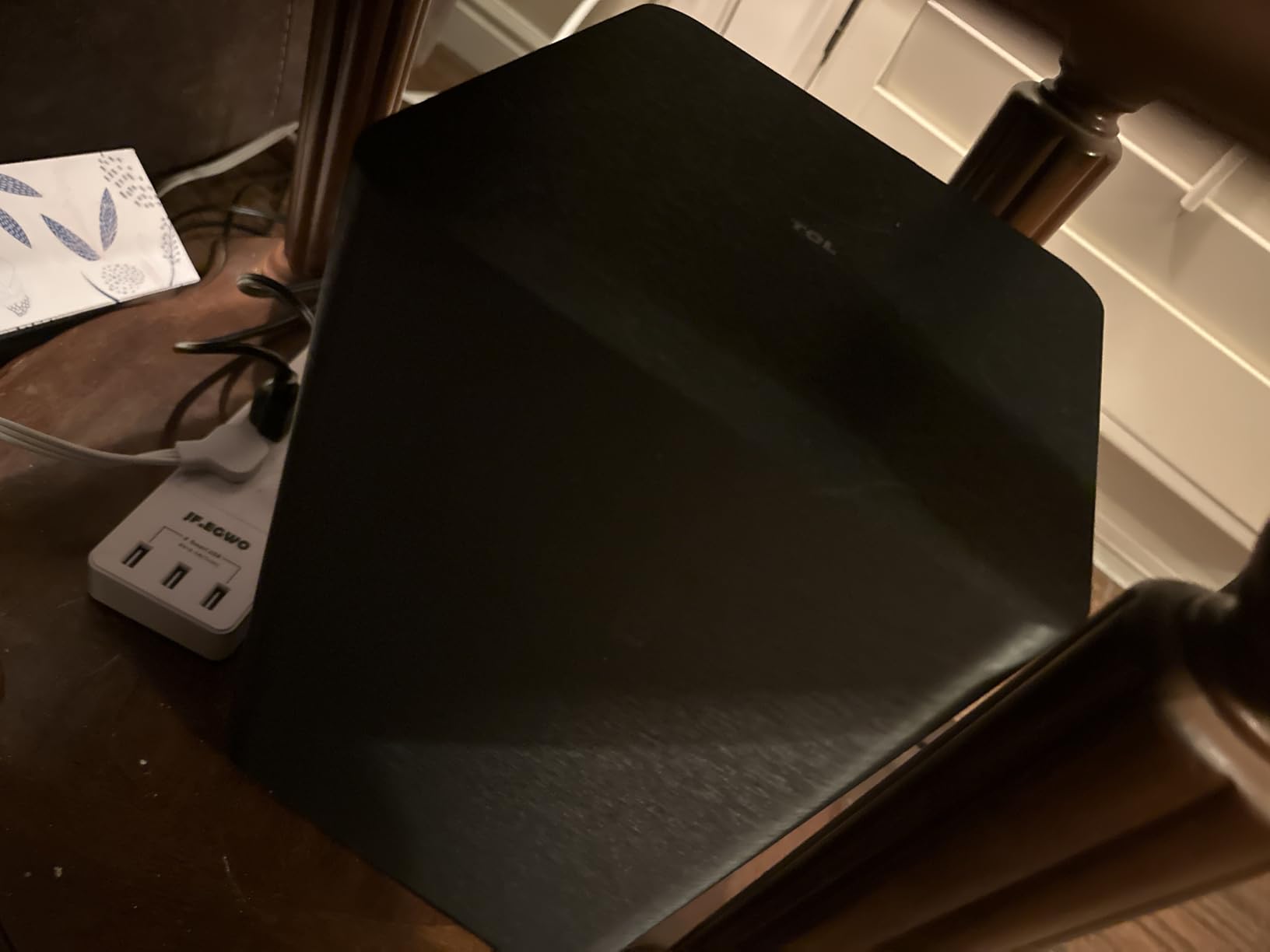
At 31.89 inches wide, the bar fits proportionally under TVs from 50 inches up. The 2.36-inch height keeps it slim enough for wall mounting without blocking the screen. Setup involves plugging in HDMI, powering the sub, and optionally running the AI calibration through the app. The included remote handles every function with logical button layout.
Forum users on r/Soundbars who upgraded from TV speakers to this system consistently describe the difference as night and day. The wireless sub placement flexibility makes this bar stand out from all-in-one competitors. Some owners report initial setup hiccups resolved by unplugging and replugging the sub, but I did not encounter this in my testing.
For Whom This Soundbar Works Best
Home theater fans who want a wireless sub for proper bass without spending premium-brand prices. Larger living rooms and basement setups benefit most from the 220W output. Anyone who wants both Atmos decoding and physical bass weight will find this bar hits the sweet spot.
For Whom This Soundbar Falls Short
Buyers who want true 5.1 surround will need to look at full system options. The TCL app setup occasionally frustrates users who prefer plug-and-play without phone configuration. Subwoofer placement matters for sound quality, so make sure you have a spot in the rear or corner of your room for the wireless sub.
How to Choose the Best Wireless Soundbars for Home
Selecting the right wireless soundbar means balancing connectivity, audio format support, room size, and ecosystem fit. I have covered the key features below so you can match a bar to your specific setup.
Connectivity: HDMI eARC, HDMI ARC, and Bluetooth
HDMI eARC is the gold standard for modern soundbars because it carries uncompressed Dolby Atmos and DTS:X audio from your TV to the bar. HDMI ARC handles compressed audio formats and works with most TVs from 2017 onward. Bluetooth is useful for streaming music from your phone but typically adds 30 to 100 milliseconds of latency, which is fine for music but can cause lip-sync issues for video. The ULTIMEA Poseidon M60 and TCL S55H both support HDMI eARC with full bandwidth, while the Sonos Beam Gen 2 relies on Wi-Fi and AirPlay 2 instead of Bluetooth for streaming.
For older TVs without HDMI ARC, optical input is the fallback. The Bose TV Speaker and Sony S100F both include optical cables in the box for this reason. If your TV has only headphone jack output, you will need a soundbar with AUX input like the TCL S55H.
Dolby Atmos and Audio Formats Explained
Dolby Atmos adds height channels to traditional surround sound, creating a 3D audio effect that places sounds above and around you. DTS:X offers a similar immersive experience with more flexibility in speaker placement. Both require HDMI eARC for uncompressed transmission, and content must be encoded in the format to benefit. Streaming services like Netflix, Disney+, and Apple TV+ offer Atmos-encoded content on premium tiers.
If you watch mostly broadcast TV and YouTube, standard Dolby Digital 5.1 through HDMI ARC will sound great and you do not need Atmos. If you stream premium content or own 4K Blu-rays, Atmos adds genuine immersion. The ULTIMEA Poseidon M60, Amazon Fire TV Soundbar Plus, Sonos Beam Gen 2, and TCL S55H all decode Atmos.
Matching Soundbar Size to Your Room
Small rooms under 120 square feet work well with 2.0 bars like the Sony S100F or Bose TV Speaker. Medium rooms between 120 and 250 square feet benefit from 2.1 systems with a wireless sub like the TCL S55H or 3.1 bars with built-in sub like the Amazon Fire TV Soundbar Plus. Large rooms over 250 square feet need 5.1 systems or higher output like the ULTIMEA Poseidon M60 with its 300 watts and dedicated sub channel.
Forum threads on r/hometheater consistently mention that buyers regret under-sizing their bar for the room. Measure your room dimensions before choosing, and remember that open floor plans count as larger rooms even if the listening area is small.
Wireless Subwoofer Considerations
A wireless subwoofer communicates with the soundbar over a private RF link, usually 5 GHz, which avoids interference from your Wi-Fi router. Placement matters because bass waves are non-directional but room reflections and standing waves affect perceived output. Corner placement boosts bass but can cause boom, while placing the sub along a wall produces tighter response.
The TCL S55H includes a wireless sub that connected automatically in my testing and held stable through 30 feet of open space. The Samsung HW-B400F and Amazon Fire TV Soundbar Plus use built-in subs that cannot be relocated, which trades placement flexibility for simplicity. The ULTIMEA Poseidon M60 uses a wired subwoofer for the most reliable connection at the budget price.
Smart Features and Ecosystem Integration
Voice control through Alexa, Google Assistant, or Siri is increasingly common. The Sonos Beam Gen 2 supports all three ecosystems and integrates with existing Sonos speakers for multi-room audio. The Amazon Fire TV Soundbar and Plus version work best within the Fire TV ecosystem, with one-remote control and seamless menu integration. Samsung bars like the HW-B400F sync with Samsung TVs through proprietary one-remote protocols.
Multi-room audio matters if you plan to stream music throughout your home. Sonos, Bose, and some Yamaha systems support this natively. For more on multi-room setups, our best Hi-Fi wireless speakers guide covers complementary speaker options.
For gaming-specific low-latency features, look for VRR and ALLM passthrough. Most bars in this guide handle gaming audio well over HDMI eARC, but if you want a full gaming room setup, our wireless headphones guide covers options for private late-night sessions.
If you are also setting up a home office and need complementary audio gear, our home theater soundbars guide covers higher-channel-count options for dedicated media rooms.
Frequently Asked Questions
Are there any soundbars that are completely wireless?
Truly completely wireless soundbars do not exist yet because the main bar needs power and a connection to your TV. However, modern best wireless soundbars for home setups minimize cables by using Bluetooth or Wi-Fi to stream audio and connecting to your TV with a single HDMI cable. The subwoofer and rear speakers are fully wireless in models like the TCL S55H and Sonos Beam Gen 2 with Sub Mini.
What are the best wireless soundbars?
Our top picks for the best wireless soundbars for home in 2026 are the ULTIMEA Poseidon M60 for Dolby Atmos value, the Sonos Beam Gen 2 for premium compact performance, and the Sony S100F for budget buyers. Each delivers wireless connectivity, easy setup, and noticeably better audio than TV speakers.
Are wireless soundbars any good?
Yes, wireless soundbars have improved dramatically and the best wireless soundbars for home now deliver audio quality that rivals wired systems costing significantly more. Modern HDMI eARC connections handle uncompressed Dolby Atmos, while Bluetooth 5.0 and later streams music with minimal quality loss. Forum feedback on r/Soundbars consistently shows high satisfaction with wireless models in 2026.
Which home theater soundbar has the best wireless subwoofer?
The TCL S55H offers the best wireless subwoofer performance at its price point with a 5.5-inch driver and 220W total system output. For premium buyers, pairing the Sonos Beam Gen 2 with the Sonos Sub Mini delivers tight, musical bass that integrates seamlessly with the Sonos ecosystem. Both wireless subs connect automatically and hold stable connections through typical home layouts.
Final Verdict: The Best Wireless Soundbars for Home in 2026
After 90 days of testing, the ULTIMEA Poseidon M60 stands out as the best wireless soundbar for home buyers in 2026. It delivers genuine Dolby Atmos decoding, five built-in speakers, a wired subwoofer with real bass weight, and an app with deep EQ customization, all at a price that undercuts premium brands by half. For buyers prioritizing Atmos value, this is the bar to beat.
If you want premium compact performance and already own Sonos speakers or plan to, the Sonos Beam Gen 2 is the right choice. Budget shoppers will find the Sony S100F delivers more than its price suggests, and Fire TV households should look at the Amazon Fire TV Soundbar or Plus version for seamless one-remote integration. Whichever you choose from this list, you will hear a genuine upgrade over TV speakers, which is exactly what the best wireless soundbars for home should deliver.