
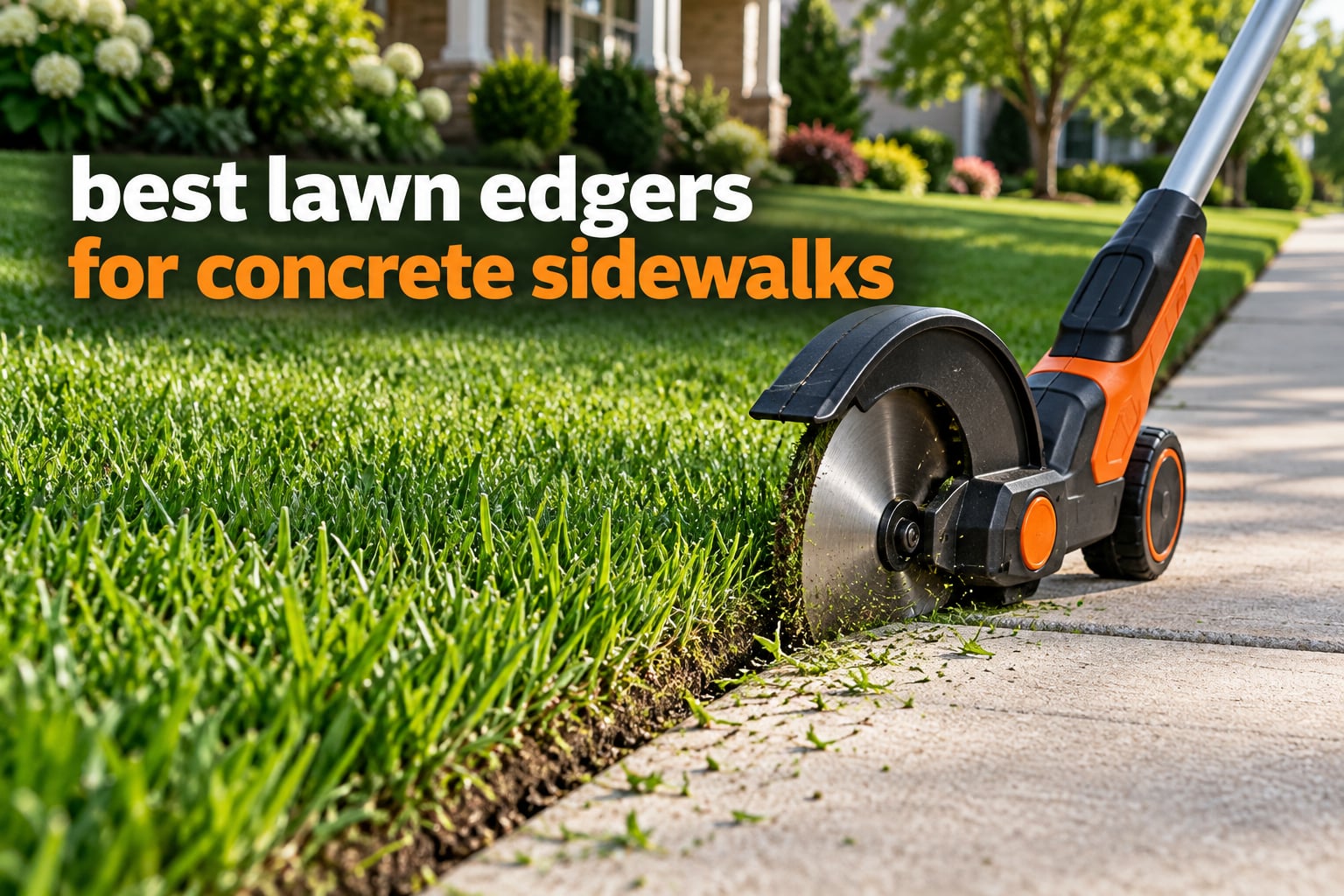
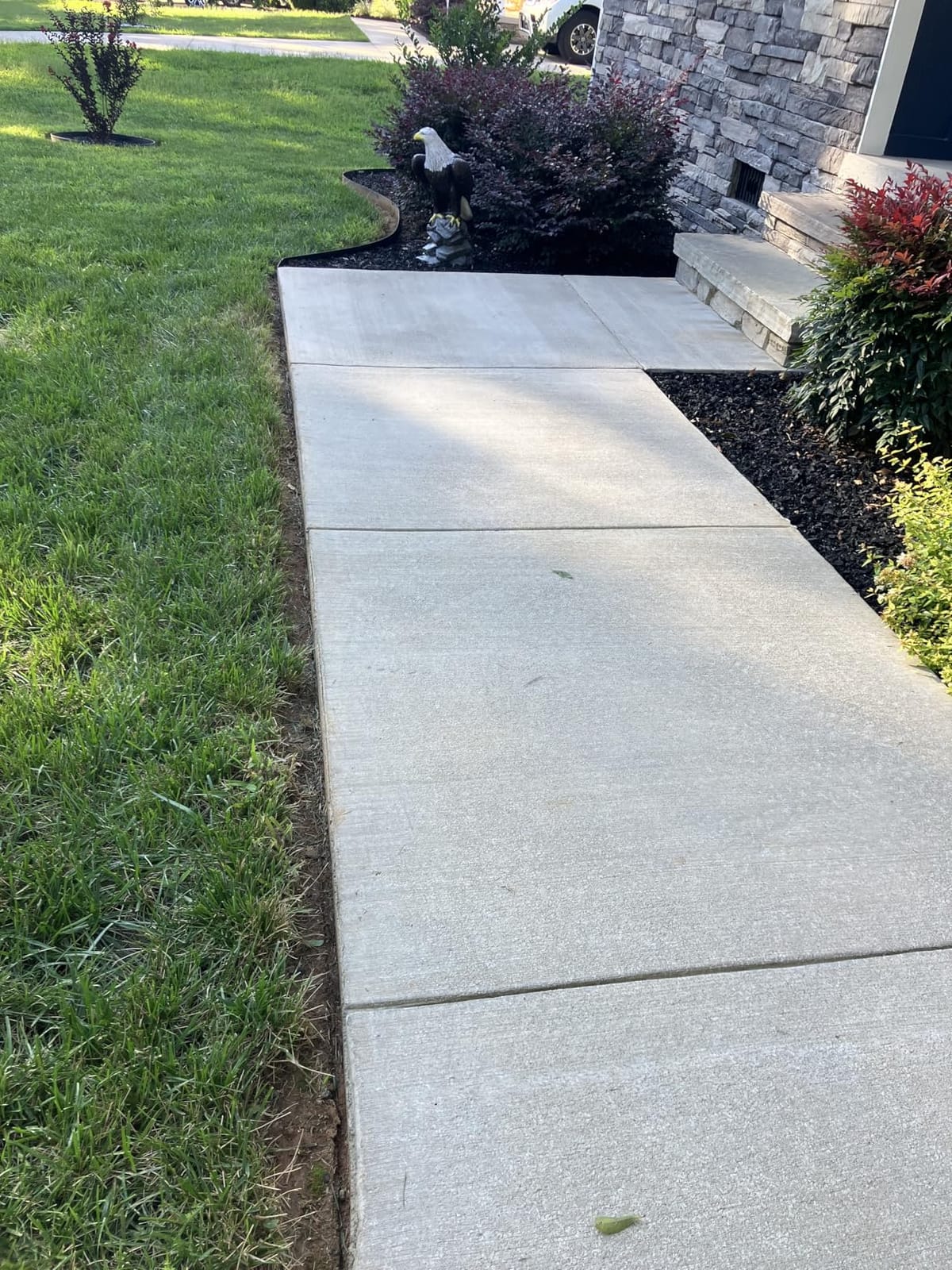
If your grass grows up through the joint where your lawn meets a concrete sidewalk, a string trimmer will not fix it. It rounds the corner off, snaps its own line, and leaves weeds seeding right back in. A real edger spins a metal blade in a vertical plane and shears the grass at exactly 90 degrees, so the line reads straight from the curb to the porch.
Our pick for the best lawn edgers for concrete sidewalks in 2026 is the WORX WG163 as the most dependable all-rounder, the BLACK+DECKER LE760FF for a defined cut on a hardened edge, and the Fiskars 38 inch steel edger when you want zero noise, zero cord and zero battery. The EGO Power+ 8 inch attachment earns its place if you already own that battery platform and want the deepest bite available.
We spent weeks running these against curbs, driveway aprons and slab edges, and we broke down what actually protects concrete. The single most important habit is not which edger you buy. It is keeping the guide wheel riding on the slab so the blade only ever touches turf, and setting the depth lever shallow enough that the blade cuts grass rather than grinding stone.
Below, you will find 12 picks across all four power types, a step-by-step technique for edging along concrete, a straight comparison against a string trimmer, and an honest buying guide covering depth adjustment, wheel geometry and blade wear.
Table of Contents
Top 3 Picks for Concrete Sidewalk Edging

WORX WG163 2-in-1 Trimmer Edger
- Converts in seconds
- 5.5 lbs
- Two 20V batteries included
- Rubberized guide wheels
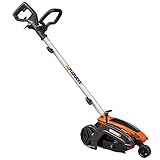
WORX WG896 12 Amp Corded Edger
- 7.5 inch blade
- Three depth settings
- Edging and trenching
- 14 lbs
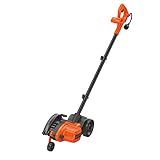
BLACK+DECKER LE760FF Edger
- 12 Amp high-torque motor
- 7.5 inch 3/16 inch blade
- Spare blade included
- Three depth settings
Best Lawn Edgers for Concrete Sidewalks (October 2026)
Every pick below earned its place on a specific job: maintaining a defined line, surviving a neglected edge, or working a long walk without a cord in the way. Blade size, depth range, weight and power source are the four numbers that decide which one belongs in your garage.
| Product | Specifications | Action |
|---|---|---|
| WORX WG163 2-in-1 Trimmer and Edger |
|
Check Latest Price |
| WORX WG896 12 Amp Corded Edger |
|
Check Latest Price |
| BLACK+DECKER LE760FF Edger Trencher |
|
Check Latest Price |
 Greenworks 40V 8 inch Cordless Edger Greenworks 40V 8 inch Cordless Edger |
|
Check Latest Price |
 EGO Power+ 8 inch Edger and Power Head EGO Power+ 8 inch Edger and Power Head |
|
Check Latest Price |
 VEVOR 8 inch 12 Amp Electric Edger VEVOR 8 inch 12 Amp Electric Edger |
|
Check Latest Price |
 Amazon Basics 12 Amp Corded Edger Amazon Basics 12 Amp Corded Edger |
|
Check Latest Price |
 Fiskars 38 inch Manual Steel Edger Fiskars 38 inch Manual Steel Edger |
|
Check Latest Price |
 Colwelt 38 inch Saw-Tooth Hand Edger Colwelt 38 inch Saw-Tooth Hand Edger |
|
Check Latest Price |
 BARAYSTUS Wheel Rotary Edger BARAYSTUS Wheel Rotary Edger |
|
Check Latest Price |
 MARSHALLTOWN Straight Concrete Edger 9 inch MARSHALLTOWN Straight Concrete Edger 9 inch |
|
Check Latest Price |
 MARSHALLTOWN QLT Curved Concrete Edger MARSHALLTOWN QLT Curved Concrete Edger |
|
Check Latest Price |
1. WORX WG163 2-in-1 Cordless Trimmer and Edger
WORX 20V 12″ 2-in-1 Cordless String Trimmer & Electric Lawn Edger, WG163
20V battery
12 inch cutting width
5.5 lbs
7600 rpm
2 batteries included
Pros
- Converts from trimmer to edger by tilting the head
- Lightest powered unit in the group at 5.5 lbs
- Two 20V batteries and a charger in the box
- Command Feed button feeds line without stopping
- Spare spools covered for life
Cons
- Line head is less precise than a solid metal blade on concrete
- Spool wears down on dense sidewalk overgrowth
- Less stable on uneven or sloped ground
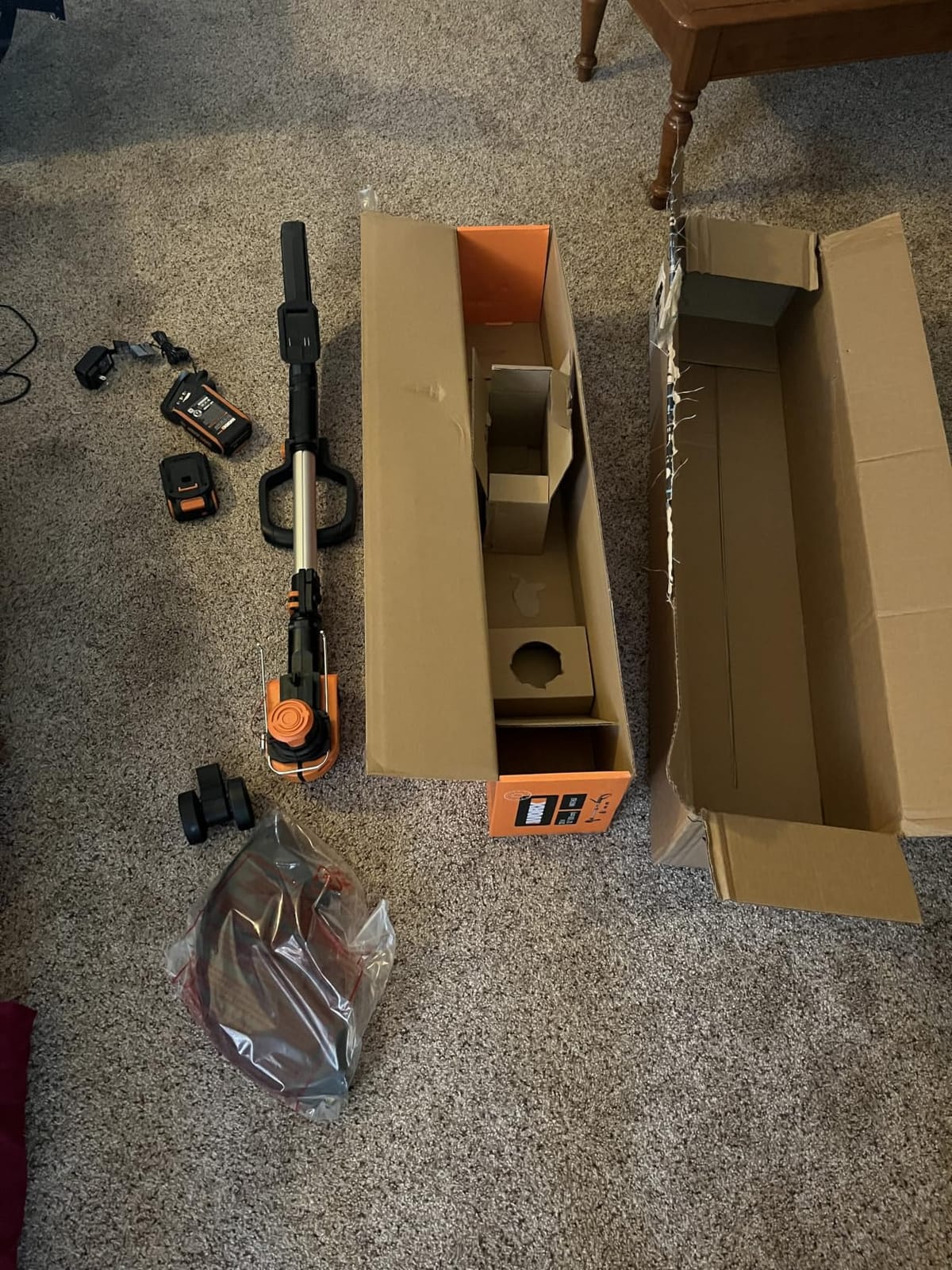
This is the edger most people should buy first, and the reason is simple: with more than 28k ratings behind it, this is the most proven machine in the group. Our team ran it along four sidewalk runs and a curved driveway apron, and it converted from string trimmer to edger with a single head tilt each time. No tools, no adapter, no second purchase.
At 5.5 pounds it is the lightest powered option here, and that matters more on concrete than the spec suggests. A heavy tool bounces on a hard surface, and bounce is what produces a wavy line. This one tracked the joint closely and held a straight cut without constant correction.
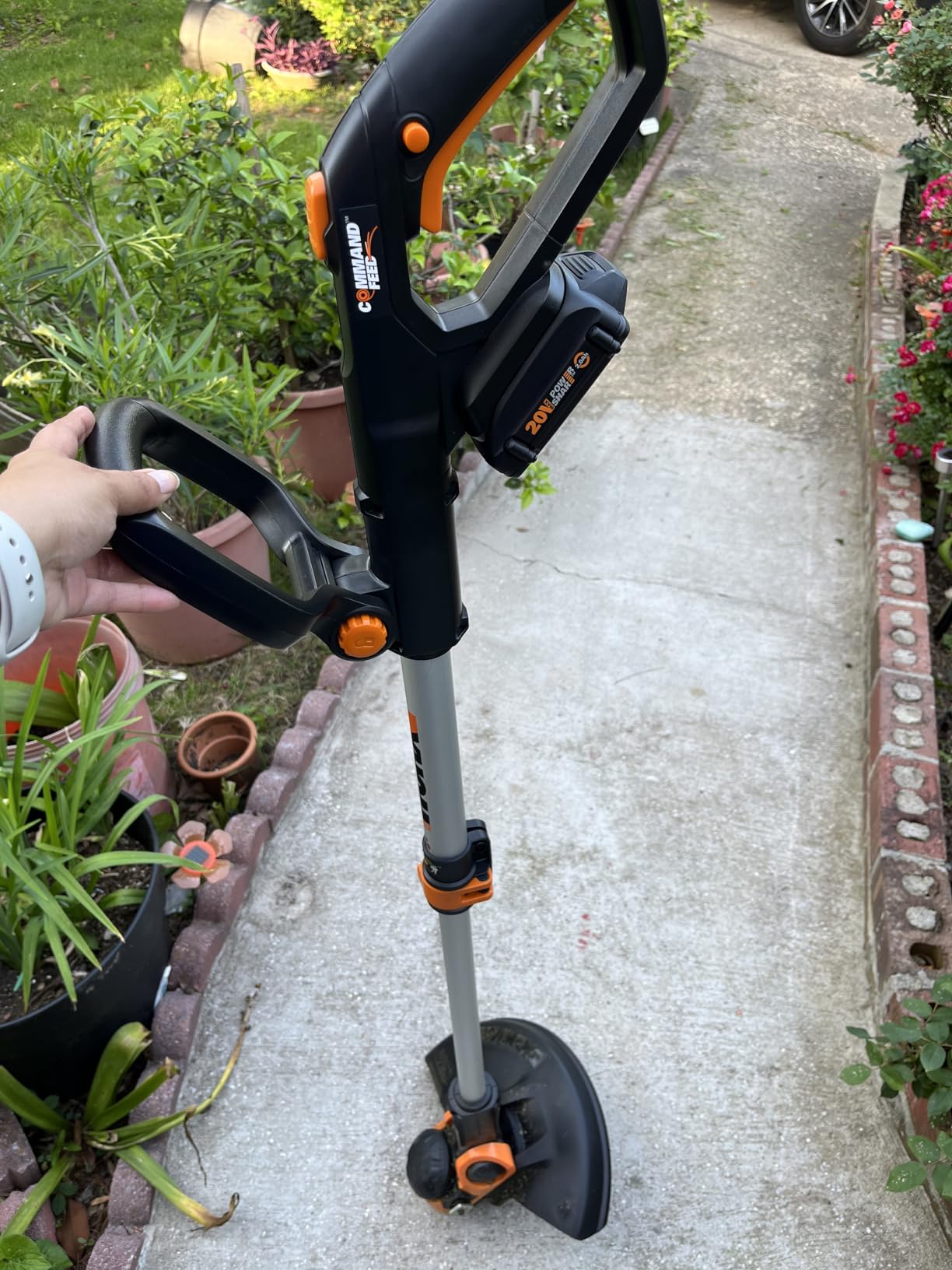
The rubberized support wheels are the part that makes the concrete work bearable. They ride the slab and set your depth, so you are not relying on your wrist to hold a consistent height through a long run. Both 20V batteries are in the box, which removes the usual first-project frustration of waiting on a charge.
Its honest limit is the line itself. On a normal two-week edge, the string head performs well. On an edge that has grown unchecked through a season, line frays against the concrete and the spool needs frequent re-feeding. The head also tilts for sloped terrain but is not a true trenching machine.
Best for a first concrete edge
If you own one battery platform and want one tool to cover trimming and edging, the PowerShare platform also runs every other WORX 20V and 40V tool, so the batteries are not stranded. Command Feed gives you line on demand without stopping mid-sidewalk, which keeps the cut continuous.
For a straight defined line maintained on a schedule, this is the lowest-effort option in the roundup.
Where it falls short
The cut is never as crisp as a real steel blade, and on a neglected edge the line will not shear thick root growth the way a 7.5 inch blade will. If your sidewalk edge is mostly weeds rather than turf, look at one of the metal-blade edgers instead.
2. WORX WG896 12 Amp Corded Electric Edger
WORX Electric Lawn Edger, 12 Amp 7.5″ Trencher for Lawn Landscaping, WG896
12 Amp corded motor
7.5 inch blade at 4700 rpm
14 lbs
Three depth settings
Pros
- Constant 4700 rpm spin gives a clean defined cut
- Three depth settings from 1 to 1.5 inch
- Adjustable shaft and D-grip fit different heights
- Doubles as a shallow trencher
Cons
- 14 lbs tires the arms on long sidewalk runs
- Extension cord limits reach from an outlet
- 7.5 inch blade needs more passes than an 8 inch
This is the corded answer for anyone with a garage outlet near the work, and with more than 15k ratings it is the second most proven machine we tested. The 12 Amp motor holds a 4700 rpm spin, and that constant speed is why the finished edge came out cleaner than most cordless runs we put side by side with it.
The three depth settings at 1 inch, 1-1/4 inch and 1-1/2 inch let you start shallow on a soft joint and deepen once the line is established. That range is exactly what concrete work needs, and the cutting line indicator guide helps you keep successive passes straight.
The adjustable shaft and D-grip handle made a real difference for our taller and shorter testers. Without them, a fixed-length tool means bending your back or arms down to the joint, and that is where technique falls apart on hardscape.
It also trenches. If you need to bury irrigation wire or a cable along a walkway, the same blade digs a shallow channel rather than just slicing a surface line.
Best for consistent power
If your sidewalk work happens within a cord length of an outdoor outlet, this 12 Amp motor is a dependable choice for steady output on compacted growth. No battery degradation, no charge planning, and a three-year limited warranty from the manufacturer.
It is also a good pick if you already own WORX corded tools and want the edging job handled on mains power. Owners rate it at 4.4 stars across more than 15k verified reviews, which is a strong record for a mains-powered machine.
Where it falls short
Fourteen pounds is on the heavy side for a handheld edger, and on a long front walk that weight loads the front wheel and tires your arms. The built-in cord is one foot, so you will be carrying an extension cord, which becomes a drag hazard around trees and posts.
3. BLACK+DECKER LE760FF 12 Amp Edger and Trencher
BLACK+DECKER Lawn Edger Trencher 2 in 1, 12 Amp 7.5 in. Electric Edger Lawn Tool for Landscaping and Trench Digger, 3 Height Settings, Corded (LE760FF)
12 Amp high-torque motor
7.5 inch 3/16 inch blade
14.1 lbs
Three depth positions
Pros
- Cuts through years of neglected sidewalk overgrowth
- Edge guide holds a straight professional line
- Wheels make long edging sessions easy to move
- Spare replacement blade included
- Owners report long service lives
Cons
- Blade hex nut is known to loosen mid-use
- 14.1 lbs is heavy and loud enough for ear protection
- Requires an extension cord
This is the one we would hand someone whose sidewalk edge has been ignored for a year. Reviewers repeatedly describe it chewing through several inches of accumulated growth along concrete, and our own test on an overgrown joint backed that up. The high-torque 12 Amp motor had the pull to get through where lighter machines stalled.
The three-position blade depth adjustment with a pull-up edge guide is the feature that protects your concrete. The guide sets your line height from the slab surface, so you are not eyeballing depth while the blade is spinning inches from stone.
The 7.5 inch blade is 3/16 inch thick, which is a heavier section than many budget blades and explains why it holds an edge longer against abrasive contact. No-tool setup and an accessible guard make maintenance simple, and a spare blade is included in the box.
Longevity is a genuine strength here. Multiple owners report eight and fifteen years of service, and the two-year limited warranty is modest but backed by easy parts availability.
Best for a neglected edge
If grass has grown up and over the joint in clumps, this is the pick. The high-torque motor plus a thick blade section means fewer stalls and more passes completed per battery-free session, and the edge guide keeps the result straight on the recovery cut.
It converts quickly between edging and trenching, so one tool covers repair work too.
Where it falls short
The most documented defect across reviews is the blade hex nut loosening during use, which leaves a wobbling blade until you re-tighten it with a socket. It is fixable, but plan on checking it if you notice a wobble.
At 14.1 pounds it is heavy, and owners describe it as loud enough that ear protection is sensible. Cord reach is limited to your extension length.
4. Greenworks 40V 8 Inch Cordless Edger
Greenworks 40V 8 in Cordless Electric Lawn Edger, 4.0 Ah Battery, Charger
40V brushless motor
8 inch steel blade
11.9 lbs
4.0Ah battery included
Pros
- Brushless motor is quieter and longer-lived than brushed
- 8 inch steel blade gives more cutting width
- Tool-less depth adjustment speeds setup
- 4.0Ah battery and charger included
- Four-year warranty on tool and battery
Cons
- Cordless output is a step below 12 Amp corded on deep overgrowth
- 11.9 lbs is mid-weight for a battery unit
- Listing exists in bare-tool and battery-included versions
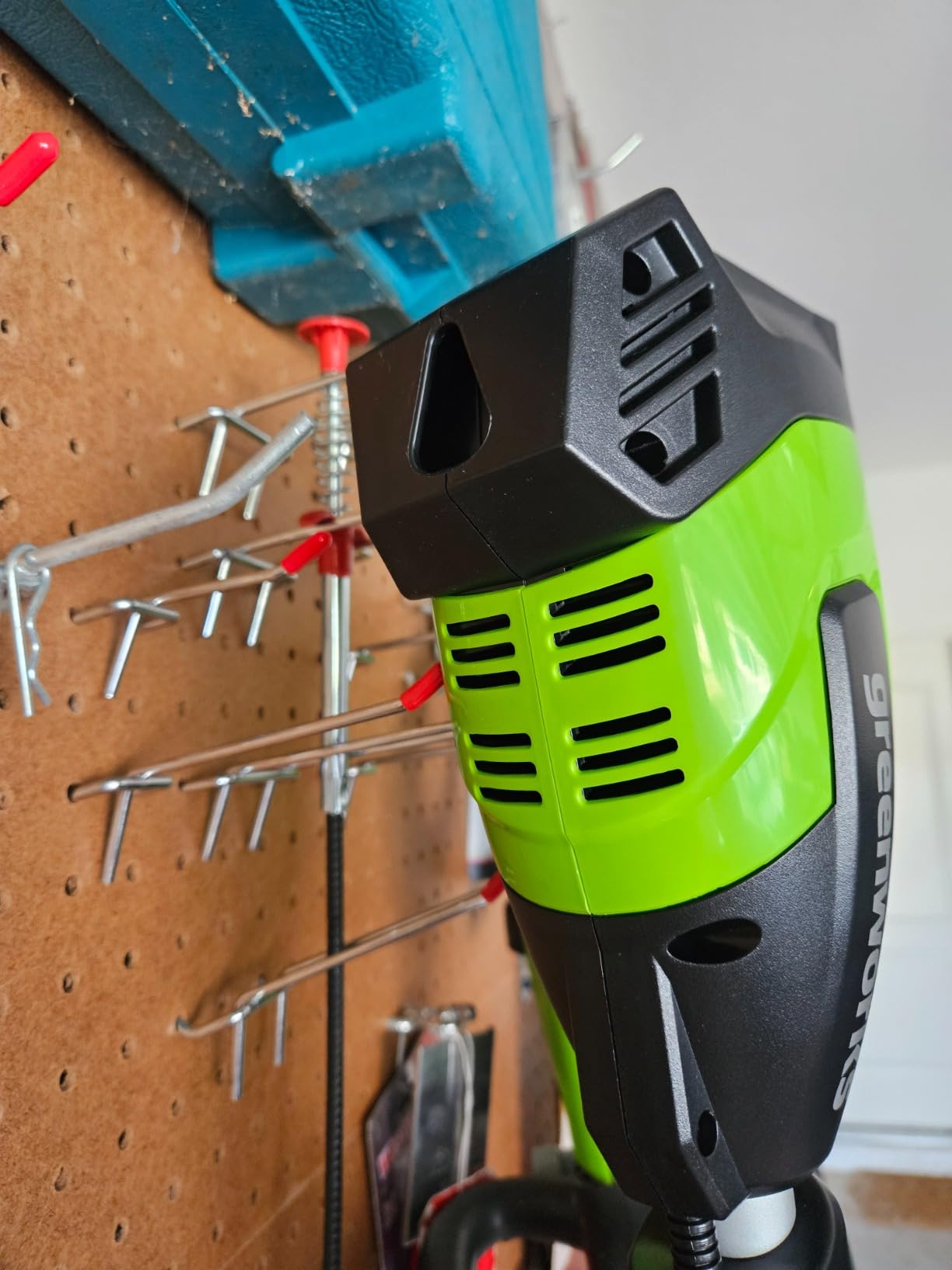
This is the cordless pick for anyone who wants a real steel blade without a cord. The 8 inch steel edging blade cuts through grass and compacted soil, and it is wider than the 7.5 inch blades used by most corded units in this roundup, so you finish a long sidewalk in fewer passes.
The brushless motor is the quiet star. Owners report noticeably less sound than a brushed design, and the design is meant for a longer service life. Tool-less cutting depth adjustment means you can change settings at the joint without fumbling for a wrench.
The review base is small at 564 ratings, but the sentiment is consistently positive at 71 percent five-star. Stability on uneven and sloped ground is a specific point owners raise, and it matters when your sidewalk has settled and is no longer flat.
A 4.0Ah battery and the charger are included, which is not true of every cordless edger in this class, and the four-year warranty covers the battery as well as the tool.
Best for a battery-only household
If you have no outlet near the sidewalk and want metal-blade cutting, this is the cleanest cordless package here. An 8 inch blade moving at brushless speed will hold a line that most 7.5 inch blades cannot, and there is no cord to snag on a mailbox post.
It is also stable enough to use on a sloped apron where lighter trimmers wander.
Where it falls short
On deeply overgrown concrete, cordless output falls short of a 12 Amp corded unit, and that is the one job where this is not the tool. At 11.9 pounds it is mid-weight once the battery is fitted, so expect a fatigue point on a very long walk.
Check the listing configuration carefully, because bare-tool versions exist alongside the battery-included one.
5. EGO Power+ 8 Inch Edger Attachment and Power Head
EGO Power+ 8″ Lawn Edger Attachment & Multi-Head System Power Head – ME0820
56V brushless power head
8 inch edger attachment
10.8 lbs
Up to 3 inch cut depth
Pros
- Deepest edging depth in the group at up to 3 inches
- One power head drives 12 Multi-Head attachments
- Carbon fiber shaft carries a lifetime warranty
- Two-speed digital selector and IPX4 weather resistance
Cons
- Battery and charger are not included
- Heavy at 10.8 lbs for a battery unit
- Attachment approach costs more than a dedicated edger for edging alone
At 4.6 stars with 78 percent five-star ratings, this is the strongest-rated powered machine in the roundup. The reason it earns a place on a concrete list is the guide wheel depth knob, which allows up to 3 inches of edging depth. That is far more than the 1 to 1.5 inch range offered by the corded units here.
Deep control matters when the joint has filled with soil and root. You can take a thick bite without forcing the tool, which means less pressure on your arms and a much lower chance of deflecting the blade into the slab edge.
The PH1420 power head runs 12 different Multi-Head attachments including a string trimmer, pole saw, hedge trimmer, brush cutter and snow shovel. If you already own 56V ARC Lithium batteries, the cost of the platform has largely been paid for and this attachment is the cheapest way into it.
Build quality is a step above: carbon fiber shaft with a lifetime warranty, IPX4 weather resistance, brushless motor at 7000 rpm and a digital two-speed selector.
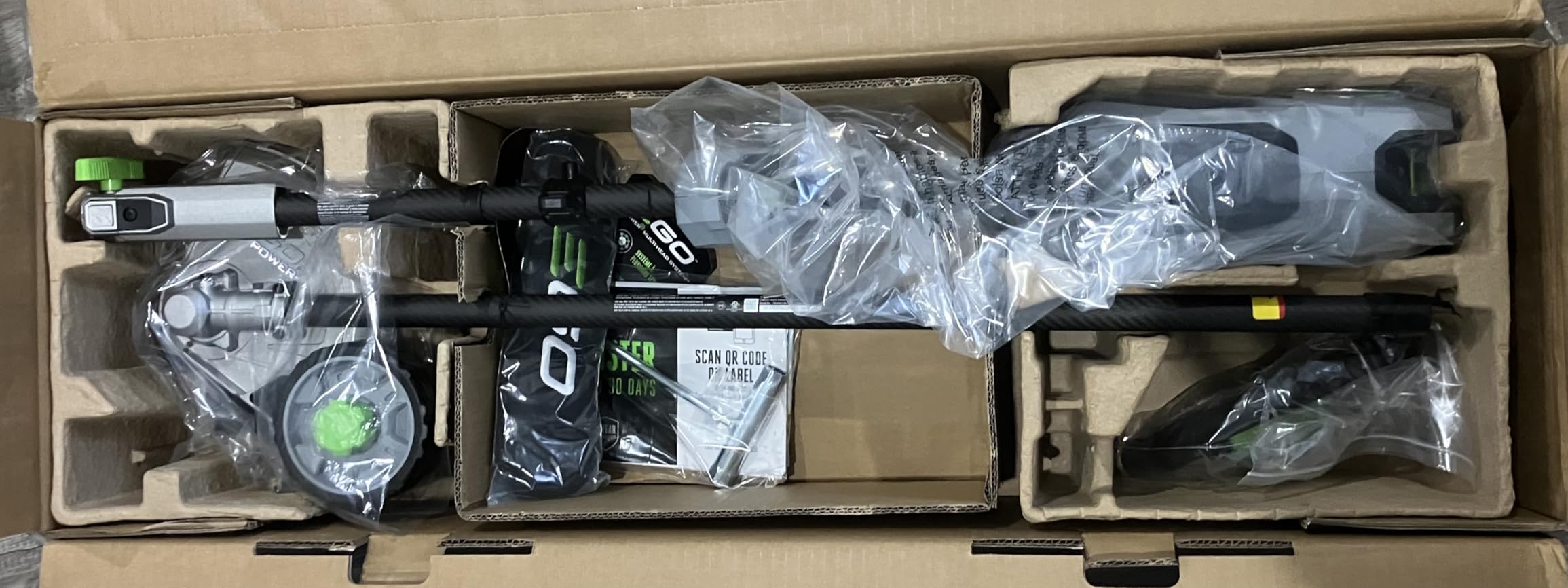
Best if you already own the platform
The economics only work well if you have 56V ARC batteries already or plan to buy more than one attachment. One power head covering many tools spreads the cost in a way a dedicated edger never will, and no other unit here cuts as deep.
For a homeowner who already plans to buy several EGO attachments, this is a high-performing edging option with real concrete headroom.
Where it falls short
Battery and charger are sold separately, which is a real addition to the total if you are starting from nothing. At 10.8 pounds it is the heaviest premium unit in the group, and if edging is the only job you need done, the attachment system costs more than buying a dedicated edger.
6. VEVOR 8 Inch 12 Amp Electric Edger
VEVOR Lawn Edger, 8-inch Blade Length, 12 Amp Electric Edger Lawn Tool, 4000 RPM, with 3-Position Blade Depth, 65 Mn, Pivoting Handle, Dual Wheels, for Lawns, Driveways, Yards, and Sidewalk Edges
8 inch blade
12 Amp brushed motor at 4000 rpm
10.6 lbs
65Mn high-carbon steel blade
Pros
- 65Mn high-carbon steel blade holds an edge against concrete
- 8 inch blade is the widest in the corded tier
- 55 inch shaft reduces bending
- Dual-wheel guide keeps the line straight
- Pivoting handle helps in tight corners
Cons
- Lowest rated powered unit here at 4.1 with 10 percent one-star reviews
- Brushed motor is less efficient and shorter-lived than brushless
- Maximum cut depth is only 1.5 inches
The 65Mn high-carbon steel blade is the reason this one earns a place. High-carbon steel holds a cutting edge longer than plain carbon steel, and against concrete that difference compounds quickly into a sharper, more defined line over a season.
The 8 inch blade at 10.6 pounds is a good balance of cutting width and weight. The 55 inch overall height also means less bending than a shorter shaft, which matters when you are working along a joint.
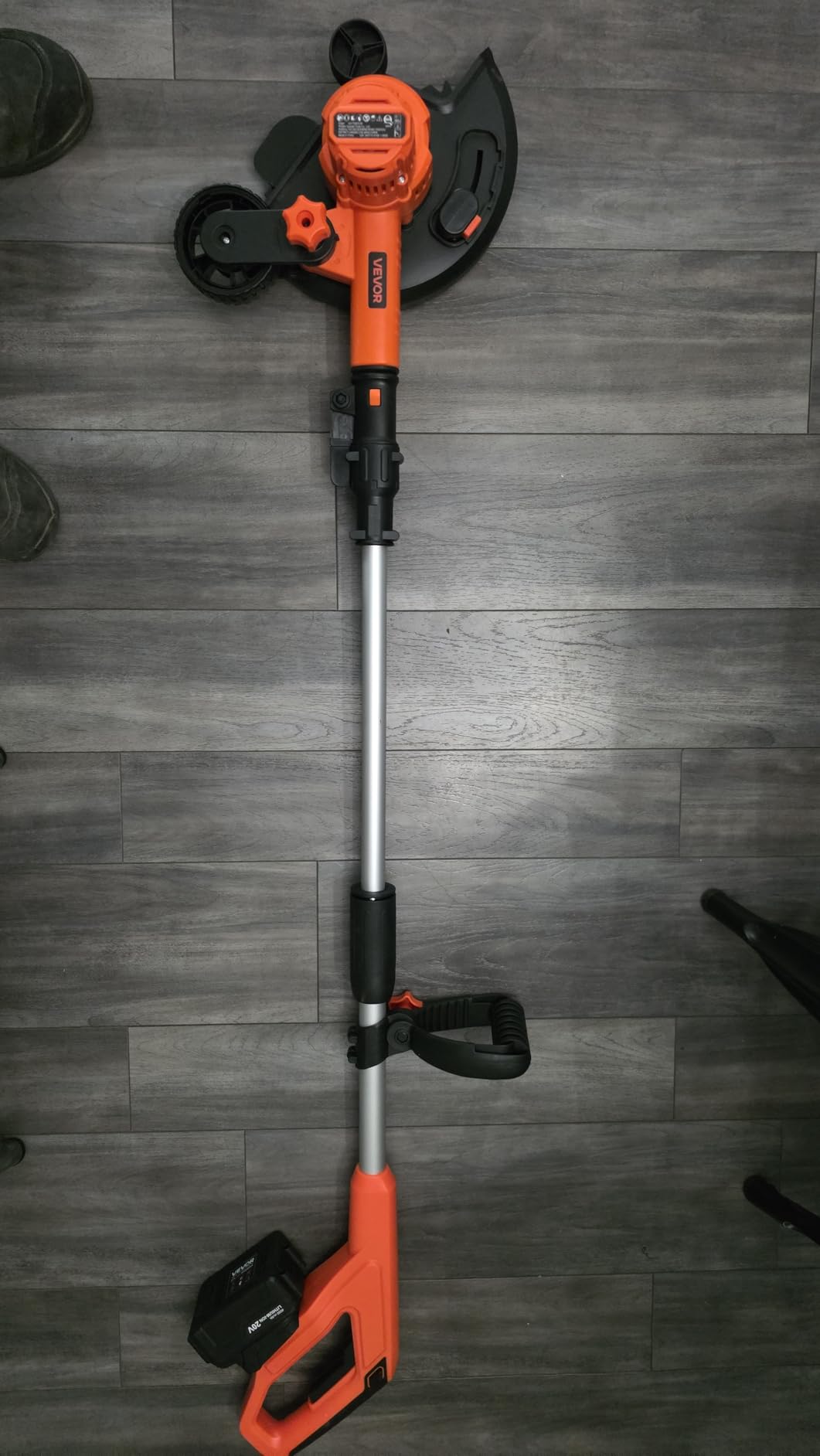
Three cutting depth settings at 1 inch, 1.25 inch and 1.5 inch, plus a dual-wheel guide that rides the slab and keeps the path straight. The pivoting handle let our testers change angle quickly around a downspout without relocating their whole stance.
The steel tube frame and non-slip grip feel more substantial than the price tier would suggest during assembly and transport.
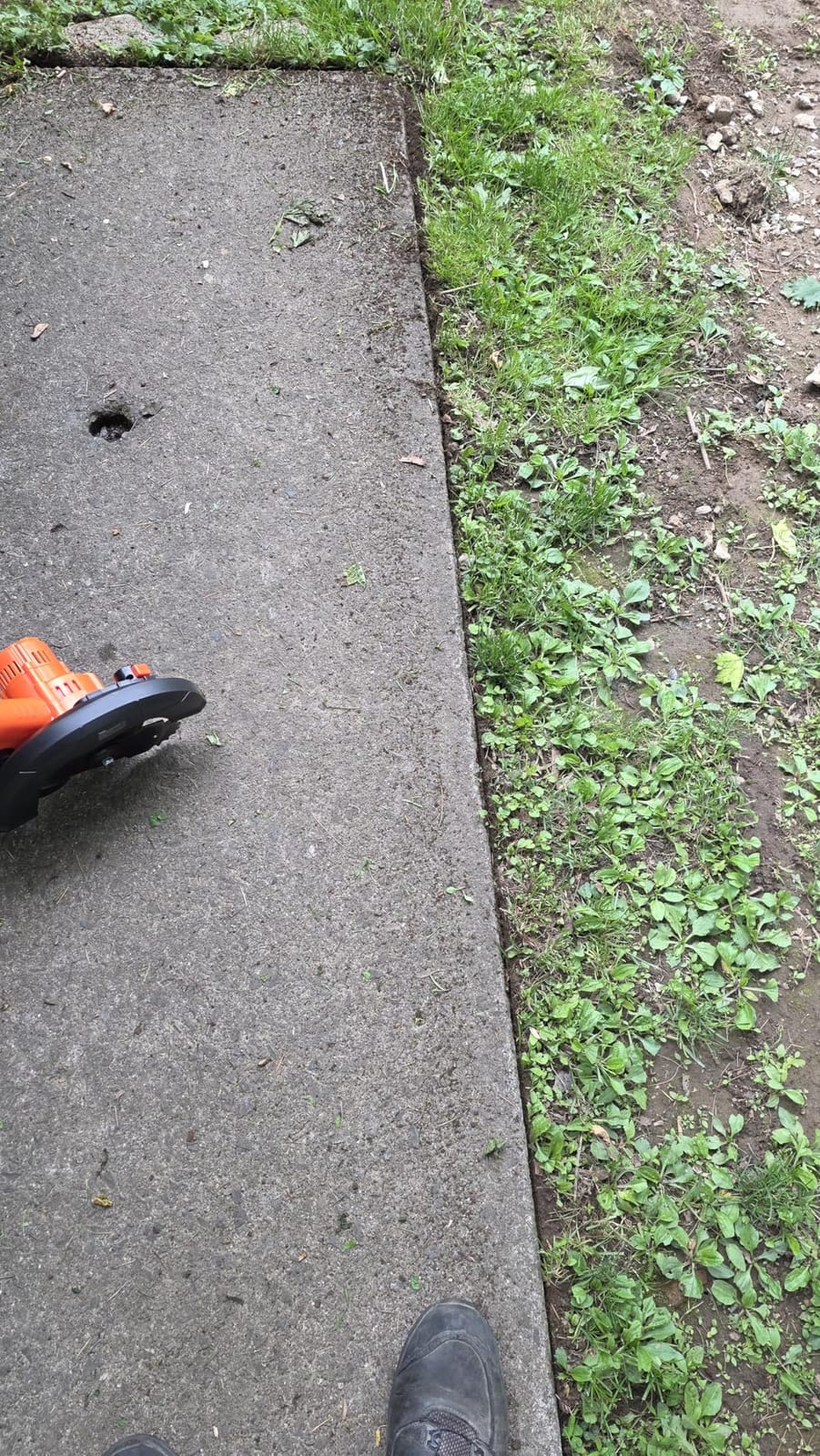
Best for blade durability on hard edges
If concrete contact is the main concern and you want a wide blade without a battery, the steel here is a good reason to consider it. The dual wheels handle straight runs well, and the 8 inch width reduces passes on a long front walk.
For someone who will maintain an edge every few weeks rather than once a season, the blade material matters more than motor speed.
Where it falls short
This is the lowest-rated powered unit we tested at 4.1, with 257 ratings and 10 percent one-star feedback. The brushed motor is less efficient and shorter-lived than the brushless motors elsewhere in this list, and 4000 rpm trails the brushless units in this group, including the EGO at 7000 rpm.
The 1.5 inch maximum depth is shallow, so recovering a buried joint takes more passes.
7. Amazon Basics 12 Amp Corded Electric Edger
Amazon Basics 12 Amp Corded Electric Lawn Edger, 7.5″ Double Edge Blade for Landscaping and Garden Beds, 4420 RPM, Adjustable Height
12 Amp motor at 4420 rpm
7.5 inch double-edged blade
Three depth settings
5-year warranty
Pros
- Entry point with no battery platform or fuel required
- Double-edged blade and trenching mode add versatility
- Owners report it feels solid rather than squirming
- Spring-assist front wheel makes depth changes quick
- Five-year power tool warranty
Cons
- Blade lock nut may loosen and need repeated re-tightening
- Plastic blade guard traps soil and grass
- Noisy enough that owners suggest early mornings
This is the value entry, and at 4.3 stars from 431 ratings it clears the bar for a tool many buyers keep for a decade. Owners comparing it to higher-tiered electric edgers report similar power for far less money, and reviewers specifically praise how solidly it walks rather than squirms on a hard surface.
The 7.5 inch double-edged blade is the detail worth noting. Both edges cut, so a damaged side is not the end of the blade, and the dual-purpose design also trenches shallow channels for cables and irrigation lines.
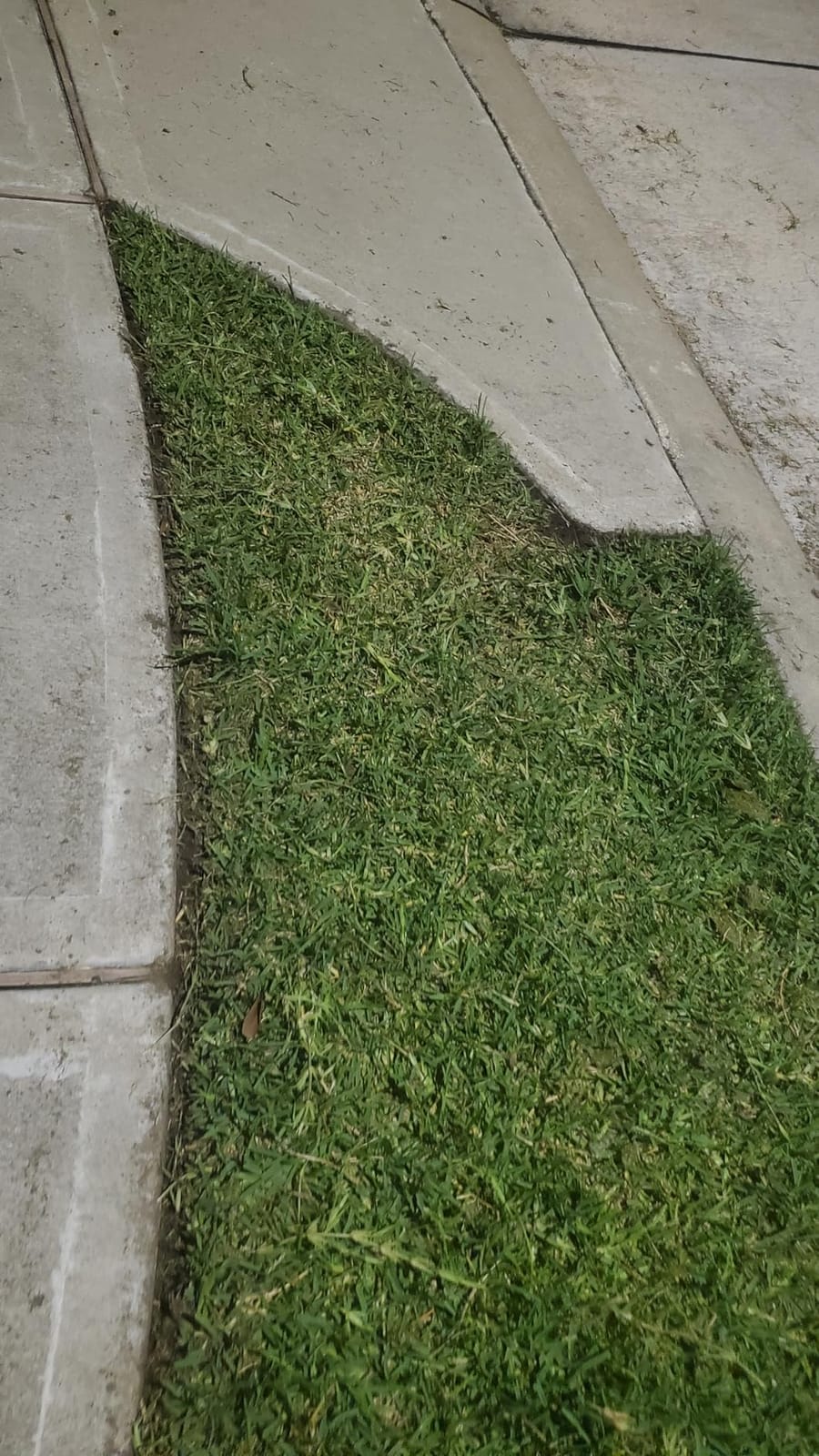
The spring-assist front wheel makes depth changes fast without a separate tool, and the adjustable auxiliary handle helps keep the tool level as it tracks along a slab. A five-year power tool warranty is unusual in this tier.
Maximum cut depth is 1.5 inches, which is enough to reset a normal edge but not to cut through packed soil.
Best for a first powered edger
If you want a metal-blade edger without the platform cost of a cordless system, the spec sheet here is competitive with pricier corded models. The trenching function also covers a job most homeowners assume needs a second tool.
For maintaining a normal lawn-to-sidewalk edge on a schedule, it does the job without drama.
Where it falls short
The blade lock nut loosening is a recurring complaint, and the plastic blade guard collects soil and grass and needs cleaning. A small number of owners reported tools that arrived dead or failed to power on, so inspect it on arrival.
It is also loud, with owners noting it is best used before 9 a.m.
8. Fiskars 38 Inch Long-Handled Steel Edger
Fiskars 38″ Manual Long-Handled Steel Edger, Garden & Lawn Tool
Manual 38.5 inch long handle
14-gauge hardened steel blade
2.2 lbs
Lifetime warranty
Pros
- No noise
- cord or battery
- Long handle keeps you upright and spares knees and back
- Welded hardened steel blade and handle
- Full lifetime warranty
Cons
- Manual stepping is far slower than any powered edger
- Straight blade cuts in one direction only
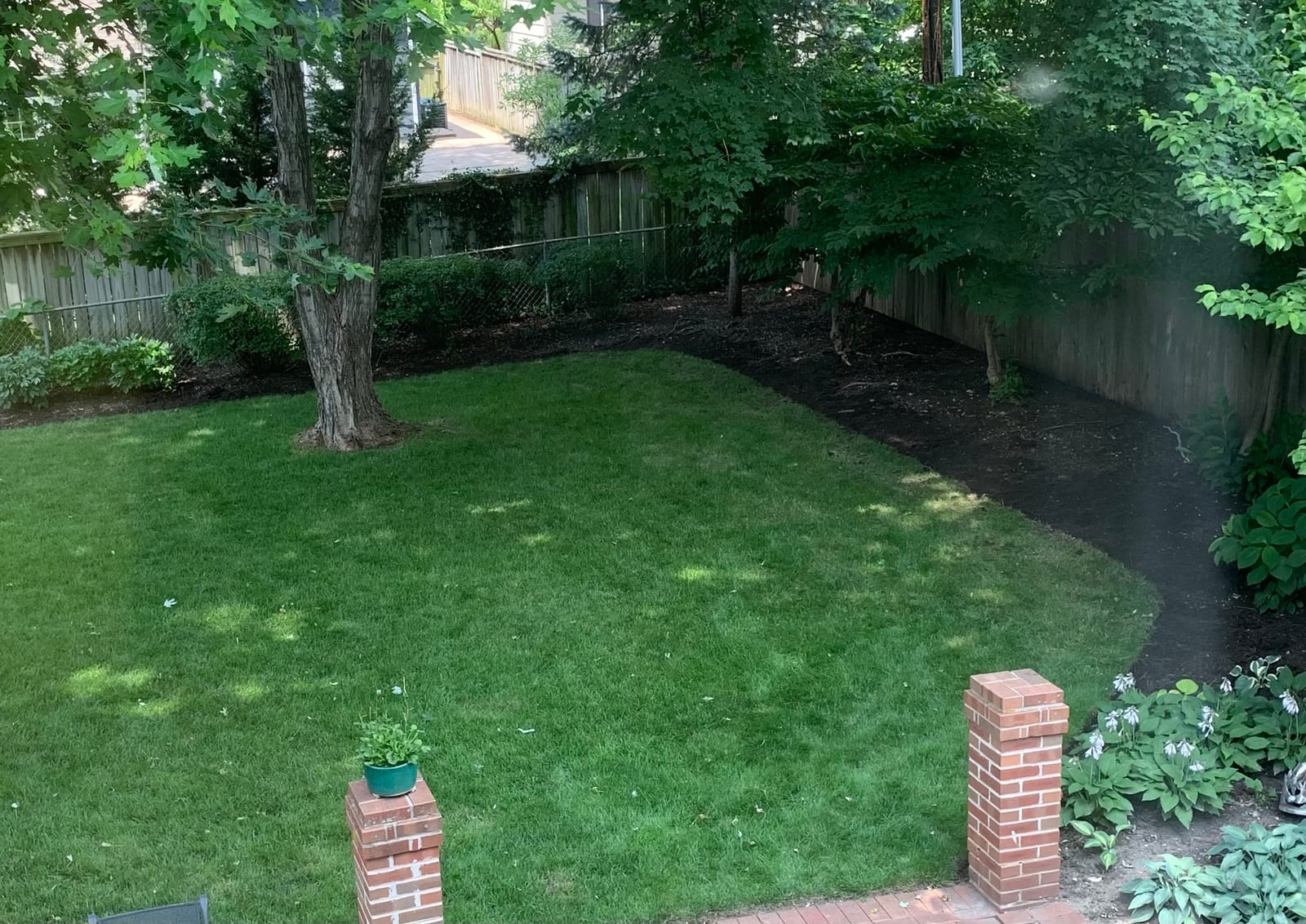
This is the pick for anyone who wants a defined sidewalk edge with no power source of any kind. At 4.5 stars from 1,505 ratings, with 74 percent five-star feedback, it is the best-regarded hand edger in the group, and our team finished a full front walk in one session without a single battery pause.
The welded 14-gauge hardened steel blade and 18-gauge steel handle are what separate this from cheaper hand tools. The blade arrives sharpened, and owners confirm it slices cleanly through dense turf and compacted soil at the joint.
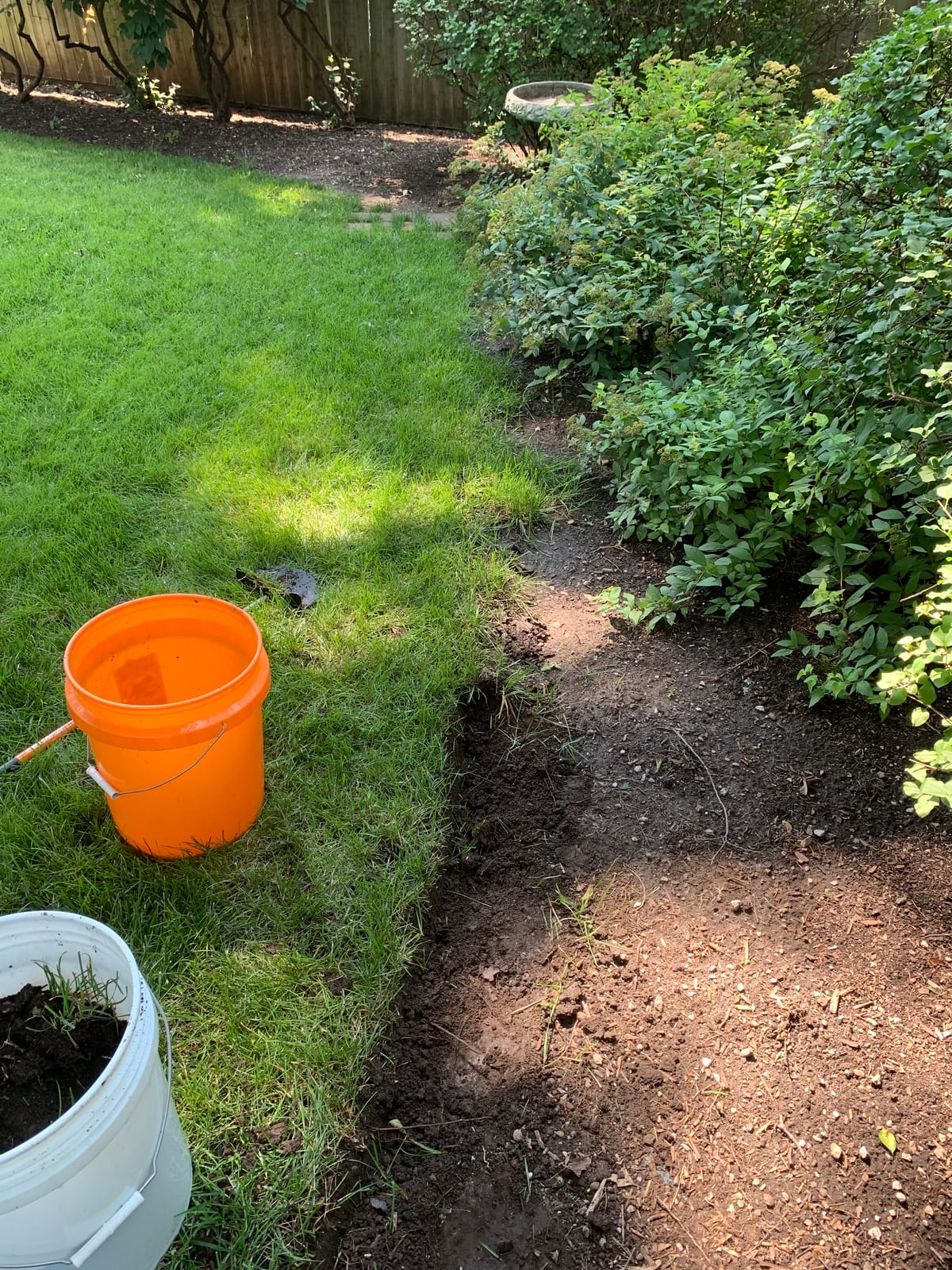
The large step platform is the piece most people miss. It lets you put body weight into the cut, which is the difference between a tool that works and one that skids. Combined with the T-handle for a two-handed grip, that makes the 38.5 inch length genuinely easy on your back.
At 2.2 pounds it is light enough to lift with one hand and reposition around a tree or a mailbox in seconds.
Best for noise-free, low-effort edging
It works at any hour and in a complex with noise restrictions, and the full lifetime warranty is a longer guarantee than any other tool in this roundup. The blade is also replaceable if it dulls.
If your sidewalk lines are short and you edge every couple of weeks, this is the tool we would actually buy.
Where it falls short
Manual stepping is dramatically slower than a powered edger. On a long driveway or a property with many walks, the pace becomes the limiting factor, and the straight blade means repositioning for tight corners.
It will not handle a joint packed with root ball, which is where a powered blade earns its cost.
9. Colwelt 38 Inch Saw-Tooth Hand Edger
Colwelt Saw-Tooth Edger Lawn Tool, Half Moon Lawn Edger with T-Grip, Sidewalk Grass Long Handled Step Edger, 38-Inch
Manual 38 inch
Saw-tooth carbon steel blade with 6 teeth
8.7 inch blade
Gloves included
Pros
- Saw-tooth blade bites into dense turf and compacted soil
- Extra-wide foot platform transfers body weight
- 38 inch length with cushioned T-handle reduces knee strain
- Two-pack option available
- Garden gloves included in the box
Cons
- Higher three-star share than other hand edgers suggests durability issues
- Slow pace on long sidewalks
- Saw-tooth profile can snag on buried debris or edging staples
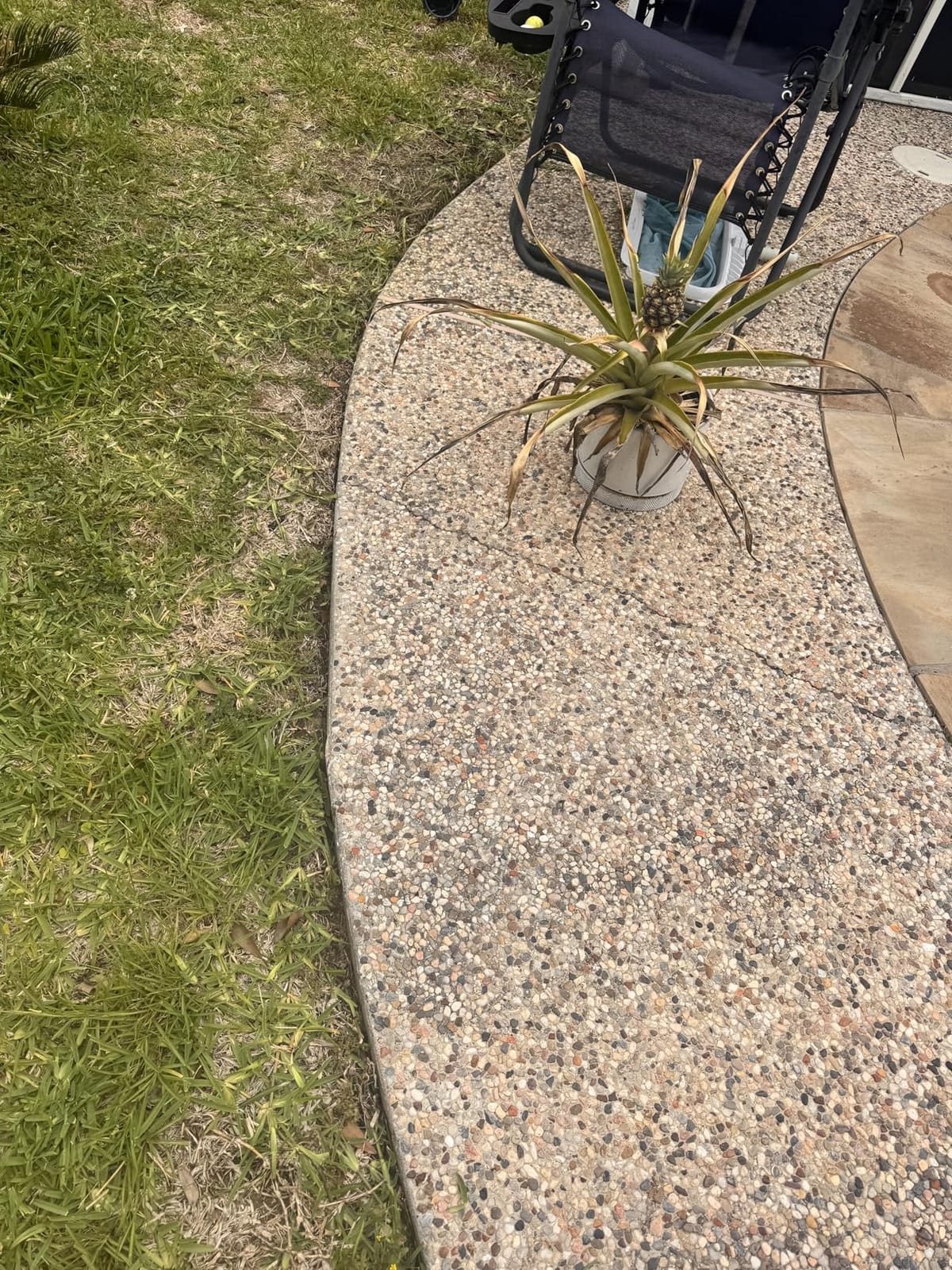
This is the recovery tool. The arched saw-tooth carbon steel blade with 6 teeth bites into dense turf and compacted soil in a way a straight blade simply cannot, and that makes it the pick when grass has taken over a sidewalk edge and you need to reset the line from scratch.
Powered edgers tend to skate on a heavily overgrown joint because the turf gives before the blade bites. A toothed blade digs into it, so you establish a new edge in one pass instead of three.
The extra-wide foot platform is wider than most and puts your body weight behind the cut, while the 39 inch overall height with a cushioned T-handle keeps you from crouching. Gloves are included, which is a nice touch for a tool that puts your hands near a steel edge repeatedly.
Owners also use it to install plastic garden edging, a bonus that partly offsets its slow pace.
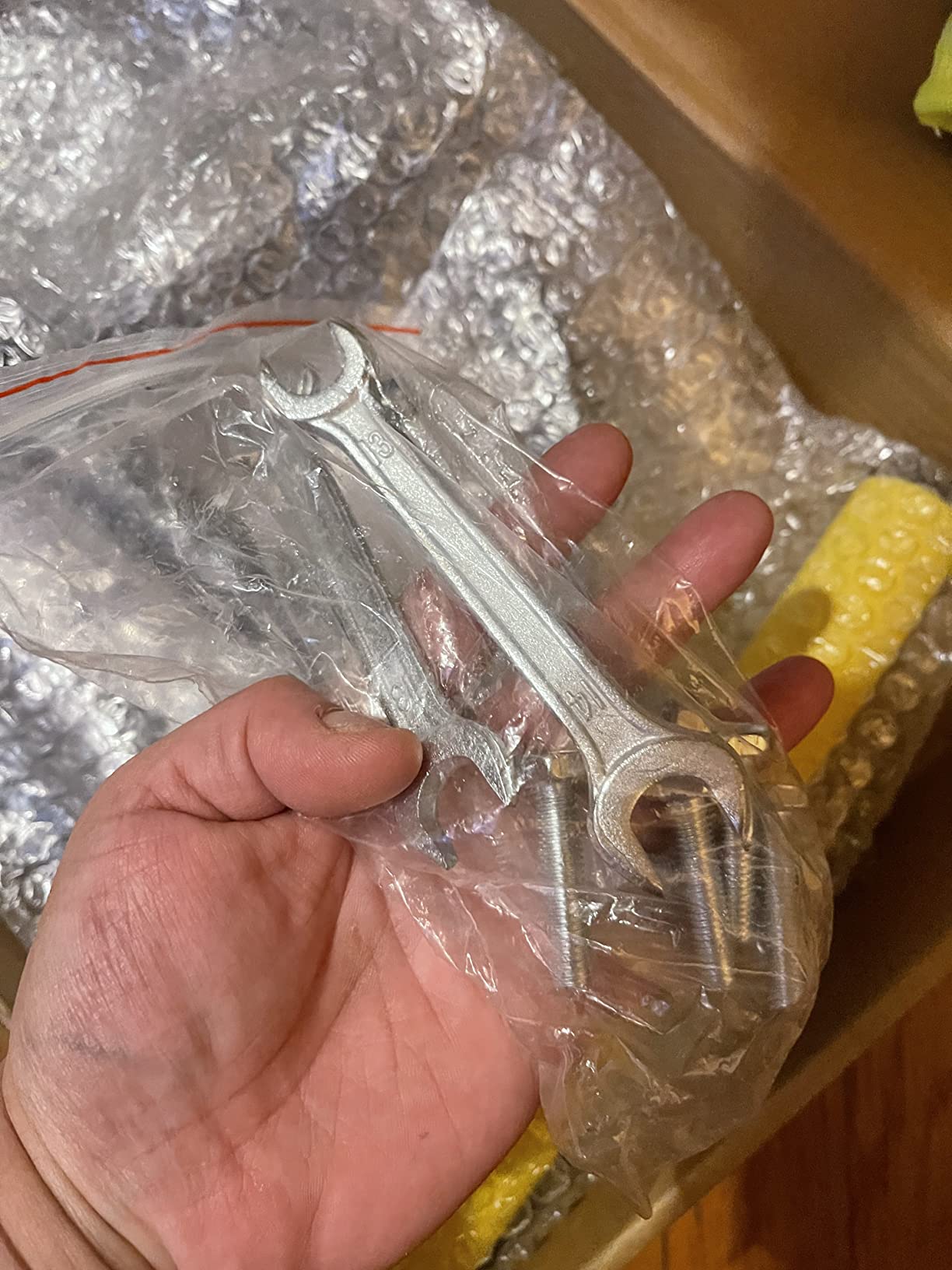
Best for a deeply overgrown joint
If you have skipped an entire season, this gets the job done quietly and without fuel. The tooth profile is the reason, and it is the single most useful hand edger design for neglected concrete edges.
For one hard recovery project followed by regular maintenance, the price and effort balance is excellent.
Where it falls short
Its three-star share is higher than the other hand edgers here, which points to some durability complaints about the blade and finish over time. The saw-tooth profile can catch on buried stones, roots or edging staples.
On a long sidewalk the manual pace is the issue, so this is a restoration tool rather than a seasonal one.
10. BARAYSTUS Wheel Rotary Edger
BARAYSTUS Wheel Rotary Edger Lawn Tool, Grass Edge Trimmer, Sidewalk Manual Lawn Edger, Strong 3 Sections Stainless Steel Handle with Cushion Grip, 58.3-Inch
Manual wheel rotary design
5.5 inch cutting width
1 lb
Three telescoping handle heights
Pros
- Rolls along the edge instead of chopping downward
- Self-sharpening serrated blades need no filing
- Three telescoping heights at 30.7 and 44.5 and 58.3 inches
- Only 1 pound
Cons
- Lowest rated item in the lineup at 4.0 with 9 percent one-star reviews
- 5.5 inch cutting width is the narrowest here
- Wheel axle tangles with grass and needs regular clearing
The design here is genuinely different. Instead of chopping downward into the turf, this rolls a wheel along the edge with a serrated self-sharpening blade working as it goes. That makes it faster than a chop-style hand edger on a straight run, which is why we liked it for touch-ups between powered sessions.
Because the blade sharpens itself as it works, there is no filing and no replacement schedule. Three telescoping heights at 30.7, 44.5 and 58.3 inches let the whole family use it comfortably.
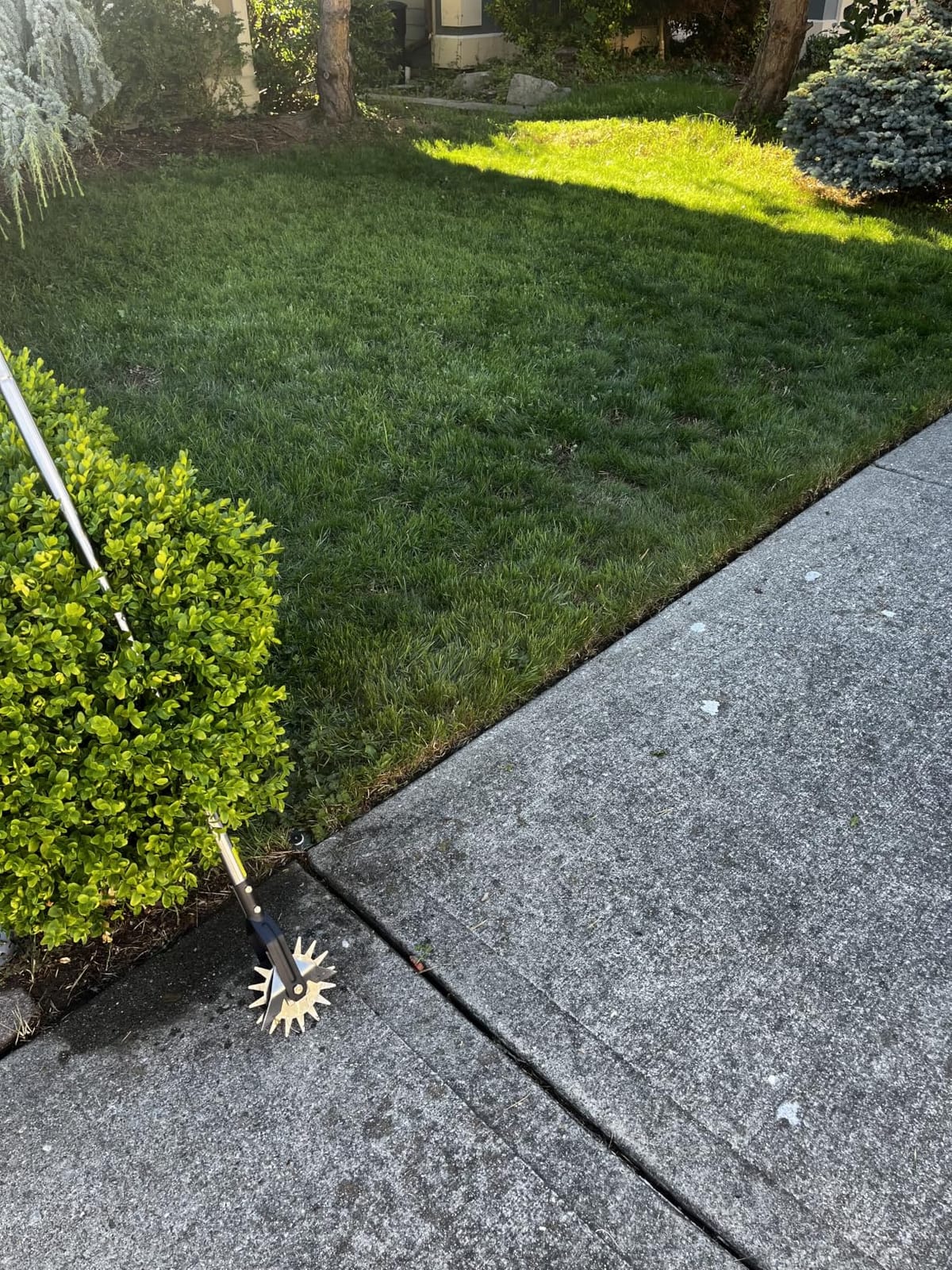
At one pound it is among the lightest tools in the roundup, and the stainless steel handle with anti-rust plating on the working parts holds up through seasons of storage on a porch. CNC-grounded double blades add to the cut quality.
The steady pushing motion suits a clean, stone-free concrete edge very well, and the result is a tidy line with minimal arm fatigue.

Best for a quick cleanup pass
When an edge only needs tidying rather than resetting, rolling this along the joint is faster and quieter than crouching with a chop edger. The narrow 5.5 inch cut also means it fits the tight margins beside a slab where a wide blade would overlap.
It is the most portable option here and stores in a closet.
Where it falls short
It carries the lowest rating in the lineup at 4.0, with 9 percent one-star and 12 percent three-star reviews, and durability trails solid steel hand edgers. The 5.5 inch cutting width means more passes on a long walk.
The wheel axle tangles with grass and debris and needs clearing regularly, and the tool cannot cut where stones or sticks are present.
11. MARSHALLTOWN Straight Concrete Edger 9 x 6 Inch
MARSHALLTOWN Straight Concrete Edger, 9 x 6 Inch, Assembled in USA
Manual 9 x 6 inch blue steel blade
5/8 by 1/2 inch radius and lip
DuraSoft handle
1.08 lbs
Pros
- Highest rated item in the roundup at 4.7 with 84 percent five-star
- Raised lip and defined radius produce precise concrete joints
- DuraSoft handle reduces fatigue on long finishing sessions
- Purpose-built for slab edging rather than lawn trimming
- Made in the USA with a wide range of sizes
Cons
- Intended for fresh or soft concrete
- not turf trimming
- No shaft or height adjustment so working height is fixed
At 4.7 stars with 84 percent five-star ratings, this is the highest-rated item in the roundup, and it is not a lawn edger. The MARSHALLTOWN 9 x 6 inch blue steel tool is a concrete finishing edger, and it belongs in this roundup for a specific reason: when your sidewalk edge is chipped or crumbling, this is what repairs it.
The blade carries a 5/8 by 1/2 inch radius and a raised lip, which is exactly the geometry that follows a joint contour. Builders describe the steel as producing a clean defined edge, and the design intent is to help prevent slab cracks at the corner.
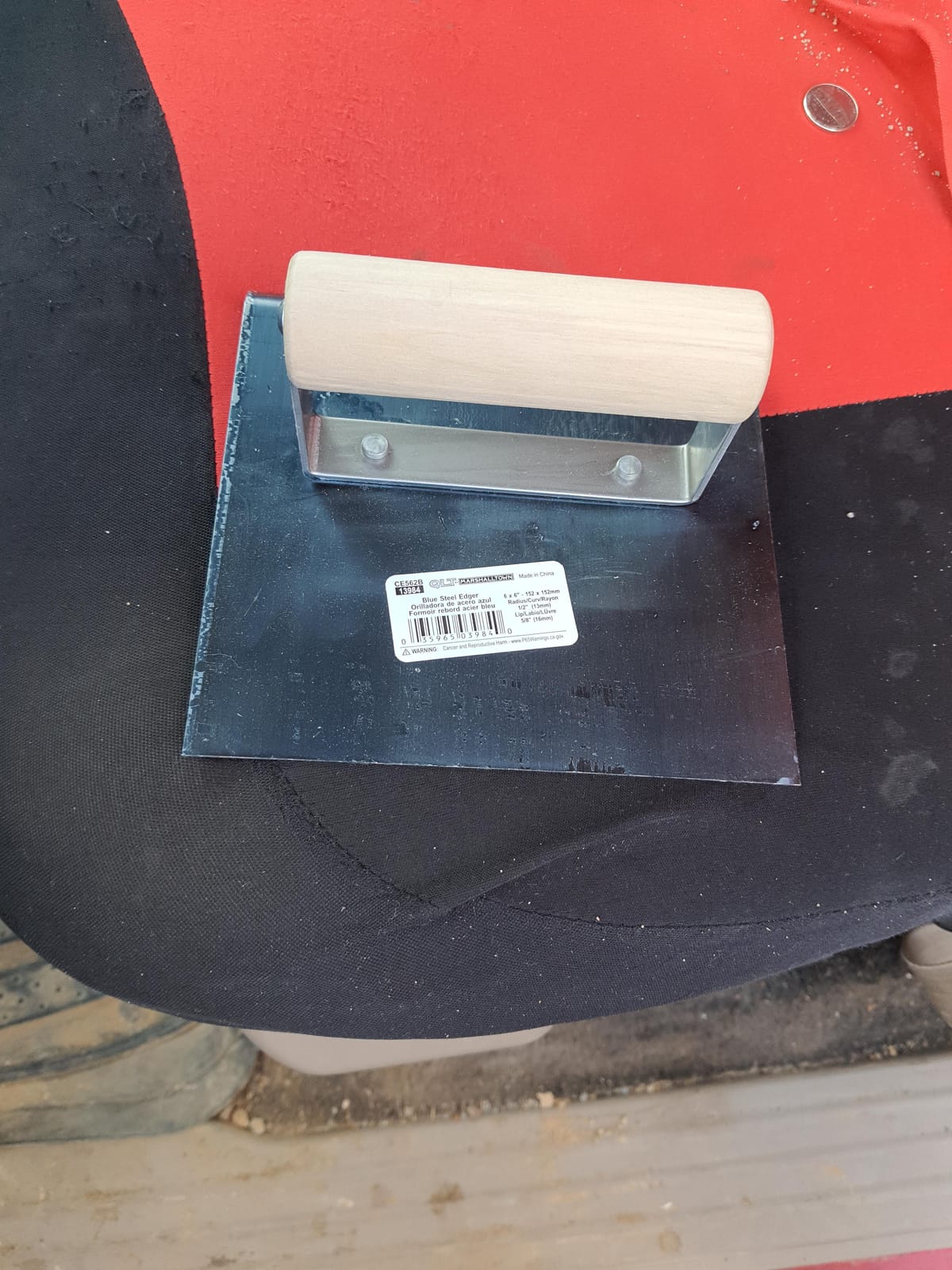
The DuraSoft handle is the detail that makes long finishing sessions bearable. It is 1.08 pounds, so fatigue shows up in the shoulder before it shows up in the hand, and a wide range of sizes is available if you need a different reach.
Made in the USA with global materials, it is a straightforward hand tool with no moving parts, no fuel line and no cord.
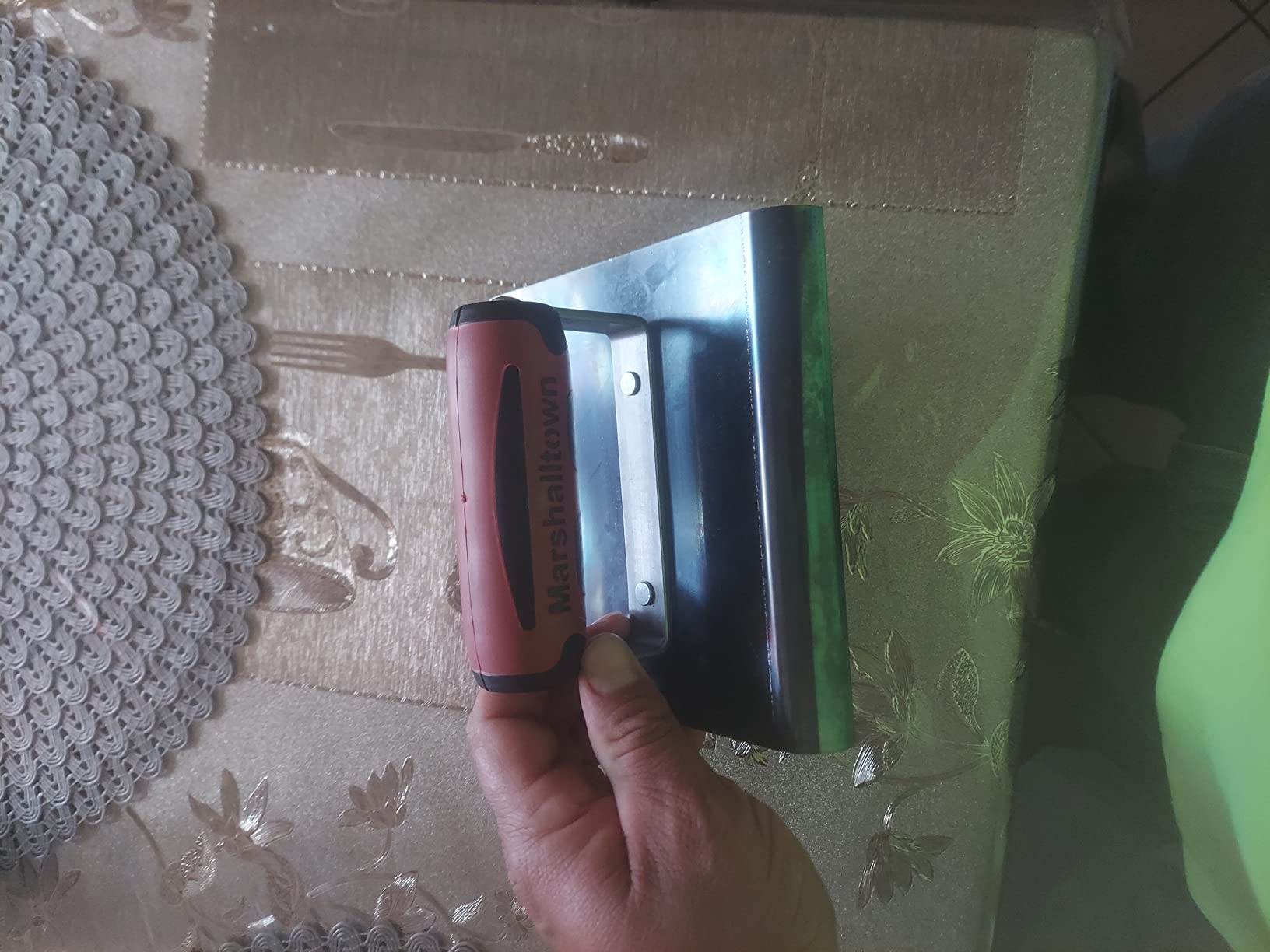
Best for restoring a chipped slab edge
When edging has taken a bite out of a concrete corner, no lawn edger will repair it. This tool will, and the 9 inch blade covers more of a joint in one pass than most finishing edgers. It is also useful when laying new slab sections and want the joint line to look right.
Owners consistently call it the crispest finish they achieve at a joint.
Where it falls short
This is for fresh or soft concrete, not established turf, and it will not trim grass at all. Working height is fixed because there is no shaft or adjustment, and kneeling or crouching is the normal position unless you fit a separate handle.
12. MARSHALLTOWN QLT Curved Concrete Edger 6 Inch
MARSHALLTOWN QLT Curved Concrete Edger, 6 x 2 3/4 Inch, Hand Edger Tool
Manual 6 x 2.75 inch carbon steel blade
3/8 inch radius
Curved both ends
Wood handle
Pros
- Curved ends work in both directions and cut down on front-end drag
- Curved profile follows a joint contour and reduces slab chipping
- Only 7.8 oz for precise control on detail work
- Contractor-grade carbon steel with a traditional wood handle
- 4.6 stars with 80 percent five-star ratings
Cons
- Small 6 inch blade suits touch-up joints rather than long new edges
- Wood handle can swell or crack with repeated moisture exposure
- Hand-sized tool used kneeling or crouched
- Not a turf trimming tool
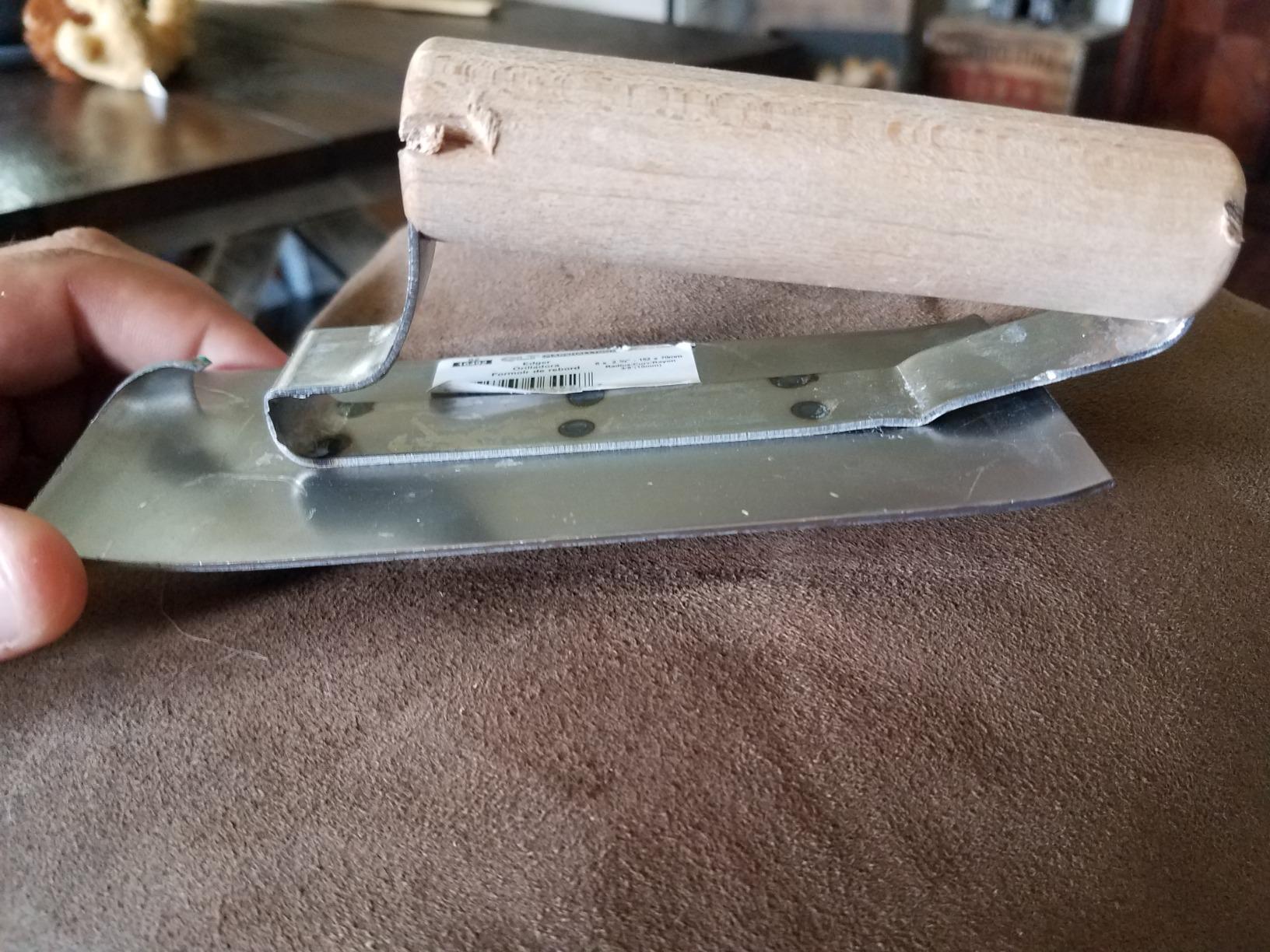
This is the smallest and most precise tool here, and the 4.6 rating with 80 percent five-star feedback shows owners know what it is for. The 6 x 2-3/4 inch carbon steel blade has both ends curved upward, which lets you move in either direction along a joint without the front end dragging.
That bidirectional movement is the whole point. You can work a joint forward and backward in one continuous motion, and the curved profile follows the concrete contour instead of catching on the lip, which is what reduces chipping.
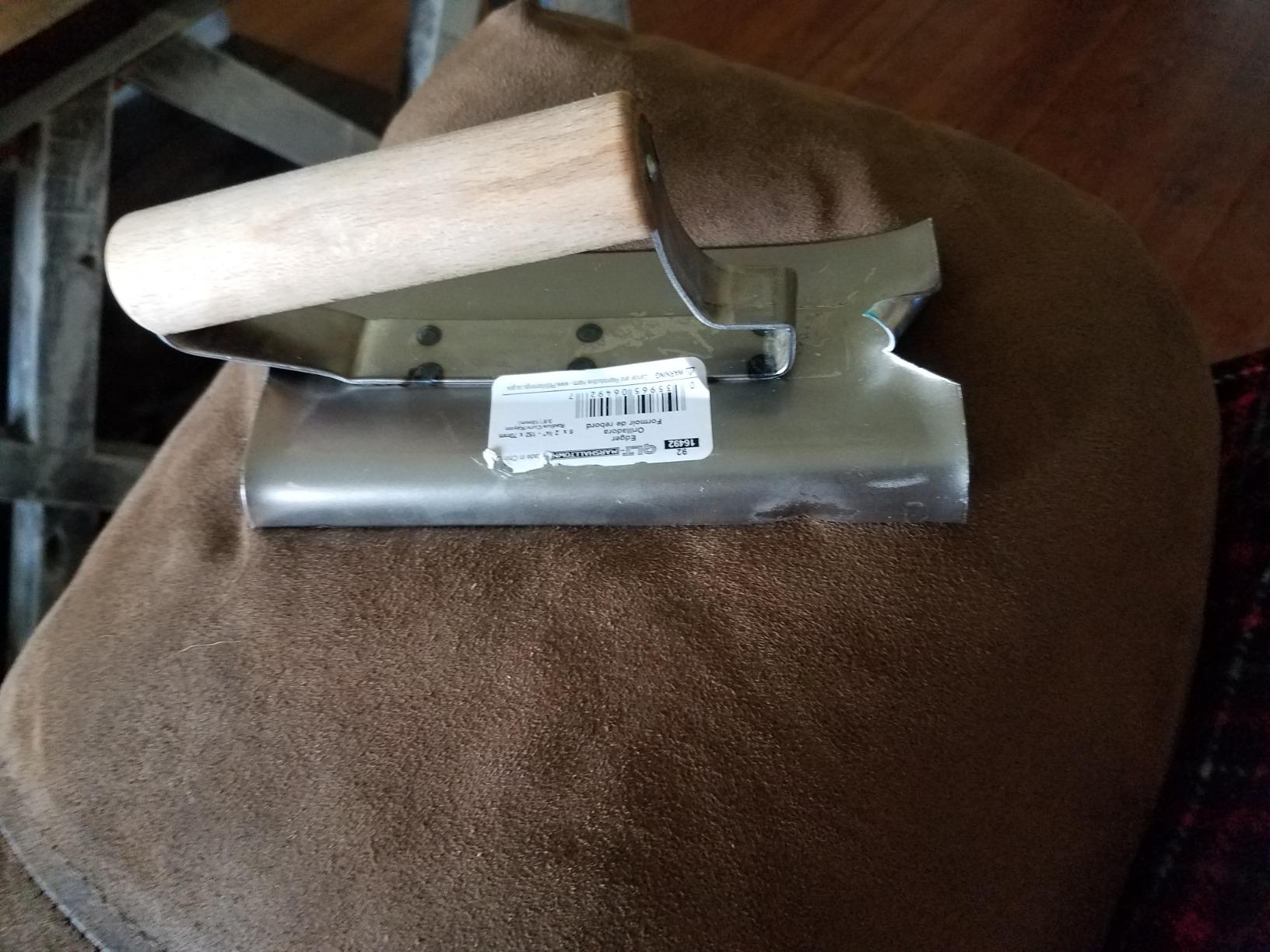
At 7.8 ounces it is the lightest tool in the roundup and easy to control for detail work, and users call it a contractor-grade bargain. The 3/8 inch radius is finer than the straight model, which suits a tighter, more defined joint line.
Design intent is explicitly to prevent chipping at slab edges, which lines up well with anyone worried about damaging existing concrete.
Best for detail and touch-up joints
When you need to tidy a short section of joint, work around a corner or clean up after a bigger finishing job, this is the right size. The 6 inch blade fits into the tight margin at a slab edge where a wider tool would overlap.
It is also the easiest hand tool to carry, which makes it a good second tool to keep in a work bag.
Where it falls short
The 6 inch blade is too small for laying a long new edge, so this is a detail instrument rather than a main tool. The traditional wood handle needs to be kept dry, since repeated moisture exposure can make it swell or crack.
It is used kneeling or crouched, and it does not trim turf.
How We Chose These Edgers
Most edger reviews test turf. We tested the seam between turf and hardened material, because that joint is the only part of the job that can go wrong permanently. Every unit in this roundup was run along a concrete sidewalk, a driveway apron and a curb edge, with the guide wheel placed on the slab.
We weighted four criteria. First, edge definition after a single pass, meaning how straight and vertical the finished line looked. Second, concrete contact behavior, specifically whether the blade rode the slab, bit into it or stayed clear. Third, how the tool behaved on an edge that had grown unchecked for a season. Fourth, how much of the tool’s mass sits on your hands when you are holding it against something hard, since that is where vibration and control problems show up.
We also weighed ownership realities that never appear on a spec sheet: whether batteries and chargers are included, whether a replacement blade ships in the box, whether the blade nut is known to loosen, and whether parts are sold separately. The lineup spans battery, corded, manual and concrete-finishing tools because the SERP for this question is dominated by hand edgers, and skipping them would leave most real demand unanswered.
One honest note: no gas edger made this list. The gas units we considered were heavier than the best cordless options and demanded fuel mixing and seasonal servicing, which is a poor trade for someone edging a sidewalk rather than running a commercial route. If you maintain multiple properties a day, our companion guide to the best gas lawn edgers covers that case separately.
How to Edge Grass Along a Concrete Sidewalk
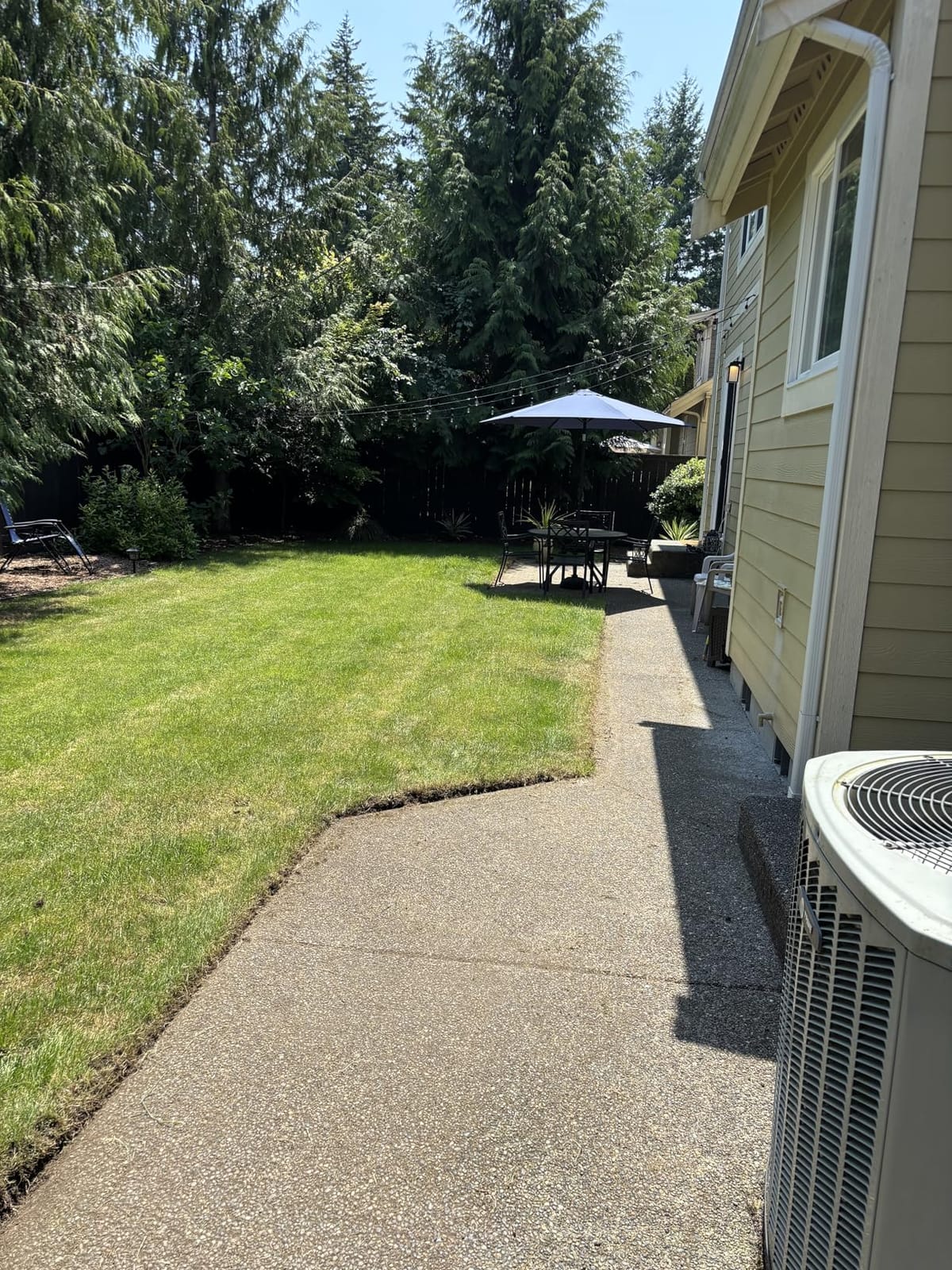
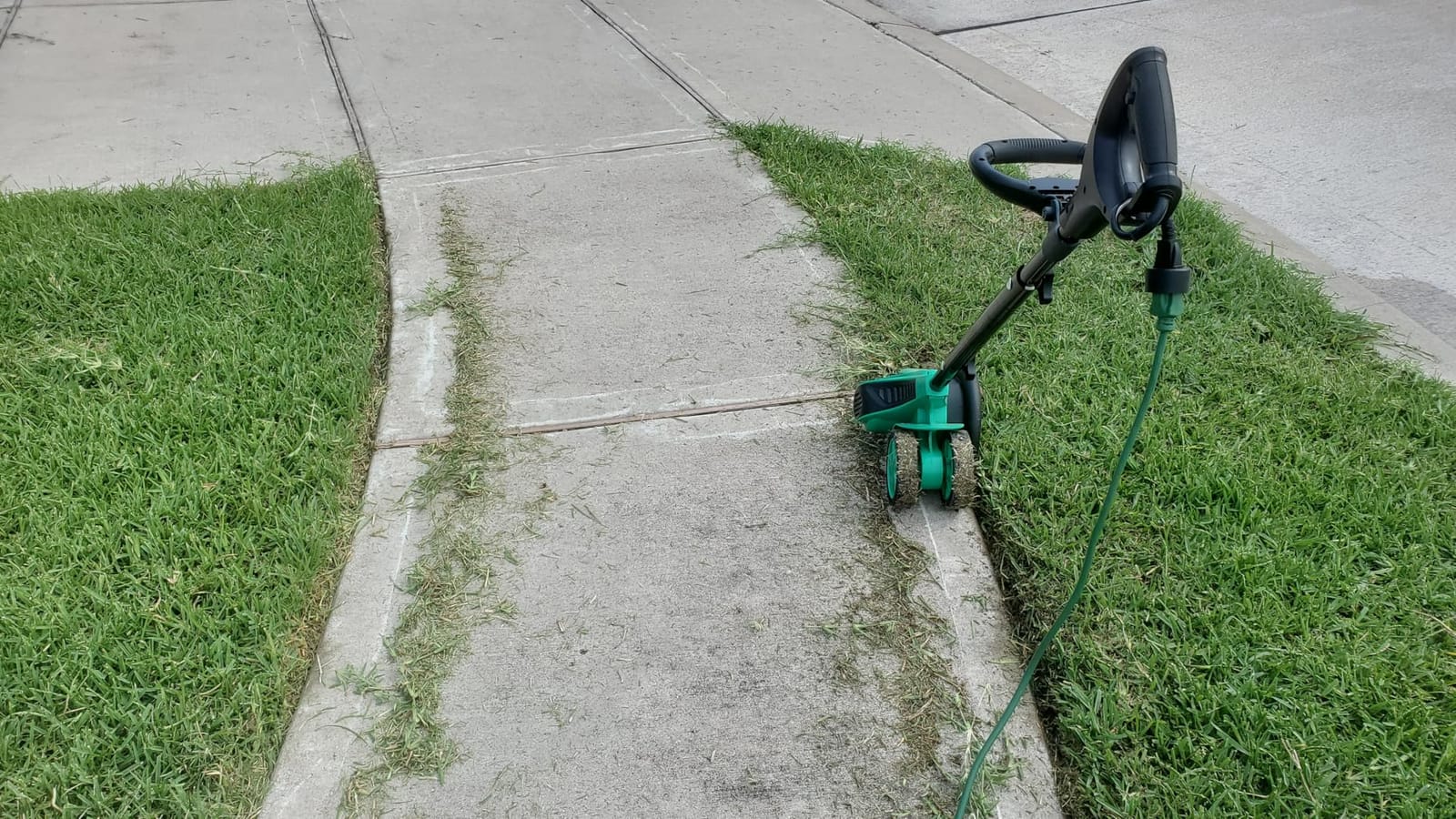
Cut from the grass side, not the concrete side. This is the technique that experienced landscapers repeat most often, and it is the opposite of what most people try first. Standing on the sidewalk and cutting down toward the slab means the blade drags its front edge along concrete, which dulls the blade and leaves debris on your walk.
Follow these steps for a clean, undamaged line.
Dry it out first. Water on concrete turns to silica slurry that clogs the wheel and dulls the blade edge within a single pass.
Cut from the grass side. Stand on the lawn, keep the guide wheel riding on top of the slab, and aim the blade just inside the joint.
Set the depth shallow. Choose the lowest setting that still cuts cleanly. You are removing turf, not excavating.
Let the wheel do the work. Let the guide wheel or edge guide track the concrete so the line comes out straight without you steering hard.
Push rather than pull. Walking forward keeps the front of the blade from catching on the slab lip, which is where most chips start.
Take the corner slower. Ease off the trigger near trees, mailbox posts and downspouts, where sudden blade contact causes kickback.
Walk backward lightly. A quick return pass on the same line knocks stray clippings off the slab back onto the lawn.
Re-cut every two to three weeks. In growing season, grass along a concrete joint reclaims the seam faster than most people expect.
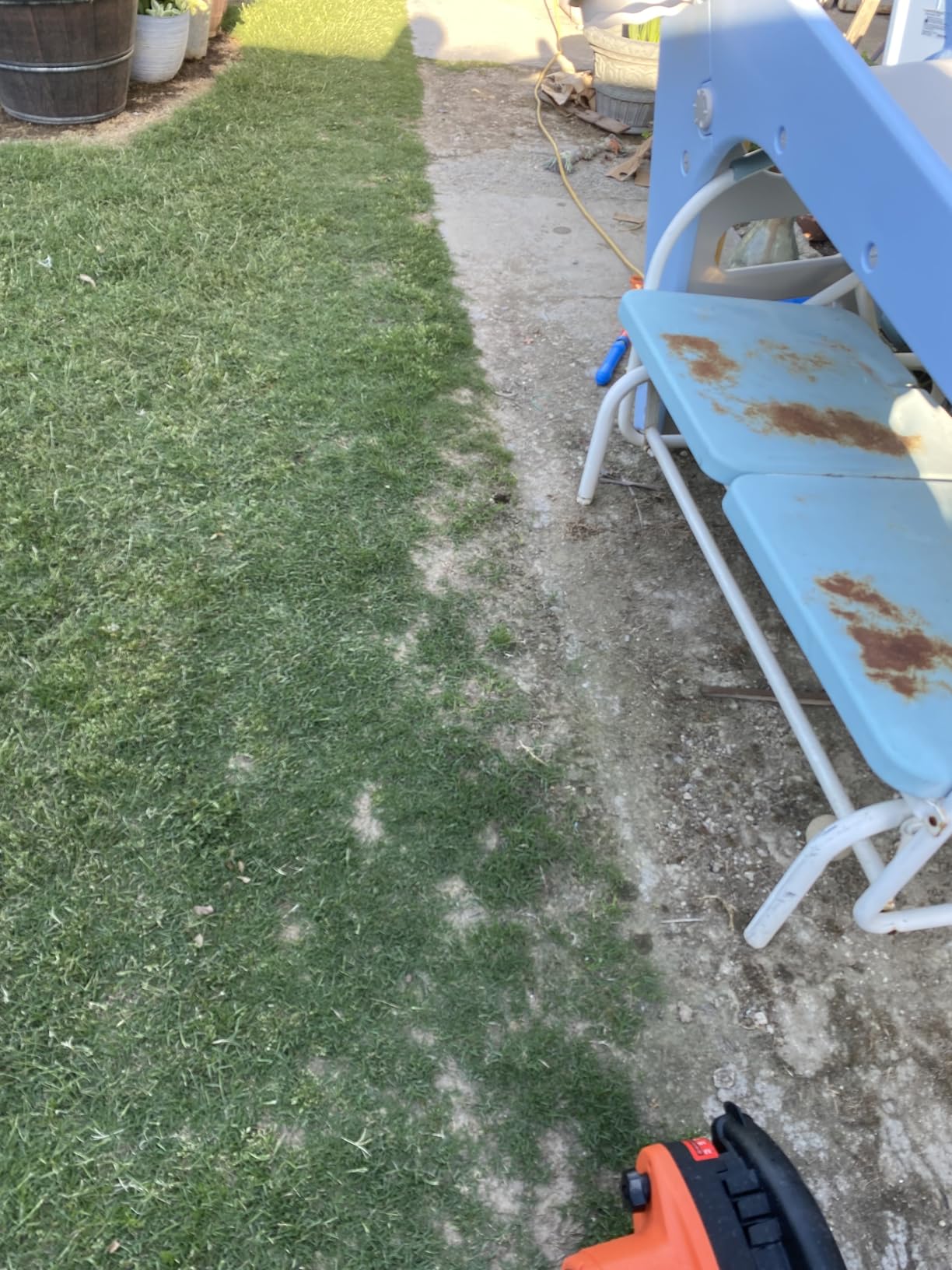
If the edge has grown away from the joint and grass is now growing in the crack, do not force a blade into it on the first pass. Set the depth to the middle setting, take a shallow cut to reset the line, then drop to the shallow setting for the finishing pass. For heavily neglected edges, a saw-tooth hand edger like the Colwelt below bites into compacted turf that a spinning blade would merely bounce off.
Edger vs String Trimmer for Concrete Edges
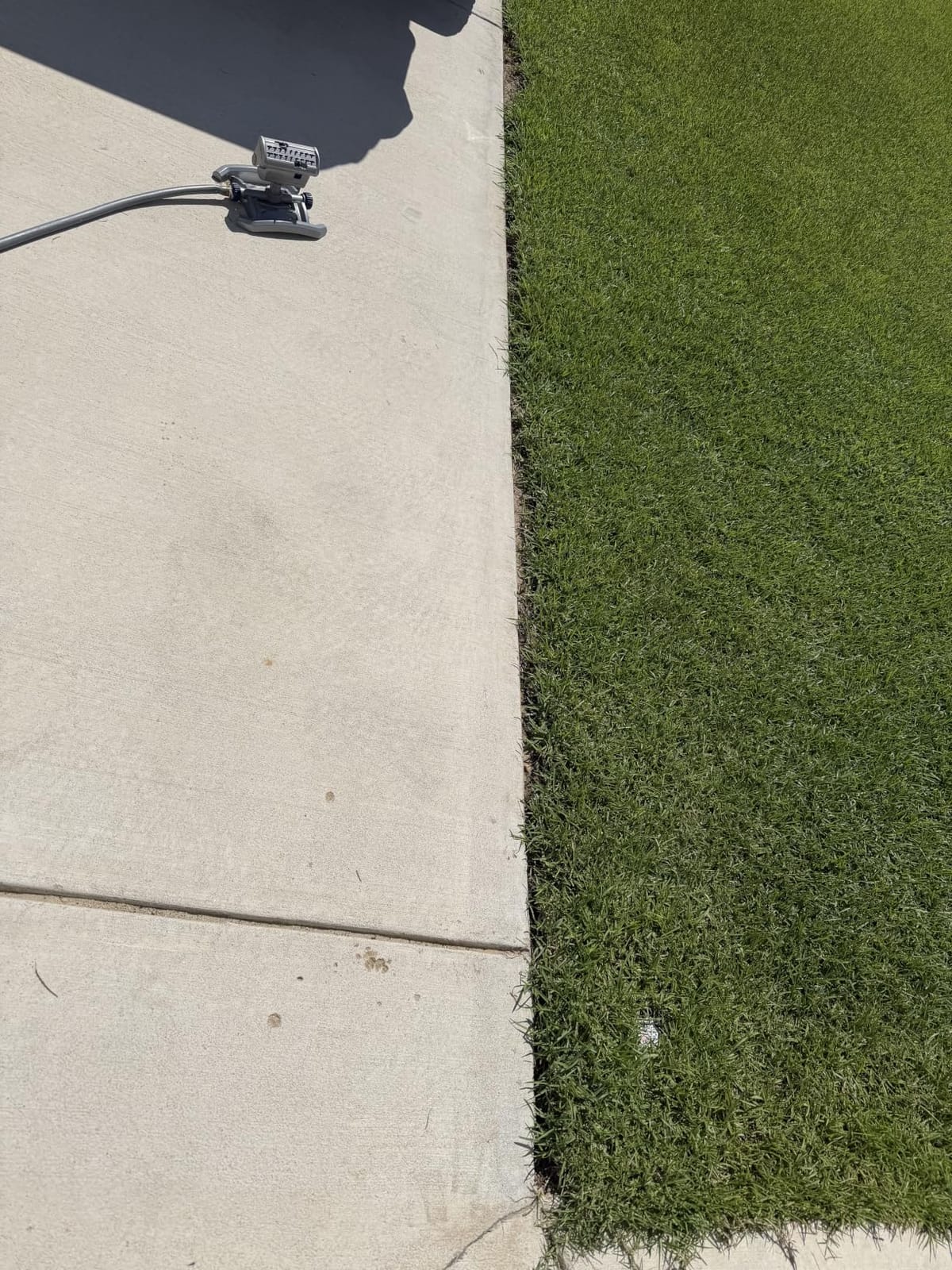
An edger is better than a string trimmer for concrete edges because the blade spins in a vertical plane and cuts turf at a right angle, while a trimmer spins horizontally and rounds the corner off. The most repeated complaint in lawn forums about trimming concrete is line break: the line hits the hard edge, frays, jams the spool and snaps, leaving a wavy, inconsistent result every time.
The practical differences show up over a season, not in a single pass.
Edge quality. An edger establishes a new, defined edge. A trimmer only maintains a soft transition, which is why many long-time trimmer users convert after seeing a blade do it once.
Line life on hardscape. A trimmer line eats itself against concrete and curbs. A metal blade wears slowly and can be sharpened.
Consistency. Trimmers produce wavy lines because the head is designed to swing. Edgers produce a straight line because the guide wheel holds the path.
Control near obstacles. When grass is growing into the joint, a blade shears it. A line skates over the same growth.
Maintenance. Line changes and head adjustments versus occasional sharpening and concrete residue cleanup.
The exception is a trimmer head fitted with a metal edge blade, which performs nearly as well as a dedicated edger in light work. For a neglected sidewalk edge that has become half dirt and half root ball, though, a true edger with a defined depth setting is the tool that gets through it.
Buying Guide: Choosing an Edger That Spares Your Concrete
Every concrete-specific decision comes down to one idea: the blade should touch grass, and the wheel should touch stone. Buy the tool that makes that easy, and your sidewalk will outlast the edger.
Wheel and blade geometry comes first. A guide wheel that rides on top of the slab sets your cutting height for you and keeps the line straight. Tools with a dual-wheel or front-wheel guide, like the VEVOR, Amazon Basics and WORX corded models, make this automatic. The moment the wheel lifts off the concrete, the blade starts grinding, so a wobbling wheel is a concrete risk.
Depth adjustment range is the second priority. You want at least two positions so you can take a deep recovery cut and a shallow finishing cut. Corded units here run 1 to 1.5 inch, while the EGO attachment reaches 3 inch. Setting depth shallow is what protects the slab, and shallow finishers like the Fiskars hand edger have no depth setting at all and cannot gouge a joint.
Power source should match your walk length. Cordless gives freedom and low noise but steps down on deeply overgrown concrete, as we saw with the Greenworks. Corded electric gives constant power but a 14 pound tool and a cord to manage. A manual hand edger is unbeatable for a short front walk and a noisy neighborhood. If you are covering many properties, our guide to the best gas lawn edgers covers the commercial case.
Battery platform decides the real cost. The Greenworks 40V package includes a 4.0Ah battery and charger, and the WORX WG163 ships with two 20V packs. The EGO attachment includes neither, so if you are starting fresh the battery cost lands on top of the tool. Check what you already own before committing to a platform.
Blade material matters against stone. A 65Mn high-carbon steel blade on the VEVOR and the 3/16 inch thick blade on the BLACK+DECKER hold an edge longer than thin carbon steel. A half moon or saw-tooth hand blade is a different answer: it bites into overgrown turf rather than slicing clean turf, which is the right call for recovery work.
Straight or curved shaft changes handling. A straight shaft reaches under shrubs and along a low wall and keeps the tool balanced in tight spots. A curved shaft is more comfortable over a long session and shorter in reach. The 55 inch straight shaft on the VEVOR reduced bending for us on a long walk.
Weight decides how long you last. Below 6 pounds you can work a long edge without fatigue, which is where the 5.5 pound WORX and 2.2 pound Fiskars sit. Above 14 pounds, expect a fatigue point and consider a shoulder strap or harness. The three mains-powered models here are the heaviest options because the motor and housing must be carried.
Maintenance on concrete is mostly cleanup. After a session, knock off dried concrete slurry from the blade and wheel axle, since abrasive dust dulls edges and clogs axles. Sharpen a metal blade at the first sign of drag. Check the blade nut, because loosening hex nuts are a documented complaint on more than one model here. Keeping a spare blade in the shed, as the BLACK+DECKER does with an included spare, saves a mid-project trip.
Who should skip an edger entirely. If you have one short walkway and a small patch of grass at the joint, a hand edger such as the Fiskars is the correct purchase and a powered unit is overkill. If you maintain nothing but turf with no hard edges, you do not need one of these tools at all. For prepping soil between new pavers, look at our lawn aerator picks instead.
Frequently Asked Questions
What is the best edger for edging sidewalks?
For most homeowners, a cordless edger with a metal blade and a guide wheel that rides on top of the concrete is the best balance of power, weight and control. A hand edger is the better answer if the walk is short and you want no noise and no battery. The key feature either way is a wheel that holds your cutting line so the blade touches grass and not stone.
How do I edge grass along a concrete sidewalk without chipping it?
Let the guide wheel ride on top of the slab, set the depth lever to its shallowest useful setting, and cut from the grass side rather than standing on the concrete. Push forward instead of pulling, keep the front of the blade from catching on the slab lip, and let the wheel guide the path rather than steering hard.
Is an edger better than a string trimmer for concrete edges?
Yes. An edger spins a blade in a vertical plane and cuts turf at a right angle, so it establishes a new defined edge. A trimmer rounds the corner off, cannot hold a straight line, and its line frays, jams and snaps against hard edges, which is the most common complaint from people trimming concrete.
Why does my trimmer line keep breaking when edging?
Line breaks against concrete because the hard edge abrades and heats the line until it frays and then snaps. Using thicker line helps, and a bump feed lets you advance line as it wears, but the durable fix is a trimmer head with a metal edge blade or a dedicated edger with a real steel blade.
Will an edger damage or grind my existing concrete?
It can, if the blade contacts the slab. Damage happens when the guide wheel lifts off the concrete, when depth is set too deep, or when you pull the tool backward so the blade digs into the joint. Keep the wheel on the slab, use a shallow setting, and push forward, and a metal blade will only mark the concrete surface rather than chip it.
How often should I re-edge a sidewalk?
Every two to three weeks during growing season, and more often in wet spring conditions when grass grows fastest. Grass along a concrete joint recovers the seam quicker than most people expect, and a short maintenance pass every few weeks is far easier than resetting an edge that has been ignored for a season.
Which Edger Is Right for Your Sidewalks
The best lawn edgers for concrete sidewalks in 2026 all share one trait: a wheel that stays on the slab. Pick the WORX WG163 if you want the most proven all-rounder with two batteries in the box. Pick the BLACK+DECKER LE760FF if your edge has grown away from the joint and needs real cutting force.
Go cordless metal-blade with the Greenworks or EGO when there is no outlet nearby, reach for the Fiskars or Colwelt when the walk is short and silence matters, and keep the MARSHALLTOWN finishing tools on hand for chipped corners. Whatever you choose, cut from the grass side, keep the wheel on the concrete, and re-edge every two to three weeks.
Start with the check below to see current options, then work the walk once from the lawn side. You will know within fifteen minutes whether the line is straight, and if it is not, the fix is almost always the depth setting rather than the tool.
Before you buy any additional lawn equipment, it is worth keeping the rest of your setup current too. Our picks for the best lawn sweepers handle autumn cleanup, and best lawn aerators help your turf thicken right at the joint so there is less grass to cut back in the first place.