
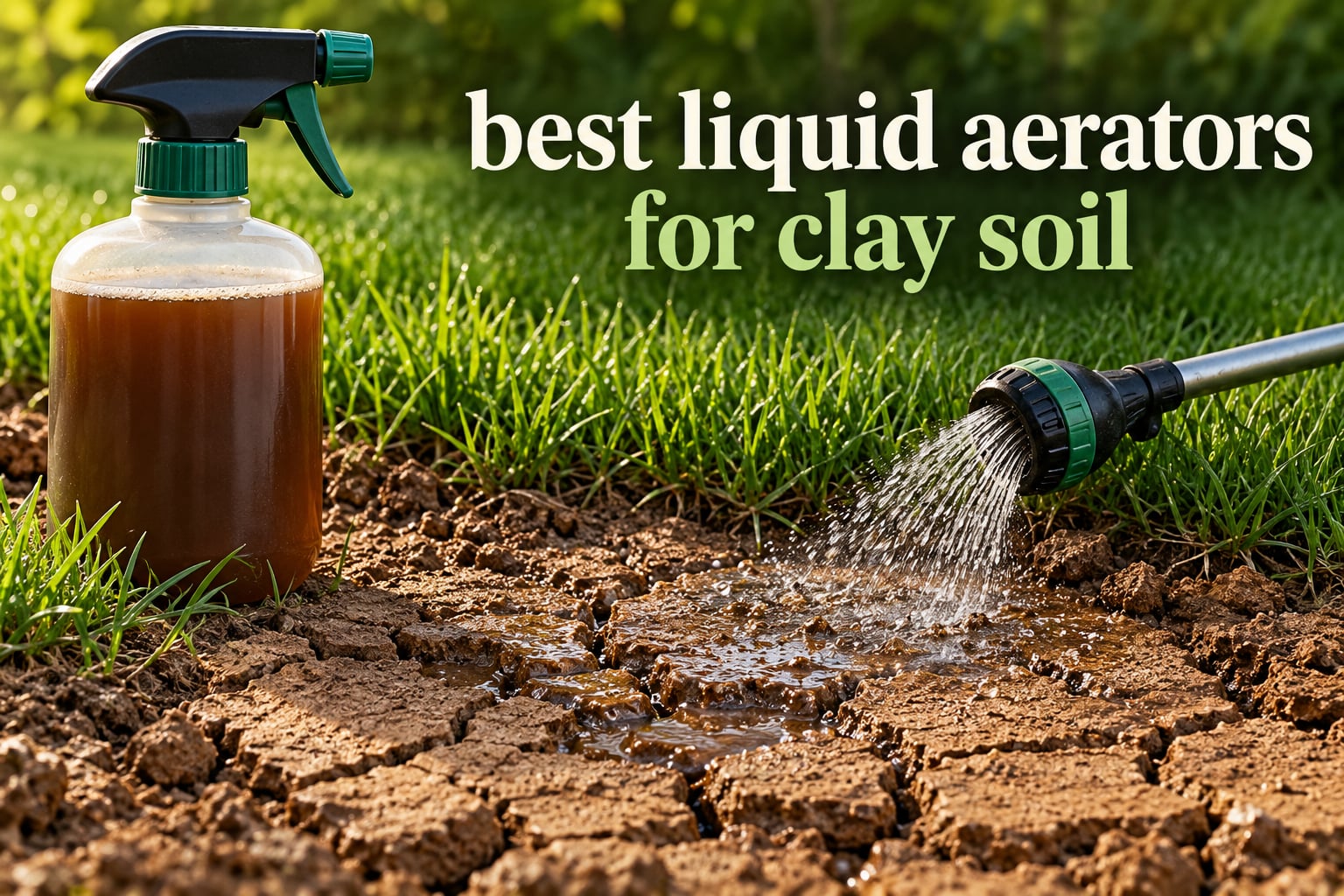
Clay soil packs down into a dense, slow-draining mass that holds water at the surface, blocks air and nutrient movement, and confines roots to a shallow layer. Fertilizer and irrigation on that kind of ground do very little. Liquid aeration is the spray-applied answer: a blend of surfactants, humic and fulvic acids, kelp extract, enzymes and microbial additives that wets and loosens compacted soil and encourages it to form stable aggregates, without pulling soil plugs the way a core aerator does. The honest caveat, stated up front: on severe clay it complements core aeration rather than replacing it. This roundup of the best liquid aerators for clay soil covers ten concentrate products, what each one actually does to clay, and where each falls short.
What you should expect is not broken-up hardpan. What you should expect is faster infiltration, less runoff, water that stops pooling in low spots, and a turf that greens up because nutrients finally reach the root zone. Those are the signals that real users report, and they match what the research supports. If your yard has a genuine hardpan crust or years of accumulated traffic, put the money into a rented core aerator first and use a liquid product as the follow-up. Our guide to the best lawn aerators covers the mechanical side if you need it.
Table of Contents
Key Takeaways
Best overall: Simple Lawn Solutions Liquid Soil Loosener for the widest coverage claim and the largest review base in the category.
Best value: LawnStar Liquid Lawn Aerator, the concentrate most often named by owners posting about clay yards.
Premium pick: Covington Liquid Lawn Aerator, built specifically for clay-heavy ground with humic acids, amino acids and kelp.
Budget pick: Grow More EZ Wet Soil Penetrant, a pure non-ionic surfactant for wetting rather than loosening.
The honest limit: liquid aeration improves infiltration and reduces runoff. It does not relieve compaction the way hollow-tine core aeration does.
Watch for over-application. Extra surfactant on already-poor drainage can make waterlogging worse, not better.
Top 3 Best Liquid Aerators for Clay Soil Right Now (October 2026)
Three products stand out from the field for clay, and they stand out for different reasons. The first is the one with the deepest review base and the most generous coverage claim. The second is the one owners on clay keep naming to each other. The third is the one whose formula was built around the problem rather than adapted to it.
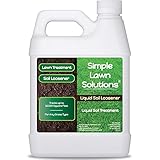
Simple Lawn Solutions Soil Loosener
- Covers up to 32
- 000 sq ft
- Safe for all grass types
- Works alone or with core aeration

LawnStar Liquid Lawn Aerator
- 1:1024 mixing ratio
- 30
- 000 sq ft coverage
- Alternative to core aeration

Covington Liquid Lawn Aerator
- Humic acids
- amino acids and kelp
- Safe for children and pets
- Made for clay-heavy yards
All 10 Liquid Aerators for Clay Soil Compared in 2026
Every product below is a concentrate you dilute and spray, hose-end, or apply with a backpack sprayer. The difference between them is what is actually in the jug: a clay-dispersing surfactant, a humic and kelp blend, a microbial inoculant, or a straight wetting agent. That single distinction explains most of the price spread and most of the differences in what you will see on clay.
| Product | Specifications | Action |
|---|---|---|
| Simple Lawn Solutions Liquid Soil Loosener |
|
Check Latest Price |
| LawnStar Liquid Lawn Aerator |
|
Check Latest Price |
| Covington Liquid Lawn Aerator |
|
Check Latest Price |
 Grow More EZ Wet Soil Penetrant Grow More EZ Wet Soil Penetrant |
|
Check Latest Price |
 GS Plant Foods Soft Soil GS Plant Foods Soft Soil |
|
Check Latest Price |
 Turf Titan Root Booster Turf Titan Root Booster |
|
Check Latest Price |
 GS Plant Foods Yucca Wet GS Plant Foods Yucca Wet |
|
Check Latest Price |
 Endurant Penterra Soil Penetrant Endurant Penterra Soil Penetrant |
|
Check Latest Price |
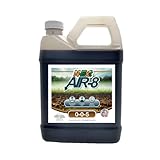 N-Ext Air-8 Liquid Aeration Bio-Stimulant N-Ext Air-8 Liquid Aeration Bio-Stimulant |
|
Check Latest Price |
 Turf Titan Hydro Holder Wetting Agent Turf Titan Hydro Holder Wetting Agent |
|
Check Latest Price |
1. Simple Lawn Solutions Liquid Soil Loosener for the Widest Coverage
Liquid Soil Loosener- Soil Conditioner-Use alone or when Aerating with Mechanical Aerator or Core Aeration- Simple Lawn Solutions- Any Grass Type-Great for Compact Soils, Standing water, Poor Drainage
32 oz concentrate
Covers up to 32,000 sq ft
All grass types
2 lb liquid
Pros
- Largest coverage claim in the category
- Reviews report softer soil within days
- Works alone or alongside core aeration
- Easy hose-end application
Cons
- Foams heavily with a hose-end sprayer
- Effects build gradually on hard areas
- Multiple applications often needed
This is the one I keep coming back to for clay because of the arithmetic rather than the marketing. A single 32 ounce bottle is listed at up to 32,000 square feet of coverage, which is more square footage per bottle than anything else in this group. On a heavy clay lawn where water has to be carried a long way into a dense profile, coverage math decides how many bottles you buy and whether you finish the job.
The listing positions it as usable on its own or alongside a mechanical or core aerator, and that dual positioning is the honest way to think about it. Reviewers describe softened clay within days, better water penetration, and less runoff in hydrophobic ground, and the pattern across a review base of more than nine thousand is consistent rather than glowing.
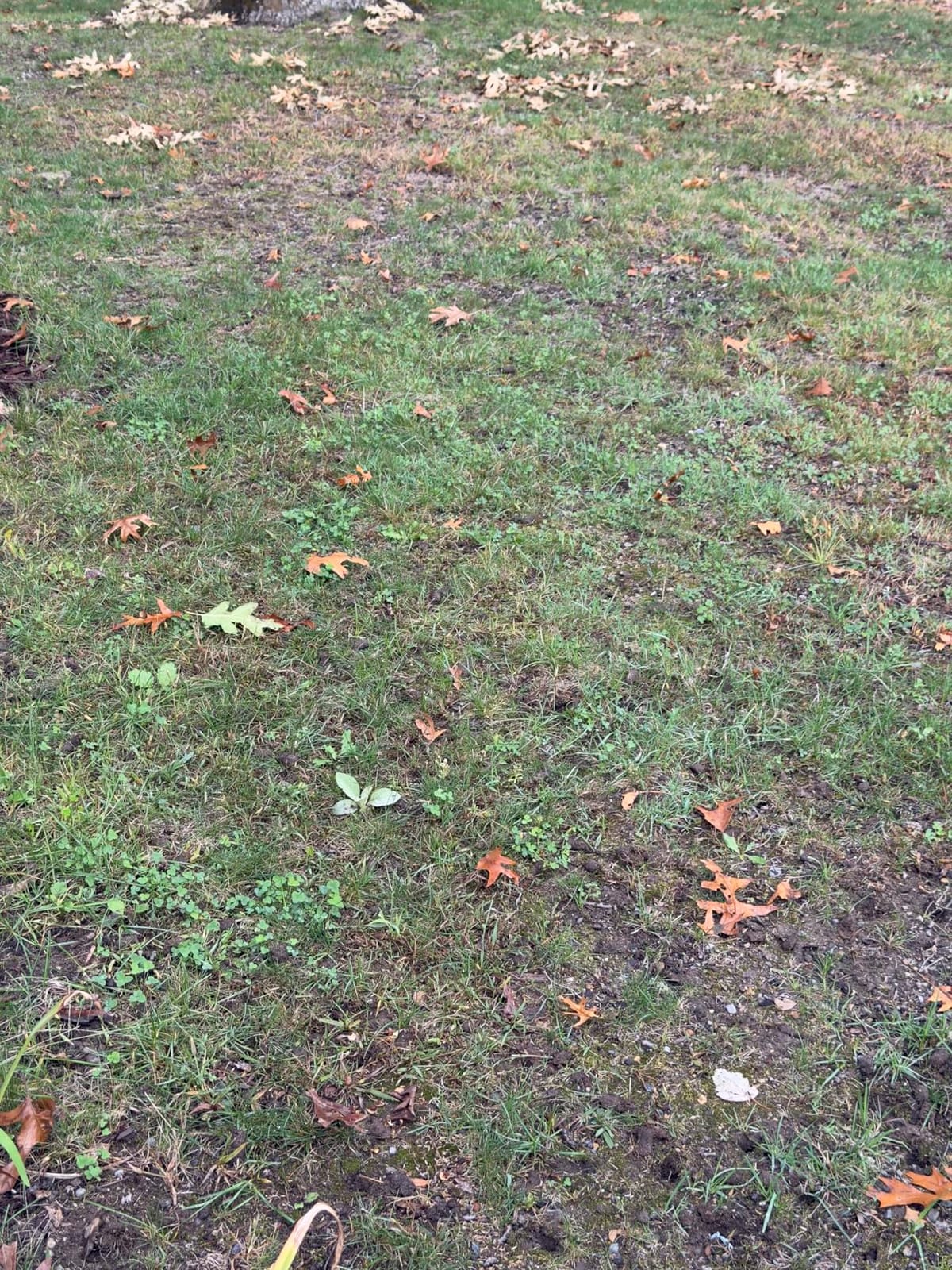
What I like is how the label language stays modest. Nobody on this listing claims it breaks hardpan. It claims it helps standing water drain and promotes vertical movement, and for a surfactant-based loosener that is exactly the right claim. The result most owners describe is that water stops sitting on top of the lawn for hours after rain and starts moving down into the profile.
The repeated practical complaint is foam. A surfactant concentrate through a hose-end sprayer will foam, and if you are covering a large clay yard that foam is a distraction and a waste of product. The other recurring note is patience: results build over several days, and severely compacted zones need a second pass rather than a single spray.
How much clay lawn this actually covers
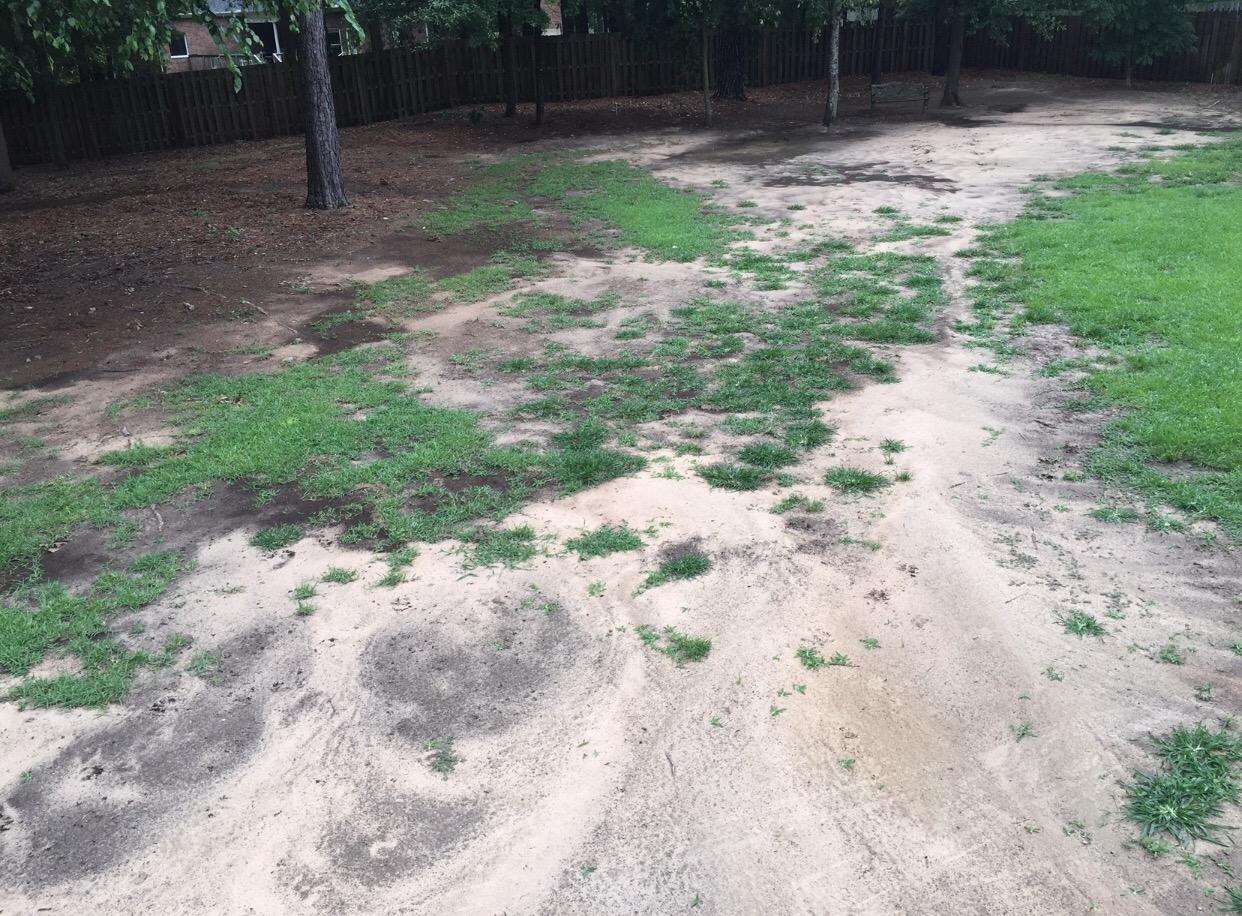
At the stated 32,000 square feet per bottle, a quarter-acre yard is one bottle and a half. Bigger clay properties run two or three, and clay needs the repeat application more than loam does because the surfactant is consumed as the soil re-welds between treatments.
The dilution approach matters here. Applying to dry soil is fine for this product as long as you water it in afterward, but splitting the rate into two lighter passes over a period of weeks produces better results on hard ground than one heavy dose.
Where it falls short on clay
It is a soil loosener, not a compaction machine. If a screwdriver or spike aerator still cannot penetrate a year later, the underlying problem is bulk density and this product will not have fixed it.
Foaming wastes concentrate, and a 32 ounce bottle is a small amount of product to cover a genuinely large clay property. Buyers with a big yard should plan on the gallon or larger sizes rather than working through several quarts.
2. LawnStar Liquid Lawn Aerator for Clay Owners on a Budget
Liquid Lawn Aerator, Loosens and Conditions Compacted Soil, 32oz
32 oz concentrate
1:1024 mixing ratio
Up to 30,000 sq ft
2.2 lb liquid
Pros
- The product owners most often name on clay
- Years of forum use on Texas and Colorado clay
- Very easy to dilute and apply
- One bottle covers several seasonal applications
Cons
- Hard spots may need several applications
- Bare areas stay compacted longest
- Over-strong mixing can damage grass
LawnStar is the most frequently named brand in owner discussions about clay, and that matters more than any lab claim. The top thread in the largest lawn-care forum carries a user saying the LawnStar liquid aerator has been great on dense clay, with the caveat that it does not replace core aeration. That qualified endorsement is exactly the pattern most users report.
The spec sheet is a simple one: a hyper-concentrated liquid, a 1:1024 mixing ratio, and a treated area of up to 30,000 square feet from a 32 ounce bottle. The concentration makes it forgiving to apply through a hose-end sprayer, which is a practical advantage on large clay properties where a backpack sprayer means many refills.
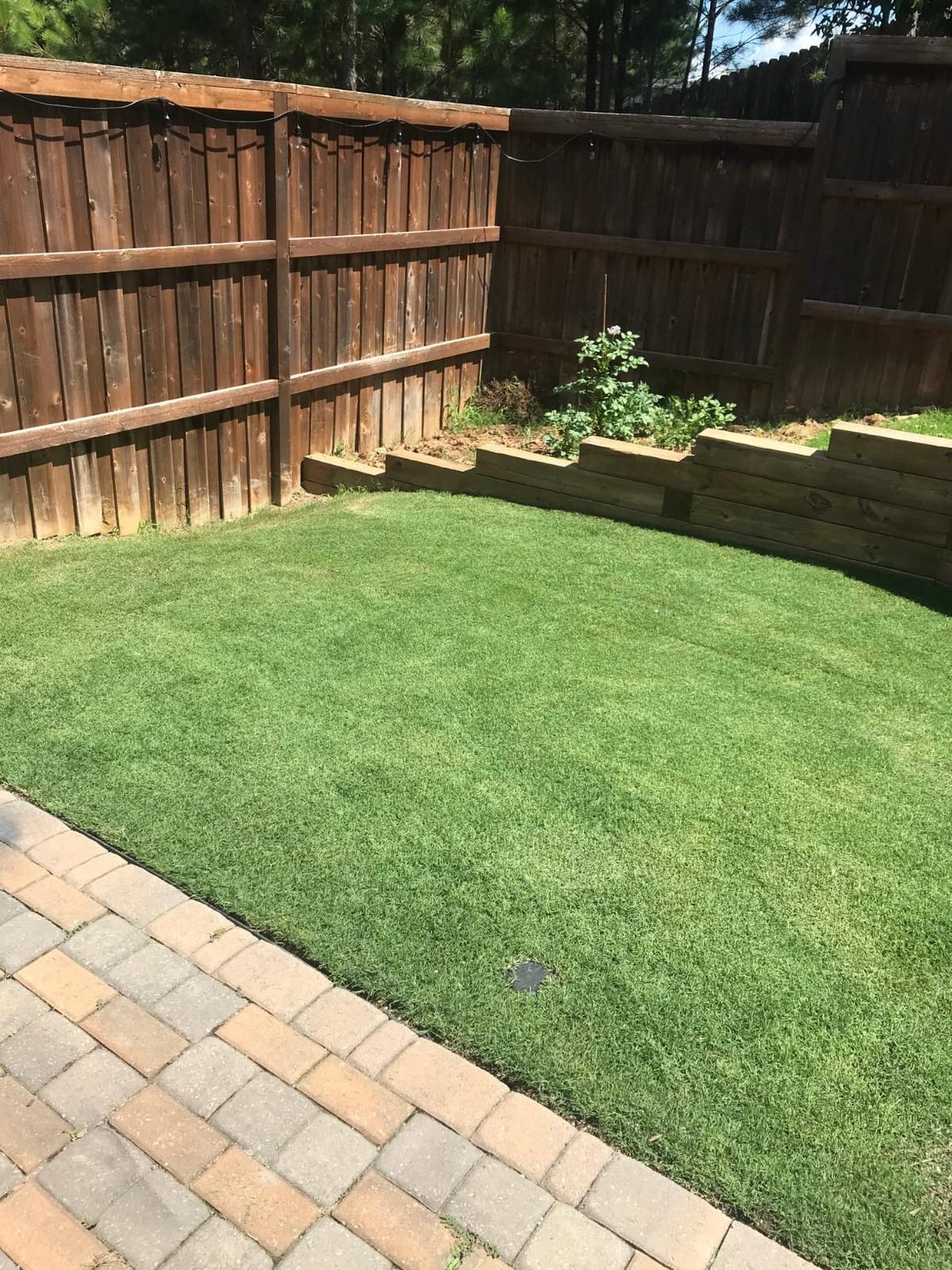
Owners on heavy clay describe the change as physical: the ground softens enough that a pitchfork or spike aerator pushes in where it previously bounced off. That is a legitimate and useful result, because it means a mechanical pass afterward goes deeper. Used this way, the product is a force multiplier for a rented machine rather than a substitute for one.
Watering frequency is the other reported win. As the soil starts holding water instead of shedding it, owners notice they are irrigating less often, which on a lawn that was staying wet for days is a meaningful change in how the turf performs.
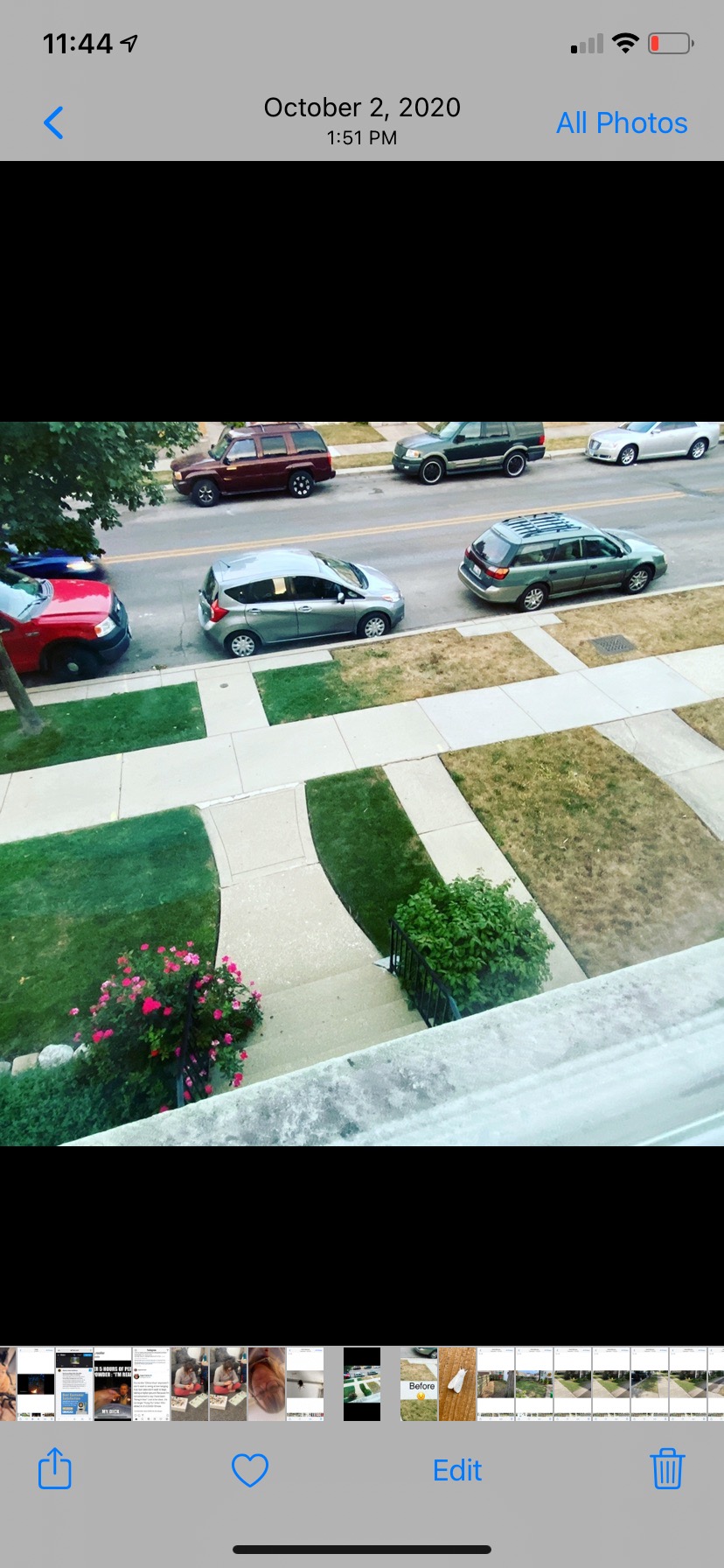
Whether the concentrate is gentle enough for clay
At 1:1024 this is a dilute application, and dilution rate is the single thing clay owners should watch. Several reviewers note that mixing it stronger than the label calls for can stress grass, and clay ground that already holds water is the last place you want that mistake.
Treating in early spring when the soil is workable and moisture is moderate gives the best outcome. Applying to saturated clay just spreads surfactant across standing water where it does nothing useful.
What to know before you buy
Severely compacted or bare areas take repeated applications, and they take longer than the rest of the lawn. A minority of users report no measurable change in the worst spots, which usually means a hardpan problem rather than a product problem.
A 32 ounce bottle is a small container for a big clay property. The one-gallon size covers far more ground per purchase and is usually the sensible choice if you have more than a few thousand square feet.
3. Covington Liquid Lawn Aerator for Clay-Heavy Yards
Covington Liquid Lawn Aerator (32oz) – Soil Conditioner & Softener for Lawns & Gardens – Loosens Clay & Compacted Soil for Better Water & Nutrient Absorption – Liquid Aeration Concentrate, Made in USA
32 oz concentrate
Humic acids, amino acids, kelp
Safe for kids and pets
2 lb liquid
Pros
- Formula built around humic acids
- amino acids and kelp
- Designed for clay-heavy yards
- Safe around children and pets
- Smells like molasses and seaweed
Cons
- Hose-end dilution settings are easy to misjudge
- Results take several weeks
- Some buyers report no visible change
Covington is the one in this group whose formula is aimed directly at the problem. Humic acids, amino acids and kelp feed beneficial microbes, and the humic fraction is what binds fine clay particles into stable aggregates rather than merely wetting them. On a soil that re-welds into a brick every time it dries, aggregate stability is the mechanism that matters.
Owners report the practical effect the same way: clay softens enough that a screwdriver or spike aerator penetrates easily, and water absorption in compacted areas improves enough to show drought tolerance. Turf color follows within a few weeks of consistent applications.
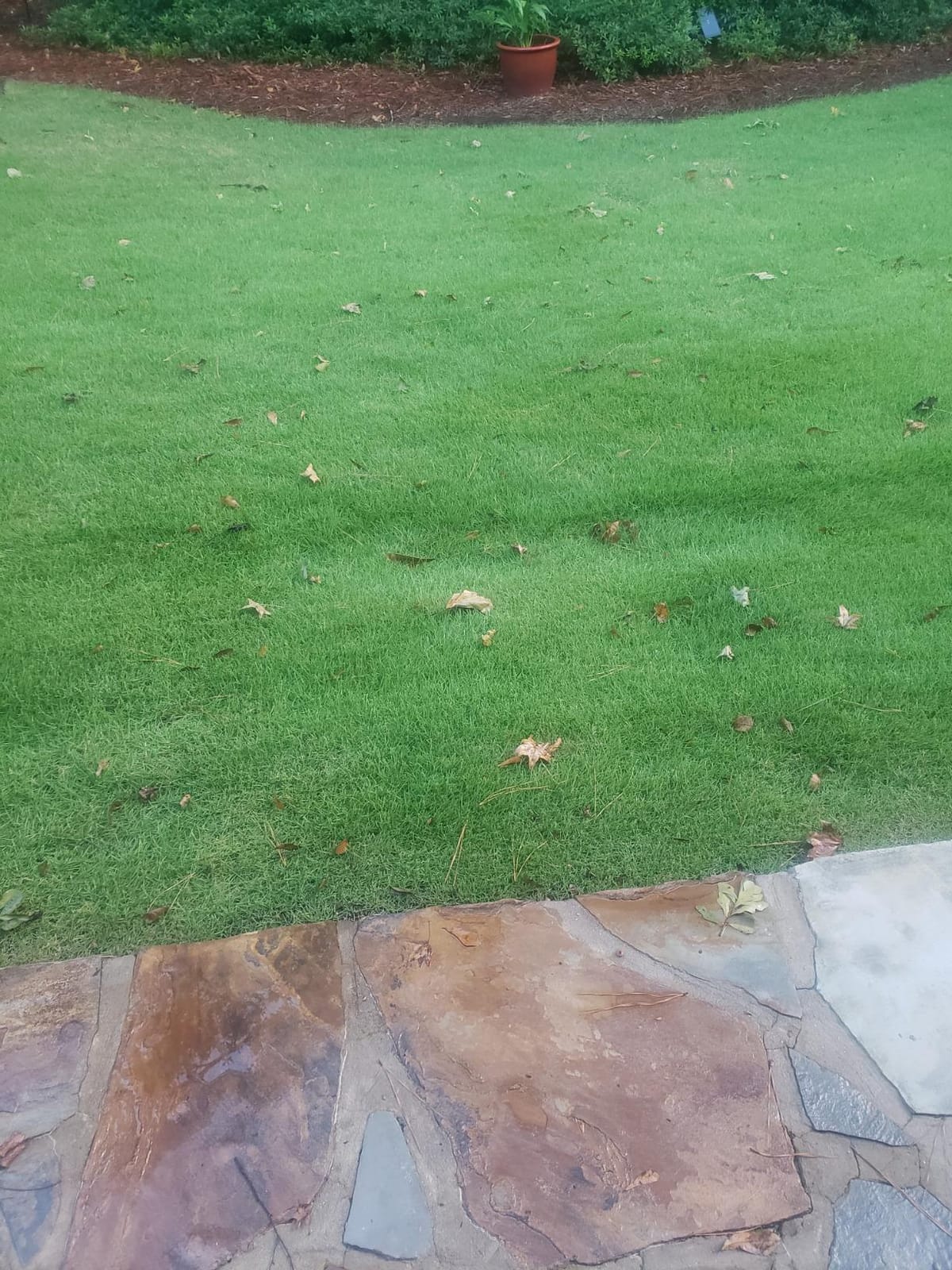
The mixing rates are unusually well documented for this category: 2, 4 or 8 ounces per 1,000 square feet, which works out to a stated 3,500 to 8,000 square feet per quart depending on how hard your ground is. That range is worth reading carefully, because on heavy clay you want the higher end of the coverage range rather than the aggressive end of the rate range.
One detail owners appreciate: the scent. Reviewers describe molasses and seaweed rather than harsh chemical odor, which matters if you are applying near a house with pets or children. The manufacturer also states it is safe for both, and lists it for organic use.
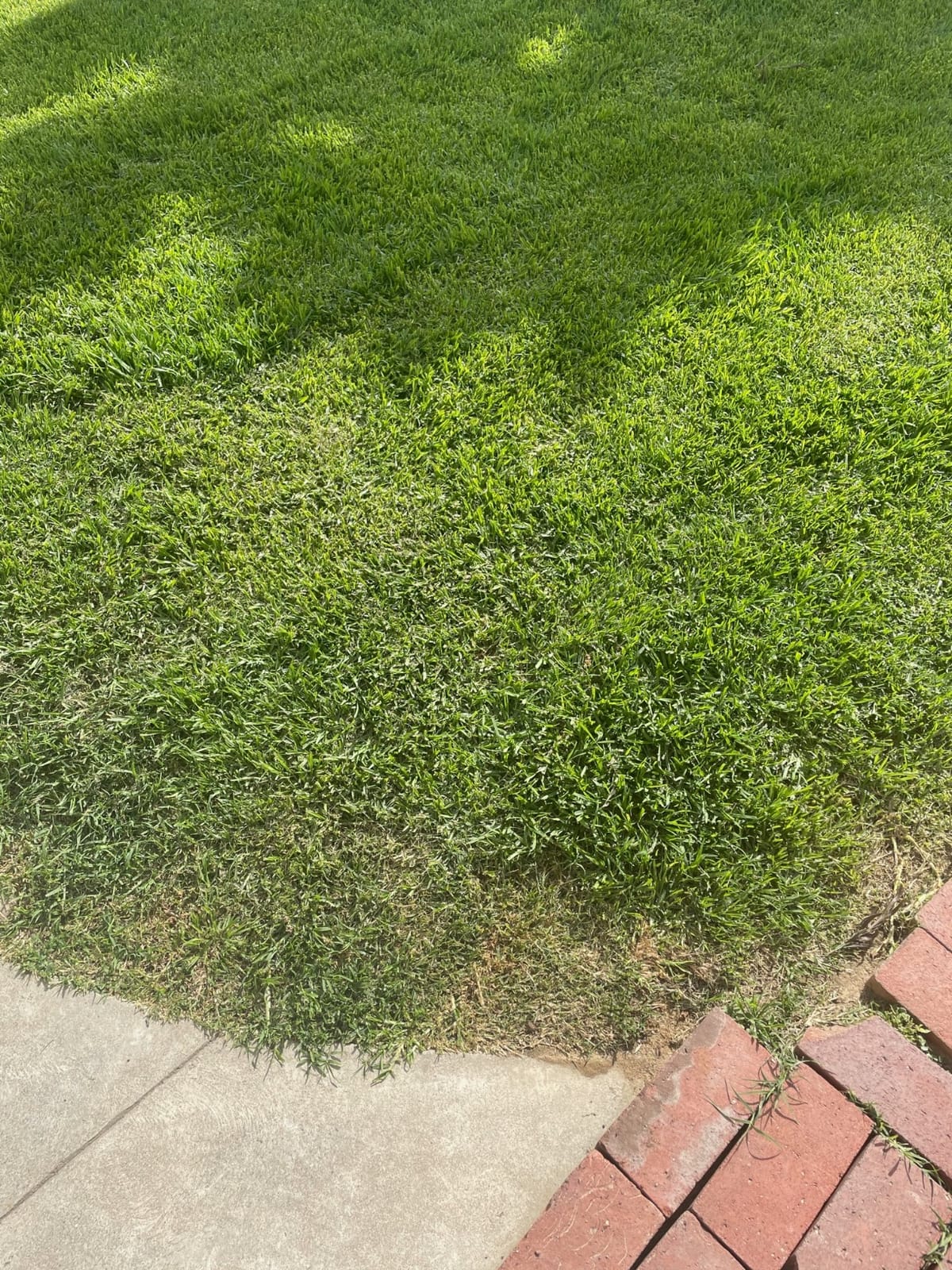
Best approach on the worst clay spots
Weekly applications over two or three cycles produce the reports of measurable change. A single spray on ground that has not been touched in a decade is a reasonable first step but rarely the last one.
Mark hose-end sprayer settings before you start and do not adjust mid-yard. The recurring complaint in reviews is misjudging the dial and over-applying, which produces heavy foam and can leave the lawn darker than you intended.
Where the reviews get quiet
A smaller group of buyers reports no visible difference even after two applications, and a few have had poor experiences with warranty coupon fulfillment. If your problem is a genuine hardpan layer, no humic blend will reach it.
The 32 ounce size is the smallest option here, with gallon and 2.5 gallon sizes also offered. On clay you will get through a quart quickly, so buy for the whole property rather than testing with one and running out halfway.
4. Grow More EZ Wet Soil Penetrant for Budget Wetting
Grow More EZ Wet Soil Penetrant 26% – 1 Quart of Biodegradable Non-Ionic Surfactant – Soil Wetting Agent for Better Drainage & Liquid Aeration for Lawns, Nurseries, & Landscaping
26 percent non-ionic surfactant
Biodegradable and alcohol-free
Neutral pH
1 quart concentrate
Pros
- Highest rating among the low-cost options
- A tablespoon per gallon lasts a long time
- Neutral pH is safe across soil types
- Improves absorption in beds and pots too
Cons
- Acts more like soap than a soil loosener
- Will not break up severely compacted clay
- Needs reapplication as surfaces dry
Let us be precise about what this is. A 26 percent non-ionic surfactant at neutral pH is a wetting agent. It reduces the surface tension of water so the water soaks in rather than beading and running off, and it is genuinely effective at that. It is not a soil loosener and it will not restructure clay.
That still makes it useful, because a large share of the water behavior problems on clay are wetting problems. If your lawn looks dry and hard on the surface but floods ten minutes after irrigation, you have hydrophobicness and crusting, not purely compaction. This is the right tool for that, and the cheapest one here.
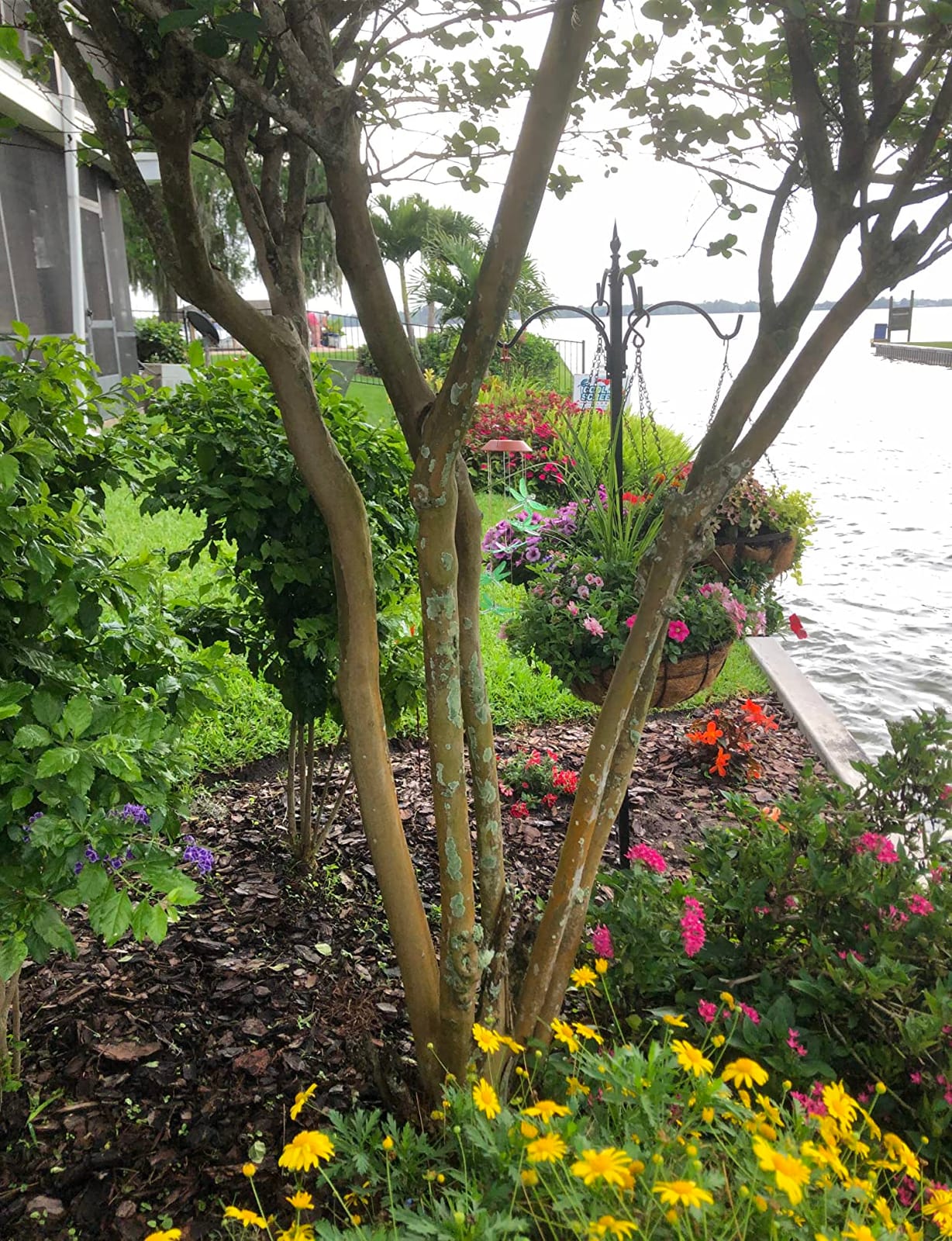
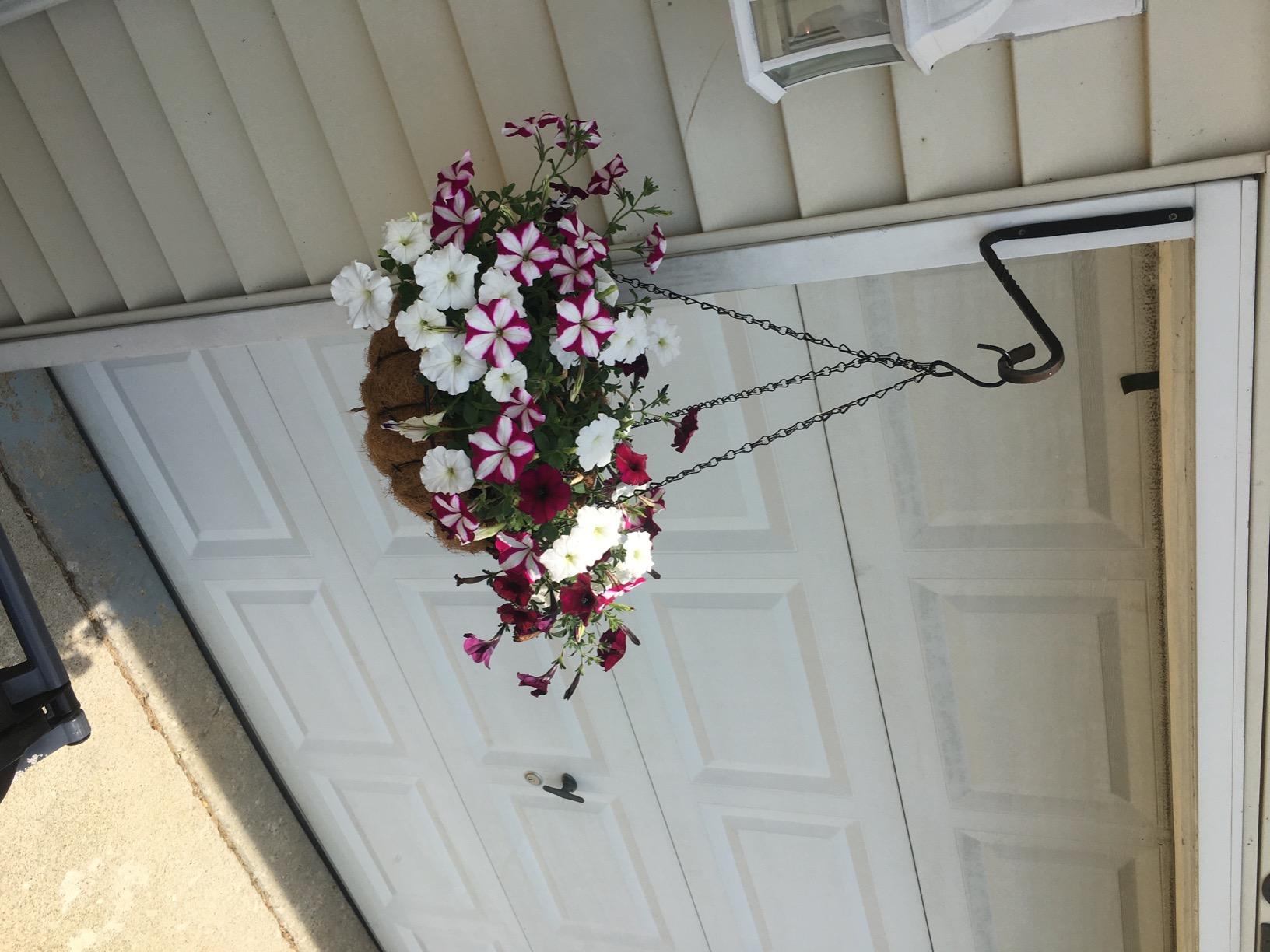
Reviewers use it on containers, hanging baskets, planters and irrigation beds far more than on whole lawns, and they report the same result each time: water stops running straight through and starts soaking in. A teaspoon or tablespoon per gallon keeps the effect for weeks. It also leaches excess salts, which is useful if you have been over-fertilizing.
The honest framing is that the core of this product is a surfactant, similar in function to generic soap. Some reviewers make exactly that point and consider it overpriced for that reason. On clay specifically, several note it is less suited to breaking up compacted ground than a true soil conditioner.
How to use it on a clay lawn
Apply when the soil is dry enough to absorb and water it in, then watch the infiltration rather than the grass. The signal that it worked is that irrigation no longer runs off the surface and no longer leaves dry channels down the slope.
Because the effect fades as the soil re-dries, expect to reapply. On clay with a poor drainage problem, more surfactant is not the answer, and this product will not substitute for a drainage correction.
Where it is the wrong purchase
If your issue is that the soil is physically dense and nothing penetrates it, this product will disappoint you. It changes wetting behavior, not bulk density, and no amount of surfactant alters that.
It is also not a lawn-scale product. Most owners use it in planters and beds, and the concentrate is sold in quart and gallon sizes that suit those volumes.
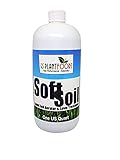
5. GS Plant Foods Soft Soil for Severe Packed Clay
Soft Soil by GS Plant Foods- Liquid Aerator and Lawn Treatment(1 Quart) – Liquid Aerator for Any Grass Type, All Season – Great for Compact Soils, Standing Water, Poor Drainage
1 quart concentrate
Mix 4 oz per gallon
About 500 sq ft per gallon
2.1 lb liquid
Pros
- Repeated use on truly packed red clay works
- Softens ground enough to walk in spike boots
- Organic formula safe for family and pets
- Good alongside seeding projects
Cons
- Low coverage per bottle
- Strong odor reported by some
- Hard clay may need three applications
On severely packed clay, coverage is the honest concern and it needs to be planned for. The dilution is 4 ounces of concentrate per gallon of water, and each gallon of mixture covers roughly 500 square feet. That works out to about 4,000 square feet from a quart. It is the lowest coverage per bottle in this roundup, and owners say so.
Set against that, the reported results on red clay and hydrophobic yards are among the strongest in the group. Users describe soil softening enough that spike aerator boots sink in on foot contact, improved rooting, and green-up within a week or two. Several specifically credit it with making a seeding or renovation project succeed on ground nothing else had touched.
The formula is organic and listed as safe for family and pets, and it works on any grass type in any season. The practical routine that emerges from reviews is repeated application rather than one heavy dose, which lines up with how clay re-welds between cycles.
The odor is the most common complaint. If you are applying near an open window or a patio you sit on, plan for a few days of a noticeable smell around the treated area.
Planning the application around the coverage math
Measure first, then buy. At roughly 500 square feet per gallon of mixed solution, a 5,000 square foot clay lawn needs ten gallons of mixture, which is ten bottles of concentrate per full pass. Larger sizes at 128 ounces and 5 gallons exist for that reason.
Because coverage per container is low, this is the product where buying too little is most likely. Split the lawn into zones and treat one zone fully before moving on, rather than diluting the whole property at a weaker rate.
Where expectations should be set carefully
Extremely hard-packed clay may need three or more applications before anything changes. That is not a defect, it is the nature of the material, but it is a cost and time commitment you should accept before opening the bottle.
Users who compare it against higher-coverage alternatives often come away disappointed on price per treated square foot, even when they are happy with the result. Judge it on the outcome, not the container.
6. Turf Titan Root Booster for a Biological Approach
Turf Titan Root Booster Liquid Probiotic for Lawn and Garden (32 oz) with Hose End Sprayer – Improves Nutrient Uptake in Compacted & Clay Soil – Supports Stronger Roots – Covers 6,000 Sq Ft
32 oz concentrate
Microbial soil conditioner
Hose-end sprayer included
6,000 sq ft coverage
Pros
- Microbial approach suits organic-minded owners
- Helps turf hold color through heat and dry spells
- Supports overseeding results
- Non-GMO ingredients
Cons
- Included sprayer can stop dispensing mid-application
- Bottle has no window to gauge remaining product
- Gradual results only
This one takes a different route. Rather than relying on surfactant chemistry alone, it is a microbial soil conditioner formulated for compacted and clay-heavy ground, working through the biology of the root zone. For owners who prefer not to put soap-like chemistry on their lawn, that is a legitimate difference in approach rather than a marketing distinction.
Coverage is 5,000 to 6,000 square feet from the 32 ounce bottle, and a hose-end sprayer is included. Visible improvement is typically reported in two to four weeks with consistent use, which is a slower and more honest timeline than most labels in this category print.
Reviewer praise focuses on stress tolerance. Turf holds color better through heat and dry spells, which is what you would expect from better nutrient uptake and water retention in a dense profile. Overseeding projects get specific mention as a use case where the improved uptake shows up in germination and establishment.
The dominant complaint here is mechanical, not agronomic. The included hose-end container has a reputation for stopping dispensing concentrate partway through an application, and the bottle has no clear window, so owners cannot tell how much product remains. On a large clay lawn that uncertainty matters more than the label claims suggest.
Whether the sprayer is worth using
If the included sprayer fails, a backpack sprayer gives you better control over the rate. On clay, even coverage matters more than speed, because an uneven pass leaves untreated bands that reviewers mistake for a failed product.
Track consumption with a second bottle rather than guessing from the container. That avoids discovering at the end of a large lawn that you ran dry two zones early.
Where it will not move the needle
Some users report little change in problem areas, and that is the honest limit of a biological approach on ground with a physical hardpan layer. Biology cannot lift a crust that no root or tine has ever penetrated.
Expect gradual movement. If you need a visible change within a week, this is the wrong product, and one of the surfactant-based options will serve you better.
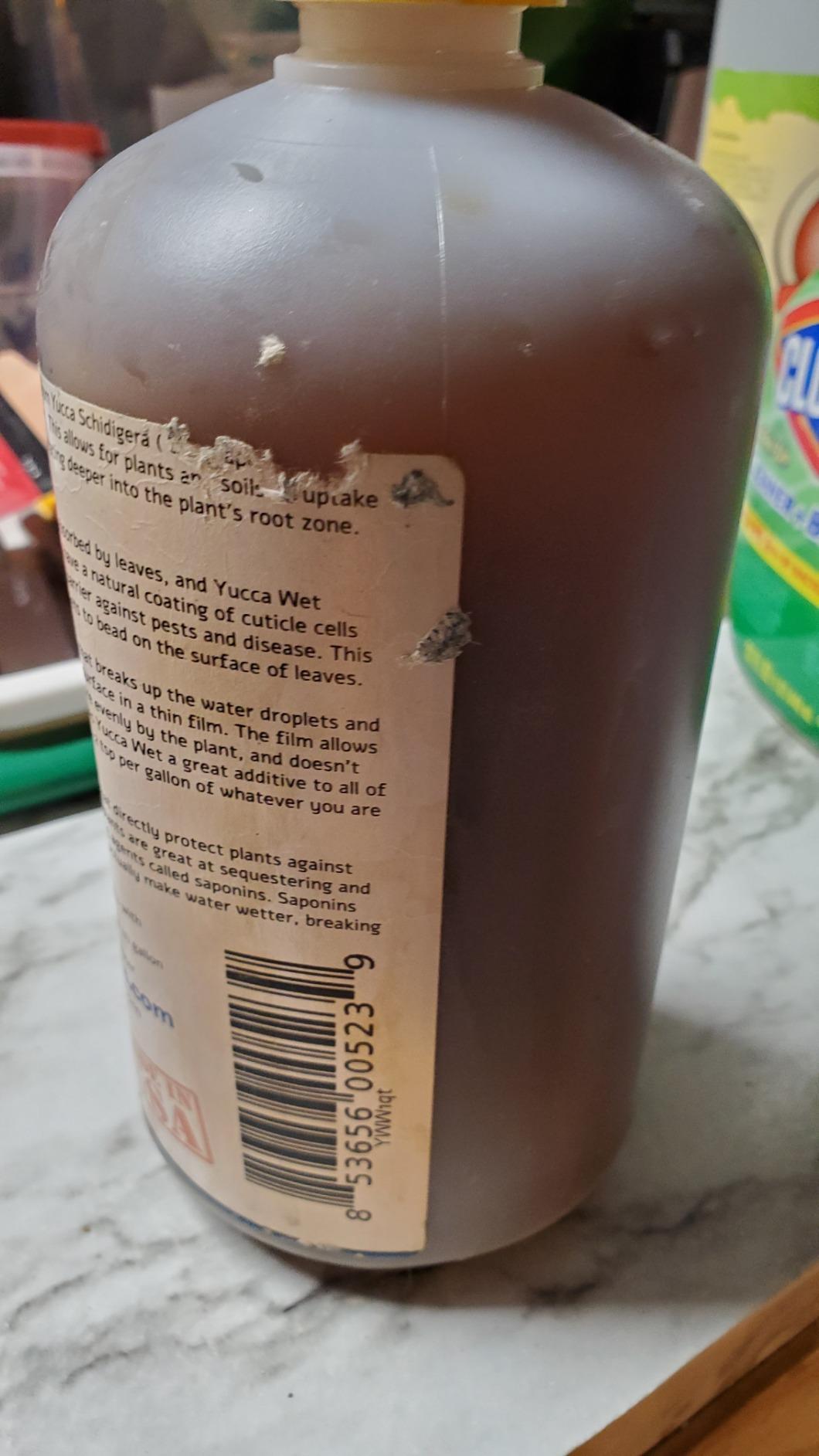
7. GS Plant Foods Yucca Wet for Beds and Containers
Yucca Wet, Liquid Yucca Extract- Organic wetting Agent and surfactant, Now in 32 oz Concentrate
32 oz concentrate
60 percent saponin
From Yucca Schidigera
2 lb liquid
Pros
- Highest rating in the roundup at 4.4
- Very concentrated so small doses go far
- No visible leaf spotting as a foliar spray
- Also works as a hydroponic and drench treatment
Cons
- Does not loosen compacted soil like a true aerator
- Priced above cheaper surfactants
- Repeat applications as soil dries
Yucca Wet is the highest-rated product in this group, and it earns that rating for a specific job. Made from Yucca Schidigera at 60 percent saponin, it is an organic wetting agent that breaks down the waxy coating on hydrophobic soil and potting mix. That is a real and well-documented effect, and it is why the rating sits where it does.
The core problem it solves shows up constantly in container growing: water channels down the inside edge of a dry root ball instead of soaking in. Reviews describe that channeling stopping and nutrient uptake improving, with faster growth following. Foliar, hydroponic and soil drench dilutions are all listed.
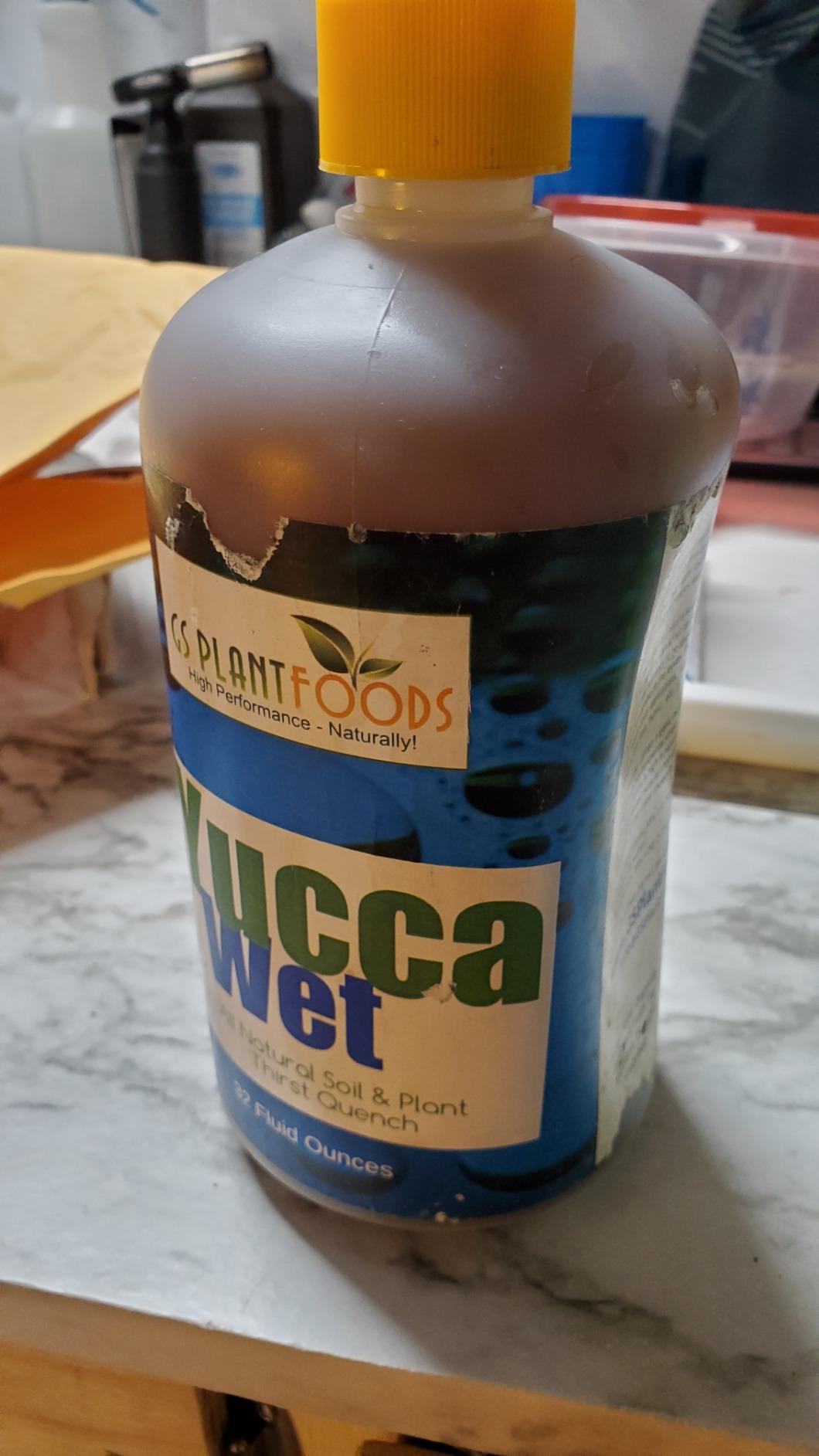
It leaves no visible spotting on leaves when used as a foliar spray, which matters for anyone treating ornamental plants in the same pass. The concentration is high, so a teaspoon per gallon is enough for foliar work and a tablespoon per gallon for a soil drench, and small quantities last a long time.
Where it stops is the honest limit. It does not physically loosen compacted soil the way a true aerator does, and users who apply it to hard clay expecting a spike aerator to sink in afterward report no measurable improvement. It is a surfactant with a plant-derived source, not a soil conditioner.
Best use on a lawn versus in a bed
In beds, raised planters and containers, where hydrophobic surface crusting is the dominant problem, this is an efficient and well-rated choice. The dilution rates are simple and the product is forgiving.
Across an open clay lawn, a stronger humic or surfactant blend aimed at aggregation will do more for the same volume of product. Think of this one as a bed-and-container tool you can use on turf, not as a lawn treatment.
What to weigh before ordering
It costs more per ounce than generic surfactants, and several reviewers name that directly. The plant-derived source and the concentration are the reasons, but it is a fair criticism if your goal is purely mechanical wetting.
Plan on repeat applications as surfaces dry out again. A hydrophobic surface is a recurring condition, not something one treatment permanently fixes.
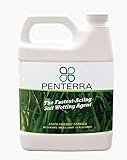
8. Endurant Penterra Soil Penetrant for Professional-Grade Wetting
Penterra Soil Penetrant and Wetting Agent – Promotes Water Movement and Root Absorption to Deter Erosion and Improve Nutrient Uptake for Hardier Landscaping and Water Conservation
32 oz concentrate
Professional-grade penetrant
Reduces surface tension
Made by Geoponics Corp
Pros
- The penetrant professionals reach for
- Resolves hydrophobic dry spots
- Very concentrated at a few ounces per gallon
- Often one application per season
Cons
- Label rates lean toward sandy soil
- Strong scent and gloves advisable
- Oily leaf texture if not rinsed
- Highest per-ounce cost here
Penterra is the product category’s professional entry. It is the penetrant used on fairways, athletic fields and large grounds operations, where the requirement is that water moves into compacted soil quickly and evenly rather than channeling. Reducing surface tension is the mechanism, and the result on clay is that hard ground admits water and oxygen where it previously shed both.
Users report dry hydrophobic spots resolving and stressed turf reviving after a single seasonal application, which is a reasonable expectation for a product formulated to last through a season rather than a week. It is also the only product here that explicitly targets erosion control and water conservation alongside compaction.
Two practical points deserve attention before you buy. First, the label rates are oriented toward sandy soils, with separate guidance for heavy clay, and reviewers find that distinction is not stated clearly enough. On clay you need to identify the heavier rate, not the default one, or you will under-apply and conclude the product does not work.
Second, it is not a plant food. Product guidance is to flush it from foliage with water, and reviewers note an oily texture on leaves if you do not rinse promptly, along with a strong scent that calls for gloves.
Getting the dilution right on clay
Very concentrated means a few ounces per gallon, and that is easy to overdo on a hose-end sprayer. Measure the concentrate rather than dialing it by eye, especially on your first pass.
Because the label leans sandy, treat a small test section at the heavy-clay rate and check infiltration the following day before committing a whole lawn. A quarter hour of watering in will show you whether the rate is right.
Where the price and the smell work against it
It carries the highest per-ounce cost in this roundup, which is defensible for professional use and harder to justify for a quarter-acre residential lawn treated once a year.
The odor is strong enough that reviewers recommend gloves and ventilation. If you have a small lawn and a nearby patio, that experience matters more than the professional pedigree.
9. N-Ext Air-8 for Fast Root Response on Builder Clay
N-Ext Air-8 Liquid Aeration Bio-Stimulant with Humic Acid, 1 Quart
32 oz concentrate
Humic acid bio-stimulant
Backpack sprayer friendly
2 lb liquid
Pros
- Greens builder-compacted areas within days
- Easy backpack application
- Soil becomes penetrable in about four weeks
- Works in any growing-season window
Cons
- Thick formula mixes slowly
- Can stain driveways and patios if not rinsed
- Mixing ratio not clearly specified
- Some users see no improvement
Air-8 is the liquid aeration bio-stimulant most often referenced in renovation work, and its selling point is the humic acid combined with a formulation described as creating fractures in soil structure. Owners using it on builder-compacted ground report the fastest visible response in this roundup: thin patches greening up within a few days.
Another reported benefit is easier penetration over time. Reviewers describe soil becoming easy to work with a screwdriver after roughly four weeks, which is a concrete, testable signal rather than a vague promise. For a homeowner planning overseeding on bad ground, that speed is the reason to choose it.
Application is a genuine convenience point. It goes on with a standard backpack sprayer and covers the entire lawn without marking sprinkler heads or cables, which matters on a property with irrigation and lighting buried in the ground.
Why it suits a fast-turnaround project
When the schedule is driven by a seeding date rather than a soil-building plan, a product that shows color response in days is worth more than one that works over a season. That is the specific case for Air-8 on this list.
Applying it 30 days before overseeding is a timing pattern owners report using, often alongside humic acid and kelp. It gives the new seed a soft, wettable surface instead of a sealed crust.
Handling and application cautions
The formula is thick and mixes slowly, so budget time for dilution and agitation. It can also stain driveways and patios if it is not rinsed, so take care along hard surfaces.
The mixing ratio is not clearly specified on the listing, which is a real drawback for anyone who wants a repeatable rate. Follow the label on the container rather than guessing, and avoid the over-application trap that heavy foam on clay can create.
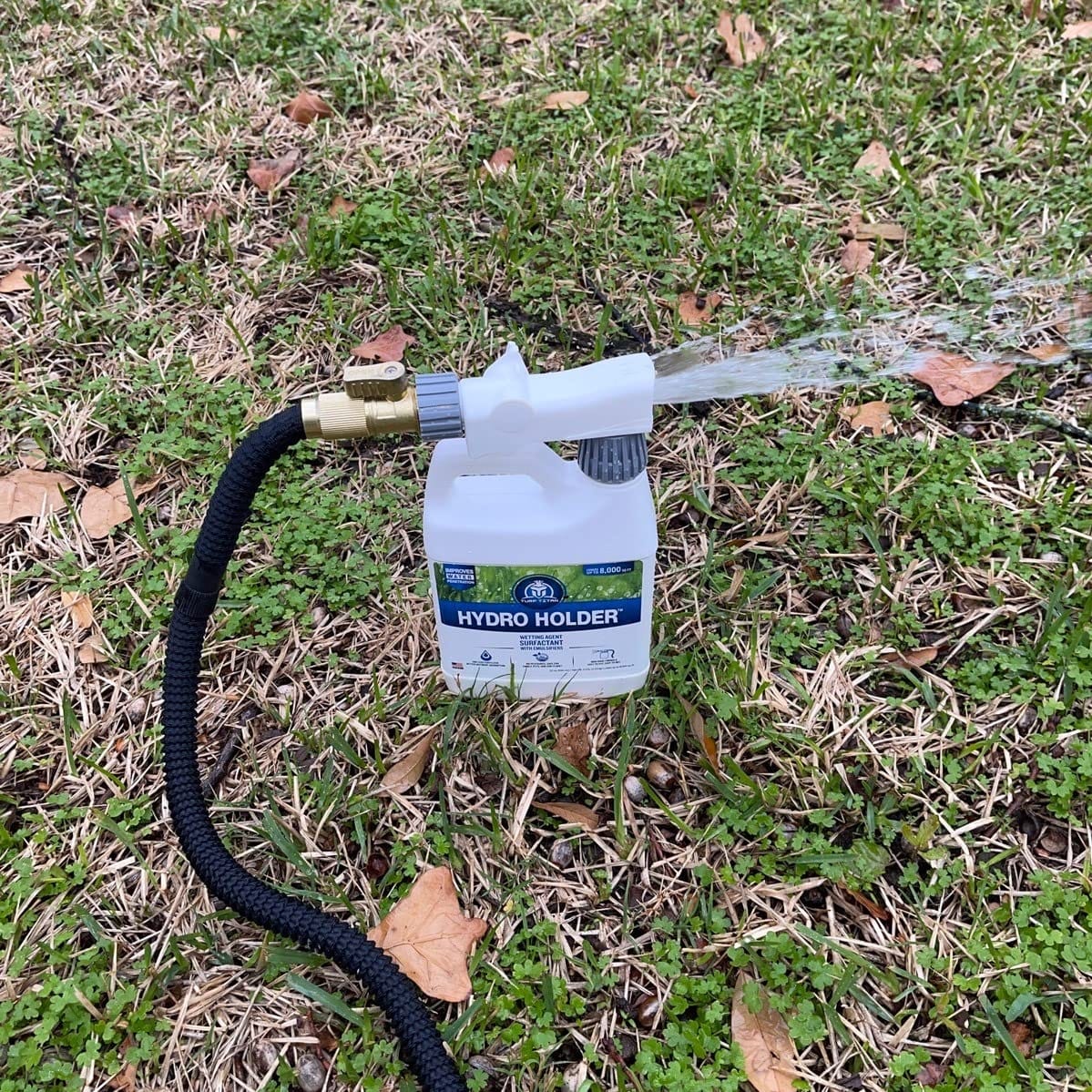
10. Turf Titan Hydro Holder for Runoff and Water Channeling
Turf Titan Hydro Holder Soil Wetting Agent for Lawn (32 oz) w/Hose End Sprayer – Improves Water Absorption in Dry & Compacted Soil – Helps Lawns Stay Green Longer in Heat – Covers up to 6,000 Sq Ft
32 oz concentrate
Non-ionic, neutral pH
Hose-end sprayer included
6,000 sq ft coverage
Pros
- Targets slopes where water sheds and channels
- Lawns stay green longer through heat
- Quick hose-end application
- Supports seed germination and overseeding
Cons
- No window to gauge remaining product
- Needs proper watering in to work
- Limited to 6000 sq ft per bottle
- Some users see no benefit
This one is aimed at a specific clay symptom rather than clay in general. Dry, compacted slopes where water runs off and carves channels get treated with a non-ionic, neutral-pH wetting agent that reduces runoff and channeling. A 32 ounce bottle covers up to 6,000 square feet, and a hose-end sprayer is included.
The reported benefit that owners notice first is color. Lawns stay green longer through heat and drought because the water that used to run off is now held where the roots are. For a clay yard with poor irrigation distribution, that is often the change that convinces people the treatment worked.
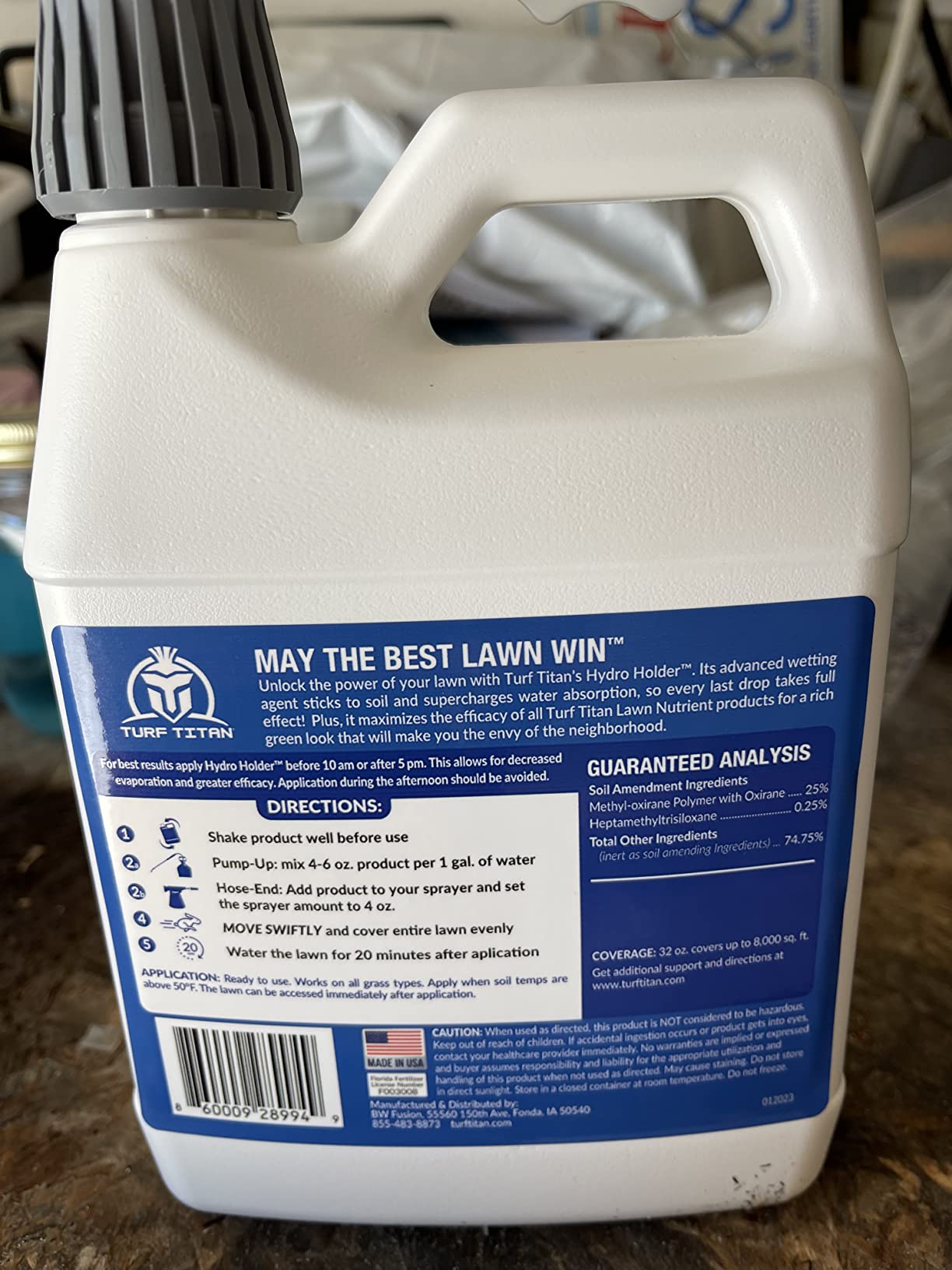
Application instructions are clear: apply with a hose-end sprayer, then water in for 20 to 30 minutes. Reviewers note the result depends on doing that watering-in step, and skipping it is a common reason people report no effect. Germination and overseeding benefits get consistent mention, since even moisture at the soil surface matters for new seed.
The concrete complaint is the container. There is no viewing window on the sprayer bottle, so you cannot tell how much concentrate remains, and 6,000 square feet per bottle means many larger lawns need several.
Where runoff is the actual problem
If water leaves your lawn before it soaks in and arrives in a ditch or a neighbor’s bed, this product targets that directly. Neutral pH and a non-ionic formula also make it one of the safer choices to use near beds and mixed plantings.
Use a separate marked container rather than the included one, so you can see the level as you go. That single change removes the most common complaint about this product.
Where it will not deliver
A wetting agent does not alter bulk density, so a slope that is hard because of compaction will still be hard. A minority of users see no visible benefit at all, usually where the real problem is density rather than surface repellency.
At 6,000 square feet per bottle, treat coverage as a purchasing constraint. Measure the affected slope area rather than the whole property, and buy accordingly.
What Liquid Aeration Can and Cannot Do for Clay Soil
Liquid aeration improves water infiltration and reduces runoff. It does not relieve soil compaction the way hollow-tine core aeration does, and no product in this roundup should be sold to you as a plug puller. That distinction is the whole argument, and it is why we put it here rather than burying it.
The strongest evidence available comes from a 2020 to 2022 University of Georgia trial by Dr. Travis Shaddox on TifTuf bermudagrass grown in compacted clay. The trial measured the things that matter for this question: root biomass, water infiltration, surface hardness, compaction, turf color and water retention. Liquid treatments did not produce the compaction and infiltration improvements that core aeration produced, and the structural benefits were minimal.
That result is not an argument against using these products. It is an argument for using them for what they actually do. Improved wetting, reduced runoff and better nutrient movement are real outcomes on clay, and they are exactly the outcomes owners describe seeing in the field.
What owners say, including the skeptics
The top result for this query in the largest lawn-care forum is a thread where the most common verdict is positive but qualified. One user writes that the LawnStar liquid aerator has been great on dense clay, and adds in the same breath that it does not replace core aeration. That pairing, enthusiasm plus limitation, is the dominant pattern.
Another thread on a lawn forum, from a user with a soggy clay yard, reports ordering a liquid aerator and seeing less sogginess after applying it. Read the framing carefully. The win is reduced sogginess, not broken-up soil. Users track water behavior, not theory, and that is the behavior change these products deliver.
Then there is the dissent, and it deserves a place. One post in that same forum puts it bluntly: liquid aeration does not aerate, and no liquid is going to drag oxygen into the root zone or break up compacted soil. Another user says they read a lot of positive reviews on these products and it seemed too good to be true.
Both objections are correct as stated. Neither one says the products do nothing. The honest synthesis is that these are soil conditioners and wetting agents, not mechanical aerators, and that a clay owner who expects core-aeration results from a hose-end spray will be disappointed while one who wants faster drainage and better infiltration will not.
Where clay owners report the clearest win
The visual evidence owners trust is reduced ponding, faster drying, and soil that no longer cracks as hard when it dries. All three are consistent with better infiltration, which is the mechanism that works. None of them is a plug pulled from the ground, because no plug is pulled.
What to combine it with on hard clay
On heavy clay, layering works better than any single product. Core aerate first, then apply a humic and surfactant blend so the opened pores stay open. Add gypsum if the soil has a sodium problem, and topdress with compost or screened topsoil to add the organic matter clay chronically lacks.
Forum consensus is consistent here: owners pair liquid aeration with core aeration rather than substituting one for the other. That is the pattern we would follow on our own clay.
Core vs Liquid vs Spike Aeration for Clay Soil
Clay needs all three approaches in sequence more often than it needs any one of them. Core aeration relieves compaction physically, spike aeration opens vertical channels without pulling much soil, and liquid aeration keeps water moving through the profile so the openings you made actually drain.
Core aeration pulls hollow-tine plugs, physically relieving compaction and depositing soil on the surface. It is the only option that changes bulk density, and on severe hardpan clay it is the necessary first step.
Spike aeration drives solid tines into the ground to make pores without a plug. It is a good companion immediately after a liquid treatment, because softened soil lets the spikes go deeper.
Liquid aeration reduces surface tension and builds aggregates with no equipment at all. It is repeatable several times a season, reaches the whole lawn including areas a machine cannot enter, and costs a fraction of a service visit.
If you are deciding on a machine rather than a concentrate, our tow-behind aerator guide covers the equipment side. For a completely different water feature, our picks for the best pond aerators handle circulation in standing water rather than soil.
Professional practice on clay usually runs the same sequence: core aerate the heavy areas, spike-aerate if the ground is workable, then apply a liquid treatment to keep infiltration high through the season. No single one of those steps replaces the others.
How to Apply Liquid Aeration on Clay Soil
Application is a hose-end or backpack sprayer job, which is a large part of why these products appeal to clay owners. The mistake to avoid is treating dry ground with no plan to water it in, because the whole effect depends on the product being carried down into the profile.
Confirm your soil first. Do a ribbon test, a jar sediment test and a squeeze test before you buy. If the ribbon is longer than two inches or the squeeze test forms a smooth ribbon that holds its shape, you have clay.
Mow low and remove clippings. A shorter canopy lets the spray reach the soil surface instead of the leaf tips.
Dilute at the label rate and no more. Over-strength mixing is the most common self-inflicted problem, and on clay it can stress turf that already holds too much water.
Apply to soil that is dry enough to absorb, not saturated. Standing water spreads surfactant across the surface where it does no work.
Water the treatment in. Twenty to thirty minutes of irrigation after application is what carries the surfactant and dissolved humic into the root zone. Skipping this is the most common reason for no result.
Rinse hard surfaces. Rinse driveways and patios before the product dries, since some formulations leave a stain.
Repeat on a schedule, not once. Owners who see the best results apply weekly for two or three cycles on hard ground rather than making one heavy pass.
Judge by water behavior. Watch for less ponding, faster drying, and reduced runoff rather than expecting a visible physical change in the soil.
On timing, treat in the growing season when the grass can recover. For warm-season turf such as bermudagrass, zoysia or St. Augustine, late spring through early fall works. For cool-season fescue and Kentucky bluegrass, early spring and fall are better. Avoid treating during a drought or on a frozen or waterlogged lawn.
Expect infiltration changes within days to a couple of weeks, and soil structure and root gains over a full growing season. One spray does not restructure clay, and anyone who tells you otherwise is selling.
How to Choose a Liquid Aerator for Clay Soil
Choose by how severe the problem is, what the active chemistry actually is, and how much lawn you have to treat. Ignore the word aeration on the label, since every product in this category uses it and only one of them does anything close to what the word implies.
Confirm you actually have clay
The ribbon test is the fastest check: moisten a handful of soil and squeeze it. If it forms a ribbon longer than two inches that holds its shape without breaking, you have clay. The jar test fills a straight-sided jar with soil and water, shakes it, and lets it settle; a thick clay layer at the bottom means poor drainage. A third check is the squeeze test on a moist core, where clay forms a slick ribbon and sandy soil falls apart in your hand.
Signs your clay lawn is compacted and needs attention include water pooling long after rain, visible runoff on ground that looks dry, grass thinning in traffic lanes, and a shovel or screwdriver that will not penetrate more than an inch or two.
Pick by severity
For moderate compaction, a surfactant and humic blend such as LawnStar or Simple Lawn Solutions is the right call. For a yard that is dense, saturated and slow to drain in patches, a product built around aggregation chemistry such as Covington is a better fit, and you should plan on more than one pass.
For a genuine hardpan crust, no liquid product is the first move. Rent or hire a core aerator, then use a liquid treatment to keep the opened pores draining. Our mechanical aerator guide covers that equipment.
Understand the four active categories
Surfactants reduce surface tension so water soaks in. Grow More, Penterra, Yucca Wet and Turf Titan Hydro Holder sit here. They fix runoff, channeling and hydrophobicness. They do not alter bulk density.
Humic and fulvic blends bind fine particles into stable aggregates, which is the mechanism that matters for clay specifically. Simple Lawn Solutions, Covington, GS Plant Foods Soft Soil and N-Ext Air-8 sit here. Humic builds structure; fulvic is more mobile and moves nutrients. Most labels blur the two, which is worth knowing when you compare them.
Biological products such as Turf Titan Root Booster work through microbial activity in the root zone. They are slower, suit organic-minded owners, and are a complement rather than a primary treatment on hardpan.
Enzyme and kelp additives accelerate organic matter breakdown and feed soil biology. They are usually part of a blend rather than a standalone product, and they help most on lawns that also receive topdressing.
Do the coverage math before you buy
Coverage claims vary from 6,000 square feet per bottle to 32,000, and clay lawns need proportionally more product than loam because the treatment must be carried into a dense profile. Work out square footage, divide by the claim, and add one extra pass for hard ground.
Also check the dilution rate. Products mixing 4 ounces per gallon cover roughly 500 square feet per gallon of mixture, while others at 1:1024 cover many times that. Comparing containers without comparing rates produces the wrong purchase.
Combine rather than substitute
Clay responds best to added organic matter, so topdress with compost or screened topsoil independently of any liquid treatment. Gypsum helps where sodium is the underlying cause of the sealing. Core aeration handles physical compaction, and a liquid product maintains the result afterward.
Should you put down topsoil after aerating? After core aeration, yes, the open pores catch the material. With liquid aeration, topdress on its own schedule, because the two treatments solve different problems and neither requires the other to make sense.
One more caution that almost nobody mentions: on soil that already drains poorly, extra surfactant plus excess water can worsen waterlogging. Treat only when the ground can absorb, and do not compensate for a drainage problem by applying more product.
Frequently Asked Questions
What is the best aerator for clay soil?
For severe clay with a real hardpan crust, nothing beats hollow-tine core aeration because it is the only method that physically relieves compaction. For moderate compaction, a liquid soil conditioner built around a surfactant and humic acid is the better fit, and it is repeatable through the season. Most clay yards end up needing both, with core aeration first and liquid maintenance after.
Does liquid aeration work on clay soil?
Partly. It measurably improves water infiltration and reduces runoff, which is why owners see less ponding and faster drying. It does not relieve compaction the way core aeration does. A 2020 to 2022 University of Georgia trial on TifTuf bermudagrass in compacted clay found minimal structural benefits from liquid treatments compared with core aeration. Treat it as a soil conditioner, not a plug puller.
What is the best-rated liquid lawn aerator?
By rating, the Yucca Wet yucca extract wetting agent and Grow More EZ Wet Soil Penetrant both sit at 4.4, with Penterra close behind. By the size of the review base, Simple Lawn Solutions leads with a 4.2 average across more than nine thousand reviews, which is a more meaningful signal in a category this small. Read both numbers together before deciding.
Is liquid aeration as effective as regular aeration?
No, and the research is direct about it. In the 2020 to 2022 University of Georgia TifTuf bermudagrass trial on compacted clay, liquid treatments did not produce the compaction and infiltration improvements that core aeration delivered, and structural benefits were minimal. Liquid aeration still earns its place for wetting, runoff reduction and aggregate building between core aeration passes.
What do lawn care professionals use to aerate a lawn?
For heavy clay, professionals use hollow-tine core aeration, because it is the only method that changes bulk density. Spike aeration follows for vertical channels in workable ground, and a liquid penetrant or soil conditioner keeps water moving through the opened pores. Liquid-only programs exist, and the honest read is that they suit maintenance and moderate compaction rather than severe hardpan.
Can I do liquid aeration myself?
Yes. Every product in this roundup is a hose-end or backpack sprayer job with no equipment rental. The steps are mow low, dilute at the label rate, apply to soil that is dry enough to absorb rather than saturated, then irrigate for twenty to thirty minutes to carry the treatment into the root zone. Rinse hard surfaces before the product dries.
How long does it take liquid aeration to work?
Infiltration changes can show within days to a couple of weeks, and owners often report reduced ponding and faster drying first. Soil structure and root improvements build across a full growing season. On severely packed clay, two or three weekly applications are common before anything measurable changes, so judge results over a season rather than a weekend.
Should you put down topsoil after aerating?
After core aeration, yes, because the open pores catch the material. With liquid aeration, topdress on its own schedule since the two treatments solve different problems. Either way, clay yards respond strongly to added organic matter, and compost or screened topsoil over time does more for structure than any single spray application.
Final Verdict: The Best Liquid Aerators for Clay Soil
The Simple Lawn Solutions Liquid Soil Loosener is the pick we would hand to most clay owners, because its coverage claim, its review base and its use alongside core aeration make it the least risky way to start. It will not relieve compaction, and it will not make hardpan disappear.
What it will do is make water move. Less ponding, less runoff, better infiltration, and turf that greens up because nutrients finally reach the roots. If your problem is a physical crust that nothing penetrates, rent a core aerator and use this afterward. If your problem is that your clay yard stays wet for days and sheds water the moment it rains, it is a good match.
Buy one container, treat the whole lawn evenly, water it in properly, and judge the results over a season. That is the honest version of liquid aeration, and it is worth doing.