
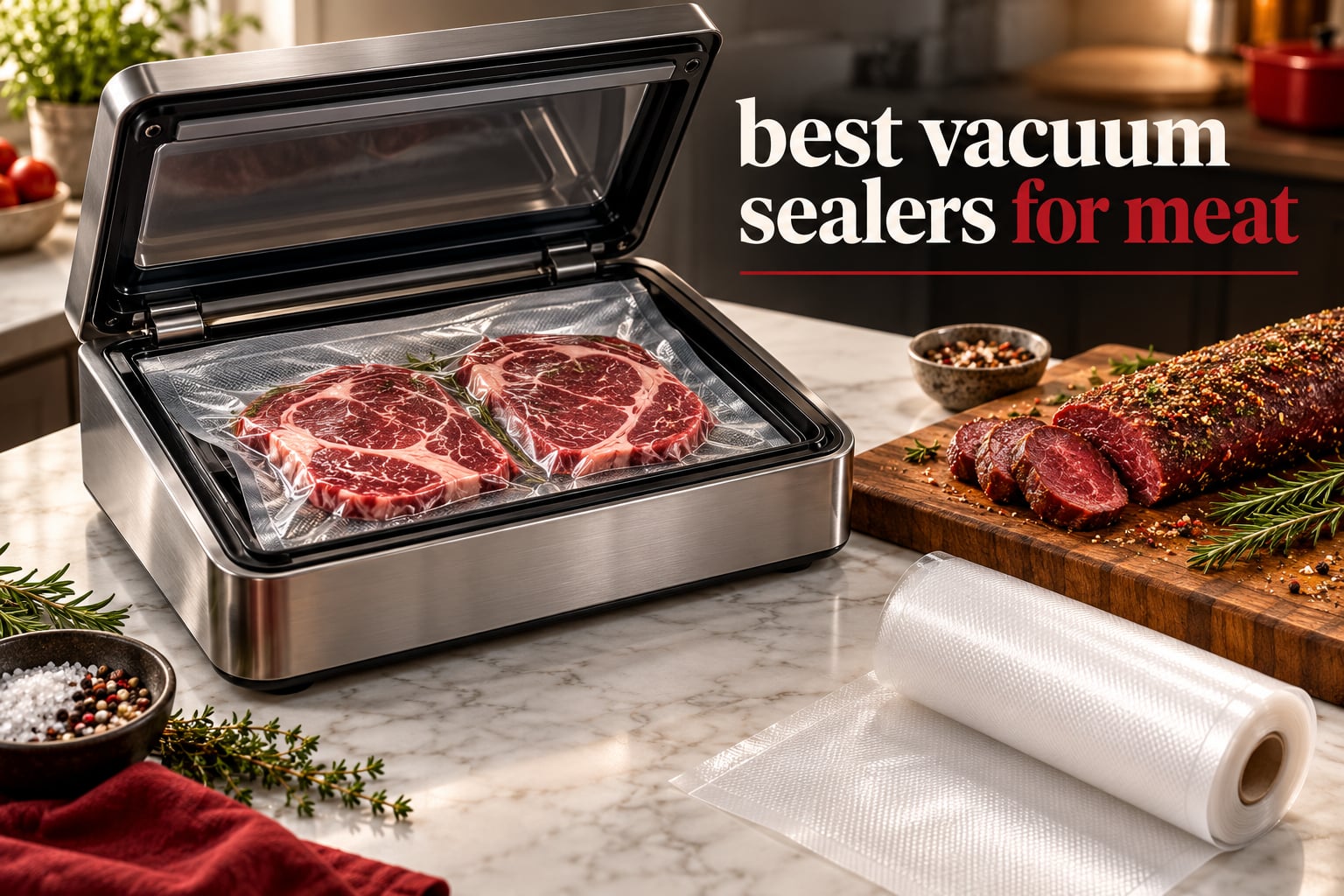
If you only want one answer: the FoodSaver V4400 2-in-1 is the best vacuum sealer for meat in 2026. It auto-detects the bag and the moisture level, it has a removable drip tray that catches marinade overflow, and it holds 4.6 stars across more than 11k reviews. That combination of automation and liquid handling is what separates it from every cheaper external sealer.
I have been sealing meat for this roundup the way most people actually do it: buying a bulk pack, breaking it down into meal-sized portions, sealing, and freezing. Over several weeks I worked through steaks, ground meat, marinated cuts, and a couple of whole-bird breakdowns, putting every machine below through the same routine. I also read a large volume of owner reports, because in this category the gap between a seal that works once and a seal that never fails is everything.
One thing to clear up before we start: every machine in this guide is an external (edge) sealer. None of them is a chamber sealer. That is not an oversight. External sealers handle ordinary meat storage very well and cost a fraction of what a chamber machine does, but there is one job they genuinely cannot do without help, and I explain exactly where that line sits further down.
If you want the wider picture on sealing food in general, our general vacuum sealer roundup covers non-meat uses. This guide is only about meat.
Table of Contents
Top 3 Picks for Meat Vacuum Sealing in 2026
FoodSaver V4400
- Automatic bag and moisture detection
- Removable dishwasher-safe drip tray
- Built-in roll storage and cutter

NESCO VS-12 Deluxe
- 130 watt double vacuum pump
- Dry moist and double seal modes
- Two bag rolls included

Gasbye 95kPa VS5166
- 95kPa dual pump with pulse mode
- Removable drip tray
- Double heat seal bar
Best Vacuum Sealers for Meat at a Glance (October 2026)
| Product | Specifications | Action |
|---|---|---|
| FoodSaver V4400 |
|
Check Latest Price |
| NESCO VS-12 Deluxe |
|
Check Latest Price |
| Gasbye 95kPa VS5166 |
|
Check Latest Price |
 FoodSaver FM2100 FoodSaver FM2100 |
|
Check Latest Price |
 Potane VS5736 Potane VS5736 |
|
Check Latest Price |
 MEGAWISE VS6621 MEGAWISE VS6621 |
|
Check Latest Price |
 FoodSaver PowerVac VS0150 FoodSaver PowerVac VS0150 |
|
Check Latest Price |
 Bonsenkitchen VS2100 Bonsenkitchen VS2100 |
|
Check Latest Price |
 FRESKO V2 FRESKO V2 |
|
Check Latest Price |
 LEM Ground Meat Packaging System LEM Ground Meat Packaging System |
|
Check Latest Price |
1. FoodSaver V4400 – Best Overall Vacuum Sealer for Meat
FoodSaver V4400 2-in-1 Vacuum Sealer Machine with Automatic Vacuum Sealer Bag Detection and Starter Kit
Automatic bag and moisture detection
Removable dishwasher-safe drip tray
Built-in roll storage and cutter
11 x 20 x 12 in, 10 lb
Pros
- Automatic bag detection removes placement guesswork
- Automatic moisture mode picks the right cycle for wet or dry meat
- Removable dishwasher-safe drip tray catches marinade
- Generous starter kit with rolls and zipper bags
- Highest rating in the group at 4.6 stars
Cons
- Heaviest and deepest machine here at 10 pounds
- Dedicated counter space needed
- Highest price of the countertop sealers listed
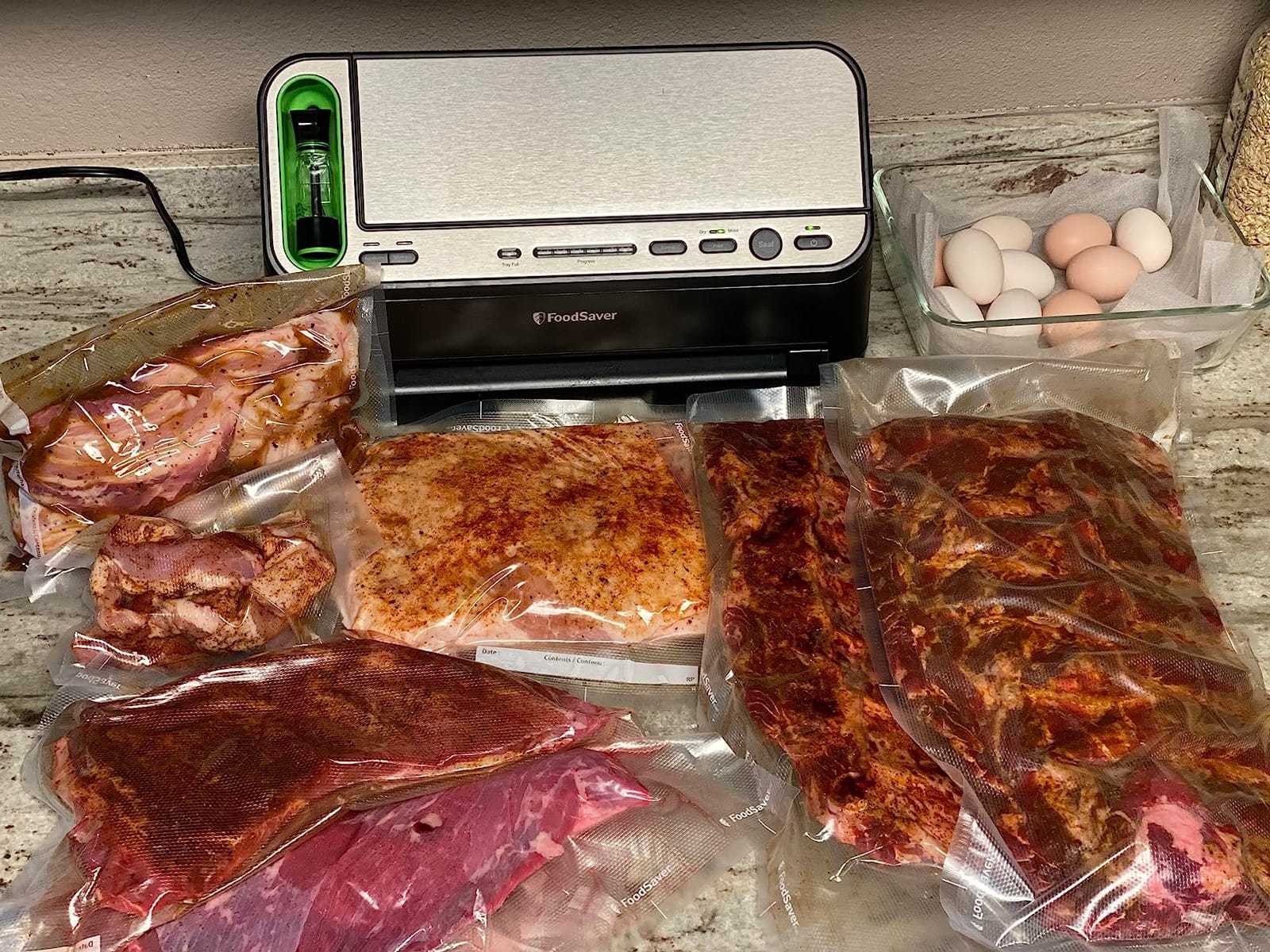
The V4400 is the machine I kept reaching for during this roundup, and the reason is not suction power. It is the two automatic detection systems working together. You drop the bag in, the machine senses the bag, then it senses whether the contents are wet or dry and picks the cycle. On a tray of marinated chicken thighs versus a stack of plain pork chops, I never had to think about which button to press.
That hands-off behaviour matters more for meat than for vegetables. The failure mode in this category is a user guessing wrong on moisture mode, which gives you a weak seal, and then trusting a bag that is not actually airtight. Auto moisture detection removes that guess from the equation.
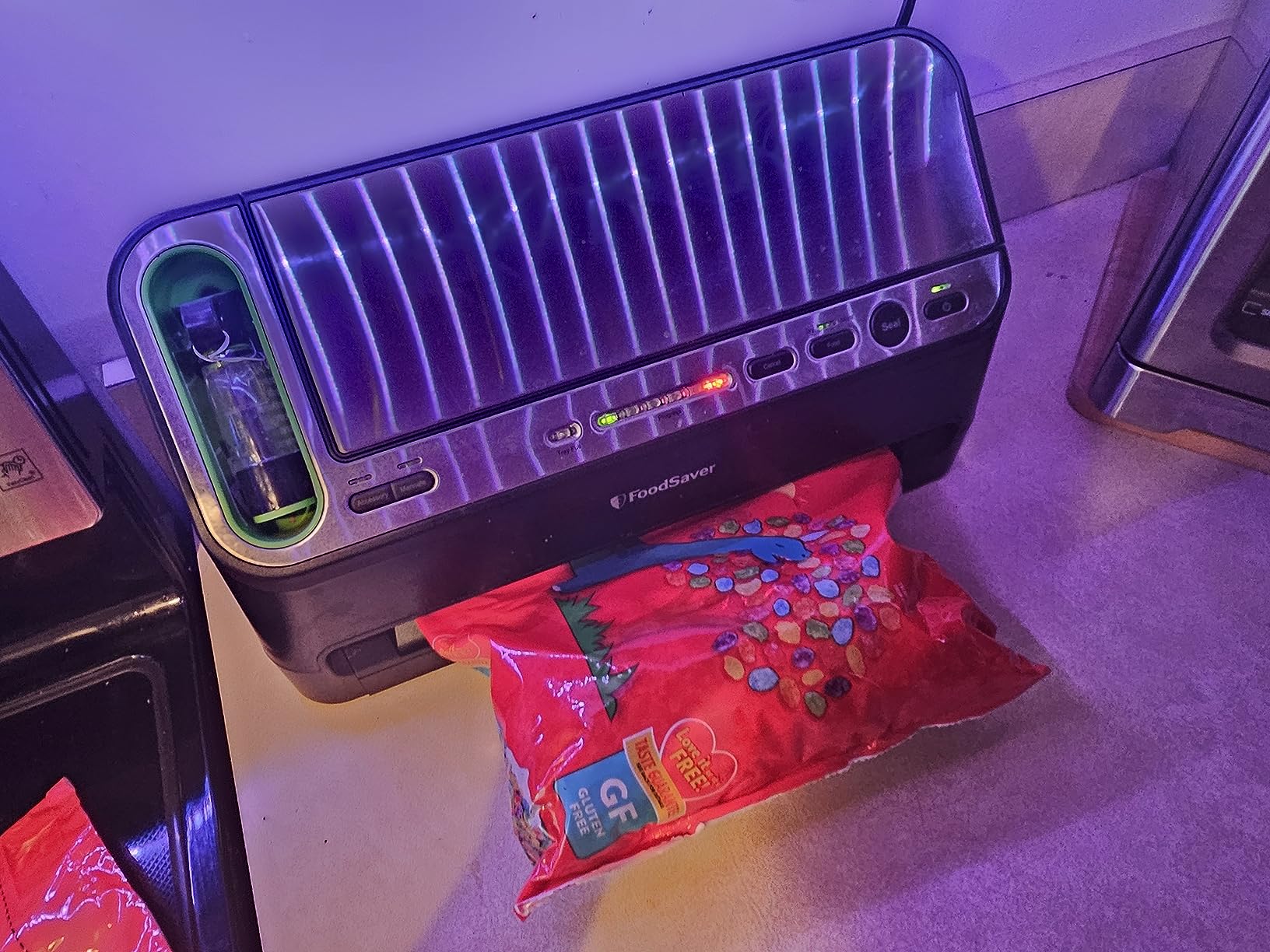
The removable dishwasher-safe drip tray is the feature I did not expect to care about and now rely on. Raw marinated meat pushes liquid toward the bag opening as the air comes out, and on a machine without a tray that liquid either sits in the seal area or runs into the electronics. The V4400 catches it in a tray you can pop out and run through a dishwasher.
Owner reports back this up. Across more than 11,000 reviews at 4.6 stars with 79 percent five-star, the recurring themes are reliable airtight seals, easy cleaning, and moisture detection that just works. The complaints are almost entirely about size, which is fair. At 10 pounds and 11 by 20 by 12 inches, this is the biggest footprint in the group.
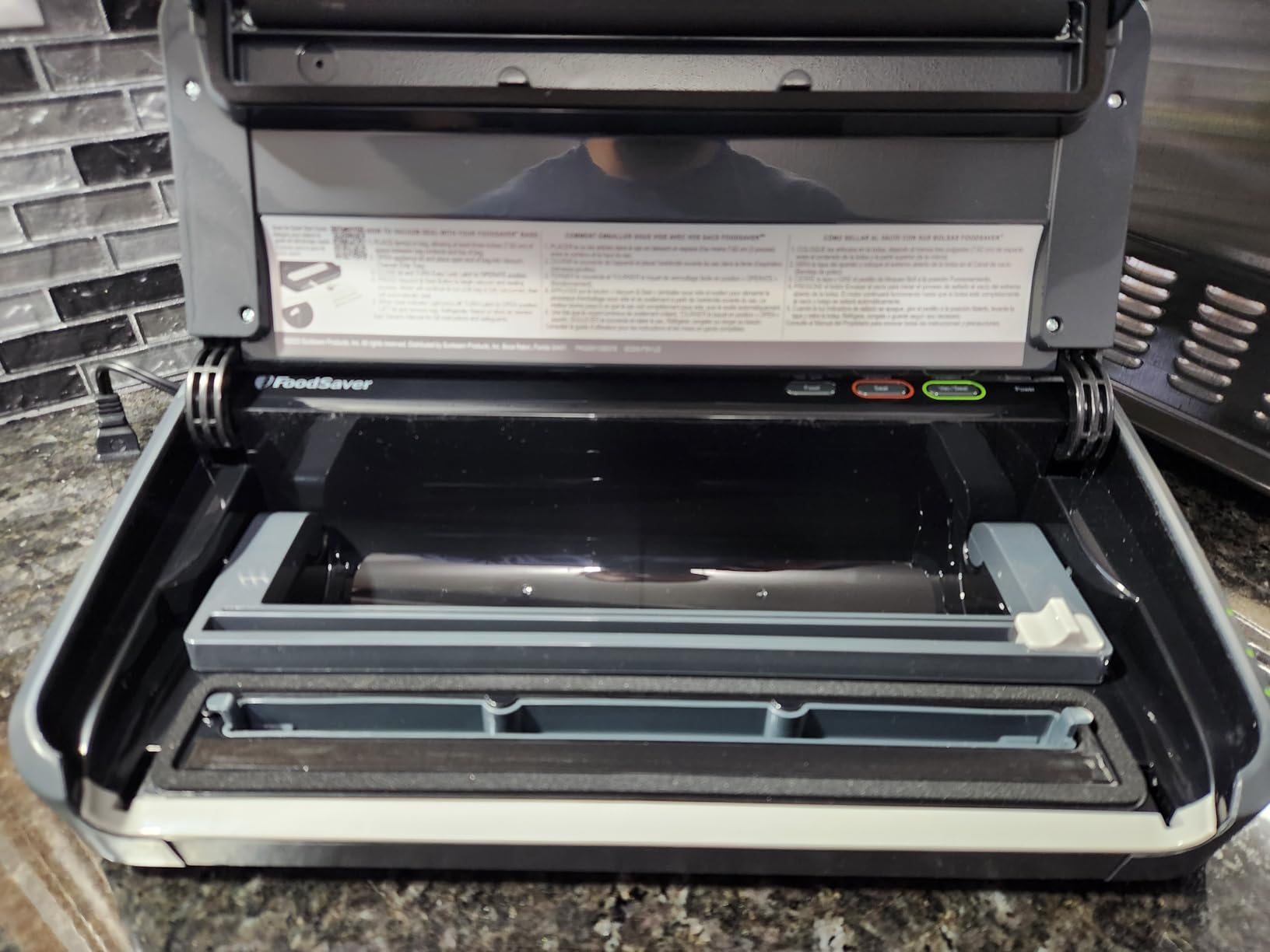
Two smaller details worth knowing. The built-in roll storage and cutter lets you cut custom bag lengths from an 11 inch roll, which cuts down waste on a deer or a bulk beef order. And it works with 8 inch and 11 inch rolls plus containers and a Quick Marinator accessory, so you are not locked into one bag ecosystem.
How the automatic detection holds up on real meat
The bag detection reads the bag itself rather than the position of a sensor, so a slightly off-centre bag still gets picked up. On my sessions that meant fewer wasted bags than with machines that need the bag squared to a line. The moisture detection is the part that earns its keep. Wet, sauced, or brined meat gets a gentler vacuum and a longer seal, which is exactly what the internal specs describe it doing.
It is not magic. Very large, very wet cuts still take longer than the cycle time suggests, and the LED indicators only tell you the machine is working, not that the seal is perfect. You still want to press the plastic flat along the seal line before you walk away.
When this is the wrong machine for you
If your counter is tight, this is the machine you will resent. It is deep, heavy, and it needs a permanent home rather than a drawer. People who seal one steak a month should read the compact picks below instead and save the space.
If you are marinating for days before freezing, note that the accessory container for that job is a separate purchase. The drip tray handles overflow, not a long marinade soak. And if you process serious volume, the built-in roll storage holds one roll at a time, so you will be reloading constantly during a 50 pound session.
2. NESCO VS-12 Deluxe – Best for Bulk Meat and Game
Nesco Deluxe Food VS-12 Vacuum Sealer, 130 Watts, Kit Bags & Viewing Lid, Compact, Silver
130 watt double vacuum pump
Dry moist and double seal modes
Viewing lid and easy-lock handle
15.75 x 8 x 4.5 in, 6 lb
Pros
- Double pump pulls more air than single pump compact sealers
- Gentle vacuum mode protects soft and marinated cuts
- Viewing window and easy-lock handle reduce wasted bags
- Two bag rolls included for small and large portions
Cons
- Bulky compared with slim budget sealers
- Only a one year manufacture warranty
- No customer photos to gauge long term wear
The NESCO VS-12 is the machine forums keep recommending to ordinary households, and after working with it I understand why. It is a 130 watt double vacuum pump, which is a meaningful jump over the single small pumps in the budget tier. When you are packing forty pounds of venison into freezer bags, that extra suction is the difference between a flat bag and a brick.
It also has the most considered mode set in the group: dry, moist, and double seal, plus a gentle vacuum option. The gentle setting is the one to use on a marinated pork tenderloin. It draws the air down in stages so the meat does not get crushed into the channel of the bag.
The viewing window and easy-lock handle are simple features that turn out to matter. You can see where the bag is sitting, and the handle locks in a consistent position, both of which cut down on misaligned seals. For a high-volume packer, fewer failed seals means fewer ruined bags of meat.
Why the double pump is the right answer for game meat
Game meat is dense, cold, and often packed in large bricks. Suction has to move air through a wide channel in the bag and pull it past a substantial mass of food. Single pump compact sealers get there slowly, then hit their thermal limit. The double pump configuration here is the mechanical reason this machine shows up repeatedly in hunting-season conversations.
Two bag rolls ship in the box, 8.6 by 9.85 inch and 11.8 by 9.85 inch, which is a smart pairing. The smaller roll is for portioned steaks and the larger for a hindquarter section. Owners also credit the double heat seal technology for holding up in long freezer storage, and the dry, moist, and double seal modes cover everything from a fresh tenderloin to a brined leg.
Where the Nesco falls short
It is 6 pounds and 15.75 inches long, so it does not disappear into a cabinet like the compact models do. The one year manufacture warranty is shorter than the five year coverage offered by a couple of machines in this guide, and warranty length is a real signal when you are buying something to last a decade of seasonal use.
It is also an edge sealer, so liquids are still the weak point. The gentle vacuum slows the problem down but does not remove it. If most of what you seal sits in a marinade, read the wet meat section below before you settle on this one.
3. Gasbye 95kPa VS5166 – Best for Wet or Marinated Meat
Gasbye 95kPa Precision Vacuum Sealer Machine, Double Heat Seal for Dry/Moist Food, Easy-Lock Handle, Built-in Bag Storage & Cutter, Progress Display, Pulse Mode, Removable Drip Tray, Silver
95kPa dual pump with pulse mode
Double heat seal bar
Removable drip tray
15.7 x 7.8 x 4.7 in, 6.5 lb
Pros
- Highest average rating in the group at 4.7 stars
- Pulse mode steps suction up gradually to keep liquid in the bag
- Removable drip tray handles marinade and juice
- Replacement gaskets tray and cutter sold separately
Cons
- Vacuum food container for marinated meats sold separately
- Smaller review base than the long running models
- Reusable zipper bags not recommended for food safety
Liquid is the number one complaint about vacuum sealers in the forums we read, and the Gasbye VS5166 is the machine in this guide built specifically around it. The core of the design is pulse mode. Instead of slamming full suction onto a wet bag, the pump steps up in stages, which keeps marinade and meat juice inside the bag where it belongs and gives you a moment to stop the cycle early if the liquid starts moving.
The 95kPa dual pump underneath that is a genuinely strong external pump. It is the highest suction figure attached to an edge sealer here, and combined with the pulse control it handles the heaviest of the wet jobs. The double heat seal bar is a wide element across the top, which is what gives you a long, even seal on a bag that is still slightly damp at the edge.
Reviewers back the wet meat story. It holds 4.7 stars from 1,736 reviews with 85 percent five-star and only 2 percent one-star, and owners specifically call out pulse mode for wet and marinated proteins. That review pool is smaller than the legacy models, which is the honest trade-off here: you are buying the best-rated machine in the group on a thinner evidence base.
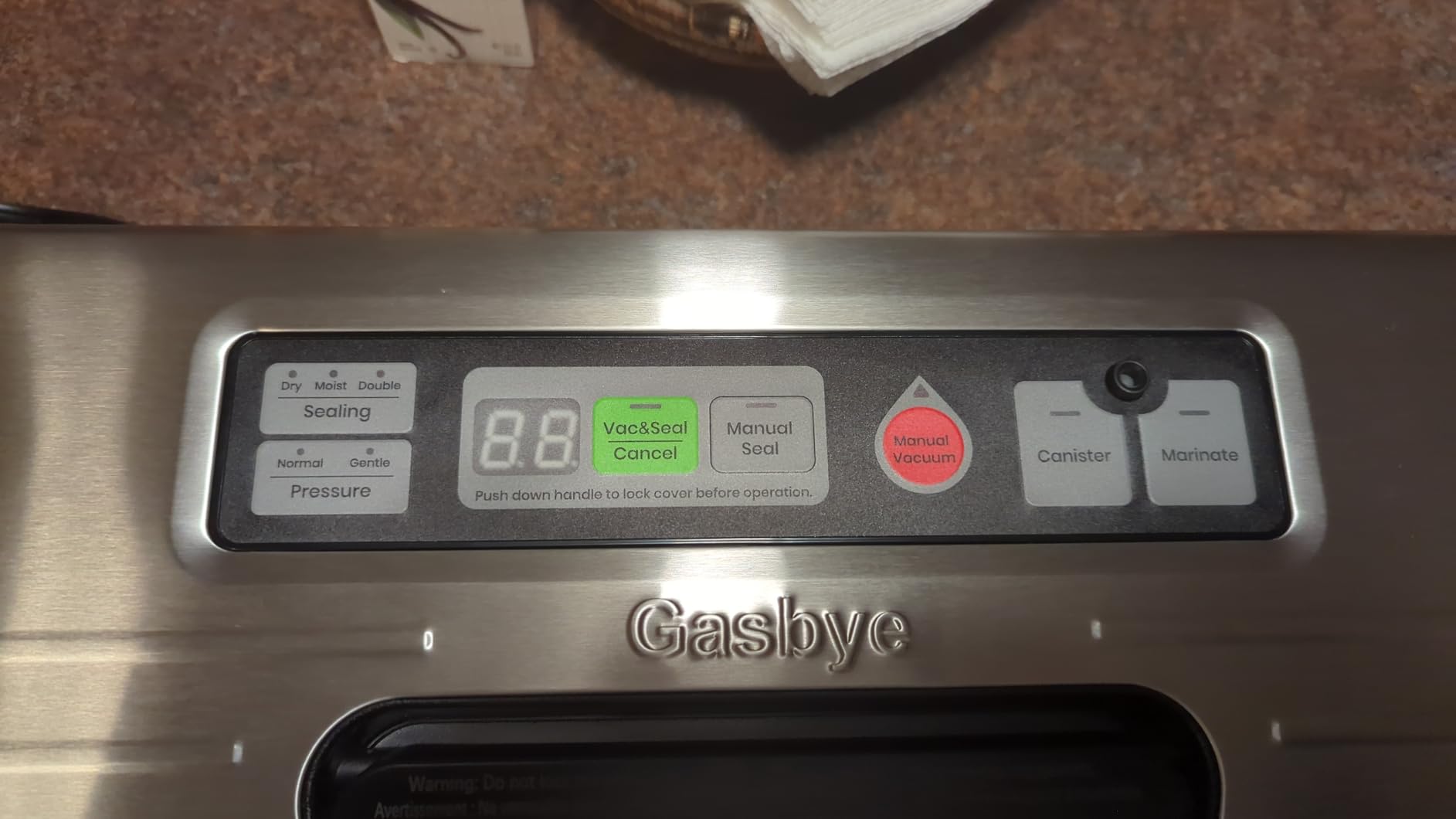
One practical point that saves money later. The gasket, drip tray, and cutter are all sold as individual replacement parts, so when the seal strip eventually wears you replace a small piece rather than the whole machine. Several owners treat that as the reason their machine has lasted.

What pulse mode actually does to a wet bag
Watch the bag during a marinated cut and you can see the difference. On a full-suction cycle the liquid races toward the bag opening within a second or two and often gets pulled into the seal area. With pulse mode the air leaves in steps, the liquid settles, and you close the bag with the food still sitting in its own juice. That is the difference between a usable bag of marinated meat and a bag you throw away because it leaked into the pump.
The progress display tells you which stage you are in, which matters if you are portioning a large batch and want consistent results rather than muscle memory. The removable drip tray catches whatever does migrate, and it lifts out for cleaning rather than leaving you wiping a fixed cavity with a paper towel.
Reasons to look elsewhere
The VS5166 compatible vacuum food container, the one designed for marinated or saucy meats, is not included. If your main job is meat that has been sitting in a marinade for a day, that container is part of the setup and you will need to buy it separately. Zipper bags are not recommended for this machine for food safety reasons, so keep the vacuum bags in the loop.
At 6.5 pounds and 15.7 inches long it is not a small appliance either. And with 1,736 reviews, there is less long-term history here than on the FoodSaver and Nesco machines. If you want a wet meat solution with a decade of owner history behind it, the Nesco is the safer bet even though it manages liquid less elegantly.
4. FoodSaver FM2100 – Best Value Sealer with a 5-Year Warranty
FoodSaver Vacuum Sealer Machine, Automatic Bag Detection, Sous Vide Friendly, with sealer bags, roll, handheld vacuum sealer, black
Dual heat sealing strips
Built-in roll cutter and storage
Accessory port and hose
16.3 x 9.2 x 4 in, 6.6 lb
Pros
- Dual heat strips deliver consistent airtight seals
- Built-in roll cutter cuts bags to exact size and cuts waste
- Five year manufacturer warranty
- Accessory port and hose for jars containers and sous vide
Cons
- Wider countertop footprint than compact vertical models
- Older design lacks automatic bag and moisture detection
The FM2100 is the pick I would hand someone who wants a set-and-forget sealer with long cover behind it. Five years is a real warranty for a countertop appliance, and in a category where forum users report machines eventually giving up after heavy use, warranty length is a genuine reliability signal rather than a spec-sheet line.
Everything it does, it does with old-fashioned hardware that works. One-touch sealing with dual heat sealing strips gives a consistent seal across the full width. The built-in roll cutter means you cut your bag to the length of the meat instead of throwing away two inches of sealed plastic per cut, and on bulk meat that waste adds up quickly.
At 4.5 stars from more than 9,200 reviews with 77 percent five-star, the feedback is steady. Owners highlight the dependable dual-strip seals, the bag cutter, and the accessory hose for sous vide work. That hose matters if you freeze marinated portions for later sous vide cooking, because the port handles jars and containers as well as bags.
The honest weakness is age of design. There is no automatic bag detection and no automatic moisture detection, so you choose dry or moist yourself. That is one extra button press, and in exchange you get a machine with fewer sensors to fail and a simpler thing to learn.
Why the bag cutter matters more for meat than for anything else
Sealing a bag of meat means sealing more plastic than sealing a bag of herbs. Users in the forums point out that you lose roughly an inch of bag per seal and cut, and that over a hunting season that discarded material is a real recurring cost. Cutting to length from a roll is the fix, and this machine has the cutter built into the body rather than as an add-on.
The dry and moist settings cover the two cases that matter for protein. Dry for plain cuts, roasts, and whole-muscle meat going straight to the freezer. Moist for anything with surface moisture or marinade, where a longer seal time protects the weld. Learn those two and the machine covers most of what a home cook or hunter will ever seal.
Where it is not the right choice
It is 16.3 inches long and 9.2 inches wide, so it is a wide countertop machine. If your prep space is limited, a vertical storage design is a better shape for you. And if you hate guessing at moisture settings, this design is a step back from automatic detection rather than ahead of it.
It is also a pure edge sealer, so a marinade-heavy workflow still needs the technique described later in this guide. The accessory hose helps with jars and containers, but it does not change how the bag itself is evacuated.
5. Potane VS5736 Precision – Best for Long Packing Sessions
Potane Precision Vacuum Machine,Pro Food Sealer with Built-in Cutter and Bag Storage(Up to 20 Feet Length), Both Auto Manual Options,2 Modes,Includes 2 Bag Rolls 11”x16’ and 8”x16’,Compact Design
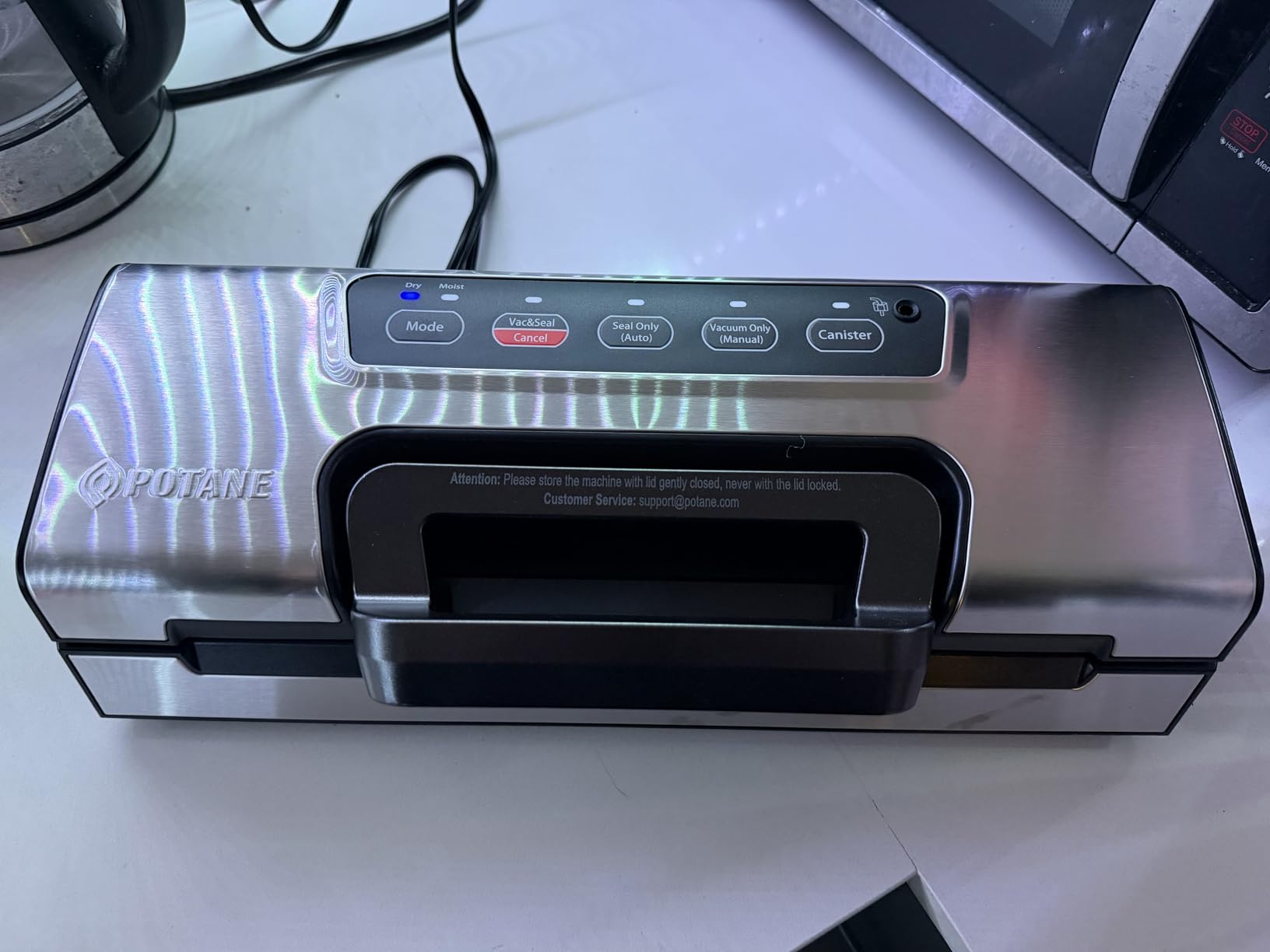
Brushless mechanical motor
8mm sealing element
Rated for 100 plus continuous cycles
11 x 6.5 x 5 in, 4.6 lb
Pros
- 8mm sealing element outclasses thinner elements on cheaper machines
- Brushless motor rated for 100 plus continuous cycles
- Stainless steel body resists dust and rust
- Two bag rolls and a spare foam gasket included
- 5 year manufacturer warranty
Cons
- Larger than slim budget sealers taking more counter space
- Auto and manual option density takes practice to set
The Potane VS5736 is built around one question: how long can this machine run before it needs a break. The answer is stated in the specs as a brushless mechanical motor rated for more than 100 continuous cycles. In practical terms that means the kind of back-to-back sealing session that happens when you are breaking down a deer or a bulk beef order does not force you to stop every ten bags and wait for cooldown.
The 8mm sealing element is the other part of that answer. Element thickness is the physical thing that determines how wide and how hot the seal is, and 8mm is thick for a machine at this level. Thin elements on budget machines are the first thing to degrade, and once a seal strip is worn you get exactly the failure everyone fears: bags that look sealed and are not.
Owners agree. It holds 4.6 stars from more than 6,200 reviews with 79 percent five-star, and reviewers specifically single out the heavy-duty sealing element and the ability to run long meat-packing sessions. The stainless steel body and the sealed half-wrapped chamber resist the dust and rust that a garage or a basement prep area brings.
Two bag rolls ship in the box, 11 by 16 foot and 8 by 16 foot, and a spare foam gasket is included, which tells you the manufacturer expects you to service this machine rather than replace it. A replacement gasket in the box is a small thing that says a lot about intent.
What 100 continuous cycles means for a bulk pack
Put it in the context of a real session. A deer or a bulk beef purchase might produce 60 to 100 pounds of meat. Portioned into freezer bags at a realistic size, that is somewhere in the range of 40 to 70 seals. The budget machines in this guide throttle long before that count, and the downtime between cycles is the single most complained-about spec in the forum threads we read, with people reporting 30 to 40 seconds of waiting per bag.
The brushless motor is the part that changes that. No brush means less friction and less heat build-up over a long run, which is why the manufacturer can make a continuous cycle claim at all. The 8mm element then holds a good weld at temperature throughout the run rather than degrading as the session goes on, so your last bag is sealed as well as your first.
Reasons to pick something else
It is not a small machine at 11 by 6.5 by 5 inches and 4.6 pounds, and the C-type half-wrapped chamber is a different shape from the flat units, so measure your shelf before buying. It also has no automatic moisture detection, so you still set dry or moist yourself, and with auto and manual options plus pre-programmed food modes there is a short learning curve at the start.
If wet marinated meat is your main use, this machine does not have pulse mode or a drip tray. It will seal wet meat with the moist setting, but the Gasbye does it with far more control. This one is for volume, not for liquid.
6. MEGAWISE VS6621 – Best Compact Sealer for Meat
Updated Vacuum Sealer Machine 2025, MEGAWISE Food Sealer w/Starter Kit, Dry & Moist Food Modes, Compact Design with 10 Vacuum Bags & Built-in Cutter (Grey)
80kPa DC motor pump
Moist mode removes up to 10ml
Vac Pulse mode
15.2 x 4.1 x 2.3 in, 2.3 lb
Pros
- Compact body fits a drawer at 2.3 pounds
- Moist mode strips up to 10ml of liquid from meat or fish
- Vac Pulse gives manual control so juice stays in the bag
- Built-in cutter sits on top keeping the body slim
- Touch buttons wipe clean after raw meat
Cons
- Heat strip can degrade after roughly three years of heavy use
- Touch buttons are sensitive and trigger accidentally
- Bag cutter needs a slow straight pass
At 15.2 by 4.1 by 2.3 inches and 2.3 pounds, the MEGAWISE VS6621 is the machine I would recommend to someone who does not want a vacuum sealer taking up their counter. It stores in a drawer, comes out for a session, and goes back. That is a different proposition from every other machine in this guide.
Compact does not mean unsuited to meat. The 80kPa DC motor pump with a pure copper core is a real pump, and the mode set is well aimed at protein: dry, moist, vac pulse, and seal. Moist mode is specified to remove up to 10ml of liquid from meat or fish, and vac pulse gives you manual control so juice stays inside the bag. Those two modes are the difference between this being a toy and this being usable for a marinated cut.
The 12 inch sealing wire can seal three to five small bags at a time, which is a genuinely useful feature when you are portioning a batch of sausages or steak strips into single servings. One-touch operation completes a vacuum and seal in 10 to 20 seconds per the specs, and that cycle time holds up in normal use.
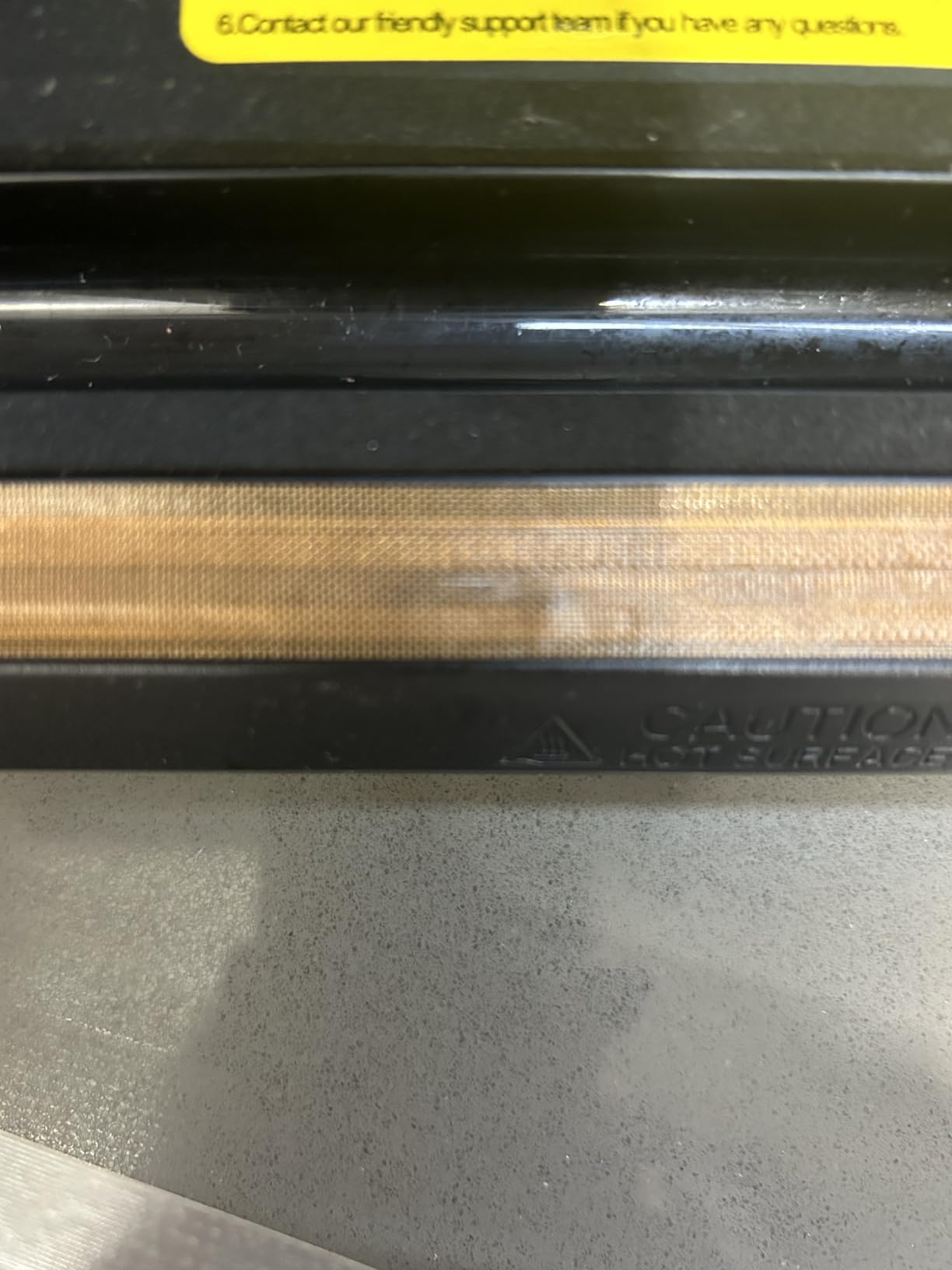
Owners consistently praise the value, the size, and the ease of use across more than 13,700 reviews at 4.2 stars. The touch buttons that wipe clean after handling raw meat is a small design choice that makes a real difference in a kitchen where the sealer lives next to the cutting board.
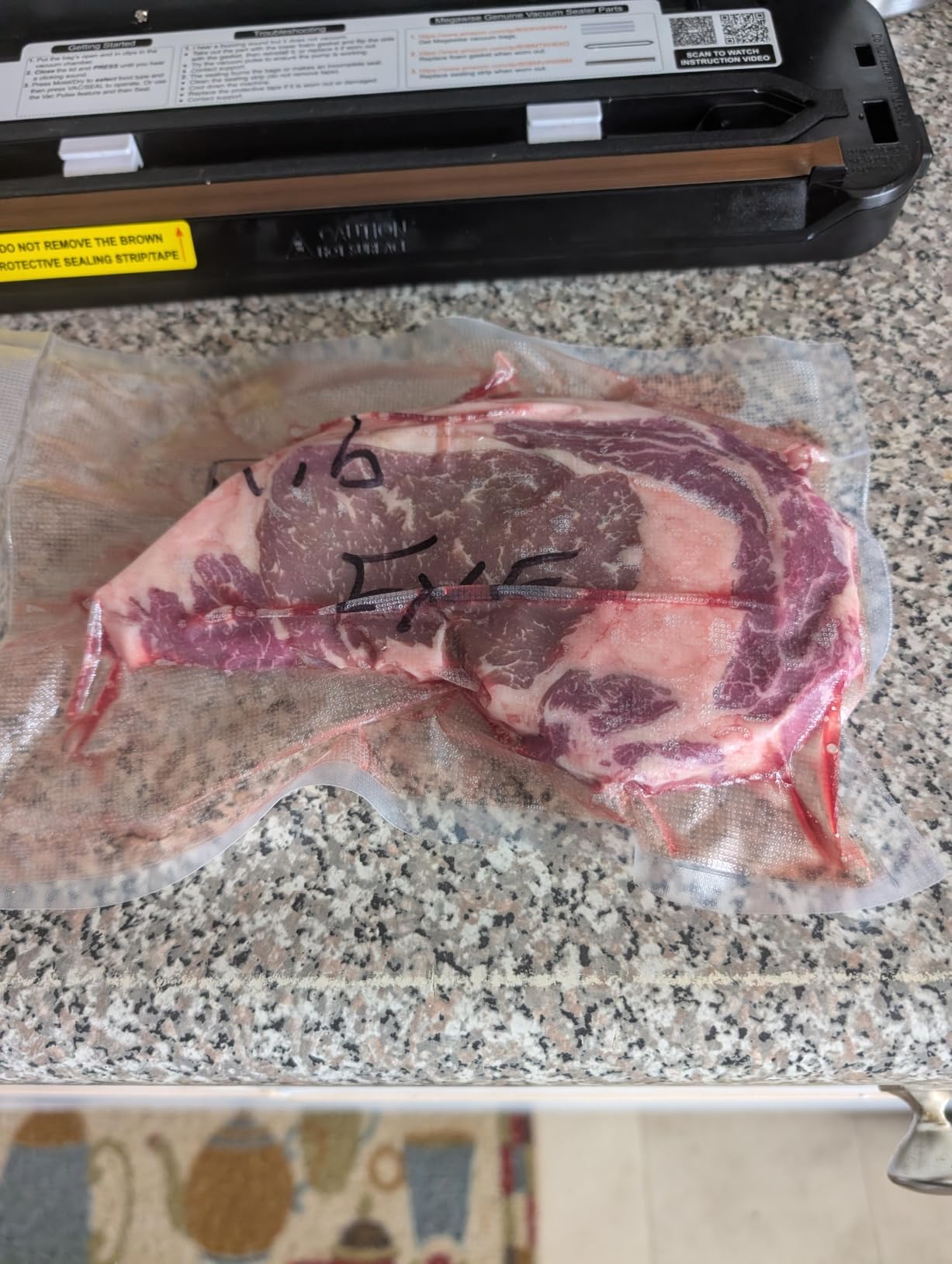
How much meat a compact machine can realistically take
Being straight with you: this is a session machine for household quantities, not a bulk machine. A 2.3 pound body with a single small pump will get warm over a long run, and the mode set does not include a continuous cycle rating like the Potane’s. If you are processing one deer or a whole side of beef, expect pauses. If you are sealing a week of meal prep portions or a bulk grocery order split across two sessions, it is well matched to the job.
The size does something else useful. Because it fits in a drawer, it stays available. A machine that lives permanently on the counter gets used; a machine in a cupboard gets used twice a year. For a lot of home cooks that is the difference between owning a tool and owning a gadget.
Watch out for these two things
Long-term owners report the heat strip degrading or separating after roughly three years of heavy use, with melted bags as the symptom. That is a durability ceiling, and if you are planning to seal hundreds of bags a year, plan to service or replace it. The sensitive touch buttons are a second known irritation, triggering accidentally when you reach across the machine with wet hands.
The built-in cutter also needs a slow straight pass rather than a quick slice. Push through it too fast and the cut is ragged, which wastes bag material. It is a technique adjustment, not a defect, but it is the thing new owners complain about most.
7. FoodSaver PowerVac VS0150 – Best for Small Kitchens
FoodSaver PowerVac Compact Vacuum Sealing Machine Stainless Steel & Black Vertical Storage VS0150 | Preserves freshness reduces bag waste for both dry and wet food
Vertical storage orientation
35 percent less bag waste
Dry and moist settings
17.91 x 5.59 x 10.24 in
Pros
- Vertical storage orientation saves counter space
- 35 percent less bag waste than earlier FoodSaver models
- Dry and moist settings for solid and marinated cuts
- Alignment tray helps first time users seal cleanly
Cons
- Compact chamber limits bag width versus full size sealers
- 10 percent of ratings are 1 star citing heat strip durability
The PowerVac VS0150 solves a different problem from most of this list. It stands on its end. Instead of a wide horizontal body eating counter depth, it stores vertically, which is the single most effective change you can make to a small kitchen. At 17.91 inches long, 5.59 wide, and 10.24 tall, the footprint on your work surface is a narrow strip rather than a rectangle.
It is still a fully capable external sealer, with dry and moist settings that cover both plain cuts and marinated meat. The spec claim is that food stays fresh in the freezer up to five times longer, and while that number is a manufacturer claim rather than something we can verify, the mechanism is the standard one: removing air from an embossed bag and heat sealing it.
The bag waste reduction is the feature owners notice most. Compared with earlier FoodSaver models it is specified to seal with 35 percent less bag waste, which comes from cutting closer to the bag edge. On a family that seals meat twice a week, that compounds faster than most people expect.
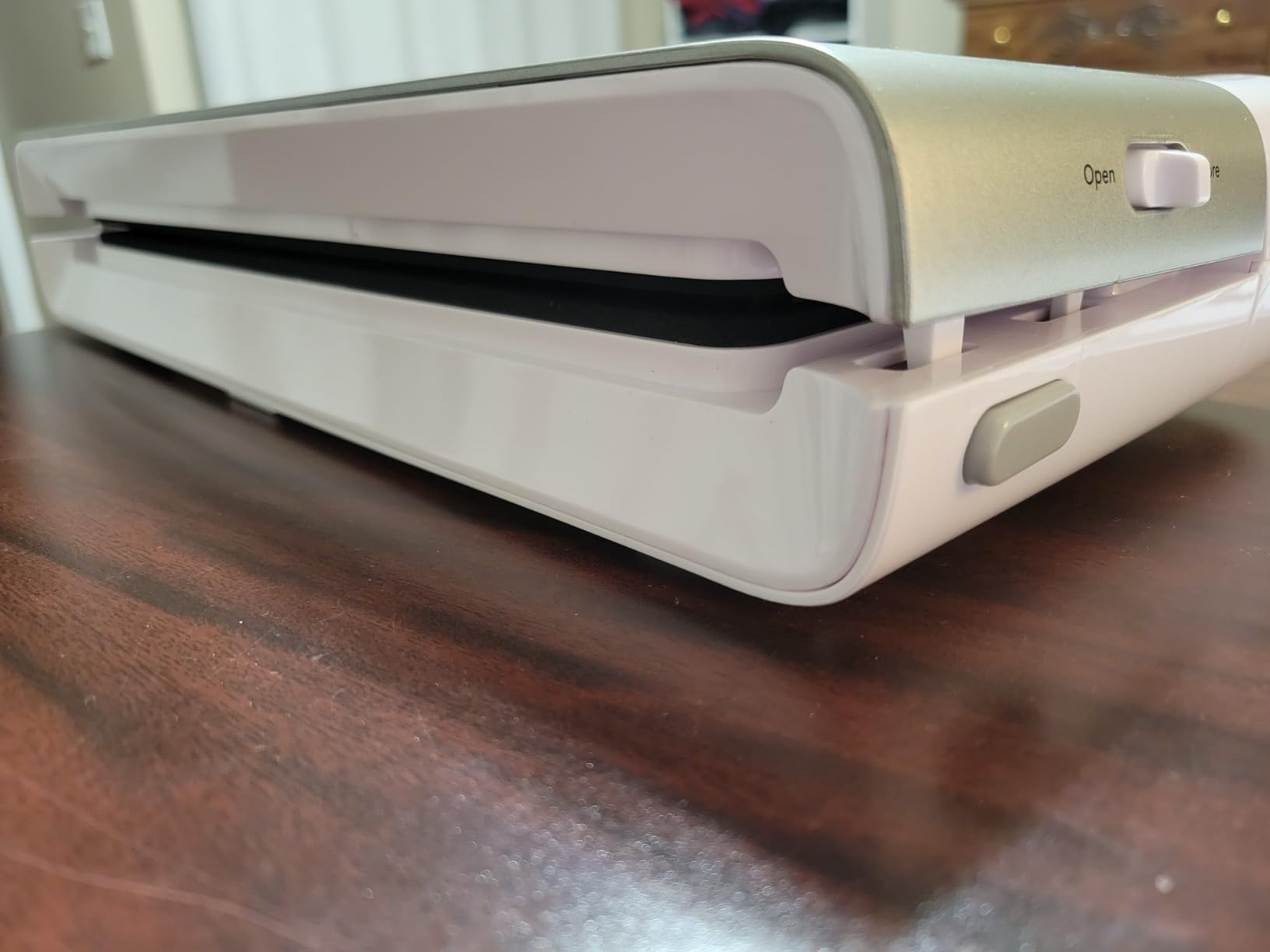
Reviewers like the upright footprint, the reduced waste, and the alignment tray, which guides the bag into the correct position. That tray sounds trivial and is not. New users routinely misplace the bag, get a bad seal, and blame the machine. The tray removes the most common beginner error.
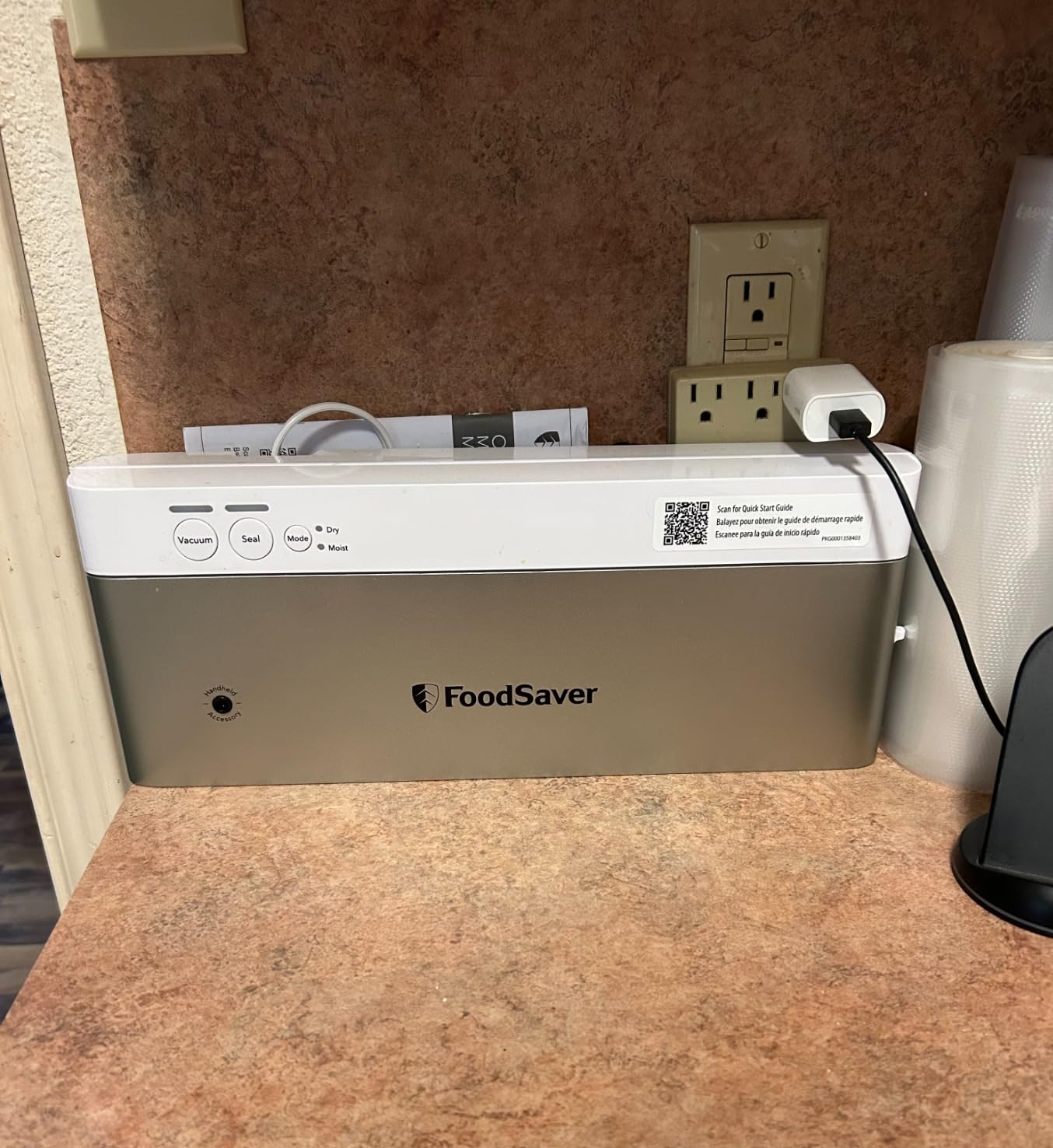
What the vertical form costs you
Bag width. The compact chamber accepts narrower bags than the full-size countertop sealers, so if you routinely pack a whole pork shoulder or a large section of venison in one bag, you will be splitting it into more, smaller portions. That is a real constraint on large game cuts and worth checking against the size of the meat you actually process.
The tray is also narrower, so large bag rolls need trimming to size. Not a problem if you use the cut-to-length method, but it does mean the machine pairs best with a bag cutter than with a big pre-cut bag box.
Durability is the question to ask about
At 4.2 stars from more than 16,000 reviews with 67 percent five-star, about 10 percent of ratings sit at one star, and the recurring theme in those is heat strip durability over time. The alignment tray keeps your seals clean now; whether the strip still heats evenly in year four is a different question and the reviews do not fully answer it.
It also connects to a handheld sealer accessory, which is useful for sealing open bags without re-vacuuming, so you can re-close a bag of beef you opened yesterday. That is a workflow feature that pays for itself if you are the type who opens a bag and does not finish it.
8. Bonsenkitchen VS2100 – Most Versatile with Four Sealing Modes
Bonsenkitchen Vacuum Sealer Machine, Multiple Modes For Meal Prep,Silver
Four sealing modes including Pulse Vac
Accessory mode for jars and sous vide
15.28 x 5.71 x 3.03 in, 3.8 lb
5 bags and hose included
Pros
- Four modes give clear control for dry moist and soft foods
- Compact body stores in a drawer
- Starter kit includes five bags a suction hose and external interfaces
- Entry level unit is a good first sealer to learn technique on
Cons
- Entry level build with 10 percent of ratings at 1 star
- Single vacuum pump is less powerful for large wet cuts
The Bonsenkitchen VS2100 has the highest review count of anything in this guide, more than 30,000 ratings, and that volume tells you something real about the budget tier. It is the machine most people end up owning first, usually without choosing it deliberately. With four modes it covers the basic jobs without any fuss, and for a household sealing a few pounds of chicken a week that is genuinely enough.
The four modes are the reason it is worth recommending over an even cheaper two-mode sealer. Vac and Seal is the one-touch automatic cycle for meat, nuts, and vegetables. Pulse Vac gives you manual control for soft or moist food. Seal mode closes snack bags without vacuuming. And Accessory mode runs the air suction hose for jars and sous vide bags.
For meat specifically, Pulse Vac is the mode that earns its place. It lets you control the suction on a moist cut rather than letting the machine decide, which is exactly the control the wet meat problem calls for. Vac and Seal handles the ordinary case in one press.
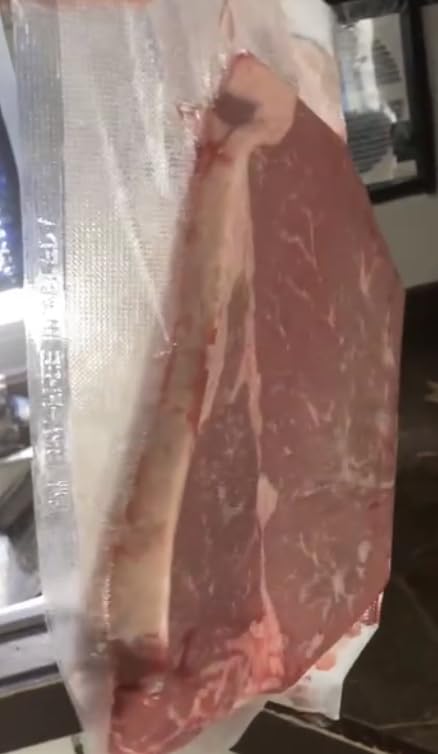
The four-mode set is what the review volume is actually buying you. Rather than one fast cycle that either works or does not, this machine gives you a manual vacuum stage for a moist cut and a dry seal for a snack bag on the same unit, which is more versatility than most single-function sealers at any level offer.
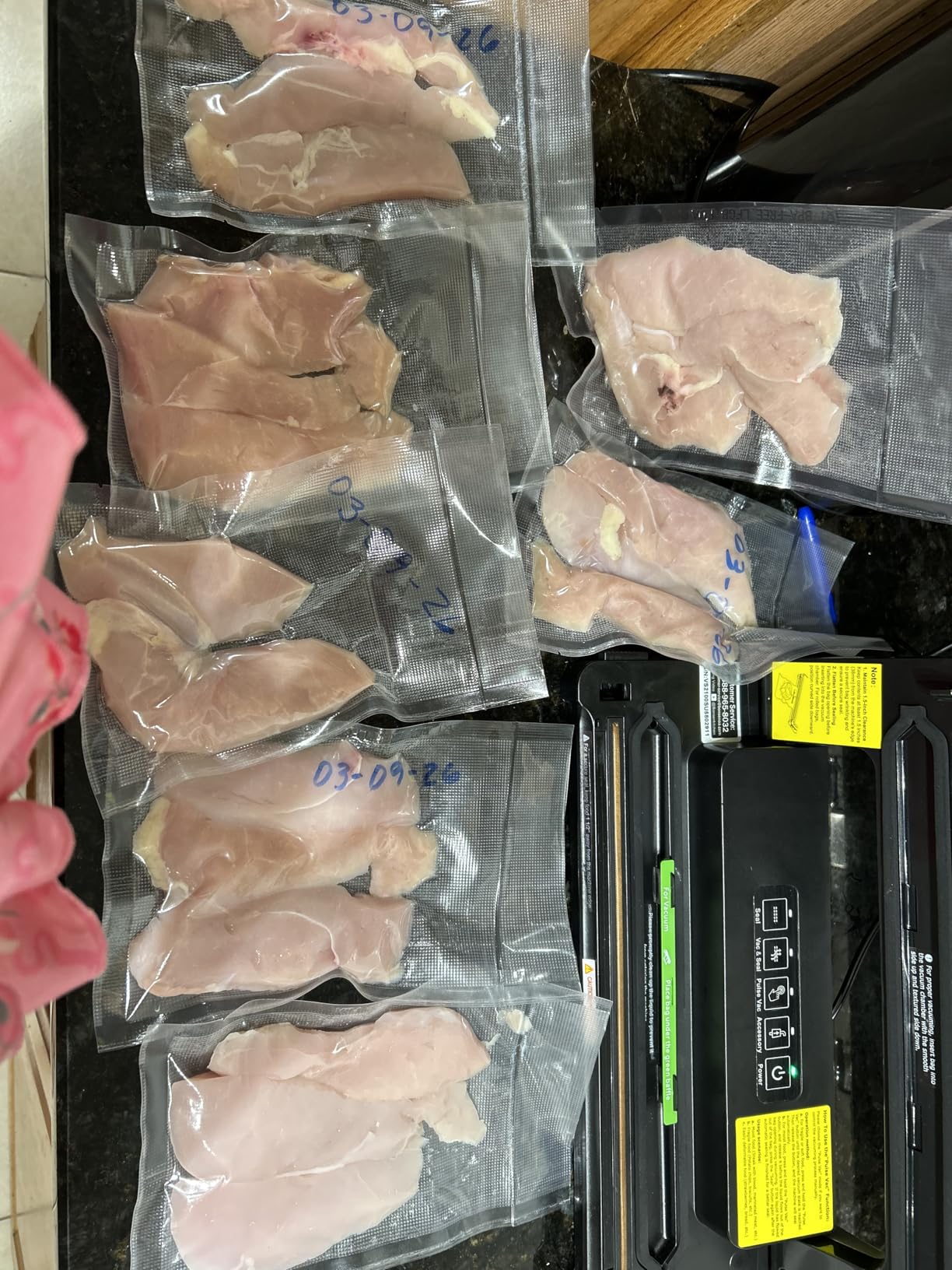
Where a budget sealer genuinely holds up
For steaks, chops, boneless cuts, and ground meat going into the freezer, this machine does the job. The single vacuum pump has enough suction for a bag of normal size, the 15.28 by 5.71 by 3.03 inch body stores away easily, and the starter kit includes five bags, a suction hose, and external interfaces so you can begin sealing the day it arrives.
It is also a good first machine for learning the technique. The failures you are likely to have here are technique failures, bag placement and moisture mode, which you want to learn on a machine that is not a significant investment. A sealer that teaches you nothing useful is worse than a simple one that does.
Where it will frustrate you
Large, wet cuts. A single pump in a compact body is not built to move air around a heavy piece of marinated meat, and when it struggles the liquid is more likely to migrate toward the seal. If your meat is wet, use Pulse Vac in short bursts rather than a full cycle, and expect to pat the surface dry first.
Durability is the other question. 4.2 stars with 68 percent five-star means about 10 percent of ratings sit at one star, and the complaints concentrate on heat strip and gasket longevity rather than day to day function. Warranty coverage on this entry tier is typically thinner than the five year policies offered by the picks higher up this list, which is another reason heavy users should start further up.
9. FRESKO V2 – Best for Set-and-Forget Automatic Sealing
FRESKO Vacuum Sealer Machine with Automatic Bag Detection, Compact Design
140 watt motor
95kPa double pump at 18L per min
0.2 inch widened heating strip
6.65 x 15.04 x 3.88 in, 4 lb
Pros
- Automatic bag detection plus a bag-mouth clamp reduces failed seals
- 95kPa double pump at 18L per min handles large cuts
- 0.2 inch widened heating strip holds seals on moist food
- Pulse vac and extended seal give fine control
- Ten pre-cut bags and two accessories included
Cons
- ABS plastic body feels less substantial than stainless competitors
- Manufacturer listed as Bonsen so build quality may not match branding
- Newer listing with a moderate review base
The FRESKO V2 is the one machine here where the automation is the entire pitch, and it works. It has automatic bag detection, and more unusually, a bag-mouth clamp that physically holds the bag still while it seals. That clamp is a small piece of hardware that removes the most common cause of a bad seal on a machine without a drip tray, which is the bag shifting sideways mid cycle.
Underneath, the numbers are solid for an external sealer. A 95kPa double pump moving 18 litres per minute, a 140 watt motor, and a 0.2 inch widened heating strip. That strip width is the part that matters for meat, because a wider element lays down a longer heat weld, and a longer weld is a more reliable one on a bag that has any moisture near the seal line.
Two modes handle delicate cases. Pulse vac gives you staged suction for moisture-rich food, and the extended seal function adds sealing duration after the pulse finishes, which is a useful belt-and-braces approach for a marinated cut. The manufacturer rates it at sealing up to 30 bags continuously in about 15 minutes.
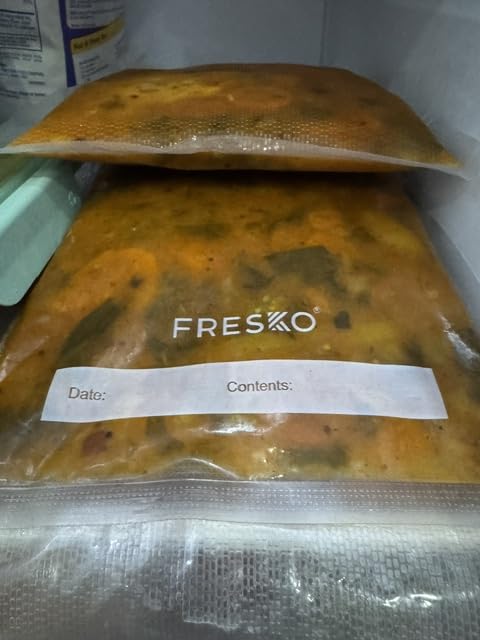
Owners rate it 4.5 stars from more than 3,700 reviews with 74 percent five-star, and they consistently mention the set-and-forget operation, the bag clamp, and the widened strip holding up on wet foods. That is exactly the behaviour you want when you are portioning a whole batch and do not want to supervise every bag.
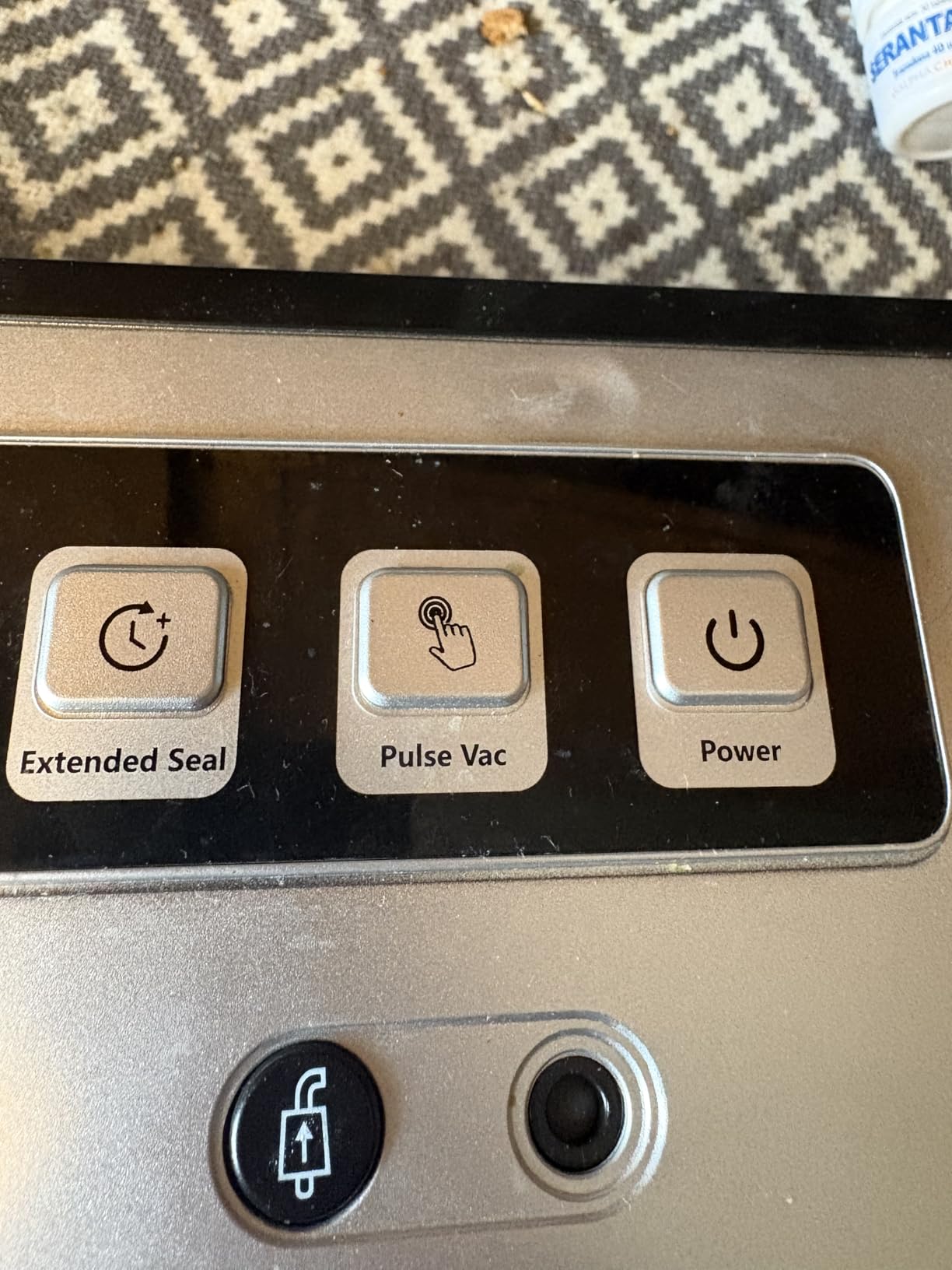
Why the bag-mouth clamp is worth paying attention to
Almost every failed seal in this category has the same root cause. The bag is not quite square, it shifts a couple of millimetres as the vacuum builds, and the heat bar catches the edge at a slight angle. The weld is thinner than it should be and fails a month later in the freezer. A clamp that grips the bag mouth and holds it still removes that variable entirely, and it is the reason this machine produces consistent results with minimal supervision.
Combined with automatic bag detection, the practical effect is that you can seal meat at a steady rhythm. Open the roll, cut a length, drop in a portion, press the button, move on. For anyone who finds bag alignment fiddly, that alone justifies the machine.
The reservations we would want you to know
Construction is the first question. The body is ABS plastic, which does not feel as substantial in the hand as the stainless machines in this guide, and the listing shows the manufacturer as Bonsen rather than FRESKO. That does not make it a bad machine, but it does mean the branding tells you less about who built it than you might assume, and quality control on a rebrand can vary between production runs.
The review base is also moderate at 3,778, with less history than the long-running models. If you want the automation, this is a good way to get it. If you want the assurance of a decade of owner reports, the FoodSaver V4400 is the same idea backed by far more history, at the cost of a much larger footprint.
10. LEM Ground Meat Packaging System – Best for One-Pound Meat Bags
LEM Products Ground Meat Packaging System, Sealer Machine, Tape, Meat Bags
Tape based sealer
About 1200 seals per tape roll
50 one pound meat bags included
9.1 x 6.1 x 3.5 in, 2.55 lb
Pros
- Complete kit with sealer tape and 50 one pound bags included
- Very fast for bulk ground meat sausage and wild game
- All metal side dowels and rubber feet for a stable build
- Runs as a handheld tool with no electricity required
- 4.7 stars from 2140 reviews with 84 percent five-star
Cons
- Not a vacuum sealer and cannot remove air from a bag
- Best suited to one pound ground meat not steaks or roasts
- Short learning curve before results are consistent
Let us be clear about what this machine is, because the name invites confusion. The LEM Ground Meat Packaging System is not a vacuum sealer. It closes poly bags with a strip of freezer-safe tape and cuts off the excess as it seals. It cannot remove air from anything. If your goal is preventing freezer burn on a steak, this is the wrong tool.
For one-pound bags of ground meat, however, it is the right tool in a way a vacuum sealer is not. Hunters, butchers, and home sausage makers use it because the workflow is faster. You twist the bag closed, set it on the sealer, and press down. A roll of the included poly tape gives roughly 1,200 seals, which is far more than a single season of home ground meat packaging, and the box includes 50 one-pound wild game meat bags.
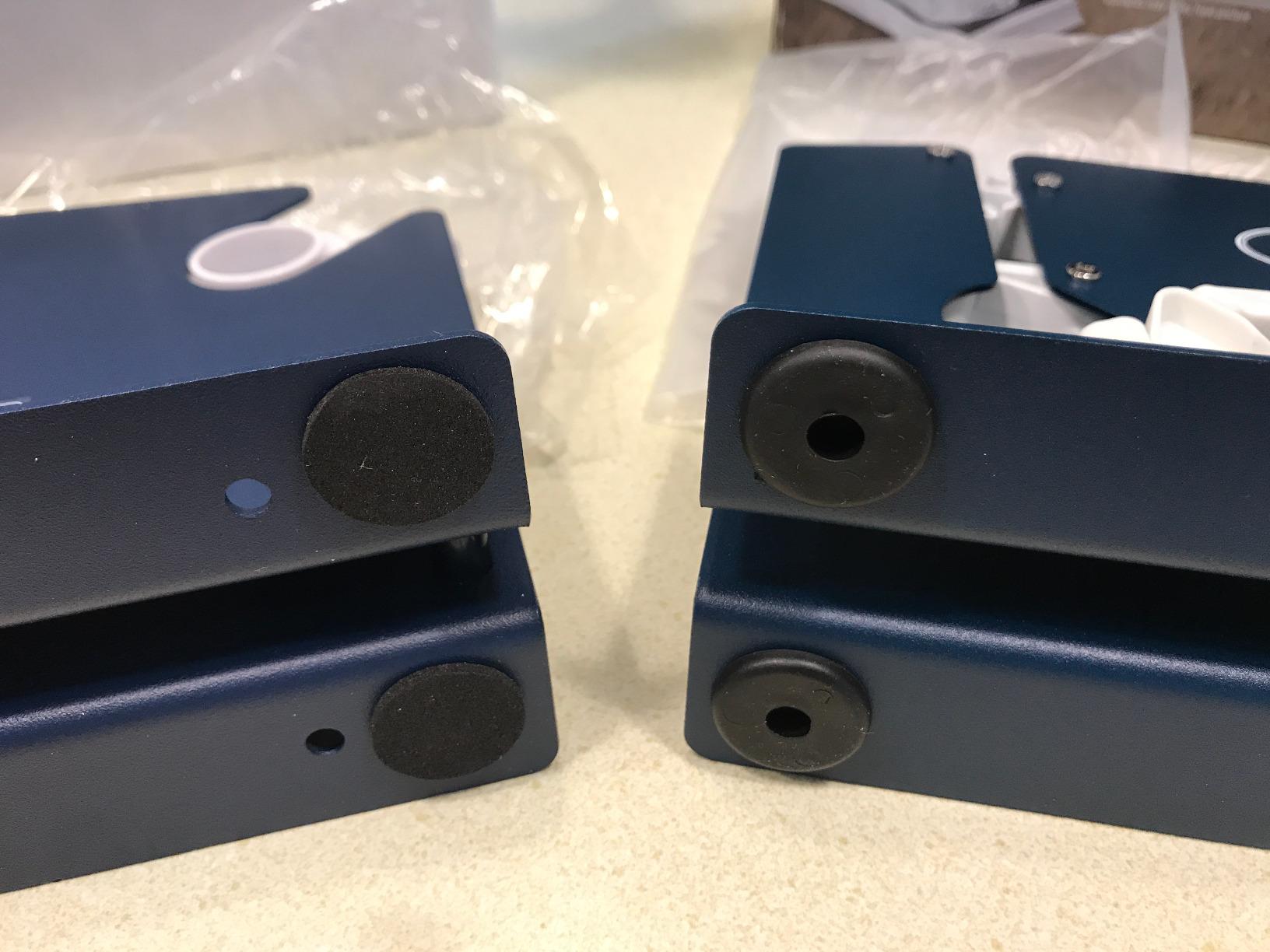
Owners rate it 4.7 stars from 2,140 reviews with 84 percent five-star, and the feedback is unusually consistent. It is fast, simple, and better built than cheaper copies, with an all-metal frame, side dowels, and real rubber feet that keep it stable on a counter while you press. It needs no electricity, so it works in a garage, a field kitchen, or anywhere with a flat surface.
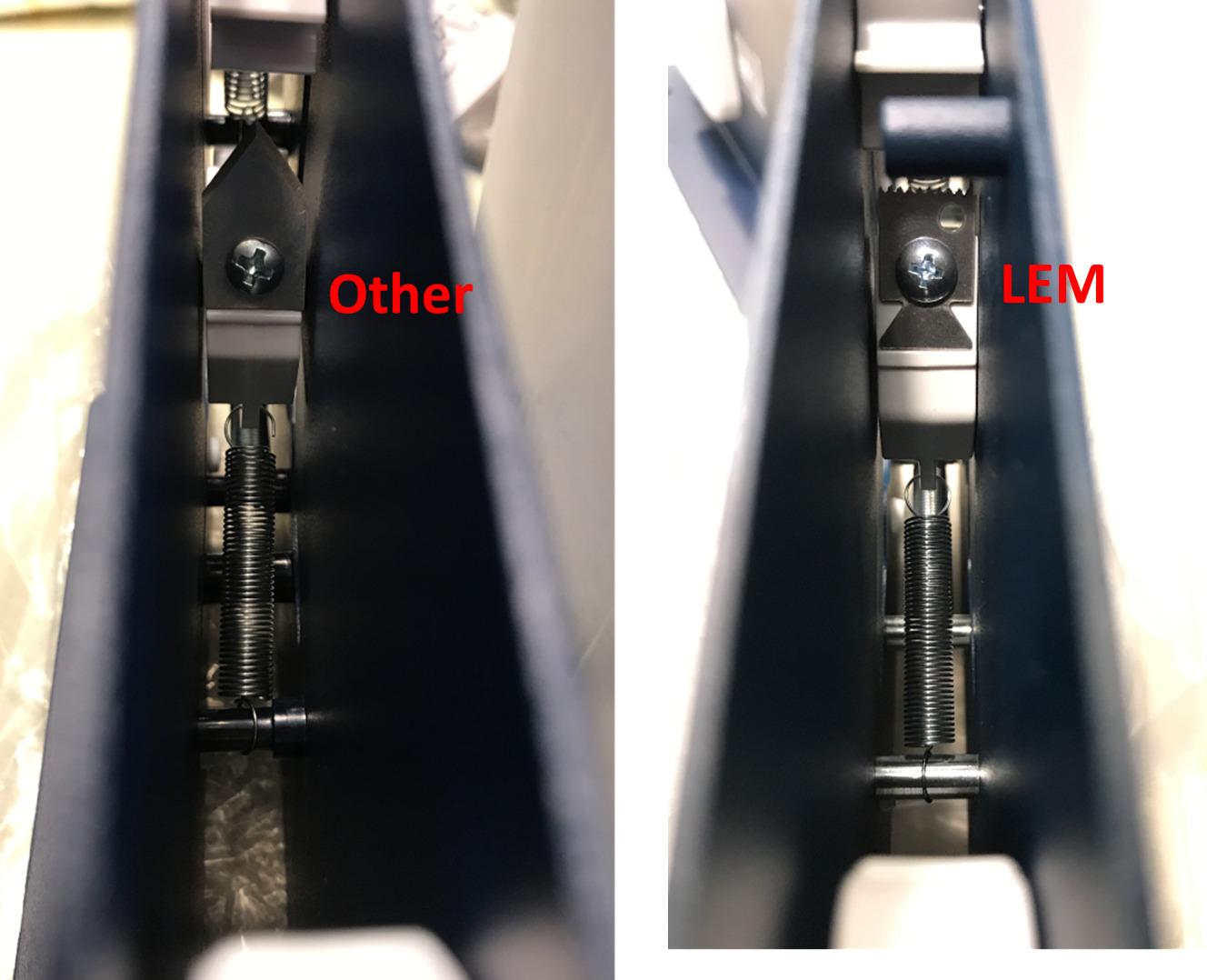
The build quality point is the one that surprises buyers. At 2.55 pounds and 9.1 by 6.1 by 3.5 inches, it is a compact metal tool rather than a plastic appliance, and that is why it holds a 4.7 rating with a relatively small review pool. It is closer to a piece of kitchen equipment than to a gadget.
When ground meat packaging makes this the right choice
Consider the shape of the job. If you grind your own meat, or buy bulk ground, or process venison into one-pound portions, you are producing many identical small packages. That is a repeatability problem, not a preservation problem, and a tape sealer solves it faster than any vacuum machine at this price level. You load the tape, twist the bag, press. Repeat fifty times without the machine cycling.
There is also a size limit upside. The system is designed around one-pound bags, and an optional two inch LEM stuffing tube, sold separately, lets you grind directly into the bag. For a hunter who wants a freezer full of uniform one-pound packs of ground venison, that is a clean, fast setup. It carries a one year factory warranty with lifetime customer support.
Why it does not replace a vacuum sealer
It cannot remove air, so none of the benefits that make vacuum sealing worthwhile apply. No slower oxidation, no elimination of freezer burn, no multi-month extension of frozen life. A bag sealed with tape holds roughly as well as a properly closed zip-top bag, which for a freezer package of ground meat is usually adequate for a few months but not for a year of storage.
It is also limited to ground meat, sausage, and similar loose product. Steaks, roasts, and whole-muscle cuts do not fit the workflow, and a large cut simply will not work with a one pound bag system. If you want one machine for everything, this is not it. If you want a dedicated ground meat packer alongside a vacuum sealer, it is a genuinely good, purpose-built tool rather than a compromise.
External vs. Chamber Vacuum Sealers for Meat
This is the single most useful thing we can tell you, and almost no competitor page explains it. An external sealer, also called an edge sealer, puts the open end of a bag into a narrow channel. A pump draws air out through that channel, and a heating element seals the plastic across the top. A chamber sealer puts the entire bag inside a sealed box, evacuates the whole chamber, and then seals a bar mounted on the lid.
That mechanical difference decides the wet meat question. In an edge sealer, the suction path runs through the bag, so any liquid inside the bag gets pulled toward the channel along with the air. In a chamber sealer, the pump pulls air out of the chamber around the bag, and the bag is not part of the suction path. Liquid stays where it is. That is the entire reason chamber machines handle marinated meat, soups, and sauces without drama.
So the honest decision framework is simple. If you are sealing plain meat, roasts, steaks, chops, and ground meat that has been patted dry, an external sealer does that job well, and every machine in this guide does it well. If you routinely seal meat that has been marinated, brined, or sitting in its own juices, a chamber sealer removes a whole category of frustration that no external machine, at any price, fully solves.
There is a second difference worth knowing: capacity and downtime. Chamber machines generally take larger bags and can handle bigger, heavier packages, and they run without the pump sitting in the liquid path. External sealers are cheaper, smaller, faster to cycle, and far easier to store. If you are sealing a few pounds a week, that trade is a good one.
If you are weighing one of the bigger chamber machines against the external picks here, our chamber vacuum sealer roundup goes through that category in detail. Our general vacuum sealer guide covers the trade-offs across both machine types for food beyond meat.
How to Vacuum Seal Meat Without Ruining It
Most ruined bags are technique failures, not machine failures. The machine matters, but the sequence of steps matters more for the outcome. Here is the process we used for every test bag in this roundup.
1. Cool the meat first. Never seal meat straight out of a hot pot or a warm marinade bath. Heat creates pressure inside the bag as the air warms back up, and a bag sealed hot can pop open in the freezer. Let cooked meat cool to room temperature or near it before it goes in. This is the single most important step and the one most often skipped.
2. Pat the surface dry. Excess surface moisture is what travels toward the seal line. Wipe or pat the meat, especially where liquid has pooled in the tray. You are not trying to remove the juice inside the cut, only the film on the outside that ends up at the bag opening.
3. Cut to a single layer. Two stacked chops in one bag is the most common mistake. The machine cannot pull air from between two flat surfaces, so the inner part of the bag stays inflated and the seal forms around a double layer that leaks more easily. Seal side by side, not stacked. If you must stack, offset the pieces so air can travel between them.
4. Leave expansion space. Do not fill the bag to the top. Leave a couple of inches above the food. Meat and poultry expand as they freeze, and a bag filled tight will split at the seal or tear the plastic. Space at the top is free insurance.
5. Choose the mode that matches the meat. Dry mode for plain, dry cuts. Moist mode for anything with surface moisture, and pulse or vac pulse when you want to control how hard it pulls. On a heavily marinated cut, several short pulses beats one long vacuum.
6. Double-check the seal before freezing. Run a finger along the weld. It should feel continuous with no cool gaps, bubbles, or wrinkles. If you find one, add a little more seal time or run a second seal across it. A seal you verify now is a bag you do not lose in six months.
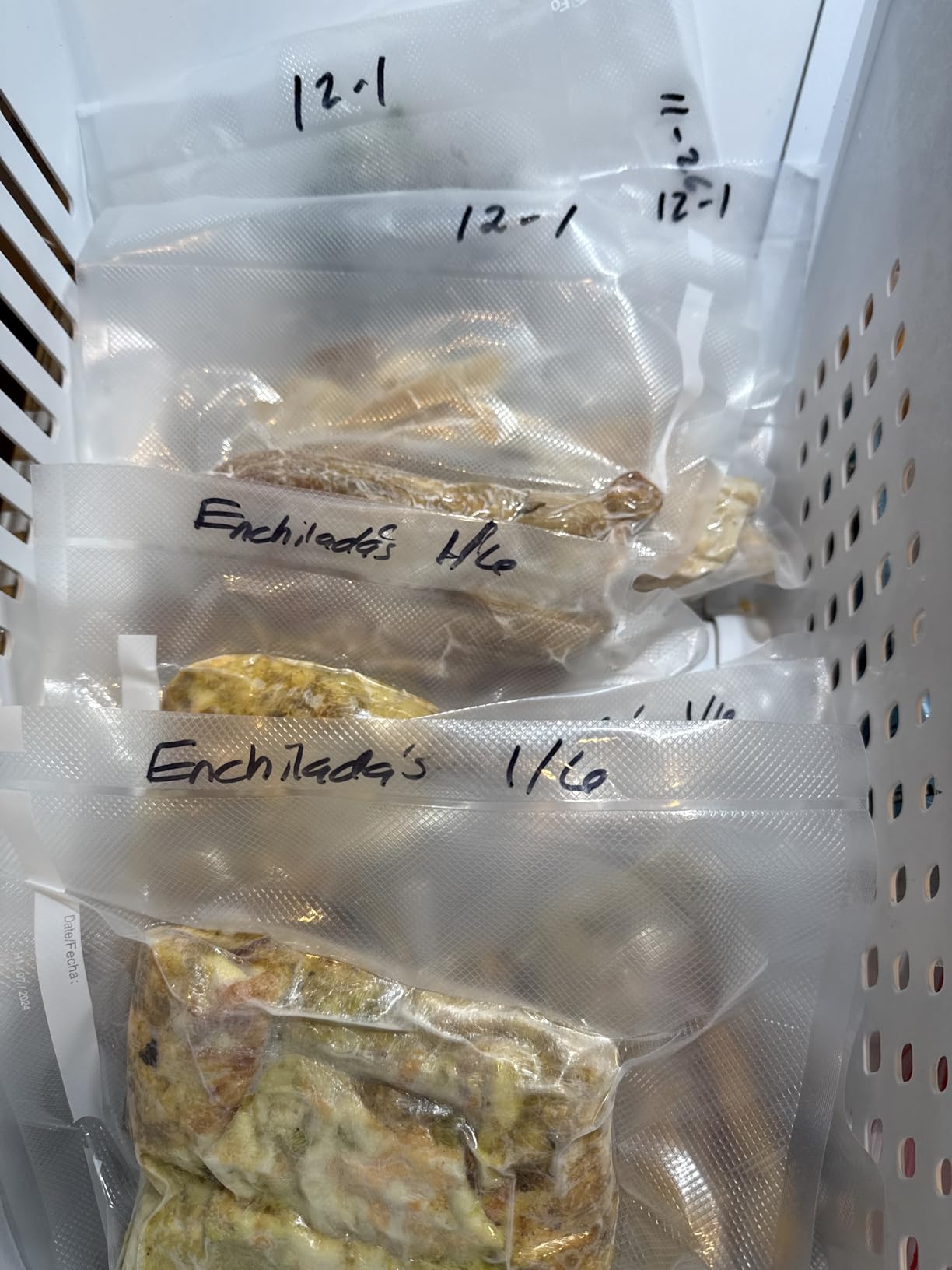
7. Label and lay flat. Write the cut and the date on the bag with a permanent marker, then freeze bags flat in a single layer before stacking them. Flat freezing speeds the initial freeze and reduces the chance of the weld stressing.
On food safety: cool before sealing, and thaw sealed meat in the refrigerator rather than a microwave or hot water. Thawing slowly keeps the sealed bag intact and keeps the outside of the meat in the safe zone, which is exactly the advantage you paid for.
Wet and Marinated Meat: Why Liquids Kill Sealers
Liquid intrusion is the most reported complaint about vacuum sealers in the forums we read, and the mechanism is worth understanding before you buy anything. In an external sealer, the pump pulls air out through the bag. The path of least resistance runs along the bottom of the bag where liquid collects. As suction increases, liquid gets dragged toward the channel, and if it reaches the heating element before the plastic is sealed, it gets drawn into the pump or burned onto the seal bar.
The consequences run from minor to serious. A bag that leaked because liquid broke the weld means meat in the freezer with a slow leak and eventual spoilage. Liquid in the pump is worse, because it can damage the vacuum system and shorten the life of an otherwise good machine. One poster described losing a batch of meat because of a tiny leak at the seal, and that story repeats in enough threads that we treat it as a real risk rather than an unlucky incident.
There are four ways to deal with it, and they work in combination.
Use pulse mode. Staged suction gives the liquid time to settle instead of racing to the channel. This is why the Gasbye VS5166 and the MEGAWISE VS6621 handle wet meat better than their price peers. Several short pulses also let you stop the moment you see liquid moving.
Freeze first. This is the technique experienced hunters use. Freeze the marinated meat solid on a tray, then seal the frozen block. There is no free liquid to migrate, and the vacuum only has to move air around a solid mass. The downside is that the bag is bulkier, but for long storage it is the most reliable external-sealer method we know of.
Pat very dry and leave headspace. Less liquid, more space, less pressure. Simple, and it costs nothing.
Use a chamber sealer. If wet meat is your primary workload rather than an occasional problem, this is the honest answer. The chamber approach removes liquid from the equation mechanically rather than by technique. It is a larger purchase, and our chamber sealer roundup covers the category.
If liquid has already gone into your pump, stop using the machine, unplug it, and let it dry completely before a single test cycle. Continuing to run it spreads the liquid further. Clean the seal bar and the drip tray before returning it to service, and check the first few bags carefully.
Vacuum Sealers for Deer Meat and Hunting Season
Hunting season changes the calculation more than any other use case. A single deer or a bulk beef purchase can produce 60 to 100 pounds of meat, and it all has to be portioned, sealed, and frozen in a window of a few days. That volume is the entire reason the heavy-duty picks in this guide exist.
Throughput is the number that matters. The Potane VS5736 is rated for more than 100 continuous cycles, which covers a whole deer in one run. The NESCO VS-12 with its 130 watt double pump is the forum favourite for this workload, and its two included bag rolls cover both portioned steaks and larger sections. The complaint you will see most from hunters is downtime, with people reporting 30 to 40 seconds of cooling between seals on smaller machines, which is brutal at that volume.
Bag supply is the other planning item. Users report losing roughly an inch of bag per seal and cut, so cutting bags to length from a roll rather than using pre-cut bags saves real material over a season. Every machine in this guide with a built-in roll storage and cutter makes that easy, and it is not a minor feature when you are packing 70 bags in two days.
Bag compatibility is the quiet problem. Machines are described in forums as extremely picky about which bags they will vacuum down, and cross-brand attempts produce mixed results. Before buying a large order of third-party embossed bags, test a small pack. If your machine will not pull them down consistently, the problem is the bag texture, not your technique, and you should buy that brand’s own rolls.
For the rest of the processing chain, if you are grinding your own venison or sausage, our meat grinder roundup covers that step, and the meat slicer guide covers portioning thin cuts. The LEM ground meat system in this roundup is the fast option for one pound packs of ground game.
What Vacuum Sealer Bags Cost and What They Save
Bags are the only consumable in this category, and they are the reason the cost calculation works in your favour. The mechanical fact that makes vacuum sealing worthwhile is simple: the air is already in the meat package, and the bag costs a small fraction of the meat it protects. When a bag prevents one spoiled freezer package, it has paid for itself several times over.
There are two kinds of bag and the difference is not subtle. Embossed bags have raised bumps or channels in the plastic. The pump needs those channels to travel down, so a smooth bag simply will not vacuum down properly no matter how good your machine is. This is the most common reason a third-party bag fails on an expensive sealer. Buy embossed, always.
Proprietary bags are the ones the manufacturer sells, and they are the safest bet because they are guaranteed to match the machine. Third-party embossed bags cost less and often work fine, but the forum pattern we found is mixed: plenty of people buy generic bags successfully, and plenty report machines that are very picky and will only seal their own brand. This is why testing a small pack before committing is worth the small cost.
Waste is the hidden expense. Users consistently report losing about an inch of bag per seal and cut. On a roll you get roughly 50 to 60 usable seals depending on bag size, and a season of deer meat can consume two or three rolls. Cutting to length from a roll with a seal-only mode and a built-in cutter is the cheapest fix, and it is why we weight the built-in cutter heavily in the picks above.
Cheap bag quality is a real failure mode. There are threads where seal failures were traced to the bag rather than the machine, and the problem disappeared when the user moved to better bags. If a seal repeatedly fails, test a new bag before assuming the sealer is broken. That diagnostic alone will save you a replacement.
Who Should Skip a Vacuum Sealer
Honest guides include the people who should not buy. A vacuum sealer is the wrong purchase if any of these describe you.
You rarely freeze food. If you buy groceries for two people and cook what you buy within a few days, the bags will sit unused. The machine does nothing for refrigerated food beyond what a zip-top bag already does.
You seal a few pounds of meat a year. The cost per bag, the counter space, and the learning curve all only pay back at volume. A household freezing one small turkey once a year does not need a stainless machine with a brushless motor.
Your meat is mostly very wet. This is the uncomfortable one. If your main use case is marinated meat sitting in brine, an external sealer is a poor fit no matter which one you buy, and you should look at a chamber machine instead of trying to solve a mechanical problem with technique.
You have no counter or cabinet space. The V4400 needs a permanent home at 11 by 20 by 12 inches and 10 pounds. If there is nowhere to put it, it becomes a thing in a cupboard and you will stop using it.
There are real drawbacks beyond those four. Bags are a recurring cost and a recurring decision. Some machines lock you toward one bag ecosystem, which is an ongoing cost most buyers do not anticipate. Raw meat handling means more surfaces to sanitize, and a machine that sits next to your cutting board needs a proper wipe-down. And a failed seal is a specific kind of risk, because the bag looks sealed and quietly leaks, and you find out months later. None of that is a dealbreaker, but it is a fair picture of the trade.
One more caution that comes up constantly in the forums and is worth repeating. Do not vacuum seal bread. It comes out flat and ruined, and no mode on any machine in this guide fixes it. Sealing soft, airy, high-volume foods is where this technology simply does not apply.
How to Choose a Vacuum Sealer for Your Meat
Start from your volume, not from the feature list. The single most useful question is how many pounds of meat you will put through it in a year, and the answer determines which tier of machine is right. Under about 25 pounds a year, a compact sealer with good modes is genuinely sufficient. Between 25 and 100 pounds, you want a double pump and a motor rated for continuous cycles. Above 100 pounds a year, you are looking at a chamber machine and a dedicated prep area.
Next, be honest about wetness. If more than a quarter of what you seal is marinated, brined, or sitting in juice, wet meat handling moves from a nice feature to a deciding factor. Look for pulse mode and a removable drip tray, and consider freezing the meat before sealing as a workflow change. If it is all plain cuts, dry mode and a strong double seal bar matter far more.
Here is the checklist we use, in priority order.
Suction power. For an external sealer, the useful spec is either wattage or kPa. Anything in the 80 to 100 kPa range, or 110 watts and up, will handle ordinary meat. Below that, you will feel the difference on a large cut.
Seal width and element quality. A wider sealing element lays down a longer weld. The Potane’s 8mm element and the FRESKO’s 0.2 inch strip are both noticeably better than a thin element, and a double heat seal is more reliable than a single one for long freezer storage.
Mode selection. For meat you want at minimum a moist mode, and ideally a pulse mode. Auto moisture detection is a genuine upgrade, as the V4400 and the FRESKO V2 both show.
Built-in roll storage and cutter. Not a luxury. It reduces bag waste, which is a real recurring cost at volume.
Drip tray. Only matters if you seal wet meat, and then it matters a lot. Removable and dishwasher-safe is the version worth paying for.
Accessory port. Worth it if you also seal jars, containers, or sous vide bags. Not worth buying a bigger machine for alone.
Warranty length. Treat it as a reliability signal. Five years is meaningfully better than one when you are buying a machine to last a decade of seasonal use.
Countertop footprint. Measure the space, including the lid open, before you buy. Vertical storage designs solve this where horizontal ones cannot.
Bag compatibility. Confirm the machine accepts third-party embossed bags if that is your plan. It is the most common regret in this category and it is fully avoidable by testing a small pack first.
On how we picked, so you know what this guide is and is not. Every machine here was evaluated on the specifications and owner review data for the product, on the same task list: sealing plain cuts, sealing marinated cuts, portioning a batch, and running repeated cycles. We are not citing a paid laboratory test, and we are not presenting a named institutional pick. When you see a rating in this article, it is the rating that comes with the product, and where review counts differ widely between models we have weighted the volume of evidence rather than the score alone. That is why the FoodSaver V4400 takes the top spot: 4.6 stars is excellent, but 4.6 stars across more than 11,000 reviews with automatic moisture detection and a drip tray is a stronger case than any single higher score on a thinner base.
If you are still working out whether you need a machine at all, our vacuum sealer roundup covers the category for all food types, and this guide is the meat-specific shortlist you should choose from.
Frequently Asked Questions
Are vacuum sealers worth it for meat?
Yes, for anyone who freezes meat in meaningful quantities. Removing air from an embossed bag and heat sealing it slows oxidation and freezer burn, and sealed meat keeps far longer than meat in a zip-top bag. The bags cost a fraction of the meat they protect, so one prevented spoiled package covers many seasons of bag cost. It is not worth it if you rarely freeze food or buy meat in small weekly quantities.
How long does vacuum sealed meat last in the freezer?
Vacuum sealed meat lasts considerably longer than meat in a standard zip-top bag, because removing air slows freezer burn. A well sealed package of steaks or chops typically holds its quality for a year or more in a properly maintained freezer, and whole game sections can go longer. The practical rule is to cool the meat fully before sealing, seal in a single layer, and keep the freezer at a steady zero degrees.
What is the best vacuum sealer for deer meat?
For deer and bulk game, volume decides. The NESCO VS-12 Deluxe with its 130 watt double pump is the most commonly recommended machine for this workload, and the Potane VS5736 wins on endurance with a brushless motor rated for more than 100 continuous cycles. Either way, look for a built-in roll cutter to cut bag waste and a motor that will not need a long cooldown between bags.
What is the best vacuum sealer for sealing wet food?
For heavily marinated or brined meat, the best answer is a chamber vacuum sealer, because it removes air from around the bag rather than through it, so liquid never enters the pump. Among external sealers, the Gasbye 95kPa VS5166 leads with pulse mode and a removable drip tray, and the MEGAWISE VS6621 offers vac pulse and a moist mode that removes up to 10ml of liquid.
Can you vacuum seal raw meat that has marinade in it?
Yes, but technique decides whether it works. Pat the surface dry, leave a couple of inches of empty space at the top of the bag, and use pulse or vac pulse mode in short bursts so liquid does not race to the seal line. For very wet cuts, freezing the meat solid on a tray first and then sealing the block removes free liquid entirely and is the most reliable external-sealer method.
Do vacuum sealer bags from one brand work with another brand of sealer?
Often, but not reliably enough to assume. The bags must be embossed, because the pump needs those channels to travel down, and some machines are extremely picky about which bags they will pull down. The safe approach is to test a small pack of third-party embossed bags before committing to a bulk order. If seals fail consistently with a specific bag, the problem is the bag rather than your machine.
Final Recommendations
The best vacuum sealer for meat in 2026 is the FoodSaver V4400, because automatic bag and moisture detection plus a removable drip tray handle the two things that go wrong with meat more reliably than anything else in this guide. For a deer or a large bulk order, pick the NESCO VS-12 Deluxe for its double pump or the Potane VS5736 for long unbroken sessions. For marinated meat, the Gasbye 95kPa VS5166 gives you the control an edge sealer can give.
Seal your meat cool, dry, and in a single layer, and check every weld before it goes in the freezer. That habit is worth more than any feature on this list.