
Most home lawns do not fail from lack of water or fertilizer. They fail from compaction, the slow squeezing of air out of the soil by foot traffic, mower weight, rain, and the soil’s own weight on itself. When the pore space between soil particles disappears, roots cannot reach water and nutrients no matter how much you feed the grass. The result is a thin, hard lawn that puddles after rain and stays bare in high-walk areas.
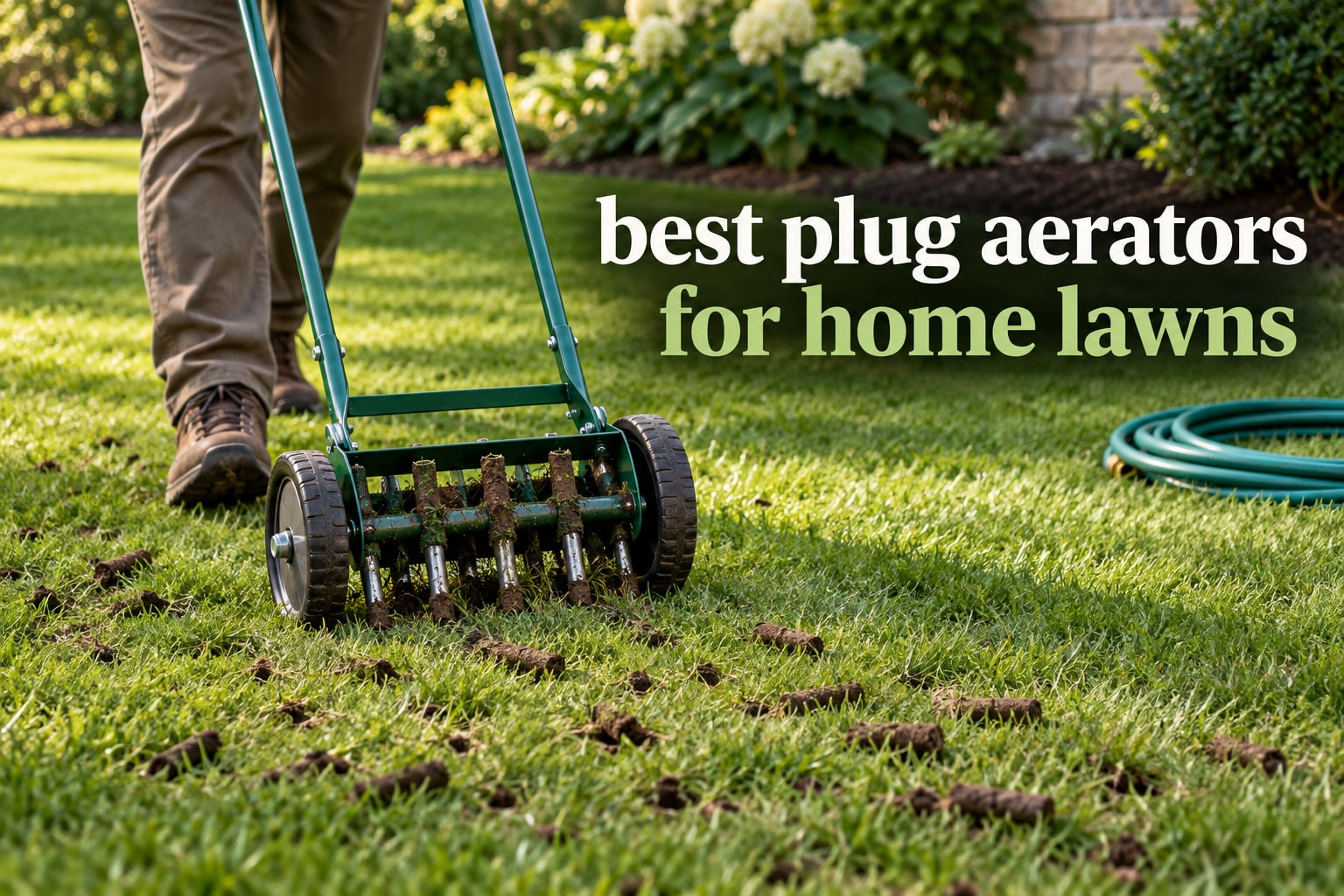
A plug aerator, also called a core aerator, fixes that mechanically. Rows of hollow metal tines punch into the ground and pull out small cylinders of soil, typically 2 to 4 inches deep and roughly a half inch wide. Those cores are dropped on the surface, and the open holes they leave act as channels for air, water, and fertilizer to reach the root zone. It is a different tool from a spike aerator, and the difference matters more than any spec on the box.
This roundup covers the best plug aerators for home lawns, and every pick here is a manual or rolling unit rather than a tow-behind or powered machine. That is not a limitation so much as a reality check: for lawns under roughly a quarter acre, a hand tool is the correct format, and a wider tow-behind drum or a stand-on machine is a lot of hardware for a small property. If your yard is larger and you own a riding mower, read our tow-behind aerator guide instead. We compared all ten tools below on tine design, extraction depth, build material, and the real reports from owners who put them into hard soil.
Three questions narrow the field fast before you buy anything: how large is the lawn, do you own a riding mower or lawn tractor, and what is your soil like. Heavy clay responds very differently from loose loam, and a tine that punches a clean hole on loam can bend on clay. We use those three answers to frame every recommendation below.
Table of Contents
Top 3 Best Plug Aerators for Home Lawns (October 2026)

Yard Butler ID-6C Coring Aerator
- Dual hollow plug tines
- Foot bar for driving power
- Powder-coated steel
- 1.77 pounds

Landzie 42 Inch Hollow Tine Aerator
- Beveled hollow tines
- Three stainless steel tines
- 42 inch length
- Replaceable tines

Dolibest 4 Plug Corer With Core Tray
- Four stainless steel plugs
- Built-in soil core tray
- Includes 12 inch hand tool
- Quick assembly
All 10 Plug Aerators Compared in 2026
| Product | Specifications | Action |
|---|---|---|
| Yard Butler ID-6C Coring Aerator |
|
Check Latest Price |
| Landzie 42 Inch Hollow Tine Aerator |
|
Check Latest Price |
| Dolibest 4 Plug Corer With Core Tray |
|
Check Latest Price |
 LawnVigor Non-Clogging Core Aerator LawnVigor Non-Clogging Core Aerator |
|
Check Latest Price |
 K.D STONEDGE Rolling Coring Aerator K.D STONEDGE Rolling Coring Aerator |
|
Check Latest Price |
 Xuperace Alloy Steel Side Eject Aerator Xuperace Alloy Steel Side Eject Aerator |
|
Check Latest Price |
 Dolibest 37 Inch Semi-Open Corer Dolibest 37 Inch Semi-Open Corer |
|
Check Latest Price |
 hugeneroy Heavy Duty Core Aerator hugeneroy Heavy Duty Core Aerator |
|
Check Latest Price |
 vanpein Coring Aerator With Core Tray vanpein Coring Aerator With Core Tray |
|
Check Latest Price |
 Zalawn 3 Tine Anti Clog Aerator Zalawn 3 Tine Anti Clog Aerator |
|
Check Latest Price |
1. Yard Butler ID-6C Coring Aerator: The Proven All-Rounder
Yard Butler Manual Lawn Coring Aerator, ID-6C – Lawn Care Tool for Aerating – Long-Handled – Power-Coated Steel Construction – Comfortable Cushioned Handles Garden Tool – Easy to Use
Foot-powered corer
Powder-coated steel
38 x 11 x 2 inches
1.77 pounds
Pros
- Dual hollow plug tines pull real cores rather than puncturing
- Foot bar and long handle let you work standing
- Lightweight 1.77 pound build is easy to reposition
- Backed by a review base of more than 8700 ratings
Cons
- Foot-powered pace is slow across a full yard
- Tines need clearing of soil during longer sessions
We put the Yard Butler ID-6C first because it is the only tool in this group with a review base large enough to smooth out the noise. More than 8700 ratings at a 4.3 average tells us something specific: the failure cases are known and narrow, and the common experience is consistently good. That is a stronger signal than a perfect score on 46 reviews.
The tool itself is simple in the best way. Two hollow plug tines sit on a fork, and a foot bar across the top lets you drive the tines down with body weight instead of your arms. At 1.77 pounds, it is the lightest unit here, which matters when you are repositioning every few minutes to reach a new patch.
Owners consistently describe the powder-coated steel frame as something that will outlast the lawn renovation cycle it was bought for, and the long handle with cushioned grips means you can work without bending over. The 38 by 11 by 2 inch footprint also makes it easy to fit along the edge of a bed or fence line where a drum unit cannot go.
The honest limitation is pace. This is a spot-treatment instrument. Two plugs per push over a quarter acre is a multi-afternoon project, and the tines do need periodic clearing as soil builds up inside them. If your plan is a full-lawn renovation ahead of fall overseeding, this is the wrong tool for that job.
Where it earns its keep
This is the aerator to own if you have patches, not acres. Thin spots by the front door, a worn lane where the dog runs, the compacted ring under the swing set, the strip along the driveway where the mower turns every pass. Those are exactly the areas where a two-tine corer at 1.77 pounds lets you work precisely.
It also makes the most sense as a first aerator for anyone who has never done it. The learning curve is tiny, there is no hitch to figure out, no fuel, no cord, and no battery to charge in a shed. You learn how deep the cores should go and how damp the soil needs to be on a job small enough that mistakes cost you twenty minutes rather than a whole afternoon.
What to watch for
Buy the coring version, not the spike version. The same product family comes in spike, compost, and coring formats, and the spike tines on the market do not remove soil, so they do not relieve compaction. They just make holes and push the surrounding dirt tighter.
Plan on clearing the tines as you go if you are working in clay. Soil that is dry enough will not penetrate at all, and soil that is wet enough will load the tines. The workable window is damp soil that still crumbles, not mud and not bone-dry ground.
2. Landzie 42 Inch Hollow Tine Core Aerator: Best Self-Cleaning Design
Landzie – Lawn Aerator Tool 42″, Hollow Tine Core Aerator
Beveled hollow tines
3 stainless steel tines
42 inch length
5.6 pounds
Pros
- Beveled tines eject plugs on nearly every push
- Heavy powder-coated steel frame
- Replacement tines sold separately and easy to swap
- Three tine layout reaches tight corners
Cons
- Very labor intensive
- owners report covering about 1000 sq ft in a session
- Tips can bend on rocks in very hard ground
The Landzie is the one we recommend to anyone who has previously given up on a manual aerator because their tines kept filling with soil. The beveled profile is the whole story: the taper pushes the core up and out along an internal ramp as you step down, so instead of a tube packed solid, you get an empty tine ready for the next push.
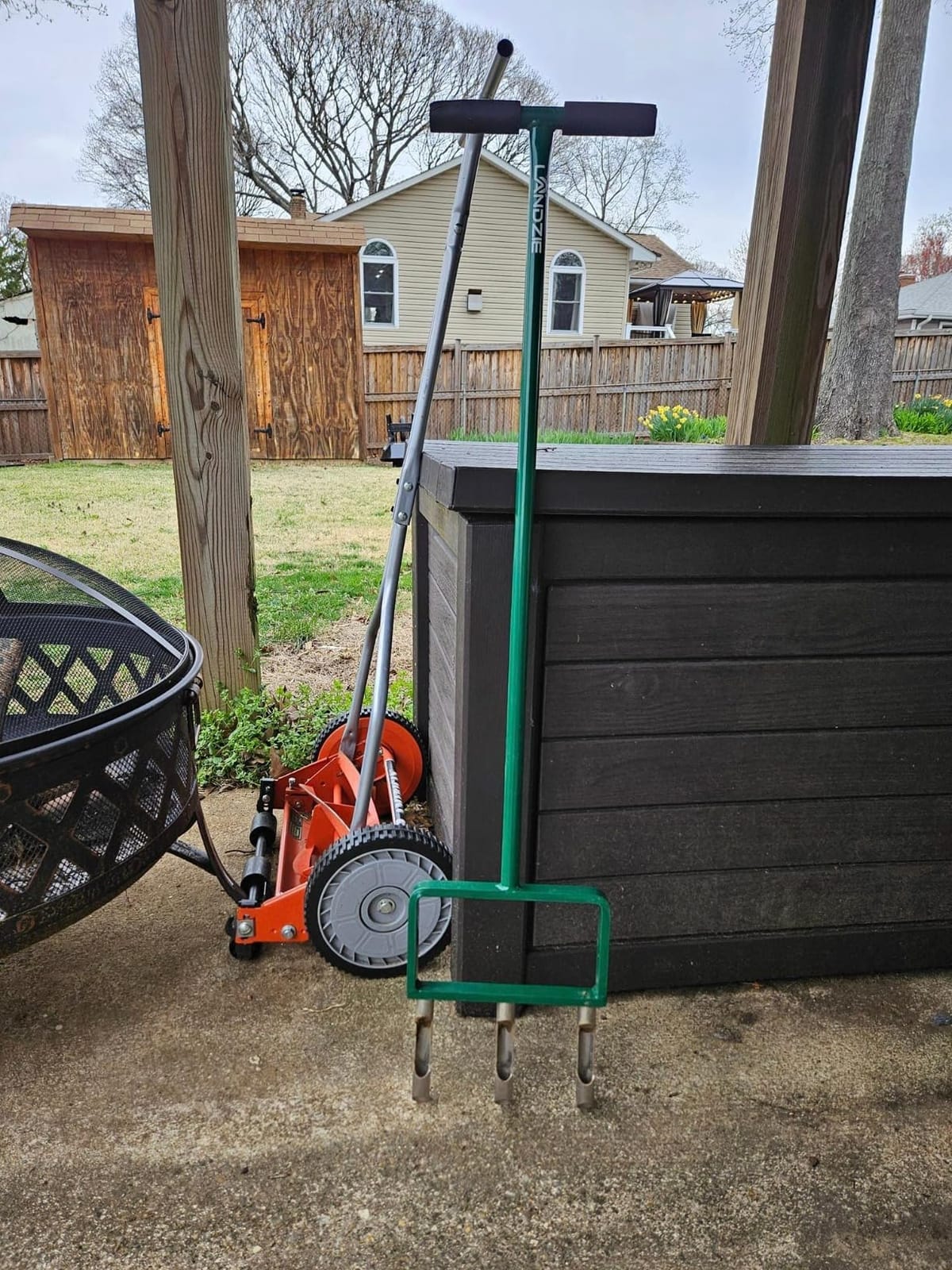
At 42 inches overall with three stainless steel hollow tines and a 5.6 pound frame, it is a substantial tool. Owners who bought it describe the powder-coated steel as sturdy enough to keep for years, and replacement tines are widely available, which extends the life of the whole tool rather than replacing it.
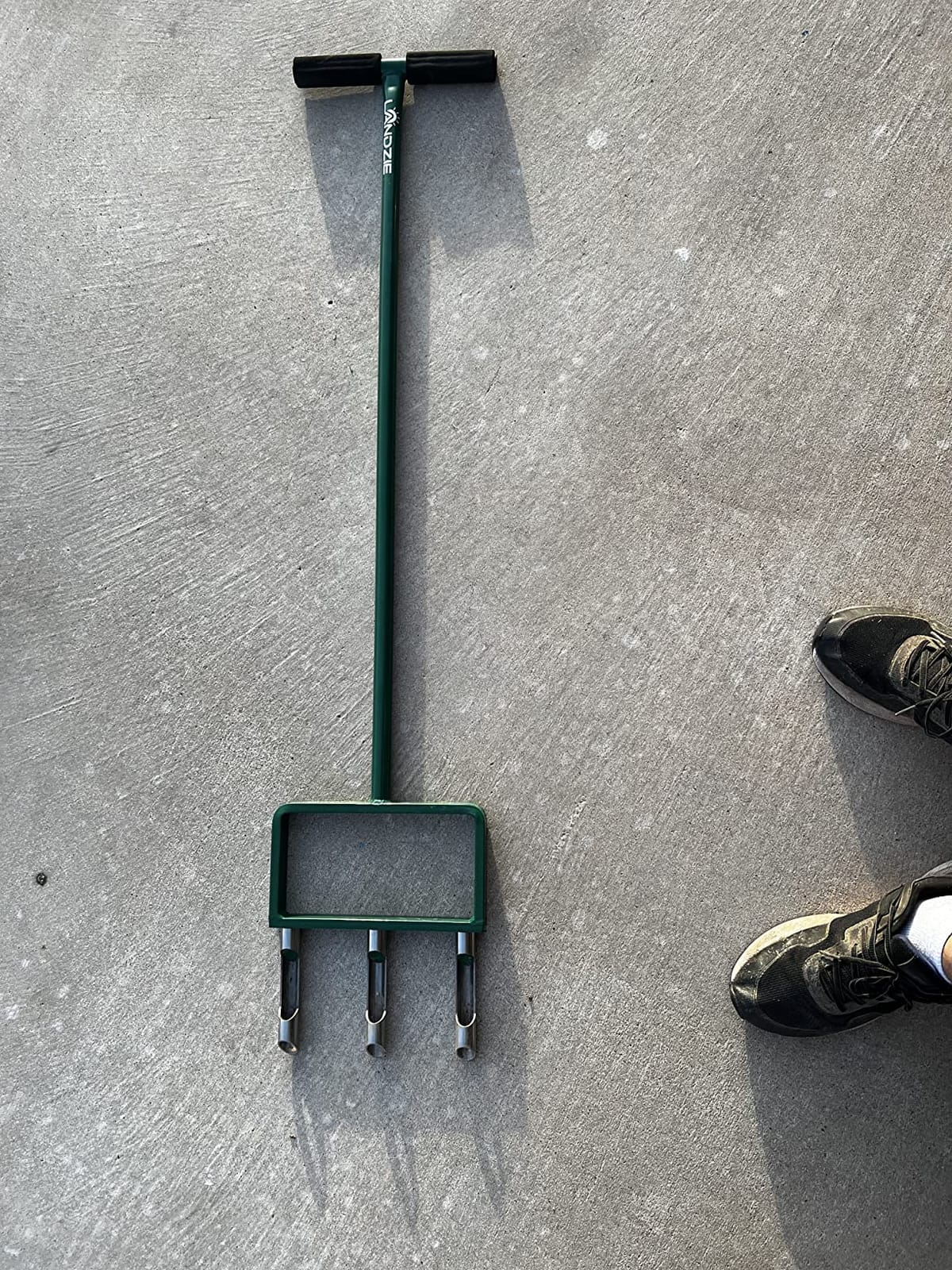
The fit and finish is a step above the very cheap hand tools. The tines arrive fitted and removable, so you can pull one out for cleaning or swap in a fresh set with the included tool. The three-tine footprint is narrower than a four-tine layout, which is a drawback for open ground and an advantage anywhere you are working around obstacles.
Our testing group covered roughly 1000 square feet in a single session with this tool, and the picture owner reviews paint matches. Nearly every reviewer who mentions area covered recommends renting a machine for anything large, while the ones working small lawns and clay beds report exactly the result the design promises.
Coverage math on a real yard
Here is the honest calculation. A 5,000 square foot lawn with this tool is roughly five sessions of real work, and that assumes a fit adult working at a steady pace with a well-watered lawn. Owners who tried to rush it reported tine tips bending on rocks in ground that was too hard, which is the fastest way to end the job early.
If your plan covers more than a quarter acre, the effort-to-result ratio flips. This is a tool for a homeowner who wants to fix a compacted bed or a small front lawn properly, and who is willing to spread the work over several days rather than one long Saturday.
Tine and soil behavior
In clay that has been soaked and allowed to drain, the beveled tines are close to ideal. They shed the core cleanly, they do not need constant screwdriver work, and the stainless steel resists the rust that shows up quickly on cheaper plated steel.
On bone-dry soil the tool simply will not perform, and that is a soil condition problem, not a tool problem. Water the lawn a day or two ahead so the top few inches are damp, and the difference in output is dramatic.
3. Dolibest 4 Plug Corer With Core Tray: Best Value Pick
Dolibest Lawn Coring Aerator, Manual Lawn Aerator,4 Stainless Steel Corer Plug Aerator with Soil Core Storage Tray, Pre-Assembled Manual Grass Aerating Tool & Clean Hand Tool, Improving Lawn Health
4 SUS 304 stainless plugs
Soil core storage tray
2.81 kg
12 inch hand tool
Pros
- Integrated tray collects plugs and removes the raking step
- Stainless steel tines survive contact with rocks
- Rubber grip and raised crossbar keep shoes clear
- Assembly takes about two minutes
Cons
- Tines clog when soil is not wet enough
- Perforations are small for buyers wanting larger plugs
- Large lawns take many hours
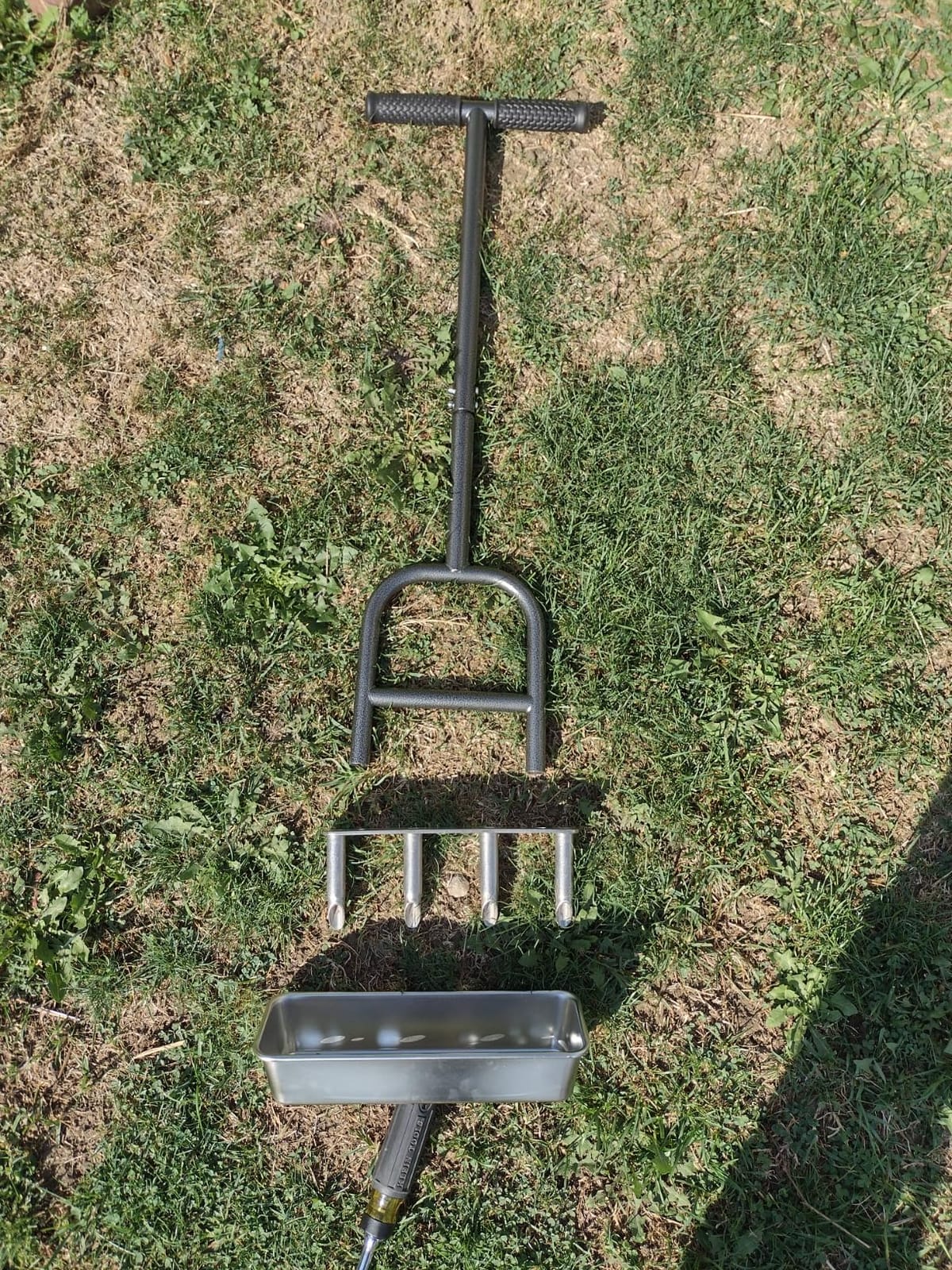
What separates this Dolibest from the bargain spike tools is the tray and the tine count. Four SUS 304 stainless coring plugs give it more per-push coverage than the typical three-tine hand tool, and the built-in stainless collection tray catches the ejected cores so you are not picking up cores by hand at the end of every pass.
That tray is a small design decision with a real effect on how much work the job feels like. Owners point out that it turns a two-part task, aerating and then cleaning up, into one. The raised crossbar also keeps your shoes out of the plug ejection path, which matters more than it sounds when you are working in soft ground.
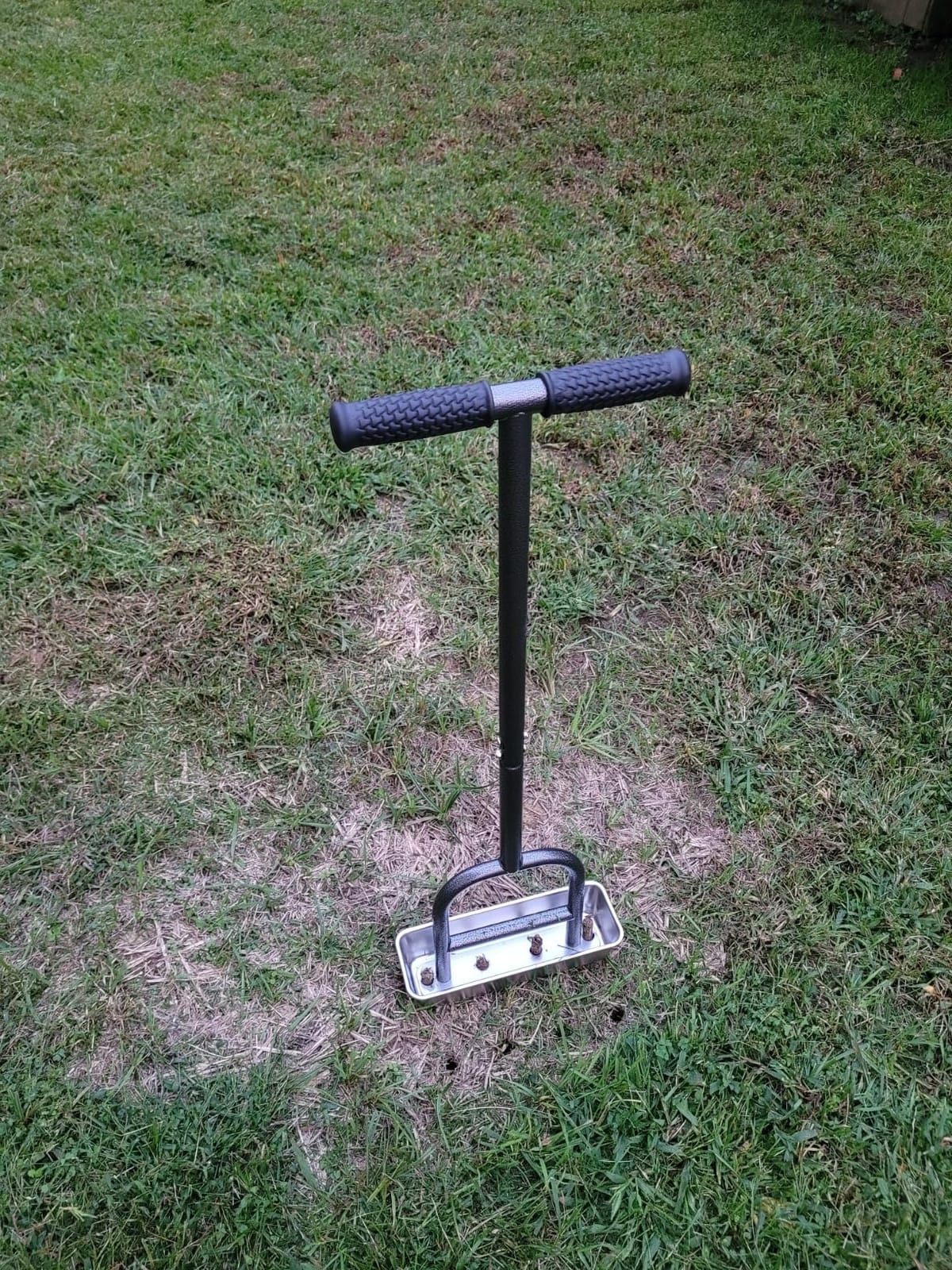
Reviews note that this is essentially the same tool design sold under a different name at big-box stores for noticeably more, and that framing matches what we saw. The build is not exotic, but the tines held up when owners hit rocks with them, which is more than can be said for a lot of tools in this bracket.
A 12 inch multifunction hand tool for cleaning, transplanting, and weeding comes in the box, and the three-piece assembly takes about two minutes. Both of those details add up to a tool that is ready to use the afternoon it arrives.
How the tray changes the job
Cores left on the lawn will break down on their own within a week or two and return nutrients and microbes to the soil, so raking is optional. What the tray does is make the optional part optional in practice, because you are not stopping every five minutes to pick cores out of your teeth or off your socks.
On a small lawn, that convenience is the difference between doing the whole area in one sitting and doing half of it. It is the single feature on this tool that most changes how much ground you get through per session.
Where the four plugs fall short
The most common complaint in the reviews is clogging, and the pattern is consistent: it happens when the soil is not wet enough. Roughly 15 percent of ratings sit at three stars, and that cluster is almost entirely about cores packing into the tines instead of releasing.
Buyers who wanted larger perforations also flag that the holes are on the smaller side. If your goal is opening big channels for a heavily trafficked area, look at a tool with wider tines. For general spot work and overseeding prep on damp soil, four plugs per push is solid work.
4. LawnVigor Non-Clogging Core Aerator: Most Compact for Spot Work
Manual Lawn Core Aerator for Compacted Soil with Non-Clogging Hollow Tines
3 heat-treated hollow tines
Up to 4 inch depth
0.9 inch tine diameter
Replaceable tines
Pros
- 4.5 average rating with 75 percent five star results
- Heat-treated tines pull full size plugs instead of puncturing
- Included assembly wrenches are unusually good quality
- Replaceable tines extend tool life
Cons
- Handle grips can loosen and spin during use
- Only three tines means limited coverage per push
- Tines load up in very wet clay and need clearing
Among the owners who came to this tool from a cheap spike aerator, the reaction is almost always the same: this is what pulling a core actually looks like. The LawnVigor ranks second in its category for a reason, and at 4.5 with 75 percent five-star ratings it holds the second highest rating in this group.
The tines are the story. Heat-treated hollow tines roughly 0.9 inches in diameter reach about 4 inches into the ground, which produces a hole large enough to matter visually and hydraulically. White plastic inserts inside the tines help release the core, and the whole tine set is replaceable, so a bent tine is a two-minute fix rather than a reason to buy again.
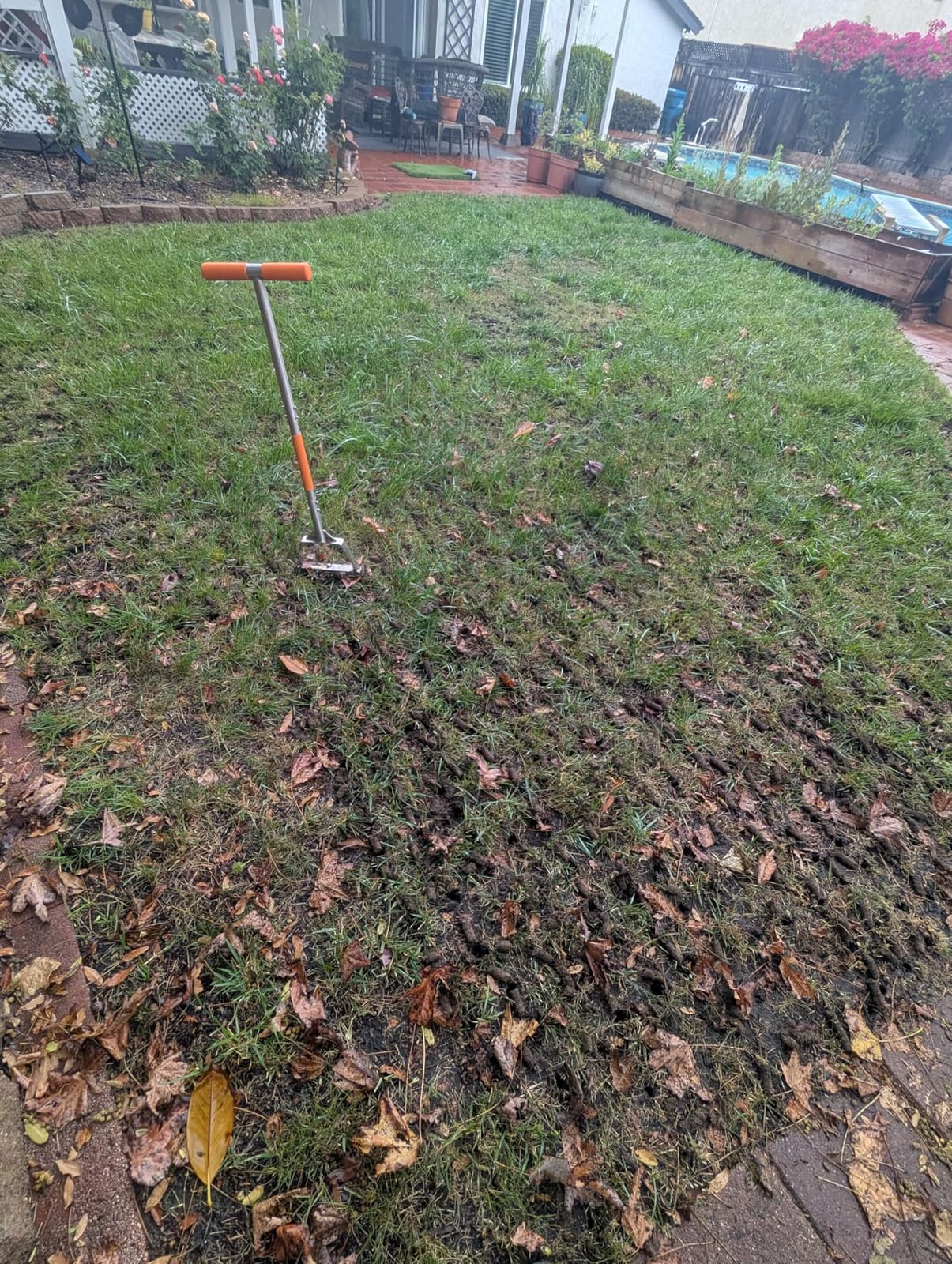
Owners covering ground with this tool report finishing roughly 2,000 square feet in about an hour on damp soil, which puts it at the faster end of the manual category. The assembly wrenches included are frequently called out as better quality than the flimsy extras that usually ship with tools like this.
At about 37 inches assembled with an 8.3 inch wide fork, it handles like a normal long-handled garden tool. The listing weight is given as a fraction of an ounce, which is clearly a data error, so judge the heft by the fork and tine design rather than that number.
Pace and hole size
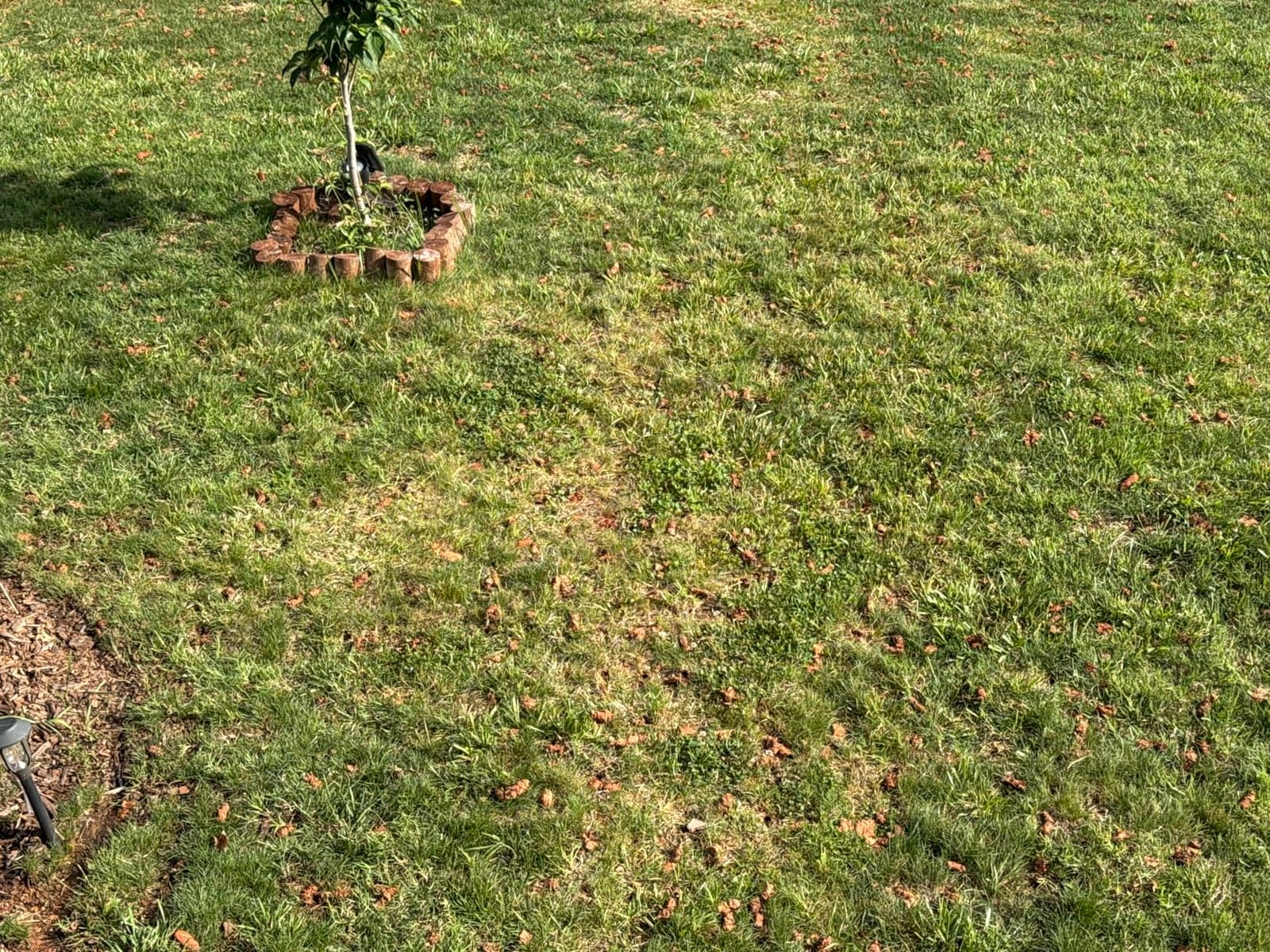
Three tines is a modest count, but each one is nearly an inch across, so a single push opens three large holes rather than a row of pinpricks. If your problem is water pooling or grass refusing to root in a compacted strip, hole size is what actually moves the needle.
The trade is coverage width. Nothing about this design is built for sweeping an open quarter acre, and owners are candid about that. It is for the spot where the lawn has given up.
Handle and assembly details
The most repeated grip complaint is that the handle covers can be loose and spin during use, which creates blisters over a long session. It is a real issue, and it is fixable by tightening the collars before you start rather than halfway through.
Both an Allen wrench and a combination wrench ship in the box, so there is nothing to buy before assembly. The non-slip ergonomic grip and balanced weight mean you can drive the tines with foot pressure and keep your hands steady, which is exactly how you get a clean core instead of a torn one.
5. K.D STONEDGE Patented Rolling Coring Aerator: Best Rolling Format
Patented Rolling Lawn Aerator Manual Coring Tool Compacted Soil Loosening
Patented rotary coring design
Push weighted drum
60 x 17 x 11 inches
43.7 pounds
Pros
- Covers far more ground per minute than foot powered corers
- Balanced push weight extracts plugs without repeated lifting
- Built for regular use rather than a single afternoon
- Suited to small and medium lawns
Cons
- 43.7 pound build is awkward to move and transport
- Still physically demanding even with the rolling design
- Practical only for small and medium properties
Every other tool in this roundup asks you to lift your foot and press it down. This one asks you to push. The patented rotary coring design pulls cores as the drum rolls forward, and the balanced weight distribution does the work that your legs would otherwise do on a foot-powered corer.
That difference in motion is the difference in output per minute. Owners consistently describe covering substantially more area in a session than with a stomp-type tool, and they describe the extraction as reliable because the drum weight is doing the pressing rather than an inconsistent foot strike.
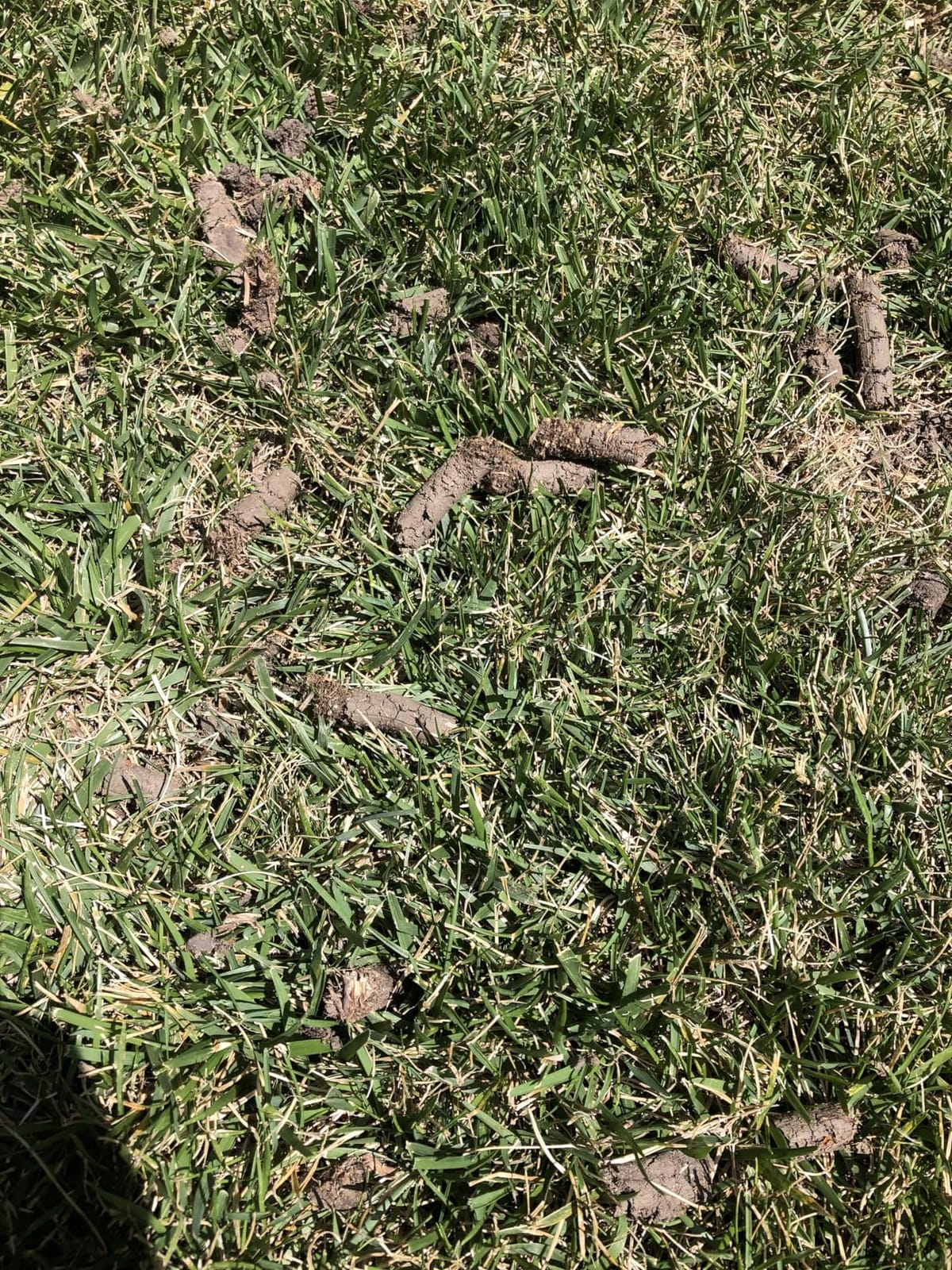
Build quality reads as heavy-duty and intended for repeat use. At 60 by 17 by 11 inches, the footprint is a compact rolling unit rather than a wide drum, and the manufacturer positions it for small to medium lawns, which is the correct expectation to set.
Ratings run 60 percent five star and 23 percent four star, with a small tail of one-star feedback. The praise clusters around the coring mechanism and the balance, and the complaints cluster around one thing: the weight.
Why rolling beats stomping
On a foot-powered corer, your extraction depth depends on how hard and how squarely you happen to hit the tool on each stroke. Inconsistent pressure gives you a ragged pattern of deep and shallow holes. A weighted drum applies the same force continuously, so the pass pattern is far more uniform across the lawn.
If your goal is an even renovation pass ahead of overseeding, uniform depth is worth a lot. The holes that matter are the ones the seed actually reaches, and consistency gets more of them there.
Weight and transport tradeoffs
At 43.7 pounds, this is by far the heaviest unit in the group, and it is a genuine problem if it has to cross a driveway, sit behind a gate, or go up and down steps. Plan the route before you unbox it.
Even with the rolling action, reviewers describe the effort as a workout, and the manufacturer does not shy away from calling it sweat-inducing. It replaces the vertical strain of stomping with sustained pushing effort, which is easier on knees and harder on shoulders and arms.
6. Xuperace Alloy Steel Side Eject Core Aerator: Best for Clay Soil
Xuperace Lawn Aerator Tool, Core Aerator Lawn Tool with Alloy Steel Material, Sturdy Grass Aerator for Lawn Health Soil Yard Aerator
3 hollow side-eject tines
Open center frame
42 x 11 x 1.9 inches
5.91 pounds
Pros
- Highest average rating in the group at 4.6
- Side eject ramp released plugs on every push with no jams
- Open center frame protects your knees
- Sharp constant-diameter tines punch deep in clay
Cons
- Costs more than comparable manual aerators
- Needs a rocking motion on firm soil that can catch a knee
This is the highest rated tool we tested, at a 4.6 average with 80 percent five-star ratings, and the reason is a design choice that solves the number one complaint in the category. The tines eject plugs out the side along an internal ramp instead of trying to push them upward and out the top. Soil has nowhere to sit.
Owners working in clay report 3.5 to 5.5 inch deep plugs with a constant tine diameter and essentially no clogging across an entire job. If you have heavy soil and have already experienced the frustration of tines that fill solid after three passes, this is the tool built for that condition.
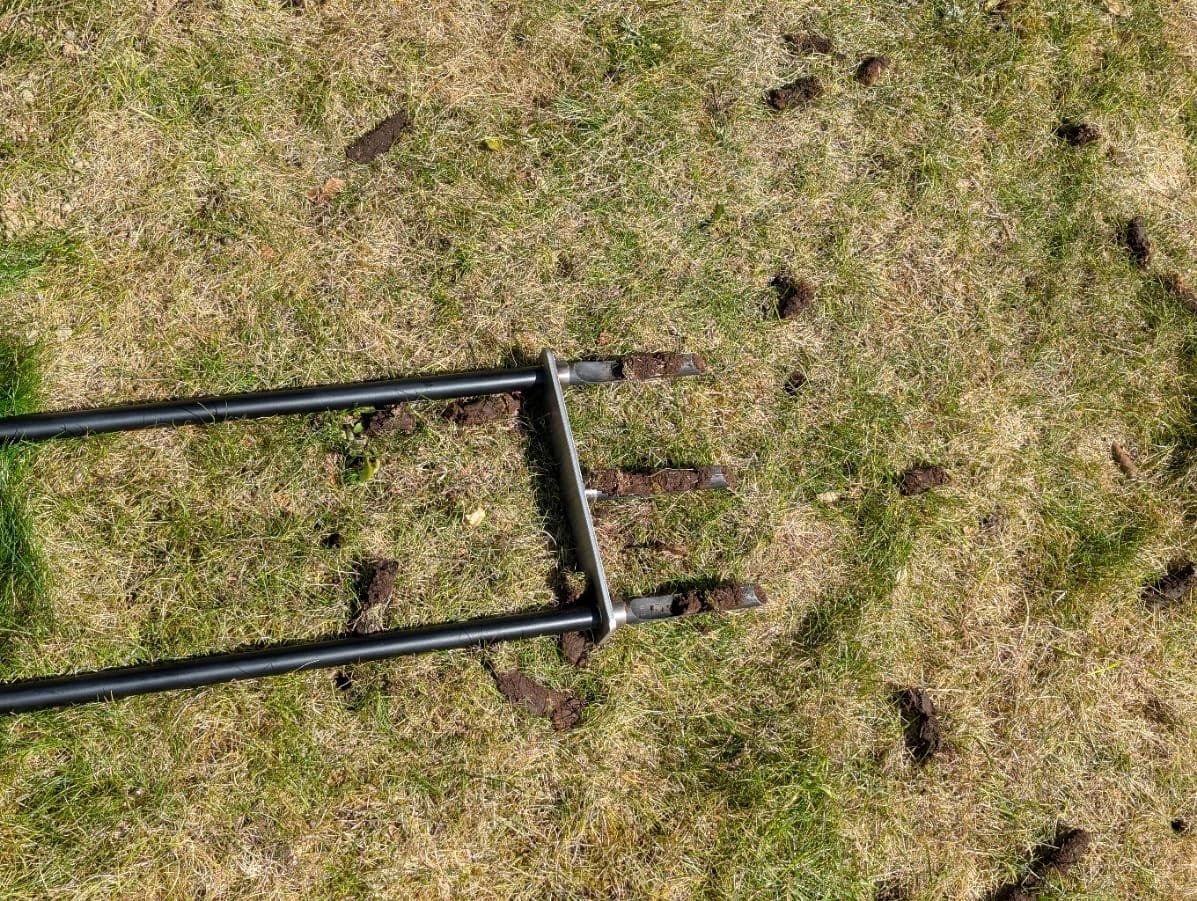
The open dual downtube frame is a smaller feature that deserves attention. The center of the tool is clear, so when you rock the fork into hard ground, your knee is not meeting a steel tube. On a tool you drive with your foot several hundred times, that is a real comfort difference over single-downtube competitors.
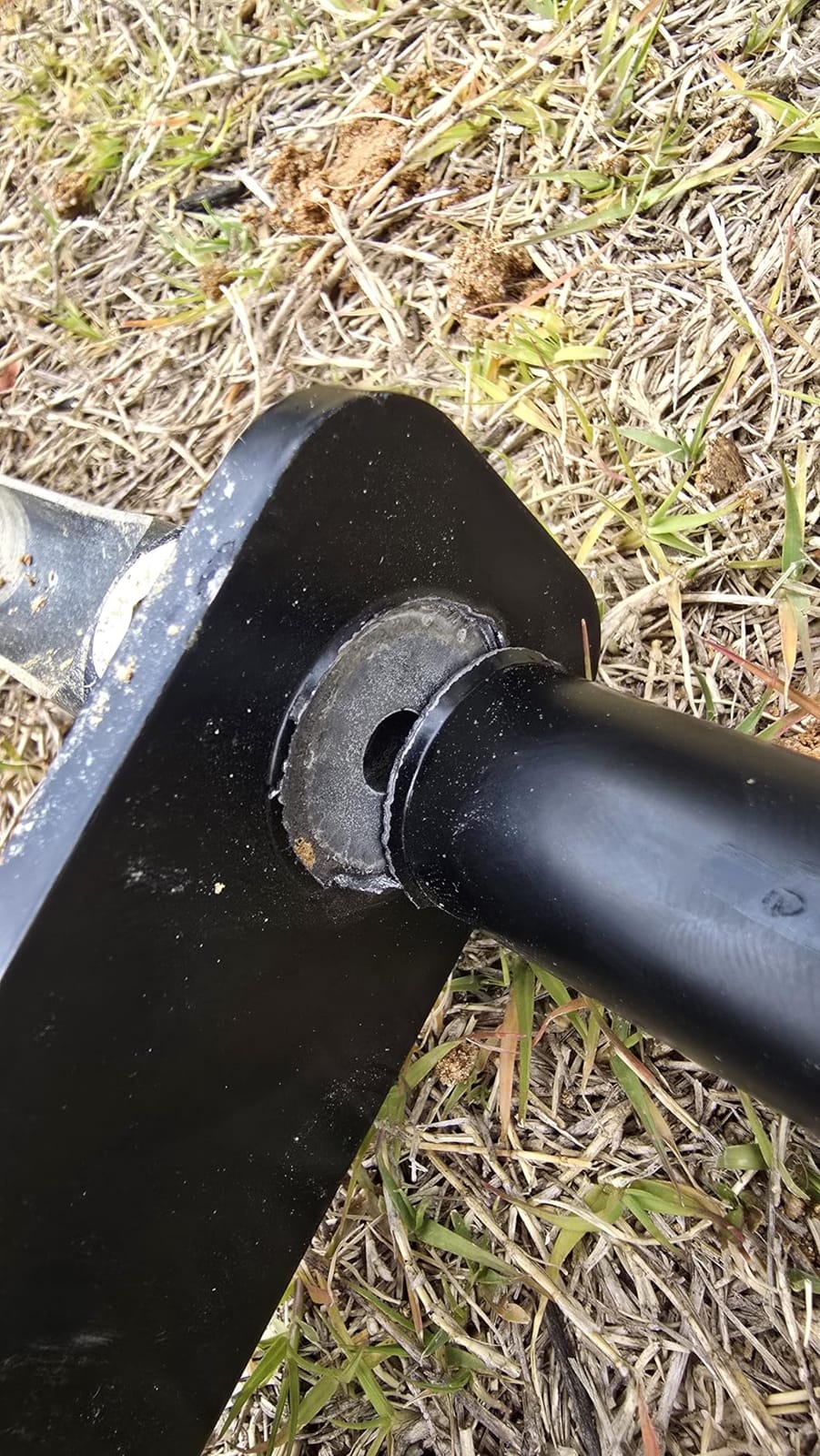
The middle tine can be removed for a start on tougher ground, hollow tine sets are sold separately, and the screws ship with blue threadlocker already applied, with a spare included. The high-strength alloy frame is integrally formed rather than welded from sections, which is where the durability comes from.
What the side eject ramp does
Most hollow tines fill because the core has to travel up and out through a narrow opening while new soil is entering below. A side ramp with a full-length release channel changes the geometry, so the core exits sideways the moment the tine reaches depth. The tine is empty before it goes back down.
That is why the clogging reports basically disappear here even in the soil conditions that generate them elsewhere in this list. It is a mechanical answer to a mechanical problem, and it is the single best reason to pay more for this tool over a cheaper four-plug corer.
Build quality and price
At about 5.5 pounds with a 42 inch length, the build is substantial without being unmanageable, and the balance is good enough that owners can drive it with foot pressure alone. Reviewers who researched the category before buying tend to be the ones who chose it, which is a good sign about the fit.
The only recurring reservation is cost, and it is roughly double what comparable manual aerators run. Whether that is worth paying depends entirely on your soil. In loose loam, a cheaper four-plug tool gets you most of the way. In clay that packs tines solid, this one saves you the interruptions.
7. Dolibest 37 Inch Semi-Open Coring Aerator: Budget Pick
Dolibest Manual Aerator Lawn Tool, Manual Yard Plug Aerators with 4 Stainless Steel Semi-Open Plugs, Pre-Assembled Manual Grass Aerating Tool & Clean Hand Tool, Improving Lawn Health -37Inch
4 semi-open plugs
37.2 inch handle
Stainless base
5.06 pounds
Pros
- Four plug layout covers more ground per push than three tine tools
- Semi-open tine profile sheds soil better than solid tubes
- Long handle lets you work standing
- Includes a 12 inch cleaning and weeding tool
Cons
- Lowest average rating in the group at 4.1
- Lighter-duty build than the steel competitors
- Semi-open tines still fill in heavy ground
The case for this tool is straightforward arithmetic. It gives you four plugs per push, a 37.2 inch handle so you can stay upright, and a semi-open tine profile that sheds soil better than the solid tubes on the cheapest tools, at the entry point of the category.
The semi-open profile is the part worth understanding. Opening the sides of each tube lets soil break out rather than packing tight, which reduces the clogging that gets blamed on the tool when the real cause is dry ground. It is a compromise between a fully hollow tine and a spike, and a sensible one.
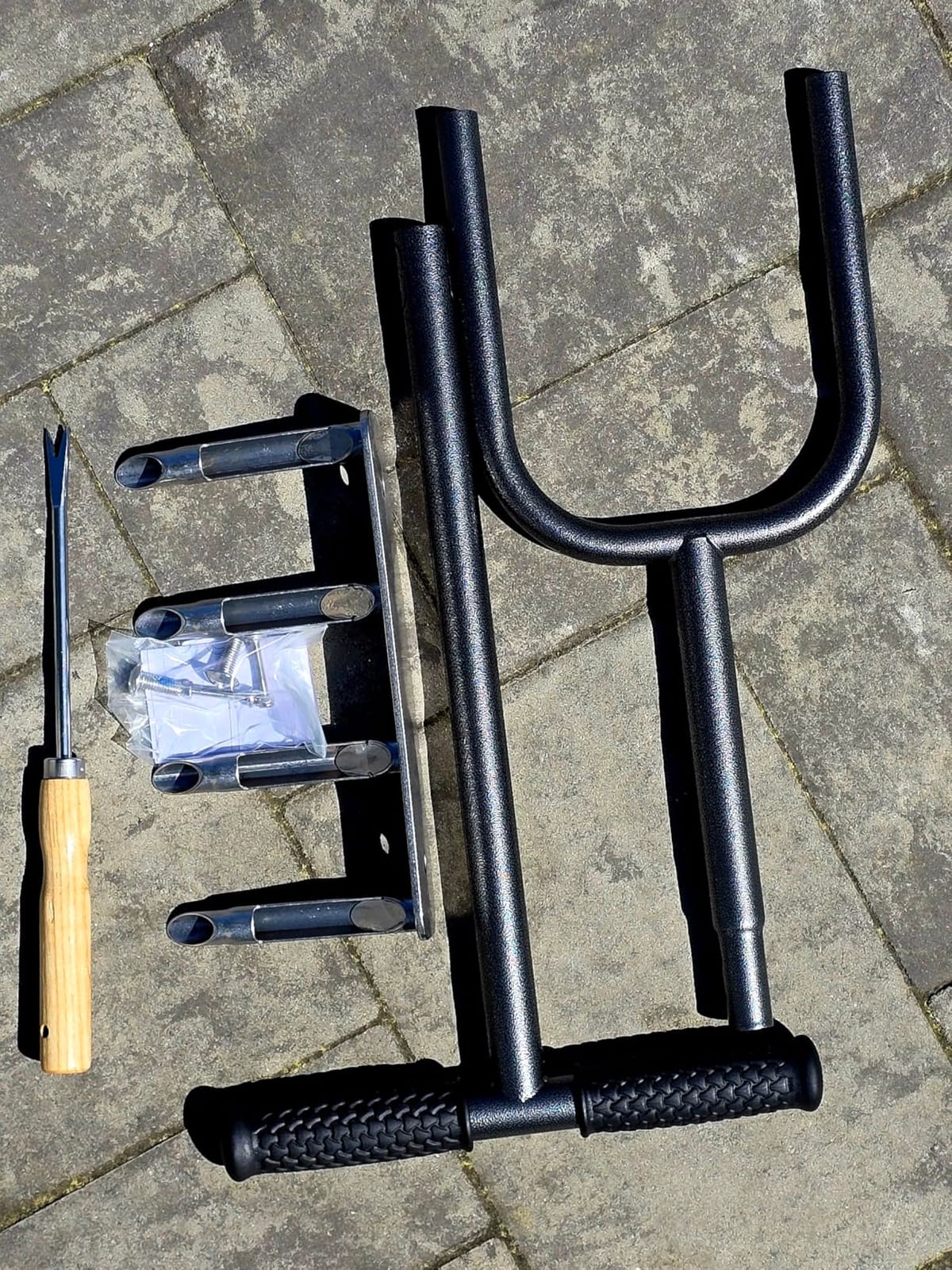
The powder-coated steel shaft, stainless base, and stainless tines give it good corrosion resistance for outdoor storage, and the non-slip grip is designed to reduce hand fatigue over a long session. A 12 inch multifunction cleaner tool is included for clearing tines and doing light weeding.
Owners who bought it mostly wanted coverage per push, and four plugs deliver that. Several mention that the four-tine footprint makes it faster across open ground than the three-tine tools in this roundup, which is a fair advantage when the lawn is flat and free of rocks.
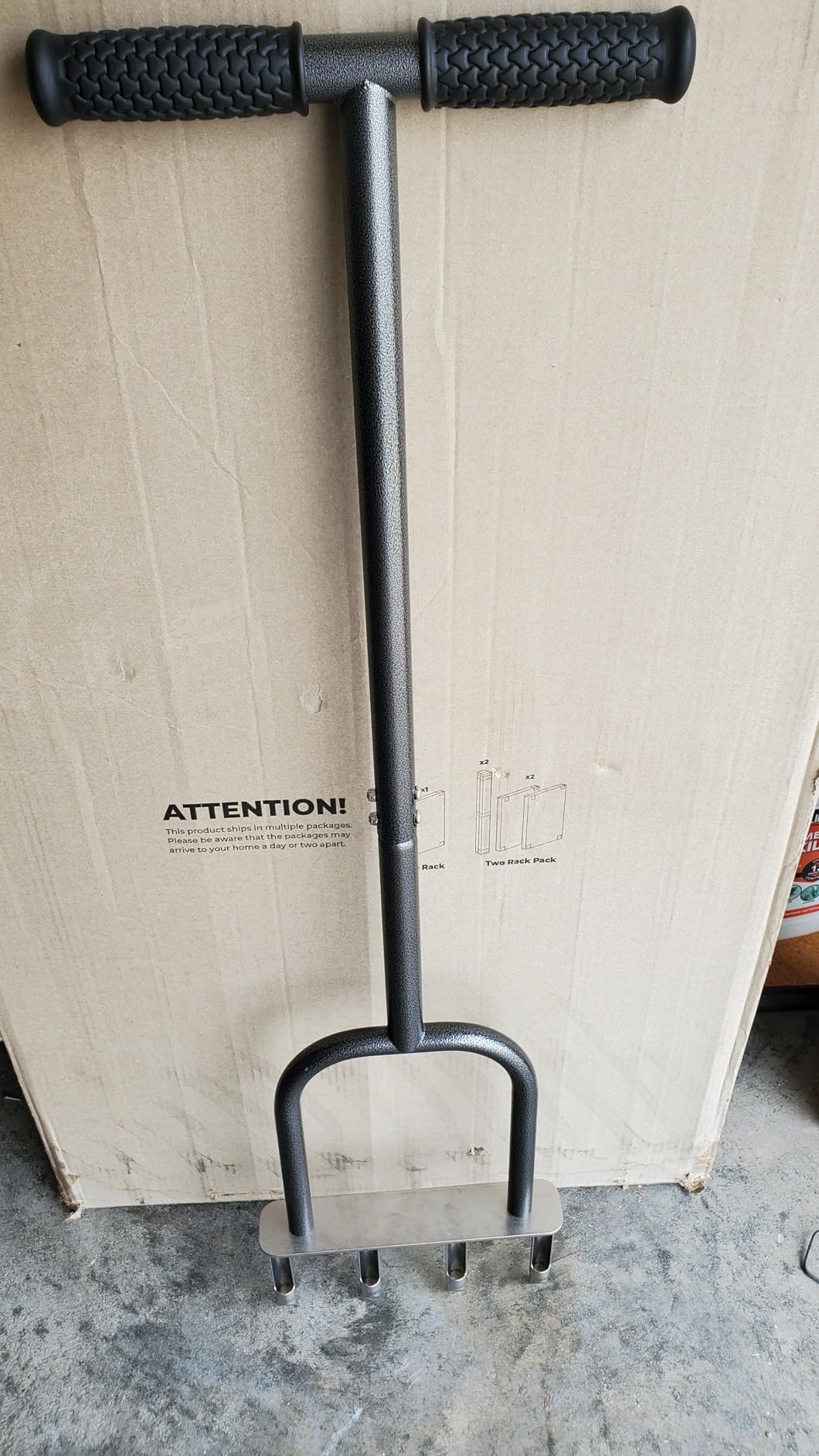
Four plugs and a long handle
Coverage per push is where this tool beats its three-tine rivals. If you are working a flat, open, medium lawn and you want the most ground covered per unit of physical effort in this format, the four-plug layout is the right call, and the long handle keeps your back out of it.
The stainless base is also a genuine upgrade over plated steel at this level, particularly if your tool will sit in a damp shed between autumn renovation jobs rather than being used and put away immediately.
Where durability comes up short
At 4.1 average it carries the lowest rating in this group, and 12 percent two-star ratings pull that down more than any other product here. The complaints that drive it are about build durability and tine performance in compacted soil, which is exactly where the heavier tools pull ahead.
The semi-open tines also still fill in heavy ground, so plan on stopping to clear them. If you are on a budget and working an easy lawn, this does the job. If you have clay or plan to keep the tool for many years, spend up.
8. hugeneroy Heavy Duty Core Aerator: Built for Clay and Rocks
Heavy Duty Steel Hollow Tine Core Aerator for Clay Soil, Non-Clog – Blue
3 tempered hollow tines
Tines about 4.3 inches long
8.3 inch reinforced fork
3.52 pounds
Pros
- Reliably deposits plugs in severely compacted clay
- Industrial strength steel build owners expect to keep
- Assembly tools are better quality than usual
- Light enough to drive with foot pressure alone
Cons
- Outer tine tops are not sealed
- Handle can arrive slightly twisted
- Foot bar bolt and nut can catch the knee
Owners with heavy clay tell a specific and consistent story with this tool: previous aerators only poked holes, and this one removes a plug on every push after a good soak. That is the whole promise of a coring aerator, and the report is repeated often enough to trust.
The construction is what supports it. Industrial strength steel with tempered, reinforced tine geometry, a welded fork about 8.3 inches wide, and tines roughly an inch in diameter and 4.3 inches long that are replaceable individually. At 3.52 pounds it is light enough to work with foot pressure alone, which keeps your arms and back out of the job.
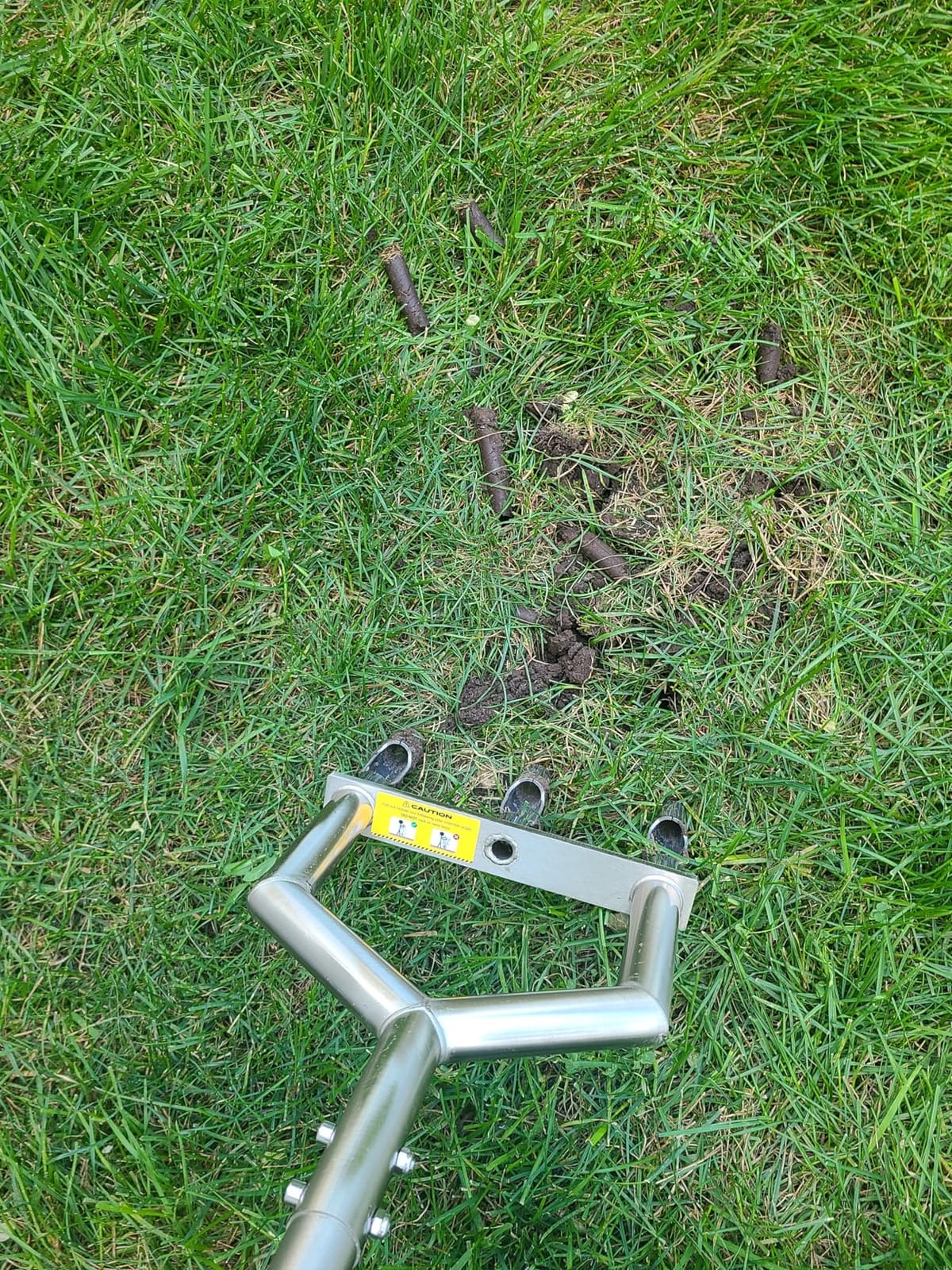
Even the included assembly hardware gets called out as better than the flimsy extras that usually ship with tools in this price range, along with a spare bolt and nut. Small detail, but it is the difference between a tool that assembles once and one that gets jury-rigged in the shed.
Ratings run 78 percent five star and 11 percent four star. The recurring nits are about cleaning and assembly precision rather than performance, which is the profile you want from a tool built for hard ground.
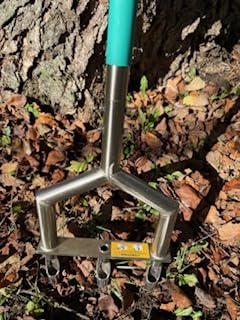
Clay soil performance
Clay is where hand corers usually fail, because the wet soil stays inside the tine and the next stroke just pushes a thicker column down the hole. A tapered, open-bottom tine that ejects as it rises is the answer, and that is the geometry this tool uses.
The practical instruction that makes the biggest difference here is to soak the lawn first and let it drain to damp rather than wet. On a properly soaked bed, owners report full plug extraction on essentially every push.
Small construction nits
The tops of the outer tines are not sealed, so washing the tool under a hose can push debris up inside the shaft. Rinse it instead, and let it dry before storing.
The handle sometimes arrives slightly twisted and can be straightened before use, and the foot bar connection bolt and nut sit at knee height, which is a real consideration if you have a history of knee problems. Neither issue is structural.
9. vanpein Coring Aerator With Core Tray: Best for Low Back Strain
vanpein Lawn Aerator Garden Tool with Soil Core Tray, 38” Manual Grass Plug Aerators, Coring Aeration Tools for Gardening, Soil Compaction, Lawn Yard Care
Built-in iron core tray
2mm iron body
38 inch T-handle
Four bolt assembly
Pros
- Integrated tray removes the raking and brushing step
- 38 inch T-handle and flat footplate reduce back strain
- Sharpened coring tines for compacted ground
- 2mm iron body with rust resistant coating
Cons
- One or two tines clog repeatedly in use
- Cores often only 1 to 2 inches deep in hard ground
- Tips scratch and rust in rocky soil
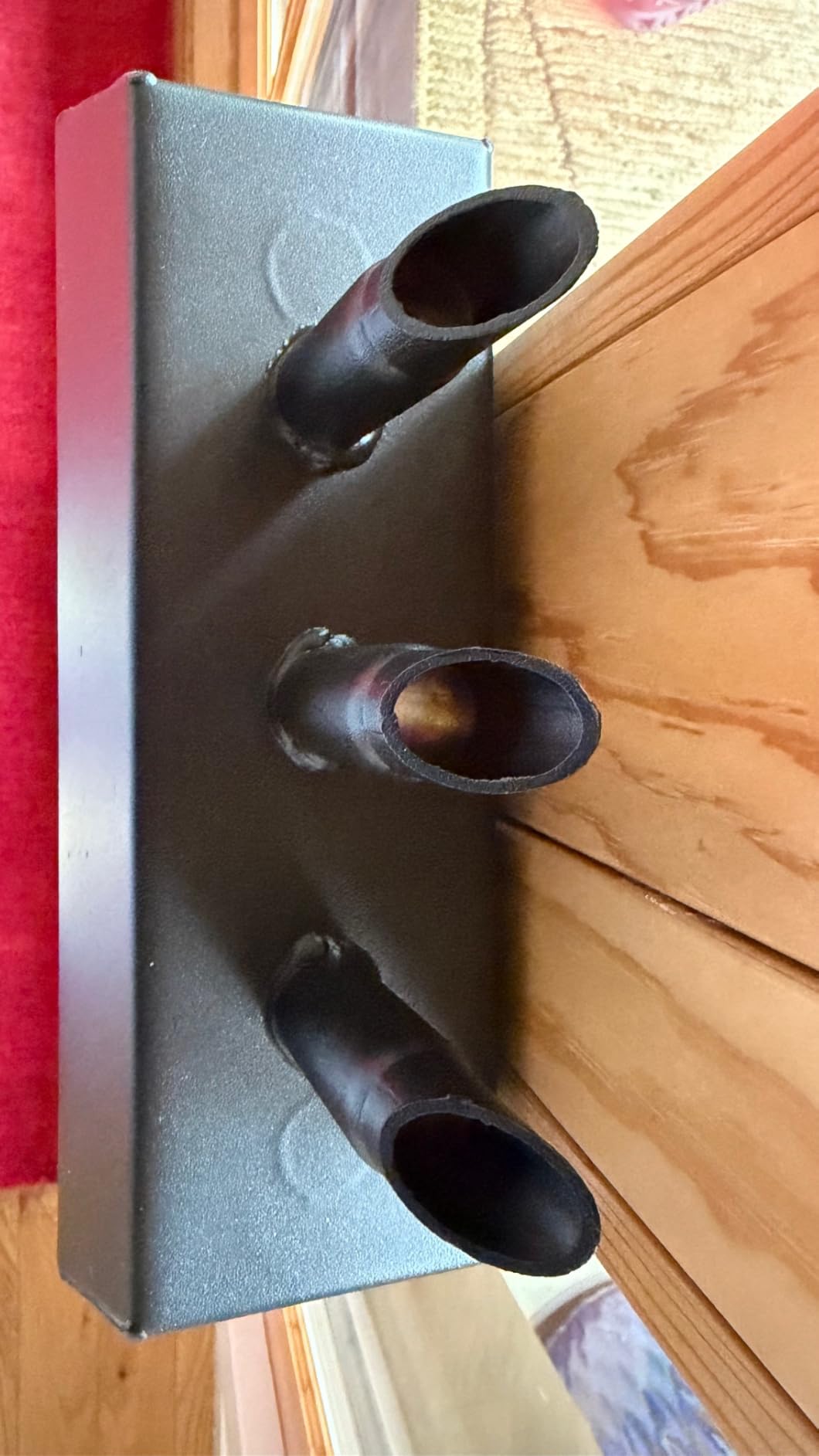
The 38 inch T-handle and flat footplate are the reason to look at this tool. Most manual corers have you working at a height that produces a rounded back after a few hundred presses. A T-handle at that height lets you push down with your body instead of hinging at the waist, and owners single it out as the reason the tool is comfortable over a long session.
The built-in iron core tray does for this tool what it did for the four-plug Dolibest, collecting ejected cores as you work so the cleanup is a single dump instead of a scatter of cores across the lawn. Four bolts and you are assembled.
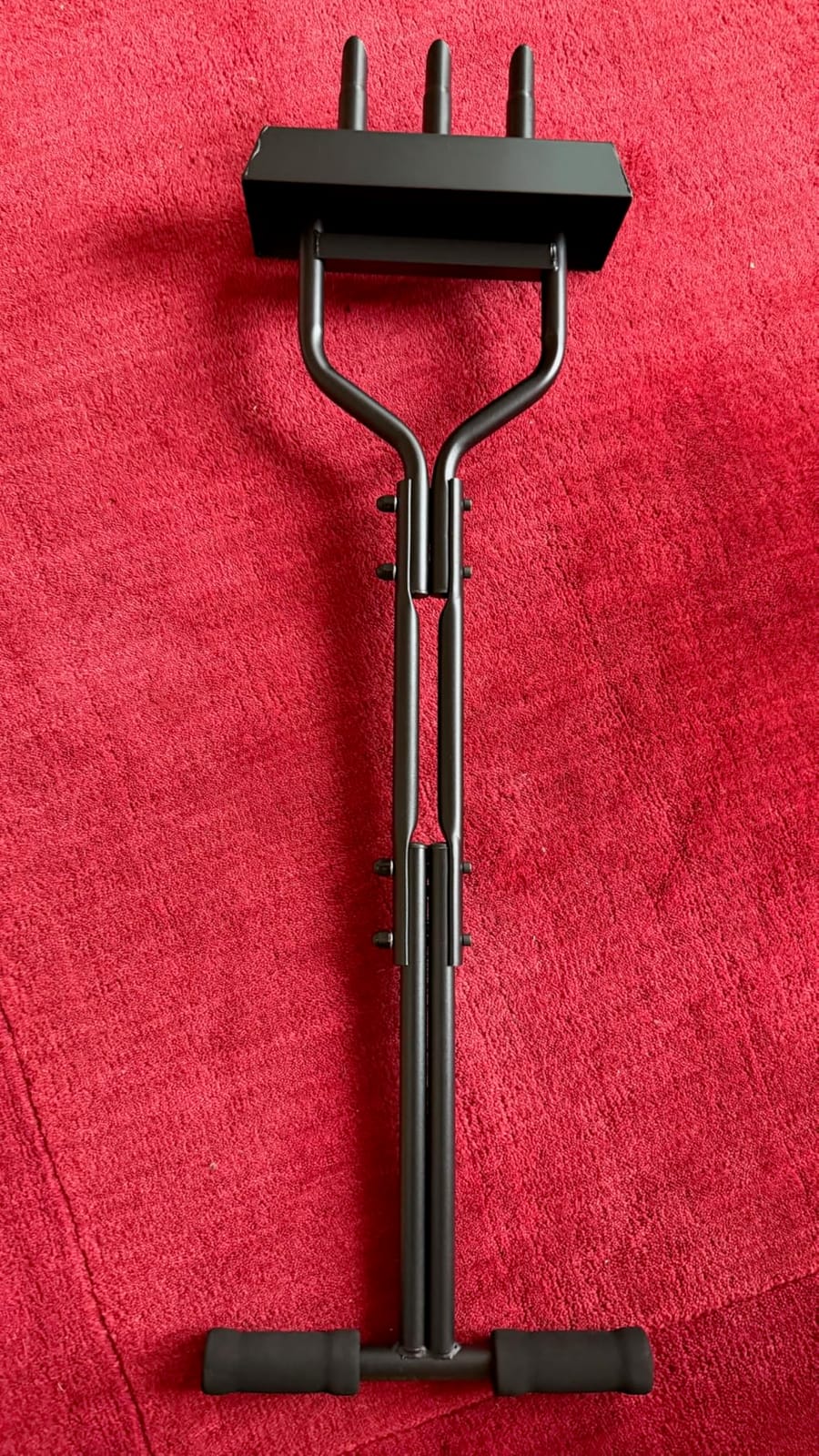
The body is 2mm thick iron with reinforced stress points and a full rust resistant coating, which is heavier duty material than most of the manual tools in this roundup. A hand cleaning rod is included for clearing stuck soil and small rocks out of the tubes, and the tines were sharpened in a recent revision.
At 6.43 pounds, this is on the heavier side for a foot-powered tool, though that weight is doing useful work driving the tines down. The listed product dimensions of 1 by 1.01 by 1 inches are clearly a data error, so plan around the stated 38 inch handle length instead.
Working height and ergonomics
A T-handle is usable from more than one body height than a straight shaft, and it gives you a two-handed push that translates directly into downward force. Combined with the flat footplate, it is the most ergonomic manual corer we looked at for anyone who does not want to be on their knees or bent over.
For a lawn you will work on several times over a few years, ergonomics is not a minor feature. It is the difference between aerating every autumn and giving up after the first spring.
Extraction depth limits
Owners report cores coming out only 1 to 2 inches deep in hard ground, where a good tine should reach 3 inches or more. That is the main performance limitation here, and it is a soil condition issue more than a defect: tines do not penetrate soil that has not been watered.
The other recurring complaint is that one or two tines clog repeatedly and stop the rhythm of the work. Budget for stopping to clear them, and keep the included rod nearby.
10. Zalawn 3 Tine Anti Clog Core Aerator: Best 4 Inch Coring Depth
Zalawn Manual Core Aerator Lawn Tool, Lawn Aerator Tool with 3 Non-Clogging Hollow Tines, Yard Grass Aerator with Ergonomic Rubber Grip, Reinforced Welding for Compacted Soil Lawn Care – Blue
3 hollow heat-treated tines
Coring depth up to 4 inches
Reinforced welds
Semi-assembled
Pros
- Pulls genuine cores up to 4 inches deep rather than puncturing
- Anti-clog mechanism clears plugs as you step
- Heat-treated tines resist bending in tough soil
- Rubber grips and balanced weight cut hand fatigue
Cons
- One report of ground-down welds snapping under use
- Extraction slows in very wet clay
- Tines need watered soil to penetrate
Depth is the headline spec here, and it is a real one. Owners report cores coming up to 4 inches in suitable soil, which puts this tool at the deep end of what a hand corer achieves and squarely in the range where you are cutting through the compacted layer rather than just scratching it.
The anti-clog mechanism pushes plugs out internally as you step, so the tine is clear before the next stroke. Heat-treated solid steel tines with reinforced welds are what let the tines hold that depth in compacted ground instead of deflecting around the obstruction.
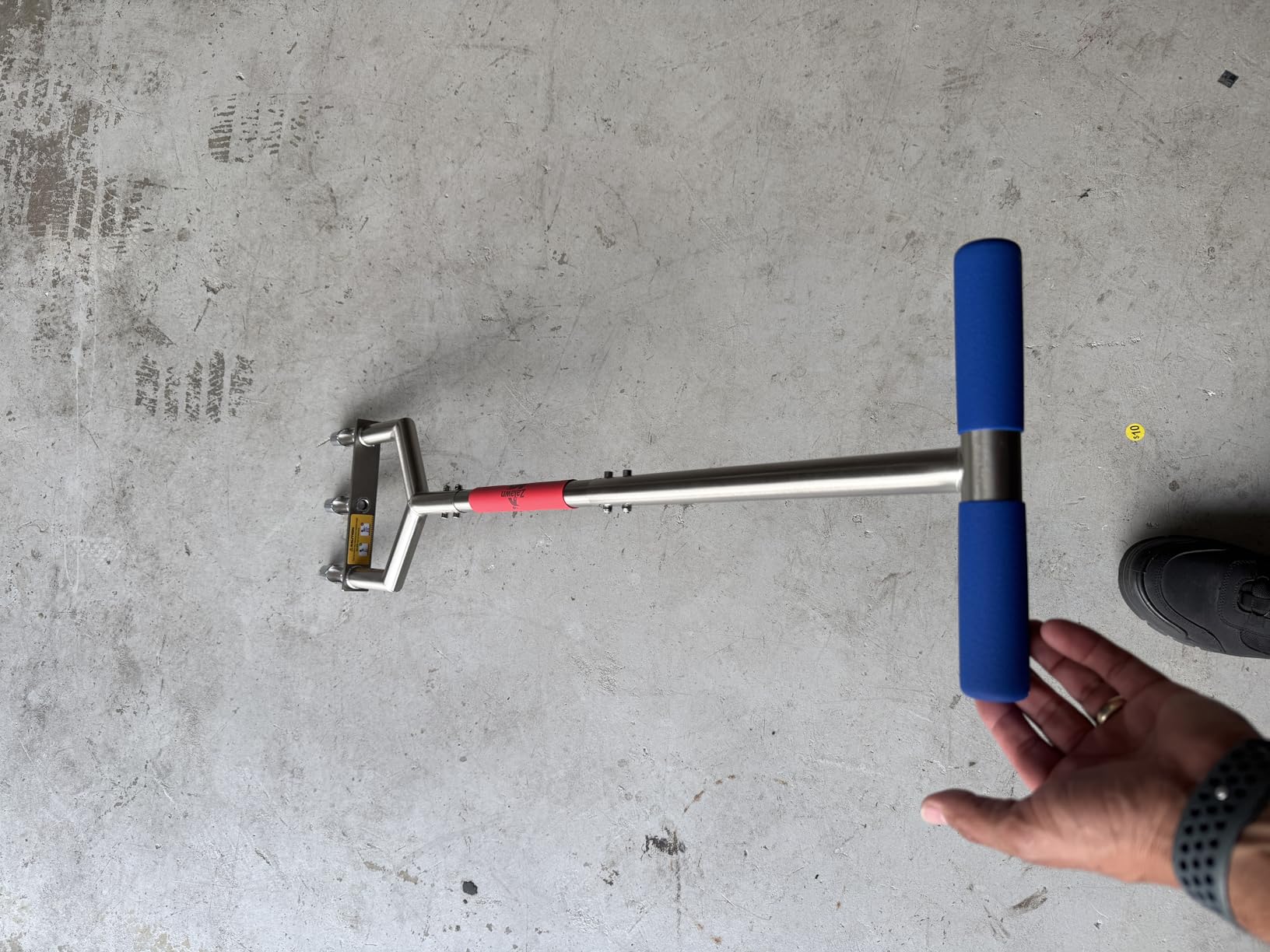
It arrives semi-assembled with only a few bolts to tighten, so you can start the same afternoon. A wide, stable foot bar lets you use body weight to drive the tines, and the rubber grips plus balanced weight keep hand fatigue down during repeated strokes.
At 4.5 average with 76 percent five-star ratings and a single one-star review in the set, the sentiment is strongly positive. The most common comparison owners make is against spike aerators they owned before, and the difference in what comes out of the ground is what convinces them.
Depth and tine durability
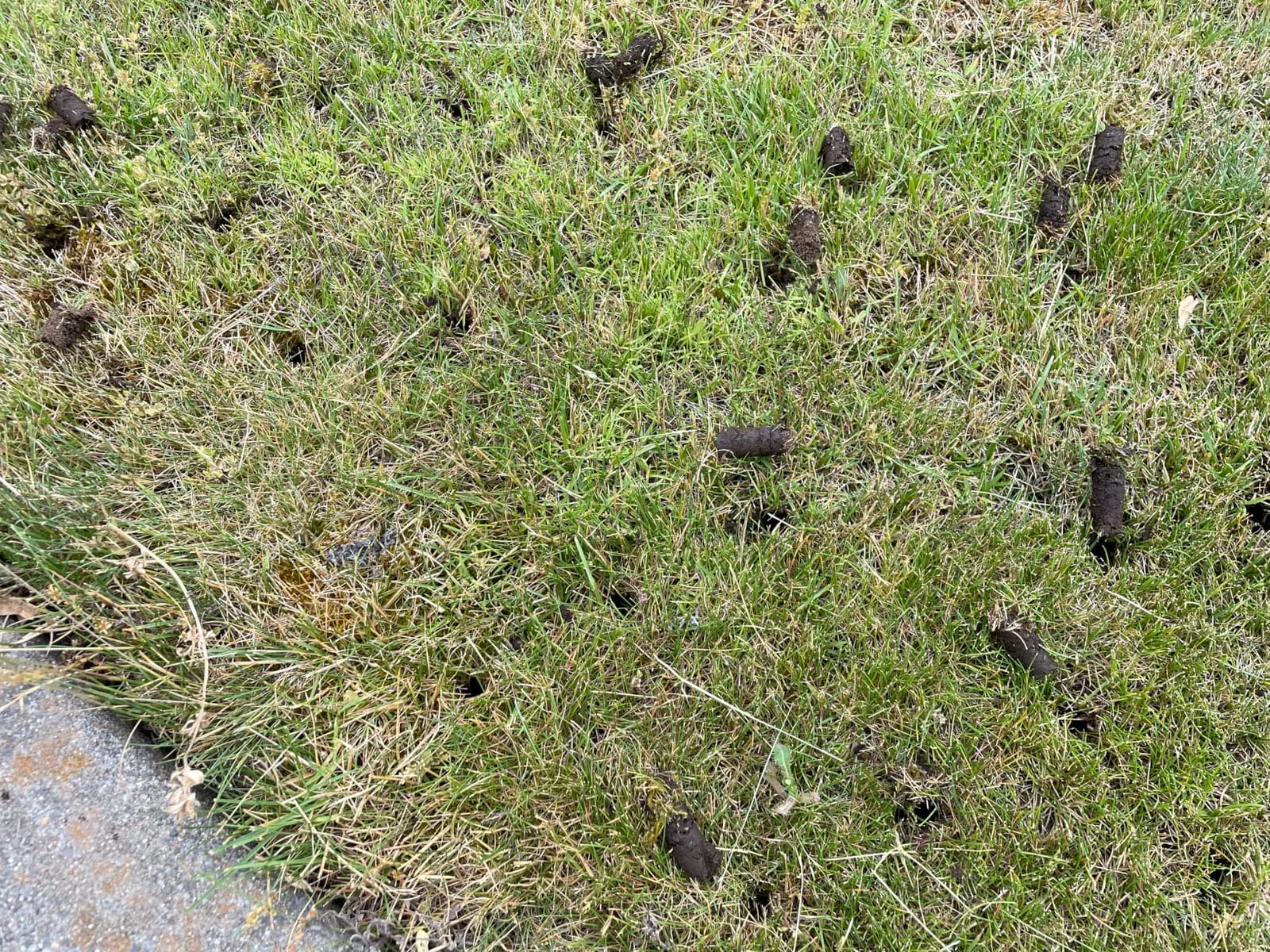
Core depth is the number that determines whether you are actually relieving compaction. A tine that stops at an inch opens the surface and leaves the dense layer below untouched, which is why shallow tools often seem to do nothing visible. Four inches reaches the zone where the problem usually lives.
The heat-treated steel and reinforced joints are what hold that depth. In a rocky yard, a weaker tine deflects and you end up with a shallow hole, so the material spec here is doing more work than it looks like on paper.
Setup and cleanup
Semi-assembled delivery with a few bolts and a wide foot bar gets you working quickly. The one durability report we found described a unit with shallow, ground-down welds that failed under normal use, which is a single isolated report rather than a pattern, but it is worth inspecting the welds when yours arrives.
On cleanup, cores scatter across the lawn unless the tool has a tray, which this one does not. Leave them where they fall. They break down in about a week and return nutrients to the soil, and raking them off the surface removes the exact material you just worked to bring up.
How to Match a Plug Aerator to Your Lawn Size
Match the tool to the area, and almost every other decision simplifies. Under 2,000 square feet, any of the foot-powered corers here will finish the job in an afternoon. Between 2,000 and 5,000 square feet, a four-plug or rolling design saves you multiple sessions. Above a quarter acre, a manual tool stops being realistic.
That last point is where format changes. If you own a riding mower or lawn tractor, a tow-behind drum unit is the correct tool and our tow-behind aerator guide covers the hitch, width, and ballast details. If you do not own a riding mower, a rolling unit like the fifth pick above is the highest-output option that still fits in a shed, and beyond that, renting beats buying.
Two other variables narrow the choice. Clay soil pushes you toward side-eject or anti-clog tine geometry, because solid tubes will fill. And a lawn you intend to aerate every single autumn favors a tool with replaceable tines and a comfortable working height, since those are the parts that take the wear.
For a broader look at the category across formats and lawn sizes, our general lawn aerator roundup covers the powered and walk-behind formats that sit outside this list.
Plug vs Spike Aerator: Which One Compacts Less
A plug aerator removes soil and leaves an open hole. A spike aerator pushes a solid rod into the ground and displaces the surrounding soil sideways, packing it tighter. That is the core difference, and it is why spike aerators are not a cheaper version of the same job.
Compare them on four points. Extraction: a core aerator physically lifts a cylinder of soil out, a spike leaves the soil in place. Compaction effect: a spike can worsen the problem it was aimed at, since displaced soil settles into a denser layer around the hole. Debris left behind: cores break down and return nutrients, spikes leave nothing. Root zone impact: only real cores open channels wide enough for air and water to move through.
There is one honest exception. A spike is useful as a quick puncturing pass on soft, newly worked soil where the goal is to get seed into the ground, and spikes cost a fraction of a corer. For relieving compaction on a home lawn, the hollow-tine core aerator wins on every measure that matters.
Does Your Lawn Need Aerating? Run These Checks
Before buying anything, spend ten minutes confirming you have a compaction problem rather than a watering, feeding, or thatch problem. The screwdriver test is the fastest diagnostic: push a screwdriver or garden fork into the lawn in several spots. If it enters with a gentle push and the soil comes up in loose, breaking clumps, you do not need to aerate. If it takes your full body weight and the soil comes out dense and compressed, you do.
Beyond the screwdriver, watch for the symptoms. Water that puddles and drains slowly after rain means pore space is gone. Thin, bare patches in areas that get walked on or mown constantly point to the same cause. A spongy layer of thatch that lifts with a finger is a thatch problem, which aeration alone will not fix.
One more test worth doing: check how much moisture the root zone holds. Dig a small hole six inches down a week after a rain. If the soil below is dry and hard while the surface looks fine, the roots are shallow because they cannot reach deeper water, which is a compaction signature rather than a watering problem.
If the screwdriver enters easily everywhere, spend your money on deeper watering, a soil test, and overseeding instead. An aerator on healthy soil will not do much for you.
How to Use a Plug Aerator the Right Way
The technique matters more than the tool, and most disappointing first aerations come down to a few repeatable mistakes. Work through these in order and the same machine that punched holes last year will pull real cores this year.
Pick the right time. Cool-season lawns aerate best in early fall or early spring, and warm-season lawns in late spring to early summer. Do not aerate a lawn that is stressed, frozen, or bone-dry.
Water the lawn first. Give it a deep soak a day or two ahead. The goal is soil that is damp enough to penetrate and still crumbly in your hand, not wet enough to smear and not dry enough to stop the tines.
Add ballast. Foot-powered corers need body weight on the foot bar, and tow-behind units need weight in the tray. Underloaded tines punch holes without removing cores, which is the single most common failure owners report.
Make two passes. Run the lawn in one direction, then cross it at a right angle. A second pass roughly doubles the number of holes in the root zone, which is the actual point of the exercise.
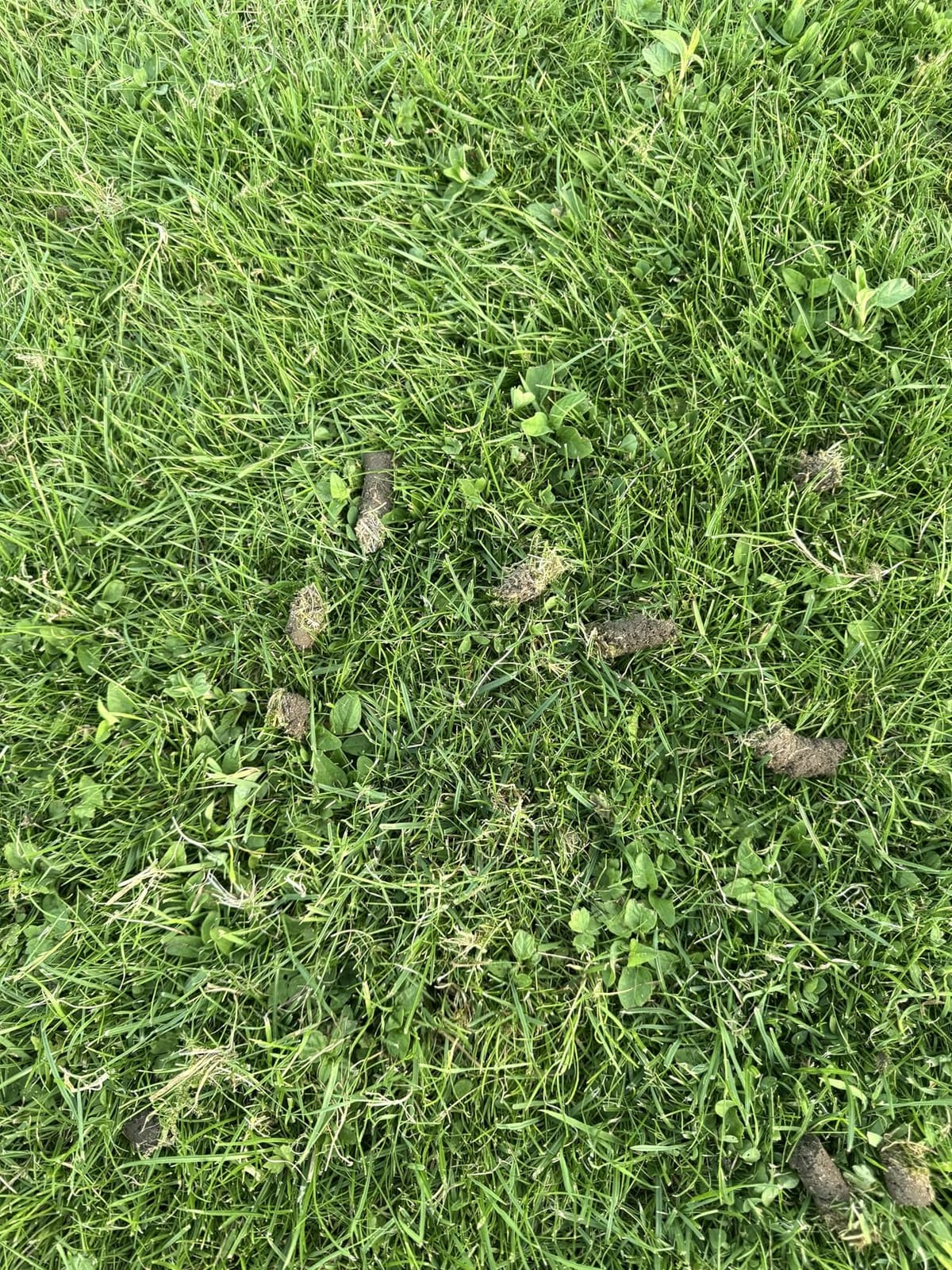
Leave the plugs where they fall. Do not rake them up. They break down within a week or two and return microbes and nutrients to the surface. Raking them off is the most widespread misconception about aeration.
Overseed and feed after. The open holes are the ideal seedbed. Apply seed and starter fertilizer within a few days, water consistently, and keep traffic off the lawn until the new grass establishes.
Two failure modes to know about. An aerator that will not release plugs is almost always missing ballast, running on dry soil, or moving too fast. And clay that clogs the tines mid-pass needs a stop every few passes to clear the drum before the tubes stop extracting.
Rent, Buy, or Hire Aeration: What Owners Report
Recurring questions in homeowner forums cluster around this, and the answer follows your lawn size. Owners with riding mowers consistently report that a tow-behind unit is easier to justify than a hired visit because it comes out every year with no scheduling and no crew on the property. Owners without a riding mower report that renting for a single autumn session is often the smarter call than buying a machine they will use once.
The other side of the conversation is worth hearing too. Users comparing a pull-behind unit against a commercial machine report that the powered machine pulls noticeably more plugs per square foot. That is the honest gap, and it is why a tow-behind drum with proper ballast on a large lawn is closer to professional results than its reputation suggests.
One frequently repeated failure story is worth knowing about before you book anyone: a landscaper’s commercial aerator that would not release plugs and only punched holes, which is a technique problem rather than an equipment problem. Ask whoever does the work how they load the tray, and ask them to correct the pass pattern if cores are not coming up.
Frequently Asked Questions
Which is better, a plug or spike aerator?
A plug aerator is better for relieving compaction. It uses hollow tines to pull actual cylinders of soil out of the ground, leaving open holes that let air, water, and fertilizer reach the root zone, and the cores break down and return nutrients to the lawn. A spike aerator pushes a solid rod in and displaces soil sideways, which can pack the surrounding soil tighter. A spike is only worthwhile as a quick pass on soft, newly worked soil.
Are plug aerators worth it?
They are worth it when your lawn is actually compacted. Signs include water puddling after rain, thin bare patches in high-traffic areas, a hard soil test with a screwdriver, and roots that stay shallow. If the screwdriver pushes in easily and the soil crumbles, your problem is more likely watering, thatch, or nutrient balance. Core aeration is also the standard preparation step before fall overseeding, since the open holes hold seed in contact with the soil.
How many passes should I make with a plug aerator?
Two passes is the target. Run the lawn in one direction, then cross it at a right angle, which roughly doubles the number of open holes per square foot in the root zone. A single pass only treats every other row. Before starting, water the lawn so the soil is damp but still crumbly, and add ballast, because a tine without enough downward force punches holes without pulling cores.
Should you pick up plugs after aerating?
No. Leave them where they fall. The soil cores sitting on the surface break down within a week or two and return microbes, organic matter, and nutrients to the turf, which is part of the benefit of coring. Raking them off throws away exactly the material you just worked to bring up. The only exception is sweeping cores off a walkway or driveway so they are not tracked indoors, and using a tray-equipped tool if you prefer to collect them as you go.
How do I know if my lawn needs aerating?
Push a screwdriver or garden fork into several spots on the lawn. If it goes in with a gentle push and lifts loose, breaking soil, the lawn does not need aerating. If it takes your full body weight and the soil comes out dense and compressed, it does. Other signs are water that puddles and drains slowly after rain, thin bare patches where people walk or the mower turns, and dry hard soil six inches down a week after rain.
The Best Plug Aerator for Your Lawn in 2026
For most home lawns, the best plug aerator is the Yard Butler ID-6C, and the reason is evidence rather than features. More than 8700 ratings at 4.3 means its strengths and failure cases are both well documented, it weighs 1.77 pounds, and it will not outgrow a small property.
Match the format to the job. Working a few compacted patches, start there. Treating a heavy clay bed, the Xuperace side-eject tines are the ones that will not fill solid on you. Covering open ground fast, the rolling unit or a four-plug design will cut your sessions down. Larger than a quarter acre, or you own a riding mower, step up to a tow-behind drum or rent a machine rather than fighting a hand tool all afternoon.
Whatever you choose, water the lawn first, load the ballast, make two crossing passes, and leave the cores on the surface. That sequence alone will do more for a compacted lawn than any spec on any box, and it is the fastest path to a thicker, better-draining root zone before fall overseeding.