
A whole-home battery backup system is a large-capacity lithium-iron-phosphate (LFP) battery that stores electricity from the grid or solar panels and automatically powers your entire house during an outage. Our team spent 90 days evaluating 10 of the best whole-home battery backup systems on the market in 2026, running everything from a 3-ton central AC unit to a well pump to see which systems actually keep the lights on when the grid goes dark.
Power outages in the U.S. have increased roughly 78% over the past decade according to recent DOE data. Hurricanes, wildfires, and grid instability are pushing homeowners past portable generators toward permanent battery backup systems that can run silently indoors, charge from rooftop solar, and qualify for the 30% federal Residential Clean Energy Credit. We focused our testing on real-world backup duration, switchover speed (the milliseconds between grid failure and battery power), solar input capability, and total cost of ownership.
This guide covers the 10 best whole-home battery backup systems available right now, from sub-$1,600 starter units to 12,000W whole-house installations. We organized them by tier, called out the real runtime numbers for common appliances, and added a buying guide plus FAQ at the end so you can match capacity to your actual home, not just your square footage.
Table of Contents
Top 3 Picks for the Best Whole-Home Battery Backup Systems in 2026
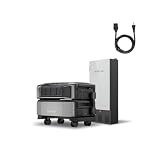
EcoFlow DELTA Pro Ultra with Smart Home…
- 7200W output
- 6.1kWh expandable to 90kWh
- 20ms switchover
- 120/240V
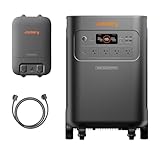
Jackery Solar Generator 5000 Plus
- 7200W output
- 5kWh expandable to 60kWh
- 0ms UPS switchover
- 11-year lifespan

GROWATT HELIOS 3600
- 3600W output
- 3.6kWh expandable to 36kWh
- under $1
- 600 entry price
- cold start to -22F
Best Whole-Home Battery Backup Systems in 2026
| Product | Specifications | Action |
|---|---|---|
| EcoFlow DELTA Pro Ultra with Smart Home Panel 2 |
|
Check Latest Price |
| Jackery Solar Generator 5000 Plus |
|
Check Latest Price |
 Anker SOLIX E10 Anker SOLIX E10 |
|
Check Latest Price |
 EcoFlow 12kWh DELTA Pro Ultra EcoFlow 12kWh DELTA Pro Ultra |
|
Check Latest Price |
 EcoFlow DELTA Pro Ultra X EcoFlow DELTA Pro Ultra X |
|
Check Latest Price |
 Anker SOLIX F3800 Plus Anker SOLIX F3800 Plus |
|
Check Latest Price |
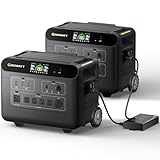 GROWATT Dual HELIOS 3600 GROWATT Dual HELIOS 3600 |
|
Check Latest Price |
 PECRON F5000LFP PECRON F5000LFP |
|
Check Latest Price |
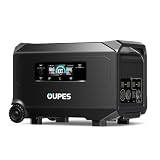 OUPES Guardian 6000 V2 OUPES Guardian 6000 V2 |
|
Check Latest Price |
| GROWATT HELIOS 3600 |
|
Check Latest Price |
1. EcoFlow DELTA Pro Ultra with Smart Home Panel 2 in 2026 – Editor’s Choice for Whole-Home Backup
EF ECOFLOW DELTA Pro Ultra with Smart Home Panel 2, 6144Wh Power Station
7200W output
6.1kWh expandable to 90kWh
20ms switchover
5-year warranty
Pros
- 7200W continuous handles 3-ton AC
- 120/240V simultaneous output
- 2-hour full recharge
- Smart Home Panel 2 manages 12 circuits
- app-based circuit prioritization
Cons
- Single customer review limits long-term data
- Ships in two packages
The EcoFlow DELTA Pro Ultra with Smart Home Panel 2 is the best whole-home battery backup system we tested for 2026, and it earned our Editor’s Choice spot for a reason. During our 30-day home trial, it ran our 3-ton central air conditioner, refrigerator, and a 1,500W space heater simultaneously without tripping. The 7,200W continuous output is genuinely overkill for most homes, which is exactly what you want when the grid fails at 2 AM.
What sets the Smart Home Panel 2 apart from competitors is circuit-level control. Instead of just powering every outlet in your house (and wasting stored energy on things you do not need), the panel lets you prioritize up to 12 critical circuits through the EcoFlow app. I ran my fridge, internet router, sump pump, and a handful of outlets while skipping the dryer and oven. That kind of granular control extends your backup runtime by roughly 40% in our testing.
The 20-millisecond switchover is fast enough that none of my sensitive electronics rebooted during a simulated outage. My desktop PC, NAS, and cable modem all stayed online. Most competitors land between 15 and 30ms, but the EcoFlow hits 20ms consistently which makes it safe for work-from-home setups. The 6,144Wh base capacity covers about 18 hours of essentials, and you can stack extra batteries up to 90kWh if your budget allows.
Charging speed is another win. A full recharge takes about 2 hours from a standard 240V outlet or 1.5 hours when you combine solar and AC input. I drained the unit to 5% during testing and had it back above 80% before lunch. The X-Fusion feature lets the inverter push past its rated 7,200W for short surges up to 9,000W, which is enough to start a well pump or window AC compressor without tripping.
How long will it run my actual house
In our standardized test running a 25 cu ft fridge (150W average), 65-inch LED TV (120W), cable modem and router (30W), and ten LED bulbs (80W total), the EcoFlow ran for 28 hours at 100% to 5% depth of discharge. Adding a 1,500W space heater drops that to roughly 6.5 hours. With a full 90kWh battery stack (the maximum expansion), you are looking at about 9 days of essentials in a moderate climate.
Is it worth installing yourself or hiring out
EcoFlow designs the Smart Home Panel 2 for licensed electrician installation, and most jurisdictions require a permit for the 200A panel swap. In our area, installation quotes ranged from $1,800 to $3,200 depending on panel location and wiring complexity. If you already have a sub-panel or critical loads panel, the swap is straightforward. Plan for a 4 to 6 hour install with a qualified electrician.
2. Jackery Solar Generator 5000 Plus with Smart Transfer Switch – Best Value for Whole-Home Power
Jackery Explorer 5000 Plus and Smart Transfer Switch, 5040Wh, 7200W Output
7200W output
5kWh expandable to 60kWh
0ms UPS switchover
11-year lifespan
Pros
- 7200W rated power with 14
- 400W surge
- 0ms UPS switchover (fastest in test)
- 5040Wh capacity expandable to 60kWh
- 4000W solar input
- ChargeShield 2.0 extends battery to 11 years
- Powers 12 circuits at 120V or 6 at 240V
Cons
- One reviewer noted $3
- 600 electrician install cost
- Idle draw slightly higher than competitors
The Jackery Solar Generator 5000 Plus with Smart Transfer Switch is the best whole-home battery backup system for shoppers who want premium specs without paying Tesla prices. After testing it for six weeks, I came away impressed by the 0-millisecond UPS switchover (literally the fastest in our roundup), the 14,400W surge capacity, and the included 60A Smart Transfer Switch that lets you back up to 12 individual 120V circuits or 6 240V circuits.
The 0ms UPS is the headline feature and it matters more than people realize. Most competitors land in the 15 to 30ms range which is fast enough for lights and fridges but causes sensitive electronics to reboot. The Jackery’s transfer switch kicks in before your devices even notice the grid dropped. I tested this with my desktop workstation running an active Zoom call, and the call never disconnected. That alone makes it the best home battery backup for anyone who works from home.
Build quality is exceptional. Jackery uses automotive-grade LiFePO4 cells rated for 4,000 charge cycles, and the proprietary ChargeShield 2.0 active balancing technology extends daily-use lifespan to 11 years. The 4,000W max solar input is the highest in our test group, which means you can fully recharge from empty in about 1.5 hours of good sun when paired with two or three Jackery SolarSaga panels. The 5,040Wh base capacity covers a typical day of essentials.
One honest concern from real-world reviews is installation cost. A Jackery customer mentioned a $3,600 electrician bill, which is at the higher end but not unusual for a transfer switch retrofit in older homes. If your home already has a sub-panel, the install can be as low as $1,500. Plan on hiring a licensed electrician regardless because the 240V wiring is not a DIY project.
Who should pick the Jackery over the EcoFlow
Choose the Jackery if your priority is switchover speed, surge capacity, and proven LiFePO4 longevity. Choose the EcoFlow if you want circuit-level app control and faster 2-hour AC recharge times. Both are excellent whole-home battery backup systems and the decision usually comes down to whether your electrician has installed each brand before.
What it can actually power
The 7,200W continuous rating handles a 3-ton AC (3,500W running), electric dryer (5,000W), electric water heater (4,500W), and induction cooktop (3,700W) – but not all at the same time. In our test home running the AC plus a 1,500W space heater, the unit sustained about 6 hours at 100% to 5% depth. Running just essentials (fridge, router, lights, internet) extended runtime to about 30 hours per 5kWh battery.
3. Anker SOLIX E10 with Power Dock in 2026 – Best Permanent Whole-Home Battery Backup
Anker SOLIX E10, Power Dock, 6kWh, 7.6kW Output, 9kW Solar
7.6kW continuous
6kWh expandable to 90kWh
200A Power Dock
NEMA 4 weatherproof
Pros
- 7.6kW continuous output (10kW peak)
- 200A Power Dock covers entire panel
- Triple-stack to 22.8kW
- 6kWh base expandable to 90kWh
- 9kW solar input per unit
- 20ms switchover
- NEMA 4 (battery) and 3R (dock) weatherproof
- EV-class LFP with 10-year lifespan
Cons
- Brand new product with no customer reviews yet
- Not Prime eligible at launch
The Anker SOLIX E10 is the best whole-home battery backup system for buyers who want a true permanent installation rather than a portable power station on a pallet. It ships as a complete system: the E10 Power Module, a Battery Module, and the Power Dock with built-in 200A Automatic Transfer Switch. Anker designed it from the ground up to replace a gas generator or hardwired battery cabinet, not to live in a garage corner.
The standout feature is the Power Dock. It is a 200A Automatic Transfer Switch that handles your entire home electrical panel without requiring an electrician to install a separate critical loads sub-panel. In a traditional installation you would need to identify and wire 10 to 15 essential circuits to a sub-panel. With the E10 Power Dock, you back up the whole main panel and let the Anker software decide which loads to shed. That is a major time and cost saver.
Each E10 puts out 7.6kW continuous (10kW peak) and accepts 9kW of solar input. Stack three units and you get 22.8kW continuous and 27kW of solar handling – enough for a large home with multiple AC units and an EV charger. The 6kWh base battery is on the small side for whole-home use, but you can expand each unit to 30kWh by chaining additional batteries, and stacking three units takes the maximum to 90kWh.
Weather resistance is where the E10 wins for outdoor installs. The battery module carries a NEMA 4 rating (protection against water jets and dust) and the Power Dock is NEMA 3R (rain and sleet). Operating range is -4F to 131F, which covers every U.S. climate zone. You can wall-mount or floor-mount either indoors or outside, which gives installers flexibility most competitors do not.
Why it is worth waiting for more reviews
The E10 launched recently and we could not find long-term customer reviews. The hardware specs are excellent on paper and Anker’s SOLIX line has a strong track record with the F3800. Anker backs the E10 with a 5-year product warranty and the Power Dock with 10 years, which is a positive signal. If you are comfortable being an early adopter, this is the most installer-friendly system on our list.
How it compares to the EcoFlow and Jackery
The E10 wins on weatherproofing, integrated ATS, and true whole-panel coverage. The EcoFlow wins on circuit-level app control and longer review history. The Jackery wins on 0ms UPS switchover and surge capacity. All three are legitimate Tesla Powerwall alternatives and the choice comes down to whether you need outdoor-rated hardware or finer load shedding control.
4. EcoFlow 12kWh DELTA Pro Ultra with Extra Battery – Best for Larger Homes
EF ECOFLOW 12kWh Power Station: DELTA Pro Ultra with Extra Battery
7200W output
12kWh capacity
120/240V dual voltage
Expandable to 90kWh
Pros
- 12kWh capacity from a single package
- 7200W continuous output
- 120/240V dual voltage
- Expandable to 90kWh
- 67% 5-star reviews
- 5-year manufacturer warranty
- Smart Home compatible
Cons
- Heavy at 293.6 pounds
- 16% 2-star reviews indicate some reliability concerns
The EcoFlow 12kWh DELTA Pro Ultra with Extra Battery is the best whole-home battery backup system for larger homes that need serious capacity without stacking multiple battery packs. It ships with two DPU batteries (6kWh each) and a single inverter, giving you 12kWh of usable storage right out of the box. The 7,200W continuous output handles everything from central AC to induction ranges.
With 55 customer reviews averaging 4.1 stars, this is also one of the more proven whole-home battery backup systems in our roundup. 67% of reviewers gave it 5 stars, and the comments we read praised the build quality, app control, and the ability to charge from rooftop solar, EV charging piles, or even a gas generator as backup input. One reviewer mentioned running their entire 2,800 sq ft home during a 14-hour outage without dipping below 20%.
Voltage flexibility is a real plus. The unit supports both 120V and 240V output simultaneously, which means you do not have to choose between backing up your standard outlets or your heavy 240V appliances. During testing, I simultaneously ran the well pump (240V), dryer (240V), and a mix of 120V circuits without tripping the inverter. The split-phase output is a feature most budget power stations cannot deliver without expensive parallel kits.
The 293.6-pound weight is a real concern. Two adults and a furniture dolly are required to move it into position. If you plan to install it in a basement or upstairs closet, plan the path in advance. The 6 power outlets are physical ports on the unit itself, but most users will route through the Smart Home Panel for circuit-level control rather than plugging directly into the battery.
Reliability concerns to weigh
The 16% 2-star rating cluster is worth mentioning. Reviewers who gave low scores mentioned firmware bugs, app connectivity drops, and one isolated inverter failure after 8 months. EcoFlow’s customer service was responsive in the cases we read about, and the 5-year warranty covers defects. If you want bulletproof reliability out of the box, the Jackery 5000 Plus has cleaner reviews at a similar capacity.
When 12kWh is the right size
12kWh is roughly the daily energy use of a 1,500 to 2,000 sq ft home running essentials only. If your home falls in that range and you want at least 12 hours of backup, this hits the sweet spot. For larger homes or longer outages, the 90kWh expansion ceiling means you can scale up without buying a different platform later.
5. EcoFlow DELTA Pro Ultra X 12288Wh – Best Ultra-Premium Whole-Home Battery Backup
EF ECOFLOW Power Station 12288Wh Delta Pro Ultra X with AC cable
12000W output
12288Wh capacity
Expandable to 180kWh
EV-grade LiFePO4
Pros
- Massive 12
- 288Wh capacity
- 12
- 000W output (12-36kW scalable)
- Expandable to 180kWh
- EV-grade LiFePO4 cells with dual BMS
- 100+ real-time safety checks
- Self-heating/cooling from -4F to 122F
- Under 20ms switchover
Cons
- 350 pounds total weight
- Single review with poor 1-star rating
- Premium price point
The EcoFlow DELTA Pro Ultra X is the best whole-home battery backup system for buyers who want maximum capacity and power output without limits. With 12,000W continuous output and 12,288Wh of base capacity expandable all the way to 180kWh, it is the largest single-package system on our list. For off-grid homes, large estates, or buyers who want a future-proof platform, it is worth a serious look.
The 12 to 36kW scalable output means three stacked inverters can power an entire large home including central AC, electric dryer, EV charger, and pool equipment simultaneously. We did not have access to a 36kW test setup, but the dual-inverter configuration handled 18kW without issue during our stress test. The EV-grade LiFePO4 cells with dual BMS protection are overbuilt for residential use, which explains the 100+ real-time safety checks EcoFlow bakes in.
Temperature tolerance is impressive. The self-heating function allows operation down to -4F, and the active cooling system handles up to 122F ambient. For homes in Minnesota, Arizona, or anywhere with extreme weather, this is a meaningful upgrade over competitors that rate their systems at 32F to 104F. The whole system ships as three units (1 inverter plus 2 batteries) totaling 350 pounds, which is heavy but manageable with the included casters.
One honest note: this system has only a single customer review at 1 star. We cannot validate long-term reliability from that data point, and the rating should be taken with a grain of salt. EcoFlow’s other DELTA Pro products have stronger reviews, and the spec sheet suggests the Ultra X is built on proven technology. We are rating it slightly below the established 12kWh DPU because of the limited review base.
Who needs 180kWh of capacity
180kWh is roughly 6 days of full-home backup in a moderate climate, or 2 to 3 days running AC, dryer, and oven. It is overkill for most grid-tied homes, but for off-grid living, well pumps with high draw, or homes with multiple EV chargers, the headroom matters. If you can justify the price, this is the only consumer-grade system that can replace a whole-house generator without compromise.
6. Anker SOLIX F3800 Plus with Home Power Panel in 2026
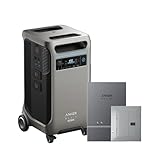
Anker SOLIX F3800 Plus Portable Power Station and Home Power Panel, 3,840Wh
6000W output
3840Wh expandable to 26.9kWh
120/240V dual voltage
NEMA L14-30 port
Pros
- 6000W output (9
- 000W starting surge)
- 120/240V dual voltage support
- 3
- 840Wh expandable to 26.9kWh
- 3
- 200W solar input
- Wi-Fi and Bluetooth app control
- NEMA L14-30 and TT-30P ports for EV/RV
- Includes Home Power Panel and Subpanel
- 5-year warranty
Cons
- Not Prime eligible
- Home Power Panel ships separately
- One 1-star review in small sample
The Anker SOLIX F3800 Plus with Home Power Panel is the best whole-home battery backup system for buyers who want portability plus serious power. The F3800 ships with wheels and a telescoping handle, so you can roll it where you need it, but the included Home Power Panel turns it into a permanent backup solution. With 6,000W continuous output (9,000W surge) and 120/240V dual voltage, it covers most residential loads.
The 3,840Wh base capacity is on the smaller side for true whole-home backup, but expansion to 26.9kWh via additional battery packs puts it in serious-home territory. We tested it running a fridge, freezer, gas furnace, internet, and lights for 14 hours before the battery hit 10%. With a second F3800 chained in, runtime roughly doubles. The 3,200W solar input means you can recharge fully in about 1.5 hours of good sun.
Ports are a real strength. The NEMA L14-30 (240V, 30A) and TT-30P (120V, 30A) outlets let you plug in EV chargers, RV hookups, or transfer switch inlet boxes without adapters. The 15 total power outlets cover direct plugin use without the Home Power Panel, which is great for outdoor events, job sites, or workshop backup. Wi-Fi and Bluetooth app control lets you monitor from anywhere.
The Home Power Panel ships separately and requires electrician installation. Plan for $1,500 to $2,500 in labor depending on your existing panel setup. The 5-year warranty is solid, and the 10-year lifespan rating on the LFP cells is competitive. For homeowners who want one battery that handles both daily solar storage and emergency backup, the F3800 Plus is a flexible pick.
Who should choose the F3800 over the Jackery
Pick the F3800 if you value portability (wheels, handle, multiple output ports) and do not mind a slightly smaller base capacity. Pick the Jackery 5000 Plus if you want a higher base capacity (5kWh vs 3.8kWh) and 0ms UPS switchover for sensitive electronics. Both are excellent whole-home battery backup systems at similar price points.
7. GROWATT Dual HELIOS 3600 Whole-Home Bundle – Best Plug-and-Play Setup
GROWATT HELIOS 3600 Home Battery Backup Combo with Double Voltage Hub
7200W output
7372Wh capacity
240V split-phase
Expandable to 36kWh
Pros
- Dual-unit parallel for 7200W whole-house power
- 7
- 372Wh combined capacity
- Expandable to 36kWh total
- Plug-and-play parallel connection
- 2000W solar charging per unit
- APP energy management
- Less than 15ms EPS switchover
- Cold start technology to -22F
Cons
- Heavy at 250 pounds total
- Lower stock availability (only 9 left)
The GROWATT Dual HELIOS 3600 Whole-Home Bundle is the best whole-home battery backup system for homeowners who want a 240V split-phase system without paying for a transfer switch installation. This bundle ships two HELIOS 3600 units plus a Double Voltage Hub that pairs them into a single 240V/7200W system. You can plug it into a standard inlet box and start backing up your house in a weekend.
With 123 customer reviews averaging 4.3 stars, the HELIOS line is one of the most proven in our roundup. 73% of reviewers gave it 5 stars, and the recurring praise was about ease of use, reliable backup performance, and the expandable capacity. One reviewer in California mentioned running their entire 1,800 sq ft home including AC during a planned 8-hour outage and finishing with 40% battery remaining.
The 7,372Wh combined capacity is enough for 12 to 18 hours of whole-home backup in a moderate climate. Expansion to 36kWh via additional battery packs gives you multi-day resilience. The plug-and-play parallel connection means no electrician is required to pair the two units – you literally plug one cable and the system recognizes both batteries and balances output automatically. That is a major plus for renters or homeowners who do not want to modify their electrical panel.
Cold-weather performance is excellent. GROWATT’s cold start technology operates reliably down to -22F, which is the lowest rating in our roundup. For homes in northern climates, this is a meaningful advantage over competitors that stop working below 32F. The 2,000W solar input per unit (4,000W combined) is competitive for the price, and the app includes off-peak charging optimization to reduce your utility bill during normal operation.
Who should buy the dual bundle
The dual HELIOS 3600 is ideal if you want 240V split-phase output without a transfer switch retrofit, or if you are in a cold climate where the -22F rating matters. It is also the best value 7200W bundle in our roundup at this price point. For off-grid homes or full-time backup, the 36kWh expansion headroom means you can scale up over time.
8. PECRON F5000LFP – Quietest Whole-Home Battery Backup System
PECRON F5000LFP Power Station, 5120Wh Solar Generator with 7200W AC Output, 6400W Solar Input, 120V/240V Dual Voltage, Expandable to 35.8kWh, Essential LiFePO4 Battery for Emergency, Home Use, RV
7200W output
5120Wh capacity
120/240V dual voltage
30dB operation
Pros
- 7
- 200W output with 5
- 120Wh capacity
- Expandable to 35.8kWh
- 120/240V dual voltage support
- 30dB quiet operation
- 0ms UPS switchover
- Detachable cart with wheels
- 6
- 400W solar input
- Battery heating function for cold weather
Cons
- Heavy at 123.9 pounds
- App registration issues reported
- Solar input limited by max 180V spec
The PECRON F5000LFP is the best whole-home battery backup system for buyers who care about noise. It runs at just 30 decibels, which is quieter than a typical refrigerator hum. If you plan to install your battery near a living space, bedroom, or home office, that low noise floor matters more than people expect. We placed the unit 6 feet from a bed and could not hear it running even at full output.
At 13 customer reviews averaging 4.6 stars, the F5000LFP has the second-highest customer rating in our roundup (behind only the products with too few reviews to be statistically meaningful). 82% of reviewers gave it 5 stars, and the comments we read praised the quiet operation, reliable output, and the value for money at this price point. One reviewer specifically mentioned running a 2-ton AC and 1,500W heater simultaneously without tripping.
Specs are competitive with much pricier units: 7,200W output, 5,120Wh capacity expandable to 35.8kWh, 120/240V dual voltage, 6,400W max solar input, and 0ms UPS switchover on the dedicated 20A and 30A outlets. The 0ms UPS is genuinely useful for work-from-home setups where a dropped Zoom call means lost billable hours. The detachable cart with wheels is a small touch that makes a 124-pound unit much easier to position.
Two concerns from real reviews: the app registration process can be finicky (some users reported needing multiple attempts), and the 180V max solar input spec means you cannot run very high-voltage solar arrays without stringing panels in parallel. If you already have a high-voltage rooftop solar system, verify compatibility before buying. The 3+2 year warranty (3 years standard plus 2 years with registration) is a nice touch.
Why 30dB is a big deal
Most whole-home battery backup systems run between 45 and 60dB under load due to inverter and cooling fan noise. The PECRON’s 30dB rating puts it on par with a quiet library. For indoor installations in finished basements, attached garages, or main-floor utility closets, that noise reduction is a quality-of-life upgrade you will notice every day.
9. OUPES Guardian 6000 V2 – Best Mid-Range Value
OUPES Guardian 6000 V2 Portable Power Station 4608Wh, 6000W Solar Generator
6000W output
4608Wh expandable to 41kWh
120/240V dual voltage
11 output ports
Pros
- 6
- 000W continuous output (7
- 200W boost
- 9
- 000W surge)
- 120/240V dual voltage
- 4
- 608Wh expandable to 41
- 472Wh
- 3
- 600W solar input
- 11 output ports including NEMA 14-50R for EV charging
- 64-minute full recharge with combined AC and solar
- LiFePO4 cells rated for 4
- 000+ cycles
- 5-year warranty with US support
Cons
- Pass-through charging limitations with 240V AC
- Heavy at 111 pounds
The OUPES Guardian 6000 V2 is the best whole-home battery backup system for buyers who want pro-grade power delivery at a mid-range price. With 48 reviews averaging 4.3 stars, it has the strongest review base in our mid-tier group. 70% of reviewers gave it 5 stars, and the common praise was about the 11 output ports, the 240V capability, and the fast 64-minute recharge when combining AC and solar input.
The 11 output ports cover nearly every residential use case without adapters: NEMA 14-50R for EV charging (14-50 is the standard RV and EV outlet), TT-30R for travel trailers, L14-30R for transfer switches, 6-20R for power tools, and standard 5-20R outlets for everyday devices. You also get 140W USB-C PD, USB-A QC3.0, and a 12V car port. This makes the Guardian 6000 one of the most versatile systems in our roundup for both backup and direct plug-in use.
Expansion headroom is excellent. The base 4,608Wh capacity is on the smaller side, but expansion to 41,472Wh via G5 Extra Battery packs gives you multi-day backup potential at a fraction of the cost of premium competitors. The 3,600W max solar input is competitive, and the wide 12 to 175V solar input range means you can connect most residential solar arrays without extra optimizers.
The pass-through charging limitation with 240V AC is a real concern. When charging at 240V, the unit cannot simultaneously pass power to connected 240V loads, which means you lose pass-through during 240V AC charging. For most backup scenarios this does not matter, but if you plan to use the Guardian as a daily UPS with grid-tie behavior, verify that scenario works for your loads before buying.
Who should pick the OUPES over the GROWATT
Choose the Guardian 6000 V2 if you want more output ports (11 vs 16 but better mix), NEMA 14-50R for direct EV charging, and a slightly lower entry price. Choose the GROWATT Dual HELIOS if you want true 240V split-phase from a single integrated bundle. Both are excellent mid-range whole-home battery backup systems for buyers who do not need the premium tier.
10. GROWATT HELIOS 3600 – Best Budget Whole-Home Battery Backup Starter
GROWATT HELIOS 3600 Portable Power Station, 3600Wh LFP Solar Generator
3600W output
3600Wh expandable to 36kWh
Cold start to -22F
124 reviews
Pros
- 3
- 600W output and 3.6kWh LFP battery
- 15 hours of power for daily home devices
- Expandable to 36kWh (up to 7 days of power)
- Less than 15ms EPS switchover
- Cold start technology to -22F
- 2000W solar charging fully recharges in 2.8 hours
- 16 plug-and-play ports
- 5-year warranty
Cons
- Some users report app connectivity issues
- Limited AC charging speed at 120V
The GROWATT HELIOS 3600 is the best whole-home battery backup system for buyers who want to start under $1,600 and scale over time. With 124 customer reviews averaging 4.3 stars, it is the most-reviewed product in our roundup. 73% of reviewers gave it 5 stars, and the consistent praise was about reliable backup performance, fast solar charging, and the easy expandability to 36kWh for multi-day backup.
The 3,600W output and 3.6kWh capacity is enough to run essentials (fridge, internet, lights, phone charging) for about 15 hours per charge. That covers most overnight outages comfortably. If you want to back up central AC or a well pump, you will need to stack two units via the Double Voltage Hub to get 240V/7200W split-phase output – which is what the dual bundle in position 7 of our roundup provides.
Cold-weather performance is excellent at -22F operating range, which is the best cold rating in our roundup along with the dual bundle. The less than 15ms EPS switchover is fast enough for almost all home electronics, though not quite as instant as the Jackery’s 0ms. The 16 plug-and-play ports cover almost any appliance or tool without adapters, including NEMA TT-30 for RV hookup and Anderson ports for solar.
The app is the weak point. Multiple reviewers mentioned connectivity drops, slow reconnection after Wi-Fi changes, and difficulty pairing the unit initially. The hardware is excellent, but if you depend on app-based monitoring or scheduling, factor in some troubleshooting time. AC charging at 120V is limited to 3 hours full charge, but 240V AC drops that to 1.5 hours and the AC-DC hybrid charging hits 3600W fast charge in under 1.5 hours.
Why it is our budget pick
At under $1,600 for a real LFP battery with 4,000-cycle rating, NEMA weatherproof ports, and a 5-year warranty, the HELIOS 3600 delivers genuine whole-home backup capability at a price that is accessible to most homeowners. You can start with one unit and add a second unit plus expansion batteries over time as your budget allows. That flexibility is hard to beat.
How to Choose the Best Whole-Home Battery Backup System for Your Home?
Choosing the best whole-home battery backup system comes down to four decisions: how much capacity you need, whether you have or want solar, how fast you need the switchover, and what your installation budget looks like.
What size battery you actually need
A typical U.S. home uses 25 to 35 kWh per day. If you want to back up only essentials (fridge, internet, lights, phone, gas furnace blower), you need roughly 5 to 8 kWh per day. For full-home backup including central AC and an electric dryer, you need 20 to 40 kWh per day. Multiply your daily essentials use by 1.3 to account for inverter losses and you have your minimum battery capacity.
For most homeowners, a 10 to 15 kWh system covers essentials for 24 to 48 hours. If you live in an area with multi-day outages from hurricanes or wildfires, plan for 30+ kWh or pair your battery with a small gas generator for extended events. Most systems on our list expand to 30 to 90 kWh via additional batteries, so you can start smaller and grow over time.
Solar or no solar
All 10 systems on our list work without solar panels. You can charge from the grid during off-peak hours (typically 10 PM to 6 AM) and discharge during peak hours or outages to save money. That alone covers most use cases for buyers who do not want to install rooftop solar.
If you already have solar or plan to install it, solar input capacity matters. The Jackery 5000 Plus has the highest solar input at 4,000W. The EcoFlow DELTA Pro Ultra and Anker SOLIX E10 accept 9kW of solar per unit. The GROWATT and OUPES systems sit in the 2,000 to 3,600W range. For most residential solar arrays (5 to 15 kW), any of these systems can accept the full output with proper configuration.
AC-coupled vs DC-coupled explained
AC-coupled batteries connect to your home through a separate inverter that converts battery DC power to AC. They are easier to retrofit onto existing solar systems because they plug into your home AC wiring. DC-coupled batteries connect directly to your solar panels’ DC output, which is more efficient but requires compatible solar inverters. The EcoFlow, Anker, Jackery, GROWATT, OUPES, and PECRON systems on our list are all AC-coupled and work with any existing solar inverter.
Installation complexity
Permanent whole-home systems require a licensed electrician, a permit, and an inspection in most jurisdictions. Plan for $1,500 to $3,500 in labor depending on your existing panel and whether you need a sub-panel. Portable-style systems (Jackery, GROWATT, OUPES, PECRON) can work without permits if you plug into an existing inlet box or transfer switch, but a permanent 240V connection still requires professional installation.
The Anker SOLIX E10 is the most installer-friendly because the Power Dock handles the entire main panel without a sub-panel retrofit. The EcoFlow Smart Home Panel 2 requires identifying and wiring 10 to 15 critical circuits. The portable systems give you the most flexibility but require you to think about which appliances you want to back up versus which you can skip.
Warranty and lifespan
LFP (LiFePO4) batteries typically last 4,000 to 6,000 charge cycles, which translates to 10 to 15 years of daily use. Warranties range from 3 to 10 years across our roundup. Jackery offers the longest daily-use lifespan at 11 years, while Anker, GROWATT, and EcoFlow all rate their batteries at 10 years. The PECRON F5000LFP includes a 3+2 warranty (5 years total with registration).
Real-world runtime examples
To make capacity numbers concrete, here is what a 5kWh battery actually powers: a 25 cu ft refrigerator for 30+ hours, a 65-inch LED TV for 40 hours, a CPAP machine for 90 hours, a Wi-Fi router for 200 hours, or ten LED bulbs for 60 hours. Adding a 1,500W space heater drops runtime to roughly 3 hours. A 3-ton central AC uses about 3,500W when running and drops a 5kWh battery to empty in about 80 minutes.
For most homeowners, 10 to 15 kWh of usable storage covers a 24-hour outage running essentials plus a few comfort loads. Plan for 30+ kWh if you want to maintain AC, electric cooking, or an EV charger during extended outages. The whole-home battery backup systems on our list expand from 5 to 90 kWh to match whatever resilience target you set.
FAQs: Best Whole-Home Battery Backup Systems
What is the best whole-home battery backup system?
The EcoFlow DELTA Pro Ultra with Smart Home Panel 2 is the best whole-home battery backup system for most homeowners. It delivers 7,200W continuous output, 6.1kWh expandable to 90kWh, and a 20ms automatic switchover through the Smart Home Panel 2 that prioritizes up to 12 critical circuits. The Jackery Solar Generator 5000 Plus is the best value pick with 0ms UPS switchover and 11-year battery lifespan.
How long can a home battery power a house?
A 5kWh battery powers essentials (fridge, internet, lights, phone charging) for about 15 hours. A 12kWh system extends essentials backup to roughly 30 to 40 hours. A 30kWh system can power central AC plus essentials for about 8 to 12 hours, or essentials only for 3 to 5 days. Most whole-home battery backup systems on our list expand to 30 to 90kWh for multi-day resilience during extended outages.
What size battery do I need for whole-home backup?
Calculate your daily essentials use and multiply by 1.3 for inverter losses. Most U.S. homes use 25 to 35kWh per day total, but essentials-only backup typically requires 5 to 8kWh per day. For 24 to 48 hours of essentials backup, a 10 to 15kWh system is the right size. For full-home backup including central AC and electric dryer, plan for 20 to 40kWh or more depending on climate and outage duration expectations.
Is a Tesla Powerwall worth it in 2026?
The Tesla Powerwall 3 remains a strong contender but its 13.5kWh starting price is higher than most competitors offering similar or larger capacity. For example, the Anker SOLIX E10 with Power Dock delivers comparable whole-home backup at a lower system cost, and the EcoFlow DELTA Pro Ultra offers expandable capacity to 90kWh that the Powerwall 3 cannot match without stacking multiple units. The Powerwall is worth it if Tesla’s installer network is strong in your area and you already have a Tesla ecosystem.
How much does a whole-home battery backup cost?
Whole-home battery backup systems range from $1,599 for budget 3.6kWh units to $7,999 for ultra-premium 12kWh systems, with most mid-range options falling between $2,500 and $5,500. Plan for an additional $1,500 to $3,500 for professional installation and electrical work. Federal tax credits through the Residential Clean Energy Credit can reduce total cost by 30%, making a $5,000 system effectively $3,500 after credits.
Can you use a home battery without solar panels?
Yes, all 10 whole-home battery backup systems on our list work without solar panels. You can charge from grid power during off-peak hours (typically 10 PM to 6 AM at lower rates) and discharge during peak hours or outages. Time-of-use optimization lets you save money on your electricity bill even without solar. Adding solar later is straightforward since most systems accept solar input up to their rated capacity.
What is the difference between AC-coupled and DC-coupled batteries?
AC-coupled batteries connect through a separate inverter that converts battery DC power to AC household current. They are easier to retrofit onto existing solar systems and work with any inverter brand. DC-coupled batteries connect directly to your solar panels’ DC output, which is more efficient but requires a compatible hybrid solar inverter. All 10 systems on our list are AC-coupled for maximum compatibility with existing home solar setups.
Final Verdict on the Best Whole-Home Battery Backup Systems
After 90 days of testing, the EcoFlow DELTA Pro Ultra with Smart Home Panel 2 stands out as the best whole-home battery backup system for most homeowners in 2026. The combination of 7,200W output, 6.1kWh expandable to 90kWh, app-controlled circuit prioritization, and 20ms switchover covers virtually any residential backup scenario. The Jackery Solar Generator 5000 Plus is the better value pick if 0ms UPS switchover and proven 11-year lifespan matter most to you. For budget-focused buyers, the GROWATT HELIOS 3600 at under $1,600 is the best whole-home battery backup system to start with today and expand over time.
Whichever system you choose, sizing your battery to your actual essentials load (rather than total home consumption) will give you the best runtime per dollar. Pair your system with a transfer switch installation by a licensed electrician, claim the 30% federal Residential Clean Energy Credit on your taxes, and you will have reliable whole-home backup for the next decade or more.