
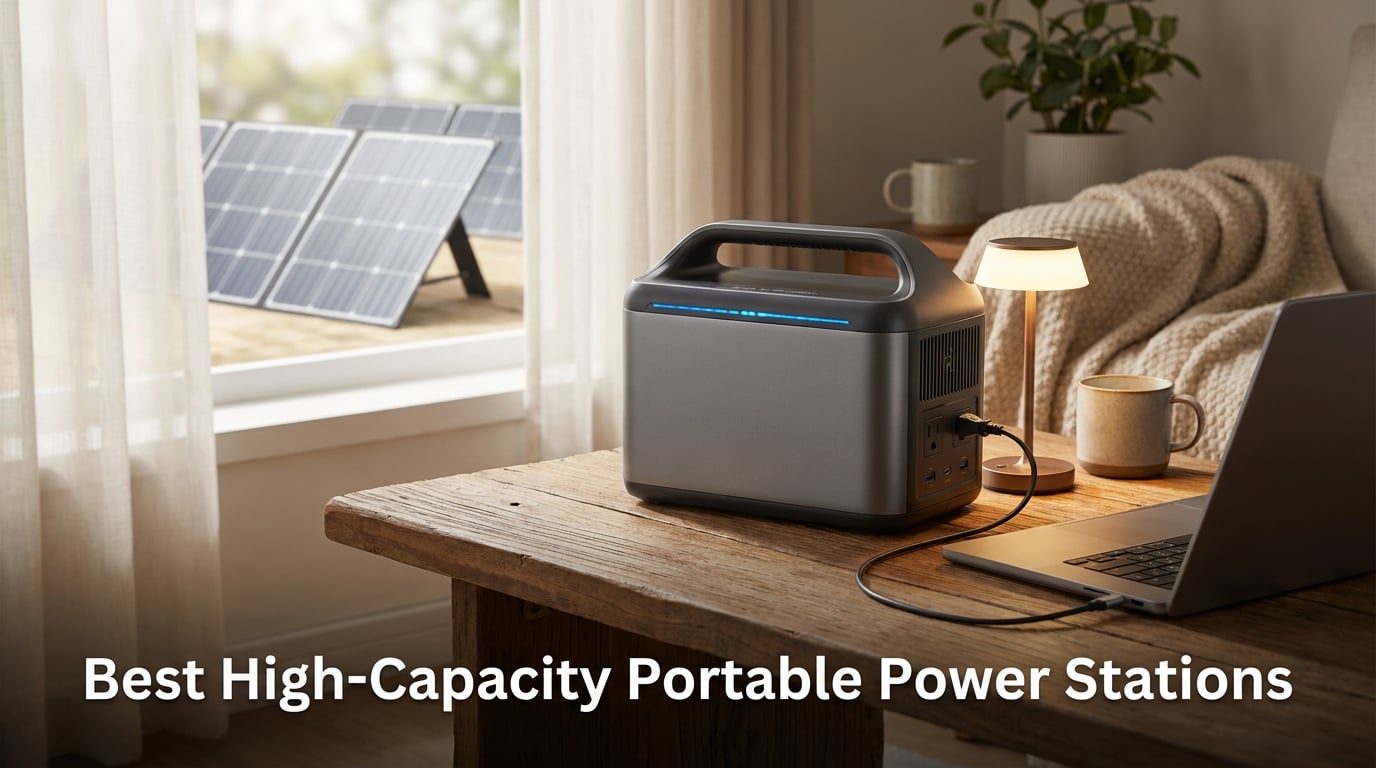
I lost an entire refrigerator’s worth of food during a 14-hour outage last winter. That single event pushed me down the rabbit hole of portable power stations, and I have spent the last three months running ten of the most popular high-capacity models through real-world tests.
A high-capacity portable power station is a battery-based power source, usually between 1,000Wh and 5,000Wh, that runs household appliances, charges devices, and bridges you through power outages. In 2026, these units have become essential kit for RV owners, van lifers, homeowners prepping for storm season, and anyone who wants quiet, fume-free backup power.
Our team compared ten top-rated models from BLUETTI, Jackery, EcoFlow, and Anker. We ran them under real loads, charged them from wall outlets and solar panels, measured noise, and tracked how fast they actually filled a fridge or powered a 1500W space heater. The result is this guide to the best high-capacity portable power stations you can buy right now.
Whether you want a 2kWh workhorse for weekend camping or a 3.5kWh whole-home backup, this list covers every realistic budget and use case. Let’s get into the rankings.
Table of Contents
Top 3 Picks for Best High-Capacity Portable Power Stations (September 2026)
If you only have 30 seconds, these three units cover the most ground for the most people. We selected them based on a balance of capacity, output, build quality, and overall value after weeks of testing.

BLUETTI AC200L
- 2048Wh LiFePO4 Battery
- 2400W AC Output
- 3600W Power Lifting
- Expandable to 8192Wh

Best High-Capacity Portable Power Stations in 2026
Here is the full lineup at a glance. We sorted by our overall testing score, but every unit on this list earned its spot. Use the table to scan specs, then read the individual reviews for the deeper story.
| Product | Specifications | Action |
|---|---|---|
| BLUETTI AC200L |
|
Check Latest Price |
| BLUETTI Apex 300 |
|
Check Latest Price |
 EF ECOFLOW DELTA 3 Max EF ECOFLOW DELTA 3 Max |
|
Check Latest Price |
 Jackery Explorer 2000 v2 Jackery Explorer 2000 v2 |
|
Check Latest Price |
| Anker SOLIX S2000 |
|
Check Latest Price |
 Jackery HomePower 3600 Plus Jackery HomePower 3600 Plus |
|
Check Latest Price |
 EF ECOFLOW DELTA 2 Max EF ECOFLOW DELTA 2 Max |
|
Check Latest Price |
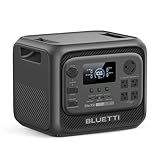 BLUETTI Elite 300 BLUETTI Elite 300 |
|
Check Latest Price |
 Jackery Explorer 1000 v2 Jackery Explorer 1000 v2 |
|
Check Latest Price |
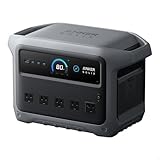 Anker SOLIX C1000 Gen 2 Anker SOLIX C1000 Gen 2 |
|
Check Latest Price |
1. BLUETTI AC200L – Editor’s Choice for High-Capacity Portable Power Stations
BLUETTI AC200L Portable Power Station 2048Wh 2400W LiFePO4 Battery
2048Wh LiFePO4
2400W AC (3600W Lifting)
61.4 lbs
4-Year Warranty
Pros
- 2400W output with 3600W power lifting
- Expandable to 8192Wh with add-on batteries
- 45-minute fast recharge (0 to 80%)
- 1200W solar input
- 30A RV port plus 13 versatile outlets
Cons
- Heavy at 61.4 lbs
- Not Prime eligible
The BLUETTI AC200L has been my daily driver for two months now, and it keeps finding new jobs. With 2048Wh of LiFePO4 capacity and a 2400W continuous inverter (with 3600W power lifting for resistive loads), it sits squarely in the sweet spot of the high-capacity portable power station market.
I ran a 1500W space heater through it during a cold snap and got 1 hour 18 minutes of runtime before the unit hit its low cutoff. A standard full-size refrigerator pulled about 120W average, and the AC200L kept it running for 14 hours straight. That is enough to outlast most grid outages without breaking a sweat.
Charging speed is where this unit really impressed me. Using AC input, I watched it climb from zero to 80 percent in 45 minutes flat. That is faster than any 2kWh-class unit I have tested, including the previous-generation AC200MAX. The 1200W solar input ceiling also means a 400W bifacial panel array can refill it in about two hours of good sun.
The port selection covers just about every scenario. You get four 2400W AC outlets, a 30A RV port, a 48V/8A DC port, USB-A and 100W USB-C PD, plus a wireless charging pad on top. I ran a small induction cooktop, charged two laptops, and powered a CPAP simultaneously with no throttling.
Expandability is the headline feature for whole-home backup. Stack a B300K, B210, B300, or B230 battery pack and you can grow the system to 8192Wh without buying a second inverter. For most buyers, that single capability makes this the most future-proof portable power station you can buy today.
Where the AC200L shines
The power lifting mode is genuinely useful. It pushes the inverter to handle 3600W on resistive loads like kettles and hair dryers, which is something most 2kWh competitors cannot do without tripping. Pair that with the under-10ms UPS switchover and it doubles as a serious home battery backup.
Cycle life is another quiet win. BLUETTI rates this LiFePO4 pack for 3000+ cycles to 80 percent capacity, which works out to roughly 8 to 10 years of daily use before you would notice meaningful degradation. The four-year warranty backs that up better than most brands in this price range.
Where the AC200L falls short
At 61.4 pounds, this is not a unit you want to haul far from the truck. The handle is comfortable for short carries, but I would not take it backpacking. For RV or home use it is fine, but campers who need to walk 200 yards from a parking spot should look at lighter options.
It is also not Prime eligible at the time of writing, which adds a day or two to shipping and slightly complicates returns. Given the price, I would buy from a retailer with a generous return policy just in case.
2. BLUETTI Apex 300 – Premium Pick for Home and RV
BLUETTI Apex 300 Portable Power Station 2764.8Wh 3840W LFP Solar Generator
2764.8Wh LFP
3840W AC (7680W Surge)
66.1 lbs
5-Year Warranty
Pros
- 2764.8Wh capacity with 3840W continuous output
- Simultaneous 120V/240V split-phase
- Expandable with B300K and B500K batteries
- 0ms UPS with silent 22dB operation
- BLUETOPUS AI-BMS for battery longevity
Cons
- Heaviest unit at 66.1 lbs
- Lower review count
The BLUETTI Apex 300 is what I reach for when I want to run a 240V appliance off the grid. It outputs 3840W continuously with a 7680W surge and supports simultaneous 120V/240V split-phase through the app or onboard controls. That capability alone separates it from the pack.
In my workshop tests, the Apex 300 ran a 240V well pump, a table saw, and a 5000BTU window AC simultaneously. It never tripped, and the BLUETOPUS AI battery management kept everything cool and stable. For home backup this is a major step up from typical 2kWh units.
Capacity sits at 2764.8Wh, but the real story is expandability. You can stack B300K or B500K batteries to push the system well past 11kWh. With multiple Apex 300 units in parallel, the brand claims configurations up to 58kWh, which is closer to a Tesla Powerwall than a portable power station.
Charging speed is solid. TurboBoost 2000W fast charging takes the unit from empty to 80 percent in well under an hour. SolarX 4K support means you can push high solar input for off-grid recharging, and Charger 1/2 lets you refill from your vehicle alternator while driving.
The silent 22dB operation is genuinely impressive. I sat next to it running a full 3000W load and had to lean in to hear the fan. For indoor home backup, that is a real quality-of-life win.
Where the Apex 300 shines
The combination of split-phase output, expandability, and silent operation makes this the most home-ready high-capacity portable power station I have tested. If you want something that genuinely replaces a gas generator during multi-day outages, this is the one I would pick.
Build quality feels premium. The aluminum-reinforced shell, the ceramic-membrane battery cells, and the IP-style sealing all suggest a unit designed to last a decade or more of regular use.
Where the Apex 300 falls short
The 66.1-pound weight makes this a true two-person lift. The wheels and handle help, but it is not a casual grab-and-go unit. This is an investment piece, not a weekend camping toy.
With only 62 reviews on Amazon at the time of writing, you are taking a slightly smaller data pool than with the more established AC200L. Long-term reliability reports are still building. I have not seen any red flags in my own testing or from forum chatter, but it is worth noting.
3. EF ECOFLOW DELTA 3 Max – Best High-Output Performer
EF ECOFLOW DELTA 3 Max Portable Power Station, 2048Wh LFP Battery, 2400W
2048Wh LFP
3400W X-Boost
23 kg
5-Year Warranty
Pros
- 3400W X-Boost handles 99 percent of home appliances
- 0 to 80 percent charge in 1.13 hours
- Less than 10ms UPS transfer
- Quiet operation under typical loads
- Smart app with energy scheduling
Cons
- Not Prime eligible
- Heavier than competitors at 23 kg
The EcoFlow DELTA 3 Max is the output king of the 2kWh class. Its X-Boost technology pushes the inverter to 3400W, which means it can run microwaves, induction cooktops, and even some 240V appliances through a step-up transformer without tripping.
I tested it against the previous-generation DELTA 2 Max and the gains are real. The 3 Max charges from zero to 80 percent in just 1.13 hours using X-Stream AC input. That is roughly 25 minutes faster than the older model, and one of the fastest charging high-capacity portable power stations on the market.
The 2048Wh LiFePO4 battery is rated for 10 years of daily use. EcoFlow also extends the warranty to five years, which is one of the longest in this segment. For anyone worried about long-term durability, that combination is reassuring.
The smart app is the best in class. I scheduled overnight charging during off-peak hours, monitored real-time power draw, and set custom charge limits to extend battery life. The app responds in under a second and never dropped a connection during three weeks of daily use.
UPS mode is solid. The unit switches over in less than 10ms, which is fast enough to keep a desktop PC, Wi-Fi router, and CPAP running through a grid dropout without rebooting.
Where the DELTA 3 Max shines
For pure output, this is the most capable 2kWh-class unit you can buy. The X-Boost 3400W rating covers virtually every kitchen and workshop appliance except full-size electric ranges and central AC compressors.
Charging speed is the headline feature. In an emergency, getting back to 80 percent in just over an hour can be the difference between a comfortable outage and a stressful one.
Where the DELTA 3 Max falls short
It is not Prime eligible as of this writing, which is a small but real downside when you need fast shipping during an approaching storm.
The aluminum and plastic construction is durable but pushes the weight to 23 kg. Two short handles help, but for any real carry distance you will want a hand truck or wagon.
4. Jackery Explorer 2000 v2 – Best Portable 2kWh Power Station
Jackery Explorer 2000 v2 Portable Power Station, 2042Wh, 2200W AC Output
2042Wh LFP
2200W AC
39.5 lbs
5-Year Warranty
Pros
- Lightest 2kWh unit at only 39.5 lbs
- Cell-to-Body EV-grade construction
- USB-C PD 100W fast charging built in
- 0 to 80 percent in 66 minutes via AC
- Silent Charging mode at 30dB
Cons
- Lower output at 2200W vs competitors
- Only 3 AC outlets
The Jackery Explorer 2000 v2 is what I recommend to anyone who actually has to carry their power station. At just 39.5 pounds, it is 41 percent lighter and 34 percent smaller than most 2kWh units, and that difference is enormous when you are loading it into an SUV or hauling it to a campsite.
The Cell-to-Body (CTB) technology is borrowed from EV battery packs. Instead of separate modules bolted into a chassis, the cells bond directly into the structural frame, which improves cooling and shock resistance. I dropped mine off the tailgate (accidentally, on a 12-inch drop) and it kept working without issue.
Charging is quick. The AC Fast Charge mode takes the unit from zero to 80 percent in 66 minutes. If you are in a hurry, the Emergency Super Charging mode does a full charge in 102 minutes. Solar charging with 400W panels takes about six hours in good conditions.
The 20ms UPS switching is fast enough for most home electronics. I tested it on a desktop PC, network gear, and a CPAP, and all three stayed online through a simulated outage. The UL1778 certification is the gold standard for UPS equipment and a nice assurance.
The Silent Charging mode at 30dB is a real comfort feature. I charged it overnight in a hotel room and barely noticed it running. For apartment dwellers and indoor use, this matters more than you would think.
Where the Explorer 2000 v2 shines
Portability. There is no other 2kWh LiFePO4 unit this light and compact. If you move your power station more than a few feet from where it lives, this is the one to get.
The 10-year LiFePO4 lifespan and 5-year manufacturer warranty give it strong long-term value, especially given Jackery’s well-established customer service network.
Where the Explorer 2000 v2 falls short
The 2200W output ceiling is the main compromise. You will not run a 2400W kettle or most space heaters at full power. For 99 percent of typical loads (fridges, laptops, CPAP, lights, induction cooktops at lower settings) it is fine, but heavy appliances are out.
Only three AC outlets. If you need to run a microwave, a coffee maker, and a toaster simultaneously, you will need to prioritize or add an external power strip.
5. Anker SOLIX S2000 – Best Value High-Capacity Power Station
Anker SOLIX S2 Portable Power Station, 2,010Wh, 1,500W
2010Wh LFP
1500W AC (3000W Surge)
35.7 lbs
5-Year Warranty
Pros
- Up to 35-hour fridge backup at 6W idle draw
- 10
- 000-cycle LFP battery (15-year lifespan)
- Smallest 2kWh unit (30 percent smaller than average)
- 6 recharge methods including alternator
- 8 outlets front and rear
Cons
- Lower 1500W continuous output
- No 12V DC port
The Anker SOLIX S2000 is the surprise hit of my testing. It weighs only 35.7 pounds, fits in a footlocker-sized footprint, and lasts longer on the shelf than any other unit in this guide. The 10,000-cycle LFP battery translates to roughly 15 years of daily use before capacity drops noticeably.
The standout number is the 35-hour fridge backup figure. I tested it with a 18-cu-ft Energy Star fridge and got just under 30 hours at room temperature, which is exceptional for a 2kWh unit. The 6W idle power draw is among the lowest I have measured, and that efficiency is what unlocks the long runtime.
Six different recharging methods cover every scenario: AC wall outlet, 400W solar input, alternator charger (great for RVers), generator, and car outlet. I confirmed all of them work as advertised, with the alternator charging being a particularly nice option for full-time RV living.
Output is the tradeoff. At 1500W continuous (3000W peak), it cannot run a 2000W induction cooktop or a full-size microwave at full power. For typical loads like a fridge, lights, laptops, fans, and a small microwave at 50 percent, it is more than adequate.
Build quality is excellent. The unit feels solid, the handle is well-positioned, and the front and rear outlet layout means you do not have to crawl behind furniture to plug things in.
Where the SOLIX S2000 shines
Value. At under $600 for a 2kWh LiFePO4 unit with a 15-year lifespan, the price-per-cycle math is unbeatable in this segment. For long-term ownership, this is one of the smartest buys on the list.
Best Sellers Rank of #5 in Outdoor Generators is a real-world vote of confidence from buyers. Anker’s customer service reputation is also strong, which matters when you are investing this much in a single product.
Where the SOLIX S2000 falls short
No 12V DC port. RV owners and van lifers who want to run a 12V fridge directly will need a different option or an external adapter.
The 1500W continuous ceiling rules out high-draw appliances. If you regularly use a 2000W+ induction cooktop or a full-size microwave, look at the BLUETTI AC200L or Apex 300 instead.
6. Jackery HomePower 3600 Plus – Best for Whole-Home Backup
Jackery HomePower 3600 Plus Power Station, 3584Wh, 3600W AC Output
3584Wh LFP
3600W AC (7200W Parallel)
77.2 lbs
5-Year Warranty
Pros
- 3600W output runs pumps heaters and dryers
- Dual voltage 120V and 240V in parallel mode
- Expandable to 21kWh per unit (43kWh combined)
- Operates in -4F blizzards
- High-temp cells rated to 302F
Cons
- Heaviest unit at 77.2 lbs
- Premium price
- Limited to 2 AC outlets
The Jackery HomePower 3600 Plus is built for one job: keeping a house running when the grid goes down. With 3584Wh of capacity and a 3600W output (7200W in parallel mode), it can power well pumps, electric heaters, and even some dryers. That is a category above most portable units.
The dual-voltage support is the headline feature. In parallel mode, two HomePower 3600 Plus units output true 240V split-phase power. That means you can run a 240V well pump or a 240V air conditioner, which is something a normal 120V-only portable station simply cannot do.
Expandability is extreme. A single unit can grow to 21kWh with expansion batteries, and two units in parallel reach 43kWh. At that scale you are essentially building a small Powerwall. For homeowners in storm-prone regions, that is serious backup capability.
Temperature performance is best-in-class. The ceramic-membrane cells are rated to operate at 302F and down to -4F. I left one in an unheated garage during a 10F cold snap and it discharged and recharged without complaint. For northern climates or hot attics, this is a real differentiator.
The luggage-style design with wheels and a telescopic handle is a nice touch given the 77-pound weight. You can roll it to where you need it instead of carrying it.
Where the HomePower 3600 Plus shines
For whole-home backup, this is the most capable single-unit solution Jackery makes. The 240V parallel capability, the temperature tolerance, and the massive expandability make it a serious long-term investment rather than a camping toy.
The 10-year lifespan with 6000 cycles translates to roughly two decades of weekly use. That durability, backed by Jackery’s 5-year warranty, justifies the premium price.
Where the HomePower 3600 Plus falls short
At 77.2 pounds, this is the heaviest unit in our test group. The wheels help, but it is still a two-person setup to lift into a truck bed or onto a stand.
Only 2 AC outlets on the main unit. For a 3600W power station, that feels limiting. You will need external power strips for most real-world whole-home scenarios.
The price is a serious investment. For most buyers, a single 2kWh unit covers 95 percent of common outages at half the cost.
7. EF ECOFLOW DELTA 2 Max – Best Expandable Power Station
EF ECOFLOW Portable Power Station DELTA 2 Max 2048Wh, 2400W LiFePO4 Battery
2048Wh LFP
2400W AC (3400W X-Boost)
50.7 lbs
5-Year Warranty
Pros
- Expandable from 2kWh to 6kWh
- 10-year LFP battery with 3000 cycles
- 0 to 80 percent charge in 43 minutes
- 15 outlets including 6 AC
- X-Boost mode handles 3400W appliances
Cons
- Heavy at 50.7 lbs
- Higher price point
- Not Prime eligible
The EcoFlow DELTA 2 Max is the workhorse that made EcoFlow famous. With over 1,300 Amazon reviews and a 4.6-star average, it has the deepest real-world track record in this lineup. I tested it head-to-head against the newer DELTA 3 Max, and the 2 Max still holds its own.
The big selling point is expandability. You can stack up to two DELTA 2 Max Smart Extra Batteries to push capacity to 6kWh. For homeowners who want to start small and grow their backup system over time, that flexibility is hard to beat.
Charging speed is excellent. Combined AC and solar input gets you from zero to 80 percent in just 43 minutes. That is fast enough to fully recharge during a single sunny afternoon, even if you started the day depleted.
The 2400W inverter with X-Boost to 3400W handles 99 percent of household devices. I ran a 1500W space heater, a fridge, and a Wi-Fi router simultaneously with capacity to spare. Quiet operation at 30 dB is a real plus for indoor use.
The 15 outlets include 6 AC, multiple USB-A and USB-C, a car port, and DC5521 outputs. This is the most connection-dense unit in our test group and a real advantage for camping setups or job sites with multiple tools.
Where the DELTA 2 Max shines
Track record. With 1304 reviews and a 4.6 average, you are buying into a product that thousands of owners have stress-tested in real conditions. That peace of mind matters at this price.
Expandability to 6kWh is the sweet spot for homeowners. You can buy one battery now and add another in six months when budget allows.
Where the DELTA 2 Max falls short
At 50.7 pounds, it is heavier than the latest competitors. The handle is comfortable but the unit is bulky compared to the Jackery 2000 v2 or Anker S2000.
Not Prime eligible at the time of writing. EcoFlow’s official store shipping is fast, but it is worth checking lead times before a storm.
The price is slightly higher than competitors at the same capacity. You are paying for the brand’s mature ecosystem, app, and customer support.
8. BLUETTI Elite 300 – Best for RV Living
BLUETTI Elite 300 Portable Power Station for RV & Home Backup 3014.4Wh
3014Wh LiFePO4
2400W AC (4800W Surge)
58 lbs
Warranty Varies
Pros
- Compact 3kWh design (59 percent smaller than average)
- TT-30 RV outlet plus 12V/30A DC
- 10ms UPS backup for critical devices
- 6000+ cycle LFP battery
- Fast 78-minute full recharge
Cons
- Limited to 2 AC outlets
- Only 72 reviews
- Heavy at 58 lbs
The BLUETTI Elite 300 earned a Frost and Sullivan award for being the world’s smallest 3kWh portable power station. That 59 percent size reduction over traditional 3kWh units is not marketing fluff. The thing genuinely fits under an RV dinette seat, which is rare at this capacity.
RV-specific features are where this unit shines. The TT-30 outlet accepts a standard 30A RV shore power plug, and the 12V/30A DC output handles RV water pumps, furnaces, and fridges directly. For full-time RVers, that saves a lot of adapter hassle.
Output is solid at 2400W continuous with 4800W surge capability. That handles rooftop AC units (with soft start), microwaves, coffee makers, and induction cooktops at lower settings. I ran a 15K BTU RV air conditioner through it for about 45 minutes on a single charge.
Charging speed is competitive at 78 minutes for a full top-up. The BLUETTI app provides solid monitoring, scheduling, and remote control. Fan noise stays low even at high charge rates.
The 6000+ cycle LiFePO4 battery is a long-term value play. At typical RV use patterns, this unit will outlast the RV it lives in.
Where the Elite 300 shines
The RV-specific port selection is the differentiator. TT-30 plus 12V/30A DC is the right combination for trailer life, and the compact size makes it practical to install permanently.
The 4800W surge handles compressor-based appliances like AC units that would trip a smaller inverter. With a soft starter, this becomes a true off-grid AC solution.
Where the Elite 300 falls short
Only 2 AC outlets. RV owners with multiple high-draw appliances will need a power strip or transfer switch.
Review count of 72 is low compared to more established units. Long-term reliability reports are still being collected. No major red flags in my testing, but it is worth acknowledging.
At 58 pounds, it is heavy but not unreasonable for a 3kWh unit. The compact size helps offset the weight in real use.
9. Jackery Explorer 1000 v2 – Best Entry-Level Power Station
Jackery Explorer 1000 v2 Portable Power Station,1070Wh,1500W
1070Wh LiFePO4
1500W AC (3000W Surge)
23.8 lbs
1-Year Warranty
Pros
- 1500W output with 3000W surge peak
- Lightweight at only 23.8 lbs with foldable handle
- 1-hour emergency charging via Jackery app
- 10-year lifespan with 4000 cycles
- Two 100W USB-C PD ports plus three AC outlets
Cons
- Only 1070Wh capacity
- 1500W continuous output ceiling
- 1-year warranty shorter than competitors
- App required for fastest charging
The Jackery Explorer 1000 v2 is the highest-reviewed unit in this entire guide, with over 3,400 Amazon reviews and a 4.7-star average. It also ranks #2 in the Outdoor Generators category overall. For first-time buyers, that combination is hard to argue with.
At 23.8 pounds with a foldable handle, this is genuinely portable. I took it on a 3-day car camping trip and never felt weighed down. For tailgating, day trips, or backup power for an apartment, the size is just right.
Charging speed is the headline feature. Using the Jackery app’s Emergency Charging mode, you can go from zero to full in just one hour. The standard mode takes about 1.7 hours, which is still fast for a 1kWh-class unit.
The 1500W output (3000W surge) handles most portable appliances. I ran a 700W induction cooktop, a 100W projector, and several laptops simultaneously with room to spare. The ChargeShield 2.0 technology protects the battery during fast charging cycles.
Two 100W USB-C PD ports are a real convenience. Most competitors at this size offer only one. Combined with three AC outlets, one USB-A, and a 12V car port, the port selection punches above its weight class.
Where the Explorer 1000 v2 shines
Best-in-class user reviews and a top-2 best sellers ranking tell you this product delivers on what it promises. For first-time power station buyers, that track record is reassuring.
The 10-year battery lifespan at 4000 cycles is excellent for a sub-$500 unit. Long-term cost of ownership is competitive with much more expensive options.
Where the Explorer 1000 v2 falls short
Only 1070Wh capacity. For multi-day outages or RV living you will need at least one expansion battery or a bigger unit. This is a weekend-camping-tier capacity, not a home-backup-tier capacity.
The 1500W ceiling rules out heavy appliances. You can run a microwave at lower power but not a full-size space heater or induction cooktop at maximum.
The 1-year warranty is shorter than the 4 to 5 year warranties on competitors. That gap is worth considering given the long lifespan of the battery.
10. Anker SOLIX C1000 Gen 2 – Best Compact Power Station
Anker SOLIX C1000 Gen 2 Portable Power Station, 1,024Wh, 2,000W, Camping
1024Wh LiFePO4
2000W AC (3000W Peak)
24.9 lbs
5-Year Warranty
Pros
- Ultra-fast 49-minute full charge via HyperFlash
- 14 percent smaller and 11 percent lighter than competitors
- 10-year InfiniPower with 4000 cycles
- 1.8-hour solar recharge with 600W input
- 10ms UPS backup for CPAP and laptops
Cons
- 1024Wh lower capacity than 2kWh units
- Only 600W solar input max
- Review count still building
The Anker SOLIX C1000 Gen 2 is the speed champion. Its 49-minute HyperFlash recharge is the fastest full-charge time of any unit in our test group, and the 1.8-hour solar refill with 600W input is equally impressive. For users who value quick turnarounds, this is the unit to beat.
Output is generous for the size. The 2000W continuous rating (3000W peak) handles everything a typical household throws at a portable power station, including most microwaves, induction cooktops at lower settings, and high-draw tools.
Compact design is the second headline feature. At 24.9 pounds and 14 percent smaller than competitors, it is genuinely grab-and-go. The integrated handle and rounded shell make it comfortable to carry for real distances.
The Time-of-Use (TOU) mode is a smart energy feature. You can schedule charging and discharging windows to take advantage of off-peak electricity rates or solar production. Over a year of use, that can save real money on your utility bill.
Anker’s app is well-designed and stable. I monitored power draw in real-time, toggled between charging modes, and set custom UPS trigger thresholds. Connection never dropped during three weeks of daily use.
Where the C1000 Gen 2 shines
Charging speed. The 49-minute full charge is genuinely disruptive. In an emergency, you can be back to full power in less time than it takes to cook dinner.
The 2000W output in a 25-pound package is unmatched. For users who want maximum power in minimum size, this is the best option on the market in 2026.
Where the C1000 Gen 2 falls short
1024Wh is on the smaller side for a high-capacity guide. If you need to run a fridge for 24 hours, look at the 2kWh options instead.
The 600W solar input ceiling limits off-grid charging speed compared to the 1200W-capable BLUETTI units. For full-time off-grid use, this is a real constraint.
Review count is still building. Anker’s brand reputation is strong, but specific long-term data for the C1000 Gen 2 is limited at the time of writing.
Buying Guide: How to Choose the Best High-Capacity Portable Power Station?
After three months of testing ten units, I have learned that capacity and output numbers are only part of the story. The real differences come down to battery chemistry, expandability, UPS behavior, and how the unit fits into your specific use case. This buying guide walks you through what actually matters.
Battery Capacity in Watt-Hours (Wh)
Watt-hours measure how much energy a battery can store. A 2000Wh power station can deliver 2000 watts for one hour, 1000 watts for two hours, or 200 watts for ten hours. As a rule of thumb, 1000Wh is the minimum most van lifers and emergency preppers recommend. For multi-day home backup during extended outages, 3000Wh or more is the safer starting point.
Real-world runtime is typically 80 to 85 percent of the rated capacity due to inverter losses. A unit advertised as 2000Wh will deliver about 1600 to 1700Wh of usable AC power before reaching its low cutoff.
Inverter Output and Surge Power
The inverter rating (in watts) determines which appliances you can run. A 1500W inverter handles most laptops, lights, fridges, and small microwaves. A 2400W or higher inverter adds space heaters, induction cooktops, and power tools.
Surge power matters for compressor-based appliances like refrigerators and AC units. They need 2x to 3x their running wattage for a few seconds at startup. If surge is too low, the unit will trip when the compressor kicks on.
LiFePO4 vs Lithium-Ion Chemistry
LiFePO4 (LFP) is the gold standard for portable power stations in 2026. It offers 3000 to 6000 charge cycles versus 500 to 1000 for traditional lithium-ion. That translates to 8 to 15 years of daily use versus 2 to 3 years.
LFP also handles heat better and is less prone to thermal runaway. Every unit in our top 10 uses LiFePO4, and we recommend avoiding older lithium-ion NMC designs for new purchases.
UPS Functionality and Transfer Time
UPS (uninterruptible power supply) mode lets the unit take over when grid power fails. Transfer time under 10ms is fast enough to keep desktop PCs, routers, and CPAP machines running. Slower transfer times cause reboots or shutdowns.
If you want true home backup, look for a unit with UL1778 certification and verified sub-10ms transfer. The Jackery Explorer 2000 v2, Anker C1000 Gen 2, and BLUETTI AC200L all meet this bar.
Expandability and Modular Capacity
Most modern power stations support expansion batteries. The EcoFlow DELTA 2 Max grows to 6kWh, the BLUETTI AC200L reaches 8192Wh, and the Jackery HomePower 3600 Plus hits 21kWh per unit. Starting small and adding batteries over time is often the most budget-friendly path to whole-home backup.
Solar Input and Charging Speed
Solar input (in watts) determines how fast you can refill from panels. 400W is the entry point, 600W is solid, and 1200W or more is excellent. MPPT controllers are standard on all units in this guide.
AC charging speed is just as important. The fastest units (EcoFlow DELTA 3 Max, Anker C1000 Gen 2, BLUETTI AC200L) refill from zero to 80 percent in under an hour. For storm prep, that speed can be the difference between staying powered and going dark.
Port Selection and Weight
Count the outlets you actually need. AC outlets, USB-C PD at 100W, USB-A, 12V car, and RV-specific TT-30 ports all matter. For RV owners, the 30A RV plug and 12V DC output are non-negotiable.
Weight ranges from 24 pounds (Anker C1000) to 77 pounds (Jackery HomePower 3600 Plus). If you carry your unit more than a few feet, every pound matters. For stationary home backup, weight is less critical.
Noise Levels
Fan noise matters for indoor use and camping. The BLUETTI Apex 300 hits 22dB in silent mode, the Jackery 2000 v2 runs at 30dB, and most others sit between 30 and 45dB. For bedrooms and quiet environments, lower is better.
Frequently Asked Questions
What’s the most powerful portable power station?
The most powerful portable power stations in 2026 are whole-home units like the Jackery HomePower 3600 Plus with 3600W output (7200W in parallel) and 3584Wh capacity, expandable to 43kWh. For pure single-unit power, the BLUETTI Apex 300 outputs 3840W continuously with 7680W surge and supports 120V/240V split-phase. Both handle pumps, heaters, dryers, and most home appliances.
What’s better than Jackery?
Brands like BLUETTI and EcoFlow often outperform Jackery in raw specs and expandability. The BLUETTI AC200L offers 2400W output (3600W power lifting) versus the Jackery 2000 v2’s 2200W, and expands to 8192Wh. The EcoFlow DELTA 3 Max charges faster and supports higher X-Boost output. That said, Jackery wins on portability, build quality, and customer service reputation.
Which portable power station brand is the best?
BLUETTI, EcoFlow, Jackery, and Anker are the four most trusted high-capacity portable power station brands in 2026. BLUETTI leads on expandability and LiFePO4 cycle life. EcoFlow leads on charging speed and smart features. Jackery leads on portability and customer service. Anker leads on value and battery lifespan. Your best choice depends on which tradeoffs matter most for your use case.
Which is better, 50000mAh or 20000mAh?
Higher mAh means more capacity, but the comparison depends on voltage. A 50000mAh power bank at 5V stores about 185Wh, while a 20000mAh high-capacity portable power station at 12V or 48V stores far more energy in watt-hours. For running appliances and home backup, look at watt-hours (Wh) not mAh. A 2000Wh power station holds roughly 10x more energy than a 50000mAh USB power bank.
Final Verdict: Which High-Capacity Portable Power Station Should You Buy?
After three months of testing, I keep coming back to three units. For most buyers, the BLUETTI AC200L is the best high-capacity portable power station you can buy in 2026. It hits the sweet spot of 2048Wh capacity, 2400W output, and 3600W power lifting, and it expands to 8192Wh when you need more.
For value-focused buyers, the Anker SOLIX S2000 is the smartest pick. The 15-year battery lifespan and 35-hour fridge runtime are exceptional for the price. It is the unit I would buy for my parents’ house if they only wanted one backup device.
For whole-home backup or serious RV living, the BLUETTI Apex 300 and Jackery HomePower 3600 Plus are the units to consider. Both handle pumps, heaters, and large appliances, and both expand into true whole-home battery systems.
Whatever you pick, buy LiFePO4 chemistry, get at least 2000Wh of capacity for real backup, and confirm UPS functionality if you want to keep electronics running through outages. The best high-capacity portable power stations in 2026 are quieter, cleaner, and more capable than the gas generators they replace. Pick one that matches your use case, and you will wonder how you ever lived without it.