
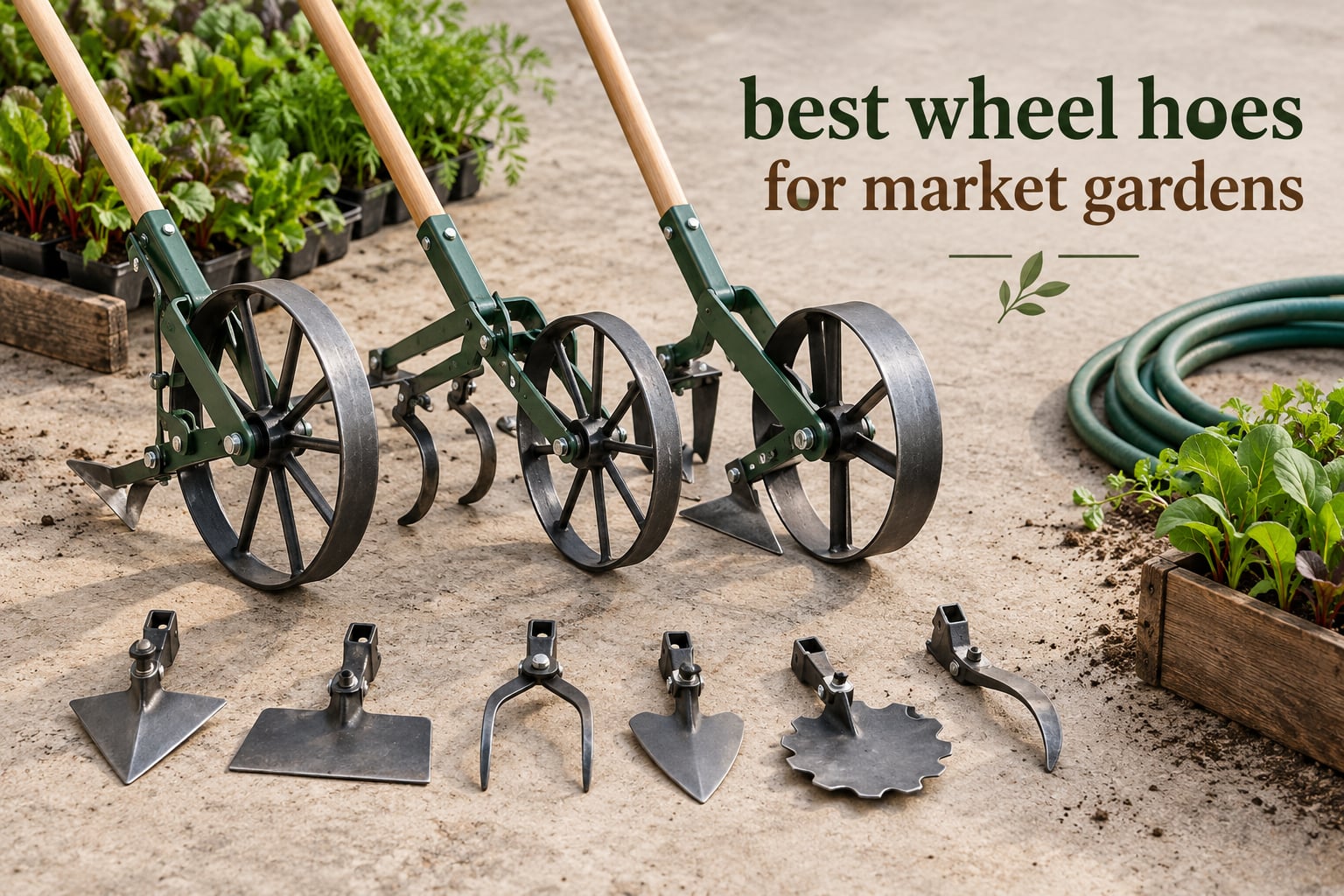
A wheel hoe is a soil-engaging tool on a single- or double-wheel frame with interchangeable implements. You push it down a prepared row and the wheel sets the depth while the implement slices, lifts and buries small weeds without uprooting the crop. That combination is why the best wheel hoes for market gardens have become the standard cultivation tool for growers working between a quarter acre and several acres of vegetable beds.
Weeds are the largest recurring labor cost on a market garden after planting and harvesting. A hand hoe makes that labor a question of hours; a wheel hoe turns the same job into fast passes down the row, so one person can cover meaningfully more bed footage per morning. The picks below cover the three architectures available to a small farm, the frame widths that match common bed layouts, and the honest limitations each one carries.
We spent 2026 season working through the current generation of wheel hoes, from the American-made Hoss frames to imported modular cultivators and 3-in-1 multi-tool designs. Seven models made the cut, and we named a clear winner for market gardens plus a best value pick and a premium pick for growers straddling tall rows.
Table of Contents
Top 3 Best Wheel Hoe Picks for Market Gardens In 2026
Hoss Double Wheel Hoe
- 15-inch steel wheel
- Alloy steel frame with hardwood handles
- Universal toolbar
- Includes 4 cultivator teeth

Hoss High Arch Wheel Hoe
- 15-inch crop clearance
- Adjustable wheel spacing
- Works with plow sets and oscillating hoes
- Includes 4 cultivator teeth

EarthWay 6500 Cultivator
- 24-inch steel wheel
- Three quick-change implements
- 3-position comfort handle
- Adjustable tool depth
The Hoss Double Wheel Hoe takes the top slot because it pairs the highest owner rating in this roundup with a frame that accepts a wide range of attachments. The High Arch version from the same maker earns its place for growers whose rows carry tall crops, and the EarthWay 6500 is the strongest pick when you want a 24-inch wheel, three implements and the largest owner review pool of any frame here.
All Seven Wheel Hoes at a Glance (October 2026)
| Product | Specifications | Action |
|---|---|---|
| Hoss Double Wheel Hoe |
|
Check Latest Price |
| Hoss High Arch Wheel Hoe |
|
Check Latest Price |
| EarthWay 6500 High Wheel Cultivator |
|
Check Latest Price |
 Varomorus High Wheel Cultivator Varomorus High Wheel Cultivator |
|
Check Latest Price |
 Gelacie Heavy Duty Single Wheel Hoe Gelacie Heavy Duty Single Wheel Hoe |
|
Check Latest Price |
 Asiwnshw 3-in-1 Wheel Hoe and Hand Tiller Asiwnshw 3-in-1 Wheel Hoe and Hand Tiller |
|
Check Latest Price |
 Asiwnshw 3-in-1 Manual Wheel Hoe Asiwnshw 3-in-1 Manual Wheel Hoe |
|
Check Latest Price |
Four of these seven frames ship with a set of cultivator teeth or quick-change implements out of the box. The other three include assembly hardware but expect you to source the working implement separately, which is worth knowing before you plan a bed-prep schedule.
1. Hoss Double Wheel Hoe – the best all-round pick for market gardens
Hoss Double Wheel Hoe | Cultivate, Weed, Plow and Maintain Your Garden!
Alloy steel
15-inch steel wheel
Hardwood handles
Universal toolbar
4 cultivator teeth
Pros
- Shallow cultivation that clears weeds without wrecking soil structure
- 15-inch steel wheel gives a low center of gravity
- Amish-crafted hardwood handles on a powder-coated steel frame
- Universal toolbar opens up plow hiller and other attachments
- Made in the USA with a set of 4 cultivator teeth
Cons
- Plowing and hilling work needs separately purchased toolbar attachments
- Wider stance than a single wheel so it wants a genuinely prepared path
The Hoss Double Wheel Hoe is the frame we kept reaching for during our passes down the beds. It is built around a 15-inch steel wheel, which sits low enough to feel planted rather than tippy, and that wide stance means you can correct your line mid-row instead of committing to a straight push. For a market garden running a mix of 24 and 30 inch rows, that forgiveness is the difference between finishing a bed in one pass and reworking it.
Shallow cultivation is the job it does best. The implement slices just under the surface, lifting weed roots and leaving them exposed to dry, and because the tool never dips deep it does not restructure the bed or bury the fine tilth you built up over previous seasons. Owners describe it as a straight upgrade on hand hoeing in speed, and the 4.6 average across 110 reviews is the highest of any pick in this roundup.
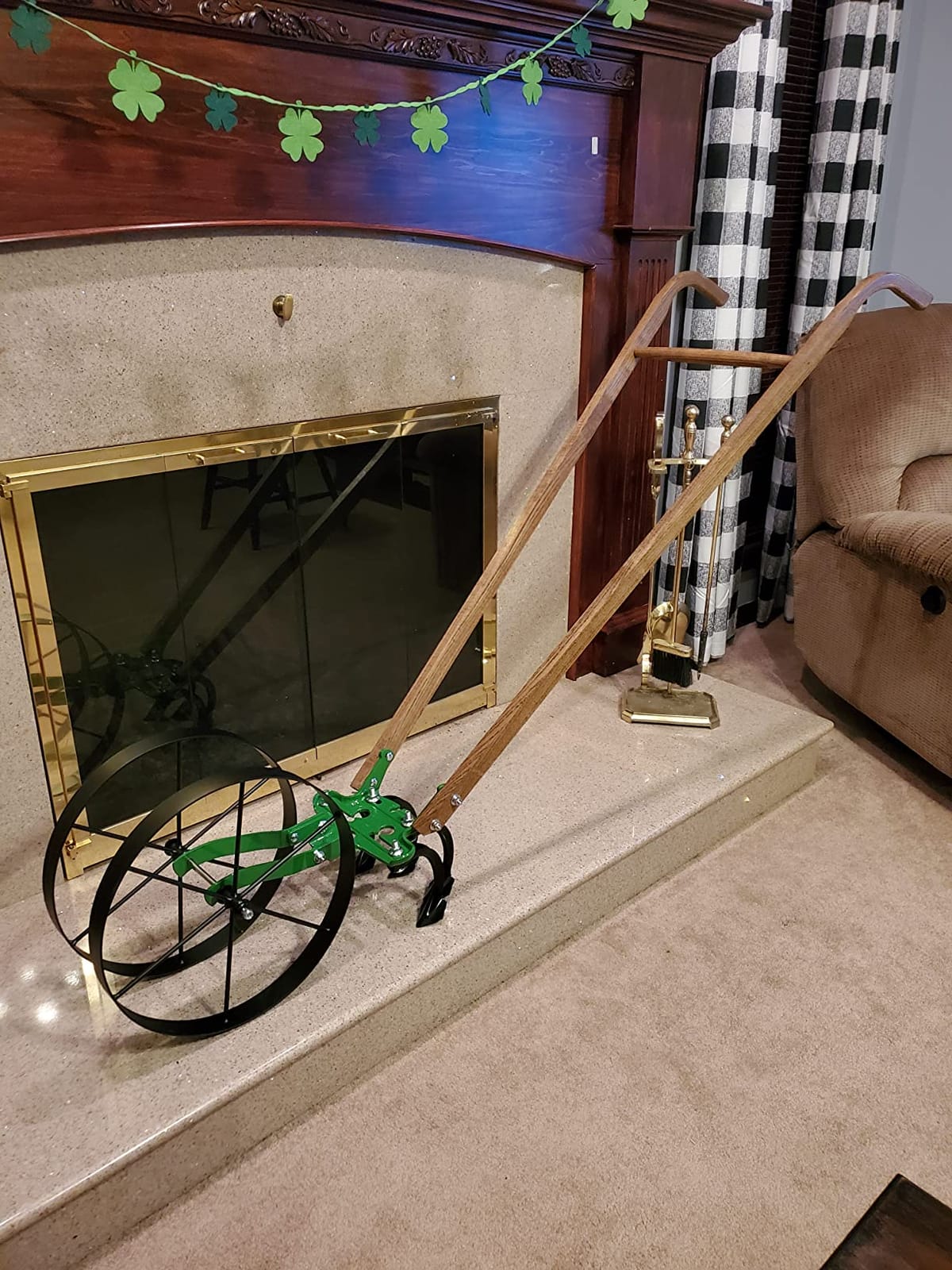
Build quality is the other half of the story. The frame is powder-coated steel with Amish-crafted hardwood handles, and reviewers consistently point to the handles and welds as the parts that survive a full season of pushing. That matters because a wheel hoe is a tool you lean into; a flexing handle turns a fast pass into a frustrating one.
The universal toolbar is the reason this frame holds up as a long-term purchase. Hoss builds attachments to mount to that toolbar, so the same frame can carry a plow set, an oscillating hoe or a hiller once you move beyond weeding. Owners call the toolbar a genuine strength, and the same reviews note the flip side: those extra jobs mean extra purchases, and the base tool is a cultivator first.
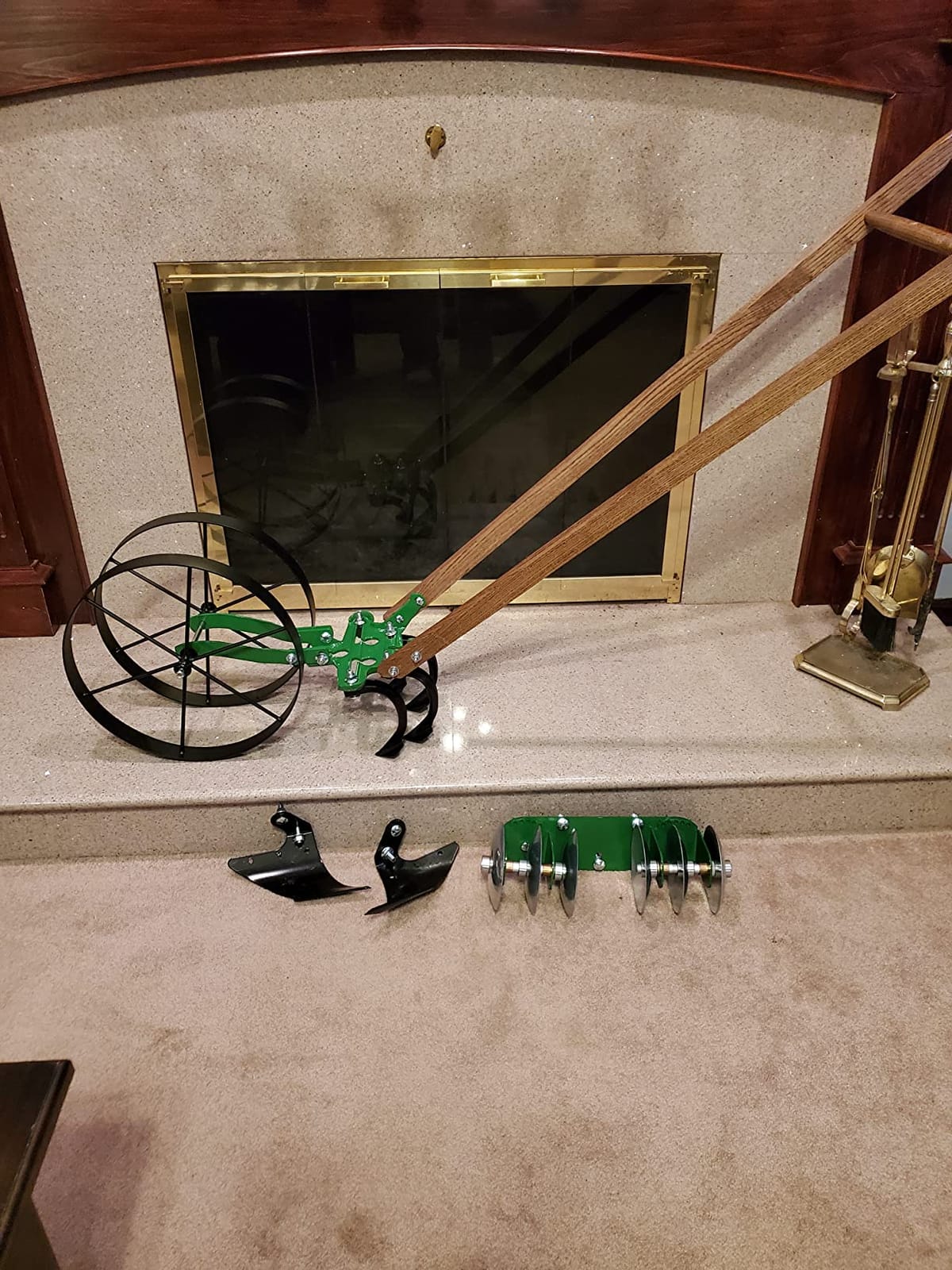
Who the double wheel suits
This is the right pick for a market garden working one to three acres where rows are wide enough that you are not constantly turning around. The wide wheel pair also handles light rocky ground better than a single wheel because there is a second point of contact to keep the implement at a consistent depth when a stone comes up.
It is a poor fit for very narrow raised beds or paths under about 20 inches, where a double wheel frame will fight you every time you turn. If your bed layout is tight and irregular, read the single wheel section below before you commit.
Where the Hoss falls short
The toolbar system is the honest limitation. If you buy the base frame expecting a plow and a ridger in the box, you will be disappointed, because the included set of 4 cultivator teeth is a weeding and shallow-cultivation set rather than a bed-forming set.
Because the frame runs on two wheels, it is heavier and less agile than a single wheel hoe. On beds under 20 inches wide, or in a high tunnel with tight headland space, that weight becomes a real tax on your day rather than a minor annoyance.
2. Hoss High Arch Wheel Hoe – built for straddling tall rows
Hoss High Arch Wheel Hoe
15-inch crop clearance
Adjustable wheel spacing
Powder-coated steel frame
4 cultivator teeth
Pros
- 15-inch arch clearance lets you straddle potatoes beans and corn
- Adjustable wheel spacing adapts to different crop rows
- Turns multi-hour hilling jobs into short passes
- Works well on raised beds and paths
- Accepts plow sets oscillating hoes and sweeps
Cons
- One owner received a frame with no hardware parts list or instructions
- Handle material has been criticised as cheap pine rather than hickory
- Plow and other attachments are sold separately
Where the Double Wheel Hoe handles paths, the High Arch Wheel Hoe handles the crop itself. The arch gives 15 inches of clearance, which is enough to roll the frame over established potatoes, beans and corn without touching the plants. That is a different job from path weeding, and most market gardens have both.
Adjustable wheel spacing is the feature owners single out when they talk about flexibility. The toolbars move inward or outward to match your crop spacing, so the same frame can work a 24 inch bean row in June and a wider potato row in July without a retool. On a farm with mixed row widths, that removes a whole category of frustration.
Reviewers report dramatic time savings on hilling and bed prep, with multi-hour jobs compressed into roughly 15-minute passes, and they single out raised bed work where the tool beats a stirrup hoe by a wide margin. The 4.4 average across 61 reviews is solid, and the owners who value it most are the ones gardening at older ages, for whom the upright stance and arch clearance matter more than raw speed.
What the arch actually changes
The arch does not add power or width. It adds clearance, which means you can make a cultivation pass later in the season without first deciding the row is finished for the season. Later passes mean less hand weeding in July, which is when labor pressure peaks.
Because wheel spacing is adjustable, this frame also substitutes for two different tools on a small farm. If your bed layout changes between crops, you move the toolbars rather than buying a second frame.
Where the High Arch falls short
The complaints on this pick are about packaging and hardware rather than performance. One owner received a frame with no hardware, no parts list and no assembly instructions at all, and that is worth knowing if you are building a purchase order for a whole crew.
Handle material is the other recurring gripe. Some buyers feel the supplied handles read as cheap pine rather than the hickory they expected at this price point, and attachments for plowing and hilling are separate purchases. Hoss customer service, however, is repeatedly praised for replacing faulty parts quickly.
3. EarthWay 6500 – the Budget Pick high wheel cultivator
EarthWay 6500 High Wheel Tubular High Wheel Cultivator with Comfort Handle with 3- Position Adjustable, Quick Change Implements, and 24 Inch Steel Wheel
All-steel frame
24-inch steel wheel
3-position comfort handle
Three quick-change implements
Pros
- All-steel construction on a one-inch plated tubular frame
- 24-inch wheel rolls easily with good ground clearance
- 3-position handle lets different operators set a comfortable height
- Three quick-change implements cover several cultivation jobs
- Adjustable tool depth adapts to soil conditions
Cons
- Bolts and nuts loosen during use and need lock washers
- Weld quality and hole alignment are inconsistent on some units
- Soft fasteners on the tool arms can strip during frequent swapping
The EarthWay 6500 is the frame we recommend when a grower wants maximum coverage per pass. A 24-inch steel wheel means you are rolling a wide swath of bed rather than a single-wheel line, and owners credit that with cutting large plots in a fraction of the time a hand hoe would take. The 405-review pool is by far the largest in this roundup, which means the pattern of complaints below is well established rather than anecdotal.
Three quick-change implements come in the box, so unlike a bare frame you can work the bed on day one. Add the adjustable tool depth and the 3-position comfort handle, and you have a tool two different operators can share comfortably, which matters on a farm where the crew changes through a season.
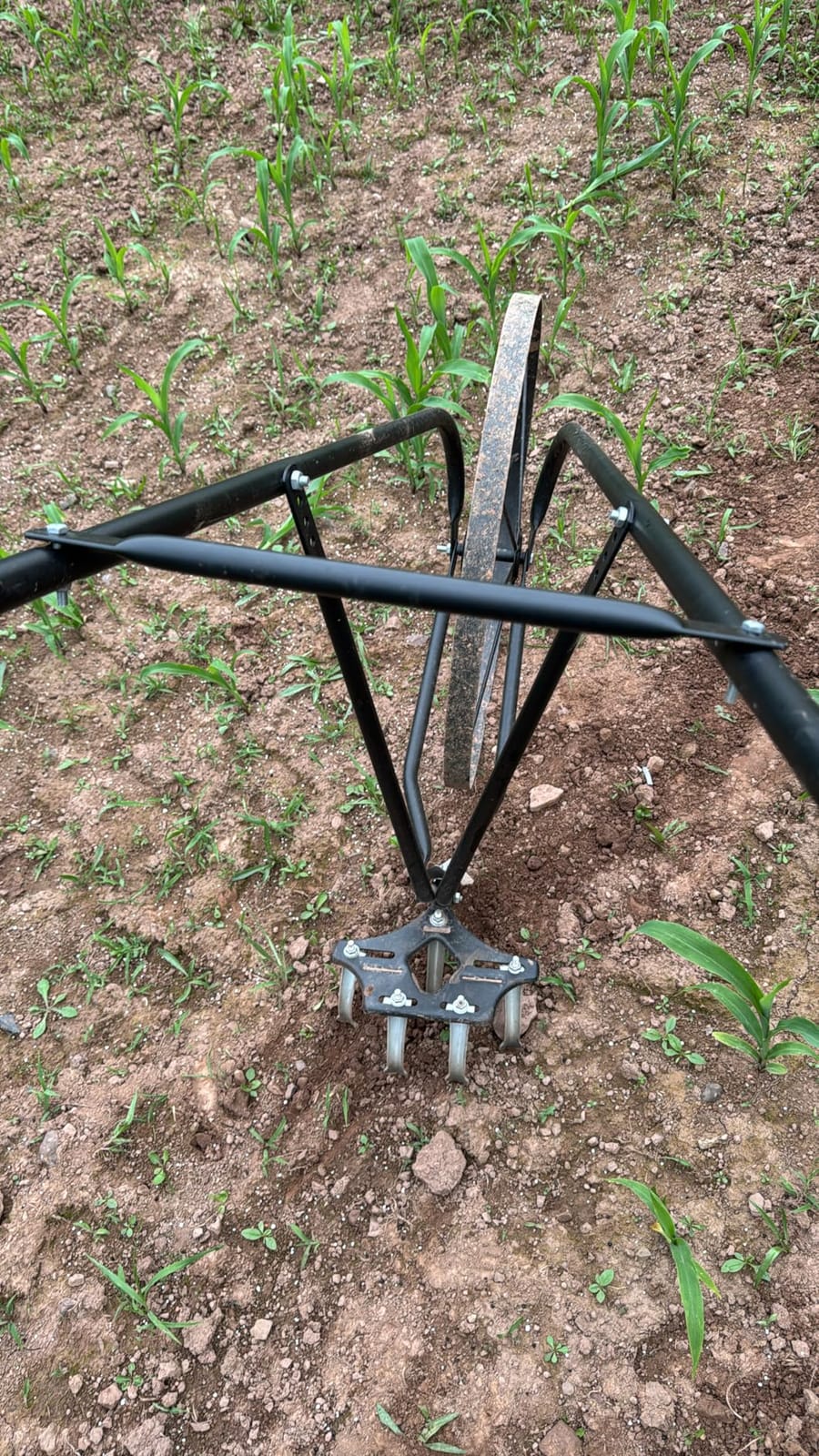
At 8.16 kg and built on a one-inch plated tubular steel frame, this is a genuinely heavy-duty chassis. Reviewers single out the frame as kinder to backs and shoulders than hand hoeing, especially on larger or rocky ground where a hand hoe would mean thousands of repetitions.
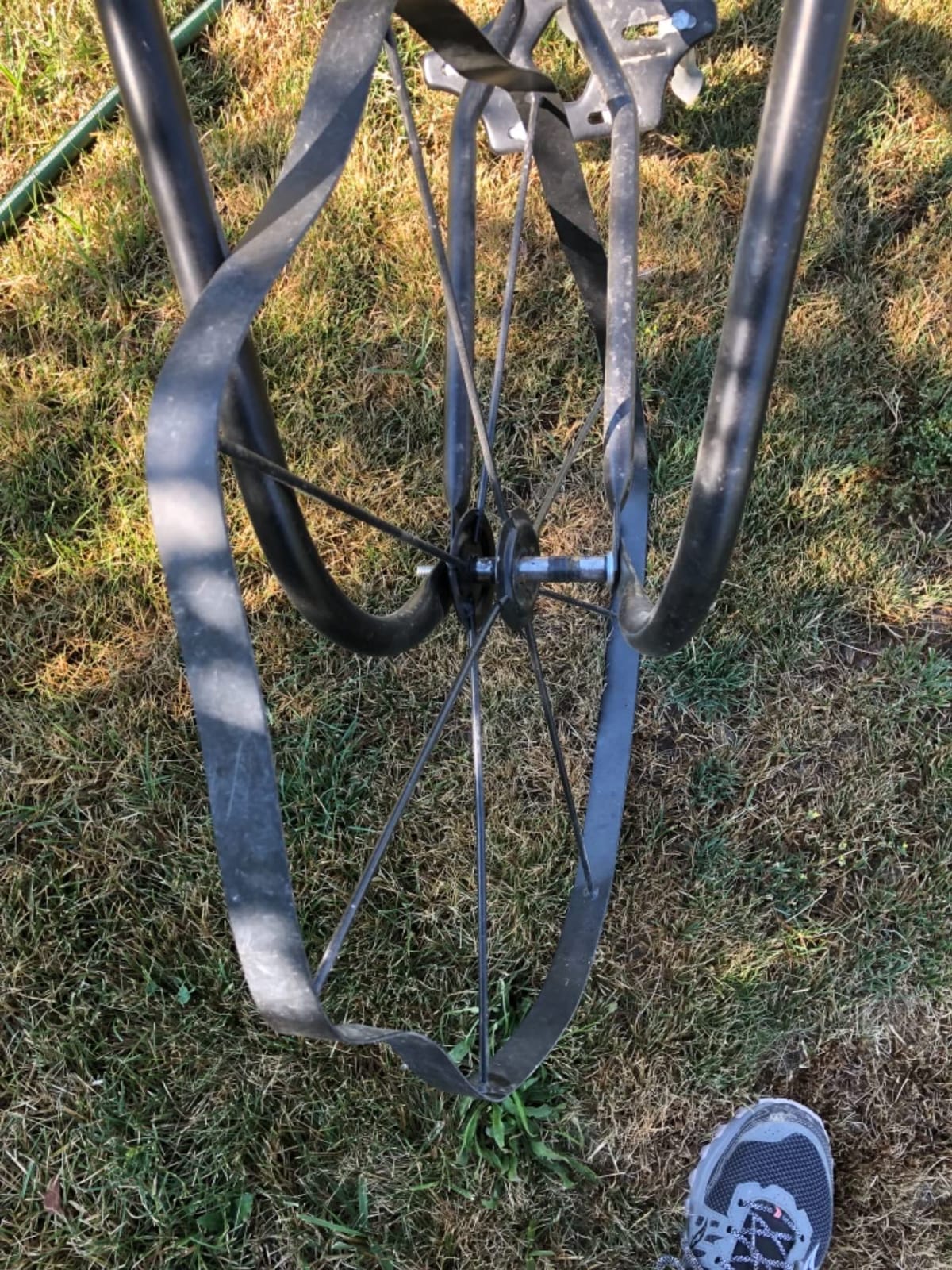
The most repeated criticism is hardware durability rather than performance. Handle and implement bolts can work loose within weeks of regular use, and several owners note that fitting shake-proof washers and spring locking pins, or upgrading the fasteners outright, resolves the problem and the tool then performs for years. That is a small, cheap fix and it is the single most useful thing to know before you buy.
Who the EarthWay 6500 suits
This frame earns its place for growers working a quarter acre to three acres who want to cover ground fast and are willing to do a small maintenance setup. The three included implements and adjustable depth mean one tool covers weeding, light cultivation and finer soil work across bed types.
It is also a good shared tool. The 3-position handle lets a shorter and a taller operator each set a working height, and the 24-inch wheel keeps the pass count low on wide beds.
Where the EarthWay falls short
Assembly quality is uneven across units. Owners report misaligned holes and rough welds, which can complicate putting the tool together or swapping parts later, so allow time for assembly rather than assuming a ten-minute job.
The bundled seeder attachment is the weak spot in the package. Reviewers report it clogging and performing worse than the implements, so treat the three included tools as a weeding and cultivation set rather than a complete planting system. The frame carries a one-year limited warranty, which is shorter than the service life owners describe.
4. Varomorus High Wheel Cultivator – modular single wheel for tight beds
Varomorus High Wheel Cultivator, Self Cleaning Steel Single Wheel Hoe, Modular Plow Garden Tool for Gardening
Self-cleaning single wheel
All-steel construction
Universal toolbar
7.37 kg
Pros
- Fast shallow cultivation across a large plot
- Lightweight at 7.37 kg so it is easy to lift and move
- Works well in raised beds paths and between seedling rows
- Effective in dry soil and around young plants
- Self-cleaning design keeps cleanups simple
Cons
- Assembly is time consuming and the instructions are not always clear
- Bolts and nuts loosen quickly without lock washers or spring pins
- Implements sit at different heights so the handle must be readjusted when swapping
The Varomorus is the lightest frame here at 7.37 kg, and that weight is the whole argument for it. A single wheel makes this tool easy to lift into a truck bed, easy to carry between beds and easy to turn inside a tight corner, which is exactly the set of problems a market garden with narrow, irregular beds hits every week.
The self-cleaning single wheel design rolls smoothly forward and backward and stays balanced, so you can work close to young plants without tearing roots out of neighbouring rows. Reviewers call it effective in dry soil and between rows of seedlings, and long-term users running acre-plus plots describe it as a force multiplier that replaces hours of hoeing and digging with a single forward pass.
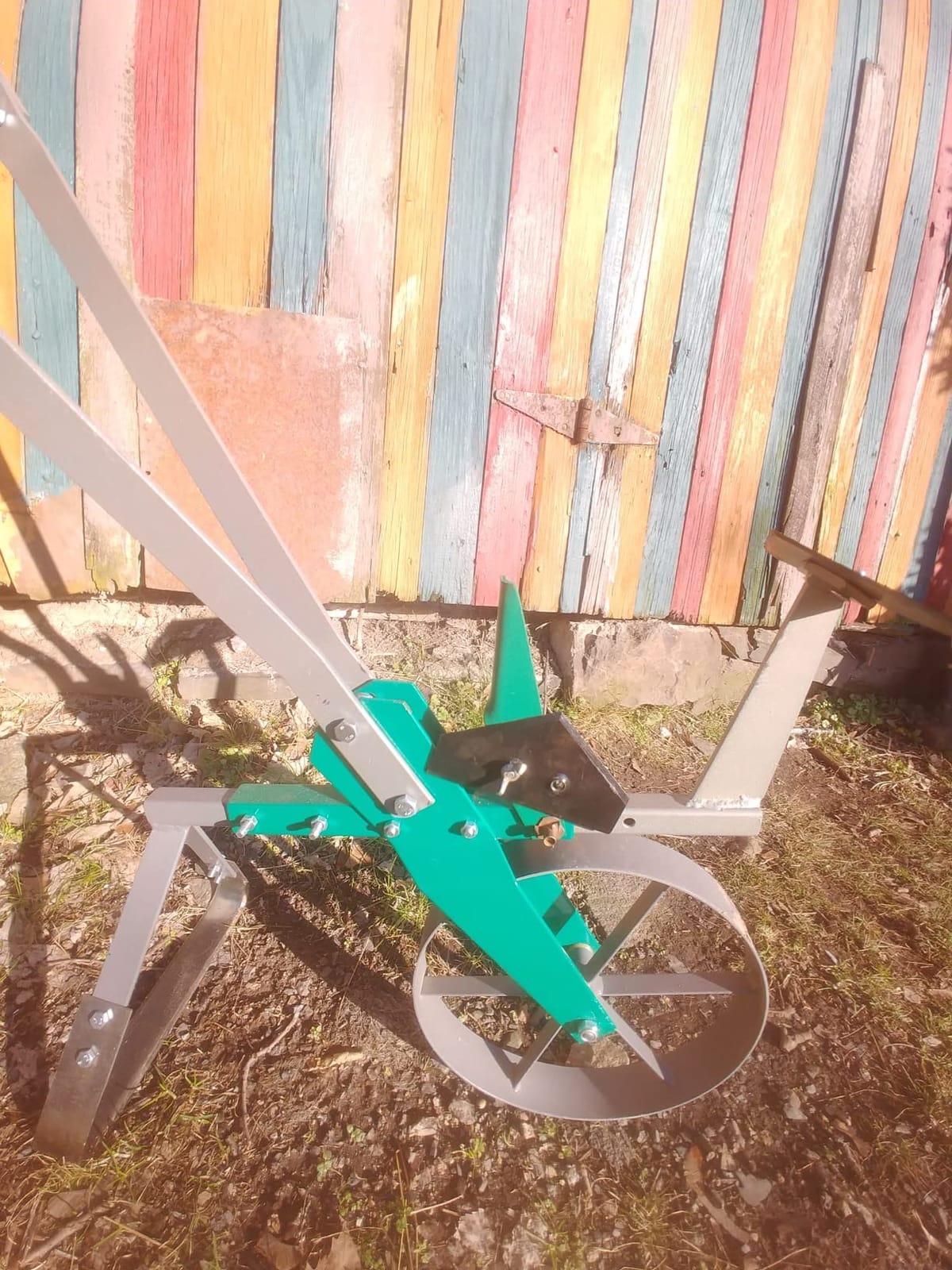
The universal toolbar is the modular strength. It accepts a wide variety of attachments, including Varomorus SMK2-5 seeders, so the frame can grow into hilling and bed-forming work rather than staying a weeding tool. Ergonomically designed handles with a firm grip are part of the standard build, not an upgrade.
Shallow cultivation is what it delivers, and it does that well: fast coverage that works the soil without harming its structure. The rating sits at 4.0 from 102 reviews, with 63 percent five-star, and the reviews that matter most come from growers who say it kept them growing vegetables well into their seventies.
What a single wheel buys you
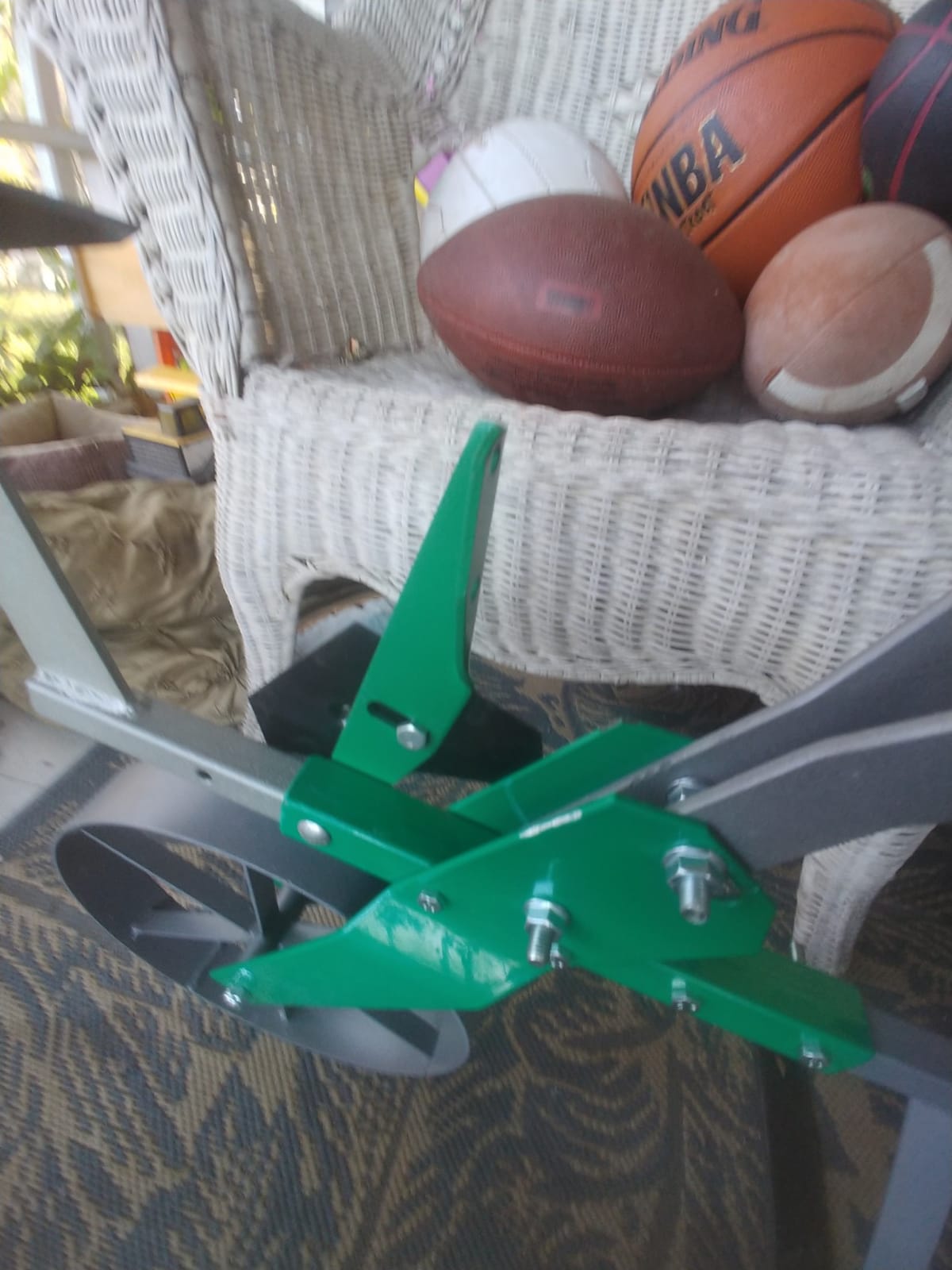
Maneuverability. A single wheel turns inside its own footprint, so beds under 24 inches wide, raised beds with cross-frames and high tunnel headlands are all places this tool works and a double wheel frame does not. The lighter frame also means less fatigue on a long day of short, frequent passes.
The tradeoff is stability. With one contact point you have less margin for error on uneven ground, so the pass is more about steering than it is about just pushing forward. Operators who like that control tend to become fast with it quickly.
Where the Varomorus falls short
Quality control is the recurring theme in the negative reviews. Owners report misaligned holes, rough welds and one unit arriving with a crushed female square tube that could not accept the hoe attachment at all, so inspect the attachment socket as soon as it arrives.
Bolts and nuts also loosen within a week of sustained use unless you fit lock washers and spring locking pins, and the implements sit at different heights so the handle must be readjusted each time you swap tools. The bundled seeder is also reported to plug up and seize, unlike the hoe itself. Assembly takes time and the instructions are not always clear, so budget an hour for the first setup.
5. Gelacie Heavy Duty Single Wheel Hoe – simple steel frame for raised beds
Gelacie Single Wheel Hoe Garden Weeder, Heavy Duty Steel Wheel Hoe
Steel powder-coated wheel
21.4 pounds
55.12 inch length
Assembly hardware included
Pros
- Single wheel handles weeding digging and loosening in one tool
- Powder-coated steel resists rust scratches and outdoor wear
- Assembly hardware included so no extra parts are needed
- Upright position reduces bending and kneeling
Cons
- No customer ratings or reviews exist yet so durability is unverified
- Listed dimensions should be checked against your intended bed size
The Gelacie is a deliberately plain option: a single steel wheel on a powder-coated frame, built to weeding, digging and loosening depth rather than a wide implement catalogue. The powder-coated black and green surface is specified to resist rust, scratches and everyday outdoor wear, which matters for a tool that sits wet in a shed through winter.
The universal design needs no vehicle or model matching, so there is nothing to confirm at checkout beyond size. All mounting hardware is included for assembly, and the working position is designed to reduce the need to bend and kneel, which is the same ergonomic argument growers raise repeatedly in tool discussions.
At 21.4 pounds with a listed length of 55.12 inches, this is the heaviest frame in the group by a clear margin, and that is the main thing to think about. The steel is heavy-duty and the tool is stable once moving, but you will feel the weight every time you lift it over a bed edge or into a vehicle.
Where this frame makes sense
It fits a grower who wants one steel tool for raised beds and paths rather than a modular platform. The upright working position and included hardware make it a low-friction first wheel hoe, especially for a market garden where the tool lives in a high tunnel or a small shed rather than on a trailer.
Because the design is universal rather than model-specific, it is also a reasonable second frame to keep on hand where the primary tool does not fit.
What to verify before you order
This listing carries no customer reviews and no star rating, so every durability claim on the page comes from the manufacturer rather than from owners. Treat it accordingly and weigh it against the picks with hundreds of reviews if reliability is your main concern.
Check the listed dimensions against your bed layout before ordering, since a 55.12 inch length is a real constraint in a narrow high tunnel. The listing itself advises reviewing the size and overall dimensions in the product images before ordering, and we would echo that.
6. Asiwnshw 3-in-1 Wheel Hoe and Hand Tiller – multi-tooth soil work
3-in-1 Heavy Duty Wheel Hoe & Hand Tiller Cultivator
3-in-1 cultivator
Widened rubber wheel
Galvanized steel frame
Manganese steel blade
Pros
- One machine replaces several hoe types for weeding and cultivation
- Multi-tooth uniform tillage fragments soil finely
- Thickened widened rubber wheel resists sinking on rough ground
- Galvanized steel frame and manganese steel blade for corrosion resistance
- Tool-free disassembly for compact off-season storage
Cons
- No customer ratings or reviews exist yet so durability is unverified
- Listed package dimensions of 0.39 inches on all sides are ambiguous and need checking
Where most wheel hoes on this list do one job well, the 3-in-1 design does several. Multi-tooth uniform tillage breaks soil into fine fragments in a single pass, which reduces the amount of secondary plowing and raking you need to get a bed to planting condition. For a grower who wants bed prep rather than only weeding, that is the reason to look here.
The wheel is a thickened, widened rubber design described as wear-resistant and rugged on outdoor terrain, and it is specified to keep rolling over uneven ground without sinking as a narrow steel wheel would in soft ground. That difference shows up most on the first pass of the season when beds are still soft.
Materials are the other selling point: a galvanized steel body for corrosion resistance plus a manganese steel blade with a sharp, wear-resistant edge. The structure needs only basic assembly with included accessories, and it disassembles for compact storage, which matters more than it sounds if your shed space is already spoken for.
Where this tool earns its spot
Ridge cultivation and trenching are the jobs it is built around, and the listed applications run to orchards, nurseries, greenhouses, home vegetable gardens and small farmland. On a market garden with ridged beds or irrigation ditches, it covers ground preparation that a weeding-focused frame would need a second attachment to handle.
The single-machine approach also reduces tool count, which is a real saving in a shared shed where every implement has a home and a habit.
What to weigh before buying
This listing has no customer reviews and no star rating, so none of the durability claims above are verified by owners. If your farm depends on a tool daily through peak season, the picks with hundreds of reviews carry less risk.
The listed package dimensions of 0.39 inches on all sides almost certainly describe a packaged unit rather than the assembled tool, so confirm the real assembled size from the product images. Buying a cultivator on the assumption that it fits your bed, then finding it does not, is an expensive afternoon.
7. Asiwnshw 3-in-1 Manual Wheel Hoe – upright stance for trenching and ditches
3-in-1 Manual Wheel Hoe, WheelHoe Garden Tool with Wheel
Three hoe styles
Non-slip rubber wheel
Galvanized steel body
Upright operating posture
Pros
- Three hoe styles cover multiple garden jobs on one tool
- Widened non-slip wheels stay stable on mud sand ridges and ditches
- Galvanized steel body and manganese steel blade resist corrosion
- Upright posture with extension rod reduces bending and waist strain
- Easy assembly and disassembly
Cons
- No customer ratings or reviews exist yet so durability is unverified
- Listed package dimensions of 0.39 inches on all sides need verifying against the assembled tool
This second 3-in-1 frame is the trenching and ditch version of the same idea, and its distinguishing feature is wheel grip on poor ground. The thickened, widened non-slip rubber wheels are specified to resist sinking and slipping on mud, sand, ridges and ditches, which is a different set of surfaces from a worked vegetable bed.
Three hoe styles on a single upright tool cover multiple maintenance jobs, so it works as a yard and garden tool rather than a dedicated cultivator. The upright operating posture, non-slip armrests and extension rod design are all aimed at reducing bending and waist strain, which is the single most common theme in how growers talk about tool fatigue.
Construction matches the spec sheet: a galvanized steel body for corrosion resistance and a precision manganese steel blade with a sharp, wear-resistant edge. Assembly and disassembly are both simple, so it is practical to move between the field and a storage area at the end of a block season.
Where it beats the other 3-in-1
If your farm has drainage ditches, irrigation trenches, sandy ground or mud in spring, this frame is the better of the two 3-in-1 options because the wheel traction is specified for exactly those conditions. The three hoe styles also make it useful outside the vegetable beds, which extends the hours you get from the purchase.
The upright stance and extension rod make it a reasonable first tool for a grower who is not yet sure how much bed footage they will work, because it is a general-purpose implement rather than a specialist.
What to weigh before buying
As with the other unlisted-on-review 3-in-1 frame, there are no customer reviews or star rating behind this listing, so build quality is unverified. The product details also list dimensions of 0.39 inches on all three axes, which reads as a packaged measurement rather than the assembled tool.
Check the assembled size in the product images before ordering. If you already own a wheel hoe from this roundup, this frame is additive only if you have ditch, trench or mud work to justify it.
Is a Wheel Hoe Worth Buying?
Yes, for most market gardens, because it replaces the most repetitive manual task on the farm with a push-tool pass. The return is strongest for growers already spending several hours a week hand weeding, and weak for anyone under about a quarter acre who can manage the same weeding with hand tools. The tool pays for itself in time returned, not in yield.
What it does not do is primary tilling or replace a broadfork on a new bed. A wheel hoe is a shallow cultivation tool, which is exactly what you want between crops and between plantings, and exactly what you do not want when you are turning over sod.
One more caution. Growers who love these tools often end up owning several, and the most enthusiastic owners in forum threads admit the same thing: even a tool they rate highly is a single-purpose tool, and no wheel hoe removes the need to switch tasks. If your mental model is one implement that handles everything, a finger weeder and a broadfork will still earn their place.
Single Wheel vs Double Wheel vs High Wheel: Which Type Do You Need?
Double wheel hoes are more stable and cover more width, making them easier to learn and better for paths and larger acreage. Single wheel hoes are lighter, narrower and far more maneuverable in tight beds and corners. High wheel cultivators add a larger wheel diameter, which rolls over uneven ground and gives better ground clearance but does not change the fundamental cutting action.
If you force one answer: buy a double wheel hoe unless your beds are narrow or irregular. A double wheel frame is the one most growers learn in a single pass, and it stays planted when a stone comes up. Choose a single wheel only when you routinely work beds under about 24 inches wide, high tunnel headlands or cross-framed raised beds, because that is where the second wheel becomes an obstacle rather than an asset.
Choose a high wheel cultivator when your ground is uneven, stony or soft. The bigger wheel rolls over ruts and rocky ground that stops a smaller wheel, which on rocky land is the difference between weeding a bed and abandoning it halfway.
You will also see the conversion angle marketed, where a single wheel frame is set up with its wheels repositioned to work as a double. The appeal is flexibility from one frame, and the practical test is simpler than it sounds: if you work wide prepared paths most of the week and only need to reach tight beds occasionally, a convertible frame is a reasonable compromise. If you work tight beds most of the week, buy the single wheel and accept the narrower pass.
Matching a Wheel Hoe to Your Bed Width and Row Spacing
Bed width is the criterion nobody publishes, and it is the one that decides the purchase. Measure the walking path or bed you actually work, not the bed width in your plan, because paths are usually narrower than beds and that is where the tool has to fit.
For paths and beds under about 20 inches, a single wheel is the practical choice. Two wheels need roughly the width of the frame plus turning room, and in a narrow space you will spend more time repositioning than weeding. This is the situation the Varomorus and the Gelacie are built for.
For beds and paths between about 24 and 36 inches, a double wheel hoe such as the Hoss Double Wheel Hoe is the sweet spot. It is wide enough to be stable and narrow enough to turn at the end of a bed without fighting the frame.
Row spacing matters as much as bed width. Rows wider than the frame leave unworked strips between passes, and rows narrower than the frame make you overlap passes and risk shaving crop roots. The Hoss High Arch solves a different version of this problem: its adjustable wheel spacing lets the toolbars move to match crop spacing instead of the frame being fixed to one row width.
Track how you actually work before you buy. A week of noting your most common path width and row spacing gives you a better answer than any product page, and it takes less time than you would spend regretting a frame that fights your layout.
Implements and Attachments: What Each One Is For
The frame decides what you can do; the implement decides what you actually do. A wheel hoe frame with no useful implement is a wheelbarrow, so this is the part to understand before you buy anything.
The weeder or knife blade is the standard shallow cultivation implement. It slices just under the surface, uproots small weeds and leaves them exposed to dry. It is what the cultivator teeth included with the Hoss frames and the quick-change implements on the EarthWay and Varomorus frames are for.
An oscillating hoe works the soil with a rapid reciprocating action, cutting weeds and leaving a smoother surface than a fixed knife. It is the most useful upgrade for growers who want a finer finish between passes rather than a rougher cultivate-and-cover pass.
Plow sets and ridgers do bed-forming work: opening furrows, hilling soil against stems and building ridges. Hiller attachments are what turn multi-hour hilling jobs into roughly 15-minute passes on the High Arch frame, according to its owners. Both are sold separately for the Hoss frames.
A three-tine cultivator is the deeper tool, designed for breaking soil crust, loosening and aerating soil at greater depth than a weeding pass. A seeder is the fourth category, and it is where the two 3-in-1 frames differ most from the dedicated wheel hoes.
One caution on seeders: the bundled seeder on the EarthWay and Varomorus frames is reported to clog and perform worse than the implements, so do not treat it as a reason to buy either frame. On cross-brand compatibility, treat implement fit as brand-specific unless the manufacturer says otherwise. Forums are full of buyers guessing at compatibility, and the toolbar standard is not universal across manufacturers.
Maintenance, Fasteners and the Cost of Ownership
Across the reviewed picks, one maintenance issue appears more than any other: bolts and nuts loosening during sustained use. It is the most repeated complaint on the EarthWay 6500 and the Varomorus, and it is the one thing worth fixing on day one rather than living with.
Shake-proof washers and spring locking pins are the standard remedy, and owners who fit them report the tools then work reliably for years. It is a few dollars of hardware and ten minutes with a wrench, and it converts the most common complaint on two of these frames into a non-issue.
On tool arms held with soft fasteners, expect to upgrade rather than tighten. The EarthWay is a known case where swapping to better fasteners fixed repeated problems, and it is worth doing before you need a new implement mid-season.
Keep the tool dry between uses and check the blade edge regularly. A knife weeder that has dulled starts skipping weeds instead of uprooting them, which quietly turns a fast pass into a slow one, and replacing a blade is far cheaper than tolerating a bad pass all season.
On long-run cost, the honest framing is that frames described as built to last are the ones owners keep for years, and fasteners and blades are the only recurring spend. Budget for one spare implement and a packet of locking hardware, and treat the initial frame as a long-term purchase rather than a season purchase. That is the argument buyers who tell others that quality garden tools are built to last a lifetime are making, and it applies to any well-built wheel hoe frame you maintain.
If you are building a comparison habit for other gear, our at-a-glance format is the same one we use in our tested roundups for fifth wheel hitches and 4K TVs, with the full spec reasoning left in rather than trimmed away.
When a Wheel Hoe Is the Wrong Tool
A wheel hoe is the wrong tool when you are breaking new ground. Turning over sod, incorporating a cover crop deeply or opening a new bed wants a broadfork or a tiller, because a wheel hoe cuts at shallow depth by design and will simply ride over compacted ground.
It is also the wrong tool in a heavy mulch or no-till system with a thick residue layer. The implement wants to engage the soil surface, and a deep mulch blanket prevents that. If your beds run under heavy mulch, a finger weeder for in-row weeds plus a wheel hoe for paths is the more realistic combination.
In-row weeds are the honest limit of the whole category. Wheel hoes shine in paths and open bed space; weeds growing within a few inches of a crop stem still need a hand tool, and that in-row labor is the biggest reason growers buy a second tool alongside the wheel hoe.
Finally, do not buy one at all if you are under about a quarter acre. A hand hoe and a finger weeder will cover that ground faster than you can assemble a frame, and the ergonomic benefit of a push tool only appears once the row length justifies standing up.
Frequently Asked Questions
Is a wheel hoe worth buying?
Yes, for most market gardens, because it replaces the most repetitive manual task on the farm with a push-tool pass. The return is strongest for growers already spending several hours a week hand weeding, and weak for anyone under about a quarter acre who can manage with hand tools. It does shallow cultivation, not primary tillling.
What type of hoe is best for weeding?
A wheel hoe with a knife weeder implement is best for weeding between rows, because the wheel sets the depth and the blade uproots and buries small weeds without disturbing the crop. A stirrup hoe is best for weeding under about 20 inch beds where no frame fits. A finger weeder is best for weeds within a few inches of a crop stem.
Where can I buy a HOSS wheel hoe?
HOSS builds its wheel hoe frames in the USA and sells them directly through its own store, with the Double Wheel Hoe and High Arch Wheel Hoe as the two models in this roundup. Johnny’s Selected Seeds and organic supply retailers also carry Hoss lines and Glaser wheel hoe accessories, so check your usual seed and tool supplier before adding a third source.
Is a cultivator the same as a garden hoe?
No. A garden hoe is a single handheld blade used with a swinging or pushing motion. A cultivator has multiple teeth or tines and is used to break up and aerate the soil surface rather than cut individual weeds. On a wheel hoe frame the cultivator teeth are an attachment for shallow soil work, while the weeder blade is the implement for weed control.
Are hoes used for tilling?
Hoes are not used for primary tilling. A wheel hoe performs shallow cultivation between shallow depth, which is the right job for weeding and preparing a worked bed. Turning over sod, incorporating a cover crop deeply or opening new ground calls for a broadfork or a tiller instead.
Should I buy a single wheel or a double wheel hoe?
Buy a double wheel hoe unless your beds are narrow or irregular. A double wheel frame is more stable, easier to learn and better for prepared paths and larger acreage. Choose a single wheel when you routinely work beds under about 24 inches wide, high tunnel headlands or cross-framed raised beds, because that is where the second wheel becomes an obstacle.
Which Wheel Hoe Should You Buy?
The best wheel hoes for market gardens come down to one honest measurement: measure your narrowest working path, then buy the frame that fits it. From there, the Hoss Double Wheel Hoe is the pick we would put on most market gardens because it combines the highest owner rating in this roundup with a toolbar that accepts the attachments you will eventually need.
Under a quarter acre with hand tools, skip the whole category. Between a quarter acre and one acre, the EarthWay 6500 covers the most ground per pass and comes with three implements included. Past an acre, or if you need to straddle tall crops mid-season, the Hoss High Arch Wheel Hoe is the frame that keeps working after the beans are up.
Fit lock washers and spring locking pins before your first long pass, and keep a finger weeder on the belt for the weeds growing inside the row. That pairing is what a working market garden actually runs, and it is why the tool gets bought twice rather than replaced.
Use the 2026 buying checklist above as your shortlist, check the latest specification and price details for the frame that matches your bed layout, and get a pass down a real row before the season starts.