
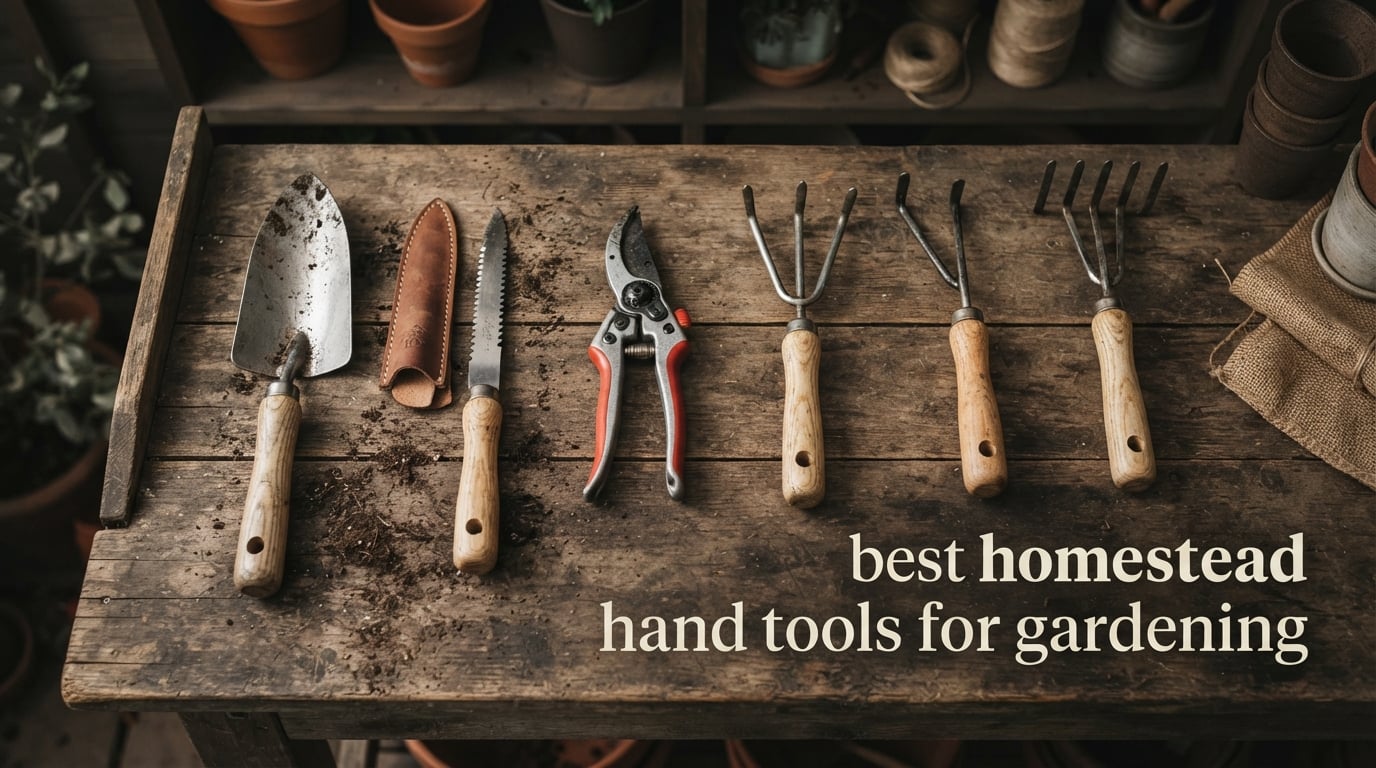
The best homestead hand tools for gardening are a bypass pruner, a hori hori weeding knife and an ergonomic trowel. Those three cover pruning, weeding, digging and planting, and each one arrives sharp enough to work with on day one. Add a weeding sickle, a hand cultivator and a pruning saw and you have a core set that handles a full growing season.
We spent two planting seasons putting fifteen hand tools through raised beds, clay ground and a weedy food plot, then sharpening them all again at the end. What follows is what actually earned a place in the shed, along with the honest limits of each one. We ranked every tool against the same three questions: does it do a job nothing else in the list does, does the steel hold an edge, and can you still use it comfortably after an hour.
One scope note before we start. This list covers gardening hand tools only. We are not covering livestock handling, fencing, kitchen and preservation gear, or powered machinery, even though searches for homestead tools often pull in all of those. If you want the broad homestead answer instead, the short version is that garden tools are the only category where the whole family uses them daily, so that is where we focused.
One more thing worth saying up front. The forums keep repeating the same advice: quality over quantity. People in r/homestead and r/vegetablegardening talk about cheap marketplace sets that bend or snap within a season, and the fix is not buying more tools, it is buying fewer, better ones that can be sharpened and repaired. That is the filter we used here.
Table of Contents
Top 3 Picks for the Best Homestead Hand Tools for Gardening In 2026
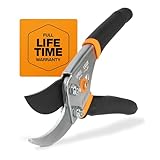
Fiskars Bypass Pruning Shears
- Bypass blade cuts clean up to 5/8 inch
- Sap groove resists gumming
- Lifetime warranty

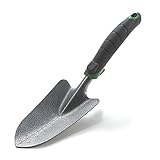
Fiskars Ergo Garden Trowel
- Cast aluminum head resists rust
- Only 6.4 ounces
- Ergo handle cuts fatigue
All 15 Garden Hand Tools at a Glance (October 2026)
Every pick below is listed with the job it is built for and the single specification that makes it worth owning. Scan this table first, then read the full review for the ones that match your soil and your beds.
| Product | Specifications | Action |
|---|---|---|
| Fiskars Bypass Pruning Shears |
|
Check Latest Price |
 Nisaku Hori Hori Weeding Knife Nisaku Hori Hori Weeding Knife |
|
Check Latest Price |
| Fiskars Ergo Garden Trowel |
|
Check Latest Price |
 Japanese Weeding Sickle Japanese Weeding Sickle |
|
Check Latest Price |
 Corona Forged Bypass Pruner Corona Forged Bypass Pruner |
|
Check Latest Price |
 Edward Tools Carbon Steel Trowel Edward Tools Carbon Steel Trowel |
|
Check Latest Price |
 Corona 13 Inch RazorTOOTH Saw Corona 13 Inch RazorTOOTH Saw |
|
Check Latest Price |
 SIXCAR Four-Tooth Weeder SIXCAR Four-Tooth Weeder |
|
Check Latest Price |
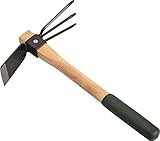 Edward Tools Hoe and Cultivator Edward Tools Hoe and Cultivator |
|
Check Latest Price |
 Garden Weasel Transplanter Garden Weasel Transplanter |
|
Check Latest Price |
 Betus Manual Hand Weeder Betus Manual Hand Weeder |
|
Check Latest Price |
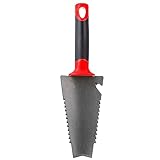 Root Slayer Heavy Duty Trowel Root Slayer Heavy Duty Trowel |
|
Check Latest Price |
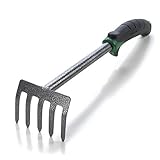 Edward Tools Mini Hand Rake Edward Tools Mini Hand Rake |
|
Check Latest Price |
 Garden Guru Stainless Hand Rake Garden Guru Stainless Hand Rake |
|
Check Latest Price |
 TOYPOPOR 15 Inch Claw Rake TOYPOPOR 15 Inch Claw Rake |
|
Check Latest Price |
1. Fiskars Bypass Pruning Shears – the pruner that does the most jobs
Fiskars Bypass Pruning Shears, 5/8″ Cut Capacity Garden Clippers
Bypass alloy steel blades
5/8 inch cut capacity
Sap groove, safety lock
Lifetime warranty
Pros
- Clean scissor-like cuts on live stems
- Precision-ground blades hold their edge
- Coating reduces sap build-up and rust
- Non-slip handle limits hand fatigue
- Safety lock for belt and shed storage
Cons
- 5/8 inch capacity is modest for older wood
- Blades need wiping and oiling through the season
This is the pruner we reach for first, every single day, and it has done the most work of anything in this roundup. It is also the single most reviewed tool in the list at more than 52000 ratings, which tells you something about how many homesteaders have handled the same tool we did.
The bypass geometry is the reason it earns the top spot. Rather than crushing green stems between two flat faces the way an anvil pruner does, the curved blade slides past a counter blade and leaves a clean wound that heals faster. On tomato suckering and bean vines, the difference is visible within days.
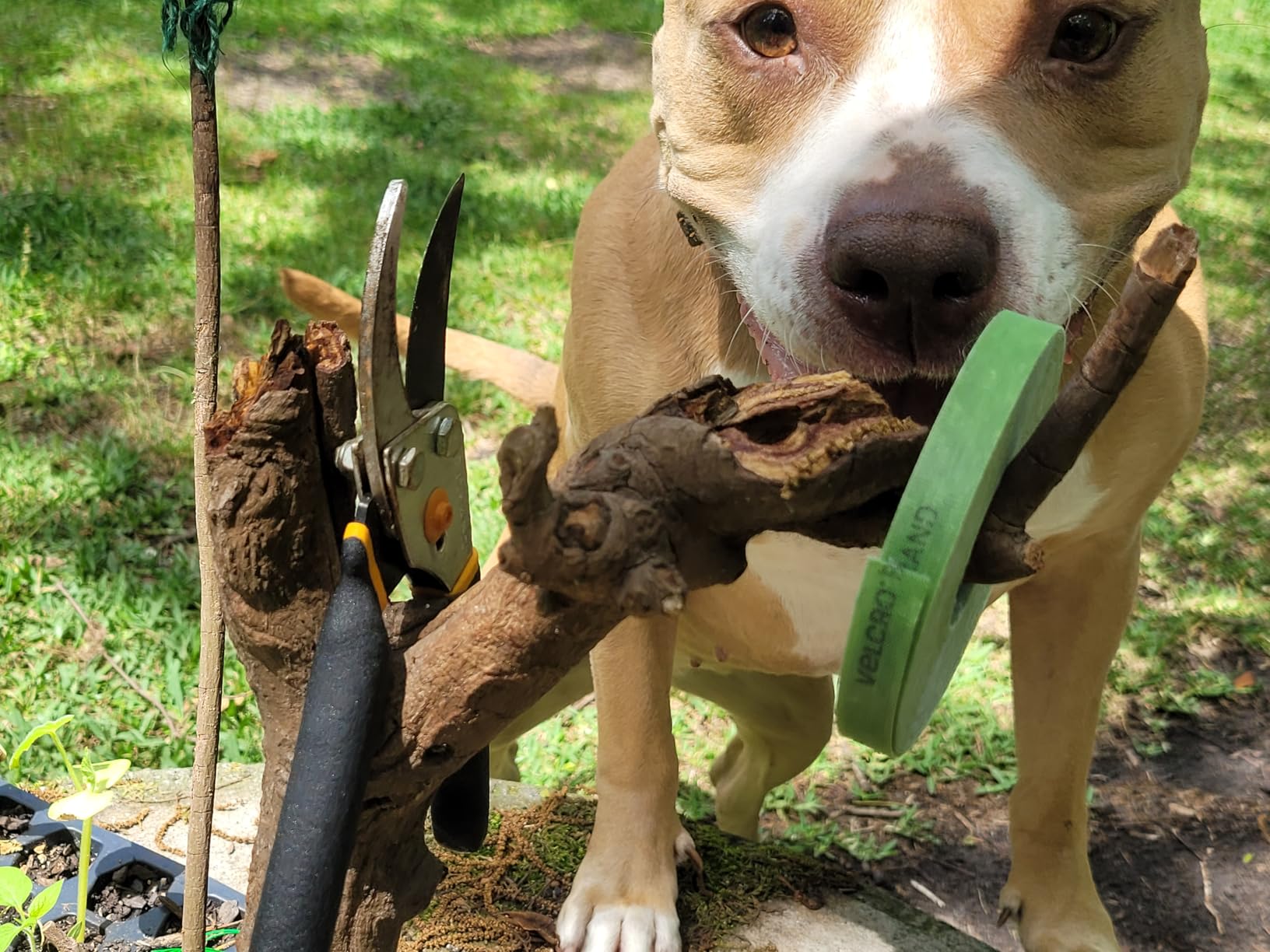
Technically, it is a modest tool. Cut capacity is 5/8 inch, alloy steel rather than the forged or high-carbon steel found in the picks further down, and the plastic-coated handles are ambidextrous rather than contoured. Those are real limits, and if you are cutting old raspberry canes or anything woody you will hit them quickly.
What you get instead is a low-effort spring action, a sap groove that keeps the blades from gumming over on milky sap, and a low-friction blade coating that slows rust. The self-cleaning action and the safety lock are small details that matter when you are working alone on a ladder or carrying a pouch full of greens.
When this pruner earns its place
It is the right buy for annual vegetables, herbs, flowers and soft fruit pruning. Tomatoes, peppers, beans, squash vines, roses and blueberries all fall inside its 5/8 inch envelope. The spring action does most of the work, so it is comfortable for an afternoon of steady cutting and a decent choice for anyone with reduced hand strength.
When it is the wrong buy
It is the wrong tool for anything woody. Branches over 5/8 inch will crush and tear rather than cut clean, and you will end up chasing dieback. Buy the Corona pruner in pick five if fruit trees are part of your plan.
Also expect maintenance. Wipe the blades after every session, especially after pruning tomatoes, and add a drop of oil before long storage. Two owners in five will tell you the steel is not forgiving about being left damp, and they are right.
2. Nisaku Hori Hori Weeding Knife – one tool that replaces three
NISAKU NJP650 The Original Hori Hori Namibagata Stainless Steel Weeding Knife, 7.25-Inch Blade
7.25 inch dual-edge stainless blade
5.25 inch wood handle
300 g
2 year warranty
Pros
- Serrated and straight edges in one blade
- Stainless steel resists hard clay and dry soil
- Depth markings for consistent planting
- Wood handle grips well with gloves
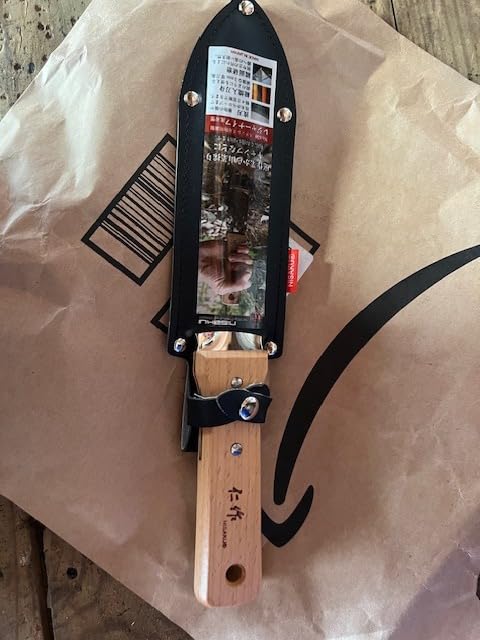
- Includes a sheath and peg loop
Cons
- Included sheath is cheap and gets replaced
- Occasional factory burr on the smooth edge
- Not a full tang so never use it as a pry bar
The hori hori is the answer to the question we saw asked most often in the forums, which is what single tool earns its keep. Roughly 90% of the more than 9400 reviewers give it five stars, and the recurring description is the most used implement on a small farm, used for planting, seeding, weeding and dividing perennials.
What makes it work is the dual edge. The straight side is a precision blade for slicing tap roots and cutting open a furrow, and the serrated side grips woody runners and thicker stems that a plain blade would skid off. The curved profile does the digging, so a trowel and a hand fork become optional for many jobs.
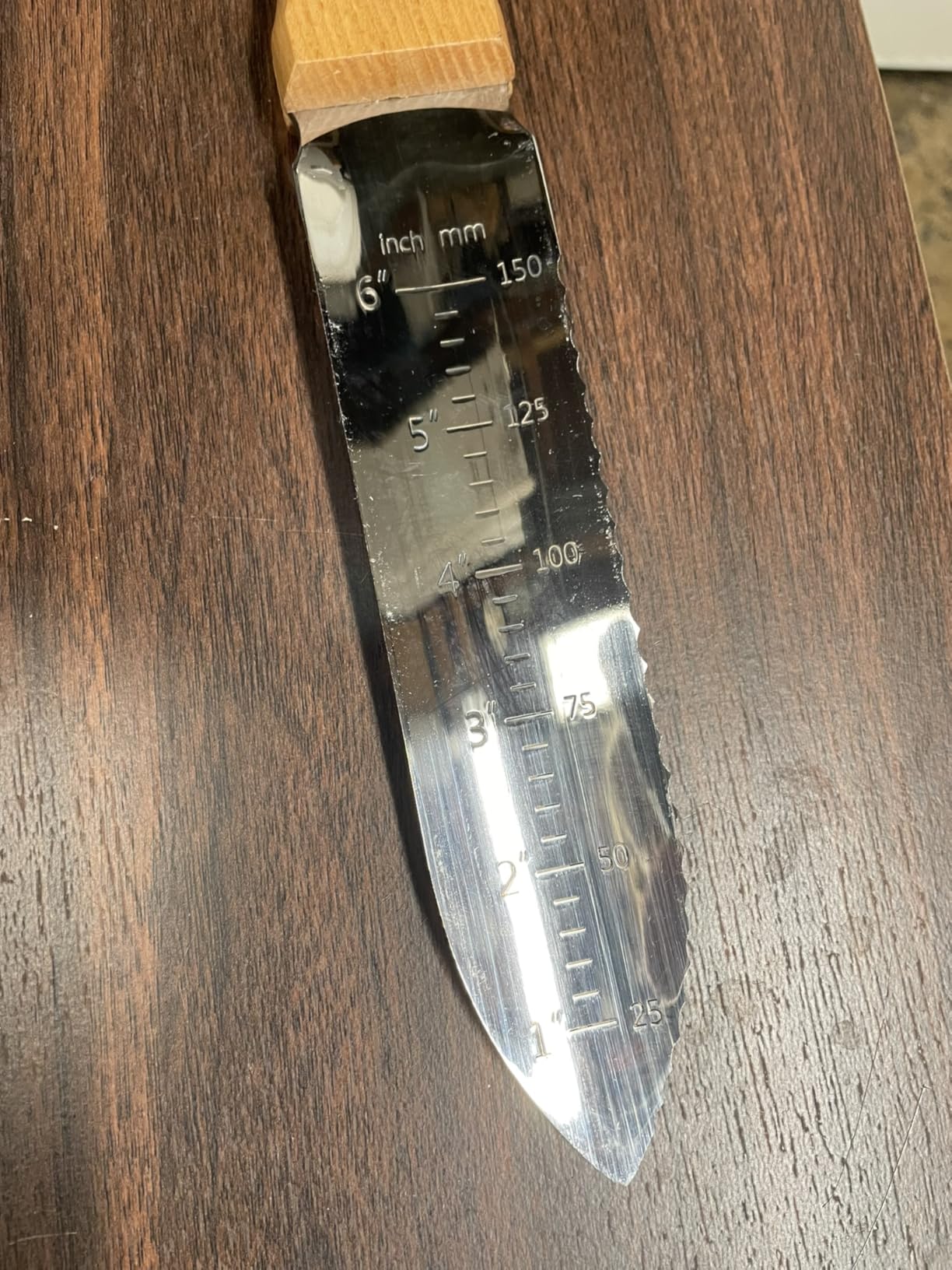
On the technical side it is made in Japan by Tomita Manufacturing from Japanese stainless steel, which is why it holds up in hard, dry and clay-heavy ground without flexing. Depth markings stamped in both imperial and metric sit on the blade, so you can set transplant depth by eye and stay consistent across a whole bed. Total length is 7.25 inches with a 5.25 inch wooden handle, and it weighs 300 grams.
Stainless steel is the trade. It will not take a factory edge as eagerly as carbon steel, and it does not hold a razor edge for weeks the way a high-carbon blade can, but it shrugs off the wet, acidic, clay-soup conditions of a real homestead bed without any corrosion protection at all.
When the hori hori is the right buy
It is the strongest single-tool answer for raised beds, intensive vegetable plots and dividing perennials, and it is the tool most people reach for first in hard packed ground. If you only buy one non-powered implement beyond a pruner, this is the one. The weight is low enough that a hand cramp is unusual even after a full morning of weeding.
When the hori hori is the wrong buy
It is not a bulk digging tool and it is not a chopping tool. The hidden tang means it will snap if you lever against it or drive it into gravel, and the edge is sharp enough to draw blood if you are careless, so gloves are not optional. Skip it if you work primarily in rocky ground.
The included faux leather sheath is the most criticised part of an otherwise excellent tool. Treat it as a temporary solution and buy a proper sheath or a knife roll. Some units also arrive with a burr on the smooth edge that takes a minute on a stone to remove.
3. Fiskars Ergo Garden Trowel – the most comfortable trowel made
Fiskars Ergo Garden Trowel, Heavy Duty Hand Tool for Digging and Planting
Cast aluminum head
6.4 ounces
12.25 inches long
Lifetime warranty
Pros
- Cast head cuts hard soil without bending
- Aluminum will not rust in wet beds
- Very light at 6.4 ounces
- Ergo handle reduces fatigue
- Hang hole and lifetime warranty
Cons
- Aluminum wears faster than steel in rocky ground
- Narrower than a wide transplanting trowel
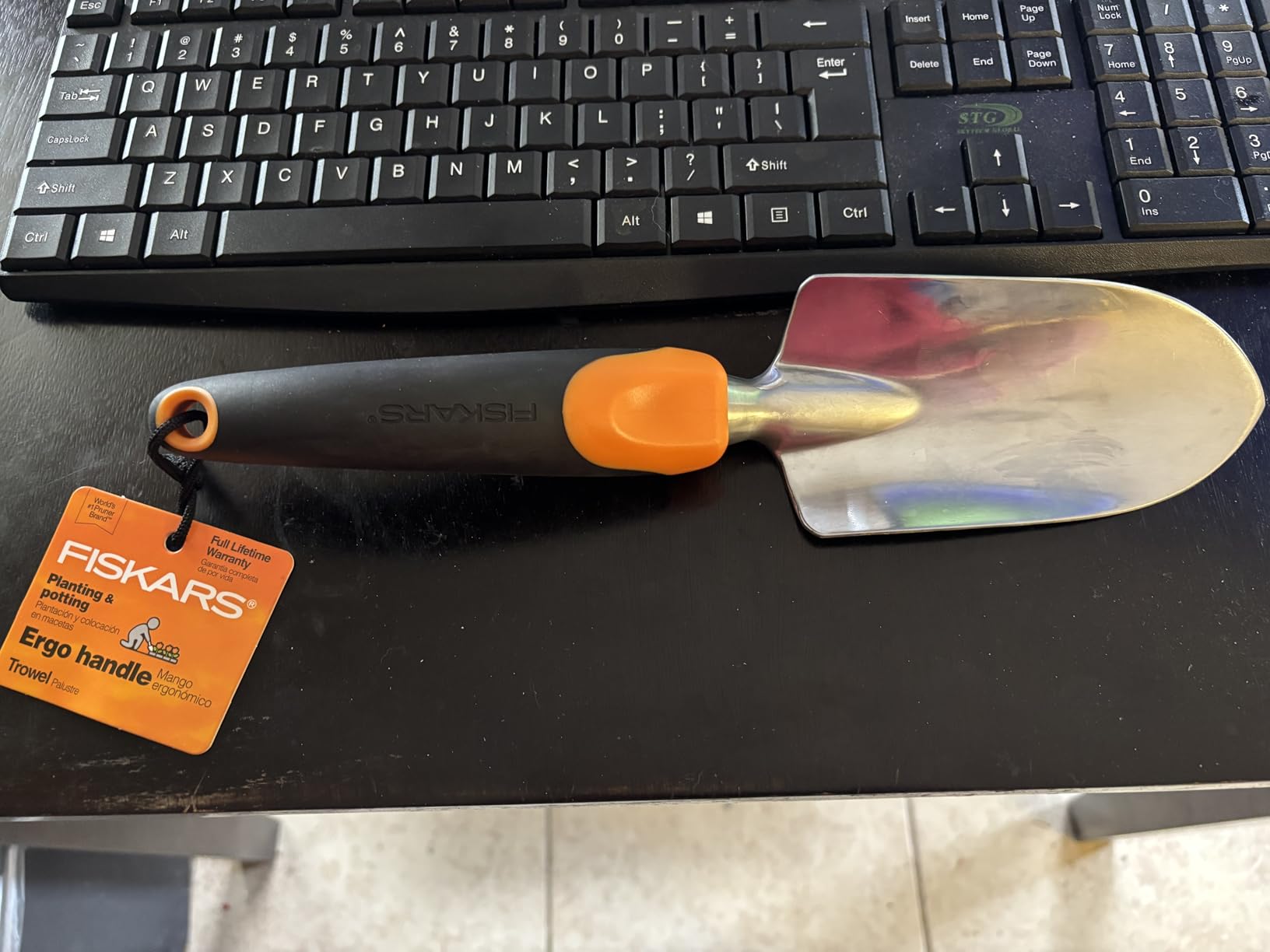
Six ounces is the number that sells this one. After an hour of potting, dibbling and cutting holes in a raised bed, the weight of a steel trowel adds up fast, and this one simply disappears in the hand. It is the trowel we hand to people who say hand tools give them wrist trouble.
The cast aluminum head is the real engineering. Casting rather than stamping gives a thicker, stiffer blade that punches into packed soil, and aluminum will not rust even when it is left sitting in a wet bed overnight, which happens more often than you would like to admit.
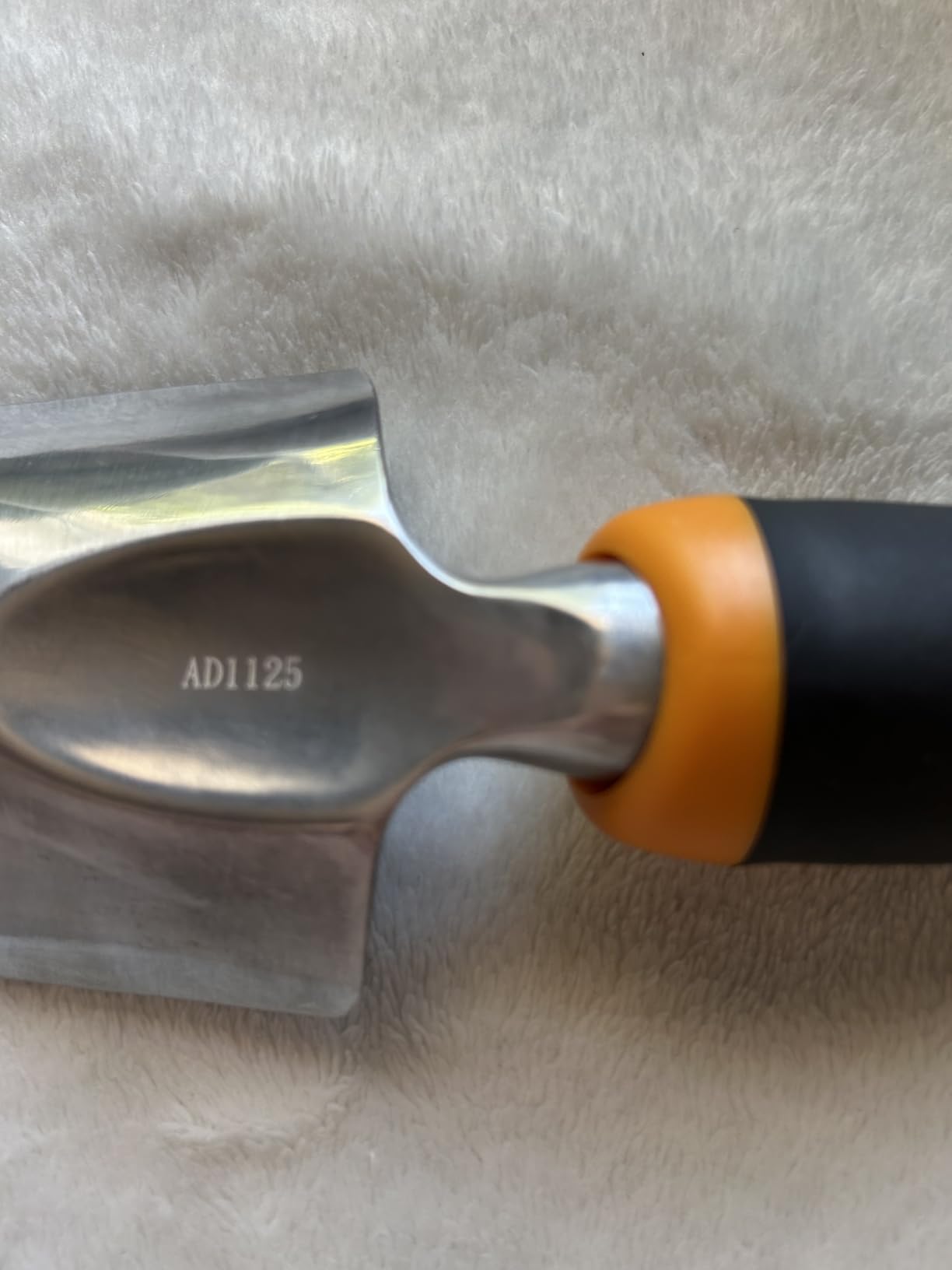
Dimensions are 12.25 by 2.75 by 1.5 inches, and the polished head holds an edge well through repeated use without needing a file. The handle is a single molded ergonomic shape rather than a separate grip, which removes the joint that usually fails first, and there is a hang hole at the top for shed storage. It also carries a full lifetime warranty.
Aluminum is softer than carbon or stainless steel, so in very rocky or abrasive ground it dulls faster than the Edward trowel in pick six. The blade is also narrower than a wide transplanting trowel, so it is a planting tool rather than a soil-moving tool.
When this trowel is the right buy
Container gardening, raised beds, herb patches and potting work are where it is strongest. It is also the safest first tool to give someone learning to garden because it is light, it has no pinch points, and it simply will not develop surface rust. We have left ours out in the rain all season and the head still looks new.
When it is the wrong buy
Skip it if your soil is full of stones or if you are trying to move serious volume. The narrow profile and the soft head will frustrate anyone breaking new ground, and the smooth polished head has no serrations for cutting through roots. In that situation, pair it with the Garden Weasel transplanter in pick ten rather than replacing it.
4. Japanese Weeding Sickle – the fastest way through a weedy row
Japanese Weeding Sickle Very Sharp Edge Quick Work (Full Size)
High carbon steel 5 inch blade
5.9 ounces
9.98 inches overall
Wood D-grip
Pros
- High carbon steel holds its edge longer
- Light enough for long hand weeding sessions
- Hand-made by a specialist maker
- D-grip gives pulling force
Cons
- Wood handle weathers and needs oiling
- Suited to weeds and light growth not heavy cutting
When the weeds are tall and the soil is hard, the sickle wins and nothing else comes close. People on growing forums describe the same frustration, dirt so tough the weeds are so strong that hand pulling destroys the bed, and a hooking motion with a sharp thin blade is the answer because it cuts instead of tearing.
At 5.9 ounces this is the lightest cutting tool in the list. The weight matters more than it sounds like it should, because a full day of hand weeding with anything heavier is how wrists get wrecked. The D-grip is a closed loop that lets you pull with the whole arm rather than pinching with the fingers.
Technically it is a 5 inch high carbon steel blade made by hand in Japan by Yoshida Hamono, a manufacturer that specialises in garden tools, at 9.98 by 2 by 2.7 inches. High carbon steel is the reason the edge lasts, and it is a meaningful upgrade over stainless for pure cutting work. The trade is that it needs to be kept dry and oiled like any carbon steel blade.
Roughly 85% of the more than 6500 reviewers give five stars. The common notes are that it makes weeding dramatically faster, that the edge holds for a long time, and that the wood handle is the one part that needs a little care through the season.
When the sickle is the right buy
It is built for thinning rows, cutting back annual weeds before they set seed, and harvesting greens and cover crops. If you grow a large food plot and want to avoid herbicide, this is the most efficient tool here. It also suits older or less strong users better than almost anything else in the roundup.
When the sickle is the wrong buy
It will not cut thick stems, woody roots or branches, and forcing it into that work will roll the edge. The wooden D-grip also needs an occasional coat of oil, and it will not survive being left in a wet bed for a week. If your weed problem is underground rather than above ground, use a root-cutting tool instead.
5. Corona Forged Bypass Pruner – for fruit trees and old wood
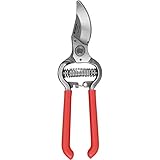
Corona BP 3180D Forged Classic Bypass Pruner with 1″ Cutting Capacity, 1″, Red
Forged alloy and carbon steel blade
1 inch cut capacity
13.6 ounces
Limited lifetime warranty
Pros
- Handles branches twice the Fiskars capacity
- Forged steel scissor action on green wood
- Contoured handles cut hand fatigue
- Sap groove and spring action
- Built-in safety lock
Cons
- Heavier than light garden scissors
- Needs periodic sharpening and cleaning
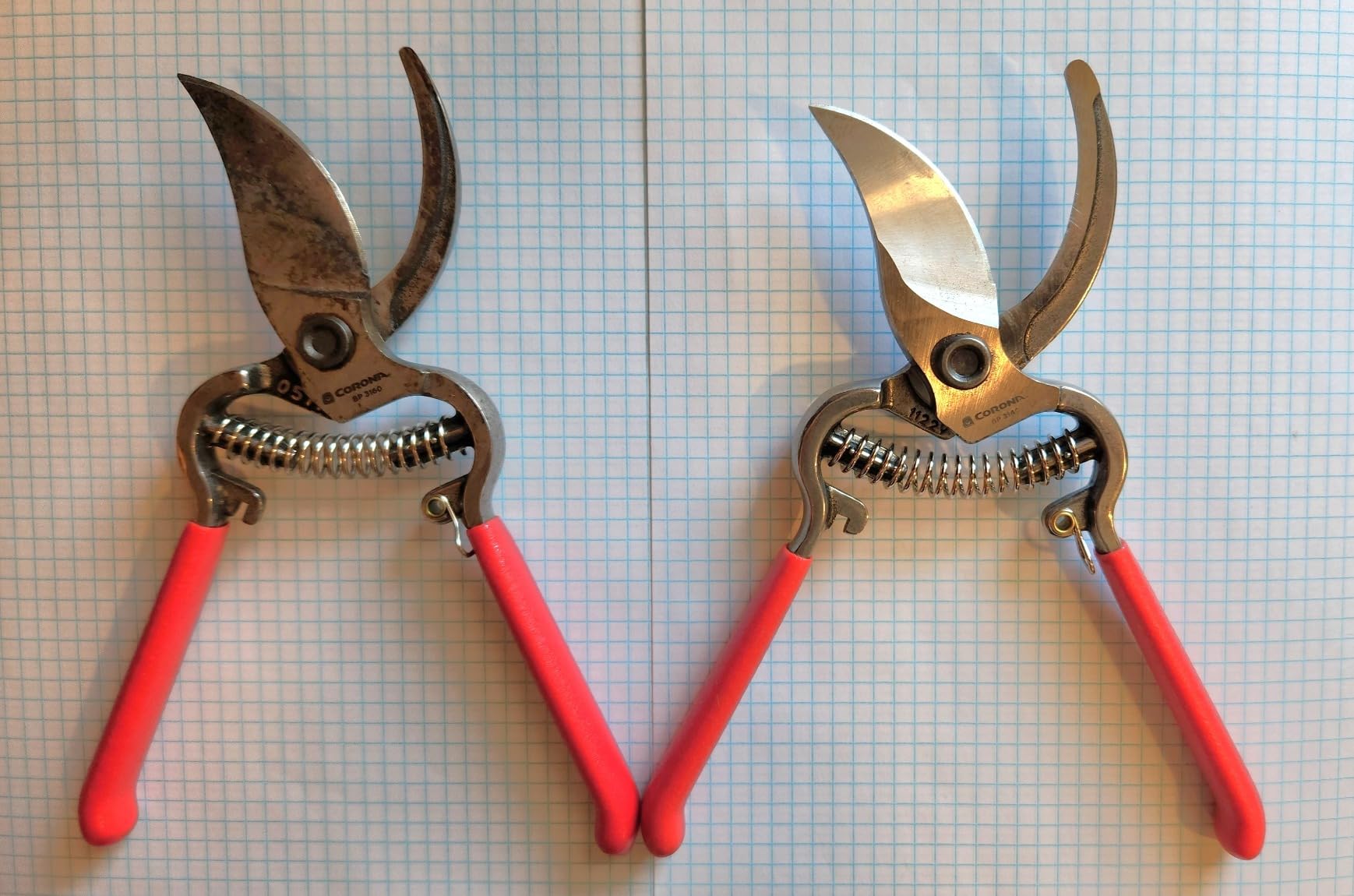
This is the pruner to buy if you have apples, pears, plums or a berry patch with canes. The cut capacity is 1 inch, which is roughly double the Fiskars in pick one, and that single number changes what you can do on a fruit tree in winter.
The forged blade is the other reason. Forging compacts and strengthens the steel compared to a stamped blade, so the edge resists rolling and it stays sharp on hard, old wood. Owners describe the cut as scissor-like rather than crushing, which matters enormously when you are cutting a whole spur of blossom buds back and want the rest of the branch to survive.
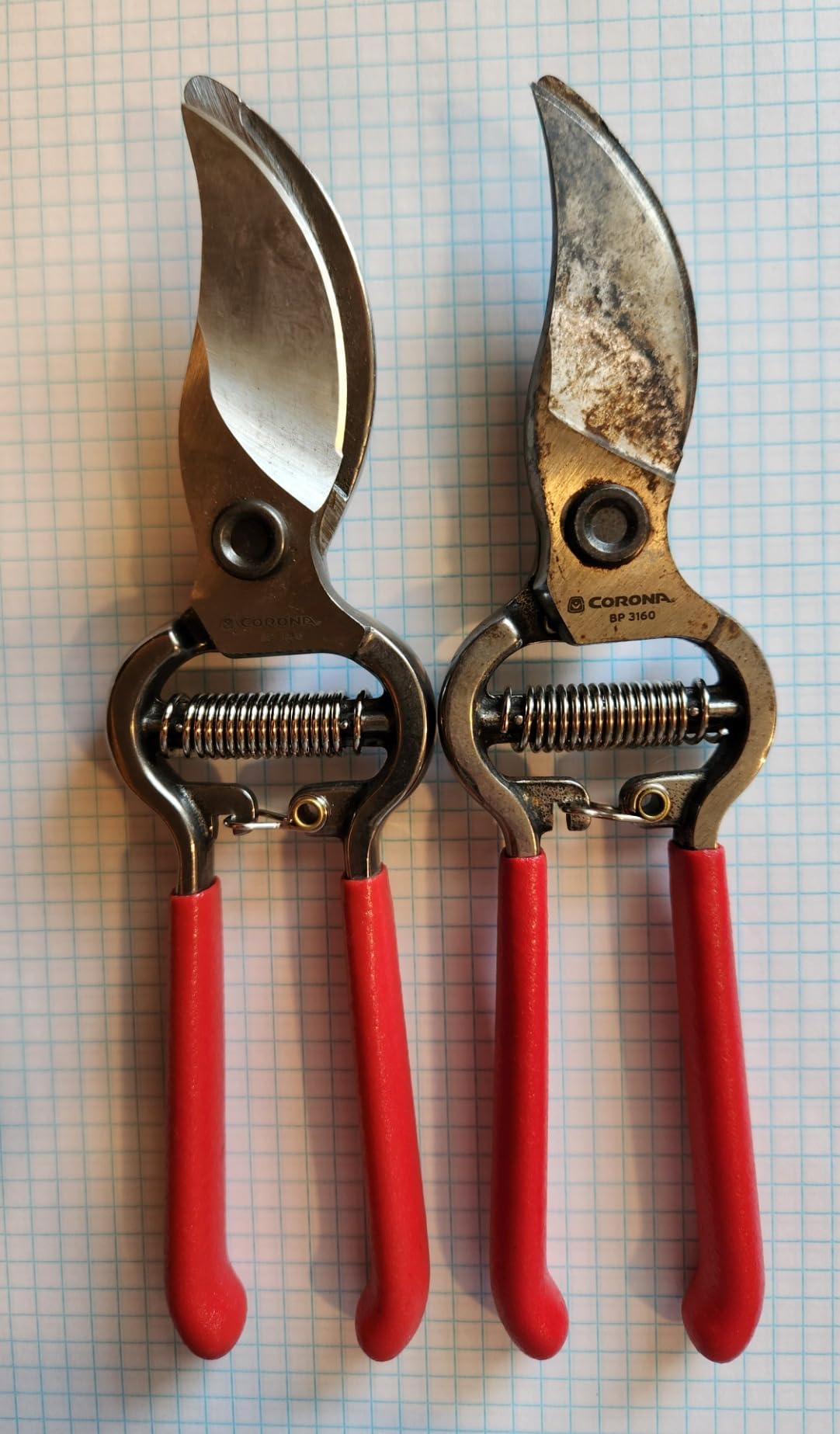
It weighs 13.6 ounces, which is more than twice the Fiskars, and that is not a complaint so much as a trade. The weight is where the cutting power comes from. Dimensions are 8.5 by 1 inches, the handles are contoured red non-slip grips, and it carries a limited lifetime warranty from a brand with a long history in orchard and vineyard tools.
There is an integrated sap groove, a spring-loaded action and a safety lock that keeps the blades shut in a tool belt. About 83% of the more than 6400 reviewers rate it five stars, and the recurring praise is for the 1 inch capacity combined with the forged construction.
When this pruner is the right buy
Prune fruit trees, deal with raspberry and blackberry canes, take out thick perennial stems, and generally handle anything that would make a light pruner stutter. It is the tool we reach for during dormant-season pruning and it handles green wood and dead wood equally well.
When it is the wrong buy
It is too heavy for fine deadheading of flowers and soft herb pinching, where the Fiskars spring action is faster and kinder to the hand. At 13.6 ounces it will tire a smaller hand over a long session, and it needs regular cleaning to stop the sap groove from sticking. There is no substitute for a wipe and a stone after a day on a cherry tree.
6. Edward Tools Carbon Steel Trowel – for clay and rock
Edward Tools Garden Trowel – Heavy Duty Carbon Steel Garden Hand Shovel with Ergonomic Grip – Stronger Than Stainless Steel – Depth Marker Measurements for More consistent Planting
Carbon steel blade
Depth markers on blade
ErgoGrip rubber handle
0.25 kg
Pros
- Carbon steel survives heavy clay and rock
- Depth markers keep planting consistent
- Rubber grip gives real pushing power
- Corrosion-resistant finish
- Lifetime warranty
Cons
- Carbon steel must be dried and oiled
- Heavier than aluminum for long potting sessions
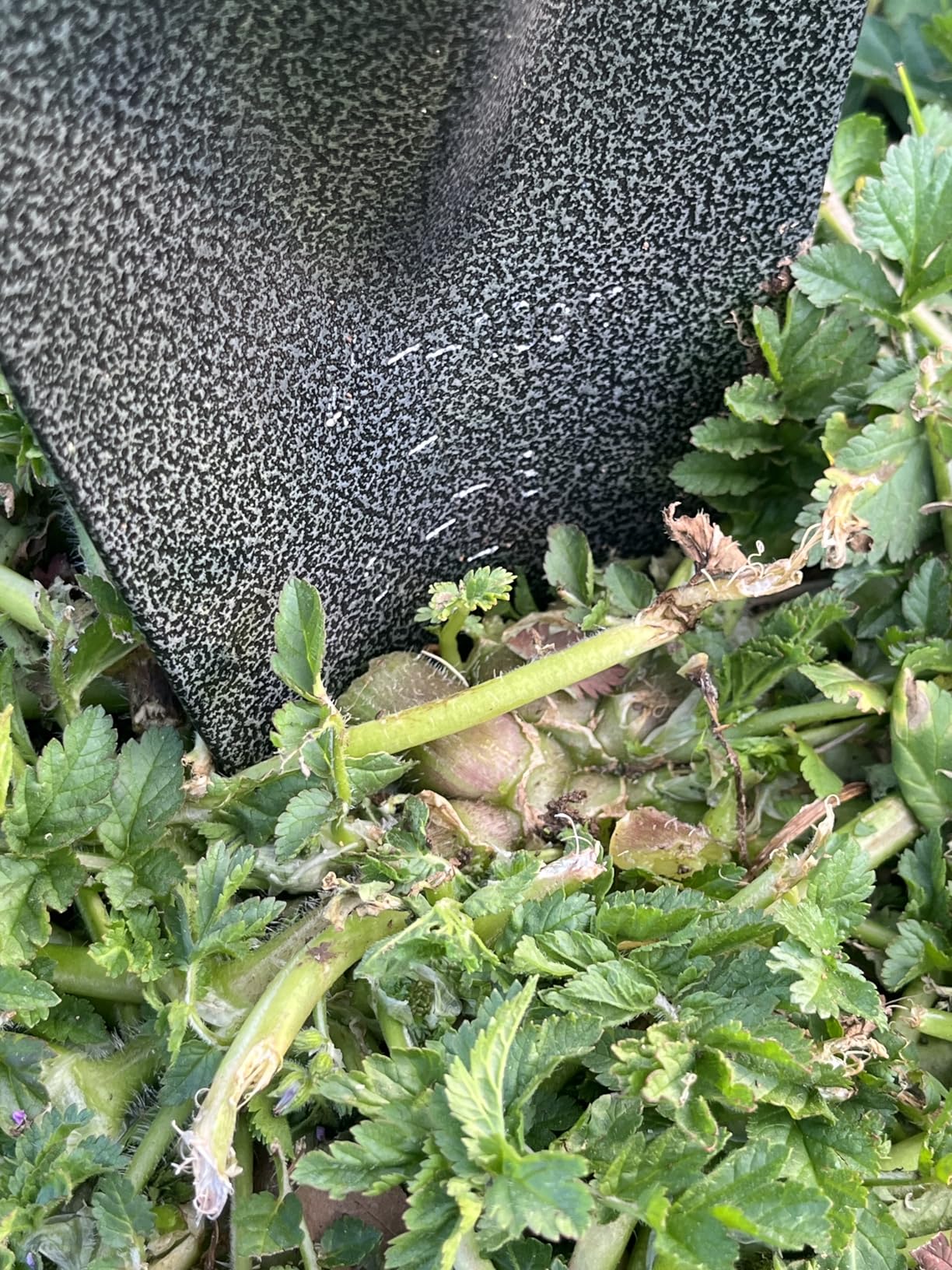
If your homestead has heavy native clay or stones, this is the trowel that survives it. Carbon steel is harder than the aluminum used in pick three, so it resists abrasion and takes a punishing workload without dulling or deforming, and the manufacturer rates it as bend proof and break proof.
The depth markers are the feature we appreciate most in daily use. Stamped measurements on the blade let you set every transplant in a row at the same depth, which is exactly the kind of small consistency that shows up in plant survival a few weeks later.
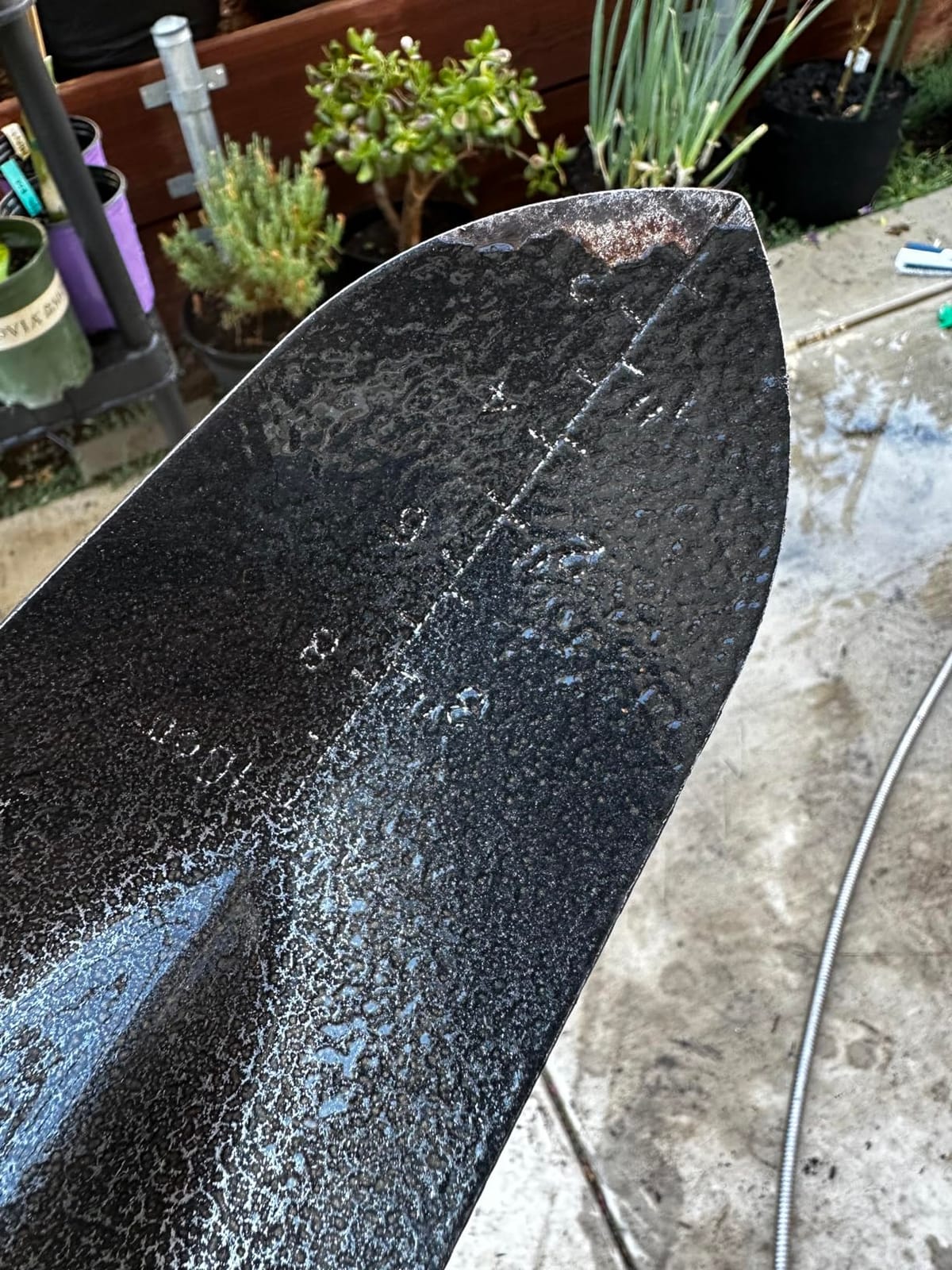
The ErgoGrip rubber handle gives extra pushing force when you are levering a plant out of compacted ground, which is the moment a plastic-handled trowel usually snaps. The handle is carbon steel and stainless steel, weight is 0.25 kg, and it carries a lifetime warranty where the tool is replaced for the life of the product.
Roughly 80% of the more than 4100 reviewers give five stars. Buyers highlight toughness in clay and rocky soil, the usefulness of the depth markers, and the warranty. The one caveat that comes back repeatedly is maintenance: carbon steel has to be dried after use and oiled occasionally, or it will spot and pit.
When this trowel is the right buy
It suits new ground, clay beds, stony fields and heavy dividing work. The rubber grip also gives a better cold-weather grip than bare steel, which matters if you are working early in the spring. If you have ever snapped a cheap trowel in half levering out a dandelion, this is the direct answer to that.
When it is the wrong buy
It is the wrong choice for long potting sessions, because the extra weight adds up over hours, and it is the wrong choice for anyone who will not commit to wiping it dry. The rubber grip will eventually degrade in hard sun over multiple seasons, and the depth markings wear away with use, though the blade will not.
7. Corona 13 Inch RazorTOOTH Pruning Saw – for branches too thick to cut
Corona Tools 13-Inch RazorTOOTH Pruning Saw | Tree Saw Designed for Single-Hand Use | Curved Blade Hand Saw | Cuts Branches up to 7″ in Diameter | RS 7120
13 inch curved blade
SK5 high-carbon steel
Cuts up to 7 inch diameter
Lifetime warranty
Pros
- Razor teeth cut on the pull stroke
- Handles several inch branches and pine
- Curved blade gives reach without a ladder
- Light enough for one-handed use
- Chrome plating reduces friction
Cons
- No sheath included for the sharp teeth
- Wrong tool for small twigs
A pruner handles branches. A saw handles everything else. This 13 inch curved pruning saw takes limbs up to 7 inches in diameter, and the three-sided razor teeth remove far more material per stroke than a typical toothed blade, which is the difference between a cut that takes four pulls and one that takes twelve.
The teeth are impulse hardened and cut in both directions, so you do not have to set up a careful push stroke. That single feature is why it is comfortable for a single hand, and why owners with limited arm strength rate it as highly as people who prune professionally.
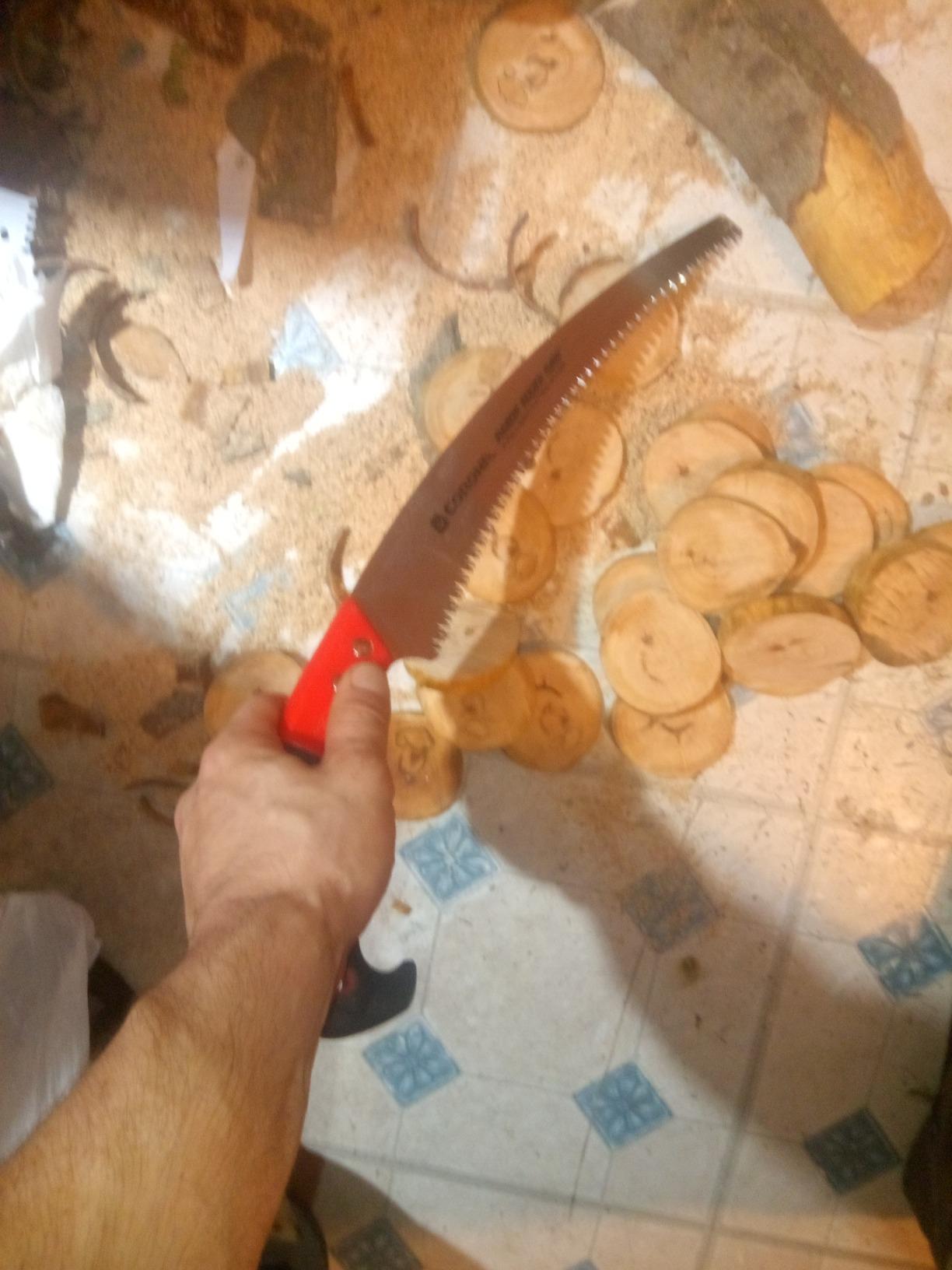
The blade is Japanese SK5 high-carbon steel with chrome plating to reduce friction and slow wear, on a curved profile with a pistol grip handle. It is made for orchard, vineyard and tree work rather than annual garden beds, and it carries a lifetime warranty. Overall dimensions are 19.85 by 4.6 by 1 inches with a 13 inch blade.
About 86% of the more than 1600 reviewers give five stars. Praise concentrates on cutting speed, sharpness out of the box and one-handed comfort on limbs several inches thick. The complaint that shows up most often is packaging: there is no sheath, so the teeth are exposed in the shed.
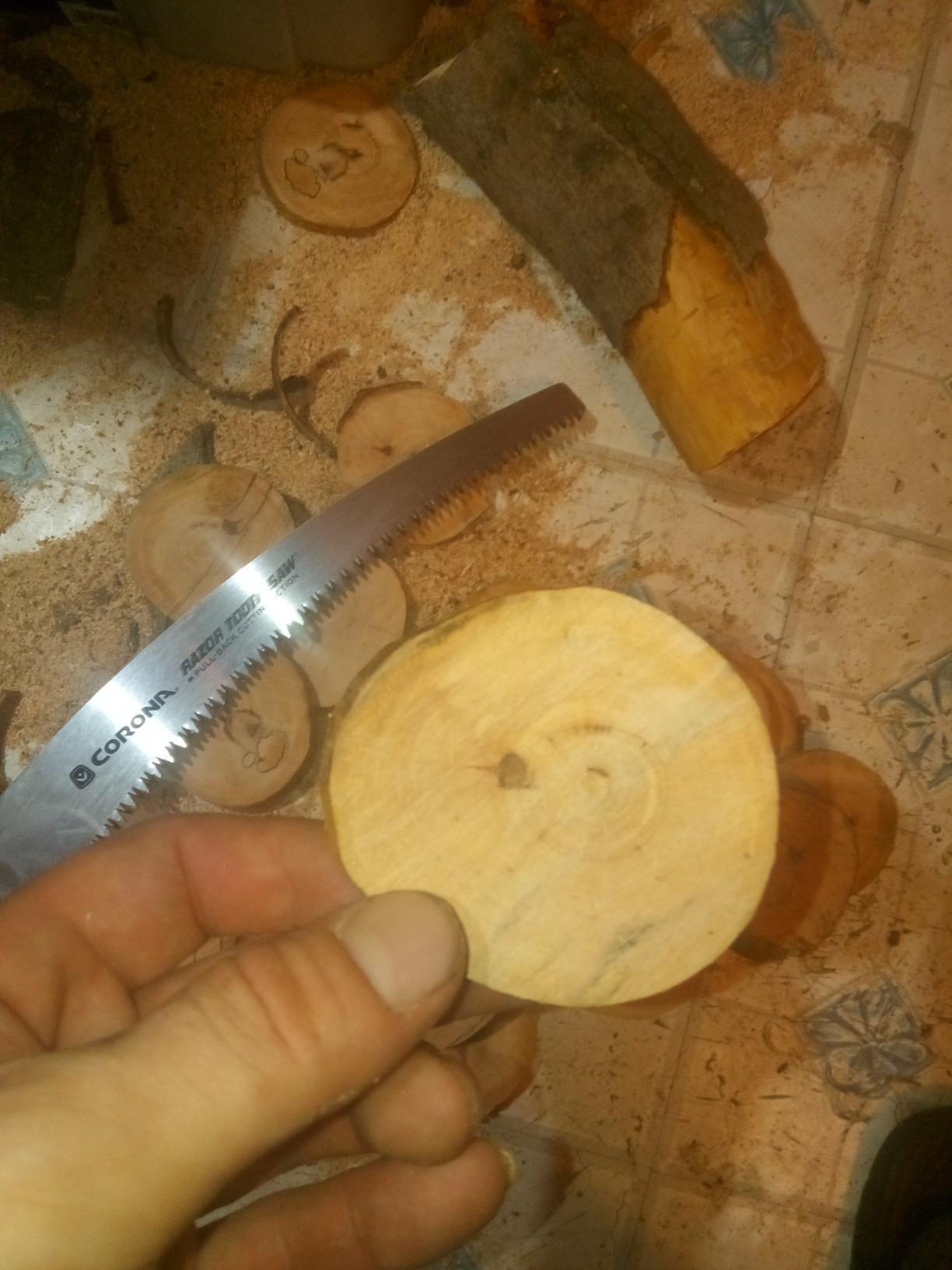
When this saw is the right buy
Winter pruning of apples, peaches and plums, removing storm damage, thinning overloaded branches and taking out old tree limbs are all jobs for it. The curve gives useful reach inside a canopy, which means fewer trips up a ladder. It also handles green wood and hardwood equally well, unlike pruners that bind on dry limbs.
When it is the wrong buy
It is slow and clumsy for pencil-thick twigs, so keep a pair of pruners in the same pocket. Because there is no sheath, you need a blade guard or a scrap of cardboard for transport, and you should hang it away from where children or animals can reach. The teeth are extremely sharp and cut in both directions, so keep the stroke short and controlled.
8. SIXCAR Four-Tooth Weeder – pulls weeds out whole
SIXCAR Weed Remover Tool,Portable Garden Weeder Tool,New Gardening Weeding Tools,for Garden Hand Tools for Vegetable Gardening Backyard Farm Planting & Uprooting Weeding Tool (Rubber Handle)
13.3 inch overall length
Four-tooth steel head
7.8 ounces
Anti-rust polished steel
Pros
- Lifts weeds with roots attached
- Comfortable non-slip rubber grip
- Double duty for raking mulch and litter
- Saves your back on big weed areas
Cons
- Handle can separate from the head on thick roots
- Weaker in hard dry ground
- Sharp surface needs gloves
The four-tooth head is the point of this tool. Where a trowel scoops, this one grips, and the teeth close around the crown and root so the weed comes up whole instead of leaving the part that regrows. On a weedy food plot that difference adds up across hundreds of plants.
At 13.3 inches it also gives enough reach to work between rows without constant bending, and the manufacturer suggests it for orchards and gardens. Owners use it to rake back mulch and leaf litter while working around established plants, so it earns its slot twice over.
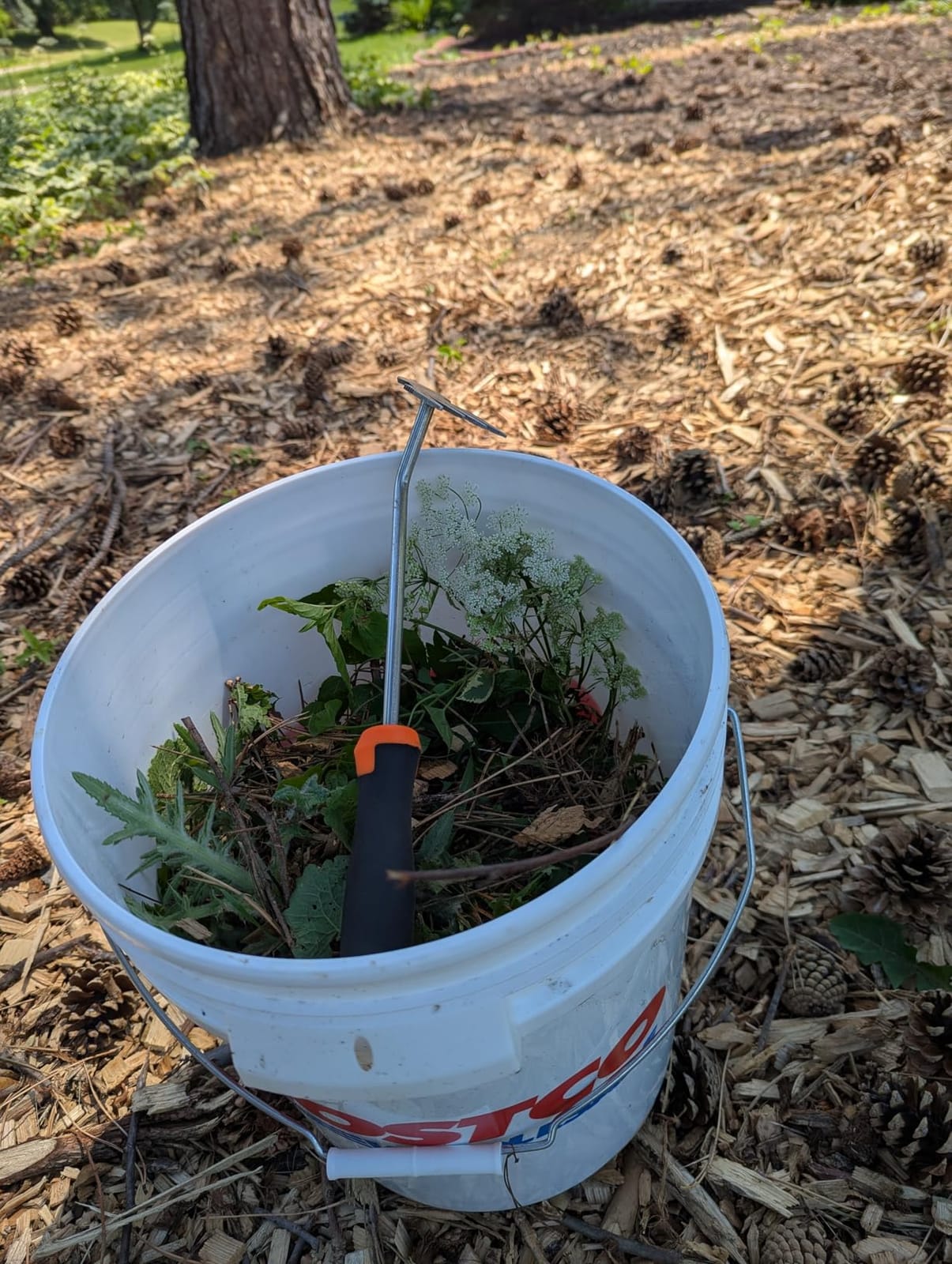
The head is high-hardness anti-rust steel, finished with a stainless polishing process, and it weighs 7.8 ounces at 13.3 by 1.7 by 3.1 inches. The rubber grip is non-slip and does not tire the hand during extended sessions, which matters more than the weight figure suggests on a full day of weeding.
Ratings sit a little below the rest of this list at 4.4, with about 74% five-star and 5% one-star. The grip and the root removal get constant mention, and so does the failure mode: under heavy root-pulling force the handle separates from the steel head, and some owners have had to refit it.
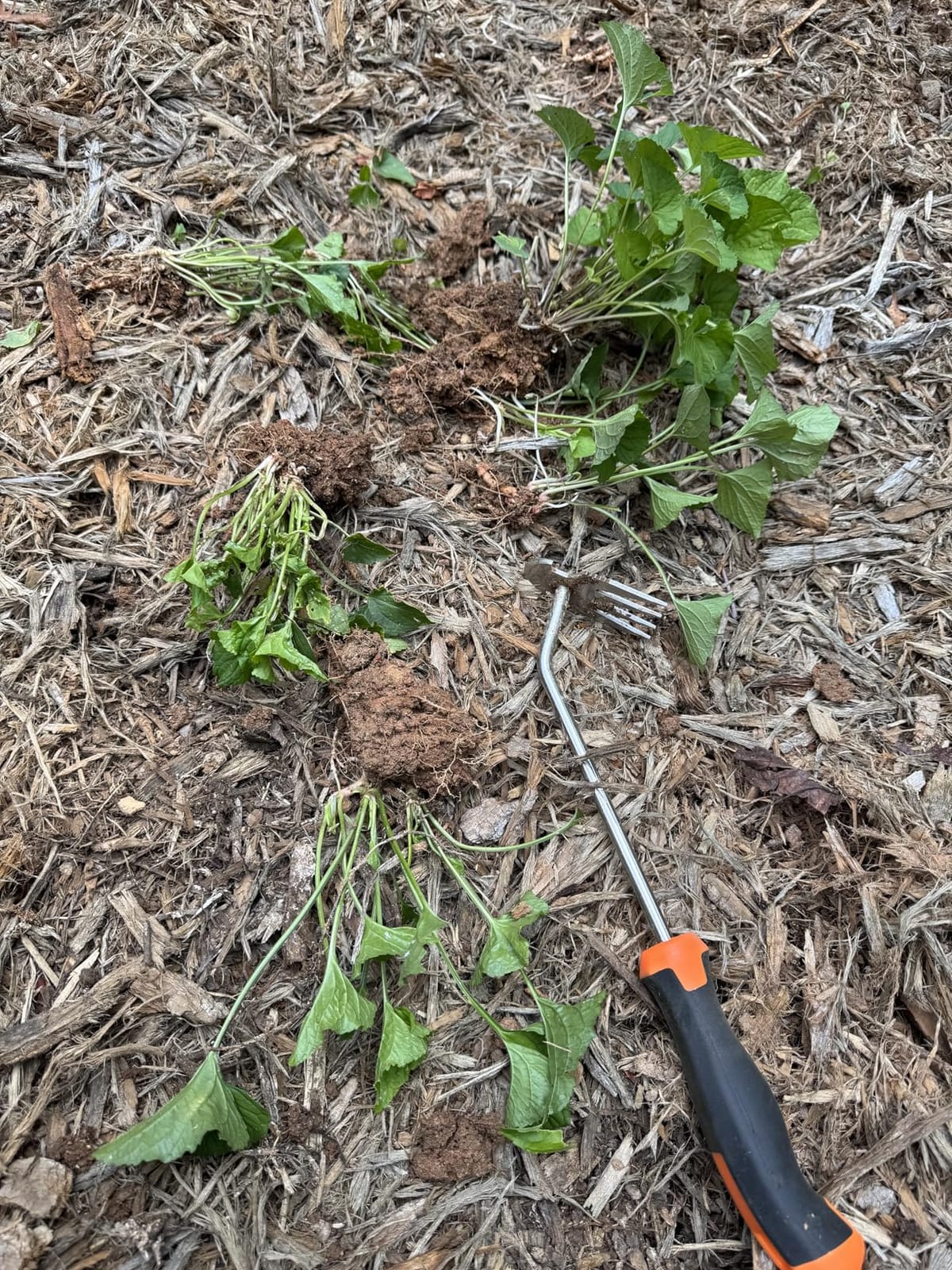
When this weeder is the right buy
It is a good match for wetter, softer ground and for gardeners who want to protect their back during large weed-clearing sessions. It is also the tool to reach for when weeds are established in mulch or ground cover, since it grips rather than slices. Gloves are not optional, because the surface is sharp enough to scratch a palm.
When it is the wrong buy
It performs noticeably worse in hard, dry ground, where the root will break before the teeth get a grip, so the Betus weeder in pick eleven is a better partner for that condition. Anyone doing serious work pulling woody roots or working rocky ground will also find the head-to-handle joint under too much strain.
9. Edward Tools Hoe and Cultivator – three jobs in one handle
Edward Tools Hoe and Cultivator Hand Tiller – Carbon Steel Blade – Heavy Duty for loosening Soil, Weeding and Digging – Rubber Ergo Grip Handle – Rust Proof
Three-in-one hoe, cultivator and spade head
Solid oak handle
13.6 ounces
Rust proof carbon steel
Pros
- Solid oak handle built to last decades
- Carbon steel head does not bend
- Spade end lifts weeds with roots
- Ergonomic rubber grip for long sessions
Cons
- Heavier than most similar hand tools
- Fork end lifts poorly and is only for light tilling
- Half-screw attachment can work loose
Wood handles are the underrated part of this tool. The solid oak shaft is the kind of component you can oil every couple of seasons and keep for a decade, and it also absorbs shock rather than passing every impact straight into your wrist. Plenty of professional gardeners report it is still on their bench after years.
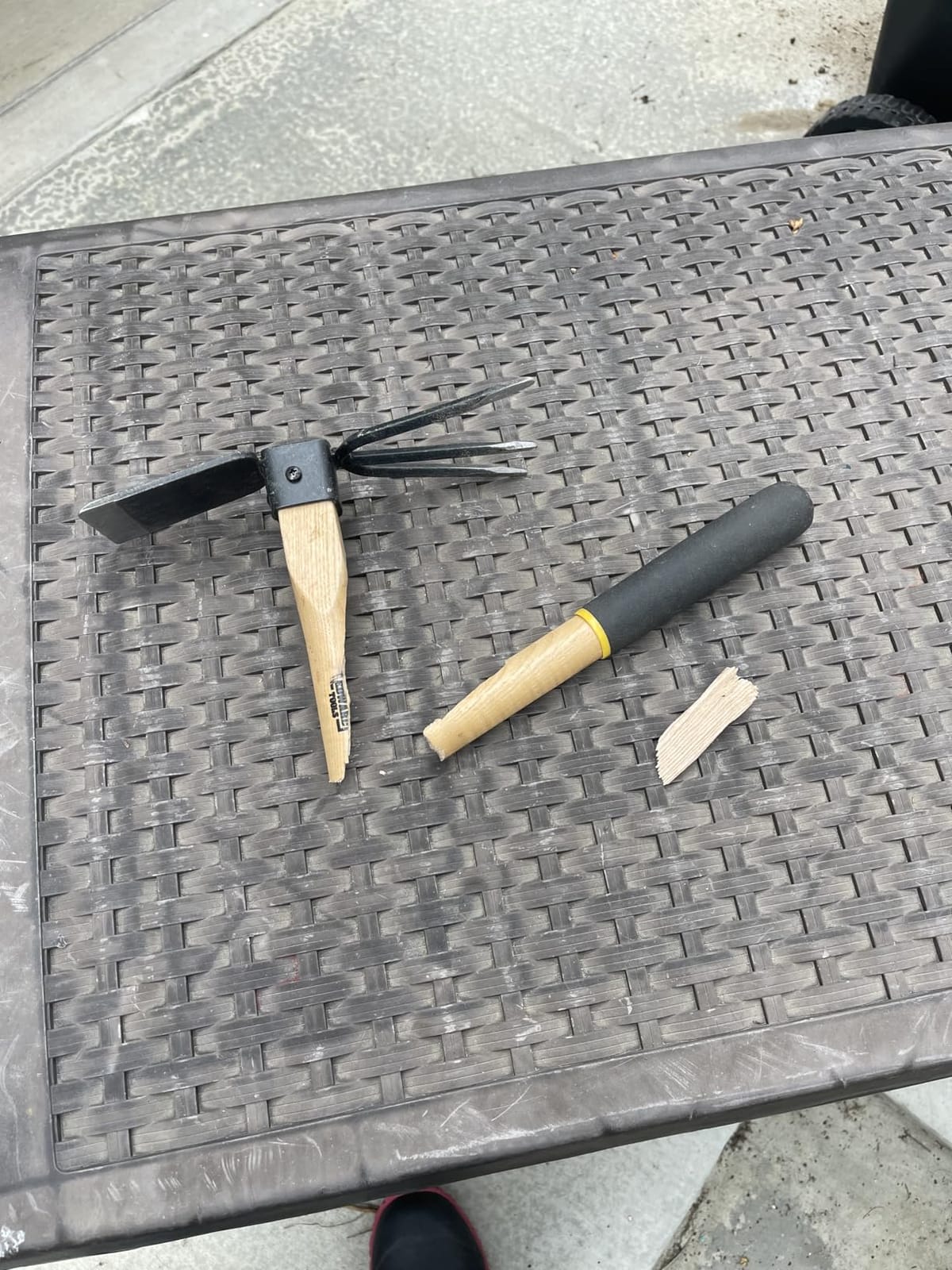
The three-in-one head is the practical part. One end is a hoe for chopping weeds at the soil line, one is a cultivator for loosening the surface, and the third is a small spade that many owners say is far more useful than the fork for lifting weeds with their roots intact.
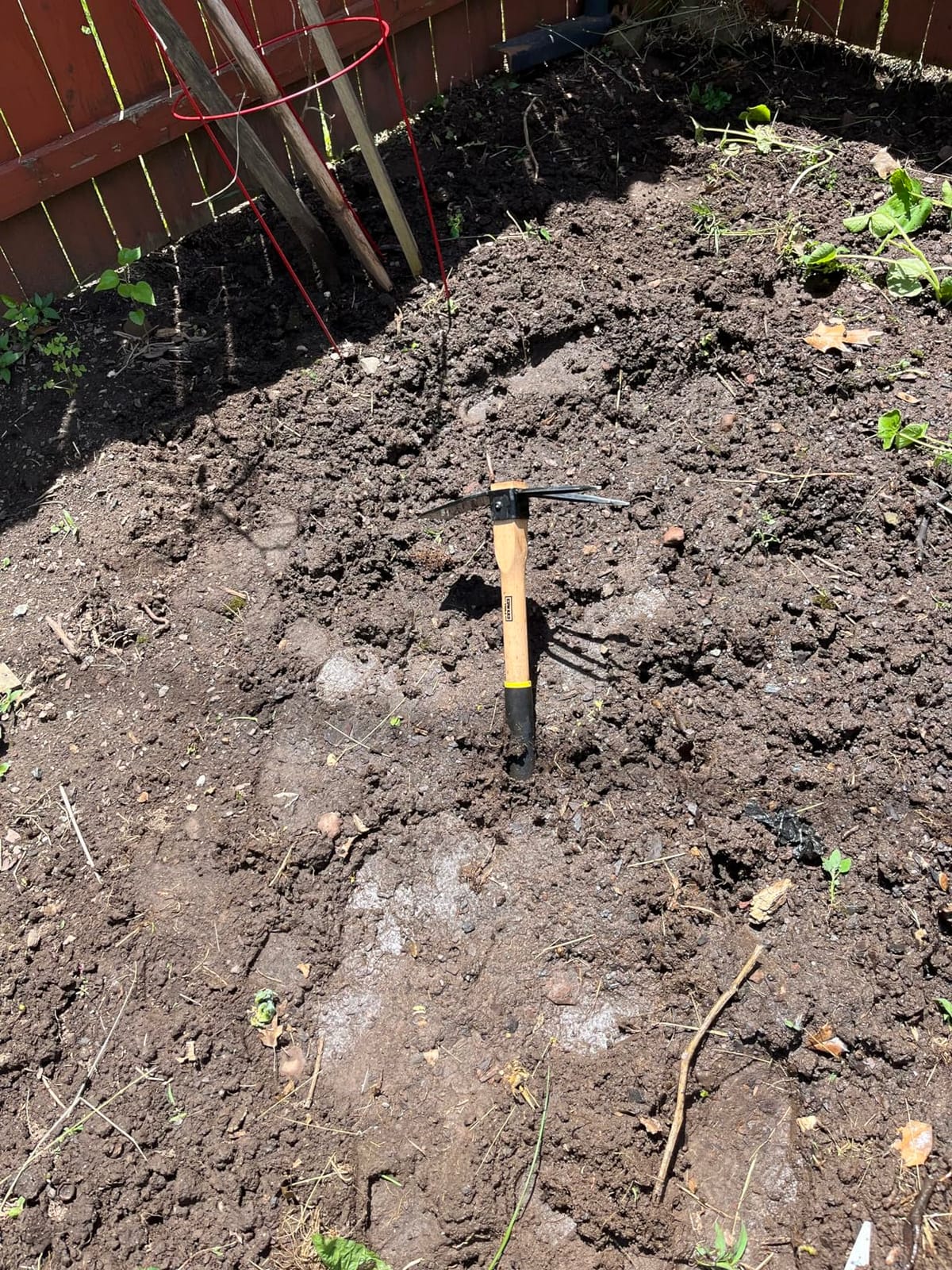
The head and blade are carbon steel rated for heavy duty work, and the tool weighs 13.6 ounces. The ergonomic rubber grip sits at the end of the oak handle, adding comfort and grip for extended weeding. About 79% of the more than 2200 reviewers rate it five stars, and the recurring positives are the oak handle and the non-bending steel head.
The negatives are honest and worth weighing. It is heavier than most similar hand tools, the fork end lifts poorly, and the half-screw handle attachment can work loose over time. Owners do say the spade end more than makes up for the weak fork.
When this tool is the right buy
It suits a homesteader who wants to carry fewer implements into a bed, which is the entire argument for a multi-headed tool. Between hoe, cultivator and spade, it covers the daily jobs of breaking surface crust, chopping weeds before they seed and undercutting roots in a weedy bed without bending for each one.
When it is the wrong buy
It is not a substitute for a dedicated rake or a proper spading fork. The weight will tell on you in a long session, and anyone with a hand or wrist problem should look at a lighter aluminum option. Check the handle screw periodically, because that is the part most likely to need tightening, and oil the oak at the start of each season.
10. Garden Weasel Transplanter Trowel – for moving plants without root damage
Garden Weasel Multi-Use Transplanter Trowel for Digging Planting Weeding
6 inch serrated blade
Built-in depth gauge
Thermoplastic rubber grip
Transplanter
Pros
- Serrated edges cut roots a plain trowel stalls on
- Depth gauge makes transplanting repeatable
- Ergonomic grip with hang hole
- Covers digging
- planting
- cultivating and weeding
Cons
- Narrow blade moves less soil
- Narrower than wide digging trowels
A transplanter is built around one problem, which is moving a plant with its root ball intact. The narrow, deep, serrated blade slides down the side of the root ball and cuts the soil around it, so you lift the plant rather than tearing its roots apart. It is the tool that made our seedling transplanting days noticeably shorter.
Those serrations are the differentiator. A plain trowel simply stalls when it meets a dense root mat, and owners consistently report that this one slices through it, which is exactly what you need when dividing crowded perennial clumps or setting out bare-root stock.
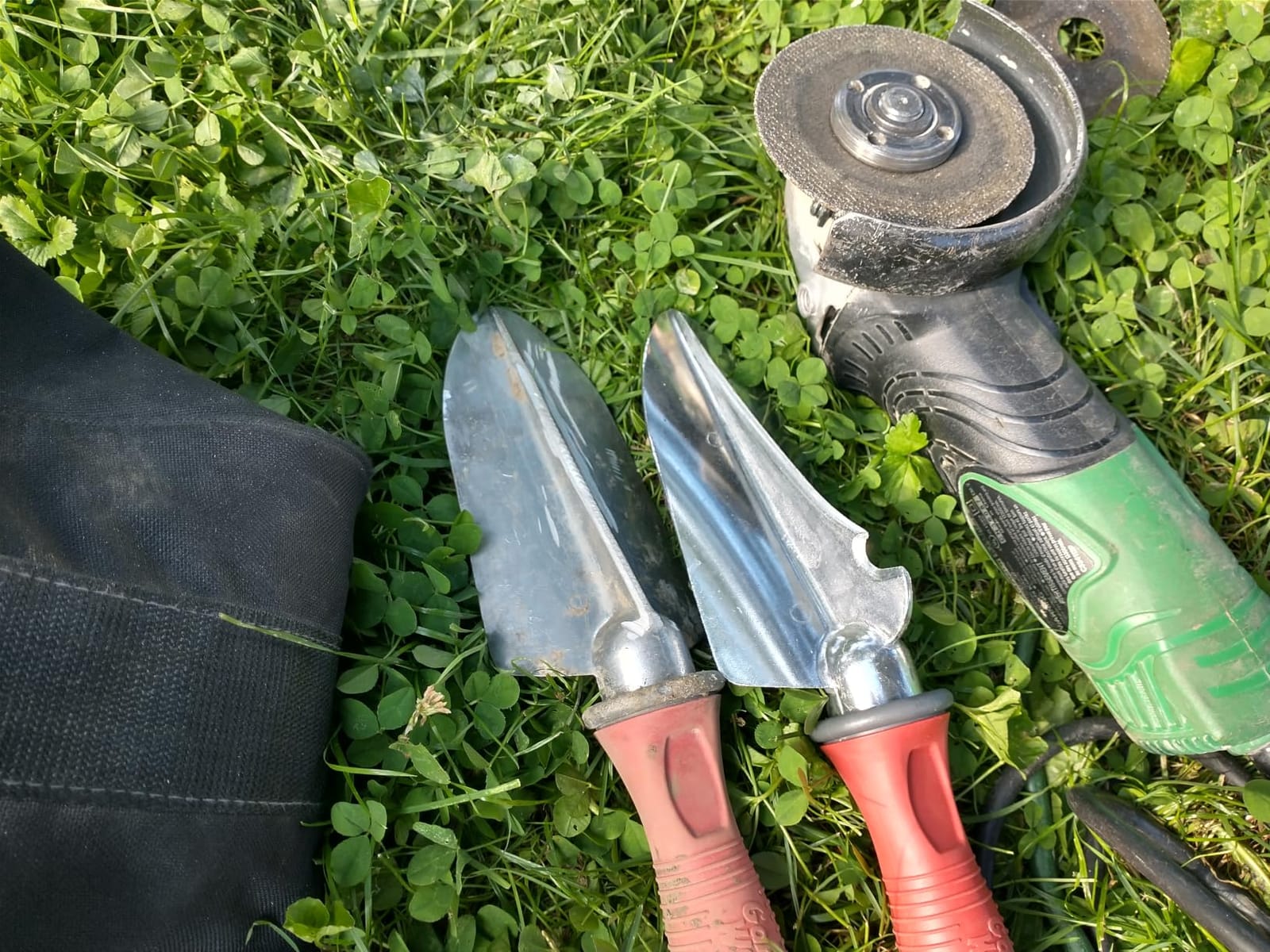
The 6 inch blade sits in a 13 inch overall body with a thermoplastic rubber comfort grip and a hang hole for storage. The built-in depth gauge is the second feature we use constantly, because it makes every transplant in a row land at the same depth. The tool is backed by a lifetime guarantee against defects and US-based customer support.
Roughly 89% of the more than 2200 reviewers rate it five stars, with the serrations, the depth gauge and the build quality named as the reasons it outperforms cheaper transplanters. The limitation is simple and honest: it is a planting tool, not a bulk digging tool.
When this transplanter is the right buy
Use it for transplanting seedlings, potting on, dividing perennials, setting bulbs at a consistent depth and working in containers. It is also the sensible companion to a larger trowel, because it handles the delicate work while the other tool handles the digging. Owners with root-heavy clay gardens rate it unusually well.
When it is the wrong buy
It moves very little soil per stroke, so it is a poor choice for digging planting holes in heavy ground or for moving soil around. If your beds are new and unbroken, a heavier digging tool is what you need first. The narrow blade also means more trips for big jobs.
11. Betus Manual Hand Weeder – a fulcrum for dead dandelions
Betus Manual Hand Weeder – Bend-Proof Leverage Base for Super Easy Weed Removal & Deeper Digging – Sturdy Chrome Plated Steel – Compact Dandelion Weed Puller Tool for Yard Lawn and Farm
Leverage base foot
V-shaped notch
5 ounces
13 inch chrome plated steel
Pros
- Leverage base acts as a fulcrum for less effort
- V-notch grips deep and removes roots whole
- Compact and easy to carry
- Works in dry conditions
Cons
- Tines can bend under normal use
- Weak on very small shallow-rooted weeds
- Short handle means working low to the ground
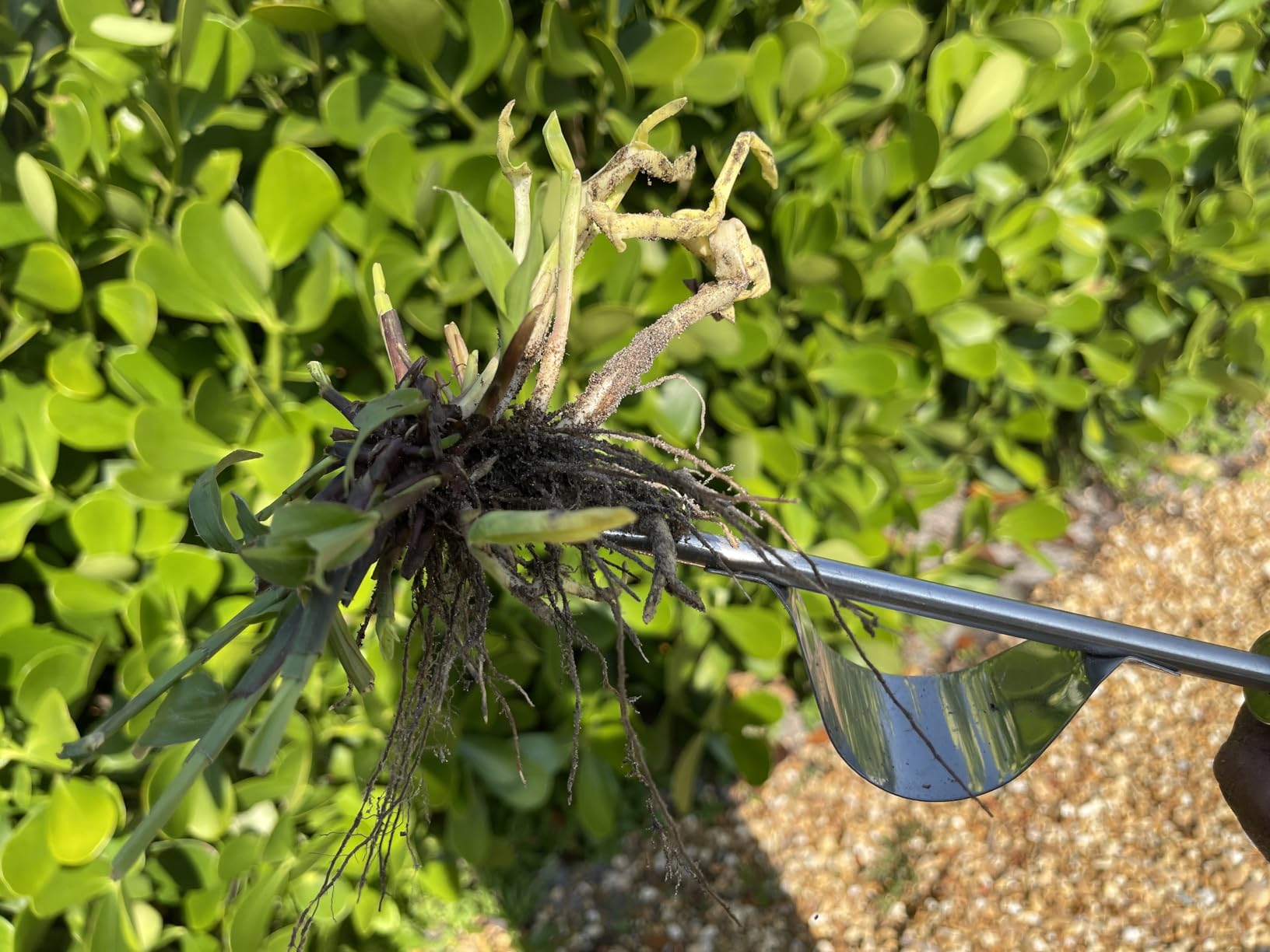
This is the cheapest sensible tool in the roundup and the only one built around leverage. The base is a flat foot you press into the soil, and the V-shaped notch bites in above it. The foot becomes a fulcrum, so a weed that will not budge by hand comes up with a fraction of the effort.
Owners use it on dandelions, thistles and burdock, which is a fair test since those are deep-rooted and stubborn. It is also one of the few hand weeders that works in dry conditions, where most competing tools just slide off the crown.
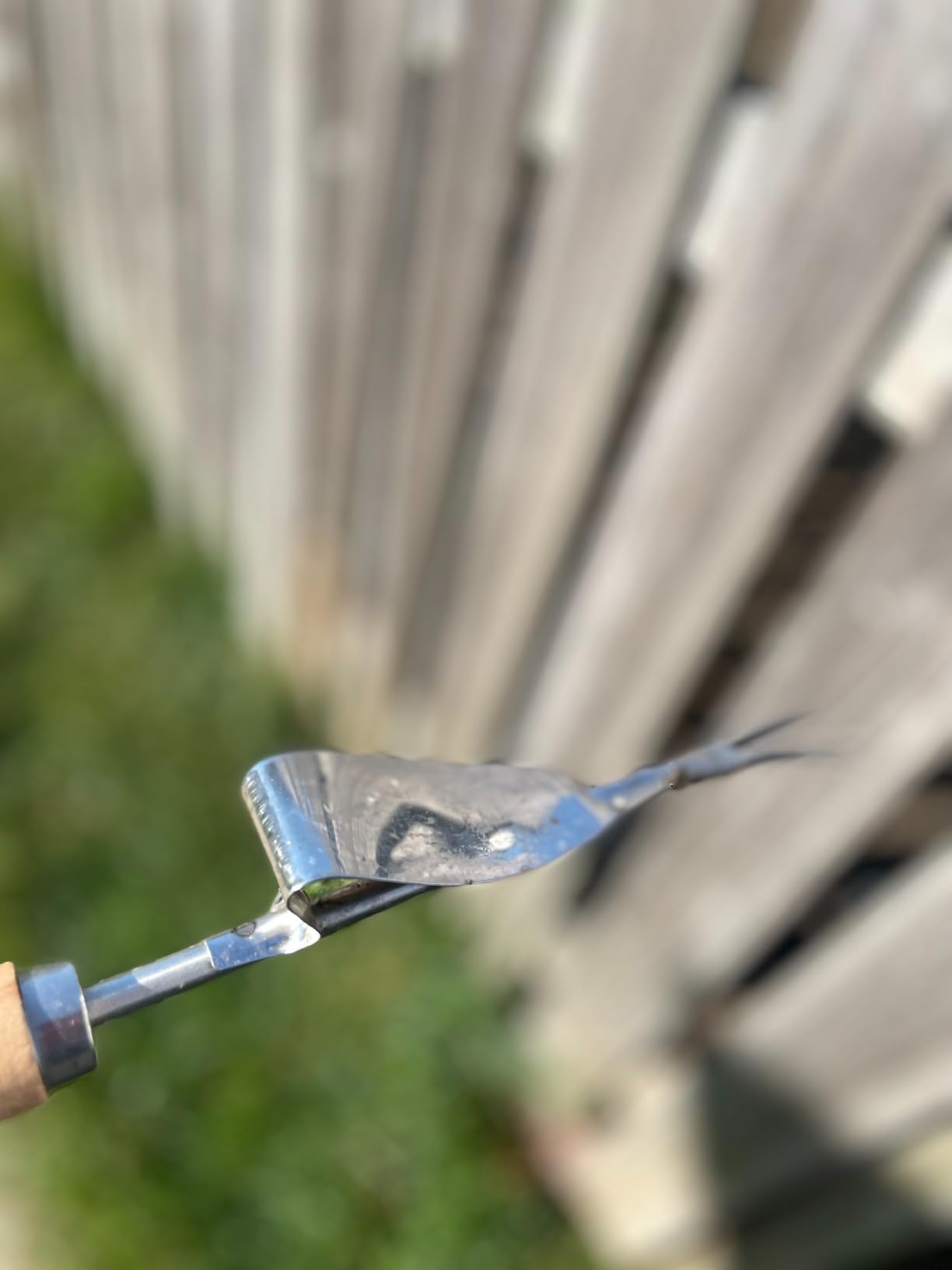
Construction is chrome plated steel with a wood handle, 5 ounces, and 2 by 2 by 13 inches. It is compact enough to keep in a back pocket, and the short length means it is genuinely good for working in tight spots around existing plants. The warranty is 1 year, the shortest coverage in this list.
Ratings come in at 4.4 with about 68% five-star and 16% four-star, so it is more polarising than the picks at the top. Buyers like the mechanical advantage, the sturdy feel and the value. The recurring complaint is that the tines are cheaply made and bend backwards after a few weeks, and 4% rate it one star.
When this weeder is the right buy
It is a good pick for the lawn, the orchard edge and the paths between beds, especially if weeds are dry and you want to avoid herbicides entirely. The short handle and compact body make it easy to use in tight spaces where a full-size tool cannot fit, and the low weight suits anyone with hand trouble.
When it is the wrong buy
It is not a vegetable bed tool. Because the handle is short, working a large bed with it means kneeling or stooping for long stretches, which is hard on knees and back. If you have hard clay and deep woody roots, expect the tines to deform and look for a heavier tool instead.
12. Root Slayer Heavy Duty Trowel – for the garden full of tree roots
Root Slayer 16011 Heavy Duty Garden Trowel, Red
Powder-coated carbon steel blade
Ripsaw serrations
Inverted V tip
340 g
Lifetime warranty
Pros
- Side serrations cut roots and compact clay
- Inverted V tip slices tap roots cleanly
- Corrosion-resistant coating
- Hand size gives control around plants
- Lifetime warranty
Cons
- Hand size is for smaller root masses
- Not a substitute for a shovel
- Blade can snap if used for prying
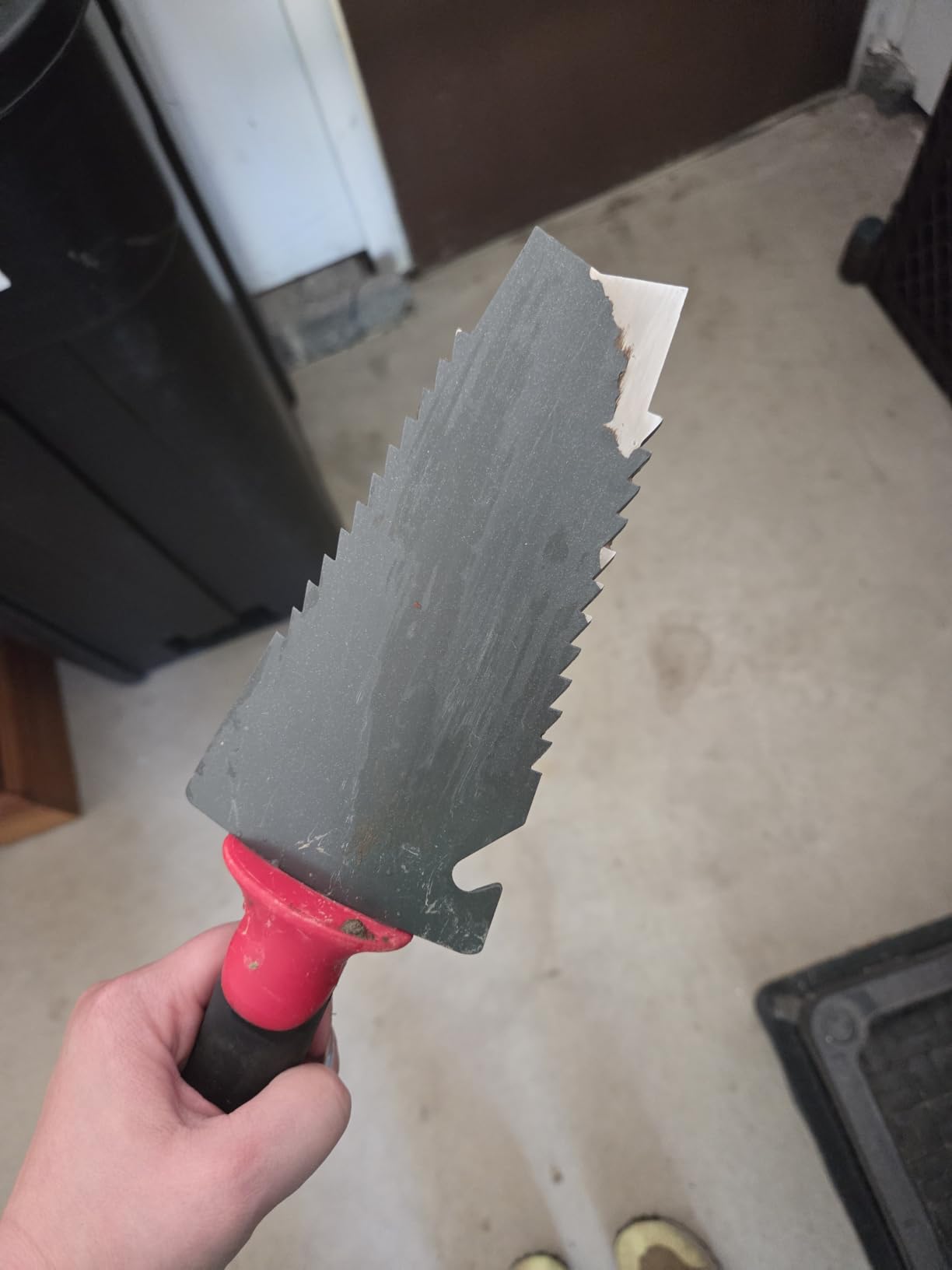
Owners with root-heavy clay gardens describe this as the only trowel they use, and the reason is visible. Both sides of the blade carry dozens of ripsaw-style serrations, so it cuts in any direction, and the tip is a sharp inverted V that slices straight through a tap root instead of riding over it.
That combination matters in older ground near fruit trees or where a previous garden ran deep-rooted crops. A normal trowel simply cannot get through that mat, and this one is built specifically to do so.
The blade is powder-coated carbon steel with corrosion resistance, and the handle is a non-latex thermoplastic grip over a reinforced polypropylene core, a combination designed to stay comfortable through long sessions. Weight is 340 grams at 12.75 by 3.5 by 2.25 inches, and it carries a lifetime manufacturer warranty with a replacement service.
About 85% of the more than 1500 reviewers give five stars, and the durability comments reference years of work rather than seasons. The stated limits are its hand-size scope, that the full-size model handles bigger root masses, and the obvious warning that it is not a digging shovel.
When this trowel is the right buy
It suits established beds with roots in them, clay ground, new planting around existing shrubs, and weeding where tap roots are the problem. The hand-size format also gives better control in containers and between crowded plants than a longer trowel. If you like one tool for a rough, rooty garden, this is the one we would pick.
When it is the wrong buy
It is a hand tool, not a shovel, so it will not cut sod, move soil or dig post holes. Never use it to pry stones out of the ground, because the blade will snap. Anyone with larger root masses or bigger acreage should step up to the full-size version of the same design rather than stretching this one.
13. Edward Tools Mini Hand Rake – for beds you work kneeling down
Edward Tools Hand Cultivator Mini Rake – ErgoGrip with Bend Proof Carbon Steel Design – Hand Tool loosens Soil, rips Out Weeds, Hand Tiller Garden Tool – Rust Proof Heavy Duty Tines and Shaft
Bend-proof carbon steel tines
ErgoGrip handle
0.2 kg
Compact format
Pros
- Carbon steel tines resist bending in clay
- ErgoGrip gives real pushing force
- Compact size works in tight beds
- Good for loosening soil and pulling weeds
- Lifetime warranty
Cons
- Small tine head means more passes on big beds
- Lightweight for very compacted ground
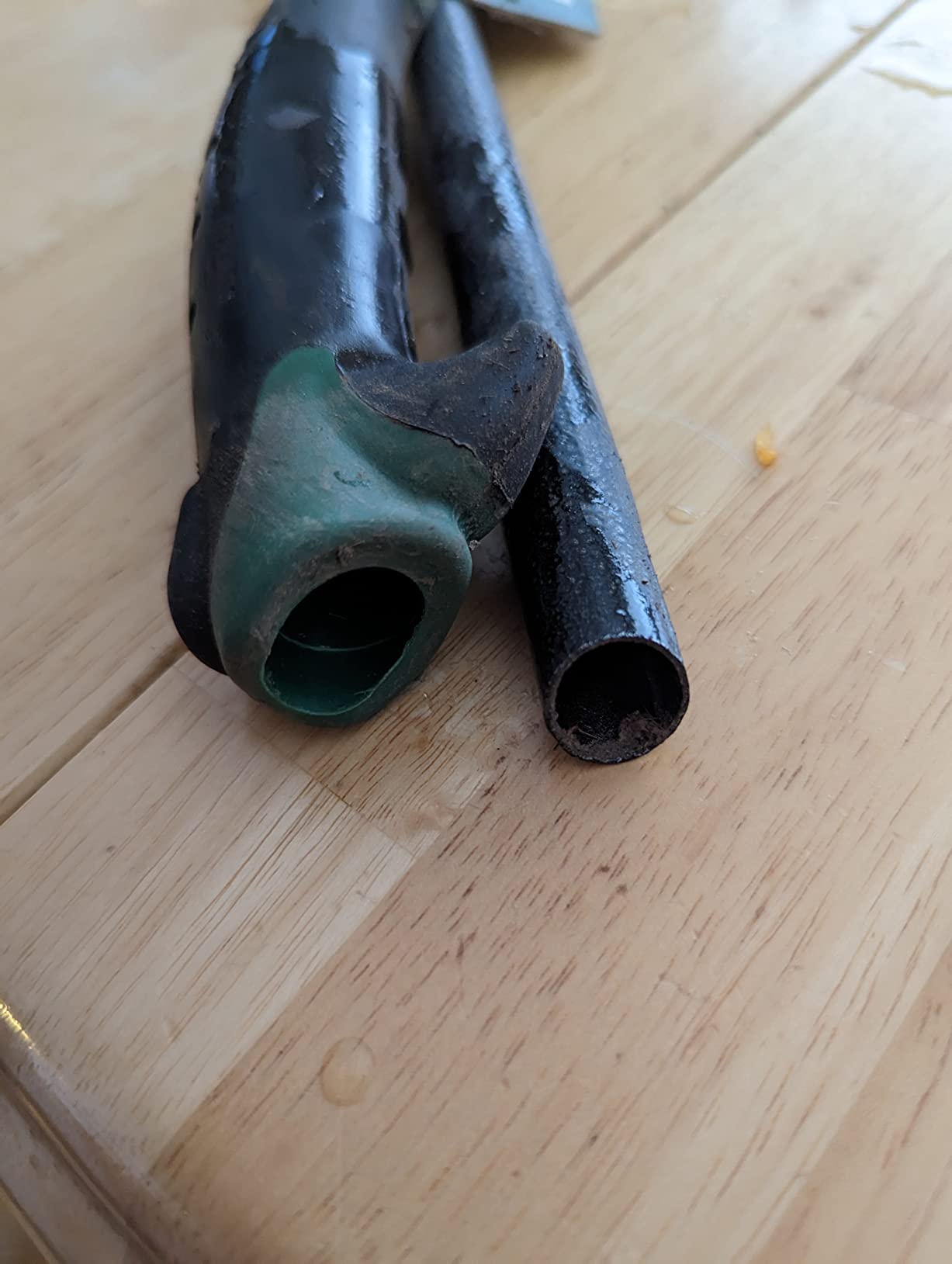
A rake with a 10 inch handle is a genuinely different tool from a full-length garden rake. You use it sitting or kneeling at the edge of a bed, working compost, breaking crust and pulling weeds from between plants where you could never get a standing tool into the space.
The carbon steel tines and shaft are the selling point. They are designed to resist bending and breaking, which is what separates a rake that survives hard clay from one that folds after a season. Owners working rocky ground specifically call that out as the reason they keep buying this one.
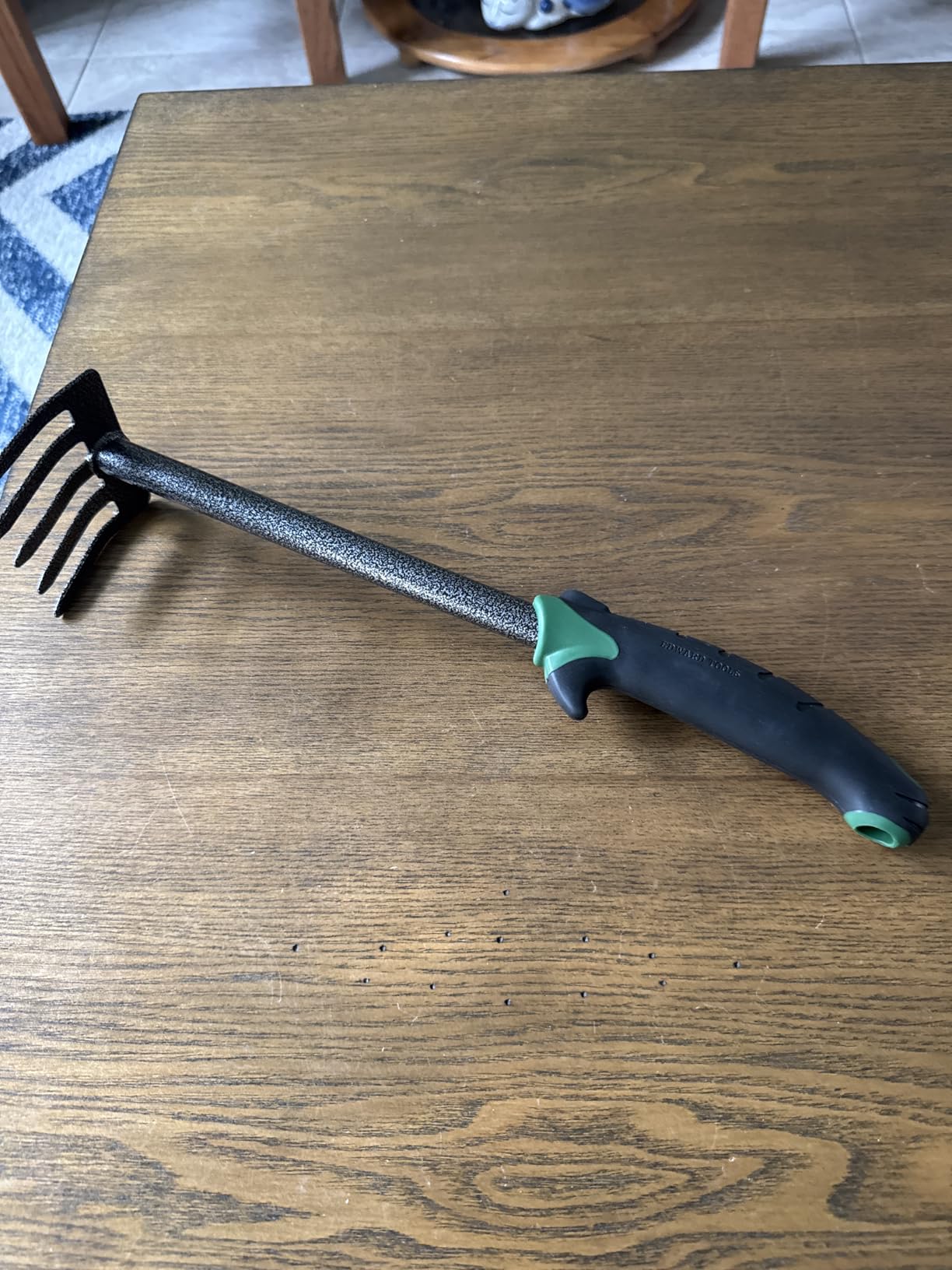
The ErgoGrip handle adds leverage for raking compacted ground, weight is 0.2 kg, and it carries a lifetime warranty where the tool is replaced for the life of the product. Buyers list loosening soil, ripping out weeds and clearing small debris as the working uses, and the compact format is the reason most of them reach for it.
About 77% of the more than 1100 reviewers give five stars and 15% give four. The tine strength and the grip are praised, and the small head is described as a benefit in tight spaces and a limitation on larger beds, which is the trade you make deliberately.
When this rake is the right buy
Raised beds, intensive vegetable plots, weeding around transplants and working compost are its natural territory. It is also the right choice for anyone who gardens from a kneeling position, since a long rake is useless at that height. The handle geometry adds the force needed for compacted ground without a heavier tool.
When it is the wrong buy
Do not expect it to condition a large bed. The small tine head means a lot of passes for a lot of ground, and at 0.2 kg it does not have the mass for very compacted or stony soil. Anyone with back or knee problems should also note that this is a kneeling tool by design.
14. Garden Guru Stainless Steel Hand Rake – the gentlest on wrists
Garden Guru Stainless Steel Hand Rake Soil Tiller with Ergonomic Handle, Great for Gardening, Cultivating, Loosening Soil & Spreading Mulch, Raking Flower Beds
Stainless steel tines
Ergonomic grip
0.19 kg
Lifetime warranty and 90 day guarantee
Pros
- Stainless tines resist fracturing and warping
- Handle reduces hand and wrist fatigue
- Works around delicate stems
- Handles soil
- mulch and cultivation
- Lifetime warranty
Cons
- Not heavy enough for compacted or rocky soil
- Small head needs multiple passes
This rake is built around a specific problem, which is hand and wrist fatigue during long cultivating sessions. The ergonomic grip spreads pressure across the palm instead of concentrating it in the fingers, and it makes a measurable difference over a full morning of bed work compared with a plain straight handle.
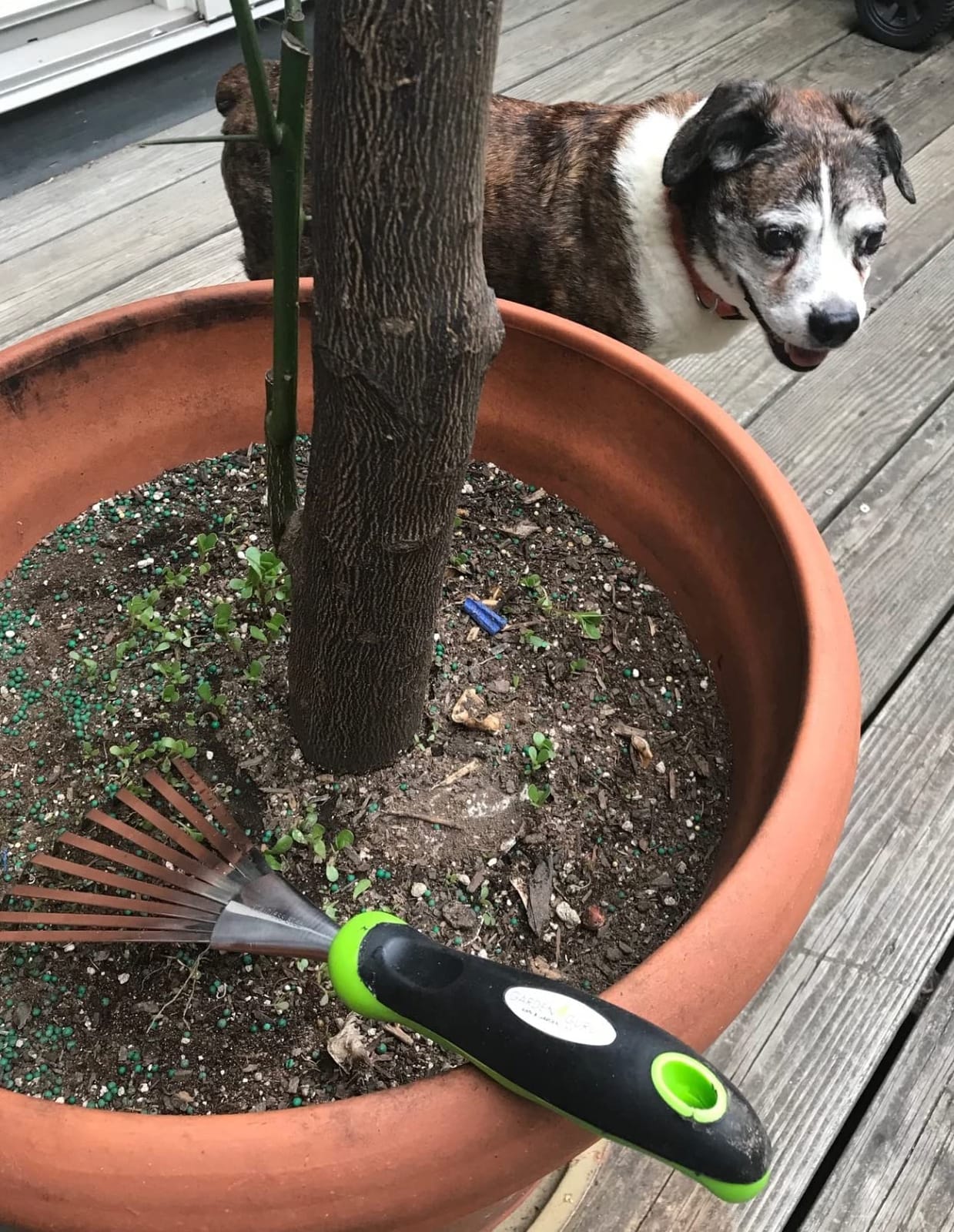
It is also the most pleasant to use in flower beds. The stainless tines are fine enough to move around small stems without snapping them, so it works between perennials and annuals where a stiffer rake would do damage.
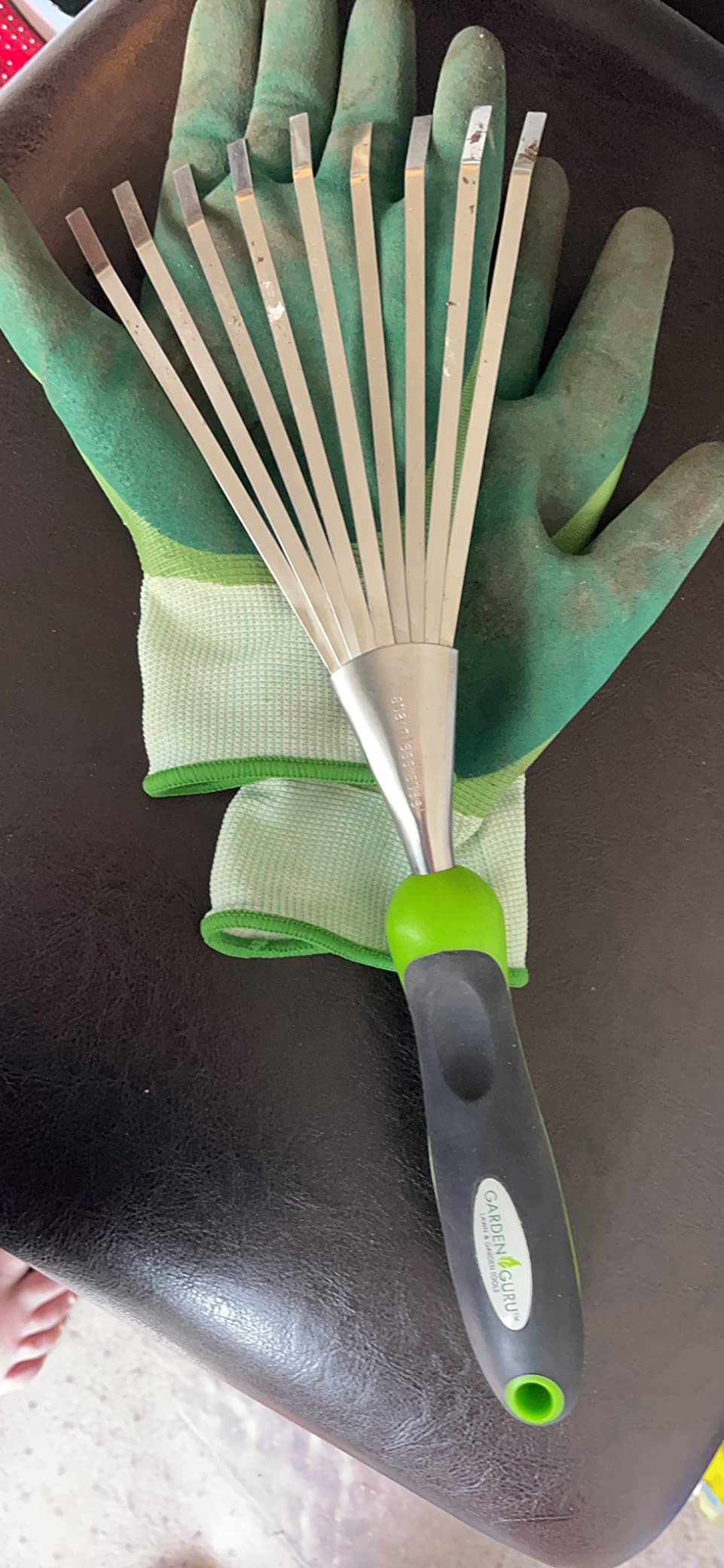
Stainless steel tines resist fracturing and warping compared with cheaper cultivators, which is the durability argument for the material. Weight is 0.19 kg, and it is covered by a lifetime warranty plus a 90 day no-questions-asked satisfaction guarantee. The company also makes a point of recycled materials and a carbon neutral certification.
About 83% of the more than 970 reviewers give five stars and 11% give four. The tine durability, the comfortable grip and its usefulness for cultivating beds and spreading mulch come up repeatedly, and the stated limits are light-duty capacity and the small head size.
When this rake is the right buy
Flower beds, mixed borders, mulching and everyday top-dressing work are where it earns its keep, and it is the one to pick if recurring wrist or hand ache is already part of your gardening life. It also handles damp soil without any corrosion worries, since stainless does not rust.
When it is the wrong buy
It is not a tool for breaking new or compacted ground, and the small head means repeated passes for larger areas. If you need something heavy and aggressive, go with the Edward mini rake in pick thirteen or the claw rake in pick fifteen instead.
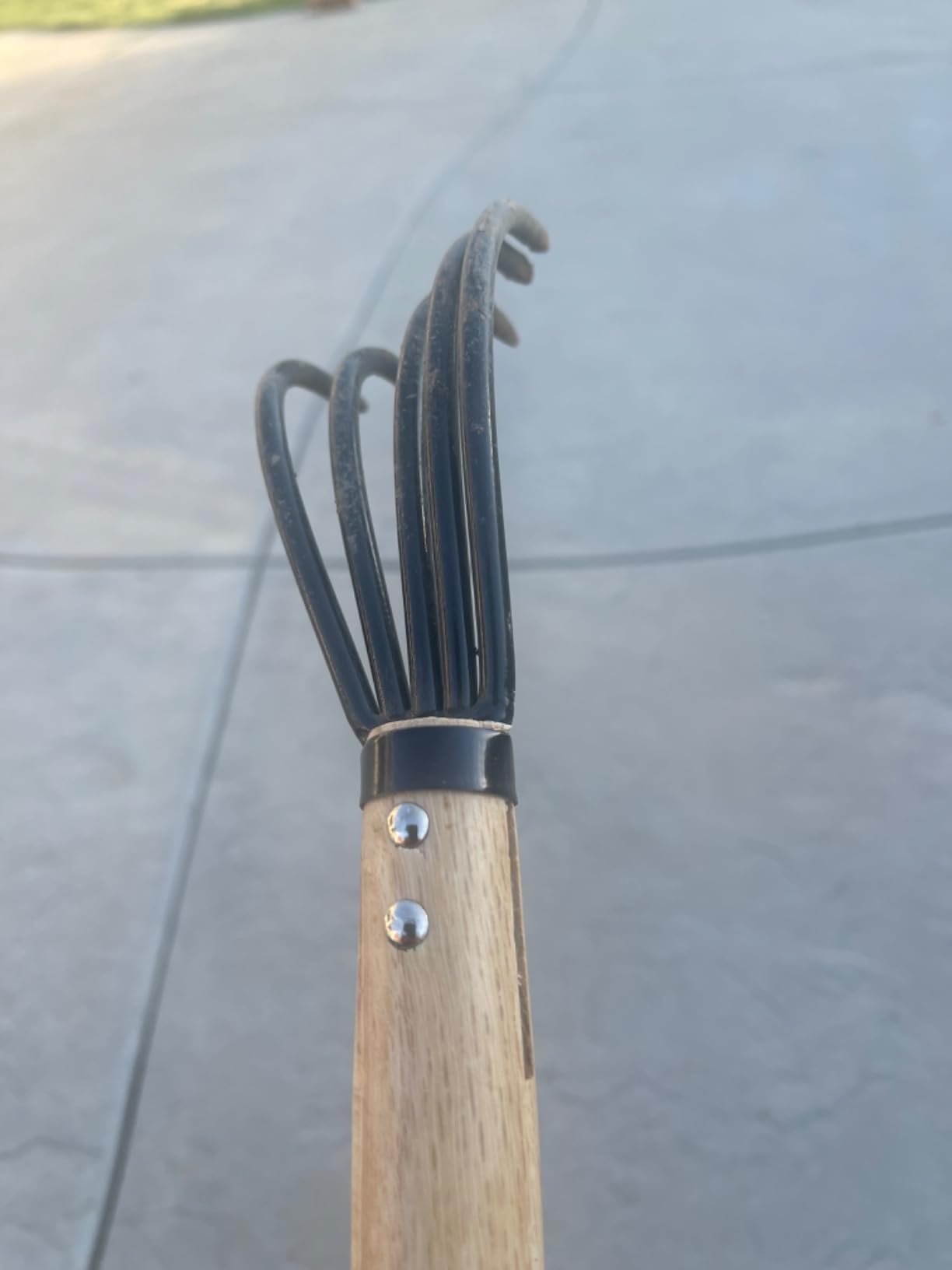
15. TOYPOPOR 15 Inch Claw Rake – wood handle, pulverizing tines
15″ Gardeners Claw Rake | Military Grade Steel 6 Tines and Prime Wood Japanese Ninja Claw Garden Rake or Cultivator for Perfect Pulverized and Aerated Soil, Ergonomic Wooden Handle for Firm Grip
15.1 inch overall length
Alloy steel claw tines
Wood handle with double rivet
0.29 kg
Pros
- Claw tines break soil into fine pieces
- Wood handle absorbs shock
- Double rivet stops handle slippage
- Rust resistant and low maintenance
- Hoop ring for compact storage
Cons
- Wood handle needs sealing in prolonged moisture
- Listing describes tine count inconsistently
A claw rake is a different instrument from a standard rake. The curved tines dig into the surface and drag it toward you, breaking clods into smaller pieces so air and water penetrate properly, which is exactly what you want immediately before sowing or transplanting into a bed.
The wood handle is the reason it feels different in the hand. A 15 inch shaft at 0.29 kg gives real working length while absorbing the shock of pulling through soil, and the double-rivet attachment stops the head from twisting away from the handle, a common failure on cheaper claw rakes.
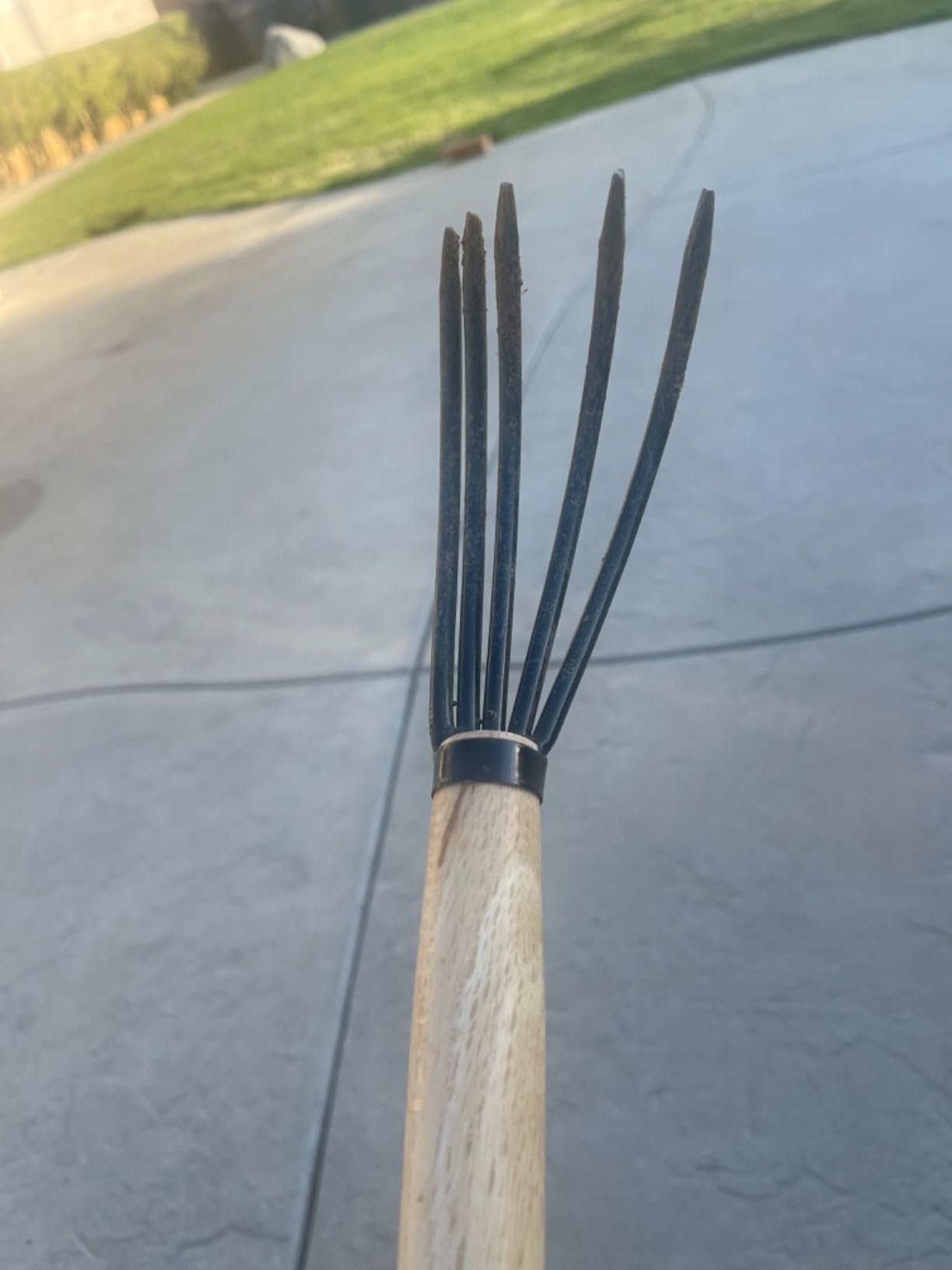
Construction is rust-resistant alloy steel with a wood handle, measuring 4.3 by 15 inches at 15.1 inches overall, and the listing describes the steel as military grade for strength and weather resistance. A hoop ring at the end makes it easy to hang, which is more thought than most tools in this price range get.
About 78% of the more than 920 reviewers give five stars and 14% give four, with the soil pulverizing action, the steel and wood build and the firm grip as the main positives. Reviewers also note that the wood handle needs occasional sealing and that the listing is inconsistent about whether it has five or six tines.
When this claw rake is the right buy
It is the finishing tool for seed beds, since the fine tilth it leaves is what you want for germination. It also works for mixing compost into the top of a bed and for breaking down sod before planting. Choose it over a plastic or all-steel handle if you expect a lot of shock loading through the shaft.
When it is the wrong buy
It is not a levelling or finishing rake, and pulling it backwards will compact the very soil you just broke up. The wood handle needs sealing against prolonged moisture, so do not leave it in a wet shed all winter. The mixed tine count in the listing is a minor annoyance, so check what you actually receive.
How to Choose Garden Hand Tools That Last
Quality in a garden hand tool is not a price tag, it is a short list of measurable things. Check these before you buy anything, and the cheap sets that bend in a season will have failed at least one of them.
Steel type decides how long a tool lasts
High carbon steel takes the sharpest edge and holds it longest, which is why the Japanese sickle and the Japanese SK5 saw rank so well for cutting. It needs to be kept dry and oiled, and it will spot with neglect. Stainless steel will not rust at all and suits wet, acidic beds, but it takes an edge slightly less eagerly. Aluminum is light and rustproof but is the softest of the three and wears fastest in rocky ground.
Forged construction and a full tang
A forged blade is compacted and hardened under pressure, so it resists rolling and deforming far better than a stamped one, which is the clearest quality signal in this whole roundup. A full tang means the steel runs the full length of the handle and is pinned at both ends, so it cannot be twisted off. A hidden tang stops short of the end and is the weakest joint on the market.
Handle material and grip geometry
Hickory and ash absorb shock, can be replaced, and will outlive a plastic handle for decades. That is why the oak-handled hoe in pick nine and the wood-handled sickle in pick four feel different after a long session. For tools that must stay light, an ergonomic rubber or thermoplastic grip is the better answer.
Matching tools to your soil type
Clay and compacted native soil demand carbon or forged steel, so pair the Edward trowel and the Root Slayer with a solid fork. Sandy, free-draining soil lets you get away with lighter aluminum tools, and a broad trowel or the Fiskars Ergo will do the job. No-till beds depend more on a fork and a rake than on any digging tool. Whatever your soil, moving a lot of soil by hand is slow, and a hand truck is worth the storage space, as we noted in our hand truck roundup.
Hand size and grip circumference matter as much as material. A grip that is too large causes strain in a long session, and a handle that is too short forces you to bend further than you should. We are also firm believers in the hand-tool-first approach before anything powered, which is the same argument we made in our rotary tool guide.
Starter Set vs Full Set: What to Buy First
If you are starting from nothing, buying all fifteen at once is how people end up with tool bloat and a drawer of handles with no blades. The forums are consistent on this: buy a small core set first, use it until you know what is missing, then add.
The four-tool starter set is a bypass pruner, a hori hori knife, an ergonomic trowel and one rake. That combination covers planting, weeding, digging, pruning and bed preparation, which is genuinely all a beginner needs for a season. Add a hand cultivator as the fifth purchase, because loosening crusted soil before sowing is a job no other tool on this list does well.
The buying guide is the point. The number one forum complaint is cheap marketplace sets that bend or snap within a season, and every tool in that starter set carries a lifetime warranty or a multi-year manufacturer warranty. Buying four tools that need sharpening beats buying twenty that bend.
Storage and transport come next, because a tool you have to hunt down at 6am is a tool you will eventually replace twice. Anything heavy enough to matter, like a sack of compost or a load of firewood, is where a two-wheel hand truck pays for itself in a single afternoon.
Tool Care and Sharpening: The Five-Minute Routine
Most garden tools are not discarded because they break, they are discarded because they get dull and the owner does not know how to fix it. A short routine at the end of every session keeps the whole set working.
Knock the soil off before it dries. Tap the tool against the rim of the wheelbarrow rather than scraping it, which is faster and does not blunt the edge.
Wipe steel blades with a damp cloth and dry them immediately. This is the single step that decides whether carbon steel lasts a decade or a season.
Check pruners and saws for sap and resin, then run a small amount of oil on the pivot and the blade.
Touch up a dull edge with a file or stone at roughly a 20 to 25 degree angle, taking a few strokes rather than grinding the blade back.
Oil wooden handles once a season, and store everything off the ground in a dry space so air can move around it.
Honing a mower blade is the same idea at a larger scale, and our oscillating multi-tool guide covers the sharpening setup if you want to keep a single machine for the whole job.
Anything that is not stainless steel benefits from a thin oil film before it goes into storage for the winter. It takes less than a minute and it is the difference between a tool that comes out in spring ready to work and one that comes out spotted and stiff.
Tool Storage That Stops Tools Going Missing
Missing tools are one of the most common complaints on homestead forums, and the fix is boring and cheap. Give every tool a fixed place, hang tools with holes on pegs rather than in a pile, and put a hook in the shed exactly where you hang the one you use most often.
Portable storage solves the second half of the problem. A garden kneeler with a built-in pouch, a waist tool belt, or a simple tote carried to the bed keeps everything within reach and stops you walking back to the shed mid-task. Several long-running threads have solved it with a repurposed metal mailbox, which is a solid option for anyone who wants a project alongside the purchase.
The rule that keeps it working is simple: nothing back into the bag in an unknown orientation. Wipe tools dry, hang the shears closed, coil the twine, and return the tote to the same spot every time. Tools that live in one place are simply never lost.
Frequently Asked Questions
What are the best hand tools for gardening?
The best hand tools for gardening are a bypass pruner, a hori hori weeding knife, an ergonomic trowel and a hand rake. Between them they cover pruning, weeding, digging, planting and bed preparation, which is the full working day in a vegetable garden. Our top pick overall is the Fiskars Bypass Pruning Shears, and the hori hori is the most versatile single tool.
What tools do I need for homesteading?
For the garden side of a homestead you need a pruner, a weeding knife or sickle, a digging tool, a rake and a cultivator. Tool sets that cover livestock, fencing, kitchen and preservation are a separate category entirely, and this guide does not cover them. Add a wheelbarrow or hand truck and a portable tool tote before you add more digging tools.
Who makes the best garden hand tools?
Fiskars, Corona Clipper and Edward Tools cover most of the essential hand tool categories with warranty-backed models, and Nisaku and Masakiyo make the strongest Japanese cutting tools in this roundup. Felco is the reference point for professional pruning shears. What matters more than the name is forged or carbon steel, a full tang and a warranty that outlives the season.
What are some quirky garden tools?
A hori hori knife is the most popular unusual tool, cutting, digging, dividing and measuring depth with one blade. A claw rake pulverises soil into fine tilth before sowing. A dandelion-style leverage weeder turns a flat foot into a fulcrum. A four-tooth uprooting weeder lifts weeds with roots attached. A mini hand rake lets you work a bed from a kneeling position.
What are 10 essential tools for gardening?
Ten essential tools for gardening are a bypass pruner, a loppers or second pruner, a pruning saw, a hori hori knife or hand fork, a digging trowel, a transplanter, a hand cultivator, a garden rake, a hand fork or spading fork, and a watering can. Buy the first five, get comfortable with them, then add the rest as your beds and soil tell you what is missing.
What are the best quality garden hand tools?
The best quality garden hand tools are forged or high-carbon steel, full tang construction and a handle of hickory, ash, oak or a well-shaped rubber grip. Forged blades resist rolling, full tangs cannot be twisted off, and quality handles absorb shock instead of passing it into the wrist. A warranty that lasts the life of the tool is a strong quality signal on its own.
What tools should every gardener have?
Every gardener should have a bypass pruner, a trowel, a hand rake and a hand fork or hori hori knife. Those four cover roughly 80 percent of the work in a vegetable garden. A cultivator and a pruning saw complete a well-equipped set, and a transplanter makes transplanting far quicker once you are moving dozens of seedlings at a time.
Which Hori Hori knife is the best?
The Nisaku NJP650 is the best hori hori knife in this roundup. It has a 7.25 inch Japanese stainless steel blade with a serrated edge for roots and a straight edge for precision cutting, depth markings in imperial and metric, and a 5.25 inch wooden handle. It holds a 4.8 rating across more than 9400 reviews, and the only widespread complaint is the included sheath.
Are Hori Hori knives good?
Yes, a hori hori is one of the most useful single hand tools for a garden. It digs, weeds, cuts roots, divides perennials and opens planting furrows with one blade, which is why growers describe it as the most used tool on a small farm. The honest limitations are that it is not bulk digging equipment and that the hidden tang means it should never be used as a pry bar.
What are some uses for a Hori Hori knife?
A hori hori knife is used for digging planting holes, opening furrows, slicing through tap roots, cutting runners and thick stems, dividing perennial clumps, loosening compacted soil, and measuring planting depth with the markings on the blade. The serrated side handles woody growth and the straight side handles precision cuts, so you rarely need to change tools mid-task.
Bottom Line on the Best Homestead Hand Tools for Gardening
The best homestead hand tools for gardening are the ones you can sharpen, repair and keep. Start with the Fiskars Bypass Pruning Shears for daily cutting, add the Nisaku Hori Hori for digging, weeding and dividing, and put a Fiskars Ergo Trowel in your back pocket for planting. Those three cover the overwhelming majority of the work.
From there, match the rest to your conditions rather than to a list. Clay and rock call for the Edward carbon steel trowel and the Root Slayer. Fruit trees call for the Corona pruner and the Corona RazorTOOTH saw. Compact weedy beds call for the sickle, the four-tooth weeder and the oak-handled cultivator.
Whichever set you choose, buy the warranty-backed versions, sharpen them at the end of every session, and hang them in the same place each time. Updated for 2026, that approach has never needed replacing.