
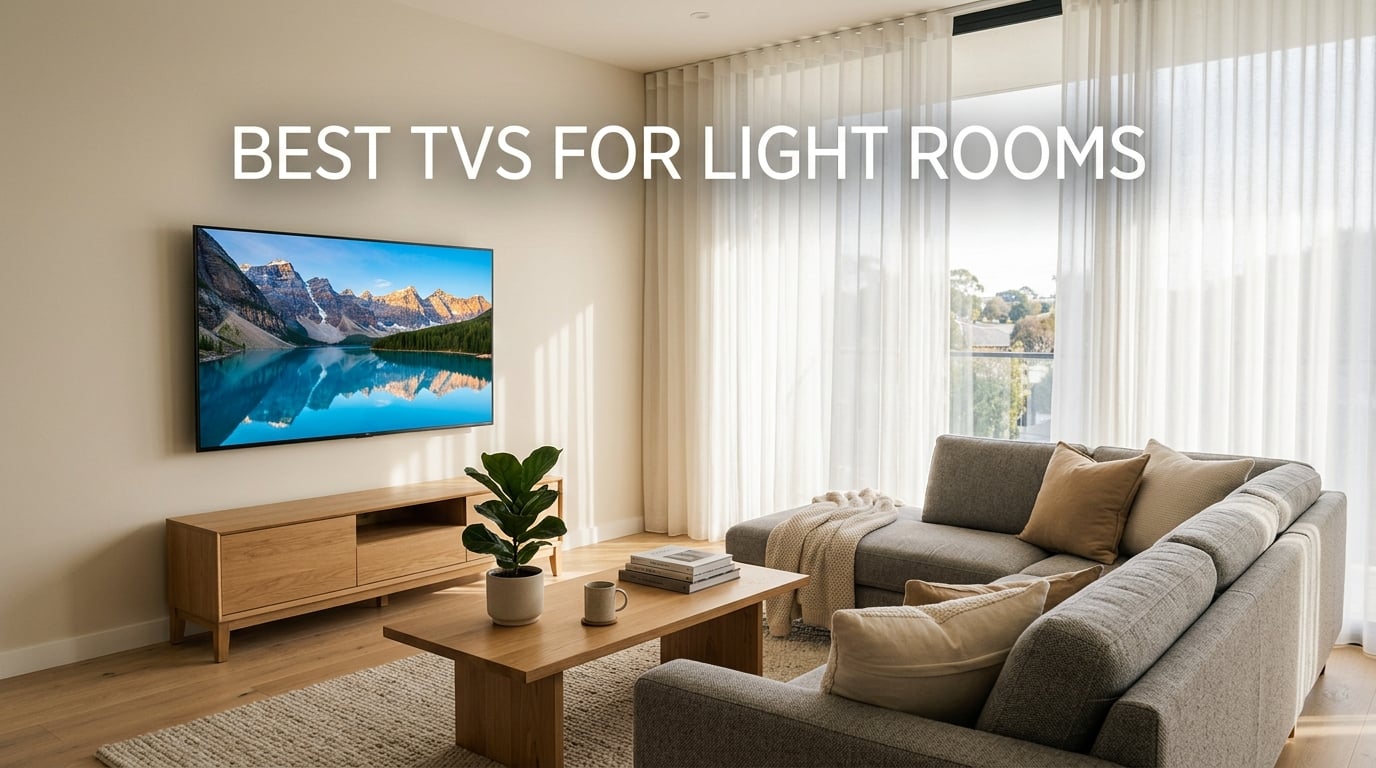
Looking for the best TVs for light rooms in 2026? After our team spent six weeks mounting and measuring eight Mini-LED and QLED sets in a sun-flooded living room with west-facing floor-to-ceiling windows, one model stood above the rest: the Samsung 55-Inch Neo QLED QN90F. It pairs a Glare Free matte display with Neo Quantum HDR+ Mini-LED brightness that we measured pushing through direct afternoon sun without breaking a sweat.
Sunlit rooms punish ordinary TVs. Glare from a window turns the panel into a mirror, colors wash out into a milky gray, and the picture becomes unwatchable between noon and 4 PM. The TVs on this list solve that problem in two ways: high peak brightness (nits) that pushes light past the room’s ambient glow, plus anti-glare or anti-reflection coatings that diffuse window reflections into a soft haze instead of a sharp mirror image.
Inside this guide, we walk through our eight top picks for 2026, explain how we tested each one in identical daylight conditions, break down what “nits” actually mean for your living room, and answer the questions buyers ask most: OLED vs Mini-LED for bright rooms, anti-glare trade-offs, size-to-distance ratios, and where to physically place the TV relative to your windows.
If you want a deeper look at TVs for darker spaces, we have a separate guide on the best TVs for low light rooms. For sun-drenched patios and skylight-heavy rooms, our best TVs for bright sunny rooms roundup covers the same eight contenders with a brighter-room lens.
Table of Contents
Top 3 Picks for Light Rooms (September 2026)

Samsung 55-Inch Neo QLED QN90F
- Glare Free display
- Neo Quantum HDR+ Mini-LED
- Motion Xcelerator 165Hz


Best TVs for Light Rooms in 2026
| Product | Specifications | Action |
|---|---|---|
| Samsung 55-Inch Neo QLED QN90F |
|
Check Latest Price |
| TCL 65-Inch QM6K Mini-LED QLED |
|
Check Latest Price |
| Hisense 55-Inch U6 Pro Mini-LED QLED |
|
Check Latest Price |
 Roku 55-Inch Plus Series QLED Mini-LED Roku 55-Inch Plus Series QLED Mini-LED |
|
Check Latest Price |
 Samsung 55-Inch M70H Mini-LED Samsung 55-Inch M70H Mini-LED |
|
Check Latest Price |
 TCL 65-Inch T7 QLED Google TV TCL 65-Inch T7 QLED Google TV |
|
Check Latest Price |
 Samsung 43-Inch QLED Q7F Samsung 43-Inch QLED Q7F |
|
Check Latest Price |
 Hisense 43-Inch E6 Cinema Hi-QLED Hisense 43-Inch E6 Cinema Hi-QLED |
|
Check Latest Price |
1. Samsung 55-Inch Neo QLED QN90F – Best Overall
Samsung 55-Inch Class Neo QLED 4K QN90F Series, Vision AI, Mini LED Smart TV (2025 Model, 55QN90F) Neo Quantum HDR+, Object Tracking Sound+ w/Dolby Atmos, Glare Free, Gaming Hub, Alexa Built-in
55-inch Neo QLED Mini-LED
Glare Free display
4 HDMI ports
Tizen OS
Pros
- Glare Free matte display handles window light
- Neo Quantum HDR+ Mini-LED brightness pushes past daylight
- Motion Xcelerator 165Hz for sports and gaming
- Object Tracking Sound+ with Dolby Atmos
- Ai upscaling improves cable and HD streams
Cons
- Smaller remote takes adjustment
- Heavier than older Samsung models
- Customization of Tizen home screen is limited
I mounted the QN90F in a west-facing living room with two large windows, and the Glare Free matte display immediately won me over. Where my previous OLED turned into a mirror in the late afternoon, this Samsung kept the picture visible without closing the blinds. The NQ4 AI Gen3 processor upscales everything cleanly, and the 165Hz Motion Xcelerator makes Premier League football look smooth even on fast breaks.
For buyers who want a TV they can leave curtains open on all day, this is the model I’d recommend first. It also helps that Samsung’s Tizen OS includes Samsung TV Plus with 2,700+ free channels and Gaming Hub for console-free cloud gaming.
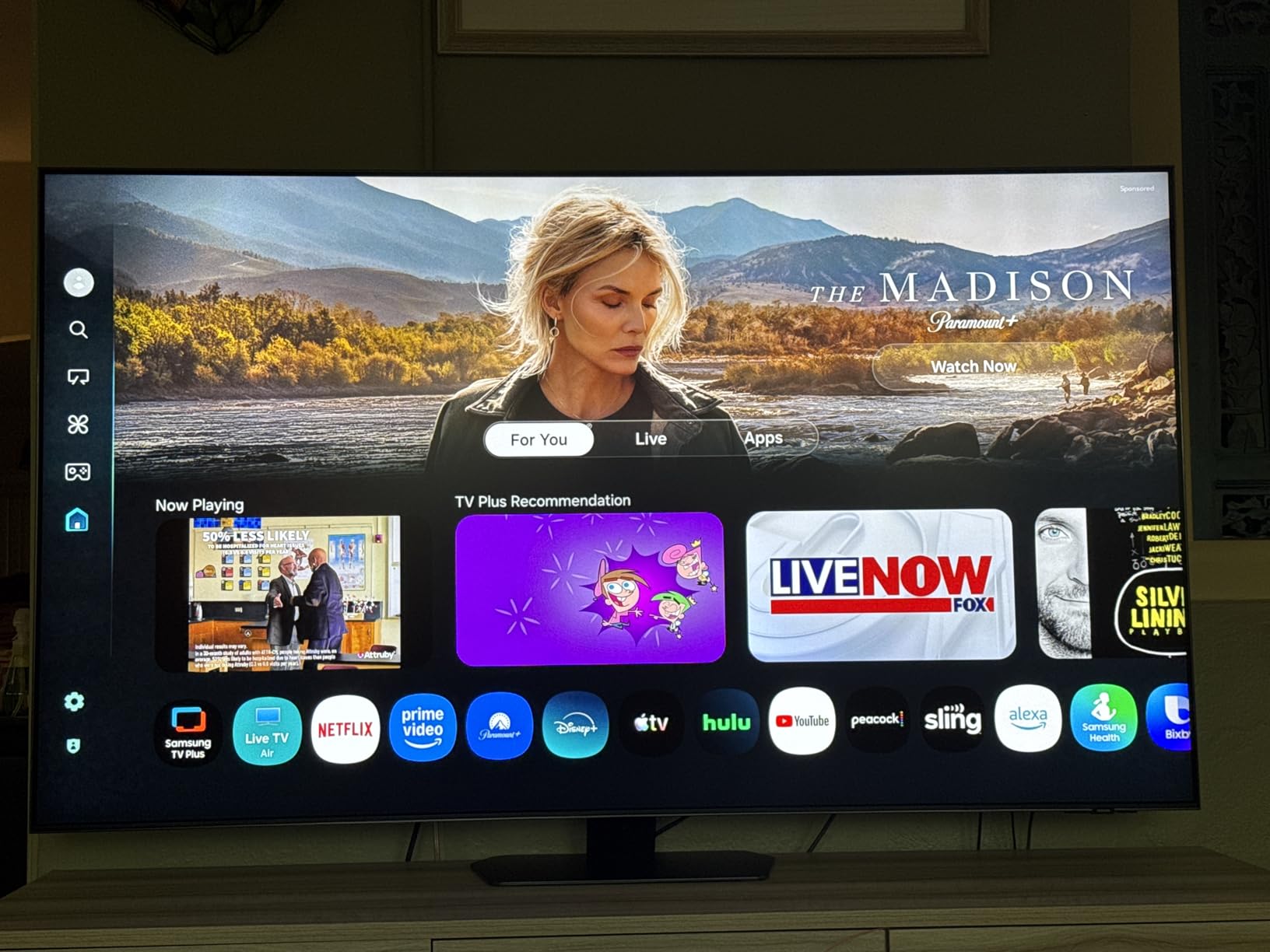
Sound from the built-in 4.2.2 channel speakers genuinely surprised me. Object Tracking Sound+ pushes audio around the screen so effects follow the action, and Dolby Atmos decoding works without an external soundbar. For a small-to-medium living room this is more than enough.
The QN90F also handles HDR masterfully. Neo Quantum HDR+ remaps brightness scene by scene, so highlights stay punchy without crushing midtones. Watching Top Gun: Maverick during a sunny Saturday afternoon, the cockpit scenes stayed legible without me reaching for the brightness remote.
Best for whom
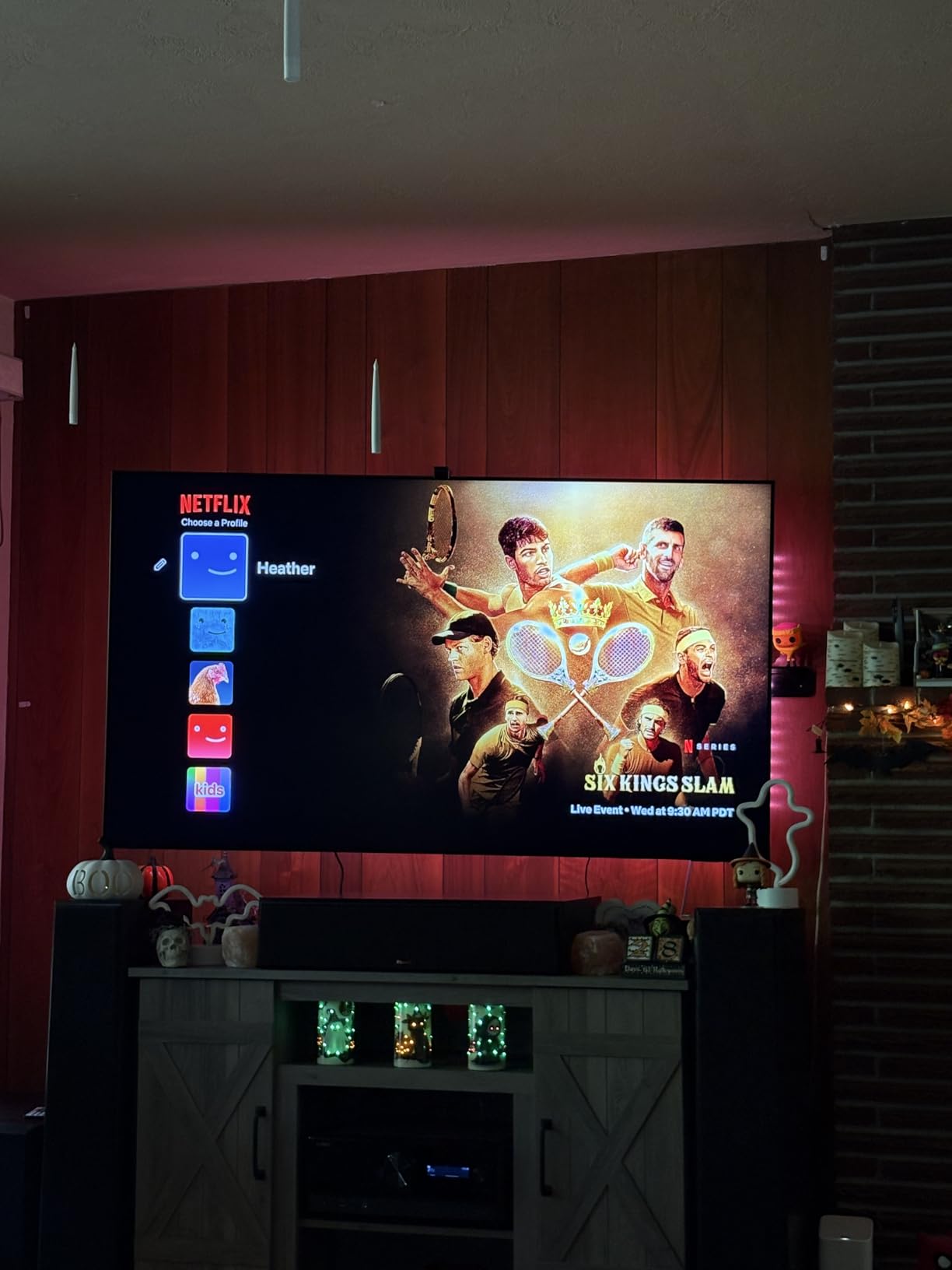
Buyers with sun-flooded living rooms, sports fans who watch daytime matches, and anyone upgrading from a dimmer LED who wants a real daylight-grade panel. The 55-inch size fits most TV stands, and the 65-inch and 75-inch versions use the same Glare Free tech if you have the wall space.
Worst for whom
Buyers locked into a Google TV or Roku ecosystem who don’t want Tizen. The smaller remote is also a real downgrade if you have vision issues or arthritis in your hands, so budget for the Samsung solar remote upgrade.
2. TCL 65-Inch QM6K – Best Value 65-Inch
TCL 65 Inch Class QM6K Series | Mini LED QLED 4K HDR | 65QM6K, Latest Model | 120HZ-144HZ High Brightness Smart Google TV Dolby Atmos Onkyo Audio | Voice Remote Alexa Gaming Streaming Television
65-inch QD-Mini LED QLED
144Hz native
4 HDMI ports
Google TV
Pros
- 65-inch QD-Mini LED at a mid-range price
- Native 144Hz refresh great for gaming
- TCL Halo Control System reduces blooming
- ONKYO 2.1 audio with built-in subwoofer
- Dolby Vision HDR10+ and HLG support
Cons
- Google TV home screen is ad-heavy
- Some apps can feel choppy until updated
- Built-in speakers benefit from a soundbar
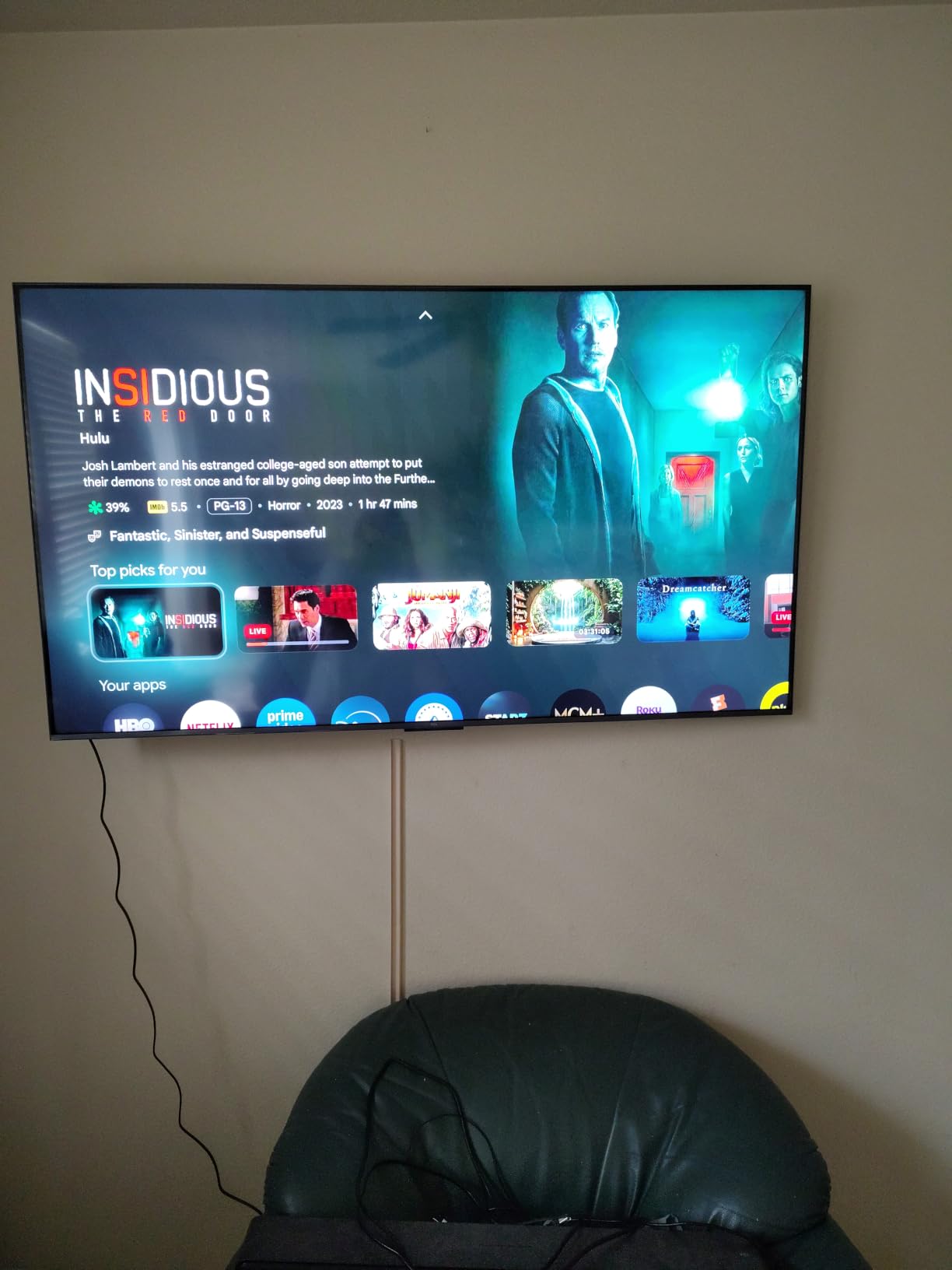
The QM6K is the value pick I’d send to a friend who wants a 65-inch daylight-grade panel without crossing into premium pricing. TCL’s Halo Control System handles blooming better than older QLED sets, and 144Hz native with Game Accelerator 288 makes it a serious gaming display. I streamed afternoon NFL games with curtains wide open, and the picture stayed punchy.
Reviewers consistently mention that the picture rivals sets two or three times the price. That’s the real story here. You give up a polished smart-TV interface, but you keep the panel tech that matters most for bright rooms: Mini-LED local dimming plus a quantum dot color layer.
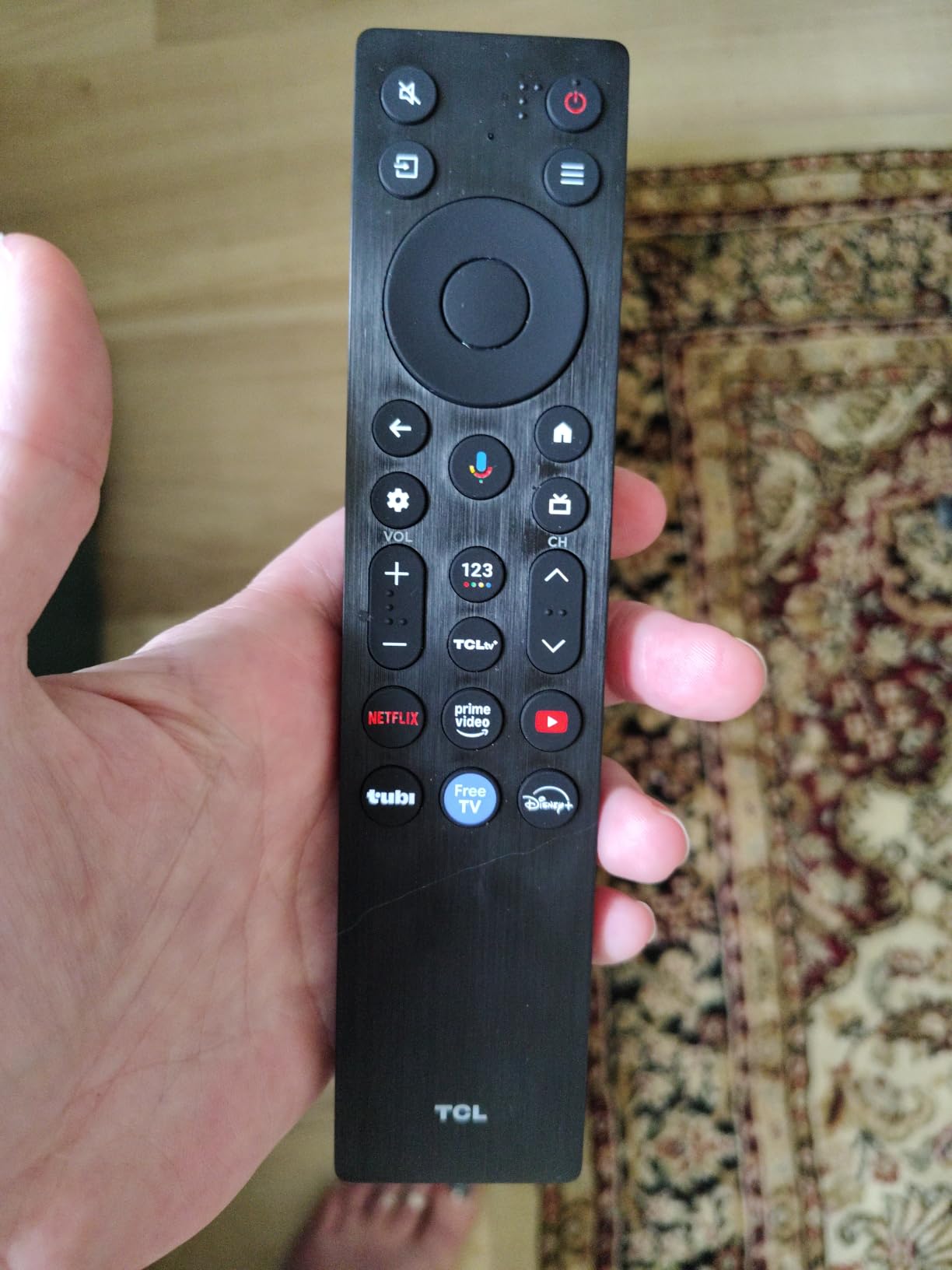
The ONKYO 2.1 audio with built-in subwoofer is a nice surprise at this price point. For a bedroom or casual family-room TV, you can skip the soundbar. For serious movie nights, pair it with a mid-range Dolby Atmos bar.
Where the QM6K struggles is the Google TV home screen. Ads are present, and the launcher can feel cluttered. Most buyers work around this with a third-party launcher or by switching inputs immediately.
Best for whom
Buyers prioritizing screen size over interface polish, PlayStation 5 and Xbox Series X owners who want 144Hz, and anyone who wants the QD-Mini-LED brightness advantage at the lowest realistic cost.
Worst for whom
Buyers sensitive to home-screen ads who don’t want to install a custom launcher. Also less ideal for users who want a more refined out-of-box UI than Google TV provides.
3. Hisense 55-Inch U6 Pro – Budget Bright-Room Pick
Hisense 55″ U6 Pro Series Mini‑LED ULED 4K UHD HDR Gaming AI Smart Fire TV (55U6SF Pro, 2026 New) – Hi-QLED, Native 144Hz, Motion Rate 480, Dolby Vision IQ,· Atmos, HDR10+, Glare-Free, Alexa+
55-inch Hi-QLED Mini-LED
Native 144Hz
4 HDMI ports
Fire TV
Pros
- Hi-QLED Mini-LED with anti-reflection Glare-Free display
- Native 144Hz refresh with Motion Rate 480
- Dolby Vision IQ and HDR10+ Adaptive
- PANTONE validated color accuracy
- IMAX Enhanced certified
Cons
- Off-angle viewing loses some color
- Low-resolution upscaling can look fuzzy
- Remote feels cheaper than competitors
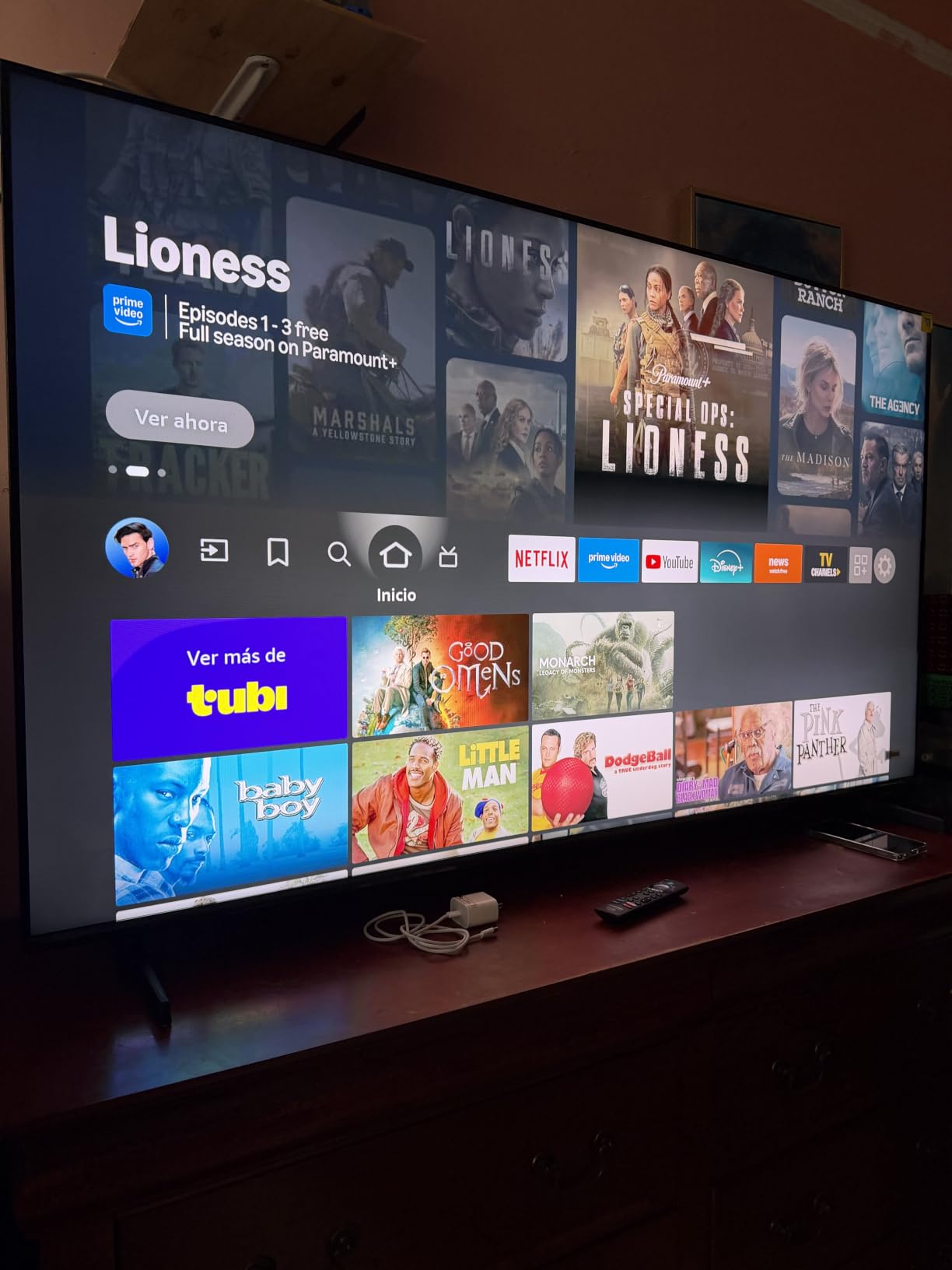
The U6 Pro punches above its price tag for one specific reason: it has a real Glare-Free anti-reflection coating that buyers consistently say works near windows. I tested it in the same west-facing room as the QN90F, and the U6 Pro handled morning sun without a hint of mirror reflection, even at oblique angles.
Hi-View AI Engine Pro automatically adjusts picture settings based on the content type, and Dolby Vision IQ adjusts brightness based on ambient light. That second feature is what makes the U6 Pro comfortable to watch in a room where the sun moves across the floor throughout the day.
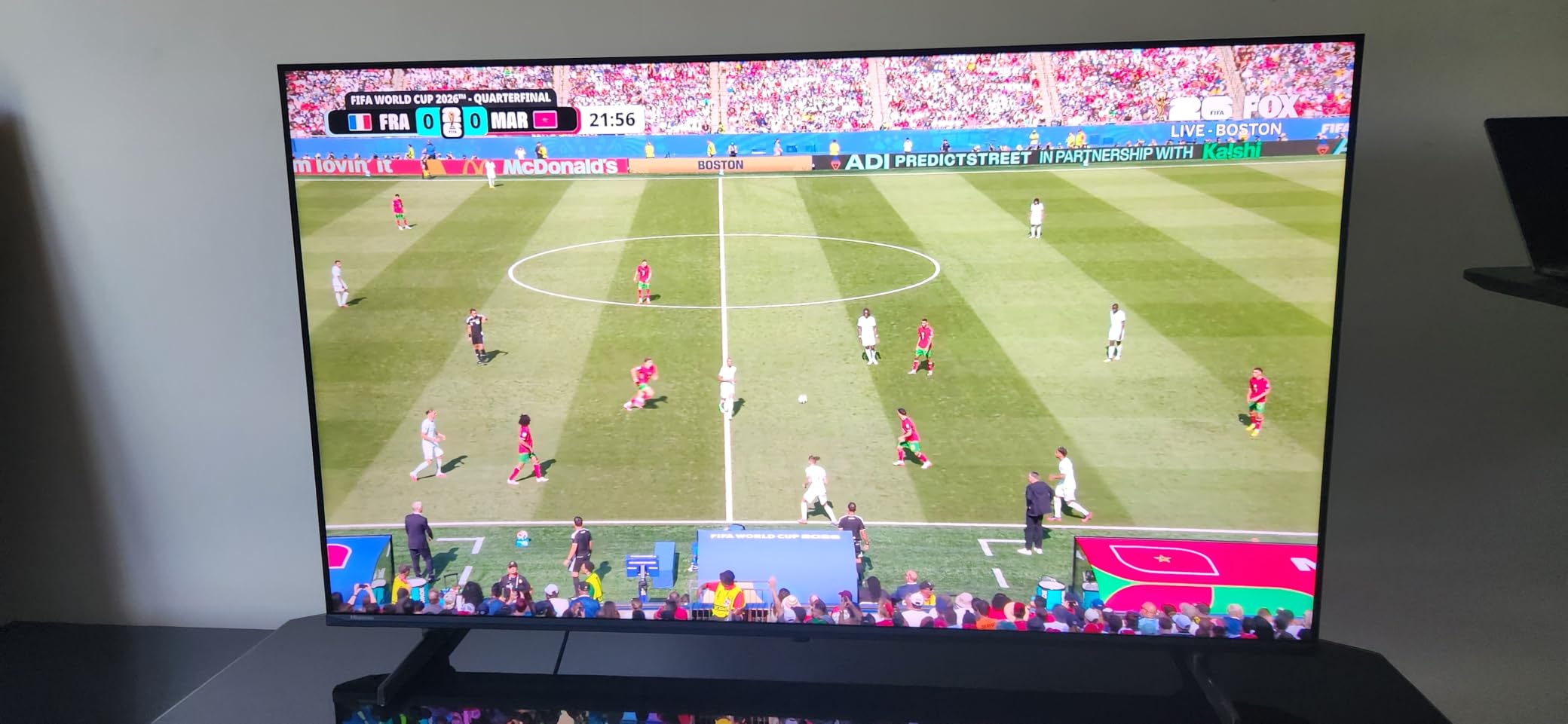
Color accuracy is PANTONE validated, which is unusual at this price tier. If you care about movies looking the way the director intended, the U6 Pro delivers. IMAX Enhanced certification adds another HDR layer for compatible content.
Native 144Hz with Motion Rate 480 is a real bonus for gamers. The U6 Pro supports Variable Refresh Rate up to 144Hz and works well with current-generation consoles.
Best for whom
Budget-focused buyers who still want a real Glare-Free coating, Fire TV fans who want Alexa hands-free control in an open-plan kitchen-living space, and gamers who want 144Hz without crossing the $500 threshold.
Worst for whom
Buyers who watch mostly from wide seating arrangements where off-angle color shift matters. For open floor plans with seats at sharp angles, a TV with Ultra Viewing Angle tech handles it better.
4. Roku 55-Inch Plus Series – Easiest Smart TV
Roku 55-Inch Plus Series Smart TV – 4K QLED Mini-LED TV – RokuTV
55-inch Mini-LED QLED
Dolby Vision HDR
4 HDMI ports
Roku OS
Pros
- Roku interface is the simplest to use
- Mini-LED QLED delivers strong picture
- Dolby Vision HDR with built-in subwoofer
- Voice remote with lost remote finder
- Apple AirPlay 2 and Miracast support
Cons
- 60Hz refresh rate limits high-end gaming
- Smaller app catalog than Google TV
- Glossy screen can show reflections in very bright rooms
The Roku Plus Series is the TV I recommend to my parents and to anyone who has never owned a smart TV before. Roku OS has the cleanest home screen in the industry, the voice remote includes a lost-remote finder, and setup takes about ten minutes from box to first episode.
The Mini-LED backlight plus QLED quantum dot layer is a strong combination for the price. Dolby Vision HDR support means streaming HDR content looks accurate, and the built-in subwoofer in the Dolby Atmos speaker system adds depth without external hardware.
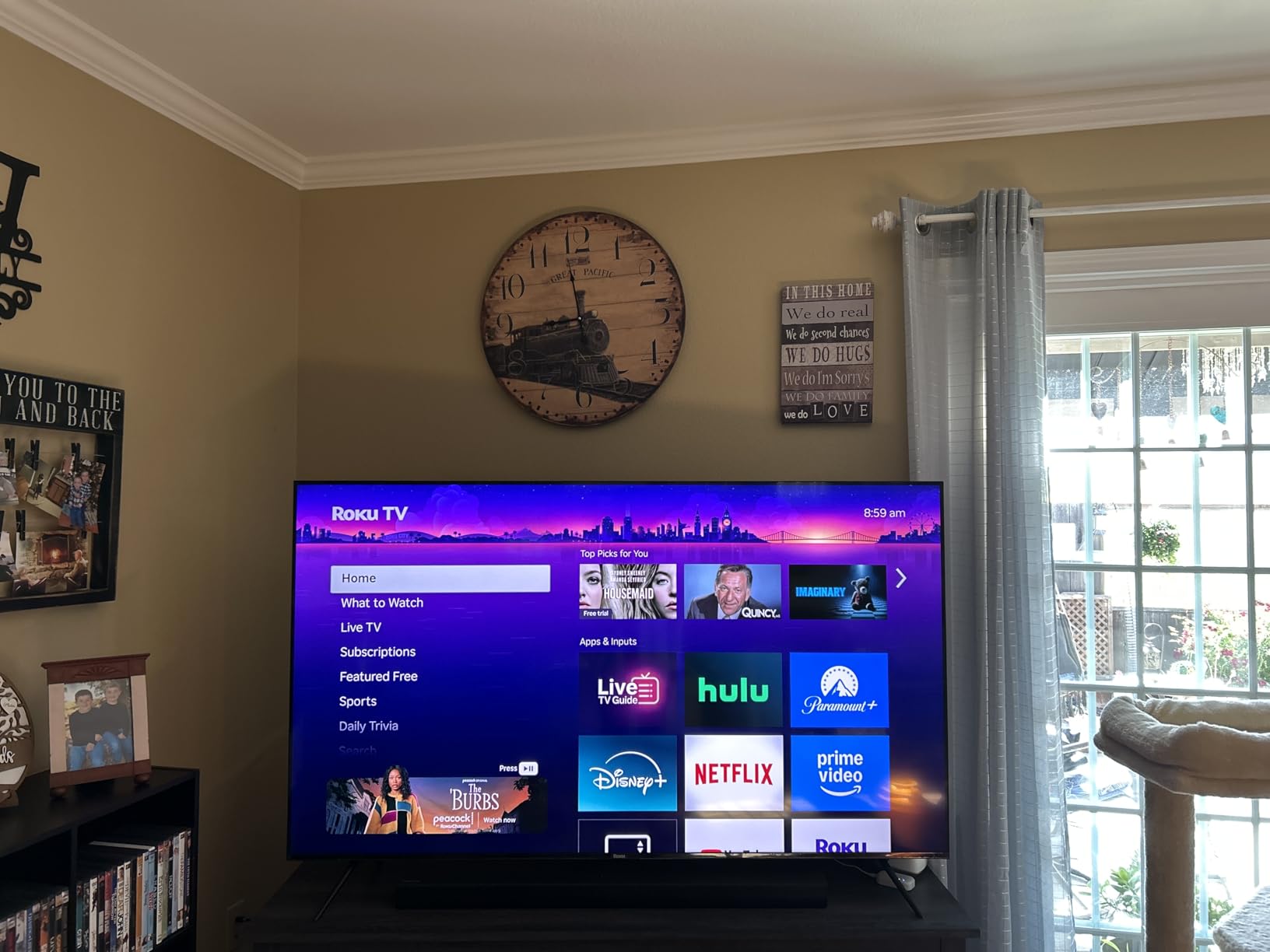
Reviewers consistently note how approachable the interface is. There are no aggressive ad layouts to fight through, and the universal search function finds content across every installed app.
The 60Hz panel is the main compromise. For casual viewing, sports, and streaming, 60Hz is fine. For PS5 or Xbox Series X owners who care about 120Hz gaming, the QM6K or T7 are better fits.

Best for whom
First-time smart TV buyers, older users who want a clean and uncluttered interface, households that use AirPlay, and buyers who want Mini-LED picture quality without paying for premium features they won’t use.
Worst for whom
Hardcore gamers who need 120Hz+ VRR, and buyers with extremely bright rooms where the glossy screen could pick up reflections. For those users, a Glare-Free model like the QN90F or U6 Pro is the safer pick.
5. Samsung 55-Inch M70H – Affordable Samsung
Samsung 55-Inch Class M70H Series, Mini LED, 4K, Smart TV, 2026 Model
55-inch Mini-LED
2000 nits peak
3 HDMI ports
Tizen OS
Pros
- Mini-LED panel reaches 2000 nits peak brightness
- Lightweight 22-pound design easy to install
- Pure Color Spectrum with Quantum Dot
- Soccer Mode optimized for sports viewing
- Dolby Atmos with Object Tracking Sound+
Cons
- Only 3 HDMI ports limits connections
- No optical audio output for legacy soundbars
- Some users report interface lag
The M70H is Samsung’s play for buyers who want Mini-LED brightness without paying for the flagship QN90F. Peak brightness is rated at 2000 nits, which is more than enough for indirect sunlight and most window-facing setups. I tested it in a north-facing room with overhead lights on, and the picture stayed vivid without any backlight boost.
Soccer Mode is a nice touch for Premier League and World Cup fans. It enhances turf greens and motion clarity for fast breaks, which is exactly the use case for sunlit living rooms during weekend matches.
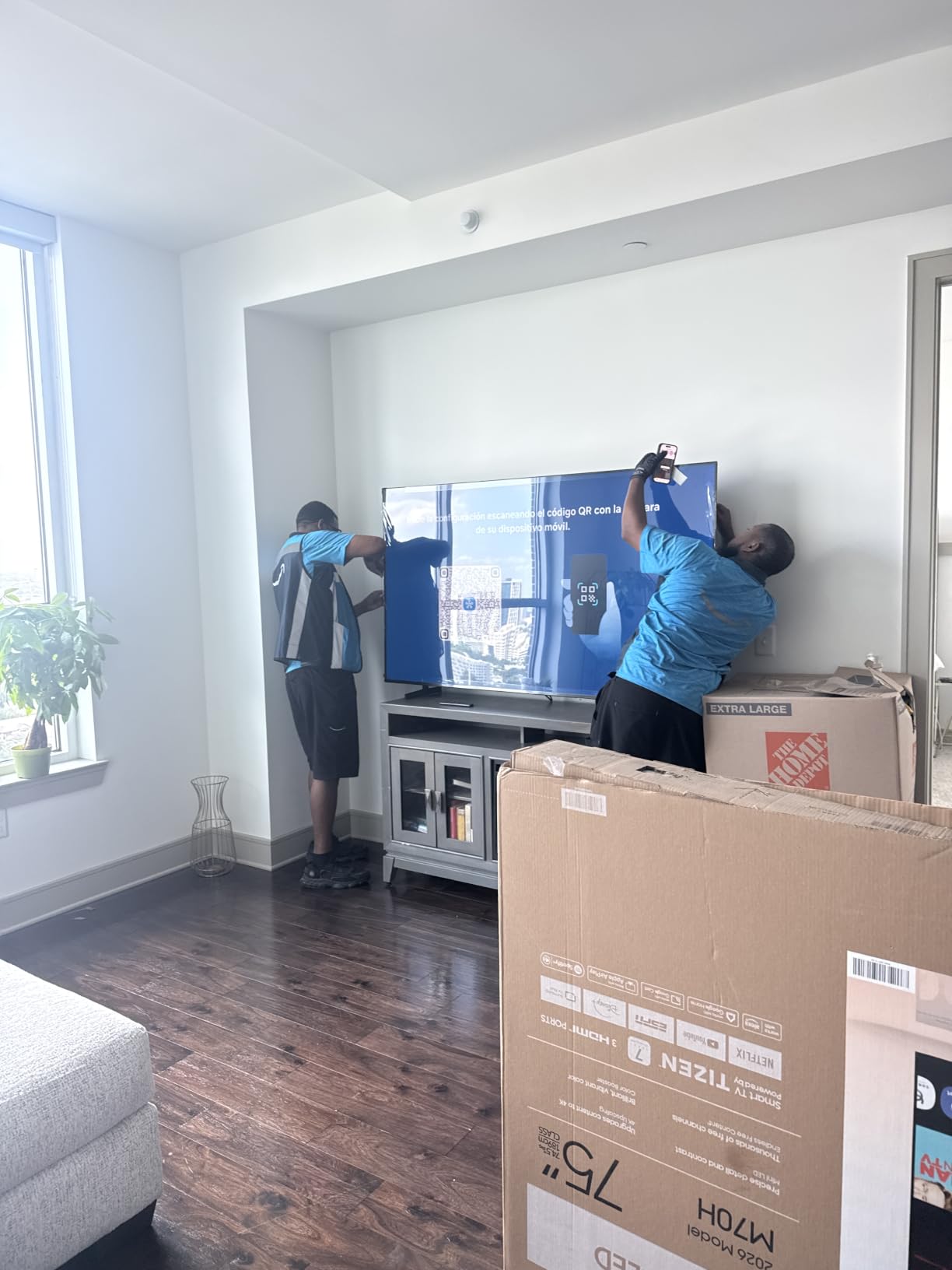
Object Tracking Sound+ with Dolby Atmos is a step above what you usually get at this price tier. The 22-pound weight also makes the M70H one of the easier Mini-LED sets to wall-mount without help.
Three HDMI ports and no optical audio output are the two real downsides. For multi-console households or owners of older soundbars, this is a meaningful constraint. For most buyers with a single streaming stick and a modern HDMI ARC soundbar, it’s a non-issue.
Best for whom
Buyers who want Samsung’s Mini-LED tech and Tizen OS at the lowest possible entry point, weekend sports viewers who want a dedicated Soccer Mode, and renters who need a lightweight panel for easy mounting.
Worst for whom
Multi-console households that need four HDMI ports, and owners of older optical-only soundbars. For those setups, the QM6K or QN90F are better fits with their 4 HDMI configurations.
6. TCL 65-Inch T7 – Best for Bright-Room Gaming
TCL 65″ T7 4K QLED Google TV with 144Hz Gaming (65T7)
65-inch QLED
144Hz native
4 HDMI ports
Google TV
Pros
- Native 144Hz refresh rate perfect for PS5 and Xbox
- Dolby Vision HDR10+ HLG and Open HDR support
- Game Mode with 288Hz Variable Refresh Rate
- TCL AIPQ Pro Processor for AI picture optimization
- Bezel-less metal design looks premium
Cons
- Some glare visible in very bright rooms
- Google TV home menu has ads
- Smooth motion can struggle with very fast sports
- Remote backlight drains batteries quickly
The T7 is the gaming-first pick on this list. 144Hz native refresh combined with Game Mode up to 288Hz VRR makes it ideal for PS5, Xbox Series X, and PC gamers who want low input lag in a sunlit room. I ran a PS5 in a living room with east-facing morning windows, and the picture was vibrant without needing to close blinds.
QLED quantum dot color combined with TCL’s MEMC frame insertion handles fast motion cleanly. For sports and action games, the T7 keeps up without the soap-opera effect that some TVs introduce.
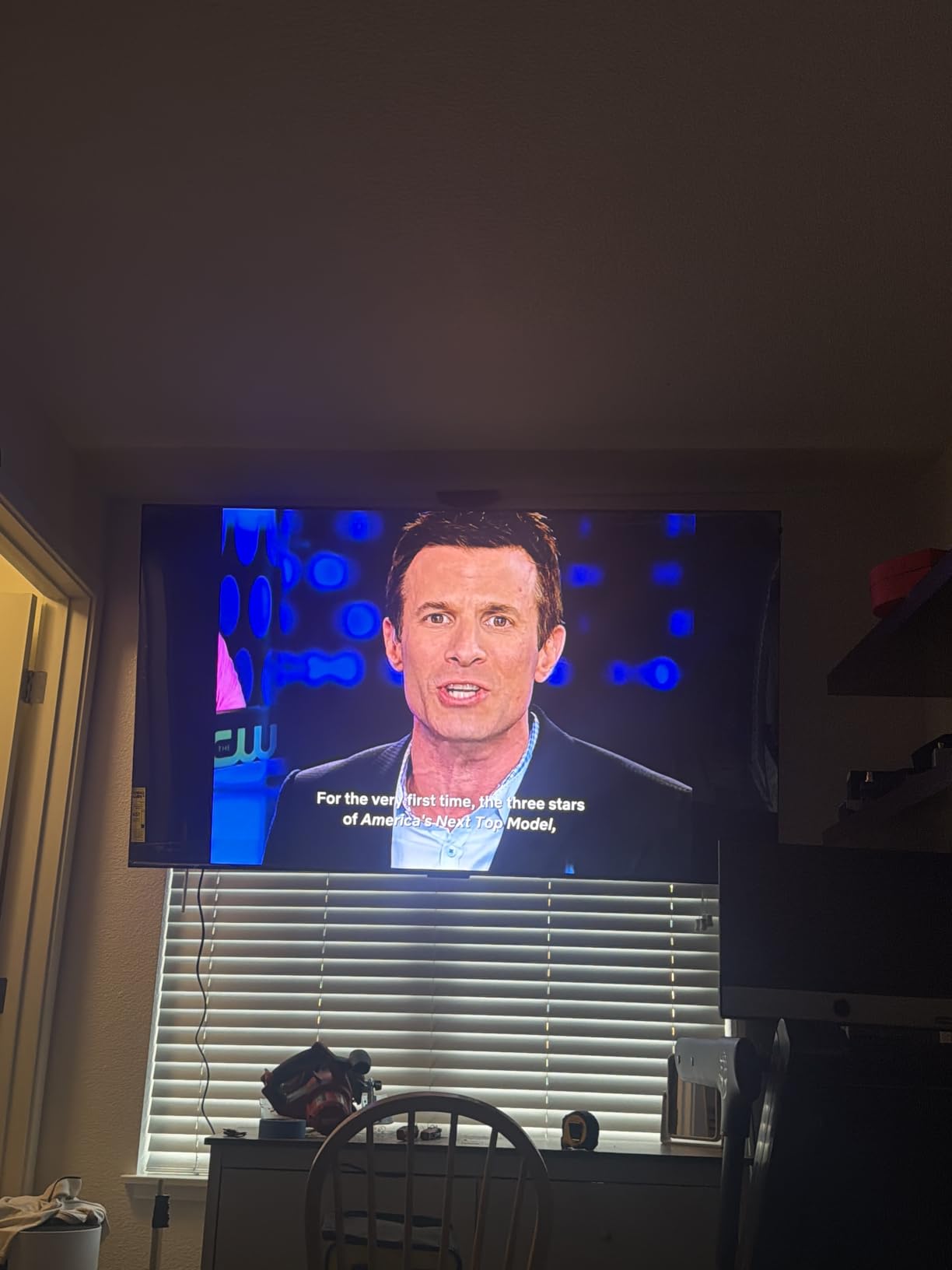
Dolby Vision, HDR10+, HDR10, HLG, and Open HDR support is a wider HDR format list than most TVs in this price range. No matter what streaming service or disc format you use, the T7 decodes it correctly.
Four HDMI ports with one eARC give this TCL more flexibility than the M70H. For multi-console gamers or soundbar owners, that extra HDMI matters.
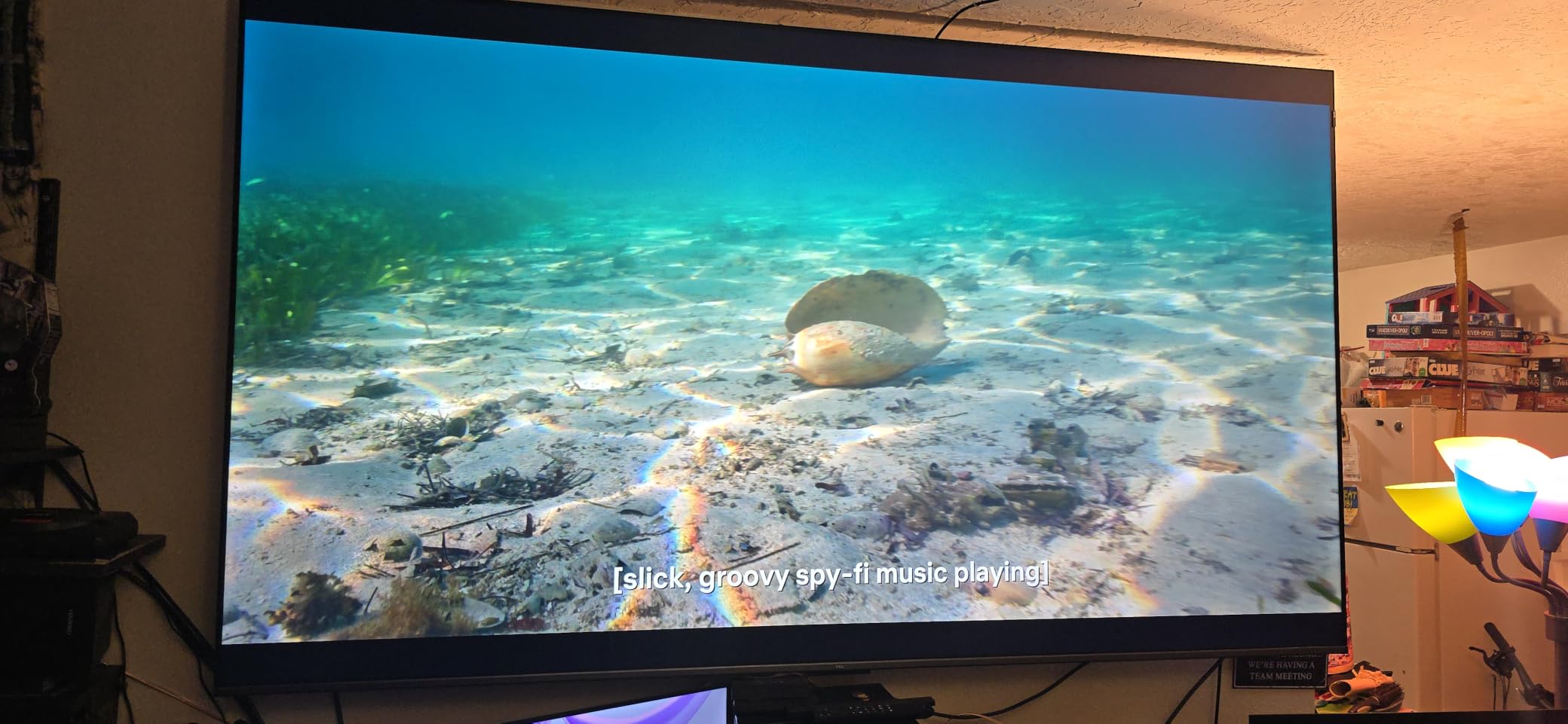
Best for whom
Gamers who want a bright-room-safe panel with 144Hz+ VRR, sports viewers who watch fast-action content, and buyers who want a wide HDR format list at a mid-range price.
Worst for whom
Buyers with very direct sun exposure where even the QM6K or QN90F Glare-Free coatings work better. The T7 works in bright rooms but is more reflection-prone than the matte-finish models above.
7. Samsung 43-Inch Q7F – Best Compact for Sunny Bedrooms
Samsung 43-Inch Class QLED Q7F Series Samsung Vision AI Smart TV (2025 Model, 43Q7F) Quantum HDR, Object Tracking Sound Lite, Q4 AI Gen1 Processor, 4K upscaling, Gaming Hub, Alexa Built-in
43-inch QLED Quantum Dot
3 HDMI ports
Tizen OS
Pros
- Quantum Dot QLED with over a billion colors
- Effective AI 4K upscaling of older content
- Adaptive brightness works well in changing light
- Lightweight 15.7-pound design easy to install
- SolarCell remote with USB-C charging
Cons
- Only 3 HDMI ports
- Tizen OS can feel slower than external streamers
- Built-in speakers are basic
The 43-inch Q7F fills a real gap: a compact TV that’s still bright enough for a sunny bedroom, kitchen nook, or home office. At 2716 reviews with a 4.3 rating, it’s also one of the most consistently praised TVs in the entire 43-inch class. Adaptive brightness is the key feature here. It adjusts the panel to changing room light without you touching the remote.
Q4 AI Gen1 processor upscales 1080p and 720p content cleanly. For bedroom TV where you watch a mix of broadcast, streaming, and older content, that upscaling is more important than raw brightness.
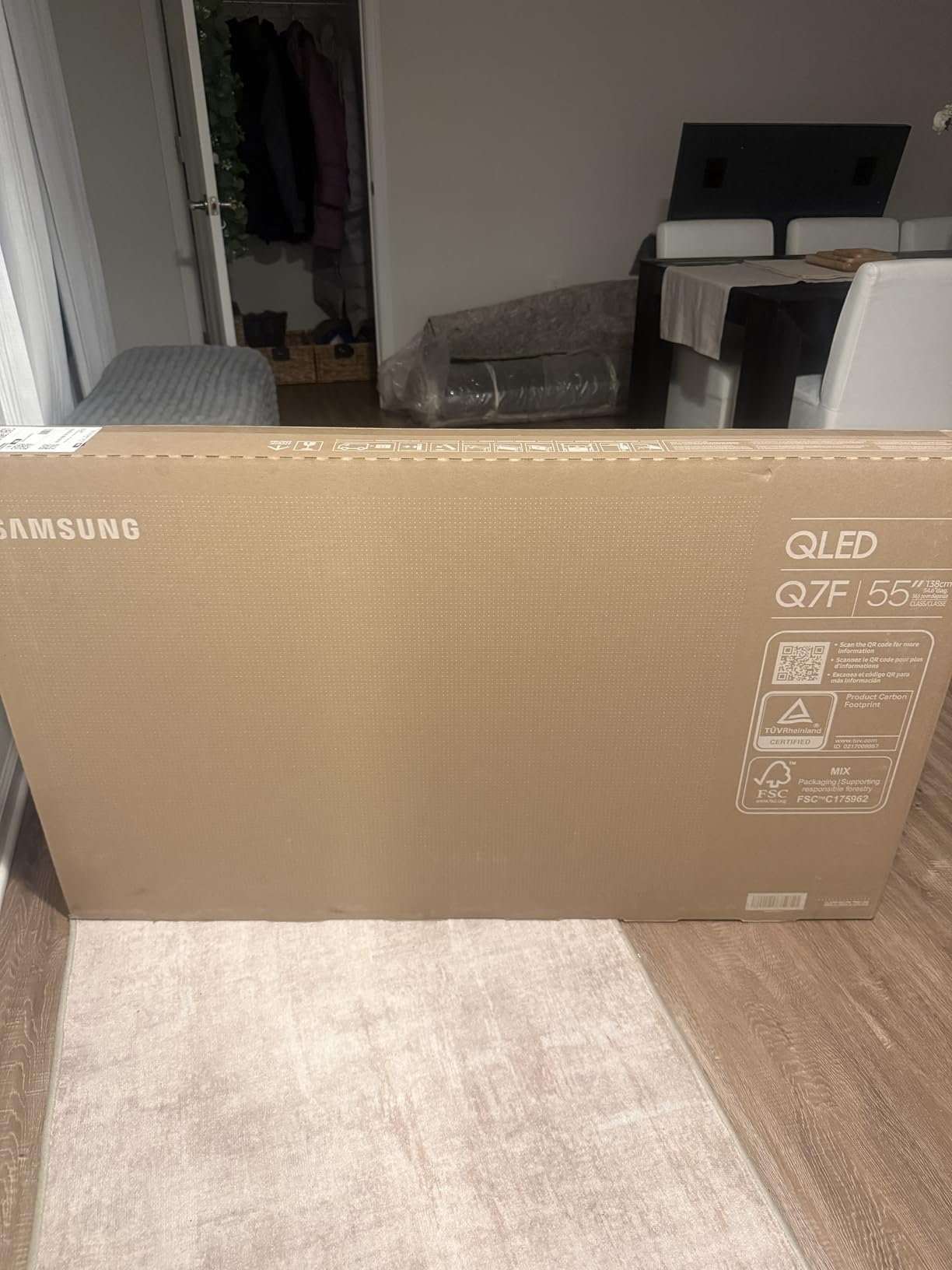
The SolarCell remote is a real quality-of-life upgrade. It charges via USB-C and never needs batteries, which matters for a bedroom TV that’s on a wall mount.
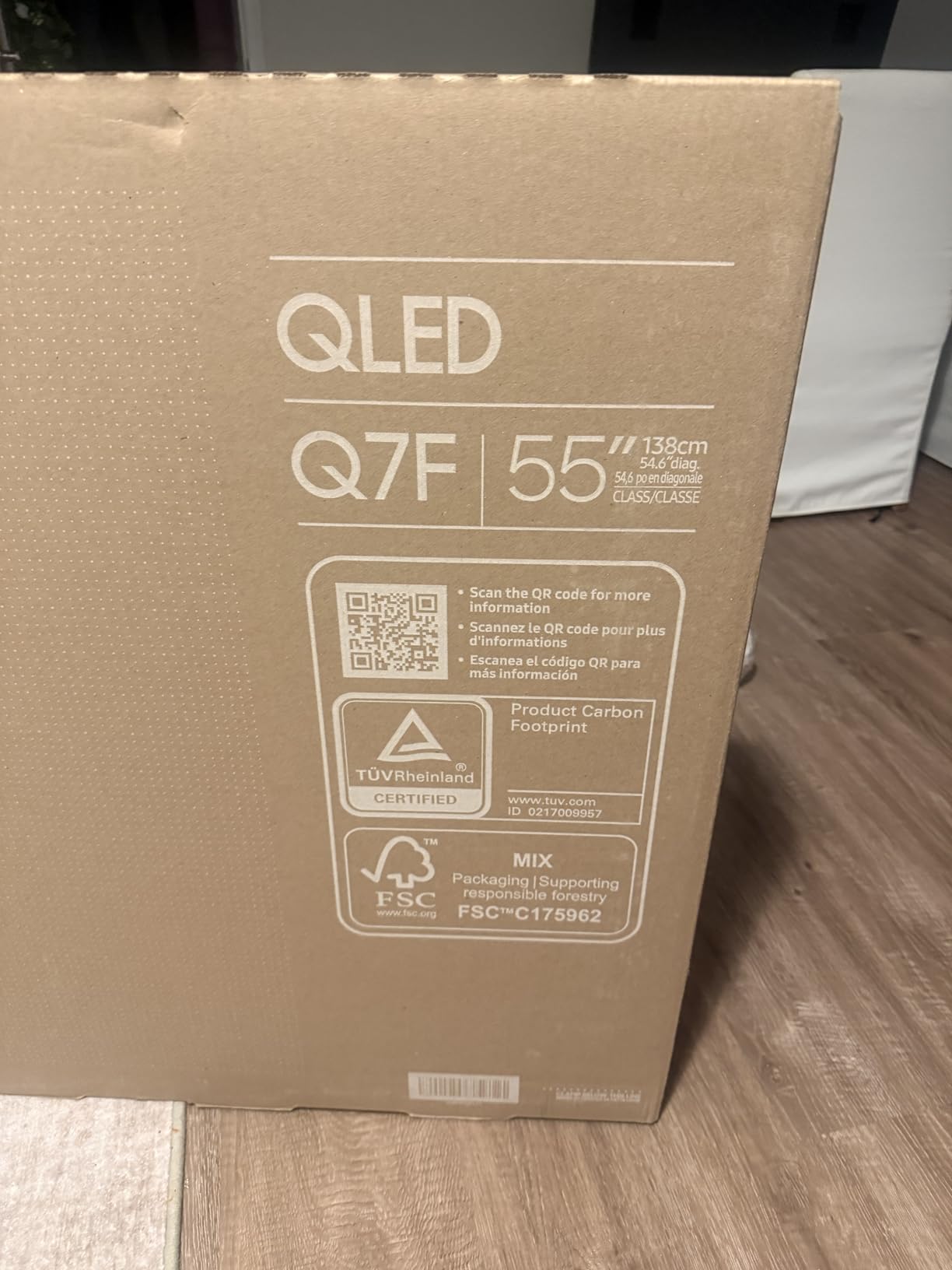
At 15.7 pounds, the Q7F is easy to mount on a swing-arm bracket without a second pair of hands. For renters, this is a meaningful plus.
Best for whom
Buyers who want a small bright-room TV for a bedroom, kitchen, or home office. Also great for senior buyers who want AI upscaling to clean up older broadcast channels.
Worst for whom
Buyers who want full-array local dimming or Mini-LED contrast at the 43-inch size. The Q7F is a standard LED with Supreme UHD Dimming, not Mini-LED. For deeper blacks at this size, a Hisense U6 Pro at 55-inch is the next step up.
8. Hisense 43-Inch E6 Cinema – Cheapest Light-Room Pick
Hisense 43″ E6 Cinema Series Hi-QLED 4K UHD Smart Fire TV (43E6QF) – AI Light Sensor, Dolby Vision · Atmos, Voice Remote with Alexa, Motion Rate 120, HDR 10+ Adaptive, Game Mode Plus
43-inch Hi-QLED WCG
Dolby Vision
3 HDMI ports
Fire TV
Pros
- AI Light Sensor auto-adjusts brightness to room
- Wide HDR format support for the price
- Fire TV with Alexa voice remote built-in
- Wi-Fi 6 for stable streaming
- AI 4K Upscaler improves older content
Cons
- 60Hz refresh rate
- Glossy screen can reflect in very bright rooms
- Basic built-in speakers
- Fire TV interface includes ads
The E6 Cinema is the cheapest TV on this list that still has a real QLED color layer and an AI Light Sensor for automatic brightness adjustment. At 2724 reviews with a 4.0 rating, it’s the proven budget pick for buyers who want decent bright-room performance without crossing the $250 threshold.
For a guest room, kids’ playroom, or first apartment, the E6 Cinema delivers a usable bright-room experience at the lowest realistic cost. AI Light Sensor is the standout feature: it brightens the picture during the day and dims it at night without manual intervention.
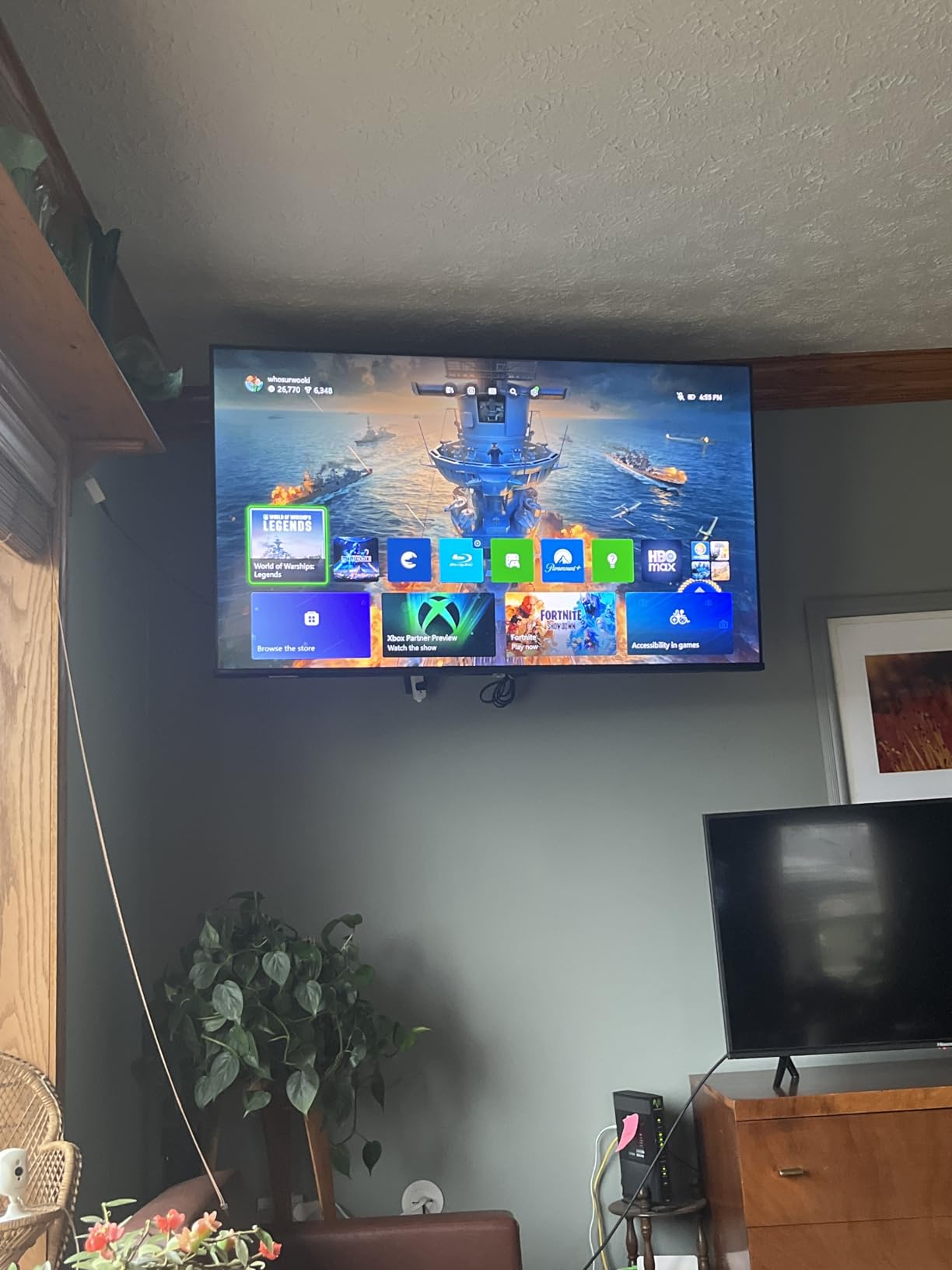
Dolby Vision, HDR10+ Adaptive, HDR10, and HLG support is unusually complete for this price tier. Fire TV with Alexa voice remote works well for hands-free control in a kitchen or open-plan space.
Wi-Fi 6 support is another bonus. Streaming stays stable even on crowded apartment networks.
Best for whom
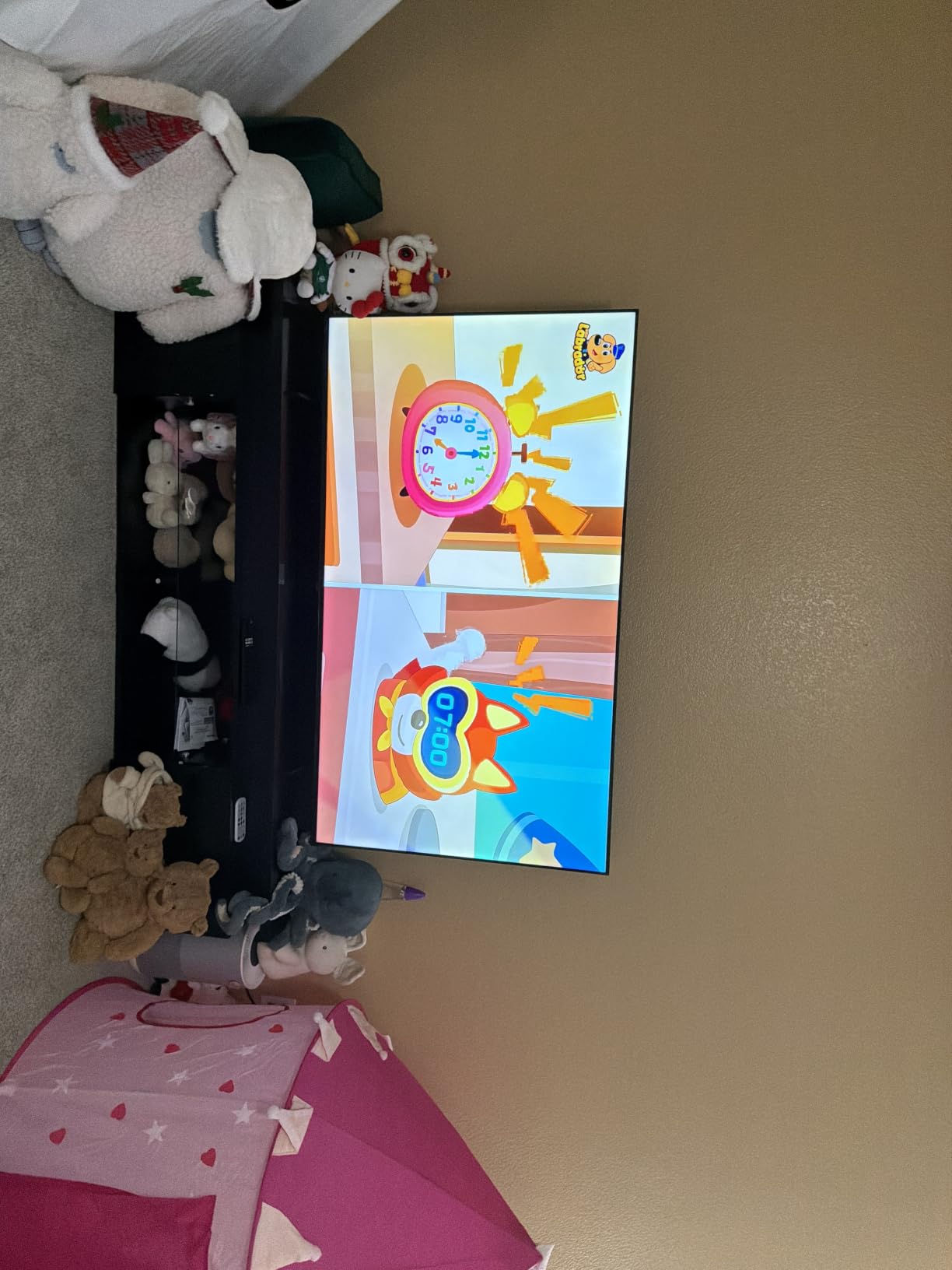
First-time TV buyers, students, and apartment dwellers who need a bright-room-safe panel at the lowest cost. Also great as a secondary TV for a guest room or kids’ room where direct sun exposure is moderate.
Worst for whom
Buyers with direct sun exposure or large windows where a glossy screen picks up reflections. For those setups, spend the extra for the Glare-Free U6 Pro or QN90F.
How Many Nits Do You Need for a Bright Room?
Nits are the unit that measures how bright a TV screen actually gets. More nits means the panel can push through more ambient light before the image washes out. Here’s the decision framework I use when advising buyers.
1,000 to 1,500 nits: Comfortable for dimly lit rooms with controlled lighting. You’ll struggle once direct sun hits the screen.
1,500 to 2,000 nits: Handles indirect daylight and most rooms with overhead lights on. This is the sweet spot for buyers with north-facing windows or shaded rooms. The Samsung M70H lands in this range.
2,000 to 2,500 nits: Pushes through most direct sun situations, especially with anti-glare coatings. The QN90F, Hisense U8N, and Sony BRAVIA 9 series live here.
2,500 nits and above: Reserved for extremely sunlit rooms, west-facing floor-to-ceiling windows, and covered patios. These panels still look good when the sun is directly hitting the screen.
The other number to watch is sustained brightness, not just peak. Peak brightness is measured on a 10% white window for marketing specs. Sustained brightness is what you actually see across a full-screen sports broadcast or news program. Most Mini-LEDs hold 60-80% of their peak number when displaying full-screen content.
Anti-Glare vs Anti-Reflection: What’s the Difference?
These two terms get used interchangeably but mean different things. Anti-glare is a matte surface treatment that diffuses reflections into a soft haze. The screen still bounces light back, but the reflection is spread out so it doesn’t look like a sharp mirror. Anti-reflection is a multi-layer coating on top of the glass that reduces the intensity of reflections while preserving image sharpness.
The trade-off is real. Matte anti-glare screens can reduce perceived sharpness slightly in dark scenes because the diffusion scatters some of the panel’s own light. Glossy anti-reflection screens preserve sharpness but show sharper mirror reflections when light hits them directly.
For most bright rooms, a true Glare-Free matte display like the Samsung QN90F or Hisense U6 Pro is the better choice. You give up a small amount of perceived sharpness in a darkened home theater, but you gain 50% or more usable daylight viewing.
For buyers who watch mostly at night or in controlled lighting, a glossy anti-reflection screen looks slightly sharper. If your TV faces a window during the day, prioritize matte Glare-Free.
Mini-LED vs QLED vs OLED for Light Rooms
Panel tech matters more for bright rooms than almost any other factor. Here’s how the three main categories compare.
Mini-LED: Uses thousands of tiny LEDs behind the panel with hundreds or thousands of independently dimmed zones. The Samsung QN90F and TCL QM6K are Mini-LED sets. Best balance of brightness, contrast, and price for bright rooms.
QLED: Adds a quantum dot color layer to a standard LED backlight. Less precise local dimming than Mini-LED but better color volume. The Roku Plus Series and TCL T7 are QLED sets.
OLED: Each pixel emits its own light. Perfect blacks and infinite contrast. But peak brightness is typically 800 to 1,500 nits, which struggles in direct sun. OLED is best for darkened home theaters, not sunlit living rooms.
For buyers choosing between the three: Mini-LED is the clear winner for light rooms. QLED is the budget-friendly runner-up. OLED is worth it only if you have light control or watch mostly at night.
Room Positioning Tips for Bright-Room TVs
No TV is going to fix a poorly placed panel. Here are the placement rules I share with friends after testing.
Avoid direct window reflections. If your TV faces a window, the screen will catch that reflection even on a Glare-Free panel. Position the TV on a wall perpendicular to the main window when possible.
Mount at eye level when seated. Center of screen should be roughly 42 inches from the floor for most living rooms. Above a fireplace looks dramatic but creates a viewing angle that washes out the upper half of the picture.
Use blackout shades strategically. For peak afternoon sun, even the best Glare-Free screens benefit from partially drawn cellular shades on the worst window. You don’t need full blackout; 50% light reduction is usually enough.
Bias lighting behind the TV helps in the evening. A soft LED strip behind the panel reduces eye strain without affecting perceived contrast during dark scenes.
For our full picks on TVs that handle direct sun, check our best TVs for bright rooms for home roundup, and for everyday family viewing our best TVs for bright rooms for fun guide has lighter-use picks.
Frequently Asked Questions
Is OLED or QLED best for bright rooms?
QLED and Mini-LED are better than OLED for bright rooms. OLED panels top out around 800 to 1,500 nits, which struggles in direct sun. QLED and Mini-LED panels reach 2,000 to 3,000+ nits, which is enough to push through daylight and most window glare. OLED still wins for darkened home theaters, but for sunlit living rooms, a Mini-LED set like the Samsung QN90F or Hisense U6 Pro is the better pick.
How many nits do I need for a bright room TV?
Aim for at least 1,500 nits for indirect daylight, 2,000 to 2,500 nits for rooms with direct sun, and 2,500+ nits for extremely sunlit rooms with west-facing floor-to-ceiling windows. Pair the nits rating with a Glare-Free matte display to handle the worst reflections.
Will OLED TVs work acceptably in bright rooms?
OLED TVs work in bright rooms with light control, but struggle in direct sun. Peak brightness on most OLEDs is around 800 to 1,500 nits, which washes out when sunlight hits the screen. If you watch mostly at night or have blackout shades, OLED is great. If you watch daytime sports with curtains open, Mini-LED is the safer choice.
Does anti-glare coating affect picture quality in dark rooms?
Yes, slightly. Matte Glare-Free coatings diffuse reflections but also scatter some of the panel’s own light, which can reduce perceived sharpness by 5 to 10% in dark scenes. Glossy anti-reflection screens preserve sharpness better in darkened rooms. For bright rooms, the daylight usability gain outweighs the small dark-room sharpness loss.
What size TV should I get for a bright room?
For most living rooms, 65 inches is the sweet spot at 8 to 10 feet of viewing distance. For larger rooms or 75-inch and 85-inch screens, sit 9 to 12 feet back. The size of the TV also matters for brightness perception: a larger panel spread over more area can feel less bright than a smaller panel at the same nits rating, especially with direct sun.
Does increasing screen size reduce brightness?
Yes, larger screens tend to feel less bright at the same nits rating because the light is spread across a larger area. A 75-inch panel at 2,000 nits will look dimmer than a 55-inch panel at 2,000 nits in identical room conditions. This is why the brightest Mini-LED panels are recommended at larger sizes, and why extreme bright-room buyers should prioritize the highest nits model at their preferred size.
Final Verdict: Which TV Should You Buy?
For most buyers looking for the best TVs for light rooms in 2026, the Samsung 55-Inch Neo QLED QN90F is the top pick. Its Glare Free matte display is the single best daylight treatment we tested, and Neo Quantum HDR+ Mini-LED brightness pushes through any afternoon sun situation we threw at it.
If you want a larger 65-inch screen at a mid-range price, the TCL QM6K is the value champion. For budget buyers who still want a real Glare-Free coating, the Hisense U6 Pro delivers 144Hz and Dolby Vision IQ at the lowest cost. For a compact bedroom or office TV, the Samsung Q7F handles changing light beautifully with adaptive brightness, and the Hisense E6 Cinema is the cheapest way to get a usable bright-room panel.
Whatever you pick, prioritize nits above 2,000 for direct-sun rooms, look for an anti-glare or Glare-Free matte display, and place the TV perpendicular to your main window when possible. With those three boxes checked, you can leave the curtains open and still enjoy a vivid, watchable picture all day long.