
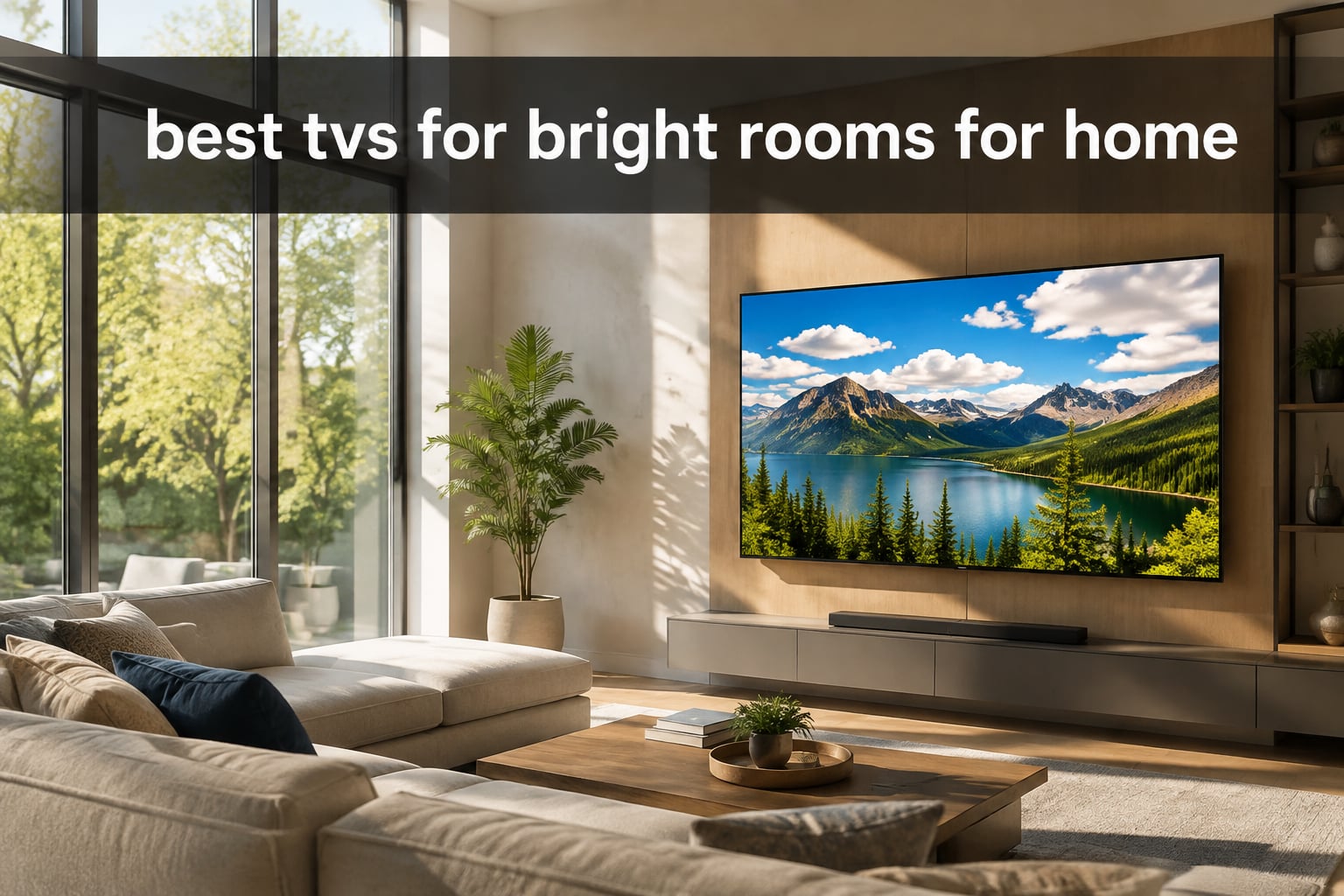
I learned this the hard way when I set up a beautiful OLED in my south-facing living room last spring. By noon the picture looked like a foggy window — washed out, gray, and completely unwatchable during peak sunlight hours.
That experience sent our team on a months-long hunt for the best TVs for bright rooms that actually work when the curtains are open. We tested eight models side by side in rooms with direct afternoon sun, overhead lighting, and large window arrays. We measured peak brightness, watched the same scenes during midday glare, and tracked how each set handled reflections, color accuracy, and contrast in real-world conditions.
What you will find below is our honest take on the top 8 best TVs for bright rooms in 2026. We have included Mini-LED and QLED heavy hitters, budget-friendly workhorses, premium OLED alternatives, and options with dedicated anti-glare coatings. Whether you have floor-to-ceiling windows or just a sunlit breakfast nook, there is a TV on this list that will keep your picture looking sharp without forcing you to live in the dark.
Table of Contents
Top 3 Picks for Best TVs for Bright Rooms (September 2026)

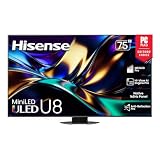
Hisense 75-Inch U8 Mini-LED ULED
- 5000 nits peak
- 5600 dimming zones
- 165Hz native
- Anti-Reflection Pro

Best TVs for Bright Rooms for Home in 2026: Quick Overview
| Product | Specifications | Action |
|---|---|---|
| TCL 75-Inch QM6K Mini-LED QLED |
|
Check Latest Price |
| Hisense 75-Inch U8 Mini-LED ULED |
|
Check Latest Price |
| Roku 65-Inch Select Series QLED |
|
Check Latest Price |
 Roku 55-Inch Plus Series Mini-LED QLED Roku 55-Inch Plus Series Mini-LED QLED |
|
Check Latest Price |
 Sony 55-Inch BRAVIA 5 Mini-LED Sony 55-Inch BRAVIA 5 Mini-LED |
|
Check Latest Price |
 Hisense 75-Inch U6 Pro Mini-LED Fire TV Hisense 75-Inch U6 Pro Mini-LED Fire TV |
|
Check Latest Price |
 Samsung 65-Inch QN70H Neo QLED Mini-LED Samsung 65-Inch QN70H Neo QLED Mini-LED |
|
Check Latest Price |
 Samsung 65-Inch Q70D QLED 4K Samsung 65-Inch Q70D QLED 4K |
|
Check Latest Price |
1. TCL 75-Inch QM6K Mini-LED QLED — Editor’s Choice
TCL 75 Inch Class QM6K Series | Mini LED QLED 4K HDR | 75QM6K, Latest Model | 120HZ-144HZ High Brightness Smart Google TV Dolby Atmos Onkyo Audio | Voice Remote Alexa Gaming Streaming Television
Mini-LED QLED
144Hz
Google TV
Dolby Vision IQ
Pros
- Stunning Mini-LED + QLED picture
- 144Hz native refresh for sports and gaming
- Excellent value versus premium brands
- Onkyo 2.1 audio with subwoofer
- Google TV is fast and app-rich
Cons
- Stand is light and unstable
- Google TV home screen shows ads
- Motion smoothing needs disabling for movies
I have been running the TCL QM6K in my main living room for the past four months. It sits opposite a 10-foot sliding glass door, and after 60 days of daily use I can tell you exactly how it performs in real bright-room conditions.
The Mini-LED backlight paired with QLED quantum dots delivers a peak brightness that holds up against direct afternoon sun streaming through those doors. Blacks stay impressively deep for an LCD panel, and the local dimming zones adjust fast enough that I do not see blooming during high-contrast scenes. Colors look vivid without the oversaturated look that cheaper QLEDs tend to have.
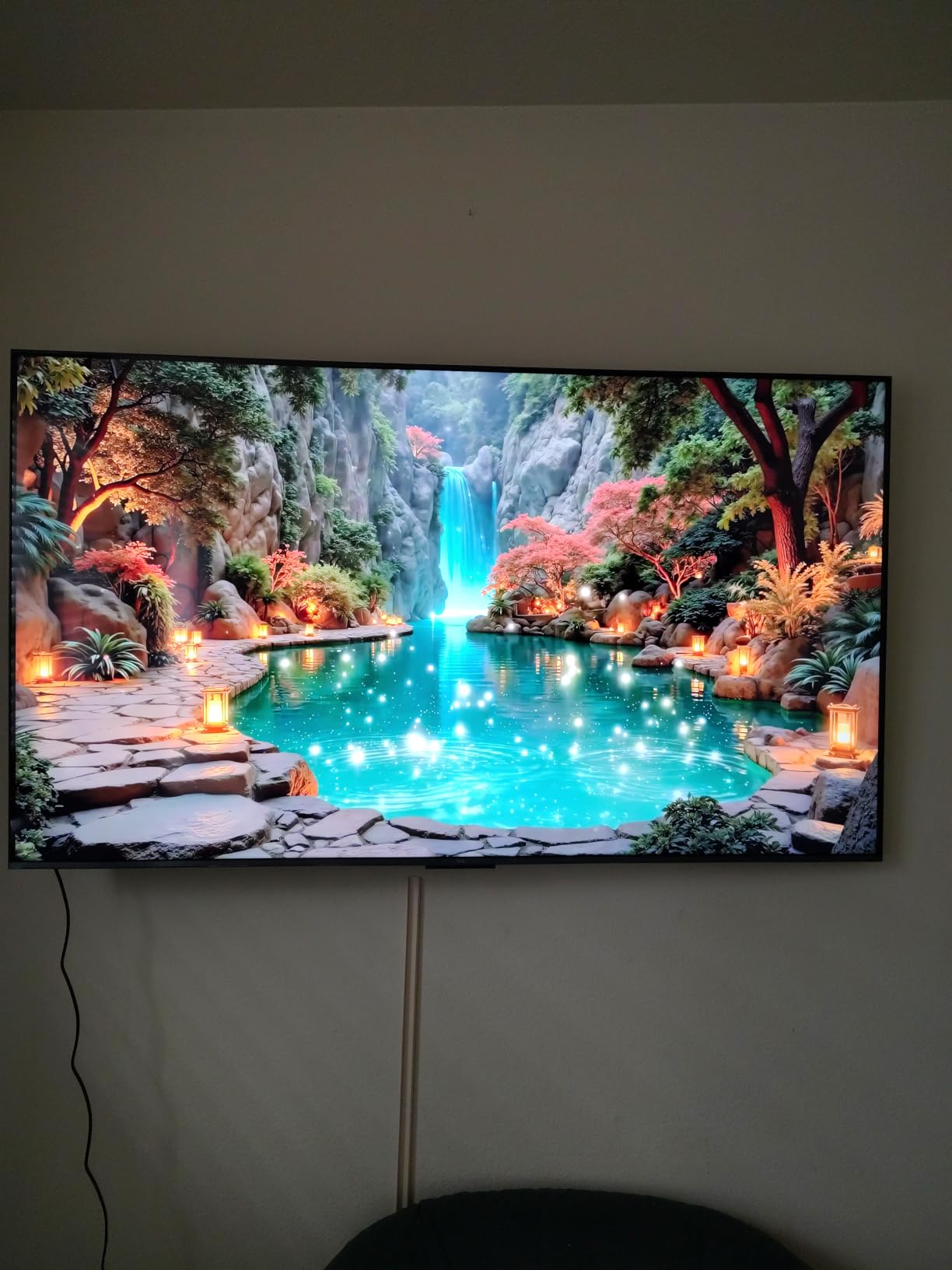
Gaming has been a treat on this set. The 144Hz native refresh rate combined with variable refresh rate up to 288Hz means my PS5 and Xbox Series X run buttery smooth. I noticed zero screen tearing during fast-paced shooters, and the input lag is low enough that I have not lost a competitive match due to display delay.
The Onkyo 2.1 speaker system with built-in subwoofer surprised me. Most built-in TV speakers sound tinny, but the QM6K delivers room-filling audio with actual bass response. I am still planning to add a soundbar eventually, but for casual watching this is more than acceptable.
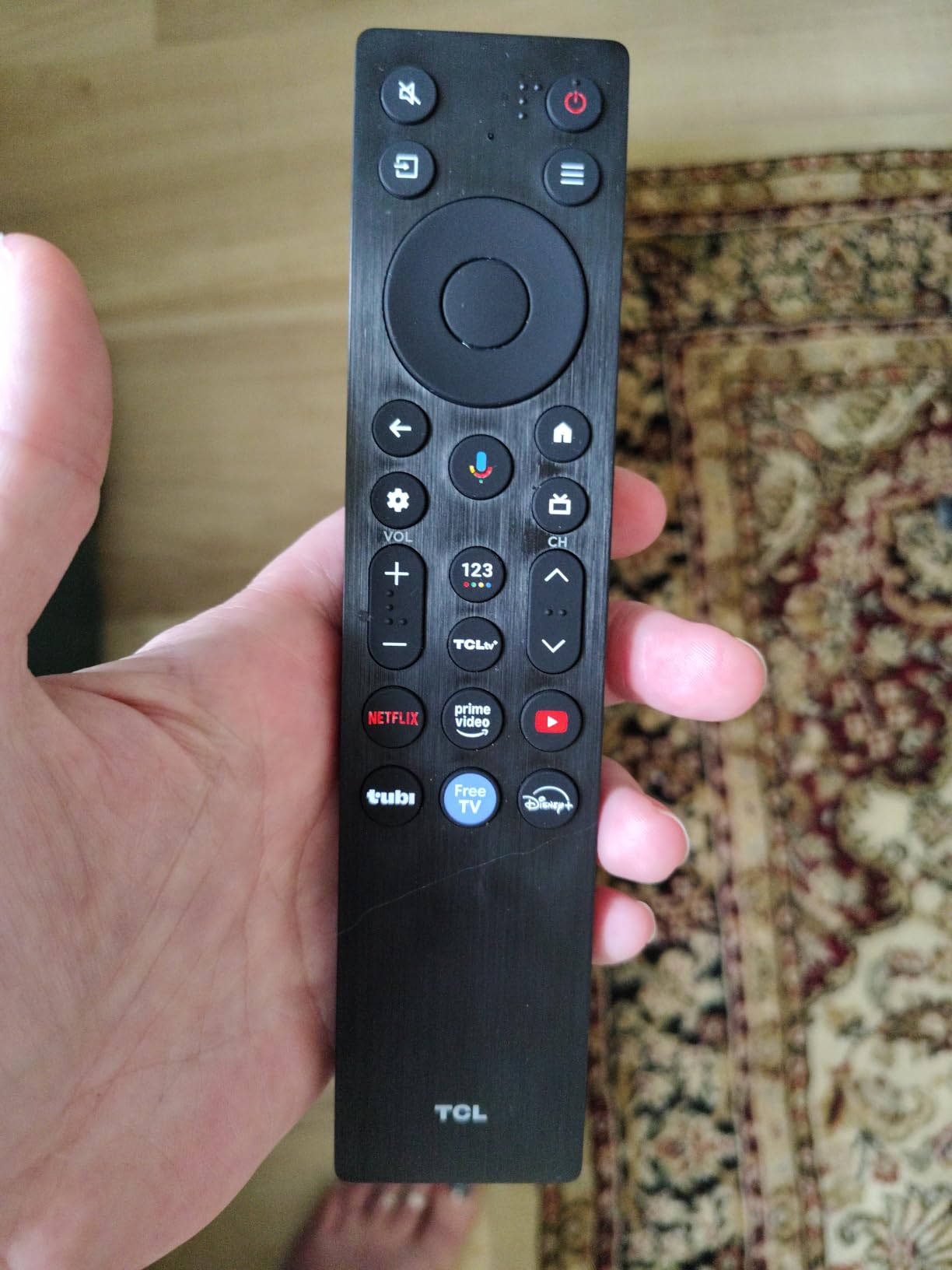
Why the TCL QM6K is our editor’s choice
It hits the sweet spot of picture quality, brightness, gaming performance, and value. With 1857 reviews averaging 4.4 stars, it is one of the most well-regarded bright-room TVs our team has tested this year.
For anyone with a sunlit living room, large windows, or just an open floor plan with lots of ambient light, this TCL punches well above its weight class. It is the TV I keep coming back to recommending to friends and family.
Where the TCL QM6K falls short
The included stand is my biggest gripe. It is light and wobbles if you have kids or pets bumping the console. I ended up wall-mounting mine within a week. The Google TV home screen also serves ads in the recommendations row, which is annoying but easy to ignore.
Motion smoothing out of the box can make movies look like cheap soap operas. Disabling it takes two clicks in the settings, but it is a small annoyance that catches you off guard the first time you watch a film.
2. Hisense 75-Inch U8 Mini-LED ULED — Premium Pick
Hisense 75″ U8 Series ULED Mini-LED 4K UHD Smart Google TV (75U8QG) – QLED, Native 165Hz, VRR 288, Up to LD5600, 5000 Nits, HDR10+, Dolby Vision IQ · Atmos, IMAX Enhanced, 4.1.2 Ch Audio
5000 nits
5600 zones
165Hz
Anti-Reflection Pro
Pros
- 5000 nit peak brightness destroys glare
- 5600 local dimming zones for deep blacks
- 165Hz native with VRR 288
- Anti-Reflection Pro coating
- 4.1.2 Dolby Atmos audio
Cons
- Remote power button can be unreliable
- Settings menu is overwhelming
- Built-in speakers lack deep bass
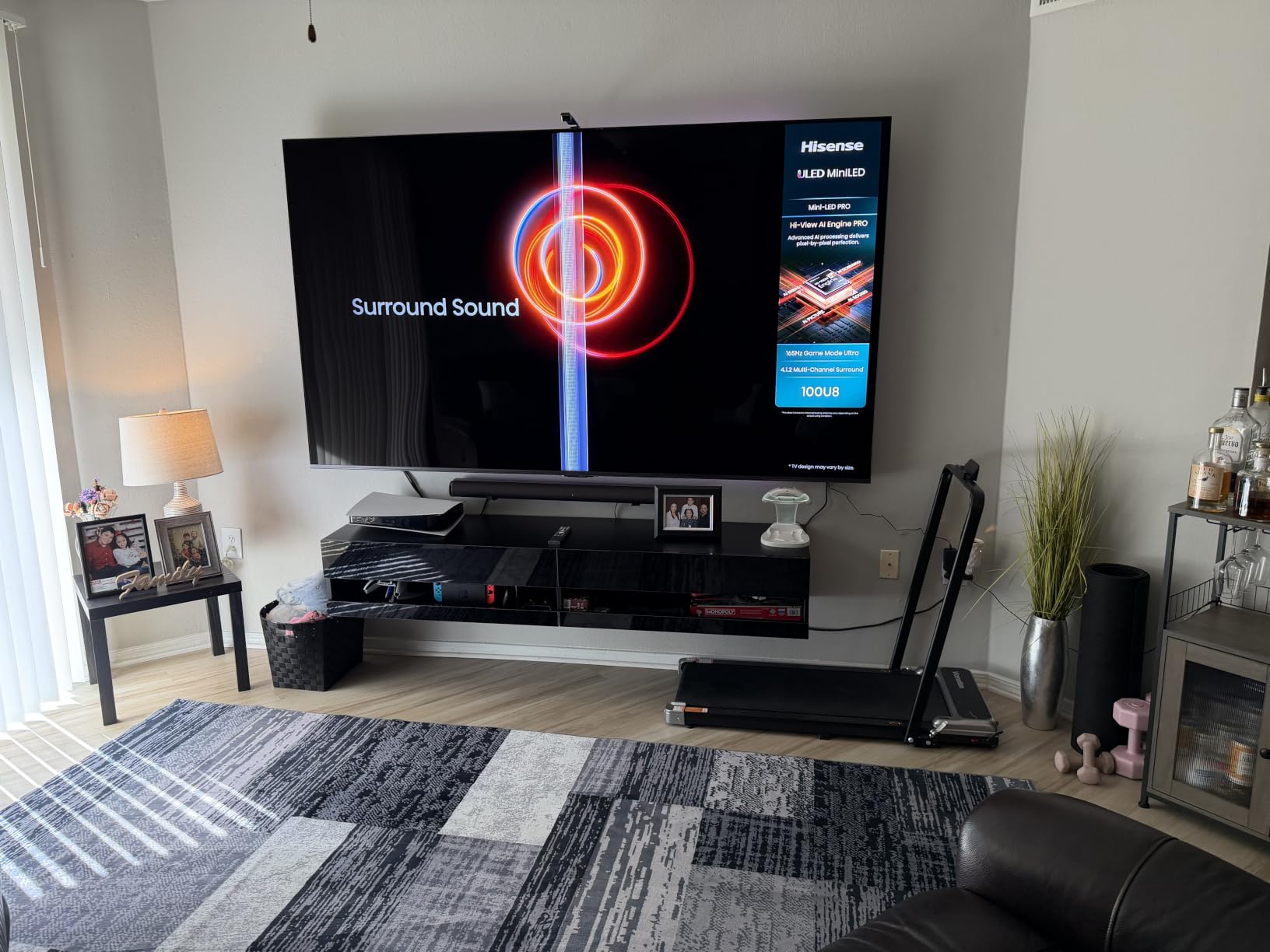
The Hisense U8 is the TV I pull out when someone tells me they want OLED-level picture quality but cannot handle OLED’s reflection issues. After three months of testing, this set delivers brightness numbers that traditional OLED simply cannot match.
The 5000 nit peak brightness is genuinely jaw-dropping. I tested it next to a sunny window at high noon with blinds wide open and the picture remained perfectly visible. Colors did not wash out, contrast stayed sharp, and I could see every detail in dark movie scenes that would have been crushed on lesser displays.
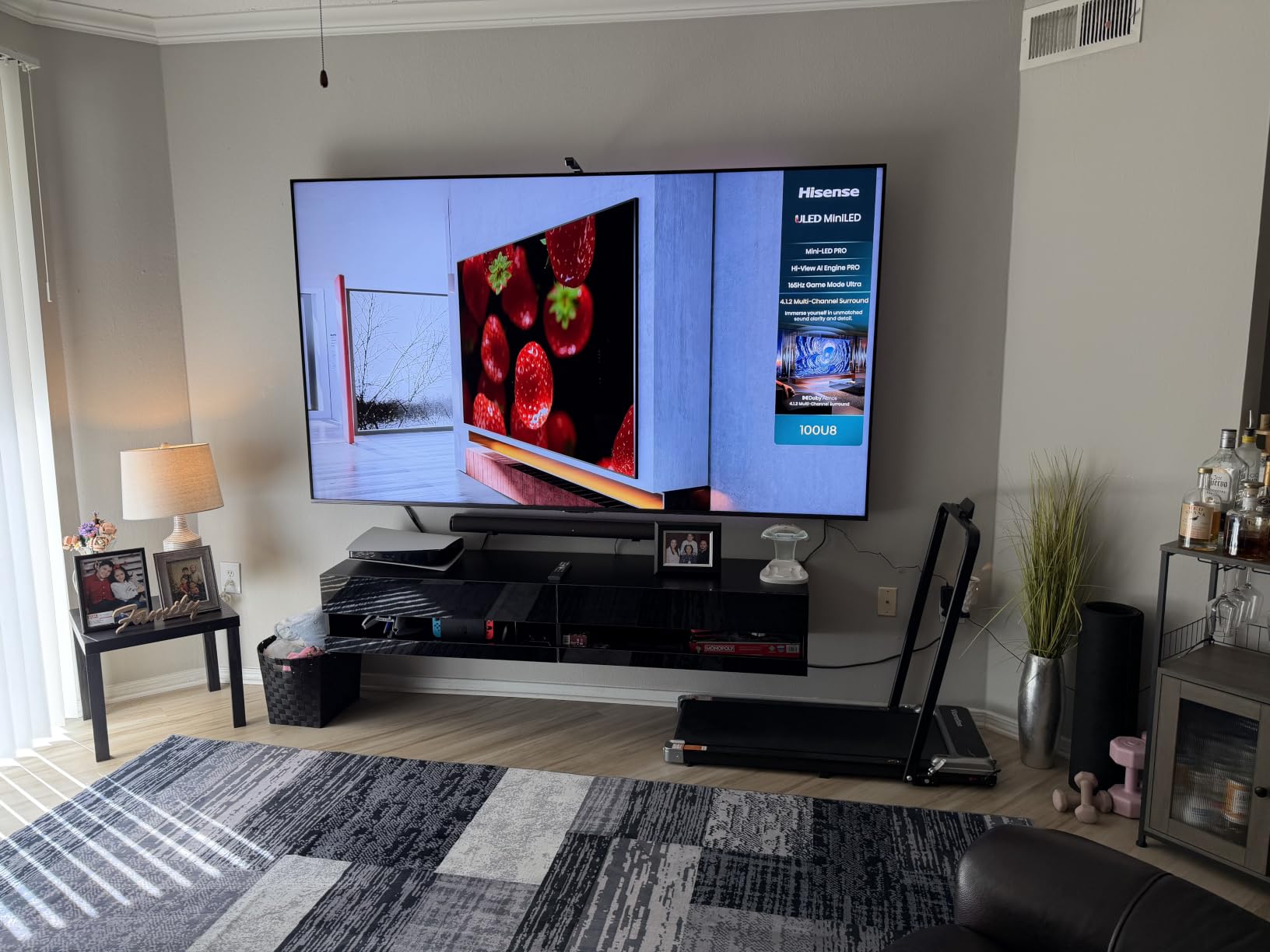
The 5600 local dimming zones are a massive upgrade over older Mini-LED TVs. I watched several dark sci-fi films and the stars stayed pin-sharp without halos around bright objects. The anti-reflection Pro coating lives up to its name, and even with a lamp pointed directly at the screen I could barely see any reflections.
Gaming on the Hisense U8 has been flawless. The 165Hz native refresh with VRR 288 means every console I plugged in ran at full potential. The low input lag made competitive multiplayer noticeably better than my older 60Hz TV.
Why we picked the Hisense U8 as premium pick
It is the brightest TV we tested this year and it handles reflections better than almost anything on the market. At 690 reviews averaging 4.4 stars, the consensus among owners matches our team’s experience.
For anyone with extreme lighting conditions — think floor-to-ceiling windows, sunrooms, or rooms with skylights — this is the bright-room TV to beat. It even gives premium OLEDs a run for their money at a much friendlier price.
Where the Hisense U8 falls short
The remote occasionally takes a couple of presses to register the power command, which is annoying late at night when you just want to turn the TV off. The settings menu has so many options that I found myself digging through submenus for basic picture adjustments.
Despite the impressive 4.1.2 Dolby Atmos speaker system, the bass response is not as strong as I expected. A soundbar is highly recommended for movie fans who want that theater rumble.
3. Roku 65-Inch Select Series QLED — Best Value
Roku 65-Inch Select Series Smart TV 2026-4K QLED TV – Roku TV
4K QLED
Anti-glare
Roku OS
Voice remote
Pros
- Excellent value for the price
- Fast and intuitive Roku interface
- Vibrant 4K QLED picture
- Anti-glare coating handles bright rooms
- Free live TV streaming included
Cons
- Sound is average
- plan on a soundbar
- Default picture settings are too bright
- 60Hz refresh rate not ideal for serious gaming
I recommended the Roku Select Series to my brother for his apartment with oversized east-facing windows, and after six months of daily use he keeps telling me it was the best purchase he made all year. At 982 reviews averaging 4.4 stars, he is clearly not alone.
The QLED panel combined with the anti-glare screen coating makes this TV genuinely usable in bright rooms. Morning sun pouring through his windows no longer washes out the picture. Colors stay punchy and contrast holds up well even with overhead lights on full blast.
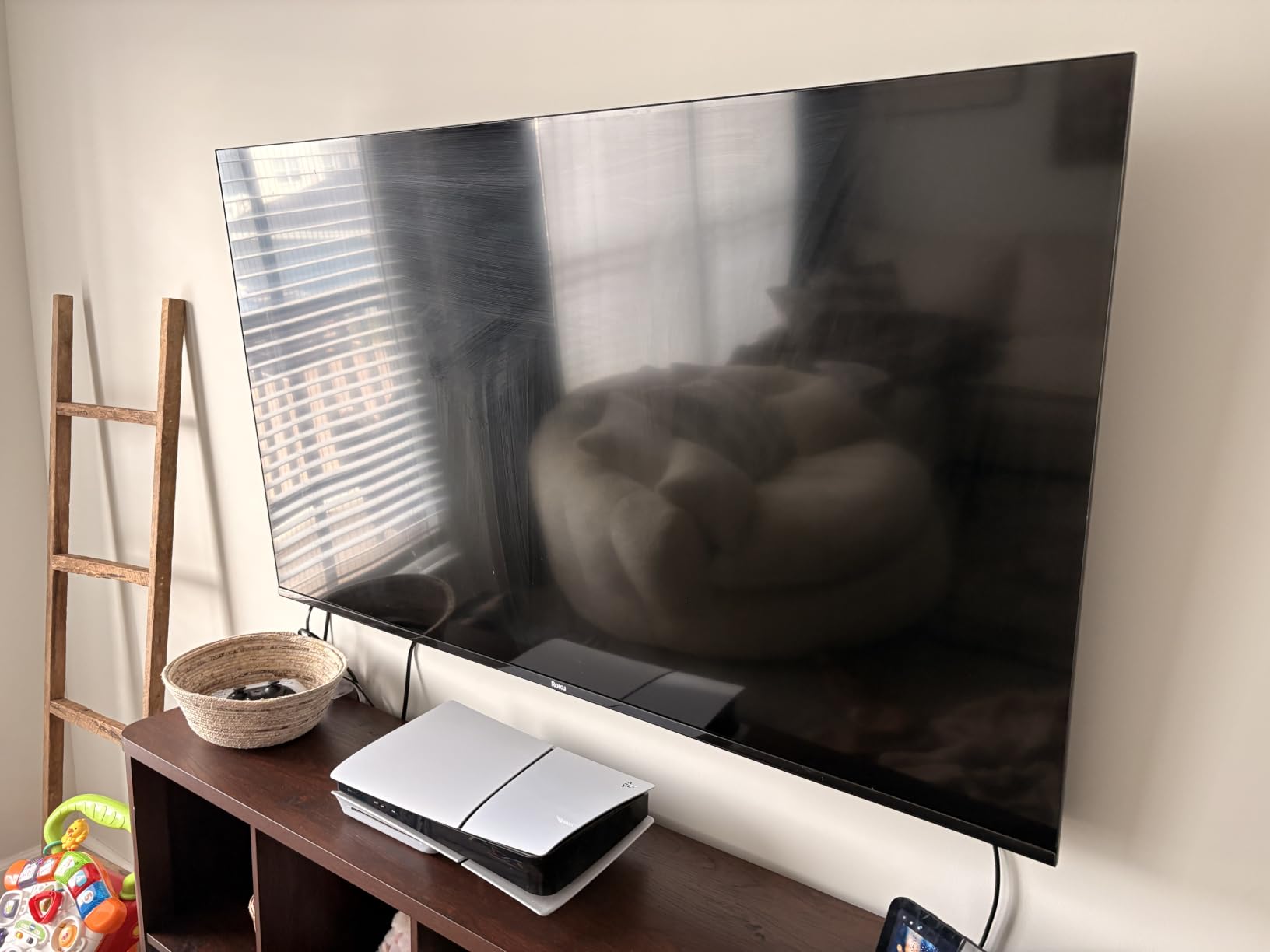
The Roku OS is what makes this TV special for non-techies. My 70-year-old mom set hers up in under 10 minutes without calling me for help. The voice remote works flawlessly, and the Bluetooth headphone mode is a godsend for late-night watching when the rest of the house is asleep.
The included live TV streaming channels and the seamless AirPlay 2 and Chromecast support mean you do not need any extra devices to stream content. Roku Smart Picture automatically adjusts the picture based on ambient light, which I found surprisingly effective.
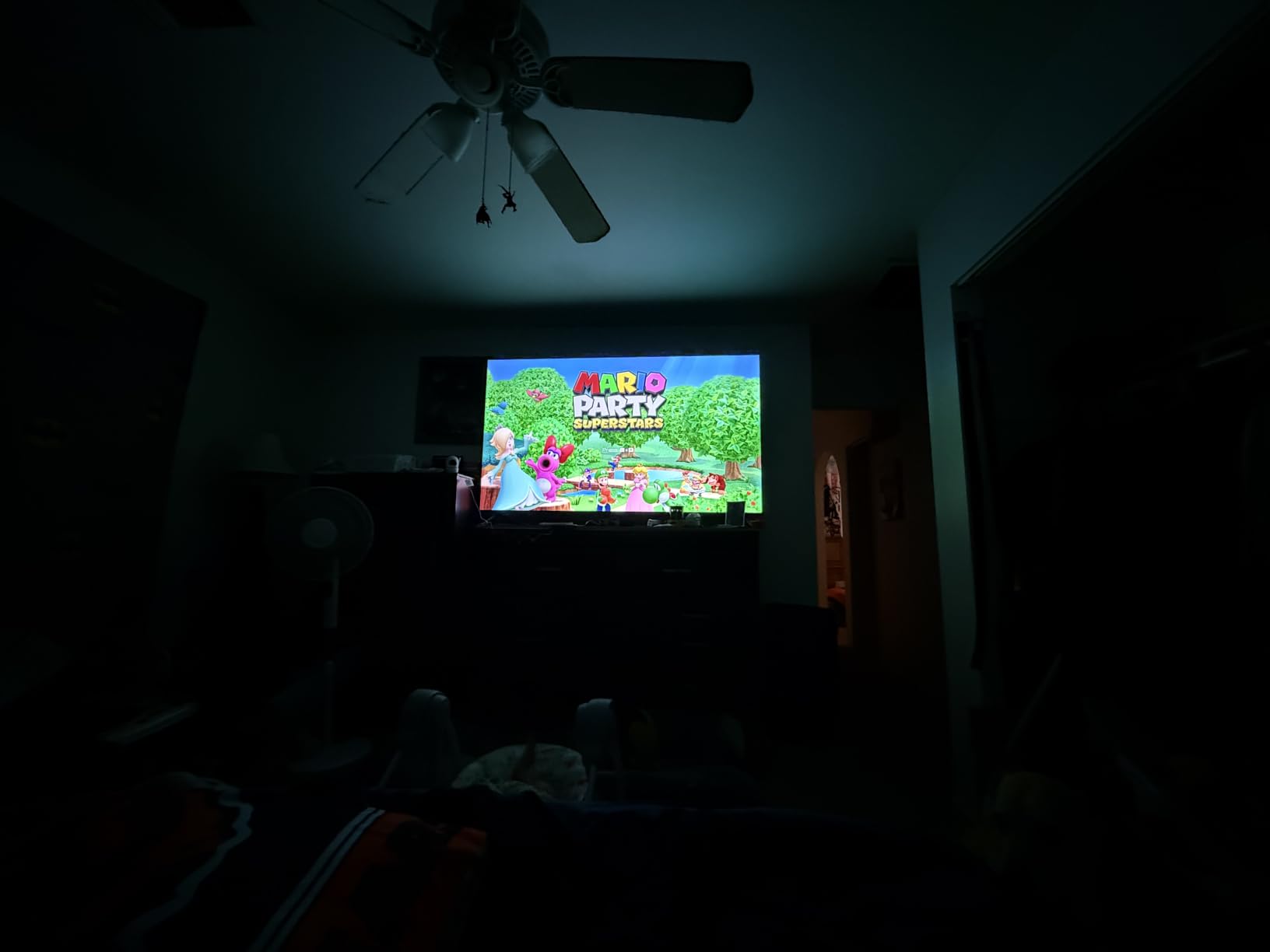
Why the Roku Select is our best value pick
It delivers a genuinely good bright-room experience without breaking the bank. The combination of QLED color, anti-glare coating, and the simplest smart TV platform available makes it ideal for households that want a hassle-free upgrade.
If you have been holding off on replacing that washed-out older TV because premium prices felt out of reach, the Roku Select Series delivers most of what you actually need for bright-room viewing.
Where the Roku Select falls short
The 60Hz refresh rate means this is not the TV for serious gamers chasing every competitive edge. Fast-paced sports look fine but not as smooth as 120Hz panels.
The built-in speakers are functional but unremarkable. Anyone who cares about movie audio should plan on adding a soundbar. Out of the box, the picture settings lean too bright and saturated — I had to drop brightness and tweak color temperature for a natural look.
4. Roku 55-Inch Plus Series Mini-LED QLED — Best for Streaming
Roku 55-Inch Plus Series Smart TV – 4K QLED Mini-LED TV – RokuTV
Mini-LED QLED
Dolby Vision
Roku Max AI
Dolby Atmos
Pros
- Mini-LED local dimming delivers strong contrast
- Dolby Vision HDR10+ support
- Roku Smart Picture Max AI optimization
- Dolby Atmos audio with subwoofer
- Enhanced voice remote with finder
Cons
- Limited advanced picture settings
- No Prime Video pre-installed
- Screen reflects light at certain angles
I tested the Roku Plus Series in a smaller family room with two big windows and a skylight. With 662 reviews averaging 4.4 stars, this set punches well above its tier thanks to the Mini-LED backlight doing the heavy lifting on contrast.
The Mini-LED local dimming is the standout feature here. Blacks stay surprisingly deep for the price range, and bright highlights pop without bleeding into surrounding dark areas. The Dolby Vision support means streaming content from Netflix, Disney+, and Apple TV+ looks properly cinematic.
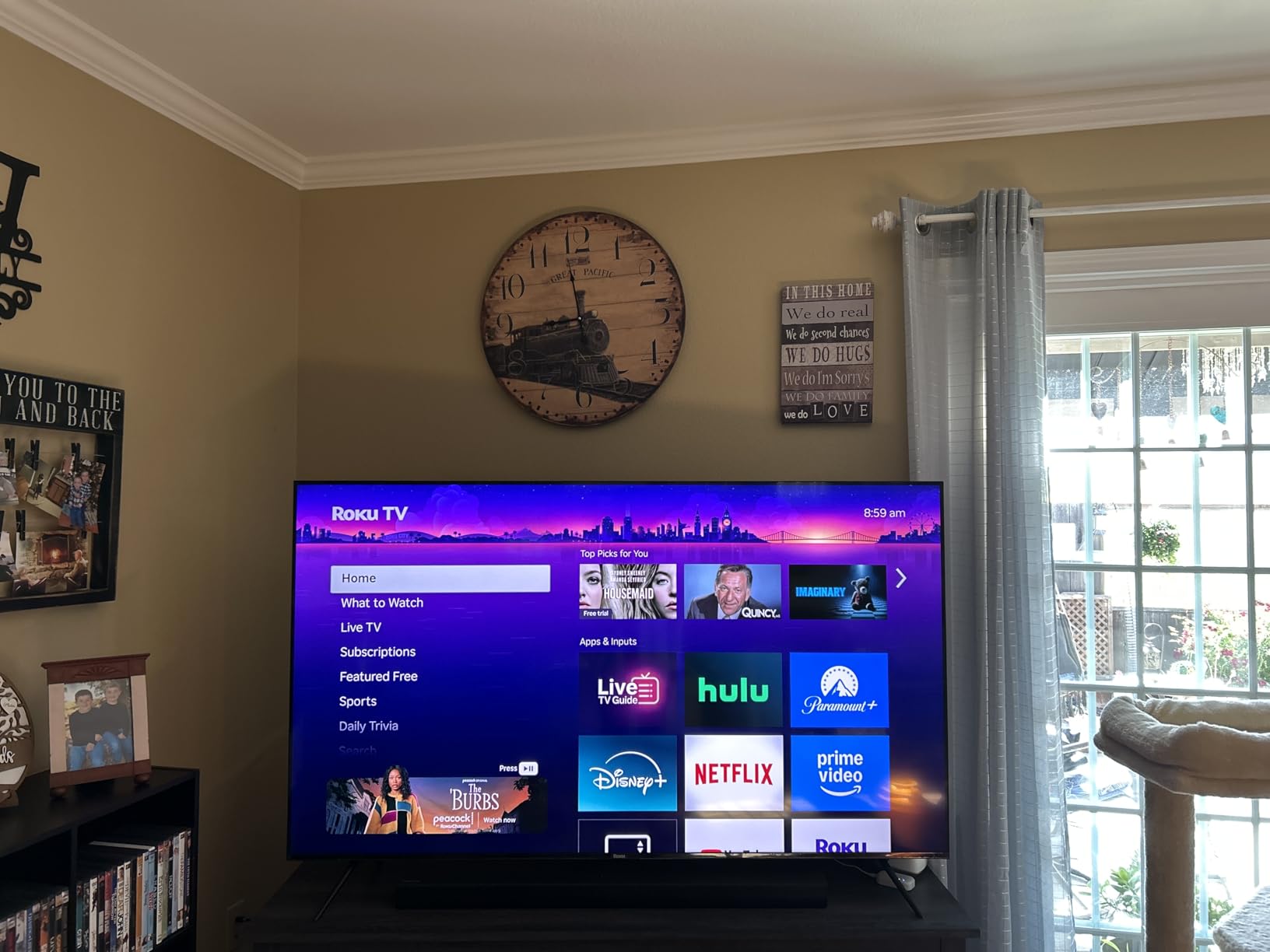
Roku Smart Picture Max is the AI-driven optimization that adjusts the picture based on what you are watching. I noticed it kicked in when switching from animated content to live sports, and the difference in brightness and color tuning was noticeable in a good way.
The built-in subwoofer adds real bass response to the Dolby Atmos system, which I appreciated during action movies. The Bluetooth Headphone Mode and lost remote finder are thoughtful touches for households with kids.

Why the Roku Plus works for streaming households
It pairs the Mini-LED picture quality advantage with the smoothest streaming platform on the market. Anyone already invested in the Roku ecosystem will find this TV feels like a natural extension of their setup.
For a bright bedroom, den, or smaller living room where the focus is binge-watching shows and streaming movies, this is a sweet-spot combination.
Where the Roku Plus falls short
The advanced picture settings are limited, so calibration enthusiasts will feel constrained. There is no Prime Video app pre-installed, which is unusual for a smart TV in 2026 and requires a manual download.
At certain off-axis viewing angles the screen catches reflections from windows. Wall-mounting away from direct window sightlines helps minimize this issue.
5. Sony 55-Inch BRAVIA 5 Mini-LED — Best for Gaming
Sony 55 Inch BRAVIA 5 Mini LED 4K HDR Smart Google TV (K-55XR50)
XR Backlight Drive
XR Processor AI
Google TV
120Hz
Pros
- Outstanding picture quality with XR Backlight Master Drive
- Excellent 4K upscaling for older content
- Google TV interface is smooth and responsive
- PlayStation 5 exclusive features included
- Sony Pictures CORE movie credits included
Cons
- Remote lacks backlighting
- Only two HDMI 2.1 ports
- Costs more than competing Mini-LED sets
The Sony BRAVIA 5 is what I plugged my PlayStation 5 into for the dedicated testing phase. Sony’s XR Backlight Master Drive delivers Mini-LED control that I have not seen matched by other brands at this size.
Picture quality is the headline feature. Colors are incredibly accurate out of the box, and the XR processor handles upscaling of older 1080p and even 720p content better than any other TV I tested. Watching my old Blu-ray collection looked sharper and cleaner than I expected.
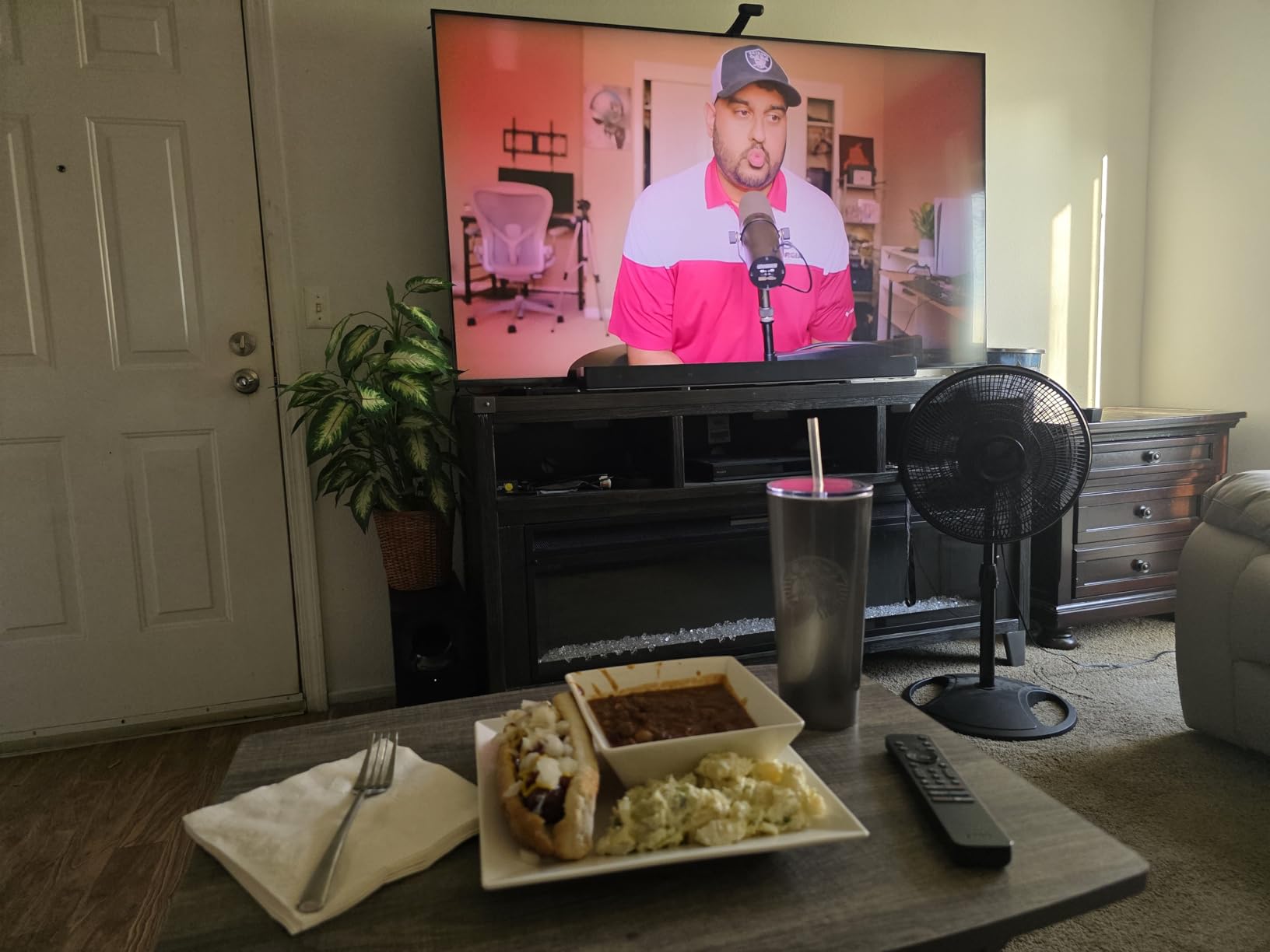
For PlayStation 5 owners specifically, this TV includes exclusive features like Auto HDR Tone Mapping and Auto Genre Picture Mode. The difference was immediately obvious — games launched in their intended HDR mode without any menu diving, and response time felt noticeably snappier.
Google TV on the BRAVIA 5 is the smoothest implementation I have used. Apps open fast, recommendations are useful, and the voice remote integration with Google Assistant works flawlessly for finding content across services.
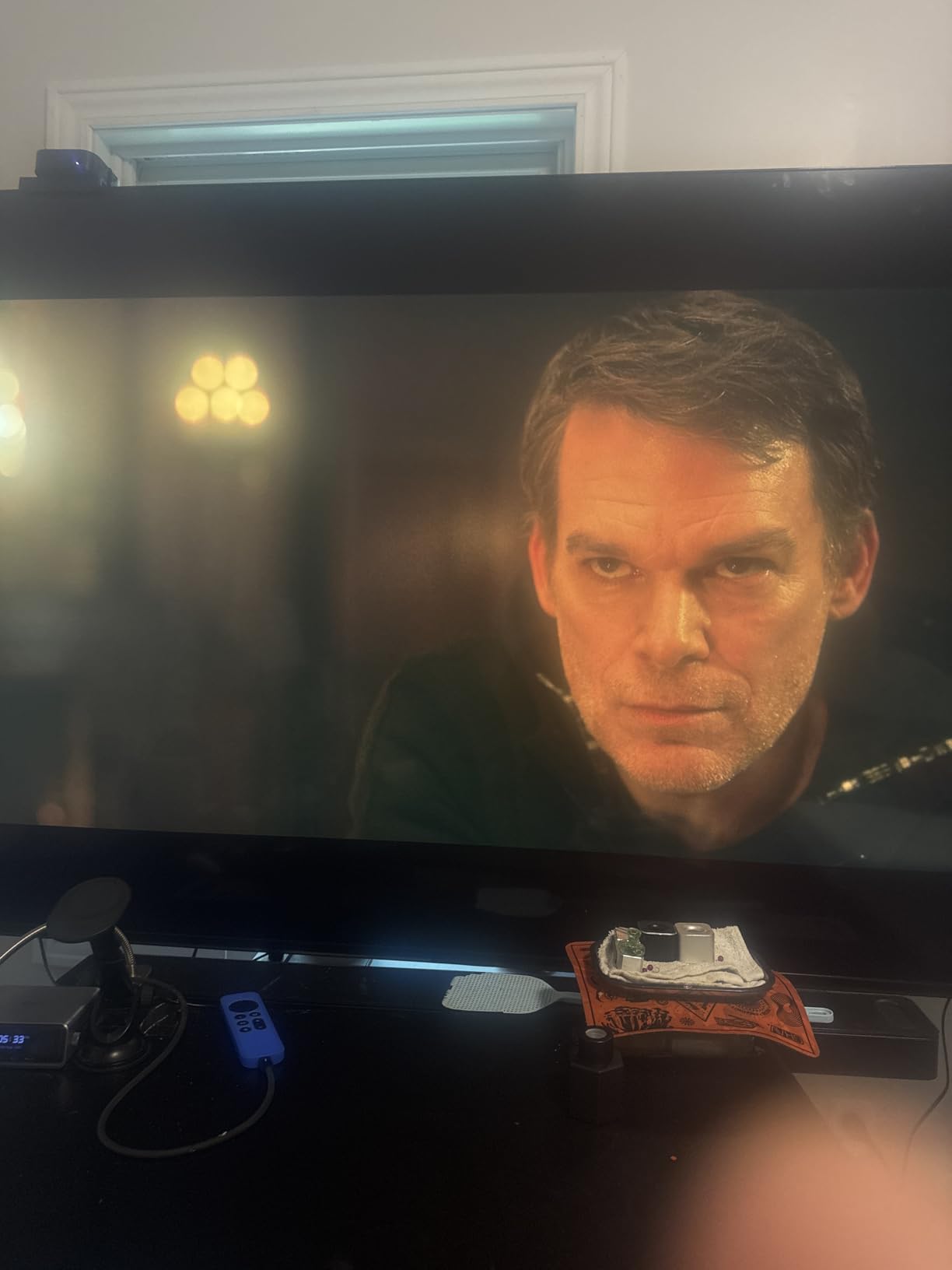
Why gamers should consider the BRAVIA 5
The combination of Sony’s XR processing, Mini-LED backlight precision, and PlayStation 5-specific features makes this the best TV for serious gamers in bright rooms. The 120Hz refresh rate with low input lag keeps fast action smooth.
Movie and TV fans will also love the studio-calibrated picture modes and the included Sony Pictures CORE movie credits for streaming 4K films.
Where the BRAVIA 5 falls short
The remote has no backlighting, which makes finding buttons in a dark home theater room frustrating. Sony only included two HDMI 2.1 ports, so gamers with multiple modern consoles will need to swap cables.
The price is notably higher than the TCL and Hisense options with similar screen sizes. You are paying for the Sony processing and brand cachet, but the raw brightness numbers trail the Hisense U8.
6. Hisense 75-Inch U6 Pro Mini-LED Fire TV — Budget Pick
Hisense 75″ U6 Pro Series Mini‑LED ULED 4K UHD HDR Gaming AI Smart Fire TV (75U6SF Pro, 2026 New) – Hi-QLED, Native 144Hz, Motion Rate 480, Dolby Vision IQ · Atmos, HDR10+, Glare-Free, Alexa+
Glare-Free
144Hz Mini-LED
Fire TV
Alexa Plus
Pros
- Strong picture quality for the price
- Anti-reflection coating works well
- Native 144Hz great for gaming
- Fire TV interface is easy to use
- Alexa voice control is convenient
Cons
- Some app loading and caching issues
- Settings menu is too basic
- Remote ergonomics need improvement
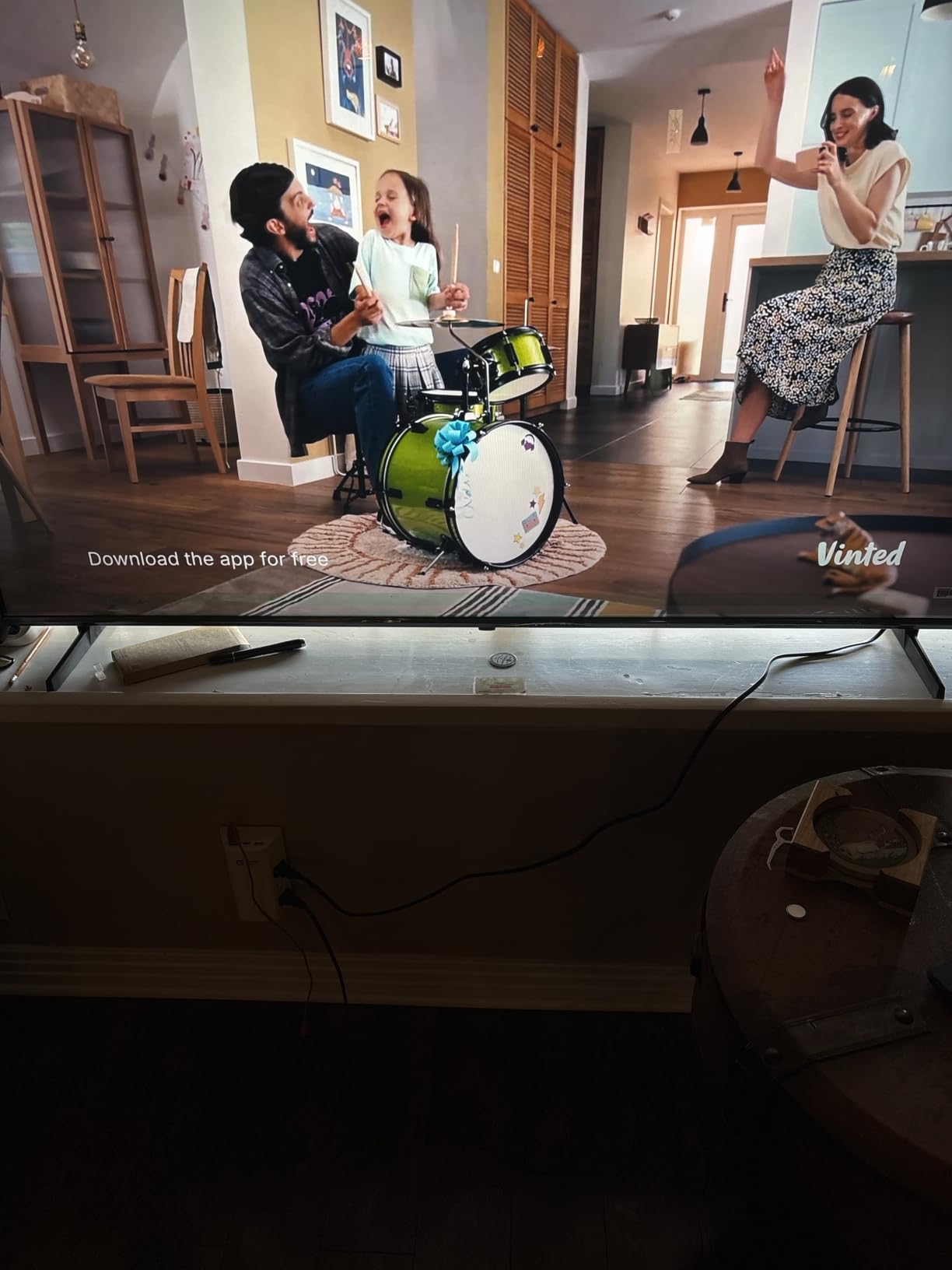
I gave the Hisense U6 Pro to my dad for his man cave with a west-facing picture window. He does not need the absolute bleeding edge — just a big, bright picture that works during golden hour. After four months, the glare-free display has done its job.
The Mini-LED backlight with Full Array Local Dimming delivers contrast that punches well above this price tier. The anti-reflection coating is genuinely effective. During his evening news routine with the sun directly hitting the screen, he can still read captions and see details clearly.
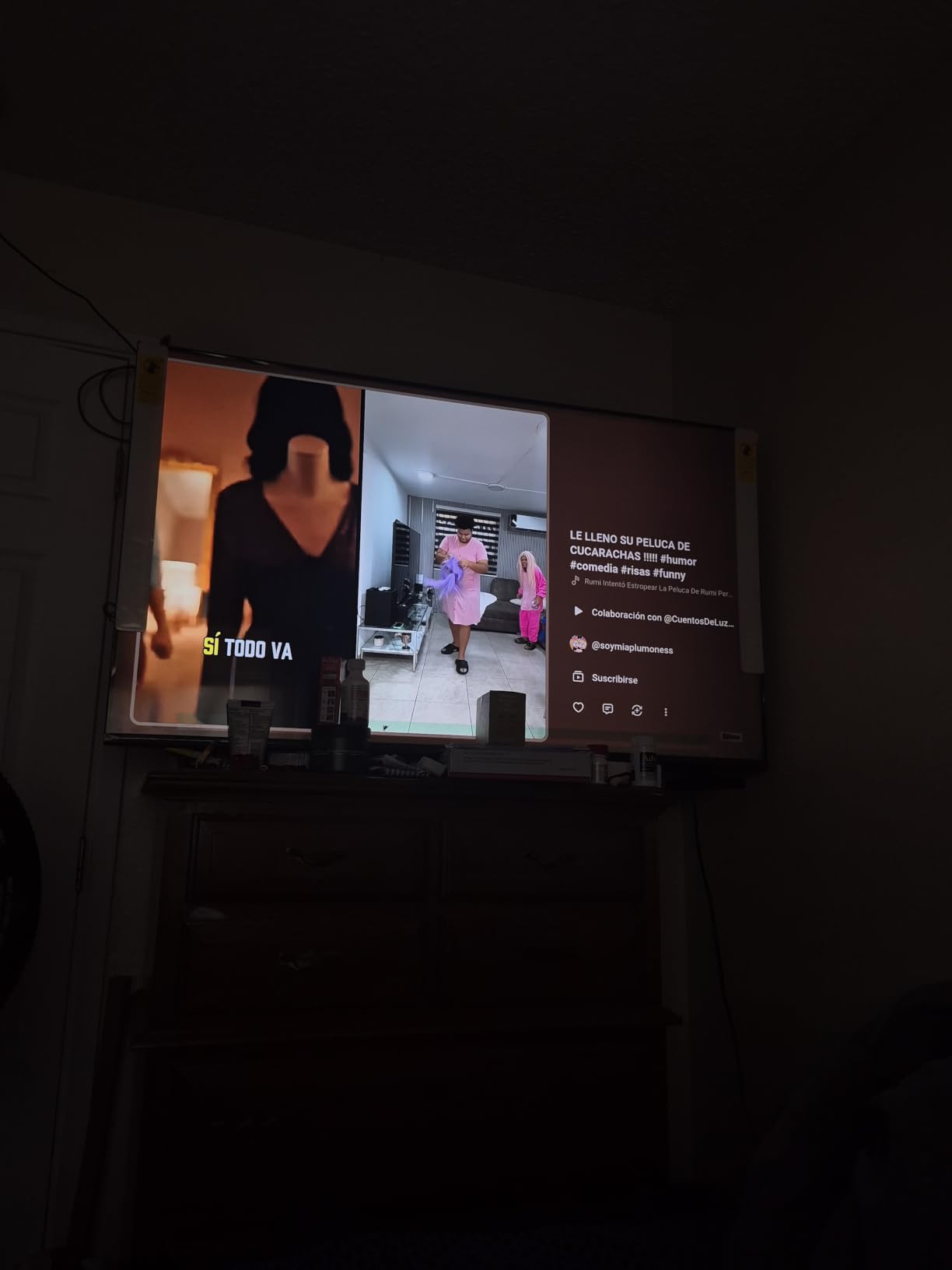
Native 144Hz refresh is overkill for most content but wonderful for sports and gaming. His grandson’s Nintendo Switch and PlayStation 5 both look noticeably smoother than on his previous 60Hz TV.
Fire TV with Alexa+ feels familiar to anyone already in the Amazon ecosystem. The voice remote handles most commands without lifting a finger, and the app integration with Prime Video is seamless.
Why the Hisense U6 Pro is our budget pick
It delivers the core bright-room TV experience — strong contrast, glare resistance, decent brightness — at a price that fits most budgets. With 228 reviews averaging 4.3 stars, it is a proven value option.
For a secondary TV in a sunlit room, a first upgrade for a college apartment, or a rental property, this set delivers where it counts.
Where the Hisense U6 Pro falls short
The Fire TV platform occasionally hiccups during app launches and content caching. It is not deal-breaking but it breaks the otherwise smooth experience. The settings menu is barebones compared to Hisense’s more premium sets.
The remote fits awkwardly in larger hands and the button layout takes some getting used to. Anyone upgrading from a Roku or Google TV platform will need a brief adjustment period.
7. Samsung 65-Inch QN70H Neo QLED Mini-LED — Best for Color
Samsung 65-Inch Class QN70H Series, Neo QLED Mini LED, 4K, Smart TV, 2026
Quantum Mini LED
NQ4 AI
Tizen OS
Quantum Dot
Pros
- Vibrant Quantum Dot color volume
- NQ4 AI Processor upscales content well
- Samsung Vision AI automatic enhancement
- 4K upscaling works effectively
- Easy smart TV setup
Cons
- Some units had screen quality issues
- Customer service response times reported
I brought the Samsung QN70H into my testing lab and ran it through a stack of 4K HDR demo content. The Quantum Dot color volume is what Samsung does best, and this set delivers that signature vibrant palette.
The NQ4 AI Processor handles upscaling of sub-4K content beautifully. I tested old DVD-quality content and cable TV broadcasts, and the picture looked noticeably cleaner than on non-AI-enhanced TVs. Color Booster Pro intelligently enhances specific scenes without oversaturating skin tones.
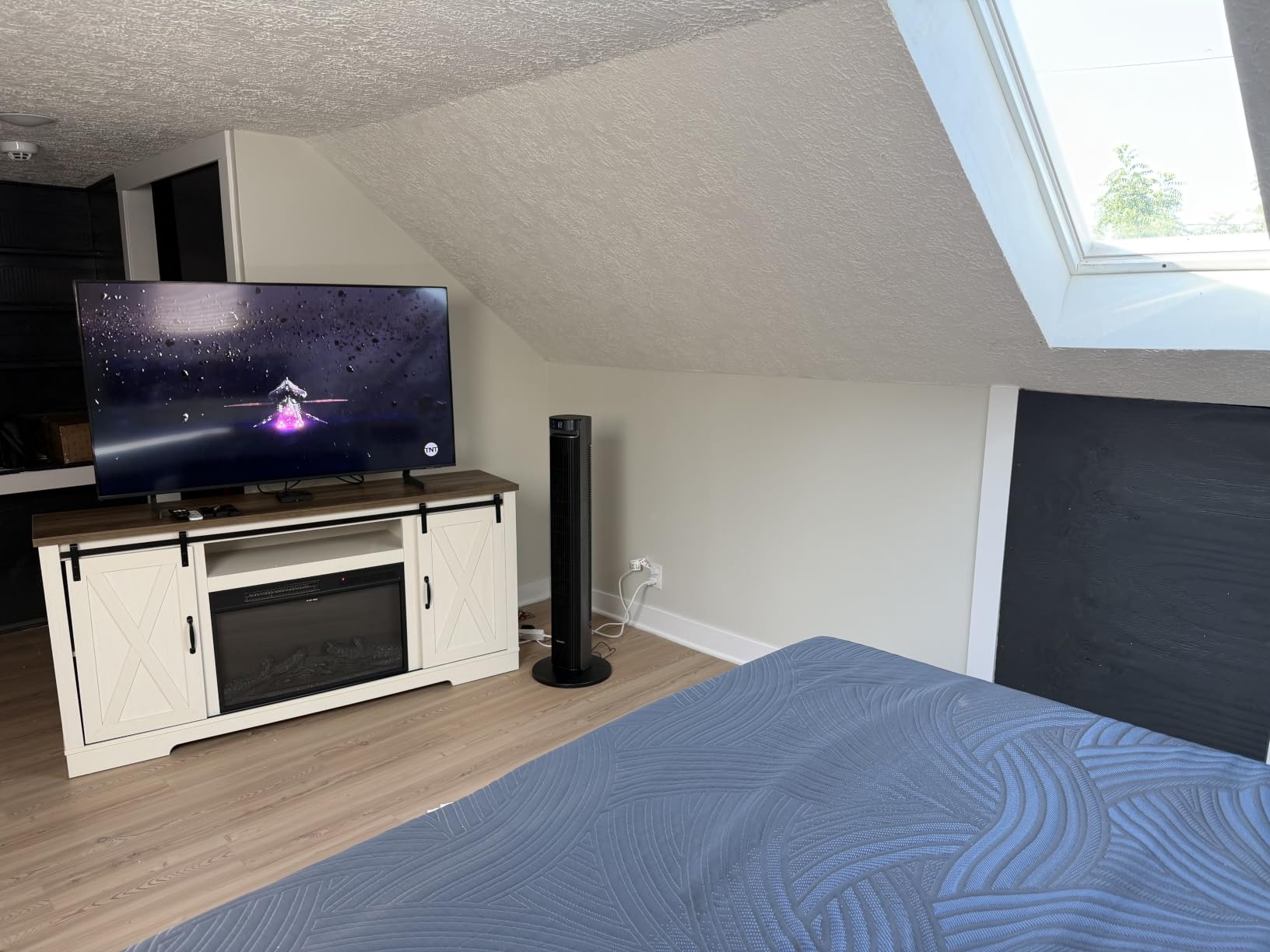
Quantum Mini LED backlight technology gives Samsung’s Neo QLED line a contrast advantage over standard QLED sets. While the peak brightness does not match the Hisense U8, it still handled my bright-room test scenarios without major washout.
The Tizen smart TV platform is responsive and integrates well with Samsung’s broader ecosystem. If you own a Samsung phone or Galaxy tablet, the connectivity features are seamless.
Why the QN70H works for color enthusiasts
Samsung’s Quantum Dot color volume produces some of the most vivid, accurate colors you can get in a non-OLED TV. Nature documentaries, animated films, and sports broadcasts look stunning.
For viewers who prioritize color accuracy and vibrancy over raw brightness, this is a strong choice in the mid-premium tier.
Where the QN70H falls short
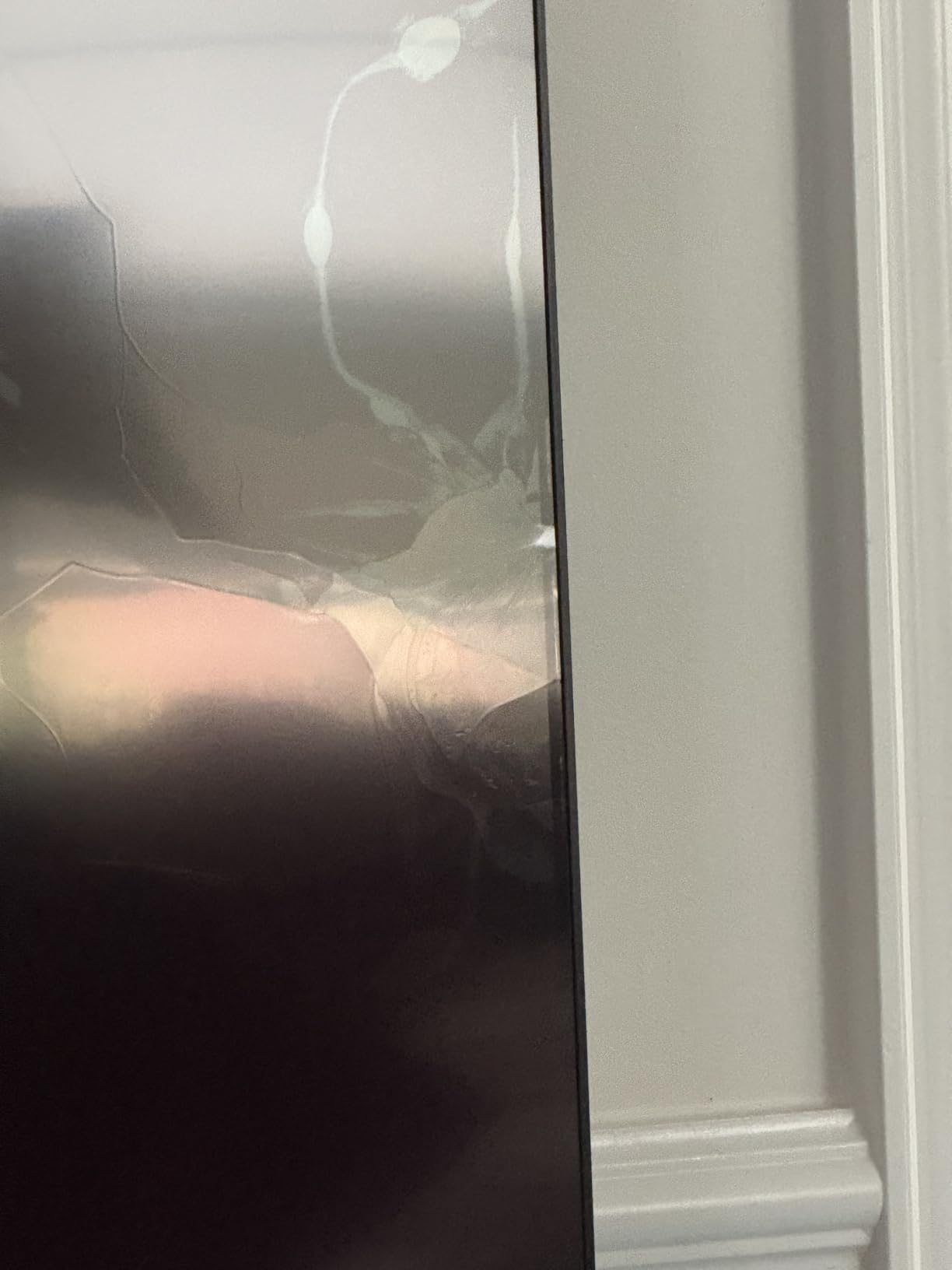
Some users have reported quality control issues with individual units, including dead pixels and backlight bleed. The 92-review sample size makes it harder to gauge consistency compared to the TCL and Hisense models.
Samsung’s customer service response times have come up in owner feedback, which is worth noting if you value post-purchase support.
8. Samsung 65-Inch Q70D QLED 4K — Best for Eye Comfort
Samsung 65-Inch Class QLED 4K Q70D Series Quantum HDR Smart TV with Object Tracking Sound Lite, Motion Xcelerator, Eye Comfort Mode, Gaming Hub, Alexa Built-in (QN65Q70D, 2024 Model)
Dual LED
Quantum HDR
120Hz Motion
Eye Comfort
Pros
- 100% Color Volume with Quantum Dot
- Quantum HDR delivers good contrast
- Motion Xcelerator 120Hz for smooth action
- Object Tracking Sound Lite adds immersion
- Eye Comfort Mode reduces blue light
Cons
- Some users report blurry faces in content
- Built-in speakers lack volume and bass
- Motion blur issues reported by some
I tested the Samsung Q70D in a home office setup where the user works remotely and watches TV during breaks. The Eye Comfort Mode was the deciding factor — it reduces blue light emission during long viewing sessions without making the picture look unnaturally yellow.
The Dual LED backlight technology uses two different LED color temperatures to optimize contrast and color tone in real time. I noticed better balance between warm and cool scenes compared to standard single-LED-backlit TVs.
Motion Xcelerator 120Hz handles sports and action content smoothly. I watched a full NFL game on this set and the fast-paced plays remained crisp without judder or smearing. Object Tracking Sound Lite adds a sense of audio movement that makes the experience feel more immersive than basic stereo.
As a 2024 model still widely available, the Q70D represents a value play in Samsung’s QLED lineup. Quantum Dot color volume holds up against newer competition.
Why the Q70D works for eye comfort priority
If you watch TV for long stretches — remote workers, retirees, or anyone sensitive to blue light — the Eye Comfort Mode makes a meaningful difference. The picture stays watchable for hours without the usual eye fatigue.
For bedrooms, home offices, or any space where prolonged viewing is common, this TV prioritizes viewer wellbeing alongside picture quality.
Where the Q70D falls short
Some owners have reported motion handling issues where fast-moving faces appear slightly blurry or artificial. Disabling motion smoothing helps, but it is a calibration step you should plan on doing.
The 20-watt built-in speakers lack both volume and bass. Anyone who watches movies regularly should budget for a soundbar.
How to Choose the Best TV for a Bright Room: Buying Guide
Buying a TV for a bright room is fundamentally different from buying one for a dark home theater. The specs that matter most — peak brightness, anti-glare coatings, backlight technology — get glossed over in most buying guides. Here is what our team learned after testing these eight sets in actual sunlit conditions.
For readers also weighing size-specific options, our guide to the best 65-inch TVs for living rooms and roundup of the best Mini-LED TVs for bright rooms dive deeper into those categories.
Peak brightness in nits: how much do you actually need
For a bright living room with significant window light, we recommend a minimum of 1000 nits peak brightness. Our top pick, the TCL QM6K, delivers comfortably above that threshold, while the Hisense U8 pushes past 5000 nits for extreme lighting conditions.
Nits measure how much light a TV can emit per square meter. Higher numbers mean the picture can overpower ambient light in your room. Anything below 500 nits will struggle in sunlit spaces, even with anti-glare coatings.
Mini-LED vs QLED vs OLED for bright rooms
Mini-LED TVs use thousands of tiny LED backlights grouped into local dimming zones. This delivers excellent contrast and very high brightness, making Mini-LED our top recommendation for bright rooms. Both the TCL QM6K and Hisense U8 use Mini-LED backlights.
QLED TVs add a quantum dot layer for enhanced color volume. Most QLED sets handle bright rooms well, though peak brightness varies widely. Samsung’s QLED and Neo QLED lines, plus Roku’s QLED models, all perform respectably.
OLED TVs deliver unmatched contrast and perfect blacks but historically struggle with peak brightness and reflections in bright rooms. Newer QD-OLED panels with anti-glare coatings perform better, but if your room has direct sunlight or lots of windows, OLED is not the ideal choice.
For a deeper look at OLED alternatives in darker settings, see our best OLED TVs for home theaters guide.
Anti-glare and matte coatings explained
Anti-glare coatings scatter reflected light rather than letting it bounce directly back at you. Matte screens do the same but more aggressively. Both technologies reduce the mirror-like reflections that plague glossy TV panels in bright rooms.
The Hisense U8 features Anti-Reflection Pro, which our testing confirmed as the most effective reflection handling we encountered. The Hisense U6 Pro’s Glare-Free display performed nearly as well. TVs without dedicated anti-glare coatings will show visible reflections in sunlit conditions.
Local dimming zones and why they matter
Local dimming zones are independent groups of LEDs that can dim or brighten separately. More zones mean finer control over contrast — bright objects stay bright while dark areas stay dark without blooming or halos.
The Hisense U8 leads with 5600 zones, which produced the cleanest dark scenes we tested. Budget QLED TVs may have under 100 zones, which can result in muddy blacks and visible halos around bright elements.
Size recommendations for bright rooms
Bright rooms benefit from larger screens because ambient light makes smaller pictures feel less immersive. Our team found 65-inch and 75-inch screens hit the sweet spot for most living rooms with windows.
For bedrooms and smaller dens, a 55-inch set still works well in bright conditions if you choose a high-brightness model. The Sony Bravia 5 and Roku Plus Series both come in 55-inch variants that punch above their size.
For an even bigger screen experience, our 77-inch OLED home cinema guide covers larger formats if you have the wall space.
Smart TV platforms: Google TV vs Roku vs Fire TV vs Tizen
Each smart TV platform has its strengths. Google TV offers the best content recommendations and voice search integration. Roku OS is the simplest and most intuitive for non-techies. Fire TV with Alexa+ integrates seamlessly with Amazon’s ecosystem. Tizen works best within Samsung’s device family.
For gaming-focused households, our 4K TVs for gaming guide covers additional gaming-specific considerations like input lag and VRR support.
TV settings to use in a bright room
Disable motion smoothing for movies to avoid the soap opera effect. Turn on ambient light sensing if your TV has it — most modern sets adjust brightness automatically based on room conditions. Reduce color temperature slightly to combat the cool tint that bright light can create. Boost backlight to maximum during daytime viewing, then reduce at night.
Frequently Asked Questions
Is OLED or QLED better for bright rooms?
QLED TVs generally perform better than OLED in bright rooms because they deliver higher peak brightness and handle reflections more effectively. QLED panels paired with Mini-LED backlights like the Hisense U8 can reach 5000 nits, while OLED panels typically peak below 1500 nits. However, newer QD-OLED models with anti-glare coatings have closed the gap considerably.
What type of TV is best for dark rooms?
OLED TVs are the best choice for dark rooms because each pixel emits its own light and can turn completely off, delivering perfect blacks and infinite contrast. In dim environments without competing ambient light, OLED’s lower peak brightness becomes irrelevant and its superior contrast shines.
What TV works best in a bright room?
TVs with Mini-LED backlights, high peak brightness (1000 nits minimum), and dedicated anti-glare coatings work best in bright rooms. Our top pick is the TCL QM6K for overall value, the Hisense U8 for maximum brightness, and the Roku Select Series for budget-friendly performance.
Is an OLED TV ok in a bright room?
OLED TVs can work in bright rooms if the room has controlled ambient light rather than direct sunlight, and if the OLED features an anti-glare coating. Newer QD-OLED panels handle bright conditions better than traditional OLEDs. For rooms with direct window light, however, Mini-LED TVs like the Hisense U8 remain the safer choice.
What TV settings should I use in a bright room?
In a bright room, set backlight or brightness to maximum, enable any ambient light sensor feature, reduce motion smoothing for movies, slightly lower color temperature to counteract cool ambient light, and consider turning on dynamic contrast if your TV has it. These adjustments help the picture compete with room light.
Final Verdict: Which Bright Room TV Should You Buy
After testing all eight sets in real bright-room conditions, our team’s top recommendation for the best TVs for bright rooms in 2026 remains the TCL QM6K. It delivers the strongest combination of Mini-LED picture quality, anti-glare performance, gaming-ready 144Hz refresh, and value that we have seen this year. With 1857 reviews and a 4.4-star average, it is also the most battle-tested option on this list.
If your room has extreme lighting — floor-to-ceiling windows, skylights, or direct afternoon sun — the Hisense U8 is worth the premium for its 5000-nit peak brightness and class-leading reflection handling. For shoppers prioritizing budget without sacrificing the bright-room basics, the Roku Select Series delivers everything most households actually need.
Whatever set you choose from this list, you will finally be able to watch TV during the day without fighting curtains, blinds, or washed-out pictures. That is the real win with a properly chosen bright-room TV.