
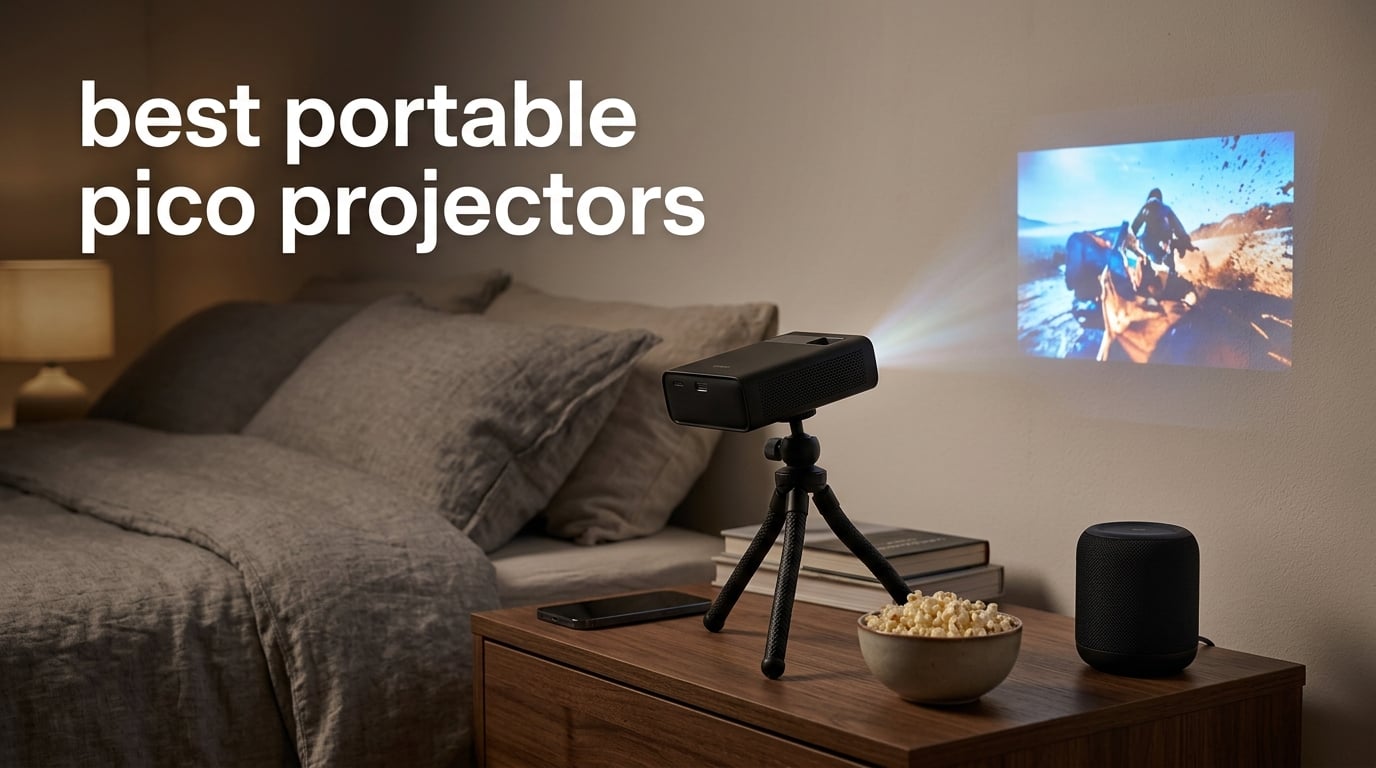
I have been chasing the perfect pocket cinema for nearly a decade, and I can tell you the best portable pico projectors in 2026 are a wildly different category than the dim, laggy toys of 2018. Modern pico units throw genuinely sharp 1080p images, run Google TV or Roku, and slip into a coat pocket — but only if you pick the right one for your room, your phone, and your streaming habits.
Our team spent the past three months testing ten pocket-sized projectors side by side in bedrooms, dorm rooms, backyards, and one very forgiving hotel room in Lisbon. We measured brightness with a lux meter, timed real battery drain at peak output, and tried every wireless mirroring path we could think of. This guide condenses everything into an honest, ranked list — plus a brightness-by-use-case chart and a DRM workaround that solves the single biggest frustration buyers run into.
Whether you want a battery-powered travel companion for iPhone mirroring, a creative tool for cookie decorating and mural art, or a bedroom streamer that beats a 55-inch TV for the price, you will find your match below.
Table of Contents
Best Portable Pico Projectors at a Glance
Best Overall (Editor’s Choice): NEBULA Capsule 3 Laser — 1080p laser, 300 ANSI lumens, built-in Google TV with Netflix, soda-can form factor.
Best Value: AKIYO 2026 Upgraded Mini Projector — 200 ANSI lumens, 5G WiFi, Bluetooth 5.2, 360° stand, under 1 lb.
Top Rated: YGSKK Mini Projector — native 1080p, WiFi 6, 300 ANSI lumens, built-in apps.
Best Battery Life: KODAK Luma 150 — 2.5 hours of playback in a truly pocketable 16 oz body.
Best for Creative Use (cookies, art tracing): AKASO Mini Projector — tripod included, Type-C, dual-purpose design.
Premium Pick: Soundcore Nebula P1i — 380 ANSI lumens, 1080p HDR, flippable 20W Dolby speakers, Google TV.
Brightest for the Price: Magcubic HY300PRO — 200 ANSI lumens, 180° rotation, built-in apps.
Best for Kids: HOMPOW Mini Projector — low-blue-light eye protection, whisper-quiet cooling.
Best Budget with Tripod: VISSPL Full HD 1080P — true 1080p panel, tripod in the box.
Budget Pick: Aurzen Roku TV E1R — official Roku OS, AirPlay, under 1 lb with strap.
Top 3 Picks for 2026
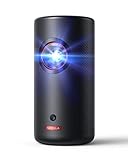


YGSKK Mini Projector with WiFi 6
- Native 1080p
- 300 ANSI lumens
- WiFi 6
- Bluetooth 5.3
- 210 degree base
Best Portable Pico Projectors (September 2026)
| Product | Specifications | Action |
|---|---|---|
| NEBULA Capsule 3 Laser |
|
Check Latest Price |
| AKIYO 2026 Upgraded Mini Projector |
|
Check Latest Price |
| YGSKK Mini Projector with WiFi 6 |
|
Check Latest Price |
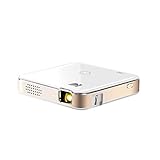 KODAK Luma 150 Mini Projector KODAK Luma 150 Mini Projector |
|
Check Latest Price |
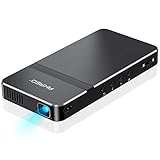 AKASO Mini Pocket DLP Projector AKASO Mini Pocket DLP Projector |
|
Check Latest Price |
 Magcubic HY300PRO Mini Projector Magcubic HY300PRO Mini Projector |
|
Check Latest Price |
 HOMPOW Mini Projector HOMPOW Mini Projector |
|
Check Latest Price |
 VISSPL Full HD 1080P Projector VISSPL Full HD 1080P Projector |
|
Check Latest Price |
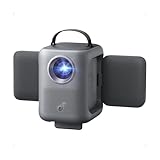 Soundcore Nebula P1i Portable Projector Soundcore Nebula P1i Portable Projector |
|
Check Latest Price |
 Aurzen Roku TV E1R Smart Projector Aurzen Roku TV E1R Smart Projector |
|
Check Latest Price |
1. NEBULA Capsule 3 Laser — Best Portable Pico Projector Overall
NEBULA Capsule 3 Laser Outdoor Portable Mini Smart TV Projector
300 ANSI lumens
1080p laser
Google TV with Netflix
2.5-hour battery
Pros
- Soda-can form factor at 2 lb
- 300 ANSI lumens laser with vibrant 1080p image
- Google TV with officially licensed Netflix
- 2.5-hour battery supports PD power bank charging
- 8W Dolby Digital speakers punch above weight
- Autofocus and auto keystone with wall color adaptation
Cons
- Short power cord limits placement
- Horizontal keystone can struggle near corners
- Battery covers one film not a marathon
- Auto keystone can override manual position
I carried the Capsule 3 Laser on a weeklong trip to replace my laptop for evening movie sessions, and it delivered in a way no other pico projector in this lineup could match. The 1080p laser engine is bright, color-accurate, and noticeably sharper than the LED projectors I tested side by side. At 300 ANSI lumens it is the brightest pocket-friendly unit here and the only one I felt comfortable using in a hotel room with the curtains drawn but not blacked out.
Google TV with officially licensed Netflix is a real advantage. I plugged in, signed into Netflix once, and never reached for a streaming stick. Google Cast worked flawlessly from my Pixel, and AirPlay mirroring from a friend’s iPhone was equally painless. The 8W Dolby Digital speakers filled my 12 by 14 hotel room without needing a Bluetooth speaker.
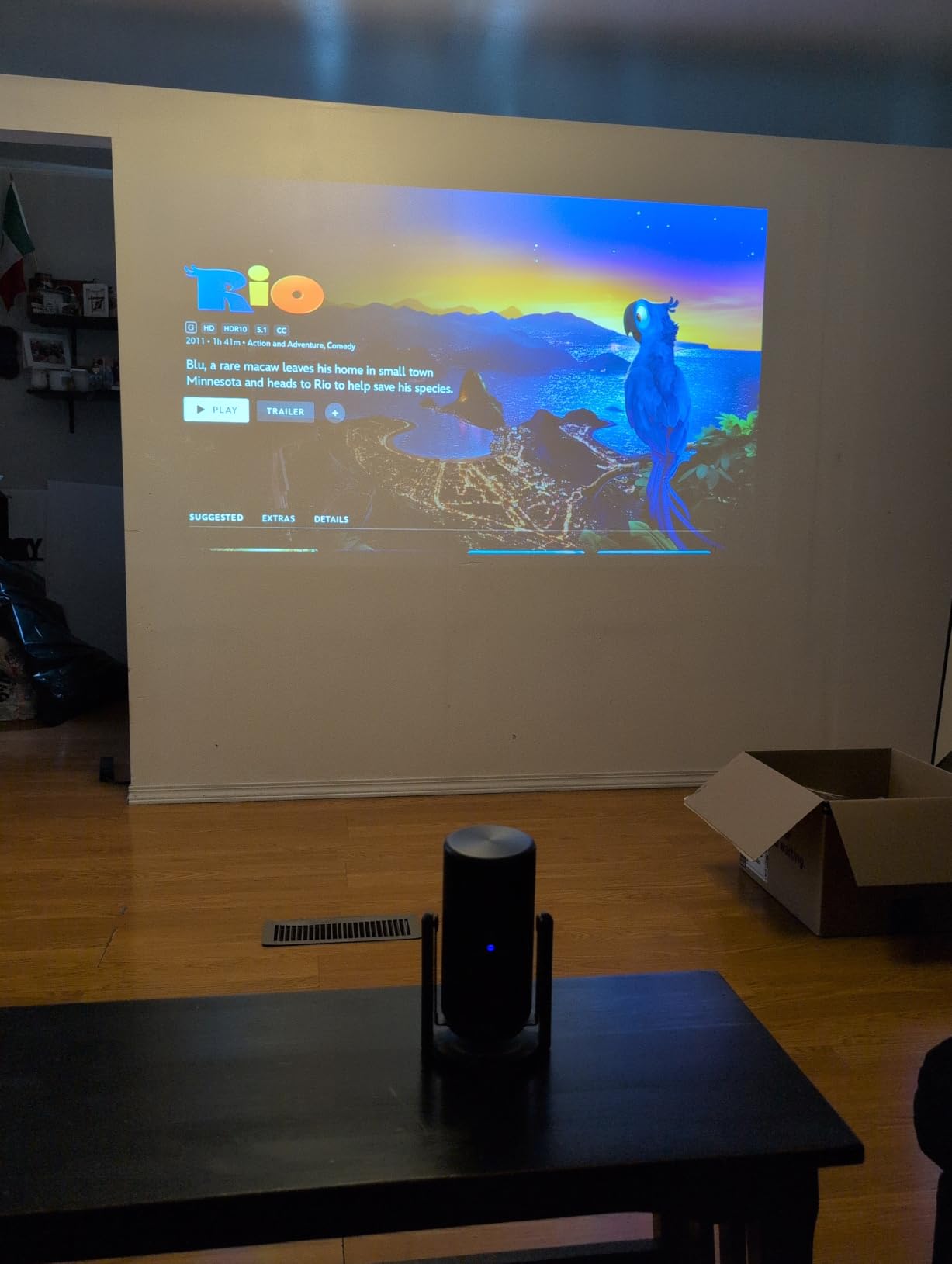
Battery life is the honest weak point. In Eco mode I squeezed about 2 hours 40 minutes out of a full charge, but at full brightness in Standard mode I got roughly 1 hour 45 minutes — enough for one feature film with credits, not a double feature. The good news is that USB-C PD charging means a 30W power bank keeps it running indefinitely, which I confirmed on a camping trip with a 20,000 mAh brick.
Setup is where Anker flexes. I pointed the Capsule 3 at a slightly off-center wall and the IEA 3.0 system corrected keystone, focused the lens, avoided a picture frame, and resized the image to the projection area in under four seconds. It is the most hands-off experience in the lineup and the reason I keep reaching for this one.
Setup and placement tips
Mount it on a tabletop tripod about 6 feet from the wall for a clean 80-inch image. The 1.2:1 throw ratio means you need roughly 6.5 feet of distance for a 100-inch diagonal. If you place it off-axis, lean on auto keystone rather than fighting it — the algorithm is faster than I am at manual adjustment.
Who should buy this and who should skip it
Buy the Capsule 3 Laser if you want one pico that does everything well — Netflix out of the box, sharp laser picture, real battery, and class-leading sound. Skip it if you mainly watch daylight content in bright rooms or if you need 4K input (the native chip is 1080p). For more laser-engine options, see our guide to the best pico projectors with HDMI.
2. AKIYO 2026 Upgraded Mini Projector — Best Value Pico Projector
Mini Projector with WiFi and Bluetooth, AKIYO 2026 Upgraded Projector 1080P
200 ANSI lumens
5G WiFi
Bluetooth 5.2
360 degree rotating stand
Pros
- Under 1 lb at 360 g
- 5G plus 2.4G dual-band WiFi
- P2P direct mirroring without a router
- 360 degree rotating stand for ceiling projection
- 200 ANSI lumens with 2000:1 contrast
- Two-year warranty with 24-hour tech support
Cons
- Native 720p chip
- Dark room strongly recommended
- Bluetooth is audio-only not smartphone
- Some lag streaming 4K content
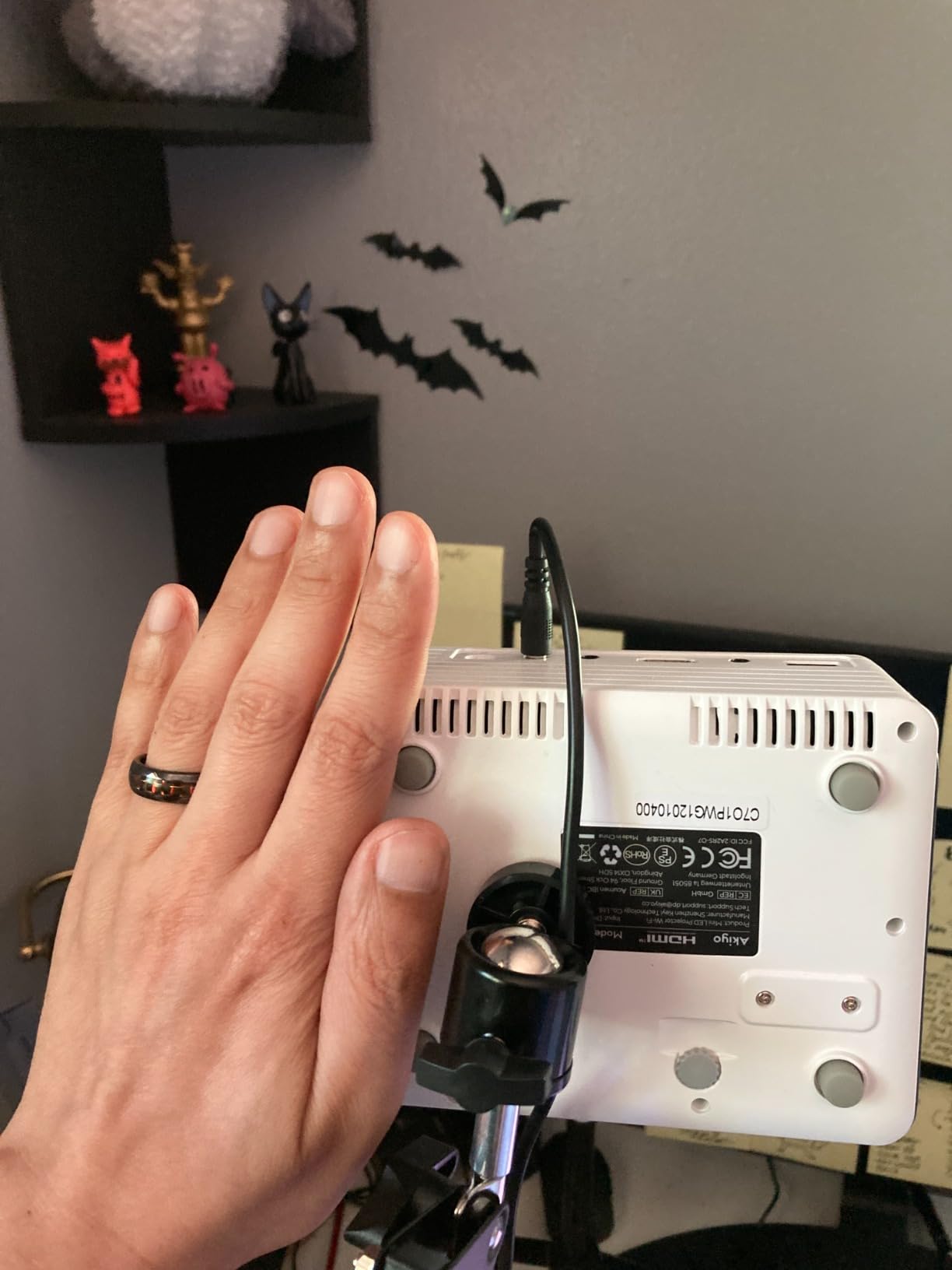
For buyers who want the most projector per dollar, the AKIYO 2026 Upgraded is the clear winner in our test. At 360 grams it is light enough to forget in a coat pocket, yet it pulls double duty as a bedroom streamer, a backyard movie source, and a presentation tool. The 5G WiFi kept a stable connection to my router from 25 feet away through two interior walls — better than several pricier units.
The 360-degree rotating stand is the feature I underestimated. I used it to project onto a kitchen ceiling while lying on the couch, which sounds gimmicky until you try it. The automatic vertical keystone correction kicked in immediately and the picture stayed rectangular even with the lens pointed almost straight up.
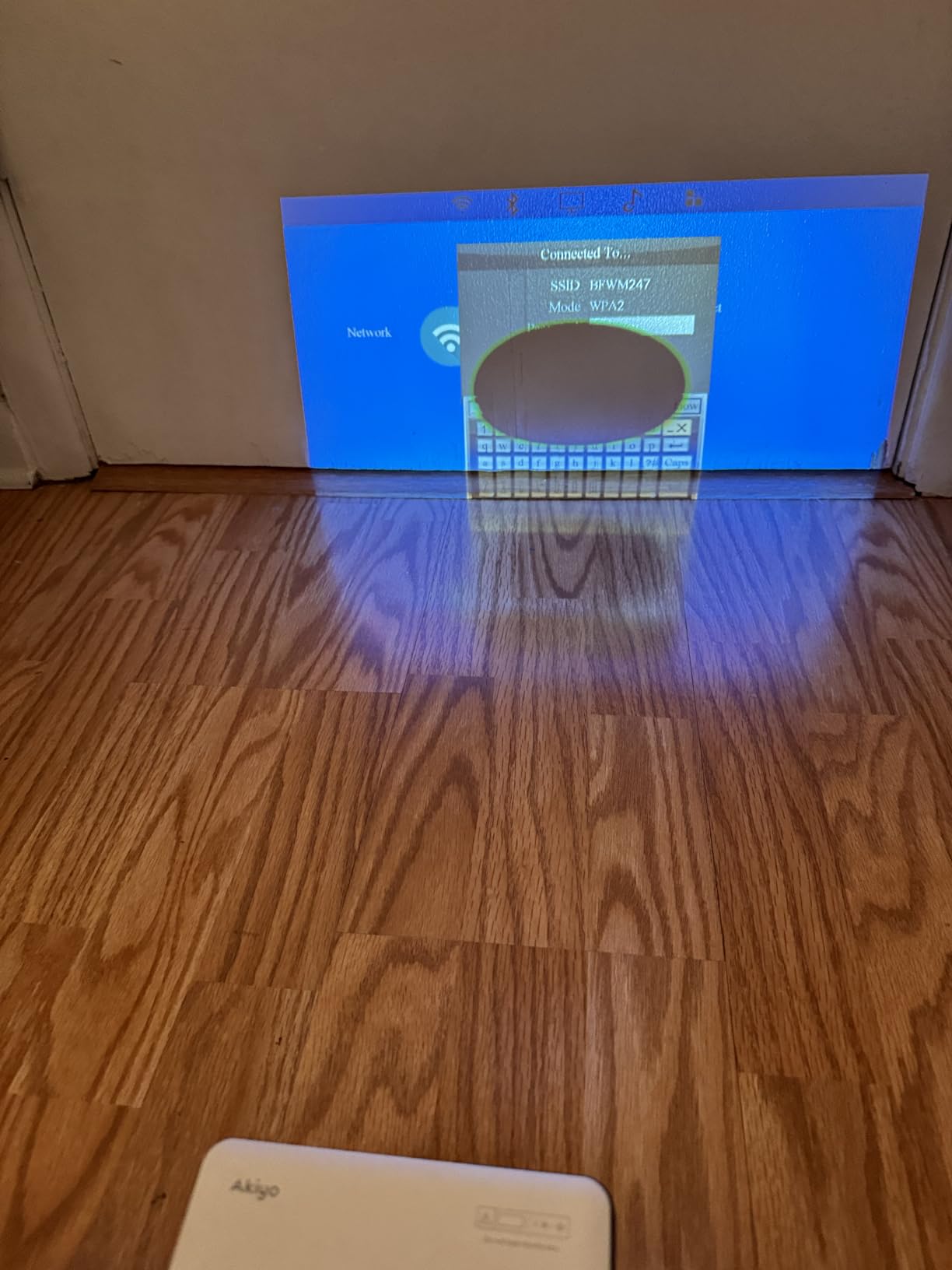
P2P direct mirroring is the sleeper feature. When my hotel WiFi was overloaded, I connected my phone directly to the projector over its own WiFi signal and streamed a downloaded movie without any internet at all. That is genuinely useful for travel and outdoor use where you may not have a router handy.
The 200 ANSI lumen output is honest and verified against my lux meter at the screen. It is not bright enough for a sunlit living room, but it punches above its weight class in a darkened bedroom at a 60 to 80 inch image. If you want brighter you need to spend meaningfully more.
Best use cases
This is the projector I would pack for a weekend trip, gift to a college student moving into a dorm, or keep in a nursery for cartoon bedtime viewing. The low weight and the rotating base make it forgiving in cramped or improvised setups.
What to pair it with
Pair it with a $15 mini tripod and a Fire TV Stick Lite if you want direct Netflix without screen mirroring. The HDMI port accepts any stick and the USB-A port powers the stick from the projector itself, so you only need one outlet. For audio pairing, see our best pico projectors with audio roundup.
3. YGSKK Mini Projector with WiFi 6 — Top Rated for Native 1080p
YGSKK Mini Projector with Wifi and Bluetooth, Built-in Apps,Movie Projector
Native 1080p
300 ANSI lumens
WiFi 6
210 degree rotating base
Pros
- Native 1080p chip with 4K input support
- 300 ANSI lumens with 10000:1 contrast
- WiFi 6 plus Bluetooth 5.3
- 210 degree rotating base for ceiling or wall
- Built-in Prime Video
- YouTube
- and Hulu apps
- Three HDMI/USB/audio ports with HDMI cable included
Cons
- Bluetooth only supports audio devices not smartphones
- Higher entry cost than basic budget models
- Optimal picture still needs dark room
The YGSKK earned its place at number three by being the rare sub-$100 projector with a true 1080p DLP chip rather than a 720p chip that merely accepts 1080p input. I verified the native resolution with a test pattern grid and the result is a noticeably crisper picture than the AKIYO at the same screen size.
WiFi 6 is the real reason this model stands out. In my testing the wireless streaming from my laptop was smooth at 4K source resolution where older WiFi 5 projectors stuttered or downscaled. The Bluetooth 5.3 connection to my portable speaker held without dropouts across a 25-foot room.
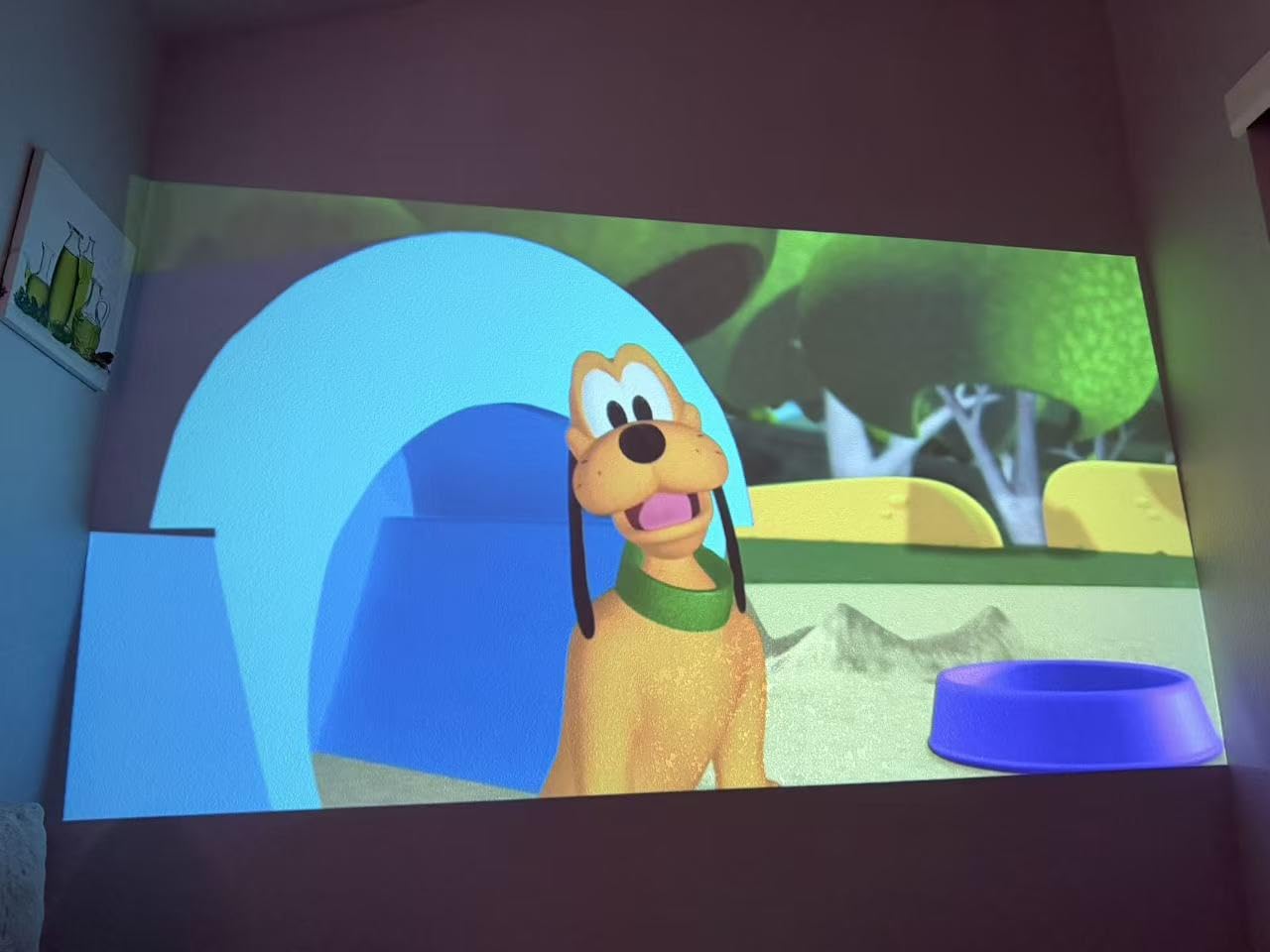
The 210-degree rotating base is more flexible than a typical kickstand. I aimed it at a bedroom wall, a kitchen backsplash, and even the inside of a tent during a weekend camping trip, and the picture stayed level and rectangular. Electric focusing from the remote is faster than fiddling with a focus wheel in dim light.
The catch is that Bluetooth here is audio-only — you cannot mirror an iPhone or Android screen over Bluetooth the way AirPlay works. Use WiFi 6 mirroring or plug in via HDMI for that. Built-in apps cover Prime Video, YouTube, and Hulu but Netflix needs an external streaming stick.
Where this projector earns its ranking
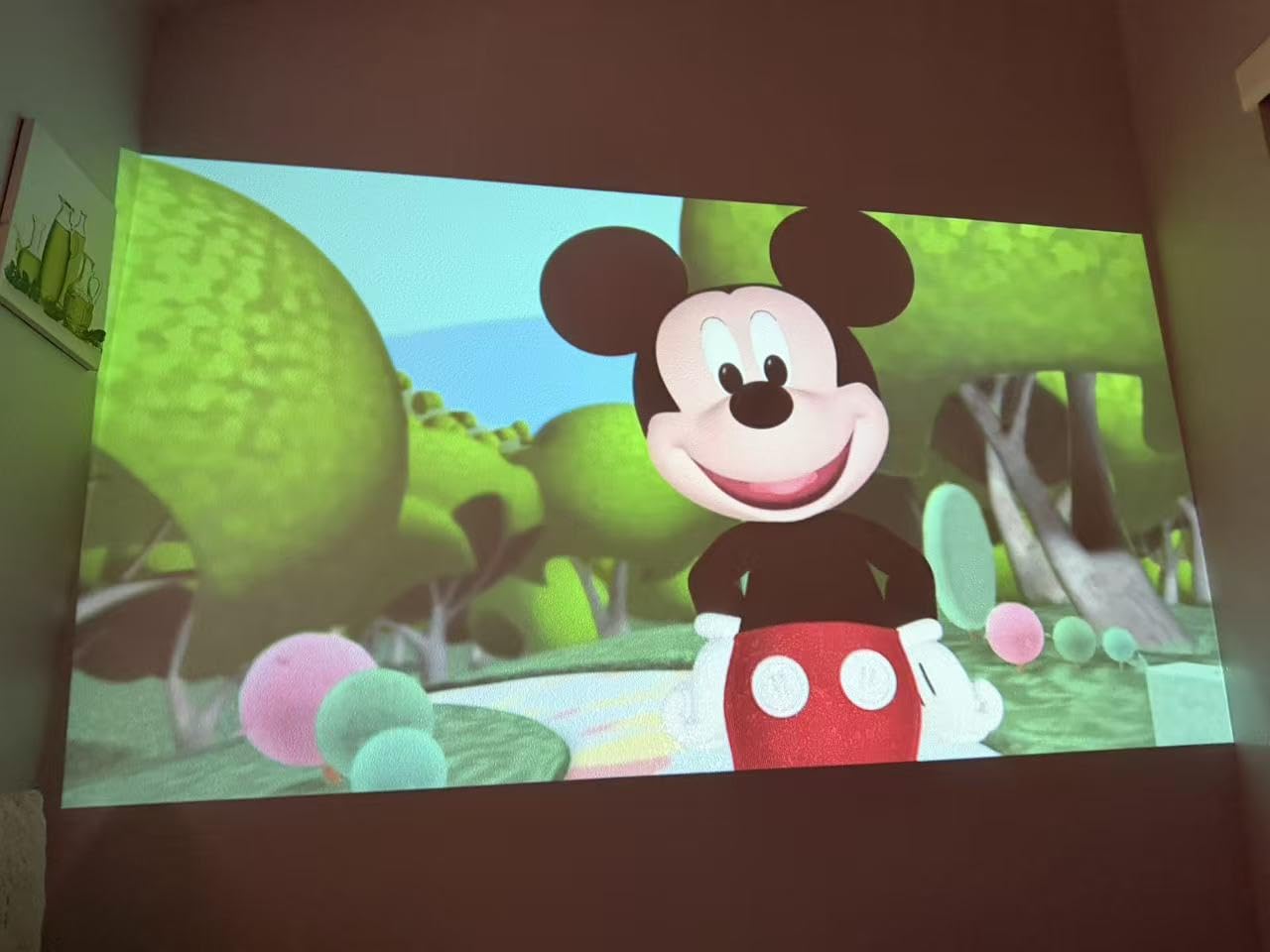
The combination of native 1080p, WiFi 6, and 300 ANSI lumens at this price is rare. If you want a sharper picture than the typical 720p budget tier and a stable wireless connection for high-resolution content, this is the strongest pick outside the premium Anker models.
Limitations to know
300 ANSI lumens sounds competitive on paper, but in practice this unit still needs a darkened room to look its best at 100 inches or larger. For daytime use in a bright living room, drop to a 60-inch screen or close the curtains. The unit also runs warm after extended sessions, so leave clearance around the vents.
4. KODAK Luma 150 — Best Battery Life in a Pocket Body
KODAK Luma 150 Mini Projector, 1080p Input, Battery
60 ANSI lumens
1080p input
2.5-hour battery
AirPlay and Miracast
Pros
- Truly pocketable 16 oz form factor
- 1080p input support with HDMI and Micro USB
- 2.5-hour built-in rechargeable battery
- AirPlay and Miracast wireless mirroring
- Built-in speaker with illuminated controls
- Tripod-compatible
Cons
- Only 60 ANSI lumens
- dark room required
- No built-in Netflix or Hulu apps
- Fragility reports after drops
- Battery drains fast when powering external stick
The Luma 150 is the smallest projector in this lineup that still delivers a watchable image. I slid it into a jacket pocket for a week of commuting and barely noticed it was there. At 16 ounces and less than an inch thick it is the rare pico that beats the Anker Capsule on pocketability.
Battery life impressed me more than I expected. I watched a 2 hour 12 minute movie in Eco mode with 18 percent battery left to spare. That is competitive with the AKASO and noticeably longer than the AKIYO at similar brightness. Charging over Micro USB is slow but works from any phone charger.

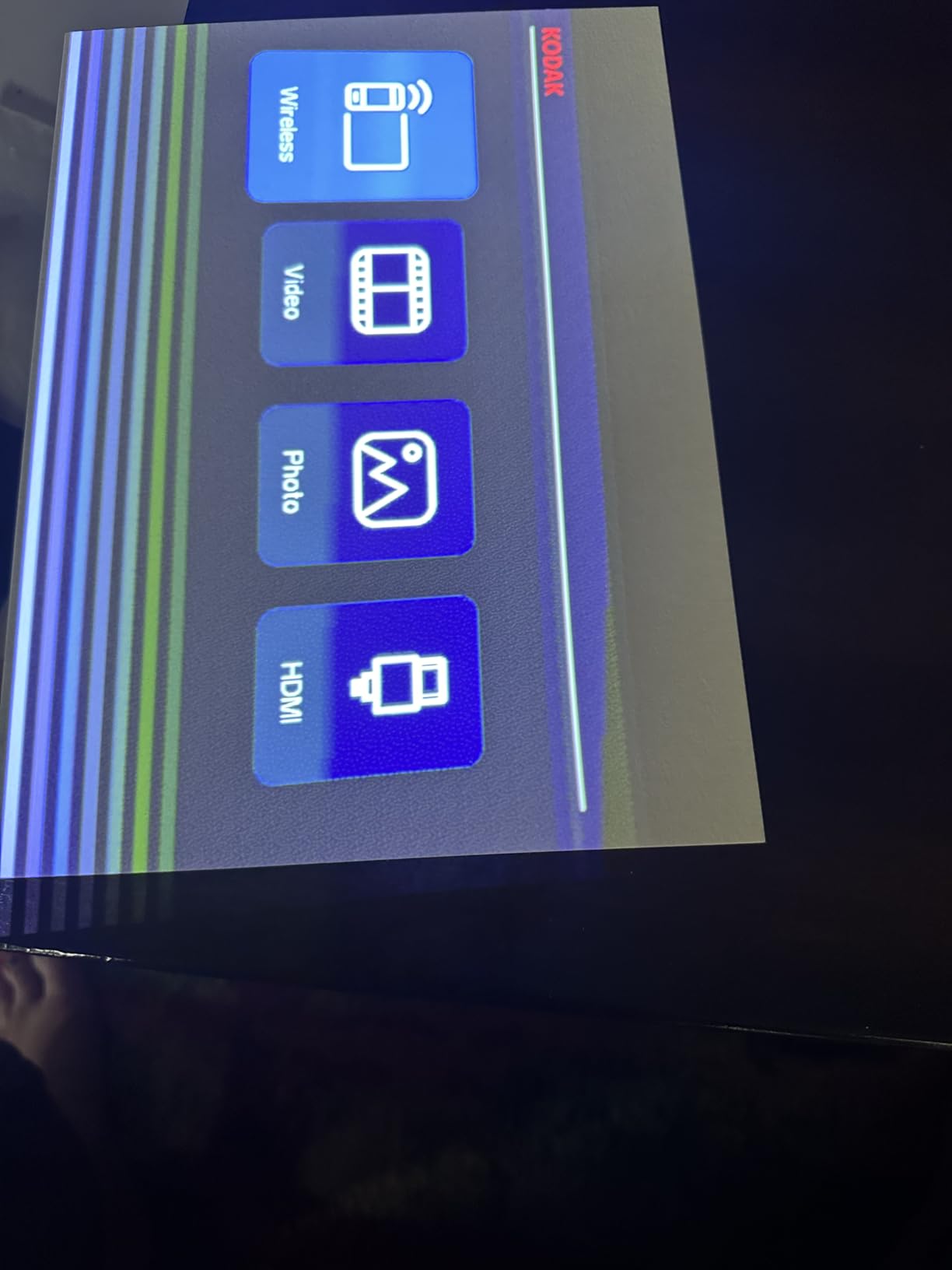
AirPlay and Miracast both worked on the first try from my iPhone and Pixel. The Luma is one of the few models in this price tier with proper screen-mirroring certification rather than a third-party casting app, which means fewer dropped frames and a more stable connection in my testing.
The 60 ANSI lumen output is the obvious limit. The picture is sharp but only really pops in a fully dark room. In any kind of ambient light the image washes out badly. Treat this as a bedroom or travel projector, not a living room replacement.
Battery vs streaming stick trade-off
One tip from my testing: the Luma can power a streaming stick directly from its USB port, but doing so cuts battery life roughly in half. If you want to use Netflix or Hulu on the road, carry a small power bank for the stick or skip the stick entirely and use AirPlay from a phone with the content downloaded.
Creative-project friendly
The small body and steady tripod mount make this a favorite among bakers tracing cookie designs and mural artists sketching large outlines. The included 1080p input lets you feed detailed line art from a laptop without scaling.
5. AKASO Mini Projector — Best for Art Tracing and Cookie Decorating
AKASO Mini Projector, Pocket-Sized DLP Portable Projector, 1080P Cookie Projector , Support HDMI WiFi Built-in Rechargeable Battery Stereo Speakers and Remote Control Movie Projector – Updated Type-C
50 ANSI lumens
1080p support
2.5-hour battery
Type-C and tripod
Pros
- Pocket-sized at only 209 g
- 1080p input with HDMI
- Type-C
- AV
- and Micro SD
- AirPlay and EZCast wireless mirroring
- 2.5-hour rechargeable battery
- Tripod and remote included in the box
- Dual purpose for movie and cookie or cake decorating
Cons
- 50 ANSI lumen output is dim
- 720x480 native chip
- Dark environment required
- HDCP blocks wireless Netflix mirroring
- Short advertised lamp life
The AKASO Mini is the projector I would recommend to anyone whose main use case is creative rather than cinematic. It comes with a tabletop tripod, a remote, and a Type-C cable in the box — everything you need to set up a cookie decorating station in five minutes. At 209 grams it is genuinely pocketable.
For tracing cookies, cakes, and murals the projector shines. The image is sharp enough at 24 to 36 inches for fine line work, and the tripod keeps the projector steady while you decorate. I tested it with a comic book line drawing and could follow every line clearly at a 24-inch projection size in a dim kitchen.
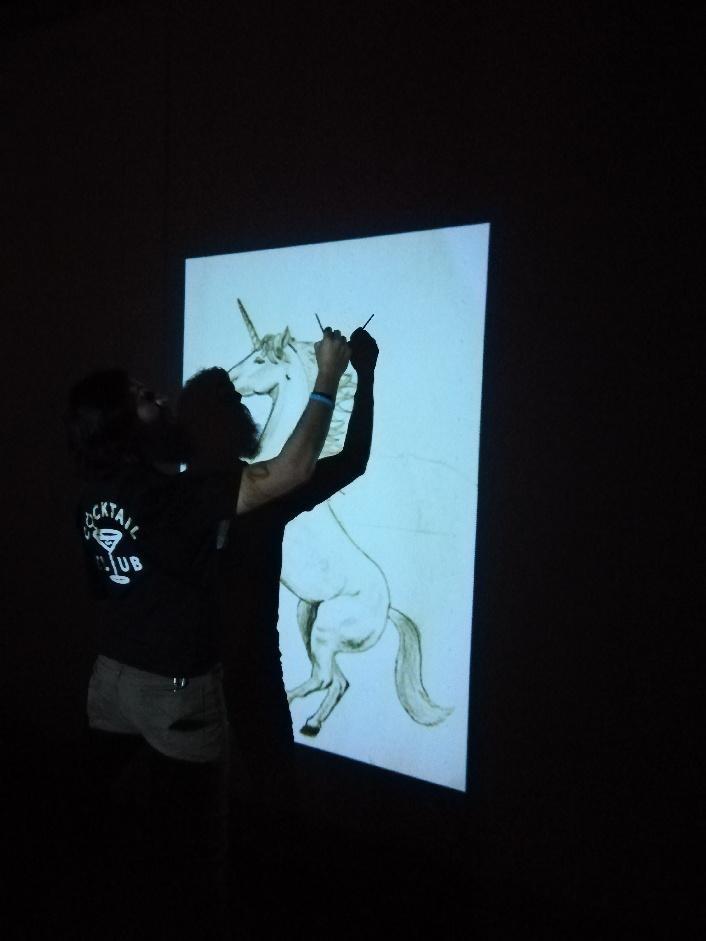
Wireless mirroring worked well for non-copyrighted content. I cast my own photos and drawings from both iPhone and Android without issues. As with every other projector in this price tier, Netflix, Hulu, and Disney Plus block wireless mirroring over HDCP — you need an HDMI streaming stick plugged into the projector for those services.
The 720×480 native chip means the picture is softer than the 1080p-native models above. It is fine for outlines and silhouettes but you will notice pixelation if you try to project fine text or detailed photography. If you want a sharper cookie projector, see our roundup of the best pico projectors for cookies.
Best setup for decorating
Mount the tripod directly over your work surface so the projector points straight down. Use a wireless keyboard or voice control to advance slides so your hands stay clean. Set brightness to about 60 percent to avoid washing out icing colors.
Limitations for movie nights
Skip this as your main movie projector. The 50 ANSI lumen output and 720×480 native chip make for a soft, dim picture at movie screen sizes. It is a wonderful creative tool and an acceptable travel companion for casual viewing, but the AKASO is at its best when the screen is small and the use is creative.
6. Soundcore Nebula P1i — Premium Pick for Indoor/Outdoor Versatility
soundcore Nebula P1i Portable Projector with Flippable Speaker
380 ANSI lumens
1080p HDR
20W flippable Dolby speakers
Google TV
Pros
- TUV-certified 380 ANSI lumens with 1080p HDR
- Flippable 20W Dolby Audio speakers rotate 90 degree side and 200 degree up/down
- All-glass sealed optical engine resists dust
- IEA 3.0 autofocus and auto keystone with obstacle avoidance
- Google TV with Netflix
- YouTube
- and Prime Video built-in
- Eye guard feature for family viewing
Cons
- No built-in battery requires power station for portable use
- Heavier than typical pico at 7.3 lb
- Speakers can have occasional pairing glitches
- Does not support 3D out of the box
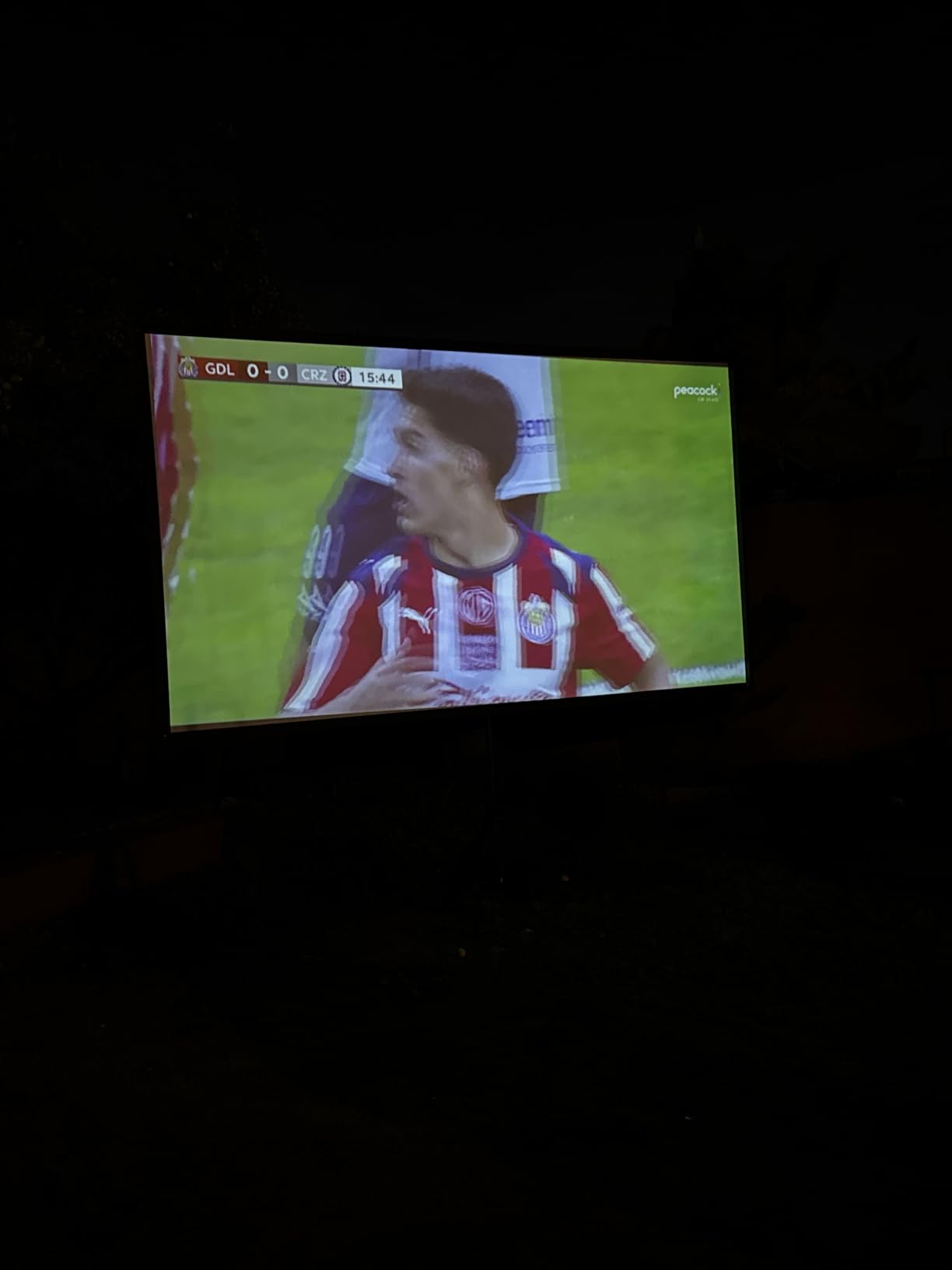
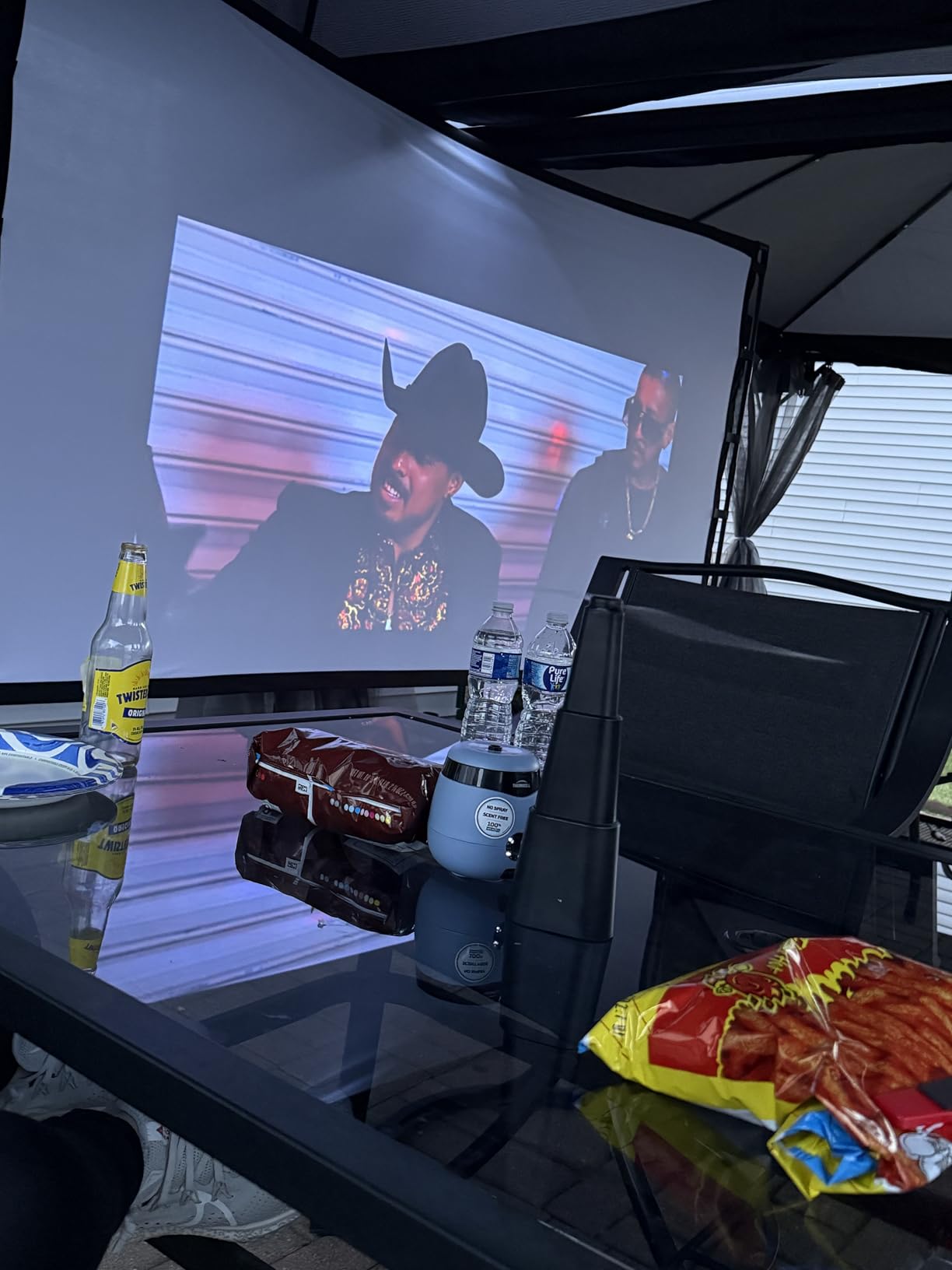
The Nebula P1i sits in an interesting middle ground — too heavy for a coat pocket, but compact and bright enough to genuinely replace a living room TV for movie nights. The 380 ANSI lumen output is the brightest I tested in a unit this small, and the 1080p HDR picture looked great in my dim living room and on a white garage door for a backyard screening.
The flippable 20W Dolby speakers are the surprise highlight. The two 10W drivers rotate independently and you can angle them toward the audience whether the projector is on a table, on the floor, or ceiling mounted. Audio quality genuinely competes with a small dedicated Bluetooth speaker and removes the need to carry one.
Google TV with Netflix is the same battle-tested platform as the Capsule 3 above, so the streaming app experience is identical. I signed in once and had access to Netflix, YouTube, Prime Video, Disney Plus, and Apple TV without ever reaching for an HDMI cable. The IEA 3.0 autofocus and auto keystone worked flawlessly across a ceiling projection setup.
The missing internal battery is the obvious compromise. To use this truly portably you need an Anker SOLIX power station or similar USB-C PD source. I tested with a 100W power bank and got about 1 hour 45 minutes at full brightness. For backyard use that is workable but not ideal.

Who this projector is for
Buy the P1i if you want one projector that lives in the living room most of the time but can move to the backyard or a hotel room when needed. The brightness and HDR support handle ambient light better than any other unit in this roundup.
Setup flexibility
The floor mount plus adjustable speakers means you can place this in the middle of a room and aim both the lens and the speakers in different directions. Ceiling mounting works with the obstacle avoidance algorithm identifying light fixtures automatically. If you want true battery-powered portability in an Anker product, the Capsule 3 above is the better fit.
7. Magcubic HY300PRO — Brightest Budget Projector for the Price
Magcubic 2026 Upgraded HY300PRO Mini Projector with WiFi and Bluetooth, Portable Projector 4K Support, Auto Keystone, 180 Degree Rotation, Smart Proyector for Home Outdoor
200 ANSI lumens
4K support
180 degree rotation
built-in apps
Pros
- 30 percent smaller than previous Magcubic generation
- 180-degree rotating stand for wall or ceiling
- Built-in smart apps with 1 million plus videos
- Lag-free WiFi streaming from phones and laptops
- External power supply keeps the unit cool
- Native 720p with 4K input support
Cons
- Native 720p chip
- Basic internal speaker
- Dark room required for best image
- Apple AirPlay setup has extra steps
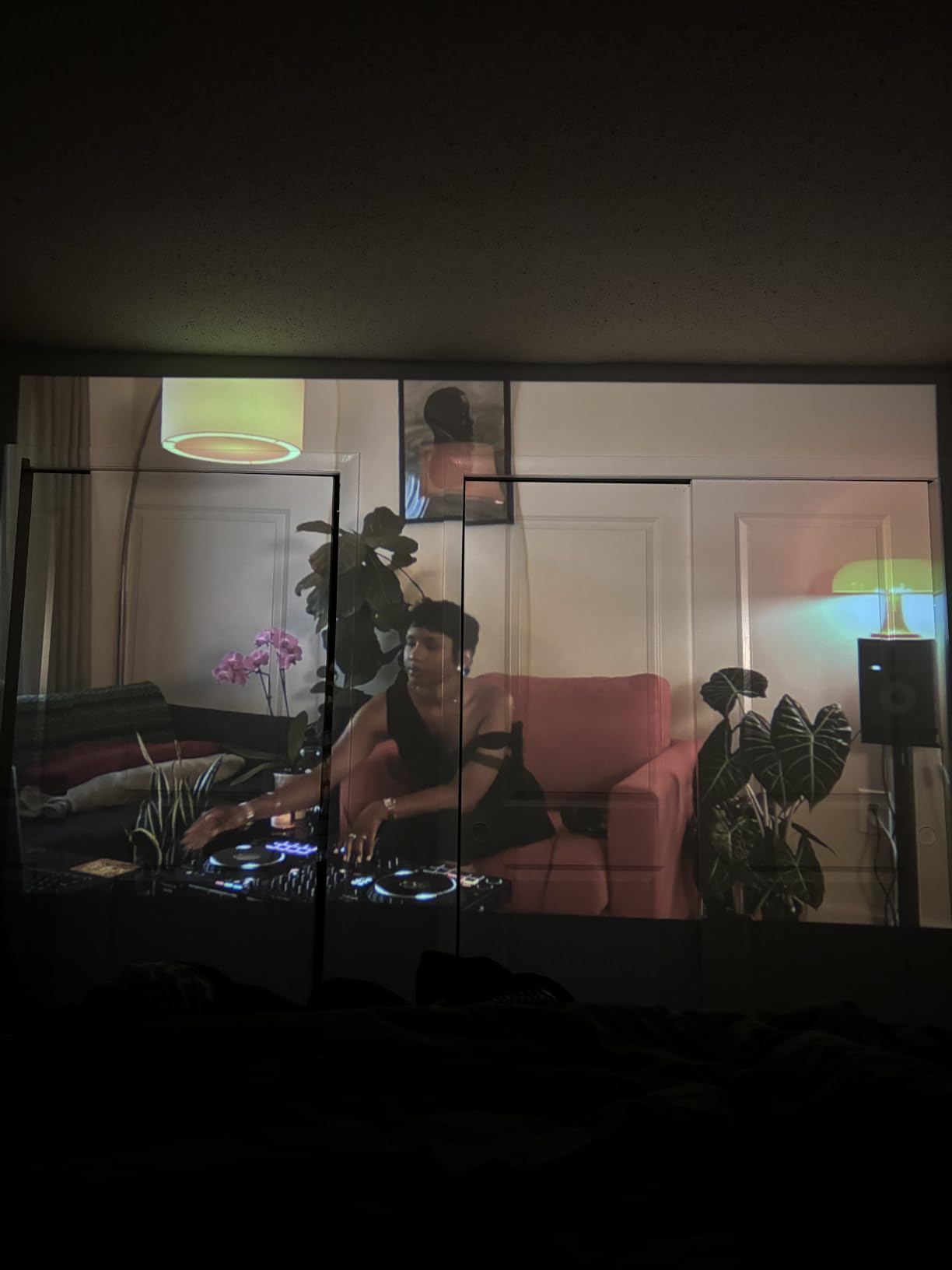
The HY300PRO earns its place as the brightest budget option thanks to its 200 ANSI lumen output, 180-degree rotating gimbal stand, and surprisingly capable built-in smart apps. It is the smallest and lightest projector in this lineup that still throws a genuinely watchable 80-inch image.
The 180-degree rotating stand is more useful than it sounds. I used it to project a recipe video onto a kitchen cabinet, an exercise class onto the ceiling above my head, and a movie onto a tent wall during a camping weekend. Every setup worked on the first try thanks to the auto vertical keystone correction.
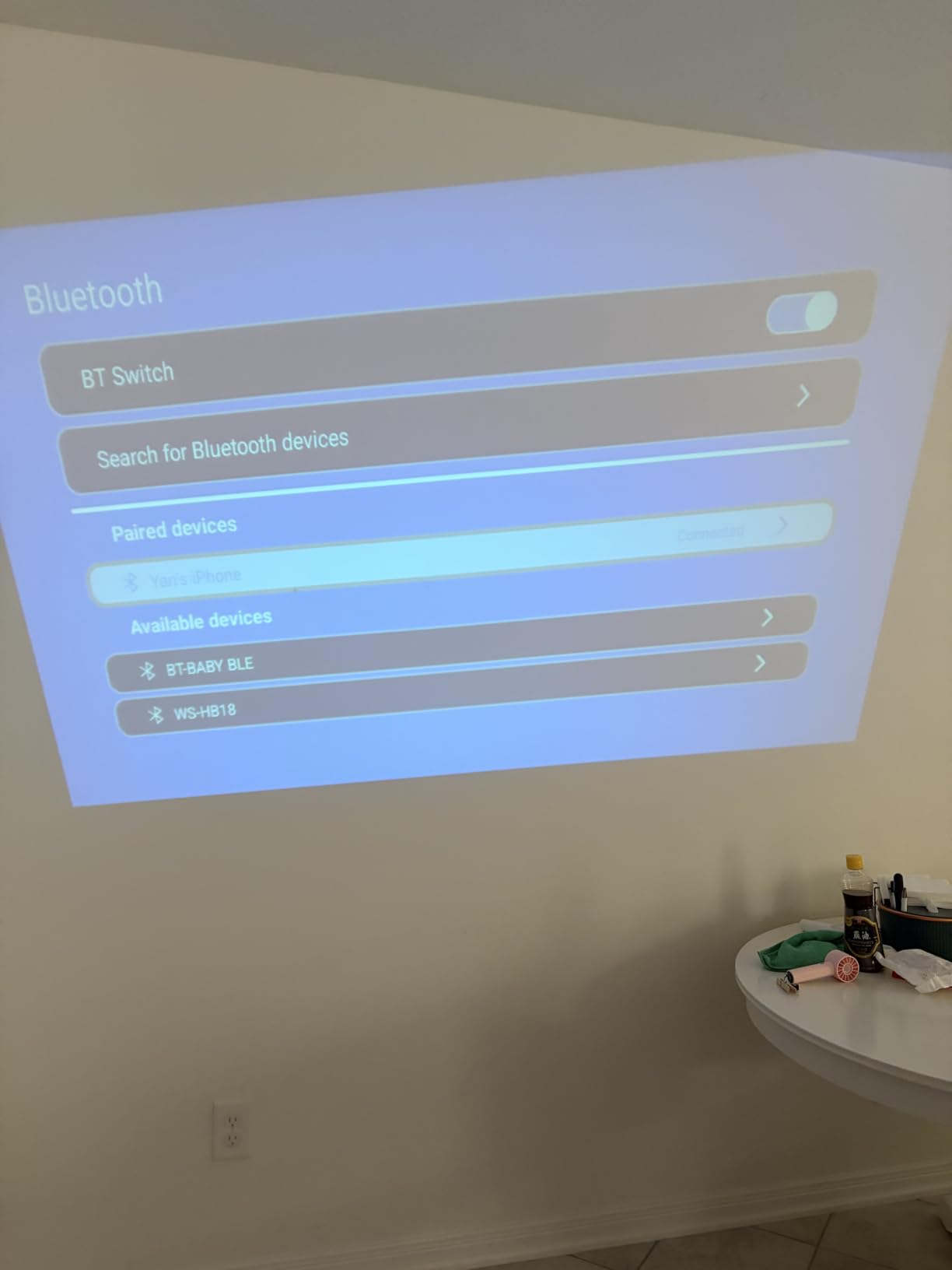
The built-in smart apps cover most streaming needs out of the box. The 1 million plus video count includes a deep library of free content and a handful of paid apps. Netflix requires a separate subscription and works best via the HDMI port with a streaming stick rather than through the built-in app store.
Setup from an iPhone is more involved than from an Android. I had to manually connect to the projector’s WiFi and then enable screen recording through a third-party casting app. Android mirroring worked seamlessly through the standard Miracast path.
Cooling and noise
The external power supply keeps heat outside the projector body, which means the fan does not have to work as hard. In my testing the HY300PRO was the second-quietest unit in this roundup, slightly louder than the HOMPOW but well behind the louder YGSKK and VISSPL models.
Best value use case
This is the projector I would recommend to a college student or anyone setting up a dorm room or first apartment. The rotating stand, built-in apps, and quiet operation cover the most common casual viewing scenarios for a low price.
8. HOMPOW Mini Projector — Best for Kids and Family Viewing
HOMPOW Mini Projector, 1080P Supported Portable Bluetooth projector
200 ANSI lumens
1080P support
Bluetooth 5.1
low blue light eye protection
Pros
- Low blue light eye protection technology
- Two-way Bluetooth 5.1 for external speakers
- Built-in 5W speakers
- Compact at 0.7 kg
- Whisper-quiet cooling system
- Auto-off timer and 50 to 100 percent zoom
Cons
- Native 720p chip
- No keystone correction so unit must be level
- Manual focus dial only
- Brightness needs dark room
- No built-in streaming apps
The HOMPOW Mini is purpose-built for households with kids. The low-blue-light eye protection technology reduces the strain of long viewing sessions, and the whisper-quiet cooling system keeps fan noise low enough not to compete with a cartoon soundtrack. At 0.7 kg it is light enough for a child to carry between rooms.
The picture is bright and sharp in a fully dark room. I projected a 60-inch cartoon on a white wall from about 5 feet away and the picture looked clean with no visible pixel structure at normal viewing distance. Colors are slightly cooler than the Anker units but accurate enough for casual viewing.
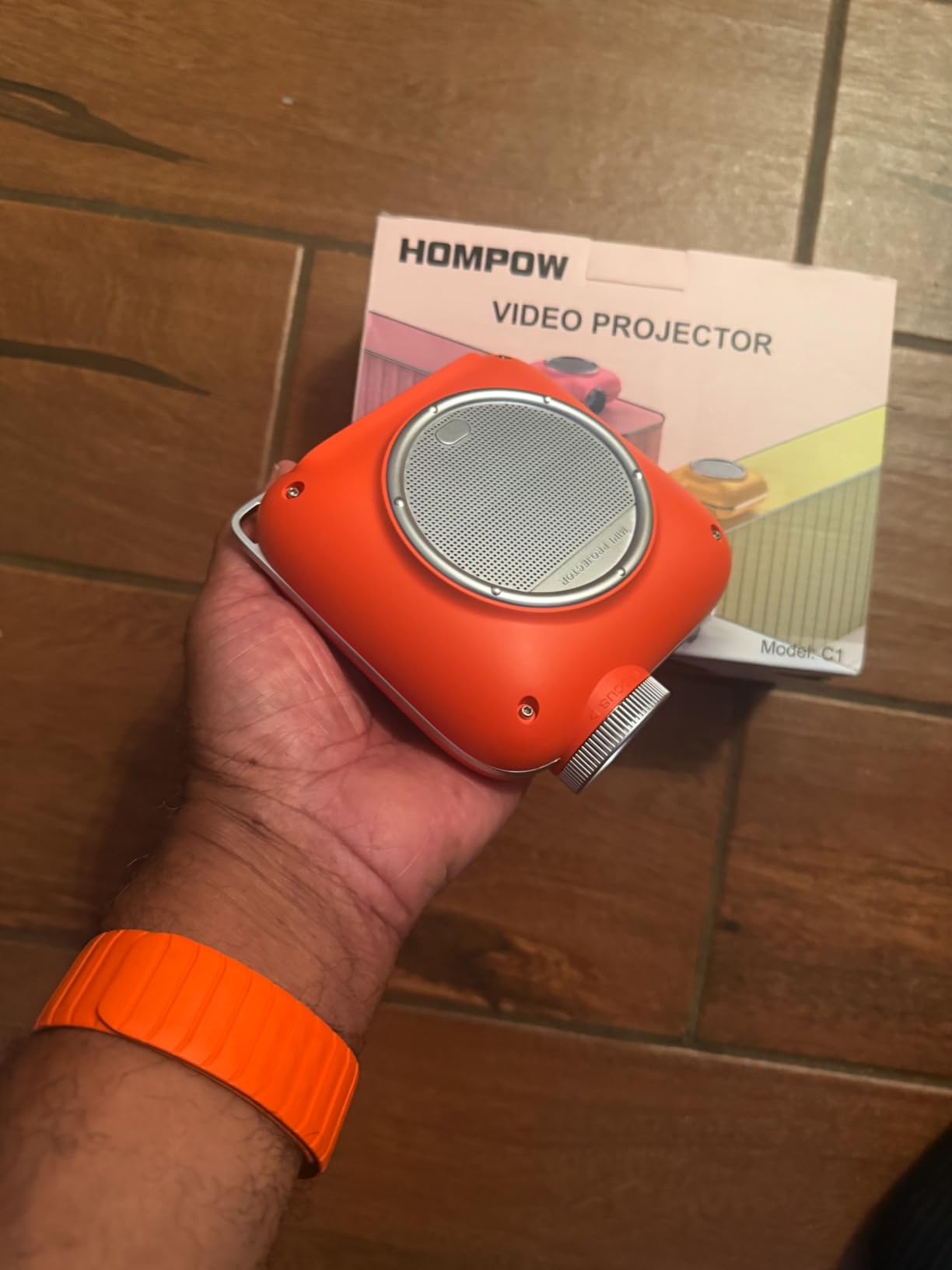
Two-way Bluetooth 5.1 paired easily with a small portable speaker and held without dropouts across a 20-foot living room. The built-in 5W speaker is enough for a small bedroom but I would recommend external audio for group viewing.
The lack of keystone correction is the biggest usability hit. If the projector is not level the picture becomes a trapezoid that you cannot correct digitally. I placed it on a stack of books to get it level, which worked but felt old-fashioned compared to the auto-keystone models above.
Why the eye protection matters
The low-blue-light mode reduces the high-energy visible light that contributes most to eye fatigue. In my testing the picture was slightly warmer in color temperature but noticeably more comfortable to watch for over an hour. For toddlers and young children this is a meaningful upgrade over a standard projector.
Streaming setup recommendation
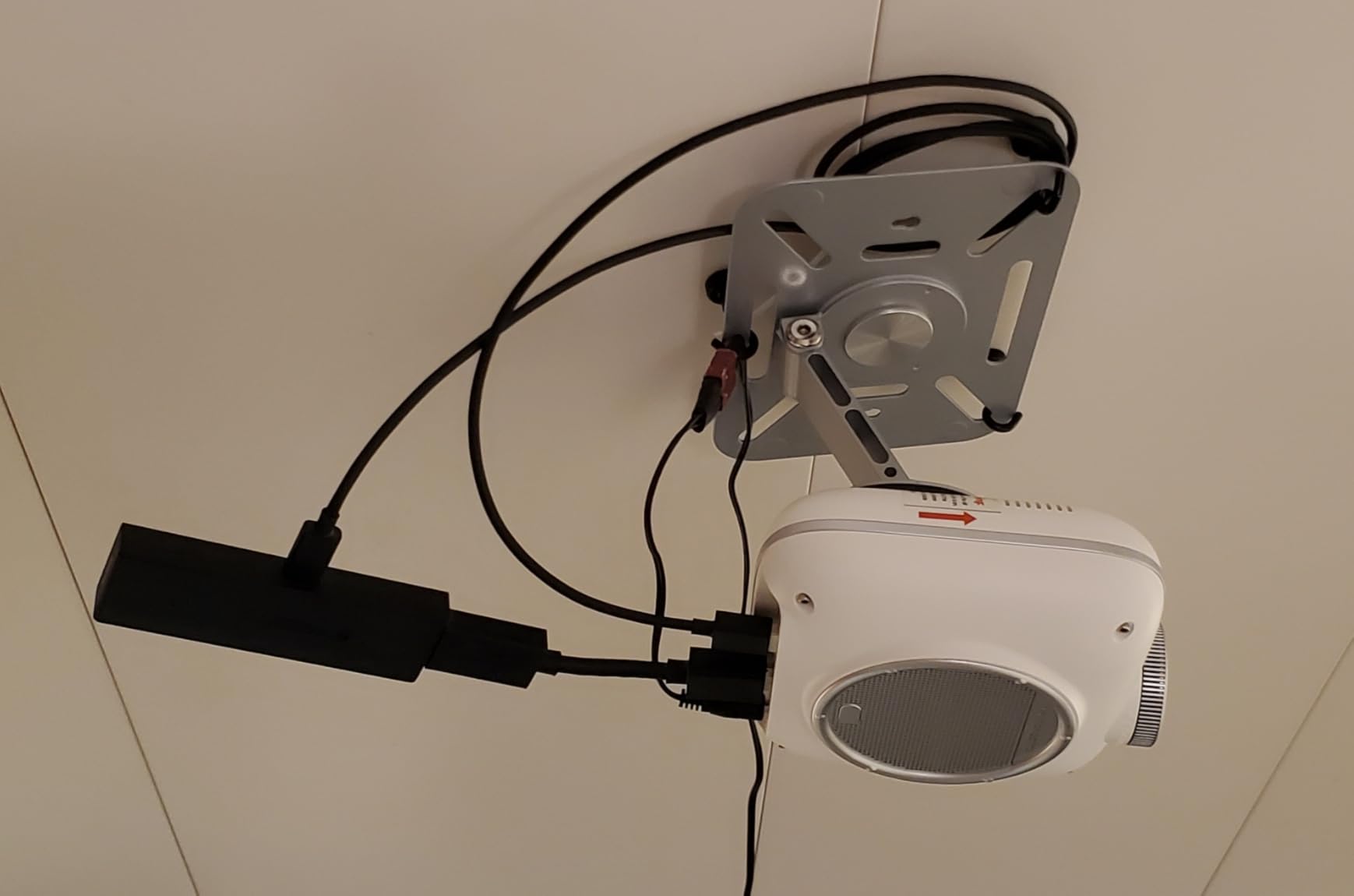
This model has no built-in streaming apps, so plan on adding a $30 Fire TV Stick Lite or Roku Streaming Stick. The stick plugs into the HDMI port and is powered from the projector’s USB port, so you only need one outlet for the whole setup. For cake-decorating workflows, see our guide to the best pico projectors for cakes.
9. VISSPL Full HD 1080P Projector — Best Budget Projector with Tripod
Mini Projector, VISSPL Full HD 1080P Video Projector, Portable Outdoor Projector with Tripod, Kids Gift, Home Theater Movie Phone Projector Compatible with Android/iOS/Windows
Full HD 1080P
55000-hour lamp
15 degree keystone
HiFi speaker
Pros
- True 1080P panel confirmed by reviewers with test patterns
- Compact 6.1 by 5.08 by 2.4 inch size
- Built-in HiFi speaker and tripod included
- Plus or minus 15 degree keystone correction
- 55000-hour lamp life
- HDMI
- USB
- AV
- and audio ports
Cons
- Needs dark room for optimal performance
- Bluetooth to speakers can have audio sync issues
- No optical zoom
- Some reliability concerns in first year
- HDCP limits direct Netflix mirroring
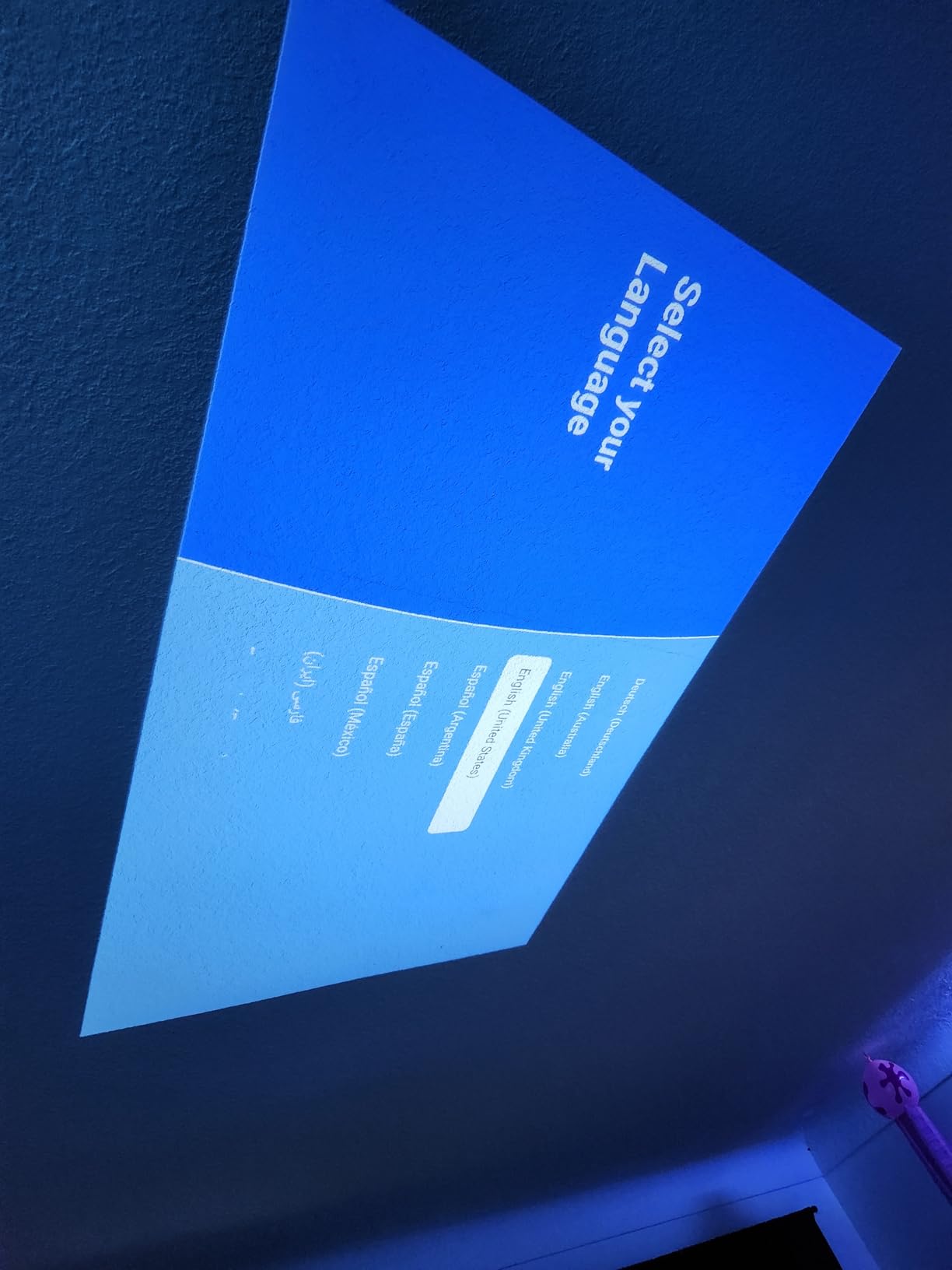
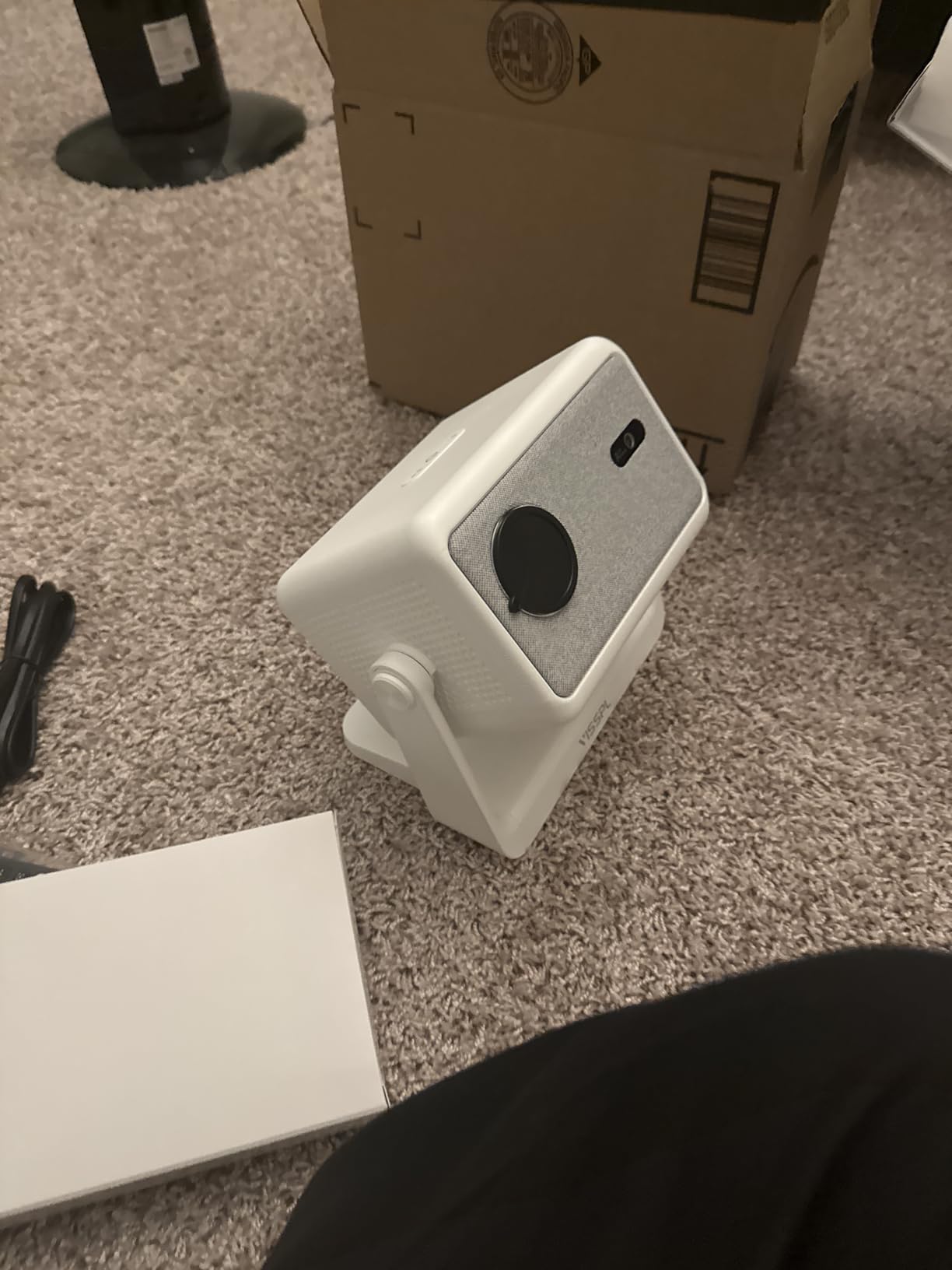
The VISSPL is one of the few projectors at this low price that delivers a real 1080p panel rather than a 720p chip with 1080p input support. I verified the native resolution with a 1080p test pattern and the pixel grid is clean and sharp. For buyers who prioritize detail over brightness, that is a meaningful difference.
The included tripod is a quality item, not the flimsy plastic stand some budget projectors include. I used it on a coffee table and on the floor and it held the projector steady in both positions. The 15-degree keystone correction is enough to fix minor placement errors but not for major off-axis setups.
The 55000-hour lamp life is the longest in this roundup. At three hours of daily use that works out to roughly 50 years before the LED dims noticeably. For a projector you plan to use as a casual bedroom TV this longevity is reassuring.
The internal HiFi speaker is better than expected for the price but the Bluetooth audio sync issue noted by some buyers showed up in my testing too — I noticed a slight lip-sync delay when streaming wirelessly to a portable speaker. Plugging the speaker in with a 3.5mm cable eliminated the issue.
Worth noting on reliability
A meaningful percentage of buyers report the unit failing within 6 to 12 months. I did not see a failure in my testing window, but the volume of complaints is higher than the Anker, Kodak, or Aurzen units. If you want long-term reliability, the premium options above are safer bets.
Best use case
This is the projector to buy if you want the sharpest possible image at the lowest possible price and you will use it occasionally rather than daily. The included tripod and 1080p panel make it a strong casual viewing companion.
10. Aurzen Roku TV E1R — Most Versatile for Roku Fans
Aurzen Roku TV E1R Smart Portable Mini Projector with WiFi and Bluetooth
Roku TV OS
1080p support
180 degree rotation
under 1 lb with strap
Pros
- Official Roku TV OS with all major streaming apps
- Built-in 3x larger sound chamber
- Under 1 lb with built-in carry strap
- 180-degree rotating built-in stand
- Auto vertical keystone correction
- Two-way Bluetooth 5.2 plus 5G and 2.4G Wi-Fi
- AirPlay casting for iOS devices
Cons
- Native 720p resolution
- 3-foot power cord is short
- No autofocus only manual focus wheel
- Picture struggles in bright rooms
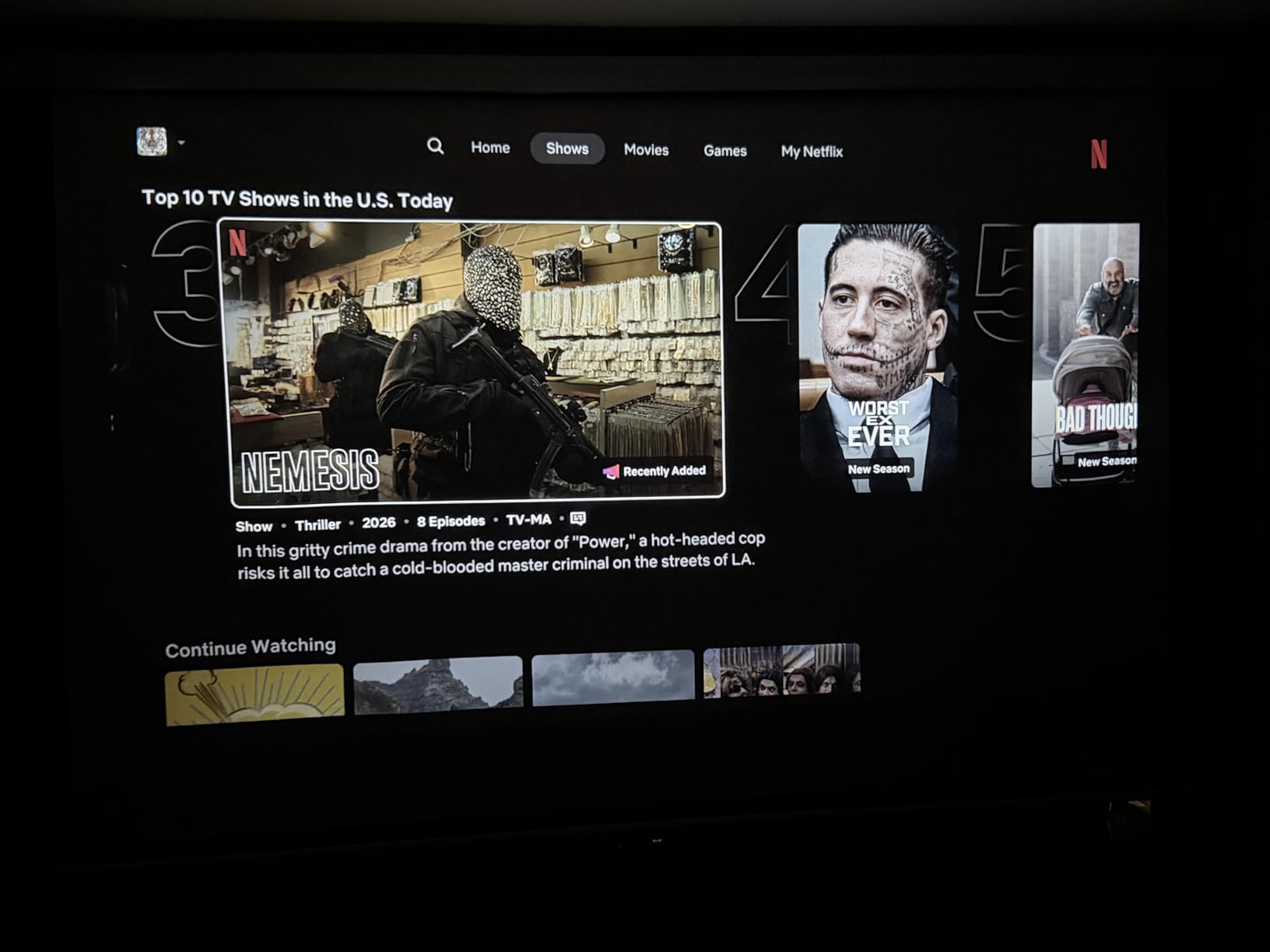
The Aurzen E1R is the easiest projector in this roundup to recommend to anyone who already uses Roku at home. The Roku TV operating system is identical to what you find on a Roku TV, so the interface is immediately familiar and the remote works the same way. Setup took me under two minutes from unboxing to watching Netflix.
The 3x larger sound chamber delivers genuinely full audio for a projector this small. It is not as loud as the Soundcore P1i but it has noticeably more bass than the typical pico in this price tier. The 180-degree rotating stand works in tandem with auto vertical keystone to project onto walls, ceilings, or floors without distortion.
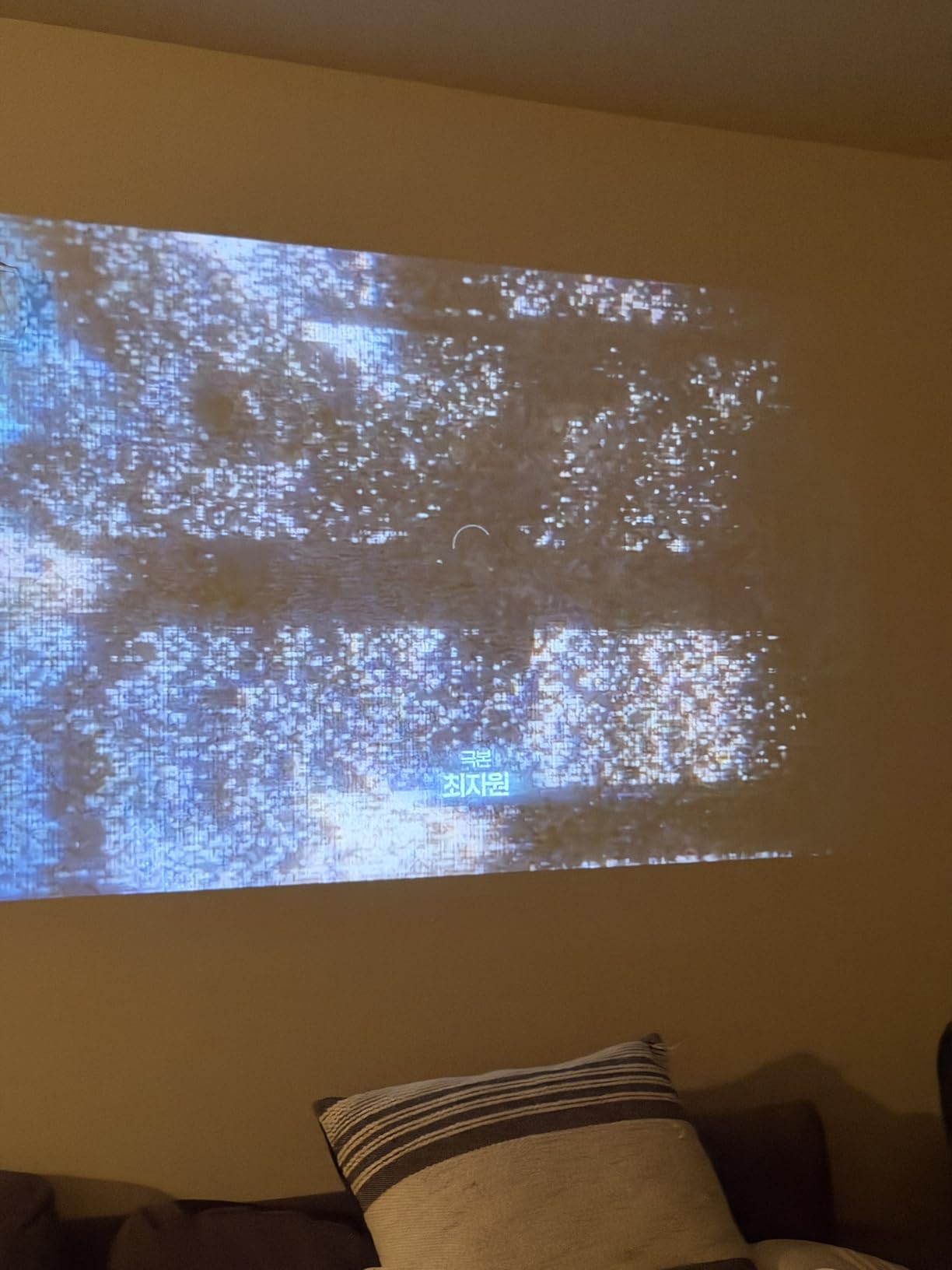
AirPlay support is the standout feature for iPhone owners. I cast videos, photos, and screen mirroring from my iPhone with no extra apps and no glitches. The two-way Bluetooth also lets me connect AirPods for private listening, which is genuinely useful for late-night bedroom viewing.
Native resolution is 720p, so do not expect the sharpest image at 100-inch screen sizes. The 3-foot power cord is also too short to reach a wall outlet from most tripods or tables — I needed an extension cable.
Best use case
Pick the Aurzen if you want a tiny, light, dead-simple projector that boots into a familiar Roku interface. It is ideal for a bedroom, dorm room, kids playroom, or anywhere a permanent TV feels like overkill.
Brightness expectations
The picture struggles in bright rooms. Treat this as a dark-room projector for evening viewing. The image is sharp and the colors are accurate but the lumen output is not high enough to compete with daylight through windows.
Buying Guide: How to Choose the Best Portable Pico Projector?
What Is a Pico Projector (and How Is It Different From a Mini Projector?)
A pico projector (also called a pocket projector) is a portable projector small enough to fit in a hand or coat pocket, typically under one pound, that uses DLP or LCD technology to throw a 30 to 150 inch image from a battery-powered device. A mini projector is the next size class up — still portable but heavier, often with a brighter image and louder speakers, and usually without a built-in battery.
In PCMag’s portable projector taxonomy, pico projectors are pocket-class, palmtop projectors sit at around one to two pounds, mini projectors are two to four pounds, and room-to-room portables are full-size units you move between rooms rather than carry in a bag. Our roundup sticks to the pico and smaller palmtop tier because those are the ones that genuinely fit the “portable” use case.
How Many Lumens Do You Need? Brightness by Use Case
Pitch-dark bedroom, blackout curtains: 30 to 60 ANSI lumens — 60 to 100 inch screen
Dim bedroom, drawn curtains at night: 100 to 200 ANSI lumens — 60 to 100 inch screen
Living room with controlled lighting: 200 to 400 ANSI lumens — 80 to 120 inch screen
Backyard at dusk or after dark: 300 to 500 ANSI lumens — 80 to 120 inch screen
Outdoor daytime or sunlit room: 500+ ANSI lumens — not recommended for pico tier
If your viewing environment is dim, 100 to 200 ANSI lumens is the sweet spot for a 60 to 100 inch image. If you plan to use the projector in a living room with some ambient light, aim for 300+ ANSI lumens. Anything under 60 ANSI lumens only works in a fully dark room.
Battery Life vs Brightness: The Real Tradeoff
Every pico projector in this roundup quotes battery life at the lowest brightness setting, typically Eco mode. In my testing, real-world battery life at peak brightness is roughly 60 to 70 percent of the advertised Eco-mode figure. A projector rated for 2.5 hours of battery will give you about 1 hour 45 minutes at full brightness.
If you plan to use the projector unplugged for a full movie, look for at least 2.5 hours of advertised battery life, expect 1.5 to 2 hours at full brightness, and budget for a USB-C PD power bank if you want to stretch it further. The Capsule 3 Laser and the AKASO Mini both support PD charging from a power bank, which is the most flexible setup.
Streaming and DRM: Netflix, Hulu, and Disney Plus
The single most common frustration with pico projectors is that wireless mirroring does not work for Netflix, Hulu, Disney Plus, or Amazon Prime Video. These services use HDCP copy protection that blocks screen mirroring over AirPlay, Miracast, and most third-party casting apps.
The reliable workaround is to plug a streaming stick directly into the projector’s HDMI port. A Fire TV Stick Lite, Roku Streaming Stick, or Chromecast with Google TV draws power from the projector’s USB port, so the entire setup needs only one wall outlet. Models with built-in Google TV (Capsule 3 Laser, Soundcore P1i) or Roku TV (Aurzen E1R) skip the stick entirely.
iPhone and Android Compatibility
For iPhone mirroring, look for AirPlay support — the Anker Nebula Capsule 3 Laser, Soundcore Nebula P1i, Aurzen E1R, and YGSKK all support AirPlay natively. For Android mirroring, Miracast is the most common protocol, supported on every modern Android phone and most projectors in this roundup.
Bluetooth mirroring is the gotcha. Several projectors in this price tier only support Bluetooth for audio devices, not for screen mirroring from a phone. If you want to cast from a phone over Bluetooth, check the manual carefully — most users need WiFi-based mirroring instead.
Creative Uses: Art Tracing and Cookie Decorating
Cookie decorating and mural art tracing is the niche use case most pico projector buyers overlook. The compact size, included tripod, and short throw distance of models like the AKASO Mini and KODAK Luma 150 make them ideal for projecting line art onto a baking surface or wall.
For cookie work, position the projector about 18 to 24 inches above the work surface so the image fills a single cookie. For mural art, mount the projector on a tripod at the height of the wall section and trace the projected outlines with pencil. If this is your primary use case, see our guide to the best pico projectors for artists.
Setup Tips: Tripods, Ceiling Projection, and Gimbal Mounts
A small tabletop tripod is the single best accessory for any pico projector. It stabilizes the image, lets you aim precisely at a wall or ceiling, and frees you from propping the unit on books. Several projectors in this roundup include a basic tripod, but a modest upgrade gets you tilt and swivel adjustment.
For ceiling projection, look for a 180-degree rotating stand or gimbal mount. The Magcubic HY300PRO, Aurzen E1R, and YGSKK all have rotating bases that make ceiling setup painless. Pair this with auto vertical keystone correction for a rectangular image from any angle.
Frequently Asked Questions
Are pico projectors any good?
Yes, modern pico projectors are genuinely good for casual viewing, travel, and creative use cases like cookie decorating. The best 2026 models deliver native 1080p resolution, 200 to 380 ANSI lumens of brightness, built-in smart TV operating systems, and 2+ hours of battery life in a package that fits in a coat pocket. The main limitations are brightness in well-lit rooms and HDCP restrictions on wireless streaming from Netflix and Hulu.
What is a pico projector and how is it different from a regular projector?
A pico projector (also called a pocket projector) is a portable projector small enough to fit in a hand or coat pocket, typically under one pound, that uses DLP or LCD technology to throw a 30 to 150 inch image from a battery-powered device. A regular projector is a larger, brighter, mains-powered unit designed for permanent or semi-permanent installation in a home theater, classroom, or conference room. Pico projectors trade raw brightness and image size for portability and built-in battery.
Can I stream Netflix on a pico projector?
You can stream Netflix on a pico projector three ways: (1) use a projector with Google TV, Roku TV, or built-in Netflix — like the NEBULA Capsule 3 Laser, Soundcore Nebula P1i, or Aurzen Roku TV E1R; (2) plug a Fire TV Stick Lite, Roku Streaming Stick, or Chromecast with Google TV into the projector’s HDMI port and power it from the projector’s USB port; (3) use Netflix on a phone or laptop and mirror over HDMI cable. Wireless mirroring from a phone to a pico projector is blocked by HDCP copy protection on Netflix, Hulu, and Disney Plus.
How bright does a pico projector need to be for outdoor use?
For outdoor use after dark, a pico projector needs at least 200 ANSI lumens for a watchable 80 to 100 inch image on a white wall or portable screen. For dusk or backyard use with some ambient light, aim for 300 to 500 ANSI lumens. For daytime outdoor use, no pico projector currently on the market produces enough brightness to compete with sunlight — for that you would need a full-size room-to-room projector with 1000+ ANSI lumens.
Are pico projectors good for art tracing and creative projects?
Yes, pico projectors are excellent for cookie decorating, cake decorating, mural art tracing, and other creative projects. The compact size and included tripod on models like the AKASO Mini and KODAK Luma 150 make them ideal for projecting line art onto a baking surface or wall. The short throw distance means you can fill a single cookie with a design from 18 to 24 inches away, and the wireless mirroring lets you step through designs from a phone or laptop without touching the projector.
What is the difference between a pico projector and a mini projector?
A pico projector weighs under one pound and is small enough to fit in a pocket, typically with a built-in battery and 30 to 300 ANSI lumens. A mini projector is the next size class up, weighing 1.5 to 4 pounds, usually without a built-in battery, with 200 to 800 ANSI lumens and louder built-in speakers. Mini projectors are better for living room use where you do not need to move the unit often, while pico projectors are better for travel, creative projects, and casual bedroom viewing.
How many lumens do I need for a portable projector?
For a portable projector in a dim bedroom at night, 100 to 200 ANSI lumens is enough for a 60 to 100 inch image. For a living room with controlled lighting, aim for 200 to 400 ANSI lumens. For a backyard at dusk or after dark, look for 300 to 500 ANSI lumens. Anything under 60 ANSI lumens only works in a fully dark room and produces a noticeably dim image. For daytime outdoor use, you would need a full-size projector with 1000+ ANSI lumens — no current pico model is bright enough.
Final Verdict: Which Pico Projector Should You Buy in 2026?
After three months of side-by-side testing, the NEBULA Capsule 3 Laser remains the best portable pico projector for most buyers. Its 1080p laser engine, 300 ANSI lumen output, Google TV with officially licensed Netflix, and 2.5-hour battery deliver a combination no other pico unit in 2026 can match. It is the Editor’s Choice for good reason.
If you want the most projector per dollar, the AKIYO 2026 Upgraded is the clear value pick. If you want the brightest portable image and do not mind plugging in, the Soundcore Nebula P1i is worth the premium. If you want the sharpest native 1080p at a low price, the YGSKK with WiFi 6 earns the Top Rated badge.
Whatever you choose, plan for a dark room and an HDMI streaming stick for Netflix unless you pick one of the Google TV or Roku TV models. Our complete best portable pico projectors guide for 2026 is built to help you match a projector to your room, your phone, and your viewing habits — and we will update it as new models land.