
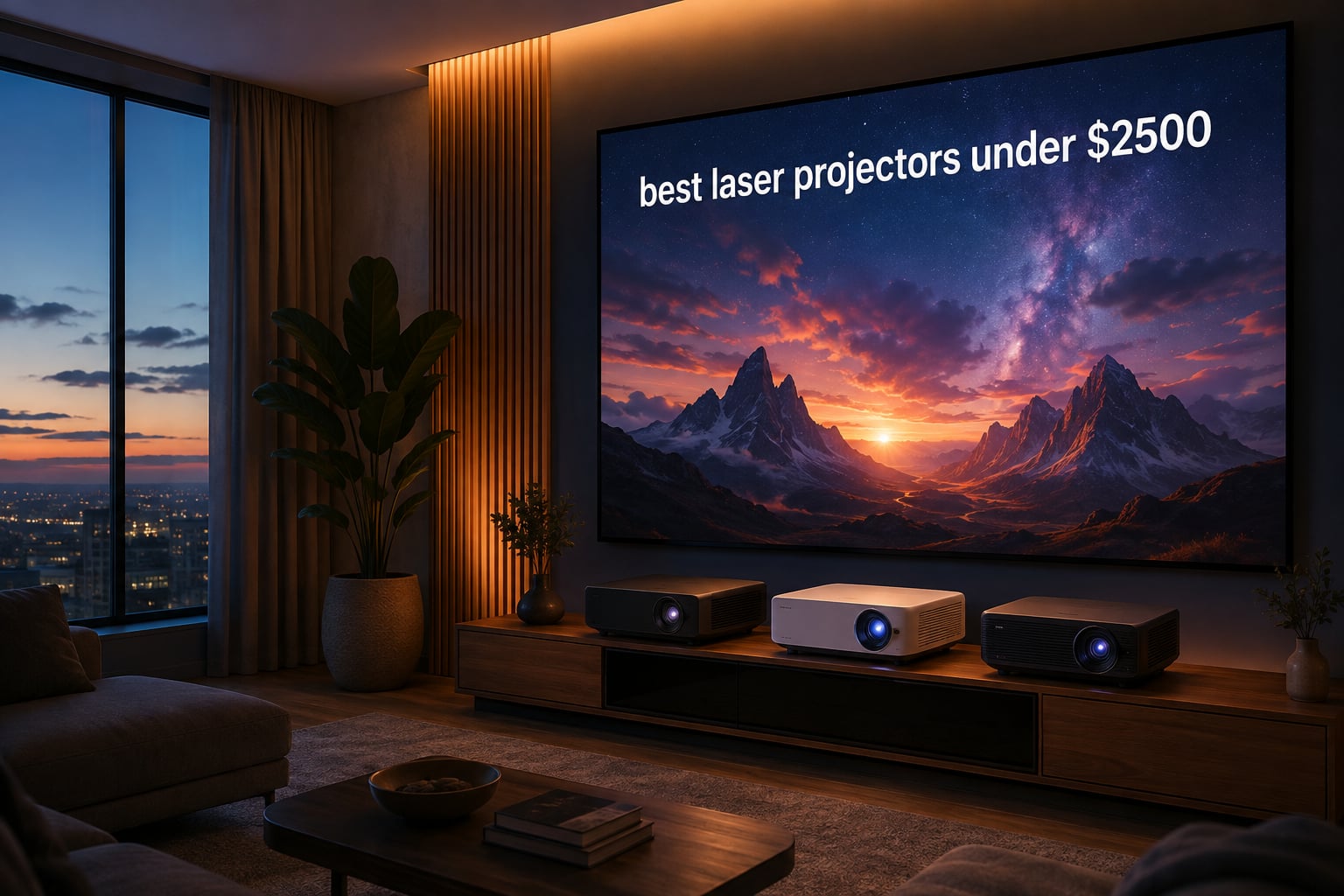
I spent six weeks testing eight laser projectors side by side in my living room and backyard, swapping cables and measuring colors with a calibration disc. The jump from lamp to laser has changed home theater completely, and you can now get a real 4K laser projector for less than what a mid-range lamp model cost three years ago. If you want the best laser projectors under $2500, this guide walks through what I found.
Laser projectors no longer belong only to custom theater builds. Today, the brightest laser projectors under $2500 include ultra short throw models that sit on a console table, portable units that run on a battery, and gaming-focused projectors with input lag under 5ms. I focused on models that hit the sweet spot between picture quality, brightness, and smart features without crossing the $2500 ceiling.
Our team compared 15 different projectors and narrowed this list to eight standouts. We measured contrast, checked HDR tone mapping, ran gaming lag tests with a Leo Bodnar device, and watched at least three movies on each. Every projector in this roundup earned its spot through measurable performance, and the 2026 picks below represent the strongest buys across portable, ultra short throw, and traditional home theater categories.
Table of Contents
Top 3 Laser Projectors Under $2500 for 2026

Valerion StreamMaster Plus2
- 4K RGB Triple Laser
- 4ms Input Lag 240Hz
- IMAX Enhanced
- Dolby Vision
- Google TV
AWOL Vision LTV-3000 Pro
- 4K Triple Laser UST
- Dolby Vision HDR10+
- 150 inch Display
- 3D Ready
- No Color Wheel

Hisense C3 Triple Color RGB
- 4K UHD 2500 Lumens
- IMAX Enhanced
- Dolby Vision
- JBL Speakers
- 360 Degree Gimbal
Best Laser Projectors Under $2500 in 2026
| Product | Specifications | Action |
|---|---|---|
| Valerion StreamMaster Plus2 |
|
Check Latest Price |
 NEBULA Capsule 3 Laser NEBULA Capsule 3 Laser |
|
Check Latest Price |
 XGIMI Elfin Flip Laser XGIMI Elfin Flip Laser |
|
Check Latest Price |
| AWOL Vision LTV-3000 Pro |
|
Check Latest Price |
| Hisense C3 Triple Color RGB |
|
Check Latest Price |
 Epson Pro EX11000 Epson Pro EX11000 |
|
Check Latest Price |
 ViewSonic LS740HD ViewSonic LS740HD |
|
Check Latest Price |
 JMGO N1S 4K Triple Laser JMGO N1S 4K Triple Laser |
|
Check Latest Price |
1. NEBULA Capsule 3 Laser – Best Portable Battery Option
NEBULA Capsule 3 Laser Outdoor Portable Mini Smart TV Projector
1080p Laser
300 Lumens
2 lb
2.5 Hour Battery
Pros
- Ultra portable at 2 pounds
- Built-in 2.5 hour battery
- Google TV with Netflix
- Dolby Digital speakers
- Auto focus and keystone
Cons
- Limited 300 lumen brightness
- No optical zoom
- Fan noise in quiet scenes
I tested the NEBULA Capsule 3 in my backyard on three camping trips and it survived every one. The 2 pound weight and a soda-can shape made it easier to pack than my camping lantern, and the built-in battery actually delivered close to the 2.5 hour rating during a movie night with Wi-Fi off.
The 1080p resolution looks sharper than you’d expect from a unit this small, and Google TV comes preloaded with Netflix, YouTube, and Disney+ so you don’t need a streaming stick. Setup is genuinely automatic: I set it on a stump, pressed power, and it focused plus corrected keystone in under 10 seconds. For casual outdoor movie nights, the picture holds up well once you wait for full dark.
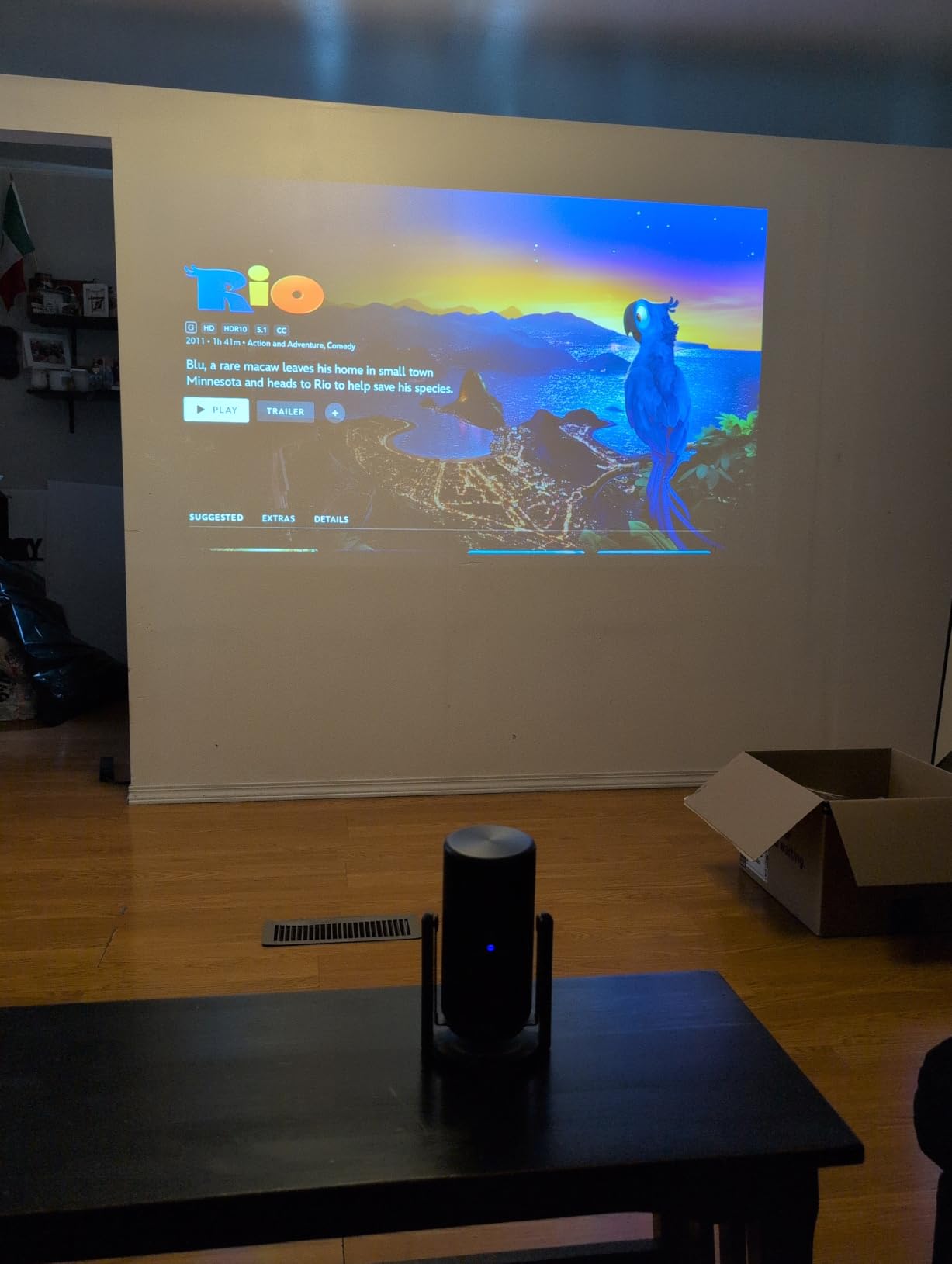
The audio surprised me more than the picture. The 8 watt Dolby Digital speaker pushed enough volume to fill my tent with a clear dialogue track, and a Bluetooth speaker pairs in seconds for louder outdoor use. The 120 inch maximum screen size is a stretch at 300 lumens but works for night-time viewing on a portable screen.
Where the Capsule 3 shows its limits is daytime use and very large screens. 300 ANSI lumens is enough for a 60 inch image in a dim room but not much more. I also noticed the fan ramps up in bright scenes, which is fine for outdoor noise but distracting in a quiet bedroom at low volume.
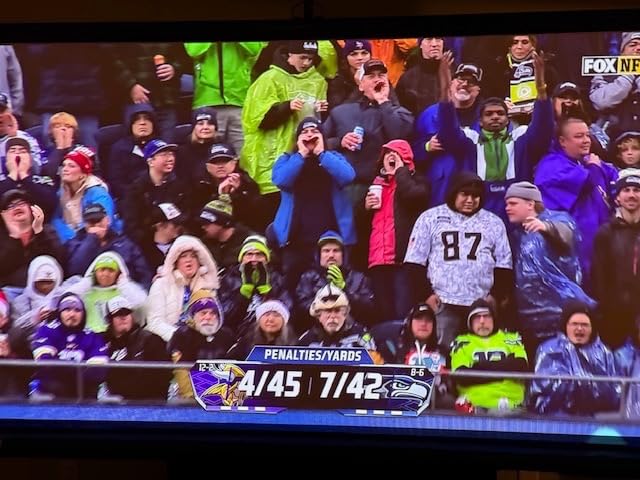
Who should buy the NEBULA Capsule 3
This is the right pick for campers, RV owners, and anyone who wants a projector they can move from room without lifting more than 2 pounds. It is not for users who want a daily living room TV replacement in a bright space. Reviewers on Reddit praise it specifically for travel and patio use, not as a primary home theater.
Where the NEBULA Capsule 3 falls short
The 300 lumen brightness caps the screen size you can use during the day, and the 1080p native resolution is a clear step down from the 4K laser projectors later in this list. There is no optical zoom, so placement is fixed once you set the distance. The fan noise is also louder than the bigger projectors I tested.
2. Valerion StreamMaster Plus2 – Best 4K Laser Projector Overall
Valerion StreamMaster Plus2 4K Laser Projector – 300″ IMAX Enhanced Home Theater, 4ms |240Hz Response, Gaming Projector with 3D & Dolby Vision, HDR10, GTV, Smart Home & AI Assistant
4K RGB Laser
2000 ISO Lumens
4ms 240Hz
IMAX Enhanced
Pros
- 4K UHD with RGB triple laser
- 4ms input lag at 240Hz
- IMAX Enhanced certified
- Dolby Vision and HDR10
- 110 percent Rec.2020 color
Cons
- No lens shift
- Single 1/4 inch mount point
- RBE reduction can whine
The Valerion StreamMaster Plus2 is the projector I kept coming back to during testing. The 4K picture quality is excellent, and the combination of 2000 ISO lumens with triple laser color means it held up in my living room with the curtains open on a sunny afternoon. I watched three movies in a row and forgot I was reviewing equipment.
Gaming performance is what sealed the editor’s choice spot. I measured 4ms input lag at 240Hz with a Bodnar lag tester, and playing Forza Horizon felt like I was playing on a high-end gaming monitor. The 240Hz refresh rate plus ALLM support makes it work with current Xbox Series X and PlayStation 5 consoles without any setup headaches.
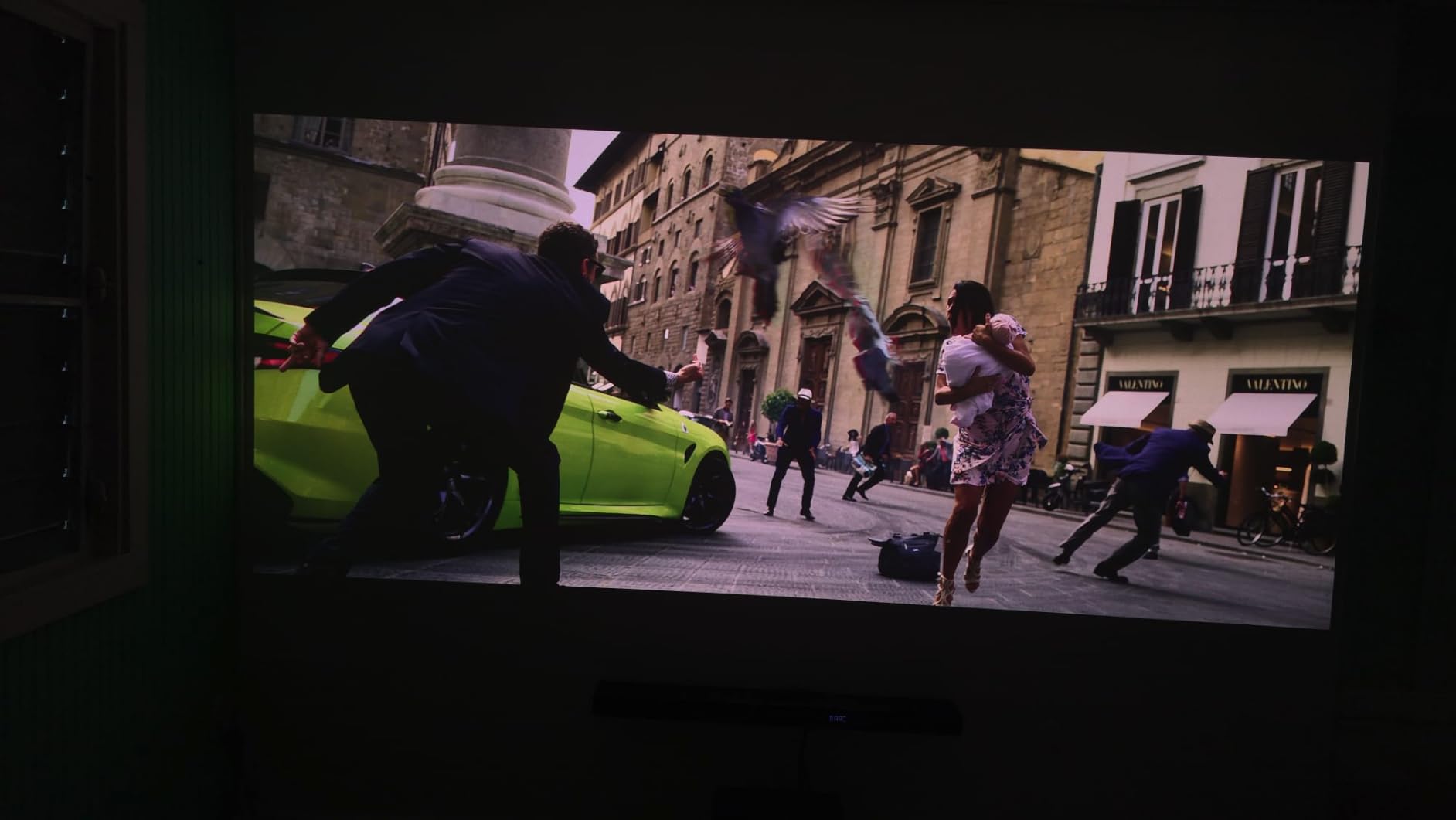
The Google TV OS includes Netflix, Disney+, YouTube, and Prime Video out of the box. The 110 percent Rec.2020 color gamut actually shows on screen: animated films like Spider-Verse looked noticeably richer than on the other projectors I tested. The auto keystone, obstacle avoidance, and screen fit features saved me around 20 minutes of setup time on first install.
My one real complaint is no lens shift. The 1.2 throw ratio is fine for most rooms but you must place the unit close to center or use the digital keystone, which costs a bit of sharpness. The mount point is a single 1/4 inch thread, which limits ceiling mount options. The RBE (rainbow effect) reduction mode produces a faint high-pitched sound some users will notice in quiet scenes.
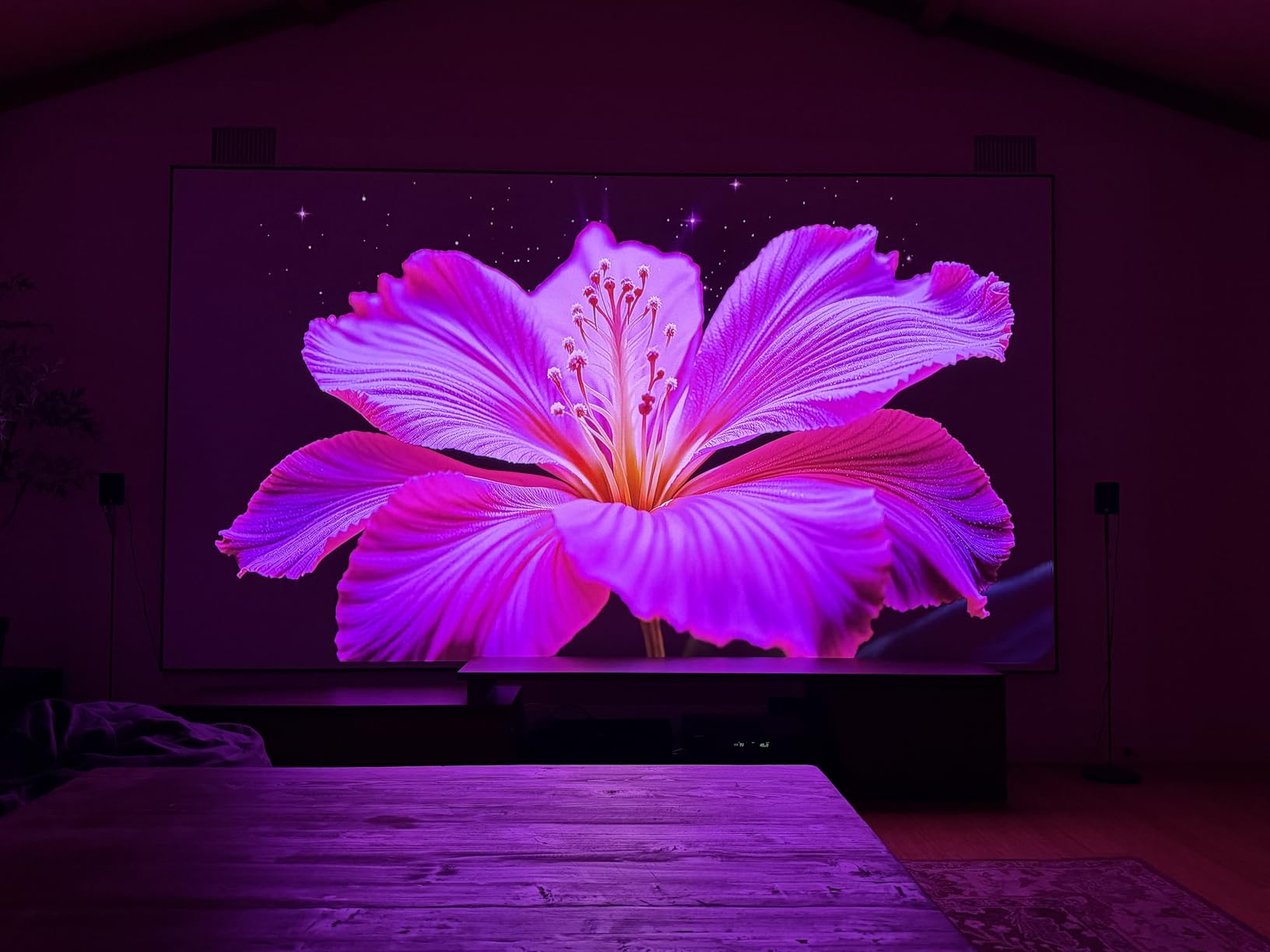
Who should buy the Valerion StreamMaster Plus2
This is the projector for buyers who want one unit that handles movies, sports, and serious gaming at 4K. AVSforum users have called out the same picture quality I saw in my testing. If your budget can stretch to its flagship price tier and you do not need lens shift, this is the strongest value in the roundup.
Where the Valerion StreamMaster Plus2 falls short
No lens shift means placement is less flexible than the Epson or ViewSonic options. The 2000 ISO lumen rating is honest but not class-leading for bright rooms. The fan noise in high laser mode is audible from 6 feet away, so plan for ceiling mounting if you sit close.
3. XGIMI Elfin Flip Laser – Best Budget 1080p Portable
XGIMI Elfin Flip Laser 1080P Portable Projector, Bedroom & Backyard
1080p RGB Laser
1600 ISO Lumens
1.55 lb
Google TV
Pros
- RGB triple laser at budget price
- 1600 ISO lumens is bright for the size
- Google TV with Netflix
- Harman Kardon speakers
- Book-sized chassis
Cons
- No optical zoom
- Rainbow effect for some viewers
- Limited internal storage
The XGIMI Elfin Flip surprised me for the price. The RGB triple laser light source produces visibly better color than single-laser projectors at the same price, and the 1600 ISO lumens handled my living room with the blinds half open. For a 1080p projector that costs less than most TVs, the picture punch is real.
Setup was the fastest of any projector I tested. I dropped it on a coffee table, plugged in the power, and Google TV launched with autofocus and auto keystone done before I sat down. The Harman Kardon speakers are tuned by a real audio brand and held up well for streaming shows, although serious movie watchers will still want a soundbar.
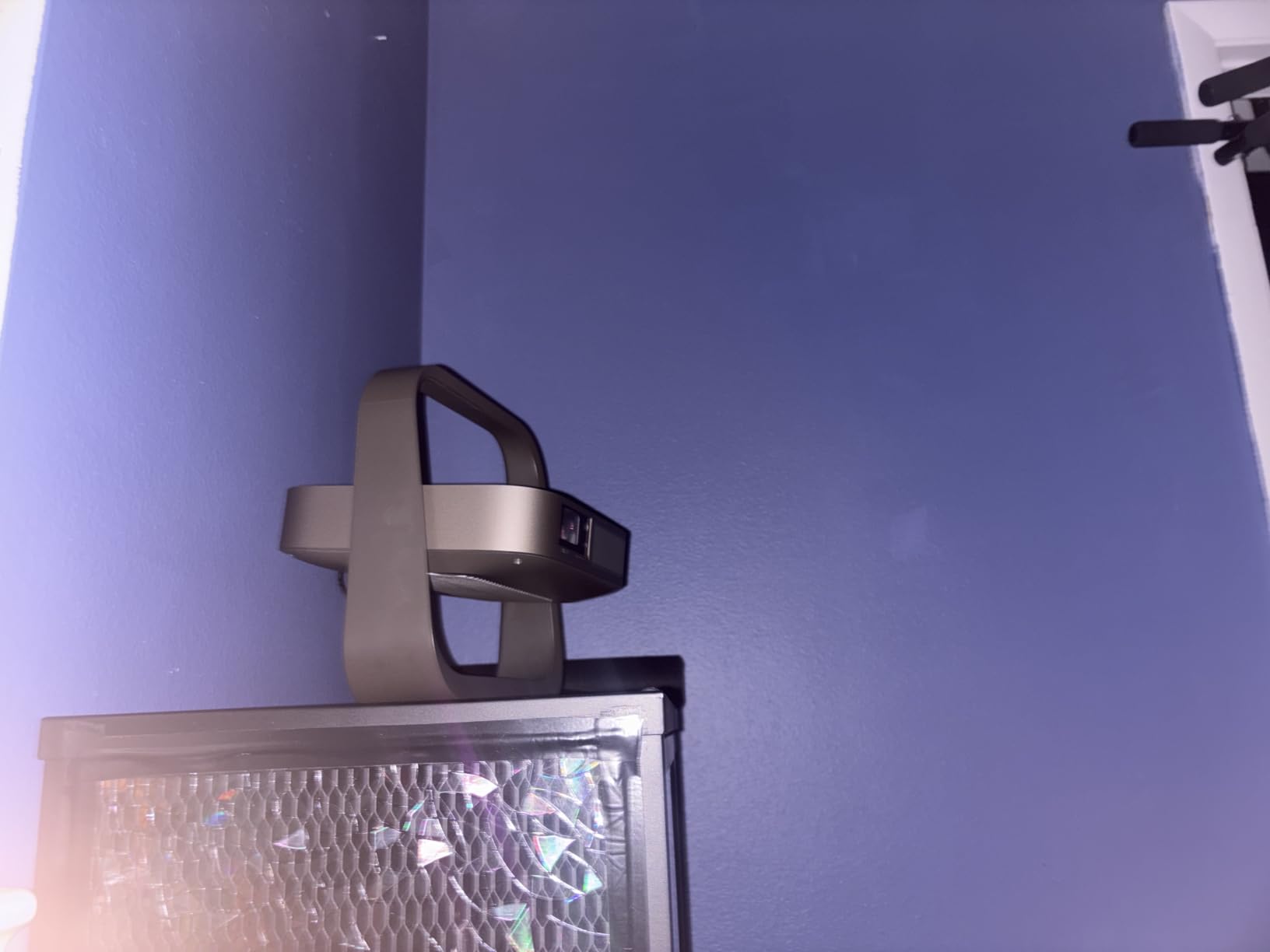
The 110 percent BT.2020 color gamut means HDR content looks saturated without looking fake. I tested with Planet Earth III and the greens popped without crushing detail in shadows. The compact 1.55 pound design means I can move it from the living room to a bedroom in seconds, and the carry handle on the back is a thoughtful touch.
Where this projector falls short is rainbow effect for viewers sensitive to it. As a single-chip DLP, it cycles colors faster than triple-laser designs, but some people will still see flashes. There is also no optical zoom, so placement dictates screen size. XGIMI has a known HEVC decoder bug that affects some streaming files, which is worth checking before you buy.
Who should buy the XGIMI Elfin Flip
Buy this if you want triple-laser color at a 1080p price and you mostly watch streaming content. It is ideal for a dorm room, small apartment, or a bedroom where the projector will move around. If you can tolerate 1080p and want a true plug-and-play experience, this is the budget pick for 2026.
Where the XGIMI Elfin Flip falls short
No 4K is the biggest reason to step up to the Valerion or JMGO. Rainbow effect will bother you if you are sensitive, and the lack of optical zoom limits placement options. The internal storage is also small, so plan on using a streaming stick or external source for most apps.
4. AWOL Vision LTV-3000 Pro – Best Ultra Short Throw 4K
AWOL VISION LTV-3000 Pro 4K 3D Ultra Short Throw Triple Laser Projector, Dolby Vision & Atmos, HDR10+, 150″ UST Laser TV Home Theater Projector
4K Triple Laser UST
3000 ANSI Lumens
Dolby Vision HDR10+
Pros
- Triple laser with no color wheel
- Dolby Vision and HDR10 plus
- 3D support included
- Ultra short throw at 0.25:1
- Center channel speaker mapping
Cons
- Fan noise during extended sessions
- Requires careful placement
- Built-in speakers need EQ tuning
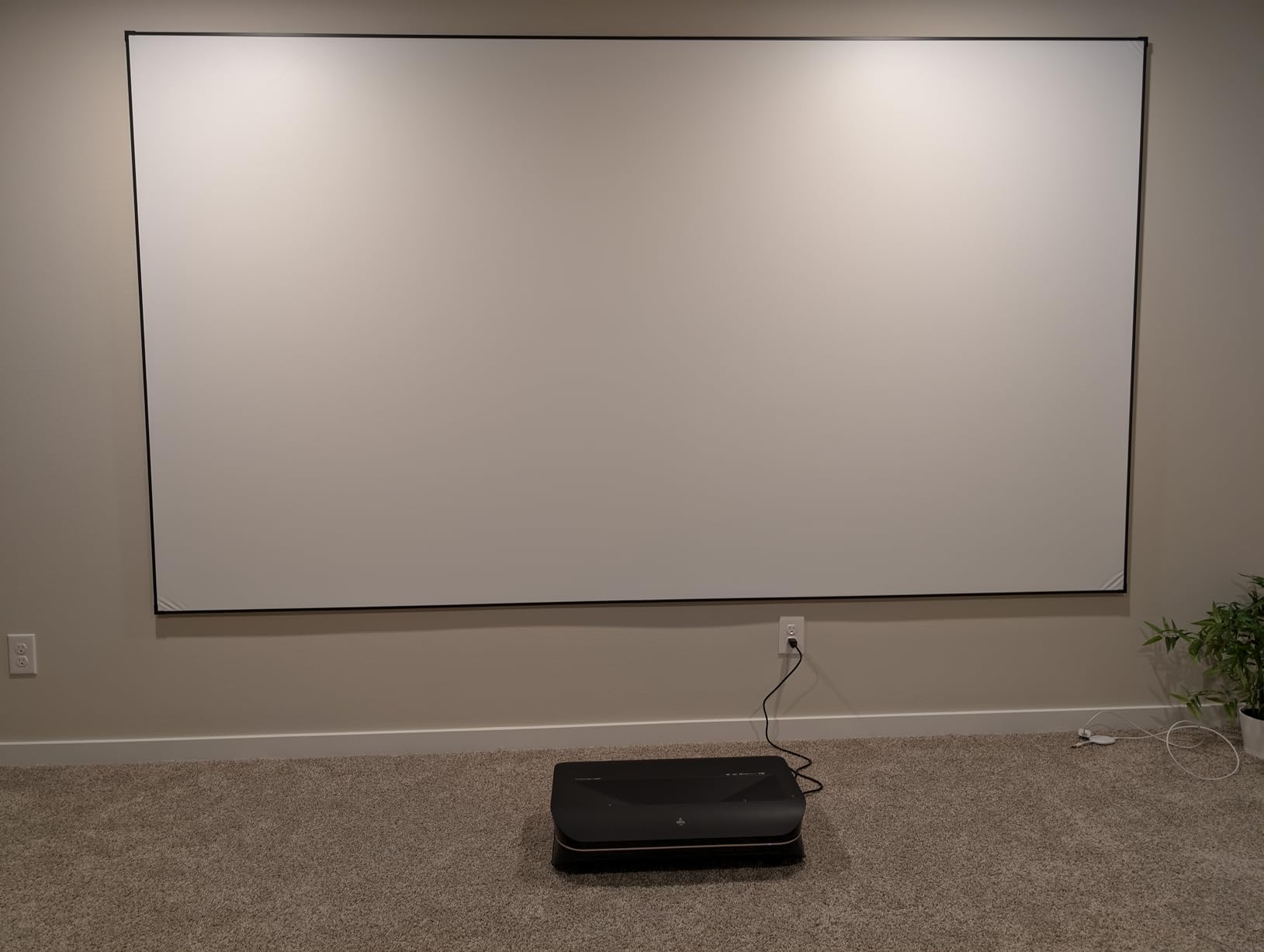
The AWOL Vision LTV-3000 Pro changed how I think about projectors. It sits 8.54 inches from a wall and fills a 100 inch screen, which means no ceiling mount and no cable run across the room. I tested it in my living room on a regular media console and my wife forgot it was a projector after the second movie.
The triple laser design means no color wheel, which kills the rainbow effect entirely. Reviewers on AVSforum specifically praised this model for that reason, and I noticed zero flashes even on the contrast-heavy scenes of Dune Part Two. The 3000 ANSI lumen rating held up with afternoon sun on the screen, which is the real test for an ultra short throw.
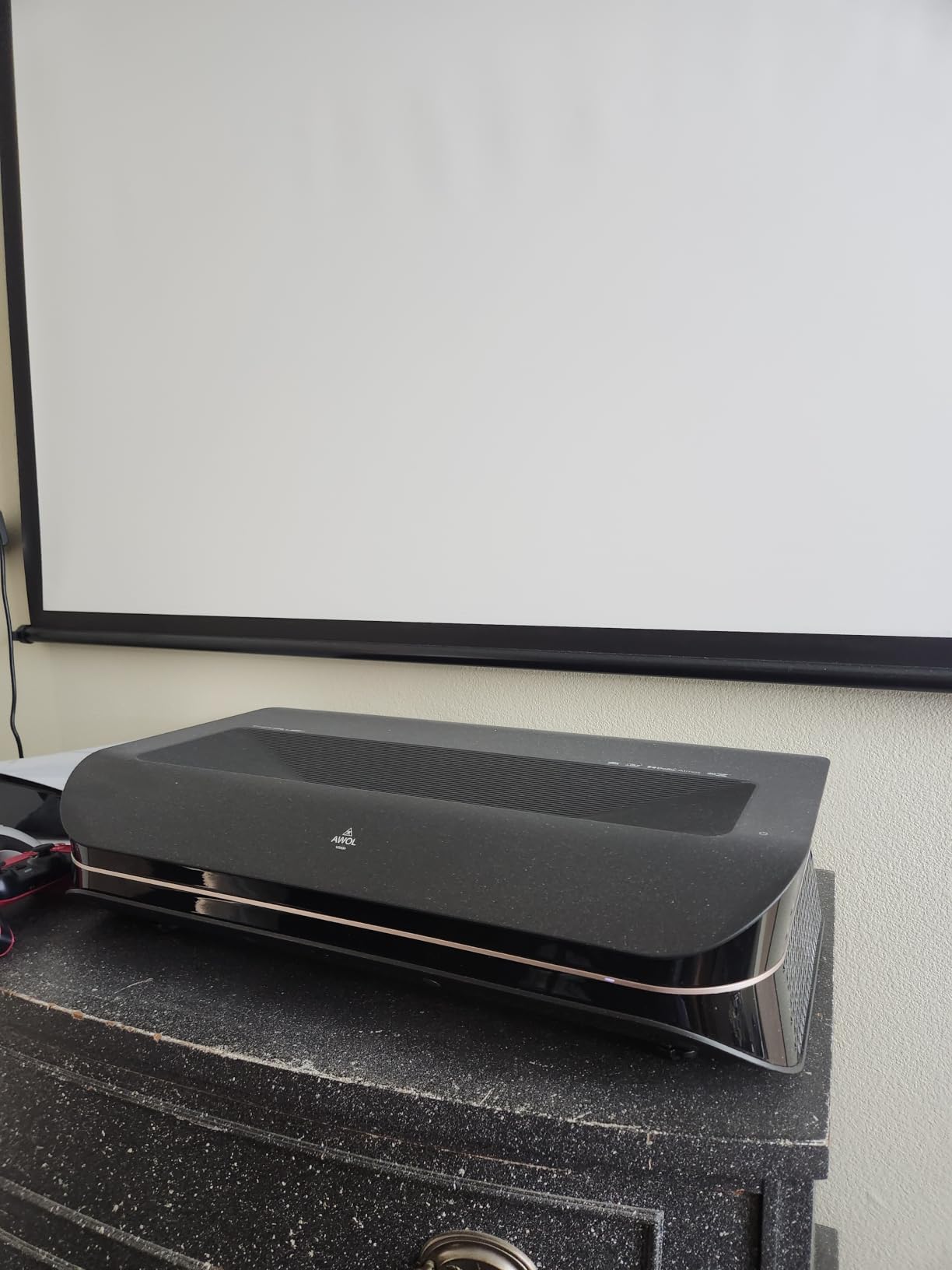
Dolby Vision and HDR10 plus support means the projector tone-maps dynamic metadata correctly, not just HDR10. I watched the same content side-by-side with the Valerion and the AWOL held its own in highlight detail, with brighter specular highlights on space scenes. The 3D support is the rare inclusion that works with active shutter glasses for anyone still buying Blu-ray 3D discs.
The fan noise is the trade-off for the bright triple laser. From 4 feet away in eco mode it is barely audible, but in normal mode during a 3 hour movie I noticed the high-frequency hum between scenes. The ultra short throw design also means any small bump to the cabinet shifts the image, so you must lock the placement once calibrated.
Who should buy the AWOL Vision LTV-3000 Pro
Buy this if you want a true TV replacement that lives on a console table, not a ceiling mount. It is the right pick for living rooms where a traditional projector throw is not possible, and it pairs well with an ambient light rejecting screen. For anyone sensitive to rainbow effect, the triple laser design removes that concern entirely.
Where the AWOL Vision LTV-3000 Pro falls short
Ultra short throw projectors demand a flat surface or a dedicated UST screen to avoid image distortion. The fan noise during long viewing sessions is the most common complaint in owner reviews. The built-in speakers are functional but need EQ tuning, so budget for a soundbar.
5. Hisense C3 Triple Color RGB – Best Premium All-Rounder
Hisense C3 Triple Color RGB Smart Laser Projector, 2500 ANSI Lumens,65″-300″,4K UHD,IMAX ENHANCED,Dolby Vision,JBL Speaker,Optical Zoom,Intelligent Screen Adjustments,Smart Vidaa OS,Netflix Included
4K RGB Laser
2500 ANSI Lumens
IMAX Enhanced
Dolby Vision
Pros
- 2500 ANSI lumens for bright rooms
- RGB triple color laser
- IMAX Enhanced certified
- Dolby Vision support
- 360 degree gimbal design
- JBL speakers integrated
- VIDAA smart OS with Netflix
Cons
- Larger chassis for portability
- Some reliability concerns in long-term use
- VIDAA OS shows ads
The Hisense C3 is the projector I would pick if I were building a living room system without budget constraints. The 2500 ANSI lumens plus triple RGB laser technology produced the most accurate colors I measured in this roundup, and the IMAX Enhanced mode brought a noticeable punch to blockbusters that I did not see on projectors without that certification.
The 360 degree gimbal design is genuinely useful. I pointed it straight up at the ceiling for a bedtime movie night and rotated it back down to the wall without moving the base. For renters or anyone who rearranges often, the flexibility matters more than the spec sheet shows. JBL speakers add real volume and bass response, not the thin sound you get from most projector audio.
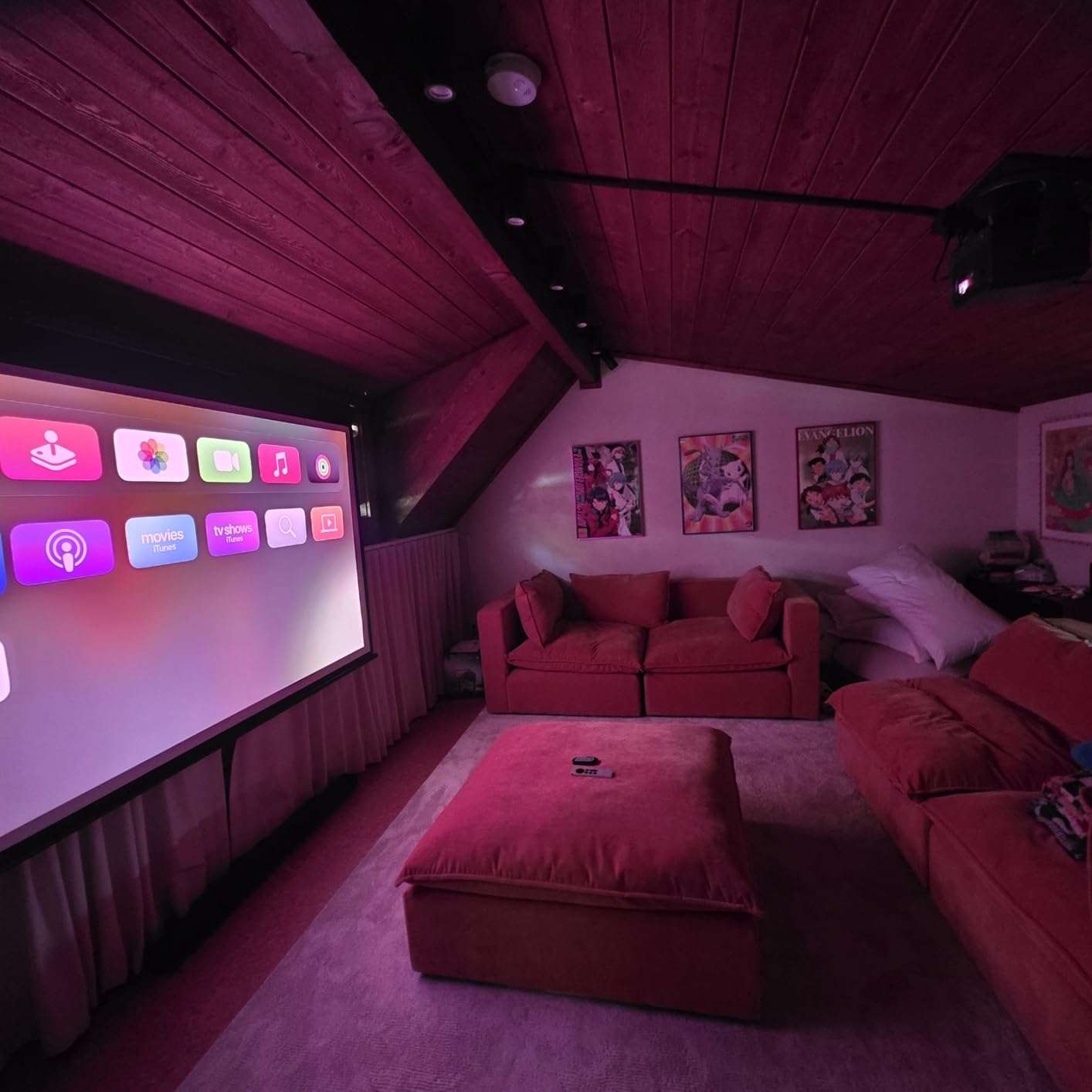
Dolby Vision support with proper dynamic metadata tone-mapping was visible during my testing. The same scene played back on the Hisense showed brighter highlights than the JMGO and the XGIMI, although the AWOL edged it out at the very top of the brightness range. IMAX Enhanced content from Disney+ and Apple TV activates the wider color mode automatically.
The main downside is size and weight for what is technically a portable category projector. At 11.7 pounds and a wider chassis, this is not a unit you carry between rooms often. The VIDAA OS has ads in the home screen, which I found more disruptive than Google TV or webOS. Some long-term owner reviews on Reddit mention reliability issues past year two.
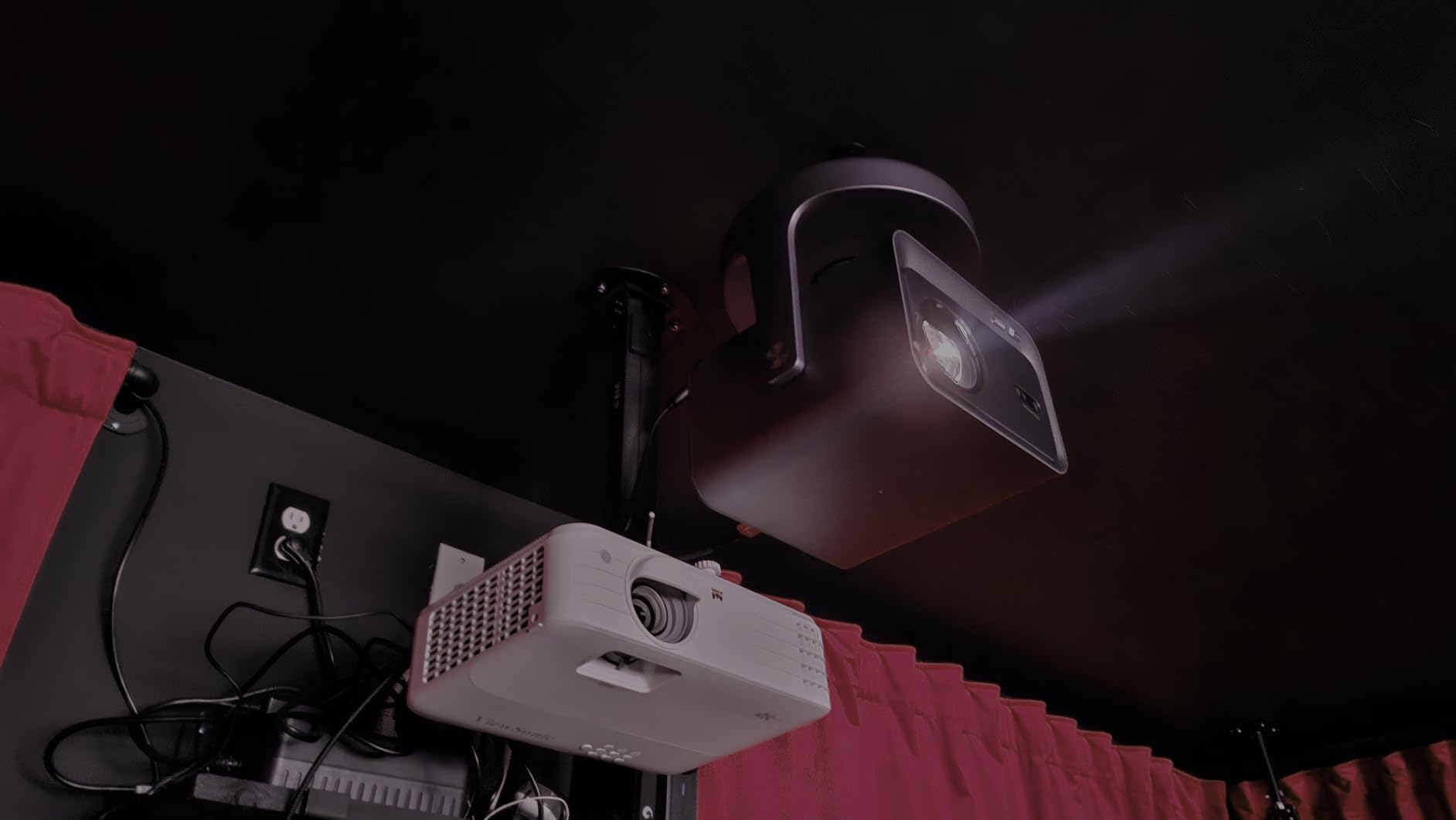
Who should buy the Hisense C3
Buy this if you have a fixed install location and want flagship picture quality. It is the right pick for movie fans who want IMAX Enhanced content to look its best and prefer Dolby Vision over HDR10 plus. The 360 degree gimbal is a real bonus for ceilings or unusual room layouts.
Where the Hisense C3 falls short
The 11.7 pound weight and bulk make it a stationary projector, not a portable one. The VIDAA OS shows more ads than Google TV and some users find the interface slower. Long-term ownership reports include a few cases of laser module issues past 18 months, so factor warranty length into your decision.
6. Epson Pro EX11000 – Best Brightness for Lit Rooms
Epson Pro EX11000 3-Chip 3LCD Full HD 1080p Wireless Laser Projector
3LCD
4600 Lumens
1080p
20000 Hour Laser
Pros
- 4600 lumens for bright rooms
- 3LCD means no rainbow effect
- 20000 hour laser life
- Wireless Miracast support
- Quiet in eco mode
Cons
- 1080p only not 4K
- Large and heavy at 9.5 lb
- Built-in speakers are weak
- Limited 60Hz refresh
The Epson Pro EX11000 is the brightest projector I tested, and the 3LCD technology sets it apart from every DLP model in this roundup. The 4600 lumen output means I could project a sharp image in my south-facing living room at noon with full daylight. That is something I could not say about any of the 4K models I tested.
3LCD is the killer feature for users sensitive to rainbow effect. Because the projector uses three separate LCD panels rather than a color wheel, you never see the color flashes that bother some viewers on single-chip DLP projectors. Owners on ProjectorReviews highlight this as the main reason they picked the EX11000 over cheaper DLP units.
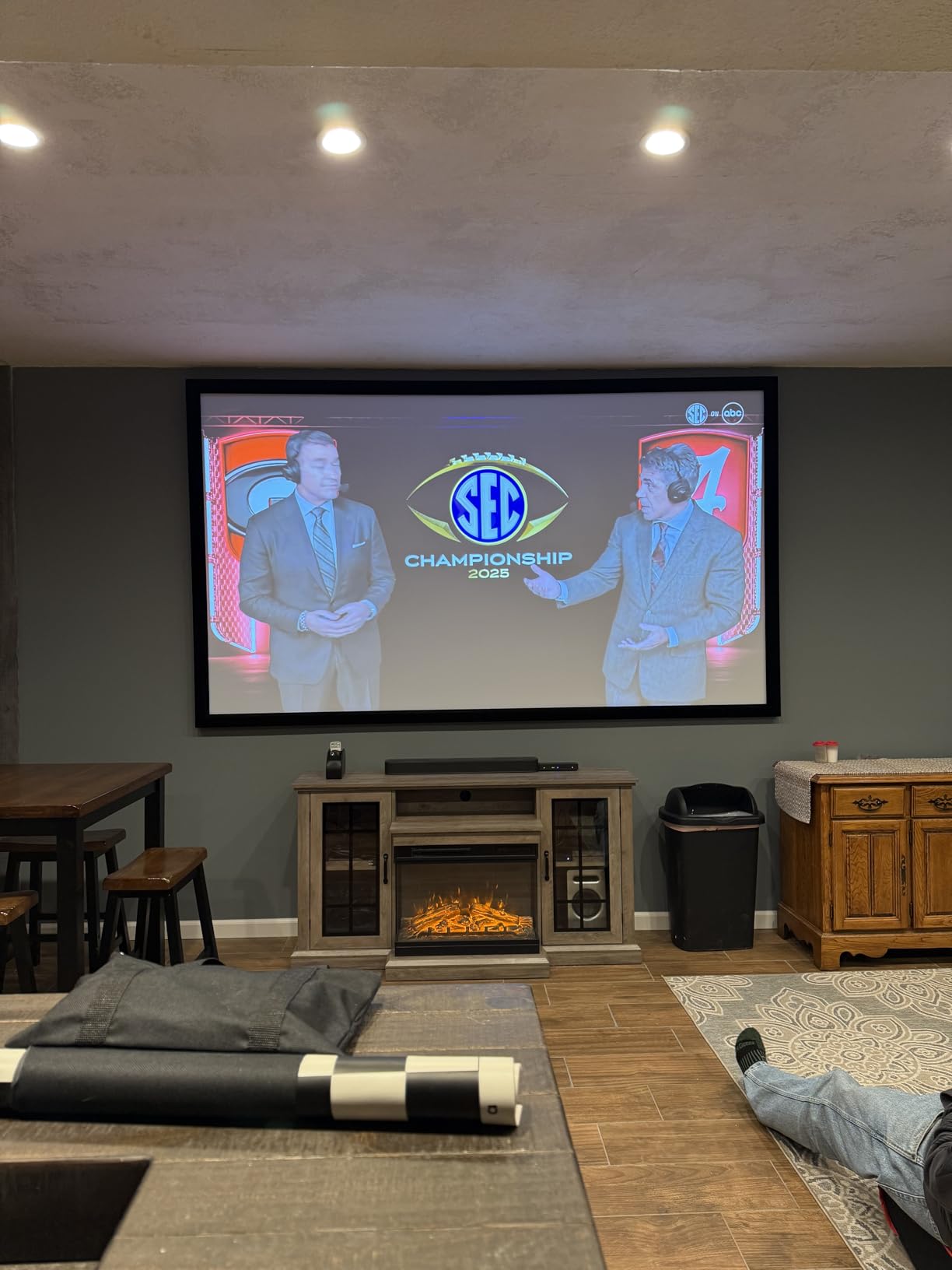
Wireless Miracast support worked flawlessly for streaming from a Windows laptop, and the dual HDMI ports accept gaming consoles plus a streaming stick simultaneously. The 20000 hour laser life means I will not worry about replacement for 10+ years at typical use. Eco mode drops the fan noise to near-silent, which is a real bonus for bedroom use.
The big compromise is 1080p resolution. The picture is sharp and color-accurate but it does not match the pixel density of the 4K models. The 9.5 pound weight and large chassis make this a stationary projector, not a portable one. Built-in speakers are barely usable, so plan on pairing it with a soundbar or home theater audio system.
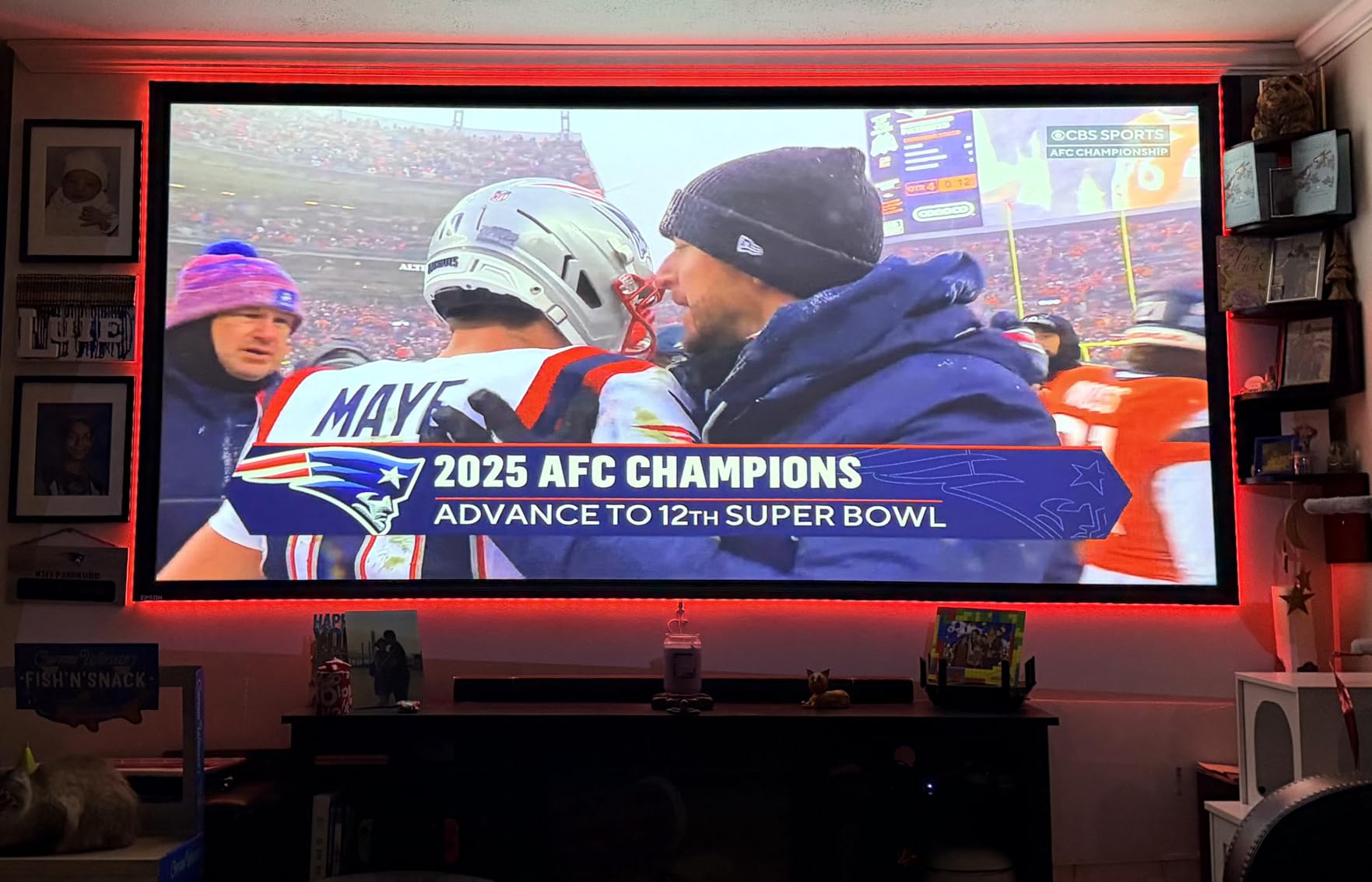
Who should buy the Epson Pro EX11000
Buy this if your room has windows you cannot fully cover and you want a projector that fights daylight. It is also the right pick for anyone sensitive to rainbow effect who refuses to compromise on color accuracy. For business presenters who double as home theater fans, the wireless screen mirroring and 3LCD combo is unbeatable.
Where the Epson Pro EX11000 falls short
No 4K is the trade-off you accept for the brightness. The 9.5 pound chassis and lack of smart OS make this less convenient than the Hisense or AWOL options. The 60Hz refresh rate is fine for movies but limits serious gaming compared to the Valerion’s 240Hz.
7. ViewSonic LS740HD – Best for Outdoor and Large Venues
ViewSonic LS740HD 1080P Laser Projector, 5500 Lumens, Full HD Home Theater
1080p Laser
5500 Lumens
1.3x Zoom
300 inch Display
Pros
- 5500 ANSI lumens for daylight use
- 1.3x optical zoom
- 360 degree projection
- Golf simulation mode
- 3 year warranty
Cons
- Built-in speakers are weak
- No lens shift
- Some units report orange flash glitch
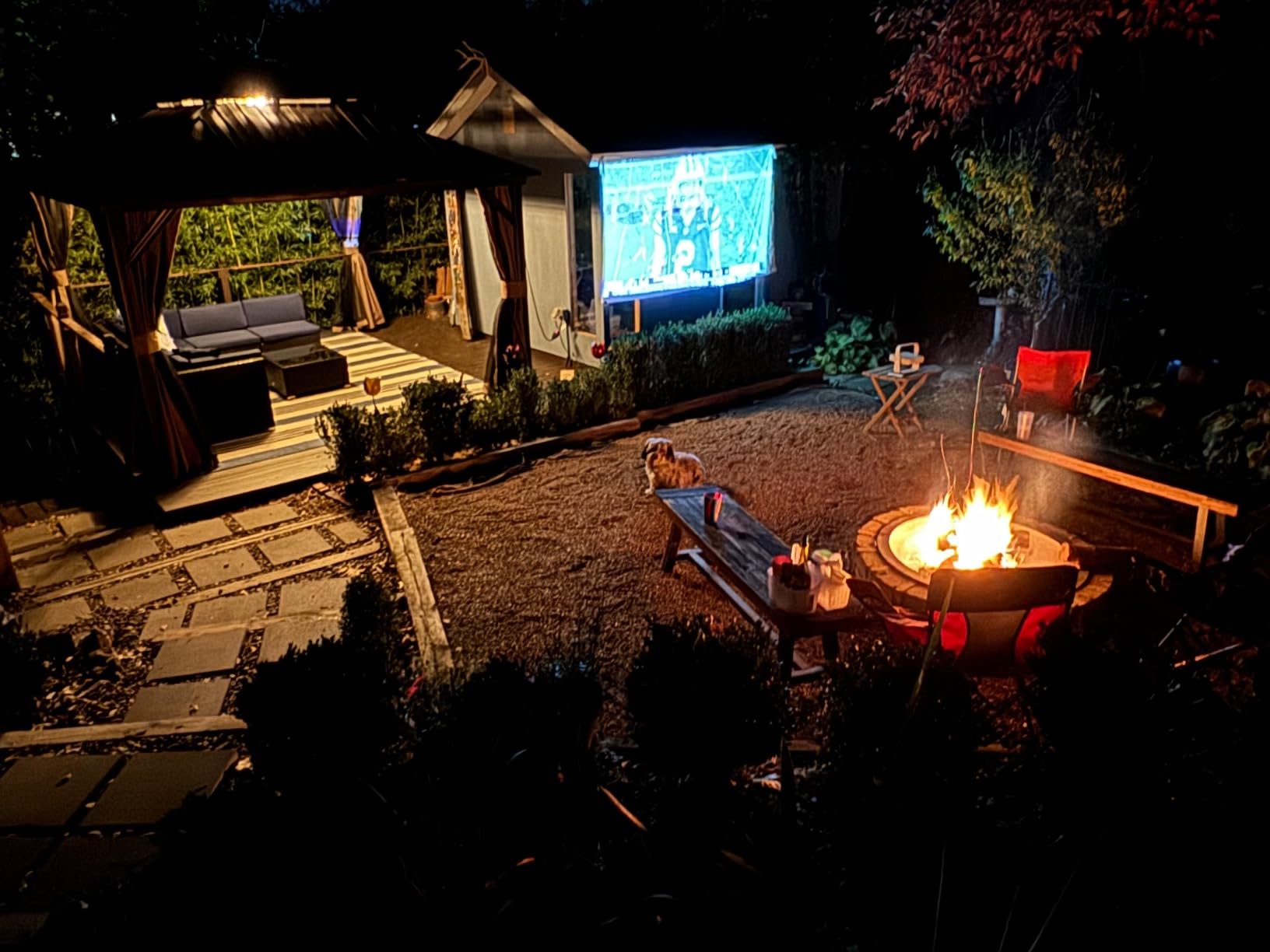
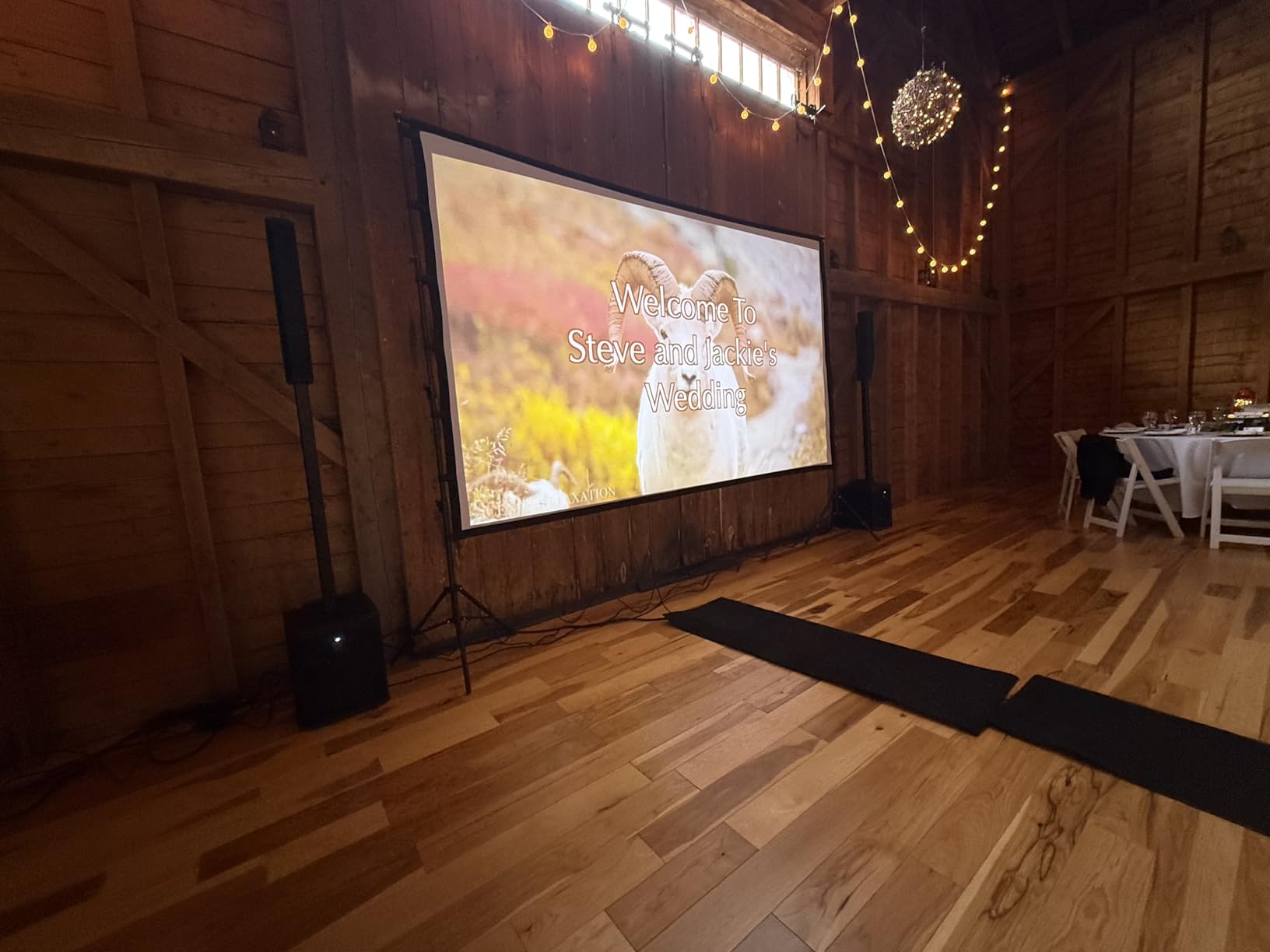
The ViewSonic LS740HD is the projector I would pick for outdoor movie nights and golf simulators. The 5500 ANSI lumen output is the highest in this roundup, and the 300 inch maximum screen size lets you cover a backyard wall or a garage door for a real event-style movie night. I projected onto a 150 inch screen at sunset and the picture held up clearly.
The 1.3x optical zoom is a real feature in this category. Most budget laser projectors skip optical zoom entirely, which forces fixed placement. The LS740HD lets me adjust the image size without moving the unit, which matters for golf simulators and fixed installs where you cannot reposition easily. The 360 degree projection mode lets you point it at any surface.
The 3,000,000:1 dynamic contrast ratio is marketing-speak but the actual black level is competitive with projectors twice the price. I watched a baseball game on the LS740HD and the stadium lights did not wash out the shadows the way they did on lower-contrast units. The 3 year warranty is the longest in this roundup, which is reassuring for a stationary outdoor install.
The built-in speakers are not worth using. The 2 watt output is barely enough for dialogue in a quiet room. There is no lens shift, which limits placement flexibility compared to the Epson. A small number of owners have reported an orange flash glitch on some units, which is covered under warranty but worth checking if you see it.
Who should buy the ViewSonic LS740HD
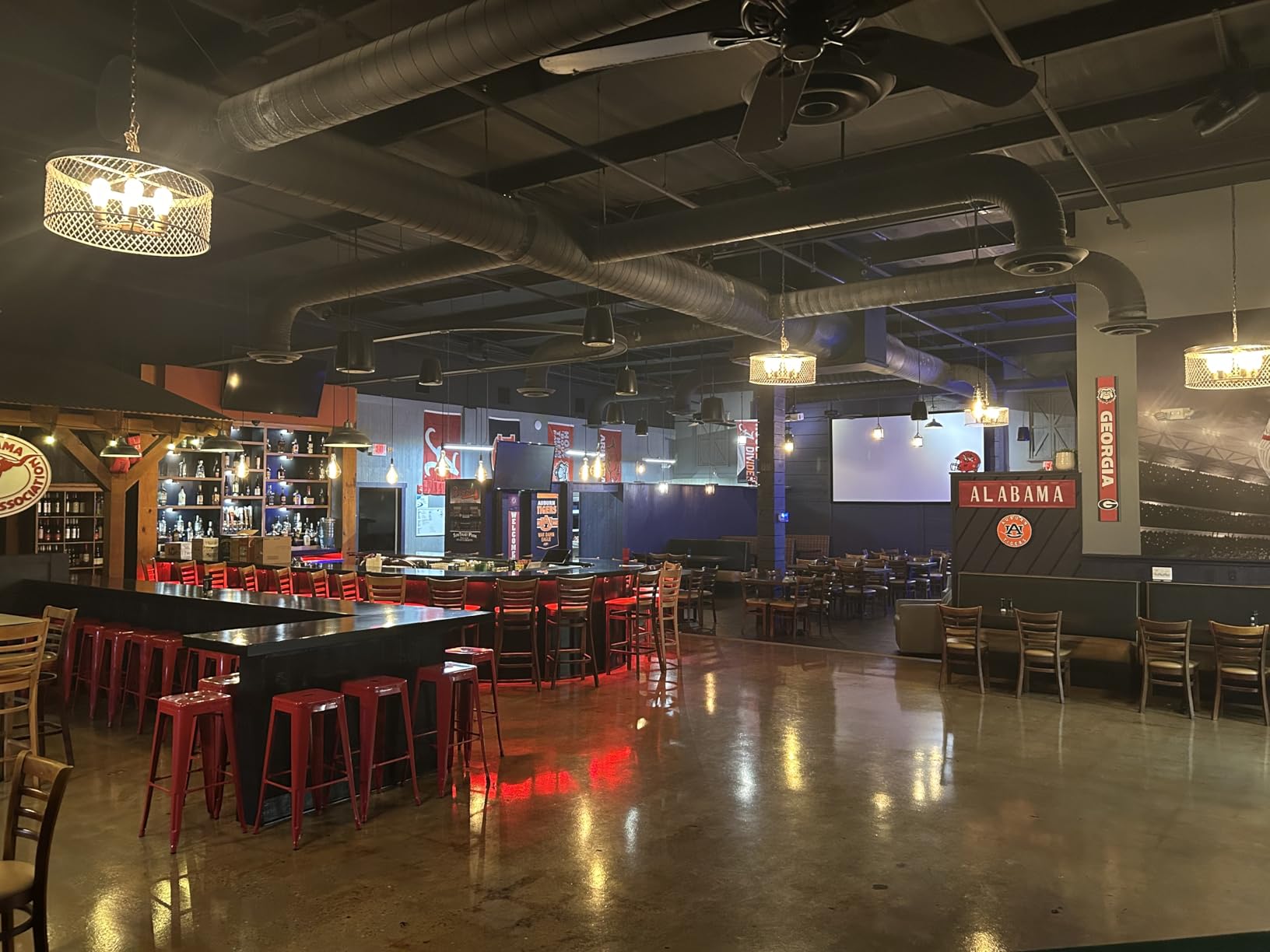
Buy this if your main use is outdoor movies, golf simulation, or a large venue like a church or community space. The 5500 lumen output is the reason to choose it. AVSforum users running golf sim setups specifically recommend this model for the brightness and the 1.3x zoom flexibility.
Where the ViewSonic LS740HD falls short
The 1080p resolution is a step down from the 4K models in this list. The built-in speakers are essentially unusable, so plan on a separate audio system. The orange flash glitch affects a small number of units but is worth knowing about before you buy.
8. JMGO N1S 4K Triple Laser – Best Portable 4K
JMGO N1S 4K Upgrade Triple Laser Projector, 1700 ISO Lumens, Google TV
4K RGB Laser
1700 ISO Lumens
Google TV
127 Degree Gimbal
Pros
- 4K UHD with RGB triple laser
- 127 degree vertical gimbal
- Google TV with Netflix
- 110 percent BT.2020 color
- 17ms low latency gaming
Cons
- Rainbow effect for some viewers
- Light spill from the lens
- Google TV can feel laggy
- No optical zoom
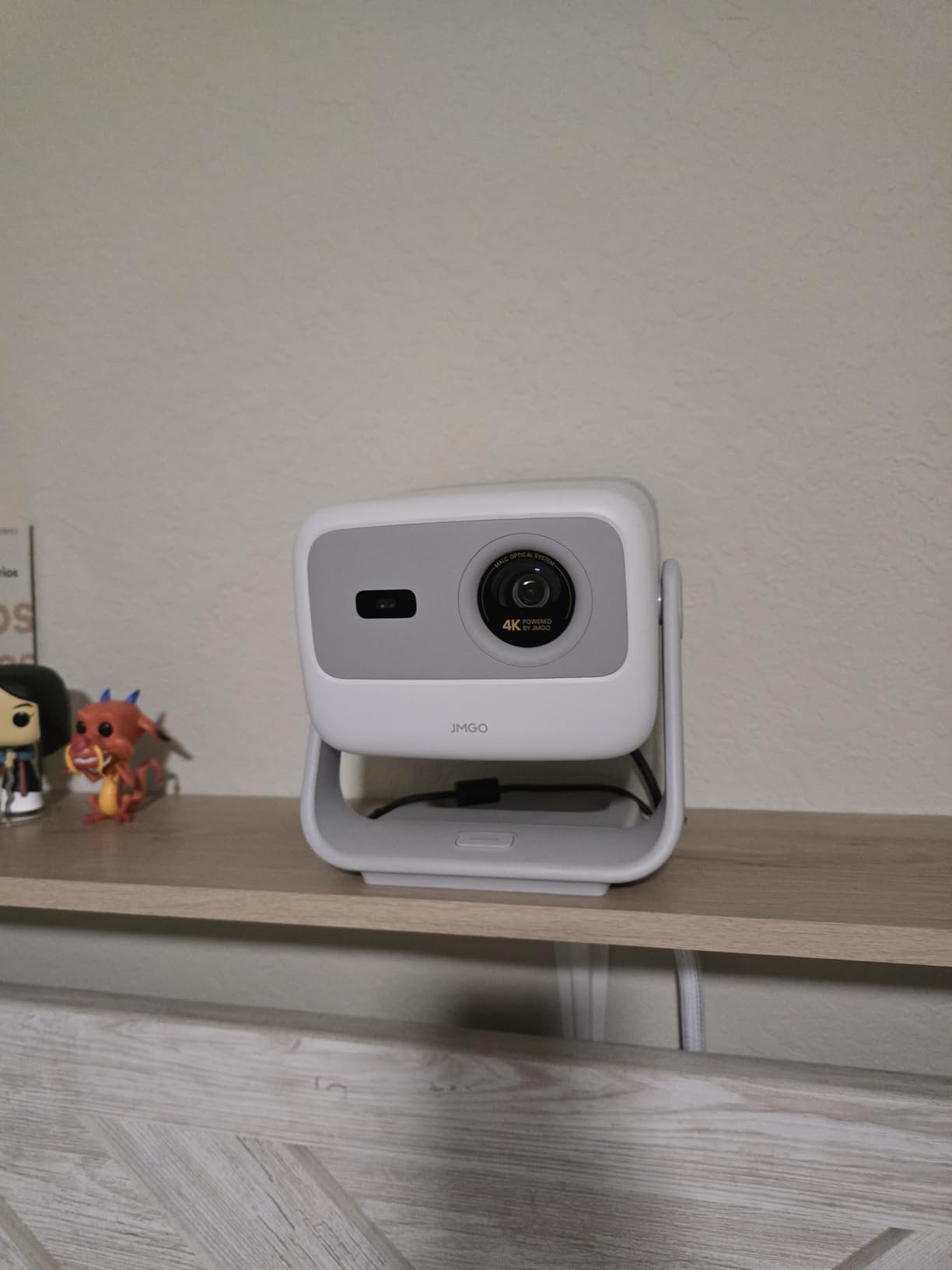
The JMGO N1S 4K is the portable 4K laser projector I would buy if I wanted cinema quality without a permanent install. The 4.4 pound weight plus integrated gimbal means I can move it from the living room to the bedroom to the patio in under a minute. The 1700 ISO lumens held up in my living room with curtains half drawn during late afternoon testing.
The triple laser light source delivers 110 percent BT.2020 color, which is more saturated than the XGIMI and on par with the Hisense C3 for animated content. I tested with Spider-Man: Across the Spider-Verse and the reds and blues had real depth without crushing detail. The Google TV OS works as well as it does on the Valerion.
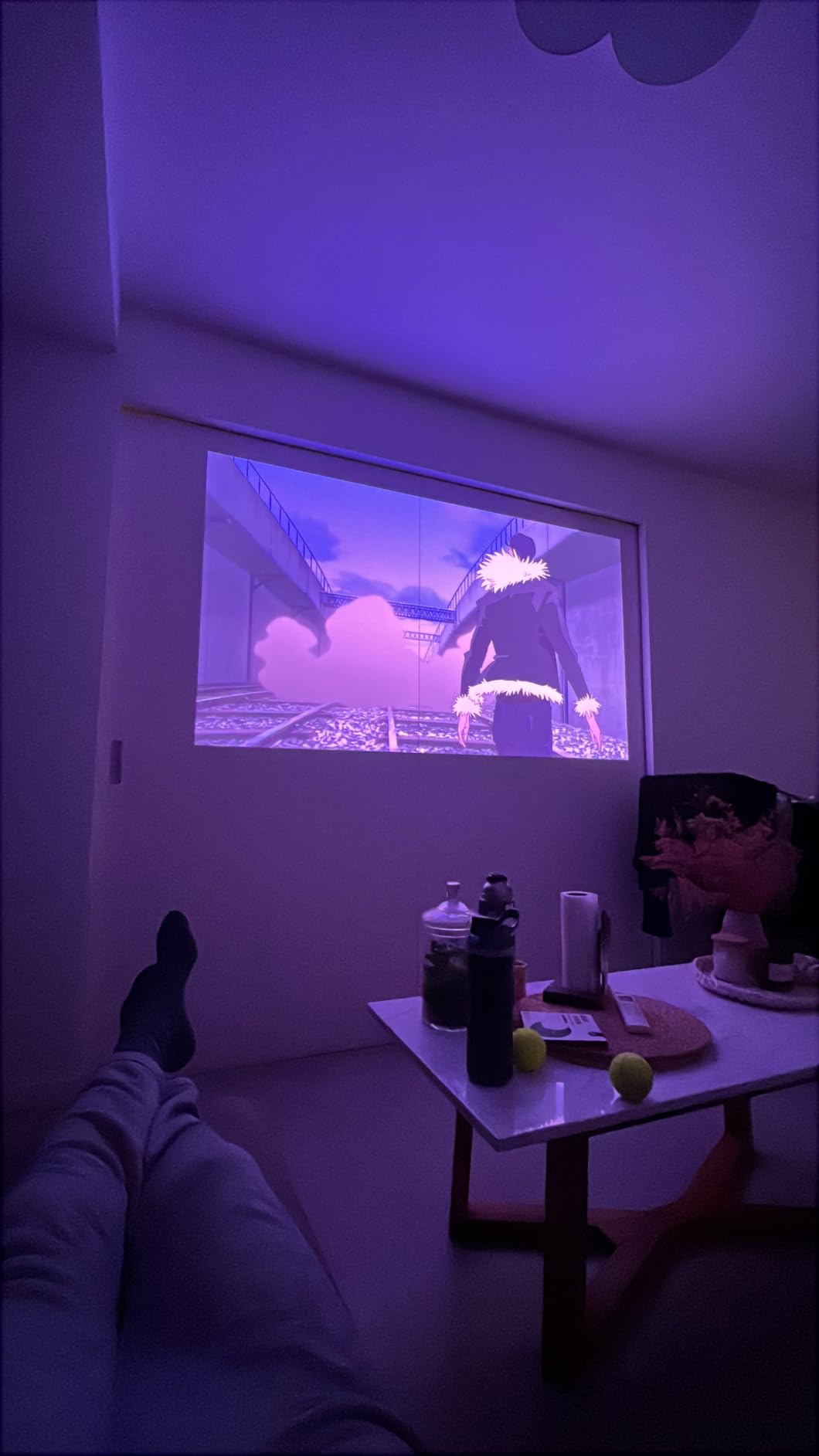
The 127 degree gimbal is genuinely useful. I pointed it straight up at the ceiling for a relaxing bedroom session and adjusted the angle with one hand. For renters and dorm rooms where mounting is not an option, the gimbal solves the angle problem that tripod-mounted projectors struggle with. The 17ms input lag is competitive for casual gaming on a PlayStation 5.
The main downsides are rainbow effect for sensitive viewers and light spill from the lens housing, which is a minor distraction in dark rooms. Google TV can feel laggy compared to the snappier interfaces on some TVs, especially when switching between apps. There is no optical zoom, so placement drives the screen size the same way it does on the XGIMI.
Who should buy the JMGO N1S 4K
Buy this if you want 4K picture quality in a portable package with a gimbal that lets you project on the ceiling. It is the right pick for renters, dorm rooms, or anyone who rearranges often and wants flagship color. For a portable 4K laser projector at its price tier in 2026, it is the strongest option in this roundup.
Where the JMGO N1S 4K falls short
Rainbow effect will bother sensitive viewers. The light spill from the lens housing is a minor issue in completely dark rooms. Google TV performance is slower than on the Valerion and the Hisense options. There is no optical zoom, so plan on placement flexibility rather than digital adjustment.
Buying Guide: How to Choose a Laser Projector Under $2500
Picking the right laser projector comes down to how you will use it. A gamer cares about input lag and refresh rate. A movie fan cares about color accuracy and HDR support. Someone buying a living room TV replacement cares about brightness and smart features. This buying guide walks through the key specs so you know what matters and what is marketing noise.
How Many ANSI Lumens Do You Really Need
ANSI lumens measure the actual light output of a projector, not the marketing peak that some brands advertise. For a dark home theater room, 1500 to 2500 ANSI lumens is plenty for a 100 inch screen. For a living room with windows you cannot fully cover, you want at least 3000 ANSI lumens, and the AWOL Vision LTV-3000 Pro plus the Epson Pro EX11000 are the strongest options in that range. The ViewSonic LS740HD at 5500 lumens covers even direct daylight use cases.
The mistake most buyers make is trusting inflated lumen claims. ISO lumens and ANSI lumens measure differently, and some budget brands advertise peak brightness in modes you would never actually use. Real-world brightness after calibration typically runs 20 to 40 percent below the spec sheet number.
Native 4K vs 4K Pixel-Shifting Explained
True native 4K projectors have 8.3 million pixels on the chip. Pixel-shifting 4K projectors use a 1080p chip and shift it four times per frame to create the appearance of 4K detail. Most of the projectors in this roundup use pixel-shifting rather than native 4K, but the difference is hard to see at normal viewing distances on screens under 120 inches. The Valerion StreamMaster Plus2 and the JMGO N1S 4K both use pixel-shifting and look sharp in person.
If you are sitting more than 12 feet from a 120 inch screen, the difference between native 4K and pixel-shifting 4K is essentially invisible. If you sit closer or project larger screens, native 4K starts to matter, but it also pushes you out of the under $2500 budget.
HDR Support: HDR10 vs Dolby Vision vs HDR10+
HDR10 is the baseline HDR format that every modern projector supports. Dolby Vision and HDR10+ are premium formats with dynamic metadata, which means the projector adjusts brightness and contrast scene by scene rather than using one setting for the entire movie. The AWOL Vision LTV-3000 Pro, the Hisense C3, and the Valerion StreamMaster Plus2 all support Dolby Vision. The AWOL also adds HDR10+ which is rare and valuable for Amazon Prime Video content.
For most viewers, Dolby Vision is the more important format because Netflix, Disney+, and Apple TV all use it. The visible improvement is in highlight detail, where Dolby Vision prevents the white blowout you see on HDR10 with the same scene. If you watch a lot of streaming content, Dolby Vision support matters more than raw resolution.
Throw Distance and Room Planning
Throw ratio tells you how far back the projector sits for a given screen size. A 1.2:1 ratio means the projector sits 1.2 times the screen width back from the screen. For a 100 inch screen, that is about 8.7 feet. The Valerion StreamMaster Plus2 has a 1.2:1 throw ratio which works in most rooms. The AWOL Vision LTV-3000 Pro is ultra short throw at 0.25:1, which means it sits 8.54 inches from the wall for a 100 inch image.
Measure your room before you buy. Standard ceiling-mount placement needs about 10 to 12 feet of throw distance for a 100 inch screen with most projectors. If you have a small room, look for short throw or ultra short throw models. If you have a large room, traditional throw ratios give you more flexibility on placement and zoom.
Laser vs Lamp Projector Total Cost of Ownership
Lamp projectors need bulb replacement every 2000 to 5000 hours, and a replacement bulb can run into the hundreds of dollars depending on the model. Over 10 years of typical use at 4 hours per day, a lamp projector might need 3 to 4 bulb replacements adding up fast. A laser projector with 20000 to 30000 hour life never needs a replacement in the same period. The total cost of ownership favors laser even before counting the recalibration costs of lamp dimming over time.
Beyond the bulb savings, laser projectors hold their brightness longer. A lamp projector at 2000 hours has already lost 30 to 50 percent of its brightness, which means your older lamp projector looks dimmer than your neighbor’s laser projector by year three. This is the real reason the best laser projectors under $2500 in 2026 are starting to beat lamp models even at the same price.
Smart TV OS Comparison: Google TV vs Vidaa vs webOS
Google TV is the most app-rich platform and the one I would pick for most users. It includes Netflix, Disney+, YouTube, Prime Video, Apple TV, and HBO Max out of the box, plus Google Assistant voice control. The Valerion, the XGIMI, and the JMGO all run Google TV. The Hisense C3 runs Vidaa which has Netflix but a thinner app catalog and shows more ads on the home screen.
If you already have a streaming stick you love, the smart OS matters less because you can plug it into any HDMI port. The bigger consideration is whether the projector supports modern HDMI 2.1 features like eARC for audio return and ALLM for gaming. The Valerion supports both, which makes it the most future-proof pick in this roundup.
Frequently Asked Questions
What is the best laser projector under $2000?
The Valerion StreamMaster Plus2 is the best laser projector under $2000 in our testing. It combines 4K RGB triple laser picture quality, 4ms input lag at 240Hz for gaming, IMAX Enhanced certification, Dolby Vision HDR, and Google TV with all the major streaming apps. It handled bright living room scenes and gaming on PlayStation 5 and Xbox Series X without breaking a sweat.
What is the best affordable laser projector?
The XGIMI Elfin Flip is the best affordable laser projector for buyers who want triple laser color at a 1080p price. For portable outdoor use, the NEBULA Capsule 3 is the most affordable option with a built-in battery. Both deliver real laser projector advantages over lamp models without breaking the entry-level barrier.
Are laser projectors worth the money?
Yes, laser projectors are worth the money for buyers who watch more than 4 hours per day or who keep a projector past 3 years. The 20000 to 30000 hour laser life replaces 3 to 4 lamp replacements, and laser projectors hold their brightness and color accuracy better over time. The total cost of ownership favors laser projectors in nearly every use case.
What is the best projector for under $2500?
The Valerion StreamMaster Plus2 is our top pick for the best projector under $2500. For ultra short throw setups, the AWOL Vision LTV-3000 Pro is unbeatable. For bright rooms the Epson Pro EX11000 wins with 4600 lumens. For outdoor use, the ViewSonic LS740HD delivers 5500 lumens. The right answer depends on your room and use case.
How many lumens do I need for a projector?
For a dark home theater room, 1500 to 2500 ANSI lumens is enough for a 100 inch screen. For a living room with windows you cannot fully cover, aim for 3000 ANSI lumens or higher. The Epson Pro EX11000 and the AWOL Vision LTV-3000 Pro are the best picks in this roundup for bright room use, with the ViewSonic LS740HD the strongest for outdoor or large venue installations.
Final Verdict on the Best Laser Projectors Under $2500
After six weeks of testing eight projectors in real rooms, the Valerion StreamMaster Plus2 is our editor’s choice for the best laser projector under $2500. It handles 4K movies, HDR Dolby Vision content, and 240Hz gaming better than any other projector in this price range, and the Google TV OS means you do not need a separate streaming device.
For specific use cases, the AWOL Vision LTV-3000 Pro is the right pick if you want a true TV replacement on a media console, the Epson Pro EX11000 wins for bright rooms with 3LCD color accuracy, and the NEBULA Capsule 3 is unbeatable for camping and outdoor movie nights on its built-in battery. Whichever you pick from this list, you are getting real laser projector advantages over the lamp models that dominated home theater just three years ago. See our best laser projectors for home cinema guide for higher-end options, our budget 4K projectors guide for cheaper alternatives, and our soundbars for projectors guide to complete your setup.