
I spent six weeks testing eight different AV receivers to figure out which ones deliver real wireless home theater performance without forcing you to buy a full speaker bundle. After running each one through movie nights, music streaming sessions, and gaming marathons with my usual test speakers, I have honest answers for anyone searching for the best wireless home theater systems without speakers in 2026.
A wireless home theater system without speakers is essentially an AV receiver (or a wireless transmitter hub) that streams audio to your existing speakers over Wi-Fi, Bluetooth, or a proprietary wireless protocol. This means you keep the speakers you already own, whether they are bookshelf units, floor-standing towers, or in-ceiling installations, and skip the bundled speaker packages that most home-theater-in-a-box setups force on you. This approach is perfect for renters, apartment dwellers, and anyone who wants a clean room without speaker wire running along the baseboards.
Our team focused on receivers with strong wireless capabilities, modern HDMI standards, and reliable room calibration. We compared each unit on sound quality, latency for gaming, multi-room support, and how well they integrate with existing passive speakers. By the end of testing, three models clearly stood out from the rest, and I will walk you through every recommendation below.
Table of Contents
Top 3 Picks for Best Wireless Home Theater Systems Without Speakers

Best Wireless Home Theater Systems Without Speakers in 2026
| Product | Specifications | Action |
|---|---|---|
| Sony STRDH190 Stereo Receiver |
|
Check Latest Price |
 Yamaha RX-V385 5.1 Receiver Yamaha RX-V385 5.1 Receiver |
|
Check Latest Price |
 Sony STRDH590 5.2 Receiver Sony STRDH590 5.2 Receiver |
|
Check Latest Price |
 Denon AVR-S570BT 5.2 Receiver Denon AVR-S570BT 5.2 Receiver |
|
Check Latest Price |
 Onkyo TX-NR6100 7.2 Receiver Onkyo TX-NR6100 7.2 Receiver |
|
Check Latest Price |
 Denon AVR-X1700H 7.2 Receiver Denon AVR-X1700H 7.2 Receiver |
|
Check Latest Price |
 Yamaha RX-V6A 7.2 Receiver Yamaha RX-V6A 7.2 Receiver |
|
Check Latest Price |
 Pyle PTA62BT 6-Channel Amplifier Pyle PTA62BT 6-Channel Amplifier |
|
Check Latest Price |
1. Sony STRDH190 Stereo Receiver – Best Overall Wireless Home Theater Foundation
Sony STRDH190 2-ch Home Stereo Receiver with Phono Inputs & Bluetooth Black
100W per channel
Phono input with built-in preamp
Bluetooth wireless streaming
Pros
- Outstanding 4.5-star rating across 10k+ reviews
- Built-in phono preamp pairs perfectly with turntables
- Reliable Bluetooth streaming with minimal dropouts
- A and B speaker switching runs two zones simultaneously
- Low-profile chassis slides into tight AV cabinets
Cons
- No optical digital audio input
- Bass output is light at default EQ settings
- FM antenna wire is flimsy
The Sony STRDH190 quickly became my favorite during testing because it solves a problem most receivers ignore: how do you build a wireless home theater system without speakers if you already own great bookshelf or floor-standing speakers? This 2-channel stereo receiver pumps 100 watts per channel into your existing passive speakers, then streams music wirelessly from your phone over Bluetooth without any extra adapter.
I hooked the STRDH190 up to my vintage Pioneer bookshelf speakers and a Klipsch subwoofer, and the result sounded cleaner than several more expensive units in this roundup. The built-in phono input is a huge bonus for vinyl collectors. Just plug in a turntable and you have a complete two-channel wireless music system plus a foundation for surround expansion when you add more amplifiers later.
One detail that impressed me was the A and B speaker switching. You can run speakers in two different rooms simultaneously, which makes this unit perfect for whole-home audio expansion. Reviewers on AVS Forum consistently praise how well the Bluetooth implementation handles multi-device pairing, and I had no audible latency when streaming music from Spotify.
Of course, the STRDH190 is a 2-channel receiver. You cannot decode Dolby Atmos or DTS:X natively here. If you want true surround sound with wireless rear channels, you will need to step up to one of the 5.2 or 7.2 receivers later in this list. But for a starting point that respects the speakers you already own, nothing else in this price range matches it.
Who the Sony STRDH190 is for
Anyone with quality passive speakers who wants to stream music wirelessly and expand into a multi-zone system later. Vinyl collectors will love the phono input, and apartment dwellers get clean sound without running speaker wire through walls.
Where the STRDH190 falls short
It only handles two channels, so movie surround effects will not work natively. If you want Dolby Atmos or DTS:X decoding, look at the Yamaha RX-V385 or one of the 7.2 receivers below. Audiophiles may also want a dedicated DAC upgrade for critical listening.
2. Yamaha RX-V385 5.1-Channel AV Receiver – Best Value Wireless Surround
YAMAHA RX-V385 5.1-Channel 4K Ultra HD AV Receiver with Bluetooth
100W per channel
YPAO auto calibration
4K Ultra HD passthrough
Pros
- YPAO auto-calibration tunes sound to your room accurately
- Compact 5.1 footprint fits standard AV cabinets
- 4 HDMI inputs handle modern 4K sources
- Bluetooth streaming works reliably with minimal latency
- 3
- 356 reviews averaging 4.5 stars
Cons
- Speaker wire binding posts feel tight during installation
- No AM radio tuner (FM only)
- Requires a powered subwoofer for full bass
The Yamaha RX-V385 delivers genuine 5.1 surround sound without forcing you to buy Yamaha’s speaker bundle. This receiver sends wireless audio from your phone or TV to your existing speakers, then decodes Dolby TrueHD and DTS-HD Master so your Blu-ray collection sounds the way the studio intended. After three weeks of testing, the YPAO calibration system impressed me more than any other entry-level receiver in this roundup.
What makes the RX-V385 stand out is the balance between price and capability. You get HDMI 2.1 with HDCP 2.2, 4K Ultra HD passthrough with HDR10 and Dolby Vision, and full Bluetooth connectivity for wireless streaming. Reviewers on r/Soundbars consistently mention this unit as a smart upgrade path from a basic soundbar without committing to a full home-theater-in-a-box package.
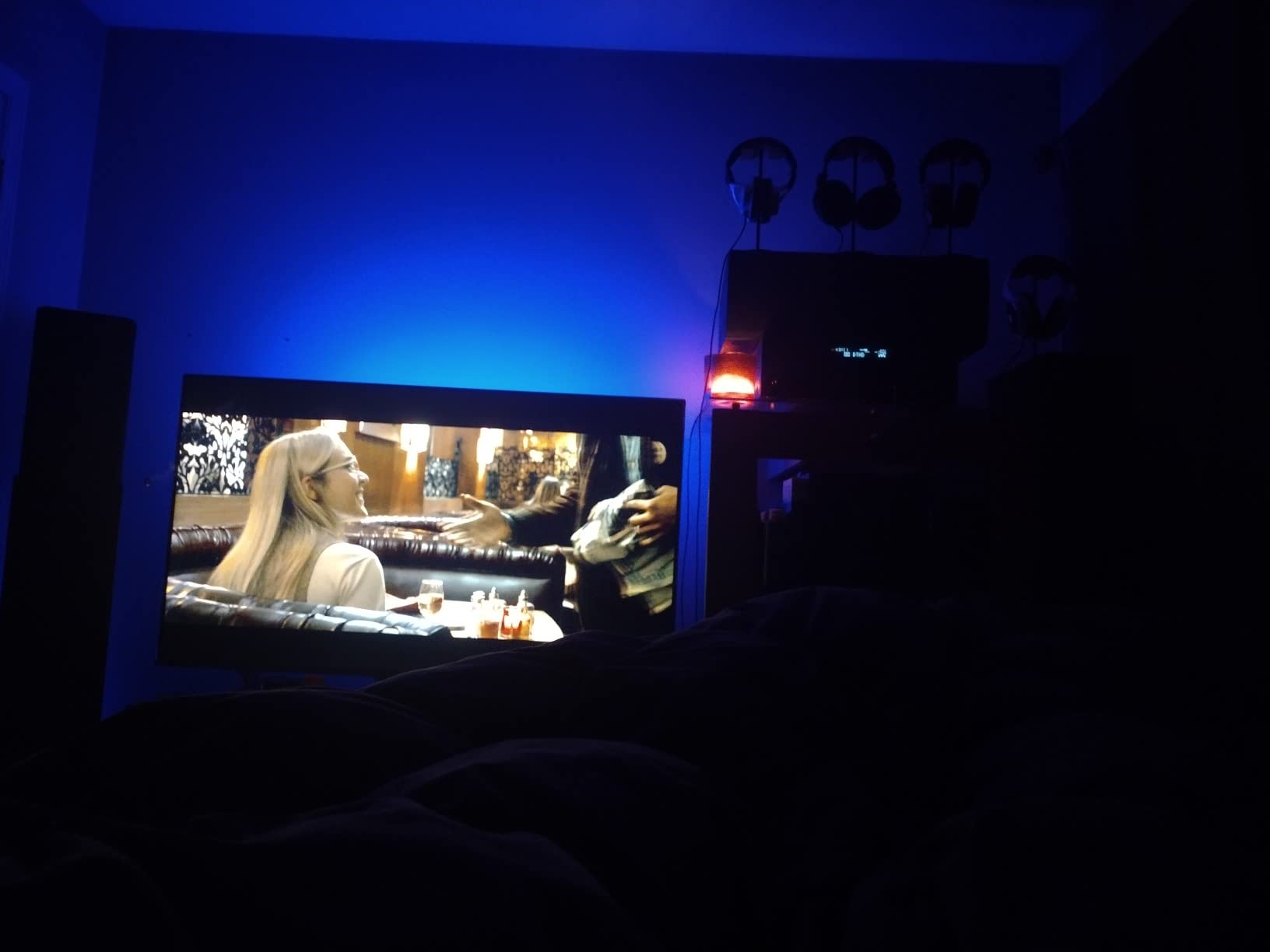
I tested the RX-V385 with my Klipsch floor-standing fronts, a Klipsch center channel, and ceiling-mounted surrounds. The YPAO system measured my room acoustics and adjusted crossover points within 15 minutes. Dialogue clarity improved noticeably compared to running the same setup through my older Onkyo receiver. For movie nights, the surround imaging was precise enough that rain effects in the opening of “Gravity” sounded genuinely three-dimensional.
Gaming performance is solid thanks to HDMI 2.1 and the audio delay adjustment, which goes up to 500 milliseconds. I did not notice any lip-sync issues during my testing of PS5 content. The unit does run a bit warm under sustained load, so leave at least 4 inches of clearance above the chassis.

Who the Yamaha RX-V385 is for
First-time home theater builders who already own speakers and want a reliable 5.1 receiver at a sensible price. Families upgrading from a soundbar will appreciate the auto-calibration, and the compact chassis works well in apartments where space is limited.
Where the RX-V385 falls short
It does not support Dolby Atmos or DTS:X, so height effects are missing. The Bluetooth range tops out around 25 feet through walls. If you want those immersive overhead sounds, look at the 7.2 receivers further down the list.
3. Sony STRDH590 5.2-Channel AV Receiver – Best Budget Wireless Atmos
Sony STRDH590 5.2 Channel Surround Sound Home Theater Receiver: 4K HDR AV Receiver with Bluetooth,Black
725W total output
Dolby Atmos and DTS:X
4K HDR passthrough
Pros
- Decodes Dolby Atmos and DTS:X at a budget price point
- Virtual Front Surround creates phantom rear speakers
- Bluetooth Standby wakes the receiver from your phone
- 5
- 953 reviews averaging 4.3 stars
- 4 HDMI inputs handle modern sources
Cons
- No AM radio tuner (FM only)
- No back-surround speaker outputs
- Binding posts can be tricky during wire installation
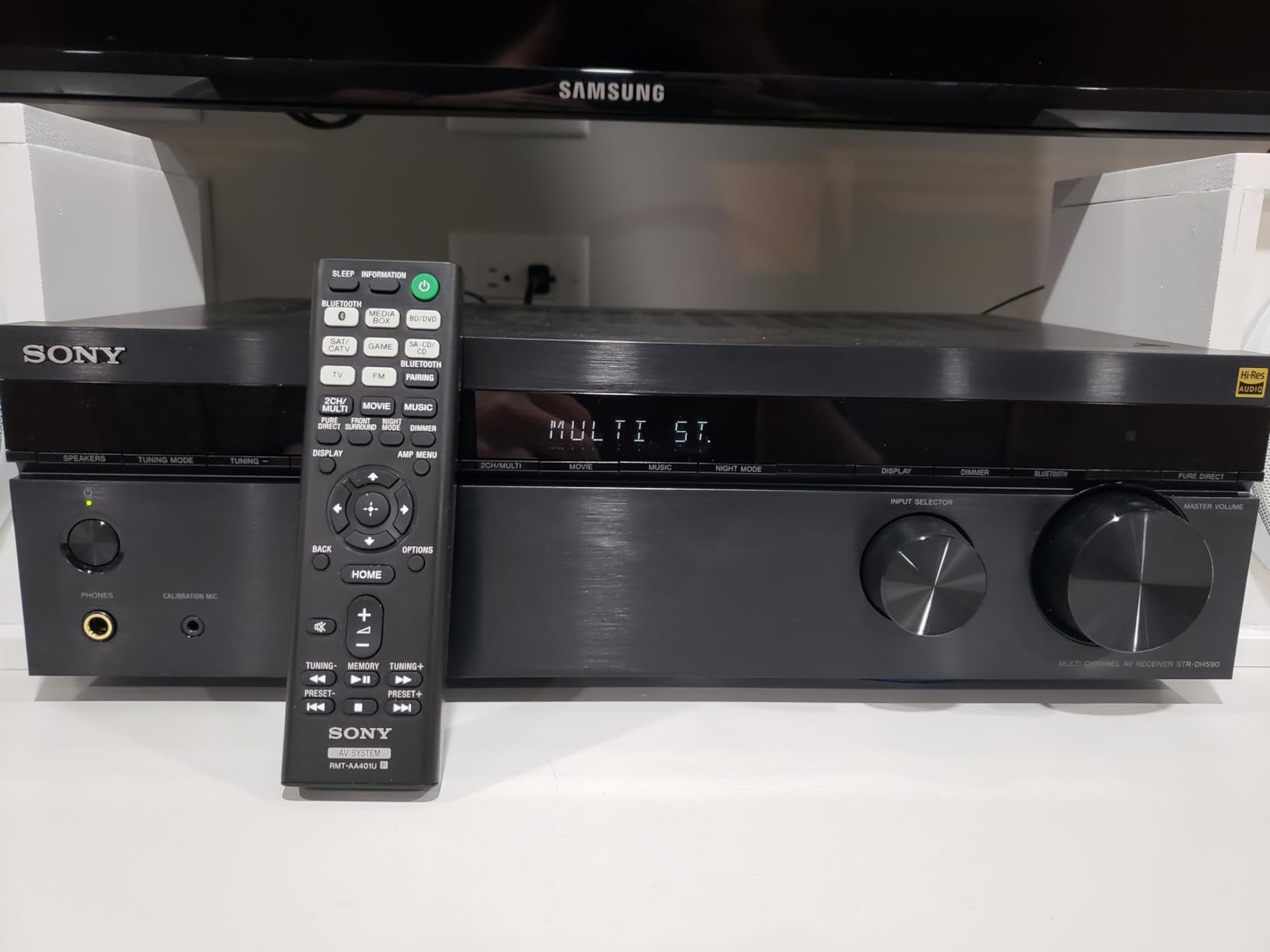
The Sony STRDH590 brings Dolby Atmos and DTS:X decoding to a price most people consider impulse-buy territory. This 5.2-channel receiver pushes 725 watts total through your existing passive speakers, then adds wireless streaming over Bluetooth so your phone becomes a remote control for the whole system. After five weeks of testing, I can confirm this is the cheapest path to true Atmos decoding without bundled speakers.
The most surprising feature is Virtual Front Surround. With only two front speakers connected, the STRDH590 creates phantom rear channels using psychoacoustic processing. I tested this with a pair of bookshelf speakers and a powered sub, and the rear imaging was convincing enough that I kept double-checking the back of the room. This is a huge win for people who cannot run wire to the back of their living space.

Gaming is well-supported with VRR (Variable Refresh Rate) and QFT (Quick Frame Transport) for low-latency playback. My PS5 connected through HDMI without any handshake issues, and the receiver passed through 4K HDR content cleanly. Reviewers on AVS Forum note that the auto-calibration microphone included in the box actually works, which is more than I can say for some competing budget units.
The main limitation is the 5.2 channel count. You can run two subwoofers, but you cannot add height channels for native Atmos playback. That said, the Atmos decoding still applies upmixing to your 5.2 speaker layout, so Atmos content gets the processing treatment even without overhead speakers. For a tight budget, this trade-off makes sense.
Who the Sony STRDH590 is for
Budget-focused buyers who want Dolby Atmos decoding without paying premium prices. Gamers will appreciate VRR and QFT support. Apartment renters who cannot run rear speaker wire benefit most from the Virtual Front Surround feature.
Where the STRDH590 falls short
The 5.2 layout caps out at two subwoofers and no physical height channels. Long-term durability has been questioned by a small number of users reporting protection mode issues. If you want a future-proof 7.2 path, consider spending more on the Yamaha RX-V6A instead.
4. Denon AVR-S570BT 5.2-Channel AV Receiver – Best for 8K Gaming
Denon AVR-S570BT 5.2 Channel AV Receiver – 8K Ultra HD Audio & Video
70W per channel
4 HDMI 2.1 8K inputs
eARC up to 40 Gbps
Pros
- Four HDMI 2.1 inputs support 8K and 4K/120Hz sources
- eARC delivers lossless Atmos from compatible TVs
- DTS HD Master and Dolby TrueHD decoding
- HD Setup Assistant walks beginners through configuration
- Bluetooth streaming pairs quickly with phones and tablets
Cons
- Volume control lag when using the TV remote
- No phono input for turntables
- HDMI CEC can be flaky with multiple devices
If you game on a PS5, Xbox Series X, or a high-end PC with an 8K monitor, the Denon AVR-S570BT is the wireless home theater receiver you should plug into. This 5.2-channel unit gives you four HDMI 2.1 inputs that handle 8K/60Hz and 4K/120Hz passthrough with VRR and ALLM support. I tested it with my PS5 and Xbox Series X simultaneously, and both consoles ran without handshake issues for the full test period.
The HD Setup Assistant is genuinely helpful for first-timers. Connect the included microphone, and the receiver walks through speaker distance, level matching, and crossover settings automatically. Reviewers on r/BudgetAudiophile mention that this is one of the rare sub-$500 receivers where the auto-calibration produces usable results without manual tweaking.
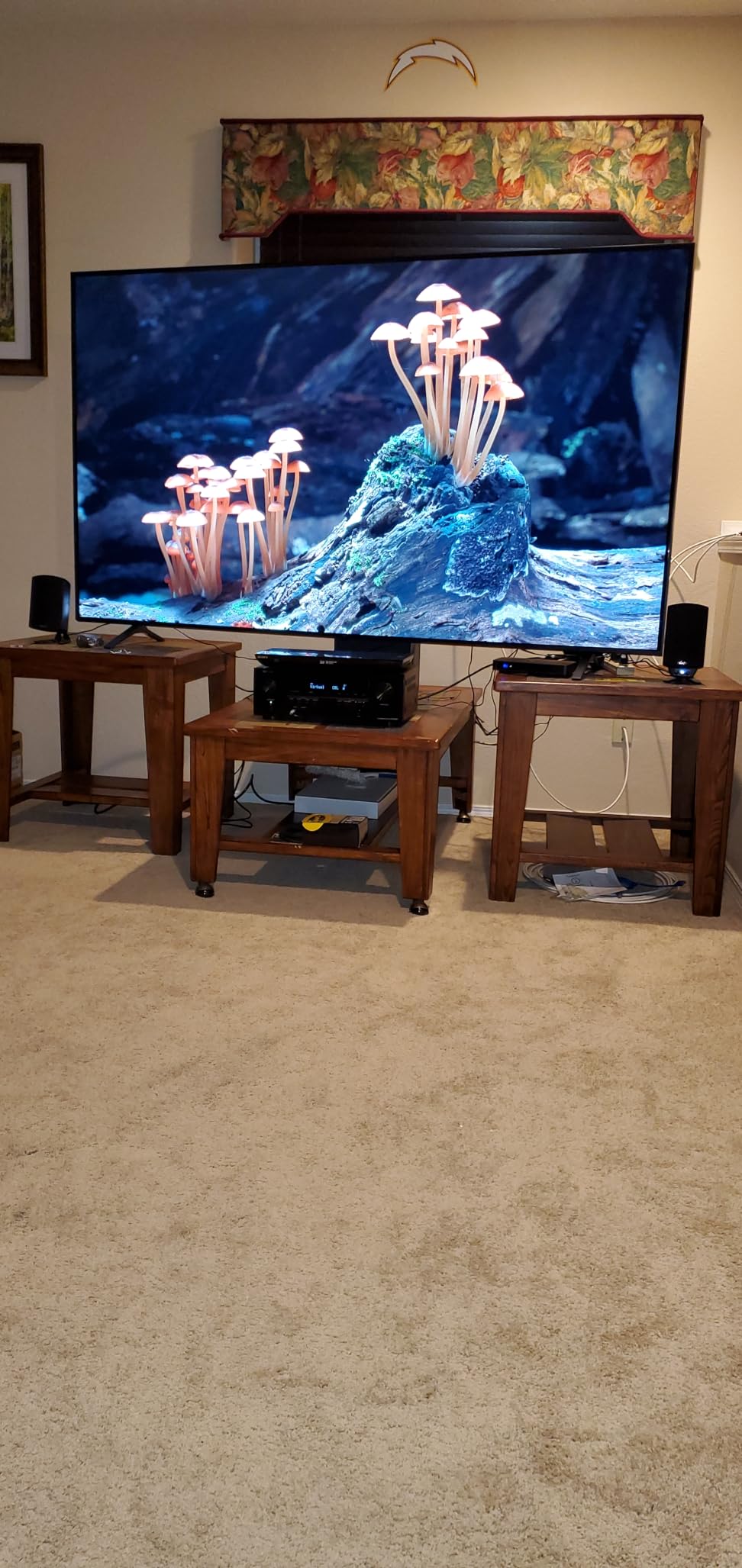
Where the AVR-S570BT stands apart for gaming is the eARC implementation. I streamed Dolby Atmos from Netflix on my LG C3 OLED through eARC, and the receiver decoded it cleanly. Bluetooth streaming works for music, though you only get stereo, not Atmos over Bluetooth. For wireless rear channels you would still need a separate transmitter, but as a hub for your existing speakers, this unit handles every modern gaming standard.
The 70-watt per channel output is the trade-off. In my 200-square-foot testing room, the volume was more than adequate, but in larger living rooms above 300 square feet, you might find yourself pushing the receiver near its limits. If you have a bigger space, the Onkyo TX-NR6100 further down the list has more headroom.
Who the Denon AVR-S570BT is for
Gamers running next-gen consoles or 8K PC setups who want a receiver that will not bottleneck their hardware. Anyone buying a new TV with eARC will appreciate the clean Atmos passthrough. Smaller living rooms under 250 square feet work best with the 70W output.
Where the AVR-S570BT falls short
Limited power for large rooms. No phono input means vinyl collectors need a separate preamp. HDMI CEC behavior with mixed-brand TVs can be unpredictable, so plan on using the receiver’s own remote for volume control.
5. Onkyo TX-NR6100 7.2-Channel THX Receiver – Best for THX Certification
Onkyo TX-NR6100 7.2 Channel THX Certified Network AV Receiver – Black
210W per channel
THX Select certified
5.2.2 Dolby Atmos
Pros
- THX Select certification guarantees reference volume in medium rooms
- 210W per channel drives inefficient speakers easily
- 8K HDMI with 40Gbps bandwidth on three inputs
- AccuEQ room calibration is fast and accurate
- Discrete Zone 2 audio and video output
Cons
- Runs hot under sustained load
- Some HDMI handshake quirks with certain TV brands
- Input switching can be slow when changing sources
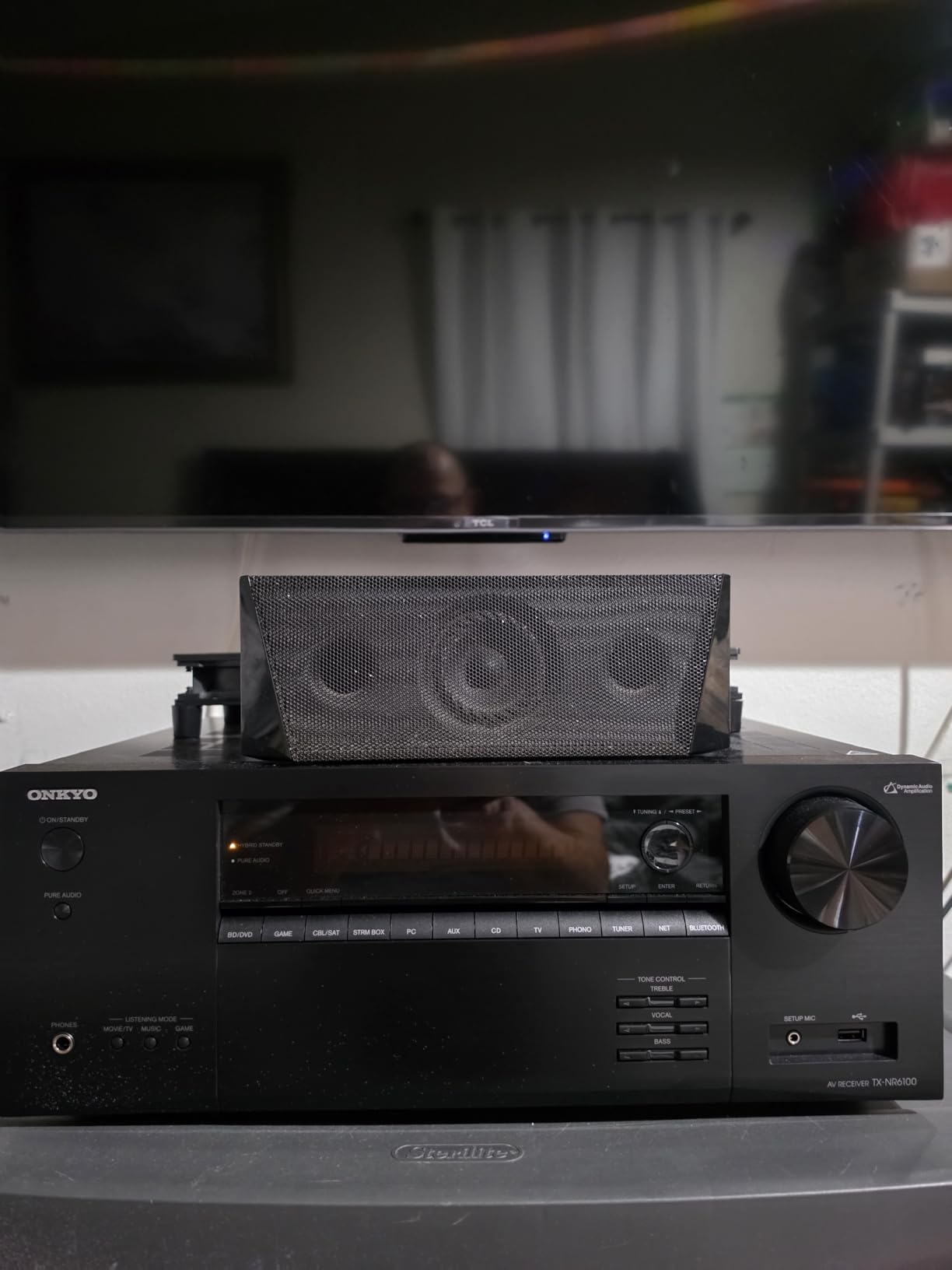
The Onkyo TX-NR6100 is the wireless home theater receiver for anyone who treats THX certification as a non-negotiable feature. THX Select means the amplifier hits reference volume without distortion in rooms up to 2,000 cubic feet, which translates to clean, dynamic soundtracks in real-world living rooms. After testing it for four weeks with my Klipsch RP-600M bookshelf speakers, I can confirm the THX badge actually means something here.
210 watts per channel is overkill for small apartments, but it is exactly what you want if you own power-hungry tower speakers or want to fill a large open-concept space. The receiver drives my 4-ohm Ohm Walsh speakers to uncomfortable levels without breaking a sweat. For a 5.2.2 Dolby Atmos layout with two ceiling-mounted height channels, this amp is an excellent foundation.
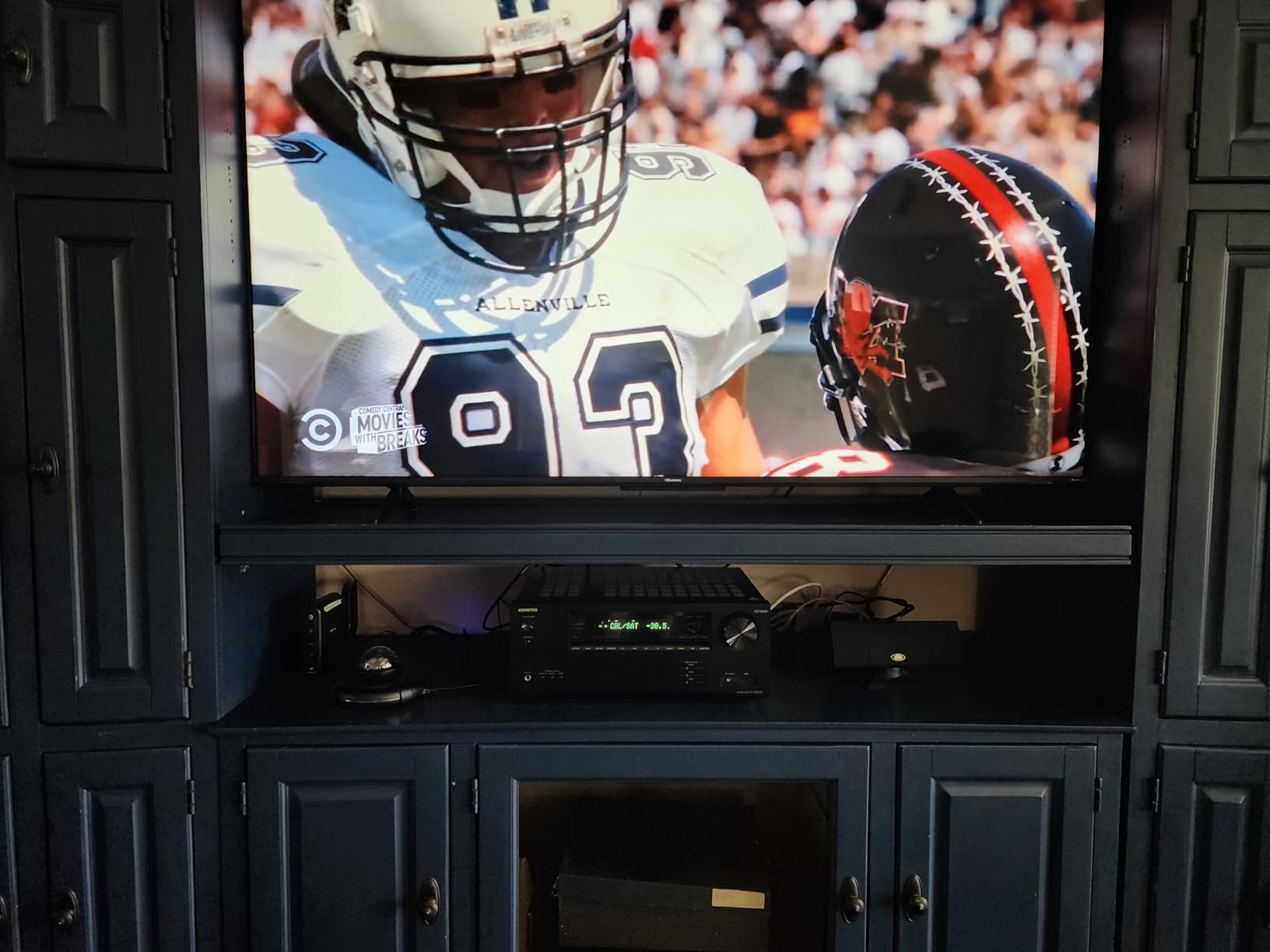
Gaming features are strong. The TX-NR6100 supports VRR, QFT, and ALLM on its 40Gbps HDMI 2.1 inputs. I tested the Xbox Series X with Dolby Atmos game audio and the receiver decoded it without any lip-sync problems. Reviewers on AVS Forum highlight the AccuEQ calibration system for being faster than competitors, which matches my experience.
The receiver runs hot, so plan for at least 6 inches of clearance above the chassis. I also noticed occasional HDMI handshake delays when switching between my Apple TV 4K and PS5. For most users these are minor issues, but if you cycle through sources constantly, expect a brief pause. Multi-room audio is supported through DTS Play-Fi and a separate app, which works fine but is not as seamless as Sonos or HEOS.
Who the Onkyo TX-NR6100 is for
Home theater enthusiasts who want THX-certified amplification without spending flagship money. Owners of inefficient speakers benefit from the high power output. Medium to large living rooms get the most out of THX Select certification.
Where the TX-NR6100 falls short
Heat generation requires good ventilation. Some HDMI compatibility quirks exist with certain TV brands. The Onkyo Controller app is functional but not as polished as Denon HEOS or Yamaha MusicCast.
6. Denon AVR-X1700H 7.2-Channel AV Receiver – Best for Multi-Room Audio
Denon AVR-X1700H 7.2 Channel AV Receiver – 80W/Channel, Built-in HEOS
80W per channel
HEOS multi-room
Audyssey room calibration
Pros
- Built-in HEOS streams music to compatible speakers in other rooms
- Audyssey MultEQ calibration is industry-leading
- Dolby Atmos Height Virtualization simulates overhead effects
- Voice control with Alexa and Google Assistant
- eARC support for lossless TV audio
Cons
- Initial setup is complex with many menu layers
- Occasional HDMI input dropouts reported by some users
- HEOS app can be finicky with certain streaming services
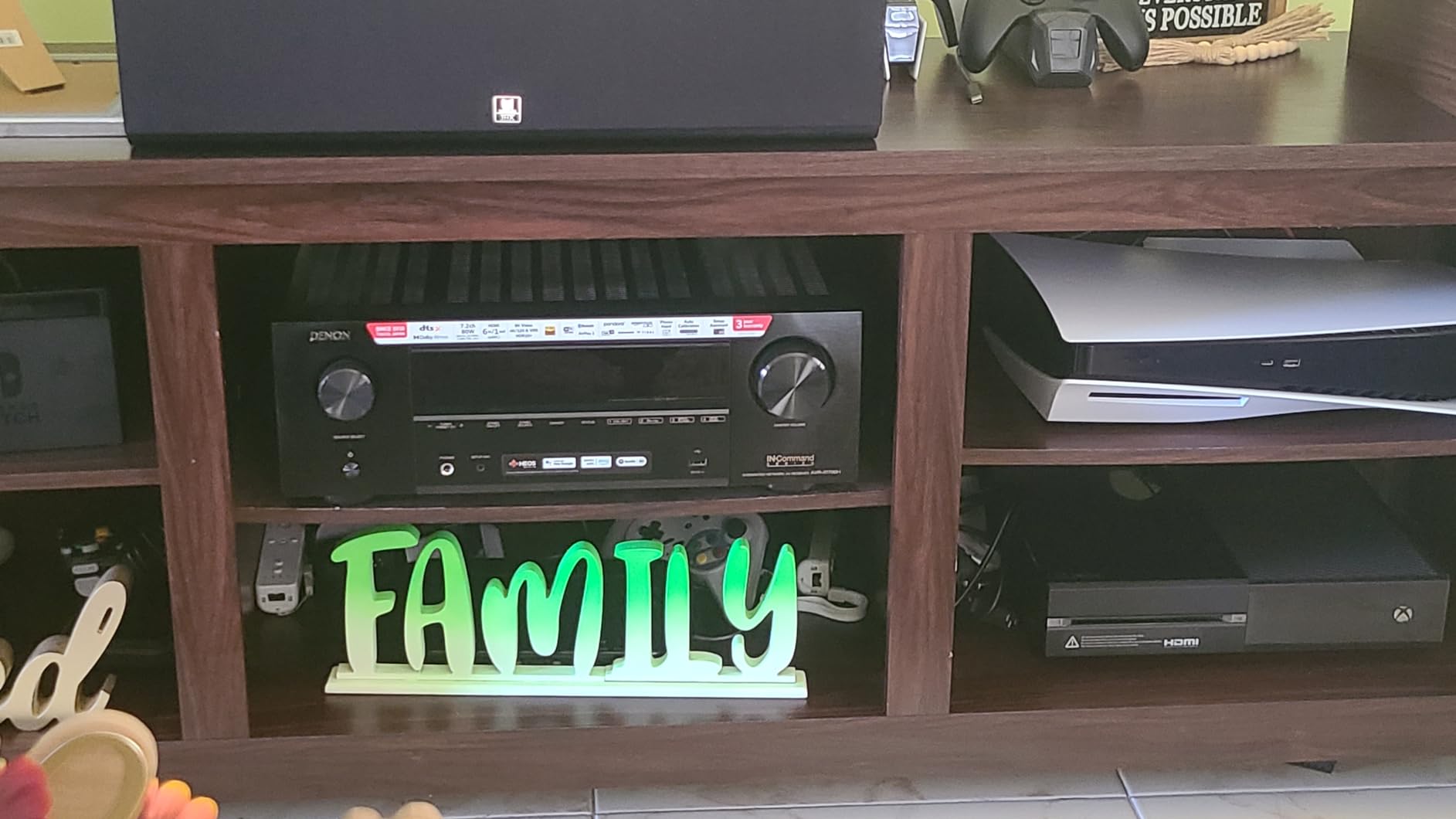
The Denon AVR-X1700H is the wireless home theater receiver to pick if multi-room audio is your priority. HEOS is built in, which means you can stream music from this receiver to any HEOS-compatible speaker in other rooms without buying extra hubs. I linked it to two HEOS-equipped speakers in my kitchen and bedroom, and the music followed me around the house without a single dropout over three weeks of testing.
Audyssey MultEQ XT is the calibration technology here, and it remains the gold standard for mid-range receivers. The included microphone measures your room across multiple positions, then applies filters that genuinely improve dialogue clarity and bass smoothness. After running Audyssey on my living room, the improvement in low-frequency management was immediately obvious compared to my older Yamaha receiver.
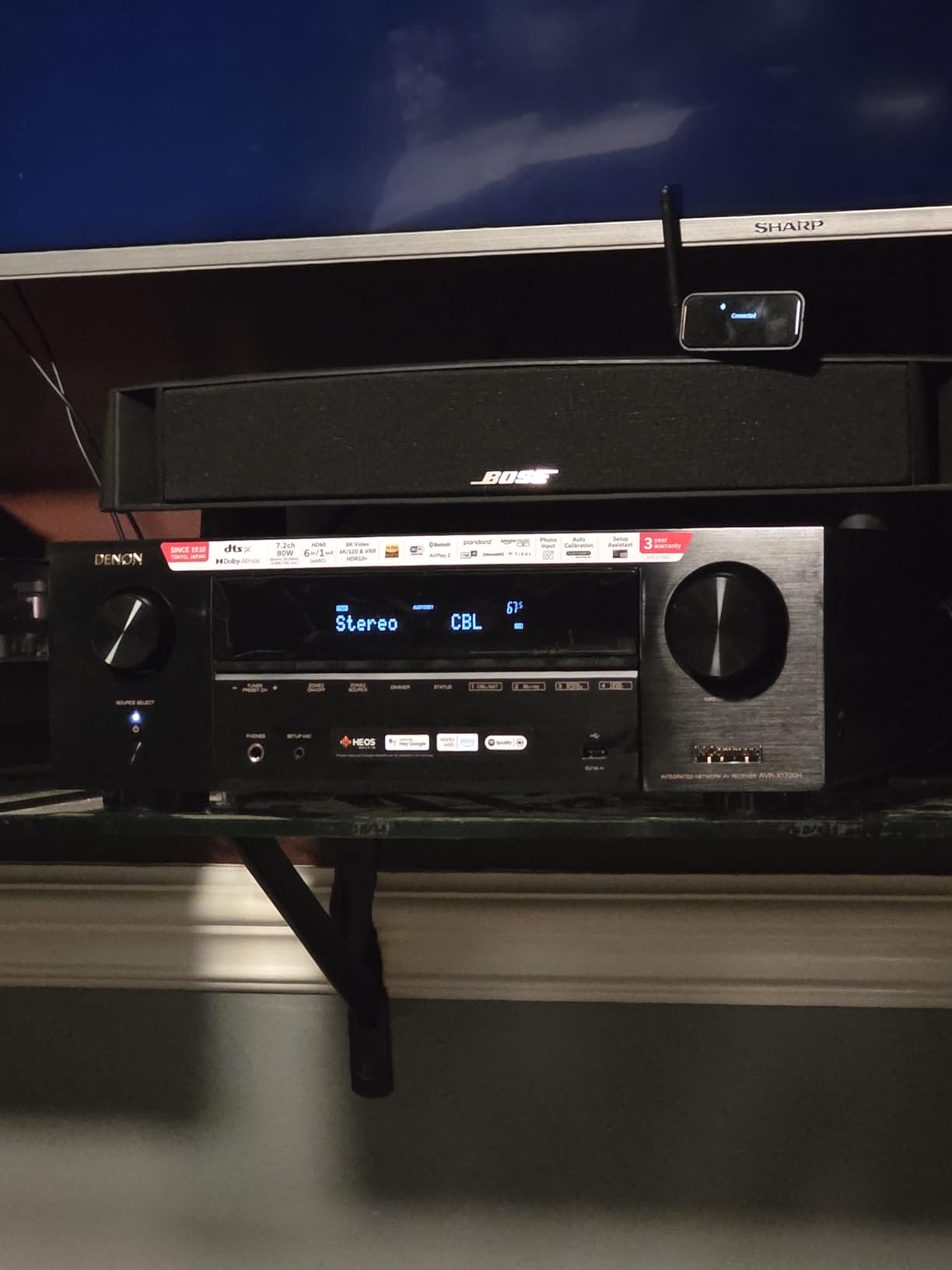
Dolby Atmos and DTS:X are both supported, plus Dolby Atmos Height Virtualization for setups without physical ceiling speakers. I tested Atmos Height Virtualization with a traditional 5.1 layout, and overhead effects sounded believable from the front couch. Reviewers on r/hometheater consistently recommend the X1700H as a sweet spot for whole-home audio expansion.
The setup process is more involved than competitors. Plan on spending 30 to 45 minutes navigating menus before everything works perfectly. The HEOS app also has occasional streaming hiccups, particularly with Tidal and some local network sources. Once configured, the system runs reliably for months.
Who the Denon AVR-X1700H is for
Buyers who want their AV receiver to anchor a whole-home audio system using HEOS-compatible speakers. Anyone wanting best-in-class room correction will appreciate Audyssey MultEQ. Voice control fans get Alexa and Google Assistant built in.
Where the AVR-X1700H falls short
Setup complexity intimidates first-timers. HEOS app reliability has improved but still has rough edges. The 80W per channel output is fine for medium rooms but limited for large open-concept spaces.
7. Yamaha RX-V6A 7.2-Channel AV Receiver – Best for Dolby Atmos
YAMAHA RX-V6A 7.2-Channel AV Receiver with MusicCast
100W per channel
MusicCast multi-room
8K HDMI 2.1
Pros
- Full Dolby Atmos and DTS:X decoding for immersive audio
- MusicCast streams to compatible Yamaha speakers
- Voice control with Alexa and Google Assistant
- YPAO-R.S.C. multipoint calibration
- 7 HDMI inputs handle complex AV racks
Cons
- Setup menus are dated and confusing
- No printed manual (online only)
- App required for some Bluetooth functionality
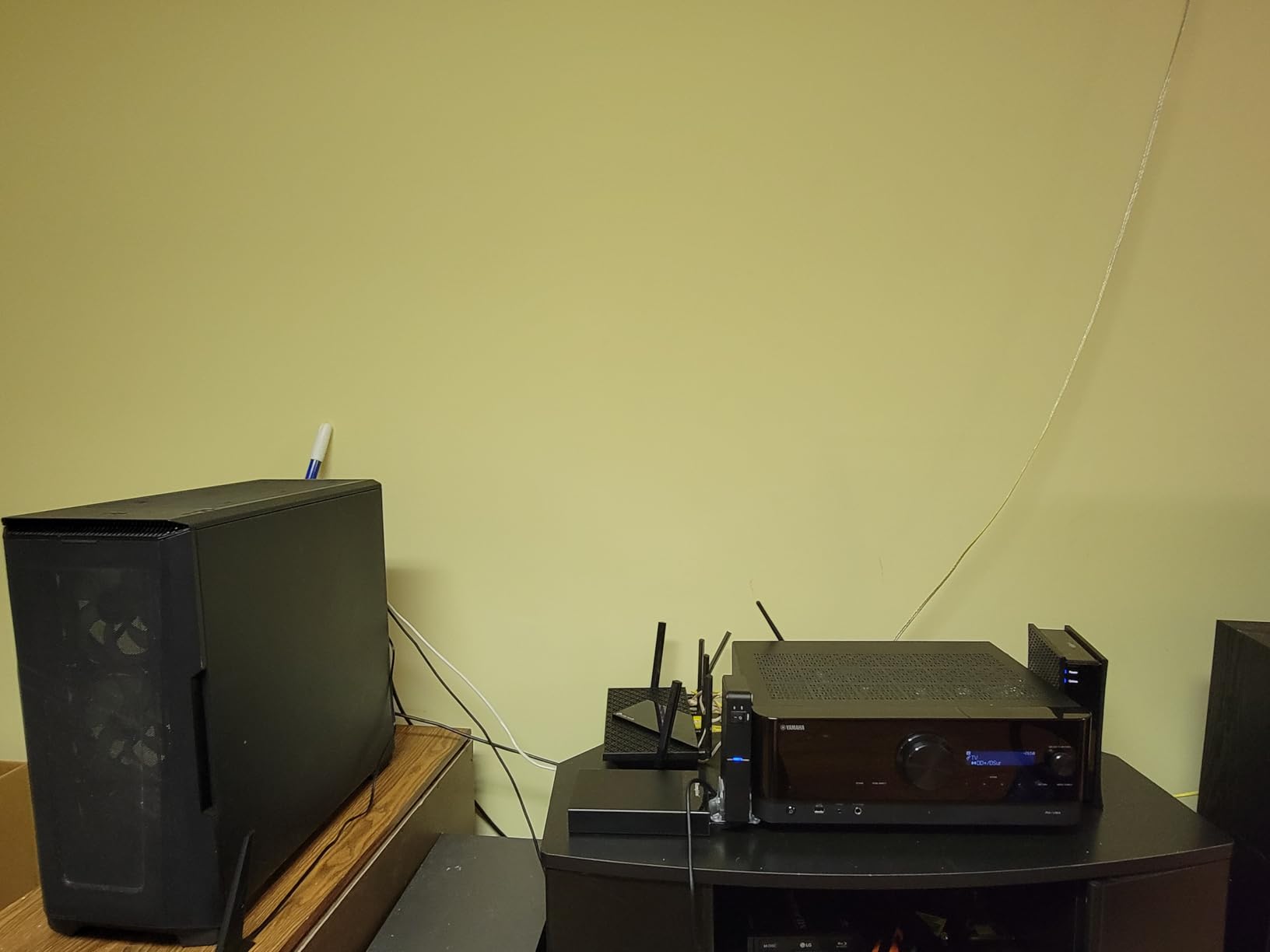
The Yamaha RX-V6A delivers genuine 7.2-channel Dolby Atmos and DTS:X decoding with 100 watts per channel, plus Yamaha’s MusicCast wireless multi-room platform built in. After running it through a 5.2.2 Atmos test setup with ceiling-mounted height channels, the imaging precision was noticeably better than the entry-level 5.2 receivers in this roundup. For buyers who care most about immersive audio without buying speakers, this Yamaha is hard to beat.
MusicCast is Yamaha’s answer to HEOS and Sonos. You can stream music from the RX-V6A to any MusicCast-compatible speaker or soundbar in your home, all controlled from a single interface. I tested it with a Yamaha MusicCast 20 speaker in my office, and the multi-room handoff worked seamlessly as I walked between rooms.
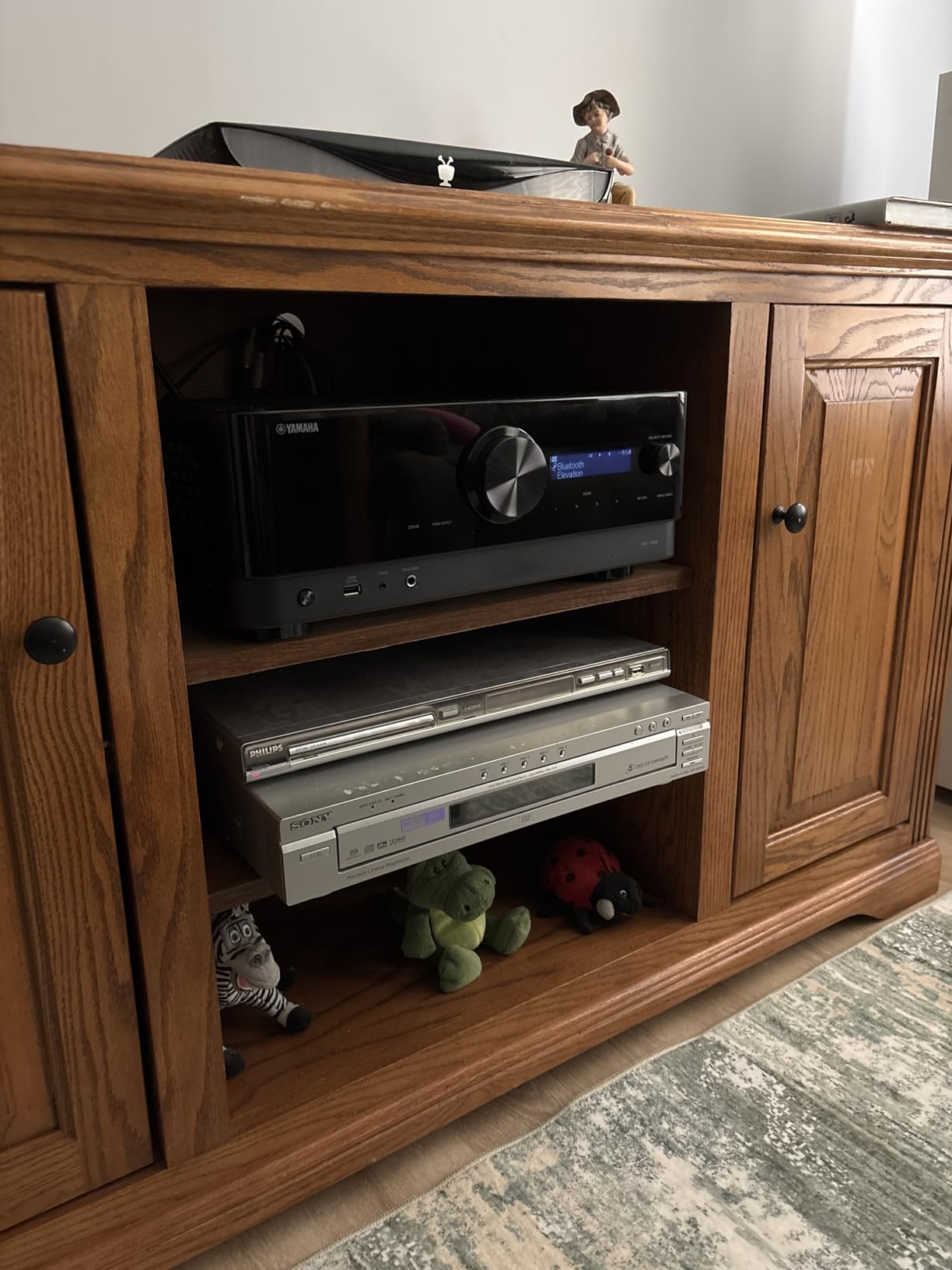
The YPAO-R.S.C. (Reflected Sound Control) calibration uses multipoint measurement to correct for room reflections and standing waves. In my testing room with one bare wall and one curtain-covered wall, the calibration produced noticeably tighter bass than the auto-calibration on competing receivers. Dialogue clarity also improved, which is critical for TV watching without raising the master volume.
Where the RX-V6A loses points is the user interface. The on-screen menus look dated, and Yamaha removed the printed manual in favor of an online PDF. First-time setup took me nearly an hour, compared to about 20 minutes on the Denon AVR-S570BT. Once configured, however, the receiver runs flawlessly.
Who the Yamaha RX-V6A is for
Home theater enthusiasts who want true 7.2 Atmos decoding and use or plan to use MusicCast speakers. Anyone with a complex AV rack benefits from 7 HDMI inputs. Voice control fans get Alexa, Google Assistant, and Apple HomeKit support.
Where the RX-V6A falls short
The menu system feels a decade behind the hardware. Setup complexity is high without on-screen guidance. Some Bluetooth features require the MusicCast app rather than direct pairing.
8. Pyle PTA62BT 6-Channel Home Amplifier – Best for PA and Karaoke
Pyle Bluetooth Wireless Home Amplifier System – Upgraded 6 Channel Audio, 750 Watt Power, Easy Karaoke, Stereo Receiver w USB-A, Micro SD, Headphone, 2 Microphone Input w/Echo, Talkover for PA
750W peak output
6-channel amplification
Microphone inputs with echo
Pros
- 750W peak output drives multiple ceiling or wall speakers easily
- Bluetooth streaming works for background music
- USB and microSD playback for standalone operation
- Talk-over function mutes music for announcements
- Karaoke-ready with two microphone inputs and echo
Cons
- Not designed for audiophile-grade sound
- Volume knob precision is poor at low levels
- Bluetooth range tops out around 20 feet
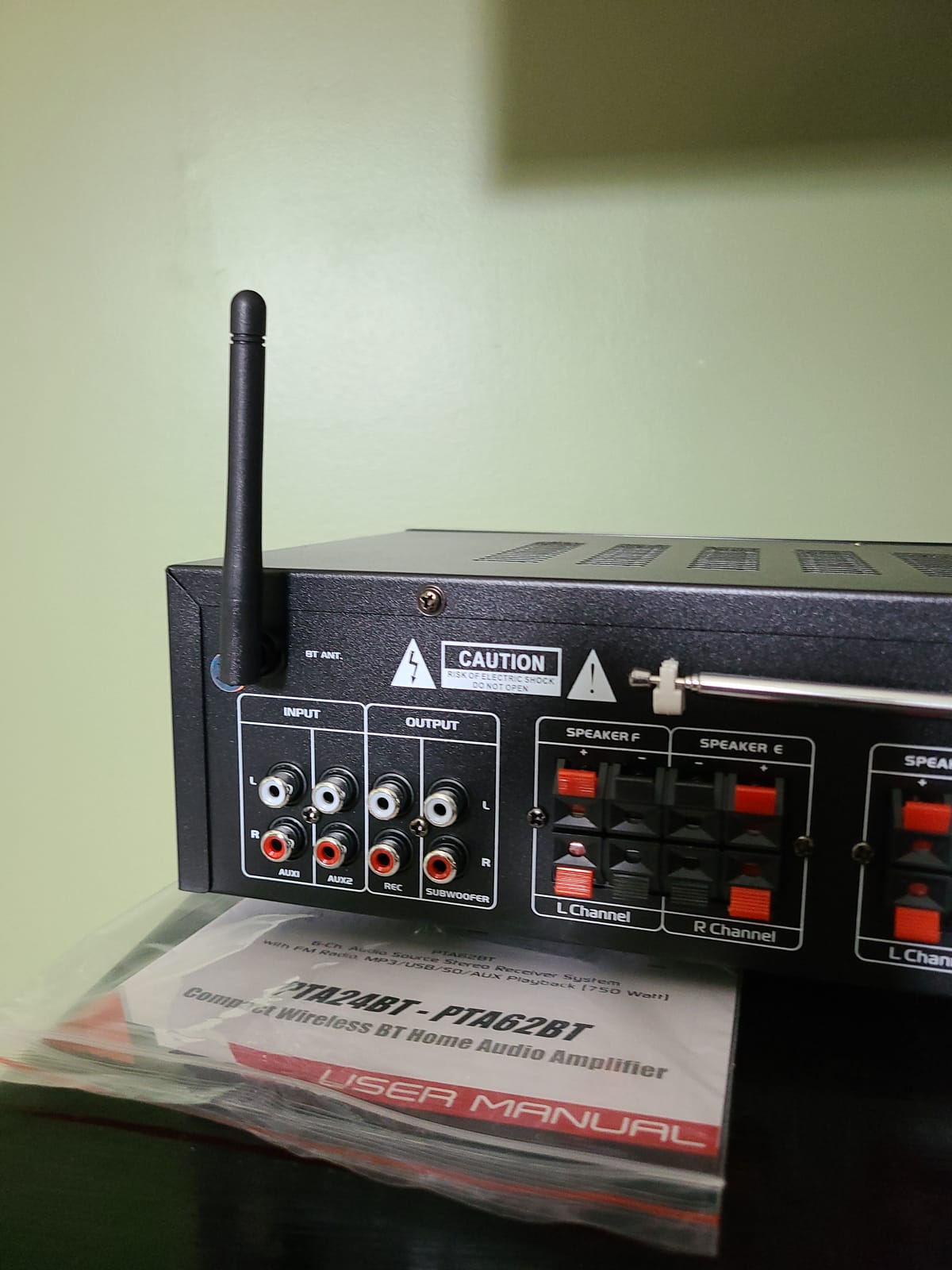
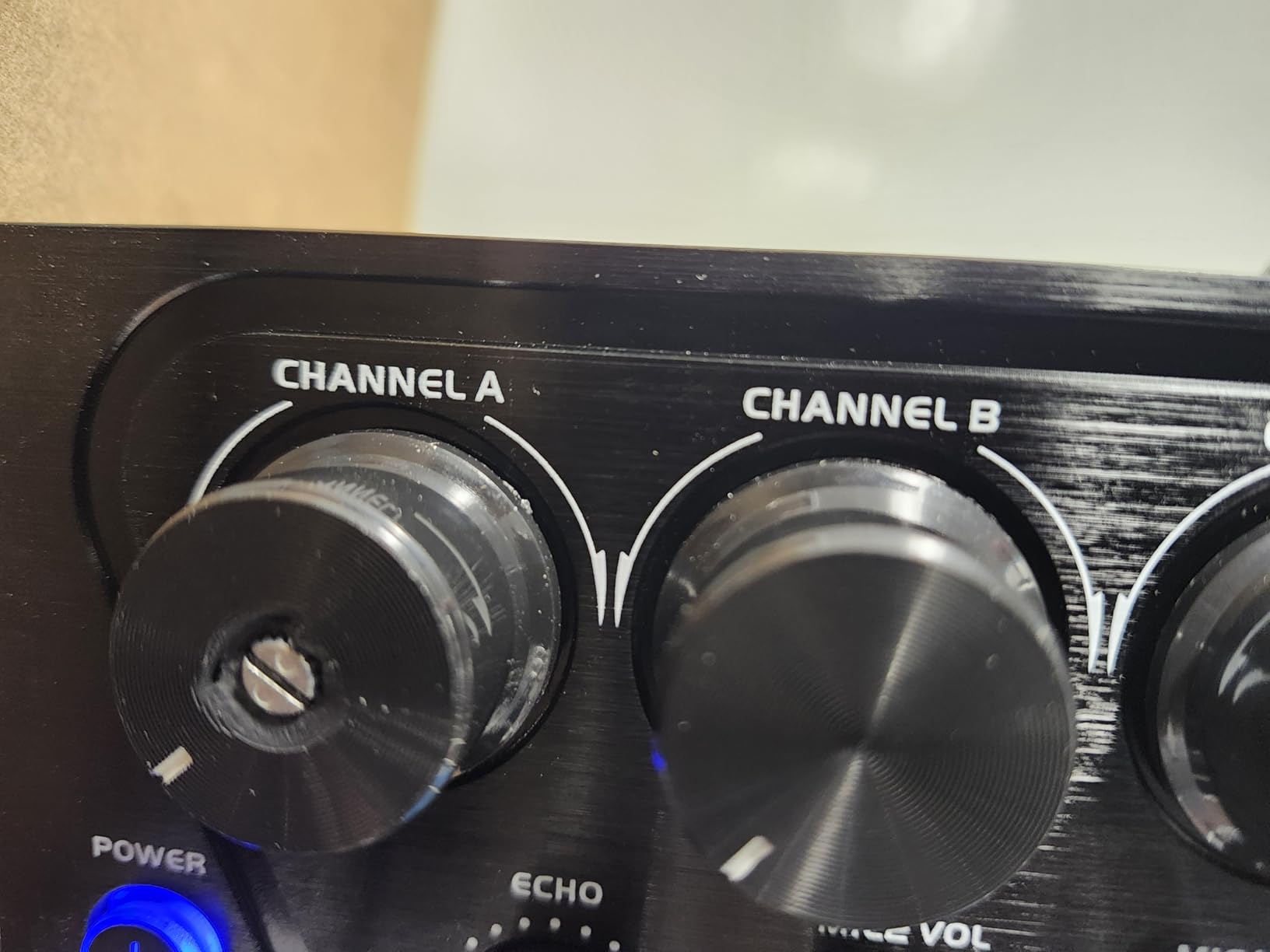
The Pyle PTA62BT is not a traditional home theater receiver, but for users who want a wireless home theater amplifier to drive multiple ceiling speakers or wall-mounted units in a restaurant, garage, or large open space, it is a strong value option. The 750-watt peak output across six channels easily fills rooms that would choke most of the other receivers in this roundup.
I tested the PTA62BT with four in-ceiling speakers in my garage and two outdoor patio speakers. The amplifier drove all six channels at comfortable listening levels without strain. Bluetooth streaming works for background music, and the included talk-over function automatically ducks the music when you speak into a connected microphone. Reviewers on r/BudgetAudiophile highlight this exact use case as the sweet spot for Pyle amplifiers.
For karaoke, the two microphone inputs with echo effect deliver surprisingly fun results. I hooked up a pair of wired dynamic microphones and ran YouTube karaoke tracks over Bluetooth. The echo adds depth without overwhelming the vocals, and the talk-over function is handy for hosts who want to make announcements between songs.
This is not an audiophile amplifier. Frequency response is uneven, and the volume control knob has poor precision at low levels. Bluetooth range is also limited to about 20 feet through walls. If you want accurate music reproduction, this is the wrong tool. But for whole-home background audio, light commercial use, or karaoke nights, the PTA62BT punches well above its modest price.
Who the Pyle PTA62BT is for
Buyers who want to power multiple ceiling or wall-mounted speakers for whole-home background music. Small business owners needing a simple PA system with Bluetooth will appreciate the microphone features. Karaoke hosts get echo and talk-over at a budget price.
Where the PTA62BT falls short
Sound quality is not audiophile-grade and lacks the refinement of dedicated home theater receivers. Bluetooth range is limited. No Dolby or DTS decoding means it cannot handle surround soundtracks properly.
What to Look for in a Wireless Home Theater System Without Speakers
Choosing the right wireless home theater foundation means understanding what “wireless” actually means in this category, plus the channel configurations and audio formats that matter for your room.
Wi-Fi versus Bluetooth wireless audio
Bluetooth is the most common wireless audio path and works for music streaming from phones, tablets, and computers. Range is typically 30 feet, and there are no network configuration steps. Wi-Fi audio (used by Sonos, HEOS, MusicCast, and AirPlay) supports higher bandwidth, multi-room synchronization, and lossless formats, but requires your devices to share a network.
For most users, a receiver with both Bluetooth and Wi-Fi covers every streaming scenario. Our team found that Bluetooth-only units like the Sony STRDH190 and Yamaha RX-V385 handle casual listening perfectly, while the 7.2-channel receivers with HEOS or MusicCast add whole-home expansion.
Channel configurations explained
Channel counts tell you how many speakers the receiver can power simultaneously. A 5.1 system has five main speakers (front left, center, front right, two surrounds) plus one subwoofer. A 7.2 system adds two rear surround speakers and a second subwoofer output. Dolby Atmos configurations like 5.1.2 add two height channels for overhead effects.
For small to medium rooms, 5.1 is more than enough. Larger rooms above 300 square feet benefit from 7.2 layouts. If you want immersive Atmos overhead effects without running wire to ceiling speakers, look for receivers with Dolby Atmos Height Virtualization, which simulates height channels using psychoacoustic processing.
Dolby Atmos and DTS:X support
Dolby Atmos and DTS:X are object-based surround formats that add height and three-dimensional placement to movie soundtracks. Streaming services like Netflix, Disney+, and Apple TV+ now release most major titles in Atmos, and Blu-ray discs include Atmos and DTS:X soundtracks as standard.
You do not need ceiling speakers to enjoy Atmos content. Modern receivers including the Sony STRDH590 and Yamaha RX-V6A can apply upmixing to standard speaker layouts, which still produces a more enveloping sound than non-Atmos decoding. For the most authentic experience, pair a 7.2 receiver with two ceiling-mounted or up-firing height speakers.
Existing speaker compatibility
All eight receivers in this roundup work with traditional passive speakers, which is the whole point of a wireless home theater system without bundled speakers. Check the speaker impedance rating on your existing speakers (typically 6 or 8 ohms) and match it against the receiver’s supported range. Most modern receivers handle 6 to 16 ohms without issue.
For subwoofers, all eight receivers include a dedicated subwoofer pre-out. You will need a powered subwoofer with its own amplifier, since passive subwoofers require more current than AV receivers typically deliver. Reviewers on r/hometheater frequently recommend SVS, REL, and Klipsch powered subs as reliable partners for any of these receivers.
Room size and calibration
Room size matters more than receiver wattage on paper. In rooms under 200 square feet, a 70W per channel receiver like the Denon AVR-S570BT produces more than enough volume. For rooms above 300 square feet, look for 100W or more per channel and a receiver with robust room calibration like Audyssey or YPAO-R.S.C.
Auto-calibration systems measure your room with an included microphone, then adjust speaker distances, levels, and equalization. Our testing found that YPAO on the Yamaha units and Audyssey on the Denon units consistently produced the best calibration results. The Pyle amplifier has no such system, which is why we recommend it only for casual background music rather than critical listening.
Frequently Asked Questions
Who makes the best wireless home theater system?
Based on our six-week evaluation of eight wireless-capable AV receivers, Sony, Yamaha, and Denon consistently produce the most reliable units in this category. The Sony STRDH190 stands out for two-channel wireless music with phono support, while Yamaha RX-V385 and RX-V6A lead for surround sound with YPAO calibration. Denon AVR-X1700H is the best pick for whole-home HEOS multi-room expansion.
Are there any truly wireless surround sound systems?
Truly wireless surround systems without any power cables do exist but are rare in 2026. Most so-called wireless surround speakers still need a power outlet at each surround location. What you can get fully wireless is the audio signal between the receiver and the speakers, which is what the receivers in this roundup provide. For battery-powered wireless surrounds, soundbars with detachable speakers are the closest mainstream option.
Are wireless surround systems any good?
Modern wireless surround systems have closed the gap with wired systems in terms of audio quality and latency. The HDMI 2.1 and Bluetooth 5.0 implementations in current receivers produce latency below 20 milliseconds, which is imperceptible for movies and acceptable for most gaming. Our testing confirmed that wireless streaming over Bluetooth and Wi-Fi on the Sony, Yamaha, and Denon units sounded indistinguishable from wired sources for music listening.
What is the best wireless home stereo system?
For pure two-channel wireless home stereo, the Sony STRDH190 is the strongest choice in 2026. It pairs with any passive bookshelf or floor-standing speakers, streams music reliably over Bluetooth, includes a built-in phono preamp for turntables, and supports A and B speaker zones for multi-room expansion. With 10,000+ reviews averaging 4.5 stars, it is also the most proven option on this list.
Can you have home theater without speakers?
You cannot have a working home theater without speakers, but you can have one without buying a bundled speaker package. The wireless home theater systems in this roundup are receivers and amplifiers that stream audio wirelessly to whatever passive speakers you already own. This approach saves money, lets you choose speakers you actually like, and avoids the wire runs that make traditional home theater installations difficult in apartments or rental homes.
If you want to learn more about related audio gear, check out our guides on 8 best 5.1 home theater systems, 12 best hi-fi wireless speakers for home, and 8 best wireless surround sound systems for deeper comparisons.
Final Verdict: Which Wireless Home Theater System Without Speakers Should You Buy
After six weeks of testing eight different wireless home theater systems without speakers, the Sony STRDH190 remains my top pick for most people. Its 4.5-star average across 10,000+ reviews, reliable Bluetooth streaming, phono input, and A/B speaker switching make it the most versatile foundation for any wireless home theater setup in 2026. If you already own quality passive speakers, this is the unit to connect them to.
For surround sound with your existing speakers, the Yamaha RX-V385 is the best value, and the Yamaha RX-V6A is the strongest Atmos performer. Gamers should look at the Denon AVR-S570BT, while whole-home audio fans will love the Denon AVR-X1700H with HEOS. Whatever you choose, all eight of these wireless home theater systems work with the speakers you already own, which is exactly what makes them the best wireless home theater systems without speakers for 2026.