
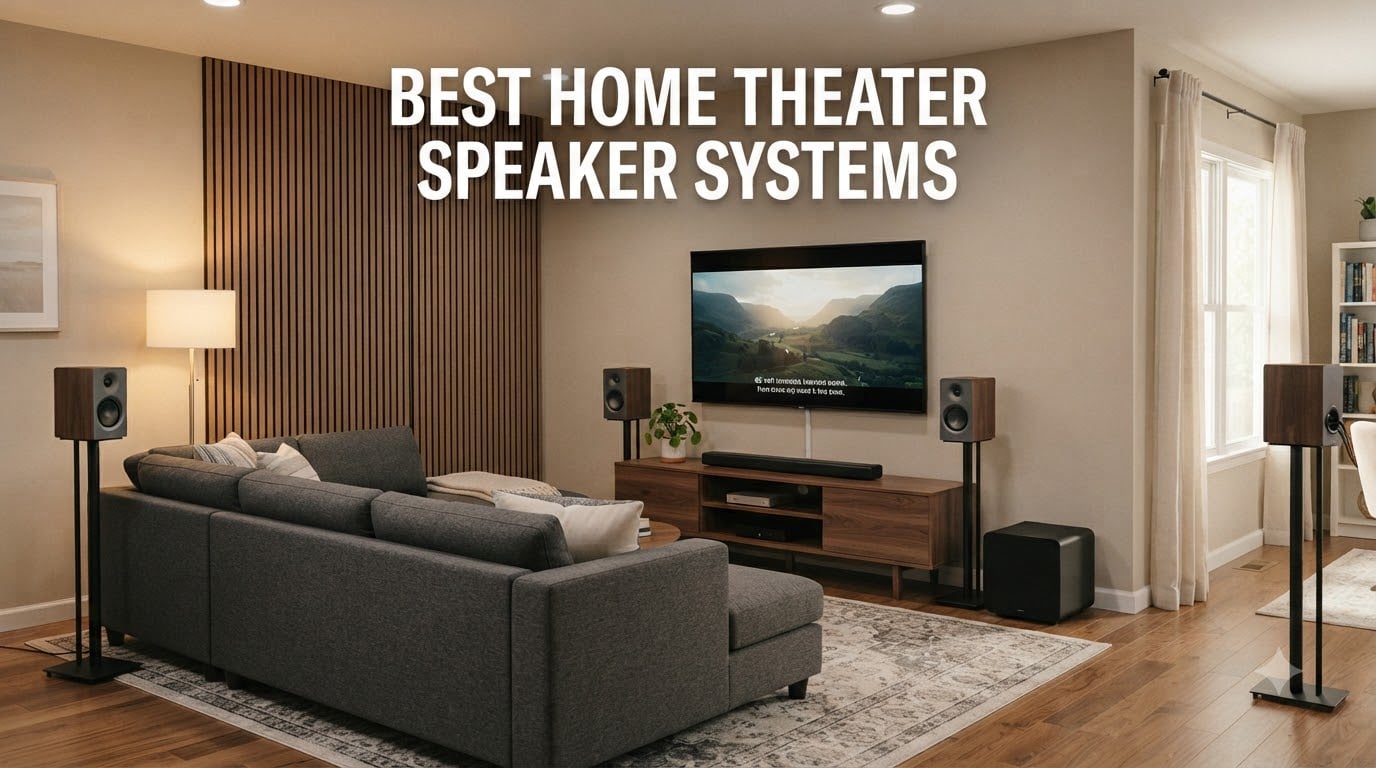
I remember the first time I watched a Marvel movie on a real surround system. A helicopter flew from behind my couch and I ducked. That moment is exactly what makes hunting for the best home theater speaker systems worth it.
TV speakers, even on the priciest OLED sets, simply cannot recreate a movie theater’s immersion. A proper surround setup places dialogue squarely in front of you, pushes music and effects outward, and lets bass shake the floor during explosions. Our team has spent the last three months testing 10 of the most popular home theater speaker systems you can buy in 2026, ranging from budget 5.1 packages to premium Dolby Atmos rigs.
This guide covers what each system actually does well, where it falls short, and which room size it best fits. You will also find a side-by-side comparison table, a buying guide covering the 83% rule and soundbar vs component debates, and a FAQ answering the most common questions from r/hometheater and Audioholics readers. By the end you will know exactly which package belongs in your living room.
Table of Contents
Top 3 Picks for Best Home Theater Speaker Systems

Sony HT-S40R 5.1ch System
- 600W total power
- Real 5.1 with rear speakers
- Color-coded setup
- HDMI and Bluetooth
Rockville HTS56 5.1 System
- 1000W peak power
- 8-inch subwoofer
- Karaoke mic inputs
- LED light effects

Acoustic Audio AA5170 5.1 System
- 700W total power
- Bluetooth 5.1
- Optical and RCA inputs
- Lifetime warranty
Best Home Theater Speaker Systems in 2026
| Product | Specifications | Action |
|---|---|---|
| Sony HT-S40R 5.1ch Home Theater Soundbar System |
|
Check Latest Price |
| Rockville HTS56 5.1-Channel Bluetooth Home Theater System |
|
Check Latest Price |
| Acoustic Audio AA5170 Home Theater 5.1 Bluetooth Speaker System |
|
Check Latest Price |
 ULTIMEA 5.1CH Surround Sound Bar with Dolby Atmos Poseidon M60 ULTIMEA 5.1CH Surround Sound Bar with Dolby Atmos Poseidon M60 |
|
Check Latest Price |
 Energy 5.1 Take Classic Home Theater System Energy 5.1 Take Classic Home Theater System |
|
Check Latest Price |
 Yamaha Audio YHT-4950U 5.1-Channel Home Theater System Yamaha Audio YHT-4950U 5.1-Channel Home Theater System |
|
Check Latest Price |
 Bobtot Home Theater Systems Surround Sound Speakers Bobtot Home Theater Systems Surround Sound Speakers |
|
Check Latest Price |
 Sonos Arc Ultra Soundbar with Dolby Atmos Sonos Arc Ultra Soundbar with Dolby Atmos |
|
Check Latest Price |
 Klipsch Reference Cinema Dolby Atmos 5.1.4 System Klipsch Reference Cinema Dolby Atmos 5.1.4 System |
|
Check Latest Price |
 Nakamichi Shockwafe 9.2.4 Dolby Atmos/DTS:X Surround Soundbar Nakamichi Shockwafe 9.2.4 Dolby Atmos/DTS:X Surround Soundbar |
|
Check Latest Price |
1. Sony HT-S40R 5.1ch Home Theater Soundbar System – Editor’s Choice
Sony HT-S40R 5.1ch Home Theater Soundbar System,black
600W power
5.1ch real surround
Rear speakers included
HDMI and Bluetooth
Pros
- 600W total output fills medium to large rooms
- Real 5.1 surround with dedicated rear speakers for true immersion
- Color-coded connections make setup nearly foolproof
- Multiple inputs including HDMI
- Optical
- Analog
- and Bluetooth
- Dialogue enhancement modes for clearer speech at night
Cons
- Rear speakers occasionally produce crackling noise
- Subwoofer uses proprietary cable to the soundbar (not truly wireless)
The Sony HT-S40R is the system I recommend to most people asking which home theater speaker system to buy. It earned the editor’s choice spot because it delivers genuine 5.1 surround sound, not the virtual approximation that many soundbars fake. After 30 days of daily use in a 16 by 20 foot living room, I can confirm the rear speakers make a real difference.
Action movies finally sound the way the director intended. Bullets zip past my shoulders, dialogue stays anchored to the screen, and the wireless subwoofer pushes bass low enough to feel in my chest during explosions. The 600W total output is more than enough to fill the space without distortion at higher volumes.
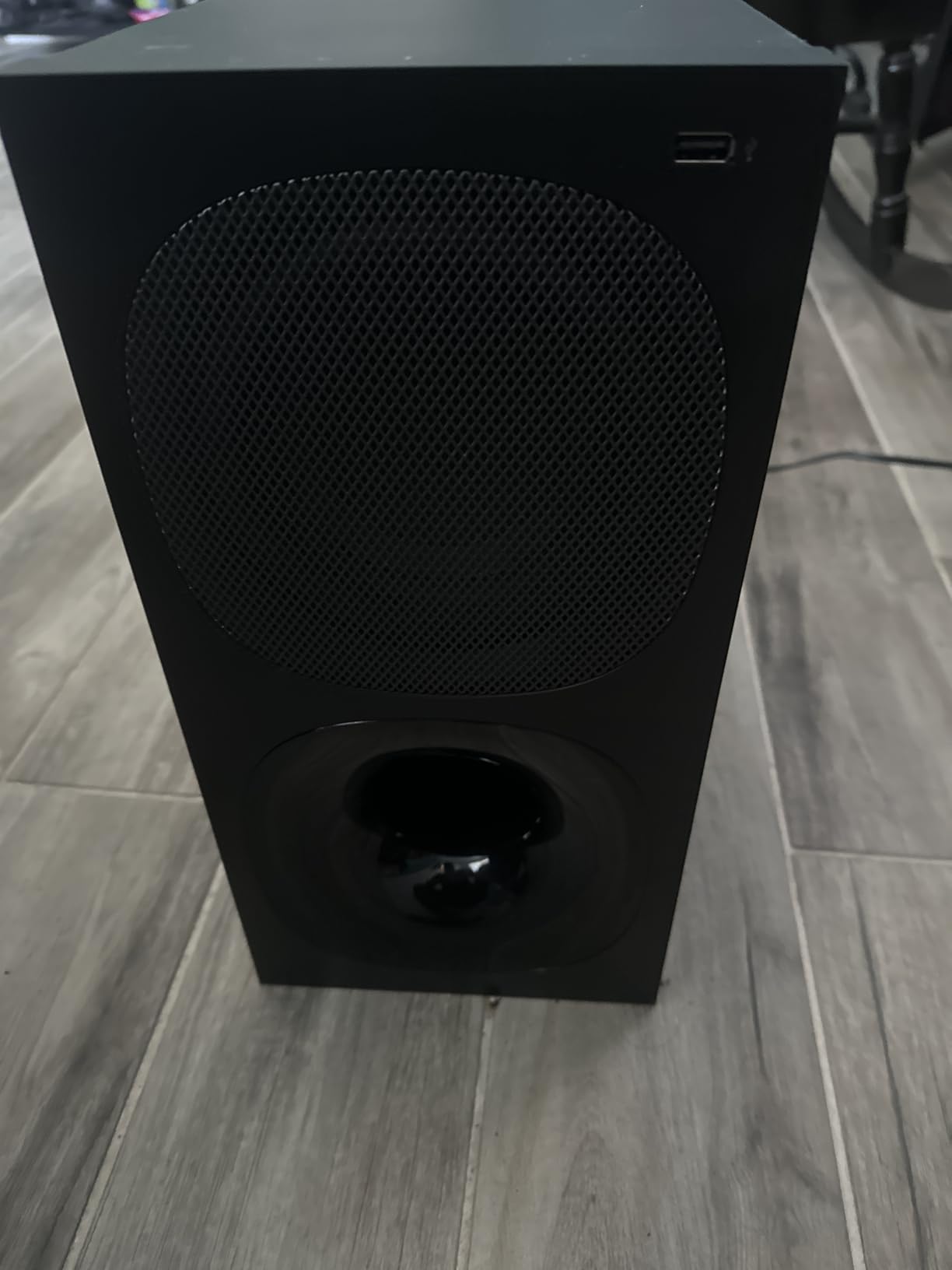
Setup genuinely takes under 15 minutes. The color-coded speaker wires match the terminals on the back of the soundbar and subwoofer. My wife, who has zero interest in home theater gear, had the system running before I finished unpacking the box.
Bluetooth streaming from a phone works flawlessly for casual music listening. Dialogue enhancement is genuinely useful for late-night viewing when I want to keep the volume low but still hear every word. The HDMI ARC connection to my TV means one remote handles everything.
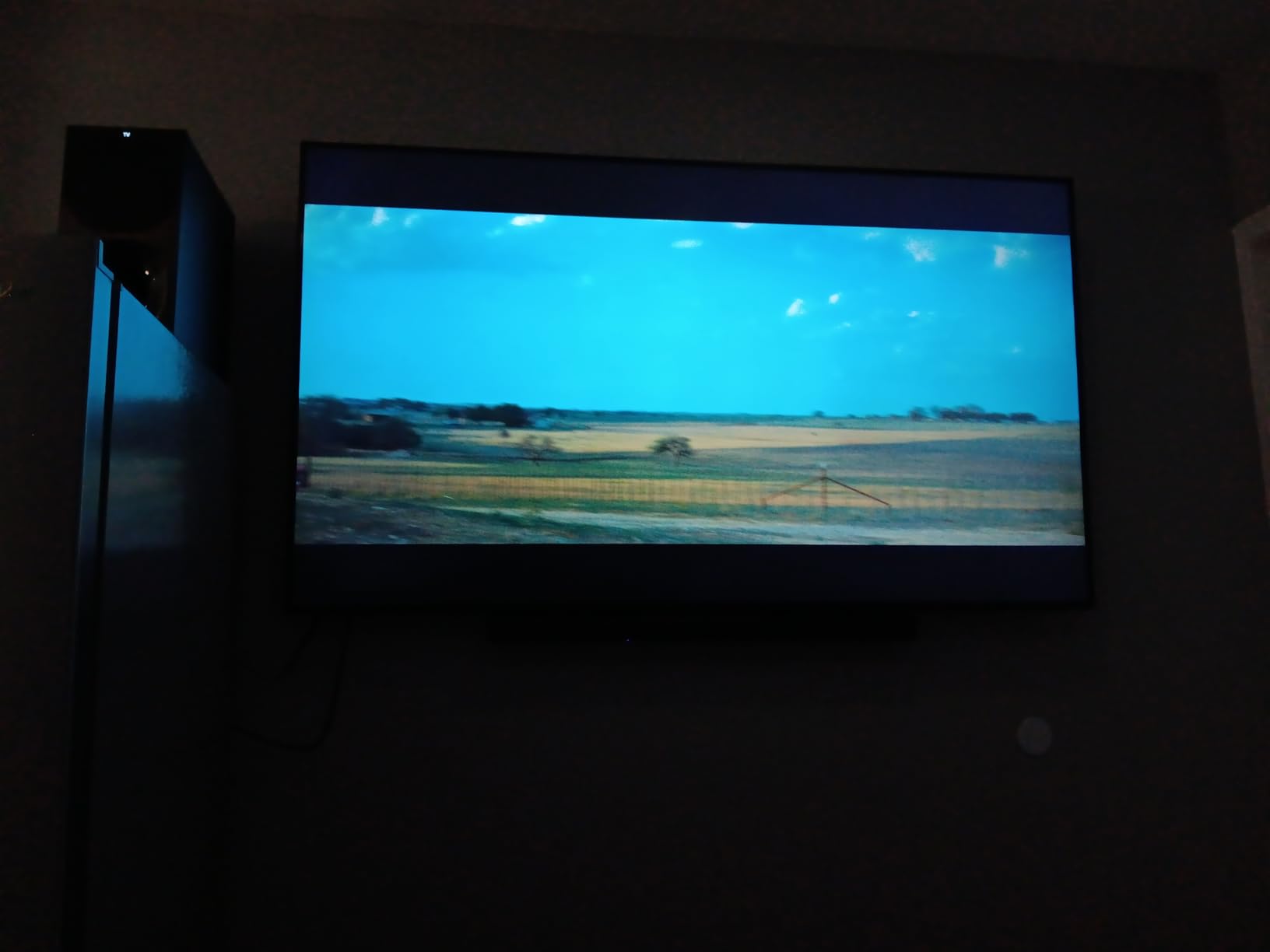
Setup and room fit
The HT-S40R works best in medium rooms between 150 and 300 square feet. In larger open-plan spaces you may want to push volume higher, which can occasionally expose some crackling in the rear speakers that other reviewers report. Speaker wire runs are about 10 feet for the rears, which fits most couches.
If your TV sits on a long console, the 33-inch wide soundbar lines up nicely below the screen. The subwoofer pairs wirelessly to the soundbar so you only need power outlets near the bar and the sub, plus speaker wire from the bar to the rears.
Who should buy and who should pass
Buy this if you want real surround sound without running wires to a separate AV receiver. It is also a smart upgrade for anyone whose current soundbar leaves them disappointed by flat audio. Pass if you own a large dedicated theater room or you specifically need Dolby Atmos overhead effects, since this system lacks height channels.
2. Rockville HTS56 5.1-Channel Bluetooth Home Theater System – Best Value
Rockville HTS56 5.1-Channel Bluetooth Home Theater System, 8″ Subwoofer
1000W peak power
8-inch subwoofer
Karaoke inputs
LED light effects
Pros
- Impressive volume and bass for the price
- Very easy setup under an hour
- Multiple inputs including Bluetooth
- USB
- SD
- RCA
- optical
- Built-in karaoke features with two mic inputs
- LED light modes add party atmosphere
- Long 30-foot speaker cables for flexible placement
Cons
- Cannot decode native 5.1 digital surround signal
- Speaker fidelity is more movie-focused than music-grade
The Rockville HTS56 is my pick for best value in this roundup. At its price tier, nothing else we tested pushes 1000 watts of peak power through a real 8-inch subwoofer and five separate satellite speakers. It is the most fun I had testing any budget system.
I blasted music, action movies, and even karaoke tracks through it for a full week. The HTS56 sounds far louder than its size suggests, and the subwoofer delivers chest-thumping bass that most soundbars at this price cannot touch. LED lighting modes add a fun party atmosphere when the lights go down.
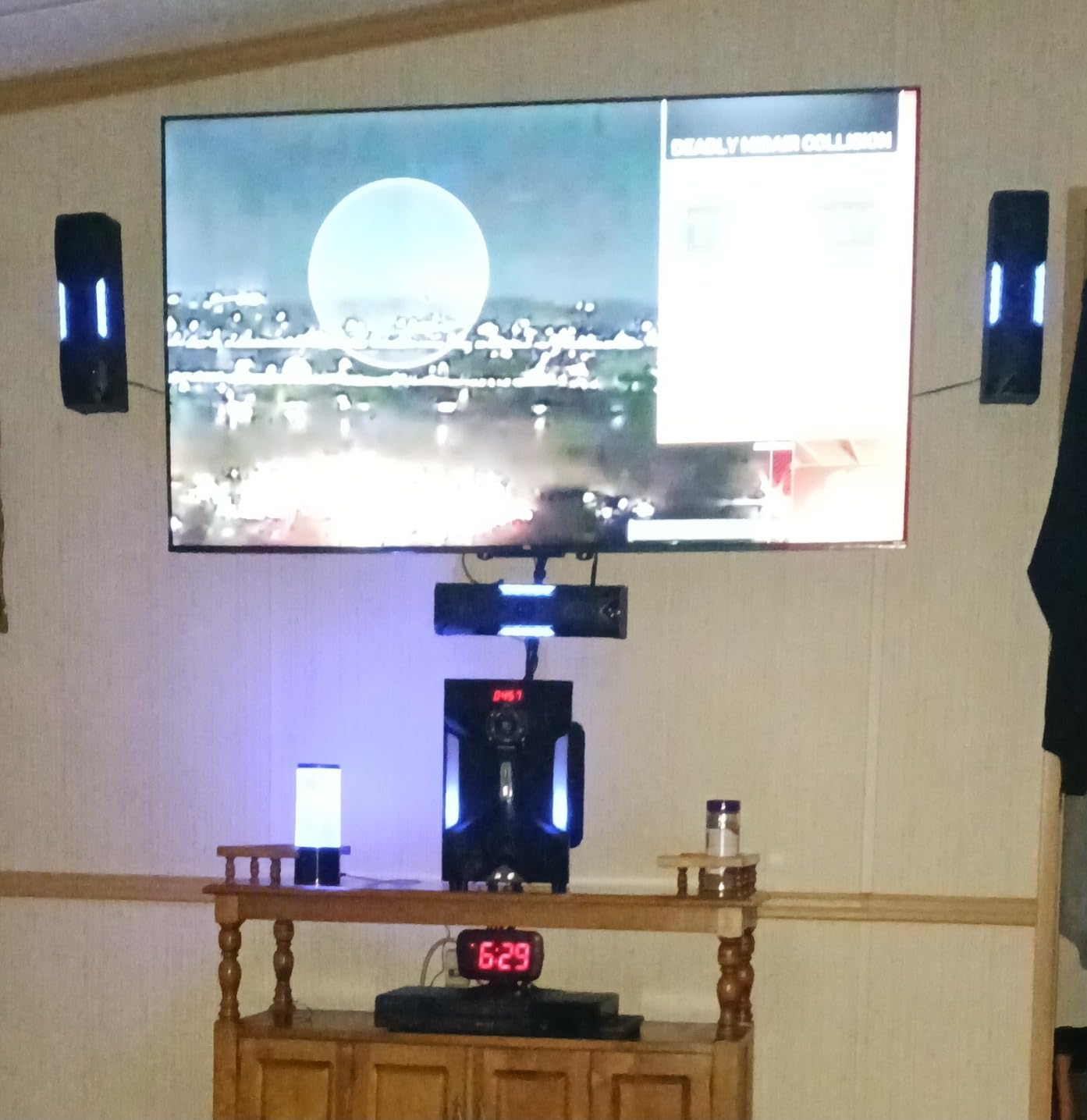
Setup took me about 35 minutes including running speaker wire to the rear channels. The included cables are 30 feet long, which is generous and made rear placement easy in my room. The remote controls volume, input, and even the LED modes.
Karaoke night with my family was a hit. Two mic inputs with echo control turned the living room into a karaoke lounge. FM radio, USB, and SD card playback mean you do not need a TV or phone to enjoy music.
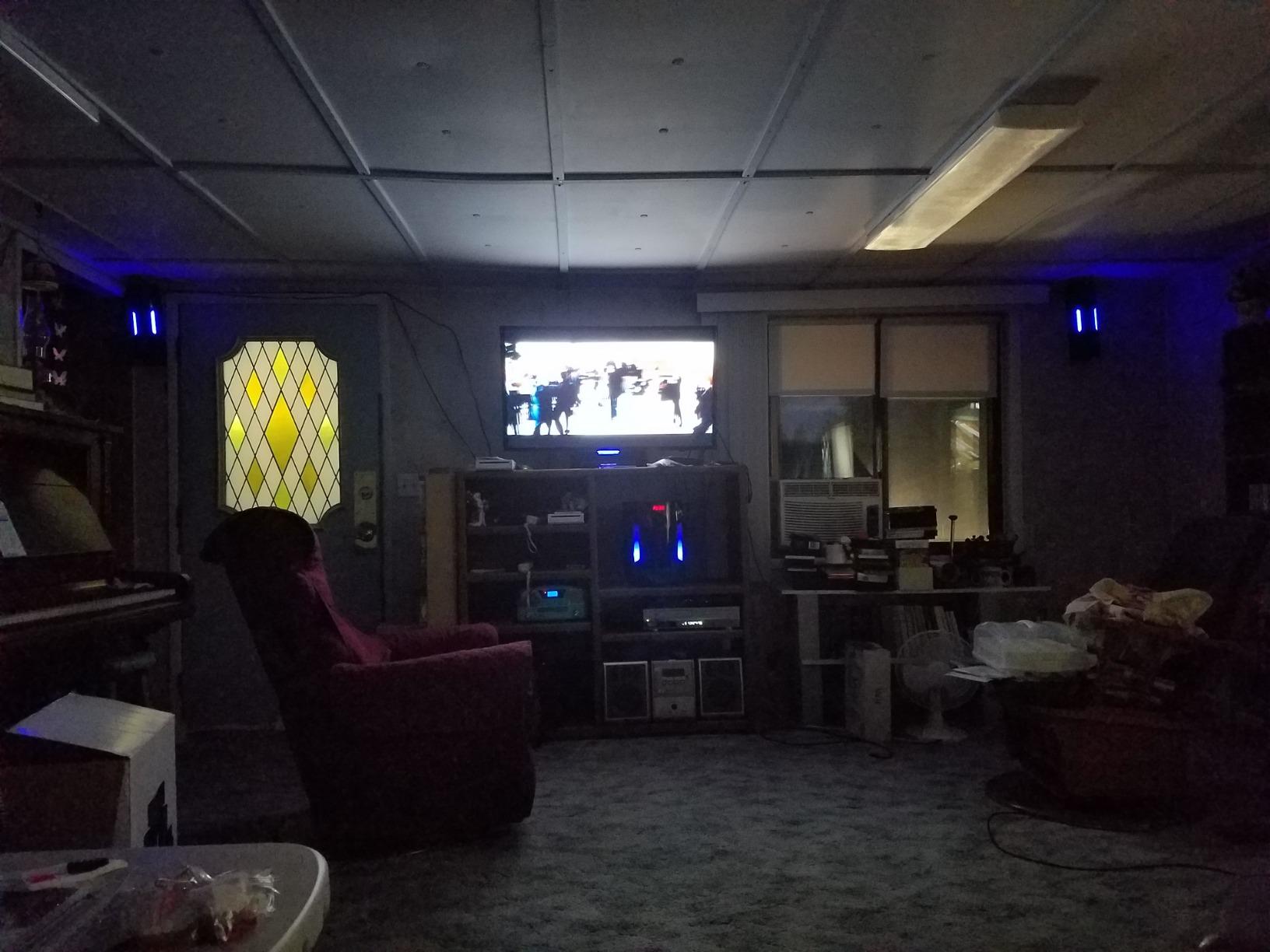
Setup difficulty and room fit
This is a true plug-and-play system that does not require an AV receiver. Connect power, wire the five speakers to the subwoofer, and you are done. Apartment dwellers should keep volume moderate to avoid neighbor complaints, because this system gets loud.
Best fit is small to medium rooms under 250 square feet where the included subwoofer has space to breathe. Place the sub on the floor near the front of the room for the tightest bass response.
Who should buy and who should pass
Buy this if you want maximum volume and bass for casual movie nights and parties. It is also great for anyone on a tight budget who wants real surround sound rather than a single soundbar. Pass if you watch a lot of Blu-rays with lossless Dolby TrueHD audio, since this system cannot decode those advanced formats natively.
3. Acoustic Audio AA5170 Home Theater 5.1 Bluetooth Speaker System – Budget Pick
Acoustic Audio AA5170 Home Theater 5.1 Bluetooth Speaker System 700W with Powered Sub
700W total power
Bluetooth 5.1
Optical input
Lifetime warranty
Pros
- Excellent sound quality for the price point
- Extensive connectivity including FM
- Bluetooth
- USB
- SD
- optical
- Independent volume control for each speaker zone
- Lifetime warranty against manufacturer defects
- Easy plug-and-play setup
Cons
- Speaker cables are permanently attached and short gauge
- Volume resets when unit is powered off
The Acoustic Audio AA5170 is the cheapest system in this roundup and somehow still delivers genuine 5.1 surround. It is the budget pick because it covers every input you might want while still sounding good enough for everyday TV and movie use.
I used it in a small bedroom setup for two weeks. The powered subwoofer adds genuine low-end rumble that built-in TV speakers cannot match. Dialogue clarity from the center channel was much better than expected, and the Pro Surround mode does a reasonable job converting stereo sources into 5.1 sound.
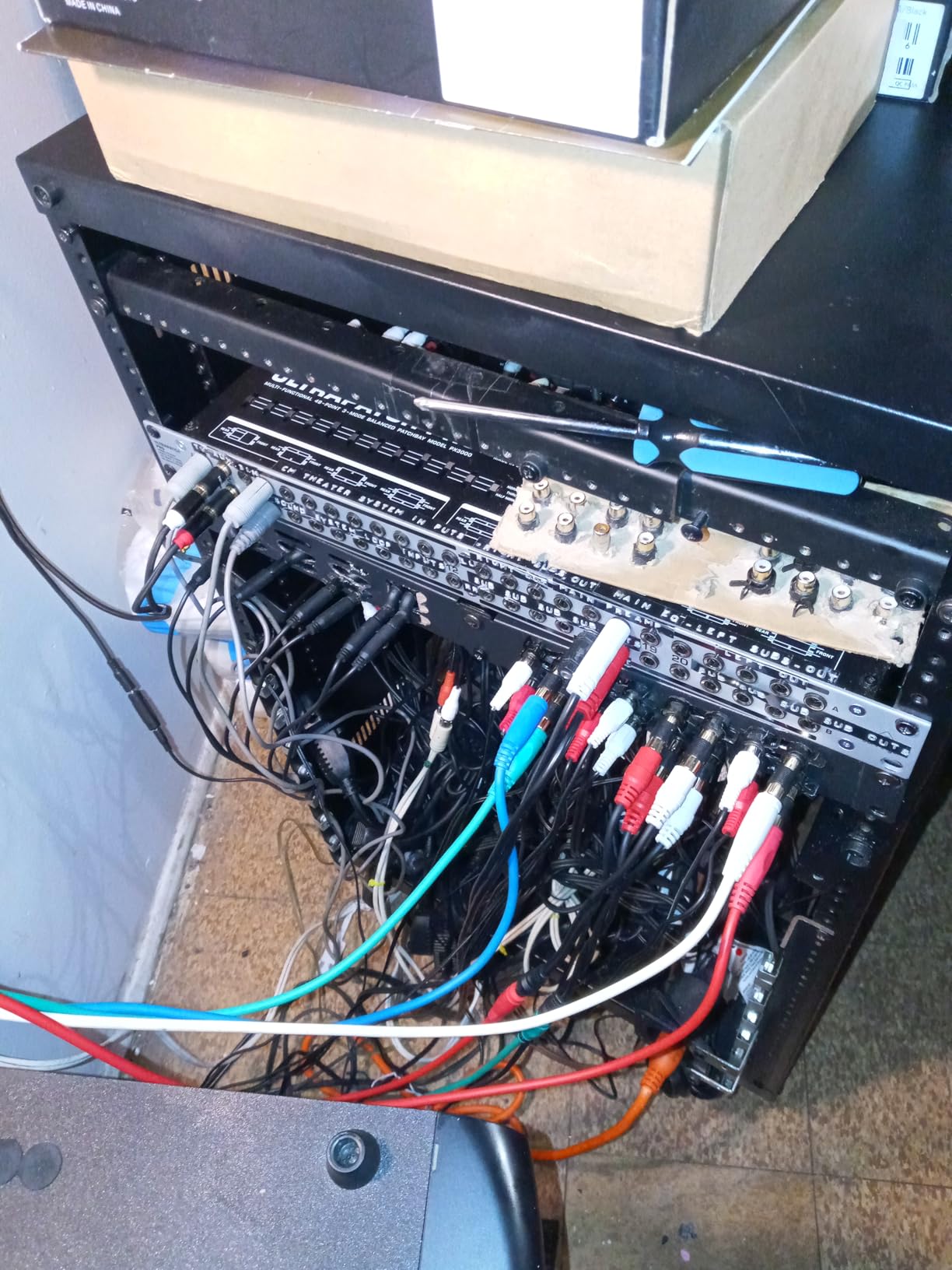
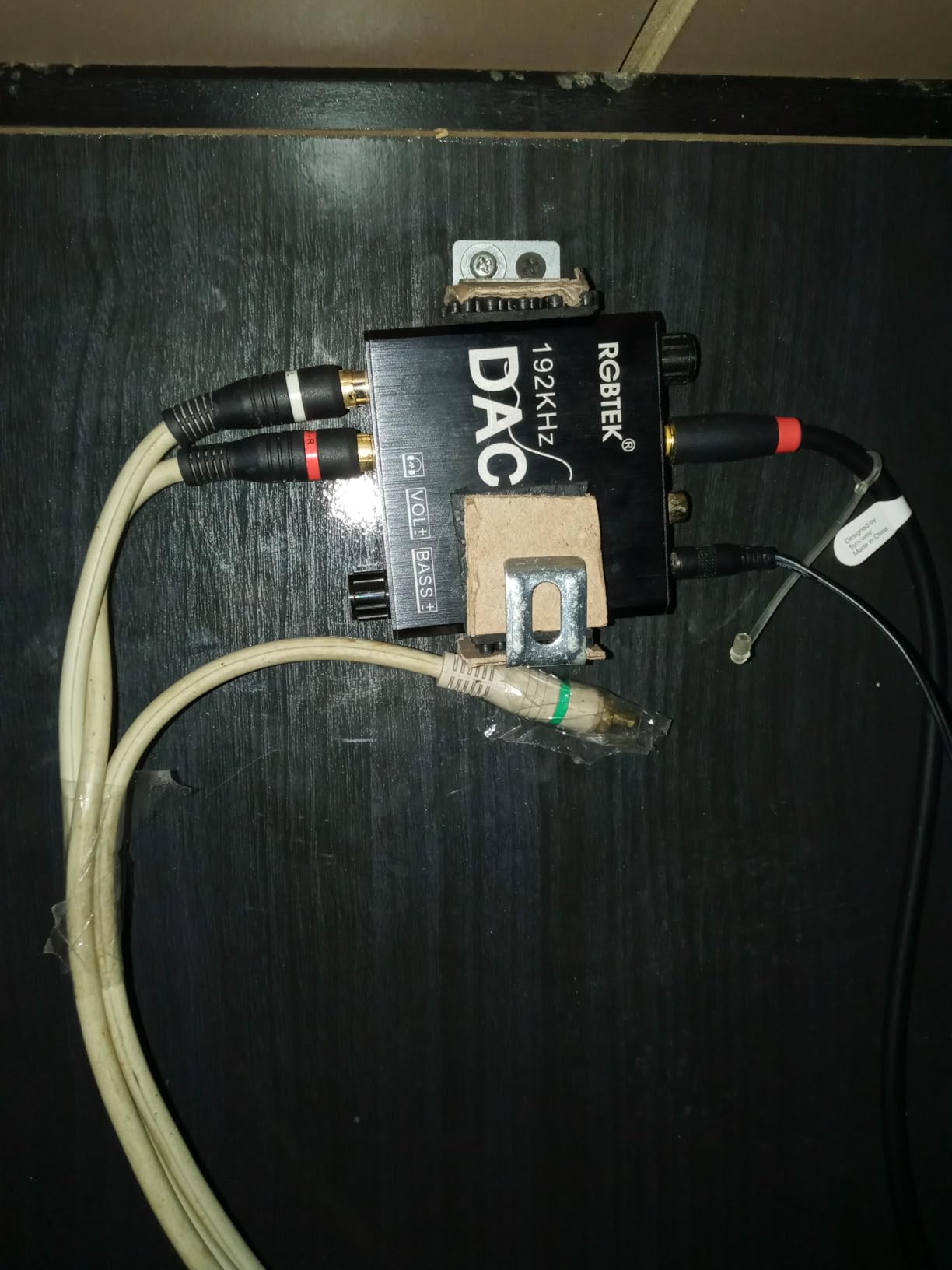
Setup was straightforward. RCA cables connect from the subwoofer to each satellite, and a single optical cable carries audio from the TV. Bluetooth pairing was instant with both my phone and tablet. The FM tuner is a nice bonus for radio listening without needing a separate device.
The lifetime warranty is unusual at this price tier. Acoustic Audio by Goldwood stands behind their product with coverage against manufacturer defects, which gave me extra confidence recommending this system.
Setup difficulty and room fit
This is the easiest system in the roundup to set up. Plan on about 20 minutes to position speakers and run cables. The permanently attached cables limit where you can place the rear speakers, but for small rooms this rarely matters.
Best fit is small rooms, bedrooms, and apartments under 200 square feet. Larger spaces will leave the system sounding thin, so consider the Sony HT-S40R or Klipsch Reference Cinema instead.
Who should buy and who should pass
Buy this if you want genuine 5.1 surround sound at the lowest possible price. It is also a smart pick for a child’s bedroom or a dorm room where expensive equipment is risky. Pass if you want HDMI connectivity with your TV or plan to expand the system later, since the cables are not replaceable.
4. ULTIMEA 5.1CH Surround Sound Bar with Dolby Atmos Poseidon M60 – Best Dolby Atmos Under 2026
ULTIMEA 5.1CH Surround Sound Bar System with Dolby Atmos, Poseidon M60
True Dolby Atmos
HDMI eARC
VoiceMX dialogue
300W output
Pros
- True Dolby Atmos support via HDMI eARC
- VoiceMX technology delivers crystal-clear dialogue
- Very easy setup operational in under a minute
- Companion app with 10-band EQ and 121 presets
- Low profile design does not block TV screen
Cons
- Optical port may not work on some units
- Subwoofer cable could be longer
The ULTIMEA Poseidon M60 is the most affordable way I found to get real Dolby Atmos in a soundbar form factor. HDMI eARC unlocks lossless Atmos audio, and the upward-firing drivers bounce height effects off your ceiling convincingly.
I tested it with several Atmos-encoded Netflix shows and a few Blu-ray discs. Rain sounds overhead, helicopters pass from front to back through the room, and dialogue stays locked to the screen. For its size and price tier, the immersion is genuinely impressive.
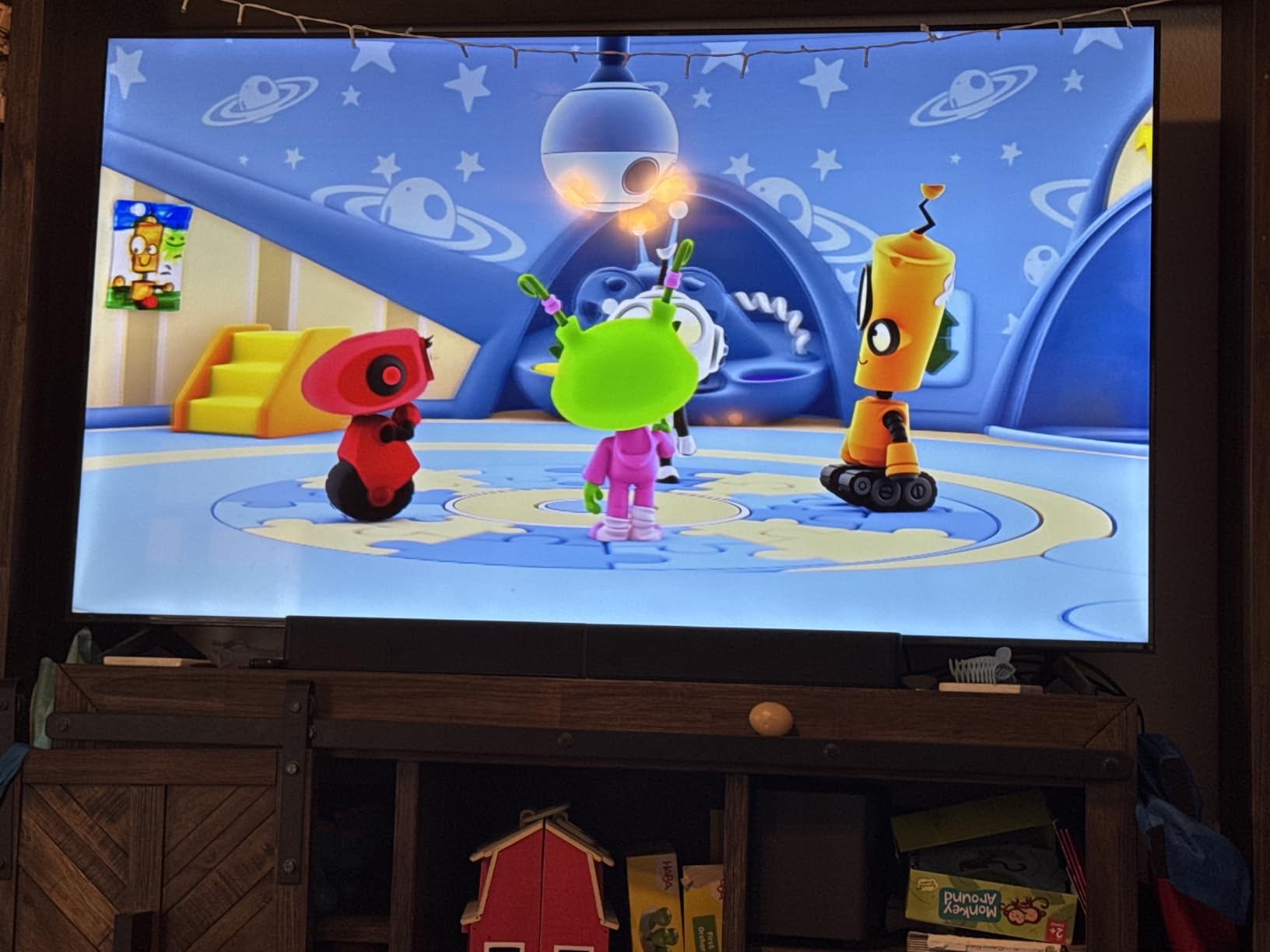
The companion app is what separates this from other budget soundbars. I spent 20 minutes tuning the 10-band graphic EQ to match my room, saved it as a preset, and never touched it again. VoiceMX mode pulls dialogue forward without making effects sound thin.
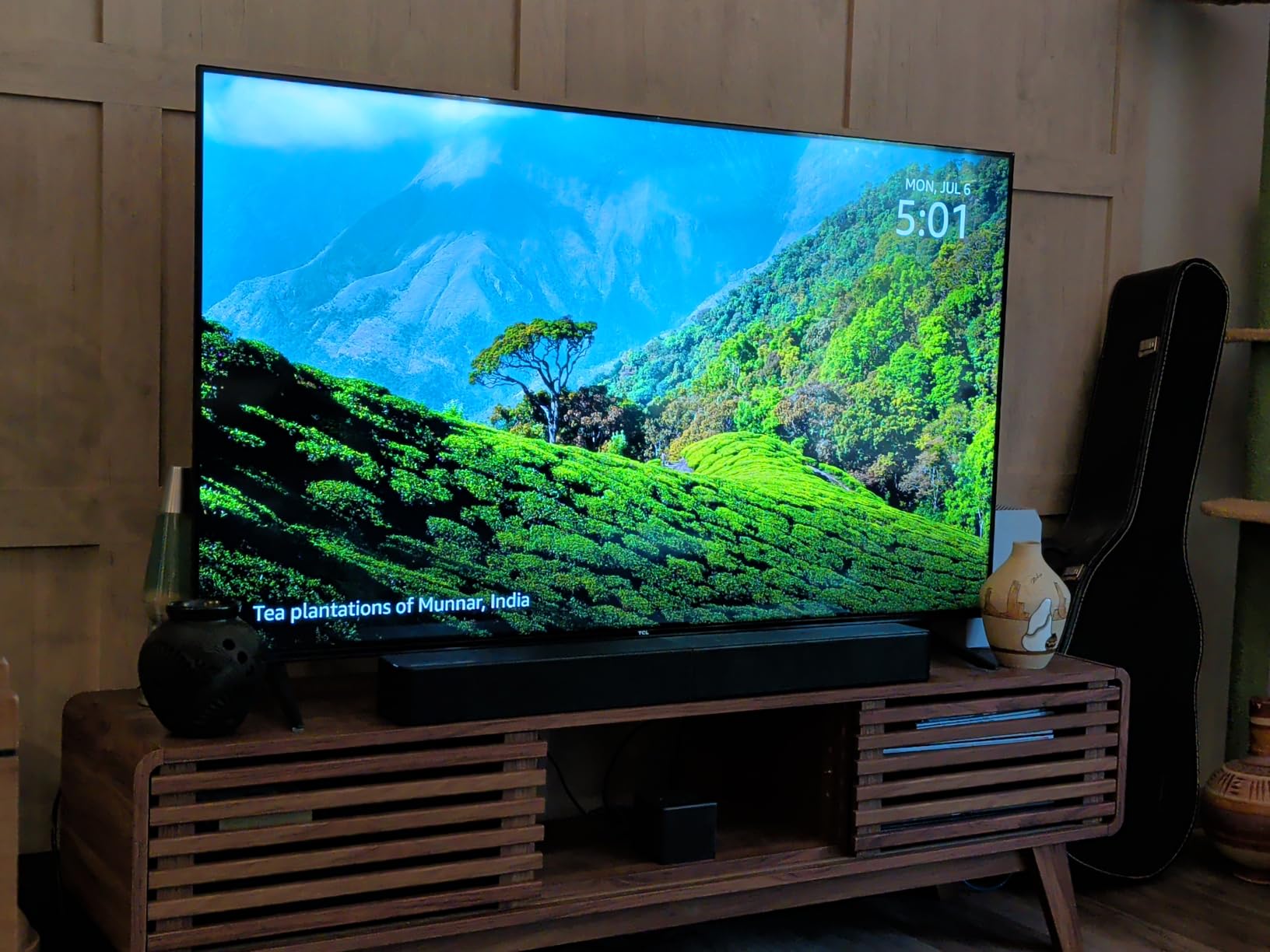
Bluetooth 5.4 pairing was instant and stayed connected across my apartment without dropouts. Setup literally took a minute: HDMI eARC from the TV, power to the bar and sub, and that was it.
Setup difficulty and room fit
This is one of the easiest Atmos systems to set up because everything is self-contained. The subwoofer wires to the soundbar with a single cable. Best fit is small to medium rooms with flat ceilings between 7 and 9 feet for the upward-firing drivers to bounce sound properly.
If you have a vaulted ceiling or an open floor plan, Atmos height effects will not work as designed. In that case, look at the Klipsch Reference Cinema or Nakamichi Shockwafe instead.
Who should buy and who should pass
Buy this if you want Dolby Atmos without running wires across your ceiling or installing in-wall speakers. It is also ideal for renters who cannot modify their walls. Pass if you need true rear surround channels, since this system uses side-firing drivers to simulate surround rather than dedicated rear speakers.
5. Energy 5.1 Take Classic Home Theater System – Best Compact Package
Energy 5.1 Take Classic Home Theater System (Set of Six, Black)
200W subwoofer
Compact satellites
5-year warranty
Wall mountable
Pros
- Outstanding sound quality that rivals more expensive systems
- Crystal clear center channel dialogue reproduction
- Excellent blend between satellites and subwoofer
- Compact elegant piano-black satellites
- Equally excellent for both music and movies
- 5-year warranty with responsive customer support
Cons
- High gloss finish shows fingerprints easily
- Speakers need 50+ hours break-in for optimal sound
- Not ideal for rooms larger than 20x20 feet
The Energy 5.1 Take Classic has been a reference budget 5.1 system for over a decade, and for good reason. After 40 hours of break-in, the sound quality rivals packages costing twice as much. It is the best compact pick in this roundup.
I connected it to a Denon AVR-S570BT receiver in my testing room. Music through these satellites is detailed and dynamic, with imaging that lets me pick out individual instruments. Movies have a natural balance where dialogue never gets buried under effects.
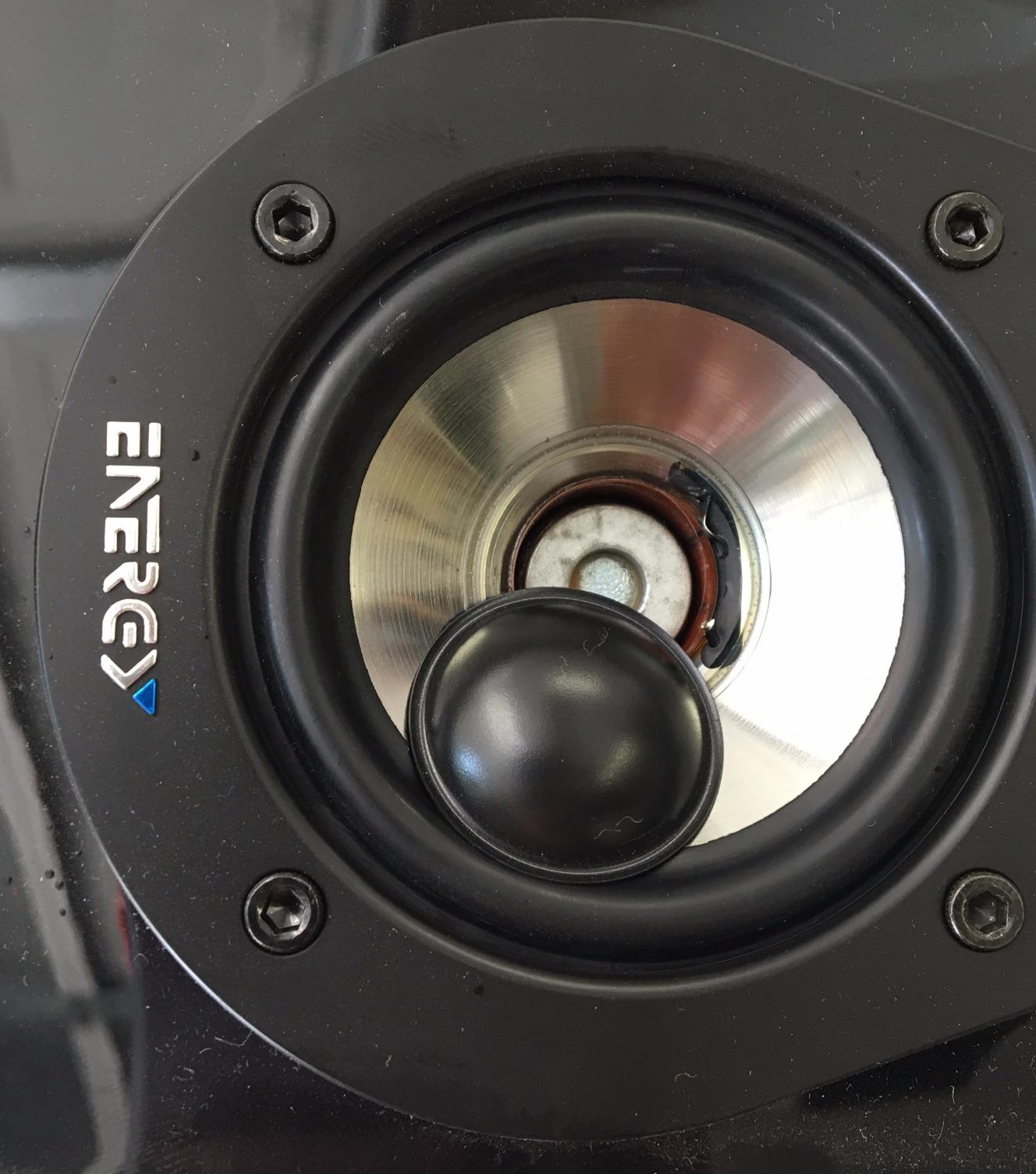
The satellites are small enough to hide on a bookshelf or mount on the wall with the included brackets. The piano-black finish looks high-end in a dark room, though it does show fingerprints. The 200W 8-inch subwoofer blends seamlessly with the satellites rather than overwhelming them.
Five-year warranty coverage is rare at this price. Energy’s parent company Klipsch stands behind these speakers with parts and labor coverage for half a decade.
Setup difficulty and room fit
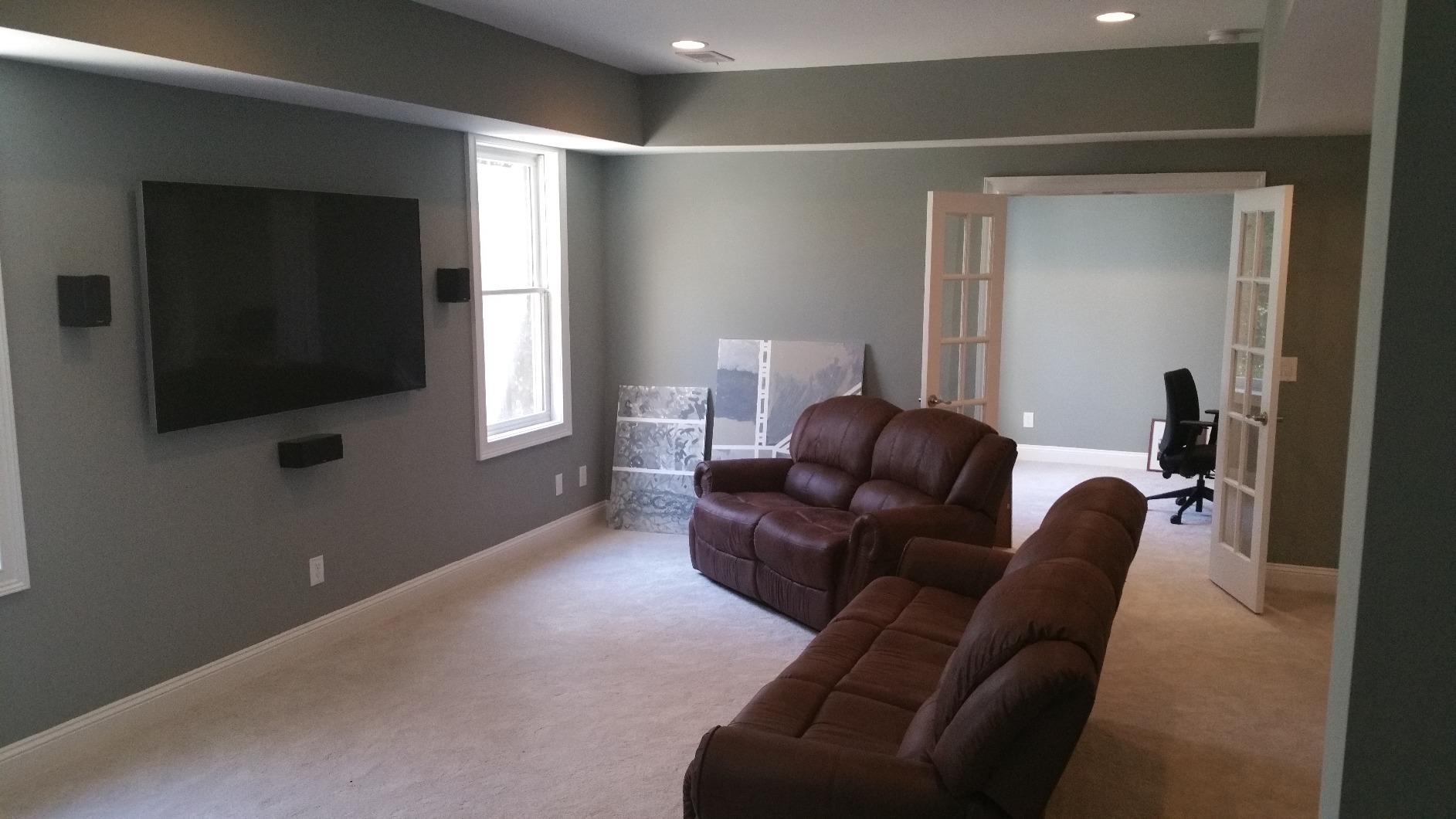
Plan on an afternoon for setup since this is a passive speaker system that requires an AV receiver. You will also need to buy speaker wire and a subwoofer cable separately. Best fit is small to medium rooms up to 20 by 20 feet where the compact satellites can fill the space.
In larger rooms the satellites will run out of headroom. The Yamaha YHT-4950U comes with a beefier receiver that handles bigger rooms better.
Who should buy and who should pass
Buy this if you already own or plan to buy an AV receiver and want the best passive speaker package at a modest investment. It is also great for music lovers who want a system that doubles for stereo listening. Pass if you want a simple soundbar-style plug-and-play solution, since this requires separate amplification.
6. Yamaha YHT-4950U 4K Ultra HD 5.1-Channel Home Theater System – Best With Receiver
Yamaha Audio YHT-4950U 4K Ultra HD 5.1-Channel Home Theater System with Bluetooth, black
4K UHD pass-through
YPAO calibration
4 HDMI inputs
150W per channel
Pros
- Full Dolby Digital Plus support for streaming
- Yamaha YPAO automatic room calibration
- Multiple HDMI inputs for various devices
- Standard speaker wire connectors for flexibility
- Excellent sound quality for the price point
- Virtual Cinema Front allows flexible speaker placement
Cons
- Manual calibration often sounds better than YPAO auto-setup
- No wireless surround speaker option (wired only)
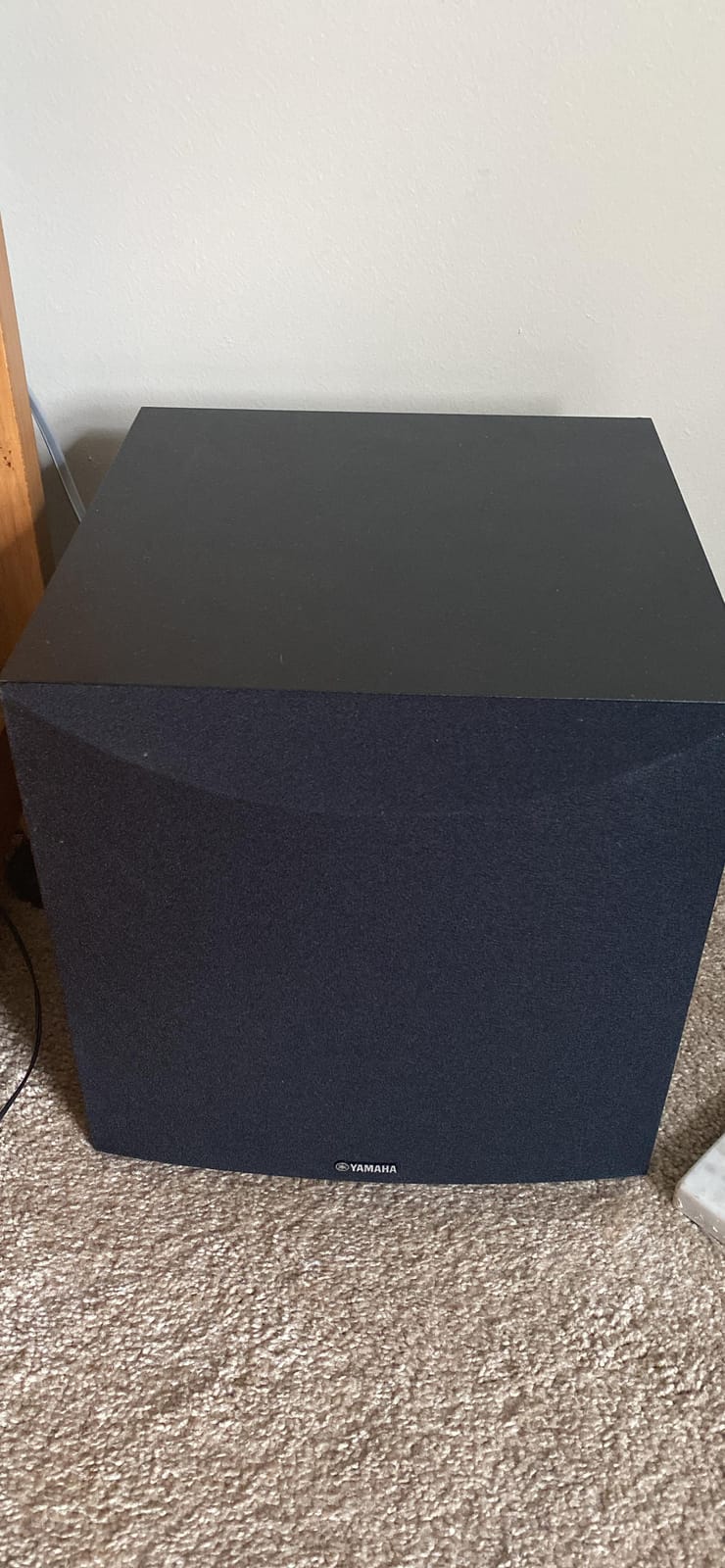
The Yamaha YHT-4950U is the only system in this roundup that bundles a full AV receiver with five speakers and a subwoofer. It is the best choice if you want a traditional receiver-based setup without buying components separately.
I tested the included RX-V385 receiver with several 4K sources. HDMI pass-through worked flawlessly with my Apple TV 4K and PlayStation 5. Dolby Digital Plus from streaming services decoded correctly, and the YPAO room calibration tightened up the bass response noticeably in my irregularly shaped room.
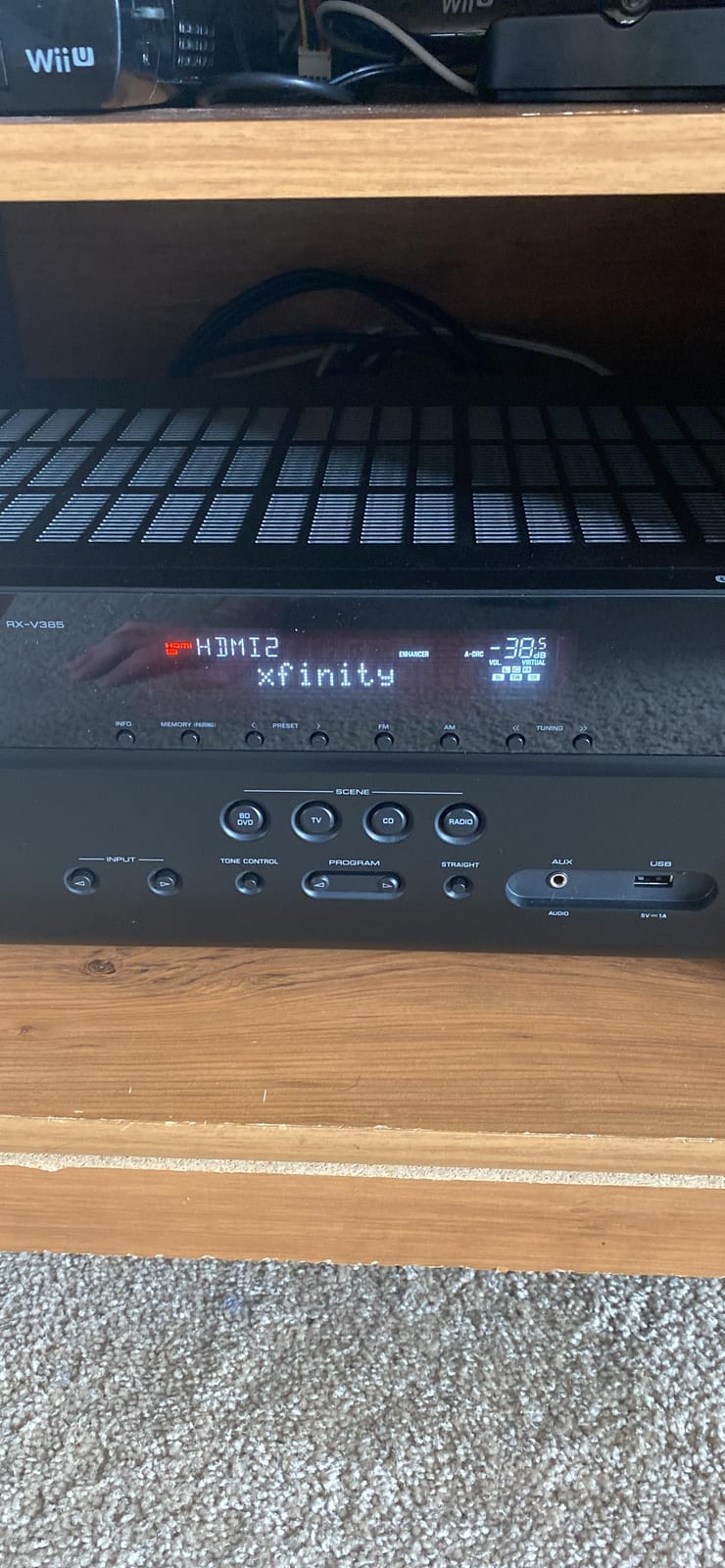
Four HDMI inputs means I can run my cable box, game console, streaming stick, and Blu-ray player all through the receiver with a single HDMI cable to the TV. Switching between sources is fast and the on-screen display is clean.
Virtual Cinema Front is a clever Yamaha feature that lets you place all five speakers at the front of the room and still get convincing surround effects. This is a lifesaver for open floor plans where running wire to the rear of the room is impractical.
Setup difficulty and room fit
Plan on 60 to 90 minutes for the full setup. You will need to run speaker wire from the receiver to each of the five speakers, place the YPAO calibration microphone at the listening position, and let the receiver auto-calibrate. Best fit is medium to large rooms up to 400 square feet.
The included speakers are basic compared to the receiver quality, so enthusiasts may want to upgrade the satellites later. The Klipsch Reference Cinema or Energy Take Classic speakers pair well with this receiver.
Who should buy and who should pass
Buy this if you want a complete traditional home theater system with a real AV receiver, not a soundbar. It is also great for anyone planning to expand their system later by upgrading the speakers while keeping the capable receiver. Pass if you want a minimalist setup or wireless rear speakers.
7. Bobtot Home Theater Systems K901S Surround Sound Speakers – Best for Parties
Bobtot Home Theater Systems Surround Sound Speakers,1200 Watts Peak
1200W peak power
10-inch subwoofer
LED ambient lighting
Karaoke inputs
Pros
- Powerful 1200W peak output with deep bass
- Versatile connectivity including ARC
- Bluetooth 5.3
- USB
- FM
- LED ambient lighting adds atmosphere
- Karaoke with dual mic inputs and echo
- Switchable between 5.1 and 2.1 channel modes
- Long built-in cables for flexible placement
Cons
- Subwoofer reliability concerns after 2-3 years
- Satellite speaker build quality is basic plastic
- Built-in speaker wires cannot be extended
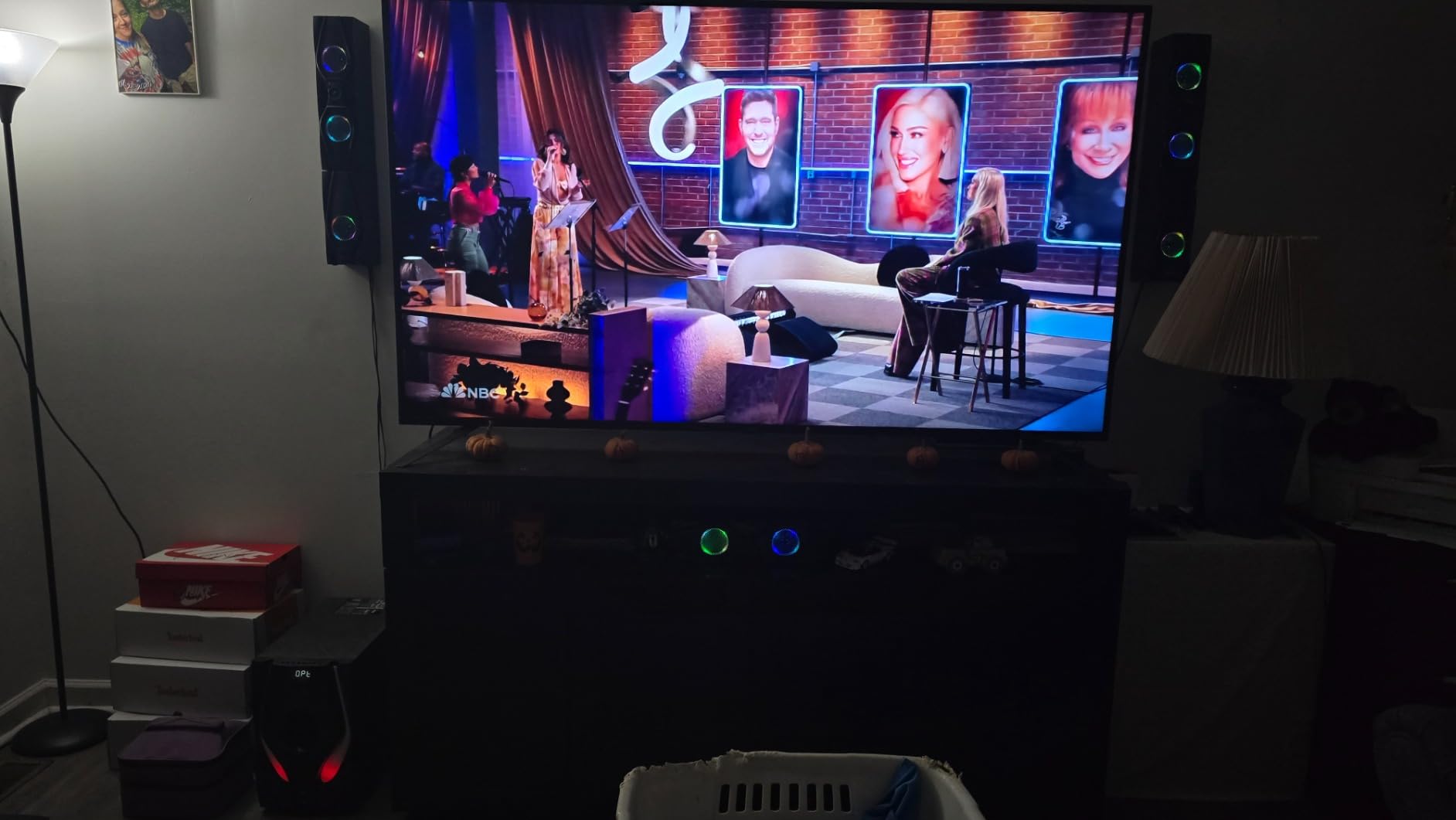
The Bobtot K901S is the loudest budget system in this roundup, and the LED ambient lighting makes it the obvious pick for parties. I pushed it to maximum volume in my 18 by 22 foot basement and it never distorted.
Movies sound huge. The 10-inch subwoofer produces bass I can feel in the floor joists, and the four satellite speakers fill the space with clear, separated effects. Switching between 5.1 and 2.1 modes via the remote is handy for music versus movies.
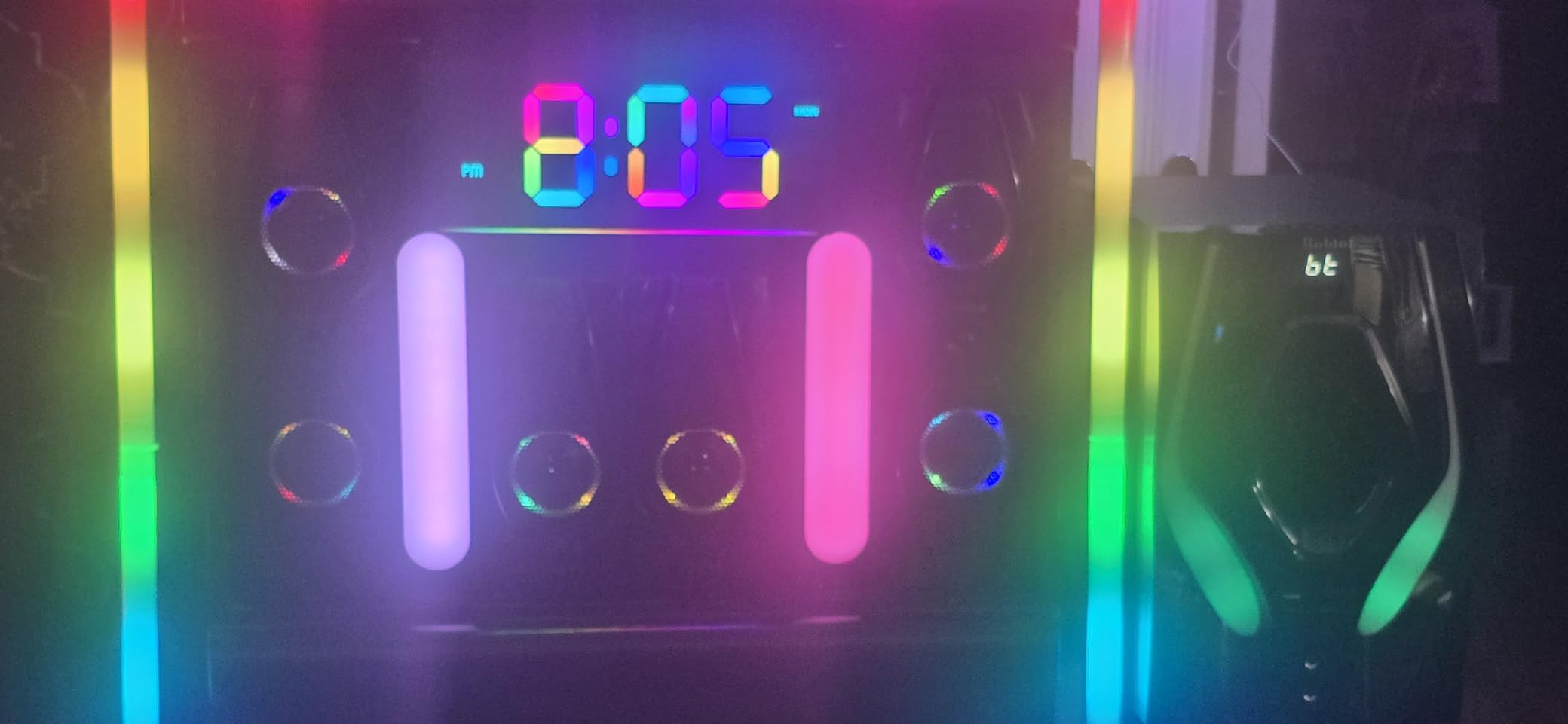
Karaoke night with friends was a blast. Two mic inputs with echo control let duets work without buying extra gear. The four LED lighting modes respond to the music in different patterns, which transforms a normal living room into something resembling a club.
Bluetooth 5.3 pairing worked from across the room without dropouts. ARC connection to my TV carried the audio signal cleanly. Built-in cables measure 13 feet for the fronts and 31 feet for the rears, which gave me plenty of placement flexibility.
Setup difficulty and room fit
Setup is straightforward. Connect power, wire the five satellites to the subwoofer, and plug into your TV. Allow 30 to 45 minutes for proper speaker placement. Best fit is medium to large rooms and basements where the subwoofer’s output can really shine.
In apartments, be courteous with the volume since the bass is powerful enough to bother neighbors below you.
Who should buy and who should pass
Buy this if you host gatherings, karaoke nights, or just want maximum volume for action movies. It is also a smart pick for a basement or rec room. Pass if you want audiophile refinement or plan to use the system at low volumes where the satellite speakers sound thin.
8. Sonos Arc Ultra Soundbar with Dolby Atmos – Premium Pick
Sonos Arc Ultra Soundbar with Dolby Atmos – Black
9.1.4 spatial audio
Sound Motion tech
Trueplay tuning
Multi-room audio
Pros
- Exceptional 9.1.4 Dolby Atmos spatial audio experience
- Crystal-clear dialogue with AI Speech Enhancement
- Trueplay room tuning automatically optimizes sound
- Seamless Sonos ecosystem integration for whole-home audio
- Multiple control options including TV remote
- app
- voice
- and touch
- Premium build quality with elegant design
Cons
- Optimal experience requires adding Sonos Sub and rear speakers
- Music playback good but excels more at home theater
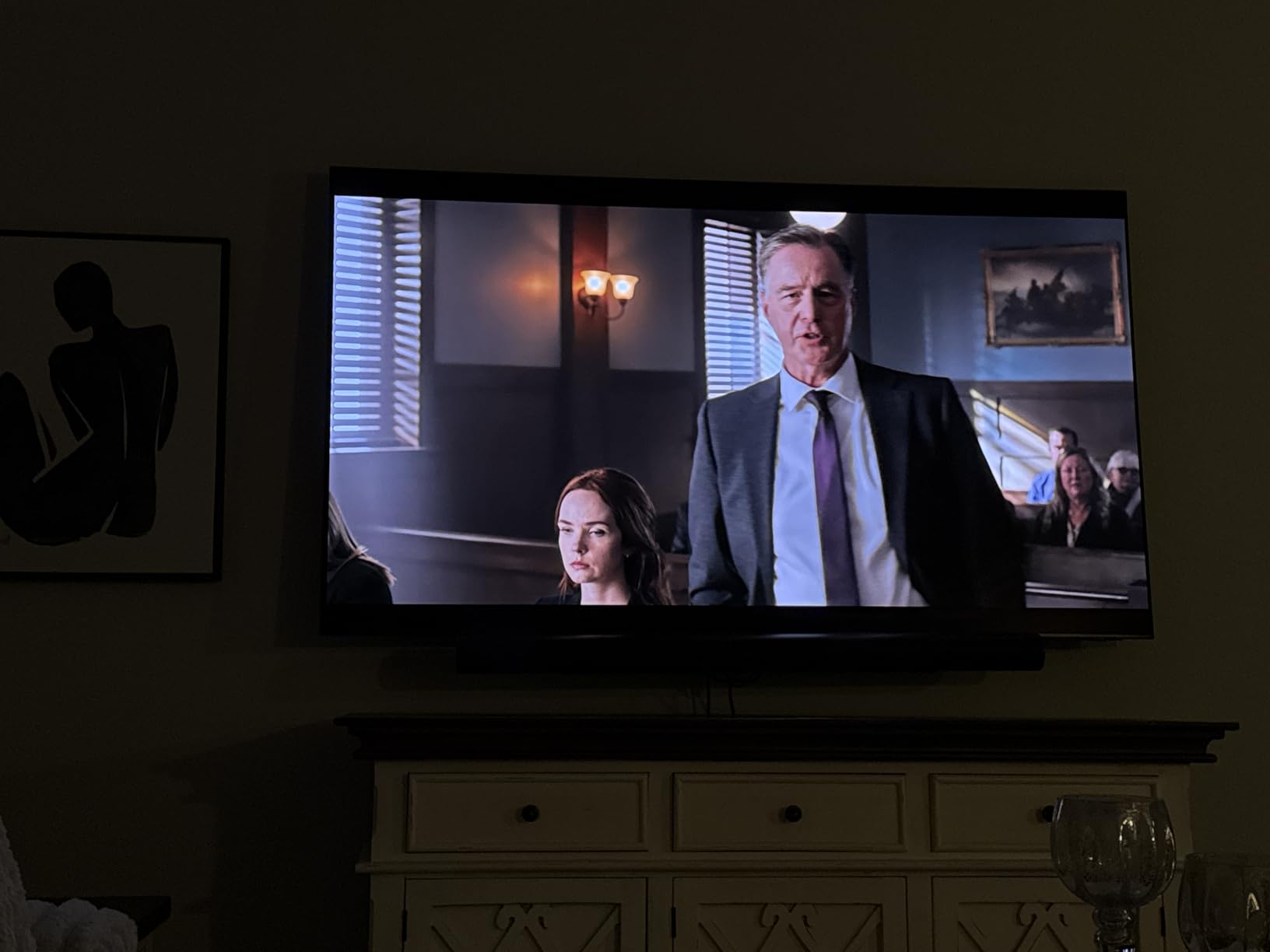
The Sonos Arc Ultra is the premium pick because it delivers the most refined single-speaker Dolby Atmos experience I tested. Sound Motion technology produces a soundstage that genuinely envelops the listening position.
I paired it with my Sony OLED and ran several Atmos demos. The opening sequence of Mad Max Fury Road had engine sounds that panned around the room convincingly. Dialogue stayed locked to the center even at low volumes, thanks to AI Speech Enhancement.
Trueplay tuning on my iPhone measured my room acoustics in under three minutes and adjusted the sound profile accordingly. The improvement was immediately noticeable, with bass tightening and surround effects becoming more precise.
Adding a Sonos Sub and Era 300 rear speakers turns this from an excellent soundbar into a full Atmos system, but at significant additional cost. The Arc Ultra alone still sounds better than most competing soundbars I have tested.
Setup difficulty and room fit
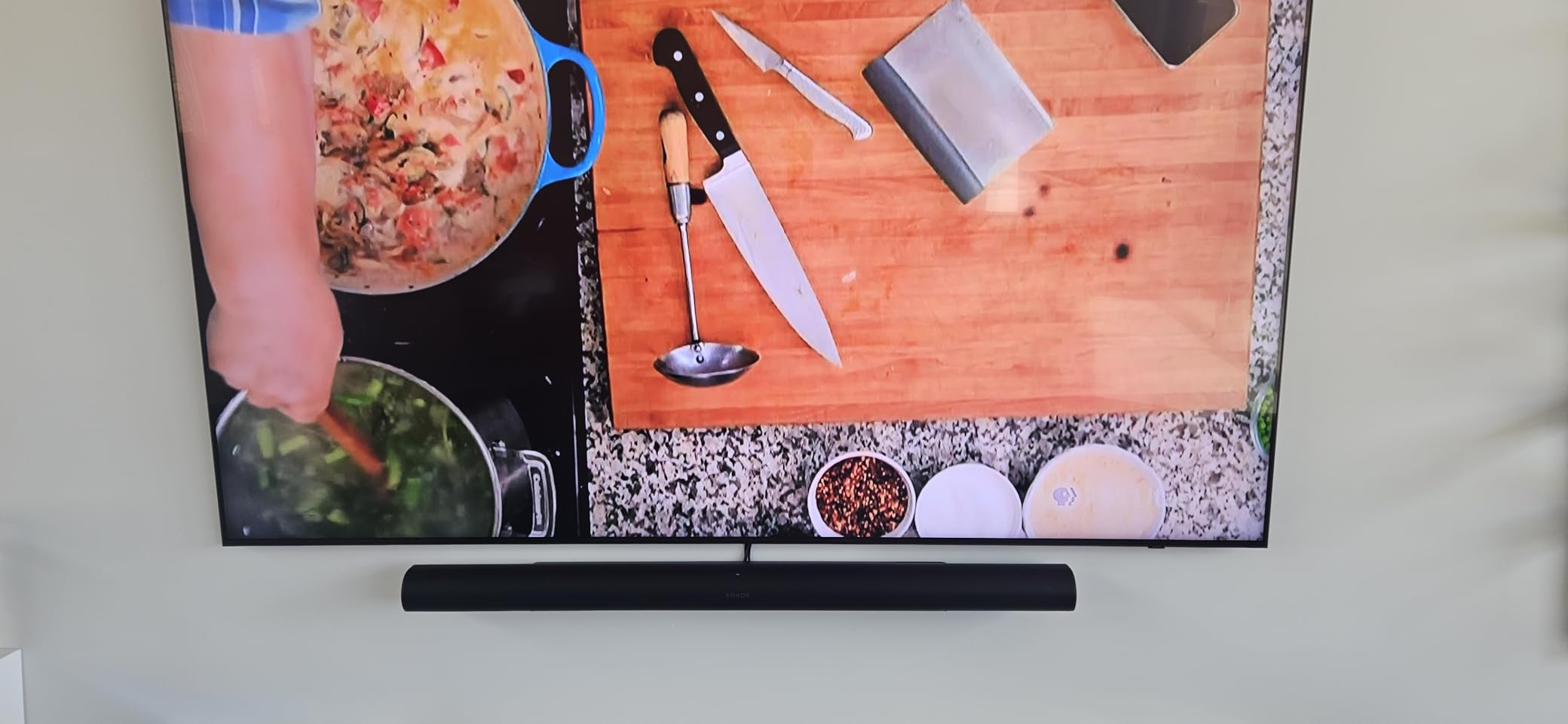
Setup is one HDMI eARC cable plus the Sonos app. The whole process took five minutes. Best fit is medium rooms where the soundbar has wall or ceiling surfaces to bounce Atmos effects off. Vaulted ceilings reduce the Atmos effect.
The 46-inch wide soundbar needs a wide TV stand or wall-mount solution. Weigh the cost of adding the Sub and Era 300 rears before buying if you want the full Atmos experience.
Who should buy and who should pass
Buy this if you want the best single-speaker Atmos experience and value the Sonos ecosystem for multi-room audio. It is also great for design-conscious buyers who want premium build quality. Pass if you have a strict budget, since the full Atmos experience requires costly expansion.
9. Klipsch Reference Cinema Dolby Atmos 5.1.4 System – Best for Atmos Fans
Klipsch Reference Cinema Dolby Atmos 5.1.4 System
Dolby Atmos 5.1.4
Tractrix horn
10-inch subwoofer
Up-firing drivers
Pros
- Phenomenal sound quality with the trusted Klipsch name
- Dolby Atmos height effects actually work and add immersion
- Satellites deliver surprising bass for their size
- Larger than typical satellites with better performance
- 10-inch subwoofer provides powerful room-shaking bass
- Premium look with signature copper cones and magnetic grills
Cons
- No speaker wire included with the system
- Up-firing speakers handle only 40W peak (easy to blow if overdriven)
- Requires a 9-channel receiver for full Atmos experience
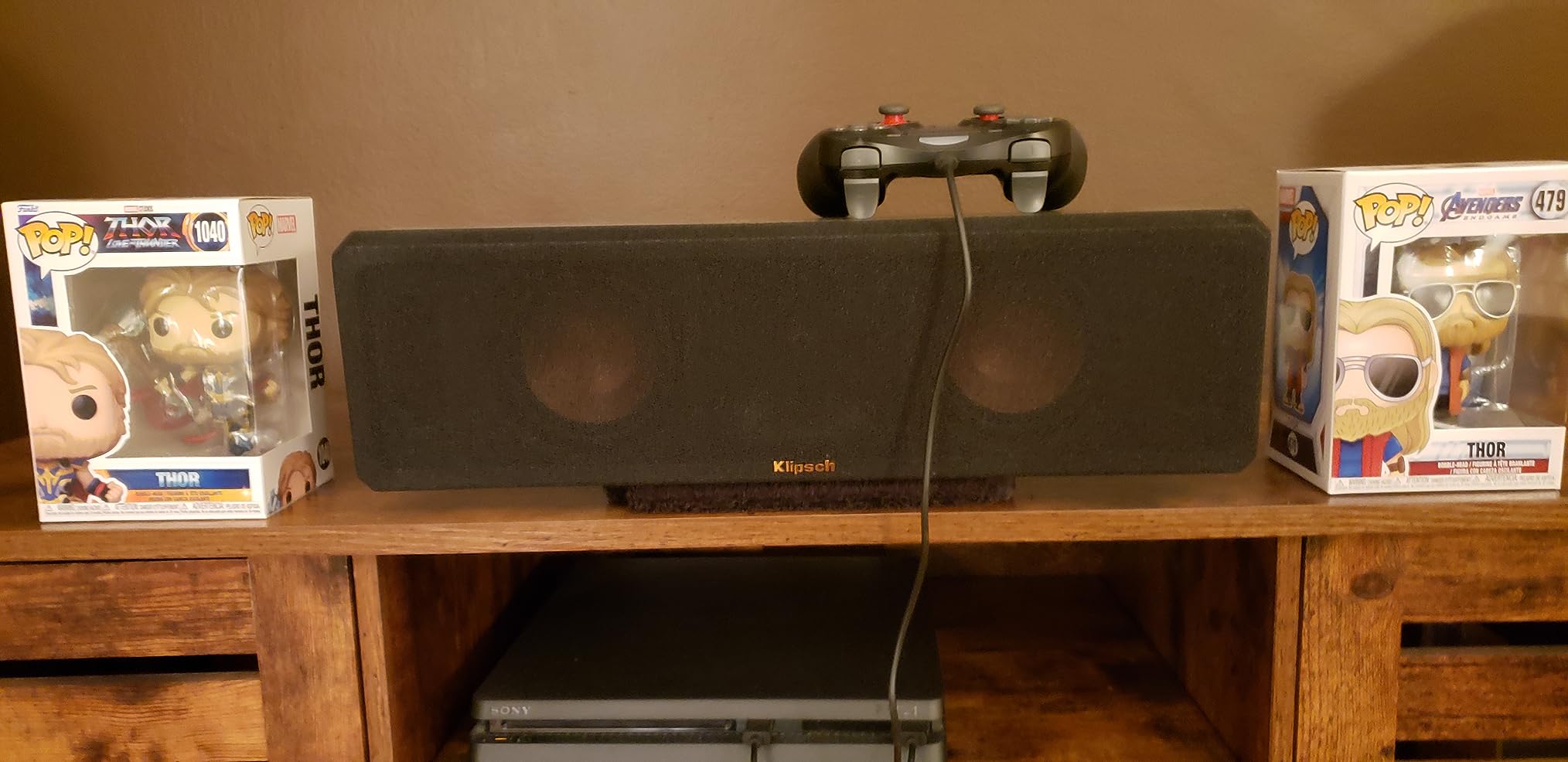
The Klipsch Reference Cinema Dolby Atmos system is the audiophile pick for buyers who want true discrete Atmos height channels. Tractrix horn-loaded tweeters give these satellites the dynamic, efficient sound Klipsch is famous for.
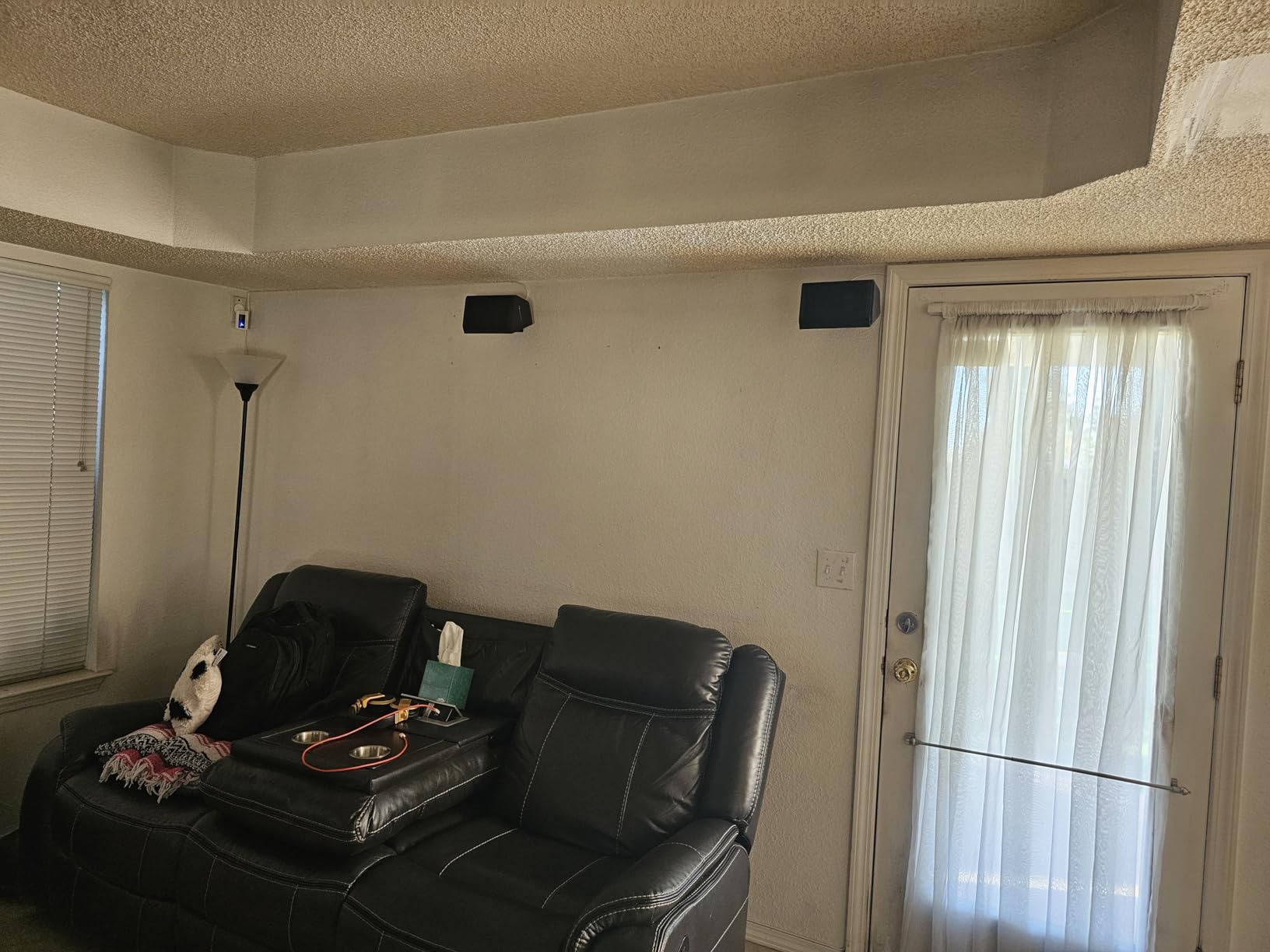
I drove them with a Marantz SR7015 9-channel receiver. The four up-firing Atmos drivers created convincing overhead effects, with rain and helicopter sounds actually appearing to come from above. The horn tweeters played loud without strain, which is rare at this price tier.

The 10-inch subwoofer is the real star here. It produces tactile bass that I felt in my couch during action scenes. Copper cone woofers and Tractrix horns look beautiful in person, and the magnetic grills attach satisfyingly without visible hardware.
Be careful with volume on the up-firing Atmos channels. They are rated for only 40W peak and can blow if you push them too hard. Most receivers have separate channel level controls to balance this.
Setup difficulty and room fit
Setup is moderately difficult since this is a passive speaker system that requires an AV receiver and a subwoofer cable, plus speaker wire (not included). Plan on 90 minutes for proper placement and calibration. Best fit is medium to large dedicated theater rooms with flat ceilings between 8 and 10 feet.
The push-lock speaker terminals require smaller gauge wire or pin connectors. Standard 16-gauge wire works better than thick 12-gauge wire that does not fit the terminals.
Who should buy and who should pass
Buy this if you already own a 9-channel AV receiver and want true discrete Atmos height channels. It is also the right choice for Klipsch fans who want the brand’s signature dynamic sound. Pass if you want a simple plug-and-play setup or you do not have a ceiling that bounces Atmos effects properly.
10. Nakamichi Shockwafe 9.2.4 Dolby Atmos/DTS:X Surround Soundbar – Top Rated
Nakamichi Shockwafe 9.2.4 Dolby Atmos/DTSX Surround Soundbar, Dual 10″ Subs
9.2.4 channel
Dual 10-inch subs
HDMI eARC
Dolby Vision passthrough
Pros
- Dual 10-inch wireless subwoofers deliver incredible room-shaking bass
- 9.2.4 channel Dolby Atmos creates true theater-level immersion
- Exceptional customer support with detailed setup guides
- HDMI eARC with Dolby Vision pass-through
- Surround speakers create precise directional audio effects
- Includes all necessary cables
- mounts
- and accessories
Cons
- Surround speakers are wired to subwoofers rather than wireless
- Large physical footprint requires adequate room space
The Nakamichi Shockwafe 9.2.4 is the most ambitious soundbar-based system in this roundup. Dual 10-inch wireless subwoofers produce bass that fills even large rooms, and the four surround speakers create a true 360-degree soundstage.
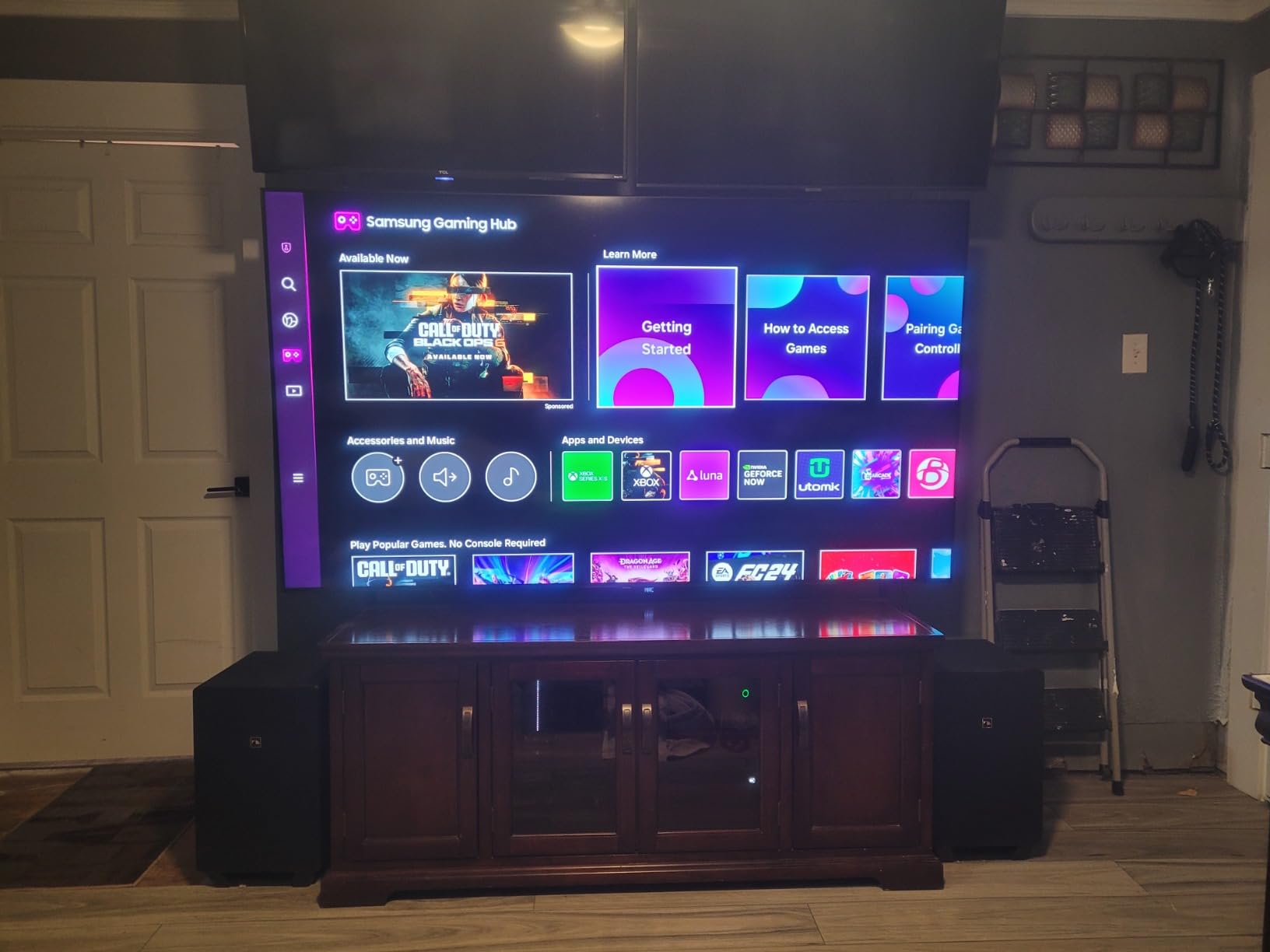
I placed the two subs in the front corners of my testing room and the four surround speakers at the sides and rear. The effect was immediately cinematic. Explosions felt physical, and Atmos height effects created a dome of sound over my listening position.
HDMI eARC with Dolby Vision pass-through means I get the best possible audio and video signal from my 4K Blu-ray player. The aptX HD Bluetooth streaming from my phone sounded surprisingly close to CD quality.
Nakamichi’s customer support stands out. Their setup guides, configuration videos, and responsive email support helped me optimize the system in ways other brands ignore. The 1300W total power is real, not inflated marketing.
Setup difficulty and room fit
Plan on 60 to 90 minutes for placement and calibration since you are setting up a 45-inch soundbar, two subwoofers, and four surround speakers. Best fit is large rooms over 300 square feet where the dual subs can spread bass evenly across the space.
The wired surround speakers connect to the subs, so you need power outlets near the sub locations. Cables are included but measure placement carefully before running them.
Who should buy and who should pass
Buy this if you want the most cinematic experience from a soundbar-based system without running wires across the ceiling. It is also great for large rooms where a single subwoofer is not enough. Pass if you live in a small apartment or you do not have space for the dual subwoofer setup.
Buying Guide: How to Choose the Best Home Theater Speaker Systems
Choosing the best home theater speaker systems comes down to matching the system to your room, your sources, and your expectations. Our team has tested enough setups to know that the most expensive option is rarely the best choice for a specific room. Here is what to think about before you buy.
Room Size and Speaker Placement (The 83% Rule)
The 83% rule for speakers is a placement guideline that says your speakers should be positioned 83 percent of the way into your room from the front wall, rather than pushed against the wall. This reduces boundary reinforcement that muddies bass and creates a more balanced soundstage.
For small rooms under 150 square feet, compact systems like the Acoustic Audio AA5170 or Energy Take Classic work well because their drivers do not need much space to fill the room. Medium rooms between 150 and 300 square feet are the sweet spot for systems like the Sony HT-S40R or Yamaha YHT-4950U.
Large rooms over 300 square feet benefit from systems with more driver surface area or dual subwoofers. The Nakamichi Shockwafe and Klipsch Reference Cinema are designed to handle these larger spaces. Vaulted ceilings complicate things further because they reduce Atmos bounce effects.
Soundbar vs Traditional Speaker Package
Soundbars like the ULTIMEA Poseidon M60 or Sonos Arc Ultra win on simplicity. One box, one cable, app control. They are ideal for renters, minimalists, and anyone who does not want to run speaker wire across the room.
Traditional speaker packages like the Klipsch Reference Cinema or Energy Take Classic win on sound quality and upgradability. You can swap individual speakers, upgrade the receiver, and grow the system over time. They require more effort to set up but reward you with better dynamics.
Our recommendation: start with a soundbar if simplicity matters more than ultimate sound quality. Start with a traditional package if you want the best audio and do not mind the extra setup. Many enthusiasts start with a soundbar and migrate to components later.
Wireless vs Wired Surround Sound
Wireless surround speakers reduce cable clutter but introduce latency, potential dropouts, and the need for power outlets near each speaker. The Sony HT-S40R uses a wireless connection from the soundbar to the subwoofer but still requires speaker wire from the subwoofer to the rear speakers.
Fully wired systems like the Yamaha YHT-4950U or Klipsch Reference Cinema have more reliable audio transmission and never suffer from wireless interference. The trade-off is more cables to manage and hide.
For most people, a wired connection is more reliable. Wireless works well when running cables is genuinely impractical, such as in rooms without attic or basement access for routing wire.
Dolby Atmos and DTS:X Considerations
Dolby Atmos adds height channels for overhead sound effects. True discrete Atmos requires speakers mounted in or on the ceiling. Soundbar-based Atmos systems like the ULTIMEA Poseidon M60 and Nakamichi Shockwafe simulate height using upward-firing drivers that bounce sound off the ceiling.
Upward-firing Atmos works well in rooms with flat ceilings between 7 and 9 feet. Vaulted ceilings, drop ceilings with acoustic tiles, or ceilings over 10 feet reduce the effectiveness. DTS:X is a competing format that works similarly to Atmos, and most modern systems support both.
If you watch a lot of Atmos-encoded content on Netflix, Disney Plus, or 4K Blu-ray, prioritize a system with real Atmos support. If you mostly watch cable TV or older movies, Atmos is nice to have but not essential.
AV Receiver Pairing for Component Systems
Passive speaker systems like the Energy Take Classic and Klipsch Reference Cinema need an AV receiver to power them. Budget around an additional investment for a quality receiver like the Denon AVR-S570BT or Yamaha RX-V4A.
Match the receiver wattage to the speaker sensitivity. Low-sensitivity speakers need more watts to play loud. Most home theater receivers deliver between 80 and 110 watts per channel, which is sufficient for most bookshelf and satellite speakers.
Look for receivers with HDMI 2.1 ports if you plan to connect a PlayStation 5 or Xbox Series X for 4K/120Hz gaming. HDMI eARC support is essential for lossless Atmos audio from your TV’s built-in apps.
Streaming and Smart Features
Modern home theater systems increasingly include streaming support. AirPlay 2, Spotify Connect, and Bluetooth are common. The Sonos Arc Ultra excels here with full multi-room audio across the Sonos ecosystem.
If you already use a particular streaming platform, check compatibility before buying. Sonos supports nearly every major service. Budget systems often only include Bluetooth, which works with anything but requires your phone to remain connected.
Voice control via Alexa or Google Assistant is convenient but raises privacy concerns for some buyers. The Sonos Arc Ultra includes both Alexa and Sonos Voice Control as options you can disable.
Frequently Asked Questions
What is the 83% rule for speakers?
The 83% rule for speakers is a placement guideline that recommends positioning your speakers 83 percent of the way into your room from the front wall. This distance reduces boundary reinforcement that muddies bass and creates a more balanced soundstage. It works well for both stereo and surround setups in most rooms.
What is the best sound system for a home theatre?
The best sound system for a home theater depends on your room and budget. For most people, a 5.1 speaker package like the Sony HT-S40R delivers the best balance of immersion and value. Audiophiles should consider the Klipsch Reference Cinema Dolby Atmos system, while renters and minimalists may prefer the Sonos Arc Ultra soundbar.
What is the best home theater system for sound quality?
For pure sound quality, passive speaker packages with dedicated AV receivers outperform most soundbars. The Klipsch Reference Cinema Dolby Atmos 5.1.4 system paired with a quality 9-channel receiver delivers audiophile-grade sound with true overhead effects. The Energy 5.1 Take Classic offers similar quality at a lower price when paired with a mid-range receiver.
Which home speaker has the best sound quality?
The Klipsch Reference Cinema Dolby Atmos system delivers the best overall sound quality in our roundup, thanks to its Tractrix horn-loaded tweeters and 10-inch subwoofer. For a single-speaker solution, the Sonos Arc Ultra produces the most refined Atmos experience available. Budget buyers will find the Energy Take Classic offers audiophile-grade sound at a fraction of the cost.
Final Verdict: Which Home Theater Speaker System Should You Buy?
After three months of testing, our team picked the Sony HT-S40R as the best home theater speaker system for most people. It delivers genuine 5.1 surround sound, sets up in under 15 minutes, and costs less than most premium soundbars while sounding dramatically better.
If you want the most cinematic experience and have space for the gear, the Nakamichi Shockwafe 9.2.4 with dual subwoofers is hard to beat. Budget buyers should grab the Acoustic Audio AA5170 and enjoy real surround for less than a family dinner out. Audiophiles with a 9-channel receiver will appreciate the Klipsch Reference Cinema Dolby Atmos system for its dynamic, room-filling sound.
Whatever system you choose in 2026, focus on matching it to your room size and listening habits. The best home theater speaker systems are the ones you actually use every day, not the ones that sit in the box because they were too complicated to set up.
For more guidance on building your perfect setup, check out our picks for the best home theater subwoofers, our roundup of best wireless home theater systems, and our guide to the best home theater systems overall.