
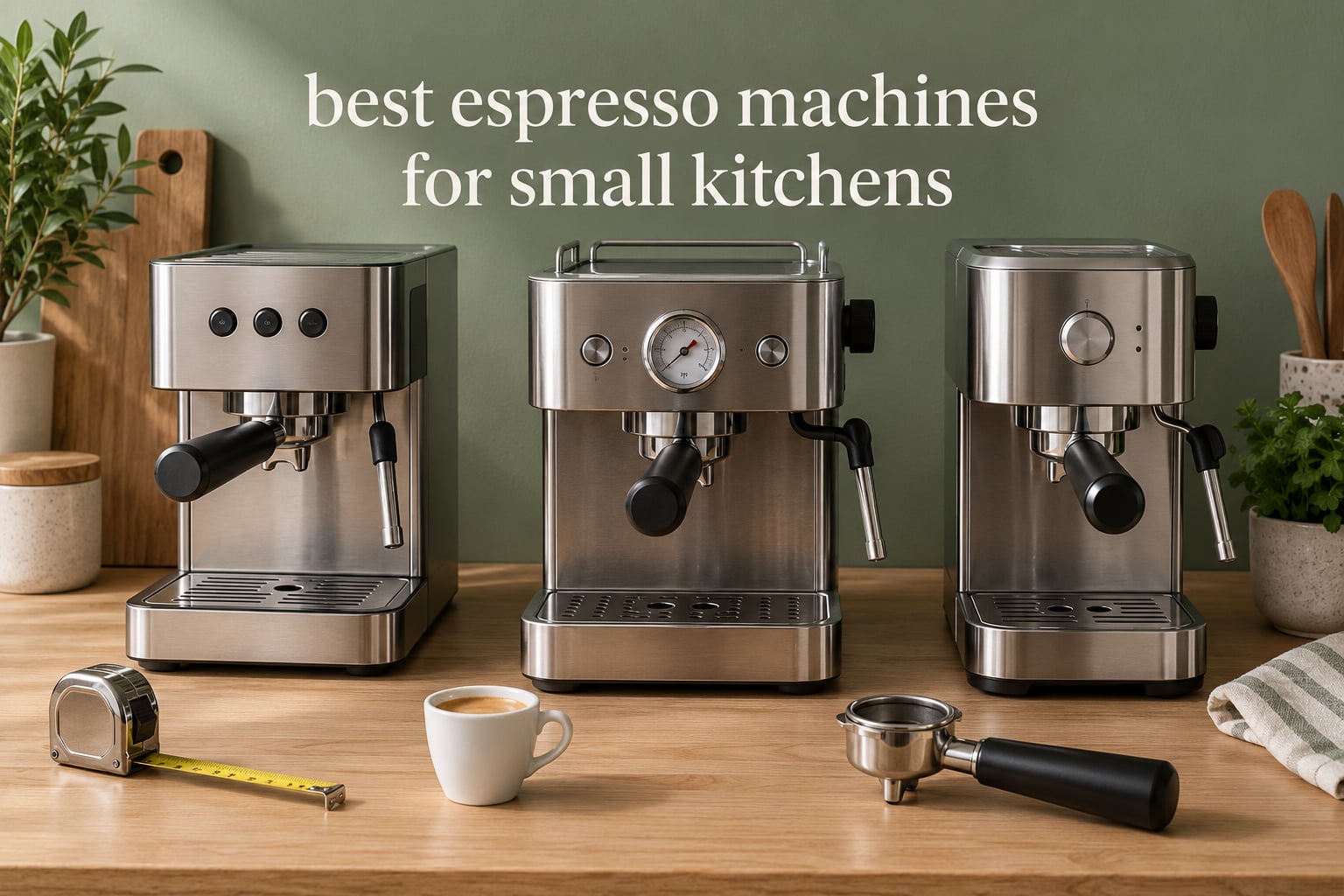
The espresso machine lists most people read are written for a kitchen with counter to spare. Then you measure your own counter, do the subtraction, and realise that the machines ranking at the top of every list are physically wider than the gap you were trying to fill. That frustration is the entire reason this roundup exists.
I define a small kitchen here as one with under 36 inches of usable counter run between a wall, a backsplash corner, or an appliance that will not move. In a space like that, width is the binding constraint, not features. Depth, overhead clearance, tank access and drip tray access decide the rest.
Every pick below is a machine I evaluated on its published footprint first and its feature list second. I measured widths, checked under-cabinet clearance and tank placement, and compared the accessories each one drags onto your counter. If you want the wider context on espresso gear first, our guide to the best espresso machines reviewed covers the big-counter options. This list is the short-counter answer. Last updated October 2026.
Table of Contents
Top 3 Best Espresso Machines for Small Kitchens in 2026
A compact espresso machine for a small kitchen is one roughly 6 to 8 inches wide, against 11 to 14 inches for flagship all-in-one models. Width decides whether the machine fits at all. Height and depth are secondary, and feature count is nearly irrelevant once the footprint is fixed. These three lead the list because they hold a real brew group, a steam wand and a serviceable water tank inside a body you can push against a backsplash.

CASABREWS CM5418 Compact
- 5.47 inch width
- 20 bar pump with pressure gauge
- 34 oz removable tank
- steam wand

Gevi 20 Bar Compact
- 5.5 inch width
- NTC temperature control
- pre-infusion and gauge
- 1 liter tank
Breville Bambino
- 6.3 inch width
- PID temperature control
- automatic steam wand
- 54mm portafilter
All 10 Picks and Their Exact Footprints (October 2026)
Width is the first column to read, because it is the one that decides whether the machine goes back in the box. Depth matters if you are tight on the run between the sink and the hob rather than on the wall clearance. Every figure below is the published measurement, so check the listing once more before you order, since manufacturers revise chassis revisions.
| Product | Specifications | Action |
|---|---|---|
| CASABREWS CM5418 Compact |
|
Check Latest Price |
| Gevi 20 Bar Compact |
|
Check Latest Price |
| Breville Bambino |
|
Check Latest Price |
 Nespresso Essenza Mini Nespresso Essenza Mini |
|
Check Latest Price |
 CHULUX Slim CHULUX Slim |
|
Check Latest Price |
 IMUSA 6 or 3 Cup IMUSA 6 or 3 Cup |
|
Check Latest Price |
 XIXUBX Compact XIXUBX Compact |
|
Check Latest Price |
 Nespresso Vertuo Pop+ Nespresso Vertuo Pop+ |
|
Check Latest Price |
 De’Longhi Stilosa Compact De’Longhi Stilosa Compact |
|
Check Latest Price |
 Neretva Super Compact Neretva Super Compact |
|
Check Latest Price |
How to Measure Your Counter Before You Buy
This is the step that prevents the disappointment, and it takes about five minutes with a tape measure and a pencil. Work through it before you fall for a machine on looks.
Measure the usable run, not the counter. Measure from the wall or backsplash to the first obstruction: a blender, a knife block, a wall oven edge. That number is your real budget.
Subtract the machine width, then subtract side clearance. Leave 2 to 3 inches on the side where the portafilter handle swings and where you need to lift the water tank out.
Check depth against your backsplash. Published depth often excludes the portafilter handle, which sticks out several inches while you are dosing. Allow 4 inches of forward clearance for the drip tray.
Measure overhead clearance with the tank lid in mind. You need 5 inches of open air above the machine to lift the lid and fill the tank. If your wall cabinet is closer than that, the machine will not be fillable in place.
Check where the tank sits. A rear tank means you must pull the machine forward every time you refill. A side or top-fill tank means you never move it. In a tight corner this is the difference between a 20 second job and a two minute job with two hands.
One more thing worth doing before you buy: walk the setup, not just the machine. A compact machine with no built-in grinder needs a separate grinder beside it, and that grinder is often wider than the machine itself. Integrated-grinder models and capsule machines win on total counter consumption even when the machine body is not the narrowest.
1. CASABREWS CM5418 Compact Espresso Machine – Best Overall at 5.47 Inches Wide
CASABREWS CM5418 Compact Espresso Machine with Milk Frothing Steam Wand
Width 5.47 in
Depth 12.28 in
Height 11.97 in
Weight 8.6 lb
20 bar pump
34 oz tank
Pros
- Narrowest semi-automatic here with a full brew group
- Built-in pressure gauge for dialing in shots
- Detachable 34 oz tank covers several cups
- Single and double filters plus portafilter included
Cons
- Cooldown cycle blocks brewing right after frothing
- Included plastic tamper and lightweight portafilter
- Drip plate surface can be slippery
This is the machine I recommend to almost everyone with a short counter run. At 5.47 inches wide it is the narrowest semi-automatic in the group, yet it does not achieve that by dropping the parts that matter: a 20 bar pump, a 1350W boiler, a pressure gauge and a steam wand are all there. Depth is the trade, at 12.28 inches, so give it 4 inches of forward room for the drip tray.
The gauge is the feature I did not expect to care about and now rely on. Watching pressure through a shot tells you immediately whether your grind is too fine or too coarse, which is the single fastest way to improve as a new owner. Reviewers report the results tighten up noticeably once grind size is dialled in.
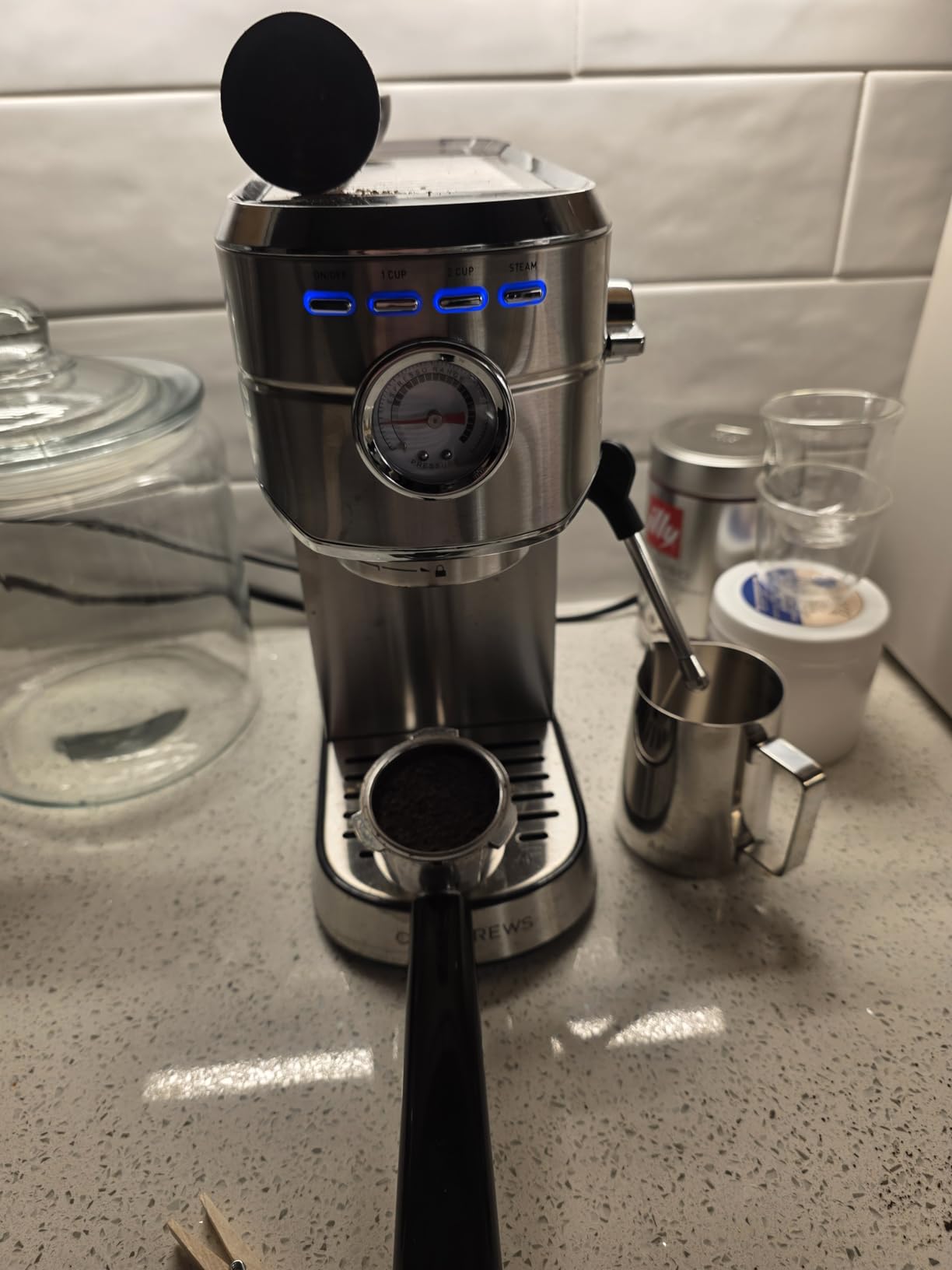
The 34 oz detachable tank is generous for a machine this narrow, and it pulls out toward you rather than sitting behind the chassis. In an apartment kitchen that matters more than it sounds, because a rear tank means dragging the whole machine across the counter every morning. Descaling is a front-of-machine job here.
Two honest limits. First, the machine enters a cool-down mode after you steam, so you cannot pull a shot and steam in the wrong order and expect both to work. Plan your sequence: brew first, then steam. Second, the tamper and portafilter supplied are the cheapest components in the machine, and an aftermarket metal tamper is the first upgrade I would make.
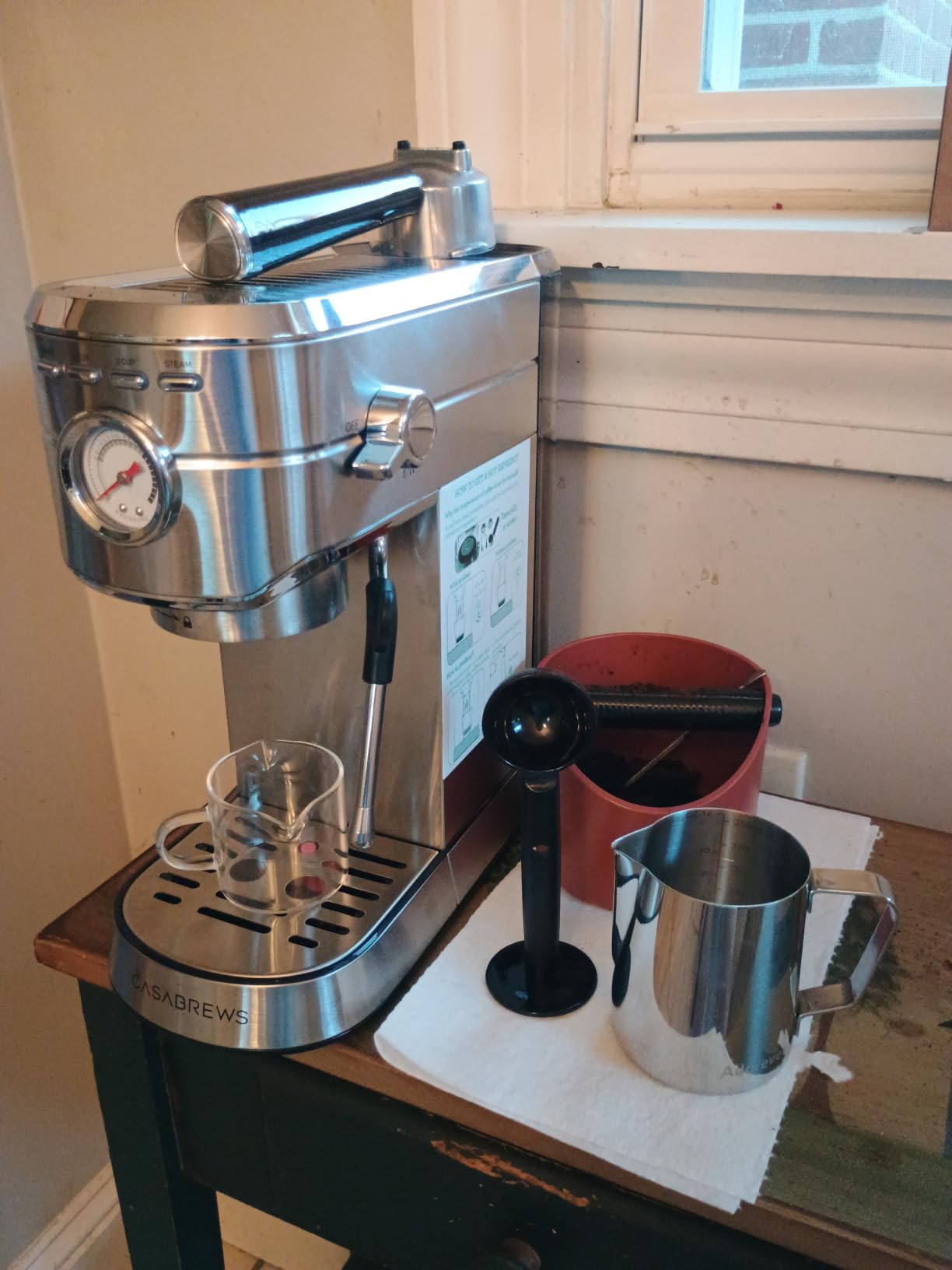
Why the 5.47 inch width matters in your kitchen
At 5.47 inches, this leaves usable counter on both sides even on an 18 inch gap, which is a run most small kitchens actually have. The steam wand swings to the front and right, so put that side facing open counter. The tank lifts out on the side with a straight pull.
Where this machine is a poor fit
Skip it if your workflow is back-to-back milk drinks, because the cool-down cycle will frustrate you within a week. Also skip it if you plan to store mugs on top and lift the tank without moving them first.
2. Gevi 20 Bar Compact Espresso Machine – Stainless Steel Body at 5.5 Inches Wide
Gevi 20 Bar Compact Espresso Machine for Home,Latte、Cappuccino Coffee Maker
Width 5.5 in
Depth 12.3 in
Height 12 in
Weight 8.6 lb
20 bar pump
1 liter tank
Pros
- Full stainless steel housing at a compact width
- NTC temperature control with pre-infusion
- Built-in pressure gauge and shot volume adjustment
- 12 month warranty with lifetime tech support
Cons
- Cooldown required between steaming and brewing
- Cheap spoon style tamper in the box
- Stainless finish shows fingerprints
The Gevi is the pick for anyone who thinks a small machine has to look like small-appliance plastic. The housing is full stainless steel across the body at 5.5 inches wide, and it holds a 1350W boiler, NTC temperature control and a pre-infusion stage. For the money, that is a genuinely complete little machine.
Owners report consistent espresso across a year of daily use, which is the durability signal I look for in an entry machine. Pre-infusion slows the first part of the shot to reduce channeling, and the gauge lets you watch it happen rather than guess.
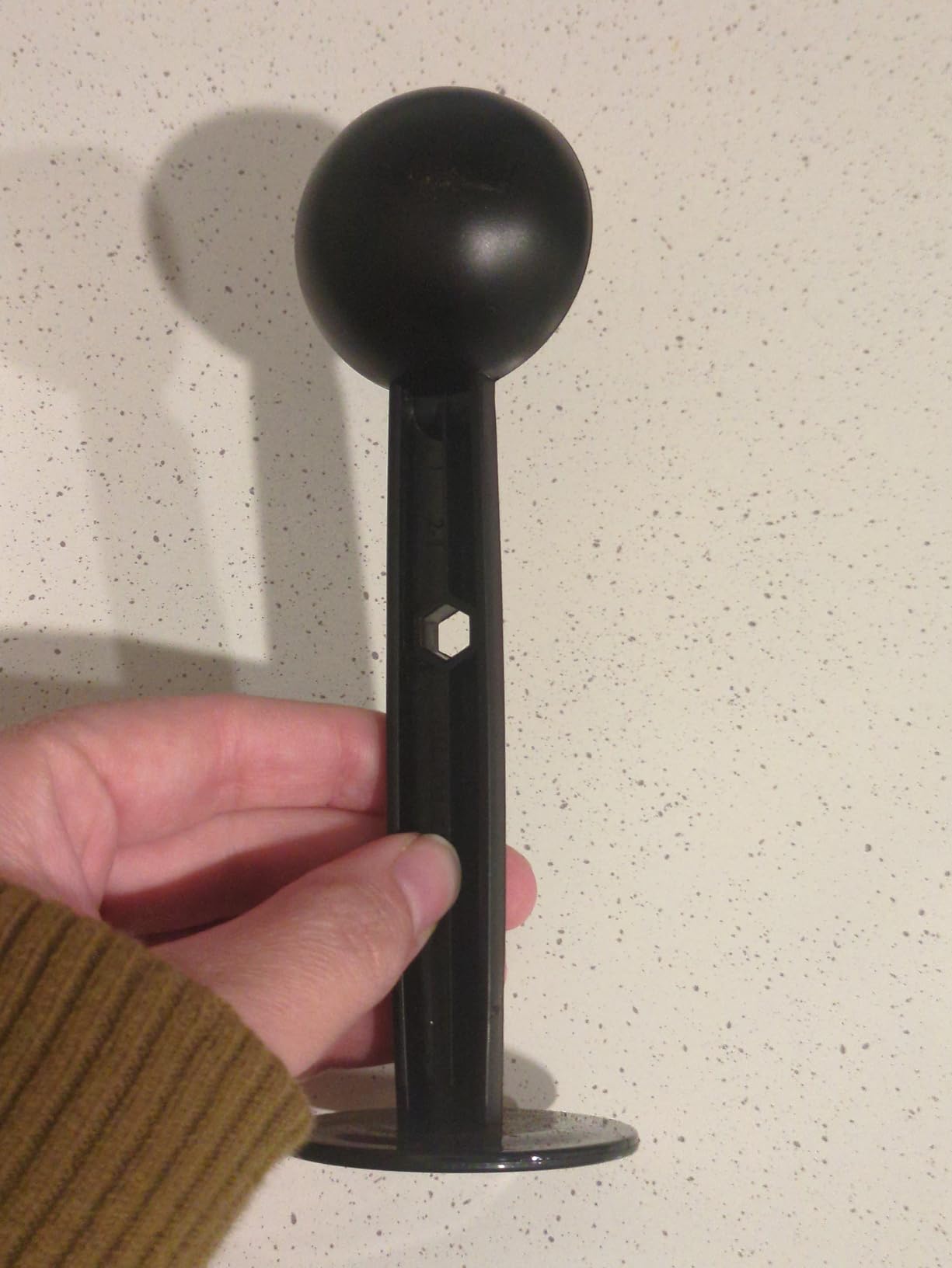
Depth is 12.3 inches, essentially identical to the machine above it, so both occupy the same slice of counter. The 1 liter tank removes the mid-morning refill that plagues capsule machines. A cup warmer sits on top, which is useful if you pre-heat cups but should not be relied on to hold them hot.
The weaknesses are the same family as most single-boiler compact machines: you cannot brew immediately after frothing, and the included spoon tamper feels disposable. The fingerprint issue is real but cosmetic, and a microfibre cloth fixes it in seconds.
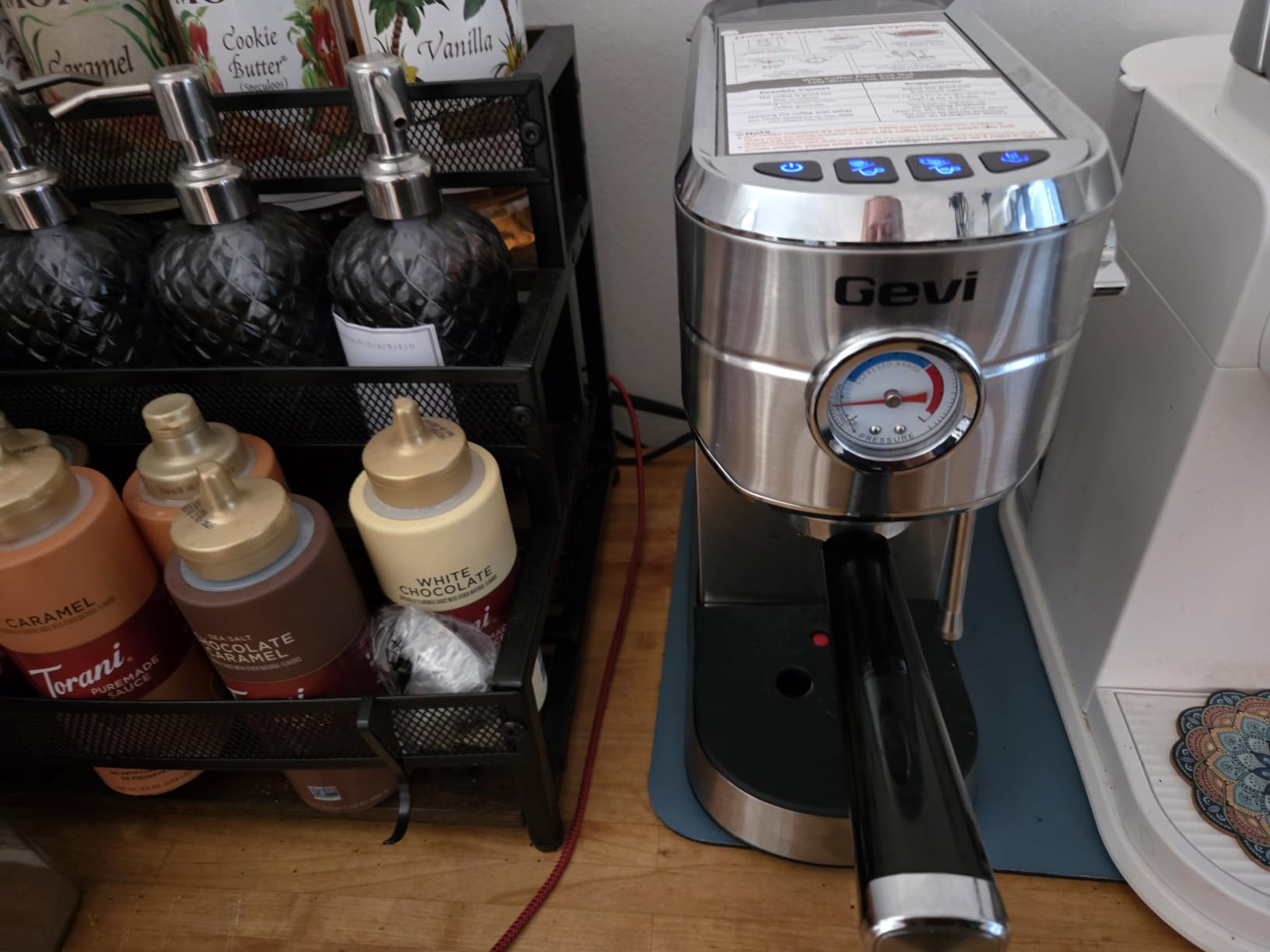
What the temperature control buys you
NTC control with pre-infusion is closer to how larger machines manage extraction than the on-off thermostats in the cheapest models. You will notice it most on consecutive shots, where temperature recovery is more consistent.
Where this machine is a poor fit
Choose something else if milk drinks are more than an occasional weekend project, because the cool-down requirement is structural. It is also the wrong choice if you want an integrated grinder and expect to skip buying one separately.
3. Breville Bambino Espresso Machine – PID Control at 6.3 Inches Wide
Breville BES450BSS Bambino Espresso Machine, Brushed Stainless Steel
Width 6.3 in
Depth 13.7 in
Height 12 in
Weight 10.9 lb
PID control
54mm portafilter
Pros
- PID digital temperature regulation on a narrow chassis
- ThermoJet heating reaches temperature in about 3 seconds
- Automatic steam wand with adjustable milk texture
- Includes filters
- jug
- tamper and cleaning tool
Cons
- Widest depth in this group at 13.7 inches
- 54mm portafilter limits single cup yield
- Automatic steam wand can overshoot and boil milk
The Bambino is the only machine here with PID digital temperature regulation, which is the feature prosumer buyers chase and the reason this one sits higher in the count than its rating suggests. It is 6.3 inches wide, still comfortably inside a short run, but it is deep at 13.7 inches and heavy at 10.9 pounds. Depth is the number to check before you order.
ThermoJet heating reaches extraction temperature in roughly 3 seconds, so there is no warm-up ritual. That matters in a small kitchen where the routine has to happen between two other tasks rather than become its own event.
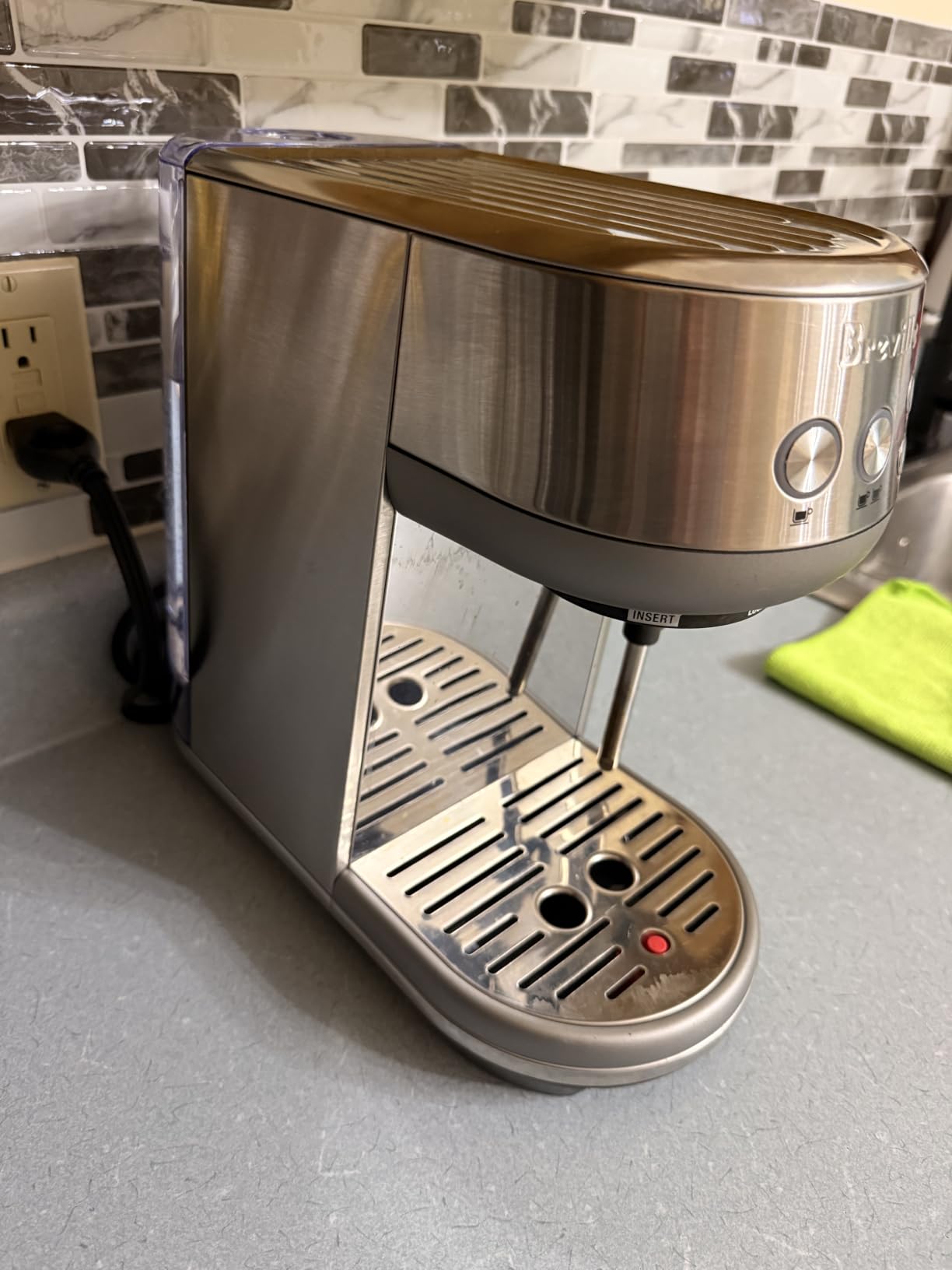
The automatic steam wand produces genuinely good microfoam without any technique from you, which is the closest this list gets to a one-touch latte. It also means one less accessory on the counter, since there is no separate frother to store. Filters, jug, tamper and a steam wand cleaning tool all ship in the box.
Be honest about the rating here: at 4.0 stars across 2635 reviews it is the lowest-rated machine in this roundup, and the reasons are consistent. The 54mm portafilter is smaller than the 58mm commercial standard, so a single double-shot of volume is constrained. The auto wand also tends to run past where you want it and can boil milk.
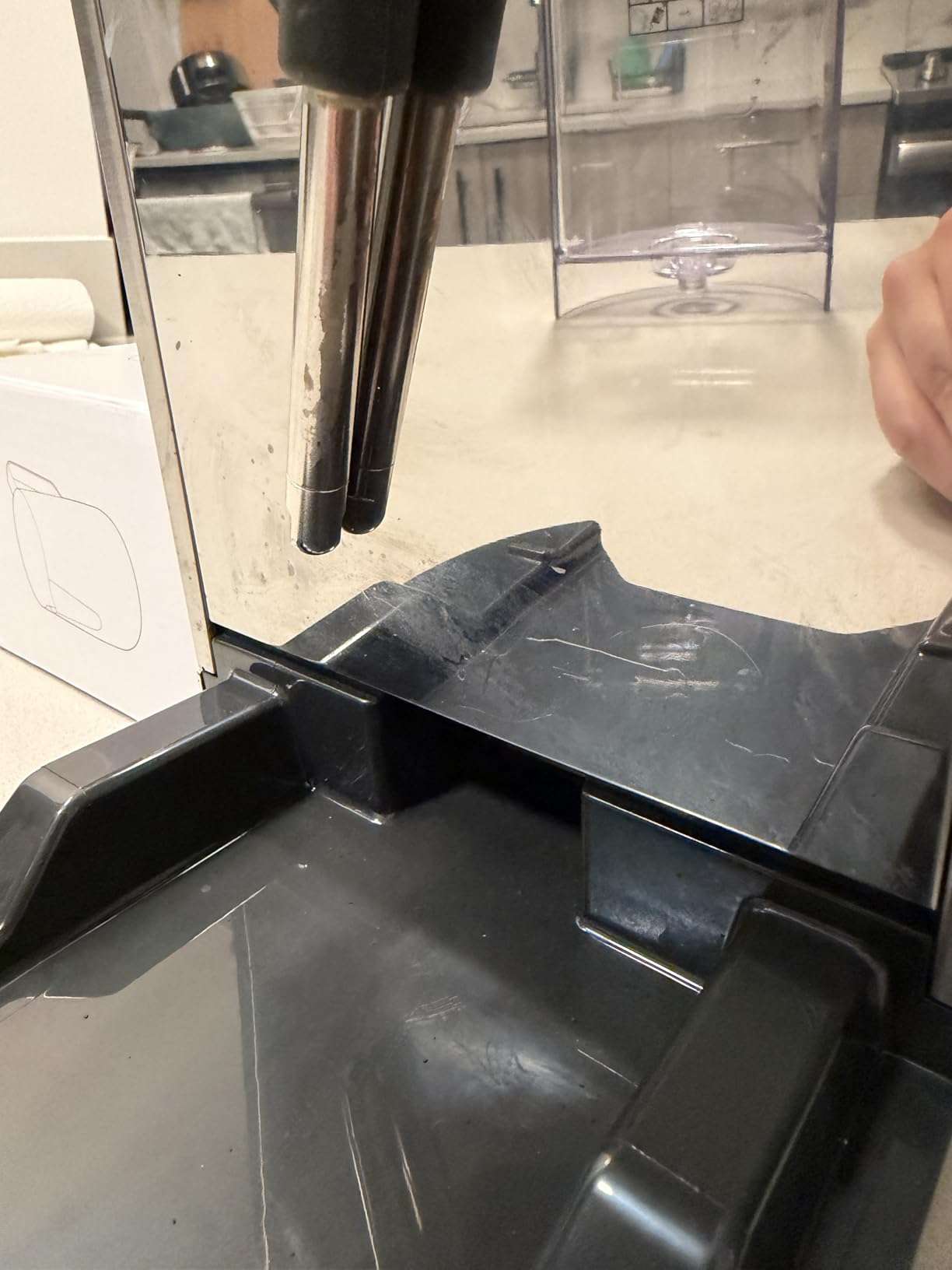
Whether 13.7 inches of depth fits your counter
Depth only matters if your constraint runs front-to-back rather than side-to-side. On a counter backed by a wall with open space in front, this is a non-issue. On a narrow galley run where you need to stand at the counter to use it, the depth becomes the limiting dimension.
Where this machine is a poor fit
Pass if you like experimenting with dose and yield, because a smaller portafilter caps how far you can push a single shot. Also pass if a heavy 10.9 pound body is a problem for your shelving or your back.
4. Nespresso Essenza Mini – Shallowest Body at 4.3 Inches Deep
Breville Nespresso Original Essenza Mini Espresso Machine
Width 8 in
Depth 4.3 in
Height 12.8 in
Weight 6 lb
19 bar pump
25 second heat up
Pros
- Highest rating among the capsule machines at 4.5 stars
- Fast 25 second heat up from cold
- Quiet operation with low vibration
- Works with third party and reusable capsules
Cons
- Small reservoir needs frequent refills
- Drip tray holds few used capsules
- No milk frother so lattes need a separate wand
When people ask for the narrowest espresso machine that still makes good espresso, this is the honest answer for depth. At 4.3 inches deep it is the shallowest body here by a wide margin, and at 6 pounds it is easy to move and store. Width is 8 inches, so it wants a wall rather than a slot.
It heats in 25 seconds and runs quietly with low vibration, which matters more in an apartment with thin walls than the spec sheet suggests. Reviewers rate it highly for reliability and call it the definitive machine of the Nespresso Original capsule line.
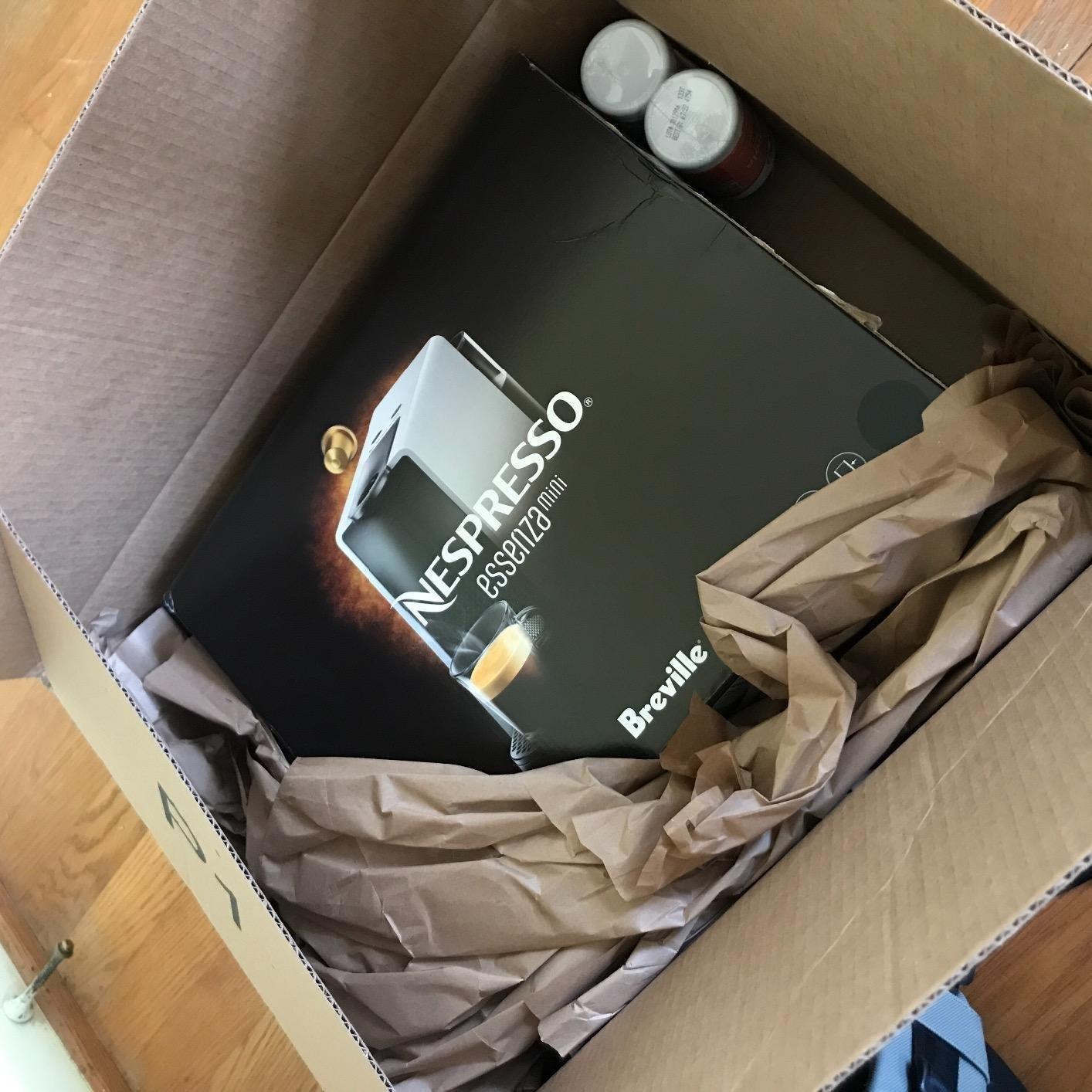
Single-serve brewing means no grinder on your counter at all, and the total footprint including accessories is smaller than any semi-automatic here that needs a separate burr grinder beside it. That changes the maths entirely when you compare setups rather than machines.
The compromises are real. The reservoir is small and wants refilling, and the drip tray holds only a few used capsules before it needs emptying. There is no built-in frother, so any latte needs a handheld wand that lives in a drawer, which quietly adds counter area back.
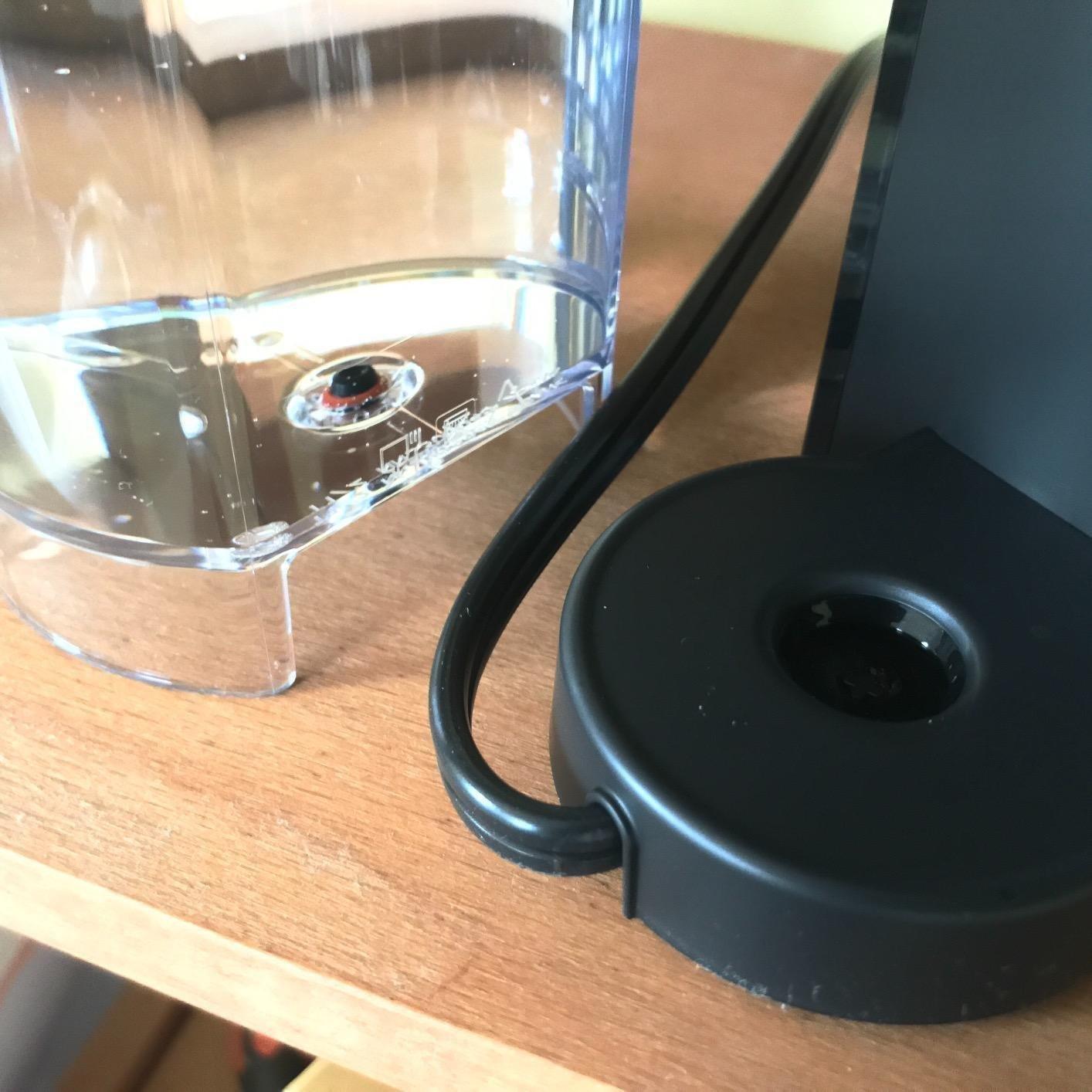
Why depth matters more than width for this machine
If your constraint is a shallow wall gap, an 8 inch wide but 4.3 inch deep machine may fit where a 5.5 inch wide but 12 inch deep semi-automatic cannot. Measure the gap from wall outward, not along the run, before you dismiss it on width.
Where this machine is a poor fit
Skip it if you drink two or more milk drinks a day and care about texture, since there is no frother and capsule spend compounds. It is also the wrong tool if you enjoy adjusting a shot, because there is no portafilter to adjust.
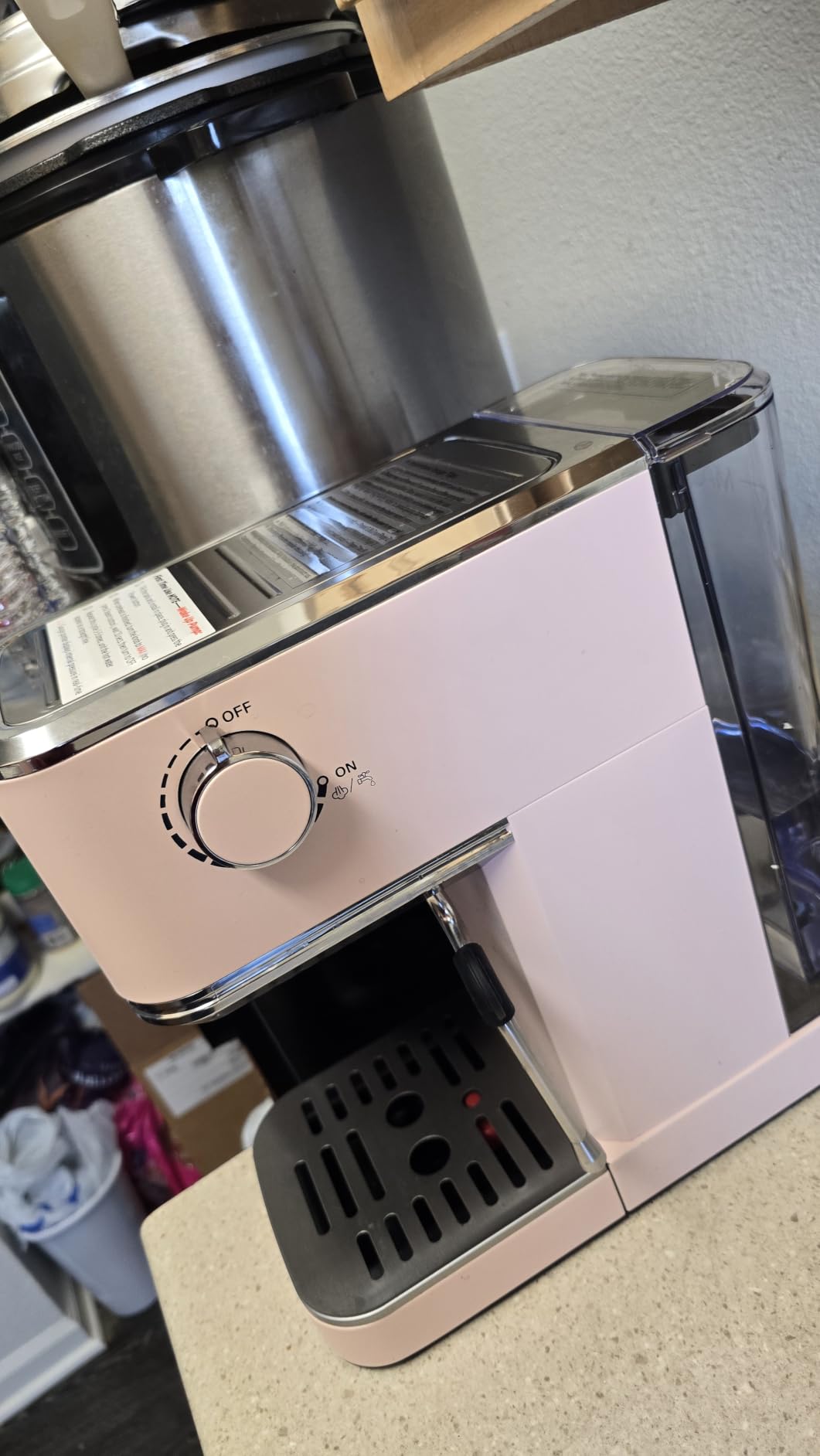
5. CHULUX Slim Espresso Machine – 40 Ounce Tank at 5.5 Inches Wide
CHULUX Slim Espresso Machine with Milk Frother for Home Cappuccino, Creamy
Width 5.5 in
Depth 11.7 in
Height 12.5 in
Weight 7.8 lb
20 bar pump
40 oz tank
Pros
- Among the narrowest bodies with the largest tank here
- Preheats in about 30 seconds
- Real-time pressure gauge and pre-infusion
- Removable drip tray and 25 minute auto shut-off
Cons
- Vibrates enough to move a cup off the rest
- Noisy with a rattling plastic water lid
- Some reports of declining pump pressure over months
The CHULUX answers a problem most compact machines create: a narrow body paired with a tank you refill four times a day. At 5.5 inches wide with a 40 ounce tank, this is the pick if your household runs two or three coffees each morning and you refuse to keep topping it up.
It uses PID temperature control with pre-infusion and shows a real-time pressure gauge, which puts its measurement hardware closer to the Bambino than to the budget end of this list. Preheating takes about 30 seconds with a 1350W boiler.
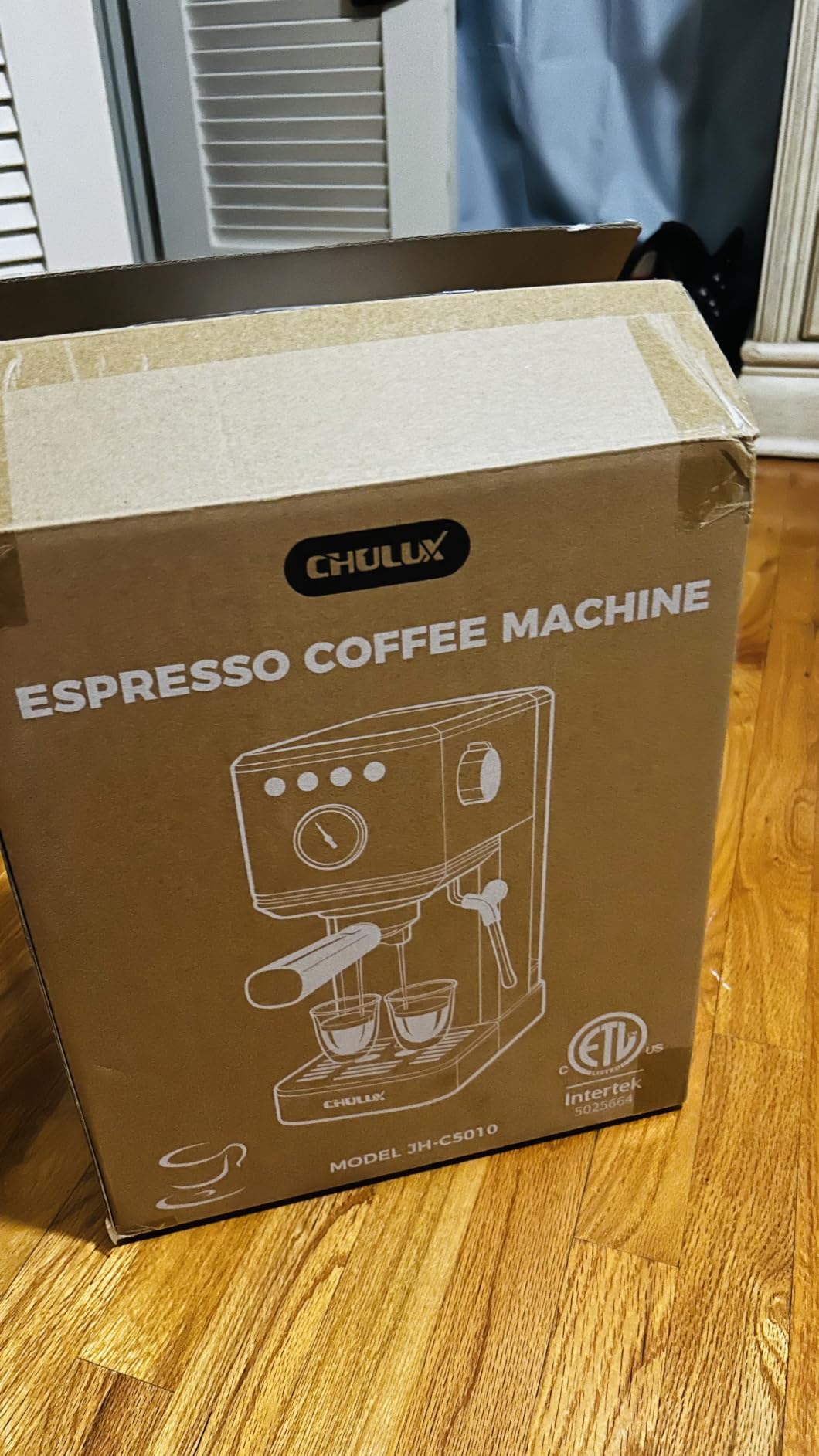
Depth of 11.7 inches is slightly shallower than the other 20 bar machines here, and the removable drip tray plus food-grade boiler, tank and silicone steam wand parts cover the maintenance basics. Finish options include cream, pastel and metal, which matters more than it should in a small kitchen you look at every morning.
There is a small but vocal group of owners reporting vibration strong enough to move a cup off the rest, plus a rattling plastic water lid and some decline in pump pressure within a few months. At 754 reviews this has the thinnest evidence base in the roundup, so treat the long-term picture as less certain than the numbers alone suggest.
Refill frequency for a two-person household
A 40 ounce tank is the practical reason to choose this machine over the other sub-6 inch options, most of which pair a narrow chassis with a smaller reservoir. If your counter sits far from a sink, fewer refills is a real daily time saving.
Where this machine is a poor fit
Not ideal in a shared-wall apartment if noise sensitivity is high, given the reported vibration and lid rattle. Also pass if you want the longest track record of long-term ownership, because review volume here is far thinner than the machines above it.
6. IMUSA 6 or 3 Cup Electric Espresso Maker – Narrowest Body at 4.72 Inches
IMUSA 6 or 3 Cup Electric Espresso Maker with Cool-touch Handle, Black
Width 4.72 in
Depth 7.1 in
Height 9.3 in
Weight 2.8 lb
230W
Aluminum and glass
Pros
- Narrowest and lightest machine in this roundup
- Brews 3 or 6 traditional espresso cups
- Detachable base with brew indicator
- Cool-touch handle for safe carrying
Cons
- No pressure pump so brewing is moka style
- Heating element and seals wear in about two years
- No milk frother so no lattes
Nothing else on this list fits a gap this small. At 4.72 inches wide, 7.1 inches deep and 2.8 pounds, the IMUSA is the machine to buy when the problem is width itself, not depth, and not total setup area.
It brews 3 or 6 cups of traditional espresso using moka-style stovetop heating rather than a pump, which is why it produces a strong, dark, Cuban-style cup instead of a modern 9 bar shot. Buyers rate it highly for exactly that flavour, and the detachable base with an on/off switch and brewing indicator keeps the routine simple.
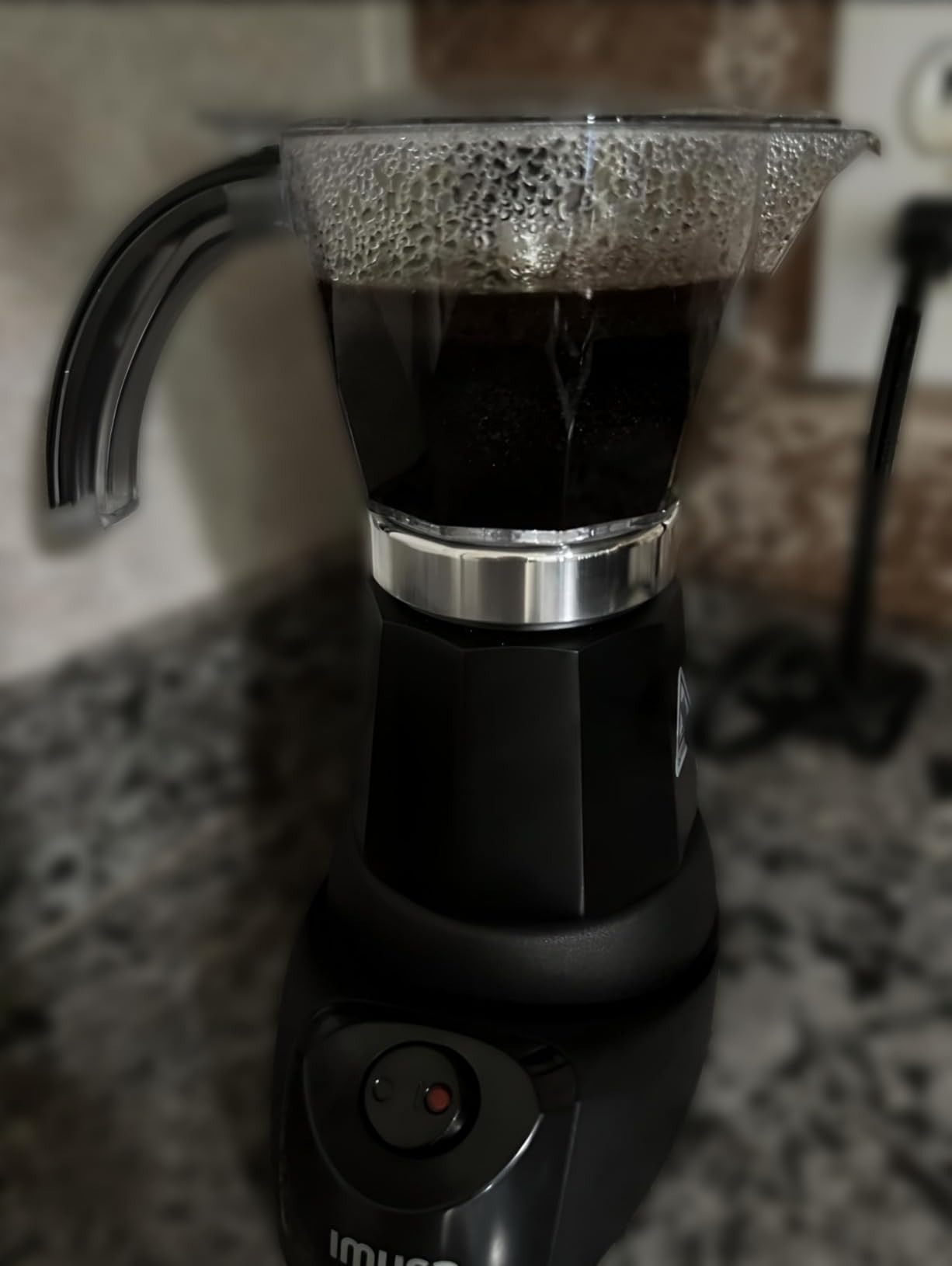
The cool-touch handle means you can carry it to the table or stow it in a cupboard when it is not in use, which no other machine here offers at 2.8 pounds. Nothing to descale, nothing to backflush, nothing to drain.
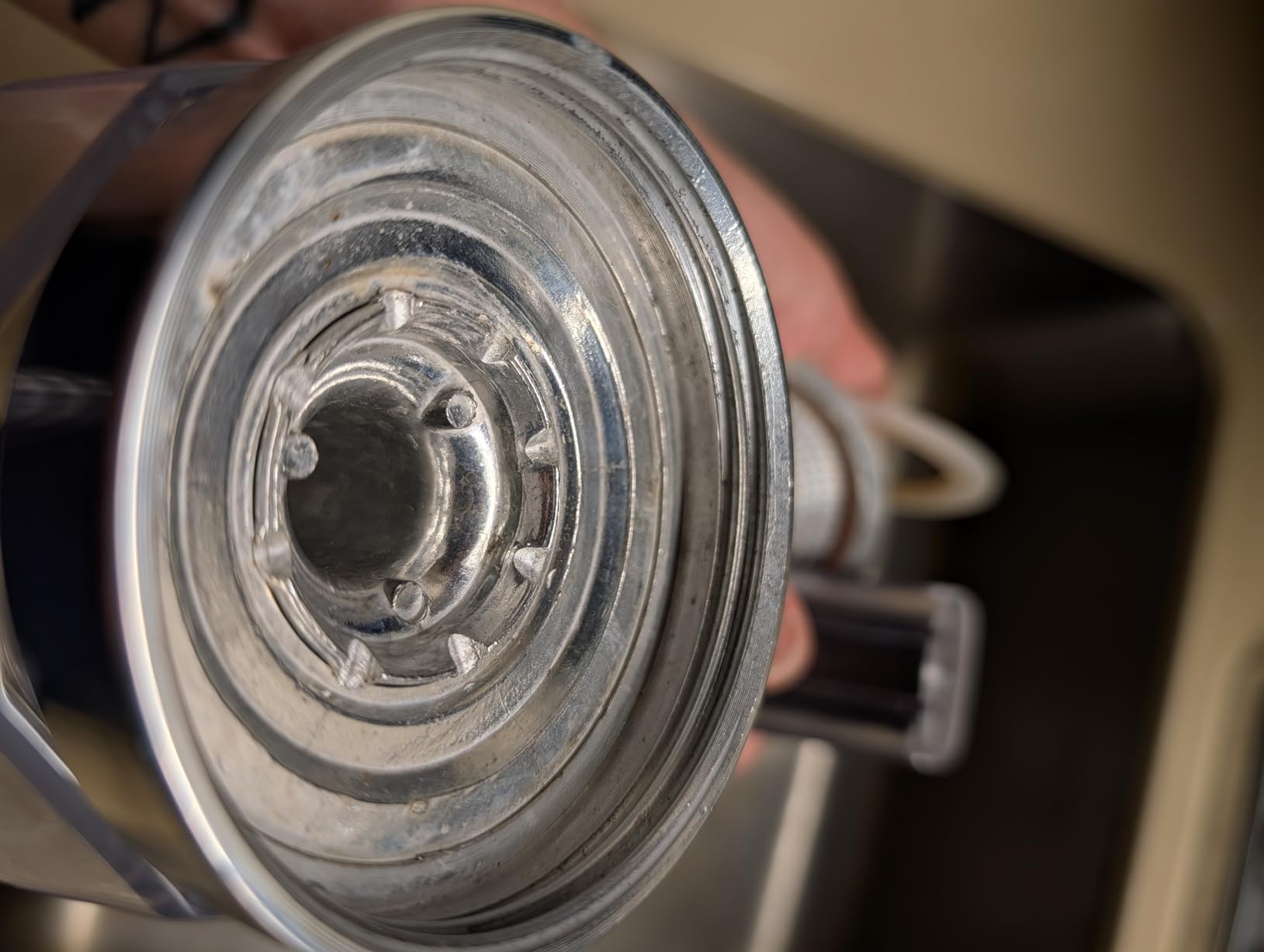
Be clear-eyed about what it is. There is no pressure pump, no milk frother, and heavy daily users report the heating element and seals lasting roughly two years. Treat it as a weekend and small-apartment machine, not a daily-driver replacement for a cafe.
When a no-pump machine is the right answer
If the espresso machine is for two people who drink it occasionally, and the priority is that it disappears into the counter when not in use, this is hard to argue with. Portability and a 2.8 pound weight are genuinely rare in this category.
Where this machine is a poor fit
Do not buy it if you want lattes, since there is no frother at all. Also avoid it as a daily machine for two or more people, because the two-year element life will outpace your enthusiasm.
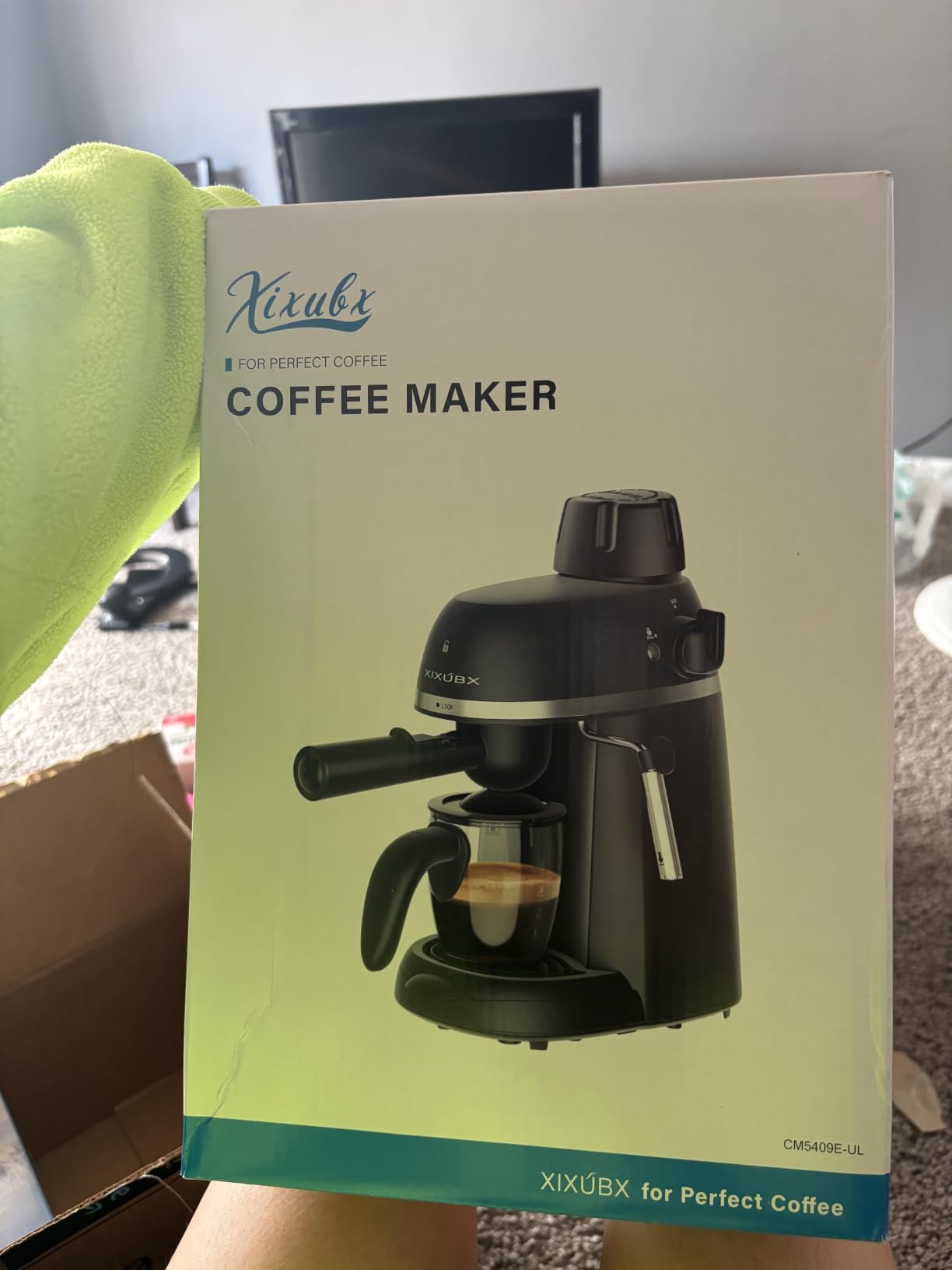
7. XIXUBX Compact Espresso Machine – 3.3 Pounds and One Knob
XIXUBX Compact Espresso & Cappuccino Machine, 3.5 Bar with Steam Wand
Width 6 in
Depth 8.3 in
Height 11.8 in
Weight 3.3 lb
3.5 bar pump
800W
Pros
- Light enough to move with one hand
- One knob mechanical control with no electronics
- Quiet with no leaks while brewing
- BPA-free Tritan cup with measurement marks included
Cons
- Only 3.5 bar pressure in this roundup
- Plastic body feels less substantial
- Grind size and steaming both need practice
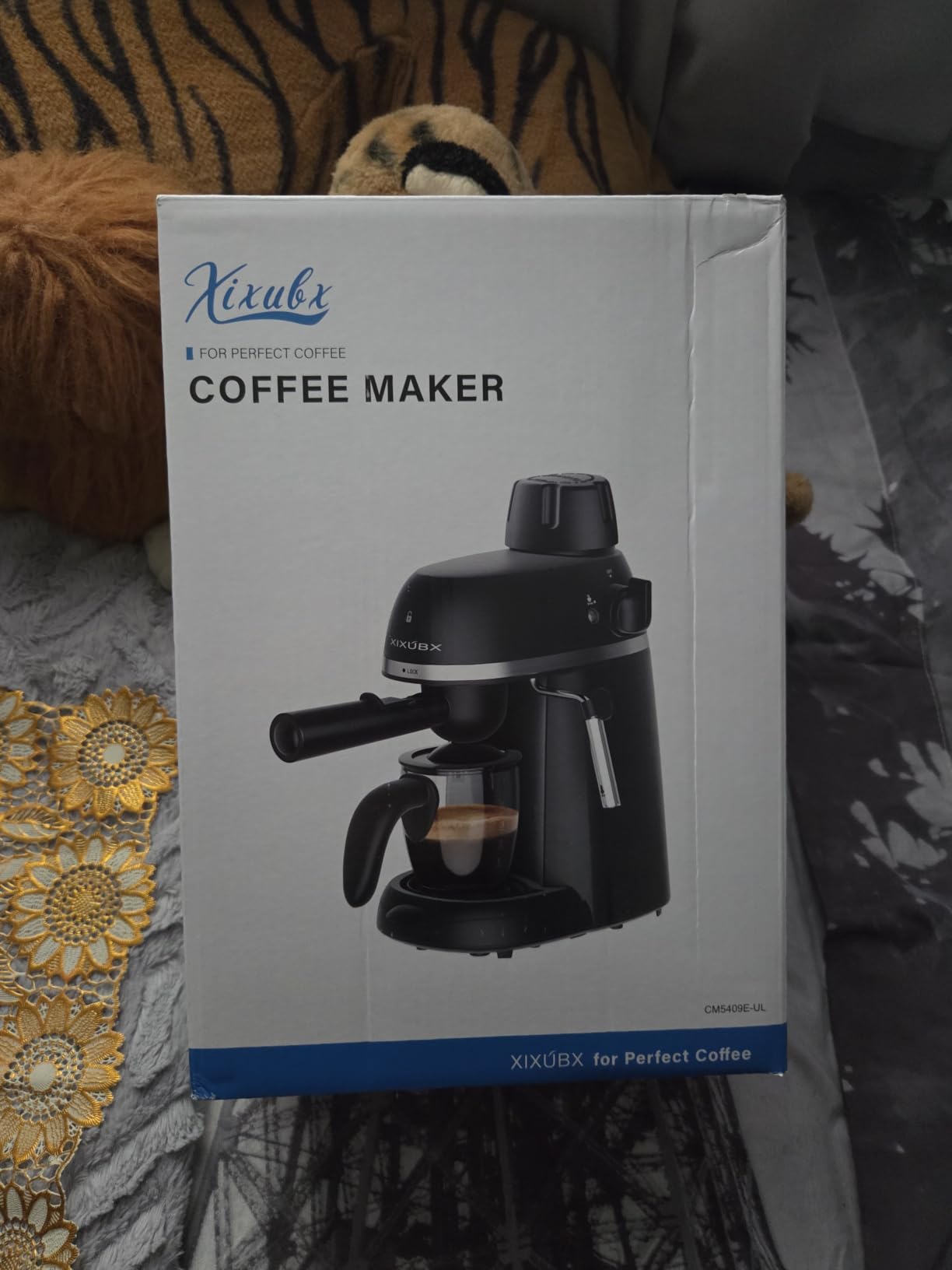
The XIXUBX is the machine to recommend to someone who wants espresso to be simple rather than good-looking. One knob cycles brew, steam and off. There is no display, no menus and nothing to learn, and at 6 inches wide by 8.3 inches deep with a 3.3 pound weight it stores or travels anywhere.
A BPA-free Tritan cup with measurement scale marks ships in the box alongside the portafilter, tamper and frother, so your accessory footprint stays at zero extra items. Reviewers consistently praise how easy it is to clean and how quickly the 800W element heats.
Here is the honest limit: 3.5 bar is the lowest pressure in this roundup, by a wide margin, and that is a deliberate design choice for gentle, mild extraction rather than a fault. You will get a smooth cup. You will not get the sweetness and crema concentration that a 20 bar pump delivers.
The lightweight plastic body is the second trade. And like most small semi-automatics, finding the right grind size and learning the steam wand both take a few attempts before they stop feeling clumsy.
Who this simple machine actually suits
It suits a first apartment, a dorm room or an office kitchenette where the machine lives in a cupboard between uses and someone else may need to make coffee without instructions. There is nothing to break by pressing the wrong control.
Where this machine is a poor fit
Pass if you care about shot quality or want to develop taste for extraction. At 3.5 bar, this is a beverage appliance that happens to make espresso-flavoured coffee rather than a machine for chasing better shots.
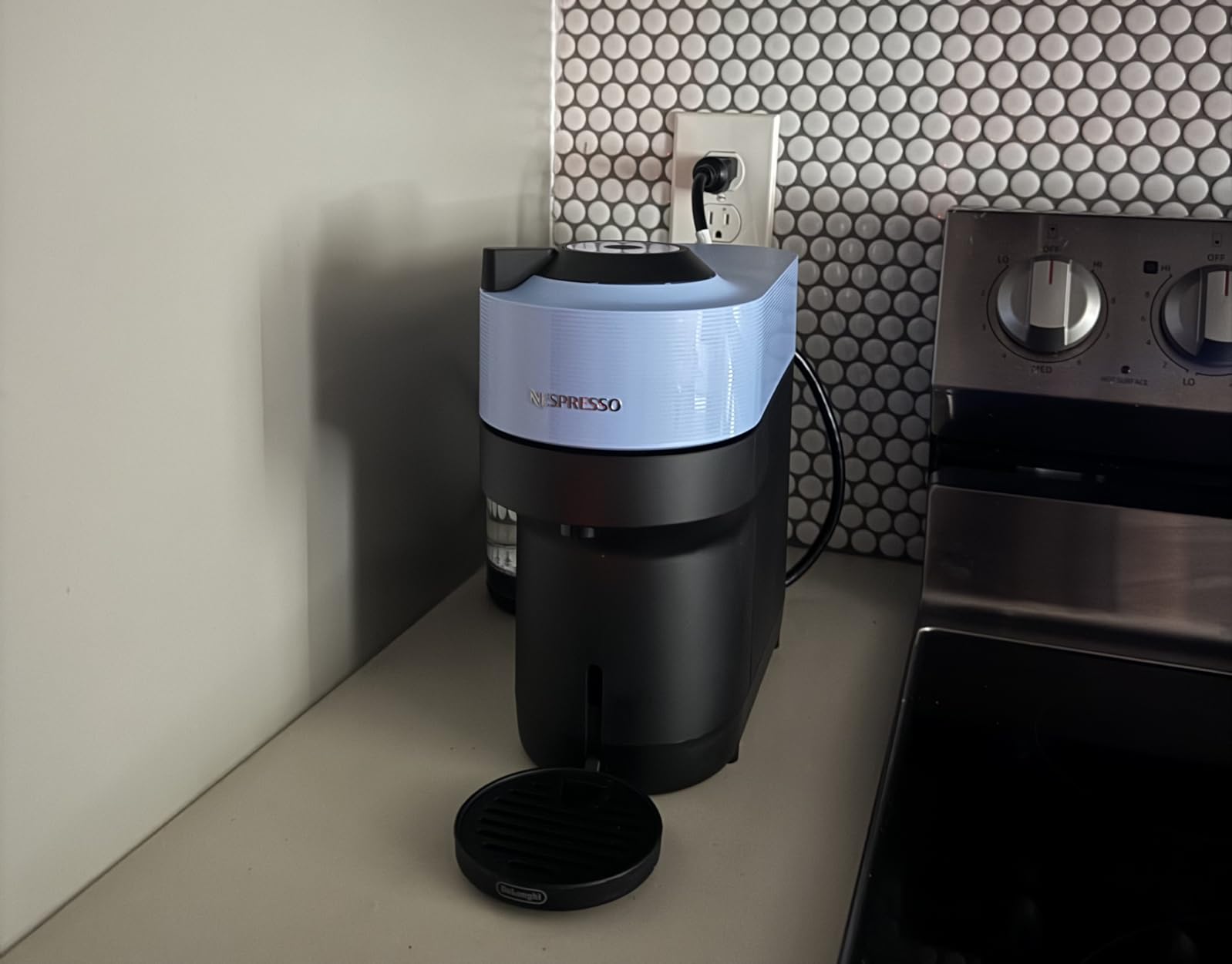
8. Nespresso Vertuo Pop+ – Five Drink Sizes at 8.6 Inches Wide
Nespresso Vertuo Pop+ Coffee and Espresso Machine by De’Longhi, Black
Width 8.6 in
Depth 14 in
Height 10.4 in
Weight 7.9 lb
1500W
25 oz side tank
Pros
- Five cup sizes from espresso to 12 oz coffee
- Brews hot or over ice with one touch
- Side-mounted 25 oz removable tank
- Adjustable drip tray plus descaling alert
Cons
- Vertuo capsules cost more and lock you to the system
- No integrated frother on the machine-only version
- Deepest body here at 14 inches
The Vertuo Pop+ is the widest machine in this roundup at 8.6 inches, so it needs a real stretch of counter rather than a gap. It earns that space with drink flexibility that no other pick matches: five sizes covering single espresso, double espresso, lungo and 12 oz coffee, brewed hot or over ice with one touch.
The 25.4 ounce tank is side-mounted rather than rear-mounted, which is the correct layout for a small kitchen because you refill it without pulling the machine forward. That design choice alone puts it ahead of the rear-tank capsules.
Heating takes 30 seconds, the adjustable drip tray accepts taller cups, and a descaling alert tells you when maintenance is due instead of letting taste drift. Capsule aluminium is fully recyclable, and a Vertuo tasting pack ships in the box.
Two practical warnings. Vertuo capsules cost more per drink and are locked to the system, so the running cost compounds quickly for a two-coffee-a-day household. And the plastic body is a step down in feel from the metal machines in this list, with a higher share of one-star ratings than the other capsule pick.
Whether the 8.6 inch width works for you
On a 24 inch run this uses more than a third of the space, so it only makes sense if the counter is otherwise clear. On a counter with a permanently occupied stretch of at least 30 inches, the drink-size range is worth more than the width it costs.
Where this machine is a poor fit
Skip it for a tight galley counter or for anyone who wants a drink that is not capsule-based later on. It is also the wrong choice if milk drinks are the main event, since there is no integrated frother.
9. De’Longhi Stilosa Compact Manual Espresso Machine – Widest Pick With the Most Owner Feedback
De’Longhi Stilosa Compact Manual Espresso Machine, Manual Milk Frother
Width 9.45 in
Depth 12.13 in
Height 14.17 in
Weight 8.6 lb
15 bar
1 liter tank
Pros
- Largest review base here at over 13000 ratings
- Stainless steel boiler built for longevity
- Manual steam wand for lattes and cappuccinos
- Portafilter
- tamper and single and double filters included
Cons
- Fully manual operation needs grind and tamp technique
- Plastic body feels less premium than metal
- Widest footprint among the manual machines
The Stilosa is 9.45 inches wide and 14.17 inches tall, so it is one of the largest machines here and I am not going to pretend otherwise. What earns it a place is volume of long-term feedback: 13838 ratings at 4.2 stars, the largest evidence base in this roundup, which is genuinely useful when you are buying a machine you will keep for years.
The stainless steel boiler is the reason owners report long service lives, and reviewers consistently single out the compact footprint and simple manual workflow as the reasons it stays in daily use. The manual steam wand gives you real control over milk texture for lattes and cappuccinos.
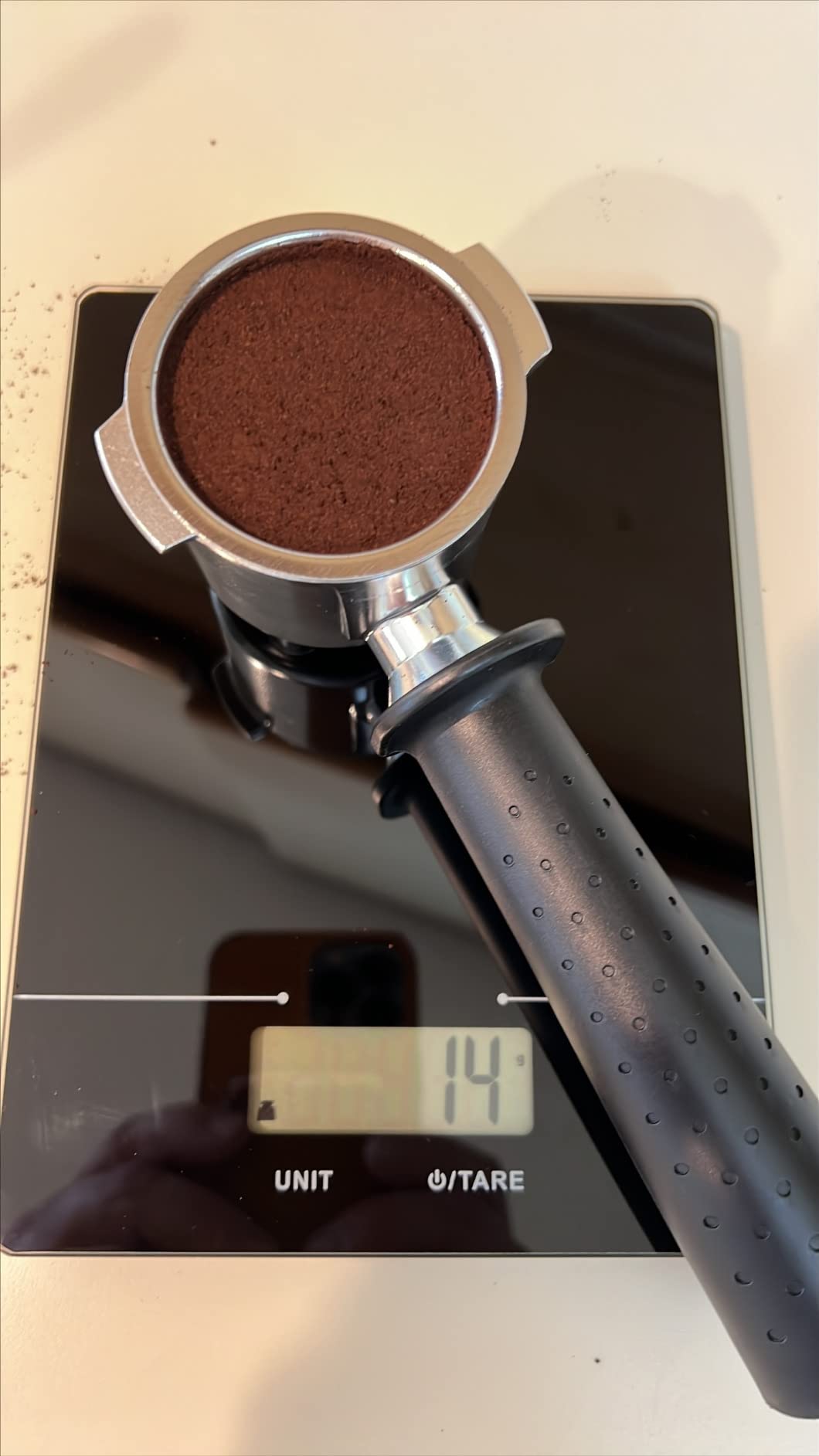
The tank is removable and 1 litre, so refill frequency is fine for two people. A 1 year warranty covers the machine, and the box includes double shot and single shot filters, a measuring scoop and tamper, so accessory clutter stays minimal.
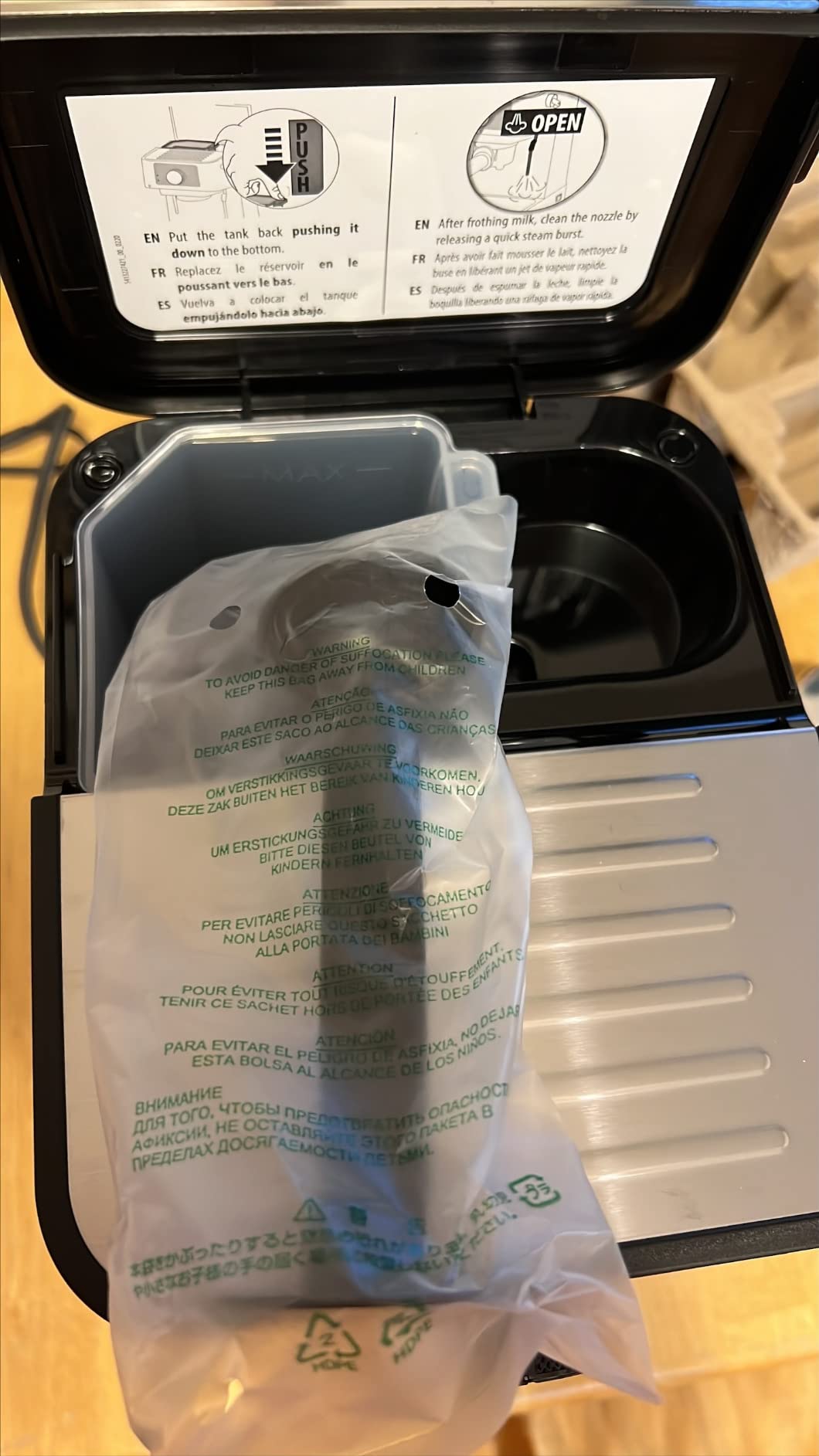
Full manual operation is the real trade. Dial control means you learn grind, dose and tamp rather than pressing a button, and the plastic body with stainless accents reads as less premium in the hand than the all-metal machines here. If your gap is under 10 inches, this will not physically go.
Why the manual workflow is worth it here
Manual machines are how most people learn what a good shot tastes like, because you control dose and timing directly. With a review base this large, you also have a large community of owners documenting exactly which grind and tamp habits work with this boiler.
Where this machine is a poor fit
Pass if you want one-touch results or if you have fewer than about 12 inches of usable counter. It is also a poor match for a very early morning, since manual prep takes longer start to finish than pressing a single button.
10. Neretva 20 Bar Super Compact Espresso Machine – Temperature Display, 12 Inches Wide
Neretva 20 Bar Espresso Machine Super Compact Espresso Coffee Machine
Width 12 in
Depth 11 in
Height 9.1 in
Weight 17 lb
20 bar pump
1.3 liter tank
Pros
- On-machine temperature display during brewing
- 1.3 liter tank is the largest here
- Pre-infusion reduces channeling
- Low profile 9.1 inch height suits low cupboards
Cons
- Widest machine in the roundup at 12 inches
- Heaviest at 17 pounds
- Thinnest review base of the group
I am including this one with a warning, because the name undersells the problem. Despite being labelled super compact, the published dimensions are 12 inches wide by 11 inches deep by 9.1 inches high, which makes it the widest machine in this roundup. If your gap is under 12 inches, this is not a small-kitchen machine at all.
What it genuinely offers is visible measurement. An on-machine temperature display shows precise water temperature during brewing, alongside a 20 bar pressure system with a 1350W boiler and a low pressure pre-infusion stage. Owners highlight that display as the standout feature at this level.
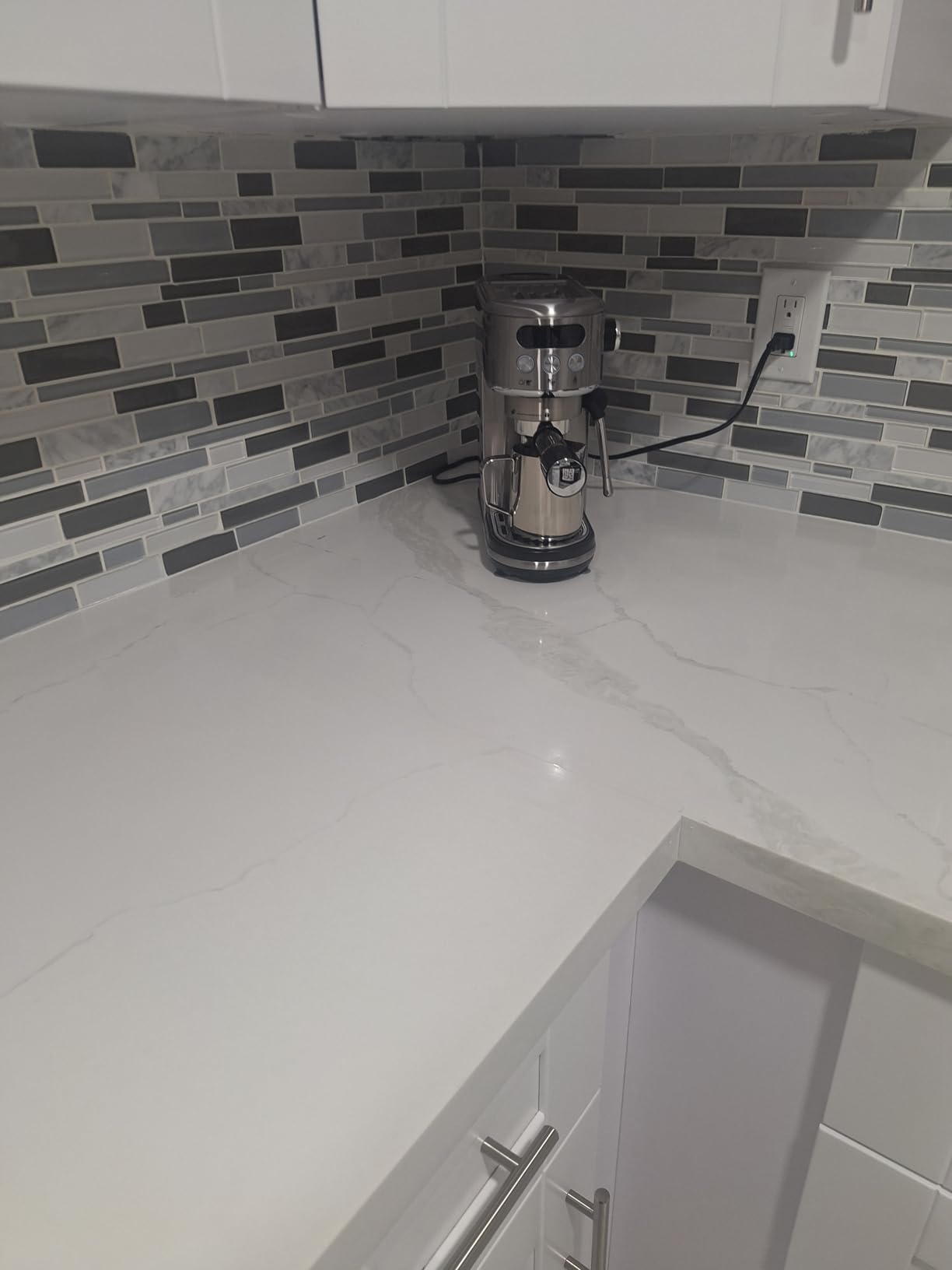
The 9.1 inch height is the lowest profile here, which matters if your overhead clearance is the problem rather than your width. The 1.3 litre removable tank is the largest in the group, and a cup warmer sits on top for pre-heating.
The honest problems are physical. At 17 pounds this is by far the heaviest machine in the roundup, so a wall shelf or upper cabinet is a bad idea. With 1330 ratings, long-term ownership feedback is thin compared with the established brands, and manual tamping still takes practice.
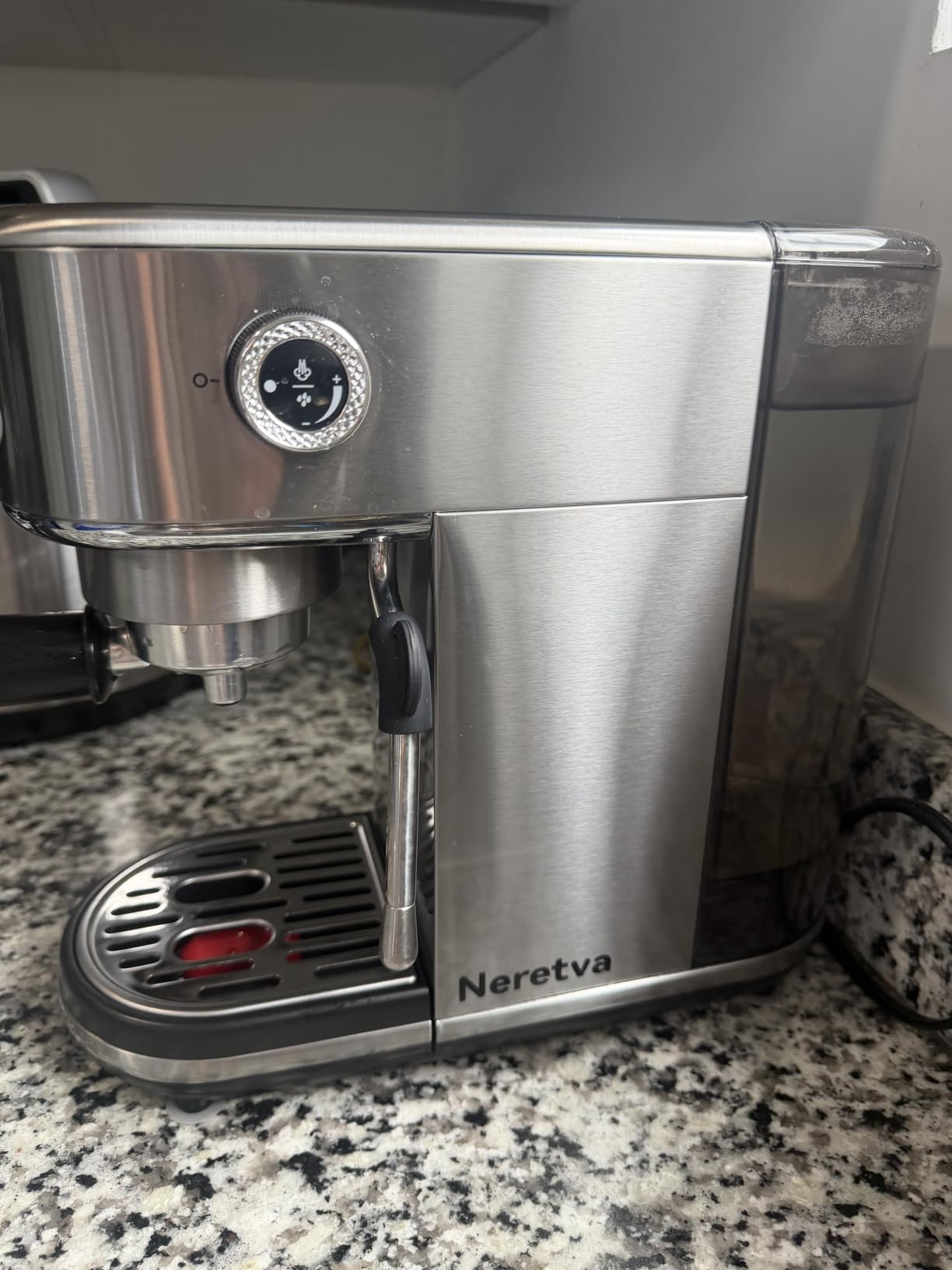
Height versus width as your real constraint
If low overhead clearance is what limits you, the 9.1 inch body is genuinely useful even at 12 inches wide. Check both numbers before ruling it in or out, because most people only measure the gap along the counter.
Where this machine is a poor fit
Do not buy it for a narrow counter, whatever the product name suggests, and avoid it if you plan to lift it onto a shelf. It is better suited to a low, sturdy counter in a space you have already measured carefully.
How to Choose an Espresso Machine for a Small Kitchen
Pick your width tier first, then pick the machine format inside it. Everything else is preference. Most buyers go wrong by choosing the format first and discovering the width problem after delivery.
Width tiers: under 6 inches, 6 to 8 inches, and 8 inches and up
Under 6 inches covers the CASABREWS CM5418 at 5.47 inches, the Gevi and CHULUX at 5.5 inches, and the IMUSA at 4.72 inches. Every one of these still fits a steam wand and a brew group. This tier suits galley kitchens and appliance gaps.
The 6 to 8 inch band holds the Breville Bambino at 6.3 inches, the XIXUBX at 6 inches and the Nespresso Essenza Mini at 8 inches. These give you more brew capacity or better accessories in exchange for a little counter. Anything 8 inches and up, including the Vertuo Pop+ at 8.6 inches, the Stilosa at 9.45 inches and the Neretva at 12 inches, needs an open stretch of counter rather than a gap.
Pod, super-automatic or semi-automatic in a small kitchen
Choose a pod machine when counter is the crisis. No grinder, no tamper, no knock box, minimal cleaning and a fast heat-up. The Essenza Mini is the best example here, and it is the right call for an office kitchenette or a kitchen where nobody wants to learn technique.
Choose semi-automatic when you want to control dose and grind and you have about 5 to 6 inches of width to spend. That is the middle of this list, and it is where the best espresso-per-watt-of-counter lives. A super-automatic with a grinder and bean hopper is the format we would skip entirely in a small kitchen, because the hopper and grind chute add width and the cleaning routine competes with the space you just saved.
Tank size versus refill frequency for one or two people
A 1 to 1.3 litre tank covers a two-person morning without a refill. Small capsule reservoirs are the most common complaint in this category, and a tank you refill four times a day is a poor trade for a slightly narrower body. If your machine sits far from the sink, prioritise tank size over width, and read the reservoir capacity before you fall for the narrowest option.
Front access versus rear access in a tight corner
This is the failure mode that annoys owners most and that product pages rarely mention. A rear-located tank means pulling the machine forward every single morning. Look for side-mounted or top-fill tanks, front-accessible drip trays and descaling points, and leave 2 to 3 inches of side clearance so you can actually lift the tank out. If you want more on machine formats and grinder trade-offs, our super-automatic roundup covers the bean-to-cup end in detail.
Do small espresso machines make bad espresso?
No. Grinder quality and dose matter far more than machine footprint, and every machine under 6 inches on this list uses a real brew group and pump rather than a stovetop trick. The real limits of a narrow machine are boiler recovery time and steam power, and both are separate from size. What you give up going narrow is portafilter diameter and tank capacity, not flavour.
Machines we left out, and why
We skipped wide all-in-one machines with integrated grinders even though they dominate most espresso roundups. They are excellent, and several of them are simply wider than the counter run we are solving for here. Our dual boiler guide covers that class properly if your counter can take it. If your espresso gear also includes freezing food, our small-kitchen freeze dryer picks use the same footprint-first method.
Frequently Asked Questions
How much counter space does an espresso machine need?
Width is the number that matters. Leave 2 to 3 inches of side clearance for tank and portafilter access, at least 4 inches in front for the drip tray, and 5 inches of overhead clearance so the tank lid opens. Under 36 inches of usable counter run is a realistic small-kitchen budget.
What is the narrowest espresso machine that makes good espresso?
The IMUSA at 4.72 inches wide is the narrowest body here, but it uses moka-style brewing rather than a pump. For a narrow pump machine that still makes good espresso, the CASABREWS CM5418 at 5.47 inches is the answer. Narrower units typically use thermoblock heating and smaller portafilters, which affects recovery and shot volume rather than taste.
Can I put an espresso machine under a cabinet?
Only if the machine height plus the tank lid swing clears the cabinet. Most machines here are between 10 and 12.8 inches tall, so measure to the underside of the cabinet and subtract the lid swing before you commit. Machines with top-fill lids work best in this position; avoid any model with a rear or high-mounted filler.
Is a compact espresso machine as good as a full size one?
In most cases yes. Grinder quality and dose matter more than footprint, and a compact machine with a proper brew group will out-pull a large machine fed with pre-ground coffee. The genuine sacrifices are portafilter diameter, tank capacity and steam recovery, not shot quality.
Should I buy a super-automatic or a semi-automatic for a small kitchen?
A semi-automatic gives you control and costs less counter space than a super-automatic with a bean hopper. A pod machine saves the most space of all because no grinder is needed. Super-automatics are worth it in a shared space where several people drink coffee daily, since the grinder and hopper justify their footprint there.
What is the best espresso machine for a first apartment?
For a first apartment the pod route wins on footprint and simplicity: the Nespresso Essenza Mini measures 8 inches wide by 4.3 inches deep, heats in 25 seconds and needs no grinder. If you want to learn to make shots yourself, the CASABREWS CM5418 at 5.47 inches wide is the compact semi-automatic that leaves counter for everything else.
Conclusion
If you are shopping for the best espresso machines for small kitchens, the CASABREWS CM5418 is the one I would buy: 5.47 inches wide, a real 20 bar pump with a pressure gauge, and a 34 ounce tank you can reach without moving the machine. If you want the metal build and temperature control at the same width, the Gevi is the swap.
Measure your counter before you order anything on this list, and remember that the machine plus its accessories is what eats the space. Pick the width tier that fits, then pick the format inside it.