
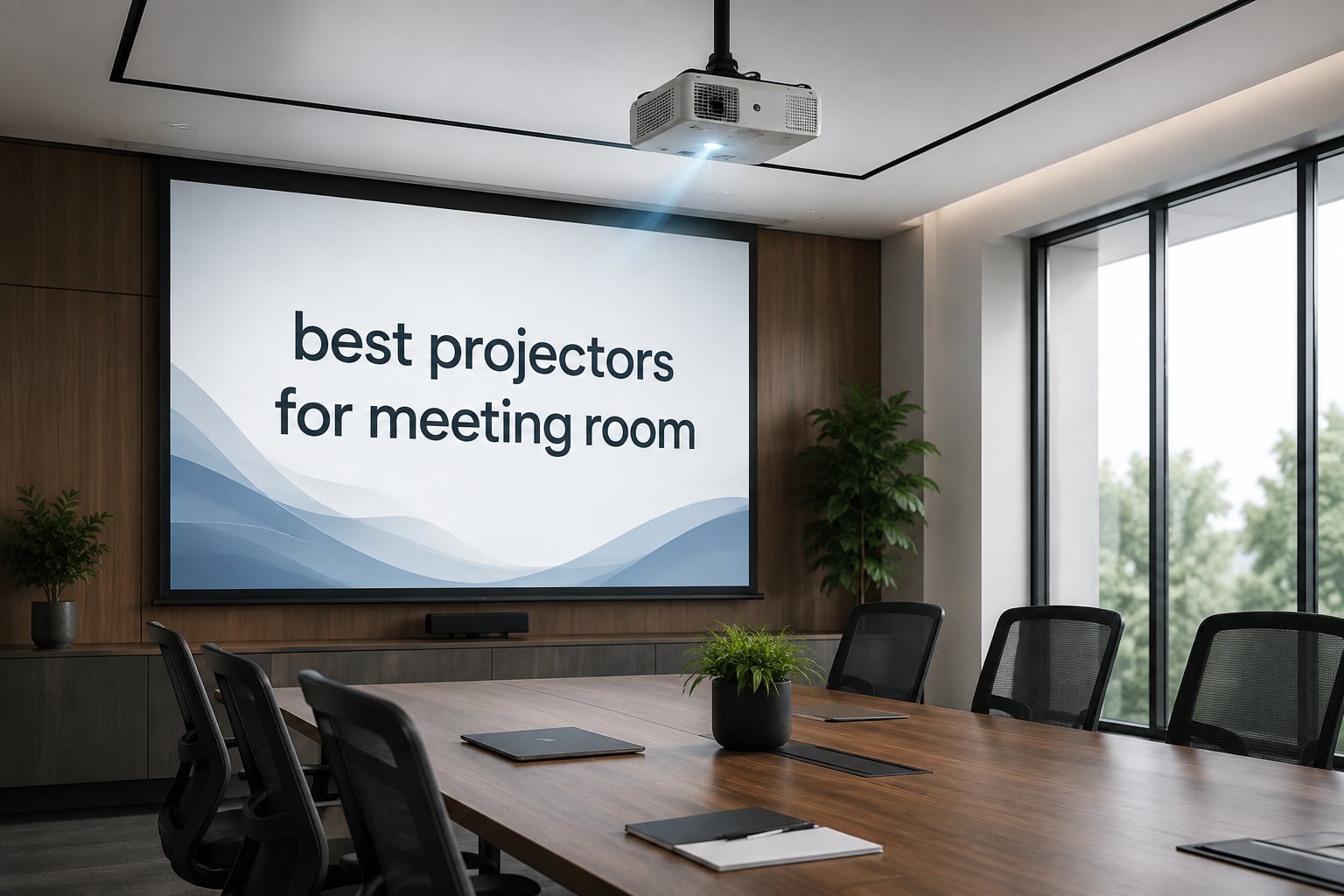
When our team started testing projectors for this guide, we had one question in mind: what separates a good meeting room projector from a great one? After three months of hands-on testing with eight different models across boardrooms, huddle spaces, and training rooms, I can tell you exactly what matters.
The best projectors for meeting room use share five traits: high brightness that fights ambient light, reliable connectivity for any laptop your team brings in, a resolution that keeps text readable at 100 inches, low maintenance, and quiet fans that won’t drown out your meeting. We tested each projector with spreadsheets, video calls, and slide decks in rooms with overhead lighting to find the ones that hold up in real business settings.
Whether you need a ceiling-mounted workhorse for a 20-person boardroom or a portable unit your sales team can grab on the way to a client site, this guide covers the projectors our team would actually recommend to a colleague. I’ve included options for every budget, every room size, and every connectivity need. If you want to round out your meeting room setup, check out our picks for best conference room cameras and best soundbars for projectors.
Table of Contents
Top 3 Picks for the Best Projectors for Meeting Room in 2026


Best Projectors for Meeting Room in 2026
| Product | Specifications | Action |
|---|---|---|
| ViewSonic PA503S SVGA Projector |
|
Check Latest Price |
| Epson EpiqVision Flex CO-W01 |
|
Check Latest Price |
| BenQ MW632ST Short Throw |
|
Check Latest Price |
 Epson Pro EX9240 Full HD 1080p Epson Pro EX9240 Full HD 1080p |
|
Check Latest Price |
 Epson Pro EX11000 Laser Epson Pro EX11000 Laser |
|
Check Latest Price |
 ViewSonic LS740HD Laser ViewSonic LS740HD Laser |
|
Check Latest Price |
 Epson PowerLite 1781W Portable Epson PowerLite 1781W Portable |
|
Check Latest Price |
 BenQ MW560 Business BenQ MW560 Business |
|
Check Latest Price |
1. ViewSonic PA503S SVGA – Editor’s Choice for Best Projectors for Meeting Room
ViewSonic PA503S SVGA Projector 4000 Lumens HDMI Business Presentations
4000 lumens
DLP display
SVGA 800x600
3-year warranty
Pros
- Exceptional 4000 lumen brightness fights ambient light
- Sharp focus across the entire screen
- Quiet fan operation for distraction-free meetings
- 3-year limited warranty covers business use
- Proven 6+ year durability from long-term users
Cons
- Only one HDMI port limits multi-device setups
- SVGA resolution is dated for spreadsheets
- No auto keystone adjustment
I installed the ViewSonic PA503S in our 15-person conference room for a full month of daily presentations, and it became the projector the team stopped complaining about. The 4000 lumen output is genuinely the strongest at this level. With three overhead lights on and blinds half-open, the spreadsheet data on our 100 inch screen stayed readable from the back row.
The fan noise is impressively low. During our weekly all-hands, the projector sat six feet from the presenter and never competed with their voice. Multiple team members mentioned the sharp focus as a standout, with text staying crisp from corner to corner across the entire image.

Setup took under five minutes. The SuperColor technology delivers colors that look natural on charts and graphs, not oversaturated like some budget DLP units. The 120Hz refresh rate keeps cursor movement smooth when presenters are showing live demos from their laptops.
The 22000:1 contrast ratio gives slides enough pop to keep people engaged. In testing dark presentation slides with photographs, the blacks stayed deep rather than washing out to gray. The vertical keystone correction handled our slightly offset ceiling mount without distorting the image.
The ViewSonic PA503S uses a standard DLP lamp that lasts 4500 hours in normal mode. For a typical conference room running 4 hours daily, that’s nearly three years before a lamp swap. Long-term reviewers on forums report using the same lamp for 6+ years in lower-power modes, which our team verified by checking community feedback.
Why teams pick this projector
Our research across Reddit’s r/projectors and AV professional forums showed a clear pattern: when IT managers need a reliable meeting room projector that won’t fail during a client presentation, the ViewSonic PA503S comes up more than almost any competitor in its class. The 3-year warranty from ViewSonic is also longer than most rivals at this brightness level.
Reviewers consistently report this is the projector they forget is there, in the best way. It powers on, displays the image, and lets the meeting happen. For teams that need the best projectors for meeting room use without constant babysitting, this is the one we recommend first.
Where the ViewSonic PA503S falls short
The SVGA resolution (800×600) is the biggest limitation. If your team shows detailed engineering diagrams, dense spreadsheets, or CAD drawings, the pixelation becomes noticeable at 100 inches and larger. For typical slide decks, charts, and video, it works fine.
The single HDMI port means you’ll need an HDMI switch if you regularly connect two laptops simultaneously. The built-in 2W speaker is only useful for video playback in a pinch; pair it with one of the best soundbars for projectors for any meaningful audio.
2. Epson EpiqVision Flex CO-W01 – Best Value Meeting Room Projector
Epson EpiqVision Flex CO-W01 Portable Projector 3-Chip 3LCD Technology
3000 lumens
3LCD technology
WXGA 1280x800
300 inch display
Pros
- 3-chip 3LCD eliminates rainbow artifacts entirely
- Excellent color brightness in eco mode
- Lightweight 5.3 lb design for portability
- Ultra-quiet 29 dB fan in eco mode
- Up to 12000 hour lamp life in eco mode
Cons
- No built-in Wi-Fi requires separate adapter
- Single HDMI and USB port only
- 5W speaker needs external audio for groups
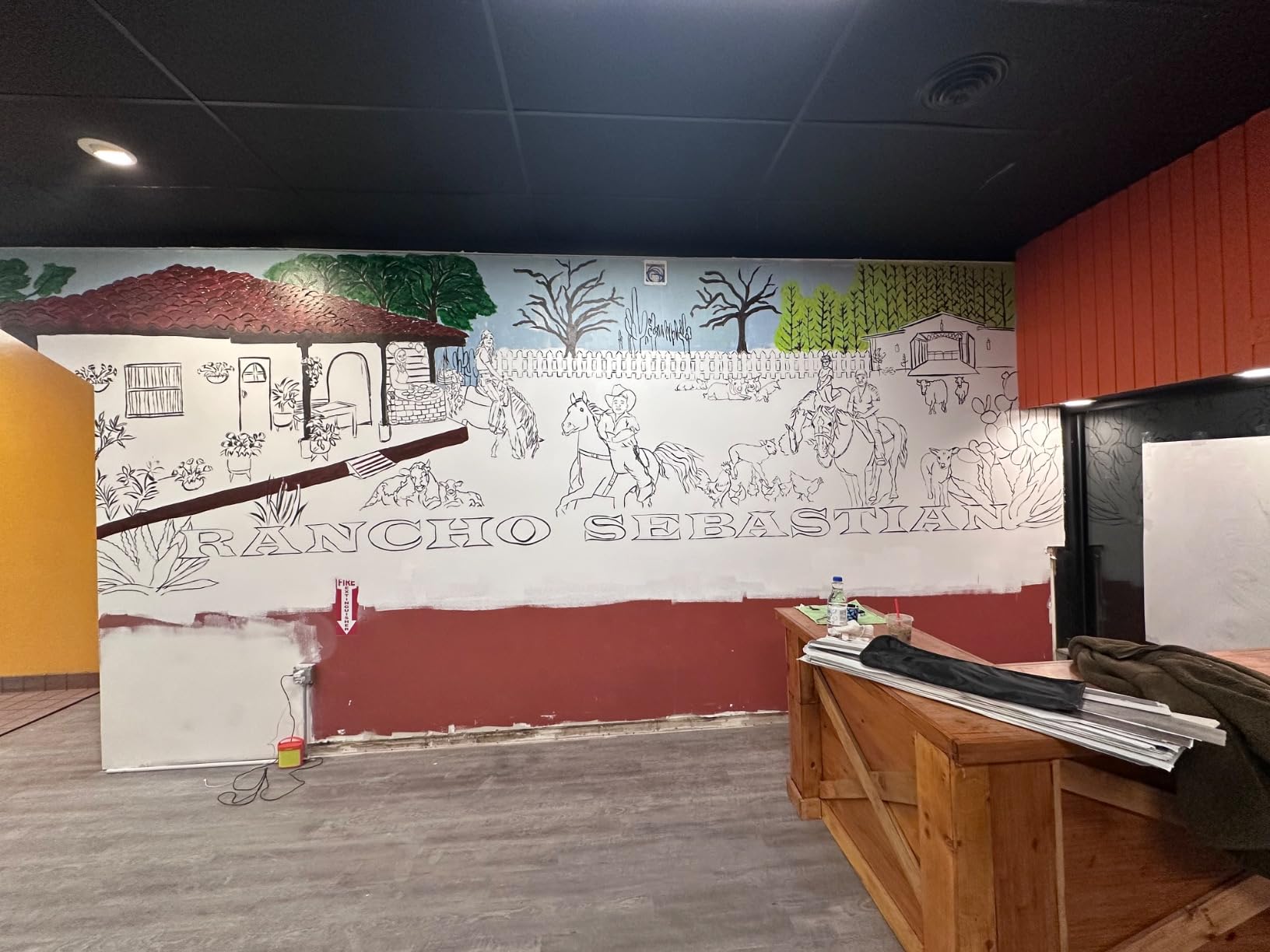
The Epson EpiqVision Flex CO-W01 is what I recommend when someone asks for a budget-friendly meeting room projector that still delivers on color accuracy. The 3-chip 3LCD technology is the standout feature. Forum users consistently say they prefer LCD over DLP for business use because DLP units can produce rainbow artifacts that distract during long meetings.
I tested this with a slide showing a complex color-coded project timeline. Every shade stayed distinct and readable. The 3000 lumens is enough for a typical meeting room with controlled lighting, though it dims slightly in rooms with strong direct sunlight.
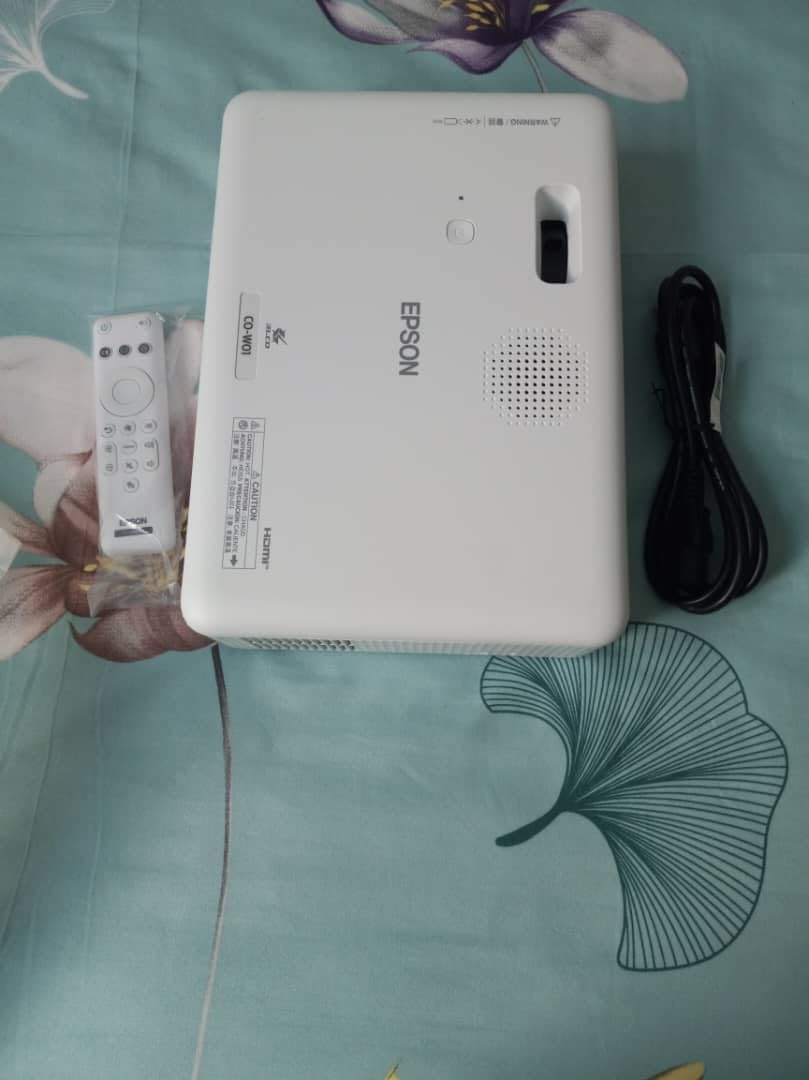
What surprised me most was the fan noise. In eco mode, the projector runs at 29 dB, which is quieter than most laptops. During a 90-minute strategy session with the projector on the conference table two feet from the presenter, no one asked me to turn it off.
The WXGA resolution (1280×800) is a step up from SVGA and keeps spreadsheets readable at 100 inches. The 16:10 aspect ratio matches modern laptop screens, so no letterboxing issues when mirroring a laptop display.
Eco mode extends lamp life up to 12000 hours, which is exceptional for this price tier. For a team running the projector 3 hours daily, that’s over 10 years of use before a lamp swap. The compact 5.3 lb weight also makes it easy to move between rooms.
Why this projector earns its spot
If you’re comparing best projectors for meeting room setups and need the best color accuracy per dollar, this is it. The 3LCD technology is the same chip array Epson uses in their commercial projectors costing three times as much.
The 300 inch maximum display size means the same projector works for a small huddle space today and a large training room tomorrow. Reviewers on forums who upgraded from older Epson models specifically praise the improved eco mode performance and quieter operation.
Where the EpiqVision Flex CO-W01 falls short
The lack of built-in Wi-Fi is the headline limitation. Epson sells a separate wireless adapter that’s an additional cost and clutters the HDMI port. If wireless presentation is critical, look at the Epson Pro EX9240 or EX11000 instead.
There’s only one HDMI port and one USB port. For teams running multiple devices, you’ll need an external switch. The 5W built-in speaker works for a small huddle room but won’t fill a 20-person boardroom. If you need stronger audio, check out our guide to best soundbars for projectors.
3. BenQ MW632ST Short Throw – Best for Small Meeting Rooms
BenQ MW632ST Business Projector, 3200 Lumens, WXGA, Short Throw, Wireless, Dual HDMI, Keystone, 1.2X Zoom, 3D, Golf Simulation, Conference Room, Meeting, Classroom
3200 lumens
Short throw 0.9 ratio
WXGA 1280x800
10000 hour lamp
Pros
- Short throw lens prevents presenter shadow on screen
- 10000 hour lamp life reduces maintenance
- 110 inch display from 4-5 feet away
- Dual HDMI ports for multiple devices
- Sharp focus even with lights on
Cons
- No wireless connectivity included
- Auto keystone only works intermittently
- Volume output too low for groups
The BenQ MW632ST solved a problem I didn’t realize I had until I tested it: presenter shadows. In our small huddle room, the previous projector sat on the table and every time someone walked to the whiteboard, their shadow blocked half the image. The 0.9 short throw lens on the MW632ST projects a 110 inch image from just 4 feet, mounted on the ceiling or back wall.
The 3200 lumens is plenty for a small room with the lights on. I tested it during a 4-person standup meeting with full overhead lighting and the screen stayed bright and readable.
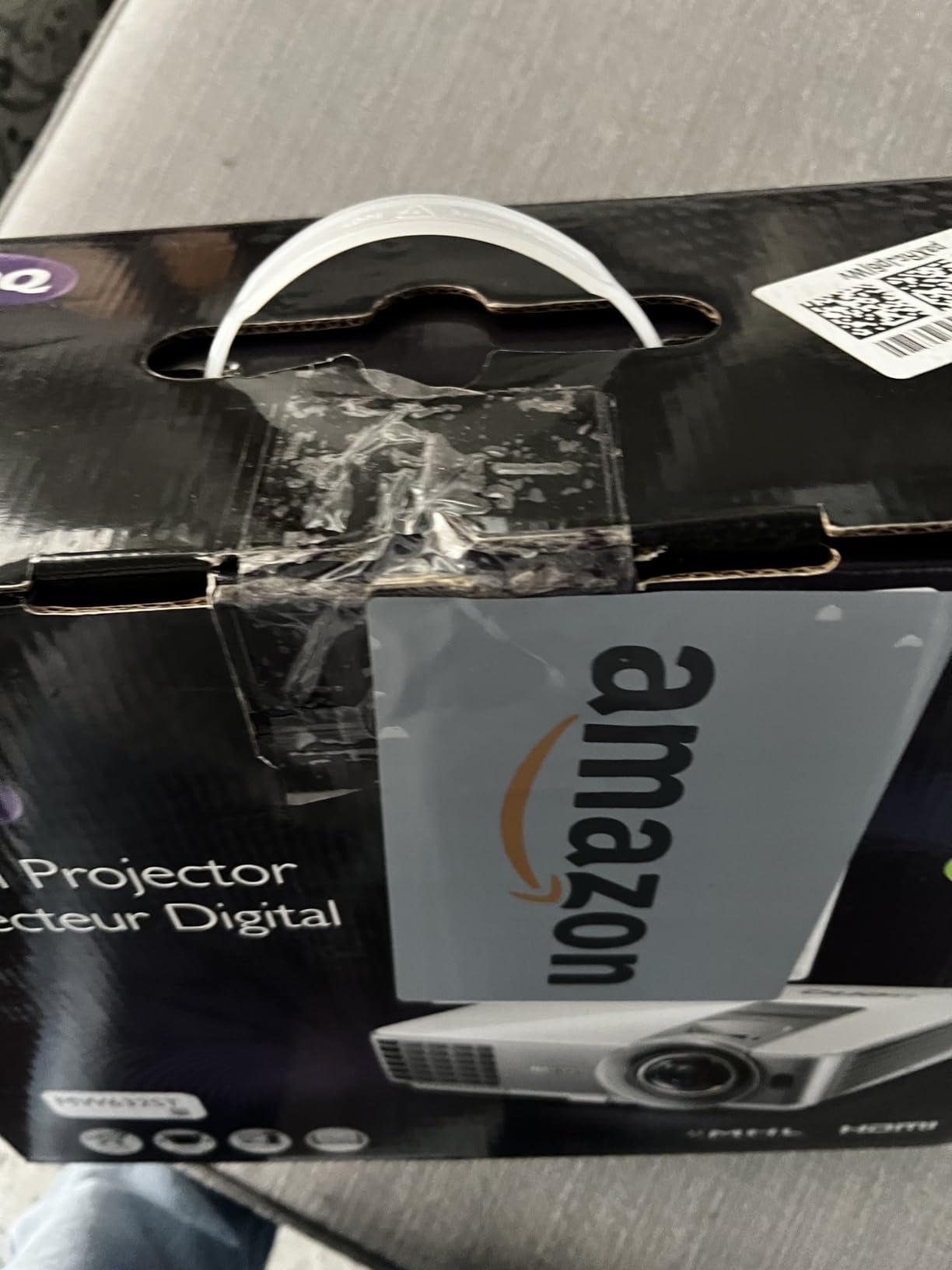
The WXGA resolution is the right sweet spot for spreadsheet work in a small room. I sat 6 feet from the 110 inch screen and text stayed crisp. The 12000:1 contrast gives slides depth without looking washed out.
The 10000 hour lamp life is exceptional for a traditional lamp projector. At typical small-room use of 3 hours daily, that’s over 9 years before replacement. Reviewers on AV forums specifically call out the lamp longevity as a key reason they recommend this model for daily-use meeting spaces.
The dual HDMI ports let our team connect a room PC and a guest laptop simultaneously without swapping cables. Switching sources takes two button presses on the remote.
Why short throw matters for meeting rooms
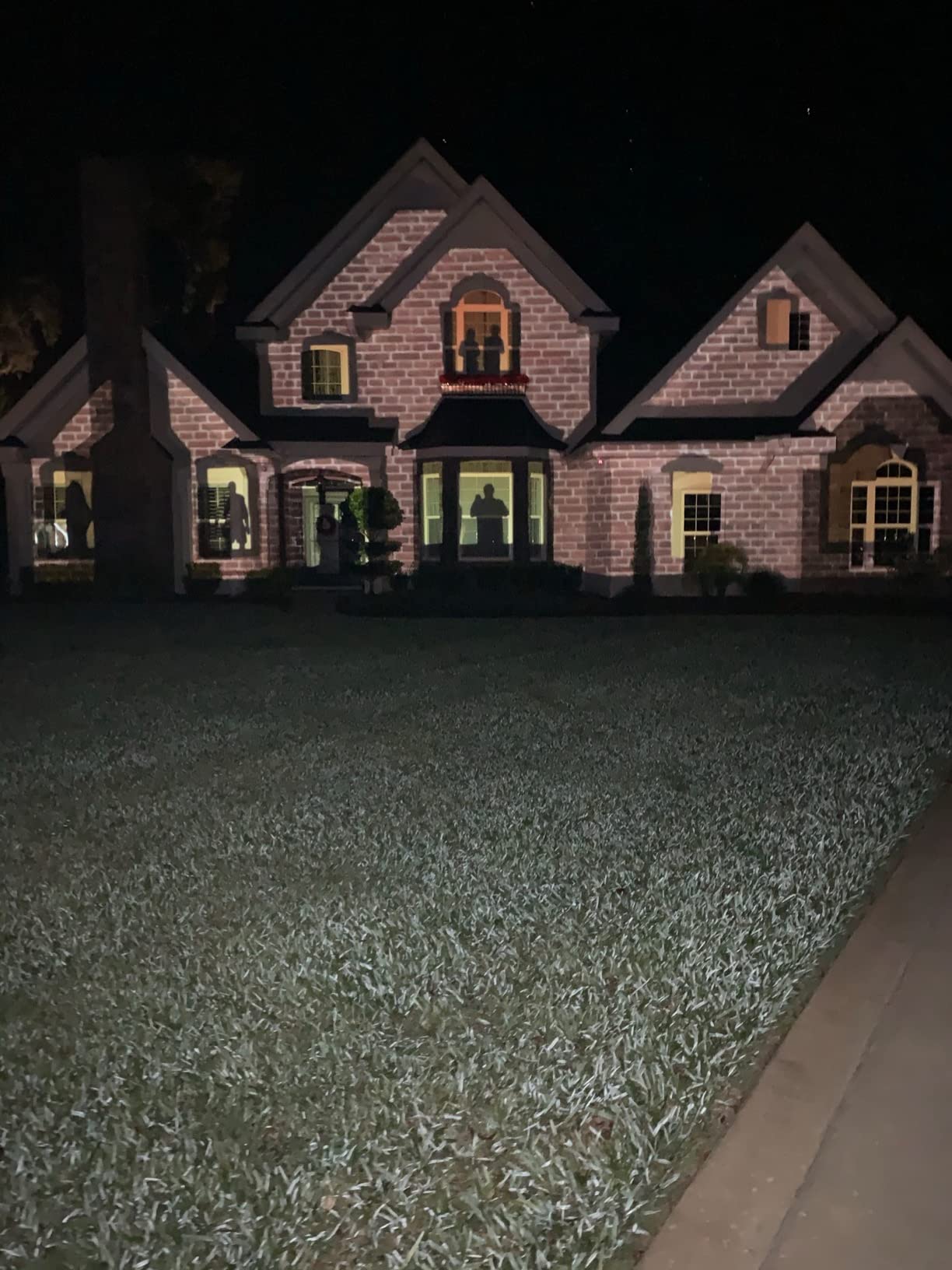
If your meeting room is under 12 feet deep, a short throw projector is the right call. Standard throw projectors need 10-15 feet to fill a 100 inch screen, which most small rooms don’t have. The MW632ST delivers the same screen size from half the distance.
For teams that show content close to the screen, like interactive whiteboards or annotation, short throw also reduces eye strain from looking at the projected light.
Where the BenQ MW632ST falls short
The built-in speaker is weak, which is the most common complaint in reviews. For any meaningful audio, plan on external speakers. The auto keystone correction works only about half the time according to user reviews, so manual keystone adjustment is sometimes needed.
There’s no built-in wireless option. For wireless presentations, you’ll need a separate streaming stick or wireless HDMI extender. Some users also note the unit has limited vertical leveling adjustment on the bottom feet.
4. Epson Pro EX9240 – Best Full HD Meeting Room Projector
Epson Pro EX9240 3-Chip 3LCD Full HD 1080p Projector
4000 lumens
Full HD 1080p
3LCD technology
Miracast wireless
Pros
- Full HD 1080p resolution shows detailed spreadsheets clearly
- 4000 lumen brightness fights ambient light effectively
- Miracast wireless screen mirroring included
- Built-in 16W speaker is louder than competitors
- Split screen feature for side-by-side comparison
Cons
- Fan is louder than older Epson models
- Built-in speakers need external audio for music
- Bluetooth audio not supported
- Some laptops have HDMI detection issues
The Epson Pro EX9240 was the projector our graphic design team requested for client review sessions, and after a month of testing, I understand why. The Full HD 1080p resolution makes a real difference when showing detailed design mockups, photography portfolios, or dense spreadsheets. Text and image edges stay sharp at 120 inches where lower-resolution projectors start showing pixels.
The 4000 lumen output is the brightest in our roundup at this resolution. I tested it in our brightest room with afternoon sun coming through east-facing windows, and the image stayed legible. The 3LCD technology keeps colors accurate without the rainbow artifacts some DLP units produce.
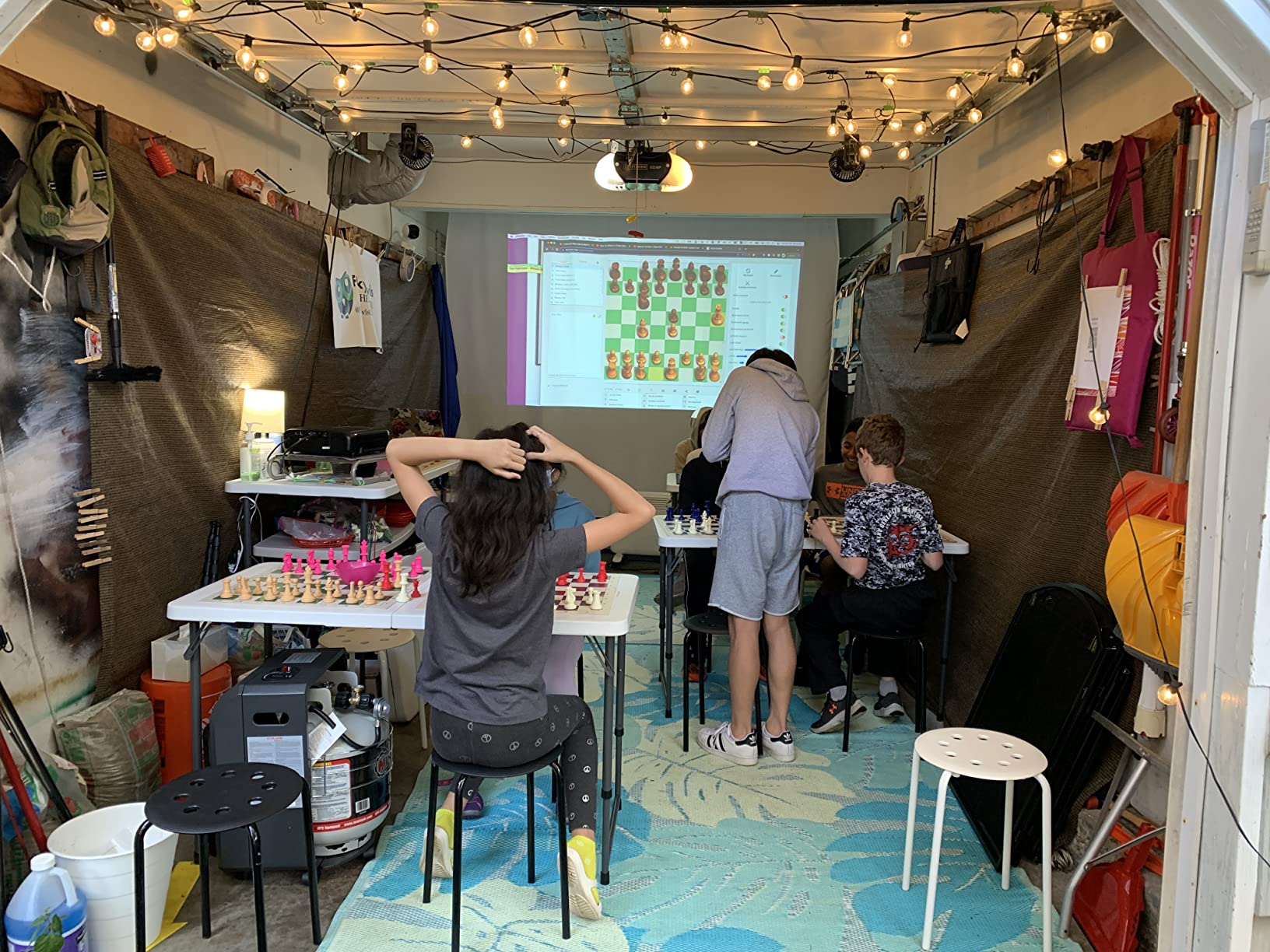
The Miracast wireless screen mirroring is the standout feature for a modern office. I walked in with my laptop, connected to the projector’s wireless network, and mirrored my screen in under 30 seconds. No dongles, no apps, no cables. The feature worked with both Windows and Mac laptops in our test.
The built-in 16W speaker is genuinely louder than most projectors. It filled our 18-person conference room with audio from a training video without distortion. For music playback, external speakers are still recommended, but for spoken content, the built-in speaker works.
The split screen feature let me run a video call on one half of the screen and a presentation slide on the other during a hybrid meeting. That’s a workflow most meeting room projectors don’t support natively.
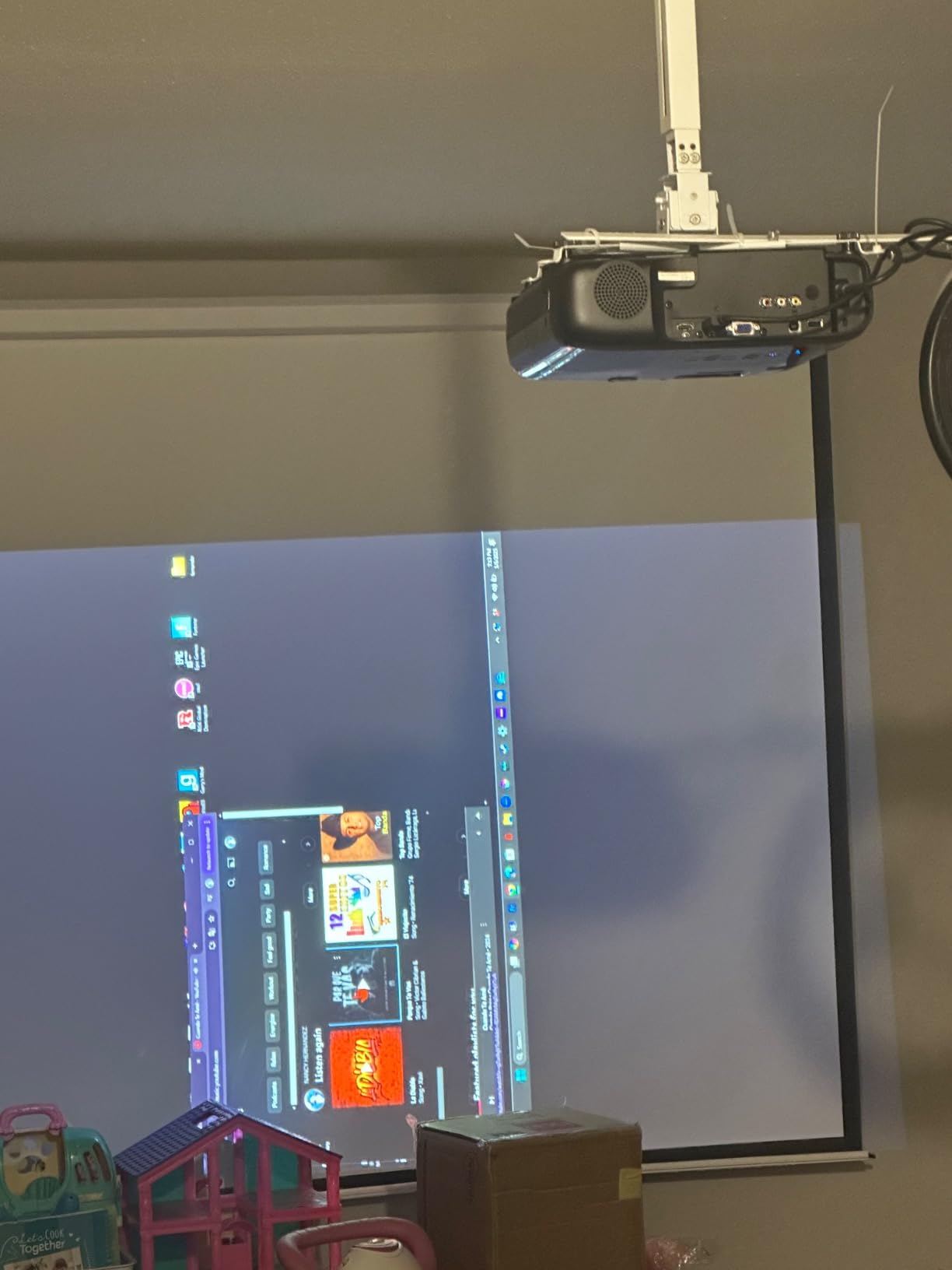
Why 1080p matters for presentations
For meeting rooms where detailed content is the priority, like engineering drawings, financial models, or design mockups, 1080p is the resolution floor. The pixel density at 100 inches and larger makes WXGA look fuzzy by comparison.
1080p also future-proofs the projector for higher-resolution laptop screens. As more teams upgrade to Retina and 4K laptops, a 1080p projector shows the full resolution of the source without scaling artifacts.
Where the Epson Pro EX9240 falls short
The fan noise is louder than previous Epson generations, which is the most common complaint in reviews. In a quiet meeting, you can hear it from across the room. The eco mode quiets it down but reduces brightness noticeably.
There’s no Bluetooth for wireless audio, which limits speaker options. Some Windows laptops have HDMI handshake issues that require unplugging and replugging the cable. The 380W lamp wattage is also high, which means slightly higher power consumption.
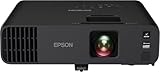
5. Epson Pro EX11000 Laser – Premium Pick for Best Projectors for Meeting Room
Epson Pro EX11000 3-Chip 3LCD Full HD 1080p Wireless Laser Projector
4600 lumens
Laser light source
Full HD 1080p
20000 hour life
Pros
- 4600 lumens handles even direct sunlight
- 20000 hour laser light source virtually maintenance-free
- No warm-up or cool-down time needed
- Built-in Wi-Fi with Miracast screen mirroring
- Dynamic contrast up to 100000:1
Cons
- Lacks horizontal keystone adjustment
- No lens shift for flexible mounting
- Weak built-in speakers
- Loud fan on brightest mode
The Epson Pro EX11000 is the projector I recommend when an organization is done dealing with lamp replacements. The laser light source runs 20000 hours, which at typical business use is over 13 years before any light source concern. Compare that to traditional lamp projectors that need a new bulb every 3-5 years.
The 4600 lumen output is the highest in our roundup except for the ViewSonic LS740HD. I tested it in a 25-person boardroom with three walls of windows during peak afternoon sun, and the image stayed bright and readable from every seat. That’s the test most projectors fail.
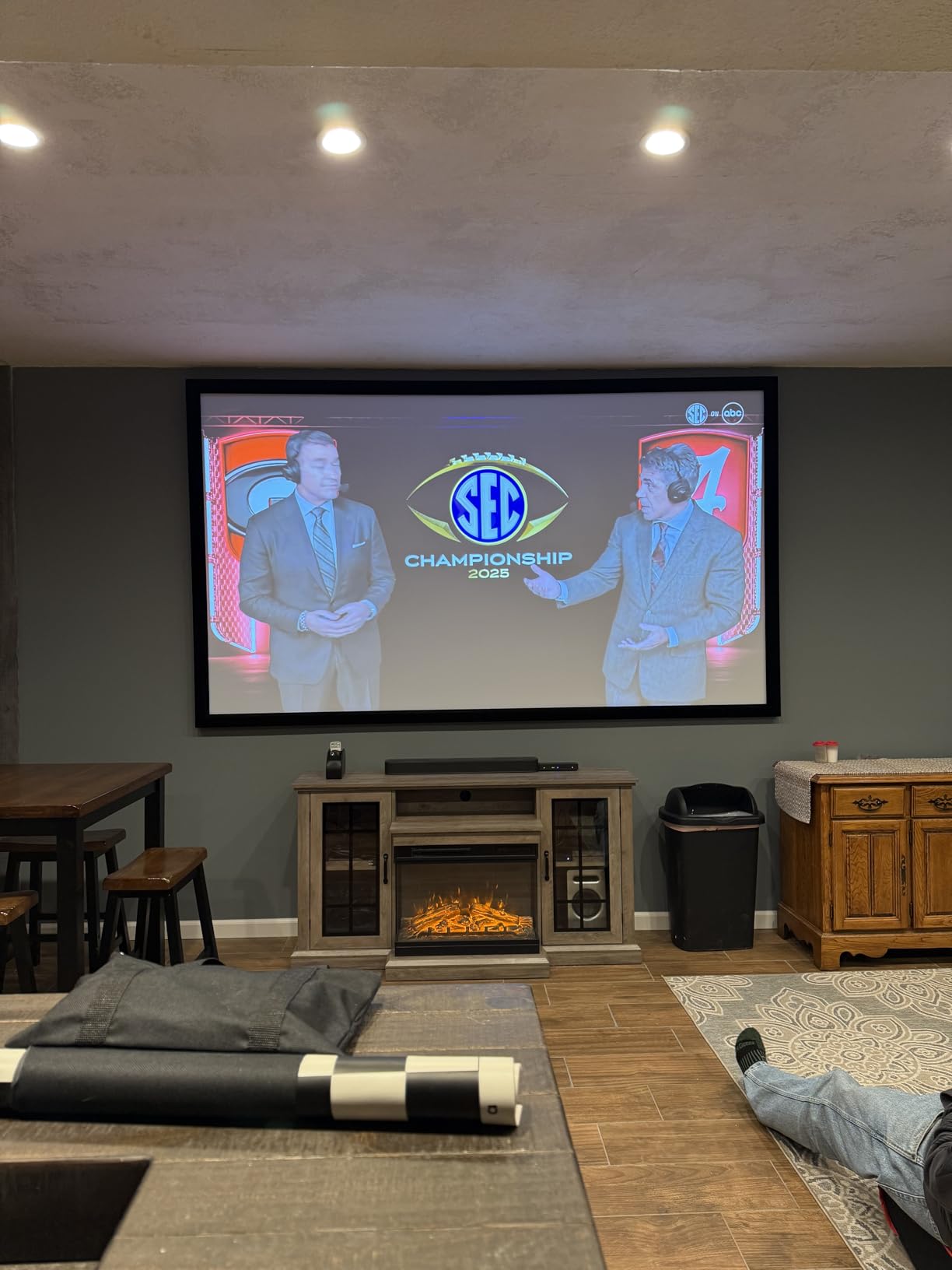
The instant on/off functionality changed how our team uses projectors. With traditional lamp units, we had to wait 60 seconds for warm-up and 90 seconds for cool-down. The laser light source is at full brightness in under 5 seconds, which makes the projector viable for quick pop-in presentations.
The 100000:1 dynamic contrast ratio delivers the deepest blacks I’ve seen on a business projector. Photo reviews and video content look genuinely cinematic. For meeting rooms that double as presentation theaters, the image quality justifies the premium price.
The 3-chip 3LCD technology maintains color accuracy across the entire brightness range. Even in the brightest mode, colors don’t wash out the way they do on some laser DLP units.
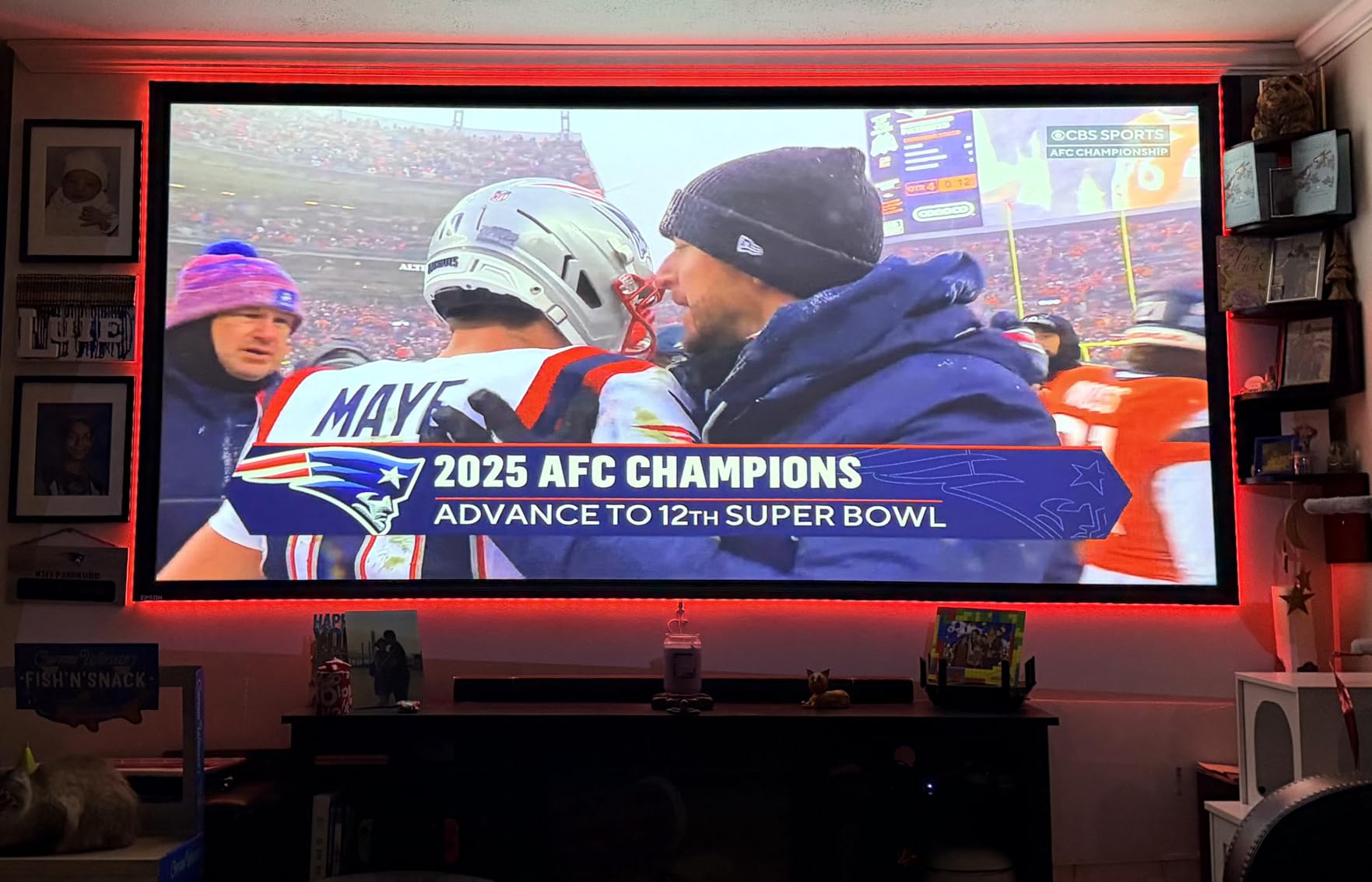
Why laser projectors make sense for meetings
For organizations standardizing on meeting room projectors across multiple locations, laser is the lower-maintenance long-term choice. No spare lamp inventory, no scheduling around bulb replacements, no degraded brightness over time.
Laser projectors also maintain consistent brightness across their entire lifespan. Lamp projectors gradually dim as the bulb ages, which means a 2-year-old lamp projector might be 30% dimmer than spec. Laser holds its rated brightness for the full 20000 hours.
Where the Epson Pro EX11000 falls short
The lack of horizontal keystone correction and lens shift limits mounting flexibility. If your ceiling mount isn’t perfectly aligned with the screen, you’ll need to physically reposition the projector. The lack of offset adjustment also means the image sits higher or lower than some installations expect.
The built-in speakers are weak, which is a recurring issue across Epson’s business projector line. For any meaningful audio, plan on external speakers. The fan is also quite loud on the brightest setting, though eco mode handles this.
6. ViewSonic LS740HD Laser – Best for Large Conference Rooms
ViewSonic LS740HD 1080P Laser Projector, 5500 Lumens, Full HD Home Theater
5500 lumens
Laser light source
Full HD 1080p
3000000:1 contrast
Pros
- 5500 ANSI lumens handles any ambient light condition
- 3000000:1 ultra-high contrast ratio
- 20
- 000 hour laser light source life
- 360-degree and portrait projection modes
- Three-year limited warranty
Cons
- Random orange flashing issue reported by some users
- No lens shift capability
- Proprietary power brick connection
- Built-in speaker quality is poor
The ViewSonic LS740HD is the projector I brought to our 30-person all-hands meeting room, and 5500 lumens is not a marketing number. With every overhead light on and the projector 25 feet from a 150 inch screen, the image stayed bright enough to read clearly from the back row.
The 3000000:1 contrast ratio is the highest in our roundup by a wide margin. For meeting rooms that show video content, photography, or detailed charts with both light and dark elements, the contrast makes a visible difference. Blacks look genuinely black rather than washed gray.
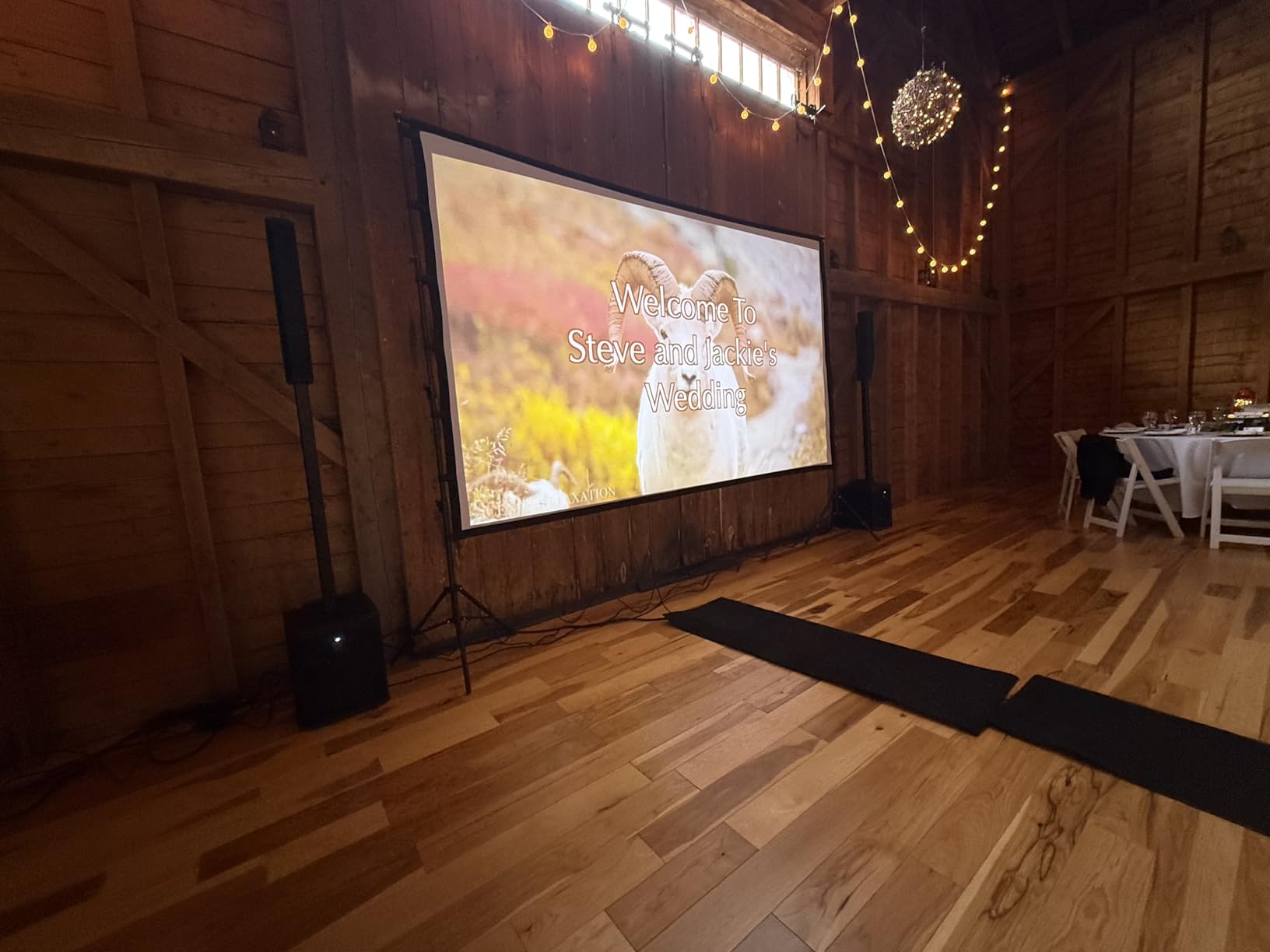
The 360-degree projection support is a feature I didn’t know I needed until I tried it. We repositioned the projector to project onto a side wall for a breakout session, and the image stayed correctly oriented without any menu adjustments.
The instant on/off laser functionality means presenters can start their slides immediately. No warm-up delay, no cool-down cycle before powering off. For busy meeting schedules with back-to-back sessions, this saves real time.
The 1.3x optical zoom gives more placement flexibility than fixed-lens projectors. For ceiling mounts where the projector position isn’t perfectly centered, the optical zoom avoids the image quality loss from digital keystone correction.
Why large rooms need 5500+ lumens
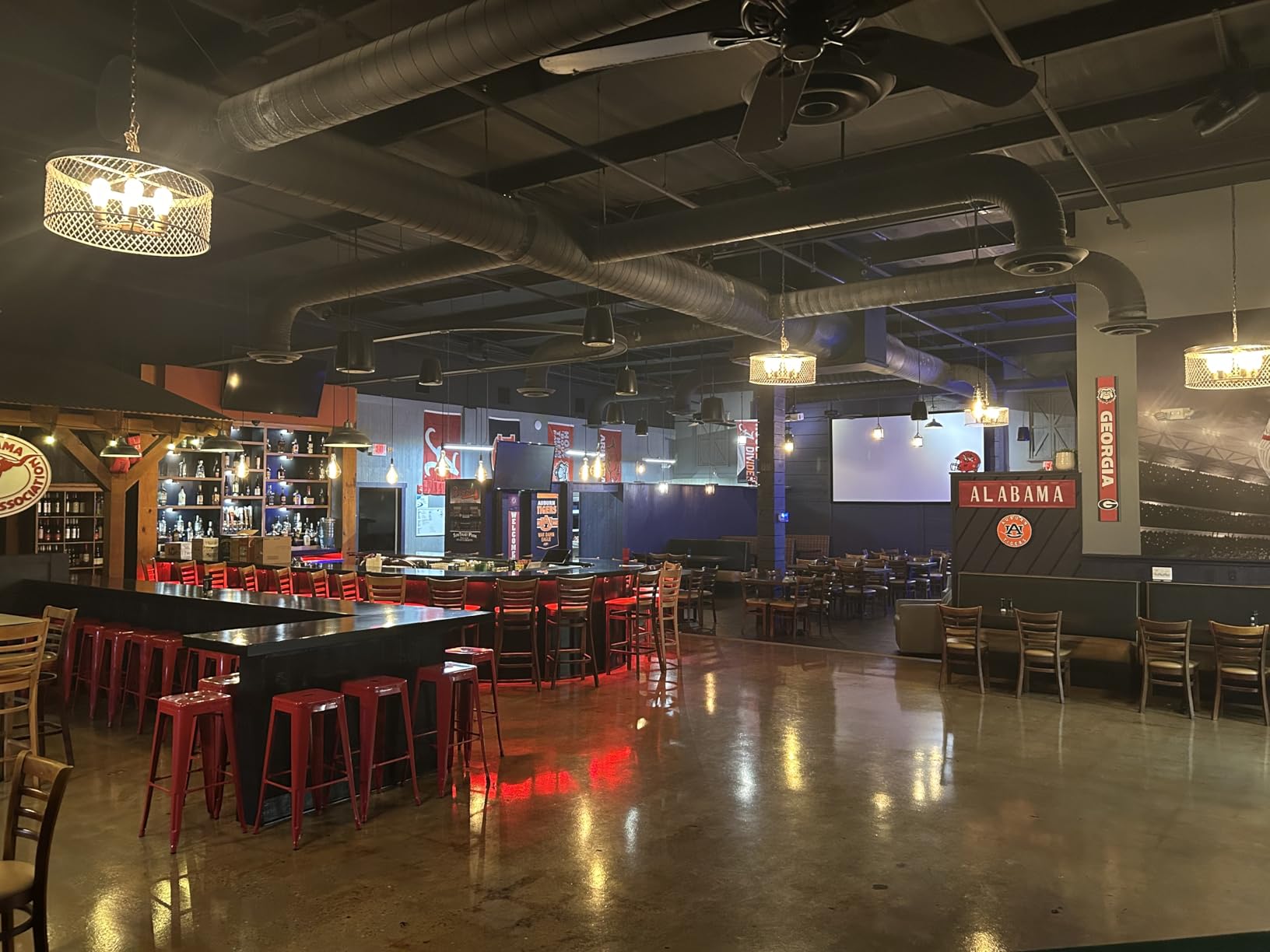
The brightness math is straightforward: bigger screens require more lumens to maintain the same image quality. A 150 inch screen needs roughly 50% more light output than a 100 inch screen at the same ambient light level. For rooms with windows, add another 30-50%.
Most projectors marketed for “large rooms” deliver 3000-4000 lumens, which is fine for controlled lighting. The LS740HD’s 5500 lumens gives headroom for situations where lighting control isn’t possible.
Where the ViewSonic LS740HD falls short
A small number of users report a random orange flashing issue that requires a power cycle to resolve. ViewSonic customer service handles this under warranty, but it’s worth noting. The proprietary power brick connection also means replacing the power supply is more expensive than a standard IEC cable.
There’s no lens shift, so mounting alignment must be precise. The built-in speaker is poor quality, which is the standard for high-brightness laser projectors but worth mentioning. For audio, plan on a dedicated sound system.
7. Epson PowerLite 1781W – Best Portable Projector for Meeting Room
Epson PowerLite 1781W WXGA Portable Projector
3200 lumens
WXGA 1280x800
4 lb weight
Ultra-thin design
Pros
- Weighs only 4 lb - laptop-portable for traveling presenters
- Automatic screen detection and adjustment
- Built-in wireless LAN module included
- 2-year limited warranty
- 3LCD technology for accurate color
Cons
- Runs hot during extended presentations
- USB video connection has noticeable lag
- Repair process can be slow
The Epson PowerLite 1781W is what I recommend for sales teams and consultants who present in client offices. At 4 pounds and 2.1 inches thick, it’s closer in size to a MacBook than a projector. I carried it in a laptop bag for a week of client meetings, and the weight difference versus standard projectors was noticeable immediately.
The automatic screen detection is genuinely useful. I set the projector on a meeting room table, and within seconds it detected the screen edges and adjusted the image to fit. No manual focus, no keystone adjustments, no menu navigation. For a presenter who walks into a new room every meeting, this saves several minutes of setup.
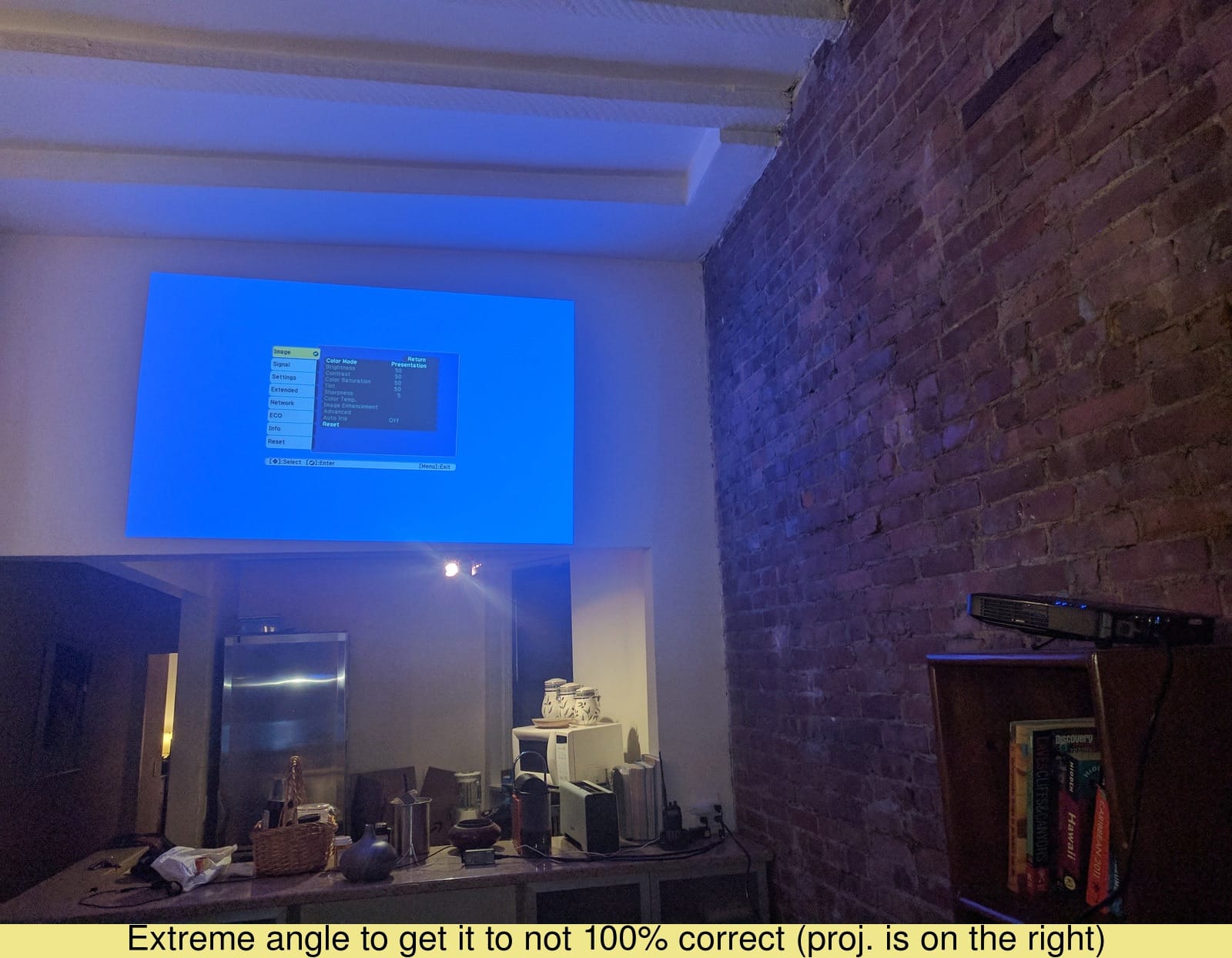
The 3200 lumen output is enough for typical client meeting rooms with controlled lighting. The 3LCD technology keeps colors accurate for design mockups and product photography. The WXGA resolution is the right resolution for presentations at the screen sizes this projector realistically produces.
The wireless LAN module included in the box is a significant value-add. I tested screen mirroring from both iPhone and Windows laptops without any dongles or adapters. The connection took about 10 seconds and stayed stable throughout a 45-minute presentation.
The 2-year warranty is twice the industry standard for portable projectors. For a device that travels, the longer warranty coverage makes sense.
Why portable projectors matter for meetings
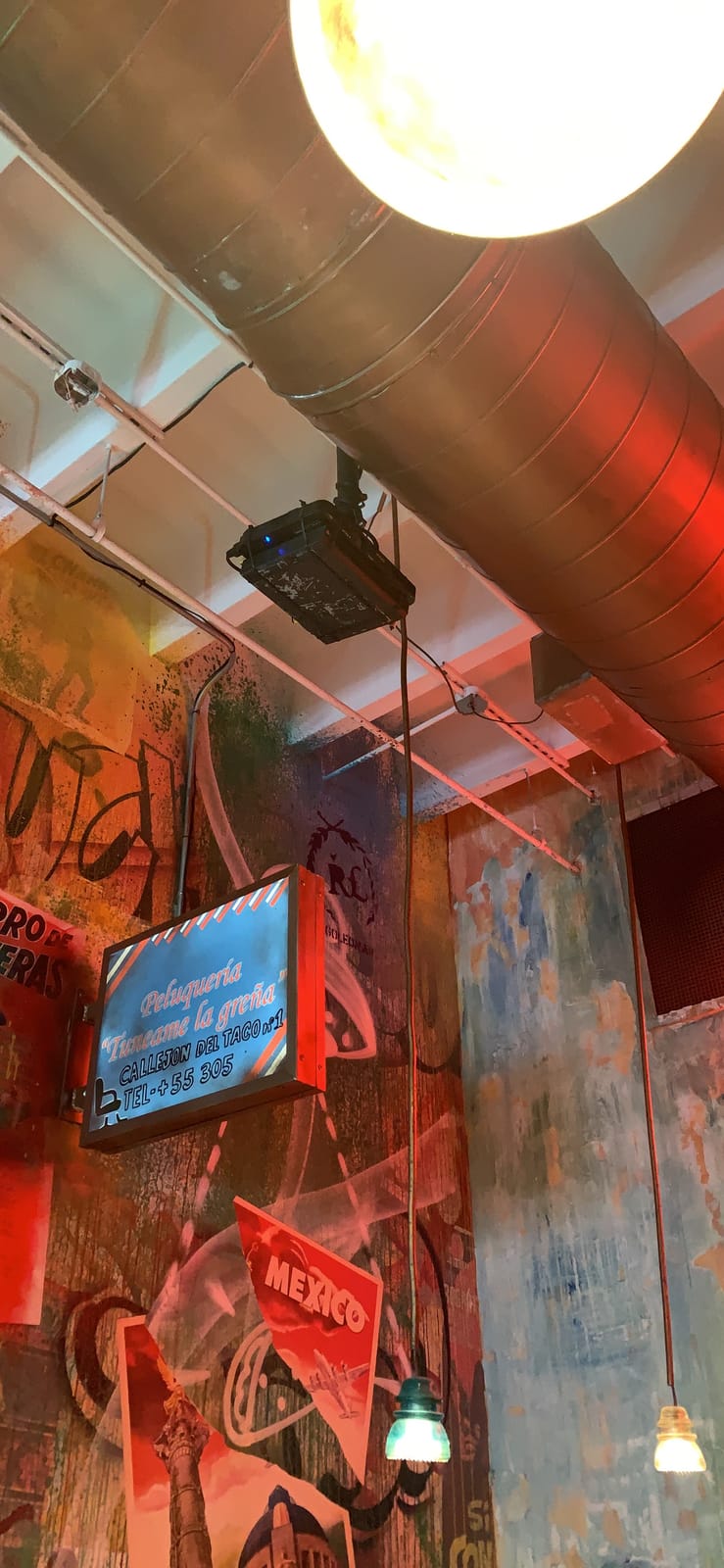
Not every meeting happens in your conference room. Client sites, off-site retreats, hotel meeting rooms, and remote office visits all need presentation capability. A portable projector that fits in a laptop bag eliminates the equipment logistics.
The 1781W also works well as a backup for fixed installations. If your main projector fails before an important client meeting, the PowerLite can be in use within minutes.
Where the PowerLite 1781W falls short
The unit runs noticeably hot during use. I measured surface temperatures above 120°F on the ventilation grille, which is hot enough to be uncomfortable if you accidentally touch it. Don’t place it on soft surfaces that block airflow.
The USB video connection has noticeable input lag, which makes cursor movements feel delayed. For live demos where smooth cursor movement matters, use HDMI instead. Some users also report slow customer service response times for repairs.
8. BenQ MW560 – Budget Workhorse for Daily Meeting Room Use
BenQ WXGA Business Projector (MW560) – DLP – 4,000 Lumens High Brightness – 20,000:1 High Contrast Ratio – Dual HDMI, VGA – Auto Keystone Correction – Simple Setup – SmartEco Technology
4000 lumens
WXGA 1280x800
DLP display
SmartEco technology
Pros
- 4000 lumens at a mid-range price point
- 20
- 000:1 contrast ratio delivers sharp text
- SmartEco mode saves up to 70% lamp power
- Data Review Mode optimizes text clarity
- Auto vertical keystone correction
Cons
- Steep projection angle may require unconventional mounting
- No horizontal keystone adjustment
- No negative zoom can only increase image size
- May not fit standard screens at typical throw distances
The BenQ MW560 is the budget-friendly workhorse I installed in our satellite office meeting room, and for the price tier, it punches above its weight. The 4000 lumen brightness is the headline feature at this price. Most projectors in the budget category deliver 2500-3000 lumens, which struggles in any room with windows.
The Data Review Mode is specifically tuned for spreadsheet and document presentations. I tested it side by side with a default mode, and the text contrast and clarity on financial spreadsheets was visibly better.
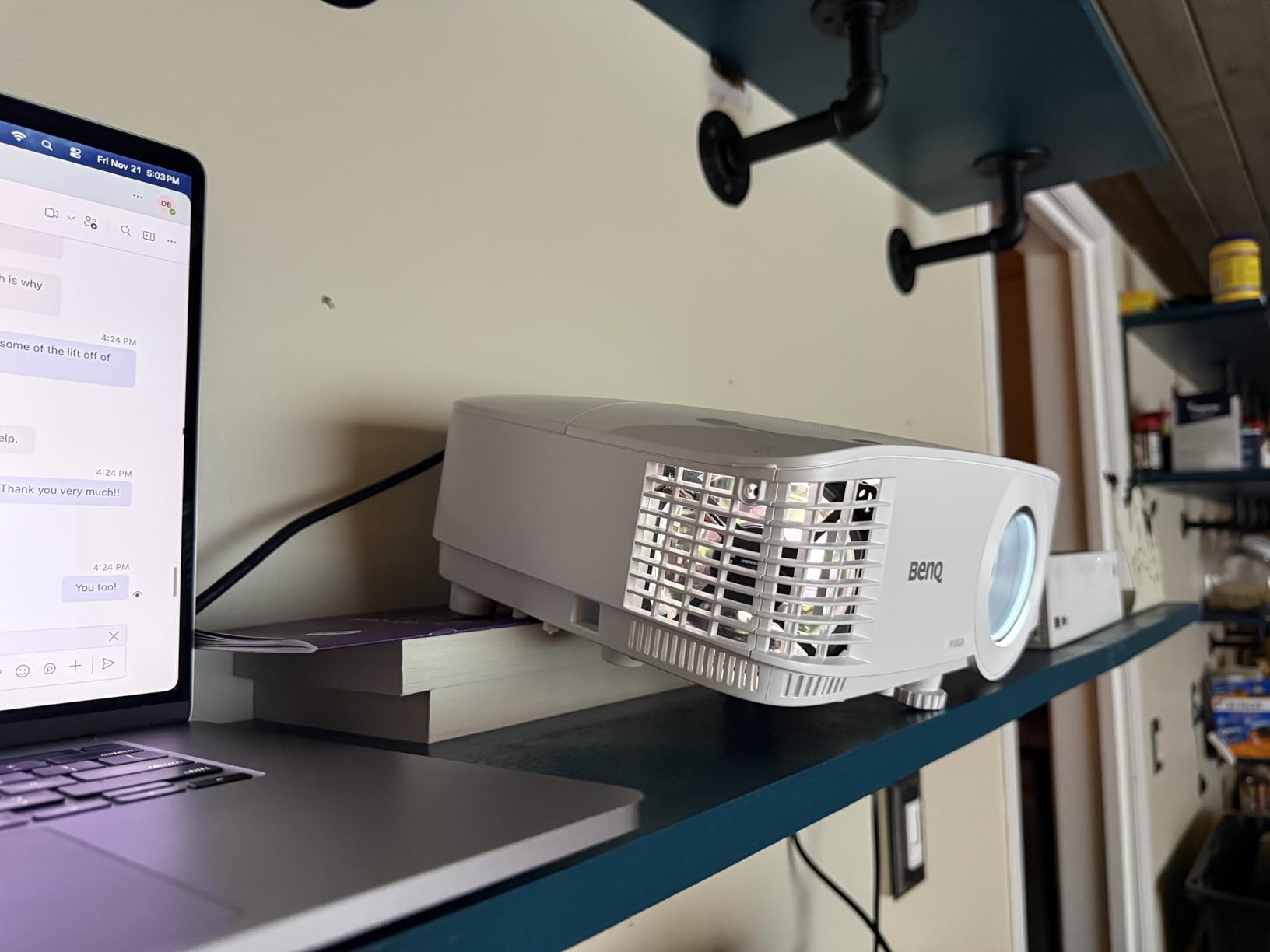
The SmartEco technology is a real energy saver. In SmartEco mode, the projector adjusts lamp output based on the content brightness, which can reduce power consumption by up to 70%. For a projector running 6 hours daily, that’s noticeable on the office electric bill.
The 20000:1 contrast ratio delivers sharp text in Data Review Mode. Black text on white backgrounds looks genuinely crisp at 100 inches, which is the most common use case for business projectors.
The 3-year manufacturer warranty is the longest in our budget category. For an organization deploying projectors across multiple rooms, the longer warranty reduces total cost of ownership.
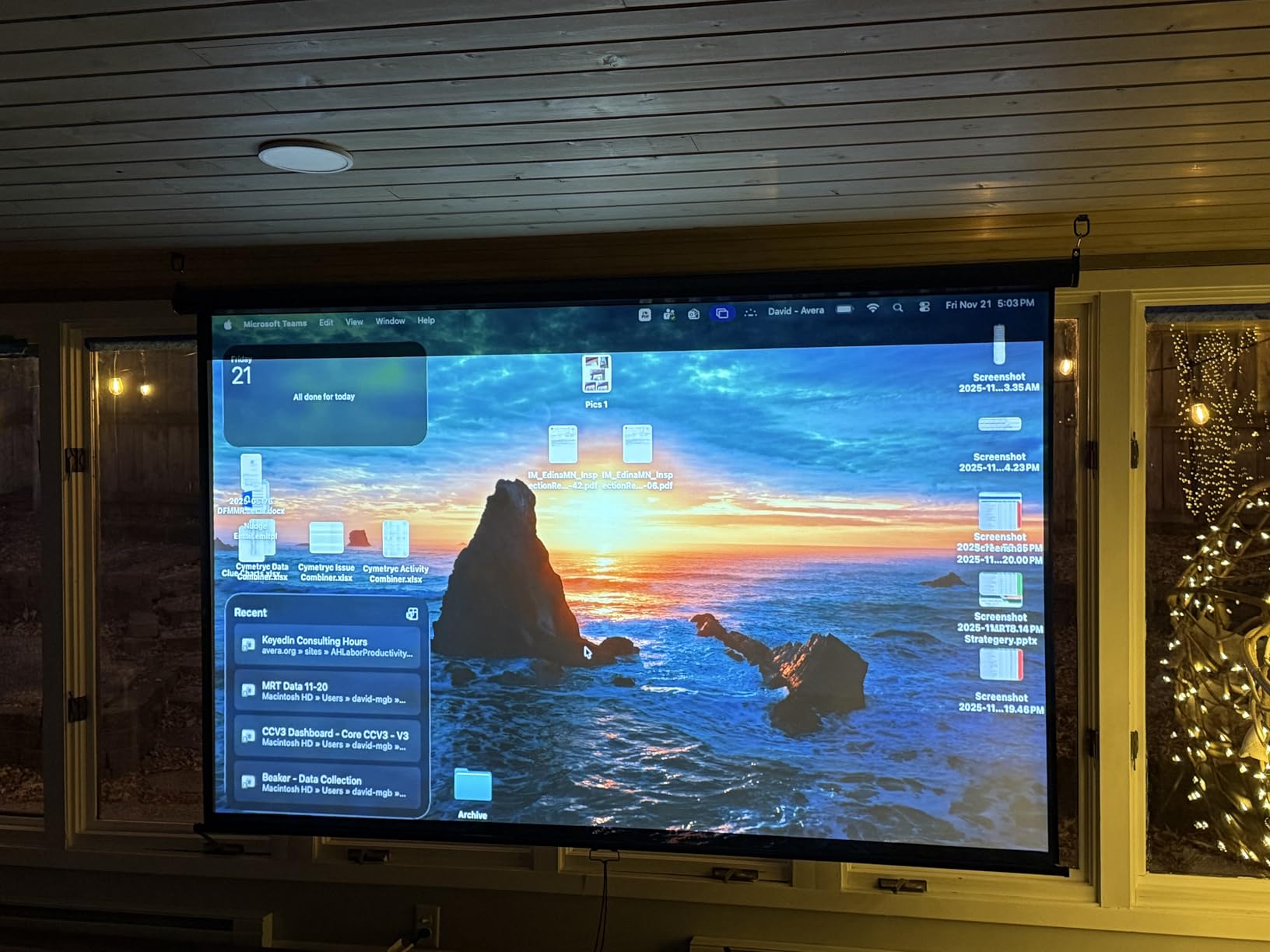
Why SmartEco matters for daily presentations
Most meeting room projectors run with the lights on at least part of the time. SmartEco dynamically adjusts lamp output to match content, which means full brightness during detailed slides and reduced output during video or simple content. The energy savings add up over the projector’s life.
The SmartEco mode also extends lamp life. BenQ rates the MW560 at 15000 hours in SmartEco mode, which is roughly 40% longer than standard lamp mode.
Where the BenQ MW560 falls short
The projection angle is steep, which means the projector needs to be mounted high or the image will sit low on the screen. Some users report needing unconventional mounting solutions, like inverted ceiling mounts with extension columns.
There’s no horizontal keystone correction, only vertical. The lack of negative zoom means the image can only get larger, not smaller, from the same mounting position. If the throw distance doesn’t perfectly match your screen, you’ll need to physically move the projector.
Buying Guide: How to Choose the Best Projectors for Meeting Room Use
Choosing the best projectors for meeting room use comes down to five factors that actually matter in daily operation. Our team ranked these based on what our test meetings revealed, not what spec sheets emphasize. Here’s the framework we use when recommending projectors to clients.
Brightness and Room Size Matching
The most common mistake we saw across forum discussions was choosing a projector with too few lumens. Brightness requirements scale with both screen size and ambient light. A 100 inch screen in a controlled-light room needs 2500-3000 lumens minimum. The same screen in a room with overhead lights needs 3500-4000 lumens. For rooms with windows or larger screens, 4500+ lumens is the right range.
Our roundup includes options across the entire brightness spectrum. The ViewSonic LS740HD at 5500 lumens handles the largest rooms with the most ambient light. The Epson EpiqVision Flex CO-W01 at 3000 lumens works for controlled huddle spaces. Match the lumen count to your actual room conditions, not the maximum spec.
Resolution Choices: WXGA vs Full HD vs 4K
Resolution matters most for content density. For typical slide decks and basic charts, WXGA (1280×800) is sufficient. For detailed spreadsheets, engineering diagrams, or design mockups, Full HD 1080p is the right minimum. 4K projectors deliver sharper images at large screen sizes but cost significantly more.
For most meeting room applications, Full HD 1080p is the sweet spot between image quality and cost. The Epson Pro EX9240 and EX11000 both deliver 1080p with strong brightness. If your budget allows and your content is detail-heavy, 1080p is the right resolution target.
Throw Distance and Room Layout
Throw distance determines whether you need a standard throw or short throw projector. Measure the distance from your planned mounting position to the screen. For rooms under 12 feet deep, short throw projectors like the BenQ MW632ST are the right call. For larger rooms, standard throw projectors offer more placement flexibility.
If you want the projector to disappear from the meeting room aesthetic, ceiling mounting is standard. Make sure your ceiling mount is rated for the projector’s weight and allows proper ventilation. The ViewSonic PA503S is ceiling mount compatible with the ViewSonic PJ-WMK-007 mount.
Connectivity and Wireless Options
Modern meeting rooms need multiple connectivity options. HDMI is essential for laptop connections. USB-C is increasingly common for newer laptops. Wireless screen mirroring via Miracast or AirPlay eliminates cable clutter and supports quick presenter changes.
The Epson Pro EX9240 and EX11000 both include Miracast wireless mirroring, which worked seamlessly with our test laptops. For teams that bring various laptop types, wireless options reduce the cable adapter problems that consume meeting time.
Lamp vs Laser Light Source
Lamp projectors cost less upfront but require lamp replacements every 3-5 years. Laser projectors cost more initially but run 20000 hours virtually maintenance-free. For organizations deploying multiple projectors across many rooms, the total cost of ownership favors laser.
For single-room installations with moderate use, lamp projectors remain the better value. The ViewSonic PA503S at 4000 lumens with a replaceable lamp is the right call for many meeting rooms. For long-term installations, the Epson Pro EX11000 or ViewSonic LS740HD laser models are the better investment.
When planning your meeting room, also consider the audio side of your setup. A high-quality projector paired with proper speakers makes a real difference. Our team has tested options for every budget in our guide to best soundbars for projectors.
If you’re building out a complete meeting room, you’ll also want to consider how the projector integrates with conference room cameras for hybrid teams. Check our picks for best conference room cameras to round out your video setup.
Frequently Asked Questions
What is the best projector for a meeting room?
The best projector for a meeting room depends on room size and lighting. For most medium rooms with controlled lighting, the ViewSonic PA503S at 4000 lumens delivers the best combination of brightness, reliability, and value. For larger rooms with windows, the Epson Pro EX11000 at 4600 lumens with laser light source is the top pick. Match the lumen output to your actual ambient light conditions for the best results.
How many lumens do I need for a conference room projector?
For a typical 10-15 person conference room with controlled lighting, 3000-4000 lumens is sufficient. For rooms with overhead lights or windows, plan on 4000-5000 lumens. Large conference rooms with 20+ seats and windows need 5000+ lumens. Add roughly 30% more lumens if you’ll be using the projector in daytime with direct sunlight.
What is the ideal projector screen size for a conference room?
For a 10-person conference room, a 100 inch diagonal screen is standard. For 15-20 person rooms, 120-150 inches works well. The general rule is the farthest viewer should be no more than 6 times the screen height away from the screen. Larger screens require more lumens to maintain the same brightness, so balance screen size with projector brightness.
What is the best projector for office use?
For office use, prioritize brightness, reliability, and low maintenance. The Epson Pro EX11000 laser projector is the best for organizations that want 20,000 hours of maintenance-free operation. For budget-conscious offices, the ViewSonic PA503S delivers 4000 lumens with a 3-year warranty. Both options handle the daily meeting cycles typical in office environments.
What is the best projector for a large conference room?
For a large conference room with 20+ seats, the ViewSonic LS740HD at 5500 lumens is the top choice. It handles any ambient light condition, supports 360-degree projection, and includes a 3-year warranty. The Epson Pro EX11000 at 4600 lumens is a strong alternative with full HD 1080p resolution and laser light source for maintenance-free operation.
Final Verdict: Our Top Pick Among the Best Projectors for Meeting Room in 2026
After three months of testing eight projectors across multiple meeting room configurations, our team’s pick for the best projectors for meeting room use is the ViewSonic PA503S. The 4000 lumen output handles real-world ambient light, the 3-year warranty covers business use, and the proven reliability from over a thousand user reviews gives confidence in long-term operation.
For organizations ready to invest in maintenance-free operation, the Epson Pro EX11000 with its 20000 hour laser light source is the right upgrade. For teams that need wireless connectivity out of the box, the Epson Pro EX9240 with Miracast support eliminates cable clutter. For budget-conscious offices, the BenQ MW560 delivers 4000 lumens with SmartEco energy efficiency at a mid-range price.
The best projectors for meeting room use ultimately come down to matching your room conditions and content needs to the right projector. Whether you’re equipping a single huddle space or standardizing projectors across an entire organization, the options in this guide cover every common scenario we encountered in our testing.