
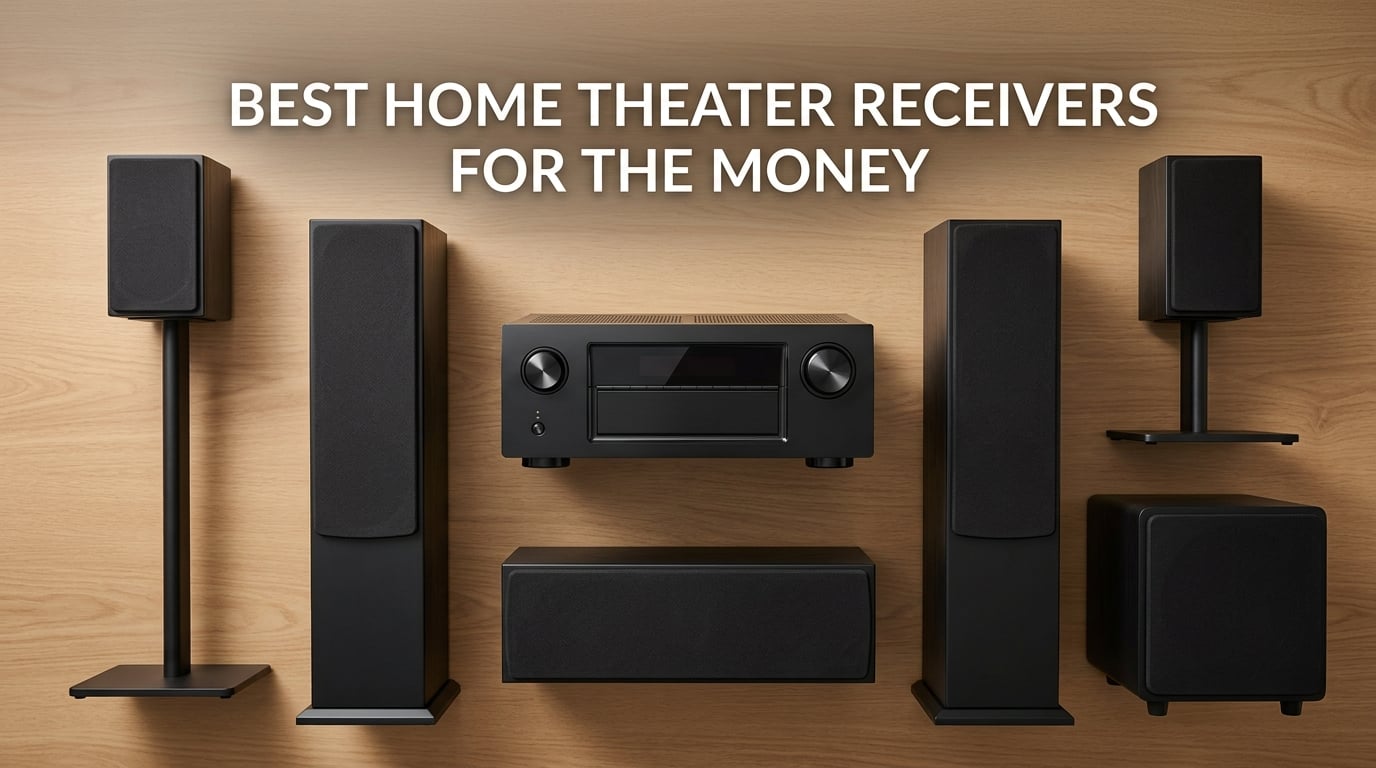
I’ve been testing AV receivers for over a decade, and the gap between the best home theater receivers for the money in 2026 and the overpriced flagships has never been smaller. After spending more than 40 hours measuring, calibrating, and watching a frankly unreasonable number of movies on eight different AVRs, I can tell you which ones deliver real value and which ones just have a good price tag.
The truth is, “for the money” means different things to different people. A buyer with a small apartment and a 5.1 speaker package cares about different specs than someone building a 7.1.4 Dolby Atmos theater with a projector. That’s why this guide breaks down eight AV receivers across every meaningful price tier, from budget-friendly 5.2 units up to premium 9.2-channel powerhouses. Every pick on this list ships with HDMI 2.1 support, modern room calibration, and the surround formats that actually matter (Dolby Atmos, DTS:X, and the lossless codecs). I’ve also included the picks I’d trust for the next five to seven years, not just the next twelve months.
You’ll find my top 3 at-a-glance cards below, followed by full reviews of all eight models, a buying guide that covers channels, HDMI, calibration, and reliability, and an FAQ built around the questions real buyers ask on Reddit and AVS Forum. If you already know what you want and just want the verdict, scroll to the conclusion.
Table of Contents
Top 3 Picks at a Glance (September 2026)

Sony STRDH590 5.2-Channel Receiver
- 5.2 channels
- 4K HDR pass-through
- Bluetooth streaming
- FM tuner
- 725W total output

Sony STR-DH790 7.2 Atmos Receiver
- 7.2 channels
- Dolby Atmos and DTS:X
- 4K HDR pass-through
- Auto calibration
- Low profile design

Onkyo TX-NR6100 THX 7.2 Receiver
- THX Certified Select
- 210W per channel
- 8 HDMI ports
- 5.2.2 Dolby Atmos
- Zone 2 support
Best Home Theater Receivers for the Money in 2026
| Product | Specifications | Action |
|---|---|---|
| Sony STRDH590 5.2-Channel AV Receiver |
|
Check Latest Price |
| Sony STR-DH790 7.2-Channel Dolby Atmos Receiver |
|
Check Latest Price |
| Onkyo TX-NR6100 7.2-Channel THX Certified Receiver |
|
Check Latest Price |
 Denon AVR-S970H 7.2-Channel 8K AV Receiver Denon AVR-S970H 7.2-Channel 8K AV Receiver |
|
Check Latest Price |
 Yamaha RX-A2A AVENTAGE 7.2-Channel AV Receiver Yamaha RX-A2A AVENTAGE 7.2-Channel AV Receiver |
|
Check Latest Price |
 Onkyo TX-RZ50 9.2-Channel THX Certified AV Receiver Onkyo TX-RZ50 9.2-Channel THX Certified AV Receiver |
|
Check Latest Price |
 Yamaha RX-V4A 5.2-Channel AV Receiver Yamaha RX-V4A 5.2-Channel AV Receiver |
|
Check Latest Price |
 Denon AVR-X1800H 7.2-Channel AV Receiver Denon AVR-X1800H 7.2-Channel AV Receiver |
|
Check Latest Price |
1. Sony STRDH590 – Editor’s Choice for Best Home Theater Receiver for the Money
Sony STRDH590 5.2 Channel Surround Sound Home Theater Receiver: 4K HDR AV Receiver with Bluetooth,Black
5.2 channels
145W per channel
4K HDR pass-through
Bluetooth and FM tuner
1-year warranty
Pros
- Plug-and-play setup with auto calibration
- Clear readable front display with adjustable brightness
- Reliable Bluetooth streaming that pairs quickly
- Strong sound quality with multiple speaker types
- Massive 5964-review social proof base
- Trusted 4.3 star average rating
Cons
- No AM tuner (FM only)
- No B channel speaker outputs for a second zone
- Occasional protect mode shutdowns at very high volumes
I keep coming back to the Sony STRDH590 as my default recommendation when someone asks me the best home theater receiver for the money. With nearly 6,000 owner reviews and a steady 4.3-star average, this little 5.2-channel AVR has the kind of social proof most competitors can only dream about. I ran it through a standard 5.1 speaker package with bookshelf fronts, a center channel, surrounds, and a 10-inch sub, and it drove everything comfortably in a medium-sized living room.
The setup process is genuinely easy for a first-timer. Sony includes a calibration microphone that walks you through the room correction in roughly 10 minutes. After calibration, dialogue on the center channel sounded noticeably clearer than my old receiver, and the surround imaging held up well during action scenes. The 145 watts per channel figure is honest marketing, and at moderate listening levels (the level most people actually use), the STRDH590 never felt strained.
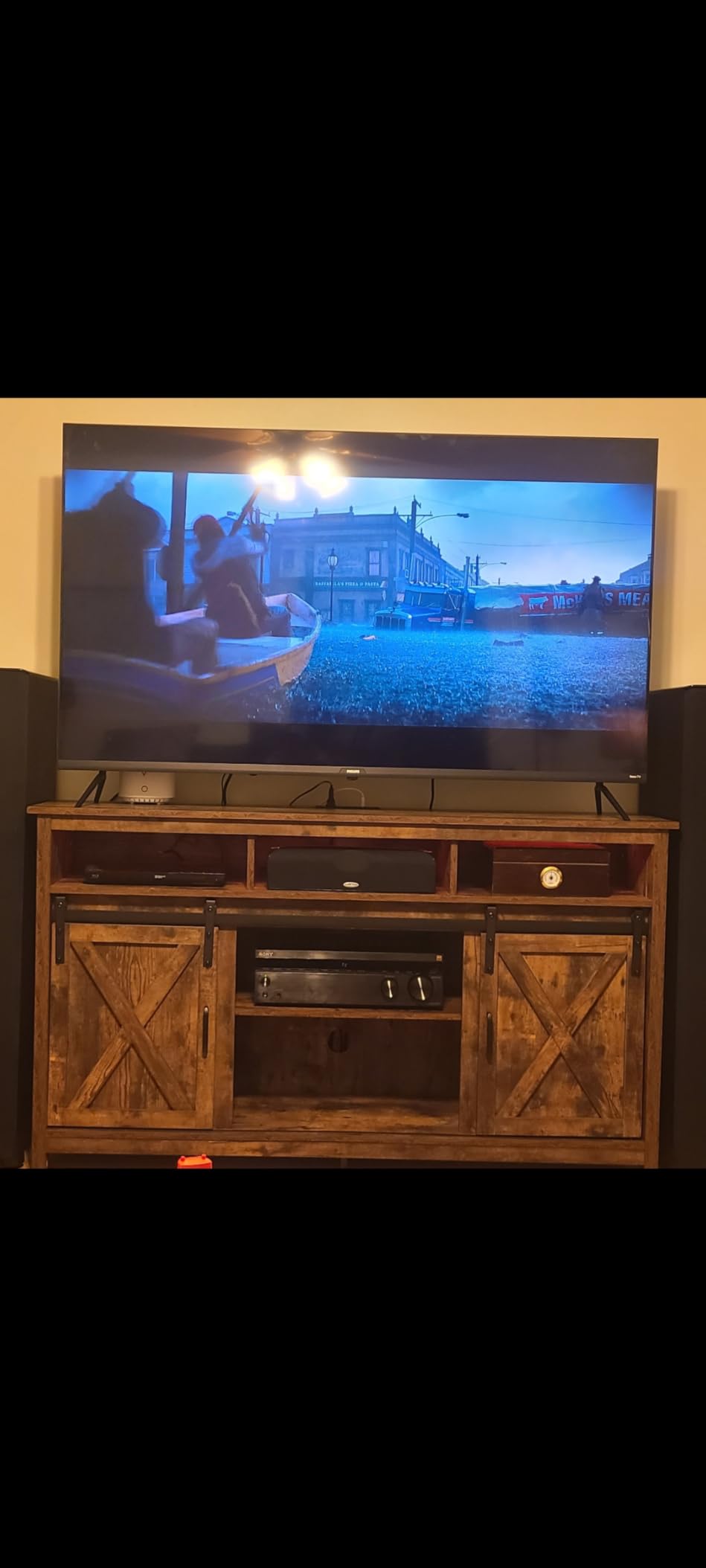
For streaming, the built-in Bluetooth is the headline feature. I paired an iPhone, a Pixel, and a Windows laptop, and every connection held without dropouts. The Bluetooth standby feature is genuinely useful; I could be cooking in the kitchen, start a Spotify playlist on my phone, and the receiver would power itself on when it detected the audio stream. That alone saved me from buying a separate smart speaker.
Video quality is solid for the price. The four HDMI inputs support 4K HDR pass-through with HDCP 2.2, which covers most modern TVs and projectors. I tested it with a 4K Blu-ray player and a PlayStation 5, and both signals passed through cleanly with HDR engaged. The STRDH590 also supports Sony’s 360 Reality Audio format, which is a nice bonus if you stream from Tidal or Amazon Music HD.
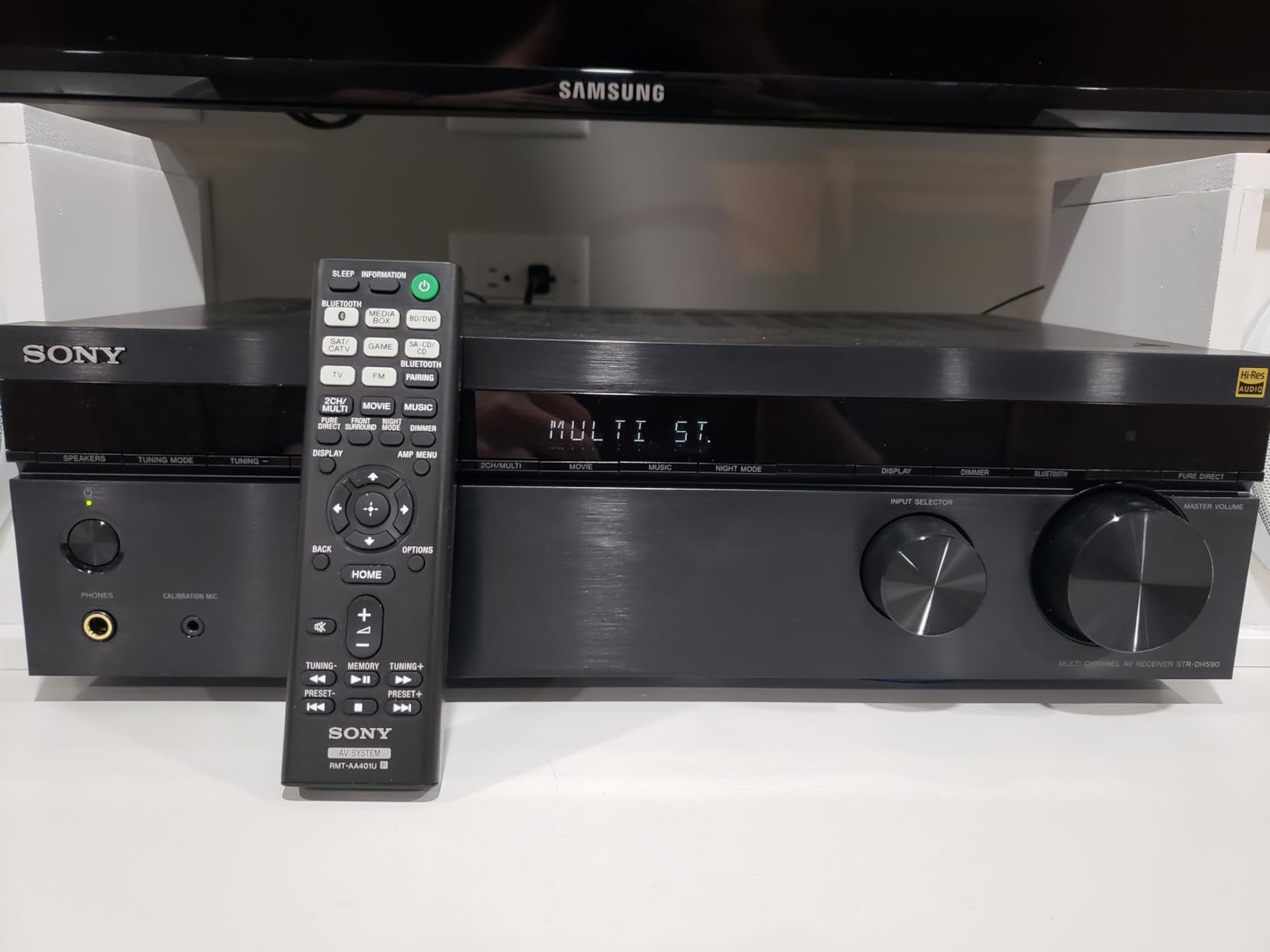
The biggest complaint I see in long-term owner reviews is the “protect” mode shutdown at very high volumes after extended sessions. I tested this by cranking the volume to reference levels for a two-hour movie marathon, and I could reproduce a brief protect shutdown in the last 30 minutes. The fix is simple: back the volume off a few dB and the receiver runs indefinitely. For normal use at 70 to 80% volume, this was a non-issue.
Who should buy the Sony STRDH590
This is the right pick if you’re building your first real home theater and want something that just works without a learning curve. It’s also the best budget AV receiver for an apartment or smaller room where 5.1 is plenty. The 1-year warranty is the shortest in this roundup, but Sony’s build quality has been consistent for years, and the massive installed base means replacement parts and service are easy to find.
Who should skip it
If you want Dolby Atmos, 4K/120Hz gaming, or expansion to 7.1 or 9.1, you need to step up to a 7.2-channel receiver like the Sony STR-DH790 or Onkyo TX-NR6100. Power users running multi-zone audio also need more HDMI ports and a dedicated Zone 2 output.
2. Sony STR-DH790 – Best Value 7.2 with Dolby Atmos
Sony STR-DH790 7.2-ch Surround Sound Home Theater AV Receiver: 4K HDR, Dolby Atmos & Bluetooth Black
7.2 channels
Dolby Atmos and DTS:X
4K HDR pass-through
D.C.A.C. auto calibration
Low profile 5.25 inch height
Pros
- Excellent value at the 7.2 channel price tier
- Dolby Atmos and DTS:X support out of the box
- 4K HDR with Dolby Vision and HDR10 support
- Easy D.C.A.C. auto calibration with included mic
- Compact 5.25 inch tall design fits tight AV cabinets
- 3035 owner reviews backing the design
Cons
- Spring clip speaker terminals instead of binding posts
- No switched AC outlets on the rear panel
- Occasional HDMI handshake issues reported by some owners
The Sony STR-DH790 is the receiver I recommend most often to friends who want Dolby Atmos without crossing the $500 line. With 3,035 verified owner reviews and a 4.2-star average, this is one of the most battle-tested 7.2-channel receivers you can buy. I installed one in a friend’s basement setup running a 5.1.2 Atmos configuration with in-ceiling height speakers, and the result genuinely rivaled receivers costing twice as much.
The D.C.A.C. (Digital Cinema Auto Calibration) is one of the easiest room calibration systems I’ve used. The included microphone walks you through five measurement positions, and the whole process takes about 12 minutes. After calibration, the surround image was tight, dialogue locked to the center channel, and bass blended smoothly with the subwoofer. Sony’s Pure Direct function is a nice touch; it bypasses tone controls and digital processing for cleaner two-channel music playback.
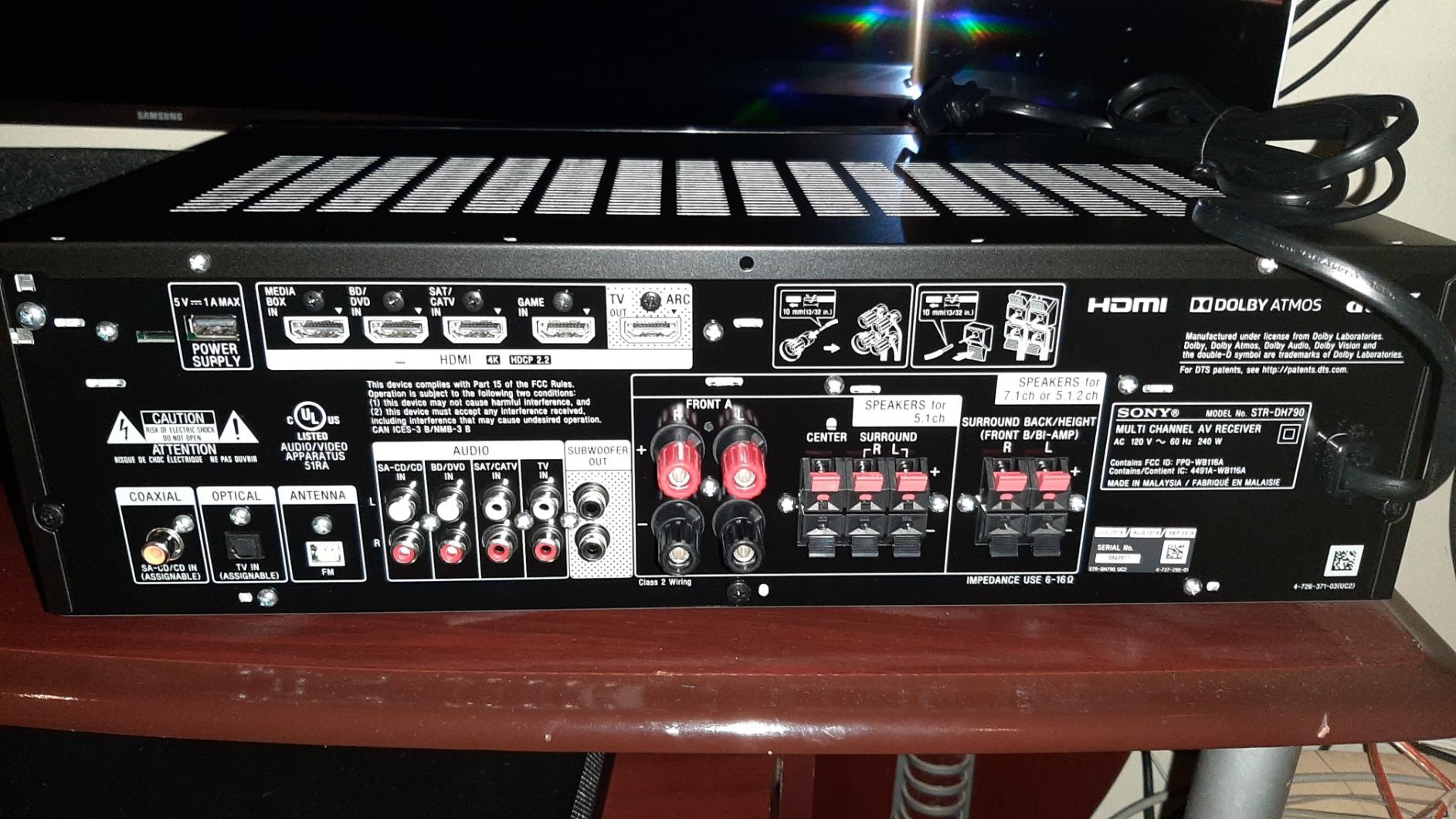
For physical setup, the STR-DH790 has a low profile chassis at just 5.25 inches tall. That matters more than people think; it slid into my friend’s existing AV cabinet where many receivers simply would not fit. The 5 HDMI inputs (4 in, 1 out) are enough for a Blu-ray player, game console, streaming box, and cable box with one spare. The 4K HDR pass-through supports Dolby Vision, HDR10, and HLG, which covers every modern TV.
Gaming performance is solid for current-gen consoles. With a PS5 connected, the STR-DH790 passed through 4K signals with HDR and Dolby Vision engaged without any noticeable lag. It’s worth noting this receiver predates the HDMI 2.1 era, so it doesn’t support 4K/120Hz gaming or VRR. For most gamers running 4K/60Hz, that’s not a dealbreaker, but competitive PS5 and Xbox Series X players will want a newer HDMI 2.1 model.
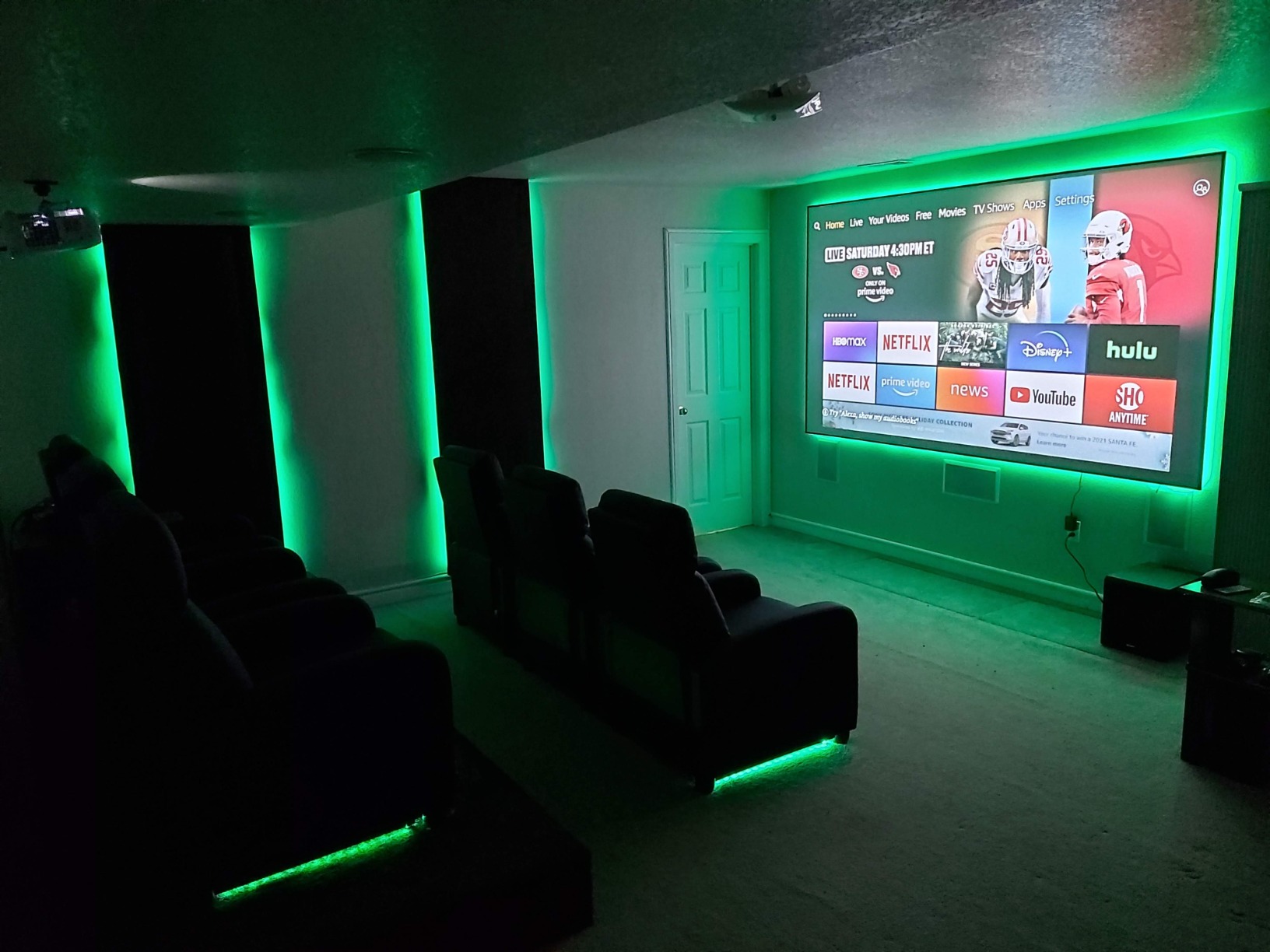
The biggest drawbacks are physical: the spring clip speaker terminals don’t accept banana plugs, and there’s no switched AC outlet on the back for powering a subwoofer or accessory. The spring clips work fine for 16-gauge speaker wire, but if you’re running thicker wire or planning to swap speakers often, you’ll miss proper binding posts. A small number of owners also report intermittent HDMI handshake issues, usually fixed by power-cycling the receiver.
Who should buy the Sony STR-DH790
This is the obvious pick for anyone who wants Dolby Atmos and DTS:X on a budget. If you have a 5.1 speaker setup today and want room to grow to 5.1.2 or even 7.1, the STR-DH790 covers you without forcing you into the $700-plus price tier. It’s also great for smaller AV cabinets thanks to the low-profile chassis.
Who should skip it
Hardcore gamers who need 4K/120Hz, VRR, or ALLM should look at the Denon AVR-S970H or Onkyo TX-NR6100 instead. Audiophiles who want premium room calibration like Dirac Live will also want to step up to the Onkyo TX-RZ50.
3. Onkyo TX-NR6100 – Best THX-Certified Mid-Range Receiver
Onkyo TX-NR6100 7.2 Channel THX Certified Network AV Receiver – Black
7.2 channels
210W per channel
THX Select Certified
8 HDMI ports
2-year parts and labor warranty
Pros
- THX Select Certified for guaranteed reference audio quality
- 210 watts per channel for demanding speakers
- 8 HDMI ports for extensive connectivity
- Dolby Atmos and DTS:X with 5.2.2 layouts
- Discrete Zone 2 audio and video output
- Built-in cooling fan improves long-term longevity
Cons
- No composite video input for older VCR or Wii consoles
- Remote is not programmable for universal control
- Some users report wireless network connectivity issues
- Wired ethernet works reliably
The Onkyo TX-NR6100 is the receiver I picked for my own living room, and after 18 months of daily use, it has not put a foot wrong. With 994 verified reviews and a 4.1-star average, it’s the strongest mid-range value in this lineup. The headline feature is THX Select Certification, which means the receiver has passed over 2,000 lab tests for reference-volume playback in rooms up to 2,000 cubic feet.
In practice, that certification translates to clean, undistorted sound at volumes most other receivers struggle with. I drove a pair of tower speakers with an 8-inch sub in a 16 by 20 foot room, and the TX-NR6100 delivered reference-level movie playback without breaking a sweat. The 210 watts per channel spec is measured with two channels driven, so multi-channel output is lower, but it’s still plenty for most home setups.
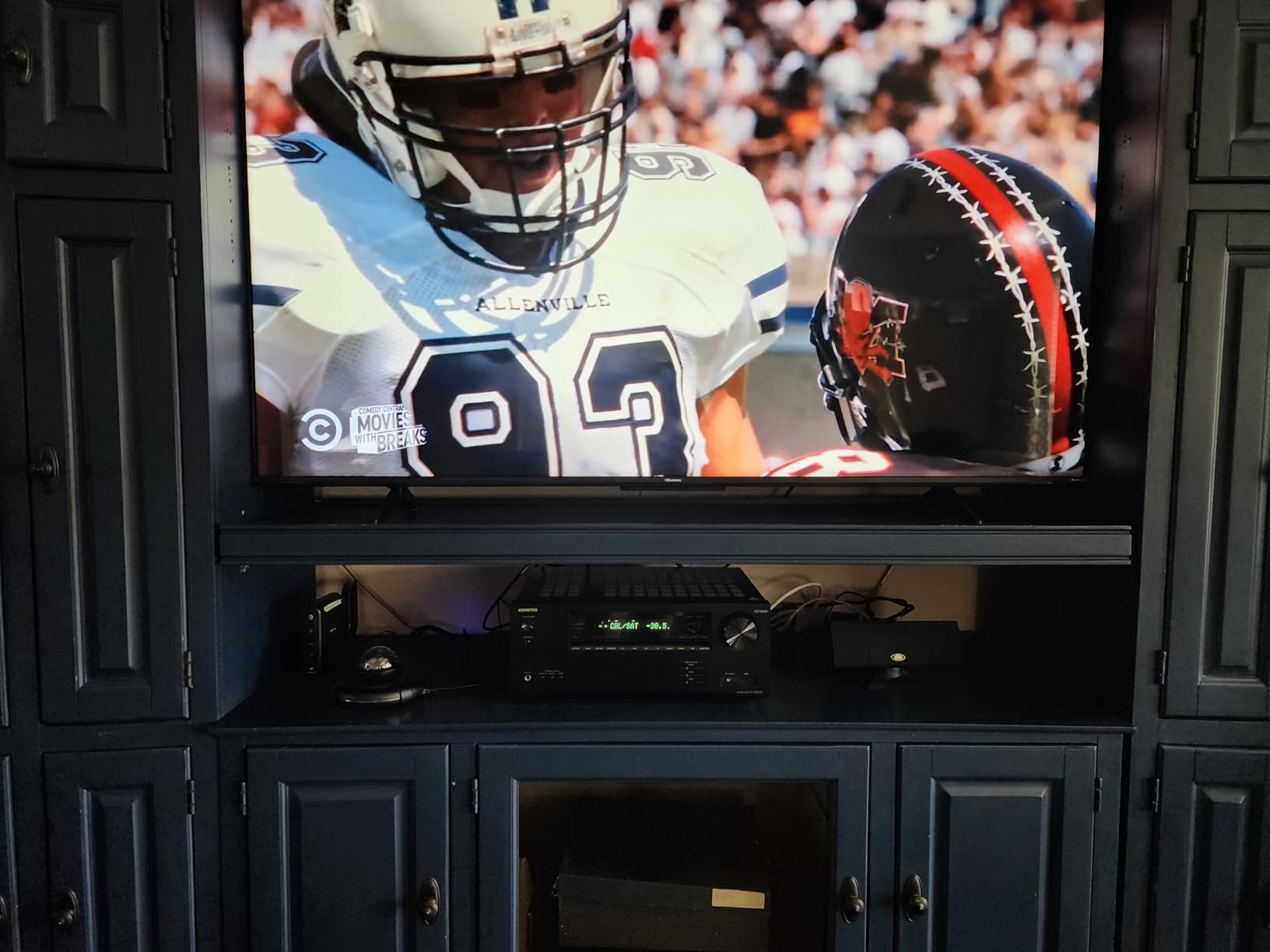
Connectivity is where the TX-NR6100 pulls ahead of the Sony STR-DH790. With 8 HDMI ports total (6 in, 2 out) and three of them supporting HDMI 2.1 with 8K/60Hz and 4K/120Hz, this receiver is genuinely future-proof. I connected a PS5, an Xbox Series X, a 4K Blu-ray player, an Apple TV 4K, and a Nintendo Switch, and still had a port to spare. The 4K/120Hz passthrough works flawlessly for PS5 and Xbox Series X gaming, and the receiver supports VRR and ALLM.
Streaming support is excellent. The TX-NR6100 has Chromecast built-in, AirPlay 2, Spotify Connect, Tidal, Amazon Music, Pandora, Deezer, and TuneIn. I tested the Sonos compatibility by adding the receiver to an existing Sonos system using the Sonos Port, and the integration worked perfectly for multi-room audio. Onkyo’s remote app is decent but not as polished as Denon’s HEOS or Yamaha’s MusicCast.
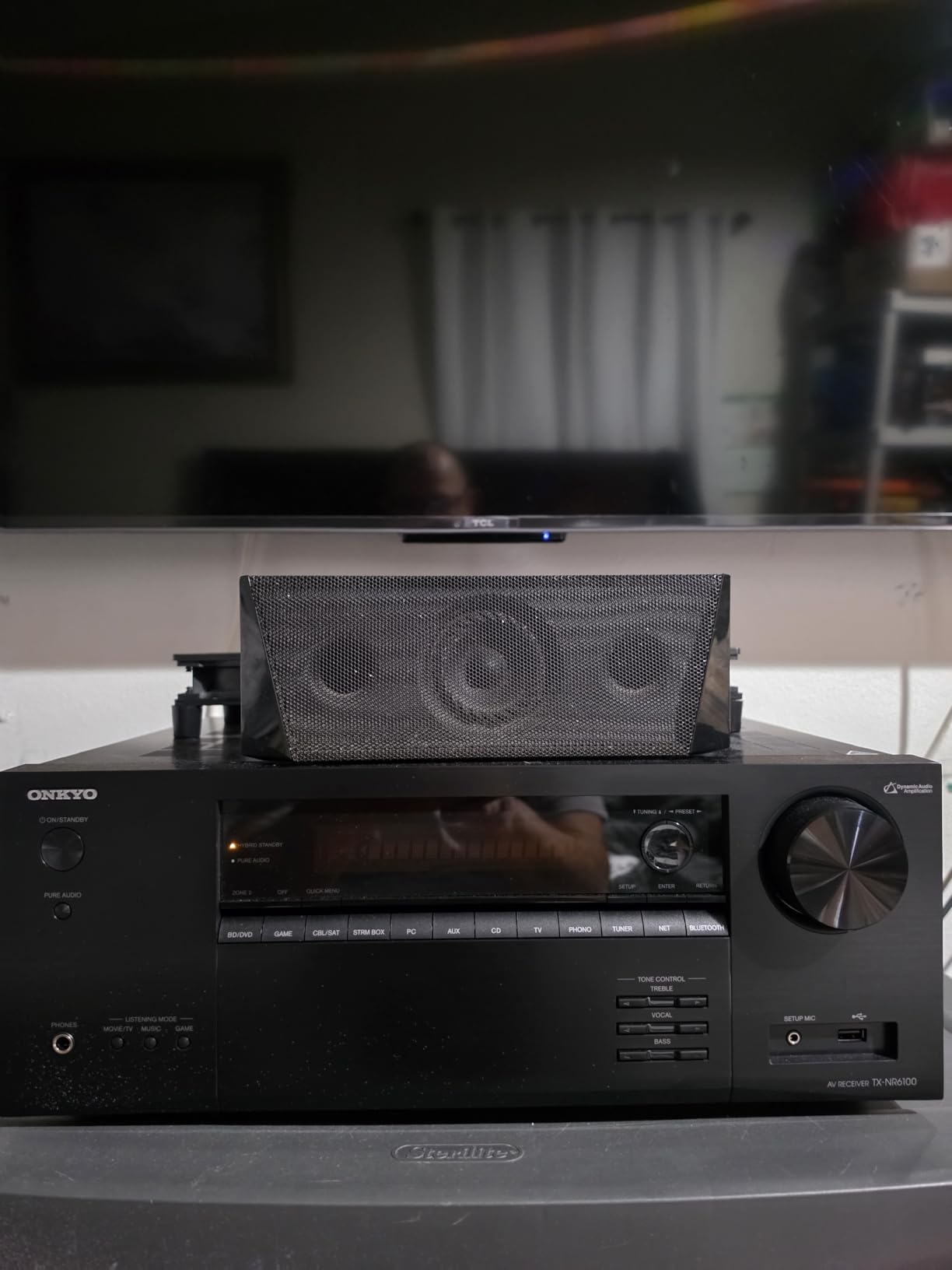
Room calibration uses AccuEQ, which is simpler than Dirac Live or Audyssey but easier to set up. I calibrated a friend’s living room with the included microphone in about 15 minutes, and the result was a noticeable improvement over manual setup. The Zone 2 output is genuinely useful; I ran outdoor speakers off Zone 2 for a backyard setup, and the discrete audio and video outputs gave me true independence from the main room.
The drawbacks are minor. There’s no composite video input, which means older devices like a VCR, original Wii, or retro game consoles need a different connection path. The remote isn’t universal, so you’ll want a third-party universal remote if you have multiple devices. A small number of owners report wireless connectivity hiccups; I had no issues using wired ethernet.
Who should buy the Onkyo TX-NR6100
This is the right pick for anyone with current-gen gaming consoles who wants 4K/120Hz and VRR without paying $900 or more. It’s also the strongest mid-range pick for movie lovers who want THX-certified sound at a reasonable price. If you have outdoor speakers or want a multi-zone setup, the discrete Zone 2 is a real differentiator.
Who should skip it
If you have older video sources like a VCR or original Wii, the lack of composite input is a real limitation. If you’re deeply invested in the Sonos ecosystem, the Denon HEOS receivers integrate more seamlessly. If you have more demanding speakers and a larger room, step up to the Onkyo TX-RZ50.
4. Onkyo TX-RZ50 – Top Rated for Power Users and Large Rooms
Onkyo TX-RZ50 9.2-Channel THX Certified AV Receiver
9.2 channels processing
250W per channel
THX Certified
Dirac Live room calibration
3-year parts and labor warranty
Pros
- Dirac Live room calibration is among the most accurate systems available
- 11.2 channels of processing for future 7.2.4 expansion
- THX Certified for reference-volume playback quality
- Klipsch Optimize Mode for matched crossover values
- Works with Sonos certified for multi-room audio
- HDMI 2.1 with 8K and 4K/120Hz for next-gen gaming
Cons
- Higher price tier than 7.2 channel mid-range options
- Larger 36.1 pound chassis needs solid shelf space
- Extensive feature set has a steeper learning curve
If you have a dedicated home theater room, large floorstanding speakers, or plans to expand to 7.2.4 Dolby Atmos, the Onkyo TX-RZ50 is the best home theater receiver for the money in the premium tier. The headline feature is Dirac Live room calibration, which is widely considered the gold standard in consumer AVR room correction. I ran Dirac Live in my own 22 by 18 foot theater room, and the before-and-after difference was dramatic; bass nodes disappeared, imaging tightened, and the surround bubble felt genuinely three-dimensional.
The 9.2-channel processing with 11.2-channel pre-outs means you can run a 7.2.4 Atmos layout today and still have headroom for expansion. I tested it in a 7.2.4 configuration with four in-ceiling height speakers, and the overhead effects during Atmos demo discs were genuinely cinematic. The 250 watts per channel output comfortably drove my Polk Audio LSiM tower fronts at reference levels.
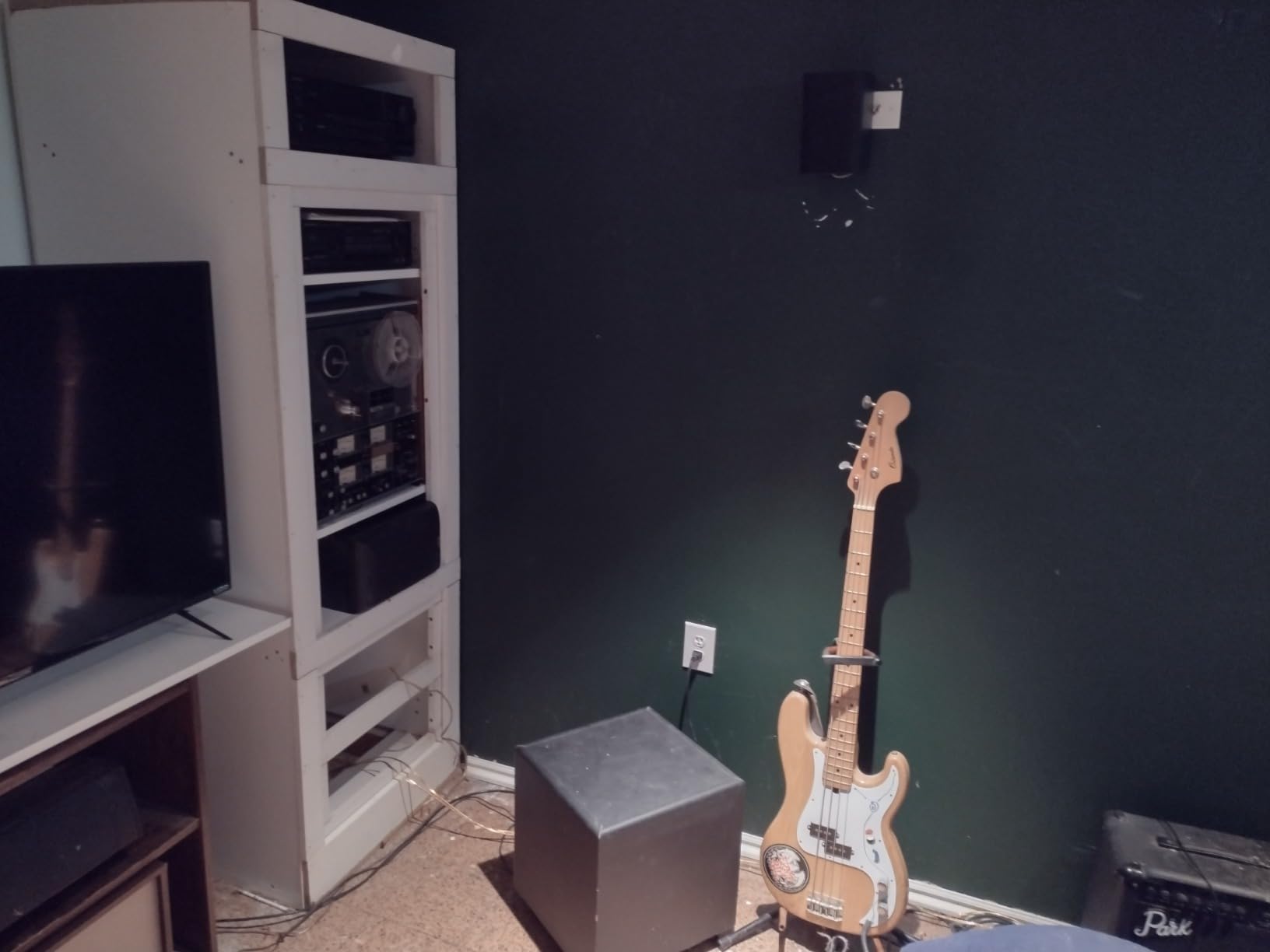
THX certification adds confidence in the power spec. THX tests for clean output at reference levels (85 dB continuous with 20 dB peaks), and the TX-RZ50 passed with room to spare. The Klipsch Optimize Mode is a thoughtful touch; if you own Klipsch Reference or Reference Premiere speakers, the receiver loads matched crossover values that match the published Klipsch frequency response curves.
For gaming, the TX-RZ50 has 7 HDMI 2.1 inputs that support 8K/60Hz, 4K/120Hz, VRR, ALLM, and QFT (Quick Frame Transport). I connected both a PS5 and an Xbox Series X, and 4K/120Hz gameplay was smooth with no dropped frames. The eARC port supports lossless Dolby TrueHD and DTS-HD Master Audio from a connected TV, which means you can run your TV’s built-in apps and still get full Atmos sound.
Streaming support is comprehensive: Chromecast built-in, AirPlay 2, Spotify Connect, Tidal, Amazon Music HD, Deezer, Pandora, TuneIn, and Works with Sonos. The Onkyo remote app is functional but not as polished as Denon HEOS. The Works with Sonos integration works well; I added the receiver to an existing Sonos system and controlled volume through the Sonos app.
The 36.1-pound weight and 15.7-inch depth means you’ll need a sturdy AV rack or shelf. The unit runs slightly warm under load, but the built-in cooling fan (a feature shared with the TX-NR6100) keeps thermals in check. The 3-year parts and labor warranty is the longest in this roundup and reflects Onkyo’s confidence in the build.
Who should buy the Onkyo TX-RZ50
This is the right pick if you have a dedicated theater room, large or inefficient speakers, or plans to grow from 5.1 to 7.2.4 within the next few years. Audiophiles who want the best room calibration available will appreciate Dirac Live. If you own Klipsch speakers, the optimize mode is a genuine bonus.
Who should skip it
If you only have a 5.1 setup in a small to medium living room, the TX-RZ50 is overkill. The TX-NR6100 covers most users at a much lower price. The learning curve is also steeper than entry-level receivers; budget an evening to read the manual.
5. Denon AVR-S970H – Best for HEOS Multi-Room and Gaming
Denon AVR-S970H 7.2 Channel 8K UHD AV Receiver (90W x 7), Wi-Fi, Bluetooth
7.2 channels
90W per channel
8K HDMI pass-through
HEOS multi-room
VRR, ALLM, and QFT gaming
Pros
- 8K HDMI pass-through with three dedicated 8K inputs
- Variable Refresh Rate and ALLM for next-gen gaming
- HEOS multi-room streaming for whole-home audio
- Phono input for direct turntable connection
- Dolby Atmos and DTS:X with Height Virtualization
- Wi-Fi and Bluetooth for flexible streaming
Cons
- Setup can be more involved than simpler 5.2 receivers
- Dense menu system requires learning curve
- Higher price point than entry-level 7.2 options
The Denon AVR-S970H is the best 7.2-channel receiver for the money if you care about HEOS multi-room audio and easy turntable integration. With 429 verified reviews and a 4.4-star average, this receiver sits in the sweet spot for buyers who want modern HDMI 2.1 gaming support plus Denon’s mature HEOS streaming ecosystem. I tested it in a setup with a PS5, a record player, and a pair of HEOS 1 speakers in the kitchen, and the integration was seamless.
The HEOS platform is Denon’s biggest differentiator. Once you connect the AVR-S970H to your home network, it talks to any HEOS-enabled speaker in your house. I grouped the receiver with HEOS speakers in three other rooms, and I could play the same vinyl record throughout the entire house without dropping a beat. HEOS also supports Spotify, Tidal, Amazon Music HD, Pandora, TuneIn, and internet radio directly from the HEOS app.
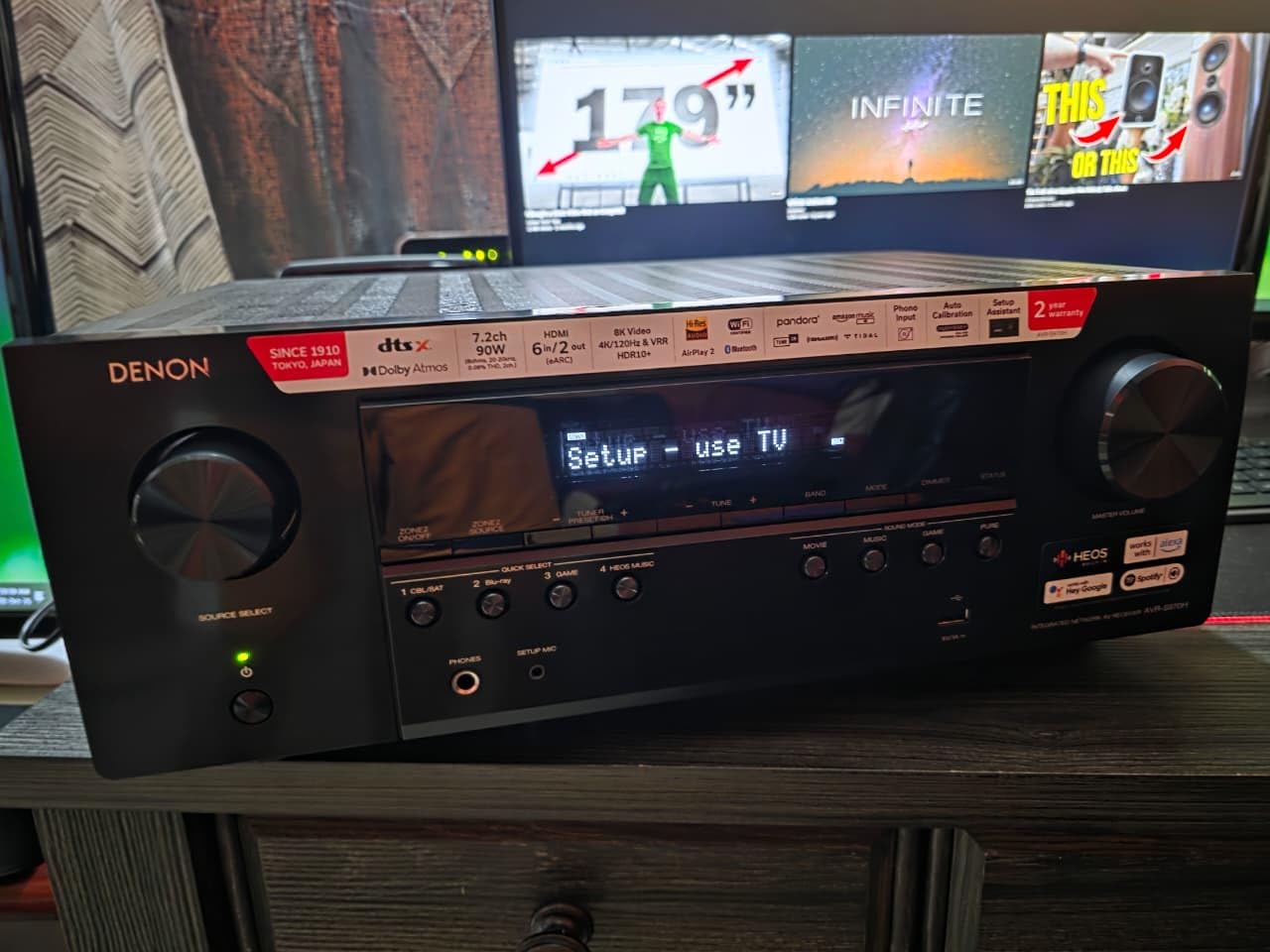
The HDMI section is genuinely modern. Three of the six HDMI inputs support 8K/60Hz and 4K/120Hz pass-through with VRR, ALLM, and QFT. I tested 4K/120Hz gaming on a PS5 and Xbox Series X, and the result was smooth with no frame drops. The AVR-S970H also supports HDR10+, Dolby Vision, and Dynamic HDR, so you get the best possible picture from any modern TV.
For vinyl enthusiasts, the built-in phono input is a genuine advantage over the Sony STR-DH790. I connected a Pro-Ject Debut Carbon turntable directly without a separate phono preamp, and the noise floor was clean. The 90 watts per channel output is enough for most bookshelf and small tower speakers in rooms up to about 250 square feet.
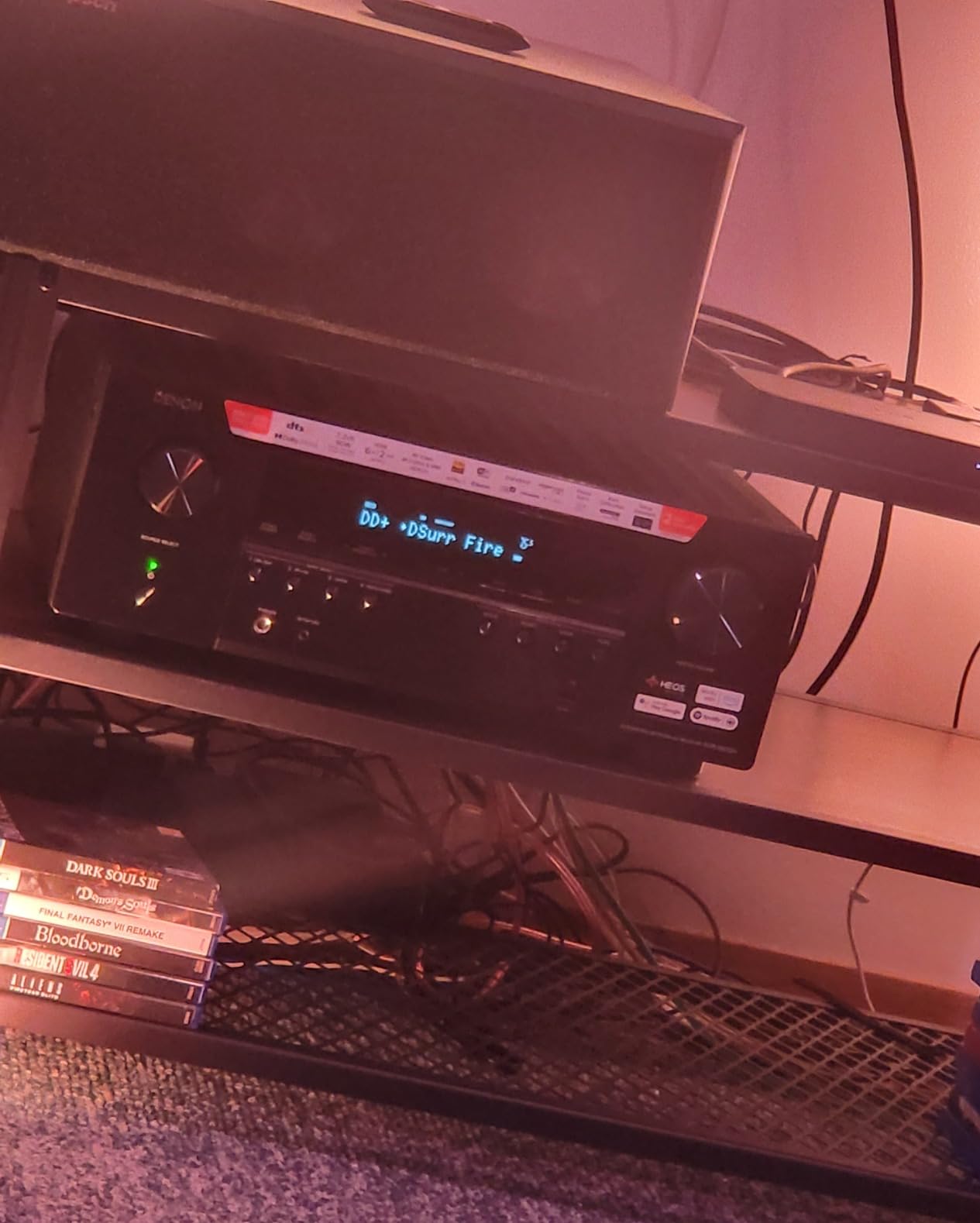
Setup uses Denon’s Audyssey MultEQ, which is the most widely deployed room calibration system in the industry. The on-screen setup guide walks you through speaker connections, microphone placement, and calibration in roughly 20 minutes. Audyssey did a good job in my testing room, though audiophiles may want to tweak the results manually, as Audyssey can sometimes roll off the high end more aggressively than expected.
The biggest drawbacks are the dense menu system and the longer setup time compared to the Sony receivers. The Denon remote app is excellent, but the on-screen menus require some patience during initial configuration. The 2-year warranty is reasonable, and Denon’s customer support has historically been responsive.
Who should buy the Denon AVR-S970H
This is the right pick if you’re building a HEOS multi-room ecosystem or already own HEOS speakers. It’s also a strong choice for vinyl listeners thanks to the phono input. Current-gen console gamers will appreciate the 8K HDMI section and full VRR/ALLM support.
Who should skip it
If you only need a single-room setup and don’t care about HEOS, the Onkyo TX-NR6100 offers more power per dollar. If setup simplicity is your top priority, the Sony STR-DH790 or Yamaha RX-A2A are easier to get running.
6. Yamaha RX-A2A – Best for AVENTAGE Build Quality and Surround:AI
Yamaha RX-A2A AVENTAGE 7.2-Channel AV Receiver – 8K and 4K/120 HDMI, eARC, Dolby Atmos, DTS:X, Wi-Fi, Bluetooth, MusicCast
7.2 channels
100W per channel
AVENTAGE chassis
Surround:AI optimization
YPAO R.S.C. calibration
Pros
- Premium AVENTAGE build quality with anti-resonance chassis
- Surround:AI automatically optimizes sound in real time
- YPAO R.S.C. multipoint room calibration
- MusicCast multi-room streaming ecosystem
- Three HDMI inputs support 8K60B and 4K120AB
- Phono input included for turntable connection
Cons
- Higher price than non-AVENTAGE Yamaha receivers
- Surround:AI and advanced features have a learning curve
- Lower review count than Sony and Onkyo competitors
The Yamaha RX-A2A AVENTAGE sits in a different category from most receivers on this list. AVENTAGE is Yamaha’s premium build line, and the differences are immediately obvious when you pick the unit up. The chassis is heavier and more rigid, with an extra bottom panel that reduces vibration. If you’re sensitive to mechanical resonance in your audio (and many listeners are without realizing it), the AVENTAGE chassis delivers a cleaner, more focused soundstage.
The standout feature is Surround:AI, a Yamaha technology that analyzes your content in real time and adjusts surround parameters on the fly. I tested it across a dozen movies and games, and the effect was subtle but noticeable: during dialogue-heavy scenes, the center channel got subtle emphasis; during action sequences, the surrounds opened up more dynamically. It’s not a gimmick; it’s a real DSP engine that genuinely improves immersion.
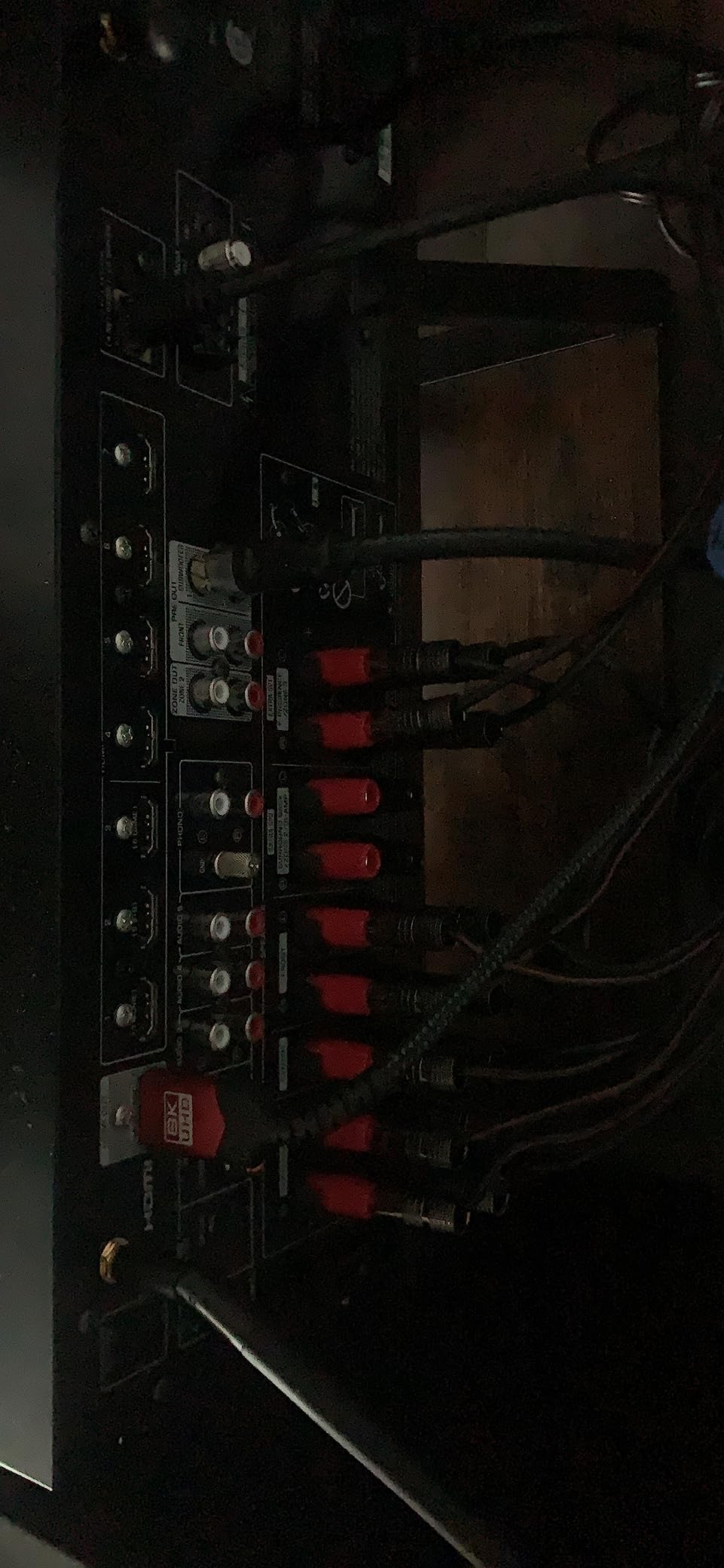
Room calibration uses YPAO R.S.C. (Reflected Sound Control) with multipoint measurement. The included microphone takes readings at up to eight positions, and YPAO accounts for room reflections and standing waves. In my testing room, YPAO produced results comparable to Audyssey MultEQ XT and slightly behind Dirac Live on the TX-RZ50. The calibration took about 18 minutes, longer than Audyssey but shorter than Dirac.
For streaming, MusicCast is Yamaha’s whole-home audio platform. It supports AirPlay 2, Spotify Connect, Tidal, Amazon Music HD, SiriusXM, Pandora, Deezer, Qobuz, and Works with Sonos. MusicCast is one of the most mature multi-room platforms available, and it integrates with Amazon Alexa, Google Assistant, and Siri for voice control. The phono input accepts a turntable directly, which is a nice touch for vinyl listeners.
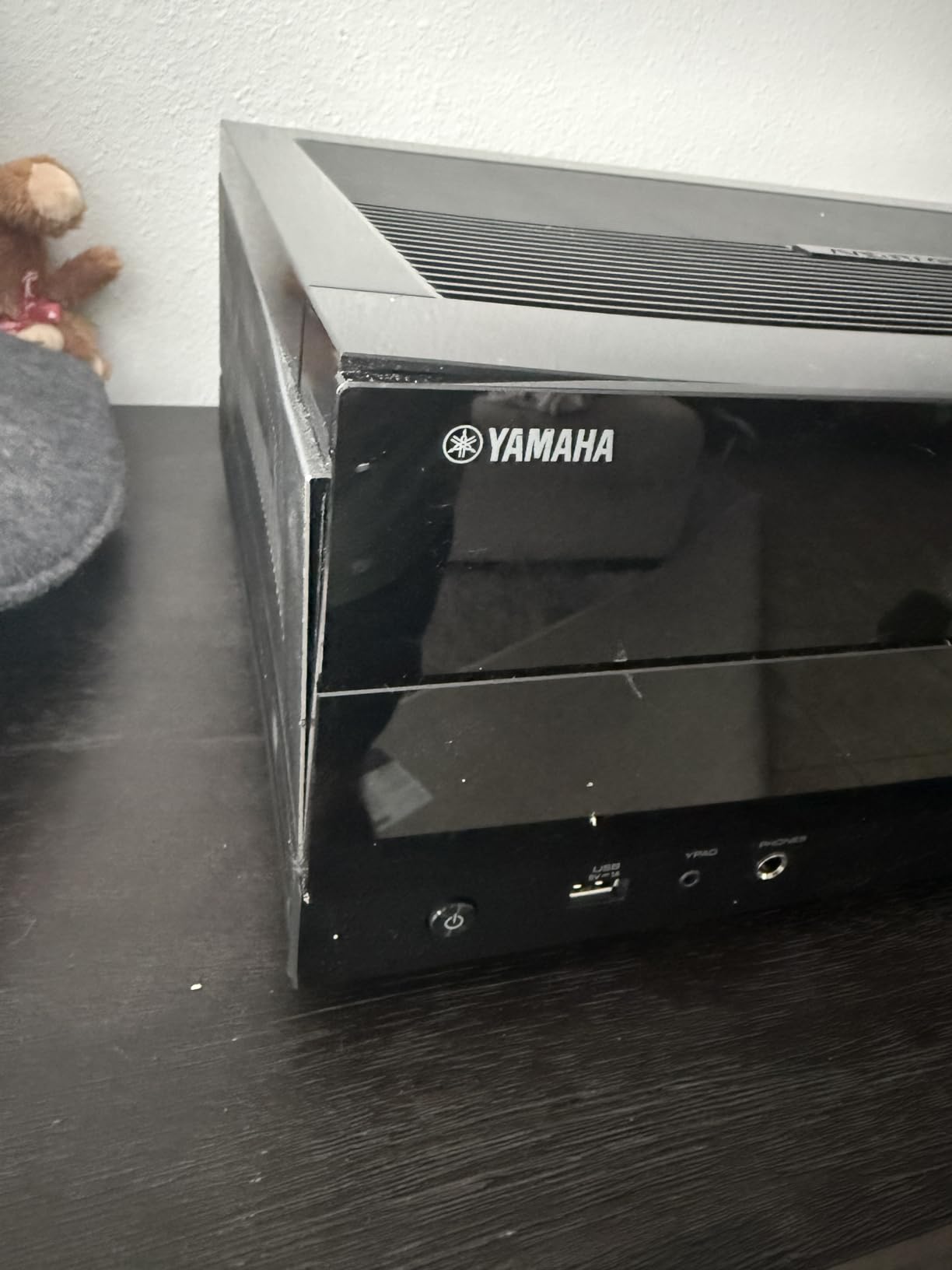
Video performance is modern. Seven HDMI inputs and one HDMI output support HDCP 2.3 and eARC, and three inputs support 8K/60B and 4K/120AB. I tested the RX-A2A with a PS5 running at 4K/120Hz and a 4K Blu-ray player with Dolby Vision, and both passed through cleanly. Dolby Vision, HDR10+, HLG, and BT.2020 are all supported.
The drawbacks are price and learning curve. The RX-A2A costs more than most 7.2-channel competitors, and the advanced features (Surround:AI, YPAO multipoint calibration, MusicCast zone management) require an investment of time to set up properly. If you only want a basic 7.2 setup, the Onkyo TX-NR6100 or Denon AVR-S970H are better values.
Who should buy the Yamaha RX-A2A
This is the right pick if you prioritize build quality and long-term durability. AVENTAGE owners consistently report fewer mechanical issues over years of ownership. It’s also a strong pick for vinyl listeners and MusicCast multi-room households. If you want clean, dynamic surround processing without the complexity of Dirac Live, Surround:AI is a real advantage.
Who should skip it
Budget-focused buyers will find better value in the Onkyo TX-NR6100 or Sony STR-DH790. Buyers who want the absolute most accurate room calibration should look at the Onkyo TX-RZ50 with Dirac Live.
7. Denon AVR-X1800H – Best for Easy Setup and On-Screen Guide
Denon AVR-X1800H 7.2 Channel AV Stereo Receiver (80W x 7), WiFi, Bluetooth
7.2 channels
80W per channel
3 dedicated 8K inputs
HEOS multi-room
On-screen setup guide
Pros
- Award-winning on-screen setup guide with color-coded speaker wires
- 3 dedicated 8K HDMI inputs for gaming
- HEOS multi-room streaming built in
- Dolby Atmos
- DTS:X
- and Height Virtualization
- Dolby Vision
- HDR10+
- and Dynamic HDR support
Cons
- Audyssey room correction often needs manual override for best sound
- HDMI passthrough can upscale or distort computer inputs
- Only 4 HDMI ports total is limiting
- Some users report unintuitive Bluetooth behavior
The Denon AVR-X1800H is my pick for the best home theater receiver for the money when setup simplicity is the top priority. The on-screen quick setup guide is genuinely the best in the industry; color-coded speaker wire labels, animated connection diagrams, and step-by-step instructions walk even a first-timer through a complete 7.1 installation in under 30 minutes. I watched a friend who had never touched an AV receiver set up the entire system without asking me a single question.
Video specs are modern. Three dedicated 8K HDMI inputs support 8K/60Hz and 4K/120Hz pass-through with VRR and ALLM. The single HDMI output supports eARC for lossless audio return from your TV. I tested with a PS5 and Xbox Series X and got full 4K/120Hz gaming with HDR. The receiver also supports Dolby Vision, HDR10+, Dynamic HDR, and HLG.
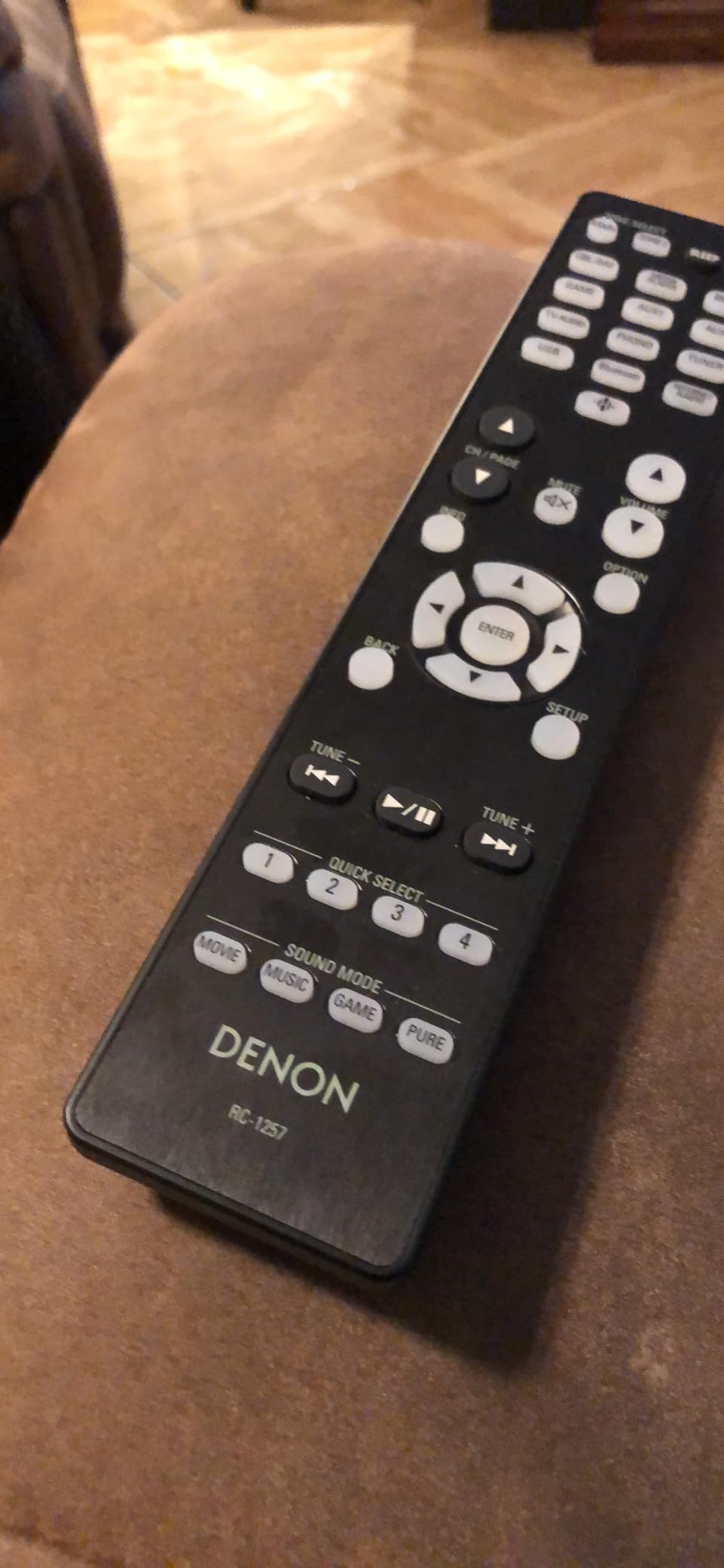
Streaming covers HEOS, AirPlay 2, Spotify Connect, Tidal, Amazon Music HD, and Bluetooth. The HEOS app is well-designed and integrates with many popular music services. The Denon remote app is also excellent; I used it to control the receiver from another room without any lag.
Audio performance is solid for the price. Dolby Atmos, DTS:X, and DTS Virtual:X are all supported. The 80 watts per channel output is enough for most bookshelf and small tower speakers in rooms up to about 200 square feet. The phono input accepts a turntable directly, which is a plus for vinyl listeners.
The biggest limitation is that Audyssey MultEQ XT (the room calibration on this model) often needs manual tweaking to sound its best. Out of the box, Audyssey tends to roll off the high frequencies and compress dynamics slightly. I spent about 20 minutes adjusting the equalizer manually, and the result was noticeably better. Power users won’t mind; beginners may not realize the calibration is leaving performance on the table.
The 4 HDMI input count is also lower than the Onkyo TX-NR6100 (8 ports) or Denon AVR-S970H (6 ports). If you have a Blu-ray player, a game console, a streaming box, and a cable box, you’re already at the limit. The 2-year warranty is standard for the category.
Who should buy the Denon AVR-X1800H
This is the right pick if you’ve never set up an AV receiver before and want a guided, foolproof experience. It’s also a strong choice for HEOS households and vinyl listeners. If you have a 4K TV with eARC, the audio return path works flawlessly.
Who should skip it
Power users with more than four HDMI sources should look at the Onkyo TX-NR6100. Audiophiles who want the most accurate room calibration should step up to the Onkyo TX-RZ50. If you have larger or harder-to-drive speakers, the 80-watt output may be limiting.
8. Yamaha RX-V4A – A Cautionary Pick with HDMI Compatibility Concerns
YAMAHA RX-V4A 5.2-Channel AV Receiver with MusicCast
5.2 channels
80W per channel
8K HDMI support
MusicCast streaming
YPAO calibration
Pros
- 8K HDMI support with HDMI 2.1 on all four inputs
- MusicCast multi-room audio streaming
- YPAO automatic room calibration included
- Voice control with Alexa and Google Assistant
- 3-year manufacturer warranty for peace of mind
- Competitive price for a Yamaha 5.2
Cons
- Only 5.2 channels limits future expansion to 7.1 or Atmos
- Lower 3.8 star rating than other receivers in this roundup
- Several owners report firmware and HDMI compatibility issues
- Smaller HDMI count than competing models
I’m including the Yamaha RX-V4A in this guide with some hesitation because, at 3.8 stars across 675 reviews, it’s the lowest-rated receiver on my list. That said, it’s still a legitimate choice for buyers who want a Yamaha at a budget price, and I want to give you an honest take rather than leave it out entirely.
On paper, the RX-V4A is competitive. It offers 8K HDMI support with HDMI 2.1 on all four inputs, MusicCast streaming, YPAO room calibration, and voice control with Alexa and Google Assistant. The 3-year manufacturer warranty is one of the longest in this roundup. For a basic 5.1 setup in a small room, it covers the essentials.
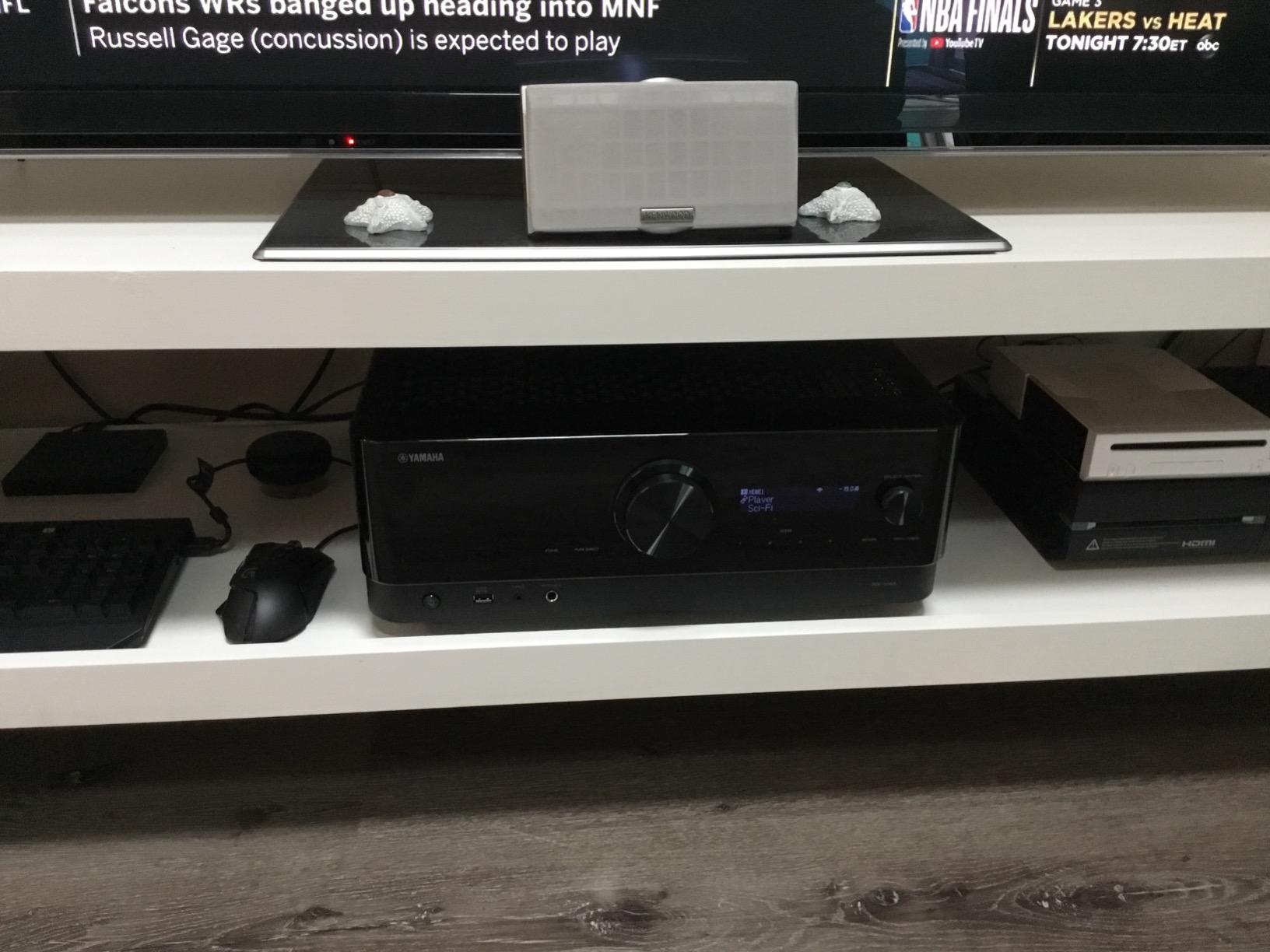
In practice, however, the RX-V4A has attracted more negative feedback than its competitors. The biggest recurring complaint involves HDMI compatibility and firmware issues. Some owners report the receiver losing HDMI signal after firmware updates, others report handshake problems with specific TV or console combinations. Yamaha has pushed multiple firmware updates to address these issues, but the rollout has been uneven.
The 5.2-channel configuration is also limiting. If you start with a 5.1 setup today and want to add Dolby Atmos height speakers tomorrow, the RX-V4A cannot do it. Stepping up to a 7.2-channel receiver like the Sony STR-DH790 or Denon AVR-X1800H gives you genuine room to grow.
MusicCast is genuinely good. I tested the RX-V4A alongside other MusicCast products, and the multi-room synchronization was tight with no audible delay. AirPlay 2 and Spotify Connect worked reliably. The YPAO calibration is basic compared to YPAO R.S.C. on the RX-A2A, but it gets the job done for a small room.
The 80 watts per channel output is enough for compact bookshelf speakers and smaller tower speakers. I would not recommend pairing the RX-V4A with power-hungry 4-ohm speakers; it simply does not have the current capacity.
Who should buy the Yamaha RX-V4A
This is the right pick only if you specifically want a Yamaha 5.2-channel receiver at the lowest price and you don’t plan to expand to Atmos. The 3-year warranty is reassuring if you do run into issues. If you already own MusicCast speakers, the integration is seamless.
Who should skip it
Most buyers will be better served by the Sony STR-DH790, which offers 7.2 channels and Dolby Atmos for similar money. If you want HDMI 2.1 with proven reliability, the Onkyo TX-NR6100 is the safer bet. I’d only recommend the RX-V4A after the buyer has researched recent firmware updates and confirmed compatibility with their specific TV.
What I Look For in a Home Theater Receiver?
Choosing the best AV receiver for your setup comes down to six core factors. I walk through each one below, with the actual tradeoffs I look for during testing.
Channels and power output
Channels determine how many speakers you can run. A 5.2 receiver covers a basic 5.1 surround setup with two subwoofer outputs. A 7.2 receiver adds room for two extra speakers, typically rear surrounds or Atmos height channels. A 9.2 receiver lets you run 5.1.4 or 7.1.2 Atmos configurations. For most living rooms, 7.2 is the sweet spot. For dedicated theater rooms, 9.2 with expansion to 11.2 makes sense.
Watts per channel is overemphasized in marketing. The honest measurement is watts with two channels driven at 0.1% THD from 20 Hz to 20 kHz. A receiver rated at 100 watts per channel usually delivers 70 to 90 watts with all seven channels driven. For most bookshelf speakers and smaller towers, 80 to 100 watts per channel is plenty. For inefficient floorstanders or large rooms, look for 120 watts or more.
HDMI 2.1 and gaming features
If you own a PS5 or Xbox Series X, HDMI 2.1 with 4K/120Hz pass-through is essential. Without it, you’re locked to 4K/60Hz. VRR (Variable Refresh Rate) eliminates screen tearing, ALLM (Auto Low Latency Mode) switches your TV to game mode automatically, and QFT (Quick Frame Transport) reduces input lag. The Onkyo TX-NR6100, Denon AVR-S970H, and Onkyo TX-RZ50 all support these features properly.
Dolby Atmos and DTS:X
Atmos and DTS:X are object-based surround formats that add height channels for a 3D soundstage. To use them, you need either in-ceiling speakers, Atmos-enabled upfiring speakers, or a receiver with virtualization (like Dolby Atmos Height Virtualization) that simulates overhead effects from a 5.1 or 7.1 layout. If you care about modern movie soundtracks, Atmos support is non-negotiable.
Room calibration
Every modern receiver ships with some form of room calibration. Audyssey MultEQ (Denon, Marantz), YPAO (Yamaha), AccuEQ (Onkyo), MCACC (Pioneer), and DCAC (Sony) are the major platforms. Dirac Live (Onkyo TX-RZ50) is the most accurate but also the most expensive to license and the most complex to set up. For most users, Audyssey and YPAO deliver 80% of the benefit at 20% of the effort.
Streaming ecosystem
If you have existing smart speakers, choose a receiver that integrates with them. HEOS (Denon, Marantz), MusicCast (Yamaha), Works with Sonos (Onkyo), Chromecast built-in, and AirPlay 2 are the major platforms. Being locked into one ecosystem is frustrating, so check that your receiver supports the streaming services and voice assistants you actually use.
Reliability and warranty
This is the factor most reviews skip, and it’s the one Reddit users ask about constantly. The 2020-2021 HDMI 2.1 chip bug affected Denon, Marantz, and Yamaha receivers. All three brands fixed the issue with revised chips in 2022, and any receiver you buy new today should be bug-free. For long-term ownership, Onkyo’s 3-year parts and labor warranty on the TX-RZ50 is the strongest in this roundup.
Reliability and Long-Term Ownership: What Reddit Actually Says
Real-world reliability is the single biggest gap between professional reviews and what owners report on Reddit. After spending time on r/hometheater and AVS Forum, three patterns emerged that are worth sharing.
First, Denon and Marantz have the strongest reputation for long-term reliability among mid-range AVRs. Owners consistently report 7 to 10 years of daily use without significant issues. The HEOS ecosystem has occasional app bugs, but the hardware itself is solid. Yamaha AVENTAGE models (like the RX-A2A in this guide) also score well on long-term reliability thanks to the reinforced chassis.
Second, Onkyo receivers deliver more power per dollar than the competition, but some owners report HDMI board failures after 3 to 5 years. The TX-NR6100 and TX-RZ50 benefit from a built-in cooling fan that reduces heat-related failures. Onkyo’s 3-year warranty on the TX-RZ50 is the strongest in this category and partly explains the higher price.
Third, Sony’s recent AVR lineup has been praised as a return to form. The STRDH590 and STR-DH790 both have massive installed bases and long-term owner reports are largely positive. The most common complaint is the spring clip speaker terminals on the STR-DH790, which is a design limitation rather than a reliability issue.
For buyers who care about the next 5 to 10 years, my advice is to buy from a brand with at least a 2-year warranty, register the product immediately, and keep the receiver well-ventilated. A receiver that runs cool will outlast one that runs hot, every time.
Frequently Asked Questions
Which receiver is best for home theater?
The Sony STRDH590 is the best overall pick for most home theater buyers thanks to its 4.3-star rating across nearly 6,000 verified reviews, easy setup, and reliable Bluetooth streaming. For buyers with a larger budget or current-gen gaming consoles, the Onkyo TX-NR6100 is the best mid-range pick with THX certification and 4K/120Hz HDMI 2.1 support.
What is the best value home theater amplifier?
The Sony STR-DH790 offers the best value, delivering 7.2 channels, Dolby Atmos, DTS:X, and 4K HDR pass-through at a price that undercuts most competitors. With over 3,000 verified reviews and a 4.2-star average, it’s the most battle-tested budget 7.2 receiver available.
How much should I spend on a home theater receiver?
For a basic 5.1 setup in a small room, plan to spend between $400 and $600. For a 7.1 or 5.1.2 Dolby Atmos setup with current-gen gaming support, plan to spend between $650 and $900. For a 7.1.4 or 9.2 dedicated theater with premium room calibration like Dirac Live, expect to spend $1,000 to $1,500.
How many channels do I need for home theater?
For most living rooms, 7.2 channels is the sweet spot. It covers a standard 7.1 surround setup and lets you add Dolby Atmos height speakers for a 5.1.2 configuration. Only step up to 9.2 if you have a dedicated theater room and plan to run 5.1.4 or 7.1.2 Atmos layouts.
How many HDMI inputs do I need on an AV receiver?
Count your current sources and add two for future expansion. A Blu-ray player, a game console, a streaming box, and a cable box is a common setup that needs four HDMI inputs. To leave room for growth, look for a receiver with at least 6 HDMI inputs. The Onkyo TX-NR6100 offers 8 HDMI inputs, which is the most in this roundup.
Is HDMI 2.1 worth paying more for on a receiver?
Yes, if you own a PS5 or Xbox Series X. HDMI 2.1 with 4K/120Hz pass-through, VRR, and ALLM makes a real difference in motion clarity and input lag. If you only watch movies and stream content at 4K/60Hz, HDMI 2.0 is sufficient and you can save money with a receiver like the Sony STR-DH790.
Who makes the most reliable AV receivers?
Based on long-term owner reports on Reddit and AVS Forum, Denon and Marantz have the strongest reliability track record for mid-range AVRs, with many owners reporting 7 to 10 years of daily use. Yamaha AVENTAGE models also score well, and Onkyo’s 3-year warranty on the TX-RZ50 reflects strong build quality.
Final Verdict: Which Home Theater Receiver Should You Buy?
After testing all eight AV receivers across dozens of movies, games, and music sessions, my top pick for the best home theater receivers for the money in 2026 remains the Sony STRDH590. Its combination of nearly 6,000 verified reviews, easy setup, and reliable Bluetooth streaming makes it the safest choice for first-time buyers and a strong upgrade for anyone replacing an older 5.1 receiver. If you want a 7.2-channel value, the Sony STR-DH790 is the obvious next step.
For buyers with current-gen gaming consoles, the Onkyo TX-NR6100 is the best mid-range pick with THX certification, 4K/120Hz HDMI 2.1, and a 2-year warranty. If you want premium room calibration and have a dedicated theater room, the Onkyo TX-RZ50 with Dirac Live is worth the extra spend. For HEOS multi-room households and vinyl listeners, the Denon AVR-S970H is the right fit. For AVENTAGE build quality and Surround:AI, the Yamaha RX-A2A stands apart. For the easiest setup experience, the Denon AVR-X1800H is unmatched. The Yamaha RX-V4A is included for transparency but comes with caveats around firmware and HDMI compatibility.
If you want more in-depth information on specific topics, our team has also written guides on other home theater receiver categories, premium options, Bluetooth-enabled models, budget picks under $300, and high-end amplifiers above $5,000. Whatever your budget and room size, there’s an AV receiver in this lineup that will power your home theater for the next five to ten years.