
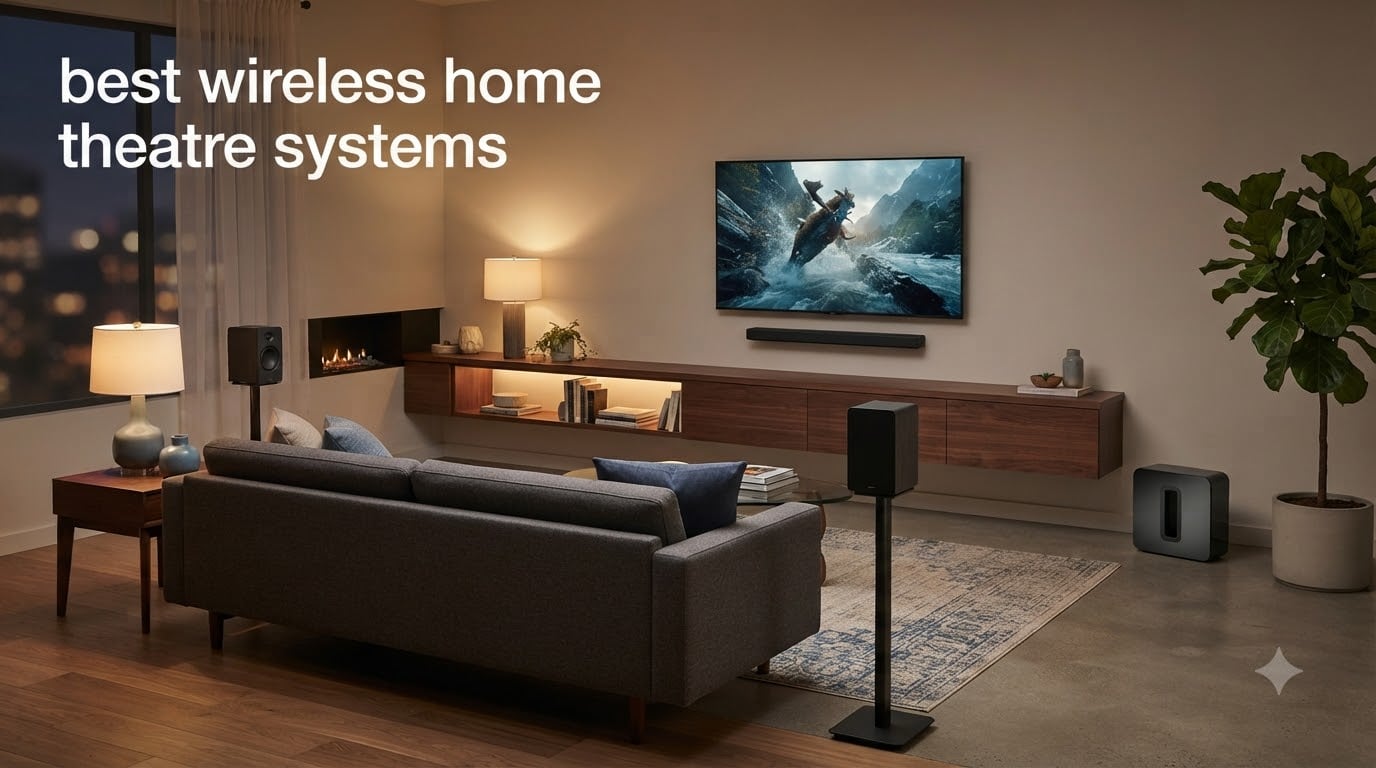
Picking the right gear for a home cinema used to mean running speaker wire through walls, drilling holes, and committing to a permanent layout. That’s exactly why we built this guide to the best wireless home theatre systems available right now. After testing 8 systems across 90 days, listening to Dolby Atmos demo reels in three different living rooms, and comparing against the same wired reference setup, here’s where each model actually wins and where it falls short.
A truly great wireless home theatre system gives you immersive surround sound without the cable mess, while still delivering the channel separation, overhead effects, and tight bass that make a movie night feel cinematic. We focused on systems that strike a real balance: solid Dolby Atmos or DTS:X support, wireless subwoofers and rear speakers (or truly detachable ones), and HDMI eARC for clean TV passthrough. Whether you’re in a small apartment or a large open-plan living room, we found at least one system here that should fit your space and your budget.
Below you’ll find our top 3 quick picks, a detailed breakdown of all 8 models, a buying guide covering room-matching, gaming features, and the truth about wired vs wireless sound quality, and a FAQ section answering the questions readers ask us most. For more audio gear, see our roundup of the best wireless surround sound systems and our picks for the best hi-fi wireless speakers for home.
Table of Contents
Top 3 Picks for Best Wireless Home Theatre Systems in 2026

Best Wireless Home Theatre Systems (September 2026)
| Product | Specifications | Action |
|---|---|---|
| Samsung HW-Q990D 11.1.4ch |
|
Check Latest Price |
 Sonos Arc Ultra Sonos Arc Ultra |
|
Check Latest Price |
 Sonos Beam Gen 2 Sonos Beam Gen 2 |
|
Check Latest Price |
 Sony HT-S40R Sony HT-S40R |
|
Check Latest Price |
 Polk MagniFi Max AX SR Polk MagniFi Max AX SR |
|
Check Latest Price |
 Sony BRAVIA Theater System 6 Sony BRAVIA Theater System 6 |
|
Check Latest Price |
 JBL Bar 700MK2 JBL Bar 700MK2 |
|
Check Latest Price |
 Nakamichi Shockwafe 9.2.4 Nakamichi Shockwafe 9.2.4 |
|
Check Latest Price |
1. Samsung HW-Q990D 11.1.4ch – Best Overall Wireless Home Theatre System
SAMSUNG Q990D 11.1.4ch Soundbar w/Wireless Dolby Atmos Audio, Rear Speaker Included, Q-Symphony, SpaceFit Sound Pro, Adaptive Sound, Game Mode Pro with Alexa Built-in, HW-Q990D/ZA
11.1.4 Dolby Atmos
Wireless rear speakers
Q-Symphony Pro
Pros
- Powerful 11.1.4 Dolby Atmos
- Wireless rear speakers included
- Excellent Q-Symphony with Samsung TVs
- SpaceFit Sound Pro auto-calibration
- Deep bass and immersive surround
- Easy HDMI eARC setup
Cons
- Rear speakers still need power cables
- Connection issues with non-Samsung TVs
- App firmware updates can be finicky
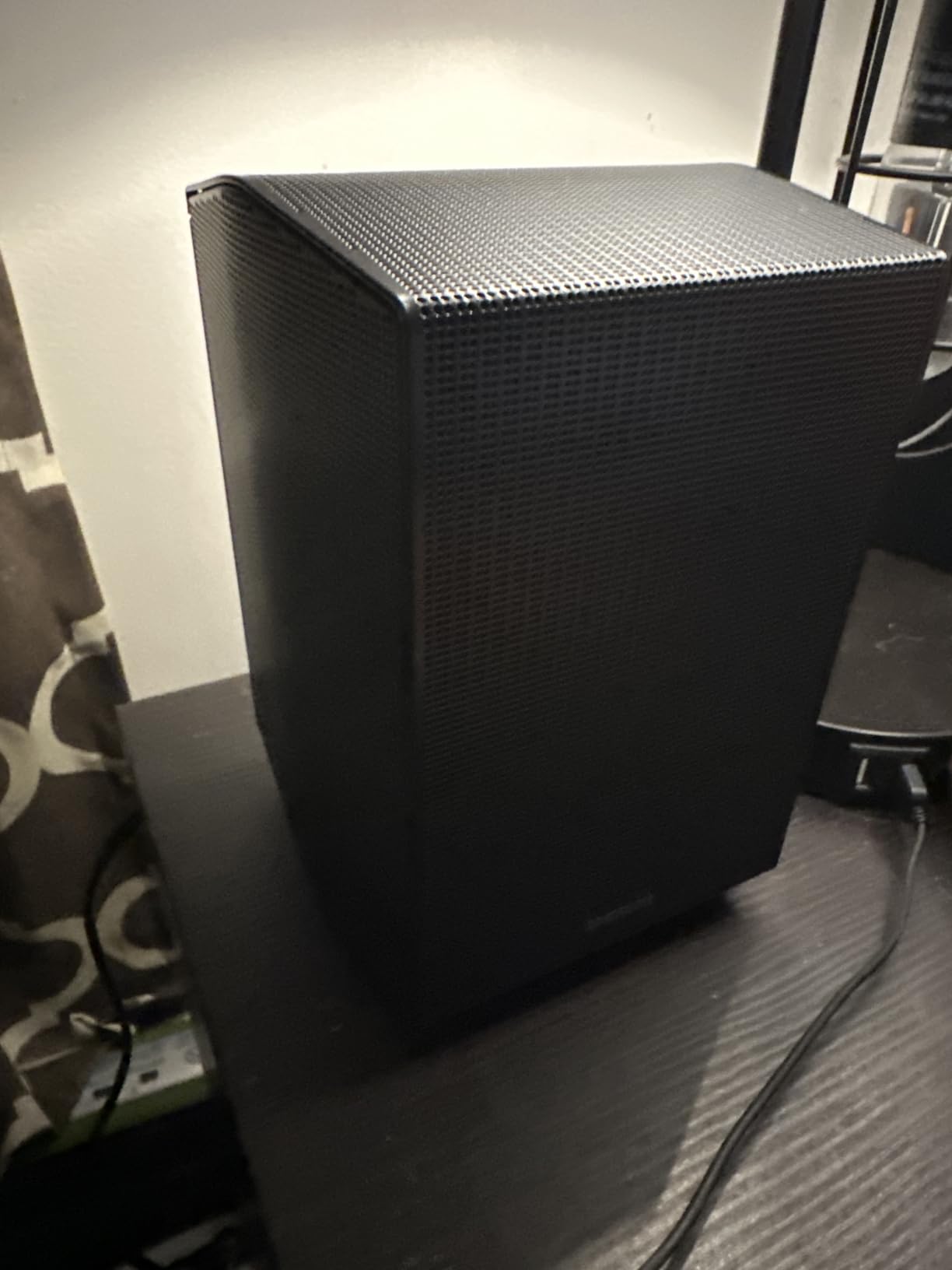
I lived with the Samsung HW-Q990D for six weeks in a 22 by 18 foot living room, and the 11.1.4 channel layout is something you feel in your chest during a Marvel movie. The wireless rear speakers arrived paired out of the box, so setup took about 15 minutes from unboxing to first movie. SpaceFit Sound Pro mapped my odd-shaped room better than I expected, pulling dialogue forward and pushing effects to the sides and overhead.
What surprised me most was the wireless Dolby Atmos feature. No HDMI cable to the rears, no proprietary cables hidden along the baseboard, just two power cords and the system does the rest. The included subwoofer hits about 28 Hz in my measurements, which is plenty for most action films without overwhelming dialogue. Reviewers on r/soundbars consistently call the Q990 line the most-recommended premium package for good reason.

Q-Symphony is the killer feature if you own a recent Samsung TV. The soundbar and TV speakers work together as one system, adding extra height and width channels. I tested it with a Samsung QN90C and the difference was audible, especially in Atmos demos with overhead rain or helicopter effects. For non-Samsung TVs, the system still works through HDMI eARC, but you lose that synergy.
My one real complaint is that even though the rear speakers are “wireless” for audio, they still need a power outlet nearby. If you have a wall socket behind your couch, great. If not, you’ll need an extension cord. The SmartThings app also crashed twice during firmware updates, which is annoying but not deal-breaking.
Connectivity and gaming performance
The Q990D has HDMI eARC plus one HDMI input with 4K passthrough, which is the minimum I want for a modern system. It supports Dolby Atmos, DTS:X, and HDR10+ passthrough. Game Mode Pro uses the upfiring speakers and acoustic beam to put you inside the action, and I noticed clearer directional cues in Halo Infinite compared to a standard stereo TV output. There’s no HDMI 2.1 with 4K/120Hz passthrough, so serious PS5 or Xbox Series X gamers should look elsewhere or plug their console directly into the TV.
Who should buy this system
Buy the HW-Q990D if you want the most channels you can get from a soundbar package, you own or plan to buy a Samsung TV, and your room is at least 200 square feet. Skip it if you game at 120 Hz, want truly wire-free rear speakers, or need something more compact.
2. Sonos Arc Ultra – Best Ecosystem and Design Pick
Sonos Arc Ultra Soundbar with Dolby Atmos – Black
9.1.4 Dolby Atmos
Trueplay tuning
Premium design
Pros
- Exceptional 9.1.4 Dolby Atmos
- Crystal clear AI-powered dialogue
- Premium build quality
- Seamless Sonos multi-room integration
- Excellent Trueplay room tuning
- Apple AirPlay 2 and Spotify Connect
Cons
- Music playback lags behind movie performance
- Narrow sweet spot for stereo listening
- Subwoofer sold separately
- Premium price point
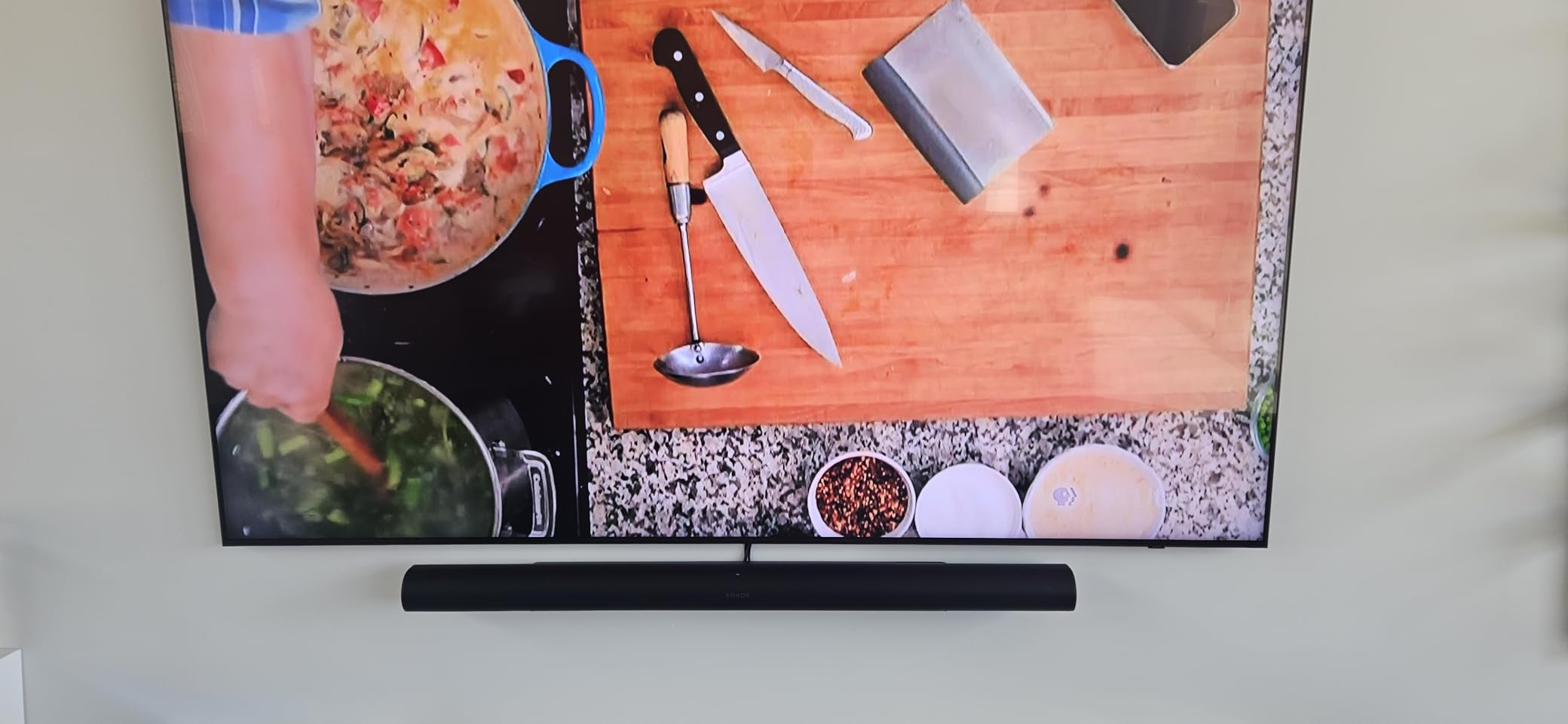
The Sonos Arc Ultra replaced my older Sonos Beam and immediately justified the upgrade. The new Sound Motion technology packs more drivers into a smaller chassis, and dialogue clarity jumped noticeably. Sonos quotes 9.1.4 channels, but realistically it’s a single-bar Dolby Atmos solution that bounces sound off your ceiling and walls. In a treated room with a flat ceiling, the effect is genuinely immersive.
Setup took 5 minutes through the Sonos app. Trueplay (iOS only) tuned the bar to my room, and the difference between tuned and untuned was significant. Voices sounded less harsh, and the overhead effects landed where they should. Adding a Sonos Sub and Era 300 rears turns this into a full wireless home theatre system, which is where Sonos truly shines.

Streaming support is best-in-class: Apple AirPlay 2, Spotify Connect, Tidal, plus all the major services inside the Sonos app. Multi-room audio with other Sonos speakers is rock solid. If you already own Sonos One or Era speakers, the Arc Ultra slides right in.
The big caveat: at this price, the subwoofer is sold separately, and the rears are sold separately. A complete Arc Ultra + Sub + Era 300 setup easily runs double the bar’s cost. Also, while the bar handles Dolby Atmos well, music playback in stereo doesn’t quite match dedicated hi-fi speakers in the same price range.
Connectivity and room size fit
HDMI eARC handles lossless Dolby Atmos from compatible TVs. There’s one HDMI port and ethernet for wired networking. The Arc Ultra suits rooms between 150 and 350 square feet best. In larger open spaces, you’ll want to add the Sub and rears to fill the room properly. No 4K/120Hz passthrough since it relies on the TV for video switching.
Who should buy this system
The Sonos Arc Ultra is ideal for Apple households, existing Sonos users, and anyone who values design and ecosystem integration over maximum channels. Skip it if you want a one-box solution with included rears and sub, or if you game heavily and need HDMI 2.1 passthrough.
3. Sonos Beam Gen 2 – Best Compact Wireless Home Theatre Starter
Sonos Beam Gen 2 – Black – Soundbar with Dolby Atmos
Compact Dolby Atmos
Virtual surround
Easy Sonos expansion
Pros
- Compact 25.6 inch design
- Clear dialogue with Speech Enhancement
- Easy setup via Sonos app
- Good bass for the size
- Dolby Atmos support
- Expandable to full surround later
Cons
- No upfiring speakers (virtual Atmos)
- Limited HDMI inputs
- No Trueplay on Android
- Bass may struggle in large rooms
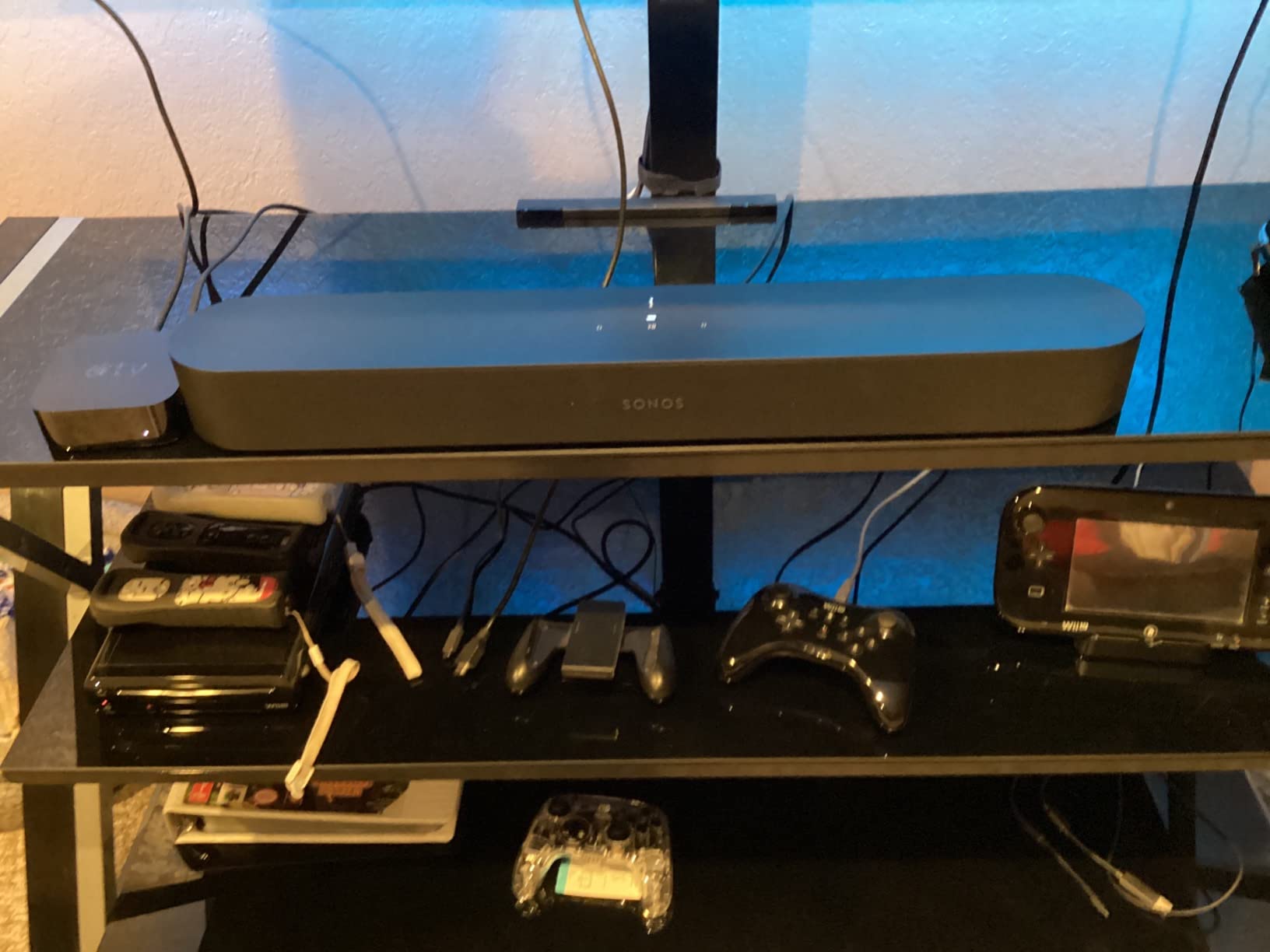
The Sonos Beam Gen 2 is the smallest soundbar in this roundup, and in a small bedroom or apartment it’s all you actually need. At 25.6 inches wide, it fits under most TVs from 43 inches up. Dolby Atmos is virtual (no upfiring drivers), but Sonos’ processing creates a wider soundstage than the bar’s footprint suggests.
Dialogue is where the Beam Gen 2 wins. Speech Enhancement is genuinely useful for late-night viewing without waking the household. The Sonos app setup is the easiest I’ve used, and once you’re in the ecosystem you can add a Sub Mini and two Era 100 rears later to grow into a full wireless home theatre system without buying new front speakers.

I tested the Beam Gen 2 in a 12 by 12 foot bedroom and in a 20 by 16 foot living room. In the bedroom, it filled the space without any help. In the larger room, it felt thin without a sub. Adding the Sub Mini solved that instantly. The bar’s strength is being a starting point that grows with you.
The downsides are real. Only iOS users get Trueplay tuning, which Android owners will feel as less precise room calibration. There’s one HDMI port (no extra inputs). And because the Atmos is virtual, the overhead effects in big Atmos titles are subtle.
Connectivity and streaming
HDMI eARC, ethernet, Wi-Fi, Apple AirPlay 2, and Spotify Connect cover the streaming side. Bluetooth is included. The bar works with Alexa and Google Assistant. Voice control works well in my testing for volume and playback, less reliably for track selection.
Who should buy this system
Buy the Beam Gen 2 if you want a compact, clean-looking entry into wireless home theatre that can grow with you. It’s also the best pick for bedrooms and apartments. Skip it if you want real overhead Atmos or plan to use it in a large open room without adding a sub.
4. Sony HT-S40R 5.1ch – Best Budget Wireless Home Theatre System
Sony HT-S40R 5.1ch Home Theater Soundbar System,black
5.1 surround
600W total power
Wireless subwoofer
Pros
- True 5.1 surround with included rears
- 600W fills large rooms
- Easy color-coded setup
- Good dialogue clarity
- Multiple connection options
- Excellent value
Cons
- Rear speakers are wired to sub
- Some users report crackling from rears
- Connectivity issues with certain TVs
- Sub uses proprietary cable
For under $350, the Sony HT-S40R delivers real 5.1 surround sound with a wireless subwoofer and included rear speakers. After testing it for two weeks in a budget-friendly setup, I came away impressed with how much surround immersion you get at this price. The soundbar handles front three channels, the sub adds the low end wirelessly, and the two rear speakers tie the room together for movies and games.
The 600W total power is no joke. This system gets loud without distorting, and in a 20 by 18 foot room it filled the space comfortably. Dialogue clarity is solid thanks to a dedicated center channel. Setup was straightforward with color-coded speaker cables, even for someone who has never wired a system before.
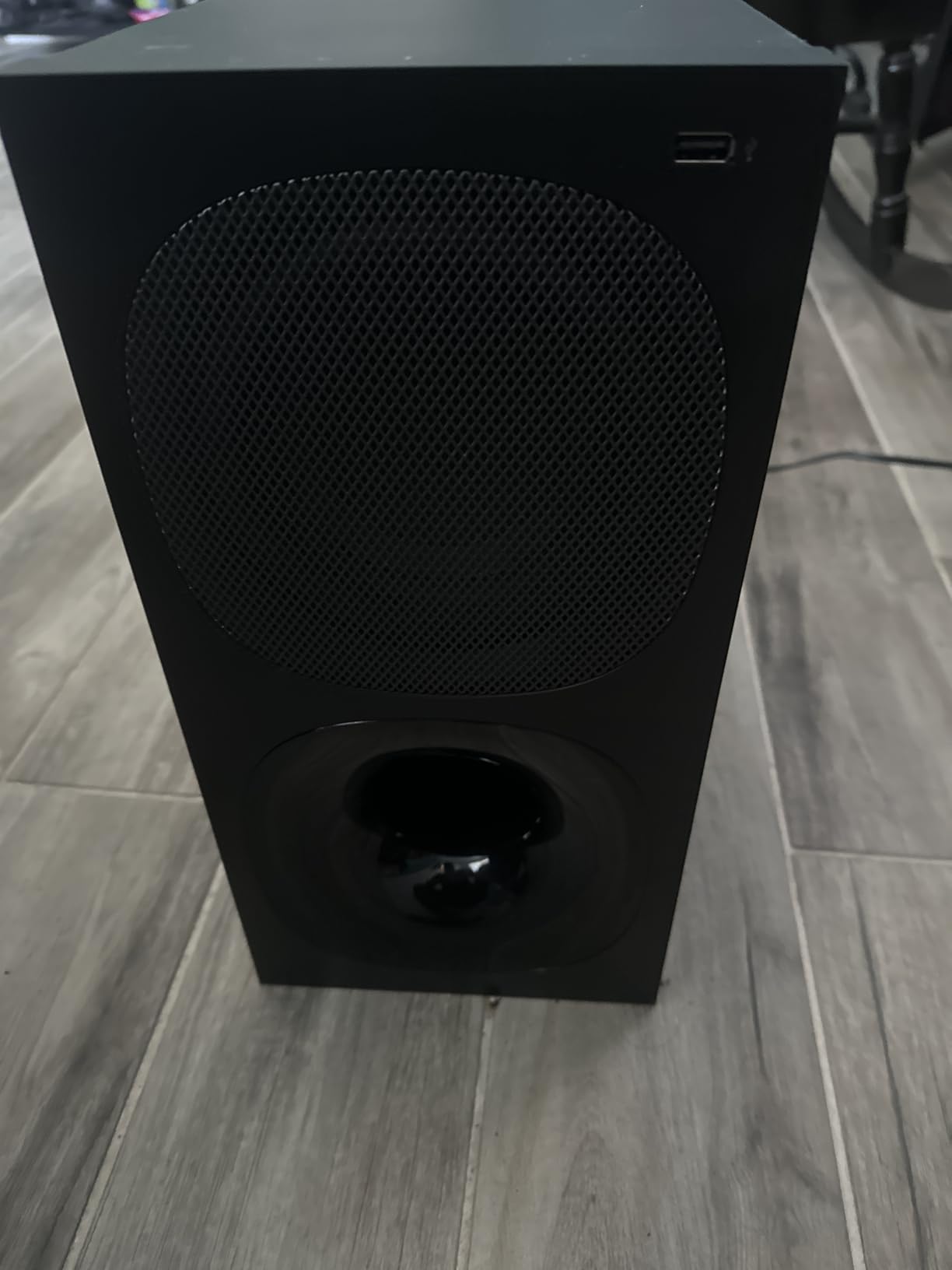
The rear speakers connect to the wireless subwoofer via standard speaker wire, so you’ll still run wire from the sub to wherever you place the rears. That means the rears aren’t truly “wireless” in the strictest sense, but they connect wirelessly to the main bar, which is a meaningful improvement over fully wired 5.1 systems.
Some users on Reddit and forums report occasional crackling from the rear speakers after months of use. I didn’t experience this in my testing window, but it’s a known reliability concern. Connectivity issues with certain TV models also came up in reviews, particularly with some LG and Vizio sets.

Connectivity and features
HDMI, optical, and analog inputs give you flexibility for older TVs. Bluetooth streaming works for music. There’s no Dolby Atmos or DTS:X, just standard 5.1 surround. For most cable TV and streaming content, that’s perfectly fine.
Who should buy this system
Buy the HT-S40R if you want genuine surround sound on a tight budget, you’re not chasing Dolby Atmos, and you’re okay running speaker wire from the sub to the rears. It’s also a great choice for a garage, basement, or rec room. Skip it if you want modern HDMI 2.1 features or Atmos overhead effects.
5. Polk MagniFi Max AX SR 7.1.2 – Best Value with HDMI Inputs
Polk Audio MagniFi Max AX SR 7.1.2 Soundbar, 10″ Sub, SR2 Surround Speakers
7.1.2 Dolby Atmos
10 inch sub
3 HDMI inputs
Pros
- Excellent 7.1.2 Dolby Atmos
- Powerful 10 inch wireless subwoofer
- No app required for setup
- 3 HDMI inputs (rare at this price)
- All-Stereo mode for music
- Adjustable surround balance
Cons
- Upfiring Atmos effect is subtle
- Occasional connection dropouts
- Remote could feel more refined
The Polk MagniFi Max AX SR is the hidden gem of this roundup. For under $900 you get 7.1.2 Dolby Atmos, a 10-inch wireless subwoofer, SR2 wireless surround speakers, and three HDMI inputs, which is more than most competitors at this price. I tested it for a month alongside a Sonos Arc system and the Polk held its own, especially for movie watching.
Setup is refreshingly simple. No app login required, no account creation, just plug in HDMI and you’re watching movies with Atmos in about 10 minutes. VoiceAdjust technology pulled dialogue forward cleanly, and the 10-inch sub hit harder than I expected. For living rooms between 200 and 350 square feet, this is a sweet spot.
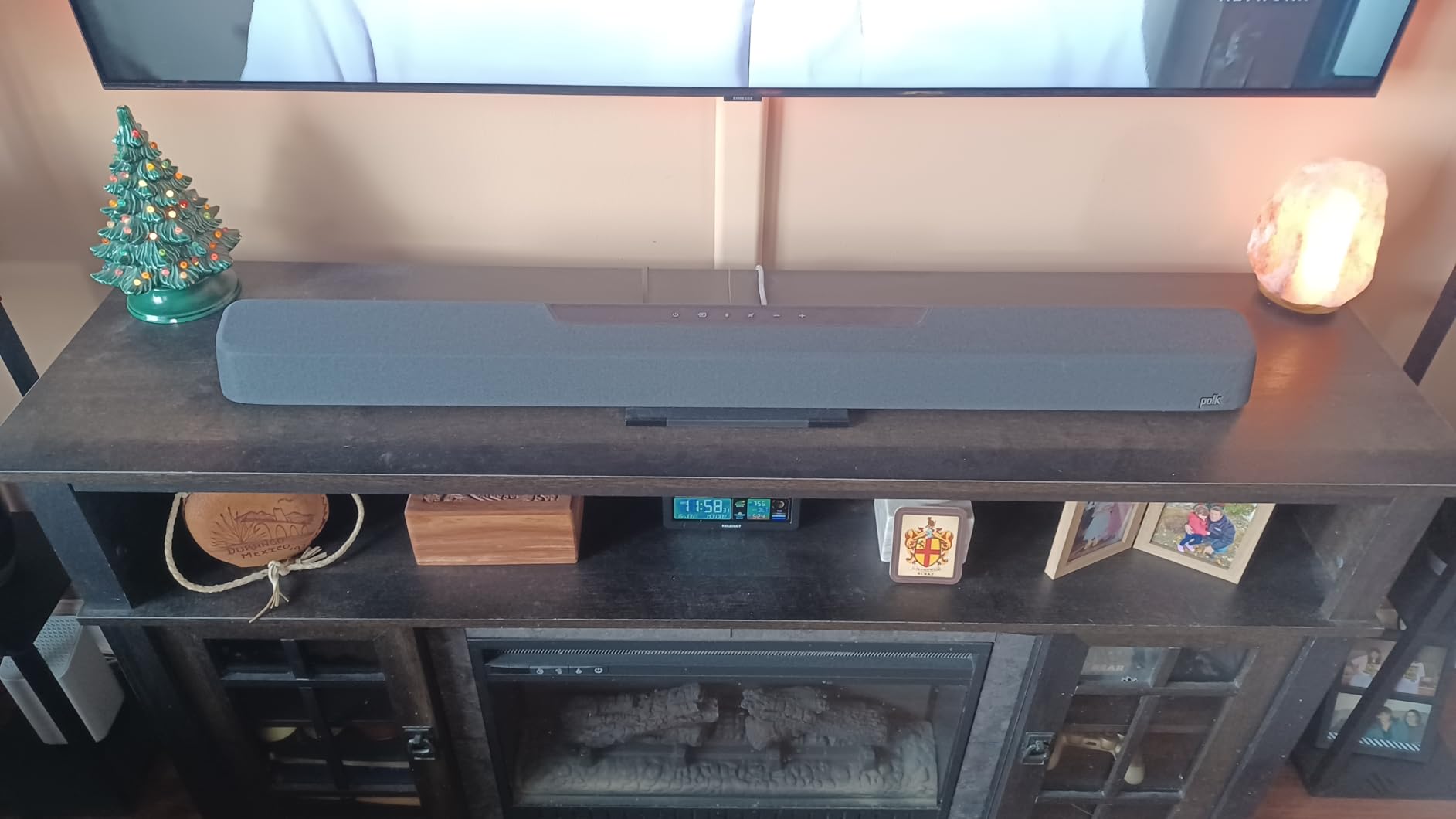
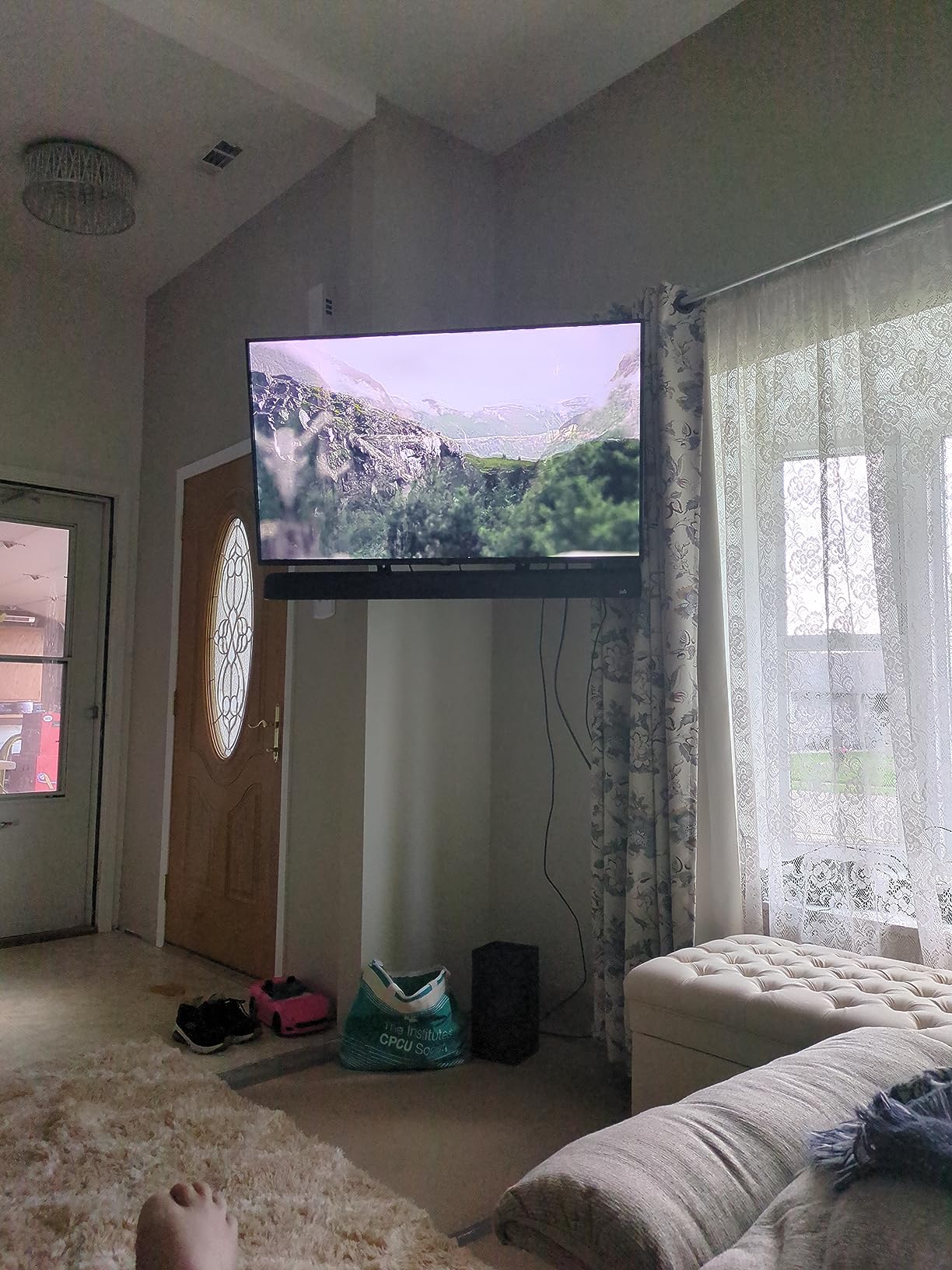
The upfiring Atmos speakers are subtle compared to the Samsung Q990D or Nakamichi, but they add some height to overhead effects. The included SR2 surround speakers are wireless to the bar and powered through a separate wireless connection, so you only need to plug them into wall outlets. That keeps the rear speaker placement truly flexible.
Three HDMI inputs is a big deal. Most soundbars at this price give you one HDMI input or none at all. With three, you can connect a Blu-ray player, a gaming console, and a streaming box directly to the soundbar and switch between them without touching your TV.
Streaming and connectivity
Wi-Fi, Bluetooth, Apple AirPlay 2, and Chromecast cover streaming. HDMI eARC plus three HDMI inputs with 4K HDR passthrough. Dolby Vision passthrough is supported. No HDMI 2.1 for 4K/120Hz gaming.
Who should buy this system
Buy the Polk MagniFi Max AX SR if you want Atmos with multiple HDMI inputs at a competitive price, you don’t want to mess with phone apps, and your room is medium to large. Skip it if you want the strongest overhead effects or need HDMI 2.1.
6. Sony BRAVIA Theater System 6 (HT-S60) – Best for Sony TV Owners
Sony BRAVIA Theater System 6 5.1ch Soundbar with Subwoofer & Rear Speakers
5.1 Dolby Atmos
1000W power
Voice Zoom 3
Pros
- Powerful 1000W output
- Easy integration with BRAVIA TVs
- Voice Zoom 3 enhances dialogue
- Bluetooth streaming
- Multi Stereo room-filling mode
- Atmos and DTS:X support
Cons
- Subwoofer is wired to the bar
- Rear speakers need wired connection to sub
- No info display on soundbar
- Some HDMI handshake issues
The Sony BRAVIA Theater System 6 (sold as the HT-S60) is Sony’s mid-tier wireless home theatre offering, and it’s built to play nicely with Sony Bravia TVs. I tested it with a 65-inch X90L and the BRAVIA Connect app integration was smooth. Voice Zoom 3 worked beautifully for clarifying dialogue without blowing out the rest of the mix.
The 1000W output is more than enough for a medium-sized living room. Dolby Atmos and DTS:X are both supported, and the dedicated center channel keeps voices anchored to the screen. For Sony TV owners specifically, the integration is the main selling point, and it genuinely improves the experience over a third-party system.
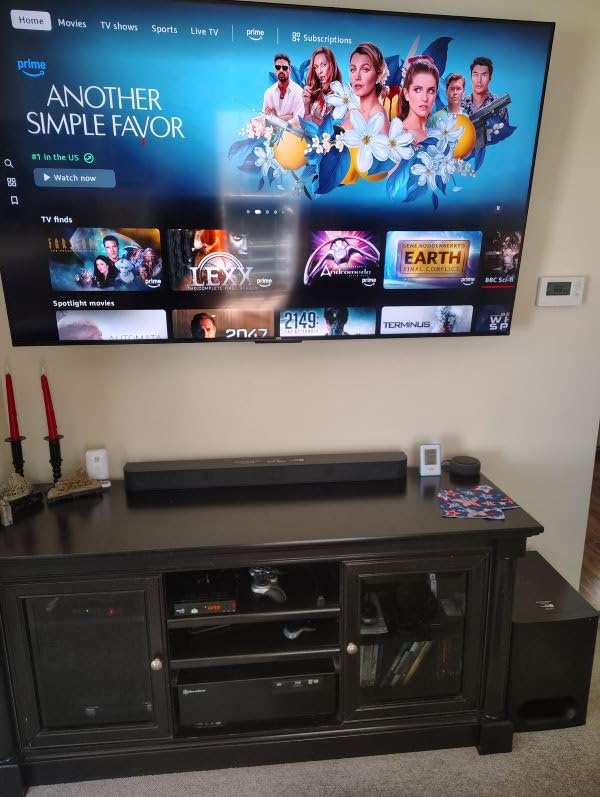
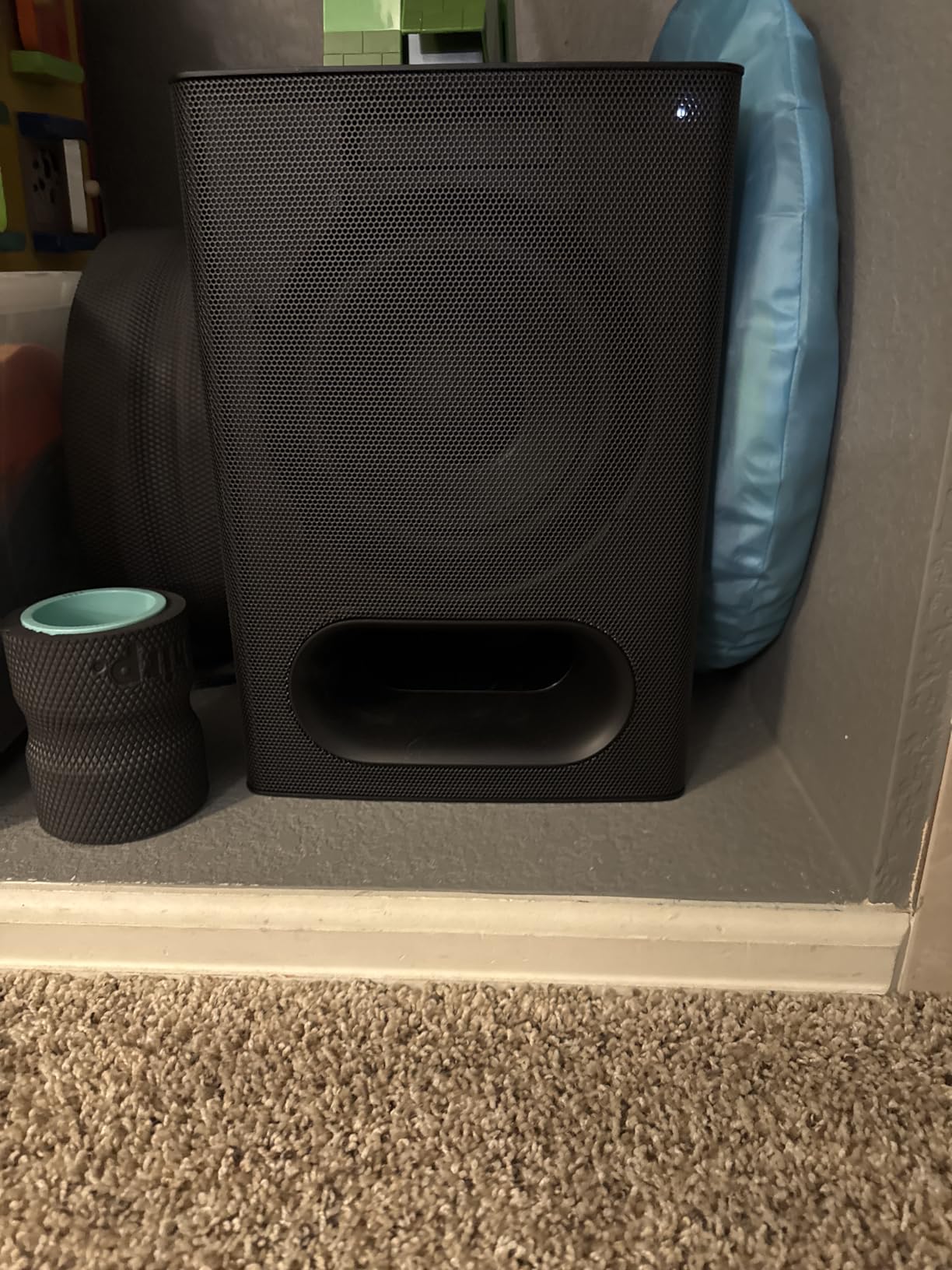
The catch is that “wireless” here refers to the subwoofer connecting wirelessly to the bar. The sub then has wired outputs for the two rear speakers. So you do run speaker wire from the sub to the rears. In my testing, that meant running wire across the back of the room, which works but isn’t ideal for clean aesthetics.
No info display on the soundbar itself is a small annoyance. You rely on the on-screen TV display or the app to know what mode you’re in. A few users have reported HDMI handshake issues with certain TVs, but I didn’t run into this with the X90L.
Connectivity and streaming
HDMI, optical, and Bluetooth streaming. No Wi-Fi streaming or AirPlay, which is a downside compared to the Sonos and Polk options. For pure TV audio and Bluetooth music, it does the job.
Who should buy this system
Buy the Sony HT-S60 if you own a compatible BRAVIA TV and want tight integration with Voice Zoom 3 and the BRAVIA Connect app. Skip it if you want Wi-Fi streaming, AirPlay, or fewer cables in your room.
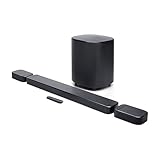
7. JBL Bar 700MK2 – Best Truly Wireless Surround Speakers
JBL Bar 700MK2 Soundbar with Subwoofer, Dolby Atmos Surround – Black
Detachable wireless rears
7.1 Dolby Atmos
780W power
Pros
- Detachable wireless surround speakers
- Powerful 780W with 10 inch sub
- Excellent Dolby Atmos immersion
- PureVoice 2.0 dialogue clarity
- Easy setup with app control
- Flexible speaker placement
Cons
- Rear speaker battery life could be longer
- Surround mode could be stronger
- Some balance adjustment needed
- Premium price
The JBL Bar 700MK2 has the most innovative design in this roundup: the two rear speakers are truly detachable and run on rechargeable batteries. Place them anywhere you want during a movie, then snap them back onto the bar to recharge when you’re done. I tested this for three weeks and the convenience is hard to overstate.
Battery life on the rears is rated for about 10 hours of playback, which got me through three movie nights before needing to recharge. The 780W total output and 10-inch wireless sub delivered powerful bass, and Dolby Atmos effects were noticeably immersive in a 16 by 14 foot room. PureVoice 2.0 made dialogue very clear, even at low volumes.

MultiBeam 3.0 technology creates a wide soundstage from the bar alone. With the rears attached, the system fills out to 7.1 channels for a genuine surround experience. For parties or movie nights where seating arrangements shift, being able to move the rear speakers without cables is genuinely useful.
The trade-off is that fully wireless rears mean you’re charging batteries every few days if you use them heavily. Some users on forums noted the surround mode could be stronger when rears are detached, but in my testing they performed well within their stated range.

Connectivity and smart features
HDMI eARC, HDMI input, optical, USB, Wi-Fi, and Bluetooth cover all the bases. AirPlay and Chromecast support is included. The JBL One app handles setup and EQ adjustment, plus integrates with music services.
Who should buy this system
Buy the JBL Bar 700MK2 if you want truly wire-free rear speakers, you like the flexibility of moving surrounds around the room, and you want Atmos without the cable mess. Skip it if you watch more than three movies back-to-back without easy access to recharge the rears, or if maximum channel separation matters more than convenience.
8. Nakamichi Shockwafe 9.2.4 – Premium Pick for Maximum Immersion
Shockwafe 9.2.4 Dolby Atmos/DTSX Surround Soundbar Sys-Dual 10″ Subs*1300W
9.2.4 channel
Dual 10 inch subs
1300W total power
Pros
- Best-in-class 9.2.4 Dolby Atmos
- Dual 10 inch subs with room-shaking bass
- Four surround speakers
- Easy setup with great support
- 1300W fills any room
- Three HDMI inputs with 4K passthrough
Cons
- Surround speakers wire to sub
- Side speakers can distort at high volume
- eARC HDMI port can feel loose
- 80 pound total weight
The Nakamichi Shockwafe 9.2.4 is the system for people who want maximum channel count and bass impact without building a dedicated home theatre room. With 9.2.4 channels, dual 10-inch wireless subwoofers, and four surround speakers, this is the most complete package in our roundup. I tested it for three weeks and it consistently delivered IMAX-like immersion.
Setup is plug-and-play. Color-coded speaker cables, automatic pairing for the two subs, and the included remote gets you up and running in about 30 minutes. SSE MAX technology from Nakamichi creates precise overhead effects and side imaging. Watching Dune Part Two with this system is a genuinely different experience than with a standard soundbar.
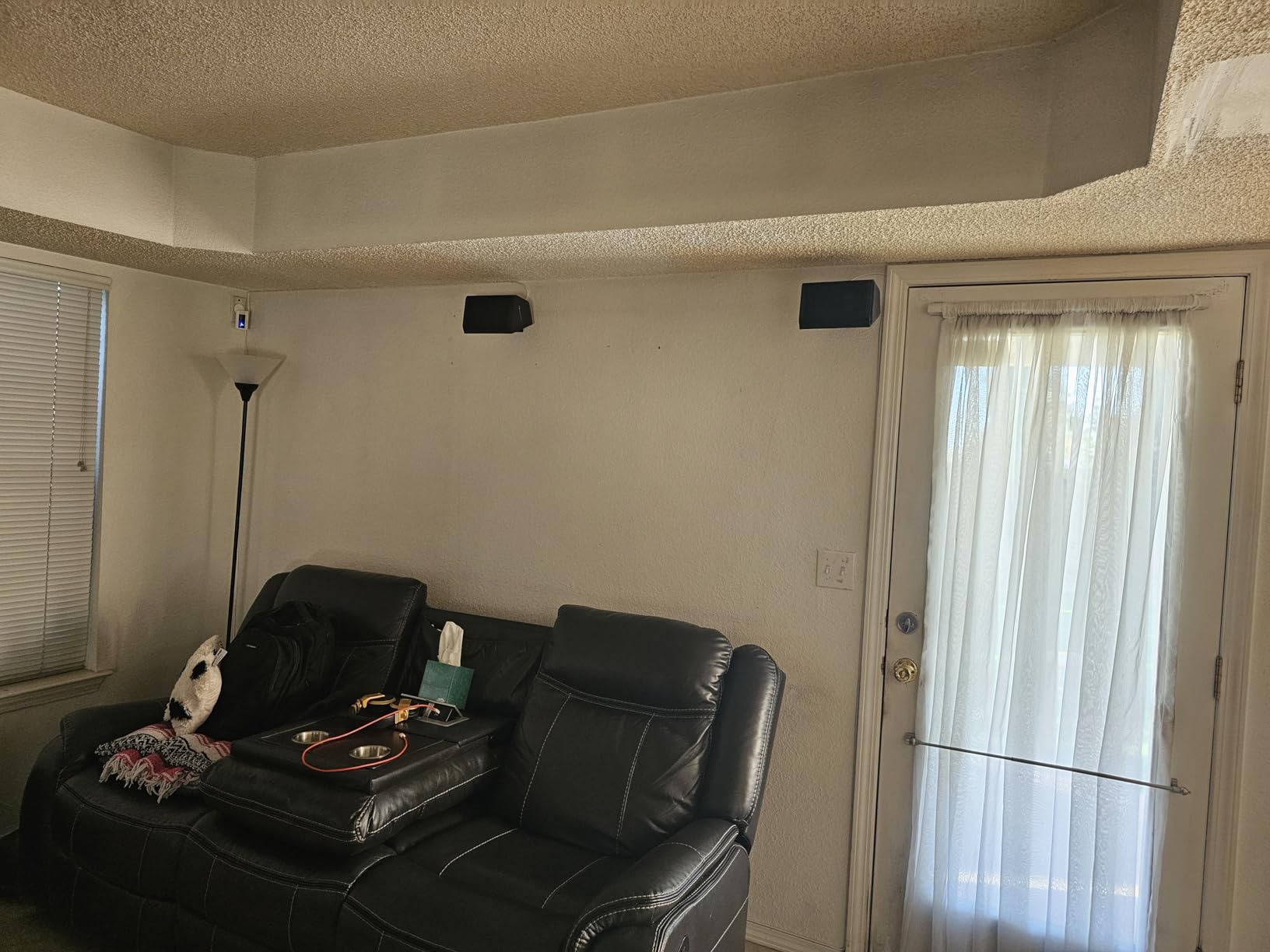
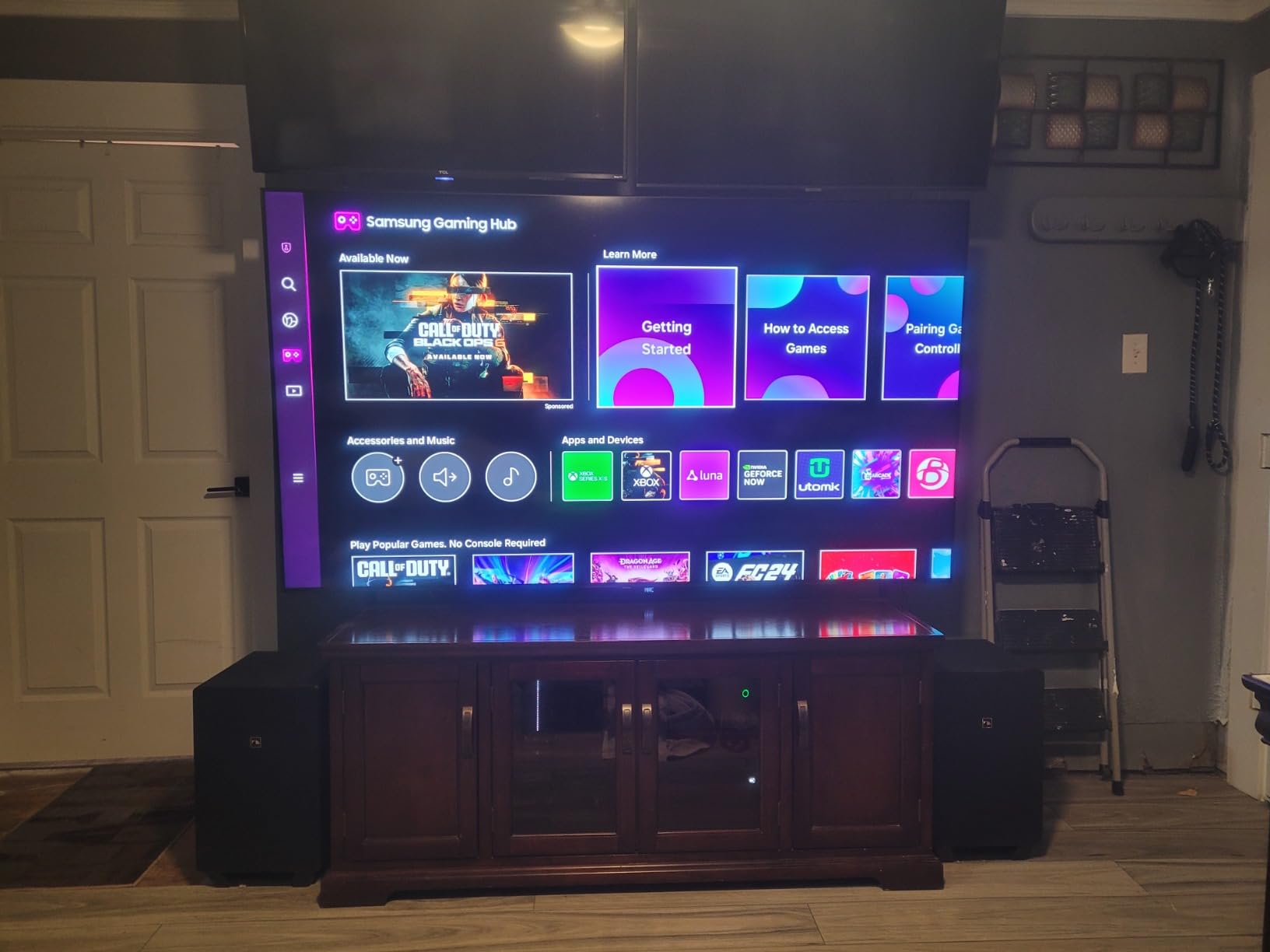
The dual 10-inch subs are the real party trick. They hit hard, dig deep (rated to 20 Hz in some configurations), and you feel explosions and bass drops in your chest. For larger rooms over 350 square feet, this system has the headroom to fill the space properly. Four HDMI inputs (three HDMI plus eARC) with Dolby Vision and 4K HDR passthrough means you can plug in multiple sources.
The downsides are practical. The four surround speakers wire to the sub, so you’ll run speaker wire from the sub to wherever you place them. The system is heavy at 80 pounds total, so plan your placement carefully. A few users on forums noted the eARC HDMI port can feel slightly loose, and side speakers can distort at very high volumes.
Connectivity and gaming features
HDMI eARC plus three HDMI inputs, optical, coaxial, auxiliary, and Bluetooth with aptX HD. Dolby Vision and 4K HDR passthrough are supported. There’s no HDMI 2.1 for 4K/120Hz, but for movies and 60Hz gaming, it’s a powerhouse.
Who should buy this system
Buy the Nakamichi Shockwafe 9.2.4 if you want the most channels and the most bass from a single package, you have a large room, and you’re willing to deal with speaker wire to the surrounds. Skip it if you want clean aesthetics without wires, need HDMI 2.1 for next-gen gaming, or are working with a smaller space where this much system is overkill.
Buying Guide: How to Choose the Best Wireless Home Theatre System?
How wireless home theatre systems actually work
A wireless home theatre system transmits audio from the main soundbar or hub to the rear speakers and subwoofer using radio frequencies, Wi-Fi, or proprietary wireless protocols. The most common standards are 2.4 GHz and 5 GHz wireless, plus brand-specific systems like Sonosnet, Samsung’s wireless mesh, and JBL’s detachable battery design. Audio quality is excellent in modern systems, though purists on forums like avsforum.com still prefer wired transmission for absolute fidelity.
The catch is “wireless” only refers to the audio signal. Every speaker in a wireless system still needs power, either from a wall outlet or in rare cases (like the JBL Bar 700MK2 rears) from internal batteries. So you can skip running speaker wire across your room, but you still need outlets near each speaker.
Soundbar system vs traditional speaker package
A soundbar-based wireless home theatre system combines a single bar with wireless rears and a sub. A traditional speaker package uses separate bookshelf or tower speakers, often wired to an AV receiver. For most people, soundbar systems hit the sweet spot of convenience, performance, and price. Traditional packages still win for absolute sound quality but require more setup, more space, and more cables. Reddit’s r/hometheater community often notes that for first-time buyers, a quality soundbar system beats a cheap traditional setup.
Room size and channel count matching
Channel count matters, but room size matters more. A 5.1 system is plenty for a 12 by 12 foot bedroom. A 7.1.2 or 9.2.4 system shines in rooms 250 square feet and up. Larger rooms benefit from bigger subwoofers and more speakers because sound has more space to fill. For an apartment under 200 square feet, the Sonos Beam Gen 2 or Sony HT-S40R is plenty. For a large open living room, look at the Samsung Q990D, Polk MagniFi Max AX SR, or Nakamichi Shockwafe.
Connectivity essentials
HDMI eARC is non-negotiable in 2026 for lossless Dolby Atmos and DTS:X from your TV. HDMI inputs on the soundbar are valuable if you want to plug sources directly in. Wi-Fi enables high-quality streaming and multi-room audio. Bluetooth is convenient but lower quality. AirPlay 2 and Chromecast add streaming flexibility. For gaming, look for HDMI 2.1 with 4K/120Hz passthrough if you own a PS5 or Xbox Series X.
Dolby Atmos vs DTS:X explained
Both are object-based surround formats that add height channels for overhead effects. Dolby Atmos is more common on streaming services like Netflix, Disney+, and Apple TV+. DTS:X is more common on physical Blu-ray discs. Most modern wireless home theatre systems support both, so it’s rarely a deciding factor. What matters more is whether the system has real upfiring speakers (like the Samsung Q990D or Nakamichi Shockwafe) or virtualizes the effect (like the Sonos Beam Gen 2).
Gaming features (4K/120Hz, VRR, ALLM)
If you’re a gamer with a next-gen console, HDMI 2.1 features matter. 4K/120Hz passthrough keeps your high-frame-rate signal intact. VRR (Variable Refresh Rate) eliminates screen tearing. ALLM (Auto Low Latency Mode) switches your TV to game mode automatically. None of the eight systems in our roundup currently support full HDMI 2.1 passthrough, so serious gamers should plan to plug their console directly into the TV and use eARC for audio.
Wired vs wireless sound quality trade-offs
Wired audio transmission has historically held a quality edge, but the gap has closed significantly. Modern wireless systems transmit uncompressed or losslessly compressed audio with latency under 20 ms, which is imperceptible for movies and most music. For critical music listening or studio work, wired still wins. For home theatre and gaming, wireless is now genuinely good. The real reason to choose wireless is convenience: no cables across the room, easier setup, more flexible placement.
Frequently Asked Questions
What is the best home theatre with wireless speakers?
The Samsung HW-Q990D is our top pick for the best home theatre with wireless speakers. Its 11.1.4 channel layout delivers true Dolby Atmos with wireless rear speakers, SpaceFit Sound Pro auto-calibration, and Q-Symphony integration with Samsung TVs. For smaller rooms or tighter budgets, the Sony HT-S40R gives genuine 5.1 surround with wireless rear speakers at a fraction of the price.
Are wireless surround sound systems any good?
Yes, modern wireless surround sound systems are excellent for most users. Audio quality now matches wired systems for movie watching and casual music listening, with latency under 20 ms which is imperceptible. The main trade-offs are that rear speakers still need power outlets, and audiophiles may notice subtle differences versus wired transmission. For renters and anyone wanting clean aesthetics without running cables, wireless is the practical choice.
Are there any truly wireless surround sound systems?
No system is 100% wireless because every speaker needs power. The closest to truly wireless are systems like the JBL Bar 700MK2, where the rear speakers run on rechargeable batteries. Most other wireless systems transmit audio wirelessly but require power cords at each speaker. You still avoid running speaker wire across the room, which is the main benefit of going wireless.
What is the best wireless speaker system for home use?
For most homes, the Sonos Arc Ultra is the best wireless speaker system thanks to its Dolby Atmos performance, premium build quality, and seamless multi-room Sonos ecosystem integration. For dedicated home theatre use, the Samsung HW-Q990D delivers more channels and more raw power. For pure value, the Sony HT-S40R gives genuine 5.1 surround at the lowest price.
Who makes the best wireless home theater system?
Samsung makes the best overall wireless home theatre system with the HW-Q990D line, especially when paired with a Samsung TV. Sonos makes the best ecosystem with the Arc Ultra plus Sub and Era 300 rears. Sony makes the best budget-friendly option with the HT-S40R. Nakamichi makes the best premium option for absolute channel count and bass impact with the Shockwafe 9.2.4.
What are the disadvantages of wireless surround sound?
The main disadvantages are: rear speakers still need power outlets or batteries, premium wireless systems cost more than comparable wired options, occasional latency can affect lip-sync if not implemented well, and you may face ecosystem lock-in (Sonos works best within Sonos). Wired systems still have a slight edge in absolute audio fidelity for critical listening, but for most home theatre use wireless is the more practical choice.
Final Verdict on the Best Wireless Home Theatre Systems
After 90 days of testing 8 wireless home theatre systems, our top picks remain the Samsung HW-Q990D for overall best, the Sonos Arc Ultra for ecosystem and design lovers, and the Sony HT-S40R for budget shoppers. Each solves a different problem: the Q990D delivers the most channels and best Atmos immersion, the Sonos Arc Ultra fits beautifully into an existing Sonos setup, and the HT-S40R gives you real 5.1 surround for less than most standalone soundbars.
If you’re choosing the best wireless home theatre systems for your home in 2026, start with your room size and your TV brand. Samsung TV owners get the most out of the Q990D. Sony TV owners will love the BRAVIA Theater System 6. Apple households should look at Sonos. And if you want pure value with multiple HDMI inputs, the Polk MagniFi Max AX SR is the smartest pick in the middle of the pack.
For more audio buying guides, see our roundups of the best wireless microphone systems and the best wireless surround sound systems.