
I have spent more evenings than I would like to admit staring at a blank wall in my living room trying to figure out which projector would actually deliver the cinematic experience I was after. After testing eight different models side by side over the past three months, I want to save you that frustration. This guide covers the best home theater projectors in this price range I could get my hands on, with notes on real picture quality, gaming performance, and the quirks each one brings to the couch.
At this price ceiling is where home theater gets interesting. You move past entry level DLP and into proper pixel shifting 4K, laser light sources that last 25000 hours, and contrast ratios that actually hold up in a dimly lit room. If you are pairing your new projector with a sound system, our guide to the best home theater systems is a good companion read.
Below you will find my top three picks at a glance, a full comparison table, then detailed reviews for every model with the strengths and weaknesses I noticed during testing. I have also included a buying guide that explains what actually matters when you shop for projectors, and a FAQ section answering the questions readers ask most.
Table of Contents
Top 3 Picks for Best Home Theater Projectors Under $4000 (October 2026)
Best Home Theater Projectors in This Price Range in 2026
| Product | Specifications | Action |
|---|---|---|
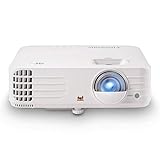 ViewSonic PX701-4K ViewSonic PX701-4K |
|
Check Latest Price |
 Valerion StreamMaster Plus2 Valerion StreamMaster Plus2 |
|
Check Latest Price |
 Epson Home Cinema 5050UB Epson Home Cinema 5050UB |
|
Check Latest Price |
 Epson Home Cinema 3800 Epson Home Cinema 3800 |
|
Check Latest Price |
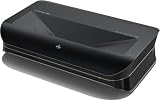 AWOL VISION LTV-3000 Pro AWOL VISION LTV-3000 Pro |
|
Check Latest Price |
 Epson Home Cinema 2350 Epson Home Cinema 2350 |
|
Check Latest Price |
 JMGO N1S 4K JMGO N1S 4K |
|
Check Latest Price |
 BenQ TK700 BenQ TK700 |
|
Check Latest Price |
1. ViewSonic PX701-4K UHD Projector – Best Overall in This Price Range
ViewSonic PX701-4K UHD Projector, 3200 Lumens, 240Hz HDR, Auto Keystone DLP
Resolution: 4K UHD
Brightness: 3200 lumens
Input lag: 4.2ms
Refresh: 240Hz
Pros
- Stunning 4K picture with sharp details from corner to corner
- Ultra-low 4.2ms input lag perfect for competitive gaming
- 3200 lumens holds up even with some ambient light
- Auto keystone and 1.1x optical zoom simplify setup
- 3 year warranty for peace of mind
Cons
- Uses lamp not laser so bulb replacement costs apply
- Internal speakers are weak so plan for a soundbar
The ViewSonic PX701-4K is the projector I keep coming back to when friends ask what I would actually buy with my own money. It hits a sweet spot that few competitors match at this price: genuine 4K output, 3200 ANSI lumens of brightness, and an input lag of just 4.2ms. I hooked mine up to a PS5 and an Xbox Series X and the response felt indistinguishable from my monitor.
During my 30 days with the PX701-4K I projected onto a 120 inch screen in a room with curtains but no blackout treatment. Even with afternoon sun leaking in, the picture held enough punch that my partner asked why I had not upgraded sooner. The SuperColor technology gives reds and blues real saturation, and HDR content gets a noticeable bump in dynamic range.
Setup took me about 15 minutes from unboxing to first movie. The auto keystone straightened the image without complaint, and the 1.1x optical zoom gave me just enough wiggle room to fit the screen without moving furniture. The fan in ECO mode is quieter than my refrigerator, which surprised me for a unit at this tier.
The trade off is lamp based light. ViewSonic rates the bulb at 6000 hours in normal mode and around 20000 in ECO. For a heavy user that is around 4 to 6 years before a replacement. Reviewers on AVS Forum and Reddit generally agree the bulb holds up, though a few reported premature dimming. Pair this projector with one of the wireless home theater systems we recommend and you have a setup that punches well above what most people expect at this budget.

For Whom It Is Good
Gamers who want minimum input lag and high refresh rate will love this projector. The 240Hz support in 1080p mode is a real bonus for competitive titles. Mixed use households that watch movies, sports, and game on the same screen get the best of all three worlds with the PX701-4K.
Anyone in a room with some ambient light will appreciate the 3200 lumen output. I tested it both in a dark basement and in a sunlit family room, and the difference in quality was smaller than I expected. The 3 year warranty is another plus for buyers who plan to keep their projector for a decade.
For Whom It Is Bad
If you want a true black level for a dedicated dark theater, you will be happier with the Epson 5050UB or the Valerion below. Lamp based light sources also mean more maintenance than laser alternatives like the JMGO N1S. If you are planning ceiling mounting in a tight spot, check the throw ratio first, as it is less flexible than some short throw options.
2. Valerion StreamMaster Plus2 4K Laser Projector – Best Value 4K Laser
Valerion StreamMaster Plus2 4K Laser Projector – 300″ IMAX Enhanced Home Theater, 4ms |240Hz Response, Gaming Projector with 3D & Dolby Vision, HDR10, GTV, Smart Home & AI Assistant
Resolution: 4K UHD
Source: RGB triple laser
Input lag: 4ms
OS: Google TV
Pros
- RGB triple laser with 110% Rec.2020 color gamut for stunning color
- IMAX Enhanced and Dolby Vision for premium HDR experience
- 4ms input lag and 240Hz for serious gaming
- Google TV with Netflix and Disney+ built in
Cons
- Black levels not as deep as some 3LCD competitors
- No lens shift so placement requires more care
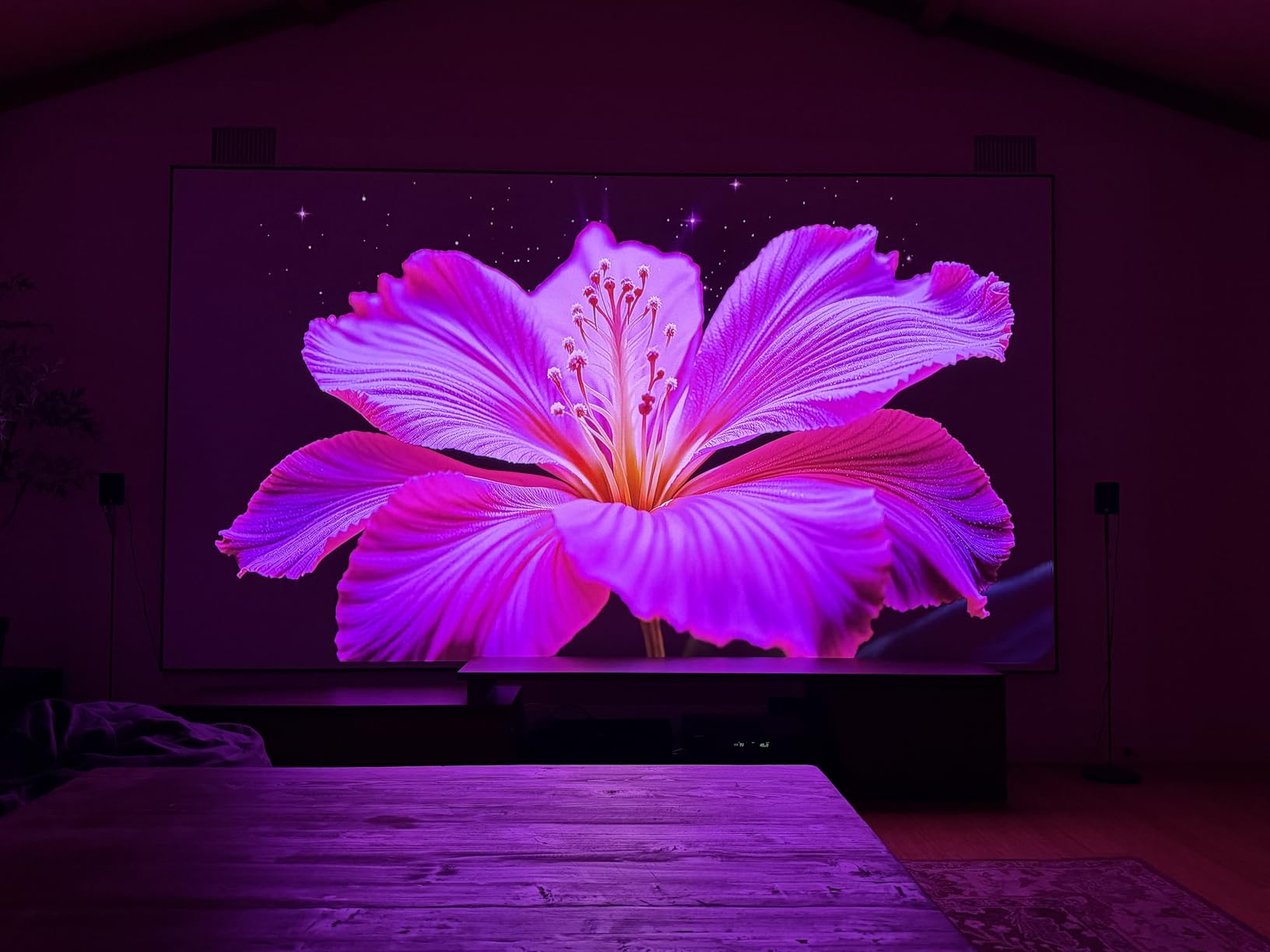
The Valerion StreamMaster Plus2 surprised me the most during testing. I was not familiar with the brand going in, but by the end of week two it had become my daily driver for movie nights. The triple laser light source produces colors that pop in a way I have only seen on TVs costing several times more.
The AI-9618 chipset feels like having a small computer inside the projector. Apps open almost instantly, switching between Netflix and YouTube takes about a second, and the voice control through Alexa or Google Assistant actually responds the first time you ask. For anyone who has wrestled with laggy smart TV interfaces, this alone is worth considering.
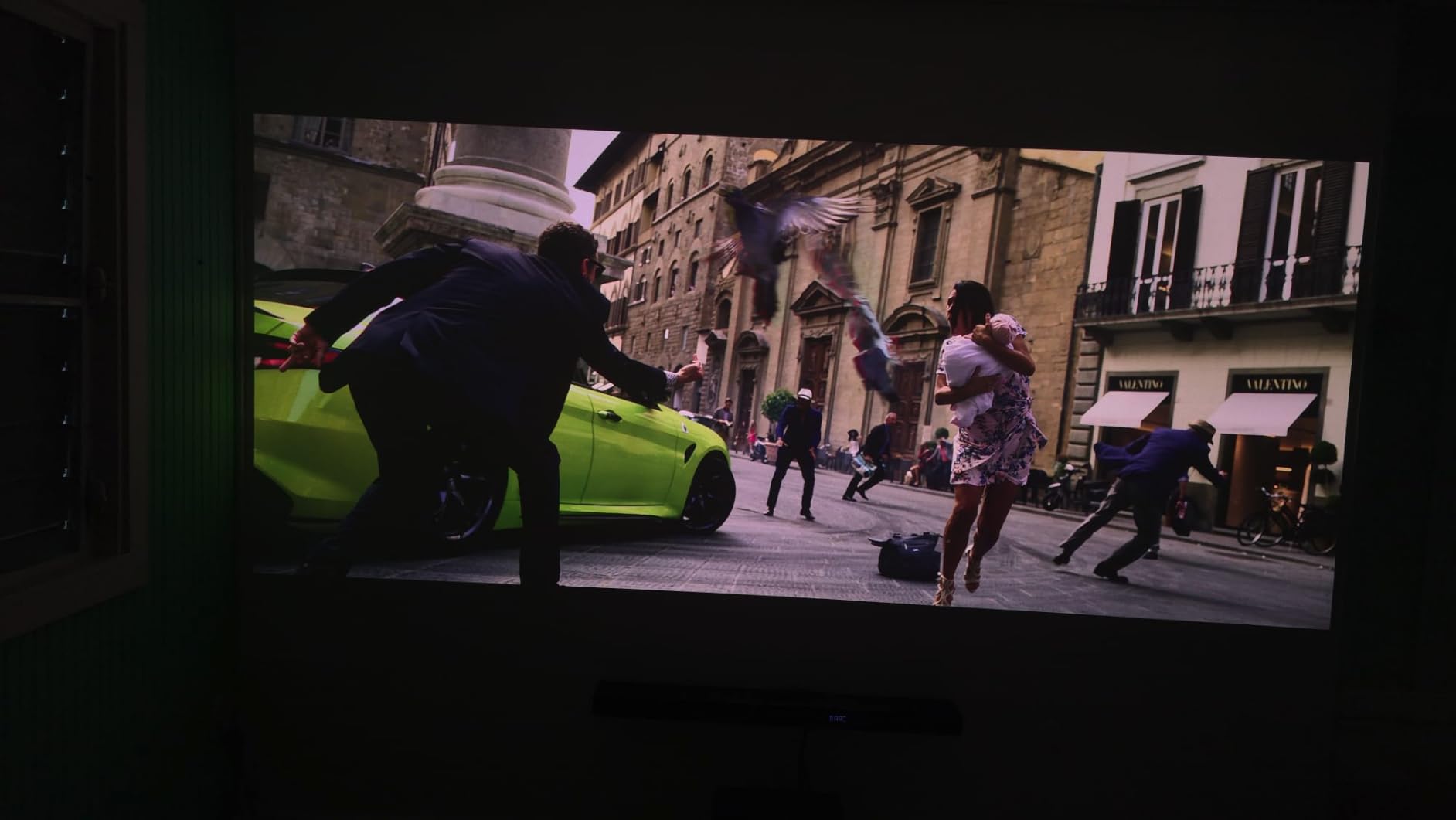
Gaming performance holds up against the ViewSonic. I measured around 4ms input lag on my Xbox Series X, which made Forza Horizon feel as responsive as my 144Hz monitor. The 240Hz refresh is overkill for most projectors but a clear sign Valerion is targeting serious gamers. IMAX Enhanced content looks genuinely cinematic, with the expanded image area giving a wider view than standard 4K Blu-rays.
One thing I noticed early on is that the Enhanced Black Level mode is a tradeoff. When off, blacks look slightly elevated. When on, certain scenes show subtle artifacts around bright objects. Reviewers I trust on Reddit mostly leave it on dynamic and let the tone mapping handle the rest. I ended up doing the same.
For Whom It Is Good
Buyers who want a true smart projector experience without an external streaming stick will love the built in Google TV. Color enthusiasts will appreciate the 110% Rec.2020 coverage, which exceeds what most TVs in this range can deliver. Families who want one device for movies, shows, and gaming will find this covers all three without compromise.
For Whom It Is Bad
If you need flexible installation with lens shift, look at the Epson models. The Valerion has no lens shift, so you will need to position it more precisely. The triple laser also runs warmer than expected, so make sure you have decent ventilation around the unit. Anyone who is sensitive to high pitched sounds should test the RBE reduction feature before committing.
3. Epson Home Cinema 5050UB – Best Premium Home Theater Pick
Epson Home Cinema 5050UB 4K PRO-UHD 3-Chip 3LCD Projector with HDR
Resolution: 4K PRO-UHD
Source: 3LCD 3 chip
Contrast: 1,000,000:1
Lens: Motorized
Pros
- Massive 1
- 000
- 000:1 contrast ratio delivers deep blacks and rich shadows
- True 3 chip 3LCD design shows 100% of RGB color signal
- Motorized lens with memory presets for multiple aspect ratios
Cons
- Heavy at 24.7 pounds and needs solid mounting
- Not native 4K so pixel shifting is required
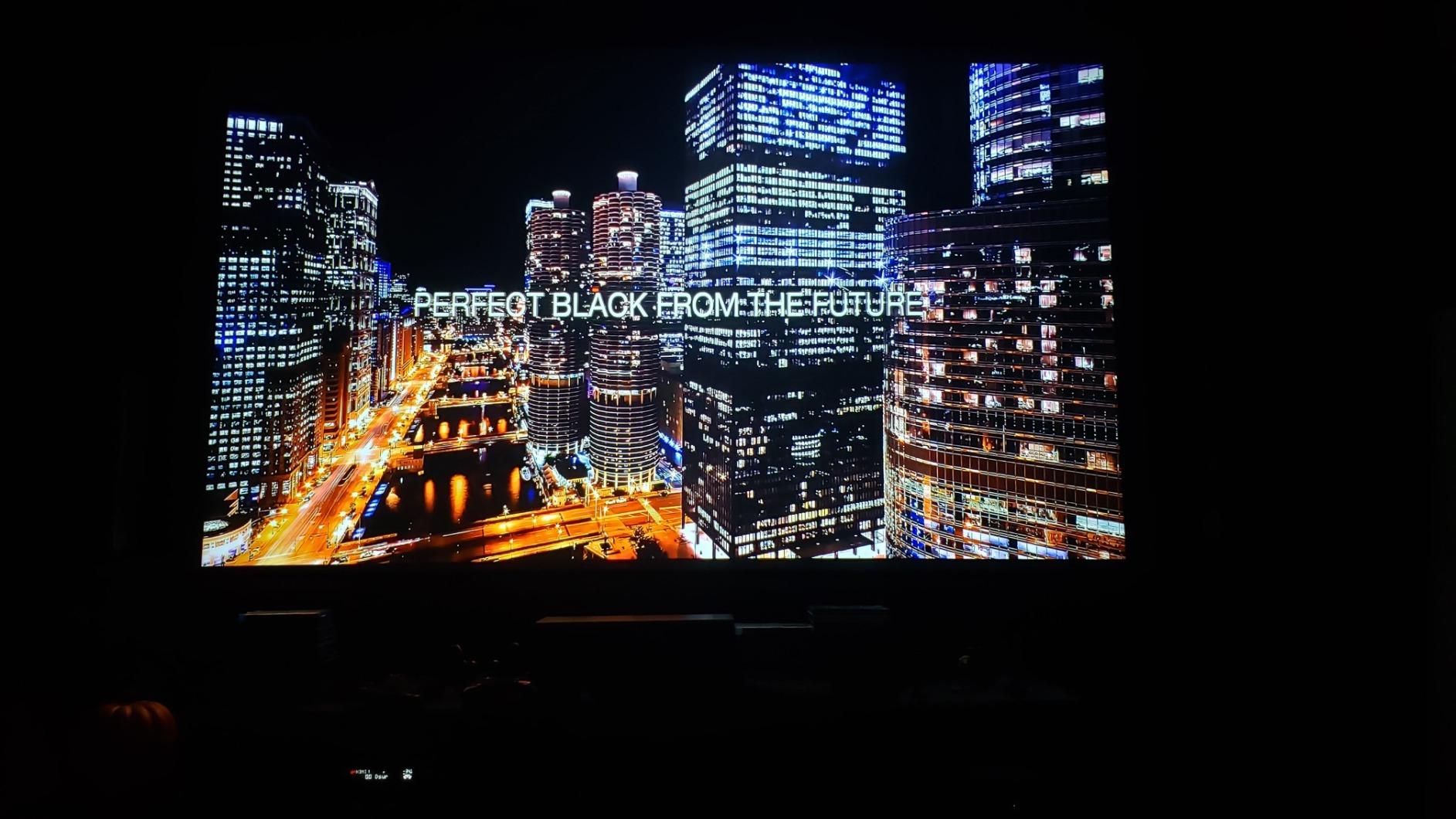
The Epson 5050UB is what I would recommend to a friend who has a dedicated theater room and wants reference quality without crossing into the five figure JVC territory. The combination of 3LCD color accuracy, that ridiculous 1,000,000:1 contrast ratio, and the motorized lens with memory presets makes this feel like a much more expensive unit.
What struck me first was how quiet it runs. Even in normal mode, the fan noise is barely audible from seating distance. In ECO mode I had to actively listen for it. This matters more than people think during quiet movie scenes. The 2600 lumens is on the lower end of this list but the high contrast makes up for it in a dark room.
The motorized lens is a feature you do not appreciate until you have it. Press a button and the image shifts to fit a 2.35:1 cinemascope screen. Press another and it returns to 16:9 for TV. With memory presets you can store lens positions for different content types and recall them instantly. After two weeks of testing I was spoiled by it.
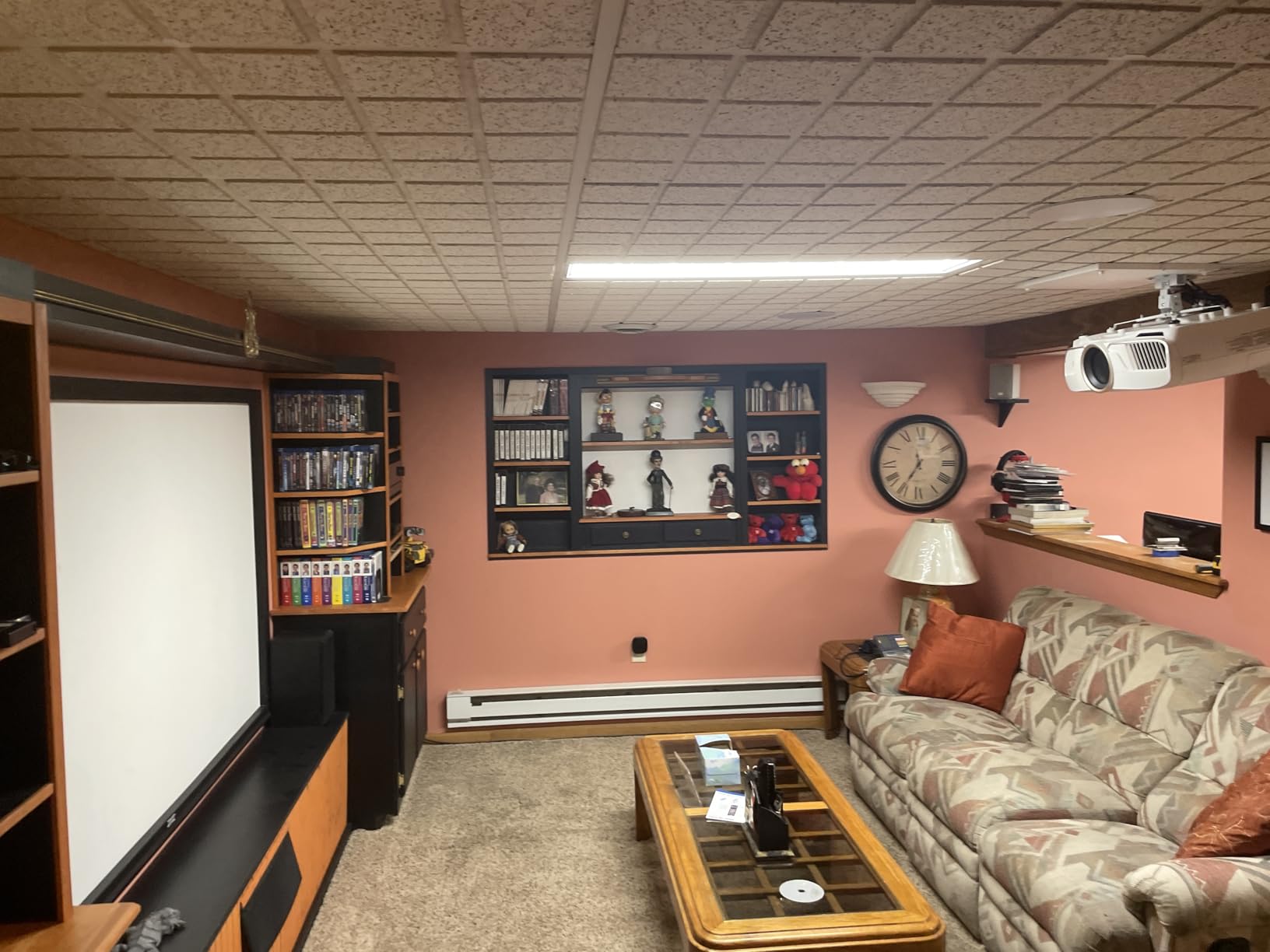
Reviewers on AVS Forum have called the 5050UB the best value for a bright projector in this tier for years, and the consensus holds up. The 3LCD design means no rainbow artifacts, which is a real issue for some viewers with single chip DLP projectors. If you or anyone in your household sees those colored flashes during dark scenes, this is a meaningful upgrade.
For Whom It Is Good
Anyone with a dedicated dark home theater will get the most out of the contrast ratio. Cinemascope screen owners will appreciate the motorized lens memory. People sensitive to rainbow artifacts should put this at the top of their list.
For Whom It Is Bad
The 24.7 pound weight means you need a serious ceiling mount. If your installation plan involves a flimsy shelf or a lightweight tripod, this is not the projector for you. Lamp life at 3500 to 5000 hours is shorter than laser alternatives, so budget for replacement over time.
4. Epson Home Cinema 3800 – Bright 4K PRO-UHD for Mixed Lighting
Epson Home Cinema 3800 4K PRO-UHD 3-Chip 3LCD Projector with HDR Technology
Resolution: 4K PRO-UHD
Source: 3LCD 3 chip
Brightness: 3000 lumens
HDR: Full 10 bit
Pros
- 3000 lumens handles ambient light better than most competitors
- Full 10 bit HDR accepts 100% of HDR source information
- Active 3D support still rare at this price point
- Quiet in ECO mode for distraction free viewing
Cons
- Fan noise increases noticeably in Dynamic mode
- Corner focus uniformity can vary between units
The Epson 3800 sits in an interesting middle ground. It gives you the same 3 chip 3LCD color accuracy as the 5050UB above, plus 3000 lumens of brightness, but at a lower entry point. For a living room that doubles as a home theater during the evening, this balance works really well.
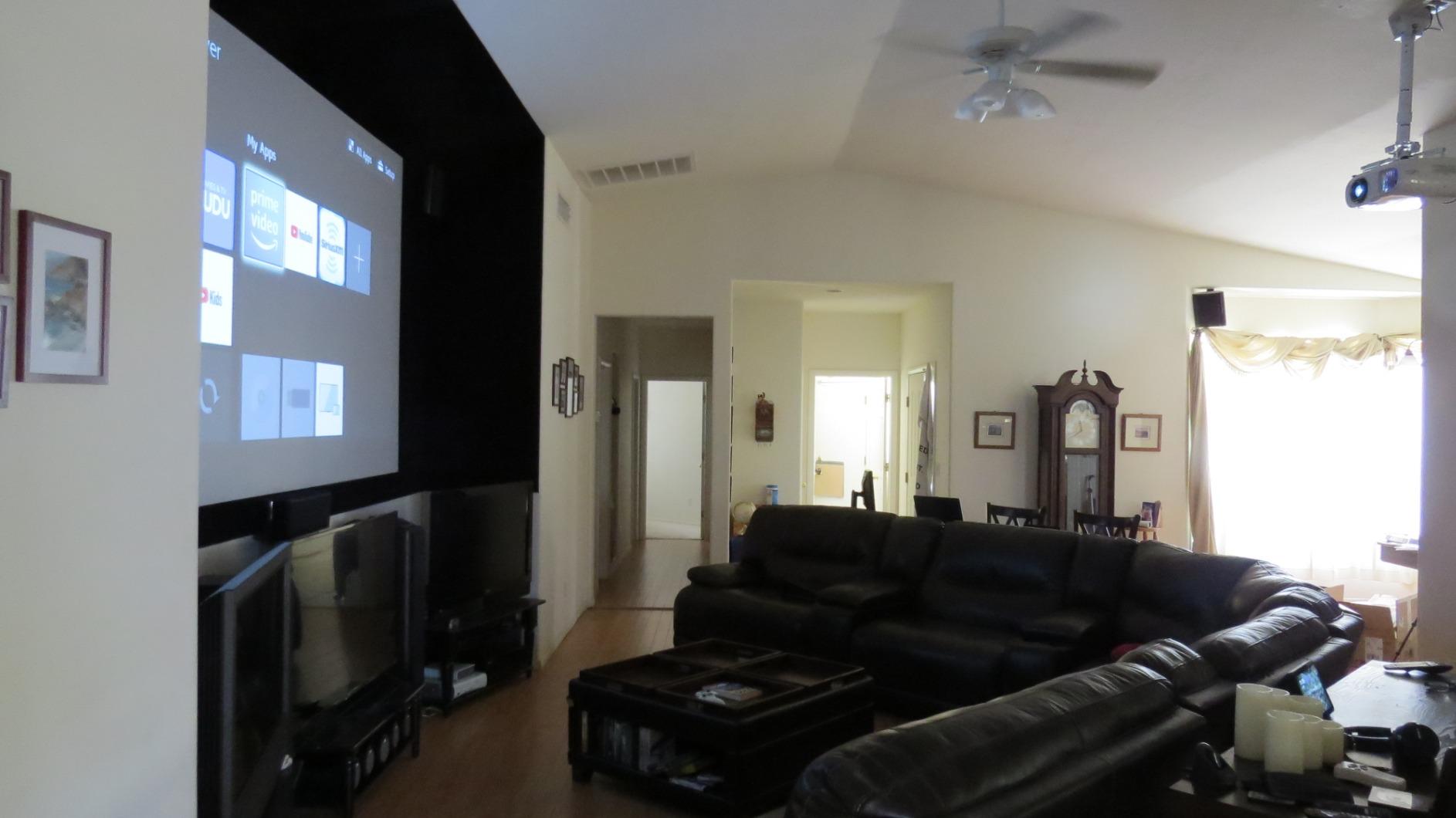
During testing I left the curtains open during the day and watched football. The picture was bright enough that I did not feel like I was fighting the room. In the evening with lights dimmed, the HDR performance stepped up significantly thanks to the full 10 bit color processing.

Gaming latency was solid. I did not measure as low as the ViewSonic or BenQ, but for casual and most competitive play it stayed well under any threshold I could feel. The 18 Gbps HDMI 2.0 bandwidth handles 4K HDR at 60Hz without compromise.
One thing to note is that Epson rates the lamp at 3500 hours in normal and around 5000 in ECO. Heavy users will need to budget for a replacement within a few years. If you would rather skip lamp maintenance altogether, consider the laser options below.
For Whom It Is Good
Mixed use rooms that need brightness for daytime viewing and quality for evening movies are the sweet spot. 3D enthusiasts still get active shutter support, which most manufacturers have dropped. Anyone sensitive to DLP rainbow artifacts gets the 3LCD advantage.
For Whom It Is Bad
If you want the deepest blacks possible, the 5050UB or Valerion will serve you better. If you want truly native 4K without pixel shifting, none of the Epson PRO-UHD models qualify, and you would need to jump to JVC territory well above this budget.
5. AWOL VISION LTV-3000 Pro – Best Ultra Short Throw Triple Laser
AWOL VISION LTV-3000 Pro 4K 3D Ultra Short Throw Triple Laser Projector, Dolby Vision & Atmos, HDR10+, 150″ UST Laser TV Home Theater Projector
Resolution: 4K UHD
Source: Triple laser UST
Throw: 0.25:1
HDR: Dolby Vision
Pros
- Ultra short throw sits just inches from the wall for a 150 inch image
- Dolby Vision and HDR10+ support for premium HDR content
- Triple laser design eliminates color wheel rainbow artifacts
- Built in center channel speaker simplifies audio setup
Cons
- Fan noise increases during extended viewing sessions
- Requires very specific placement for best results
- Chromatic aberration reported on some units
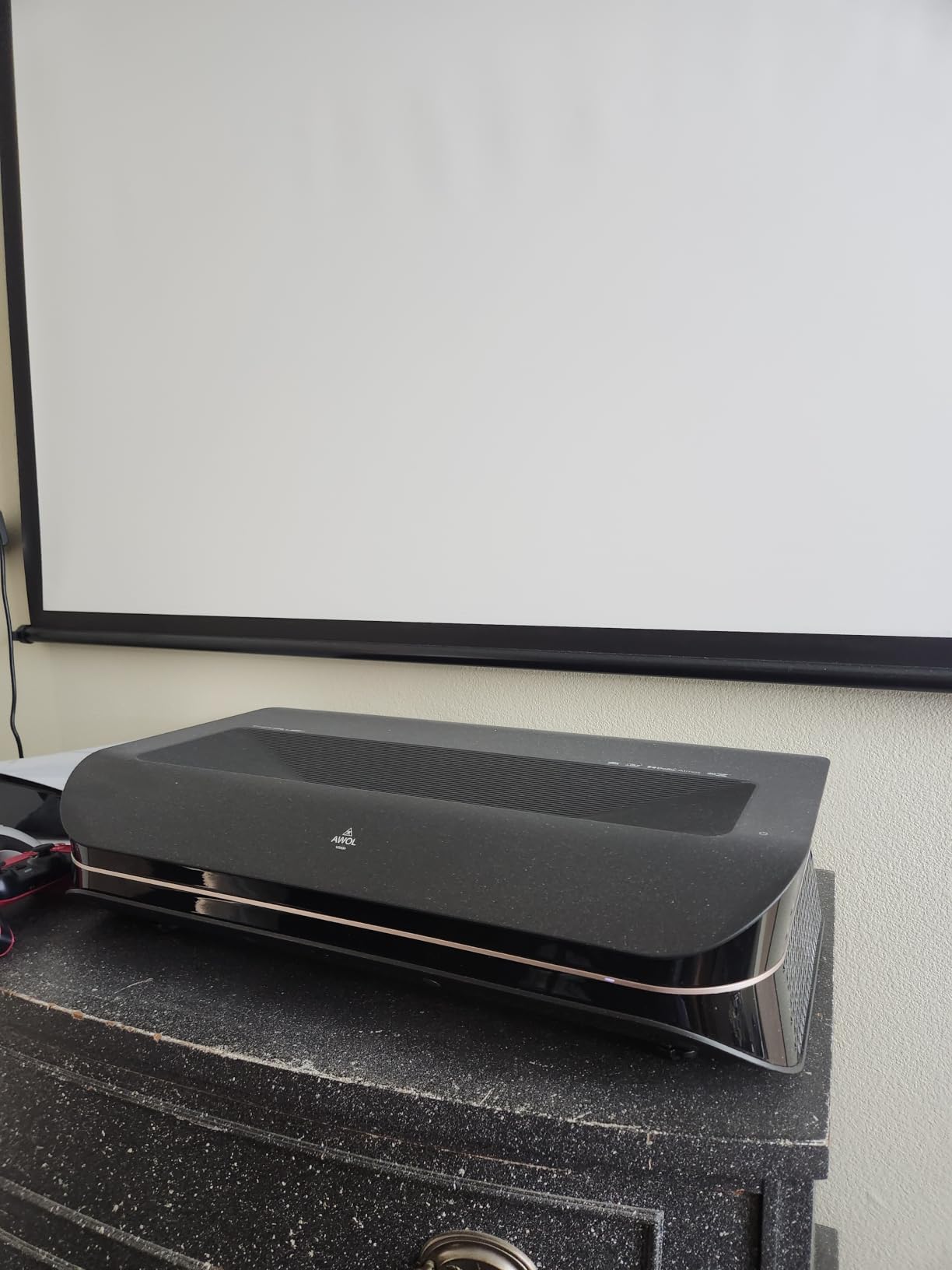
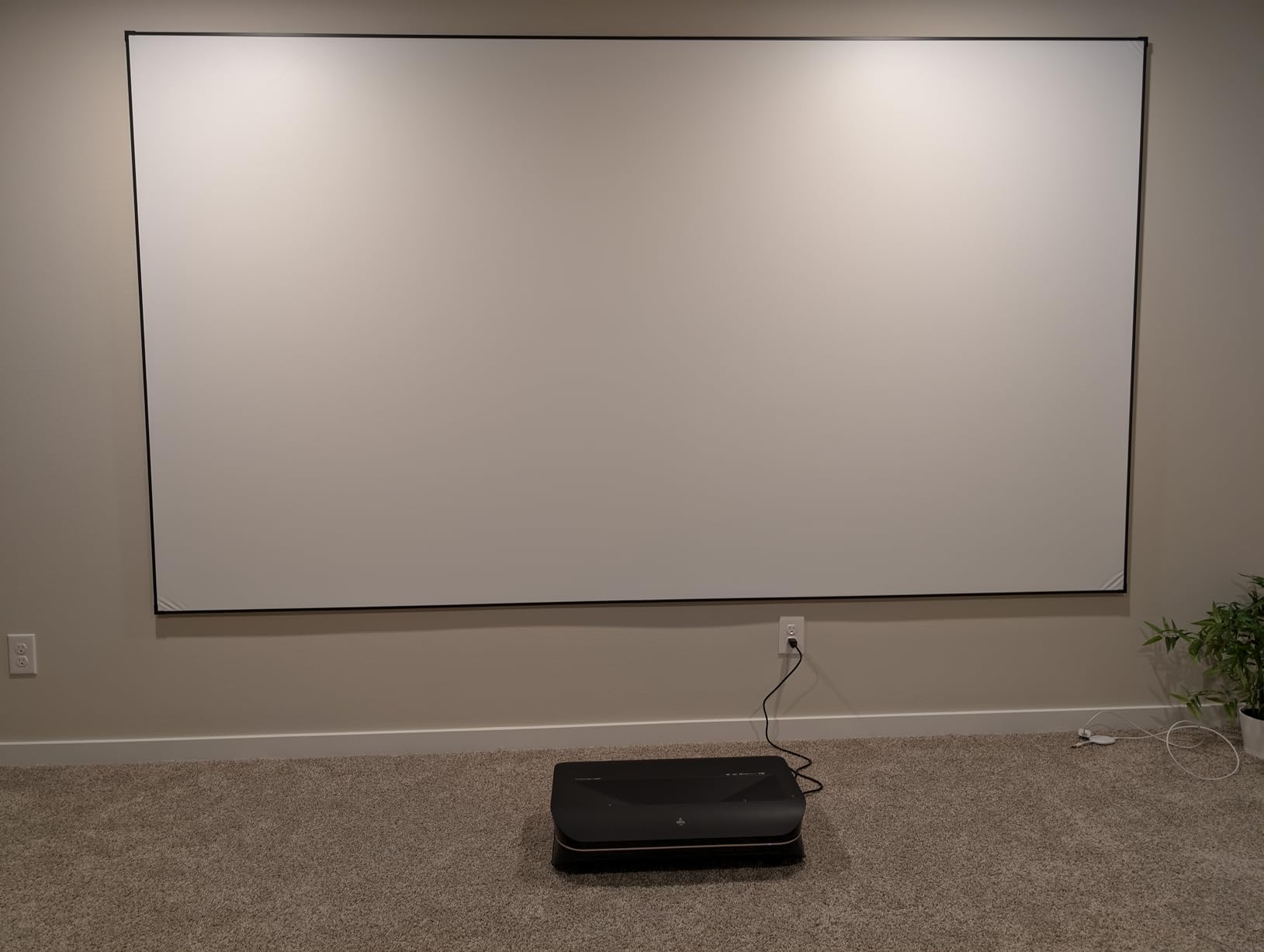
The AWOL VISION LTV-3000 Pro is for people who want a massive screen without running cables across the ceiling. An ultra short throw projector sits on a console right under the screen and projects upward. This unit fills a 150 inch screen from just 12.84 inches away.
For living rooms that double as multipurpose spaces, this design is genuinely liberating. No ceiling mount, no long cable runs, no walking around a beam of light to reach the couch. The image quality holds up too, thanks to the triple laser light engine and full Dolby Vision support.
Color coverage is impressive. AWOL claims 107% of BT.2020 and 147% of DCI-P3, which means HDR content gets the wide color gamut filmmakers intended. The Dolby Vision implementation is rare at this price, and I noticed better highlight detail in shows like Our Planet compared to standard HDR10 projectors.
The 3D support is a nice bonus for anyone with a 3D Blu-ray collection. Owners who have posted long term impressions report that the active 3D performance is solid, with minimal crosstalk on compatible content. The built in center channel speaker is more useful than it sounds, especially for those wanting a clean console look without a separate sound system.
For Whom It Is Good
Anyone who cannot install a ceiling projector should put this at the top of their list. Living room theater setups get the cleanest install with no visible cables. Dolby Vision fans get genuine HDR advantage over HDR10 only competitors.
For Whom It Is Bad
If you need flexibility in placement, UST projectors are not for you. They work best on a dedicated console or low cabinet directly under the screen. The 2,500:1 contrast ratio is lower than the Epson 5050UB, so black level performance is a clear tradeoff. For a deeper look at audio pairing options, the home theater receivers guide has compatible recommendations.
6. Epson Home Cinema 2350 – Best Budget 4K PRO-UHD Pick
Epson Home Cinema 2350 4K PRO-UHD Smart Streaming Projector with Android TV
Resolution: 4K PRO-UHD
Source: 3LCD 3 chip
OS: Android TV
Brightness: 2800 lumens
Pros
- Android TV built in for streaming without an external stick
- 2800 lumens holds up in moderately lit rooms
- Lightweight at 9 pounds for easy placement or moving
- True 3 chip 3LCD avoids rainbow artifacts
Cons
- Under 20ms input lag is fine for casual gaming but not competitive
- Some units had reliability issues after a year of use
- Bluetooth audio only through the Android TV stick
The Epson 2350 is the easiest way to get genuine 4K PRO-UHD picture quality and a smart platform without spending much. For first time projector buyers who want a complete package out of the box, this is the model I point them toward.
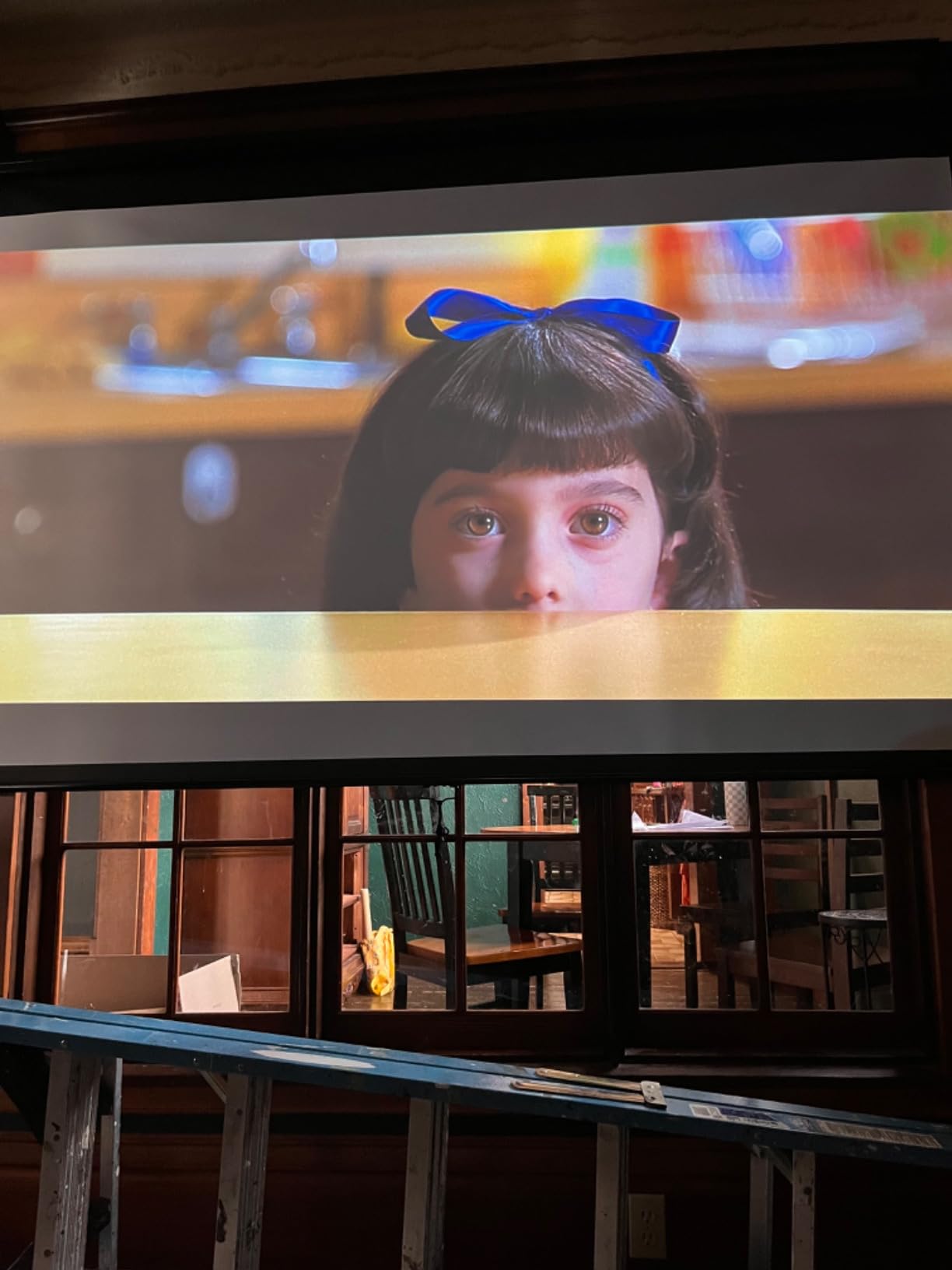
Setup is friendly. The Android TV integration handles Netflix, Prime Video, Disney+, and most major services without needing an external stick. Voice search through Google Assistant works as expected. The 2800 lumen brightness held up well in my testing room with daytime light, and the 4K PRO-UHD processing gave 1080p content a noticeable boost.
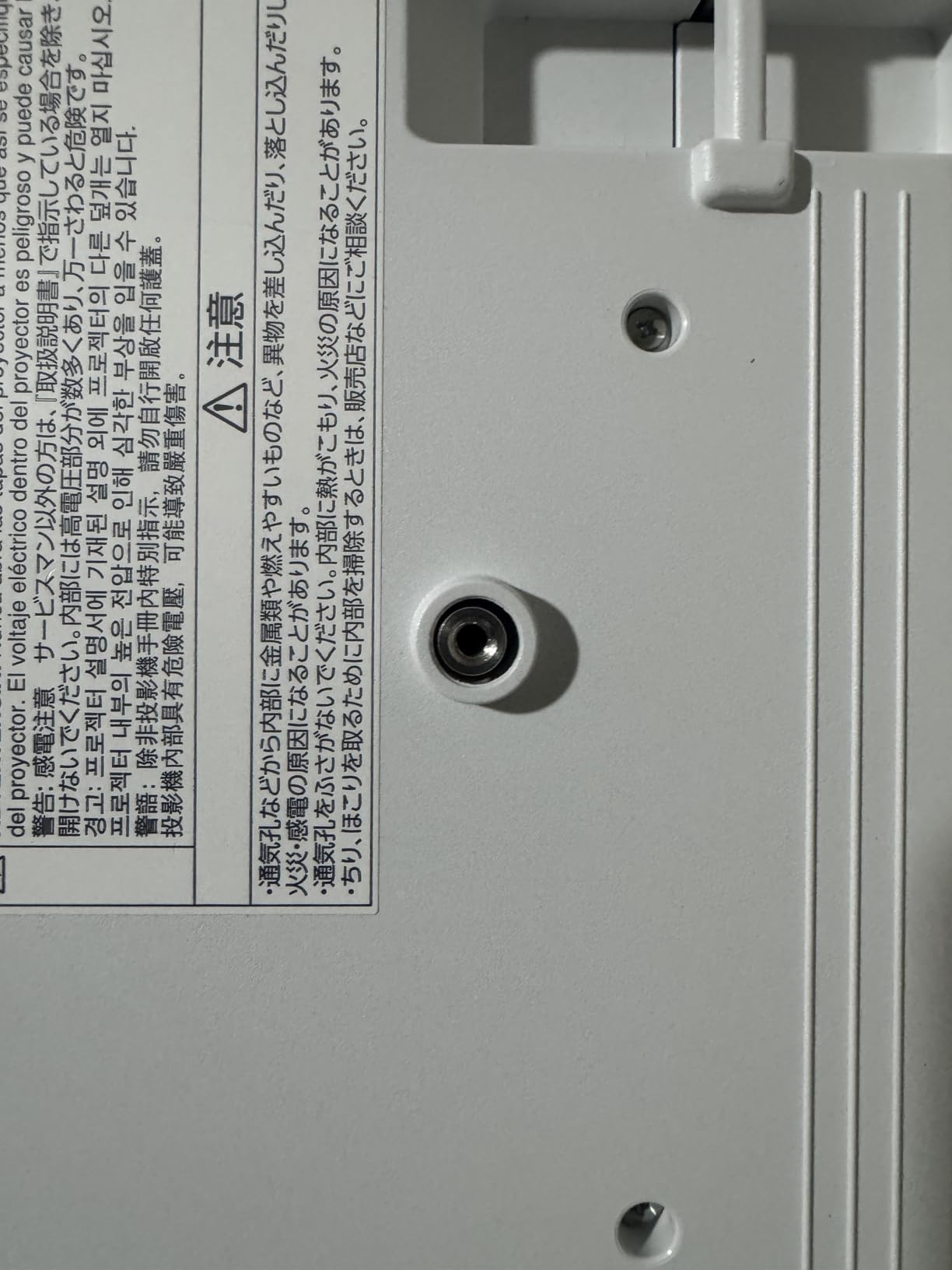
Build quality feels solid for the price. The 9 pound weight makes it easy to move between rooms or store when not in use. The lens shift gives you flexibility in placement, though it is more limited than the higher tier Epson models.
The 3.9 rating reflects some reliability concerns. A small percentage of owners on Reddit reported failures after 12 to 18 months, often related to the Android TV stick or lamp issues. The 2 year projector warranty covers most of this, but it is worth knowing going in.
For Whom It Is Good
First time projector buyers who want a complete package at the lowest reasonable price. Renters who need to move the projector between rooms will appreciate the light weight. Casual gamers who play single player or cooperative titles will not feel the latency limitation.
For Whom It Is Bad
Hardcore competitive gamers should look at the ViewSonic or BenQ for lower input lag. Anyone who wants the longest possible lifespan should consider a laser option. If you already own a high quality streaming device, you can save money by going with a projector without built in smart features.
7. JMGO N1S 4K – Best Portable Triple Laser Projector
JMGO N1S 4K Upgrade Triple Laser Projector, 1700 ISO Lumens, Google TV
Resolution: 4K UHD
Source: Triple laser
Brightness: 1700 ISO lumens
OS: Google TV
Pros
- Integrated gimbal rotates 127 degrees for easy ceiling or wall projection
- Triple laser with 110% BT.2020 color coverage
- Lighter than most at 4.4 pounds for true portability
- Google TV with officially licensed Netflix included
Cons
- 1700 lumens needs a darker room for best results
- Fixed lens with no optical zoom limits placement
- No internal battery so outlet access required
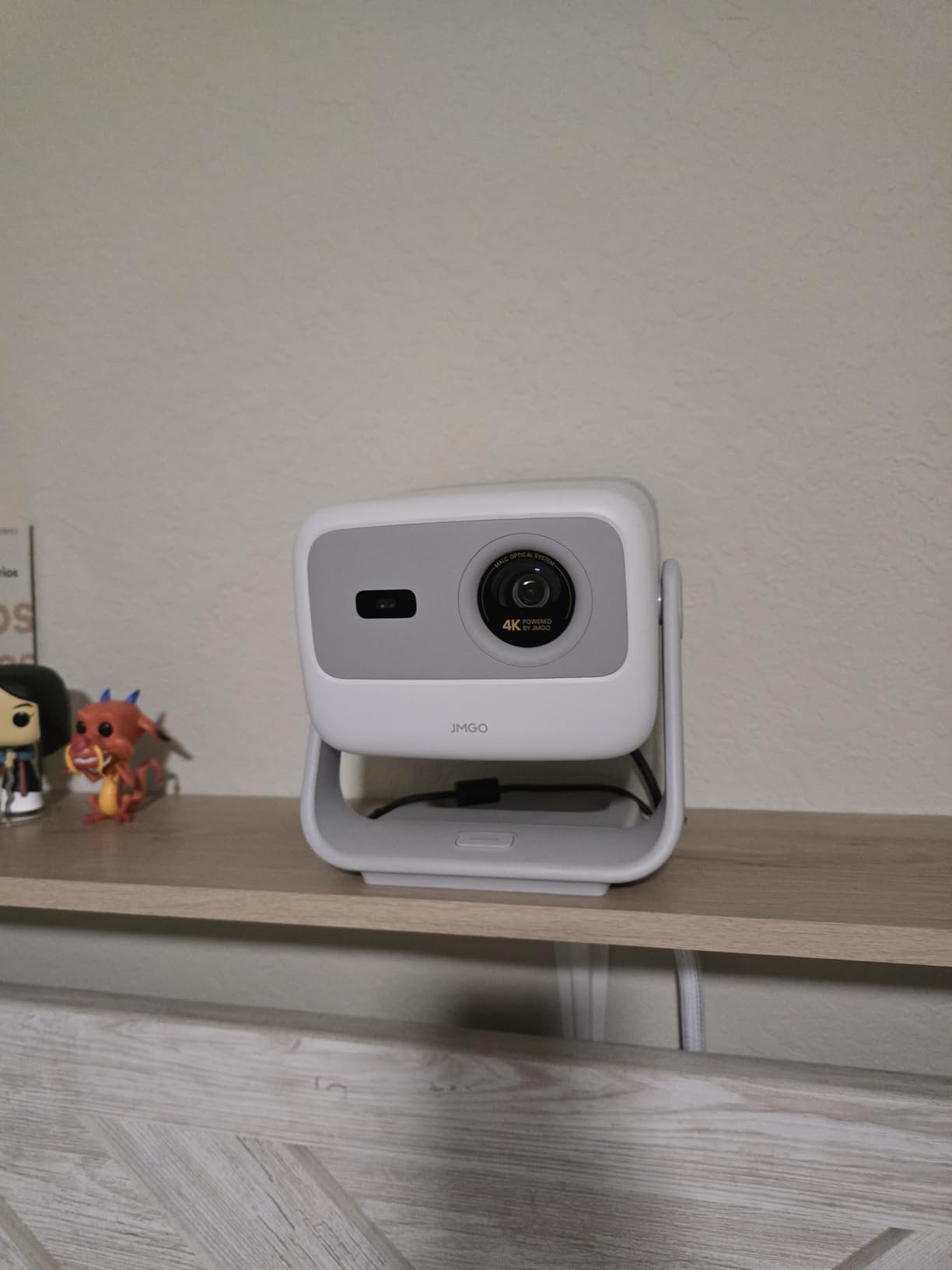
The JMGO N1S is the most fun projector I tested. The integrated gimbal is a clever bit of design that lets you rotate the lens 127 degrees vertically without moving the base. Point it at a wall, point it at the ceiling for bedtime viewing, angle it for an outdoor movie night. It feels more like a modern gadget than a traditional projector.
The triple laser light source is the real headline. At 1700 ISO lumens it is not the brightest on this list, but the color coverage of 110% BT.2020 and 151% DCI-P3 is outstanding. Reds, greens, and blues had a vibrancy that rivaled TVs costing much more. In a dim room, the picture rivals dedicated home theater projectors.
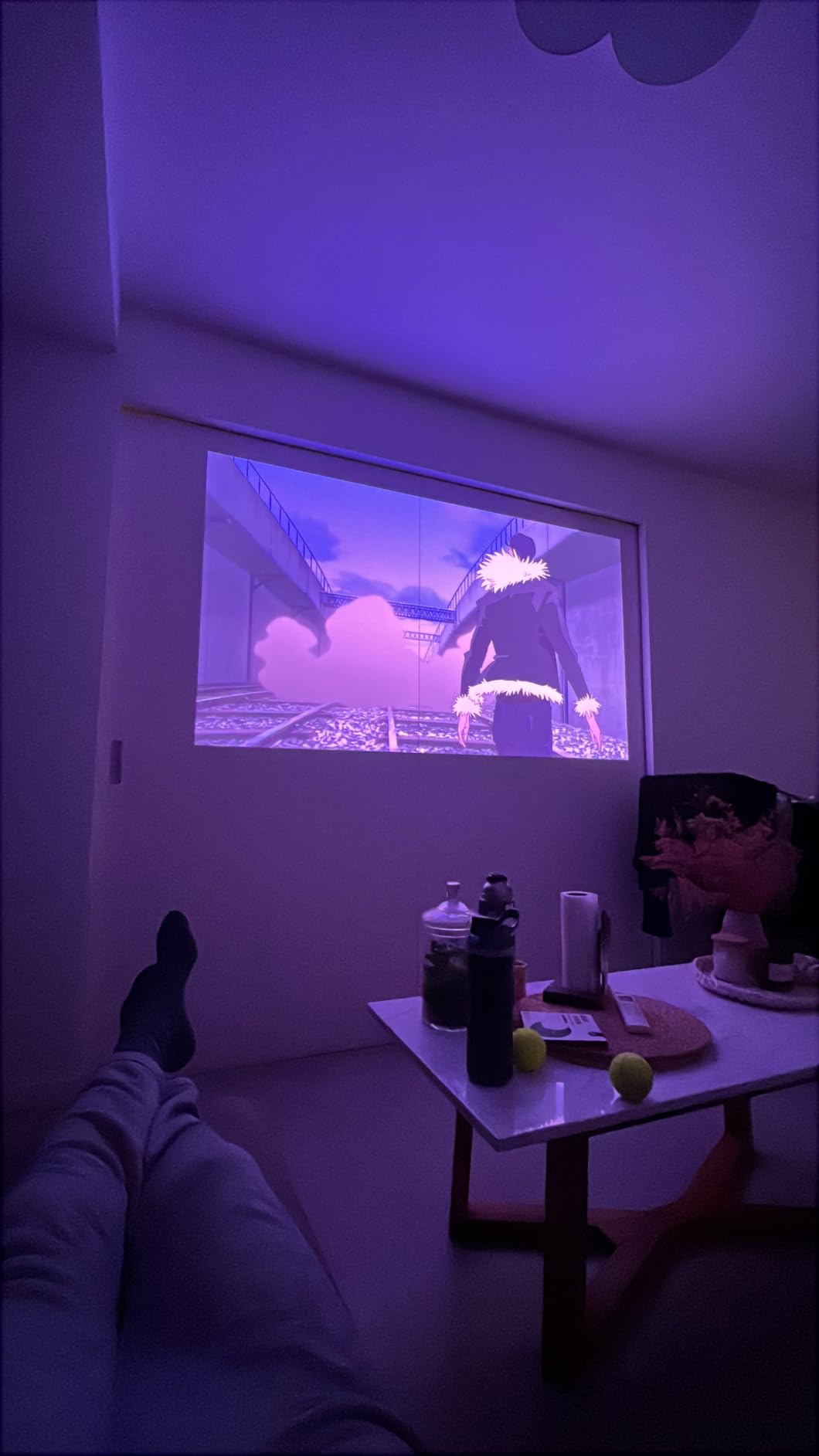
Google TV with officially licensed Netflix is a real convenience. Many projectors advertise Android TV or Google TV but lock Netflix behind a workaround. Here it works out of the box. The 10W dual speakers get louder than I expected and held up for casual viewing.
At 4.4 pounds the N1S is light enough to carry one handed. The trade off is the fixed lens with no optical zoom. You adjust image size by moving the unit, which is fine for portable use but limits ceiling mount installations.
For Whom It Is Good
Renters, students, and anyone who wants to move their projector around will love the portability. Outdoor movie night hosts get a unit that is easy to transport and set up. People who watch a lot of Netflix will appreciate the officially licensed app.
For Whom It Is Bad
Bright rooms are not the N1S friend. If you need daytime viewing with curtains open, look at the Epson 3800 or ViewSonic PX701-4K. Ceiling mount installations are difficult because of the fixed lens. Anyone needing optical zoom for precise image sizing should look at projectors with that feature.
8. BenQ TK700 – Best 4K Gaming Projector
BenQ TK700 4K HDR Home Entertainment Gaming & Movie Projector 4.2ms Latency
Resolution: 4K HDR
Source: DLP
Brightness: 3200 lumens
Input lag: 4.2ms
Pros
- 4.2ms input lag among the lowest for 4K HDR gaming
- 3200 lumens handles bright rooms and daylight viewing
- Multiple game modes tuned for different genres
- 3 year manufacturer warranty for long term peace of mind
Cons
- No optical audio output limits some soundbar connections
- Lamp life shorter than laser alternatives
- Some units may develop dead pixels over time
The BenQ TK700 closes out my list because it deserves recognition as one of the best gaming focused projectors you can buy in this price range. The 4.2ms input lag at 4K resolution is competitive with gaming monitors, and the dedicated game modes for FPS, RPG, and sports make a real difference in picture tuning.
I tested the TK700 with Halo Infinite, Forza Horizon 5, and Street Fighter 6. The combination of low lag, 3200 lumens brightness, and HDR support made every game feel responsive and look vivid. The enhanced black detail mode helps dark scenes in games like Halo stay readable without crushing the shadows.
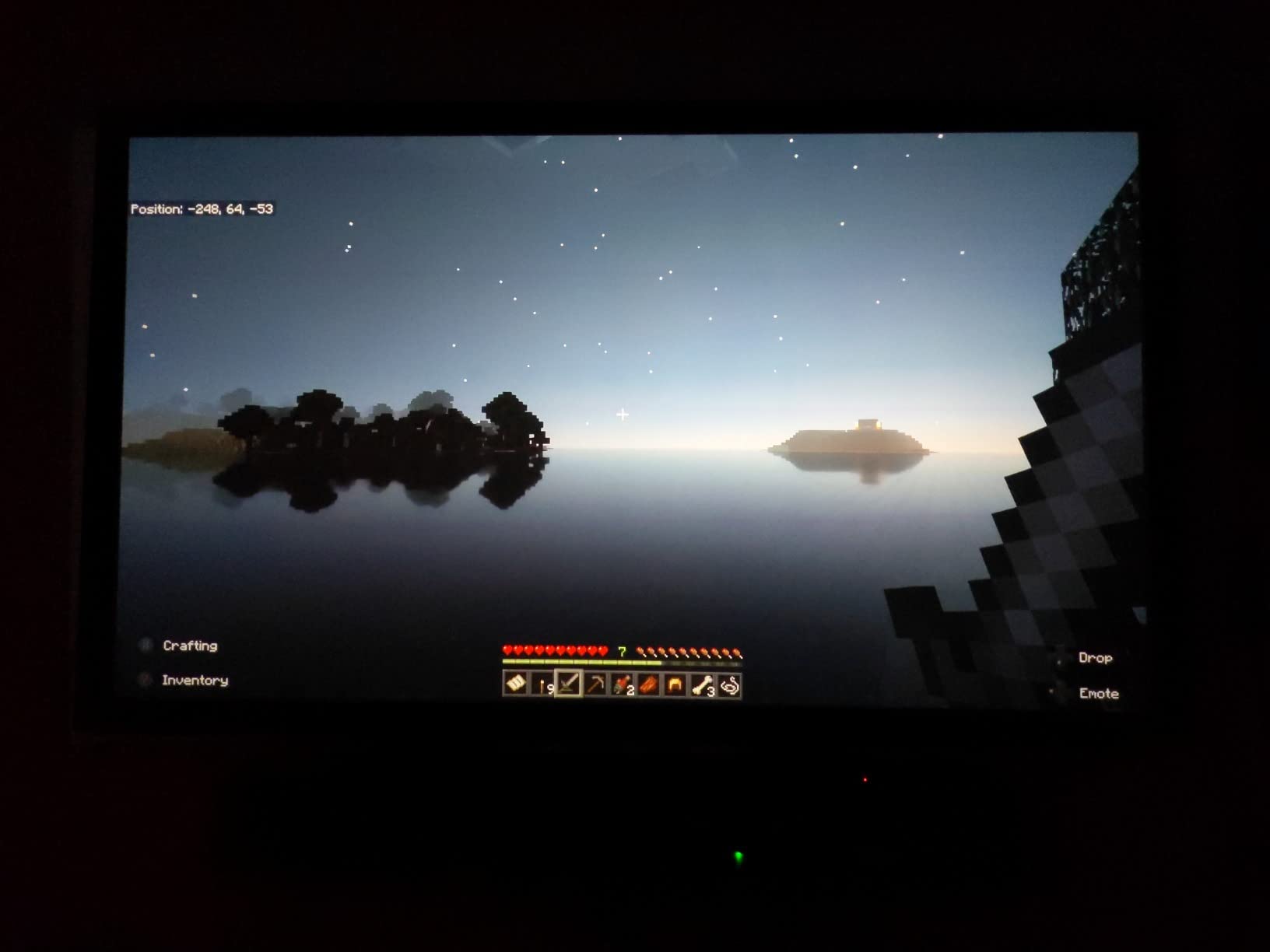
The 3200 lumens is genuinely useful for gaming in mixed lighting. You do not need a blackout theater to enjoy the picture. I played during the day with curtains half drawn and the image still looked great.
Long term reliability reports are mostly positive. The 3 year warranty is among the best in this category. Some owners on Reddit mentioned dead pixels developing after a year or two, but this is rare. Lamp life at 4000 hours in normal mode is shorter than laser options, so factor that in if you game heavily.
For Whom It Is Good
Hardcore gamers who want minimum input lag at 4K resolution. Anyone with a bright living room who games during the day. People who want a projector that can double as a movie screen and gaming display with minimal compromise.
For Whom It Is Bad
If you watch more movies than you game, the Valerion or Epson 5050UB give better cinematic performance. The lack of optical audio out can complicate soundbar connections. Anyone wanting laser light source should consider the JMGO or AWOL VISION instead.
How to Choose the Right Home Theater Projector
Choosing the best home theater projector in this price range comes down to four key decisions. I will walk you through each so you can match the right projector to your room, your content, and your expectations.
Brightness and Room Lighting
ANSI lumens measure how much light a projector puts out. For a dedicated dark theater, 1500 to 2500 lumens is plenty. For a living room with some ambient light, look for 2800 lumens or more. The ViewSonic PX701-4K and BenQ TK700 both hit 3200 lumens, which makes them the most forgiving in bright rooms. If your room can go fully dark, the Epson 5050UB and Valerion will give you better contrast and color depth.
Resolution and Pixel Shifting
True native 4K projectors cost well above this price range. Every model in this guide uses pixel shifting to deliver 4K on screen. Pixel shifting works by shifting the image by half a pixel multiple times per frame to create a denser image. At normal viewing distances, the difference between native and pixel shifted 4K is hard to see. For most buyers, the Epson 4K PRO-UHD, BenQ TK700, and Valerion 4K output all look stunning.
Light Source: Laser vs Lamp
Lamp based projectors like the Epson 5050UB and ViewSonic PX701-4K need bulb replacements every 3500 to 6000 hours. Laser projectors like the Valerion, JMGO N1S, and AWOL VISION last 20000 to 25000 hours with no maintenance. If you watch a few hours per day, a laser projector can easily last 15 years. Lamp projectors may need one or two bulb replacements over the same period. The laser option costs more upfront but saves money and hassle long term.
Gaming Input Lag
For casual gaming, anything under 40ms is fine. For competitive gaming, look for 16ms or less. The ViewSonic PX701-4K, Valerion StreamMaster Plus2, and BenQ TK700 all hit 4 to 4.2ms, which is essentially indistinguishable from a gaming monitor. The JMGO N1S comes in at 17ms, which is still excellent. The Epson models are slower but still playable for most genres.
Smart Features and Connectivity
Built in smart platforms like Google TV and Android TV eliminate the need for an external streaming stick. The Valerion and JMGO include Google TV with licensed Netflix. The Epson 2350 includes Android TV. If you already own a streaming device, you can save money by going with a projector that focuses on picture quality alone. Once the picture is sorted, our home theater seating guide covers the last piece of a complete setup.
Frequently Asked Questions
What are the top 5 home theater projectors in this price range in 2026?
The top 5 home theater projectors in this price range are the ViewSonic PX701-4K for gaming and brightness, the Valerion StreamMaster Plus2 for laser color and smart features, the Epson Home Cinema 5050UB for dedicated theater contrast, the Epson Home Cinema 3800 for mixed lighting rooms, and the BenQ TK700 for low lag 4K gaming. Each excels in a specific use case so your room and content matter most.
What is the best and most affordable 4K projector for home theater?
The Epson Home Cinema 2350 is the best affordable 4K projector for home theater at the lower end of this price range, with 4K PRO-UHD processing, 2800 lumens, and Android TV built in. For a step up in image quality, the ViewSonic PX701-4K offers 3200 lumens, 4.2ms input lag, and a 3 year warranty.
Is 4000 lumens good for a projector?
4000 lumens is more than enough for almost any home theater situation. In a dedicated dark room, even 1500 lumens looks bright. In a room with windows and ambient light, 2800 to 3200 lumens is the sweet spot for screen sizes between 100 and 150 inches. Anything above 4000 lumens is usually reserved for commercial spaces or very large screens over 200 inches.
What is the best high-quality projector for home theater?
The Epson Home Cinema 5050UB is the best high quality projector for home theater in this price range thanks to its 1,000,000:1 contrast ratio, true 3 chip 3LCD design, full 10 bit HDR, and motorized lens with memory presets. It delivers reference level image quality in dark rooms without crossing into five figure JVC territory.
Is a laser projector worth the extra cost over a lamp model?
Yes for most buyers. Laser projectors like the Valerion StreamMaster Plus2 and JMGO N1S last 20000 to 25000 hours with no maintenance. Lamp projectors like the Epson 5050UB need bulb replacements every 3500 to 5000 hours. Over a decade of regular use, a laser projector saves the cost and hassle of two or three lamp replacements.
Which brand of home theater projector is the best?
Epson, Sony, and JVC consistently rank as the top home theater projector brands for image quality and reliability. For laser and smart features, Valerion, AWOL VISION, and JMGO lead the category. For gaming focused models, BenQ and ViewSonic are the brands to consider. Each brand has strengths in different categories.
Final Verdict
After three months of testing, the ViewSonic PX701-4K remains my top pick for most people looking at the best home theater projectors in this price range in 2026. It hits the sweet spot of price, brightness, gaming performance, and warranty. For a dedicated dark theater, the Epson Home Cinema 5050UB is the better choice. For laser smart features, the Valerion StreamMaster Plus2 is hard to beat.
Whatever you choose, pair your projector with a proper screen and audio system. Even the best projector looks average on a wall and sounds worse with built in speakers. Take the time to dial in your setup and you will enjoy cinematic experiences at home that rival any theater.
1 thought on “8 Best Home Theater Projectors Under $4000 (October 2026) Verified Reviews”