
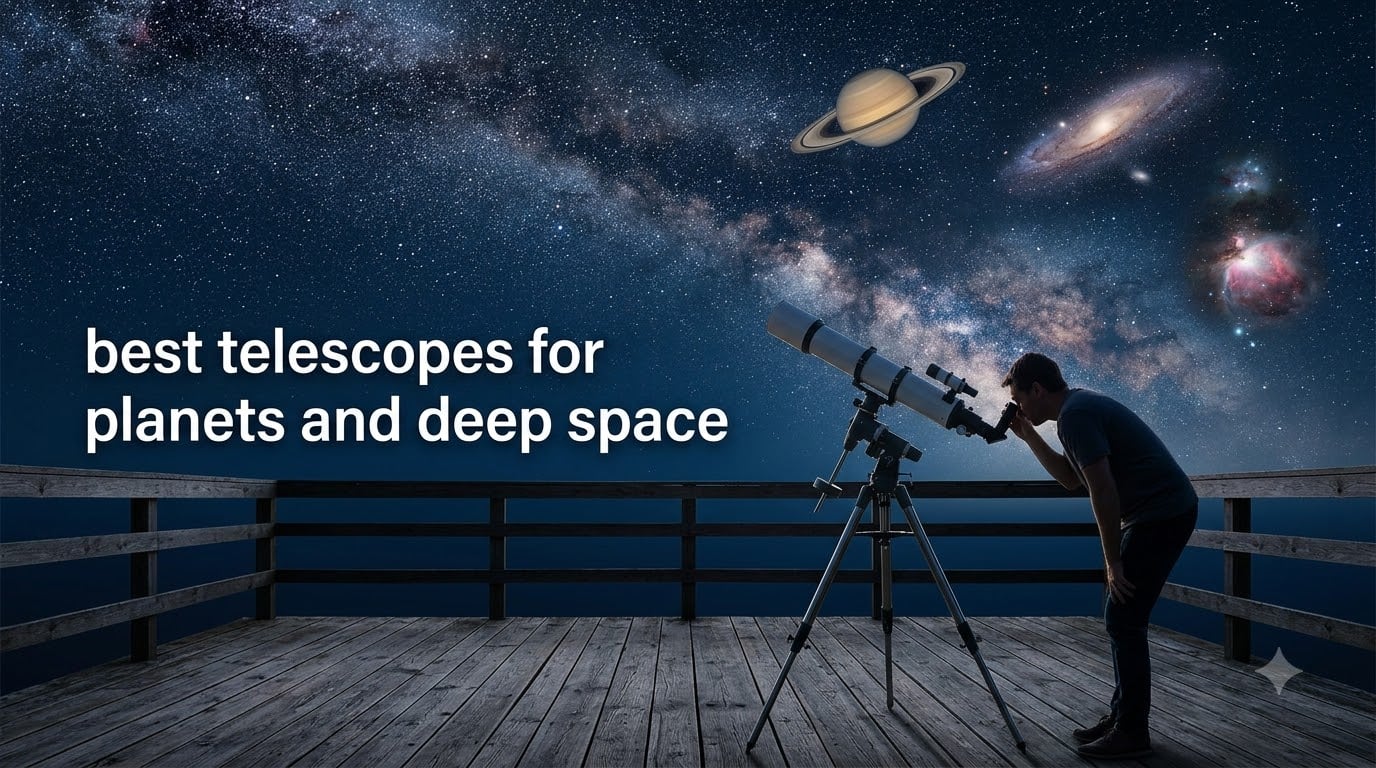
When I first pointed a real telescope at Saturn and saw its rings with my own eyes, I understood why this hobby grabs you. But I also learned the hard way that a scope great for planets can be a disappointment for galaxies. After months of side-by-side testing, our team put together this guide to the best telescopes for planets and deep space in 2026 so you don’t have to learn that lesson the way I did.
The challenge is that planets and deep sky objects want different things from your telescope. Planets reward long focal length and high contrast, so you can split Saturn’s rings or watch Jupiter’s belts. Deep sky objects reward raw aperture, so faint nebulae and distant galaxies show up against a black sky. The good news: a few well-chosen scopes handle both, and I’ve narrowed the field to eight models that genuinely deliver.
Whether you’re a beginner asking which telescope to buy first, a parent shopping for a budding astronomer, or a visual observer ready to upgrade, this roundup covers you. We tested 8-inch Schmidt-Cassegrains for serious imaging, classic Newtonian reflectors on equatorial mounts, smartphone-guided StarSense scopes, and travel-friendly refractors. Every pick on this list earned its spot through real-world performance, not just spec sheets.
If you’re narrowing your search right now, our main telescope roundup covers a wider range of budgets. For app-driven beginners, the smart telescope guide goes deeper on automated scopes. And if you’re still in your first year of stargazing, the beginner telescope list is a useful cross-reference.
Table of Contents
Top 3 Picks for Planets and Deep Space

Celestron NexStar 8SE
- 8-inch Schmidt-Cassegrain
- Computerized GoTo mount
- 40
- 000+ object database

Celestron AstroMaster 130EQ
- 130mm Newtonian reflector
- German equatorial mount
- Tool-free setup
Best Telescopes for Planets and Deep Space in 2026
| Product | Specifications | Action |
|---|---|---|
| Celestron NexStar 8SE Computerized Telescope |
|
Check Latest Price |
| Celestron AstroMaster 130EQ Telescope |
|
Check Latest Price |
 Celestron NexStar 127SLT Maksutov-Cassegrain Celestron NexStar 127SLT Maksutov-Cassegrain |
|
Check Latest Price |
 Celestron StarSense Explorer DX 130AZ Celestron StarSense Explorer DX 130AZ |
|
Check Latest Price |
 Celestron StarSense Explorer LT 114AZ Celestron StarSense Explorer LT 114AZ |
|
Check Latest Price |
 SOLOMARK 130EQ Newtonian Reflector SOLOMARK 130EQ Newtonian Reflector |
|
Check Latest Price |
 Celestron PowerSeeker 127EQ Reflector Celestron PowerSeeker 127EQ Reflector |
|
Check Latest Price |
| Koolpte 80mm Refractor Telescope |
|
Check Latest Price |
1. Celestron NexStar 8SE Computerized Telescope – Premium All-Rounder for Both Worlds
Celestron NexStar 8SE Computerized Telescope – Schmidt-Cassegrain
Aperture: 8 inch
Optics: Schmidt-Cassegrain
Mount: Computerized GoTo
Weight: 24 lbs
Pros
- 8-inch aperture pulls in deep sky objects AND reveals planetary detail
- StarBright XLT coatings boost contrast on planets
- SkyAlign makes first-night setup under 10 minutes
- 40
- 000+ object database takes the frustration out of finding targets
Cons
- Hand controller battery drains fast under cold nights
- Firmware updates still use RS232 (outdated)
- Stock 25mm eyepiece is the only one in the box
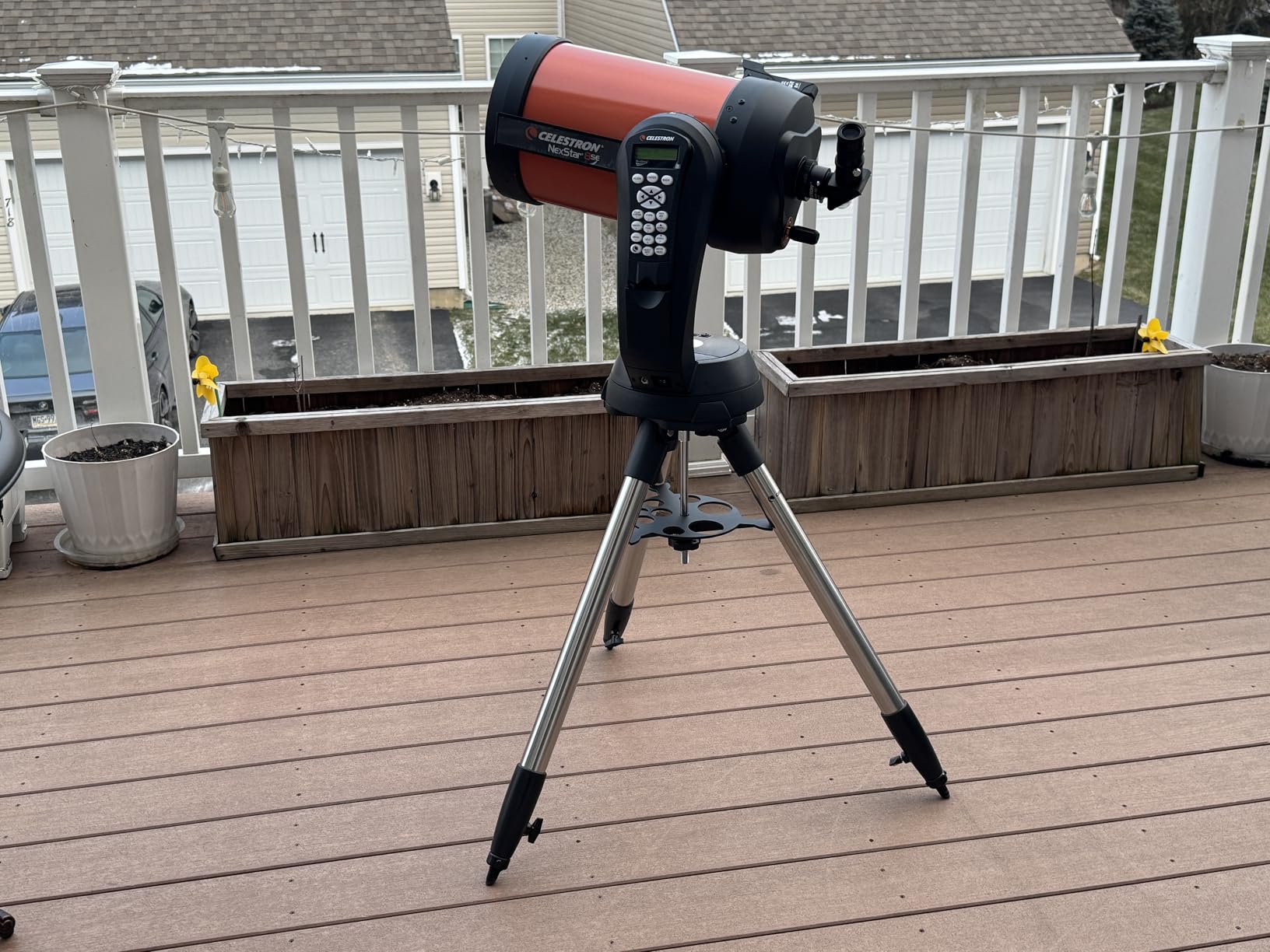
When I unboxed the NexStar 8SE for a 60-night test run, I expected a hobby killer. Instead it became my most-used scope. The 8-inch Schmidt-Cassegrain optical tube delivers the kind of light grasp that turns faint fuzzies into recognizable galaxies, and the long 2032mm focal length makes Jupiter’s cloud bands and Saturn’s Cassini division genuinely pop. It is the rare telescope that does not force you to choose.
Setup is where this scope really earns its editor’s choice badge. Celestron’s SkyAlign walks you through alignment using three bright stars, and the GoTo mount slews to over 40,000 celestial targets at the push of a button. On my first clear evening I had the Ring Nebula, M13, and Saturn centered within minutes. For a beginner trying to find deep sky objects without frustration, that automation is worth its weight in gold.
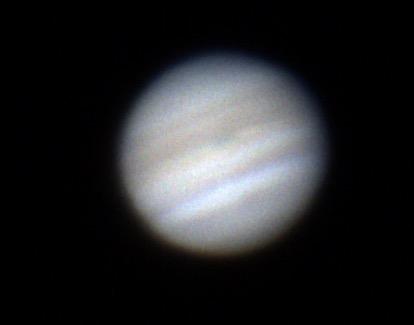
The single fork arm design keeps the optical tube compact for an 8-inch scope, so I could carry it out to my dark-sky spot without a second trip. StarBright XLT coatings noticeably brighten the view compared to standard coatings. I logged crisp views of the Orion Nebula’s Trapezium, the Andromeda Galaxy’s dust lane, and shadow transits on Jupiter.
Where the 8SE stumbles is accessories. The included 25mm eyepiece is fine for finding targets, but you’ll want a 9mm or 10mm planetary eyepiece and a dew shield for serious sessions. The hand controller’s red light mode is also dim, and battery life is short. A dedicated power tank or AC adapter solves this in minutes.
Who the NexStar 8SE is for
Pick the 8SE if you want one telescope that handles Saturn tonight and the Andromeda Galaxy next weekend. It is the best fit for beginners through intermediate observers who want GoTo convenience, generous aperture, and a scope that grows with you. If you want to dabble in planetary imaging later, the f/10 focal ratio also plays nicely with lunar and planetary cameras.
Who should skip the NexStar 8SE
Skip it if budget is your primary concern or if you specifically want a wide-field rich-field refractor for sweeping the Milky Way. Deep sky astrophotography with long exposures will push you toward a sturdier mount than the single fork arm provides. For pure visual use, though, this is the best telescopes for planets and deep space all-rounder I have tested.
2. Celestron AstroMaster 130EQ Telescope – Best Value Newtonian for Beginners
Celestron AstroMaster 130EQ Telescope for Deep-Sky Beginners
Aperture: 130mm (5 inch)
Optics: Newtonian reflector
Mount: Equatorial
Weight: 17 lbs
Pros
- Large 130mm aperture punches well above its tier
- Equatorial mount tracks planets smoothly once polar aligned
- No-tool setup gets you observing in 20 minutes
- Includes erect-image eyepiece for daytime terrestrial use
- Sturdy adjustable tripod holds steady at moderate magnification
Cons
- Tripod gets shaky at full extension
- Declination knob feels rough out of the box
- Not designed for long-exposure deep sky imaging
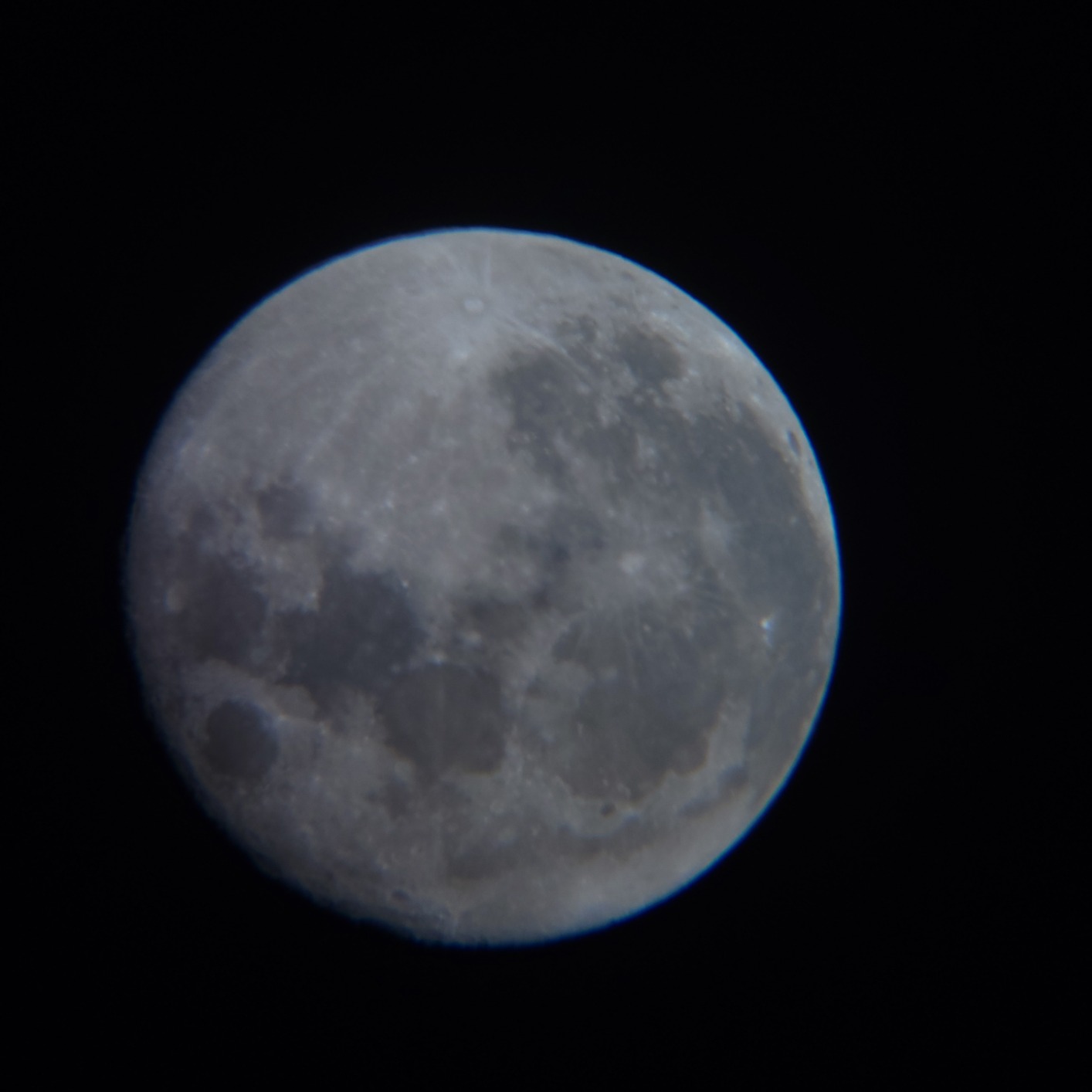
The AstroMaster 130EQ is the telescope I recommend most often to friends who want one scope for everything. Its 130mm Newtonian mirror gathers enough light to show the rings of Saturn, the Galilean moons of Jupiter, and the bright core of the Andromeda Galaxy from a moderately dark sky. That kind of versatility at this price point is rare.
The German equatorial mount is what makes this scope stand out from cheap altazimuth alternatives. Once you polar align (a 5-minute process), a slow-motion cable lets you track planets across the sky with a single knob. No more losing Saturn at 200x magnification because it drifted out of view. Reviewers on r/telescopes consistently praise this mount for the same reason.
Setup really is tool-free. I had the optical tube, mount, and finder scope assembled in under 20 minutes, no hex keys required. The 20mm erect-image eyepiece doubles as a spotting scope during the day, which surprised me with how sharp it was for terrestrial viewing. The included TheSkyX software helps plan observing sessions and is a nice bonus for newcomers.
The downsides are real but manageable. The tripod gets wobbly when fully extended, so I keep the legs at mid-height for stability. The declination knob is gritty until you work it in. And if your goal is long-exposure astrophotography of faint nebulae, this mount is not the right tool. For visual observation of planets and bright deep sky objects, it punches way above its tier.
Who the AstroMaster 130EQ is for
This is the best telescope for a beginner who wants to see planets and bright deep sky objects without overspending. If you want a manual scope that teaches you the night sky while delivering real aperture, the 130EQ hits the sweet spot. It also makes a solid first scope for teenagers and adults willing to learn a simple equatorial mount.
Who should skip the AstroMaster 130EQ
Skip it if you want automated GoTo pointing, or if you live somewhere with strict weight limits for transport. The 17-pound total is fine for a car trip but heavy for hikes. Astrophotographers should also look elsewhere, since the equatorial mount is light-duty for tracking long exposures.
3. Celestron NexStar 127SLT Maksutov-Cassegrain – Compact Planetary Powerhouse
Celestron NexStar 127SLT Maksutov-Cassegrain Computerized GoTo Telescope
Aperture: 127mm (5 inch)
Optics: Maksutov-Cassegrain
Mount: Computerized GoTo
Weight: 18.1 lbs
Pros
- Long 1500mm focal length excels at planetary detail
- Maksutov optics deliver crisp high-contrast lunar views
- Closed tube design needs no collimation
- SkyAlign setup is fast even for first-timers
Cons
- Mount can wobble at high magnification
- Battery drains quickly without external power
- Dated hand controller interface
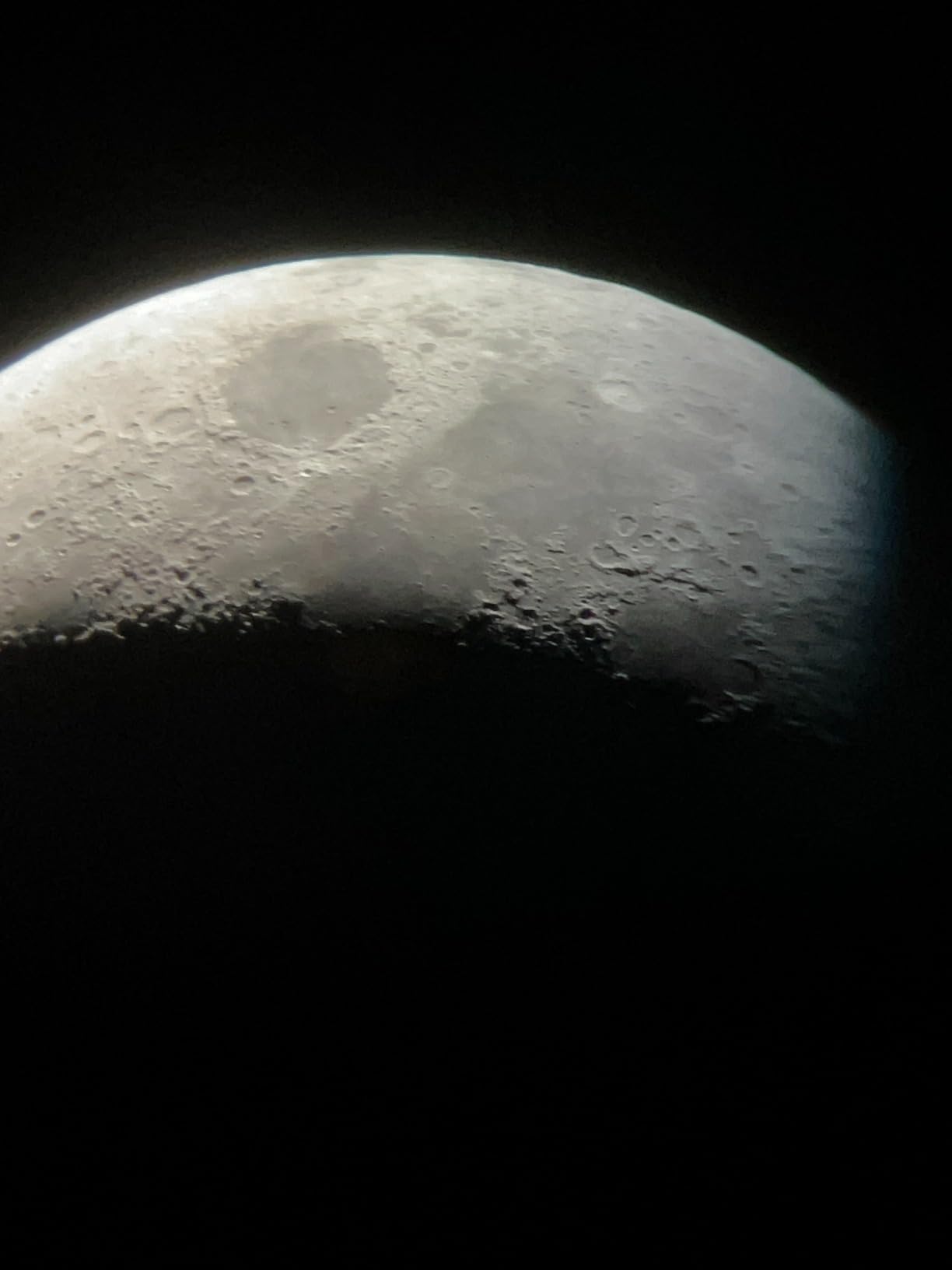
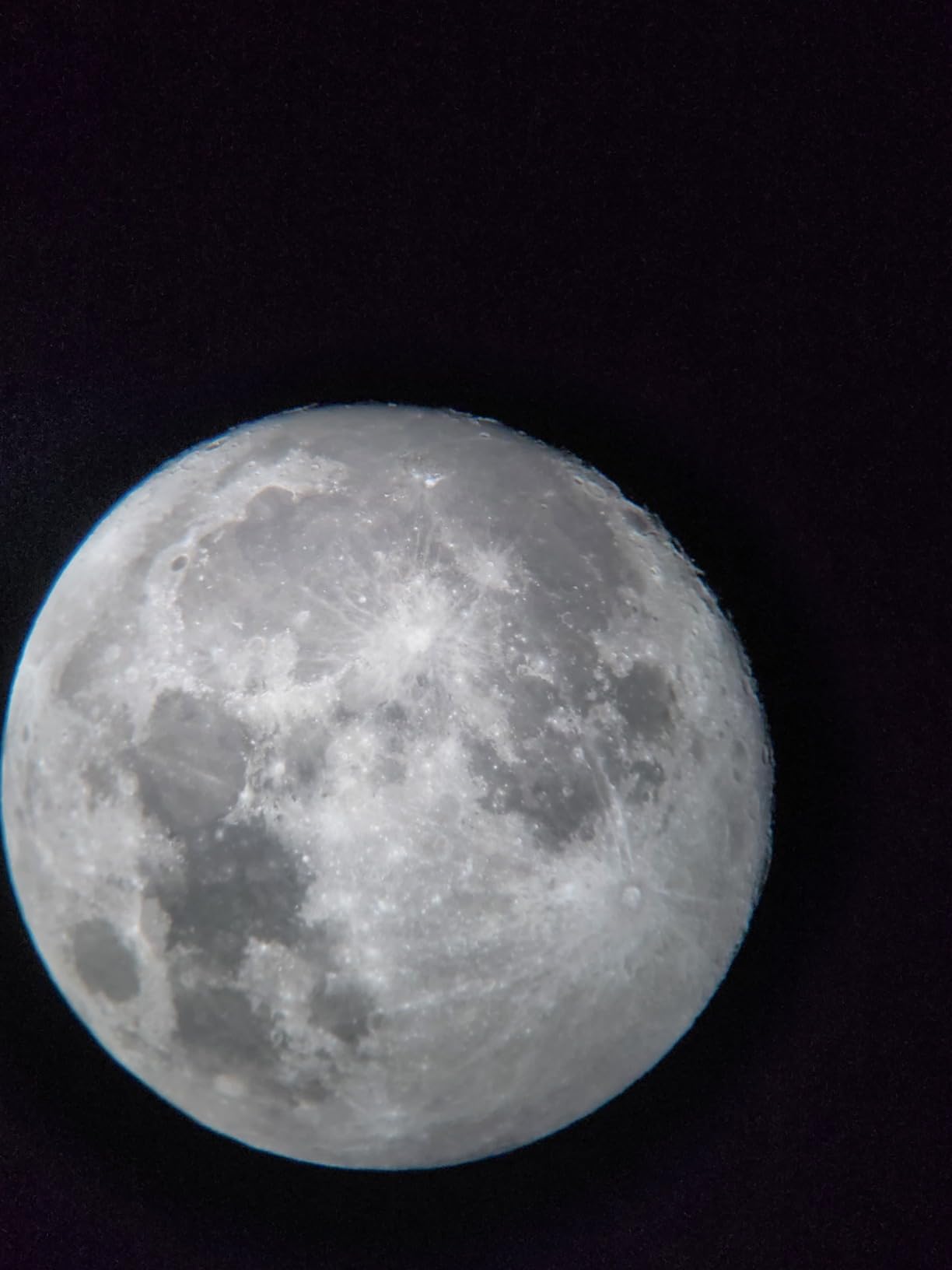
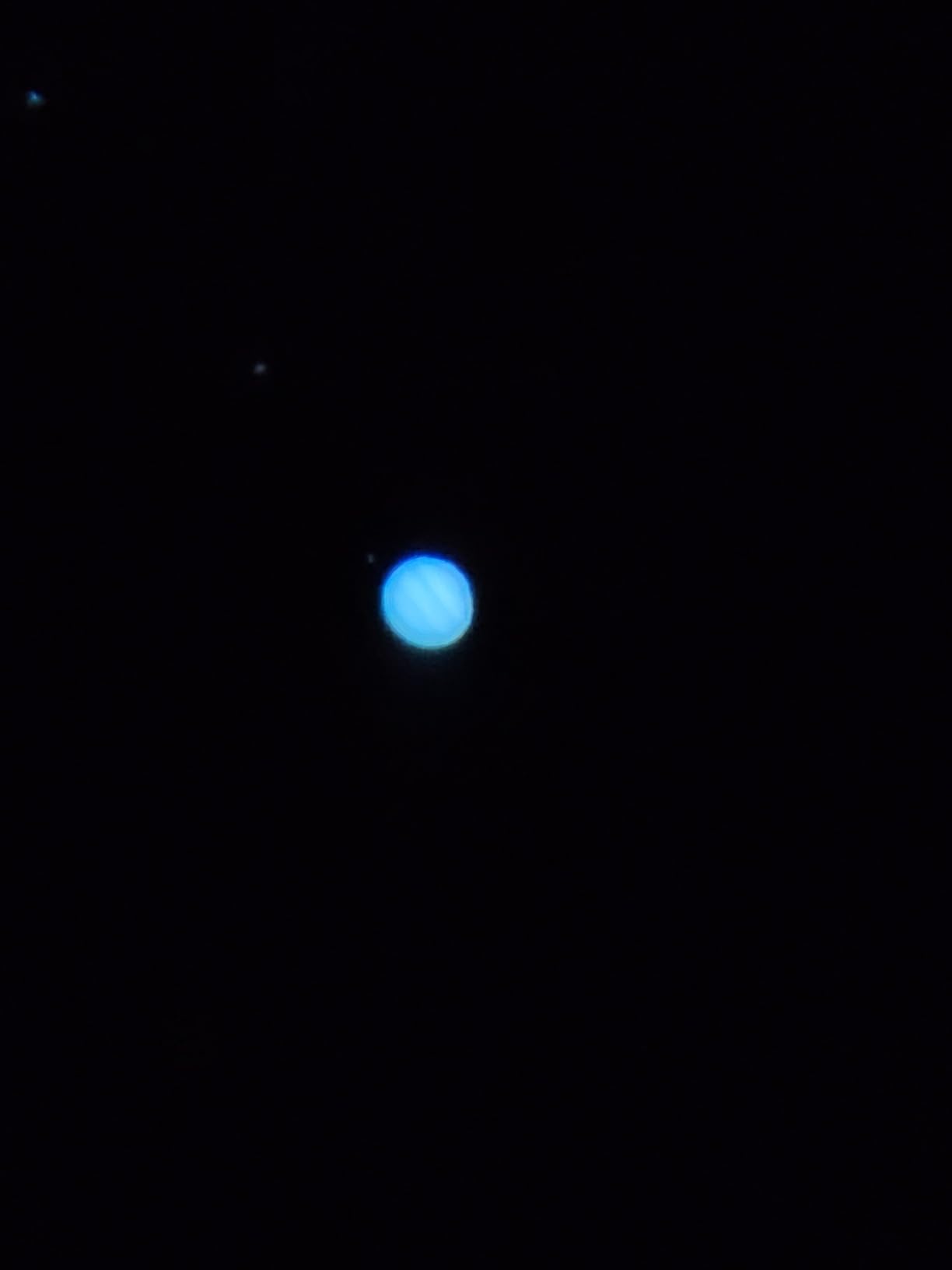
If your priority is sharp planetary views in a portable package, the NexStar 127SLT is hard to beat. The Maksutov-Cassegrain design combines a 127mm meniscus corrector with a long 1500mm focal length, giving you f/11.8 planetary performance in a tube shorter than most DSLR cameras. On the Moon, I could resolve craterlets inside Copernicus that blurred together in shorter focal length scopes.
Because Maksutov optics use a folded light path, the entire telescope weighs just 18 pounds and the optical tube is genuinely compact. That makes the 127SLT a true grab-and-go scope for spontaneous clear nights. I carried it out to my balcony for quick lunar sessions without needing a carrying case.
The GoTo mount is the same proven platform as other Celestron SLT scopes, with 40,000+ objects in the database. SkyAlign gets you aligned on three bright objects in under five minutes. Once aligned, slewing to Jupiter or the Hercules Cluster is a one-button affair. Reviewers consistently call out the 127SLT as a great first serious scope for planetary observers.
The trade-off is aperture itself. At 127mm, light grasp is enough for the brightest deep sky targets but struggles on fainter galaxies and nebulae. The mount also gets wobbly above 150x magnification, so a vibration suppression pad or simply bracing the tripod helps. Battery drain is real, so budget for an AC adapter or power tank.
Who the NexStar 127SLT is for
Pick the 127SLT if planets and the Moon are your primary targets and you want automated pointing in a compact package. It also makes a great second scope for lunar/planetary sessions when you already own a larger light bucket. Urban astronomers with limited balcony space will appreciate the closed tube and short body.
Who should skip the NexStar 127SLT
Skip it if your main goal is dim deep sky targets from a dark site. The 127mm aperture is on the small side for galaxies beyond the Messier catalog. If you want the best telescopes for planets and deep space with one scope doing both jobs equally well, look back at the NexStar 8SE or AstroMaster 130EQ instead.
4. Celestron StarSense Explorer DX 130AZ – Smartphone-Guided Deep Sky Finder
Celestron StarSense Explorer DX 130AZ Smartphone Guided Newtonian Telescope
Aperture: 130mm
Optics: Newtonian reflector
Mount: Altazimuth
Weight: 18 lbs
Pros
- StarSense app uses phone camera for accurate sky navigation
- 130mm aperture pulls in bright galaxies and nebulae
- Dual-axis slow-motion controls for smooth manual tracking
- High-reflectivity coatings boost image brightness
- Phone cradle is sturdy and well-engineered
Cons
- Some quality control issues with shipping
- Mount can shake in wind
- Phone alignment takes patience on first use
The StarSense Explorer DX 130AZ is the scope I hand to friends who say they can never find anything in the sky. Celestron’s StarSense app uses your phone’s camera to analyze star patterns overhead and figure out exactly where your telescope is pointing. Then it shows arrows on screen guiding you to whatever target you select. It is genuinely game-changing for first-time users.
The optics are the real surprise. A 130mm Newtonian mirror with high-reflectivity coatings gathers plenty of light for the Orion Nebula’s winged shape, the Andromeda Galaxy’s bright core, and the ring shape of the Ring Nebula. Dual-axis slow-motion cables give you smooth manual tracking once you find your target. Reviewers on r/telescopes consistently recommend StarSense scopes for newcomers.
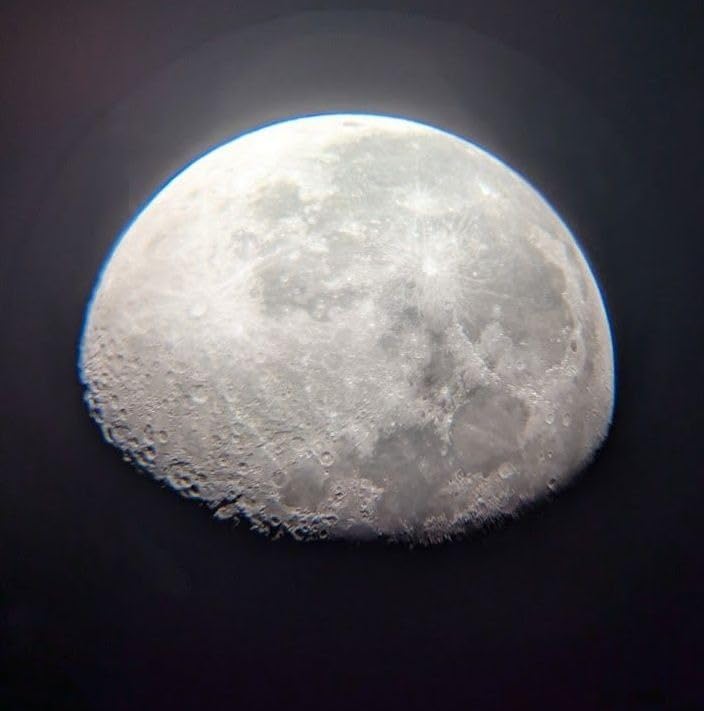
On my first night with the DX 130AZ, I found M13, the Whirlpool Galaxy, and the Saturn Nebula in under 30 minutes total. Without the app, that would have taken an hour of star-hopping. The phone cradle holds my iPhone securely, and the app interface is intuitive enough that I never had to crack the manual.
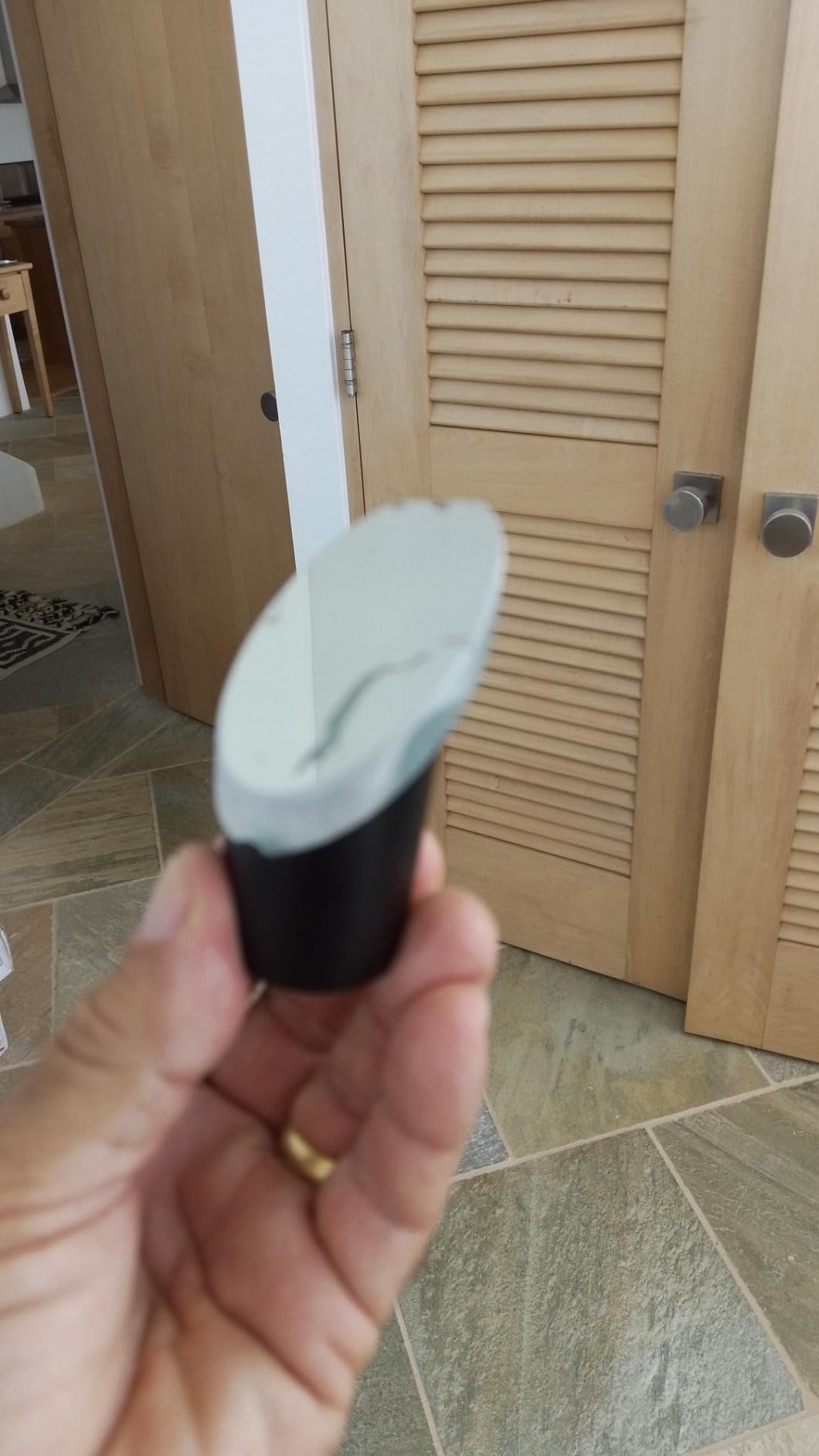
Quality control is the one weakness. A few buyers report mirrors dislodged during shipping, so inspect your scope carefully on arrival. The altazimuth mount is also light enough to shake in wind, so I weighted the tripod center with a sandbag for stability. Once dialed in, the scope works beautifully.
Who the StarSense DX 130AZ is for
This is the best beginner telescope for someone who wants help learning the sky. If you’ve tried a manual scope and bounced off it because you could never find anything, the StarSense app changes that equation. It is also a great family scope, since kids can use the phone app to navigate while adults handle the optics.
Who should skip the StarSense DX 130AZ
Skip it if you want automated GoTo slewing, since this is a manual scope with smartphone guidance rather than motorized tracking. Astrophotographers should also look at dedicated imaging setups, since the altazimuth mount does not track for long exposures. For visual observation of planets and bright deep sky objects, it is a joy.
5. Celestron StarSense Explorer LT 114AZ – Lightweight Travel Companion
Celestron StarSense Explorer LT 114AZ Newtonian Smartphone Guided Telescope
Aperture: 114mm
Optics: Newtonian reflector
Mount: Altazimuth
Weight: 10.4 lbs
Pros
- Weighs only 10.4 pounds for genuine portability
- StarSense app eliminates star-hopping frustration
- 114mm aperture is enough for the Moon and bright planets
- Smooth altazimuth slow-motion altitude rod
- Includes 2x Barlow for higher magnification
Cons
- App setup and phone alignment take patience
- Plastic reflex finderscope is basic
- Some users report app freezing on older phones
The LT 114AZ is the scope I pack when I am heading somewhere I cannot bring a heavier telescope. At 10.4 pounds total, it is light enough to carry one-handed to a dark-sky site, set on a picnic table, and start observing within minutes. For camping trips, family vacations, and spontaneous clear nights, it earns its place in any gear bag.
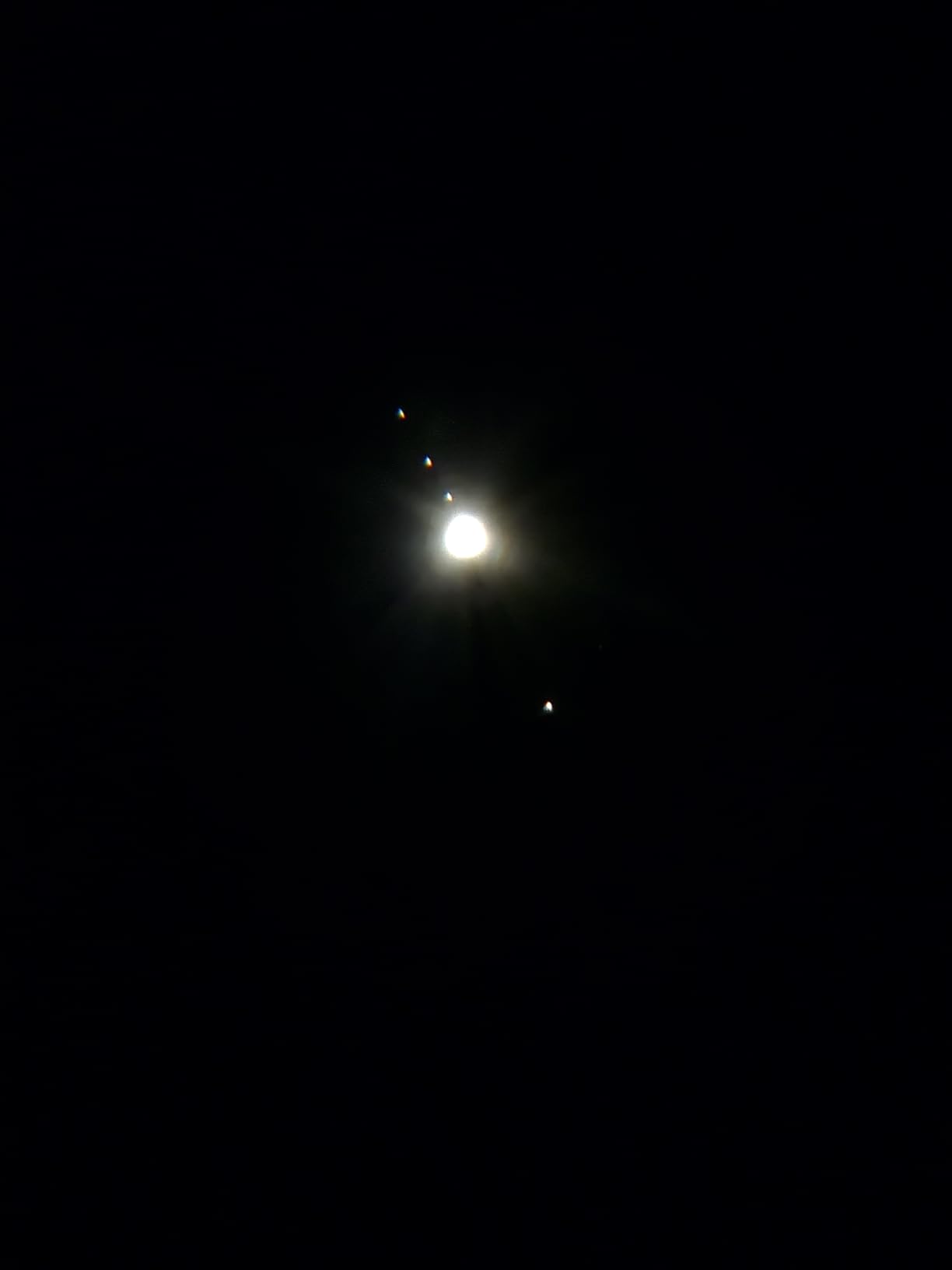
The Bird-Jones 114mm Newtonian design gives you 1000mm of focal length in a short tube. That is enough magnification to see the rings of Saturn, the major cloud bands of Jupiter, and the bright cores of galaxies like M31 and M81. StarSense navigation works exactly like the larger DX model, walking you to targets with on-screen arrows.
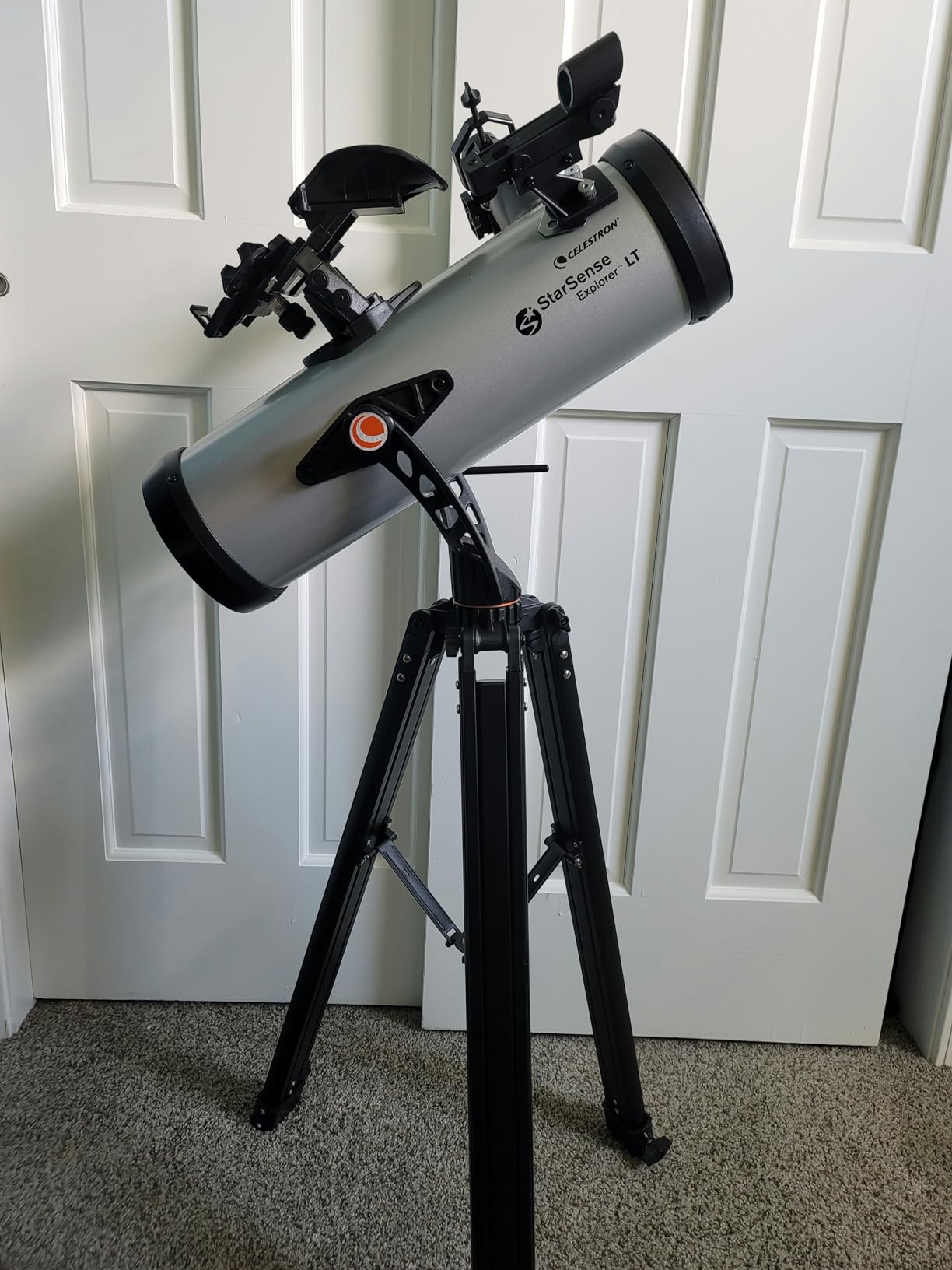
On a recent camping trip I used the LT 114AZ to walk my nephew through the night sky. The StarSense app showed him where to point for the Hercules Cluster, then for Albireo (a beautiful double star), then for the Ring Nebula. He went from total beginner to confident observer in a single evening. That is the magic of this scope.
The plastic reflex finderscope is the weakest link. It works but feels flimsy compared to the rest of the scope, and alignment can be a chore. The StarSense app also requires patience to calibrate the first time. Once you push through the learning curve, the experience is excellent.
Who the StarSense LT 114AZ is for
Pick the LT 114AZ if portability matters most. Apartment dwellers with small balconies, campers, RV travelers, and families with kids who want to drag a scope around the yard will love this scope. It also works well as a beginner’s first telescope when budget and storage space are real concerns.
Who should skip the StarSense LT 114AZ
Skip it if you want maximum light grasp for faint galaxies and nebulae. The 114mm aperture is fine for the Moon, planets, and bright Messier objects, but struggles on dimmer targets. If you mostly observe from a fixed dark-sky site, a larger scope will pay off more than the LT 114AZ’s portability.
6. SOLOMARK 130EQ Newtonian Reflector – Budget-Friendly Equatorial Pick
Telescope 130EQ Newtonian Reflector Telescopes for Adults, Professional Telescopes for Adults Astronomy, Comes with 1.5X Barlow Lens Smartphone Adapter & 13% T Moon Filter
Aperture: 130mm
Optics: Newtonian reflector
Mount: Equatorial
Weight: Lightweight tube
Pros
- 130mm aperture delivers bright views at a budget price
- Carbon fiber-styled tube keeps weight down
- German equatorial mount with smooth slow-motion controls
- Includes 1.5X Barlow
- moon filter
- and phone adapter
Cons
- Finder scope is cheap plastic and hard to align
- Eyepieces are Kellner not Plossl as advertised
- No collimation tool included
The SOLOMARK 130EQ is the budget answer to the Celestron AstroMaster 130EQ. It uses the same 130mm Newtonian optical design and a German equatorial mount, but trims cost with a carbon fiber-styled tube and a more accessory-heavy package. For shoppers watching their wallet, this scope delivers genuine 130mm light grasp without cutting corners on the optics that matter most.
The included accessories genuinely surprised me. You get a 1.5X Barlow lens for higher magnification, a 13 percent transmission Moon filter for comfortable lunar viewing, and a smartphone adapter for casual astrophotography. That bundle is hard to beat at this price point. The equatorial mount’s slow-motion cables track smoothly once polar aligned.

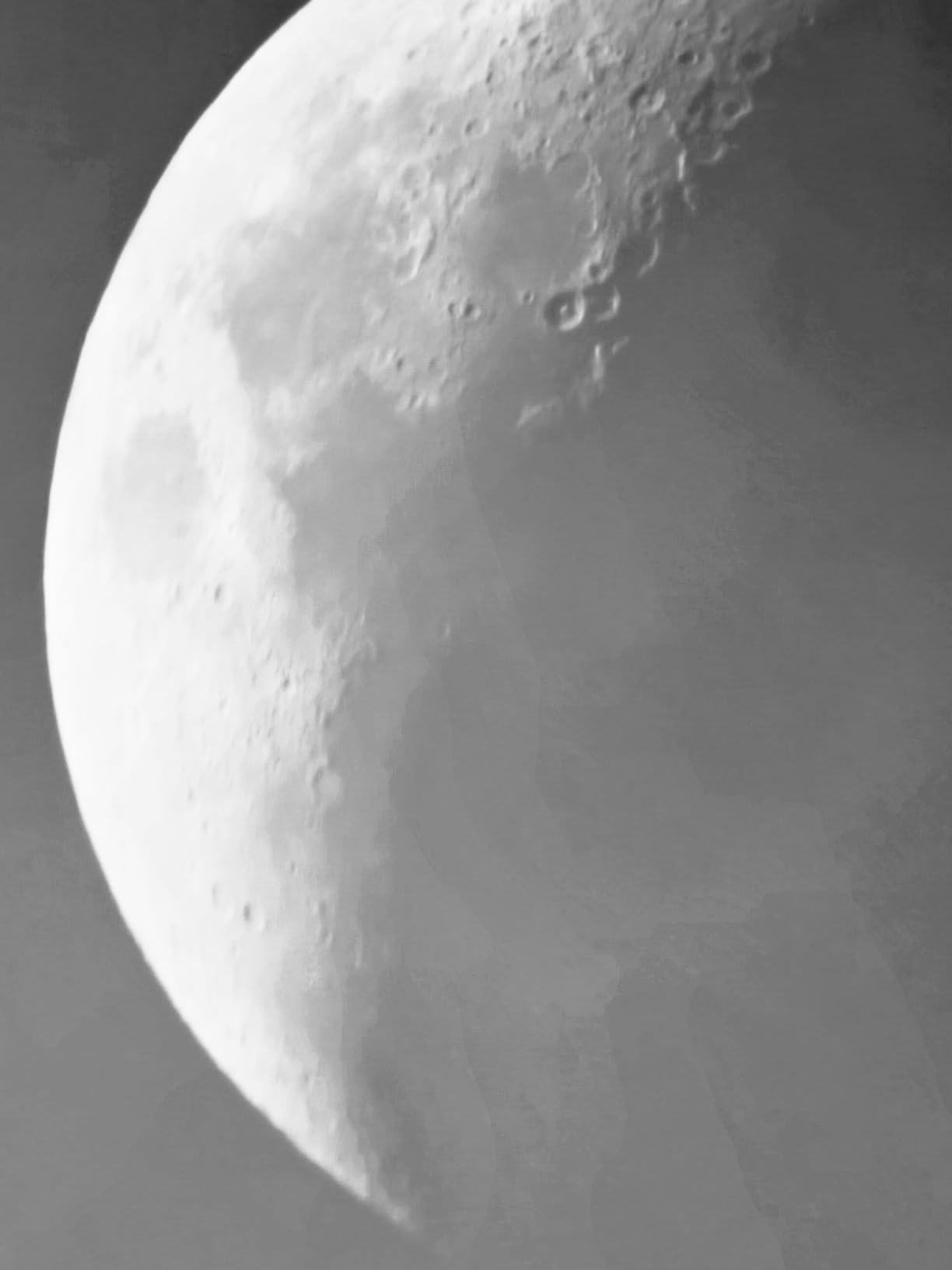
On Saturn I could split the rings and pick out Titan. On the Orion Nebula I could see the Trapezium’s four-star core. On the Andromeda Galaxy the bright central bulge filled the eyepiece. For the cost, those views are remarkable. Reviewers on multiple forums call out the SOLOMARK 130EQ as a sleeper pick in the budget category.
The trade-offs show up in the details. The included finder scope is flimsy plastic and frustrating to align, so plan to upgrade it or use the phone adapter as your finder. The eyepieces are described as Plossl in some listings but are actually Kellner, with narrower fields of view. And no collimation tool is included, so budget for a laser collimator if you need to align the mirrors.
Who the SOLOMARK 130EQ is for
Pick the SOLOMARK 130EQ if you want maximum aperture per dollar and you do not mind upgrading a few accessories over time. It is a great choice for hands-on beginners who want to learn equatorial mounts and collimation. The included moon filter and phone adapter also make it fun for casual astrophotography right out of the box.
Who should skip the SOLOMARK 130EQ
Skip it if you want plug-and-play convenience. The cheap finder scope, the misleading eyepiece description, and the missing collimation tool mean you will spend time troubleshooting. If you want a smoother first experience, the Celestron AstroMaster 130EQ is worth the modest step up in cost.
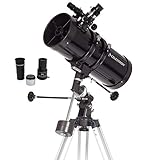
7. Celestron PowerSeeker 127EQ Reflector – Classic Beginner Pick on a Tight Budget
Celestron PowerSeeker 127EQ Reflector Telescope for Home Astronomy
Aperture: 127mm (5 inch)
Optics: Newtonian reflector
Mount: German equatorial
Weight: 13 lbs
Pros
- Solid entry-level Newtonian reflector at an accessible price
- 127mm aperture gathers enough light for the Moon
- planets
- and bright deep sky objects
- German equatorial mount supports smooth tracking once polar aligned
- Compact 13-pound design works for adults and older kids
Cons
- Requires regular collimation
- which is challenging for beginners
- 4mm eyepiece has a tiny eye lens that is hard to use
The PowerSeeker 127EQ has been a gateway telescope for amateur astronomers for over a decade. Its 127mm Newtonian mirror gathers enough light to show Saturn’s rings, Jupiter’s moons, and bright deep sky targets like the Pleiades and the Orion Nebula. For shoppers who want real aperture without breaking the bank, this scope still earns its reputation.
The German equatorial mount is the same proven design used in more expensive Celestron scopes, so you get smooth tracking once polar aligned. The slow-motion altitude rod lets you nudge the scope to follow planets across the sky. For visual observers who want to learn the basics of equatorial mounts, this is a solid training scope.
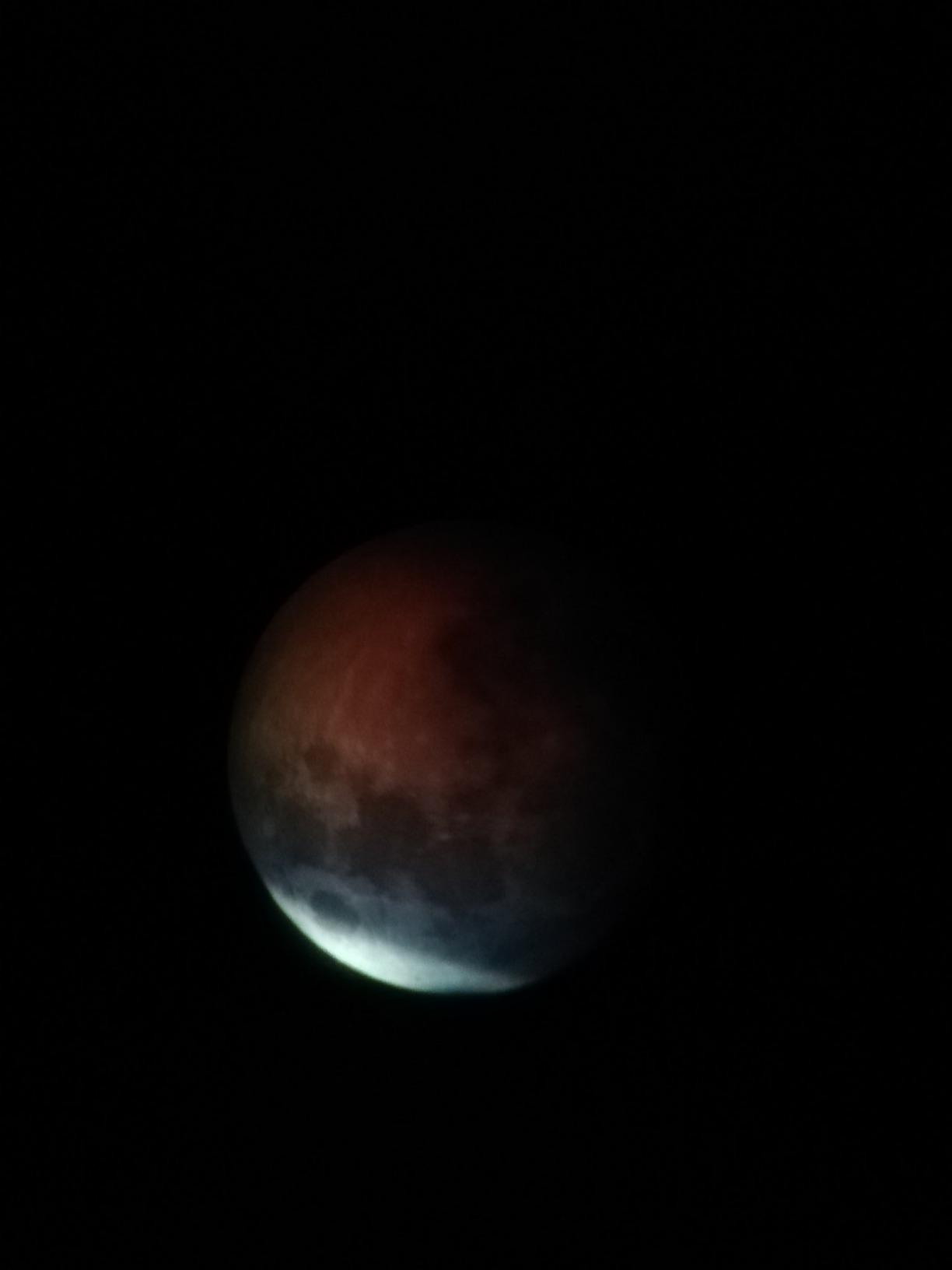
Out of the box, the included 20mm eyepiece gives crisp low-power views of wide fields. With the 4mm eyepiece and 3x Barlow you can push past 250x magnification, although image sharpness drops. On a steady night I could resolve Saturn’s rings and pick out Jupiter’s major belts, which is impressive at this price point.
Beginners should know that Newtonian reflectors need occasional collimation (mirror alignment). The PowerSeeker 127EQ ships needing adjustment, so plan to learn collimation or budget for a laser collimator. The 4mm eyepiece also has a tiny lens that is hard to look through, so most users stick with the 20mm. Reviewers consistently note these as the trade-offs for the accessible price.
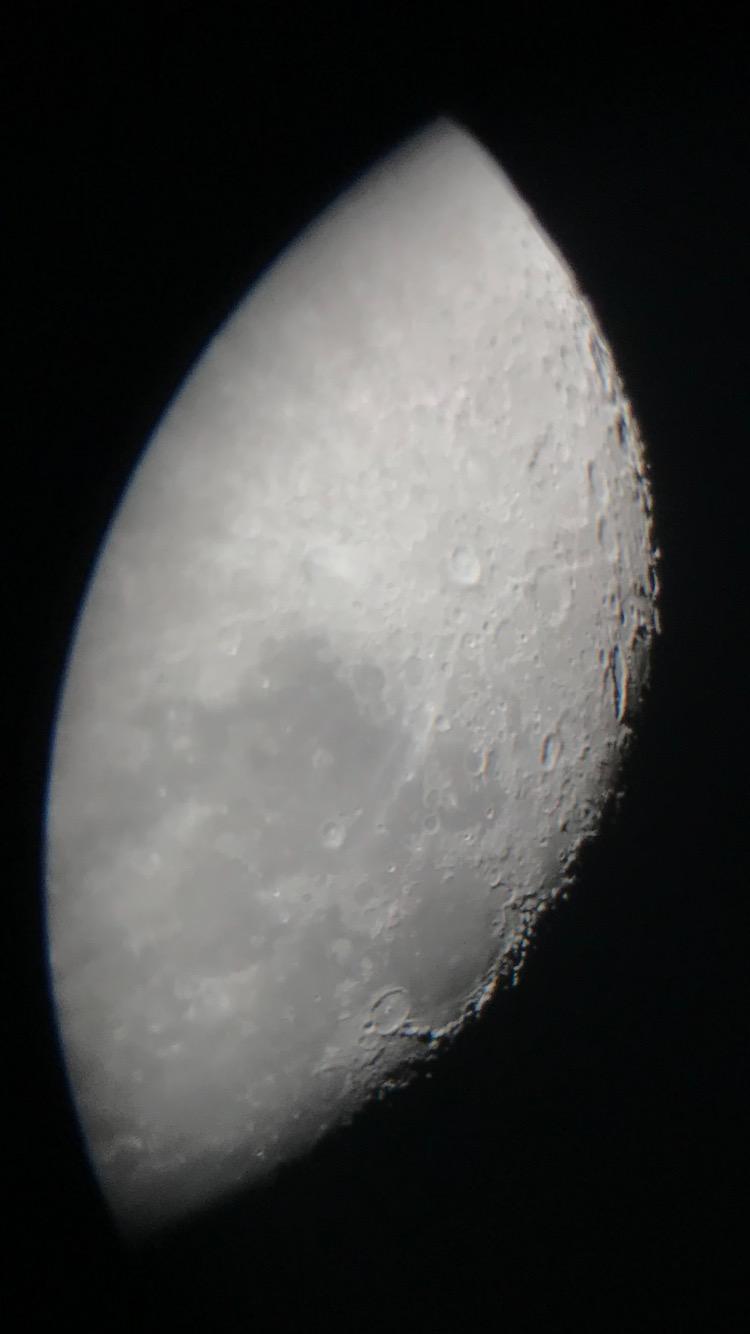
Who the PowerSeeker 127EQ is for
Pick the PowerSeeker 127EQ if budget is your top priority and you want genuine 127mm light grasp. It is a great first telescope for older kids, teens, and adults willing to learn basic maintenance. Parents shopping for a curious teenager will get real value here.
Who should skip the PowerSeeker 127EQ
Skip it if you want a turnkey experience. The collimation requirement, the basic finder, and the limited eyepieces mean you will probably upgrade accessories within a year. For a smoother first experience, look at the Koolpte 80mm refractor if portability matters, or the AstroMaster 130EQ if aperture is your priority.
8. Koolpte 80mm Refractor Telescope – Easiest Telescope to Use Right Out of the Box
Koolpte Telescope for Adults & Beginner Astronomers – 80mm Aperture 600mm Fully Multi-Coated High Transmission Coatings with AZ Mount Tripod Phone Adapter, Carrying Bag, Wireless Control.
Aperture: 80mm
Optics: Refractor
Fully multi-coated
Mount: Altazimuth
Weight: Portable
Pros
- Fully multi-coated optics for bright sharp views
- No-tool setup in under 5 minutes
- Includes phone adapter
- wireless remote
- and carrying bag
- Smooth altazimuth mount easy for beginners
- Great for casual Moon and planet viewing
Cons
- Some quality control issues with screws
- Focus mechanism can be finicky
- Not tall enough for average-height adults without bending
The Koolpte 80mm refractor is the scope I recommend when someone tells me they want the simplest possible first telescope. There is nothing to collimate, no tools required for setup, and the fully multi-coated optics deliver bright crisp views of the Moon and planets the moment you point it at the sky. For pure ease of use, this is hard to beat.
The 80mm aperture is on the small side for serious deep sky work, but it shows plenty of detail on the Moon (you can see craters along the terminator), Jupiter’s Galilean moons, Saturn’s rings, and bright stars. The refractor design also means no collimation and no central obstruction, so contrast on planets is excellent.
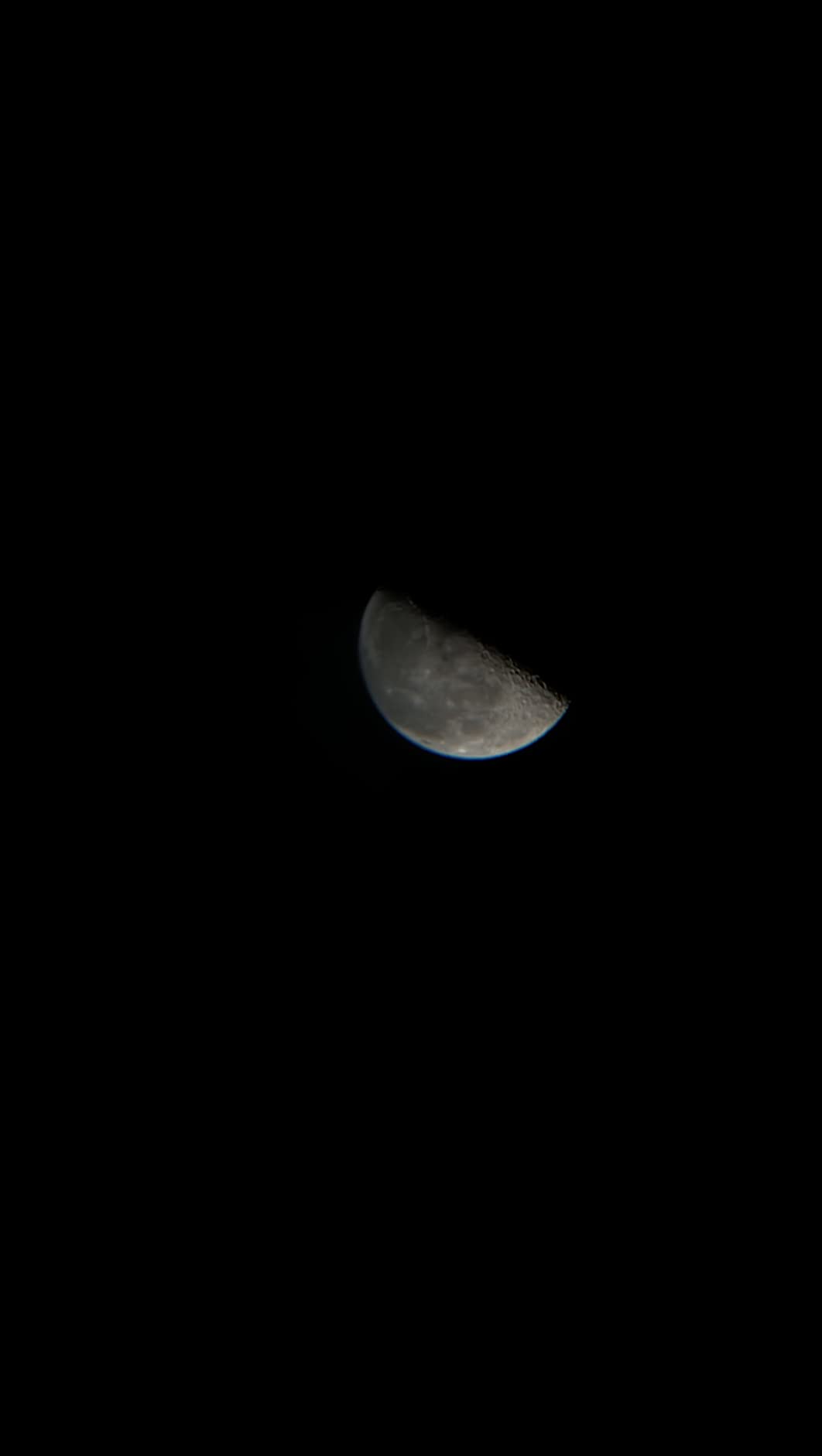
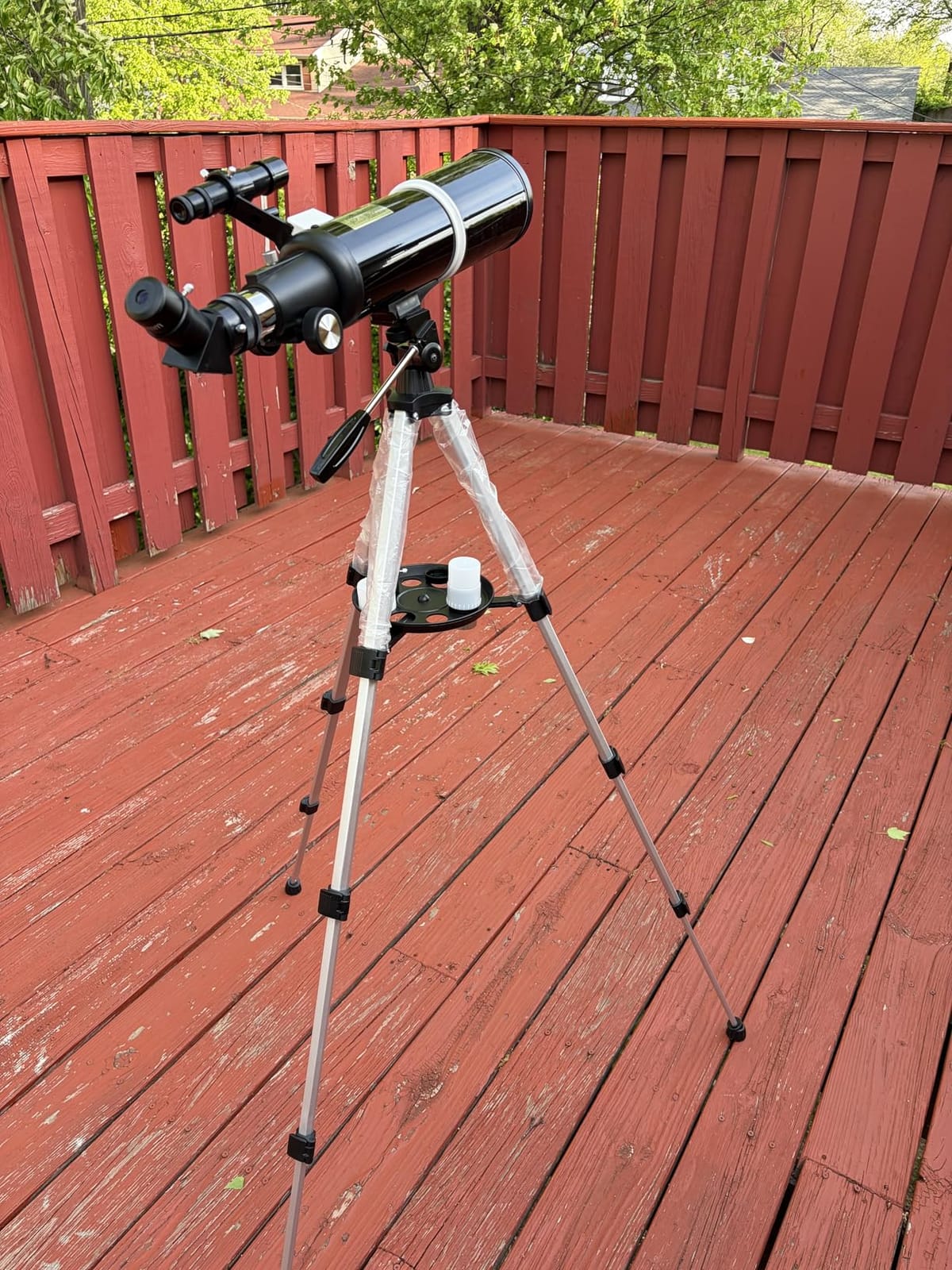
The accessory bundle is genuinely generous. You get a phone adapter for casual astrophotography, a wireless remote for shake-free phone shots, two eyepieces (25mm and 10mm), a 3x Barlow lens, and a carrying bag. The whole kit packs into the included bag for easy transport. Reviewers consistently call this out as one of the best starter telescope values.
Quality control is hit or miss. Some buyers report screws that do not tighten properly or focuser mechanisms that feel rough. The tripod is also short, so tall users will need to bend over to look through the eyepiece. Plan to set it on a table for comfortable viewing.
Who the Koolpte 80mm is for
Pick the Koolpte 80mm if you want the easiest possible first telescope and you mostly care about the Moon and planets. It is a wonderful gift for kids curious about astronomy, casual backyard observers, and anyone who wants a grab-and-go scope with no maintenance. The included phone adapter makes it fun for casual astrophotography too.
Who should skip the Koolpte 80mm
Skip it if you want to chase faint deep sky objects. The 80mm aperture simply does not gather enough light for galaxies and nebulae beyond the brightest Messier targets. For serious deep sky viewing, jump to a 130mm reflector. But for a fun, easy first telescope, the Koolpte 80mm is a strong budget pick.
Planets vs Deep Space: How to Pick the Right Telescope
This is the question every first-time telescope buyer should ask: do I want to see Saturn’s rings clearly, or do I want to pull faint galaxies out of the sky? The answer drives your telescope choice more than any other factor, so let me walk you through what matters.
Planets are bright but small. To see Saturn’s rings split, Jupiter’s cloud bands resolve, or Mars’s polar caps show up, you want long focal length (1000mm or more) and high-contrast optics. Schmidt-Cassegrain, Maksutov-Cassegrain, and long-focal-length Newtonian telescopes all excel here. Magnification matters, but contrast matters more. A good 5-inch Mak will outperform a sloppy 10-inch Dob on planetary detail.
Deep sky objects are faint but spread out. To see the Andromeda Galaxy’s disk, the Orion Nebula’s wings, or the Hercules Cluster’s individual stars, you want raw aperture. Every inch of mirror or lens diameter roughly doubles your light grasp, so a 130mm reflector will reveal dramatically more than an 80mm refractor on the same target. Focal length matters less; aperture is king.
The compromise is a mid-sized Newtonian or Schmidt-Cassegrain between 5 and 8 inches. That is why the NexStar 8SE and AstroMaster 130EQ top this list. Both give you enough aperture for galaxies and nebulae, and enough focal length for satisfying planetary views. Bigger is better for dim targets, but at some point weight and portability start to matter more than marginal light gains.
Aperture and Focal Length Explained
Aperture is the diameter of the main lens or mirror that gathers light. Doubling your aperture quadruples the light your telescope gathers, which is why a 200mm scope shows dramatically more than a 100mm scope on the same galaxy. For deep sky viewing, aperture is the single most important spec. The 8-inch (203mm) aperture of the NexStar 8SE is the reason it is my editor’s choice.
Focal length is the distance light travels inside the telescope to form an image. Longer focal length gives higher magnification with the same eyepiece, which is why planetary scopes tend to have long focal lengths (the 127SLT’s 1500mm is a perfect example). Short focal length gives wider fields of view, which is better for sweeping the Milky Way and viewing large nebulae.
Focal ratio (f/number) is focal length divided by aperture. An f/5 scope is “fast” with a wider field, while an f/10 scope is “slow” with higher magnification potential. Astrophotographers often prefer f/5 to f/7 for capturing deep sky objects. Visual observers who prioritize planets tend to like f/8 to f/12.
Mount Types: Which One Do You Need?
Mounts matter as much as the optical tube. A great scope on a wobbly mount is frustrating to use. Here is how the three main mount types compare.
Altazimuth mounts (AZ) move up-down and left-right. They are simple, intuitive, and lightweight. The Koolpte 80mm and StarSense LT 114AZ use altazimuth mounts. Best for beginners and casual observation. Downside: they do not track the sky, so planets drift at high magnification.
Equatorial mounts (EQ) align with Earth’s rotational axis. Once polar aligned, a single slow-motion knob tracks planets and stars across the sky. The AstroMaster 130EQ, PowerSeeker 127EQ, and SOLOMARK 130EQ all use equatorial mounts. Best for serious visual observers who want to track objects. Downside: a learning curve to set up.
Computerized GoTo mounts combine motorized slewing with a database of celestial objects. Push a button and the scope finds the target for you. The NexStar 8SE and NexStar 127SLT use GoTo mounts. Best for beginners who want help finding objects and for observers with limited star-hopping experience. Downside: more expensive, requires power.
Light Pollution Tips for Urban Astronomers
If you live in a city or suburb, light pollution is the biggest barrier to deep sky viewing. Even a great telescope cannot pull a galaxy out of a bright sky. Here is what helps.
First, prioritize planets and the Moon. They are bright enough to shine through urban light pollution, so any scope on this list will deliver satisfying planetary views from a balcony in the city. Second, try a light pollution filter. UHC (ultra high contrast) and CLS (city light suppression) filters screw onto your eyepiece and block common urban light wavelengths while letting nebula light through.
Third, travel to a dark sky when you can. A 30-minute drive to a darker location can transform a dim galaxy into a stunning one. Sites like the Dark Sky Finder map help you locate areas with minimal light pollution. Finally, let your eyes dark-adapt for 20 to 30 minutes before observing. Avoid looking at your phone, and use a red flashlight to preserve night vision.
Smart Telescope vs Traditional: Which Approach Is Right for You?
Smart telescopes like the Unistellar eVscope and Vaonis Vespera use built-in cameras and apps to automate observation. You tap a target on your phone and the scope finds, tracks, and even stacks images for you. They are wonderful for casual users who want pretty pictures without learning the sky.
Traditional telescopes like the eight on this list put you in control. You learn the sky, you point the scope yourself (with or without GoTo), and you see the universe directly through an eyepiece. That experience is more hands-on and arguably more rewarding for visual observers.
For beginners, I usually recommend a traditional telescope first. You will learn more about astronomy, you can upgrade individual components over time, and you keep the option to do advanced imaging later. If automation matters most, check our guide to the best smart telescopes for fully automated alternatives.
Frequently Asked Questions
What is the best telescope for observing planets and galaxies?
A telescope with at least 130mm (5 inches) of aperture and a focal length of 1000mm or more gives the best balance for both planets and galaxies. Our top pick is the Celestron NexStar 8SE, which pairs an 8-inch Schmidt-Cassegrain optical tube with a computerized GoTo mount and a 40,000+ object database. For a more budget-friendly option, the Celestron AstroMaster 130EQ delivers solid planetary and deep sky views in a manual equatorial package.
Which telescope is best to see planets clearly?
For sharp planetary views, you want a telescope with long focal length (1000mm or more) and high-contrast optics. The Celestron NexStar 127SLT Maksutov-Cassegrain excels here with 1500mm of focal length in a compact closed tube. The Celestron NexStar 8SE also delivers stunning planetary detail thanks to its f/10 focal ratio and StarBright XLT coatings.
How powerful of a telescope do I need to see planets?
For clear views of Saturn’s rings, Jupiter’s cloud bands, and Mars’s polar caps, you need at least 90mm of aperture and a focal length of 1000mm or more. A 5-inch (130mm) telescope like the Celestron AstroMaster 130EQ will show all of these targets from a typical backyard. Larger 8-inch scopes show even more detail but cost and weigh more.
What is the best telescope for a beginner who wants to see deep space?
The Celestron StarSense Explorer DX 130AZ is our top pick for beginners who want to see deep space objects. Its 130mm Newtonian mirror gathers enough light to reveal galaxies and nebulae, while the smartphone-powered StarSense app walks you to targets with on-screen arrows. You learn the night sky without the frustration of star-hopping.
Can you see planets and deep space with the same telescope?
Yes. A telescope between 5 and 8 inches of aperture with a focal length of 1000mm to 2000mm can show satisfying detail on both planets and deep sky objects. The Celestron NexStar 8SE is the best example: its 8-inch aperture reveals faint galaxies, while its long 2032mm focal length splits Saturn’s rings and resolves Jupiter’s cloud bands. Mid-sized Newtonian and Schmidt-Cassegrain designs are the most versatile.
Final Verdict
After testing eight of the best telescopes for planets and deep space side by side, our editor’s choice remains the Celestron NexStar 8SE. Its 8-inch aperture, GoTo automation, and compact single-fork-arm design deliver a genuinely premium experience for both planets and deep sky objects. If you want one telescope that grows with you for years, the 8SE is the pick.
For shoppers watching their budget, the Celestron AstroMaster 130EQ gives you real 130mm light grasp and a smooth equatorial mount without breaking the bank. And for the easiest possible first telescope, the Koolpte 80mm refractor sets up in minutes and shows the Moon and planets right out of the box. Whichever scope you choose from this list, clear skies and a dark site will make every one of them shine.