
Most people buy a fruit press about two weeks too late. The apples are ripe, the weather is fine, the neighbours are offering help, and there is a press-shaped hole in the plan. That is why choosing well matters: the right machine turns a weekend of grinding and cranking into a few hours, and the wrong one turns a good harvest into a chore you dread every autumn.
These are the best fruit presses for cider worth your attention right now. We narrowed the field to eight presses that genuinely hold pulp, take a real load of crushed fruit, and survive contact with acidic juice. They cover the four families you will realistically choose between: screw presses driven by a crossbeam or lever, cast iron screw presses with a wooden basket, jack-driven hydraulic presses, and bladder presses that run off a tap with no power at all. All eight were spec-checked and price-checked in October 2026.
A word on how we picked. We looked at build materials, basket and bag quality, the real capacity rather than the marketing capacity, the amount of hand effort each design demands, and how thoroughly the machine comes apart for cleaning. Owner reports in cider and homesteading forums shaped the shortlist heavily, because the failure modes people report in year two (shallow baskets, bursting mesh, plates that shed coating) never show up in a spec sheet. If you also enjoy working with presses of a different kind, our picks for the best tumbler presses and best reloading presses follow the same testing logic.
Table of Contents
Top 3 Picks for the Best Fruit Presses for Cider In 2026

EJWOX 14L Cross-Beam Press
- 14L stainless basket
- Heavy-duty T-handle
- Detachable basket
- 79% five-star reviews

VEVOR 12L Twin-Barrel Press
- 12L twin stainless barrels
- Two filter bags included
- Dishwasher-friendly parts
- 16.8 lb frame

EJWOX 10.7 Gal Bladder Press
- Tap-driven hydraulic bladder
- No electricity needed
- 10.7 gallon capacity
- Filter bag and splash guard
Quick Overview: All 8 Fruit Presses Compared (October 2026)
Every press below crushes nothing on its own. Each one expects pulp, and the quality of the juice that comes out of it depends far more on how finely that fruit was crushed than on the brand name on the frame. The table is a fast index; the reviews after it explain who each machine actually suits.
| Product | Specifications | Action |
|---|---|---|
| EJWOX 14L Cross-Beam Fruit Press |
|
Check Latest Price |
| VEVOR 12L Twin-Barrel Fruit Press |
|
Check Latest Price |
 Useful 4.75 Gallon Cast Iron Press Useful 4.75 Gallon Cast Iron Press |
|
Check Latest Price |
| EJWOX 10.7 Gallon Bladder Press |
|
Check Latest Price |
 VEVOR 30L Beech Wood Press VEVOR 30L Beech Wood Press |
|
Check Latest Price |
 VEVOR 30L Hydraulic Press VEVOR 30L Hydraulic Press |
|
Check Latest Price |
 Mosakar 30L Hydraulic Press Mosakar 30L Hydraulic Press |
|
Check Latest Price |
 EJWOX 4.75 Gallon Beech Wood Press EJWOX 4.75 Gallon Beech Wood Press |
|
Check Latest Price |
1. EJWOX 14L Cross-Beam Press – The Best Fruit Press for Cider Overall
EJWOX Fruit Wine Press 3.69 Gal – Heavy-duty T-Handle & Cross-beam, Stainless Steel Juice Maker for Apple, Grape, Home Brewing
14L stainless basket
T-handle with large-diameter Acme screw
Detachable basket
Powder-coated frame
Pros
- Highest average rating in the group at 4.5
- Steady pressure from the cross-beam screw
- Stainless basket and coated frame resist corrosion
- Basket detaches for fast cleanup
- Also handles herbs and nut milks
Cons
- Costs roughly twice as much as the wood-basket screw presses
- The wide basket needs properly crushed fruit to fill
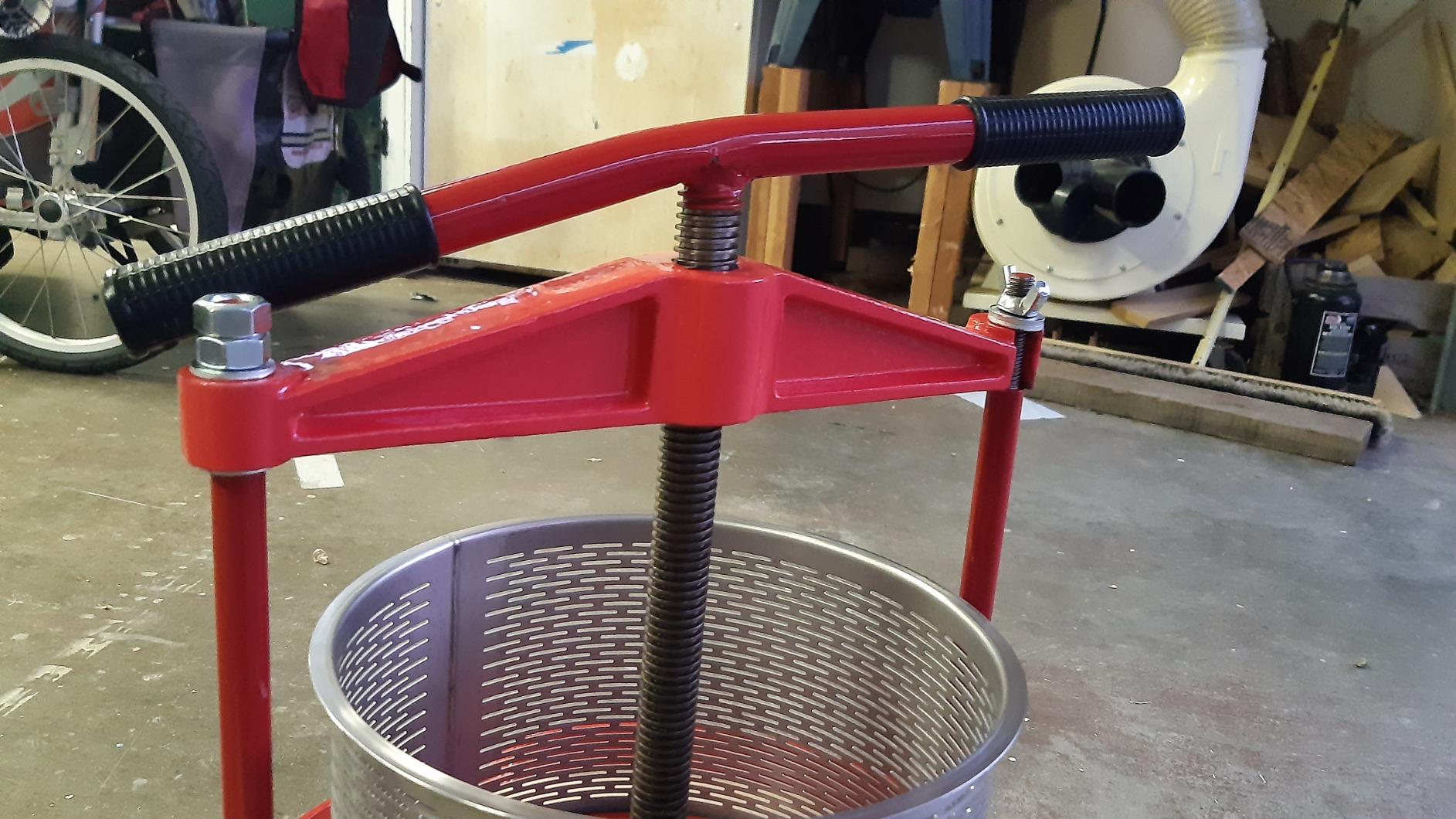
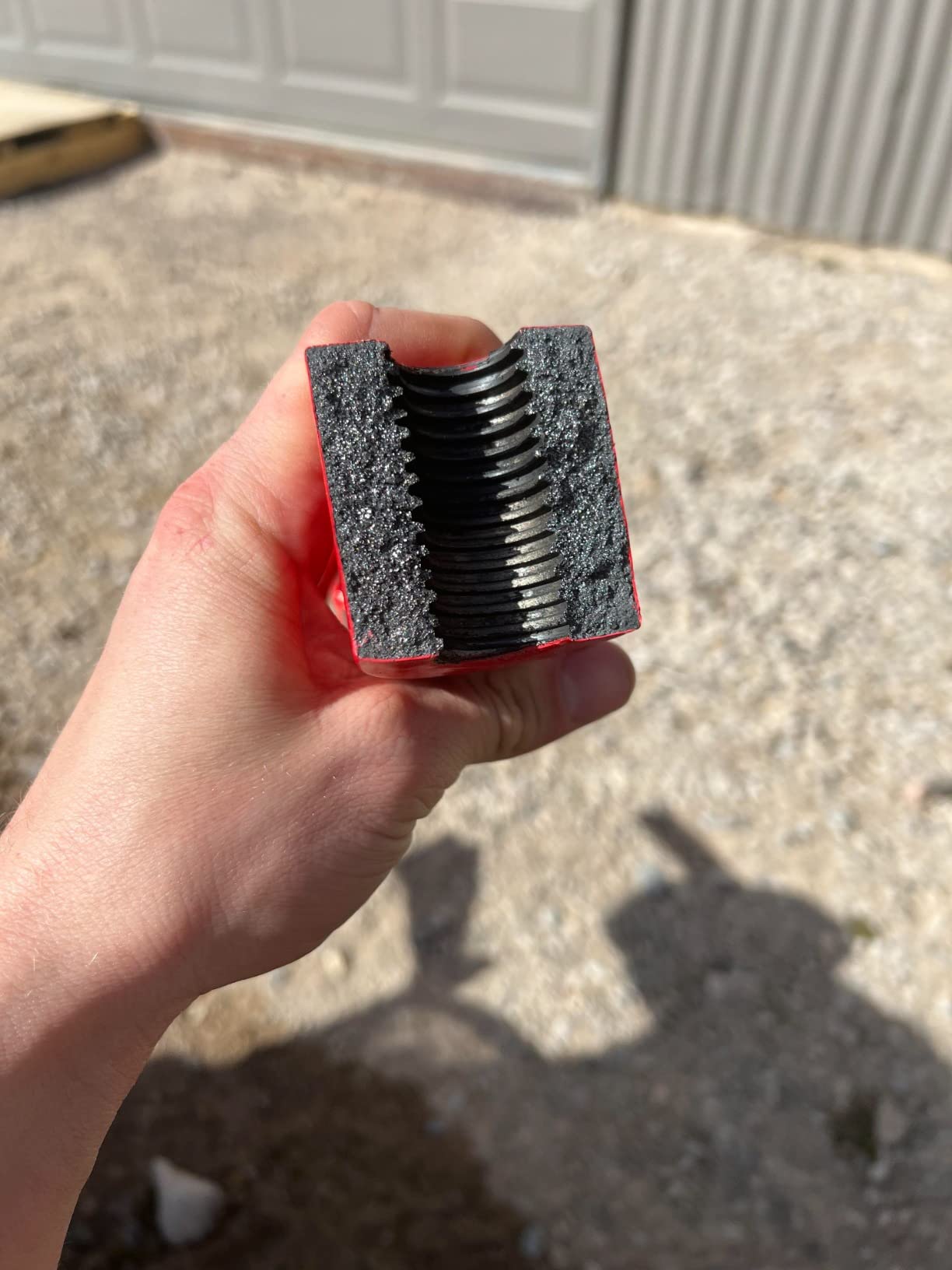
This is the press we would put in the middle of most people’s orchard. The mechanism is a large-diameter Acme screw turned by a heavy-duty T-handle, and that combination delivers force steadily rather than in surges, which is exactly what you want when you are squeezing pulp for several hours.
The basket is food-grade stainless steel, and it detaches from the pressing plate, so the cleanup that ruins a long pressing day is reduced to rinsing one component. The frame is powder-coated, which on a machine that lives in a damp shed matters more than the finish looks like it does.
Reviewers are unusually consistent about this one. The rating split is 79 percent five-star with only 4 percent one-star, and the recurring words in owner feedback are pressure, solidity and release. It is also a genuinely versatile machine: owners press herbs, nut milks and honey on it as well as fruit.
The honest limitation is cost relative to the wood-basket screw presses in this list, and the fact that a 14-litre basket with a wide diameter has no tolerance for half-measures. Fill it with coarsely chopped fruit and you will wonder why the yield is poor; fill it with proper pulp and it rewards you.
Why we made this the top pick
It pairs the highest average rating in the group with a few hundred owner reports, which makes its performance claim about as well-evidenced as this category gets. Force delivery is smooth, the wet parts are stainless, and the whole mechanism is simple enough to strip and clean in minutes.
When to choose something else instead
If your harvest is measured in a couple of sacks rather than a bushel, this basket is oversized and you will press a fraction of it. If money is the binding constraint and you can grind fruit properly by other means, one of the wood-basket screw presses does the same job for considerably less.
2. Useful 4.75 Gallon Cast Iron Press – The Traditional Cast Iron Apple Press
it’s useful. 4.75 Gallon Solid Wood Basket Fruit, Cider and wine Press Old Fashioned Cast Iron Large Size
4.75 gallon US oak basket
Coated cast iron head
Enameled steel base with spout
27.7 lb unit
Pros
- Cast iron head and oak basket survive decades of use
- Easy to wash down with a hose
- Included mesh bag holds up across batches
- Large capacity handles orchard volumes
Cons
- Needs wood spacer blocks that are not supplied
- Must be fixed to a worktop for leverage
- Must be screwed down for real pressure
- Whole fruit gives poor results
This is the old-fashioned design that most people picture when they hear the phrase apple press: a coated cast iron head, a centre post, a screw, and a basket of solid US oak slats sitting in an enameled steel base with a pour spout. It is supplied unassembled and takes roughly 15 to 30 minutes to put together.
The distinguishing feature versus the stainless designs here is the centre post. Instead of a side support carrying the load, the screw pushes down against a stationary centre column, and owner reports describe the force as noticeably more direct once the press is anchored to a bench or a plywood panel.
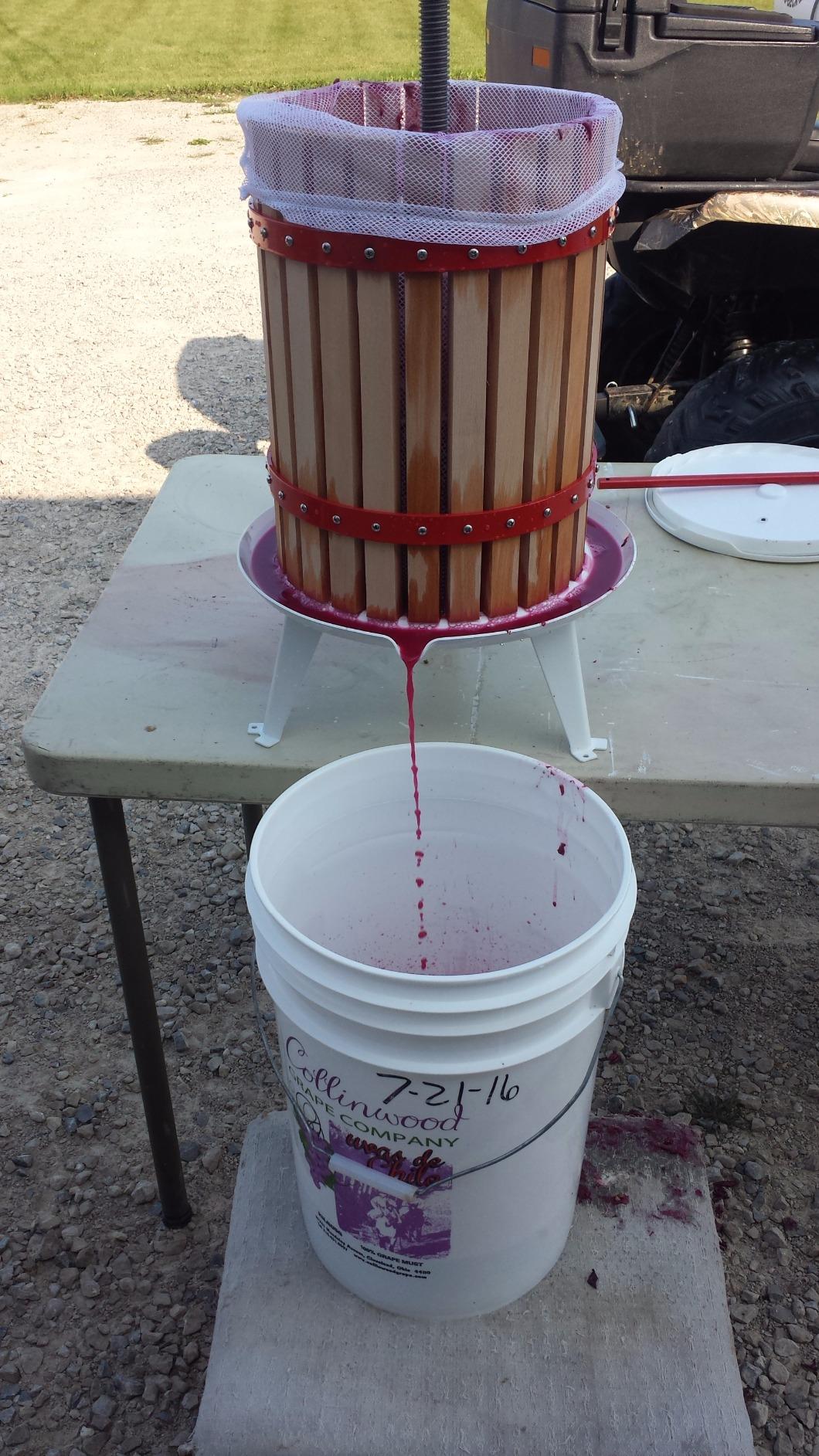
Longevity is the headline. Owners describe pressing 75 gallons of cider over two seasons with nothing failing, and others report running several hundred pounds of grapes and apples through it. The mesh mash bag in the box has also held up across repeated batches in owner reports, which is not a given with cheap mesh.
Two things catch people out. The press does not include enough wooden spacer blocks to reach its full rated fill height, so many owners cut their own from a length of 2×4. It also has to be screwed down before pressing, or the screw spins without enough purchase to move the plate.
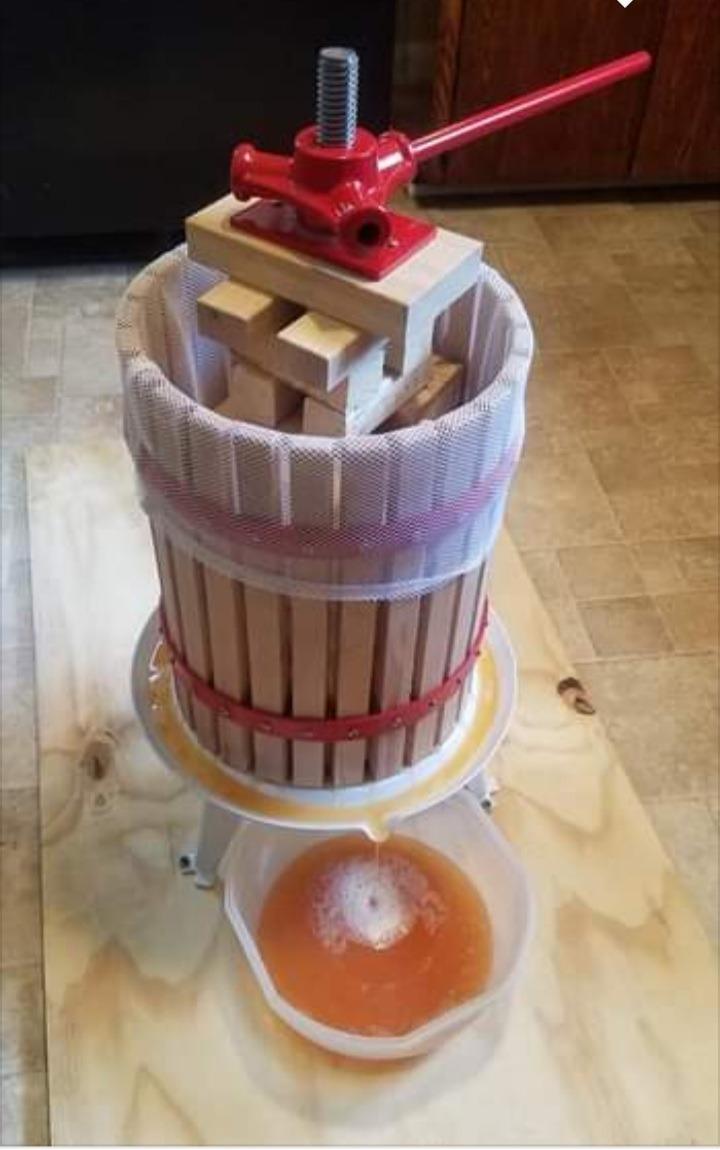
What you need to know before assembly
Budget for ten minutes with a saw and a drill before your first pressing, because the spacers are the difference between a full basket and a half-empty one. A minority of units also arrive with chipped paint or a mis-drilled hole in the pressure plate, so inspect the casting on unpacking.
Who this press suits
It suits anyone who wants a tool that will still work in fifteen years and does not mind doing a little carpentry. It is less suited to a first-time buyer in a flat with no bench to bolt to, and it will not match a hydraulic press on yield per hour of effort.
3. Mosakar 30L Hydraulic Press – The Press with All-Stainless Juice Contact
7.93 Gallon / 30L Mosakar Hydraulic Fruit Press. 3 Ton Pressure. Parts contact with Juice are AISI 304 Stainless Steel. Hydraulic Apple Grape Wine Cider Juice Press
3 ton hydraulic pressure
AISI 304 stainless basket and plate
30L capacity
66 lb unit
Pros
- Fast cycling on a hydraulic jack
- Owners report a large yield gain over hand-cranked presses
- Every juice-contact surface is AISI 304 stainless
- Dries pomace well so bags empty easily
Cons
- Heaviest listed weight in the group at 66 pounds
- Filter bags are a separate purchase
- Partial loads press more evenly than a full drum
Every part of this press that touches your juice is AISI 304 stainless steel, including the drain pan, the basket and the pressing plate. The frame is powder-coated, the unit is listed at 66 pounds, and a 3-ton hydraulic jack does the squeezing instead of your arms.
The reports on throughput are the most striking in the whole group. Owners who pair it with a grinder describe cutting a pressing job from eight or nine hours to under four, and one reviewer reports nearly double the juice of a hand-cranked press from the same volume of fruit. That is a hydraulic advantage showing up exactly where you would expect it.
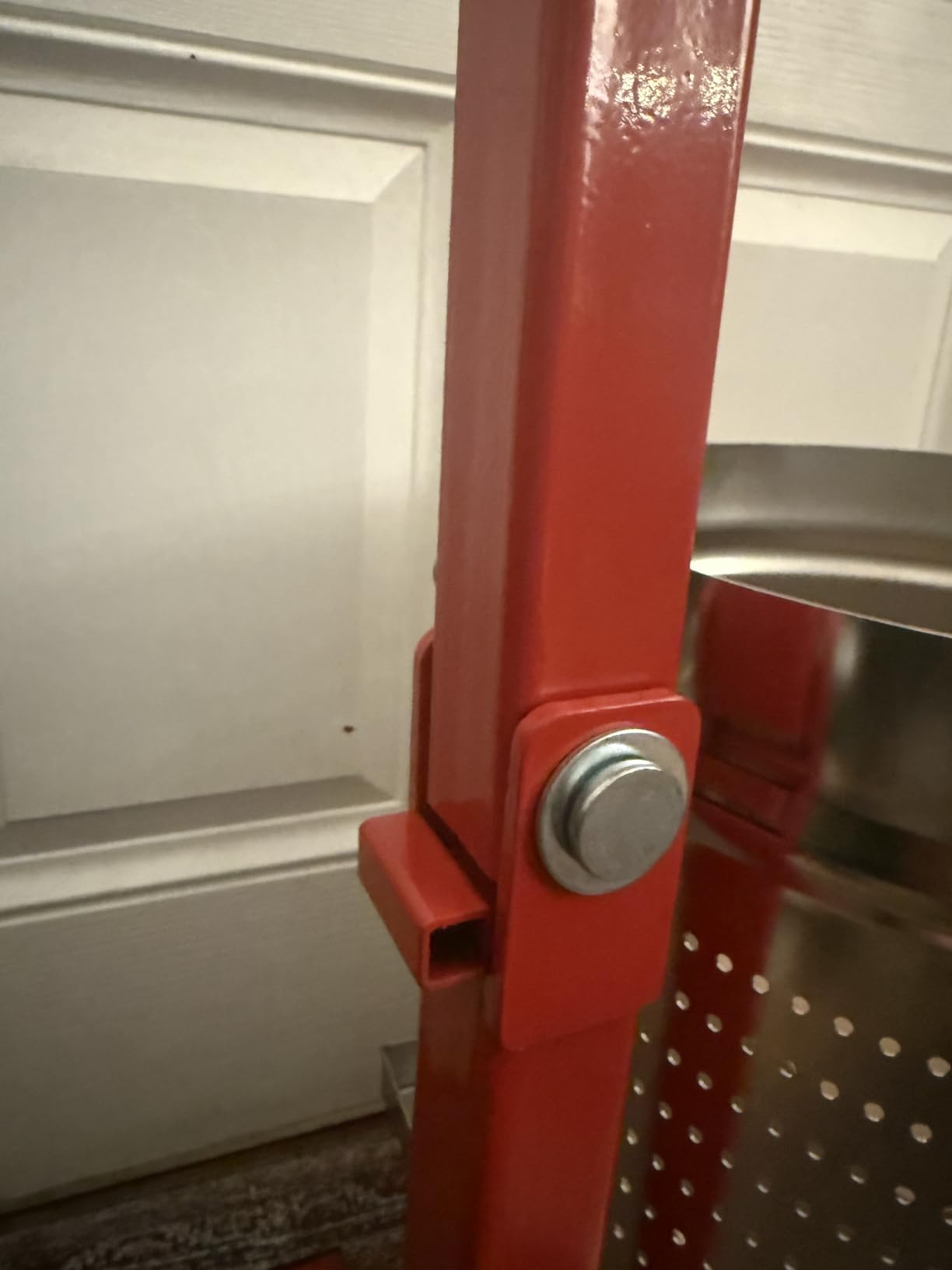
Because the juice-contact surfaces are stainless, there is no wood to mould, no screw thread to strip and no coating to shed into your mash. It rinses clean, and the pomace inside the bag dries enough that emptying it is a quick job rather than a scraping job.
One detailed review raises a fair design question: at a full 30-litre fill, a 3-ton jack may be spreading its force too thinly to press more than a few inches of pulp at once. That same reviewer also found the jack O-rings loose enough to seep fluid, and a short lever that bent during first use.
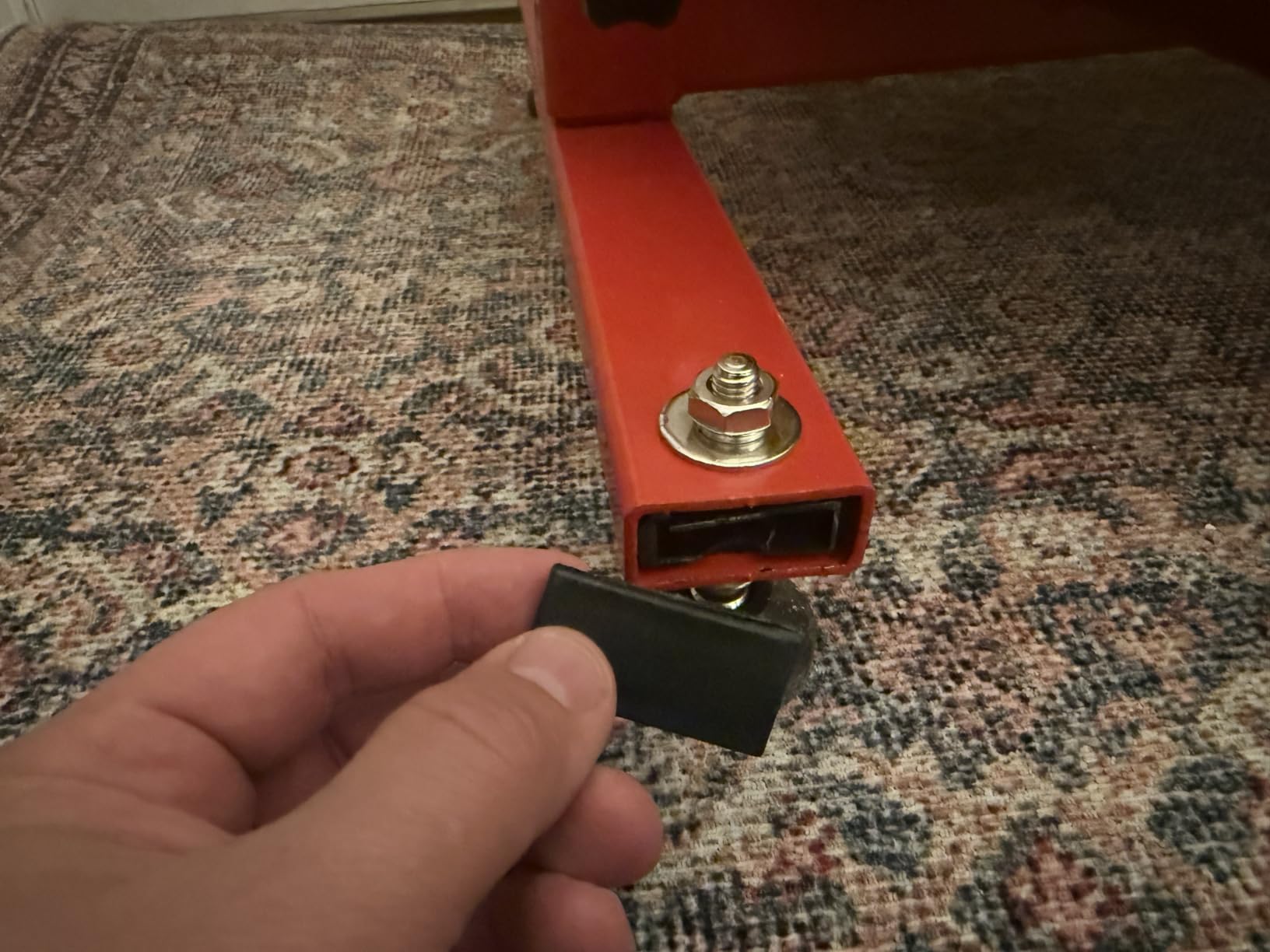
How to get the yield owners report
Press partial loads rather than filling the drum to the top, and treat the fruit properly beforehand. A rough chop is not enough; the pulp needs to be close to puree for hydraulic pressure to move juice through the bag efficiently.
What the small review base means
Thirty-seven reviews is a thin base, so treat the owner enthusiasm as directional rather than proven. The design is sound and the stainless contact surfaces are the right choice for acidic juice, but the owner history is younger than the cast iron and wood presses in this list.
4. EJWOX 10.7 Gallon Bladder Press – The Best Press That Needs No Power
Hydraulic Fruit Wine Press – Electricity-Free/Water-powered Cider Wine Bladder Press, Natural Juice Making(10.7 Gallon, with Filter Bag/Splash Guard)
10.7 gallon capacity
Water-powered rubber diaphragm
Connect to a mains tap
47 lb unit
Pros
- No electricity and no hand cranking
- Pressure and pressing time adjusted at the tap
- Short flow distance limits oxidation
- High yield even on a part-filled basket
- Quick to clean
Cons
- Needs an outdoor tap within hose reach
- Listed at 47 pounds
- so awkward for one person to move
- Only one filter bag included
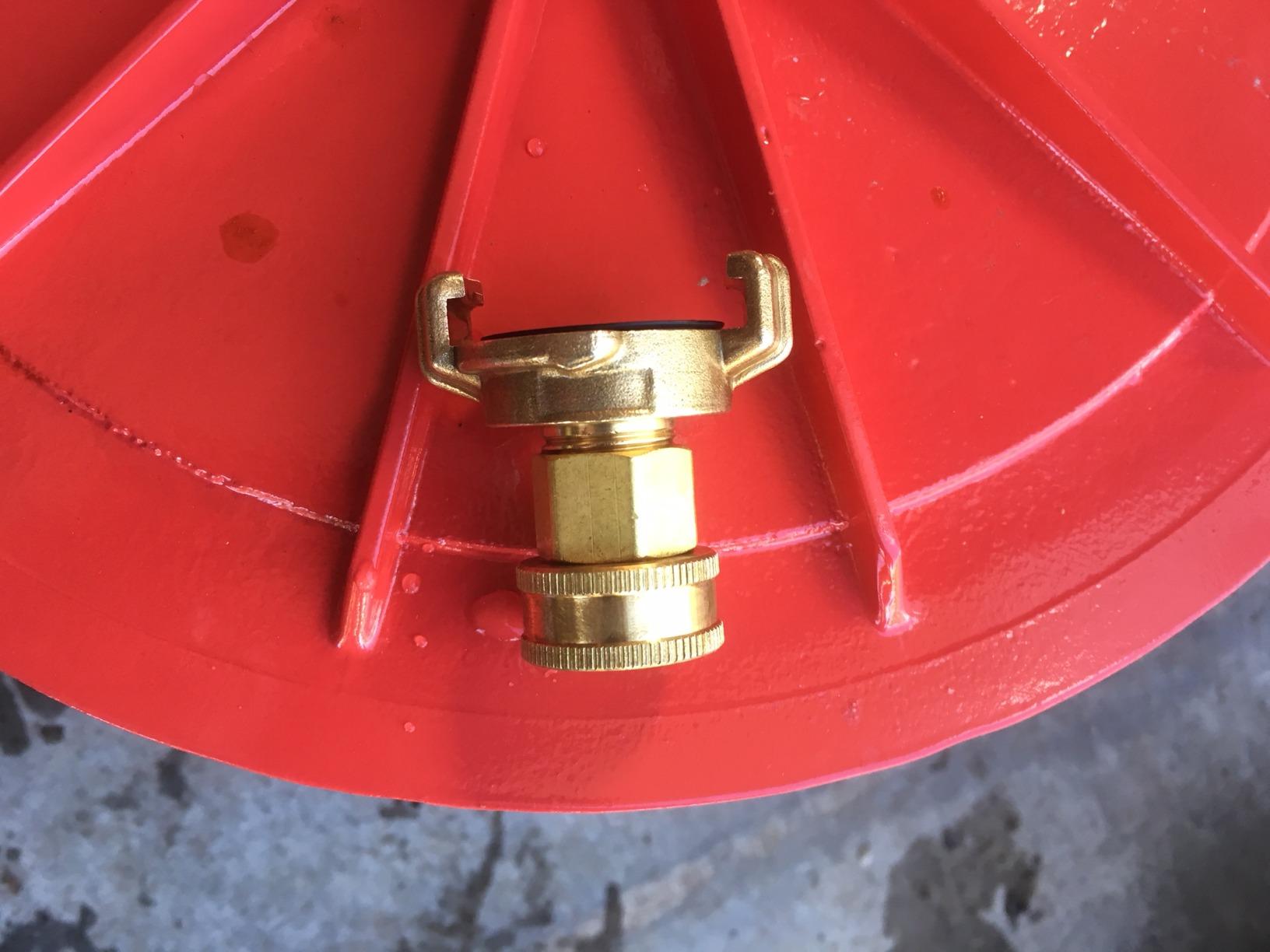
This press does not have a screw, a lever or a jack. It has a rubber diaphragm, and when you connect a garden hose to a domestic mains tap, tap water expands that diaphragm and presses your mash against a mesh basket. Opening the tap further increases the pressure and the speed; closing it slows things down.
That single design choice removes the two biggest complaints about screw presses, which are arm fatigue and the long, slow path juice has to travel. Here the flow distance is short, and owners report that the quick pressing limits oxidation and keeps the aroma fresh. The rating split backs it up, with 68 percent five-star and 1 percent two-star reviews.
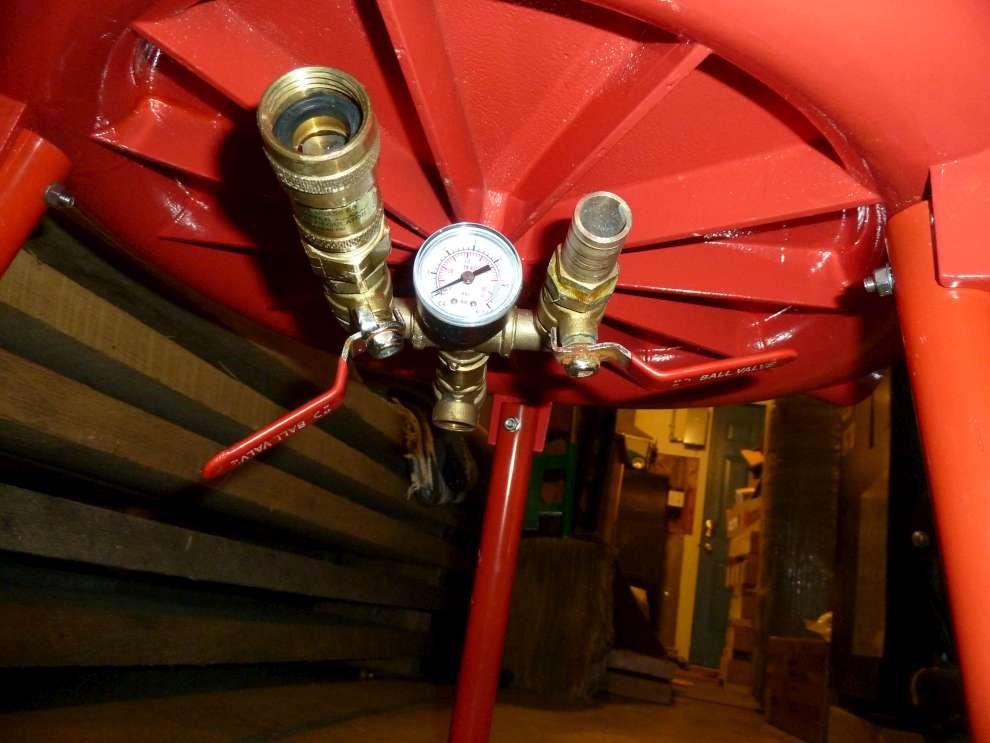
There is a second benefit that is easy to miss. A screw press drives hard wooden slats against mash under load, and that repeated stress is what eventually splits slats and cracks baskets. A diaphragm never touches the fruit, so the wood in this press simply stays wood.
It is also more flexible with fruit than its name suggests. Owners have used it for apples, grapes, red currants, rhubarb, tomatoes, citrus, honeycomb and macerated tobacco, which makes it a reasonable wine and juice press as well as a cider one.
What you need before you buy
The tradeoff is the setup, not the fruit. It needs an outside mains tap or another suitable water source within hose reach. If your pressing site is a field with no water, this machine is the wrong answer, and that requirement is the single biggest reason people pass on it.
When a screw press makes more sense
Choose a screw press if you cannot get a hose to the pressing site, if you want to press indoors without running water, or if your harvest is small enough that throughput will never be the limiting factor.
5. VEVOR 30L Beech Wood Press – The Best Fruit Press for Big Manual Harvests
VEVOR Fruit Wine Press, 7.93Gal/30L Manual Juice Maker, Solid Beech Wood Basket, Vintage Traditional Juicer with 6 Press Wooden Blocks, 2 Filter Bags, Heavy Duty Pole Handle Bar for Cider Apple Grape
30L beech wood basket
1.1 inch thickened pressing plate
Extended pole handle
38.1 lb unit
Pros
- Largest manual wood-basket capacity in the group
- Stamped steel base and hardwood slats feel like winery equipment
- Removable bucket rinses quickly
- Also handles honey
- olive oil and herbs
Cons
- Assembly takes an hour or more with 48 screws
- Must be bolted down or held by two people
- Strenuous cranking past a certain point
- Confusing instructions around similar washers
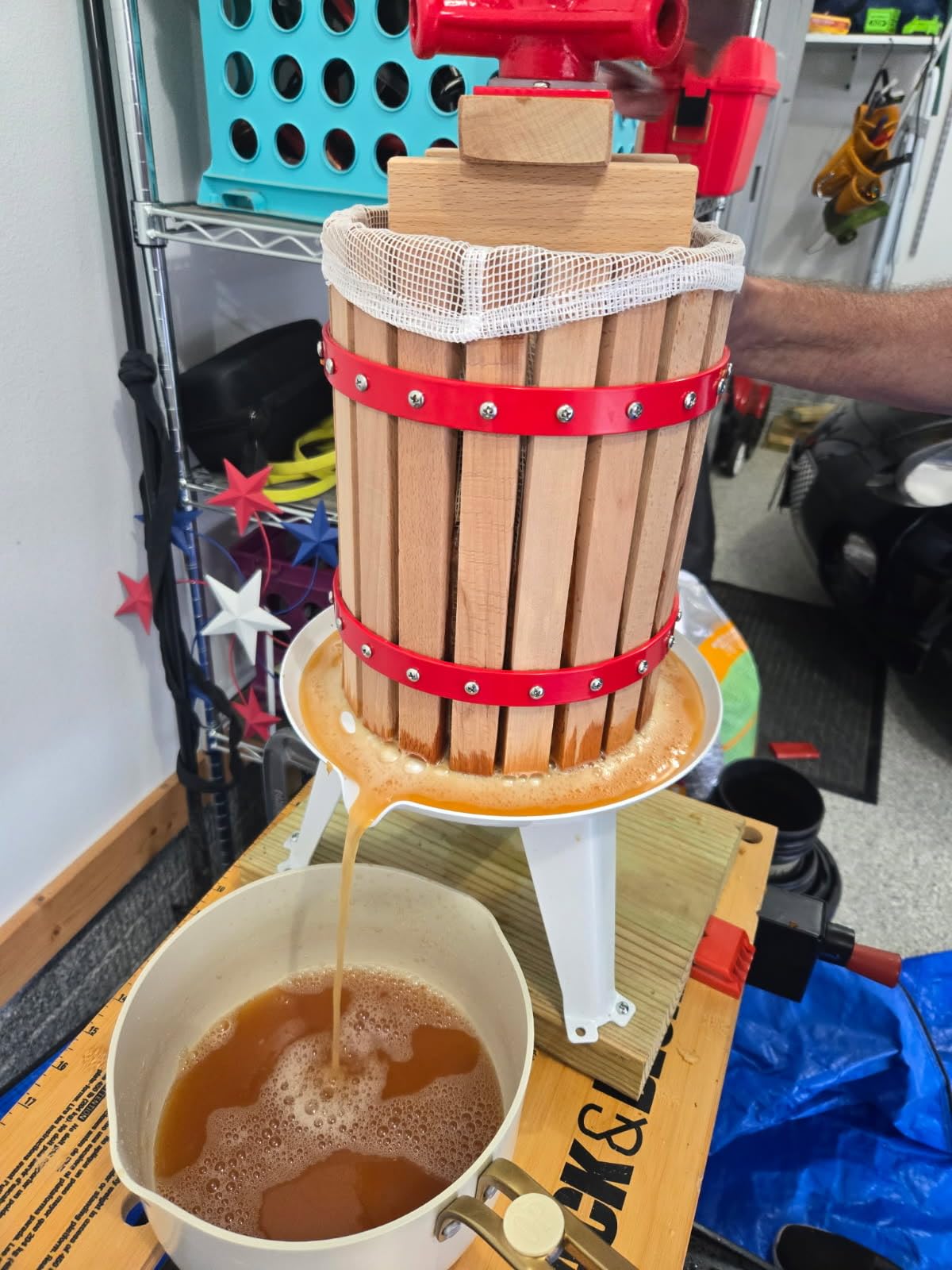
Thirty litres is a serious volume for a hand-driven machine, more than twice what a small tabletop press holds. The basket is solid beech, the pressing plate is 1.1 inches thick, and an extended pole handle bar gives you the long lever arm that turns a modest turn into real downward force.
Owners consistently say the build feels like equipment from a small winery rather than a hobby shop, and cider makers report yields above their expectations once the fruit is properly pureed before loading. The removable bucket lifts straight out for rinsing, with no hard-to-reach corners where pulp can hide.
There is a real cost to all that mass. It is supplied as a kit with 48 wood screws fastening the basket slats, and assembly realistically takes an hour. Once it is together it must be bolted to a workbench or the floor. Cranking a 38.1-pound press with one unsupported person is a bad afternoon.
There is also a wear point worth knowing at the outset. Where the pressing plate rubs against the angle iron of the base, powder-coating flakes can shed into the fruit unless that contact surface is lubricated. Several owners fixed it with petroleum jelly or needle bearings and report no further flaking.
Read this before you start assembly
The instructions are genuinely confusing around the two similar-looking washers and which way the bevelled edges of the planks face. Assemble it in daylight with the manual open, check every bevelled side before you tighten, and add your own lubricant to the plate contact before the first load.
Who this is for
This is the pick for someone with a real orchard and a proper workbench, who wants manual simplicity but needs volume. If your harvest fits in a few baskets, the smaller wood presses will do the same work with a fraction of the effort and none of the assembly.
6. VEVOR 30L Hydraulic Press – The Best 30-Litre Hydraulic Press
VEVOR Hydraulic Fruit Wine Press, 7.93Gal/30L, Stainless Steel Heavy Duty Manual Juice Maker, Cider Apple Grape Vegetable Crusher, Cheese/Tincture/Herbal Press, with 2 Filter Bags, for Kitchen Home
3 ton / 6614 lb jack rating
30L stainless capacity
0.16 inch pressing plate
57.8 lb unit
Pros
- Hydraulic force with very little cranking
- Simplest assembly of the large presses here
- Cuts pressing time sharply
- Easy to wash down
- Also presses honey
- cheese and tinctures
Cons
- One report describes the plate deforming outward under load
- Juice basin can rotate with the screw at full load
- Listed at 57.8 pounds
- Bags must be filled with properly crushed fruit
This is the jack-driven design: a lever-operated hydraulic ram rated to 3 tons, feeding a 0.16 inch stainless pressing plate. It is listed at 57.8 pounds, measures just under 30 inches tall, and collapses to fit on a garage shelf when it is not in use.
The appeal is effort reduction. Owners report getting 7 gallons of cider out of it without trouble, and describe the pressing time as sharply cut compared with turning a full screw. It is also the easiest of the large presses here to put together, which matters if you are assembling it on a cold morning in a barn.
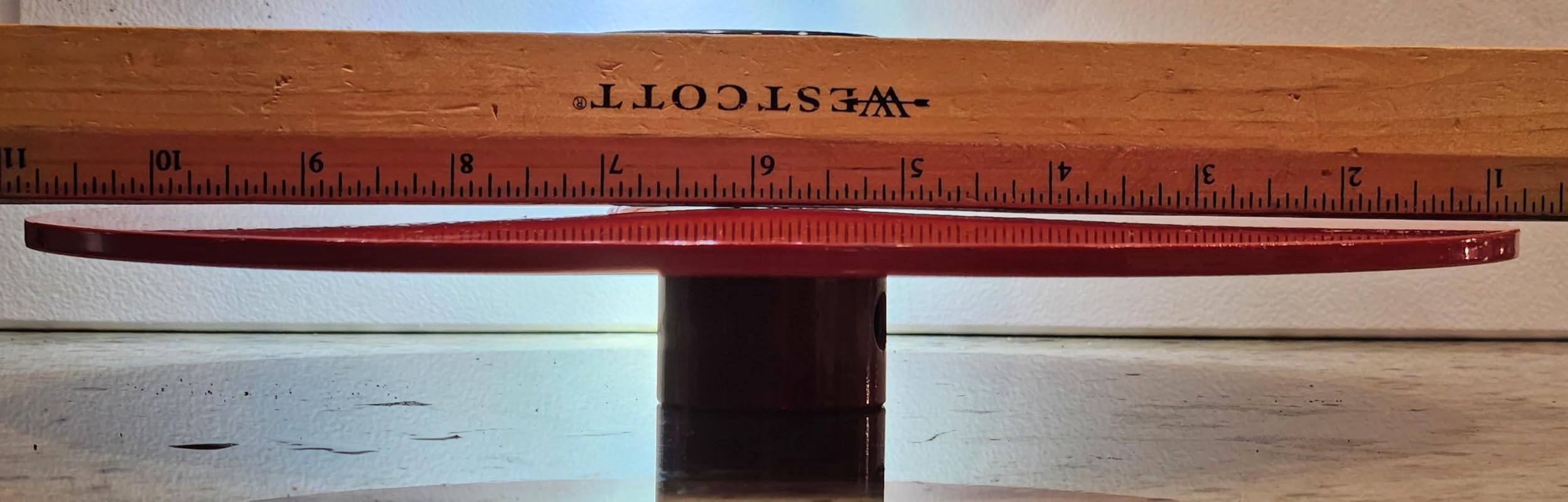
Two detailed multi-batch reviews do raise concerns, and we would rather you heard them here. One describes the pressing plate deforming outward at the centre under load, and roughly a quarter-inch gap between plate and perforated cylinder that let mash creep back up over the plate. Both appear tied to running the largest size repeatedly at full capacity.
Another practical note: the juice catch basin can rotate with the screw at full capacity, so you may want a second person holding it steady while the ram comes down. Top rods loosening after repeated batches is also reported, so check them between batches.
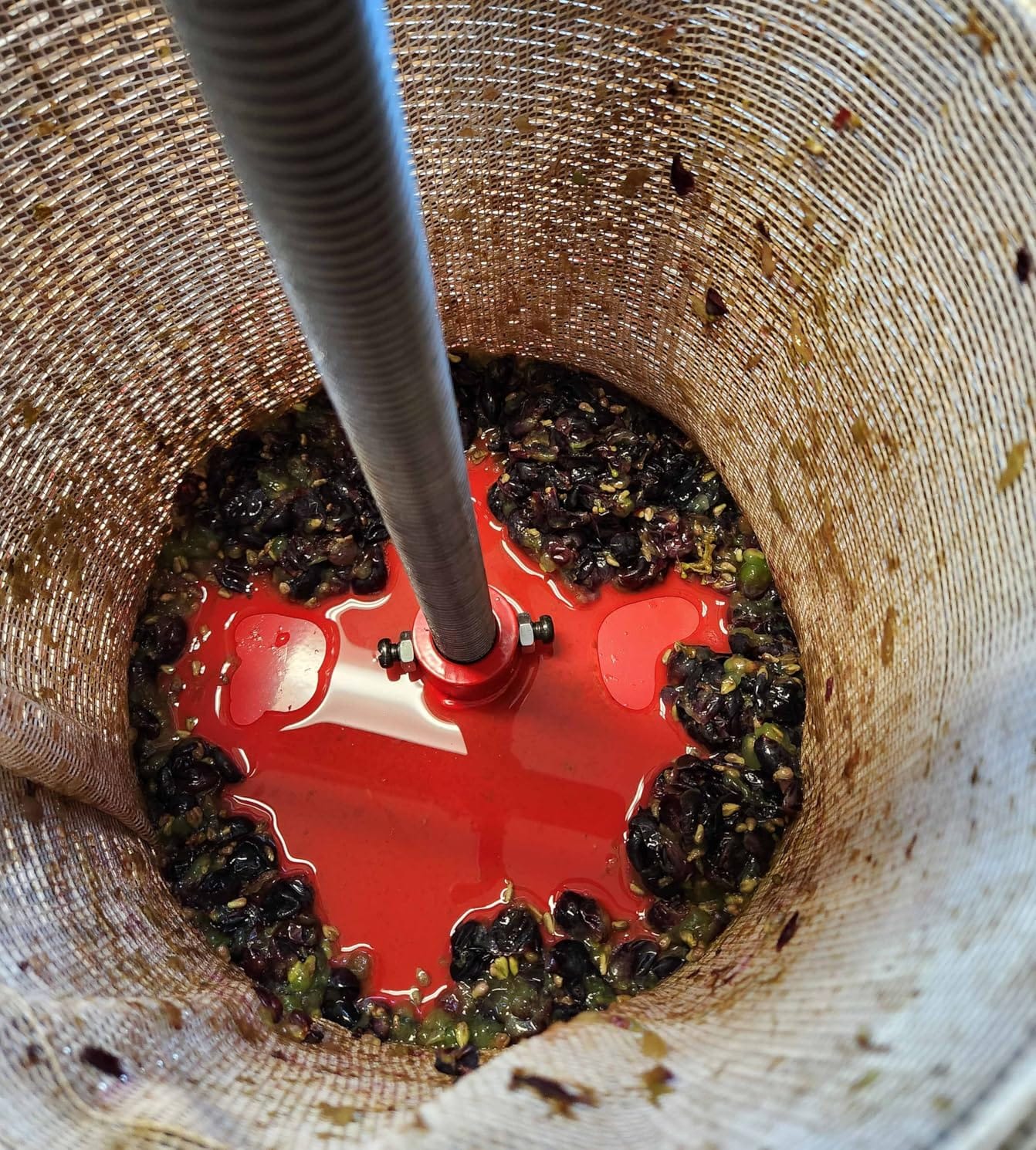
Crushing quality decides the result
Skipping or rushing the crushing step produces almost nothing, and reviewers say a rough chop is not sufficient. If you do not own a grinder or scratter, budget for one or plan on very long, very tiring sessions with a hand tool.
How it compares with the Mosakar
Both are 30-litre hydraulic presses built on a 3-ton ram, so the real decision is specification rather than size. The Mosakar specifies AISI 304 stainless on every juice-contact part, which is the deciding factor if you plan to keep this machine for many seasons and press fruit other than apples.
7. EJWOX 4.75 Gallon Beech Wood Press – The Best-Selling Manual Press in the Group
EJWOX 4.75 Gallon Fruit and Wine Press, Manual Cider Juice Maker with Solid Beech Wood Basket & Heavy-Duty Stand for Apples, Grapes, Berries
4.75 gallon beech basket
Heavy-duty stand with pour spout
Manual screw operation
Model 1103
Pros
- Most owner reports of any press in the group
- Breakaway basket design speeds pulp removal
- Stand has screw holes for secure mounting
- Quiet
- motor-free operation
- Handles apples and berries
Cons
- Rating is below several rivals with 7 percent one-star
- Needs crushed fruit loaded for good yield
- Wood parts are hand wash only
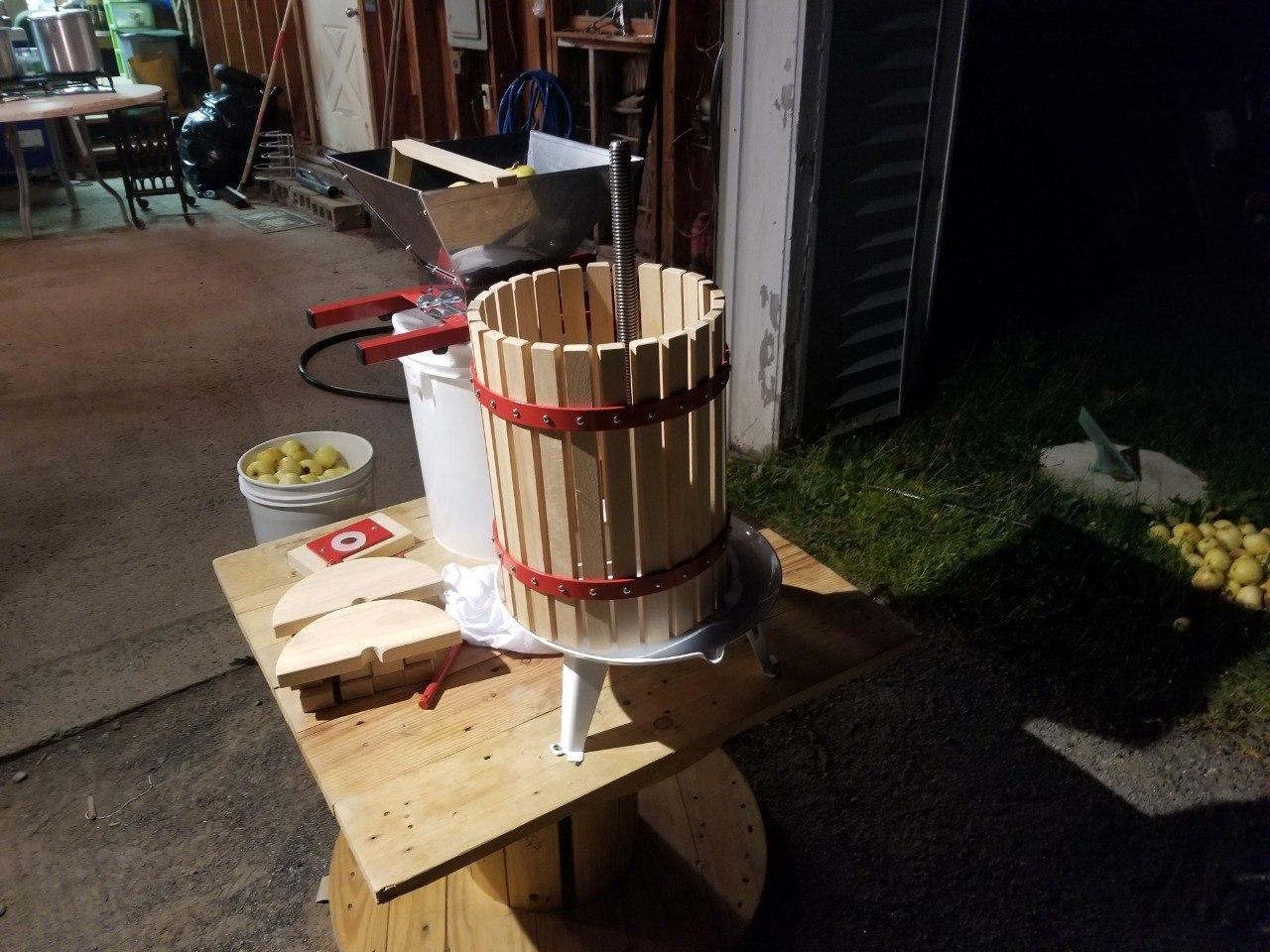
With more than 1600 owner reviews and a leading sales position in the Wine Making Crushes, Presses & Stemmers category, this is the press most people end up buying without researching. The mechanism is a straightforward manual screw over a solid red beech basket on a heavy-duty stand, and it measures roughly 24 inches deep, 14 inches wide and 27 inches tall.
The breakaway basket is the detail that saves time between loads. Instead of fishing spent pulp out of a fixed basket, you release the wood cylinder, tip the dry-ish cake out and reload, which matters far more over a full pressing day than it sounds like it would.
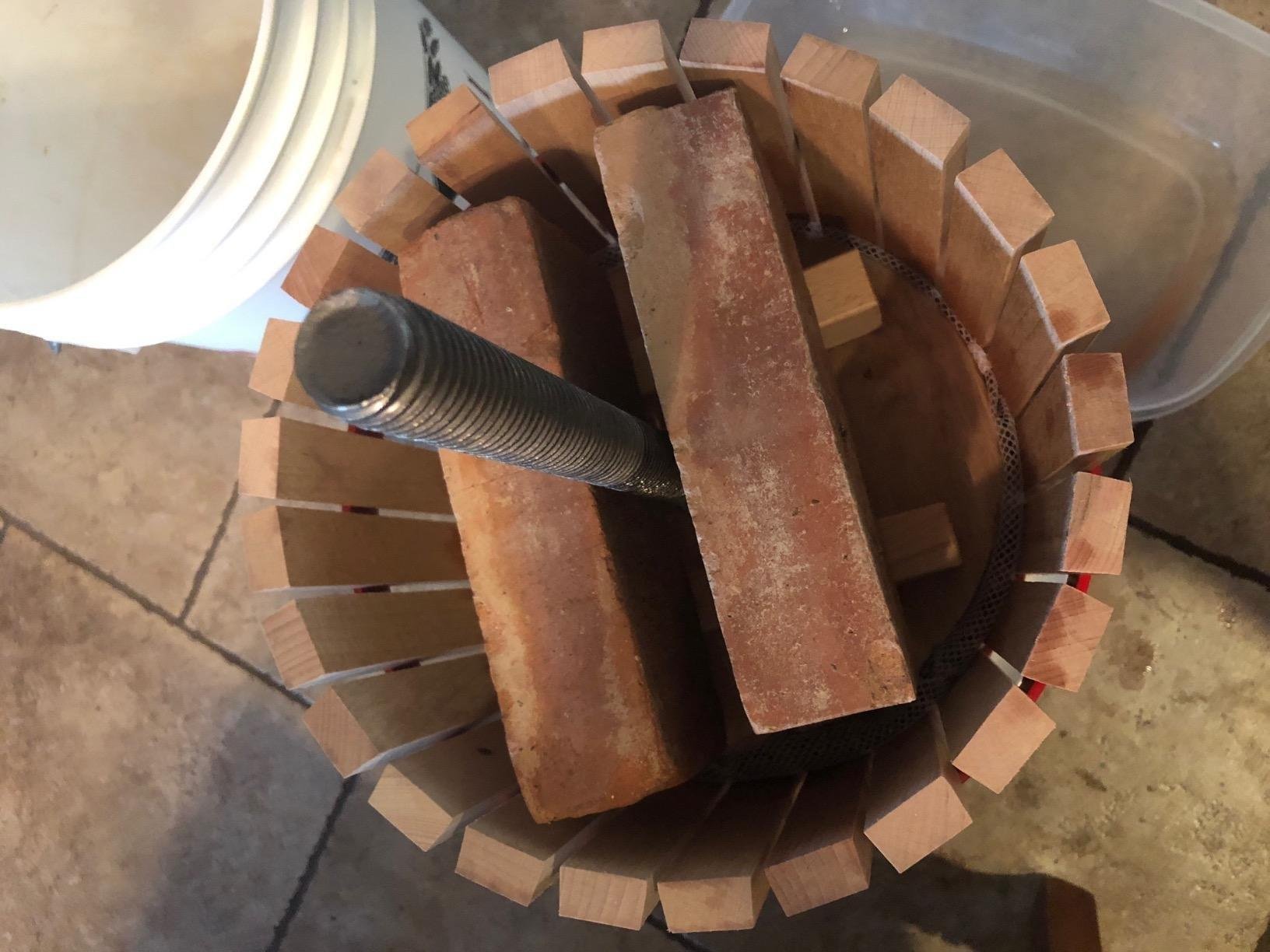
The stand is well thought out for a manual machine. It has a built-in pour spout so you can tip juice straight into a bucket, and screw holes for mounting so the frame cannot walk across the floor while you lean on the handle.
Being honest about the weaknesses: the 4.2 average comes with 7 percent one-star reviews, and the recurring complaint is inconsistent yield compared with more expensive screw presses. The usual reason is loading whole or roughly chopped fruit instead of crushed pulp, plus the fact that wood parts must be hand washed.
Why it stays popular despite the rating
Nearly five gallons of capacity in a footprint you can carry, a pour spout, mounting holes and no motor to maintain is a package a lot of families find more usable than a heavier machine. The variant range in 1.6, 3.2, 4.75 and 7.9 gallon sizes also means the same design covers a small harvest and a large one.
When to step up instead
If your press day runs to more than about three loads and your arms are the limiting factor, the cross-beam screw design reviewed earlier is a genuine upgrade. This press is a solid starting point rather than a final one.
8. VEVOR 12L Twin-Barrel Press – The Best Budget Entry for First-Time Pressers
VEVOR 3.17 Gal/12L Fruit Wine Press, 2 Stainless Steel Barrels, Manual Juice Maker, Cider Apple Grape Tincture Honey Olive Oil Making Press with Triangular Handle for Outdoor Kitchen Home
12L capacity in twin barrels
0.1 inch stainless plate
16.8 lb frame
Two food-grade filter bags
Pros
- All-stainless contact surfaces resist rust
- Compact at 16.8 pounds
- Barrels disassemble and wash easily
- Also presses cheese
- olive oil and honey
Cons
- Lowest rating here at 4.0 with 11 percent one-star
- Smallest capacity at 12L
- Best results need pre-cut fruit and a filter bag
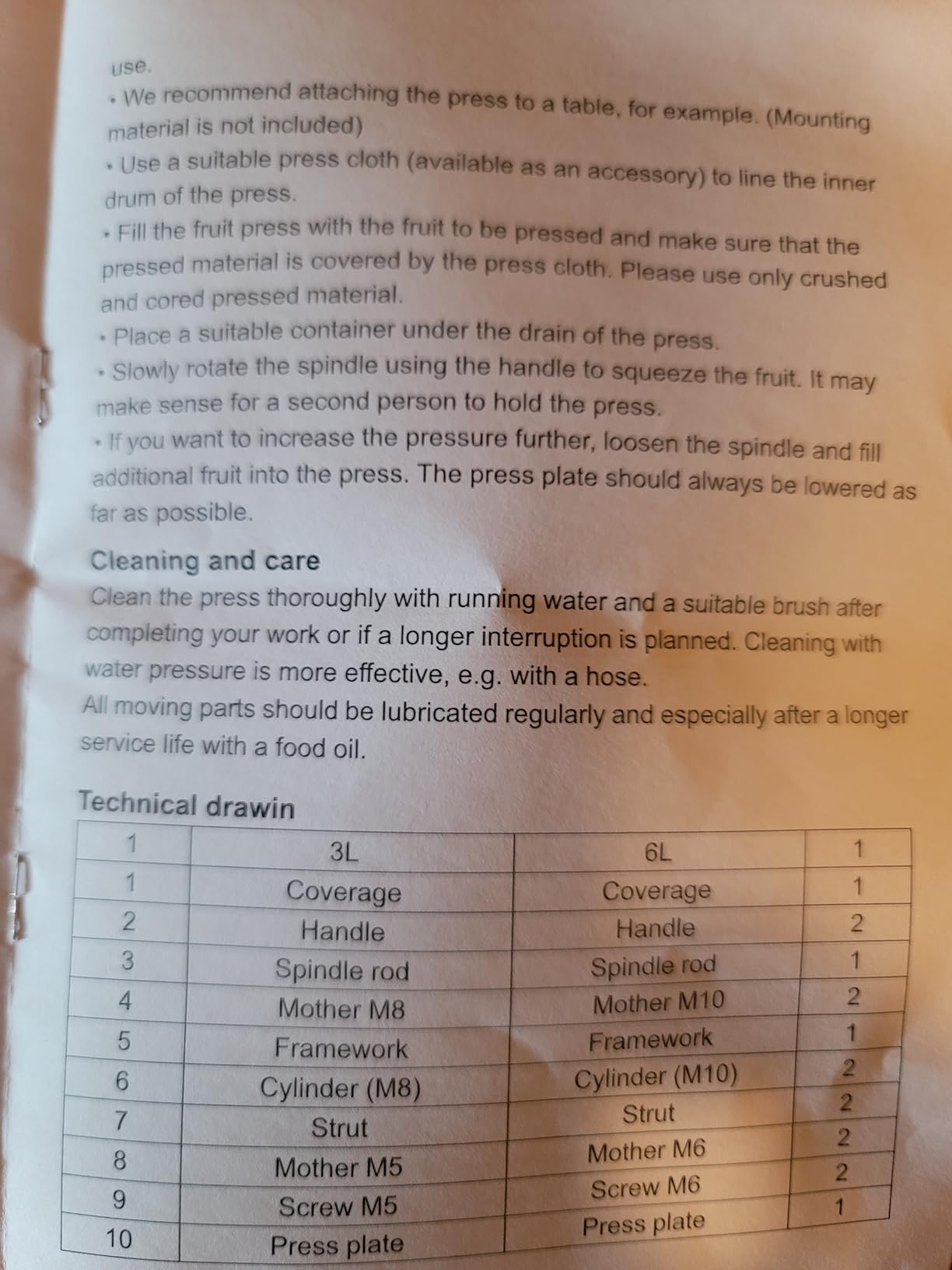
This is the smallest machine in the group at 16.8 pounds, with twin stainless barrels and a thickened pressing plate. Two food-grade filter bags are included, which is generous at this level, and the triangular non-slip handle makes the downward turn easy to control.
Where it wins is cleanability. The inner and outer barrels come apart and the parts can go in a dishwasher, which means no wood to scrub, no slats to mould and no grooves to trap pulp. On a machine that will only be used once or twice a year, that is a serious advantage.
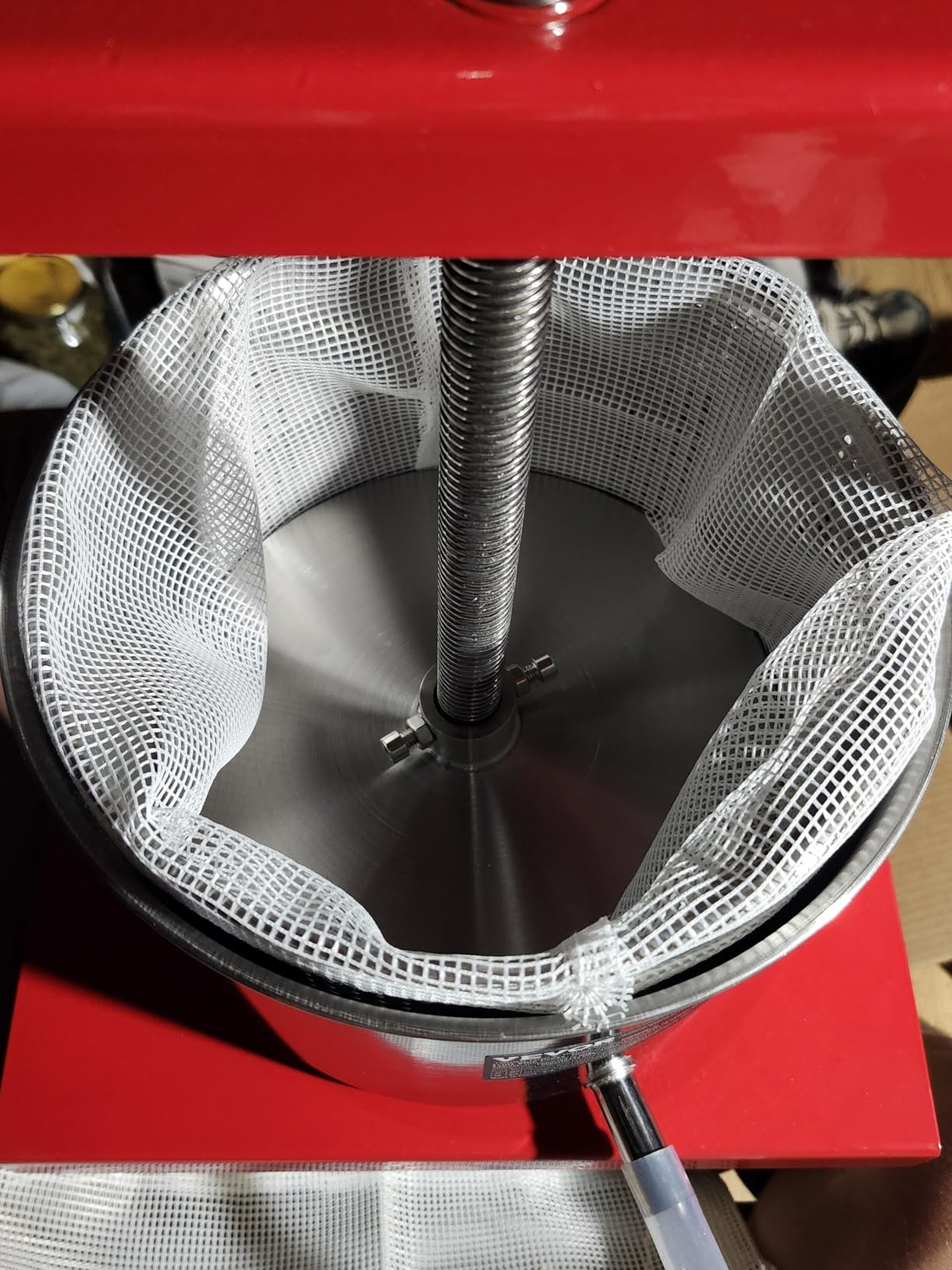
It is also not a cider-only tool. The same action presses wine, cheese, purée, olive oil and honey, so if you are starting out and want one machine for several hobbies, it earns its place.
The trade-offs are honest ones. Twelve litres is the smallest capacity here, so you will run more batches for the same volume of fruit, and the rating is the lowest in the group at 4.0 with 11 percent one-star reviews. Best results also require fruit to be cut up and loaded into the included bags rather than tipped in whole.
Who should start here
A first-time presser with a small tree or two, or anyone in a small kitchen who wants to make a few gallons of fresh juice to see whether cidermaking suits them. The stainless-only build means nothing to season and nothing to rust if it lives in a flat.
When it stops being enough
The moment your harvest exceeds what you can load by hand in a couple of hours, the small capacity turns into an evening of cranking. At that point the 14-litre cross-beam press is the sensible step up rather than a second machine.
How to Choose a Fruit Press for Cider
How big a press do you need?
One kilogram of ripe apples yields roughly one pint of juice, and one kilogram of crushed apple fills about one litre of basket space. That single ratio does all the sizing work. Multiply your expected harvest in kilograms, divide by the basket volume in litres, and the result is your number of loads.
Keep one more rule in mind. If you are milling apples by hand, stay at 30 litres or below. Above that, grinding becomes the bottleneck and you will spend the pressing day crushing rather than pressing, and a mid-size press with a decent grinder beats a large press without one. If you want to read about other press formats, our guide to the best drill presses covers a different kind of workshop tool entirely.
Fruit press vs juicer: which one makes better cider?
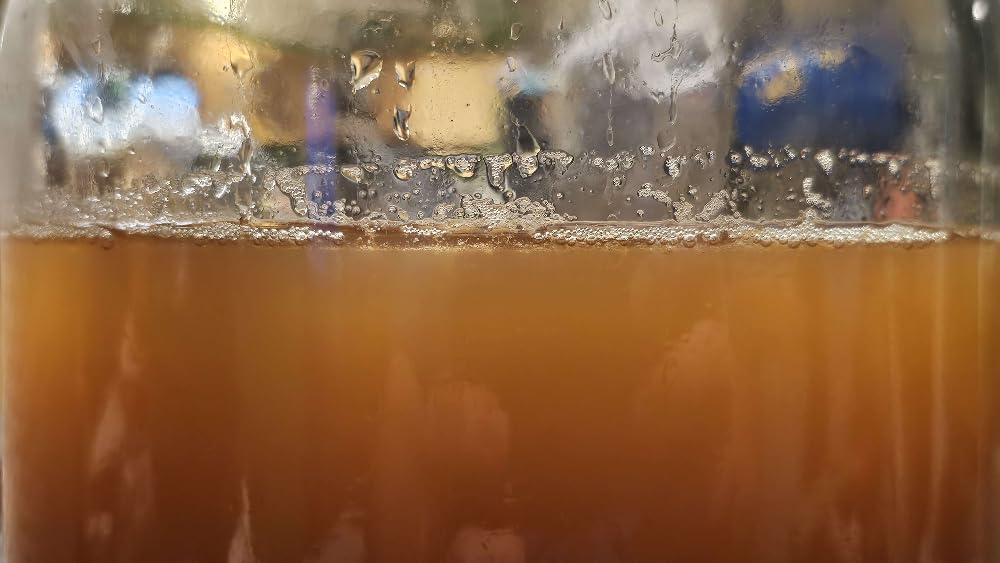
For hard cider, the press wins, and it is not close. A juicer spins or masticates whole fruit, which is fast and produces very clear juice for drinking immediately, but it also aerates the juice and carries pulp through. Owners who have used both describe juiced cider as full of floaty fruit pulp bits, while pressed cider is essentially free of them.
A press works on crushed fruit, so the juice arrives clearer and costs less per gallon. A juicer is the right tool for a glass of fresh juice; a press is the right tool for anything that has to ferment, keep, or feed more than one person.
Do you need an apple grinder?
Yes, if you have more than a few baskets of fruit. Presses do not crush; they squeeze. Loading whole apples into a screw press is the single most common beginner mistake, and it is why so many inexpensive presses appear to underperform. A buyer’s complaint that a shallow press let apple bits burst through the inner net is really a crushing complaint in disguise.
A standalone scratter or mill is also a legitimate alternative to a combined press and grinder, and often the more flexible route. The rule is simply that fruit should reach the basket as pulp, not as pieces.
Cast iron, stainless steel or wood?
Cast iron gives you mass, heat retention and very durable drive parts, and it is the traditional answer for an orchard that will still be pressing in twenty years. It is also the heaviest material, so anchoring it to a bench is not optional.
Stainless steel wins on cleanability, and far easier to clean is the single most repeated quality signal in cidermaking discussions. It will not rust with acidic juice contact and it tolerates damp storage, which matters for a machine used twice a year.
Wood is traditional, repairable and pleasant to handle, but it must be hand washed, dried properly and can mould if pulp stays in it. If you press often and have a sink nearby, stainless is the easier option. If you press rarely and want something that looks right in a barn, wood or cast iron is perfectly defensible.
How pressing actually works
Sort out bruised and rotten fruit, because rot in the mash becomes off flavours you cannot press back out. Grind the rest into pulp. Load the pulp into a press sack or bag, set it in the basket, and build the load evenly rather than cramming one side.
Turn the screw, lever or handle slowly, and keep the force in line with the centre of the basket. A press driven by a long lever arm produces more force than one driven by a short one, so resist the urge to lengthen the lever or lean harder; patience produces better juice and fewer bent parts.
Apples give up nearly everything in one pressing. Grapes and other soft fruit usually need a second, lighter pass, and the spent pulp should come out dry and cake-like rather than wet and heavy. Clean everything immediately, because dried-on pulp is far harder to remove than fresh.
Cleaning, drying and off-season storage
Wash parts while you still have the momentum of the pressing day, and dry them fully before storing. Acid juice sitting on steel dulls it, water trapped in wood slats invites mould, and a bag stored damp will be useless next season.
Oil wooden parts lightly with a food-safe lubricant before the season ends, and treat cast iron threads the same way so they do not seize in damp storage. Store presses covered and off the floor, and expect a wooden basket to need more attention than a stainless one.
Buy, rent or build your own?
If you have three to five trees and a few hundred pounds of apples, renting is a defensible choice, and building from plans is genuinely viable at that scale. A simple plywood-and-cart-jack build is a well-trodden path, and a small home-built press can be assembled for a fraction of what a retail machine costs.
Buy if you press every year, if you want fruit that stays clear, or if you also press grapes, pears or plums for wine. The argument for buying is that a press is a ten-to-fifteen-year tool, whereas a rented machine is a per-hour cost with a queue behind you when the fruit is ready now.
Pressing-day safety
Never put whole fruit into a mill, grinder or scratter by hand. The mechanism will take fingers, and experienced cidermakers warn beginners about it more than any other pressing-day hazard. Use the hopper and keep your hands outside it while the machine turns.
Screw threads are pinch points, so keep hands and loose clothing clear of the Acme thread, especially while the plate is under load. Keep a first-aid kit that includes clean dressings and check that everything that touches juice has been washed before it touches your mash, because the juice goes straight into a ferment where bacteria will be very welcome.
Frequently Asked Questions
What size cider press do I need?
Use one rule of thumb: about 1 kg of ripe apples gives roughly 1 pint of juice, and 1 kg of crushed apple fills about 1 litre of basket space. Divide your expected harvest in kilograms by the basket volume in litres to get your number of loads. If you are grinding apples by hand, stay at 30 litres or below, because crushing becomes the bottleneck above that.
Which apple press is best for making cider?
For most home orchards the best apple press is a stainless or cast iron screw press with a 12 to 14 litre basket, because that size pairs well with a hand-cranked or powered grinder. Choose a larger cast iron or hydraulic model only if you routinely press a bushel or more, and a bladder press only if you have an outside tap at the pressing site.
What’s the difference between a fruit press and a juicer?
A fruit press squeezes juice from fruit that has already been crushed to pulp, so the juice arrives clear and the machine handles volume cheaply. A juicer spins or masticates whole fruit, which is faster but aerates the juice and leaves pulp in it. For drinking fresh juice, a juicer is fine; for hard cider that will ferment and keep, a press is the better tool.
What are the disadvantages of a hydraulic press?
A hydraulic press needs a jack, pump or water supply, so it costs more and has more parts that can fail than a plain screw press. Jack-driven models still need anchoring to the floor, and bladder designs need an outside tap within hose reach. They also demand properly crushed fruit, because hydraulic pressure will not do the crushing for you, and 30-litre drums can need a second person at full capacity.
Is owning a cider press worth it?
It is worth it if you press most years or want to keep and bottle your cider, because a press pays back over many seasons and gives you clear juice. If you have only a few trees and press once a year, renting or building a simple press can be the more sensible route, since most of the cost of buying is only justified by repeated use.
Which Fruit Press Should You Buy?
For most people, the best fruit presses for cider in 2026 come down to three sensible answers. Buy the EJWOX 14L cross-beam press if you want the most even force and the best-evidenced performance in this group, if you have enough fruit to fill a 14-litre basket more than once.
Buy a cast iron and oak press if you want a tool that will still be working in fifteen years and you have a bench to bolt it to. Buy a hydraulic press if your harvest is large enough that arm fatigue is your limiting factor, and pair it with a grinder. Add a bladder press only when an outside tap is already at your pressing site.
Whatever you choose, add a crusher or mill to the same purchase. The press is only half the machine, and the fruit you feed it decides more about your cider than the brand of press does.