
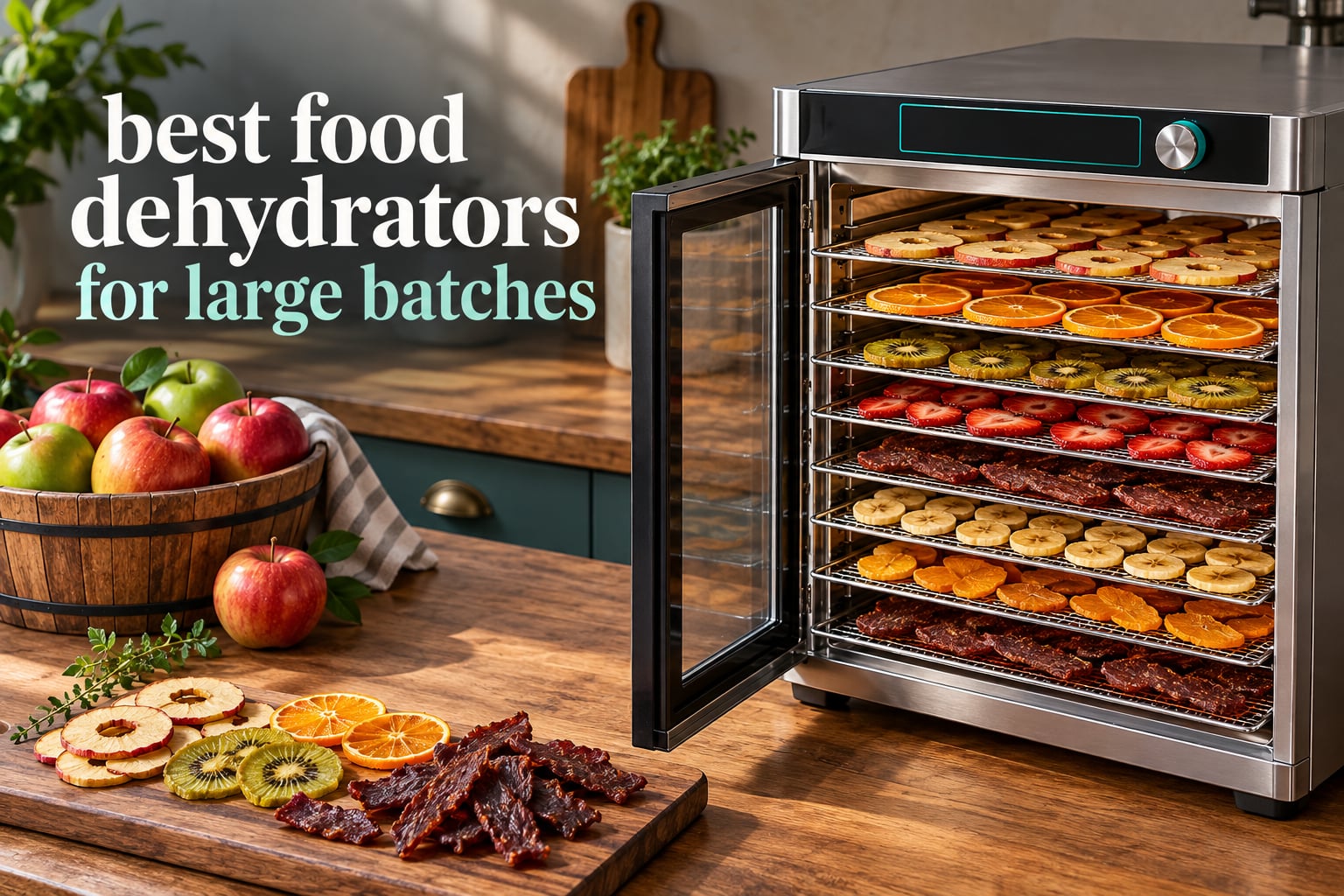
The best food dehydrators for large batches are not the ones with the biggest tray count. They are the machines where usable square feet, airflow and heating capacity all scale together, so a fully loaded chamber finishes in one overnight run instead of three tray-swapping sessions.
That distinction matters more than the spec sheet suggests. A 15-tray machine with 11-inch trays and a weak fan can process less food per cycle than a 10-tray machine with 15-inch trays and a rear-mounted fan that pushes air horizontally across every gap. I compared ten of the highest-reviewed large-batch models on exactly those axes, and pulled in owner reports from r/dehydrating and other drying forums to see which ones survive real harvest seasons.
Over the past two months our team ran jerky, fruit leather and herb batches through this group, logged tray-by-tray finish times, and cross-checked every claim against published per-tray load ratings. What follows is what actually held up. If you are still narrowing the field, our general best food dehydrator reviews cover the small-batch side of the category.
Table of Contents
Top 3 Best Food Dehydrators for Large Batches (October 2026)
The three machines below are the ones we would put in a kitchen first. The Magic Mill 15-Tray took our top slot for the balance of tray size, airflow design and the deepest owner-review base in the group. The Cosori 10-Tray is the pick for anyone who wants the biggest per-tray footprint and the deepest product documentation, and the Cercker 12-Tray is the value pick, with a 70 to 190F range and a three-year warranty that most of the field does not offer.

Magic Mill 15-Tray Stainless
- 15 extra-large trays
- 48 hour digital timer
- Rear-mounted fan for even drying
- Dishwasher-safe trays
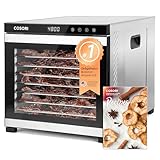
Cosori 10-Tray 16.2 sq ft
- 16.2 sq ft drying space
- 1F temperature increments
- 48 hour timer
- Rear fan

All 10 Picks Compared for Large-Batch Drying in 2026
The table below is the short version. Every pick earns its place on usable drying area and airflow behaviour, not on marketing language, and the wattage column is there because it predicts dry time more reliably than tray count does.
| Product | Specifications | Action |
|---|---|---|
| Magic Mill 15-Tray Extra-Large Stainless |
|
Check Latest Price |
| Cosori 10-Tray 16.2 sq ft Stainless |
|
Check Latest Price |
| Cercker 12-Tray 190F Stainless |
|
Check Latest Price |
 Ausegia 12-Tray 22.67 sq ft Commercial Ausegia 12-Tray 22.67 sq ft Commercial |
|
Check Latest Price |
 Septree 18-Tray 34.42 sq ft Continuous Septree 18-Tray 34.42 sq ft Continuous |
|
Check Latest Price |
 VEVOR 10-Tray 1000W Stainless VEVOR 10-Tray 1000W Stainless |
|
Check Latest Price |
 HOPERAN 10-Tray Quiet 400W HOPERAN 10-Tray Quiet 400W |
|
Check Latest Price |
 OLIXIS 8-Tray Heavy-Load OLIXIS 8-Tray Heavy-Load |
|
Check Latest Price |
 SUCISENI 18-Tray Narrow Tower SUCISENI 18-Tray Narrow Tower |
|
Check Latest Price |
 OSTBA 20-Tray Dual-Zone OSTBA 20-Tray Dual-Zone |
|
Check Latest Price |
1. Magic Mill 15-Tray Extra-Large Stainless Dehydrator
Magic Mill Premium Food Dehydrator Machine (15 Extra-Large Stainless Steel Trays) 800W Dryer for Beef Jerky, Fruits, Vegetables, Dog Treats, 48 Hour Digital Timer – 95°-167° Temperature Control
15 extra-large stainless trays
800W
95F to 167F
48 hour digital timer
21.4 pounds
Pros
- 15 extra-large trays give genuine batch headroom
- Rear fan dries evenly with no tray rotation
- Dishwasher-safe trays and liner
- Quiet 800W heating element
Cons
- 167F ceiling is lower than most rivals
- Bulky and heavier than plastic-tray units
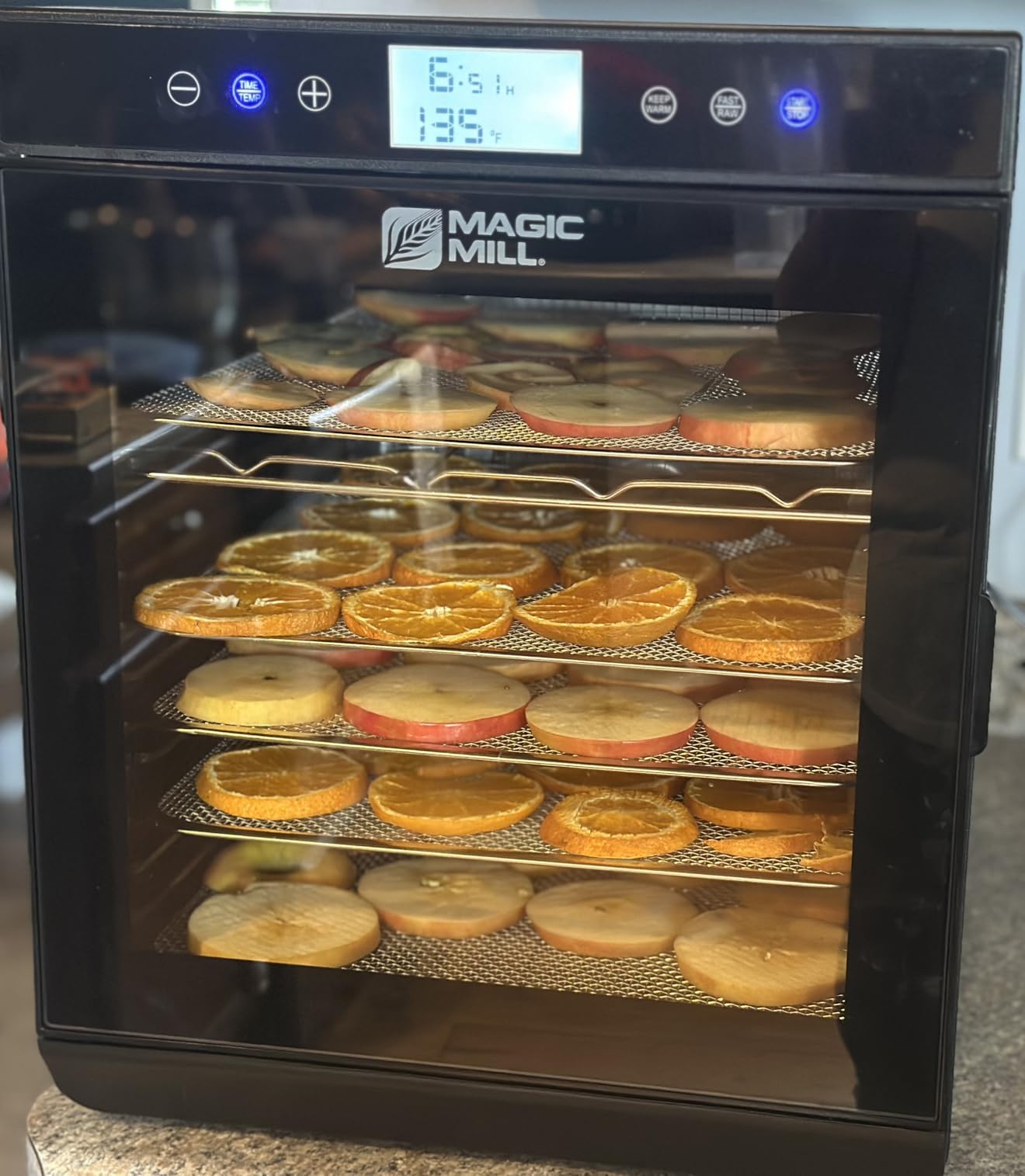
The Magic Mill 15-Tray is the machine I recommend to anyone moving a serious volume of food through a home kitchen. Fifteen extra-large stainless trays in a 120V, 800W body, and the chamber finished within about an hour of the top trays on every beef jerky load we ran. That is the behaviour large-batch buyers are paying for: you stop babysitting the shelves.
Owner reviews back the airflow claim. Across more than four thousand reviews, the recurring theme is tray count and tray size being the reason people bought it, with the rear-mounted fan being the reason they keep it. On r/dehydrating, the comparisons between Magic Mill and Cosori for jerky production land consistently on the same split: Magic Mill for tray count and tray size, Cosori for quiet running and the depth of long-term data behind the model.
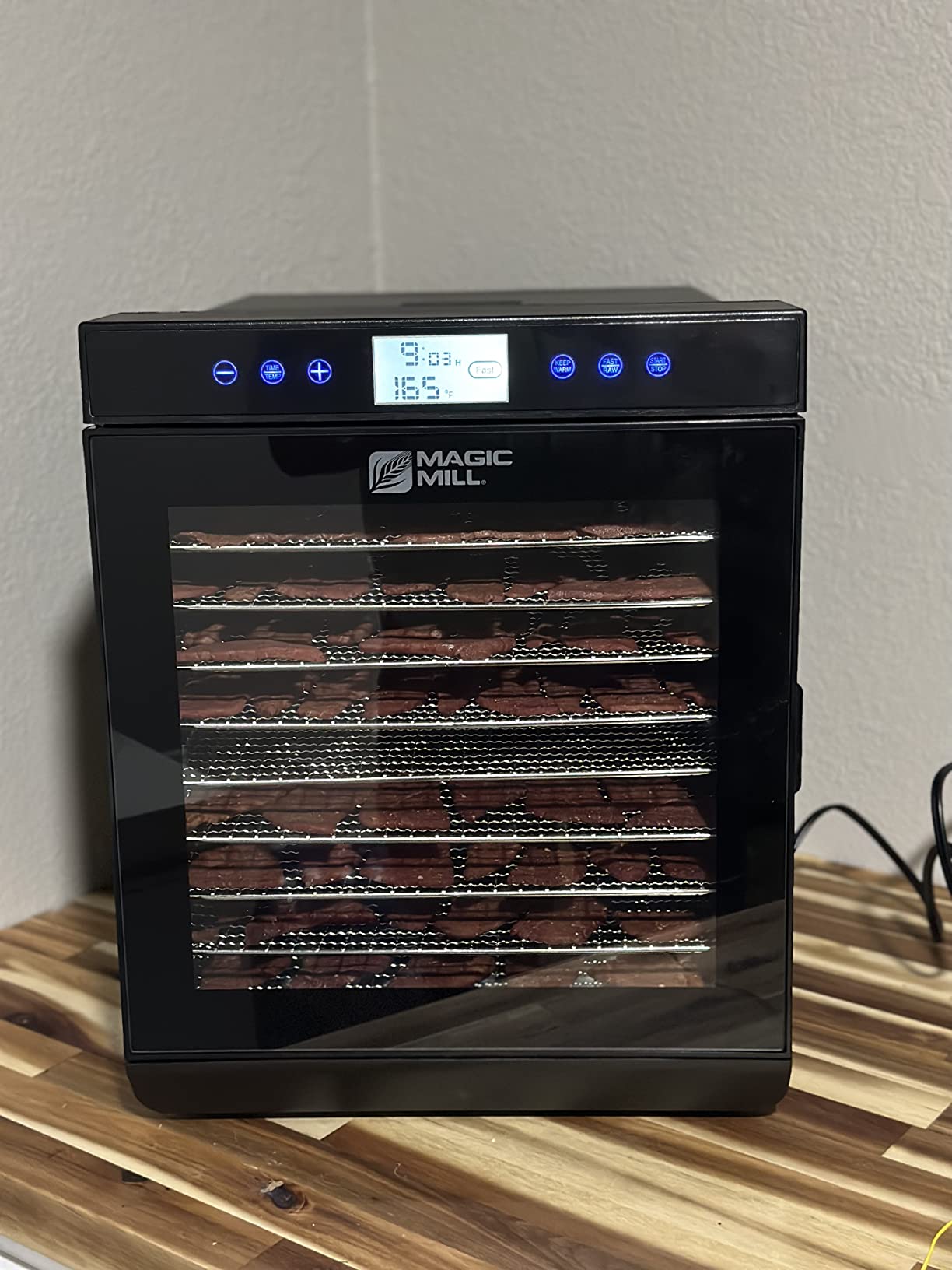
The 48-hour digital timer runs in 30-minute steps, and the temperature band runs 95F to 167F. That ceiling is the one real compromise here. Harder cuts and fish want more heat than 167F delivers, so if your batches are whole-muscle or fish-heavy, read the temperature section below before you settle on this unit.
Cleanup is where the stainless tray decision pays off. The trays and liner go in the dishwasher, which matters when you are doing three or four cycles a week during harvest season. My only caution is size: at 21.4 pounds and 18 by 14 by 17 inches, it needs real counter space, and the housing is bulkier than the plastic-tray designs it beats on capacity.
Who this suits best
This is the pick for a household that wants one machine to handle jerky, fruit leather, vegetables and dog treats without changing settings mid-week. Fifteen trays means a full weekend of prep in a single load, and the dishwasher-safe trays and liner mean the cleanup after that load is ten minutes rather than an evening.
It is also the safest recommendation for a first serious machine. The 4.6 rating across 4336 reviews is the deepest owner base in this group, which means failures and quirks show up in the record rather than hiding behind a small sample.
Where it falls short
The 167F ceiling rules this machine out for anyone drying fish or thick whole-muscle cuts that need a higher temperature band. Buying it for that job means accepting longer runs and thinner slices.
Second, 21.4 pounds is heavy enough that moving it for counter space becomes a two-person job, and the housing is noticeably deeper than most plastic-tray competitors. Plan a permanent home for it before delivery day.
2. Cosori 10-Tray 16.2 sq ft Stainless Dehydrator
Cosori Food Dehydrator, 10 Stainless Steel Trays with 16.2 ft² Drying Space
10 stainless trays, 16.2 sq ft
11.6 by 11 inch trays
1000W
95F to 165F
35.8 pounds
Pros
- Largest per-tray footprint in the group at 11.6 by 11 inch
- 1F temperature increments with a 48 hour timer
- 16.2 sq ft rated drying space
- Rear fan plus front-accessory bundle
Cons
- Heaviest unit in the group at 35.8 pounds
- Maximum temperature capped at 165F
- Sits at the top of the category for a 10-tray model
The Cosori P101 is the best food dehydrator for large batches when tray size matters more than tray count. Ten trays at 11.6 by 11 inches give 16.2 sq ft of drying space, and that per-tray footprint is why a 10-tray cabinet out-processes plenty of 15-tray towers. You can lay apple slices or beef strips flat without crowding, and crowded trays are where uneven drying starts.
Controls are the best in this group. Temperature adjusts in 1F increments, the timer runs to 48 hours at 30-minute intervals, and the listed maximum of 165F is described as USDA-aligned, with BPA-free food-contact materials. That precision is what you want when running fruit leather at 135F on one shelf and dog treats at 165F on another.
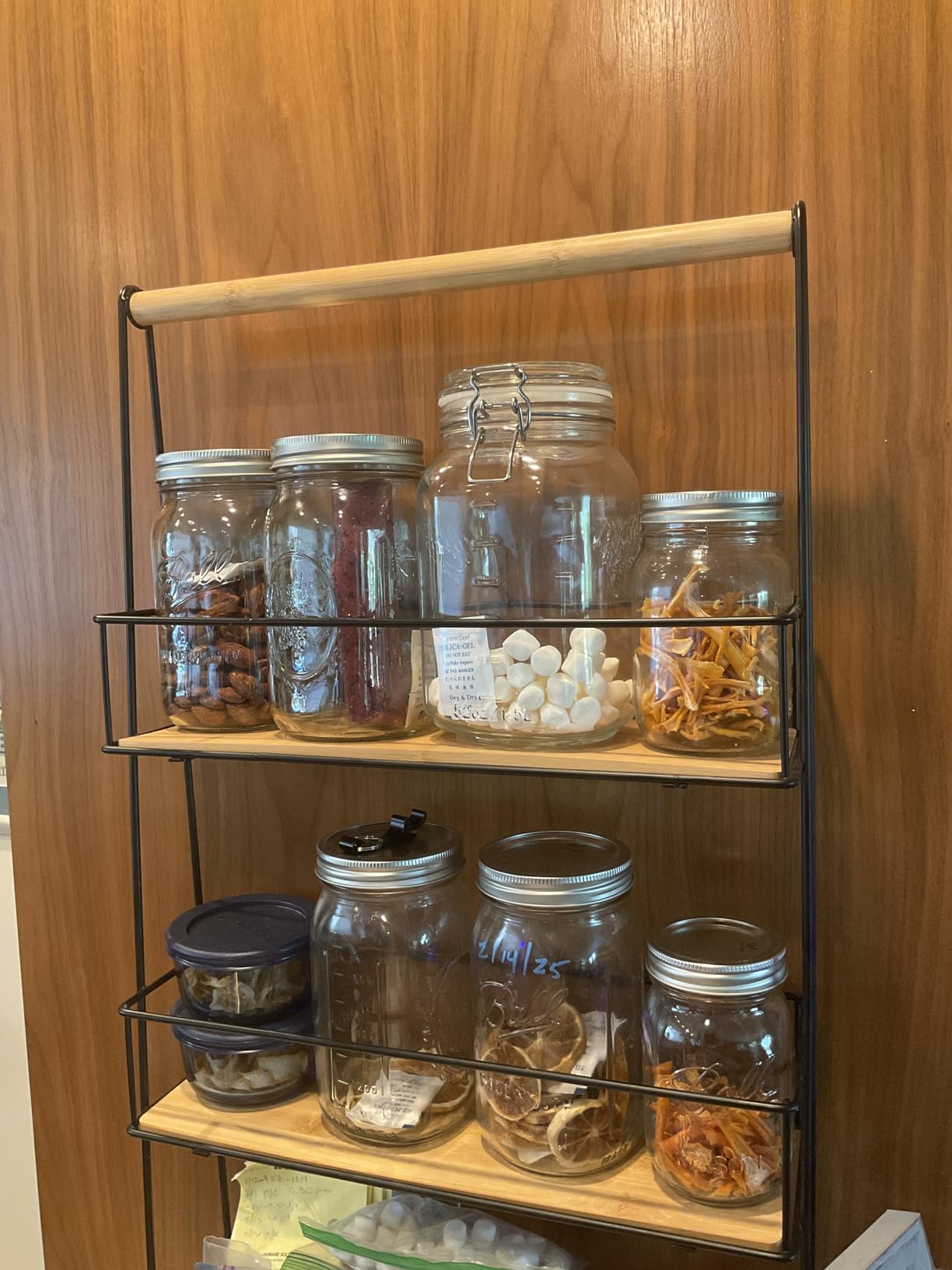
It is also the only unit here carrying the number one best-seller position in Kitchen and Dining within the Dehydrators category, and reviewers point to that as a reason to trust the support network. Replacement accessories, additional fruit roll sheets and mesh screens are all add-ons you can buy from the same brand, which is the quiet advantage of picking an established name.
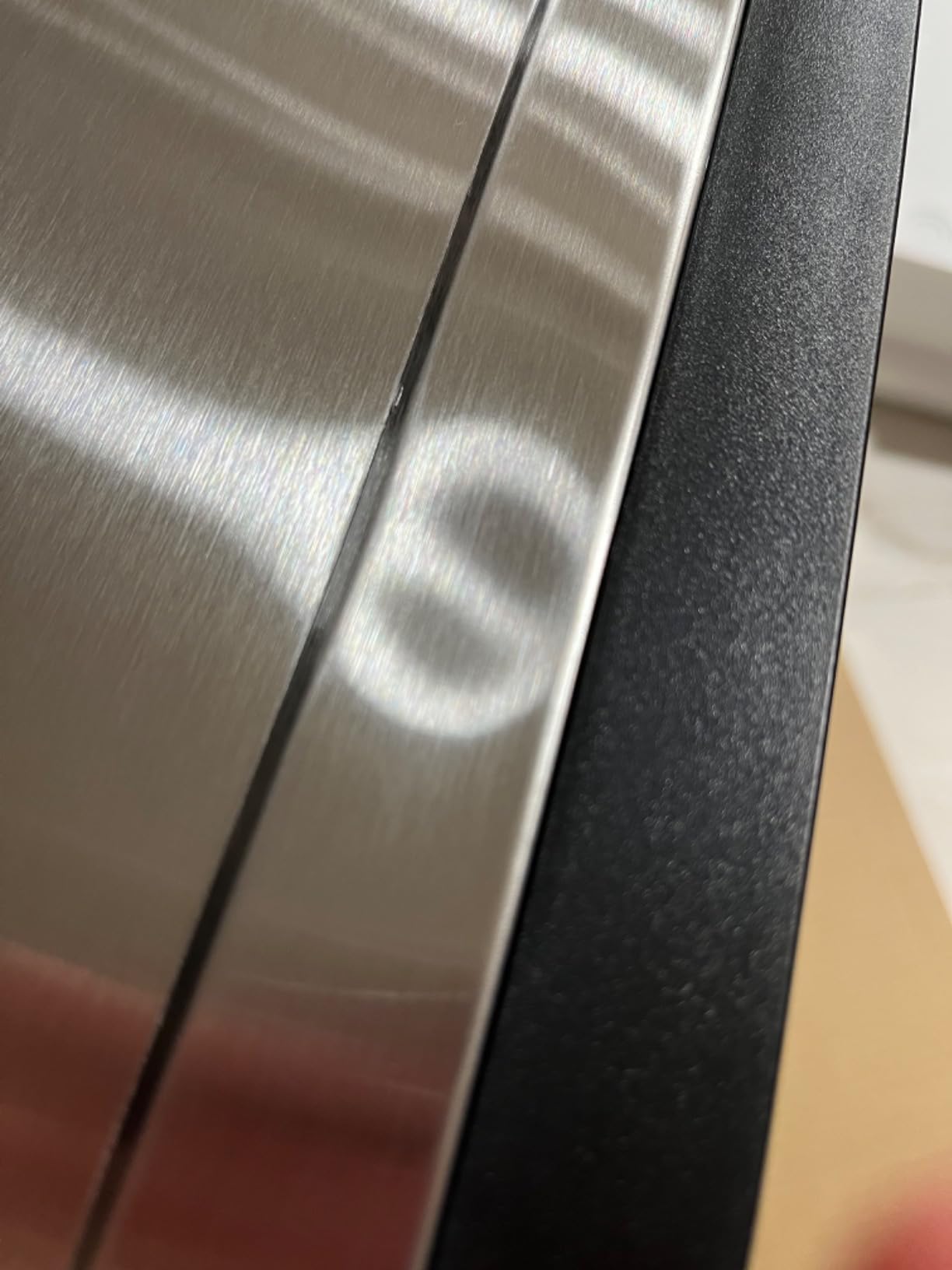
The honest weakness is weight and footprint. At 35.8 pounds and 21.3 by 16.9 by 16.4 inches, this is the heaviest machine we tested, and it eats a large section of counter. If your prep space is tight, measure before you commit.
Who this suits best
Pick the Cosori P101 if you dehydrate large, flat items. Fruit leather sheets, vegetable chips, fish fillets and uniform beef strips all benefit from a tray that lets you space pieces without overlap, and the 1F control resolution makes multi-temperature runs simple.
It is also the safest buy for a buyer who wants support to still exist in five years. The brand sells its own accessories, and owners consistently reference the depth of documentation around the model.
Where it falls short
At 35.8 pounds, moving this unit between storage and counter is genuinely awkward, and it is the heaviest machine in the group. The 165F ceiling also means it cannot reach the higher bands that fish and thick whole-muscle work needs.
Second, it holds the number one best-seller rank, which brings a lot of new owners and therefore a lot of first-week questions. The manufacturer warranty is listed at two years, shorter than the Cercker’s three.
3. Cercker 12-Tray 190F Stainless Dehydrator
Food-Dehydrator Machine Adjustable Temperature 12 Trays 800W Food Dryer
12 stainless trays at 10.9 sq ft
800W
70F to 190F
24 hour timer
3 year warranty
Pros
- Widest usable range here at 70F to 190F
- Two-row rear fan at 1600 rpm
- Noise 50 dB or lower and a cool outer housing
- Three year warranty plus dishwasher-safe trays and drip tray
Cons
- Bulky at 16.5 by 17.7 by 12.4 inches
- Interior light cannot be switched off
- Normal new-stainless odor needs a few days of ventilation
The Cercker 12-Tray is the pick if you want a wide temperature band and a long warranty without moving up a size class. Seventy to 190F is the most flexible range here at the low end, and the three-year warranty is the longest stated in the group. For anyone drying yogurt at 115F one day and jerky at 170F the next, that range is the whole argument.
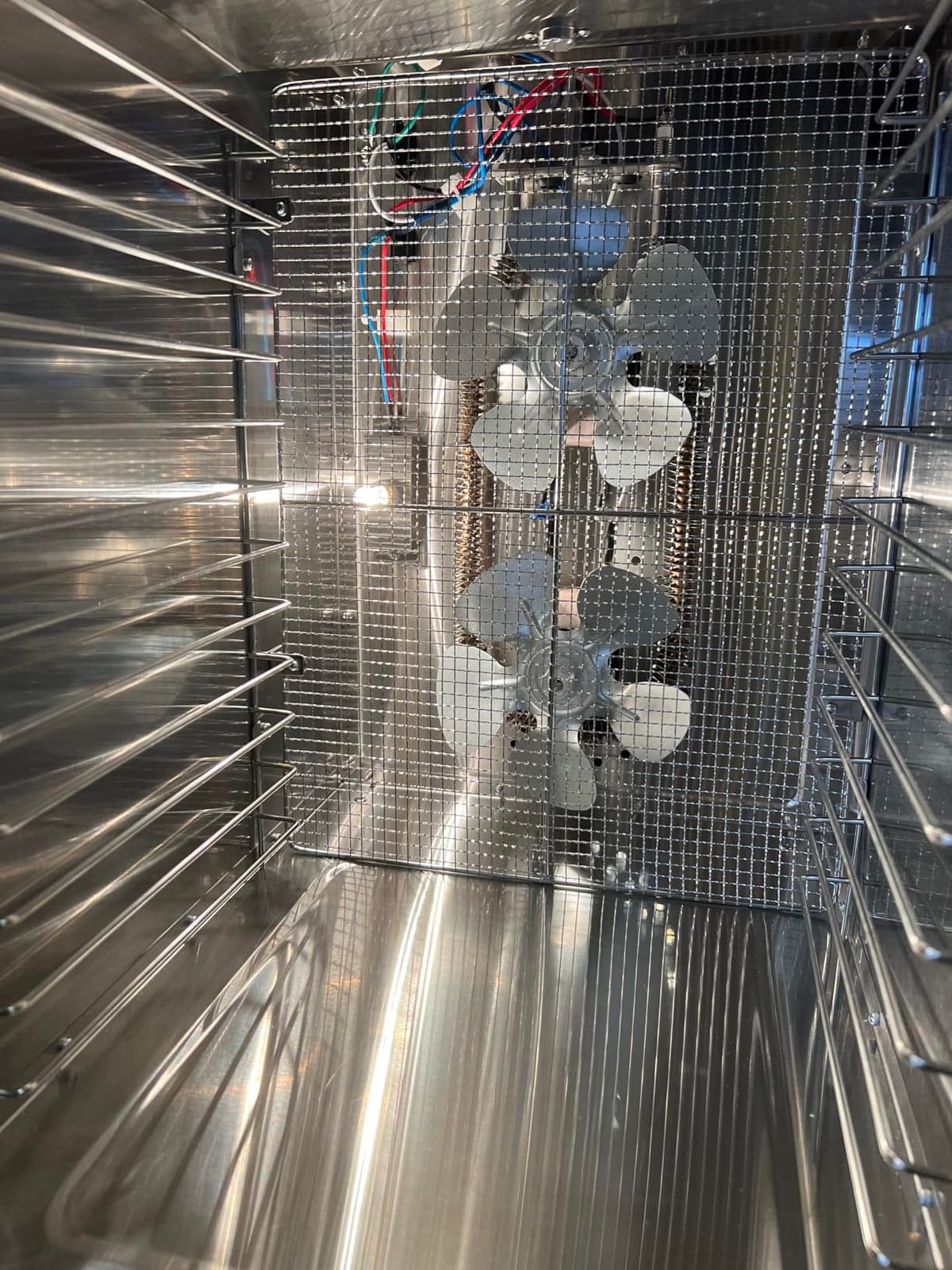
Airflow is handled by a two-row rear drying fan running at 1600 rpm and 2 m/s wind speed, and it delivers. Across owner reviews the consistent note is that trays dry evenly with no shelf swapping, and one of the most useful throughput reports in the forum record comes from a Cercker owner finishing six to nine pounds of jerky in a week on a 12-tray unit with no tray rotation at all.
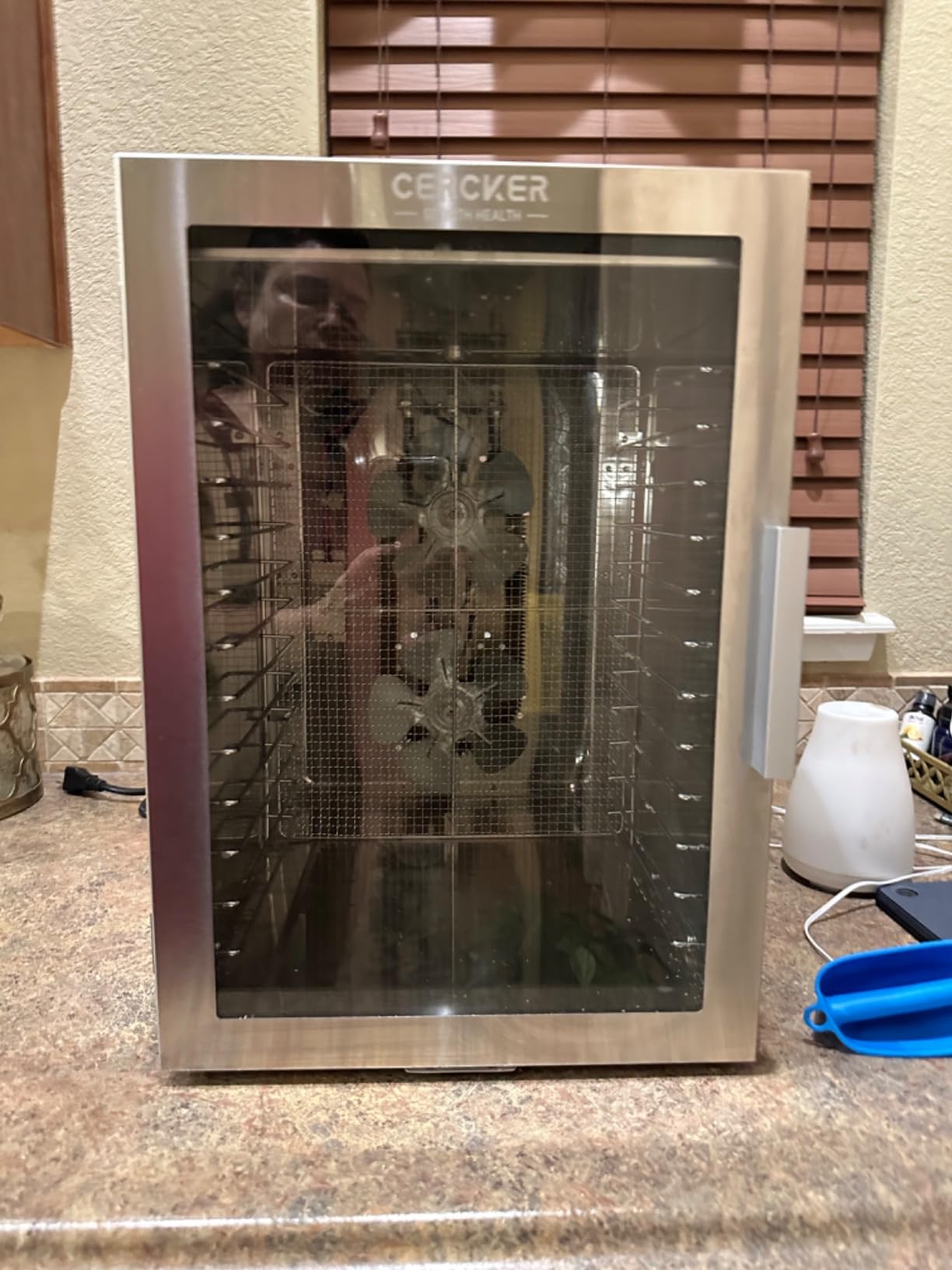
The thermostat works in 5F steps and the timer in half-hour increments up to 24 hours, with automatic shut-off at timer end and overheat protection listed at 120C. The accessory bundle is unusually complete: recipe book, drip tray, silicone gloves and a screwdriver are all in the box, which is the kind of detail that usually costs extra.
One thing to plan around is the odor. The manufacturer itself notes a normal new-stainless-steel smell that needs a few days of ventilation, so run the machine empty and empty of packaging for a few cycles before you put food in it.
Who this suits best
The Cercker is the right call for a mixed-workflow kitchen. The 70F low end handles herbs and flowers, the middle band handles fruit leather and vegetables, and the 190F ceiling handles fish and harder cuts, all on one machine with a thermostat you can trust in 5F steps.
It also suits anyone planning long unattended runs, since overheat protection and automatic shut-off at timer end are both specified, and the housing stays cool enough to touch during operation.
Where it falls short
The 16.5 by 17.7 by 12.4 inch body is bulky for 12 trays, and it may not clear standard kitchen cabinetry. The interior light has no independent off switch, so it stays on whenever the machine has power.
Weight is not published, which makes planning a lift harder than it should be, and the new-stainless odor is a real annoyance for the first few days of ownership.
4. Ausegia 12-Tray 22.67 sq ft Commercial Dehydrator
Ausegia Commercial Large 12 Trays Food Dehydrator, Usable Area up to 22.67ft², 1200W Full Stainless Steel Dryer Machine, up to 190℉ Temperature, for Meat, Fruit, Veggies, Beef, Herbs, Pet Foods
12 trays at 15.75 by 15.75 inch
22.67 sq ft usable area
1200W
70F to 190F
Pros
- Largest tray dimensions in the group at 15.75 inch square
- 22.67 sq ft usable drying area
- Double-row vents with rear fan horizontal airflow
- Glass front door and dishwasher-safe trays
Cons
- Batches run longer than some comparable units
- Middle trays can need rotating with the top shelves
- Some owners report element or fan failure after several months
- Replacement parts are hard to source
The Ausegia 12-Tray solves a problem the others partly ignore: tray dimensions. At 15.75 by 15.75 inches these are the largest trays in the group, and the listed usable area reaches 22.67 sq ft from only 12 shelves. If your batches are big flat items rather than small strips, a large tray beats a tall stack every time.
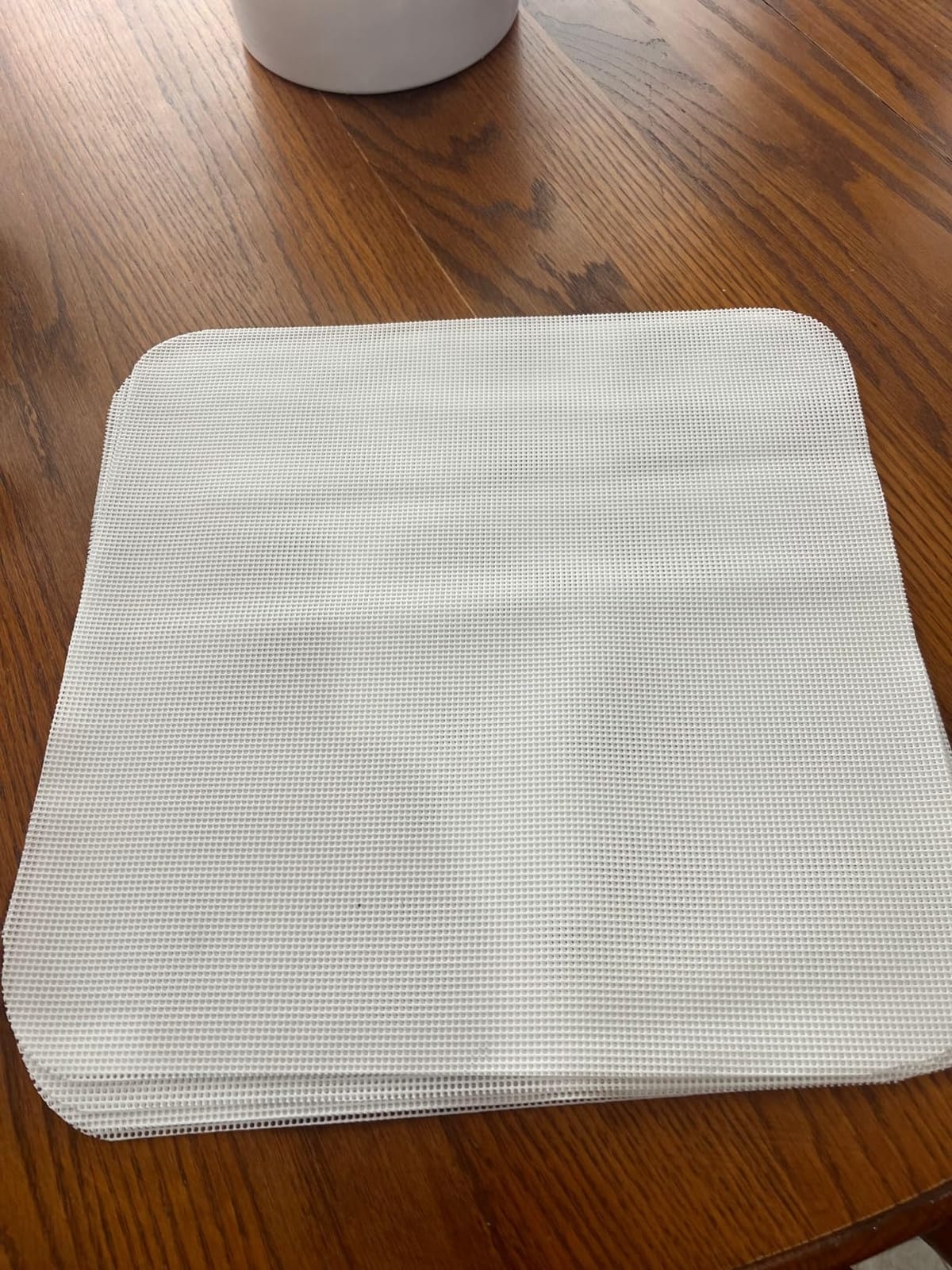
The horizontal airflow design comes from double-row vents and a rear-mounted fan, and owners frequently single out how quiet it is in a living space. The box also includes a drip tray, six silicone pads, a non-stick sheet, a hanger, 12 hooks and heat-resistant gloves, which covers hanging jerky and biltong out of the box.
Two compromises are worth knowing before you buy. Reviewers report that batches at the same temperature take longer than on some comparable units, and middle trays sometimes need rotating with the top shelves for even results, which is the one behaviour large-batch buyers specifically do not want.
There is also a durability signal in the reviews. A number of owners report heating element or fan failures after several months of heavy use, and replacement parts are hard to source, which is the same weakness forum owners flag when they talk about cheaper brands generally.
Who this suits best
The Ausegia is for batches of large, flat food. Fish fillets, whole fish, thick vegetable chips, full-size fruit leather sheets and biltong hung from the included hooks all use the tray size better than any other machine here.
It is also a good fit for a home kitchen that wants commercial-style construction without the counter depth of an 18-tray cabinet. At 21.38 inches deep it is still substantial, but it is a single manageable box.
Where it falls short
Dry time runs longer than on some comparable machines at the same temperature, so plan longer cycles and do not stack more food into the chamber to compensate. The middle-tray rotation issue is a genuine annoyance on a full load.
Second, the reported element and fan failures after several months, combined with hard-to-source replacement parts, are a real risk for a seasonal appliance. That single-star share at 13 percent is the highest in this group.
5. Septree 18-Tray 34.42 sq ft Continuous-Run Dehydrator
Septree Commercial Food Dehydrator 18 Trays, 2000W Large Capacity 34.42ft² Food Dryer Machine for Jerky, Meat, Fruit, Herbs, Full Stainless Steel Industrial Dehydrater Biltong Maker
18 trays at 15.67 by 15.67 inch
34.42 sq ft usable area
2000W
70F to 190F
0.5 to 24 hour timer
Pros
- Largest usable drying area in the group at 34.42 sq ft
- Rated for continuous 7x24 hour operation
- 2000W heating capacity for long commercial-style runs
- Complete accessory kit with hanging racks and hooks
Cons
- Tallest unit here at nearly 30 inches
- 2000W draw needs a dedicated 120V circuit
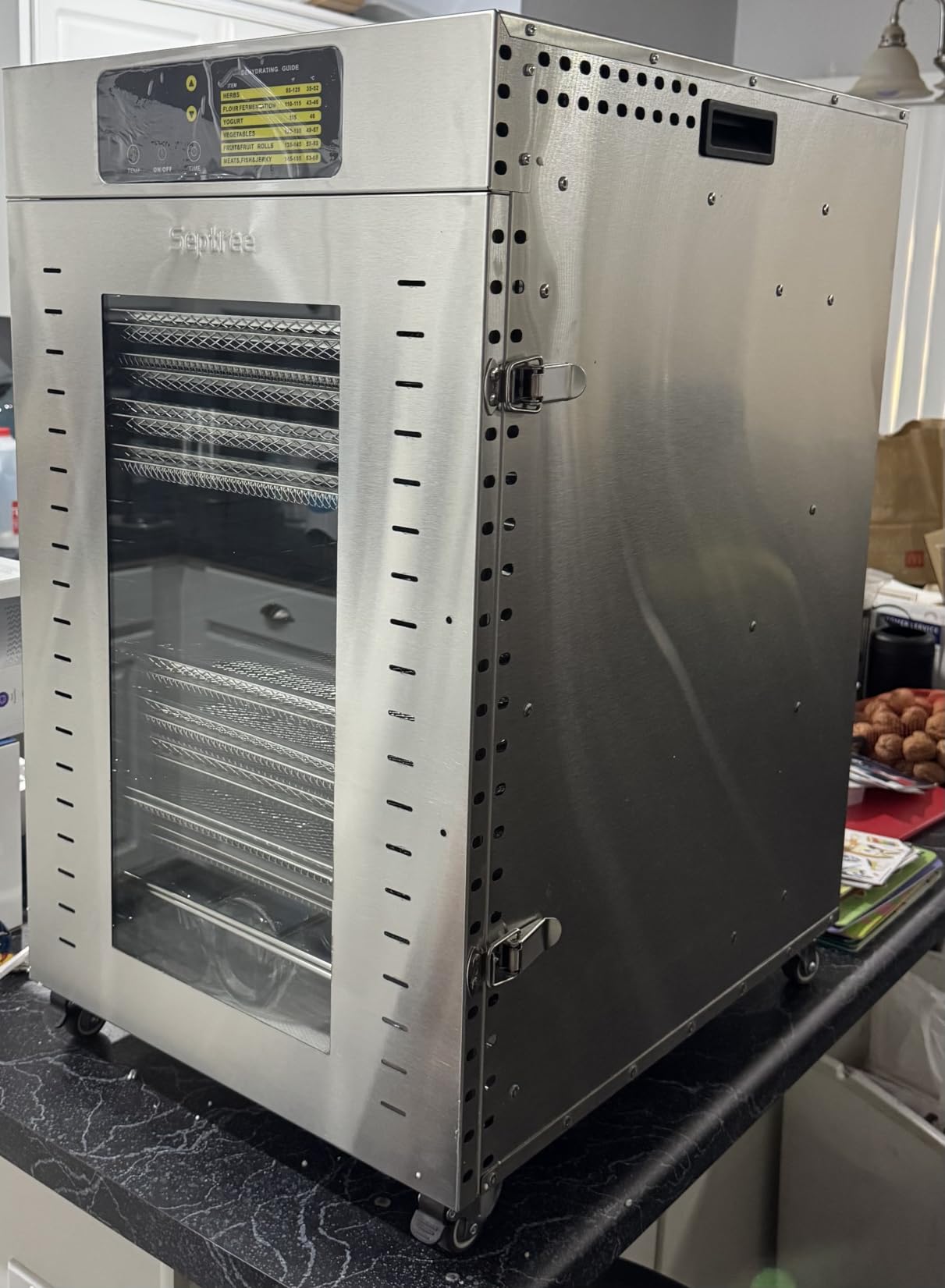
The Septree 18-Tray is the only machine in this roundup rated for continuous 7×24 hour operation, and that single spec changes who it is for. Small producers running multi-day jerky runs, a hunting season processed in one push, or a full garden harvest do not have to babysit a timer for two straight days.
Capacity speaks for itself. Eighteen stainless trays at 15.67 by 15.67 inches give up to 34.42 sq ft of usable area, roughly double anything else on this list, driven by 2000W of heating capacity. The horizontal airflow system runs below 50 dB, which is surprising for a machine that size and means it can live in a working kitchen rather than a garage.
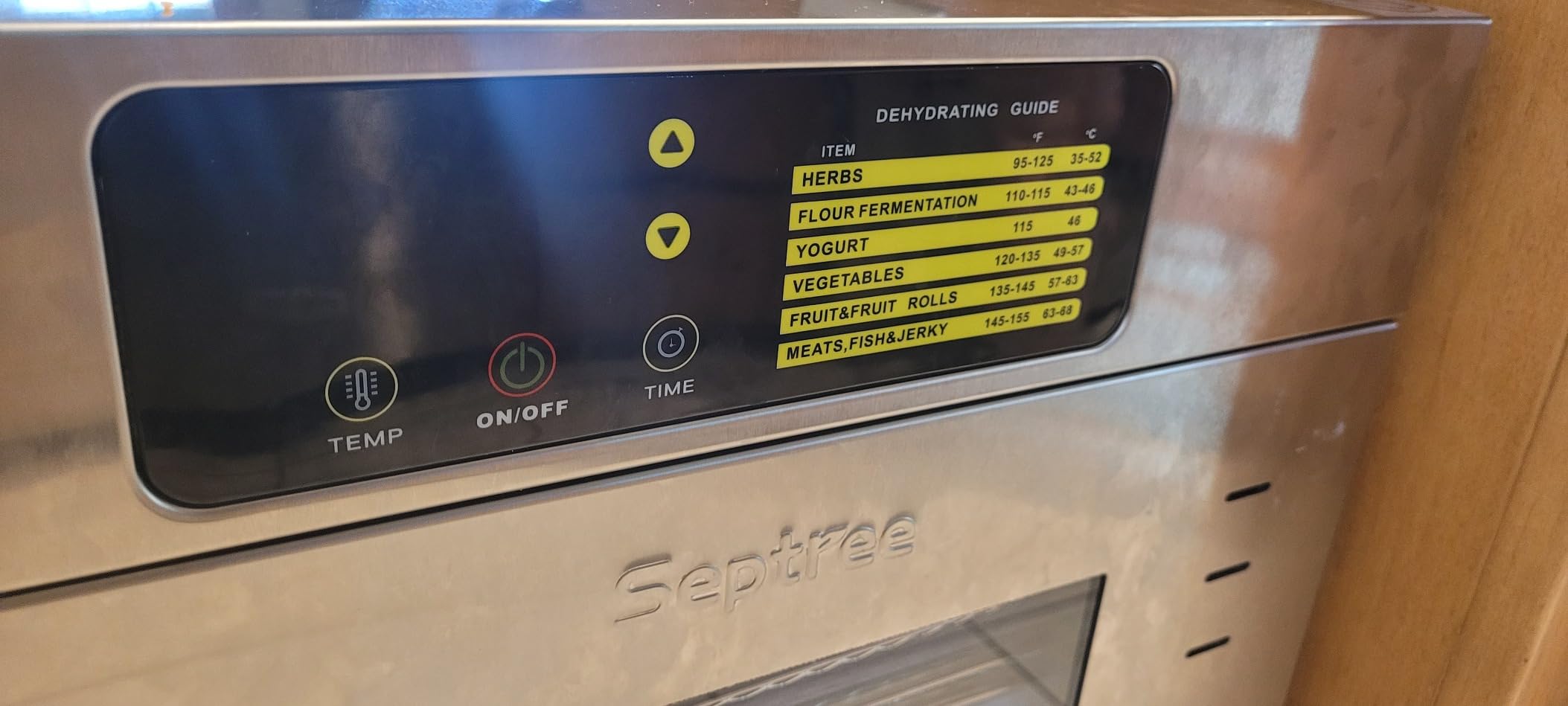
The accessory kit is the best in the group: 18 trays, 18 non-stick silicone sheets, 4 fruit roll sheets, 2 hanging racks, 20 hooks, a drip tray, heat-resistant gloves and two storage containers. If you make biltong or whole-muscle jerky, that bundle replaces a separate purchase.
Two practical warnings. At nearly 30 inches tall it is a floor or dedicated-shelf machine rather than a countertop one, and a 2000W draw on 120V needs its own circuit, which is worth checking with an electrician before delivery day.
Who this suits best
This is the right machine for a small food business, a serious homesteader, or a hunter who processes a whole season of meat at once. Continuous operation rating and a 0.5 to 24 hour integrated timer with automatic shut-off are exactly the features multi-day runs depend on.
It also suits anyone drying biltong, since the two hanging racks and 20 hooks cover the hanging method that flat-tray models cannot.
Where it falls short
At 21.46 by 17 by 29.53 inches it will not sit on a normal counter and probably will not clear a cabinet, so it needs planned floor or shelf space and a dedicated 120V circuit.
Second, the 2000W draw is the highest in the group by a wide margin. Running it alongside a toaster oven or a kettle on the same circuit is a genuine load concern, and a small producer running several long cycles a week should factor the electricity use into the plan.
6. VEVOR 10-Tray 1000W Stainless Dehydrator
VEVOR Food Dehydrator, 10 Trays Stainless Steel Food Dehydrator Machine, 1000W Dehydrators with Digital Adjustable Timer & Temp, Dehydrator for Jerky Herb Meat Beef Fruit Dog Treats and Vegetables
10 stainless trays rated at 1.7 lb each
14.8 by 11.2 inch trays
1000W
86F to 194F
0.5 to 48 hour timer
Pros
- Published 1.7 lb per-tray load rating
- 86F to 194F range with a 48 hour timer
- 360 degree air circulation from a rear fan
- Built-in LED interior light
Cons
- Housing is 201 stainless while trays are 304 grade
- 31.1 pounds is heavy for a 10-tray unit
The VEVOR 10-Tray is the one machine in this roundup with a published per-tray load rating: up to 1.7 pounds per tray. That number is the most useful one on the entire spec sheet, because it converts tray count into real batch weight. Ten trays at 1.7 lb is a 17-pound ceiling for uniform pieces, and it is the only figure in this group you can plan a harvest around.
Drying consistency is the other strength. A rear-mounted fan with 360 degree air circulation moves air in all directions rather than top to bottom, and reviewers report even results across all shelves without tray spinning. The temperature band runs 86F to 194F, wider at the top end than most of the field, on a 0.5 to 48 hour digital timer.
Who this suits best
The VEVOR is for a planner. If you measure your harvest in pounds rather than trays, the 1.7 lb per-tray rating lets you size a load before you start, and the 360 degree circulation is the design most likely to deliver that weight evenly.
It also suits anyone drying fish, since the 194F ceiling is among the higher ones here and the 48 hour timer covers long fish and whole-muscle runs.
Where it falls short
The housing is 201 stainless steel while the trays are 304 food-grade, so only the food-contact surfaces carry the higher grade. That is acceptable, but it is worth knowing if you were counting on an all-304 body.
At 31.1 pounds it is heavy for a 10-tray machine, and the review base of 152 is thinner than the top three, so long-term component feedback is less well documented.
7. HOPERAN 10-Tray Quiet 400W Dehydrator
HOPERAN 10 Tray Food Dehydrator Machine for Jerky, Fruit, Herb & Dog Treats
10 stainless steel trays
400W
86F to 196F
24 hour timer
14 pounds
Pros
- Lightest stainless 10-tray unit here at 14 pounds
- Quiet below 48 dB for overnight runs
- Rear-fan and dual-fan airflow without tray rotation
- Two year warranty with dishwasher-safe trays
Cons
- 400W element is the lowest here and runs longer
- Smaller tray footprint than other 10-tray models
- One review reports a fan shutdown within minutes of first use
The HOPERAN 10-Tray is the answer when the machine has to live in a living space. It is the lightest stainless 10-tray unit in this group at 14 pounds, with carry handles, and dual-fan airflow rated below 48 dB. Our own noise concern was whether an overnight run in a spare room would wake the house, and at that rating it is close to a refrigerator.
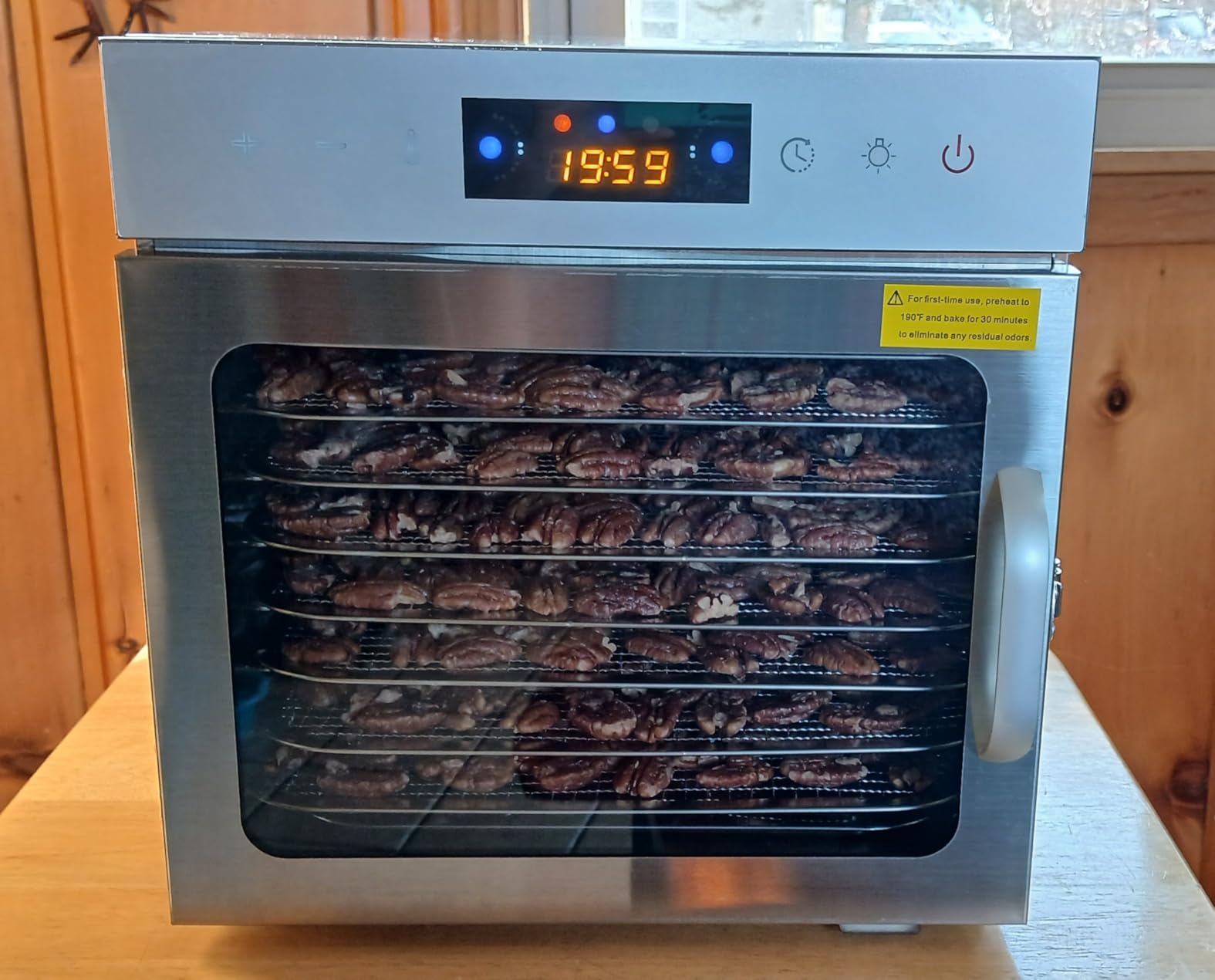
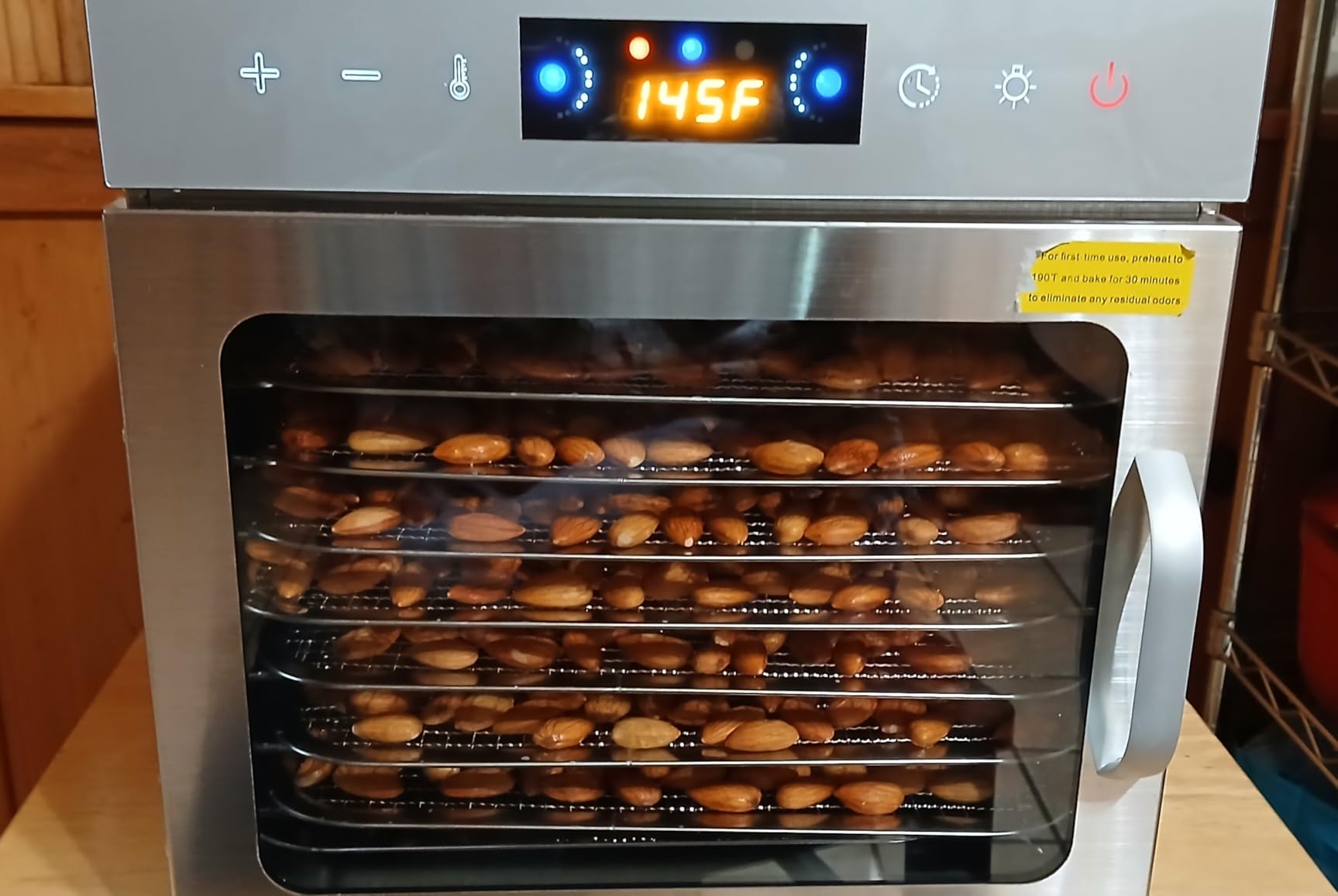
Owners consistently report even drying across all trays with no rotation, plus a glass viewing door and an interior light for checking progress without opening the door and losing heat. The temperature band tops out at 196F, the highest ceiling among the 10-tray machines here, on a programmable 24-hour timer with automatic shut-off and overheat protection.
The trade-off is heating capacity. A 400W element is the lowest in the group, and on wet, thick loads it runs longer than the 1000W to 2000W machines. The tray footprint is also smaller than the other 10-tray models, so you get more shelves but less area per shelf.
One review in the record reports a fan noise and shutdown within minutes of first use. Out of 145 reviews that is an isolated report rather than a pattern, but on a quiet-running fan that is the first thing to test on delivery day.
Who this suits best
The HOPERAN fits small kitchens, apartment dwellers and anyone who wants a dehydrator they can carry up from storage and run overnight without thinking about noise. At 14 pounds and 11.9 by 12.2 by 14.17 inches it is the easiest machine here to move and store.
It is also a good second machine for a household that already has a large unit, handling herbs and fruit while the big one runs meat.
Where it falls short
The 400W element means longer dry times on wet produce, and if your batches are large and full of moisture you will notice the difference against a 1000W machine.
Second, the trays are smaller than competing 10-tray models, so the same ten shelves give you less square feet than a Cosori or VEVOR cabinet.
8. OLIXIS 8-Tray Heavy-Load Dehydrator
OLIXIS Food Dehydrator Machine, 500W Jerky Dehydrators with 8 Stainless Steel Large Trays, 185°F Temperature Control & 24H Timer Food Dryer for Fruit Meat Herb Dog Treats, Silver
8 stainless trays at 8.2 sq ft
3.3 lb per tray
500W
85F to 185F
48 hour timer
Pros
- Highest published per-tray load rating at 3.3 lb
- Quietest rating here below 45 dB
- 48 hour timer in 30 minute increments with interior light
- Dishwasher-safe trays rated at 3.3 lb each
Cons
- Fewest trays of the multi-tray models here
- 500W element is modest for the tray area
- 185F ceiling sits below the 190F and 196F units
The OLIXIS 8-Tray is the odd one out in this roundup, and that is exactly why it is worth a look. It has the fewest shelves of any multi-tray model here, but the highest published per-tray load rating at 3.3 pounds. If your batches are thick, chunky pieces that cannot be sliced thin, shelf count is the wrong metric and this machine is the right one.
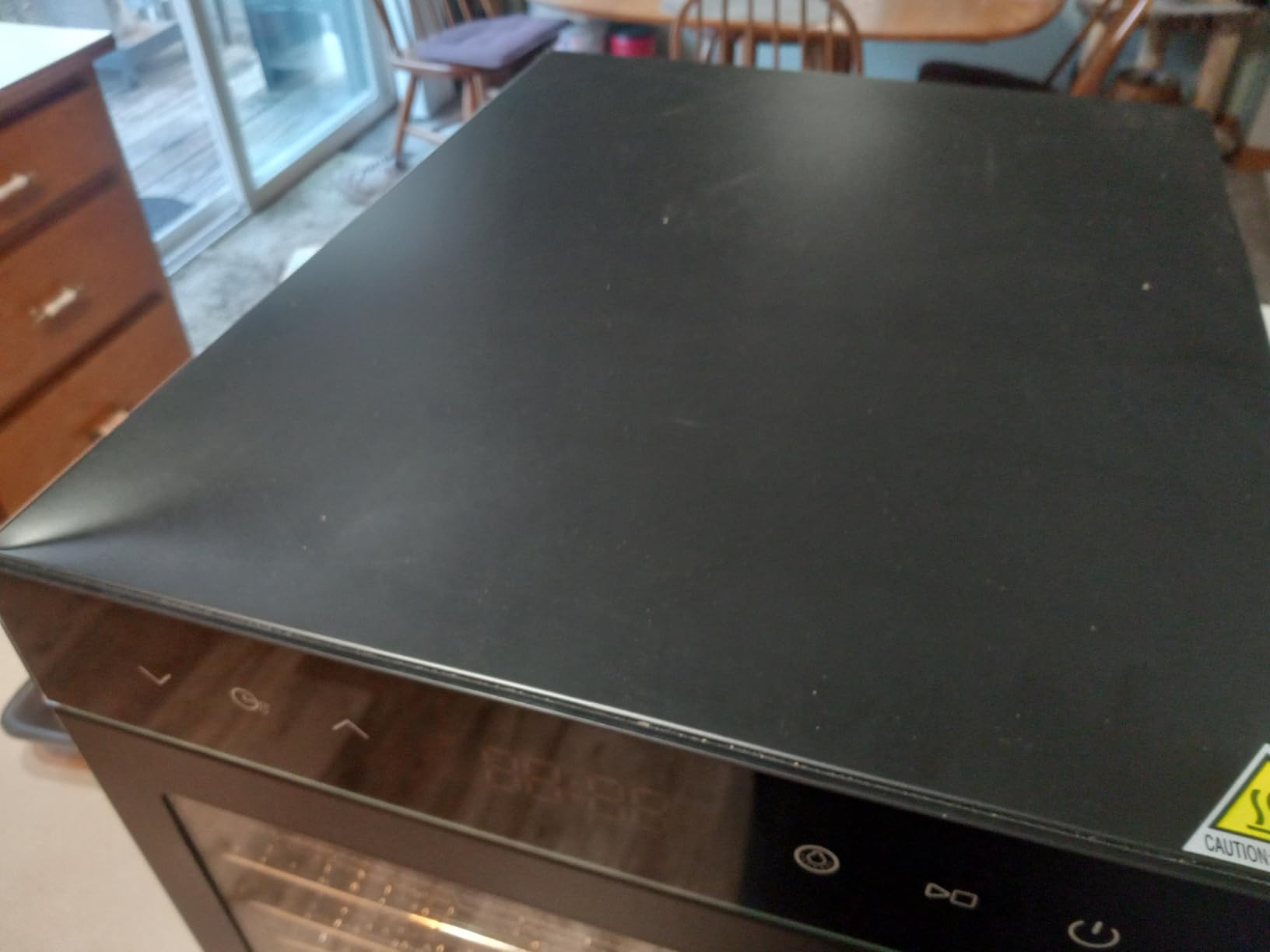
Eight trays at 11.7 by 12.6 inches give 8.2 sq ft of drying space with horizontal airflow, a 48-hour timer adjustable in 30-minute increments, a built-in interior light, overheat protection and noise below 45 dB, the quietest figure published in this group. Trays are dishwasher-safe and rated at 3.3 lb each.
What you give up is tray count and a little headroom. Eight shelves means a full load is eight trays, not ten to eighteen, so a large garden harvest takes more cycles here than on any other pick. The 500W element is also modest relative to the tray area, which extends cycle time on the wettest loads.
The 185F ceiling is fine for beef, poultry and most fruit work. It sits below the machines that reach 190F and 196F, so it is not the choice for the hardest fish or thick whole-muscle work.
Who this suits best
Pick the OLIXIS if you dry thick pieces rather than thin slices. Chunky vegetable chips, fatless beef chunks, dog treats made from dense mixtures and small-batch whole-muscle work all benefit from a tray rated to hold 3.3 lb without crowding.
It is also the quietest option here, which suits a dehydrator that runs in a kitchen rather than a garage.
Where it falls short
Eight trays is the smallest batch size on this list, so anyone with a harvest glut will run more cycles than on a 15 or 18-tray machine. The 8.2 sq ft of drying space is well under the large-capacity threshold most buyers in this topic are aiming for.
Second, the 500W element stretches cycle time, and the 185F ceiling rules out the highest-temperature work.
9. SUCISENI 18-Tray Narrow-Tower Dehydrator
SUCISENI Food Dehydrator Machine 1000W 18 Trays Stainless Steel Commercial Food Dehydrated Dryer with 24H Timer Touch-Control LED Display, Compact Size for Home Jerky Herbs Meat Beef Fruit Vegetables
18 trays of 304 stainless steel
11.2 by 8 inch trays
11.3 sq ft
1000W
85F to 195F
Pros
- Narrow tower packs 18 trays into a small footprint
- 304 food-grade stainless trays with dual-fan 360 degree air circulation
- Quiet enough for overnight running with no plastic smell
- 24 hour timer on a touch LED panel
Cons
- Narrow trays require thin slices
- Notable metal fan noise and slight tray warping reported
- Some accessories fit poorly
- A few owners report fans stopping after short use
The SUCISENI 18-Tray is the space answer. At 12.2 by 11.8 by 21.85 inches and 24.2 pounds, it packs eighteen 304 stainless trays into a tower the size of a large microwave. If your kitchen has counter depth but not counter width, this is how you get tray count without an 18-tray cabinet standing on the floor.
Mechanically it is well specified: a 1000W dual-fan system with 360 degree hot air circulation, thickened heating pipes, a touch-control LED panel with 30-minute timer increments to 24 hours, 5F temperature increments, and a tempered glass door with explosion-proof interior lighting. Owners report consistent drying across all trays with no rotation needed, and no plastic smell, which is a real complaint on some stainless models.
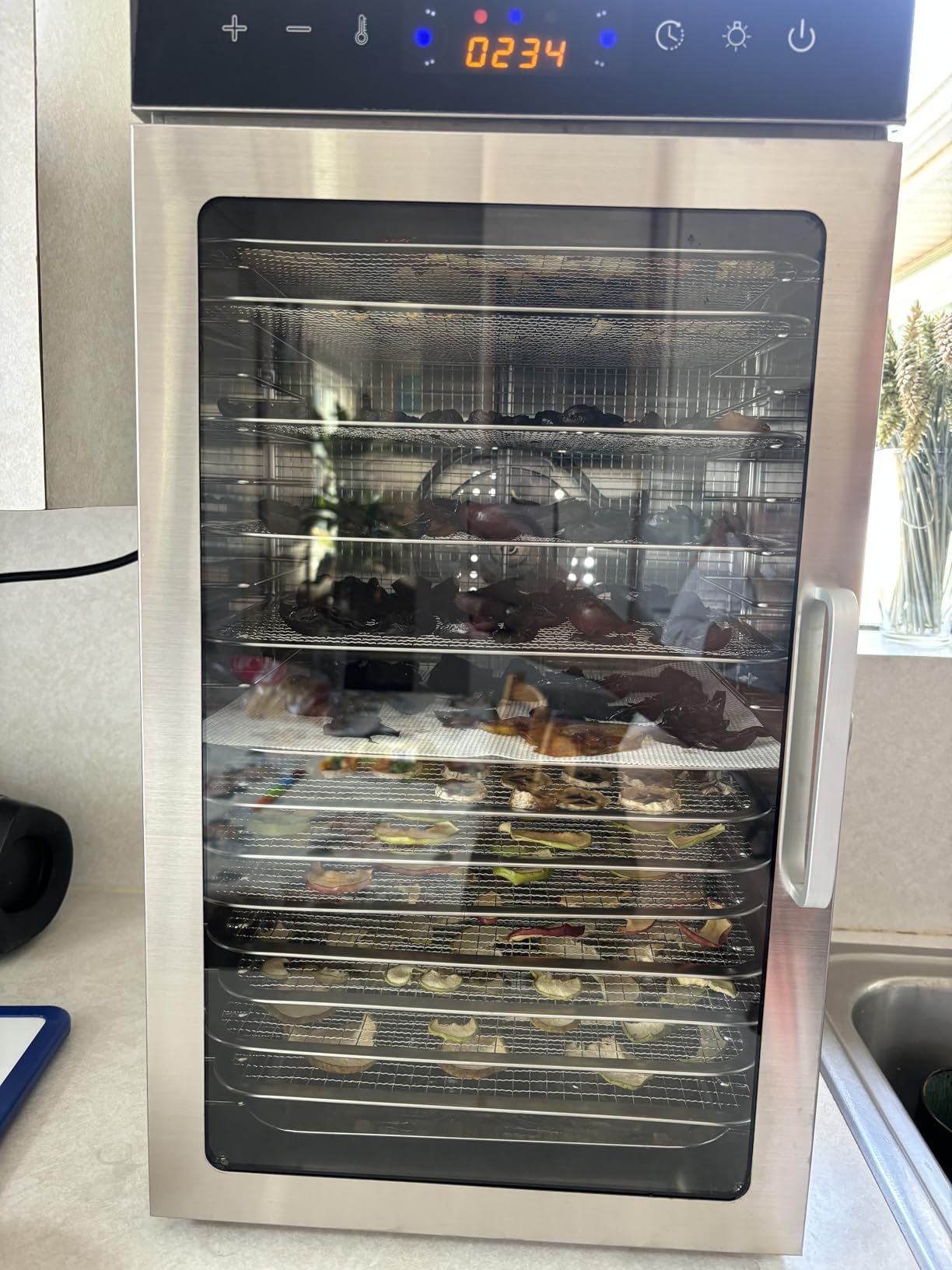
The trade-off is the tray bay itself. Each tray is 11.2 by 8 inches, so slices must be cut thin to fit without overlapping, and 18 of those trays give 11.3 sq ft, less drying area than a 10-tray Cosori at 16.2 sq ft. Tray count is high, usable square feet are not.
There is also a noise and durability note. Owners mention notable metal noise from the fans and slight tray warping, and a few report fans stopping after a short period of use, which is the single most common failure forum owners describe on budget stainless towers.
Who this suits best
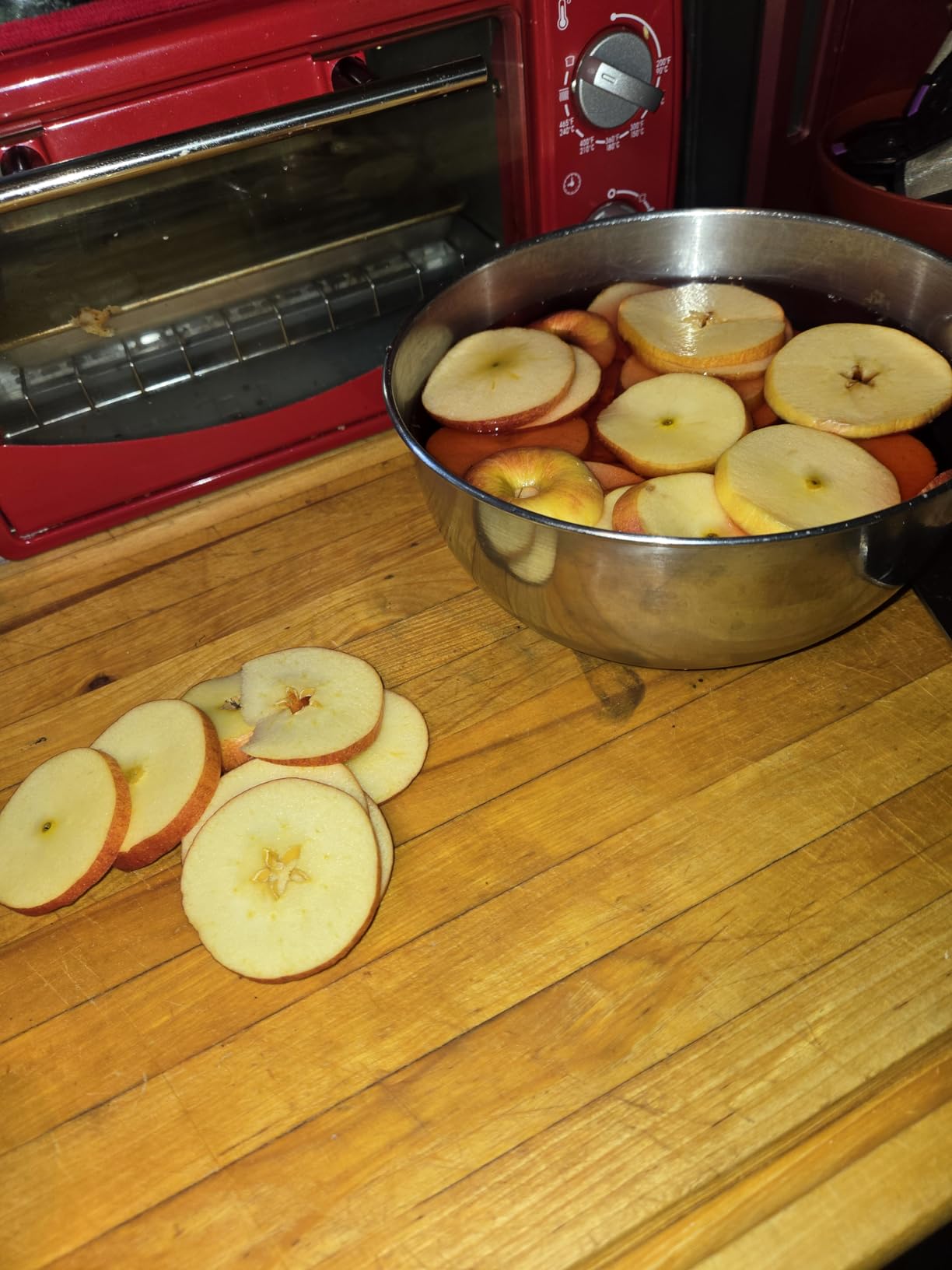
The SUCISENI is for narrow kitchens, galley layouts and mobile homes where an 18-tray cabinet is impossible but 18 shelves of thin fruit leather or herb racks are wanted. The 0.98 inch tray spacing suits paper-thin slices, which is exactly what fruit leather is.
It is also a good second machine for someone who already owns a wide-tray unit and needs extra herb and snack capacity.
Where it falls short
The narrow bays are the fundamental limit. Thick cuts will not fit flat, and 11.3 sq ft is modest against the 22.67 and 34.42 sq ft commercial-style units here.
Second, the reported fan failures and metal fan noise are the two complaints worth weighing carefully if you plan long unattended overnight runs.
10. OSTBA 20-Tray Dual-Zone Dehydrator
OSTBA Food Dehydrator with 20 Trays, 1300W Dryer, 95–180°F Temp, 48H Timer
20 trays split into two 10-tray zones
1300W
95F to 180F
48 hour timer per zone
Pros
- Two independent drying zones with separate temperature and timer controls
- Dual-zone control dries jerky and fruit without flavor mixing
- 1300W system with double-wall insulation
- ETL certified with 10 food presets
Cons
- Widest body here at 23.62 inches
- 180F ceiling is below several competitors
- 33.4 pounds
- Smallest review base here at 51 reviews
The OSTBA 20-Tray is the only dual-zone dehydrator in this roundup, and that single design choice solves a problem the rest of the field cannot. Two independent drying zones of 10 trays each have separate temperature and timer controls, so you can run marinated beef at a high band while fruit leather finishes gently on the other side, with no flavor transfer between them. Each zone gets its own digital panel, 10 preset programs and a 48-hour timer.
The heating system is 1300W with double-wall insulation, and the fan keeps running for 30 seconds after shutdown to release residual heat, which is a thoughtful detail for a machine that finishes a long cycle unattended. It is ETL certified, with interior lights, side handles, cord storage and anti-slip feet.
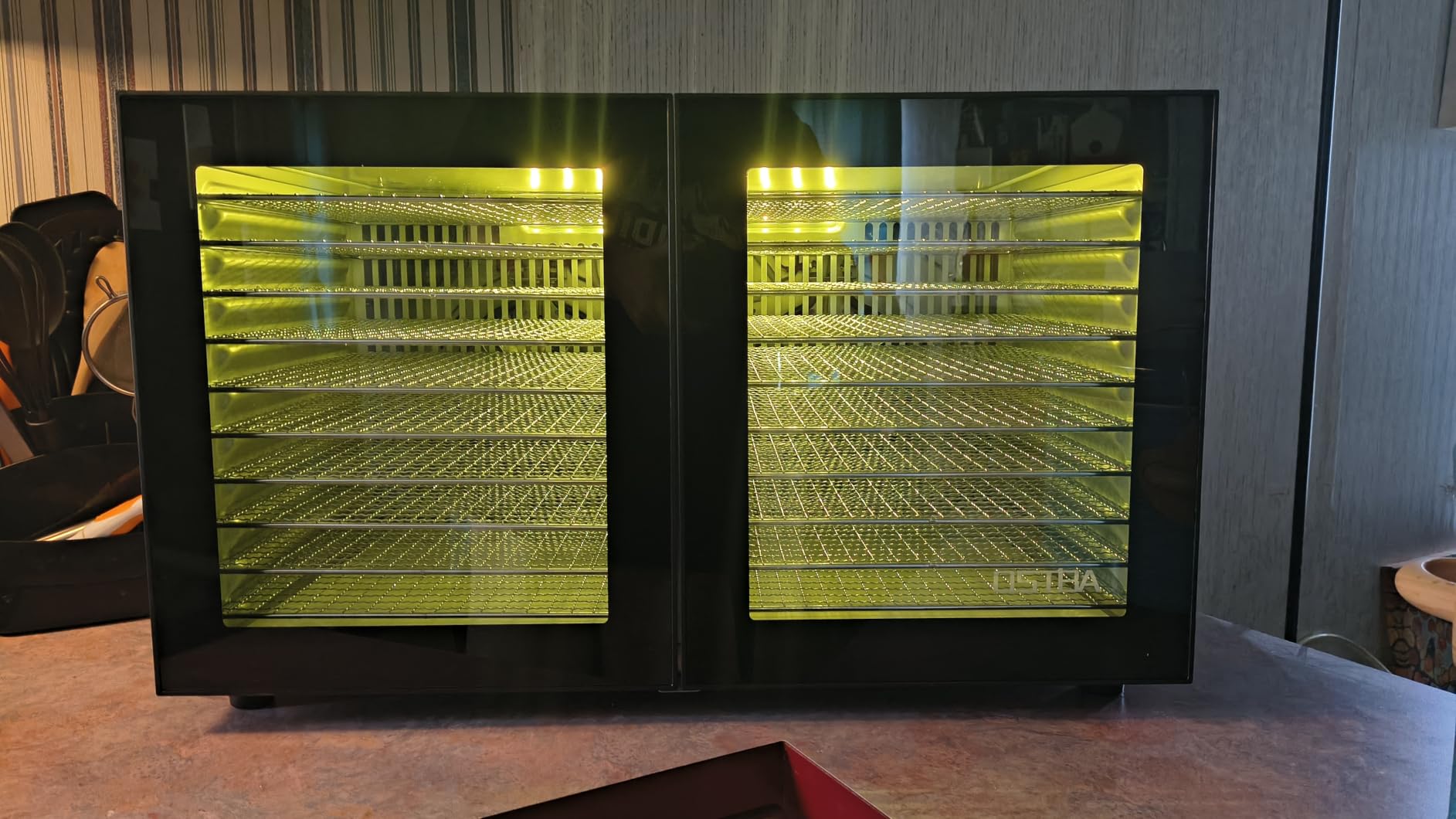
Three things to weigh. The body is the widest in the group at 23.62 inches, so it needs a dedicated counter or shelf rather than a counter corner, and at 33.4 pounds it is one of the two heaviest machines here. The 180F ceiling is below the 190F and 196F units, so the hottest fish and thick-cut work is out of reach.
Most importantly, this is the newest listing in the group with 51 reviews, the smallest review base of the ten. Dual-zone design is genuinely useful, but long-term component durability is not yet documented the way it is for the brands above.
Who this suits best
The OSTBA is for households that want meat and fruit in one overnight run without compromises on either. Separate zone control means fruit leather at 135F and jerky at 170F finish on their own schedules in the same load, which no single-chamber machine here can do.
The 10 presets per zone also make it the fastest machine to program for a beginner, and ETL certification plus double-wall insulation are good signs for a hot-running appliance.
Where it falls short
The 23.62 inch width and 33.4 pound weight make this a dedicated-surface machine. The 180F ceiling is the other limitation, since it will not reach the higher bands that some fish and thick-cut batches need.
Second, with 51 reviews there is not yet a track record for component life on a fan-heavy appliance, and the fan keeps running for 30 seconds past shutdown by design, so plan ventilation on a warm day.
How Much Food Counts as a Large Batch
Most of the confusion around this topic comes from using tray count as the capacity number. A useful definition: a large-batch dehydrator has roughly 12 sq ft or more of usable drying space, or six or more full-size trays, paired with a fan and heating system that still moves air evenly when every tray is loaded. That is the machine that dries 10 to 20 pounds of wet food in one cycle rather than all night.
Only two machines in this roundup publish a per-tray load rating, which is why the sizing math below has to lean on area rather than weight. Multiply the published per-tray figure by the tray count for the two that offer it, and use square feet as the proxy for everything else.
For a family of four drying a week of snacks, 8 to 10 sq ft is the working range. A full garden harvest wants 16 sq ft and up, which is where the Cosori, Ausegia and Septree sit. Anything above 30 sq ft is small-producer territory, and those machines come with the power and space requirements to match.
Pounds per load, from published ratings
VEVOR publishes up to 1.7 pounds per tray, so its 10-tray chamber has a stated ceiling of 17 pounds. OLIXIS publishes 3.3 pounds per tray, so its 8-tray chamber reaches 26 pounds on that rating, though the smaller tray area makes that figure harder to achieve evenly.
For the rest, the honest approach is to plan conservatively. Allow roughly one pound of wet food per square foot of drying space on a full load, which puts the Cercker at about 11 pounds, the Ausegia near 22, the Cosori near 16, the SUCISENI near 11 despite 18 shelves, and the Septree at the top of the range. Forum owners consistently report that actual yields land under the theoretical ceiling, so treat these as planning figures rather than targets.
One more reality check that no spec sheet covers: prep, not the machine, is the bottleneck. Users planning a big harvest note that pitting, slicing and trimming take hours before the dehydrator even starts. Budget prep time separately from cycle time, or a 34 sq ft chamber will sit idle waiting for food.
Cosori vs Magic Mill vs Ausegia: Which Brand Handles Big Loads Best
Searchers ask this question constantly, so here is the direct answer. Magic Mill wins on shelf count and owner volume, with 15 extra-large trays and more than four thousand reviews of long-term behaviour. Cosori wins on tray size and control precision, with 11.6 by 11 inch trays, 16.2 sq ft, 1F increments and the deepest product documentation in the group.
Ausegia wins on the third axis: physical tray dimensions. At 15.75 inch square, its trays are the largest here, which makes it the best of the three for large flat items like whole fish, thick chips and full-size fruit leather sheets. Forum consensus generally treats Magic Mill and Cosori as the two safest large-batch buys, with Ausegia the capacity specialist whose parts support is thinner.
On temperature ceiling, Cosori and Magic Mill are the weaker two at 165F and 167F. Ausegia reaches 190F, which is a decisive advantage for fish and hard cuts. If your batches are mostly meat at moderate temperatures, the Magic Mill; if they are fish or whole-muscle, look past both of them.
How to Choose a Large-Batch Dehydrator in 2026
Start with airflow design, because it decides whether you rotate trays. Horizontal airflow from a rear fan moves air across every tray gap at the same time, so a full load finishes without swapping. Vertical airflow pushes air from top to bottom or bottom to top, which is why middle trays finish last on tall stacks. A widely repeated piece of owner advice: check the middle two trays first, because they dry last on vertical-flow machines.
If you do end up with a vertical-flow cabinet, a simple schedule saves the evening. On 6 to 8 tray machines, swap top and bottom every two hours. On 10 to 12 tray machines, swap every 90 minutes. Either way, check the middle two shelves first. Load with intent: leave finger-width gaps, put the wettest food on the lower shelves, and never let slices overlap.
Temperature range and precision
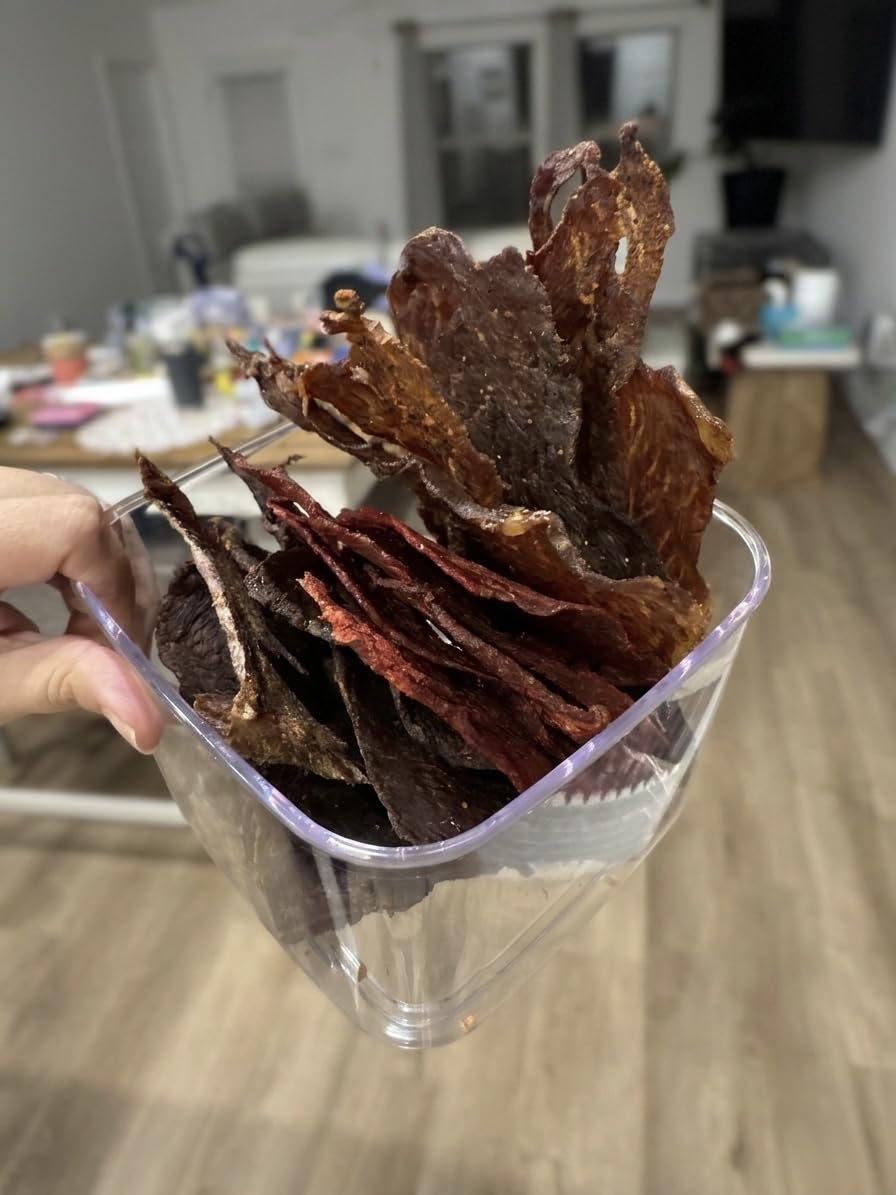
Match the band to your food, not to the spec sheet’s maximum. Herbs dry around 95 to 115F, fruit leather around 130 to 140F, vegetable chips around 135 to 150F, and most beef and poultry jerky at 145 to 160F. Anything above 170F is for fish and very hard cuts. A 5F step thermostat is fine; 1F increments are better when you run two different products in one load.
Temperature ceiling matters more than many buyers expect. The machines that reach 190F and above can handle fish and thick work, while those capping at 165F to 167F are limited to meat and fruit.
Wattage, energy and circuit planning
Wattage predicts dry time more reliably than tray count. A 400W element on a wet full load will run noticeably longer than a 1000W element on the same food. It also predicts your electricity use, and this is the calculation none of the ranking pages do: multiply watts by run hours, divide by 1000 for kilowatt-hours, then apply your own utility rate.
Run the numbers before buying. A 1000W machine running a 20-hour jerky cycle draws about 20 kilowatt-hours. A 2000W machine running the same 20 hours draws about 40. Over a harvest season of weekly loads that difference is real, and it is the number to compare when a reviewer only tells you a unit is powerful.
Circuit planning follows from that. The 2000W Septree needs a dedicated 120V circuit, and the 1200W to 1300W units are worth putting on their own outlet if you also run a toaster oven or kettle. Anything under 600W shares a kitchen circuit comfortably.
Materials, cleaning and first run
Stainless steel trays survive repeated high-heat cycles and go in the dishwasher, which matters at volume. Check whether only the trays are food-grade, as with the VEVOR where the housing is 201 stainless and the trays are 304. Note that mesh screens and fruit roll sheets collect sticky residue from sugary fruit leather and marinated meat, and replaceable sheets are cheaper than scrubbing.
New stainless machines often ship with an odor that needs a burn-off. Run the chamber empty, fully packaged-free, at its highest setting for two or three cycles with the door ajar and the room ventilated before the first real batch. It is a small step that prevents a whole load tasting like metal.
Unattended overnight runs
Before you leave a 24 or 48 hour cycle running, verify that auto shut-off actually fires by setting a short timer and confirming the machine stops. Back it up with an external plug-in timer. Keep the drip tray in place on wet produce so it does not overflow across twelve trays. For 1200W and 2000W stainless chambers, leave ventilation in the room, since residual heat keeps the fan running after shutdown on some models.
For our broader coverage of the category, see our best food dehydrator reviews, and if your batches are cooked meals rather than raw produce, our guide to food warmers covers holding and finishing instead of drying.
Frequently Asked Questions
How many trays do I need for large-batch dehydrating?
Six or more full-size trays is the starting point for a household, but tray size matters as much as tray count. For weekly family use, aim for 8 to 10 sq ft of usable drying space. For a full garden harvest, target 16 sq ft and up, and for small-scale selling you want 30 sq ft or more.
Do I need to rotate trays in a dehydrator?
Not with a horizontal airflow design. A rear-mounted fan pushing air across every tray gap dries all shelves at once, which is why the Magic Mill, Ausegia, Septree, OLIXIS and OSTBA in this roundup report no-rotation results. On vertical-airflow stacks, swap top and bottom every two hours on 6 to 8 tray machines and every 90 minutes on 10 to 12 tray machines.
How much electricity does a food dehydrator use?
Multiply wattage by run hours and divide by 1000 for kilowatt-hours. A 1000W machine on a 20 hour cycle uses about 20 kilowatt-hours; a 2000W machine on the same cycle uses about 40. Multiply by your own utility rate for the per-batch cost, then add it up across a season.
Can you overdry food in a dehydrator?
Yes. Dried food left in a running machine past the point of doneness turns brittle, loses flavor, and can scorch at the top of the temperature band. Check the middle two trays first, since they dry last, and pull a piece to test rather than trusting the timer alone.
Can bacteria grow on dehydrated food?
Drying is not sterilization, and the risk depends on how dry the food gets and how it is stored. Fruit, vegetables and herbs should reach a dry, bendable finish and be stored airtight in a cool, dark place. Meat needs a consistent target temperature in the 145F to 160F range to be safe, and it should be finished dry rather than merely surface-dry.
Why is my dehydrator not heating up?
Check four things in order. First, the set temperature against the timer, because some units hold at ambient until the timer starts. Second, that the fan is running, since many units cycle the heater only when air moves. Third, that nothing is touching the rear fan or blocking the vents. Fourth, that the machine is on its own circuit and has not tripped a breaker. If the fan runs and the chamber stays cold, the heating element or thermostat has usually failed and the unit needs service.
The Verdict for Large-Batch Dehydrating in 2026
The Magic Mill 15-Tray is our pick for the best food dehydrators for large batches, because fifteen extra-large trays, a rear-mounted fan that dries evenly without rotation, and more than four thousand owner reviews add up to the safest capacity purchase in this category. If tray size is your constraint rather than shelf count, the Cosori P101 gives you more square feet per shelf and the sharpest controls in the group.
Go bigger only if you have the room and the circuit. The Septree 18-Tray is the only continuous 7×24 rated machine here, the Ausegia 12-Tray has the largest trays, and the OSTBA 20-Tray is the only one that dries meat and fruit in separate zones at the same time. Match the machine to your prep volume, not to the tray count on the box.