
The Cosori 6-Tray Stainless Steel Food Dehydrator is the best food dehydrator for jerky overall. Its rear-mounted 600W fan moves air across the cabinet instead of down through it, so trays dry evenly without manual turning, and the digital panel holds 95-165F in 1-degree steps with a 48-hour timer. Six stainless steel trays give you 6.5 ft2 of drying space per batch.
I grew up watching a dehydrator that took over the kitchen counter for two days every hunting season, so I have strong opinions about airflow. The unit I kept reaching for was never the one with the biggest number on the box. It was the one that ran quiet enough to sleep next to, hit temperature fast, and did not force me to shuffle trays at 2am.
That is the whole argument of this roundup. We pulled ten electric food dehydrators and sorted them by the things that actually decide whether a batch of jerky comes out evenly chewy or half-dry in the corner. Fan position, temperature ceiling, tray material, wattage, timer, and the square footage you actually load.
If you have already put in an oven jerky run, the case for a dedicated machine is settled. Holding the oven at 140F for eight hours leaves you with no dinner and every pan in the house smelling like liquid smoke. A dehydrator frees the oven, runs overnight, and pulls a fraction of the energy an open oven door draws while the house heats around it.
If you are still deciding on the machine rather than the recipe, our broader food dehydrator guide covers the non-meat side. If the bottleneck is the slicer and the seasoning rather than the dryer, read our jerky maker picks first.
Two safety notes before the picks. First, a jerky dehydrator needs a chamber that reaches at least 155F, and 160-165F gives you a real margin. Anything that tops out below 155F is a fruit dryer wearing a meat label. Second, for raw beef, venison, or poultry, hold the slices at a full 160F internal temperature before the long low-temperature dry begins, which is the step USDA guidance asks for and the one most roundups skip.
Table of Contents
Top 3 Picks for Best Food Dehydrators for Jerky (October 2026)

Cosori 6-Tray Stainless Steel
- Rear-mounted 600W fan
- 6.5 ft2 across 6 stainless trays
- 95-165F with 48-hour timer
- Under 48 dB

Magic Mill Pro 7-Tray
- Full stainless build
- 600W rear fan
- 95-176F with 48-hour timer
- Keep Warm mode
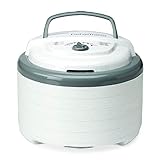
NESCO Snackmaster Pro FD-75A
- 600W Converga-Flow system
- Expands from 5 to 12 trays
- 95-160F dial control
- Lightweight 3.5 kg
Every Pick at a Glance in 2026
Below is the full list with the specs that decide jerky performance. The three columns worth scanning first are the temperature ceiling, the wattage, and whether airflow is horizontal or vertical.
| Product | Specifications | Action |
|---|---|---|
| Cosori 6-Tray Stainless Steel Dehydrator |
|
Check Latest Price |
| NESCO FD-75A Snackmaster Pro |
|
Check Latest Price |
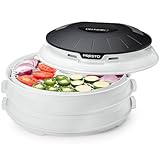 Presto 06300 Dehydro Presto 06300 Dehydro |
|
Check Latest Price |
 Cosori 5-Tray BPA-Free Dehydrator Cosori 5-Tray BPA-Free Dehydrator |
|
Check Latest Price |
 Hamilton Beach Digital Dehydrator Hamilton Beach Digital Dehydrator |
|
Check Latest Price |
 Magic Mill MFD-5000 5-Tray Magic Mill MFD-5000 5-Tray |
|
Check Latest Price |
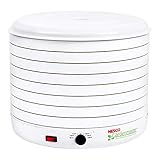 NESCO FD-1018A Gardenmaster Pro NESCO FD-1018A Gardenmaster Pro |
|
Check Latest Price |
 VEVOR 10-Tray 1000W Stainless Steel VEVOR 10-Tray 1000W Stainless Steel |
|
Check Latest Price |
 Excalibur Select Series 8-Tray Excalibur Select Series 8-Tray |
|
Check Latest Price |
| Magic Mill Pro MFD-7700 7-Tray |
|
Check Latest Price |
One caution on reading the table: a big temperature number is not automatically a good temperature number. The VEVOR lists a 194F ceiling, which is useful for crisping dried fruit at the end, but jerky is finished in the 155-165F band and nothing more. Higher heat cooks the surface, hardens the outside, and leaves moisture locked in the middle.
1. Cosori 6-Tray Stainless Steel Dehydrator – Best Overall Jerky Dehydrator
Cosori Food Dehydrator, 6 Stainless Steel Trays with 6.5 ft² Drying Space
6 stainless trays, 6.5 ft2
95-165F, 600W rear fan
48-hour timer, under 48 dB
18.1 lb, 2-year warranty
Pros
- Rear-mounted 600W fan dries evenly without tray rotation
- 95-165F in 1F increments with a 48-hour timer
- Six dishwasher-safe stainless steel trays give 6.5 ft2
- Brushless motor under 48 dB suits overnight runs
- Mesh screen and fruit roll sheet included
Cons
- 18.1 lb and 17.8-inch depth take real counter space
- Dried fruit juice is tedious to scrub out of tray corners
Out of everything we put through jerky batches, this is the one I stopped shopping around for. The CP267-FD is a 6.5 ft2 stainless box with a rear-mounted 600W brushless fan, and that single design decision does more for even jerky than any other spec on the sheet.
A rear fan pushes air across the width of the cabinet, so the top tray and the bottom tray see similar conditions. There is no hot element sitting inches under the lowest tray, which is the usual reason you end up swapping front and back shelves at the halfway mark. A rear-fan cabinet removes that step entirely.
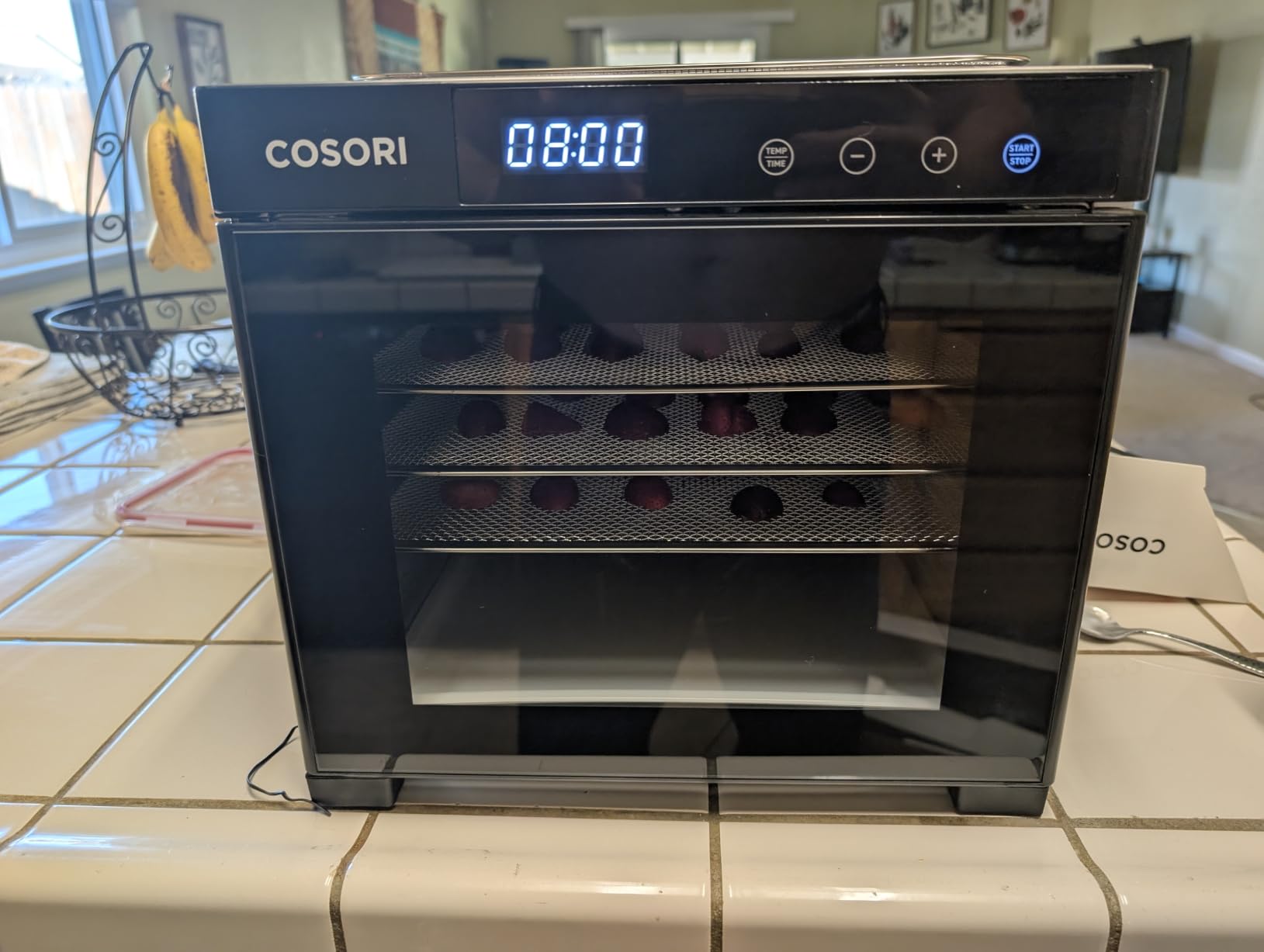
Owners consistently report that the higher wattage dries meat faster than the smaller plastic boxes, and the 1-degree control lets you drop to 155F for the final stretch once the surface is set. The 48-hour timer is what makes an overnight run possible, since a thick venison batch on the top shelf can run eight to ten hours.
Cleaning is the one real friction point. The trays are stainless and dishwasher safe, which is a big upgrade over plastic mesh, but the corners where the frame meets the mesh will hold dried-on fruit juice. Soak them rather than scrubbing them dry, and most of it lifts off in a few minutes.
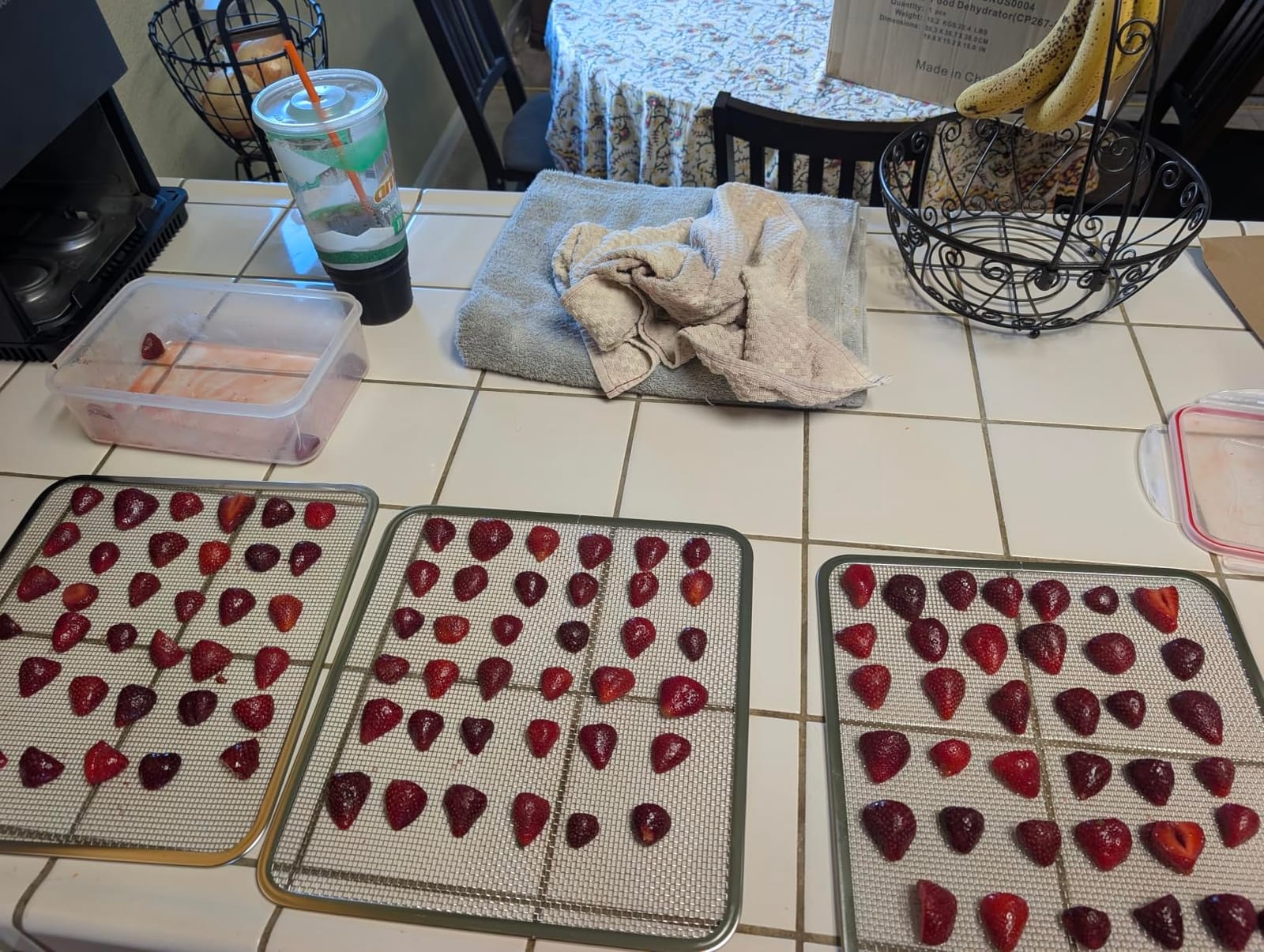
How it handles a real jerky batch
At 160F, thin london broil slices cut against the grain are the sweet spot for this airflow pattern. The rear fan meant the front and back rows dried at the same rate, so the batch came off as one piece rather than needing a second pass on the under-dried strips.
Because the tray frames are solid stainless rather than plastic, soy and Worcestershire marinades did not bond to the surface the way they do on coated or mesh trays. A quick rinse and a cycle in the dishwasher was enough, and the machine is rated 2 years by the manufacturer.
Where it falls short
Counter space is the honest drawback. At 18.1 pounds and 17.8 inches deep, it is not a small kitchen unit, and it needs clearance around the vents. If your counter is the width of a single appliance, the compact picks below are a better fit.
The touch panel is also unforgiving if you bump it with a wet hand while checking strips. It is a minor irritation, but on a wet marinating night it adds up.
2. NESCO FD-75A Snackmaster Pro – Best Budget Dehydrator for Jerky
NESCO FD-75A Snackmaster Pro Food Dehydrator, For Snacks, Fruit, Beef Jerky, Gray
5 trays expandable to 12
95-160F, 600W top fan
3.5 kg, 13 inch footprint
1-year limited warranty
Pros
- Compact 3.5 kg body stores in a small kitchen
- Very quiet fan that disappears into household noise
- Expands from 5 to 12 trays as batch size grows
- Top-mounted fan stops marinade dripping on the element
- Includes fruit roll sheets
- clean-a-screens and a jerky cure sample
Cons
- No built-in timer
- so an external lamp timer is needed
- Trays nearest the fan dry first and many users still rotate
- Humid kitchens stretch drying to 12-18 hours
The Snackmaster Pro is the unit that shows up most often in real jerky threads, and the reason is simple: it has been making decent jerky for two decades without a steep entry cost. On r/jerky, owners describe it as a long-lived workhorse that quietly produces good beef jerky, dried apples, and fruit leather without much fuss.
Its 600-watt Converga-Flow system pulls air down through a vertical column of trays, which is a different airflow architecture from the Cosori above. The top-mounted fan is a genuine safety plus: marinade drips run down the tray stack instead of onto a heating element at the bottom of the cabinet.
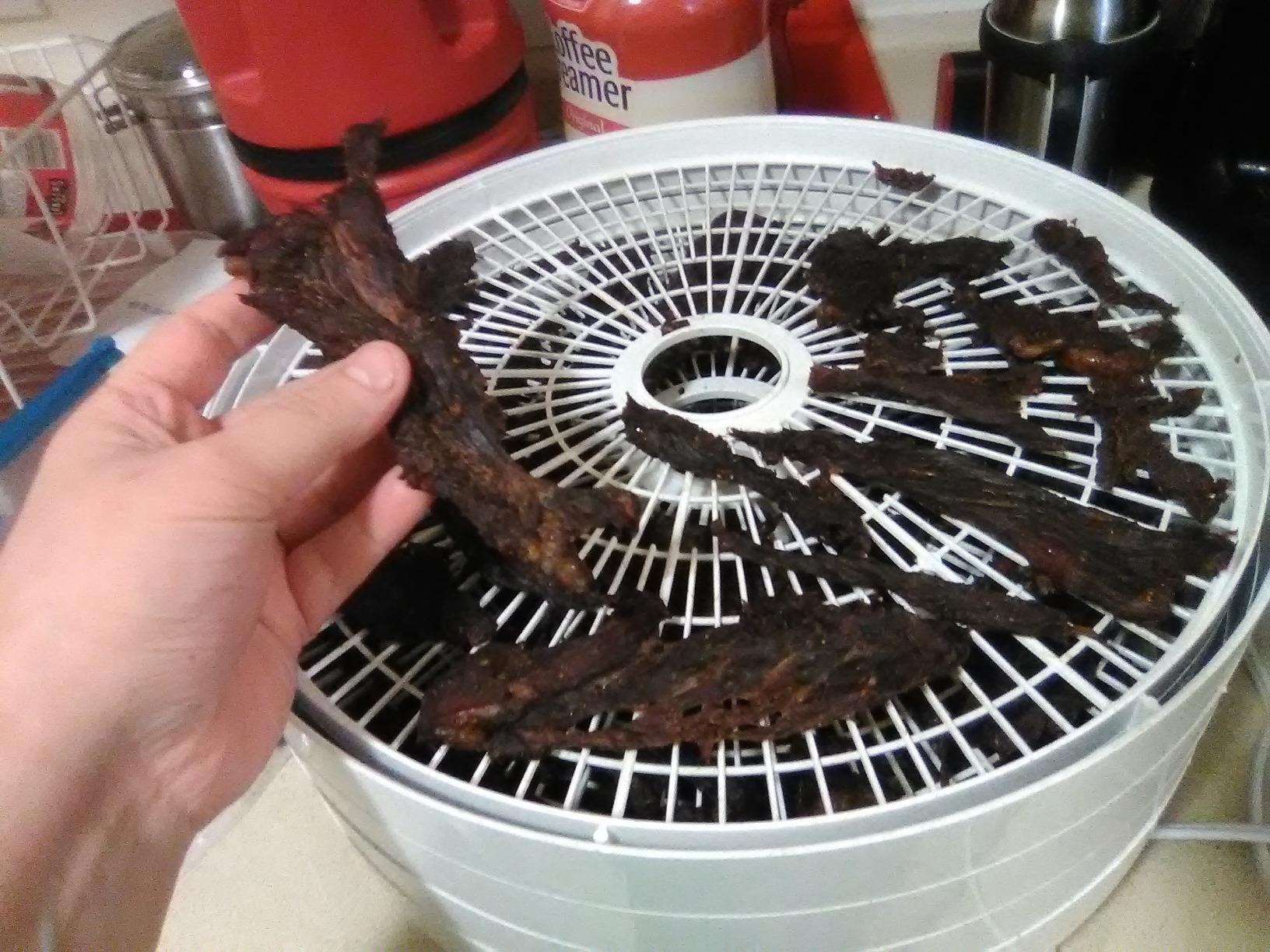
What you give up for that architecture is tray rotation. Reviews are consistent that the trays nearest the fan dry first, and plenty of users swap the stack halfway through a long run. Plan for it rather than pretending it does not happen, and set the strips slightly thicker if you want more forgiveness.
Buy it at the 5-tray configuration if you are making one to two pounds of jerky at a time. The stacking columns are the whole point of this design, so adding trays later is a matter of buying a column and dropping it in, not replacing the machine.
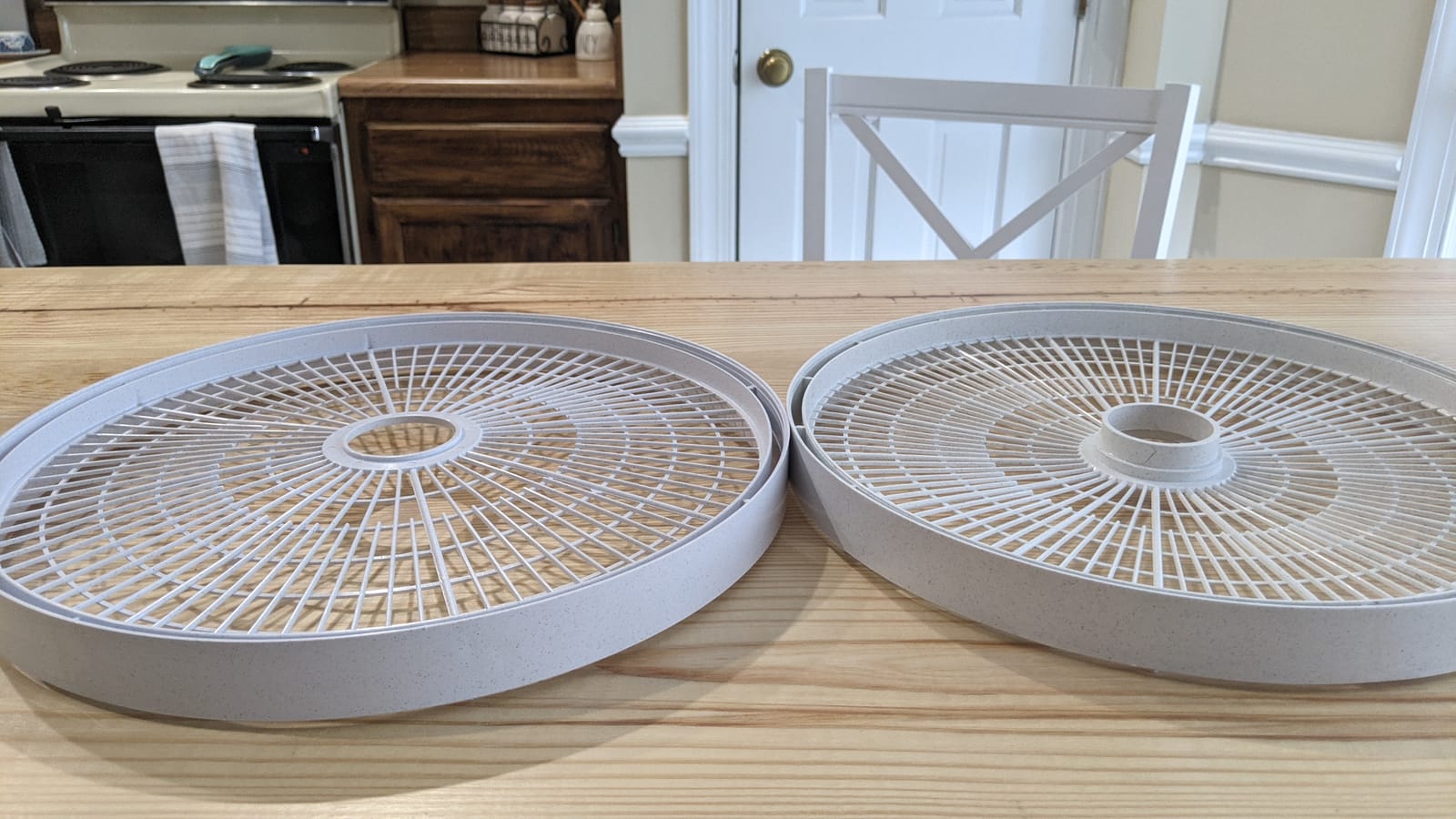
Is a Nesco hot enough for jerky?
Yes. The dial runs from 95F to 160F, and 160F is a safe working temperature for meat jerky. The catch is that the thermostat is a single dial rather than a digital setpoint, so you are estimating rather than dialing in an exact number.
Run a cheap oven thermometer on the middle tray for the first batch and you will know exactly where the real temperature sits. Most owners who do this find it within a few degrees of the dial setting and stop worrying.
Where it falls short
No integrated timer is the headline limitation. For an eight-hour overnight run, a plug-in lamp timer is effectively mandatory, and it is one more thing to forget to set. If unattended runs are your main use case, the Hamilton Beach below has an auto shutoff built in.
The trays are plastic, which matters more for jerky than most roundups admit. Soy-heavy marinades dry into the mesh, and while the trays wash easily, a stiff brush is a fair expectation on a long-term basis.
3. Presto 06300 Dehydro – Best for Small Kitchens
Presto 06300 Dehydro Electric Food Dehydrator
4 trays expandable to 8
Up to 165F, 600W top fan
5.6 lb, nests for storage
1-year limited warranty
Pros
- Top fan and heater give even drying with no tray rotation
- Simple single-dial control is all a first batch needs
- Trays nest for a 22 percent storage reduction
- Cord wraps around the cover
- Works for beef
- venison
- fruit and pet treats
Cons
- Plastic trays trap dried-on juices in their crevices
- No integrated digital timer
- Four trays is a modest starting capacity
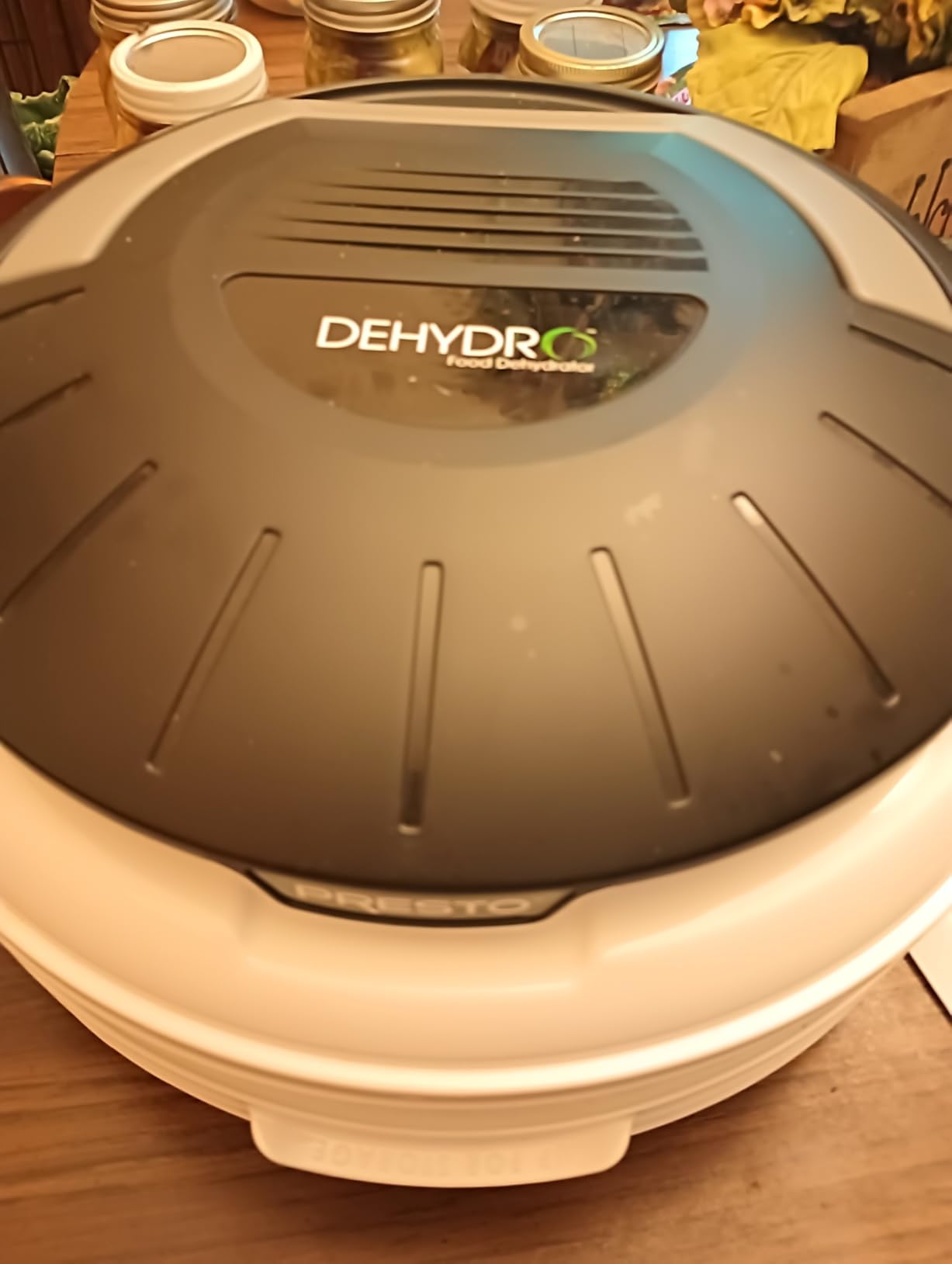
The Presto Dehydro is the one to buy when the deciding factor is where the box lives when it is not running. At 14.25 by 15.25 inches and 6.5 inches tall, it nests away instead of occupying a permanent stretch of counter.
For jerky specifically, the important line in the spec sheet is the top-mounted fan and heating element. Owners report consistent airflow that dries evenly without rotating trays, and the 165F ceiling clears the safety threshold for meat. It is a no-fuss unit with a dial and a light, which is exactly the right amount of control for a first two pounds of jerky.
It also expands. The base holds four trays and accepts up to eight with add-on trays, so the machine you buy today can become a two-batch machine next season. The trays and accessories are catalogued by part number, so the add-ons are easy to source.
That same top-mounted layout also means nothing drips onto a heating element, which extends element life when you are working with wet, marinated meat week after week.
Cleaning marinated meat off these trays
Plastic is the weak point. The tray frames have plenty of crevices, and reviewers call out the scrubbing involved when dried-on juices accumulate. A short soak in warm soapy water before washing handles almost all of it, and the trays are the cheap part to replace if you eventually want to move to stainless.
If sticky marinade cleanup is the thing that would push you off plastic entirely, skip to the Magic Mill Pro further down, which is a full stainless build at a higher tier.
Where it falls short
Four trays is genuinely small. A full load is closer to one to two pounds of sliced meat, so anyone making jerky for a group or giving it as gifts will run two batches. Plan the timing around that rather than assuming one load covers you.
The single dial gives you no digital readout, and there is no built-in timer. A lamp timer covers overnight runs, but the unit will not stop itself.
4. Cosori 5-Tray BPA-Free Dehydrator – Best for First-Time Jerky Makers
Cosori Food Dehydrator, 5 BPA-Free Trays, 165°F Temperature Control, 350W
5 BPA-free trays, expands to 7
95-165F in 1F steps
350W, under 47 dB
4.9 lb, 2-year warranty
Pros
- Reaches 165F
- a clear margin above the 155F jerky threshold
- 1-degree increments verified across tray positions
- Quiet under 47 dB
- Coated trays release sticky fruit leather easily
- Compact at 12.2 inches square
Cons
- Fruit leather and jerky mats are not included
- Sensitive touch panel with a beep that cannot be disabled
- Some reports of plastic lid cracking on repeated high-heat runs
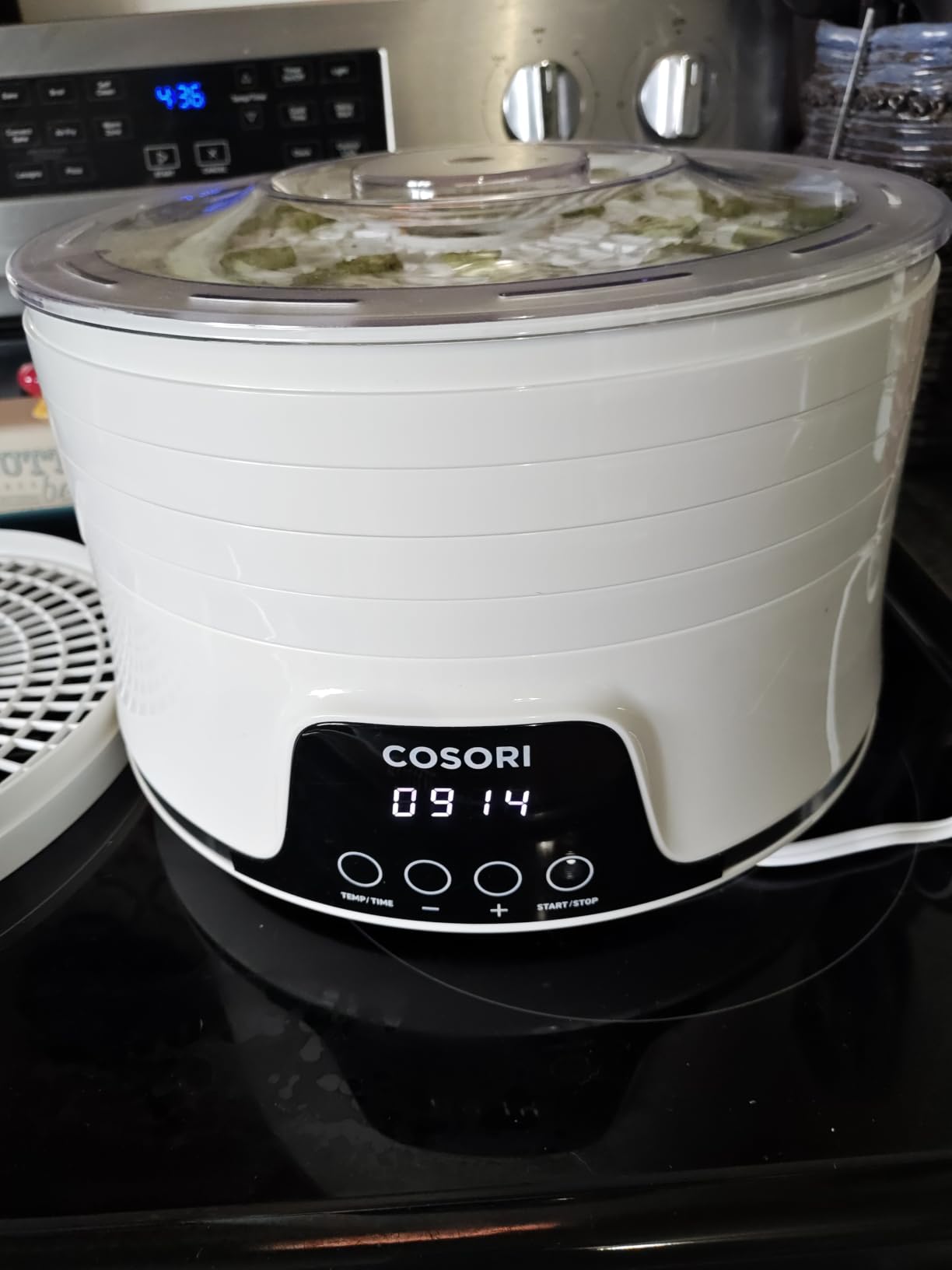
Two things separate this from the entry-level crowd: a 165F ceiling and 1-degree control. Users checking temperature across tray positions report that the setting means what it says, which is the difference between following a recipe and guessing at it.
At 350 watts it is a low-power unit, and that shows up in time rather than quality. Expect a longer dry than a 600W box, and give yourself the full 48 hours the timer allows rather than planning a six-hour evening run.
What you give up for the small footprint is tray area. Five trays at 12.2 inches square handles a 1 to 2 pound batch at most strip thicknesses, and it expands to seven with the accessory trays when you want more.
Two accessories are worth ordering on day one: the mesh screen and the fruit roll sheet. They are not in the box, and their absence is the most common complaint in the reviews.
Is 165F in a 350W box actually jerky-safe?
Yes, because the chamber reaches the number and holds it. Wattage drives how fast the box recovers after you open the door and load a wet tray, not whether the setpoint is achievable. The trade is time, not safety.
Load trays with air space between strips rather than touching, and lower the door once. Every one of those choices recovers more time than the wattage difference does.
Where it falls short
The touch control panel is hypersensitive and the confirmation beep cannot be turned off, which is unpleasant in a quiet house overnight. A few owners also report the plastic lid cracking after repeated high-temperature jerky cycles, so inspect it periodically if you run long batches back to back.
Lower trays can finish before upper ones, and the included recipe book times are approximate. If you are new to this, check strips rather than trusting the clock.
5. Hamilton Beach Digital Dehydrator – Best for Unattended Overnight Runs
Hamilton Beach Digital Food Dehydrator for Fruit, Jerky, Vegetables & More
5 stackable trays, 4.2 sq ft
100-160F, 500W base heater
1-48 hour timer with auto shutoff
Dishwasher-safe trays and lid
Pros
- Digital timer with automatic shutoff enables overnight runs
- Base-mounted heater gives constant airflow without rotation
- Square shape stores easily under cabinets
- Dishwasher-safe trays and lid
- Includes a mesh screen and a solid fruit leather sheet
Cons
- Included mesh is coarse enough to drop small herbs and nuts through
- Fan noise comparable to a box fan on low
- Edge and top trays dry faster than center pieces
- Brief chemical smell on the first run
The feature that separates this from the other budget picks is the countdown digital timer with automatic shutoff. You set 1 to 48 hours and walk away, which is the whole point of an overnight jerky batch. No lamp timer, no guessing when to get up.
The airflow comes from a 500-watt base-mounted heater, and the fan design gives constant airflow without needing to rotate trays. Five stackable trays across 4.2 square feet is a small batch, but it is a complete overnight run in a 10.4 by 13.2 inch footprint that stores under a cabinet.
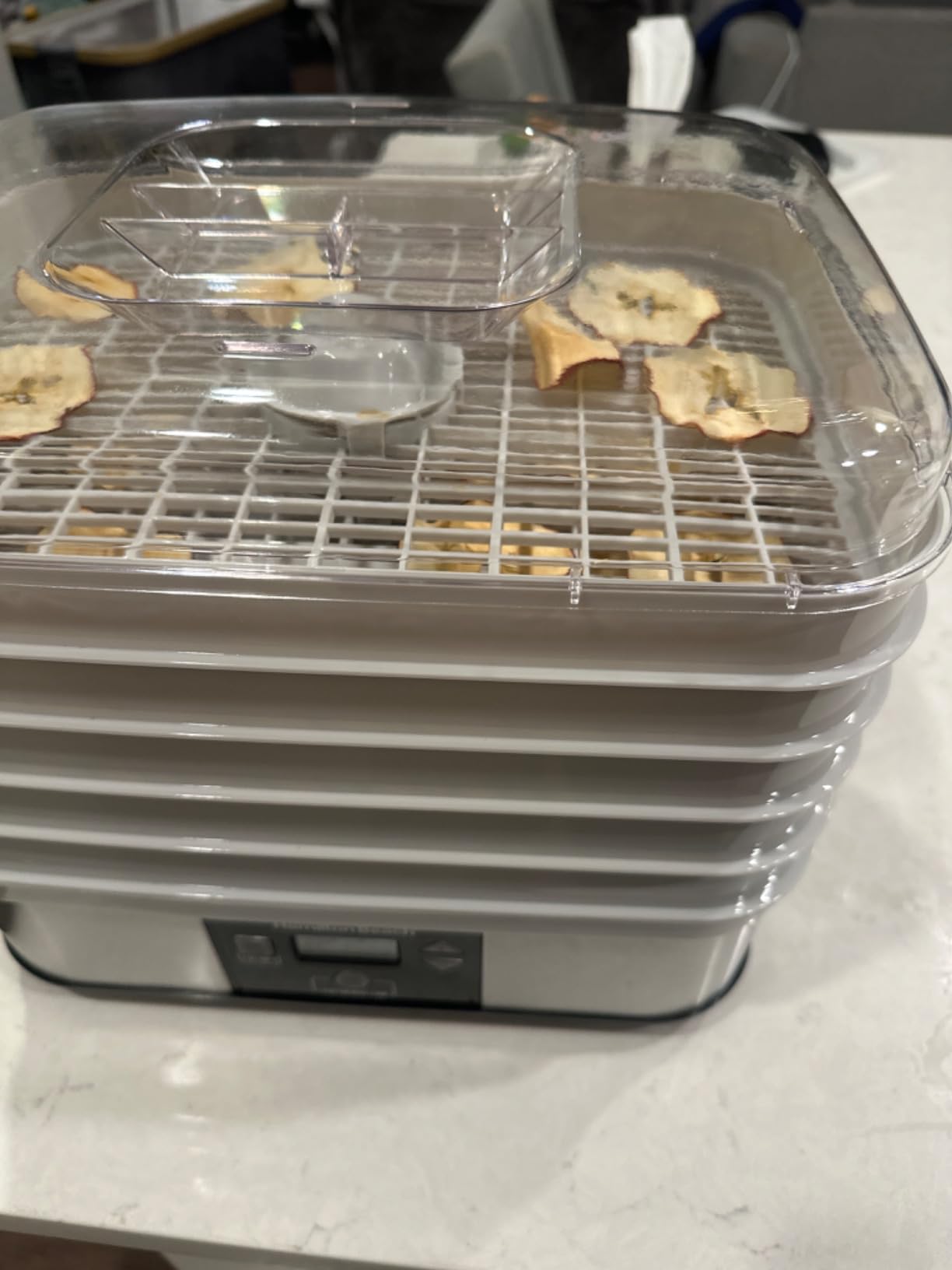
Plenty of buyers use it exactly as intended, making jerky and dog treats in the 100-160F band. The clear vented lid lets you check progress without losing chamber heat, which matters more in a small box than in a large one.
Trays and the lid are dishwasher safe. The mesh screen is the exception and wants a hand wash, which is a minor inconvenience next to the rest of the cleanup.
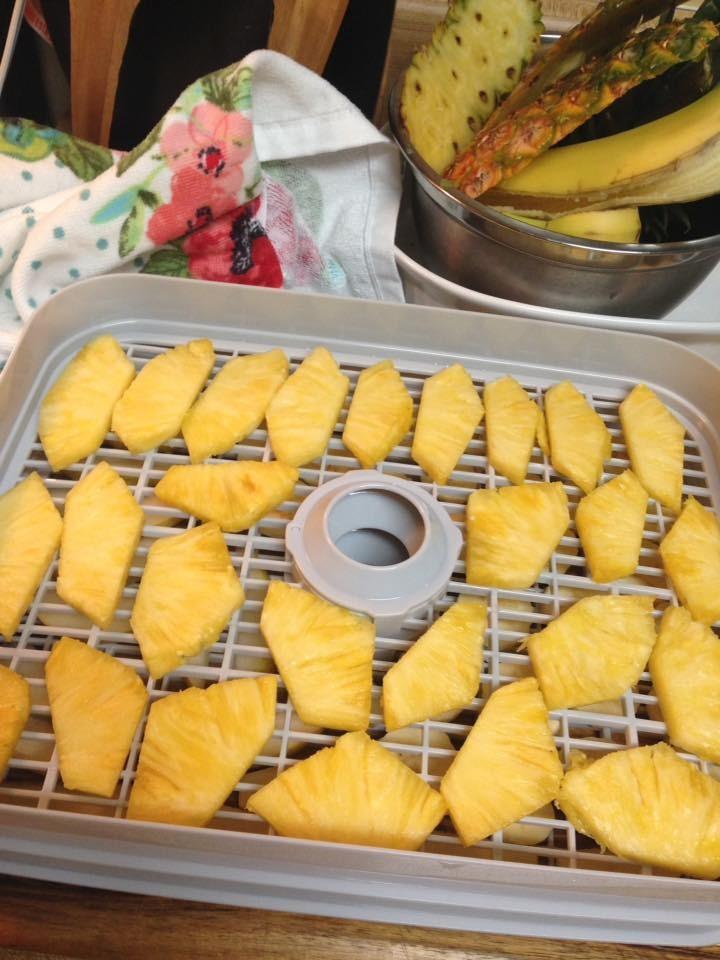
How loud is it during an overnight run?
Louder than the brushless units in this list. Owners compare the fan to a window or box fan on low, which is fine in a kitchen or garage and noticeable in a bedroom. If you run it in a living space while asleep, put a few feet of distance between you and the machine.
That noise is worth knowing about before you buy rather than after. It is not a defect, and many buyers simply schedule the run before bed and let it finish on the auto shutoff.
Where it falls short
The included fine mesh screen has gaps wide enough that small herb leaves and nuts drop through. For jerky slices this is irrelevant. For a dehydrator you also want to use for herbs, buy a tighter screen separately.
Top and edge trays dry faster than center and corner pieces on long runs, so a mid-cycle check is still worthwhile even with steady airflow.
6. Magic Mill MFD-5000 – Best for Compact Meat Batches
Magic Mill Food Dehydrator Machine | 5 Stackable Stainless Steel Trays, 48H Digital Adjustable Timer & Temperature Control Upto 167° Electric Dryer & Preserver for Jerky, Fruit, Dog Treats & Much More
5 adjustable stainless trays
95-167F, 240W, 48-hour timer
Tray height adjustable 0.6 to 1.1 inch
8.5 by 11.8 by 11 inch
Pros
- Stainless trays with adjustable height suit thick jerky slices
- Touch panel sets temperature and timer in simple steps
- Trays detach for soapy water or dishwasher cleaning
- Vertical footprint suits a small kitchen
- Holds roughly 900 g of sliced meat per batch
Cons
- 240W means noticeably longer drying times
- Stainless mesh gaps can let very small items fall through
- Plastic body and lid are less durable long term
The MFD-5000 is the smallest cabinet here, at 8.5 inches deep and 2.75 kg, and the adjustable tray height is the detail that makes it interesting for jerky. You can raise the gap under the mesh to about 1.1 inches, which gives thicker strips more clearance so they do not sit pressed against the element below.
Owners value the stainless trays for their affordability and easy cleaning, and report solid jerky and fruit results at roughly a kilogram of meat per batch. The digital panel covers 95-167F with a 48-hour timer, which is enough headroom above the 155F safety line.
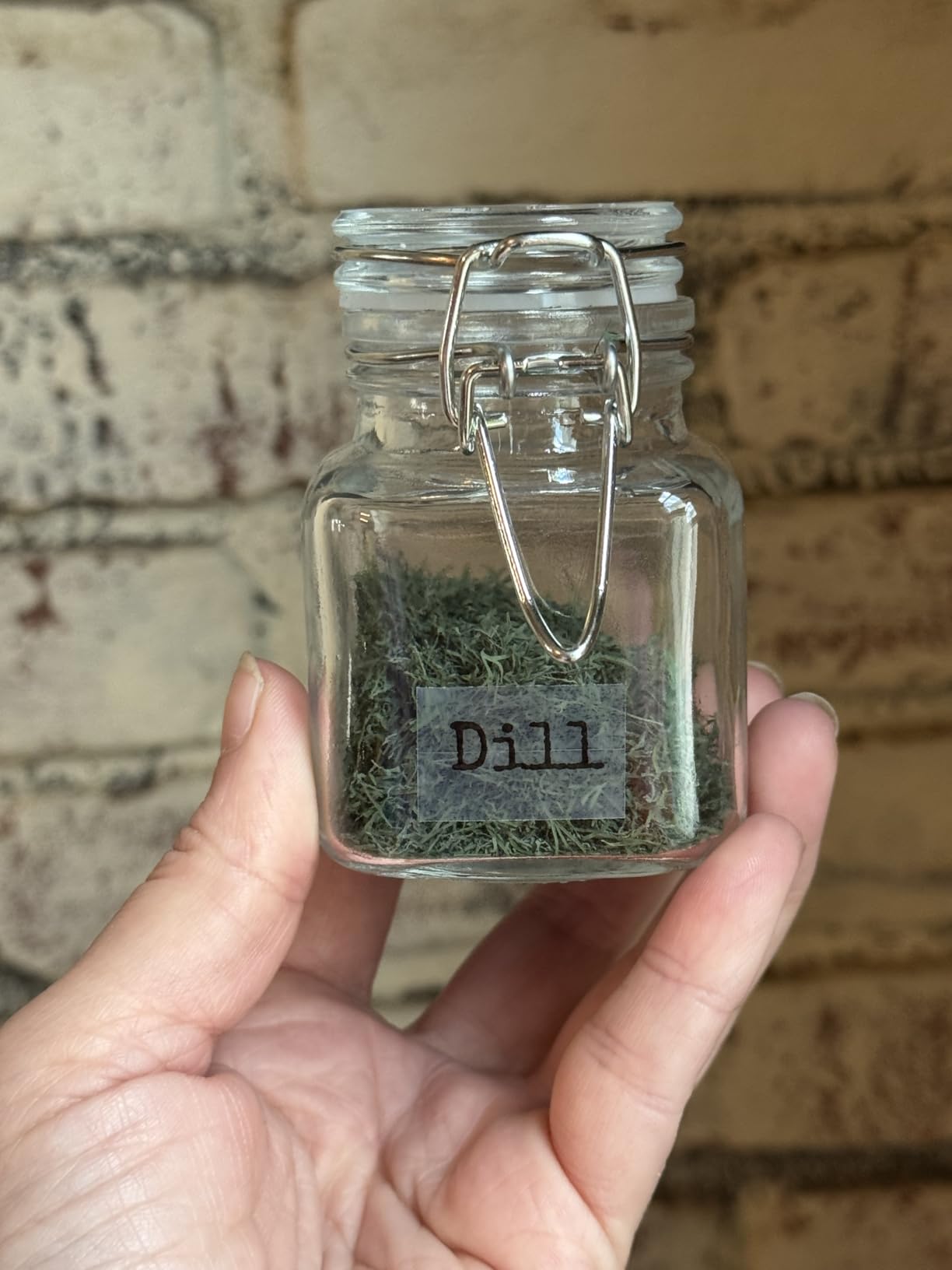
Compare the 240 watts to the 600-watt boxes in this roundup. Air moves more slowly, so plan on a longer run and leave it overnight. The tray count is the real constraint at this size, not the wattage, if your batches are measured in pounds rather than a single evening of strips.
Detachable trays that wash in soapy water or a dishwasher make the marinade cleanup straightforward, which is the pain point that pushes people off plastic boxes.
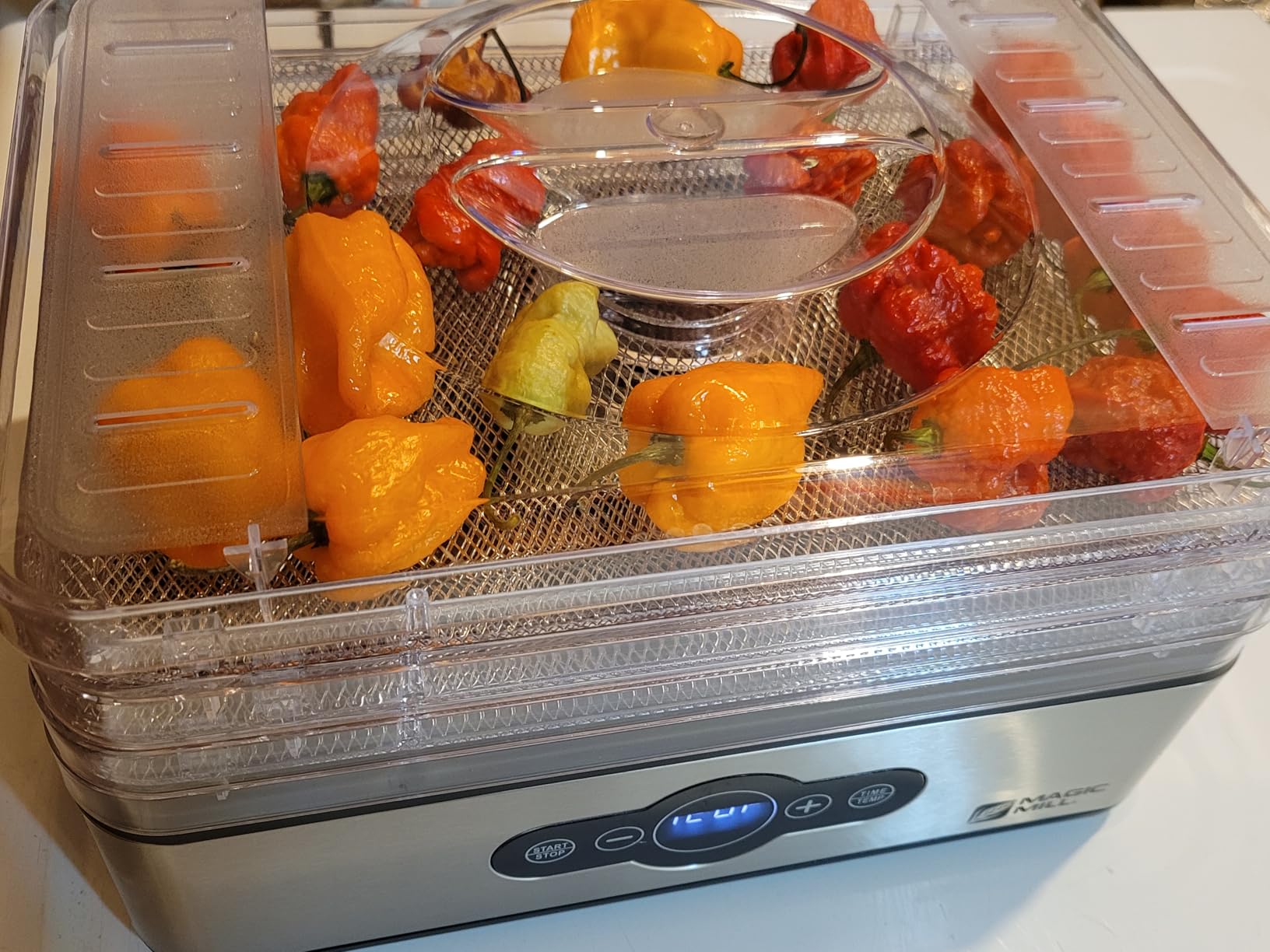
Does this unit hold temperature accurately enough for jerky?
Owners of earlier Magic Mill models raised temperature-accuracy complaints, which is why this one earned a specific check. The reported behavior on the MFD-5000 is that the panel setting tracks the real chamber temperature, and reviewers say the 167F ceiling is high enough for safe jerky.
Verify it on your own first batch with an oven thermometer on the middle tray. It is a two-minute check that removes the doubt permanently.
Where it falls short
The plastic body and lid will not last as long as a full stainless cabinet. For a weekend hobbyist that is a fair trade, but if you see yourself processing a deer every year, the all-stainless build below is the smarter lifetime buy.
Wide stainless mesh gaps mean very small items fall through. Jerky strips are fine; small herbs and nuts are not.
7. NESCO FD-1018A Gardenmaster Pro – Best for Large Batches
NESCO FD-1018A Gardenmaster Pro Food Dehydrator, 8-Tray White
8 trays expandable to 30
95-160F, 1000W top fan
17 by 15.5 by 14 inch
8 clean-a-screens and roll sheets included
Pros
- 1000W dries eight full trays far faster than 600W boxes
- Expands from 8 up to 30 trays for large harvests
- Top fan spreads heat and reduces rotation needs
- Bundled screens and roll sheets are called out as essential
- 95-160F thermostat allows a hot start then a lower finish
Cons
- Noticeably louder than 600W Nesco models
- Large 17-inch round footprint needs real counter space
- Add-on trays must match the base diameter
- Liners and screens can warp after years of heat
Long-term owners report this unit still running after three to seven years of heavy use, processing hundreds of pounds of meat, produce, and pet treats. That track record is the reason it earns the large-batch slot over a newer 10-tray box with a thin review history.
The 1000-watt Converga-Flow system is the reason eight full trays finish in a reasonable number of hours instead of two full cycles. The top-mounted fan distributes heat evenly enough that the need for rotation drops, and the 95-160F thermostat lets you start hot to shed surface moisture and finish lower to dry the core.
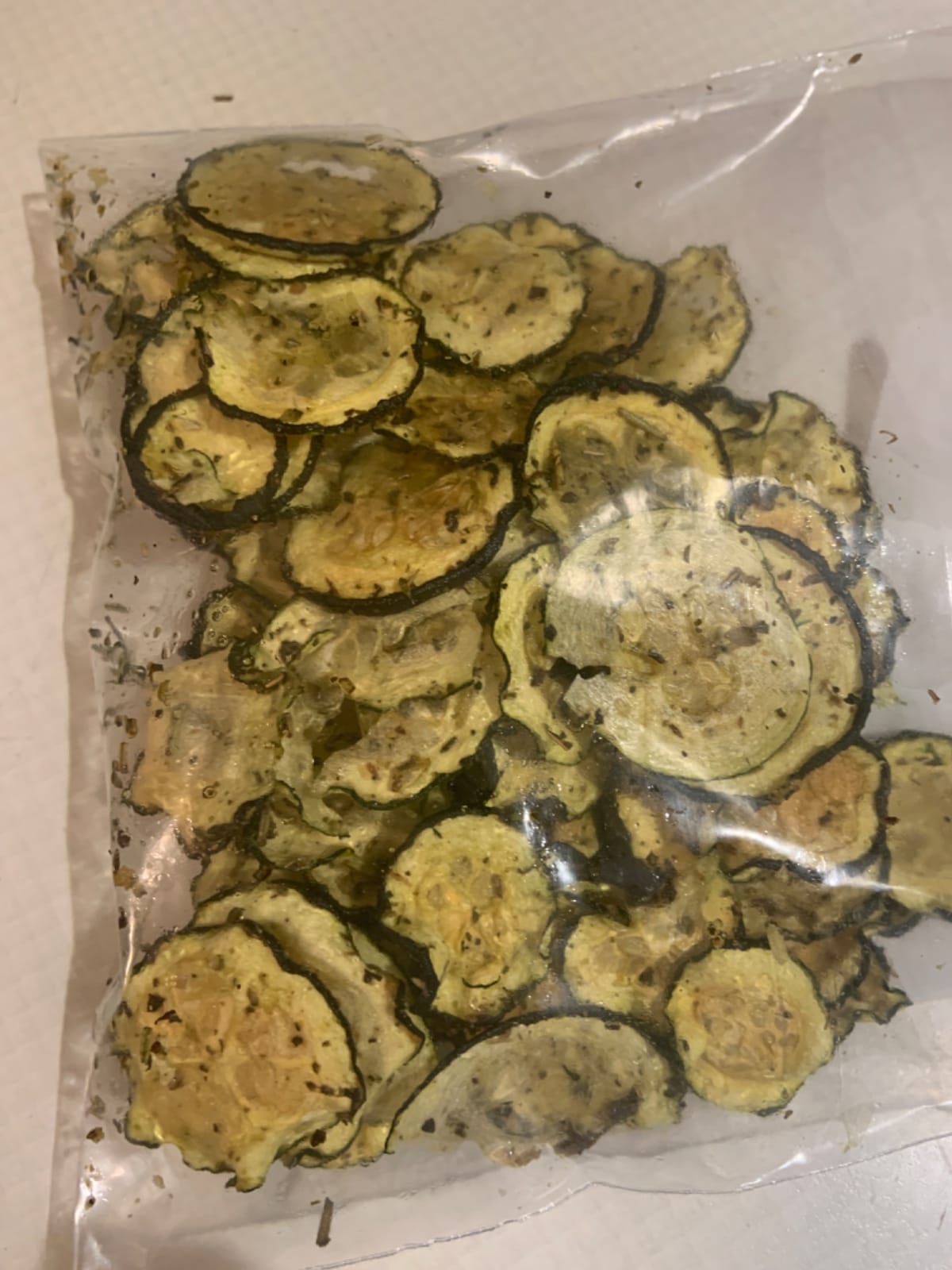
The expansion path is the differentiator over a fixed 10-tray cabinet. This base accepts columns up to 30 trays, so a hunter with a full deer in the freezer can scale capacity in increments rather than buying a second machine.
The bundle is unusually complete for this tier: 8 clean-a-screens, 8 fruit roll sheets, a jerky seasoning and cure sample, and a 52-page recipe book. Owners single out the included screens as essential for anything small.
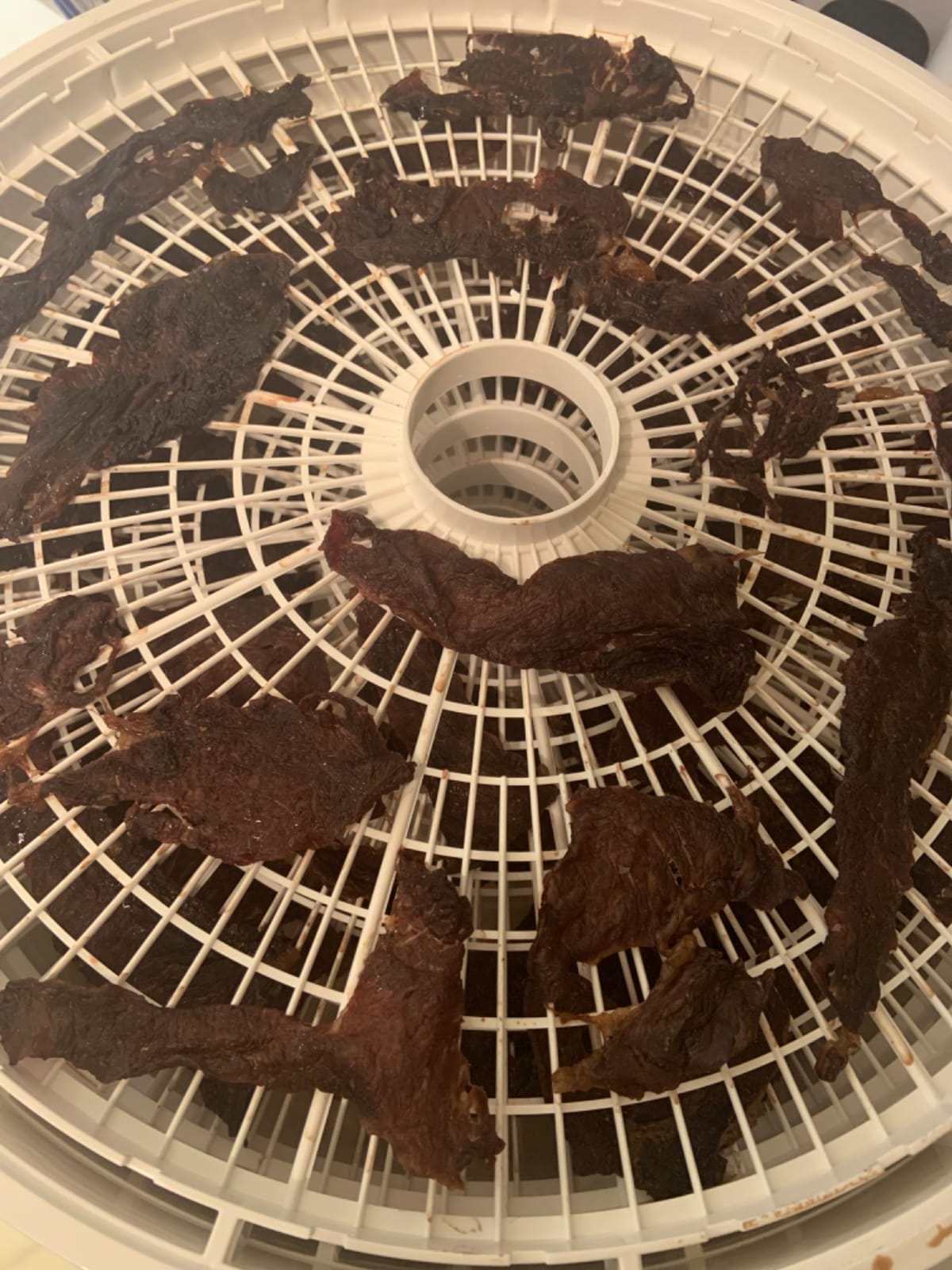
How many trays do you actually need?
For one to two pounds of sliced jerky, five to eight trays is comfortable. Eight to ten pounds of raw meat in a single run needs a cabinet in the 10-plus tray class with a 1000W element, and beyond ten pounds per batch you are into multi-day runs that most people schedule across two evenings instead.
Rule of thumb: one square foot of drying space handles roughly half a pound of raw sliced meat per load. Use it to size a machine to your freezer, not to a number on a box.
Where it falls short
It is loud, noticeably more so than the 600W Snackmaster, and it heats the surrounding room enough to cause condensation on a nearby wall. Treat it as a garage or basement appliance rather than a living-space one.
Accessory trays must match the base diameter, and trays or liners that warp after years of heat exposure will not seat properly. Buy spares when you can.
8. VEVOR 10-Tray 1000W Stainless Steel Dehydrator – Best for Maximum Capacity
VEVOR Food Dehydrator, 10 Trays Stainless Steel Food Dehydrator Machine, 1000W Dehydrators with Digital Adjustable Timer & Temp, Dehydrator for Jerky Herb Meat Beef Fruit Dog Treats and Vegetables
10 stainless trays, 14.8 by 11.2 inch
86-194F, 1000W rear fan
0.5-48 hour timer
31.1 lb with LED interior light
Pros
- Ten 304 stainless trays hold up to 1.7 lb per layer
- Widest temperature range in the group at 86-194F
- Rear 1000W fan circulates 360 degrees without tray spinning
- Built-in LED light avoids opening the door to check
- Full accessory kit with roll sheets
- sieves and gloves
Cons
- Heaviest and bulkiest unit reviewed at 31.1 lb
- Only around 150 ratings
- so reliability data is limited
- Stainless body and trays need grease pre-treatment before the dishwasher
This cabinet packs the most trays into the list at ten, each a 304 stainless sheet at 14.8 by 11.2 inches and rated for up to 1.7 pounds of food. A rear-mounted 1000W fan circulates air 360 degrees without tray spinning.
For jerky you work in the 155-165F window like every other pick here, but the headroom is useful at the end of a fruit or vegetable run when you want to crisp rather than dry.
Two features that sound minor are not. The built-in LED interior light means you check progress without opening the door and losing chamber heat, and the 0.5-hour minimum on the timer lets you run a short finish cycle rather than committing a full hour.
The accessory kit is unusually complete for a cabinet at this size: silicone roll sheets, sieves, and gloves, so you are not ordering screens on day one.
Limit worth stating plainly: with roughly 150 ratings, the feedback here is positive but shallow. There is not yet a multi-year ownership history on this model, so treat the durability claims as unproven rather than settled.
Is a 194F ceiling safe for jerky?
Set it to 160F and it behaves like a proper rear-fan cabinet. The higher ceiling simply widens the range, and a control you can overshoot with is a different proposition from one that cannot reach 155F at all.
Give the trays space between strips. With ten layers loaded, a full load of wet meat can cool the chamber temporarily, and spacing is what brings the top and bottom trays back to the same finish time.
Where it falls short
Size and weight are the real constraints. At 31.1 pounds and nearly 18 inches tall, this is a two-person lift and a permanent counter commitment, not a small-kitchen unit.
The 201 stainless body and 304 trays are not fully dishwasher safe out of the box for fatty, marinated meat. Degrease by hand first, then run the trays through. Skipping that step is how warping and odors happen.
9. Excalibur Select Series 8-Tray – Best for Long Programmed Runs
Excalibur Food Dehydrator Select Series for Jerky, Fruit, Vegetables, Herbs, Pet Treats with Adjustable Temperature Control, 8-Tray
8 chrome trays, 7.2 cu ft
85-165F, 700W
80-hour timer, longest here
Glass French doors, 16.5 lb
Pros
- Eight trays and 7.2 cu ft handle large jerky batches
- Hyperwave Pulse airflow dries without rotating trays
- 85-165F thermostat with an 80-hour timer
- the longest here
- Glass French doors let you check progress without losing heat
- Compact 17-inch footprint for a stainless eight-tray cabinet
Cons
- Chrome-plated steel trays are heavier to handle and wash
- Only around 150 ratings on this model
- About 8 percent one-star share
- the highest among the eight-tray models here
The 80-hour timer is the number that stands out. It is the longest run time in this roundup, which means a single cabinet can carry a multi-day fruit or vegetable load, or a long staged jerky program, without being babysat.
Airflow is horizontal through patented Hyperwave Pulse Technology, and buyers consistently rate it for even drying without rotating trays. The 85-165F thermostat covers the full useful band for jerky and produce, and the clear glass French doors let you judge doneness without opening the cabinet and losing heat on every check.
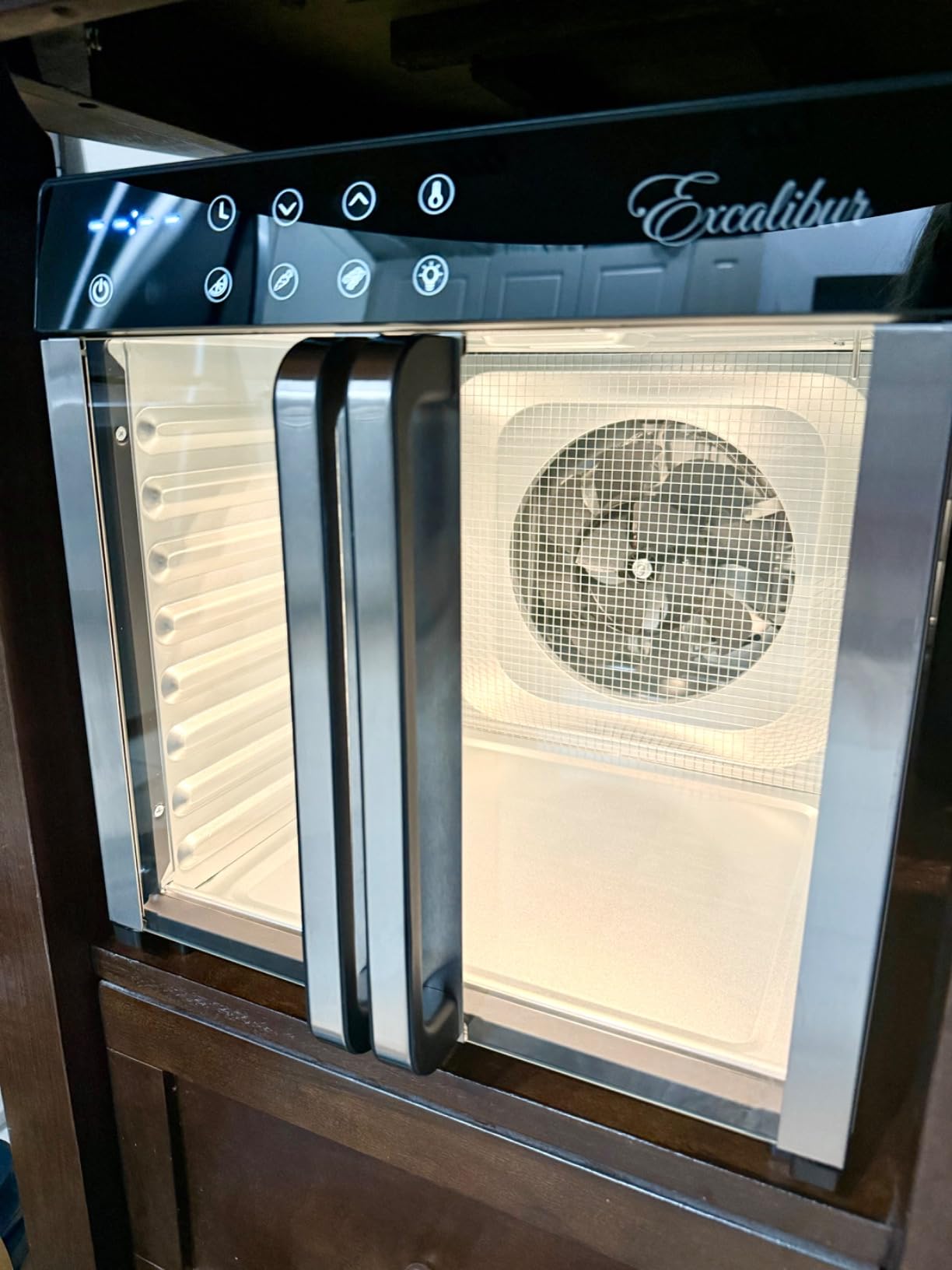
Is an Excalibur worth it? For a buy-it-once cabinet, often yes. The stainless body and horizontal airflow are built for years of service, and the 8-tray, 7.2 cu ft configuration handles a real batch rather than a token one.
Be honest about the review base, though. At around 150 ratings, opinions are far less settled than for the Cosori, Nesco, and Hamilton Beach units, and a small minority report build or durability issues.
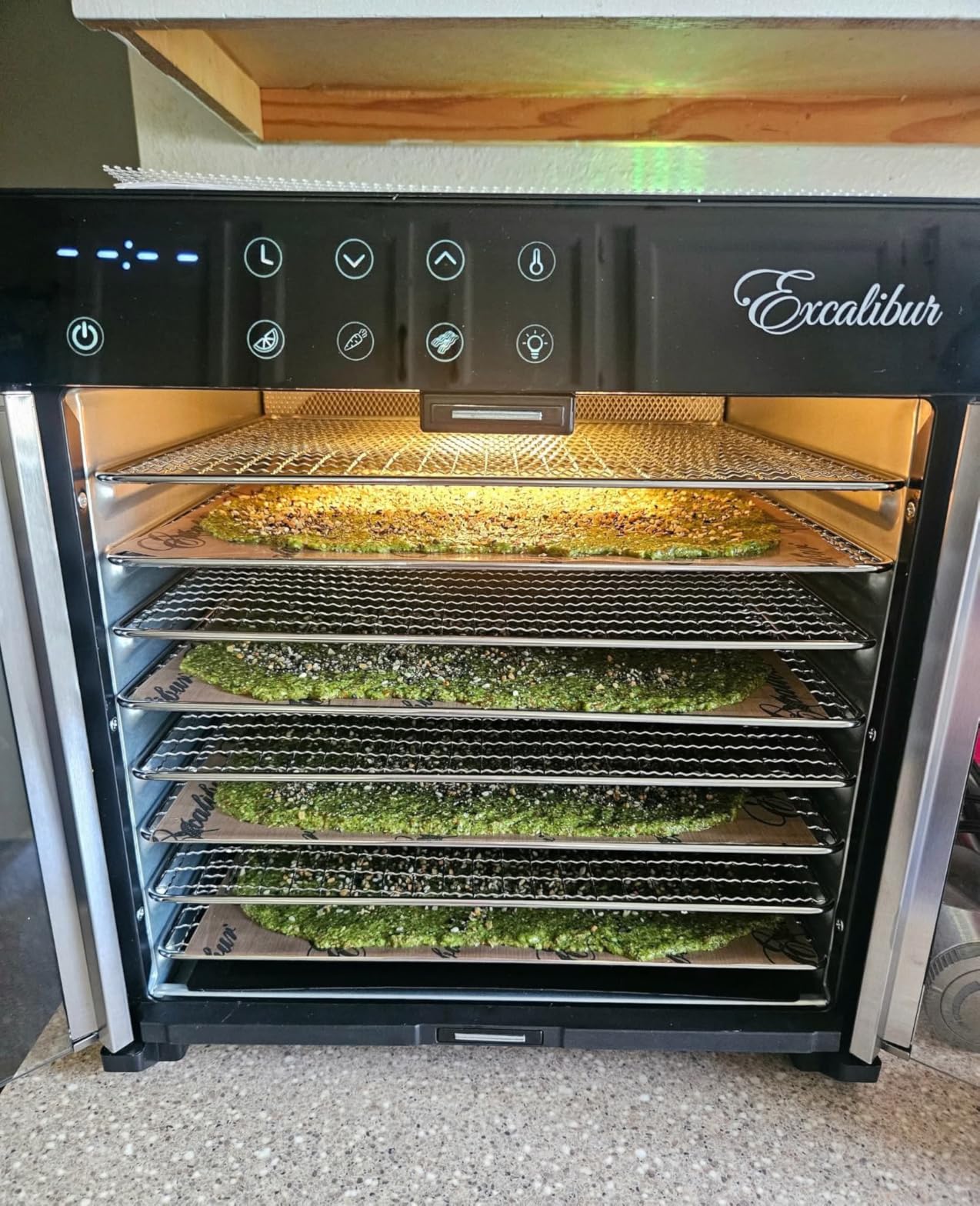
Is chrome-plated steel a problem for marinated meat?
Not for quality of jerky. The concern is handling and washing. Chrome-plated steel is heavier than plastic and needs a non-abrasive approach, so soak rather than scrub. In exchange you get a tray surface that will not absorb odors or odors-adjacent marinade the way some plastics do over a decade of use.
Buy a spare set of jerky matting so you can soak one set while the other dries.
Where it falls short
At about 8 percent one-star share, this has the highest visible dissatisfaction rate among the eight-tray models in this roundup. That is not disqualifying, but it is a signal to check the warranty terms and to expect a slightly less settled ownership experience than the models with tens of thousands of reviews.
The tray count does not expand, so a growing batch eventually means a second machine rather than an add-on column.
10. Magic Mill Pro MFD-7700 – Best Value All-Stainless Build
Magic Mill Pro Food Dehydrator Machine | Powerful 600W Rear Fan Even-Drying System | 7 Full-Size Stainless Steel Trays | 95°-176° Temperature Control, 48H Timer, Keep Warm + Auto Shutoff | ETL Listed
7 full-size stainless trays
95-176F, 600W rear fan
48-hour auto shutoff, Keep Warm
11.3 inch width fits under cabinets
Pros
- Rear fan and rear heat dry top to bottom with no rotation and no bottom hot spots
- Full stainless interior
- exterior and trays resist warping and odors
- Temperature up to 176F in 1-degree increments
- Compact 11.3 inch width holds about 5 pounds per batch
- Keep Warm mode plus 48-hour auto shutoff
Cons
- Start and stop button is very easy to bump and can halt a cycle
- Four trays are 15.5 inches
- narrower than the 17-inch trays on some rivals
The MFD-7700 shares the top rating in this roundup at 4.7 stars, and the reason it lands there is that it does not ask you to compromise on the two things that matter. The interior, exterior, and trays are all stainless steel, so there is no plastic wall to warp or hold odor, and the rear-mounted 600W fan with rear heat dries top to bottom with no bottom hot spots and no tray rotation.
That rear-heat detail solves a problem specific to jerky. In a base-heated box, the bottom tray sits inches from the element and dries to leather while the top tray is still flexible. Moving the heat to the back wall removes the gradient.
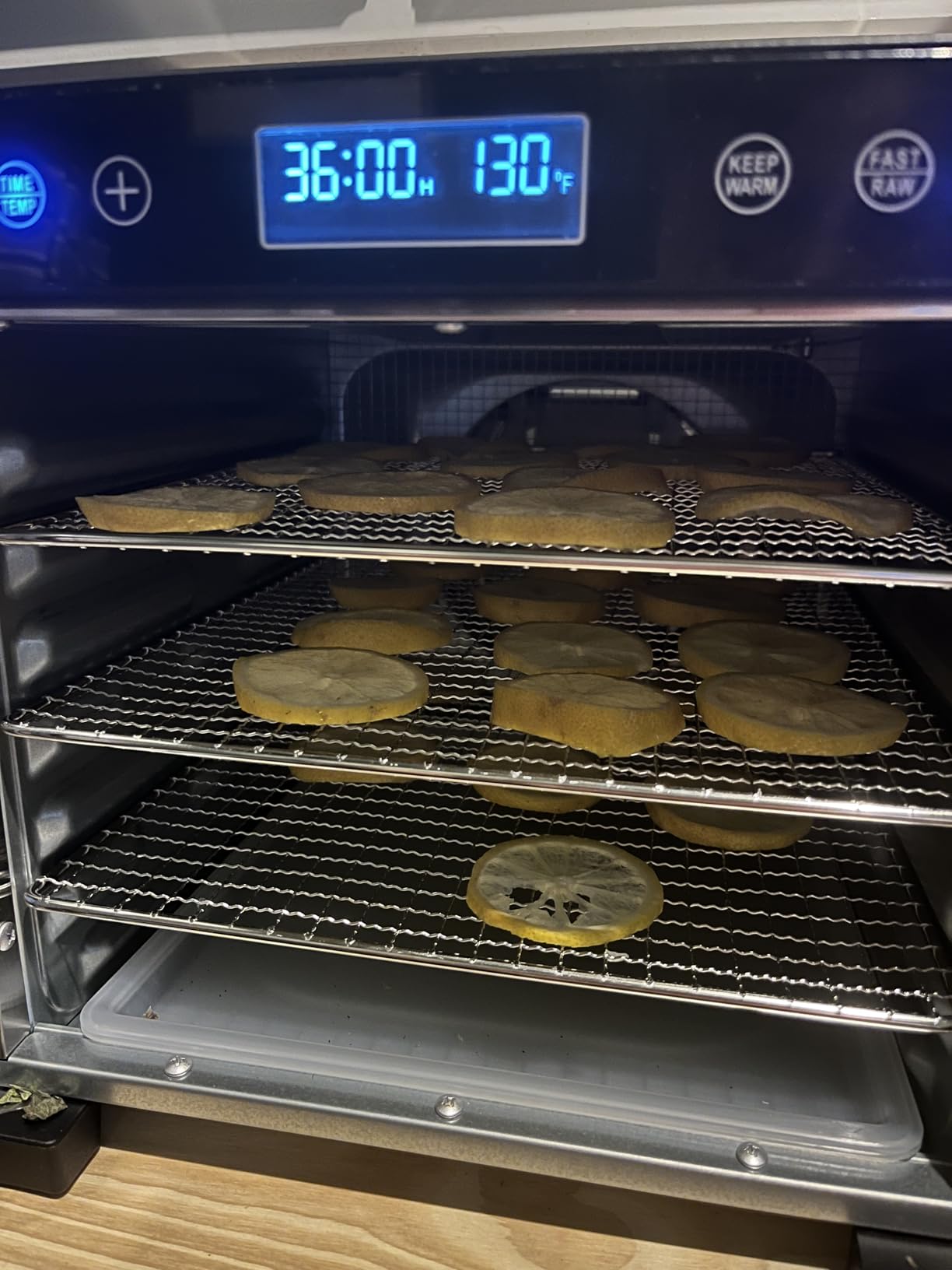
Control runs 95-176F in 1-degree increments with a 48-hour timer in 30-minute steps and automatic shutoff, so an overnight run is a single setting. Keep Warm holds 95F for up to 24 hours after a cycle ends, which is genuinely useful because it lets you start the next batch of strips without waiting for the cabinet to come back up to temperature.
Cleaning after sticky marinades is a specific strength owners call out. A full stainless interior wipes down rather than soaking, and the tray set is detachable. The unit is ETL listed with overheat protection.
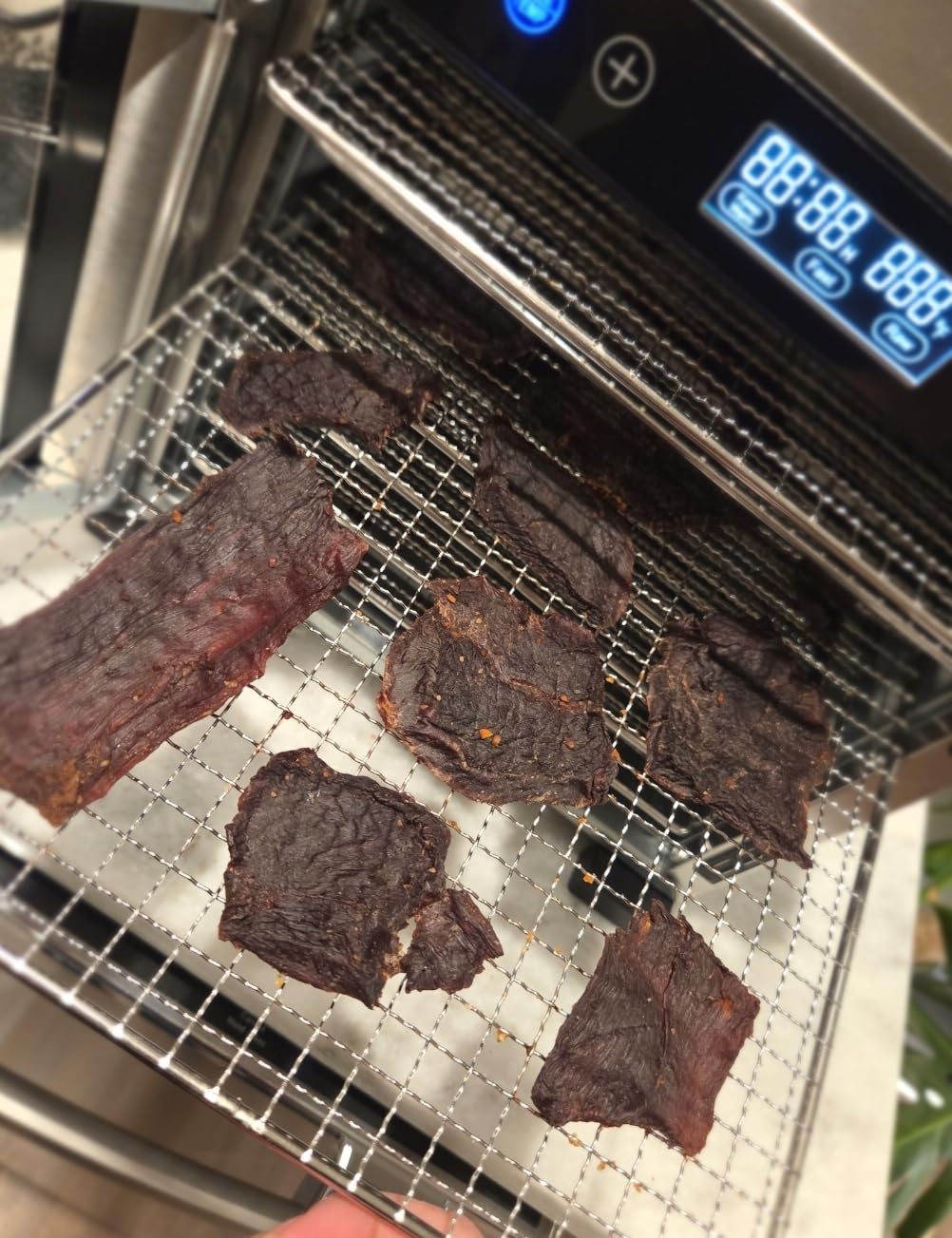
How many pounds per batch?
About five pounds of sliced meat in a full seven-tray load at typical strip thicknesses. That is the sweet spot for most home kitchens: a serious weekend run without the counter footprint of a 10-tray cabinet.
The 11.3-inch width is narrower than the 17-inch trays on some competing models, so strips have to be cut to fit the tray rather than the other way round. Measure your board against the tray before you buy a case of top round.
Where it falls short
The start and stop button is extremely sensitive and can be bumped by a forearm or a wet hand while you check strips, which stops the cycle mid-run. This is the single repeated complaint in the reviews, and it is worth learning to avoid rather than expecting a fix.
There is no dedicated crisping mode beyond the Keep Warm hold, so a fruit run that wants a high finishing temperature means dialling to 176F manually.
What to Look for in a Food Dehydrator for Jerky in 2026
Most buyers lose time comparing wattage when they should be comparing airflow and temperature ceiling. Here is what actually decides whether a dehydrator makes good jerky, roughly in the order it matters.
Rear-mounted fan: the one spec that removes tray rotation
A rear-mounted fan pushes air horizontally across the width of the cabinet, so every tray sits in a similar airflow path. A top-mounted fan pushes air down a vertical column, which creates a natural gradient from the top tray to the bottom. The single most common question on jerky forums is which machine dries evenly without rotating trays, and this is the answer.
Rear fan and rear heat: the Cosori 6-Tray, the Magic Mill Pro, and the VEVOR 10-Tray. Horizontal airflow with no bottom hot spots: the Excalibur Select Series. Constant airflow without rotation is also claimed for the Hamilton Beach base-heater design and the Presto 06300, where the fan and heater share a position at the top of the column.
Where rotation is still on your list: the NESCO Snackmaster Pro, whose trays nearest the fan dry first, and the NESCO Gardenmaster Pro, where the 1000W fan spreads heat well but a top-mounted column still produces some gradient.
Temperature ceiling: 155F minimum, 165F is better
For meat jerky, the chamber needs to reach at least 155F. Several units in this roundup clear 160F, and the 165-176F models give you headroom to run a hot start followed by a lower finish. Anything topping out below 155F is not a jerky machine, regardless of how good it looks on fruit.
The separate safety step matters as much as the ceiling. For raw beef, venison, and poultry, bring the slices to a full 160F internal temperature before the long dry. This is the preheat USDA guidance asks for, it is the step most roundups leave out, and it is the step that makes the difference between shelf-stable jerky and jerky you should not eat.
Setpoint accuracy is the quieter issue. A dial that reads 160 is an estimate; a digital panel with 1-degree increments is a measurement. Checking with an oven thermometer on the middle tray during your first batch costs two minutes and settles the question for good.
Stainless steel trays versus plastic mesh for marinated meat
Stainless steel trays win for marinated meat on two counts. Soy and Worcestershire marinades do not bond to a stainless frame the way they dry into plastic mesh, and stainless does not absorb odor over a decade of use. Stainless is also the easiest surface to put in the dishwasher after a wet, salty batch.
Plastic mesh still has a case. It is lighter, cheaper, and lets more air through for very thin items. The compromise most jerky makers settle on is a plastic tray body with a removable stainless or silicone mat for meat days and the plastic mesh for fruit leather days.
Stainless tray builds in this roundup: the Cosori 6-Tray and the VEVOR 10-Tray, both full stainless cabinets, the Magic Mill Pro with a stainless interior and exterior, the Excalibur Select Series with chrome-plated steel trays, and the Magic Mill MFD-5000 with stainless trays on a plastic body. If sticky marinade cleanup is the deciding factor for you, start from that list.
How many trays you actually need for a batch of jerky
One square foot of drying space handles roughly half a pound of raw sliced meat per load. That number gets you the right tray count faster than any marketing figure.
One to two pounds of raw meat: 4 to 5 trays, which covers the Presto 06300, the Cosori 5-Tray, and the Magic Mill MFD-5000. Three to five pounds: 7 to 8 trays, the Magic Mill Pro and the Excalibur Select Series. Eight to ten pounds in one run: 10 trays with a 1000W element, the VEVOR. More than ten pounds per batch: plan two runs rather than one overloaded cabinet, since strips need air between them and a fully packed tray stack dries unevenly.
Stackable column designs let you grow, which is why the NESCO Snackmaster Pro and Gardenmaster Pro appear in both small- and large-batch conversations. If your freezer holds a whole deer, expansion to 30 trays is a genuine advantage over any fixed cabinet.
Timer and auto shutoff for overnight batches
A dehydrator without a timer means buying a plug-in lamp timer, and forgetting to set it is the most common way a batch gets ruined. The units here with integrated timing: the Cosori 6-Tray and Cosori 5-Tray with 48-hour timers, the Hamilton Beach with a 1-48 hour countdown and automatic shutoff, the Magic Mill MFD-5000 and Magic Mill Pro with 48-hour touch timers, the VEVOR with 0.5-48 hours, and the Excalibur Select Series with 80 hours.
The Presto 06300 and the NESCO Snackmaster Pro have no built-in timer. Both are fine machines; both just need the external timer, and that extra step is why the Hamilton Beach edges ahead for overnight work.
Auto shutoff and a keep-warm mode are different features. Auto shutoff stops heat at the end of a cycle. Keep warm, which only the Magic Mill Pro offers, holds 95F for up to 24 hours afterward so you can start the next batch without a cold start.
Wattage, noise, and the counter space you give up
Wattage governs how fast the box recovers after you open the door and load wet meat. Higher numbers mean shorter runs and better multi-tray temperature recovery: 1000W on the VEVOR and the NESCO Gardenmaster Pro, 700W on the Excalibur, 600W on the Cosori 6-Tray, the NESCO Snackmaster Pro, the Presto 06300, and the Magic Mill Pro, 500W on the Hamilton Beach, 350W on the Cosori 5-Tray, and 240W on the Magic Mill MFD-5000.
Noise follows the same rough pattern. Brushless motors register under 48 dB, quiet enough to sleep beside. The Hamilton Beach fan is noticeably audible in a quiet room, and the 1000W NESCO Gardenmaster Pro runs among the loudest cabinets here, so schedule those in a garage or basement.
Footprint is the trade nobody mentions until the box is on the counter. The Presto 06300 at 14.25 by 15.25 inches and the Cosori 5-Tray at 12.2 inches square disappear when stored. The NESCO Gardenmaster Pro needs 17 inches of round counter, and the VEVOR 10-Tray at 31.1 pounds and nearly 18 inches tall is a permanent fixture. That counter space is the same one you would be using for a griddle or warming cabinet, and our food display and warming picks show what the alternatives cost you in footprint.
Two final things no spec sheet covers. Store finished jerky in mylar bags with oxygen absorbers rather than plastic bags if you want it to keep past a few months, and expect a bend test rather than a timer: a clean snap instead of a bend means the strips are done.
Frequently Asked Questions
What are the best dehydrators for food and jerky?
The Cosori 6-Tray Stainless Steel Dehydrator is the best overall for jerky, with a rear-mounted 600W fan that dries evenly without tray rotation, 95-165F digital control in 1-degree steps, six stainless steel trays covering 6.5 ft2, and a 48-hour timer for overnight runs. Best value is the Magic Mill Pro MFD-7700, a full all-stainless build with a rear fan reaching 176F. Best budget is the NESCO FD-75A Snackmaster Pro, which reaches 160F and expands from 5 to 12 trays.
Which brand of food dehydrator is considered the best?
For jerky specifically, Cosori and NESCO are the two most proven brands, and both have review counts in the tens of thousands. Cosori leads on rear-fan architecture and stainless trays. NESCO leads on the modular stackable column design that expands from 5 to 30 trays and on cabinets owners report running for three to seven years of heavy use.
What type of meat is best for making jerky in a dehydrator?
Lean, well-marbled beef from the hindquarter is the classic choice, particularly bottom round, top round, and london broil cut against the grain into 1/8-inch slices. Ground beef works but needs a fine extrusion to get consistent strips. Chicken and turkey breast are lean enough to work. Venison and other wild game are lean and excellent, but always preheat the raw meat to a 160F internal temperature first.
How hot does a dehydrator need to be to make jerky?
The chamber needs to reach at least 155F for meat jerky, and 160-165F is a better working range because it gives you a safety margin and a faster dry. Separately, for raw beef, venison, or poultry, hold the slices at a full 160F internal temperature before the long low-temperature dry begins, which is the step USDA guidance asks for and the one most roundups skip.
Can I make jerky in a NESCO dehydrator?
Yes. The NESCO Snackmaster Pro runs from 95F to 160F, which clears the 155F threshold for meat jerky, and it is the most commonly recommended budget unit on jerky forums. Two expectations to set: it has no built-in timer, so a plug-in lamp timer is needed for overnight runs, and its top-mounted fan means the trays nearest the fan dry first, so rotating the stack partway through a long run helps.
Do I need to rotate trays when dehydrating jerky?
It depends on where the fan sits. A rear-mounted fan pushes air horizontally across the cabinet, so all trays see similar conditions and rotation is not needed: the Cosori 6-Tray, the Magic Mill Pro, the VEVOR 10-Tray, and the Excalibur Select Series all dry without tray rotation. A top-mounted fan creates a vertical gradient, so the NESCO Snackmaster Pro and Gardenmaster Pro benefit from a mid-cycle stack swap.
What are the pros and cons of the Magic Mill dehydrator?
Pros: the MFD-7700 is a full all-stainless interior, exterior, and tray build with a rear fan and rear heat, so it dries top to bottom with no bottom hot spots and no tray rotation. It runs 95-176F in 1-degree increments with a 48-hour auto shutoff and a Keep Warm mode. Cons: the start and stop button is sensitive enough to be bumped and halt a cycle, and the trays are 15.5 inches, narrower than 17-inch trays on some rivals.
How long does it take to dehydrate jerky?
Thin slices cut against the grain from bottom round or london broil typically take 6 to 8 hours at 160F in a 600W cabinet, and thicker cuts or humid conditions push toward 10 to 12 hours. A 350W or 240W unit adds hours. Judge doneness with a bend test rather than a clock: a clean snap instead of a bend means the strips are done.
The Best Food Dehydrators for Jerky in 2026
The best food dehydrator for jerky is the Cosori 6-Tray Stainless Steel model, and the reason is airflow rather than any single spec. A rear-mounted 600W fan means every tray dries at the same rate, 165F is a safe ceiling with a 48-hour timer for overnight runs, and six stainless trays handle a real batch without crowding the strips.
Pick the Magic Mill Pro MFD-7700 if you want an all-stainless cabinet with rear heat, 176F, and a Keep Warm mode at a mid tier. Pick the NESCO Snackmaster Pro on a tight budget; it clears 160F and expands from 5 to 12 trays as your batch size grows.
Size the machine to your freezer, not to a number on a box. One square foot of drying space handles roughly half a pound of sliced meat per load, and the largest batches are better run as two evenings than as one overloaded tray stack. Whatever you choose, hit a full 160F internal temperature on raw meat before the long dry, and test with a bend test rather than a clock.